
Linn County Unincorporated
City Zoning Code
City Zoning Code
APPENDIX D
GENERAL DESIGN AND FORM STANDARDS FOR RURAL VILLAGE EXTENSION SUBDIVISIONS
The following design and form standards are provided to assist in design and design review of proposed rural village extension subdivisions. Illustrations of building types are provided as examples, with the expectation that built form will vary.
(1)
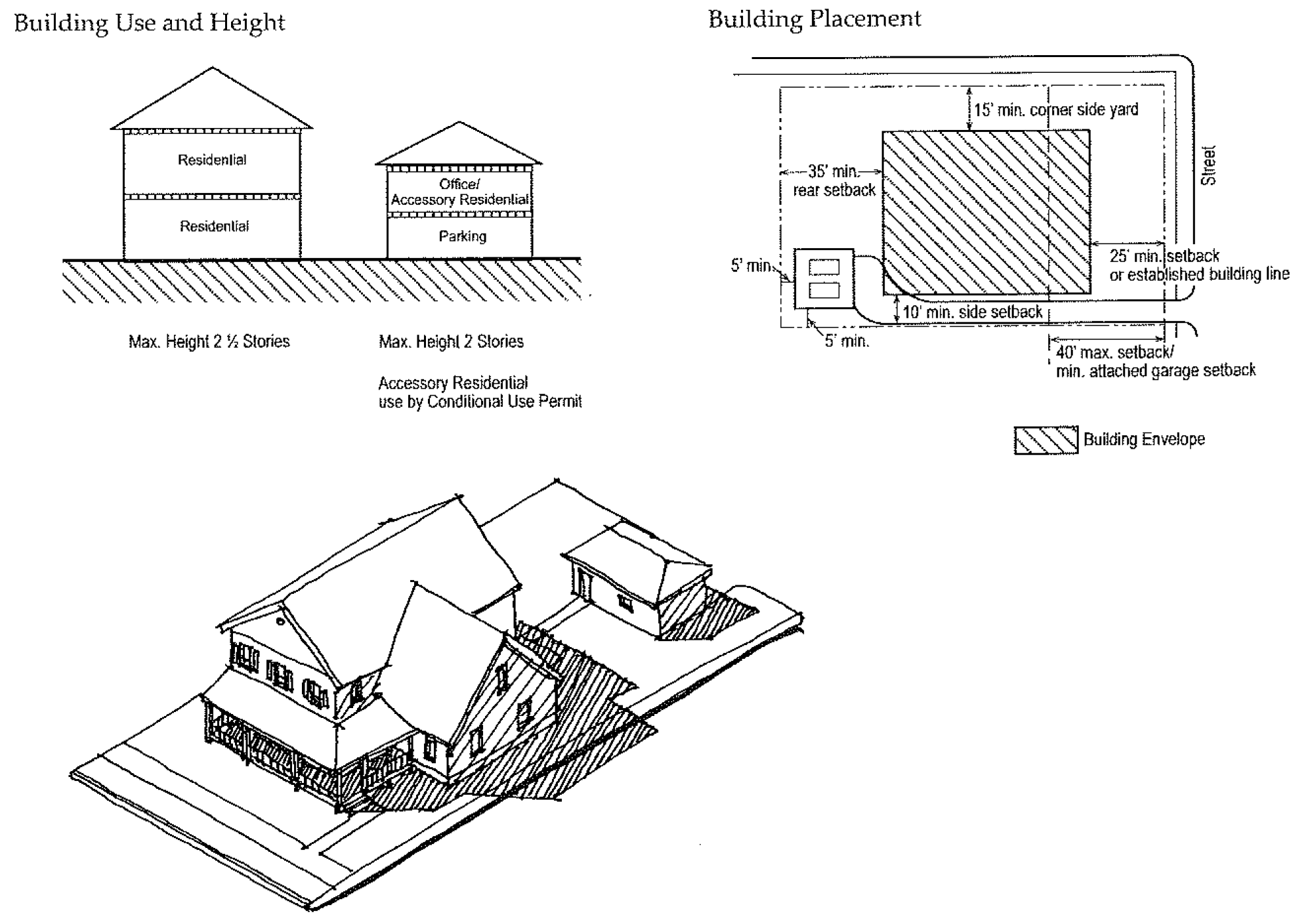
Building Type: Single-family Detached.
Front-Loaded Parking Example.
1.
Principal buildings are to be placed within the building envelope as defined in the graphic.
2.
The street-facing facade shall fall within the range of setbacks established on the block. On blocks without a consistent setback, the facade shall be placed within the minimum and maximum setbacks of 25 and 40 feet.
3.
Unenclosed porches, balconies, stoops, bay windows and covered walkways may extend up to eight feet into front and rear setback areas and up to four feet into side setback areas. Decks may only be located to the rear of the principal building.
4.
Attached garages facing the primary street must be set back no closer than the front of the principal building.
5.
Detached garages and other accessory buildings must be located to the side or rear of the principal building, set back a minimum of 40 feet from the front lot line and five feet from side and rear lot lines.
6.
Garages may be accessed from the street via a driveway or from the rear via an alley or driveway. Driveways may be shared between adjoining lots.
(2)
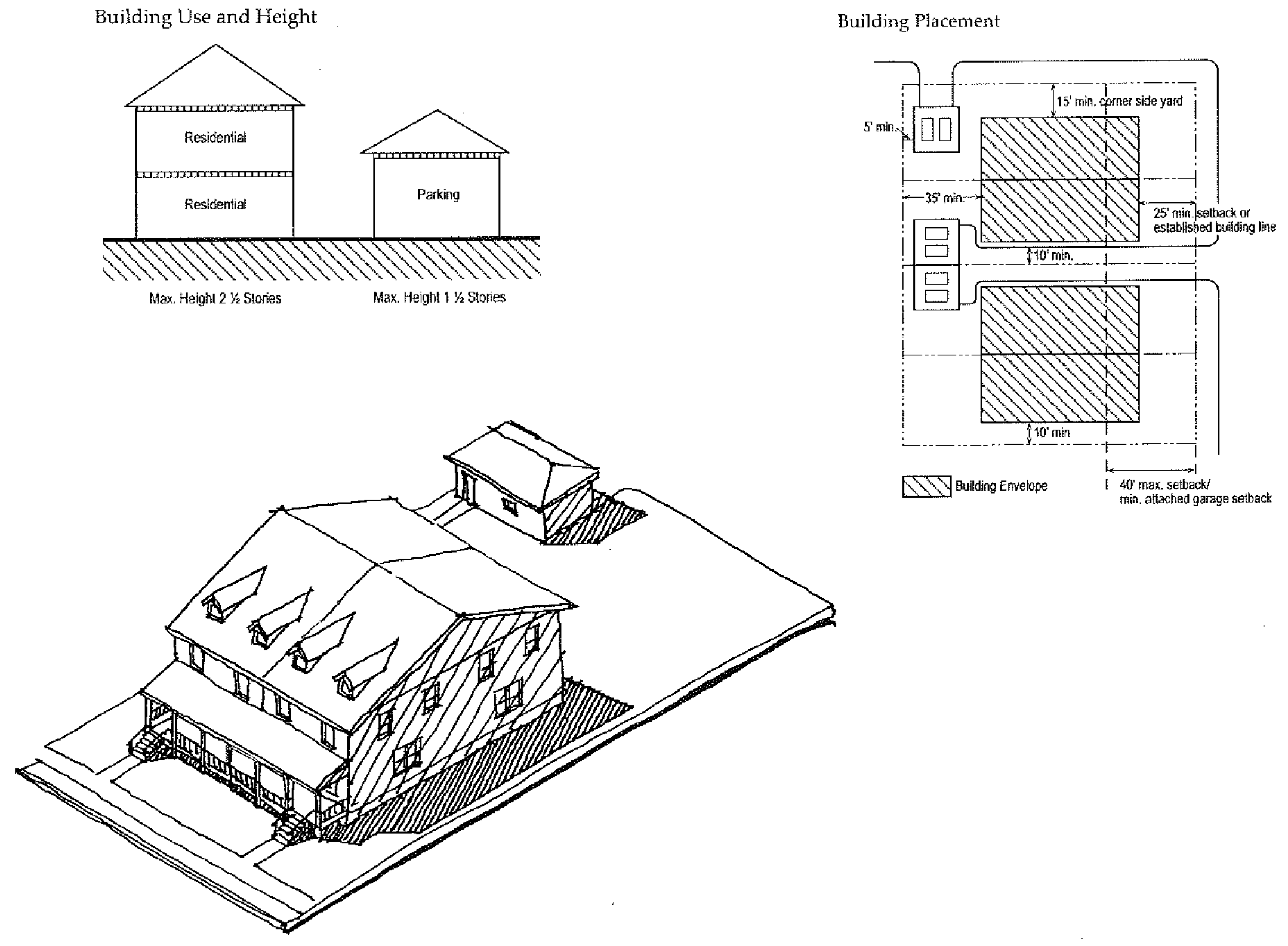
Building Type: Two Family—Twin House.
Front-Loaded Parking Example with Shared Driveway.
1.
Principal buildings are to be placed within the building envelope as defined in the graphic.
2.
A party (shared) wall shall be located along the interior property line, or both units may be combined on a common lot, with one owner-occupied and one rental unit.
3.
Unenclosed porches, balconies, stoops, bay windows and covered walkways may extend up to eight feet into front and rear setback areas and up to four feet into side setback areas. Decks may only be located to the rear of the principal building.
4.
Attached garages facing the primary street must be set back no closer than the front of the principal building.
5.
Detached garages and other accessory buildings must be located to the side or rear of the principal building, set back a minimum of 40 feet from the front lot line and five feet from side and rear lot lines, unless they are designed as shared garages, with party walls along the lot line.
6.
Garages may be accessed from the street via a driveway or from the rear via an alley or driveway. Driveways may be shared between adjoining lots.
(3)
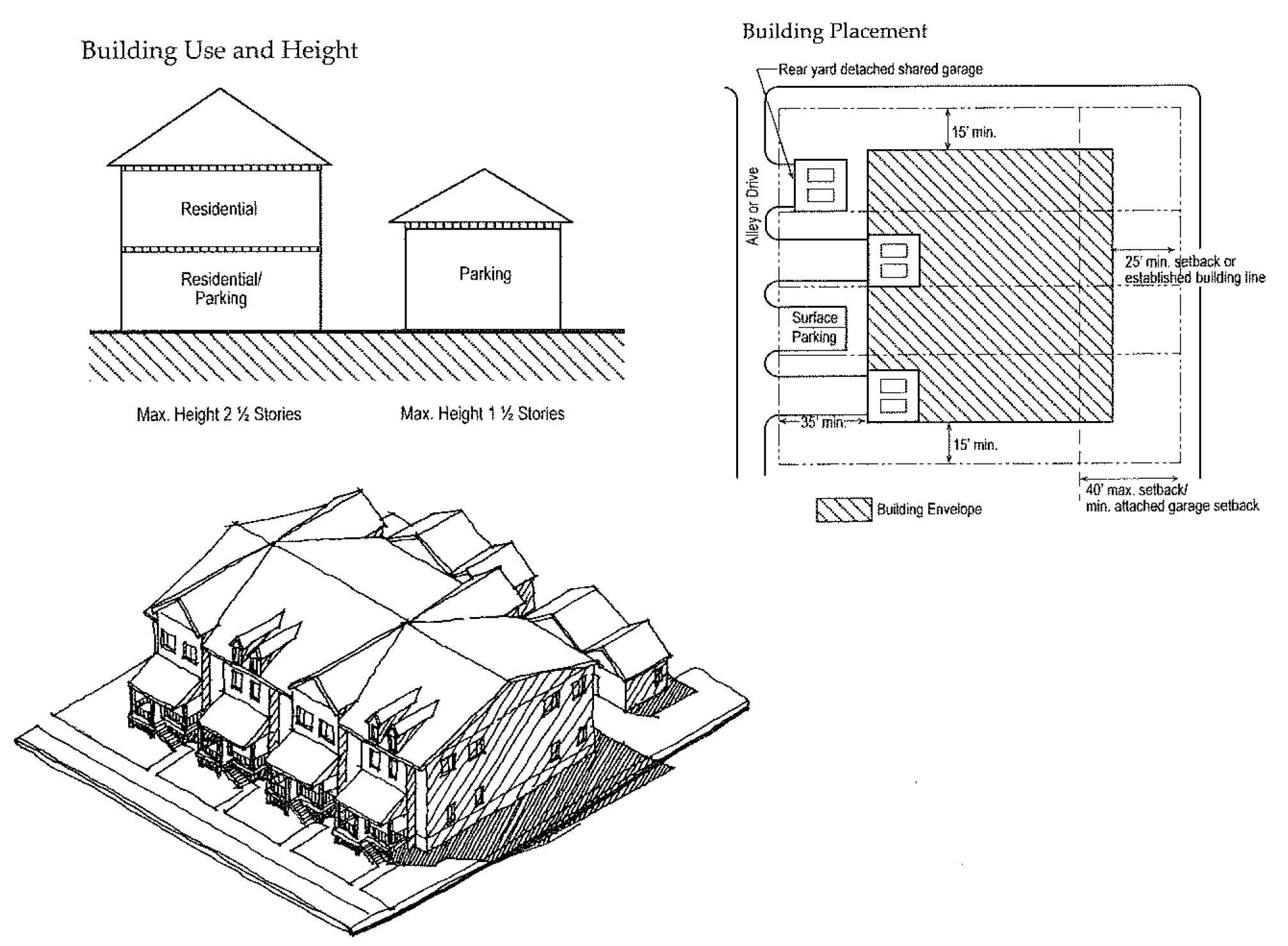
Building Type: Single-family Attached.
Rear-Loaded Parking Example.
1.
Principal buildings are to be placed within the building envelope as defined in the graphic. Dwelling units may be located on separate lots, with party (shared) interior walls, or designed as condominiums on a single property. No more than four units may be attached in a single group.
2.
The street-facing facade shall fall within the range of setbacks established on the block. On blocks without a consistent setback, the facade shall be placed within the minimum and maximum setbacks of 25 and 40 feet.
3.
Unenclosed porches, balconies, stoops, bay windows and covered walkways may extend up to eight feet into front and rear setback areas and up to four feet into side setback areas. Decks may only be located to the rear of the principal building.
4.
Parking may be located on surface lots, to the rear of the principal building, or within detached garages, attached garages, or tuck-under spaces. Attached garages facing the primary street must be set back. Attached garages facing the primary street must be set back no closer than the front of the principal building.
5.
Detached garages and other accessory buildings must be located to the side or rear of the principal building, set back a minimum of 40 feet from the front lot line and five feet from side and rear lot lines, unless they are designed as shared garages, with party walls along the lot line.
6.
Garages may be accessed from the street via a driveway or from the rear via an alley or driveway. Driveways may be shared between adjoining lots.
(4)
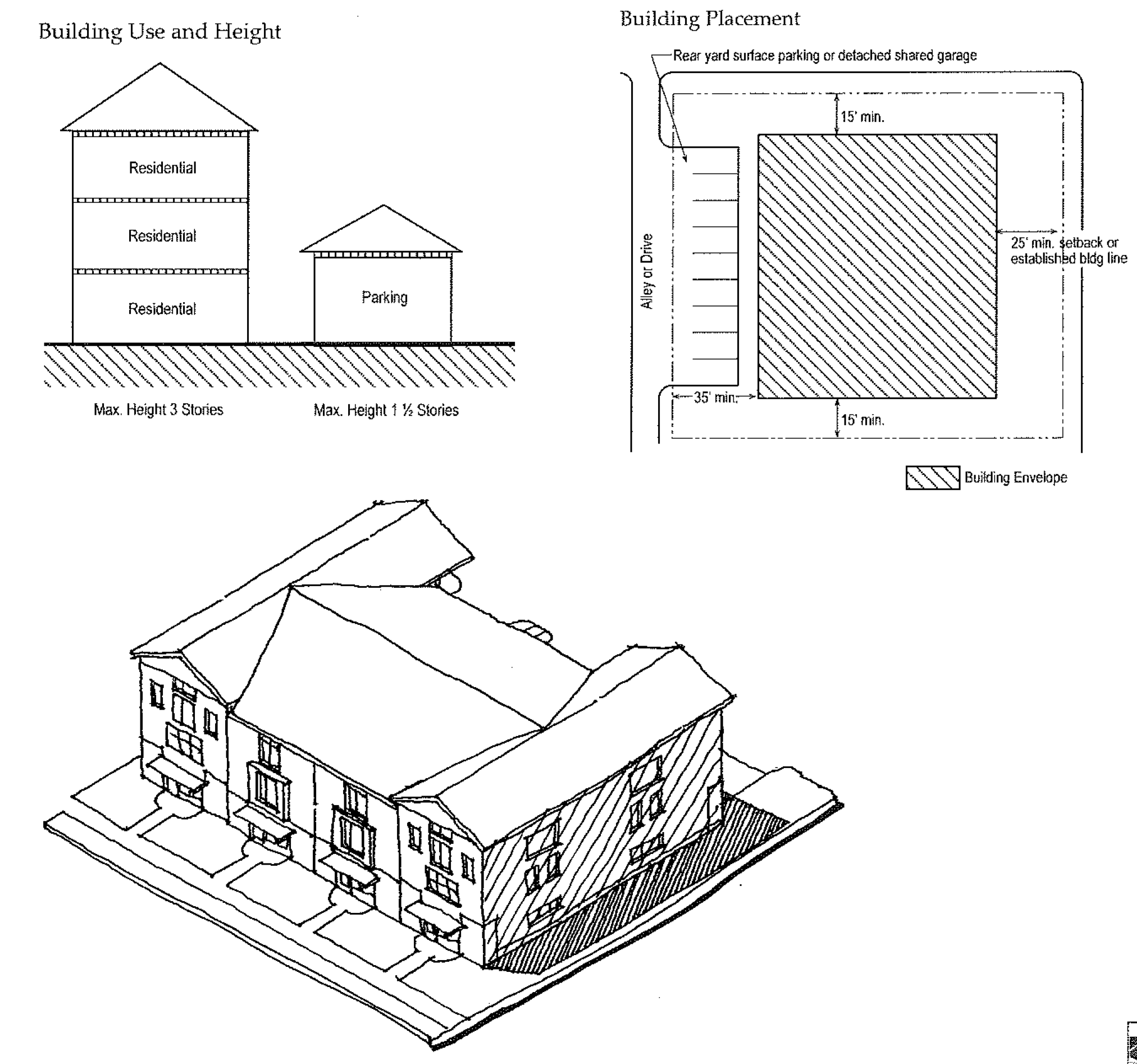
Building Type: Multiple-family Dwelling.
Six Units Maximum.
Rear-Loaded Parking Example.
1.
The principal building is to be placed within the building envelope as defined on the graphic. A maximum of six units may be located within a single building.
2.
The street-facing facade shall fall within the range of setbacks established on the block. On blocks without a consistent setback, the facade shall be placed within the minimum and maximum setbacks of 25 and 40 feet.
3.
Parking may be located on surface lots, to the rear of the principal building, or within a detached common garage, set back a minimum of 40 feet from the primary street and ten feet from side and rear lot lines.
4.
Parking areas may be accessed from the street via a driveway or from the rear via an alley or driveway.
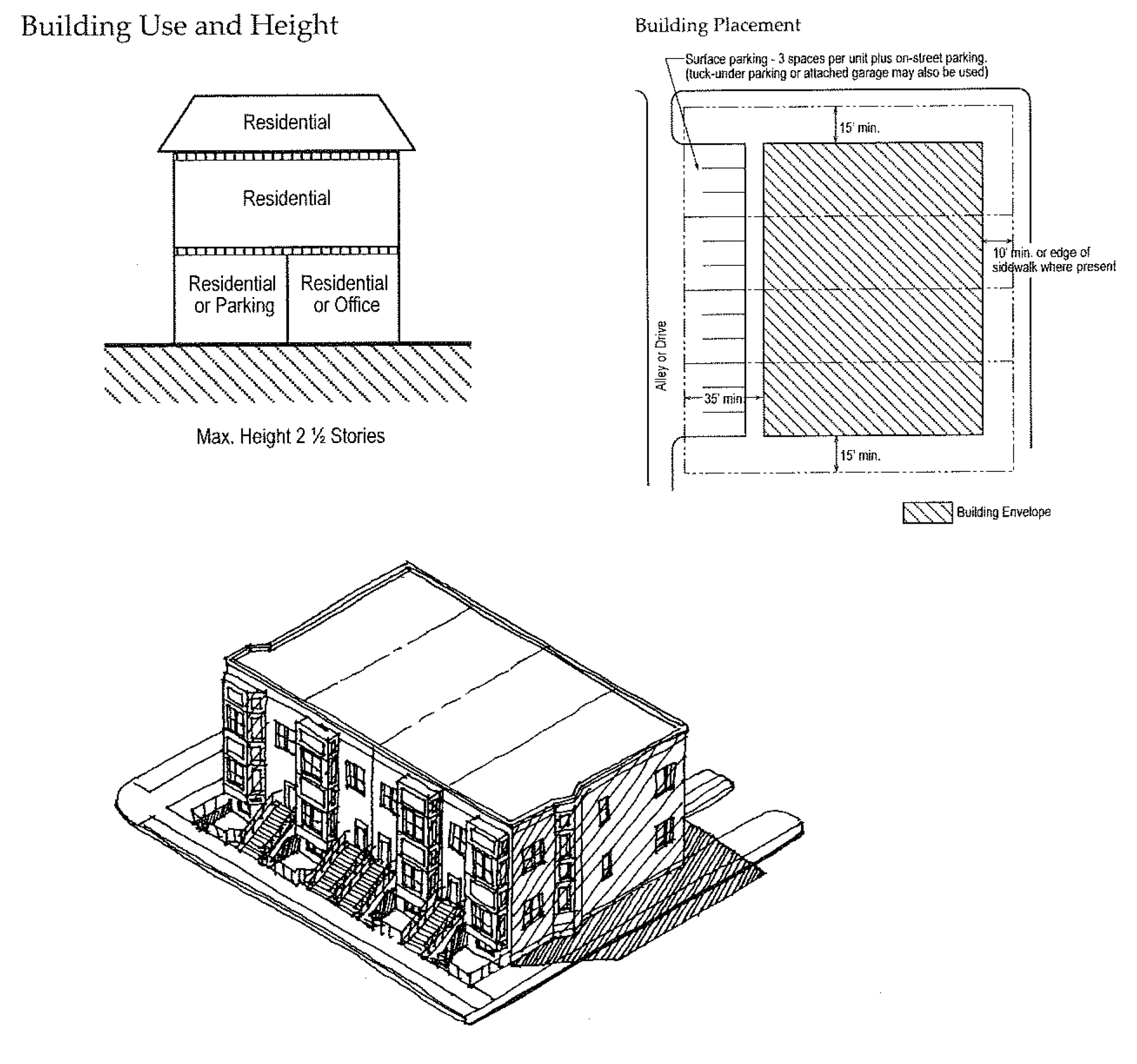
(5)
Building Type: Live-Work Units.
a.
Principal buildings are to be placed within the building envelope as defined in the graphic. Dwelling units may be located on separate lots, with party (shared) interior walls, or designed as condominiums on a single property. No more than 4 units may be attached in a single group.
b.
At least 60 percent of the length of the street-facing facade shall be set back at the minimum setback line as shown. The remaining 40 percent may be recessed to provide for building entries, courtyards, etc.
c.
Parking may be located on surface lots, to the rear of the principal building, or within detached garages, attached garages, or tuck-under spaces. Attached garages facing the primary street must be set back Attached garages facing the primary street must be set back no closer than the front of the principal building.
d.
Parking areas may be accessed from the street via a driveway or from the rear via an alley or driveway.
(6)
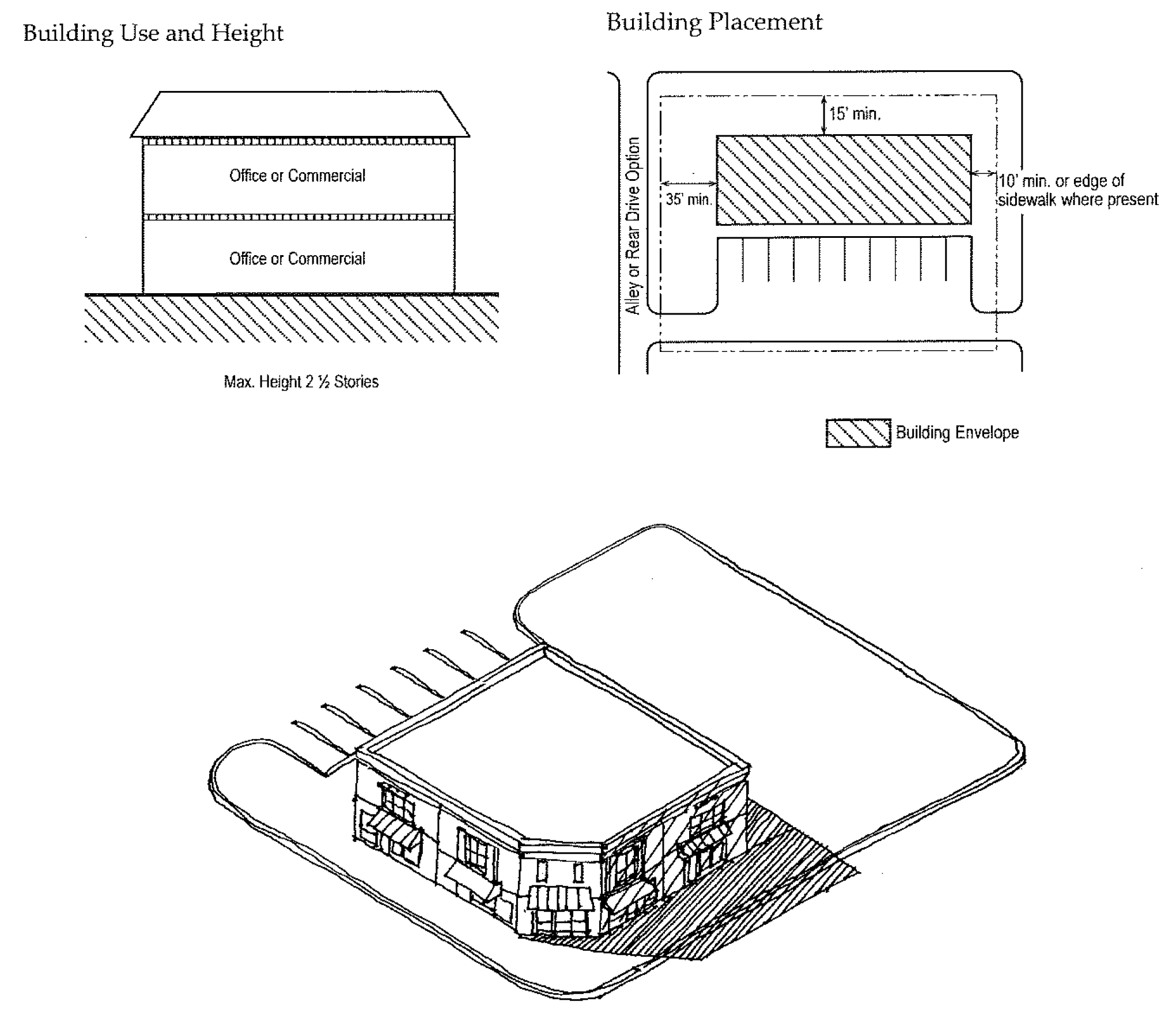
Building Type: Free-Standing Commercial or Office Building.
Side Yard Parking Example.
1.
The principal building is to be placed within the building envelope as defined on the graphic.
2.
At least 60 percent of the length of the street-facing facade shall be setback at the minimum setback as shown. The remaining 40 percent may be recessed to provide for building entries, courtyards, etc.
3.
Minimum building height to cornice shall be 22 feet, or 1½ stories.
4.
Parking may be located in the rear or side yard setbacks, but not between the principal building and the street. Parking areas shall be set back a minimum of ten feet from all lot lines. Parking areas adjacent to a street or walkway shall be separated from it by an ornamental fence or hedge between 3½ and four feet in height.
5.
Parking areas may be accessed from the street via a driveway or from the rear via an alley or driveway.
(7)
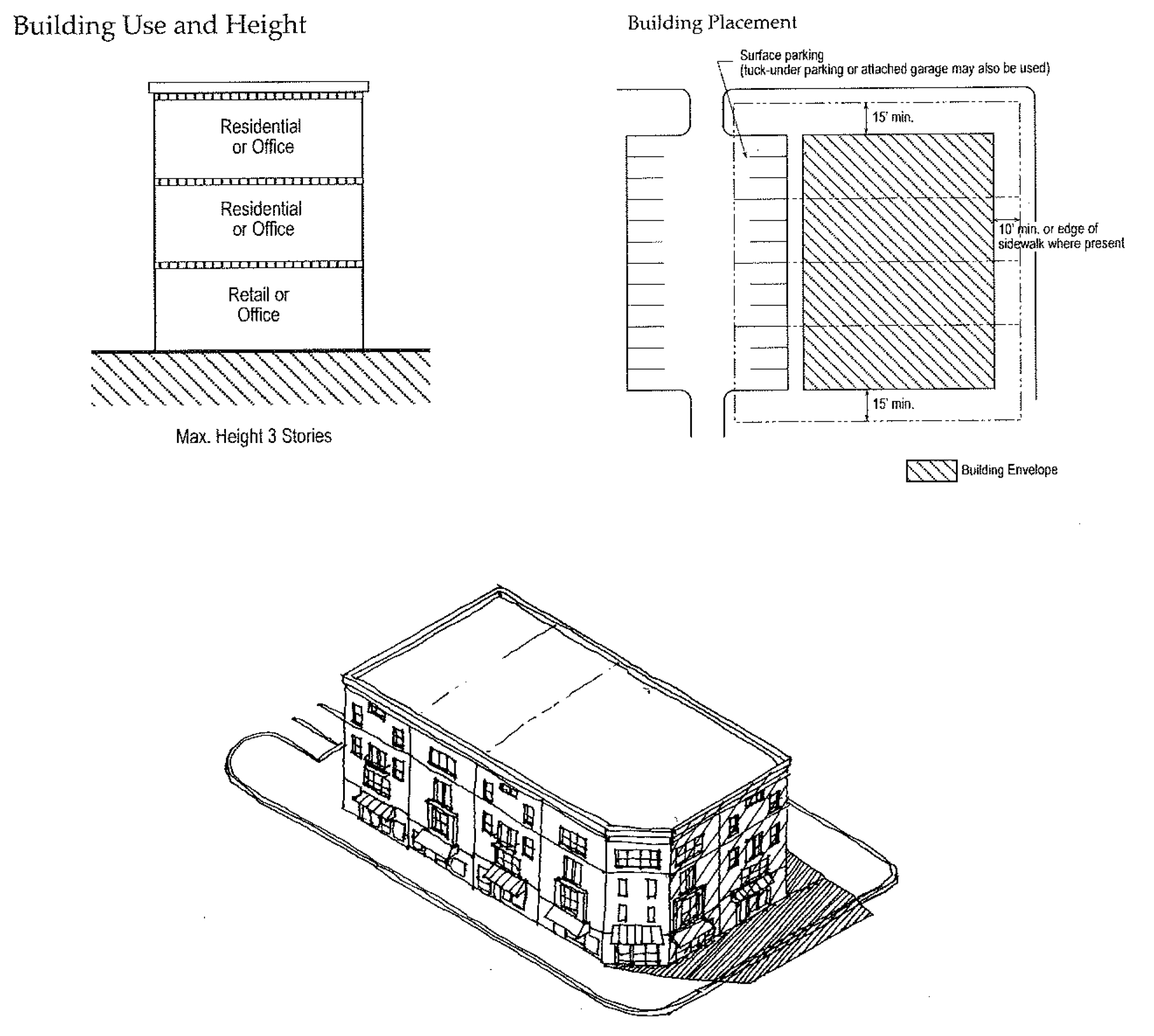
Building Type: Mixed Use.
a.
The principal building is to be placed within the building envelope as defined on the graphic. A maximum of six dwelling units may be located within a single mixed use building.
b.
At least 70 percent of the length of the street-facing facade shall be setback at the minimum setback as shown. The remaining 30 percent may be recessed to provide for building entries, courtyards, etc.
c.
Minimum building height shall be two stories.
d.
Parking may be located in the rear or side yard setbacks, but not between the principal building and the street. Parking areas shall be set back a minimum of ten feet from all lot lines. Parking areas adjacent to a street or walkway shall be separated from it by an ornamental fence or hedge between 3½ and four feet in height.
e.
Parking areas may be accessed from the street via a driveway or from the rear via an alley or driveway.
(Code 2006, ch. 41, app. D)

