
Los Angeles County Unincorporated
City Zoning Code
City Zoning Code
Division 2
DEFINITIONS
22.14.010 - A.
Accessory building or structure. A detached building or structure that is subordinate and incidental in use to the principal building or use on the same lot, and located in the same or a less restrictive zone.
Accessory commercial unit. A commercial use that is subordinate to the principal use and contained within, attached to, or detached from a residential structure on a residential-zoned lot and is open to customers, clients, or patrons.
Accessory dwelling unit and junior accessory dwelling unit. The following terms are defined for the purposes of Section 22.140.640 (Accessory Dwelling Units and Junior Accessory Dwelling Units):
Accessory dwelling unit. A dwelling unit with independent exterior access that is either attached to, located within the existing living area, or detached from and located on the same lot as a single-family or multi-family residence, including mixed use development. This term includes a senior citizen residence, a second unit, and an accessory dwelling unit approved prior to May 30, 2019. This term also includes a manufactured home, as defined in section 18007 of the California Health and Safety Code, and an efficiency unit, as defined in section 17958.1 of the California Health and Safety Code. An accessory dwelling unit is accessory to the principal residential use and does not count toward the allowable density. An accessory dwelling unit includes permanent provisions for living, sleeping, eating, cooking, and sanitation.
Junior accessory dwelling unit. A dwelling unit, with independent exterior access, that is no more than 500 square feet in size and contained entirely within the footprint of a single-family residence, including an attached garage. A junior accessory dwelling unit may include separate sanitation facilities, or may share sanitation facilities with the single-family residence.
Public transit. As defined in section 65852.2(j)(10) of the California Government Code.
Accessory overnight safe parking. Overnight use of existing parking spaces in a parking lot by persons living in vehicles.
Accessory use. A use customarily incidental to, related, and clearly subordinate to a principal use established on the same lot, which accessory use does not alter said principal use nor serve property other than the lot on which the principal use is located. "Appurtenant use" means the same as accessory use.
ADA. The federal Americans with Disabilities Act of 1990, and any subsequent amendments thereof.
Adjacent. Two or more lots separated only by an alley, street, highway, or recorded easement, or two or more objects that lie near or close to each other.
Adjoining. Two or more lots that share a common boundary line, or two or more objects that are in contact with each other. Lots which touch at corners only shall not be deemed adjoining. "Abut," "abutting," and "contiguous" shall mean the same as "adjoining."
Adult. A person who is 18 years of age or older.
Adult business. Any terms used in Chapter 22.150 (Adult Business Permits) that relate to an adult business which are defined in Section 7.92.020 of Title 7 (Business Licenses) of the County Code shall have the meaning set forth in that Section.
Adult residential facility. Any facility that provides 24-hours-a-day nonmedical care and supervision to adults, as defined and licensed under the regulations of the State of California.
Affordable housing and senior citizen housing. The following terms are defined for the purposes of Chapter 22.119 (Affordable Housing Replacement), Chapter 22.120 (Density Bonus), Chapter 22.121 (Inclusionary Housing), Chapter 22.128 (Supportive Housing), Chapter 22.130 (Transitional Housing), Section 22.140.660 (Motel Conversions, Temporary), Chapter 22.166 (Housing Permits), and [Section] 22.246.090 (Private Art in Public Development Program):
Affordable housing cost.
1.
Unless otherwise specified, as defined in section 50052.5 of the California Health and Safety Code.
2.
For middle income households, affordable housing cost shall not be less than 28 percent of the gross income of the household, and shall not exceed the product of 35 percent times 130 percent of area median income adjusted for family size appropriate for the unit.
Affordable housing set-aside. Dwelling units reserved for extremely low, very low, lower, moderate, or middle income households.
Affordable rent. As defined in section 50053 of the California Health and Safety Code.
Affordable replacement units. Dwelling units reserved for extremely low, very low, lower or moderate income households provided pursuant to Chapter 22.119 (Affordable Housing Replacement).
Affordable sale price. The maximum sale price of an affordable unit based on the affordable housing cost, as determined by the County.
Baseline dwelling units. See "Baseline dwelling units."
Child care facility. As defined in section 65915(h)(4) of the California Government Code.
Common interest development. As defined in section 4100 of the California Civil Code.
Density bonus. See "Density bonus."
Housing development. A residential development project, including mixed use developments. It may also be a subdivision or a common interest development, as defined in section 4100 of the California Civil Code, approved by the County and consisting of dwelling units or unimproved residential lots.
Incentive. A reduction of a development standard or a modification of a zoning code requirement, or other regulatory incentive or concession, that results in identifiable and actual cost reductions to provide for affordable housing costs or rents.
Income. See "Income" for the following:
Area median income.
Extremely low income.
Lower income.
Moderate income.
Middle income.
Very low income.
Income-restricted units. This term includes "affordable housing set-aside" and "affordable replacement units."
Major transit stop. As defined in section 21155(b) of the California Public Resources Code.
Religious institution affiliated housing development project. A housing development project that meets all of the following requirements:
1.
It is located on one or more contiguous lots that are each owned, entirely, whether directly or through a wholly owned company or corporation, by a religious institution.
2.
It qualifies as being near collocated religious-use parking by being on or adjacent to a lot with religious-use parking or by being located within one-tenth of a mile of a lot that contains religious-use parking.
3.
It qualifies for a density bonus under section 65915 of the California Government Code and this Chapter 22.120.
Senior citizen. A person who is 55 years of age or older, pursuant to sections 51.3, 798.76 or 799.5 of the California Civil Code, as applicable.
Senior citizen housing.
Mobilehome park for senior citizens. A mobilehome park that limits residency based on age requirements, pursuant to section 798.76 or 799.5 of the California Civil Code.
Senior citizen housing development. As defined in section 51.3(b) of the California Civil Code.
Special needs housing. As defined in section 51312 of the California Health and Safety Code.
Specific adverse impact. As defined in Section 65589.5(d)(2) of the California Government Code.
Supportive housing. As defined in section 50675.14 of the California Health and Safety Code.
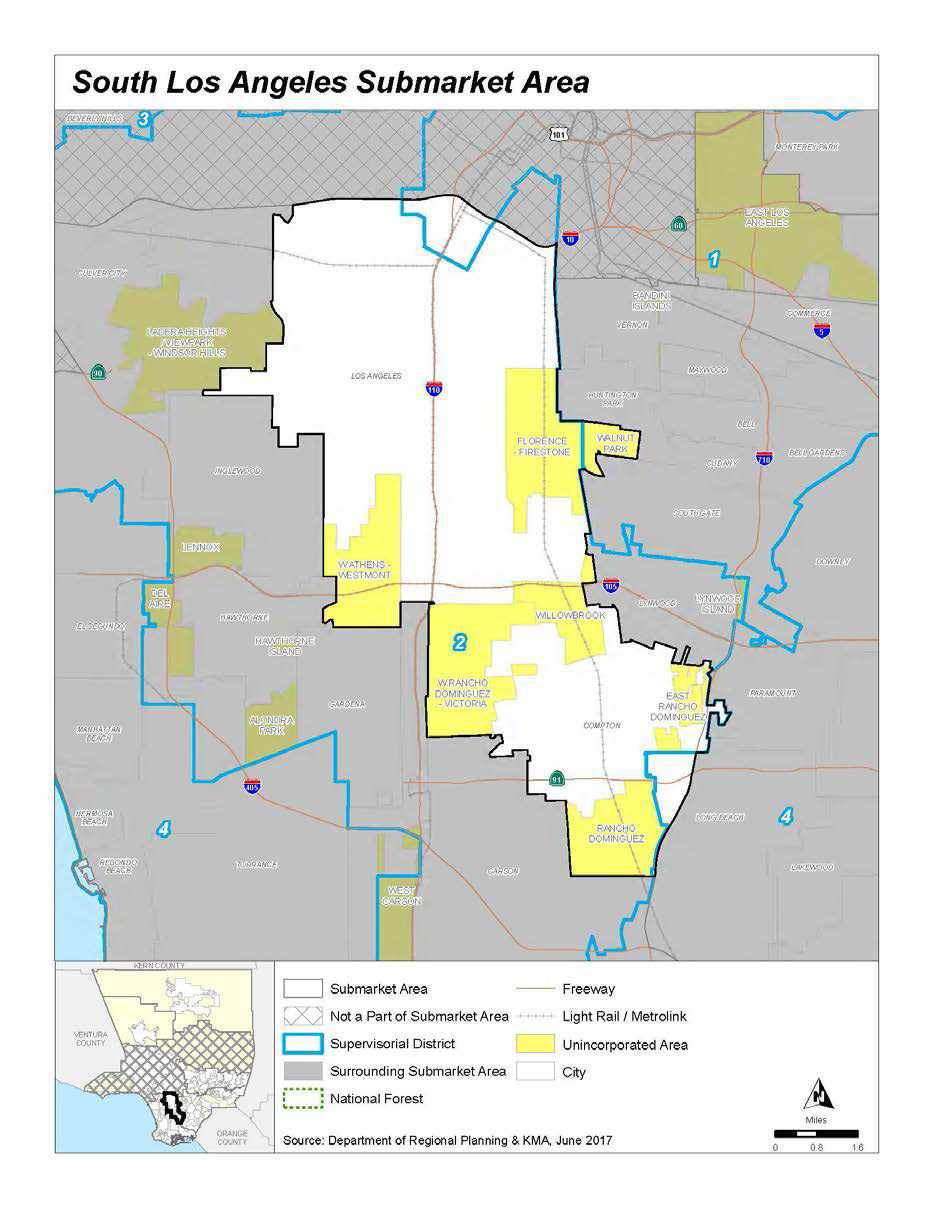
Submarket area. A geographic area with similar land use and real estate markets, as depicted in Figures 22.14.010-A through 22.14.010-F, below.
FIGURE 22.14.010-A: ANTELOPE VALLEY SUBMARKET AREA
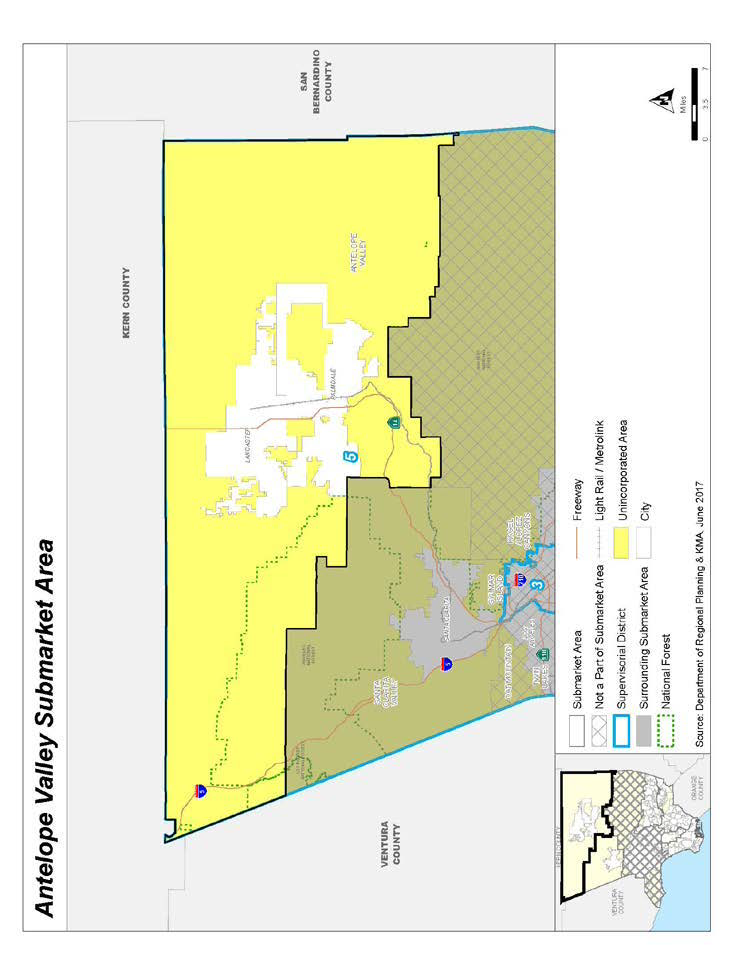
FIGURE 22.14.010-B: COASTAL SOUTH LOS ANGELES SUBMARKET AREA
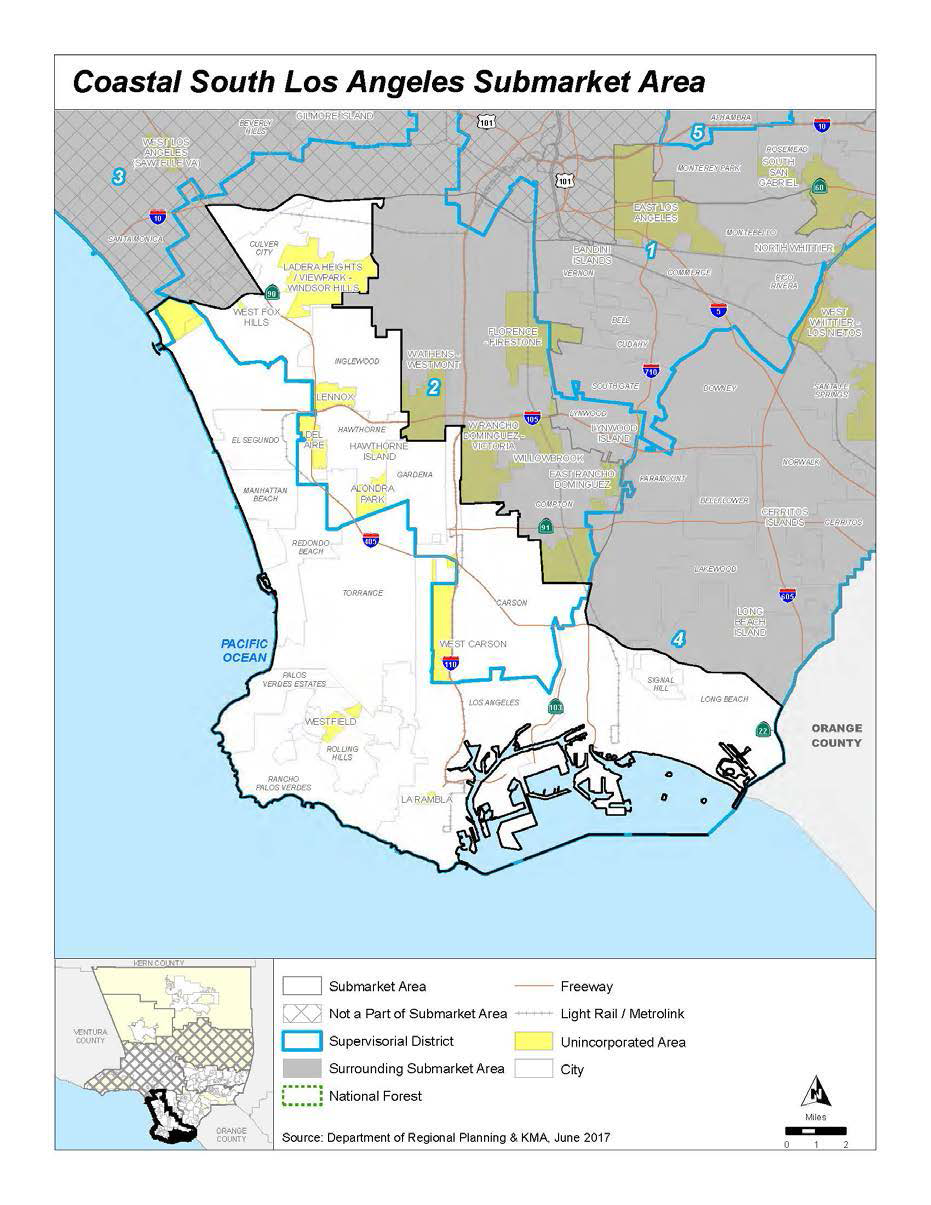
FIGURE 22.14.010-C: EAST LOS ANGELES/GATEWAY SUBMARKET AREA
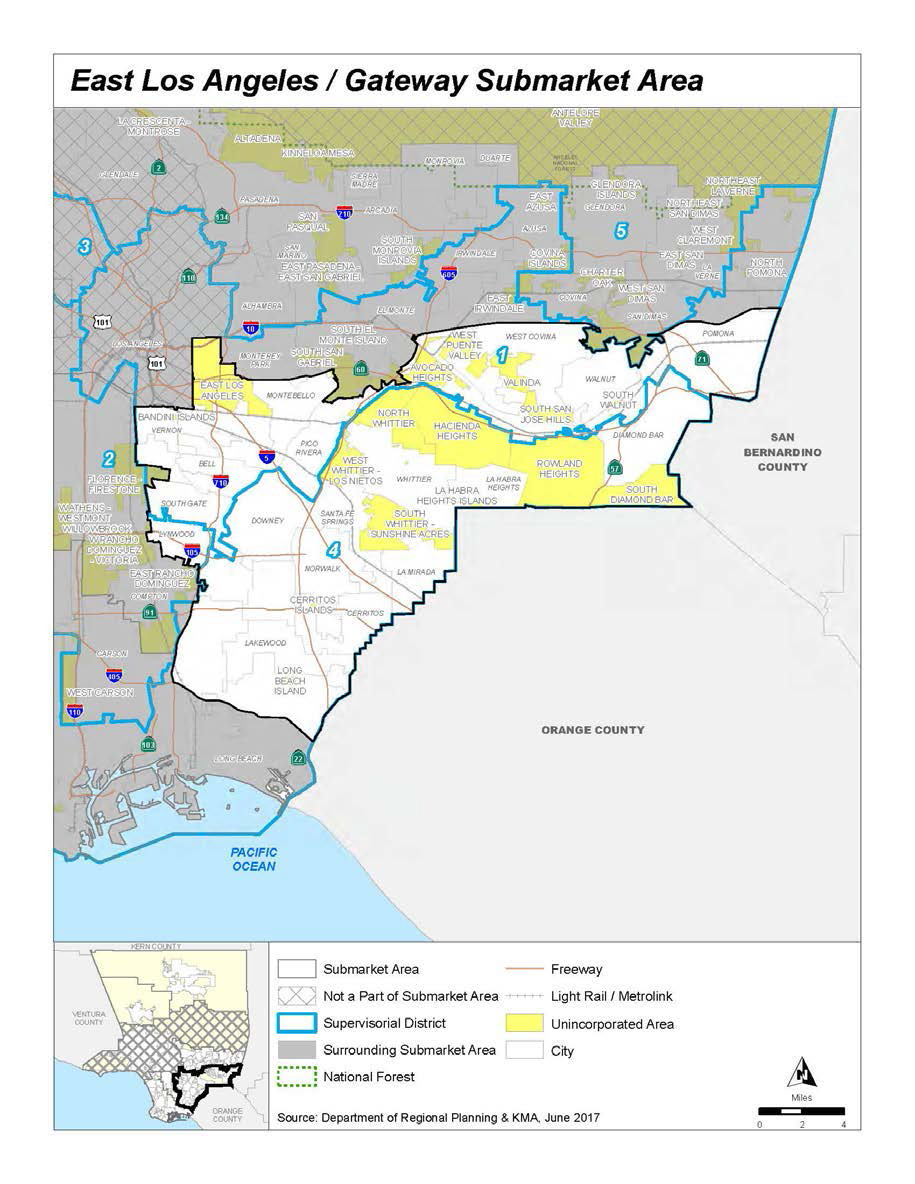
FIGURE 22.14.010-D: SAN GABRIEL VALLEY SUBMARKET AREA
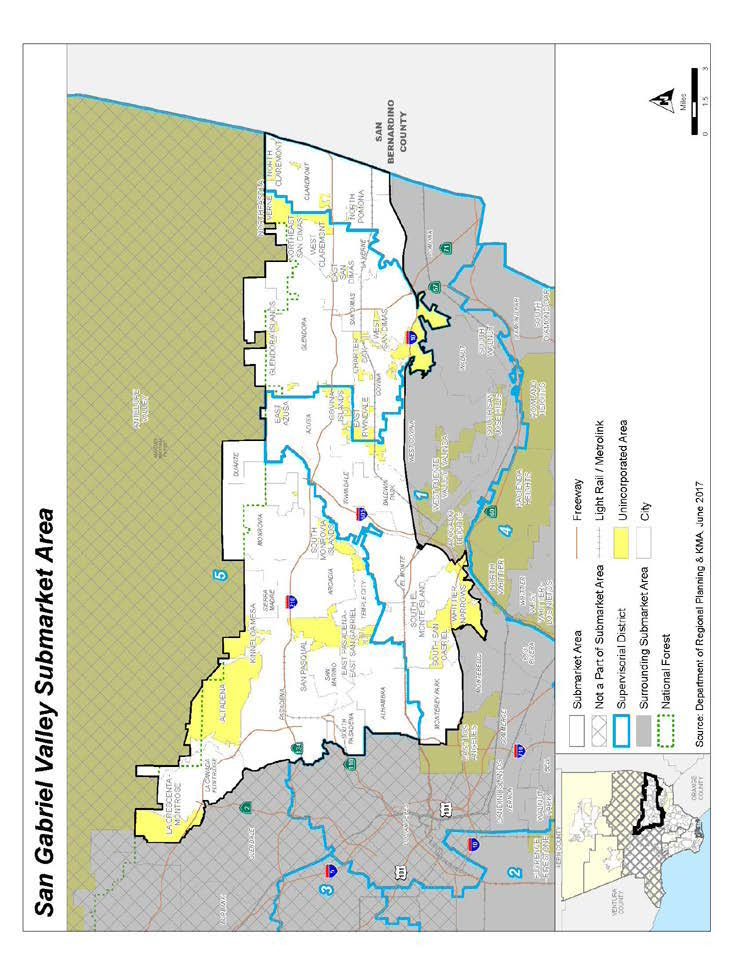
FIGURE 22.14.010-E: SANTA CLARITA VALLEY SUBMARKET AREA
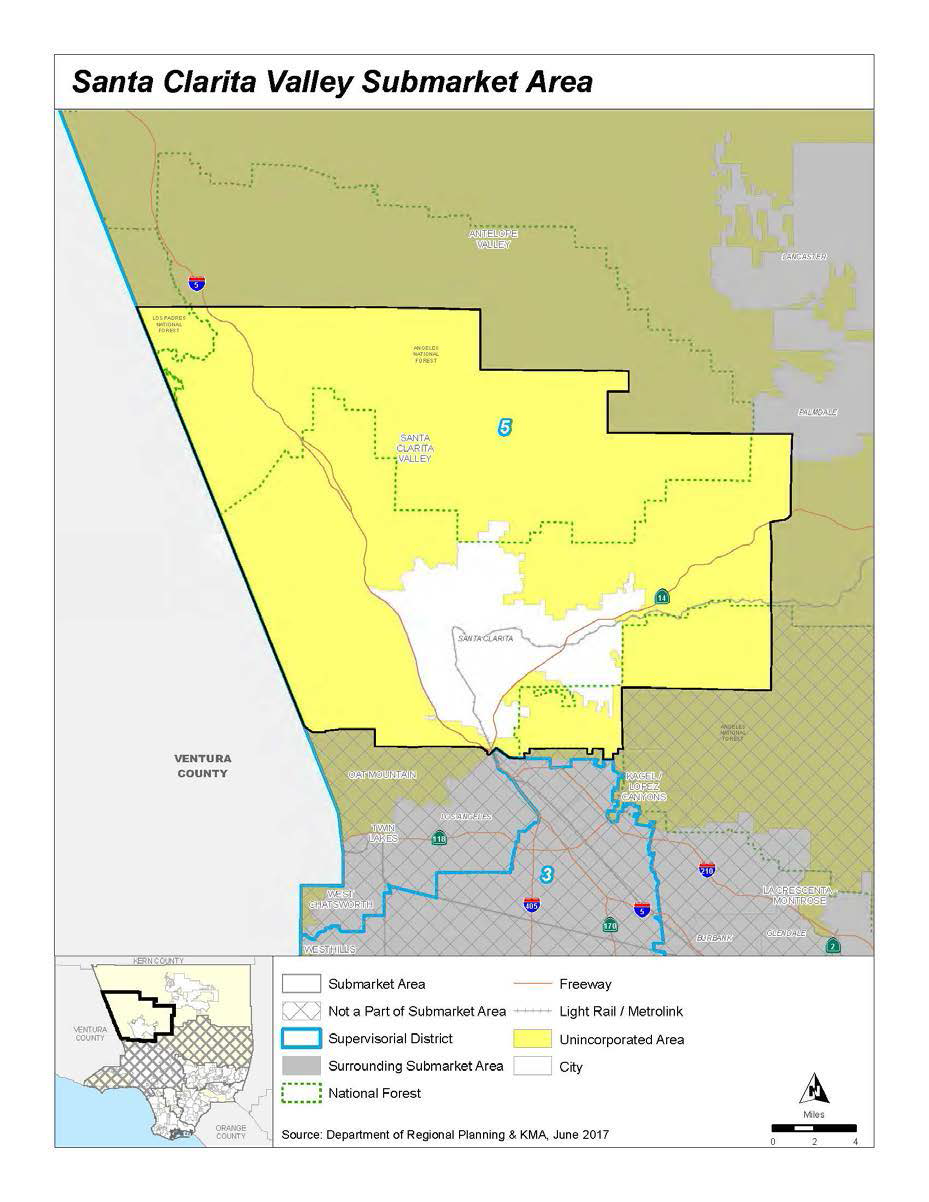
FIGURE 22.14.010-F: SOUTH LOS ANGELES SUBMARKET AREA
Waiver or reduction of development standards. A waiver or reduction of development standards that has the effect of physically precluding the construction of a project at the densities or with the incentives permitted by Chapter 22.120 (Density Bonus) or Chapter 22.121 (Inclusionary Housing).
Supportive housing. See "Supportive housing" in Section 22.14.190 (S), below.
Transitional housing. See "Transitional housing" in Section 22.14.200 (T), below.
Aggrieved person. Any person who, in person or through a representative, appeared at a public hearing of the Coastal Commission or the County in connection with the decision or action appealed, or who, by other appropriate means prior to a hearing, informed the Coastal Commission or the County of the nature of his concerns or who for good cause was unable to do either. "Aggrieved person" includes the applicant for a permit and, in the case of an approval of a local coastal program, the County.
Agricultural pest control service. A business that engages in eradicating or controlling any pests liable to be dangerous or detrimental to agriculture. The business also engages in preventing, destroying, repelling, mitigating, or correcting any disorder of plants. This term shall not include a business that engage in termite eradication and/or pest control for homes and commercial structures.
Aircraft. Any manned contrivance used or designed for navigation of, or flight in, the air requiring certification and registration as prescribed by federal statute or regulation. Notwithstanding the foregoing provisions of this definition, manned lighter-than-air balloons and ultralight vehicles as defined in the regulations of the Federal Aviation Administration (14 C.F.R. Part 103), whether or not certificated by the Federal Aviation Administration, shall not be considered to be "aircraft."
Airport. This term shall have the same meaning as set forth in section 21013 (State Aeronautics Act) of the California Public Utilities Code.
Alcoholic Beverage Sales. The following terms are defined solely for Section 22.140.030 (Alcoholic Beverage Sales):
Fresh produce. Any edible portion of a fresh fruit or vegetable, whether offered for sale whole or pre-sliced.
General purpose retailer. A retail establishment, such as a big box store, supermarket, grocery store, drug store, or convenience store which sells alcoholic beverages and food products.
Whole grains. Any food from either:
1.
A single ingredient product of the seed or fruits of various food plants, such as brown rice, whole oats, quinoa, or barley; or
2.
A pre-packaged grain product, such as whole wheat bread or whole wheat crackers, in which the word "whole" appears first in the ingredients list of the product.
Alley. A public or private right-of-way less than 40 feet wide that provides vehicular access to the side or rear of properties abutting a street or highway.
Alternative Financial Services. The following terms are defined solely for Section 22.140.690 (Alternative Financial Services):
Alternative financial service. A deferred deposit transaction (payday) lender, check casher, or motor vehicle (auto) title lender. This term shall not include a financial institution with a State or federal charter, such as a bank, credit union, savings and loan association, or industrial loan company.
Check casher. A business that for compensation engages, in whole or in part, in the cashing of checks, warrants, drafts, money orders, or other commercial paper serving the same purpose. This term shall not include a retail seller engaged primarily in the business of selling consumer goods, including consumables, to retail buyers that cashes checks or issues money orders for a fee not exceeding two dollars as a service to its customers that is incidental to its main purpose or business. This term includes businesses subject to Title 1.6f (Check Cashers) of Part 4 of Division 3 of the California Civil Code.
Deferred deposit transaction (payday) lender. A business that offers, originates, or makes a deferred deposit transaction, where such business defers the deposit of a customer's personal check until a specific date, pursuant to a written agreement for a fee or other charge. This term includes businesses subject to Division 10 (California Deferred Deposit Transaction Law) of the California Financial Code.
Motor vehicle (auto) title lender. A business that provides a loan secured by the title of a motor vehicle. This term includes businesses subject to Division 9 (California Financing Law) of the California Financial Code that provide consumer or commercial loans secured in whole or in part by the title of a motor vehicle.
Amateur Radio Antennas. The following terms are defined solely for Section 22.140.040 (Amateur Radio Antennas):
Amateur radio antenna. Any antenna, including a whip antenna, which is used for transmitting and receiving radio signals in conjunction with an amateur radio station licensed by the Federal Communications Commission.
Antenna structure. An antenna and its supporting mast or tower, if any.
Mast. A pole of wood or metal, or a tower fabricated of metal, used to support an amateur radio antenna and maintain it at the proper elevation.
Whip antenna. An antenna consisting of a single, slender, rod-like element, which is supported only at or near its base.
Ambulance emergency services facility. A facility operated by a non-public agency where ambulances are located and dispatched for responding to emergency calls received from public agencies. Such a facility may operate 24 hours a day and may include sleeping facilities, a locker room, restrooms with showers, and a lunchroom. Ambulances shall not be washed or maintained at any such facility. For the definition of ambulance emergency services facility, "ambulance" shall be as defined in Section 7.16.010.B of Title 7 (Business Licenses) of the County Code and "public agency" shall be as defined in Section 7.02.280 of Title 7 (Business Licenses) of the County Code.
Ambulance services facility. A facility operated by a non-public agency where ambulances or ambulettes are located and dispatched for the purpose of responding to emergency and non-emergency calls from public agencies or any other individuals or entities. Such a facility may operate 24 hours a day and may include sleeping facilities, a locker room, restrooms with showers, and a lunchroom. Ambulances and ambulettes may be washed and maintained at any such facility. For the definition of ambulance services facility, "ambulance" shall be as defined in Section 7.16.010.B of Title 7 (Business Licenses) of the County Code; "ambulette" shall be as defined in Section 7.17.010.A of Title 7 (Business Licenses) of the County Code; and "public agency" shall be as defined in Section 7.02.280 of Title 7 (Business Licenses) of the County Code.
Ammunition dealer. See "Gun dealer."
Amphitheater. An unroofed or partially enclosed building or structure used for public assembly and/or entertainment, such as sporting events, theatrical performances, concerts and recitals, circuses, stock shows, and conventions. This term includes stadium, sports arena, circus, convention, and outdoor theater. This term shall not include an entertainment park or its accessory building or structures.
Anaerobic digestion facility. See organic waste recycling facility.
Aquaculture. A form of agriculture that involves the controlled growing and harvesting of fish, shellfish, and/or plants in marine, brackish, and/or fresh water. Aquaculture products are agricultural products, and aquaculture facilities and land uses shall be treated as agricultural facilities and land uses in all planning and permit-issuing decisions governed by this Title 22.
Arcade. A covered walkway with a line of columns, posts, or arches along one side and attached to a building on the opposite side.
Arcade, game. Any premises where five or more games of skill or amusement devices are offered. Games of skill and amusement devices include pinball machines, electric or video game machines, contests, devices, pool tables, and other tables, boards, or other amusement devices. Operation of these games or devices may require depositing of any coin, token, plate, disc, slug, card, or key into any slot or receptacle, or by the payment of a fee. This term includes penny arcade.
Arcade, movie. This term shall have the same meaning as in Chapter 7.64 (Picture Arcades) of Title 7 of the County Code. This term shall not include a "theater" or a motion picture theater, as defined in Chapter 7.82 (Theaters) of Title 7 of the County Code.
Architectural element. Architectural design features that embody a style, design, and arrangement of general components on the exterior of any building or structure, including, but not limited to, building materials, textures, colors, and the style and type of all windows, doors, lights, signs, and porches.
Architectural material. Any building material which is used for construction purposes.
Area of special flood hazard. The land within a flood plain, as identified by the Flood Insurance Rate Map (FIRM) of Los Angeles County, subject to a one percent or greater chance of flooding in any given year.
Articulation. Breaking up of large, otherwise featureless spaces, masses, or volumes.
Assessor. References to Assessor shall mean the County Office of the Assessor, unless otherwise specified.
Automobile dismantling yard. See recycling processing facility.
Automobile impound yard. Any premises used for the temporary storage of vehicles which have been legally removed or impounded at the direction of a peace officer or by judicial order from public or private property as prescribed by law.
Automobile service station. Any premises where gasoline, other petroleum products, and other vehicle fuel are sold or where light maintenance activities such as engine tune-ups, oil changes, and other lubrication, minor repairs, and carburetor cleaning are conducted. Automobile service stations shall not include premises where heavy automobile maintenance activities, such as engine overhauls, automobile painting, or body and fender work are conducted.
(Ord. 2025-0029 § 2, 2025; Ord. 2024-0049 § 1, 2024; Ord. 2024-0032 § 3, 2024; Ord. 2023-0060 § 1, 2023; Ord. 2023-0050 § 1, 2023; Ord. 2023-0038 § 2, 2023; Ord. 2022-0023 § 1, 2022; Ord. 2021-0047 § 2, 2021;Ord. 2021-0018 § 5, 2021; Ord. 2021-0017 § 1, 2021; Ord. 2021-0011 § 1, 2021; Ord. 2021-0010 § 6, 2021; Ord. 2020-0064 § 1, 2020; Ord. 2020-0059 § 1, 2020; Ord. 2019-0053 § 5, 2019; Ord. 2019-0020 § 1, 2019; Ord. 2019-0004 § 1, 2019.)
22.14.020 - B.
Backfill. Earth, overburden, mine waste, or imported material used to replace material removed during mining operations.
Bar or cocktail lounge. Any premises where alcoholic beverages are sold for on-site consumption and is not accessory to a restaurant. This term includes tavern.
Baseline dwelling units. The maximum number of dwelling units permitted by the General Plan land use designation.
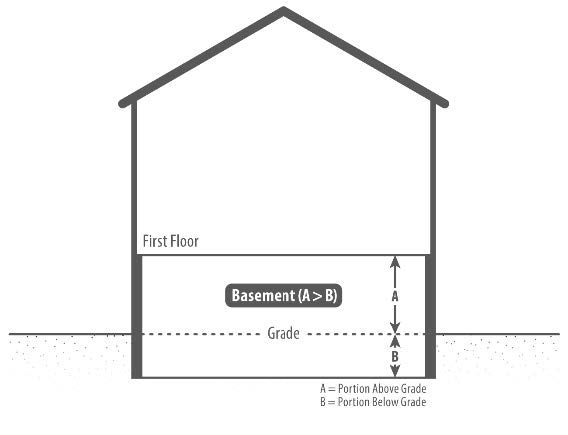
Basement. The portion of a building between floor and ceiling, that is partly below and partly above grade, but so located that the vertical distance from grade to the floor below is less than the vertical distance from grade to ceiling. For example, see Figure 22.14.020-A, below.
FIGURE 22.14.020-A: BASEMENT
Bench. A level area that interrupts a slope, with the intent to hold or limit rock falls, to provide working surfaces or access, and to control erosion.
Bicycle parking.
Bicycle parking space. A permanently maintained bicycle rack or other similar device which is designed for the secure storage of a standard size bicycle.
Bicycle rack. A fixture on which one or more bicycles can be secured.
Long-term bicycle parking. Bicycle parking intended for a period of two hours or longer, appropriate for residents, employees, transit users, and visitors to hotels in the nearby areas.
Short-term bicycle parking. Bicycle parking intended for a period of two hours or less, appropriate for persons making short visits to commercial establishments such as grocery and convenience stores, restaurants, coffee shops, bars and clubs, and offices such as medical, dental, and post offices.
Bioretention area. A bioretention area is a typically depressed area that captures and treats stormwater from adjacent impervious surfaces with soil media and vegetation. Stormwater runoff is filtered by the plants and infiltrates into the local aquifer or is captured and released into a suitable outlet.
Bioswale. A vegetated, shallow, landscaped depression designed to capture, treat, and infiltrate stormwater runoff as it moves downstream.
Boarding house. As defined in Section 7.50.010 of Title 7 (Business Licenses) of the County Code, a lodging house or other facility maintained, advertised or held out to the public as a place where sleeping or rooming accommodations are available, with or without meals. This term includes "rooming house" and "fraternity and sorority houses."
Body piercing. The creation of an opening in the human body for inserting jewelry or other decoration. This term includes, but is not limited to, the piercing of an ear, lip, tongue, nose, or eyebrow. This term does not include piercing an ear with a disposable, single-use stud or solid needle that is applied using a mechanical device to force the needle or stud through the ear. Nothing in this definition shall be deemed to restrict the activities of any licensed physician or surgeon.
Body piercing parlor. Any place of business where body piercing occurs.
Bollard. A single low post or one-of-a-series set to prevent motor vehicles from entering an area. May or may not include an integrated light.
Bookstore. Any premises which has a substantial or significant portion of its stock in trade books, magazines, periodicals, pamphlets, or newspapers.
Borrow pit. Any place on a lot where dirt, soil, clay, decomposed granite, or other similar material is removed by excavation or otherwise for any purpose other than surface mining operations, or a grading project with off-site transport.
Breezeway. A breezeway is a vehicle pass-through connected to a residential structure, often connecting two sections of livable space.
Brewery. A beer manufacturing facility that produces beer by the fermentation of any infusion or decoction of barley, malt, hops, or any other similar product, or any combination thereof in water and includes ale, porter, brown, stout, lager beer, small beer, and strong beer but does not include rice wine. Beer may be produced using the following materials as adjuncts in fermentation: honey, fruit, fruit juice, fruit concentrate, herbs, spices, and other food materials. Beer aged in an empty wooden barrel previously used to contain wine or distilled spirits shall be defined exclusively as "beer" and shall not be considered a dilution or mixture of any other alcoholic beverage.
Microbrewery. A small-scale brewery operation that produces no more than 15,000 barrels a year. Its beer products are primarily intended for local or regional consumption.
Building. A structure that has a roof supported by columns or by walls and intended for the shelter, housing or enclosure of persons, animals, belongings, or property.
Building envelope. Refers to the maximum three-dimensional volume a building may occupy on a site or parcel, measured by taking the site or parcel area, excluding required setbacks extruded to the maximum height allowed by the zone.
Building frontage. The exterior building wall of a ground floor business establishment on the side of the building that fronts or is oriented towards a public street, highway, or parkway. "Building frontage" shall be measured continuously along the building wall for the entire length of the business establishment, including any portion not parallel to the remainder of the wall.
Building or structure, nonconforming due to standards. Any primary or accessory building or structure that was lawfully established and in compliance with all applicable ordinances and laws at the time the ordinance codified in this title or any amendment thereto became effective, but which, due to the application of Title 22 or any amendment thereto, no longer complies with all the applicable standards of development in the zone in which it is located. This term does not include a building or structure located in the Coastal Zone which is consistent with the provisions of this Title 22 with the exception of obtaining a Coastal Development Permit.
Building or structure, nonconforming due to use. Any primary or accessory building or structure that was lawfully established and in compliance with all applicable ordinances and laws at the time the ordinance codified in this Title 22 or any amendment thereto became effective, but which, due to the application of this Title 22 or any amendment thereto, is designed for a use not listed as a principal, accessory, or temporary use in the zone in which it is located. This term shall also include buildings or structures designed for uses reclassified from one permit or review to a more restrictive permit or review. This term does not include a building or structure located in the Coastal Zone which is consistent with the provisions of this Title 22 with the exception of obtaining a Coastal Development Permit.
Building type. An illustrative category describing the general form of a building. A building may fall under one or more building types, and a development may be comprised of several building types.
Bungalow court. A development which consists of multiple detached buildings organized around a shared courtyard. Each building may include multiple units, such as a duplex or triplex configuration.
(Ord. 2024-0049 § 2, 2024; Ord. 2024-0032 § 4, 2024; Ord. 2023-0050 § 2, 2023; Ord. 2019-0004 § 1, 2019.)
22.14.030 - C.
Campground. A lot that is designed or used for tent camping including picnic areas, but excludes any structures intended for permanent human occupancy.
Cannabis.
Cannabis. All parts of the plant Cannabis sativa Linnaeus, Cannabis indica, or Cannabis ruderalis, or any other strain or varietal of the genus Cannabis that may exist or hereafter be discovered or developed that has psychoactive or medicinal properties, whether growing or already harvested, including the seeds thereof. "Cannabis" also means marijuana as defined by Section 11018 of the California Health and Safety Code as enacted by Chapter 1407 of the Statutes of 1972. "Cannabis" does not mean "industrial hemp" as defined by Section 81000 of the California Food and Agricultural Code or Section 11018.5 of the California Health and Safety Code. For the purpose of this Title 22, cannabis is not a crop.
Cannabis activity. This term means and includes cultivation, manufacturing, processing, storing, testing, labeling, distribution, selling, giving away, or providing medical and non-medical cannabis, including actions and endeavors undertaken by three or more persons pursuant to the Medical Marijuana Program Act.
Cannabis business. This term means and includes cultivation, manufacturing, processing, storing, testing, labeling, distribution, selling, giving away, or providing medical and non-medical cannabis, for commercial purposes.
Cannabis cultivation. The planting, growing, harvesting, drying, curing, grading, or trimming of cannabis.
Cannabis distribution. The procurement, sale, and transport of cannabis and cannabis products between cannabis entities.
Cannabis manufacturing. The compounding, blending, processing, extracting, infusing, or otherwise making or preparing a cannabis product.
Cannabis products. Cannabis that has undergone a process whereby the plant material has been transformed into a concentrate, including but not limited to, concentrated cannabis, or an edible or topical product containing cannabis or concentrated cannabis and may contain other ingredients.
Cannabis testing. A laboratory facility or entity that offers or performs tests of cannabis or cannabis products.
Marijuana. See "Cannabis."
Medical cannabis. Cannabis and any cannabis product, including but not limited to, flowers, buds, oils, tinctures, concentrates, extractions, and edibles intended to be used by medical cannabis patients in California pursuant to the Compassionate Use Act of 1996 (Proposition 215), pursuant to Section 11362.5 of the California Health and Safety Code. Medical cannabis does not include industrial hemp as defined by Section 81000 of the California Food and Agricultural Code or Section 11018.5 of the California Health and Safety Code.
Medical marijuana. See "Medical cannabis."
Non-medical cannabis. Cannabis and any cannabis product, including but not limited to, flowers, buds, oils, tinctures, concentrates, extractions, and edibles intended to be sold for use by adults 21 years or older, pursuant to the Medical and Adult-Use Cannabis Regulation and Safety Act (MAUCRSA).
Personal cannabis cultivation. The planting, growing, harvesting, drying, curing, grading, or trimming of cannabis, done or performed by a person for personal, non-commercial purposes, pursuant to MAUCRSA.
Caretaker residence. A dwelling unit for a person residing on the premises of an employer and who is receiving meaningful compensation to assume the primary responsibility for the necessary repair, maintenance, supervision, or security of the real or personal property of the employer which is located on the same or contiguous lots.
Cargo shipping container. A reusable transport and storage container designed to be carried on semi-truck trailers, container ships, and freight trains.
CDC. References to Community Development Commission of the County of Los Angeles, unless otherwise specified.
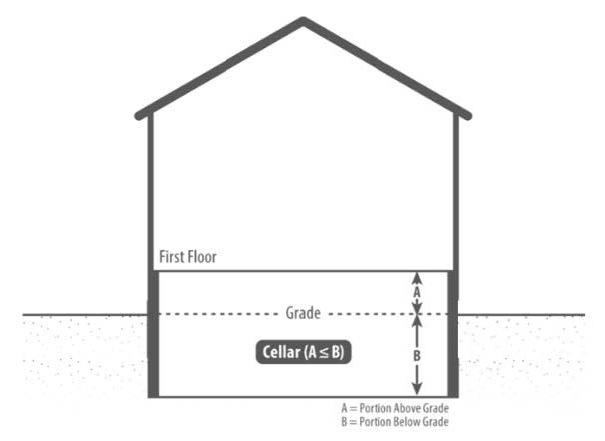
Cellar. The portion of a building between floor and ceiling which is wholly or partly below grade but so located that the vertical distance from grade to the floor below is equal to or greater than the vertical distance from grade to ceiling. For example, see Figure 22.14.030-A, below.
FIGURE 22.14.030-A: CELLAR
Cemetery. A place for the permanent interment of dead human bodies or the cremated remains thereof, including a crematory. This term may include "burial park" for earth interments, "mausoleum" for vault or crypt interments, "columbarium" for cinerary interments or a combination of these uses.
Centerline. A line designated by the Director of Public Works for any proposed or dedicated public way which, in whole or in part, is included in any such highway. Such centerlines are shown on the County Surveyor's Maps or County Surveyor's Field Maps on file with Public Works. Where two or more centerlines are shown on any map in this series of maps, the one labeled "proposed centerline" is deemed the centerline of the highway.
CEQA. The California Environmental Quality Act, commencing with Section 21000 of the California Public Resources Code.
Chapter. A Chapter within Title 22 unless some other ordinance or statute is mentioned.
Child. A person under 18 years old.
Child care center. A facility other than a large family child care home or a small family child care home in which less than 24-hour-per-day non-medical care and supervision is provided for children in a group setting as defined and licensed under Section 1596.750 of the California Health and Safety Code.
CNG fueling station. See "Compressed natural gas fueling station."
Coastal Act. The California Coastal Act of 1976, commencing with Section 30000 of the California Public Resources Code.
Coastal Commission. The California Coastal Commission created by and operating under the Coastal Act of 1976.
Coastal development permit. A permit for any development within the Coastal Zone that is required pursuant to Section 22.56.2270 (Established—Purpose) through Section 22.56.2550 (Enforcement).
Coastal zone. That portion in the County of Los Angeles of the land, offshore islands, and water area of the State of California as shown on the detailed coastal maps prepared by the California Coastal Commission pursuant to Chapters 2 and 2.5 of the Coastal Act of 1976, as amended.
Coastal-dependent use. Any use which requires a site on, or adjacent to, the sea to be able to function at all.
Coastal-related use. Any use that is dependent on a coastal-dependent development or use.
Commercial parking lot or building. A lot, building, area, or structure established or operated as a business providing off-street parking for a fee or charge.
Commission. The Regional Planning Commission of the County of Los Angeles.
Communication equipment building. A building that houses operating electrical and mechanical equipment necessary for conducting a public utility communications business, with or without personnel.
Community garden. A garden for multiple users established on a single or multiple plots of land for the cultivation of fruits, vegetables, plants, flowers, and/or herbs for the collective benefit of its users. All accessory storage structures for materials and equipment for the community garden shall be completely enclosed, and shall be located no less than six feet from any habitable structure. The sale of products on-site at a community garden is prohibited, unless otherwise specifically permitted in the zone.
Compressed natural gas. A fuel produced by compressing natural gas to less than one percent of its volume at standard atmospheric pressure.
Compressed natural gas fueling station. A vehicle service station that dispenses compressed natural gas.
Condition of use. A development standard determined to be necessary to permit harmonious classification of a use as listed in a zone, and therefore, a prerequisite, to place, or for application to place, such use as classified. A condition of use shall be subject to the provisions of Section 22.158.060 (Conditions of Approval), but shall be deemed a mandatory requirement, except if modified in compliance with this Title 22.
Conditional use. Uses which because of characteristics peculiar to them, or because of size, technological processes, or types of equipment, or because of their location with reference to surroundings, street or highway width, traffic generation, or other demands on public services, require discretionary consideration relative to placement at specific locations in the zones where classified to ensure proper integration with other existing or permitted uses in the same zones.
Condominium conversion. The conversion of rental dwelling units to condominiums, as defined in section 4125 of the California Civil Code, that are dwelling units.
Cool pavement. As defined in Section 202 of the California Green Building Standards Code, this term includes, but is not limited to, high albedo pavements and coatings, vegetative surfaces, porous or pervious pavements that allow water infiltration, and pavements shaded by trees and other sources of shade.
Cornice. Any molded projection which crowns or finishes the part to which it is affixed.
County. The County of Los Angeles.
County Code. The Los Angeles County Code.
Courtyard building. A building consisting of multiple attached units that provides common open space in the form of a shared, often centrally located courtyard.
Cut slope (face). A bank or slope that has been created by removing material below the pre-existing ground surface.
(Ord. 2024-0049 § 3, 2024; Ord. 2024-0028 § 2, 2024; Ord. 2022-0023 § 2, 2022; Ord. 2021-0018 § 6, 2021; Ord. 2019-0004 § 1, 2019.)
22.14.040 - D.
Dairy. Any place or premises where milk is produced for sale or other distribution from three or more lactating cows or seven or more lactating goats.
Day care. A facility licensed by the California Department of Social Services that provides non-medical care and supervision of adults or children for periods of less than 24 hours.
Adult day care center. As defined by section 1502(a)(2) of the California Health and Safety Code, a licensed facility that provides non-medical care and supervision for adult clients on less than a 24-hour basis. This term includes "adult day program" and "respite care."
Child day care center. As defined by section 1596.76 of the California Health and Safety Code, a licensed child day care facility other than a family child care home, that provides non-medical care and supervision for children on less than a 24-hour basis. This term includes "infant center," "preschool," "extended day care facility," and "school-age child care center."
Large family child care home. A home that regularly provides non-medical care, protection, and supervision for nine to 14 children in the provider's own home, for periods of less than 24 hours per day as defined and licensed under the regulations of the State of California.
Small family child care home. A home that regularly provides non-medical care, protection, and supervision for eight or fewer children in the provider's own home for periods of less than 24 hours per day, as defined and licensed under the regulations of the State of California.
Decommissioning. The discontinuance of a specific use; the removal, including but not limited to safe storage, disposal, or recycling, of all structures, equipment, footings, fencing, and any other on-site or off-site components associated therewith; and site restoration.
Density. The number of dwelling units per unit of land area.
Density bonus. A density increase over the otherwise maximum allowable residential density.
Density-controlled development. The concentration of dwelling units on one or more portions of a lot resulting in the remainder of the lot being free of buildings or structures, as opposed to development spread throughout the entire lot. This type of development shall be designed by computing density on a project level rather than a lot-by-lot basis, and by the use of smaller lots than are customarily permitted in the zone in which the development is proposed, while retaining the remaining portion of such lot as permanent open space.
Department. References to the Department are to the Department of Regional Planning, unless otherwise specified.
Development. In the Coastal Zone, development means the placement or erection of any solid material or structure on land, in or under water; discharge or disposal of any dredged material or of any gaseous, liquid, solid, or thermal waste; grading, removing, dredging, mining, or extraction of any materials; change in the density or intensity of use of land, including, but not limited to, subdivisions pursuant to the Subdivision Map Act (commencing with section 66410 of the California Government Code), any other division of land, including lot splits, except where the land division is brought about in connection with the purchase of such land by a public agency for public recreational use; change in the intensity of use of water or of access thereto; construction, reconstruction, demolition, or alteration of the size of any structure including any facility of any private, public, or municipal utility; and the removal or harvesting of major vegetation other than for agricultural purposes or kelp harvesting. For this term "structure" includes, but is not limited to, any building, road, pipe, flume, conduit, siphon, aqueduct, telephone line, and electrical power transmission and distribution line.
Director. The Director of the Department of Regional Planning of the County of Los Angeles, unless otherwise specified.
Disability. A condition which renders an individual unable to engage in normal activities by reason of a medically determinable physical or mental impairment which can be expected to last for a continuous period for not less than 12 months.
Disability rehabilitation and training center. A facility that provides specialized services for a person with a disability such as, but not limited to, developmental, orthopedic, or sensory motor disability, or for the social, personal, or economic habilitation or rehabilitation of a person with such disability. Such services may include, but are not limited to: day and residential care facilities, personal, psychological, and socio-legal counseling, physical and special education, employment, job placement, speech therapy, vocational training, and transportation.
Disaster Recovery. The following terms are defined solely for Chapter 22.256 (Disaster Recovery) and Chapter 22.258 (Temporary Housing After a Disaster):
Declaration of emergency. A proclamation of local emergency by the Board, or by a designated official and ratified by the Board; a proclamation of a state of emergency by the Governor of the State of California; or a major disaster or emergency declaration by the President of the United States.
Disaster. A wildfire, flood, earthquake, or other natural or human-caused event, which damages, destroys, or renders uninhabitable structures or property, and where a declaration of emergency has been made.
Like-for-like replacement. The rebuild, repair, or replacement of a legally-established structure that was damaged or destroyed. Such like-for-like replacement structure shall be in the same location; have the same or smaller floor area, size, height, and bulk; and cover the same footprint as the prior legally-established structure.
Temporary housing. Recreational vehicles, manufactured homes, and mobilehomes, as defined in sections 18010, 18007, and 18008 of the California Health and Safety Code utilized for a legally-established dwelling unit that was destroyed or rendered uninhabitable by a disaster.
Domestic animal. An animal which is commonly maintained in residence with humans.
Domestic violence shelter. Housing that offers temporary accommodations and services to survivors of domestic violence, as defined in section 18291(c) of the California Welfare and Institutions Code.
Double-loaded units. Residential units located along both sides of a corridor.
Dripline. A vertical line extending from the outermost portion of a tree canopy to the ground.
Drive-through establishments, drive-through facilities, and drive-through services. A retail or service business where services may be obtained by motorists without leaving their vehicles. Examples include automated teller machines, banks, pharmacies, and food service establishments.
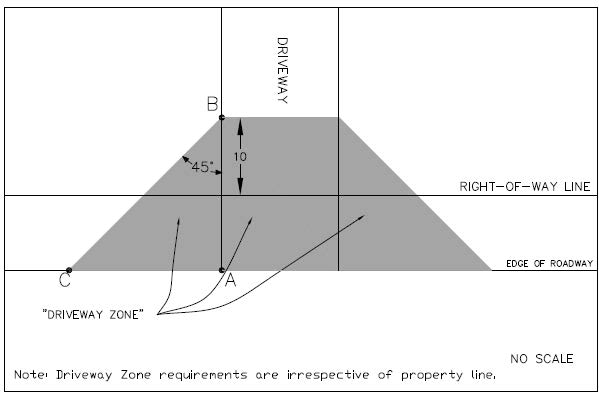
Driveway zone. The triangular areas created on both sides of a driveway delineated by the following three points, including the portion of the driveway located between the aforementioned triangular areas:
1.
Point "A" is the point at which the existing edge of the driveway meets the edge of the roadway or top of the curb, if present;
2.
Point "B" is the point along the edge of the driveway located 10 feet back from the right-of-way line towards the property; and
3.
Point "C" is the point at which a line that is extended from Point "B" at a 45-degree angle meets the edge of the roadway or top of curb, if present.
DRIVEWAY ZONE
Dry cleaning establishment. Any premises equipped to perform the service of dry cleaning as defined in the California Fire Code. This term may include a dry cleaning agency, a retail or wholesale dry cleaning plant, or self-service or coin-operated dry cleaning.
Retail dry cleaning plant. A plant where gross sales consist of at least 51 percent of direct sales to persons other than licensed dry cleaners.
Wholesale dry cleaning plant. A plant where gross sales consist of at least 51 percent of sales to licensed dry cleaners.
Dwelling unit. One or more habitable rooms in a building, or portion thereof, designed or intended to be used or used for occupancy by one family for living and sleeping quarters and containing only one kitchen. This term includes:
1.
One or more habitable rooms within a mobilehome which are designed to be occupied by one family with facilities for living, sleeping, cooking, eating, and sanitation; and
2.
Any habitable room used for sleeping accommodations which contains a bar sink or gas, electrical, or water outlets designed, used for, or intended to be used for cooking facilities, except a guest room or suite in a hotel specifically approved by a Conditional Use Permit (Chapter 22.158).
(Ord. 2024-0049 § 4, 2024; Ord. 2024-0032 § 5, 2024; Ord. 2023-0025 § 1, 2023; Ord. 2022-0023 § 3, 2022; Ord. 2021-0017 § 2, 2021; Ord. 2019-0053 § 6, 2019; Ord. 2019-0004 § 1, 2019.)
22.14.050 - E.
Earth station. Structures comprised of one or more large parabolic reflectors which may be mounted on a circular control building and all accessory equipment necessary for the receiving, amplifying, or transmitting of microwave signals in connection with a public utility communication route or system between such facilities and satellites in space.
Electric distribution substation. A facility that contains an assembly of equipment that is part of a system for the distribution of electric power, where electric energy is received at a sub-transmission voltage and transformed to a lower voltage for distribution for general consumer use.
Electric transmission substation. A facility that contains an assembly of equipment that is part of a system for the transmission of electric power where electric energy is received at a very high voltage from its generating source. The facility then transforms the energy to a lower sub-transmission voltage to supply or distribute electric power to large-scale users, to interchange connections with other power producing agencies, or to supply such power to electric distribution substations for transformation to a lower voltage for distribution to small-scale users.
Electric vehicle. As defined in Section 202 of the California Green Building Standards Code, an automotive-type vehicle for on-road use, such as passenger automobiles, buses, trucks, vans, neighborhood electric vehicles, electric motorcycles, and the like primarily powered by an electric motor that draws current from a rechargeable storage battery, fuel cell, photovoltaic array, or other source of electric current. Plug-in hybrid electric vehicles (PHEV) are "electric vehicles." Off-road, self-propelled electric vehicles, such as industrial trucks, hoists, lifts, transports, golf carts, airline ground support equipment, tractors boats, and the like, are not "electric vehicles."
Electric vehicle charging space. As defined in Section 202 of the California Green Building Standards Code, a space intended for charging electric vehicles.
Electric vehicle supply equipment. As defined in Section 202 of the California Green Building Standards Code, the conductors, including the ungrounded, grounded, and equipment grounding conductors and the electric vehicle connectors, attachment plugs, and all other fitting devices, power outlets, or apparatus installed specifically for transferring energy between the premise's wiring and the electric vehicle.
Emergency shelter. Housing that offers temporary accommodations and services to people experiencing homelessness, as defined in section 50801(e) of the California Health and Safety Code. As used herein, "temporary accommodations" means that persons may reside at the shelter for a period not to exceed six months.
Accessory emergency shelter. An emergency shelter that serves as an ancillary use to the permitted principal use on the same lot(s).
Enclosed building. A building that is enclosed on all sides.
Entertainment park. An entertainment or amusement complex developed as a regional tourist attraction and organized around a central theme. This term includes amusement rides and attractions, tours or exhibitions, and all related accessory uses, buildings, and structures designed and operated for patron participation and pleasure.
Environmental document. An environmental impact report, mitigated negative declaration, or a negative declaration prepared pursuant to CEQA.
Environmental Review Board (ERB). The ERB is a group, appointed by the Director, of qualified professionals with technical expertise in resource management. The ERB reviews development proposals within the Santa Monica Mountains Coastal Zone to ensure their consistency with the Santa Monica Mountains Local Coastal Program's provisions regarding biological resources.
Escort bureau. Any business or agency which, for a fee, commission, hire, reward or profit, furnishes or offers to furnish escorts who consort with others about any place of public resort or within any private quarters.
Executive Director. References to Executive Director shall mean the Executive Director of the California Coastal Commission.
Explosive and explosives. Any substance or combination of substances that is commonly used for detonation and which, upon exposure to any external force or condition, is capable of a relatively instantaneous release of gas and heat. These terms shall include, but shall not necessarily be limited to, all of the following:
1.
Substances determined to be Class A and Class B explosives, as classified by the United States Department of Transportation.
2.
Nitro carbo nitrate substances (blasting agent), as classified by the United States Department of Transportation.
3.
Any material designated as an explosive by California Department of Forestry and Fire Protection (CAL FIRE).
4.
Certain Class C explosives, as designated by the United States Department of Transportation, when listed in regulations adopted by CAL FIRE.
This term shall not include the following:
1.
Small arms ammunition of .75 caliber or less when designated as a Class C explosive by the United States Department of Transportation; and
2.
Fireworks regulated under Part 2 (Fireworks and Pyrotechnic Devices) of Division 11 of the California Health and Safety Code.
Expressway. A highway or road shown on the Highway Plan, designed primarily for through traffic with full or partial control of access. Expressways are divided and between 120 feet and 180 feet in width, which can accommodate six to ten traffic lanes.
(Ord. 2021-0017 § 3, 2021; Ord. 2019-0004 § 1, 2019.)
22.14.060 - F.
Façade. A building's exterior face that expresses the character of the building and serves as the primary form of protection against external weather elements.
Family. One or more persons living together as a single housekeeping unit in a dwelling unit. This term shall not include institutional group living situations, as dormitories, fraternities, sororities, monasteries, convents, or residential care facilities, nor does it include such commercial group living arrangements, such as boarding houses, hotels, or motels. For this term, single housekeeping unit means the functional equivalent of a traditional family, whose members:
1.
Are an interactive group of persons jointly occupying a single dwelling unit, including the joint use of and responsibility for common areas;
2.
Share household activities and responsibilities such as meals, chores, household maintenance, and expenses; and
3.
If the dwelling unit is rented, all adult residents have chosen to jointly occupy the entire premises of the dwelling unit, under a single written lease with joint use and responsibility for the premises, and the makeup of the household occupying the dwelling unit is determined by the residents of the dwelling unit rather than the landlord or property manager.
Farmers' market. A California certified farmers' market, as defined in Section 113742 of the California Health and Safety Code, where producers sell farm products or value-added farm products directly to consumers, which:
1.
Is operated by a local government agency, nonprofit organization or similar community group, or one or more certified producers holding a certified producer certificate from the Agricultural Commissioner;
2.
Is approved by the Agricultural Commissioner to operate at the location at issue;
3.
Is open to the public; and
4.
Has a designated farmers' market manager.
Farmers' market manager. A person who is responsible for the operation of a farmers' market.
Farmworker Housing. The following terms are defined solely for Section 22.140.230 (Farmworker Housing):
Farmworker. An agricultural employee as defined in section 1140.4(b) of the California Labor Code.
Farmworker dwelling unit. A single-family residential unit that accommodates five or six farmworkers at any one time and shall be occupied exclusively by these farmworkers.
Farmworker housing. A housing accommodation developed for and/or provided to a minimum of five farmworkers, and shall consist of any living quarters, dwelling, boarding house, tent, barracks, bunkhouse, maintenance-of-way car, mobilehome, manufactured home, recreational vehicle, travel trailer, or other housing accommodation maintained in one or more buildings and on one or more sites. Farmworker housing shall consist of either:
1.
A farmworker dwelling unit; or
2.
A farmworker housing complex.
Farmworker housing complex. Farmworker housing other than a farmworker dwelling unit that:
1.
Contains a maximum of 36 beds if the housing consists of any group living quarters, such as barracks or a bunkhouse, and is occupied exclusively by farmworkers; or
2.
Contains a maximum of 12 residential units, occupied exclusively by farmworkers and their households, if the housing does not consist of any group living quarters.
Fenestration. The arrangement, proportioning, and design of windows and doors in a building.
Fertilizer manufacture. The process of producing, selling, or distributing any fertilizing material, including commercial fertilizer, agricultural mineral, auxiliary soil and plant substance, organic input material, or packaged soil amendment, as defined by California Food and Agricultural Code section 14533.
Fill slope. A bank or slope created by placing material on top of the existing ground surface.
Fire Department. References to Fire Department shall mean the County of Los Angeles Fire Department, unless otherwise specified.
Flex block. A term for a common modern apartment or condominium building type. These are typically three to seven stories in height, double-loaded and/or single-loaded, and on a podium with parking below. Buildings may be all-residential or include a mix of street-facing retail or commercial units.
Foster family home. A residential facility providing 24-hour care for six or fewer foster children which is the residence of the foster parents, including their family, in whose care the foster children have been placed, as defined and licensed under the regulations of the County.
Fourplex. Four dwelling units in one building, attached side-by-side or stacked on top of the other.
Freeway. A highway where the owners of abutting lands have limited, restricted, or no right or easement of access to or from their abutting lands. Such highway is identified to be in conformance with the California Streets and Highways Code. This term includes principal roadways, interchange roadways connecting one freeway with another, and entrance and exit ramps connecting the freeway with other highways, but does not include frontage roadways.
Frontage. The exterior building wall on the side of the building that fronts or is oriented towards a public or private street, highway, or parkway. For commercial uses, frontage shall be measured continuously along the building wall for the entire length of the business establishment, including any portion not parallel to the remainder of the wall.
(Ord. 2024-0049 § 5, 2024; Ord. 2022-0023 § 4, 2022; Ord. 2019-0004 § 1, 2019.)
22.14.070 - G.
Gas manufacture. The process of extracting natural gas, producing biogas, or producing a combustible gaseous mixture (as carbureted water gas or producer gas) made from coal, coke, or petroleum products for use as fuel, illuminant, or raw materials for synthesis.
General Plan. The General Plan of the County of Los Angeles, including all adopted elements and area, community, neighborhood, specific, and local coastal plans.
Grade. The approved grade of a lot at the time such lot is created, except when excavation or fill is proposed. When excavation occurs after the lot is created, the grade of the excavated area shall be the grade after the excavation. Where fill material has been placed on a lot after such lot is created, grade shall be the grade prior to the placement of the fill or as determined by the Director. Grade within the perimeter of a structure shall be considered to transition uniformly from the lowest to the highest points of grade at the perimeter of the structure.
Grading project, off-site transport. Any excavation or fill, or a combination of both, necessary and incidental to impending building construction, or other lawful development which will require the removal from, or importation to, a lot of more than 10,000 cubic yards of dirt, soil, sand, gravel, rock, clay, decomposed granite, or other minerals along a transport route having more than 20 occupied dwelling units (in any combination of single-family or two-family residences, apartment houses, or mobilehomes), a hospital, or an accredited public or private school located within a parallel corridor 300 feet wide on each side of and measured from the edge of the existing right-of-way for a distance equal to the extent of such route, or for a distance of 2,640 feet, whichever distance is less. "Impending building construction or development" as used here shall mean the initiation of such construction or development within one year.
Grading project, on-site. Any excavation or fill, or a combination of both, requiring a grading permit by Title 26 (Building Code) of the County Code, which will involve a volume of earth greater than 100,000 cubic yards, whether filed as one permit or the cumulative total of more than one permit on the same lot within a one-year period. An on-site grading project shall not include any excavation or fill, or a combination of both, within the boundaries of any cemetery legally established or as depicted in a valid Cemetery Permit approved pursuant to Chapter 22.154 (Cemetery Permits).
Ground-mounted utility-scale solar energy facility. A device or devices affixed to the ground and any accessory equipment or structures that converts solar energy into electrical or thermal energy primarily for off-site use. Such facility shall not use concentrated solar thermal collectors that use lenses or mirrors to focus or reflect a large area of sunlight onto a small area.
Group home for children. A facility that provides 24-hours-a-day, non-medical care and supervision to children in a structured environment, with services provided at least in part by staff employed by the licensee, as defined and licensed under the regulations of the State of California. For the purpose of this term, a licensee means the adult, firm, partnership, association, corporation, county, city, or other public agency having the authority and responsibility for the operation of a licensed community care facility.
Guest house. Living quarters within a detached accessory building located on the same premises as the main single family dwelling on the lot, for use by temporary guests or persons employed on the premises, such as domestic help. Such quarters shall have no plumbing facilities of any kind except for heating and air conditioning facilities, and a bathroom. This term includes "detached living quarters."
Guest ranch. A property operated as a ranch with facilities for overnight accommodation, including guest rooms for rent, eating facilities, meeting rooms, and outdoor recreational facilities such as horseback riding, swimming, or hiking.
Guest room. A room that is designed, used, or intended to be used, as a temporary sleeping accommodation for any person, and which does not contain a kitchen, except as otherwise specified by this Title 22.
Guest suite. A combination of two or more guest rooms.
Gun dealer. Any person, firm, corporation, or other business enterprise required by California Penal Code section 26500 to obtain a business license to engage in the business of selling, transferring, leasing, trading, accepting on consignment, or advertising for sale, transfer, lease, trade, or consignment to the public any portable firearm, including a rifle, shotgun, or revolver, accessory, component, or any device designed, modified, or capable of being used as a weapon, from which is expelled through barrel a projectile by the force of an explosion or other form of combustion, as defined in Chapter 7.46 (Definitions) of the County Code, as amended. This definition is inclusive of "ammunition dealer," which means any person, firm, corporation, or other business enterprise holding a current ammunition vendor license issued, pursuant to California Penal Code section 30385.
(Ord. 2023-0060 § 2, 2023; Ord. 2022-0023 § 5, 2022; Ord. 2019-0004 § 1, 2019.)
22.14.080 - H.
Habitable room. An enclosing subdivision in a building commonly used for sleeping, living, cooking, or dining purposes, excluding closets, pantries, bath or toilet rooms, service rooms, connecting corridors, laundries, unfinished attics, foyers, storage space, cellars, utility rooms, garages, carports, sheds, agricultural accessory structures, and similar spaces. For applying parking space requirements:
1.
If any of the above-mentioned rooms or spaces equals or exceeds 90 square feet of floor area, and could be used for living or sleeping purposes, such room or space shall be considered a habitable room; or
2.
If any room or space equals or exceeds 150 square feet of floor area and is designed to be capable of being used for both cooking and living, living and sleeping, or cooking and sleeping purposes, such room or space shall be considered as two habitable rooms. A bachelor or efficiency apartment is exempt from this calculation. Floor area shall be measured as clear floor space, exclusive of fixed or built-in cabinets or appliances.
Health retreat. Any use providing a preventive and rehabilitative health care program on a live-in basis and offering dietary education and control as well as physical therapy, including gymnasium and other exercise equipment, solariums, yoga, swimming and outdoor recreational activities. This term shall not include a hospital, medical office or clinic, or nudist camp.
Hearing Examiner. A person who is an employee of, or under contract to, the Department who has been appointed by the Director and confirmed by the Board to perform the duties of Hearing Examiner described by this Title 22 relating to conducting public hearings, receiving public testimony, and making recommendations to the Commission.
Hearing Officer. An employee of the Department who is appointed by the Director and confirmed by the Board to perform the duties described by this Title 22 relating to conducting public hearings and making determinations on land use permits and variances.
Heat island effect. As defined in Section 202 of the California Green Building Standards Code. "Heat island effect" and "urban heat island effect" refer to measurable elevated temperatures in developed areas, as compared to more rural surroundings. Temperatures in developed areas are affected by absorption of heat by hardscapes and radiation of heat into surrounding areas, resulting in local climate changes. Heat islands are influenced by geographic location and by local weather patterns, with effects changing on a daily or seasonal basis.
Heavy equipment training school. Any premises for training operators in the use of earth-moving and construction equipment, including motor graders, bulldozers, rollers, earth-movers, cable and hydraulic shovels, front loaders, drilling equipment, pile drivers, standing and truck cranes, forklifts, welders, and similar equipment.
Height of building or structure. The plumb line distance from the point being measured to the grade.
Heliport. A site used, designed, or intended to be used for the landing and takeoff of helicopters, for embarking and disembarking passengers and cargo, with safety and navigation markings and facilities as required by the Federal Aviation Administration and California Department of Transportation, Division of Aeronautics. This term includes accessory facilities for passengers, cargo, and storage; and maintenance of helicopters.
Helistop. A site used, designed, or intended to be used for the landing and takeoff of helicopters, for embarking and disembarking passengers and cargo, with safety and navigation markings, and facilities as required by the Federal Aviation Administration and California Department of Transportation, Division of Aeronautics. This term shall not include any accessory facilities except for passenger shelters.
Highway. A road identified on the Highway Plan as an expressway, a major highway, a secondary highway, a limited secondary highway, or a parkway.
Highway line. The right-of-way line established for an alley, street, or highway by this Title 22. Such line shares the same boundary with the lot line on a property adjoining a fully widened alley, street, or highway, with the exception of a limited secondary highway or a street that uses an alternative cross-section as described in Sections 21.24.065 and 21.24.090 of Title 21 (Subdivisions) of the County Code.
Hillside Management Area (HMA). Land which contains terrain with a natural slope gradient of 25 percent or steeper.
Hillside Management Areas (HMAs). The following terms are defined solely for Chapter 22.104 (Hillside Management Areas):
Development. On-site or off-site activity as follows:
1.
Construction or expansion of any structure or impervious surface, such as hardscape;
2.
Construction or expansion of any street, highway, or other access road;
3.
Construction or expansion of any infrastructure, such as water and sewerage lines, drainage facilities, telephone lines, and electrical power transmission and distribution lines;
4.
Grading, such as cut, fill, or combination thereof, including off-site grading;
5.
Removal of any vegetation, including fuel modification;
6.
A subdivision; or
7.
A lot line adjustment.
Hillside constraints. Topographic features such as slopes, hilltops, and ridgelines that may contain hazards and, when developed, may cause visible alteration of the topographic feature and its views.
Hillside Design Guidelines. The provisions set forth as an appendix to Chapter 22.104 and as maintained in the office of the Director, that provides guidance for development in HMAs.
Improved open space.
1.
Parks, playgrounds, golf courses, and other recreational facilities;
2.
Riding, hiking, and mountain biking trails;
3.
Pedestrian paseos;
4.
Community gardens;
5.
Vegetated swales;
6.
Water quality basins and debris basins, provided that such basins are not concrete; or
7.
Any open space that is subject to fuel modification.
Natural open space. Any open space that will remain in an undisturbed natural state or any area that will be restored to a natural state to the satisfaction of the Director.
Natural slope. Any slope created through or by natural erosion processes; any slope not previously altered by anthropogenic activities such as cut slopes due to grading, fill slopes constructed with native or import materials, and excavation; or, any slope not created as part of a development.
Rural land use designation. Any designation in the General Plan or in any Area, Community, Neighborhood, or Specific Plan, such as Open Space or National Forest land use designation, that allows residential uses at a maximum density of one dwelling unit per gross acre or allows rural or commercial uses.
Rural transition site. A project site where at least 51 percent of the project boundary adjoins land with a rural land use designation.
Sensitive hillside design techniques. Any site planning, engineering, landscaping, and/or architectural design techniques that, individually or combined, minimize horizontal and vertical cut or fill hillside disturbance, minimize the total volume of grading, minimize impact to scenic hillside views, and are compatible with or enhance community character. Such techniques may be found in the Hillside Design Guidelines.
Historic Preservation. The following terms are defined solely for Chapter 22.124 (Historic Preservation):
Alter and alteration. Any physical modification or change, or the act of bringing about such physical modification or change, to the exterior of a structure, site, object, tree, landscape, or natural land feature, or to the interior space of a structure, including, but not limited to, the construction of a new structure or an addition to an existing structure, but excluding maintenance and repairs.
Certified Local Government Program. The Certified Local Government Program established by the National Historic Preservation Act, as amended in 1980, and administered in partnership by local governments, the California Office of Historic Preservation, and the National Park Service.
Character-defining feature. The materials, forms, location, spatial configurations, uses, and cultural associations or meanings that contribute to the historic character of an historic resource that must be retained to preserve that character.
Contributing property. A property within an historic district that has been specified in the designation of the historic district as having characteristics and features that relate to the historic context and historic significance of the historic district.
Demolish or demolition. The complete destruction or removal of a structure, object, tree, landscape, or natural feature; the removal of more than 50 percent of the perimeter walls of a structure; the removal of any portion of a street-facing facade; or demolition by neglect.
Demolition by neglect. The intentional or neglectful failure by an owner, lessee, or other person with possession, care, or control of a landmark or property in an historic district to provide maintenance and repair to the landmark or property which results in one or both of the following:
1.
The severe deterioration of exterior features of the landmark or property which renders the landmark or property unsafe as defined in Section 102.1 of Title 26 (Building Code) of the County Code.
2.
The severe deterioration of the exterior or interior features of the landmark or property, including but not limited to walls, roofs, chimneys, doors, windows, porches, structural or ornamental architectural elements, or foundations, that is likely to result in permanent damage or loss of any character-defining elements or historic features of the landmark or historic district.
Exceptional importance. Exceptional importance as determined under the applicable evaluation criteria and context set forth in "Criteria Consideration G: Properties That Have Achieved Significance within the Last Fifty Years" in the "National Register Bulletin: How to Apply the National Register Criteria for Evaluation" (originally published in 1979, as amended).
Historic district. A contiguous or noncontiguous geographic area containing one or more contributing properties which has been designated as an historic district by the Board pursuant to Chapter 22.124 (Historic Preservation).
Historic resource. A district, structure, site, place, object, tree, landscape, or natural land feature significant in American archeology, architecture, culture, engineering, or history, that is either designated or eligible for designation as an historic landmark, natural landmark, historic district, or comparable designation under federal, State, or County law or regulation.
Landmark. Any property, including any structure, site, place, object, tree, landscape, or natural feature, that is designated as a landmark by the Board pursuant to Chapter 22.124 (Historic Preservation).
Landmarks Commission. The County Historical Landmarks and Records Commission.
Maintenance and repair. Any work to correct or prevent the deterioration, decay of, or damage to a building, structure, or lot, or any part thereof, including replacement in-kind, and which does not involve a change in the existing design, materials, or exterior paint color.
National Register of Historic Places (also National Register). The official list of the nation's historic places worthy of preservation, which is maintained by the United States Secretary of the Interior under the authority of the Historic Sites Act of 1935 and the National Historic Preservation Act of 1966, as amended.
Object. A tangible thing fixed to real property or any structure thereon, including, but not limited to, a sign, awning, marquee, canopy, mural, statue, fountain, fixed bench, wall, fence, or gate, but excluding a tree, landscape, natural feature, or tangible thing fixed to the interior of a structure.
Owner. Any person, organization, corporation, association, or other entity owning any portion or all of the fee simple interest in a structure, condominium unit, or other real property.
Preserve or preservation. The act or process of applying measures necessary to sustain the existing form, integrity, and materials of an historic resource.
Reconstruct or reconstruction. The act or process of depicting, by means of new construction, the form, features, and detailing of a non-surviving structure, site, place, object, or landscape to replicate its appearance at a specific period of time and in its historic location.
Record owner. The owner of property whose title appears in the public records of the County.
Rehabilitate or rehabilitation. The act or process of making a compatible use for a property through repair, alterations, and the construction of additions, while preserving those portions or features of the property that convey its historical, cultural, or architectural values. "Compatible use" means the property's original historic use or a use that requires minimal change to the property's distinctive materials, features, spaces, and spatial relationships.
Relocate or relocation. The act or process of moving an historic resource from one site to another site, or to a different location on the same site.
Restore or restoration. The act or process of accurately depicting the form, features, and character of a property as it appeared at a particular period of time by means of removing features of the property from other periods in its history and reconstructing its missing features from the restoration period.
The Secretary of the Interior's Standards for Rehabilitation (also Secretary's Standards). The United States Secretary of the Interior's Standards for Rehabilitating Historic Buildings, issued by the United States Department of the Interior, National Park Service (Part 68 of Chapter I of Title 36 of the Code of Federal Regulations) and the publications of the National Park Service, Preservation Assistance Division, Guidelines for Rehabilitating Historic Properties (1992, N.P.S.), and the Secretary of the Interior's Standards for the Treatment of Historic Resources with Guidelines for Preserving, Rehabilitating, Restoring and Reconstructing Historic Buildings (1995, N.P.S.), any amendments or addenda to the foregoing, and any subsequent publication on the Secretary's Standards by the National Park Service.
Work. As used in Chapter 22.124 (Historic Preservation), this term shall be broadly construed to include the widest range of construction activities, including, but not limited to, alteration, demolition, reconstruction, rehabilitation, relocation, and restoration, and activities which modify real property or structures or objects thereon, including but not limited to painting; alterations to, or the addition of roofs, windows, siding, doors, chimneys, porches, parapets, columns, molding, trim, mailboxes, and railings; removal or replacement of signage; the changes to sign copy; and the construction of new structures or objects. "Work" shall not include maintenance and repair.
Historic vehicle collection. The storage and maintenance of one or more vehicles of historic value, consistent with the terms of Section 5004(a) of the California Vehicle Code or special interest vehicles, parts cars, or street rod vehicles, as defined by Section 5051 of the California Vehicle Code, which are collected, restored, or maintained for noncommercial hobby or historical purposes.
Hog ranch. Any premises where three or more weaned hogs are maintained.
Home-based occupation. An accessory use, within a portion of a dwelling unit, of a single business conducted by one or more persons residing in that dwelling unit and up to one employee or volunteer not residing there.
Hospital. A facility licensed by the California Departments of Public Health or Health Care Services to provide for the diagnosis, care, and treatment of human illness, including convalescence, and to provide for perinatal care. This term includes "sanitarium," "sanatorium," "convalescent home," "nursing home," and "maternity home."
Hostel. A lodging establishment consisting of guest rooms, dormitories, kitchen, dining room, assembly room, and/or habitable rooms providing supervised overnight accommodations for the temporary use of travelers, under the auspices of a nonprofit organization.
Hotel. A lodging establishment containing six or more guest rooms or suites and offering temporary overnight accommodations for guests with a maximum rental period of 30 days. Access to all guest rooms is from one or more interior walkways.
Housing Accountability Act. The following terms are defined for the purposes of Sections 22.02.050 (Consistency with the General Plan) and 22.222.200 (Findings and Decisions):
Housing development project. A development project consisting of any of the following: 1) two or more dwelling units, including a development project that includes both a single-family residence and an accessory dwelling unit; 2) a land division subject to Title 21 (Subdivision) of the County Code consisting of dwelling units or unimproved residential lots; 3) a mixed use development consisting of residential and non-residential uses with at least two-thirds of the square footage designated for residential use; 4) transitional housing; or 5) supportive housing. A housing development project may consist of attached or detached units and may occupy more than one parcel, so long as all parcels on which the development is proposed are included in the same development application.
Housing for very low-, low-, or moderate-income households. A housing development project that has either one of the following: 1) at least 20 percent of all dwelling units are sold or rented to lower income households; or 2) all dwelling units are sold or rented to moderate or middle-income households.
(Ord. 2023-0038 § 3, 2023; Ord. 2021-0017 § 4, 2021; Ord. 2019-0004 § 1, 2019.)
22.14.090 - I.
Idle mine. A type of surface mining operation as defined in Section 2727.1 of the California Public Resources Code.
Income.
Area median income. The current median annual household income for Los Angeles County, as estimated yearly by the United States Department of Housing and Urban Development or as published by the California Department of Housing and Community Development.
Extremely low income. An annual income for a household which does not exceed 30 percent of the area median income, as specified by section 50106 of the California Health and Safety Code.
Lower income. An annual income for a household which does not exceed 80 percent of the area median income, as specified by section 50079.5 of the California Health and Safety Code. "Low Income" shall mean the same as "Lower Income."
Middle income. An annual income for a household that does not exceed 150 percent of the area median income.
Moderate income. An annual income for a person or a family which does not exceed 120 percent of the area median income.
Very low income. An annual income for a household which does not exceed 50 percent of the area median income, as specified by Section 50105 of the California Health and Safety Code.
Infill development. Infill development is characterized by new construction or major additions to an existing development in an area that is largely developed or that is surrounded by other buildings.
Inoperative vehicle. A motor vehicle which cannot be moved under its own power or which cannot lawfully be operated on a public street or highway for any reason other than the lack of current vehicle registration.
(Ord. 2024-0049 § 6, 2024; Ord. 2020-0064 § 2, 2020; Ord. 2019-0053 § 7, 2019; Ord. 2019-0004 § 1, 2019.)
22.14.100 - J.
Joint live and work unit. A dwelling unit comprised of both living space and work space, where either a residential use or a commercial use can be the principal use. At least one resident of the living space shall be responsible for the commercial activity performed in the work space. The terms "living space" shall mean the area for the residential use, and "work space" shall mean the area for the commercial use.
Junk and salvage. Any old, secondhand, or scrap ferrous and nonferrous metals, paper and paper products (including roofing and tar paper), cloth and clothing, wood and wood products, manufactured rubber products, rope, manufactured plastic products, paint, manufactured clay and porcelain products, furniture, including mattresses, trash, and similar materials, and shall include dismantled machinery, equipment, and parts. This term includes the bailing of cardboard boxes, paper, and paper cartons. Junk and salvage shall be regulated under "Recycling processing facilities."
(Ord. 2022-0023 § 6, 2022; Ord. 2019-0004 § 1, 2019.)
22.14.110 - K.
Kitchen. A room or space used, intended, or designed for cooking or the preparation of food, or that contains a bar sink or gas, electrical, or water outlets used, intended, or designed for cooking facilities.
(Ord. 2019-0004 § 1, 2019.)
22.14.120 - L.
LACDA. Los Angeles County Development Authority.
Land reclamation. Activities associated with restoring otherwise unsuitable land to useful purposes through the use of fill materials, such as soil, or other materials.
Lateral access. A recorded dedication or easement granting to the public the right of passive recreation and the right to pass and repass over the dedicator's real property, generally parallel to the mean high tide line, up to a defined physical feature or inland point, but allowing the public the right to pass nearer than five feet to any living unit on the property only when no other beach areas are available for public access.
Law Enforcement Facilities Fee. The following terms are defined solely for Chapter 22.264 (Law Enforcement Facilities Fee):
Appropriated. The authorization by the Board to make expenditures and incur obligations for specific purposes.
Capital improvement plan. A plan indicating the approximate location, size, time of availability, and estimates of cost for law enforcement facilities to be financed with law enforcement facilities mitigation fees. A capital improvement plan shall be adopted and annually updated by the Board in accordance with Section 66002 of the California Government Code.
Commercial. Retail, education, hotels/motels, places of religious worship, and other similar buildings.
Industrial. Manufacturing, warehousing, and similar industrial buildings.
Law enforcement facilities. Law enforcement improvements and amenities, the need for which is directly or indirectly generated by a residential, commercial, office, and/or industrial development project, including but not limited to acquiring, through purchase, lease, lease-purchase, installment purchase, or otherwise; improving, constructing, altering, repairing, augmenting, equipping, and furnishing real property, buildings, and other structures, equipment, and materials for law enforcement purposes; and all other auxiliary work which may be required to carry out that work, such as administrative, engineering, architectural, and legal work performed in connection with establishing, implementing, and monitoring such projects, indirect costs, and other incidental expenses of providing those law enforcement facilities, or all or any combination thereof.
Law enforcement facilities fee zone. One of the three law enforcement facility fee zones, for the unincorporated Santa Clarita, Newhall, and Gorman areas, the boundaries of which are depicted in the "Santa Clarita-North Los Angeles County Law Enforcement Facilities Fee Study, October 29, 2007," on file in the Executive Office of the Board, each of which includes areas which are within the service area of the Sheriff's Department. The law enforcement facilities fee zones are:
Zone 1: Santa Clarita Zone
Zone 2: Newhall Zone
Zone 3: Gorman Zone
Mitigation fee. A monetary exaction other than a tax or special assessment that is collected under the terms of Chapter 22.264 (Law Enforcement Facilities Fee) to provide funds for law enforcement facilities related to a residential, commercial, office, and/or industrial development project.
Multi-family. Attached single-family dwellings, multiple unit apartment buildings, condominiums, and similar multi-family residential buildings.
New development project. Any activity which requires approval by the County resulting in the issuance of grading, building, plumbing, mechanical, or electrical permits, or certificates of occupancy to construct or change the use of a building, or property for residential, commercial, office, and/or industrial use.
Office. General, professional, or medical office building developments.
Single-family. Detached one-family dwelling units, duplexes, condominiums, townhomes, and similar residential uses.
Library Facilities Mitigation Fee. The following terms are defined solely for Chapter 22.266 (Library Facilities Mitigation Fee):
Appropriated. The authorization by the Board to make expenditures and incur obligations for specific purposes.
Capital improvement plan. A plan indicating the approximate location, size, time of availability, and estimates of cost for all library facilities to be financed with library facilities mitigation fees. A capital improvement plan shall be adopted and annually updated by the Board in accordance with Section 66002 of the California Government Code.
Library facilities. Public library improvements and public library services and community amenities, the need for which is directly or indirectly generated by a residential development project, including, but not limited to, acquiring, through purchase, lease, lease-purchase, installment purchase, or otherwise, improving, constructing, altering, repairing, augmenting, equipping, and furnishing real property, buildings, equipment, materials, and other facilities for the conduct of public library services and programs; providing collection development and maintenance, including acquiring books, magazines, newspapers, audio-visual, electronic media, and other informational materials; and all other auxiliary work which may be required to carry out that work, such as administrative, engineering, architectural, and legal work performed in connection with establishing, implementing, and monitoring such projects, indirect costs, and other incidental expenses of providing those library facilities, or all or any combination thereof.
Library planning area. One of seven planning areas, the boundaries of which are depicted in the "Report on Proposed Developer Fee Program for Library Facilities—Prepared by the County of Los Angeles Public Library, October 1998" on file in the Executive Office of the Board, each of which includes related territories in the unincorporated portions of the County of Los Angeles which are within the service area of the Public Library. The seven library planning areas are:
Planning Area 1: Santa Clarita Valley
Planning Area 2: Antelope Valley
Planning Area 3: West San Gabriel Valley
Planning Area 4: East San Gabriel Valley
Planning Area 5: Southeast
Planning Area 6: Southwest
Planning Area 7: Santa Monica Mountains
Mitigation fee. A monetary exaction other than a tax or special assessment that is collected under the terms of Chapter 22.266 (Library Facilities Mitigation Fee) to provide funds for library facilities related to a residential development project.
Residential development project. Any activity which requires approval by the County resulting in the issuance of grading, building, plumbing, mechanical, or electrical permits, or certificates of occupancy to construct or change the use of a building or property for residential use.
Light reflectance value (LRV). A scale that determines the quantity of light reflected when a surface is illuminated and used to identify how much light a color reflects or absorbs.
Limited secondary highway. A highway identified on the Highway Plan which provides access to low-density settlements, ranches, and recreation areas, with a standard improvement of 64 feet of right-of-way, with two traffic lanes. The right-of-way may be increased to 80 feet for improvements where traffic or drainage conditions warrant.
Liner structure. A building or portion of a building that contains single-loaded units used to screen the blank façades of free-standing or podium parking structures.
Live entertainment, accessory. An accessory use in a legally established bar, cocktail lounge, or restaurant with an occupancy load of less than 200 people that provides live performances, such as music, singing, dancing, stand-up comedy, and poetry readings.
Lot. A contiguous quantity of land, owned by or recorded as the property of the same claimant or person, or in the possession of the same claimant or person pursuant to a recorded lease with a term of not less than 20 years, including legally defined real property or a parcel of land established by a recorded map. "Lot" and "parcel of land" may be used synonymously.
Corner lot. A lot situated at the intersection of two or more parkways, highways, or streets, of which parkways, highways, or streets have an angle of intersection measured within said lot of not more than 135 degrees. For example, see Figure 22.14.120-A, below.
Flag lot. A lot that takes access by a strip of land, to which the owner has fee-simple title, extending from the main portion of the lot to an adjoining parkway, highway, street, or other right-of-way.
Interior lot. A lot other than a corner or flag lot.
Key lot. An interior lot that adjoins the rear lot line of a reversed corner lot.
Reversed corner lot. A corner lot on which a parkway, highway, or street side lot line is substantially a continuation of the front lot line of a lot adjoining the rear lot line of said corner lot. For example, see Figure 22.14.120-B, below.
Through lot. A lot that fronts two parallel or approximately parallel parkways, highways, and/or streets.
FIGURE 22.14.120-A: CORNER LOT
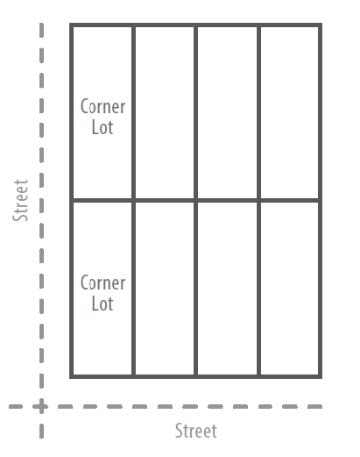
FIGURE 22.14.120-B: REVERSED CORNER LOT
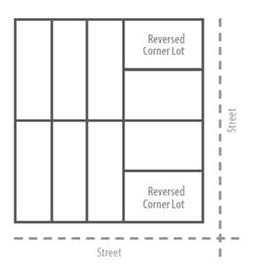
Lot line. A boundary line of a lot. Also see "Property line."
Front lot line. A lot line that separates the front yard from the parkway, highway, or street upon which the yard fronts. In the case of a flag lot where the front yard is oriented toward an adjoining lot, this lot line separates such front yard from such adjoining lot.
Rear lot line. A lot line which is opposite and most distant from the front lot line. For a triangular or gore-shaped lot, the rear lot line shall mean a line 10 feet to the length within the lot which is either parallel to the front lot line or parallel to the chord of a curved front lot line, and the maximum distance from the front lot line.
Side lot line. A lot line which is not a front lot line or a rear lot line.
Lot width.
Average lot width. The average width of a portion of a lot, of which portion has the required area. For an irregularly shaped lot, the average width of a portion of the lot, of which portion shall be determined by the Director to be an adequate building site.
Required lot width. See Section 22.110.130.B (Required Width).
(Ord. 2024-0049 § 7, 2024; Ord. 2022-0023 § 7, 2022; Ord. 2022-0008 § 2, 2022; Ord. 2019-0053 § 8, 2019; Ord. 2019-0004 § 1, 2019.)
22.14.130 - M.
Mailed. This term and the term "mailed or delivered" shall mean:
1.
Mailed by United States Postal Service, postage prepaid;
2.
Electronic delivery;
3.
Hand delivery; or
4.
As otherwise specified by the Director.
Major highway. A road identified on the Highway Plan that requires four or more traffic lanes and a standard right-of-way of 100 feet.
Major Projects Review Trust Funds. The following terms are defined solely for Chapter 22.262 (Major Projects Review Trust Funds):
Major projects. Any project so determined by the Director for which the planning or processing of requests for entitlements will impact County departmental resources.
Major transit stop. As defined in section 21064.2 of the California Public Resources Code, a site containing any of the following:
1.
An existing rail or bus rapid transit station;
2.
A ferry terminal served by either a bus or rail transit station; or
3.
The intersection of two or more major bus routes with a frequency of service interval of 15 minutes or less during the morning and afternoon peak commute periods.
Massage. "Massage," "massage services," or "massage therapy" means the scientific manipulation of the soft tissues or as otherwise defined in Division 2 Chapter 10.5 of the Business and Professions Code.
Massage establishment. Means any premises where massage, massage services, or massage therapy are given.
Massing. The perception of the general shape, size, and form of a building, which, in turn, defines both the interior space and the exterior shape of the building.
MAUCRSA. The Medical and Adult-Use Cannabis Regulation and Safety Act of 2017 (SB 94), as it may be amended from time to time.
Mental health treatment facilities. As defined in section 1250.2 of the California Health and Safety Code, and licensed by the State Department of Health Care Services, pursuant to California Code of Regulations, Title 14, section 77001 et seq. or California Code of Regulations, Title 9, section 781.00 et seq.
Microwave station. A building that houses equipment necessary for the receiving, amplifying, or transmitting of microwave signals, including necessary antenna systems, along a communications route or system which employs microwave frequencies assigned by the Federal Communications Commission.
Mills Act Program. The following terms are defined solely for Chapter 22.168 (Los Angeles County Mills Act Program):
Application. An application to enter into an historical property contract.
Historical property contract. A contract between the Director and the owners of a qualified historical property which meets all the requirements of Chapter 22.168 (Los Angeles County Mills Act Program) and sections 50280 through 50290, inclusive, of the California Government Code.
Landmarks Commission. The County Historical Landmarks and Records Commission.
Owner or owners. One or more individuals, partnerships, or corporations holding any portion or all of the fee simple title to a qualified historical property.
Preservation or preserve. The act or process of applying measures necessary to sustain the existing form, integrity, and materials of a qualified historical property.
Program. The County Mills Act Program.
Qualified historical property. Property which meets the definition of a "qualified historical property," as set forth in section 50280.1 of the California Government Code and is located within the unincorporated areas of the County. A property located within a federal, State, or County registered historic district is not a "qualified historical property" under Chapter 22.168 (Los Angeles County Mills Act), unless the property is certified by the County, State, or Secretary of Interior as being of historic significance to the relevant historic district.
Rehabilitation or rehabilitate. The act or process of making possible an efficient compatible use for a property through repair, alterations, and additions while preserving those portions or features of the property that convey its historical, cultural, or architectural values. For the purpose of this term, "compatible use" means the property's historical use or a new use that requires minimal change to the property's distinctive materials, features, spaces, and spatial relationships.
Restoration or restore. The act or process of accurately depicting the form, features, and character of a property as it appeared at a particular period of time by means of removing features of the property from other periods in its history and reconstructing its missing features from the restoration period.
Mined lands. The surface, subsurface, and groundwater of an area in which surface mining operations will be, are being, or have been conducted, including private ways and roads accessory to any such area, land excavations, workings, mining waste, and areas in which structures, facilities, equipment, machines, tools, or other materials on property which result from, or are used in, surface mining operations, are located.
Minerals. Any naturally occurring chemical element or compound, or groups of elements and compounds, formed from inorganic processes and organic substances. This term includes, but is not limited to, coal, peat, and bituminous rock and excludes geothermal, natural gas, and petroleum resources.
Mixed use development. A development that combines residential and commercial uses, unless otherwise specified.
Mobilehome. As defined in section 18008, or a manufactured home as defined in section 18007, of the California Health and Safety Code. This term includes "supportive housing" and "transitional housing."
Mobilehome park. As defined in section 18214 of the California Health and Safety Code.
Motel. A lodging establishment containing a group of attached or detached buildings containing guest rooms and offering temporary overnight visitor accommodations with a maximum rental period of 30 days. Access to some or all guest rooms is from a walkway open to the outside. This term includes "auto court," "motor lodge," and "tourist court."
Multi-family housing. This term includes "supportive housing" and "transitional housing."
Apartment house. A building, or a portion of a building, that is designed or used for occupancy by three or more families living independently of each other, and contains three or more dwelling units. The following are types of dwelling units in an apartment house:
1.
Apartment, bachelor. A dwelling unit that combines sleeping, living, cooking, and dining facilities into one habitable room. This term includes "light housekeeping room."
2.
Apartment, efficiency. A dwelling unit that combines sleeping, living, cooking, and dining facilities into two habitable rooms, only one of which shall be a kitchen. This term includes "single apartment" and "efficiency living unit."
3.
Apartment, one-bedroom. A dwelling unit that contains a maximum of three habitable rooms, only one of which shall be a kitchen.
4.
Apartment, two or more bedrooms. A dwelling unit that contains more than three habitable rooms, only one of which shall be a kitchen.
Townhouse. A single-family dwelling unit sharing a common wall with other single-family dwelling units on one or two sides and capable of being placed on a separate lot. This term includes "row house."
Two-family residence. A building containing two dwelling units, other than a single-family residence with an attached accessory dwelling unit. This term includes "duplex."
Multi-unit (common entry). A development where the majority of individual residential units do not have private entries accessible from the exterior. Residents typically access their units through internal lobbies and hallways, although a small percentage of units on the ground floor may be accessed by private entrances off the sidewalk. The building may have other nonresidential uses at the ground floor or upper levels.
Multi-unit (private entry). A development with multiple primary dwelling units where residents can access each unit directly either: (a) via a private external entry; or (b) via a small vestibule on the ground floor. Units may be attached or may be detached. This definition does not include developments with one primary dwelling unit and one or more accessory dwelling units (ADUs or JADUs).
(Ord. 2024-0049 § 8, 2024; Ord. 2024-0036 § 1, 2024; Ord. 2023-0050 § 3, 2023; Ord. 2022-0008 § 3, 2022; Ord. 2021-0017 § 5, 2021; Ord. 2020-0059 § 2, 2020; Ord. 2020-0008 § 44, 2020; Ord. 2019-0004 § 1, 2019.)
22.14.140 - N.
National recreation area. Any land or water area designated by an act of Congress as an area for public outdoor recreational use and enjoyment, and which such area is managed by one or more relevant federal, State, or local agencies.
Net area. That portion of a lot which is:
1.
Not subject to any easement or included as a proposed public or private facility such as an alley, highway, or street except as provided in Subsection 3, below, or other necessary public site within a proposed development project;
2.
Subject to an easement where the owner of the underlying fee interest in the property has the right to use the entire surface except that portion where the owner of the easement may place utility poles or minor utility structures;
3.
Subject to that portion of a highway easement or private street easement shown on an alternate cross-section in Section 21.24.090 of Title 21 (Subdivisions) of the County Code, marked with an asterisk (*);
4.
That portion of a corner lot or corner parcel of land not to exceed five percent of the net area within a corner cutoff.
Except as provided above, the following shall not be counted as a part of the net area:
1.
Any portion of a lot subject to a highway easement or any other private or public easement.
2.
An access strip of property on a flag lot.
3.
A strip on a flag lot with easements for purposes other than vehicular access in a compact lot subdivision.
4.
For Sections 22.140.590 (Tasting Rooms and Remote Tasting Rooms) and 22.140.610 (Wineries), any area with a slope of 25 percent or greater.
Nightclub. A bar, cocktail lounge, or restaurant which provides live entertainment and has an established occupant load of at least 200 people.
Non-combustion biomass conversion facility. See organic waste recycling facility.
Nonprofit organization. An organization formed under the Nonprofit Public Benefit Corporation Law (Section 5110 et seq. of the California Corporations Code) and as described in Section 501(c) of the United States Internal Revenue Code of 1986; provided, however, that a corporation or any body organized for the private gain of any person, or for which any part of the net earnings inures to the benefit of any private shareholder or individual is not a nonprofit organization as used herein.
Nudist camp. Any place where three or more persons, not all members of the same family, congregate, assemble, associate, or engage in any activity while without clothing or covering, or with partial clothing or covering, but with any pubic area or any portion of the crease of the buttocks exposed in the presence of others or of each other. This term shall not include occasional gatherings in or on the premises of a private home. This term includes "growth center," as defined in Section 7.44.010 of Title 7 (Business Licenses) of the County Code.
(Ord. 2022-0023 § 8, 2022; Ord. 2020-0032 § 13, 2020; Ord. 2019-0004 § 1, 2019.)
22.14.150 - O.
Oak tree. Valley Oak (Quercus iobata), Coast Live Oak (Quercus agrifola), or any other tree of the oak genus.
Oak Tree Permits. The following terms are defined solely for Chapter 22.174 (Oak Tree Permits):
Damage. Any act causing or tending to cause injury to the root system or other parts of a tree, including, but not limited to, the acts of burning, applying toxic substances, operating equipment, or machinery, paving, changing the natural grade, trenching, or excavating within the protected zone of an oak tree.
Heritage oak tree. Any oak tree measuring 36 inches or more in diameter, measured four and one-half feet above the natural grade or any oak tree having significant historical or cultural importance to the community, notwithstanding that the tree diameter is less than 36 inches.
Protected zone. The area within the dripline of an oak tree and extending therefrom to a point at least five feet outside the dripline, or 15 feet from the trunk of a tree, whichever distance is greater.
Oath. This term includes "affirmation."
Occupant load. The total number of persons that may occupy a building or structure, or portion thereof, at any one time as provided by Chapter 33 of Title 26 (Building Code) of the County Code.
Oil wells and production facilities. The following terms are defined solely for Section 22.140.400 (Oil Wells and Production Facilities):
CalGEM. The California Geologic Energy Management Division.
Oil. Any natural hydrocarbon liquid or gas coming from the earth. This term includes petroleum.
Operator. As defined in section 3009 of the California Public Resources Code.
Plugging and abandonment. The permanent plugging of a well in accordance with the requirements of the California Geologic Energy Management Division.
Production facility. As defined in section 3010 of the California Public Resources Code.
Well. As defined in section 3008(a) of the California Public Resources Code. This term includes any active well, idle well, as defined in section 3008(d) of the California Public Resources Code, and partially plugged and abandoned well.
Well site. The premises used during the maintaining, operating, and producing of a well or wells located thereon. Where the oil well or production facility is not the sole occupant of a property, the well site shall be determined by the Director.
Ordinance. An ordinance of the County of Los Angeles.
Organic waste recycling facility. A facility that receives, sorts, and processes solid wastes containing material originated from living organisms and their metabolic waste products, including, but not limited to, food, green material, landscape and pruning waste, organic textiles and carpets, lumber, wood waste, paper products, printing and writing paper, manure, biosolids, digestate, and sludges, as defined in California Code of Regulations section 18982, including the following:
1.
Anaerobic digestion facility. An in-vessel facility that uses the controlled biological decomposition of organic material in the absence of oxygen or in an oxygen-starved environment to produce biogas and a residual digestate, as defined in California Code of Regulations section 17896.2.
2.
Combustion biomass conversion facility. A facility that produces heat, fuels, or electricity by the controlled combustion of the following materials that are source-separated: agricultural crop residues; green waste such as bark, lawn, leaves, tree, and brush pruning; wood, wood chips, and wood waste; nonrecyclable pulp or nonrecyclable paper materials; and dried digestate, dried food waste, and dried sludge. Feedstock should not include animal fats.
3.
Non-combustion biomass conversion facility. A facility that produces heat, fuels, or electricity by the use of non-combustion biomass conversion technologies on the following materials that are source-separated: agricultural crop residues; green waste such as bark, lawn, leaves, tree, and brush pruning; wood, wood chips, and wood waste; nonrecyclable pulp or nonrecyclable paper materials; and dried digestate, dried food waste, and dried sludge. Feedstock should not include animal fats.
4.
Chipping and grinding or mulching facility. A facility that mechanically reduces the size of, or creates a product from, source-separated compostable materials, including tree debris, yard trimmings, and suitable woody material, which is intended for use on soil surfaces to prevent the growth of weeds and minimize erosion, for commercial purposes. This operation does not produce compost.
5.
Composting facility. A facility that processes, transfers, or stores compostable materials, as defined in California Code of Regulations, Title 14, section 17852(a)(11). Processing and handling of compostable materials results in controlled biological decomposition. Processing and handling includes composting, screening, chipping and grinding, and storage activities related to the production of compost, compost feedstocks, and chipped and ground materials. This may also include vermiculture: the process of decomposition of compostable materials using various species of worms. A composting facility may also be an in-vessel facility.
6.
In-vessel facility. A facility in which organic wastes are processed through the controlled biological decomposition with or without the presence of oxygen, as defined in California Code of Regulations, Title 14, section 17896.2.
Outdoor Advertising Signs. The following terms are defined solely for Section 22.114.070 (Outdoor Advertising Signs—Conditions):
Alcoholic beverage. Any beverage in liquid form that contains not less than one-half of one percent of alcohol by volume and is intended for human consumption.
Child care center. A facility, other than a family child care home, in which less than 24-hour-per-day, non-medical care and supervision is provided for children in a group setting as defined and licensed under the regulations of the State of California. This term shall not include such a facility when it is accessory and clearly subordinate to a commercial or industrial activity, established on the same lot and operated for the children of the employees of the commercial or industrial activity.
Church. A development maintained and used exclusively for religious worship, including customary incidental educational and social activities in conjunction therewith.
Park. Any park, playground, or grounds under the control, direction, or management of a public entity, whether such use is within or outside the unincorporated area of the County.
Recreational facility. Any recreational center or facility under the control, direction, or management of a public entity, whether such use is within or outside the unincorporated area of the County.
School. Any elementary or secondary school, public or private, attendance at which satisfies the compulsory education laws of the State of California, whether such use is within or outside the unincorporated area of the County.
Tobacco product. Any substance containing tobacco leaf, including but not limited to cigarettes, cigars, pipes, snuff, chewing tobacco, and dipping tobacco.
Youth center. Any designated indoor public, private, or parochial facility, other than a private residence or a multiple dwelling unit, which contains programs which provide, on a regular basis, activities, or services for persons who have not yet reached the age of 18 years, including, but not limited to, community-based programs, after-school programs, weekend programs, violence prevention programs, leadership development programs, vocational programs, substance abuse prevention programs, individual or group counseling, case management, remedial, tutorial, or other educational assistance or enrichment, music, art, dance, and other recreational or cultural activities, physical fitness activities, and sports programs.
Outdoor dining. A restaurant or other eating establishment, including food take-out, where food or beverage are served on private property, and where there is not a roof and walls on all sides.
Outdoor display. The display or placement of goods, equipment, materials, merchandise, or exhibits at a location visible to the public view, other than within a building.
Outdoor festival. A music or rock festival, dance festival, or similar musical activity held at any place other than a permanent building, and designated for such activities and where attendance by more than 500 people may reasonably be expected. Entertainment may be provided by paid, professional, or amateur performers, or by prerecorded means; admission may be charged.
Outdoor storage. The storage of goods, equipment, or materials outside of a building for any purpose other than outdoor display.
Overburden. Soil, rock, or other materials that lie above a natural mineral deposit, or in between mineral deposits, before or after their removal by surface mining operations.
(Ord. 2023-0038 § 4, 2023; Ord. 2023-0004 § 2, 2023; Ord. 2022-0023 § 9, 2022; Ord. 2019-0004 § 1, 2019.)
22.14.160 - P.
Pallet yards. A premise that is primarily used for repair, construction, deconstruction, reconstruction, recycling, or storage of new or used pallets, typically made of wood, that are used in handling and storage of materials.
Parks and Recreation. References to Parks and Recreation shall mean the County Department of Parks and Recreation, unless otherwise specified.
Parking areas, buildings, facilities, or lots. Any readily accessible area within structures or surface parking areas, exclusive of aisles, driveways, ramps, and columns, maintained exclusively for the parking of vehicles, not including areas for the parking or storage of commercial vehicles with registered net weights in excess of 5,600 pounds, unladen.
Parking space.
Bicycle parking space. See "Bicycle parking space."
Vehicle parking space. A permanently maintained and readily accessible space maintained exclusively for the storage of one passenger vehicle.
Parkway. A road identified on the Highway Plan that has park-like features with landscaping and a right-of-way of at least 80 feet.
Paseo. See "Pedestrian paseo."
Pedestrian paseo. A landscaped walkway accessible to the public, located outside of a public right-of-way or private roadway, where motorized vehicles are prohibited. A pedestrian paseo shall be a minimum of five feet in width, provide amenities such as appropriate lighting, benches, and water features, and be designed to maximize visibility of the paseo from public view points.
Pedestrian-scale. Elements of the built environment that are comfortable to an average human size and perception.
Permanent cosmetics. The application of pigments to or under the human skin, for permanently changing the color or other appearance of the skin. Permanent cosmetics services include, but are not limited to, the application of permanent eyeliner, eye shadow, or lip color. This term shall not restrict services provided by a licensed physician or surgeon. Also see "Tattooing."
Permanent cosmetics parlor. Any place of business where permanent cosmetics are applied.
Person. An individual, firm, co-partnership, joint venture, association, social club, fraternal organization, corporation, estate, trust, business trust, receiver, or syndicate. This term includes the County, any other county, city and county, municipality, district, or other political subdivision, or any other group or combination acting as a unit.
Pervious. Permeable, such as the seepage of water through a porous material, like soil.
Plinth. An architectural support or base that is the lowest part or base of podium, column, pedestal, or post supporting a structure, porch, or roof overhang.
Podium. One- or two-story structure at the base of a building on the ground floor that allows several stories of light-frame wood framing above it.
Porch (Type).
Projecting porch. A projecting porch is designed to fully or partially extend beyond the predominant façade or wall plane of a residential building.
Engaged porch. An engaged porch is designed to align with the predominant façade or exterior wall plane of a residential building.
Forecourt. A residential forecourt is a ground level open space, located adjacent to the primary façade in front of the primary entrance, often framed by the residential building walls, freestanding walls, fences, and planting areas.
Porte-cochere. A porte-cochere is a covered vehicular entrance attached to a primary residence, often creating a primary entrance.
Portico porch. A portico porch is a subset of a projecting porch that features a covered and fully enclosed porch entrance supported by columns or piers that creates a predominant massing or building form along a façade.
Stoop. A stoop is a small staircase leading to an entrance of a residential building.
Wrap-around porch. A wrap-around porch is a covered engaged or projecting porch connected along at least two sides of a residential building.
Primary unit, detached. Structurally detached primary dwelling unit where more than one primary dwelling unit is present on a single lot.
Principal use. A primary or dominant use established, or proposed to be established, on a lot.
Procedural Ordinance for Financing of Public Facilities. These terms are defined solely for Chapter 22.260 (Procedural Ordinance for Financing of Public Facilities). Unless the context requires otherwise, the definitions apply to terms as used in that Section.
Advance. The amounts expended by the County or other governmental entity toward the cost of a public facilities project within or for the benefit of an area of benefit and for which the County shall be reimbursed from facilities benefit assessments.
Area of benefit. Land which is designated as receiving special benefits from the construction, acquisition, and improvement of a public facilities project as established by a resolution of designation adopted by the County pursuant to Chapter 22.260 (Procedural Ordinance for Financing of Public Facilities).
Building permit. The permit issued or required for the construction of any structure in connection with the development of land pursuant to, and as defined by, the Uniform Building Code.
Capital improvement program. A plan for the implementation and financing of public facilities projects, including, but not limited to, a schedule for the commencement of construction, the estimated cost of construction and the payment of facilities benefit assessments.
Construction. The design, acquisition of property, administration of construction contracts, actual construction, and incidental costs related thereto.
Contribution. The amounts expended by the County or other governmental entity toward the cost of a public facilities project in relation to the general benefit received by the County from construction of the public facilities project.
Costs. The amounts spent or authorized to be spent in connection with the planning, financing, acquisition, and development of a public facilities project including, without limitation, the costs of land, construction, engineering, administration, and legal and financial consulting fees.
Development. The division of land, grading, or original construction of an improvement to real property, which division of land, grading, or construction is of the type normally associated with urban development.
Facilities benefit assessment. The amounts collected under the terms of Chapter 22.260 (Procedural Ordinance for Financing of Public Facilities) to provide funds for public facilities projects which will benefit designated areas of benefit.
Public facilities project. Any and all public improvements, the need for which is directly or indirectly generated by development, including, but not limited to, the following:
1.
Water mains, pipes, conduits, tunnels, hydrants, and other necessary works and appliances for providing water service.
2.
Lines, conduits, and other necessary works and appliances for providing electric power service.
3.
Mains, pipes, and other necessary works and appliances for providing gas service.
4.
Poles, posts, wires, pipes, conduits, lamps, and other necessary works and appliances for lighting purposes.
5.
Sidewalks, crosswalks, steps, safety zones, platforms, seats, culverts, bridges, curbs, gutters, tunnels, parks and parkways, recreation areas, including all structures, buildings, and other facilities necessary to make parks and parkways, and recreation areas useful for the purposes for which intended.
6.
Sanitary sewers or instrumentalities of sanitation, together with the necessary outlets, cesspools, manholes, catchbasins, flush tanks, septic tanks, disposal plants, connecting sewers, ditches, drains, conduits, tunnels, channels, or other appurtenances.
7.
Dams, retention basins, detention basins, debris basins, spreading grounds, injection wells, observation wells, pressure-reduction facilities, headworks, drains, tunnels, conduits, culverts, washes, swales, floodways, flowpaths, and channels for drainage and/or water conservation purposes.
8.
Pipes, hydrants, and appliances for fire protection.
9.
Retaining walls, embankments, buildings, and any other structures or facilities necessary or suitable in connection with any of the work mentioned under the term public facilities project.
10.
Compaction of land, change of grade or contours, construction of caissons, retaining walls, drains, and other structures suitable for the purpose of stabilizing land.
11.
Acquisition, construction, and installation of streets and highways.
12.
Acquisition, construction, improvement, and equipping of library buildings.
13.
Acquisition, construction, improvement, and equipping of fire stations.
14.
Acquisition, construction, improvement, and equipping of temporary and permanent school buildings.
15.
Acquisition, construction, improvement, and equipping of police stations.
16.
Acquisition, construction, and installation of traffic signs, signals, lights, and lighting.
17.
Public works maintenance facilities.
18.
All other work auxiliary to any of the above which may be required to carry out that work, including, but not limited to, the maintenance of public facilities projects and administrative, engineering, architectural, and legal work performed in connection with establishing, implementing, and monitoring public facilities projects.
19.
Acquisition of any and all property, easements, and rights-of-way which may be required to carry out the purposes of the project.
Property line. The line between that portion of a limited secondary highway or street cross-section designated with an asterisk (*) and the portion that is not designated as shown in Sections 21.24.065 and 21.24.090 of Title 21 (Subdivisions) of the County Code.
Pro shop. An incidental commercial use that operates on the same premises as a principal recreational use, which offers for retail sale sporting equipment and supplies customarily associated with the recreational use. Pro shop does not include a general sporting goods store.
Public Art in Private Development Program. The following terms are defined solely for the purpose of Section 22.246.090 (Public Art in Private Development Program):
Addition. An expansion, extension, or increase in the gross floor area or height of a building or facility.
Alteration. Any construction or renovation to an existing structure other than repair or addition. A change, addition, or modification in construction, change in occupancy or use, or structural repair to an existing building or facility. Alterations include, but are not limited to, remodeling, renovation, rehabilitation, reconstruction, historic restoration, resurfacing of circulation paths or vehicular ways, changes or rearrangement of the structural parts or elements, and changes or rearrangement in the plan configuration of walls and full-height partitions. Normal maintenance, reroofing, painting or wallpapering, or changes to mechanical or electrical systems are not alterations unless they affect the usability of the building or facility.
Artist. A person who engages in the creation of artistic or cultural works as a vocation, including, but not limited to, visual, performing, or literary arts; and has established a reputation of artistic excellence in the arts, as judged by peers and experts in the field, through exhibitions, performances, commissions, sale of works, recognition, and/or educational attainment.
Building Valuation. The total value of all construction work for which a building permit is issued, including, but not limited to, value of outside improvements, all finish work, painting, roofing, electrical, plumbing, heating, air conditioning, elevators, fire extinguishing systems, and any other permanently installed work or permanently installed equipment. For projects consisting solely of repair, addition, or alterations of existing buildings, the building valuation shall be calculated as the total value of all design and construction costs for the project.
Certificate of Occupancy. A document issued by the Department of Public Works, pursuant to Section 109.3 (Certificate Issued) of Title 26 (Building Code) of the County Code.
Commercial and Industrial Development. Any nonresidential land use, including, but not limited to, retail, office, professional, research, manufacturing, heavy industry, hotels, motels, utilities, or private recreational facilities, but not including any use by a public entity for which the Board of Supervisors is the governing body.
Cultural Facility. Any facility that is open to the public and dedicated to publicly accessible artistic or cultural uses, including, but not limited to, theaters, performance space(s), art galleries, exhibition spaces, Artist studio spaces, arts education facilities, or other similar facilities as determined appropriate by the Department of Arts and Culture. This definition does not include churches, schools, commercial movie theaters, gymnasiums or other sports facilities, bookstores, or buildings dedicated primarily to housing or administrative activities.
Deposit of Security. A financial security that can either be an automatically renewing Certificate of Deposit with the County or an automatically renewing irrevocable standby Letter of Credit payable to the County, in such format as specified by the County, in an amount equivalent to one percent of the building valuation. The County, in its sole discretion, may provide additional forms of deposit for Developers to satisfy the Program Requirement.
Developer. The person or entity that is financially and legally responsible for the planning, development, and construction of any development project covered by the Public Art in Private Development Program, who may, or may not, be the owner of the subject property.
Development Project. Any activity that requires the issuance of at least one building permit by the County and includes all related permits contained within the same project number in the County's master tracking system.
Eligible Project. Residential development, or mixed use, commercial, or industrial development project in the unincorporated areas of the County with a building valuation of $750,000 or greater; or, any such project for repair, addition, or alterations of existing buildings with a design and construction project cost of $750,000 or greater. The $750,000 building valuation eligibility threshold shall be adjusted on March 1, 2021, and annually thereafter, based on the changes to the Consumer Price Index of the preceding year.
Eligible Project Value. The total value of the Public Art allocation based on one percent of the building valuation of Eligible Projects.
In-Lieu Fee. An amount equal to one percent of the building valuation paid into the Public Art in Private Development Fund, rather than providing Public Art pursuant to Section 22.246.090 E.1 (Establishment of Public Art in Private Development Program). Alternatively, if the Developer provides Public Art, pursuant to the same Subsection E.1, and the value of such Public Art is less than one percent of the building valuation, the In-Lieu Fee shall be the difference between one percent of the building valuation and the Public Art to be deposited into the Public Art in Private Development Fund.
Landmark. A property, including any structure, site, place, object, tree, landscape, or natural feature, that is designated as a landmark by the Board of Supervisors, pursuant to Chapter 22.124 (Historic Preservation).
Public Art. Public Art, for the purposes of satisfying the Program Requirement, consists of any publicly accessible artistic or cultural amenities as further provided in Section 22.246.090 and approved by the Department of Arts and Culture. Public Art that satisfies the Public Art in Private Development Program in compliance with Section 22.246.090 may include, but is not limited to, the following:
1.
Sculpture: Free-standing, wall supported, or suspended; kinetic, electronic, or mechanical in material, or combination of materials;
2.
Murals or Portable Paintings: Painting in any materials or variety of materials, with or without collage, or the addition of nontraditional materials and means;
3.
Standardized Fixtures: If rendered by an Artist, for unique or limited editions, standardized fixtures including, but not limited to, grates, street lights, signage, or other design enhancements;
4.
Cultural Facilities: Public gallery or exhibition space, performance space, theaters, artistic studio space, or art education facilities;
5.
Conservation of County-owned artworks, or restoration or replication of original decorative ornamentation or Public Art as part of the rehabilitation of the County's historic, cultural, or architectural Landmarks;
6.
Performing Arts: Theater, dance, music, or performance art;
7.
Literary Art: Poetry, storytelling, or creative writing;
8.
Media Art: Film, video, or digital media;
9.
New Media: Media including, but not limited to, earthworks, light work, sound work, holographic work, or any hybrids of media and new genres;
10.
Education: Lectures, presentations, instruction, or training in or about arts and culture;
11.
Special Events: Parades, festivals, or celebrations relating to arts and culture; or
12.
Similar arts services as approved by the Department of Arts and Culture.
Public Art in Private Development Fund. A special fund established to support arts and culture programs in the County. Revenue comes from In-Lieu Fees paid by Developers.
Public Art in Private Development Plan ("Art Plan"). A plan submitted to the Department of Arts and Culture for approval, pursuant to the Policies and Procedures by which a Developer will comply with Section 22.246.090.
Public Art in Private Development Policies and Procedures ("Policies and Procedures"). Guidelines and parameters setting out how the Public Art in Private Development Ordinance shall be implemented, and compliance achieved by those subject to its terms.
Public Art in Private Development Program. A program administered by the Department of Arts and Culture to provide artistic and cultural amenities for the benefit of the residents of the County based on allocations provided by Developers.
Program Requirement. A responsibility other than a tax or special assessment that is collected under the terms of Section 22.246.090 to provide for Public Art in Private Development. One percent of the building valuation for Eligible Projects in the unincorporated areas of the County shall be expended on approved Public Art, paid as an In-Lieu Fee, or a combination thereof.
Publicly Accessible. Any site within the County which is open to the general public or is in public view. If the Public Art is in an interior location, it must be visibly accessible to the public during regular business hours. If the Public Art is a cultural activity, program, or service, it must be available and open to the general public.
Private Recreation Facilities. Recreation facilities established and operated by a private entity or an association of persons who are bona fide members, to be used exclusively by its members. Such term may also include private recreation clubs, as defined in Section 22.14.180 (R).
Repair. The reconstruction or renewal of any part of an existing building for the purpose of its maintenance or to correct damage.
Residential Development. A development project resulting in the creation of 30 or more dwelling units, including mixed use developments, subdivisions, common interest developments, or multifamily housing. Affordable housing and senior citizen housing are exempt from Public Art in Private Development, pursuant to Section 22.246.090.C.6 (Exemptions from Public Art in Private Development), and shall be excluded from the calculation of the building valuation.
Public Health. References to Public Health shall mean the County Department of Public Health, unless otherwise specified.
Public transit area. One-half-mile radius of a major transit stop, which is defined as an existing rail or bus rapid transit station; or the intersection of two or more major bus routes with a frequency of service interval of 15 minutes or less during morning and afternoon peak commute hours; or a high-quality transit corridor, which is defined as a corridor with fixed route bus service with service intervals no longer than 15 minutes during morning and afternoon peak commute hours.
Public utility service center. Any building or premises used for the administration of public utility repair, dispatch of maintenance and installation crews, and includes parking for vehicles not to exceed two tons rated capacity, but does not include warehouses or storage yards.
Public utility service yard. Any building or premises used for the office, warehouse, storage yard, or maintenance garage of a public utility, including microwave repeater stations when incorporated as a part of the service yard use.
Public Works. References to Public Works shall mean the County Department of Public Works, unless otherwise specified.
(Ord. 2024-0049 § 9, 2024; Ord. 2024-0036 § 2, 2024; Ord. 2023-0050 § 4, 2023; Ord. 2022-0023 § 10, 2022; Ord. 2022-0008 § 4, 2022; Ord. 2021-0047 § 3, 2021; Ord. 2019-0004 § 1, 2019.)
22.14.170 - Q.
(Reserved)
22.14.180 - R.
Reclamation of mined lands. The combined process of land treatment that minimizes water degradation, air pollution, damage to aquatic or wildlife habitat, flooding, erosion and other adverse effects from surface mining operations, including adverse surface effects incidental to underground mines, so that mined lands are reclaimed to a usable condition which is readily adaptable for alternate land uses and create no danger to public health and safety. The process may extend to affected lands surrounding mined lands, and may require backfilling, grading, resoiling, revegetation, soil compaction, stabilization, or other such measures.
Reclamation plan. A plan for reclaiming the lands affected by surface mining operations conducted after January 1, 1976.
Recreation Clubs and Facilities.
Recreation club, commercial. A commercial enterprise that offers the use of outdoor recreational facilities to the public.
Recreation club, private. A facility that offers the use of outdoor recreational facilities for dues-paying members of a private association and their guests. This term shall not include a facility run by an association organized primarily to render a service customarily carried on as a commercial enterprise.
Recreation facility, neighborhood. A recreation facility operated by a nonprofit corporation to provide outdoor recreation facilities for residents in the immediate vicinity and their guests. Such facilities may include a clubhouse, changing rooms, and similar subordinate facilities in conjunction with the outdoor recreation activity, but shall not include a restaurant, bar, or pro shop.
Recreational vehicle. As defined in Section 18010 of the California Health and Safety Code.
Recreational vehicle (RV) park. As defined in California Health and Safety Code section 18862.39.
Recycling and solid waste. The following terms are defined solely for Sections 22.140.720 (Recycling Collection Facilities, Accessory), 22.140.730 (Recycling Collection Facilities, Principal), 22.140.740 (Organic Waste Facilities), and 22.140.750 (Solid Waste Facilities).
Biosolids. Solid, semi-solid, sludge, or liquid residue generated during the sewage or wastewater treatment process, as defined in California Code of Regulations, Title 14, section 17852.
Compost. The product resulting from controlled aerobic or anaerobic biological decomposition of organic wastes from the solid waste stream, as defined in California Code of Regulations, Title 14, section 17852. This may include vermiculture: the product of decomposition using various species of worms.
Construction and demolition debris. Construction and demolition debris is all waste generated by, or resulting from, construction, renovation, repair, or demolition operations on buildings, structures, landscapes, and pavements including, but not limited to, houses, large building structures, roads, bridges, piers, dams, excavation projects, and landscaping projects. Construction and demolition debris includes, but is not limited to, building materials, soil, dirt, fully cured asphalt, tools, packaging materials, and other material that is generally similar to construction and demolition debris and that is source-separated, that is not hazardous, that contains no putrescible wastes, and that can be processed without generating any residual, provided that the material is generated by an activity that is similar to construction work.
Digestate. Solid and/or liquid residual material remaining after organic material has been processed in an in-vessel digester, which may be composted, as defined in California Code of Regulations, Title 14, section 17852.
Disposal. The final disposition of solid waste onto land into the atmosphere, or into the waters of the State of California. Disposal includes the management of solid waste through the landfill process.
Disposal Site. The place, location, tract of land, area, or premises used, intended to be used, or which has been used, for the disposal of solid wastes, inert waste/debris, organic waste, construction and demolition debris, and household waste, not including household hazardous waste.
Hazardous waste. Hazardous waste, as defined in California Public Resources Code section 40141, means waste or combination of wastes, which, because of its quantity, concentration, or physical, chemical, or infectious characteristics, may do either of the following: (A) cause, or significantly contribute to, an increase in mortality or an increase in serious irreversible, or incapacitating reversible, illness; or (B) pose a substantial present or potential hazard to human health or the environment when improperly treated, stored, transported, or disposed of or otherwise managed. Hazardous waste includes, but is not limited to, spent fuel, waste solvent, spent acid, waste caustic rinse water, metal polishing dust, spent plating solution, used oil, waste anti-freeze, and waste paint.
Household hazardous waste. Any hazardous waste generated incidental to owning and/or maintaining a place of residence. Household hazardous waste includes, but is not limited to, motor oil, oil filters, paint, turpentine, cleaners with acid or lye, pesticides, herbicides, batteries, light bulbs, pool chemicals, old computers, and miscellaneous electronics.
Household waste. Any solid waste material derived from households, including garbage, trash, and refuse such as bottles, cans, clothing, compost, disposables, food packing, food waste, paper goods, newspapers, magazines, discarded furniture, and discarded mattresses. Household waste does not include household hazardous waste.
Inert waste/inert debris. Non-liquid solid waste and recyclable materials that do not contain hazardous waste or soluble pollutants and has not been treated in order to reduce pollutants, as defined in California Code of Regulations, Title 14, section 17381. Inert debris/inert waste includes materials such as crushed glass, brick, ceramics, clay and clay products, fiberglass roofing shingles, slag, plaster, soil, dirt, concrete, asphalt, stones and rocks of varying sizes, and other inert construction and demolition debris.
Non-ferrous metals. Metals such as aluminum, brass, copper, nickel, tin, lead, and zinc, which do not contain iron and are more resistant to corrosion compared to metals containing iron or steel.
Organic waste. Solid wastes containing material originated from living organisms and their metabolic waste products, including, but not limited to, food, green material, landscape and pruning waste, organic textiles and carpets, lumber, wood waste, paper products, printing and writing paper, manure, biosolids, digestate, and sludges. The following are types of organic waste:
1.
Compostable material. Any organic material that when accumulated will become active compost, as defined in California Code of Regulations, Title 14, section 17852. This term also includes the following: food material and green material.
2.
Food material. Any material that was acquired for animal or human consumption and is separated from the mixed solid waste, as defined in California Code of Regulations, Title 14, section 17852. Food material may include commercial food waste from grocery stores, restaurants, businesses, institutional cafeterias (such as, prisons, schools, and hospitals), or residential food scrap collection. It does not include agricultural food materials, such as manures, plant pruning, and crop residues.
3.
Green material. Any plant material that is separated at the time of generation and contains no greater than one percent of physical contaminants by weight, as defined in California Code of Regulations, Title 14, section 17852. Green material includes, but is not limited to, yard trimmings, untreated wood wastes, natural fiber products, and construction and demolition wood waste. Green material does not include food material, biosolids, mixed solid waste, material processed from mixed waste, wood containing lead-based paint or wood preservative, mixed construction, or mixed demolition debris.
4.
Mixed organic material. Any combination of compostable materials, food materials, and green materials.
Recycle (or Recycling). The process of collecting, sorting, cleansing, treating, and reconstituting materials that would otherwise become solid waste, and returning them to the economic mainstream in the form of raw materials for new, reused, or reconstituted products which meet the quality standards necessary to be used in the marketplace.
Recycling processing. The controlled separation, recovery, volume reduction, conversion, or recycling of material, including, but not limited to, organized, manual, automated, or mechanical sorting, the use of vehicles for spreading of waste for the purpose of recovery, and/or includes the use of conveyor belts, sorting lines, or volume reduction equipment:
1.
Bailing. The process of compressing and binding of recycled materials and solid waste.
2.
Reverse vending machine. An automated mechanical device which accepts one or more types of empty beverage containers, including, but not limited to, aluminum cans, glass, and plastic bottles, and issues a cash refund or a redeemable credit slip with a value not less than the container's redemption value as determined by the State. A reverse vending machine may sort and process containers mechanically, provided that the entire process is enclosed within the machine.
Source-separated materials. Materials, including commingled recyclables, which have been separated or kept separate from the solid waste stream at the point of generation.
Supermarket accessory recycling collection center. See definition under "S."
Temporary storage area. An area where materials intended for beneficial use, salvage, recycling, or reuse may be placed for storage on a temporary basis, as approved by Public Works for up to 180 calendar days, unless a longer period is approved by Public Works, so long as such temporary storage does not constitute disposal. Putrescible materials, except construction and demolition debris or other inert debris not containing significant quantities of decomposable materials and more than one percent (by visual inspection) putrescible waste, shall not be placed in a temporary storage area for more than 48 hours under any circumstances. A temporary storage area may also be referred to as a "stockpile area."
Recycling collection facility, primary. A facility, as a primary use, which is used for the deposit, drop-off, or buy-back of specific recyclable materials, such as paper, cardboard, glass, non-ferrous metal, or plastic, for the purpose of temporary storing, sorting, and transferring.
Recycling processing facility. A facility that is used for the processing of recyclable materials for shipment, or to an end-user's specifications, by such means as sorting, bailing, briquetting, cleaning, compacting, crushing, flattening, grinding, converting, re-manufacturing, or shredding. Processing facilities include other similar businesses handling storage, processing of recyclable or reusable materials, as defined in this Chapter, including the following terms:
1.
Automobile dismantling yard. Any premise used for the dismantling or wrecking of motor vehicles and trailers required to be registered under the California Vehicle Code, including the buying, selling, or dealing in such vehicles or vehicle parts or component materials. It also includes the storage, sale, or dumping of dismantled, partially dismantled, or wrecked inoperative vehicles and trailers. Automobile dismantling shall not include the incidental storage of inoperative or disabled vehicles in connection with the legal operation of an automobile repair garage or automobile body and fender repair shop.
2.
Construction and demolition processing facility. A site that receives any combination of construction and demolition debris for the purposes of storage, handling, transfer, or processing (including crushing, breaking, and grinding). Construction and demolition must be source-separated or separated for reuse of solid waste and recyclable materials specifically resulting from construction, renovation, repair, or demolition operations on buildings, structures, and pavements, as defined in California Code of Regulations, Title 14, section 17381. For the purpose of this Title 22, such facility shall be classified as a recycling processing facility.
3.
Conversion technology facility (recycling). A facility that converts material, other than sold waste, by employing an array of biological, chemical, thermal, and/or mechanical technologies to create products such as renewable electricity, renewable fuels, soil amendments, and more. Processes may include, but are not limited to, gasification, pyrolysis, acid hydrolysis, and/or distillation. This term includes anaerobic digestion facility and non-combustion biomass conversion facility, but does not include waste incineration facility or landfill gas-to-energy facilities.
4.
Inert waste/inert debris processing facility. A facility or a site that receives, stores, handles, processes, (including crushing, breaking, and grinding), and transfers inert waste/inert debris. Inert waste/inert debris must be source-separated or separated for reuse, and do not contain hazardous waste or soluble pollutants, as defined in California Code of Regulations, Title 14, section 17381. This does not include an inert debris landfill.
5.
Materials recovery facility. A facility where solid wastes or recyclable materials are sorted or separated, by hand or by use of machinery, for the purposes of recovery of recyclable materials, and may include transfer stations that accompany floor sorting.
6.
Scrap metal processing yard. An establishment or place of business which is maintained, used, or operated solely for the processing and preparing of scrap metals for re-melting and/or reuse.
Transfer Station. A facility designated or used to accept recyclable or waste material for transfer to another location for further processing or disposal.
Remote tasting room. An area or facility that is used for the sale and sampling of alcoholic beverages that is operated in conjunction with a separate alcoholic beverage production facility licensed under a Type 02 license issued by the California Department of Alcoholic Beverage Control, where the sale and sampling facility is located on a different lot than the production facility.
Renewable Energy. The following terms are defined solely for Section 22.140.510 (Renewable Energy):
Guy wires. Wire or cable used in tension to support a tower.
Tower. The vertical component of a small-scale wind energy system that elevates the wind turbine generator and attached blades above the ground, or the vertical component of a temporary meteorological tower that elevates the wind measuring devices above the ground.
Wind turbine generator. The component of a small-scale wind energy system that transforms mechanical energy from the wind into electrical energy.
Review Authority. The official or body making a decision on an application, including the Director, Hearing Officer, Commission, or Board.
Requests for Reasonable Accommodation. The following terms are defined solely for Chapter 22.182 (Requests for Reasonable Accommodation):
The Acts. The federal Fair Housing Amendments Act of 1988 and the California Fair Employment and Housing Act, as those Acts are amended from time to time.
Individual with a disability. Individuals with a mental or physical disability as those terms are defined in California Government Code Section 12926(i), (k), and (l), as that section may be amended, and the regulations promulgated thereunder, or individuals with a handicap as that term is defined in 42 U.S.C. Section 3602 of the federal Fair Housing Amendments Act of 1988, as that section may be amended, and the regulations promulgated thereunder.
Reasonable accommodation. A waiver or modification to regulations, policies, procedures, and standards that is both reasonable and necessary for a person with a disability to have an equal opportunity to use and enjoy a residential use. Examples of reasonable accommodation include, if reasonable and necessary, allowing a wheelchair ramp in a required setback, allowing an increase in building height to permit an elevator installation, or allowing an applicant additional time to submit material.
Residential use. Any dwelling as defined by 42 U.S.C. Section 3602(b), as that Section may be amended from time to time.
Required lot area. See Section 22.110.130.A (Required Area).
Residential care facilities. This term includes "adult residential facilities," "group homes for children," "small family homes for children," and "foster family homes," as these uses are defined in section 1500 et seq., of the California Health and Safety Code.
Residential substance use recovery facility. An "alcoholism and drug abuse recovery or treatment facility," as defined by section 11834.02 of the California Health and Safety Code, and licensed and regulated by the California Department of Health Care Services. This term does not include "sober living facilities."
Resoiling. The process of artificially building or rebuilding a soil profile.
Ridgeline. The line formed by the meeting of the tops of sloping surfaces of land.
Right-of-way. Any street, avenue, boulevard, highway, sidewalk, alley, or similar place which is owned or controlled by a governmental entity.
Road. An open way used for the passage of vehicles, and includes alleys, streets, and highways.
Room rental. The use of a room or rooms for the purpose of providing tenancy for compensation for periods of more than 30 consecutive calendar days.
Rural Outdoor Lighting District. The following terms are defined solely for Chapter 22.80 (Rural Outdoor Lighting District):
Abandoned use. A use which has been discontinued and/or its structure has been abandoned and there is no indication that any use or occupancy of the structure will resume.
Accurate color rendition. The accurate representation of colors provided by an artificial light source.
Drop-down lens. A lens or diffuser that extends below a horizontal plane passing through the lowest point of the opaque portion of a light fixture.
Foot-candle. A unit of measurement that shows the quantity of light received on a surface. Foot-candles shall be measured by a photometer.
Fully shielded. A light fixture is fully shielded when it emits no light in the area above a horizontal plane passing through the lowest point of the light fixture and no more than 10 percent of its light in the area between zero and 10 degrees below the horizontal plane. A full-cutoff light (flat glass lens) fixture is a fully shielded light fixture of a specific design, usually with a box or oval shape and a flat bottom.
Light pollution. Any adverse effect of artificial lighting including glare, light trespass, obtrusive light, sky glow, or other lighting impacts on the nocturnal environment.
Light fixture. Light fixture is the structure used to produce an artificial light source, including all of its necessary auxiliary components. Examples of a light structure include a lamp, pole, post, ballast, reflector, lens, diffuser, shielding, bulb, and related electrical wiring.
Light trespass. The falling of light across a property line onto an adjoining lot or public right-of-way. The measurement of light trespass shall be determined by a photometer, taken at ground level from the subject property line. For purpose of Chapter 22.80, an unacceptable level of light trespass shall be 0.5 foot-candle or greater when the light trespass falls onto an adjoining public right-of-way or an adjoining residentially-zoned lot, open space-zoned lot, or agriculturally-zoned lot, and 1.0 foot-candle or greater when the light trespass falls onto an adjoining lot with any other zoning classification.
Lumen (lm). A unit of light energy or the visual amount of light produced by a light fixture, calculated as a rating by the manufacturer (distinct from a watt, which measures power consumption). For example, a 40-watt incandescent lamp produces approximately 400 lumens and a 35-watt high-pressure sodium lamp produces 2,300 lumens.
Major addition. The cumulative addition of 25 percent or more of gross floor area, seating capacity, parking spaces, or number of dwelling units to any structure, building, or development; except in the Coastal Zone, where a cumulative addition of 10 percent or more of gross floor area, seating capacity, parking spaces, or number of dwelling units to any structures, buildings, or development shall constitute a major addition.
Outdoor lighting. Lighting equipment or light fixtures used to provide illumination for outdoor areas, objects, or activities, including light fixtures attached to buildings or structures. Self-supporting structures to provide lighting for parking lots, walkways, building entrances, outdoor sales areas, recreational fields, or within landscaped areas shall all constitute outdoor lighting.
Outdoor recreational activity area. An area designed for active outdoor recreation, whether publicly or privately owned, including, but not limited to, sports fields, race tracks, stadiums, and riding arenas. The accessory uses to these areas, including parking lots and concessions stands, shall not be considered part of the involved outdoor recreational activity area.
Sky glow. The brightening of the nighttime sky resulting from outdoor light reflecting into or toward the sky, and combining with moisture and/or dust particles in the atmosphere to cause light pollution.
Street lights. Pole-mounted light fixtures used to illuminate public or private rights-of-way and to enhance the safe movement of vehicular and pedestrian traffic.
(Ord. 2024-0054 § 1, 2024; Ord. 2024-0049 § 10, 2024; Ord. 2022-0023 § 11, 2022; Ord. 2022-0008 § 5, 2022; Ord. 2021-0017 § 6, 2021; Ord. 2019-0004 § 1, 2019.)
22.14.190 - S.
Safety. This term means and includes a water supply for fire protection which complies with the requirements of the County Water Ordinance set out at Division 1 of Title 20 (Utilities) of the County Code.
Scale. The physical and visual appearance and ratio of the built forms and size of a single structure, multiple structures, or a neighborhood in relation with other buildings and their surroundings.
Scenic highway. A highway within the California Scenic Highway System, a State-designated County scenic highway, or any scenic drive adopted as a part of the Conservation and Natural Resources Element of the County General Plan.
School, public or private. An accredited facility for students through grade 12, along with accessory facilities, offering instruction required to be taught in the public schools by the California Education Code, in which no pupil is physically restrained. This term shall not include other types of schools or facilities offering instruction not covered by the California Education Code, such as trade or commercial schools.
Scrap metal processing yard. See recycling processing facility.
Sea. The Pacific Ocean and/or harbors, bays, channels, estuaries, salt marshes, sloughs, and other areas subject to tidal action through any connection with the Pacific Ocean, excluding non-estuarine rivers, streams, creeks, and flood control and drainage channels.
Second Units. See "Accessory dwelling unit."
Secondary highway. A road identified on the Highway Plan that serves area wide or countywide transportation needs. This type of highway normally requires four moving lanes of traffic on 80 feet of right-of-way or two lanes of moving traffic in nonurban areas.
Secondary land use under high-voltage transmission lines. A land use, as described in Section 22.140.630 (Secondary Land Uses Under High-Voltage Transmission Lines), other than the transmission of power on property that contains an electric power transmission line operating at or above 115 kilovolts.
Secondhand store. A retail store established to collect and sell used household goods, clothing, and/or merchandise that are donated to the store. Secondhand store shall not include an antique shop, pawnshop, yard sale, or junk and salvage use, or use involving the sale of used vehicles or vehicle parts. To the extent that a secondhand store sells tangible personal property, as defined in section 21627 of the California Business and Professions Code, the secondhand store shall comply with all applicable requirements of said Code governing secondhand goods, including applicable registration and reporting requirements.
Section. A section of an ordinance codified in this Title 22, unless some other ordinance or statute is mentioned.
Self-service storage facility. Any real property designed and used for the renting or leasing of individual storage spaces to tenants who have access to such spaces for the purpose of storing personal property.
Senior citizen residence. See "Accessory dwelling unit."
Sensitive use. A land use where individuals are most likely to reside or spend time, including dwelling units, schools and school yards - including trade schools, public and private schools, faith-based and secular schools, parks, playgrounds, daycare centers, preschools, nursing homes, hospitals, licensed care facilities, shelters, and daycares or preschools as accessory to a place of worship, that are permitted in the zones where they are located. A sensitive use shall not include a caretaker residence or a legal, nonconforming residence in an industrial zone.
Setback. The minimum distance between a property line and the building or portion thereof. See "Yard."
Shared kitchen complex. As defined in Section 8.04.425 (Shared Kitchen Complex) and subject to all applicable provisions in Chapter 11.09 (Shared Kitchen Complex). For the purposes of this Title 22, food prepared or handled in a shared kitchen complex shall be for off-site sale and consumption only. A shared kitchen complex is not an eating establishment.
Shared kitchen complex tenant. This term includes "shared kitchen complex tenant, retail food operator," as defined in Section 8.04.428 (Shared Kitchen Complex Tenant, Retail Food Operator), and "shared kitchen complex tenant, wholesale food processor," as defined in Section 8.04.430 (Shared Kitchen Complex Tenant, Wholesale Food Processor).
Short-term rental. As defined in Title 7 (Business Licenses) of the County Code, the use of a Primary Residence (as defined in Title 7), or portion thereof, for the purpose of providing temporary lodging for compensation for occupancy of 30 consecutive calendar days or less, counting portions of days as full days.
Significant Ecological Area ("SEA"). Land that is identified to hold important biological resources representing the wide-ranging biodiversity of the County, based on the criteria for SEA designation established by the General Plan and as mapped in the adopted SEA Policy Map.
Significant Ecological Areas. The following terms are defined solely for Chapter 22.102 (Significant Ecological Areas):
A.
Animal Containment Facilities. Designated or fenced areas used to contain equines or other stock animals to a particular area such as paddocks, pastures, turnouts, and grazing areas that are usually used for riding, exercising, rehabilitating, or grazing.
B.
Animal Living Quarters. Structures and confined areas in which animals regularly sleep overnight including, but not limited to, barns, stables, and corrals.
C.
Biological Constraints Analysis ("BCA"). A report prepared by a qualified biologist listed in the SEA Technical Advisory Committee ("SEATAC") Certified Biologist List maintained by the Department that assesses the biological resources on a project site and in the surrounding area. A comprehensive list of what shall be included in the BCA is found in the BCA Checklist to be maintained by the Department. Modifications to such checklist must be approved by the Director and published on the Department's SEA website.
D.
Biological Constraints Map ("BCM"). A map of the project site, prepared by a qualified biologist listed in the SEATAC Certified Biologist List maintained by the Department, that identifies all SEA Resources as defined within this Chapter. A comprehensive list of what shall be included in the BCM is found in the BCM Checklist to be maintained by the Department. Modifications to such checklist must be approved by the Director and published on the Department's SEA website.
E.
Biota Report. A report, prepared by a qualified biologist listed in the SEATAC Certified Biologist List maintained by the Department, that addresses project impacts on the biological resources identified in the BCM or BCA and outlines proposed mitigation strategies. A comprehensive list of what shall be included in the Biota Report is found in the Biota Report Checklist to be maintained by the Department. Modifications to such checklist must be approved by the Director and published on the Department's SEA website.
F.
Conservation Easement. A recorded legal agreement between a landowner and an accredited land trust or government agency in which the land owner places restrictions to permanently limit uses of the land to protect its conservation values, and the accredited land trust or government agency monitors and enforces the restrictions consistent with State law conservation easement requirements.
G.
Conservation or Mitigation Bank. Permanently protected lands that are conserved and permanently managed for specific natural resource values, for which a specified number of habitat or species credits may be bought by project developers to offset adverse impacts from their projects.
H.
Conservation In-Lieu Fee. A fee that is provided by a project developer to a mitigation sponsor, such as a natural resource management entity, in the event that other options for natural open space preservation are determined to be infeasible by the Director, which the mitigation sponsor may pool with other in-lieu fees to create one or more sites to offset adverse impacts as a result of the development.
I.
County Biologist. A biologist employed by, or under contract with, the Department.
J.
Deed Restriction. A land use restriction that is added to the deed of a property through recordation with the Registrar-Recorder/County Clerk that restricts the use of a property.
K.
Development. Any of the following activities within a SEA:
1.
Alteration to existing vegetation, including but not limited to, removal for fuel modification, landscaping, or active recreational activities;
2.
Alteration to topography, including excavating, drilling, blasting, dredging, tillage and discing, earthwork, or rough or precise grading of any amount, such as cut, fill, or combination thereof;
3.
Construction, placement, repair, expansion, or demolition of any access road, driveway, street or highway, including all associated construction staging;
4.
Construction, placement, modification, expansion, or demolition of any infrastructure, including, but not limited to, water and sewage lines, drainage facilities, telephone lines, or electrical power transmission and distribution lines, including all associated construction staging;
5.
Construction, placement, modification, expansion, or demolition of any structure, including all associated construction staging;
6.
Fenced areas used for livestock or companion animals, including riding rings, kennels, paddocks, or grazing lands, or for security purposes;
7.
Land divisions, except for projects with all development rights dedicated to the County, to another public agency that manages conserved natural land, or to an accredited land trust;
8.
Construction, placement, modification, expansion, or demolition of trails (biking, hiking, equestrian, etc.), or
9.
Change or intensification of use.
L.
Development Footprint. The area of disturbance for development, both temporary and permanent, including, but not limited to, all structures, driveways and access, fuel modification areas, or direct habitat disturbances associated with the development.
1.
Building site area. The portion of the development footprint that is or will be developed, including building pad and all graded slopes, all structures, decks, patios, impervious surfaces, and parking areas. For the purpose of limiting the building site area to 20,000 square feet per Subsection 22.102.060.A (Review Procedures), the following development associated with the primary use may be excluded from the total building site area calculation:
a.
The area of one access driveway or roadway that does not exceed 20 feet in width and 300 feet in length, and is the minimum design necessary, as required by the Fire Department;
b.
The area of one turn-around not located within the approved building pad, and is the minimum design necessary, as required by the Fire Department;
c.
Graded slopes exclusively associated with the access driveway or roadway and safety turnaround indicated above; and
d.
Fuel modification area required by the Fire Department.
M.
Ecosystem. A biological community of interacting organisms and their physical environment.
N.
Ecosystem Function. The natural processes (chemical, biological, geochemical, and physical), that take place within an ecosystem and contribute to its self-maintenance.
O.
Ecosystem Service. The results of ecosystem functions that provide a benefit to the natural environment and humans. Examples of ecosystem services include air pollution reduction, maintenance or improvement of water quality, temperature moderation, fertile soil, and scenic views.
P.
Edge Effects. The effects of development on adjacent natural areas due to introduction of structures, non-native or non-local plants, or animals. Structures change the microclimate or constitute barriers to movement. Introduced species displace native species or interact with natural processes and change conditions so that the native species are no longer well-adapted to the altered environment.
Q.
Encroachment. An intrusion, disturbance, or construction activity within the protected zone of a tree.
R.
Exploratory Testing. Any excavation for the purpose of evaluating soil or hydrologic conditions, or geologic hazards. This includes exploratory test holes for water wells, percolation testing for on-site wastewater treatment systems, the access road to the test site, or any other activity associated with evaluating a site for development.
S.
Fragmentation. The process by which a landscape is broken into small islands of natural habitat within a mosaic of other forms of land use or ownership.
T.
Fuel Modification. The process of providing a defensible space for fire suppression forces and protection of structures from radiant and convective heat through project design and the reduction of fuel loads. A Fire Department-approved Fuel Modification Plan is required for all new structures and additions to existing structures that are equal to or greater than 50 percent of the existing square footage located in the Very High Fire Hazard Severity Zone. A Fuel Modification Plan typically consists of the following zones:
1.
Zone A. The Setback Zone requires clearing of all vegetation except for irrigated ground cover, lawn, adequately-spaced low-growing plant species, or hardscape;
2.
Zone B. The Irrigated Zone requires an irrigated landscape or thinning of native vegetation and removal of plant species constituting high-fire risk; and
3.
Zone C. The Thinning Zone requires thinning the density of existing native vegetation to reduce the amount of fuel and slow the rate of fire spread, slow flame lengths, and reduce the intensity of fire before it reaches the Irrigated Zone.
U.
Geological Features. Landform and physical features, such as beaches, dunes, rock outcrops, and rocklands, formed through natural geological processes.
V.
Landscaping. Any activity that modifies the visible features of an area of land through alteration of natural elements, such as altering the contours of the ground for the purpose of planting ornamental trees, shrubs, grasses, flowers, or other plants.
W.
Land Trust. A non-profit organization that actively works to conserve land by undertaking or assisting in land or conservation easement acquisition, and is responsible to ensure, for lands received, that applicable preservation mechanisms required by this Chapter, and terms of the conservation easement, are upheld through stewardship activities.
X.
Large Lot Parcel Map. A map with parcels between 20 and 40 acres in size with no improvements, and with required access to a public street or highway; or parcels with a minimum of 40 acres or more with no improvements, and not required to have access to a public street or highway.
Y.
Linkage. An area of land that possesses sufficient cover, food, forage, water, or other essential elements to serve as a movement pathway for species between two or more areas of habitat.
Z.
Natural Open Space. Lands preserved in their natural, undeveloped condition.
AA.
Previously Disturbed Farmland. Farmland not grazed by domestic stock identified within the State of California Farmland Mapping and Monitoring Program, or proven to have been used for agricultural production at some time during the past four years to the satisfaction of the Director.
BB.
Priority Biological Resource. SEA Resource Categories 1, 2, and/or 3.
CC.
Protected Zone. The area within the dripline of a protected tree and extending therefrom to a point at least five feet outside the dripline, or 15 feet from the trunk, whichever is greater.
DD.
Restoration Plan. A plan that delineates the process of habitat restoration to return the habitat to a close resemblance of its condition prior to disturbance. A Restoration Plan shall be prepared by a biologist or restoration ecologist, and includes the following:
1.
Description and map of the area proposed to be restored or enhanced;
2.
Description of restoration or enhancement activities, including incidental activities, and their timeline;
3.
An inventory of SEA Resources onsite, including an evaluation of existing and pre-disturbance habitat quality;
4.
Statement of restoration goals and performance standards;
5.
Revegetation and restoration methodologies to be implemented; and
6.
Maintenance and monitoring provisions, including a monitoring period of no less than five years for individual restoration projects.
EE.
SEA Protected Trees. Native trees listed in the SEA Protected Tree List maintained by the Department are protected under the provisions of this Chapter, as described below:
1.
Any listed native tree that meets or exceeds the trunk diameters listed in the SEA Protected Tree List maintained by the Department, as measured 54 inches above natural grade; and
2.
Heritage tree. Any listed native tree that meets or exceeds the trunk diameters listed in the SEA Protected Tree List maintained by the Department, as measured 54 inches above the natural grade or more in diameter. Exceptions to this are joshua and juniper trees, and heritage trees of those species which have a height of 20 feet or a canopy spread of 35 feet, respectively. A heritage tree is considered irreplaceable because of the tree's rarity, distinctive features (e.g. size, form, shape, color), or prominent location within a community or landscape.
FF.
SEA Resource. Biological and physical natural resources that contribute to and support the biodiversity of SEAs and the ecosystem services they provide. SEA Resources include the species listed below within the five SEA Resource categories. SEA Resources are generally ranked based on rarity, sensitivity, and level of protection as it relates to the SEAs.
1.
SEA Resource Category 1 includes natural communities recognized by California Department of Fish and Wildlife ("CDFW") and ranked G1 or S1 by CDFW, or utilizing NatureServe's Conservation Status Assessment methodology for unranked communities; plant species categorized by the California Native Plant Society ("CNPS") as California Rare Plant Rank ("RPR") 1A, 1B, 2A, 2B, or 3; plant and animal species formally listed or proposed for listing under the State or Federal Endangered Species Acts and habitat occupied by any such species; or water resources as defined by this Chapter;
2.
SEA Resource Category 2 includes natural communities recognized by CDFW and ranked G2 or S2 by CDFW, or utilizing NatureServe's Conservation Status Assessment methodology for unranked communities; or animals listed by CDFW as Species of Special Concern and habitat occupied by any such species;
3.
SEA Resource Category 3 includes natural communities recognized by CDFW and ranked G3 or S3 by CDFW, or utilizing NatureServe's Conservation Status Assessment methodology for unranked communities; oak woodlands as defined by the Los Angeles County Oak Woodland Conservation Management Plan; or any biological or physical natural resource identified in the Sensitive Local Native Resources list maintained by the Department;
4.
SEA Resource Category 4 includes natural communities recognized by CDFW and ranked G4, S4, G5, or S5 by CDFW, or utilizing NatureServe's Conservation Status Assessment methodology for unranked communities; plant species categorized by CNPS as RPR 4; or habitat occupied by annual or herbaceous RPR 4 plant species; and
5.
SEA Resource Category 5 includes disturbed, early successional, or isolated resource elements, such as plant communities dominated by non-native species, agricultural fields, hedges, and non-native trees, which continue to provide habitat and movement opportunities for wildlife, buffers between development and wildlands, and ecosystem functions valuable to the resilience of the SEAs.
GG.
SEA Technical Advisory Committee ("SEATAC"). An expert advisory committee that assists the Department in their administration of Chapter 22.102 and provides recommendations regarding development within the designated SEAs.
HH.
Sensitive Local Native Resources. Species identified by the Department to be rare or uncommon in the County or within a specific SEA, due to, but not limited to, being at the outer limits of their known range, having declining populations in the region, occurring in naturally small populations, being dependent on habitat that is declining in size and quality, having few records within the region, or having historically been abundant in the region, but for which there are no recent records. A list of Sensitive Local Native Resources is maintained by the Department. Modifications to such list must be approved by the Director and published on the Department's SEA website.
II.
Stream. Stream is a physical feature that at least periodically conveys water through a channel or linear topographical depression, defined by the presence of hydrological and vegetative indicators.
JJ.
Trim or Prune. The cutting of or removal of any limbs, branches, or roots of trees.
KK.
Vegetation. Ground cover that includes trees, shrubs, bushes, grasses, wildflowers, or other plant life.
LL.
Water Resources. Sources of permanent or intermittent surface water, including, but not limited to, lakes, reservoirs, ponds, rivers, streams, marshes, seeps, springs, vernal pools, and playas.
MM.
Wetland. Wetland is an area of land that is inundated or saturated by surface or groundwater at a frequency and duration sufficient to support, and that under normal circumstances does support, a prevalence of vegetation typically adapted for life in saturated soil conditions, with delineations following guidelines defined in the United States Fish and Wildlife Service ("USFW") Classification of Wetlands and Deepwater Habitats of the United States (Cowardin, 1979).
NN.
Wildlife. All animal life, including mammals, birds, reptiles, amphibians, fish, and invertebrates.
OO.
Wildlife Corridor. An area of open space with sufficient width to permit larger, mobile species (such as, but not limited to, foxes, bobcats, and coyotes) to pass between or disperse from one major area of open space or region to another.
PP.
Wildlife-Permeable Fencing. A fence, wall, or gate that can be easily bypassed by all species of wildlife found within SEAs (such as, but not limited to, deer, coyotes, bobcats, mountain lions, rodents, amphibians, reptiles, and birds).
Significant ridgeline. A ridgeline which, in general, is highly visible and dominates the landscape.
Signs.
Awning or entrance canopy sign. A sign affixed to an awning or removable canopy not permanently attached to or built as part of a building. Such signs shall be considered the same as a projecting sign for purposes of regulation.
Building identification sign. A sign which contains no advertising matter other than the name and/or trademark of an occupant located within the building and/or the address of the building to which it is affixed.
Bulletin or special event sign. A sign which is characterized by manually changeable copy, letters, symbols, or numerals.
Business sign. A sign that directs attention to:
1.
The principal business, profession, or industry located on the premises where the sign is displayed;
2.
The type of products sold, manufactured, or assembled on such premises; or
3.
Services or entertainment offered on such premises.
Changeable copy sign. A sign whose text and symbols are manually changeable.
Civic organization sign. A sign which contains the names of, or any other information regarding civic, fraternal, or religious organizations located within an unincorporated community or city, but which contains no other advertising matter.
Construction sign. A temporary sign that lists the architects, engineers, owners, lenders, contractors, future tenants, or other parties associated with a construction project, or describes in words or drawings a planned future development project on a property, but which contains no other advertising matter.
Directional or informational sign. A sign which indicates the route to, direction of or location of a given goal, or which provides regulatory or service information of a non-advertising character. This term includes signs for parking for persons with disabilities, one-way, exit, and entrance.
Flashing sign. A sign which, by illumination, flashes on or off, or blinks with varying light intensity, shows motion or creates the illusion of motion, or revolves to create the illusion of being on or off.
Freestanding sign. A sign which is placed on the ground or has as its primary structural support on one or more poles, braces, or columns in or upon the ground, and is not attached to any building or other structure. "Freestanding sign" includes "ground sign," "monument sign," and "pole sign."
Freeway-oriented sign. A sign oriented to be viewed primarily from an adjacent freeway which identifies a business engaged in the provision of food, lodging, or motor vehicle fuel, and which is primarily dependent upon said freeway.
Fuel pricing sign. A sign that indicates, and is limited to, the brand or trade name, method of sale, grade designation, and price per gallon of gasoline or other motor vehicle fuel offered for sale on the business premises, and such other information as may be required by County ordinance or State law.
Incidental business sign. A business sign that indicates credit cards accepted, trade affiliations, and similar matters of a non-advertising nature. This term includes signs for automatic teller machines (ATMs), California Lottery, and credit cards accepted.
Lighted sign. A sign which is illuminated internally, externally, or indirectly.
Marquee sign. A sign that is painted on or affixed to the perimeter or border of a permanently roofed structure constructed as part of a building and protruding over public or private sidewalks or rights-of-way. Such signs shall be considered a "wall sign" for purposes of regulation.
Outdoor advertising sign. A sign that directs public attention to a business, profession, product, or service that is not a primary business, profession, product, or service which is sold, manufactured, conducted, or offered on the premises where such sign is erected. This term includes "portable outdoor advertising sign" and "billboard," but does not include "public transportation sign." For additional terms related to outdoor advertising signs, see Section 22.14.150(O) under "Outdoor advertising signs."
Portable sign. A freestanding sign that is not permanently affixed, anchored, or secured to either the ground or a structure on the premises it occupies. Portable sign includes "A-frame sign," "sandwich board sign," and "sign on wheels."
Projecting sign. A sign which is affixed to and wholly supported by an exterior wall of a building and projects more than 18 inches from the wall. A "projecting sign" shall not be considered a "wall sign" nor a "roof sign."
Public transportation sign. An incidental sign that is placed on a structure, either a portable bench or shelter, located on a public alley, road, street, parkway, or highway, if the purpose of the structure is to facilitate the use of public transportation and promote the safety, comfort, and convenience of public transit patrons.
Real estate sign. A temporary sign that advertises the sale, lease, or rental of the premises on which the sign is located.
Revolving sign. A sign or any portion of a sign which rotates, moves, or appears to move in some manner by mechanical, electrical, natural, or other means.
Roof sign. A sign erected upon and wholly supported by the roof of any building or structure. This term shall not include a wall sign affixed to the roof eaves or that portion of an actual or false roof varying less than 45 degrees from a vertical plane as provided by this Title 22.
Sign. Any name, figure, character, outline, spectacle, display, delineation, announcement, advertising, billboard, signboard, device, appliance, or any other thing of similar nature to attract attention outdoors or on the face, wall, or window of any building, and shall include all parts, portions, units, and materials composing the same, together with the frame, background, and support of anchorage therefor, as the case may be.
Sign area. The entire surface area, excluding all support structures, of a single-faced sign, or the largest face of a sign having two or more faces.
Sign face. That portion of a sign intended to be viewed from one direction at one time.
Sign structure. A structure existing or erected to serve exclusively as a stand, frame, or background for the support or display of signs.
Subdivision development. As used in Section 22.114.220 (Subdivision Directional Signs) a subdivision located wholly or partially within the County, a final map of which was recorded prior to the date on which an application for a Conditional Use Permit (Chapter 22.158) for a subdivision directional sign pursuant to the provisions of Section 22.114.220 was filed.
Subdivision directional sign. As used in Section 22.114.220 (Subdivision Directional Signs) a temporary single or double-faced sign used for the purpose of providing travel directions to one subdivision development offered for public sale for the first time.
Subdivision entry sign. A temporary sign which provides necessary travel directions to and within a subdivision offered for sale or lease for the first time, but which contains no other advertising matter.
Subdivision sales sign. A temporary sign which contains the name of, and information relating to, a subdivision being offered for sale or lease for the first time.
Subdivision special-feature sign. A temporary sign which contains a description of the features and related information pertaining to a model home complex in a subdivision offered for sale or lease for the first time.
Total sign area. The sum of the surface areas, excluding all support structures, of all faces of a sign.
Under-marquee sign. A sign suspended from the underside of a permanently roofed structure constructed as part of a building and protruding over public or private sidewalks or rights-of-way. Such signs shall be considered the same as a "projecting sign" for purpose of regulating area and location.
Wall sign. A sign mounted to and wholly supported by a permanently roofed building or structure and is parallel to and does not project more than 18 inches from the face of the building or structure. Such signs shall not be considered a "roof sign" nor a "projecting sign."
Window sign. A temporary sign which is placed on the window or constructed of materials, such as paint, paper, cloth, canvas, vinyl, or other similar lightweight material, and affixed to or within three feet of the interior side of a window.
Single-family residence. A building that contains one dwelling unit, a mobilehome comprising one dwelling unit manufactured and certified under the National Mobilehome Construction and Safety Standards Act of 1974 (1974 Mobilehome Act) on a permanent foundation system approved by the Director of Public Works, or a manufactured home constructed on or after June 15, 1976. This term includes "supportive housing" and "transitional housing."
Single-family residence on a compact lot. The following terms are defined solely for the purpose of Section 22.140.585 (Single-Family Residences on Compact Lots):
Compact lot. A fee-simple, single-family residential lot less than 5,000 square feet in size, created within a compact lot subdivision. A parking-only lot or driveway lot created within such subdivision, if any, shall not be considered a compact lot. Undersized lots, underwidth lots, substandard lots or lots with the required area and/or width modified by a Housing Permit (Chapter 22.166), a Conditional Use Permit (Chapter 22.158), or a Variance (Chapter 22.194) shall not be considered compact lots if such lots are not shown on a tentative map and on the final map or parcel map with the words "DIVISION OF LAND FOR COMPACT LOT PURPOSES ONLY" printed on the face of the map.
Compact lot subdivision. A division of land that creates fee-simple, single-family residential lots, each containing an area of less than 5,000 square feet. Such division of land shall be subject to the requirements set forth in Section 21.24.375 (Compact Lot Subdivisions).
Habitable space. An area used for sleeping, living, cooking, or dining purposes. This space excludes closets, pantries, bath or toilet rooms, service rooms, connecting corridors, laundries, foyers, storage space, utility rooms, garages, carports, and similar spaces.
Mechanical parking stackers. Mechanical lift equipment that allows the stacking of two automobiles. Such equipment shall comply with all applicable building standards code requirements as approved by the Public Works, Building and Safety Division.
Parking-only lot. A commonly-owned lot designated for parking purposes in a compact lot subdivision.
Private common driveway. A privately owned and maintained driveway located on a strip of land, connecting two or more compact lots to a public street. Each user of a private common driveway may own part of said driveway and has the legal right to use the entire driveway, or one owner may own the entire private common driveway, and, by a recorded easement, establish the other users' right to use the driveway for ingress, egress, drainage, sewer, water, utilities, right to grade, and maintenance purposes only.
Private usable open space. An area designed and intended to be used for active or passive recreation, located at the ground level on an individual compact lot.
Shade plan. See "Tree planting requirements."
Tree species list. See "Tree planting requirements."
Uncovered parking area. See "Tree planting requirements."
Yard, internal. A yard that is parallel to the interior lot line created within a compact lot subdivision, except that a yard that fronts a private common driveway shall not be considered an internal yard. For example, see Figure 22.14-E, below.
Yard, perimeter corner side. A yard that is parallel to the corner side lot line of the perimeter of a compact lot subdivision. For example, see Figure 22.14-E, below.
Yard, perimeter front. A yard that is parallel to the front lot line of the perimeter of a compact lot subdivision. For example, see Figure 22.14-E, below.
Yard, perimeter interior side. A yard that is parallel to the interior side lot line of the perimeter of a compact lot subdivision. For example, see Figure 22.14-E, below.
Yard, perimeter rear. A yard that is parallel to the rear lot line of the perimeter of a compact lot subdivision. For example, see Figure 22.14-E, below.
FIGURE 22.14-E: YARDS WITHIN COMPACT LOT SUBDIVISION
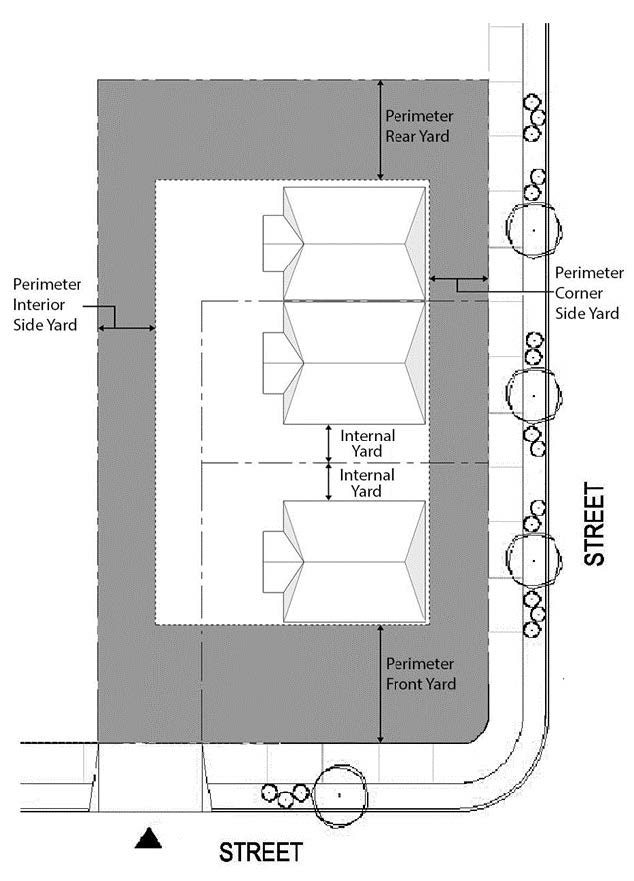
Single unit. Building development with a single primary dwelling unit and its accessory structures, such as sheds, garages, etc., including accessory dwelling units (ADUs and JADUs).
Single-loaded unit. Residential unit located along only one side of a corridor in a multi-unit building.
Site design. The placement of buildings, parking areas, landscaped areas, and on-site pedestrian and vehicle circulation and access.
Site furnishing. An object, such as a bench, drinking fountain, or trash receptacle, placed along a walkway, street, or in an open space to increase pedestrian comfort.
Small-scale solar energy system. A device or devices, and any accessory equipment or structures, which converts solar energy into electrical or thermal energy primarily for on-site use. Such system may be affixed either to the ground ("ground-mounted small-scale solar energy system") or to a structure ("structure-mounted small-scale solar energy system"). Any system utilizing only a support structure built primarily to support solar energy equipment shall be considered affixed to the ground. Any energy generated by a small-scale solar energy system that exceeds the on-site energy demand may be used off-site. A small-scale solar energy system shall not use concentrated solar thermal collectors that use lenses or mirrors to focus or reflect a large area of sunlight onto a small area.
Small-scale wind energy system. A device consisting of a tower, a wind turbine, and any accessory equipment or structures which converts wind energy into electrical energy primarily for on-site use. Such system may be affixed either to the ground ("ground-mounted small-scale wind energy system") or to a structure ("structure-mounted small-scale wind energy system"). Such system has a rated capacity of 50 kilowatts or fewer. Any excess energy not used on-site may be used offsite.
Small animal hospital. A facility that provides medical or surgical treatment, clipping, bathing, and other services, including incidental boarding to dogs, cats, and other small animals.
Small animal veterinary clinic. A facility that provides medical or surgical treatment, clipping, bathing, and similar services to dogs, cats, and other small animals, but excludes boarding or keeping of animals on the premises other than those requiring emergency treatment or those recovering from anesthetic.
Small family home for children. As defined in Section 1502(a)(6) of the California Health and Safety Code, any state-licensed facility within a licensee's residence providing 24-hour-a-day care for six or fewer children with developmental, or physical disabilities, or mental disorders, who require special care and supervision as a result of such disabilities.
Small wild animal rehabilitation facility. A facility that is accessory to a single-family residence in any specified Residential or Agricultural Zone and used for the temporary care of sick, injured, and/or orphaned small wild animals until such animals are nursed back to health and can be returned to their native habitat.
Soffit. The exposed siding, wood, or other material underneath a roof's overhang.
Solar array. The mechanically integrated assembly of modules or panels with a support structure and foundation, tracker, and other components as required to convert solar energy into electrical or thermal energy.
Solid fill. Any noncombustible materials that are insoluble in water, such as soil, rock, sand, dirt, or gravel that can be used for grading land or filling depressions. This term shall not include solid waste or recyclable materials.
Solid fill project. An operation on a site where more than 1,000 cubic yards of solid fill materials are deposited. This term shall not be classified as a solid waste landfill.
Solid waste. All putrescible and non-putrescible solid, semisolid, and liquid wastes, including garbage, trash, refuse, paper, containers, packaging, rubbish, ashes, industrial wastes, abandoned vehicles and parts thereof, discarded home and industrial appliances, discarded home and industrial furniture, discarded mattresses, manure, vegetable, or animal solid and semisolid wastes, and other discarded solid and semisolid wastes, and recyclable materials. This term includes inert waste/inert debris, any garbage or refuse; sludge from a wastewater treatment plant, water supply treatment plant, or air pollution control facility; and other discarded materials, resulting from industrial, commercial, mining, and agricultural operations, and from community activities. This term shall not include hazardous waste, as defined in California Public Resources Code section 40141 or California Health and Safety Code section 25117. This term includes garbage, rubbish, and waste.
Solid waste facility. This term includes the following:
1.
Conversion technology facility (solid waste). A facility that receives and processes solid waste and converts waste by employing an array of biological, chemical, thermal, and/or mechanical technologies to create products such as renewable electricity, renewable fuels, soil amendments, and more. Processes may include, but are not limited to, gasification, pyrolysis, acid hydrolysis, and/or distillation. This term does not include waste incineration facilities or landfill gas-to-energy facilities.
2.
Inert waste landfill/inert debris landfill. A disposal site that accepts only inert waste as defined in California Code of Regulations, Title 14, section 18720 (32), and in which inert debris is discharged in or on land for disposal.
3.
Landfill gas-to-energy. Refers to a gas generated by the natural aerobic and/or anaerobic decomposition of municipal solid waste in sanitary landfills that is recovered for energy production.
4.
Solid waste landfill. A disposal site that accepts solid waste for land disposal, but does not include a facility which receives only wastes generated by the facility owner or operator in the extraction, beneficiation, or processing of ores and minerals, a cemetery which disposes on-site only the grass clippings, floral wastes, or soil resulting from activities on the grounds of that cemetery. Solid waste landfill also includes Class III landfills and inert waste landfills as defined in California Public Resources Code section 40195.1.
a.
Class III landfill. Landfills that are only permitted to accept nonhazardous solid waste materials where site characteristics and containment structures isolate the solid waste from the waters of the State. The land disposal site must meet the requirements of the Federal Resource Conservation and Recovery Act (RCRA), Subtitle D; California Code of Regulations, Title 14, section 17000, et seq.; and other regional and local rules and regulations.
b.
Municipal solid waste landfill or municipal solid waste landfill unit. Any landfill that is subject to the federal regulations of 40 Code of Federal Regulations Part 258, including any portion of a disposal site that is subject to those regulations as defined in California Code of Regulations, Title 27, section 20164. The term includes any landfill, other than a Class 1 landfill, that received municipal solid waste at any time and that has received any solid waste since October 9, 1991; therefore, the term does not include any landfill that stopped receiving waste prior to that date.
5.
Transformation facility. Refers to a facility where the principal function is to convert, combust, or otherwise process solid waste by incineration, pyrolysis, distillation, or biological conversion for the purpose of volume reduction, synthetic fuel production, or energy recovery. Transformation facility does not include a composting, gasification, engineered municipal solid waste conversion, or biomass conversion facility.
6.
Waste-to-energy facility. Refers to a transformation facility that engages in the cogeneration of electricity through the incineration of residual solid waste.
Special use permit. Whenever this Title 22, or any case granted thereunder, refers to a "special permit" or a "special use permit," it shall be construed to mean a Conditional Use Permit.
Specific adverse impact. As defined in subsections (d)(2) and (j)(1)(A) of section 65589.5 of the California Government Code.
Stand. A structure used for the display and sale of products with no space for customers within the structure itself.
Station. A stopping place or facility in a transportation system designed or intended to be used for the receiving or discharging of passengers and cargo. This place or facility shall not provide for the storage of the conveyance vehicle and shall not include any accessory facilities other than a shelter and ticketing facilities for passengers. This term includes "train station," "bus station," and any similar transit station.
Step-back. The recessing of the upper floor(s) of the building.
Stockpile. Stockpile shall mean temporarily stored materials. See "temporary storage area" under "Recycling and Solid Waste."
Stockpile area. Shall have the same meaning as "Temporary storage area."
Stoop. See Porch.
Storefront. The façade or entryway of a retail store, typically including one or more display windows and located on the ground floor or street level of a commercial or mixed use building.
Story. That portion of a building that is included between the upper surface of any floor and the upper surface of the floor next above, except that the topmost story shall be that portion of a building included between the upper surface of the topmost floor and the roof above. This term includes "basement," but shall not include "cellar."
Street. A public or private right-of-way, other than a highway or alley, whose function is to carry vehicular traffic and/or provide vehicular access to abutting property.
Street or highway frontage. The portion of a lot which borders a public street, highway, or parkway, measured along the common lot line separating the lot from the public street, highway, or parkway.
Structure. Anything constructed or erected which requires a fixed location on the ground, or is attached to something having a fixed location on the ground.
Structure-mounted utility-scale solar energy facility. A device or devices affixed to a structure and any accessory equipment or support structures, which converts solar energy into electrical or thermal energy primarily for off-site use. Any system utilizing only a support structure built primarily to support solar energy equipment shall be considered affixed to the ground. Such facility shall not use concentrated solar thermal collectors that use lenses or mirrors to focus or reflect a large area of sunlight onto a small area.
Subdivision. Solely as used in Section 22.114.210 (Temporary Subdivision Sales, Entry, and Special Feature Signs) shall include contiguous units having separate recorded tract numbers developed by the same person.
Supermarket. Contains a full-line, self-service retail store that sells dry grocery, canned goods, perishable items, or nonfood items, and also is certified by the California Department of Resources Recycling and Recovery (CalRecycle) per California Public Resources Code section 14526.5.
Supermarket accessory recycling collection center. Recycling collection containers that are installed outdoors on an existing, lawfully established supermarket site as an accessory use only. Supermarket accessory recycling collection centers are to be operated with certification from the California Department of Resources, Recycling and Recovery under the California Beverage Container Recycling and Litter Reduction Act of 1986. Such facility may only accept beverage containers, as defined in California Public Resources Code sections 14504 and 14505. It may include any combination of the following: a mobile recycling unit, bulk reverse vending machines, or a grouping of reverse vending machines occupying more than 50 square feet; kiosk units that may include permanent structures; or unattended containers placed for the donation of recyclable materials.
Supportive housing. Housing that is occupied by the target population (as defined in Section 22.14.200 (T), below), with no limit on length of stay, and with on-site or off-site supportive services (as defined in this Section, below) that assist its residents in retaining housing, improving their health status, and maximizing their ability to live and, when possible, work.
Supportive services. Services provided at transitional housing and supportive housing developments that may include, but are not limited to, a combination of intensive case management, medical and mental health care, substance abuse treatment, employment services, and benefits advocacy.
Surface mining operation. All or any part of the process involved in the mining of minerals on mined lands by removing overburden and mining directly from the mineral deposits, open-pit mining of minerals naturally exposed, mining by the auger method, dredging, and quarrying, or surface work incident to an underground mine. Surface mining operations shall include, but are not limited to:
1.
In-place distillation, retorting, or leaching.
2.
The production and disposal of mining waste.
3.
Prospecting and exploratory activities.
4.
The removal of overburden.
Swap meet. Any event where new and secondhand goods are offered or displayed for sale or exchange and at least one of the following:
1.
A fee is charged for the privilege of offering or displaying new and secondhand goods for sale or exchange.
2.
A fee is charged to prospective buyers for admission to the area where new and secondhand goods are offered or displayed for sale or exchange.
(Ord. 2024-0054 § 2, 2024; Ord. 2024-0049 § 11, 2024; Ord. 2024-0032 § 6, 2024; Ord. 2024-0028 § 3, 2024; Ord. 2023-0050 § 5, 2023; Ord. 2023-0038 § 5, 2023; Ord. 2022-0023 § 12, 2022; Ord. 2022-0008 § 6, 2022; Ord. 2021-0017 § 7, 2021; Ord. 2020-0032 § 14, 2020; Ord. 2019-0072 § 1, 2019; Ord. 2019-0053 § 9, 2019; Ord. 2019-0020 § 2, 2019; Ord. 2019-0004 § 1, 2019.)
22.14.200 - T.
Target population. As defined in section 65582(i) of the California Government Code for Section 22.128.100 (Supportive Housing) or as defined in section 50675.14 of the California Health and Safety Code for Section 22.128.200 (Supportive Housing Streamlining), Section 22.130.200 (Motel Conversions, Permanent), and Section 22.140.660 (Motel Conversions, Temporary).
Tasting room. An area or facility that is used for the sale and sampling of alcoholic beverages that is operated in conjunction with a winery, where the sale and sampling area is located on the same lot as the winery.
Tasting Rooms and Wineries. The following terms are defined solely for Section 22.140.590 (Tasting Rooms and Remote Tasting Rooms) and Section 22.140.610 (Wineries):
Incidental merchandise. Small retail products related to the use and consumption of wine, such as wine glasses, corkscrews, or other small products, such as accessory clothing, key chains, and pens, which raise awareness of a winery's brand.
Net area. Net area shall have the same meaning as in Section 22.14.140, but shall also exclude any area of a lot with a slope of 25 percent or greater.
Wine events. Events that are intended to provide instruction regarding the production and consumption of wine, and shall include private group wine tastings, property tours of a winery, and winery presentations regarding proper wine and food combinations and/or the preparation of such food.
Winery facilities. All structures and accessory structures as used by a winery, as defined above, including the paved parking areas required by Section 22.140.610 for mobile bottling or crushing facilities, but excluding any tasting room area or structure.
Tattoo parlor. Any place of business where tattooing occurs.
Tattooing. The application of pigment to or under the surface of the human skin by pricking with a needle or otherwise to produce an indelible mark or figure visible through the skin. Nothing in this definition shall be deemed to restrict the activities of any licensed physician or surgeon.
Telephone repeater station. A building or facility used for housing amplifying equipment along aerial or underground telephone cable routes.
Temporary meteorological tower (Temp Met Tower). A temporary wind-measuring system consisting of a tower and related wind-measuring devices, which is used to measure winds prior to the construction of a small-scale wind energy system.
Terminal. A facility that is designed or intended to be used for the receiving or discharging of passengers or cargo and provides for the temporary or permanent storage of conveyance vehicles. Terminals include train terminals, airports, bus terminals, freight terminals, harbor terminals, or any combination of the above commonly referred to as multipurpose terminals.
Theater. An enclosed building or auditorium used for public assembly and/or group entertainment, including sport events, theatrical performances, concerts and recitals, circuses, stock shows, movies, and conventions.
Tower. Structure (seven stories or more) that surrounds a common set of elevators and stairwells.
Transit oriented district (TOD). A mixed use community within an approximately one-quarter to one-half mile radius of a significant transit facility station that may include a mix of residential, retail, office, open space, and public uses in close proximity to each other.
Transitional housing. Housing that offers temporary accommodations and services to people experiencing homelessness until placement in permanent housing. For purposes of this Title 22, transitional housing is not limited to housing funded by the United States Department of Housing and Urban Development. Transitional housing may be a dwelling unit or units, or may have a room or rooms that accommodate more than one person with shared bathroom(s), kitchen, and dining area.
Tree planting requirements. The following terms are defined solely for Chapter 22.126 (Tree Planting Requirements) and Section 22.140.585 (Single-Family Residences on Compact Lots):
Shade plan. A landscape plan that depicts and quantifies the amount of tree shade for a project site.
Tree species list. The list of tree species prepared and maintained by the Director.
Uncovered parking area. The uncovered impervious surface areas of a parking lot that includes parking stalls, pedestrian loading areas, driveways within the property line, areas for vehicular maneuvering, and walkways within the parking lot, but excludes areas covered by solar panels or truck loading areas, and display, sales, service and vehicle storage areas associated with uses such as automobile dealerships.
Triplex. Three dwelling units in one building, attached side-by-side or stacked on top of the other.
(Ord. 2024-0049 § 12, 2024; Ord. 2021-0017 § 8, 2021; Ord. 2020-0059 § 3, 2020; Ord. 2020-0032 § 15, 2020; Ord. 2019-0020 § 3, 2019; Ord. 2019-0004 § 1, 2019.)
22.14.210 - U.
Use. This term means and includes construction, establishment, maintenance, alteration, moving onto, enlargement, and occupation. Wherever this Title 22 prohibits the use of any premises for any purpose, such premises and any building, structure, or improvement on such premises shall not be used, occupied, altered, or improved for such purpose. No building, structure, or improvement on such premises where prohibited shall be erected, constructed, established, maintained, allowed to remain, altered, moved onto, or enlarged which is designed, arranged, or intended to be occupied, or used for such purpose.
Utility-scale wind energy facility. A device or devices consisting of a tower or towers, a wind turbine or wind turbines, and any accessory equipment or structures which converts wind energy into electrical energy primarily for off-site use or exceeds a rated capacity of 50 kilowatts. Such facility may be affixed to either the ground or to a structure. Such facility shall not be classified as an "electric generating plant."
(Ord. 2019-0004 § 1, 2019.)
22.14.220 - V.
Value-added farm product. Any product processed from a farm product, such as baked goods, jams, and jellies, by a certified producer.
Vertical access. A recorded dedication or easement granting to the public the privilege and right to pass and repass over the dedicator's real property from a public road or dedicated trail to the mean high tide line.
Visible. The ability of being seen (whether legible or not) by a person walking or driving on a public road.
(Ord. 2019-0004 § 1, 2019.)
22.14.230 - W.
Warehouse. A building located in an Industrial Zone that utilizes at least 80 percent of the floor area for storage or warehousing of goods. This term shall not include a "self-service storage facility."
Water Appeals Board. The water appeals board created by the ordinance set out at Division 1 of Title 20 (Utilities) of the County Code.
Water well.
Abandoned water well. This term has the meaning set forth in Section 11.38.010 of Title 11 (Health and Safety) of the County Code and comprises a non-operating well that is not maintained in conformity with Section 11.38.290 of Title 11.
Shared water well. A single water well, with its related tanks, pumps, and pipes, that provides potable water for up to four dwelling units located on the same lot that contains the well or on any adjoining lot, in any combination.
Water well. This term has the meaning set forth in Section 11.38.120 of Title 11 (Health and Safety) of the County Code. It comprises any drilled, excavated, jetted, or otherwise constructed excavation which is used or intended to be used to extract water from or inject water into the underground for any purpose or to observe or test underground waters, but does not include:
1.
Saltwater wells;
2.
Wells under the jurisdiction of the California Department of Conservation, Division of Oil, Gas and Geothermal Resources (DOGGR), except those wells converted to use as water wells; or
3.
Wells used for the purpose of dewatering during construction, or stabilizing hillsides, or earth embankments.
Weekend. A weekend includes Saturday and Sunday. National holidays observed on a Friday or Monday may be included in a weekend.
Wetland. Land within the Coastal Zone that may be covered periodically or permanently with shallow water and includes saltwater marshes, freshwater marshes, open or closed brackish water marshes, swamps, mudflats, and fens.
Wheel stop. A physical barrier sufficient in size to prevent the movement of automobiles or other vehicles over or past such barrier.
Wild animal. An animal as defined by Section 10.08.250 (Wild Animal) of Title 10 (Animals) of the County Code.
Winery. A facility that is used for processing grapes or other agricultural products into wine, including mobile bottling or crushing facilities, operated under a Type 02 license issued by the California Department of Alcoholic Beverage Control, where processing involves the fermentation, crushing, bottling, testing, or aging of wine.
Wireless facility. The following terms are defined for the purposes of Section 22.140.760 (Wireless Facilities):
Associated equipment. Is equipment, switches, wiring, cabling, power sources, shelters, or cabinets associated with an antenna, located at the same fixed location as the antenna, and when collocated on a structure, is mounted or installed at the same time as such antenna, as defined in Title 47 of the Code of Federal Regulations, section 1.6002(c), or any successor provision.
Antenna facility. Is an antenna and associated equipment, as defined in Title 47 of the Code of Federal Regulations, section 1.6002(d), or any successor provision.
Architectural tower. A stand-alone tower that incorporates architectural elements and is constructed for the purpose of supporting and concealing wireless facilities, such as a faux belfry, minaret, cupola, water tower or tank, silo or other agricultural-type structure, clock tower, windmill, or another similar structure.
Base station. A structure or equipment at a fixed location that enables the Federal Communications Commission-licensed or authorized wireless communications between user equipment and a communications network as defined in Title 47 of the Code of Federal Regulations, section 1.6100(b)(1), or any successor provision. A base station includes a structure where a wireless facility may co-locate on, but is not built for the sole or primary purpose of supporting a wireless facility. This term does not include a tower or any equipment associated with a tower.
Collocation. As defined in Title 47 of the Code of Federal Regulations, section 1.6002(g)(1) and (2), or any successor provision, is the (1) mounting or installing an antenna facility on a pre-existing structure, and/or (2) modifying a pre-existing structure for the purpose of mounting or installing an antenna facility on that structure.
Eligible Facilities Request. A request for modification of an existing tower or base station that, within the meaning of the Spectrum Act, does not substantially change the physical dimensions of that tower or base station, and involves collocation, removal, or replacement of transmission equipment as defined in Title 47 of the Code of Federal Regulations, section 1.6100(b)(3), or any successor provision. For the purposes of eligible facilities requests, collocation is as defined in Title 47 of the Code of Federal Regulations, section 1.6100(b)(2), or any successor provision.
Faux rock outcroppings. Artificial rocks that are used to conceal a wireless facility and are designed to mimic actual rocks typically found in proximity to the proposed project site and appropriate for that location.
Faux tree. An artificial tree that is used to conceal a wireless facility and is designed to mimic an actual tree typically found in proximity to the proposed project site and appropriate for that location.
FCC. The Federal Communications Commission or its lawful successor.
Macro facility. A wireless facility that does not meet the requirements of a small cell facility or an eligible facilities request.
Personal wireless services. Commercial mobile services, unlicensed wireless services, and common carrier wireless exchange access services, as defined in Title 47 of the United States Code, section 332(c)(7)(C)(i), or any successor provision.
Personal wireless services facility. A wireless facility that is used for the provision of personal wireless services, as defined in Title 47 of the United States Code, section 332(c)(7)(C)(ii), or any successor provision.
Small cell facility. As defined in Title 47 of the Code of Federal Regulations, section 1.6002(l), or any successor provision, a "small wireless facility" is a personal wireless services facility that meets the following conditions:
1.
The facility is mounted on a structure up to 50 feet in height, including antennas, as defined in Title 47 of the Code of Federal Regulations, section 1.1320(d), or any successor provision, or is mounted on a structure and extends no more than 10 percent in height above other adjacent structures, whichever is greater;
2.
Each antenna associated with the facility, excluding associated antenna equipment (as defined under "antenna" in Title 47 of the Code of Federal Regulations, section 1.1320(d), or any successor provision), is no more than three cubic feet in volume;
3.
All other wireless equipment associated with the structure, including the wireless equipment associated with the antenna and any pre-existing associated equipment on the structure, is no more than 28 cubic feet in volume;
4.
The facility does not require antenna structure registration under Title 47 of the Code of Federal Regulations Part 17, or any successor provisions;
5.
The facility is not located on Tribal lands, as defined under Title 36 of the Code of Federal Regulations section 800.16(x), or any successor provision; and
6.
The facility does not result in human exposure to radiofrequency (RF) radiation in excess of the applicable safety standards specified in Title 47 of the Code of Federal Regulations, section 1.1307(b), or any successor provision.
Substantial change. Has the same meaning as defined in Title 47 of the Code of Federal Regulations, section 1.6100(b)(7), or any successor provision.
Support structure. As defined in Title 47 of the Code of Federal Regulations, section 1.6002(m), or any successor provision, is a pole, tower, base station, or other building, whether or not it has an existing antenna facility, that is used or to be used for the provision of personal wireless service (whether on its own or comingled with other types of services).
Temporary facility. A wireless facility used to provide wireless services on a temporary or emergency basis, such as, but not limited to, a large-scale special event, following a duly proclaimed local or State emergency as defined in California Government Code section 8558, or any successor provision, or during repair, maintenance, or upgrading of existing facilities. Temporary facilities include, without limitation, cells on wheels, sites on wheels, cells on light trucks, or other similar wireless facilities, and shall:
1.
Be in place for no more than six months (or such other longer time as the County may allow in light of the event or emergency);
2.
Provide notice to the Federal Aviation Administration;
3.
Not require marking or lighting under Federal Aviation Administration regulations;
4.
Be less than 200 feet in height; and
5.
Either involve no excavation or involve excavation only as required to safely anchor the facility, including footings and other anchoring mechanisms, by no deeper than 24 inches below ground if the ground is undisturbed, or no deeper than 12 inches above the depth of any previous disturbance if the ground is disturbed.
Tower. A structure that is built for the sole or primary purpose of supporting any FCC-licensed or authorized antennas, including on-site fencing, equipment, switches, wiring, cabling, power sources, shelters, or cabinets associated with that tower but not installed as part of an antenna. This definition does not include utility poles.
Wireless facility. The antenna facility used for the provision of wireless services at a fixed location, including, without limitation, any associated support structure(s).
Writing. This term means and includes any form of recorded message capable of comprehension by ordinary visual means. Whenever any notice, report, statement, or record is required or authorized by this Title 22, it shall be made in writing in the English language unless it is expressly provided otherwise.
(Ord. 2023-0001 § 2, 2023; Ord. 2022-0023 § 13, 2022; Ord. 2019-0004 § 1, 2019.)
22.14.240 - X.
(Reserved)
22.14.250 - Y.
Yard. An open space on the same lot, other than a court, unoccupied and unobstructed from the ground upward, except as otherwise permitted by this Title 22.
Corner side yard. A yard bounded by an alley, highway, or street that extends from the required front yard, or the highway line on which the lot fronts where no front yard is required, to the required rear yard or to the rear lot line where no rear yard is required. The width of the required side yard shall be a specified horizontal distance between the highway line of the alley, highway, or street on which the lot sides, and a line parallel thereto on the lot.
Front yard. A yard that extends across the full width of the lot. The depth of the required front yard shall be a specified horizontal distance between the highway line of the parkway, highway, or street on which the lot fronts, and a line parallel to the lot, except as otherwise provided for a flag lot in Section 22.110.170 (Flag Lots). On corner lots, the front yard shall be located across the narrower frontage of the lot. A yard shall not be deemed a front yard if there is no right of access of any kind, pedestrian or vehicular, from the adjoining parkway, highway, or street, except in Zones C-H or C-1.
Interior side yard. A yard that extends from the required front yard, or the highway line on which the lot fronts where no front yard is required, to the required rear yard, or the rear lot line where no rear yard is required, other than a corner side yard. The width of a required interior side yard shall be a specified horizontal distance between each such side lot line parallel thereto on the lot.
Rear yard. A yard that extends across the full width of the lot. The depth of the required rear yard shall be a specified horizontal distance between the rear lot line or the highway line of an abutting alley and a line parallel thereto on the lot.
(Ord. 2019-0004 § 1, 2019.)
22.14.260 - Z.
Zip-line. A transport ride for persons where a cable is suspended above an incline to which a pulley and harness are attached to the person riding the cable.
(Ord. 2019-0004 § 1, 2019.)

