
Mason County Unincorporated
City Zoning Code
City Zoning Code
CHAPTER 17
25 - PEDESTRIAN ACCESS AND AMENITIES
17.25.010 - Purpose.
The purpose of this section is to:
(1)
Improve the pedestrian environment by making it easier, safer and more comfortable to walk between businesses and properties, to the street sidewalk, to transit stops, and through parking lots;
(2)
Promote walking both as a social activity and an alternative to driving;
(3)
Develop an expansive trail system linking all land uses with parks, open space, and other trails.
(Ord. 133-04 Att. B § 2 (part), 2004).
17.25.020 - Standards.
The following standards apply to all non-single family residential development unless the standard notes otherwise. The Mason County director of community development may waive one or more of these standards where the applicant can demonstrate that such pedestrian access and/or amenities are not applicable or desirable due to the nature of the use (i.e., industrial or mini-storage) and/or incompatibilities with adjacent properties.
(1)
Commercial and multi-family developments where possible shall provide pedestrian access onto the site from the main street off of which the use is located. Where a use fronts two streets, access shall be provided from the road closest to the main entrance or, preferably, from both streets.
(2)
New developments shall provide sidewalk and planting strip improvements in conjunction with new development activity per the Belfair urban growth area plan standards.
(3)
New developments should be integrated with and expand upon the existing and planned Belfair UGA trail network. To implement this guideline, the county may require that the pedestrian walkway(s) of a development provide connections to an adjacent trail system, if there is one.
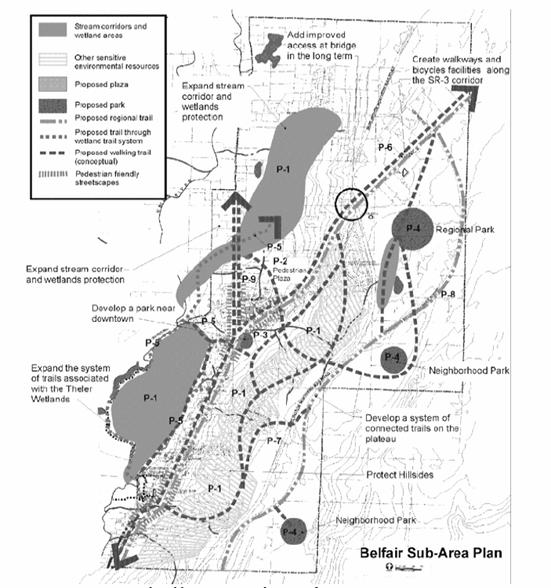
Figure 6. Proposed Belfair UGA trail network improvements.
(4)
New developments should include a circulation system that connects buildings, open spaces, parking areas, and the adjacent street sidewalk system. Commercial and multi-family uses should provide a pedestrian connection to adjacent commercial and/or multifamily uses where desirable and possible to encourage multiple-task trips, more efficient parking, and a high-quality pedestrian ambience. Also, connections to transit uses and adjacent properties are particularly important and may be required by the county.
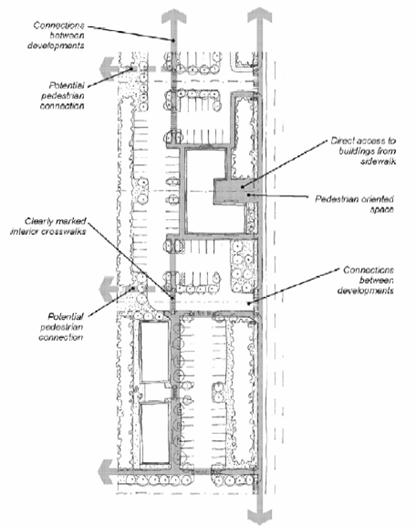
Figure 7. Developments should include a circulation system that connects buildings, open spaces, parking areas, and the adjacent street sidewalk system.
(5)
New developments shall provide for adequate interior walkway widths and surfaces. Specifically, applicants must demonstrate to the county how the proposed walkway system will be designed to handle projected usage as provided by the following guidelines:
(A)
The paving surface on all pedestrian paths should be appropriate to their use:
(i)
Concrete, brick or other decorative hard-surfaced pavements for interior pedestrian walkways, building entries, or parking lot pathways,
(ii)
Seamless materials like asphalt for multi-purpose pathways,
(iii)
Crushed gravel for nature trails,
(iv)
Wood for boardwalks,
(B)
The following design criteria for pedestrian paths should be applied:
(i)
Four foot wide walkways for low pedestrian volumes,
(ii)
Six foot wide walkways will allow two people to walk side-by-side and is suitable where moderate pedestrian activity is expected,
(iii)
Twelve foot wide walkways will allow two groups of two people walking side-byside to pass and are appropriate for the heavily used walkways and communitywide trails.
(6)
New developments shall provide pedestrian-oriented spaces in all commercial, office, and mixed-use developments. Specifically:
(A)
Developments with less than thirty thousand square feet of gross floor area of commercial, office, and mixed-use buildings are encouraged to provide pedestrian-oriented space at a ratio of one hundred square feet for every ten thousand square feet of gross floor area of building;
(B)
Developments with at least thirty thousand square feet of gross floor area of commercial, office, and mixed-use buildings are required to provide pedestrian-oriented space at a ratio of one hundred square feet for every ten thousand square feet of gross floor area of building.
(7)
To qualify as a "pedestrian-oriented space, the following must be addressed:
(A)
Provide direct pedestrian access from the adjacent roadways;
(B)
Provide a walking surface with unit pavers or concrete with special texture, pattern, and/or decorative features;
(C)
Incorporate pedestrian amenities, including seating, landscaping, and public art;
(D)
Provide pedestrian lighting, preferably below fifteen feet in height;
(8)
A "pedestrian-oriented space" may have and is encouraged to have the following features:
(A)
Active retail uses on the building façade(s) facing the space;
(B)
A location in areas with significant pedestrian traffic to provide interest and security—such as adjacent to a building entry;
(C)
Provision of weather protection features on building facades fronting the space;
(D)
Location, orientation, and/or mitigating structures designed with consideration of the sun and wind;
(E)
Additional pedestrian amenities, including but not limited to: public art, movable chairs and tables, and extra landscaping features.
(9)
A "pedestrian-oriented space" shall not have:
(A)
Asphalt or gravel pavement;
(B)
Adjacent unscreened parking lots;
(C)
Adjacent chain link fences;
(D)
Adjacent "blank walls" without "blank wall treatment";
(E)
Adjacent dumpsters or service areas.
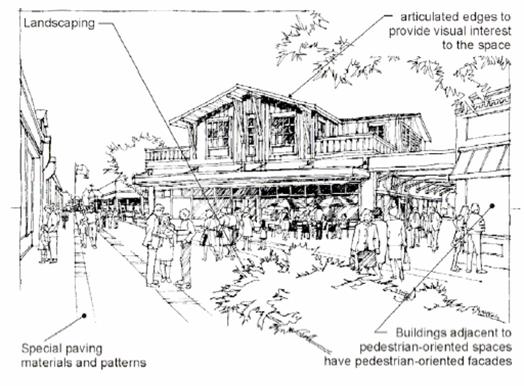
Figure 8. An example of pedestrian-oriented space.
(10)
New development shall provide pathways through parking lots. A specially marked or paved crosswalk must be provided through parking lots greater than one hundred fifty feet long (measured parallel to the street front) or more than two bays deep (approximately seventy-five feet measured perpendicular from street front). Generally, walkways should be provided at least every one hundred fifty feet measured perpendicularly to the building face with a main entry. This distance should be considered somewhat flexible to account for the length of the parking lot and driveway locations. Additional design criteria:
(A)
Pathways should be curbed and raised at least six inches above the parking lot grade except where they cross driveways or aisles or where necessary to meet handicap requirements. Alternatively, the County may approve walkways delineated by a distinctive paving material or marking when adequate pedestrian safety is provided.
(B)
Pathways must be at least four feet wide, exclusive of parked car overhangs. Where necessary to ensure four feet of unobstructed walkway, wheel stops are required.
(C)
Where pathways cross parking areas, contrasting materials or markings such as white concrete in an asphalt area or visually obvious paint stripes are required to define pathways.
(Ord. 133-04 Att. B § 2 (part), 2004).
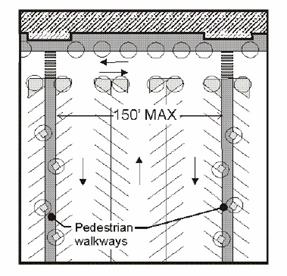
Figure 9. Illustrating standards for pathways through parking lots.

