
Mason County Unincorporated
City Zoning Code
City Zoning Code
CHAPTER 17
34 - SIGNS IN THE BELFAIR UGA
17.34.010 - Signs in the Belfair UGA.
This chapter shall also be known as the "Belfair Sign Code."
(Ord. 133-04 Att. B § 2 (part), 2004).
17.34.020 - Intent of sign regulations.
The intent of the sign regulations is to provide minimum standards to safeguard life, health, property and public welfare by regulating and controlling the number, size, design, quality of materials, construction, location, electrification and maintenance of all signs and sign structures; to preserve and improve the appearance of Belfair as a place in which to live and as an attraction to nonresidents who come to visit or trade; to encourage sound signing practices as an aid to business and for public information but to prevent excessive and confusing sign displays or signs that pose a hazard to the public.
(Ord. 133-04 Att. B § 2 (part), 2004).
17.34.030 - Application.
This chapter applies only to signs within the Belfair urban growth area.
(Ord. 133-04 Att. B § 2 (part), 2004).
17.34.040 - Exemptions to the sign regulations.
The following may be construed as signs, but are not intended to be regulated as signs in the development regulations:
(1)
The flag, emblem or insignia of a nation or other governmental unit or nonprofit organization subject to the guidelines concerning their use set forth by the government or organization which they represent;
(2)
Traffic or other municipal signs, signs required by law or emergency, railroad crossing signs, legal notices and signs erected by government agencies to implement public policy;
(3)
Signs of public utility companies indicating danger or which serve as an aid to public safety or which show the location of underground facilities or of public telephones;
(4)
Signs located in the interior of any building or within an enclosed lobby or court of any building or group of buildings, which signs are designed and located to be viewed exclusively by patrons of such use or uses;
(5)
Decorations, clearly incidental and customary and commonly associated with any national, local or religious holiday, or traditional community event such as annual festivals or parades;
(6)
Sculptures, fountains, murals, mosaics and design features which do not incorporate advertising or identification.
(Ord. 133-04 Att. B § 2 (part), 2004; Ord. No. 36-18, 6-5-2018).
17.34.050 - Definitions.
The following definitions apply within this chapter:
"Accessory building or use" means any building or use which:
(1)
Is subordinated to, and serves a principal building or principal use;
(2)
Is subordinate in area, extent or purpose to the principal building or principal use served;
(3)
Contributes to the comfort, convenience or necessity of occupants of the principal building or principal use served; and
(4)
Is located on the same lot as the principal building or principal use served, with the single exception of such accessory off-street parking facilities as are permitted to locate elsewhere than on the same lot with the building or use served.
Accessory uses include signs which are related to and support an on-site business or activity.
"Agricultural sales sign" means a temporary sign used to announce and/or direct the public to a sale of locally grown agricultural products.
"Animated sign" means any sign which includes action or motion or the optical illusion of action or motion, or color changes of all or any part of the sign facing, requiring electrical energy, or set in motion by movement of the atmosphere.
"Changing message center sign" means an electrically or electronically controlled sign where different automatic changing messages are shown on the same lamp blank.
"Commercial sign" means, for the purposes of sign regulations, a sign intended to attract attention, identify, advertise, and/or promote: a business; goods sold, offered, traded, or manufactured; a service sold or offered; or professional, commercial or industrial gainful activity.
"County" means Mason County, Washington.
"Construction sign" means any sign used to identify the architects, engineers, contractors or other individuals or firms involved with the construction of a building and announce the character of the building or the purpose for which the building is intended.
"Flashing sign" means any sign which contains an intermittent or flashing light source or which includes the illusion of intermittent or flashing light by means of animation or an externally mounted intermittent light source.
"Garage sale signs (yard sales, moving sales, patio sales)" mean temporary signs used to announce and/or direct the public to a sale of used items.
"Off-premises sign" means a sign that directs attention to a business, commodity, service or entertainment conducted, sold or offered at a location other than the premises on which the sign is located.
"On-premises sign" means any communication device, structure or fixture that is intended to aid in identification and to advertise and/or promote a business, service, activity, interest or view at the location on which the sign is located.
"Non-commercial sign" means, for the purposes of sign regulations, a sign intended for a purpose other than to attract attention, identify, advertise, and/or promote: a business; goods sold, offered, traded, or manufactured; a service sold or offered; or professional, commercial, or industrial gainful activity.
"Political sign" means a temporary sign advertising a candidate or candidates for public elective office, or a political party, or sign urging a particular vote on a public issue decided by ballot.
"Real estate signs" mean any temporary sign pertaining to the sale, lease or rental of land or buildings.
"Roof sign" means any sign erected upon, against or directly above a roof or on top of or above the parapet of a building.
"Sign" means any communication device, structure or fixture that is intended to aid an establishment in identification and to advertise and/or promote a business, service, activity or interest. For the purpose of this chapter, a sign shall not be considered to be building or structural design, but shall be restricted solely to graphics, symbols or written copy that is meant to be used in the aforementioned way. Signs as regulated in this chapter have been organized into a variety of types, such as commercial and non-commercial, which are regulated differently.
"Temporary sign" means those signs intended and designed to be displayed for a limited period of time and associated with a particular event or short term activity. Temporary signs may be of either a commercial or non-commercial nature.
(Ord. 133-04 Att. B § 2 (part), 2004; Ord. No. 36-18, 6-5-2018).
17.34.060 - Sight distance for signs.
In addition to the setback requirements otherwise established, signs shall be located such that there is at every street intersection a clear view between heights of three feet and ten feet in a triangle formed by the corner and points on the curb thirty feet from the intersection or entryway.
(Ord. 133-04 Att. B § 2 (part), 2004).
17.34.070 - Prohibited signs.
The following signs or displays are prohibited in the Belfair Urban Growth Area:
(1)
Roof signs;
(2)
Animated or flashing signs, provided that changing message center signs may be allowed when the image and/or message remains fixed for at least five seconds and that the only animation or appearance of movement allowed is the transition from one message and/or image to another by the scrolling on and/or off of the message and/or image;
(3)
Signs which, by reason of their size, location, movement, content, coloring or manner of illumination may be confused with or construed as a traffic control sign, signal or device, or the light of an emergency or radio equipment vehicle, or which obstruct the visibility of traffic or street sign or signal device from the traffic intended to be served by the sign, signal or device;
(4)
Signs attached to utility poles;
(5)
Off-premises signs, except for the temporary signs allowed in Sections 17.34.080;
(6)
Pole-mounted signs;
(7)
Ground-mounted signs taller than ten feet in height;
(8)
Signs employing exposed electrical conduits;
(9)
Signs with visible ballast boxes or other equipment;
(10)
Signs with luminous plastic letters;
(11)
Audible or odor-producing signs;
(12)
Back-lit translucent awnings;
(13)
Cardboard signs, except for the temporary signs allowed in Section 17.34.080;
(14)
Back-lit signs with letters or graphics on a plastic sheet (also known as can signs);
(15)
Vinyl banners, except those related to a specific event and displayed prior to the event for no more than ten days.
(Ord. 133-04 Att. B § 2 (part), 2004; Ord. No. 36-18, 6-5-2018).
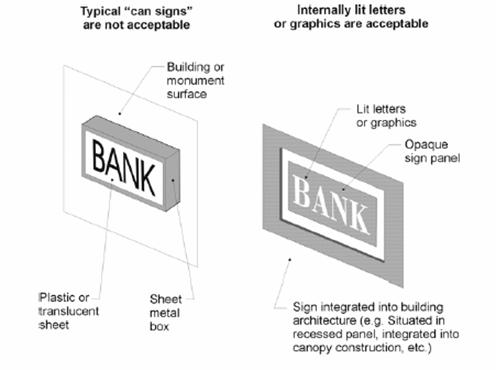
Figure 22. Can signs compared with permitted signs.
_____
17.34.080 - Temporary signs.
Temporary signs are those intended and designed to be displayed for a limited period of time and shall not be permanently attached or anchored to the ground, to a building, or any other structure. Temporary signs specified in 17.34.080.C, which are allowed in the right-of-way, are regulated pursuant to 17.03.202.C, 17.03.202.D., and state law.
A.
Signs displayed on a property actively marketed for sale, lease, or rent.
(1)
Permitted Location: On property for sale, lease, or rent.
(2)
Duration: No longer than ten days after the sale, lease, or rent of property has been finalized.
(3)
Off-Premise Signs: May be placed on private property with owner's consent.
B.
Signs displayed on a property holding a temporary event.
(1)
Permitted Location: On the property with which the temporary event is associated.
(2)
Duration: no longer than ten days after the event.
(3)
Off-Premise Signs: May be placed on private property with owner's consent.
C.
Signs displayed during elections and campaigns.
(1)
Permitted Location: May be placed on private property with owner's consent and in the public right of way as regulated pursuant to 17.03.202.C, 17.03.202.D., and state law.
(2)
Duration: no longer than ten days after the final campaign or election.
(Ord. No. 36-18, 6-5-2018)
Editor's note— Ord. No. 36-18, adopted June 5, 2018, repealed the former § 17.34.080, and enacted a new § 17.34.080 as set out herein. The former § 17.34.080 prohibited non-commercial signs and derived from Ord. 133-04 Att. B § 2 (part), adopted 2004.
17.34.090 - Non-commercial signs.
Non-commercial signs may be placed upon private property with owner's consent.
(Ord. No. 36-18, 6-5-2018)
Editor's note— Ord. No. 36-18, adopted June 5, 2018, repealed the former § 17.34.090, and enacted a new § 17.34.090 as set out herein. The former § 17.34.090 pertained to real estate signs and derived from Ord. 133-04 Att. B § 2 (part), adopted 2004.
17.34.100 - Design guidelines.
The following guidelines apply to all signage for non-single family residential development:
(1)
Signage must be of high-quality design and materials;
(2)
Signage shall always complement a building's character and design (e.g., walls signs should avoid covering building columns);
(3)
Signs may be fabricated of mixed media, including metal reverse-illuminated letters, suspended neon letters, illuminate individual letters, or signs etched or cut out of solid material, such as wood or brass, and illuminated from behind;
(4)
Keep signs as simple as possible, relying on symbols to avoid needless clutter and complexity;
(5)
Use landscaping in conjunction with monument signs to enhance the appearance;
(6)
Light colored lettering and logos on a dark background is highly recommended for readability, sense of quality and design continuity;
(7)
Non-illuminated mixed-media, and other special mixed-media signs will be subject to approval by the county.
(Ord. 133-04 Att. B § 2 (part), 2004; Ord. No. 36-18, 6-5-2018).
Editor's note—
Ord. No. 36-18, adopted June 5, 2018, repealed § 17.34.100, which pertained to non-commercial
signs and derived from Ord. 133-04 Att. B § 2 (part), adopted 2004; § 17.34.110, which
pertained to garage sale signs (also yard sales, moving sales, patio sales) and derived
from Ord. 133-04 Att. B § 2 (part), adopted 2004; and § 17.34.120, which pertained
to agricultural sale signs and derived from Ord. 133-04 Att. B § 2 (part), adopted
2004.
Said ordinance then renumbered §§ 17.34.130—17.34.180 as 17.34.100—17.34.150.
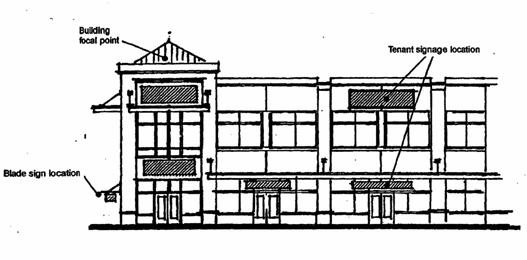
Figure 23. Appropriate sign location and size.
_____
17.34.110 - Permitted commercial monument sign standards.
(a)
Monument site entry signs may be located at major vehicular or pedestrian entries along the street front.
(b)
Only one monument sign is allowed per site. For large sites, more than one monument sign shall be permitted as long as such signs are placed no closer than one hundred fifty feet apart along the street front.
(c)
Monument signs size limits:
(1)
Single tenant signs shall be no more than eight feet in height and thirty-two square feet in area per face (Two sign faces are allowed);
(2)
Single tenant signs for retail uses larger than fifty thousand square feet in gross floor area shall be no more than ten feet in height and fifty square feet in area per face;
(3)
Multi-tenant (more than three tenants) signs shall be no more than ten feet in height and forty square feet in area per face;
(4)
Multi-tenant signs for commercial uses with more than fifty thousand square feet in gross floor area shall be no more than ten feet in height and fifty square feet in area per face;
(5)
Monument signs for multi family developments shall be no more than five feet in height and twenty-eight square feet in total sign face area.
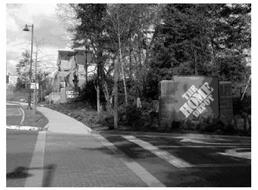
Figure 24. An example of a monument sign.
(d)
Signs shall be designed to integrate with adjacent site landscaping.
(e)
Monument signs shall be setback at least five feet from any public right-of-way.
(f)
Monument signs may be internally lit or illuminated from the front.
(g)
A thirty-foot lineal break in required tree coverage in landscaped front yard areas parallel to the street, where applicable, is permitted adjacent to monument signs to enhance visibility. Other landscape elements such as shrubs and ground cover will still apply.
(Ord. 133-04 Att. B § 2 (part), 2004; Ord. No. 36-18, 6-5-2018).
Editor's note— See editor's note for § 17.34.100.
17.34.120 - Permitted commercial building sign standards.
(a)
Building signs are those signs mounted directly on the face of a building and include signs to identify the building or facility or individual tenants or businesses. Building signs should be designed and located to fit with the buildings architecture. For example, building signs might fit within a recessed panel or on a building element such as a fascia or canopy. Building signs should not cover over an architectural element such as a window or portion of a buildings ornamentation or trim.
(b)
Buildings signs should fit parallel or perpendicular with the building façade. The supporting mechanisms or arms of new building signs should not be visible. Perpendicular signs should not extend more than four feet from the building façade.
(c)
The maximum surface area of building mounted signs for a given façade is twenty-five square feet plus ten percent of the area of the building's main façade. The sign(s) may be located on any façade, but the signs on all façades count toward maximum surface area.
(d)
The lettering and logos of building signs may be internally-lit but the background of the sign face shall not be internally illuminated. Building signs may be illuminated from the front.
(Ord. 133-04 Att. B § 2 (part), 2004; Ord. No. 36-18, 6-5-2018).
Editor's note— See editor's note for § 17.34.100.
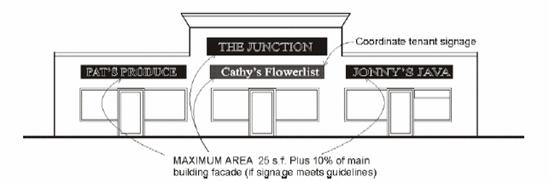
Figure 25. Maximum size of building signs.
_____
17.34.130 - Permitted commercial tenant sign standards.
Miscellaneous tenant signs including those hung from building canopies (blade signs), temporary ground placed A-Board signs, and window signs are allowed provided they do not exceed twelve square feet and provided they are within ten feet of the individual or multiple tenant building entrance.
(Ord. 133-04 Att. B § 2 (part), 2004; Ord. No. 36-18, 6-5-2018).
Editor's note— See editor's note for § 17.34.100.
17.34.140 - Permitted commercial neon sign standards.
Neon signs in windows are permitted.
(Ord. 133-04 Att. B § 2 (part), 2004; Ord. No. 36-18, 6-5-2018).
Editor's note— See editor's note for § 17.34.100.
17.34.150 - Non-conforming commercial signs.
(a)
Signs which are legally established prior to the effective date of this chapter, December 28, 2004, may continue for a period of ten years, provided that, if a non-conforming sign is changed or moved, it must be brought into conformance with this chapter at that time. Notwithstanding the previous sentence, sandwich boards or A-frame boards, which are legally established prior to the effective date of this chapter, may continue for a period of ninety days, provided that after that time:
(1)
The sign shall be removed or brought in to conformance, and
(2)
Prior to any enforcement action, the county shall attempt to notify the property and/or business owner of the non-conformity.
(b)
If this chapter is amended so as to create new non-conforming signs from signs which were in conformance with this chapter, those signs may continue for a period of ten years from the date of the amendment that made them non-conforming, provided that, if a non-conforming sign is changed or moved, it must be brought into conformance with this chapter at that time.
(c)
Parcels affected by roadway construction identified in the Belfair subarea plan may be granted an extension of six months past project completion to bring non-conforming signs into conformance.
(Ord. 133-04 Att. B § 2 (part), 2004; Ord. No. 36-18, 6-5-2018).
Editor's note— See editor's note for § 17.34.100.
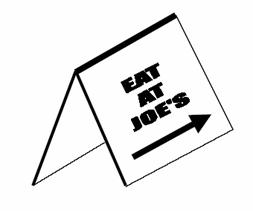
Figure 26. Example of a sandwich board or A-frame board.
17.34.160 - Severability.
This title shall be governed by the laws of the State of Washington. In the event that any portion or section of this title be declared invalid or unconstitutional by a court of competent jurisdiction, the remainder of the title shall not be affected and shall remain in full force and effect.
(Ord. No. 36-18, 6-5-2018).
17.34.170 - Enforcement.
County officials shall have the authority to remove signs when not placed in accordance with this section.
(Ord. No. 36-18, 6-5-2018).

