
Menomonee Falls Village
City Zoning Code
City Zoning Code
ARTICLE V
- BUILDING TYPES
Sec. 122-500. - Applicability.
The building types detailed in this article define the required building forms for new construction, renovation of existing structures and redevelopment within all zoning districts.
Sec. 122-501. - General requirements.
All building types shall fulfill the following requirements.
(1)
Zoning districts. Each building type shall be constructed only within districts where the building type is permitted, as shown in figure 122-501.1, table of permitted building types.
(2)
Uses. Each building type can house a variety of uses depending on the district in which it is located, as outlined in article IV of this chapter. Some building types have additional limitations on permitted uses as outlined in this article.
(3)
No other building types. All buildings constructed must fulfill the requirements of one of the building types permitted within the zoning district of the lot, unless specifically noted otherwise.
(4)
Permanent structures. All buildings constructed shall be permanent construction without a chassis, hitch, or wheels, or other features that would make the structure mobile, unless otherwise noted in this article.
(5)
Restoration of unsafe buildings. Nothing in these regulations shall prevent the strengthening or restoring to a safe condition of any part of any building declared unsafe by the building inspector or where required by any lawful order.
(6)
Structures to be moved upon village streets. The movement of any structure upon any of the public rights-of-way of the village shall comply with article V of chapter 18 of this Code.
(7)
Building line. The building line is the dominant, above ground limit of front facades along a right-of-way. The building line is determined by the build-to zones or minimum setbacks defined for each building type.
(8)
Treatment of yards. Paved vehicular areas are limited to specific locations per the building type. The permitted treatments of the yard areas around the buildings are further regulated below:
a.
Hardscape, patio and sidewalks. All yards may contain hardscape areas such as patios or sidewalks; however, the maximum impervious areas and open space requirements, if noted in the building type, shall be met.
b.
Side yard parking lots. Some building types permit side yard parking lots; however, side yard parking lots shall not encroach into the minimum street and side setbacks and the minimum side setback areas shall be landscaped.
Table of Permitted Building Types
Figure 122-501.1
c.
Rear yards. Parking lots and loading areas are preferred in the rear yard; however, these areas shall not encroach into the minimum rear setback. The minimum rear setback area shall only contain landscape or hardscape, unless otherwise noted.
d.
Multi-frontage lots. Multi-frontage lots require special consideration with regards to yard requirements. Each portion of a lot abutting a right-of-way shall meet the minimum lot width and street setback, or build-to zone, of the applicable building type.
(9)
Driveways. Driveways shall be designed in accordance with section 122-740, minimized to the extent practical, and located to have the least impact on pedestrian accessibility, safety, and comfort.
a.
Commercial driveways. Driveways are encouraged to cross perpendicularly through the side and rear yard within the commercial building types to connect to parking on adjacent lots.
b.
Residential driveways. Residential driveways shall be located a minimum of three feet from abutting property lines (other than a street line), except the three feet minimum distance shall not apply when the driveway serves a single family structure in the R-5, R-6, or PRD districts, or where two adjacent residential lots have a shared driveway.
c.
Driveways and curb cuts. The regulations pertaining to driveways and curb cuts can be found in sections 90-21—90-27 of this Code and section 122-740.
(10)
Accessory structures. Specific regulations pertaining to accessory structures can be found in division 3 of this article.
a.
Attached accessory structures are considered part of the principal structure.
Sec. 122-502. - How to read the building type regulations.
The process for understanding the building type regulations is detailed below.
(1)
Building types permitted by district table. Figure 122-501.1, table of permitted building types, defines which building types are permitted within each zoning district.
(2)
General design requirements.Section 122-503 contains the design requirements for all building types. These requirements include such items as materials, windows, and balcony design requirements.
(3)
Building type.Sections 122-520—122-524 provide the framework for each building type. This framework consists of:
a.
Description of building type. The first section for each building type provides a general description of the building type and several images of typical buildings in Menomonee Falls indicative of multiple elements of the building type. The images are intended to be illustrative only and may not fully exemplify all the requirements of the building type.
b.
Table and diagrams. The second section for each building type provides additional information meant to be viewed simultaneously.
c.
Notes. The final section of each building type contains notes referenced from the table of regulations. Additional graphic diagrams of unique situations may also be provided in this section.
(4)
Explanation and measurement of regulations specific to building types.Section 122-525 provides an explanation of each line item in the tables, provides the measurement standards, and other reference information.
(5)
Accessory structures. Division 3 of this article (sections 122-530—122-532) provides additional information regarding accessory structures. Figure 122-530.1, accessory structure table, lists types of accessory structures and the zoning districts where they are permitted.
Sec. 122-503. - General design requirements for all building types.
(a)
Purpose. The following requirements affect a building's appearance and are intended to improve the physical quality of buildings, enhance the pedestrian experience, and protect the character of each neighborhood, district, node or corridor.
(b)
Materials.
(1)
Primary façade materials. Eighty percent of each façade shall be constructed of primary materials. For facades over 500 square feet, more than one material shall be used to fulfill the 80-percent requirement. Figure 122-503.1, primary building materials, is provided for additional reference.
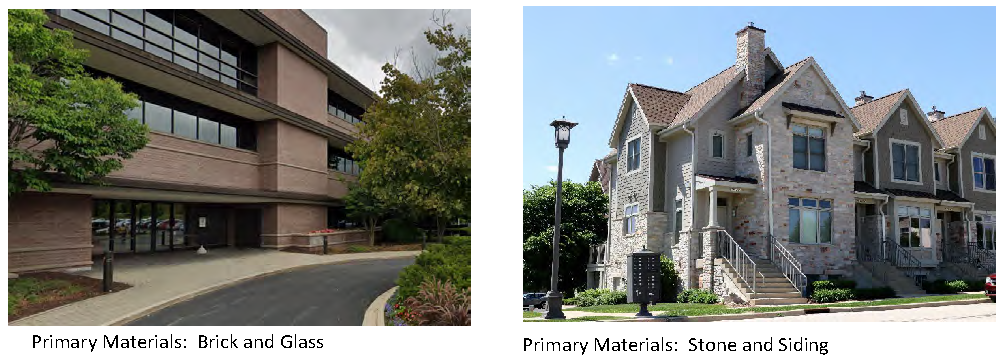
Figure 122-503.1 Primary Building Materials
a.
Permitted primary building materials include high quality, durable, natural materials such as stone, brick, block, precast concrete, glass, wood siding and fiber cement siding. Vinyl and aluminum siding shall be prohibited in all building types, except the single family building types.
b.
Other high quality materials may be approved in the sole discretion of the decision-making body upon a determination that such materials are appropriate to the architectural style of the building and the surrounding context, after receiving from the applicant relevant information including, but not limited to, a material sample, specification sheet(s), and a document explaining successful high quality installations of such materials.
(2)
Secondary façade materials. Secondary materials are limited to details and accents and include gypsum reinforced fiber concrete for trim and cornice elements; metal for beams, lintels, trim, and ornamentation, and exterior architectural metal panels and cladding.
a.
Exterior insulation and finishing systems (EIFS) is permitted for trim only or on upper floor facades only.
(3)
Roof materials. Acceptable roof materials include 300 pound or better, dimensional asphalt composite shingles, wood shingles and shakes, metal tiles or standing seam, slate and ceramic tile, as well as membrane for flat roofs, and any additional materials necessary for the proper installation of green roofs. "Engineered" wood or slate may be approved during the site plan process with an approved sample and examples of successful, high quality local installations. An applicant seeking approval for a building with a flat roof over 10,000 square feet shall consider cool roofs, green roofs, or solar panels for roofing materials, and if the application does not include such materials, the applicant must provide an explanation. Figure 122-503.2, roof materials, is provided for additional reference.
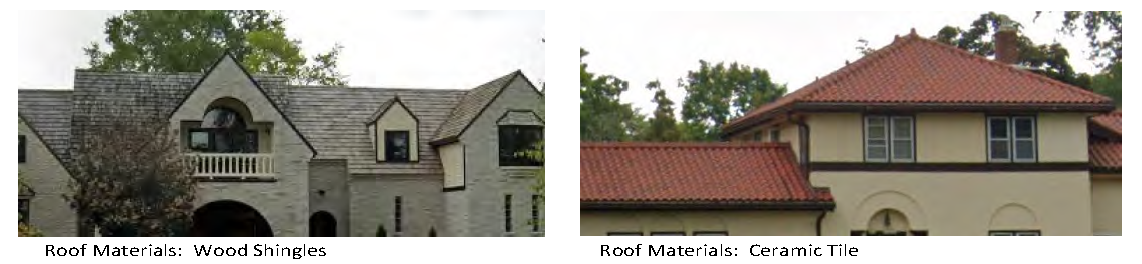
Figure 122-503.2 Roof Materials
(4)
Appropriate grade of materials. Commercial grade doors, windows, and hardware shall be used on all building types with the exception of single family building types. Figure 122-503.3, doors and windows, is provided for additional reference.
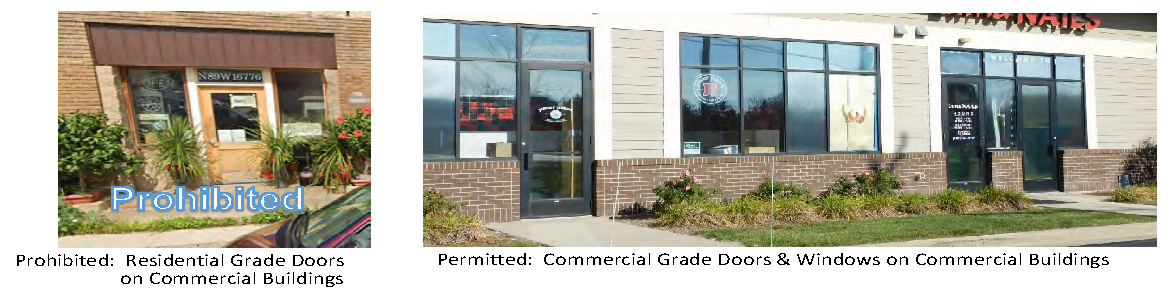
Figure 122-503.3 Doors and Windows
(c)
Windows and awnings.
(1)
Prohibited windows.
a.
Glass block windows are prohibited on street facades.
b.
The exterior face of a window shall not be covered by paint, fabric, plastic, or signage, except as allowed in subsection 78-6(3)(a)(4).
c.
Exterior bars are prohibited on any window.
(2)
Awnings. All awnings shall be canvas or metal. Plastic and vinyl awnings are not permitted. Awning types for each building face shall be coordinated. Figure 122-503.4, awnings, is provided for additional reference.
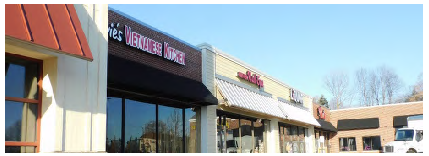
Figure 122-503.4 Awnings
(d)
Balconies. The following applies in all locations where balconies are incorporated into the façade design facing any street or parking lot.
(1)
Definition. Balconies include any platform that projects from the wall of a building above grade and is enclosed by a parapet or railing. Figure 122-503.5, balcony examples, is provided for additional reference.
a.
Exception: false balconies. These regulations do not apply to false balconies a maximum of 16 inches deep, sometimes referred to as Juliet balconies or balconets, which are permitted. False balconies consist of a rail and door, with no outdoor platform.
(2)
Size. Balconies shall be a minimum of five feet deep and six feet wide.
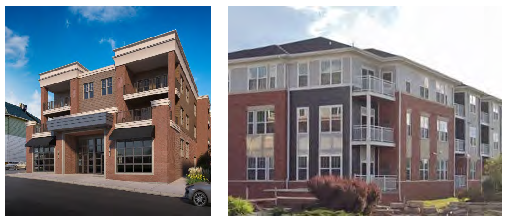
Figure 122-503.5 Balcony Examples
(e)
Air conditioning units. Air conditioning units shall be flush with the exterior building wall, except in the single family building types.
Sec. 122-520. - Commercial building types.
(a)
Description and intent. The commercial building type is comprised by three building styles utilized together to create distinct neighborhoods within the village. These three building types are as follows:
(1)
Storefront building type. The storefront building type is intended for use as a mixed-use building located close to the front lot line with parking in the rear and sometimes the side of the lot. The key façade element of this building type is the storefront required on the ground floor front façade, with large amounts of glass and regularly spaced entrances. Examples of this building type are found in figure 122-520.1.
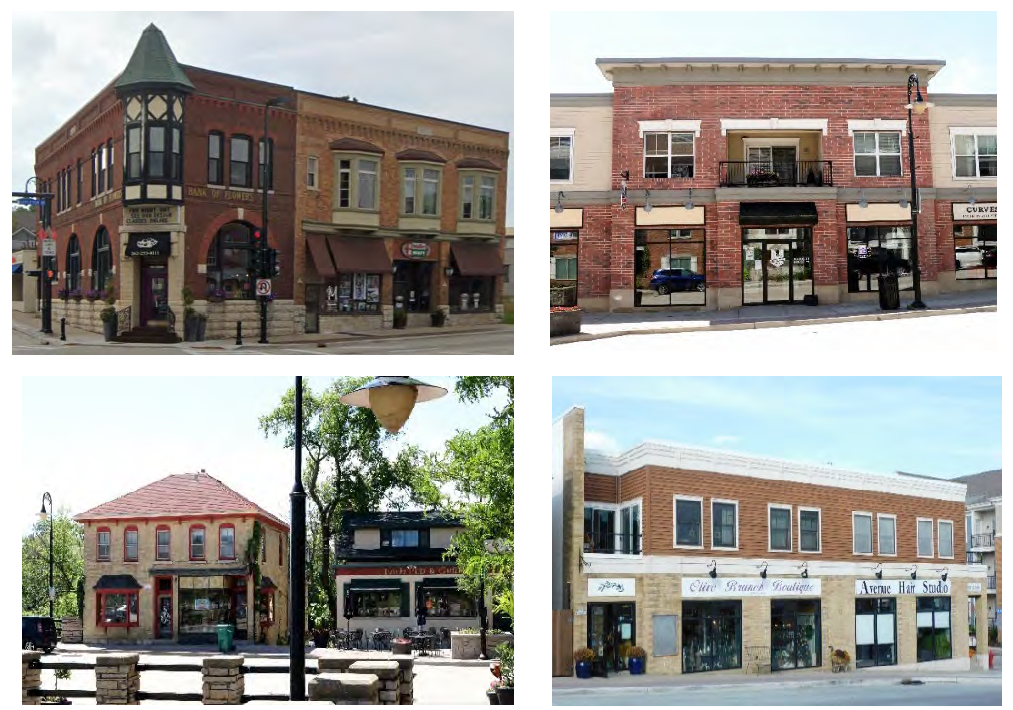
Figure 122-520.1 Illustrative Examples of Storefront Buildings
a.
Storefront building siting requirements. Figure 122-520.2 graphically portrays the building siting requirements. The terms in the following table are described further in section 122-525.
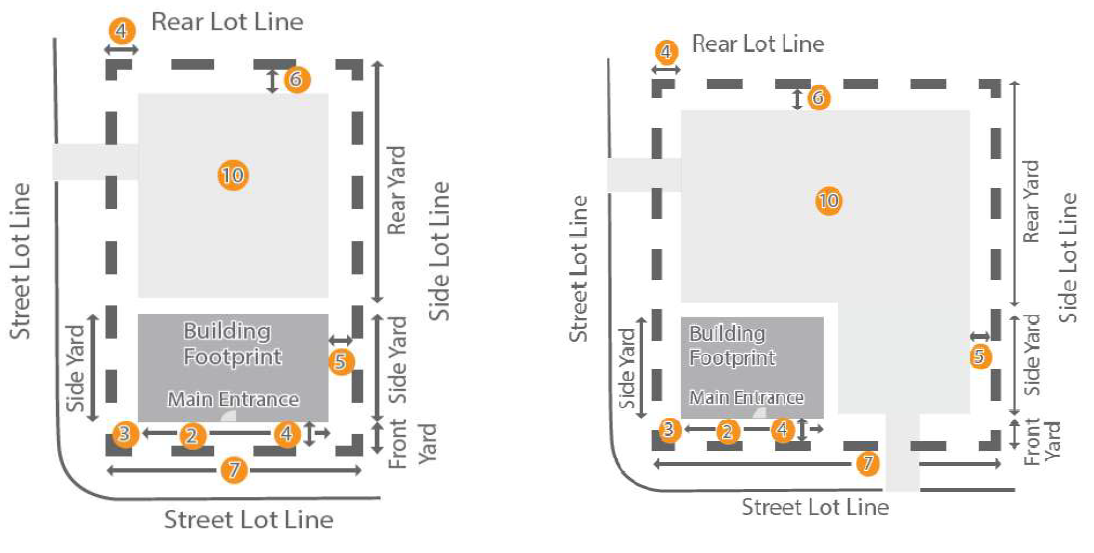
Figure 122-520.2 Storefront Building: Building Siting
b.
Notes. The following notes are keyed to the storefront building siting requirements table found in subparagraph (a).
1.
Where limited side yard parking is permitted, the following is allowed:
i.
On lots wider than 100 feet at the front lot line, one single-loaded aisle of parking (maximum width of 32 feet), located in the side yard, perpendicular to the front lot line, is exempt from the front lot line coverage.
ii.
On lots wider than 160 feet at the front lot line, one double-loaded aisle of parking (maximum width 65 feet), located perpendicular to the front lot line, is exempt from the front lot line coverage.
iii.
All parking lots larger than 10,000 square feet shall comply with the landscape requirements contained in subsection 122-622(d), and the buffer requirements contained in division 3 of article VI.
2.
All building siting, parking and loading uses in the PDO shall comply with the regulations adopted within the specific PDO district per division 6 of article III.
(2)
Transitional commercial building type. The transitional commercial building type is generally found in areas transitioning from a strictly residential use to a strictly commercial use. The building type allows a wide mix of uses in a residential looking building, having attributes such as a pitched roof and a front stoop or porch. This lower-scale building has a pedestrian-friendly storefront, stoop, or porch entrance type with moderate transparency and a primary entrance that faces the street. The ground story elevation may be at sidewalk grade or raised. The building may have a small landscaped area in the front yard. Parking is permitted in the rear yard and, in some cases the side yard. Examples of this building type are found in figure 122-520.3.
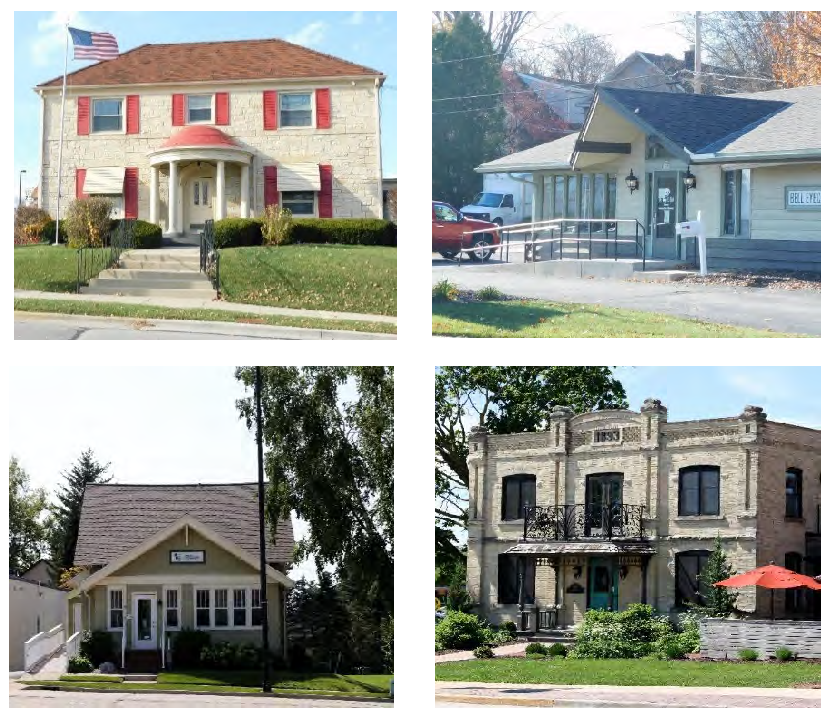
Figure 122-520.3 Illustrative Examples of Transitional Commercial Buildings
a.
Transitional commercial building siting requirements. Figure 122-520.4 graphically portrays the building siting requirements. The terms in the following table are described further in section 122-525.
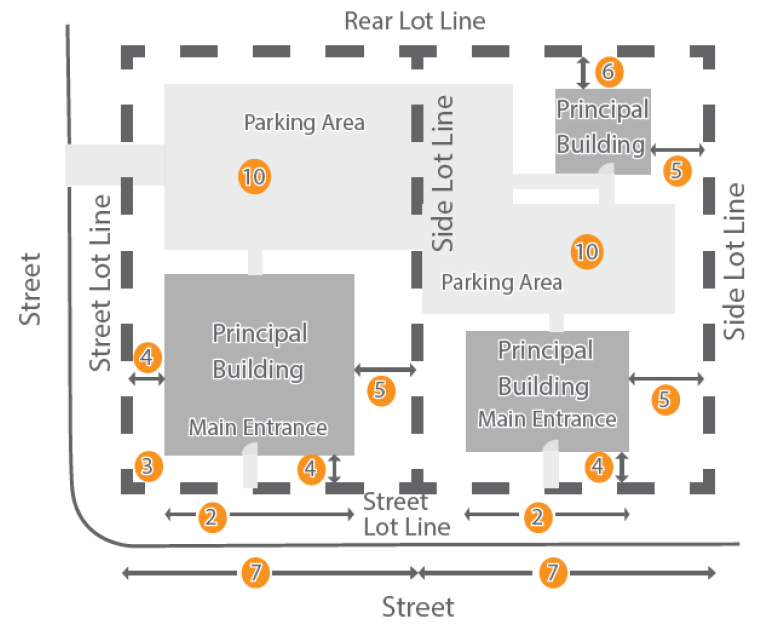
Figure 122-520.4 Transitional Commercial Building: Building Siting
b.
Notes. The following notes are keyed to the transitional commercial building siting requirements table found in subparagraph (a).
1.
When noted, multiple buildings may be located on a lot. Each building shall fulfill all requirements of the building type.
2.
Where limited side yard parking is permitted, the following is allowed:
i.
On lots wider than 100 feet at the front lot line, one single-loaded aisle of parking (maximum width of 32 feet), located in the side yard, perpendicular to the front lot line, is exempt from the front lot line coverage.
ii.
On lots wider than 160 feet at the front lot line, one double-loaded aisle of parking (maximum width 65 feet), located perpendicular to the front lot line, is exempt from the front lot line coverage.
iii.
All parking lots larger than 10,000 square feet shall comply with the landscape requirements contained in subsection 122-622(d) and the buffer requirements contained in division 3 of article VI.
3.
All building siting, parking and loading uses regulations in the PDO shall comply with the regulations adopted within the specific PDO district per division 6 of article III.
4.
The minimum setback shall be increased to 100 feet when this building type adjoins a single-family residential district. Buffers and screening are required per division 3 of article VI.
5.
One row of parking may be located in the front yard in the C-1 and C-6 districts; however, the parking area shall comply with the buffer requirements contained in section 122-630.
(3)
Suburban building type. The suburban building type allows limited commercial uses and has attributes such as a storefront or arcade entrance type. Unlike other commercial building types, the suburban building type allows parking in front of the building, but requires this parking to be screened from the street. Although the parking may be in front of the building, pedestrian connections to the street and through the parking lot are required. This building has a pedestrian-friendly storefront or arcade entrance type that generally faces the parking area. Examples of this building type are found in figure 122-520.5.
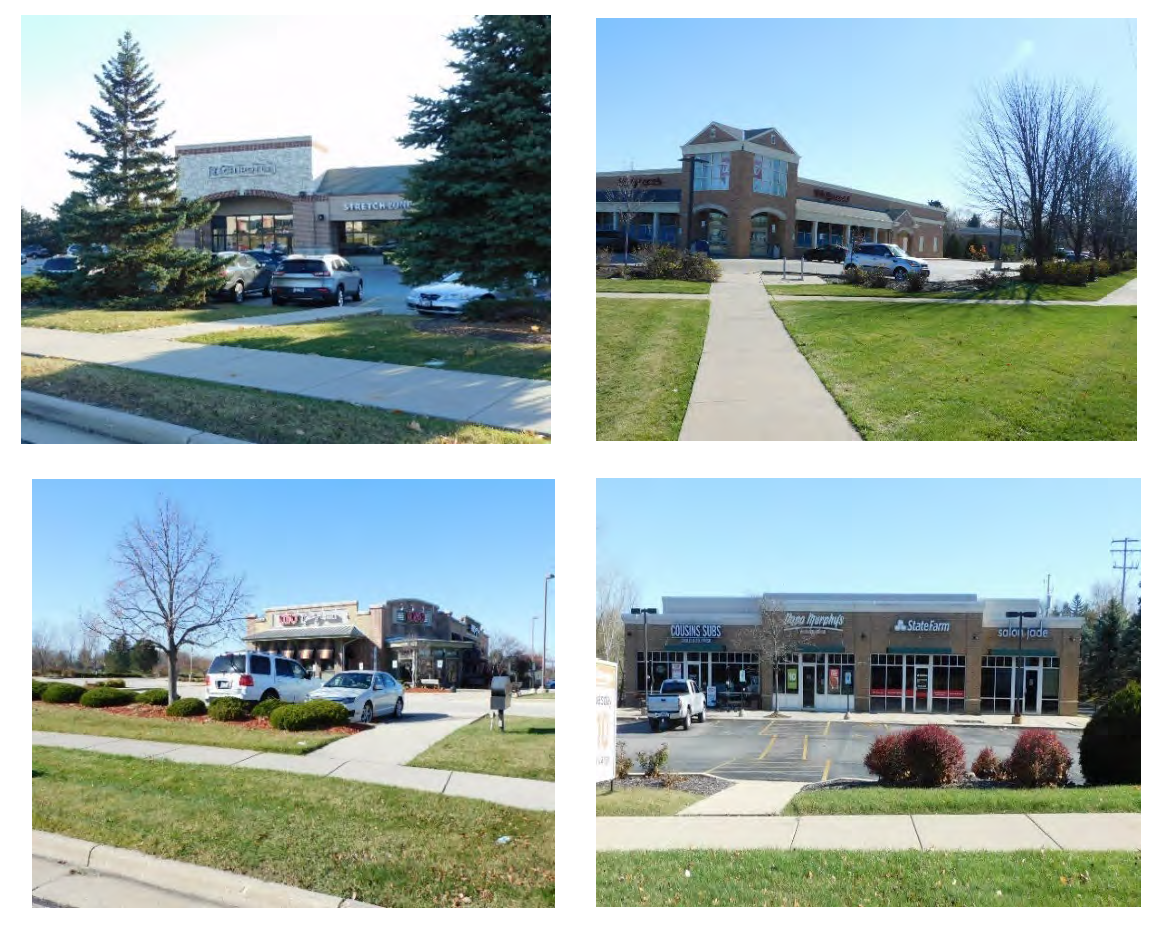
Figure 122-520.5 Illustrative Examples of Suburban Buildings
a.
Suburban building siting requirements. Figure 122-520.6 graphically portrays the building siting requirements. The terms in the following table are described further in section 122-525.
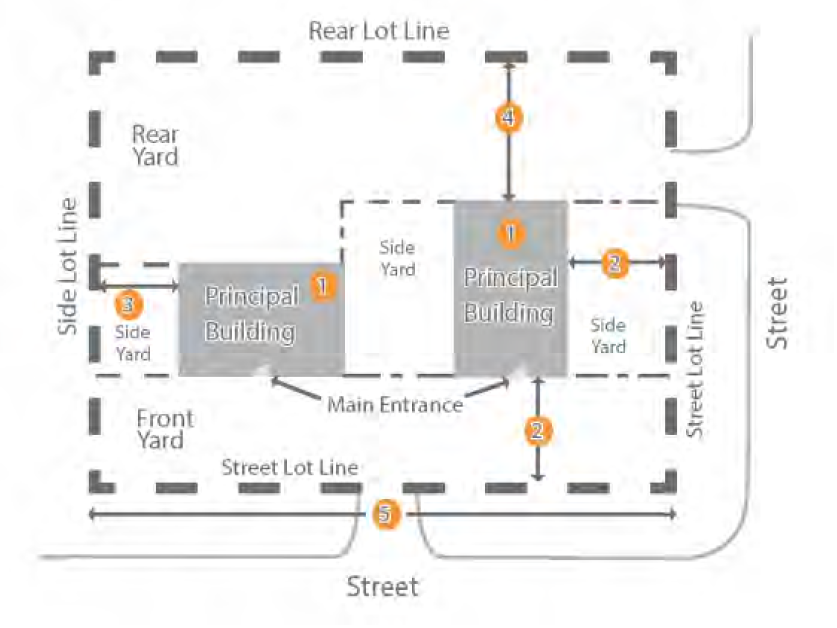
Figure 122-520.6 Suburban Building: Building Siting
b.
Notes. The following notes are keyed to the suburban building siting requirements table found in subparagraph (a).
1.
Multiple principal buildings are permitted on a single lot. The buildings may work together to fulfill the requirements of the suburban building type.
2.
In the C-6 district, the setback requirements shall be increased by one foot for every two feet in height in excess of 35 feet, up to a maximum setback of 100 feet.
3.
All building siting, parking and loading uses in the PDO shall comply with the regulations adopted within the specific PDO district per division 6 of article III.
4.
When this building type adjoins a single family residential district, the principal building may not be built closer than 100 feet from the property line abutting the district boundary. No side yard is required for simultaneously constructed buildings having common or adjoining wall construction when both buildings meet this building type.
(b)
Fueling stations and car washes. In addition to the requirements of subsection 122-437(a)(5), vehicle fueling stations and car washes shall meet the following requirements:
(1)
Access. When multiple fuel pump islands are proposed within a development, they shall be placed a minimum of 30 feet apart to allow an access lane to pass through.
(2)
Additional drive entrance. One driveway entrance, in addition to the driveways permitted by building type, is permitted on the lot.
(3)
Car wash. Any car wash facility, as an accessory use, shall be located on the rear or side of the building. Vehicle entrances to a car wash are prohibited on the primary street façade.
Sec. 122-521. - Industrial/warehouse building type.
(a)
Description and intent. The industrial/warehouse building type is comprised by one flexible building style used to create industrial parks and development within the village. The building type is further defined as follows:
(1)
Industrial/warehouse building type. The industrial/warehouse building type provides a street façade that it is intended to be built fairly close to the front and corner lot lines allowing access for pedestrians. However, the regulations for this building type are flexible to allow a wide range of forms, accommodating larger scale truck loading, warehousing, and manufacturing. Parking is preferred along the side and rear of the parcel, and service bays and loading areas are limited on the front façade. Examples of this building type are found in figure 122-521.1.
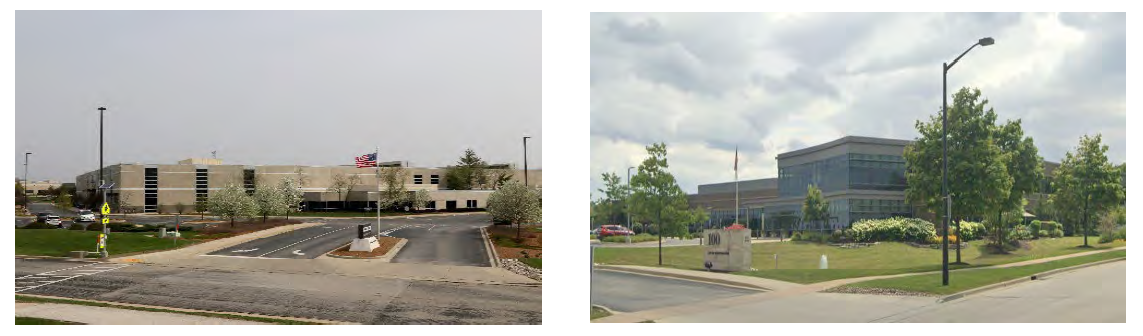
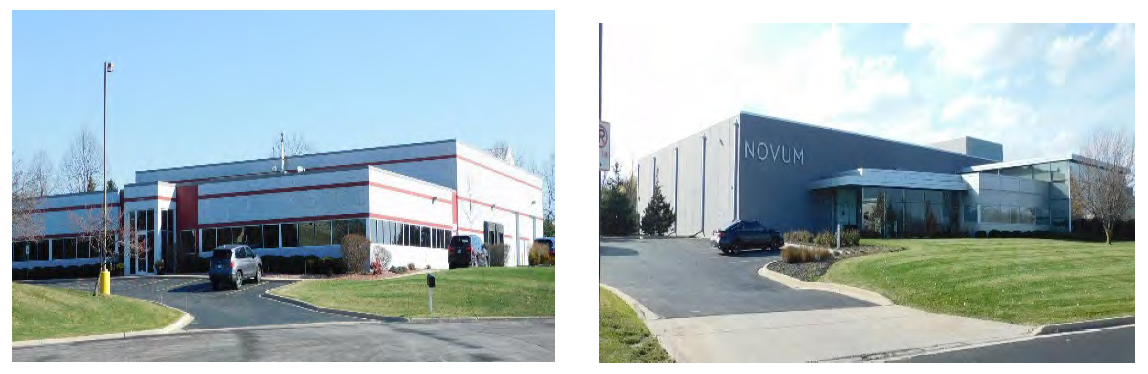
Figure 122-521.1 Illustrative Examples of Industrial/Warehouse Buildings
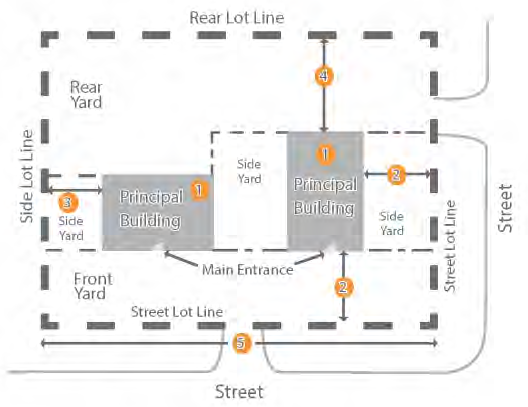
Figure 122-521.2 Industrial/Warehouse Building: Building Siting
b.
Notes. The following notes are keyed to the industrial/warehouse building siting requirements table found in subparagraph (a).
1.
When this building type adjoins a single family residential district, the principal building may not be built closer than 100 feet from the property line abutting the district boundary. No side yard is required for simultaneously constructed buildings having common or adjoining wall construction when both buildings meet this building type.
2.
An enclosed walkway, no wider than 30 feet, may be placed across a lot line separating two parcels in the I-3 executive office/light industrial district. Such walkway may be constructed below, above, or at grade.
3.
All building siting, parking and loading uses in the PDO shall comply with the regulations adopted within the specific PDO district per division 6 of article III.
4.
All loading docks, loading areas and service or truck parking areas shall be screened from view of adjacent roadways, located at the side or rear of the building, and comply with the requirements of subsection 122-632(b)(2).
(b)
Additional restrictions and standards. Additional restrictions and standards for the I-3 district are as follows:
(1)
Site restrictions.
a.
All lawn areas shall have a minimum slope of note less than two percent.
b.
Slopes on earth berms and lawn areas shall not exceed a ratio of three to one.
c.
All site development shall be designed in a manner which preserves, to the greatest extent practicable, any trees or wooded areas on the site, as determined by the village architectural control board.
d.
All grading, cutting, filling and other excavation activities shall be in conformance with any grading or erosion control plan for the site on file with the village.
(2)
Parking and storage.
a.
A combination of decorative fencing and landscaping shall be used to break up views of large parking areas that are adjacent to public roadways.
b.
All parking areas and drives shall be surfaced with an appropriate all-weather material, with appropriate provisions for storm drainage and stormwater management. Perimeter landscaping areas that incorporate vegetated stormwater control measures are encouraged.
c.
All loading docks, loading areas and service or truck parking areas shall be screened from view of adjacent roadways and located at the rear or side yards of the building.
d.
Visible or other unenclosed outdoor storage of equipment, materials, merchandise or other property is prohibited.
(3)
Building design.
a.
All buildings shall be designed and certified by a registered and licensed architect.
b.
All sides of a building shall be comprised of comparable materials, with equal design consideration and consistent detailing.
c.
All mechanical equipment, utility or refuse enclosures, and other rooftop or ground-mounted protrusions or structures shall be screened from view of adjacent roadways.
d.
All rooftop, tower-mounted, freestanding or other external antennas, towers or other devices for transmission or reception of electronic signals shall be prohibited, unless the device is essential to the direct operations of the user. Precautionary or warning devices required for public safety are permitted.
Sec. 122-522. - Civic building type.
Description and intent. The civic building is the most flexible building type intended only for buildings utilizing the civic and institutional category of uses. The building type is further defined as follows:
(1)
Civic building type. The civic building type is comprised of distinct buildings within the urban fabric that can be designed as unique and/or iconic structures. A minimum setback line is required instead of a build to zone, though this setback is required to be landscaped. Parking is typically limited to the rear and side lots, but limited parking may be permitted in the front. The building type regulations do not apply to municipal utility structures such as water towers, well buildings or lift stations. Examples of this building type are found in figure 122-522.1.
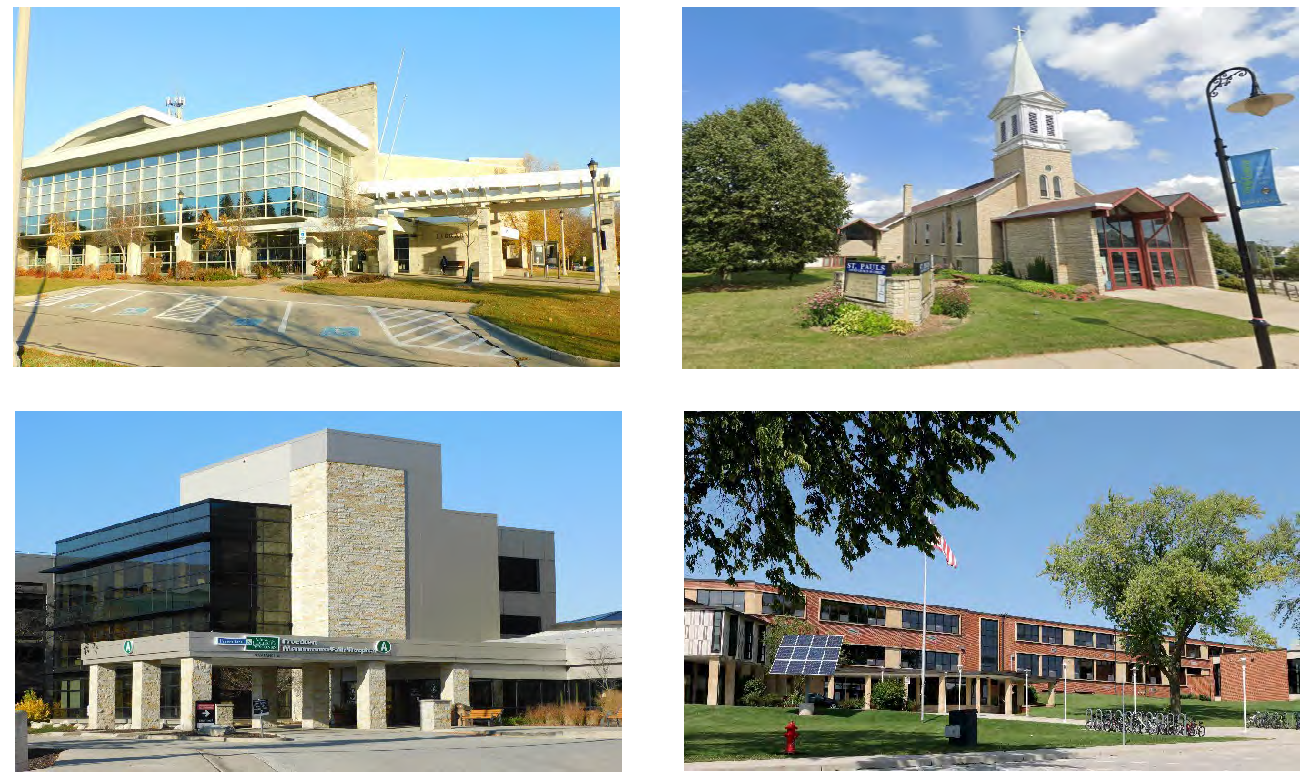
Figure 122-522.1 Illustrative Examples of Civic Buildings
a.
Civic building siting requirements. Figure 122-522.2 graphically portrays the building siting requirements. The terms in the following table are described further in section 122-525.
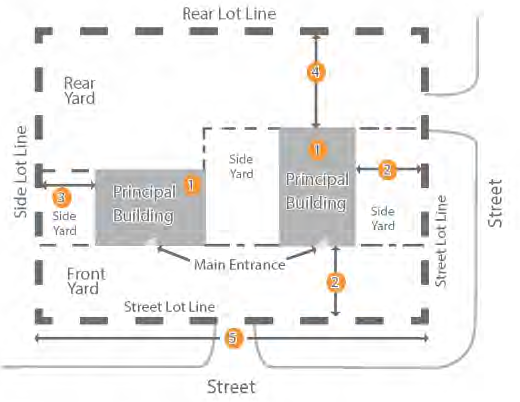
Figure 122-522.2 Civic Building: Building Siting
b.
Notes. The following notes are keyed to the civic building siting requirements table found in subparagraph (a).
1.
If a building in the CV-1 or CV-2 district is across the street from a residential district, the street setback shall be increased to 50 feet.
2.
If a building in the CV-1 or CV-2 district abuts a residential district, the setback to the residential district shall be increased to 50 feet.
3.
In the CV-2 district, the setback requirements shall be increased by one foot for every two feet in height in excess of 35 feet.
Sec. 122-523. - Multifamily building types.
Description and intent. The multifamily building type is comprised by two building styles utilized together to create distinct neighborhoods within the village. Home occupations and professional home offices that do not involve the coming and going of customers, clients or vendors are allowed as an accessory use. Auto body repair or maintenance, auto or small engine repair or maintenance, regular deliveries by semitrailer truck, and group classes or schools attended by non-resident persons, are specifically prohibited uses within both multifamily building types.
(1)
Large scale multifamily building type. The large scale multifamily building type is designed to contain more than six dwelling units per building. This building type can vary between individual buildings oriented towards the street, to large complexes with multiple buildings designed around courtyards, clubhouses, pools or private roads. Examples of this building type are found in figure 122-523.1.
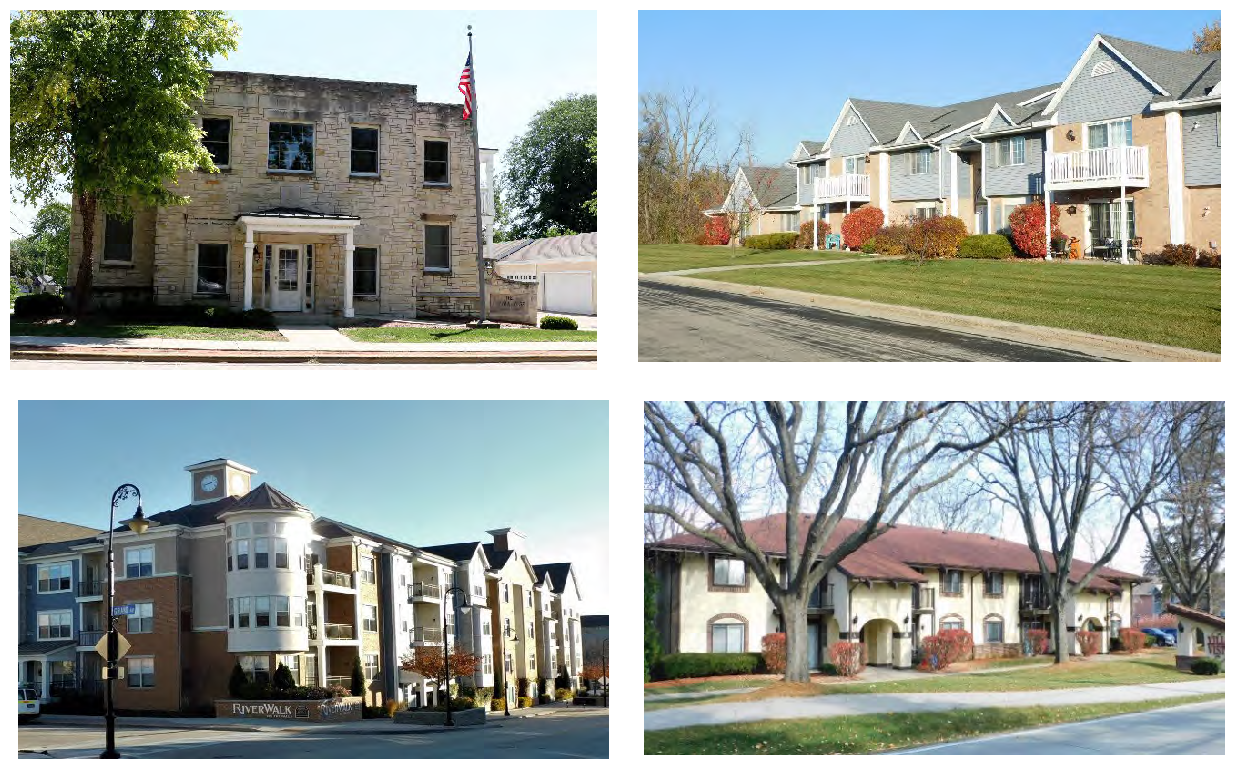
Figure 122-523.1 Illustrative Examples of Large Scale Multifamily Buildings
a.
Large scale multifamily building siting requirements. Figure 122-523.2 graphically portrays the building siting requirements. The terms in the following table are described further in section 122-525.
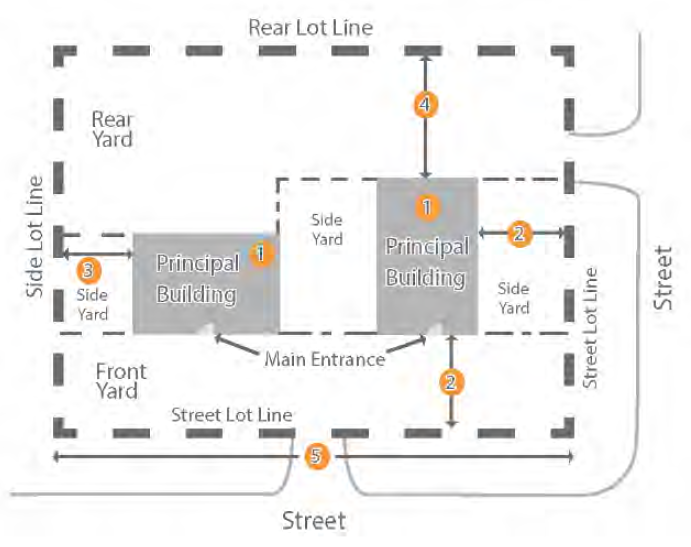
Figure 122-523.2 Large Scale Multifamily Building: Building Siting
b.
Notes. The following notes are keyed to the large scale multifamily building siting requirements table found in subparagraph (a).
1.
All building siting, parking and loading uses in the PDO shall comply with the regulations adopted within the specific PDO district per division 6 of article III.
2.
When the height of any building in the RM-2, PRD, or CV-2 is in excess of 35 feet, the setback requirements shall be increased by one foot for every one foot in excess of 35 feet.
3.
The setback requirements within the PRD district are as follows:
i.
Where a PRD project boundary line directly abuts a public street, and the lots across the street are located in another residential district, the first tier of lots of the PRD district shall meet all the setback requirements of the district next smaller to the district on the opposite side.
ii.
Where the rear lots of a PRD abut the rear lots of another residential district, the first tier of lots of the PRD district shall meet all the setback requirements of the district two smaller in size. (i.e. from the R-1 to R-3, of from the R-3 to the R-5, etc.
iii.
Where a PRD boundary line abuts a side yard of a lot in another residential district, the minimum side setback of the structures in the PRD district shall be 20 feet.
iv.
Where a PRD project boundary line abuts a district other than residential, the minimum offset of the structure in the PRD district abutting the nonresidential district shall be 20 feet.
v.
Inside of the PRD project boundary lines, the setback requirements of the RM-2 district shall apply to all structures.
4.
The minimum lot area in the RM-1 district is 18,000 square feet, with no less than the following per dwelling:
i.
Efficiency unit: 2,700 square feet.
ii.
One bedroom unit: 2,950 square feet.
iii.
One and one-half bedroom unit: 3,500 square feet.
iv.
Two bedroom unit: 4,200 square feet.
v.
Two and one-half bedroom unit: 4,800 square feet.
vi.
Three or more bedroom unit: 5,400 square feet.
vii.
The lot area requirements are reduced when more than six dwelling units are proposed on a parcel, see note 10 for these allowable lot area reductions:
5.
For the purpose of this section a half bedroom shall be any room 100 square feet or less not designated as a bedroom, principal living room, bathroom, or kitchen, but capable of being used as a bedroom. Any room over 100 square feet in area, other than the principal living room, bathroom or kitchen, shall be considered a bedroom.
6.
The minimum lot area in the RM-2 and PRD district is 12,000 square feet, with no less than the following per dwelling:
i.
Efficiency unit: 2,375 square feet.
ii.
One bedroom unit: 2,625 square feet.
iii.
One and one-half bedroom unit: 3,075 square feet.
iv.
Two bedroom unit: 3,550 square feet.
v.
Two and one-half bedroom unit: 4,125 square feet.
vi.
Three or more bedroom unit: 4,700 square feet.
vii.
The lot area requirements are reduced when more than six dwelling units are proposed on a parcel, see note 10 for these allowable lot area reductions.
7.
The minimum development area within a PRD district shall be three acres.
8.
The minimum open space area requirements in the RM-1, RM-2 and PRD districts are determined by the number of dwelling units, with no less than the following per dwelling:
i.
Efficiency unit: 1,500 square feet.
ii.
One bedroom unit: 1,650 square feet.
iii.
One and one-half bedroom unit: 2,000 square feet.
iv.
Two bedroom unit: 2,500 square feet.
v.
Two and one-half bedroom unit: 3,000 square feet.
vi.
Three or more bedroom unit: 3,500 square feet.
vii.
The minimum open space requirements are reduced when more than six dwelling units are proposed on a parcel, see note 10 for these allowable minimum open space reductions:
9.
Lots wider than 140 feet are permitted one single loaded aisle of parking located in front of the building.
10.
Allowable reductions in the minimum lot area and minimum open space requirements shall be allowed in the RM-1, RM-2 and PRD districts as follows:
i.
Seven to ten dwelling units per parcel: allowable reduction ten percent.
ii.
Eleven to 16 dwelling units per parcel: allowable reduction 20 percent.
iii.
17 to 32 dwelling units per parcel: allowable reduction 30 percent.
iv.
Over 32 dwelling units per parcel: allowable reduction 40 percent.
v.
Regardless of the number of units, the allowable reductions for lot area shall not decrease the lot area in the RM-1 district less than 18,000 square feet; or less than 12,000 square feet in the RM-2 and PRD districts.
11.
The minimum building area in the RM-1, RM-2, and PRD districts are determined by the type of dwelling on the parcel, specifically each dwelling unit shall contain the minimum area outlined below:
i.
Efficiency unit: 400 square feet.
ii.
One bedroom unit: 500 square feet.
iii.
One and one-half bedroom unit: 750 square feet.
iv.
Two bedroom unit: 900 square feet.
v.
Two and one-half bedroom unit: 1,000 square feet.
vi.
Three or more bedroom unit: 1,100 square feet.
12.
The large scale multifamily building type may be utilized in the C-2 district subject to meeting the building type requirements of one of the abutting properties fronting the same street (either "storefront" or "transitional commercial" building type) (subsections 122-520(a)(1)(a) and 122-520(a)(2)(a)); the minimum open space requirements contained in note 8 above; the allowable reduction in open space contained in note 10 above; and the minimum building area requirements contained in note 11 above.
(2)
Small scale multifamily building type. The small scale multifamily building type is designed to contain between two and six dwelling units per building. This building type can vary between individual buildings oriented towards the street, or combined with other similar buildings to create unique neighborhoods. Examples of this building type are found in figure 122-523.3.
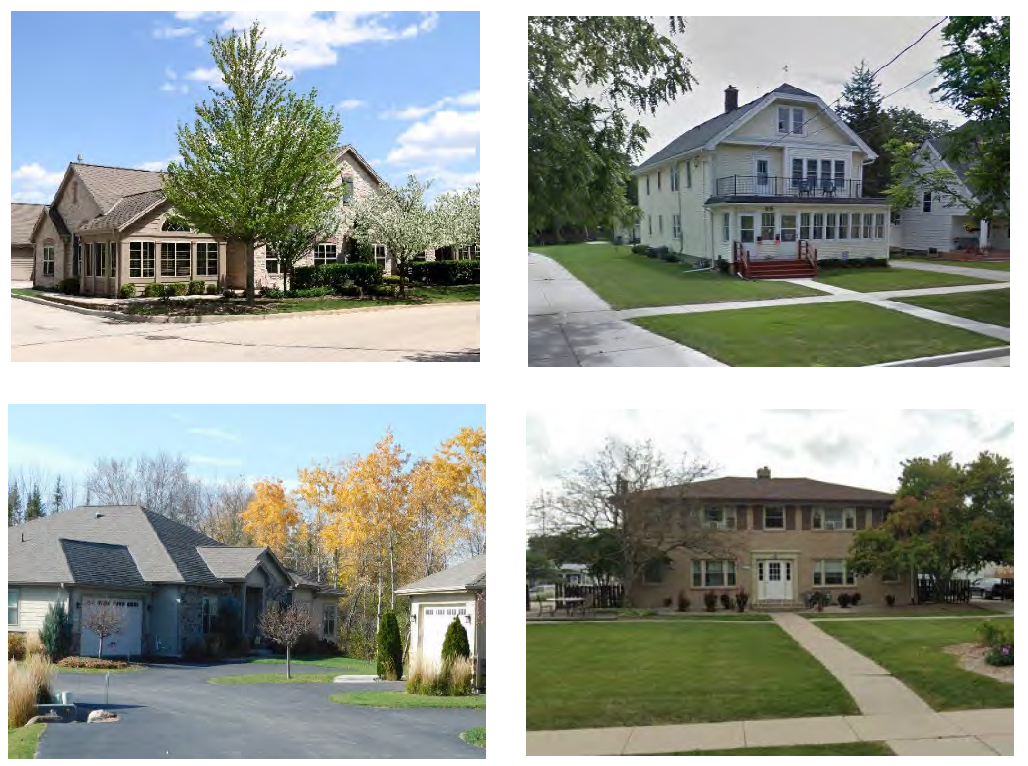
Figure 122-523.3 Illustrative Examples of Small Scale Multifamily Buildings
a.
Small scale multifamily building siting requirements. Figure 122-523.4 graphically portrays the building siting requirements. The terms in the following table are described further in section 122-525.
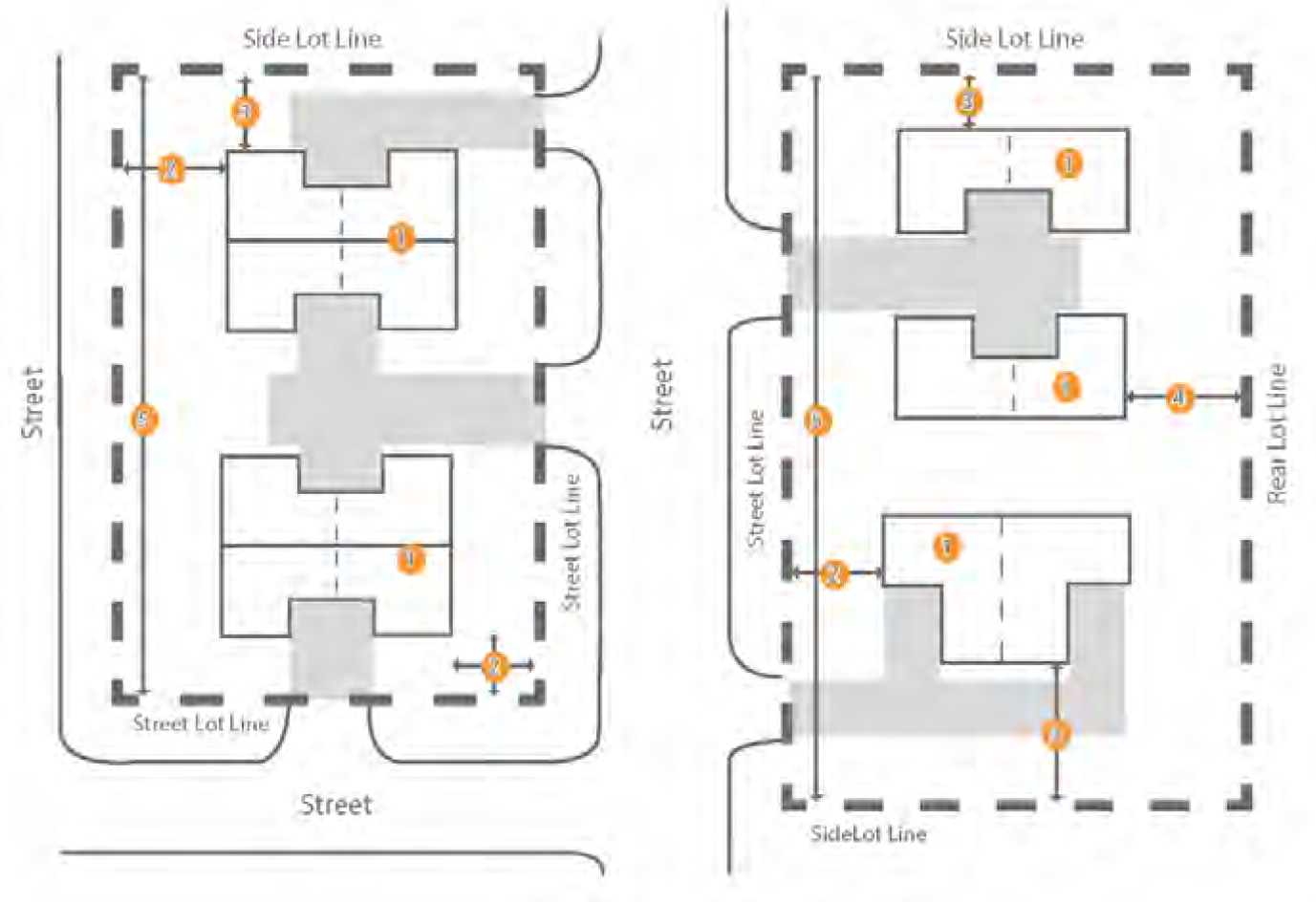
Figure 122-523.4 Small Scale Multifamily Building: Building Siting
b.
Notes. The following notes are keyed to the small scale multifamily building siting requirements table found in subparagraph (a).
1.
All building siting, parking and loading uses in the PDO shall comply with the regulations adopted within the specific PDO district per division 6 of article III.
2.
The setback requirements within the PRD district are as follows:
i.
Where a PRD project boundary line directly abuts a public street, and the lots across the street are located in another residential district, the first tier of lots of the PRD district shall meet all the setback requirements of the district next smaller to the district on the opposite side.
ii.
Where the rear lots of a PRD abut the rear lots of another residential district, the first tier of lots of the PRD district shall meet all the setback requirements of the district two smaller in size. (i.e. from the R-1 to R-3, of from the R-3 to the R-5, etc.
iii.
Where a PRD boundary line abuts a side yard of a lot in another residential district, the minimum side setback of the structures in the PRD district shall be 20 feet.
iv.
Where a PRD project boundary line abuts a district other than residential, the minimum offset of the structure in the PRD district abutting the nonresidential district shall be 20 feet.
v.
Inside of the PRD project boundary lines, the setback requirements of the R-6 district shall apply to all single family and two family dwellings, and the requirements of the RM-2 district shall apply to all multifamily dwellings.
3.
The minimum lot width in the PRD district is determined by the type of dwelling on the parcel, specifically outlined below:
i.
Two unit building: 80 feet.
ii.
Three or more dwellings on a parcel: 100 feet.
4.
The minimum lot area in the RM-1 district is 18,000 square feet, with no less than the following per dwelling:
i.
Efficiency unit: 2,700 square feet.
ii.
One bedroom unit: 2,950 square feet.
iii.
One and one-half bedroom unit: 3,500 square feet.
iv.
Two bedroom unit: 4,200 square feet.
v.
Two and one-half bedroom unit: 4,800 square feet.
vi.
Three or more bedroom unit: 5,400 square feet.
vii.
The lot area requirements are reduced when more than four dwelling units are proposed on a parcel, see note 8 for these allowable lot area reductions.
5.
For the purpose of this section a half bedroom shall be any room 100 square feet or less not designated as a bedroom, principal living room, bathroom, or kitchen, but capable of being used as a bedroom. Any room over 100 square feet in area, other than the principal living room, bathroom or kitchen, shall be considered a bedroom.
6.
The minimum development area within a PRD district shall be three acres. The minimum lot area in the PRD district is determined by the type of dwelling on the parcel, with no less than the following per dwelling:
i.
Two unit building: 9,600 square feet.
ii.
Three to six dwelling units on a parcel: the requirements of note 4 shall be met.
iii.
The lot area requirements are reduced when more than four dwelling units are proposed on a parcel, see note 8 for these allowable lot area reductions.
7.
The minimum open space requirements in the RM-1 and PRD districts, for buildings containing between three and six dwellings, are determined by the number of dwelling units on the parcel, with no less than the following per dwelling:
i.
Efficiency unit: 1,500 square feet.
ii.
One bedroom unit: 1,650 square feet.
iii.
One and one-half bedroom unit: 2,000 square feet.
iv.
Two bedroom unit: 2,500 square feet.
v.
Two and one-half bedroom unit: 3,000 square feet.
vi.
Three or more bedroom unit: 3,500 square feet.
vii.
The minimum open space requirements are reduced when more than four dwelling units are proposed on a parcel, see note 8 for these allowable minimum open space reductions.
Small scale multifamily buildings containing two units do not have a minimum open space requirement in the RM-1 and PRD districts.
8.
The allowable reduction in the minimum lot area and minimum open space requirements shall be allowed in the RM-1 and PRD districts as follows:
i.
Two to four dwelling units per parcel: full requirements.
ii.
Five or six dwelling units per parcel: ten percent allowable reduction.
9.
The minimum building area in the RM-1 district is determined by the number of dwelling units on the parcel, with no less than the following per dwelling:
i.
Efficiency unit: 400 square feet.
ii.
One bedroom unit: 500 square feet.
iii.
One and one-half bedroom unit: 750 square feet.
iv.
Two bedroom unit: 900 square feet.
v.
Two and one-half bedroom unit: 1,000 square feet.
vi.
Three or more bedroom unit: 1,100 square feet.
vii.
The minimum building area in the RM-1 is reduced when more than four dwelling units are proposed on a parcel, see note 8 for these allowable minimum building area reductions.
10.
The minimum building area in the PRD district is determined by the number of dwelling units in the building, with no less than the following per building:
i.
Two unit buildings: 900 square feet per dwelling unit.
ii.
Three to six dwelling units per building: The requirements of note 9 shall be met for each dwelling unit.
11.
The small scale multifamily family building type may be utilized in the C-2 district subject to the building siting, height and area requirements of the transitional commercial building type within the C-2 district (subsections 122-520(a)(2)(a) and (b)); and the use and street façade requirements of the small scale multifamily building type (subsection (a)(2) above).
(Ord. No. 911-O-24, § 1, 8-19-24)
Sec. 122-524. - Single family building types.
Description and intent. The single family building type is comprised by three building styles utilized together to create distinct neighborhoods within the village. Home occupations and professional home offices that do not involve the coming and going of customers, clients or vendors are allowed as an accessory use. Auto body repair or maintenance, auto or small engine repair or maintenance, regular deliveries by semitrailer truck, and group classes or schools attended by non-resident persons, are specifically prohibited uses within all three single family building types.
(1)
Medium density single family building type. The medium density single family building type is designed in single family developments having densities between two and six dwelling units per acre. The lot characteristics of this building type include a front and back yard, and usually a driveway accessed from the street that leads to a garage. Examples of this building type are found in figure 122-524.1.
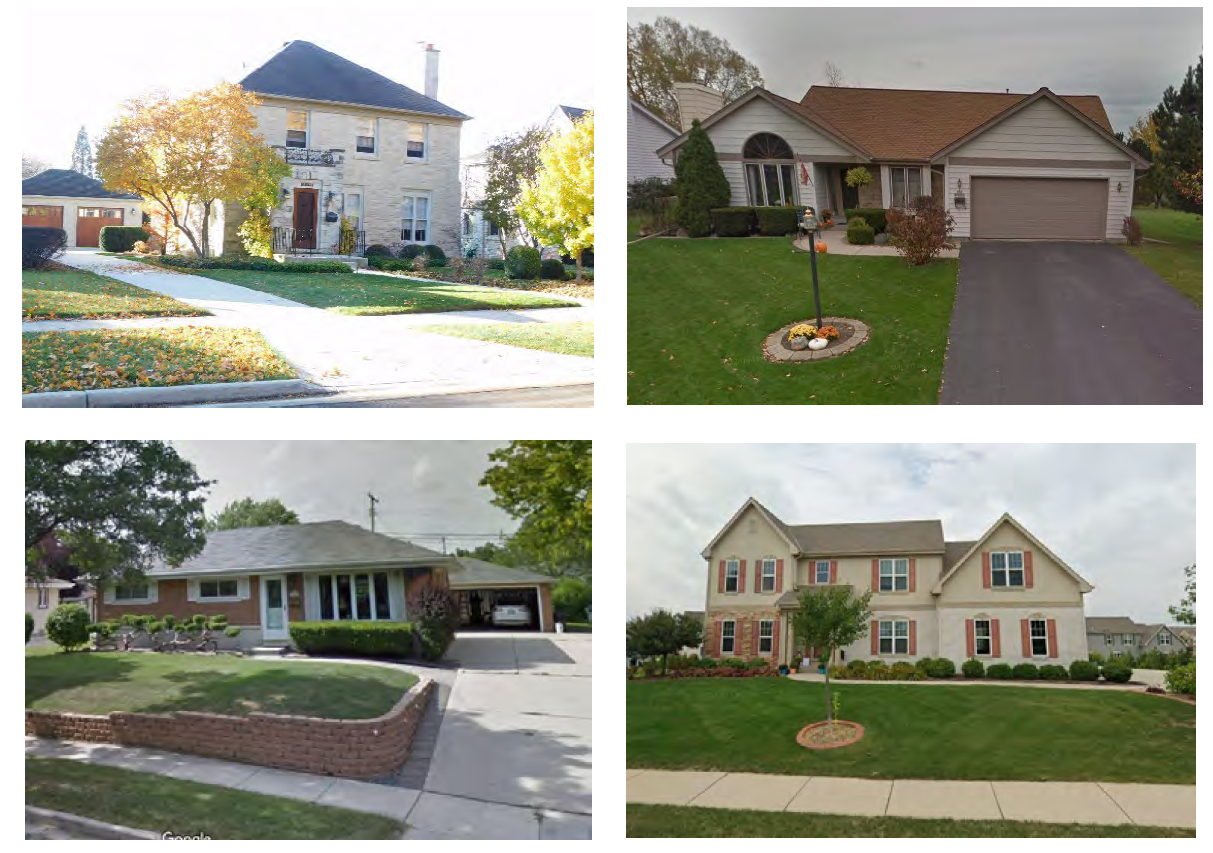
Figure 122-524.1 Illustrative Examples of Medium Density Single Family Buildings
a.
Medium density single family building siting requirements. Figure 122-524.2 graphically portrays the building siting requirements. The terms in the following table are described further in section 122-525.
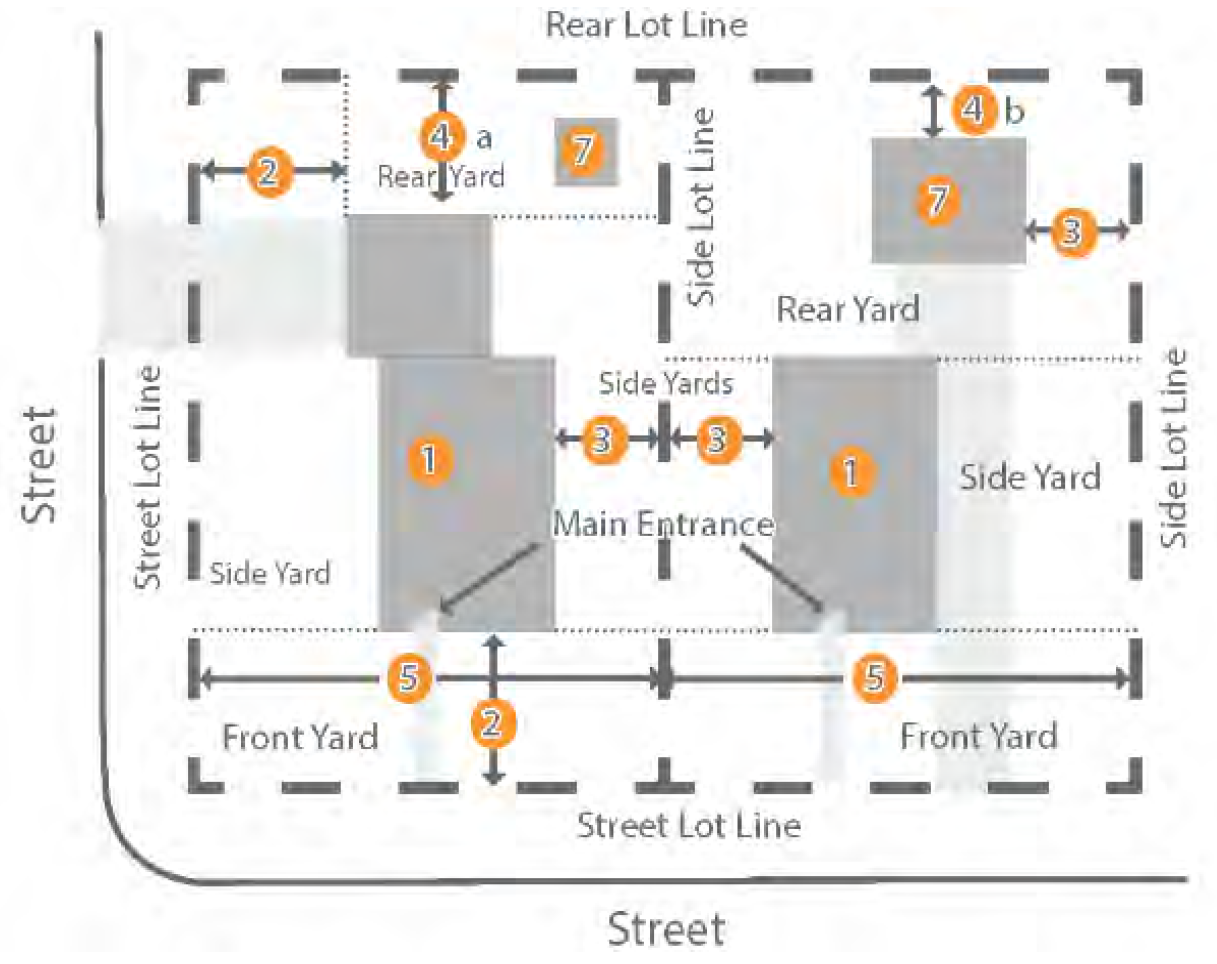
Figure 122-524.2 Medium Density Single Family Building: Building Siting
b.
Notes. The following notes are keyed to the medium density single family building siting requirements table found in subparagraph (a).
1.
The setback requirements within the PRD district are as follows:
i.
Where a PRD project boundary line directly abuts a public street, and the lots across the street are located in another residential district, the first tier of lots of the PRD district shall meet all the setback requirements of the district next smaller to the district on the opposite side.
ii.
Where the rear lots of a PRD abut the rear lots of another residential district, the first tier of lots of the PRD district shall meet all the setback requirements of the district two smaller in size. (i.e. from the R-1 to R-3, of from the R-3 to the R-5, etc.
iii.
Where a PRD boundary line abuts a side setback of a lot in another residential district, the minimum side setback of the structures in the PRD district shall be 20 feet.
iv.
Where a PRD project boundary line abuts a district other than residential, the minimum offset of the structure in the PRD district abutting the nonresidential district shall be 20 feet.
v.
Inside of the PRD project boundary lines, the setback requirements of the R-6 district shall apply to all single family and two family dwellings, and the requirements of the RM-2 district shall apply to all multifamily dwellings.
2.
Except as specifically regulated in division 3 of this article, accessory structures in the R-3.5, R-4 and R-5 districts with an area greater than 120 square feet shall meet the minimum side and rear setbacks of the district the accessory structure is located in; however, accessory structures with an area of 120 square feet or less may be located as close as five feet from the side and rear lot lines.
3.
When this building type adjoins a business or industrial district, the principal structure may not be built closer than 100 feet from the property line abutting the district boundary.
4.
Except as specifically regulated in division 3 of this article, accessory structures in the R-6 or PRD districts with an area greater than 120 square feet shall meet the minimum side and rear setbacks of the district the accessory structure is located in; however, accessory structures with an area of 120 square feet or less may be located as close as three feet from the side and rear lot lines.
5.
A detached garage may be located in the side yard if it meets the applicable setbacks.
6.
The immediate construction of a garage space meeting the provision of subsections (a)(1)—(10) above, will not be required if it is shown that the size and shape of the lot; and the size, shape and placement of structures built thereon, are in such a relation as to permit later erection of an attached or detached garage (meeting the provisions of subsections (a)(1)—(10) above, without violation of any law or chapter.
i.
If the garage space is not initially constructed with the dwelling unit, an affidavit bearing the signature of the homeowner must be filed with the occupancy permit application indicating the owner's understanding of the minimum garage requirements and indicating that an eventual garage construction is possible in conformance with all zoning requirements.
ii.
Any future garage construction shall be of such architectural style as to be in general conformity with the architectural style of the existing or proposed building.
7.
Zero lot line developments may be permitted when they meet the following conditions:
i.
A common wall shall be constructed on a side lot line, with a dwelling unit on both sides having a zero-foot side yard.
ii.
The side yard setback for one side of the principal building shall be no less than 12.5 feet. The side yard setback shall be increased to 100 feet when the lot line adjoins a business or industrial district.
iii.
The two lots containing a dwelling unit with a common wall on a side lot line shall have a minimum lot width of 60 feet, and a minimum lot area of 7,200 square feet.
(2)
Low density single family building type. The low density single family building type consists of single family homes on lots generally varying between 20,000 square feet and three acres. The lot characteristics of this building type include a front yard, back yard, and a driveway accessed from the street leading to a garage. Examples of this building type are found in figure 122-524.3.
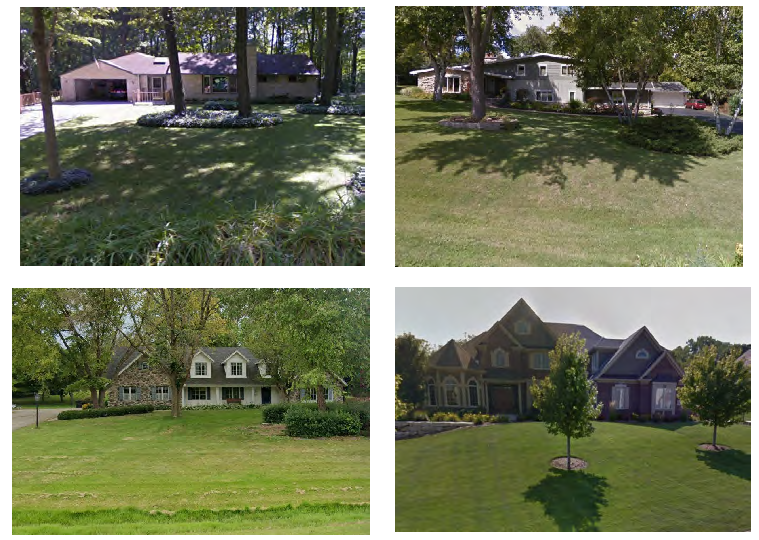
Figure 122-524.3 Illustrative Examples of Low Density Single Family Buildings
a.
Low density single family building siting requirements. Figure 122-524.4 graphically portrays the building siting requirements. The terms in the following table are described further in section 122-525.
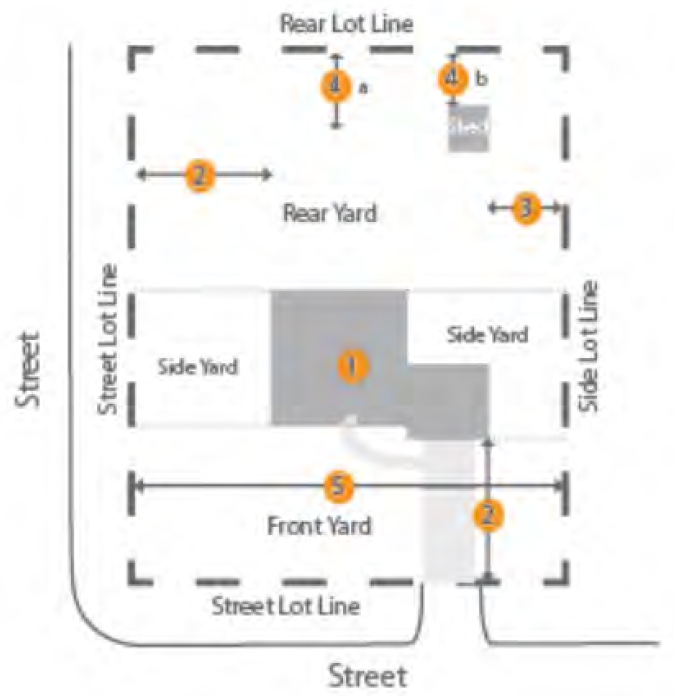
Figure 122-524.4 Low Density Single Family Building: Building Siting
b.
Notes. The following notes are keyed to the low density single family building siting requirements table found in subparagraph (a).
1.
Except as specifically regulated in division 3 of this article, accessory structures in the R-1, R-2, R-3 and CDD districts with an area greater than 120 square feet shall meet the minimum side and rear setbacks of the district the accessory structure is located in; however, accessory structures with an area of 120 square feet or less may be located as close as five feet from the side and rear lot lines.
2.
When this building type adjoins a business or industrial district, the principal structure may not be built closer than 100 feet from the property line abutting the district boundary.
3.
The lot width measurement in the CDD may be modified per subsection 122-525(a)(9).
4.
A detached garage may be located in the side yard if it meets the applicable setbacks.
5.
The immediate construction of a garage space meeting the provision of subsections (a)(2)—(10) above, will not be required if it is shown that the size and shape of the lot; and the size, shape and placement of structures built thereon, are in such a relation as to permit later erection of an attached or detached garage meeting the provisions of subsections (a)(2)—(10) above, without violation of any law or chapter.
i.
If the garage space is not initially constructed with the dwelling unit, an affidavit bearing the signature of the homeowner must be filed with the occupancy permit application indicating the owner's understanding of the minimum garage requirements and indicating that an eventual garage construction is possible in conformance with all zoning requirements.
ii.
Any future garage construction shall be of such architectural style as to be in general conformity with the architectural style of the existing or proposed building.
(3)
Rural density single family building type. The rural density single family building type consists of single family homes on estate sized lots over three acres. The homes often have large accessory buildings, but because of their setting do not cause a nuisance to their neighbors. Examples of this building type are found in figure 122-524.5.
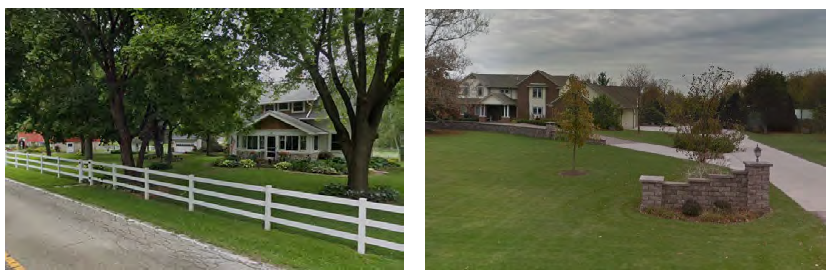
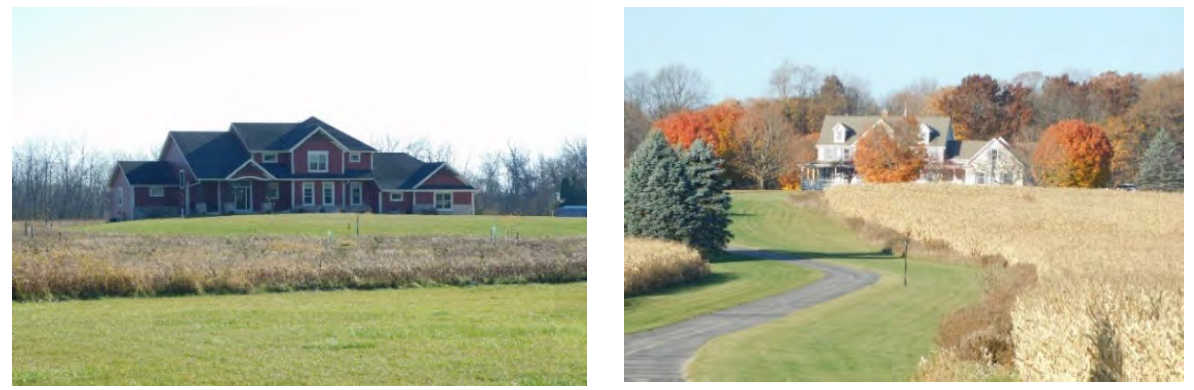
Figure 122-524.5 Illustrative Examples of Rural Density Single Family Buildings
a.
Rural density building siting requirements. Figure 122-524.6 graphically portrays the building siting requirements. The terms in the following table are described further in section 122-525.
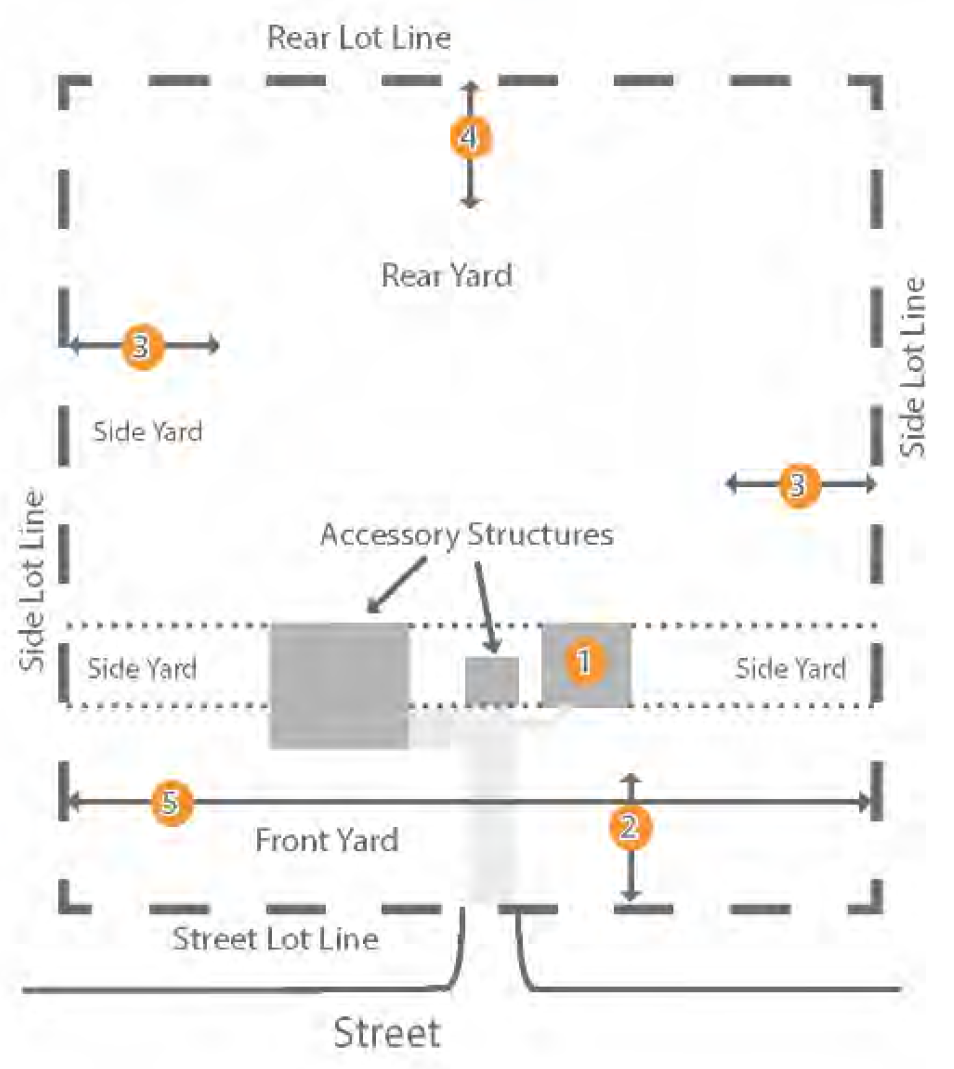
Figure 122-524.6 Rural Density Single Family Building: Building Siting
b.
Notes. The following notes are keyed to the rural density single family building siting requirements table found in subparagraph (a).
1.
The immediate construction of a garage space meeting the provision of subsection 524(a)(3)(a)(10) above, will not be required if it is shown that the size and shape of the lot; and the size, shape and placement of structures built thereon, are in such a relation as to permit later erection of an attached or detached garage meeting the provisions of subsection (a)(3)(a)(10) above, without violation of any law or chapter.
i.
If the garage space is not initially constructed with the dwelling unit, an affidavit bearing the signature of the homeowner must be filed with the occupancy permit application indicating the owner's understanding of the minimum garage requirements and indicating that an eventual garage construction is possible in conformance with all zoning requirements.
ii.
Any future garage construction shall be of such architectural style as to be in general conformity with the architectural style of the existing or proposed building.
Sec. 122-525. - Explanation and measurement of regulations specific to building types.
(a)
Purpose. This section explains and defines the terms utilized in the tables for each building type found in sections 122-520—122-524.
(1)
Multiple principal buildings. The allowance of more than one principal structure on a lot.
a.
Not permitted. When noted as such, the building type is limited to one principal building per lot.
b.
Permitted. When noted as such, the building type is permitted to have more than one principal building per lot. Each building shall fulfill the requirements of the building type, and if noted, shall fulfill the minimum front lot line coverage requirement.
(2)
Minimum front lot line coverage. The minimum percentage of street wall or building façade required along the street.
a.
Measurement. The width of the principal structure(s) located at the front of the property, divided by the maximum buildable width of the parcel. This is graphically shown below in figure 122-525.1.
b.
Exceptions. The storefront and traditional commercial building types allow side yard parking to be exempted from the front lot line coverage calculation.
(3)
Occupation of corner. When required, a principal building shall be located at the intersection of the street build-to zones, or minimum street setback lines. This is graphically shown in figure 122-525.2 and figure 122-525.3.
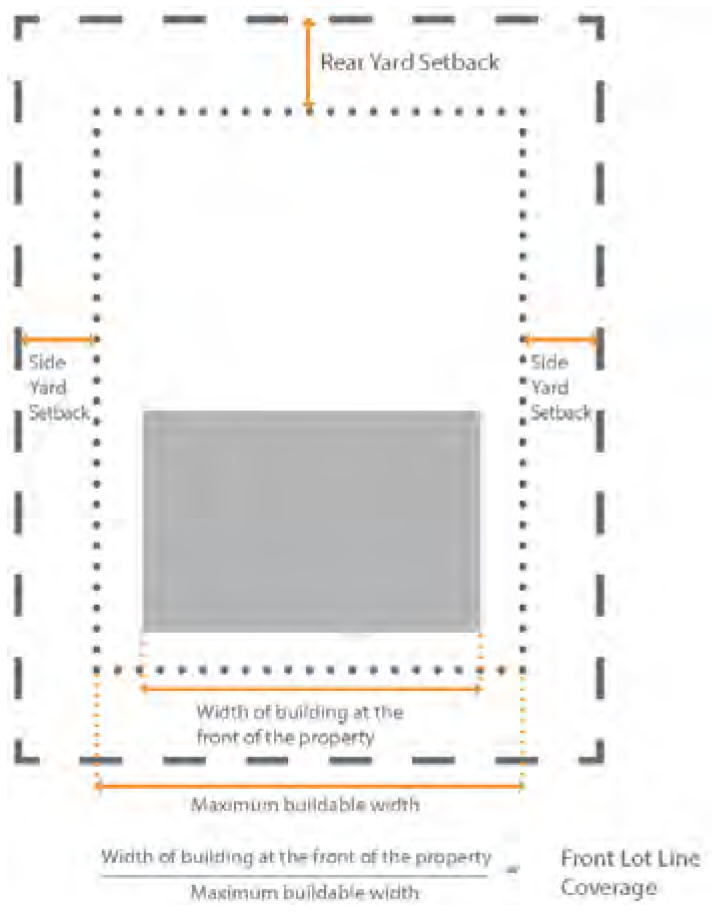
Figure 122-525.1 Measuring Front Lot Line Coverage
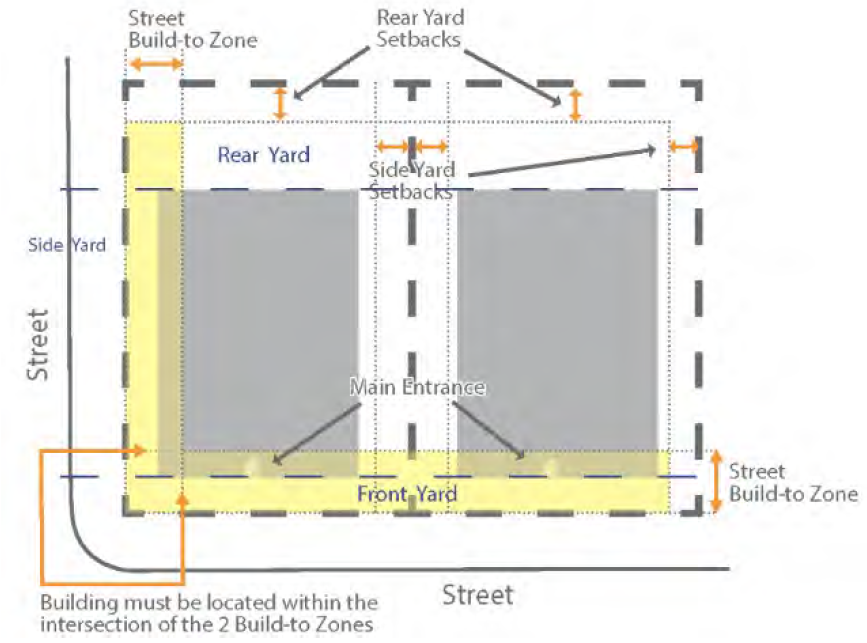
Figure 122-525.2 Build-to Zone & Occupation of Corner
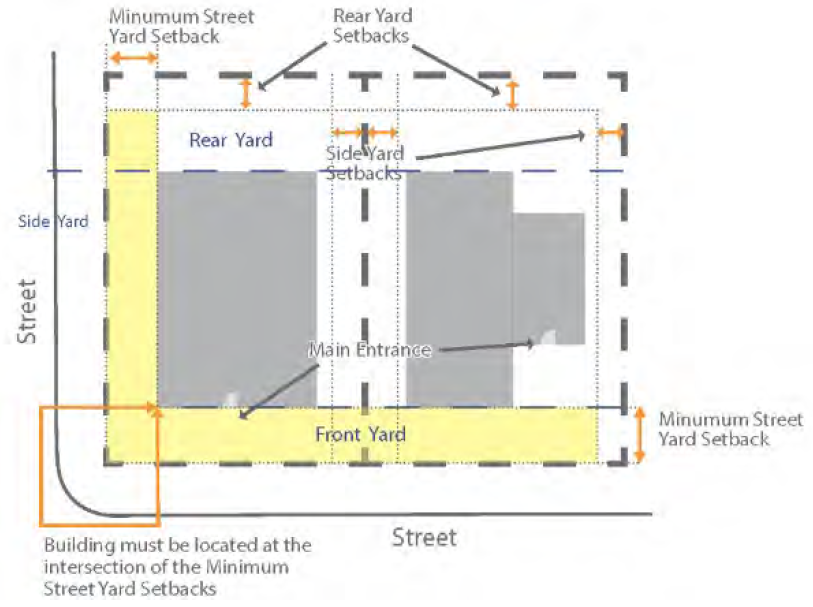
Figure 122-525.3 Minimum Street Setback & Occupation of Corner
(4)
Street build-to zone. The build-to zone is the area running parallel to the street lot line and a setback outlined in the table for the storefront and transitional commercial building types defined in subsections 122-520(a)(1) and (a)(2). This is graphically shown in figure 122-525.2.
(5)
Minimum street setback. The minimum required building setback from a right-of-way. This is graphically shown in figure 122-525.3.
(6)
Minimum side setback. The minimum required building setback along a side lot line. This is graphically shown in figures 122-525.2 and 122-525.3.
(7)
Minimum rear setback. The minimum required building setback along a rear lot line. This is graphically shown in figures 122-525.2 and 122-525.3.
(8)
Setback encroachments. The setback requirements stipulated elsewhere in this chapter may be modified as follows:
a.
Uncovered stairs, landings, chimneys and fire escapes may project into any setback up to six feet.
b.
Cornices, eaves, sills, leaders, beltcourses, and similar features may project into any setback, or public sidewalk in the C-2 district, provided a minimum of eight-foot vertical clearance is provided above any public sidewalk and no additional support is provided.
c.
Steps, unenclosed stoops, porches, planter boxes, and bay, bow or similar windows may project up to five feet into any setback.
d.
Decks attached to a principal structure may project into the required minimum side and rear setbacks up to five feet, but not closer than five feet to any lot line. On lots with multiple street frontages, decks may not encroach into the street setback in the front yard, but may encroach up to five feet into the street setback in the side and rear yards.
e.
The required street setbacks of a structure located mid-block in any residential district may be decreased to the average of the existing street yards of the structures on abutting lots but in no case less than 15 feet.
(9)
Minimum lot width. The minimum width of a lot, measured at the minimum street setback line, or street build-to line. The zoning administrator may allow the lot width measurement to be taken at the rear of the front yard in the CDD, if the layout of the homes creates a cohesive layout.
(10)
Minimum lot area. The minimum area of a lot, measured on a horizontal plane within the lot lines of a lot or parcel, excluding public rights-of-way.
(11)
Maximum impervious area. The maximum percentage of a lot permitted to be covered by principal structures, accessory structures, pavement, and other impervious surfaces.
(12)
Minimum open space. Open space is considered an unoccupied space open to the sky on the same lot with the building it serves and not used for any other purpose. Required off-street parking does not qualify as open space, nor do drives.
(13)
Parking and loading restrictions. The location of parking and loading activities is restricted within some building types. When noted, parking and loading must be located in the rear or side yard. Additional landscape requirements can be found in subsection 122-622(d) and additional buffer requirements can be found in division 3 of article VI.
a.
Loading location. Loading, refuse and recycling collection shall be located in the rear yard or side yards. Additional screening requirements for "necessary appurtenances" can be found in section 122-632.
(14)
Maximum height. Building height is measured as the vertical distance from the main elevation of the finished lot grade along the front of the structure to the highest point of the structure. When a building is located on a natural hill or slope, the height shall be measured from the midpoint of the slope along the front of the structure to the highest point of the structure.
a.
Some building types require a building façade to step back as its height increases. If required, the upper stories of any building façade with street frontage shall be set back a designated amount beyond the building façade of the lower stories.
(b)
Exceptions to maximum height. The height limitations stipulated elsewhere in this chapter may be exceeded, but such modification shall be in accordance with the following:
(1)
Architectural projections, such as spires, belfries, parapet walls, cupolas, domes, flues and chimneys, shall not exceed in height their distance from any lot line or 100 feet, whichever is less.
(2)
Special structures, such as elevator penthouses, gas tanks, grain elevators, scenery lofts, radio and television receiving antennas, manufacturing equipment and necessary mechanical appurtenances, cooling towers, fire towers and smokestacks shall not exceed in height their distance from the nearest lot line.
(3)
Essential services, utilities, water towers, electric power and communication transmission and distribution lines are exempt from the height limitations of this chapter.
(4)
Communication structures, such as radio and television transmission and relay towers, aerials, and observation towers shall not exceed in height two times their distance from the nearest lot line.
(5)
Agricultural structures, such as barns and silos shall not exceed in height one-half their distance from the nearest lot line.
(6)
Public or semipublic facilities, such as schools, churches, hospitals, monuments, sanitariums, libraries, governmental offices and stations may be erected to a height of 60 feet, exclusive of architectural projections, provided that all required setbacks are increased not less than one foot for each foot the structures exceed the maximum height requirement.
Sec. 122-530. - General development standards.
Accessory Structures
Figure 122-530.1
• = Permitted subject to use-specific regulations.
Accessory structures are permitted by right in the districts listed in figure 122-530.1 provided they are developed per the standards of this Code.
(1)
Timing. Accessory buildings and accessory outdoor structures may not be constructed until the principal structure is present or under construction unless specifically noted.
(2)
Americans with Disabilities Act. Modifications to an accessory structure, designed to comply with the requirements of the Americans with Disabilities Act, shall not be subject to setback requirements.
(3)
Height. The maximum height of an accessory structure is 15 feet, except where a higher maximum height is otherwise expressly permitted.
(4)
Nuisances. No accessory use, structure or building shall be permitted which by reason of noise, dust, odor, appearance, or other objectionable factor creates a nuisance or a substantial adverse effect upon the property value or reasonable enjoyment of the surrounding property.
(5)
Utility poles, electric power and communication transmission lines are exempt from the yard and distance requirements of this chapter. Power substations, telephone equipment buildings, gas metering and pressure stations, etc., must comply with all yard requirements of the district in which located.
(6)
Landscaping and vegetation are exempt from the setback requirements of this chapter; however, all vegetation shall comply with section 122-601.
(7)
Special exceptions allowing variations in the setback and height requirements within business, industrial or mixed use districts may be considered per section 122-71. Variances may be considered per section 122-75.
Sec. 122-531. - District specific standards.
(a)
Residential districts.
(1)
Setback requirements.
a.
Except for recreational vehicles regulated under subsection 122-532(a)(16), and subsections (2) and (3) below, accessory uses and detached accessory structures are permitted in the rear yard only with no encroachment into street, side or rear setbacks; shall not exceed 15 feet in height; and the total area of all accessory structures shall not exceed 60 percent of the floor area of the principal building, or occupy more than 20 percent of the rear yard, whichever is less.
b.
Detached accessory structures (sheds) of 120 square feet or less are permitted in the rear and side yards only; shall not exceed 15 feet in height; and shall not be located closer than five feet to any rear or side lot line. The minimum street setback is required on lots with multiple street frontages.
c.
Detached garages shall be permitted, provided that they are set back not less than the principal structure, and meet the area and height regulations of subparagraph a. above. On lots in districts where the minimum side yard is less than 15 feet, a detached garage which is set back not less than one and one-half times the minimum street yard requirement may be built to within three feet of the side and rear lot lines and to within five feet of an alley line. The minimum street setback is required on lots with multiple street frontages.
(2)
Area. The total area of all accessory structures shall not exceed 60 percent of the living area of the principal building.
(3)
Use. Residential accessory uses shall not involve the conduct of any business, trade or industry, except as provided for under the district regulations.
(b)
Agricultural districts.
(1)
Yards. Accessory structures located in an agricultural zoning district shall follow the same building siting requirements as the principal structure, and be a minimum of 20 feet from any residential building. When the subject parcel is three acres or larger, accessory structures may be located in all yards. When the subject parcel is less than three acres, the building siting requirements of the R-1 zoning district shall apply.
(2)
Height. Accessory structures located in an agricultural zoning district, on a lot containing three acres or more, may be constructed up to 35 feet tall. When the subject parcel is less than three acres and utilized for residential purposes, the height of the accessory structure shall not exceed 15 feet.
(c)
Business, mixed use, and industrial districts. Accessory uses and accessory structures in business, mixed use, and industrial districts shall follow the building siting requirements of the principal structure.
(d)
Civic districts. A principal structure is not required in association with a use in the CV-1 district, an accessory structure shall be set back a minimum of 15 feet from all lot lines.
Sec. 122-532. - Use specific standards.
In addition to the standards found in sections 122-530 and 122-531, the following additional standards apply to the following uses:
(1)
Agricultural structures. Structures used for the containment of food, water, animals, compost, fuel, waste, or farm equipment.
a.
Design. Agricultural structures shall be constructed and situated in such a way as to control odor, prevent rodent or other pest infestation, and not otherwise create a nuisance for nearby properties. No discharge of water or waste from any agricultural building shall directly impact any neighboring property, waterway, or public way.
b.
Public nuisance. The presence of obnoxious odors or unsanitary conditions which annoy the immediate neighborhood, is hereby declared to be a public nuisance and may be summarily abated by the proper village officials.
c.
Animals. No pasture shall be located within 50 feet of an existing residence on an adjacent parcel. All animals shall be cared for using consistent biosecurity practices as detailed by the U.S. Department of Agriculture Animal and Plant Health Inspection Service to prevent the spread of diseases.
1.
When structures housing animals lie within 300 feet of any residential district, the pens or cages must be enclosed within a building.
(2)
Construction buildings. Temporary buildings used to house offices associated with construction and/or sales and marketing for the development; and temporary storage and waste containers.
a.
Yard. Permitted in all yards, but must meet the minimum setbacks.
b.
Construction buildings are only permitted in conjunction with open building permits and shall be removed when building permits are closed.
c.
Two construction buildings are permitted per development project with one additional structure per every two acres of lot area.
d.
Construction buildings may have a chassis, hitch, or wheels however these elements shall be screened by skirting.
(3)
Decks. Decks adjacent to a principal structure may project into any required minimum side or rear setback but not to exceed five feet and not closer than ten feet to any lot line.
(4)
Dog runs. An enclosed outdoor area intended for containment and/or exercise of dogs from multiple dwelling units.
a.
Dog runs shall be located in the rear or side yards in the noted residential, business, mixed use, and industrial districts, and must meet the minimum setbacks.
b.
Dog runs located in the civic use or agricultural zoning districts are permitted in all yards, but must meet the minimum setbacks.
(5)
Fences, walls and screening devices. Fences, walls and other architectural screening devices, when anchored to supports embedded in the ground, shall be considered permanent structures and shall be subjected to the following:
a.
No such structure shall be located in an easement unless the property owner obtains written permission from the grantee of the easement for the construction.
b.
No such structure (excepting open fences) shall be permitted within a vision corner, described in section 122-601, if it exceeds two and one-half feet above the center of the intersection.
c.
All fences shall be erected with the "good", "decorative", or "finished" side facing outwards.
d.
Any such structure, not in excess of four and one-half feet in height, consistent with subsections a. through c. above, may be permitted anywhere on the lot.
e.
Any such structure, between four and one-half and six feet, consistent with subsections a. through c. above, shall meet one of the following:
1.
In residential districts such structure shall be constructed no closer to a street property line than one and one-half times the minimum street setback of the district it is located in; except when such structure abuts a street in the side or rear yard, and arborvitaes or similar vegetation are placed along the street side of the structure at a rate of one per every 25 feet, the noted structure may encroach the street setback in the side and rear yards.
2.
In non-residential districts such structures may be located anywhere in the side or rear yard. When located in the front yard, such structure shall meet the minimum street setback of the district it is located in.
f.
The height of such structure shall be the vertical distance measured from the top of the structure to the approved grade level, at the point of measurement, of the lot in which it is located. If the fence is to be constructed on a berm, the allowable vertical height of the fence shall include the height of the berm plus the height of the fence.
(6)
Flag poles. A freestanding pole, usually constructed of metal, installed for the sole purpose of flying a flag.
a.
Yard. Permitted in all yards.
b.
Height. A flag pole shall not exceed the following height limits.
1.
Residential districts. The maximum height is 25 feet.
2.
All other districts. The maximum height is 100 feet.
3.
The height of a flag pole shall be the vertical distance measured from the top of the pole to the approved grade level, at the point of measurement, of the lot in which it is located. If a flag pole is to be constructed on a berm, the allowable height of the flag pole shall include the height of the berm plus the height of the flag pole.
c.
Minimum setback.
1.
Residential districts. Flag poles in residential zoning districts shall be setback a minimum of ten feet from all property lines.
2.
All non-residential districts. The minimum setback distance for a flag pole in a non-residential zoning district shall be equal to its height from all other structures and property lines.
d.
Flag size. The maximum dimensions of any flag shall comply with the following:
1.
The maximum flag height shall not exceed 20 percent of the pole height.
2.
The maximum flag length shall not exceed 1.6 times the flag height.
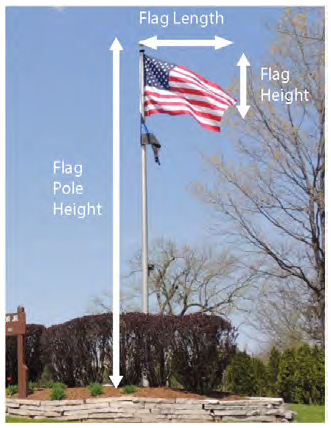
Figure 122-532.1 Flag diagram
e.
Flag quantities. A maximum of three flags may be flown from each flag pole.
(7)
Game courts and skate board ramps. Game courts and skate board ramps shall be screened from view of adjoining property by adequate landscaping, architectural features, or a combination of both.
a.
Game courts in civic use zoning districts, schools or parks may be located in all yards, but must meet the minimum setbacks.
b.
Game courts located outside of the driveway in residential zoning districts shall be located in the rear yard only with no encroachment into the minimum setbacks found in sections 122-523 and 122-524.
(8)
Gazebos, pergolas and support structures. When located within 15 feet of an adjacent property, the noted structures shall be screened by adequate landscaping, architectural features, or a combination of both.
a.
Gazebos, pergolas and support structures are permitted in all yards, except in residential zoning districts where they are only permitted in the rear yard.
b.
A principal structure is not required in the CV-1 district prior to the construction of a gazebo, patio, pergola or support structure.
(9)
Outbuildings and garages. Outbuildings and garages over 120 square feet in residential zoning districts shall be set back not less than the principal structure and meet the area regulations of subsection 122-531(a)(2). The maximum height of a detached garage shall not exceed the height of the principal structure, or 20 feet, whichever is less. On lots in the R-5, R-6, PRD and RM-2 districts, a detached garage, which is set back not less than one and one-half times the minimum street setback, may be setback a minimum of three feet from the side and rear lot lines and a minimum of five feet from an alley.
a.
Outbuildings containing 120 square feet or less are considered sheds, and regulated in subsection (12) below.
(10)
Play equipment. Recreational equipment for children, such as a sandbox, slide, climbing apparatus, or swings.
a.
Yard. Play equipment in residential districts shall comply with subsection 122-531(a), except when located on school or public park lands where play equipment is allowed in all yards.
b.
Setback. The minimum setback for play equipment shall be reduced to:
1.
Five feet from the rear and side lot lines in the R-3.5, R-4, R-5, R-6 and PRD districts.
2.
Ten feet from the rear and side lot lines in the R-1, R-2, R-3 and CDD districts.
c.
Height. The maximum height of a play equipment shall be 15 feet, except when located on school or public park property where there is no maximum height.
(11)
Sheds. The maximum area of a shed is 120 square feet. The minimum rear and side setbacks for sheds shall be reduced to five feet. In the R-6 and PRD districts, the minimum rear and side setbacks for sheds shall be further reduced to three feet.
(12)
Swimming pools. Swimming pools shall be located a minimum of ten feet from the edge of any roof, located in the rear yard only, and have no encroachments into the minimum street, side or rear setbacks.
(13)
Temporary event structures. Temporary structures associated with an event shall be removed within 24 hours of the close of the event.
a.
Yards. Temporary structures are permitted in all districts, but must comply with the following:
1.
The height shall not exceed that of the permitted building type (refer to sections 122-520 through 122-524).
2.
Tents must be constructed of fire retardant material.
3.
Guy wires, stakes, and other supports must be clearly marked and secured.
b.
Temporary event structures may have a chassis, hitch, or wheels however these elements shall be screened by skirting.
(14)
Temporary storage containers. Temporary and transportable container for personal storage.
a.
Only one storage container is permitted per lot at a time.
b.
Unless being used in conjunction with a valid building permit, the container may be located on a lot for no more than 21 consecutive days, no more than twice in a calendar year.
c.
Yard. Temporary storage containers are permitted in all yards, but must be setback a minimum of ten feet from street lot lines, and five feet from all other lot lines.
(15)
Tree houses and elevated structures. A structure attached to a tree, or elevated above an unenclosed space.
a.
Setback. Tree houses and elevated structures shall meet the same setbacks as the principal structure in the district they are located in.
(16)
Unenclosed storage of recreation vehicles.
a.
One recreational vehicle, without habitation, may be stored unenclosed in a single family district or planned residential development district.
b.
In addition to a recreational vehicle permitted under subsection (a) above, parcels located within the R-1 single family residential district, R-2 single family residential district, or PRD planned residential development district—and classified for a density of two dwelling units per acre or less in the village comprehensive plan—may store one additional unenclosed recreational vehicle without habitation.
c.
In addition to the applicable requirements of this section, all unenclosed recreational vehicles shall be:
1.
Well maintained, licensed and operable.
2.
Owned by a person residing on the parcel.
3.
Located in an area free of litter as defined in section 18-371.
4.
Located in an area free of tall grass, weeds, or other factors creating a public nuisance as described in section 38-24.
5.
Stored without tarps or covers other than those tarps or covers specifically designed for the recreational vehicle.
6.
Less than 35 feet in length.
7.
Meet the following setbacks.
i.
Street. The recreational vehicle shall be stored in a location meeting the minimum street setback for principal uses in the zoning district the recreational vehicle is stored in.
• Exception for corner lots. For corner lots, the recreational vehicle is set back a minimum of five feet from the street that does not have driveway access. If the recreational vehicle exceeds five feet in height, the minimum setback from the street that does not have driveway access shall be increased to the height of the recreational vehicle plus five feet.
ii.
Rear. Minimum five feet.
iii.
Side. Minimum of five feet, however if the recreational vehicle exceeds five feet in height, and abuts another residential use, the minimum setback from the side lot line shall be increased to the height of the recreational vehicle plus five feet.
d.
No recreational vehicle may be stored unenclosed in any multi-family residential, business, mixed use, civic, or floodland zoning districts.
(17)
Renewable energy structures.
a.
Solar—Building mounted. A solar energy system that is affixed to or an integral part of a principal or accessory building, including but not limited to photovoltaic or hot water solar energy systems which are contained within roofing materials, windows, skylights, and awnings.
1.
Quantity. The total square footage may not exceed the total area of the roof surface of the structure to which the system is attached.
2.
Height.
i.
Systems shall not extend beyond three feet parallel to the roof surface of a pitched roof.
ii.
Systems shall not extend beyond four feet parallel to the roof surface of a flat roof.
iii.
Systems shall not extend more than five feet above the highest peak of a pitched roof.
3.
Location on structure. Allowed on the following:
i.
Principal and accessory structures.
ii.
Any roof face.
iii.
Interior side and rear building facades.
4.
Projection. The system may project off a roof edge or building façade as follows:
i.
May project laterally from a building façade or roof edge a maximum of 3.5 feet.
ii.
May project into an interior side or interior rear setback, but shall be no closer than five feet to the interior side or interior rear property line.
5.
Signs. Signage or writing of any kind is not permitted on any portion of system, other than required manufacturer plates and safety labeling.
b.
Solar—Freestanding. A solar energy system with a supporting framework that is placed on, or anchored in, the ground and that is independent of any building or other structure other than parking lot canopy solar energy systems described in subparagraph (c) below.
1.
Size. A system in any Residential districts shall not exceed either the area of 50 percent of the principal building footprint or 600 square feet, whichever is greater.
2.
Maximum height. The system shall be as close to the ground as practicable, and not taller than the following:
i.
Parcels containing five acres or more in the industrial districts: 20 feet.
ii.
Parcels containing less than five acres in the industrial districts: 12 feet.
iii.
All other parcels: six feet.
3.
Clearance. Minimum clearance between the lowest point of the system and the surface on which the system is mounted shall be three feet.
4.
Location. Allowed in the interior side and rear yards only.
5.
Setbacks. All parts of the freestanding system shall be set back a minimum of five feet from the side and rear property lines, and shall not be located in any easement.
6.
Materials. Such system shall not include any unfinished lumber.
c.
Solar—Parking lot canopy. A solar energy system with a supporting framework that is placed on, or anchored in, the ground and that is independent of any building or other structure, which is used in a parking lot or the top story of a parking structure to shade vehicles parked in such lot or structure.
1.
Size. A system in any residential district shall not exceed either the area of 50 percent of the principal building footprint or 600 square feet, whichever is greater. A system in any other zoning district shall not cover more than 50 percent of the parking lot or story of the parking structure in which it is located.
2.
Maximum height. The maximum height within an industrial district shall be 25 feet. The maximum height in all other zoning districts shall be 15 feet.
3.
Clearance. Minimum clearance between the lowest point of the system and the surface of which the system is mounted shall be 7.5 feet.
4.
Setbacks. All parts of the freestanding system shall be set back a minimum of five feet from all property lines, and shall not be located in any easement.
d.
Wind—Freestanding. Small wind energy systems that stand independent of a building structure.
1.
Location. Freestanding wind systems shall be allowed in the front, side and rear yards.
2.
Height. The height of any component of a small wind energy system shall not exceed 50 feet, as measured from the ground to the highest point of the blade arc.
3.
Setbacks. The base of the system shall be setback 1.5 times the height of the highest edge of the system from all property lines, overhead lines, public sidewalks and trails. Any system or ancillary equipment shall not be located within any required setbacks of the respective zoning district.
4.
Installation. Small wind energy systems shall only be installed by professional installers certified to install wind turbines, and only pursuant to manufacturer specifications.
5.
Signs. Signage or writing of any kind is not permitted on any portion of any wind turbine, other than required manufacturer plates or safety labeling.
6.
Lighting. Small wind energy systems shall provide lighting per Federal Aviation Administration (FAA) regulations. Lighting shall be red and may not be of the incandescent variety unless FAA regulations otherwise allow or require.
7.
Clearance. Minimum clearance between the lowest tip of the rotor or blade and the ground shall be ten feet.
8.
Access. Climbing access (rungs or foot pegs) to the tower shall not start until 12 feet above grade to prevent unauthorized access.
e.
Wind—Roof mounted. Wind energy systems that are attached to the roof of a building.
1.
Quantity. One turbine is allowed for every 750 square feet of the combined roof area of all structures on a lot. For a pitched roof, each surface of the roof shall be included in the roof area calculation.
2.
Height. The system shall not extend more than five feet above the highest peak of a pitched roof, or more than 15 feet above a parapet.
3.
Location. The roof mounted system shall only be installed at heights 40 feet or greater.
4.
Installation. Roof-mounted wind energy systems shall only be installed by professional installers certified to install wind turbines, and only pursuant to manufacturer specifications.
(18)
Communication, transportation, and operational structures.
a.
Antenna and satellite dishes. An apparatus, detached or attached to the exterior of a building, together with any supporting structure, for sending or receiving electromagnetic waves, for the exclusive benefit of the users of the building and not for the purposes of networking or commerce among other parties.
1.
Size. The smallest practical size shall be used for any antenna or satellite dish.
i.
A stand-alone antenna or satellite dish shall not exceed a maximum of ten feet in its outside diameter or ten feet in height.
ii.
An antenna or satellite dish that is attached to the exterior of a building shall not be larger than 36 inches in diameter.
iii.
Additional size may be approved through the conditional use permit process (refer to section 122-66).
iv.
A roof mounted antenna or satellite dish shall not occupy more than 25 percent of the roof area.
2.
Location. Antenna and satellite dishes shall be located as follows:
i.
Stand-alone antenna and satellite dishes shall only be located in the rear yard and meet the applicable setbacks of the district they are located in.
ii.
Antenna and satellite dishes shall only be attached to the roof on the side and rear facades of buildings.
iii.
If the permitted locations will not allow the antenna or satellite dish to fully function, it may be located in another area of the lot contingent on evidence being provided to the zoning administrator prior to installation that the antenna or satellite dish can not fully function in either the interior side or rear yard, or on the side or rear of the roof.
iv.
When a stand-alone antenna or satellite dish occurs adjacent to a residential use, the side and rear buffer with a solid fence is required (refer to section 122-630).
b.
Electric vehicle charging stations. An electric vehicle charging station is a public or private parking space that is served by battery charging equipment.
1.
Types.
i.
Level 1, slow charging, operates on a 15 to 20 amp breaker on a 120 volt AC circuit.
ii.
Level 2, medium charging, operates on a 40 to 100 amp breaker on a 208 or 240 volt AC circuit.
iii.
Level 3, fast or rapid charging, operates on a 60 amp or higher breaker on a 480 volt or higher three-phase circuit with special grounding equipment.
2.
Siting and setbacks. The siting and setbacks for stations shall be the same as the parking facility within which they are associated.
3.
Design. Except when located in one or two unit residential units, the following standards apply:
i.
Stations shall be reserved for parking and charging of electric vehicles only, with signage noting such. Such signage shall also note:
• Voltage and amperage levels.
• Hour of operations if time limits or tow-away provisions are to be enforced.
• Usage fees, if any.
• Safety information.
• Contact information for reporting when the equipment is not operating correctly or any other problems.
ii.
Equipment shall be protected by wheel stops, curbs or concrete-filled bollards.
iii.
Stations located within parking lots or garages may be included in the calculation of the minimum required parking spaces required.
iv.
The station shall have complete instructions and appropriate warnings posted in an unobstructed location next to each station.
v.
Vehicle charging equipment must be designed and located so as to not impede pedestrian, bicycle or wheelchair movement, or create safety hazards.
4.
Maintenance. Electric vehicle charging stations must be maintained in all respects, including the functioning of the equipment.
c.
Freestanding radio and wireless towers. The requirements of subsection 122-433(a)(4) shall be met for all freestanding radio and wireless towers.
d.
Mechanical equipment. All heating, air conditioning, and other outdoor utility equipment, shall be located in the side or rear yard.
e.
Rainwater collection/cisterns. A container or series of containers for the collection and reuse of rainwater.
1.
A cistern shall meet the minimum setbacks from all property lines, and may be located in the front yard if the minimum setback is met.
f.
Transportation shelters. A stand-alone, open-air structure with a roof that may be located on public or private property for use by patrons awaiting public transit service.
1.
The design and exact location of any shelter must be approved by the department of public works, which shall take into account relevant site conditions, including but not limited to the width of the sidewalk for which the shelter is proposed, the sight lines from nearby streets and driveways, the location of windows of adjacent buildings used for commercial purposes, and the locations of other nearby street furniture.
2.
Both sides of one of the vertical screens of a transportation shelter may have off-site advertising signage provided that:
i.
The transportation shelter is located at least 600 feet away from another transportation shelter with off-site advertising signage, except that two transportation shelters with off-site signage may be located on opposite sides of the same street.
ii.
No portion of the off-street advertising signage shall be a dynamic display.

