
Menomonee Falls Village
City Zoning Code
City Zoning Code
ARTICLE VI
SITEWORK, LANDSCAPE, AND LIGHTING
Sec. 122-600. - Intent.
The standards outlined in this section are designed to meet the following set of goals.
(1)
To increase the compatibility of adjacent uses and minimize the adverse impacts created by adjoining or neighboring uses.
(2)
To promote the prudent use of water and energy resources by achieving and maintaining sustainable, functional landscapes.
(3)
To shade large expanses of pavement and reduce the urban heat island effect.
(4)
To aid in ensuring all required landscaping is installed and maintained properly.
(5)
To ensure landscaping becomes an integral part of development.
Sec. 122-601. - Traffic visibility.
(a)
Establishment of vision corners. Vision corners at the intersections of public streets, private streets, highways and railroad crossings, where the grade is not separated, are hereby established as follows:
(1)
Arterial and arterial intersections. Vision corners shall begin at a point (B) along one arterial street centerline 150 feet from the centerline of the intersecting arterial (A) and shall traverse diagonally to a point 150 feet (C) along the centerline of the second arterial from the center of the intersecting arterials (A). Figure 122-601.1, vision corners, is provided for additional reference.
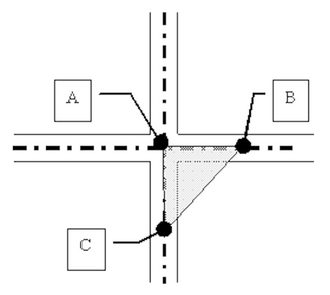
Figure 122-601.1 Vision Corners
(2)
Arterial and non-arterial intersections. Vision corners shall begin at a point (B) along the non-arterial street centerline 100 feet from the center line of the intersecting arterial (A) and shall traverse diagonally to a point 150 feet (C) along the centerline of the arterial from the center of the intersecting non-arterial road (A).
(3)
Non-arterial and non-arterial intersections. Vision corners shall begin at a point (B) along the non-arterial street centerline 90 feet from the center line of the intersecting non-arterial (A) and shall traverse diagonally to a point 90 feet (C) along the centerline of the non-arterial from the center of the intersecting non-arterial road (A).
(4)
Arterial or non-arterial street and a railroad crossing. Vision corners shall begin at a point (B) along the arterial or non-arterial street centerline 150 feet from the center line of the intersecting railroad crossing (A) and shall traverse diagonally to a point 150 feet (C) along the centerline of the railroad crossing from the center of the intersecting arterial or non-arterial road (A).
(b)
Obstructions. No obstructions, such as structures, parking, signs or vegetation, shall be permitted between the heights of two and one-half feet and ten feet above the center of the intersection described in subsection (a).
Sec. 122-602. - Berms.
Berms greater than 30 inches in height, in all zoning districts, require architectural review board approval. Side slopes of berms shall not exceed a gradient of one foot vertical to three feet horizontal unless approved by the architectural review board.
Sec. 122-603. - Landowner responsibilities.
The owner of the site shall have the duty of, and the responsibility for:
(1)
Keeping all grass, trees, shrubbery and other greenspace areas in a well-maintained, safe, clean and attractive condition comparable with the surrounding area at all times. This maintenance shall include practices that promote healthy plant growth, free from diseases, pests, weeds and litter. Vegetated stormwater control measures shall be maintained in accordance with the maintenance plan and requirements for their design and function as stormwater controls.
(2)
The regular maintenance, repair and/or replacement where necessary of any landscape materials required by the plan commission or architectural control board.
(3)
Required plant materials, if dead, diseased or severely damaged, shall be removed by the owner as soon as possible, but no later than 30 days after notification. These plants shall be replaced within three months of removal or by the next planting season, whichever comes first.
(4)
Replacement plants must be of the same or greater size and species as shown on the approved landscape plan approved by the architectural control board.
Sec. 122-620. - Intent and applicability.
This division applies to business, mixed use, and industrial districts. The creation of these landscape standards are necessary to ensure landscaping becomes an integral part of commercial and industrial development.
Sec. 122-621. - Installation requirements.
The installation of landscaping shall adhere to the following standards.
(1)
Plant size requirements. Plant material shall be sized according to figure 122-621.1, unless otherwise noted in this section.
Figure 122-621.1 Plant Material Size at Installation
(2)
Condition and selection of planting materials. The landscaping materials used shall be free from visible signs of disease, infestation, or physical defect at the time of planting, and:
a.
Be appropriate for the conditions of the location, including sun and wind exposure, air quality, salt exposure, soil type, expected moisture content of the soil, and slope.
b.
Not be an invasive or a potentially invasive species as identified in Wis. Admin. Code NR 40 and its updates.
c.
Be native or naturalized to Wisconsin climate.
(3)
Landscape beds. All landscape beds shall contain a minimum of two inches of hardwood mulch. Other landscape bed materials may be approved by the architectural control board in special circumstances.
Sec. 122-622. - Landscape quantities.
(a)
For purposes of determining the number of plants necessary to meet this section of the Code, a standard greenspace calculation must be made based on figure 122-622.1:
Figure 122-622.1 Standard Greenspace Calculation
(1)
At least one shade or ornamental deciduous tree, meeting the requirements of figure 122-621.1, shall be incorporated into the design for every 1,500 square feet of standard greenspace. To assure a diversity of deciduous trees, no more than 25 percent of the required trees may be of any one deciduous tree classification.
(b)
At least 25 percent of the standard greenspace shall be landscaped utilizing plant materials, other than maintained turf, that contribute to at-grade coverage.
For purposes of determining the number of plants necessary to meet the minimum 25 percent "at-grade" coverage requirement, plant types are categorized by their general size and potential mature at-grade coverage area. The at-grade coverage area for each plant type is provided in figure 122-622.2. Note shade and ornamental trees are not considered a plant type contributing to "at-grade" coverage.
Figure 122-622.2 At Grade Coverage
(c)
To ensure a diversity of color, texture and year-round interest, the total number of shrub type plant materials must be comprised of a minimum 25 percent evergreens, but no more than 70 percent.
(d)
Paved parking areas larger than 10,000 square feet shall have landscaped areas equaling not less than 15 percent of the parking area intermittently placed throughout the parking area. Landscaped areas shall consist of parking islands and perimeter screening, which can be used as stormwater management areas. Parking islands shall be placed at the end of parking rows, unless required to be sited at other locations as part of the stormwater management plan for the site. Planting strips may also be utilized to fulfill the requirements for large parking lots.
(1)
Planting islands. Planting islands shall be a minimum of one parking stall, 180 feet in area, underlain by soil (not base course material) and other media as appropriate for stormwater management, and shall be protected by curbing, wheel stops, bollards, or other protective treatment with breaks to allow stormwater flow as appropriate. Each planting island shall contain one shade tree plus shrubs, and/or groundcover, and/or perennials to cover the entire area, or a planting plan appropriate for stormwater management functions.
(2)
Parking lot screening. All parking lots or vehicular area shall be screened per division 3 of this article. The planting screen may be designed to accommodate vegetated stormwater control measures. Areas that provide parking lot screening may be counted towards the required 15 percent of landscaped areas within a parking lot, when sufficient internal islands have been provided.
(3)
Planting strips. Planting strips, which may include vegetated stormwater control measures, may be provided within parking lots. The planting strip area may contribute to the required 15 percent internal landscaping requirements. Planting strips shall be of sufficient width to sustain the vegetation placed within them or to function as stormwater control measures. Strips shall run the length of the parking row, underlain by soil and other media as appropriate for stormwater management, and shall be protected by curbs, wheel stops, or bollards with breaks to allow stormwater flow as appropriate. Planting strips shall have a planting plan appropriate for stormwater management functions, and may contain canopy trees plus shrubs, and/or groundcover, and/or perennials to cover the entire area. When determined during plan review, a walking path/sidewalk shall be designed into the planting strip, which will provide for pedestrian access to the entrance of a building.
(e)
Landscaping shall be installed within nine months of occupancy or substantial completion of the building, whichever comes first, weather and appropriate planting seasons permitting. A planting schedule for any plantings requiring seasonal phasing shall be submitted with any request for extension under this subsection.
(f)
For purposes of this section, environmental areas, such as wetlands and natural wooded areas, may be excluded from the lot area determination in subsections (a) and (b), above.
(g)
Landscape credit. Existing, healthy trees and shrubs when not located in woodlands or wetlands shall be credited towards the required trees or plant materials. Existing plant material must be indicated on the plan. Shrubs and evergreen trees shall be counted on a one for one basis. Existing deciduous trees shall be calculated based on figure 122-622.3.
Figure 122-622.3 Existing Landscape Credit
(h)
The landscape size and quantities required in sections 122-621 and 122-622 shall be used as a minimum requirement. Depending on plan approval jurisdiction, the plan commission, architectural control board, and/or village board of trustees may require additional, or larger, vegetation over and above the minimum requirements.
(i)
In a common development, which includes more than one lot, each lot shall meet the requirements of this section. Each phase of a phased project shall meet the requirements of this section.
(j)
If a building is damaged by fire, explosion, flood, tornado, riot, or accident of any kind, the landscaping shall be replaced according to a previously approved landscape plan. If there is no previously approved landscape plan, current landscape standards shall apply.
(k)
Exceptions. This section shall not apply to the following:
(1)
Restoration of buildings or landscapes with a historic designation.
(2)
Interior remodeling as long as the front, rear, and side exterior walls of the building remain in the same location and so long as no greater intensity of use is proposed.
(3)
Expansion of a parking lot or circulation area without any other modifications to any structures on the site shall not require the entire site to be brought up to full compliance with landscape standards, but the requirements of this ordinance pertaining to parking lots shall be applied.
(4)
Expansion or remodeling of a building which is less than ten percent of the existing floor area, and no parking lot modifications are being made, then the provisions of this section shall not apply.
Sec. 122-623. - Landscape plan contents.
A landscape plan must be submitted which includes details of all proposed landscaping, buffering, and screening. These plans shall be prepared by a state-licensed landscape professional, and shall include the stamp of that professional. Plans including vegetated stormwater control measures shall require certification by a professional engineer, where these measures are part of a required stormwater management plan. The requirement that such plans and specifications be prepared by a registered landscape architect may be waived for minor alternations and improvements which, in the sole discretion of the department of community development, does not require the services of such a professional. The plans shall show the location and dimensions of all existing and proposed structures, parking, drives, rights-of-way, and any other permanent features, and all other information required by the plan commission and/or the architectural control board, including, but not limited to, the following:
(1)
A plant list and coverage chart showing the location, quantity, size (at time of planting and at maturity), spacing, and the scientific and common names of all landscape materials used.
(2)
The dbh of existing trees shall be provided.
(3)
The location and percent of slope of all proposed berms using one-foot contours.
(4)
Detailed sections showing elevations of all proposed architectural features, such as walls, lighting or water features.
(5)
Methods used in staking, mulching, wrapping or any other early tree care used.
(6)
Existing plant materials proposed to remain. A separate plant list and coverage chart showing the location, quantity, size (at time of planting and at maturity), spacing, and the scientific and common names of all landscape materials used.
(7)
Existing plant materials proposed to be removed. A separate plant list and coverage chart showing the location, quantity, size (at time of planting and at maturity), spacing, and the scientific and common names of all landscape materials used.
(8)
The design, location, proposed grading and planting, and sections of all vegetated stormwater control measures.
Sec. 122-630. - Side and rear buffer.
(a)
Intent and applicability.
(1)
Intent. To minimize the impact between two different non-residential zones and to provide a transition between zoning districts.
(2)
General applicability. Applies to non-residentially zoned properties being developed adjacent to another non-residential zoning district.
(b)
Side and rear buffer requirements.
(1)
Buffer width and location.
a.
Width. Minimum five feet.
b.
Location. Along the property line; however, if an easement is located in the same location as the side or rear buffer, the buffer shall be shifted to be adjacent to the easement.
(2)
Buffer landscape requirements.
a.
Uses and materials. Uses and materials other than those indicated are prohibited within the buffer.
b.
Shade trees. At least one shade tree every 40 feet within the buffer.
c.
Hedge. A continuous double row of shrubs is required between shade trees.
d.
Hedge composition. Individual shrubs having a minimum height in one year of 24 inches and a maximum height of 48 inches, shall be spaced no more than 36 inches on center.
e.
Existing vegetation. Existing vegetation may be credited toward the buffer area.
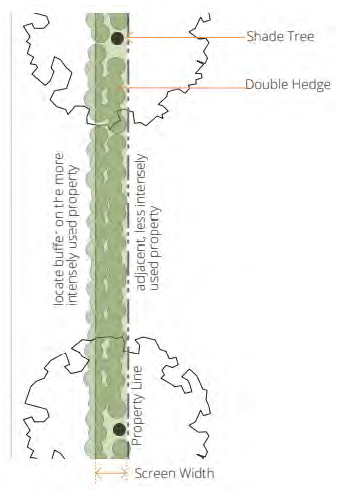
Figure 122-630.1 Side and Rear Buffer Plan
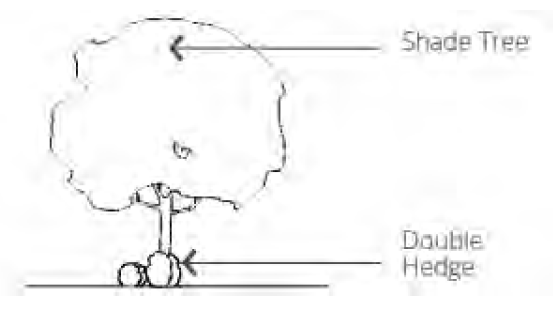
Figure 122-630.2 Side and Rear Buffer Elevation
Sec. 122-631. - Screening buffer.
(a)
Intent and applicability.
(1)
Intent. To minimize the impact business, industrial, mixed use, civic, or mixed use residential districts may have on an abutting single family residential district, and to provide a transition between these zoning districts.
(2)
General applicability. Applies to business, industrial, mixed use, civic, or mixed use residential districts being developed adjacent to a single family district.
(b)
Screening buffer requirements.
(1)
Buffer depth and location.
a.
Depth. Minimum 25 feet.
b.
Location. Along the property line; however, if an easement is located in the same location as the side or rear buffer, the buffer shall be shifted to be adjacent to the easement.
(2)
Buffer landscape requirements.
a.
Uses and materials. Uses and materials other than those indicated are prohibited within the buffer.
b.
Shade trees. At least three shade trees every 100 feet within the buffer.
c.
Ornamental trees. At least one ornamental tree every 100 feet within the buffer.
d.
Evergreen trees. At least five evergreen trees every 100 feet within the buffer.
e.
Shrubs. At least 12 shrubs every 100 feet within the buffer.
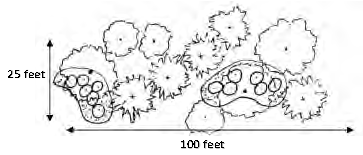
Figure 122-631.1 Screening Buffer Plan
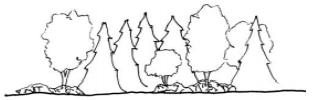
Figure 122-631.2 Screening Buffer Elevation
Sec. 122-632. - Screening of necessary appurtenances.
(a)
Intent and applicability.
(1)
Intent. To reduce the visibility of open storage, refuse areas, and utility appurtenances from public areas and adjacent properties.
(2)
General applicability.
a.
All loading areas, outdoor storage, mechanical equipment, for-profit or non-profit donation bins (including temporary bins), and utility appurtenances in all districts.
b.
All waste and recycling containers or dumpsters shall be concealed from adjacent residential dwellings, public streets, pedestrian areas, and other public areas. Commercial and industrial waste and recycling containers or dumpsters shall also comply with the requirements of section 71-91 of this Code.
(b)
Screening requirements.
(1)
Outdoor storage, refuse areas, utility appurtenances, and donation bins.
a.
Location on the site. Not permitted within any street yard.
b.
Opaque screen wall. A complete year round landscape screen, fence or wall shall be installed to screen all outdoor storage, refuse areas, utility appurtenances, and donation bins from all rights-of-way and adjacent properties.
c.
Screen wall height. The height of the screening wall shall be a minimum of six feet, and may be required to be higher in order to completely screen any materials stored outdoors.
d.
Openings. Openings must be furnished with opaque gates.
(2)
Loading areas.
a.
A masonry wall shall be required to completely screen a semi-truck at a loading dock from all rights-of-way. In special circumstances the architectural control board may approve a wall using other materials.
Sec. 122-640. - Site lighting.
When a commercial or industrial use directly abuts an existing, or planned, single family use, the applicant shall submit a lighting plan verifying light levels do not exceed 0.05 footcandles at the single family residential property line.
Sec. 122-641. - Outdoor lighting.
All public and private outdoor lighting shall be in conformance with the requirements established by this section.
(1)
Control of glare; luminaire design factors.
a.
Any luminaire rated greater than or equal to 1,800 lumens shall be designed and installed to be fully shielded (full cut-off or recessed), and mounted 90 degrees to the horizontal plane. When abutting residentially zoned properties, light shall be shielded such that the lamp element is not directly visible outside the perimeter of the property.
b.
Any luminaire rated greater than or equal to 1,800 lumens shall be mounted at a height equal to or less than the value 3 + (D/3), where D is the distance in feet to the nearest property boundary. The maximum height of the luminaire may not exceed 25 feet.
(2)
Exceptions.
a.
Any luminaire with a lamp or lamps rated less than 1,800 lumens may be used without restriction to light distribution or mounting height, except that if any spot or flood luminaire rated 900 lumens or more is aimed, directed or focused so as to cause direct light from the luminaire to be directed toward residential buildings on adjacent or nearby land or to create glare perceptible to persons operating motor vehicles on public ways, the luminaire shall be redirected or its light output controlled as necessary to eliminate such conditions.
b.
All luminaires for public street lighting required by federal, state, county or village authorities.
c.
All luminaires intended for lighting of athletic fields owned by the village, county, and non-profit organization.
d.
All temporary emergency lighting needed by the police department, the fire department or other emergency services, as well as all vehicular luminaires, shall be exempt from the requirements of this article.
e.
All hazard warning luminaires required by federal regulatory agencies are exempt from the requirements of this article, except that all luminaires used must be red and must be shown to be as close as possible to the federally required minimum lumen output requirement for the specific task.
f.
Luminaires used primarily for sign illumination may be mounted at any height to maximum of 15 feet regardless of lumen rating.
g.
Temporary outdoor lighting may be allowed if it can be found that the intent of this chapter is in conformance with, and after considering the following:
1.
The public and/or private benefits that will result from the temporary lighting;
2.
Any annoyance or safety problems that may result from the use of the temporary lighting;
3.
The duration of the temporary lighting.
h.
Lighting within a planned development overlay district (PDO) may have additional restrictions contained within each individual PDO.
(3)
Application requirements. The application shall include the following
a.
The applicant shall submit a detailed description of the proposed lighting to the department of community development.
1.
Site plan. A site plan shall be submitted showing lot lines, buildings, and site features, including the height of all lighting elements and their distance from lot lines.
2.
Specifications. A set of lighting specifications including information pertaining to the lighting fixture, luminaires, lamp, and any other specifications that the department of community development may determine is necessary for review.
(4)
Special lighting exceptions. As to luminaires for parking facilities, an applicant may request a special lighting exception to allow higher mounting heights than otherwise allowed in this section under the provisions of section 122-71.
(5)
Nonconforming luminaires. All luminaires in place prior to the date of this section shall be considered an existing nonconforming luminaire. However, any luminaire that replaces an existing nonconforming luminaire, or any existing nonconforming luminaire that is moved, must meet the standards of this section.
(6)
Architectural lighting of building facades. The lighting of a building façade for architectural, aesthetic, or decorative purposes is permitted subject to the following restrictions:
a.
Upward aimed building façade lighting shall not exceed 900 lumens. All upward aimed light shall be fully shielded, fully confined from projecting into the sky by eaves, roofs, or overhangs, and mounted as flush to a wall as possible.
b.
Building façade lighting exceeding 900 lumens shall be fully shielded, aimed downward, and mounted as flush to a wall as possible.
c.
Building façade lighting shall be fully contained within the vertical surface of the wall being illuminated.
d.
Building façade lighting that is measurable at the ground level shall be included in the maximum allowable light levels.
(7)
Unshielded lighting.
a.
Motion-activated lighting. Unshielded, motion-activated lighting that emits less than or equal to 1,300 lumens is permitted provided that it is activated by a motion sensor, and aimed and located in such a manner as to prevent glare and light trespass. The light shall only go on when activated and go off within five minutes of activation. Motion sensor activated lighting shall not be triggered by any movement or activity located off the property on which the light is located.
b.
Other unshielded lighting is prohibited, unless it can be shown that the type of fixture proposed is not objectionable because of the light distribution characteristics of the fixture.
(8)
Parking lot lighting curfews. On all non-residentially developed lots which contain a minimum of four parking lot light poles, parking lot lighting levels must be reduced by at least 50 percent of full operational levels 30 minutes after the close of business. Lighting levels may be reduced by turning off 50 percent of the parking lot lights or by dimming parking lot lighting levels to no more than 50 percent of the levels used during the business or activity hours, or by some combination thereof.
(9)
Light pollution. Light pollution negatively effects residential welfare. Additional requirements may be stipulated upon review of the plan if other light sources, such as windows, create light pollution.

