
Myrtle Beach City Zoning Code
ARTICLE 8
- Sign Regulations
Section 801.- Purpose and Intent
The purpose of this section of the Ordinance is to provide fair and comprehensive regulations that will eliminate confusing, distracting, and unsafe signs, assure the efficient transfer of information, and foster a good visual environment for the City, enhancing it as a place in which to live, to visit, and to conduct business. It is declared that the regulation of signs within the City is necessary and in the public interest:
801.A.
To protect property values within the City;
801.B.
To promote and aid in the tourist industry which is declared to be of importance to the economy of the City;
801.C.
To protect the general public from damage or injury caused, or partially attributable to, the distractions and obstructions which are hereby declared to be caused by improperly designed or situated signs;
801.D.
To provide a pleasing overall environmental setting and good community appearance which is deemed vital to tourism and to the continued economic attractiveness of the City;
801.E.
To improve the legibility and effectiveness of commercial and governmental signs;
801.F.
To allow signs appropriate to the planned character of each zoning district; and
801.G.
To promote the public safety, welfare, convenience and enjoyment of the unique ocean front resort character of Myrtle Beach.
Section 802. - Scope
The provisions of this Ordinance shall apply to the construction, erection, alteration, use, location, size and height of and the maintaining of all signs, regardless of their cost of construction. No reference in this article referring to sign copy or sign purpose shall be interpreted or applied to improperly regulate content or impair the right of free speech. The provisions of this Ordinance shall not apply to:
802.A.
Signs not visible beyond the boundaries of the lot or parcel upon which they are situated, or from any public thoroughfare, right-of-way or beach;
802.B.
Any commercial communication intended to be solely viewed while stopped in location or primarily viewed by pedestrian or other non-motorized travelers; provided, however, that the restrictions of 803.P - Prohibited Signs shall apply to such commercial communications;
802.C.
Traffic signs, and all other signs, erected or maintained by a municipal or governmental body or agency, including danger signs, and signs of noncommercial nature required by public laws, ordinance or statutes. However, signs of businesses on governmental property, convention center signs and related signs of a commercial nature shall not be exempt;
802.D.
Pavement markings of a traffic directional nature;
802.E.
Temporary signs at festival sites customarily associated with the Sun Fun and Can Am Festivals and other festivals or occasions recognized by City Council during the duration of these festivals.
Section 803. - General Provisions
It shall be illegal for a sign to be placed or maintained in the City except as provided in this Ordinance. Only signs specifically permitted in sections 804.B - Signs Exempt From Permit Procedure, 805 - On-Premises Sign Regulations By Zoning District and 806 - Outdoor Advertising Signs Or Billboards And Off-Premises Directional Signs are allowed in the City. All signs shall comply with the provisions of this section. Any sign authorized in this Ordinance is allowed to contain non-commercial copy in lieu of commercial or other copy.
803.A.
Calculation of Sign Area. Sign area is defined as the smallest possible square foot area that can be enclosed within three rectangles.
1.
Frames or structural members not bearing information or representational matter shall not be included in computation of display surface area.
2.
For signs with more than one surface, the area per sign face is the maximum area of all display surfaces which are visible from any ground position at one time, within the above described three rectangles. The aggregate sign area is the summation of the area of all sign faces combined.
3.
In all of the Multifamily Residential (RM) districts, sign area shall mean the exact area of each sign panel, irrespective of the three rectangle method described herein.
803.B.
Determination of Sign Face. The sign face is the part of a sign that is or can be used for visual representation which attracts the attention of the public for any purpose. The sign face includes any background material, panel, trim color, and direct or self-illumination used that differentiates that sign from the building, structure, backdrop surface or object upon which or against which it is placed.
1.
The sign structure shall not be included as a portion of the sign face provide that no identifying/advertising message, symbol or any of the aforementioned sign face criteria are displayed on or designed as part of the sign structure, whether structurally necessary or not.
2.
In the case of signs designed with integral sign face and sign structure, the blank (support) area equivalent to a maximum of 50 percent of the allowable sign area shall be exempt from computations of sign area.
803.C.
Sign Height in Relation to Grade. Grade in relation to sign height is considered to be the uppermost surface below the sign or immediately adjacent to the support. Where the uppermost surface has been artificially raised for landscaping or other purposes, grade shall be measured from the level of the nearest city or state street curb.
803.D.
Determination of Setback for Freestanding Signs. The setback of a free standing sign or billboard is measured from its extremity, not its support. For example, the measurement should be taken from the vertical intersection point on the ground below the leading edge to the property line.
803.E.
Merchandise in Windows. Merchandise that is displayed in or that is visible from the window of an establishment, but is free of advertising, is not considered to be window signage.
803.F.
Flashing signs. Flashing signs resembling, or seeming to resemble, the flashing lights customarily associated with danger or such as are customarily used by police, fire, or ambulance vehicles or for navigation are prohibited.
803.G.
Awning Signage. Awning signage is permitted on awnings as a building mounted flat sign (and considered as such within all calculations for sign area) subject to the following regulations:
1.
All signage on an awning shall be on the vertical plane of the awning and the area of the signage shall be included in the allowable area for a building mounted flat sign.
2.
The area of an awning sign shall be limited to one square foot per linear foot of awning width or the allowable square feet of flat mounted building signage, whichever is less.
803.H.
Traffic Hazards and Sign Illumination.
1.
No flood lights shall be utilized as a part of a sign illumination system which are not hooded or shielded so that the light source is not visible from any public right-of-way or adjacent property nor shall any sign otherwise reflect or emit a glaring light so as to impair driver vision.
2.
No sign illumination system shall contain or utilize any beacon, spot, search or stroboscopic light or reflector, which is visible from any public right-of-way or adjacent property, nor shall such lights be operated outside, under any circumstances, except by authorized public agencies or as permitted in section 805.E.4 - Amusement Parks Greater Than Five Acres.
3.
No sign shall display lights resembling by color and design or other technique characteristics customarily associated with those used by police, fire, ambulance and other emergency vehicles or for navigation. Automotive warning or flashing signs shall not be utilized as commercial attention-seizing devices.
4.
No sign is permitted which, due to its position, shape, color, format, or illumination, obstructs the view of, or may be confused with an official traffic sign, signal, or device or any other official sign or which uses the words "stop," "warning," "danger," or similar words implying the existence of danger or the need for stopping or maneuvering by the motoring public.
5.
No sign shall rotate or otherwise move unless it is located in the Amusement (A) district.
6.
No sign shall obstruct the view of motor vehicle operators entering a public roadway from any driveway, street or alley. There shall be no sign or obstruction to vision between the height of two feet and nine feet within the sight distance triangles established in Article 2 - Definitions and Article 17 - Design and Performance Standards of the Ordinance.
7.
Except as permitted in section 808 - Changeable Electronic Variable Message Sign (CEVMS) and signs permitted in sections 805.E.9 - Clock, no sign shall be animated or contain any animation. For the purposes of this section, any person or persons wearing any costume, character dress, or other distinctive attire for the purpose of attracting attention to any business or commercial activity shall be regulated as an animated sign.
803.I.
Signs for Sexually Oriented Businesses. Refer to section 1501.T - Regulated Sexually Oriented Adult Business.
803.J.
Signs for Approved Temporary Events. Signage shall be allowed one per street frontage not to exceed 32 square feet per sign. Additional signage shall be allowed as long as it is not visible from any public right-of-way.
1.
Maximum height of sign shall not be greater than seven feet.
2.
External illumination shall be allowed; however, no flashing lights or other lighting that would be distracting and/or dangerous to motorists shall be allowed.
3.
No changeable copy shall be allowed.
4.
May be erected up to seven days in advance and must be removed within 24 hours of the end of the temporary event.
803.K.
Design Standards.
1.
All signs shall be constructed of durable materials and designed to meet all applicable requirements of the International Building Code.
2.
No sign, sign structure or attention seizing device shall be shaped in the form of a statue of a human or animal figure nor in the form of a three dimensional model (e.g. dinner bucket, paint cans, Christmas trees, etc.). The following are allowable exceptions:
a.
Signs in the A and ART districts;
b.
Miniature golf courses as a principal use;
c.
Fixed projecting signs as regulated in section 805.G.2.b - One Fixed Projecting Sign Per Premises;
d.
Wooden sculpture sign less than six square feet in area, measured in the plane projecting the greatest area. This calculation shall be made in accordance with the eight-line method in the plane of the sculpture presenting the greatest area.
3.
Landscaping requirements:
a.
Freestanding business identification signs. A landscape strip at least five feet in width and the same length as the greatest horizontal dimension of the sign shall be provided.
i.
One shrub, at least 18 inches tall immediately after planting, per three feet of landscaped strip shall be planted within the length of the landscaped strip.
ii.
The remainder of the landscaped strip shall be maintained in approved ground cover.
iii.
The sign shall not extend beyond the landscaped area.
iv.
Curbing, railroad ties, fencing or other types of vehicular barriers acceptable to the zoning administrator shall be placed around the landscaped strip for protection.
b.
Outdoor advertising display signs (billboards). The following landscaping requirements shall apply:
i.
A landscape strip ten feet in depth shall be located immediately adjoining the supporting structure of the billboards and extending five feet beyond each end. The five feet extension is measured beyond each end of the extremities of the support or supports.
ii.
A hedge or other durable planting of at least two feet in height, attaining within four years after planting a minimum of six feet, is to extend the entire length and breadth of the required landscaped strip.
iii.
Two flowering trees with a minimum of eight feet overall height shall be placed within the required landscape strip at a location adjacent to the principal street frontage.
iv.
Single-faced billboards with the rear viewable from a public right-of-way or other public property shall have three equally spaced eight-foot tall evergreen trees planted in the rear of the billboard and the reverse side of the sign shall be of one color.
c.
Existing or natural landscaping materials may be utilized to meet the requirements of this subsection provided that they meet or exceed the minimum standards specified hereinabove.
d.
Exceptions to the location and height of the landscaped strip may be made by the Board of Zoning Appeals where strict application of these requirements would seriously damage the proper functioning of the overall development or where a sight distance hazard would result.
e.
Maintenance and installation of landscaping around signs shall be in accordance with the provisions of section 902 - Landscaping Regulations of the Ordinance. The zoning administrator shall maintain a list of plant materials approved for meeting these landscaping requirements.
4.
Primary street address. In order to provide efficient emergency vehicle operations as well as to aid in the location of homes and businesses, each primary freestanding sign on commercial and multifamily properties are required to display the street address on the sign in a prominent location so as to allow said number to be clearly readable from the street. The numbers and letters of the address must be at least 6 inches in height and can be placed on both sides of a freestanding sign if the sign is perpendicular to the street.
803.L.
Cessation of Business. Signs referencing "Going Out of Business" or any act associated with cessation shall only be used with a lawfully issued "Going Out of Business License" from the City.
803.M.
Occupation of, or Projection into, Public Right-of-Way. No private sign shall occupy public property in any manner nor shall any sign extend across a property line where such property line borders a public right-of-way or any public property except as follows: within the Art & Innovation (ART), Amusement (A) and Mixed Use-Medium Density (MU-M) zoning districts, and on existing buildings in Mixed Use-High Density (MU-H) districts which are closer than 4 feet to the principal street right-of-way, if projecting into or over a public right-of-way, the sign must be at least 9 feet above the right-of-way so as not to interfere with pedestrian traffic nor extend beyond the back edge of the curb line nor more than 4 feet inside the right-of-way line.
803.N.
Signs in Disrepair and Unsafe Signs.
1.
All signs and supports, braces, guys, and anchors thereof shall be kept in good repair, refurbished and repaired from time to time, as necessary, and perpetually maintained in safe condition, free from deterioration, defective or missing parts, or peeling or faded paint, and able to withstand the wind pressure for which it was originally designed. Any sign not in compliance with this provision is hereby declared to be a public nuisance.
2.
The zoning administrator may order the repair or removal of any such signs that are not maintained in a safe condition and in good repair in accordance with the provisions of this subsection. If the zoning administrator shall find that any sign is in violation of this subsection, then he, among other remedies permitted by state or local law, shall give notice to the property owner specifying the location of the hazard or deteriorated sign, what needs to be done to render the sign safe and in good repair, and that in the event the same is not done by the owner that the City will either do the same or remove the sign at the expense of the owner of the property upon which it is located.
3.
In the event that any structural support of a sign is damaged to the extent that it has failed either by fracture or by exceeding its yield point, such sign may be restored, reconstructed, altered or repaired only to conform with all of the provisions of this Ordinance.
803.O.
Obsolete and Abandoned Signs.
1.
Any sign which advertises or pertains to a business, product, service, event, activity or purpose which is no longer conducted or publicly available for a period of 6 months, or which has not been in use or publicly available for six months, or which is no longer imminent within a period of six months, or any sign structure that fails to display any sign copy for six months, or any sign which, for a period of six months, has vegetation growing upon it, clinging to it, touching it or obscuring the sign face or sign parts or structure or any sign, for a period of six months, which has not been maintained to be free of peeling, chipping, rusting, wearing and fading so as to be legible at all times or to be free of rusting, rotting, breaking or other deterioration of the sign parts shall be deemed to be an obsolete or abandoned sign. The passage of time alone under the above-delineated circumstances establishes abandonment or obsolescence. Abandonment does not require any element of personal or business intent to relinquish the rights one might have in sign placement as the term is used or defined in this Ordinance.
2.
Obsolete or abandoned signs, sign copy or sign structures are declared to be a public nuisance, are prohibited and shall be removed by the owner of the property or his agent after written notification from the zoning administrator.
3.
When any sign is relocated, made inoperative, or removed for any reason, except for maintenance, all structural components, including the sign face and sign structure, shall be removed or relocated with the sign. All structural components of freestanding signs shall be removed to ground level. Painted wall signs, and the structural components of all other signs, shall be removed back to the original building configuration and the building restored to its original condition.
803.P.
Prohibited Signs. The following signs are prohibited in the City:
1.
Any signs on benches and refuse containers.
2.
Illuminated signs in Single-family (R) and Cabana Section (CS) districts except for signs associated with religious and public recreational uses.
3.
Signs attached or painted to piers or seawalls, except for one on-premises building identification sign not to exceed nine square feet per establishment. Signs on buildings located on piers shall not be prohibited, but shall conform to the other provisions of this Ordinance.
4.
Signs of any kind, except building mounted signs and signs conforming to section 804.B.5 - Construction Signs of this Ordinance, erected or displayed in any first row sand dune or within a distance of 50 feet landward from the dry sand beach, whichever is more restrictive.
5.
Signs of any material including, but not limited to, paper, paint, cardboard, plastic, wood and metal which are painted on or attached to trees, lamp posts, parking meter posts, hydrants, traffic signs, stairways, rocks or other natural features, telephone or utility poles or painted on the roofs of buildings visible from any public thorough-fare.
6.
Circulars, placards throwaways, and handbills.
7.
Banners (Except as allowed in section 811 - Temporary Grand Opening Signs), balloons, streamers, spinners, pennants and similar wind activated devices; however, these devices are permitted in amusement parks of five acres or greater in size, provided no commercial messages or logos are incorporated thereon.
8.
Except in the Amusement (A) district, the following are prohibited:
a.
Any sign or sign structure other than freestanding, any portion of which extends above the top of the wall parapet, building roof line or canopy against which said sign is located.
b.
Signs on roof surfaces unless the sign does not extend above the highest part of the building roof-line on which it is mounted.
9.
Portable signs, except temporary signs as permitted.
10.
Any sign, except those for a driveway, loading zone and the like authorized by a public agency which restricts or appears to reserve any portion of public right-of-way or any public property for the exclusive use of private use or any individual, tenant, client, guests or business. This prohibition extends to all such signs, whether on public property or private property.
11.
Any sign located or designed so as to intentionally or effectively deny an adjoining property owner reasonable visual access to an existing sign.
12.
Temporary window signs, except for an eight square feet area in closest proximity to the main door. Also allowed are temporary window signs as allowed with lawfully issued "Going Out of Business" license issued by the City. Establishments with existing window signs not in compliance with the definition of "Sign, Permanent Window" as provided in Article 2 - Definitions shall be brought into compliance within 90 days of becoming non-conforming.
13.
More than one freestanding sign per lot except as otherwise permitted in the code.
14.
Any new sign proposed for a lot upon which a non-conforming sign is in place.
15.
Any sign that encroaches into a required sight triangle.
16.
Any other type or kind of sign which does not comply with the terms, conditions, and provisions contained in this Ordinance.
803.Q.
Proposed Changes to Existing Sign. An applicant may change the copy on a sign if all other characteristics of the sign remain exactly the same as previously permitted (font, size, color, etc.) as verified by the zoning administrator.
Section 804. - Permit Procedures
804.A.
Sign Permits Required. Unless otherwise provided for in this Ordinance, no sign or sign structure, regardless of its cost of construction, shall be erected, replaced, relocated, constructed, changed or altered until after a permit for the same has been issued by the zoning administrator.
804.B.
Signs Exempt from Permit Procedures. A permit is not required for the following, and such signs shall not be considered in determining the allowable number or size of signs on a premises, provided, however, that they must comply with all other applicable sections of this ordinance and the following conditions:
1.
Changing copy on a legal bulletin board, outdoor advertising sign, or marquee; or maintenance where no structural changes are made; or the changing of the interchangeable letters on signs designed for them.
2.
Real estate signs, advertising the sale, rental or lease of all or a portion of the premises on which it is displayed during the sale, rental or lease period, subject to the following restrictions:
a.
Permitted sign types are non-illuminated wall, window or freestanding.
b.
Maximum area: Nonresidential land uses, 16 square feet, residential land uses, six square feet for the first dwelling unit plus one square foot for each additional unit, with a 16 square feet maximum.
c.
Maximum height: Eight feet for nonresidential and multifamily residential uses and four feet for other residential uses.
d.
Number: One per street upon which the premises abut.
e.
In addition, "open house" signs provided there is not more than one such sign per house, on the same premises, the maximum area is three square feet, and the maximum height is four feet. Such signs are permitted on no other public or private property, and are prohibited in the Cabana Section (CS).
3.
Single-family residential signs not exceeding 4 square feet in area with a maximum height of 4 feet.
4.
"No trespassing", "No dumping", "No loitering" and like signs not exceeding one square foot in area.
5.
Construction signs, identifying the firms involved with, the character of, and the future occupants of a construction site, during the period of active construction and 14 days thereafter. Only one sign, not to exceed 32 square feet and no more than eight feet above the ground shall be allowed on a construction site.
6.
"Garage sale" signs provided there is not more than one such sign per house, on the same premises, the maximum area is 3 square feet, and the maximum height is 4 feet. Such signs are permitted on no other public or private property, and are prohibited in the Cabana Section (CS).
7.
Holiday season or festival decorations only, from November 1st to March 1st of the following year, or until conclusion of the Canadian-American Days festival whichever is later.
8.
Religious symbols, commemorative plaques of recognized historical agencies or identification emblems of religious orders or historical agencies, provided that all such symbols, plaques and identification emblems shall be placed flat against a building.
9.
One window sign per premises indicating the operational status of the business (e.g. opened or closed). The area of the sign shall not exceed six square feet and it may be electrically illuminated.
10.
Signs on a truck, bus, car or other motorized vehicle and equipment used in the normal course of business, provided all the following conditions are adhered to:
a.
Primary purpose of such vehicle or equipment is not the display of signs. Vehicles and equipment are not used primarily as static displays advertising a product or services, not utilized as storage, shelter, or distribution points for commercial products or services for the general public.
b.
Signs are painted upon or applied directly to an integral part of the vehicle or equipment. The sign is not allowed to alter the shape of the vehicle body nor project beyond the limits of the vehicle body.
c.
Vehicle/equipment is in operating condition, currently registered and licensed to operate on public streets when applicable, and actively used in the daily function of the business to which such signs relate. Provided however, a taxicab's signage shall be in accordance with the provisions of Article II (Taxicabs) of Chapter 23 of the City Code. Further provided, a vehicle used by a company franchised by the City to provide public transportation on fixed routes shall be permitted to display signs not related to its primary business purpose.
d.
During period of inactivity exceeding 5 working days such vehicle/equipment is not so parked or placed that the signs thereon are displayed to the public. Vehicles and equipment engaged in active construction projects and the on-premise storage of equipment and vehicles offered to the general public for rent or lease (such as rental trucks and cars) are exempt from this prohibition.
11.
Public service signs provided that the total area of all such signs displayed to any one street does not exceed six square feet per occupancy, and further provided that such signs shall be designed and erected inside the perimeter of a permitted sign or mounted flush against a building or structure.
12.
Subdivision sale signs; provided the signs do not exceed 40 square feet in area and ten feet in height, are used exclusively to announce the subdivision development, are spaced not less than 300 feet apart, and shall be removed when building permits have been issued for 100% of the lots.
13.
Flat-mounted building identification signs, occupancy/street number signs and multiunit identification signs, provided such signs are smaller than nine square feet per building. Such signs may be mounted on the building, canopy, or awning.
14.
Pump sign. Signs shall be allowed on gasoline pumps so as to provide required information to the public such as "gallon," "Octane rating," "self-service," "price," and "type of fuel".
15.
Flags in accordance with the following:
a.
In all Single-family (R) and Multifamily (RM) Districts, residential Planned Unit Developments (PUDs), and Amusement (A) districts, no number or size limitations.
b.
In the Airport (AP), Entertainment (E), Mixed Use (MU), Light Manufacturing (LM), Medical/Professional (MP), Highway Commercial (HC1 AND HC2), Warehouse/Manufacturing (WM), Parks, Recreation and Conservation (PRC), Cabana Section (CS) and commercial or industrial Planned Unit Development (PUD) districts two flags for up to 119' of frontage plus an additional 2 flags per 60' of frontage over 119'. The maximum size of each flag shall be 5' X 8'.
c.
No flag shall be tattered or torn, nor faded to the extent the pattern or colors become indiscernible.
16.
"Cafe" style umbrellas subject to the restrictions of section 803.Q - Proposed Changes to Existing Sign and not exceeding ten feet in diameter; provided however:
a.
The total area of the copy, trademark or logo may not be greater than 20 percent of the total exterior surface of the umbrella; and
b.
Placement of umbrellas shall not be allowed in absence of seating for use in connection thereof, within public right-of-way without permit or within parking or landscaping or buffer area required by law.
17.
Temporary signage identifying a business of construction or remodeling, landscaping services, catering services, or party or event planning or decoration services properly licensed to do business in the City and performing a specific service of limited duration at a single and specific location, provided that only one sign not exceed four square feet in area and three feet in height shall be displayed during the time that the work or event is actually taking place.
18.
Temporary political signs erected in connection with elections or political campaigns provided that: Such signs are prohibited on any public land, publicly owned land, right-of-way or utility poles, and further such sign may not partially or fully obstruct any driver's vision clearances at an intersection. Such signs shall not be posted earlier than 45 days prior to a primary, general or special election and are to be removed within five days after the election by the owner of the property or the candidate. Such signs shall not exceed 4 square feet per sign and not exceed 4 feet in height.
19.
Government-owned wayfinding and directional signs on or near a public right-of-way. By City Council, acting in legislative discretion on land in which the public has a property interest, a temporary or permanent signage package for wayfinding or directional signs on or near a public right-of-way, as determined to be needed for the safety and convenience of the traveling public and visitors. The signs shall identify the direction of travel for specific areas of commercial or hospitality activity within defined commercial or hospitality districts as approved by City Council (Planning Commission should recommend criteria for determining a district), and/or specific areas of public parking, and/or areas of public infrastructure investments made pursuant to Tax Increment Financing Districts and/or Municipal and Improvement Districts and/or Multi-County Business Parks. The design is to be approved by the Community Appearance Board upon application of the City Council.
20.
Reserved
21.
Temporary replacement signs: When any sign is being remanufactured or replaced 31 due to a new business or business change, the existing sign may be temporarily 32 covered by a vinyl or similar weatherproof material type of sign that announces the 33 current business for forty five (45) days.
22.
Interior signs: Interior signage which is three (3) feet or more from the exterior glass.
23.
Interior window display signs, such as banners, pennants or portable signage, which are less than three (3) feet from the exterior glass and not permanently affixed to the storefront display structure or exterior glass are allowed when the signage does not exceed:
a.
Two (2) signs with a total of thirty two (32) square feet for building with eighty (80) linear feet or less of frontage; or
b.
Three (3) signs with a total of forty eight (48) square feet for a building with between eighty (80) and two hundred (200) linear feet of frontage; or
c.
Four (4) signs with a total of sixty four (64) square feet for a building with over two hundred (200) linear feet of frontage.
804.C.
Application for Permit. All applications for sign permits shall be made with the City Construction Services Department. The following information shall be submitted with an application for sign permit:
1.
Identification of ownership property on which sign is to be erected or written authorization by the owner of the property.
2.
Name and address of the owner of the sign.
3.
Site plan sketch showing the location of the sign with respect to the property and right-of-way lines and any buildings, parking areas, and other improvements to the property and also including a landscape plan as necessary to meet the requirements of section 803, "General provisions".
4.
Exact size, shape, configuration, design, sign area (as defined in Article 2 - Definitions), height, nature, number and type of sign to be erected.
5.
The value of the sign or sign structure.
6.
Any other information, specifications, photographs, or the like deemed necessary by the zoning administrator in order to assure compliance with the City Ordinance.
804.D.
Fees. Before issuing a permit, the zoning administrator shall collect the fees as established.
804.E.
Double Penalty. Any person, firm or corporation actually begin any work for which a permit is required by this Ordinance without taking out a permit shall pay, in addition to the fees above described and provided, an additional amount equal to 100 percent of the fees above prescribed and shall be subject to all the penalty provisions of this Ordinance.
804.F.
Action on Application. The administrator shall act upon permit applications within 30 days of receipt, excluding holidays and weekends. However, given the vagaries of information or fact gathering, a failure to act does not constitute approval of the permit or a waiver of the City's ability to regulate. The administrator's action, failure to act or failure to timely act can be appealed under Article 5 — Board of Zoning Appeals.
Section 805. - On-Premises Sign Regulations by Zoning District
805.A.
Signs Permitted in the Cabana Section (CS) and all Single-family Residential (R) Districts.
1.
All signs listed in section 804.B - Signs Exempt from Permit Procedures, subject to the limitations and requirements thereof, provided however, that signs listed under 804.B.13 - Flat-Mounted Building Identification Signs, Occupancy/Street Number Signs And Multiunit Identification Signs and 804.B.14 - Pump Sign are prohibited in these districts.
2.
Two subdivision entrance signs per entrance are allowed in the Single-family (R) districts. Such signs may designate the subdivision by name or symbol only and may be either freestanding or placed on the face of an entrance wall to said subdivision or residential district, but under all circumstances they shall be rigidly and securely anchored against movement. Such signs shall not exceed an area of 20 square feet per sign face and an aggregate area of 40 square feet if signs are multiple faced, nor shall they exceed a height of seven feet if freestanding. They may be illuminated.
3.
Identification sign for each principal use allowed provided it shall not exceed 50 square feet in area per sign face and a maximum height of ten feet if freestanding. The sign may be illuminated. Changeable copy is permitted provided the changeable copy portion of the sign shall be an integral part of the freestanding sign cabinet and shall not exceed 18 square feet.
4.
Notice bulletin boards not over 24 square feet in area for medical, public, charitable or religious institutions where the same are located on the premises of said institutions.
5.
Piers. Buildings located on piers shall be permitted a maximum of 2 signs parallel to the pier, and one sign perpendicular to the pier, provided, however, that singly or via combination the signs under this section shall not exceed a total aggregate sign area of 300 square feet.
6.
Temporary Construction Fence Scrim. An active construction site shall be permitted a construction fence scrim to screen the construction area and to control debris and dust. The scrim shall not exceed the height and length of the construction fence, and shall be removed with the construction fence. The scrim may contain graphics designed to inform the public as to the nature of the construction project. The scrim may also, in lieu of the construction sign permitted in 804.B.5 - Construction Signs, contain a maximum of 32 square feet of text per construction site identifying the firms involved with, the character of, and the future occupants of the construction site.
805.B.
Signs Permitted in all Multifamily Residential (RM) Districts.
1.
All signs permitted in section 804.B - Signs Exempt from Permit Procedures, subject to the limitations and requirements thereof, provided however, that signs listed under 804.B.13 - Flat-Mounted Building Identification Signs, Occupancy/Street Number Signs And Multiunit Identification Signs and 804.B.14 - Pump Sign are prohibited in these districts.
2.
Multi-family residential building identification sign, not to exceed 32 square feet in size per sign face. The maximum height shall be ten feet if freestanding.
3.
Identification sign for each principal use allowed provided it shall not exceed 50 square feet in area per sign face and a maximum height of ten feet if freestanding. The sign may be illuminated. Changeable copy is permitted provided the changeable copy portion of the sign shall be an integral part of the freestanding sign cabinet and shall not exceed 18 square feet.
4.
Notice bulletin boards not over 24 square feet in area for medical, public, charitable or religious institutions where the same are located on the premises of said institutions.
5.
Temporary Construction Fence Scrim. An active construction site shall be permitted a construction fence scrim to screen the construction area and to control debris and dust. The scrim shall not exceed the height and length of the construction fence, and shall be removed with the construction fence. The scrim may contain graphics designed to inform the public as to the nature of the construction project. The scrim may also, in lieu of the construction sign permitted in 804.B.5 - Construction Signs, contain a maximum of 32 square feet of text per construction site identifying the firms involved with, the character of, and the future occupants of the construction site.
805.C.
Signs permitted in the Campground (CG) district.
1.
All signs listed in subsection 804.B - Signs exempt from permit procedures, subject to the limitations and requirements thereof.
2.
Identification sign; provided the total sign area does not exceed 50 square feet in area per sign face, and if projecting does not interfere with pedestrian or vehicular traffic. The maximum height of the sign shall be ten feet if freestanding.
805.D.
Signs Permitted in the Medical/Professional (MP) and Institutional (IN) Districts except as regulated in 805.P Grand Strand Medical Center Special Sign District.
1.
All signs listed in section 804.B - Signs Exempt from Permit Procedures, subject to the limitations and requirements thereof.
2.
Freestanding business identification sign that does not exceed 50 square feet in area nor 15 feet in height. If pylon mounted, a clearance of eight feet must be maintained between the bottom of the sign face and grade.
3.
Financial institutions may have incorporated in their freestanding sign a time and temperature unit.
4.
Wall mounted business identification signs may be placed upon the principal structure, the aggregate sign area allowed shall be one square foot of sign area for every two linear feet of the wall length measured along the wall upon which the sign is placed, but shall not exceed 50 square feet in area.
5.
Notice bulletin board not to exceed 24 square feet in aggregate area per premises for medical, public, charitable or religious institutions located on the premises of such institutions; maximum height six feet if freestanding.
6.
If a commercial office park/subdivision exceeds five acres, two single-faced signs, if attached to entry feature, per principal entrance are allowed in the Medical/Professional (MP) district. The signs shall be placed on the face of an entrance wall/feature to said park. Signs shall be rigidly and securely anchored against movement. Such signs shall not exceed an area of 20 square feet per sign face. The entrance features and sign shall not exceed a height of seven feet.
7.
Temporary Construction Fence Scrim. An active construction site shall be permitted a construction fence scrim to screen the construction area and to control debris and dust. The scrim shall not exceed the height and length of the construction fence, and shall be removed with the construction fence. The scrim may contain graphics designed to inform the public as to the nature of the construction project. The scrim may also, in lieu of the construction sign permitted in 804.B.5 - Construction Signs, contain a maximum of 32 square feet of text per construction site identifying the firms involved with, the character of, and the future occupants of the construction site.
8.
Clock. One freestanding clock or time and temperature unit shall be permitted in conjunction with financial institutions and professional offices provided it does not exceed 20 feet in height nor 36 square feet in display area.
805.E.
Signs Permitted in the Amusement (A) District.
1.
All signs listed in section 804.B - Signs Exempt from Permit Procedures, subject to the limitations and requirements thereof.
2.
On parcels of less than 45,000 square feet the total signage allowance is 600 square feet. For parcels in excess of 45,000 square feet, where the principle use is amusement service, an additional 300 square feet of signage is permitted for each additional 45,000 square feet of parcel. This sign allowance includes the sum of all sign areas, whether freestanding, wall mounted, or projecting. The area of any freestanding sign shall not exceed 600 square feet for each individual parcel of land.
3.
CEVMS subject to the conditions of sections 808 - Changeable Electronic Variable Message Sign (CEVMS) and 805.N - Signs Permitted in Entertainment/Amusement Concentration Overlay Districts.
4.
For amusement parks greater than five acres in area: beacon, spot, search or stroboscopic light or reflector, provided the source of such light is not visible from any public right-of-way or adjacent property, the maximum number of such lights permitted on any amusement park site is six and no such light shall be directed at an angle of less than 45 degrees above a horizontal plane passing through the light source.
5.
The height limitation on signs in the Amusement (A) district is 80 feet.
6.
Notice bulletin boards. Notice bulletin boards not over 24 square feet in area for medical, public, charitable or religious institutions where the same are located on the premises of said institutions.
7.
Buildings located on piers shall be permitted a maximum of two signs parallel to the pier, and one sign perpendicular to the pier, provided, however, that singly or via combination the signs permitted under this section shall not exceed a total aggregate sign area of 300 square feet.
8.
Temporary Construction Fence Scrim. An active construction site shall be permitted a construction fence scrim to screen the construction area and to control debris and dust. The scrim shall not exceed the height and length of the construction fence, and shall be removed with the construction fence. The scrim may contain graphics designed to inform the public as to the nature of the construction project. The scrim may also, in lieu of the construction sign permitted in 804.B.5 - Construction Signs, contain a maximum of 32 square feet of text per construction site identifying the firms involved with, the character of, and the future occupants of the construction site.
9.
Clock. One freestanding clock or time and temperature unit shall be permitted in conjunction with financial institutions and professional offices provided it does not exceed 20 feet in height nor 36 square feet in display area.
805.F.
Signs permitted in the BP district.
1.
All signs permitted in section 804.B - Signs exempt from permit procedures, subject to the limitations and requirements thereof; provided, however, that signs listed under (c), (h), (m), (n), (p), and (q) are prohibited in this district.
2.
One freestanding sign per premises, subject to the following conditions:
Sign area. The sign area shall not exceed an area of 100 square feet aggregate.
Sign height. The maximum permitted height of a freestanding sign shall not exceed six feet as measured from finished grade at the sign location.
Sign location. No freestanding sign or sign structure shall be located closer than ten feet to any public right-of-way line, nor be located closer than 20 feet to the curb or edge of pavement of any street.
Sign design and materials. Freestanding signs shall be monument signs with fully enclosed bases, and shall be constructed of one or a combination of the following materials: Masonry (brick, stone, stucco, split-face and textured concrete block); wood; concrete; and anodized or enameled aluminum. Direct sign illumination is prohibited.
Sign copy. Freestanding signs may contain only the following copy: Company name (for subsidiary industries, this shall include the parent and subsidiary company names); facility name if applicable; street address; and a corporate logo. No changeable copy elements are permitted on freestanding signs.
3.
One parallel wall sign per premises, subject to the following conditions:
Sign area. The sign area shall not exceed an area of 100 square feet aggregate.
Sign placement. No parallel wall sign shall be displayed above the top of the parapet, building roof line, or canopy against which the sign be located, nor shall such sign extend below the lowest architectural feature defining a porch, arcade or roof nor extend beyond any supporting columns.
Sign design and materials. Parallel wall signs shall be constructed of one or a combination of the following materials: Masonry (brick, stone, stucco, split-face and textured concrete block); wood; concrete; and anodized or enameled aluminum. Direct sign illumination is prohibited.
Sign copy. Parallel wall signs may contain only the following copy: Company name (for subsidiary industries, this may include the parent and subsidiary company names); facility name if applicable; and a corporate logo. No changeable copy elements are permitted.
4.
Directory signs. No directory sign shall be located within 50 feet of any public right-of-way, have an aggregate sign face area which exceeds 20 square feet, nor exceed six feet in height if a freestanding directory sign.
5.
Clock. One freestanding clock or time and temperature unit shall be permitted in conjunction with financial institutions and professional offices provided it does not exceed 20 feet in height nor 36 square feet in display area.
805.G.
Signs Permitted in the Mixed Use-High Density (MU-H), Highway Commercial (HC1 and HC2), Airport (AP), Wholesale/Manufacturing (WM) Districts.
1.
All signs listed in section 804.B - Signs Exempt from Permit Procedures, subject to the limitations and requirements thereof, and CEVMS on premise subject to the limitations and requirements set forth in section 808 - Changeable Electronic Variable Message Sign (CEVMS); provided however, CEVMS is permitted only in AP Airport District.
2.
Perpendicular signs. For those signs whose sign faces are generally perpendicular to the principal street frontage (including a sign whose sign face is between 90 degrees and, to include, 45 degrees to a frontage), signs described in only one of the following categories are permitted (choose one category below):
a.
One freestanding sign per premises, subject to the following restrictions:
Sign area. Except for an Airport (AP) overlay as set forth herein, the sign area shall not exceed a square foot area equal to 50 percent of the principal street frontage, with a maximum allowable sign area of 150 square feet per sign face (300 square feet in aggregate). If the principal street frontage is less than 120 feet, then a maximum area of 60 square feet per sign face (120 square feet in aggregate) is allowed, provided however, that if the principal street frontage is less than 40 feet, then no freestanding sign shall be permitted. In the Airport (AP) overlay that directly abuts U.S. Highway 17 Business and U.S. Highway 17 Bypass, commonly known as Kings Highway and 17 Bypass, that sign shall not exceed a square foot area equal to 75% of the principal street frontage with a maximum allowable sign area of 300 square feet per sign face (600 square feet in aggregate).
Number of signs. Single frontage and corner locations are permitted only one such freestanding sign and the maximum allowable size of such sign shall be governed by the length of its respective frontage. The principal street frontage of lots in contiguous blocks on one or both sides of the principal street which are an integral part of the same business establishment may be added together to determine the total principal street frontage. A maximum of two such freestanding will be allowed per premises with parallel or opposite frontages, provided that such freestanding signs shall be spaced to a minimum of 100 feet from each other. Business establishments consisting of two or more premises in contiguous blocks shall also be limited to a maximum of two freestanding signs, spaced at least 100 feet apart. Except as provided hereinabove, a commercial center containing two or more businesses shall be permitted only one free-standing sign.
Sign height. The maximum permitted height of a freestanding sign shall not exceed 25 feet.
Sign location. No freestanding sign or sign structure shall be located closer than five feet to any property line, nor be located closer than ten feet to the curb or edge of pavement of any street or highway. In no case shall any freestanding sign be closer than 20 feet from any other freestanding sign on adjacent property.
Sign projection. No freestanding sign shall project over any building or structure or over any property line; nor project over a driveway or parking lot unless the lowest point of the sign is not less than 13 feet above grade, nor shall such sign project into a pedestrian walkway unless the lowest point of the sign is not less than nine feet above grade.
b.
One fixed projecting sign per premises, subject to the following restrictions:
Sign area. The sign area shall not exceed 32 square feet per sign face (64 square feet in aggregate).
Sign height. The maximum height of a projecting sign shall not exceed 25 feet but in no event shall such sign extend higher than the lowest point of the roof or parapet, whichever is highest.
Sign projection. The extreme limits of the projecting sign face and the sign support shall not exceed four feet beyond the wall face of the building. Such signs shall not project into a pedestrian walkway, unless the lowest point of the sign is not less than nine feet above grade.
Sign copy. The limitations set on sign copy in section 805.G.2.a - One Freestanding Sign Per Premises hereinabove also apply to fixed projecting signs.
Support structures. All fixed projecting signs shall be installed or erected in such a manner that there shall be no visible support structures such as angle irons, guy wires or braces.
c.
Two flat signs or painted wall signs per premises:
Sign area and location. Such signs may be located on opposite sides of the building or combined on one side, and singly or via a combination shall not exceed a total aggregate sign area of 100 square feet per premises.
Sign height. No such sign shall be displayed above the top of the parapet, building roofline, or canopy against which said sign is located.
Sign copy. The limitations set on sign copy in section 805.G.2.a - One Freestanding Sign Per Premises hereinabove shall also apply to flat signs or painted wall signs.
3.
Parallel signs. For those signs whose sign faces are generally parallel to the principal frontage (including a sign whose sign face is between zero degrees and 45 degrees to a frontage), signs described in only one of the following categories are permitted (choose one category below):
a.
One freestanding sign per premises. As set forth in section 805.G.2.a - One Freestanding Sign Per Premises.
b.
One fixed projecting sign per premises. As set forth in section 805.G.2.b - One Fixed Projecting Sign Per Premises.
c.
One contiguous building-mounted flat sign or painted wall sign per premises, subject to the following restrictions:
Sign area. For buildings less than 60 feet in height, the aggregate area of such sign shall not exceed an area equal to one and one-half square feet of sign area on the building frontage which is generally parallel to the principal street frontage. No such sign, however, shall exceed a maximum aggregate area of 150 square feet. Additional signage equal to two square feet for every one foot of building height above 60 feet is permitted, provided this additional signage is more than 60 feet above grade. Signs on buildings housing more than one tenant shall not exceed a total area of one and one-half times the horizontal linear building frontage occupied by each tenant; with a maximum area of 150 square feet for any individual tenant.
Number of signs. Due to the nature of building-mounted flat signs or painted wall signs, the limiting factor on such signs is not the number of individual sign displays, but the aggregate area of all such sign displays that can be contained within the area as defined in Article 2 - Definitions (3 rectangle method). Single road frontage and corner road frontage locations are permitted one such sign area per occupancy, however, occupancies with a corner road frontage may use a portion of their allowable area from their principal frontage to also place a building mounted flat sign parallel to the secondary road frontage. Premises with parallel (opposite) road frontages are permitted one such sign per occupancy per parallel road frontage.
Sign placement. No such sign shall be displayed above the top of the parapet, building roof line, or canopy against which sign be located, nor shall such sign extend below the lowest architectural feature defining a porch, arcade or roof nor extend beyond any supporting columns.
Sign copy. The limitation set on sign copy in section 805.5(B)(1) shall also apply to building mounted flat signs or painted wall signs.
4.
A commercial center shall also be permitted one fixed canopy sign or swinging projecting sign per occupancy, not to exceed six feet in length and 18 inches in height, placed entirely under a canopy (marquee) directly in front of an entrance door to said location. The sign must be perpendicular to the building wall face and provide at least nine feet of pedestrian walkway vertical clearance.
5.
A directory sign in a commercial center for on-site directional purposes shall also be permitted on premises; provided however, that such sign conforms to the following:
a.
The sign shall not be located within 50 feet of any public right-of-way line.
b.
An individual business or activity is limited to three square feet of sign area per individual sign face and an aggregate area of six square feet and one sign per directory sign.
c.
The directory sign, even when composed of individual signs, shall not exceed a total area of 50 square feet per sign face and an aggregate area of 100 square feet.
d.
Freestanding signs shall not exceed ten feet in height.
e.
The bottom of the sign must maintain a clearance of at least nine feet above a pedestrian walkway.
6.
Changeable copy sign.
a.
A changeable copy sign is permitted on a business identification freestanding sign in the Mixed Use-High Density (MU-H) and Highway Commercial (HC1 and HC2) districts provided the changeable copy sign conforms to the following:
i.
The changeable copy portion of the sign shall be an integral part of the freestanding sign cabinet.
ii.
The changeable portion of the sign shall be included in the allowable area of the sign and shall not exceed 18 square feet or 20 percent of the allowable sign area, whichever is greater.
iii.
Changeable copy sign letters shall be at least six inches, but not greater than 12 inches in height.
b.
A changeable copy sign is permitted on a business identification fixed projecting sign in the H district provided the changeable copy sign conforms to the following:
i.
The changeable copy portion of the sign shall be an integral part of the projecting sign cabinet.
ii.
The changeable portion of the sign shall be included in the allowable area of the sign and shall not exceed ten square feet.
iii.
Changeable copy sign letters shall be at least four inches, but not greater than six inches in height.
c.
Theaters and convention centers in the Mixed Use-High Density (MU-H) and Highway Commercial (HC1 and HC2) districts are permitted changeable copy signs; provided the changeable copy signs conform to the following:
i.
On a building facade that is within 150 feet of a right-of-way the sign shall not exceed an area of 60 square feet for the first theater screen or auditorium and 30 square feet for each additional theater screen or auditorium up to a maximum area of 210 square feet. The name or logotype, which identifies the business or facility, shall be included within the allowable area of the changeable copy sign. Such sign shall be the only sign on the facade that identifies the building or business. For a building facade greater than 150 feet from a right-of-way an increase in sign area of ten percent for each ten feet beyond 150 feet, up to a maximum increase of 200 percent, is permitted.
ii.
As a freestanding sign the sign shall not exceed an area of 15 square feet per sign face for each theater screen or auditorium up to a maximum area of 105 square feet of sign face. Such changeable copy sign shall be integral with any freestanding sign permitted in sections 805.G.2 - Perpendicular Signs and 805.E.3 - Parallel Signs hereinabove; however no other changeable copy sign area shall be included with such freestanding sign.
iii.
Changeable copy sign letters shall be at least six, but not greater than 12 inches in height.
d.
A changeable copy sign is permitted on a freestanding sign for religious, educational, and public recreational uses in the Highway Commercial (HC1 and HC2) district provided the changeable copy sign conforms to the following:
i.
The changeable copy portion of the sign shall be an integral part of the freestanding sign cabinet.
ii.
The changeable portion of the sign shall be included in the allowable area of the sign and shall not exceed 18 square feet or 20 percent of the allowable sign area, whichever is greater.
iii.
Changeable copy sign letters shall be at least three inches, but not greater than eight inches in height.
7.
Private traffic direction signs.
a.
One freestanding sign is permitted at a one-way driveway entrance to or exit from a parking area, provided that the one-way driveway is no wider than 19 feet at the intersection of the property boundary with the right-of-way. The permitted sign copy shall be an arrow indicating the direction of traffic flow, or the words "enter" or "exit".
b.
Except for businesses situated on corner or double frontage lots, one freestanding sign is permitted at a driveway entrance or exit providing access to or egress from a business establishment if all of the parking which serves the business is located behind the business establishment and is on the same premises.
c.
The maximum size of the sign face of any sign permitted pursuant to this subsection shall be 14 inches in the horizontal direction and eight inches in the vertical direction. The maximum height of the sign shall be 30 inches. The permitted signs may be internally lighted.
d.
Notwithstanding any conflicting provisions of Article 7 - Nonconformities or Article 8 - Sign Regulations, any sign that becomes nonconforming because of the provisions in this section shall be removed or made conforming no later than six months after it becomes nonconforming.
8.
Permanent window signs which are painted on, or attached to, the interior side of a window or glass door, or which are inside a window and mounted so as to be visible through the window may be displayed, provided that the total area of all signs displayed in any one window does not cover more than 25 percent of the window. Such window sign aggregate area shall be included in the flat sign allowable area for the particular business or activity utilizing such sign.
9.
City civic directory and welcome signs. City Council may erect or approve and permit to be erected composite civic directory and welcome signs, for the benefit of visitors, on which may be listed institutional names, churches and points of interest. Civic organizations and churches may be permitted to place their insignias thereon.
10.
Clock. One freestanding clock or time and temperature unit shall be permitted in conjunction with financial institutions and professional offices provided it does not exceed 20 feet in height nor 36 square feet in display area.
11.
Logo/trademark identification emblem. Buildings taller than 60 feet may also have two building mounted business identification or logo trademark emblems on the principal building. Such signs shall be located at least 40 feet above grade, and shall not exceed a total of 100 square feet per sign face. Such sign emblems may coexist with signs permitted in sections 805.G.2 - Perpendicular Signs and 805.G.3 - Parallel Signs hereinabove herein.
12.
Pricing sign. A sign advertising the price of gasoline, in addition to pump signs, shall be permitted at facilities retailing gasoline; but shall not exceed six square feet per sign face (12 square feet in aggregate). A maximum of two such signs per premises shall be allowed.
13.
Home occupation sign. One non-illuminated home occupation sign not to exceed six square feet in area and mounted flat against the wall of the principal building.
14.
Notice bulletin boards. Notice bulletin boards not over 24 square feet in area for medical, public, charitable or religious institutions where the same are located on the premises of said institutions.
15.
Pier Signs. Buildings located on piers shall be permitted a maximum of two signs parallel to the pier, and one sign perpendicular to the pier, provided, however, that singly or via combination the signs permitted under this section shall not exceed a total aggregate sign area of 300 square feet.
16.
Temporary Construction Fence Scrim. An active construction site shall be permitted a construction fence scrim to screen the construction area and to control debris and dust. The scrim shall not exceed the height and length of the construction fence, and shall be removed with the construction fence. The scrim may contain graphics designed to inform the public as to the nature of the construction project. The scrim may also, in lieu of the construction sign permitted in 804.B.5 - Construction Signs, contain a maximum of 32 square feet of text per construction site identifying the firms involved with, the character of, and the future occupants of the construction site.
17.
Visitor Accommodations providers that abut the Myrtle Beach Boardwalk. that offer an accessory retail component which is open to the public, may have an additional parallel pedestrian oriented sign identifying the retail use. The sign shall be affixed to the seaward facing building wall of the provider, shall contain no changeable copy or CEVMS, and may not exceed 32 square feet. The height of the sign, as measured to the top of the sign, shall be no greater than 20' from the elevation of the adjacent boardwalk.
805.H.
Signs Permitted in the Mixed Use-Medium Density (MU-M) and Downtown Commercial (C7)(C8) Districts.
1.
All signs permitted in section 804.B - Signs Exempt from Permit Procedures, subject to the limitations and requirements thereof, provided, however, that signs listed under 804.B.3 - Single Family Residential Signs are prohibited in these districts.
2.
The maximum total aggregate sign area for all signs on a lot, except temporary signs and other signs not requiring a permit, shall not exceed one square foot for each front foot of a lot whereon such use is located; provided, however, that in no case shall the total sign display area per lot exceed 300 square feet nor be required to be less than 30 square feet.
3.
Parallel wall (flat) signs, subject to the following conditions:
a.
Sign purpose. To identify uses on the first floor of the building.
b.
Sign area. The sign area shall not exceed one square foot of sign area for every two linear feet of the wall length measured along the wall upon which the sign is placed, but shall not exceed 50 square feet aggregate in area.
c.
Sign placement. No parallel wall sign shall be displayed above the floor which the use occupies for its principal activities. Signs on awnings on the first floor of a building may be used instead of parallel wall signs.
4.
One freestanding sign per lot of at least 100 feet in width, subject to the following conditions:
a.
Sign purpose. To identify the use(s) of the lot.
b.
Sign area. The sign area shall not exceed 50 square feet in area per sign face.
c.
Sign height. The maximum height shall not exceed ten feet as measured from finished grade at the sign location.
d.
Sign placement. The freestanding sign shall be placed not closer than five feet to a property line.
e.
Sign design and materials. Freestanding signs shall be monument signs with fully enclosed bases, and shall be constructed of one, or a combination, of the following materials: Masonry (brick, stone, stucco, split-face and textured concrete block), wood, concrete and anodized or enameled aluminum.
f.
Sign copy. Changeable copy elements are prohibited on freestanding signs except as allowed in section 808 Changeable Electronic Variable Message Sign (CEVMS).
5.
One fixed projecting sign per lot, instead of a freestanding sign, subject to the following conditions:
a.
Sign purpose. To identify the use(s) of the lot.
b.
Sign area. The sign area shall not exceed 32 square feet per sign face (64 square feet in aggregate).
c.
Sign height. The maximum height of a projecting sign shall not exceed 25 feet but in no event shall such sign extend higher than the lowest point of the roof or parapet, whichever is higher.
d.
Sign projection. The extreme limits of the projecting sign face and the sign support shall not exceed four feet beyond the wall face of the building. Such signs shall not project into a pedestrian walkway, unless the lowest point of the sign is not less than nine feet above grade.
e.
Sign copy. The sign copy of each face of a projecting sign may include only the identification of the business and the principal service or commodity offered or sold on the premises.
f.
Support structures. All projecting signs shall be installed or erected in such a manner that there are no visible support structures such as angle irons, guy wires or braces.
6.
One directory sign per building, subject to the following conditions:
a.
Sign purpose. To identify the occupants of the building.
b.
Sign area. The sign area shall not exceed four square feet.
c.
Sign placement. The directory sign shall be placed flush with the wall of the building at the entrance to the building. The size and shape of the directory sign shall be such that it appears to be an integral architectural feature for the facade of the building.
7.
Window signs, subject to the following conditions:
a.
Sign purpose. To identify the uses occupying the portion of the building that is lighted by a particular window.
b.
Sign area. The sign area of each window sign shall not exceed four square feet, or one-third of the window in which it is displayed, whichever is less.
c.
Sign placement. The window signs shall be painted, applied or etched onto the window. No window signs shall be permitted on door windows.
8.
One multi-family residential sign subject to the following conditions:
a.
Sign purpose. Identification of a residential building.
b.
Sign area. The sign area shall not exceed 32 square feet in size per sign face.
c.
Sign height and placement. The sign must be on the property of the residential use and may be freestanding or parallel wall mounted subject to the requirements for those types of signs.
9.
No changeable copy signs are permitted in the Mixed Use-Medium Density (MU-M) district.
10.
Temporary Construction Fence Scrim. An active construction site shall be permitted a construction fence scrim to screen the construction area and to control debris and dust. The scrim shall not exceed the height and length of the construction fence, and shall be removed with the construction fence. The scrim may contain graphics designed to inform the public as to the nature of the construction project. The scrim may also, in lieu of the construction sign permitted in 804.B.5 - Construction Signs, contain a maximum of 32 square feet of text per construction site identifying the firms involved with, the character of, and the future occupants of the construction site.
11.
Clock. One freestanding clock or time and temperature unit shall be permitted in conjunction with financial institutions and professional offices provided it does not exceed 20 feet in height nor 36 square feet in display area.
805.I.
Signs permitted in the Light Manufacturing (LM) and Parks, Recreation and Conservation (PRC) districts.
1.
All signs permitted in section 804.B - Signs Exempt from Permit Procedures, subject to the limitations and requirements thereof, provided, however, that signs listed under 804.B.3 - Single Family Residential Signs and 804.B.8 - Religious Symbols, Commemorative Plaques Of Recognized Historical Agencies Or Identification Emblems Of Religious Orders Or Historical Agencies are prohibited in these districts.
2.
The maximum total aggregate sign area for all signs on a lot, except temporary signs and other signs not requiring a permit, shall not exceed one square foot for each front foot of a lot whereon such use is located; provided, however; that in no case shall the total sign display area per lot exceed 300 square feet nor be required to be less than 30 square feet.
3.
Parallel wall (flat) signs, subject to the following conditions:
a.
Sign purpose. To identify uses on the first floor of the building.
b.
Sign area. The sign area shall not exceed one square foot of sign area for every two linear feet of the wall length measured along the wall upon which the sign is placed, but shall not exceed 50 square feet aggregate in area.
c.
Sign placement. No parallel wall sign shall be displayed above the floor which the use occupies for its principal activities. Signs on awnings on the first floor of a building may be used instead of parallel wall signs.
4.
One freestanding sign per lot of at least 100 feet in width, subject to the following conditions:
a.
Sign purpose. To identify the use(s) of the premises or lot.
b.
Sign area. The sign area shall not exceed 50 square feet in area per sign face.
c.
Sign height. The maximum height shall not exceed ten feet, as measured from finished grade at the sign location.
d.
Sign placement. The freestanding sign shall be placed not closer than five feet to a property line.
e.
Sign design and materials. Freestanding signs shall be monument signs with fully enclosed bases, and shall be constructed of one, or a combination, of the following materials: Masonry (brick, stone, stucco, split-face and textured concrete block), wood, concrete and anodized or enameled aluminum.
f.
Sign copy. Freestanding signs may contain only the following copy: Company name (for subsidiary firms this shall include the parent and subsidiary company names), facility name if applicable, street address and a business logo. Changeable copy elements are prohibited.
5.
One fixed projecting sign per lot, instead of a freestanding sign, subject to the following conditions:
a.
Sign purpose. To identify the use(s) of the premises or lot.
b.
Sign area. The sign area shall not exceed 32 square feet per sign face (64 square feet in aggregate).
c.
Sign height. The maximum height of a projecting sign shall not exceed 25 feet but in no event shall such sign extend higher than the lowest point of the roof or parapet, whichever is higher.
d.
Sign projection. The extreme limits of the projecting sign face and the sign support shall not exceed four feet beyond the wall face of the building. Such signs shall not project into a pedestrian walkway, unless the lowest point of the sign is not less than nine feet above grade.
e.
Sign copy. The sign copy of each face of a projecting sign may include only the identification of the business and the principal service or commodity offered or sold on the premises.
f.
Support structures. All projecting signs shall be installed or erected in such a manner that there are no visible support structures such as angle irons, guy wires or braces.
6.
One directory sign per building, subject to the following conditions:
a.
Sign purpose. To identify the occupants of the building.
b.
Sign area. The sign area shall not exceed four square feet.
c.
Sign placement. The directory sign shall be placed flush with the wall of the building at the entrance to the building. The size and shape of the directory sign shall be such that it appears to be an integral architectural feature for the facade of the building.
7.
Window signs, subject to the following conditions:
a.
Sign purpose. To identify the uses occupying the portion of the building that is lighted by a particular window.
b.
Sign area. The sign area of each window sign shall not exceed four square feet, or one-third of the window, whichever is less.
c.
Sign placement. The window signs shall be painted, applied or etched onto the window. No window signs shall be permitted on door windows.
8.
No changeable copy signs are permitted in the Light Manufacturing (LM) district.
9.
Temporary Construction Fence Scrim. An active construction site shall be permitted a construction fence scrim to screen the construction area and to control debris and dust. The scrim shall not exceed the height and length of the construction fence, and shall be removed with the construction fence. The scrim may contain graphics designed to inform the public as to the nature of the construction project. The scrim may also, in lieu of the construction sign permitted in 804.B.5 - Construction Signs, contain a maximum of 32 square feet of text per construction site identifying the firms involved with, the character of, and the future occupants of the construction site.
10.
Clock. One freestanding clock or time and temperature unit shall be permitted in conjunction with financial institutions and professional offices provided it does not exceed 20 feet in height nor 36 square feet in display area.
805.J.
Signs permitted in the Entertainment (E) District.
1.
All signs permitted in section 804.B - Signs Exempt from Permit Procedures, subject to the limitations and requirements thereof.
2.
Perpendicular freestanding signs subject to the following restrictions:
Sign area. The sign shall not exceed a square foot area equal to 75 percent of the principal street frontage with a maximum allowable sign area of 300 square feet per sign face (600 square feet in aggregate).
Number of signs. Single frontage and corner premises are permitted one freestanding sign per premise. Parallel or opposite frontage locations are permitted one perpendicular freestanding sign on each frontage. Premises with ten acres or more of total contiguous land area may have two freestanding signs, provided that such freestanding signs shall be spaced at least 1,000 feet from each other.
Sign location. A freestanding sign shall be located no closer than ten feet from any property line or right-of-way, nor closer than 100 feet from any other freestanding sign.
Sign height. The maximum permitted height of a freestanding sign shall not exceed 25 feet.
Sign projection. No freestanding sign shall project over any building or structure or over any property line, nor project over any driveway unless the lowest part of the sign is not less than 13 feet above the grade of the driveway nor project over any pedestrian walkway unless the lowest part of the sign is not less than nine feet above the grade of the walkway.
Sign design. Freestanding signs may be either monument (completely enclosed base) or pylon (pole) signs. To encourage design ingenuity, the blank support area of a monument sign shall not be included in the computation of the sign area.
Sign copy. The sign copy may include only the identification of the business located on the premises(s). No more than 40 percent of the sign area may be used for changeable copy messages. For major entertainment, cultural, expositions, or sporting events the names of the events sponsors and vendors are permitted. Changeable copy messages may be animated (eg. electronic message boards).
3.
Parallel building mounted flat signs, subject to the following restrictions:
Sign area. For buildings less than 60 feet in height the total sign area may not exceed one square foot of sign area for each linear foot of building facade upon which it is mounted; no such sign shall exceed 150 square feet in area. However, a building facade which is setback 100 feet or more from a right-of-way may have one additional square foot of sign area for each additional foot of facade setback; no such sign shall exceed 300 square feet in area. Buildings over 60 feet in height may also have a business logo or trademark sign mounted on the facade; such sign shall be at least 40 feet above grade and shall not exceed 75 square feet in area.
For buildings located on an outparcel that are less than 10,000 square feet of building and setback less than 100 feet one sign per street frontage shall be allowed. The aggregate sign area shall not exceed 300 square feet and any single sign shall not exceed 150 square feet.
For buildings located on an outparcel that are more than 10,000 square feet of building and setback at least 100 feet one sign per street frontage shall be allowed. The aggregate sign area shall not exceed 600 square feet and any single sign shall not exceed 400 square feet.
Number of signs. Due to the nature of building mounted or painted signs, the limiting factor of such signs is not the number of individual signs but the aggregate area of all such sign displays that can be contained within the area of a sign as defined in Article 2 - Definitions. Single frontage and corner locations are permitted one building mounted sign per occupancy. Parallel or opposite frontage locations are permitted one building mounted sign per occupancy on each frontage. In the case of more than one building per premises only the principal building may display a sign.
Sign location. No sign shall be displayed above the top of the parapet, roof line, or canopy against which it is located.
Sign design. Sign design of parallel building mounted flat signs may be in the form of individual letters, sign face in a cabinet, or painted on the building facade.
Sign copy. The sign copy may include only the identification of the business located on the premises. No more than 40 percent of the sign area may be used for changeable copy messages. For major entertainment, cultural expositions, or sporting events the names of the events, sponsors and vendors are permitted. Changeable copy messages may be animated (eg. electronic message boards).
4.
Signs prohibited in the Entertainment (E) district are as follows:
a.
Fixed projecting signs;
b.
Off-premise directional signs;
c.
Billboards;
d.
Portable signs;
e.
Animation except as permitted elsewhere in section 805.9; and
f.
Circulars, handbills, and throwaways.
5.
Other signage considerations are as follows:
a.
Inflatable or wind activated devices without any commercial messages are permitted. For the purposes of only this subsection a registered trademark or logo is not considered to be a commercial message.
b.
Pyrotechnics and laser light shows are permitted provided approval is obtained from the fire chief.
c.
Outlining of buildings with lights is permitted as an architectural amenity.
d.
Persons in costume are permitted provided they are no closer to a right-of-way than 35 feet.
e.
Banner signs that are mounted upon an existing structure are permitted.
6.
Temporary Construction Fence Scrim. An active construction site shall be permitted a construction fence scrim to screen the construction area and to control debris and dust. The scrim shall not exceed the height and length of the construction fence, and shall be removed with the construction fence. The scrim may contain graphics designed to inform the public as to the nature of the construction project. The scrim may also, in lieu of the construction sign permitted in 804.B.5 - Construction Signs, contain a maximum of 32 square feet of text per construction site identifying the firms involved with, the character of, and the future occupants of the construction site.
7.
Clock. One freestanding clock or time and temperature unit shall be permitted in conjunction with financial institutions and professional offices provided it does not exceed 20 feet in height nor 36 square feet in display area.
805.K.
Signs permitted in the Urban Village (C6) district.
When a development/redevelopment master plan has been approved by city council and is in effect for the parcel to be developed, the signage regulations provided for in the master plan shall precede any signage regulations under this section. If such a plan is not in effect the following shall apply:
1.
All signs permitted in section 804.B Signs Exempt From Permit Procedures, subject to the limitations and requirements thereof, and CEVMS identified in the C-6 Urban Village District Signage Masterplan, as adopted, and subject to the limitations and requirements set forth in section 808 Changeable Electronic Variable Message Sign (CEVMS).
2.
The maximum total aggregate sign area for all signs on a lot, except temporary signs and other signs not requiring a permit, shall not exceed one square foot for each front foot of a lot whereon such use is located; provided, however, that in no case shall the total sign display area per lot exceed 300 square feet nor be required to be less than 30 square feet.
3.
Parallel wall (flat) signs, subject to the following conditions:
a.
Sign purpose. To identify uses on the first floor of the building.
b.
Sign area. The sign area shall not exceed one square foot of sign area for every two linear feet of the wall length measured along the wall upon which the sign is placed, but shall not exceed 50 square feet aggregate in area.
c.
Sign placement. No parallel wall sign shall be displayed above the floor which the use occupies for its principal activities. Signs on awnings on the first floor of a building may be used instead of parallel wall signs.
4.
One freestanding sign per lot of at least 100 feet in width, subject to the following conditions:
a.
Sign purpose. To identify the use(s) of the lot.
b.
Sign area. The sign area shall not exceed 50 square feet in area per sign face.
c.
Sign height. The maximum height shall not exceed ten feet as measured from finished grade at the sign location.
d.
Sign placement. The freestanding sign shall be placed not closer than five feet to a property line.
e.
Sign design and materials. Freestanding signs shall be monument signs with fully enclosed bases, and shall be constructed of one, or a combination, of the following materials: Masonry (brick, stone, stucco, split-face and textured concrete block), wood, concrete and anodized or enameled aluminum.
f.
Sign copy. Changeable copy elements are prohibited on freestanding signs.
5.
One fixed projecting sign per lot, instead of a freestanding sign, subject to the following conditions:
a.
Sign purpose. To identify the use(s) of the lot.
b.
Sign area. The sign area shall not exceed 32 square feet per sign face (64 square feet in aggregate).
c.
Sign height. The maximum height of a projecting sign shall not exceed 25 feet but in no event shall such sign extend higher than the lowest point of the roof or parapet, whichever is higher.
d.
Sign projection. The extreme limits of the projecting sign face and the sign support shall not exceed four feet beyond the wall face of the building. Such signs shall not project into a pedestrian walkway, unless the lowest point of the sign is not less than nine feet above grade.
e.
Sign copy. The sign copy of each face of a projecting sign may include only the identification of the business and the principal service or commodity offered or sold on the premises.
f.
Support structures. All projecting signs shall be installed or erected in such a manner that there are no visible support structures such as angle irons, guy wires or braces.
6.
One directory sign per building, subject to the following conditions:
a.
Sign purpose. To identify the occupants of the building.
b.
Sign area. The sign area shall not exceed four square feet.
c.
Sign placement. The directory sign shall be placed flush with the wall of the building at the entrance to the building. The size and shape of the directory sign shall be such that it appears to be an integral architectural feature for the facade of the building.
7.
Window signs, subject to the following conditions:
a.
Sign purpose. To identify the uses occupying the portion of the building that is lighted by a particular window.
b.
Sign area. The sign area of each window sign shall not exceed four square feet, or one-third of the window in which it is displayed, whichever is less.
c.
Sign placement. The window signs shall be painted, applied or etched onto the window. No window signs shall be permitted on door windows.
8.
One multifamily residential sign subject to the following conditions:
a.
Sign purpose. Identification of a residential building.
b.
Sign area. The sign area shall not exceed 32 square feet in size per sign face.
c.
Sign height and placement. The sign must be on the property of the residential use and may be freestanding or parallel wall mounted subject to the requirements for those types of signs.
9.
No changeable copy signs are permitted in the C-6 district.
10.
In addition to the signage permitted above, Appendix A Market Common Signage Masterplan, as shown as attached, is incorporated herein as permitted signage.
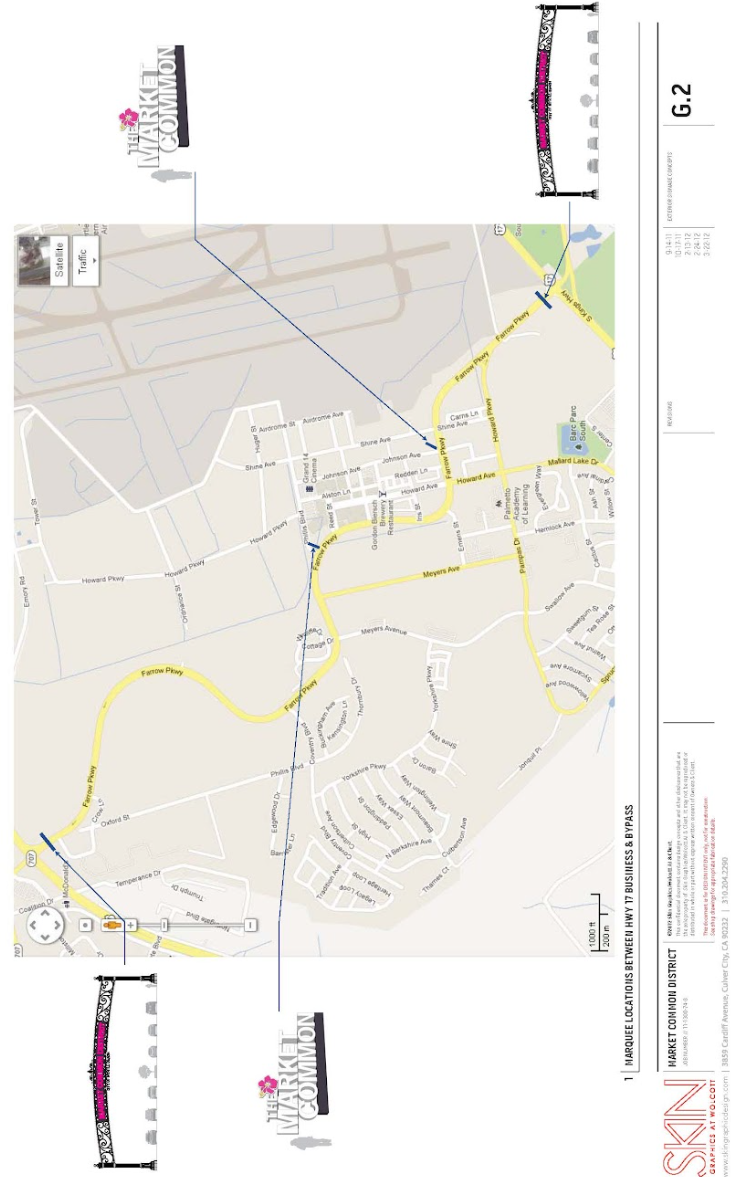
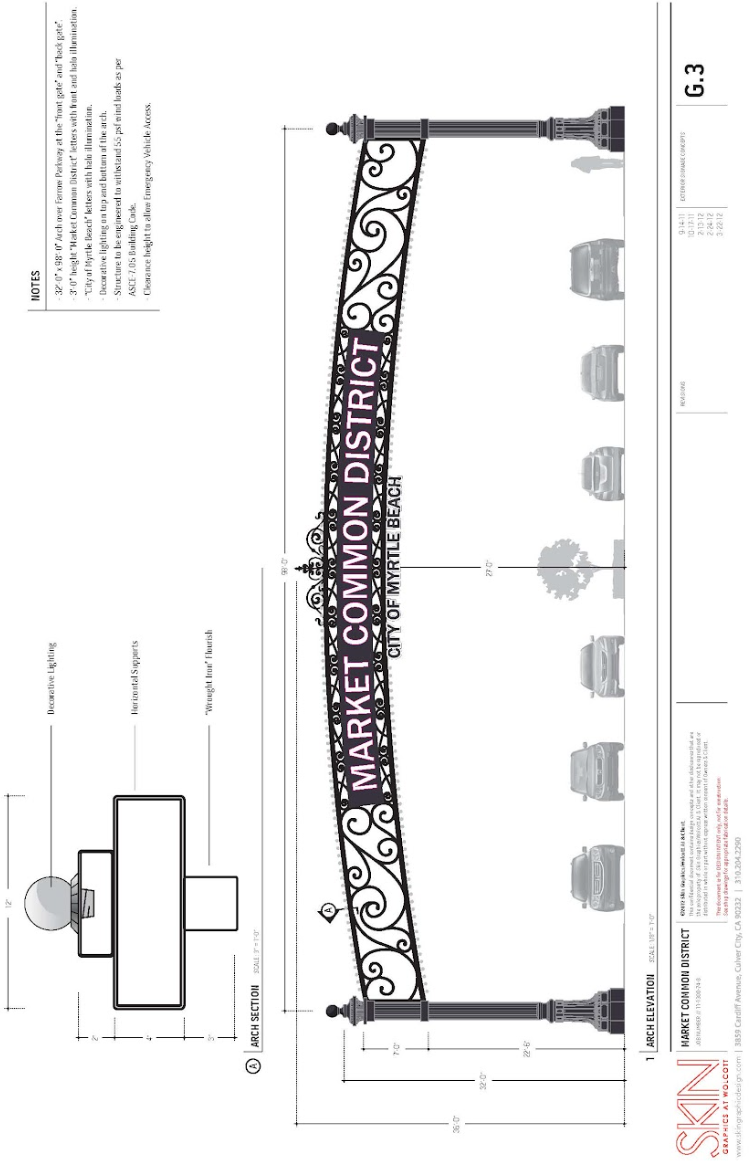
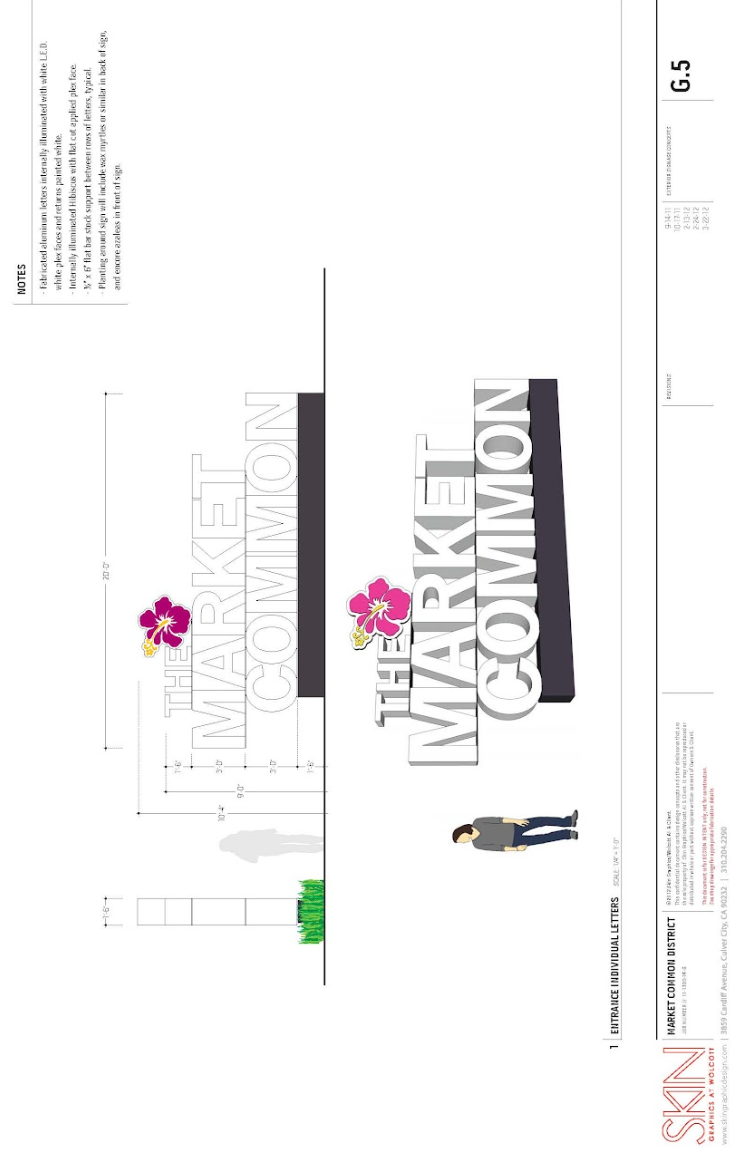
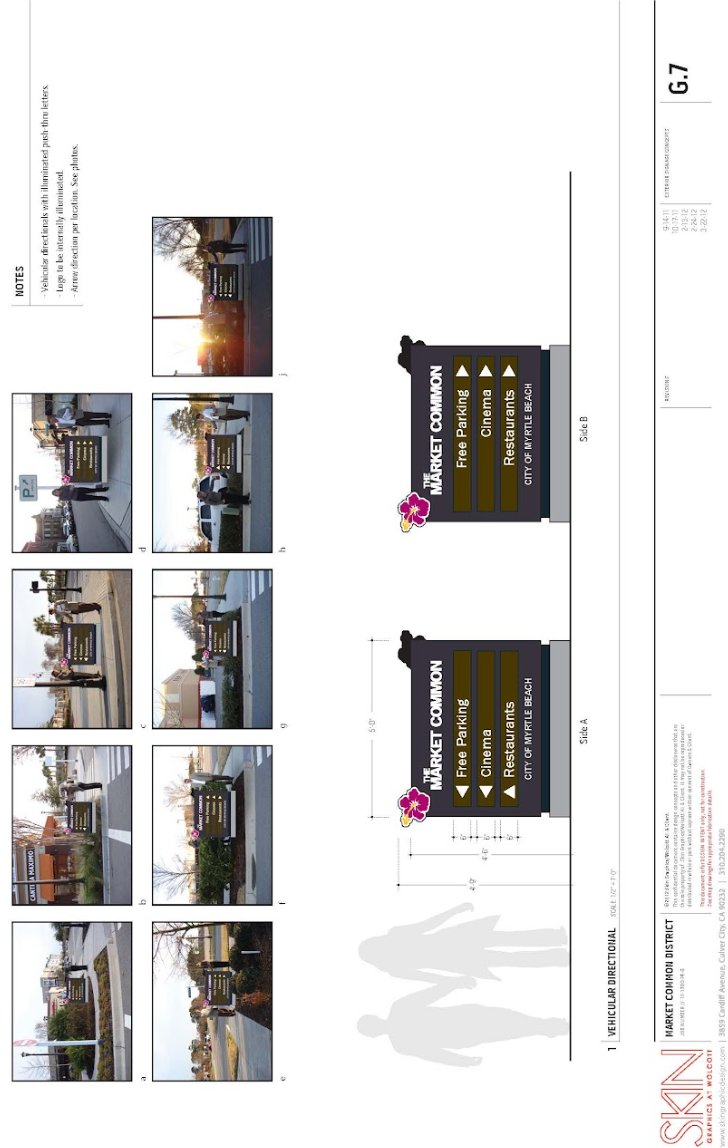
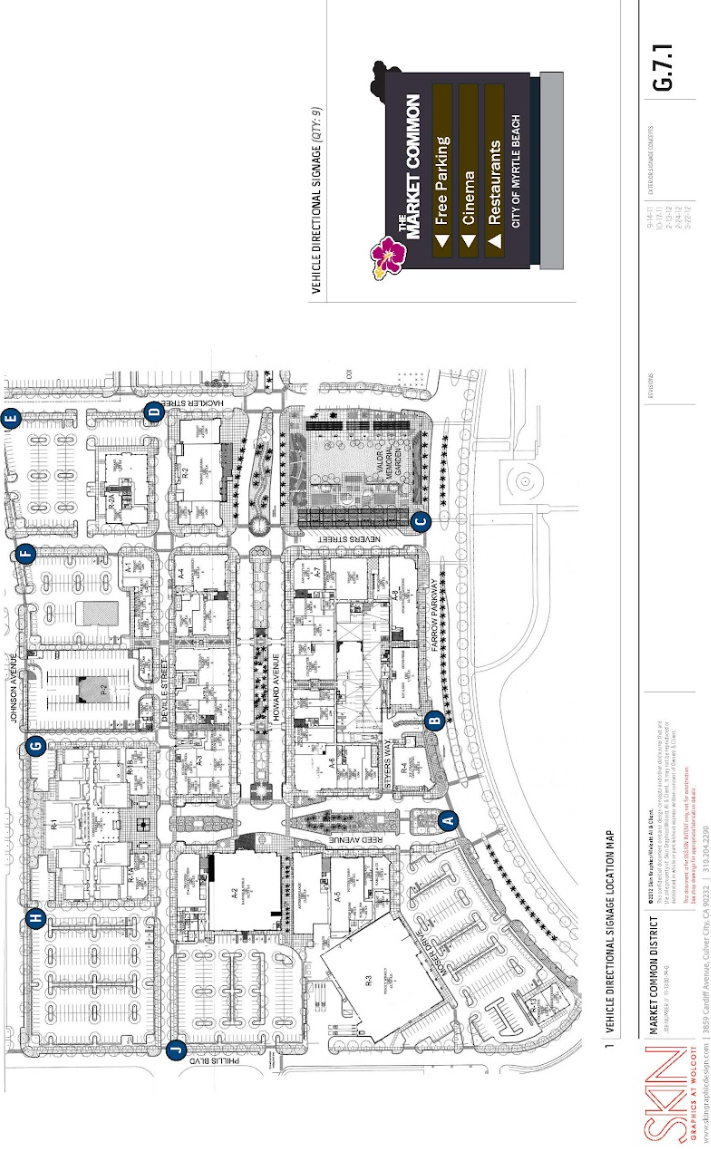
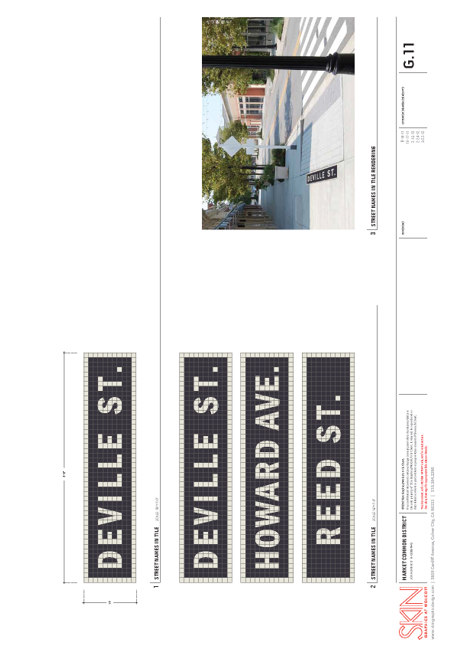
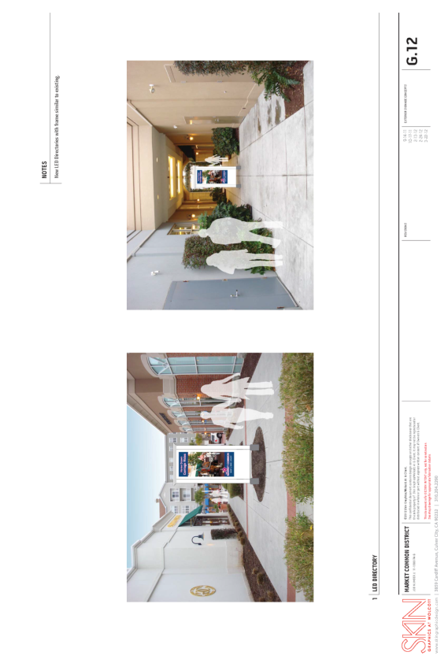
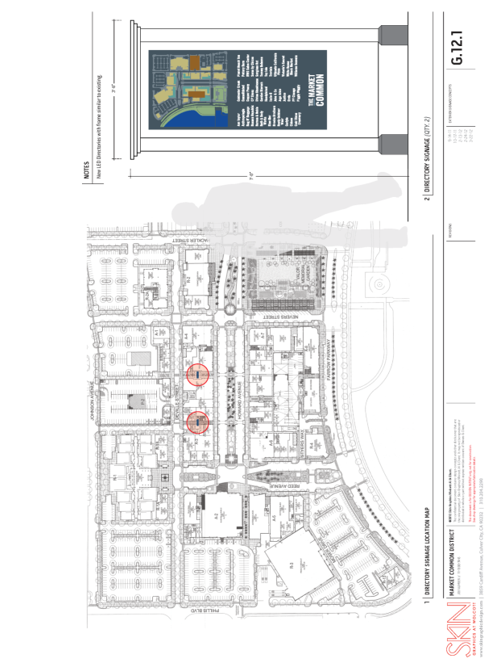
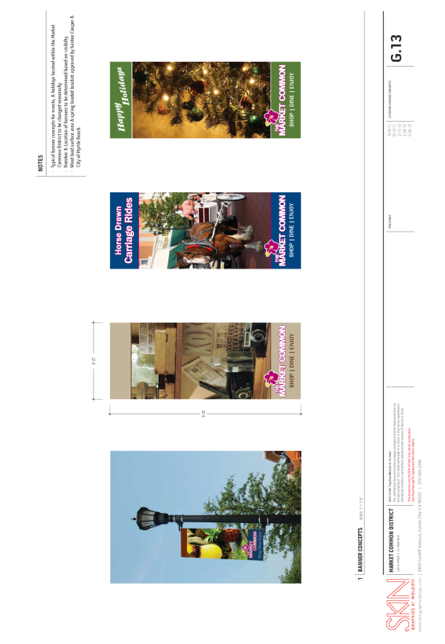
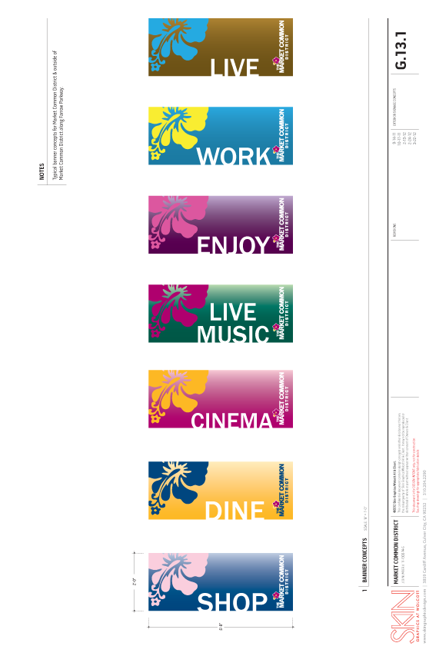
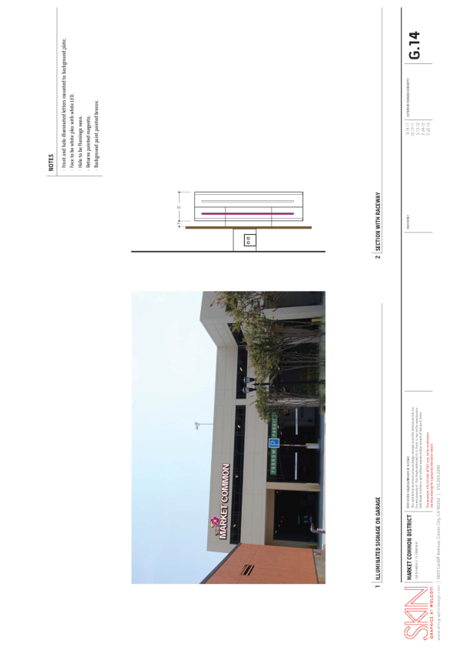
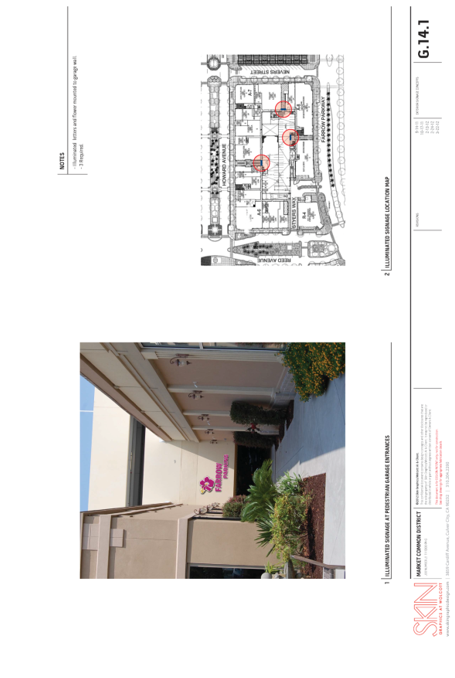
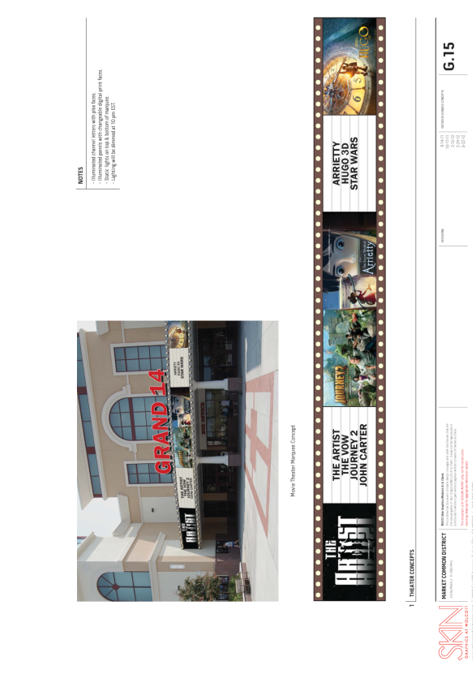
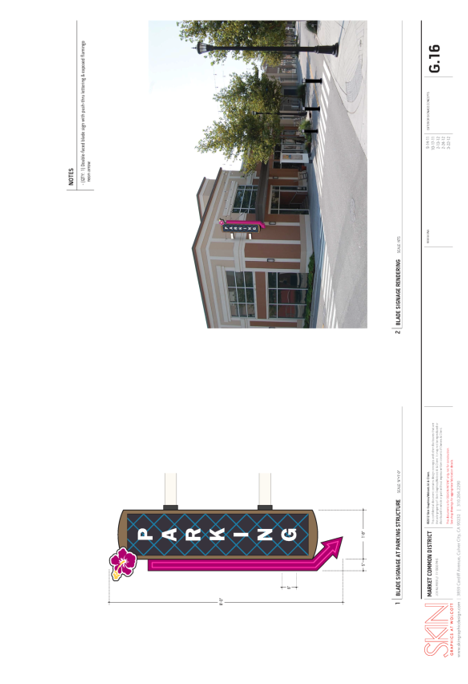
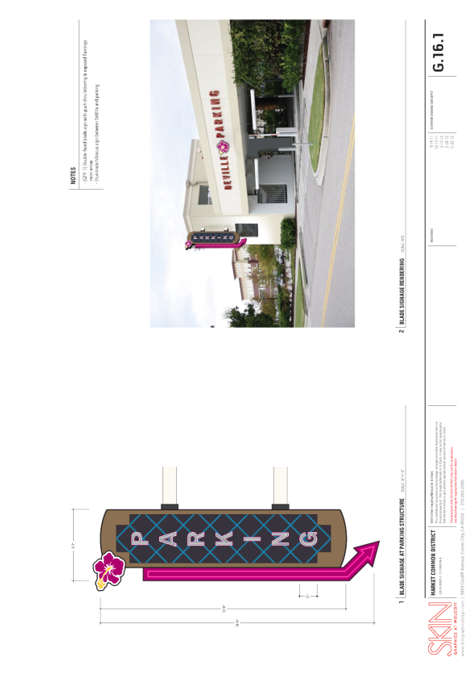
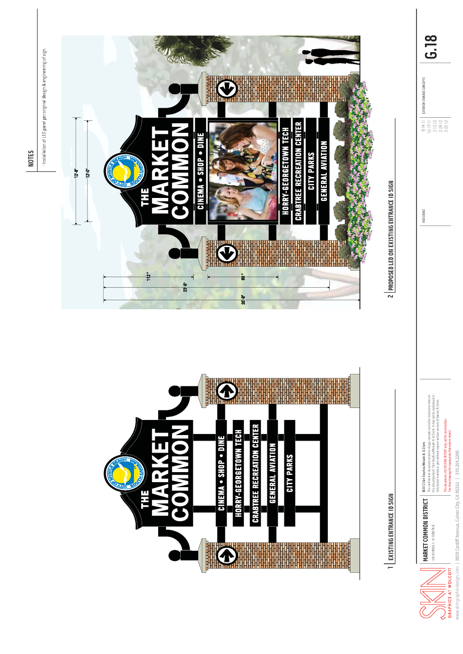
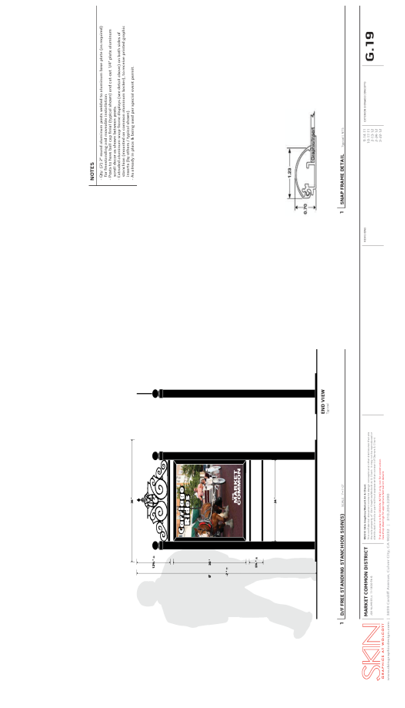
805.L.
Signs Permitted in Special Sign Districts. In order to allow greater flexibility yet careful review of the signage of large comprehensively designed projects, City Council may establish by ordinance special sign districts for major development proposals encompassing a contiguous tract of land at least five acres in size, which is under the control of a single owner, partnership or corporation. Such ordinance shall specify the sign restrictions pertaining to that special sign district and shall supersede the restrictions of section 805 - On-Premises Sign Regulations by Zoning District.
805.M.
Signs Permitted in Monument Sign Overlay Districts.
1.
Purpose. Overlay zones are applicable where there is a special public interest in a particular geographic area that does not coincide with the primary zoning district boundaries. The purpose of the monument sign overlay districts is to allow on-premise freestanding signs appropriate to the aesthetic character of the specific corridor in a controlled manner so as to promote highway safety, the uniform identification of establishments, the welfare and comfort of travelers and to provide a good community appearance which is deemed vital to tourism and to the continued economic attractiveness of the City.
2.
Application. The monument sign overlay district provides supplemental sign regulations. The monument sign overlay districts extend 40 feet from the specified corridor right-of-way and regulations are applicable to on-premise freestanding signs directed to the specified corridor. All signs shall be of a monument style and are limited in their entirety by the height and size restriction listed below for each specific corridor overlay sign district.
3.
Monument Sign Overlay Districts and Requirements.
4.
Number of signs permitted. One monument sign allowed per lot provided the sign shall be located no closer than ten feet to any property line, except for 29th Ave. N. between Kings Highway and Oak Street where they shall be no closer than five feet. Signs shall be no closer than 100 feet from any other monument sign on adjacent property, except where existing platted property lines would prevent such spacing.
805.N.
Signs Permitted in Entertainment/Amusement Concentration Overlay Districts.
1.
Purpose. Overlay zones are applicable where there is a special public interest in a particular geographic area that does not coincide with the primary zoning district boundaries. The purpose of the Entertainment/Amusement Concentration overlay districts is to allow on-premise Changeable electronic variable message sign (CEVMS) signs appropriate to the aesthetic character of the specific corridor in a controlled manner so as to promote the entertainment and amusement character of the area, provide for the uniform identification of establishments with the goods and services offered for entertainment and amusement, the welfare and comfort of travelers and to provide a good community appearance which is deemed vital to tourism and to the continued economic attractiveness of the city.
2.
Application. The entertainment/amusement concentration sign overlay district provides supplemental sign regulations. The sign overlay districts applies to the lots abutting on public streets and alleys in the identified corridor, and only as on-premise signage. All signs are limited by the height and size restriction listed below for each specific corridor overlay sign district. No new off-premises signage, as defined in Appendix A, is permitted in the overlay.
3.
Entertainment/Amusement Concentration Overlay Districts.
805.O.
Signs Permitted in the Broadway Entertainment District.
1.
Purpose: This special sign district is established to accommodate the signage needs of the large entertainment district known as Broadway Entertainment District whose diverse land uses are of such magnitude that existing sign codes cannot accommodate them. The boundaries of the sign district are shown on the attached Exhibit "A".
2.
Methods Of Dimensional Calculation, Definitions, Procedures, And Regulations:
a.
Sign Area - The smallest possible square footage area which can be enclosed within two (2) rectangles per sign.
b.
Other Sign Regulations - Unless otherwise stated in this Special Sign District, all applicable portions of Section 805.J shall apply and be enforced.
c.
Building - Building shall mean each free standing structure. In the event of multi-tenant buildings, building shall refer the each individual tenant space as a separate building for calculation purposes.
d.
Building Structure - Building Structure shall mean each freestanding structure. In the event of a multi-tenant building, Building Structure shall mean the overall building structure for freestanding business identification sign purposes.
e.
Main Corridor Streets - Highway 17 By-Pass, 21 st Ave North, 29 th Ave North, Robert Grissom Parkway, Oleander Drive, Oak Street, and Burroughs & Chapin Blvd.
f.
Main Attractions - A building or complex meeting one of the following criteria:
i.
Hotel and Convention Center with more than 100,000 SF of convention space
ii.
Sports Complex or Stadium with more than 5,000 Seats or larger than 75,000 SF
iii.
Retail and Entertainment Complex with more than 400,000 SF
iv.
Concert Venue with a capacity of 7,500
3.
Signs Facing Main Corridor Streets
a.
Primary Identification Signs for Main Attractions on Highway 17 By-Pass- Signs may be freestanding, single or double faced, back to back or "V", illuminated as desired with an allowable height up to 55 feet. These signs shall be subject to a minimum separation of 750 feet and the same side of the corridor and must be setback at least 10 feet from the right-of-way. CEVM Display with animation shall be allowed.
b.
Primary Identification Signs for Main Attractions Located on Main Corridor Streets other than Highway 17 By-Pass - One (1) sign per main attraction per Main Corridor. Signs may be freestanding, single or double faced, back to back or "V", illuminated as desired with an allowable height up to 30 feet and a maximum square footage up to 300 square feet. Sign shall be setback at least 10 feet from the right-of-way. CEVM Display with animation shall be allowed.
c.
Secondary Identification Signs for Main Attractions Located along 21 st Ave North, 29 th Ave North, and Robert Grissom Parkway - Signs may be freestanding, single or double faced, back to back or "V", illuminated as desired with an allowable height up to 12 feet and a maximum square footage up to 120 square feet. Sign shall be setback at least 10 feet from the right-of-way. CEVM Display with animation shall be allowed
d.
Entrance Identification Signs for Main Attractions - One (1) Sign per vehicular entrance with a minimum setback of 10 feet from the public right-of-way. Each sign shall be limited to a maximum height up to 15 feet and a size up to 100 square feet. Each sign may be freestanding, single or double faced, back to back or "V" and illuminated as desired. CEVM Display with animation shall be allowed as long as the CEVM area is limited to 75% of the total approved sign area.
e.
Freestanding Signs for Businesses other than Main Attractions - Each business with a minimum of 100 feet of frontage on any of the roads other than Celebrity Circle shall be allowed one (1) freestanding sign per Building Structure. Each sign shall be setback a minimum of 10 feet from the public right-of-way. Each sign shall be limited to a maximum height up to 25 feet and a size up to 250 square feet. Each sign may be freestanding, single or double faced, back to back or "V" and illuminated as desired. CEVM Display with animation shall be allowed as long as the CEVM area is limited to 75% of the total approved sign area.
f.
Freestanding Signs for Businesses Within Main Attractions - Signs shall be setback at least 300 feet from a Main Corridor Street. Each sign shall be limited to a maximum height up to 40 feet. CEVM Display with animation shall be allowed as long as the CEVM area is limited to 75% of the total approved sign area.
g.
Wall Mounted Signs-
i.
Buildings within 300 feet of a Main Corridor Street - Each Building shall be permitted a maximum sign area of up to twenty percent (20%) of wall area for the side of the building on which the signs are Located. There shall be no Limit to the number of signs.
ii.
Building more than 300 feet from a Main Corridor Street - To allow for maximum design flexibility and enhancement of the entertainment experience within the Main Attractions there shall be no limit on the number or size of the wall signage. Signage may be located above the roof line or on the roof top as long as it is located adjacent to an interior facing wall. CEVM displays with animation are allowed.
h.
Directional Signage - Directional signage shall be allowed within the right-of-way as long as it is setback 5 feet from the back of curb. Each sign shall be Limited to ten feet in height with a maximum area of forty (40) square feet. Any Directional Signage more than 75 feet from a Main Corridor Street shall not be subject to Article 6Community Appearance Board.
i.
Icon Sign - This shall include a sign attached to an iconic feature or a freestanding sign located within the common areas of the Main Attractions. These signs shall be allowed in the cross-hatched areas shown on the attached Exhibit "A-1". These signs shall not be subject to Article 6Community Appearance Board if they are Less than 35 feet in height. CEVM display with animation is allowed. These signs shall only be allowed in the cross-hatched areas shown on the attached Exhibit "A-1".
4.
Signs Prohibited In The Special Sign District: Off-premise directional signs to businesses outside of the district boundaries.
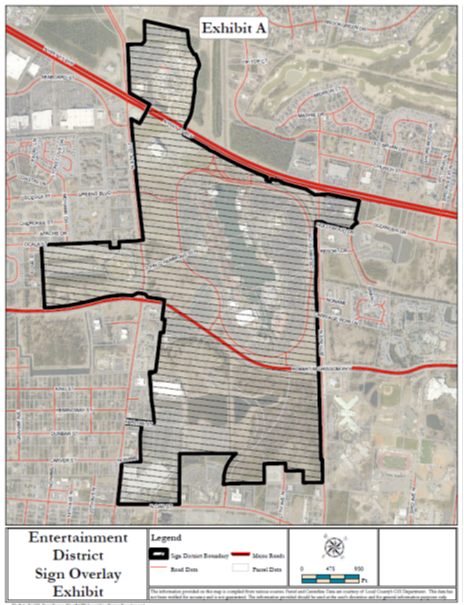
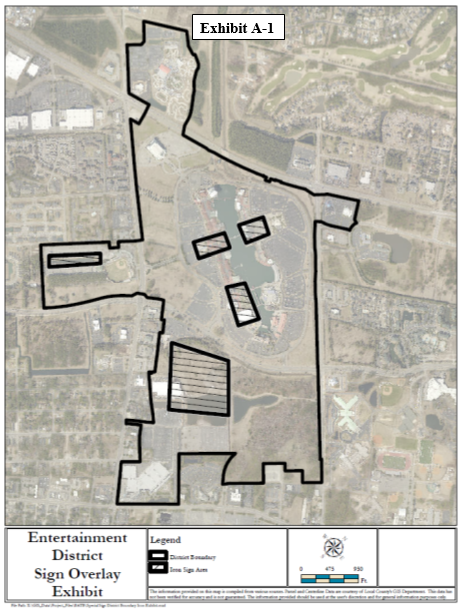
805.P.
Signs Permitted in the Grand Strand Medical Center District.
1.
Purpose: This special sign district is established to accommodate the signage needs of the large medical complex known as Grand Strand Medical Center whose land uses are of such magnitude that existing sign codes cannot accommodate them. The boundaries of the sign district are shown on the attached Exhibit "A".
805.P Exhibit A Grand Strand Medical Center Property Boundary
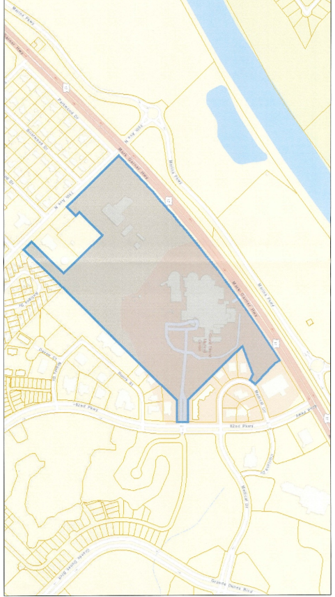
2.
Methods Of Dimensional Calculation, Definitions, Procedures, And Regulations:
a.
Unless otherwise stated in this Special Sign District, all applicable portions of Sections 803-General Provisions and 805.D-Signs Permitted In the Medical/Professional (MP) District shall apply and be enforced.
b.
Unless otherwise stated in this Special Sign District. all freestanding signs shall be of monument or multipole design.
3.
Signs Facing Public Streets
a.
One (1) Identification Sign located on 82"d Parkway. Sign may be freestanding, single or double faced, back to back, illuminated as desired with an allowable height up to 10 feet and a maximum square footage of 40 square feet. Sign shall be setback at least 10 feet from the right-of-way.
b.
Two (2) Identification Signs located on 79th Avenue N. Signs may be freestanding, single or double-faced, back to back, illuminated as desired with an allowable height up to 7 feet and a maximum square footage of 20 square feet. These signs shall be subject to a minimum separation of 350 feet and must be setback at least 10 feet from the right-of-way.
c.
One (1) Primary Identification/Directional Sign for the hospital located on Highway 17. Sign may be freestanding, single or double faced, back to back, illuminated as desired with an allowable height up to 30 feet and a maximum square footage of 275 square feet. Sign shall be setback at least 10 feet from the right-of-way. CEVM Display with animation shall be allowed.
d.
One (1) Campus Identification Sign located on Highway 17 near 79 th Avenue N. Sign may be freestanding, single or double faced, back to back, illuminated as desired with an allowable height up to 7 feet and a maximum square footage of 90 square feet. Sign shall be setback at least 10 feet from the right-of-way.
4.
Interior Signs
a.
Wall mounted signs visible from the exterior of the district shall be no larger than 285 square feet.
b.
Three (3) flags no larger than 12' X 8' on poles no greater than 35' in height. No flag shall be tattered or torn, nor faded to the extent the pattern or colors become indiscernible.
c.
Interior Directional Signs as needed. Signs may be freestanding, single or double faced, back to back, illuminated as desired with an allowable height up to 7 feet and a maximum square footage up to 40 square feet.
d.
Interior Facility Identification Signs as needed. Signs may be freestanding, single or double faced, back to back, illuminated as desired with an allowable height up to 4 feet and a maximum square footage of 7 square feet.
e.
Parking Lot Locator Signs as needed. Signs may be 4-faced with a maximum square footage of 9 square feet per face, and shall be attached to light poles.
5.
Signs Prohibited in The Special Sign District: Off-premise directional signs to businesses outside of the district boundaries
805.Q.
Signs Permitted in the Arts & Innovation (A&I) District: The intent of the Arts and Innovation District is to create and sustain a walkable mixed-use urban environment that will serve as the hub of artistic, cultural and civic life in the traditional core of downtown Myrtle Beach. The goal is to have signage that is edgy and new without creating visual clutter. Most buildings are designed with a defined sign space. The location of appropriately sized signs in these spaces is strongly encouraged. Signs on awning flaps and store display windows are generally appropriate as well. Acceptable sign placement does not obstruct architectural features and windows.
1.
All signs permitted in section 804.B - Signs Exempt from Permit Procedures, subject to the limitations and requirements thereof, provided, however, that signs listed under 804.B.3 - Single Family Residential Signs are prohibited.
2.
The total allowed sign area for all signs on a lot is 3 square feet per 1 foot of principal street frontage, not to exceed 300 square feet. This sign allowance includes the sum of all sign areas, whether freestanding, window, wall mounted or projecting. The total allowed signage may be placed specifically on the front or shared amongst any and all sides.
3.
Changeable copy signs are permitted, including CEVMs as regulated in section 808.
4.
Temporary Portable A-Frame or Sandwich Board Type Signs as permitted in Section 810.
5.
Temporary Construction Fence Scrim. An active construction site shall be permitted a construction fence scrim to screen the construction area and to control debris and dust. The scrim shall not exceed the height and length of the construction fence, and shall be removed with the construction fence. The scrim may contain graphics designed to inform the public as to the nature of the construction project. The scrim may also, in lieu of the construction sign permitted in 804.B.5 - Construction Signs, contain a maximum of 32 square feet of text per construction site identifying the firms involved with, the character of, and the future occupants of the construction site.
Section 806. - Outdoor Advertising Signs or Billboards and Off-Premises Directional Signs
806.A.
Outdoor advertising signs constitute a separate use. Outdoor advertising signs, also commonly referred to as billboards or poster panels, which advertise products or businesses not connected with the site or building on which they are located, are deemed by this appendix to constitute a separate use. Although they are subject to all of the applicable provisions of sections 801 - Purpose and Intent, 802 - Scope, 803 - General Provisions, 804 - Permit Procedures, 807 - Construction of Outdoor Advertising Signs or Billboards Prohibited, 809 - Nonconforming Signs, and Article 2 - Definitions of this appendix, they are further restricted by this section.
806.B.
Location. The locations of such advertising displays are limited to those areas and sites which are consistent with the desired overall character of the City and with the information needs of tourists, businessmen and residents. Such signs shall be allowed only as follows:
1.
Outdoor advertising signs shall be located only in Mixed Use-Medium Density (MU-M), Highway Commercial (HC1 and HC2), and Wholesale/Manufacturing (WM) districts.
2.
Outdoor advertising signs shall be located only on lots abutting and oriented so as to be primarily visible from U.S. 501, U.S. 17, King's Highway (U.S. 17 Business), Third Avenue South, or the portion of Seaboard Street that is within the Wholesale/Manufacturing (WM) zoning district, and shall not be located along or primarily visible from any other street or highway. Signs located along Seaboard Street shall be at least 500 feet from the right-of-way for U.S. 501 and at least 350 feet from the right-of-way for Mr. Joe White Avenue.
3.
No portion of any outdoor advertising signs shall be located any nearer than:
a.
Two hundred feet measured radially from any church or religious institution, cemetery, public park, public school or Single—family (R) district.
b.
Seven hundred fifty feet, measured radially, from another outdoor advertising sign (exclusive of off-premises directional signs).
806.C.
Area. No outdoor advertising sign shall exceed 400 square feet in area. Additionally, cutouts, in the plane of the sign face, may be added to the allowed sign face area provided they are in total no larger than 15 percent of the area of the primary sign face and do not violate any other provision of this Code.
806.D.
Number. No outdoor advertising sign structure shall contain more than one sign per facing, or more than three facings per location.
806.E.
Height. The height of any outdoor advertising sign erected on or after October 10, 1995, shall not exceed 45 feet and must maintain a minimum clearance of 25 feet above ground level, with the exception that cutouts, which are in total no more than 15 percent of the area of the actual sign face and in the plane of the sign face are permitted provided they do not project more than five feet above, to the side, or beneath the actual sign face and provided they do not violate any other provision of this Code. As an exception however, the minimum clearance of an outdoor advertising sign may be reduced to eight feet above ground level, including cutouts, if the sign is not within 200 feet of any structure on the same side of the street provided, that the sign shall be made to comply with the minimum clearance of 25 feet above ground level within 90 days of notification by the zoning administrator of issuance of a certificate of occupancy for any structure on the same side of the highway within 200 feet of the outdoor advertising sign.
806.F.
Setback. All outdoor advertising signs shall be required to set back from the street right-of-way line a distance of at least ten feet. Such signs shall be erected so as not to obstruct or impair driver vision at ingress-egress points and intersections. No such sign, or any portion thereof, shall be located in any required front yard.
Section 807. - Construction of Outdoor Advertising Signs or Billboards Prohibited
807.A.
Prohibition. Notwithstanding any contradictory provision in section 807 - Construction of Outdoor Advertising Signs or Billboards Prohibited, no outdoor advertising sign or billboard, as defined in section 203 - Definitions, shall be permitted to be constructed at any location within the City; provided however, permits may be issued under the Digital Billboard Exchange Program as set forth herein. The implementation of any agreement arising from litigation regarding the removal, repair or acceptance of federal and/or state protection of certain billboards shall in no way affect the prohibition contained herein regarding construction of new billboards or the amortization of non-conforming billboards as they are annexed into the City. Should an agreement containing terms and conditions regarding certain identified billboards be authorized by Council as a resolution of a disputed claim, that agreement shall have the force of law in regards only to those identified billboards, and the agreement shall be entered into the public record maintained by the City Clerk.
807.B.
Effect on Existing Signs: Section ineffective to modify amortization, restriction or limitation on existing billboards. Any outdoor advertising sign or billboard legally existing in the City on February 10, 1998, or for which a valid permit for construction has been issued by the City prior to such date, shall continue to be regulated by the provisions of this Article 8 - Sign Regulations which regulates the location, maintenance, repair, and removal of such signs. Nothing in this 807 - Construction of Outdoor Advertising Signs or Billboards Prohibited shall modify any established amortization schedule, restriction, or limitation which would have applied to existing advertising signs or billboards in the absence of this section.
807.C.
Digital Billboard Exchange Program: Off-Premise Digital Billboard Signs.
1.
Purpose. The purpose of this Section is to provide standards and restrictions for the exchange of traditional billboard signs for Off-Premise Digital Billboard Signs that are pursuant to the interest of the citizens of the City in the visual aesthetics of the City and the safety of vehicular travel. These standards and restrictions maintain, support and protect the aesthetic character of the City by providing for the removal of certain traditional billboard signs, as well as protect the safety of the motoring public, by limiting the locations of, and specifications for, off-premise digital billboard signs and generally further the public interest of the citizens.
2.
Definitions for the purposes of the Digital Billboard Exchange Program:
a.
Billboard. A sign identifying/advertising and/or directing the public to a business or merchandise or service or institution or residential area or entertainment which is located, sold, rented, leased, produced, manufactured and/or furnished at a place other than the real property on which said sign is located. Such signs are also known as off-premises or outdoor advertising display signs. A billboard may also be known as a freestanding sign.
b.
Designated corridors. U.S. Highways 17 Business (commonly known as Kings Highway, U. S. Highway 17 Bypass and U. S. Highway 501.
c.
Off-premises sign. A sign identifying/advertising and/or directing the public to a business or merchandise or service or institution or residential area or entertainment which is located, sold, rented, leased, produced, manufactured and/or furnished at a place other than the real property on which said sign is located that identifies or communicates a message related to an activity conducted, a service rendered, or a commodity sold, which is not the primary activity, service or commodity provided on the premises where the sign is located.
d.
On-premises sign A sign identifying/advertising and/or directing the public to a business or merchandise or service or institution or residential area or entertainment which is located, sold, rented, leased, produced, manufactured and/or furnished on the real property on which said sign is located.
e.
Off-premise digital billboard sign: a billboard sign that changes the "static" message or copy on the sign by electronic means, or a CEVMS.
f.
Premises means the integrated land area on which the sign is located including all contiguous land areas under ownership of, or lease arrangement with the sign owner, or the business owner.
g.
Structure or Supporting Structure: anything built, constructed or erected or any piece or work artificially built-upon composed of parts joined together in some definite manner including, but not limited to, buildings of any kind, utility poles, fences, fire-hydrants, street light standards, traffic light standards, traffic directional sign standards or any other thing to which a sign, may be placed, affixed, erected, painted, posted, maintained or displayed.
h.
Traditional Billboard: a billboard sign that does not display messages by electronic means but instead utilizes materials such as painted, vinyl and paper substrates. Traditional billboard signs include tri-vision, or multi-vision signs that do not display messages electronically and utilize the same or similar materials.
3.
Process.
a.
No off-premise digital billboard signs shall be allowed in the City except as provided in this Section. An application may be submitted for a Zoning Administrator's determination of compliance with law for an off-premise digital billboard sign exchange under this program, either for removal and banking of the two removals for a later conversion, or for simultaneous removal and conversion. There is no time limit to the banking of removed structures. The Administrator shall review the ordinance and application for compliance and shall issue his opinion on compliance not later than seven (7) days after application, with an adverse determination subject to appeal as provided by law. Not later than thirty (30) days after the Administrators determination of compliance, the sign owner must apply for building permits for either removal of two structures with banking to convert at a later date, or for permits to simultaneously remove and convert the off premise digital billboard sign on the identified premises. Not later than seven (7) days from the date of permit application, the permit must be processed for the construction of the off premise digital billboard sign, and all related demolition permits if any. Not later than six (6) months after permit award, the demolition and banking, or the demolition and conversion must be completed, as evidenced by the Administrator's issuance of a determination of completion.
b.
Application and permit fees shall be in accordance with applicable law. City may inspect off-premise digital billboard signs at any time to ensure compliance with the permit and City Code.
c.
Conversion regulations and formulas:
i.
All conversion alternatives are limited to 400 square feet of sign face per side, depending on the current sign face configuration (single or double faced), and no more than one sign face per side. No roof top traditional billboard may be converted into CEMVS. Except for the special circumstances as provided for herein; no conversion site may be located on a site on which a traditional billboard existed and was removed for any reason. When the proposed conversion site is eligible to have installed a double face CEMVS sign, upon removal of the traditional billboard structure and supporting structure, the owner of that sign may elect to install only one CEMVS sign face, and delay installation of both sides of the conversion without the loss of the right to install the second CEVMS sign face at a later date.
ii.
(OPTION 1) After removing two sign structures and supporting sign structures from the same designated corridor, the owner of existing traditional billboard signs shall be eligible to receive a building permit to convert one (1) other current sign location on that designated corridor in conformance with law into a double face or single face CEVMS, depending on the sign faces on the board to be converted. Example: remove two billboards from Highway 501, and convert an existing billboard on 501 into a CEMVS. If the proposed conversion is double faced, with 400 square feet on each side, then the conversion CEMVS can be double faced, with 400 square feet on each side, but no conversion can have more than one face per side or be on a rooftop.
iii.
(OPTION 2) After removing two sign structures and supporting sign structures from any of the three designated corridors, the owner of existing traditional, billboard signs shall be eligible to receive a building permit to convert one (1) other current sign location on any designated corridor in conformance with state law into a double face or single face CEVMS, depending on the sign faces on the board to be converted.. Example: remove one billboard from Highway 501, and one from King's Highway, and convert an existing billboard on either 501, Kings or 17 Bypass into a CEMVS. If the proposed conversion is double faced, with 400 square feet on each side, then the conversion CEMVS can be double faced, with 400 square feet on each side, but no conversion can have more than one face per side or be on a rooftop.
iv.
After removing any two sign structures and supporting sign structures within three hundred twenty five (325) feet of each other on the same tax map number lot, which displays not less than eight (8) faces from a designated corridor, the owner of existing traditional billboard signs shall be eligible to receive a building permit to construct on that same tax map number lot one (1) double face or single face CEVMS billboard. Example: remove two stacked double faced billboards from either Highway 501,Kings or 17 Bypass and convert an existing billboard on that same site into a CEMVS. The conversion can be double faced, up to 400 square feet, but no conversion can have more than one face per side or be on a rooftop.
v.
After removing three sign structures and supporting sign structures from a non-designated corridor, the owner of an existing traditional billboard sign shall be eligible to receive a building permit to convert one (1) other current sign location on a designated corridor in conformance with state law into a double face or single face CEVMS, depending on the sign faces on the board to be converted.. Example: remove three billboard structures from any other location other than Highway 501, Kings or 17 Bypass, and convert an existing billboard on either 501, Kings or 17 Bypass into a CEMVS. If the proposed conversion is double faced, with 400 square feet on each side, then the conversion CEMVS can be double faced, with 400 square feet on each side, but no conversion can have more than one face per side or be on a rooftop.
vi.
After removing any single roof top traditional billboard, the owner of an existing traditional billboard sign shall be eligible to receive a building permit to convert one (1) other current sign location on a designated corridor in conformance with state law into a double face or single face CEVMS, depending on the sign faces on the board to be converted.. Example: remove any rooftop billboards anywhere in the City, and convert an existing billboard on 501, Kings or 17 Bypass into a CEMVS. If the proposed conversion is double faced, with 400 square feet on each side, then the conversion CEMVS can be double faced, with 400 square feet on each side, but no conversion can have more than one face per side or be on a rooftop.
d.
All off-premise digital billboard signs shall be subject to this Section and all other relevant provisions of City Code and applicable state and federal law.
e.
Any off-premise digital billboard sign permitted under this Section, whether new or converted, must be located on a monopole structure, with no more than one sign face per side.
4.
Off-premise digital billboard signs shall comply with the following requirements:
a.
The message shall not advertise a principal or accessory use located on the premises of the sign and shall not advertise any merchandise, services, activities, or entertainment sold, produced, manufactured, or furnished on said premises.
b.
No display of flashing or rotating lighting or the varying of light intensity during the static display.
c.
Displays to be static, and no display less than six (6) seconds in duration.
d.
Display changes will occur in one (1) second or less.
5.
Owner may return a digital billboard to a static billboard.
Section 808. - Changeable Electronic Variable Message Sign (CEVMS).
808.A.
CEVMS are permitted in Amusement (A) district, Entertainment/Amusement Concentration Overlay District, Entertainment (E) district, Downtown Commercial (C7 and C8) districts, Highway Commercial (HC1 and HC2) districtc, Urban Village (C6) district, Wholesale/Manufacturing (WM) district, Light Manufacturing (LM) district, and Mixed Use (MU-M and MU-H) districts (changeable copy substitution permissive zones).
808.B.
CEVMS are permitted as billboard conversions of existing non-CEVMS billboards to CEVMS, pursuant to section 807.C - Digital Billboard Exchange Program. The structures to be removed must be within the City limits, provided that the conversion shall conform to current building code regulations.
808.C.
CEVMS shall conform to following:
1.
The sign may not have an intensity or brilliance not as to impair the vision of a motor vehicle driver with average eyesight or to otherwise interfere with the driver's operation of a motor vehicle, or to interfere with the effectiveness of an official traffic sign, device, or signal;
2.
The sign may not exceed the maximum brightness standards: Dawn to dusk: not more than 7500 nits (candelas per square meter); Dusk to dawn: no greater than 750 nits, as measured from the sign's face at maximum brightness;
3.
The sign shall have an automatic dimmer control incorporating a photo cell mechanism to produce a distinct illumination change from a higher illumination level to a lower level for the time period between one half-hour before sunset and one half-hour after sunrise;
4.
The sign shall have a default mechanism that will either stop the sign in one position, or turn the sign off should a malfunction occur.
808.D.
Types of display, animated or static display: Notwithstanding any other provision of law, CEVMS animation displays which depict running video or action are allowed only in the Amusement (A) district, Entertainment/Amusement Conservation Overlay District, Entertainment (E) district and on certain governmental directional, informational or promotional signs approved by City Council as civic signs.
Section 809. - Nonconforming Signs.
809.A.
Intent. Signs that were in existence prior to August 7, 1979, which do not conform to the provisions of this Ordinance are declared nonconforming. It is the intent of this section to recognize that the eventual elimination, as expeditiously and fairly as possible, of nonconforming signs is as much a subject of health, safety and welfare as is the prohibition of new signs that would violate the provisions of this ordinance. It is also the intent of this section that any elimination of nonconforming signs shall be effected so as to avoid any unreasonable invasion of established property rights.
809.B.
General non-conforming sign provisions. Subject to the exceptions and amortization schedule hereinafter set forth, any nonconforming sign which was erected prior to August 7, 1979, may be continued in operation and maintenance after the effective date of this Ordinance, provided that nonconforming signs shall not be:
1.
Changed with another nonconforming sign.
2.
Structurally altered so as to extend their useful life.
3.
Expanded.
4.
Relocated.
5.
Reestablished after damage or destruction as set forth in section 803.N.3 - Structural Support Of A Sign Damaged To The Extent That It Has Failed.
6.
Modified in any way that would increase the degree of nonconformity of such sign.
Except in the case of item 5 - Reestablished After Damage Or Destruction hereinabove, this shall not prevent repairing or restoring to a safe condition any part of a sign or sign structure or performing normal maintenance operations on a sign or sign structure.
809.C.
Amortization of nonconforming signs.
1.
Amortization for all sign types commences on the effective date of this Ordinance or the date that the sign becomes non-conforming by annexation or zoning, whichever is later.
2.
On-premises Signs. Nonconforming on-premises signs or aggregate on-premises sign conditions shall be removed, changed, altered or otherwise made to conform according to the following schedule:
a.
Signs made nonconforming by rezoning initiated by the City: 6 years.
b.
Signs made nonconforming by rezoning requested by the property owner: 2 years.
c.
Signs made nonconforming by annexation into the City: 2 years. However, an owner, or lessee having been authorized by the owner to act as agent, may be granted, for one time only, an extension for non-conforming sign(s) to exist beyond the statutory amortization period provided the extension period shall not exceed one quarter (25 percent) of the statutory period and further provided that all of the following conditions are met:
i.
The lease was entered into prior to the effective date of this Ordinance;
ii.
The lease is duly executed and includes a date and time stamp indicating that it has been recorded in the office of the Register of Mesne Conveyance for Horry County.
iii.
Lease expiration, without renewal or extension consideration, shall occur within the following time periods: 12 months after the statutory amortization time for changeable copy signs; 15 months after statutory amortization time for building mounted signs; or 21 months after the statutory amortization time for freestanding signs.
iv.
The extension is granted personally to the petitioner only, with no assignment right of any kind.
v.
The extension has an expiration date equal to one quarter (25 percent) of the statutory period or the expiration date of the subject lease, whichever occurs first.
d.
All non-conforming signs on premises (excluding off-premises directional signs and billboards) must be brought into conformance with the provisions of Article 8 - Sign Regulations within 30 days if any of the following circumstances occur:
i.
The principal use of the premises is changed.
ii.
Any foundation addition to any of the existing buildings on the property is to be undertaken or if any modification/alteration costing more than 25 percent of the total county assessed tax value of all existing buildings for the entire property within the confines of set property lines is to be undertaken.
iii.
A permit is issued for the installation of any new sign on the premises. (This condition does not apply to a request for only a sign face change that does not require any sign cabinet or support modifications.)
3.
Billboards and Outdoor Advertising Signs. Nonconforming billboards or outdoor advertising signs or aggregate billboards or outdoor advertising sign conditions shall be removed, changed, altered or otherwise made to conform according to the following schedule:
a.
Signs made nonconforming by rezoning initiated by the City: 6 years.
b.
Signs made nonconforming by rezoning requested by the property owner: 2 years.
c.
Signs made nonconforming by annexation into the City: 2 years.
d.
Any sign that is or becomes nonconforming only because the zoning district within which it is located does not allow billboards shall be nonconforming, but exempt from the amortization provisions contained herein.
e.
In any case where inadequate spacing between signs is the reason two or more billboards or outdoor advertising signs are nonconforming, the billboard or outdoor advertising sign that was constructed first shall be removed. In the event it is not possible to determine the age of these nonconforming billboards or outdoor advertising signs, the billboard or outdoor advertising sign with the greatest degree of nonconformity shall be removed.
f.
Amortized billboards on certain highways. Notwithstanding any amortization provision to the contrary, the City may not remove or cause to be removed by means of amortization any lawfully erected billboards that were erected with the purpose of their message being read from the main-traveled way of an Interstate, the National Highway System or a federal aid primary road as defined Section 131, Title 23, United States Code or the South Carolina Highway Advertising Control Act, without paying just compensation unless such removal by amortization is authorized or ceases to be affected by Section 131, Title 23, United States Code or the South Carolina Highway Advertising Control Act.
4.
Abandonment or obsolescence as set forth in section 803.O - Obsolete And Abandoned Signs of a nonconforming sign shall terminate immediately the right to maintain such a sign.
5.
The right to maintain any nonconforming sign shall terminate and shall cease to exist whenever the sign structure is destroyed, or is damaged as described in section 803.N.3 - Structural Support Of A Sign Damaged To The Extent That It Has Failed, or becomes unsafe as set forth in section 803.N.1 - In Good Repair through 803.N.2 - Repair Or Removal.
6.
Signs made nonconforming as a result of a change of zoning district designation or annexation into the City after the effective date of this Ordinance shall be removed or modified so as to conform according to the amortization schedules established herein, but the initiation date of the schedules shall be the effective date of the change of zoning district designation or the annexation ordinance which brought the affected property into the City rather than that of the comprehensive sign ordinance. In addition to the amortization schedules defined in section 809.C - Amortization Of Nonconforming Signs, the following schedules shall apply to annexed properties:
a.
All existing signs not conforming to the restrictions of subsections 4 - Signs On The Beach, 6 - Circulars, Placards Throwaways, And Handbills, and 8 - Signs On Or Above The Roofline of section 803.P - Prohibited Signs, shall be removed within 90 days of the effective date of this Ordinance.
b.
All existing signs not conforming to the traffic hazards and sign illumination provisions of Article 8 - Sign Regulations shall be removed or have their electrical systems modified so as to come into conformance with Article 8 - Sign Regulations within six months of the effective date of annexation, provided however, that existing electronic message center displays shall be amortized according to the schedule established in section 809.C - Amortization Of Nonconforming Signs.
c.
All existing signs not conforming to the provisions of section 803.M - Occupation Of, Or Projection Into, Public Right-Of-Way, and obsolete and abandoned signs, shall be removed or modified to come into conformance with these subsections in accordance with the notification and other procedural requirements and time limitations specified herein. If not otherwise specified, a minimum of 30 days' notice shall be given after which time the sign shall have either been made conforming or else the penalty and corrective provisions of this Ordinance shall be invoked.
Section 810. - Designated Pedestrian Corridors and Districts.
810.A
Businesses within designated pedestrian corridors and districts, as set forth herein, are permitted to temporarily display a portable a-frame or sandwich board type sign during business hours without a sign permit or further administrative review.
1.
The terms 'A-Frame Sign,' and 'Sandwich Board Sign' shall mean a professionally manufactured sign of two sides that are hinged or strapped together that, when folded out, are capable of standing without additional support or attachment, and has a temporary use during business hours.
2.
One (1) professionally manufactured sign not exceeding two (2) feet in width and four (4) feet in height may be permitted within the sidewalk/grass strip of a public right of way or on private property in designated pedestrian corridors, as defined herein, provided the following requirements are met:
a.
The sign is located not more than 12 feet of the main entrance to the establishment it advertises, and may not infringe upon an abutting storefront;
b.
Placement of the sign allows a minimum of forty eight (48) inches of unobstructed sidewalk clearance between it and any building or other obstruction;
c.
The sign must be free-standing and shall not be affixed, chained, anchored, or otherwise secured to the ground or to any pole, parking meter, tree, tree grate, fire hydrant, railing, or other structure;
d.
The sign must be internally weighted so that it is stable and reasonably windproof;
e.
The sign is placed within the public right of way only during the hours of the establishment's operation, and removed when the business is closed;
f.
No sign shall be placed outdoors when winds make it unsafe to do so, or for the duration of a declared severe storm watch or warning, or a declared weather emergency;
g.
The design of the sign (which includes the color, lettering style, symbols and material) shall complement and be compatible with the design of the establishment's primary sign(s), abutting properties, and the general streetscape in the immediate vicinity of the establishment, and the sign shall not be manufactured with exposed sharp metal edges;
h.
Signs on the public right of way are considered an encroachment under Chapter 19, and when placed in the designated pedestrian ways shall be deemed granted without further board or commission review upon receipt of a hold harmless agreement and liability insurance naming the city as an additional insured, protecting the public from loss or liability are provided to the City Clerk and remains in effect.
i.
Vandalized, damaged or incomplete signs must not be displayed, as determined by a code enforcement officer.
810.B
Designated Pedestrian Corridors and Districts.
1.
The Market Common District streets including and bounded by Farrow Blvd., Phyllis and Johnson Avenue.
2.
Main Street beginning at the junction of Alder Street and ending at the junction of Kings Highway.
3.
Broadway Street beginning at the Junction of 9 th Avenue North and ending at Withers Swash.
4.
8 th Ave. North from Terminal Street/9 th Avenue North to Kings Highway.
5.
The south side of 9th Avenue North beginning at the junction with 8 th Avenue North and ending at the junction of Kings Highway.
6.
Oak Street beginning at the junction with 7 th Avenue North and ending at the junction of Broadway Street.
7.
The west side of Kings Highway beginning at the junction with 7 th Avenue North and ending at the junction of 9 th Avenue North.
8.
7 th Avenue North beginning at the junction with Oak Street and ending at the junction of Kings Highway
Section 811. - Temporary Grand Opening Signs.
811.A.
A grand opening means a new business with a new business license, with an application to be made within ninety days of beginning business, except as provided herein. Discretionary administrative review and approval shall be governed by the standards of district compatibility in the matters of color, form, graphic, illumination, symbol, and/or writing thereon to communicate information regarding the product or service provided thereby to the public.
811.B.
The permit shall be limited as set forth herein.
811.C.
Notwithstanding other regulations governing signs in this Appendix, for temporary uses as grand opening events only, the zoning administrator may approve no more than one temporary freestanding sign per the Business's street frontage not to exceed 32 square feet in size, which may or may not be an "A" frame sign. In addition to a freestanding sign, approval may be given for additional and temporary wall signage per establishment frontage(s) not to exceed two square feet for each linear foot of establishment frontage on which the sign is displayed up to a maximum sign area of thirty two (32) square feet. These temporary signs may be displayed only during the period approved for the grand opening, which shall not exceed thirty (30) days.
811.D.
Any new business that obtained a new business license within one hundred and twenty days prior to the passage of this ordinance shall be permitted to utilize the provisions herein, if application is made within thirty days (30) of passage.
811.
E. No signs associated with the temporary use or activity shall:
1.
Be permitted in the public right-of-way.
2.
Contain any changeable copy of any kind.
3.
Be located so as to obstruct any sight triangle or sight line, or pedestrian walkway.
811.
F. All approved temporary signs associated with the temporary use shall be removed when the activity ends. Structures and features associated with the temporary use shall be dismantled and the site shall be returned within 48 hours to its condition prior to the establishment of the temporary use.
811.G.
Failure to comply with these requirements may cause suspension or revocation of the business license.

