
Oregon City City Zoning Code
CHAPTER 17
62 - SITE PLAN AND DESIGN REVIEW34
Editor's note— Ord. No. 18-1009, § 1(Exh. A), adopted July 3, 2019, amended Chapter 17.62 in its entirety to read as herein set out. Former Chapter 17.62, §§ 17.62.010—17.62.100, pertained to similar subject matter, and derived from Ord. No. 08-1014, adopted July 1, 2009; Ord. No. 10-1003, adopted July 7, 2010; Ord. No. 16-1007, adopted August 17, 2016; Ord. No. 13-1003, adopted July 17, 2013; Ord. No. 17-1007, adopted June 21, 2017 and Ord. No. 18-1005, adopted May 2, 2018.
17.62.010 - Purpose.
The purposes of site plan and design review are to: Encourage site planning in advance of construction; protect lives and property from potential adverse impacts of development; consider natural or man-made hazards which may impose limitations on development; conserve the city's natural beauty and visual character and minimize adverse impacts of development on the natural environment as much as is reasonably practicable; assure that development is supported with necessary public facilities and services; ensure that structures and other improvements are properly related to their sites and to surrounding sites and structure; and implement the city's comprehensive plan and land use regulations with respect to development standards and policies.
(Ord. No. 18-1009, § 1(Exh. A), 7-3-2019; Ord. No. 19-1008, § 1(Exh. A), 12-18-2019; Ord. No. 25-1006, § 1 (Exh. A), 6-18-2025)
17.62.015 - Modifications that will better meet design review requirements.
The review body shall consider modification of certain site related development standards of this chapter specified below. These modifications may be approved as part of a Type II design review process.
A.
Applicability.
1.
This process shall apply to modifications to:
a.
Landscaping in OCMC 17.62.050.A;
b.
Vehicular connections to adjoining properties in OCMC 17.62.050.B.2;
c.
On-site pedestrian circulation in OCMC 17.62.050.C;
d.
Onsite utility location OCMC 17.62.050.G;
e.
Building location in OCMC 17.62.055.D;
f.
Building details in OCMC 17.62.055.I;
g.
Windows in OCMC 17.62.055.J;
h.
Parking lot landscaping in OCMC 17.52.060.
2.
Modifications that are denied through Type II design review may be requested as a variance through the variance process pursuant to OCMC 17.60.020 or master plan adjustment pursuant to OCMC 17.65.070 as applicable.
3.
Rather than a modification, applicants may choose to apply for a variance through the variance process pursuant to OCMC 17.60.020 or master plan adjustment pursuant to OCMC 17.65.070 as applicable.
B.
The review body may approve requested modifications if it finds that the applicant has shown that the following approval criteria are met:
1.
The modification will result in a development that better meets the applicable design guidelines; and
2.
The modification meets the intent of the standard. On balance, the proposal will be consistent with the purpose of the standard for which a modification is requested.
(Ord. No. 18-1009, § 1(Exh. A), 7-3-2019; Ord. No. 19-1008, § 1(Exh. A), 12-18-2019; Ord. No. 21-1007, § 1(Exh. A), 4-21-2021; Ord. No. 25-1006, § 1 (Exh. A), 6-18-2025)
17.62.030 - When required.
Site plan and design review shall be required for all development of real property in all zones except the low and medium density residential districts, unless otherwise provided for by this title or as a condition of approval of a permit. Site plan and design review shall also apply to all conditional uses, cluster housing developments, multi- family uses, manufactured home parks, and non-residential uses in all zones. Site plan and design review does not apply to activities occurring within the right-of-way except for communication facilities pursuant to OCMC 17.80.
Site plan and design review is required for a change in use between the uses in Table 17.62.030:
Table 17.62.030
Site plan and design review shall not alter the type and category of uses permitted in the underlying zoning districts.
Only the standards of OCMC 17.62.035 apply to duplex, triplex, quadplex, cottage cluster, townhouse, single- family detached residential unit, live/work dwelling and accessory dwelling unit Type I applications.
(Ord. No. 18-1009, § 1(Exh. A), 7-3-2019; Ord. No. 19-1008, § 1(Exh. A), 12-18-2019; Ord. No. 22-1001, 1(Exh. A), 6-1-2022; Ord. No. 25-1006, § 1 (Exh. A), 6-18-2025)
17.62.035 - Minor site plan and design review.
This section provides for a minor site plan and design review process. Minor site plan review is a Type I or Type II decision, as described in OCMC 17.62.035.A, subject to administrative proceedings described in OCMC 17.50 and may be utilized as the appropriate review process only when authorized by the community development director. The purpose of this type of review is to expedite design review standards for uses and activities that require only a minimal amount of review, typical of minor modifications and/or changes to existing uses or buildings.
A.
Type I Minor Site Plan and Design Review.
1.
Applicability. Type I applications involve no discretion and are typically processed concurrently with a building permit application. The Type I process is not applicable for:
a.
Any activity which is included with or initiates actions that require Type II—IV review.
b.
Any increase in square footage of a conditional or nonconforming use (excluding nonconforming structures).
c.
Any proposal in which nonconforming upgrades are required under OCMC 17.58.
d.
Any proposal in which modifications are proposed under OCMC 17.62.015.
2.
The following projects may be processed as a Type I application:
a.
Addition of up to two hundred square feet to a commercial, institutional, or multi-family structure in which no increases are required to off-street parking. This includes a new ancillary structure, addition to an existing structure, or new interior space (excluding new drive thru). Increases of more than two hundred square feet in a twelve-month period shall be processed as Type II.
b.
Addition of up to one thousand square feet to an industrial use in which no increases are required to off-street parking. This includes a new ancillary structure, addition to an existing structure, or new interior space (excluding ancillary retail and office). Increases of more than one thousand square feet in a twelve-month period shall be processed as Type II.
c.
Temporary structures, excluding mobile vendors.
d.
Removal, replacement or addition of awnings, or architectural projections to existing structures.
e.
Addition, modification, or relocation of refuse enclosure.
f.
Changes to amount, location, or design of bicycle parking.
g.
Installation of mechanical equipment.
h.
Repaving of previously approved parking lots with no change to striping.
i.
Replacement of exterior building materials.
j.
Addition of windows and doors, relocation of windows and doors in which transparency levels remain unchanged, or removal of windows and doors provided minimum transparency requirements are still met.
k.
Addition or alteration of parapets or rooflines.
l.
Modification of building entrances.
m.
Addition to or alteration of a legal nonconforming single- or two-family dwelling.
n.
Change to parking lot circulation or layout, excluding driveway modifications.
o.
Removal or relocation of existing vehicle parking stalls to accommodate tree planting, landscaping, stormwater facilities, solar and wind power equipment, outdoor seating, parking for bicycles, scooters and other small scale mobility devices, pedestrian improvements and similar purposes.
p.
Adoption of shared parking agreements.
q.
Changes to landscaping to improve stormwater quality and quantity treatment under OCMC 13.12.
r.
New or changes to existing pedestrian accessways, walkways or plazas.
s.
Installation of or alterations to ADA accessibility site elements.
t.
Modification or installation of a fence, hedge, or wall, or addition of a fence, hedge or wall.
u.
Addition of or alterations to outdoor lighting.
v.
Demolition of any structure or portion of a structure.
w.
Tree removal.
x.
Type I master plan amendments under OCMC 17.65.080.
y.
Mobile food units in one location for five hours or less as identified in OCMC 17.54.115.
z.
Duplex, triplex, quadplex, cottage cluster, townhouse, single-family detached residential unit, live/work dwelling, and accessory dwelling unit.
aa.
Placement of a single manufactured home within an existing space or lot in a manufactured home park.
3.
Submittal Requirements. A Type I application shall include:
a.
A narrative describing the project.
b.
Site plan drawings showing existing conditions/uses and proposed conditions/uses.
c.
Architectural drawings, including building elevations and envelopes, if architectural work is proposed.
d.
A completed application form.
e.
Any other information determined necessary by the community development director.
B.
Type II Minor Site Plan and Design Review.
1.
Type II minor site plan and design review applies to the following uses and activities unless those uses and activities qualify for Type I review per OCMC 17.62.035.A:
a.
Modification of an office, commercial, industrial, institutional, public or multi-family structure that does not increase the interior usable space (for example covered walkways or entryways, addition of unoccupied features such as clock tower, etc.).
b.
Modification to parking lot layout and landscaping, or the addition of up to five parking spaces.
c.
A maximum addition of up to one thousand square feet to a commercial, office, institutional, public, multi-family, or industrial building provided that the addition is not more than thirty-five percent of the original building square footage.
d.
Mobile food units in OCMC 17.54.115.
e.
Other land uses and activities may be added if the community development director makes written findings that the activity/use will not increase off-site impacts and is consistent with the type and/or scale of activities/uses listed above.
2.
Application. The application for the Type II minor site plan and design review shall contain the following elements:
a.
The submittal requirements of OCMC 17.50.
b.
A narrative explaining all aspects of the proposal in detail and addressing each of the applicable criteria listed in OCMC 17.62.
c.
Site plan drawings showing existing conditions/uses and proposed conditions/uses.
d.
Architectural drawings, including building elevations and envelopes, if architectural work is proposed.
e.
Additional submittal material may be required by the community development director on a case-by-case basis.
(Ord. No. 18-1009, § 1(Exh. A), 7-3-2019; Ord. No. 19-1008, § 1(Exh. A), 12-18-2019; Ord. No. 22-1001, 1(Exh. A), 6-1-2022; Ord. No. 25-1006, § 1 (Exh. A), 6-18-2025)
17.62.040 - Items required.
A complete application for site plan and design review shall be submitted. Except as otherwise in subsection I of this section, the application shall include the following:
A.
A site plan or plans, to scale, containing the following:
1.
Vicinity information showing streets and access points, pedestrian and bicycle pathways, transit stops and utility locations;
2.
The site size, dimensions, and zoning, including dimensions and gross area of each lot or parcel and tax lot and assessor map designations for the proposed site and immediately adjoining properties;
3.
Contour lines at two-foot contour intervals for grades zero to ten percent, and five-foot intervals for grades over ten percent;
4.
The location of natural hazard areas on and within one hundred feet of the boundaries of the site, including:
a.
Areas indicated on floodplain maps as being within the one hundred-year floodplain,
b.
Unstable slopes, as defined in OCMC 17.44.020,
c.
Areas identified on the seismic conditions map in the comprehensive plan as subject to earthquake and seismic conditions;
5.
The location of natural resource areas on and within one hundred feet of the boundaries of the site, including fish and wildlife habitat, existing trees (six inches or greater in caliper measured four feet above ground level), wetlands, streams, natural areas, wooded areas, areas of significant trees or vegetation, and areas designated as being within the natural resources overlay district;
6.
The location of inventoried historic or cultural resources on and within one hundred feet of the boundaries of the site;
7.
The location, dimensions, and setback distances of all existing permanent structures, improvements and utilities on or within twenty five feet of the site, and the current or proposed uses of the structures;
8.
The location, dimensions, square footage, building orientation and setback distances of proposed structures, improvements and utilities, and the proposed uses of the structures by square footage;
9.
The location, dimension and names, as appropriate, of all existing and platted streets, other public ways, sidewalks, bike routes and bikeways, pedestrian/bicycle accessways and other pedestrian and bicycle ways, transit street and facilities, neighborhood activity centers, and easements on and within two hundred fifty feet of the boundaries of the site;
10.
The location, dimension and names, as appropriate, of all proposed streets, other public ways, sidewalks, bike routes and bikeways, pedestrian/bicycle accessways and other pedestrian and bicycle ways, transit streets and facilities, neighborhood activity centers, and easements on and within two hundred feet of the boundaries of the site;
11.
All parking, circulation, loading and servicing areas, including the locations of all carpool, vanpool and bicycle parking spaces as required in OCMC 17.52;
12.
Site access points for automobiles, pedestrians, bicycles and transit;
13.
On-site pedestrian and bicycle circulation;
14.
Outdoor common areas proposed as open space;
15.
Total impervious surface created (including buildings and hard ground surfaces);
16.
The proposed location, dimensions and materials of fences and walls.
B.
A landscaping plan, drawn to scale, showing the location and types of existing trees (six inches or greater in caliper measured four feet above ground level) and vegetation proposed to be removed and to be retained on the site, the location and design of landscaped areas, the varieties, sizes and spacings of trees and plant materials to be planted on the site, other pertinent landscape features, and irrigation systems required to maintain plant materials.
C.
Architectural drawings or sketches, drawn to scale and showing floor plans, elevations accurately reflected to grade, and exterior materials of all proposed structures and other improvements as they will appear on completion of construction. The name of the adjacent street shall be identified on each applicable building elevation.
D.
An electronic materials board clearly depicting all building materials with specifications as to type, color and texture of exterior materials of proposed structures.
E.
An erosion/sedimentation control plan, in accordance with the requirements of OCMC 17.47 and the public works erosion and sediment control standards, and a drainage plan developed in accordance with city drainage master plan requirements, OCMC 13.12 and the public works stormwater and grading design standards. The drainage plan shall identify the location of drainage patterns and drainage courses on and within one hundred feet of the boundaries of the site. Where development is proposed within an identified hazard area, these plans shall reflect concerns identified in the hydrological/geological/geotechnical development impact statement.
F.
An exterior lighting plan, drawn to scale, showing type, height, and area of illumination.
G.
Archeological Monitoring Recommendation. For all projects that will involve ground disturbance, the applicant shall provide:
1.
A letter or email from the Oregon State Historic Preservation Office Archaeological Division indicating the level of recommended archeological monitoring on-site, or demonstrate that the applicant had notified the Oregon State Historic Preservation Office and that the Oregon State Historic Preservation Office had not commented within forty-five days of notification by the applicant; and
2.
A letter or email from the applicable tribal cultural resource representative of the Confederated Tribes of the Grand Ronde, Confederated Tribes of the Siletz, Confederated Tribes of the Umatilla, Confederated Tribes of the Warm Springs and the Confederated Tribes of the Yakama Nation indicating the level of recommended archeological monitoring on-site, or demonstrate that the applicant had notified the applicable tribal cultural resource representative and that the applicable tribal cultural resource representative had not commented within forty-five days of notification by the applicant.
If, after forty-five days' notice from the applicant, the Oregon State Historic Preservation Office or the applicable tribal cultural resource representative fails to provide comment, the city will not require the letter or email as part of the completeness review. For the purpose of this section, ground disturbance is defined as the movement of native soils.
H.
Such special studies or reports as the community development director may require to obtain information to ensure that the proposed development does not adversely affect the surrounding community or identified natural resource areas or create hazardous conditions for persons or improvements on the site. The community development director shall require an applicant to submit one or more development impact evaluations as may be necessary to establish that the city's traffic safety or capacity standards, natural resource, including geologic hazard and flood plain overlay districts, will be satisfied.
I.
The community development director may waive the submission of information for specific requirements of this section or may require information in addition to that required by a specific provision of this section, as follows:
1.
The community development director may waive the submission of information for a specific requirement upon determination either that specific information is not necessary to evaluate the application properly, or that a specific approval standard is not applicable to the application. If submission of information is waived, the community development director shall, in the decision, identify the waived requirements, explain the reasons for the waiver, and state that the waiver may be challenged on appeal and may be denied by a subsequent review authority. If the matter is forwarded to the planning commission for initial review, the information required by this paragraph shall be included in the staff report;
2.
The community development director may require information in addition to that required by a specific provision of this section upon determination that the information is needed to evaluate the application properly and that the need can be justified on the basis of a special or unforeseen circumstance as necessary to comply with the applicable standards. If additional information is required, the community development director shall, in the decision, explain the reasons for requiring the additional information.
J.
All new utilities shall be placed underground.
1.
Service poles may be allowed on private property when undergrounding service is technically or physically infeasible.
K.
One full-sized copy of all architectural and site plans.
(Ord. No. 18-1009, § 1(Exh. A), 7-3-2019; Ord. No. 19-1008, § 1(Exh. A), 12-18-2019; Ord. No. 21-1007, § 1(Exh. A), 4-21-2021; Ord. No. 25-1006, § 1 (Exh. A), 6-18-2025)
17.62.050 - General standards.
All development shall comply with the following standards:
A.
Landscaping.
1.
Existing native vegetation is encouraged to be retained to the maximum extent practicable. All plants listed on the Oregon City Nuisance Plant List shall be removed from the site prior to issuance of a final occupancy permit for the building.
2.
The amount of landscaping required is found in the standards for each underlying zone. Where the underlying zone does not contain and minimum landscaping standard, the minimum site landscaping shall be fifteen percent of the total site area. Except as allowed elsewhere in Title 16 or 17 of this code, all areas to be credited towards landscaping shall be installed with growing plant materials.
3.
Pursuant to OCMC 17.49, landscaping requirements within the natural resource overlay district, other than landscaping required for parking lots, may be met by preserving, restoring and permanently protecting native vegetation and habitat on development sites.
4.
A landscaping plan shall be prepared by a registered landscape architect for new or revised landscaped areas and parking lots. Landscape architect approval is not required for tree removal and/or installation if the species are chosen from an approved street tree list. A certified landscape designer, arborist, or nurseryman shall be acceptable in lieu of a landscape architect for projects with less than five hundred square feet of landscaping. All landscape plans shall include a mix of vertical (trees and shrubs) and horizontal elements (grass, groundcover, etc.) that within three years will cover one hundred percent of the landscape area. Plant species listed on the Oregon City Nuisance Plant list are prohibited and native species are encouraged. No mulch, bark chips, or similar materials shall be allowed at the time of landscape installation except under the canopy of shrubs and within two feet of the base of trees.
5.
Landscaping shall be visible from public thoroughfares to the extent practicable.
6.
The landscaping in parking areas shall not obstruct lines of sight for safe traffic operation and shall comply with all requirements of OCMC 10.32, Traffic Sight Obstructions.
B.
Vehicular Access and Connectivity.
1.
Parking areas shall be located behind the building façade that is closest to the street, below buildings, or on one or both sides of buildings.
2.
Existing or future connections to adjacent sites through the use of vehicular and pedestrian access easements which provide connection from the right-of-way to the adjoining property shall be provided.
3.
Parcels larger than three acres shall provide streets as required in OCMC 16.12.
4.
Parking garage entries shall not be more than half of the streetscape.
C.
A well-marked, continuous and protected on-site pedestrian circulation system meeting the following standards shall be provided:
1.
Pathways between all building entrances and the street are required. Pathways between the street and buildings fronting on the street shall be as direct as possible and shall not cross a drive aisle. Exceptions may be allowed by the director where steep slopes, a physically constrained site, or protected natural resources prevent a direct connection or where an indirect route would enhance the design and/or use of a common open space.
2.
The pedestrian circulation system shall connect all main entrances, transit stops, ADA spaces, parking areas, bicycle parking, recreational areas, common outdoor areas, and any pedestrian amenities on the site. For buildings fronting on the street, the sidewalk may be used to meet this standard.
3.
The pedestrian circulation system shall connect the principal building entrance to those of buildings on adjacent sites, except within industrial zoning designations.
4.
Elevated external stairways or walkways shall not extend beyond the building facade except for external stairways or walkways located in, or facing interior courtyard areas that are not visible from the street or a public access easement. This standard does not apply to sky-bridges or sky-ways.
5.
On-site pedestrian walkways shall be hard surfaced, well drained and at least five feet wide. Surface material shall contrast visually to adjoining surfaces. When bordering parking spaces other than spaces for parallel parking, pedestrian walkways shall be a minimum of seven feet in width unless curb stops are provided. When the pedestrian circulation system is parallel and adjacent to an auto travel lane, the walkway shall be raised or separated from the auto travel lane by a raised curb, bollards, landscaping or other physical barrier. If a raised walkway is used, the ends of the raised portions shall be equipped with curb ramps for each direction of travel.
6.
Pedestrian crossings at intersections with drive aisles or other vehicular circulation areas shall be demarcated by a raised surface that slows vehicular travel, or other change in textural material or height to alert the driver of the pedestrian crossing area.
7.
Pedestrian facilities within parking lots shall be illuminated to at least the same level as the on- site driveways pursuant to section 17.62.065.
D.
All development shall maintain continuous compliance with applicable federal, state, and city standards.
E.
Adequate public water and sanitary sewer facilities sufficient to serve the proposed or permitted level of development shall be provided pursuant to OCMC 16.12. The applicant shall demonstrate that adequate facilities and services are presently available or can be made available concurrent with development. Service providers shall be presumed correct in the evidence, which they submit. All facilities shall be designated to city standards as set out in the city's facility master plans and public works design standards. A development may be required to modify or replace existing off-site systems if necessary to provide adequate public facilities. The city may require over sizing of facilities where necessary to meet standards in the city's facility master plan or to allow for the orderly and efficient provision of public facilities and services. Where over sizing is required, the developer may request reimbursement from the city for over sizing based on the city's reimbursement policy and fund availability, or provide for recovery of costs from intervening properties as they develop.
F.
If a transit agency, upon review of an application for an industrial, institutional, retail or office development, recommends that a bus stop, bus turnout lane, bus shelter, accessible bus landing pad, lighting, or transit stop connection be constructed, or that an easement or dedication be provided for one of these uses, consistent with an agency adopted or approved plan at the time of development, the review authority shall require such improvement, using designs supportive of transit use. Improvements at a major transit stop may include intersection or mid-block traffic management improvements to allow for crossings at major transit stops, as identified in the city's transportation system plan.
G.
Screening of Mechanical Equipment. Commercial, mixed-use, institutional, and multi-family buildings shall include the following measures to screen or block views of mechanical equipment from adjacent streets according to the following requirements:
1.
Rooftop mechanical equipment, including HVAC equipment and utility equipment that serves the structure, shall be screened from view from the adjacent street on all new buildings or building additions. Screening shall be accomplished through the use of parapet walls or a sight-obscuring enclosure around the equipment constructed of one of the primary materials used on the primary facades of the structure, and that is an integral part of the building's architectural design. The parapet or screen shall completely surround the rooftop mechanical equipment to an elevation equal to or greater than the highest portion of the rooftop mechanical equipment being screened from adjacent streets, as viewed from the sidewalk or future sidewalk location on the adjacent street at pedestrian level. In the event such parapet wall does not fully screen all rooftop equipment, then the rooftop equipment shall be enclosed by a screen constructed of one of the primary materials used on the primary facade of the building so as to achieve complete screening. Screening requirements do not apply to new or replacement equipment on existing buildings. New or replacement rooftop mechanical equipment on existing buildings shall be painted or powder-coated.
2.
Wall-mounted mechanical HVAC and air conditioning equipment, and groups of multiple utility meters shall not be placed on the front facade of a building or on a facade that faces a right-of- way. Wall-mounted mechanical equipment, including-air conditioning and groups of multiple utility meters, that extend six inches or more from the outer building wall shall be screened from view from adjacent streets; from residential, public, and institutional properties; and from public areas of the site or adjacent sites through the use of (a) sight-obscuring enclosures constructed of one of the primary materials used on the primary facade of the structure, (b) sight-obscuring fences, or (c) trees or shrubs that block at least eighty percent of the equipment from view or (d) painting the units to match the building. Wall-mounted mechanical equipment that extends six inches or less from the outer building wall shall be designed to blend in with the color and architectural design of the subject building. Vents which extend six inches or less from the outer building wall shall [be] exempt from this standard if painted.
3.
Ground-mounted above-grade mechanical equipment shall be screened by ornamental fences, screening enclosures, trees, or shrubs that block at least eighty percent of the view from the public right-of-way.
4.
This section shall not apply to the installation of solar energy panels, photovoltaic equipment, wind power generating equipment, dishes/antennas, pipes, vents, and chimneys.
H.
Building Materials.
1.
Prohibited Materials. The following materials shall be prohibited in visible locations from the right-of-way or a public access easement unless an exception is granted by the community development director based on the integration of the material into the overall design of the structure:
a.
Vinyl or plywood siding (including T-111 or similar plywood).
b.
Glass block or highly tinted, reflected, translucent or mirrored glass (except stained glass) as more than ten percent of the building facade.
c.
Corrugated fiberglass.
d.
Chain link fencing (except for temporary purposes such as a construction site, gates for a refuse enclosure, stormwater facilities, when excepted by 17.62.050.H.2.g, or when located on properties within the general industrial district).
e.
Crushed colored rock/crushed tumbled glass.
f.
Non-corrugated and highly reflective sheet metal.
g.
Tarps, except for the protection of outside storage.
2.
Special Material Standards. The following materials are allowed if they comply with the requirements found below:
a.
Concrete Block. When used for the front façade of any building, concrete blocks shall be split, rock- or ground-faced and shall not be the prominent material of the elevation. Plain concrete block or plain concrete may be used as foundation material if the foundation material is not revealed more than three feet above the finished grade level adjacent to the foundation wall.
b.
Metal Siding. Metal siding shall have visible corner moldings and trim and incorporate masonry or other similar durable/permanent material near the ground level (first two feet above ground level) except when used for a temporary structure.
c.
Exterior insulation and finish system (EIFS) and similar troweled finishes shall be trimmed in wood, masonry, or other approved materials and shall be sheltered from extreme weather by roof overhangs or other methods.
d.
Building surfaces shall be maintained in a clean condition and painted surfaces shall be maintained to prevent or repair peeling, blistered or cracking paint.
e.
Membrane or fabric covered storage areas are permitted as temporary structures, excluding the use of tarps.
f.
Vinyl or powder coated chain link fencing is permitted for city-owned stormwater management facilities, reservoirs, and other public works facilities such as pump stations, maintenance yards, and storage yards not located within the general industrial district.
g.
Chain link fencing is permitted in the following circumstances:
i.
Within city-owned parks and recreational facilities.
ii.
On any property when used for a baseball or softball backstop or dugout, track and field facility, or sports court.
I.
Temporary Structures. Temporary structures are permitted pursuant to the following standards:
1.
Structures up to two hundred square feet:
a.
Shall not be on a property for more than three consecutive days;
b.
Shall not be on a property more than six times per year;
c.
Shall comply with the minimum dimensional standards of the zoning designation;
d.
Shall be sited so as to leave adequate parking for the primary uses if required by OCMC 17.52 or as otherwise specified in a land use approval;
e.
Shall not disturb ingress or egress to the site; and
f.
Shall be exempt from all sections of OCMC 12.08, 16.12, 17.52 and 17.62 except subsections 17.62.050.I and J.
2.
Temporary structures larger than two hundred square feet may be permitted up to two times per year; and:
a.
Structures larger than two hundred square feet up to eight hundred square feet:
i.
Shall not be on a property for more than thirty consecutive days;
ii.
Shall comply with the minimum dimensional standards of the zoning designation;
iii.
Shall be sited so as to leave adequate parking for the primary uses if required by OCMC 17.52 or as otherwise specified in a land use approval;
iv.
Shall not disturb ingress or egress to the site; and
v.
Shall be exempt from all sections of OCMC 12.08, 16.12, 17.52 and 17.62 except subsections 17.62.050.I and J.
b.
Structures larger than eight hundred square feet:
i.
Shall not be on a property for more than seven consecutive days;
ii.
Shall comply with the minimum dimensional standards of the zoning designation;
iii.
Shall be sited so as to leave adequate parking for the primary uses if required by OCMC 17.52 or as otherwise specified in a land use approval;
iv.
Shall not disturb ingress or egress to the site; and
v.
Shall be exempt from all sections of OCMC 12.08, 16.12, 17.52 and 17.62 except subsections 17.62.050.I and J.
3.
Government owned properties are exempt from all sections of OCMC 12.08, 16.12, 17.52 and 17.62 except subsections 17.62.050.H and I and the dimensional standards of the zoning designation.
J.
All new utilities shall be placed underground.
1.
Service poles may be allowed on private property when undergrounding service is technically or physically infeasible.
K.
Development shall comply with requirements of the following Oregon City Municipal Code chapters, as applicable, including but not limited to:
1.
Chapter 12.04, Streets, Sidewalks and Public Places.
2.
Chapter 12.08, Public and Street Trees.
3.
Chapter 13.04, Water Service System.
4.
Chapter 13.08, Sewer Regulations.
5.
Chapter 13.12, Stormwater Management.
6.
Chapter 16.12, Minimum Improvements and Design Standards for Development.
7.
Chapter 17.20, Residential Design Standards for ADU's, Cluster Housing, Internal Conversions, Live/Work Units, and Manufactured Home Parks.
8.
Chapter 17.40, Historic Overlay District.
9.
Chapter 17.41, Tree Protection Standards.
10.
Chapter 17.42, Flood Management Overlay District.
11.
Chapter 17.44, Geologic Hazards.
12.
Chapter 17.47, Erosion and Sediment Control.
13.
Chapter 17.48, Willamette River Greenway.
14.
Chapter 17.49, Natural Resource Overlay District.
15.
Chapter 17.50, Administration and Procedures.
16.
Chapter 17.52, Off-Street Parking and Loading.
17.
Chapter 17.54, Supplemental Zoning Regulations and Exceptions.
18.
Chapter 17.58, Lawful Nonconforming Uses, Structures, and Lots.
19.
Chapter 17.65, Master Plans and Planned Unit Development.
(Ord. No. 18-1009, § 1(Exh. A), 7-3-2019; Ord. No. 19-1008, § 1(Exh. A), 12-18-2019; Ord. No. 21-1007, § 1(Exh. A), 4-21-2021; Ord. No. 25-1006, § 1 (Exh. A), 6-18-2025)
17.62.055 - Institutional, office, multi-family, retail, and commercial building standards.
A.
Purpose. The primary objective of the regulations contained in this section is to provide a range of design choices that promote creative, functional, and cohesive development that is compatible with surrounding areas. Buildings approved in compliance with these standards are intended to serve multiple tenants over the life of the building, and are not intended for a one-time occupant. The standards encourage people to spend time in the area, which also provides safety though informal surveillance. Finally, this section is intended to promote the design of an urban environment that is built to human scale by creating buildings and streets that are attractive to pedestrians, create a sense of enclosure, provide activity and interest at the intersection of the public and private spaces, while also accommodating vehicular movement.
B.
Applicability. This section applies to institutional, office, multi-family, retail and commercial buildings except accessory structures less than one thousand square feet and temporary structures.
C.
Conflicts. With the exception of standards for building orientation and building front setbacks, in the event of a conflict between a design standard in this section and a standard or requirement contained in the underlying zoning district, the standard in the zoning district shall prevail.
D.
Siting of Structures. On sites with one hundred feet or more of frontage at least sixty percent of the site frontage width shall be occupied by buildings placed within five feet of the property line. For sites with less than one hundred feet of street frontage, at least fifty percent of the site frontage width shall be occupied by buildings placed within five feet of the property. Multi-family developments shall be placed no farther than twenty feet from the front property line. This section does not apply to properties with less than forty feet of frontage.
A larger front yard setback may be approved through site plan and design review if the setback area incorporates at least one element from the following list for every five feet of increased setback requested:
1.
Tables, benches or other approved seating area.
2.
Cobbled, patterned or paved stone or enhanced concrete.
3.
Pedestrian scale lighting.
4.
Sculpture/public art.
5.
Fountains/water feature.
6.
At least twenty square feet of landscaping or planter boxes for each tenant facade fronting on the activity area.
7.
Outdoor café.
8.
Enhanced landscaping or additional landscaping.
9.
Other elements, as approved by the community development director, that can meet the intent of this section.
E.
Building Orientation. All buildings along the street frontage shall face the front most architecturally significant facade toward the street and have a functional primary entrance facing the street. Primary building entrances shall be clearly defined and recessed or framed by a sheltering element such as an awning, arcade or portico in order to provide shelter from the summer sun and winter weather.
F.
Entryways. Entrances shall include a doorway and a minimum of four of the following elements:
1.
Display windows; recesses or projections; peaked roof or raised parapet over the door; canopy of at least five feet in depth; porch; distinct materials; architectural details such as tile work and moldings; pedestrian amenities such as benches, planters or planter boxes; landscape treatments integrating arbors, low walls, trellis work; or similar elements. Trellises, canopies and fabric awnings may project up to five feet into front setbacks and public rights-of-way, provided that the base is not less than eight feet at the lowest point and no higher than ten feet above the sidewalk.
G.
Corner Lots. For buildings located at the corner of intersections, the primary entrance of the building shall be located at the corner of the building or within twenty-five feet of the corner of the building. Additionally, one of the following treatments shall be required:
1.
Incorporate prominent architectural elements, such as increased building height or massing, cupola, turrets, or pitched roof, at the corner of the building or within twenty-five feet of the corner of the building.
2.
Chamfer the corner of the building (i.e. cut the corner at a forty-five degree angle and a minimum of ten feet from the corner) and incorporate extended weather protection (arcade or awning), special paving materials, street furnishings, or plantings in the chamfered area.
3.
Standards 1 and 2 above do not apply to vertically attached 3—4 plexes, multi-family buildings or multi-family portions of residential mixed-use buildings.
H.
Variation in Massing. For street facing facades greater than one hundred twenty feet in length a modulation is required which extends through all floors. Decks and roof overhangs may encroach up to three feet per side into the modulation. The modulation shall meet one of the following dimensional requirements:
1.
A minimum depth of two percent of the length of the façade and a minimum width of thirty percent of the length of the façade; or
2.
A minimum depth of four percent of the length of the façade and a minimum width of twenty percent of the length of the façade.
I.
Building Design Elements.
1.
All front and side facades shall provide a design element or architectural feature that add interest and detail such that there are no blank walls of thirty feet in length or more, measured horizontally. Features that can meet this requirement include:
a.
Change in building material or texture;
b.
Window or door;
c.
Balcony; or
d.
Pillar or post.
2.
Street facing facades shall include additional design features. For every thirty feet of façade length, three of the following elements are required:
a.
Decorative materials on more than ten percent of the total wall area (e.g., brick or stonework, shingles, wainscoting, ornamentation, and similar features);
b.
Decorative cornice and/or roof line (e.g., for flat roofs);
c.
Roof gable;
d.
Recessed entry;
e.
Covered canopy entry;
f.
Cupola or tower;
g.
Dormer;
h.
Balcony;
i.
Pillars or posts;
j.
Repeating pattern of building materials;
k.
A change in plane of at least two feet in width and six inches in depth;
l.
Bay or oriel window; or
m.
An alternative feature providing visual relief and detail as approved by the community development director.
3.
Building Detail Variation. Architectural features shall be varied on different buildings within the same development. At least two of the required features on each street-facing elevation shall be distinct from the street-facing elevations of other buildings within the same development.
J.
Windows.
1.
The minimum windows requirements are set forth in Table 17.62.055.J. Windows are measured in lineal fashion between three and five tenths feet and six feet from the ground. For example, a one hundred-foot long building elevation would be required to have at least sixty feet (sixty percent of one hundred feet) of windows in length between the height of three and five tenths feet and six feet from the ground.
Table 17.62.055.J
Minimum Windows
2.
Reflective, glazed, mirrored or tinted glass is limited to ten percent of the lineal footage of windows on the street facing facade. Highly reflective or glare-producing glass with a reflective factor of one-quarter or greater is prohibited on all building facades. Any glazing materials shall have a maximum fifteen percent outside visual light reflectivity value. No exception shall be made for reflective glass styles that appear transparent when internally illuminated.
3.
Side walls that face walkways may include false windows and door openings only when actual doors and windows are not feasible because of the nature of the use of the interior use of the building. False windows located within twenty feet of a right-of-way shall be utilized as display windows with a minimum display depth of thirty-six inches.
4.
Multi-family windows shall incorporate window trim at least four inches in width when surrounded by horizontal or vertical lap siding.
K.
Roof Treatments. The maximum length of any continuous roofline on a street-facing façade shall be seventy-five feet without a cross gable or change in height of at least two feet.
L.
Drive-through facilities shall:
1.
Be located at the side or rear of the building.
2.
Be designed to maximize queue storage on-site.
M.
Special development standards along transit streets.
1.
Purpose. This section is intended to provide direct and convenient pedestrian access to retail, office and institutional buildings from public sidewalks and transit facilities and to promote pedestrian and transit travel to commercial and institutional facilities.
2.
Applicability. Except as otherwise provide in this section, the requirements of this section shall apply to the construction of new retail, office and institutional buildings which front on a transit street.
3.
Development Standards.
a.
All buildings shall have at least one main building entrance oriented towards the transit street. A main building entrance is oriented toward a transit street if it is directly located on the transit street, or if it is linked to the transit street by an on-site pedestrian walkway that does not cross off-street parking or maneuvering areas.
i.
If the site has frontage on more than one transit street, or on a transit street and a street intersecting a transit street, the building shall provide one main building entrance oriented to the transit street or to the corner where the two streets intersect.
ii.
For building facades over three hundred feet in length on a transit street, two or more main building entrances shall be provided as appropriate and oriented towards the transit street.
b.
In the event a requirement of this section conflicts with other requirements in Title 17, the requirements of this section shall control.
4.
Exemptions. The following permitted uses are exempted from meeting the requirements of subsection 3 of this section:
a.
Heavy equipment sales;
b.
Motor vehicle service stations, including convenience stores associated therewith; or
c.
Solid waste transfer stations.
(Ord. No. 18-1009, § 1(Exh. A), 7-3-2019; Ord. No. 19-1008, § 1(Exh. A), 12-18-2019; Ord. No. 25-1006, § 1 (Exh. A), 6-18-2025)
17.62.056 - Additional standards for large retail establishments.
Retail building(s) occupying more than ten thousand gross square feet of floor area shall contribute to the establishment or enhancement of community and public spaces by providing at least two of the following:
A.
Patio/seating area;
B.
Pedestrian plaza with benches;
C.
Transportation center;
D.
Window shopping walkway;
E.
Outdoor playground area;
F.
Kiosk area, water feature;
G.
Clock tower; or
H.
Other such deliberately shaped area and/or a focal feature or amenity that, in the judgment of the appropriate decision maker, adequately enhances such community and public spaces. Any such areas shall have direct access to the public sidewalk network and such features shall not be constructed of materials that are inferior to the principle materials of the building and landscape.
(Ord. No. 18-1009, § 1(Exh. A), 7-3-2019; Ord. No. 19-1008, § 1(Exh. A), 12-18-2019; Ord. No. 25-1006, § 1 (Exh. A), 6-18-2025)
17.62.057 - Multi-family usable open space requirements.
A.
Intent. Creating areas of usable open space that are easily accessed by residents provides focal points for community recreation and interaction and adds to the overall quality of life for residents. Given the environmental and recreational benefits of common open space, it should be integrated purposefully into the overall design of a development and not merely be residual areas left over after buildings and parking lots are sited.
B.
Open Space Required. All new multi-family developments in all zones shall provide usable open space.
1.
In residential zones, each development shall provide a minimum of one hundred square feet of open space per dwelling unit.
2.
In nonresidential, commercial and mixed-use zones, each development shall provide a minimum of fifty square feet of open space per dwelling unit.
3.
Required setback areas shall not count toward the open space requirement unless setback areas are incorporated into spaces that meet all other requirements of this section.
4.
Required open space areas may be counted towards both the open space requirements and the minimum landscaping requirements in OCMC 17.62.050.A, if the spaces meet the requirements of both sections.
C.
Usable Open Space Types.
1.
Common open spaces shall be accessible to all residents of the development and include landscaped courtyards, decks, gardens with pathways, children's play areas, common rooftop decks and terraces, and other multipurpose recreational or green spaces. Common open spaces may be used to meet one hundred percent of the usable open space requirement. Design standards:
a.
Minimum dimensions for common open space shall be twelve feet with a minimum size of two hundred square feet for developments with twenty units or less, and twenty feet with a minimum size of four hundred square feet for developments with twenty-one or more units.
b.
Common open space shall feature a mix of natural and recreational amenities to make the area more functional and enjoyable for a range of users. Sites with twenty units or less shall provide a minimum of two of the following amenities, and sites with twenty-one units or more shall provide a minimum of three of the following amenities and an additional amenity for every twenty units over forty, rounded up.
i.
Landscaping areas.
ii.
Community gardening areas.
iii.
Large trees expected to reach over eighteen inches dbh at maturity.
iv.
Seating.
v.
Pedestrian-scaled lighting.
vi.
Hard-surfaced pedestrian paths in addition to those required for internal pedestrian circulation.
vii.
Paved courtyard or plaza.
viii.
Gazebos or other decorative shelters.
ix.
Play structures for children.
x.
Sports courts.
xi.
An alternative amenity as approved by the community development director.
c.
Common open space shall be separated from ground level windows, streets, service areas and parking lots with landscaping, low-level fencing, and/or other treatments as approved by the city that enhance safety and privacy for both the common open space and dwelling units.
d.
Common open space shall be accessible from the dwelling units and, as appropriate, from public streets and sidewalks. The space shall be oriented to encourage activity from local residents.
2.
Private open space that is not open to all residents includes balconies, patios, and other outdoor multi- purpose recreational or green spaces. It may be used to meet up to fifty percent of the usable open space requirement.
a.
Minimum dimensions for private open space shall be five feet with a minimum size of forty square feet.
3.
Indoor recreational space may be used to meet up to twenty-five percent of the usable open space requirement provided the space is:
a.
Accessible to all dwelling units.
b.
Designed for and includes equipment for a recreational use (e.g., exercise, group functions, etc.).
(Ord. No. 18-1009, § 1(Exh. A), 7-3-2019; Ord. No. 19-1008, § 1(Exh. A), 12-18-2019; Ord. No. 25-1006, § 1 (Exh. A), 6-18-2025)
17.62.058 - Additional public park and open space requirements in Thimble Creek Concept Plan Area—Nonresidential development.
A.
New non-residential development creating new commercial or industrial space will contribute to the creation of the parks and open space within the Thimble Creek Concept Plan by contributing a fee in lieu to the city to support the acquisition and interim use of needed park and open space land within the concept plan boundary as follows:
1.
The fee in lieu will be set by the city commission and adopted yearly in the city's fee schedule. The fee shall only be used by the city for park, trail and open space acquisition and interim site development.
2.
The fee-in-lieu or other equivalent monetary contribution, approved by the community development director, must be paid prior to approval of the certificate of occupancy.
(Ord. No. 21-1006, § 1(Exh. A), 7-1-2020; Ord. No. 25-1006, § 1 (Exh. A), 6-18-2025)
17.62.059 - Additional public park and open space requirements in Thimble Creek Concept Plan Area—Residential development.
A.
Each development within the Thimble Creek Concept Plan area that includes residential development must dedicate land for neighborhood parks and open space subject to the location requirement set forth in subsection D as follows:
1.
The minimum acreage of land dedicated for the South-Central Open Space-Neighborhood Park as provided in the following calculation: (two and six tenths persons per dwelling units) × (total number of dwelling units proposed) × (four acres)/(one thousand persons);
2.
The minimum amount of land in acres dedicated for the East Ridge-Thimble Creek Conservation Area shall be seven and five tenths acres; and
3.
The entire acreage must be dedicated as part of the final plat or site plan development approval for the first phase of development.
B.
If a larger area for a neighborhood park or open space is proposed than is required based on the per-unit calculation described in subsection A, for the south Central Open Space Neighborhood Park, the city must reimburse the applicant for the value of the amount of land that exceeds the required dedication based on the fee-in-lieu formula expressed in subsection C.
C.
The city may accept a fee-in-lieu as an alternative to this dedication at its discretion or may require a fee-in- lieu if a suitable site meeting the criteria described in subsection D of these provisions is not available within the development site. The calculation of the fee-in-lieu or other monetary contributions must meet the following standards:
1.
The amount of the fee in lieu of other monetary contributions shall be determined by a licensed, city selected appraiser retained by the applicant, who will value the excessive dedication assuming that zoning and other land use entitlement necessary for park and open space development are in place.
2.
The fee-in-lieu or other monetary contribution shall be paid current with public dedication.
D.
Neighborhood park and open space sites proposed for dedication must be located within the South-Central Open Space Network and East Ridge Thimble Creek Conservation Area Park locations as shown in Figure 17.62.059-1 and meet the following locational and development standards:
1.
South Central Open Space-Neighborhood Park.
a.
Thirty-foot ped/bikeway string along the east side of Center Parkway to be located in a shared- use path and will not be considered part of a pearl.
b.
Up to four pearls of various sizes spread along the open space network.
c.
Minimum sizes pearl: Two acres minimum.
d.
Maximum size pearl: None.
e.
Minimum combined size of all pearls: Ten acres.
f.
Minimum average pearl width: Two hundred feet.
g.
Minimum average pearl depth: Two hundred feet.
h.
At least five acres to be developed with active recreation components.
i.
The first pearl dedicated must be at least three acres in size.
2.
East Ridge-Thimble Creek Conservation Area shall include:
a.
One-half of area between the Thimble Creek stream buffer and the four hundred ninety-foot elevation ridgeline to be open space;
b.
Two public viewpoints separated by at least four hundred feet with a minimum size of thirty-five one-hundredth acre at less than ten percent slope for each viewpoint. One of the viewpoints must be visible from a passing vehicle on the Ridge Parkway;
c.
Seven hundred-foot non-interrupted view corridor along the open space from the east edge of the Ridge Parkway; and
d.
Provide a pedestrian-oriented forest trail from one view-point to another along the Ridge Parkway.
Figure 17.62.059-1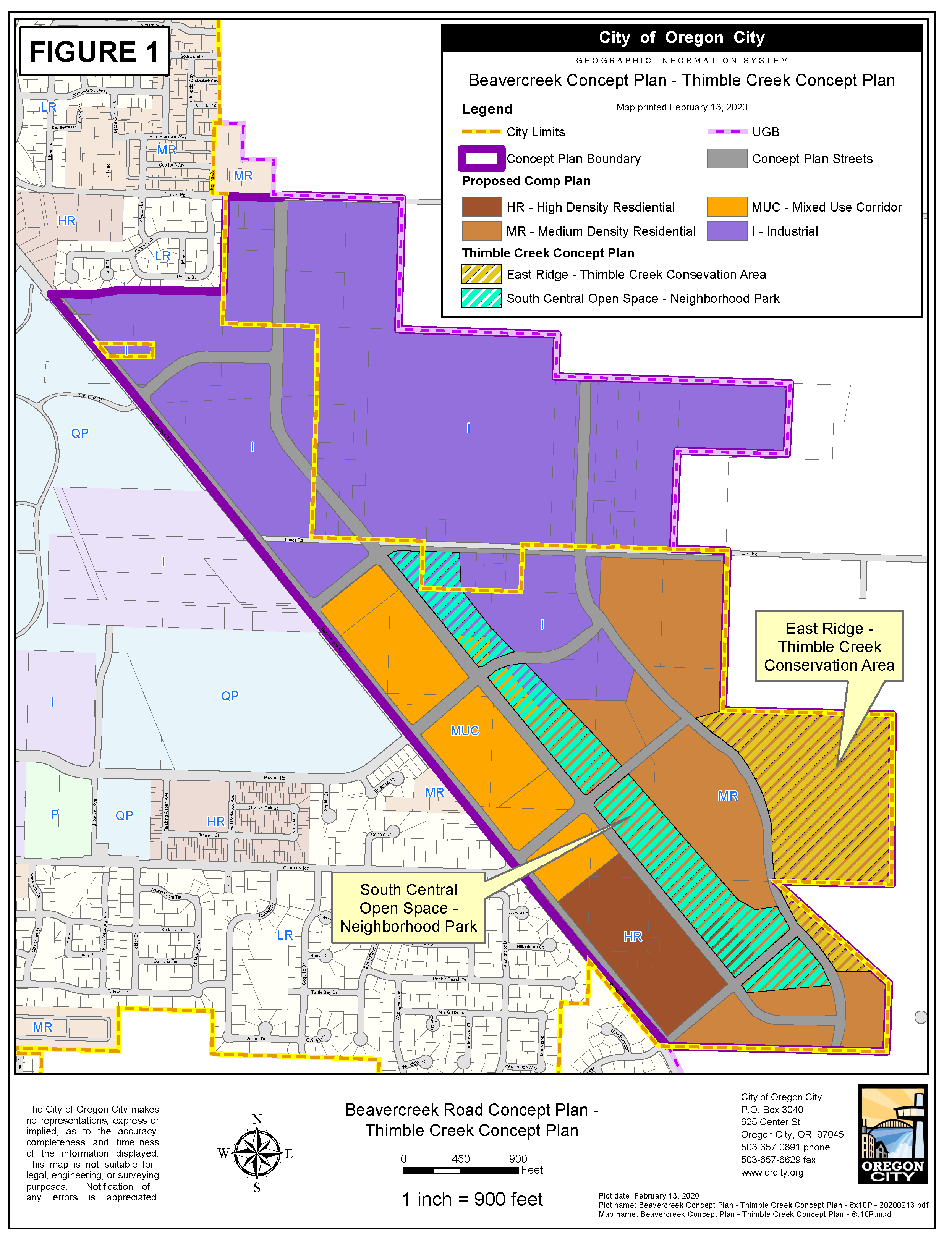
(Ord. No. 21-1006, § 1(Exh. A), 7-1-2020; Ord. No. 25-1006, § 1 (Exh. A), 6-18-2025)
17.62.060 - Reserved.
Editor's note— Ord. No. 22-1001, § 1(Exh. A), adopted June 1, 2022, repealed § 17.62.060, which pertained to cluster housing and derived from Ord. No. 18-1009, adopted July 3, 2019; Ord. No. 19-1008, adopted December 18, 2019 and Ord. No. 21-1006, adopted July 1, 2020.
17.62.065 - Outdoor lighting.
A.
Purpose. The general purpose of this section is to require outdoor lighting that is adequate for safety and convenience; in scale with the activity to be illuminated and its surroundings; directed to the surface or activity to be illuminated; and designed to clearly render people and objects and contribute to a pleasant nighttime environment. Additional specific purposes are to:
1.
Provide safety and personal security as well as convenience and utility in areas of public use or traverse, for uses where there is outdoor public activity during hours of darkness;
2.
Control glare and excessive brightness to improve visual performance, allow better visibility with relatively less light, and protect residents from nuisance and discomfort;
3.
Control trespass light onto neighboring properties to protect inhabitants from the consequences of stray light shining in inhabitants' eyes or onto neighboring properties;
4.
Result in cost and energy savings to establishments by carefully directing light at the surface area or activity to be illuminated, using only the amount of light necessary; and
5.
Control light pollution to minimize the negative effects of misdirected light and recapture views to the night sky.
6.
Encourage energy efficient lighting with new technologies such as light emitting diodes (LED) or similar to reduce ongoing electrical demand and operating costs.
B.
Applicability.
1.
General.
a.
All exterior lighting for any type of commercial, mixed-use, industrial, institutional, or multi- family development shall comply with the standards of this section, unless excepted in subsection B.3.
b.
The city engineer or public works director shall have the authority to enforce these regulations on private property if any outdoor illumination is determined to present an immediate threat to the public health, safety and welfare.
2.
Lighting Plan Requirement. All commercial, industrial, mixed-use, cottage housing and multi-family developments shall submit a proposed exterior lighting plan. The plan shall be submitted concurrently with the site plan. The exterior lighting plan shall include plans and specifications for streetlights, parking lot lights, and exterior building lights. The specifications shall include details of the pole, fixture height and design, lamp type, wattage, and spacing of lights.
3.
Excepted Lighting. The following types of lighting are excepted from the requirements of this section:
a.
Residential lighting for single-family attached and detached homes, and duplexes.
b.
Public street and right-of-way lighting.
c.
Temporary decorative seasonal lighting provided that individual lamps have a light output of sixty watts or less.
d.
Temporary lighting for emergency or nighttime work and construction.
e.
Temporary lighting for theatrical, television, and performance areas, or for special public events.
f.
Lighting for a special district, street, or building that, according to an adopted municipal plan or ordinance, is determined to require special lighting aesthetics as part of its physical character.
g.
Lighting required and regulated by the Federal Aviation Administration.
C.
Design and Illumination Standards.
1.
Outdoor lighting, if provided, shall be provided in a manner that enhances security, is appropriate for the use, avoids adverse impacts on surrounding properties, and the night sky through appropriate shielding as defined in this section. Glare shall not cause illumination on other properties in excess of a measurement of zero and five tenths footcandles of light as measured at the property line.
2.
Lighting shall be provided in parking lots, bicycle parking areas, and vehicular circulation areas.
3.
Lighting shall be provided in pedestrian walkways, pedestrian plazas, and pedestrian circulation areas.
4.
Lighting shall be provided at all building entrances.
5.
With the exception of pedestrian scale lighting, all light sources shall be concealed or shielded with a full cut-off style fixture in order to minimize the potential for glare and unnecessary diffusion on adjacent property.
6.
The maximum height of any lighting pole serving a multi-family residential use shall be twenty feet. The maximum height serving any other type of use shall be twenty-five feet, except in parking lots larger than five acres, the maximum height shall be thirty-five feet if the pole is located at least one hundred feet from any residential use.
7.
Floodlights shall not be utilized to light all or any portion of a building facade between ten p.m. and six a.m.
8.
Lighting on outdoor canopies shall be fully recessed into the canopy and shall not protrude downward beyond the ceiling of the canopy.
9.
All outdoor light not necessary for security purposes shall be reduced, activated by motion sensor detectors, or turned off during non-operating hours.
10.
Light fixtures used to illuminate flags, statues, or any other objects mounted on a pole, pedestal, or platform shall use a narrow cone beam of light that will not extend beyond the illuminated object.
11.
For upward-directed architectural, landscape, and decorative lighting, direct light emissions shall not be visible above the building roofline.
12.
No flickering or flashing lights shall be permitted, except for temporary decorative seasonal lighting.
13.
Lighting for outdoor recreational uses such as ball fields, playing fields, tennis courts, and similar uses, are allowed a light post height up to eighty feet in height.
14.
Main building entrances shall be well lighted and visible from any transit street. The minimum lighting level for building entries fronting on a transit street shall be three foot-candles.
(Ord. No. 18-1009, § 1(Exh. A), 7-3-2019; Ord. No. 19-1008, § 1(Exh. A), 12-18-2019; Ord. No. 25-1006, § 1 (Exh. A), 6-18-2025)
17.62.085 - Refuse and recycling standards for commercial, industrial, office, institutional, and multi-family developments.
The purpose and intent of these provisions is to provide an efficient, safe and convenient refuse and recycling enclosure for the public as well as the local collection firm. All new development, change in property use, expansions, or exterior alterations to uses, other than single-family detached residential units, duplexes, triplexes, quadplexes, townhouses, cottage clusters or accessory dwelling units (ADUs), shall include a refuse and recycling enclosure. The area(s) shall be:
A.
Fully enclosed and visually screened;
B.
Located in a manner easily and safely accessible by collection vehicles;
C.
Located in a manner so as not to hinder travel lanes, walkways, streets or adjacent properties;
D.
On a level, hard surface designed to discharge surface water runoff and avoid ponding;
E.
Maintained by the property owner;
F.
Used only for purposes of storing solid waste and recyclable materials;
G.
Designed in accordance with applicable sections of the Oregon City Municipal Code (including OCMC 8.20, Solid Waste Collection and Disposal) and city adopted policies.
Enclosures are encouraged to be sized appropriately to meet the needs of current and future tenants and designed with sturdy materials which are compatible to the primary structure(s).
(Ord. No. 18-1009, § 1(Exh. A), 7-3-2019; Ord. No. 19-1008, § 1(Exh. A), 12-18-2019; Ord. No. 22-1001, 1(Exh. A), 6-1-2022; Ord. No. 25-1006, § 1 (Exh. A), 6-18-2025)
17.62.090 - Implementation.
A.
Applications for site plan and design review shall be reviewed in the manner provided in OCMC 16.12 and 17.50. The building official may issue a certificate of occupancy only after the improvements required by site plan and design review approval have been completed, or a schedule for completion and a bond or other financial guarantee have been accepted by the city.
B.
In performing site plan and design review, the review authority shall consider the effect of additional financial burdens imposed by such review on the cost and availability of needed housing types. Consideration of such factors shall not prevent the imposition of conditions of approval found necessary to meet the requirements of this section. The cost of such conditions of approval shall not unduly increase the cost of housing beyond the minimum necessary to achieve the provisions of this title, nor shall such cost prevent the construction of needed housing types.
C.
The site plan and design review provisions of this chapter shall not be applied to reduce the density or height of an application for a development project that reserves at least seventy-five percent of the gross floor area for housing where the proposed density or height is at or below what is allowed in the base zone, except in the following situations:
1.
Where the reduction in density is required for development subject to historic overlay provision in OCMC 17.40; or
2.
Where the reduction in density is necessary to resolve a health, safety or habitability issue, or to comply with the natural resource overlay district regulations of OCMC 17.49, the geologic hazard overlay district regulations of OCMC 17.44, or the floodplain management overlay district regulations of OCMC 17.42 or steep slope regulations.
(Ord. No. 18-1009, § 1(Exh. A), 7-3-2019; Ord. No. 19-1008, § 1(Exh. A), 12-18-2019; Ord. No. 25-1006, § 1 (Exh. A), 6-18-2025)

