
Panama City City Zoning Code
CHAPTER 112
SIGN REGULATIONS
Sec. 112-1.- Public purpose.
The purpose of this chapter shall be to coordinate the type, placement, and physical dimensions of signs within the city; to recognize the commercial communication requirements of all sectors of the business community; to encourage the innovative use of design; to promote both renovation and proper maintenance; and to guarantee equal treatment under the law through accurate recordkeeping and consistent enforcement. These goals shall be accomplished by regulation of the display, erection, use, and maintenance of signs. The placement and physical dimensions of signs are regulated primarily by land use district and type of roadway. No sign shall be permitted as a principal or accessory use except in accordance with the provisions of this chapter.
(Ord. No. 2675, § 1(Exh. A), 3-12-2019)
Sec. 112-2. - Scope.
This chapter shall not relate to building design. Nor shall this chapter regulate official traffic control or governmental signs; the copy and message of signs; window displays; product dispensers and point of purchase displays; scoreboards on athletic fields; flags of any nation, government, or noncommercial organization; gravestones; barber poles; religious symbols; commemorative plaques; display of street numbers; hospital emergency room signs; or any display or construction not defined herein as a sign.
(Ord. No. 2675, § 1(Exh. A), 3-12-2019)
Sec. 112-3. - Applicability.
No person shall erect, place or maintain a sign within the city except in accordance with the provisions of this chapter.
(Ord. No. 2675, § 1(Exh. A), 3-12-2019)
Sec. 112-4. - Prohibited signs.
A.
It shall be unlawful for any person to erect or display within the city any of the following prohibited signs and their respective support structure:
1.
Swinging signs.
2.
Snipe signs.
3.
Sidewalk and sandwich signs not expressly addressed in this code.
4.
Portable signs, except those used for humorous announcements or governmental purposes.
5.
Any sign in the area between the shoreline and the road right-of-way in the area along Beach Drive between Johnson Bayou and Frankford Avenue.
6.
A sign which contains any flashing light.
7.
A sign which at any point below nine feet above grade contains any moving or animated lights or parts, contains any electronic components, or gives the appearance of animation or movement.
8.
Vehicle signs, (including signs on trailers) are prohibited except for standardized, uniform, registered or licensed business logos on business vehicles or trailers. Such vehicles or trailers, with proper logos, may only be parked at the physical location of the business which the logo represents, when not in use for the primary business intended. Such vehicles or trailers may not be parked and left unattended in areas, away from the physical location of the business, for purposes of advertisement, e.g. parking lots not owned and operated by the vehicle's owner.
9.
Any sign which emits a sound, odor, or visible matter.
10.
Any sign or sign structure which obstructs free ingress to or egress from a required door, window, fire escape or other required exit way.
11.
Any sign or sign structure which obstructs the view of, may be confused with or purports to be a governmental or official traffic direction or safer sign, or any official marker erected by city, state or federal authority.
12.
Any sign which obstructs or impairs driver vision at vehicular ingress/egress points or intersections.
13.
Any sign using the words "stop," "danger" or any comparable word, phrase, symbol or character in a manner that tends to mislead, confuse or distract a vehicle driver.
14.
Sign statuary exceeding the limits imposed by this chapter.
15.
Any sign on or within any street or public right-of-way, coastal setback area, or St. Andrew Bay, except public traffic, safety and information signs erected and maintained by governmental authority and at public expense.
16.
A sign erected or displayed in any fresh water wetlands or salt marsh areas subject to periodic inundation by tidal saltwater.
17.
Any sign on or towed behind a boat or raft on waters within the city.
18.
Abandoned signs.
19.
Dilapidated signs.
20.
Inflatable signs.
21.
Window signs exceeding 25 percent of an building glass area.
22.
The following off-premises signs:
i.
Bench signs,
ii.
Electronic signs,
iii.
Blank off-premises sign faces.
iv.
"L" (2-faced at 90-degree angles),
v.
Triangular (3-faced) signs,
vi.
Boxed (four-faced) signs,
vii.
All off-premises signs, other than billboard signs as authorized in section 112-15, directional signs as authorized in section 112-6, and governmental signs.
23.
Any sign not expressly exempted or allowed by this Unified Land Development Code.
24.
Illegal signs.
25.
Roof signs.
26.
Banners, except for temporary banners as authorized in section 112-14.B.
27.
Feather flag sign, flutter flag sign, feather banner sign, or any functionally similar device.
28.
V-signs within the Gateway Overlay (GO) District.
B.
The right to use prohibited signs shall neither be appealable nor subject to a request for variance from the appeals board, the planning board, or the city commission. Relief may only be sought through a court of competent jurisdiction.
(Ord. No. 2675, § 1(Exh. A), 3-12-2019)
Sec. 112-5. - Approval required.
No person shall erect, place or construct any on-premises sign without first obtaining approval from the city, and a valid building permit, except as specified in section 112-6. No approval is required for a change of copy on one of the following:
A.
Changeable copy signs, provided the sign is not a prohibited sign; or
B.
Painted or printed signs, provided the sign on which the copy is to be changed is for the same business, no change in text occurs, and the sign is not a prohibited sign.
(Ord. No. 2675, § 1(Exh. A), 3-12-2019)
Sec. 112-6. - Exempted signs not requiring approval.
The following types of signs are exempted from approval requirements but must be in conformance with all other requirements of this chapter and may only be displayed on private property at least five feet off of the nearest right-of-way line:
A.
Temporary signs.
B.
Nameplates of two square feet or less.
C.
Political signs shall conform to the following standards:
1.
Placement. Signs shall be placed on private property only and with the permission of property owner. The signs may be placed back-to-back, or single face, but multiple signs of the same candidate shall not be placed within ten feet of one another.
2.
Dimensions. Political signs shall not exceed eight square feet per sign face and shall not exceed five feet in sign height measured from aggregate grade.
3.
Timelines for placement. Political signs shall not be permitted or displayed prior to 120 days before the election date and then only if a candidate has opposition. All political signs shall be removed within ten days after the election date or any run-off election date. Where an election involves a primary and general election, political signs of candidates for a particular office shall be removed within ten days after the primary election date where the candidate is elected in a primary election and unopposed in the general election; otherwise, within ten days after the general election date.
D.
Public signs or notices, or any sign relating to an emergency.
E.
Real estate sign: one per premise, back-to-back, or single face as follows:
1.
Not exceeding, in the aggregate including attachments, eight square feet for residential or vacant lots in residential or mixed use districts.
2.
Not exceeding, in the aggregate including attachments, 16 square feet for commercial property.
3.
Not exceeding, in the aggregate including attachments, 75 square feet for developmental or subdivision property.
Such signs must be removed within five days following sale, rental, or lease, and provided further that "Open House" signs must be removed at the end of the day of the open house event.
F.
Window signs, except in R-1, R-2, UR-1, UR-2, MU-1 and MH-1 districts.
G.
Pennants, festoons, streamers or balloons not expressly exempted from nor authorized by this law.
H.
Off-premises directional signs on leased property within an established industrial park in either an LI or HI district, for directional purposes in addition to name recognition, not to exceed four feet by eight feet, lighted or unlighted dictated by the normal working hours of the business, post supported with the bottom of the sign to be at least six feet above ground level, and with a minimum setback requirement for all parts of the sign of five feet from any right-of-way line.
(Ord. No. 2675, § 1(Exh. A), 3-12-2019)
Sec. 112-7. - Maintenance.
All signs shall be properly maintained. Exposed surfaces shall be cleaned and painted if paint is required. Defective parts shall be replaced. The city manager shall have the authority under subsection 112-17.E to order the repair or removal of any sign which is defective, damaged, or substantially deteriorated.
(Ord. No. 2675, § 1(Exh. A), 3-12-2019)
Sec. 112-8. - Lighting/illumination.
All signs may be lighted or illuminated consistent with the following provisions:
A.
Sign lighting shall not be installed or located so as to cause confusion with traffic control lights.
B.
Illumination by spotlights or floodlights may be allowed provided that no light emitted shines onto an adjoining property or into the eyes of persons driving or walking upon any roadway or sidewalk.
C.
Exposed incandescent lights shall not be used for lighting outdoor signs (e.g., exposed light bulbs without cover).
(Ord. No. 2675, § 1(Exh. A), 3-12-2019)
Sec. 112-9. - Licenses.
No person may engage in the business of erecting, altering, relocating, constructing, or maintaining signs without a valid occupational license and all required state and federal licenses.
(Ord. No. 2675, § 1(Exh. A), 3-12-2019)
Sec. 112-10. - Indemnification.
All persons involved in the maintenance, installation, alteration, or relocation of signs near any public right-of-way or property shall agree to hold harmless and indemnify the city, its officers, agents, and employees, against any and all claims of negligence resulting from such work.
(Ord. No. 2675, § 1(Exh. A), 3-12-2019)
Sec. 112-11. - Allowable on-premises signs; land use districts.
A.
Signs permitted in all districts. The following signs are allowed in all districts:
1.
All signs not requiring approval.
2.
One construction sign for each street abutting a construction project, not to exceed 32 square feet of sign area per face or 64 total square feet, if back-to-back faces, per sign. Such signs may be erected 120 days prior to beginning of construction and shall be removed 30 days following completion of construction.
3.
One attached nameplate per occupancy, not to exceed two square feet in sign area.
4.
"For sale" signs advertising vehicles, boats or other similar items for sale by owner provided such sign does not exceed one square foot of sign area.
B.
Permitted signs in residential districts. The following signs shall be allowed in R-1, R-2, UR-1, UR-2, and MH-1 zoning districts; all other signs are prohibited.
1.
All signs allowed in section 112-6.
2.
Two subdivision identification signs per subdivision, or development, not to exceed 30 square feet per face or 60 total square feet, if back-to-back faces, per sign.
3.
For churches, synagogues or similar institutional uses one freestanding sign not exceed 30 square feet per face or 60 total square feet, if back-to-back faces, per sign.
4.
All allowed freestanding signs in R-1, R-2, UR-1, UR-2, and MH-1 districts shall have a height limit of eight feet, and no portion of such sign, including base, support structure, or cabinet shall be located within five feet of any street, highway, or alley right-of-way.
C.
Permitted signs in mixed use districts. The following signs shall be allowed in MU-1, MU-2, DTD, StAD, MDTD, and CHD districts; all other signs are prohibited.
1.
All signs not prohibited by section 112-4.
2.
Two identification signs per apartment, townhouse, condominium or other multifamily residential development, not to exceed 30 square feet per face or 60 total square feet, if back to back, per sign.
3.
For commercial development, one freestanding sign and one wall sign per premises each of which shall not exceed 12 square feet per face or 24 total square feet, if back-to-back faces, per sign. For commercial development which abuts a principal arterial or collector roadway, Jenks Avenue or Grace Avenue (see section 105-176), one freestanding sign and one wall sign per premises each of which shall not exceed 30 square feet per face or 60 total square feet, if back-to-back faces, per sign.
4.
All allowed freestanding signs shall have a height limit of eight feet and no portion of such sign, including base, support structure, or cabinet shall be located within five feet of any street, highway, or alley right-of-way or property line.
D.
Permitted signs in general commercial and industrial districts. The following signs shall be allowed in GC-1, GC-2, LI, and HI districts, all others are prohibited. (Reference section 105-4 Gateway Overlay Standards for properties along the main corridors.)
1.
All signs not prohibited in section 112-4.
2.
Except for fruit stands, adult entertainment businesses, and plaza signages which are regulated elsewhere, one on-premise freestanding sign is allowed per premise for a business which fronts on a public street, plus one additional freestanding sign for each additional abutting public street; provided, however, the square footage of all of said freestanding signs shall not exceed 125 total square feet per face per sign or 250 square feet per sign if using back-to-back faces. As part of one of said on-premise freestanding signs fronting on a public street, it may include an electrical code approved display which has time and temperature messages, changeable copy (including stationary, lighted cabinets designed for manual changeable copy) or electronic messages, if they are located on the structure above nine feet, and if they:
i.
Do not contain any flashing or strobe lights;
ii.
Do not emit any sounds;
iii.
Do not present lighting effects that are unusually distracting to vehicles; and
iv.
Do not cause the overall sign area per side to exceed 125 square feet.
3.
No portion of a freestanding sign, including base, support structure, or cabinet, shall be located within five feet of any street, highway, or alley right-of-way.
4.
Wall signs shall be limited to a maximum size of two feet pet linear foot of principal storefront façade, not to exceed 200 square feet per tenant.
5.
One under-canopy sign per occupancy, not to exceed eight square feet in sign area.
6.
Incidental signs not to exceed four square feet in aggregate sign area per occupancy.
7.
The maximum permitted height for any on-premises sign shall be 45 feet above the grade of the adjacent street, except as regulated in the overlay district(s).
8.
Projecting signs shall conform to the requirements of the Florida Building Code and shall be permitted only where a public sidewalk abuts the side of the building on which the projecting sign is affixed.
9.
Plaza signs which must abut a major street or highway are only allowed in GC-1, GC-2, LI, and HI districts, after obtaining approval in the form of a development order from the city and a valid building permit from the city's building department. The structure, including supports, pole covers and sign panel cabinets, may not be taller than 30 feet and may not be closer than five feet from any abutting right-of-way. Plaza signs shall consist of a top panel, not exceeding 75 square feet per face or 150 total square feet, if back-to-back faces are used, which identifies the name of the complex or property owner and the street address of the complex. Individual fixed panels, not exceeding, without a variance, a total square footage of 100 square feet per side face or 200 square feet if using back-to-back faces, listing the names and advertisement information of the individual occupants of the complex, may be affixed below the top panel. Individual occupant panels or tenant panels may not exceed 20 square feet per occupant per face or 40 total square feet, if back-to-back faces are used. Individual panels may not have more than two displays on each facing. Plaza signs may be lighted and shall be constructed in compliance with all applicable code requirements and construction standards. If a complex abuts more than one major street or highway, it may have one plaza sign abutting each major street or highway. Use of a plaza sign shall be in lieu of the right of use of individual freestanding on-premises signs by the occupants.
10.
Directional signs, not to exceed two square feet per face or four total square feet, if back-to-back faces are used, may be located at points of ingress and egress; provided, however no portion of such signs, including base, support structure, or cabinet shall be located within five feet of any street, highway, or alley right-of-way.
11.
Temporary banners except as authorized in section 112-14.B.
12.
Monument signs shall be the preferred sign used within each of the commercial districts. Monument signs shall not exceed 150 square feet per side face or 300 total square feet, if back-to-back faces are used, and no portion of such sign, including base, support structure, or cabinet shall be located within five feet of any street, highway, or alley right-of-way. Monument signs shall sit directly on grade on a proper concrete or similar material footings. Height for monument signs shall be approved by the director, based on reasonable safety concerns.
E.
Permitted signs in public institutional and recreation districts. The following signs shall be allowed in P/I, REC-1, and REC-2 districts, all others are prohibited.
1.
All government signs.
2.
For any non-governmental institutional use, one freestanding sign not to exceed 25 square feet per side of sign area or 50 total square feet if back-to-back faces are used, and one wall sign not to exceed 25 square feet of wall area.
3.
All allowed freestanding signs in P/I, REC-1, and REC-2 districts shall have a height limit of ten feet, and no portion of such sign, including base, support structure, or cabinet shall be located within five feet of any street, highway, or alley right-of-way.
4.
All public school signs shall be exempt from development order requirements; provided, however, that no portion of such sign, including base, support structure, or cabinet shall be located within five feet of any street, highway, or alley right-of-way.
5.
Directional signs, not to exceed two square feet per face or four total square feet if back-to-back faces are used, may be located at points of ingress and egress; however no portion of such signs, including base, support structure, or cabinet shall be located within five feet of any street, highway, or alley right-of-way.
6.
Temporary banners as authorized in section 112-14.B.
F.
Permitted signs in the Downtown and Neighborhood Districts. The following sign standards shall apply to commercial uses in Downtown, Neighborhood Downtown, and Neighborhood General districts. Signs not identified within this section are prohibited.
(A)
General requirements.
1.
The maximum total signage area allocated for each building shall be two square feet per linear foot of street facing building facade along a street frontage.
2.
Buildings with a rear public entrance are allowed one flat wall sign to not exceed 60 square feet to be placed at the rear entrance.
3.
Signs shall not obscure architectural details of the building.
4.
Materials. All permanent, on-premises signs maybe be constructed of a rigid, weatherable material such as wood (painted or natural); metal (copper, brass, aluminum, galvanized steel); painted / engraved directly on façade surface; glass; or hard plastic. Canvas may be used for awning material. Vinyl may be used for windows signs.
5.
Exceptions to the regulations of this section for civic or institutional uses may be permitted by the development services director.
6.
Exuberant or creative signage that does not fit the specific regulations of this section may be considered by the development services director, based on its merits, as it relates to the unique architectural qualities of a building, a building's historical significance, civic prominence, or unique configuration of existing conditions of a building, and the quality of design, construction, and durability of the sign.
7.
Lighting and illumination.
i.
Signs shall be externally lit from the front. Back lighting is permitted as an exception only for individual letters or numbers (panelized back lighting is prohibited).
ii.
External light sources used to illuminate signs shall be placed close to, and directed onto the sign, and shielded to minimize glare onto adjacent properties.
iii.
Neon may be used for lettering or as an accent.
Figure 112-11.F.1: Building Facade and Street Frontage Measurement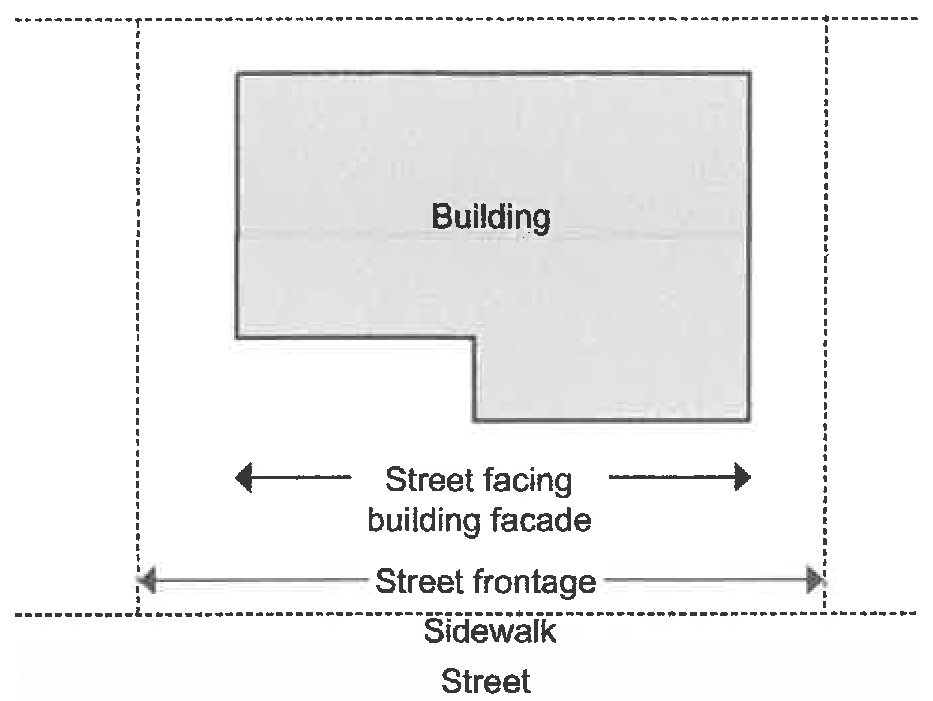
(B)
Sign type specifications.
| Wall Signs | |||
 | Area (max) | 60 sf |
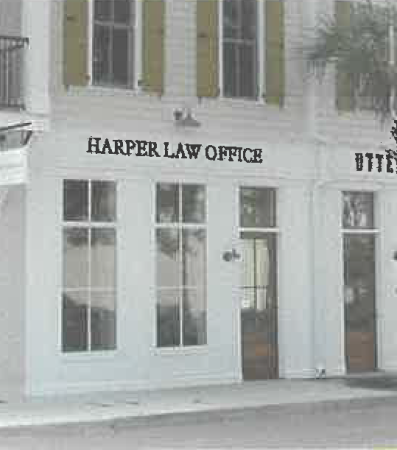
i. Description. A wall sign is a building sign that is attached flat to, mounted away
from but parallel to, or painted on the building facade.
ii. One wall sign is permitted per each street-facing building frontage. iii. Wall signs shall either be located above the storefront or at least 12 inches from any eave, edge of building, or top of parapet. iv. Wall signs must not project more than nine inches from the building face. v. Wall signs that are painted on the wall surface are eligible for a 200 percent bonus in area with approval of the development services director. |
| Thickness (max) | 9 in | ||
| Quantity | 1 per shopfront | ||
| Projecting and Blade Signs | |||
 | Area (max) | 12 sf |
i. Description. A projecting sign is a type of building sign that projects outward
from the facade, typically at a ninety-degree angle. Projecting signs are typically,
but not always, vertically oriented, attached at two points, and generally mounted
above the first floor. A blade sign is a type of sign mounted on a building facade,
typically affixed at one point, and projected perpendicular to the normal flow of
pedestrian traffic.
ii. Only one projecting sign up to 12 square feet is permitted per street-facing building front. Projecting signs mounted at the comer count for both street frontage/building elevations. iii. Multiple projecting signs or blade signs of six square feet or less are permitted on one building side, but must be located below the second story windowsill. iv. Maximum distance from building wall must not exceed one foot and six inches. v. Projecting signs shall not extend more than six feet from the building wall and within two feet of the curb line. vi. Maximum height of projecting sign shall be no greater than six feet and extend no more than four feet above eave or parapet of building. vii. Signs must be stabilized so as not to swing. Signs must have a minimum clearance from the sidewalk of eight feet. |
| Thickness (max) | 18 in | ||
| Height (max) | 6 ft | ||
| Width (max) | 5 ft | ||
| Quantity | 1 per shopfront | ||
| Hanging Signs | |||
 | Area (max) | 6 sf |
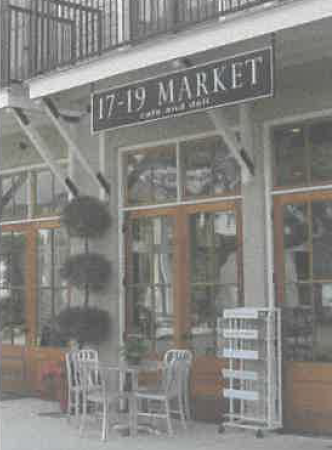
i. Description. A hanging sign is typically attached to the underside of a soffit
or awning, or projects outward, typically at a ninety-degree angle, and hangs from
a bracket or support that is located over or near a building entrance.
ii. One sign per shopfront allowed. iii. Signs shall not exceed six square feet in area and shall have an eight foot minimum clearance from the sidewalk. iv. Hanging signs cannot exceed four feet in width and six inches in thickness. v. Hanging signs should be mounted so that they do not swing. |
| Thickness (max) | 6 in. | ||
| Height (max) | 3 ft | ||
| Width (max) | 4 ft | ||
| Quantity | 1 per shopfront | ||
| Awning Signs | |||
 | Width (max) | 75% of awning valence |
i. Description. An awning sign is a type of building sign where graphics and symbols
are painted, sewn, or otherwise adhered to the awning material as an integrated part
of the awning itself.
ii. A maximum of one sign is allowed per shopfront and the area must not cover more than 75 percent of the awning valence. iii. An awning sign may only be externally illuminated. |
| Quantity | 1 per shopfront | ||
| Canopy Signs | |||
 | Thickness (max) | 9 in |
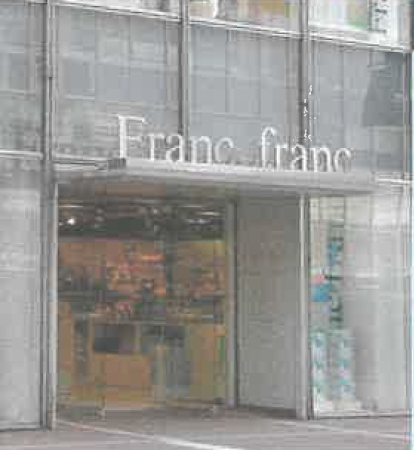
i. Description. A canopy sign is a type of building sign that is attached above, below,
or to the face of a canopy.
ii. Canopy signs are limited to a maximum one sign per canopy face. iii. Signs must not extend outside the length or width of the canopy and must not cover more than 75 percent of the canopy length or width. iv. Depth of canopy signs must not exceed nine inches. v. Exposed raceways must not extend above height of letters. vi. Cabinet signs are not permitted on canopy signs. |
| Height (max) | 2 ft | ||
| Width (max) | 75% of canopy width | ||
| Quantity | 1 per shopfront | ||
| Window Signs | |||
 | Area (max) | 25% of window area |
i. Description. A sign intended to be painted on, applied to, or displayed in, a storefront
window or door area.
ii. One window sign is permitted per shopfront. iii. A maximum of 25 percent of a window can be used for window signs. |
| Quantity | 1 per window | ||
| Sidewalk Signs | |||
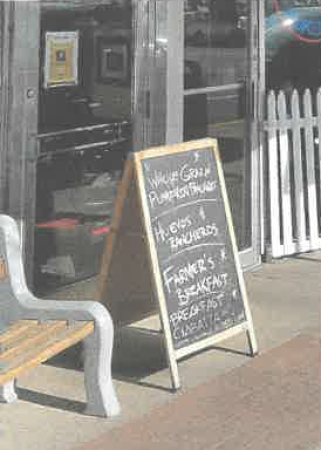 | Area (max) | 8 sf |
i. Description. Temporary sidewalk signs, such as A-frame sandwich boards, are signs
placed within the public sidewalk displayed by retailers, restaurants, and cafes to
advertise food or products sold within a business.
ii. Sidewalk signs shall be no larger than eight square feet per face and four feet in height. iii. Sidewalk signs shall be of quality design, materials and workmanship both to ensure the safety and convenience of users, and to enhance the visual and aesthetic quality of the urban environment. iv. Sidewalk signs are permitted on the public sidewalk adjacent to a business, must maintain a clear sidewalk path of a minimum dimension of five feet, and must be removed from the sidewalk when the establishment is closed for business. v. The number of signs shall be limited to one per sidewalk per street-level business frontage. vi. Sidewalk signs shall not be placed within three feet of an adjacent property line. |
| Height (max) | 4 ft | ||
| Quantity | 1 per shopfront | ||
(Ord. No. 2675, § 1(Exh. A), 3-12-2019; Ord. No. 3015, Exh. A, 8-24-2021)
Sec. 112-12. - Master sign plan.
A.
Intent of master sign plan. A master sign plan is intended to promote consistency among signs within a development and enhance the compatibility of signs within the architectural and site design features of the development.
B.
Master sign plan required. A master sign plan shall be required for all projects which are required to file a development plan as described herein including but are not limited to: any integrated retail center, business park and industrial park in any commercial/mixed use or industrial district; and any planned unit development. A master sign plan shall be filed and approved prior to the erection, location or placement of any sign for such project or development.
C.
Master sign plan optional. A master sign plan is encouraged to be submitted by an owner for any other project or development not previously listed above, but which will include signs and will benefit from a cohesive signage plan.
D.
Record of master sign plan. An approved master sign plan shall be retained in the office of the department of planning and economic development as part of the file for the project, subdivision or development.
E.
Contents of master sign plan. A master sign plan, which may be a written document or drawings adequate to depict the proposed signs, excluding temporary signs which shall follow the regulations of this ULDC, shall include:
1.
General location of signs. Provide the proposed general locations for freestanding signs on a lot (e.g., signs in a front sign zone, signs at a critical turning point in an incidental sign zone, etc.) as well as the proposed location(s) for building signs on a building façade (e.g., over doors, over windows, on awnings, etc.);
2.
Types of signs. Include an indication of the types of signs proposed (e.g., ground sign, post and arm sign, individual channel letters, raceway mount, box mount, painted, changeable copy signs, electronic variable message signs, etc.);
3.
Materials. Include a listing of the materials proposed for all sign structures and sign surfaces (e.g., limestone base with bronze letters, routed aluminum cabinet with plexiglass face, etc.);
4.
Size and number of signs. Indicate the maximum number and maximum size of proposed signs (e.g., maximum height, maximum width, maximum sign surface area, etc.);
5.
Style and color. Indicate the proposed style and color pallet for all signs (e.g., letter colors, background colors, and text font);
6.
Illumination. Indicate the type of illumination, if any, proposed for all signs (e.g., internally illuminated, or external illumination with description of type of outdoor light fixture);
7.
Ornamental structures. Include a description of any ornamental structure (i.e., any wall or fence) upon which a sign face is proposed to be placed; and,
8.
Landscaping. Include, at a minimum, a typical landscape plan for freestanding signs. All freestanding signs shall be provided with a landscaped area at least equal to the sign surface area of the sign. Landscaping may include any size or variety of annuals, perennials, ornamental grasses, hedge plants, or trees.
9.
Waiver of sign regulations. Indicate the request of all waivers to the sign regulations that have been requested, if any, in association with the master sign plan and clearly denote any and all modifications to the allowed sign surface areas in each sign zone, the increase or decrease in the height or width of signs, and any other modifications that affect sign regulations regulated by the master sign plan.
F.
Individual sign approval. Prior to the issuance of a building permit for the placement of a sign, all proposed sign plans shall be reviewed for conformity with the master sign plan and all applicable provisions of this ULDC. If a proposed sign conforms to the regulations of this ULDC and the guidelines of the approved master sign plan, such sign shall be authorized. No sign which does not conform to the guidelines of a master sign plan and this ULDC shall be erected, located or placed on a property.
G.
Amendment. A master sign plan may be amended by submitting a revised master sign plan for consideration and determination. Upon approval of a revised master sign plan, the revised master sign plan shall have the same force and effect as an approved master sign plan.
H.
Pre-existing projects. For projects which were approved or developed prior to the effective date of the requirements of this ULDC for a master sign plan, the director shall review applications for individual freestanding signs or building signs for consistency with other signs within the project or in the immediate area. A development order permit for the proposed sign shall only be issued if the director finds that the proposed sign is consistent and compatible with other signs within the project or the immediate area.
(Ord. No. 2675, § 1(Exh. A), 3-12-2019)
Sec. 112-13. - Portable signs.
All portable signs are prohibited, except those used for humorous announcements or governmental purposes or special church services, approved by the city manager or his designee, for a period not to exceed one week, one time per year.
(Ord. No. 2675, § 1(Exh. A), 3-12-2019)
Sec. 112-14. - Temporary signs.
A.
Signs that meet the standards of this subsection are exempt from the standards for permanent signs and are not counted in the total square footage of signage allowed on any particular property or site.
B.
Temporary banners: Temporary banners are subject to the following regulations:
1.
In all residential zones, temporary banners are not permitted on sites with houses, duplexes, and attached houses.
2.
In non-residential zones, one banner no larger than 32 square feet in size is permitted per property or, on a multi-use property, per storefront. Only one of these banners may be hung on each building wall or on each separate structure.
i.
In no case may a site or storefront have more than two temporary banners.
3.
A temporary banner may be displayed no longer than 90 days per calendar year.
C.
Grand opening sign. A grand opening sign not exceeding 32 square feet of sign face area or eight feet in height, provided that such sign shall not be displayed for more than 30 days during any 12 consecutive calendar months.
D.
A sign for a premises that has no permanent sign provided that such temporary sign shall not exceed 32 square feet in sign face area nor eight feet in height. Such sign shall be displayed for a period of 45 days or until installation of a permanent sign, whichever shall occur first.
E.
Temporary non-commercial signs displayed before, during or after an event or occurrence scheduled to take place at a specific time and place. Such signs are permitted in all zoning districts and shall not exceed 32 square feet in sign face or eight feet in height. All such signs shall be removed within ten days after the end of the scheduled event or occurrence to which they relate.
(Ord. No. 2675, § 1(Exh. A), 3-12-2019)
Sec. 112-15. - Nonconforming on-premises signs.
A.
Nonconforming status of on-premises signs. Any on-premises sign which existed and was maintained in good order on the effective date of this Unified Land Development Code, and which does not conform to the provisions of this chapter is declared nonconforming.
B.
Events terminating status.
1.
Except as provided in F.S. § 70.20, nonconforming on-premises signs may be legally maintained and continued in use except as specified in section 112-17.E until the earlier of the following events occurs or unless it is a prohibited sign:
i.
Discontinued use. Where a nonconforming on-premises sign is abandoned or discontinued for a period of six consecutive months, the existence of the legal nonconforming use shall terminate and said sign shall thereafter be considered an illegal sign subject to removal as specified in section 112-17.E.
ii.
Change of ownership. Where there is a change in ownership or other transfer of an interest in the real property on which the legal nonconforming on-premises sign is located, the legal nonconforming use shall terminate and said sign shall thereafter be considered an illegal sign subject to removal as specified in section 112-17.E.
iii.
Change of text. Where there is a change of text on the copy.
iv.
Damaged, destroyed. The sign is damaged or destroyed more than 50 percent of its value.
v.
Prohibited. The sign becomes a prohibited sign.
2.
A legal nonconforming on-premises sign may not be relocated, moved, enlarged, made higher or lower, or altered in any way, and no additional faces including vinyl or other material coverings may be added thereto, unless otherwise expressly provided herein. However, such signs may be maintained and repaired. The limited change of a face panel, without one of the other additional prohibited modifications listed above (i.e. B.1a. or B.1.b. or B.1.c. or B.1.d. or B.1.e.), may be authorized by the director. Repairs for or to nonconforming signs shall be approved by the director prior to any repair being made.
3.
The owner and sign contractor shall be jointly and severally responsible for notifying the department of land use and code enforcement when one of the above events (i.e. B.1.a. or B.1.b.) occurs involving a legal nonconforming on-premises sign. Failure to do so coupled with an attempt to change face panels or otherwise modify such sign shall be punishable as determined reasonable by the city's code enforcement board magistrate, including revocation of all business licenses.
4.
No applications for variances shall be accepted by the city for consideration after the effective date of this chapter unless based on the strict requirements of section 112-17.F.
C.
Maintenance and repair. Nonconforming signs shall be subject to all provisions of this chapter regarding safety, maintenance and repair.
D.
Removal and impoundment of prohibited signs.
1.
The city manager or his designee shall have the authority to remove all signs, without notice to the owners thereof, prohibited by this law, and to impound them for a period of 30 days. The owner or person entitled to possession of a sign impounded may recover same prior to the expiration of the 30-day impoundment period upon the payment to the city of the costs incurred in impounding such sign, including Attorney's fees. In the event any sign is not so claimed within 30 days, the city manager or his designee may dispose of the sign in the same manner as surplus or abandoned city property.
2.
Any person who violates any provision of this law is guilty of an offense and upon conviction thereof, shall be punishable as provided by section 115-5. Each person shall be deemed guilty of a separate offense for every day the violation of this law is continued or permitted to continue.
3.
Any permit issued through mistake of fact or law shall confer no right upon the permitted and such permit shall be revoked by the city manager or his designee upon discovery of such mistake, and the sign for which the permit was obtained shall be corrected or removed immediately by the owner or person entitled to possession thereof.
4.
Any sign erected or displayed in violation of the provisions of this law or other applicable provisions of this Unified Land Development Code of the city is deemed to be a public nuisance subject to abatement as provided by law. This remedy is cumulative and in addition to any other remedy available to the city under this or any other law
5.
In addition to other remedies, the city manager or his designee, through the city attorney, may institute any appropriate action or procedure to bring about compliance with any of the provisions of this law.
(Ord. No. 2675, § 1(Exh. A), 3-12-2019)
Sec. 112-16. - Sign design guidelines/sign illustrations.
A.
The city shall maintain sign design guidelines/sign illustrations that illustrate the purpose, design principles, and contents to emulate in the different signs allowed in this chapter. Generally the examples will indicate design principles to be followed through some aspects, as noted in text descriptions, may not be exemplary in all cases. Applicants shall, subject to the provisions of this chapter, design and install signs that are equal to or better than the examples and illustrations that will be maintained in the sign design guidelines/sign illustrations.
(Ord. No. 2675, § 1(Exh. A), 3-12-2019)
Sec. 112-17. - Murals.
A.
Intent for murals. The intent of this section is to regulate the location, construction and manner of display of murals in order to preserve the aesthetic appeal of the city and to promote appropriate visual expression by defining what constitutes a mural and to provide penalties for violation of the provisions thereof. To achieve its intended purpose, this section has the following objectives:
1.
Differentiate between signs, graffiti and murals;
2.
Prevent visual expression that may be offensive, is of a political or religious nature or is derogatory; and
3.
Encourage the design and placement of private murals for public display that promote or enhance the character and history of the city.
B.
Murals (see definitions section of this ULDC) are allowed only in the following zoning districts, subject to the restrictions set forth in this section:
1.
General Commercial-2 (GC-2);
2.
All CRA Districts including Downtown, St. Andrews, Millville, and Downtown North; and
3.
Downtown Districts (DTD, MDTD, StAD and CHD).
C.
Murals may not be placed on the primary façade of the structure. Exceptions can be applied for, reviewed by the committee, and approved when the nature of the business is creative, artistic or some other special circumstance is presented.
D.
Murals may only be placed directly on unimproved concrete, concrete block, brick, or metal façades. However, should the applicant desire to have a mural constructed off-site in moveable panels to be installed on said façade, the attachment of said panels must comply with applicable building codes, subject to required permits and inspection; must not cover window or door openings unless properly sealed in compliance with applicable building codes, the attachment devices must not compromise the structural integrity of the surface to which the panels are attached, and said panels must be securely attached to prevent failure due to weather conditions, vandalism or age.
E.
Murals shall be maintained in good repair, free from peeling paint or damage due to age, weather, vandalism or the like. Failure to maintain a mural in good repair may result in notification by a code enforcement officer and, if necessary, appropriate enforcement action by the city, including recovery of related expenses for enforcement.
F.
Prior to installation of a mural, the property owner or tenant (with written permission of the property owner) shall apply at the planning department. The application shall be reviewed for compliance with this section.
G.
Murals shall not contain words (in any language), symbols or representations that are obscene, offensive, of a political nature or are derogatory.
H.
The city commission, at its discretion, may designate a five person review committee to review mural design for compliance with this section. The committee, at its discretion, may refer the mural design to the city commission or CRA board for further review/approval/disapproval.
I.
If the proposed design or representation is determined to be a sign, the applicant shall comply with all further review and requirements of chapter 112 before creating or installing the sign.
J.
The applicant shall comply with all requirements of this section and be issued a development order before creating or installing the mural.
K.
A mural shall not count as a sign nor figure into the allowable sign area.
L.
Any licensed, copyrighted, or trademarked characters, or likenesses used on any murals must have permission from the holder or owner of the license, copyright or trademark.
(Ord. No. 2675, § 1(Exh. A), 3-12-2019)
Sec. 112-18. - Off-premises signs (outdoor advertising billboards).
A.
Scope. This section shall apply to off-premises signs which advertise an activity, business or service not usually conducted on or from the premises upon which the sign is located. Such off-premises signs include: Single faced; 2-faced, back to back; V-faced; tri-visioned, and digital.
B.
Location restrictions.
1.
Off-premise signs shall be allowed only on properties within the city which are both:
i.
Adjacent to U.S. Highway 231, 15th Street, U.S. Highway 98 (not Bus. 98), 23rd Street, Highway 390, and Highway 77, and
ii.
In GC, LI or HI districts, and as otherwise restricted by this chapter.
2.
Off-premises signs are prohibited in the following areas:
i.
St. Andrew Historic Neighborhood Overlay,
ii.
Downtown CRA
iii.
Downtown North CRA,
iv.
Millville CRA, and
v.
St. Andrews CRAC.
C.
Size of off-premises billboard signs.
1.
On the federal-aid highway system (U.S. 231, U.S. 98, Business 98), size shall conform to the requirements of any agreement entered into by the state and the U.S. Secretary of Transportation and comply with state law.
2.
The maximum area for any one sign face shall be 10 feet, 6 inches by 36 feet, inclusive of any border and trim, but excluding the base or apron, supports and other structural member. A back-to-back sign shall be authorized to have two faces. A V-shaped sign shall be authorized to have two faces. Each advertising graphic, which alternately face in one direction, shall be considered to constitute a face of a tri-vision sign; therefore, a tri-vision sign is authorized to have three faces, all of which shall face in the same direction.
3.
The maximum size limitations shall apply to each facing of a sign structure. Signs may be placed back-to-back but shall not have more than two displays on each facing.
D.
Spacing requirements.
1.
An off-premises outdoor advertising billboard sign, whether single faced, two faced, back to back, V-faced, tri-visioned, or digital, may not be established within 1,500 feet of any other off-premises outdoor billboard advertising sign, measured on the same side of the street. A tri-vision sign may only have two tri-vision back-to-back faces per location, or may have one standard billboard face on the reverse side (i.e. back-to-back construction). Notwithstanding the foregoing, off-premises outdoor billboard signs may not be placed closer than 125 feet from an area zoned for residential use.)
2.
Governmental and on-premises signs, as well as any other sign which does not constitute an outdoor advertising sign as defined herein, are excluded from subsection D.1 of this section.
3.
No off-premises sign shall exceed a height of 50 feet at its highest point. Such measurement shall be made from the ground level, at the base of the sign supports or from the pavement level of the street to which it faces, whichever is higher. The minimum clearance shall be ten feet from the bottom of the sign face to grade.
E.
General sign restrictions and limitations for off-premises signs (billboards).
1.
Off-premises signs shall not be permitted at any location abutting any street within 300 feet of any property used for public parks, public schools, church, courthouse, city hall or public museum abutting on the same street.
2.
No portion of off-premises signs, including base, support structure, or cabinet shall be located within five feet of any street, highway, or alley right-of-way.
3.
No sign shall be constructed which resembles any official marker erected by the city, state, or any governmental agency, or which by reason of position, shape, or color would conflict with the proper functioning of any traffic sign or signal.
4.
All signs shall be constructed in accordance with the prevailing building and electrical code, and as specified in section 112-16.
5.
All signs shall be maintained in good and safe structural condition. The painted portions of outdoor advertising signs shall be periodically repainted and kept in good condition.
6.
No sign or part thereof shall be located on any property without the written consent of the property owner.
7.
The general area in the vicinity of any ground sign on undeveloped property must be kept free and clear of sign materials, weeds, debris, trash and other refuse.
F.
Limitation on new off-premises signs (billboards).
1.
By January 1, 2020, all owners or contractors having control over existing off-premises signs (hereinafter referred to as "billboards") shall provide to the city's planning department an inventory of all of its existing billboards located within the city limits of Panama City. Said inventory shall include an address, site location map, description of the sign's dimensions and height, photograph of each billboard, and the approved permit fee. Any signs not included in said inventory become illegal signs after January 1st and subject to the provisions for removal of the same.
i.
Upon verification of the information reported in the inventory and receipt of the permit fee, said billboard shall be registered as part of the city's approved billboards.
ii.
Each billboard permit shall be renewed annually. If not renewed within 90 days of the renewal date, an additional late fee shall be assessed up to a period of six months.
iii.
If after six months, the account is not up to date, then such sign shall become an illegal sign, and, together with any associated sign structure, be removed, and the total number of off-premises permitted in the city shall be reduced by one and no replacement sign or additional, mechanical or electrical face shall be permitted.
2.
No new off-premises billboard signs may be constructed within the city limits after December 31, 1998, except in compliance with the terms and provisions of this chapter.
3.
All off-premises signs lawfully classified as nonconforming signs on the effective date of this chapter are hereby declared to be legal nonconforming off-premises signs.
4.
The total number of legal off-premises billboard signs within the city shall not exceed the total number in existence or lawfully permitted by the city on the effective date of this chapter, and may be less. Should the number of off-premises billboard signs ever decrease, it shall not thereafter be increased.
5.
No off-premises billboard sign or associated sign structure may be enlarged or made higher, and no additional faces may be added thereto, unless otherwise expressly provided herein. Each off-premises billboard sign and any associated sign structure may be maintained, repaired and replaced in substantially the same location, and the content or copy thereof changed, at any time. Adding one or more alternating faces to an existing face through mechanically or electrically operated louvers or devices (so called multi-vision or tri-vision signs or the like) is declared to be an enlargement which is not permitted, unless otherwise expressly provided herein.
6.
In the event that any off-premises billboard sign or associated sign structure which is erected or displayed within 1,500 feet of any other off-premises sign, measured on the same side of the street, is voluntarily or involuntarily removed from service in whole or in part because such sign or sign structure:
i.
Is dismantled, taken down, removed, or covered or obscured in majority part for a period of 60 days in any 90-day period, it shall become an illegal sign and together with any associated sign structure, be removed.
ii.
Is damaged by fire, wind, flood or other sudden casualty and the cost to paint and repair such sign (including the sign structure) equals or exceeds 50 percent of the cost to replace such sign then such sign (sometimes called a lost sign) shall become an illegal sign and together with any associated sign structure, be removed.
iii.
In the event that two off-premises signs within 1,500 feet of each other, measured on the same side of the street, are so taken out of service at substantially the same time or by reason of materially the same event, the older sign shall be given priority to rebuild at the same location if that is an option.
7.
The owner of a lost sign or the owner's assignee, after duly recording a transfer of the assignment with the city, but no other, shall be entitled to replace the lost sign with a replacement sign elsewhere in the city, provided:
i.
Such lost sign and associated sign structure has been removed at no public expense, and
ii.
Such replacement sign is no larger or higher than the lost sign it is replacing and contains the same or lesser number of faces which are the same or smaller in size than the corresponding faces of the lost sign it is replacing (notwithstanding the foregoing, the city commission may grant a variance to permit or require such replacement sign to be erected or displayed higher than the lost sign it is replacing—but not to exceed the maximum allowed by law—whenever a literal enforcement of the transferred height limitation would result in an unnecessary hardship on the owner of the replacement sign or the owners of property adjoining the replacement sign), and
iii.
Such replacement sign is erected or displayed within no less than 1,500 feet of any other legal off-premises sign, measured on the same side of the street.
iv.
Such replacement sign may not be closer than 125 feet from an area zoned for residential use, and
v.
Such residential sign is not erected or displayed less than 125 feet from any area zoned for residential use, and
vi.
The fee is paid and permit is issued for the erection or display of such replacement sign, and such replacement sign complies with this Unified Land Development Code, and all other applicable state and local law, and
vii.
Such replaced sign is constructed and fully operational within 12 months after the lost sign was removed from service.
In the event that a lost sign is not timely replaced (within 12 months), the total number of off-premises sign permitted in the city shall be reduced by one.
8.
As an alternative to replacing a lost sign, the owner of a lost sign, or the owner's assignee, after duly recording a transfer of the assignment with the city, but no other, shall be entitled to add one mechanically or electrically operated alternating face (sometimes called a multi-vision sign or tri-vision sign to the face of an existing legal off-premises sign for each face of the lost sign, provided:
i.
Such lost sign and any associated sign structure has been removed at no public expense;
ii.
The aggregate square footage of the additional mechanical or electrical face does not exceed the difference between the (x) aggregate square footage of the faces of the one or more lost signs, which such owner or assignee has lawfully elected to convert to multi-vision or tri-vision or the like, and (y) the aggregate of such square footage previously so converted; and
iii.
The fee is paid and a permit is issued for the alteration of such off-premises sign, and the enlarged off-premises sign complies with this Unified Land Development Code and all other applicable state and local laws.
9.
The minimum distance between off-premises signs shall be measured on the same side of the street. An off-premises sign shall be deemed to be located on the street nearest the sign.
10.
In the event that any off-premises sign shall become an abandoned sign or a dilapidated sign, then such sign shall become an illegal sign, and, together with any associated sign structure, be removed, and the total number of off-premises permitted in the city shall be reduced by one and no replacement sign or additional, mechanical or electrical face shall be permitted.
11.
Notwithstanding the foregoing, the total number of off-premises billboard signs permitted within the city shall be increased by the number of off-premises sign located upon unincorporated territory annexed into the city after the effective date of this revised chapter, and each such sign shall be treated as any other off-premises billboard sign within the city provided that it was in full compliance with all applicable Bay County zoning and sign regulations at the time of annexation. Conversely, the total number of off-premises billboard signs permitted within the city shall be decreased by the number of off-premises billboard signs located upon incorporated territory that is de-annexed into Bay County, Florida.
12.
The city may permit a new off-premises digital billboard sign provided that for every one square feet of new space permitted, the permittee will remove three square feet of space (of traditional or old off-premises billboard signs) from the city.
G.
Changeable messages on new digital off-premises billboard signs. A permit shall be granted for an automatic changeable facing, provided:
1.
The static display time for each message is at least six seconds;
2.
The time to completely change from one message to the next is a maximum of two seconds;
3.
The change of the message occurs simultaneously for the entire sign face;
4.
The application meets all other permitting requirements; and
5.
All signs with changeable messages shall contain a default design that will ensure no flashing, intermittent message, or any other apparent movement is displayed should a malfunction occur.
(Ord. No. 2675, § 1(Exh. A), 3-12-2019)
Sec. 112-19. - Construction standards.
A.
Anchoring.
1.
No sign shall be suspended by non-rigid attachments that will allow the sign to swing in a wind.
2.
All freestanding signs shall have self-supporting structures erected on or permanently attached to concrete foundations.
B.
Wind loads. All signs shall be designed and constructed to meet the wind loading requirements as set forth in the Florida Building Code. All signs of 25 feet or more in overall height shall bear the seal of a registered engineer.
C.
Additional construction specifications.
1.
No signs shall be erected, constructed, or maintained that would obstruct any fire escape, required exit, window or door opening used as a means of egress.
2.
No sign shall be attached in any form, shape or manner which will interfere with any opening required for ventilation.
3.
Signs shall be located in such a way as to maintain horizontal and vertical clearance of all overhead electrical conductors in accordance with Florida Building Code specifications.
4.
All signs containing electrical components shall be constructed according to the specifications of the Florida Building Code as well as the specifications of Underwriters' Laboratories or other approved testing agency. All such signs shall have a clearly visible testing agency label permanently affixed.
(Ord. No. 2675, § 1(Exh. A), 3-12-2019)
Sec. 112-20. - Administration and enforcement.
A.
Administration. The director shall be authorized to administer and carry out all provisions of this chapter, unless otherwise specified. Building inspection or code enforcement officials are empowered, upon presentation of proper credentials, to enter or inspect any building, structure, or premises in the city for the purpose of inspection of a sign and its structural components and electrical connections to ensure compliance with all applicable codes and ordinances. Such inspections shall be carried out during normal business hours except in cases of emergency.
B.
Application for approval. Application for approval to erect, alter, or relocate a sign shall be made to the director upon a form provided by the city and shall include the following information:
1.
Name and address of the owner of the sign.
2.
Street address and legal description of the property on which the sign is to be located, along with the name and address of the property owner.
3.
The type of sign structure as defined in this chapter.
4.
A site plan showing the proposed location of the sign along with the locations and square footage areas of all signs existing on the same premises.
5.
Scale drawings showing the materials, design, dimensions, structural supports, and electrical components of the proposed sign.
C.
Approval or denial. The director shall approve or deny the application within ten days after a completed application is received and all applicable fees have been paid. If approved by the city, the applicant must also obtain a building permit from the city's building department before the sign can be erected or constructed on the premises.
D.
Approval conditions. Any approval issued by the director becomes null and void if work is not commenced within six months of the date of issuance, unless extended. If work is suspended or abandoned for six months, the approval shall expire and become null and void. If any sign is installed or placed on any property prior to the receipt of approval, the sign, including any embellishments, poles, and supporting structures, shall be removed. If any alteration, addition, or enlargement is made without any required approval, such alteration, addition, or enlargement shall be removed. No variance from these provisions shall be granted.
E.
Repair and removal of signs.
1.
If upon inspection, the city finds that a sign is abandoned or structurally, materially, or electrically defective, or in any way endangers the public, the director shall issue a written order to the owner of the sign and occupant of the premises stating the nature of the violation and prohibiting the use of sign and directing its repair or removal within 30 days of the date of the order.
2.
In cases of emergency, the city manager may cause the immediate removal of a dangerous or defective sign without notice where the sign presents a hazard to the public safety.
3.
The city manager may cause the removal of an illegal or unsafe sign in case of emergency, or for failure to comply with the orders of removal, relocation or repair, or upon determination that the sign has been abandoned for a period of six months. After the removal or demolition of the sign, written notice shall be mailed to the sign owner stating the date and nature of the work performed and demanding payment of costs incurred as certified by the city clerk. Removal of a sign shall include the removal of any embellishments, poles, and supporting structures.
4.
If the amount specified in the notice is not paid within 30 days of the notice, it shall become an assessment lien against the sign and the property on which it is located and subject to enforcement of the city in the same manner as other liens.
5.
The owner of the property upon which the sign is located shall be presumed to be the owner of all signs thereon unless facts to the contrary are brought to the attention of the city.
F.
Variances. Any request for a variance from the strict application of the requirements of this chapter shall be made in accordance with section 102-81 and this subsection. It is the intent of this subsection to impose an elevated standard to be applied to a request for a variance, which elevated standard shall be, in addition to the requirements of section 102-81. A variance from the application of the strict requirements of this chapter will not be granted unless:
1.
Due to exceptional physical conditions, such as exceptionally irregular, narrow, shallow or steep lots, strict application of this chapter would result in practical difficulty or unnecessary hardship that would deprive the owner of the reasonable use of the land or building.
2.
Special circumstances or conditions apply to the land or building for which the variance is sought, which circumstances or conditions are peculiar to such land or buildings and do not apply generally to land or buildings in the neighborhood, and that said circumstances or conditions are such that the strict application of the provisions of this chapter would deprive the applicant of the reasonable use of such land or building, and
3.
The granting of the variance is necessary for the reasonable use of the land or building and the variance as granted is the minimum variance that will accomplish this purpose.
(Ord. No. 2675, § 1(Exh. A), 3-12-2019)

