
Panama City City Zoning Code
CHAPTER 105
DESIGN STANDARDS
Sec. 105-1.- Purpose and intent.
The purpose of this chapter is to provide site design and improvement standards applicable to specific areas within the city. The provisions are intended to ensure functional and attractive development. The standards allow for flexibility in site design, while ensuring compatibility with adjacent uses.
(Ord. No. 2675, § 1(Exh. A), 3-12-2019)
Sec. 105-2. - General citywide setback standards.
The following standards shall apply to development within the entire city, regardless of the zoning district classification.
A.
Setbacks.
1.
Measurement of setbacks. Setbacks for primary structures shall be measured from the foundation or wall.
2.
Setbacks on odd-shaped lots. Setbacks on odd shaped parcels shall be determined by averaging the setback measures at right angles from the parcel line to the building corners.
3.
Setbacks on curves. Setbacks should follow a curve of the street, road or alley.
4.
Setbacks on road rights-of-way. All new structures built along road rights-of-way should adhere to a front yard setback along that road. If the lot is a corner lot then it must adhere to two front setbacks.
5.
Wetlands setbacks. Setbacks for state and federal jurisdictional wetlands shall be 30 feet from any structure, except for water dependent uses such as docks and boathouses.
6.
Accessory structures setbacks. Three feet from any abutting parcel line not adjoining a street or alley; seven feet from a street or alley right-of-way line.
7.
Measurement of setbacks for accessory structures and uses. Setbacks for decks, pool decks, patios, and other accessory structures and uses shall be from the outermost point of such use or structure, to include roof eaves and pool decks.
(Ord. No. 2675, § 1(Exh. A), 3-12-2019)
Sec. 105-3. - Appearance standards for single-family dwellings.
A.
Applicability. To promote consistency within residential neighborhoods in the city, the following architectural and aesthetic standards shall apply to all single-family residences in the city within any land use district, except as follows:
1.
MH-1 District;
2.
Mobile home parks;
3.
Residential designed manufactured homes; and
4.
Any other single-family residence located in a subdivision which is subject to covenants and restrictions which regulate exterior appearance and aesthetics when such covenants apply to all lots within the subdivision. Such subdivisions shall be deemed to be similar in appearance and are therefore exempt from the requirements of this section.
B.
Architectural and aesthetic standards.
1.
Roof.
i.
The roof shall have a minimum overhang of 12 inches.
ii.
The roof pitch shall be equal to or greater than the roof pitches of the majority of homes in the surrounding neighborhood, but not less than four inches of rise for every 12 inches of run.
2.
The electric meter box shall be permanently affixed to the single family structure.
3.
Exterior steps, if any, shall be permanently affixed to the foundation or a façade stem wall.
4.
Foundation.
i.
Each single-family residence shall have a permanent foundation or permanent enclosure around the perimeter of any elevated home that presents a clean, uncluttered appearance. A permanent foundation may include break-away walls, when required in flood areas.
ii.
The foundation and finished architectural elevation shall be substantially similar in appearance to the foundation and finished architectural elevations of residences in the surrounding neighborhood.
5.
Siding.
i.
Each single-family residence shall have siding material consisting of brick, stucco, stone, wood shingles, masonry, a vinyl covering, or any other material that appears on the majority of homes in the surrounding neighborhood.
ii.
This provision does not require a residence's siding to be constructed from certain materials, only that the siding has the appearance of such material.
(Ord. No. 2675, § 1(Exh. A), 3-12-2019; Ord. No. 2740, § 1(Exh. A), 6-23-2020)
Sec. 105-4. - Gateway Overlay District (GO) design standards.
A.
Purpose. The Gateway Overlay District (GO) design standards are intended to achieve the vision for the GO corridors as described in section 104-66.A.
B.
Applicability. The GO design standards apply to the GO district as set forth in section 104-66.B.
No certificate of occupancy regarding any building permit or development order shall be granted prior to assurance that the requirements of this chapter have been met.
C.
Entryways.
1.
For parcels fronting on major roadways, at least one public entrance shall be located facing the major roadway and connected by a pedestrian sidewalk. Such entrance may be to tenant spaces other than the primary tenant.
2.
Parcels located on major roadways shall provide interconnectivity between adjacent parcels where feasible.
D.
Facades.
1.
To improve the view along the corridor, large undifferentiated wall planes visible from major roadways shall be avoided.
2.
Building facades visible from the major roadways shall be articulated with recesses and projections. Recesses and projections shall be a minimum of six inches in depth and a minimum of three feet long within each 100 feet of facade length.
3.
Building facades facing the major roadways shall include a minimum of three of the following design elements along no less than 60 percent of their length:
i.
Arcade;
ii.
Awnings/shutters/canopies, located over or next to doors or windows;
iii.
Clock, bell tower, or cupola;
iv.
Decorative light fixtures;
v.
Decorative landscape planters or window flower boxes containing flowers and landscaping;
vi.
Raised cornice parapets over the doors;
vii.
Medallions;
viii.
Clear glass display window(s) that cover at least 20 percent of one facade or 30 percent of two facades;
ix.
Overhanging eaves extending out from the wall at least three feet with a minimum eight inch fascia; and
x.
Architectural details other than those listed above, which are integrated into the building and overall design, such as artwork, decorative tile work, or decorative columns/pilasters.
4.
All building facades visible from the major roadways shall include a minimum of two design elements listed in section 105-2.D.3 along no less than 40 percent of their length.
5.
At least 75 percent of all visible walls shall be made of wood, brick, stone, stucco, synthetic stucco, exterior insulation finish system (E.I.F.S.), wood, architectural concrete panels, or similar non-ferrous materials determined by the director as a matter of fact to be aesthetically comparable and at least as opaque, weather resistant and permanent as one or more of the foregoing materials.
6.
Roofs shall be noncorrosive standing-seam metal, tiles, shingles or similar materials.
E.
Roof treatment.
1.
Variations in roof lines shall be used to add interest and reduce the massing of buildings. Roof features shall be in scale with building mass.
2.
At a minimum of two locations the roof edge or parapet shall have a vertical change of a minimum of three feet from the dominant roof design. At least one such change shall be located on the facade facing the major roadways.
F.
Access management.
1.
New curb cuts shall be minimized. New developments shall provide vehicular access to adjacent vacant parcels, and if possible, to developed parcels, by means of connected parking lots, shared driveways, cross-access easements, or other inter-parcel connections.
2.
Stub-outs and other design features shall be provided that make it visually obvious that the abutting properties are accessible thru cross-access points.
3.
Siting of buildings shall take into consideration the relationship of the site to adjacent buildings and internal street systems and driving aisles to promote interconnectivity between adjacent land uses. Separation of buildings by internal streets or driving aisles may be required to promote connectivity and promote pedestrian orientation.
4.
Stormwater ponds and landscaping that prohibits pedestrian access shall be located so as to minimize pedestrian impediments.
G.
Lighting.
1.
Lighting shall be from concealed sources (i.e., the light source or bulb itself is not visible) and be of a kind that does not distort colors.
2.
Lighting shall be of a downcast directional or cut-off type capable of shielding the light source from direct view and providing well-defined lighting patterns. Exceptions may be permitted for lower voltage accent lighting such as traditional coach lights.
3.
Outdoor lighting must not spill over onto adjoining properties, buffers, highways, nor impair the vision of motor vehicle operators.
H.
Outdoor storage.
1.
All outside storage, service areas, refuse removal areas, loading areas or displays of goods shall be screened from the view of all public rights-of-way.
I.
Fences and walls.
1.
No fences or walls may be located in the front and/or corner side yard unless they are of a decorative nature and approved for use by the planning department. For the purposes of this section, decorative nature shall include black vinyl/powder-coated chain link fence and painted/stained wood fence, except that no black vinyl/powder-coated or other chain link fence of any kind is allowed south of U.S. Highway 98 fronting Harrison Avenue or Beck Avenue. Fences shall be maintained and repaired so that there are no broken, bent, leaning, or missing panels, boards, slats, or sections.
2.
New freestanding or retaining walls shall be made of stone, brick, or similar materials.
J.
Accessory structures.
1.
Accessory structure(s) should be of a style, color, and materials consistent with the main structure(s).
2.
Dish or satellite antennas should not be visible from a public or private street.
K.
Signs.
1.
Free standing ground monuments are the preferred choice of signs along the corridor. The maximum height shall be 35 feet; the maximum size per face shall be 120 feet.
L.
Industrial zoning districts. Properties located within the Gateway Overlay zoned Light or Heavy Industrial (LI or HI) on the City of Panama City zoning map may seek a waiver from specific Gateway Overlay Design requirements. The waiver shall specify how the development deviates from the GO design requirements while still satisfying the purpose of the Gateway Overlay.
For properties located within the Gateway Overlay zoned Light or Heavy Industrial (LI or HI) on the zoning map, the director may grant a waiver from specific Gateway Overlay design standards. The property owner or designee shall apply for such waiver and specify how the development will deviate from the GO design standards while still satisfying the purpose of the Gateway Overlay.
(Ord. No. 2675, § 1(Exh. A), 3-12-2019; Ord. No. 3171, § 1, 9-26-2023)
Sec. 105-5. - Dumpsters.
A.
All placement and use of dumpsters and garbage containers shall fully comply with the requirements of this section.
B.
A dumpster shall be required for the following specific uses regardless of gross floor area: restaurants, grocery stores, convenience stores and multifamily development of eight or more units.
C.
A dumpster shall be required for all commercial, mixed use, and industrial development where the total gross floor area of all buildings on the site is 2,000 or more square feet.
D.
Multifamily development of less than eight units or commercial, mixed use, and industrial development that is less than 2,000 square feet of gross floor area may provide either a dumpster or individual garbage containers.
E.
Dumpsters shall meet the following standards:
1.
Dumpsters shall be located on a paved surface of sufficient size to accommodate the dumpster.
2.
The dumpster location shall be easily accessible for pickup.
3.
Dumpsters shall be located to the rear or side of the principal building.
4.
Dumpsters shall not be located within any required buffer area, landscaped area, including parking lot landscaping, or stormwater management area.
5.
Dumpsters shall be set back from any adjacent property designated or used for residential purposes a minimum of 30 feet.
6.
Dumpsters shall be located a minimum of 20 feet from the exterior wall of a building, unless a closer distance is acceptable based on the fire rating of the wall and approved by the city.
7.
Dumpsters shall be screened as follows:
i.
All four sides shall be screened and the enclosure shall be constructed of concrete block, poured concrete, recycled plastic, lathe and stucco over styrofoam, or other durable, opaque material. Under no circumstances shall chain link fence woven with slats made of vinyl, aluminum, or any other material be used for screening enclosures subject to this chapter. The enclosure shall have a decorative, finished appearance to compliment the principal structures on site and shall be maintained in good repair and appearance at all times.
ii.
Screening shall be in the form of deciduous or evergreen trees and shrubs, or a solid opaque fence or gate. Plants shall be planted in a double-staggered row to form a continuous hedge, and shall be planted to allow the installation of a gate for access.
iii.
Trees and shrubs shall comply with the specifications for landscaping materials set forth in chapter 105, except that shrubs shall be a minimum of one and a half feet in height at the time of planting. Trees shall be selected from the city's tree replant list and shall be planted a maximum of eight feet apart, on center.
iv.
A gate shall be of an opaque material of color and material complimentary of the enclosure and shall provide access with a minimum 12 foot opening.
8.
Screening enclosures in existence as of the effective date of this chapter are exempt from the requirements of this section. However, if an existing screening enclosure is substantially rebuilt (cost of reconstruction exceeds 50 percent of the replacement value of the original structure) or replaced, the requirements of this chapter must be met.
F.
Garbage containers shall meet the following standards:
1.
Containers shall be of a size and type provided by the city.
2.
A stable, firm, and level surface shall be provided, both in the permanent location and the pickup location.
3.
Containers shall be located to the rear or side of the principal building, except when moved to the front for pickup.
4.
Containers shall be screened from view from adjacent properties and the public right-of-way. Screening may be provided by shrubs planted in a double-staggered row on three sides or by a wooden or masonry enclosure on three sides.
5.
Containers shall not be located in any required buffer area, landscaped area, including landscaped parking lots, or stormwater management area.
(Ord. No. 2675, § 1(Exh. A), 3-12-2019)
Sec. 105-6. - Gasoline service station and auto repair.
A.
A gasoline service station is permissible in the mixed use, commercial, and industrial zoning districts, subject to the district standards and the design standards set forth in this section.
B.
The term "gasoline service station" includes convenience stores with gas pumps, and establishments that provide the following accessory uses, in addition to gas pumps: fast food restaurants, drive-thru restaurants, groceries, sundries, supplies for the traveling public, food, and beverages.
C.
Access requirements for gasoline service stations:
1.
Access shall be from a collector or arterial street.
2.
Access shall be a minimum of 50 feet from a street intersection as measured at the intersection of the street centerlines.
D.
Gasoline service station pump islands shall be set back a minimum of 20 feet from any property line.
E.
Underground storage tanks shall be designed, located, and monitored in full compliance with state requirements. Evidence of such compliance shall be provided to the city.
F.
Oil drainage pits and hydraulic lifts shall be located as follows:
1.
Such uses shall be within an enclosed structure.
2.
Such uses shall be set back a minimum of 50 feet from any property line.
G.
Gasoline service stations located within 100 feet of any property designated for residential uses shall meet the following standards:
1.
The buffer shall be two times the buffer that is otherwise required by Table 107-1.
2.
An opaque or solid fence shall be required on any side or rear property line that is within 100 feet of any property in a residential land use district. The fence shall be a minimum of six feet in height, but not more than eight feet in height.
3.
The decorative or finished side of the fence shall face outward.
H.
Drive-thru lanes for restaurants or car wash facilities associated with the gasoline service station shall be located a minimum of 100 feet from any property designated for residential uses. Distance shall be measured from the outermost edge of the drive-thru lane to the property line of property designated for residential use.
I.
All exterior lighting shall be directed and shielded to avoid direct illumination of adjacent properties.
J.
Audio amplification systems, including, but not limited to, telephone loudspeakers or paging systems, shall be located to ensure that the sound cannot be heard on adjacent properties.
K.
Any repair services shall be provided only within an enclosed building.
L.
Vehicle parts, supplies, damaged parts, or other materials and supplies shall be stored within an enclosed building.
M.
Canopies over gas pumps or pump islands shall meet the setback requirements for the land use district in which they are located.
N.
The sale of vehicles is prohibited on the gasoline service station site and any adjacent right-of-way.
(Ord. No. 2675, § 1(Exh. A), 3-12-2019)
Sec. 105-7. - Commercial daycare, pre-school, and nursery school.
A.
Day care centers shall provide proof of compliance with state standards.
B.
Playgrounds shall be provided in a size and type required by state standards. The following additional standards shall apply:
1.
The playground shall be located in the rear yard. Where site characteristics prevent location of a playground in the rear yard, and adequate space is available in the side yard, a playground may be located in the side yard. Location of a playground in the front yard is prohibited.
2.
The playground shall be fully fenced.
3.
The playground shall be located no closer than 50 feet to any adjacent property designated as a residential land use district.
(Ord. No. 2675, § 1(Exh. A), 3-12-2019)
Sec. 105-8. - Outdoor storage.
A.
Outdoor storage is prohibited on vacant property in all zoning districts.
B.
Outdoor storage shall be fully screened from view from adjacent properties and from public rights-of-way by a fence, wall, landscaping, berm or buffer.
1.
Where a fence or wall is proposed, the fence or wall shall be solid (not chain link) and either wooden, or masonry, a minimum of six feet in height, and a maximum of eight feet in height.
C.
Stored materials shall not exceed the height of the fence.
D.
Outdoor storage of parts and materials shall be maintained in a neat and orderly manner.
E.
Outdoor storage shall include goods, materials, equipment and vehicles with current tag and registration.
F.
The storage area shall be maintained in a stabilized, dust-free surface.
(Ord. No. 2675, § 1(Exh. A), 3-12-2019)
Sec. 105-9. - Automobile vehicle sales.
Automobile vehicle sales established for new or used vehicles are permissible in the commercial and industrial zoning districts, subject to the standards for the district and the supplemental standards set forth in this ULDC.
A.
Automobile vehicle sales establishments may sell, rent, or lease vehicles, including watercraft that are currently licensed.
B.
Automobile vehicle sales establishments shall be located a minimum of 100 feet from any property designated for residential use.
C.
All areas for display or sale shall be provided with a paved, or stabilized, dust free surface. Areas used for display or sale of vehicles shall not include any parking spaces required to meet the standards of chapter 108.
D.
Mechanical repairs, body, and paint repairs are permitted as an accessory use to facilities providing new or used vehicles, and watercraft. Such repairs shall only be conducted within an enclosed building which meets all applicable federal and state requirements, including health, safety and fire prevention regulations.
E.
All property lines adjacent to vehicle displays shall have installed a permanent fence, landscaping, and a parking block to prevent vehicles from accidentally rolling from the display area.
F.
The owner of the vehicle sales establishment shall prepare a plan and inventory for the safe storage of flammable or hazardous materials to be stored or used on the property. The plan shall provide for the prevention, containment, recovery, and mitigation of spilled fuel or other hazardous material. The inventory shall be submitted to the city prior to the building permit approval, listing the type, quantity, and location of these materials. The inventory shall be kept current pursuant to direction provided by the city.
G.
Vehicles, signs, banners, tents, or other items shall not be stored, parked, displayed, or otherwise placed on public rights-of-way at any time.
H.
All exterior lighting shall be directed or shielded to avoid illumination of adjacent properties.
I.
Audio amplification systems, including, but not limited to, telephone loudspeakers or paging systems, shall be located to ensure that they cannot be heard on adjacent properties.
J.
All outside storage and loading areas shall be fully screened from view from adjacent properties and the public right-of-way. Screening may be landscaping or enclosed by a wooden, masonry, or solid fence. Where landscaping is provided, the landscaping shall meet the standards set forth in chapter 107. Where a fence is provided, the fence shall be a maximum of eight feet in height. The finished side shall face outward.
(Ord. No. 2675, § 1(Exh. A), 3-12-2019)
Sec. 105-10. - Mini-warehouse and self-storage facilities.
Mini-warehouse or self-service storage facility shall be permitted within the GC-2 and Industrial Districts and shall comply with the following:
1.
Use shall only be for dead storage of personal property not otherwise prohibited herein.
2.
There shall be no use that is noxious or offensive because of odors, dust, noise, fumes or vibrations.
3.
There shall be no storage of flammable liquids or other dangerous materials or chemicals, or storage of animals.
4.
Such facility shall be completely enclosed and climate controlled within 300 feet of a public road.
5.
There shall be no activity, including, but not limited to, band practice, which causes the assembly of people not using the facility for dead storage.
6.
There shall be no unlawful use of a facility or part thereof.
7.
No storage is permitted within the Gateway Overlay District or along the tourist corridors in the city.
(Ord. No. 2675, § 1(Exh. A), 3-12-2019)
Sec. 105-11. - Parking and storage of major recreational vehicles on residential property.
It shall be unlawful for any person to park or store major recreational equipment as defined in chapter 116 of this Code except in accordance with the provisions of this section.
(1)
Recreational equipment.
a.
General requirements.
1.
Parking or storage of major recreational equipment, except for loading and unloading not to exceed 24 hours, shall not be permitted in any portion of any public right-of-way.
2.
Repairing or maintaining major recreational equipment, except repairs necessitated by an emergency, shall not be permitted in any portion of any public right-of-way.
3.
Major recreational equipment shall not be parked or stored on any vacant lot except where such vacant lot adjoins a lot on which a principal structure under the same ownership is located.
4.
Major recreational equipment may not be parked or stored on a parking lot for the principal purpose of displaying such equipment for sale except on parking lots where the sale of vehicles and major recreational equipment is a duly authorized permitted use (i.e., new and used car lot, major recreational equipment sales lot).
5.
Major recreational equipment may not be used for storage of goods. materials or equipment other than those items considered to be part of the vehicle or major recreational equipment essential for its immediate use.
6.
Parking or storage of major recreational equipment is allowed in duly authorized facilities designed for storage and parking of major recreational equipment and on residential premises as provided in subsection (1)b. of this section.
b.
Residential requirements. Parking or storage of major recreational equipment on residential premises shall be allowed subject to the following conditions:
1.
May be parked or stored in:
i.
Permanent equipment enclosures such as carports or garages;
ii.
The driveway of the owner's residence but not in any portion of any public right-of-way;
iii.
Rear yards not closer than three feet to the rear and side property lines;
iv.
The front yard except in the required visibility triangle (refer to section 109-46, ULDC) but only perpendicular to the front lot line and within 15 feet of either side lot line; or
v.
One of the required side yards but not both.
2.
May be parked on corner lots in the required street side yard except in the required visibility triangle.
3.
May be parked anywhere on residential premises not to exceed 24 hours during loading or unloading.
4.
Shall not be used for living, sleeping or housekeeping purposes while stored on a residential premises.
5.
Shall not be connected to any utilities except electricity.
6.
May not be parked or stored in required parking spaces of multiple-family developments.
7.
Must be maintained in an operable condition and must be properly licensed in accordance with all laws of the state.
8.
Shall not have more than one major recreational equipment in the front and/or side yards.
9.
Shall not permit any major recreational equipment used for commercial purposes.
(Ord. No. 2675, § 1(Exh. A), 3-12-2019; Ord. No. 3260, § 1, 2-25-2025)
Sec. 105-12. - Development south of Beach Drive.
All buildings, structures, piers, or docks, except those associated with governmental or utility operations, are prohibited in the area south of Beach Drive between Frankford Avenue and the Johnson Bayou Bridge.
(Ord. No. 2675, § 1(Exh. A), 3-12-2019)
Sec. 105-13. - Marinas.
A.
Public purpose. The development and operation of marinas is an activity potentially detrimental to recreation, fish life, navigation, waterfront accessibility and aesthetic values shared by the public at large, and shall be properly managed according to the minimum standards of this section. The purpose of this section is to provide standards and criteria intended to minimize the potential detrimental effects caused by marina development.
B.
Applicability. The standards and criteria set forth in this section shall apply to all new marina developments and the expansion of any existing marina.
C.
Other permits or approvals. All required permits and approvals from government agencies having jurisdiction over a marina development are a prerequisite to the issuance of a development order by the city. Notwithstanding the above, the city may issue a letter of intent if such letter is necessary to obtain the required permits or approvals from other agencies provided the developer (or the applicant) has provided the city with reasonable assurances the other required permits or approvals can be obtained.
D.
Types of marinas. Marinas are classified and defined as follows:
1.
Commercial marina, which is defined as a facility offering in-water boat dockage or slip rentals not associated with fabrication, construction, repair or maintenance of boats or vessels or the removal of boats or vessels from the water for such purposes. Any docking facility, with or without dock or slip rentals, providing fuel or offering merchandise for sale shall be deemed a commercial marina.
2.
Private marina, which is defined as any dock or facility offering spaces for boat dockage or slip rentals, the use of which is restricted to membership in a private club or organization, including yacht clubs, boating clubs, boating and sailing associations, and other like and similar types of organizations.
E.
Location by land use district.
1.
All marinas are prohibited in residential districts.
2.
Marinas may be allowed in Urban Residential, Mixed Use, and General Commercial districts as conditional uses and as allowable uses in LI and HI districts.
F.
Location criteria and development standards.
1.
All new marinas or marina expansions shall comply with the following criteria and standards:
i.
The upland area must be of sufficient size to accommodate parking, utility and support facilities;
ii.
Provide public access, if applicable;
iii.
Not be located in an area identified as inappropriate for marina development in the Marina Siting Study for West Florida (West Florida Regional Planning Council; June 1984) unless appropriate mitigating actions are taken;
iv.
Demonstrate the capability to provide cleanup of oil spills within boundaries of the leased area;
v.
Provide a hurricane mitigation and evacuation plan for residents of live-aboard vessels;
vi.
Designate future upland spoil site(s) for maintenance dredging activities, if applicable;
vii.
Be located in a manner to afford immediate access to natural channels so that minimum or no dredging shall be required;
viii.
All marinas will provide pumpout facilities or holding tanks adequate to serve the anticipated volume of waste. Commercial marinas and those with live-aboard traffic must provide upland sewage facilities and shall prohibit inappropriate sewage pumpout;
ix.
Maintain water quality standards required by F.S. ch. 403;
x.
Be located in areas having adequate water depth to accommodate the proposed boat use without disturbance of bottom habitats;
xi.
Delineate immediate access points with channel markers that indicate speed limits and any other applicable regulations or conditions;
xii.
Be located in appropriate land use districts;
xiii.
Be located in areas away from sea grass beds, oyster reefs and other important fish and shellfish spawning and nursery areas;
xiv.
Demonstrate a public need and economic viability and feasibility;
xv.
Prohibit the discharge from any boat or vessel of any oil, fuel, grease, paint, solvent, construction debris, or other similar substances.
(Ord. No. 2675, § 1(Exh. A), 3-12-2019)
Sec. 105-14. - Outdoor dining.
A.
Generally. The city finds that outdoor dining encourages a pedestrian-oriented environment, helps to create a visually attractive atmosphere and streetscape, and promotes overall commerce.
B.
Declarations. In adopting these regulations, the city affirms the following:
1.
An outdoor dining permit shall allow for the use of outdoor dining associated fixtures such as tables, chairs, umbrellas, planters, bollards, railings, sandwich boards, and platforms within the public right-of-way (ROW) per the standards of this section. Other improvements not typical of an outdoor dining use shall be prohibited within the public ROW as determined by the development services director.
2.
The issuance of an outdoor dining permit shall not constitute, nor shall it be construed to constitute, a vacation or abandonment by the city of its interest in the public ROW or any easements contained therein and should not be considered to grant any person any property right or interest in the public ROW.
3.
The permit issued shall be personal to the business license holder and any transfer of ownership must be consistent with section 7-35 of the City's Code of Ordinances and approved by the city's business services office.
4.
The city may require the immediate removal or relocation of all or any part of an outdoor dining arrangement by the permit holder in emergency situations, when parade permits or any other permits issued by the city require it, or when street, sidewalk, or other utility repairs are planned. The city, its officers, agents, and employees shall not be responsible for any damages to, or loss of, outdoor dining furniture or platforms relocated during emergency situations and shall not be responsible for any costs associated with the removal or the return and installation of any outdoor dining furniture.
5.
Any individual or entity possessing, consuming, purchasing, or selling alcoholic beverages shall do so only in designated areas and only during designated time periods authorized by license and shall do so in full compliance with all municipal and state laws and regulations.
C.
Permit required. It shall be unlawful for any person to provide outdoor dining within a public ROW without a permit as provided by this section.
D.
Application, permit and fee. The development services department shall provide, review, and accept the outdoor dining permit application with a fee.
E.
Liability and insurance.
1.
By applying for an outdoor dining permit, any person owning or operating such use agrees to indemnify, defend, save and hold harmless the city, its officers, agents and employees from any and all claims liability, lawsuits, damages and causes of action which may rise out of such activity. The owner or operator shall enter into a written agreement with the city to provide this indemnification.
2.
The owner or operator shall acquire and keep in full force and effect, at its own expense, insurance in the following amounts and types:
i.
Commercial general liability in the amount of at least $1,000,000.00 per occurrence for bodily injury and property damage. The city shall be named as an additional insured on this policy and an endorsement must be issued as part of the policy evidencing compliance with this requirement. The outdoor dining area must be added to the applicant's general liability insurance and the addition of the outdoor dining area location must be referenced on the certificate of insurance.
ii.
Liquor liability insurance is also required in the amount of $1,000,000.00.
iii.
Workers' compensation and employers' liability as required by the State of Florida.
iv.
All policies must be issued by companies authorized to do business in the State of Florida and rated A; VI or better by A.M.'s Key Rating Guide, latest edition.
v.
The city shall receive at least 30 days' written notice prior to any cancellation, non-renewal or material change in the coverage provided.
vi.
Any person providing outdoor dining in a public ROW shall provide an original certificate of insurance as evidence that the above requirements have been met prior to the initial provision of outdoor dining. Failure to comply with all these requirements shall cause a suspension or revocation of all the outdoor dining use.
vii.
The insurance policy shall be in effect from October 1 until September 30 of the following calendar year or during the period the outdoor dining area is under license with the city.
F.
Standards and criteria for application review. The following standards and criteria shall be applied in reviewing an application:
1.
Location. Outdoor dining is permitted within the public ROW frontage of the business establishment to which a permit has been issued and any immediate adjacent parcel under the same ownership. The city, at its own discretion, may extend the boundaries of the permitted outdoor dining area.
2.
Clear path. Outdoor dining shall not block or impede pedestrian use of the sidewalk. A minimum clear path shall be maintained along the sidewalk and to the main business entrance. The minimum width of the clear path shall be the following:
3.
Setbacks. All outdoor dining areas and platforms shall adhere to the following setback:
a.
Outdoor dining furniture shall be setback three feet from all street furniture including benches, street trees, parking meters, bus stops, fire hydrants, bike racks, etc., and setback two feet from the side of a building entrance or exit.
b.
All outdoor dining areas located on corners of roadways and alleyways shall be setback a minimum of 20 feet from the curb along each roadway. Dining areas adjacent to streets without curbs shall be setback 20 feet from the edge of the street. All outdoor dining on sidewalks and on-street/platforms shall adhere to these setback back requirements. See Figure 105-14-1 below.
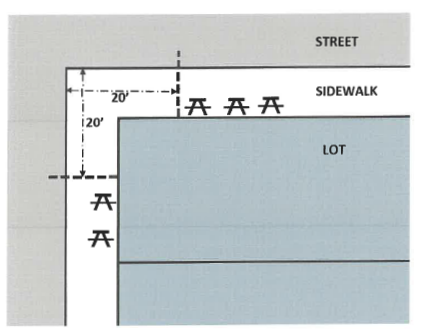
Figure 105-14-1
c.
Signature streets: Outdoor dining areas located at the corners of signature streets (i.e. Harrison Avenue) shall not extend beyond the perpendicular building plane towards the corner of the street. See Figure 105-14-2 below.
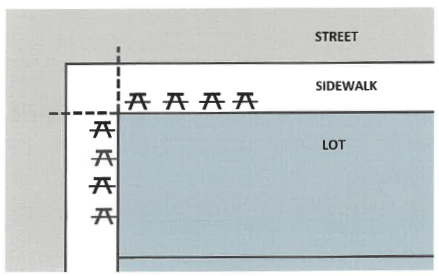
Figure 105-14-2
4.
Materials. Outdoor dining furniture for all outdoor dining areas shall be of uniform design for each business and shall be made of metals, finished wood, or other study materials, outdoor dining furniture along signature streets, such as Harrison Ave, south of 6 th St., are subject to the standards identified in the table below. No other materials are allowed unless approved by the development services director.
5.
Dividers. Outdoor dining areas shall be separated from the adjacent travel lane or curb by non-permanently affixed dividers at least three feet in height when bollards are not present. The height of plants may be included in the total height requirement if planters are used as dividers.
6.
On-street dining. Outdoor dining may be provided in an on-street parking space with or without a platform only on streets with a speed limit that is 25 mph or less, that have on-street parking, and the distance between the curb and property line is seven feet or less. A ramp with a minimum width of four feet, a slope of 1:12, and a minimum landing depth of 36 inches is required for all outdoor dining in an on-street parking space without a platform.
i.
When outdoor dining is provided within an on-street parking space with or without a platform, the following requirements shall apply:
a.
Drainage. Platforms, ramps, and dividers shall not impede drainage and shall maintain at least a 6"×6" clear gutter.
b.
Access. Platforms and ramps shall be flush with the curb with a difference in height of not more than one-quarter inch and a maximum gap between the curb and platform of one-half inch.
c.
Dividers. A delineated perimeter divider at least three feet tall is required on all street facing sides. Plants may be included in the minimum height if planters are used. The delineated perimeter divider shall incorporate reflective decals on both corners adjacent to the travel lane.
d.
Setbacks. The delineated perimeter divider shall be one foot less than the parking stall in length and width. On-street dining shall be setback 20 feet from all intersections.
e.
Materials. All furniture, platforms, ramps, and dividers shall be made of metals, finished wood, or other sturdy materials.
f.
Location. Platforms are not permitted on curbless signature streets, such as Harrison Avenue south of 6 th Street. Only the parking spaces that are located entirely within the width of the front of the parcel(s) the associated business is located on may be utilized for outdoor dining. The city, at its own discretion, may extend the boundaries of the permitted outdoor dining area.
7.
Signage. Signage shall be subject to the approval of the development services director, off-site signage or corporate branding, other than that of the subject business is prohibited. One sidewalk sign, such as an A-frame sandwich board, is permitted per shopfront. The following standards shall apply to sidewalk signs:
i.
Sidewalk signs shall be no larger than eight square feet per face and four feet in height.
ii.
Sidewalk signs on signature streets shall be black, grey, or silver and made of a metal alloy or a stained wood.
iii.
Sidewalk signs are permitted on the public sidewalk adjacent to a business, must maintain a clear path, and must be removed from the sidewalk when the establishment is closed for business.
iv.
The number of signs shall be limited to one per sidewalk per street-level business frontage.
v.
Sidewalk signs shall be setback three feet from the property line.
G.
Conditions of an outdoor dining permit. Outdoor dining permitted under this section shall be subject to the following conditions:
1.
The outdoor dining area shall be open for use by the public and such use may be restricted to patrons of the permit holder only during the hours of operation of the business. The hours of alcohol consumption and sales must comply with all state and local laws and ordinances.
2.
The outdoor dining area shall be clean and in good repair at all times. No mats, carpeting, tiling, or other temporary flooring materials may be used within an outdoor dining area.
3.
No tables, chairs or other fixtures used in connection with an outdoor dining area shall be attached, chained, or in any manner affixed to any tree, post, sign, or other fixture in the public ROW.
4.
No outdoor seating authorized herein shall be used for calculating seating requirements pertaining to the location of, applications for, or issuance of a liquor license for any establishment nor shall the outdoor seats in the public ROW be used to claim any exemption from any other requirements of any city, county or state codes, ordinances, or laws.
5.
The hours of operation for an outdoor dining area shall not extend beyond the hours of operation for the associated business. The city may restrict the hours of operation for outdoor dining abutting residential uses.
6.
No food preparation shall be allowed on the sidewalk as part of an outdoor dining permit. There shall be no cooking, storage, refrigeration or other equipment located within an outdoor dining area.
7.
The permit holder is responsible for the prompt repair of any physical or aesthetic damage to the sidewalk, public parking areas, or public ROW caused by the outdoor dining use, including damage caused by a patron.
8.
Failure to comply with conditions of the outdoor dining permit shall result in its immediate revocation.
(Ord. No. 2675, § 1(Exh. A), 3-12-2019; Ord. No. 3147, 5-9-2023)
Editor's note— The exhibits referenced above are not set out herein, but are on file and available for inspection in the city offices.
Sec. 105-15. - Neighborhood District building design standards.
The purpose of the Neighborhood Building Design Standards is to shape future development in walkable, mixed-use districts. These standards implement key provisions of the Strategic Vision established as part of the city's Long Term Recovery Plan. The standards shall apply to the Neighborhood Downtown (ND) and Neighborhood General (NG) districts.
A.
Building facades
1.
Fenestration. All building facades which face onto a street or public space shall meet the minimum fenestration requirements outlined below. The percentage of fenestration per story shall be calculated within the area between finished floor and finished ceiling and shall be a total percentage of doors and windows along that portion of the facade.
i.
Minimum building facade fenestration for ground story (retail use): 60 percent.
ii.
Minimum building facade fenestration for ground story (uses other than retail): 30 percent.
iii.
Minimum building facade fenestration for upper stories: 20 percent.
2.
Centerlines. Centerlines serve to organize facade components.
i.
Structural centerlines are vertical lines not interrupted by fenestration. Facades shall feature alternating structural centerlines and fenestration centerlines.
ii.
These centerlines shall extend from the top of a mass to the bottom of a mass.
iii.
Multiple windows and/or doors may be grouped symmetrically around a single fenestration centerline.
iv.
The spacing of centerlines may be identical across a facade, or may vary.
v.
Each facade should be organized into a symmetrical rhythm of facade components grouped in vertical modules. Various patterns may be used, even identical modules.
3.
Base, body and cap. These elements communicate height to the pedestrian. Expression lines can be used to distinguish between each component.
i.
Expression lines shall either be moldings extending a minimum of two inches, or jogs in the surface plane of the building wall greater than two inches.
ii.
An expression line may be used to delineate the base of the facade. An expression line shall be used at the top of shopfronts, which may incorporate a band for signage. For buildings three stories or greater, the ground floor shall be differentiated from those floors above by an expression line in order to reinforce the pedestrian realm.
iii.
The top of each building shall be emphasized with a projecting cornice. This cornice shall feature a deeper projection, and therefore stronger shadow line, than any other expression line on a facade.
iv.
Facades may feature a change of colors, materials or textures at an expression line. Buildings should incorporate heavier materials (such as stone or masonry) in the base, below lighter materials (such as siding).
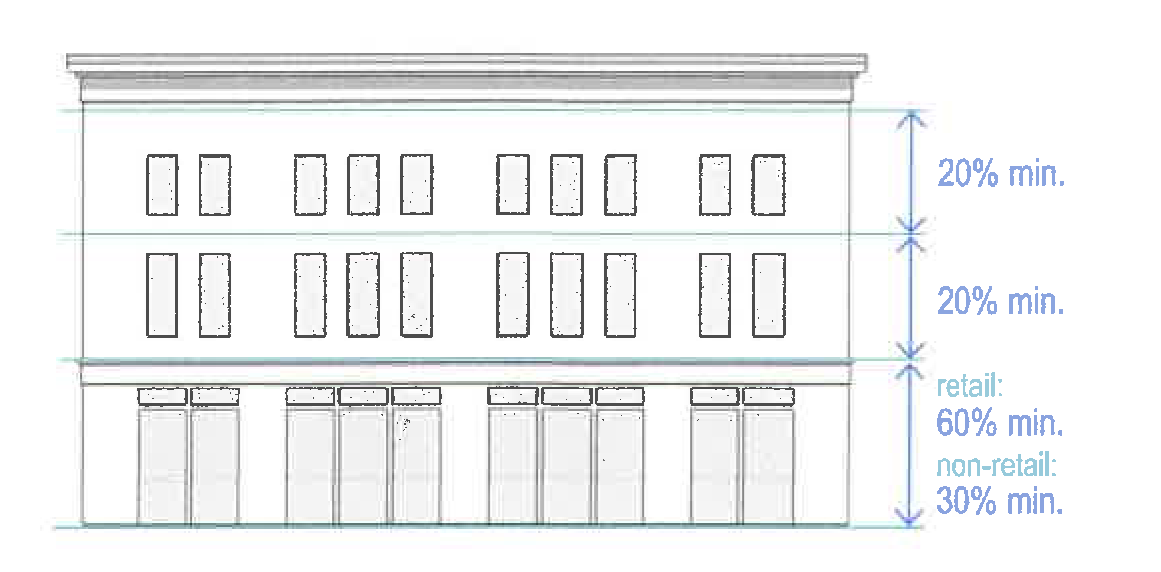
Figure X: Example of compliant facade fenestration
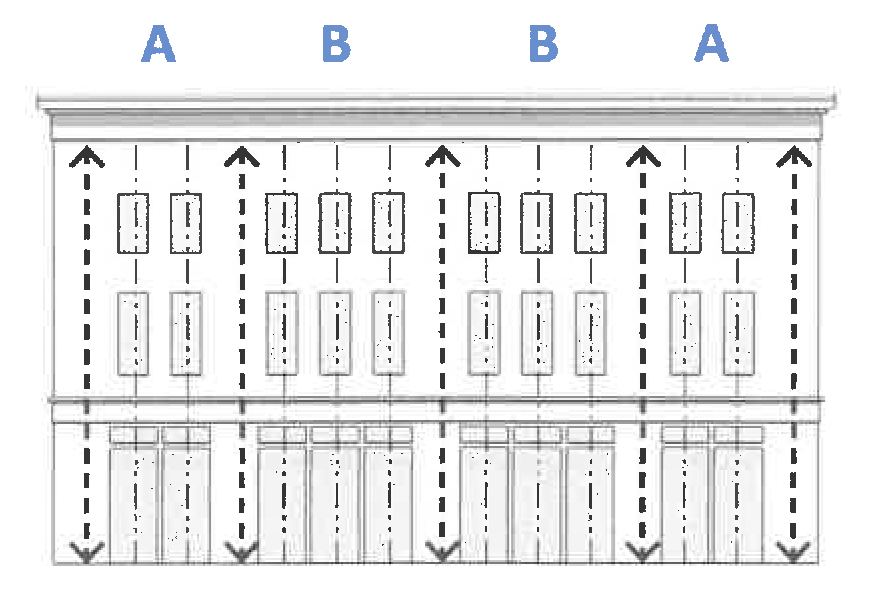
Figure X: Structural and fenestration centerlines, showing how the solid and voids
in the facade align vertically; and organization of the facade into vertical modules.
The facade example here follows an ABBA pattern.
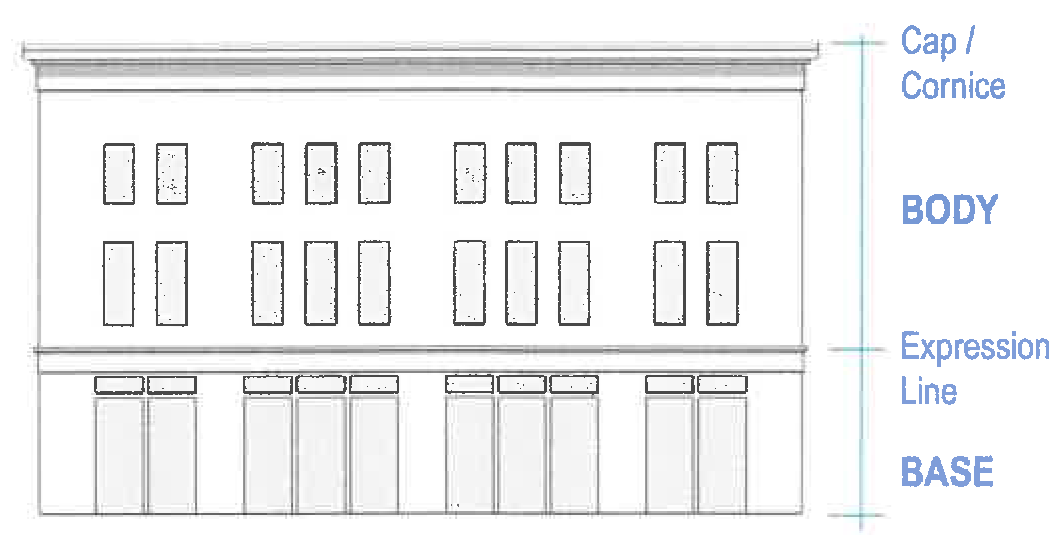
Figure X: The Base, Body & Cap
4.
Liner buildings. The character of some uses of land, such as parking structures or grocery stores, may preclude buildings from complying with the building facade requirements. Such buildings may be constructed in a manner that they are separated from adjacent streets (but not alleys) by liner buildings that meet the building facade requirements in the preceding subsection.
i.
Liner buildings shall be at least two stories in height and 15 feet in depth;
ii.
Liner buildings may be detached from or attached to the primary building;
iii.
Liner buildings may be used for any purpose allowed on the lot on which they are located except for parking.
5.
Building entrances.
i.
Principal entrances of every building must directly face a street or public space. Public space may include a central garden or courtyard when that public space opens directly onto the street.
ii.
Neighborhood Downtown areas: Doors or entrances for public access shall be provided on street-facing building facades at intervals no greater than 50 feet, unless otherwise approved by the city commission. The intent is to maximize street activity, to provide pedestrians with frequent opportunities to enter buildings, and to minimize any expanses of inactive wall.
B.
Building wall materials.
1.
Permitted building wall materials include brick, stone or precast stone, stucco, horizontal lap siding (of wood, cementitious, or composition board, such as HardiPlank®), and pre-engineered metal and glass systems (for windows, doors, and shopfront conditions).
2.
Other siding materials (which may include metal or cementitious panels for ornamentation) shall not be used as a primary building wall material.
3.
Vinyl and aluminum siding are not permitted.
4.
In Neighborhood Downtown areas, the above building wall material standards apply to primary and accessory buildings.
C.
Garden walls and fences. A garden wall is a wall that defines the frontage line and/or the perimeter of a property. All garden walls or fences along property lines at public rights-of-way shall be a maximum of four feet in height, and shall be constructed of brick, stone, masonry faced with stucco, wood, or metal. Chain link fences (or other rolled fencing) along public rights-of-way are not permitted.
D.
Exceptions. Exceptions to the standards of section 105-15 may be granted by the development services director on the basis of architectural merit or where the requirements create undue hardship, such as for building reuse or additions in which required elements are incompatible with the existing structure.
(Ord. No. 3015, Exh. A, 8-24-2021)

