
Peoria County Unincorporated
City Zoning Code
City Zoning Code
ARTICLE 11
- DEFINITIONS
Sec. 11.1 - Definitions
For the purposes and intent of these regulations, the following words and terms have the meanings specified herein:
"A" and "A"-numbered zones: Those areas in the floodplain subject to a one percent or greater chance of flooding in any given year.
Abutting: Having property boundaries or lot lines in common with, but not being separated by a street, alley or other public right-of-way.
Access: A way or means of approach to provide vehicular or pedestrian physical entrance to a property.
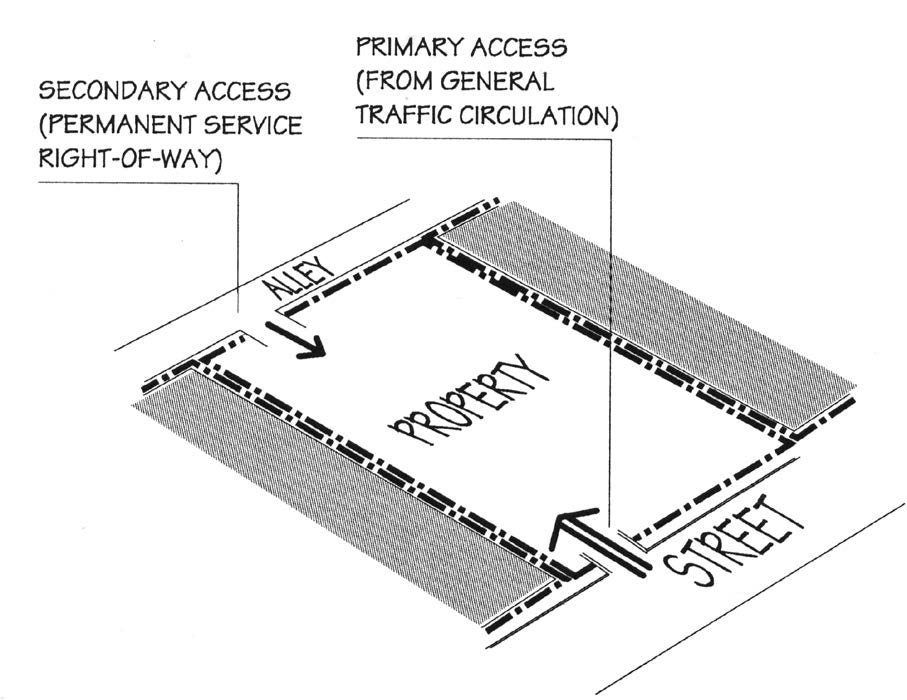
Access Permit: A permit issued by the appropriate highway authority for the construction, maintenance, and use of a driveway or public street or highway connecting to an existing highway.
Accessory: A use, building or structure, or part of a building or structure which: (1) is subordinate to and serves the principal building or structure or principal use; (2) is subordinate in area, extent, or purpose to the principal building or structure or principal use served; (3) contributes to the comfort, convenience, or necessity of occupants of the principal building or principal use; and (4) is located on the same lot as the principal building or structure or principal use served, with the exception of such accessory off-street parking facilities as are permitted to locate elsewhere than on the same lot as the building or use served.
Acre: Forty-three thousand five hundred sixty (43,560) square feet.
Act: An act in relation to the regulation of the rivers, lakes, and streams of the State of Illinois, 615 ILCS 5/5 et seq.
Adjacent/Adjoining: Abutting or being directly across a street, alley, or other public right-of-way from.
Adjacent lands: At a minimum is an area within fifty (50) feet of the project area, and includes all surrounding land that may either impact a site, or be impacted by potential soil erosion, sediment and/or stormwater run-off as a result of land disturbing activities conducted on a site.
Adult Bookstore, Adult Novelty Store, Adult Video Store: "Adult Bookstore, Adult Novelty Store, or Adult Video Store" means a commercial establishment which has a significant or substantial portion of its stock-in-trade or derives a significant or substantial portion of its revenues or devotes a significant or substantial portion of its interior business or advertising, or maintains a significant or substantial section of its sales or display space to the sale or rental, for any form of consideration, of any one or more of the following:
Books, magazines, periodicals or other printed matter, or photographs, films, motion pictures, video cassettes, compact discs, slides, or other visual representations which are characterized by their emphasis upon the exhibition or description of "specified sexual activities" or "specified anatomical areas";
The term "Adult Bookstore, Adult Novelty Store, or Adult Video Store" shall also include a commercial establishment which regularly maintains one or more "Adult Arcades." "Adult Arcade" means any place to which the public is permitted or invited wherein coin-operated or slug-operated or electronically, electrically, or mechanically controlled still or motion picture machines, projectors, or other image-producing devices are regularly maintained to show images to five (5) or fewer persons per machine at any one time, and where the images so displayed are distinguished or characterized by their emphasis upon matter exhibiting or describing " specified sexual activities" or specified "anatomical areas."
Adult Cabaret: "Adult Cabaret" means a nightclub, bar, juice bar, restaurant, bottle club, or similar commercial establishment, regardless of whether alcoholic beverages are served, which regularly features: (1) persons who appear semi-nude, (2) live performances which are characterized by the exposure of any "specified anatomical areas," or (3) films, motion pictures, videocassettes, slides, or other photographic reproductions which are characterized by their emphasis upon the exhibition or description of "specified sexual activities" or "specified anatomical areas."
Adult Motel: "Adult motel" means a motel, hotel, or similar commercial establishment which: (a) offers public accommodations, for any form of consideration, and which regularly provides patrons with closed-circuit television transmissions, films, motion pictures, video cassettes, slides, or other photographic reproductions which are characterized by their emphasis upon the exhibition or description of "specified sexual activities" or "specified anatomical areas" and which regularly advertises the availability of such material by means of a sign visible from the public right-of-way, or by means of any off-premises advertising, including, but not limited to, newspapers, magazines, pamphlets or leaflets, radio or television, and (b) offers a sleeping room for rent for a period of time less than ten (10) hours.
Adult Motion Picture Theater: "Adult Motion Picture Theater" means a commercial establishment where films, motion pictures, videocassettes, slides, or similar photographic reproductions which are characterized by their emphasis upon the exhibition or description of "specified sexual activities" or "specified anatomical areas" are regularly shown for any form of consideration.
Adult Theater: "Adult Theater" means a theater, concert hall, auditorium, or similar commercial establishment which, for any form of consideration, regularly features persons who appear in state of semi-nudity or live performances which are characterized by their emphasis upon the exposure of "specified anatomical areas" or "specified sexual activities."
Adult-Use Cannabis Craft Grower: A facility operated by an organization or business that is licensed by the Illinois Department of Agriculture to cultivate, dry, cure, and package cannabis and perform other necessary activities to make cannabis available for sale at a dispensing organization or use at a processing organization, per the Cannabis Regulation and Tax Act, (P.A. 101-0027), as it may be amended from time-to-time, and regulations promulgated thereunder.
Adult-Use Cannabis Cultivation Center: A facility operated by an organization or business that is licensed by the Illinois Department of Agriculture to cultivate, process, transport and perform necessary activities to provide cannabis and cannabis-infused products to licensed cannabis business establishments, per the Cannabis Regulation and Tax Act, (P.A. 101-0027), as it may be amended from time-to-time, and regulations promulgated thereunder.
Adult-Use Cannabis Dispensing Organization: A facility operated by an organization or business that is licensed by the Illinois Department of Financial and Professional Regulation to acquire cannabis from a cultivation center, craft grower, processing organization, or another dispensary for the purpose of selling or dispensing cannabis, cannabis-infused products, cannabis seeds, paraphernalia, or related supplies to purchasers or to qualified registered medical cannabis patients and caregivers, per the Cannabis Regulation and Tax Act, (P.A. 101-0027), as it may be amended from time-to-time, and regulations promulgated thereunder.
Adult-Use Cannabis Infuser Organization, or Infuser: A facility operated by an organization or business that is licensed by the Illinois Department of Agriculture to directly incorporate cannabis or cannabis concentrate into a product formulation to produce a cannabis-infused product, per the Cannabis Regulation and Tax Act, (P.A. 101-0027), as it may be amended from time-to-time, and regulations promulgated thereunder.
Adult-Use Cannabis Processing Organization, or Processor: A facility operated by an organization or business that is licensed by the Illinois Department of Agriculture to either extract constituent chemicals or compounds to produce cannabis concentrate or incorporate cannabis or cannabis concentrate into a product formulation to produce a cannabis product, per the Cannabis Regulation and Tax Act, (P.A. 101-0027), as it may be amended from time-to-time, and regulations promulgated thereunder.
Adult-Use Cannabis Transporting Organization, or Transporter: An organization or business that is licensed by the Illinois Department of Agriculture to transport cannabis or cannabis-infused product[s] on behalf of a cannabis business establishment or a community college licensed under the Community College Cannabis Vocational Training Pilot Program, per the Cannabis Regulation and Tax Act, (P.A. 101-0027), as it may be amended from time-to-time, and regulations promulgated thereunder.
Aggrieved Party or Person: A party or person whose legal right has alleged to have been invaded or infringed, or whose pecuniary interest is alleged to be directly affected by a government act complained of.
Agriculturally-Related Business: A business activity related to agriculture that includes, but is not limited to: grain drying and storage; grain elevators; agricultural production and distribution; repair and sale of farm implements; and sale of feed and sod.
Agriculture: Land used for agricultural purposes when such agricultural purpose constitutes the principal activity on the land. Agricultural purposes include the growing of farm crops, truck garden crops, animal and poultry husbandry, apiculture, aquaculture, dairying, floriculture, horticulture, nurseries, tree farms, sod farms, pasturage, viticulture, wholesale greenhouses and the growing, developing, processing, conditioning or selling of hybrid seed corn, seed beans, seed oats, or other farm seeds.
Agricultural Facility: Any building or structure suitable for use in farming, ranching, the production of agricultural commodities, or the treating, processing, or storing of such agricultural commodities and machinery when such activities are customarily engaged in by farmers as a part of farming, and not including structures used for living purposes.
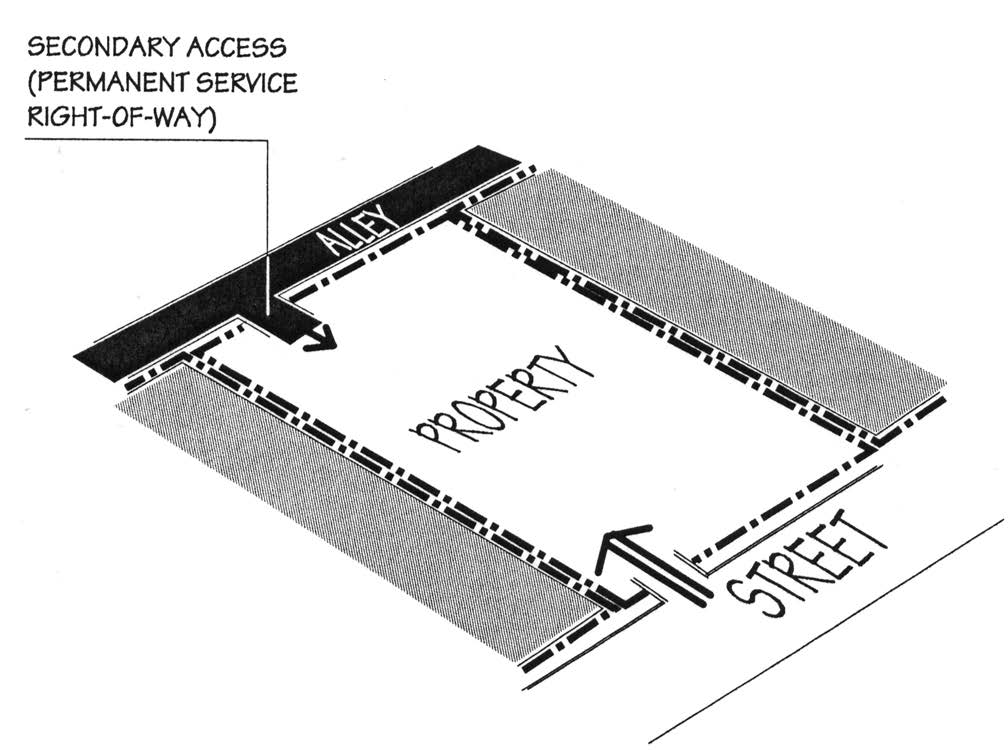
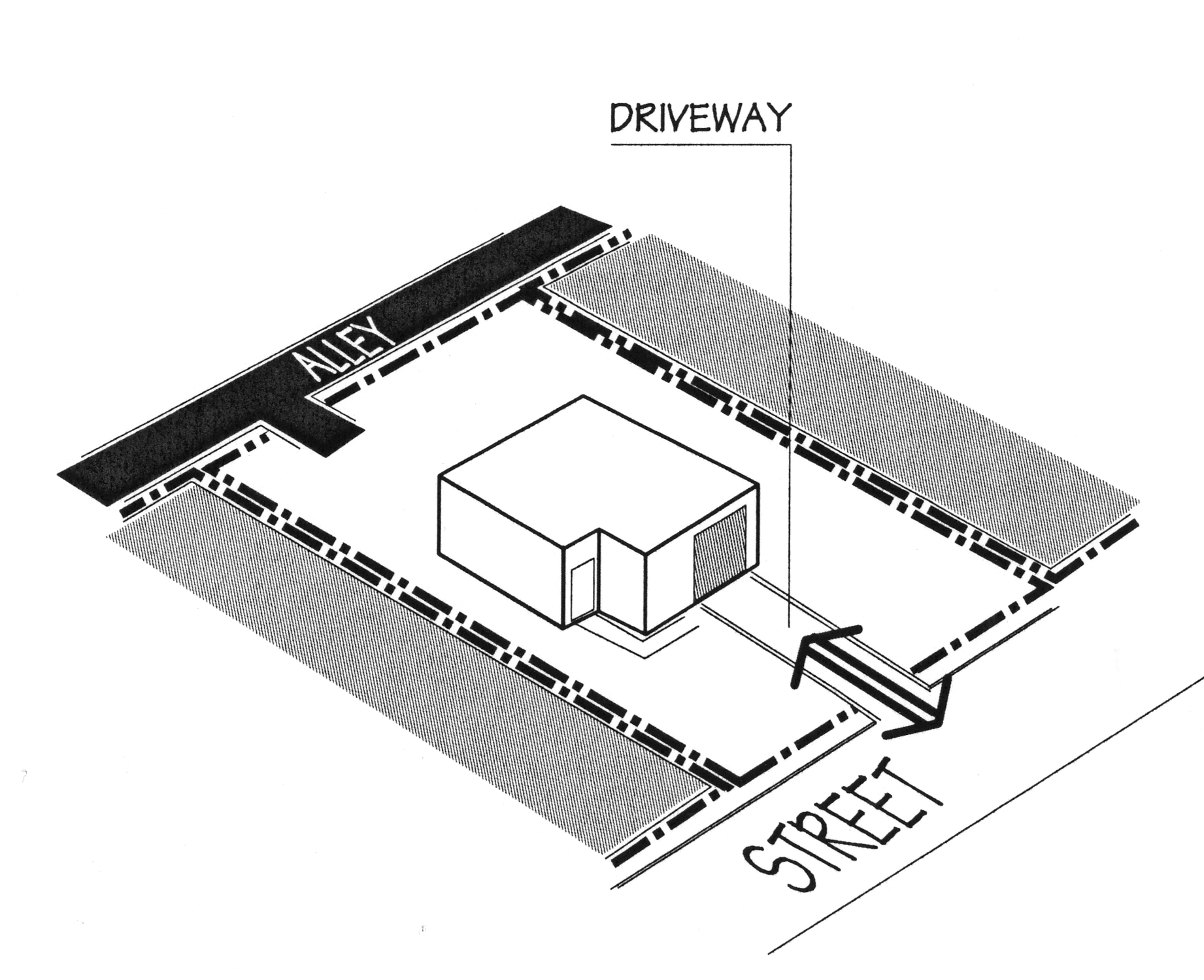
Alley: A permanent service right-of-way which affords only a secondary means of access from such right-of-way to abutting property and is not intended for general traffic circulation.
Alteration: Any change, replacement, or rearrangement in the supporting members of an existing building, such as bearing walls, columns, beams, girders, or interior partitions, as well as any change in doors, windows, means of ingress and egress, or any enlargement to or diminution of a building or structure, whether horizontally or vertically, or the moving of a building or structure from one location to another.
Antenna: An arrangement of wires or metal rods used in transmitting or receiving electromagnetic waves. Per Section 7.1 ("Telecommunications Carrier Facilities") the term "Antenna" shall have the following meaning: An antenna device by which radio signals are transmitted, received or both.
Appeals Board: The Erosion, Sediment and Stormwater Control Appeals Board.
Applicant: Any person, firm, corporation, or agency that submits an application.
Application For Development Approval: The application form and all accompanying documents and exhibits required in order to obtain development approval.
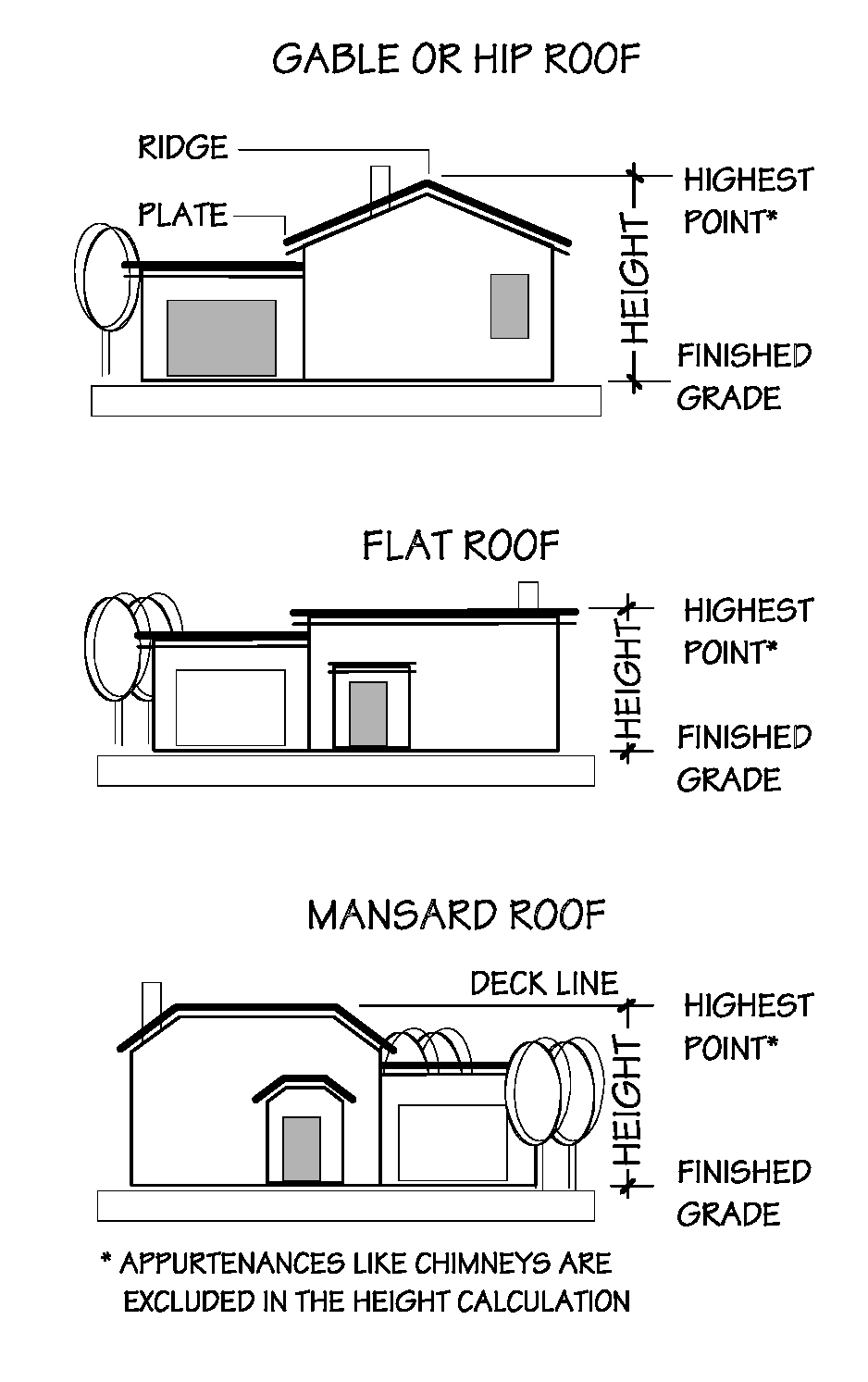
Appurtenances: The visible, functional, or ornamental objects accessory to and part of a building(s).
Areas of concentrated flow or bodies of water: Any area where water may accumulate or flow, whether continual or as the result of a storm event, including, but not limited to, lakes, rivers, streams, creeks, ponds, ditches, swales, gullies, ravines, street gutters and other similar features.
As-Built Plans: Construction plans prepared and submitted by the developer's engineer that show the required improvements post-construction. Ideally, the original construction plans should match the as-built plans.
Authorized Factory Representative: An individual with technical training of a Wind Energy Conversion System ("WECS"), who has received factory installation instructions and is certified in writing by the manufacturer of the WECS.
Automated Teller Machine: A machine that dispenses money and/or receives deposits.
Automobile: A two-axle motor vehicle designed and used primarily for the conveyance of not more than nine (9) persons that weighs less than eight thousand (8,000) pounds.
Automobile Body Repair: The business of autobody repair for automobiles. The term may include automobile repair, mechanical, as well as structural repair or appearance alteration (e.g., painting or detailing).
Automobile Repair: The business of mechanical or electrical repair work and servicing of automobiles, including fast service, tune-up, and lubricating facilities, but specifically excluding body work or painting.
Automobile Sales: A building or land used for the sale and display of automobiles or motorcycles. Accessory uses may include automobile repair and vehicle preparation.
Automobile Service Station: Any building, structure, or lot used for one or more of the following: (1) dispensing, selling or offering for retail sale, gasoline, kerosene, lubricating oil, or grease for the operation and maintenance of automobiles, including the sale and installation of tires, batteries and other minor accessories and services for automobiles; or (2) automobile mechanical repair. This may include buildings or structures that are used for the retail sale and direct delivery to motor vehicles of cigarettes, candy, soft drinks and other related items for the convenience of the motoring public, and may include facilities for the washing of automobiles where production line methods are not used. Such establishments shall not include facilities for automobile body repair, mechanical vehicle repair, vehicle body repair, car washing, or the sale or storage of new or used automobiles or trailers.
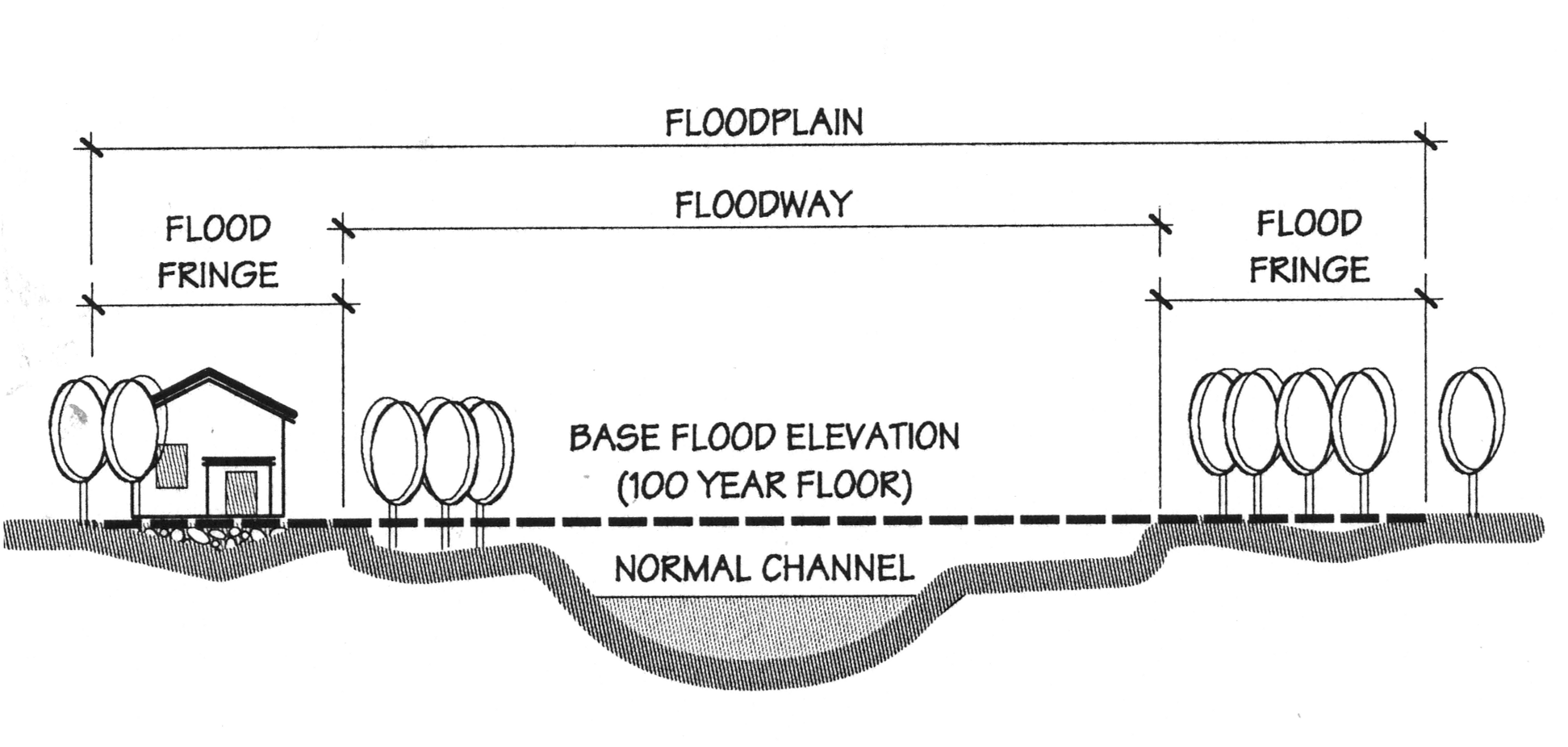
Base Flood: The flood having a one percent chance of being equaled or exceeded in a given year. The base flood is also known as the 100-year flood.
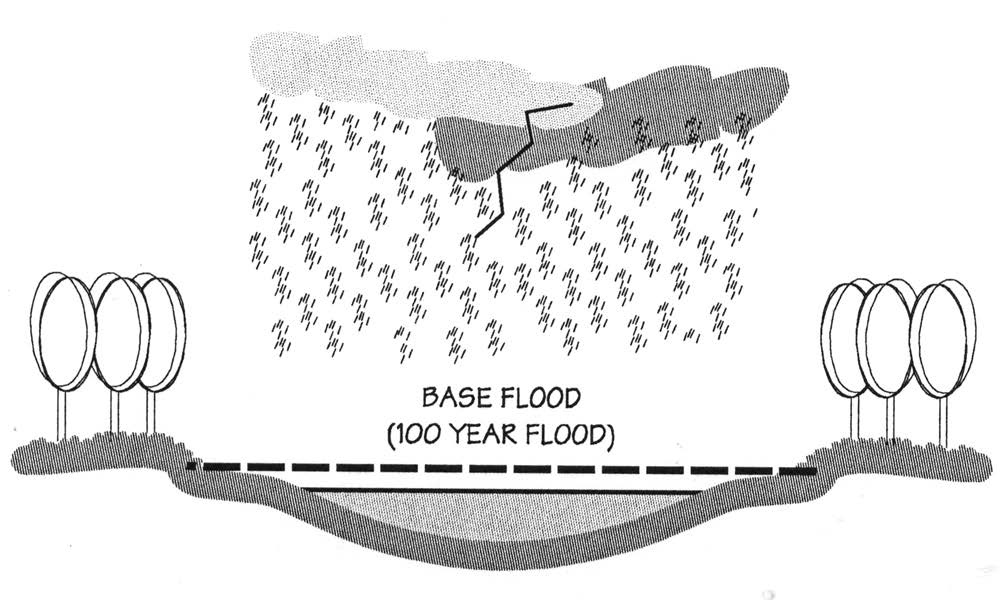
Base Flood Elevation: The elevation in relation to mean sea level of the crest of the base flood.
Basement: A story entirely or partly underground and having at least one-half (½) of its height below grade.
Battery Energy Storage System (BESS): One or more devices, assembled together, capable of storing energy in order to supply electrical energy at a future time, not to include a stand-alone 12-volt car battery or an electric motor vehicle. Also, referred to as energy storage systems. A battery energy storage system is classified as a Tier 1 or Tier 2 Battery Energy Storage System as follows:
(1)
Tier 1: A battery energy storage system that has an aggregate energy capacity less than or equal to six hundred (600) kWh and, if in a room or enclosed area, consists of only a single battery energy storage system unit. A rechargeable BESS is typically used to provide standby or emergency power and /or uninterruptable power supply, load shedding, load sharing, or similar capabilities relating to the energy consumed by a residence, farm operation, or other business on site.
(2)
Tier 2: A battery energy storage system that has an aggregate energy capacity greater than six hundred (600) kWh or are comprised of more than one battery energy storage system unit in a room or enclosed area.
Best Available Data: Data available from a variety of sources including DFIRM, FIRM, USGS Topographical Data, and/or professional engineer which can be used to make a determination as to the location of a flood hazard area. Determinations may be compiled with a combination of data from a variety of sources.
Billboard: A nonresidential sign, which is located off-premises, greater than one hundred (100) square feet in sign face area.
Block: A tract of land bounded by streets, or by a combination of streets and public parks, cemeteries, railroad rights-of-way, shorelines of waterways, or boundary lines of municipalities.
Bluff: A steep headland, river bank, or cliff with a broad face and with a slope of thirty-five (35) percent or greater.
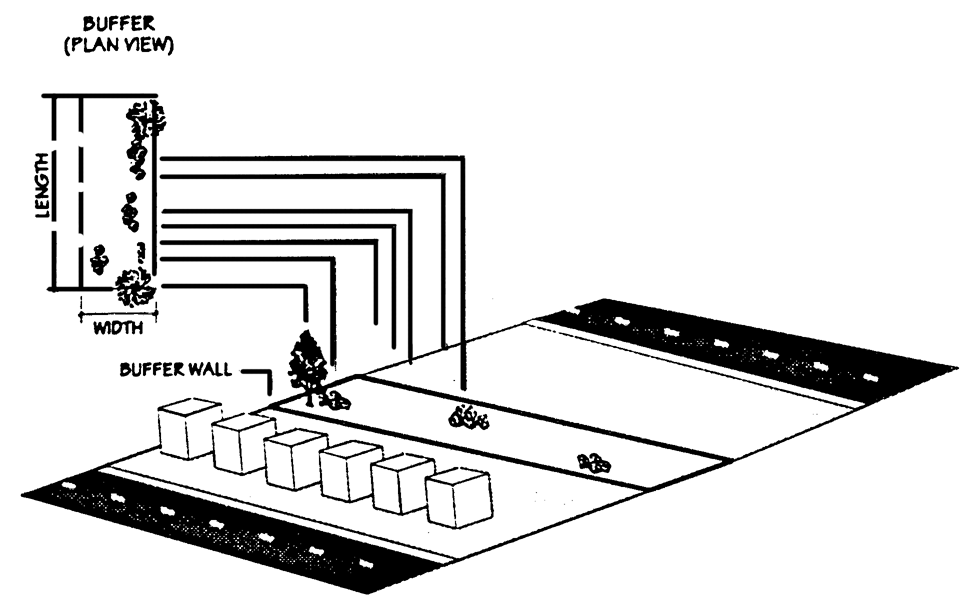
Buffer: A combination of vegetation, fencing, berms and open spaces which is used to physically separate or screen land uses.
Building: Any structure designed or intended for the support, enclosure, shelter or protection of persons, animals or property. Per Sections 3.10 ("Floodplain Development Permit") and 7.14 ("Floodplain Regulations") the term "Building" shall have the following meaning: A structure that is principally above ground and is enclosed by walls and a roof. The term includes a gas or liquid storage tank, a manufactured home or a prefabricated building. This term also includes recreational vehicles and travel trailers to be installed on a site for more than one hundred eighty (180) days.
Building Envelope: The three-dimensional space within which a structure is permitted to be built on a parcel and that is defined by the maximum height regulations and minimum yard setbacks of the Unified Development Ordinance.
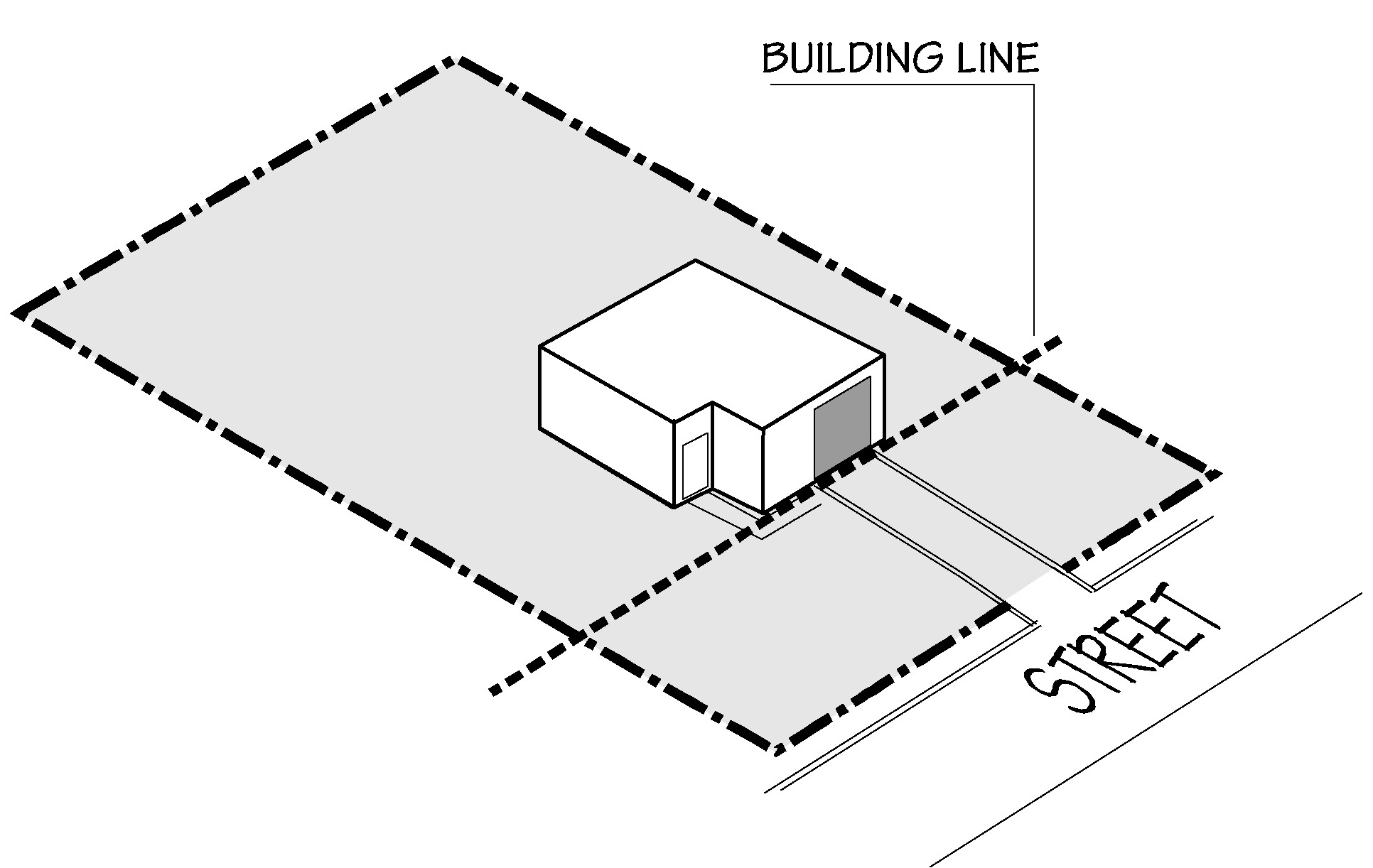
Building Line: A line parallel to the right-of-way line touching that part of a building closest to the right-of-way.
Bulk: The size and setback of buildings or structures, and the location of buildings or structures with respect to one another, and includes, but is not limited to the following: (a) size and height of buildings; (b) location of exterior walls at all levels in relation to lot lines, streets, or to other buildings; (c) floor area ratio; (d) all open space allocated to buildings; and (e) amount of lot area and lot width provided per dwelling unit.
Business: An occupation, employment, or enterprise which occupies time, attention, labor and materials, or wherein merchandise is sold or where services are offered.
Caliper: The diameter of a tree trunk, measured in inches. For the purpose of this Unified Development Ordinance caliper shall be taken six (6) inches above the ground up to, and including four-inch caliper trees, and twelve (12) inches above the ground for larger sizes. Caliper is generally associated with nursery stock for new plantings.
Camp: A tract of land on which may be located temporary or permanent buildings, structures, or tents, which land, together with appurtenances thereon, is used for seasonal, recreational, or other similar purposes.
Cannabis: Marijuana, hashish, and other substances that are identified as including any parts of the plant Cannabis sativa and including derivatives or subspecies, such as indica, of all strains of cannabis, whether growing or not; the seeds thereof, the resin extracted from any part of the plant; and any compound, manufacture, salt, derivative, mixture, or preparation of the plant, its seeds, or resin, including tetrahydrocannabinol (THC) and all other naturally produced cannabinol derivatives, whether produced directly or indirectly by extraction; however, "cannabis" does not include the mature stalks of the plant, fiber produced from the stalks, oil or cake made from the seeds of the plant, any other compound, manufacture, salt, derivative, mixture, or preparation of the mature stalks (except the resin extracted from it), fiber, oil or cake, or the sterilized seed of the plant that is incapable of germination. "Cannabis" does not include industrial hemp as defined and authorized under the Industrial Hemp Act.
Cannabis Business Establishment: An, Adult-Use Cannabis Craft Grower, Adult-Use Cannabis Cultivation Center, Adult-Use Cannabis Dispensing Organization, Adult-Use Cannabis Infuser Organization, Adult-Use Cannabis Processing Organization, Adult-Use Cannabis Transporting Organization, Medical Cannabis Cultivation Center, or Medical Cannabis Dispensing Organization.
Cannabis concentrate: A product derived from cannabis that is produced by extracting cannabinoids, including tetrahydrocannabinol (THC), from the plant through the use of propylene glycol, glycerin, butter, olive oil or other typical cooking fats; water, ice, or dry ice; or butane, propane, CO2, ethanol, or isopropanol and with the intended use of smoking or making a cannabis-infused product. The use of any other solvent is expressly prohibited unless and until it is approved by the Illinois Department of Agriculture.
Cannabis-infused product: A beverage, food, oil, ointment, tincture, topical formulation, or another product containing cannabis or cannabis concentrate that is not intended to be smoked.
Canopy or Awning: A permanent roof-like shelter which may be freestanding or extending from part or all of a building face and is constructed of some durable material such as metal, glass or plastic.
Caretaker: A person who is responsible for the protection of property, equipment, and/or merchandise and who resides on such premises.
Carport: A roofed structure permanently open on at least two (2) sides and designed for or occupied by automobiles or recreational vehicles.
Car Wash: A completely or partially enclosed building or structure for the washing of automobiles or other motor vehicles, either by automatic or semi-automatic means, whether or not in conjunction with other goods or services provided to customers.
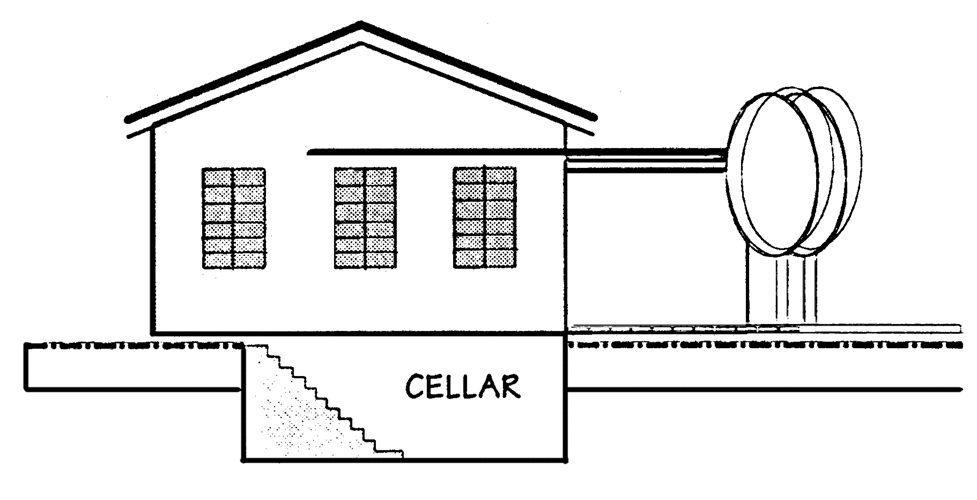
Cellar: A story having more than one-half (½) of its height below grade, and distinguished from a basement by not being well lighted and fitted for living purposes. A cellar is not included in computing the number of stories for the purposes of height or floor area measurement.
Certificate of Occupancy: A document issued by the County allowing the occupancy or use of a building and certifying that the structure or use has been constructed and will be used in compliance with all applicable County regulations.
Child Care Center: An individual, agency or organization which regularly provides preschool instruction or supervision and care on a regular basis for less than twenty-four (24) hours per day for one or more children in a facility other than a detached dwelling, who are not related by blood or marriage to, and who are not the legal wards or foster children of, the supervising adult.
Child Care Home: Any detached dwelling which receives more than four (4) but no more than eight (8) children for less than twenty-four (24) hours per day. The maximum of eight (8) children received shall be reduced in number by the family's natural or adopted children and all other persons under the age of fourteen (14) residing in the home. This does not include an operation which receives only children from a single family.
Clinic: Any building or portion thereof, the principal use of which is for offices of one or more licensed physicians, ophthalmologists, dentists, psychologists or the like for the examination and treatment of persons on an out-patient basis only.
Clinic, Animal: Any building or portion thereof, the principal use of which is for offices of one or more licensed veterinarians for the examination and treatment of animals on an out-patient basis only.
Club: A structure and/or facilities used for the purpose of meetings and/or events for a nonprofit association of persons who are bonafide members organized for some common purpose and paying regular dues; not including a group organized solely or primarily to render a service customarily carried on as a commercial enterprise.
Cluster Subdivision: A major or moderate residential subdivision in which the individual lots are clustered, grouped, or arranged so as to achieve a more flexible site.
Code Hearing Unit: A hearing unit which has the function of expediting the prosecution and correction of code violations.
College or University: An institution providing full-time or part-time education beyond the high school level, including any dormitories, lodging rooms or other housing for students or faculty.
Combustible Vegetation: Any material that left in its natural state will readily ignite, burn, and cause fire to move to any structure or other vegetation.
Commercial Retail Establishment: A building, property, or activity the principal use or purpose of which is the sale of goods, products, or materials directly to the consumer. This includes, but is not limited to, clothing stores, appliance stores, bakeries, food stores, grocers, caterers, pharmacies, book stores, florists, furniture stores, hardware stores, pet stores, toy stores, and variety stores but does not include restaurants or personal service establishments. This use specifically excludes any Adult-Use or Medical cannabis business establishments.
Commercial Solar Energy System: Any device or assembly of devices that (i) is ground installed and (ii) uses solar energy from the sun for generating electricity for the primary purpose of wholesale or retail sale and not primarily for consumption on the property on which the device or devices reside.
Commercial Vehicle or Truck: A motor vehicle which has a gross weight in pounds, including vehicle and maximum load, in excess of eight thousand (8,000) pounds and which is not primarily designed for carrying passengers.
Commercial Wind Energy System: A wind energy conversion facility of equal or greater than five hundred (500) kilowatts in total nameplate generating capacity. Also referred to as Wind Energy Conversion System (WECS).
Commission: The Tri-County Regional Planning Commission.
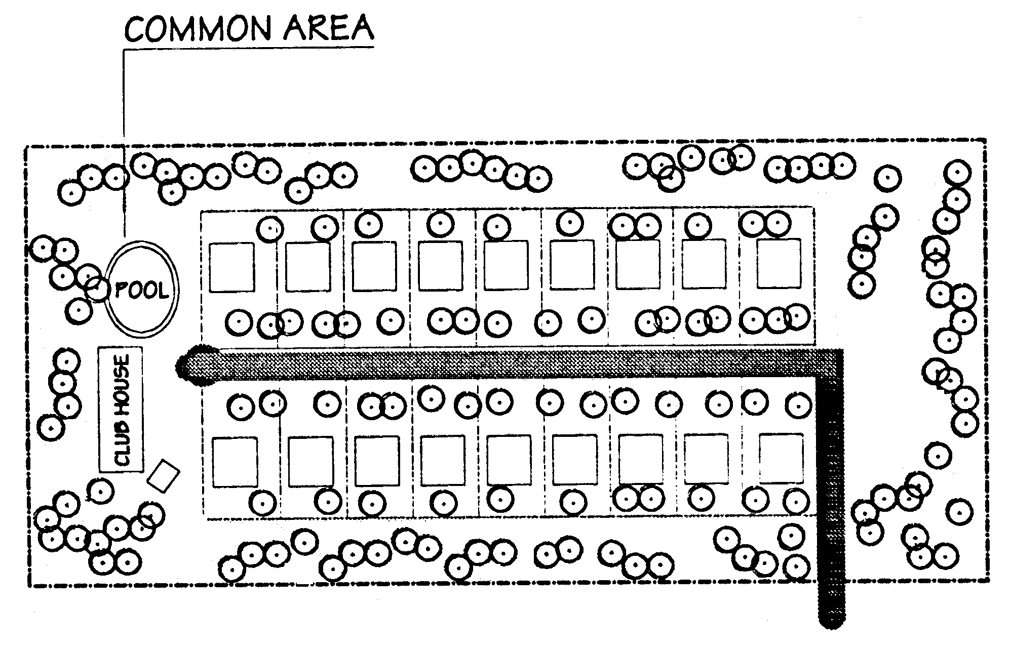
Common Area: A lot, parcel, or area within a development conveniently accessible to all residents or occupants of the development, designed as a significant focus, not including required setbacks, private open space, or impervious surface, designed to accommodate some group social functions.
Community Center: A building for social, educational and recreational activities of a neighborhood or community, including a social hall or lodge, not operated primarily for commercial purposes.
Community Sewer System: A community sewer system including collection and treatment facilities established by the developer to collectively serve an entire new subdivision in an outlying area. It shall not include individual sewage disposal systems.
Community Water System: A public water system which serves at least fifteen (15) service connections used by residents or regularly serves at least twenty-five (25) residents at least sixty (60) days a year. A permit for a community water system is issued by the Illinois Environmental Protection Agency.
Comprehensive Land Use Plan: The complete plan or any of its parts for the development of the County as prepared by the Plan Commission or any other planning agency and adopted by the County Board as the official plan.
Conservation Area: Environmentally sensitive areas with characteristics such as steep slopes, wetlands, floodplains, high water tables, forest areas, endangered species habitat, dunes, or areas of significant biological productivity or uniqueness that have been designated for protection from any activity that would significantly alter their ecological integrity, balance, or character.
Conservation Easement: A restriction against further development of a portion of a tract in the form of a deed restriction.
Contiguous: Abutting or adjoining.
Contractor: Any person or firm engaged in construction, building services, excavation or maintenance on a contract basis.
Control Measure: Any proposed temporary or permanent measures to be installed to control erosion, sediment and stormwater run-off from a project area.
Convenience Store: A retail store with a floor area of less than five thousand (5,000) square feet, which sells groceries and/or beer and wine, and is open fifteen (15) to twenty-four (24) hours a day, but not including an automobile service station.
County: Peoria County, Illinois.
County Board: The elected, legislative body of Peoria County, Illinois.
County Clerk: The elected or appointed Clerk of Peoria County, Illinois.
County Code: The Peoria County Code.
County Engineer: The appointed head of the Peoria County Highway Department.
County Recorder: The elected or appointed Recorder of Deeds of Peoria County, Illinois. After a subdivision has been approved it is recorded in the Recorder's Office.
Cultivation Center: A facility operated by an organization or business that is registered in accordance with 410 ILCS 130/1 et seq. by the Department of Agriculture to perform necessary activities to provide only registered medical cannabis dispensing organizations with usable medical cannabis.
Culvert: A drain, ditch, or conduit, not incorporated in a closed system, that carries drainage water under a driveway, roadway, railroad, pedestrian walk, or public way.
Curb: A stone, concrete, or other improved boundary usually marking the edge of the roadway or paved area.
Curb Cut: The opening along the curb line at which point vehicles may enter or leave the roadway.
Dam: All obstructions, wall embankments or barriers, together with their abutments and appurtenant works, if any, constructed for the purpose of storing or diverting water or creating a pool. Underground water storage tanks are not included. This definition specifically excludes "levees" as defined in this section.
Dance Hall: Establishments in which a minimum of twenty (20) percent of the total floor area is designed and used as a dance floor, or where an admission fee is directly collected, or some other form of compensation is obtained for dancing.
Density: The permitted number of dwelling units per gross acre of land to be developed.
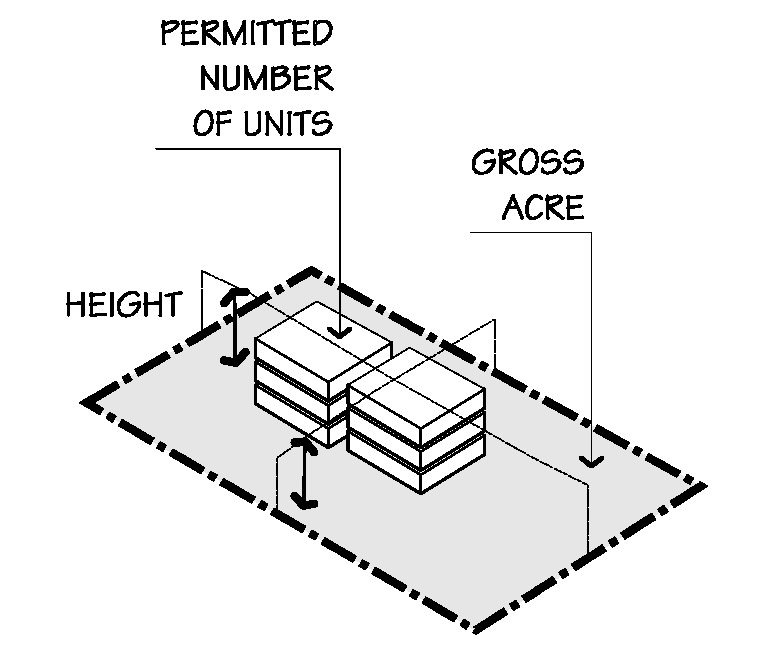
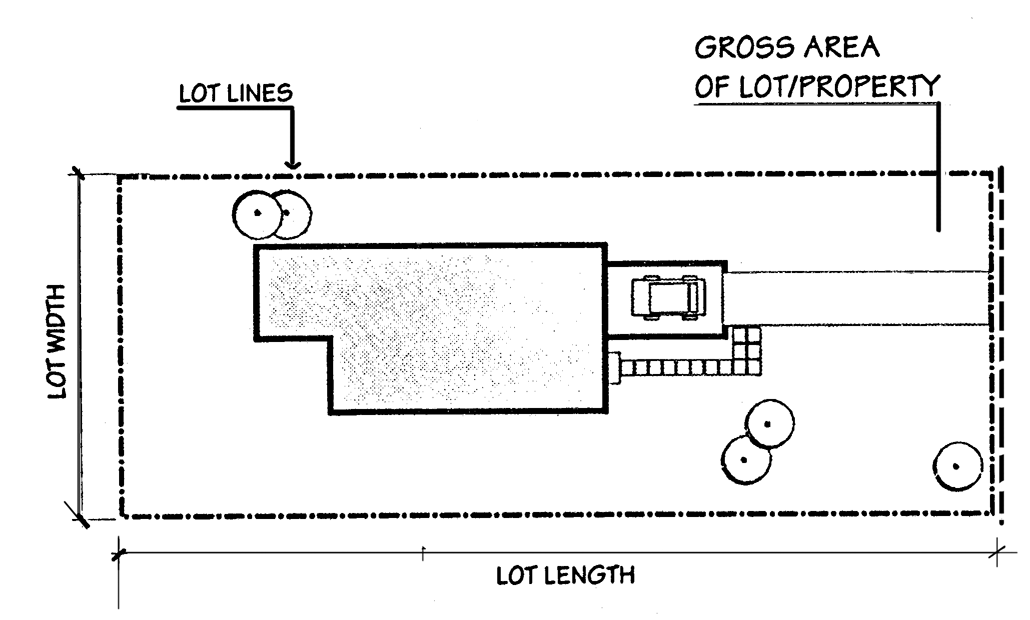
Density, Gross: All the area within the boundaries of the particular area, excluding nothing.
Department: The Peoria County Department of Planning and Zoning.
Developer: Any person who commences proceedings under these regulations to affect a development of land.
Development: The following activities: (1) the division of a parcel of land into two (2) or more parcels; (2) the construction, reconstruction, conversion, structural alteration, relocation, enlargement, or demolition of a structure; (3) the mining, excavation, landfill, drilling, grading, deposition of refuse, solid or liquid waste, or fill on a parcel of land; (4) the alteration of the shore or bank of a pond, lake, river, or other waterway; or (5) any use or change in the use or intensity of use of any structure or any change in the intensity of use of land.
Per Sections 3.10 ("Floodplain Development Permit") and 7.14 ("Floodplain Regulations") the term "Development" shall have the following meaning: Any manmade change to real estate including:
(1)
Construction, reconstruction, repair, or placement of a building or any addition to a building;
(2)
Installing a manufactured home on a site, preparing a site for a manufactured home, or installing a travel trailer on a site for more than one hundred eighty (180) days;
(3)
Mining, dredging, filling, grading, paving, excavation or drilling operations or other alterations of the ground surface, except for the surface mining of fossil fuels;
(4)
Demolition of a structure or redevelopment of a construction site;
(5)
Substantial improvement of an existing building;
(6)
Installation of utilities, construction of roads, bridges, culverts or similar projects;
(7)
Construction or erection of levees, dams, walls, or fences;
(8)
Storage of equipment or materials including the placement of gas and liquid storage tanks;
(9)
Clearing of land as an adjunct of construction; and
(10)
Any other activity that will change the direction, height or velocity of flood or surface waters.
Development does not include maintenance of existing buildings and facilities such as reroofing or resurfacing of roads when there is no increase in elevation; or gardening, plowing, and similar agricultural practices that do not involve filling, grading, or construction of levees.
Diagonal setback: Indicates a measurement for setback that is calculated by measuring from the water surface at the pool's edge to the lowest electrical service line.
Diameter at Breast Height (dbh): The diameter of the trunk of a tree measured in inches at a point four and one-half (4¼) feet above ground level, or grade. This point of measurement is used for established, mature trees.
Digital Flood Insurance Rate Map (DFIRM): Digital maps prepared by the Federal Emergency Management Agency (FEMA) that depict the Special Flood Hazard Areas (SFHA) within a community. These maps include insurance rate zones and floodplains and may or may not depict floodways. These maps replace existing FIRMs.
Distinguished or Characterized by an Emphasis Upon: "Distinguished or Characterized by an Emphasis Upon" means the dominant or principal theme of the object described by such phrase. For instance, when the phrase refers to films "which are distinguished or characterized by an emphasis upon the exhibition or description of Specified Sexual Activities or Specified Anatomical areas," the films so described are those whose dominant or principal character and theme are the exhibition or description "specified anatomical areas" or "specified sexual activities."
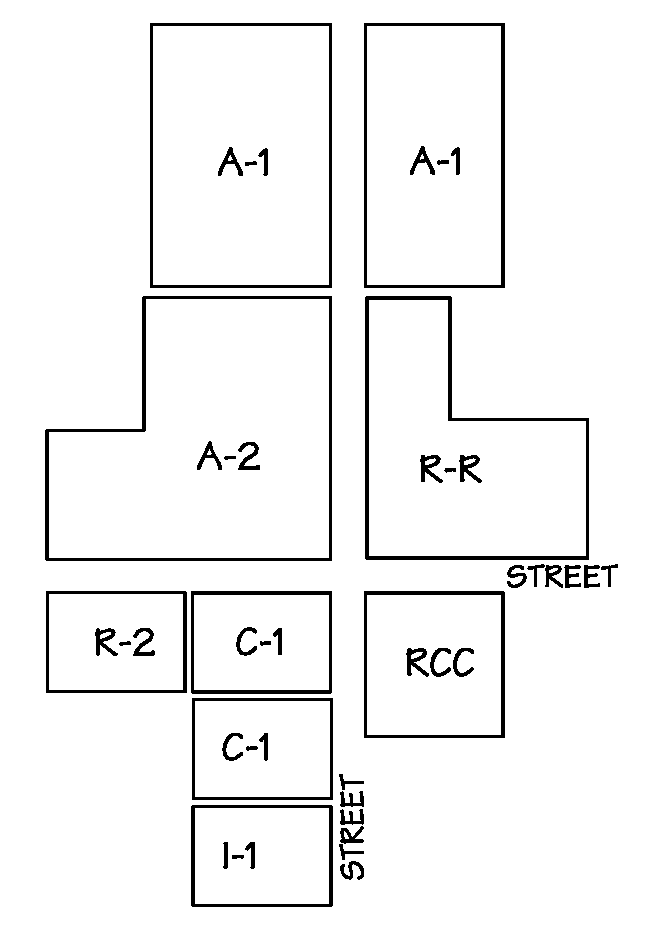
District: A part, zone, or geographic area within the County within which certain zoning or development regulations apply.
Disturbed Area: Any area of land on which the pre-development ground surface will be affected or altered by the development activities. This includes, but is not limited to, grading, clearing, stock piling, tracking and other similar activities.
Dormitory: A building containing kitchen and bathroom facilities available for common use by the residents of the building, which is occupied or intended to be occupied as the dwelling for more than six (6) persons who are not related by blood, marriage, or adoption but who are affiliated with or employed by the same educational, religious, or health institution, and which is not located on the principal lot occupied by that institution. "Dormitory" shall not include an overnight accommodation, residential-care home, or health institution.
Drainage area: From any point where water leaves the site, it is the land over which water flows toward the point.
Drip Line: The footprint of a canopy, awning or other roof-like structure that is delineated by the perpendicular measure of the structure's most outside edge to the grade below.
Drive-in Theater: An outdoor movie theater designed to allow patrons to view motion pictures while seated in their parked automobiles.
Drive-Through Service Window: A facility which is accessory to a commercial retail establishment, personal service establishment, office, financial institution, or fast-food restaurant and is designed or intended to enable a customer, without exiting a motor vehicle parked on or moving through the premises, to transact business with a person outside the motor vehicle.
Duplex: A building containing two (2) single-family dwelling units totally separated from each other by a common, unpierced wall extending from ground to roof.
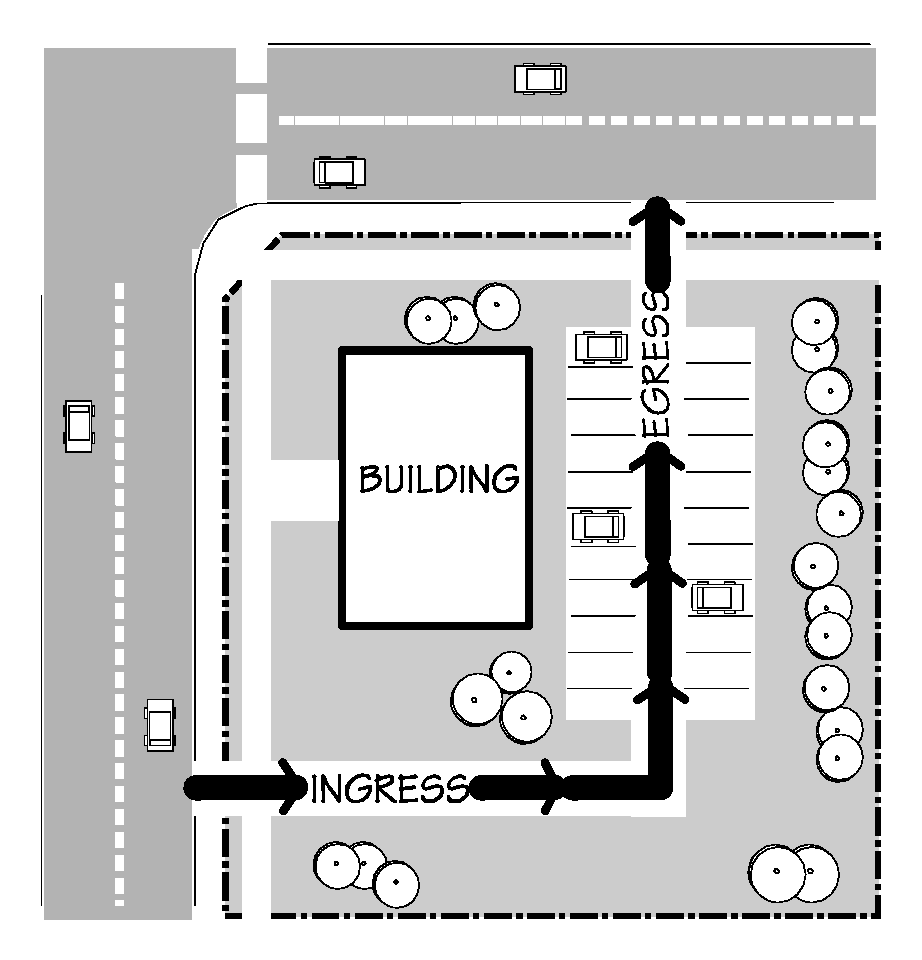
Driveway: Any surface providing direct ingress to and egress from a parking space or structure.
Dwelling: A building or portion of a building designed or used exclusively for residential purposes, including single-family and multifamily dwellings, but not including overnight accommodations.
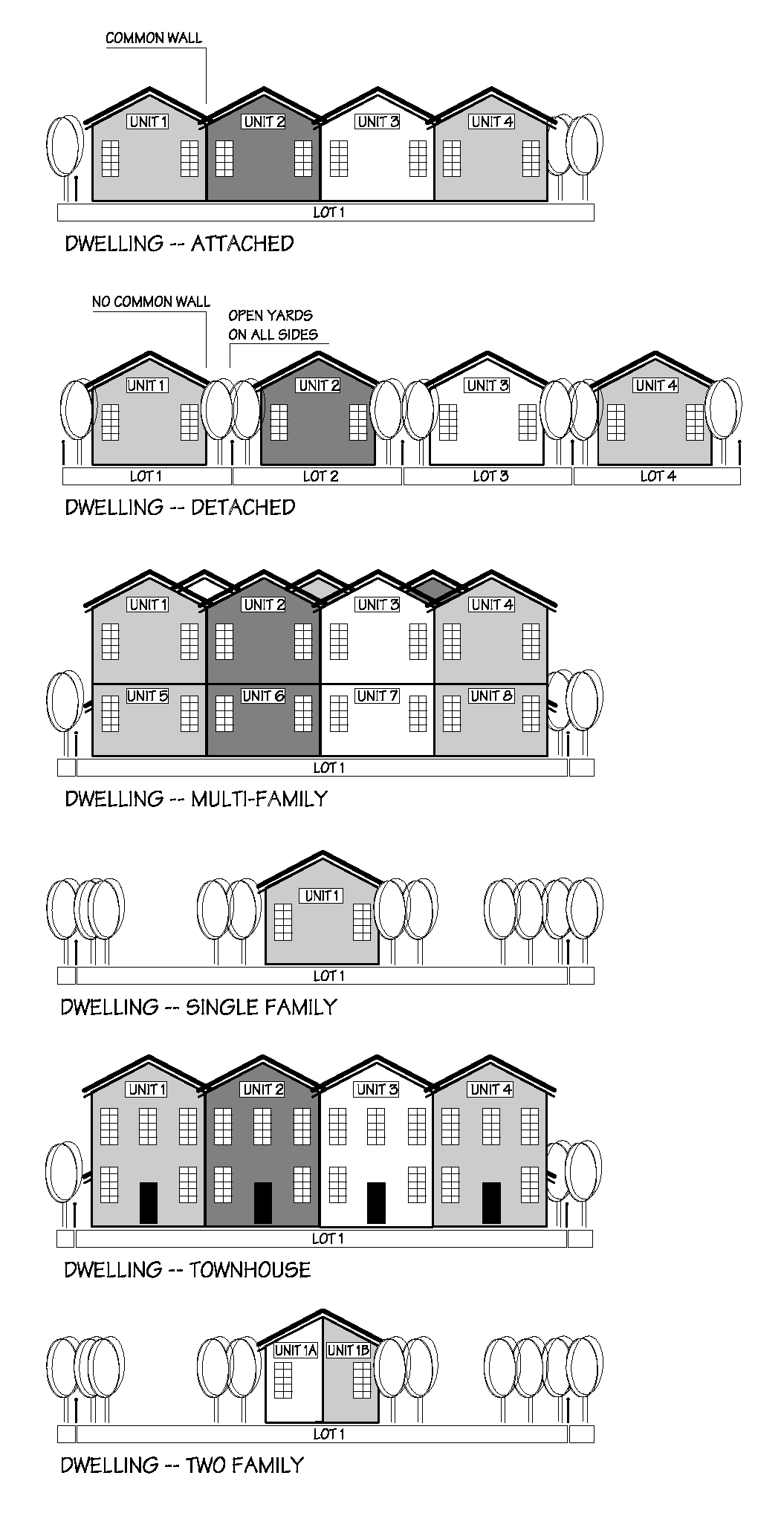
Dwelling, Attached: A dwelling unit that shares common walls with at least one other dwelling and includes duplexes on one lot or two (2) townhouses on individual lots.
Dwelling, Detached: A dwelling unit that is developed with open yards on all sides, but not including recreational or motor vehicles.
Dwelling, Multifamily: Three (3) or more dwelling units on one lot, including modular homes, attached along and sharing one or more common walls between any two (2) units and/or stacked one above another.
Dwelling, Single-Family: A detached dwelling, designed for or intended to be occupied by one family.
Dwelling, Townhouse: An attached group of up to eight (8) dwelling units, including modular homes, which share one or more common walls between any two (2) units and in which each unit has living space on the ground floor and a separate entrance on the ground floor.
Dwelling, Two-Family: A multiple-family dwelling designed and intended to house two (2) families.
Dwelling Unit: One or more rooms in a building which are arranged, designed, or used as living quarters for one family only, including individual bathrooms and complete kitchen facilities that are permanently installed to serve the entire family within each dwelling unit, not available for rental on a daily or weekly basis.
Easement: Authorization by a property owner for another to use the owner's property for a specified purpose.
Elevation Certificate: A form published by the Federal Emergency Management Agency (FEMA) that is used to certify the elevation to which a building has been elevated.
Employ, Employee, and Employment: "Employ, Employee, and Employment" describe and pertain to any person who performs any service on the premises of an adult use, on a full time, part time, or contract basis, whether or not the person is denominated an employee, independent contractor, agent, or otherwise. Employee does not include a person exclusively on the premises for repair or maintenance of the premises or for the delivery of goods to the premises.
Environmental Corridor: Integrated linear systems of land, water, plant, and animal resources that are generally depicted on Peoria County's adopted Comprehensive Land Use Plan, and that include, but are not limited to: (1) natural areas such as lakes, streams, floodplain, wetlands, forests, and prairies which provide important and valuable functions, such as floodwater storage, groundwater recharge, soil stabilization, water quality enhancement, temperature modulation, and wildlife habitat; and (2) scenic, recreational, and/or historic amenities.
Erosion Control Administrator: The person appointed by the Peoria County Board to administer the Erosion, Sediment, and Stormwater Control requirements pursuant to Sections 3.12 ("General Erosion and Stormwater Control Permits"), 3.13 ("Erosion, Sediment, and Stormwater Control Permits"), and 7.13 ("Erosion, Sediment, and Stormwater Control") of this chapter.
Erosion Control Consultant: An independent contractor of Peoria County charged with the review and inspection of Erosion, Sediment, and Stormwater Control Permits pursuant to Sections 3.12 ("General Erosion and Sediment Control Permits"), 3.13, ("Erosion, Sediment, and Stormwater Control Permits") and 7.13 (Erosion, Sediment, and Stormwater Control") of this chapter.
Establish or Establishment: "Establish or Establishment" shall mean and include any of the following:
(1)
The opening or commencement of any adult use as a new business;
(2)
The conversion of an existing business, whether or not an adult use, to any adult use;
(3)
The addition of any adult use to any other existing adult use; or
(4)
The relocation of any adult use.
Equipment housing: Per Sections 3.9 ("Telecommunications Carrier Facilities Variances") and 7.1 ("Telecommunications Carrier Facilities") the term "Equipment housing" shall have the following meaning: a combination of one or more equipment buildings or enclosures housing equipment that operates in conjunction with the antennas of a facility, and the equipment itself.
Event Centers: An establishment intended to be rented by an individual or group(s) for private functions or events, including those operated primarily for commercial purposes. Such use includes, but is not limited to: banquets, weddings, conferences, business meetings, or other similar events. Event centers shall not include Overnight Accommodations on the parcel.
FAA: The Federal Aviation Administration of the United States Department of Transportation.
Facility: Per Sections 3.9 ("Telecommunications Carrier Facilities Variances") and 7.1 ("Telecommunications Carrier Facilities") the term "Facility" shall have the same meaning as "Telecommunications Carrier Facility" as defined in Article 11, Definitions.
Facility lot: Per Sections 3.9 ("Telecommunications Carrier Facilities Variances") and 7.1 ("'Telecommunications Carrier Facilities") the term "Facility lot" shall have the following meaning: the zoning lot on which a facility is or will be located.
Facility Owner: (i) A person with a direct ownership interest in a commercial wind energy conversion facility or a commercial social energy generation facility, or both, regardless of whether the person is involved in acquiring the necessary rights, permits, and approvals or otherwise planning for the construction and operation of the facility, and (ii) at the time the facility is being developed, a person who is acting as a developer of the facility by acquiring the necessary rights, permits, and approvals or by planning for the construction and operation of the facility, regardless of whether the person will own or operate the facility.
Family: An individual, or two (2) or more persons related by blood, marriage or adoption, living together as a single housekeeping unit; or a group of not more than six (6) persons not related by blood, marriage or adoption, living together as a single housekeeping unit. The term "family" shall not include a fraternity, sorority, overnight accommodation, or residential-care home.
Farm: Any parcel of land used for the growing and harvesting of crops, for the feeding, breeding and management of livestock, for dairying, or for any other agricultural or horticultural use.
FCC: The Federal Communications Commission.
Feedlot: A place in which animal livestock (excluding fowl) are fed, raised, or held prior to slaughter or sale.
FEMA: Federal Emergency Management Agency and its regulations at 44 CFR 59-79 effective as of November 1, 1989.
Fence: A freestanding structure made of metal, masonry, composition, or wood, or a combination thereof, including gates, resting on or partially buried in the ground, rising above ground level, and used to delineate a boundary or as a barrier or means of protection, confinement or screening. The term "fence" does not include arbors or trellises.
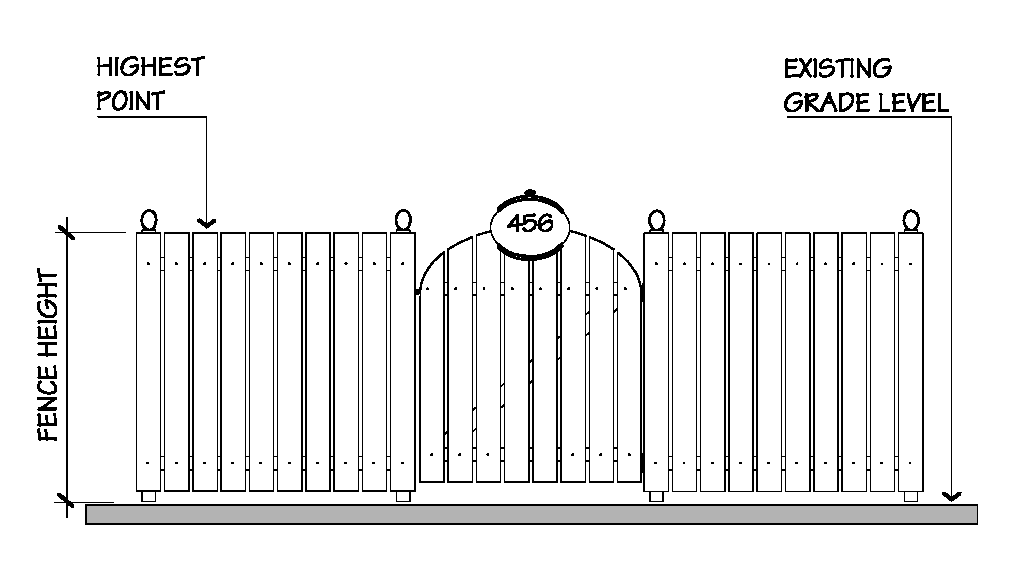
Fence, Height: That height as measured from the existing grade level of the property on which the fence is installed to the highest point located on the fence, excluding ornamental features.
Fence, Open: A fence of which open spaces afford direct views through the fence that comprise at least fifty (50) percent of each one-foot wide segment extending over the entire length and height of the fence, and includes gates.
Fence, Perimeter: A fence that follows the outward boundaries of the property on which it is located.
Fence, Solid: A fence that conceals from view of adjacent property, streets, or alleys and any and all activities conducted behind it, and includes gates.
Fencing, Ornamental: A type of fence that is not intended to act as a barrier or means of protection, confinement, or screening, but is decorative in nature or is a component of a yard landscape. Ornamental fencing does not include chain link fences, but may include decorative posts, lattices, arbors, trellises, and types of split rail fences.
Fill: Any act by which earth, sand, gravel, rock, clay, concrete, rubble, waste, or any other material is deposited, placed, replaced, stored, pushed, dumped, pulled, transported or moved by man or caused to be deposited, placed, replaced, stored, pushed, dumped, pulled, transported, or moved by man to a new location and any conditions resulting therefrom, including but not limited to, the increase in the natural ground surface elevation.
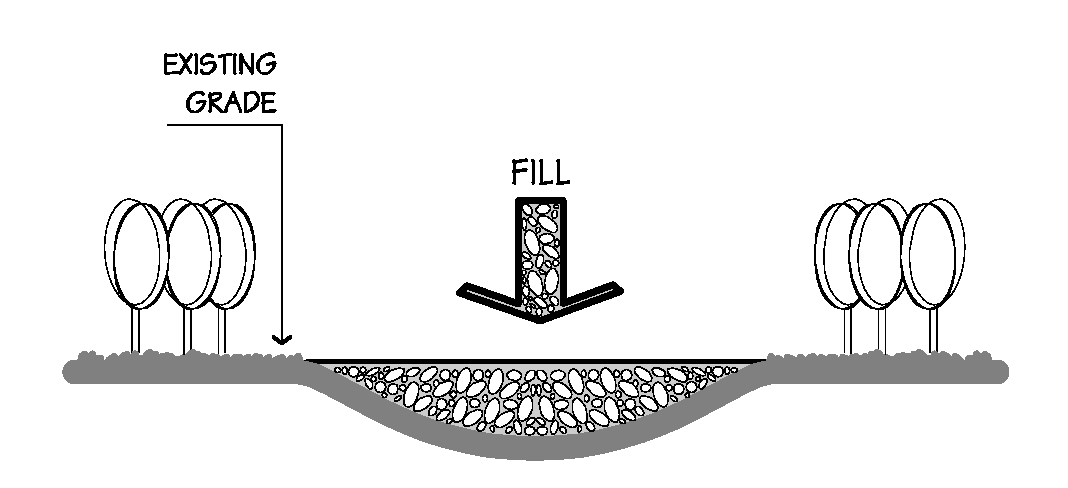
Fill, Clean: Construction or demolition debris such as uncontaminated broken concrete without protruding metal bars, bricks, rock, stone, reclaimed asphalt pavement, dirt, or sand.
Financial Institution: A bank, credit union, savings and loan association or other similar entity or organization which makes or purchases loans or provides other financial assistance.
Financial Security: The letter of credit, surety bond, or cash escrow provided by the developer to secure the proposed street and erosion/stormwater improvements that may be required.
Five-year frequency storm event: The storm event rainfall depth during a twenty-four-hour period which is exceeded, on the average, once every five (5) years.
Flood: A general and temporary condition of partial or complete inundation of normally dry land areas from overflow of inland or tidal waters, or the unusual and rapid accumulation or runoff of surface waters from any source.
Flood Frequency: A period of years, based on a statistical analysis, during which a flood of a stated magnitude may be expected to be equaled or exceeded.
Flood Fringe: That portion of the floodplain outside of the regulatory floodway.
Flood Insurance Rate Maps (FIRM): Maps prepared by the Federal Emergency Management Agency (FEMA) that depict the Special Flood Hazard Areas (SFHA) within a community. These maps include insurance rate zones and floodplains and may or may not depict floodways.
Flood Protection Elevation: The elevation of the base flood elevation or 100-year frequency flood plus two (2) feet at any given location in a designated floodplain, pursuant to Sections 3.10 ("Floodplain Development Permit") and 7.14 ("Floodplain Regulations") of this chapter.
Floodplain: That area with water and ground surface elevations at or below the base flood or the 100-year frequency flood elevation. Floodplains may also include detached special flood hazard areas, ponding areas, etc. The floodplain is also known as the Special Flood Hazard Area (SFHA). The floodplains are those lands within the jurisdiction of the county that are subject to inundation by the base flood or 100-year frequency flood.
Floodproofing: Any combination of structural and nonstructural additions, changes, or adjustments to structures which reduce or eliminate flood damage to real estate or improved real property, water and sanitary facilities, structures and their contents.
Floodproofing Certificate: A form published by the Federal Emergency Management Agency (FEMA) that is used to certify that a building has been designed and constructed to be structurally dry floodproofed to the flood protection elevation.
Floodway: The channel and the adjacent land areas that must be reserved in order to discharge the regulatory base flood without cumulatively increasing the water surface elevation more than one-tenth ( 1/10 ) of one foot.
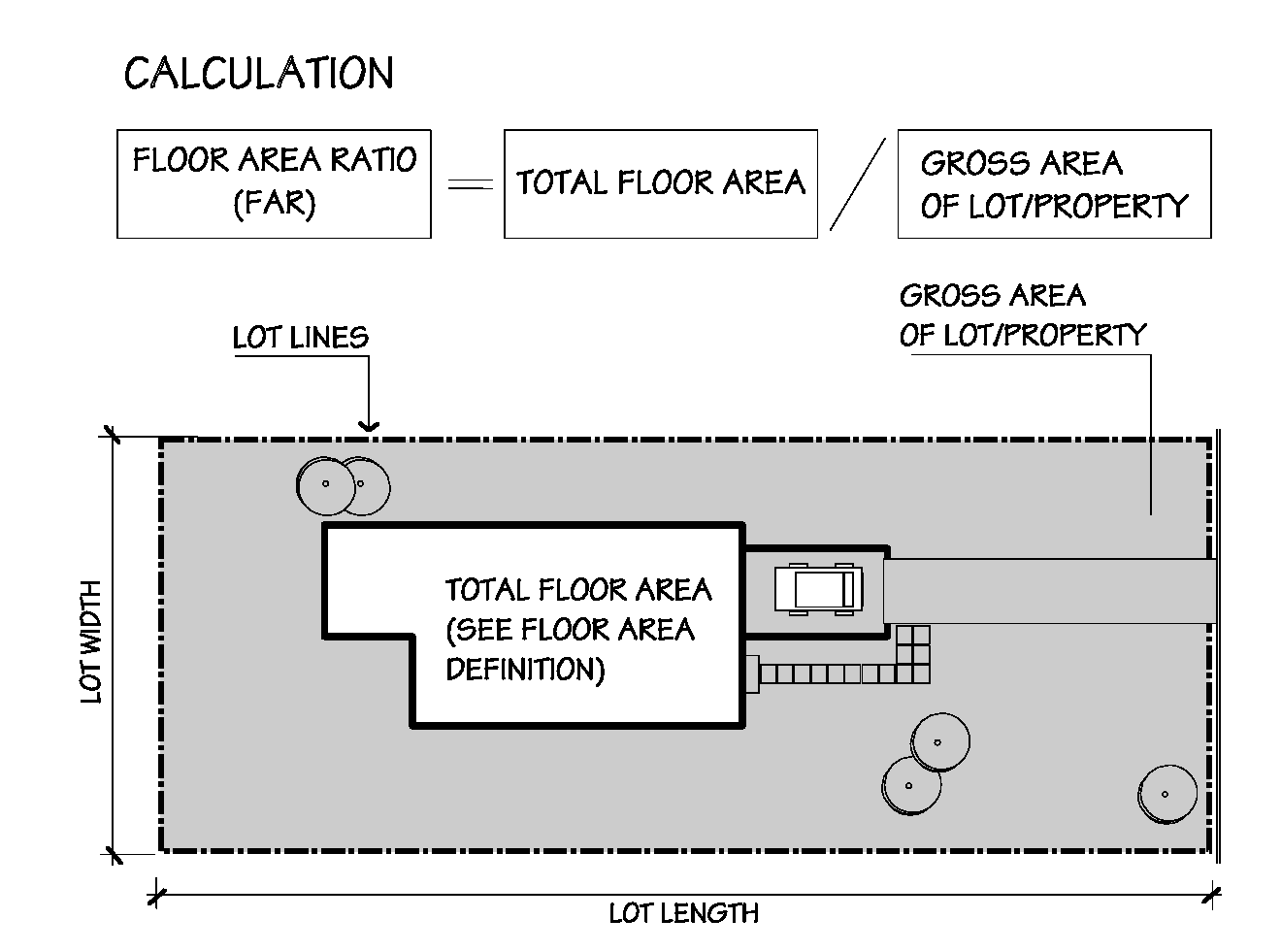
Floor Area: The sum of the gross horizontal areas of each floor measured from the exterior walls or from the center line of party walls. "Floor Area" includes the floor area of accessory buildings and structures, but does not include any area used exclusively for the parking of motor vehicles.
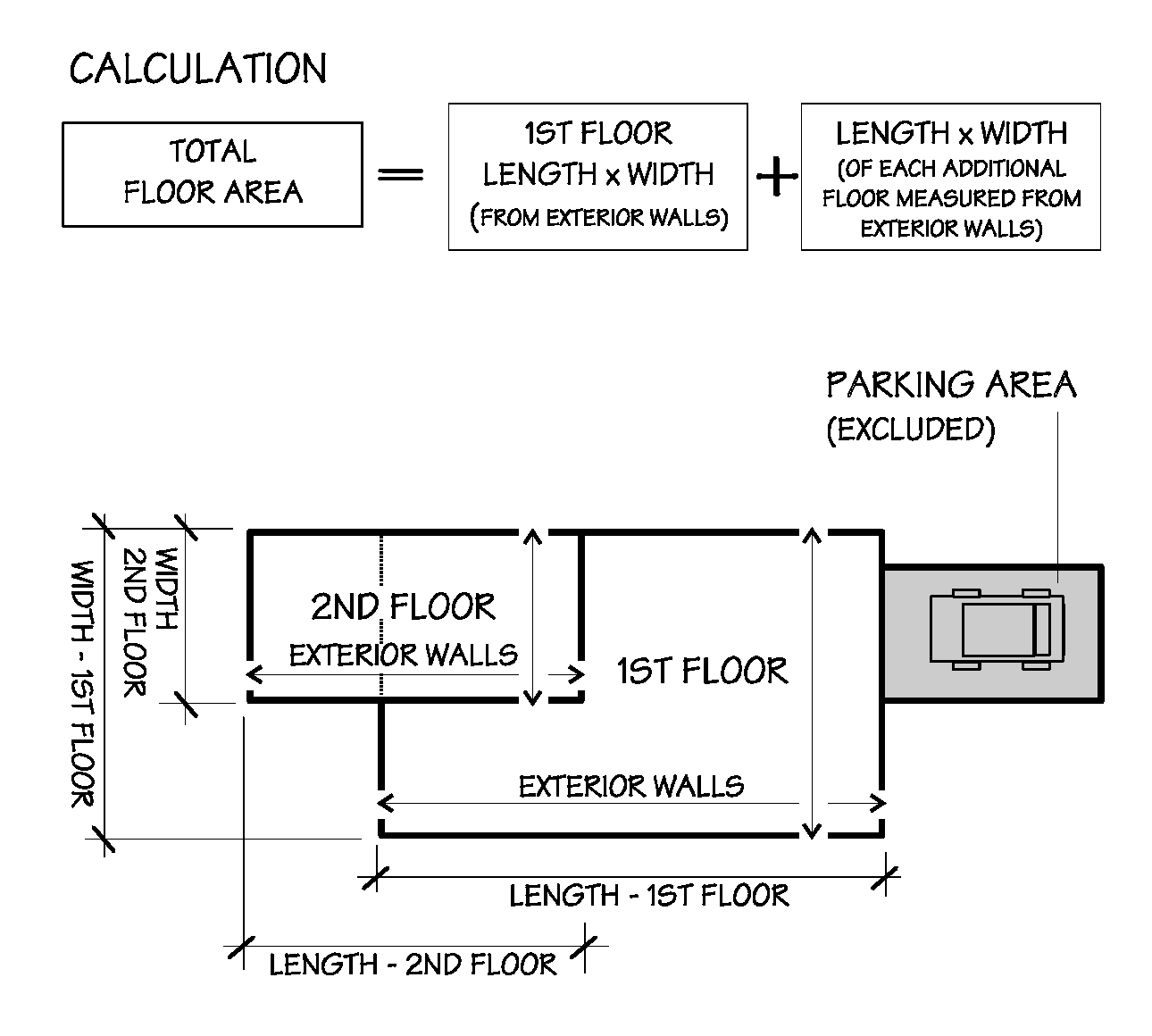
Floor Area Ratio (FAR): The total floor area of the building or buildings on a lot or parcel divided by the gross area of the lot or parcel.
Freeboard: An increment of elevation added to the base flood elevation to provide a factor of safety for uncertainties in calculations, unknown localized conditions, wave actions and unpredictable effects such as those caused by ice or debris jams.
Frontage: The length of the property line on any one parcel parallel to and along each public right-of-way it borders.
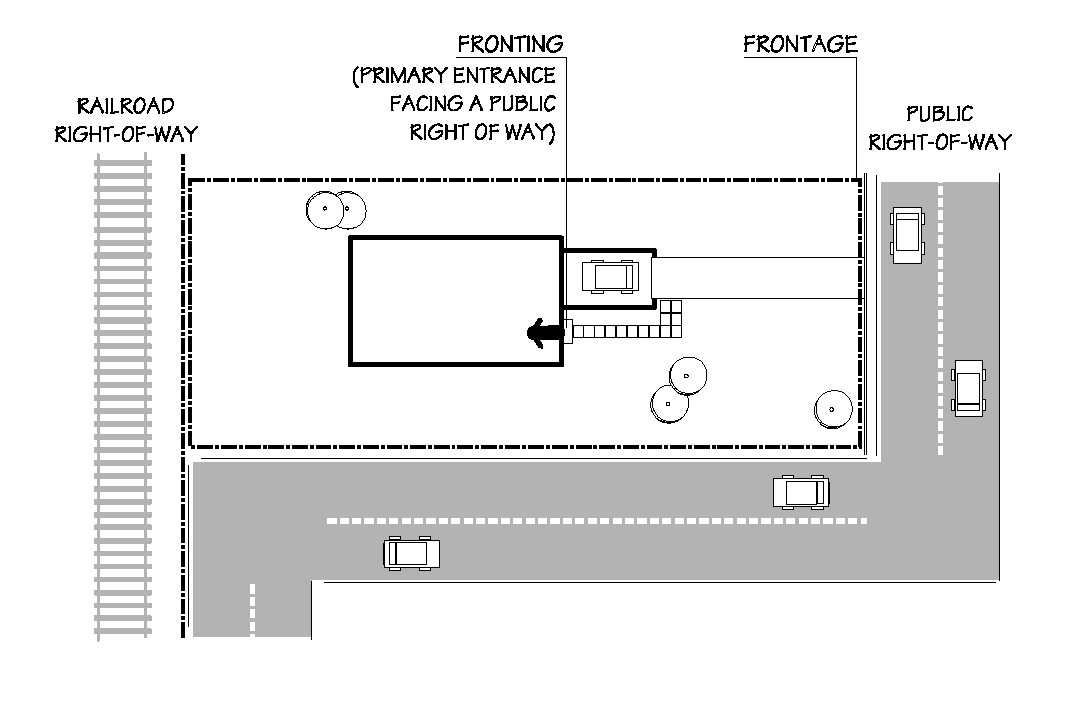
Fronting: The front or primary entrance to a building facing a public right-of-way line.
Fuel Station: Any equipment used to dispense fuels that are capable of serving no more than two (2) automobiles or vehicles at a time.
Garage, Private: A building designed for the storage of motor-driven vehicles, including not more than one commercial vehicle the load capacity of which shall not exceed a gross vehicle weight of eight thousand (8,000) pounds, under the control of the owner or tenant of the premises and which is not operated or leased for commercial gain. A private garage shall be limited to seven hundred fifty (750) square feet in size.
Garage, Public: A building designed, used, or intended to be used for the housing, care, or storage of more than three (3) motor-driven vehicles or more than one commercial vehicle, that is available to the public for compensation, whether by prior rental or lease agreement or on an hourly or daily basis.
Gas Station Convenience Store: Any building, structure, or parcel primarily used for the dispensing, selling or offering for retail sale gasoline, diesel fuel, or kerosene. A retail store which sells convenience items such as groceries and alcoholic beverages and may also have restaurant facilities accessory to the sale of the fuel. This shall not include any repair or service to an automobile or vehicle, and it shall not include the sale of parts for said repair.
Golf Course: A multiple hole course for playing golf, including any accessory driving range, clubhouse, office, restaurant, concession stand, picnic tables, pro shop, maintenance building, restroom facility or similar accessory use or structure. This term shall not include miniature golf courses as a principal or accessory use, nor shall it include driving ranges which are not accessory to a golf course.
Governmental Use: A building, use or structure owned or occupied and regulated by a government agency, or an agent thereof, including a public facility, but not including a vehicle storage yard, food irradiation facility, educational or health institution, university, military facility, residential care home.
Governmental Use, Essential: A governmental use that is indispensable to the community's health, safety and welfare, including, but not limited to: police stations, fire stations, emergency medical services, and governmental buildings without equipment storage.
Governmental Use, Nonessential: A governmental use that is not critical to the health, safety, and welfare of the community, such as: libraries, museums, post offices, and governmental buildings with equipment storage.
Grade: The slope of the ground, a road, street, or other public way specified in percentage terms.
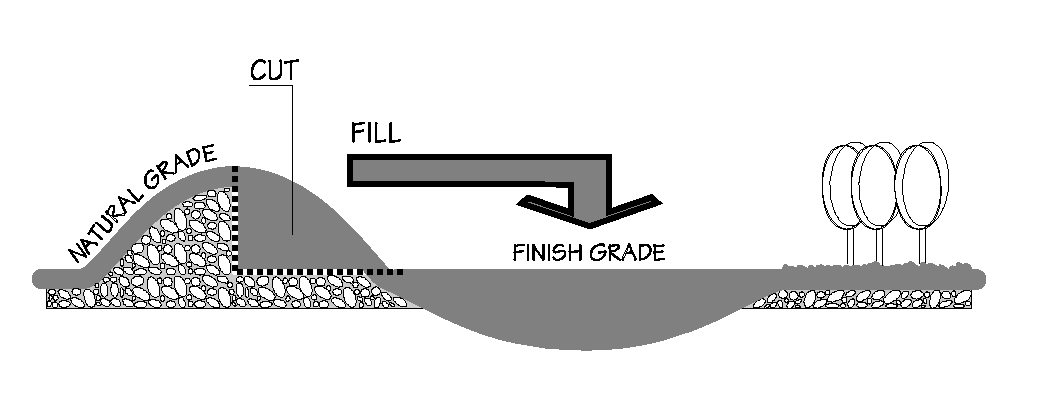
Grade, Finished: The final slope of the ground after development, expressed in a percent.
Grade, Natural: The slope of the ground in its natural state, before construction, filling, or excavation, expressed in a percent.
Grading: Any activity which removes or covers the vegetative surface, including, but not limited to: excavation, stripping, fill, or any combination thereof (and the conditions resulting from any excavation, stripping or fill), tree removal, clearing, filling, or the removal of topsoil or fill.
Grasslands: Land in which the dominant plant species are native grasses.
Greenhouse: A nursery located in a building with a foundation whose roof and sides are made largely of glass or other transparent or translucent material and in which the temperature and humidity can be regulated for the cultivation of delicate or out-of-season flowers, shrubs and plants.
Greenhouse, Commercial: A greenhouse where flowers, shrubs and plants that are grown off-site are sold.
Greenhouse, Noncommercial: A greenhouse where flowers, shrubs, and plants are grown on-site for personal enjoyment, wholesale distribution, or sale. "Noncommercial greenhouses" are a form of "agriculture."
Health Club or Fitness Center: A privately owned building or enclosed structure providing facilities and services for physical or aquatic fitness. Such buildings may include, but are not limited to: facilities for aerobic exercises, running and jogging, exercise equipment, and game courts.
Health Department: The Peoria City/County Health Department.
Heavy Equipment: Equipment, including, but not limited to, construction, and municipal implements.
Height: The vertical distance from grade to the highest point of the roof of a building or structure.
Height of a Facility: Per Sections 3.9 ("Telecommunications Carrier Facilities") and 7.1 ("Telecommunications Carrier Facilities") the term "Height of a Facility" shall have the following meaning: the total height of the facility's supporting structure and any antennas that will extend above the top of the supporting structure; however, if the supporting structure's foundation extends more than three (3) feet above the uppermost ground level along the perimeter of the foundation, then each full foot in excess of three (3) feet shall be counted as an additional foot of facility height. The height of a facility's supporting structure is to be measured from the highest point of the supporting structure's foundation.
High Quality Native Plant Communities: Vegetative communities such as woodlands, prairies, and wetlands characterized by an unusual number and diversity of plant species native to Illinois.
Highway Department: The Peoria County Highway Department.
Historic Sites: A structure or place of outstanding historical and cultural significance and designated as such by State or Federal government or by a local government or local nonprofit historical society or foundation.
Historic Structure: Any structure that is:
(1)
Listed individually in the National Register of Historic Places (a listing maintained by the department of interior) or preliminarily determined by the secretary of the interior as meeting the requirements for individual listing on the National Register;
(2)
Certified or preliminarily determined by the secretary of the interior as contributing to the historical significance of a registered historic district or a district preliminarily determined by the secretary to qualify as a registered historic district;
(3)
Individually listed on a state inventory of historic places in states with historic preservation programs which have been approved by the secretary of the interior; or
(4)
Individually listed on a local inventory of historic places in communities with historic preservation programs that have been certified either:
a.
By an approved state program as determined by the secretary of the interior; or
b.
Directly by the secretary of the interior in states without approved programs.
Holiday: A legal holiday as designated by the Illinois State Legislature.
Holiday Weekend: A weekend with a legal holiday immediately preceding or occurring on the following day.
Home Improvement Center: A business which sells, primarily at retail, supplies and equipment for home improvements, including hardware, housewares, lumber, lighting and electrical fixtures, appliances, and lawn and garden center products.
Home Occupation: A business, profession, occupation, or trade which is conducted within a residential portion of a building or an accessory structure for the economic gain or support of a resident of the dwelling, and which is incidental and secondary to the residential use within the dwelling.
Horizontal Separation Distance: Per Sections 3.9 ("Telecommunications Carrier Facilities Variances") and 7.1 ("Telecommunications Carrier Facilities") the term "Horizontal Separation Distance" shall have the following meaning: the distance measured from the center of the base of the facility's supporting structure to the point where the ground meets a vertical wall of a principal residential building.
Hospital: A public or private institution, whether organized for profit or not, which is devoted primarily to the maintenance and operation of facilities for the diagnosis and treatment or care of two (2) or more unrelated persons, whose principal residence is located elsewhere, and who are admitted for overnight stay or longer in order to obtain medical and/or psychiatric treatment of illnesses, diseases, injuries and deformities.
Hospital, Animal: A public or private institution, whether organized for profit or not, which is devoted primarily to the maintenance and operation of facilities for the diagnosis and treatment or care of animals which are admitted for overnight stay or longer in order to obtain veterinary treatment for illnesses, diseases, injuries and deformities.
IDNR: Illinois Department of Natural Resources.
IDNR/OWR: Illinois Department of Natural Resources, Office of Water Resources.
IDOT: Illinois Department of Transportation.
IEPA: Illinois Environmental Protection Agency.
ILCS: Illinois Compiled Statutes.
Impervious Surface: An all-weather surface or ground cover that resists the absorption of surface water into the soil. Such surfaces include those constructed of stone, brick, asphalt, concrete, tile, terrazzo, gravel composite, or any other paving material, used for parking, driveways, patios, terraces, walkways, and the like, as well as areas covered by buildings, decks, porches, swimming pools, and tennis courts.
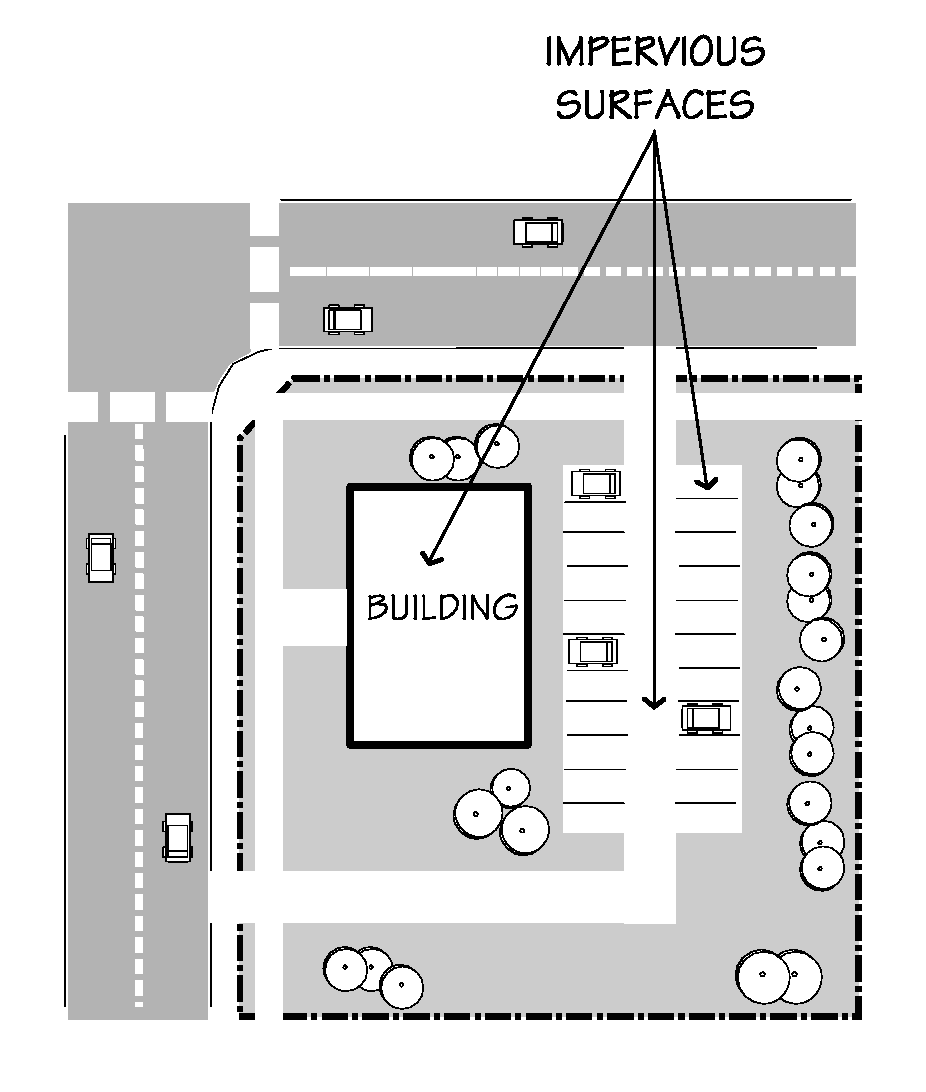
Improvement: Any structure, object, fence, gate, wall, work of art or other object that permanently becomes part of, placed upon, or is affixed to real estate. Per Article 8, Subdivisions, and Article 3, Development Review Procedures, Sections 3.14 ("Subdivision"), 3.15 ("Subdivision Waivers and Appeals") and 3.16 ("Plat Approval") the term "Improvement" shall have the following meaning: Any change to a parcel from it natural state, which includes, but is not limited to, the installation of drainage ditches, roadways, parkways, sidewalks, pedestrian ways, land for schools or other public uses, off-street parking areas, and the construction of structures.
Improvement, Private: An improvement made for the betterment of the public or a property owner's association where the developer, property owners' association, or other private entity is responsible for installation, maintenance, and operation. It shall not have an effect on pre-existing improvements for which a unit of government's responsibility is established.
Improvement, Public: Any improvement made for the betterment of the public for which a local unit of government may ultimately assume the responsibility for maintenance and operation, or which may effect an improvement for which local government responsibility is established.
Indoor Shooting Range: A facility designed or used for the safe shooting of firearms and archery equipment at targets, and which is completely enclosed within a building or structure.
Industrial Hemp: The plant Cannabis sativa L. and any part of that plant, whether growing or not, with a delta-9 tetrahydorcannabinol (THC) concentration of not more than 0.3% on a dry weight basis that has been cultivated under a license issued under the Industrial Hemp Act [505 ILCS 89] or is otherwise lawfully present in this State, and includes any intermediate or finished product made or derived from industrial hemp.
Industry, Heavy: The assembly, fabrication, manufacturing, storage or processing of goods and materials that ordinarily have significant impacts on the environment or on the use and enjoyment of adjacent property in terms of noise, smoke, fumes, odors, glare, or health and safety hazards, or that otherwise do not constitute "light industry," such as food processing plants, resource extraction, recycling centers, sawmills, composting services, scrap or salvage operations, petroleum storage facilities, or facilities handling or processing hazardous and/or toxic material.
Industry, Light: The assembly, fabrication, or processing of goods and materials using processes that ordinarily do not create noise, smoke, fumes, odors, glare, or health or safety hazards outside of the building or lot where such assembly, fabrication, or processing takes place, where such processes are housed entirely within a building, or where the area occupied by outdoor storage of goods and materials used in the assembly, fabrication, or processing does not exceed twenty-five (25) percent of the floor area of all buildings on the lot. This includes, but is not limited to, printing, publishing or photography plants, dry-cleaning processing stations, carpet cleaning establishments, facilities for auto body work, welding, painting or major repair work, research laboratories which are designed or equipped for basic or applied research or experimental study, testing or analysis in the natural sciences or engineering, including any educational activities associated with and accessory to such research. This shall not include uses that constitute "heavy industry."
Infrastructure: Facilities and services needed to sustain residential, commercial, industrial, and all other land use activities, including, but not limited to, streets, water supply, sanitary sewers, storm sewers, and sidewalks and trails.
Ingress and Egress: Entrance or access and exit, respectively.
Institutional Use: Uses that may or may not be permitted or special uses in a zoning district that typically provide educational, governmental, health, recreational, religious, social, and transportation services the community on either a for-profit or not-for-profit basis.
Junkyard: An area of land, and any accessory thereon, which is used primarily for buying, selling, exchanging, storing, baling, packing, disassembling, or handling waste or scrap materials, including motor vehicles, machinery and equipment not in operable condition, or parts thereof, and other metals, paper, rags, rubber tires, and glass, except within completely enclosed buildings.
Kennel, Commercial: A use or structure intended and used for the breeding or overnight boarding of animals for sale or for the training or overnight boarding of animals for persons other than the owner of the lot, but not including a veterinary clinic in which the overnight boarding of animals is necessary for and accessory to the testing and medical treatment of the physical disorders of animals.
Lake: An inland body of water with an acre or more of surface area.
Land Disturbing Activity: Any change in land, which may result in soil erosion from water or wind and the movement of sediments into State or County waters or on to lands in the County, or a change in the amount and/or intensity of stormwater run-off, including, but not limited to, the covering with an impervious surface, stockpiling, clearing, grading, excavating, rehabilitating, transporting, depositing or filling of land.
Land Trust: A tax exempt not-for-profit organization classified as a Section 501(c)(3) organization under the Internal Revenue Code in the State of Illinois, whose mission is the acquisition of undeveloped land for the purpose of perpetual maintenance and preservation of said undeveloped land.
Land Use and Transportation Committee: The County Board Committee assigned land use and transportation related duties.
Landlocked: A parcel, existing or proposed, without direct access or frontage to a public street.
Landscaping: Trees, shrubs, flowers, vines, potted plants, ground cover, walkways, ponds, fountains, sculptures, earth berms, fences, stone, bark, and other materials used to create an outdoor environment.
Landscape Contractor: A business principally engaged in the decorative and functional alteration, planting and maintenance of grounds. Such a business may engage in the installation and construction of underground improvements but only to the extent that such improvements (e.g., drainage facilities) are accessory to the principal business and are necessary to support or sustain the landscaped surface of the ground.
Letter of Map Revision (LOMR): Letter that revises base flood or 100-year frequency flood elevations, flood insurance rate zones, flood boundaries or floodways as shown on an effective FIRM.
Levee: A continuous dike or ridge of earth for confining water away from an area of land that would otherwise flood.
Linear: A straight and horizontal measurement between points.
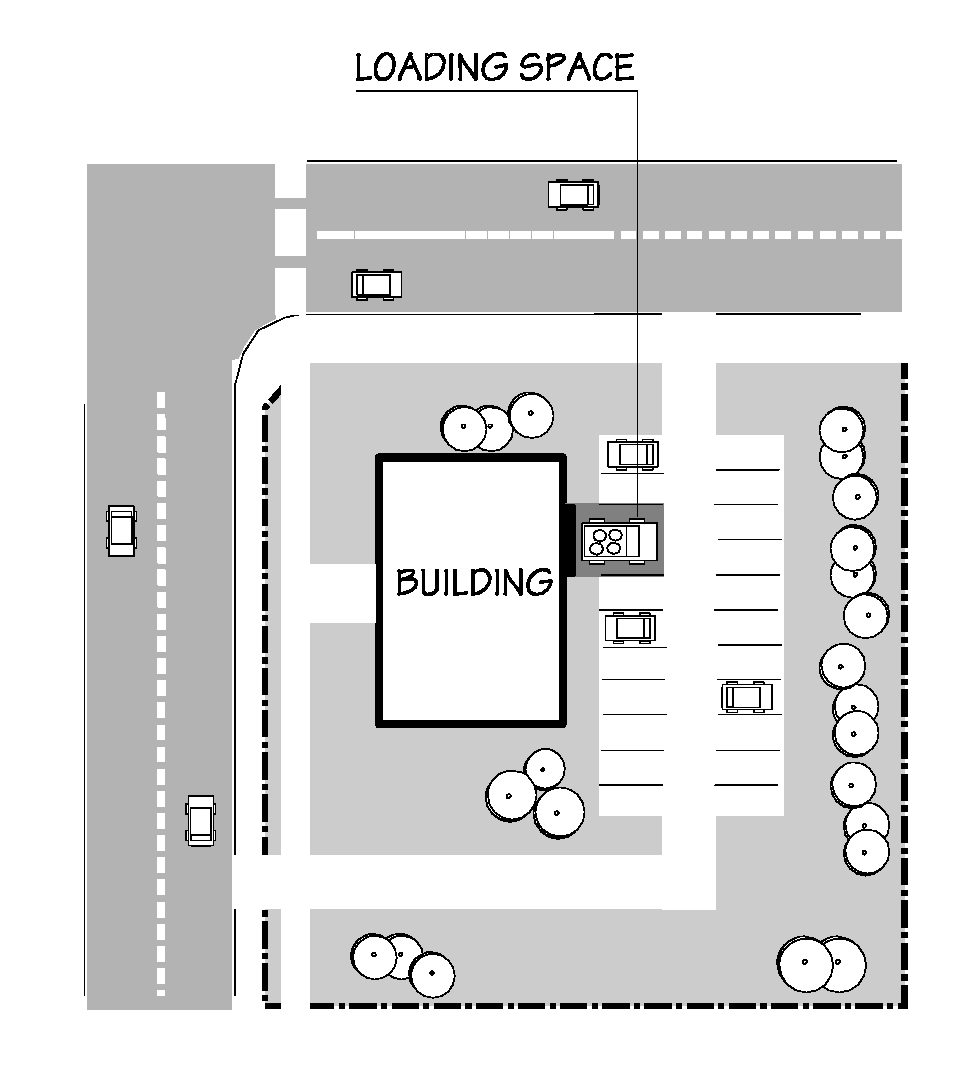
Loading Space: A space with access to a street or alley for the standing, loading, or unloading of motor vehicles delivering or picking up goods and materials.
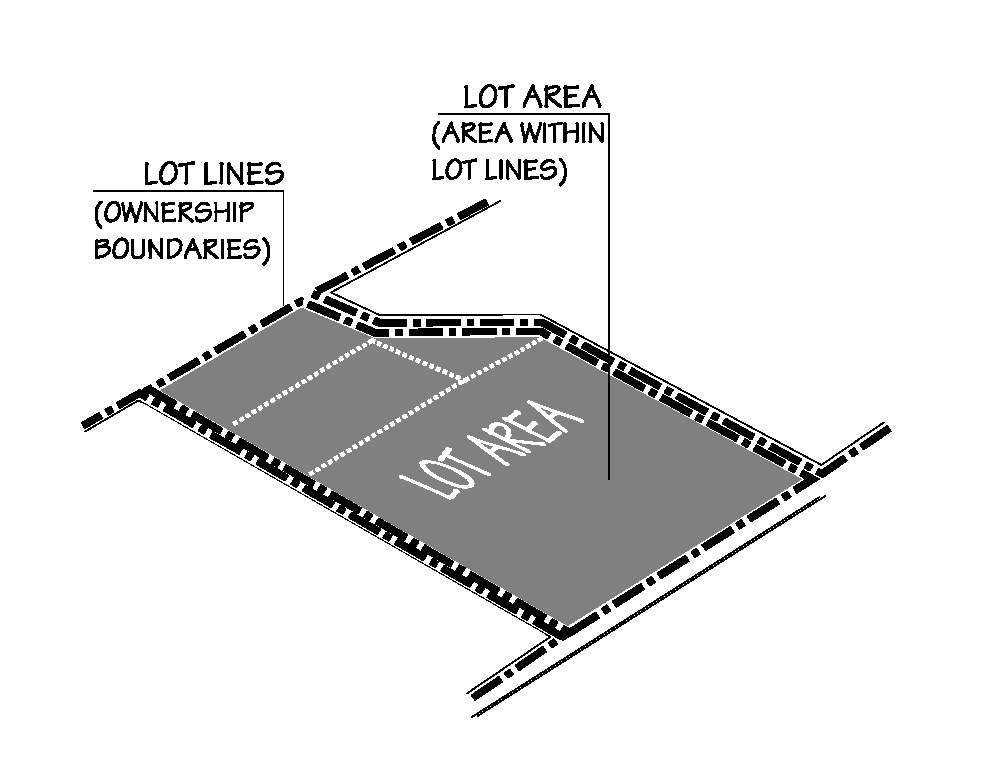
Lot: A parcel of land legally described or subdivided as a distinct portion or piece of land or lot of record to be separately owned, used, or developed. Per Article 8, Subdivisions, and Article 3, Development Review Procedures, Sections 3.14 ("Subdivision"), 3.15 ("Subdivision Waivers and Appeals"), and 3.16 ("Plat Approval") the term "Lot" shall have the following meaning: A tract, plot, or portion of a subdivision or other parcel of land intended as a unit for the purpose, whether immediate or future, of transfer of ownership or possession, or for building development.
Lot Area: The area of a horizontal plane bounded by the front, side, and rear lot lines, but not including area occupied by streets or bodies of water fed by natural means.
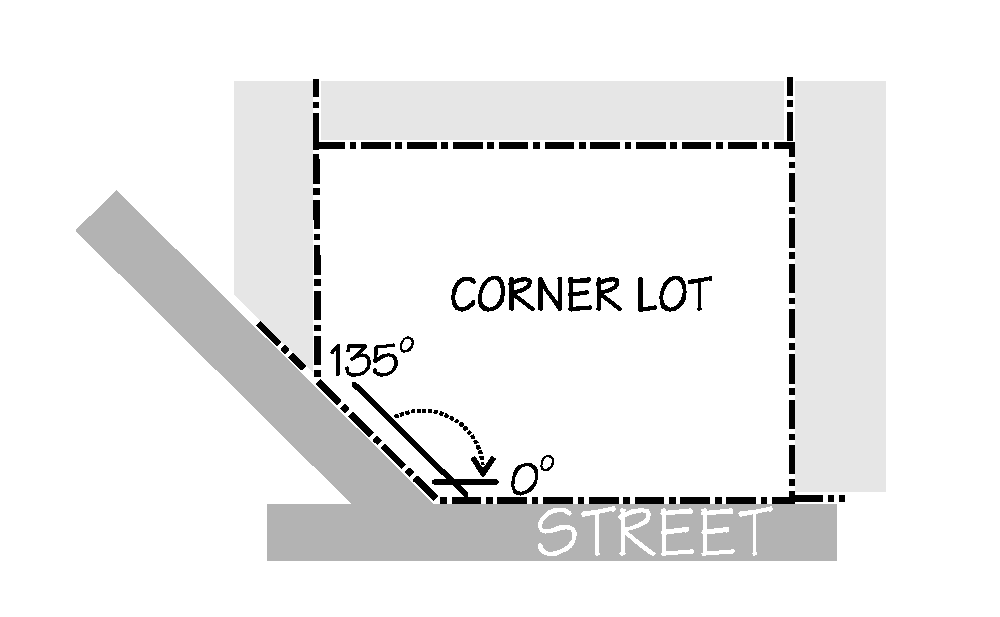
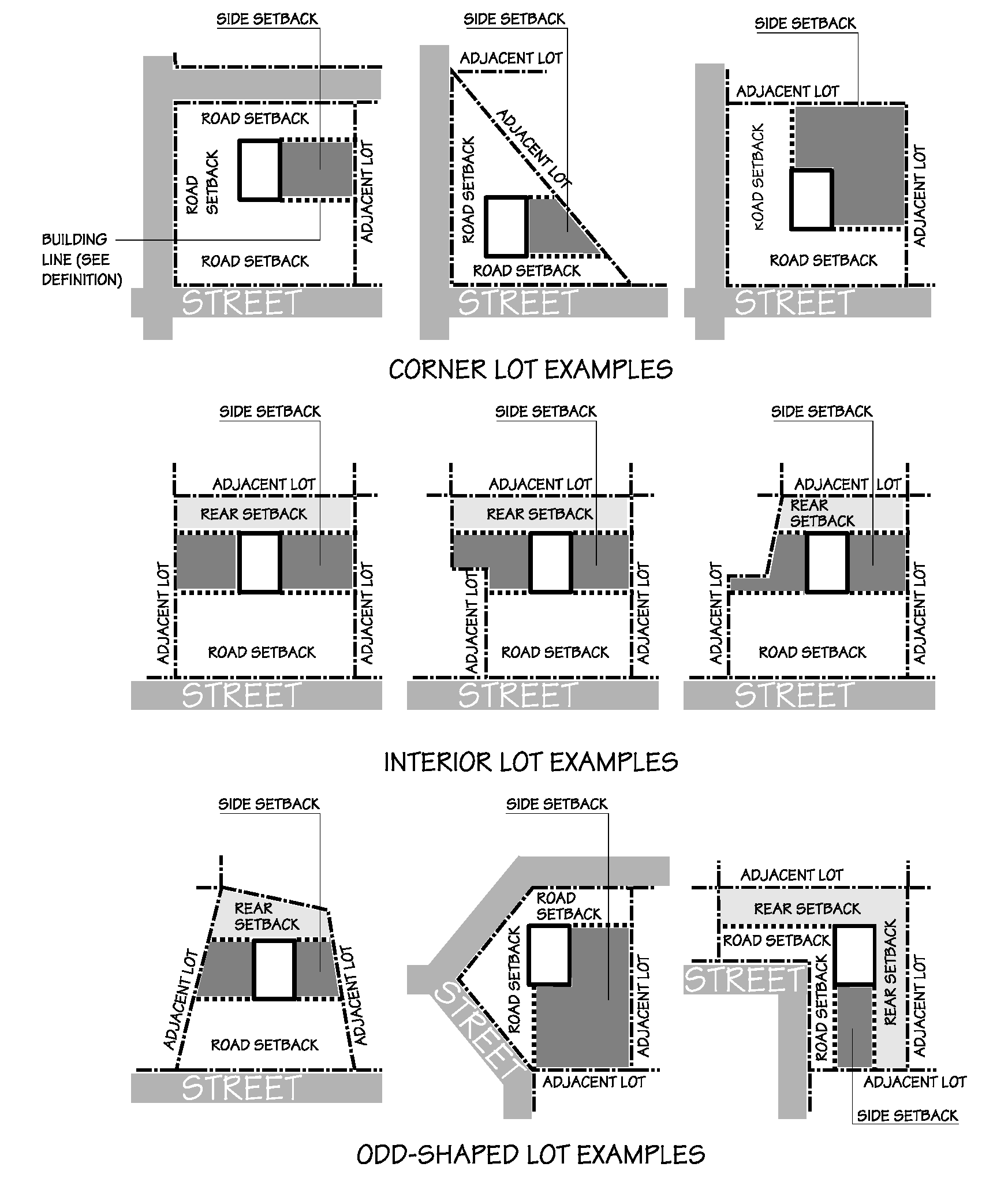
Lot, Corner: A lot which occupies the interior angle at the intersection of two (2) street lines which make an angle of less than one hundred thirty-five (135) degrees with each other, or a lot having two (2) front yards.
Lot, Flag: A parcel where access to the public street is by a narrow strip that is a portion of the parcel.
Lot Line: A line of record bounding a lot that divides one lot from another lot or from a public or private street or any other public space.
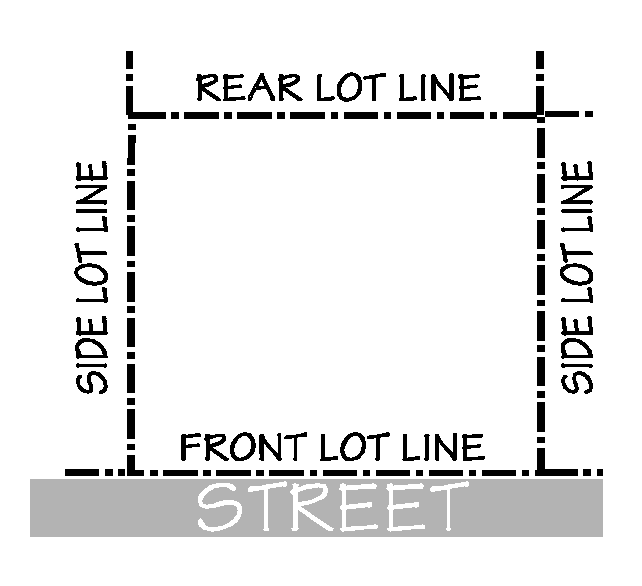
Lot Line, Front: The boundary of a lot which abuts a street. On a corner lot, the front lot line is the lot line which is opposite the front wall of the principal structure.
Lot Line, Rear: The lot line which is most distant from and most nearly parallel to the front lot line, or in the case of an irregular or triangular lot, a lot line ten (10) feet long within the lot, parallel to and a maximum distance from the front lot line.
Lot Line, Side: A lot line which is not a front lot line or a rear lot line.
Lot Line Setback Distance: Per Sections 3.9 ("Telecommunications Carrier Facilities Variances") and 7.1 ("Telecommunications Carrier Facilities") the term "Lot Line Setback Distance" shall have the following meaning: the distance measured from the center of the base of the facility's supporting structure to the nearest point on the common lot line between the facility's lot and the nearest residentially zoned lot. If there is no common lot line, the measurement shall be made to the nearest point on the lot line of the nearest residentially zoned lot without deducting the width of any intervening right-of-way.
Lot of Record: A single lot which is part of a subdivision plat which has been recorded in the office of the Recorder of Deeds of Peoria County, Illinois or a single parcel of land, the deed of which has been recorded in the office of the Recorder of Deeds of Peoria County, Illinois.
Major Stands of Trees: Areas which are one or more acres in size, and which have seventeen (17) or more deciduous trees native to Illinois per acre each measuring at least six (6) inches in diameter at breast height.
Manufactured Home: A structure, transportable in one or more sections, which is built on a permanent chassis and is designated for use with or without a permanent foundation when connected to the required utilities. The term "manufactured home" also includes park trailers, travel trailers, and other similar vehicles placed on site for more than one hundred eighty (180) consecutive days.
Manufactured Home Park or Subdivision: A parcel (or contiguous parcels) of land divided into two (2) or more manufactured home lots for rent or sale.
Manufacturing: Establishments engaged in the mechanical or chemical transformation of materials or substances into new products, including the assembling of component parts, the creation of products, and the blending of materials, such as lubricating oils, plastics, resins, or liquors.
Marina: A boat basin and recreational facility, located on waterfront property or having direct water access, providing moorings for boats, and one or more of the following facilities: boat launching ramps, boat livery, boat sales, maintenance shops, marine supply store, and fuel dock.
Market Value: The assessed value as shown on record in the Office of the Peoria County Supervisor of Assessments, unless a certified appraisal or actual sales price is submitted to the Zoning Administrator.
Medical Cannabis Cultivation Center: A facility operated by an organization or business that is registered in accordance with 410 ILCS 130/1, et al. by the Illinois Department of Agriculture to perform necessary activities to provide only registered medical cannabis dispensing organizations with usable medical cannabis.
Medical Cannabis Dispensing Organization: A facility operated by an organization or business that is registered in accordance with 410 ILCS 130/1, et al. by the Illinois Department of Financial and Professional Regulation to acquire medical cannabis from a registered cultivation center for the purpose of dispensing cannabis, paraphernalia, or related supplies and educational materials to registered qualifying patients.
Medical Rehabilitation Center: Any building or any portion thereof, the principal use of which is for offices and treatment facilities for physical, occupation, and recreational therapists or the like for the examination and treatment of persons on an outpatient basis only, but does not include clinics or medical offices.
Mineral Extraction Facility: The extraction of coal, sand, gravel, stone, or other materials by open pit or shaft methods, or the removal of topsoils as a principal use of land not incidental to any use or a permitted construction project. The term includes mining equipment, such as conveyors, crushers, washers, draglines, wheels, dredges, drill rigs and other similar-related equipment, but does not include asphalt plants, ready-mix concrete facilities, and other similar facilities and uses.
Mitigation: Mitigation includes those measures necessary to minimize the negative effects which floodplain development activities might have on the public health, safety and welfare. Examples of mitigation include soil erosion and sedimentation control and channel restoration.
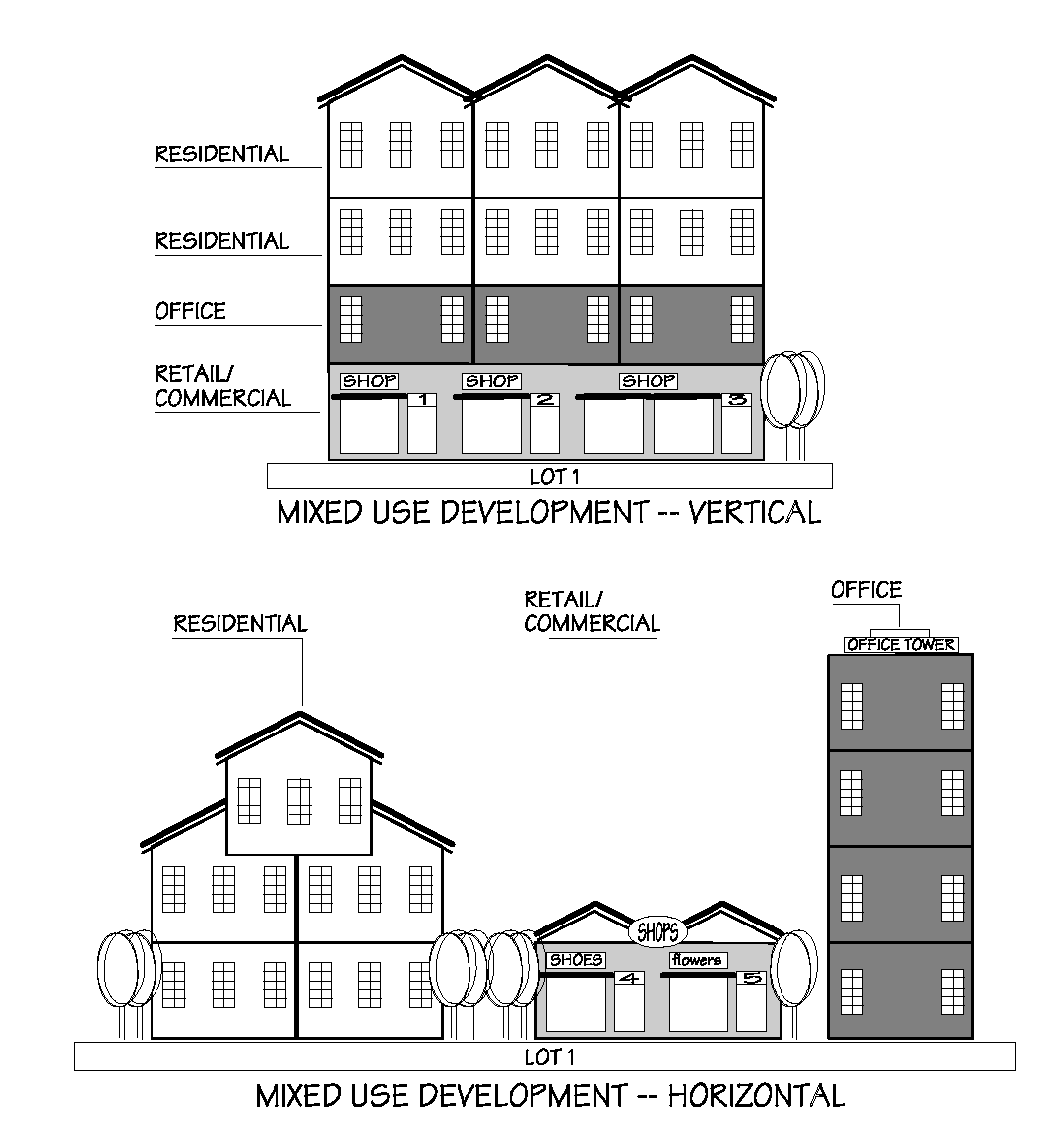
Mixed Use Development: A development that is comprised of a group of two (2) or more types of development, such as multifamily, commercial, and retail, constructed on the same lot or parcel of land under single ownership, in accordance with the zoning district in which it is located.
Mobile Home: A structure that meets the National Manufactured Home Construction and Safety Standards Act ("the HUD Code," 42 U.S.C. 5401) that is designed for permanent or temporary habitation and so constructed as to permit its transport on wheel from the place of its construction to the location or subsequent locations at which it is intended to be a permanent or temporary habitation and designed to permit the occupancy thereof as a dwelling place of one or more persons.
Mobile Home Park: A site containing spaces with required improvements and utilities for the long term placement of mobile homes and that may include services and facilities for the residents, but not including recreational vehicle parks or camps.
Mobile/Modular Home Sales: The sale or display of mobile homes, modular homes, or both for order and sale.
Modular Home: A dwelling unit approved by the Illinois Department of Public Health and composed of elements substantially assembled in a manufacturing plant and transported to the building site for final assembly on a permanent foundation. The term does not include mobile homes.
Motor Racing Facility: Any facility or course upon which is conducted motor racing activities or events.
Motor Vehicle: A self-propelled device, and any combination of devices which are propelled or drawn by a self-propelled device, intended for the transportation of people or property. The term specifically includes, but is not limited to, automobiles, trucks, motorcycles, motor bikes, go-carts, all-terrain vehicles, and any other recreational vehicles.
Muffler: A device for abating the sounds of escaping gases of an internal-combustion engine. A muffler may be one of the following types:
Muffler, Annular Swirl Flow (Auger Type): The exhaust gases in the annular swirl flow muffler follow a circular path down the length of the muffler. The inner design is like an auger.
Muffler, Perforated Straight Core, with Sound-Absorbing Medium: In this type muffler, the central tube shall be perforated and shall be fully surround from beginning to end with an absorbing medium (e.g., fiberglass, steel wool or similar material).
Muffler, Reverse Flow (Baffle): The reverse flow devices incorporate a multitube and baffled design. The exhaust gases do not flow straight through these devices, but take a multipath, back-and-forth route through the device.
Muffler, Stacked 360 Degree Diffuser Discs: This type of muffler works by causing the exhaust gases to be ninety (90) degrees and then flow through stacked three hundred sixty (360) degrees diffuser discs.
Multi-Modal Center: A facility for the receipt, transfer, short-term storage, or dispatching of goods which may involve one or more modes of transportation, including, but is not limited to air, rail, barge, and vehicle.
New Construction: For the purpose of determining insurance rates, structures for which the start of construction commenced on or after the effective date of an initial FIRM or after December 31, 1974, whichever is later, and includes any subsequent improvements to such structures. For floodplain management purposes, "new construction" means structures for which the start of construction commenced on or after the effective date of a floodplain management regulation adopted by a community and includes any subsequent improvements to such structures.
NGVD: National Geodetic Vertical Datum of 1929. Reference surface set by the National Geodetic survey deduced from a continental adjustment of all existing adjustments in 1929.
Non-Community Water System: A public water system that is not a community water system that has at least fifteen (15) service connections used by nonresidents, or regularly serves twenty-five (25) or more nonresident individuals for at least sixty (60) days a year. A permit for a non-community water system is issued by the Illinois Department of Public Health.
Nonconforming Building or Structure: Any building or structure lawfully existing on the effective date of these regulations, or any amendment thereto, rendering such building or structure nonconforming, which does not comply with all of the standards of these regulations or any amendment thereto.
Nonconforming Use: Any use lawfully being made of any land, building, or structure on the effective date of these regulations or any amendment thereto rendering such use nonconforming, which does not comply with all of these regulations or any amendment thereto. Per Sections 3.10 ("Floodplain Development Permit") and 7.14 ("Floodplain Regulations") the term "Nonconforming Use" shall have the following meaning: Any structure which was constructed prior to the adoption of the National Flood Insurance Program which presently does not meet the elevation requirements of the current FIRM/DFIRM.
Nonconforming Vacant Lot: Any lot of record which does not contain a use or building and which does not meet the minimum area or width requirements established in these regulations or any amendment thereto.
Non-Conversion Agreement: A recorded agreement, which shall run with the land identified in an attached legal description, between a property owner and floodplain administrator to document a property owner's understanding of the limitations on construction and use of a structure's enclosed area located below the identified flood protection elevation, when said structure is located within a Special Flood Hazard Area.
Non-participating Property: Real property that is not a participating property.
Non-participating Residence: A residence that is located on a non-participating property and that is existing and occupied on the date that an application for a permit to develop the commercial wind energy generation facility or commercial solar energy generation facility is filed with the County.
Nonresidential Zoning District: Per Sections 3.9 ("Telecommunications Carrier Facilities Variances") and 7.1 (Telecommunications Carrier Facilities") the term "Non-Residential Zoning District" shall have the following meaning: all zoning districts designated under these regulations, except for residential zoning districts.
Normal agricultural practices: Activities associated with the preparation and tilling of land for the purposes of growing crops, or raising livestock, which may include, but are not limited to, the construction of conservation measures, plowing, disking, and cultivating.
Nudity or a State of Nudity: "Nudity" or "State of Nudity" means the showing of the human male or female genitals, pubic area, vulva, anus, anal cleft or cleavage with less than a fully opaque covering, or the showing of the female breast with less than a fully opaque covering of any part of the nipple.
Nursery: Land or greenhouses where flowers, shrubs, and plants are grown on-site for personal enjoyment, wholesale distribution, or sale.
Nursing Home: A home for the elderly, chronically ill, infirm, or incurable persons, or a place of rest for those suffering bodily disorders, in which three (3) or more persons, not members of a family residing on the premises, are provided with food, lodging and medical care, but not including hospitals, or clinics.
Occupied Community Buildings: Any one or more of the following buildings that is existing and occupied on the date that the application for a permit to develop the commercial winder energy generation facility or the commercial solar energy facility is filed with the county: a school, place of worship, day care facility, public library, or community center.
Office: A use or building where business is conducted which does not primarily involve retail activities at that location. This includes, but is not limited to, general business offices, government offices, insurance offices, law offices, and real estate sales and management offices.
On-Premises Consumption: The use or consumption of cannabis, cannabis concentrate, or cannabis-infused products or solutions at the location where such product is sold.
Open Picnic Shelter: A covered structure with no exterior or interior walls, usually equipped with tables, benches, grills, and trash receptacles, and intended to be used as a place to assemble, cook, eat, and/or relax.
Open Space: Any portion of a parcel or area of land or water which is open and unobstructed from the ground to the sky, including areas maintained in a natural and undisturbed character. The term "open space" shall not include water below the mean high water line, or areas covered with buildings, structures, sidewalks, patios, parking areas, except that fifty (50) percent of any area paved with permeable materials shall be considered "open space."
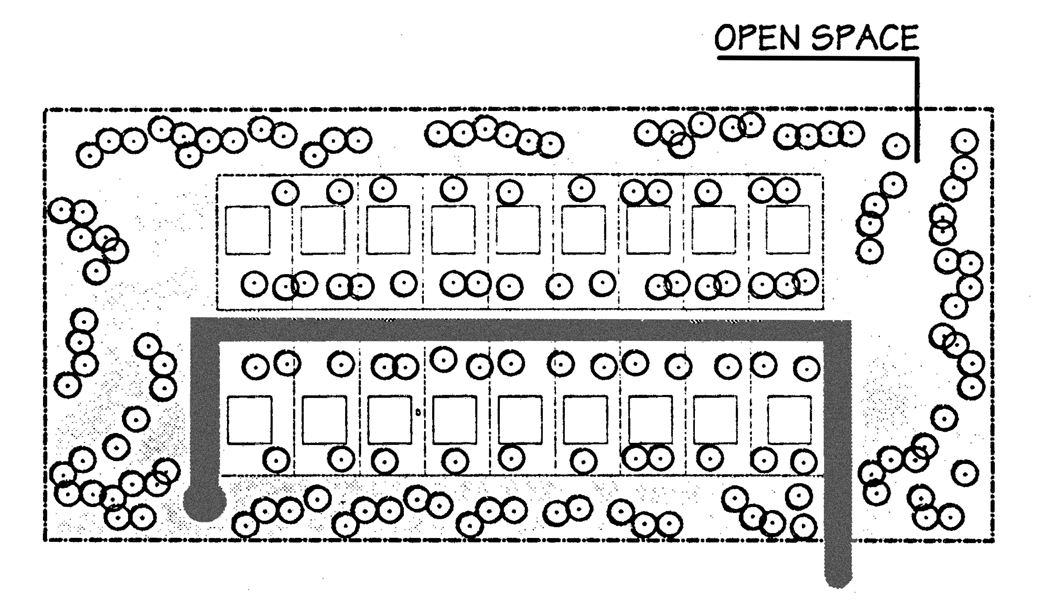
Open Space, Common: Land or an area of water or a combination of both land and water located within or related to a development, not individually owned or dedicated for public use, that is designed and intended for the common use or enjoyment of the residents and their guests of the development and may include such complementary structures and improvements as are necessary and appropriate.
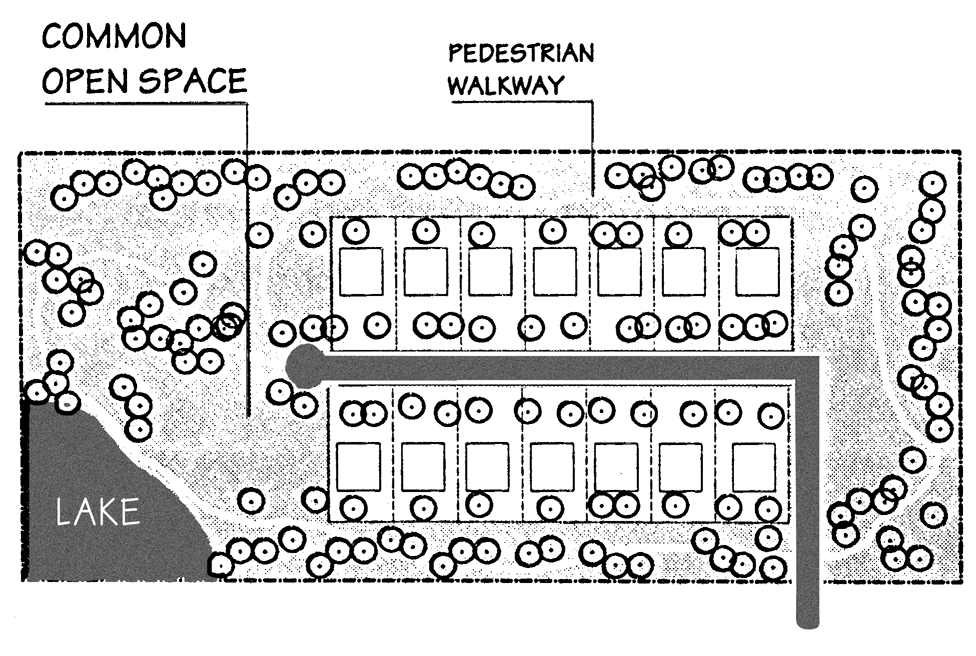
Open Space, Private: Open space, the use of which is normally limited to the occupants of a single dwelling or building or parcel.
Open Space, Public: Open space owned by a public agency and maintained by it for use and enjoyment of the general public.
Open Space, Useable: Total area of open space exclusive of right-of-way, drives, parkways and slopes greater than thirty (30) percent. The least dimension of each parcel of useable open space shall not be less than thirty (30) feet.
Outlot: A lot depicted on a final plat which does not meet the requirements of Article 8, Subdivisions, and Article 3, Development Review Procedures, Sections 3.14 ("Subdivision"), 3.15 ("Subdivision Waivers and Appeals"), 3.16 ("Plat Approval") for lots of record, and whose use shall be limited to open space, future right-of-way, stormwater detention or retention, or combined with an adjacent lot of record. Outlots shall be prohibited from being improved with a building.
Overnight Accommodation: A facility offering transient lodging accommodations at a daily rate to the general public and which may also provide additional services, such as restaurants, meeting rooms, and recreational facilities, such as hotels, motels, and bed and breakfast establishments.
Owner: A person or persons recorded as such on official records and includes a duly authorized agency or notary, a trustee, a purchaser, or a devisee; any person having a vested or contingent interest in the property in question. Per Section 7.2 ("Wind Energy Conversion Systems") the term "Owner" shall have the following meaning: the individual or entity that intends to own and operate the wind energy system in accordance with this ordinance.
Parcel: A contiguous lot or tract of land owned and recorded or controlled by the same person(s) or entity.
Park: A lot, or portion thereof, or aggregation of contiguous lots, used by the public for outdoor recreational activities, including any accessory office, picnic tables, maintenance building, restroom facility, storage facility, or similar accessory use or structure.
Parking Area: An area containing one or more designated parking spaces.
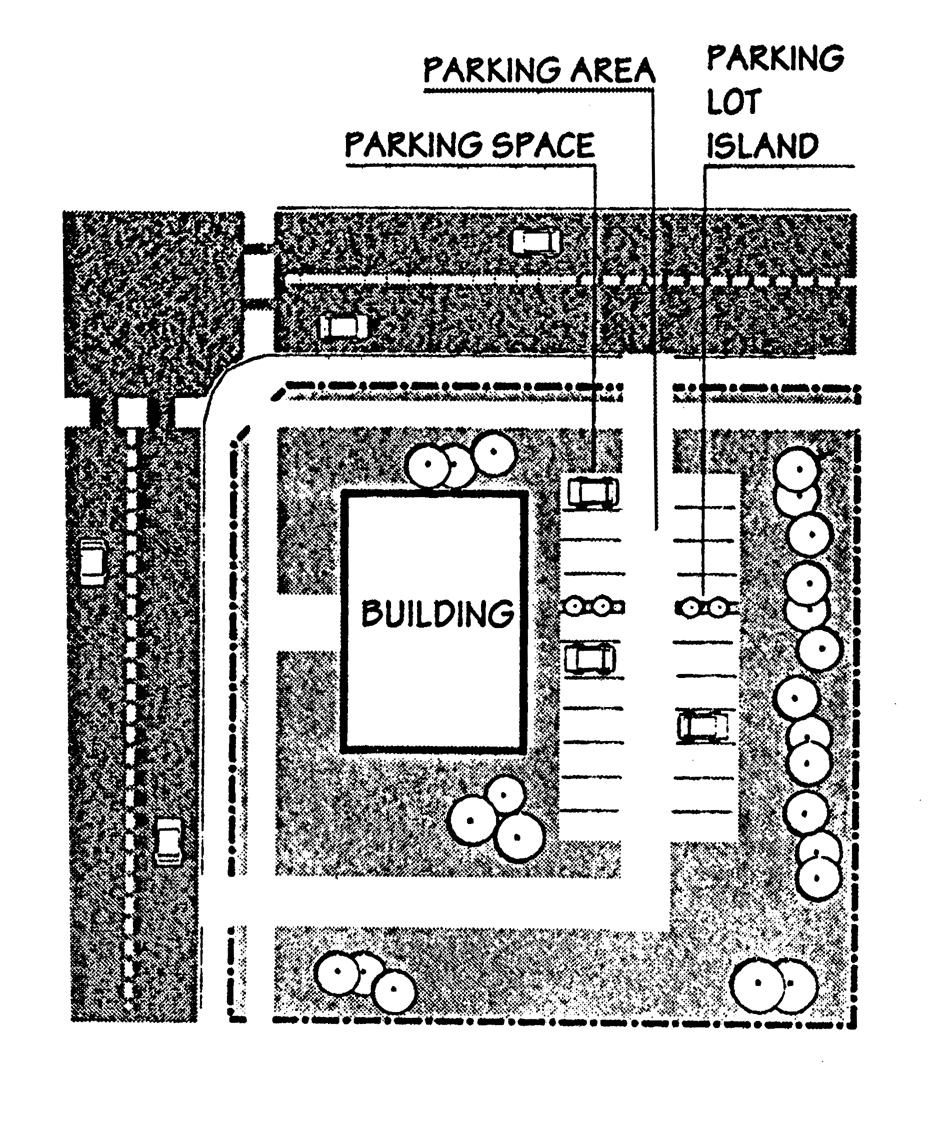
Parking Deck: A structure or building in which automobiles are parked on two (2) or more levels or stories.
Parking Lot: A parking area that is open to the sky, but not including the uppermost level of a parking deck.
Parking Lot Island: A landscaped area surrounded by a parking lot on three (3) or more sides.
Parking Space: An area, enclosed or unenclosed, reserved for the parking of one motor vehicle.
Parkway: A strip of land situated within the dedicated street right-of-way and (1) located between the roadway and right-of-way line; (2) a median located between the roadways; or (3) landscaped.
Participating Property: Real property that is the subject of a written agreement between a facility owner and the owner of the real property that provides the facility owner an easement, option, lease, or license to use the real property for the purpose of construction a commercial wind energy facility, a commercial solar energy facility, or supporting facilities. Participating property also includes real property that is owned by a facility owner for the purpose of constructing a commercial wind energy facility, a commercial solar energy facility, or supporting facilities.
Participating Residence: A residence that is located on a participating property and that is existing and occupied on the date that an application for a permit to develop the commercial wind energy generation facility or commercial solar energy generation facility is filed with the County.
Particulate Matter: Material other than water which is suspended in or discharged into the atmosphere in a finely divided form as a liquid or solid.
Perimeter Control: Any control measure installed between the down slope side of the disturbed area and the property line and/or between the down slope side of the disturbed area and any area of concentrated flow.
Permanent Foundation: A closed perimeter formation intended to support and anchor the unit and consisting of materials such as concrete, mortared concrete block, or mortared brick extending into the ground below the frost line which shall include, but not necessarily be limited to, cellars, basements, or crawl spaces, but does exclude the use of piers.
Person: An individual, corporation, governmental agency, business, trust estate, proprietorship, firm, partnership, two (2) or more persons having joint or common interest, or any other legal entity.
Personal Service Establishment: A business which provides personal services directly to customers at the site of the business, or which receives goods from or returns goods to the customer which have been treated or processed at another location. This includes, but is not limited to, travel agencies, dry-cleaning and laundry drop-off and pick-up, laundry coin-op, stations, tailors, hair stylists, cosmeticians, toning or tanning salons, postal substations, package delivery drop-off and pick-up stations, quick-print photo establishments, shoe repair shops, interior design studios, and domestic pet services.
Place of Worship: A church, synagogue, temple, mosque or other institution for religious worship, including any accessory use or structure, such as a school, day care center, or dwelling that is located on the same lot.
Planned Development: A parcel or tract of land initially under unified ownership or control, and which is or is intended to be the site for two (2) or more principal buildings or one or more principal use, or one principal building for two (2) or more principal uses. The term "planned development" includes all planned developments, whether residential, commercial or otherwise in nature, regardless of whether an actual division of property is required or not, and regardless of whether it is specifically labeled a planned development or not.
Planned Development, Residential: A development comprised of attached and/or detached dwelling units that has coordinated common open space and service areas and is built in accordance with densities specified in the zoning district in which it is located.
Plat: A map, plan or layout representing a tract of land showing the boundaries, location, and existing conditions, such as easements and utilities, of individual properties and streets, or showing a map of a subdivision or site plan.
Plat Act: The Illinois Plat Act now in effect or as hereafter amended, 765 ILCS 205/0.01 et seq.
Plat Officer: The person appointed by the County Board to administer Article 8, Subdivisions, and Article 3, Development Review Procedures, Sections 3.14 ("Subdivision"), 3.15 ("Subdivision Waivers and Appeals"), and 3.16 ("Plat Approval") of the County Code or his designee.
Plot: A single unit parcel of land, or a parcel of land that can be identified and referenced.
Porch: A platform which projects from the exterior wall of a building, has direct access to the street level of the building, is covered by a roof or eave which may be supported by posts, and has no roof-supporting walls on three (3) sides.
Pond: An island body of water with less than an acre of surface area.
Prairie: An open area covered by low-growing plants, dominated by grasslike species of which at least one-half (½) are true grasses, and with less than mature tree per acre. An open area characterized by a predominance of grasses and wildflowers, one-half (½) of which are native grasses to Illinois.
Pre-project condition: A condition that impacts erosion, sediment, or stormwater run-off characteristics of a site prior to start of construction activity. The pre-project condition shall be based on the predominant land use for the past five (5) years. For example, if a site has been cropland for four (4) of the past five (5) years and in grass just prior to development, the land use would be cropland for the pre-project condition.
Principal Building or Structure: A building or structure containing the principal use of the lot.
Principal Residential Building: Per Sections 3.9 ("Telecommunications Carrier Facilities Variances") and 7.1 ("Telecommunications Carrier Facilities") the term "Principal Residential Building" shall have its common meaning but shall not include any building under the same ownership as the land of the facility lot. "Principal residential building" shall not include any structure that is not designed for human habitation.
Private Recreational Area or Facility: A building, auditorium, stadium, outdoor amphitheater, open or enclosed structure, outdoor field or playground that contains recreational space and is operated as a business or by a private entity. Such establishments may include, but are not limited to, tennis courts, swimming pools, bowling alleys, gymnasiums, and other similar facilities.
Private Sewage Disposal System: Any sewage handling or treatment facility receiving domestic sewage from less than fifteen (15) people or population equivalent and having a ground surface discharge or any sewage handling or treatment facility receiving domestic sewage and having no ground surface discharge. Typically designed for sewage treatment for use by a single residence.
Private swimming pool: A body of water in an artificial or partly artificial receptacle or other container whether installed or constructed above or below ground elevation with a depth of two (2) feet or more (and a minimum surface area of one hundred twenty-five (125) square feet or to be used for swimming, wading, diving or recreational bathing located on private residential property for the use of the property's owner and guests.
Private Water System: Any supply which provides water for drinking, culinary, and sanitary purposes and serves the improvements on a single parcel.
Project: Any development involving modification to land which involves a land disturbing activity.
Project Area: That region of land whose boundary is legally defined and established by the applicant, owner, developer, or operator and encompasses the area within the parcel boundaries of all participating properties containing all elements of a Wind Energy Conversion System. The project area shall not include a Non-Participating Property.
Properly Installed Muffler: A properly installed muffler is one which is:
(1)
Correctly installed per the manufacturer's instructions; and
(2)
Fully functional; and
(3)
Has no leaks or holes in the walls of the exhaust tubing or muffler body; and
(4)
Has no defect or modifications to reduce its sound reduction capabilities.
Property: A lot, parcel, or tract of land, together with any improvements and/or structures erected, constructed or contained thereon.
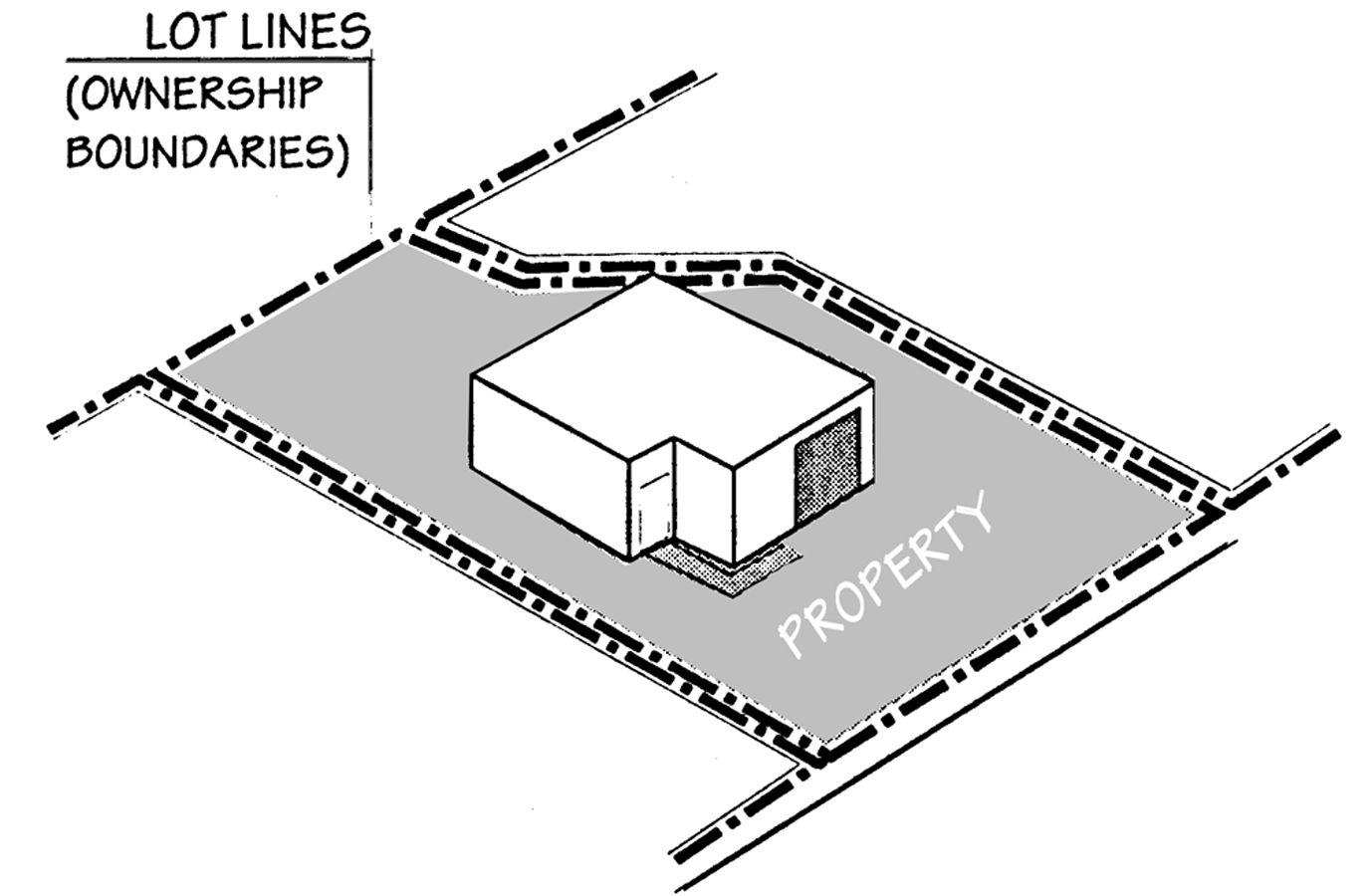
Property Owners Association: An association or organization, whether or not incorporated, which operates under and pursuant to recorded covenants or deed restrictions, through which each owner of a portion of a subdivision—be it a lot, parcel, site, unit plot, or any other interest—is automatically a member as a condition of ownership and each such member is subject to a charge or assessment for a pro-rated share of expense of the association which may become a lien against the lot, parcel, unit, or other interest of the member. It may also be referred to as a Home Owners' or Residents' Association.
Protected Lands: Real property that is subject to a permanent conservation right consistent with the Real Property Conversion Rights Act; or registered or designated as a nature preserve, buffer, or land and water reserved under the Illinois Natural Areas Preservation Act.
Public Facilities: A building, use or structure owned or occupied by a government agency, or an agent thereof, such as a jail, housing for persons who are participating in work release programs or who have previously served and completed terms of imprisonment for violation of criminal laws, sanitary landfill, solid waste transfer or disposal facility, wastewater treatment facility, or hazardous waste treatment or storage facility, but not including a residential-care home, rehabilitation center, or education or health institution.
Public Recreational Area or Facility: A building, auditorium, stadium, outdoor amphitheater, open or enclosed structure, outdoor field or playground that contains recreational space and is operated by a government agency. Such establishments may include, but are not limited to, tennis courts, swimming pools, bowling alleys, gymnasiums, and other similar facilities.
Public Transportation Facilities: Passenger terminals, stations, shelters and related facilities primarily intended for the transportation of commuters.
Public Utility Structure: An electricity or gas substation, water or wastewater storage tank, tower, reservoir, filtration plant or pumping station, telephone repeater station or similar structure used as an intermediary switching, boosting, distribution or transfer station for electricity between the point of generation and the end user, including communication support structures and antennas, radio, television, microwave transmission or relay towers, and other similar distributing equipment. Pursuant to statute (55 ILCS 5/5-12001), the County's zoning powers do not include the right to specify or regulate the type or location of any poles, towers, wires, cables, conduits, vaults, laterals or any other similar distributing equipment of a public utility as defined in the Public Utilities Act (220 ILCS 5/1-101 et seq.), if the public utility is subject to the Messages Tax Act (35 ILCS 610/1 et seq.), the Gas Revenue Tax Act (35 ILCS 615/1 et seq.), or the Public Utilities Revenue Act (35 ILCS620/1 et seq.) or if such facilities or equipment are located on any rights-of-way and are used for railroad purposes.
Public Water System: A system for the provision to the public of piped water for human consumption, if the system has at least fifteen (15) service connections or regularly serves an average of at least twenty-five (25) individuals daily at least sixty (60) days per year. Such a system is regulated by IEPA. The term public water system includes any collection, treatment, storage and distribution 168, 170, facilities under control of the operator of such system and used primarily in connection with such system and any collection or pretreatment storage facilities not under such control which are used primarily in connection with such system.
Qualifying Structure: Per Sections 3.9 ("Telecommunications Carrier Facilities Variances") and 7.1 ("Telecommunications Carrier Facilities") the term "Qualifying Structure" shall have the following meaning: a supporting structure that is (i) an existing structure, if the height of the facility, including the structure, is not more than fifteen (15) feet higher than the structure just before the facility is installed, or (ii) a substantially similar, substantially same-location replacement of an existing structure, if the height of the facility, including the replacement structure, is not more than fifteen (15) feet higher than the height of the existing structure just before the facility is installed.
Racing Event: Any time, speed, pulling, or distance competition using motor vehicles.
Racing Vehicle: Every self-propelled device, in, upon or by which any person may be transported and which is participating in a motor racing activity or event at a motor racing facility.
Recreational Vehicle: A vehicular-type portable structure (marine or terrain) without a permanent foundation that can be towed, hauled, or driven, and that is primarily designed for recreational, camping, and travel use, including, but not limited to: camping trailers, motor homes, mini motor homes, travel trailers, truck campers, van campers, stock cars, boats, snowmobiles, or other such item used primarily for recreational purposes. "Recreational Vehicle" also includes trailers designed to transport materials other than people, including, but not limited to, boats, vehicles, snowmobiles and other forms of cargo. When recreational vehicles are affixed to a trailer, the vehicles and trailer shall be considered one (1) recreational vehicle.
Recreational Vehicle Park: Any lot or parcel of land designed to be occupied by two (2) or more recreational vehicles as temporary living quarters for recreation or vacation purposes. The term includes any structures or vehicles intended for use as a part of such recreational vehicle park.
Recycling Center: A site or facility that accepts only segregated, non-hazardous, non-special, homogenous, non-putrescible materials such as dry paper, glass, cans, or plastics, for subsequent use in the secondary materials market. This shall not include a facility which handles, collects, or otherwise stores or processes automobile bodies or parts, toxic or hazardous materials, or recyclable materials mixed with other refuse.
Recycling Drop off Center: A facility where recyclable materials are temporarily stored or collected, or are processed by manual separation.
Regional stormwater management system: A system which is designed, constructed and maintained to provide stormwater control for multiple land owners.
Registered Land Surveyor: A surveyor who is licensed to practice professional surveying by the State of Illinois.
Registered Professional Architect: An architect registered in the State of Illinois, under the Illinois Architectural Practices Act of 1989 (225 ILCS 305/1 through 305/40).
Registered Professional Engineer: An engineer registered in the State of Illinois, under the Illinois Structural Engineering Licensing Act (225 ILCS 340/1 through 340/38), or the Professional Engineering Practice Act of 1989 (225 ILCS 325/1 through 325/49).
Regularly Features or Regularly Shown: "Regularly Features or Regularly Shown" means a consistent or substantial course of conduct, such that the films or performances exhibited constitute a substantial portion of the films or performances offered as a part of the ongoing business of the adult use.
Regulatory Floodway: The channel, including on-stream lakes, and that portion of the floodplain adjacent to a stream or watercourse as designated by IDNR/OWR, which is needed to store and convey the existing and anticipated future 100-year frequency flood discharge with no more than a one-tenth-foot increase in stage due to the loss of flood conveyance or storage, and no more than a ten (10) percent increase in velocities. To locate the regulatory floodway boundary on any site, the regulatory floodway boundary should be scaled off the regulatory floodway map (or charts consulted where applicable) and located on a site plan, using reference marks common to both maps. Where interpretation is needed to determine the exact location of the regulatory floodway boundary, IDNR/OWR should be contacted for the interpretation.
Repetitive Loss: Flood related damages sustained by a structure on two (2) separate occasions during a ten-year period for which the cost of repairs at the time of each flood event on average equals or exceeds twenty-five (25) percent of the market value of the structure before the damage occurred.
Residence: A dwelling where a person is actually living at a specific point in time.
Residential-Care Home: A dwelling in which staff persons provide care, education, and participation in community activities for a group of unrelated individuals who have long-term mental, intellectual, developmental or physical disabilities or handicaps, and who are unable to live independently but are capable of community living if provided with an appropriate level of supervision, assistance and support services, but who do not require on-site medical or nursing facilities, with the primary goal of developing or exercising basic skills for daily living. This does not include dwellings for persons whose primary reason for placement in the dwelling is the abuse of alcohol or controlled substances, or the need for continuous nursing or medical care, or for persons who have recently been released from incarceration, or dwellings which serve as an alternative to incarceration for persons convicted of criminal offenses or declared criminally insane or dangerous.
Residential-Care Home, Small: A residential-care home with one to five (5) residents.
Residential-Care Home, Medium: A residential-care home with six (6) to eight (8) residents.
Residential-Care Home, Large: A residential-care home with more than eight (8) residents.
Residential Zoning District: Per Sections 3.9 ("Telecommunications Carrier Facilities Variances") and 7.1 ("Telecommunications Carrier Facilities") the term "Residential Zoning District" shall have the following meaning: a zoning district that is designated under these regulations and is zoned predominantly for residential uses.
Residential Use: Any dwelling, designed and intended to house one or more families.
Restaurant: An establishment, including banquet halls, that is open to the public where food and beverages are regularly prepared, consumed and sold: (a) at a table or counter within the premises; (b) for consumption at a table or counter outdoors, but located on the premises; (c) for consumption in automobiles or other motor vehicles located in parking areas on the premises; and (d) for consumption off the premises. The term includes "fast food" restaurants, whose principal business is the sale of preprepared or rapidly prepared food directly to the customer in a ready-to-consume state for consumption either within the restaurant building, in cars on the premises, or off the premises.
Resubdivision: The further division of lots within a subdivision previously made and approved or recorded according to law.
Right-of-Way: A lineal area of land dedicated to the public by reservation, dedication, forced dedication, prescription, or condemnation and intended to be occupied by a street, crosswalk, railroad, electric transmission lines, oil or gas pipeline, water line, sanitary sewer, storm sewer, and other similar uses.
Right-of-Way Line: The outer boundary of a right-of-way.
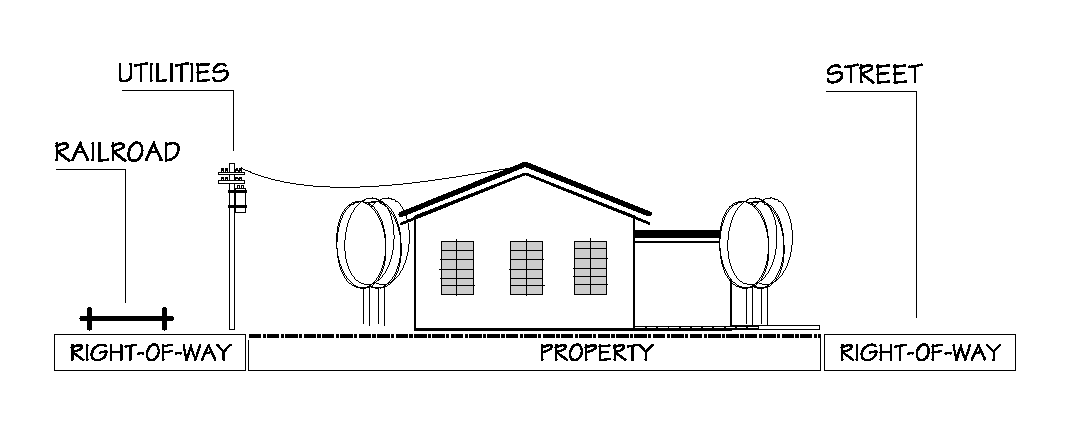
Riparian Zone/Riparian Corridor: Natural vegetation along the edge of a stream that: modulates temperature; provides nutrient input into the stream system; provides a buffer that intercepts surface runoff, filtering out sediments and pollutants; provides erosion control through soil stabilization; and serves as habitat and movement corridors for wildlife who utilize the stream for food, water and cover.
Riverine SFHA: Any SFHA subject to flooding from a river, creek, intermittent stream, ditch, stream lake system or any other identified channel. This term does not include areas subject to flooding from lakes, ponding areas, areas of sheet flow, or other areas not subject to overbank flooding.
Rivers and Streams: Those perennial and intermittent rivers and streams included on 7.5 minute quadrangle topographic maps published by the U.S. Geologic Survey.
Road: Any right-of-way that has been improved for the purposes of providing a surface for vehicular traffic, including any Federal, State, County, township, and municipal controlled facilities.
Road Frontage: All of the property fronting on one side of a street between two (2) intersecting streets, or in the case of a dead-end street, all of the property along one side of the street between an intersecting street and the end of such dead-end street.
Roof: A solid overhead structure used for protection or shielding from the sun, rain, or other elements of weather.
Runoff: That portion of precipitation that has not been absorbed by the soil or plant material and which reaches the drainage system or the edge of a parcel of land.
Sanitary District: The Greater Peoria Sanitary District.
Sanitary Sewer: A constructed conduit for the collection and carrying of liquid and solid sewage wastes, other than storm sewers, to a sewage treatment plant.
Scenic Area/Vista: An area from which a diversity of natural features can be observed, which generally includes a focal point, such as a river or lake.
School: A building or group of buildings and all associated structures, facilities and grounds in or on which instruction in subjects which are fundamental and essential in general education is offered to students. This includes a privately or publicly owned elementary school, middle school, junior high school, or high school which does not provide lodging for students.
School, Arts: A secondary or higher education facility primarily teaching skills in crafts and the fine arts and does not provide lodging or dwelling units for students or faculty.
School, Boarding: A privately owned school which provides lodging or dwelling units for students on the same property.
School, Vocational: A secondary or higher education facility primarily teaching usable skills that prepare students for jobs in a trade or business and does not provide lodging or dwelling units for students or faculty. The term "vocational schools" may include schools that teach repair skills for automobiles or other types of heavy machinery that require garage and/or outdoor work space.
Screening: Structures, solid fences, or evergreen vegetation maintained for the purpose of concealing from view the area or objects behind such structures, solid fences or vegetation.
Self-closing: Closing or shutting automatically after being opened.
Self-latching: Closing or shutting so that the latch catches automatically after opening.
Semi-Nude Model Studio: "Semi-Nude Model Studio" means any place where a person, who regularly appears in a state of semi-nudity is provided for money or any form of consideration to be observed, sketched, drawn, painted, sculptured, photographed, or similarly depicted by other persons.
Semi-Nude or State of Semi-Nudity: "Semi-Nude or State of Semi-Nudity" shall mean a state of dress in which opaque clothing covers no more than the genitals, anus, anal cleft or cleavage, pubic area, vulva, and nipple of the female breast, as well as portions of the body covered by supporting straps or devices. It is a defense to prosecution for any violation of this ordinance that a person appearing in a state of nudity or semi-nudity did so in a modeling class operated:
(1)
By a college, junior college, or university supported entirely or partly by taxation;
(2)
By a private college or university which maintains and operates educational programs in which credited are transferable to a college, junior college, or university supported entirely or partly by taxation; or
(3)
In a structure:
(a)
Which has no sign visible from the exterior of the structure and no other advertising that indicates a nude or semi-nude person is available for viewing; and
(b)
Where, in order to participate in a class a student must enroll at least three (3) days in advance of the class.
Semi-Private Water System: A water supply which is not a public water system, yet which serves a segment of the public other than an owner-occupied single-family dwelling. Such a system would serve less than fifteen (15) serviced connections used by residents or regularly serves less than twenty-five (25) residents at least sixty (60) days a year. A permit for a semi-private water system would be issued by the Illinois Department of Public Health or the Peoria City/County Health Department.
Setback: The horizontal distance between any portion of a structure or any development activity and a right-of-way, the bank of a perennial stream, the centerline of an intermittent stream, the ordinary high water mark of a lake or pond, and the edge of a wetland, measured at the structure's or development's closest point to the bank, centerline, ordinary high water mark, easement, property line, or other point on or near the site.
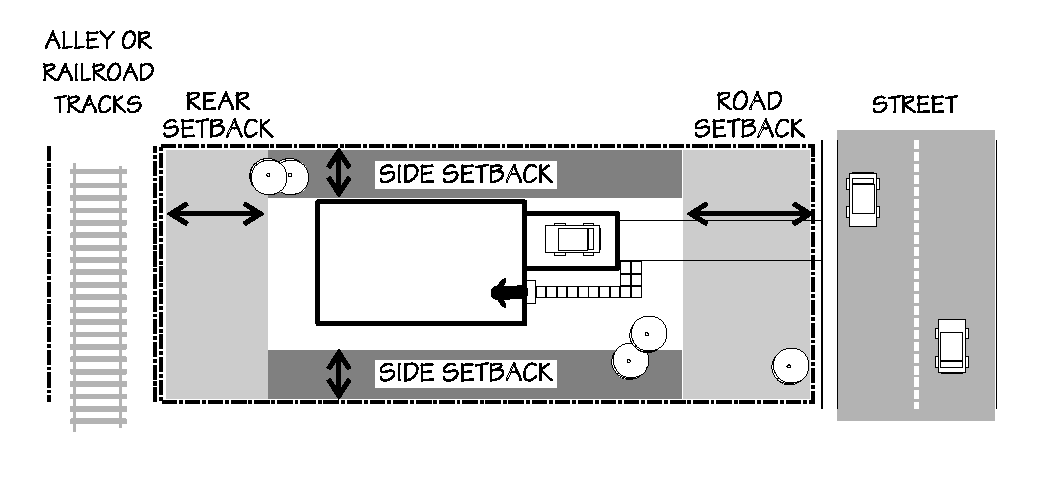
Setback, Commercial Wind Energy Facility: distances measured from the center of the base of the wind tower.
Setback, Rear: An open space between the rear of a building or structure and the lot line farthest from the front lot line, projected to the side lines of the lot on which the building or structure is located.
Setback, Road: An open space between a building or structure and the street line of the lot on which the building or structure is located, unoccupied and unobstructed from the ground upward, except by fences or as otherwise provided in these regulations. In measuring a road setback, the horizontal distance between the streetline and the closest projection of the building shall be used. Every required road setback shall be measured at right angles (ninety (90) degrees) from the street line.
Setback, Side: An open space between the side of a building or structure and a lot line running to the street abutting the lot, projected to the front setback and rear setback of the lot on which the building or structure is located.
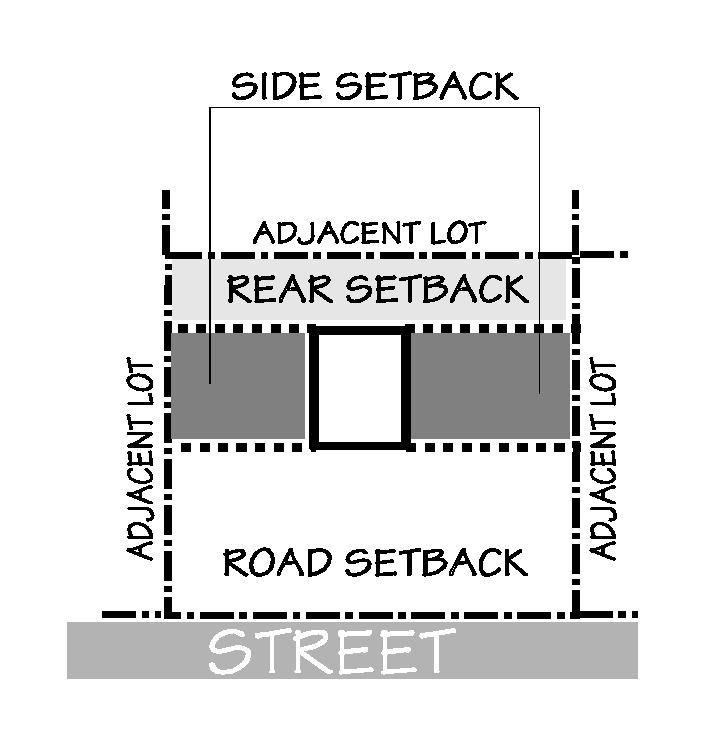
Severe Repetitive Loss: Flood related damages sustained by a structure on four (4) separate occasions during a ten-year period for which the cost of repairs is greater than five thousand dollars ($5,000.00) and the cumulative amount of such damage exceeds twenty thousand dollars ($20,000.00); or, flood related damages sustained by a structure on two (2) separate occasions during a ten-year period for which the cost of repairs cumulatively exceeds the market value of the structure before the damage occurred.
Sewers and Sewage Disposal System Ordinance:Chapter 19 of the Peoria County Code, as amended, and sometimes referred to as the Sewage Disposal Ordinance.
Sexually Oriented Adult Business: "Sexually Oriented Adult Business" shall be interchangeable with "Adult Business" and shall mean an adult bookstore, adult novelty store, adult video store, adult cabaret, adult motel, adult motion picture theater, adult theater, or semi-nude model studio.
Sexually Oriented Entertainment Activity: "Sexually Oriented Entertainment Activity" means the sale, rental, or exhibition for any form of consideration, of books, films, video cassettes, magazines, periodicals, or live performances which are characterized by an emphasis on the exposure or display of specific sexual activity.
Shopping Center: A building or group of buildings containing ten (10) or more commercial retail establishments, personal service establishments, and/or restaurants intended to serve regional shopping needs and constructed on a parcel of land under unified ownership or control, and which is planned and developed with unified building design and coordinated parking and service areas.
Sidewalks: A paved, surfaced, or leveled portion of the right-of-way, paralleling and usually separated from the street, used as a pedestrian walkway.
Sight Triangle: The area of the corner lot closest to the intersection which is kept free of visual impairment to allow full view of both pedestrian and vehicular traffic.
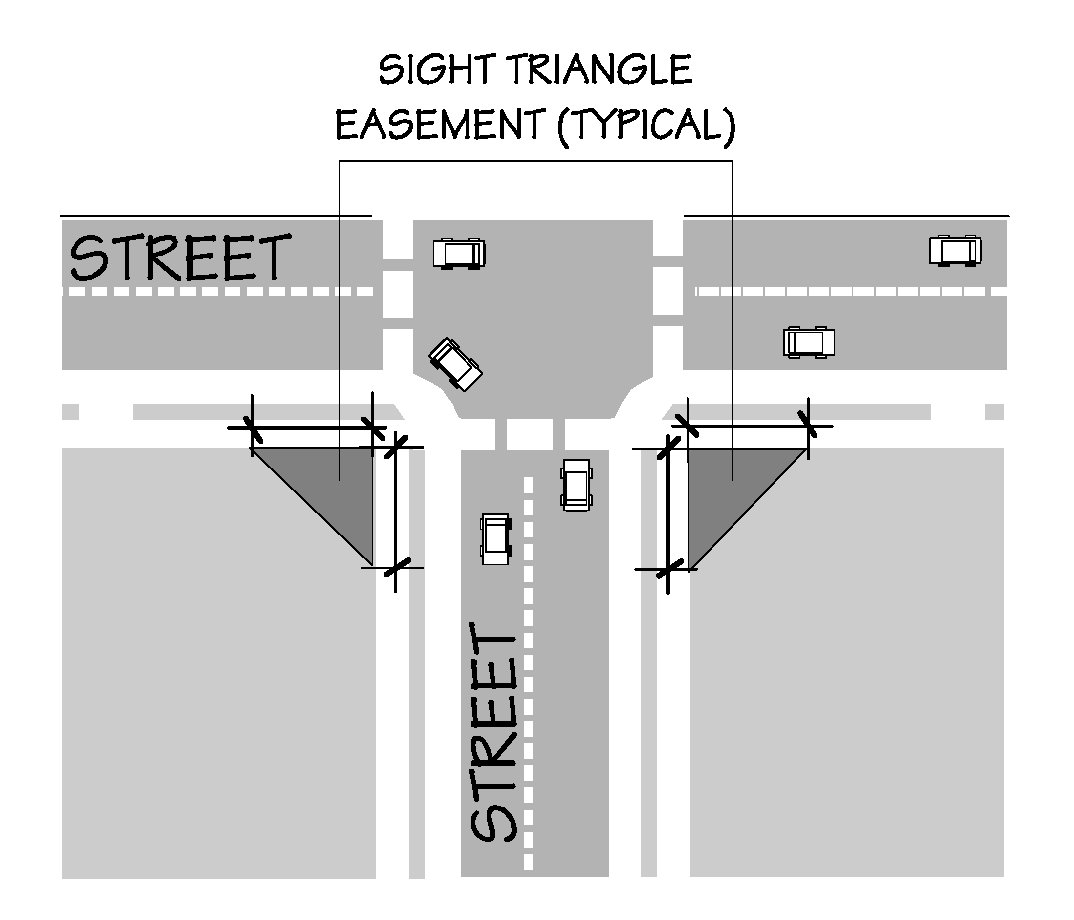
Sign: Any object, device, display or structure, or part thereof, which is used primarily to advertise, identify, display or direct or attract attention to an object, person, establishment, product, service, event or location by any means including, without limitation, words, letters, figures, designs, symbols, fixtures, colors, motion, illumination or projected images, visible beyond the boundaries of the lot or parcel on which they are situated or visible from any public thoroughfare or right-of-way. This includes, but is not limited to, wall signs, freestanding signs, ground signs, window signs, awning or canopy signs, marquees, changeable copy signs, message boards, illuminated signs, moving signs, temporary signs, portable signs, pennants, banners, streamers or any other attention-getting device, flag, or other display, whether affixed to a building or erected elsewhere on the premises. The term "sign" excludes those features of a building which are an integral part of the building's design and structure.
Sign Area: The entire area of all sign faces, cumulatively, including sign faces on which no copy is currently displayed.
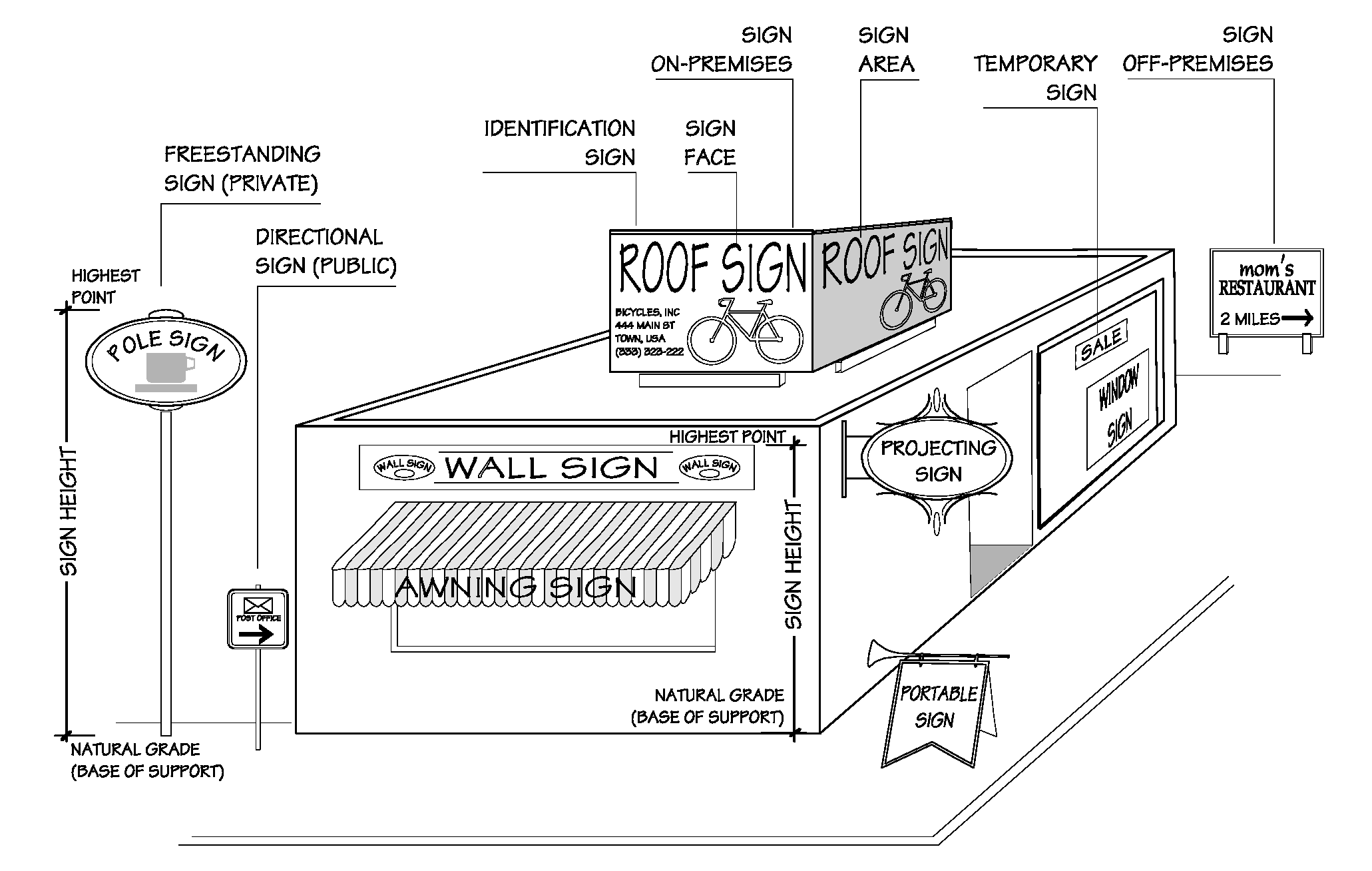
Sign, Banner: A temporary sign composed of lightweight material either enclosed or not enclosed in a rigid frame, secured or mounted.

Sign, Canopy or Awning: Any sign which is affixed to, painted on or suspended from a canopy or awning.
Sign, Copy, Changeable or Message Board: A sign on which the copy changes automatically on a lampbank or through mechanical means, such as electrical or electronic time and temperature units, or is changed manually in the field in or upon the surface area of the sign.
Sign, Directional: A sign containing directional information about public places owned or operated by Federal, State, or Local governments or their agencies; publicly or privately owned historic, educational, cultural, scientific and religious sites; areas of natural or scenic beauty; or areas for outdoor recreation. Information displayed on a directional sign shall be limited to the name of the business/entity, location, and hours of operation.
Sign Face: That part of the sign which is or can be used to identify, to advertise, to communicate information, or for visual representation which attracts the attention of the public for any purpose. This shall include any background material, panel, trim, color, and direct or self-illumination that differentiates the sign from the building, structure, backdrop surface, or object upon or against which it is placed. This shall not include any portion of the support structure for the sign, provided that no message, symbol, or any of the aforementioned sign face criteria is placed on or designed as part of the support structure.
Sign, Flashing: Any sign which contains an intermittent or flashing light source, or which produces the illusion of intermittent or flashing light.
Sign, Freestanding: A sign which is completely or principally supported by one or more post or other support of which seventy-five (75) percent is visually or physically attached to the ground, which is not attached to the principal building on the property, and is anchored in or upon the ground. This shall include, but not be limited to, signs attached to poles or supports for lights, canopies, and other items or structures.
Sign, Height: The vertical distance measured from the natural grade at the base of the sign support to the highest point of the sign.
Sign, Identification: A sign which states the name of the business or establishment, including either the national company or local proprietor, and/or the address of a building.
Sign, Illuminated: Any sign which emanates light either by means of exposed tubing or lamps on its surface or by means of illumination transmitted through the sign faces.
Sign, Indirectly Illuminated: Any sign which reflects light from a source intentionally directed upon it, for example by means of a floodlight.
Sign, Integral: An identification sign which is integrated into or made an integral part of a structure. Such signs often display names of buildings, dates of erection, monumental citations, and/or commemorations.
Sign, Nonconforming: Any sign which was lawfully erected and maintained prior to the adoption and effective date of these regulations and any amendments hereto, which fails to conform to all applicable regulations and restrictions of this Code, or a sign previously deemed to be nonconforming for which a special permit has been issued.
Sign, Off-Premises (Off-Site Sign): Any sign that identifies a business, person, activity, goods, products, services or facilities or that directs persons to a different location from where the sign is located.
Sign, On-Premises (On-Site Sign): Any sign that identifies a business, person, activity, goods, products, services or facilities that is located on the same premises as the sign itself.
Sign, Portable: Any sign that is not permanently attached to the ground, a structure, or a building and which is designed to be transported to another location.
Sign, Projecting: Any sign that is attached to a wall in a perpendicular manner.
Sign, Public: A sign of a noncommercial nature and in the public interest, erected by, or on the order of, a public officer in the performance of a public duty, such as official signs and notices of any public or governmental agency, or erected by or on the order of a court or public officer, including official traffic signs authorized by the Illinois Compiled Statutes (ILCS) or the Illinois Vehicle Code.
Sign, Temporary: A sign which contains information which is not of a permanent character. Such signs include, but are not limited to, political signs, garage sale signs and real estate signs.
Sign, Wall: Any sign attached to or erected against a wall of a building or structure with the exposed face of the sign in plane approximately parallel to the plane of the wall.
Sign, Window: A sign that is installed inside, painted upon or placed against a window for purposes of viewing from outside the premises, not including merchandise located in a window display.
Site: The lot or parcel on which the project is to be developed.
Site Plan: A scaled plan for proposed development that contains any information that reasonably may be required in order that an informed decision can be made by the approving authority.
Site Specific plan: A general erosion and sediment control permit required for projects where slope is greater than ten (10) percent and/or the site contains areas of concentrated flow or bodies of water. Slope shall be determined by the maximum slope indicated on the site according to the USDA Soil Survey or topographic survey as prepared by an Illinois Registered Surveyor.
Small Wind Energy System (noncommercial): A wind energy conversion system consisting of a wind turbine, a tower, and associated controls or conversion electronics, which has a rated capacity of less than or equal to four hundred ninety-nine (499) kW and which is intended to primarily reduce on-site consumption of utility power.
Smoke: Small gasborne particles that are formed as a result of the incomplete combustion of materials containing carbon, and that form a visible plume in the air.
Smoking Lounge: A business establishment or room that is dedicated, in whole or in part, to the smoking of cannabis, cannabis concentrate, or cannabis-infused products or solutions.
Solar Collector: A device that captures solar radiation for use as a source of energy.
Solar Energy Equipment: Items including but not limited to solar collectors, lines, pumps, batteries, inverters, mounting brackets, framing, and/or foundation used for or intended to be used for the collection and conversion of solar radiation into energy suitable for use.
Solar Private: Ground mounted solar collectors and supplementary solar energy equipment that is accessory to a residential or nonresidential use and covers an area no more than two (2) acres. In no instance can private solar be the only use on a parcel. Private solar is designed for onsite use by the owner or tenant of the residential or nonresidential use to reduce payments to the utility company.
Solid Screen: Either an earth berm, hill, solid wood fence, wall or a densely planted row of shrubs that cannot be seen through in any season.
Special Flood Hazard Area (SFHA): Any base flood area subject to flooding from a river, creek, intermittent stream, ditch, or any other identified channel or ponding and shown on a flood insurance rate map as an "A" or "A"-numbered zone.
Special Use: A use of land needing approval by the County Board. It may include but not be limited to public and quasi-public uses affecting the public interest; uses that have a unique, special, or unusual impact upon the use or enjoyment of neighboring property; and uses that affect planned development.
Specified Anatomical Areas: "Specified Anatomical Areas" shall mean human genitals, anus, cleft of the buttocks, or the female breast.
Specified Sexual Activity: "Specified Sexual Activity" means any of the following:
(1)
Sex acts, normal or perverted, including intercourse, oral copulation, masturbation or sodomy; or
(2)
Excretory functions as a part of or in connection with any of the activities described in (1) above.
Speedway: A racecourse used for racing automobiles or motorcycles.
Sportsman's Club: A recreational area or facility, and its accessory retail sales and services, containing space used for hunting, shooting or firing rifles, shotguns, pistols, skeet or traps, fishing and other similar sports.
Stable, Horse: A structure that is used for the shelter or care of horses.
Stadium: A structure or facility designed, intended, or used primarily for athletic events and containing seating and parking for spectators of those events, but not including a raceway or dragstrip.
Standards: The Illinois Environmental Protection Agency's Illinois Urban Manual, A Technical Manual Designed for Urban Ecosystem Protection and Enhancement published in 1995 and Illinois Procedures and Standards for Urban Soil Erosion and Sedimentation Control published in 1988 by the Urban Committee of the Association of Illinois Soil and Water Conservation Districts now in effect, or as hereafter amended which is incorporated by reference herein, the Peoria County standards for Stormwater Design Analyses, found at Appendix C of this article, and the erosion and sediment control criteria and specifications found in Appendix D of this ordinance.
Standard plan: A general erosion and sediment control permit for projects where slope is less than ten (10) percent and there are no areas of concentrated flow or bodies of water on or immediately adjacent to the site. Slope shall be determined by the maximum slope indicated on the site according to the USDA Soil Survey or topographic survey as prepared by an Illinois Registered Surveyor.
Start of construction: Per Sections 3.10 ("Floodplain Development Permit") and 7.14 ("Floodplain Regulations") the term "start of construction" shall mean: the date the building permit was issued, provided the actual start of construction, repair, reconstruction, rehabilitation, addition, placement, or other improvement was within ninety (90) days of the permit date. The actual start means either the first placement of permanent construction of a structure on a site, such as the pouring of slab or footings, the installation of piles, the construction of columns, or any work beyond the stage of excavation; or the placement of a manufactured home on a foundation. Permanent construction does not include land preparation, such as a clearing, grading and filling; nor does it include the installation of streets and/or walkways; nor does it include excavation for a basement, footings piers, or foundations or the erections [of] temporary forms; nor does it include the installation on the property of accessory buildings, such as garages or sheds not occupied as dwelling units or not part of the main structure. For substantial improvement, the actual start of construction means the first alteration of any wall, ceiling, floor, or other structural part of a building, whether or not that alteration affects the external dimensions of the building.
State: The State of Illinois.
Steep slopes: Those areas with slopes that equal or exceed thirty-five (35) percent or 2.85:1.
Storm Sewer: A constructed conduit for the collection, carrying, and either detaining or retaining of surface waters to a drainage course.
Story: That portion of a building, other than a cellar, included between the surface of any floor and the surface of the floor next above it, or if there is no floor above it, then the space between the floor and the ceiling next above it.
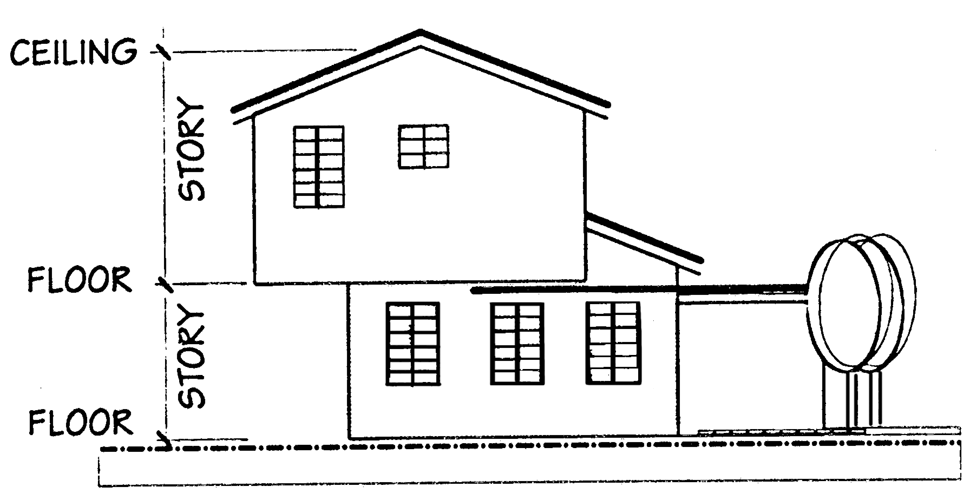
Story, Half: A space under a sloping roof which has the line of intersection of roof decking and wall face not more than three (3) feet above the top floor level and in which space not more than two-thirds (⅔) of the floor area is improved for use. A half-story containing an independent apartment or living quarters shall be counted as a full story.
Stream: An open body of running water flowing continuously or intermittently. Perennial and intermittent streams are designated in accordance with 7.5 minute topographic maps of the U.S. Geological Survey.
Street: All property dedicated for public or private street or roadway purposes.
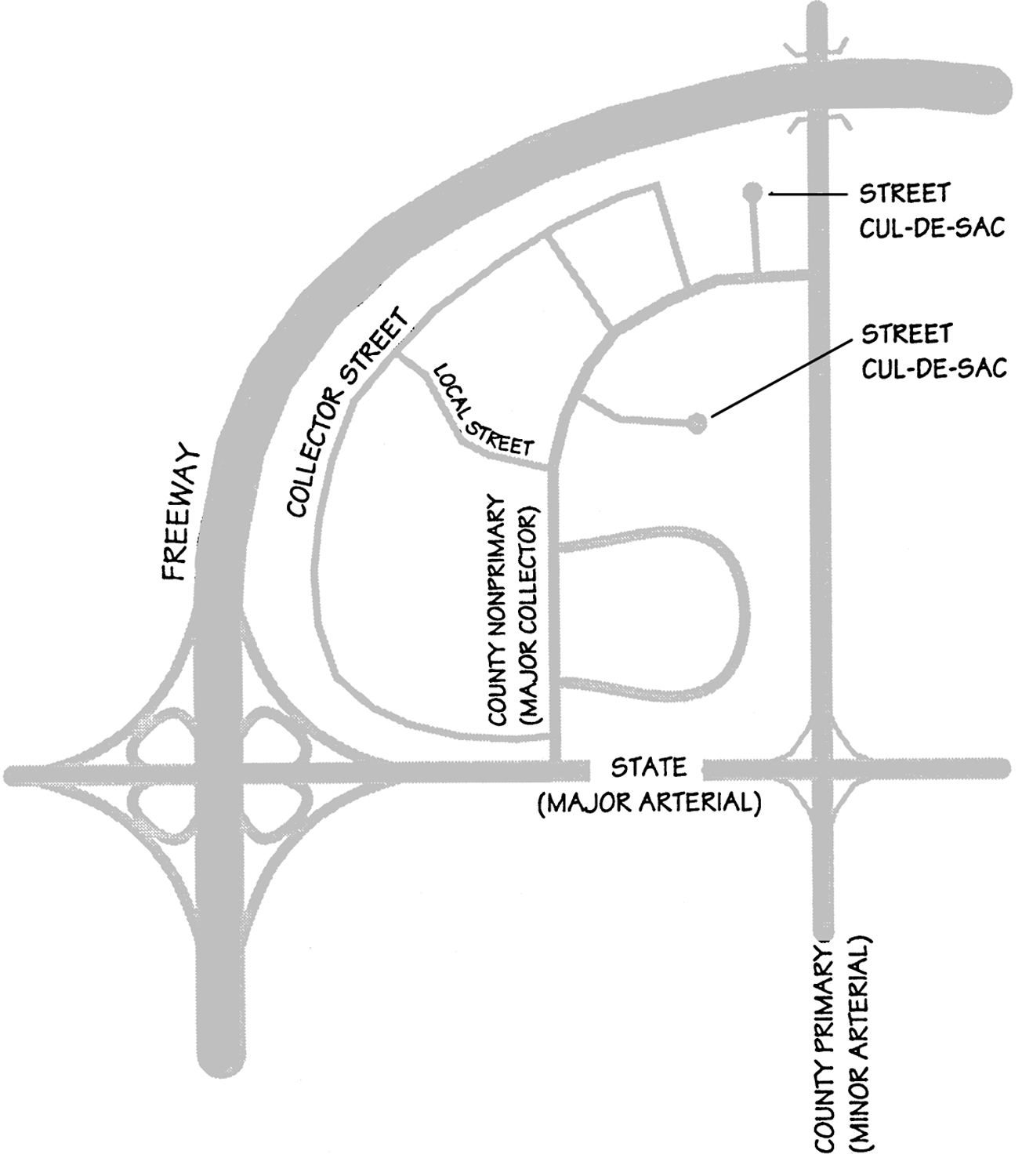
Street, County, Primary: A street or roadway maintained by the County of Peoria which is classified as a minor arterial in that it has as its primary function inter-community traffic movement. County Primary's are also the County designated truck access routes. The secondary function of this roadway is to provide access to land.
Street, County, Non-Primary: A street or roadway maintained by the County of Peoria which is classified as a major collector in that it has as its primary function to collect and distribute traffic between local streets and the arterial system. The secondary function of this roadway is to provide access to land. The tertiary function of this roadway is to provide traffic movement between neighborhoods.
Street, Collector: A street or roadway maintained by a Township which is classified as a minor collector in that it has as its primary function to collect and distribute traffic between neighborhoods. The secondary function of this roadway is to provide access to lands.
Street, Cul-de-Sac: A local street with only one outlet that terminates in a vehicular turnaround and having an appropriate terminal for the safe and convenient reversal of traffic movement.
Street, Frontage: A service street, usually parallel to a limited access highway, designed to reduce the number of access points that intersect the limited access highway.
Street, Local: A street maintained by a Township which is classified as local in that it has as its primary function direct access to and/or from streets, alleys and abutting properties.
Street, Private: A street that has not been accepted for maintenance by a local unit of government, and that is designed for the internal circulation of vehicles within any development.
Street, State: A street or roadway maintained by the State of Illinois Department of Transportation (IDOT) which is classified as a major arterial in that it has as its primary function inter-community and intra-metro area traffic movement. The secondary function of this roadway is to provide access to land.
Structure: Anything constructed, installed, or portable, the use of which requires a location on a parcel of land. This includes a fixed or movable building which can be used for housing, business, commercial, agricultural, or office purposes, either temporarily or permanently. "Structure" also includes, but is not limited to, parking decks, parking lots, walkways, paths, swimming pools, tennis courts, poles, pipelines, transmission lines, tracks, signs, cisterns, sewage treatment plants, sheds, docks, mooring areas, and other accessory construction. Per Sections 3.10 (Floodplain Development Permit") and 7.14 ("Floodplain Regulations") the term "Structure" shall have the following meaning: The results of a manmade change to the land constructed on or below the ground, including the construction, reconstruction or placement of a building or any addition to a building; installing a manufactured home on a site; preparing a site for a manufactured home or installing a travel trailer on a site for more than one hundred eighty (180) days. This, however, does not include private antennas, fences, mailboxes, flagpoles, birdbaths, sidewalks, driveways and similar items used for landscaping or decorative purposes.
Structure, Nonresidential: Any principal structure or accessory structure not intended for use as a dwelling including, but not limited to commercial, industrial, institutional, and agricultural uses, and any structure accessory to a dwelling which is greater than two thousand (2,000) square feet.
Structure, Residential: Any structure intended for use as a dwelling, and any structure accessory to a dwelling which is less than two thousand (2,000) square feet in size.
Subdivide: The act or process of creating a subdivision.
Subdivider: Any person, firm, association, corporation, trust or any other legal entity who commences proceedings under these regulations to affect a subdivision of land pursuant to Article 8, Subdivisions, and Article 3, Development Review Procedures, Sections 3.14 ("Subdivision"), 3.15 ("Subdivision Waivers and Appeals"), 3.16 ("Plat Approval") of this chapter.
Subdivision:
(1)
As required in the State of Illinois Plat Act (765 ILCS 205/0.01 et seq.), the division of a parcel of land into two (2) or more lots or parcels for the purpose of transfer of ownership or building development whether immediate or in the future; provided that a division of land which may be ordered or approved by a court or affected by testamentary or intestate provisions, shall not be deemed a subdivision. The term also includes resubdivision, and when appropriate to the context, shall relate to the process of subdividing the land subdivided.
(2)
Planned development, whether an actual division of property is required or not, and regardless of whether the same is labeled a subdivision or not. However, divisions exempted under the Illinois Plat Act now in effect or as hereafter amended, 765 ILCS 205/1 et seq., are not deemed subdivisions for the purpose of these regulations, but must still meet the requirements of a Tract Survey.
Subdivision, Major: All subdivisions not classified as a minor subdivision or moderate subdivision, including but not limited to subdivisions of twenty-one (21) or more lots; any subdivision of twenty-one (21) or more lots requiring any new street or extension of the local government facilities or the creation of any public improvements; planned developments; or trust indentures.
Subdivision, Minor: Any subdivision containing not more than seven (7) lots fronting on an existing street, not involving any new street or road, or the extension of governmental facilities or the creation of any public improvements, and not in conflict with any provision or portion of the Land Use Management Plan and Map, Zoning Ordinance, or these regulations.
Subdivision, Moderate: Any subdivision of eight (8) to twenty (20) lots; any subdivision of one to twenty (20) lots lots requiring any new street or extension of the local government facilities or the creation of any public improvements.
Substantial completion: The point at which all exterior work is completed and the site can be used for the use intended.
Substantial Damage: Damage of any origin sustained by a structure whereby the cumulative percentage of cost of restoring the structure to its before-damaged condition would equal or exceed fifty (50) percent of the market value of the structure before the damage occurred regardless of the actual repair work performed. Volunteer labor and materials must be included in the determination.
Substantial Improvement: Any repair, reconstruction, expansion, or improvement of a structure, the cost of which exceeds fifty (50) percent of the assessed value of a structure as determined either before the expansion or improvement begins or before the damage occurred giving rise to the repair or reconstruction. "Substantial improvement" shall not include, however, any repair or improvement required to bring the structure into compliance with existing State or County health, sanitary, safety, or building code specifications necessary to ensure safe habitation of the structure. Per Sections 3.10 ("Floodplain Development Permit") and 7.14 ("Floodplain Regulations") the term "Substantial Improvement" shall have the following meaning: Any reconstruction, rehabilitation, addition, or other improvement of a structure, the cost of which equals or exceeds fifty (50) percent of the market value of the structure before the start of construction of the improvement. Previous improvements to a noncompliant structure will be counted towards a substantial improvement, regardless of change in ownership. This term includes structures that have incurred substantial damage, regardless of the actual repair work performed. Volunteer labor and materials must be included in the determination. The term does not, however, include either (a) any project for improvement of a structure to correct existing violations of state or local health, sanitary, or safety code specifications which have been identified by the local code enforcement official and which are the minimum necessary to assure safe living conditions or (b) any alteration of an historic structure, provided that the alteration will not preclude the structure's continued designation as an historic structure.
Supporting Facilities: The transmission lines, substations, access roads, meteorological towers, storage containers, and equipment associated with the generation and storage of electricity by the commercial wind energy facility or commercial solar energy facility.
Supporting Structure: Per Sections 3.9 ("Telecommunications Carrier Facilities Variances") and 7.1 ("Telecommunications Carrier Facilities") the term "Supporting Structure" shall have the following meaning: a structure, whether an antenna tower or another type of structure, that supports one or more antennas as part of a facility.
Swimming Pool: A manmade rigid or semi-rigid receptacle for water, whether intended for indoor or outdoor use, having a depth at any point of two (2) feet or more and with a water surface area of one hundred twenty-five (125) square feet or greater, which is used or intended to be used for swimming, wading, bathing, immersion, or partial immersion of human beings, and which is constructed, installed and maintained in or above ground.
SWCD: Peoria Soil and Water Conservation District.
Tattoo Parlor: An establishment where pigment is inserted under the surface of the skin of a human being, by pricking with a needle or otherwise, so as to produce an indelible mark or figure visible through the skin. The term "tattoo parlors" shall also include body piercing parlors.
Tavern: An establishment used primarily for the sale or dispensing of malt, vinous, or other alcoholic beverages for on-site consumption and where food may be served or sold only as an accessory to the principal use.
Telecommunications Carrier: A telecommunications carrier as defined in the Public Utilities Act (220 ILCS5/13-202) as of January 1, 1997.
Telecommunications Carrier Facility: That part of the signal distribution system used or operated by a telecommunications carrier under a license from the FCC consisting of a combination of improvements and equipment including (i) one or more antennas, (ii) a supporting structure and the hardware by which antennas are attached; (iii) equipment housing ; and (iv) ancillary equipment such as signal transmission cables and miscellaneous hardware.
Temporary Use: A use that is established for a fixed period of time with the intent to discontinue such use upon the expiration of such time, and does not involve the construction or alteration of any permanent structure.
Threatened and Endangered Species: Those plants and animals listed by the Illinois Endangered Species Protection Board in April 1990 and December 1991, respectively, as endangered and threatened species in the State of Illinois according to the 1972 Illinois Endangered Species Act, as amended.
Top Fuel-Burning Drag Vehicles: Drag vehicles operating on more than fifty (50) percent alcohol fuel or on nitromethane, and are commonly known as "funny cars" and "top fuel cars."
Total Height: The vertical distance from ground level to the tip of a wind generator blade when the tip is at its highest point.
Tower: The monopole, freestanding, or guyed structure that supports a wind generator or meteorological equipment.
Tower, Meteorological: A tower which has equipment attached to it which is designed to assess wind and other atmospheric data and accessory equipment.
Township Planning Commission: A commission appointed by a Township's Board of Trustees to review and make recommendations to the Township Board on development related matters.
Township Road Commissioner: The elected or appointed position responsible for the maintenance of streets and rights-of-way in a Township.
Toxic Matter: Any combination of pollutants, including disease-carrying agents, that, after discharge and upon exposure, ingestion, inhalation, or assimilation into any organism, can cause death or disease, mutations, deformities, or malfunctions in such organisms or their offspring and that adversely affect the environment.
Tract Survey: The splitting of a parcel that does not require a subdivision, as defined herein, and when any parcel is split into two (2) or more new parcels, all of which are greater than five (5) acres in size and need to be described using a metes and bounds description; or when any parcel is split into two (2) or more new parcels, any of which is less then five (5) acres in size and qualify under exemptions 2, 3, 8, or 9 of the State of Illinois Plat Act (765 ILCS 205/0.01 et seq.), and need to be described using a metes and bounds description.
Transitional Bufferyard (TBY): A landscaped area located within a side or rear yard which buffers incompatible uses from each other.
Transportation Committee: The County Board Committee charged with approving road names proposed in any development as defined herein.
Trust Indenture: Any recordable instrument by which common ground is held or maintained or assessments in a subdivision are levied for the administration of specific obligations or both.
Turbocharger: An exhaust gas-driven supercharger. Turbochargers meet the requirements for a well maintained muffler system. However, superchargers mechanically driven by the engine are not defined as a well-maintained system.
Twenty-five year frequency storm event: The storm event rainfall depth during a twenty-four-hour period which is exceeded, on the average, once every twenty-five (25) years.
Two-year frequency storm event: The storm event rainfall depth during a twenty-four-hour period which is exceeded, on the average, once every two (2) years.
Unified Development Ordinance:Chapter 20 of the Peoria County Code as amended.
Use: The purpose or activity for which the land, or any structure thereon, is designed, arranged, or intended, or for which it is occupied or maintained.
Use, Permitted: Any use which is or may be lawfully established in a particular district or districts, provided it conforms with all requirements of these regulations for the district in which such use is located.
Use, Principal: The primary purpose or function that a lot serves or is proposed to serve. For land zoned or used for agriculture, if there are both agricultural buildings and a residence, only the residential use shall constitute the principal use. A principal use may either be permitted or special.
Utility Easement: The right-of-way acquired by a utility or governmental agency to locate utilities, including all types of pipelines, telephone and electric cables, and towers.
Utility Service Line: The means by which utility service is provided to service users, such as electric, telephone, television cable; gas, water and sewer pipes.
Valley: A stretch of lowland lying between hills usually comprising a drainage area; a gully or ravine.
Variance: A deviation from the regulations and standards adopted by this Ordinance which the Zoning Board of Appeals is permitted to grant when strict enforcement would cause undue hardship owing to circumstances unique to the individual property, lot, building, structure, use or premises for which the variance is sought.
Variance, Hardship: A rationale for the departure from the literal requirements of these regulations when their strict enforcement would present practical difficulties in the use of a property.
Vehicle: Every device in, upon, or by which any person or property is or may be transported.
Vehicle Body Repair: The business of autobody repair for vehicles and automobiles. The term may include automobile mechanical repair, vehicle mechanical repair, as well as structural repair or appearance alteration (e.g., painting or detailing).
Vehicle Mechanical Repair: The business of mechanical repair work and servicing of automobiles and vehicles, including fast service, tune-up, and lubricating facilities, but specifically excluding body work or painting.
Vehicle Sales and Rental: The sale, rental or display of motor vehicles, boats, trailers, recreational vehicles, mobile homes, or farm equipment, not including salvage operations or scrap operations.
Vested Rights: Right to initiate or continue the establishment of a use which will be contrary to a restriction or regulation coming into effect when the project associated with the use is completed.
Vibration: The periodic displacement, measured in inches, of earth at designated frequency of cycles per second.
Viewing Room: "Viewing Room" shall mean the room, booth, or area where a patron of adult use would ordinarily be positioned while watching a film, videocassette, or other video reproduction.
Waiver: Permission to depart from the requirements of specified sections of Article 8, Subdivisions, and Article 3, Development Review Procedures, Sections 3.14 ("Subdivision"), 3.15 ("Subdivision Waivers and Appeals"), and 3.16 ("Plat Approval").
Warehousing, Mini-Storage: An establishment whose primary purpose is to provide space to the general public that may be used for the storage of goods and/or materials and made up of groups of individual units contained within one or more structures.
Water Supply and Water Wells Ordinance:Chapter 23 of the Peoria County Code, as amended, and sometimes referred to as the Water Supply Ordinance.
Watercourse: Any river, stream, creek, brook, branch, natural or artificial depression, slough, gulch, draw, ditch, channel, circuit, conduit, culvert, swale, gully, ravine, wash, or natural or manmade drainageway, which has a definite channel, bed and banks, in or into which stormwater runoff and floodwater flow either regularly or intermittently.
Weekend: The period of time starting at 12:00 p.m. Friday and continuing until 5:00 p.m. on Sunday.
Well-Maintained Muffler: A device or combination of devices free of defects or modification that reduce its sound reduction capabilities, which effectively decreases the sound energy of internal-combustion engine exhaust without a muffler by a minimum of five (5) dba at trackside.
Wetland: An area that is permanently or periodically inundated or saturated by surface water or groundwater or otherwise has hydric soil conditions at a frequency and duration sufficient to support, or that under normal circumstances does support, a prevalence of vegetation typically adapted for life in saturated soil conditions. The term "wetland" includes all wetlands that are defined as such by federal and/or state statutes and regulations for the purposes of regulating development or other activities within wetlands.
Wholesale Establishments: The sale of goods and materials in large quantity primarily for resale to other sellers or contractors, but not including heavy industry.
Wind Energy Conversion System: Any device such as a wind charger, windmill, or wind turbine that converts wind energy to a form of usable energy. Also referred to in these regulations as "WECS."
Wind Tower: The wind turbine tower, nacelle, and blades.
Window Display: One or more objects set inside a building in a display case or on a window ledge which displays merchandise or relates to services offered but which is not affixed to any window.
Working Day: A Monday, Tuesday, Wednesday, Thursday or Friday, excluding holidays when the County courthouse is scheduled to be closed, such as Christmas.
Yard: An open space that lies between a building and a lot line.
Yard, Front: An area extending the full width of the parcel that is created by the required road setback. This area is from the right-of-way line or front property line to the building line.
Yard, Rear: An Area extending the full width of the parcel that is created by the required rear setback. This area is from the rear property line to the rear setback line.
Yard, Side: An area extending the full depth of the parcel that is created by the required side setback. This area is from the side property line to the side setback line.
Yard, Transitional Buffer: A landscaped yard which provides increased visual separation or screening between incompatible land uses.
Zoning Administrator: The County Zoning Administrator or such other person who is designated to enforce the provisions of this Ordinance within the unincorporated areas of the county.
Zoning Board of Appeals: The seven-member board appointed by the Chairman of the County Board.
Zoning Districts: The districts into which the County of Peoria, Illinois has been divided as set forth on the Zoning District Map.
Zoning District Map: The Official Zoning Map or series of Official Zoning Maps, showing zoning district boundaries for Peoria County.
Zoning Regulations: Those rules contained in Article 2, Sections 2.1, 2.2, 2.3; Article 3, Sections 3.1 through 3.9, and 3.11; Article 4; Article 5; Article 6; Article 7, Sections 7.1 through 7.12, and 7.15: Article 9; Article 10; and Article 11 of this chapter.
Zoo: A place where wild animals are kept, often in combination of indoor and outdoor spaces, and are viewed by the public.
(Ord. of 2-9-12; Res. of 7-12-12; Ord. of 3-13-14; Ord. of 1-11-18(2); Ord. of 12-12-19; Ord. of 7-9-20; Ord. of 2-11-21; Ord. of 2-10-22; Ord. of 12-8-22; Ord. of 4-13-23(26); Ord. of 9-14-23(3))

