
Peoria County Unincorporated
City Zoning Code
City Zoning Code
APPENDIX E
EROSION AND SEDIMENT CONTROL CRITERIA AND SPECIFICATIONS
There are three ways to accomplish urban soil erosion and sedimentation control:
•
Allow erosion to take place and then control sediment before it leaves a site.
•
Stop erosion in the watershed (project area), by soil stabilization or runoff control measures.
•
A combination of the two. (most desirable)
The following is a list of common measures that can be used to control erosion and sediment. It is by no means an exhaustive list. Some standard drawings are included in this appendix, and are referenced with the Appendix page numbers. Additional drawings, standards and specifications can be found in the Illinois Urban Manual, IEPA and USDA, NRCS, 1995 and the Illinois Standards for Urban Soil Erosion and Sediment Control, The Urban Committee of the Association of Illinois Soil and Water Conservation Districts, Revised July 1988.
SEDIMENT CONTROL
A.
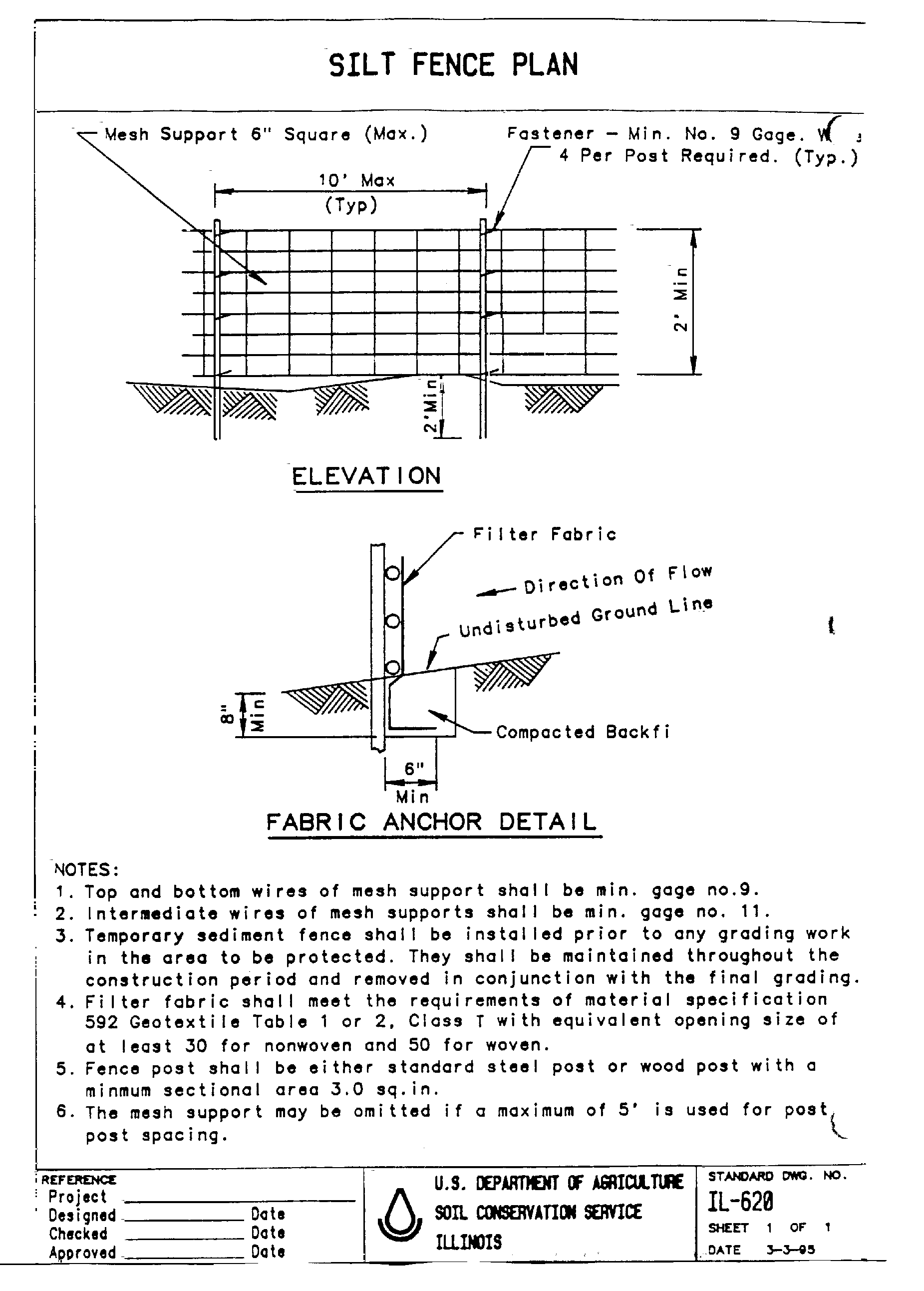
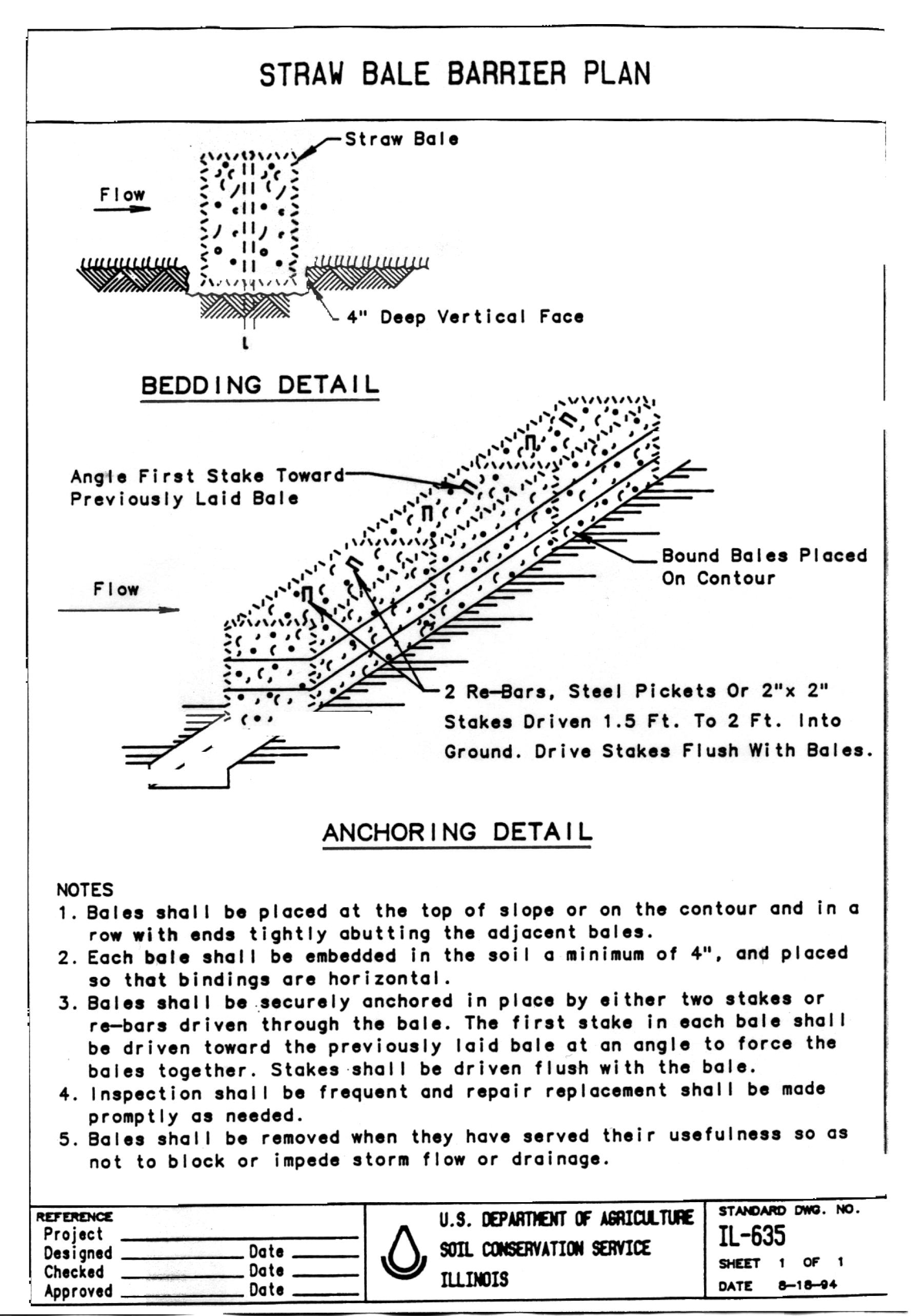
PERIMETER SEDIMENT CONTROL MEASURES: To be installed between disturbed areas (including stockpiles) and property lines or drainageways in order to protect off-site areas. Control measures should be installed on the down-slope sides of the disturbed areas where runoff will leave the site.
B.
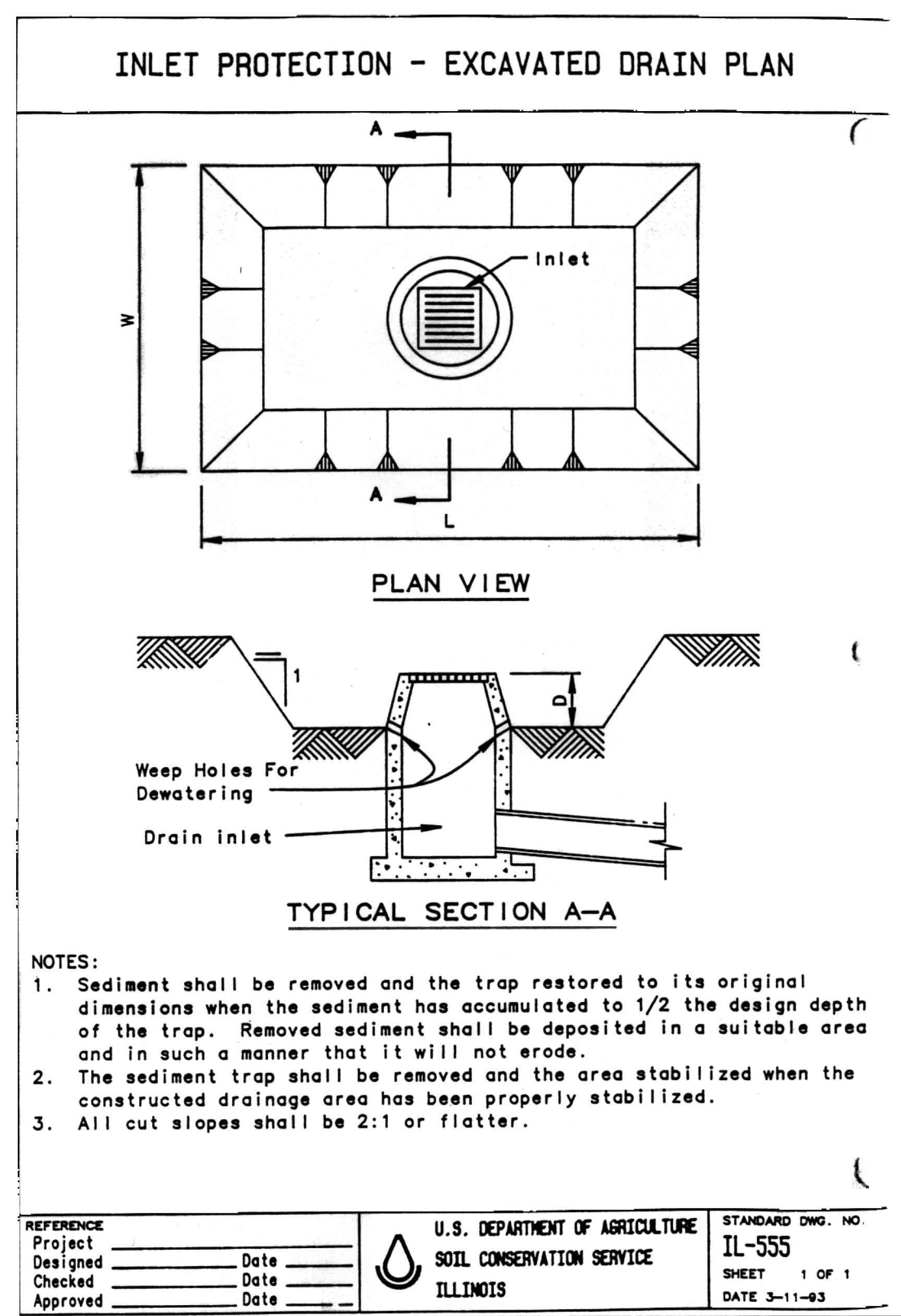
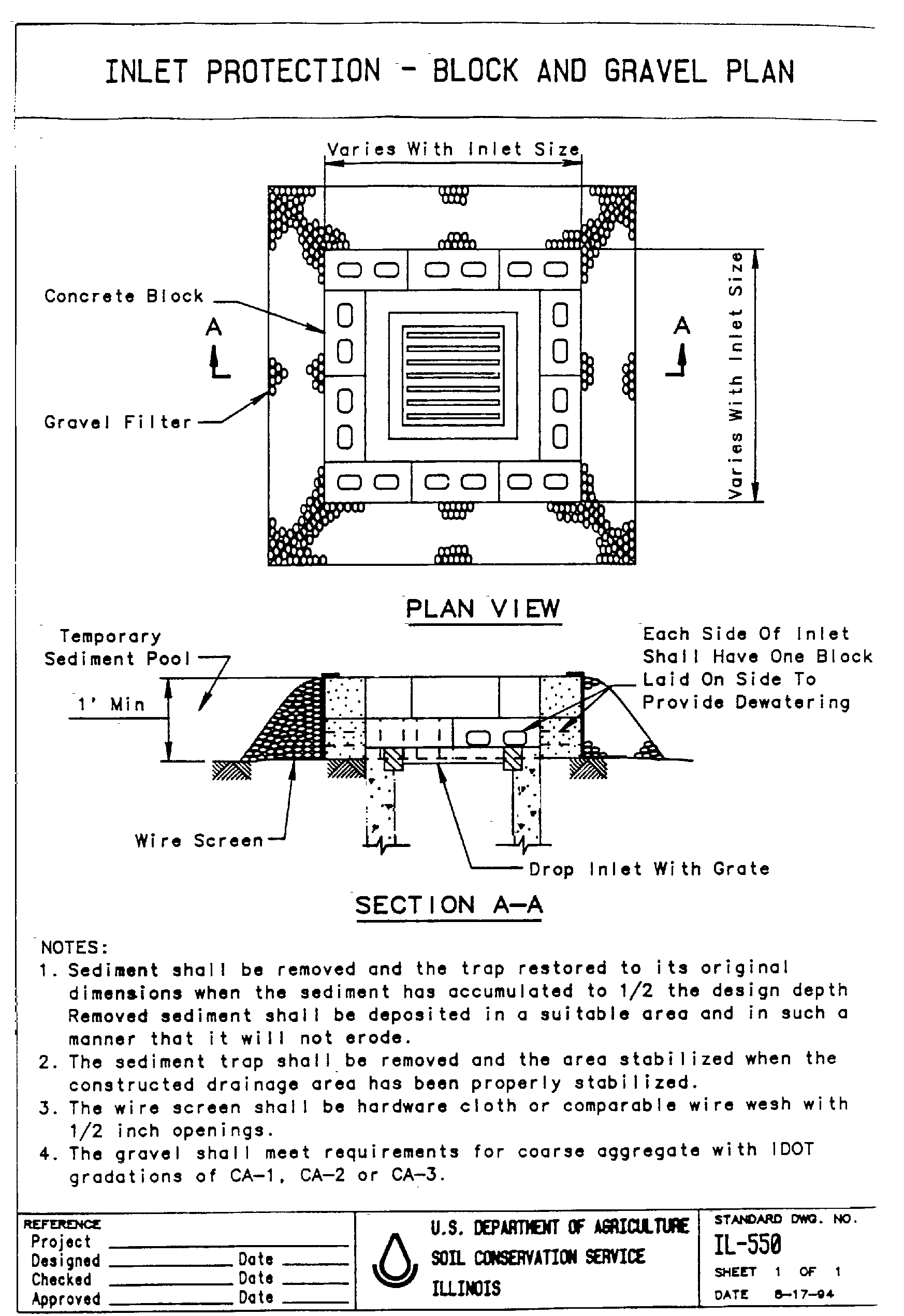
INLET SEDIMENT CONTROL: To be installed around storm sewer or other inlets to prevent sediment from entering the system. There are many different types depending on the type of inlet.
Common measures include:
Inlet Protection—Excavated Drain
Inlet Protection—Block and Gravel
Inlet Protection—Staked Straw Bales
C.
MUD AND DUST CONTROL: To prevent mud and dust from leaving the site.
Common measures include:
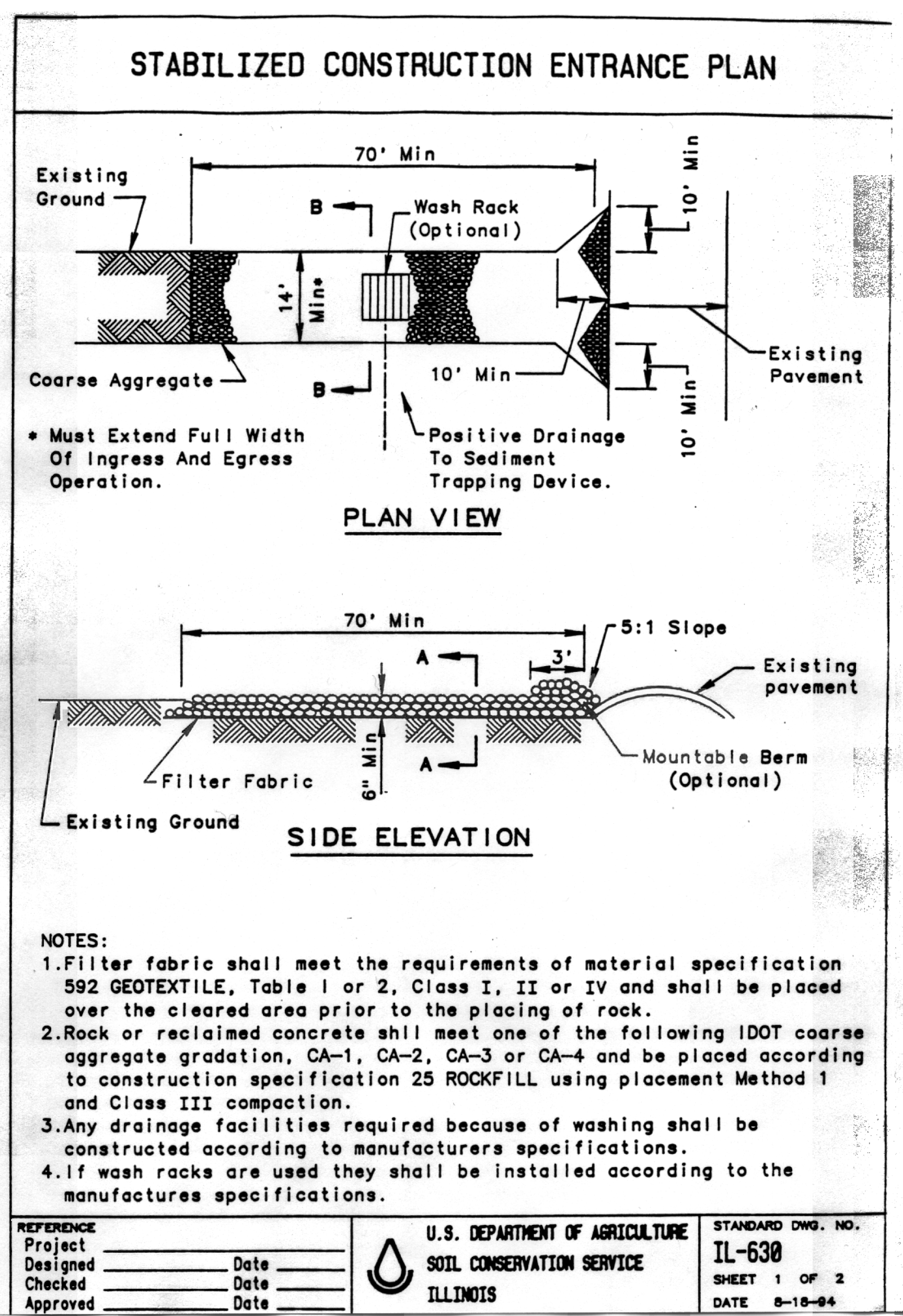
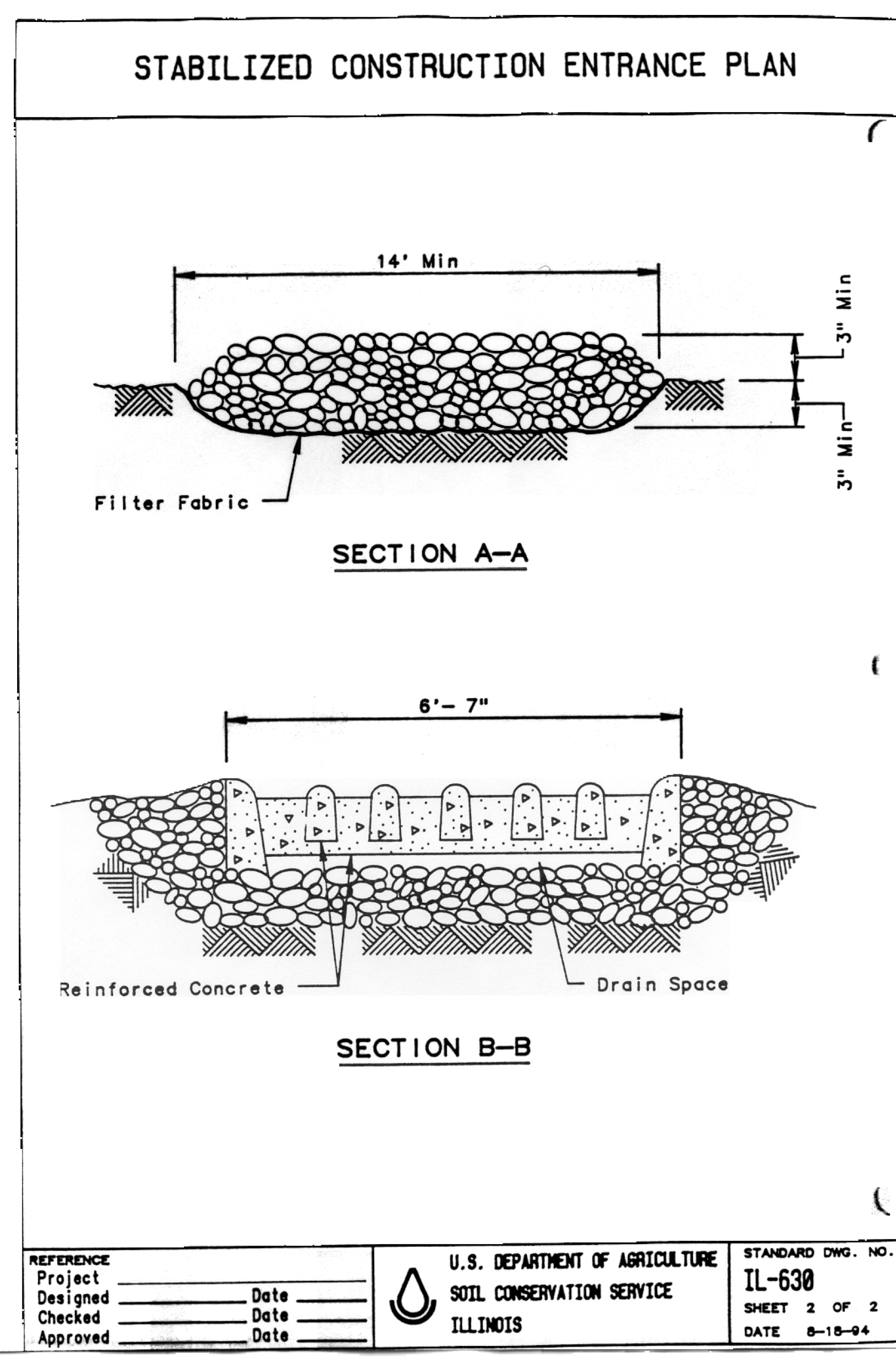
Stabilized Construction Entrance
Dust control, see the standards and specifications
RUNOFF CONTROL
A.
CONCENTRATED FLOW AREAS: Temporary erosion control measures should be installed to protect drainageways such as road ditches and waterways until the area is permanently stabilized.
Common measures include:
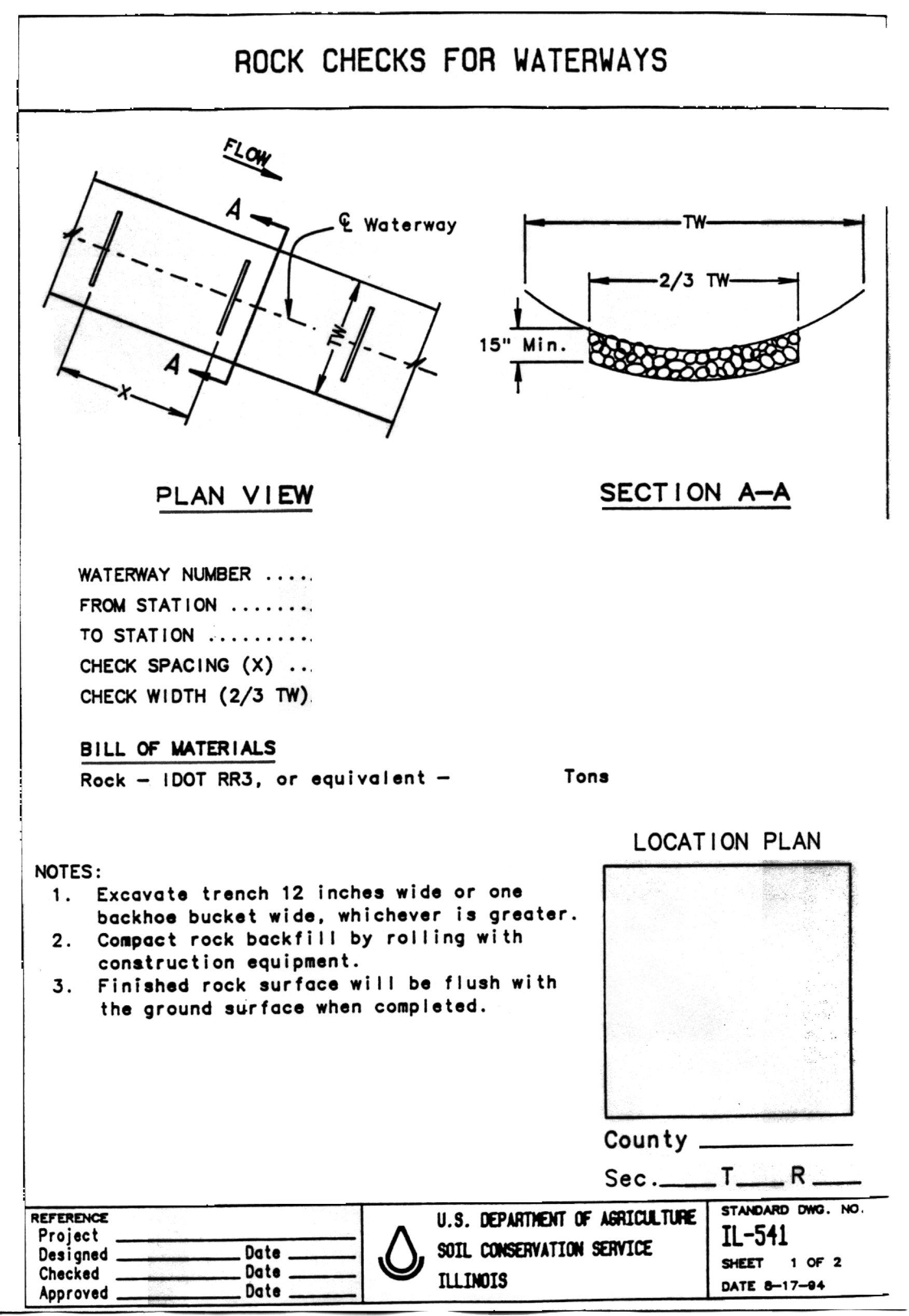
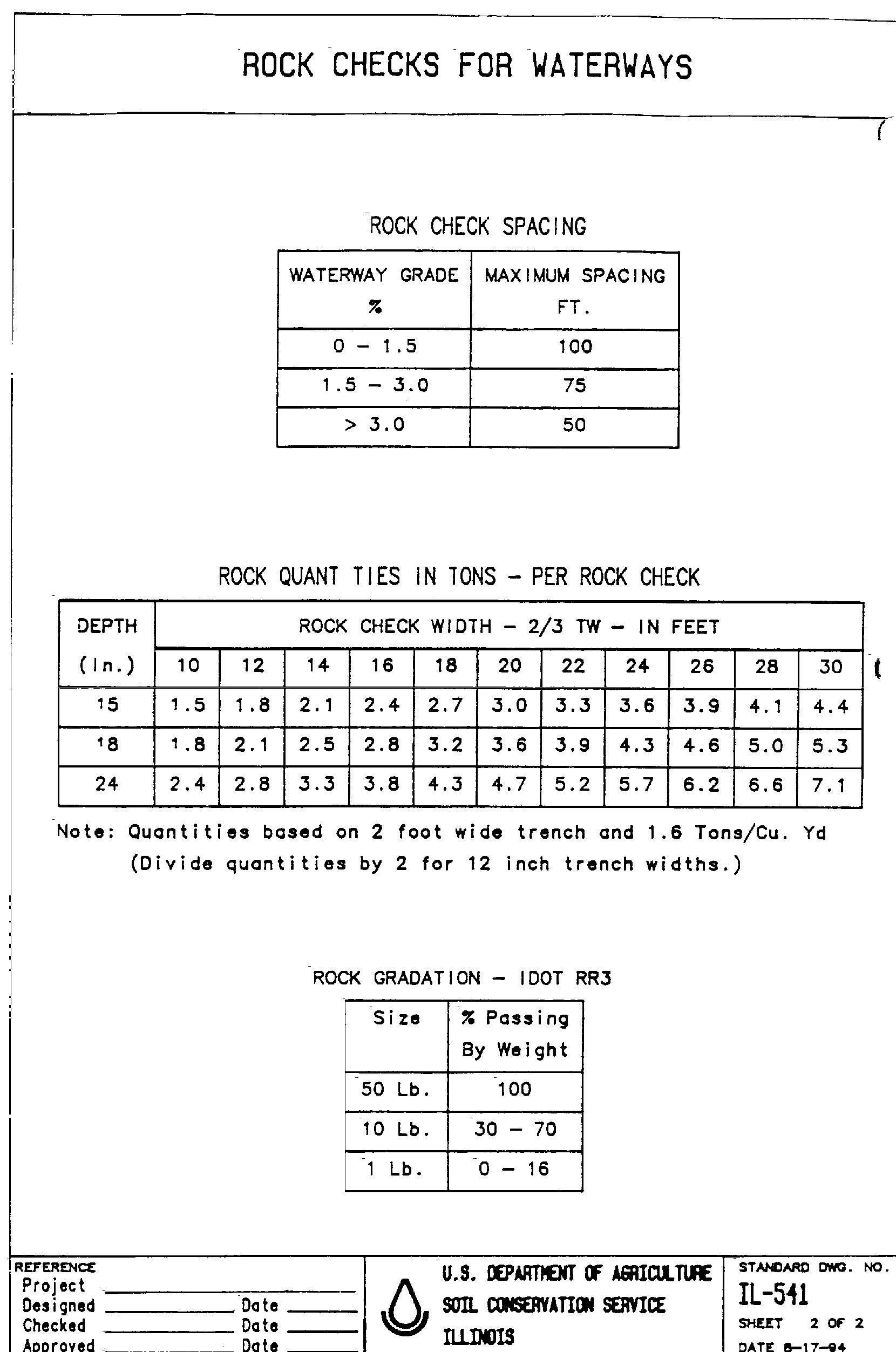
Rock Checks for Waterways
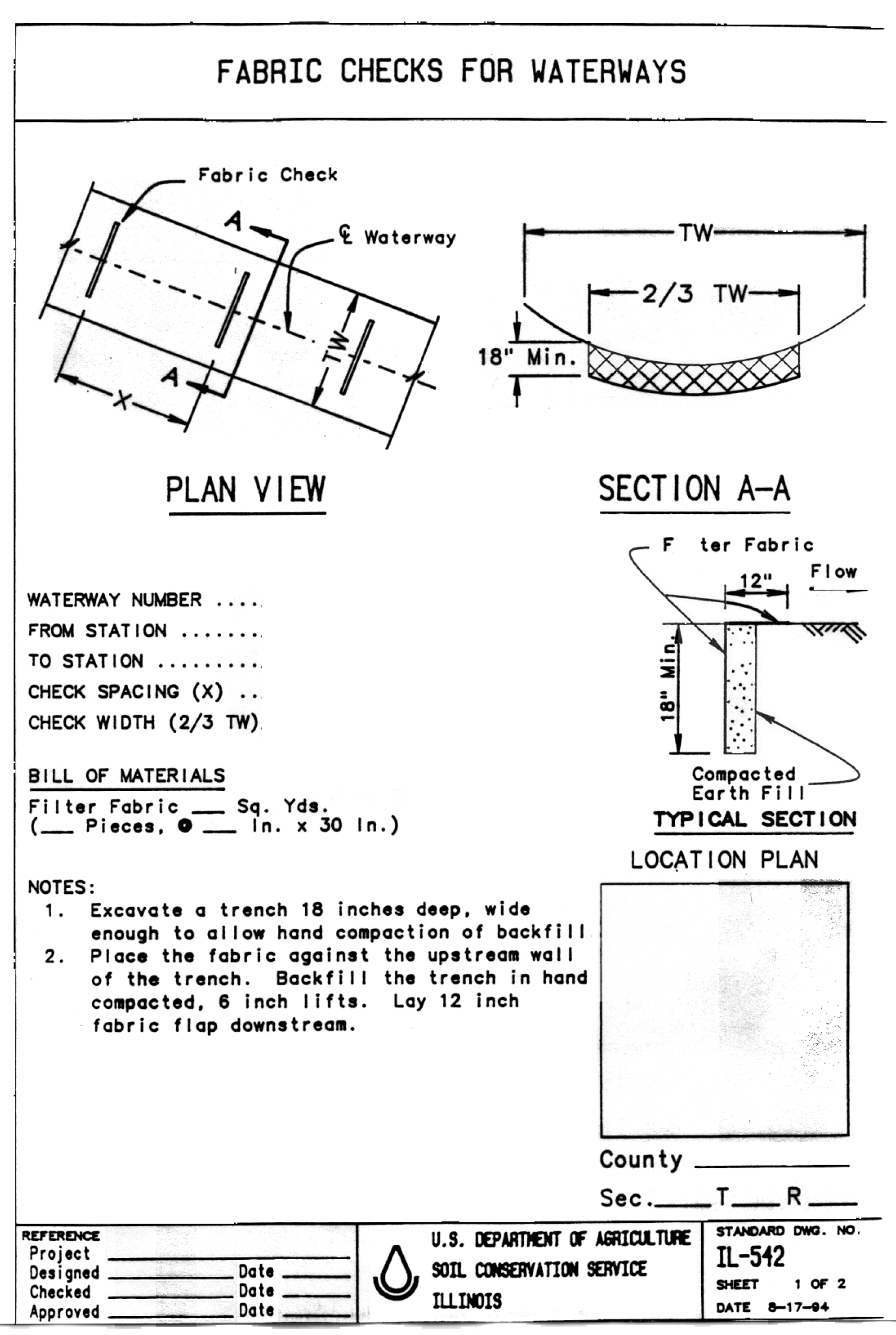
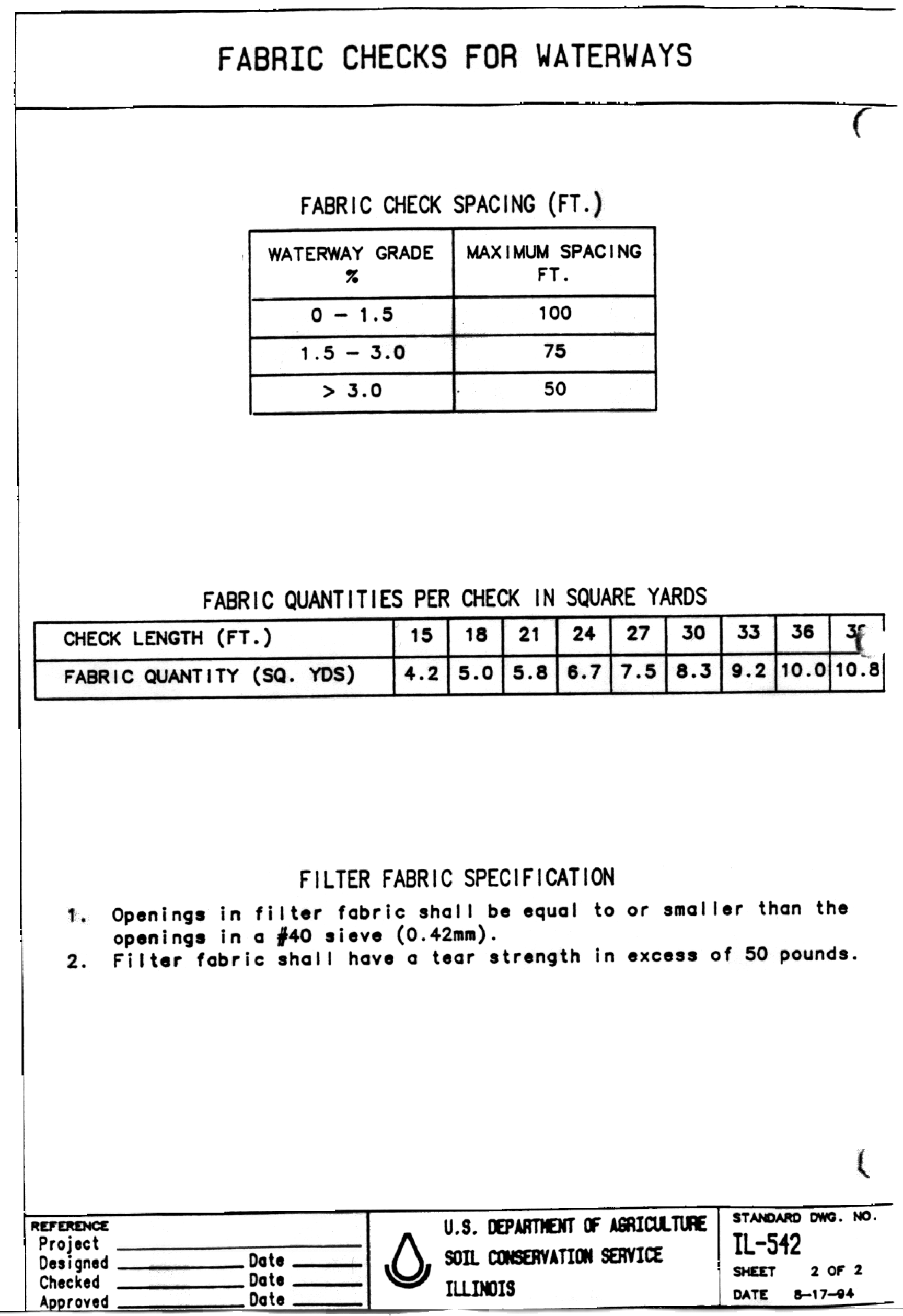
Fabric Checks for Waterways
Erosion Blanket
B.
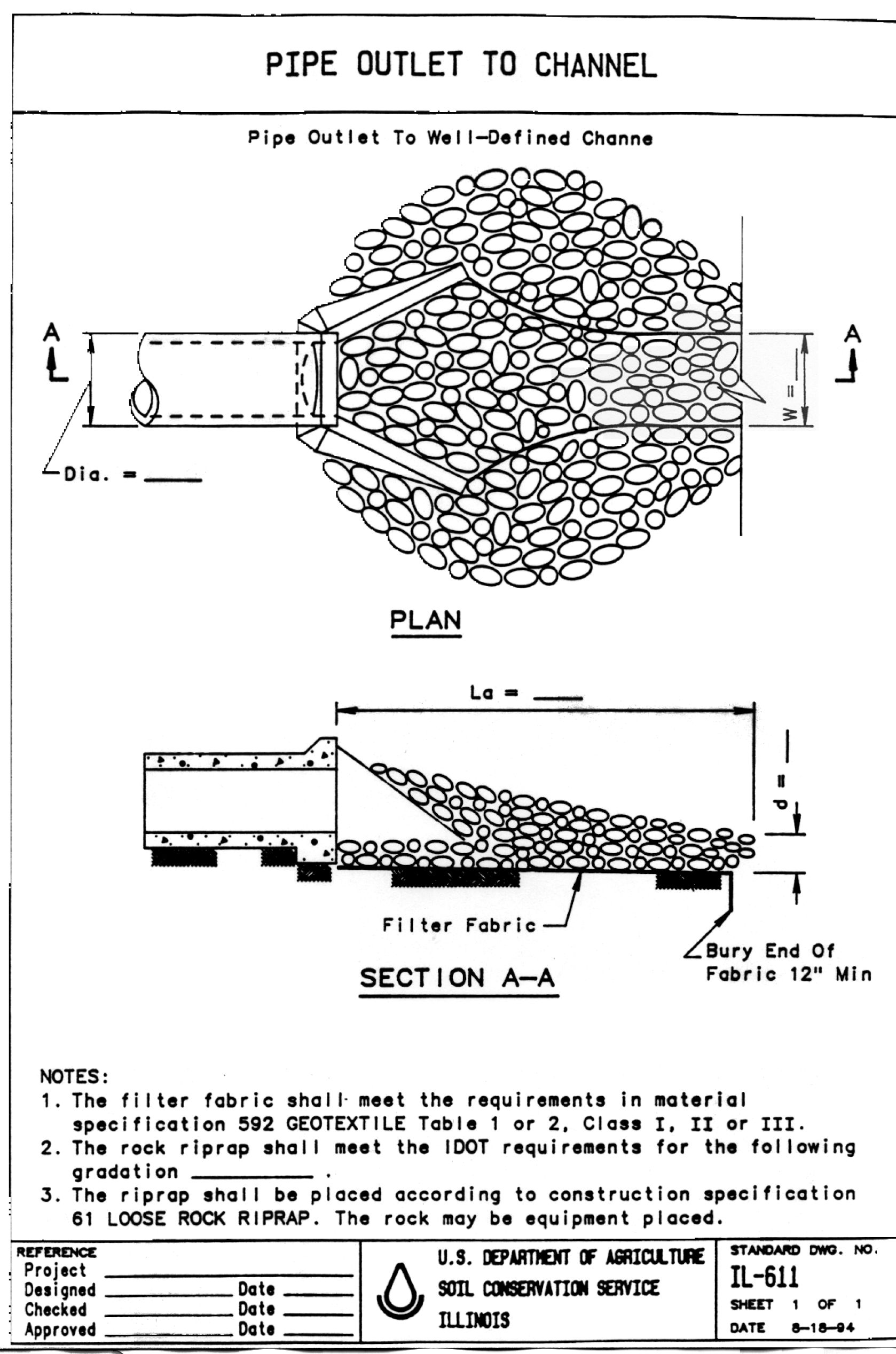
OUTLET PROTECTION: All outlets should be stabilized to prevent downstream areas from erosion.
Common measures include:
Pipe Outlet to Channel
Pipe Outlet to Flat Area
C.
DIVERSIONS: Surface runoff from adjacent areas should be diverted around disturbed areas to stable outlets to reduce erosion due to surface runoff.
SOIL STABILIZATION
(Recommended seeding dates for Central Illinois are shown in bold.)
A.
VEGETATIVE SOIL COVER:
1.
Temporary Seeding: Provides a temporary quick cover to control erosion when permanent seeding is not desired or the time of year is inappropriate. [Early Spring - September 30]
2.
Permanent Seeding: Provides permanent vegetative cover to control erosion, filters sediment from water. May be part of final landscaping plan. [Spring seeding: Early Spring - May 15], [Fall seeding: August 1 - September 10]
3.
Dormant seeding: Same as permanent seeding except seeding is done during dormant season. Higher rates of seed application are required. If no mulch is applied, then perimeter controls should be maintained until the vegetation is established. [November 15 - March 1]
4.
Sodding: Quick, permanent cover to control erosion. Quick way to establish vegetative filter strip. Can be used on steep slopes or in drainage ways where seeding may be difficult. [Anytime, except when the ground is frozen]
5.
Ground Cover: Provides ground cover, shrubs and trees in addition to permanent vegetation. May be used as part of a final landscape plan along with shrubs and trees.
B.
NON-VEGETATIVE SOIL COVER:
1.
Mulching: Added insurance of a successful temporary or permanent seeding. Controls unwanted vegetation and preserves moisture. Provides cover where vegetation cannot be established.
2.
Aggregate cover: Provides soil cover on roads and parking lots and areas where vegetation cannot be established. Prevents mud from being picked up and transported off site.
3.
Paving: Provides permanent cover on parking lots, roads or other areas where vegetation cannot be established.
(Ord. of 3-13-14)

