
Petoskey City Zoning Code
ARTICLE IX
B-2 CENTRAL BUSINESS DISTRICT CBD4
Editor's note— Ord. No. 732, § 1, adopted February 18, 2013, repealed the former Art. IX, §§ 900—904, and enacted a new Art. IX as set out herein. The former Art. IX pertained to similar subject matter and derived from Ord. No. 632, adopted October 21, 1991; Ord. No. 701, adopted August 4, 2008 and Ord. No. 718, adopted August 16, 2010.
Sec. 900.- Intent.
The intent of the Central Business District is to protect and enhance the vibrant pedestrian-oriented shopping and service environment of historic downtown Petoskey. The physical building form and land uses are regulated to reflect the urban character of the historic commercial center of the community and to perpetuate the pedestrian-oriented business district by requiring street level commercial uses and permitting a mix of upper floor uses.
(Ord. No. 7332, § 1, 2-18-2013)
Sec. 901. - Principal uses permitted.
In the B-2 Central Business District, no building or land shall be used except in compliance with the uses and their placement identified in Table 9.1. Sexually-oriented businesses as defined in section 2800 of the zoning ordinance are specifically prohibited in the B-2 Central Business District.
TABLE 9.1 CENTRAL BUSINESS DISTRICT PERMITTED USES
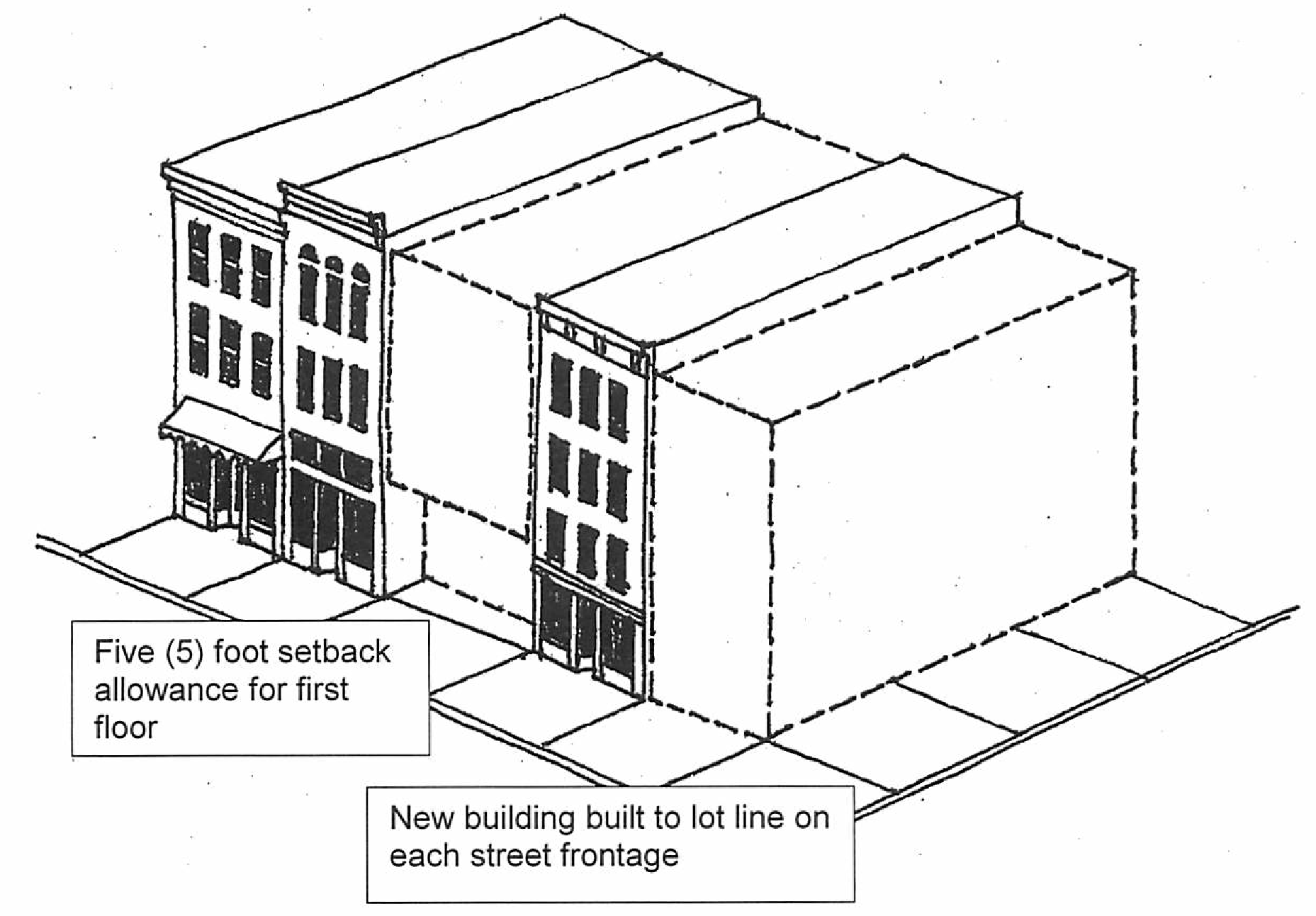
Figure 9.1 Building Placement Requirement Illustration
(Ord. No. 7332, § 1, 2-18-2013; Ord. No. 794, § 3, 12-4-2023; Ord. No. 798, § 3, 1-20-2025; Ord. No. 802, § 2, 7-7-2025)
Sec. 902. - Required standards.
1.
Building placement. Buildings shall be placed on the lot according to the requirements of Table 9.2 and as illustrated in Figures 9.1 and 9.4.
(a)
Building placement exception. A building may have up to a five-foot setback on the street frontage ground-floor level only to allow for recessed entries, outdoor seating, widened sidewalks or other public space.
TABLE 9.2 BUILDING PLACEMENT
2.
Building form.
(a)
All buildings shall have a primary first-floor entrance that faces the street at sidewalk grade.
(b)
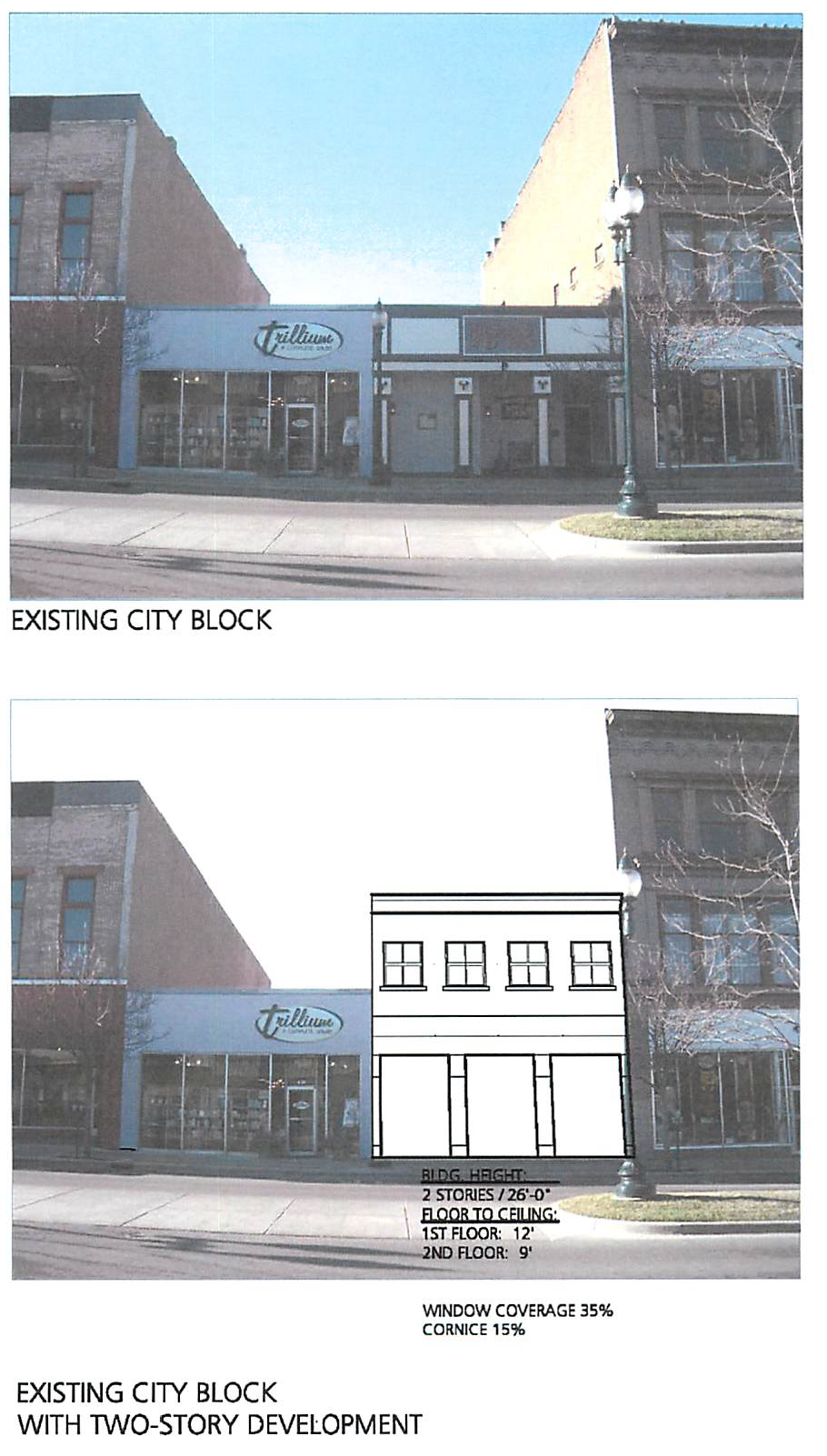
Any building more than 50 feet in width along a street frontage must have a façade that is divided into minimum 25-foot and maximum 50-foot sections delineated by vertical piers, material patterns, or other articulation (see Figure 9.2b).
(c)
Floor and building heights shall be in accordance with Table 9.3 and as illustrated in Figures 9.2a and 9.2b.
(d)
Building facades shall have the proportions established in Figures 9.2a and 9.2b.
(e)
Loading docks, overhead doors, and other service entries are prohibited on street-facing facades.
(f)
Drive-through and drive-up accessory or principal uses are not allowed.
TABLE 9.3 BUILDING FORM
Figure 9.2a Building Form Illustration 1
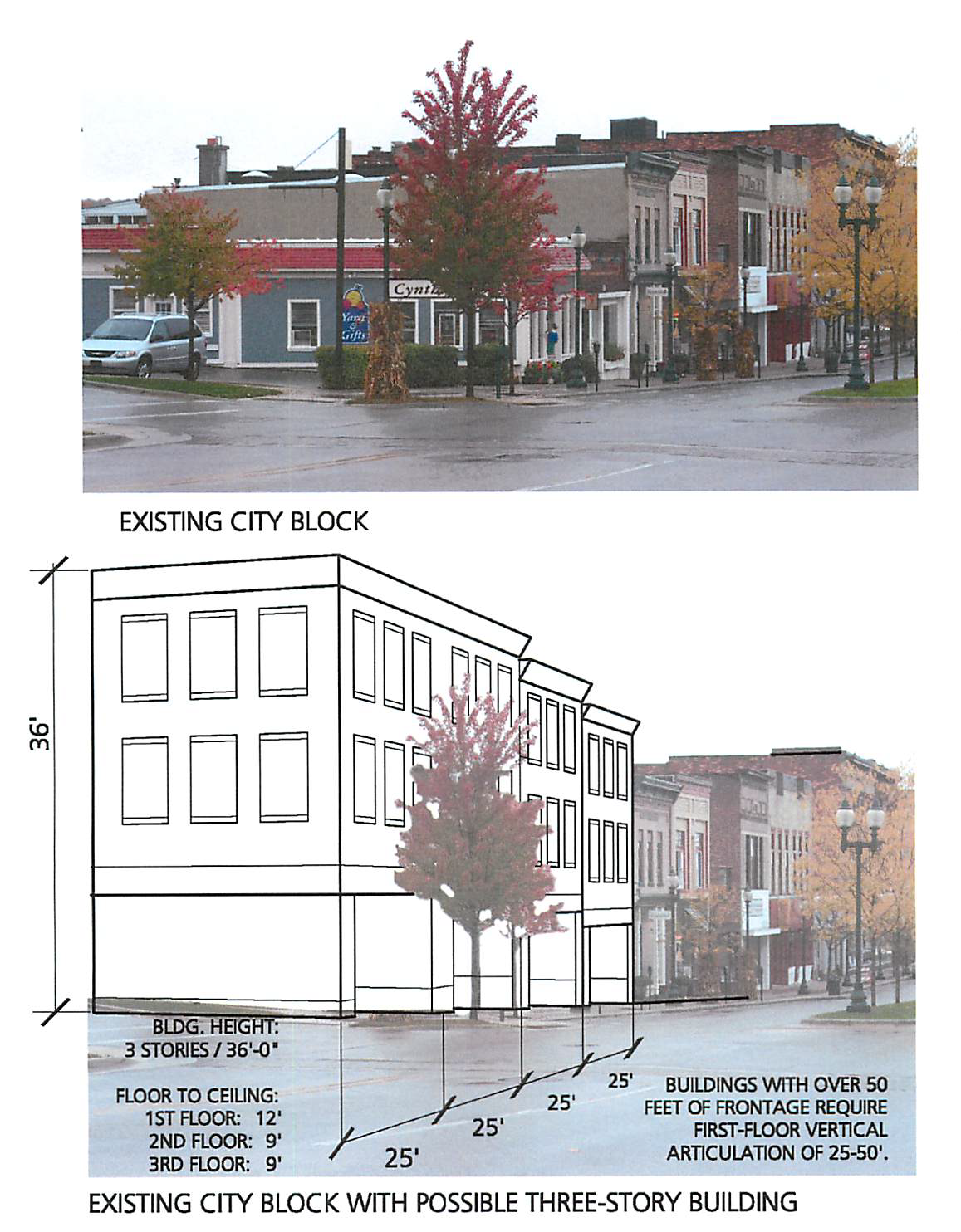
Figure 9.2b Building Form Illustration 2
3.
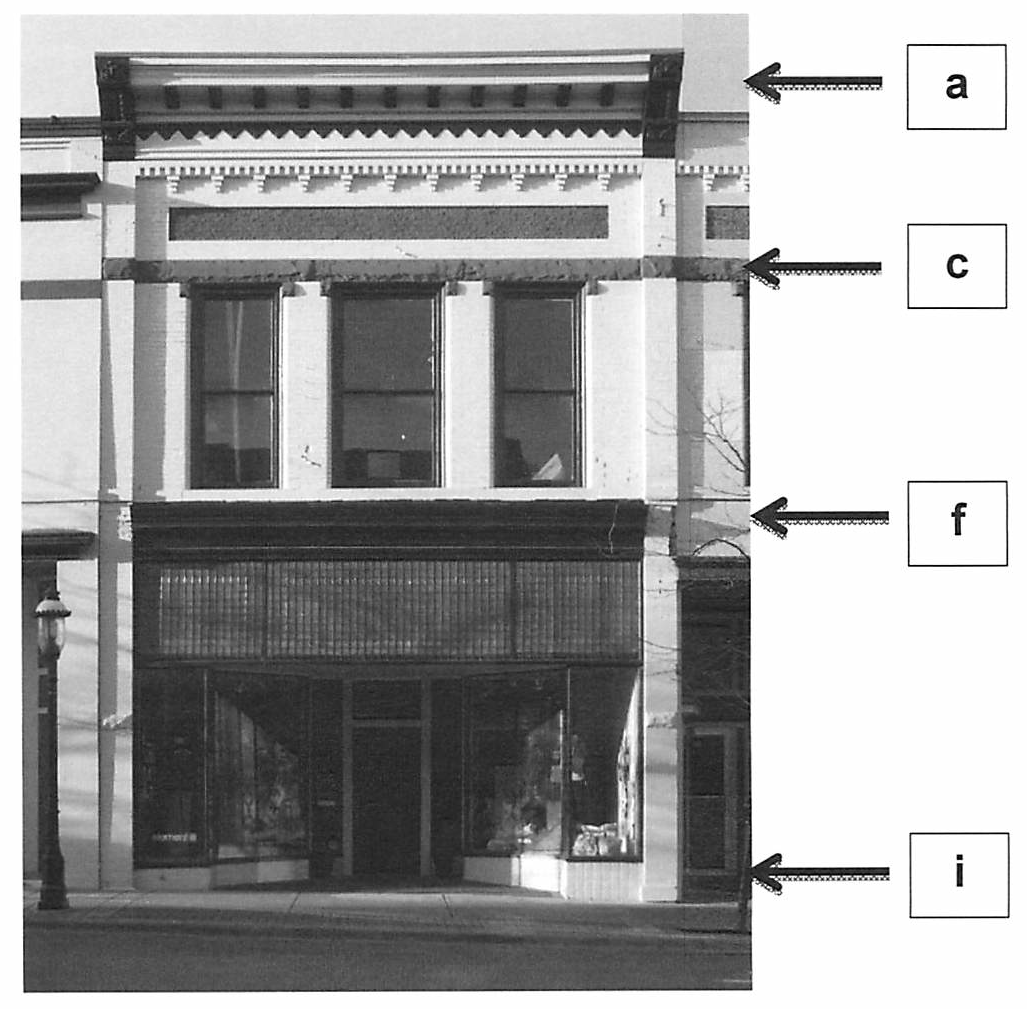
Architectural standards. All new construction shall be required to incorporate the architectural standards enumerated below and illustrated in Figure 9.3.
(a)
Any building with a flat roof shall have a projecting horizontal element (e.g., cornice) that is no less than ten percent of the upper-most story wall area to articulate the top of the building (element is included in upper-story wall area calculation).
(b)
Rooftop mechanical equipment shall be placed where it minimizes visibility from street frontage.
(c)
Upper-story windows shall have articulated detailing such as expression of lintels or hoods or arches above them.
(d)
Upper story windows shall occupy no less than 25 percent and no more than 50 percent of the upper floors façade surface (cornice or other decorative element is not included in the upper-story wall area calculation).
(e)
Upper story windows shall be recessed back from the face of the building walls, or protruding bay windows to give the wall some three-dimensional depth.
(f)
A design separation between the first floor and upper stories shall be provided with a lower cornice or other horizontal feature.
(g)
First floor fenestration shall be no less than 40 percent along street fronting walls; blank walls along street frontages are prohibited. Window and door glass shall provide a minimum of 60 percent visible light transmittance.
(h)
Entry doors shall be recessed back from the face of the building, but no more than five feet.
(i)
Storefront window sills shall be no higher than 30 inches above sidewalk grade.
4.
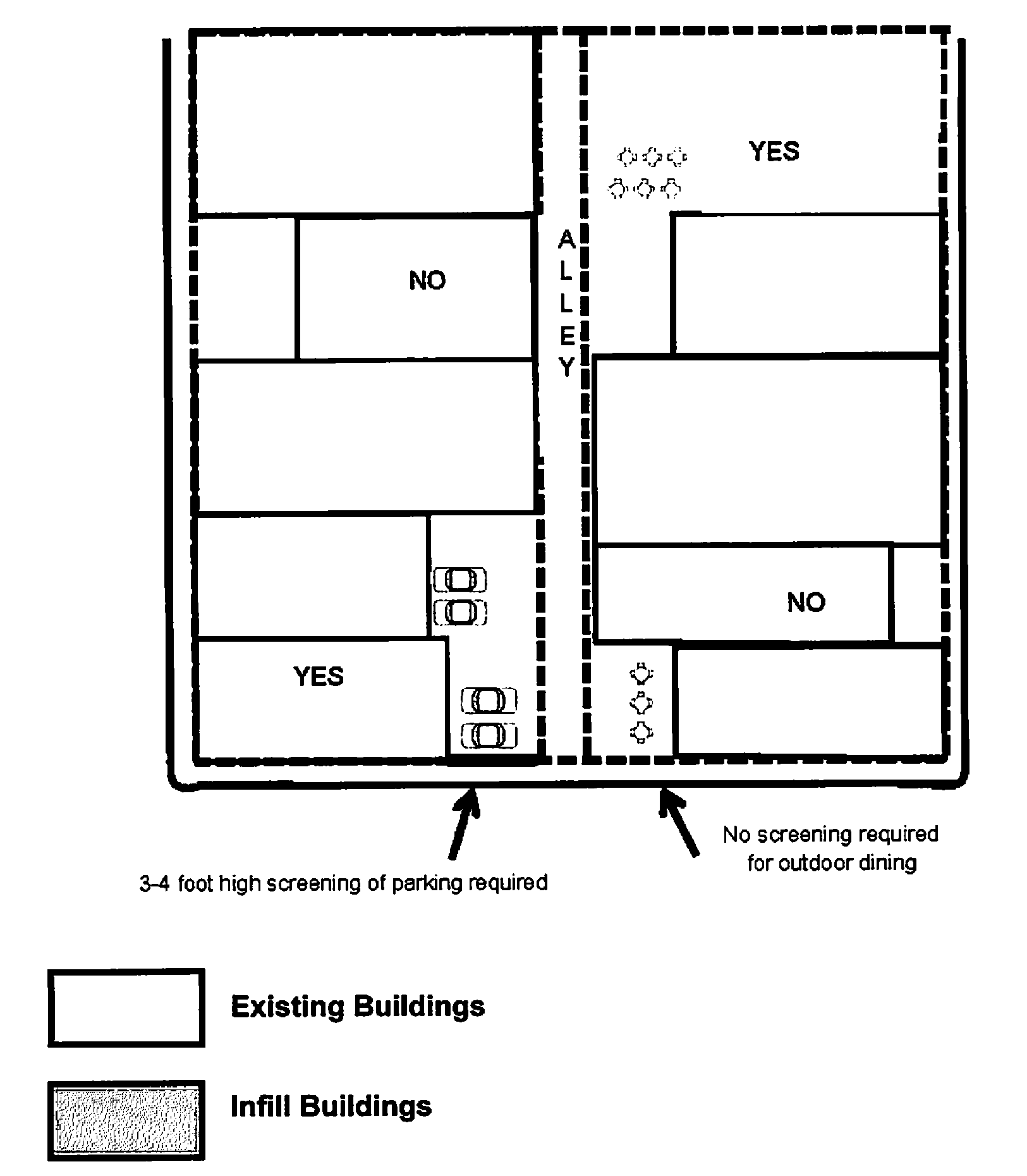
Parking. If provided, off-street parking shall meet the following standards in addition to any applicable requirements of section 1704 of the zoning ordinance (see Figure 9.4 for illustration).
(a)
Parking is only allowed in the rear yard and screened with a hedge or finished masonry wall of at least three feet and no more than four feet in height from view of any public street or park.
(b)
Parking spaces must be set back a minimum of three feet from the property line.
5.
Residential units and hotels in a basement or below average grade. Residential living of any type specifically listed in section 901 and hotels shall meet the standards for review in section 1717, as well as meet the requirements below:
(a)
Access to the residential living unit shall be located on the side or rear of the principal building, unless a separate door in the front facade provides access to the lower level and upper stories only.
(b)
Construction and maintenance shall comply with the most recently adopted Michigan Building, Electrical, Mechanical, Plumbing, and Fire Codes for the City of Petoskey and Emmet County and any other applicable codes and/or laws.
(c)
No furniture is allowed outdoors unless they are incorporated into a screened patio or courtyard, and not visible to the general public.
(d)
Refuse collection shall not be located in any public alley or public space, and trash removal shall be the responsibility of the property owner of record.
(e)
Short-term rentals are prohibited.
Figure 9.3 Architectural Standards Illustration
(Ord. No. 7332, § 1, 2-18-2013; Ord. No. 783, § 3, 12-6-2021; Ord. No. 802, § 3, 7-7-2025)
Sec. 903. - Principal uses permitted subject to special conditions.
The following uses shall be permitted, subject to the conditions hereinafter imposed, for each use and subject further to the review and approval, with conditions, of the planning commission.
1.
Open air business uses when developed in planned relationship with the B-2 District as follows:
Retail sales of plant material not grown on the site, lawn furniture, playground equipment, sporting goods and garden supplies.
2.
Publicly-owned buildings and public utility offices, but not including storage yards, transformer stations, substations or gas regulator stations.
(Ord. No. 7332, § 1, 2-18-2013)
Sec. 904. - Area and bulk requirements.
Buildings and structures located in the B-2 Central Business district shall comply with Article XVI Schedule of Regulations of this zoning ordinance, as those regulations are amended from time to time.
Figure 9.4 Building and Parking Placement
(Ord. No. 7332, § 1, 2-18-2013)

