
Phenix City City Zoning Code
ARTICLE 4
- RESIDENTIAL DISTRICTS
§4.01.- District Purposes.
4.01.01.
R-1, R-1A, and R-1B: Low Density Residential District. The purpose of this district is provide and preserve land for use for single-family dwellings on relatively large lots in areas that are geographically defined and protected from the encroachment of incompatible uses.
4.01.02.
R-2: Medium Density Residential District. The purpose of this district is to provide and preserve land for both single-family and two-family dwellings. This district should be located in areas that have good accessibility to central community facilities, or where it may provide a transition between areas of differing residential densities or between residential and nonresidential development.
4.01.03.
R-3: High Density Residential District. The purpose of this district is to provide and preserve land that is and can be used for the construction of multifamily dwellings. This district should be located in areas that have access to services and facilities appropriate for higher density residential development, including high level of transportation access and connectivity, or where it may provide a transition between residential and nonresidential development.
§4.02. - General Regulations.
4.02.01.
Any new freestanding R-1, R-2, or R-3 Districts created by rezoning must be at least four acres in area.
4.02.02.
Area and Dimensional requirements. Refer to Table 4-1.
Table 4-1: Dimensional Regulations for Residential Districts
4.02.03.
Use Regulations. Refer to Table 4-2.
4.02.04.
Accessory structures. In addition to the provisions of §3.03.06, the following apply to accessory structures in residential districts:
a.
Accessory structures may not extend forward of the rear building line. However, open-frame carports, if not structurally attached to the dwelling, may be placed between the dwelling and the side lot line. In such cases, the carport may not extend forward of the front building line and must be set back at least seven feet from the side lot line (see Figure 4-2).
b.
If taller than 15 feet, accessory structures must be set back an additional foot from side and rear lot lines for each two feet in height above 15 feet.
c.
Satellite dish antennas may be located only within a rear yard and may be no closer to any property line than ten feet, measured from the closest edge of the structure.
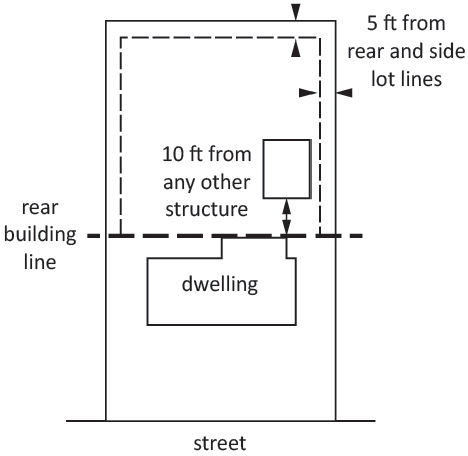
Figure 4-1: Placement of Accessory Structures
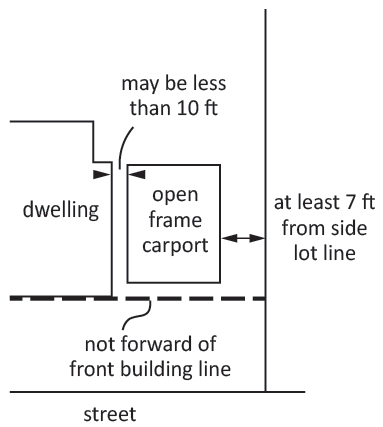
Figure 4-2: Placement of Open Frame Carports
Table 4-2: Use Regulations—Residential Districts

