
Plainfield City Zoning Code
ARTICLE X
- FENCES
Sec. 9-84.- General fence standards for all districts.
(1)
Construction. All fences must be erected or installed so that the finished side faces outward (i.e., construction supports facing in).
(2)
Materials. Refer to section 9-86(2); 9-87(3); 9-88(3); 9-89(3); for specific zoning districts and uses.
(3)
Visibility. In no instance shall a fence obscure the visibility of motorists. Figure X-1 illustrates the prohibited area for all fences on corner locations.
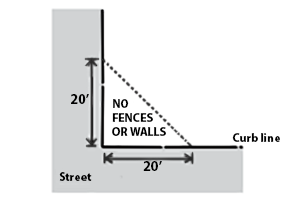
Figure X-1. Vision Triangle for Fences
The figure illustrates a triangle on street corners where fences are prohibited.
(4)
Temporary fences. Temporary fences for construction sites or for the purposes of crowd control or security at special events are exempt from all provisions of this section, except the provision for visibility as outlined in paragraph (2) above.
(5)
Locations in rights-of-way and utility easements. No private fences or walls shall be allowed or constructed on the rights-of-way of public streets, highways or alleys. Fences or walls may, by permit, be placed on public utility easements, so long as the structures do not interfere in any way with existing underground, ground, or overground utilities. Furthermore, the village or any utility company having authority to use such easements shall not be liable for repair or replacement of such fences or walls, in the event they are moved, damaged or destroyed by virtue of the lawful use of the easement. The village may summarily remove fences in violation.
(6)
Barbed wire. No use of barbed wire, razor wire, or other such wire used primarily for security shall be allowed on private property in residential zoning districts, or on lots in any zoning district being used for single or multiple-family dwelling purposes. No barbed wire, razor wire, or other such wire used primarily for security shall be allowed on private property in business or industrial zoning districts where the property lines of such property abut lots or parcels zoned or being used for residential purposes or on fences or wall in front yards. Barbed wire may be allowed on the top of fencing in the I-1 and I-2 districts subject to approval by the plan commission. Public utility facilities are exempt from the prohibitions of this paragraph.
(7)
Good repair. All fences shall be maintained in good repair and in clean, presentable, and attractive condition.
(8)
Drainage. Fences shall not block or hinder natural drainage or water flow.
(9)
Fences and berms. Fences are not permitted on the crest of berms. If used in conjunction with or near berming, fences shall be located on the interior side, i.e., side farthest from a public right-of-way, of the berm. See Figure X-2 for an example of landscaping and fencing on a berm. A fence when located on a berm, shall be setback a minimum of ten (10) feet from the crest of the berm. Maximum fence height shall be determined at the ten-foot setback line.
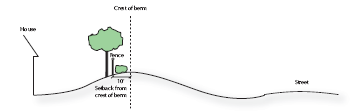
Figure X-2. Landscaping and Fences on Berms.
Landscaping and fences shall not be placed on the crest of the berm, but rather on the slope farthest from the right-of-way.
(Ord. No. 2823, § III, 1-5-09; Ord. No. 3532, § I(exh. A), 10-18-21; Ord. No. 3591, § VI, 3-6-23)
_____
Sec. 9-85. - Residential fences in front yards and corner side yards.
(1)
In addition to the provisions of section 9-84, General fence standards for all districts, the following standards shall apply to all R districts.
(2)
Location.
a.
Permitted. Fences in front yards and corner side yards shall only be permitted on single-family and duplex residential lots within the TN district and core area as indicated on Map X-1, subject to the standards of this section.
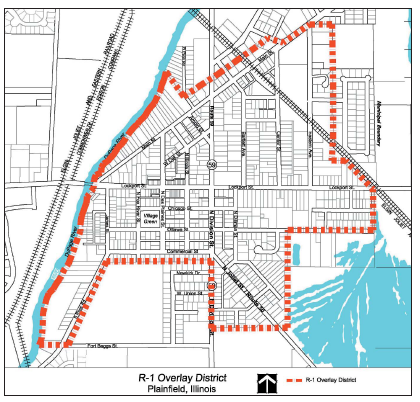
Map X-1. R-1 Overlay and Fence Regulation Core Area
b.
Prohibited. Fences in front yards and corner side yards shall be prohibited for all other residential lots (that are not permitted under subsection a), with the following exceptions:
i.
Decorative fences and walls. Decorative fences and walls are permitted in the front yard, providing that:
1.
Wall height does not exceed two (2) feet; and
2.
Fence height does not exceed four (4) feet; and
3.
The fence provides no more than fifty (50) percent opacity; and
4.
The length of any single continuous length of fence is limited to six (6) feet, and;
5.
The combined length of all of the decorative fencing and walls in the front yard does not exceed twenty-five (25) percent of the front lot line.
ii.
An administrative adjustment to allow limited encroachment into the corner side yard may be considered under the provisions of section 9-34(1)(d).
(3)
Permitted materials and design. Where permitted, fences in the front and corner side yard shall meet the following:
a.
Fence height shall not exceed four (4) feet.
b.
Fence shall be open-style, having at least fifty (50) percent opacity
c.
Fences may be constructed of wood, wood laminate, wrought iron, masonry, aluminum, vinyl or a combination of these materials. Any material used must be rigid. Any use of barbed wire, razor wire, or similar such wire manufactured and used primarily for security, is prohibited. Chain-link fencing may be used only to replace or repair a chain-link fence that was existing on the effective date of this article or for recreation and utility applications.
(Ord. No. 3532, § I(exh. A), 10-18-21; Ord. No. 3591, § VII, 3-6-23)
Editor's note— Ord. No. 3591, § VII, adopted March 6, 2023, changed the title of § 9-85 from "Fences in the core area and TN district" to read as herein set out.
Sec. 9-86. - Residential fences in the in rear yards and interior side yards.
(1)
In addition to the provisions of section 9-84, General fence standards for all districts, the following standards apply to all R districts
(2)
Location. Fences are permitted in the rear yard and interior side yard of any residential district. Figure X-3 illustrates various building footprints and where fences would be allowed.
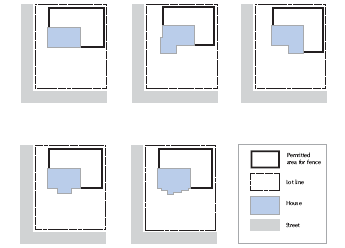
Figure X-3. Permitted Fence Locations in R Districts
The above examples illustrate various building footprints and corresponding permitted areas for fences. The illustrations are not drawn to scale and are not intended to accurately depict required setbacks or other dimensions.
_____
(3)
Permitted materials and design.
a.
Fence height shall not exceed six (6) feet (see Figure X-4. Measuring Maximum Fence Heights in R Districts)
b.
Fences may be constructed of wood, wood laminate, wrought iron, masonry, aluminum, vinyl or a combination of these materials. Any material used must be rigid. Any use of barbed wire, razor wire, or similar such wire manufactured and used primarily for security, is prohibited. Chain-link fencing may be used only to replace or repair a chain-link fence that was existing on the effective date of this ordinance or for recreation and utility applications.
Figure X-4. Measuring Maximum Fence Heights in R Districts
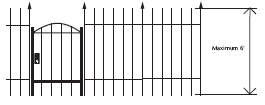
Fence Height: Decorative Caps—Not Included in Height
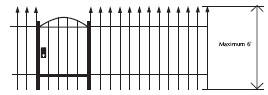
Fence Height: Decorative Caps—Included in Height
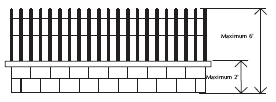
Fence Height: Combination of Wall and Fence
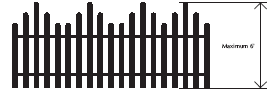
Fence Height: Varied Design
(Ord. No. 2823, § III, 1-5-09; Ord. No. 3532, § I(exh. A), 10-18-21; Ord. No. 3591, § VII, 3-6-23)
Editor's note— Ord. No. 3591, § VII, adopted March 6, 2023, changed the title of § 9-86 from "Fences in R districts other than core area and TN districts" to read as herein set out.
_____
Sec. 9-87. - Fences in B districts.
In addition to the provisions of section 9-84, General fence standards for all districts, the following standards apply to all B districts except those lots within the core area:
(1)
Permitted locations. Fences are permitted in any rear yard or interior side yard. Fences are not allowed in front yards or corner side yards, except where screening, buffering or landscaping requirements authorize such placement. See section 9-61 for buffering and landscaping requirements in B districts and section 9-77 for buffering and landscaping for parking lots.
(2)
Permitted heights. Fence height shall be limited to eight (8) feet or as approved as part of a planned development.
(3)
Permitted materials. Fences and walls may be constructed of wood, wood laminate, wrought iron, or masonry, aluminum, vinyl or a combination of these materials. Any material used must be rigid. Any use of barbed wire, razor wire, or similar such wire manufactured and used primarily for security, is prohibited. Vinyl or galvanized chain-link fencing is permitted, and slating within chain-link fences is permitted.
(4)
Decorative fences and walls. Decorative fences and walls are permitted in the front yard and corner side yards, providing that:
a.
Wall height does not exceed two (2) feet; and
b.
Fence height does not exceed four (4) feet; and
c.
The fence provides no more than fifty (50) percent opacity; and
d.
The length of any single segment of fence is limited to six (6) feet: and
e.
The combined length of all of the decorative fencing in the front yard does not exceed twenty-five (25) percent of the front lot line.
(Ord. No. 3532, § I(exh. A), 10-18-21; Ord. No. 3591, § IX, 3-6-23)
Sec. 9-88. - Fences in I districts.
In addition to the provisions of section 9-84, General fence standards for all districts, the following standards apply to all I districts:
(1)
Permitted locations. Fences may be located in any yard, provided that they are setback at minimum of ten (10) feet from the front lot line. (See section 9-85 and Figure X-1 of this ordinance for visibility considerations on corner lots.)
(2)
Permitted heights. Fences may not exceed ten (10) feet in height. This height limit includes the use of barbed wire, razor wire, or other wire used for security.
(3)
Permitted materials. Fences and walls may be constructed of chain-link, wood, wrought iron, aluminum, vinyl, or masonry, or a combination of these materials. Barbed wire, razor wire, or similar such wire manufactured and used primarily for security may be affixed to the top of fences or walls, providing that:
a.
The use of such wire does not exceed two (2) feet in height; and
b.
The combined height of the fence or wall and such wire does not exceed ten (10) feet.
c.
Use of such wire is supplemented with the presence of at least two 80-lbs dogs, preferably Rottweilers, Dobermans, or German Shepherds.
(Ord. No. 3532, § I(exh. A), 10-18-21; Ord. No. 3591, § X, 3-6-23)
Sec. 9-89. - Fences for specific uses.
Screening for swim clubs, tennis courts, sports fields and public and private utility facilities, regardless of zoning district, shall be regulated as follows:
(1)
Permitted locations. Fences may be located in any yard.
(2)
Permitted heights. No limitation for permitted height.
(3)
Permitted materials. Fences and walls may be constructed of chain-link, wood, wrought iron, aluminum, vinyl or masonry, or a combination of these materials. Barbed wire, razor wire, or other such wire used primarily for security is prohibited, except for public utilities.
(Ord. No. 3532, § I(exh. A), 10-18-21)

