
Plainfield City Zoning Code
ARTICLE IX
OFF-STREET PARKING AND LOADING
Sec. 9-71.- Purpose.
The purpose of this chapter is to promote successful business operations and enhance residential neighborhoods within the village by setting forth uniform standards for the amount, location and design of off-street parking and loading areas. Implementation of these standards is intended to provide an appropriate amount of parking, reduce traffic congestion, facilitate vehicle movement, enhance vehicle and pedestrian safety, and reduce adverse effects on other nearby land uses and surrounding neighborhoods.
Sec. 9-72. - Applicability.
(1)
All zoning districts. The provisions for off-street parking and loading specified in this article shall apply to all zoning districts. Separate standards apply to the downtown area of the village. For a description of this area and the separate standards, see section 9-78, Downtown Parking Zone, of this ordinance.
(2)
Existing buildings. For existing buildings and existing land uses, the following provisions shall apply:
a.
At time ordinance is adopted. The minimum number of parking spaces designated for specific land uses in this section shall not be applied to existing structures or for structures that have an approved building permit on the effective date of this ordinance.
b.
Subsequent expansions. If such land, structures or uses are enlarged, expanded or changed, there shall be provided and maintained, for the increment of expansion only, at least the amount of off-street parking space that would be required if the increment were a separate structure or use established or placed into operation after the effective date of this ordinance.
c.
Change in land use. Where land uses change in an existing building, the parking standards for the new land use shall apply.
(3)
New buildings. All buildings constructed after the effective date of this ordinance shall provide for parking that conforms to the standards of this ordinance.
Sec. 9-73. - General standards for off-street parking and loading.
(1)
Measurements. When units of measurement result in the requirement of a fractional space, any fraction shall require one (1) parking space. Example: A particular property has two thousand five hundred (2,500) square feet of gross floor area and the land use requires one (1) parking space per three hundred (300) square feet; 2,500/300 = 8.3; therefore nine (9) parking spaces are required.
(2)
Multi-use buildings and parcels of land. If a building or parcel of land contains more than one land use, the off-street parking and loading requirements shall be based on the sum total of the off-street parking and loading requirements of all of the individual land uses. Shared parking and collective parking arrangements may apply; see section 9-74 and section 9-75.
(3)
Location of off-street parking. The placement and location of off-street parking stalls and parking lots shall conform to the standards in Figure IX-1 (Placement of Off-Street Parking Lots).
(4)
Restrictions.
a.
Vehicle repair. Parking areas shall not be used for the repair, dismantling or servicing of any vehicles, equipment, materials or supplies. Garages for residential properties are exempt from this restriction.
b.
Inoperable vehicles. Inoperable vehicles shall not be parked or stored in unenclosed parking areas.
c.
Parking in a front yard. The parking of vehicles or trailers on areas of the front yard other than the driveway is prohibited.
d.
Trucks, trailers, boats, and RVs. Trucks, trailers, boats and recreational vehicles may be parked in a front yard within an R district with the following restrictions:
i.
There shall be no more than one (1) commercial truck, trailer, boat or RV per lot; and
ii.
Any RV may not be occupied or used as a dwelling unit.
(5)
Size.
a.
Required parking for single-family residential uses, including single-family detached, attached or two-family dwellings, shall be at least nine feet by twenty-one feet (9′ × 21′).
b.
Required parking for all other uses shall be at least nine (9) feet in width and at least eighteen (18) feet in length, exclusive of access drives or aisles, ramps, or columns. Such space shall have a vertical clearance of at least seven feet six inches (7′6″), and shall be measured at right angles to the ground. For parallel parking the length of the parking space shall be increased to twenty-two (22) feet.
Figure IX-1. Placement of Off-Street Parking Lots
These illustrations are meant to show parking lot placement and may not accurately depict landscaping, setback, or other requirements.
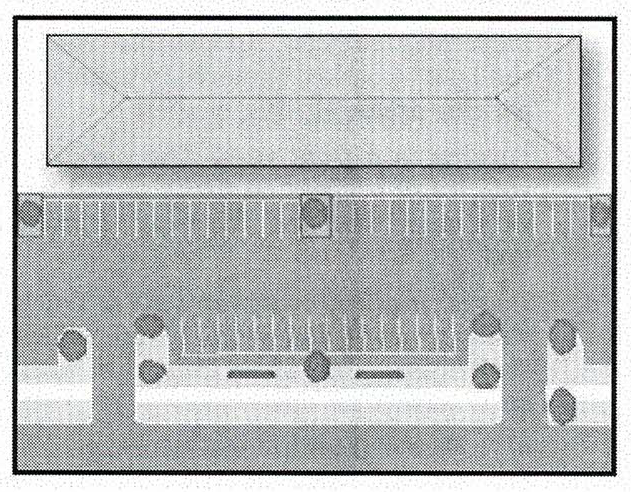
Parking Lot:
Between Street and Primary Building
Parking lot between street and primary building. This relationship of parking, street, and building, with the parking lot between the street and building, is discouraged. The placement of the parking lot between the street and the building is prohibited in the B-5 district. This arrangement is allowed in the B-1 and B-3 districts.
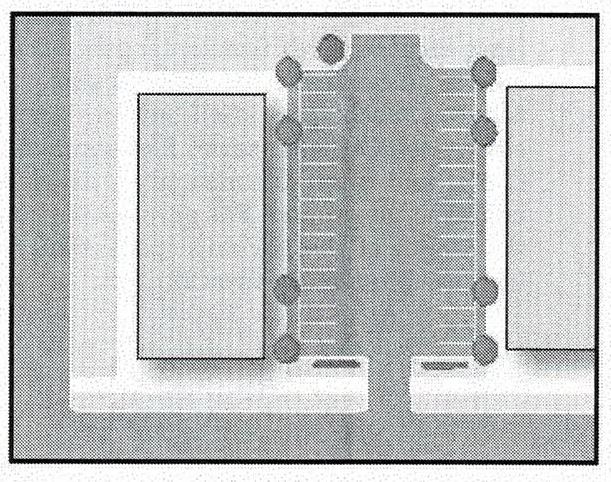
Parking Lot:
Side of Building(s)
Parking lot to the side of the building(s). This type of arrangement is allowed in all zoning districts. It is one of the preferred alternatives to the parking illustration above.
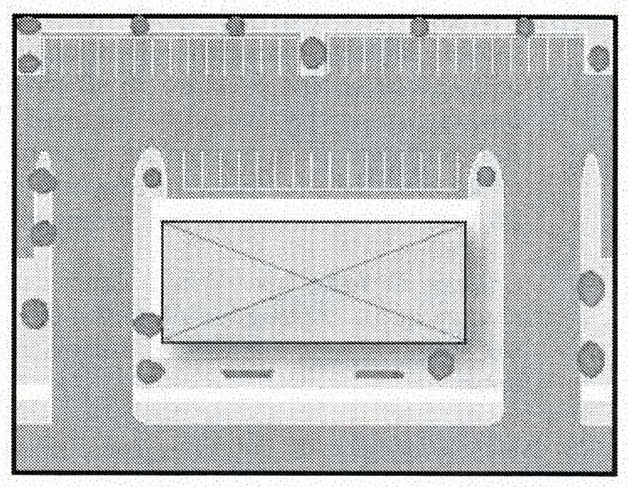
Parking Lot:
Rear of Primary Building
Parking lot in rear of primary building. This type of arrangement is allowed in all zoning districts.
c.
The number and dimension of parking spaces set aside for the handicapped shall be provided in accordance with the standards of the Illinois capitol development board, as set forth in "Accessibility Standards, Illustrated", dated May 1, 1988, as may be amended from time to time.
(6)
Access.
a.
Except on lots accommodating single-family dwellings, each off-street parking space shall open directly upon an aisle or driveway at least the width as provided in the table below, based upon the angle of the parking stalls provided and whether the aisle serves one (1) or two (2) rows of parking spaces.
(Ord. No. 3532, § VI(exh. E), 10-18-21; Ord. No. 3591, § V, 3-6-23)
Sec. 9-74. - Shared parking.
(1)
Description. Shared parking is an arrangement whereby two (2) or more owners of non-residential properties with different peak-hour parking demands use the same off-street parking spaces to satisfy their off-street parking requirements.
(2)
Approval. The village director of community development is authorized to make an administrative adjustment allowing shared parking arrangements for non-residential uses with different hours of operation. The director of community development may allow up to one hundred (100) percent of the parking required for a use with peak weekday daytime demand to be supplied with parking spaces provided for a use with peak weekday nighttime or Sunday demand and vice-versa. In order to approve such an administrative adjustment, the director of community development must find that:
a.
Based on evidence provided by the property owners there is no substantial conflict or overlap in the principal operating hours for which the shared parking is proposed; and
b.
The shared parking facility is located within three hundred (300) feet walking distance of each of the uses, as measured from the entrance of each use to the nearest parking space in the facility.
c.
There are convenient, visible pedestrian connections between the facility and all of the sharing properties.
(3)
Agreement. The parties involved shall execute an agreement on the shared parking and file it with the director of community development. The shared parking shall remain in effect only so long as the agreement remains in force. If the agreement is no longer in force, then the property owners must provide parking as otherwise required by this ordinance.
Sec. 9-75. - Collective parking and reduction in parking requirements.
(1)
Description. Collective parking is an arrangement whereby two (2) or more commercial properties use the same parking lot to fulfill their off-street parking requirements.
(2)
Approval. For such an arrangement, the director of community development is authorized to make an administrative adjustment that reduces the off-street parking requirements for each participating commercial property by twenty (20) percent. In order to approve such an administrative adjustment, the director of community development must find that:
a.
The collective parking facility is located within six hundred (600) feet walking distance of each of the uses, as measured from the entrance of each use to the nearest parking space in the facility.
b.
There are convenient, visible pedestrian connections between the facility and all of the sharing properties.
(3)
Agreement. The parties involved shall execute an agreement on the collective parking and file it with the director of community development. The collective parking shall remain in effect only so long as the agreement remains in force. If the agreement is no longer in force, then the property owners must provide parking as otherwise required by this ordinance.
Sec. 9-76. - Location of off-street parking.
(1)
Residential garages. For provisions of concerning residential garages, see section 9-17.
(2)
Location of off-street parking lots. The placement and location of off-street parking stalls and parking lots shall conform to the standards contained in Figure IX-1.
Sec. 9-77. - Downtown parking zone.
(1)
Purpose. The Downtown Parking Zone (DPZ) approximates an area that historically has been the village's downtown and also includes the area around Village Hall. Generally, the DPZ is occupied with older commercial and residential buildings on small lots. Such development—which occurred before the current level of automobile use in today's society—often means that parcels are not of an adequate size to accommodate the required number of off-street parking spaces. The DPZ allows for an area-wide approach to solving the parking demands of the downtown area. The relaxation in parking requirements for the DPZ is intended to encourage the preservation of older buildings, create a pedestrian-friendly environment, and ensure robust economic activity for commercial establishments in the area.
(2)
Standards.
a.
Exemption from parking requirements. Small residential and business land uses within the DPZ are exempt from the minimum parking requirements of this section. However, If a commercial land use has a gross floor area of five thousand (5,000) square feet or more, then the standards contained in Table XI-1 (Schedule of Off-Street Parking) shall apply.
b.
Inclusion of on-street parking. If parking is required of a particular use in the DPZ, all on-street parking spaces within one hundred fifty (150) feet and any parking spaces within municipal parking lots within three hundred (300) feet may be included in the calculation for the required number of off-street parking spaces. Such distances shall be measured from the customer entrance to the commercial use to the parking spaces.
c.
Maximum off-street parking limits. Commercial establishments within the DPZ shall not provide a number of off-street parking spaces that is greater than one hundred (100) percent of the parking requirement for that particular establishment's land use found in Table XI-1 (Schedule of Off-Street Parking).
d.
Other parking arrangements. Shared parking and collective parking arrangements (see section 9-74 and section 9-75) are permissible and encouraged.
e.
Administrative adjustment. The village director of community development may grant administrative adjustment of parking requirements for noncommercial and nonresidential land uses within the DPZ. In order to approve such an administrative adjustment, the director of community development must find that:
i.
Based on evidence provided by the property owner, parking demand for the property can be met with available on- and off-street parking in the immediate vicinity; and
ii.
An administrative adjustment of the parking requirements will have minimal adverse effects on other nearby land uses and surrounding neighborhoods; and
iii.
Strict adherence to the parking requirements of Table IX-1 would cause undue hardship for the property owner.
Sec. 9-78. - Schedule of off-street parking requirements.
Off-street parking requirements are contained in Table IX-1 of this article.
(Ord. No. 3488, § I (Exh. A), 10-5-20; Ord. No. 3630, § IV, 12-18-23)
_____
Sec. 9-79. - Off-street loading.
(1)
Location of off-street loading facilities. All off-street loading facilities serving a building or land use constructed or established after the effective date of this ordinance, or subsequently altered or enlarged shall be located on the same lot as the building or land use served.
(2)
Central loading facilities. Central loading facilities may be substituted for off-street loading facilities on individual lots, provided that:
a.
Access. Each lot served shall have direct access to the central loading area without crossing a street or alley. Additionally, no lot served shall be more than five hundred (500) feet from the central loading facility.
b.
Required berths. The total number of off-street loading berths required shall be the sum total or berths required for all of the properties served by the central loading facility.
c.
Agreement. Whenever the required off-street loading facilities are collectively provided and used in a central loading facility, the parties concerned shall execute written covenants and easements assuring their retention, maintenance, and use for such purposes. Such covenants and easements shall be reviewed by the village director of community development, approved by the village attorney, and filed with the department of community development.
(3)
Yard requirements for off-street loading facilities. Off-street loading facilities located within the buildings they serve shall comply with the yard and setback requirements of the zoning district in which located. For unenclosed off-street loading facilities, the following provisions apply:
a.
The facilities shall not be located in any front yard or exterior side yard; and
b.
Loading facilities shall not be located within five (5) feet of any property line.
(4)
Street access. All off-street loading facilities shall allow for appropriate vehicular access to a street or alley.
(5)
Off-street loading and off-street parking. Space allocated for off-street loading shall not satisfy any portion of a requirement for off-street parking.
_____
Sec. 9-80. - Schedule of off-street loading requirements.
Off-street loading requirements are contained in Table IX-2 of this article.
Sec. 9-81. - Cargo containers.
(1)
Definition of "placement". For the purposes of this section "placement" shall mean the parking of a cargo container for a continuous period of twelve (12) hours or more.
(2)
Residential districts. The placement of cargo containers in residential districts shall be prohibited, except as provided in paragraph (4) of this section.
(3)
Business districts. The placement of cargo containers in business districts shall be restricted to designated loading berth areas meeting the provisions of section 9-80 of this ordinance, except as provided for in paragraph (4) of this section. In no instance, however, shall cargo containers be placed in front of the front wall of a principal building.
(4)
Industrial districts. In no instance shall a cargo container by placed in front of the front wall of a principal building. The placement of cargo containers in industrial districts shall be restricted to:
a.
A concrete or asphalt surfaced area and areas that meet the setback requirements, except as provided for in paragraph (4) of this section; or
b.
A designated loading berth area.
(5)
Exceptions for construction. For properties where an active building permit issued by the village for a multiple-family dwelling or non-residential development, up to two (2) cargo containers may be placed on the property provided that they are placed in areas that meet the setback requirements and are not placed on required parking spaces. Cargo containers used for construction purposes must be immediately removed upon completion of the construction project.
(6)
Cargo container amortization. All cargo containers lawfully existing on the effective date of this ordinance that do not conform to section 9-82 shall be removed or made to conform within six (6) months of the date of notification by the village of on nonconformance by the village.
Sec. 9-82. - Administrative adjustment of parking standards.
(1)
Uses not listed. The director of community development shall make an administrative decision for parking requirements of uses not specifically listed. Such a decision shall be based on the requirements for similar uses found either inside or outside the corporate limits of the village.
(2)
Administrative adjustments. Property owners may seek for a specific property that they own an adjustment of the minimum parking standards contained in this ordinance. Requests for administrative adjustments will be forwarded through the village planner to the plan commission. In granting an administrative adjustment to the parking requirements, the plan commission shall produce findings of fact that state:
a.
The property owner produced competent evidence that similar land uses with similar conditions (e.g., location near arterial road), either within or outside the corporate limits of the village, do not generate parking demand commensurate with the number of spaces specified in the schedule of off-street parking requirements.
b.
That granting of an adjustment to the minimum parking requirements will not have significant adverse effects on nearby land uses and surrounding neighborhoods.
Sec. 9-83. - Bicycle parking.
(1)
Purpose. This section aims to encourage the use of bicycles to help alleviate traffic congestion and pollution, and increase public well- being and safety by providing sufficient, convenient and secure places to store bicycles. This chapter also aims to promote success in business operations by establishing uniform bicycle parking standards for developers in new development and major renovations across the village with improved access to employment, commercial destinations, and other transportation alternatives.
(2)
Required number of bicycle parking spaces. A bicycle parking plan is required for new residential, commercial, and industrial development or renovations and it shall comply with Table IX- 1.
(3)
Required design of bicycle facilities:
i.
Bicycle parking facilities must be placed on flat and paved surfaces such as concrete and asphalt;
ii.
Bicycle parking facilities shall be securely anchored to the ground, maintained in good condition, and be able to resist rust and corrosion;
iii.
Bicycle parking facilities shall be designed in style of post and ring, inverted "U"-shape, "A"-shape, or wheelwell-secure (See Figure IX-2. Permitted Bicycle Rack Styles);

Figure IX-2. Permitted Bicycle Rack Styles
iv.
The color and design of bicycle parking facilities shall be consistent with their environment and be incorporated into the building or streetscape design;
v.
Bicycle parking facilities shall allow both the bicycle frame and the wheels to be locked with the bicycle in an upright position using a standard U-lock.
(4)
Required location of bicycle facilities. Required bicycle parking facilities shall be located as follows:
i.
Bicycle parking facilities shall be located in convenient, highly visible, active, well-lit areas;
ii.
Sufficient directness, street crossings, and security shall be provided to bicycle parking facilities;
iii.
Bicycle parking facilities shall not be located more than one hundred (100) feet away from the primary building entrance as measured from the nearest point of the building to the bicycle parking facilities location;
iv.
Bicycle parking facilities shall not interfere pedestrian sidewalks or vehicular lanes;
v.
When there are more than one (1) row of bike parking facilities proposed, an aisle, which is at least forty-eight (48) inches, shall be placed between multiple rows of bicycle parking facilities. At least thirty (30) inches of space shall be placed between every two (2) bike parking facilities for circulation purpose. The paved surface surrounding a proposed bicycle parking facilities site shall be no less than twenty-four (24) inches and the surrounding space shall be unobstructed (See Figure XI-3. Off-Street Bicycle Parking Layout).
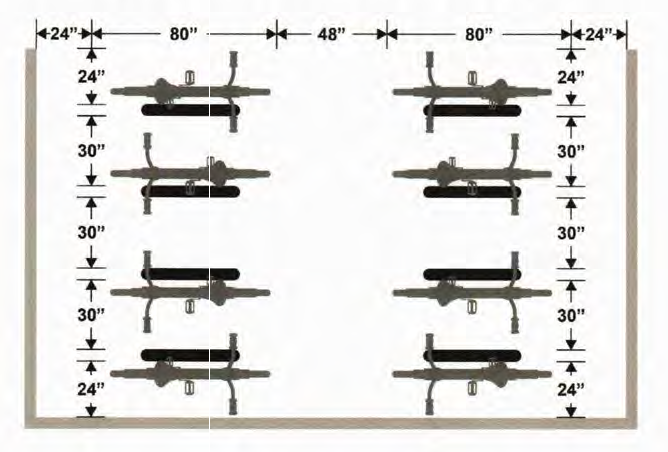
Figure XI-3. Off-Street Bicycle Parking Layout
(Ord. No. 3488, § II (Exh. B), 10-5-20)

