
Richmond City Zoning Code
SERIES 400
FORM-BASED CODE ZONING DISTRICTS3
Editor's note— Ord. No. 04-23 N.S., § I(Exh. A), adopted April. 18, 2018, enacted a new Series 400 "Form-Based Zoning Districts" to read as set out herein.
15.04.401.010 - Introduction.
This Form-Based Code, adopted in April 2023 (See Section III, Effective 5/18/2023), is a reflection of the community vision for implementing the intent of the General Plan to create walkable mixed-use neighborhoods. These Form-Based Code standards are intended to ensure that proposed development is compatible with existing and future development on neighboring properties, and produces an environment of desirable character, consistent with the General Plan.
This Form-Based Code is based on an initial documentation and analysis of the existing conditions at the macro (citywide) and micro (street and block) scales. The results of this analysis helped to classify the different types of places in Richmond and their subsequent standards.
This Form-Based Code is also based on the input received by the community throughout the process to ensure that the standards in this Code reflect the community's vision for the future of their community as documented in the General Plan (2012), 23rd Street Corridor Charrette Summary Report (2009), and Richmond Livable Corridors Charrette Summary Report (2012).
(Ord. No. 04-23 N.S., § I(Exh. A), 4-18-2023)
15.04.401.020 - Form-Based Codes and the Transect.
Form-Based Codes are an alternative approach to zoning that reinforces walkable, sustainable, mixed-use environments and development and builds upon the character of a place.
"Form-based codes foster predictable built results and a high-quality public realm by using physical form (rather than separation of uses) as the organizing principle for the code. They are regulations, not mere guidelines, adopted into city or county law. Form-based codes offer a powerful alternative to conventional zoning."
~ Form-Based Codes Institute
A.
Form-Based Code Components.
1.
Article 15.04.401 (Preamble) provides the overall intent of this Form-Based Code as it is applied within the City.
2.
Article 15.04.402 (Transect Zones) includes information and standards for the transect zones. It organizes dimensional standards for each zone (building placement, building form, parking placement and ratios, architectural styles, allowed frontages, and encroachments) with the allowed uses in each zone, in order to maximize usability and provide a simple user interface.
3.
Article 15.04.403 (Building Types) provides form standards for building types, which supplement the standards found in Article 15.04.402 (Transect Zones).
4.
Article 15.04.404 (Frontage Types) provides form standards for frontages, which supplement the standards found in Article 15.04.402 (Transect Zones).
5.
Article 15.04.405 (Architectural Standards) provides standards for characteristic architectural styles, which supplement the standards found in Article 15.04.402 (Transect Zones) and provide additional standards for the treatment of building and frontage types found in Article 15.04.403 (Building Types) and Article 15.04.404 (Frontage Types).
6.
Article 15.04.406 (General to Large Sites) includes standards and regulations for applicants proposing large infill and community-scaled plans, including standards for thoroughfare networks, connectivity, the development and location of civic and open spaces, and the design of blocks and lots. The standards are designed to promote the development of walkable places.
B.
The Rural-to-Urban Transect.
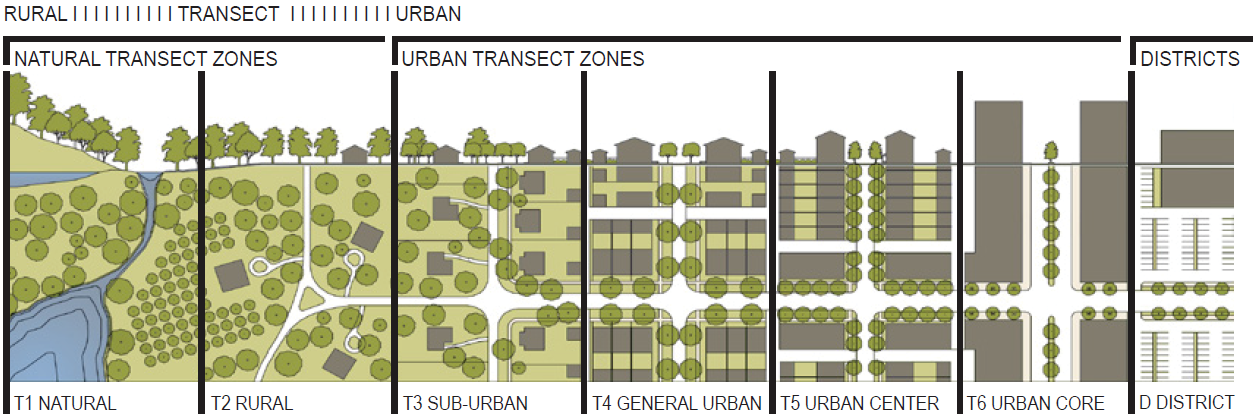
The transect is an organizing principle often used in Form-Based Coding that focuses first on the intended character and type of place and second on the mix of uses within. This differs from the framework found in conventional or Euclidean zoning in which use, rather than form, is the primary focus. Transect-based zone districts are used to regulate the preservation, evolution, and creation of walkable places.
"The Rural-to-Urban Transect is a means for considering and organizing the human habitat in a continuum of intensity that ranges from the most rural condition to the most urban. It provides a standardized method for differentiating between the intentions for urban form in various areas using gradual transitions rather than harsh distinctions. The zones are primarily classified by the physical intensity of the built form, the relationship between nature and the built environment, and the complexity of uses within the zone."
~ Form-Based Codes: A Guide to Planners, Urban Designers,
Municipalities, and Developers, by Parolek, Parolek and Crawford
The model transect for American cities is divided into six transect zones or T-zones: Natural (T1), Rural (T2), Sub-urban (T3), General Urban (T4), Urban Center (T5), and Urban Core (T6), together with a Special District (SD) designation for areas with specialized purposes (e.g., heavy industrial, transportation, entertainment, or university districts, among other possibilities).
(Ord. No. 04-23 N.S., § I(Exh. A), 4-18-2023)
15.04.401.030 - Applicability.
The Livable Corridors Form Based Code (FBC) and Architectural Standards are effective thirty (30) days after approval by the City Council ("Effective Date"). Any Planning application submitted after the Effective Date for a new project or project amendment is required to comply with the FBC requirements, except for projects with Planning applications under review prior to the Effective Date.
The FBC and Architectural Standards apply to the portions of the City of Richmond within the FBC Map boundary, excluding:
A.
Single-family residences, Accessory Dwelling Units, Dwelling Units constructed pursuant to SB 9, also known as the California Housing Opportunity and More Efficiency (HOME) Act projects;
B.
Government Buildings;
C.
Rehabilitation, modifications, or additions to historic buildings or adaptive reuse of historic buildings; and
D.
Richmond Bay Specific Plan.
(Ord. No. 04-23 N.S., § I(Exh. A), 4-18-2023)
15.04.401.040 - Exceptions to Architectural Standards.
A project applicant may request an exception or exceptions to the Architectural Standards contained in the FBC. For housing development projects, the exception process set forth is an alternative to a request for concessions and waivers under State Density Bonus law (Government Code Section 65915 et seq.); applicants requesting concessions or waivers may not also request exceptions.
The request must be made in writing as part of the Planning application for the proposed project. The application for an exception must contain detailed information describing the architectural standard that is requested to be waived or modified; how the physical constraints and unique characteristics of the project site make it infeasible to comply with that architectural standard; and how the request meets each exception requirement.
The decision-maker (Zoning Administrator, Design Review Board, Historic Preservation Commission, Planning Commission, or City Council, as applicable) will consider the request and information provided and make findings to approve or deny the request. The decision-maker shall only grant an exception if all the following findings are made:
A.
There is a physical constraint or unique situation that because of special circumstances regarding the project or property, such as property size, shape, topography, location, or surroundings, or the needs of the use, conformance with the architectural standard is infeasible.
B.
Approving the exception will not create a health safety hazard or impair the design integrity and character of the neighborhood in which the subject property is located.
C.
The proposed project meets the intent of the design standard for which an exception is requested to the extent feasible.
For housing development projects, denial of the exception does not constitute denial of the project but rather requires the applicant to modify the project to conform with the design standard, either by redesigning the project or through imposition of a condition of approval.
(Ord. No. 04-23 N.S., § I(Exh. A), 4-18-2023)
15.04.401.050 - The Richmond Transect.
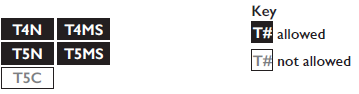
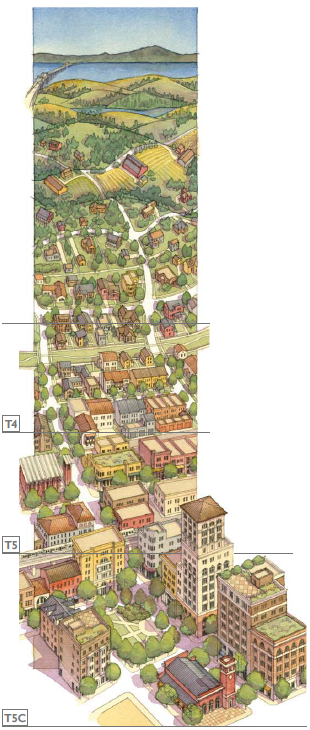 | The Richmond Transect has been defined to respond to the form of places within the City where walkability has been prioritized by the General Plan. These form-based standards are intended to promote walkable places with high-quality public realms, as per the vision of the 2030 General Plan. To do this, standards have been developed for the following transect environments in Richmond: |
| The T4 Neighborhood Transect Zone provides a walkable, predominantly single-family neighborhood that integrates appropriate medium-density building types such as duplexes, mansion apartments, and bungalow courts within walking distance to transit and commercial areas. | |
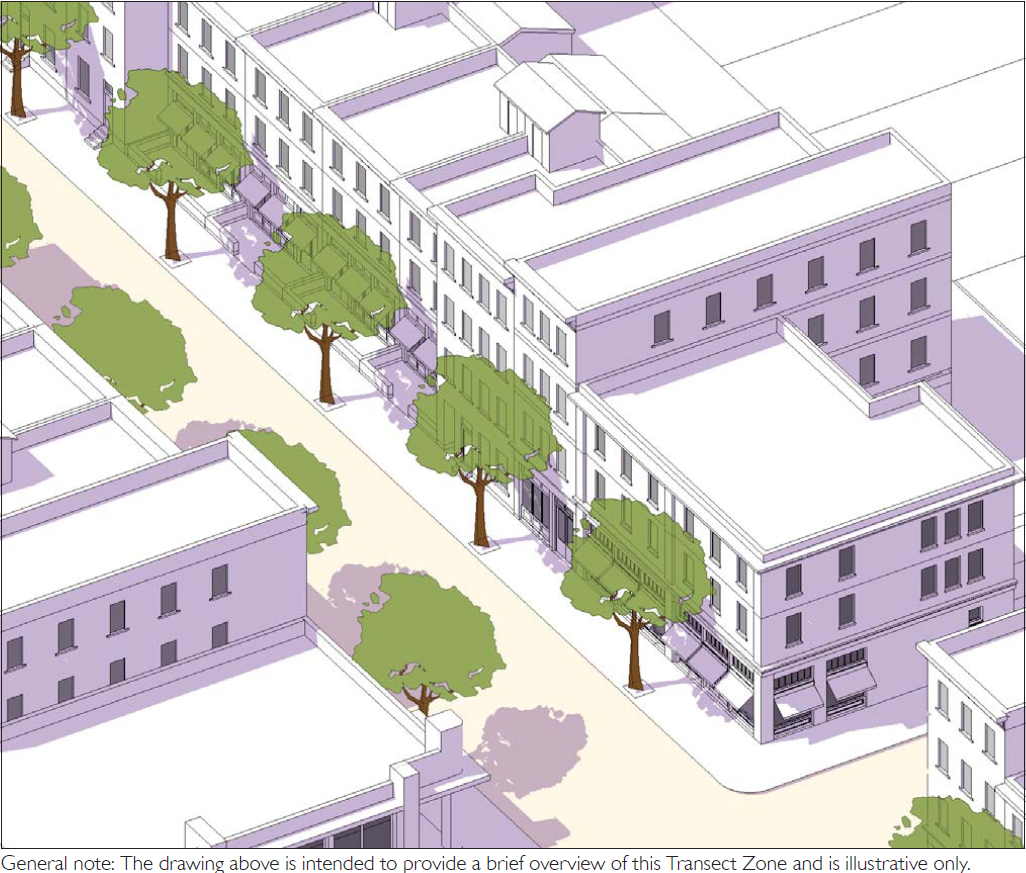
| The T4 Main Street Transect Zone provides a vibrant main-street commercial environment that serves as the focal point for the surrounding neighborhood and provides access to day-to-day amenities within walking distance. | |
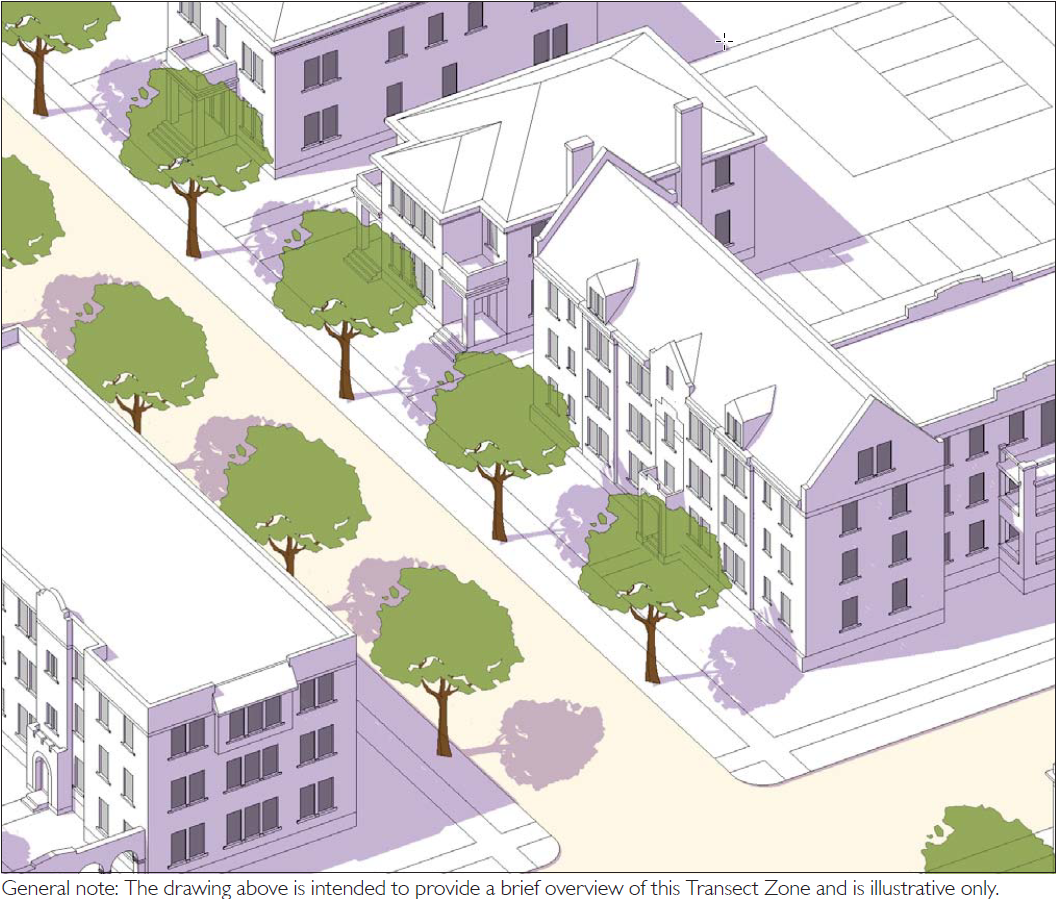
| The T5 Neighborhood Transect Zone provides medium- to high-density housing in building types such as apartment houses, courtyard apartments, mid-rise buildings, and—in some areas—high-rise buildings that transition from the surrounding lower-density neighborhoods to the higher-density mixed-use corridors and centers. | |
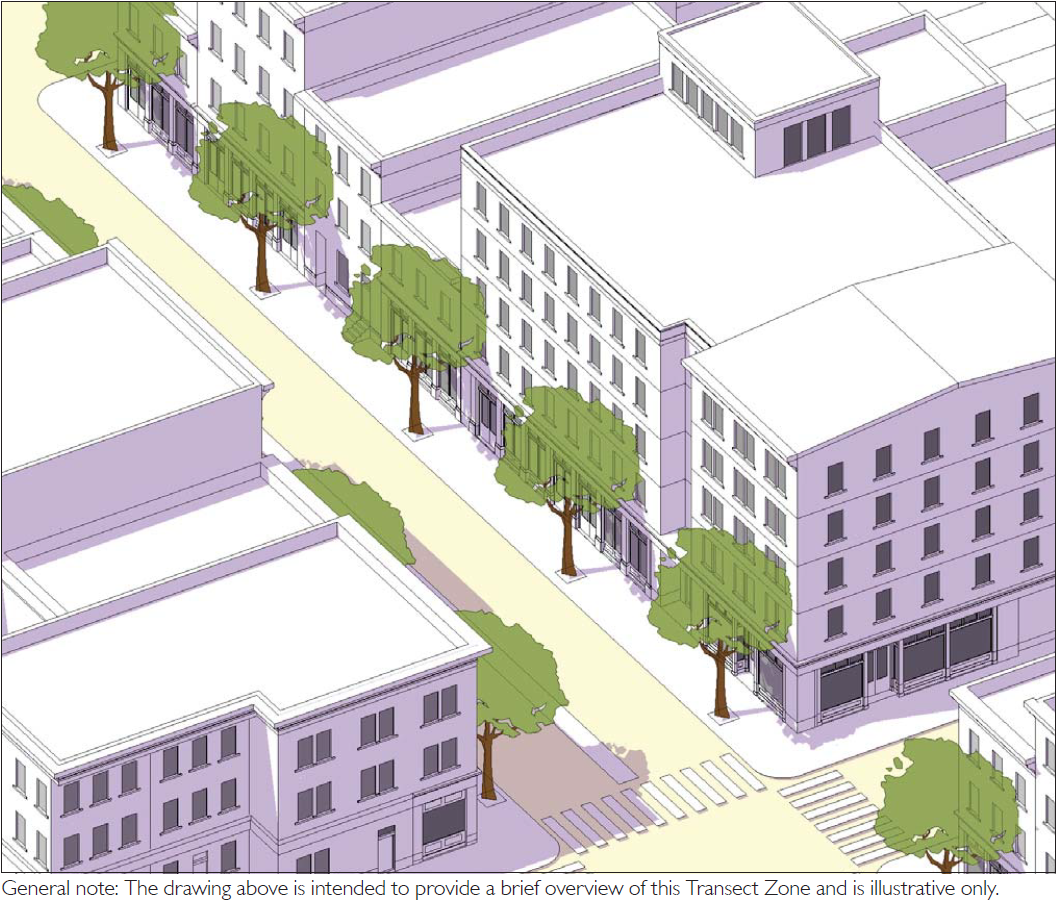
| The T5 Main Street Transect Zone provides a vibrant, walkable urban main street commercial area that provides locally and regionally serving commercial, retail, entertainment uses, and civic and public uses, as well as a variety of urban housing choices. | |
| The T5 Core Transect Zone provides a high-density, vibrant, urban downtown that provides locally and regionally serving commercial, entertainment, and civic and public uses, as well as a variety of urban housing choices in main street mixed-use, mid-rise, and high-rise building types. |
15.04.401.060 - How to Use this Form-Based Code.
The following diagrams illustrate how to use this Form-Based Code as a series of steps,
either for a Building-Scale Project or for a Large Site—see Article 15.04.406 (General to Large Sites).
Quick Code Guide: Building-Scale Projects
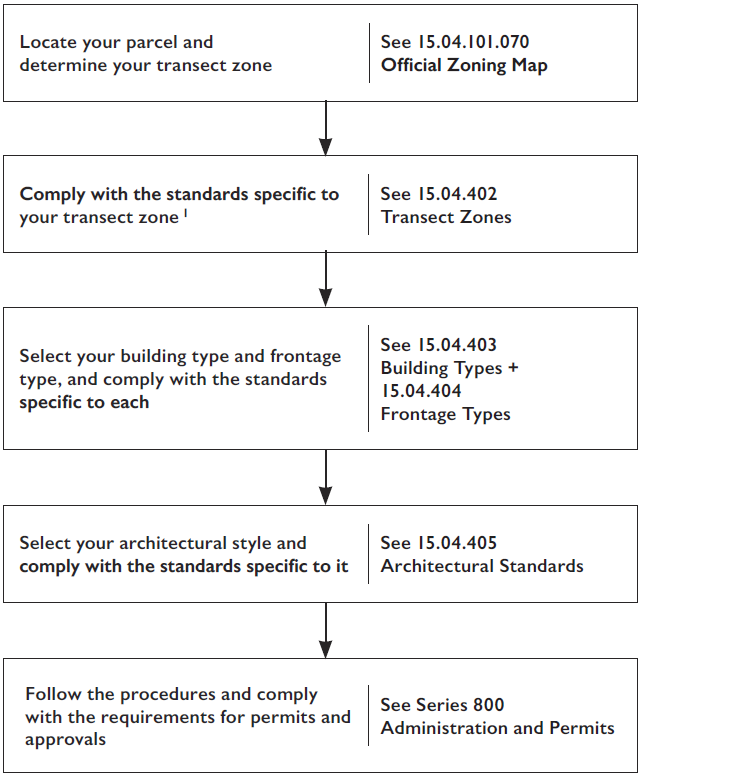
Note: this diagram is intended to provide a simplified overview of different code use scenarios and is descriptive, not regulatory.
1 See 15.04.606 (Nonconforming Uses, Structures and Lots) for existing non conforming uses, structures, and parcels.
Quick Code Guide: Large Sites
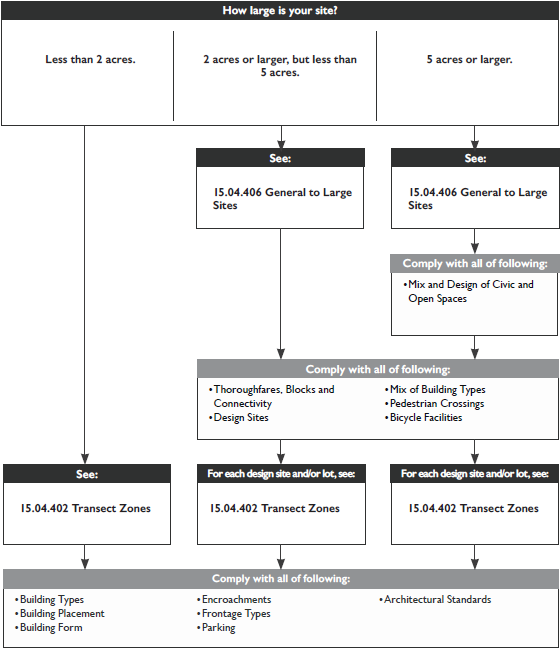
Note: this diagram is intended to provide a simplified overview of different code use scenarios and is descriptive, not regulatory.
(Ord. No. 04-23 N.S., § I(Exh. A), 4-18-2023)
15.04.401.070 - Transect Overview.
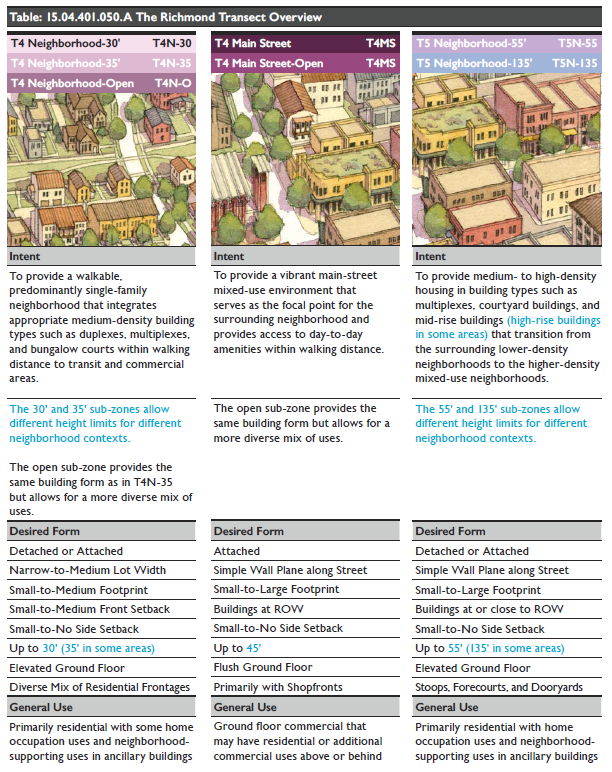
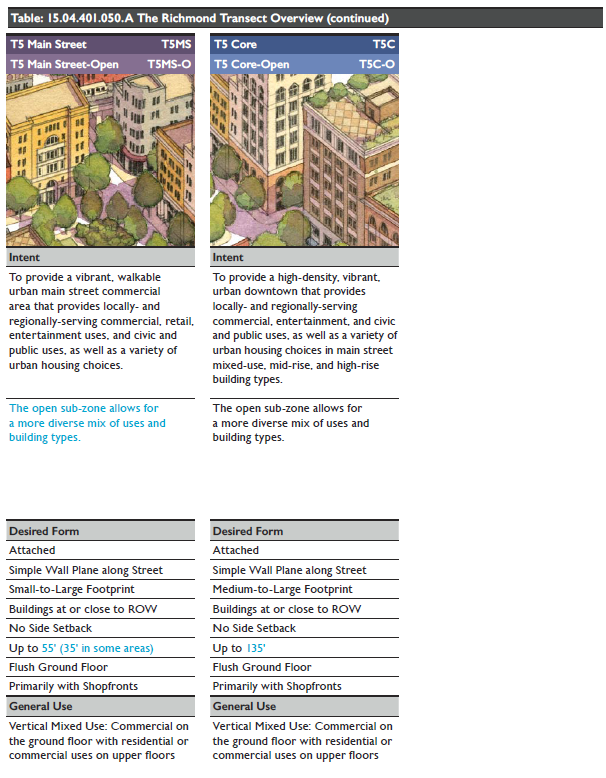
(Ord. No. 04-23 N.S., § I(Exh. A), 4-18-2023)
15.04.401.080 - Building Types Overview.
| Table 15.04.401.080.A: Building Types Overview | ||
|---|---|---|
 | ||
| Building Type | Transect Zones | |
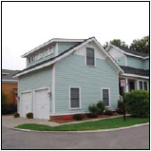 | Carriage House. This Building Type is a secondary structure typically located at the rear of a lot. It typically provides either a small residential unit, home office space, or other small commercial or service use that is located above a garage. This Type is important for providing affordable housing opportunities and incubating small businesses within walkable neighborhoods. | 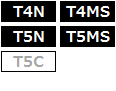 |
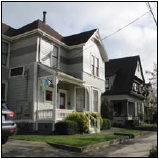 | Detached House. This Building Type is a medium-sized detached structure on a medium-sized lot. It is typically located within a primarily single-family residential neighborhood in a walkable urban setting, potentially near a neighborhood main street. | 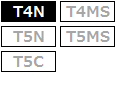 |
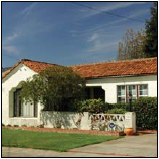 | Cottage. This Building Type is a small, detached structure, either occupying a small lot or
built as an accessory dwelling unit. It is typically located within a primarily single-family
residential neighborhood in a walkable urban setting, potentially near a neighborhood
main street, and is an important means of offering affordable housing opportunities
in these locations.
In T4MS and T5N, this type is allowed as an accessory dwelling unit. | 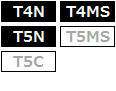 |
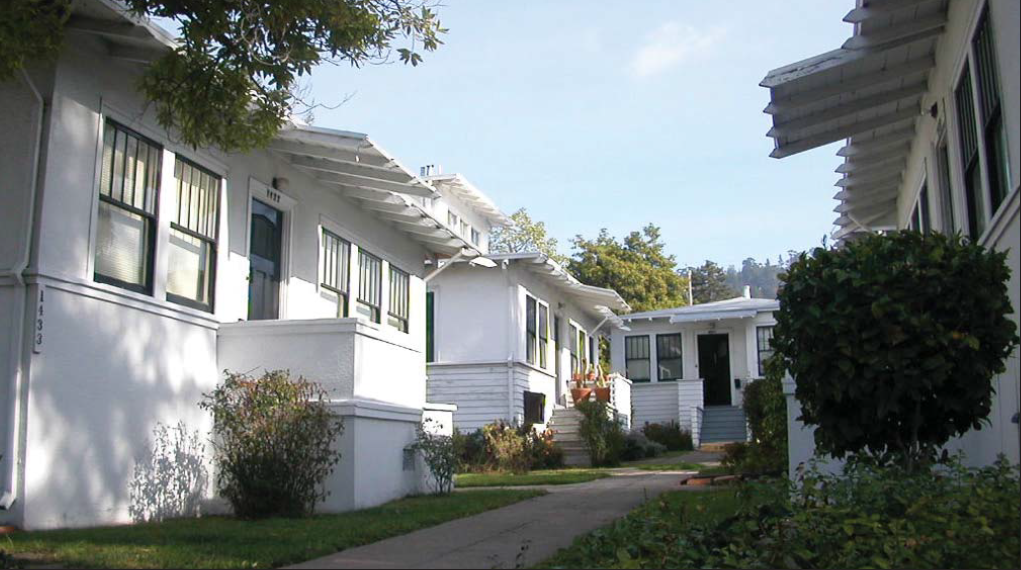
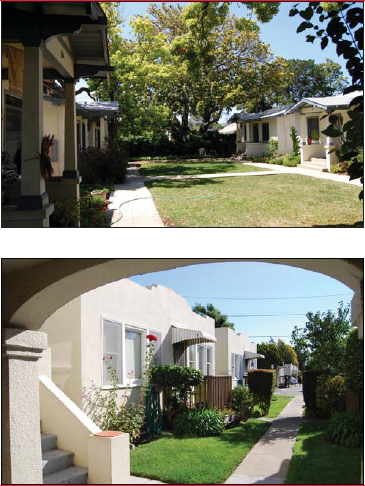
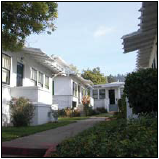 | Bungalow Court. This Building Type consists of a series of small, detached structures, providing multiple units arranged to define a shared court that is typically perpendicular to the street. The shared court takes the place of a private rear yard and becomes an important community-enhancing element of this Type. Synonym: Cottage Court |  |
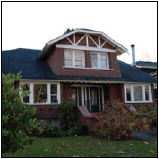 | Duplex. This Building Type is a small- to medium-sized structure that consists of two side-by-side dwelling units with a shared property line, both facing the street, or two stacked units. Both units fit within a single building massing, giving this Type the appearance of a medium to large single-family home. This type is appropriately scaled to fit within primarily single-family residential neighborhoods or medium-density neighborhoods. |  |
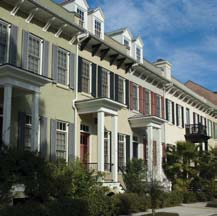 | Rowhouse. This Building Type is a small- to medium-sized structure consisting of 3-8 rowhouses
placed side-by-side and sharing common party walls. This Type is typically located
within medium-density neighborhoods or in a location that transitions from a primarily
single-family residential neighborhood into a neighborhood main street. Synonym: Townhouse In T5MS and T5C, this type is allowed only in the Open Sub-Zone. |  |
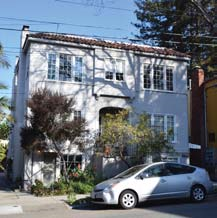 | Multi-Plex: Small. This Building Type is a medium-sized structure that consists of 3-6 side-by-side
and/or stacked dwelling units, typically with one shared entry or individual entries
along the front. This Type has the appearance of a medium-sized family home and is
appropriately scaled to fit in sparingly within primarily single-family residential
neighborhoods or into medium-density neighborhoods.
In T5MS and T5C, this type is allowed only in the Open Sub-Zone. |  |
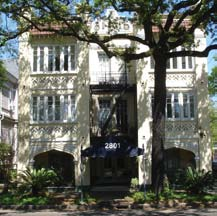 | Multi-Plex: Large. This Building Type is a medium- to large-sized structure that consists of 7-18 side-by-side
and/or stacked dwelling units, typically with one shared entry. This Type is appropriately
scaled to fit in within medium-density neighborhoods or sparingly within large lot
predominantly single-family residential neighborhoods.
In T5MS and T5C, this type is allowed only in the Open Sub-Zone. | 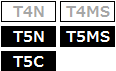 |
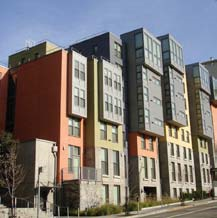 | Stacked Flats.This Building Type is a medium- to large-sized structure that consists of multiple
dwelling units. Each unit may have its own individual entry, or may share a common
entry. This Type is appropriately scaled to fit adjacent to neighborhood serving main
streets and walkable urban neighborhoods. This Building Type may include a courtyard. In T5MS and T5C, this type is allowed only in the Open Sub-Zone. | 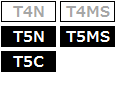 |
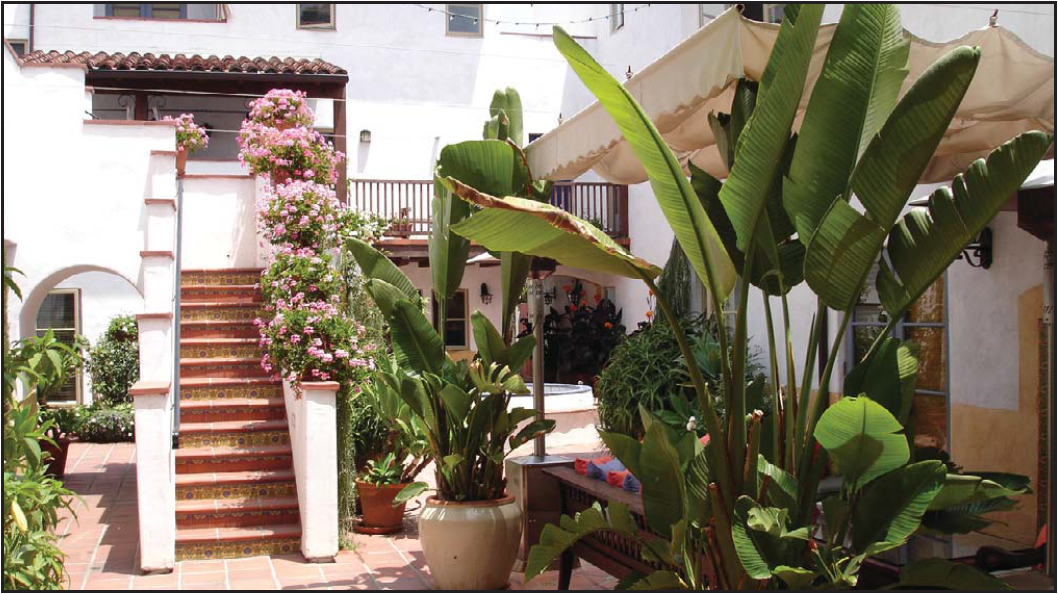
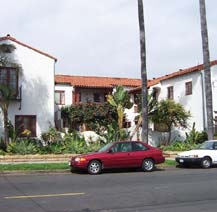 | Courtyard Building: Small. This Building Type is a detached, House-Scale structure that consists of attached and/or stacked units, accessed from a shared courtyard. The shared court is common open space. Each unit may have its own individual entry, or up to four units may share a common entry. This Type is appropriately scaled to fit in sparingly within primarily single-family residential or medium-density neighborhoods. | 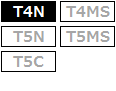 |
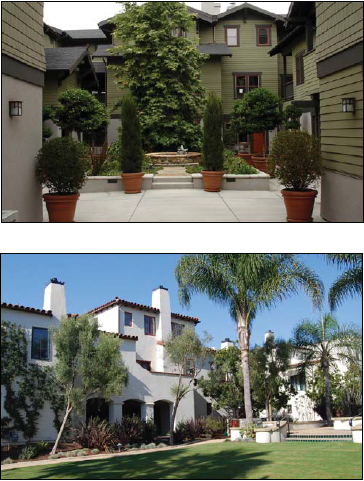
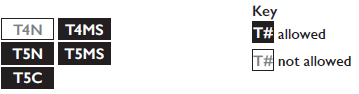
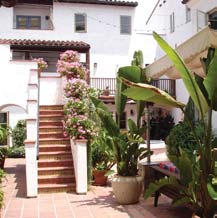 | Courtyard Building: Large. This Building Type is a detached or attached, Block-Scale structure that consists of attached and/or stacked units, accessed from one or more shared courtyards. The shared court is common open space. The type is typically integrated into moderate-to-high-intensity neighborhoods and on main streets with a non-residential ground floor along the adjacent street. | 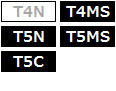 |
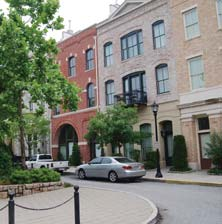 | Live/Work. This Building Type is a small- to medium-sized attached or detached structure that consists of one dwelling unit above and/or behind a flexible ground floor space that can be used for residential, service, or retail uses. Both the ground-floor flex space and the dwelling unit are occupied by one entity. This Type is typically located within medium-density neighborhoods or in a location that transitions from a single-family residential neighborhood into a neighborhood main street. | 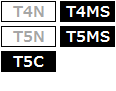 |
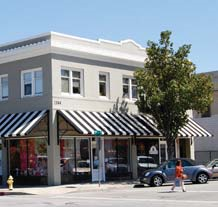 | Main Street Building. This Building Type is a small- to medium-sized structure, typically attached, intended to provide a vertical mix of uses with ground-floor commercial, service, or retail uses and upper-floor commercial, service, or residential uses. This Type makes up the primary component of a neighborhood main street and portions of a downtown main street. | 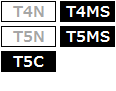 |
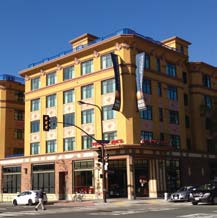 | Mid-Rise. This Building Type is a medium- to large-sized structure, 4-8 stories tall, built on a large lot. It can be used to provide a vertical mix of uses, accommodating ground-floor retail, service, and/or structured parking with the upper-floors housing service or residential uses; it may also be a single-use building—typically service or residential—where ground-floor retail is not appropriate. This Type is a primary component of an urban downtown providing high-density buildings. | 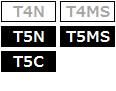 |
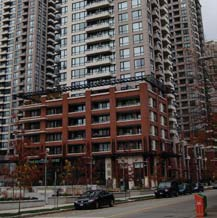 | High-Rise. This Building Type is a large-sized structure, more than eight stories tall, built
on a large lot that incorporates structured parking. It is used to provide a vertical
mix of uses, with ground-floor retail or service uses and upper-floor commercial,
service, or residential uses. This Type is a primary component of an urban downtown
providing high-density buildings.
In T5N, this type is allowed only in the T5N-135 Sub-Zone. | 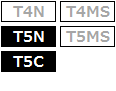 |
(Ord. No. 04-23 N.S., § I(Exh. A), 4-18-2023)
15.04.401.090 - Frontage Types Overview.
| 15.04.401.090.A Frontages Types Overview | ||||
|---|---|---|---|---|
| The private frontage is the area between the building facade and the lot line. | ||||
| Section | Plan | Frontage Type | ||
 | | |||
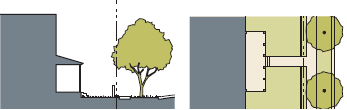 | Porch: Projecting. The main facade of the building has a small to medium setback from the frontage line. The resulting front yard is typically very small and can be defined by a fence or hedge to spatially maintain the edge of the street. The projecting porch is open on three sides and all habitable space is located behind the setback line. | |||
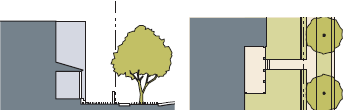 | Porch: Engaged. The main facade of the building has a small to medium setback from the frontage line. The resulting front yard is typically very small and can be defined by a fence or hedge to spatially maintain the edge of the street. The engaged porch has two adjacent sides of the porch that are engaged to the building while the other two sides are open. | |||
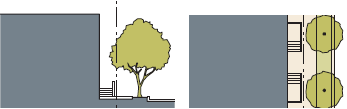 | Stoop. The main facade of the building is near the frontage line and the elevated stoop engages the sidewalk. The stoop shall be elevated above the sidewalk to ensure privacy within the building. Stairs from the stoop may lead directly to the sidewalk or may be side-loaded. This type is appropriate for residential uses with small setbacks. | |||
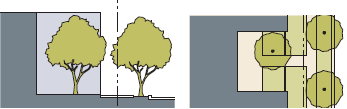 | Forecourt. The main facade of the building is at or near the frontage line and a small percentage is set back, creating a small court space. The space could be used as an entry court or shared garden space for apartment buildings, or as an additional shopping or restaurant seating area within commercial areas. | |||
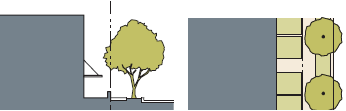 | Dooryard. The frontage line is defined by a low wall or hedge and the main facade of the building is set back a small distance creating a small dooryard. The dooryard shall not provide public circulation along a ROW. The dooryard may be raised, sunken, or at grade and is intended for ground-floor residential in flex zones, live/work, and commercial uses ≤2,500 sf. | |||
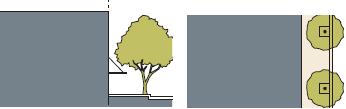 | Shopfront. The main facade of the building is at or near the frontage line with an at-grade
entrance along the sidewalk. This type is intended for retail use. It has substantial
glazing at the sidewalk level and may include an awning that may overlap the sidewalk.
It may be used in conjunction with other frontage types.
Syn: Retail Frontage, Awning. | |||
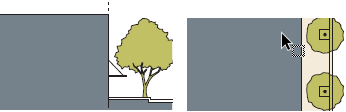 | Industrial Shopfront: The main façade of the building is at or near the front building site line with an at-grade or elevated entrance from the sidewalk. This type is intended to showcase the activity of industrial artisan businesses as well as for retail sales of products made on-site. This type may include a decorative roll-down or sliding door, include glazing and an awning that encroaches the sidewalk. | |||
 | Gallery. The main facade of the building is at the frontage line and the gallery overlaps the sidewalk. This type is intended for buildings with ground-floor commercial uses and may be one or two stories. The gallery should provide the primary circulation along a frontage and extend far enough from the building to provide adequate protection and circulation for pedestrians. | |||
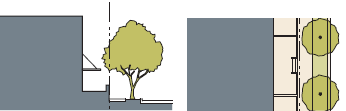 | Terrace. The facade is at or near the frontage line with an elevated terrace providing public circulation along the facade. This type can be used to provide at-grade access while accommodating a grade change. Frequent steps up to the terrace are necessary to avoid dead walls and maximize access. This type may also be used in historic industrial areas to mimic historic loading docks. | |||
(Ord. No. 04-23 N.S., § I(Exh. A), 4-18-2023)
15.04.402.010 - Purpose.
This Article provides regulatory standards governing building form and land use within the transect zones. The standards in this Article are a reflection of the community's vision for implementing the intent of the General Plan to preserve natural areas, to create walkable mixed-use neighborhoods, and reinforce downtown Richmond. They are intended to ensure that proposed development is compatible with existing and future development on neighboring properties and produces an environment of desirable character.
The standards of this Article shall apply to all proposed development within transect zones, and shall be considered in combination with the standards in Article 15.04.403 (Building Types), Article 15.04.404 (Frontage Standards), Article 15.04.405 (Architectural Standards), and Article 15.04.406 (General to Large Sites). If there is a conflict between any standards, the stricter standards shall apply.
For nonconforming uses, structures, and lots, see Article 15.04.606 (Nonconforming Uses, Structures And Lots).
(Ord. No. 04-23 N.S., § I(Exh. A), 4-18-2023)
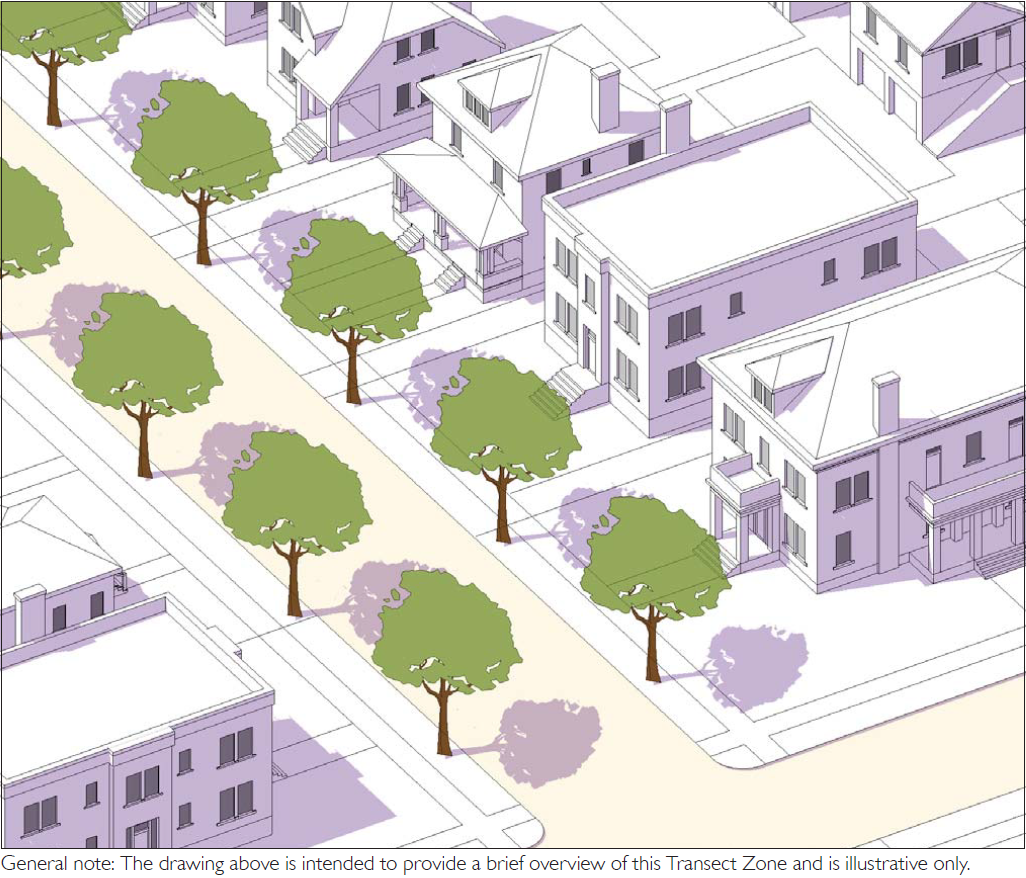
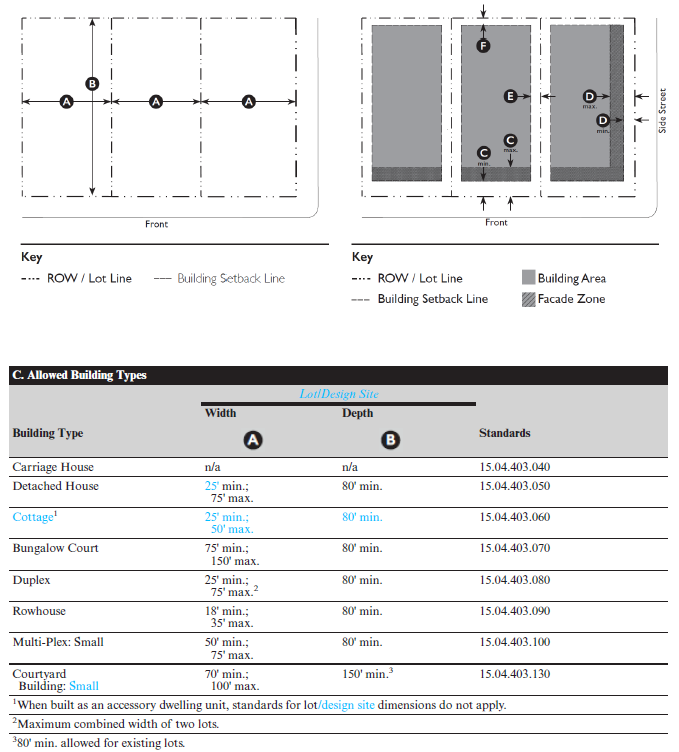
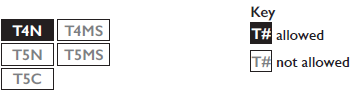
15.04.402.020 - T4 Neighborhood (T4N).
| D. Building Placement | ||
|---|---|---|
| Setbacks (Distance from ROW / Lot Line) | ||
| Front | 10' min. 4 ; 15' max. |  |
| Side Street | 5' min.; 10' max. |  |
|
Side:
Principal Structure Accessory Structure | 5' min. 5 0' min. |  |
|
Rear:
Principal Structure Accessory Structure | 5' min. 0' min. |  |
|
Facade within Facade Zone:
Front Side Street | 50% min. 50% min. | |
| 4 Where existing adjacent buildings are in front of the regulated setback, the building may be set to align with the facade of the front most immediately adjacent property. | ||
| 5 No side setback required along the common lot line between Townhouse or Duplex Building Types. | ||
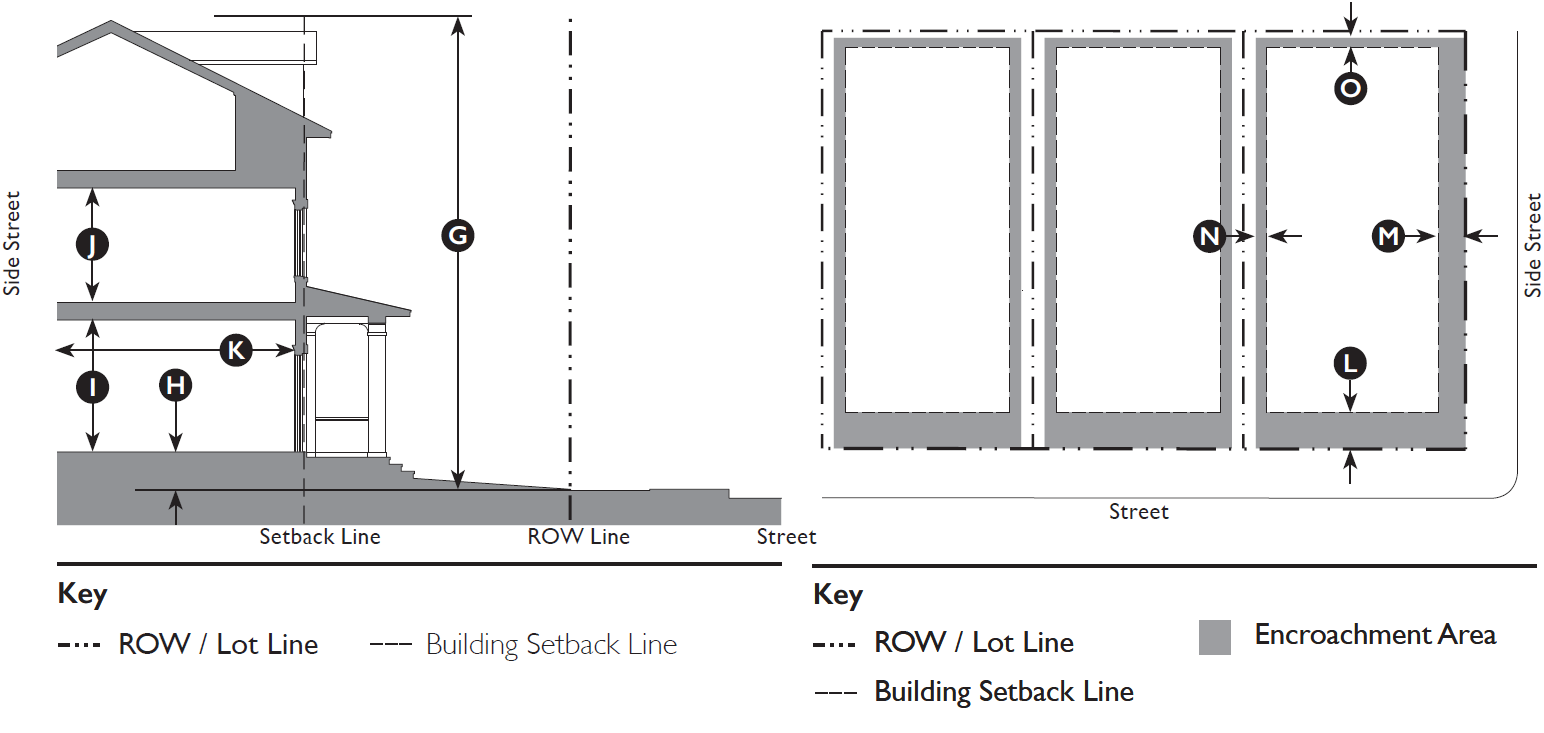
| E. Building Form | |||
|---|---|---|---|
| Height | T4N-30 | T4N-35/ T4N-0 | |
|
Stories
Principal Structure 6 Accessory Structure | 2 max. 2 max. | 2 ½ max. 7 2 max. | |
|
Overall
Principal Structure Accessory Structure | 30' max. 25' max. | 35' max. 25' max. |  |
|
Ground Floor Finish Level:
Residential, < 10' from ROW Residential, ≥ 10' from ROW | 18" min. 0" min. |  | |
| Ceiling Height, Ground Floor | 10' min. clear |  | |
| Ceiling Height, Upper Floor(s) | 9' min. clear |  | |
| Footprint | |||
Per Article 15.04.403 (Building Types) | |||
| Depth, Ground-Floor Space | 30' min. 8 |  | |
| Miscellaneous | |||
| Loading docks, overhead doors, and other service entries may not be located on street-facing facades. | |||
| 6 Max. height of building types may be less than max. height for zone. See Article 15.04.403 (Building Types). | |||
| 7 Half Story allowed as defined in Article 15.04.104 (Key Terms and Definitions). | |||
| 8 For habitable/occupiable space only, except in Cottage Court Building Type. | |||
| F. Architectural Styles | ||
| Allowed Architectural Styles | Standards | |
| Contemporary | 15.04.405.050 | |
| Art Deco | 15.04.405.060 | |
| Industrial 9 | 15.04.405.070 | |
| Spanish Revival | 15.04.405.090 | |
| Victorian | 15.04.405.100 | |
| G. Encroachments and Frontage Types | ||
| Allowed Encroachments10,11 | ||
| Front | 10' max. |  |
| Side Street | 5' max. |  |
| Side | 2'-6" max. |  |
| Rear | 2'-6" max. |  |
| Allowed Frontage Types | ||
| See Article 15.04.403 (Building Types) for allowed Frontage Types. | ||
| 9 Allowed only in the T4 Neighborhood-Open Sub-Zone. See Figure 15.04.405.070.1 in Section 15.04.405.070 for map of where style is allowed. | ||
| 10 Maximum allowed encroachments: See Article 15.04.404 (Frontage Types) for further refinement of the allowed encroachments for frontage elements. | ||
| 11 Encroachments into the ROW require the approval of an encroachment permit. Encroachments are not allowed in an alley ROW or across a lot line/design site boundary. | ||
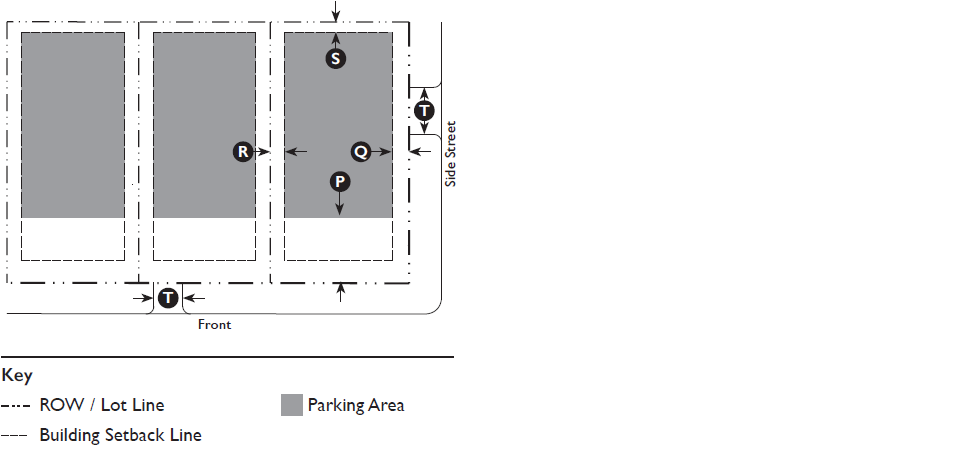
| H. Parking | ||
| Required Spaces12 | ||
| Residential Uses | 1/1,000 sf min. 13 | |
| Lodging Uses | 0.5/room min. | |
| Location (Distance from ROW / Lot Line) | ||
| Front Setback | 30' (from BTL) |  |
| Side Street Setback | 10' (from BTL) |  |
| Side Setback | 5' min. 14 |  |
| Rear Setback | 5' min. |  |
| Miscellaneous | ||
|
Parking Drive Width:
Front Side Street/Alley | 12' max. 20' max. |  |
| See Article 15.04.612 (Transportation Demand Management) for applicability and requirements. | ||
| 12 See Article 15.04.607 (Parking And Loading Standards) for uses not listed, general standards, and alternatives. | ||
| 13 No parking spaces required for affordable housing developments or first 2,000 sf of residential use. | ||
| 14 No side setback required along the common lot line between Townhouse or Duplex Building Types. | ||
(Ord. No. 04-23 N.S., § I(Exh. A), 4-18-2023)
15.04.402.030 - T4 Main Street (T4MS).
| C. Allowed Building Types | |||||
|---|---|---|---|---|---|
Lot/Design Site | |||||
| Width | Depth | ||||
| Building Type |  |  | Standards | ||
| Carriage House | n/a | n/a | 15.04.403.040 | ||
| Cottage | n/a | n/a | 15.04.403.060 | ||
|
Courtyard Building:
Large |
75' min.;
100' max. | 100' min. 1 | 15.04.403.140 | ||
| Live/Work |
18' min.;
35' max. | 80' min. | 15.04.403.150 | ||
| Main Street |
50' min.
2
;
150' max. | 100' min. 1 | 15.04.403.160 | ||
| Buildings wider than 75' shall be designed to read as a series of buildings no wider than 50' each. | |||||
| 1 80' min. allowed for existing lots | |||||
| 2 25' min. allowed for existing lots | |||||
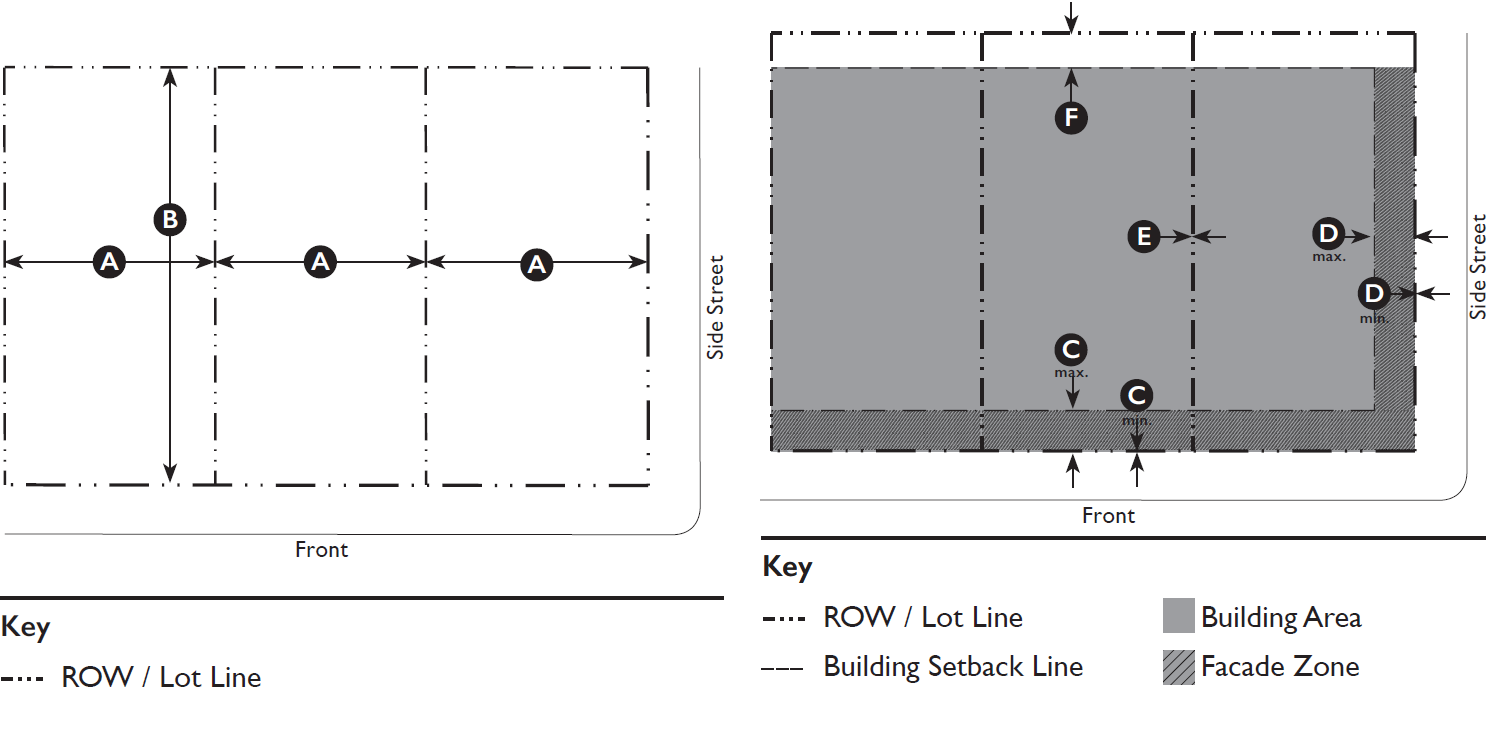
| D. Building Placement | ||
|---|---|---|
| Build-to Lines (Distance from ROW / Lot Line) | ||
| Front | 0' min.; 10' max. 3 | |
| Side Street | 0' min.; 10' max. 3 | |
|
BTL Defined by a Building:
Front, lots < 50' wide Front, lots ≥ 50' wide Side Street | 100% 75% min. 4 50% min. 4 | |
| Setbacks (Distance from ROW / Lot Line) | ||
| Side | 0' min. | |
|
Rear:
Adjacent to T5N, T4N, or Residential District Adjacent to all other zone(s) Adjacent to Alley | 10' min. 0' min. 0' min. | |
| Miscellaneous | ||
| A building form with a chamfered corner is allowed on a corner lot if a corner entry is provided. | ||
| Fencing and/or gates shall be set behind max. front setback. | ||
| 3 See Official Zoning Map for locations where 0' BTL is required. BTLs located within this range that do not match the location of an existing adjacent building require the Director's approval. | ||
| 4 On corner lots, the BTL must be defined by a building for the first 30' from the corner. | ||
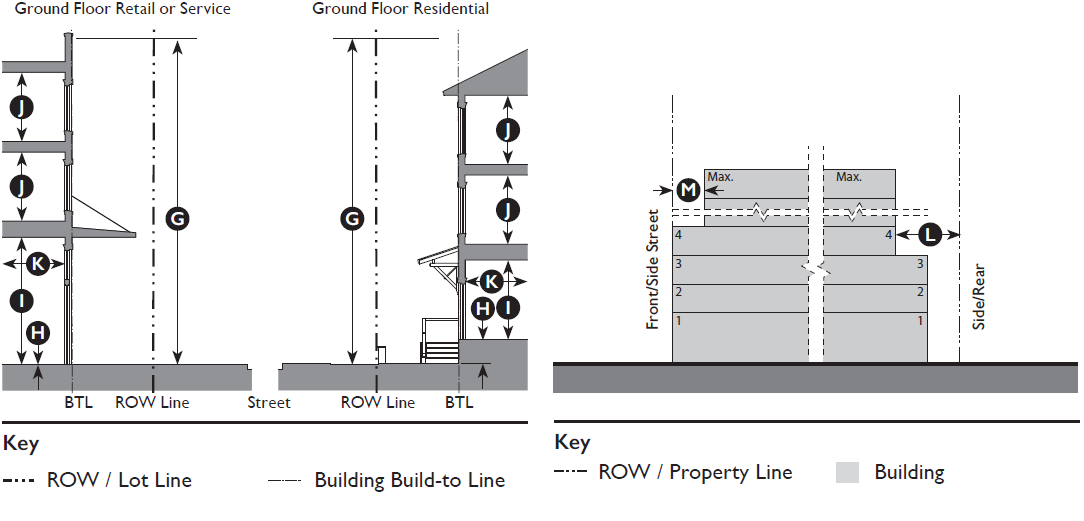
| E. Building Form | ||
|---|---|---|
| Height | ||
|
Stories
Principal Structure 5 Accessory Structure | 4 max. 6 2 max. | |
|
Overall
Principal Structure Accessory Structure | 45' max. 6 25' max. | |
|
Ground Floor Finish Level:
Residential, < 10' from ROW Residential, ≥ 10' from ROW Retail or Service | 24" min. 0" min. 6" min. | |
|
Ceiling Height, Ground Floor
Residential Retail or Service | 10' min. clear 12' min. clear | |
| Ceiling Height, Upper Floor(s) | 9' min. clear | |
| Footprint | ||
Per Article 15.04.403 (Building Types) | ||
| Depth, Ground-Floor Space | 30' min. | |
| Miscellaneous | ||
|
Distance Between Entries along the Front:
Entries to Ground Floor Entries to Upper Floor(s) | 50' max. 100' max. | |
| 5 Max. height of building types may be less than max. height for zone. See Article 15.04.403 (Building Types). | ||
| 6 35' max. within 30' of a T4N or Residential District. | | |
| Miscellaneous | ||
| Upper floors shall have a primary entrance along the front. | ||
| Loading docks, overhead doors, and other service entries may not be located on street-facing facades. | ||
| Buildings wider than 75' shall be designed to read as a series of buildings no wider than 50' each. | ||
| Upper Floor Front/Side Street Setback | ||
| Floors 5+ | 10' min. | |
| F. Architectural Styles | ||
| Allowed Architectural Styles | Standards | |
| Contemporary | 15.04.405.050 | |
| Art Deco | 15.04.405.060 | |
| Industrial 7 | 15.04.405.070 | |
| Main Street Classical | 15.04.405.080 | |
| Spanish Revival | 15.04.405.090 | |
| Victorian | 15.04.405.100 | |
| 7 See Figure 15.04.405.070.1 in Section 15.04.405.070 for map of where style is allowed. | ||
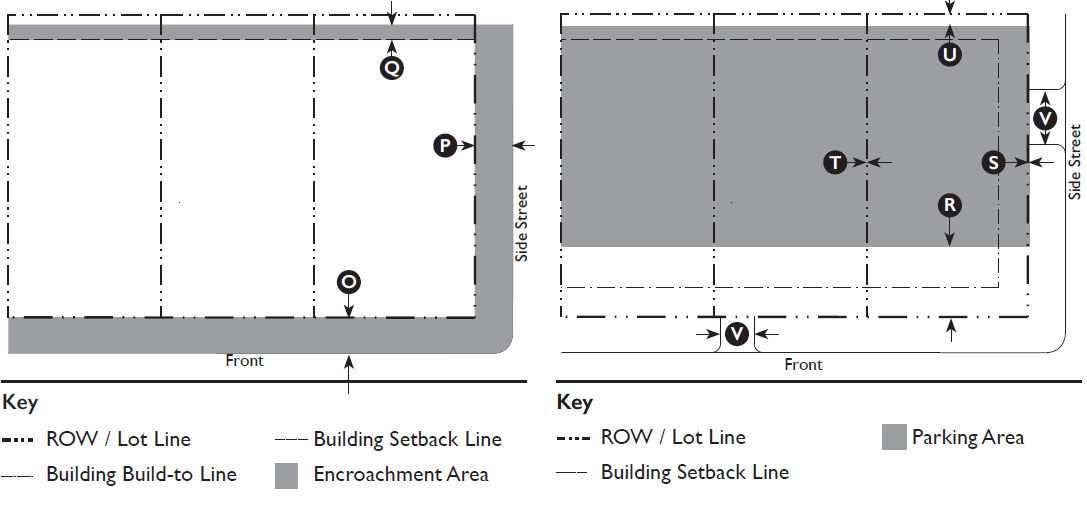
| G. Encroachments and Frontage Types | ||
|---|---|---|
| Allowed Encroachments8,9 | ||
| Front | 14' max. | |
| Side Street | 14' max. | |
| Rear | 5' max. | |
| Allowed Frontage Types | ||
| See Article 15.04.403 (Building Types) for allowed Frontage Types. | ||
8 Maximum allowed encroachments: See Article 15.04.404 (Frontage Types) for further refinement of the allowed encroachments for frontage elements. | ||
| 9 Encroachments into the ROW require the approval of an encroachment permit. Encroachments are not allowed in an alley ROW or across a lot line/design site boundary. | ||
| H. Parking | ||
|---|---|---|
| Required Spaces10 | ||
| Residential Uses | 1/1,000 sf min. 11 | |
| Lodging Uses | 1/room max. | |
| Retail or Service Uses | 2/1,000 sf min. 12 | |
| Location (Distance from ROW / Lot Line) | ||
|
Front Setback:
Ground floor Upper floor(s) | 30' min. (from BTL) 30' min. (from BTL) | |
| Side Street Setback | 0' min. (from BTL) | |
| Side Setback | 0' min. | |
|
Rear Setback:
Adjacent to T5N or T4N Adjacent to all other zone(s) Adjacent to Alley | 5' min. 0' min. 0' min. |  |
| Miscellaneous | ||
|
Parking Drive Width:
Front Side Street/Alley | 12' max. 20' max. |  |
| See Article 15.04.612 (Transportation Demand Management) for applicability and requirements. | ||
| 10 See Article 15.04.607 (Parking And Loading Standards) for uses not listed, general standards, and alternatives. | ||
| 11 No parking spaces required for affordable housing developments or first 2,000 sf of residential use. | ||
| 12 No parking spaces required for ground floor retail or service uses less than 5,000 sf. | ||
(Ord. No. 04-23 N.S., § I(Exh. A), 4-18-2023)
15.04.402.040 - T5 Neighborhood (T5N).
| C. Allowed Building Types | |||||
|---|---|---|---|---|---|
Lot/Design Site | |||||
| Width | Depth | ||||
| Building Type | | | Standards | ||
| Carriage House | n/a | n/a | 15.04.403.040 | ||
| Cottage | n/a | n/a | 15.04.403.060 | ||
| Rowhouse |
18' min.;
35' max. | 80' min. | 15.04.403.090 | ||
| Multi-Plex: Small |
50' min.;
75' max. | 80' min. | 15.04.403.100 | ||
| Multi-Plex: Large |
50' min.;
100' max. | 100' min. 1 | 15.04.403.110 | ||
| Stacked Flats |
100' min.;
200' max. | 100' min. 1 | 15.04.403.120 | ||
|
Courtyard
Building: Large |
75' min.;
200' max. | 100' min. 1 | 15.04.403.140 | ||
| Mid-Rise |
75' min.;
200' max. | 100' min. | 15.04.403.170 | ||
| High-Rise 2 | 200' min. | 150' min. | 15.04.403.180 | ||
| 1 80' min. allowed for existing lots | |||||
| 2 Allowed only in the T5 Neighborhood-135' Sub-Zone. | |||||
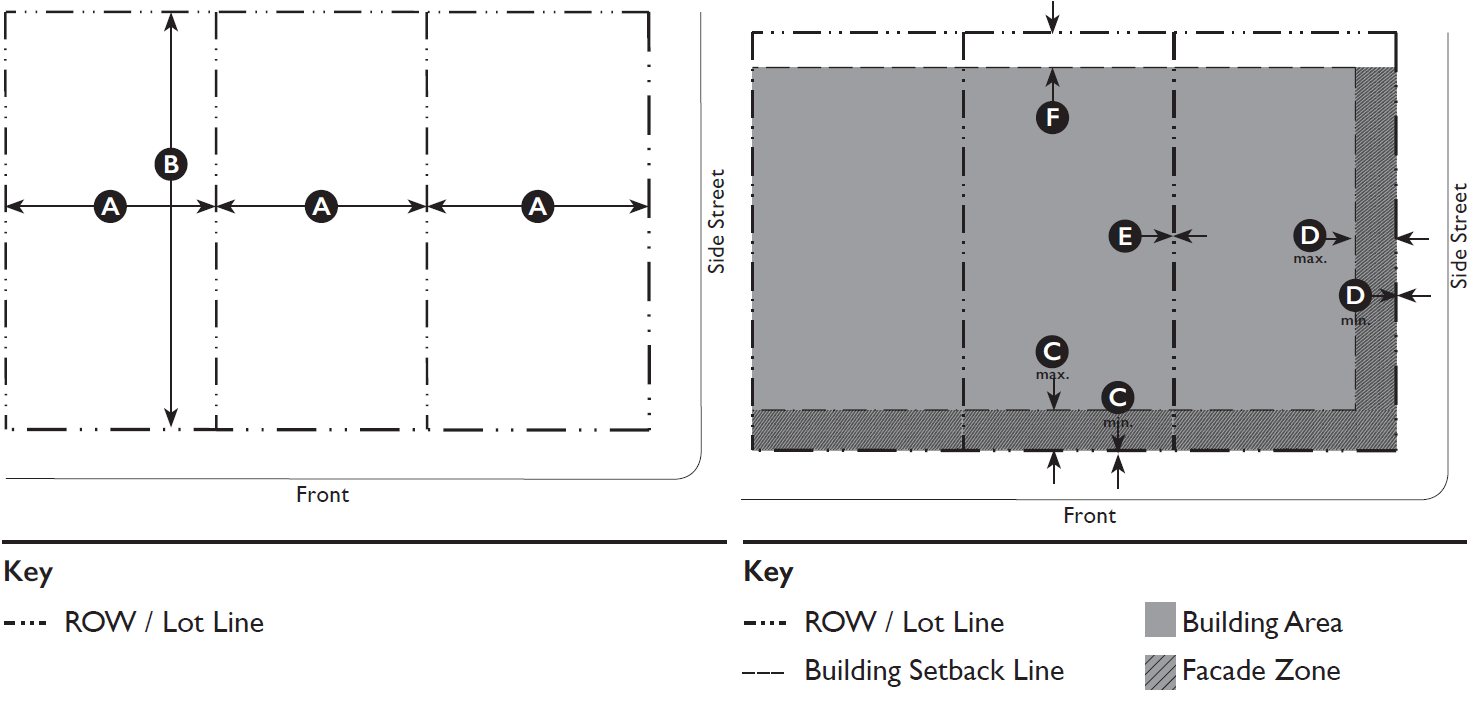
| D. Building Placement | ||
|---|---|---|
| Build-to Lines (Distance from ROW / Lot Line) | ||
| Front | 0' min.; 15' max. 3 | |
| Side Street | 0' min.; 15' max. 3 | |
|
BTL Defined by a Building:
Front Side Street | 60% min. 4 60% min. 4 | |
| Setbacks (Distance from ROW / Lot Line) | ||
| Side | 0' min. | |
|
Rear:
Adjacent to T5N, T4N, or Residential Zone Adjacent to all other zone(s) Adjacent to Alley | 10' min. 0' min. 0' min. | |
| Miscellaneous | ||
| A building form with a chamfered corner is allowed on a corner lot if a corner entry is provided. | ||
| Entire BTL shall be defined by a building or a 24" to 42" high fence or stucco or masonry wall. | ||
| Fencing and/or gates shall be set behind max. front setback. | ||
| 3 See Official Zoning Map for locations where 0' BTL is required. BTLs located within this range that do not match the location of an existing adjacent building require the Director's approval. | ||
| 4 On corner lots, the BTL must be defined by a building for the first 50' from the corner. | ||
| E. Building Form | |||
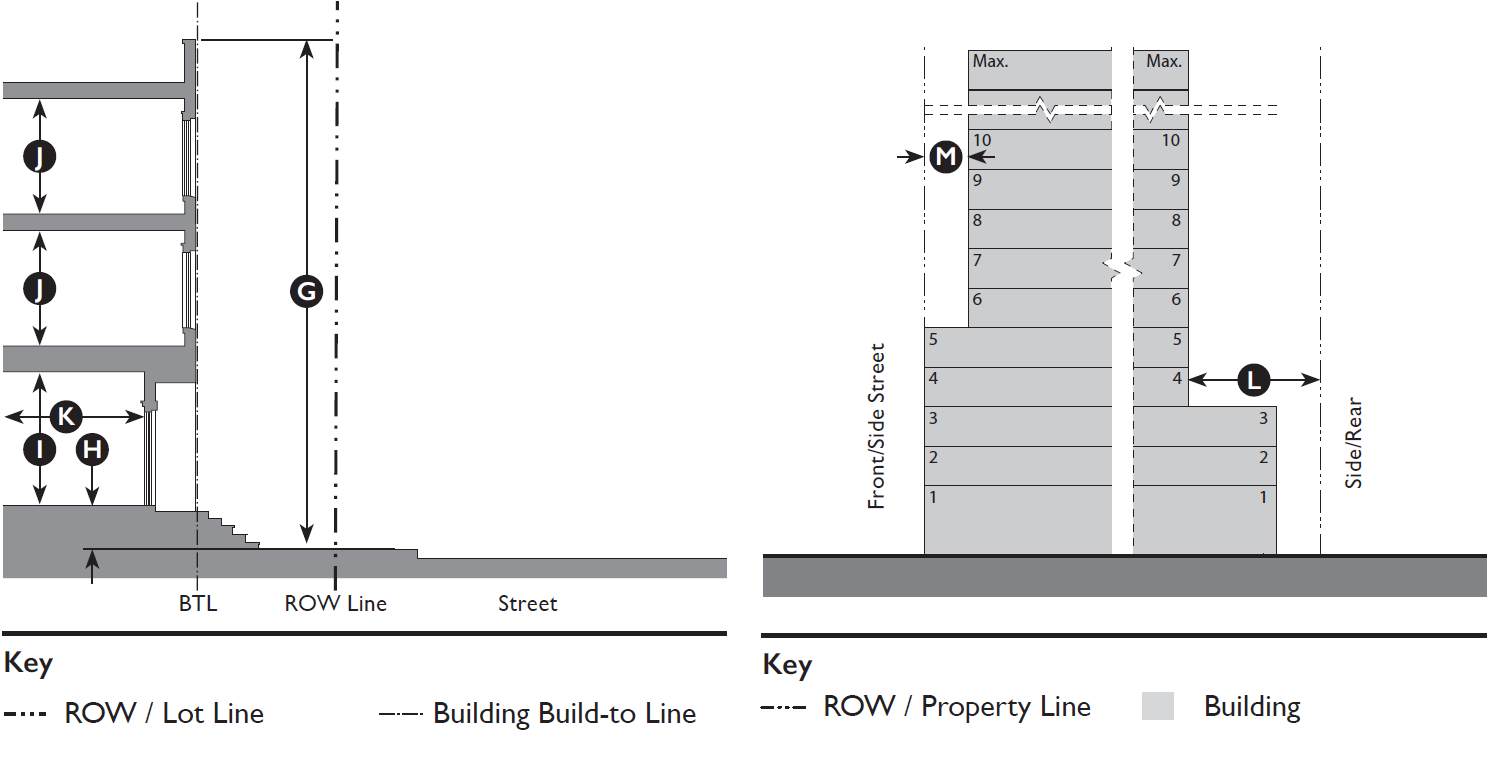
| Height | T5N-55 | T5N-135 | |
|
Stories
Principal Structure 5 | 5 max. 6 | 12 max. 6 | |
|
Overall
Principal Structure | 55' max. 6 | 135' max. 6 | |
|
Ground Floor Finish Level:
Residential, < 10' from ROW Residential, ≥ 10' from ROW | 24" min. 0" min. | | |
| Ceiling Height, Ground Floor | 10' min. clear | | |
| Ceiling Height, Upper Floor(s) | 9' min. clear | | |
| Footprint | |||
Per Article 15.04.403 (Building Types) | |||
| Depth, Ground-Floor Space | 20' min. | | |
| Miscellaneous | |||
| Distance Between Entries along the Front: | |||
|
Entries to Ground Floor
Entries to Upper Floor(s) |
50' max.
100' max. | ||
| Loading docks, overhead doors, and other service entries may not be located on street-facing facades. | |||
| Buildings wider than 100' shall be designed to read as a series of buildings no wider than 75' each. | |||
| 5 Max. height of building types may be less than max. height for zone. See Article 15.04.403 (Building Types). | |||
| 6 35' max. within 50' of a T4N or Residential District. |
>
| ||
| Upper Floor Front/Side Street Setback | |||
| Floors 6+ | 10' min. | | |
| F. Architectural Styles | |||
| Allowed Architectural Styles | Standards | ||
| Contemporary | 15.04.405.050 | ||
| Art Deco | 15.04.405.060 | ||
| Spanish Revival | 15.04.405.090 | ||
| Victorian | 15.04.405.100 | ||
| G. Encroachments and Frontage Types | ||
|---|---|---|
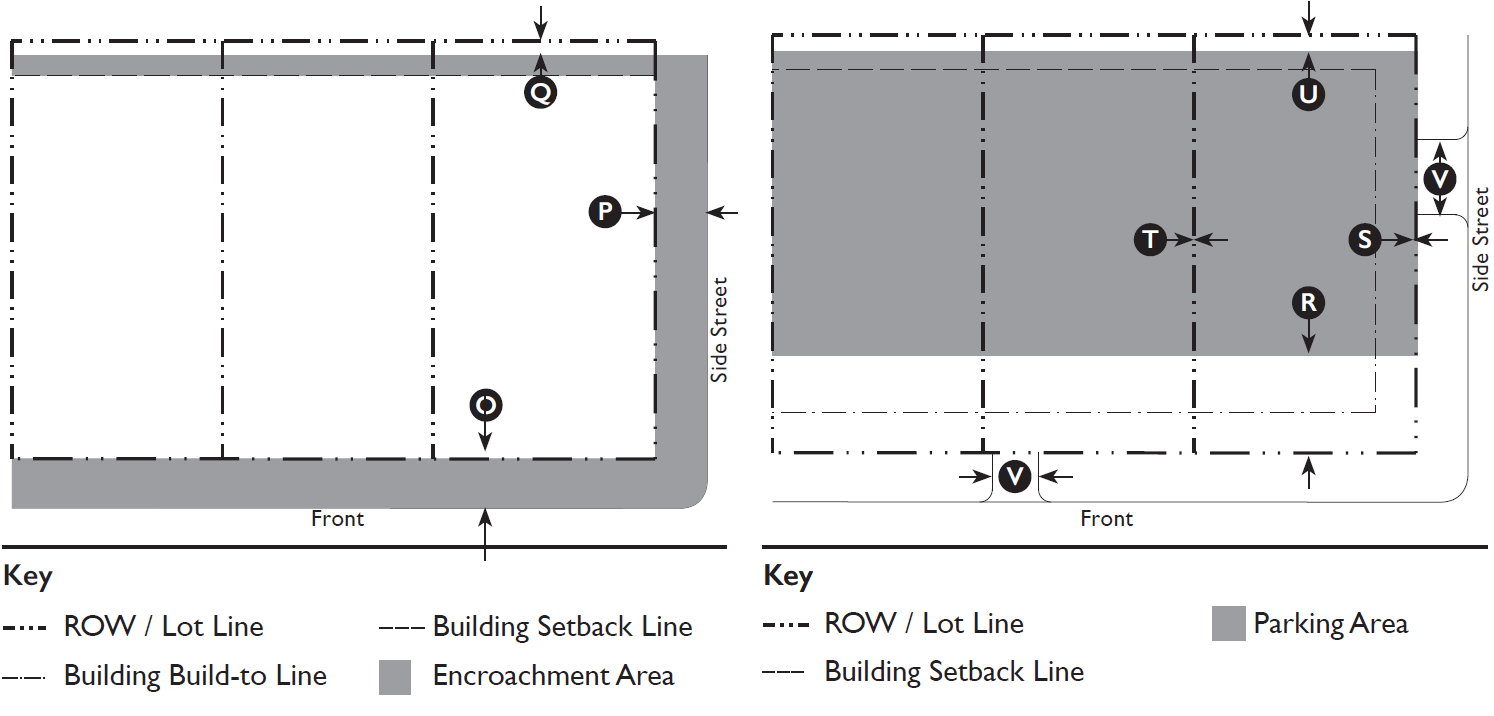
| Allowed Encroachments7,8 | ||
| Front | 14' max. | |
| Side Street | 14' max. | |
| Rear | 5' max. | |
| Allowed Frontage Types | ||
| See Article 15.04.403 (Building Types) for allowed Frontage Types. | ||
7 Maximum allowed encroachments: See Article 15.04.404 (Frontage Types) for further refinement of the allowed encroachments for frontage elements. | ||
| 8 Encroachments into the ROW require the approval of an encroachment permit. Encroachments are not allowed in an alley ROW or across a lot line/design site boundary. | ||
| H. Parking | ||
|---|---|---|
| Required Spaces9 | ||
| Residential Uses | 1.25/unit max. | |
| Lodging Uses | 0.5/room min. | |
| Location (Distance from ROW / Lot Line) | ||
| Front Setback | 30' min. (from BTL) | |
| Side Street Setback | 0' min. (from BTL) | |
| Side Setback | 0' min. | |
|
Rear Setback:
Adjacent to T5N or T4N Adjacent to all other zone(s) Adjacent to Alley | 5' min. 0' min. 0' min. | |
| Miscellaneous | ||
|
Parking Drive Width:
Front, ≤ 40 spaces Front, > 40 spaces Side Street/Alley % of Frontage along Front | 12' max. 20' max. 20' max. 20% max. | |
| See Article 15.04.612 (Transportation Demand Management) for applicability and requirements. | ||
| 9 See Article 15.04.607 (Parking And Loading Standards) for uses not listed, general standards, and alternatives. | ||
(Ord. No. 04-23 N.S., § I(Exh. A), 4-18-2023)
15.04.402.050 - T5 Main Street (T5MS).
| C. Allowed Building Types | |||||
|---|---|---|---|---|---|
Lot/Design Site | |||||
| Width | Depth | ||||
| Building Type | | | Standards | ||
| Carriage House | n/a | n/a | 15.04.403.040 | ||
| Rowhouse 1 |
18' min.;
35' max. | 80' min. | 15.04.403.090 | ||
| Multi-Plex: Small 1 |
50' min.;
75' max. | 80' min. | 15.04.403.100 | ||
| Multi-Plex: Large 1 |
50' min.;
100' max. | 100' min. 2 | 15.04.403.110 | ||
| Stacked Flats 1 |
100' min.;
200' max. | 100' min. 2 | 15.04.403.120 | ||
|
Courtyard
Building: Large |
75' min.;
100' max. | 100' min. 2 | 15.04.403.140 | ||
| Live/Work |
18' min.;
35' max. | 80' min. | 15.04.403.150 | ||
|
Main Street
Building |
50' min.
3
;
150' max. | 100' min. 2 | 15.04.403.160 | ||
| Mid-Rise |
100' min.;
200' max. | 100' min. | 15.04.403.170 | ||
| 1 Allowed only in the T5 Main Street-Open Sub-Zone. | |||||
| 2 80' min. allowed for existing lots. | |||||
| 3 25' min. allowed for existing lots. | |||||
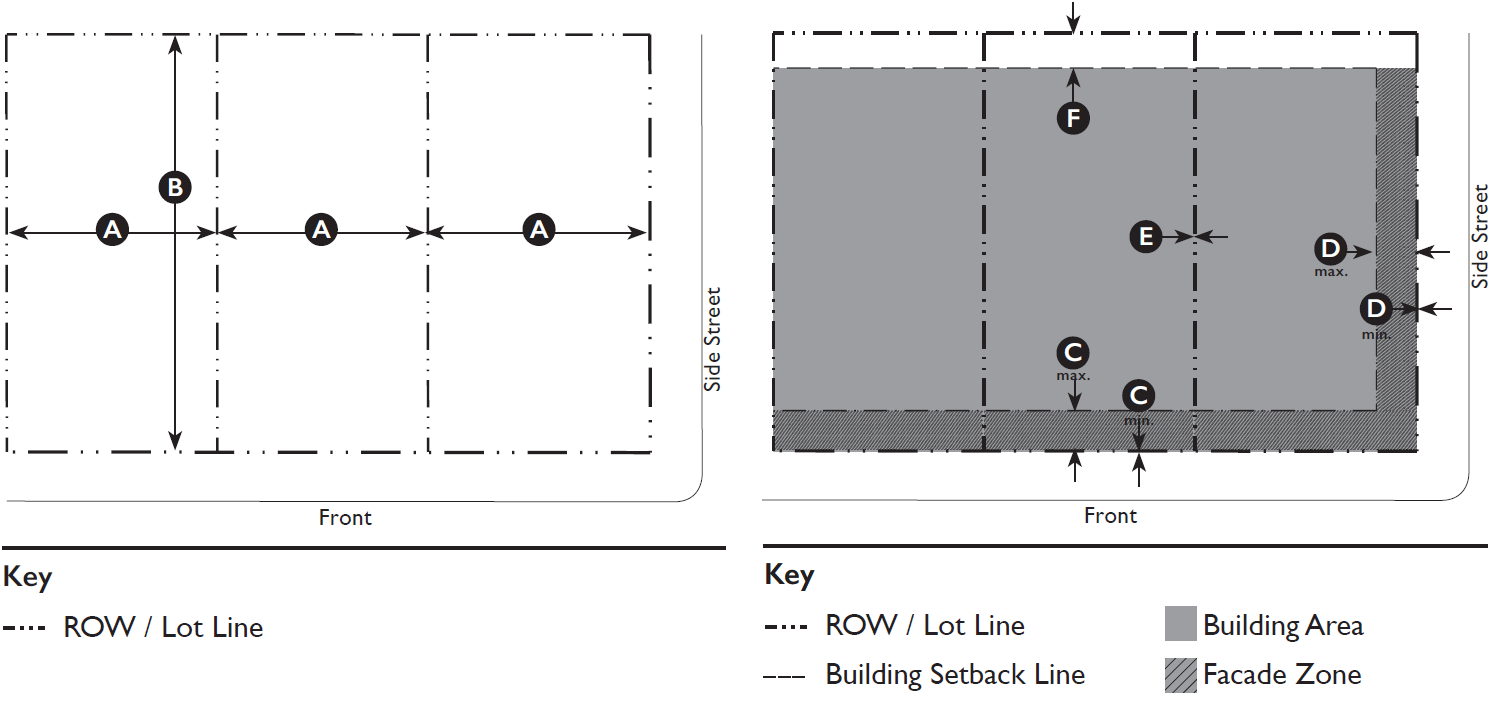
| D. Building Placement | ||
|---|---|---|
| Build-to Lines (Distance from ROW / Lot Line) | ||
| Front | 0' min.; 10' max. 4 | |
| Side Street | 0' min.; 10' max. 4 | |
|
BTL Defined by a Building:
Front, lots < 50' wide Front, lots ≥ 50' wide Side Street | 100% 75% min. 5 50% min. 5 | |
| Setbacks (Distance from ROW / Lot Line) | ||
| Side | 0' min. | |
|
Rear:
Adjacent to T5N, T4N, or Residential Zone Adjacent to all other zone(s) Adjacent to Alley | 10' min. 0' min. 0' min. | |
| Miscellaneous | ||
| A building form with a chamfered corner is allowed on a corner lot if a corner entry is provided. | ||
| Fencing and/or gates shall be set behind max. front setback. | ||
| 4 See Official Zoning Map for locations where 0' BTL is required. BTLs located within this range that do not match the location of an existing adjacent building require the Director's approval. | ||
| 5 On corner lots, the BTL must be defined by a building for the first 50' from the corner. | ||
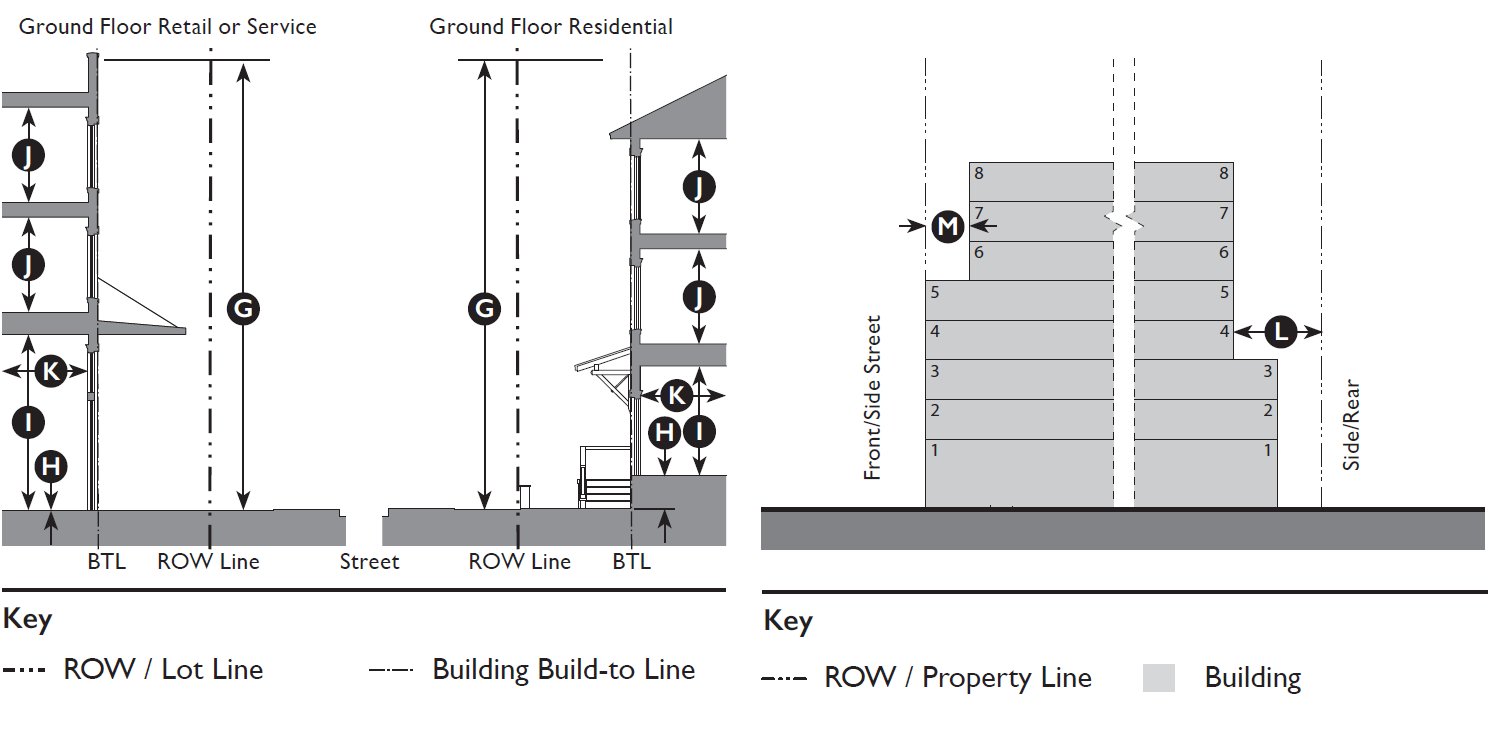
| E. Building Form | |||
|---|---|---|---|
| Height | |||
|
Stories
Principal Structure 6 | 5 max. 7 | ||
|
Overall
Principal Structure | 55' max. 7 | | |
| For T5MS-O zones along San Pablo Avenue, the max. height shall not exceed 3 stories or 35 feet when abutting a single family residential zone. | |||
|
Ground Floor Finish Level:
Residential, < 10' from ROW Residential, ≥ 10' from ROW Retail or Service | 24" min. 0" min. 6" max. | | |
|
Ceiling Height, Ground Floor
Residential Retail or Service | 10' min. clear 12' min. clear | | |
| Ceiling Height, Upper Floor(s) | 9' min. clear | | |
| Footprint | |||
Per Article 15.04.403 (Building Types) | |||
| Depth, Ground-Floor Space | 30' min. | | |
| 6 Max. height of building types may be less than max. height for zone. See Article 15.04.403 (Building Types). | |||
| 7 35' max. within 50' of a T4N or Residential District. | | ||
| Miscellaneous | |||
|
Distance Between Entries along the Front:
Entries to Ground Floor Entries to Upper Floor(s) | 50' max. 100' max. | ||
| Upper floors shall have a primary entrance along the front | |||
| Loading docks, overhead doors, and other service entries may not be located on street-facing facades. | |||
| Buildings wider than 150' shall be designed to read as a series of buildings no wider than 100' each. | |||
| Upper Floor Front/Side Street Setback | |||
| Floors 6+ | 10' min. | | |
| F. Architectural Styles | |||
| Allowed Architectural Styles | Standards | ||
| Contemporary | 15.04.405.050 | ||
| Art Deco | 15.04.405.060 | ||
| Main Street Classical | 15.04.405.080 | ||
| Spanish Revival | 15.04.405.090 | ||
| Victorian | 15.04.405.100 | ||
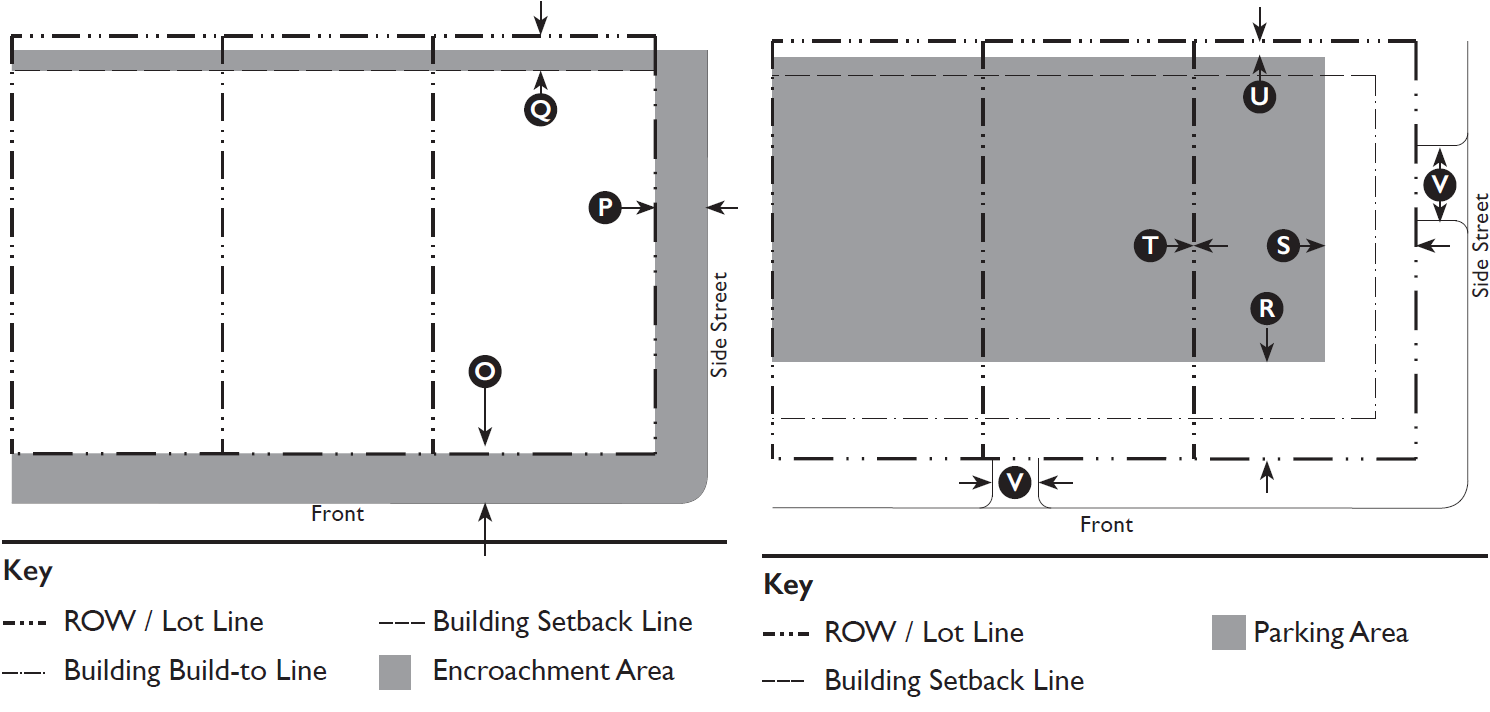
| G. Encroachments and Frontage Types | ||
|---|---|---|
| Allowed Encroachments8,9 | ||
| Front | 14' max. | |
| Side Street | 14' max. | |
| Rear | 5' max. | |
| Allowed Frontage Types | ||
| See Article 15.04.403 (Building Types) for allowed Frontage Types. | ||
8 Maximum allowed encroachments: See Article 15.04.404 (Frontage Types) for further refinement of the allowed encroachments for frontage elements. | ||
| 9 Encroachments into the ROW require the approval of an encroachment permit. Encroachments are not allowed in an alley ROW or across a lot line/design site boundary. | ||
| H. Parking | |||
|---|---|---|---|
| Required Spaces10 | |||
| Residential Uses | 1.25/unit max. | ||
| Lodging Uses | 1/room max. | ||
| Retail or Service Uses | 2/1,000 sf min. 11 | ||
| Location (Distance from ROW / Lot Line) | |||
| Front Setback: | 30' min. (from BTL) | | |
|
Side Street Setback:
Ground floor Upper floor(s) | 30' min. (from BTL) 0' min. (from BTL) | | |
| Side Setback | 0' min. | | |
|
Rear Setback:
Adjacent to T5N or T4N Adjacent to all other zone(s) Adjacent to Alley | 5' min. 0' min. 0' min. | | |
| Miscellaneous | |||
|
Parking Drive Width:
Front, ≤ 40 spaces Front, > 40 spaces Side Street/Alley % of Frontage along Front | 12' max. 20' max. 20' max. 20% max. | | |
| See Article 15.04.612 (Transportation Demand Management) for applicability and requirements. | |||
| 10 See Article 15.04.607 (Parking And Loading Standards) for uses not listed, general standards, and alternatives. | |||
| 11 No parking spaces required for uses less than 5,000 sf. | |||
(Ord. No. 04-23 N.S., § I(Exh. A), 4-18-2023)
15.04.402.060 - T5 Core (T5C).
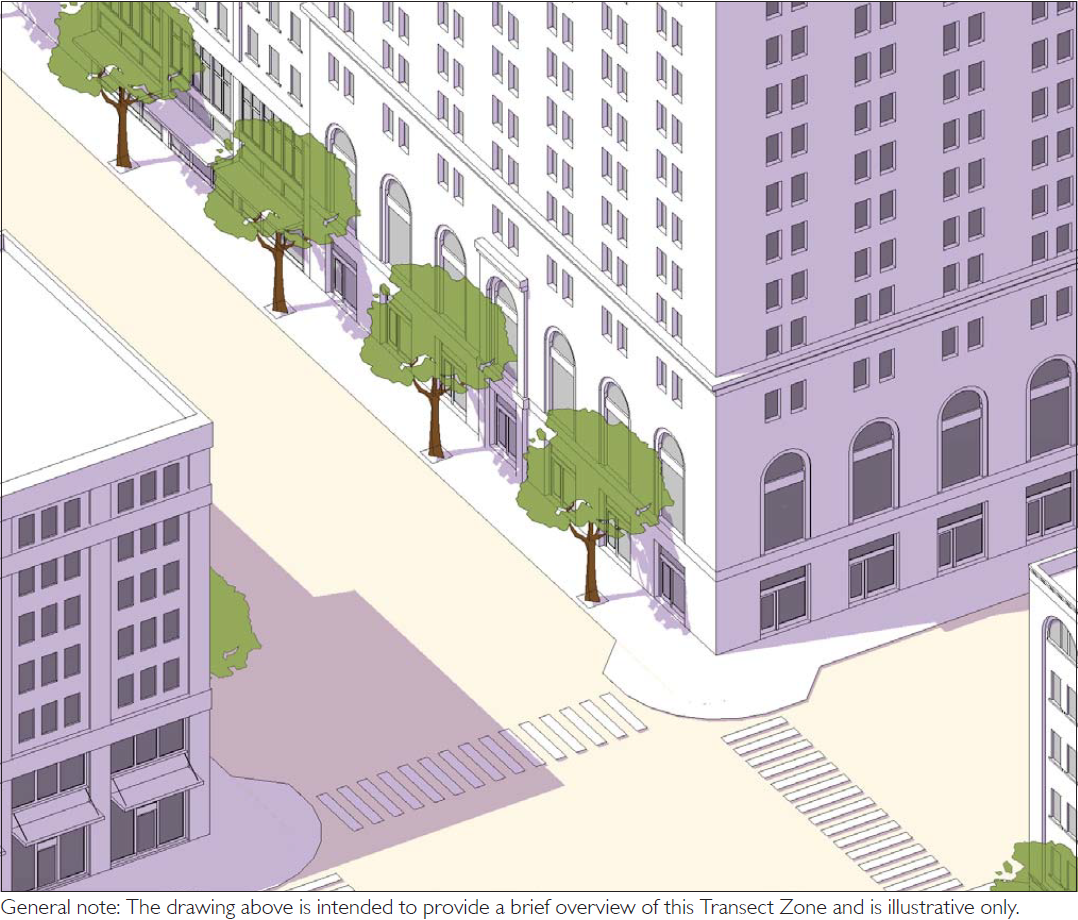
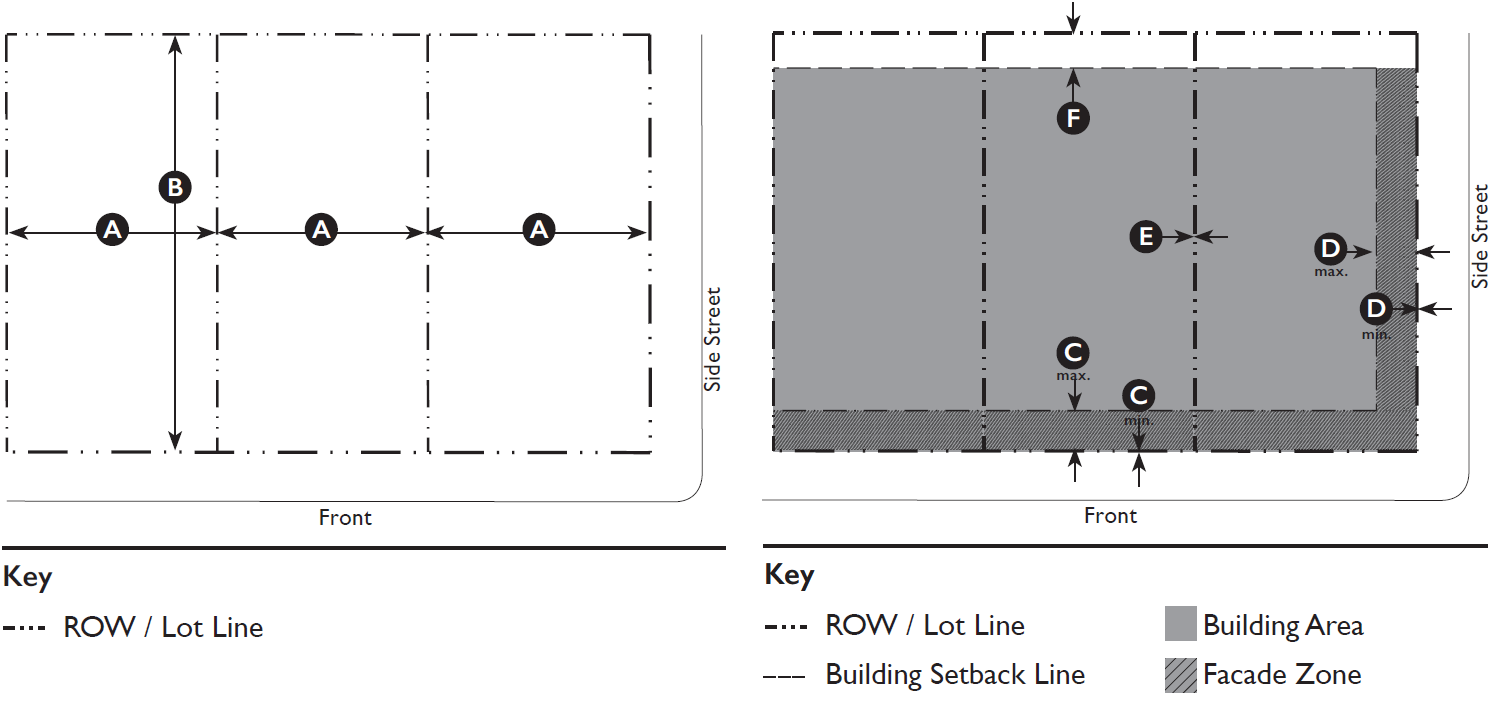
| C. Allowed Building Types | |||||
|---|---|---|---|---|---|
Lot/Design Site | |||||
| Width | Depth | ||||
| Building Type | | | Standards | ||
| Rowhouse 1 |
18' min.;
35' max. | 80' min. | 15.04.403.090 | ||
| Multi-Plex: Small 1 |
50' min.;
75' max. | 80' min. | 15.04.403.100 | ||
| Multi-Plex: Large 1 |
50' min.;
100' max. | 100' min. 2 | 15.04.403.110 | ||
| Stacked Flats 1 |
100' min.;
200' max. | 100' min. 2 | 15.04.403.120 | ||
|
Courtyard
Building: Large |
75' min.;
100' max. | 100' min. 2 | 15.04.403.140 | ||
| Live/Work |
18' min.;
35' max. | 80' min. | 15.04.403.150 | ||
|
Main Street
Building |
50' min.
3
;
150' max. | 100' min. 2 | 15.04.403.160 | ||
| Mid-Rise |
100' min.;
300' max. | 100' min. | 15.04.403.170 | ||
| High-Rise | 200' min. | 150' min. | 15.04.403.180 | ||
| 1 Allowed only in the T5 Core-Open Sub-Zone. | |||||
| 2 80' min. allowed for existing lots | |||||
| 3 25' min. allowed for existing lots | |||||
| D. Building Placement | ||
|---|---|---|
| Build-to Lines (Distance from ROW / Lot Line) | ||
| Front | 0' min.; 10' max. 4 | |
| Side Street | 0' min.; 10' max. 4 | |
|
BTL Defined by a Building:
Front Side Street | 100% 80% min. 5 | |
| Setbacks (Distance from ROW / Lot Line) | ||
| Side | 0' min. | |
|
Rear:
Adjacent to T5N, T4N, or Residential Zone Adjacent to all other zone(s) Adjacent to Alley | 10' min. 0' min. 0' min. | |
| Miscellaneous | ||
| A building form with a chamfered corner is allowed on a corner lot if a corner entry is provided. | ||
| Fencing and/or gates shall be set behind max. front setback. | ||
| 4 See Official Zoning Map for locations where 0' BTL is required. BTLs located within this range that do not match the location of an existing adjacent building require the Director's approval. | ||
| 5 On corner lots, the BTL must be defined by a building for the first 50' from the corner. | ||
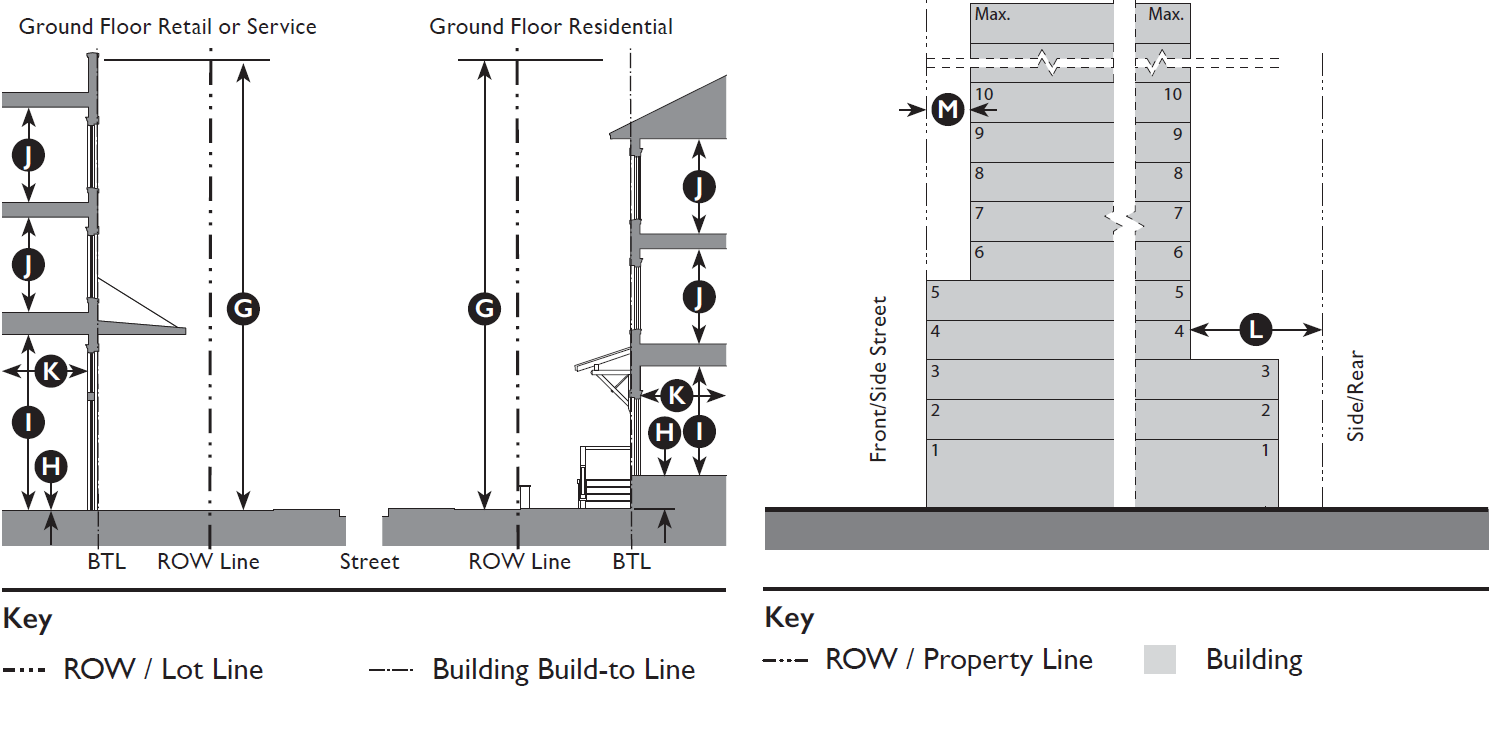
| E. Building Form | |||
| Height | |||
|
Stories
Principal Structure 6 | 12 max. 7 | ||
|
Overall
Principal Structure | 135' max. 7 | | |
|
Ground Floor Finish Level:
Residential, < 10' from ROW Residential, ≥ 10' from ROW Retail or Service | 24" min. 0" min. 6" max. | | |
|
Ceiling Height, Ground Floor:
Residential Retail or Service | 10' min. clear 12' min. clear | | |
| Ceiling Height, Upper Floor(s) | 9' min. clear | | |
| Footprint | |||
| Per Article 15.04.403 (Building Types) | |||
| Depth, Ground-Floor Space: | 30' min. | | |
| Miscellaneous | |||
|
Distance Between Entries along the Front:
Entries to Ground Floor Entries to Upper Floor(s) | 50' max. 100' max. | ||
| Upper floors shall have a primary entrance along the front | |||
| Loading docks, overhead doors, and other service entries may not be located on street-facing facades. | |||
| 6 Max. height of building types may be less than max. height for zone. See Article 15.04.403 (Building Types). | |||
| 7 35' max. within 50' of a T4N or Residential District. | | ||
| Buildings wider than 150' shall be designed to read as a series of buildings no wider than 100' each. | |||
| Upper Floor Front/Side Street Setback | |||
| Floors 6+ | 10' min. | | |
| F. Architectural Styles | |||
| Allowed Architectural Styles | Standards | ||
| Contemporary | 15.04.405.050 | ||
| Art Deco | 15.04.405.060 | ||
| Main Street Classical | 15.04.405.080 | ||
| Spanish Revival | 15.04.405.090 | ||
| Victorian | 15.04.405.100 | ||
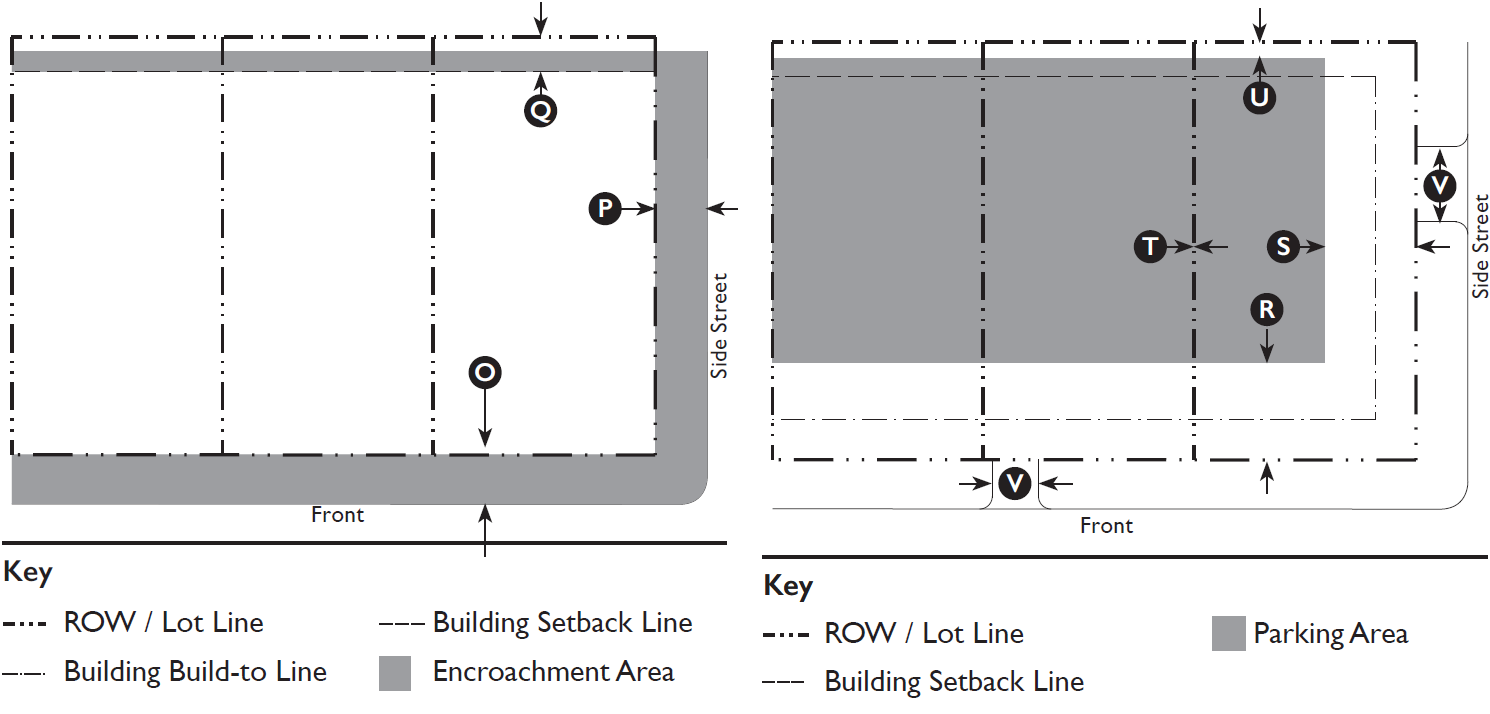
| G. Encroachments and Frontage Types | ||
|---|---|---|
| Allowed Encroachments8,9 | ||
| Front | 14' max. | |
| Side Street | 14' max. | |
| Rear | 5' max. | |
| Allowed Frontage Types | ||
| See Article 15.04.403 (Building Types) for allowed Frontage Types. | ||
8 Maximum allowed encroachments: See Article 15.04.404 (Frontage Types) for further refinement of the allowed encroachments for frontage elements. | ||
| 9 Encroachments into the ROW require the approval of an encroachment permit. Encroachments are not allowed in an alley ROW or across a lot line/design site boundary. | ||
| H. Parking | |||
|---|---|---|---|
| Required Spaces10 | |||
| Residential Uses | 1.25/unit max. | ||
| Lodging Uses | 1/room max. | ||
| Retail or Service Uses | 2/1,000 sf min. 11 | ||
| Location (Distance from ROW / Lot Line) | |||
| Front Setback: | 30' min. (from BTL) | | |
|
Side Street Setback:
Ground floor Upper floor(s) | 30' min. (from BTL) 0' min. (from BTL) | | |
| Side Setback | 0' min. | | |
|
Rear Setback:
Adjacent to T5N or T4N Adjacent to all other zone(s) Adjacent to Alley | 5' min. 0' min. 0' min. | | |
| Miscellaneous | |||
|
Parking Drive Width:
Front, ≤ 40 spaces Front, > 40 spaces Side Street/Alley % of Frontage along Front | 12' max. 20' max. 20' max. 20% max. | | |
| See Article 15.04.612 (Transportation Demand Management) for applicability and requirements. | |||
| 10 See Article 15.04.607 (Parking And Loading Standards) for uses not listed, general standards, and alternatives. | |||
| 11 No parking spaces required for uses less than 5,000 sf. | |||
(Ord. No. 04-23 N.S., § I(Exh. A), 4-18-2023)
15.04.402.070 - Land Use Table.
15.04.403.010 - Purpose.
This Article sets forth the standards applicable to the development of each building type. These standards supplement the standards for each zone that the building types are allowed within. These standards are intended to ensure development that reinforces walkability, relationships within the built environment, and the highly-valued existing character and scale of Richmond's historic neighborhoods and downtown. Additionally, these standards are intended to allow creation of new developments that create new walkable neighborhoods.
The standards within this Article shall apply to all proposed development within transect zones and shall be considered in combination with the standards for the applicable zone in Article 15.04.402 (Transect Zones), Article 15.04.404 (Frontage Types), and Article 15.04.405 (Architectural Standards).
The standards set forth in this Article may be used in all other non-transect zones as guidelines.
(Ord. No. 04-23 N.S., § I(Exh. A), 4-18-2023)
15.04.403.020 - Building Types Overview.
A.
The names of the building types do not limit uses within a building type. The allowed uses are regulated by transect zone; see Article 15.04.402 (Transect Zones).
B.
The lot size standards for each building type are regulated by transect zones, see Article 15.04.402 (Transect Zones). If the lot does not meet the required size for a selected building type, a different building type shall be selected. See Article 15.04.606 (Nonconforming Uses, Structures And Lots) for existing nonconforming parcels and structures.
C.
Each lot shall only have one building type, except as follows:
1.
Where allowed by legislation passed by the State of California; and/or
2.
Where allowed by the applicable zone in Article 15.04.402 (Transect Zones) and by the building type, an Accessory Dwelling Unit is also allowed, subject to the standards in Section 15.04.403.030 (Guide to Accessory Dwelling Unit Types); and/or
3.
If the submitted development plan includes multiple design sites bounded by potential lot lines meeting all the requirements of this Article, each design site may have one building type. Boundaries of design sites shall be treated as lot lines for the purpose of measuring required building setbacks and minimum lot dimensions, but need not be recorded as parcel boundaries. See Section 15.04.406.020 (Design Sites) for details.
D.
Secondary wings and accessory structures shall have a smaller footprint than the building type selected.
E.
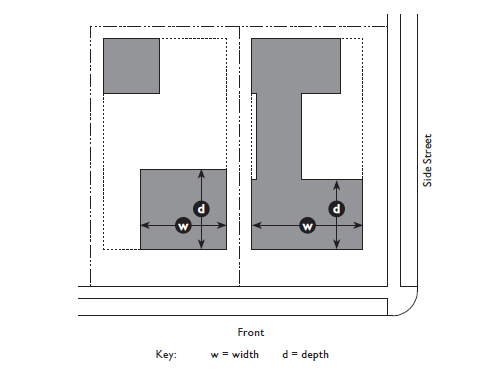
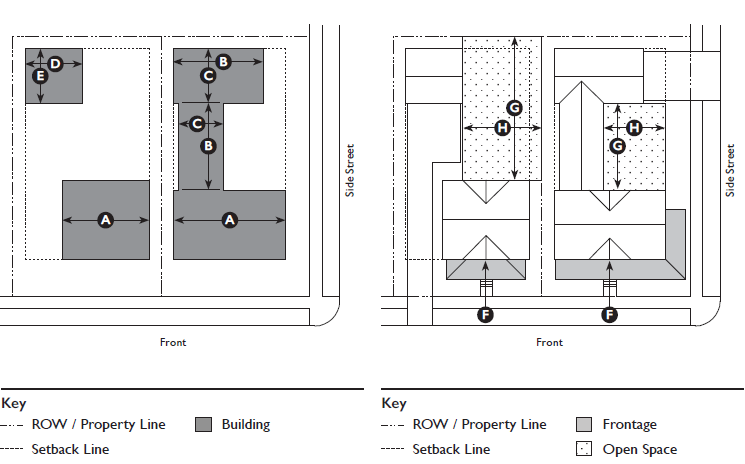
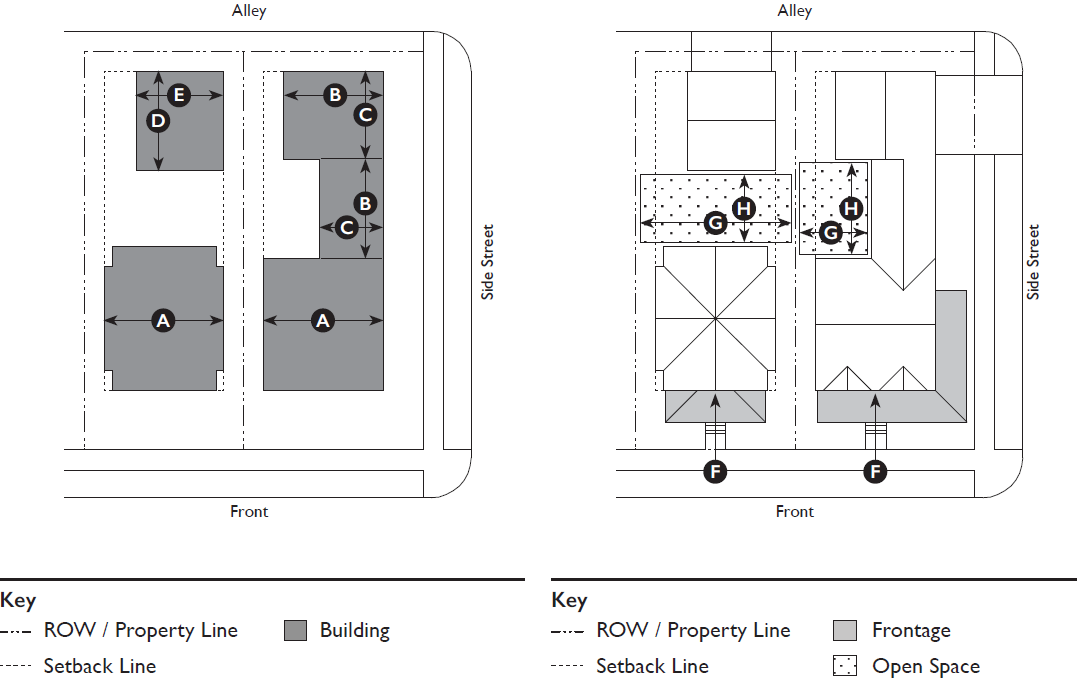
Measurement of width and depth.
1.
The width and depth of the main body shall be measured as follows:
a.
The width shall be parallel to the Front.
b.
The depth shall be perpendicular to the Front.
2.
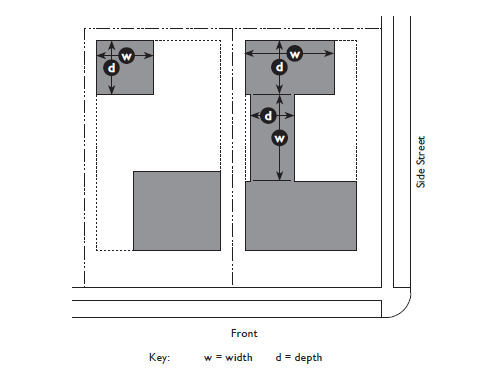
The width and depth of secondary wings and ancillary structures, shall be measured as follows:
a.
The width shall be the greater of the two dimensions of the footprint.
b.
The depth shall be the lesser of the two dimensions of the footprint.
3.
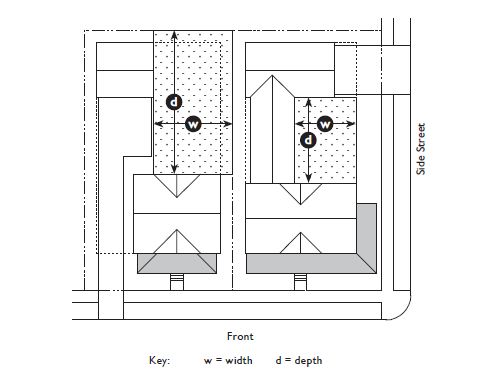
The width and depth of open spaces shall be measured as follows:
a.
The width shall be parallel to the Front
b.
The depth shall be perpendicular to the Front.
4.
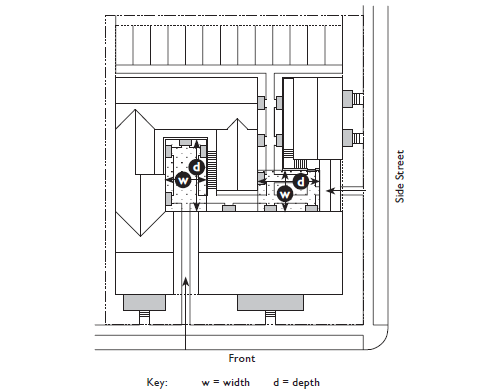
The width and depth of courtyards shall be measured as follows:
a.
The width shall be parallel to the Front; unless the courtyard is a secondary courtyard accessed directly from a Side Street.
b.
If a secondary courtyard is accessed directly from the Side Street, the width shall be parallel to the Side Street.
c.
The depth shall be perpendicular to the width.
F.
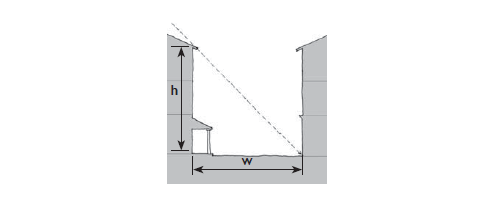
Measurement of width-to-height ratio and depth-to-height ratio of courtyards.
1.
The width and depth of courtyards shall be measured per Sub-section 15.04.403.020.E.4.
2.
The height of courtyards shall be a measurement of the vertical plane of the building type that defines the courtyard.
G.
Table 15.04.401.080.A (Building Types Overview) provides an overview of the allowed building types.
(Ord. No. 04-23 N.S., § I(Exh. A), 4-18-2023)
15.04.403.030 - Guide to Accessory Dwelling Unit Types.
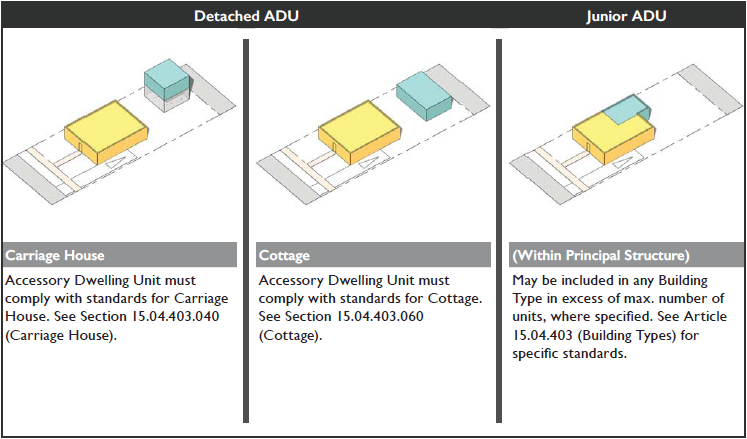
This guide shows how the standards in this Form-Based Code apply to Accessory Dwelling Units. If standards in this Form-Based Code conflict with legislation passed by the State of California, the legislation passed by the State of California shall prevail
(Ord. No. 04-23 N.S., § I(Exh. A), 4-18-2023)
15.04.403.040 - Carriage House.
 | A. Description |
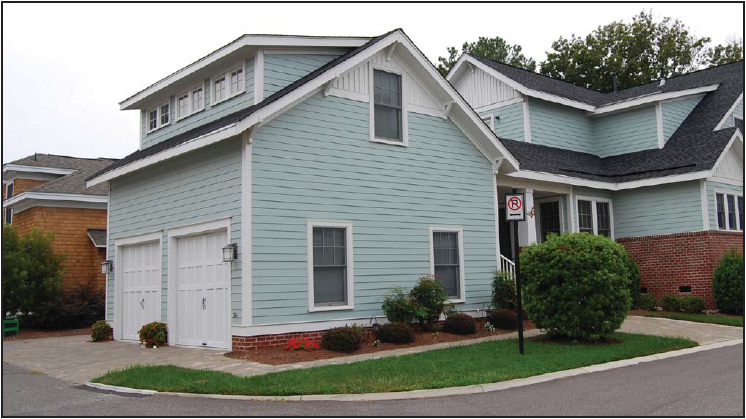
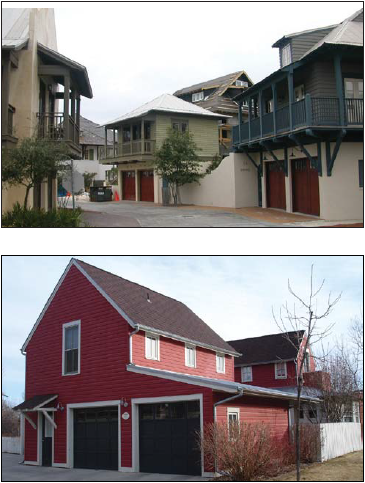
| The Carriage House Building Type is a secondary structure typically located at the rear of a lot. It typically provides either a small residential unit, home office space, or other small commercial or service use that is located above a garage. This Type is important for providing affordable housing opportunities and incubating small businesses within walkable neighborhoods. | |
 |
| B. Lot/Design Site | ||
| Only allowed on lots/design sites where the principal structure has a residential use and is one of the following Building Types: Detached House, Cottage, Duplex, Rowhouse, or Multi-Plex: Small. | ||
| C. Number of Units | ||
| Units per building type | 1 max. | |
| Carriage Houses per lot/design site | 1 max. | |
| D. Building Size and Massing | ||
| Height | ||
| Stories | 2 max. | |
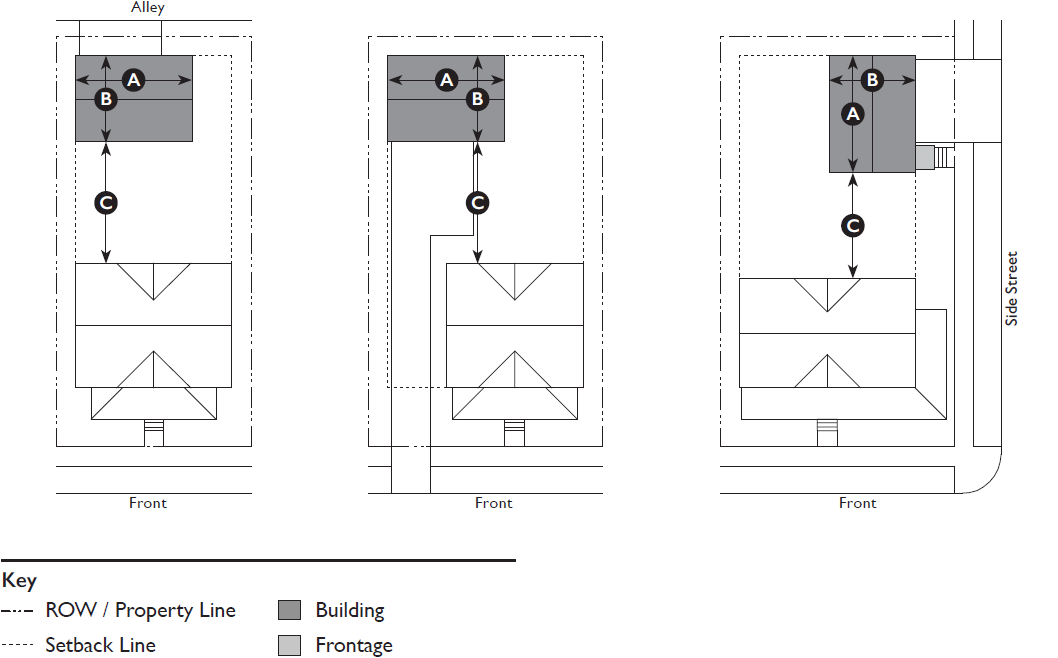
| Main Body | ||
| Width | 36' max. |  |
| Depth | 30' max. |  |
| Separation from Principal Structure | 10' min. 1 | |
| Miscellaneous | ||
| Carriage House shall not be taller or have a larger footprint than the principal structure on the lot/design site. | ||
| 1 Carriage House may be connected to the principal structure by uninhabitable space such as a breezeway. | ||
(Ord. No. 04-23 N.S., § I(Exh. A), 4-18-2023)
15.04.403.050 - Detached House.
 | A. Description |
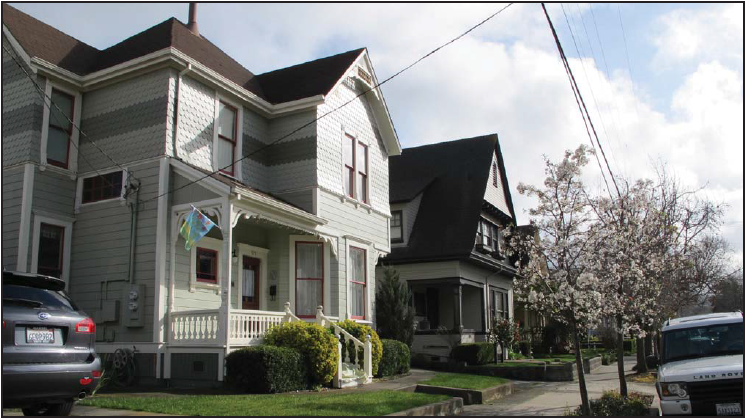
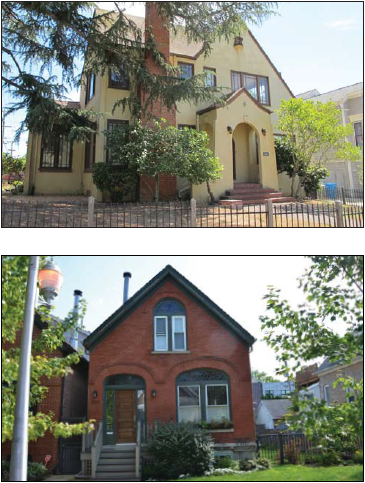
| The Detached House Building Type is a medium-sized detached structure on a medium-sized lot. It is typically located within a primarily single-family residential neighborhood in a walkable urban setting, potentially near a neighborhood main street. | |
 |
| B. Number of Units | ||
|
Detached Houses per lot/
design site | 1 max. | |
| This building type may contain multiple units per the allowed uses in Article 15.04.402 (Transect Zones). | ||
| C. Building Size and Massing | ||
| Height | ||
|
Per transect zone standards in Article 15.04.402 (Transect Zones). | ||
| Main Body | ||
| Width | 48' max. | |
| Secondary Wing(s) | ||
| Width | 30' max. | |
| Depth | 30' max. | |
| Accessory Structure(s) | ||
| Width | 24' max. | |
| Depth | 30' max. | |
| D. Allowed Frontage Types | Standards | |
| Porch: Projecting | 15.04.404.020 | |
| Porch: Engaged | 15.04.404.030 | |
| E. Pedestrian Access | ||
| Main Entrance Location | Front | |
| F. Open Space | ||
| Yard | ||
| Width | 20' min. | |
| Depth | 20' min. | |
| Area | 500 sf min. | |
| Required street setbacks and driveways shall not be included in the open space area calculation. | ||
| Required open space must be located behind the main body of the building type. | ||
(Ord. No. 04-23 N.S., § I(Exh. A), 4-18-2023)
15.04.403.060 - Cottage.
| B. Number of Units | ||
| Cottages per lot/design site | 1 max. 2 | |
| This building type may contain multiple units per the allowed uses in Article 15.04.402 (Transect Zones). | ||
| C. Building Size and Massing | ||
| Height | ||
| Stories | 1½ max. 3 | |
| Main Body | ||
| Width | 36' max. | |
| Secondary Wing(s) | ||
| Width | 30' max. | |
| Depth | 30' max. | |
| Accessory Structure(s) | ||
| Width | 24' max. | |
| Depth | 30' max. | |
|
Only one accessory structure is allowed per lot/design
site. | ||
| 2 More than 1 Cottage per lot/design site is allowed when built as an Accessory Dwelling Unit. | ||
| 3 Half Story allowed as defined in Article 15.04.104 (Key Terms and Definitions). | ||
| D. Allowed Frontage Types | Standards | |
| Porch: Projecting | 15.04.404.020 | |
| Stoop | 15.04.404.040 | |
| E. Pedestrian Access | ||
| Main Entrance Location | Front | |
| F. Open Space | ||
| Yard | ||
| Width | 15' min. | |
| Depth | 15' min. | |
| Area | 300 sf min. | |
| Required street setbacks and driveways shall not be included in the open space area calculation. | ||
| Required open space must be located behind the main body of the building type. | ||
| When a Cottage is built as an Accessory Dwelling Unit, no additional open space is required. The open space requirements for the lot shall be determined by the principal structure on the lot/design site. | ||
(Ord. No. 04-23 N.S., § I(Exh. A), 4-18-2023)
15.04.403.070 - Bungalow Court.
 | A. Description |
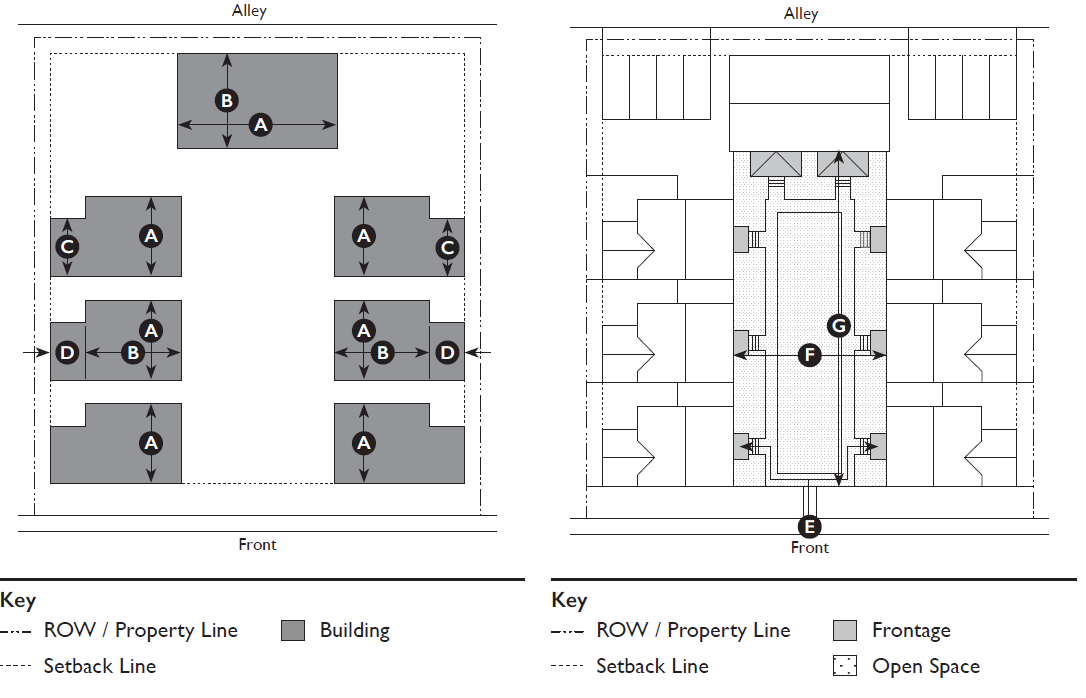
| The Bungalow Court Building Type consists of a series of small, detached structures, providing multiple units arranged to define a shared court that is typically perpendicular to the street. The shared court takes the place of a private rear yard and becomes an important community-enhancing element of this Type. | |
| Synonym: Cottage Court | |
 |
| B. Number of Units | ||
| Units per building | 1 max. 1 | |
| Buildings per lot/design site | 3 min.; 9 max. | |
| C. Building Size and Massing | ||
| Height | ||
| Stories | 1½ max. 2 | |
| Main Body | ||
| Width | 32' max. | |
| Depth | 24' max. | |
| Secondary Wing(s) | ||
| Width | 24' max. | |
| Depth | 24' max. | |
| Accessory Structure(s) | ||
| Width | 24' max. | |
| Depth | 24' max. | |
| 1 The rearmost building may contain up to 2 units, for a total of 10 units max. | ||
| 2 Half Story allowed as defined in Article 15.04.104 (Key Terms and Definitions). | ||
| D. Allowed Frontage Types | Standards | |
| Porch: Projecting | 15.04.404.020 | |
| Stoop | 15.04.404.040 | |
| E. Pedestrian Access | ||
| Main Entrance Location | Front | |
| F. Open Space | ||
| Common Space | ||
| Width | 20' min. | |
| Depth | 20' min. | |
| Area | 400 sf min. | |
| Required street setbacks and driveways shall not be included in the open space area calculation. | ||
(Ord. No. 04-23 N.S., § I(Exh. A), 4-18-2023)
15.04.403.080 - Duplex.
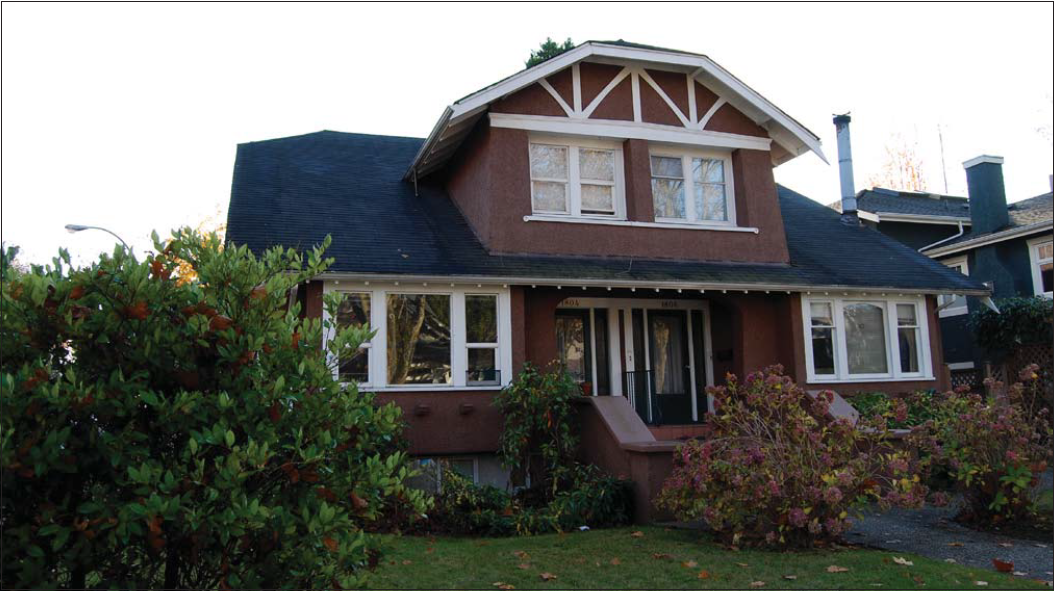
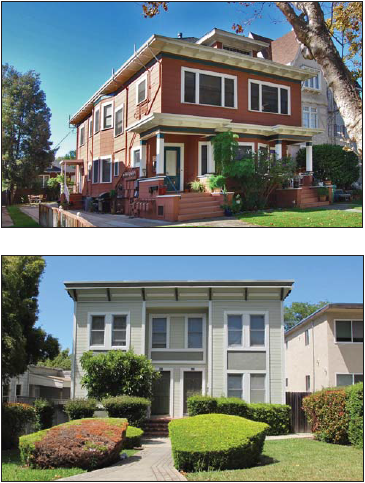 | A. Description |
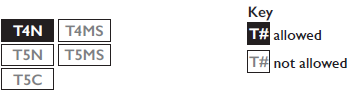
| The Duplex Building Type is a small- to medium-sized structure that consists of two side-by-side dwelling units with a shared property line, both facing the street, or two stacked units. Both units fit within a single building massing, giving this Type the appearance of a medium to large single-family home. This type is appropriately scaled to fit within primarily single-family residential neighborhoods or medium-density neighborhoods. | |
 |
| B. Number of Units | ||
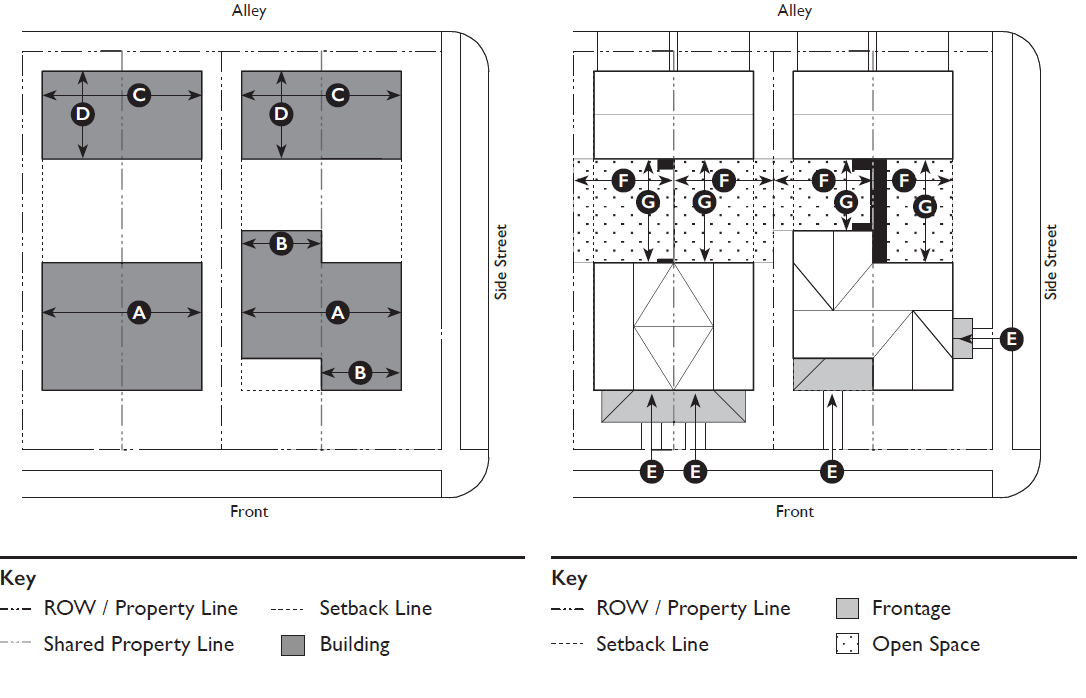
| Duplexes per lot/design site | 1 max. | |
| Units per Duplex | 2 max. | |
| C. Building Size and Massing | ||
| Height | ||
|
Per transect zone standards in Article 15.04.402 (Transect Zones). | ||
| Main Body | ||
| Width | 48' max. | |
| Secondary Wing(s) | ||
| Width | 30' max. | |
| Accessory Structure(s) | ||
| Width | | |
| Individual unit ownership | 24' max. | |
| Shared between units | 48' max. | |
| Depth | 30' max. | |
| D. Allowed Frontage Types | Standards | |
| Porch: Projecting | 15.04.404.020 | |
| Porch: Engaged | 15.04.404.030 | |
| Stoop | 15.04.404.040 | |
| E. Pedestrian Access | ||
| Main Entrance Location | Front 1 | |
| Each unit shall have an individual entry facing the street on or no more than 10' behind the front facade. | ||
| F. Open Space | ||
| Yard | ||
| Width | 15' per unit min. | |
| Depth | 15' per unit min. | |
| Area | 300 sf min. | |
| Required street setbacks and driveways shall not be included in the open space area calculation. | ||
| Required open space must be located behind the main body of the building type. | ||
| 1 On corner lots, each unit shall front a different street. | ||
(Ord. No. 04-23 N.S., § I(Exh. A), 4-18-2023)
15.04.403.090 - Rowhouse.
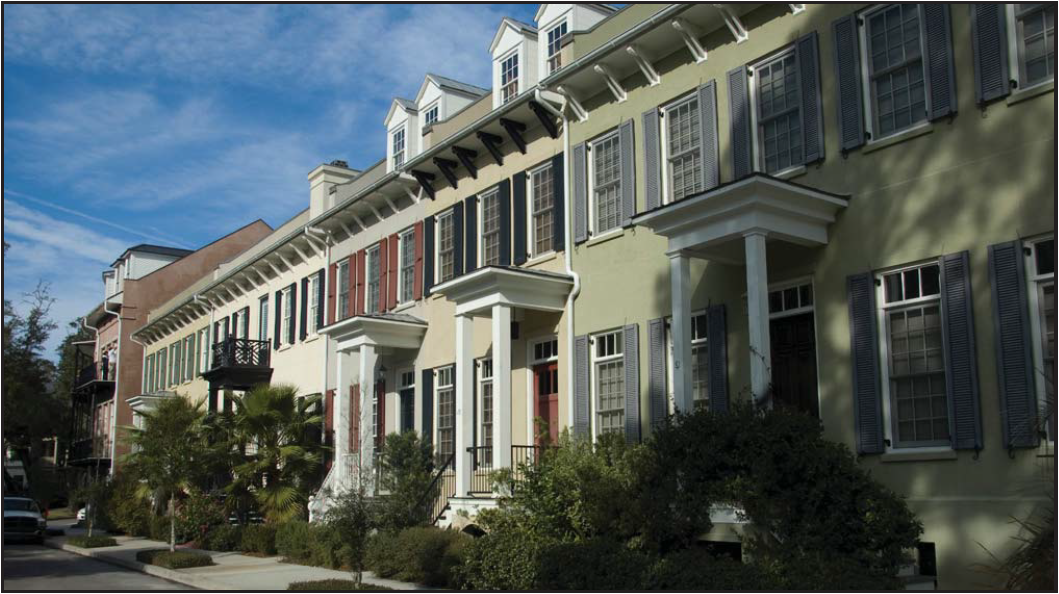
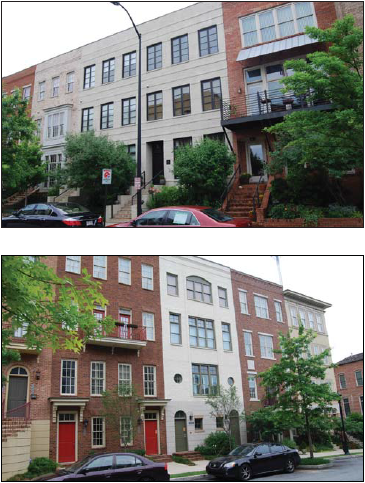 | A. Description |
| This Building Type is a small- to medium-sized structure consisting of 3-8 rowhouses placed side-by-side and sharing common party walls. This Type is typically located within medium-density neighborhoods or in a location that transitions from a primarily single-family residential neighborhood into a neighborhood main street. | |
| Synonym: Townhouse | |
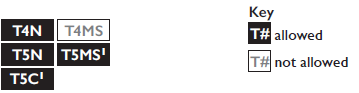 | |
| 1 Allowed only in the Open Sub-Zone. |
| B. Number of Units | ||
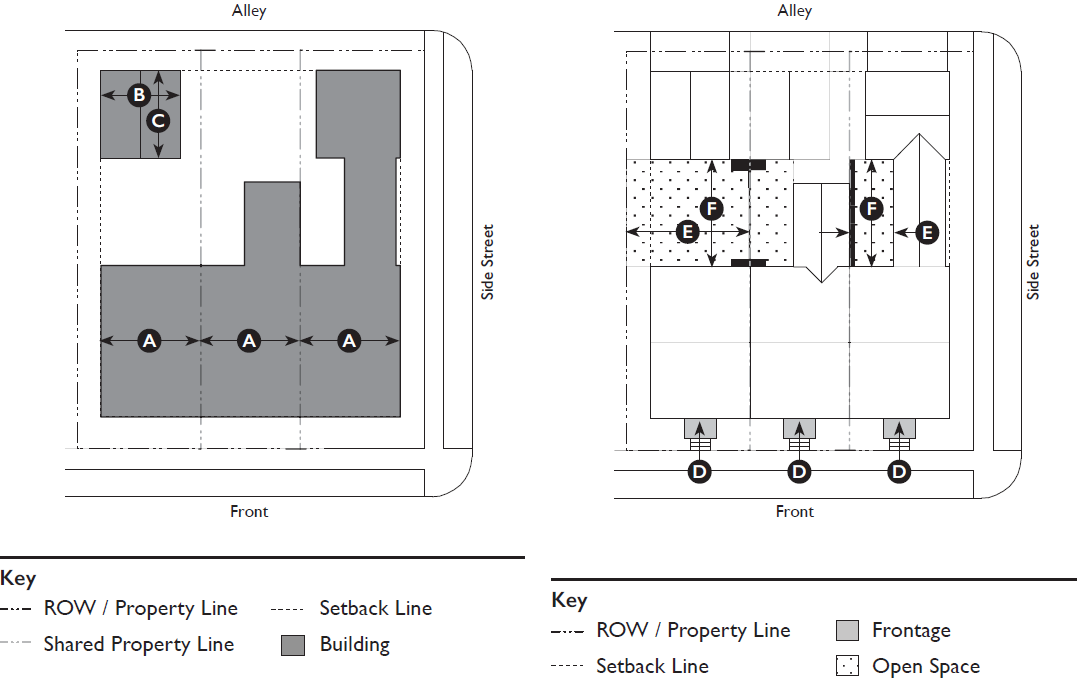
| Rowhouses per lot/design site | 1 max. | |
| Rowhouses per run | 3 min.; 8 max. | |
| This building type may contain multiple units per the allowed uses in Article 15.04.402 (Transect Zones). | ||
| C. Building Size and Massing | ||
| Height | ||
| Stories | 5 max. 2 | |
| Main Body | ||
| Width | 18' min.; 36' max. | |
| Secondary Wing(s) | ||
| The footprint area of the secondary wing(s) may not exceed the footprint area of the main body. | ||
| Accessory Structure(s) | ||
| Width | 24' max. | |
| Depth | 30' max. | |
| The footprint area of an accessory structure may not exceed the footprint area of the main body. | ||
| 2 Height must also comply with transect zone standards in Article 15.04.402 (Transect Zones). | ||
| D. Allowed Frontage Types | Standards | |
| Porch: Projecting | 15.04.404.020 | |
| Porch: Engaged | 15.04.404.030 | |
| Stoop | 15.04.404.040 | |
| Dooryard | 15.04.404.060 | |
| Loft | 15.04.404.110 | |
| Loft allowed only in Main Street and Core, including Open Sub-Zones. | ||
| E. Pedestrian Access | ||
| Main Entrance Location | Front | |
| Each unit shall have an individual entry facing a street. | ||
| F. Open Space | ||
| Yard | ||
| Width | 8' min. | |
| Depth | 8' min. | |
| Area | 100 sf min. | |
| Required street setbacks and driveways shall not be included in the open space area calculation. | ||
| Required open space must be located behind the main body of the building type. | ||
(Ord. No. 04-23 N.S., § I(Exh. A), 4-18-2023)
15.04.403.100 - Multi-Plex: Small.
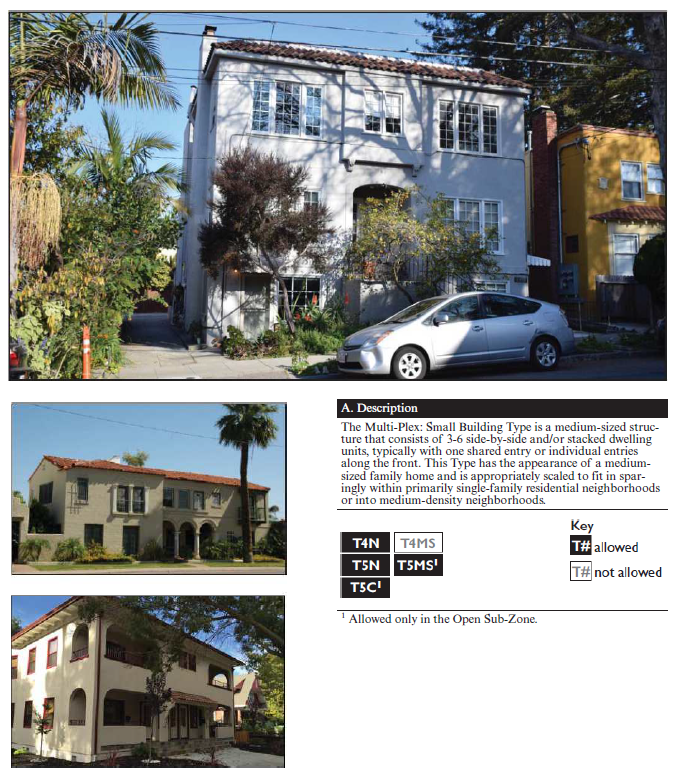
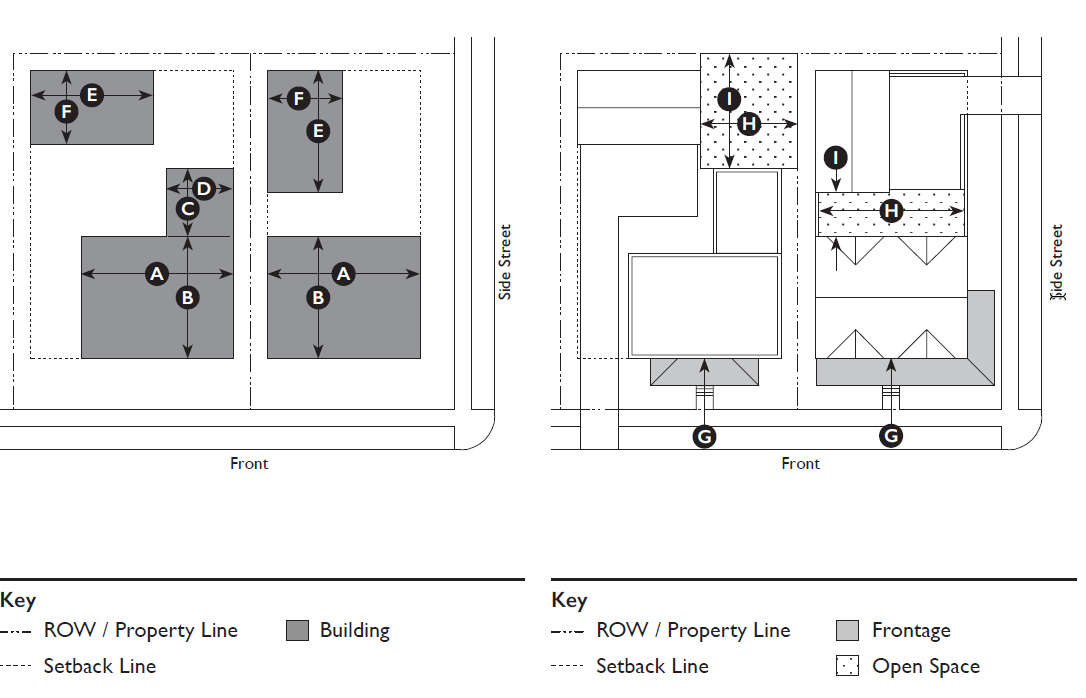
| B. Number of Units | ||
| Units | 3 min. | |
|
Small Multi-Plexes per lot/
design site | 1 max. | |
| C. Building Size and Massing | ||
| Height | ||
| Stories | 3 max. 2 | |
| Main Body | ||
| Width | 48' max. | |
| Depth | 48' max. | |
| Secondary Wing(s) | ||
| Width | 30' max. | |
| Depth | 30' max. | |
| Accessory Structure(s) | ||
| Width | 48' max. | |
| Depth | 30' max. | |
| The footprint area of an accessory structure may not exceed the footprint area of the main body. | ||
| 2 Height must also comply with transect zone standards in Article 15.04.402 (Transect Zones). | ||
| D. Allowed Frontage Types | Standards | |||
| Porch: Projecting | 15.04.404.020 | |||
| Porch: Engaged | 15.04.404.030 | |||
| Stoop | 15.04.404.040 | |||
| Dooryard | 15.04.404.060 | |||
| E. Pedestrian Access | ||||
| Main Entrance Location | Front | | ||
| Each unit may have an individual entry. | ||||
| F. Open Space | ||||
| Yard | ||||
| Width | 8' min. | | ||
| Depth | 8' min. | | ||
| Area | 100 sf min. | |||
| Required street setbacks and driveways shall not be included in the open space area calculation. | ||||
| Required open space must be located behind the main body of the building type. | ||||
(Ord. No. 04-23 N.S., § I(Exh. A), 4-18-2023)
15.04.403.110 - Multi-Plex: Large.
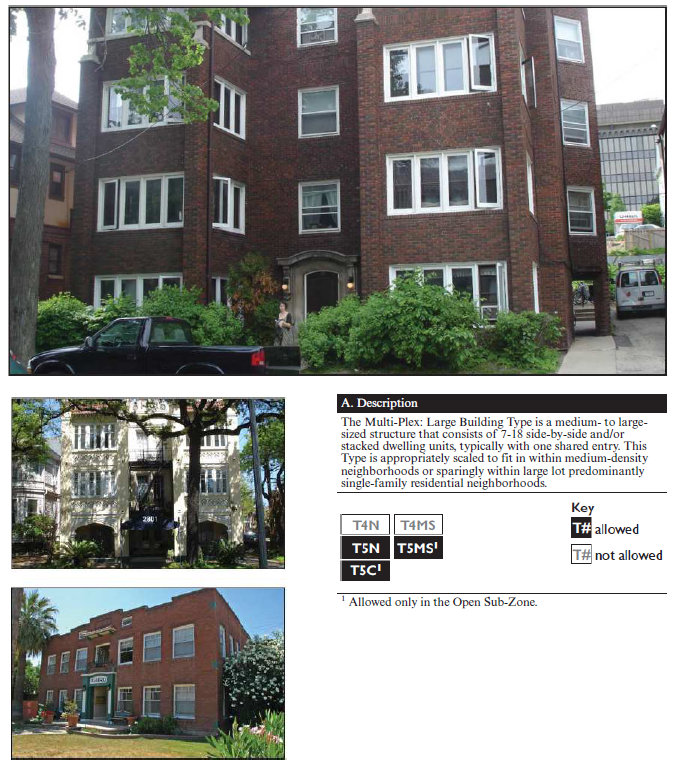
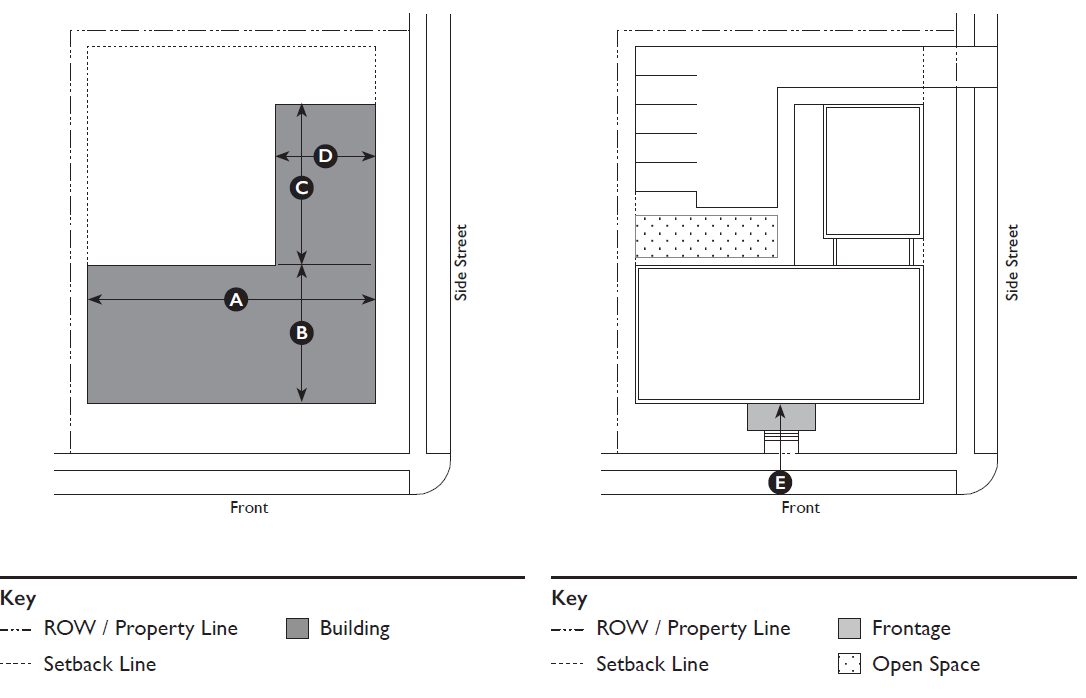
| B. Number of Units | ||
| Units | 7 min. | |
|
Large Multi-Plexes per lot/
design site | 1 max. | |
| C. Building Size and Massing | ||
| Height | ||
| Stories | 2 min.; 5 max. 2 | |
| Main Body | ||
| Width | 80' max. | |
| Depth | 75' max. | |
| Secondary Wing(s) | ||
| Width | 48' max. | |
| Depth | 36' max. | |
| Accessory Structure(s) | ||
| Width | 48' max. | |
| Depth | 30' max. | |
| The footprint area of an accessory structure may not exceed the footprint area of the main body. | ||
| 2 Height must also comply with transect zone standards in Article 15.04.402 (Transect Zones). | ||
| D. Allowed Frontage Types | Standards | |||
| Porch: Projecting | 15.04.404.020 | |||
| Stoop | 15.04.404.040 | |||
| Forecourt | 15.04.404.050 | |||
| Dooryard | 15.04.404.060 | |||
| E. Pedestrian Access | ||||
| Main Entrance Location | Front | | ||
| Units located in the main body shall be accessed by a common entry along the front. | ||||
| On corner lots, units in a secondary wing may front the side street. | ||||
| G. Open Space | ||||
| Yard | ||||
| Width | 10' min. | | ||
| Depth | 10' min. | | ||
| Area | 200 sf min. | |||
| Required street setbacks and driveways shall not be included in the open space area calculation. | ||||
| Required open space must be located behind the front facade of the building type. | ||||
(Ord. No. 04-23 N.S., § I(Exh. A), 4-18-2023)
15.04.403.120 - Stacked Flats.
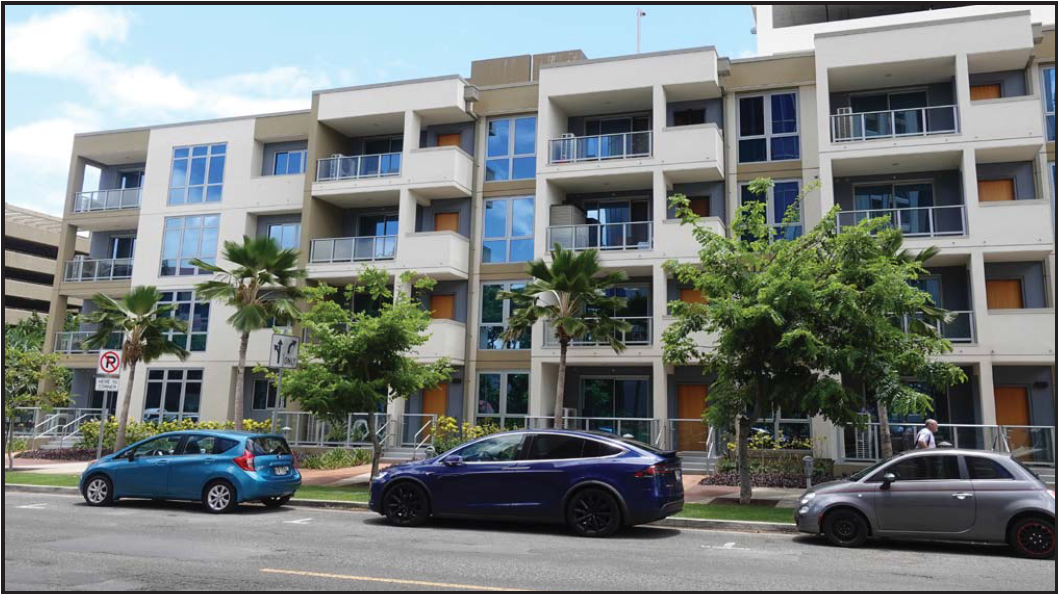
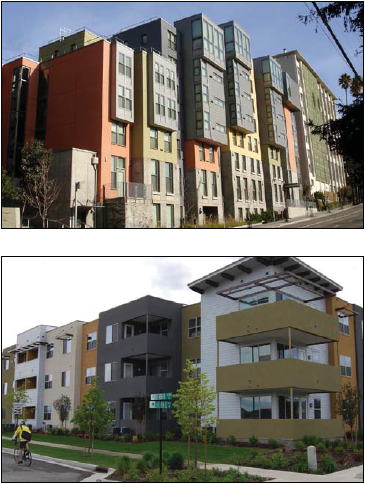 | A. Description |
| The Stacked Flats Building Type is a medium- to large-sized structure that consists of multiple dwelling units. Each unit may have its own individual entry, or may share a common entry. This Type is appropriately scaled to fit adjacent to neighborhood serving main streets and walkable urban neighborhoods. This Building Type may include a courtyard. | |
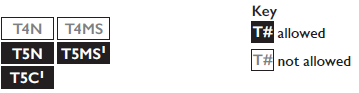 | |
| 1 Allowed only in the Open Sub-Zone. |
| B. Number of Units | ||
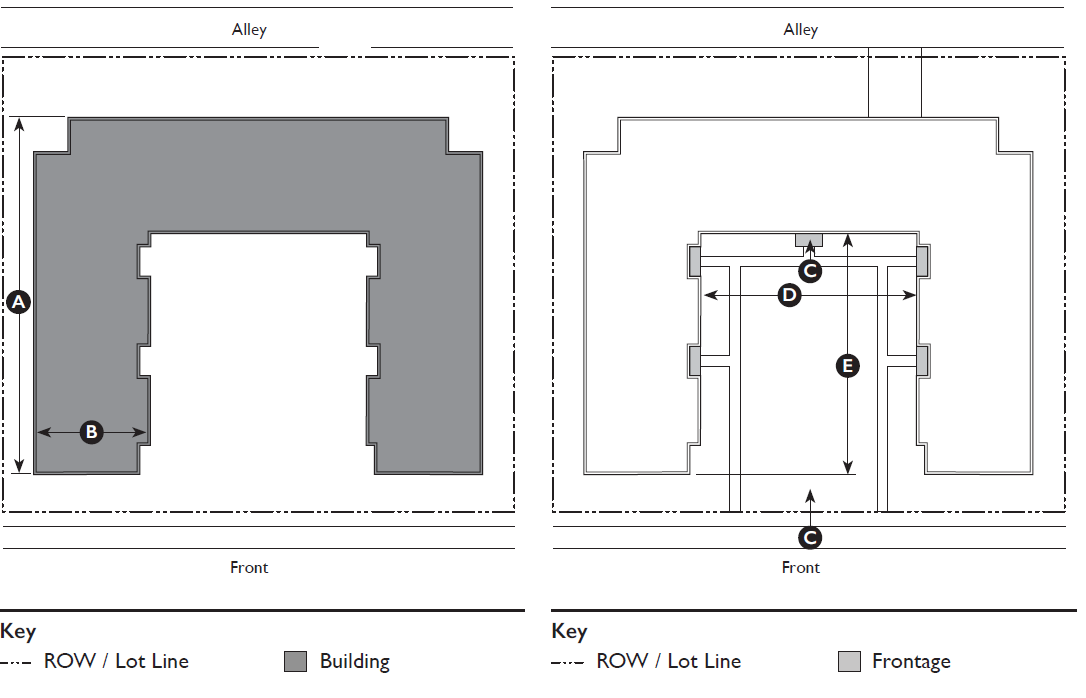
| Units | 12 min. | |
| C. Building Size and Massing | ||
| Height | ||
| Stories | 3 min.; 8 max. 2 | |
| Main Body | ||
| Width | 200' max. | |
| Depth | 65' max. | |
| Bay Windows | ||
| Accessory Structure(s) | ||
| No accessory structures are allowed. | ||
| Buildings ≥ 75' wide shall apply Bay Window(s) on front and/or side street facade in compliance with Subsection 10 (Bay Windows) of the applicable style in Article 15.04.405 (Architectural Standards). | ||
| 2 Height must also comply with transect zone standards in Article 15.04.402 (Transect Zones). | ||
| D. Allowed Frontage Types | Standards | |
| Porch: Projecting | 15.04.404.020 | |
| Stoop | 15.04.404.040 | |
| Forecourt | 15.04.404.050 | |
| D. Allowed Frontage Types (continued) | Standards | |
| Dooryard | 15.04.404.060 | |
| Loft | 15.04.404.110 | |
| Loft allowed only in Main Street and Core, including Open Sub-Zones. | ||
| E. Pedestrian Access | ||
| Units shall enter from a courtyard or a street. | ||
| Main Entrance Location | Front | |
| Courtyards, as they occur shall be accessible from the front. | | |
| Each unit may have an individual entry. | ||
| F. Open Space | ||
| Balconies | ||
| Min. 20% of units shall have a balcony of at least 60 sf. | ||
| Common Space | ||
| Width | 20' min.; 150' max. | |
| Width-to-Max.-Height Ratio | 1:2 min.; 2:1 max. | |
| Depth | 40' min.; 150' max. | |
| Depth-to-Max.-Height Ratio | 1:2 min.; 3:1 max. | |
| Area (total) |
400 sf min.;
50 sf/unit min. | |
(Ord. No. 04-23 N.S., § I(Exh. A), 4-18-2023)
15.04.403.130 - Courtyard Building: Small.
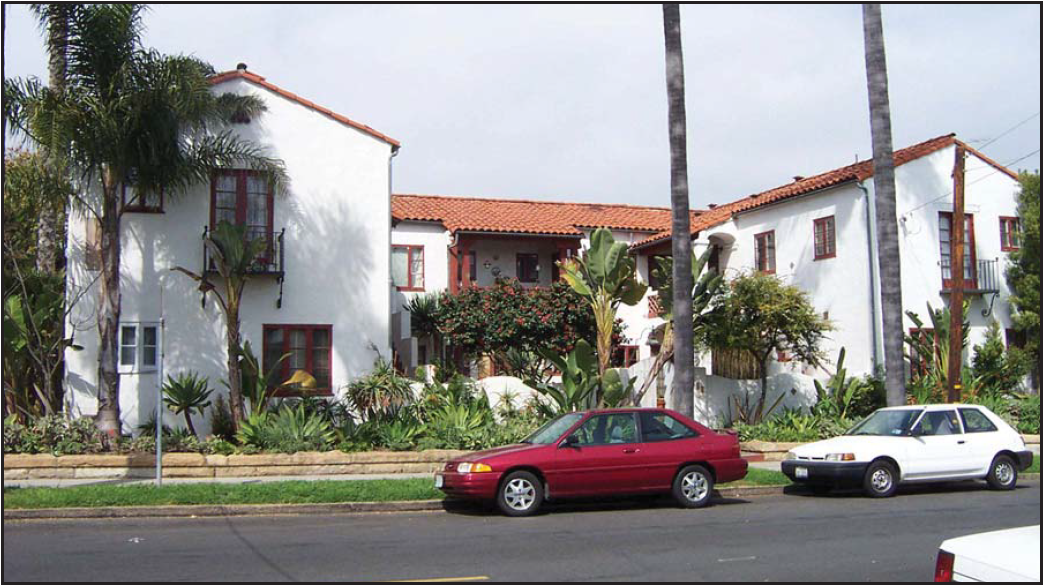
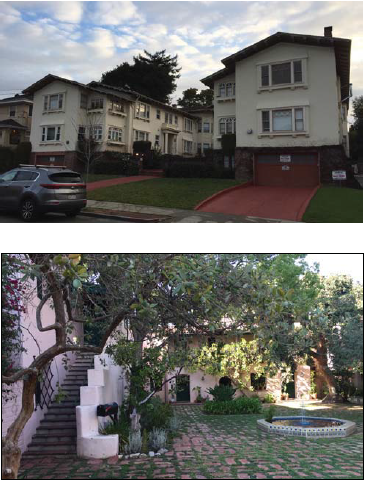 | A. Description |
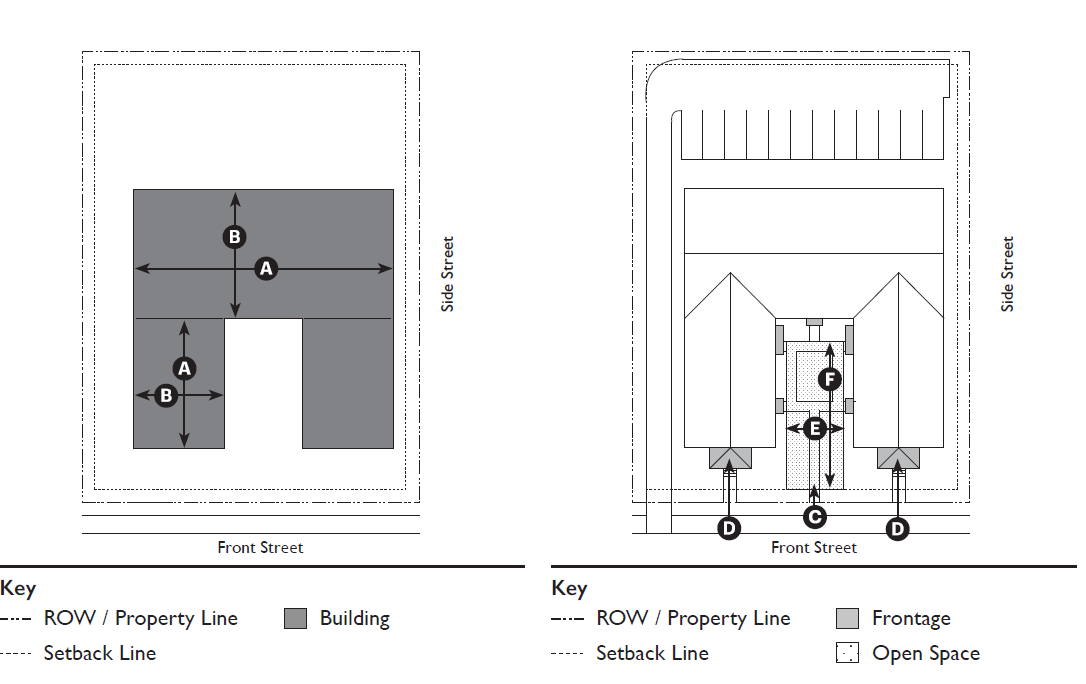
| The Courtyard Building: Small Building Type is a detached, House-Scale structure that consists of attached and/or stacked units, accessed from a shared courtyard. The shared court is common open space. Each unit may have its own individual entry, or up to four units may share a common entry. This Type is appropriately scaled to fit in sparingly within primarily single-family residential or medium-density neighborhoods. | |
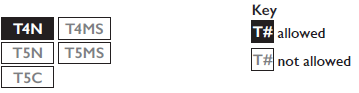 |
| B. Number of Units | ||
| Unrestricted | ||
| C. Building Size and Massing | ||
| Height | ||
| Stories | 2 min.; 2½ max. 1 | |
| Main Body/Secondary Wing(s) | ||
| Width | 100' max. | |
| Depth | 40' max. | |
| Accessory Structure(s) | ||
| No accessory structures are allowed. | ||
| D. Allowed Frontage Types | Standards | |
| Porch: Projecting | 15.04.404.020 | |
| Stoop | 15.04.404.040 | |
| Forecourt | 15.04.404.050 | |
| Dooryard | 15.04.404.060 | |
| Shopfront | 15.04.404.070 | |
| Gallery | 15.04.404.090 | |
| 1 Half Story allowed as defined in Article 15.04.104 (Key Terms and Definitions). | ||
| E. Pedestrian Access | ||
| Courtyards shall be accessible from the front | | |
| The main entry of ground floor units shall be directly off of a courtyard or a street. | | |
| Each unit may have an individual entry. | ||
| Pedestrian connections shall link all buildings to the public right-of-way, courtyards, and parking areas. | ||
| Passages through buildings and between buildings should be provided to connect multiple courtyards. | ||
| Stairs accessing upper floors may serve four units max. | ||
| F. Open Space | ||
| Courtyard(s) | ||
| Width | 12' min.; 50' max. | |
| Width-to-Max.-Height Ratio | 1:2 min.; 2:1 max. | |
| Depth | 12' min.; 150' max. | |
| Depth-to-Max.-Height Ratio | 1:1 min.; 3:1 max. | |
| Area (total) | 400 sf min.; 50 sf/unit min. | |
| At least two courtyard edges shall be defined by a building. | ||
| Courtyard edges not defined by a building should be defined by a 6' stucco or masonry wall. | ||
(Ord. No. 04-23 N.S., § I(Exh. A), 4-18-2023)
15.04.403.140 - Courtyard Building: Large.
 | A. Description |
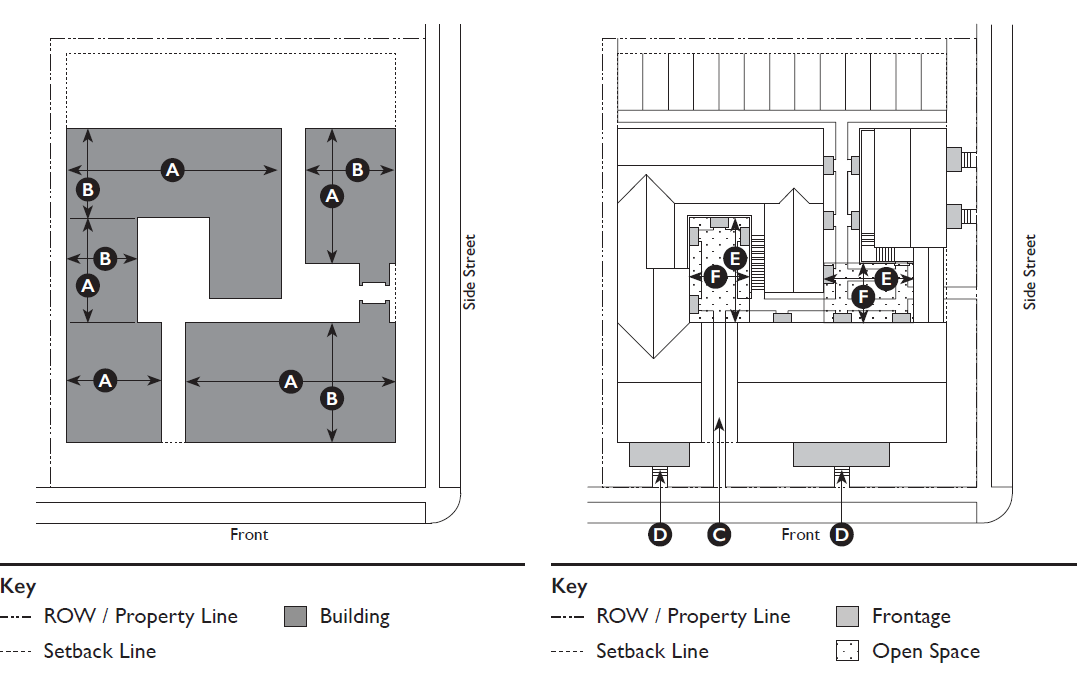
| The Courtyard Building: Large Building Type is a detached or attached, Block-Scale structure that consists of attached and/or stacked units, accessed from one or more shared courtyards. The shared court is common open space. The type is typically integrated into moderate-to-high-intensity neighborhoods and on main streets with a non-residential ground floor along the adjacent street. | |
 |
| B. Number of Units | ||
| Unrestricted | ||
| C. Building Size and Massing | ||
| Height | ||
| Stories | 2 min.; 5 max. 1 | |
| Main Body/Secondary Wing(s) | ||
| Width | 150' max. | |
| Depth | 40' max. | |
| Accessory Structure(s) | ||
| No accessory structures are allowed. | ||
| D. Allowed Frontage Types | Standards | |
| Porch: Projecting 2 | 15.04.404.020 | |
| Stoop 2 | 15.04.404.040 | |
| Forecourt | 15.04.404.050 | |
| Dooryard 2 | 15.04.404.060 | |
| Shopfront | 15.04.404.070 | |
| Industrial Shopfront | 15.04.404.080 | |
| Gallery | 15.04.404.090 | |
| Loft2 | 15.04.404.110 | |
| 1 Height must also comply with transect zone standards in Article 15.04.402 (Transect Zones). | ||
| 2 Allowed only in Main Street-Open and Neighborhood zones. | ||
| E. Pedestrian Access | ||
| Courtyards shall be accessible from the front | | |
| The main entry of ground floor units shall be directly off of a courtyard or a street. | | |
| Each unit may have an individual entry. | ||
| Pedestrian connections shall link all buildings to the public right-of-way, courtyards, and parking areas. | ||
| Passages through buildings and between buildings should be provided to connect multiple courtyards. | ||
| Stairs to upper floors may serve four units max. | ||
| F. Open Space | ||
| Balconies | ||
| Min. 20% of units shall have a balcony of at least 60 sf. | ||
| Courtyard(s) | ||
| Width | 12' min.; 50' max. | |
| Width-to-Max.-Height Ratio | 1:2 min.; 2:1 max. | |
| Depth | 12' min.; 150' max. | |
| Depth-to-Max.-Height Ratio | 1:1 min.; 3:1 max. | |
| Area (total) |
400 sf min.;
50 sf/unit min. | |
| At least two courtyard edges shall be defined by a building. | ||
| Courtyard edges not defined by a building should be defined by a 6' stucco or masonry wall. | ||
(Ord. No. 04-23 N.S., § I(Exh. A), 4-18-2023)
15.04.403.150 - Live/Work.
 | A. Description |
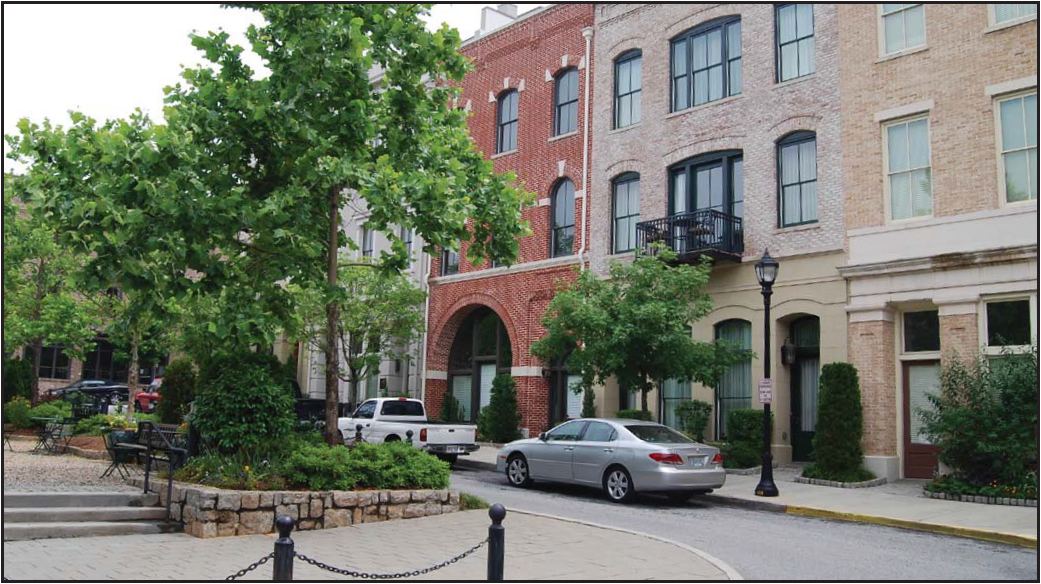
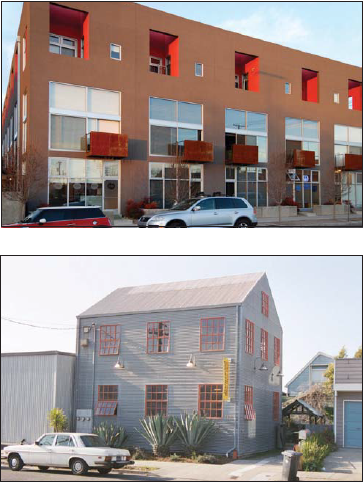
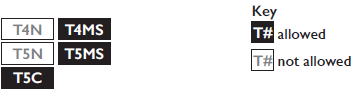
| The Live/Work Building Type is a small- to medium-sized attached or detached structure that consists of one dwelling unit above and/or behind a flexible ground floor space that can be used for residential, service, or retail uses. Both the ground-floor flex space and the dwelling unit are occupied by one entity. This Type is typically located within medium-density neighborhoods or in a location that transitions from a single-family residential neighborhood into a neighborhood main street. It is especially appropriate for incubating neighborhood-serving retail and service uses and allowing neighborhood main streets to expand as the market demands. | |
 |
| B. Number of Units | ||
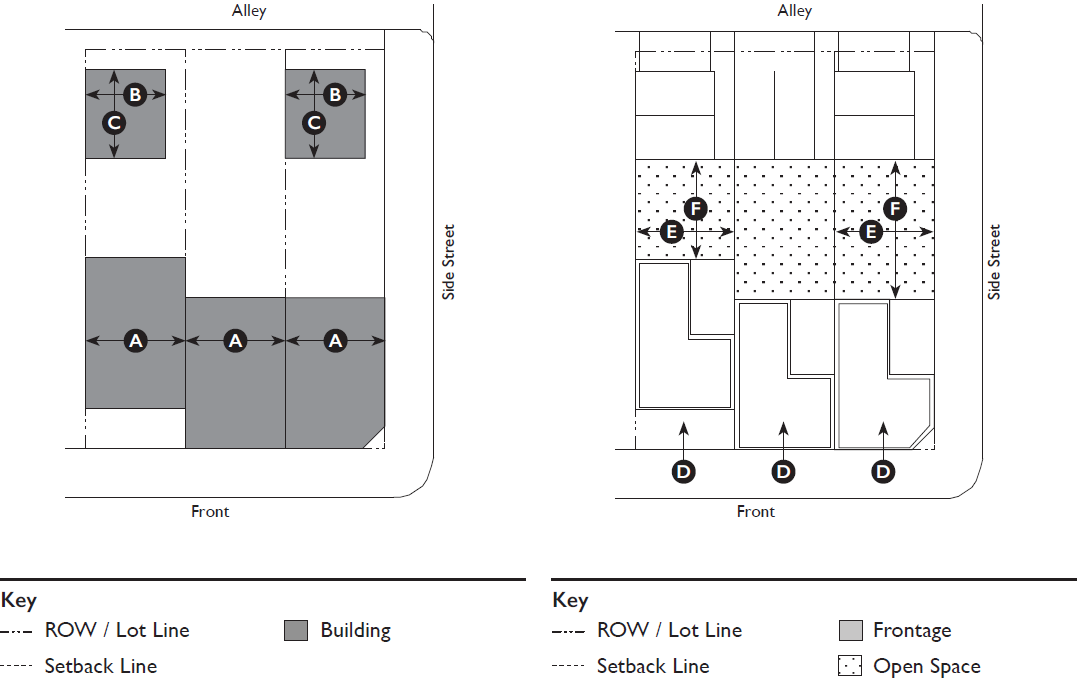
| Live/Work Buildings per lot/ design site | 1 max. | |
| Units in this Type shall be Live-Work units as defined in Article 15.04.104 (Key Terms and Definitions). | ||
| C. Building Size and Massing | ||
| Height | ||
| Stories | 2 min.; 5 max. 1 | |
| Main Body | ||
| Width | 18' min.; 36' max. | |
| Secondary Wing(s) | ||
| The footprint area of the secondary wing(s) may not exceed the footprint area of the main body. | ||
| Accessory Structure(s) | ||
| Width | 24' max. | |
| Depth | 30' max. | |
| The footprint area of an accessory structure may not exceed the footprint area of the main body. | ||
| 1 Height must also comply with transect zone standards in Article 15.04.402 (Transect Zones). | ||
| D. Allowed Frontage Types | Standards | |
| Dooryard | 15.04.404.060 | |
| Shopfront | 15.04.404.070 | |
| Industrial Shopfront | 15.04.404.080 | |
| Gallery | 15.04.404.090 | |
| Terrace | 15.04.404.100 | |
| Loft | 15.04.404.110 | |
| E. Pedestrian Access | ||
| Main Entrance Location | Front | |
| Ground-floor space and upper unit must have separate entries. | ||
| F. Open Space | ||
| Yard | ||
| Width | 8' min. | |
| Depth | 8' min. | |
| Area | 100 sf min. | |
| Required street setbacks and driveways shall not be included in the open space area calculation. | ||
| Required open space must be located behind the main body of the building type. | ||
(Ord. No. 04-23 N.S., § I(Exh. A), 4-18-2023)
15.04.403.160 - Main Street Building.
 | A. Description |
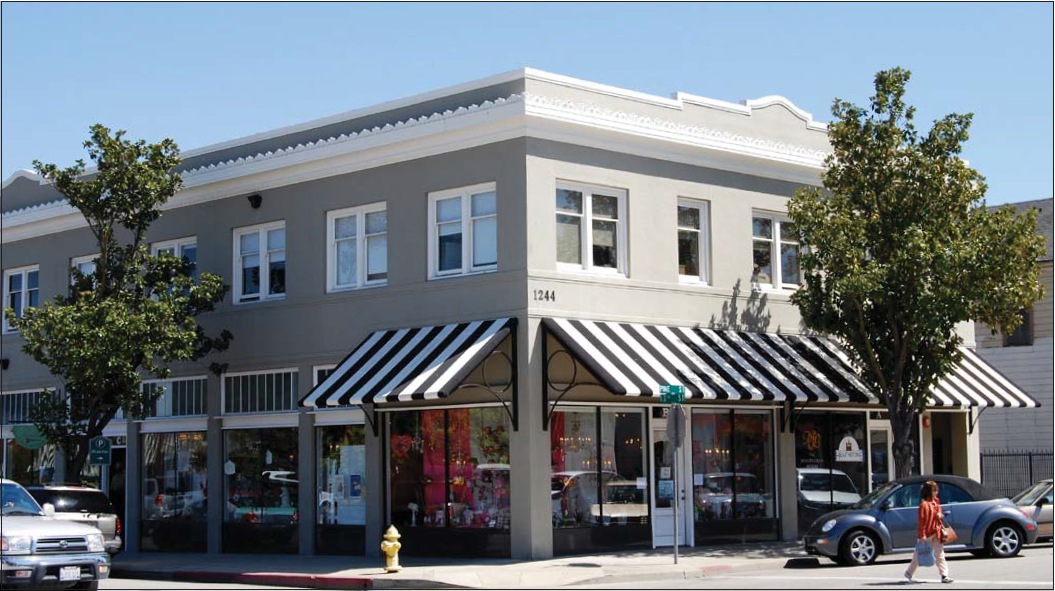
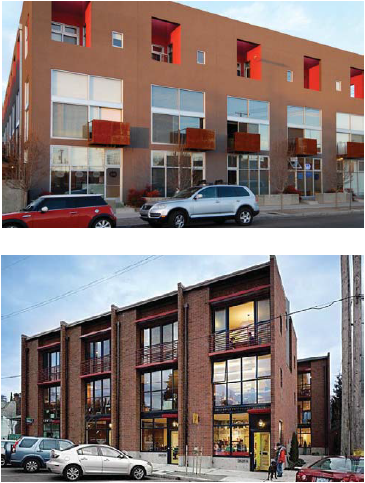
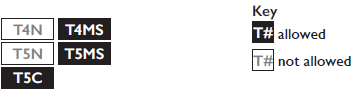
| The Main Street Building Type is a small- to medium-sized structure, typically attached, intended to provide a vertical mix of uses with ground-floor commercial, service, or retail uses and upper-floor commercial, service, or residential uses. This Type makes up the primary component of a neighborhood main street and portions of a downtown main street. | |
 |
| B. Number of Units | ||||
| Unrestricted | ||||
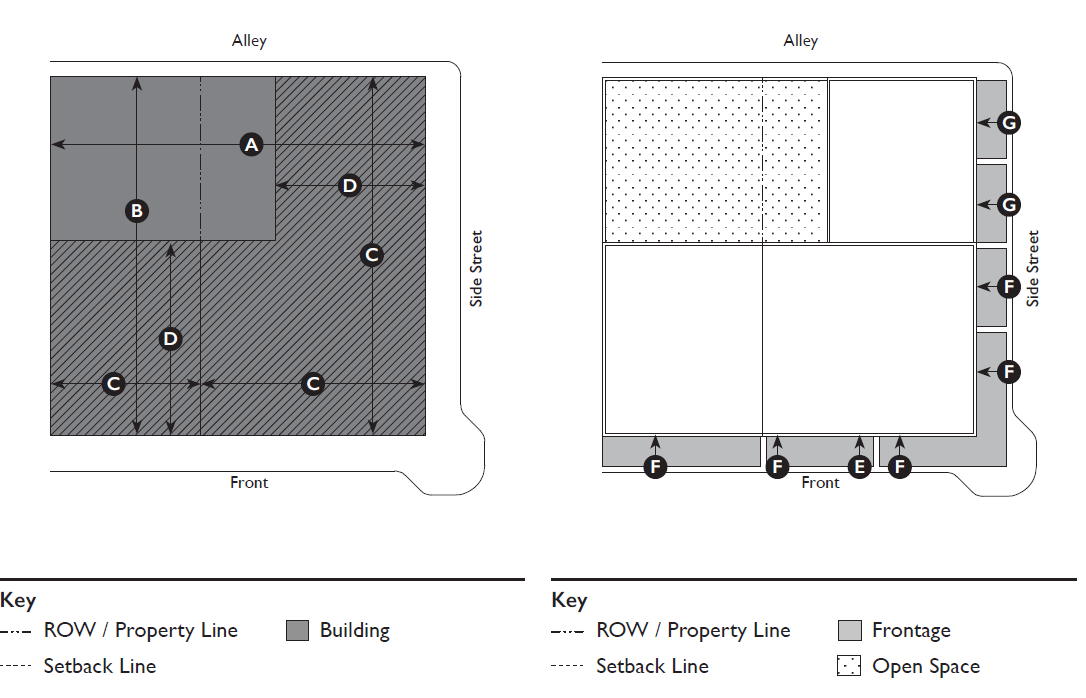
| C. Building Size and Massing | ||||
| Height | ||||
| Stories | 8 max. 1 | |||
| Footprint | ||||
| Floors 1-2 | ||||
| Width | 150' max. | | ||
| Depth | 150' max. | | ||
| Floors 3+ (may consist of multiple wings) | ||||
| Width | 150' max. | | ||
| Depth | 65' max. | | ||
| No floorplate may be larger than that of the floor below. | ||||
| Bay Windows | ||||
| Buildings ≥ 75' wide shall apply Bay Window(s) on front and/or side street facade in compliance with Subsection 10 (Bay Windows) of the applicable style in Article 15.04.405 (Architectural Standards). | ||||
| 1 Height must also comply with transect zone standards in Article 15.04.402 (Transect Zones). | ||||
| D. Allowed Frontage Types | Standards | |
| Forecourt | 15.04.404.050 | |
| Dooryard | 15.04.404.060 | |
| Shopfront | 15.04.404.070 | |
| Industrial Shopfront | 15.04.404.080 | |
| Gallery | 15.04.404.090 | |
| Terrace | 15.04.404.100 | |
| Loft | 15.04.404.110 | |
| Dooryard and Loft allowed only in Open Sub-Zones. | ||
| E. Pedestrian Access | ||
| Upper floor units located in the main body shall be accessed by a common entry along the front street. | | |
| Ground floor units may have individual entries along the front or side street. | | |
| On corner lots, units in a secondary wing/accessory structure may front the side street. | | |
| F. Open Space | ||
| Balconies | ||
| Min. 20% of units shall have a balcony of at least 60 sf. | ||
| Podium tops, if any, should be used for open space. | ||
(Ord. No. 04-23 N.S., § I(Exh. A), 4-18-2023)
15.04.403.170 - Mid-Rise.
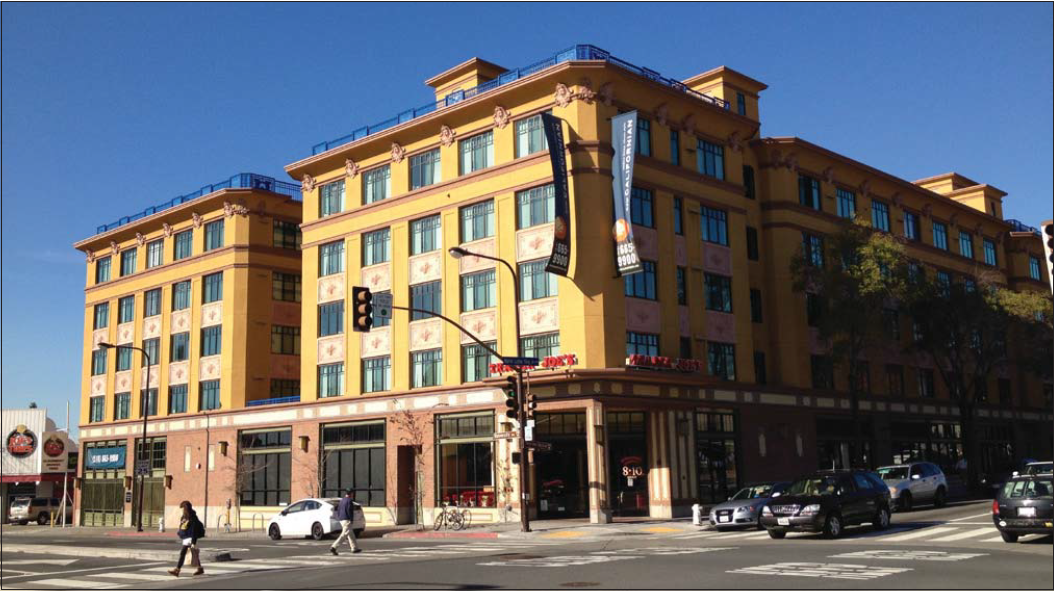
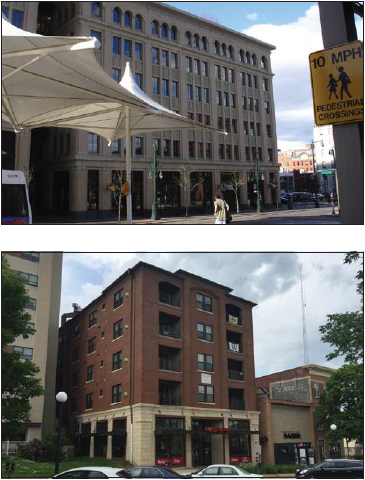 | A. Description |
| The Mid-Rise Building Type is a medium- to large-sized structure, 4-8 stories tall, built on a large lot. Often, and especially along urban main streets, it incorporates a concrete "podium" at the lowest floor(s). It can be used to provide a vertical mix of uses, accommodating ground-floor retail, service, and/or structured parking with the upper-floors housing service or residential uses; it may also be a single-use building—typically service or residential—where ground-floor retail is not appropriate. This Type is a primary component of an urban downtown providing high-density buildings. | |
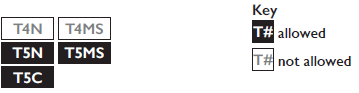 |
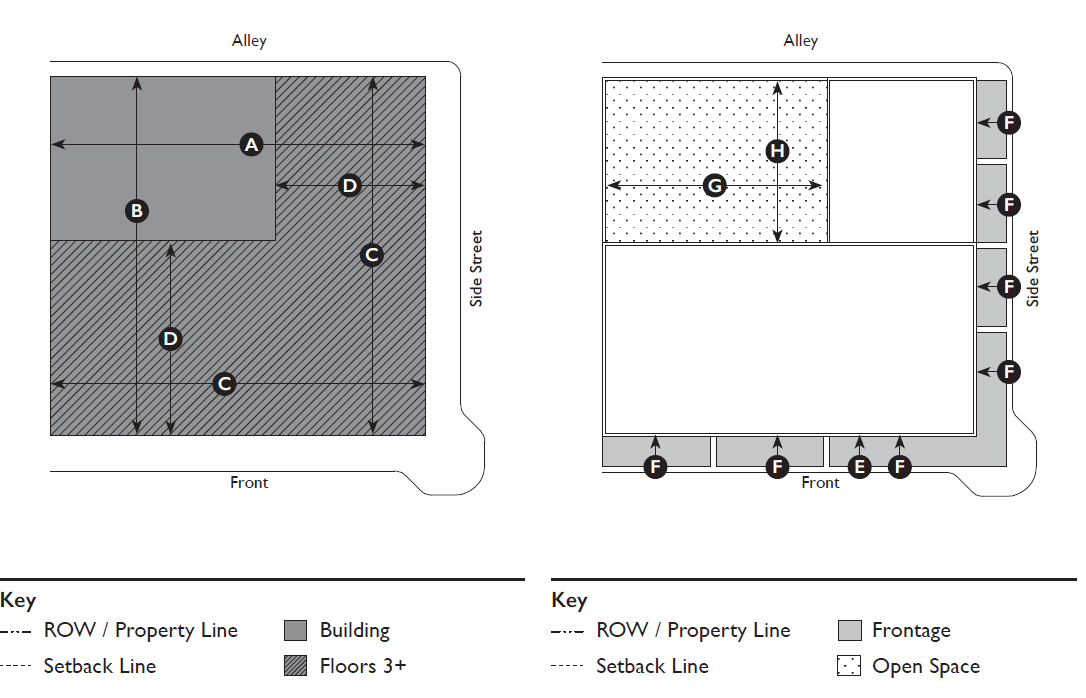
| B. Number of Units | ||||
| Unrestricted | ||||
| C. Building Size and Massing | ||||
| Height | ||||
| Stories | 8 max. 1 | |||
| Footprint | ||||
| Floors 1-2 | ||||
| Width | 250' max. | | ||
| Depth | 250' max. | | ||
| Lot Coverage | 100% max. | |||
| Floors 3+ (may consist of multiple wings) | ||||
| Width | 250' max. | | ||
| Depth | 65' max. | | ||
| No floorplate may be larger than that of the floor below. | ||||
| Bay Windows | ||||
| Buildings ≥ 75' wide shall apply Bay Window(s) on front and/or side street facade in compliance with Subsection 10 (Bay Windows) of the applicable style in Article 15.04.405 (Architectural Standards). | ||||
| 1 Height must also comply with transect zone standards in Article 15.04.402 (Transect Zones). | ||||
| D. Allowed Frontage Types | Standards | |
| Dooryard | 15.04.404.060 | |
| Shopfront | 15.04.404.070 | |
| Gallery | 15.04.404.090 | |
| Terrace | 15.04.404.100 | |
| Loft | 15.05.404.110 | |
| Dooryard and Loft allowed only in Open Sub-Zones. | ||
| E. Pedestrian Access | ||
| Upper floor units shall be accessed by a common entry along the front street. | | |
| Ground floor units may have individual entries along the front or side street. | | |
| F. Open Space | ||
| Balconies | ||
| Min. 20% of units shall have a balcony of at least 60 sf. | ||
| Common Space | ||
| Width | 20' min.; 50' max. | |
| Width-to-Max.-Height Ratio | 1:2 min. to 2:1 max. | |
| Depth | 20' min.; 150' max. | |
| Depth-to-Max.-Height Ratio | 1:1 min. to 3:1 max. | |
| Podium tops, if any, should be used for open space. | ||
(Ord. No. 04-23 N.S., § I(Exh. A), 4-18-2023)
15.04.403.180 - High-Rise.
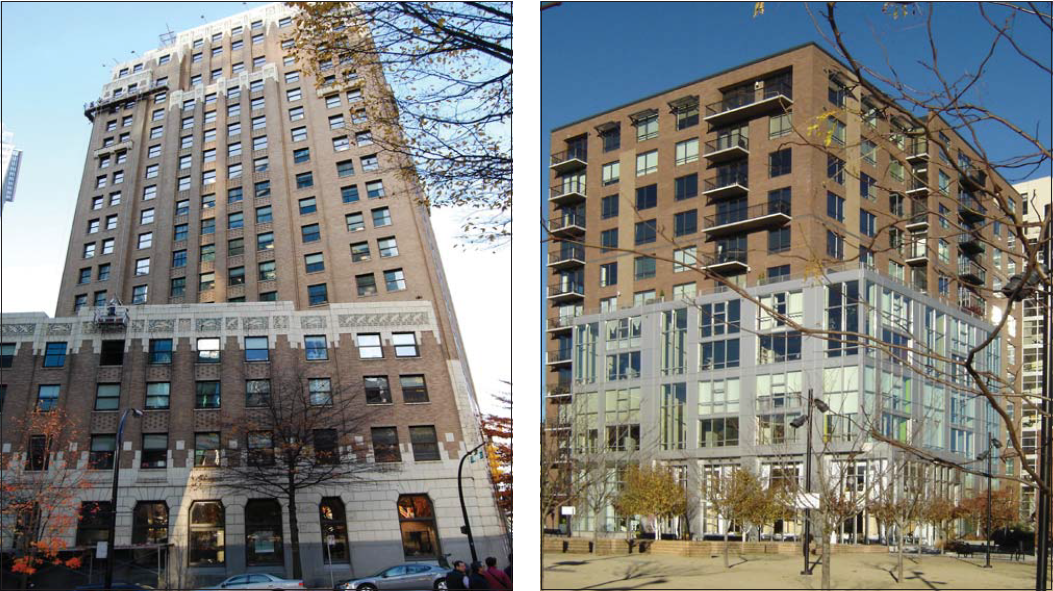
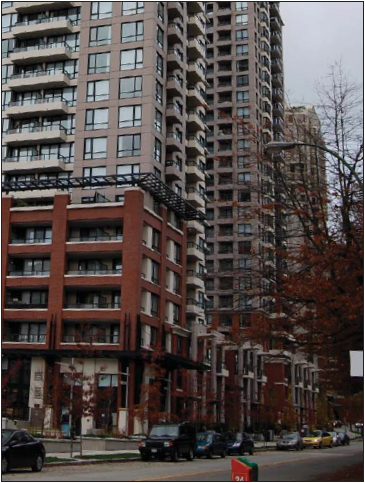 | A. Description |
| The High-Rise Building Type is a large-sized structure, more than eight stories tall, built on a large lot that incorporates structured parking. Its fire-resistant construction allows for habitable space at much greater heights than in other Types. It is used to provide a vertical mix of uses, with ground-floor retail or service uses and upper-floor commercial, service, or residential uses. This Type is a primary component of an urban downtown providing high-density buildings. | |
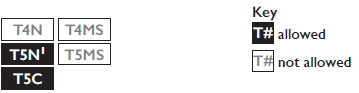 | |
| 1 Allowed only in the T5N-135 Sub-Zone. |
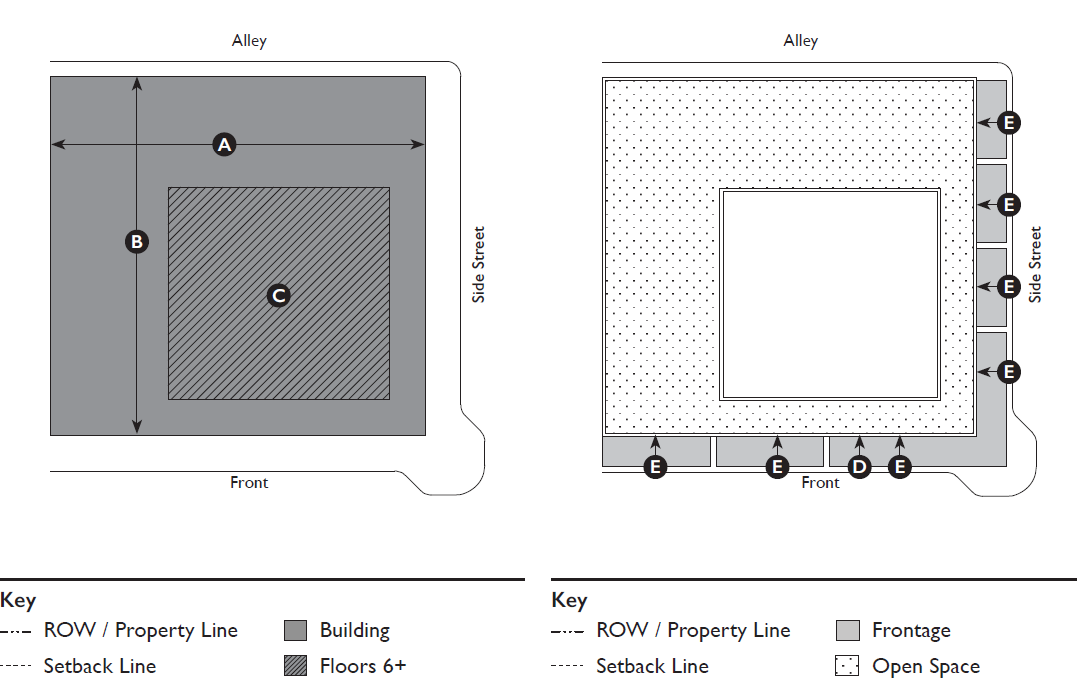
| B. Number of Units | ||
| Unrestricted | ||
| C. Building Size and Massing | ||
| Height | ||
| Stories | 9 min. 2 | |
| Footprint | ||
| Floors 1-5 | ||
| Width | 300' max. | |
| Depth | 300' max. | |
| Lot Coverage | 100% max. | |
| Floors 6-8 Floorplate | 80% of lot max. | |
| Floors 9+ Floorplate | 15,000 sf max. | |
| No floorplate may be larger than that of the floor below. | ||
| Bay Windows | ||
| Buildings ≥ 75' wide shall apply Bay Window(s) on front and/or side street facade in compliance with Subsection 10 (Bay Windows) of the applicable style in Article 15.04.405 (Architectural Standards). | ||
| 2 Height must also comply with transect zone standards in Article 15.04.402 (Transect Zones). | ||
| D. Allowed Frontage Types | Standards | ||
| Dooryard | 15.04.404.060 | ||
| Shopfront | 15.04.404.070 | ||
| Gallery | 15.04.404.090 | ||
| Terrace | 15.04.404.100 | ||
| Loft | 15.04.404.110 | ||
| Dooryard and Loft allowed only in Open Sub-Zones. | |||
| E. Pedestrian Access | |||
| Upper floor units shall be accessed by a common entry along the front street. | | ||
| Ground floor units may have individual entries along the front or side street. | | ||
| F. Open Space | |||
| Balconies | |||
| Min. 20% of units shall have a balcony of at least 60 sf. | |||
| Podium tops and flat roofs below the top story, if any, should be used for open space. | |||
(Ord. No. 04-23 N.S., § I(Exh. A), 4-18-2023)
15.04.404.010 - Purpose.
This Article sets forth the standards applicable to the development of private frontages. Private frontages are the components of a building that provide an important transition and interface between the public realm (street and sidewalk) and the private realm (yard or building). These standards supplement the standards for each zone within which the frontage types are allowed. For each frontage type, a description, a statement of the type's intent, and design standards are provided. These standards are intended to ensure development that reinforces the highly-valued existing character and scale of Richmond's neighborhoods and downtown.
The standards within this Article shall be considered in combination with the standards for the applicable zone in Article 15.04.402 (Transect Zones), Article 15.04.403 (Building Types) and Article 15.04.405 (Architectural Standards) and shall apply to:
A.
All proposed development within transect zones;
B.
All development fronting a semi-private or public space being treated as a primary pedestrian route;
C.
Any building fronting civic or open space or a street (public or private) or right-of-way.
(Ord. No. 04-23 N.S., § I(Exh. A), 4-18-2023)
15.04.404.020 - Porch: Projecting.
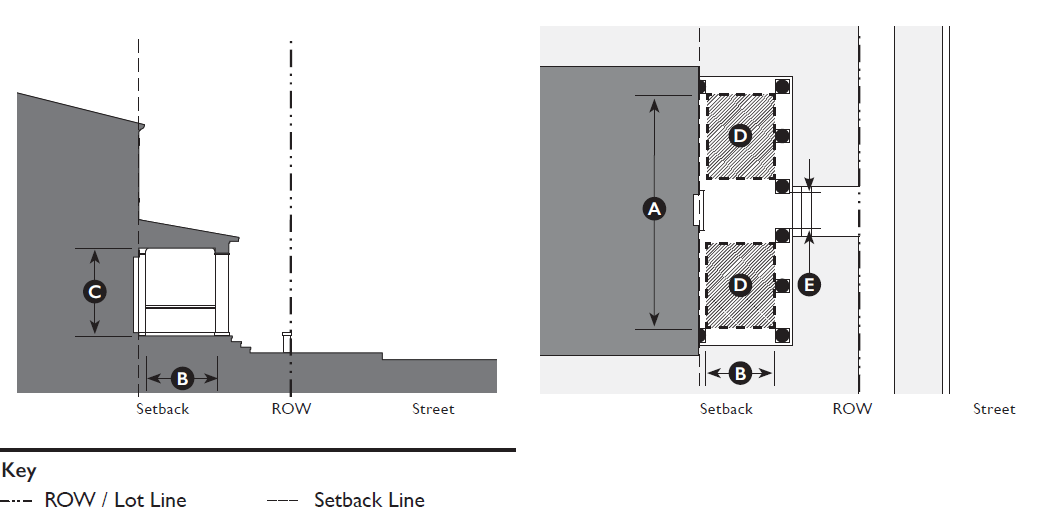
| A. Description | 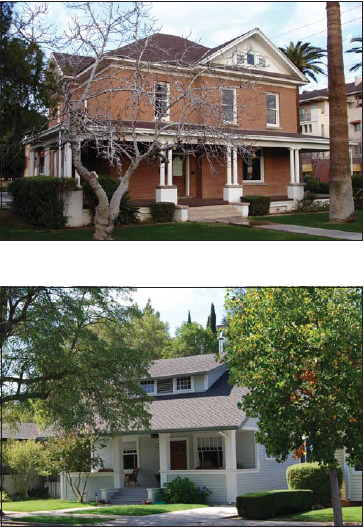 | ||
| Porch: Projecting: The main facade of the building has a small to medium setback from the frontage line. The resulting front yard is typically very small and can be defined by a fence or hedge to spatially maintain the edge of the street. The projecting porch is open on three sides and all habitable space is located behind the setback line. | |||
| B. Size | |||
| Width, clear | 10' min. | | |
| Depth, clear | 8' min. | | |
| Height, clear | 8' min. | | |
| Height | 2 stories max. | ||
| Furniture area, clear | 4' x 6' min. | | |
| Path of travel | 3' wide min. | | |
| C. Miscellaneous | |||
| Projecting porches are open on three sides and must have a roof. | |||
(Ord. No. 04-23 N.S., § I(Exh. A), 4-18-2023)
15.04.404.030 - Porch: Engaged.
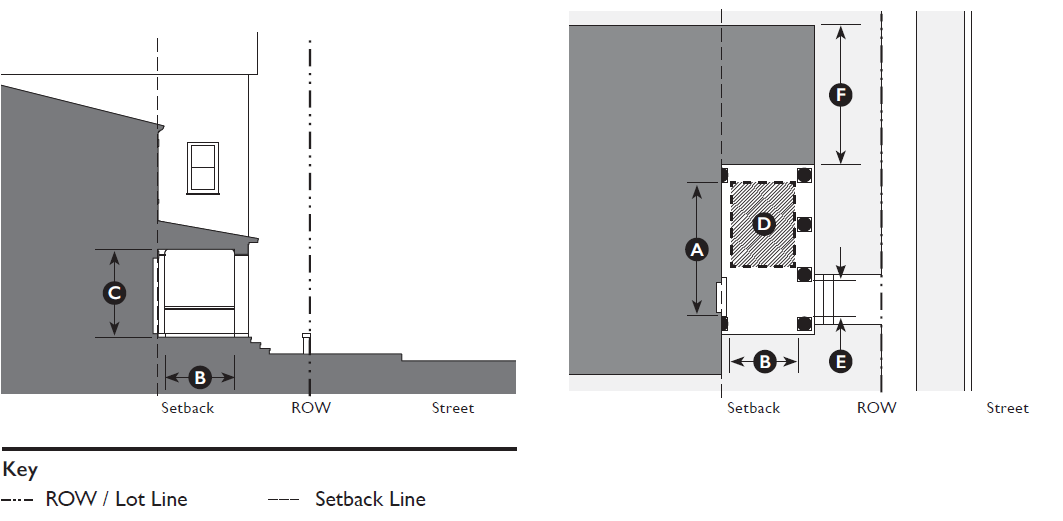
| A. Description | 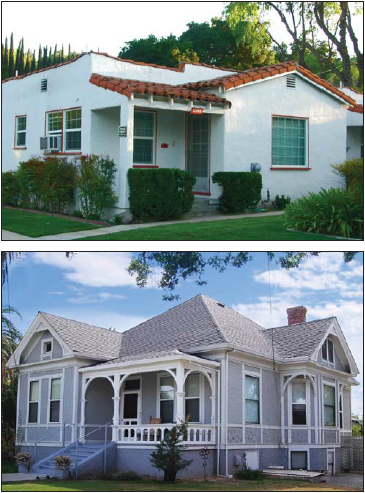 | ||
| Porch: Engaged: The main facade of the building has a small to medium setback from the frontage line. The resulting front yard is typically very small and can be defined by a fence or hedge to spatially maintain the edge of the street. The engaged porch has two adjacent sides of the porch that are engaged to the building while the other two sides are open. | |||
| B. Size | |||
| Width, clear | 10' min. | | |
| Depth, clear | 8' min. | | |
| Height, clear | 8' min. | | |
| Height | 2 stories max. | ||
| Furniture area, clear | 4' x 6' min. | | |
| Path of travel | 3' wide min. | | |
| C. Miscellaneous | |||
| Up to 2/5 of the building facade may project beyond the setback line into the encroachment area for this frontage type. | | ||
| Engaged porches must be open on two sides and have a roof. | |||
(Ord. No. 04-23 N.S., § I(Exh. A), 4-18-2023)
15.04.404.040 - Stoop.
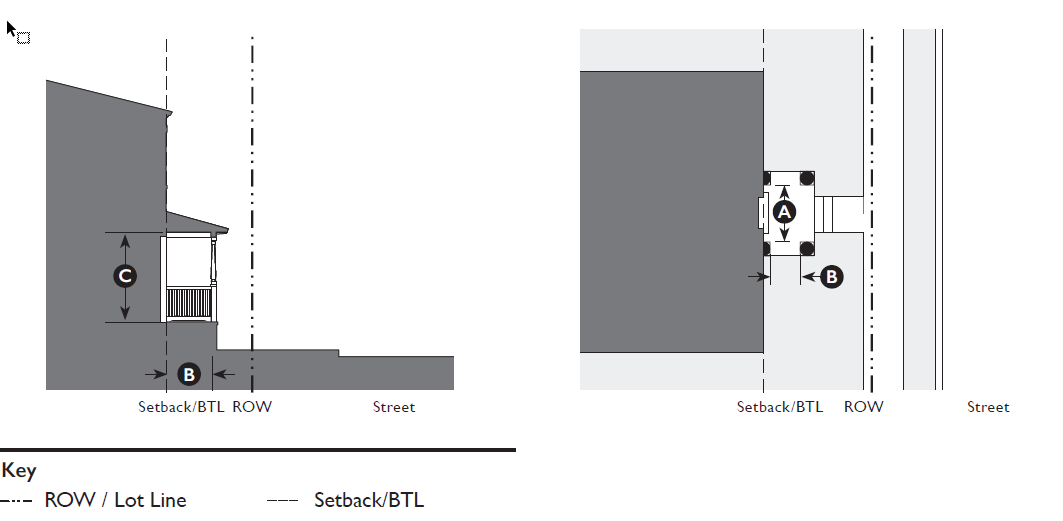
| A. Description | 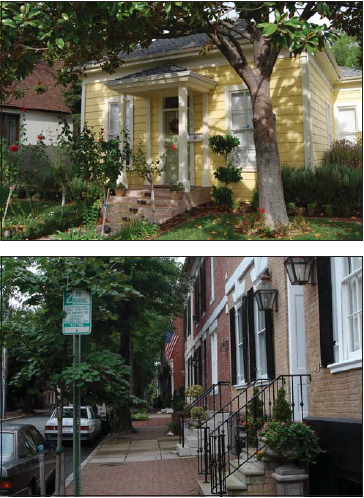 | ||
| Stoop: The main facade of the building is near the frontage line and the elevated stoop engages the sidewalk. The stoop shall be elevated above the sidewalk to ensure privacy within the building. Stairs from the stoop may lead directly to the sidewalk or may be side-loaded. This type is appropriate for residential uses with small setbacks. | |||
| B. Size | |||
| Width, clear | 5' min.; 8' max. | | |
| Depth, clear | 5' min.; 8' max. | | |
| Height, clear | 8' min. | | |
| Height | 1 story max. | ||
| Depth of recessed entries | 6' max. | ||
| C. Miscellaneous | |||
| Stairs may be perpendicular or parallel to the building facade. | |||
| Ramps shall be parallel to facade or along the side of the building. | |||
| The entry door shall be covered or recessed to provide shelter from the elements. | |||
| All doors must face the street. | |||
(Ord. No. 04-23 N.S., § I(Exh. A), 4-18-2023)
15.04.404.050 - Forecourt.
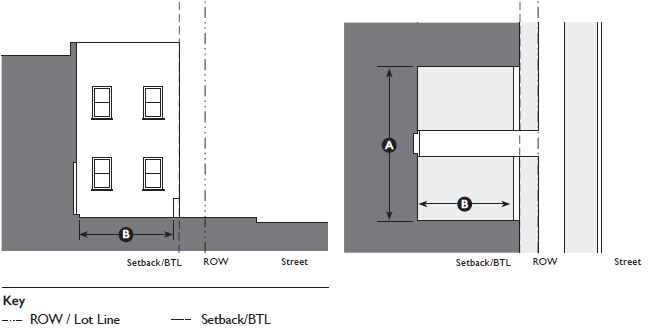
| A. Description | 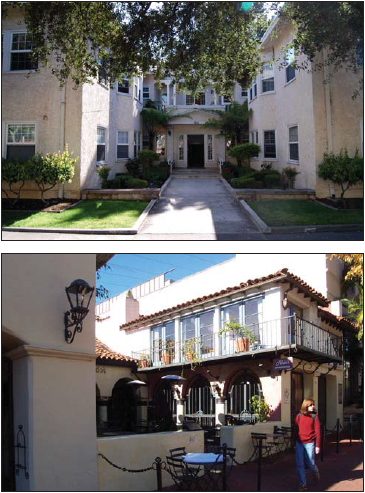 | ||
| Forecourt: The main facade of the building is at or near the frontage line and a small percentage is set back, creating a small court space. The space could be used as an entry court or shared garden space for apartment buildings, or as an additional shopping or restaurant seating area within commercial areas. | |||
| B. Size | |||
| Width, clear | 12' min. | | |
| Depth, clear | 12' min. | | |
| Ratio, height to width | 2:1 max. | | |
| C. Miscellaneous | |||
| Forecourts should be used sparingly and should not be repeated along a block frontage. | |||
| The proportions and orientation of these spaces should be carefully considered for solar orientation and user comfort. | |||
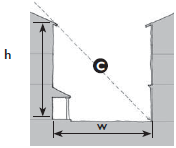 | |||
(Ord. No. 04-23 N.S., § I(Exh. A), 4-18-2023)
15.04.404.060 - Dooryard.
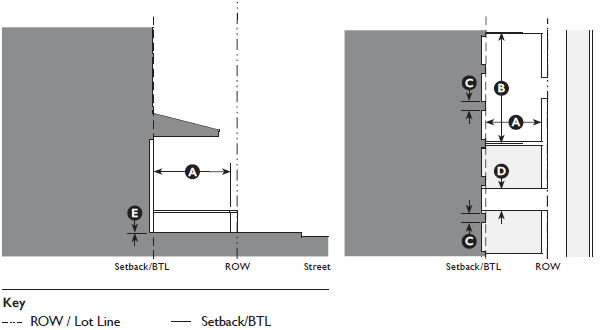
| A. Description | 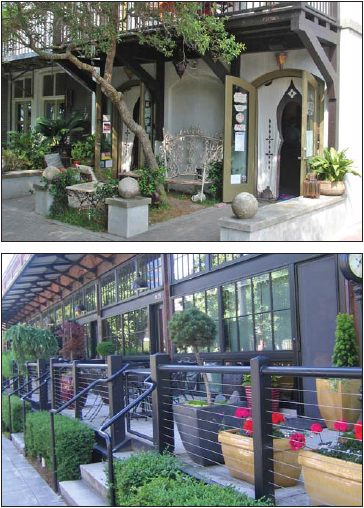 | ||
| Dooryard: The frontage line is defined by a low wall or hedge and the main facade of the building is set back a small distance creating a small dooryard. The dooryard shall not provide public circulation along a ROW. The dooryard may be raised, sunken, or at grade and is intended for ground-floor residential in flex zones, live/work, and small commercial uses ≤ 2,500 sf. | |||
| B. Size | |||
| Depth, clear | 8' min. | | |
| Length | 50' max. | | |
| Distance between glazing | 4' max. | | |
| Ground floor transparency | 50% min. 1 | ||
| Depth of recessed entries | 5' max. | ||
| Path of travel | 3' wide min. | | |
| Finish level above sidewalk | 3'-6" max. | | |
| Finish level below sidewalk | 6' max. | ||
| C. Miscellaneous | |||
| For Live/Work and Commercial uses, these standards are to be used in conjunction with those for the Shopfront Frontage Type. In case of conflict between them, the Dooryard standards shall prevail. | |||
| Low walls (12"—36") used as seating are encouraged. | |||
| Shall not be used for circulation for more than one ground floor entry. | |||
| 1 For Live/Work and Commercial uses only | |||
(Ord. No. 04-23 N.S., § I(Exh. A), 4-18-2023)
15.04.404.070 - Shopfront.
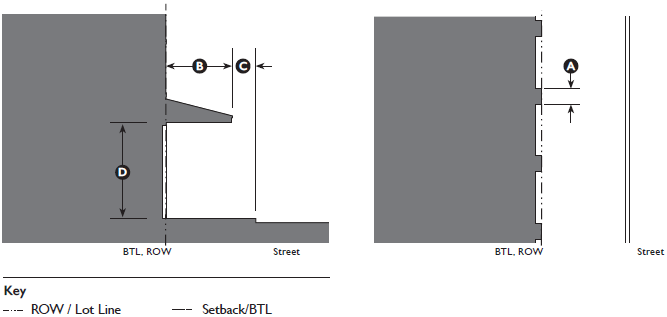
| A. Description | 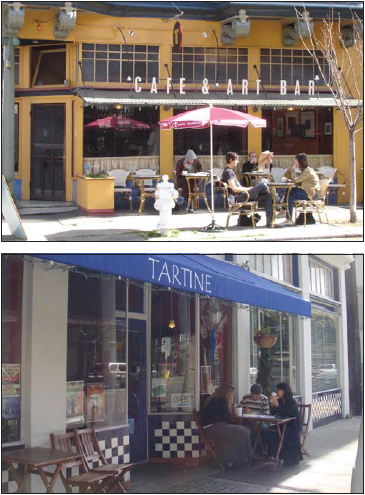 | ||
| Shopfront: The main facade of the building is at or near the frontage line with an at-grade
entrance along the sidewalk. This type is intended for retail use. It has substantial
glazing at the sidewalk level and may include an awning that may overlap the sidewalk.
It may be used in conjunction with other frontage types.
Syn: Retail Frontage, Awning | |||
| B. Size | |||
| Distance between glazing | 2' max. | | |
| Ground floor transparency | 75% min. | ||
| Depth of recessed entries | 5' max. | ||
| C. Awning | |||
| Depth | 4' min. | | |
| Setback from curb | 2' min. | | |
| Height, clear | 8' min. | | |
| D. Miscellaneous | |||
| Residential windows shall not be used. | |||
| Doors may be recessed as long as main facade is at BTL. | |||
| Operable awnings are encouraged. | |||
| Open-ended awnings encouraged. | |||
| Rounded and hooped awnings are discouraged. | |||
| Shopfronts with accordion-style doors/windows or other operable windows that allow the space to open to the street are encouraged. | |||
(Ord. No. 04-23 N.S., § I(Exh. A), 4-18-2023)
15.04.404.080 - Industrial Shopfront.
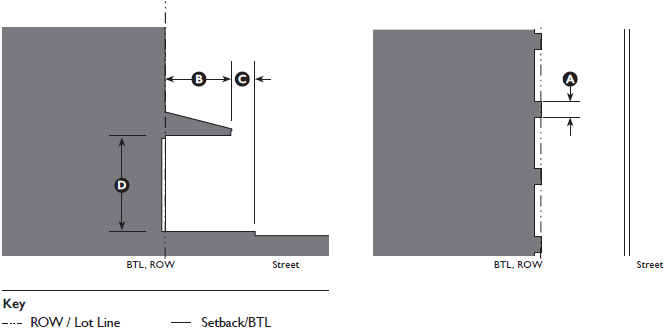
| A. Description | 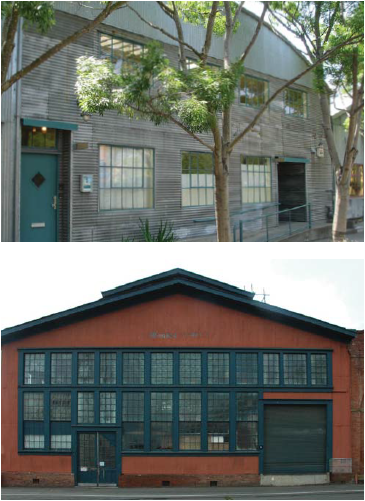 | ||
| Industrial Shopfront: The main façade of the building is at or near the front building site line with an at-grade or elevated entrance from the sidewalk. The type is intended for industrial artisan businesses to show their activity to people passing by on the sidewalk as well as for retail sales of products made on-site. This type may include a decorative roll-down or sliding door, include glazing and an awning that encroaches the sidewalk. | |||
| B. Size | |||
| Distance between glazing | 10' max. | | |
| Ground floor transparency | 30% min. | ||
| Depth of recessed entries | No max. | ||
| C. Awning | |||
| Depth | 5' min. | | |
| Setback from curb | 2' min. | | |
| Height, clear | 8' min. | | |
| D. Miscellaneous | |||
| Residential windows shall not be used. | |||
| Doors may be recessed as long as main facade is at BTL. | |||
| Operable awnings are encouraged. | |||
| Open-ended awnings encouraged. | |||
| Rounded and hooped awnings are discouraged. | |||
| Shopfronts with accordion-style doors/windows or other operable windows that allow the space to open to the street are encouraged. | |||
(Ord. No. 04-23 N.S., § I(Exh. A), 4-18-2023)
15.04.404.090 - Gallery.
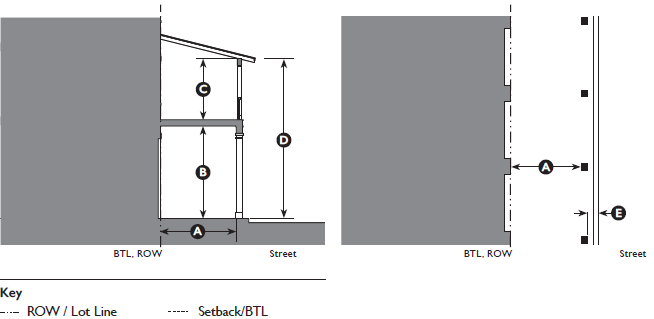
| A. Description | 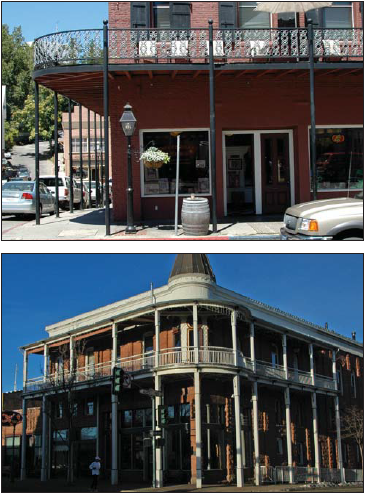 | ||
| Gallery: The main facade of the building is at the frontage line and the gallery element overlaps the sidewalk. This type is intended for buildings with ground-floor commercial uses and may be one or two stories. The gallery should provide the primary circulation along a frontage and extend far enough from the building to provide adequate protection and circulation for pedestrians. | |||
| B. Size | |||
| Depth, clear | 8' min. | | |
| Ground floor height, clear | 11' min. | | |
| Upper floor height, clear | 9' min. | | |
| Height | 2 stories max. | | |
| Setback from curb | 2' min. | | |
| C. Miscellaneous | |||
| These standards are to be used in conjunction with those for the Shopfront Frontage Type. In case of conflict between them, the Gallery standards shall prevail. | |||
| Upper-story galleries facing the street must not be used to meet primary circulation requirements. | |||
| Galleries must have a consistent depth along a frontage. | |||
| Gallery must project over a sidewalk. | |||
(Ord. No. 04-23 N.S., § I(Exh. A), 4-18-2023)
15.04.404.100 - Terrace.
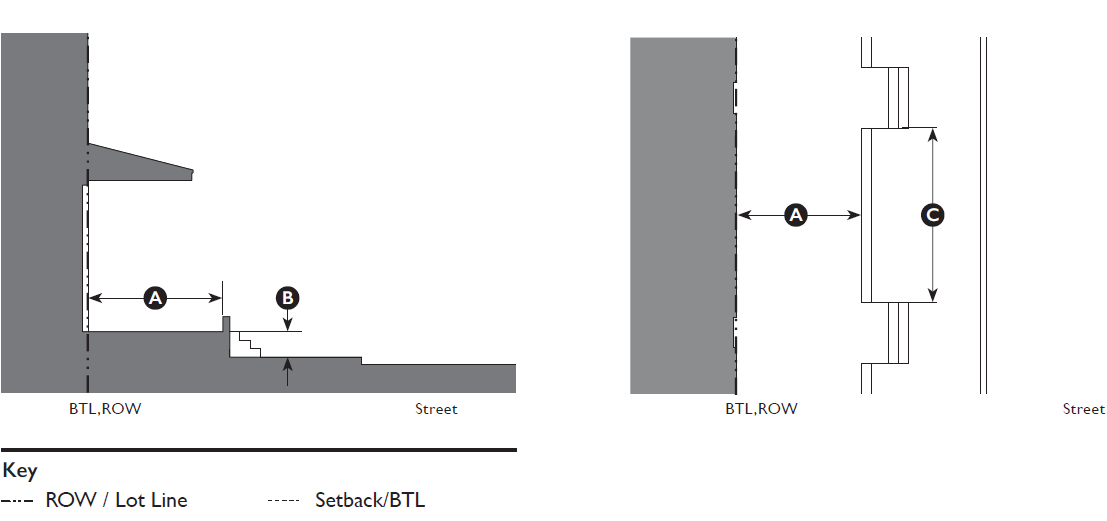
| A. Description | 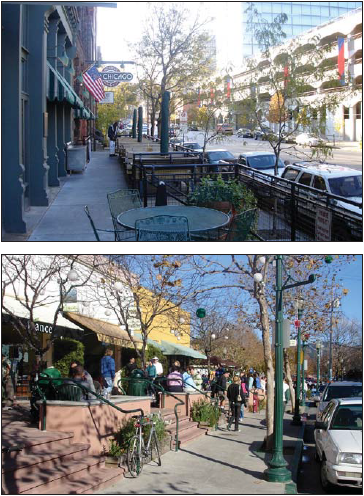 | ||
| Terrace: The facade is at or near the frontage line with an elevated terrace providing public circulation along the facade. This type can be used to provide at-grade access while accommodating a grade change. Frequent steps up to the terrace are necessary to avoid dead walls and maximize access. This type may also be used in historic industrial areas to mimic or repurpose loading docks. | |||
| B. Size | |||
| Depth, clear | 8' min. | | |
| Finish level above sidewalk | 3'-6" max. | | |
| Length of terrace | 150' max. | ||
| Distance between stairs | 50' max. | | |
| C. Miscellaneous | |||
| These standards are to be used in conjunction with those for the Shopfront Frontage Type. In case of conflict between them, the Terrace standards shall prevail. | |||
| Where standards in this form-based code set a maximum ground floor finish level height, such height shall be measured from the level of the terrace. | |||
| Low walls used as seating are encouraged. | |||
(Ord. No. 04-23 N.S., § I(Exh. A), 4-18-2023)
15.04.404.110 - Loft.
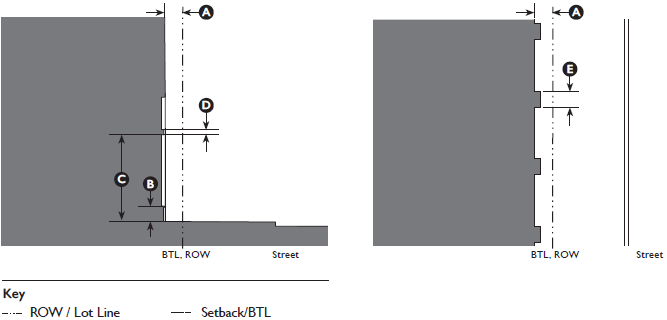
| A. Description | 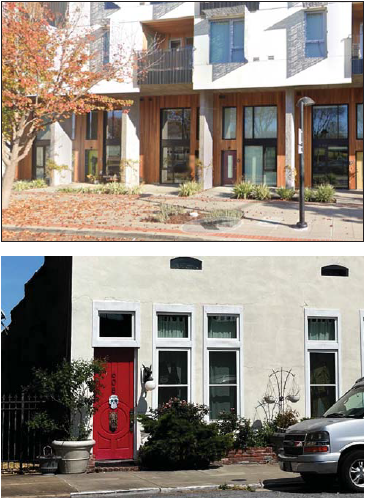 | ||
| Loft: The main facade of the building is at or near the front lot line with an at-grade or elevated entrance from the sidewalk. This type typically includes a large first story height that can accommodate a double-height or interior mezzanine space. | |||
| B. Size | |||
| Shy zone depth | 2' min. | | |
| Depth of recessed entries | 5' max. | ||
| Base height | 6" min.; 36" max. | | |
| Height to top of lower window | 10' min. | | |
| Distance between lower and
upper window | 2' max. | | |
| Distance between glazing | 2' max. | | |
| C. Miscellaneous | |||
| Residential windows shall not be used. | |||
| Shy zone may be used for planters or as an extension of the sidewalk. | |||
| This frontage type must be combined with Dooryard when located less than 5' from ROW/Lot Line. | |||
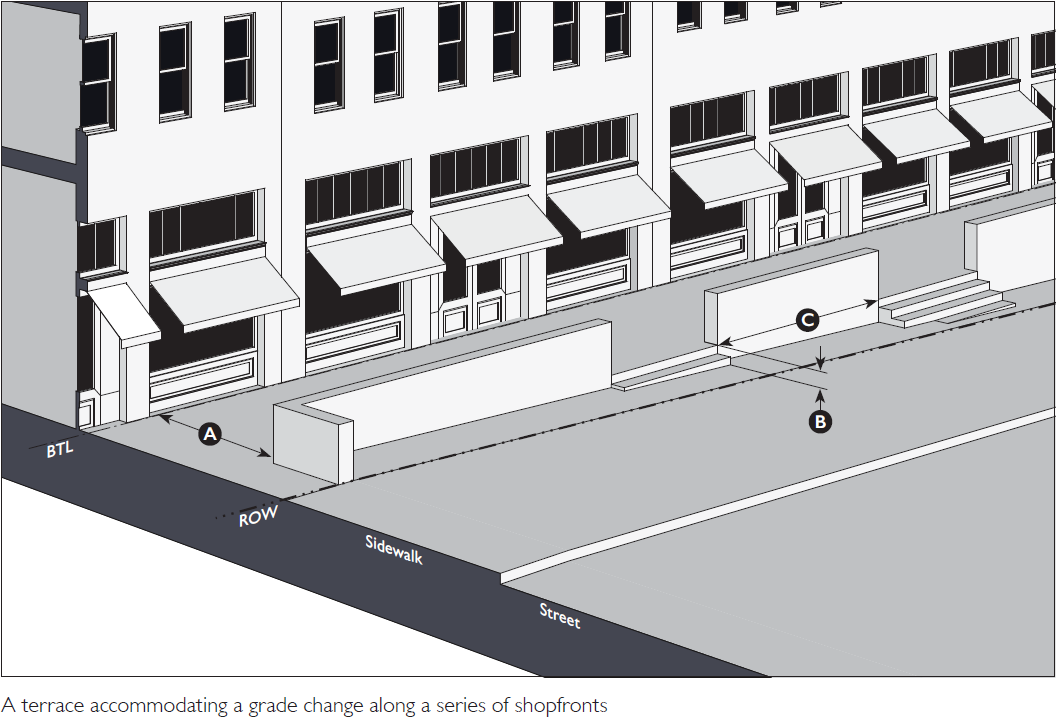
(Ord. No. 04-23 N.S., § I(Exh. A), 4-18-2023)
15.04.405.010 - Purpose.
This Article sets forth standards that supplement the zone standards to further refine the intended building form and physical character.
Unless stated otherwise, all Subsections within each architectural style ('style') identified in this Article apply to all facades of a building, including front facades, side street facades, side interior facades, and rear facade except in instances of exterior construction and/or site planning of residences and residential additions of more than 500 square feet in area but less than 1,200 square feet total floor area and less than 15 feet in height.
Quick Code Guide: Specific to Architectural Design
Before you begin
Identify your zone, building type, and detailed massing type. If you have not done this yet, go back to Article 15.04.401 (Preamble) and follow the Quick Code Guide.
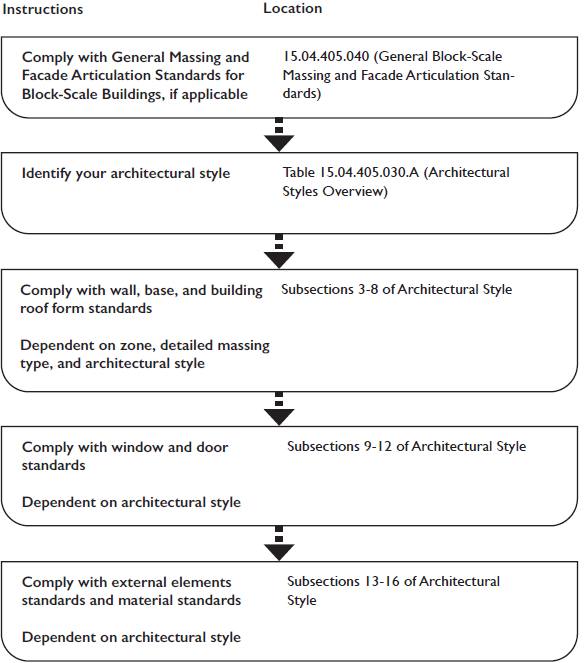
(Ord. No. 04-23 N.S., § I(Exh. A), 4-18-2023)
15.04.405.020 - Architectural Design Standards.
This Article contains architectural design standards for the six allowed styles. The standards for each style address a range of topics based on local architectural examples. The standards address the following aspects of individual building design: Roofs and roof pitch, eaves, cornices, walls, base of walls, dormers, openings and doors, storefronts, porches, and balconies.
1.
Each building is required to be designed in compliance with one of the allowed architectural styles.
2.
The architectural style standards are coordinated with the building types allowed by this FBC and the intended physical character of each zone.
3.
Developments that include more than one building or where the facade width is greater than 100 feet may apply more than one architectural style and at least one architectural style for every 75 feet of facade width.
4.
Mixed use buildings are required to be designed in compliance with Section 15.04.405.040 (General Block-Scale Massing and Facade Articulation Standards).
5.
Buildings designed for civic uses are exempt from the standards in this Article and may be subject to design review as applicable.
(Ord. No. 04-23 N.S., § I(Exh. A), 4-18-2023)
15.04.405.030 - Overview of Architectural Styles.
Table 15.04.405.030.A (Architectural Styles Overview) provides an overview of the allowed architectural styles.
| Table 15.04.405.030.A Architectural Styles Overview | ||||
|---|---|---|---|---|
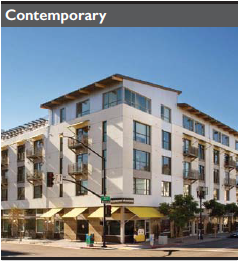 | 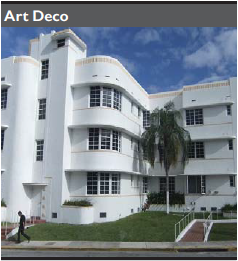 | 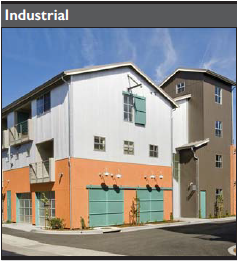 | ||
| Typical Characteristics | Typical Characteristics | Typical Characteristics | ||
|
Long, low-sloped roof forms with simple eaves with deep overhangs
_____ Asymmetrical facade compositions with square and horizontal openings often made from ganged vertical windows _____ Mix of exterior materials to differentiate massing forms, with prevalent natural materials including wood siding _____ Horizontally proportioned balconies and terraces with minimalist vertical supports |
Vertical ornamentation or elements above primary entrances
_____ Simple massings _____ Vertical elements that break through the cornice _____ Ornamentation |
Pitched roof forms, most often street-facing gable ends, with simple rakes and eaves
with minimal overhangs
_____ Symmetrical and asymmetrical facade compositions with square and horizontal openings often made from ganged vertical windows _____ Unpainted corrugated metal is the primary facade material | ||
| Applicable Standards | Applicable Standards | Applicable Standards | ||
| Wall | Wall | Base | ||
| Building Roof | Building Roof | Building Roof | ||
| Rake | Parapet | Parapet | ||
| Eave | Windows | Windows | ||
| Parapet | Bay Windows | Bay Windows | ||
| Windows | Residential Entry Doors | Dormers | ||
| Bay Windows | Balconies | Residential Entry Doors | ||
| Dormers | Porches | Balconies | ||
| Residential Entry Doors | Storefronts | Porches | ||
| Balconies | Materials | Storefronts | ||
| Porches | Materials | |||
| Storefronts | ||||
| Materials | ||||
| Table 15.04.405.030.A Architectural Styles Overview | ||||
|---|---|---|---|---|
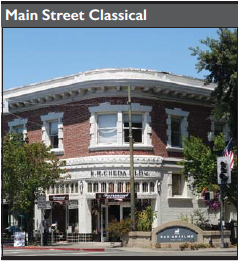 | 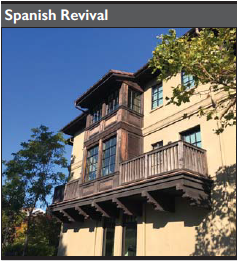 | 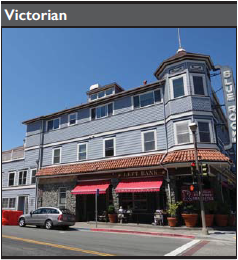 | ||
| Typical Characteristics | Typical Characteristics | Typical Characteristics | ||
|
Symmetrical facade composition with proportions that imply load-bearing masonry structure
_____ Prominent cornice with classical detailing and parapet or pedimented roof forms _____ Regular pattern of vertically proportioned openings _____ Brick and stucco as primary facade materials |
Low-pitched gabled or hipped roofs clad in red tile with open eaves
_____ Flat, rectilinear wall plane with vertically proportioned punched openings without trim _____ Stucco as primary facade material with stucco or wood attached elements |
Simple, rectilinear forms articulated with a regular pattern of openings
_____ Vertically proportioned elements, including steeply pitched roofs, projecting gable ends, and tall cornices and parapets _____ Vertically proportioned windows, angled or boxed bays, and picture windows _____ Siding or stucco with shingled elements | ||
| Applicable Standards | Applicable Standards | Applicable Standards | ||
| Base | Building Roof | Wall | ||
| Building Roof | Eave | Base | ||
| Parapet | Parapet | Building Roof | ||
| Windows | Windows | Rake | ||
| Bay Windows | Bay Windows | Eave | ||
| Residential Entry Doors | Dormers | Parapet | ||
| Balconies | Residential Entry Doors | Windows | ||
| Porches | Balconies | Bay Windows | ||
| Storefronts | Porches | Dormers | ||
| Materials | Storefronts | Residential Entry Doors | ||
| Materials | Balconies | |||
| Porches | ||||
| Storefronts | ||||
| Materials | ||||
(Ord. No. 04-23 N.S., § I(Exh. A), 4-18-2023)
15.04.405.040 - General Block-Scale Massing and Facade Articulation Standards
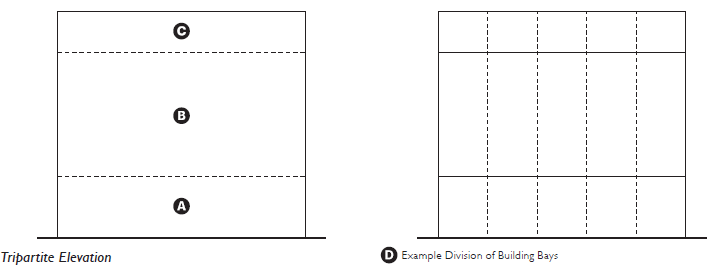
| 1. Tripartite Facade Articulation | ||
| Applicability | ||
| New buildings and facade modifications over 75' in length along the adjacent street or civic space. | ||
| Standards | ||
| New facades and facade modifications along a street or civic space shall be designed to visually express a base, middle, and top. | ||
| Base 1 | | |
| Middle 2 | 1 story min. | |
| Top 3 | | |
| Changes of color, materials, and/or massing may be used to differentiate the base, middle, and top. | ||
| 1 The base shall be at least as tall as the top and may include the lowest floor(s) of the building. | ||
| 2 The middle shall include at least 50% of the building's stories. | ||
| 3 At minimum, the top shall include a roof/eave form visible from the street or a parapet delineated by a stringcourse, cornice, or other horizontal ornament. | ||
| 2. Massing and Composition | Standards | ||
| Applicability | |||
| New buildings and facade modifications over 75' in length. | |||
| Standards | |||
| New facades and facade modifications along a street or civic space shall be designed to appear as multiple buildings no greater than 75' in length. | |||
| Building facades shall be arranged in a composition of window bays/ openings based on prevalent patterns of 3, 5, 7 or 9 bays. 4 | | ||
|
Facades shall be designed in a symmetrical or
asymmetrical composition. | |||
| Symmetrical Composition | | ||
| Asymmetrical Composition | |||
| 2 bays min.; 7 bays max. | | ||
| The pattern shall be visually expressed through the spacing of openings, physical recesses, projections or other techniques, and may include the ground floor and its mezzanine. | |||
| 4 Party walls are exempt from bay composition standard. | |||
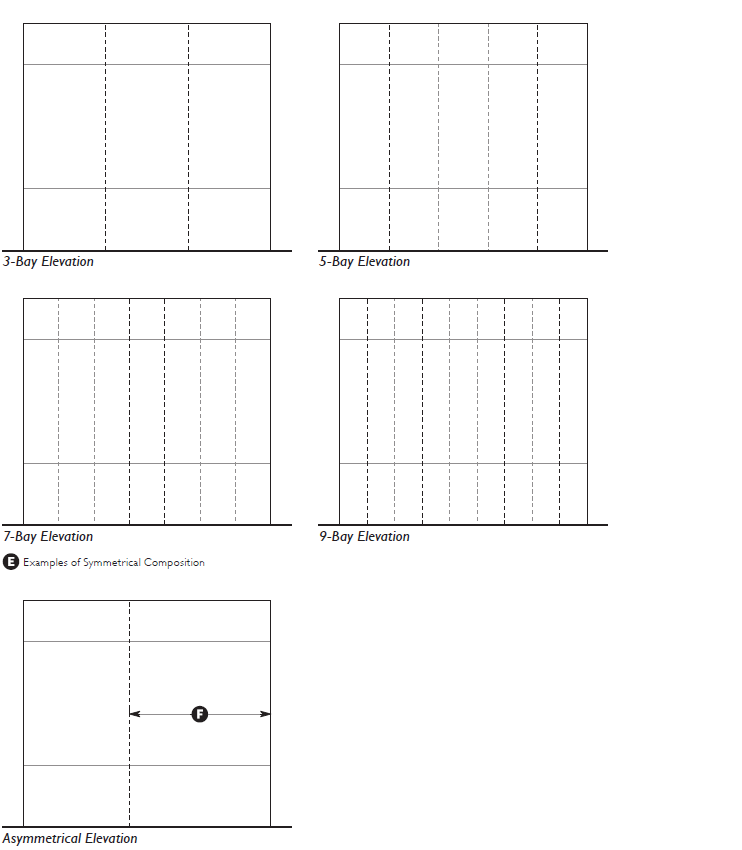
(Ord. No. 04-23 N.S., § I(Exh. A), 4-18-2023)
15.04.405.050 - Contemporary.
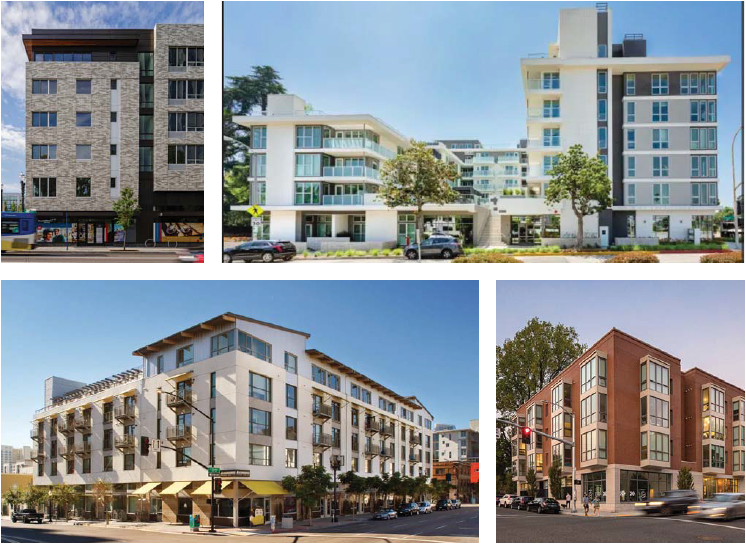
General note: The images above and the descriptions in Subsections 1 and 2 below are intended to provide a brief overview of the architectural style and are descriptive, not regulatory.
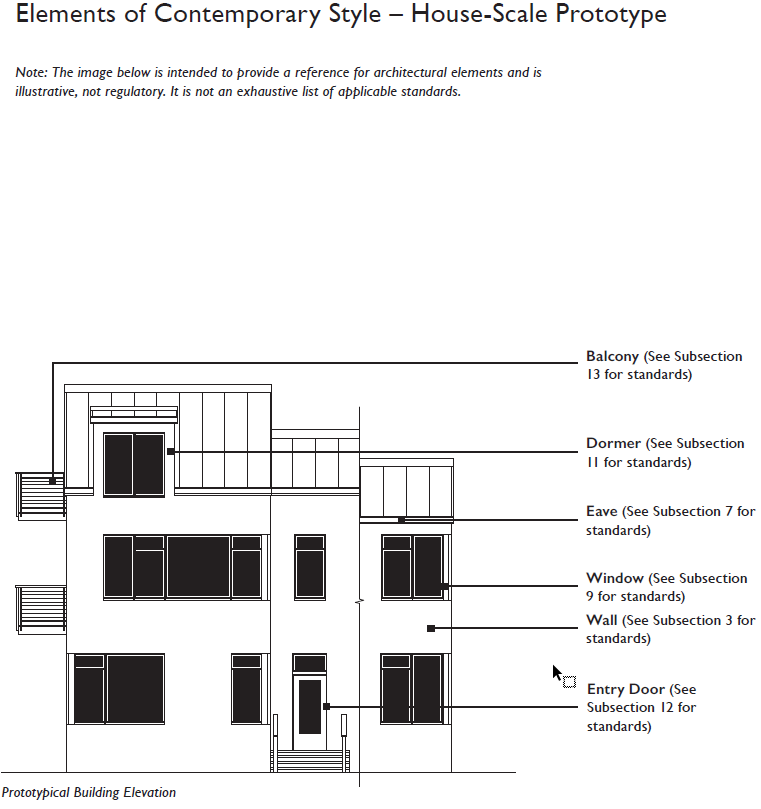
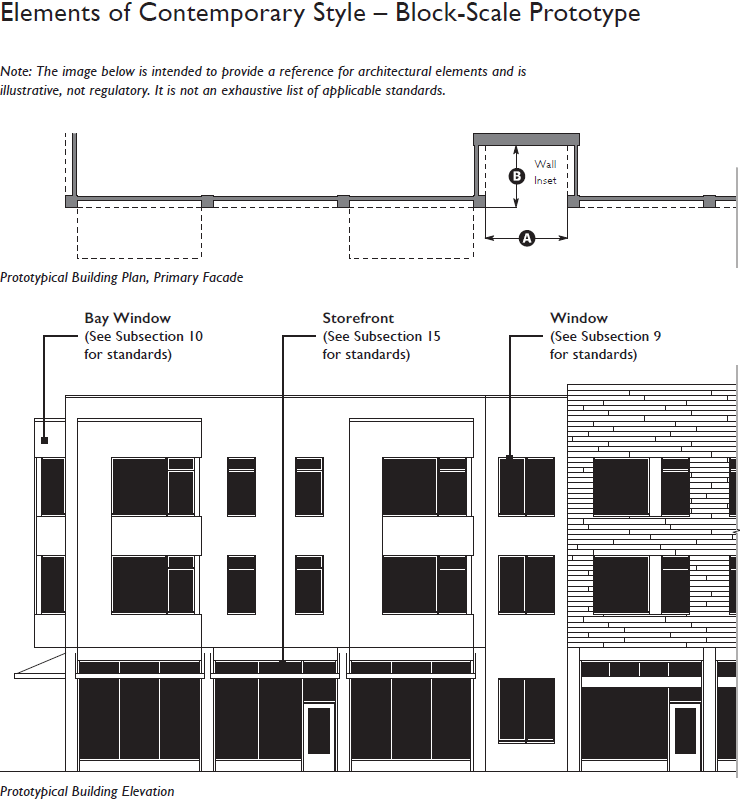
| 3. Wall | ||
| Stucco control joints shall align with edges of openings. | ||
| Wall Inset | ||
| A wall inset from the primary facade, continuous for the full height of the building, is required for buildings greater than 75' in width. | ||
| Roof and wall projections may encroach into wall inset. | ||
| 3. Wall (Continued) | ||
| Wall inset dimensions | ||
| Width | 8'0" min.; 12'0" max. | |
| Depth | 6'0" min. | |
| 4. Base | ||
| No base is required for this style. | ||
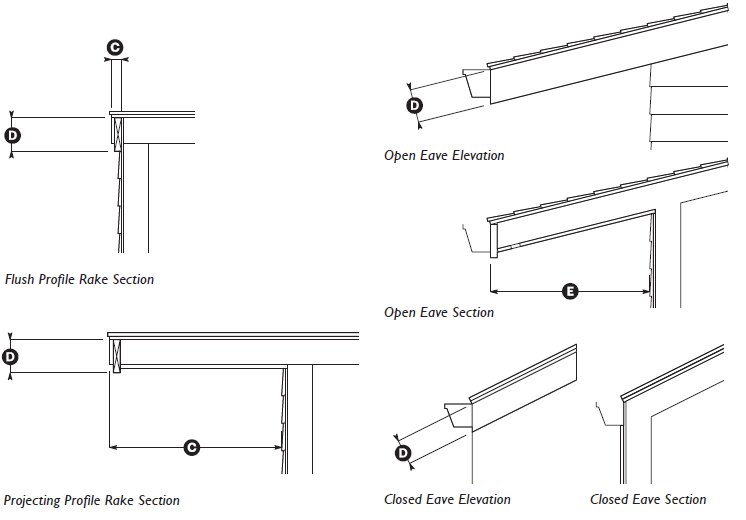
| 5. Building Roof | |||
| Building Roof | |||
| Standards | Sloped Roof | Flat Roof | |
| Roof Form | |||
| Pitch |
2:12 min.;
6:12 max. | N/A | |
| Applicable Subsections | |||
| 6. Rake | A | N/A | |
| 7. Eave | A | N/A | |
| 8. Parapet | N/A | A | |
| 6. Rake | |||
| Projecting | |||
| Standards | Flush Profile | Profile | |
|
Horizontal
Projection |
No min.;
2" max. |
2'6" min.;
No max. | |
| See Subsection 7 (Eave) for height standards. | |||
| Key | A = Applicable N/A = Not Applicable | ||
| 7. Eave | |||
| Standards | Open | Closed | |
| Height | |||
| Fascia | 6" min. | 6" min. | |
| Horizontal Projection | |||
| Overall |
36" min.;
No max. | N/A | |
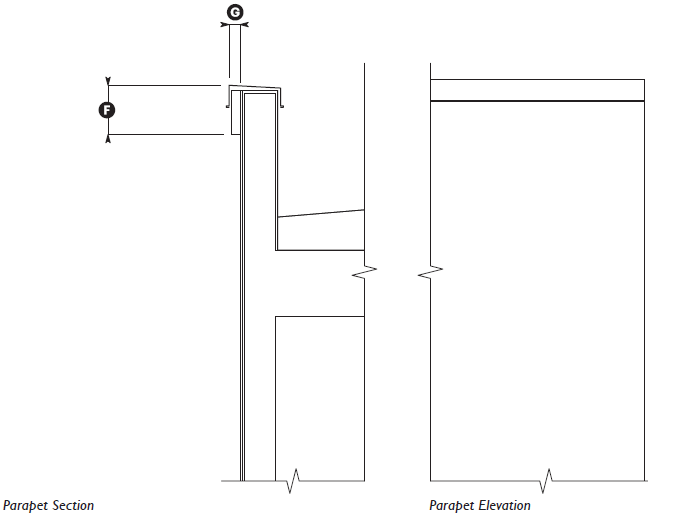
| 8. Parapet | ||
| Height | ||
| Projection | 0" min.; 6" max. | |
| Horizontal Projection | ||
| Overall | 0" min.; 3" max. | |
| 9. Windows | 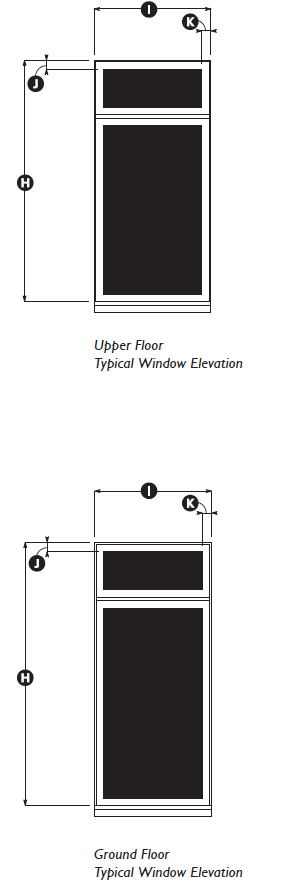 | ||
| Opening | |||
|
Proportion, Height
|
to Width
1
| ||
| Ground floor | 2.2 min. | ||
| Upper floor | 2.0 min. | ||
| Dormer |
See Subsection 11
(Dormers) for standards. | ||
|
Typical Sizes, Width
|
× Height
| ||
| Ground floor, typical | 3'0" × 6'0" | ||
| Ground floor, ganged | 3'0" × 6'0" | ||
| Ground floor, picture | 4'6" × 6'0" | ||
| Upper floor, typical | 3'0" × 5'6" | ||
| Upper floor, ganged | 3'0" × 5'6" | ||
| Upper floor, picture | 4'6" × 5'6" | ||
| Privacy | 2'0" × 4'6" | ||
| Shape | Square | ||
| Operation |
Double-Hung, Single-
Hung, Awning, Casement | ||
| Window | |||
| Glazing Divisions | None | ||
| Frame Width (Frame + Sash) | |||
| At Rail | 2.5" min. ± 1/4" | | |
| At Stile | 2.5" min. ± 1/4" | | |
| Trim Widths 2 | |||
| Head | 3" min. | ||
| Jamb | 3" min. | ||
| Apron | 3" min. | ||
| Window Frame Recess | |||
| Depth | 2" min. | ||
| Sill | |||
| Depth | 3" min. | ||
| Pediment | |||
| Allowed | No | ||
| Mullions | |||
| Mullions required between ganged windows. | |||
| 1 Picture windows must be wider than typical windows and equal in height to windows on the same floor. | |||
| 2 Trim required for windows only on buildings or parts of buildings with lap siding. | |||
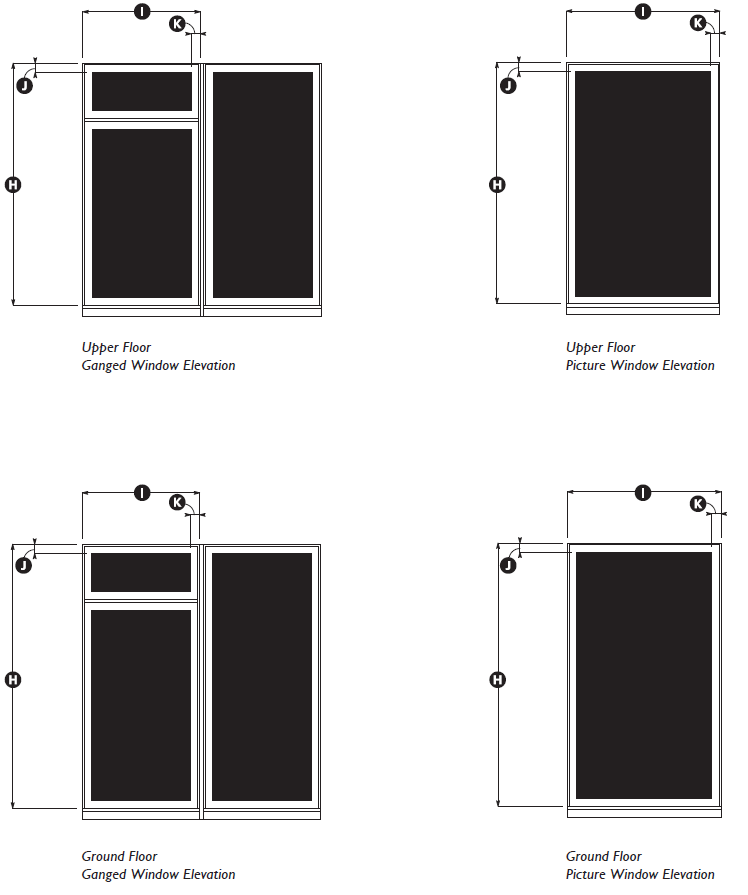
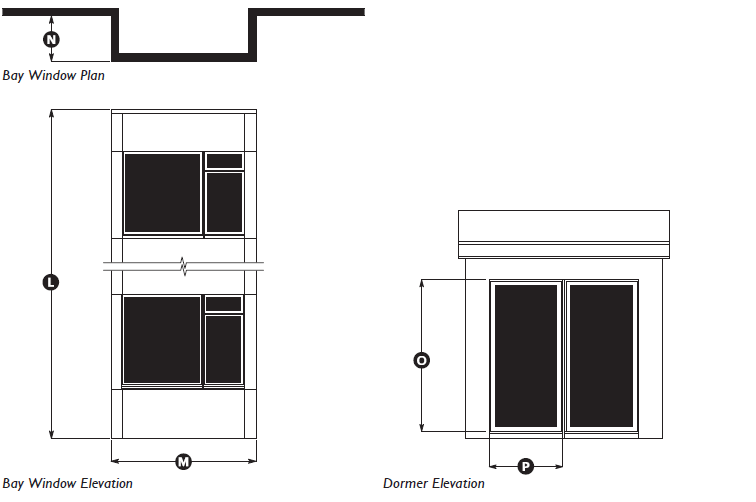
| 10. Bay Windows | ||
| Form | ||
| Type | Square | |
| Size | ||
| Height | | |
|
On buildings with
heights up to 3 stories | 2 stories max. | |
|
On buildings with
heights above 3 stories |
2 stories plus 1 additional
story for each building story over 3 max. | |
| Width | 6'0" min.; 12'0" max. | |
| Depth | 1'0" min.; 3'0" max. | |
| Additional Standards | ||
| Bay form shall be continuous. | ||
| Continuous horizontal articulation on building shall wrap bay form. | ||
| Corner bay may be turned on side to be rotated 45 degrees from building corner. | ||
| 11. Dormers | ||
| Roof Form | ||
| Type | Shed | |
| Pitch | 2:12 min.; 6:12 max. | |
| Window | ||
|
Proportion, Height
to Width | 2.0 min. | |
| ||
| Width | 3'0" min. | |
| Dormers allowed only for buildings with half stories. | ||
| See Subsections 6 (Rake), 7 (Eave), and 9 (Windows) for additional standards. | ||
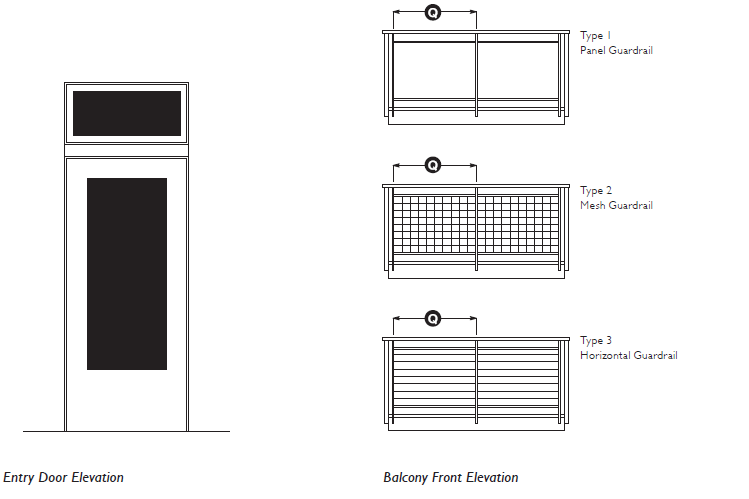
| 13. Balconies | |||
| Allowed Materials | |||
| Type 1—Panel Guardrail | |||
| Post | Metal | ||
| Baluster | Metal panel | ||
| Handrail | Metal, glass | ||
| Fascia | Metal, composite wood, wood | ||
| Type 2—Mesh Guardrail | |||
| Post and Handrail | Metal | ||
| Baluster | Metal mesh | ||
| Fascia | Metal, composite wood, wood | ||
| Type 3—Horizontal Guardrail | |||
| Post and Handrail | Metal | ||
| Baluster | Metal, steel cable | ||
| Fascia | Metal, composite wood, wood | ||
| Size | |||
| Overall Balcony Width | 10'0" max. | ||
| Width Between Posts | 3' min. | | |
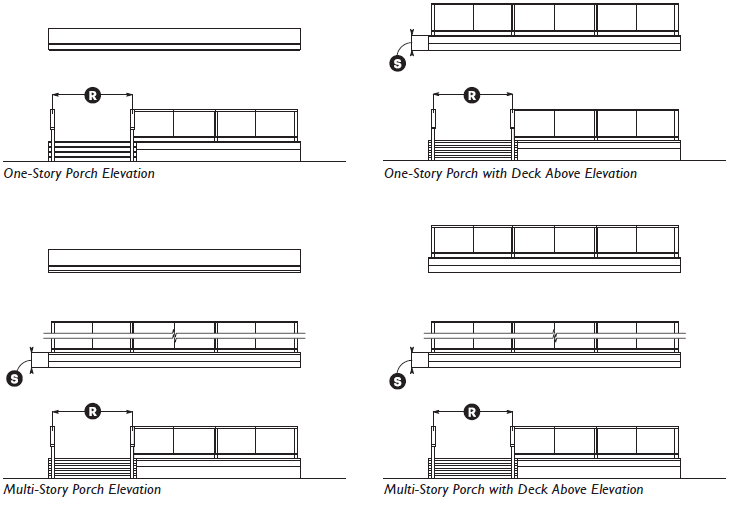
| 14. Porches | ||
| Columns/Newel Posts | ||
| Shape |
Cantilevered (newel posts only) or
pilotis | |
| Diameter | 4" max. | |
| Spacing | 8'0" max. on center | |
| Entablature | ||
| Height of Entablature Supporting Deck | ||
| Overall | 10" min. | |
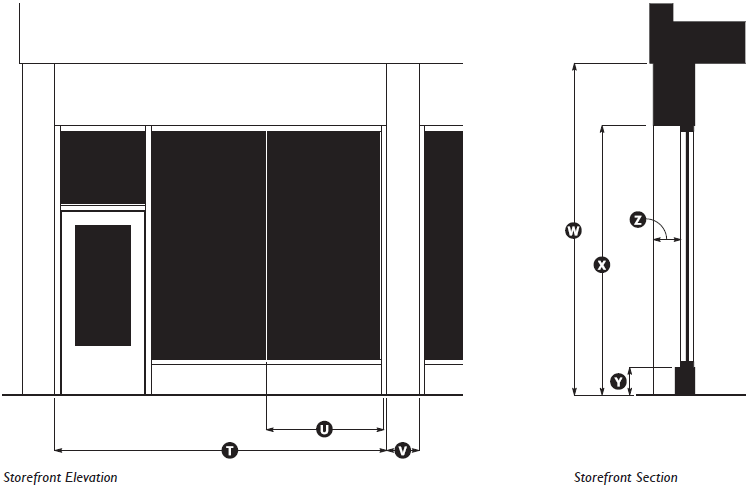
| 15. Storefronts | ||
| Width | ||
| Storefront Module | 10'0" min.; 15'0" max. | |
| Display Window | 3'0" min.; 4'0" max. | |
|
Distance Between
Storefront Modules | 1'0" min.; 2'0" max. | |
| Height | ||
| Overall | 12'0" min. |  |
| Head Height | 11'0" min. |  |
| Base | 8" min.; 2'0" max. |  |
| Horizontal Recess | ||
| Depth | 6" min.; 9" max. |  |
| Base shall be continuous, unless divided by pilaster, and align with base height of building (if any). | ||
(Ord. No. 04-23 N.S., § I(Exh. A), 4-18-2023)
15.04.405.060 - Art Deco.
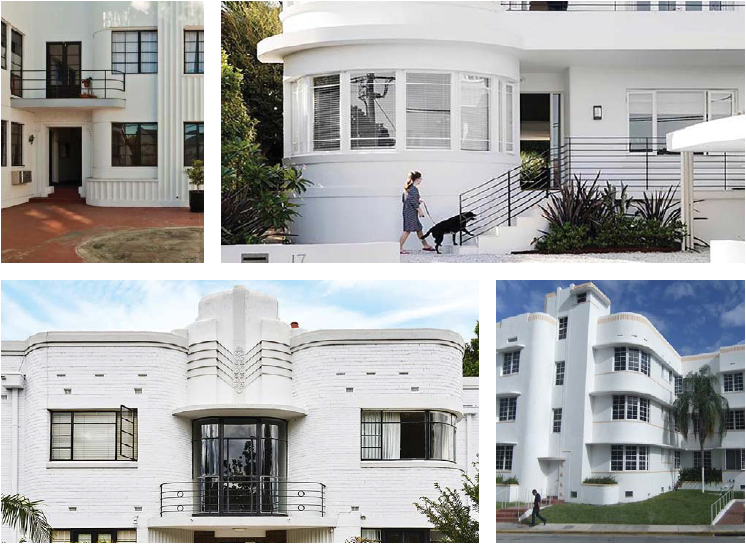
General note: The images above and the descriptions in Subsections 1 and 2 below are intended to provide a brief overview of the architectural style and are descriptive, not regulatory.
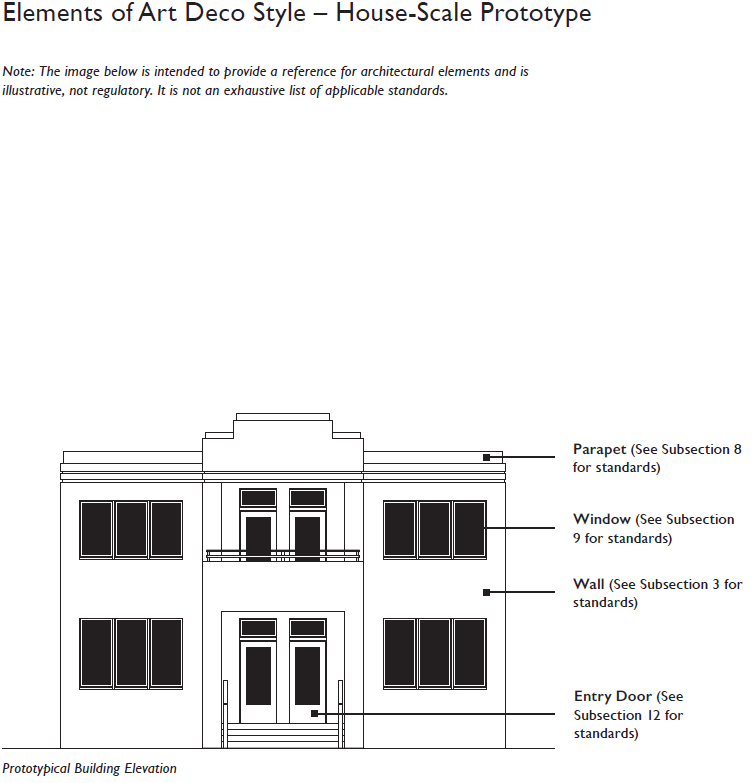
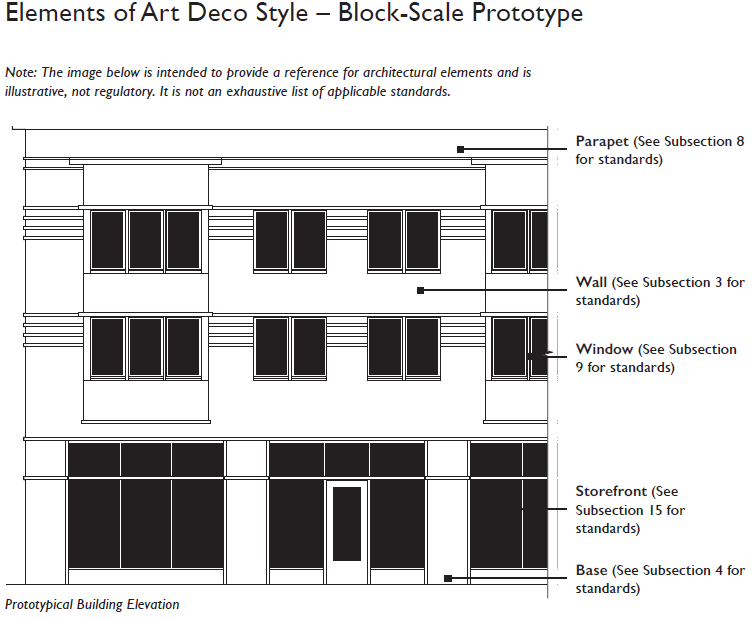
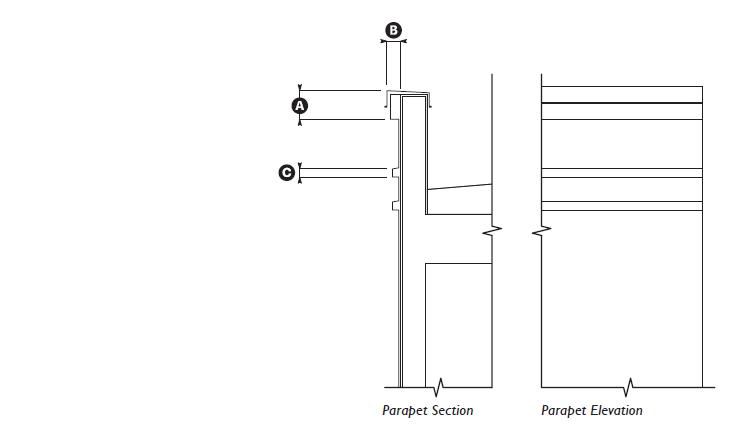
| 8. Parapet | ||
| Height | ||
| Projection | 0" min.; 6" max. | |
| Horizontal Projection | ||
| Overall | 0" min.; 12" max. | |
| Required Ornament1 | ||
| Type | Recess or Projection | |
| Height | 2" min. | |
| Quantity | 2 min. | |
| 1 Ornament shall be continuous along facade. | ||
| 9. Windows | 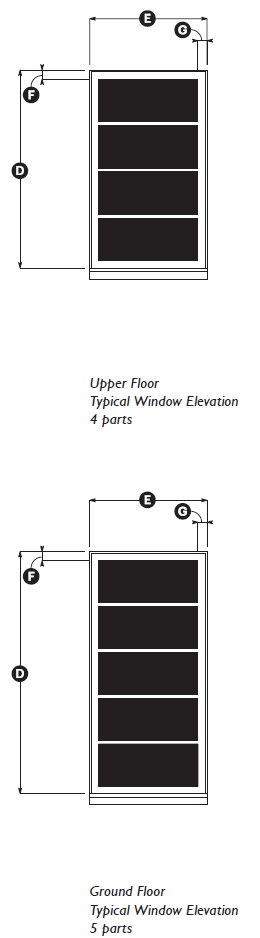 | ||
| Opening | |||
|
Proportion, Height
|
to Width
2
| ||
| Ground floor | 2.0 min. | ||
| Upper floor | 1.6 min. | ||
|
Typical Sizes, Width
|
× Height
| ||
| Ground floor, typical | 2'8" × 5'6" | ||
| Ground floor, ganged | 2'8" × 5'6" | ||
| Ground floor, picture | 2'4" × 3'6" | ||
| Upper floor, typical | 2'8" × 4'6" | ||
| Upper floor, ganged | 2'8" × 4'6" | ||
| Upper floor, picture | 2'4" × 3'6" | ||
| Privacy | 2'0" × 4'0" | ||
| Shape | Square, arched | ||
| Operation | Casement | ||
| Window | |||
| Glazing Divisions | 4 parts or 5 parts | ||
| Frame Width (Frame + Sash) | |||
| At Rail | 2.5" min. ± 1/4" | | |
| At Stile | 2.5" min. ± 1/4" | | |
| Window Frame Recess | |||
| Depth | 2" min. | ||
| Sill | |||
| Depth | 3" min. | ||
| Pediment | |||
| Allowed | No | ||
| Mullions | |||
| Mullions required between ganged windows. | |||
| 2 Picture windows must be wider than typical windows and equal in height to windows on the same floor. | |||
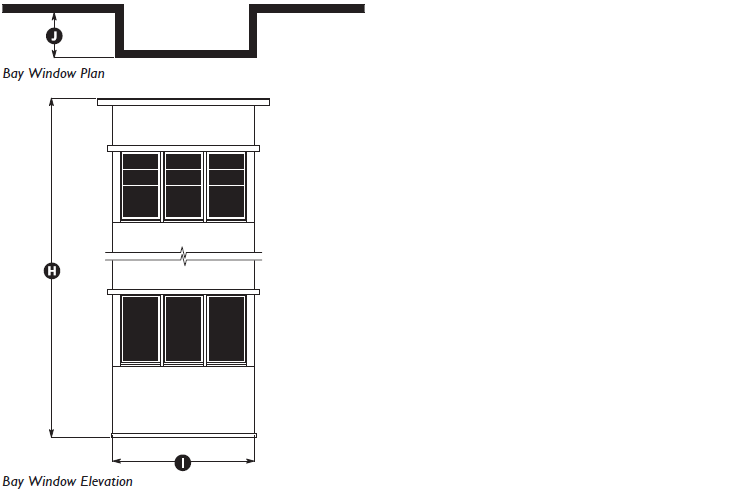
| 10. Bay Windows | ||
| Form | ||
| Type | Square | |
| Size | ||
| Height | | |
|
On buildings with
heights up to 3 stories | 2 stories max. | |
|
On buildings with
heights above 3 stories |
2 stories plus 1 additional
story for each building story over 3 max. | |
| Width | 6'0" min.; 12'0" max. | |
| Depth | 1'0" min.; 3'0" max. | |
| Cornice Types | ||
| Building eave wraps bay. | ||
| Bay stops below building eave (bay has own cornice). | ||
| Bay returns into building eave (bay never projects above the building eave). | ||
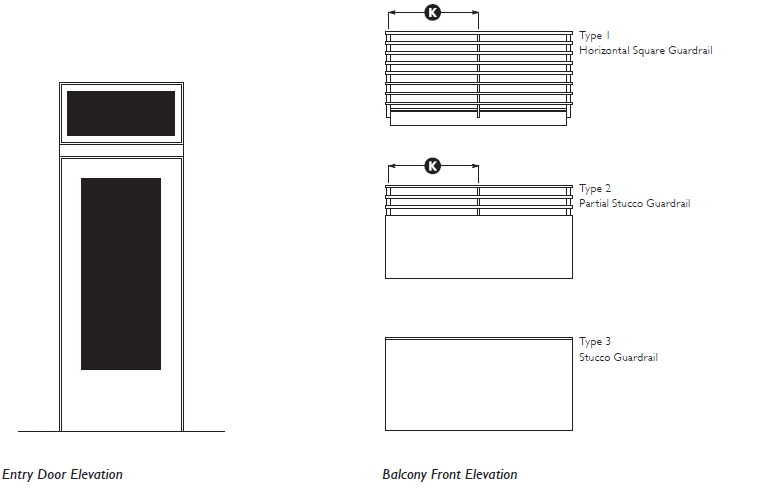
| 13. Balconies | ||
| Allowed Materials | ||
| Type 1—Horizontal Square Guardrail | ||
| Post | Metal | |
| Baluster | Metal | |
| Handrail | Metal | |
| Fascia |
Stucco, metal, composite
wood, wood | |
| Type 2—Partial Stucco Guardrail | ||
| Post and Handrail | Metal | |
| Baluster | Metal | |
| Wall | Stucco | |
| Type 3—Stucco Guardrail | ||
| Wall | Stucco | |
| Size | ||
| Overall Balcony Width | 10'0" max. | |
| Width Between Posts | 3' min. | |
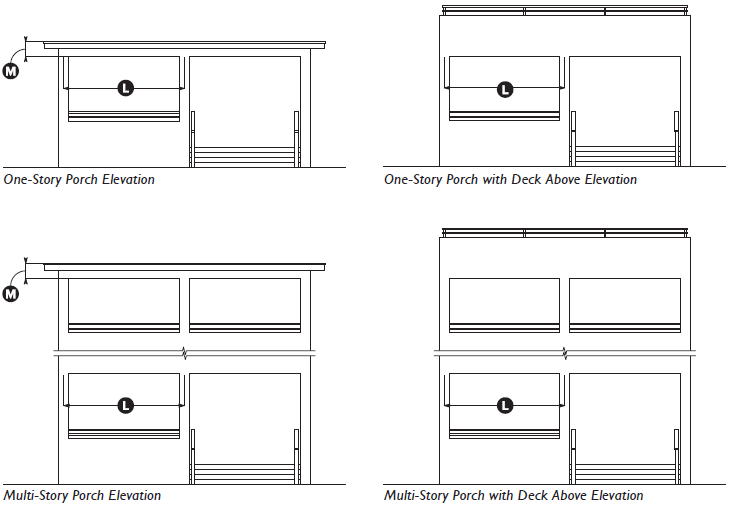
| 14. Porches | ||
| Columns | ||
| Shape | Square or round | |
| Width | 8" min. | |
| Spacing | 12'0" max. on center | |
| Entablature | ||
| Overall | 10" min. | |
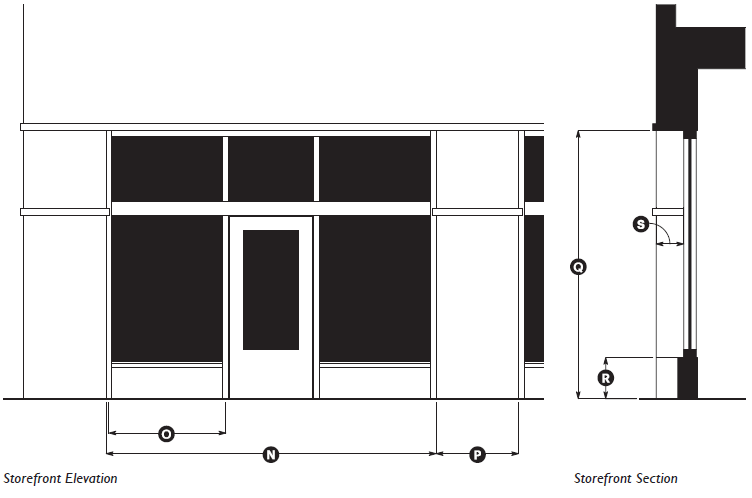
| 15. Storefronts | ||
| Width | ||
| Storefront Module | 10'0" min.; 15'0" max. | |
| Display Window | 3'0" min.; 4'0" max. | |
|
Distance Between
Storefront Modules | 2'6" min.; 4'0" max. | |
| Height | ||
| Head Height | 11'0" min. | |
| Cornice | None | |
| Signage Band | None | |
| Base | 1'0" min.; 2'0" max. | |
| Horizontal Recess | ||
| Depth | 6" min.; 9" max. | |
| Base shall be continuous, unless divided by pilaster, and align with base height of building (if any). | ||
(Ord. No. 04-23 N.S., § I(Exh. A), 4-18-2023)
15.04.405.070 - Industrial.
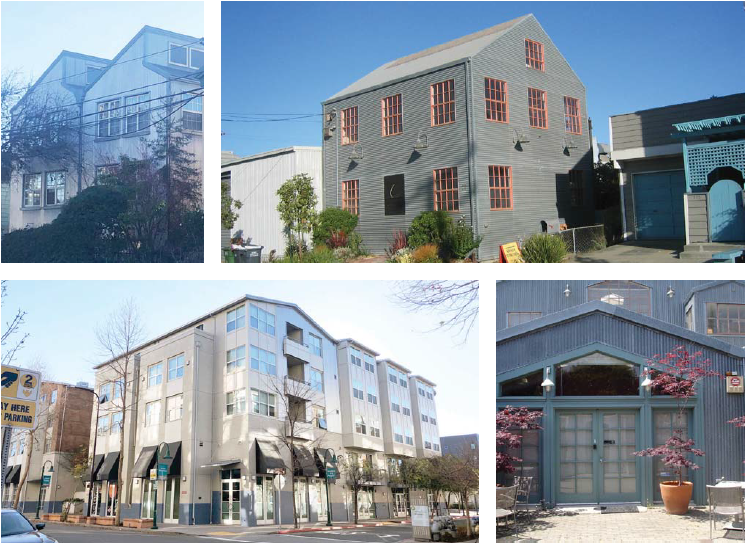
General note: The images above and the descriptions in Subsections 1 and 2 below are intended to provide a brief overview of the architectural style and are descriptive, not regulatory.
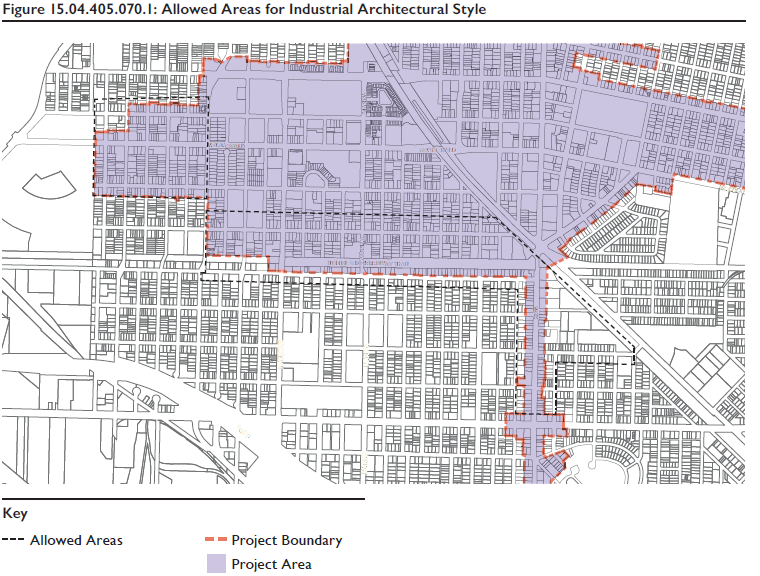
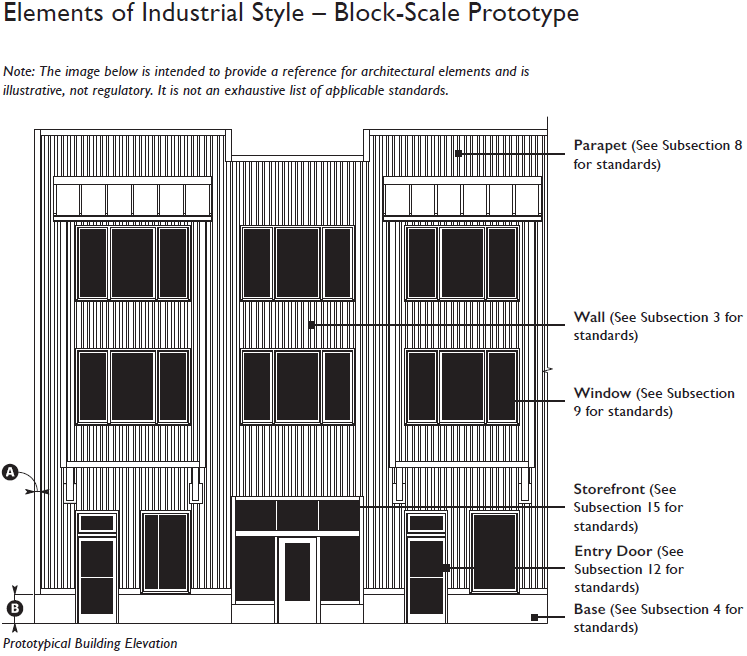
| 3. Wall | ||
| Stucco control joints shall align with edges of openings. | ||
| Trim1 | ||
| Width | 4" min. | |
| 1 Trim not required on buildings or portions of buildings where stucco is the primary wall material. | ||
| 4. Base | ||
| Height | 1'0" min.; 1/2 story max. | |
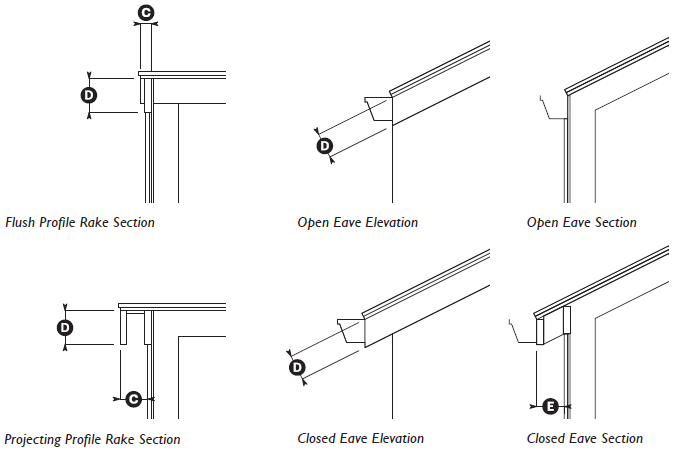
| 5. Building Roof | |||
| Building Roof Standards | Sloped Roof | Flat Roof | |
| Applicable Subsections | |||
| Subsection 6 (Rake) | A | N/A | |
| Subsection 7 (Eave) | A | N/A | |
| Subsection 8 (Parapet) | N/A | A | |
| Form | |||
| Pitch |
2:12 min.;
10:12 max. | N/A | |
| 6. Rake | |||
| Standards | Flush Profile | Projecting Profile | |
|
Horizontal
Projection |
No min.;
2" max. |
6" min.;
1'6" max. | |
| See Subsection 7 (Eave) for height standards. | |||
| Key A = Applicable N/A = Not Applicable | |||
| 7. Eave | |||
| Standards | Open | Closed | |
| Height | |||
| Fascia | 6" min. | 6" min. | |
| Horizontal Projection | |||
| Overall |
6" min.;
1'6" max. | N/A | |
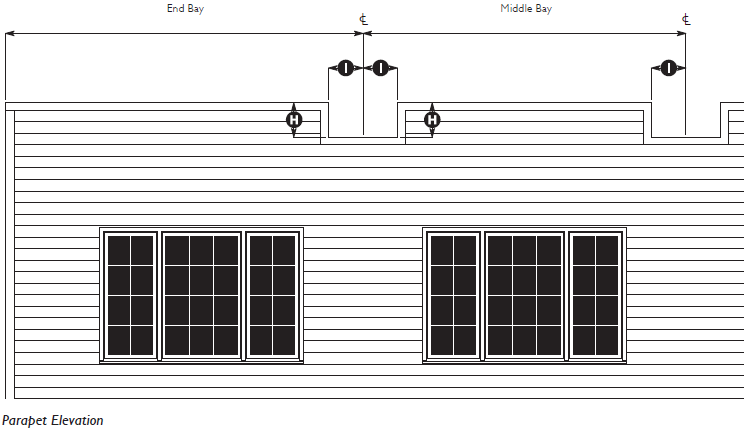
| 8. Parapet | 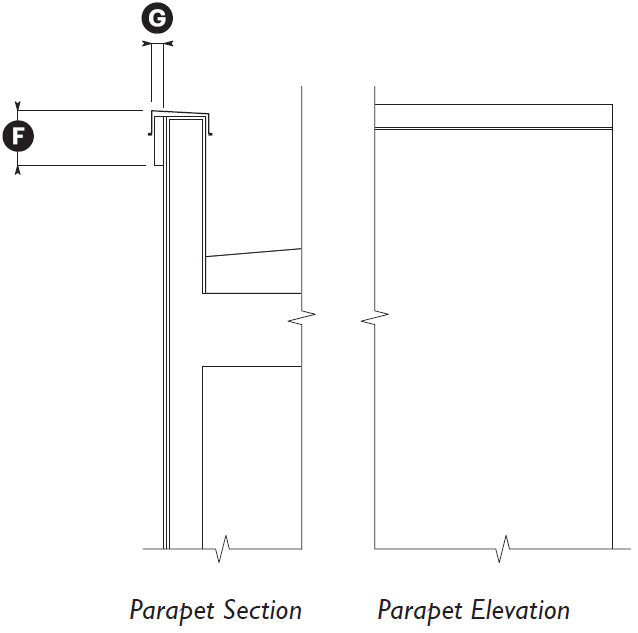 | ||
| Height | |||
| Projection | 0" min.; 6" max. | | |
| Horizontal Projection | |||
| Overall | 0" min.; 3" max. | | |
| Crenellation | |||
| Parapet shall be crenellated. | |||
| Crenel Height | 1'0" min. | | |
|
Width, from Center
Line | 1'0" min. | | |
| Crenel may not occur at building corner or end bays. | |||
| 9. Windows | 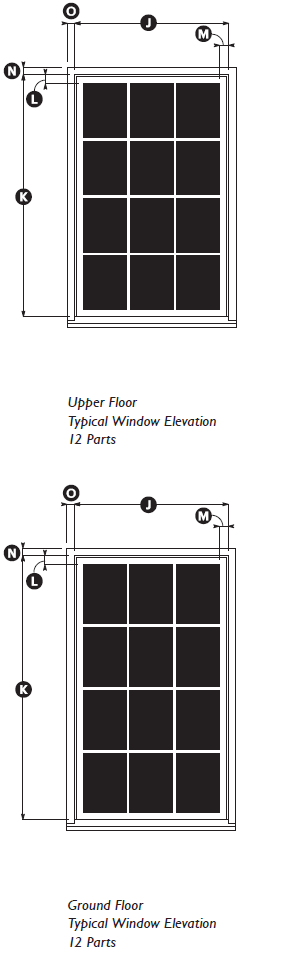 | ||
| Opening | |||
|
Proportion, Height
|
to Width
2
| ||
| Ground floor | 1.6 min. | ||
| Upper floor | 1.5 min. | ||
| Dormer |
See Subsection 11
(Dormers) for standards. | ||
|
Typical Sizes, Width
|
× Height
| ||
| Ground floor, typical | 3'6" × 6'0" | ||
| Ground floor, ganged | 2'4" × 6'0" | ||
| Ground floor, picture | 5'0" × 6'0" | ||
| Upper floor, typical | 3'6" × 5'6" | ||
| Upper floor, ganged | 2'4" × 5'6" | ||
| Upper floor, picture | 5'0" × 5'6" | ||
| Privacy | 2'0" × 4'0" | ||
| Shape | Square | ||
| Operation |
Single Hung, Double Hung,
Casement | ||
| Window | |||
| Glazing Divisions | 6 parts min.; 12 parts max. | ||
| Frame Width (Frame + Sash) | |||
| At Rail | 2.5" min. ± 1/4" | | |
| At Stile | 2.5" min. ± 1/4" | | |
| Trim Widths | |||
| Head | 2" min. | | |
| Jamb | 2" min. | | |
| Apron | None required. | ||
| Window Frame Recess | |||
| Depth | 2" min. | ||
| Sill | |||
| Depth | 3" min. | ||
| Pediment | |||
| Allowed | No | ||
| Mullions | |||
| Mullions required between ganged windows. | |||
| 2 Picture windows must be wider than typical windows and equal in height to windows on the same floor. | |||
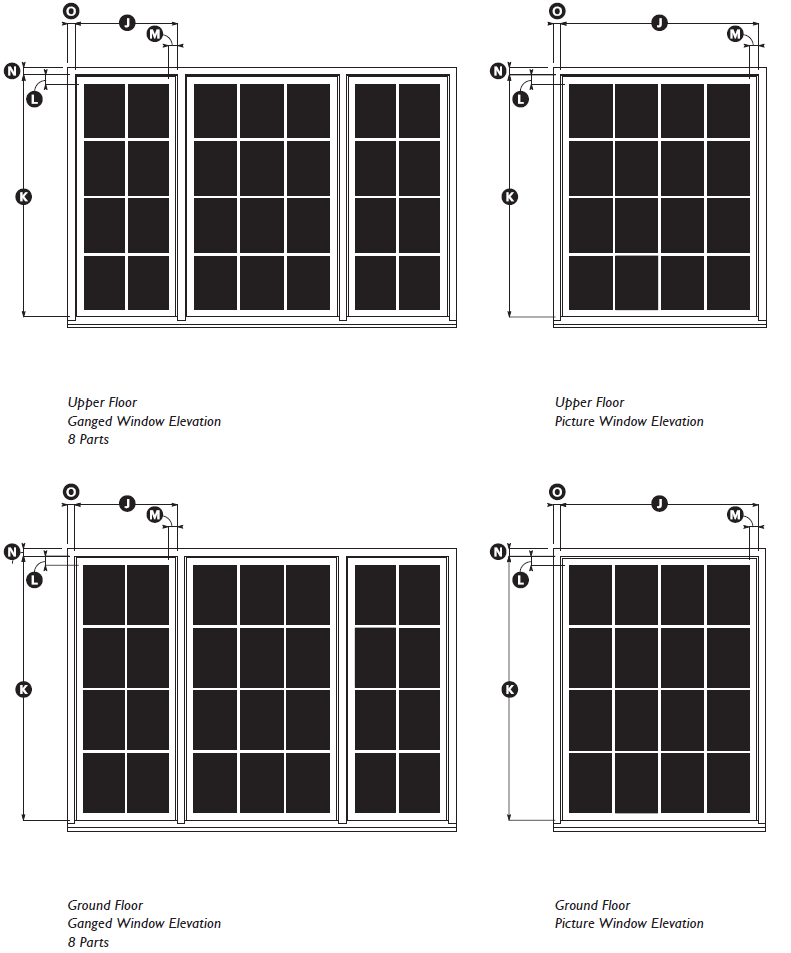
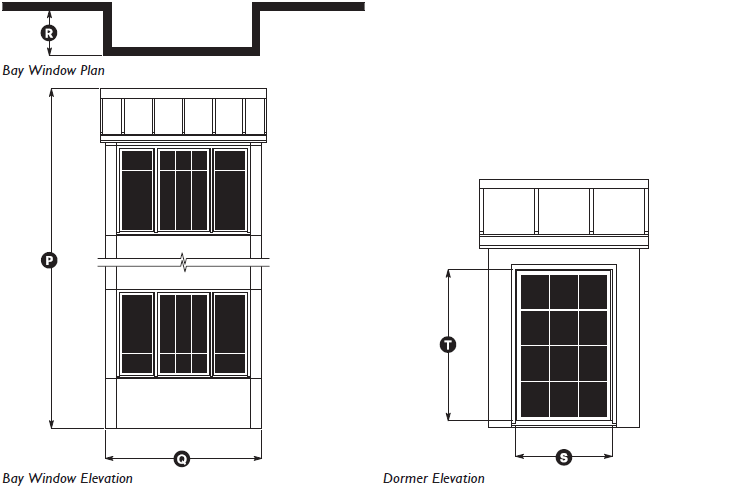
| 10. Bay Windows | ||
| Form | ||
| Type | Square | |
| Size | ||
| Height | | |
|
On buildings with
heights up to 3 stories | 2 stories max. | |
|
On buildings with
heights above 3 stories |
2 stories plus 1 additional
story for each building story over 3 max. | |
| Width | 6'0" min.; 12'0" max. | |
| Depth | 1'0" min.; 3'0" max. | |
| Cornice Types | ||
| Building parapet wraps bay. | ||
| Bay stops below building eave (bay has own cornice). | ||
| Bay returns into building eave (bay never projects above the building eave). | ||
| 10. Bay Windows (Continued) | |||
| Additional Standards | |||
| Bay depth not allowed to project beyond eave depth. | |||
| Bay form shall be continuous. | |||
| Continuous horizontal articulation on building shall wrap bay form. | |||
| Corner bay may be turned on side to be rotated 45 degrees from building corner. | |||
| 11. Dormers | |||
| Roof Form | |||
| Type | Shed | ||
| Pitch | 2:12 min.; 6:12 max. | ||
| Window | |||
|
Proportion, Height
to Width | 1.5 min. | | |
| |||
| Width | 2'4" min. | | |
| Dormers allowed only for buildings with half stories. | |||
| See Subsections 6 (Rake), 7 (Eave), and 9 (Windows) for additional standards. | |||
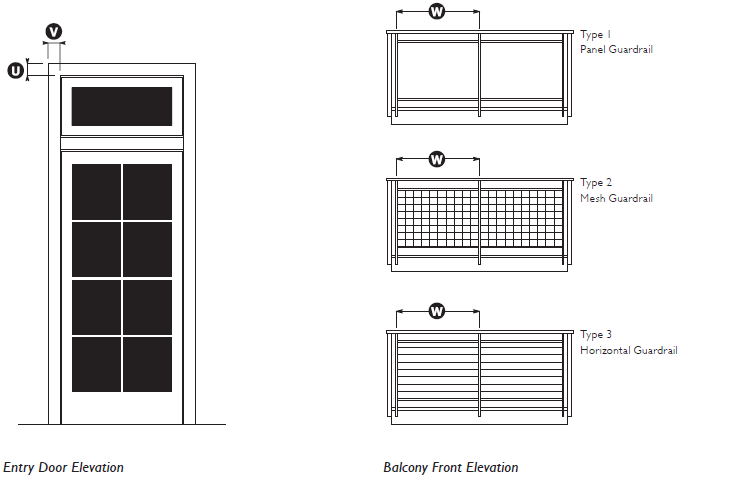
| 12. Residential Entry Doors | ||
| Door | ||
| Number of Panels | 0 min. | |
| Surround | ||
| Head Width | 2" min. | |
| Jamb Width | 2" min. | |
| Additional Elements | ||
| Transom | Allowed | |
| Pediment | Not allowed | |
| 13. Balconies | ||
| Allowed Materials | ||
| Type 1—Panel Guardrail | ||
| Post | Metal | |
| Baluster | Metal panel | |
| Handrail | Metal, glass | |
| Fascia | Metal, composite wood, wood | |
| Type 2—Mesh Guardrail | ||
| Post and Handrail | Metal | |
| Baluster | Metal mesh | |
| Fascia | Metal, composite wood, wood | |
| Type 3—Horizontal Guardrail | ||
| Post and Handrail | Metal | |
| Baluster | Metal, steel cable | |
| Fascia | Metal, composite wood, wood | |
| Size | ||
| Overall Balcony Width | 10'0" max. | |
| Width Between Posts | 3' min. | |
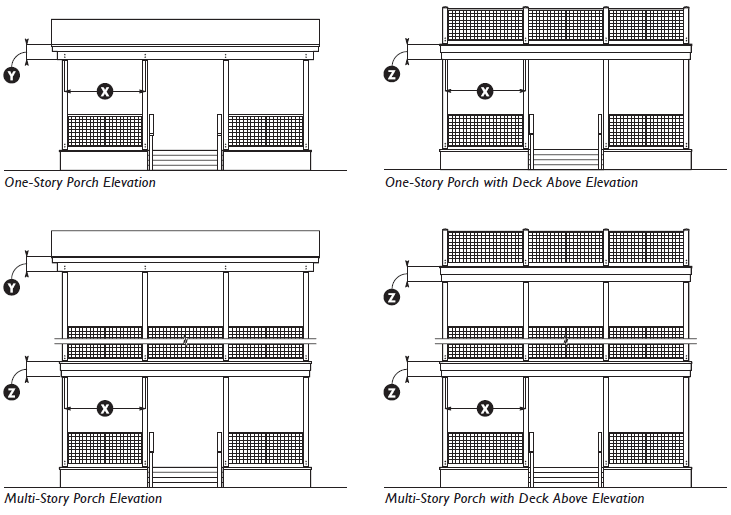
| 14. Porches | ||
| Columns | ||
| Shape | Square or steel section | |
| Width | 6" min. | |
| Spacing | 8' min.; 12' max. on center | |
| Entablature | ||
| Height of Topmost Entablature | ||
| Overall | 1'6" min. | |
| Fascia | 10" min. | |
| Height of Floor-to-Floor Entablature | ||
| Overall | 10" min. | |
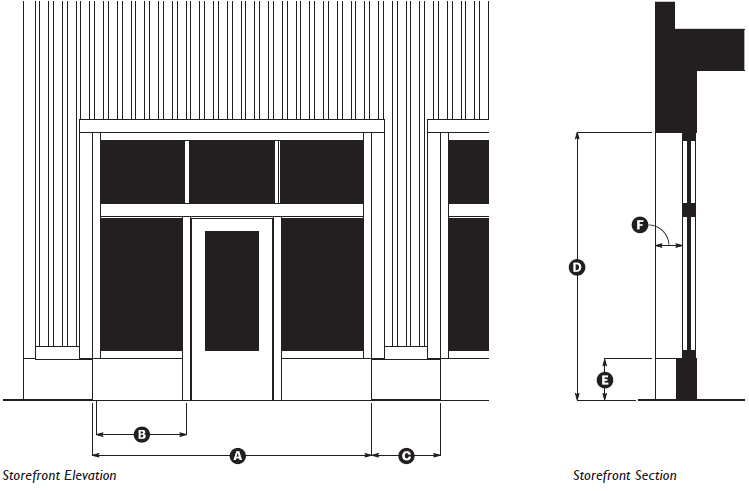
| 15. Storefronts | ||
| Width | ||
| Storefront Module | 10'0" min.; 15'0" max. | |
| Display Window | 3'0" min.; 4'0" max. | |
|
Distance Between
Storefront Modules | 2'0" min.; 4'0" max. | |
| Height | ||
| Head Height | 10'0" min. | |
| Cornice | None | |
| Signage Band | None | |
| Base | 1'0" min.; 1/2 story max. | |
| Horizontal Recess | ||
| Depth | 6" min.; 9" max. | |
| Base shall be continuous, unless divided by pilaster, and align with base height of building (if any). | ||
| Cornice shall be continuous. | ||
(Ord. No. 04-23 N.S., § I(Exh. A), 4-18-2023)
15.04.405.080 - Main Street Classical.
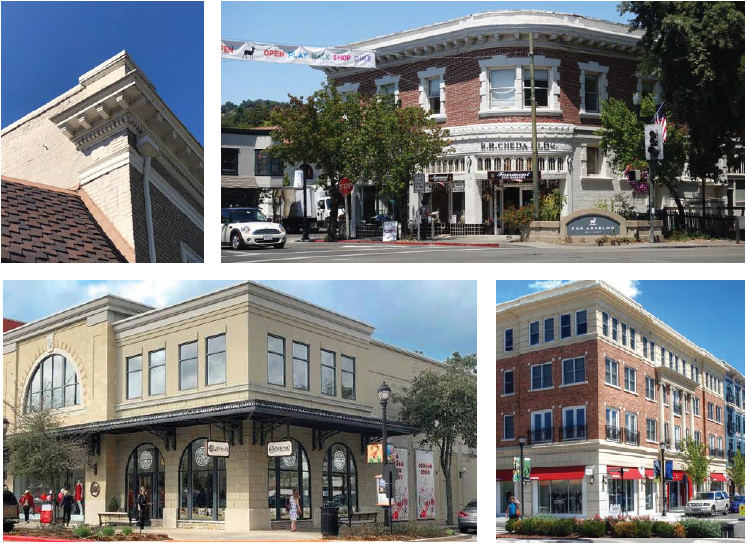
General note: The images above and the descriptions in Subsections 1 and 2 below are intended to provide a brief overview of the architectural style and are descriptive, not regulatory.
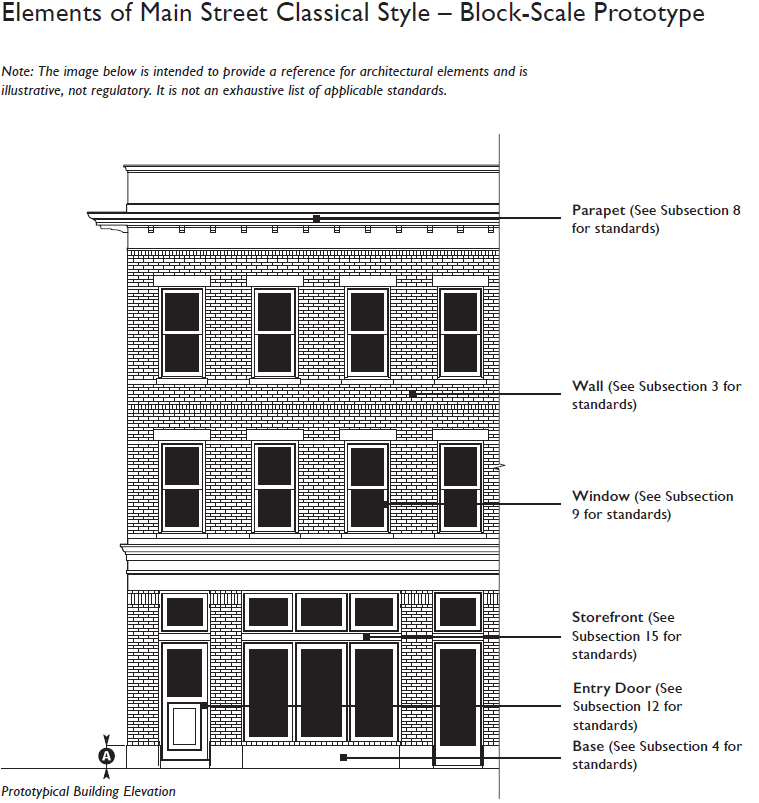
| 4. Base | ||
| Height | 1'0" min.; 2'0" max. | |
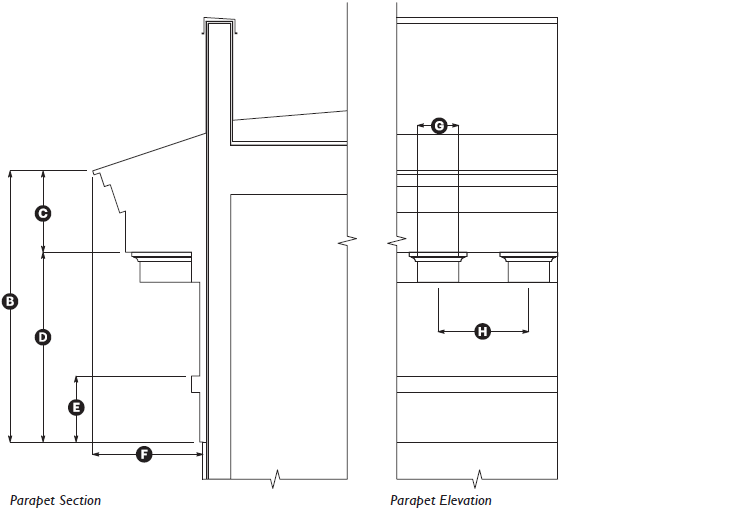
| 8. Parapet | ||
| Height | ||
| Overall | 5'6" min. | |
| Cornice | 1'8" min. | |
| Fascia | ||
| Overall | 3'6" min. | |
| Lower Band | 1'2" min. | |
| Horizontal Projection1 | ||
| Overall | 2'6" min. | |
| Continuous cornice required on all street facing facades. | ||
| Required Ornament | ||
| Type | Dentils | |
| Width | 10" min. | |
| Spacing | 2'0" max. on center | |
| Placement |
Below cornice at top of
fascia | |
| 1 Horizontal projection includes gutter. | ||
| 9. Windows | 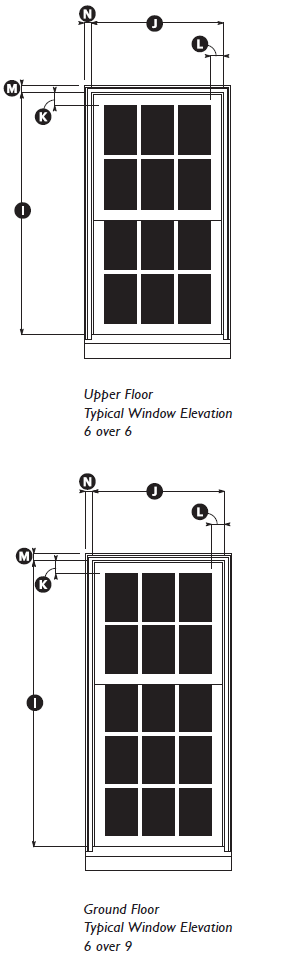 | ||
| Opening | |||
|
Proportion, Height
|
to Width
2
| ||
| Ground floor | 2.0 min. | ||
| Upper floor | 1.75 min. | ||
|
Typical Sizes, Width
|
× Height
| ||
| Ground floor, typical | 3'0" × 6'6" | ||
| Ground floor, picture | 4'6" × 6'6" | ||
| Upper floor, typical | 3'0" × 5'6" | ||
| Upper floor, picture | 4'6" × 5'6" | ||
| Privacy | 2'0" × 4'0" | ||
| Shape | Square | ||
| Operation |
Single Hung, Double Hung,
Casement | ||
| Window | |||
| Glazing Divisions |
6 over 9;
6 over 6 | ||
| Frame Width (Frame + Sash) | |||
| At Rail | 2.5" min. ± 1/4" | | |
| At Stile | 2.5" min. ± 1/4" | | |
| Molding Widths | |||
| Head | 2" min. | | |
| Jamb | 2" min. | | |
| Window Frame Recess | |||
| Depth | 2" min. | ||
| Sill | |||
| Depth | 3" min. | ||
| Pediment | |||
| Allowed | Yes | ||
| 2 Picture windows must be wider than typical windows and equal in height to windows on the same floor. | |||
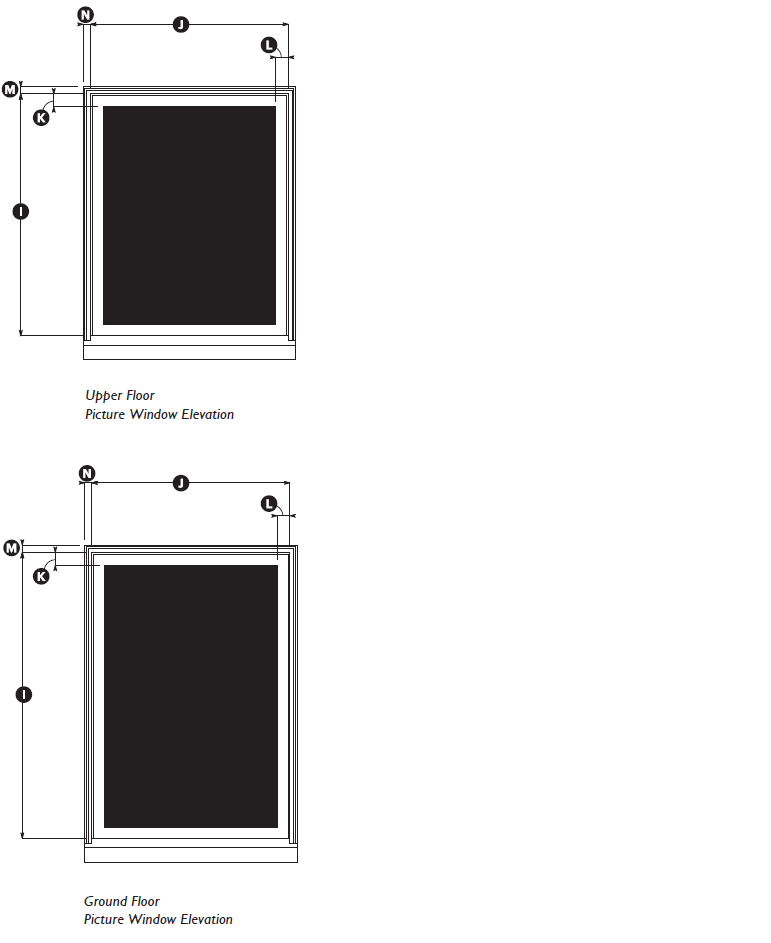
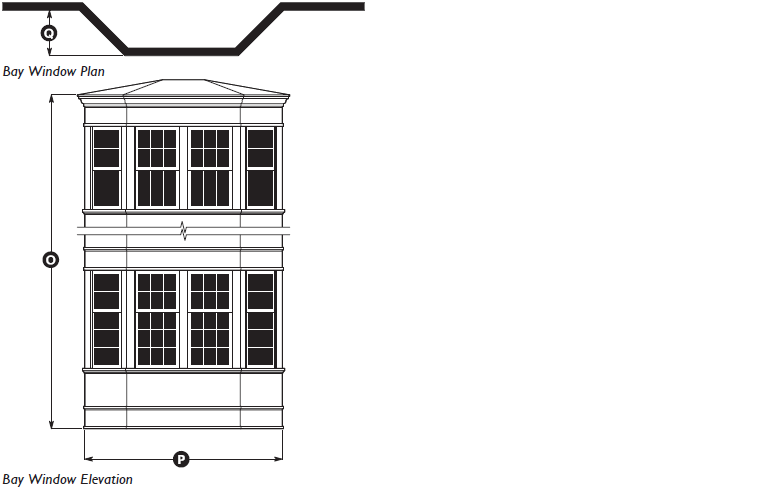
| 10. Bay Windows | ||
| Form | ||
| Type | Chamfered | |
| Interior Angle |
30 degrees min.;
55 degrees max. | |
| Number of Faces | 3 or 5 | |
| Size | ||
| Height | | |
|
On buildings with
heights up to 3 stories | 2 stories max. | |
|
On buildings with
heights above 3 stories |
2 stories plus 1 additional
story for each building story over 3 max. | |
| Width | 6'0" min.; 12'0" max. | |
| Depth | 1'0" min.; 3'0" max. | |
| Cornice Types | ||
| Cornice wraps bay. | ||
| Bay stops below building cornice (bay has own cornice). | ||
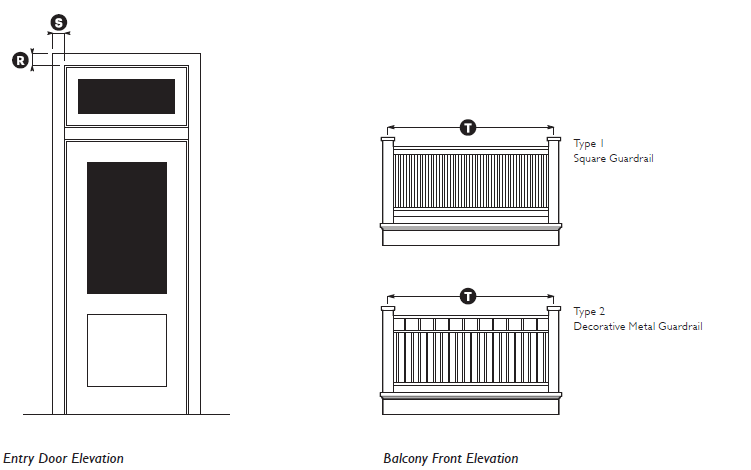
| 12. Residential Entry Doors | ||
| Door | ||
| Number of Panels | 2 min. | |
| Surround | ||
| Head Width | 4" min. | |
| Jamb Width | 4" min. | |
| Additional Elements | ||
| Transom | Allowed | |
| Pediment | Allowed | |
| 13. Balconies | ||
| Allowed Materials | ||
| Type 1—Square Guardrail | ||
|
Post, Baluster, Handrail,
Fascia, and Brackets | Metal, composite wood, wood | |
| Type 2—Decorative Metal Guardrail | ||
|
Post, Handrail, Fascia,
and Brackets | Metal, composite wood, wood | |
| Baluster | Metal | |
| Size | ||
| Overall Balcony Width | 10'0" max. | |
| Width Between Posts | 3' min. | |
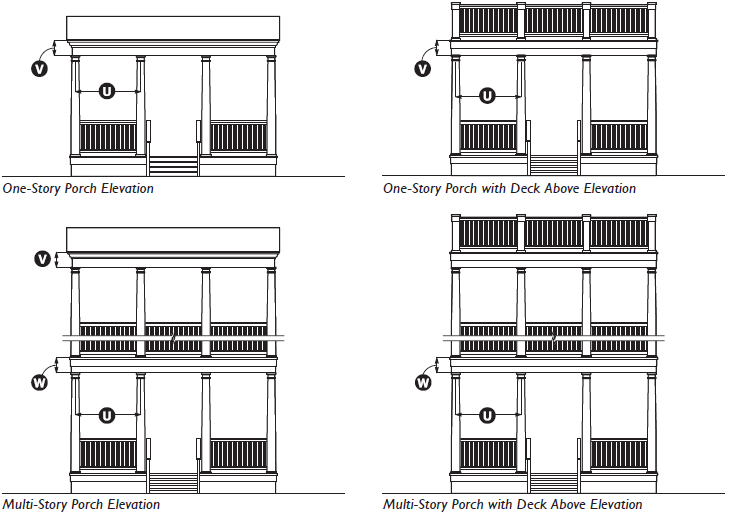
| 14. Porches | ||
| Columns | ||
| Shape |
Clearly defined capital, base, and
shaft; shaft either turned with entasis or square stock with optional detailing | |
| Diameter | 8" min. | |
| Spacing | 6'6" max. on center | |
| Entablature | ||
| Height of Topmost Entablature | ||
| Overall | 1'6" min. | |
| Fascia | 10" min. | |
| Height of Floor-to-Floor Entablature | ||
| Overall | 10" min. | |
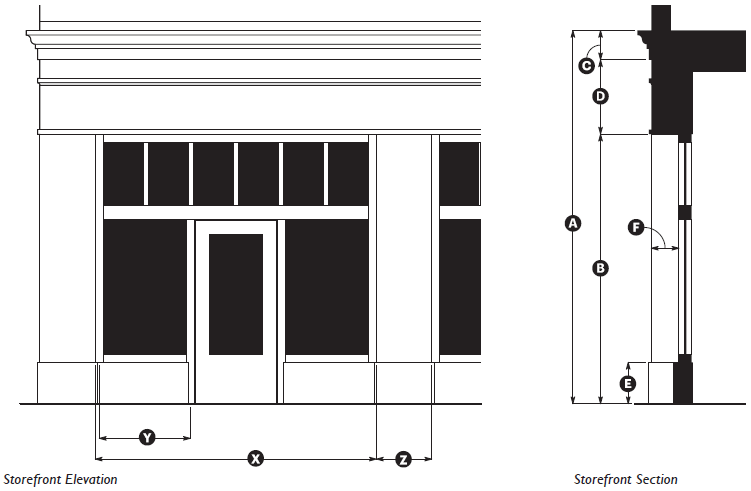
| 15. Storefronts | ||
| Width | ||
| Storefront Module | 10'0" min.; 15'0" max. | |
| Display Window | 3'0" min.; 4'0" max. | |
|
Distance Between
Storefront Modules | 1'6" min.; 2'6" max. | |
| Height | ||
| Overall | 13'0" min. | |
| Head Height | 10'0" min. | |
| Cornice | 10" min. | |
| Signage Band | 1'8" min. | |
| Base | 1'0" min.; 2'0" max. | |
| Horizontal Recess | ||
| Depth | 6" min.; 9" max. | |
| Base shall be continuous, unless divided by pilaster, and align with base height of building (if any). | ||
| Cornice shall be continuous. | ||
(Ord. No. 04-23 N.S., § I(Exh. A), 4-18-2023)
15.04.405.090 - Spanish Revival.
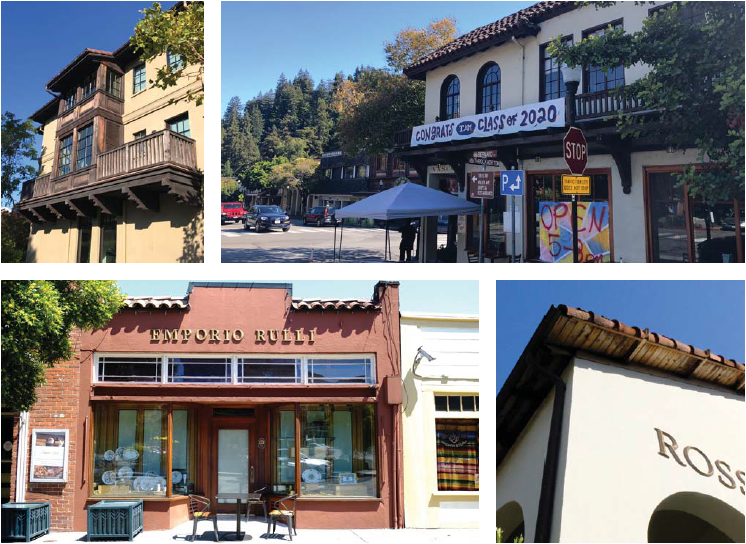
General note: The images above and the descriptions in Subsections 1 and 2 below are intended to provide a brief overview of the architectural style and are descriptive, not regulatory.
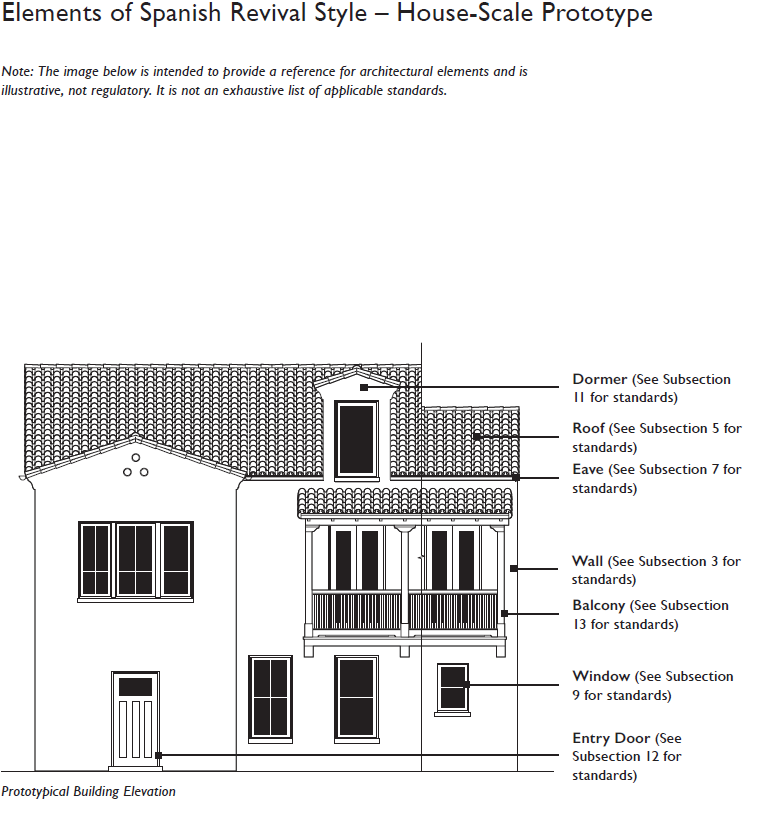
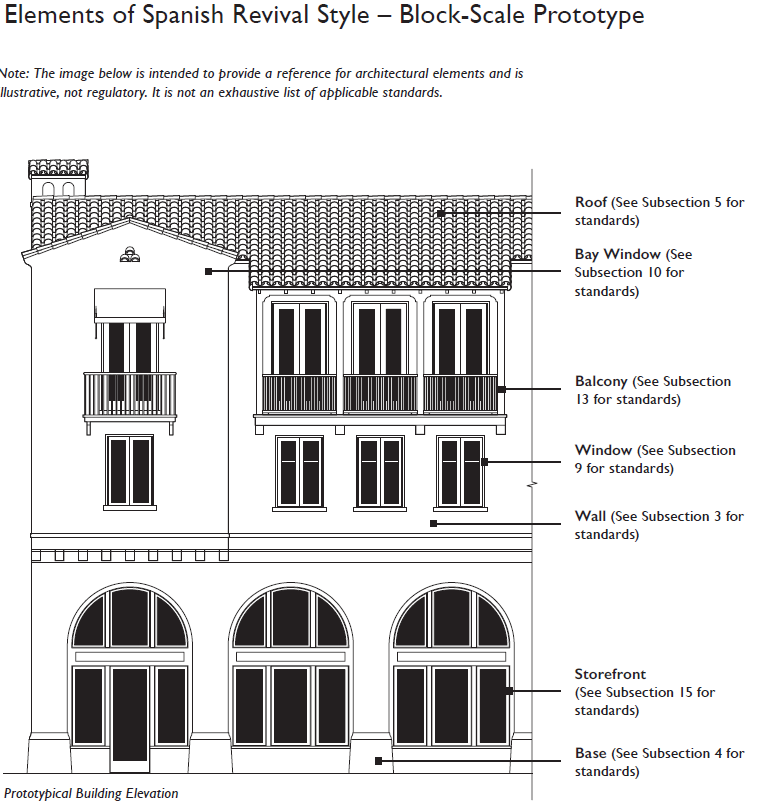
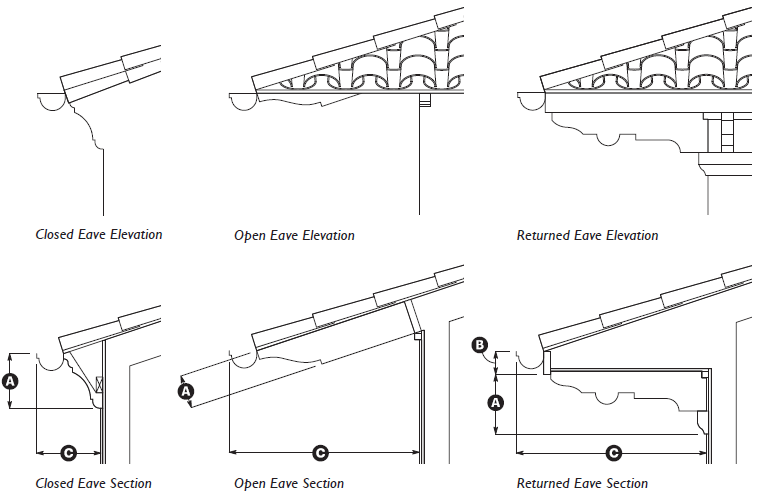
| 7. Eave | ||||
| Standards | Closed | Open | Returned | |
| Height | ||||
|
Supporting
Element | 1'0" min. | 8" min. | 1'0" min. | |
| Fascia | None | None | 6" min. | |
| Horizontal Projection1 | ||||
| Overall | 1'0" min. | 3'0" min. | 2'6" min. | |
| 1 Horizontal projection includes gutter. | ||||
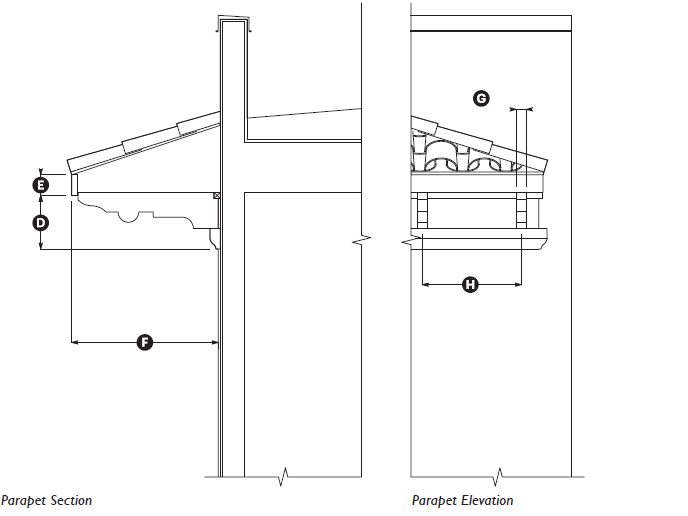
| 8. Parapet | ||
| Height | ||
|
Supporting
Element | 1'8" min. | |
| Fascia | 6" min. | |
| Horizontal Projection2 | ||
| Overall | 2'0" min. | |
| Continuous cornice required on all street facing facades. | ||
| Required Ornament | ||
| Type | Brackets | |
| Width | 3" min. | |
| Spacing | 24" max. on center | |
| Placement | Below fascia | |
| 2 Horizontal projection includes gutter. | ||
| 9. Windows | 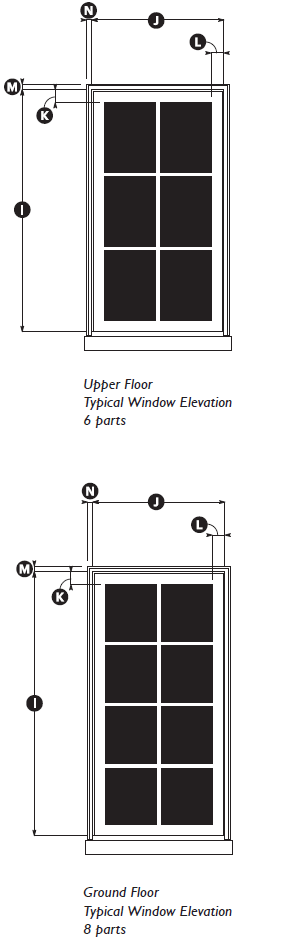 | ||
| Opening | |||
|
Proportion, Height
|
to Width
3
| ||
| Ground floor | 2.0 min. | ||
| Upper floor | 1.75 min. | ||
| Dormer |
See Subsection 11
Dormers) for standards. | ||
|
Typical Sizes, Width
|
× Height
| ||
| Ground floor, typical | 3'0" × 6'0" | ||
| Ground floor, ganged | 2'4" × 6'0" | ||
| Ground floor, picture | 4'6" × 6'0" | ||
| Upper floor, typical | 3'0" × 5'6" | ||
| Upper floor, ganged | 2'4" × 5'6" | ||
| Upper floor, picture | 4'6" × 5'6" | ||
| Privacy | 2'0" × 4'0" | ||
| Shape | Square, arched | ||
| Operation | Casement | ||
| Window | |||
| Glazing Divisions | 6 parts or 8 parts | ||
| Frame Width (Frame + Sash) | |||
| At Rail | 2.5" min. ± 1/4" | | |
| At Stile | 2.5" min. ± 1/4" | | |
| Molding Widths | |||
| Head | 2" min. | | |
| Jamb | 2" min. | | |
| Apron | None required | ||
| Window Frame Recess | |||
| Depth | 2" min. | ||
| Sill | |||
| Depth | 2" min. | ||
| Pediment | |||
| Allowed | No | ||
| Mullions | |||
| Mullions required between ganged windows. | |||
| 3 Picture windows must be wider than typical windows and equal in height to windows on the same floor. | |||
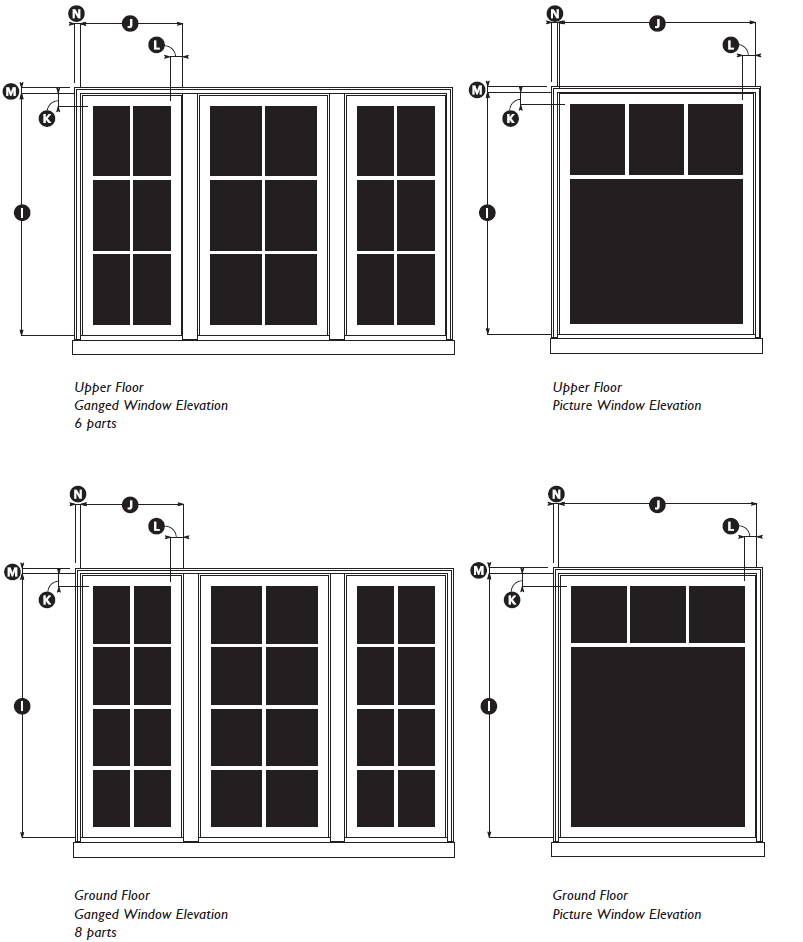
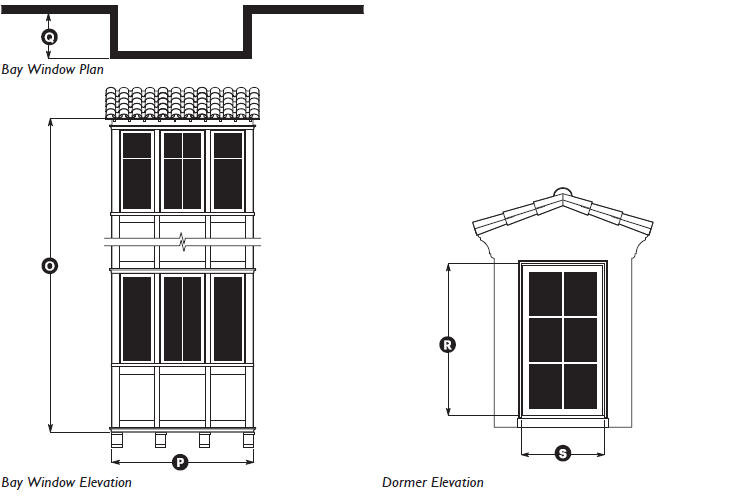
| 10. Bay Windows | ||
| Form | ||
| Type | Square | |
| Size | ||
| Height | | |
|
On buildings with
heights up to 3 stories | 2 stories max. | |
|
On buildings with
heights above 3 stories |
2 stories plus 1 additional
story for each building story over 3 max. | |
| Width | 6'0" min.; 12'0" max. | |
| Depth | 1'0" min.; 3'0" max. | |
| Cornice Types | ||
| Building eave wraps bay. | ||
| Bay stops below building eave (bay has own cornice). | ||
| Bay returns into building eave (bay never projects above the building eave). | ||
| Additional Standards | ||
| Bay depth not allowed to project beyond eave depth. | ||
| 10. Bay Windows (Continued) | |||
| Additional Standards | |||
| Bay form shall be continuous. | |||
| Continuous horizontal articulation on building shall wrap bay form. | |||
| Corner bay may be turned on side to be rotated 45 degrees from building corner. | |||
| 11. Dormers | |||
| Roof Form | |||
| Type | Gable | ||
| Pitch | 4:12 min.; 8:12 max. | ||
| Window | |||
|
Proportion, Height
to Width | 1.75 min. | | |
| |||
| Width | 2'4" min. | | |
| Pediment | |||
| Allowed | No | ||
| Dormers allowed for buildings with half stories. | |||
| See Subsections 6 (Rake), 7 (Eave), and 9 (Windows) for additional standards. | |||
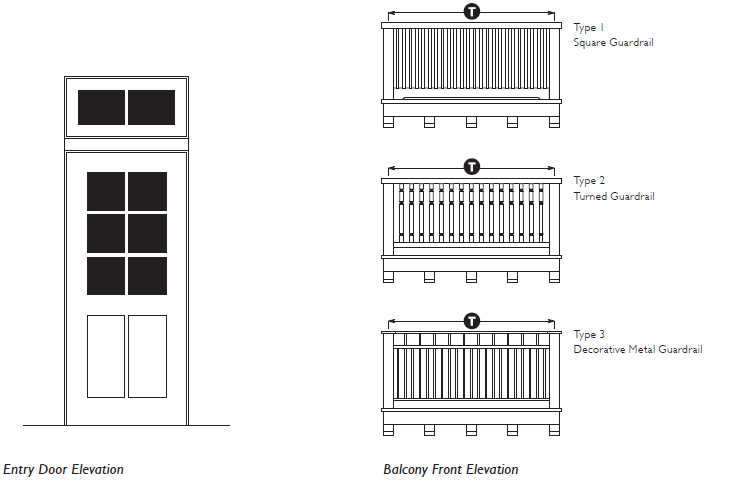
| 13. Balconies | ||
| Allowed Materials | ||
| Type 1—Square Guardrail | ||
|
Post, Baluster, Handrail,
Fascia, and Brackets |
Metal, composite wood,
wood | |
| Type 2—Turned Guardrail | ||
|
Post, Baluster, Handrail,
Fascia, and Brackets |
Metal, composite wood,
wood | |
| Type 3—Decorative Metal Guardrail | ||
|
Post, Handrail, Fascia,
and Brackets |
Metal, composite wood,
wood | |
| Baluster | Metal | |
| Size | ||
| Overall Balcony Width | 10'0" max. | |
| Width Between Posts | 3' min. | |
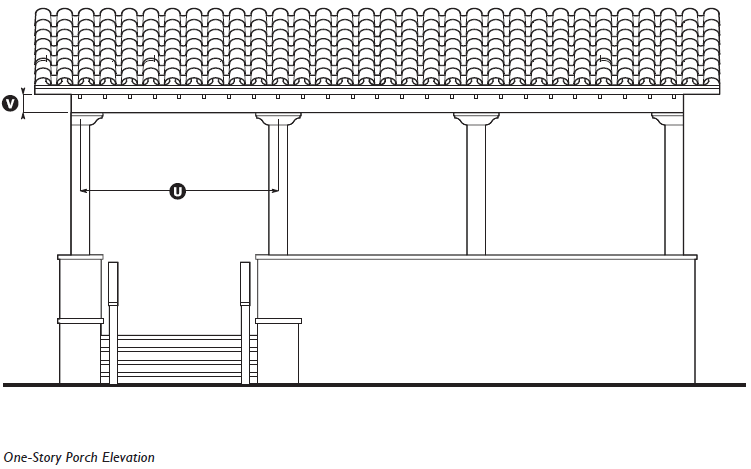
| 14. Porches | ||
| Columns | ||
| Shape |
Square or round, with capitals or
brackets | |
| Diameter | 8" min. | |
| Spacing | 9'0" max. on center | |
| Entablature | ||
| Overall | 10" min. | |
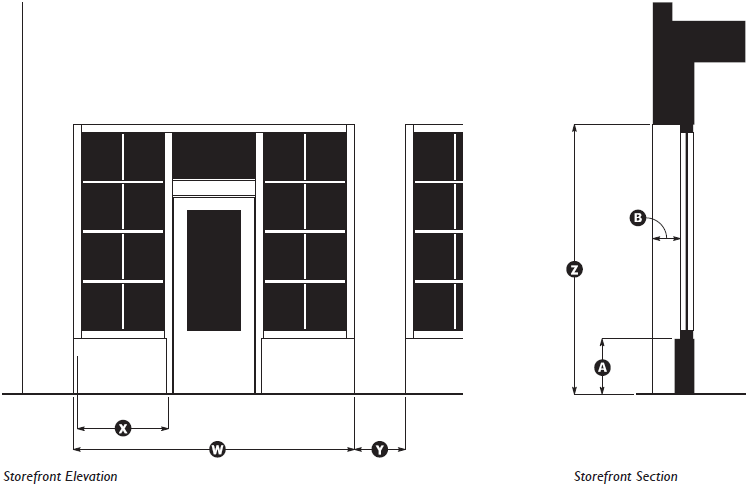
| 15. Storefronts | ||
| Width | ||
| Storefront Module | 10'0" min.; 15'0" max. | |
| Display Window | 3'0" min.; 4'0" max. | |
|
Distance Between
Storefront Modules | 1'6" min.; 2'6" max. | |
| Height | ||
| Head Height | 11'0" min. | |
| Cornice | None | |
| Signage Band | None | |
| Base | 1'0" min.; 2'0" max. | |
| Horizontal Recess | ||
| Depth | 6" min.; 9" max. | |
| Base shall be continuous, unless divided by pilaster, and align with base height of building (if any). | ||
(Ord. No. 04-23 N.S., § I(Exh. A), 4-18-2023)
15.04.405.100 - Victorian.
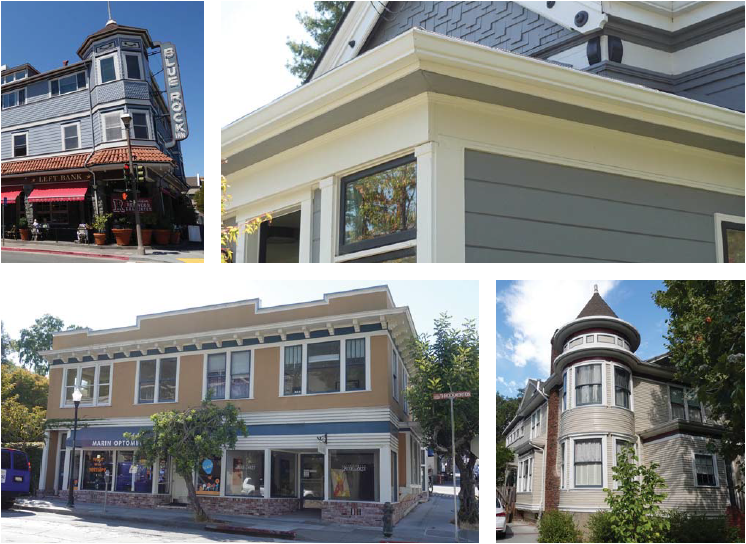
General note: The images above and the descriptions in Subsections 1 and 2 below are intended to provide a brief overview of the architectural style and are descriptive, not regulatory.
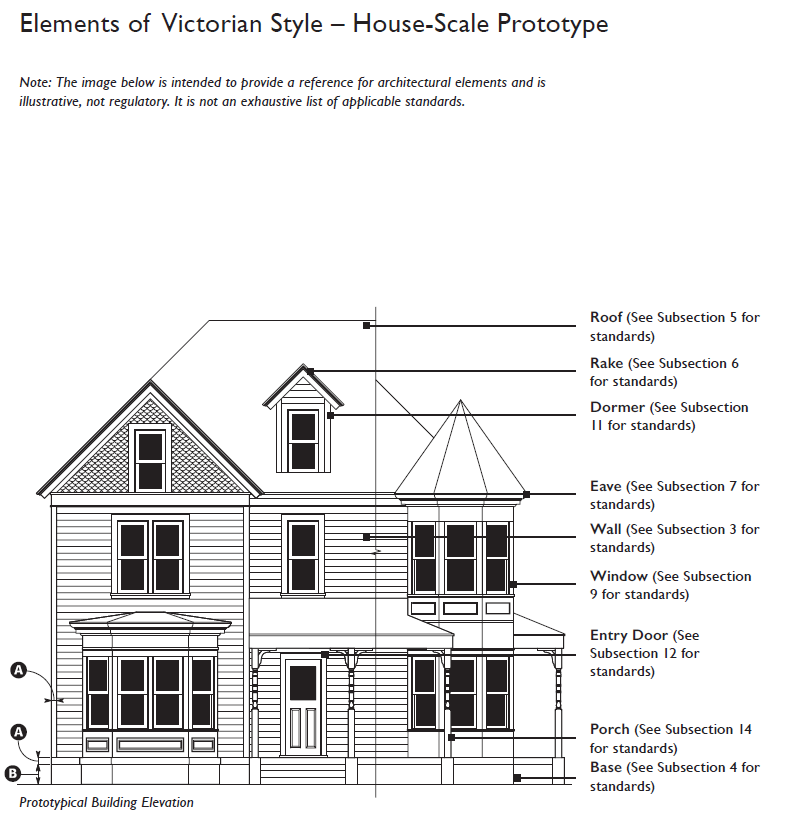
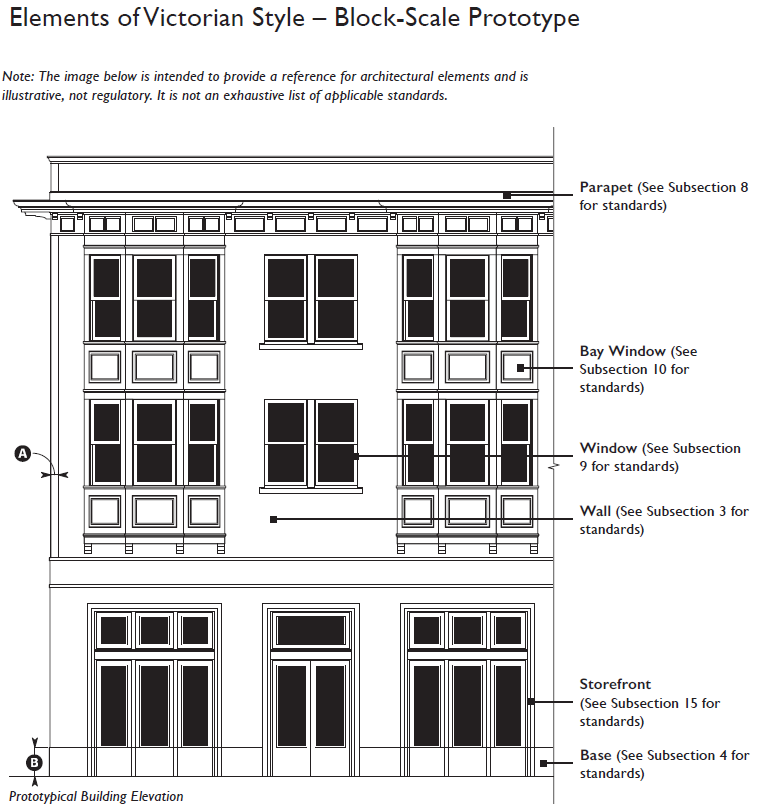
| 3. Wall | ||
| Stucco control joints shall align with edges of openings. | ||
| Trim1 | ||
| Width | 4" min. | |
| 1 Corner trim required only on buildings with wood, composite wood, or cementitious siding wall material. | ||
| 4. Base | ||
| Height | 1'0" min.; 2'0" max. | |
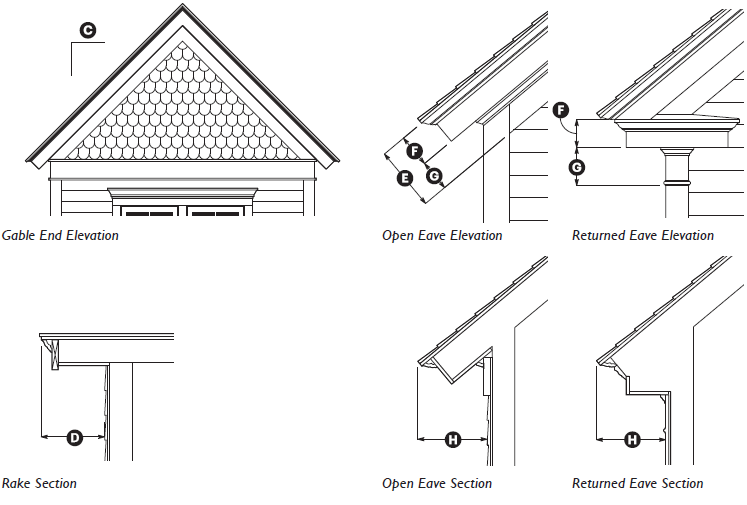
| 5. Building Roof | |||
| Building Roof | |||
| Standards | Sloped Roof | Flat Roof | |
| Roof Form | |||
| Pitch | 10:12 | N/A | |
| Applicable Subsections | |||
| 6. Rake | A | N/A | |
| 7. Eave | A | N/A | |
| 8. Parapet | N/A | A | |
| Gable End Roof Form Standards | |||
| Pitch |
12:12 min.
| | |
| 6. Rake | |||
| Horizontal Projection | 1'0" min. | | |
| See Subsection 7 (Eave) for height standards. | |||
| Key | A = Applicable N/A = Not Applicable | ||
| 7. Eave | ||
| Allowed Types | ||
| Eave Types | Open, Returned | |
| Height | ||
| Overall | 1'6" min. | |
| Crown Mold and Fascia | 8" min. | |
| Trim Band | 10" min. | |
| Horizontal Projection2 | ||
| Overall | 1'4" min. | |
| 2 Horizontal projection includes gutter. | ||
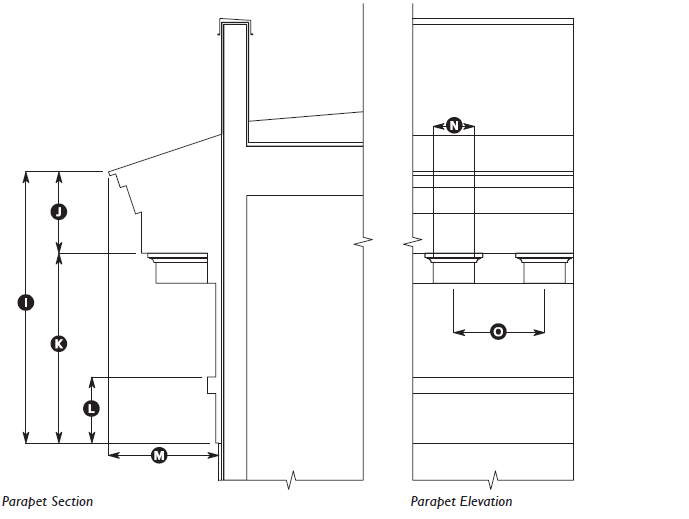
| 8. Parapet | ||
| Height | ||
| Overall | 5'6" min. | |
| Cornice | 1'8" min. | |
| Fascia | ||
| Overall | 3'6" min. | |
| Lower Band | 1'2" min. | |
| Horizontal Projection3 | ||
| Overall | 2'6" min. | |
| Continuous cornice required on all street facing facades. | ||
| Required Ornament | ||
| Type | Dentils | |
| Width | 10" min. | |
| Spacing | 24" max. on center | |
| Placement | Below cornice at top of fascia | |
| 3 Horizontal projection includes gutter. | ||
| 9. Windows | 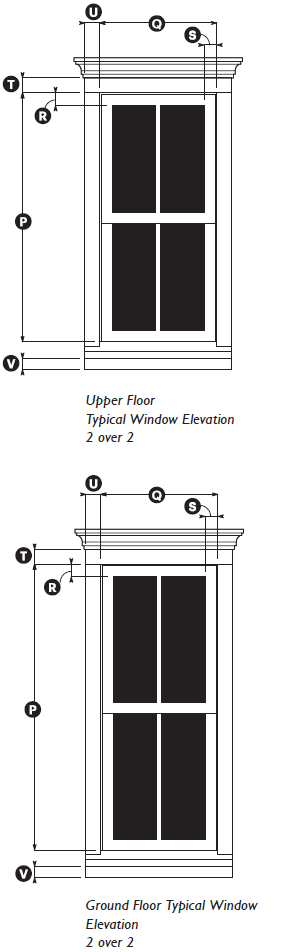 | ||
| Opening | |||
|
Proportion, Height
|
to Width
4
| ||
| Ground floor | 2.25 min. | ||
| Upper floor | 2.125 min. | ||
| Dormer |
See Subsection 11
(Dormers) for standards. | ||
|
Typical Sizes, Width
|
× Height
| ||
| Ground floor, typical | 2'8" × 6'6" | ||
| Ground floor, ganged | 2'8" × 6'6" | ||
| Ground floor, picture | 4'0" × 6'6" | ||
| Upper floor, typical | 2'8" × 5'8" | ||
| Upper floor, ganged | 2'8" × 5'8" | ||
| Upper floor, picture | 4'0" × 5'8" | ||
| Privacy | 2'0" × 4'6" | ||
| Shape | Square | ||
| Operation |
Single Hung, Double
Hung, Casement | ||
| Window | |||
| Glazing Divisions | 2 over 2 | ||
| Frame Width (Frame + Sash) | |||
| At Rail | 2.5" min. ± 1/4" | | |
| At Stile | 2.5" min. ± 1/4" | | |
| Trim Widths | |||
| Head | 4" min. | | |
| Jamb | 4" min. | | |
| Apron | 3" min. | | |
| Window Frame Recess | |||
| Depth | 2" min. | ||
| Sill | |||
| Depth | 3" min. | ||
| Pediment | |||
| Allowed | Yes | ||
| Mullions | |||
| Mullions required between ganged windows. | |||
| 4 Picture windows must be wider than typical windows and equal in height to windows on the same floor. | |||
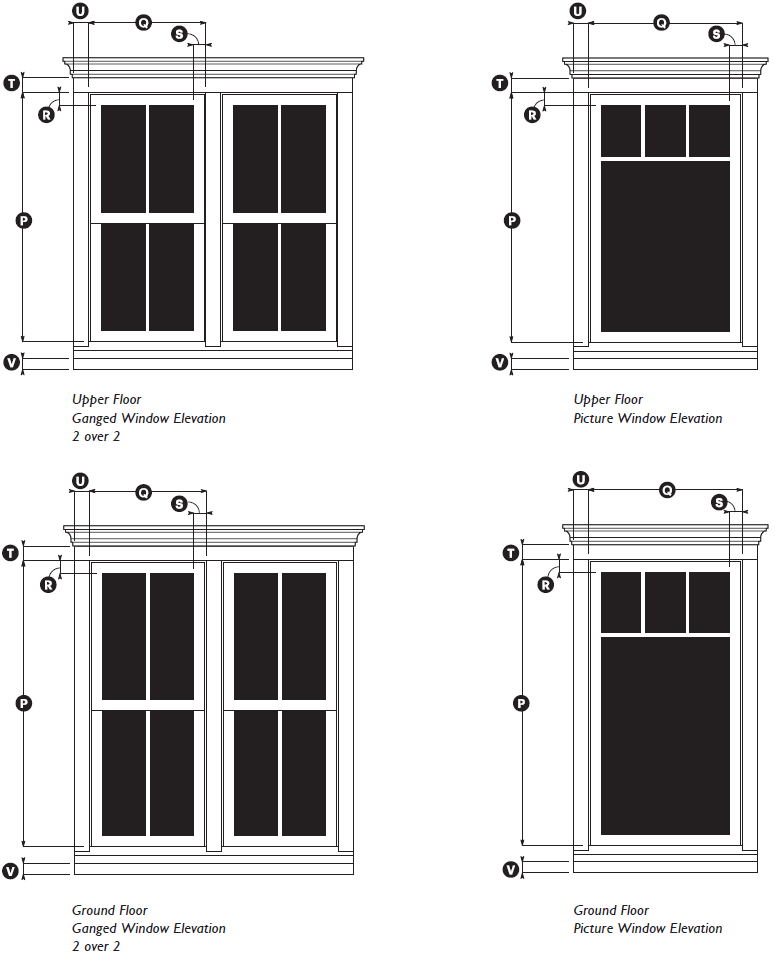
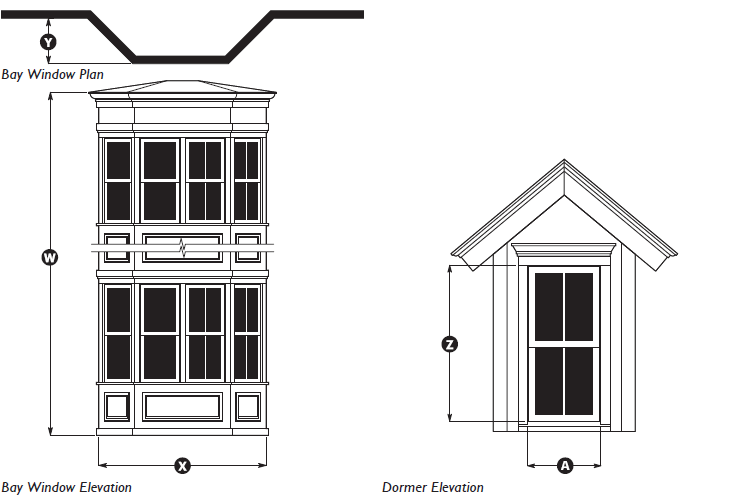
| 10. Bay Windows | ||
| Form | ||
| Type | Chamfered | |
| Interior Angle |
30 degrees min.;
55 degrees max. | |
| Number of Faces | 3 or 5 | |
| Size | ||
| Height | | |
|
On buildings with
heights up to 3 stories | 2 stories max. | |
|
On buildings with
heights above 3 stories |
2 stories plus 1 additional
story for each building story over 3 max. | |
| Width | 6'0" min.; 12'0" max. | |
| Depth | 1'0" min.; 3'0" max. | |
| Cornice Types | ||
| Cornice wraps bay. | ||
| Bay stops below building cornice (bay has own cornice). | ||
| Bay returns into building cornice (bay never projects above the building cornice). | ||
| 10. Bay Windows (Continued) | |||
| Additional Standards | |||
| Bay depth not allowed to project beyond cornice depth. | |||
| Bay form shall be continuous. | |||
| Continuous horizontal articulation on building shall wrap bay form. | |||
| 11. Dormers | |||
| Roof Form | |||
| Type | Gable | ||
| Pitch | 10:12 | ||
| Window | |||
|
Proportion, Height
to Width | 2.125 min. | | |
| |||
| Width | 2'8" min. | | |
| Pediment | |||
| Allowed | Yes | ||
| See Returned Eave Elevation in Subsection 7 (Eave) for additional standards. | |||
| Dormers allowed only for buildings with half stories. | |||
| See Subsections 6 (Rake), 7 (Eave), and 9 (Windows) for additional standards. | |||
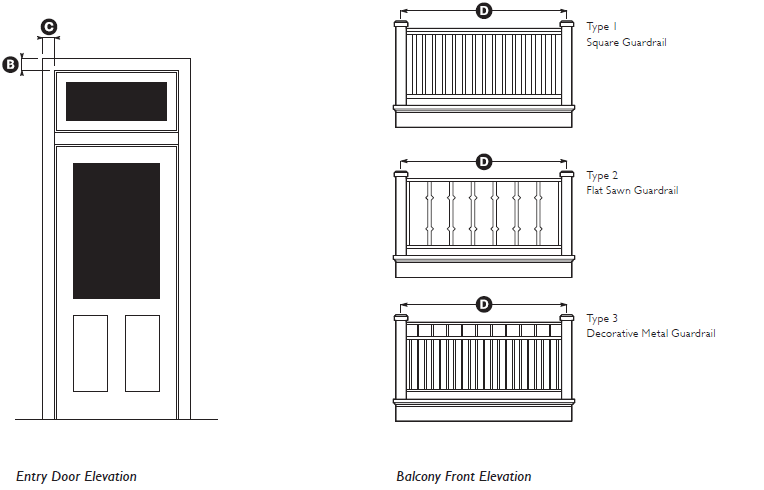
| 12. Residential Entry Doors | ||
| Door | ||
| Number of Panels | 2 min. | |
| Surround | ||
| Head Width | 4" min. | |
| Jamb Width | 4" min. | |
| Additional Elements | ||
| Transom | Allowed | |
| Pediment | Allowed | |
| 13. Balconies | ||
| Allowed Materials | ||
| Type 1—Square Guardrail | ||
|
Post, Baluster, Handrail,
Fascia, and Brackets | Metal, composite wood, wood | |
| Type 2—Flat Sawn Guardrail | ||
|
Post, Baluster, Handrail,
Fascia, and Brackets | Metal, composite wood, wood | |
| Type 3—Decorative Metal Guardrail | ||
|
Post, Handrail, Fascia,
and Brackets | Metal, composite wood, wood | |
| Baluster | Metal | |
| Size | ||
| Overall Balcony Width | 10'0" max. | |
| Width Between Posts | 3' min. | |
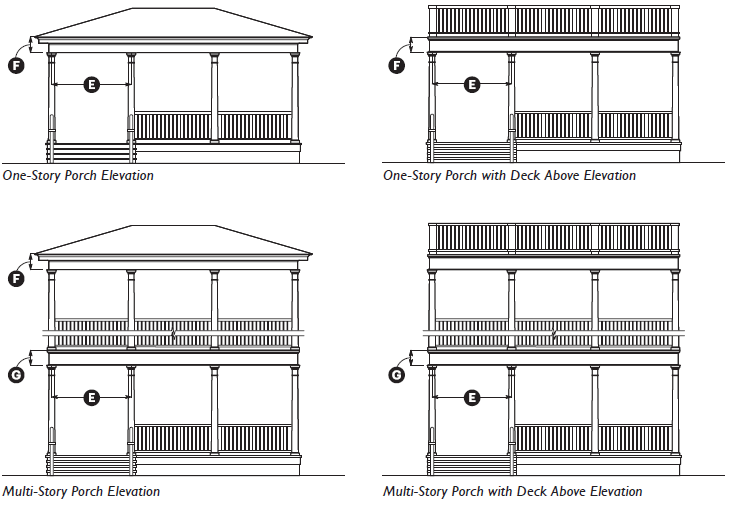
| 14. Porches | ||
| Columns | ||
| Shape |
Square-stock, square-tapered, or
turned with brackets | |
| Diameter | 6" min. | |
| Spacing | 8'0" max. on center | |
| Entablature | ||
| Height of Topmost Entablature | ||
| Overall | 1'6" min. | |
| Fascia | 10" min. | |
| Height of Floor-to-Floor Entablature | ||
| Overall | 10" min. | |
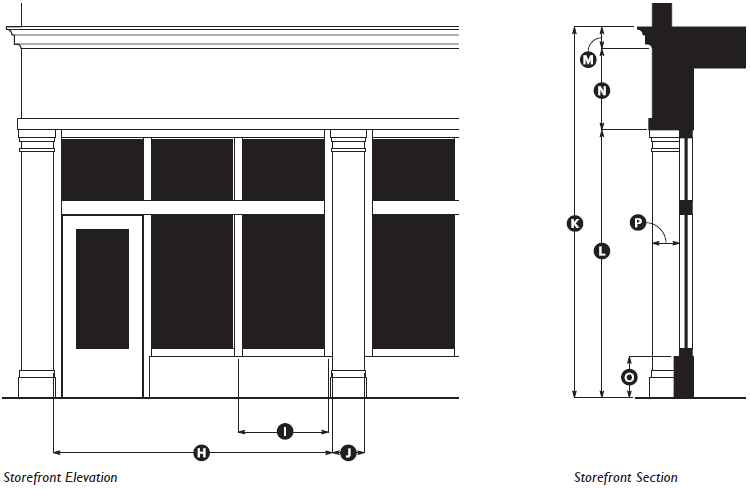
| 15. Storefronts | ||
| Width | ||
| Storefront Module | 10'0" min.; 15'0" max. | |
| Display Window | 3'0" min.; 4'0" max. | |
|
Distance Between
Storefront Modules | 1'0" min.; 2'0" max. | |
| Height | ||
| Overall | 13'0" min. | |
| Head Height | 10'0" min. | |
| Cornice | 9" min. | |
| Signage Band | 1'8" min. | |
| Base | 1'0" min.; 2'0" max. | |
| Horizontal Recess | ||
| Depth | 6" min.; 9" max. | |
| Base shall be continuous, unless divided by pilaster, and align with base height of building (if any). | ||
| Cornice shall be continuous. | ||
(Ord. No. 04-23 N.S., § I(Exh. A), 4-18-2023)
15.04.406.010 - Purpose.
The purpose of this Article is to generate a walkable environment through the establishment of new blocks and thoroughfares and to provide a set of civic space types and their associated standards to use within the transect zones.
The standards established in this Article shall apply to all proposed development within the transect zones exceeding two acres in total area and under common ownership as follows in Table 15.04.406.010.A (Applicability of Standards), and shall be considered in combination with the standards found within Article 15.04.402 (Transect Zones), Article 15.04.403 (Building Types), and Article 15.04.404 (Frontage Types).
(Ord. No. 04-23 N.S., § I(Exh. A), 4-18-2023)
15.04.406.020 - Design Sites.
Design Sites may be used as an alternative to subdivision for large lots to demonstrate how the lot could be divided into multiple smaller lots that are not required to be recorded as new parcels. Each design site must satisfy dimensional standards, as well as all other standards in the appropriate Transect Zone; see Article 15.04.402 (Transect Zones). Standards may not be satisfied for one Design Site on adjacent Design Sites. The diagram in this Section illustrates how a large site could be divided using Design Sites.
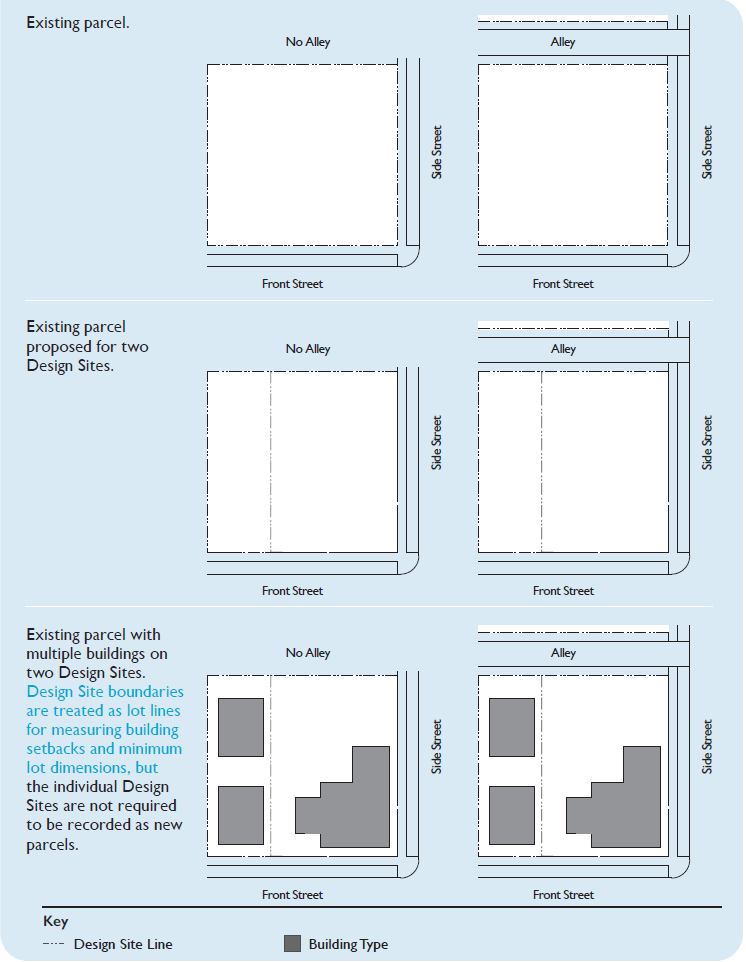
Example of Multiple Design Sites on an Existing Parcel
(Ord. No. 04-23 N.S., § I(Exh. A), 4-18-2023)
15.04.406.030 - Thoroughfares, Blocks, and Connectivity.
A.
Thoroughfares. Thoroughfares define the public streets that refine pedestrian sheds into walkable environments. Care should be taken in the layout and sizing of thoroughfares, as wide thoroughfares and a lack of connectivity reduce the pedestrian friendliness of the area.
1.
Design.
a.
Thoroughfares that pass from one transect zone to another shall adjust their cross section design to match the character of the transect zone. For example, while a thoroughfare within an urban transect zone with retail shops may have wide sidewalks with trees in tree grates, it may transition to a narrower sidewalk with a planting strip within a less urban transect zone with various residential building types.
b.
The thoroughfare network shall be mapped on a regulating plan and shall indicate the layout of thoroughfares and the block network according to standards in Subsection 15.04.406.030.B.
c.
Thoroughfares shall terminate on/connect to other thoroughfares. Thoroughfares shall not terminate on alleys and lanes.
2.
External Connectivity.
a.
The arrangement of thoroughfares in a development shall provide for the alignment and continuation of existing or proposed thoroughfares into adjoining lands in those cases in which the adjoining lands are undeveloped and intended for future development or in which the adjoining lands are developed and include opportunities for such connections.
b.
Thoroughfare rights-of-way shall be extended to or along adjoining property boundaries such that a thoroughfare connection or stub shall be provided for development:
(1)
Consistent with the minimum block length as defined in Subsection 15.04.406.030.B;
(2)
Consistent with required connections indicated in Figure 15.04.406.030.A.
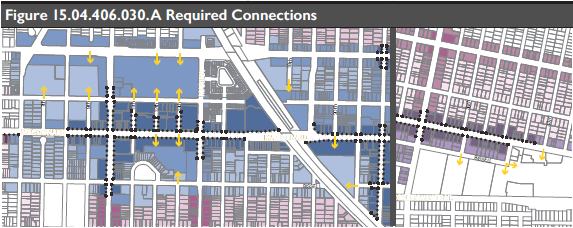
3.
Dead-End Streets and Cul-de-Sacs. Dead-end streets and cul-de-sacs shall not be included in plans. Cul-de-sacs may be approved by the Director to accommodate a site specific environmental feature requiring protection and/or preservation only. Cul-de-sacs approved by the Director shall meet the following standards:
a.
Permanent dead-end streets shall be no longer than 300 feet and shall be provided with a cul-de-sac;
b.
Temporary dead-end streets shall be provided with a temporary turnaround area which shall be designed considering traffic usage, maintenance, and removal;
c.
Cul-de-sacs shall have a minimum right-of-way radius of 50 feet and a paved circular area with a minimum radius of 40 feet;
d.
Cul-de-sacs shall contain a central planted median; and
e.
Whenever cul-de-sac thoroughfares are created, at least one pedestrian access easement shall be provided, to the extent practicable, between each cul-de-sac head or street turnaround and the sidewalk system of the closest adjacent street or pedestrian pathway. The access easement shall be direct with a minimum width of 12 feet.
B.
Block Size.
1.
Individual block faces and the total block perimeter shall follow the standards established in Table 15.04.406.030.A (Block Size) below. If a block contains multiple transect zones, the most intense transect zone shall be used to establish the standards for block size.
2.
Blocks should be a minimum width, such that two tiers of developable lots are provided.
(Ord. No. 04-23 N.S., § I(Exh. A), 4-18-2023)
15.04.406.040 - Mix and Design of Civic and Open Spaces.
A.
The standards established in this Article provide the transect zones with a diverse palette of parks and other publicly accessible civic spaces, publicly or privately owned, that are essential components of walkable urban environments.
B.
There are multiple civic space types defined in Table 15.04.406.040.A (Civic Space Type Standards). Two of the civic space types, Playgrounds and Community Gardens, may be incorporated into any of the other types or may stand alone.
C.
In Table 15.04.406.040.A (Civic Space Type Standards), the illustration and description of each civic space type are illustrative in nature and not regulatory.
D.
The service area, size, frontage and disposition of elements standards of each civic space type are regulatory.
1.
Service Area. Describes how the civic space relates to the City as a whole and the area that will be served by the civic space.
2.
Size. The overall range of allowed sizes of the civic space.
3.
Frontage. The relationship along property lines of a civic space to adjacent buildings or lots.
a.
The front of the lots attached to or across a thoroughfare from a civic space should face on to the civic space to the maximum extent possible.
b.
Building. Lots that are attached to or across a thoroughfare from a civic space listed as having a "Building" frontage shall have the front of the lot facing on to the civic space for a minimum of three quarters of the civic space perimeter.
c.
Independent. Lots that are attached to or across a thoroughfare from a civic space listed as having an "Independent" frontage may have the front, side street, or rear of the lot facing on to the civic space.
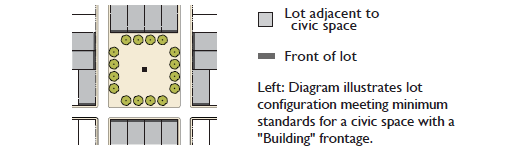
4.
Disposition of Elements. The placement of objects within the civic space.
a.
Natural. Civic spaces with natural character are designed in a natural manner with no formal arrangement of elements.
b.
Formal. Civic spaces with a formal character have a more rigid layout that follows geometric forms and has trees and other elements arranged in formal patterns.
c.
Informal. Civic spaces with an informal character have a mix of formal and natural characteristics.
E.
Typical Facilities. A list of the typical facilities found within the civic space. This list is not intended to be a complete list of facilities allowed nor is it intended that every civic space would contain each of the facilities listed. Facilities larger than the indicated gross square footage (gsf) require review and approval by the Director and Parks Director.
F.
The civic spaces specified in Table 15.04.406.040.A (Civic Space Type Standards) are allowed By Right or By Review in the designated transect zones. Civic Space allowed By Review are allowed if approved by the Director and Parks Director.
G.
Civic spaces shall not be fenced or enclosed and shall have at least one edge open to a street or right-of-way. Edges not abutting a street or right-of-way shall be defined by building frontage consistent with the standard for "BTL Defined by a Building, Front" in applicable zones in 15.04.402 (Transect Zones).
| Table 15.04.406.040.A Civic Space Type Standards | |||
| Transect Zone |  | |  |
| Civic Space Type | Community Park | Greenway | Neighborhood Green |
| Illustration |  |  |  |
| Description | An open space available for unstructured recreation and a limited amount of structured recreation. | A linear open space that may follow natural corridors providing unstructured and limited amounts of structured recreation. | An open space available for unstructured and limited amounts of structured recreation. |
| Location and Size | |||
| Location | |||
| Service Area | Multiple Neighborhoods | Multiple Neighborhoods | Neighborhood |
| Size | |||
| Minimum | 12 acres | 8 acres (60' wide by 1 mile long) | 1 acre |
| Maximum | — | — | 15 acres |
| Character | |||
| Frontage | Independent | Independent or Building | Building |
| Disposition of Elements | Informal | Natural or Informal | Informal |
| Typical Facilities | |||
|
Passive and Active Recreation, Accessory Structure, Drinking Fountains, Community
Facility
< 5,000 gsf, Paths and Trails |
Passive and Active Recreation, Accessory Structure, Drinking Fountains, Community
Facility
< 5,000 gsf, Paths and Trails |
Passive and Active (unstructured or structured) Recreation, Accessory Structure, Drinking
Fountains, Community Facility
< 5,000 gsf, Paths and Trails | |
 | |||
| Table 15.04.406.040.A Civic Space Type Standards (continued) | |||
| Transect Zone | | | |
| Civic Space Type | Neighborhood Square | Plaza | Pocket Plaza |
| Illustration | 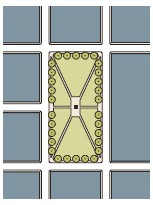 | 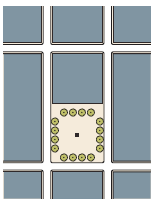 | 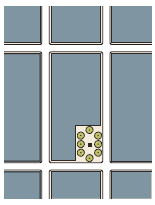 |
| Description | An open space available for civic purposes, unstructured and limited amounts of structured recreation. | A formal open space available for civic purposes and commercial activities. Plazas are typically hardscaped. Commercial activities shall be subordinate to Civic use. | A formal open space available for civic purposes and commercial activities. Pocket Plazas are typically hardscaped. Commercial activities shall be subordinate to Civic use. |
| Location and Size | |||
| Location | |||
| Service Area | Neighborhood | Neighborhood | Neighborhood |
| Size | |||
| Minimum | ½ acre | ½ acre | 2,000 sf |
| Maximum | 5 acres | 2½ acres | ½ acre |
| Character | |||
| Frontage | Building | Building | Building |
| Disposition of Elements | Formal | Formal | Formal |
| Typical Facilities | |||
| Passive and Active (unstructured or structured) Recreation, Accessory Structure, Drinking Fountains, Community Facility < 5,000 gsf, Paths and Trails | Passive Recreation, Accessory Structure, Drinking Fountains, Paths and Trails | Passive Recreation, Accessory Structure, Drinking Fountains, Paths and Trails | |
| |||
| Table 15.04.406.040.A Civic Space Type Standards (continued) | |||
| Transect Zone |  | | |
| Civic Space Type | Pocket Park | Playground | Community Garden |
| Illustration | 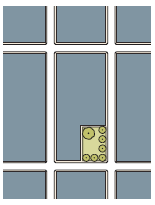 | 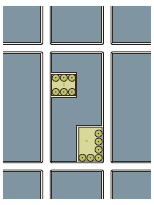 | 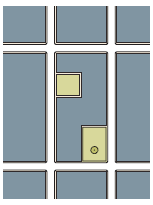 |
| Description | An open space available for informal activities in close proximity to neighborhood residences. | An open space designed and equipped for the recreation of children. A Playground should be fenced and may include an open shelter. Playgrounds may be included within other civic spaces. | An open space designed as a grouping of garden plots that are available to nearby residents for small-scale cultivation. Community Gardens may be included within other civic spaces. |
| Location and Size | |||
| Location | |||
| Service Area | Neighborhood | Neighborhood | Neighborhood |
| Size | |||
| Minimum | 2,000 sf | — | — |
| Maximum | 1 acre | — | — |
| Character | |||
| Frontage | Building | Independent or Building | Independent or Building |
| Disposition of Elements | Formal or Informal | Formal or Informal | Formal or Informal |
| Typical Facilities | |||
| Passive Recreation, Accessory Structure, Drinking Fountains, Paths and Trails | Accessory Structure, Drinking Fountains, Paths and Trails | Accessory Structure, Drinking Fountains, Paths and Trails | |
| |||
(Ord. No. 04-23 N.S., § I(Exh. A), 4-18-2023)
15.04.406.050 - Mix of Building Types.
A.
A mix of building types introduces variety into the character of neighborhoods. Blocks shall provide a diversity of residential and mixed-use building types in a manner that fulfills the intent of each transect zone as described in Article 15.04.402 (Transect Zones) and the following formulas below. In the event that blocks are composed of more than one transect zone, the minimum mixing requirement of the most intense transect zone shall apply across the block.
B.
T4 Neighborhood. Blocks within the T4N Transect Zones are intended to provide a mix of detached house, duplex and multi-unit types. See Section 15.04.402.020 (T4 Neighborhood) for the allowed building types in T4N.
1.
Blocks within the T4N Transect Zones shall provide a minimum of two distinct building types per block.
2.
No more than 50 percent of the residential units on a block shall be located within Detached House, Cottage, or Duplex building types.
C.
T4 Main Street, T5 Neighborhood, and T5 Main Street. Blocks within the T4MS, T5N, or T5MS Transect Zone are intended to provide the greatest diversity of building types. See Section 15.04.402.030 (T4 Main Street), Section 15.04.402.040 (T5 Neighborhood) and Section 15.04.402.050 (T5 Main Street) for the allowed building types in T4MS, T5N, and T5MS.
1.
Blocks within the T4MS, T5N, or T5MS Transect Zones shall provide a minimum of three distinct building types per block.
2.
No more than 50% of the residential units on a block shall be located within Detached House, Cottage, or Duplex building types.
D.
T5 Core. Blocks within the T5C Transect Zone are intended to be composed of attached building types and shall have no minimum mixing requirement. See Section 15.04.402.060 (T5 Core) for the allowed building types in T5C.
| T4N: Sample Building Type Mix | Far Left: Block with six Detached House (DH), four Multi-Plex (MP) and two Courtyard
Building (CB) Building Types. Left: Block with five Detached House (DH) and four Multi-Plex (MP) Building Types. |
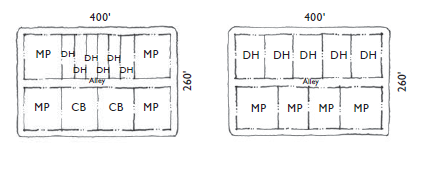 | |
| T5N: Sample Building Type Mix | Left: Block includes five Main Street Building (MS), seven Rowhouse (RH), and two Multi-Plex (MP) Building Types. |
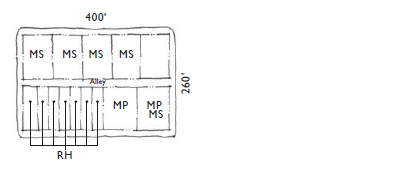 |
(Ord. No. 04-23 N.S., § I(Exh. A), 4-18-2023)
15.04.406.060 - Intersections.
A.
Street design of narrow streets and compact intersections requires designers to pay close attention to the operational needs of transit, fire and rescue, waste collection and delivery trucks. For this reason, early coordination with transit, fire and rescue, waste collection and other stakeholder groups is essential.
B.
More regular encroachment of turning vehicles into opposing lanes will occur at compact intersections. Therefore, frequency of access, traffic volumes and the speeds on intersecting streets at those intersections shall be considered when designing intersections. For fire and rescue, determination of the importance of that street for community access should be determined, e.g. primary or secondary access.
C.
The designer should use turning templates or software to evaluate intersections to ensure that adequate operation of vehicles can occur. Location of on-street parking around intersections should be evaluated during this analysis to identify potential conflicts between turning vehicles and on-street parking. Bike lanes and on-street parking will increase the effective curb return radius, when curb extensions are not employed, by providing more room for the wheel tracking of turning vehicles.
D.
Roundabouts should be considered as an alternative to traffic signals. Roundabouts can provide reduced vehicle speeds, reduced conflict points, separation of vehicle-vehicle conflict points from vehicle-pedestrian conflict points, and provide a two-step crossing for pedestrians. At multi-lane roundabouts, benefits for bicyclists and pedestrians are greatly diminished due to multiple-threat scenarios and bicycle weaving and additional considerations are necessary, including installing a traffic signal or pedestrian hybrid beacons at crosswalks." Roundabouts: An Informational Guide (FHWA) continues to provide the current best practice guidance on roundabout design, including bicycle and pedestrian accommodation.
(Ord. No. 04-23 N.S., § I(Exh. A), 4-18-2023)
15.04.406.070 - Pedestrian Crossings.
A.
Directional Curb Ramps. Perpendicular corner curb ramps with a separate ramp installed in each direction shall be used where feasible instead of single, diagonal corner ramps.
B.
Crosswalks. Crosswalks shall be designed per the Crosswalk Policy in the Pedestrian Plan.
C.
Medians. Medians, where provided, shall provide a median refuge at the intersection designed per the standards in the diagram below.
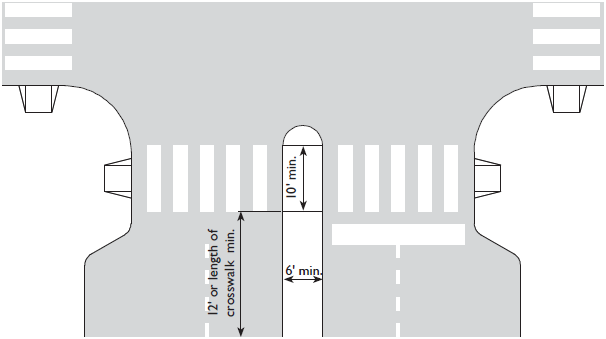
D.
Mid-block crossings, where provided, shall have mid-block curb extensions per the standards in the diagram below.
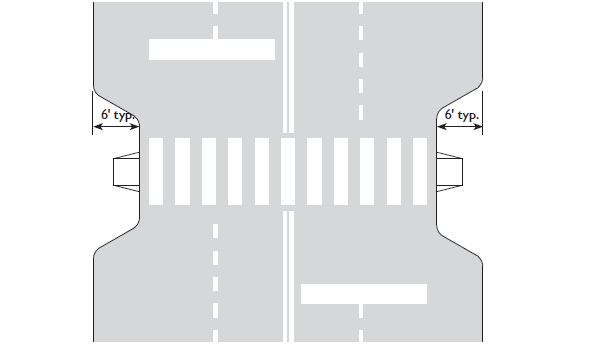
E.
On thoroughfares with medians, provided mid-block crossings between the median and curbs shall be offset from one another per the diagram below.
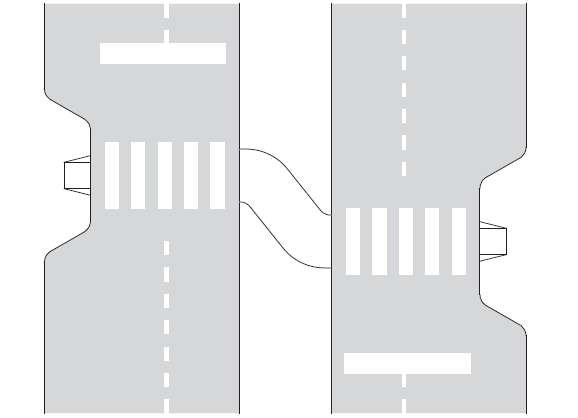
(Ord. No. 04-23 N.S., § I(Exh. A), 4-18-2023)
15.04.406.090 - Bicycle Facilities.
A.
Bicycle Master Plan and Pedestrian Plan.
1.
Thoroughfares shall be designed to support the goals, policies, and recommendations within the Bicycle Master Plan and Pedestrian Plan.
2.
The Bicycle Network. Bicycle facilities shall be located per the proposed bicycle network in the Bicycle Master Plan.
3.
Should a conflict arise between the standards in this Article and the Bicycle Master Plan or Pedestrian Plan, the standards in this Article shall take precedence unless the Director determines otherwise.
B.
WCCTAC Transit Wayfinding Plan. Bicycle and pedestrian wayfinding shall be implemented per the WCCTAC Wayfinding Signage Program.
C.
Predefined thoroughfare assemblies found in Section 15.04.406.100 (Thoroughfare Assemblies) are allowed By Right.
D.
Thoroughfares that do not meet the standards in items A, B or C above are not allowed in any transect zones.
(Ord. No. 04-23 N.S., § I(Exh. A), 4-18-2023)
15.04.406.100 - Thoroughfare Assemblies.
A.
This Section provides thoroughfare assemblies that have been approved by the City for use in transect zones.
B.
The tables in this Section are added into the City of Richmond Standard Plans.
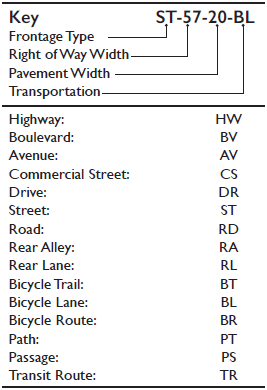
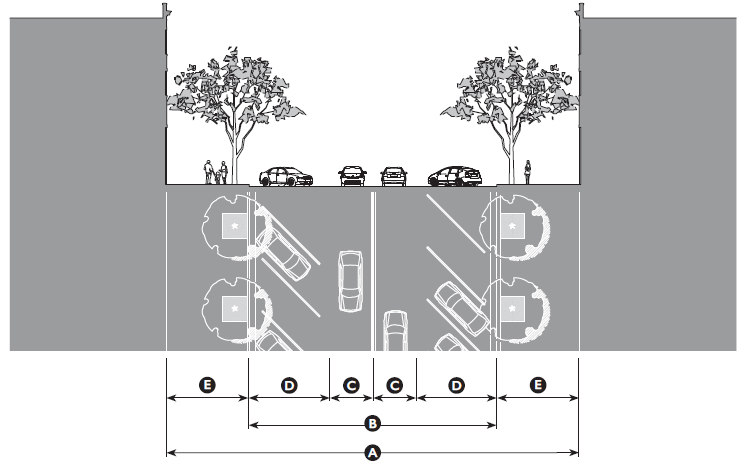
| Application | ||
| Transect Zones |  | |
| Movement Type | Slow | |
| Design Speed | 20 mph | |
| Overall Widths | ||
| Right-of-Way (ROW) Width | 100' | |
| Pavement Width | 60' | |
| Lane Assembly | ||
| Traffic Lanes | 2 @ 12' | |
| Bicycle Lanes | None | |
| Parking Lanes |
2 @ 18', marked
45° angled parking | |
| Medians | None | |
| Public Frontage Assembly | ||
| Frontage Type | Commercial street | |
| Drainage Collection Type | Curb and gutter | |
| Planter Type | 4'x4' tree well | |
| Landscape Type | Trees at 30' o.c. avg. | |
| Lighting Type |
Post, column, or
double column | |
| Walkway Type | 20' sidewalk | |
| Curb Type | Square | |
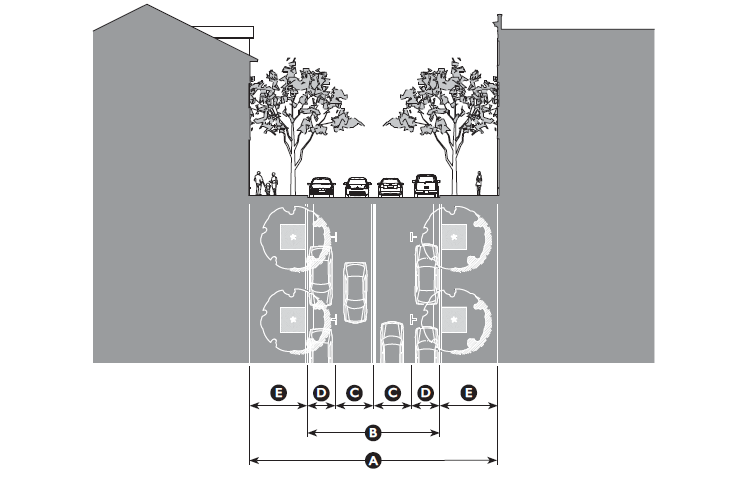
| Application | ||
| Transect Zones |  | |
| Movement Type | Slow | |
| Design Speed | 25 mph | |
| Overall Widths | ||
| Right-of-Way (ROW) Width | 60' | |
| Pavement Width | 36' | |
| Lane Assembly | ||
| Traffic Lanes | 2 @ 10' | |
| Bicycle Lanes | None | |
| Parking Lanes | 2 @ 8', marked | |
| Medians | None | |
| Public Frontage Assembly | ||
| Frontage Type | Commercial street | |
| Drainage Collection Type | Curb and gutter | |
| Planter Type | 4'x4' tree well | |
| Landscape Type | Trees at 30' o.c. avg. | |
| Lighting Type | Post or column | |
| Walkway Type | 12' sidewalk | |
| Curb Type | Square | |
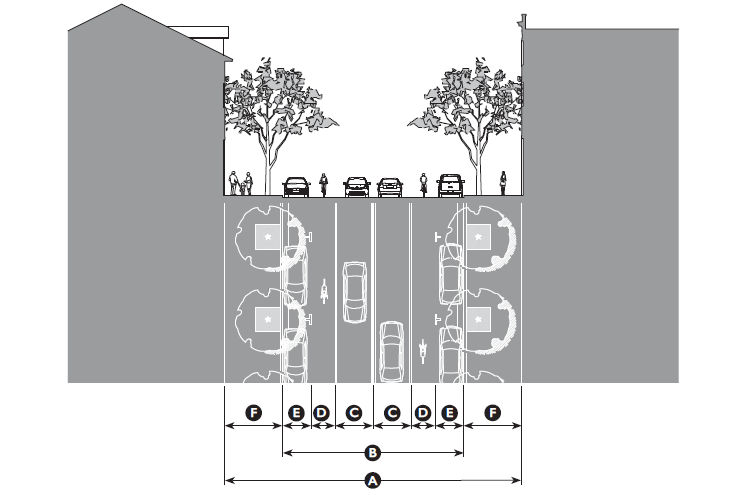
| Application | ||
| Transect Zones | | |
| Movement Type | Low | |
| Design Speed | 30 mph | |
| Overall Widths | ||
| Ridght-of-Way (ROW) Width | 72' | |
| Pavement Width | 48' | |
| Lane Assembly | ||
| Traffic Lanes | 2 @ 10' | |
| Bicycle Lanes | 2 @ 6' | |
| Parking Lanes | 2 @ 8', marked | |
| Medians | None | |
| Public Frontage Assembly | ||
| Frontage Type | Commercial street | |
| Drainage Collection Type | Curb and gutter | |
| Planter Type | 4'x4' tree well | |
| Landscape Type | Trees at 30' o.c. avg. | |
| Lighting Type | Post or column | |
| Walkway Type | 12' sidewalk | |
| Curb Type | Square | |
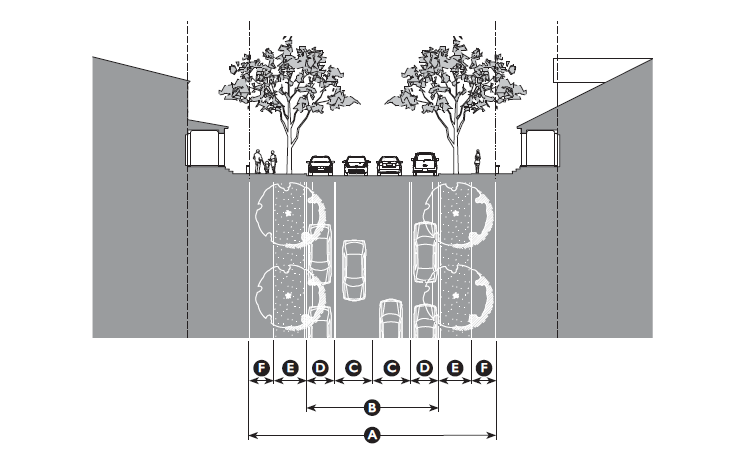
| Application | ||
| Transect Zones |  | |
| Movement Type | Slow | |
| Design Speed | 20 mph | |
| Overall Widths | ||
| Right-of-Way (ROW) Width | 60' | |
| Pavement Width | 32' | |
| Lane Assembly | ||
| Traffic Lanes | 2 @ 9' | |
| Bicycle Lanes | None | |
| Parking Lanes | 2 @ 7', marked | |
| Medians | None | |
| Public Frontage Assembly | ||
| Frontage Type | Street | |
| Drainage Collection Type | Curb and gutter | |
| Planter Type | 8' continuous planter 1 | |
| Landscape Type | Trees at 30' o.c. avg. | |
| Lighting Type | Pipe, post, or column | |
| Walkway Type | 6' sidewalk 1 | |
| Curb Type | Square | |
| 1 7' continuous planter and 7' sidewalk for T5 application | ||
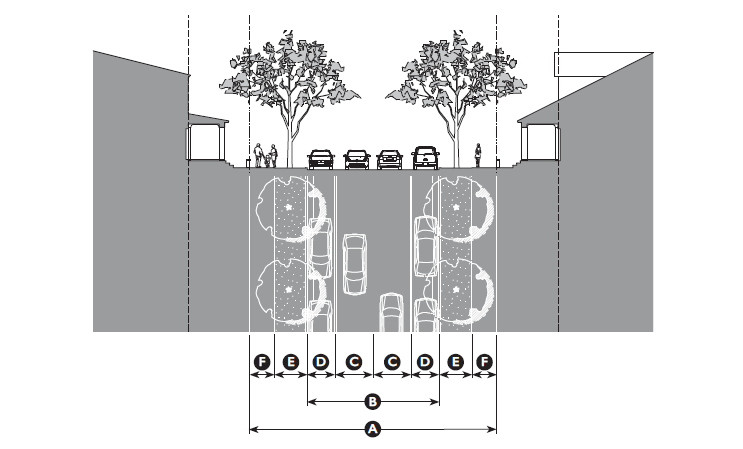
| Application | ||
| Transect Zones | | |
| Movement Type | Slow | |
| Design Speed | 25 mph | |
| Overall Widths | ||
| Right-of-Way (ROW) Width | 60' | |
| Pavement Width | 36' | |
| Lane Assembly | ||
| Traffic Lanes | 2 @ 10' | |
| Bicycle Lanes | None | |
| Parking Lanes | 2 @ 8', marked | |
| Medians | None | |
| Public Frontage Assembly | ||
| Frontage Type | Street | |
| Drainage Collection Type | Curb and gutter | |
| Planter Type | 6' continuous planter 1 | |
| Landscape Type | Trees at 30' o.c. avg. | |
| Lighting Type | Pipe, post, or column | |
| Walkway Type | 6' sidewalk 1 | |
| Curb Type | Square | |
| 1 5' continuous planter and 7' sidewalk for T5 application | ||
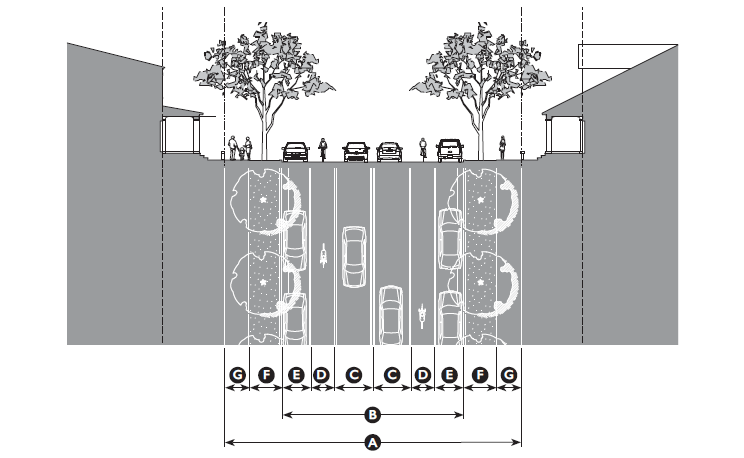
| Application | ||
| Transect Zones | | |
| Movement Type | Low | |
| Design Speed | 30 mph | |
| Overall Widths | ||
| Right-of-Way (ROW) Width | 72' | |
| Pavement Width | 48' | |
| Lane Assembly | ||
| Traffic Lanes | 2 @ 10' | |
| Bicycle Lanes | 2 @ 6' | |
| Parking Lanes | 2 @ 8', marked | |
| Medians | None | |
| Public Frontage Assembly | ||
| Frontage Type | Street | |
| Drainage Collection Type | Curb and gutter | |
| Planter Type | 6' continuous planter 1 | |
| Landscape Type | Trees at 30' o.c. avg. | |
| Lighting Type | Pipe, post, or column | |
| Walkway Type | 6' sidewalk 1 | |
| Curb Type | Square | |
| 1 5' continuous planter and 7' sidewalk for T5 application | ||
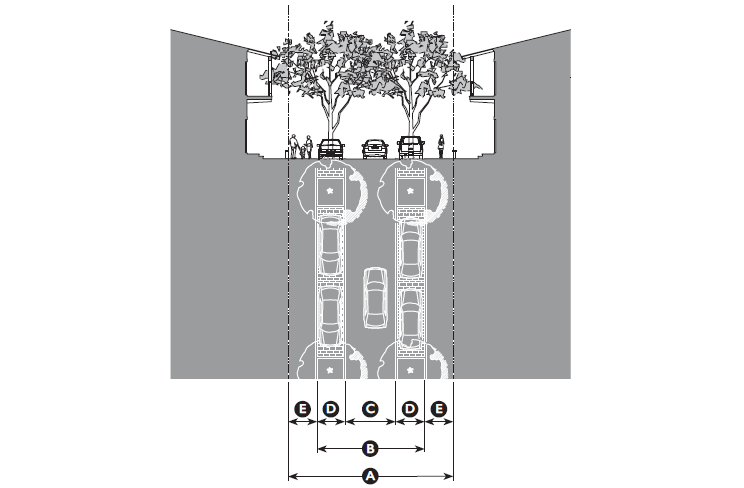
| Application | ||
| Transect Zones | | |
| Movement Type | Yield | |
| Design Speed | < 20 mph | |
| Overall Widths | ||
| Right-of-Way (ROW) Width | 40' | |
| Pavement Width | 28' | |
| Lane Assembly | ||
| Traffic Lanes | 1 @ 14' | |
| Bicycle Lanes | None | |
| Parking Lanes | 2 @ 7', marked | |
| Medians | None | |
| Public Frontage Assembly | ||
| Frontage Type | Street | |
| Drainage Collection Type | Valley gutter or sheet flow | |
| Planter Type | 6'x6' planter at 50' o.c. | |
| Landscape Type | Trees at 50' o.c. avg. | |
| Lighting Type | Post or column | |
| Walkway Type | 6' sidewalk | |
| Curb Type | Rolled or flush | |
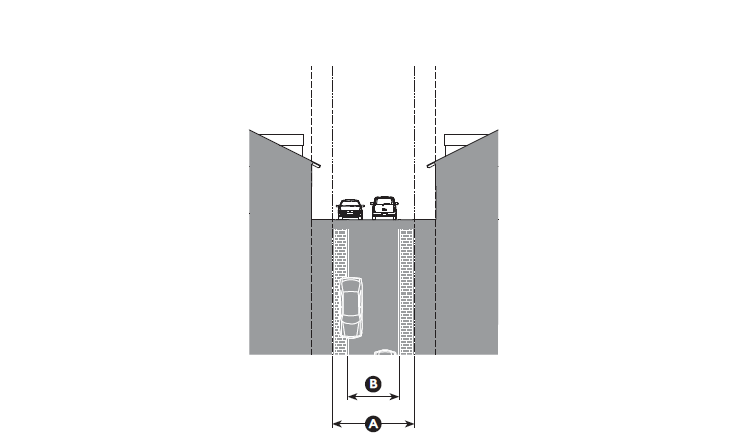
| Application | ||
| Transect Zones |  | |
| Movement Type | Yield | |
| Design Speed | < 20 mph | |
| Overall Widths | ||
| Right-of-Way (ROW) Width | 20' | |
| Pavement Width | 14' | |
| Lane Assembly | ||
| Traffic Lanes | 1 @ 14' | |
| Bicycle Lanes | None | |
| Parking Lanes | None | |
| Medians | None | |
| Public Frontage Assembly | ||
| Frontage Type | Rear lane | |
| Drainage Collection Type | Valley gutter or sheet flow | |
| Planter Type | None | |
| Landscape Type | None | |
| Lighting Type | Pipe or post (if provided) | |
| Walkway Type | None | |
| Curb Type | Rolled or flush | |
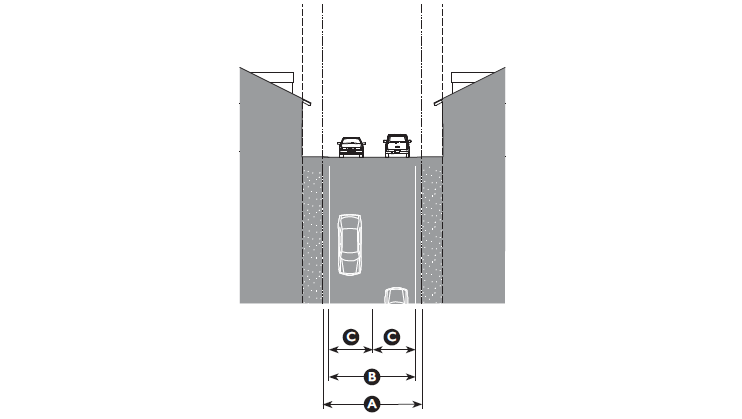
| Application | ||
| Transect Zones |  | |
| Movement Type | Slow | |
| Design Speed | < 20 mph | |
| Overall Widths | ||
| Right-of-Way (ROW) Width | 24' | |
| Pavement Width | 21' | |
| Lane Assembly | ||
| Traffic Lanes | 2 @ 10'-6" | |
| Bicycle Lanes | None | |
| Parking Lanes | None | |
| Medians | None | |
| Public Frontage Assembly | ||
| Frontage Type | Rear alley | |
| Drainage Collection Type | Valley gutter or sheet flow | |
| Planter Type | None | |
| Landscape Type | None | |
| Lighting Type | Pipe or post (if provided) | |
| Walkway Type | None | |
| Curb Type | Rolled or flush | |
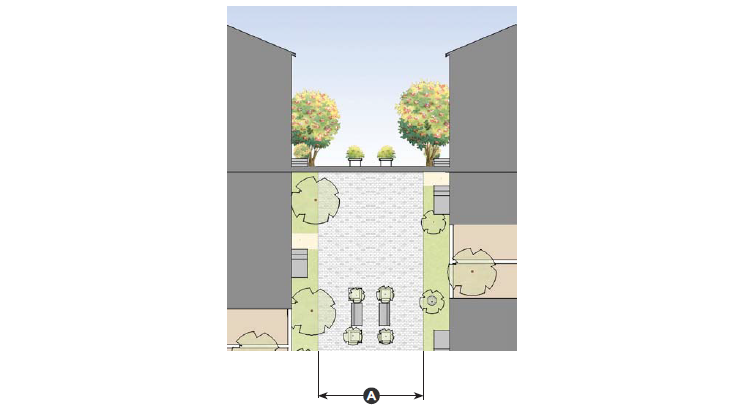
| Application | ||
| Transect Zones | | |
| Movement Type | n/a | |
| Design Speed | n/a | |
| Overall Widths | ||
| Right-of-Way (ROW) Width | 20' min. | |
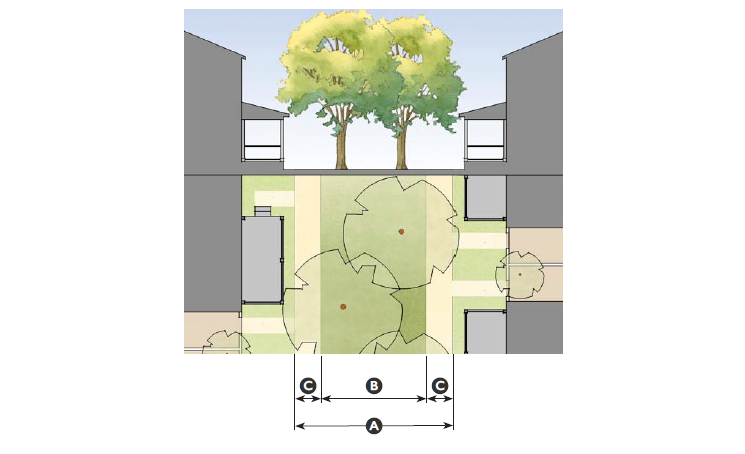
| Application | ||
| Transect Zones | | |
| Movement Type | n/a | |
| Design Speed | n/a | |
| Overall Widths | ||
| Right-of-Way (ROW) Width | 30' min. | |
| Lane Assembly | ||
| Traffic Lanes | None | |
| Bicycle Lanes | None | |
| Parking Lanes | None | |
| Medians | None | |
| Public Frontage Assembly | ||
| Frontage Type | Street | |
| Drainage Collection Type | Valley gutter or sheet flow | |
| Planter Type | 20' min. continuous planter | |
| Landscape Type | None | |
| Lighting Type | Post or column | |
| Walkway Type | 5' sidewalks along edges | |
| Curb Type | None | |
(Ord. No. 04-23 N.S., § I(Exh. A), 4-18-2023)

