
Rogers City Zoning Code
ARTICLE 8
TERMINOLOGY
Section 8.1 Purpose and Intent
This Article provides definitions for terms in this UDC that are technical in nature or that may not reflect a common usage of the term. When in conflict with other definitions within the Rogers Code of Ordinances, the definitions withint this Article take precedent for the interpretation of the UDC.
Section 8.2 Applicability
The definition of the terms in this article apply where the terms are used elsewhere in this UDC.
Section 8.3 Undefined Terms
Undefined words are accorded the definition specified in the City of Rogers Code, Arkansas State Statutes, or their common, dictionary definition where not otherwise defined.
8.4.1 Agriculture
Uses engaged in animal husbandry or the growing of plants for consumption by persons. No animals are allowed in this classification that are excluded under Chapter 6 of the City of Rogers’ Code of Ordinances. Nothing in this UDC is meant to conflict with Chapter 6 of the City of Rogers’ Code of Ordinances as that Chapter supersedes any allowed uses in this UDC.
(Ord 25-35, 7-8-2025)
8.4.2 Auto Service
Uses involving the provision of fueling, repair, maintenance, or cleaning of automobiles.
8.4.3 Civic Spaces
Uses providing recreation, education, cultural, government, religious or related services.
8.4.5 Community Services
Uses providing services (excluding health care services) specific to a population present in the community and generally operated by nonprofits, social service agencies, religious institutions, and governmental or quasi-governmental agencies.
(Ord 25-35, 7-8-2025)
8.4.6 Eating and Drinking
Uses in which prepared food or drink is served to the general public onsite, whether or not such food or drink is consumed onsite.
8.4.7 Entertainment and Event Venues
Uses providing entertainment to spectators or participants or providing indoor or outdoor assembly space for events.
8.4.8 Freight, Logistics, and Storage
Uses involving the warehousing and shipping of goods or storage of personal property whether indoor or outdoor.
8.4.9 Healthcare Facility
Uses providing healthcare services in an inpatient or outpatient environment.
8.4.10 Industry, Artisan
Uses involving the manufacture of consumer goods by hand or using hand tools which do not produce discernable noise or odor at the property line or emit smoke, particulates, or dust into the air.
8.4.11 Industry, General
Uses involving the manufacture of goods from raw materials by machinery which do not produce discernable noise or odor at the property line or emit smoke, particulates, or dust into the air.
8.4.12 Industry, Heavy
Uses involving the manufacture of goods from raw materials which may produce a discernable noise or odor at the property line or may emit smoke, particulates, or dust into the air.
8.4.13 Industry, Technology
Uses involving the application of computerized or medical technology to provide services and which do not produce discernable noise or odor at the property line and do not emit smoke, particulates or dust into the air.
#8.4.14 Living
Uses providing residence to an individual or group of individuals in a dwelling unit for a period of 30 days or more.
8.4.15 Lodging
Uses providing residence to an individual or group of individuals whether in a dwelling unit or not for a period not exceeding 29 days.
8.4.16 Parking
Uses providing off-street parking for passenger vehicles not intended to serve a dedicated use or located on a separate property when dedicated to a particular use or uses.
8.4.17 Professional or Personal Service
Uses involving services provided onsite by a licensed, certified, or trained professional.
(Ord 25-35, 7-8-2025)
8.4.18 Retail
Uses providing the sale of goods to the general public, whether indoor or outdoor.
8.4.19 Transportation Services
Uses providing transportation-related services and related storage, including but not limited to airports, heliports, fleet storage, and gas repair and maintenance services for trucks.
8.4.20 Waste Services
Uses involving the collection, temporary storage, sorting and shipping of recyclable materials, organic or compostable material, solid waste and demolition debris.
(Ord 25-35, 7-8-2025)
8.5.1 A Terms
Abutting (and adjoining) means:
- When used in the context of property lines or zoning, means having a property line or a zoning district line in common at any point;
- When used in the context of structures, means sharing a wall at any point; and
- When used in the context of rights-of-way, subdivisions, or easements means having a common boundary at any point.
Access means a legal means of physical access to a property.
Accessory building means a building which is on the same property as a principal building and the use of which is incidental to and subordinate in area, extent, height, and purpose to the principal building. For example a detached garage is an accessory building to a house, the principal building. Any property with a single building is deemed to have only a principal building.
Accessory dwelling unit (ADU) means a dwelling unit sharing ownership and utility connections with another dwelling unit that is larger in area than the ADU.
Accessory usemeans any use of property that is commonly associated with, incidental to, and subordinate to the principal use of a property.
Addition means any construction that increases the size of a building.
Adjacent means not abutting but separated from another property or building by a right-of-way, easement, building, or fewer than 4 properties.
Administrative adjustment is a form of relief from the strict requirements of this UDC that may be granted by the Director on an as-needed basis as specified throughout this UDC and at the discretion of the Director.
Adult retail and services means any place where the sale of any materials show sexual activities or genitalia or any sexual services are provided.
Adult entertainment means a theater, nightclub, bar, restaurant, or similar commercial establishment which regularly features:
- Persons who appear in a state of nudity;
- Live performances which are characterized by the exposing of specified sexual activities or specified anatomical areas; or
- Films, motion pictures, videocassettes, slides or other photographic reproductions which are characterized by the depiction of specified sexual activities or specified anatomical areas.
Alley is a permanent vehicular way providing rear or side access to abutting property.
Arterial means a street or road of high capacity which serves or is intended to serve as a principal traffic-way and identified as such on the Master Street Plan.
Attached building means a building which shares a continuous wall, roof, floor, or other structural element with an abutting building.
(Ord 25-35, 7-8-2025)
8.5.2 B Terms
Bikeway means any path whether paved or graveled, designed and intended for use by cyclists. A bikeway may be an on-street facility or off-street. Where off-street it may be a sidepath adjacent to the street, a trail or a shared-use path intended for use by pedestrians and bicycles.
Bikeway network means any combination of bikeways connected to form a network.
Block means an area of land surrounded by streets or shared-use paths on all sides.
Blockface means the exterior yard together with the streetscape lying along one side of a street or shared-use path between two intersecting streets.
Buffer means a strip of land reserved to protect or separate one type of land use, waterway, or geological feature from another.
Building means any structure intended for occupancy by persons, animals, or personal property such as a house, barn or shed.
Building envelope, provided is that area within all provided building lines.
Building envelope, required is that area within all required building lines.
Building footprint means the land area occupied by the ground floor of a building.
Building line, provided is a line drawn along the width and depth of a lot representing the provided depth of any interior or exterior yard.
Building line, required is a line drawn along the width and depth of a lot representing the minimum or maximum depth of any required exterior or interior yard.
Figure 8.5.2.B.1 Building Lines
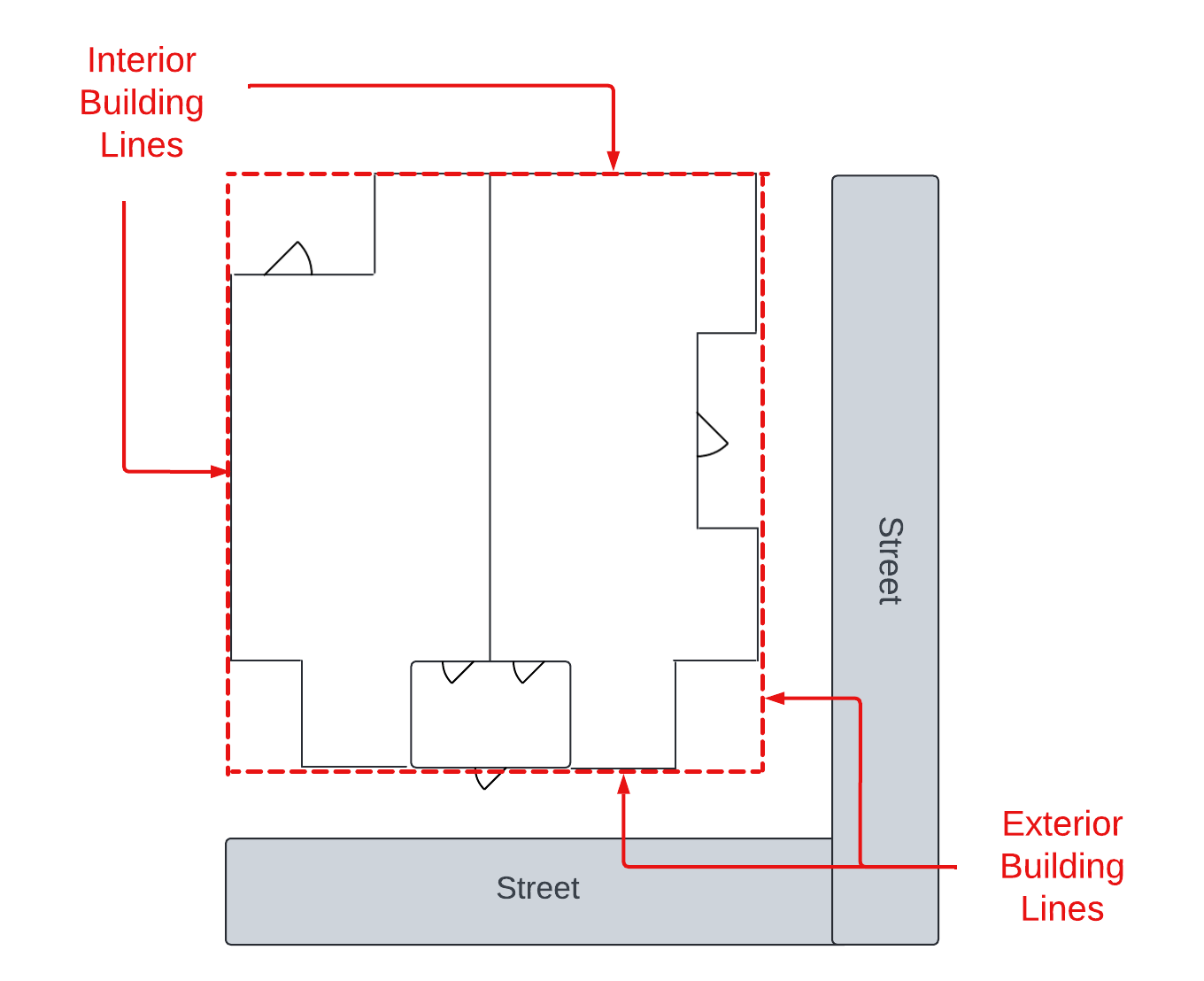
Building setback means the dimension in feet between a lot line to a building line.
(Ord 25-35, 7-8-2025)
8.5.3 C Terms
Cave Springs Direct Recharge Area means the areas designated zones 1 through 3 on the Cave Springs direct recharge area vulnerability zone map, as may be amended from time to time.
Cave Springs Direct Recharge Area Vulnerability Zone Map means the official map depicting vulnerability zones in the Cave Springs direct recharge area.
Cave Springs Indirect Recharge Area means areas outside the Cave Springs direct recharge area. See the official Cave Springs recharge area map where a low volume of water that infiltrates the ground enters the Cave Springs recharge area.
Cave Springs Recharge Area means all land areas in which water that infiltrates the ground migrates to Cave Springs as depicted on the official Cave Springs recharge area map.
Certificate of Occupancy means the official certification that a premises conforms to provisions of the zoning ordinance, the building code, and all adopted codes, and may be used or occupied. Unless a certificate is issued, a structure cannot be occupied.
City Engineer means a professional, licensed engineer employed by the City of Rogers for the purposes of construction, floodplain management, drainage, and land development review.
City Planner means a professional urban planner employed by the City of Rogers for the purposes of long-range planning, review and management of development projects, and serving as staff to the Planning Commission, Board of Adjustment, and Historic District Commission.
Collector means a street which, in addition to serving abutting properties, intercepts local streets, and carries traffic to arterial street systems.
Commercial means pertaining to any business, trade, industry, or other activity engaged in for profit. “Commercial” does not include multi-family development;
Commercial waste means any wastes produced as a byproduct of any industrial, institutional, or commercial process or operation, other than domestic sewage.
Completion of Construction means any construction site with a Disturbance Permit in which:
Development and grading within the disturbed area is complete or approved by the City Engineer to submit a Performance Bond, and matches plans as approved by the Development Working Group;
The disturbed soil area is observed to have 80% grass coverage and 100% stability;
No slopes steeper than a 3:1 pitch unless otherwise approved in writing by the City Engineer;
Notices of Violation previously issued have all corrective actions approved within an inspection report signed by the City Engineer;
All heavy equipment, stockpiles, and construction site materials have been removed from the construction site
Comprehensive Plan means the currently adopted plan guiding the future development of the city's built environment and future use of its land and resources.
Construction Plans means detailed design plans and specifications to be used in the construction of streets, curb and gutter, sidewalks, drives, alleys, public utilities, building construction, addition or remodel, and other improvements.
Construction Site means any location where construction activity occurs.
Corner Lot means a lot located at the intersection of two streets not sharing the common centerline.
(Ord 25-35, 7-8-2025)
8.5.4 D Terms
Dedication means land and improvements offered to the city, county, or state and accepted by them for public use, control, and maintenance.
Detached building means a building having no wall, roof, floor, or other structural element in common with another building.
Development means the process of:
- Converting land to a new purpose by constructing buildings or making use of its resources; or
- The construction of an addition to an existing improvement.
Development, new means development on real property never before developed and where:
- All land under common ownership with the subject property is undeveloped; or
- All abutting properties are undeveloped and extension of streets, water, or sewer mains is necessary to serve the subject property.
Development, infill means development on real property whether the subject property was previously developed or not where:
- Abutting properties are developed; or
- Some portion of the subject property is developed; and
- Extension of streets, water, or sewer mains is not required to serve the subject property.
Development Re-: see Redevelopment
Director means the Director of the Department of Community Development for the City of Rogers. When the term Director is used it shall be interpreted to the person with such a title and their subordinate staff.
Driveway means a travel-way installed, owned, and maintained by others and not part of the City street system intended to provide access to a parking area onsite, whether in a garage or on a surface parking lot, and which contains space for the parking of no more than four vehicles in the front yard.
Dwelling means any room or group of rooms located within a structure forming a single habitable unit with facilities which are used or intended to be used for living, sleeping, cooking, and sanitation by a household.
Dwelling unit is an individual dwelling within a building. A building may have one dwelling unit or multiple dwelling units.
8.5.5 E Terms
Easement means a grant by the property owner to the public, a corporation, or person of the use of land for specific purposes.
Encroach means to break the plane of a vertical or horizontal regulatory limit with a structural element, so that it extends into a setback, into the public frontage, or above a height limit.
Encroachment means any structural element that encroaches.
8.5.6 F Terms
Fence means a manmade barrier constructed to provide privacy or visual separation.
Façade means the exterior area of a building that faces a street.
Final plat see "Plat, final"
Flood Hazard Area means an area that is subject to special flood hazard or other area of high flooding risk and includes the areas adjacent to the area of high flooding risk.
Flood Hazard Boundary Map (FHBM) means an official map of a community, issued by the Federal Emergency Management Agency, where the areas within the boundaries of special flood hazards have been designated as Zone A.
Flood Insurance Rate Map (FIRM) means an official map of a community on which the Federal Insurance Administration has delineated both the areas of special flood hazards and the risk premium zones applicable to the community.
Floodway means the channel of a river or other watercourse and the adjacent land areas that must be reserved in order to discharge the base flood without cumulatively increasing the water surface elevation more than one foot.
Forecourt means that area of a property along a front or side street property line where a portion of the building elevation is set back further than the remainder of the building elevation such that the forecourt area is lined on 3 sides with building elevations. Forecourts are commonly used to provide distinct entries to multiple uses within a single building, a common entry area for multiple buildings on a property, areas for outdoor dining, or additional landscaping to accent building entries. Multi-family buildings often use forecourts to optimize the use of small sites with a C-shape configuration providing windows onto a forecourt.
Future Land Use Map means the currently adopted future land use map for the City, adopted as part of the Comprehensive Plan.
8.5.7 G Terms
Glazing is that portion of a building's exterior composed of transparent windows.
Groundwater means any water residing below the surface of the ground or percolating into or out of the ground.
Groundwater trough means the groundwater trough depicted on the Cave Springs direct recharge area vulnerability zone map.
8.5.8 H Terms
Hazardous substance means any substance listed in table 302.4 of 40 CFR 302
Hazardous waste means any substance that meets one or more of the following characteristics:
- Ignitibility;
- Corrosivity;
- Reactivity;
- Toxicity (according to the toxicity characteristic leaching procedure or TCLP); or
- It is listed ashazardous waste in 40 CFR 261.31—261.33.
Health Department means the Arkansas Department of Health.
Home occupation means a business, profession, occupation, or trade conducted within a residential building, which is accessory to the dwelling purpose and which does not change the essential character of the residence.
Household is any group of persons living together in common in a dwelling.
(Ord 25-35, 7-8-2025)
8.5.9 I Terms
Improvements means a permanent addition to or betterment of real property that enhances its capital value. Improvements includes but is not limited to streets, parking, grading, drainage structures, sidewalks, curbs, gutters, utility lines, bridges, landscaping, and buildings.
8.5.10 J Terms
Reserved
8.5.11 K Terms
Reserved
8.5.12 L Terms
Land Disturbance Permit means a permit which authorizes site development activity in a direct recharge area or a buffer area and includes a disturbance plan and mitigation plan for site development.
Land Disturbance Plan means the plan for disturbance of lands in the Cave Springs direct recharge area and any associated buffer area, as required by the Cave Springs area karst resource conservation regulations.
Landscaping means the location, arrangement, planting, and maintenance of trees, shrubbery, grass, and other living plant materials.
Loading Space means an unobstructed, hard surface area no part of which is located in any street or public right-of-way and the principal use of which is for the standing, loading, or unloading of trucks and trailers.
Losing Stream means a stream that is depicted on the Cave Springs direct recharge area vulnerability zone map.
Lot means a parcel of land legally defined in a recorded deed or a recorded plat, fronting a public dedicated right-of-way, access easement, or other approved private street.
Lot, preliminary means a parcel of land depicted on a an approved preliminary plat.
Lot area is the area of land within the boundaries of the lot.
Lot coverage means the percent of lot area occupied by the ground area or footprint of principal and accessory buildings on such lot.
Lot depth is the distance between the lot along its longest dimension.
Lot, land is an area of land that whose boundaries are described by deed or a recorded plat containing one or more buildings where individual units within the building are divided by final plat for conveyance.
Lot line is the boundary of any lot or preliminary lot.
Lot line, exterior is any lot line abutting a street, programmed open space, park, pedestrian way or shared use path.
Lot line, interior is any lot line not abutting a street, programmed open space, park, pedestrian way, or shared use path. A lot line abutting an alley is an interior lot line. See "Lot line, alleyside".
Lot line, alleyside is any lot line abutting an alley when the alley is located on a separate property or within right-of-way.
Lot line, (interior, side) is the interior lot line abutting the interior side yard.
Lot line, (interior, rear) is any interior lot line abutting the rear yard.
Lot width is the distance between the side lot lines at the building line of a lot measured at right angles to the depth.
(Ord 25-35, 7-8-2025)
8.5.13 M Terms
Mixed-use building means a building containing both residential and nonresidential uses designed for nonresidential uses to occupy the ground-level street-facing facade.
8.5.14 N Terms
Nonconforming building is any building constructed in accordance with the relevant zoning regulations in effect at the time but which does not conform to one or more relevant regulations in this UDC.
Nonconforming lot means any lot established in accordance with the relevant zoning regulations in effect at the time but which does not conform to one or more relevant regulations of this UDC.
Nonconforming use means any use being made of any land, building, or structure which was established in accordance with the relevant zoning regulations in effect at the time but which does not conform to one or more relevant regulations in this UDC.
Nonconformity is any building, structure, lot, use, sign or other element regulated by this UDC that was constructed, created, or otherwise established in accordance with the relevant zoning regulations in effect at the time but which does not conform to one or more of the relevant regulations in this UDC. Any building, structure, lot, use, sign or other element that was not constructed, created, or otherwise established in accordance with the relevant zoning regulations in effect at that time is considered to be illegal and is not subject to the rights afforded nonconformities in Article 7 of this UDC.
Nonresidential building means any building not intended for use as a dwelling.
Nonresidential Trailer means a trailer that is used:
- In support of project development; As an office; or
- For storage of tools or materials.
Nonprogrammed open space means any open space provided within a development which does not serve as a form of open space required by this UDC but has nevertheless been provided by the developer.
(Ord 25-35, 7-8-2025)
8.5.15 O Terms
Off-street parking means a space or spaces for the parking of vehicles within a driveway or parking lot and having a permanent means of access to a street right-of-way.
On-street parking means a space or spaces for the parking of vehicles on a street.
Open space means an area of a site that is dedicated to passive or active recreation, natural features, drainage, non-vehicular connectivity, and associated structures.
Overlay district means a zone mapped over another zone that modifies the regulations of the underlying zone.
8.5.16 P Terms
Parcel means an area of land under one ownership separated by property boundary lines.
Parking lot means any area, exclusive of driveways leading thereto, used for parking of vehicles with access to a street right-of-way.
Path tree means a tree planted along a pedestrian way, including but not limited to trails, sidewalks, and shared-use paths, whether paved or unpaved.
Pedestrian network means any combination of pedestrian ways connected to form a network.
Pedestrian way means any path, whether paved or graveled, designed and intended for use by pedestrians. A pedestrian way may include but is not limited to a sidewalk regardless of its location (whether in a parking lot, along a storefront, or along a street) or a trail or a shared-use path intended for use by pedestrians and bicycles.
Pesticide means a substance or mixture of substances intended to prevent, destroy, repel, or migrate any pest.
Petroleum product means a product that is obtained from distilling and processing crude oil and that is capable of being used as a fuel or lubricant in a motor vehicle or aircraft.
Placetype means the designation applied any given property within the city according to the Future Land Use Map.
Plan, site development means a to-scale, fully-dimensioned detailed drawing prepared by design professional depicting the physical development of a site by showing the location of buildings, landscaping, parking areas, and other features necessary to verify the proposed development's compliance with applicable regulations.
Plat, final means an engineering drawing certified as to accuracy by land surveyor or civil engineer formally subdividing property into lots, tracts, and rights-of-way for the purposes of development and/or conveyance thereof.
Plat, preliminary means a to-scale drawing depicting the entire area of land under common ownership and showing the layout of streets and blocks, areas set aside for conservation, common use, and utilities for the purposes of demonstrating that the development of the property depicted may occur in compliance with applicable regulations and for the purposes of ensuring that near-term development of a portion of the property will not impede compliant development of the remainder of the property in the future.
Pollution, when used in the context of stormwater, means the alteration of the physical, thermal, chemical, or biological quality of, or the contamination of, any water that renders the water harmful, detrimental, or injurious to humans, animal life, plant life, property, or public health, safety, or welfare, or impairs the usefulness or the public enjoyment of the water for any lawful or reasonable purpose.
Principal building means: (see also Accessory Building)
- When only one building is located on the property, the building located on the property, regardless of its area, extent, height or purpose; or
- When two or more buildings are located on the property, the largest of the buildings on the property in area, extent, or height.
Principal use means: (see also, Accessory Use)
- When only one use is located on the property, the use located on the property, regardless of its area or extent.
- When two or more uses are located on the property, the use with the greatest area, extent, or purpose.
Private Street means a travel-way installed, owned, and maintained by others and not part of the City street system intended to provide access to and from a lot, parcel, or tract of land.
Programmed open space means open space designed and intended for recreational, social, or cultural use within a development or otherwise provides meaningful gathering spaces for residents, tenants, and visitors to a development.
Public improvement means any existing or proposed public facility, building, or capital improvement project, including but not limited to streets, alleys, sidewalks, landscaping, recreational amenities, trails, sewers, water mains, drainage conduits, telecommunication conduits, rights of way improvements, and any other public project.
(Ord 25-35, 7-8-2025)
8.5.17 Q Terms
Reserved
8.5.18 R Terms
Rear Setback means the distance from the rear lot line to the point where a building may be constructed. This area must be maintained clear of permanent structures with the exception of encroachments.
Rear Yard means a portion of a lot between the rear building setback line and the public right-of-way, access easement, or rear property line, whichever is closest to the back of the building.
Redevelopment means development on real property which requires demolition, in part or in whole, of development that once existed on the subject property. Any reuse of a property where demolition was unnecessary may be referred to as reusing or repurposing. See also Development, New Development, Infill Development.
Residence means a building or part of a building containing one or more dwelling units or rooming units. “Residence” does not include:
- Transient accommodations as hotels, motels, tourist homes, or similar establishments;
- Group Residential (and similar uses and establishments); or
- Nurses residences, sanitariums, nursing homes, or other sleeping or living accommodations in community facility buildings or portions of buildings used for community facility uses.
Residential building front façade means that façade containing both an exterior door and windows on both sides of the door and that is otherwise designed and intended to function as the public entrance to the building.
(Ord 25-35, 7-8-2025)
8.5.19 S Terms
Sanitary sewer means the system of pipes, conduits, and other conveyances:
- Which carry industrial waste and domestic sewage, whether treated or untreated from buildings to the city sewage treatment plant; and
- To which stormwater, surface water, and groundwater are not intentionally admitted.
Shared-use path means any path designed and intended for use by pedestrians and bicyclists.
Site means the land or water area where any facility or activity is or will be physically located or conducted.
Shopfront means a private frontage conventional for retail use with substantial glazing wherein the facade is aligned close to the frontage line with the building entrance at sidewalk grade.
Single-family home means any residential building meeting the definition of a detached house.
Single-purpose building means a building containing or designed to contain only residential or nonresidential uses but not both. See Mixed-use building.
Spring when used in the context of stormwater, means any point or localized area where water naturally flows to the surface of the earth from underground with a perennial flow and with flow rates at least five gallons per minute.
Storm drainage means all surfaces, structures, and systems that contribute to or convey stormwater.
Storm sewer means the system of structures, surfaces and other conveyances that collect and convey stormwater.
Stormwater means runoff resulting from precipitation.
Stormwater Pollution Prevention Plan (SWP3) means a document that describes the best management practices to be implemented at a site, to prevent or reduce the discharge of pollutants.
Stream means a flow of surface water sufficient to produce a defined channel or bed;
Street means the entire area contained within a tract, easement, or right-of-way, intended as a means of multimodal travel by the public which is also be used to provide space for utilities, trees, sidewalks, planting strips, and sidepaths.
Street classification means a description of the types of roadways within the City as determined by the Master Street Plan.
Street, public means a street within right-of-way and dedicated to and maintained by the City.
Street, private means a street within a tract or easement owned and maintained by an individual property owner or property owner's association.
Street tree means a tree planted in a tree well, planting strip, and/or in the public right-of-way adjacent to the portion of the street reserved for vehicular traffic. This also includes trees in planting strips within the roadway right-of-way, i.e., islands, medians, pedestrian refuges.
Street typology means a manner of categorizing streets for the purposes of regulating the design of streets appropriate for a given placetype which may control for allowed uses, or building form on abutting property.
Streetscreen means a freestanding wall built along the frontage line, or coplanar with a facade..
Subject property means any lot or parcel or portion thereof proposed for immediate development or that is subject to the conversation or regulation referenced.
(Ord 25-35, 7-8-2025)
8.5.20 T Terms
Through lot means a lot having frontage on two non-intersecting streets.
Transect means a cross-section of the environment showing a range of different habitats. The rural-urban transect of the human environment used in this Chapter is divided into six transect zones. These zones describe the physical form and character of a place, according to the intensity of its land use.
Transect district means one of several areas on a zoning map regulated by this Chapter.
8.5.21 U Terms
Utility agency means private utility companies, city departments, or contractors working for private utility companies or city departments, engaged in the construction or maintenance of utility distribution lines and services.
8.5.22 V Terms
Vehicular use area means any area dedicated to the use, storage, parking, queuing, and maneuvering of an automobile excluding streets. Where this UDC refers to the term vehicular use area without modification it shall be interpreted broadly. Where this UDC refers to a subset or form of the broader term such as "driveway" or "drive-through" it shall be interpreted narrowly as only "driveway" or "drive-through".
(Ord 25-35, 7-8-2025)
8.5.23 W Terms
Walk-to (building) means any residential building oriented such that each unit within the building faces the street, pedestrian way, shared-use path, or park or programmed open space whose entrances are visible from the street and connected by sidewalk to the street, pedestrian way, shared-use path, park or programmed open space.
Walk-up (building) a multi-story, multi-unit residential building where some units are accessible only by walking up an internal stairway.
Wastewater means any water or other liquid, other than uncontaminated stormwater, discharged from a facility.
Wetland means any area that is inundated or saturated by surface or groundwater at a frequency and duration sufficient to support, and that under normal circumstances does support, a prevalence of vegetation typically adapted for life in saturated soil conditions.
8.5.24 X Terms
Reserved
8.5.25 Y Terms
Yard means any area lying between a property line and a building.
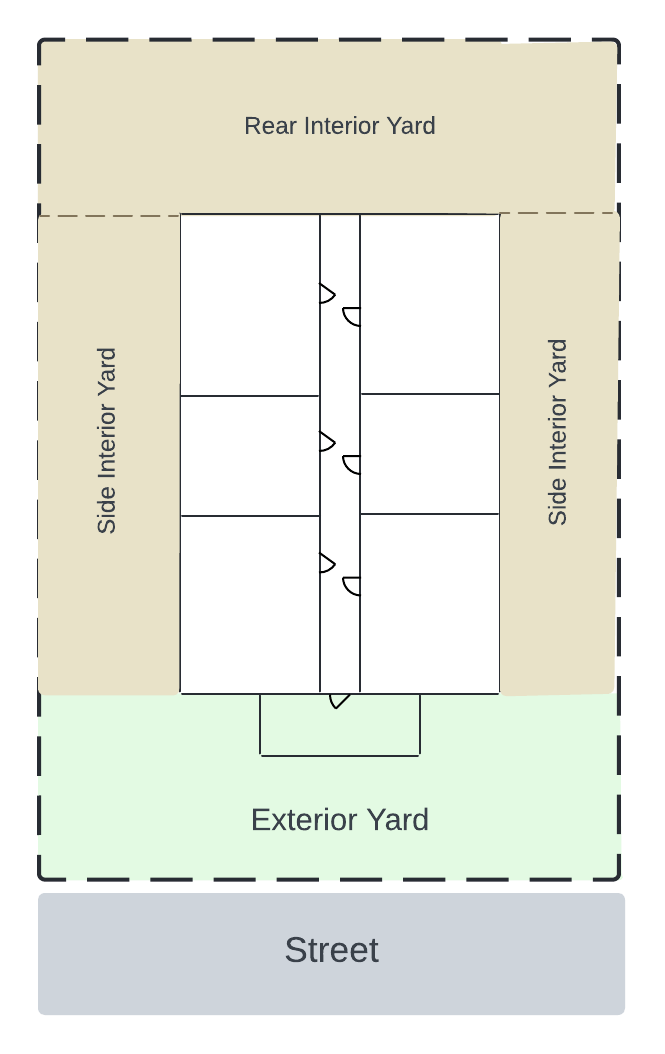
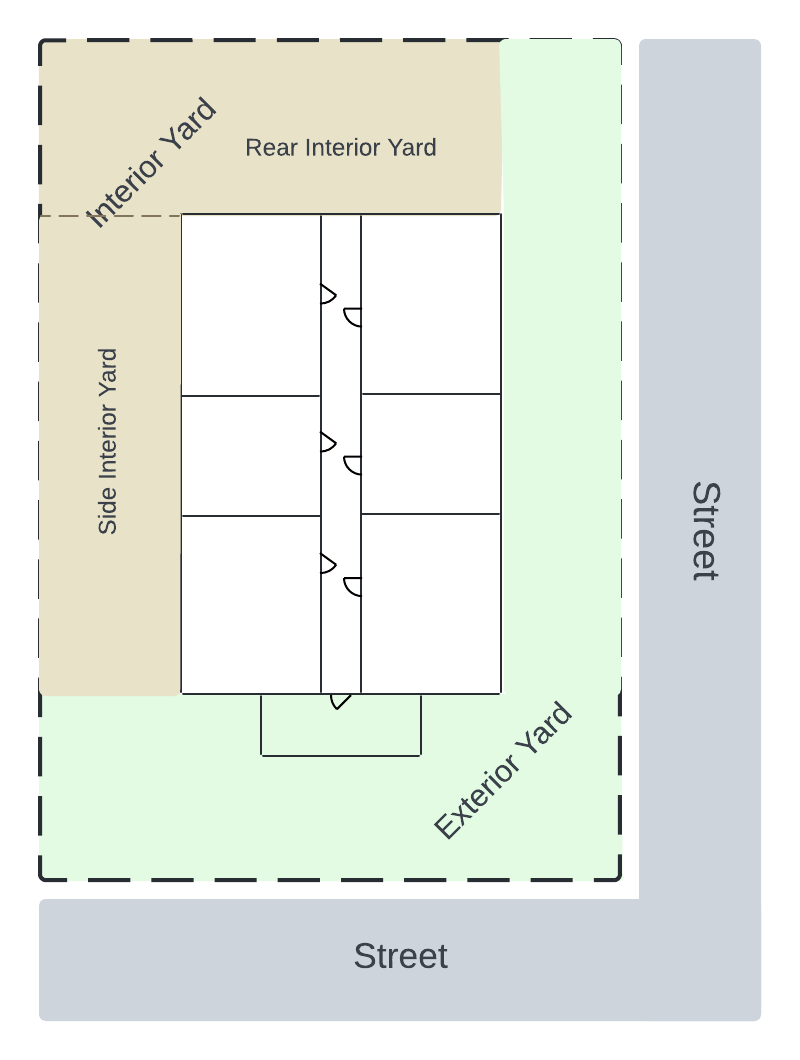
Yard, exterior is that portion of a lot lying between the building line and the exterior property line along the width or depth of the lot and an exterior property line.
Yard, exterior required is the required minimum or maximum distance between a building, exclusive of permitted encroachments such as porches, and the exterior property line.
Yard, interior is that portion of a lot lying between a building between and interior lot lines, exclusive of areas in an exterior yard.
Yard, interior required is the required minimum or maximum distance between a building and an interior lot line.
Yard, interior rear is that portion of a lot laying between the building and the rear interior lot line.
Yard, interior side is that portion of a lot lying between a building and the side interior lot line.
Yard, provided is that area lying between a building and a lot line.
Yard, required is the minimum or maximum area required to be located between a building and lot line.
Exterior lot line is any lot line abutting a street, park, programmed open space, pedestrian way, or shared use path. Also referred to as exterior property line.
Interior lot line is any lot line shared with another lot or other area of land not intended for a street, park, or programmed open space.
(Ord 25-35, 7-8-2025)
8.5.26 Z Terms
Zoning district means a section of a city designated in the zoning ordinance text in which requirements for the use of land and building and development standards are prescribed.
Zoning district boundary means that boundary line which separates unlike zoning districts.
8.4.14.1 Detached House
A residential building type containing only one dwelling unit where the building is the only principal building on the lot and has private yards on all sides.
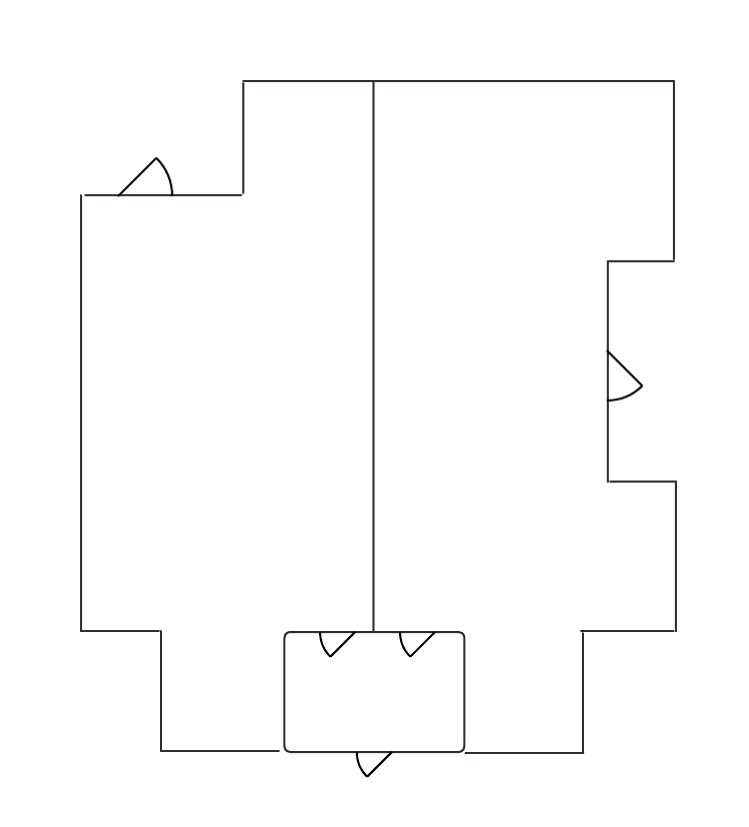
8.4.14.2 Attached House
A residential building type containing two dwelling units sharing a common vestibule and interior entrances or having individual entrances located on different facades.
8.4.14.3 Cottage House
A residential building type containing only one dwelling unit.

8.4.14.4 Duplex
A residential building type containing two dwelling units each with their own entrance.

8.4.14.5 Multi-unit House
A residential building type containing 3-8 dwelling units sharing a common vestibule with one external entrance visible from the street.

8.4.14.6 Town House
A residential building divided horizontally into 3-8 dwelling units each having their own external entrance.

8.4.14.7 Apartment House
A residential building type containing 9 or more units.
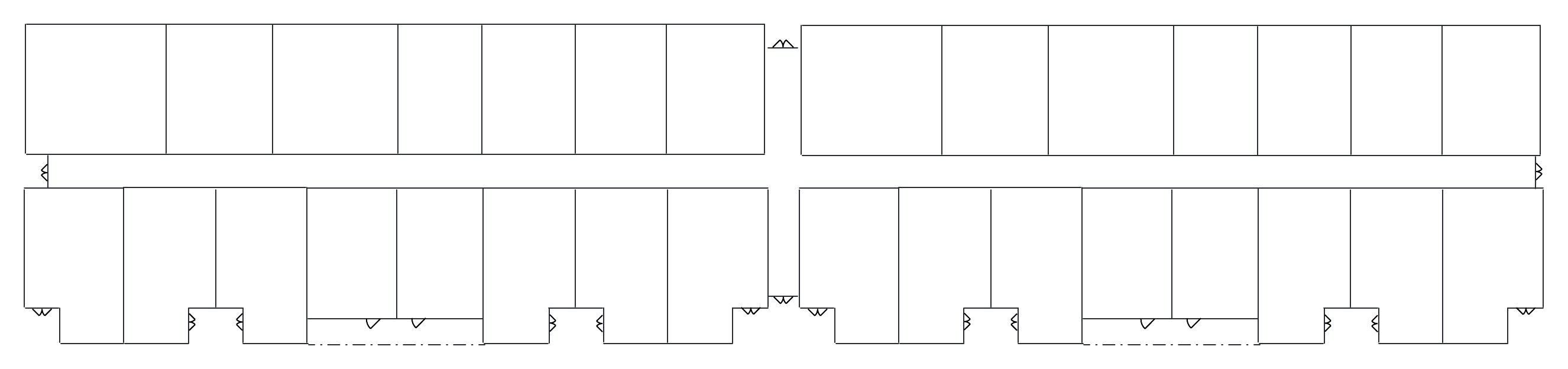
8.4.14.8 Live-Work Building
A building designed and intended to accommodate one dwelling unit above or behind a nonresidential use with storefront at ground level street-facing facade.
8.4.14.9 Mixed-Use Building
A building designed and intended to accommodate nonresidential uses with storefronts at ground level and residential uses above.

