
Rolling Meadows City Zoning Code
ARTICLE V
- REGULATIONS FOR ZONING DISTRICTS
Sec. 122-201. - Bulk, area and yard regulations by zoning district.
(a)
All development in the City of Rolling Meadows shall conform to the standards set out in Table 5.1 below.
Table 5.1: Table of Bulk, Area and Yard Regulations
1
Permitted Gross Density for Attached Single Family Dwellings = 12 Dwelling Units per
acre.
1
Permitted Gross Density for Multi-Family Dwellings = 24 Dwelling Units per acre.
(b)
The maximum floor area ratio (FAR) for commercial, manufacturing and multiple family districts shall be as indicated in the standards for those districts in this article.
(c)
The maximum floor area ratio (FAR) for single family attached and detached dwellings in R districts shall be as follows (Table 5.2).
Table 5.2: Floor Area Ratio (FAR)
(Ord. No. 20-47, § 3(Exh. A), 11-10-2020; Ord. No. 22-13, § 2(Exh. A), 4-12-2022; Ord. No. 25-34, § 6, 5-27-2025; Ord. No. 25-44, § 19, 9-9-2025)
Sec. 122-231. - R-1 single family residence district.
(1)
Purpose: The R-1 District is intended to provide for single-family detached homes at the lowest densities in the city. Lot sizes are the largest of all residential districts and standards are intended to preserve the existing quiet, strictly residential nature that characterizes this area.
(2)
Permitted uses: Permitted uses in the R-1 District are listed in the Zoning District Use Table 5.13.
(3)
Special uses: Special uses in the R-1 District are listed in the Zoning District Use Table 5.13.
(4)
Parking requirements: Parking requirements in the R-1 District are listed in article IV.
(5)
Bulk space and yard regulationsd: Bulk regulations in the R-1 District including regulations regarding lot area, lot width, yard areas, building coverage, and building height are listed in Tables 5.1 and 5.3, and illustrated below.
Table 5.3
Figure 5.1: R-1 Bulk Regulations Illustration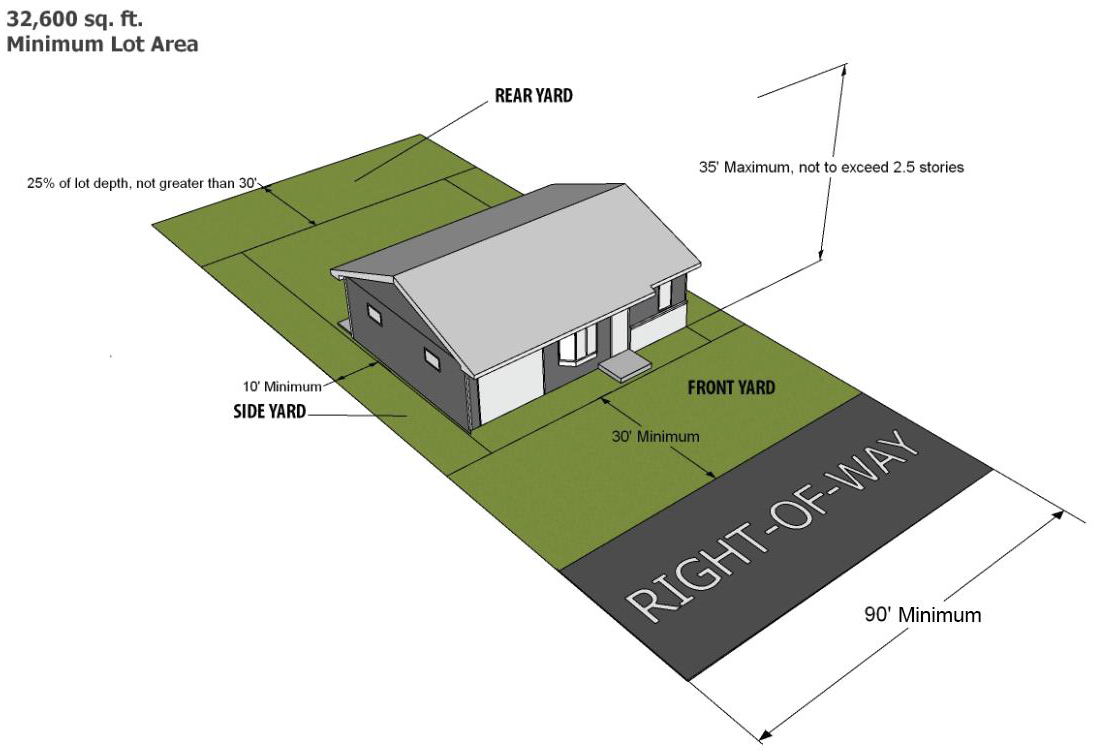
(6)
Additional standards:
a.
Setback average front yard
i.
Where more than 25 percent all of the improved lots in any one block are developed with buildings which establish a front yard setback greater or less than 30 feet, such greater setback shall become the average front yard setback, the minimum setback for that block. No building erected, converted, enlarged, reconstructed or structurally altered shall project beyond the established average front yard setback; provided, however, that the average front yard setback shall not be required to be more than 45 feet. This setback requirements shall be observed on each street adjacent to a corner lot.
b.
Yards (for nonresidential permitted uses and special uses)
i.
Front, side, corner side, and rear yards shall be as required for single-family dwelling uses for buildings less than 35 feet in height, but for a building 35 feet or more in height, each yard, front, side, corner side and rear, as required for single-family dwellings shall be increased in width or depth by two feet for each additional one foot of building height over 35 feet.
c.
For single-family residences built prior to January 1, 1993, an attached garage may not be closer than five feet from the side property line, provided the garage is no more than 22 feet wide with a depth of no more than 20 feet.
(Ord. No. 20-47, § 3(Exh. A), 11-10-2020; Ord. No. 22-13, § 2(Exh. A), 4-12-2022)
Sec. 122-232. - R-2 single family residence district.
(1)
Purpose: The R-2 Single Family District is the predominant residential zoning district in the city and is home to many original Kimball Hill houses that contribute, in large part, to the defining residential character of Rolling Meadows. The R-2 district provides for relatively low-density, single-family detached homes plus other compatible neighborhood uses.
(2)
Permitted uses: Permitted uses in the R-2 District are listed in the Zoning District Use Table 5.13.
(3)
Special uses: Special uses in the R-2 District are listed in the Zoning District Use Table 5.13.
(4)
Parking requirements: Parking requirements in the R-2 District are listed in article IV.
(5)
Bulk space and yard regulations: Bulk regulations in the R-2 district including regulations regarding lot area, lot width, yard areas, building coverage, and building height are listed in Tables 5.1 and 5.4 and illustrated below.
Table 5.4
Figure 5.2: R-2 Single Family Residence District Regulations Illustration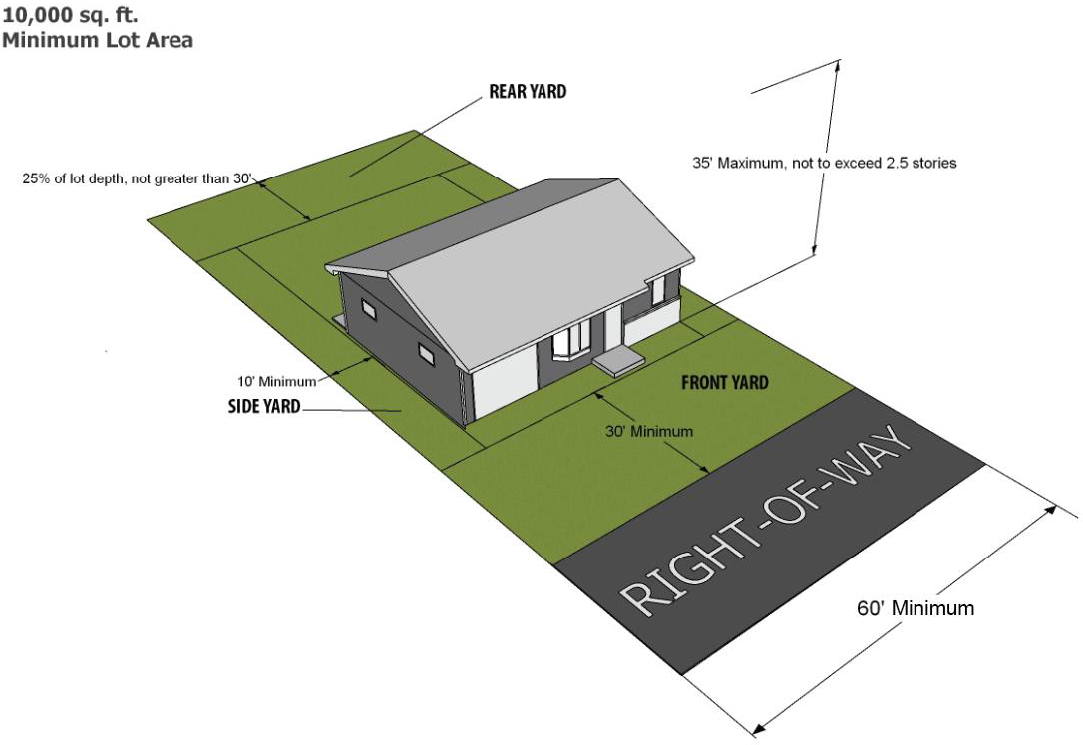
(6)
Additional standards:
a.
Lot area
i.
All corner lots in the R-2 district shall be a minimum of 10,000 square feet.
b.
Setback Average Front Yard
i.
Where more than 25 percent all of the improved lots in any one block are developed with buildings which establish a front yard setback greater or less than 30 feet, such greater setback shall become the Average Front Yard Setback, the minimum setback for that block. No building erected, converted, enlarged, reconstructed or structurally altered shall project beyond the established Average Front Yard Setback; provided, however, that the Average Front Yard Setback shall not be required to be more than 45 feet. This setback requirements shall be observed on each street adjacent to a corner lot.
c.
Yards (for nonresidential permitted uses and special uses)
i.
Front, side, corner side, and rear yards shall be as required for single-family dwelling uses for buildings less than 35 feet in height, but for a building 35 feet or more in height, each yard, front, side, corner side and rear, as required for single-family dwellings shall be increased in width or depth by two feet for each additional one foot of building height over 35 feet.
d.
For single-family residences built prior to January 1, 1993, an attached garage may not be closer than five feet from the side property line, provided the garage is no more than 22 feet wide with a depth of no more than 20 feet.
(Ord. No. 20-47, § 3(Exh. A), 11-10-2020; Ord. No. 22-13, § 2(Exh. A), 4-12-2022)
Sec. 122-233. - R-3 single family residence district.
(1)
Purpose: The R-3 single family residential district is similar to the R-2 district, but with slightly smaller lot sizes for single-family detached homes. The intended character is similar to R-2 and preserves quiet neighborhoods, allowing primarily residential uses plus other compatible neighborhood uses.
(2)
Permitted uses: Permitted uses in the R-3 district are listed in the Zoning District Use Table 5.13.
(3)
Special uses: Special uses in the R-3 district are listed in the Zoning District Use Table 5.13.
(4)
Parking requirements: Parking requirements in the R-3 district are listed in article IV.
(5)
Bulk space and yard regulations: Bulk regulations in the R-3 district including regulations regarding lot area, lot width, yard areas, building coverage, and building height are listed in Tables 5.1 and 5.5 and illustrated below.
Table 5.5
Figure 5.3: R-3 General Residence District Bulk Regulations Illustration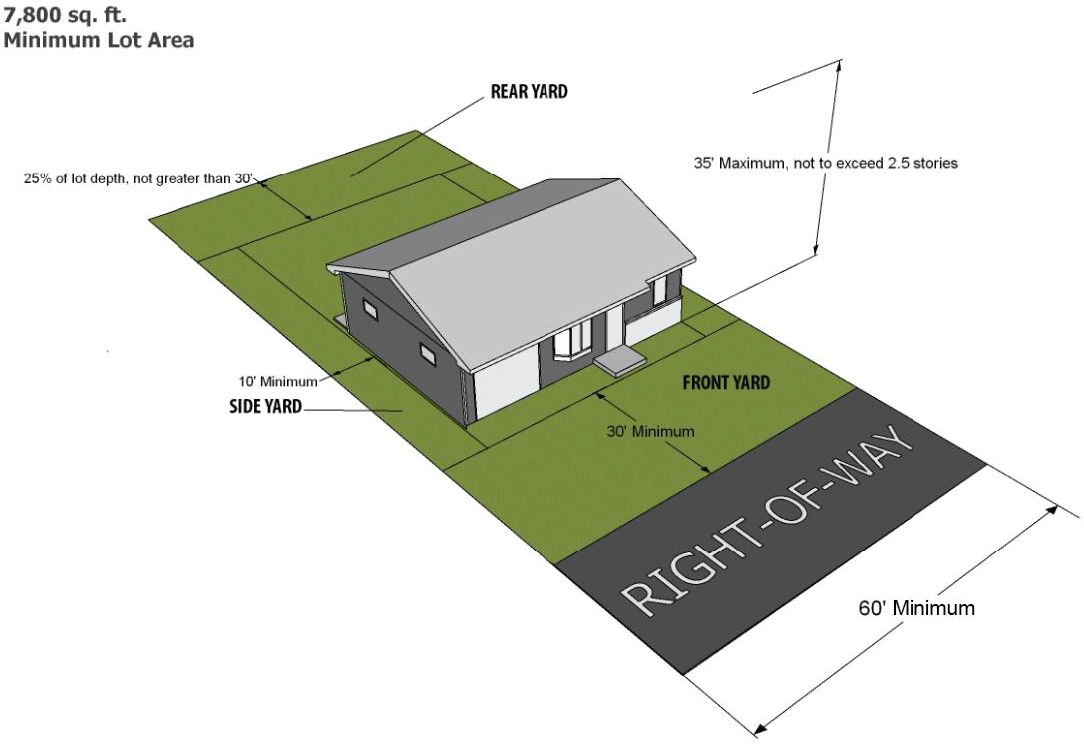
(6)
Additional standards
a.
Setback average front yard
i.
Where more than 25 percent all of the improved lots in any one block are developed with buildings which establish a front yard setback greater or less than 30 feet, such greater setback shall become the average front yard setback, the minimum setback for that block. No building erected, converted, enlarged, reconstructed or structurally altered shall project beyond the established average front yard setback; provided, however, that the average front yard setback shall not be required to be more than 45 feet. This setback requirements shall be observed on each street side of a corner lot.
b.
Side yards
i.
On a corner lot, the side yard may be opposite either property line that is adjacent to a street, provided the yard opposite the other street is designated as the rear yard.
ii.
For single-family residences built prior to January 1, 1993, an attached garage may not be closer than five feet from the side property line, provided the garage is no more than 22 feet wide with a depth of no more than 20 feet.
c.
Yards (for nonresidential Permitted uses and special use).
i.
Front, side, corner side, and rear yards shall be as required for single-family dwelling uses for buildings less than 35 feet in height, but for a building 35 feet or more in height, each yard, front, side, corner side and rear, as required for single-family dwellings shall be increased in width or depth by two feet for each additional one foot of building height over 35 feet.
d.
Lot area of corner lots.
i.
All corner lots in the R-3 district shall be a minimum of 10,000 square feet.
e.
For single-family residences built prior to January 1, 1993, an attached garage may not be closer than five feet from the side property line, provided the garage is no more than 22 feet wide with a depth of no more than 20 feet.
(Ord. No. 20-47, § 3(Exh. A), 11-10-2020; Ord. No. 22-13, § 2(Exh. A), 4-12-2022)
Sec. 122-234. - R-4 townhome district.
(1)
Purpose: The R-4 townhome district provides for a mixture of two-family detached dwellings (duplexes) and single-family attached dwellings (townhomes) at low- to moderate-densities. Related and compatible infill development is also appropriate in this district.
(2)
Permitted use: Permitted uses in the R-4 district are listed in the Zoning District Use Table 5.13.
(3)
Special uses: Special uses in the R-4 district are listed in the Zoning District Use Table 5.13.
(4)
Parking requirements: Parking requirements in the R-4 district are listed in article IV.
(5)
Bulk space and yard regulations: Bulk regulations in the R-4 district including regulations regarding lot area, lot width, yard areas, building coverage, and building height are listed in Tables 5.1 and 5.6 and illustrated below.
Table 5.6
Figure 5.4; R-4 Townhome District Bulk Regulations Illustration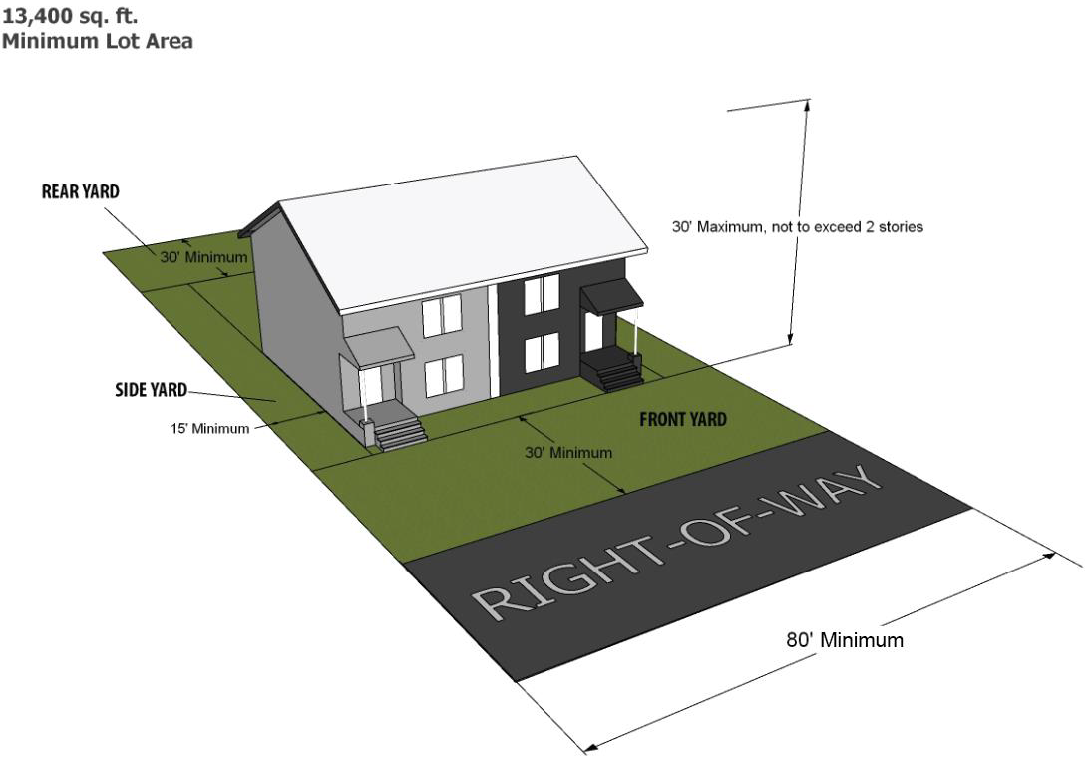
(6)
Additional standards
a.
Setback Average Front Yard
i.
Where more than 25 percent all of the improved lots in any one block are developed with buildings which establish a front yard setback greater or less than 30 feet, such greater setback shall become the average front yard setback, the minimum setback for that block. No building erected, converted, enlarged, reconstructed or structurally altered shall project beyond the established average front yard setback; provided, however, that the average front yard setback shall not be required to be more than 45 feet. This setback requirements shall be observed on each street side of a corner lot.
b.
Net density
i.
All single family attached and two-family dwelling developments shall be constructed at a net density of no greater than 12 dwelling unit per acre.
ii.
All multiple family dwelling developments shall be constructed at a net density of no greater than 24 dwelling unit per acre.
(Ord. No. 20-47, § 3(Exh. A), 11-10-2020)
Sec. 122-235. - R-5 multi-family residence district.
(1)
Purpose: The R-5 multi-family district provides for a mix of multi-family residential at the highest allowed densities in the city, including townhomes, duplexes, and apartments.
(2)
Permitted uses: Permitted uses in the R-5 district are listed in the Zoning District Use Table 5.13.
(3)
Special uses: Special uses in the R-5 district are listed in the Zoning District Use Table 5.13.
(4)
Parking requirements: Parking requirements in the R-5 district are listed in article IV.
(5)
Bulk space and yard regulations: Bulk regulations in the R-5 district including regulations regarding lot area, lot width, yard areas, building coverage, and building height are listed in Tables 5.1 and 5.7 and illustrated below.
Table 5.7
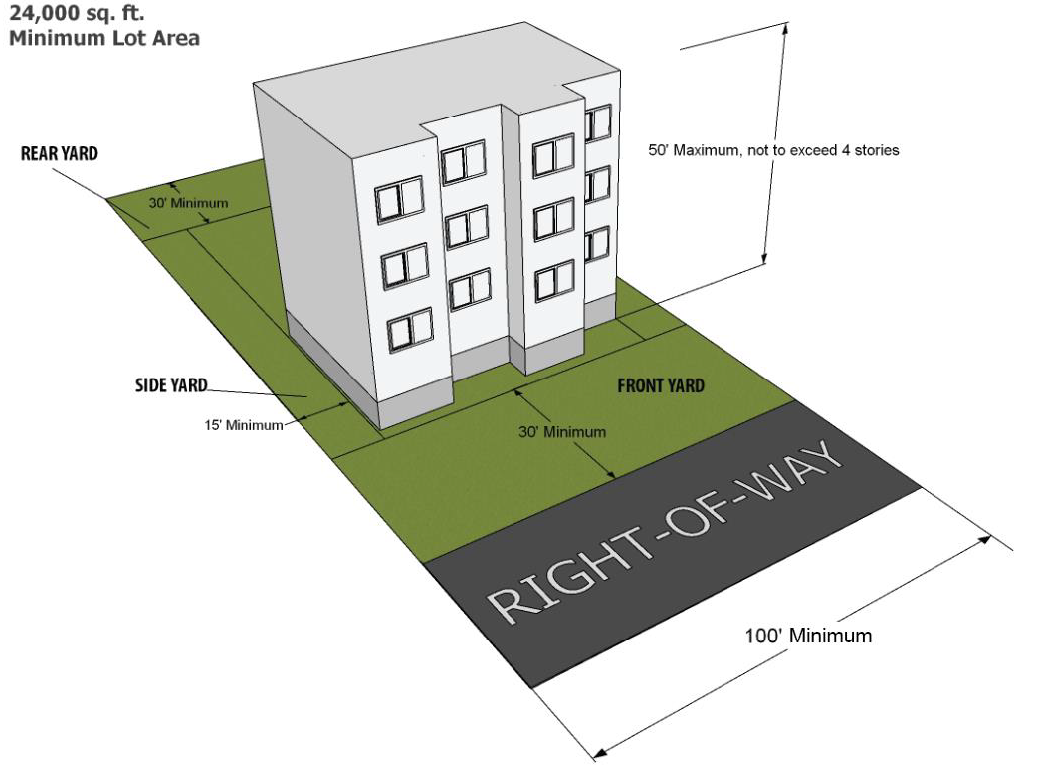
Figure 5.5: Multi-Family Residence District Bulk Regulations ILlustration
(6)
Additional standards
a.
Yards for nonresidential permitted uses and special uses:
i.
For buildings 35 feet high or less, yard requirements shall be as follows:
1.
Front yard setback: 30 feet.
2.
Side yard setback: 10 feet.
3.
Rear yard setback: 25 percent of lot depth, not greater than 30 feet.
4.
Corner side yard setback: 20 feet.
ii.
For a building greater than 35 feet in height, yard requirements shall be as indicated in subsection 6(a)(i) above, and shall be increased by two feet for each additional one foot of building height over 35 feet.
b.
Net density
i.
All single family attached and two-family dwelling developments shall be constructed at a net density of no greater than 12 dwelling unit per acre.
ii.
All multiple family dwelling developments shall be constructed at a net density of no greater than 24 dwelling unit per acre.
c.
Mobile home parks: Any mobile home park shall be developed and operated in keeping with the following:
i.
Bulk standards:
Table 5.7.2
ii.
Additional Standards
1.
Landscape buffer: A 25-foot landscaped buffer yard is required around the perimeter of all newly developed mobile home parks. This buffer yard shall be in addition to any other setback or yard area requirement and must be approved by the planning and zoning commission.
2.
Landscape screening: Landscape screening by trees or compact hedge of at least 75 percent opacity shall be provided along all property lines of the mobile home park.
3.
Minimum separation: A minimum separation of ten feet shall be maintained between a mobile home and any other structure.
4.
Access: Every mobile home lot shall have access to and abut a private driveway. The driveway shall have an unobstructed access to a public thoroughfare.
5.
Street and driveways: All streets and driveways, in every mobile home park shall be paved with a minimum width of 24 feet.
6.
Common open space: Common open space equal to 250 square feet per home shall be provided at common locations within the park.
7.
Designated operator: Every mobile home park shall have a designated operator for the park. The operator shall provide the zoning administrator with their name, office hours, office mailing address, and emergency contact persons and numbers.
8.
Maintenance: It shall be the duty of the mobile home park operator to secure the maintenance of the park and ensure that the park meets all applicable state or local laws, ordinances or regulations.
9.
Incidental retail sales: Incidental retail sales of mobile homes may be permitted in a mobile home park provided no mobile home models are located on the site of the mobile home park.
10.
One for one replacement: For the purposes of this title, the one to one replacement of a mobile home with another mobile home shall be permitted unless otherwise prohibited by Village Ordinance.
11.
Signs: A map, directory or sign shall be erected at each entrance to the mobile home park, which identifies the exact location of each mobile home and mobile home site. (Additional sign standards shall be as defined in article X of this chapter).
12.
Accessory buildings: Accessory buildings, structures and uses, such as laundry facilities and storage areas, shall be for the sole use of the residents of the mobile home park. Offices shall be used only in the management and operation of the mobile home park. (Additional Accessory Structures standards shall be as defined in article III of this chapter)
(Ord. No. 20-47, § 3(Exh. A), 11-10-2020; Ord. No. 23-74, § 3, 11-28-2023)
Sec. 122-271. - C-1 community commercial district.
(1)
Purpose: The C-1 community commercial district intends to preserve and enhance the Kirchoff Road Corridor, which runs through the center of Rolling Meadows and is home to many of its most important civic and institutional uses. This district provides for a variety of community-oriented and neighborhood-scaled businesses, personal services, and recreational uses.
(2)
Permitted uses: Permitted uses in the C-1 district are listed in the Zoning District Use Table 5.13.
(3)
Special uses: Special uses in the C-1 district are listed in the Zoning District Use Table 5.13.
(4)
Parking requirements: Parking requirements in the C-1 district are listed in article IV.
(5)
Bulk space and yard regulations: Bulk regulations in the C-1 district including regulations regarding lot area, lot width, yard areas, building coverage, and building height are listed in Table 5.1 and 5.8 and illustrated below.
Table 5.8
Figure 5.6: C-1 Bulk Regulations Illustration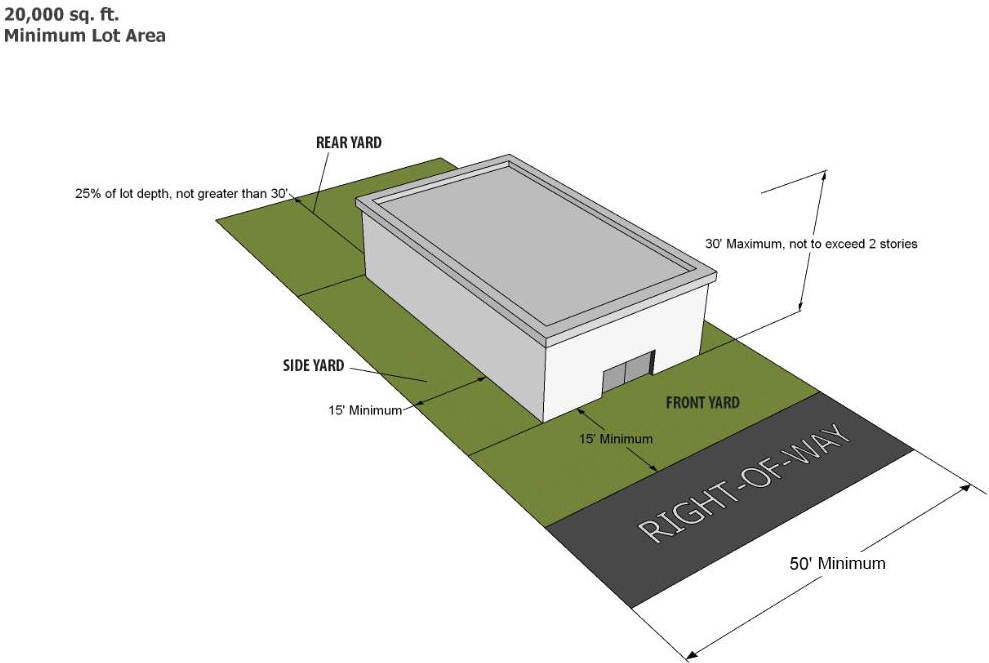
(6)
Additional standards
a.
Front Yards:
i.
Each main building or portion thereof serving as a non-residential use shall have a front yard of not less than 15 feet in depth; provided, however, that when off-street parking is provided in front of the building, the setback shall be as provided in article IV, Off-Street Parking and Loading, of this chapter.
ii.
If the property is a corner lot, the front yard setback requirement will apply to both street frontages.
b.
Side yards: No side yards are required, except when the property is adjacent to the side of a lot in an R district, in which case there shall be a side yard on the lot in the district the same as specified for the adjacent R district. In addition, the yard shall have a six-foot fence or other screen as may be approved by the zoning administrator from any adjoining lot in the R district. Such fence or screening will be maintained by the owner of the commercial property.
c.
Rear yards: When adjoining an R-district lot, the rear yard shall have a six-foot fence or other screen as may be approved by the zoning administrator. Such fence or screening will be maintained by the owner of the commercial property.
(Ord. No. 20-47, § 3(Exh. A), 11-10-2020; Ord. No. 22-13, § 2(Exh. A), 4-12-2022)
Sec. 122-272. - C-2 corridor commercial district.
(1)
Purpose: The C-2 district is the city's predominant commercial use and permits any retail uses that are allowed in the C-1 district, plus additional uses that may attract visitors from within and outside of Rolling Meadows. Intended to serve major corridors such as Golf Road and Algonquin Road, this district allows for larger retail uses, as well as some office and recreational uses.
(2)
Permitted uses: Permitted uses in the C-2 district are listed in the Zoning District Use Table 5.13.
(3)
Special uses: Special uses in the C-2 district are listed in the Zoning District Use Table 5.13.
(4)
Parking requirements: Parking requirements in the C-2 district are listed in article IV.
(5)
Bulk space and yard regulations: Bulk regulations in the C-2 district including regulations regarding lot area, lot width, yard areas, building coverage, and building height are listed in Table 5.1 and 5.9 and illustrated below.
Table 5.9
Figure 5.7: C-2 Corridor Commercial District Bulk Regulations Illustration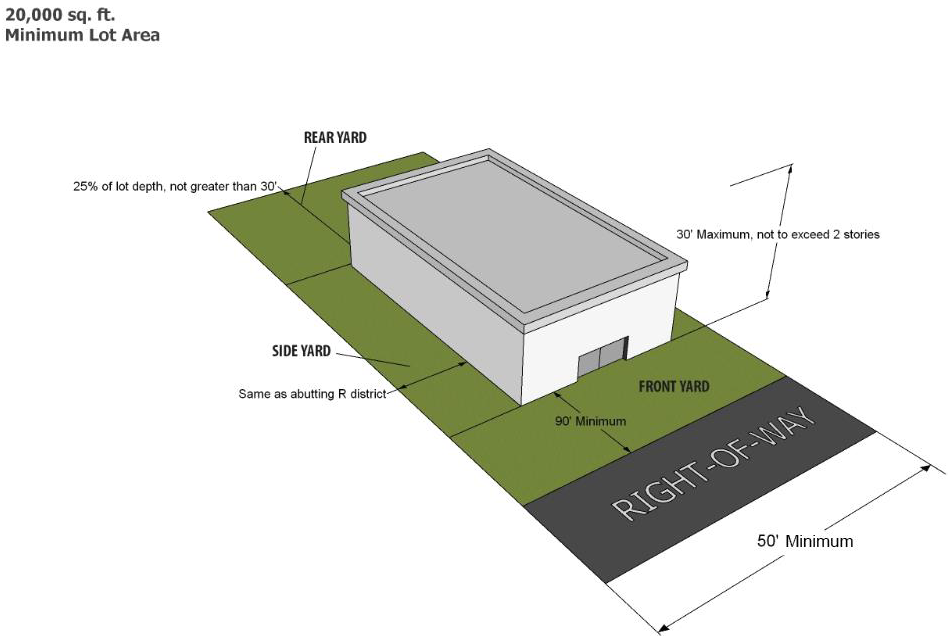
(6)
Additional regulations
a.
Side yards: No side yards shall be required, except where the property is adjacent to the side of a lot in an R district, in which case there shall be a side yard on the lot in the commercial district the same as specified for the residence district. In addition, the yard shall have a six-foot fence and/or screening from any adjoining lot in the R district, as approved by the zoning administrator. Such fence or screening will be maintained by the owner of the commercial property.
b.
Parking setback: Parking areas for C-2 Zoned properties may encroach into required front yard setbacks, but may be located no closer than 15 feet to the front property line.
c.
Screening: The side and/or rear of C-2 zoned property must be screened from any adjacent residential property by a wood fence a minimum of six feet in height or treated in some other manner as approved by the zoning administrator so as to have greater or equal screening value.
d.
Maximum percentage of impervious surfaces: For redevelopment or new construction, the maximum amount of ground covered by principal and accessory structures and all paved pedestrian and vehicle areas on each property shall not exceed 80 percent of the gross area of a lot. This requirement may be varied by the zoning administrator if it results in an inability to provide the number of parking spaces required or recommended by section 122-163. The amount of relief granted shall be the minimum amount possible to provide said parking.
(Ord. No. 20-47, § 3(Exh. A), 11-10-2020; Ord. No. 22-13, § 2(Exh. A), 4-12-2022; Ord. No. 25-44, § 20, 9-9-2025)
Sec. 122-273. - C-3 office, institutional, and research district.
(1)
Purpose: The C-3 district is intended to provide an organized environment for various office, institutional, and research facilities and their related uses. This district permits buildings that are larger in scale than the other two C districts, and the area is characterized by the several office buildings and campuses in the southern section of the city.
(2)
Permitted uses: Permitted uses in the C-3 district are listed in the Zoning District Use Table 5.13.
(3)
Special uses: Special uses in the C-3 district are listed in the Zoning District Use Table 5.13.
(4)
Parking requirements. Parking requirements in the C-3 district are listed in article IV.
(5)
Bulk space and yard regulations. Bulk regulations in the C-3 district including regulations regarding lot area, lot width, yard areas, building coverage, and building height are listed in Table 5.1 and Table 5.10 and illustrated below.
Table 5.10
Figure 5.8: C-3 Bulk Regulations Illustration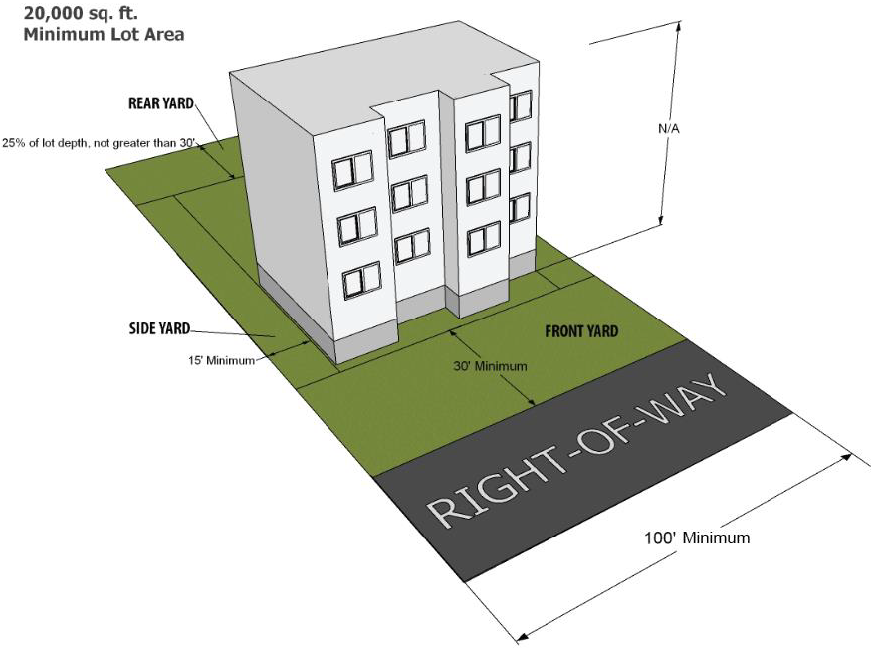
(Ord. No. 20-47, § 3(Exh. A), 11-10-2020; Ord. No. 22-13, § 2(Exh. A), 4-12-2022)
Sec. 122-274. - TC town center district.
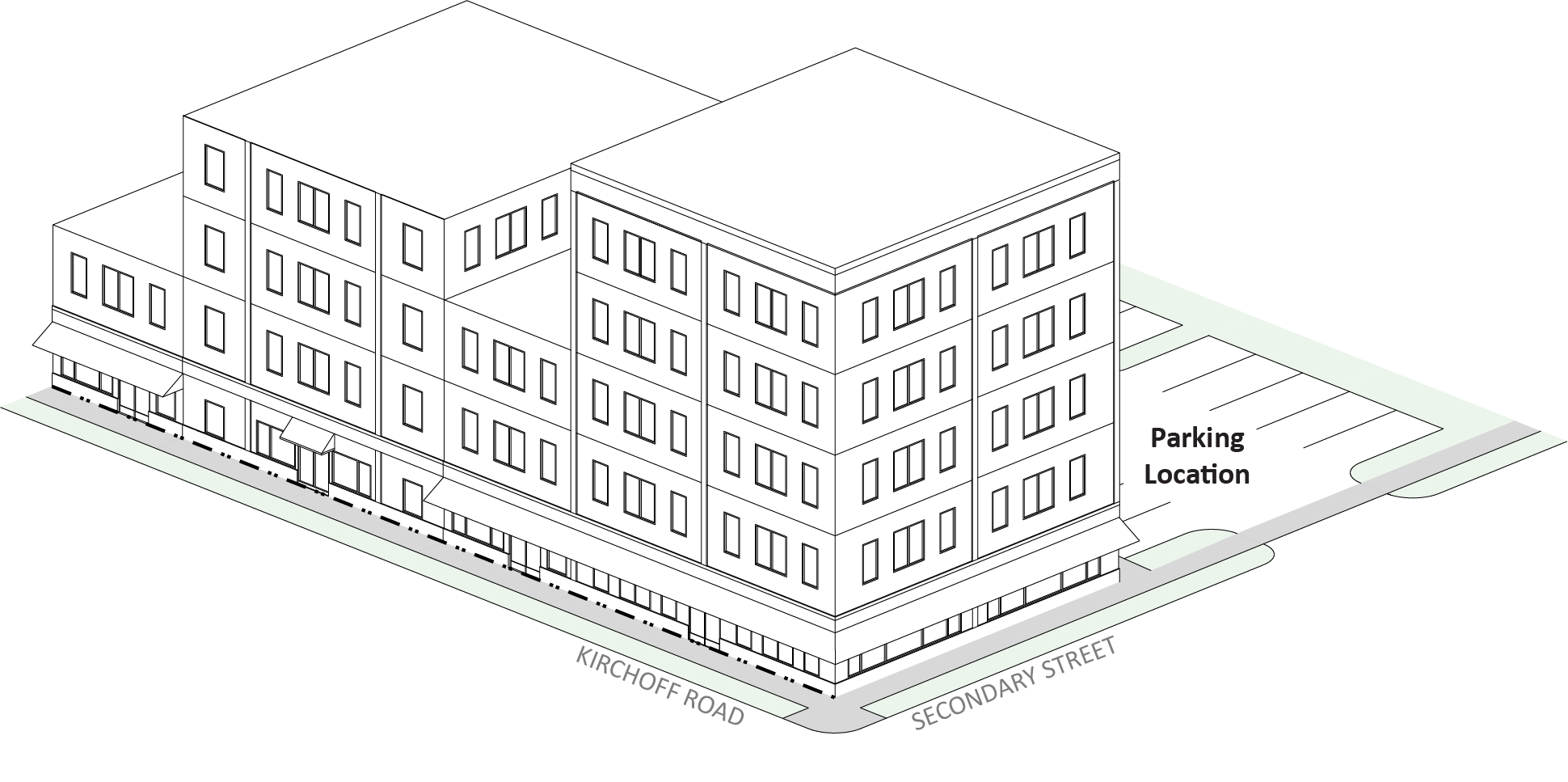
(1)
Purpose: The TC district is intended to accommodate pedestrian-oriented development that serves the city and surrounding communities. The TC district allows a wide range of commercial, residential, and institutional uses within the town center of Rolling Meadows.
(2)
Permitted uses: Permitted uses in the TC district are listed in Table 5.13.
(3)
Special uses: Special uses in the TC district are listed in Table 5.13.
(4)
Planned developments. The purpose of any planned development, existing or proposed, that lies partially or wholly within the TC Town Center District shall be deemed to include "more effective facilitation of pedestrian-oriented development that serves the City and surrounding communities in a manner consistent with the purpose and design requirements of the TC district."
(5)
Parking requirements. Special parking requirements in the TC district are listed in article IV.
(6)
Bulk space and yard regulations. Bulk regulations in the TC district including regulations regarding lot area, lot width, yard areas, building coverage, and building height are listed in Table 5.1 and Table 5.11.
Table 5.11
(7)
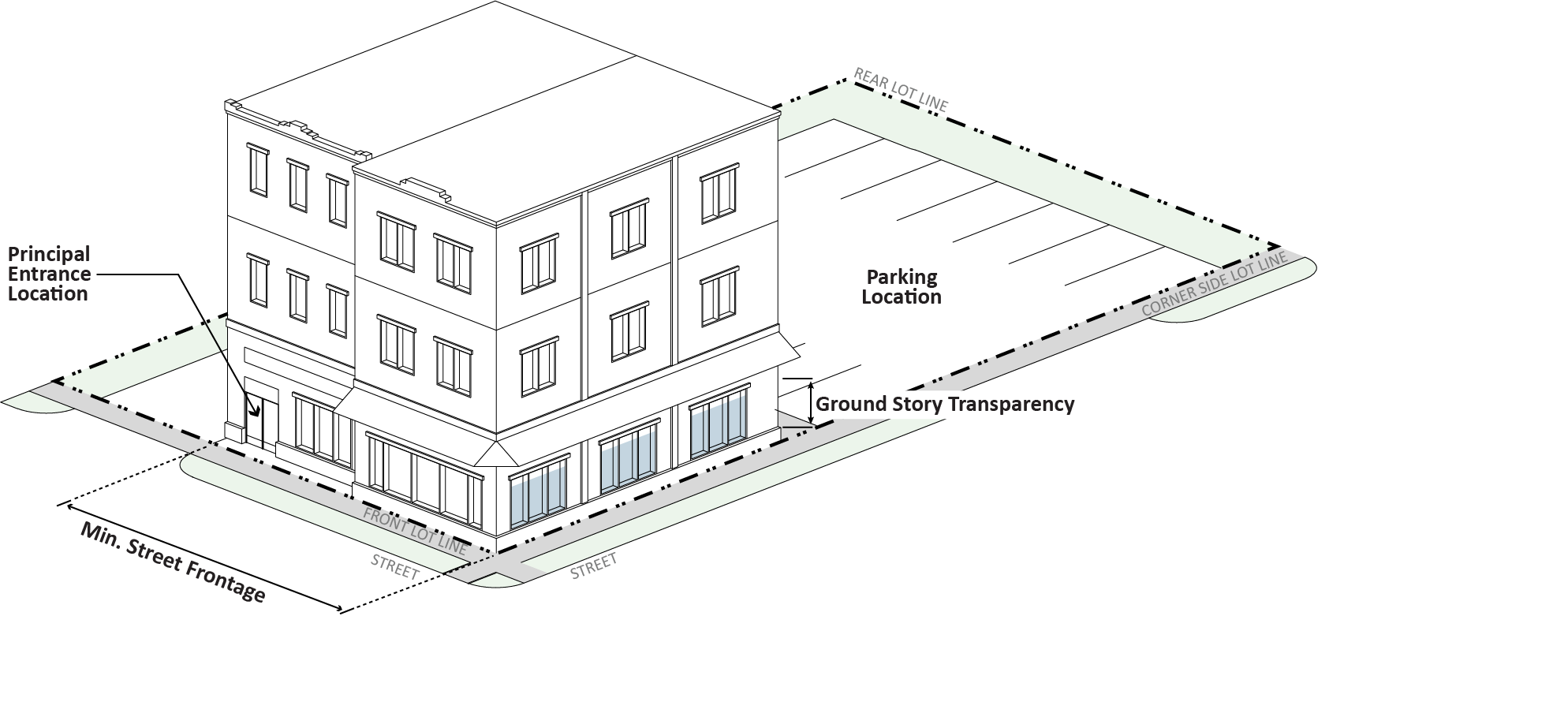
Design requirements for commercial and mixed-use development. The design requirements in this section apply to all new construction and significant exterior renovation of existing structures within the city's TC district. These design requirements shall be evaluated by the zoning administrator as part of the site plan review process set forth in section 122-398, or else as part of the special use permit process where site plan review is not required. Refer to Figure 5.10 Design Requirements for Commercial and Mixed-Use Development.
a.
Minimum street frontage. Ninety-five percent of a principal building must be located adjacent to a right-of-way in proportion to the total length of the lot line adjacent to the right-of-way.
b.
Principal entrance location. The principal building entrance must be located on either the front or corner side façade.
c.
Defined base, middle, and top. Buildings with three or more stories must be designed with a distinct base (ground story), middle, and top. The base of the building must be defined from the upper stories by a horizontal expression line, which is a decorative, three-dimensional linear element protruding or indented at least two inches from a building façade. The top of the building must be crowned with a similar expression line no less than six inches in width.
d.
Façade articulation. For buildings with more than 50 feet of building width or depth, vertical architectural or structural elements must be incorporated along all street-facing façades and all façades facing waterways and natural or recreational areas at regular intervals to divide large, flat wall planes. Examples of such elements include texture change, material change, color change, or wall articulation, such as an offset, pilaster, column, reveal, or vertical expression line, of no less than six inches in length.
e.
Allowed building façade materials. Durable and natural materials are allowed on any building façade, such as stone, brick, stucco, concrete, burnished concrete masonry units, fiber cement siding, treated wood siding, and non-reflective glass, unless otherwise limited by section 122-274.(6).g (Limited building façade materials). Exterior façade walls shall incorporate not less than 50 percent masonry materials (stone, brick, stucco, and burnished concrete masonry units) along any frontage facing Kirchoff Road.
f.
Limited building façade materials. The following materials may only be utilized for trim or architectural details and must not exceed 20 percent of the total area of any building façade: utility brick, vinyl or metal siding, metal wall panels, exposed aggregate (rough finish) concrete wall panels, non-burnished concrete masonry units, exterior insulation and finishing systems (EIFS), fiberglass, plastic, and mirrored glass. The painting of brick, limestone, or other natural stone is prohibited so that such materials retain their natural colors, except that professional mural art is acceptable and encouraged for decorative and artistic purposes.
g.
Building details. Pedestrian-scale elements are encouraged on any building façade fronting a public right-of-way, such as decorative lighting not more than nine feet in height, window planters, and awnings.
h.
Minimum transparency. Sixty percent of the total area of the street-facing ground story façades between two and eight feet above grade must have highly transparent, non-reflective glass. Tinted glass in excess of 20 percent is prohibited. Buildings larger than 30,000 square feet are exempt from these standards.
i.
Roof design. Green roof, white roof, and blue roof designs are encouraged.
j.
Parking and vehicular access.
i.
Where practical, off-street parking lots must be located behind the building relative to Kirchoff Road. For shallow or constrained sites, the zoning administrator may authorize off-street parking lots alongside the building relative to Kirchoff Road. In no case may parking stalls be constructed between the building line and Kirchoff Road. Underground parking or grade changes to minimize the visible appearance of parking facilities is desirable. The entrances to underground facilities should not face Kirchoff Road directly.
ii.
Cross-access connections are required to facilitate connections between adjacent parking lots. Shared parking agreements, pursuant to this chapter, are encouraged.
iii.
Driveways connecting to Kirchoff Road are to be minimized by number and width in order to improve traffic, parking, and pedestrian access. Corner lots with a Kirchoff Road frontage should connect their driveways to secondary streets whenever feasible.
iv.
Drive-through facilities, where authorized, must queue behind or to the side of buildings relative to Kirchoff Road. No more than one drive-through facility may be provided within a single development. Drive-through facilities erected before the effective date of these design guidelines may continue to be used or may be returned to use in their existing configuration.
(8)
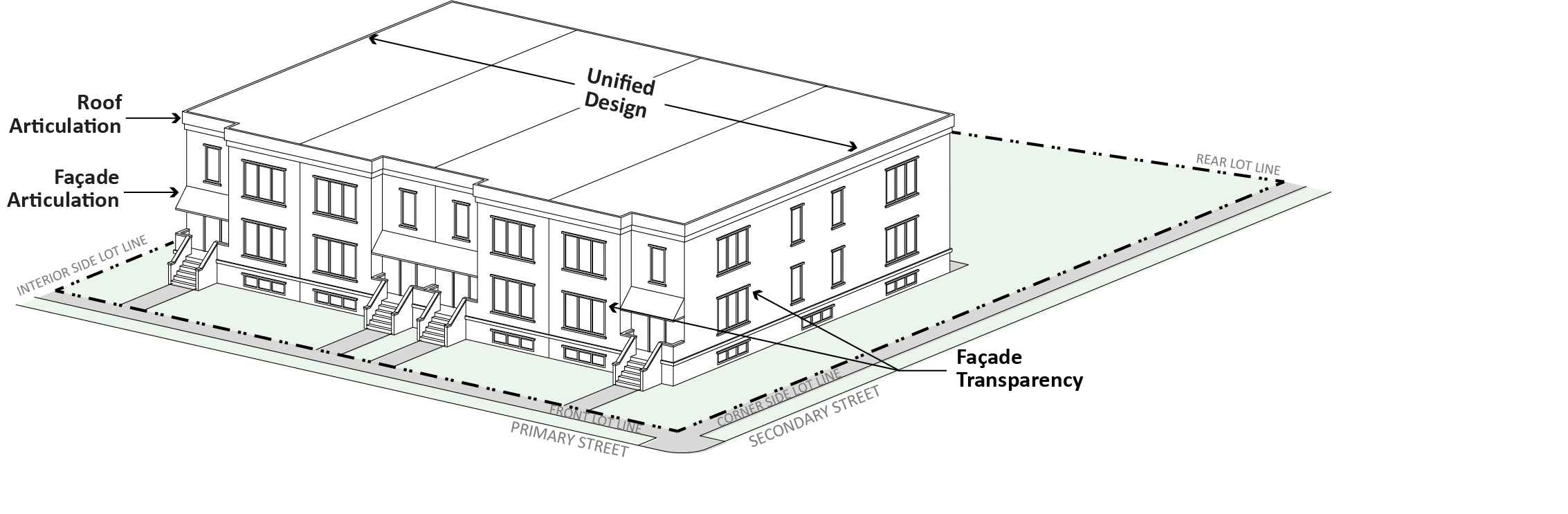
Design requirements for multi-family dwellings and attached single-family dwellings. The design requirements in this section apply to all new construction and significant exterior renovation of existing structures within the city's TC district. These design requirements shall be evaluated by the zoning administrator as part of the site plan review process set forth in section 122-398, or else as part of the special use permit process where site plan review is not required. Refer to Figure 5.11 Design Requirements for Multi-Family Dwellings and Single-Family Attached Dwellings.
a.
Façade articulation. To avoid the appearance of blank walls, facades facing the front yard, corner side yard, waterways, and natural or recreational areas must include façade articulation, such as entrances or other architectural features. Doors and windows must have frames with raised elements, such as jambs, entablatures, thresholds, and casings, to create articulation. Windows must be set back into or projected out from the façade to provide façade depth and shadow. Bay windows and balconies are encouraged to provide dimensional elements on a façade. Balconies must be inset or recessed into the building façade.
b.
Unified design. Building façades must utilize consistent architectural forms, elements, materials, and colors that wrap around all façades of the building to provide a unified architectural design.
c.
Building separation. In developments with more than one building, there must be a minimum separation of 40 feet between two façades, except two side façades. There must be a minimum separation of 15 feet between two side facades. Walkways, driveways and parking areas may be located within the building separation areas.
d.
Façade transparency. At least one window is required on facades facing each required yard. Facades facing an interior side yard that include a garage do not have a façade transparency requirement.
e.
Roofs. For flat roofs, the use of cornices and/or parapets is required to break up the roofline. For all other roofs: Sloped roofs must include eaves of at least six inches in width. Roof forms must be articulated so that varied planes and massing within the overall roof are provided. Large monotonous roofs and simple pitched roofs without breaks in the expanse of the roof are prohibited.
f.
Number of dwelling units. A townhouse structure may not have more than six dwelling units.
g.
Parking and vehicular access.
i.
Where practical, off-street parking lots must be located behind the building relative to Kirchoff Road. For shallow or constrained sites, the zoning administrator may authorize off-street parking lots alongside the building relative to Kirchoff Road. In no case may parking stalls be constructed between the building line and Kirchoff Road. Underground parking or grade changes to minimize the visible appearance of parking facilities is desirable. The entrances to underground facilities should not face Kirchoff Road directly.
ii.
Cross-access connections are required to facilitate connections between adjacent parking lots. Shared parking agreements, pursuant to this chapter, are encouraged.
iii.
Driveways connecting to Kirchoff Road are to be minimized by number and width in order to improve traffic, parking, and pedestrian access. Corner lots with a Kirchoff Road frontage should connect their driveways to secondary streets whenever feasible.
(Ord. No. 25-34, § 7, 5-27-2025)
Sec. 122-301. - M-1 business park district.
(1)
Purpose: The M-1 business park district is intended to provide suitable space for light/low-impact manufacturing operations, warehousing, and distribution activities, as well as office building clusters and other compatible uses. These uses should be generally screened or separated from residential and commercial areas.
(2)
Permitted uses: Permitted uses in the M-1 district are listed in the Zoning District Use Table 5.13.
(3)
Special uses: Special uses in the M-1 district are listed in the Zoning District Use Table 5.13.
(4)
Parking requirements: Parking requirements in the M-1 district are listed in article IV.
(5)
Bulk space and yard regulations: Bulk regulations in the M-1 district including regulations regarding lot area, lot width, yard areas, building coverage, and building height are listed in Table 5.1 and 5.11 and illustrated below.
Table 5.11
Figure 5.9: M-1 Bulk Regulations Illustration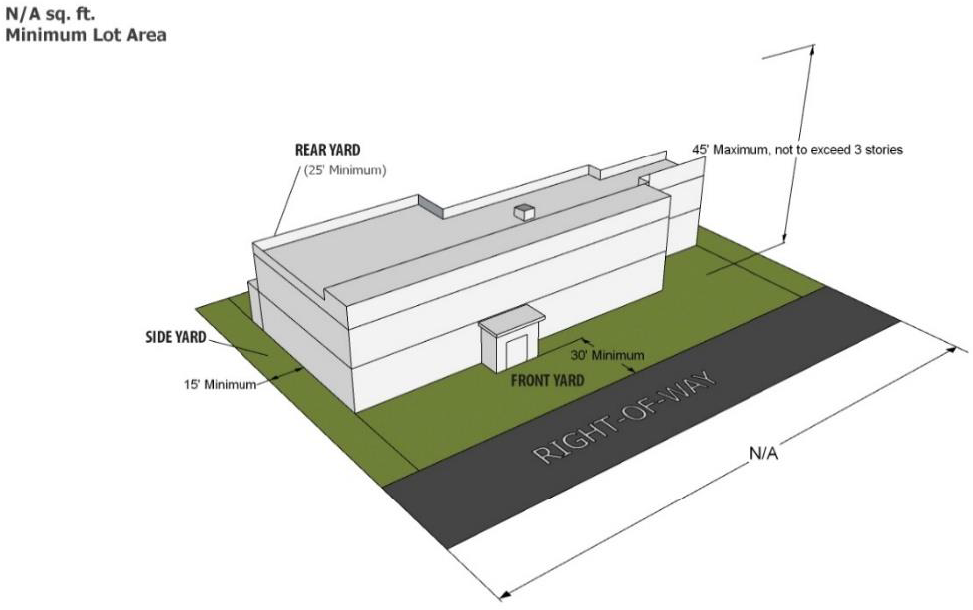
(6)
Additional standards
a.
Front yards
i.
Within the front yard in the M-1 district, there shall be no structure of any kind, open storage of equipment, vehicles or automobile parking, except as allowed in subsection 6(ii) below.
ii.
The following standards shall apply to all properties with front yards located along the following roadways: Golf Road, Algonquin Road, Route 53, Euclid Avenue, Hicks Road, Rohlwing Road.
1.
The front yard setback shall be a minimum of 90 feet.
2.
Parking setback: Parking areas may encroach into required front yard setbacks, but may be located no closer than 15 feet to the front property line.
b.
Side or rear yards
i.
All buildings or structures and open storage areas, other than off-street parking areas and signs used to identify the districts, must set back on any lot at least 15 feet from any side lot line, and at least 25 feet from any rear yard line.
ii.
On a corner lot the setback from the secondary street shall be 30 feet.
c.
Screening
i.
The side and/or rear of M-1 zoned property must be screened from any adjacent residential property by a wood fence a minimum of six feet in height or treated in some other manner as approved by the zoning administrator so as to have greater or equal screening value.
(Ord. No. 20-47, § 3(Exh. A), 11-10-2020)
Sec. 122-302. - M-2 manufacturing district.
(1)
Purpose: The M-2 manufacturing district is intended to accommodate higher-impact manufacturing and industrial uses that should be separated from commercial or residential uses.
(2)
Permitted uses: Permitted uses in the M-2 district are listed in the Zoning District Use Table 5.13.
(3)
Special uses: Special uses in the M-2 district are listed in the Zoning District Use Table 5.13.
(4)
Parking requirements: Parking requirements in the M-2 district are listed in article IV.
(5)
Bulk space and yard regulations: Bulk regulations in the M-2 district including regulations regarding lot area, lot width, yard areas, building coverage, and building height are listed in Table 5.1 and 5.12 and illustrated below.
Table 5.12
Figure 5.10: M-2 Manufacturing District Bulk Regulations Illustration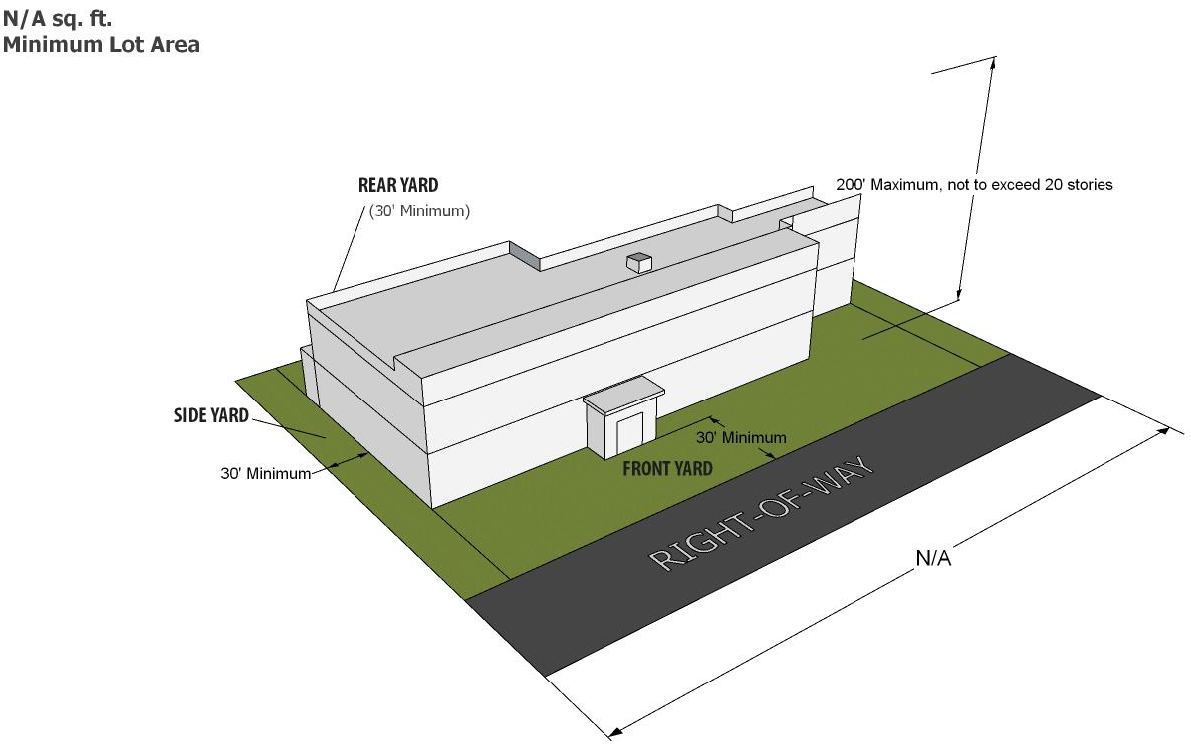
(6)
Additional standards
a.
Front yards
i.
Within the front yard in the M-2 district, there shall be no structure of any kind, open storage of equipment, vehicles or automobile parking, except as allowed in subsection 6(ii) below.
ii.
The following standards shall apply to all properties with front yards located along the following roadways: Golf Road, Algonquin Road, Route 53, Euclid Avenue, Hicks Road, Rohlwing Road.
1.
The front yard setback shall be a minimum of 90 feet.
2.
Parking setback: Parking areas may encroach into required front yard setbacks, but may be located no closer than 15 feet to the front property line.
b.
Screening
i.
The side and/or rear of M-2 zoned property must be screened from any adjacent residential property by a wood fence a minimum of six feet in height or treated in some other manner as approved by the zoning administrator so as to have greater or equal screening value.
(Ord. No. 20-47, § 3(Exh. A), 11-10-2020)
Sec. 122-331. - Permitted and special land uses.
(a)
Permitted and special uses in all zoning districts shall be as listed in Table 5.13.
(b)
Any use of land not listed in Table 5.13 as a permitted or special use shall be prohibited in the City of Rolling Meadows.
Table 5.13: Land Use Table
1 Special provisions apply; refer to the use-specific section within article III. Regulations of General Applicability.
2 For this zoning district and category of use, a property shall not be eligible to receive a new or amended special use permit unless, at the time of application, the property was used for said category of use within the 12 months preceding the date of application.
(Ord. No. 20-47, § 3(Exh. A), 11-10-2020; Ord. No. 21-36, § 2(Exh. 1), 7-13-2021; Ord. No. 22-11, § 3(Exh. 2), 3-8-2022; Ord. No. 22-13, § 2(Exh. A), 4-12-2022; Ord. No. 22-29, § 2, 8-9-2022; Ord. No. 23-14, § 2(Exh. 1), 4-11-2023; Ord. No. 23-21, §§ 2, 3(Exh. 1), 4-25-2023; Ord. No. 23-73, § 2, 11-28-2023; Ord. No. 24-11, § 4, 3-26-2024; Ord. No. 24-48, § 2, 10-22-2024; Ord. No. 25-14, § 4, 2-25-2025; Ord. No. 25-16, § 4, 2-25-2025; Ord. No. 25-17, § 2, 2-25-2025; Ord. No. 25-71, § 5, 11-25-2025; Ord. No. 25-74, § 3, 11-25-2025)

