
Rolling Meadows City Zoning Code
ARTICLE IX
LANDSCAPING AND SITE DEVELOPMENT STANDARDS
Sec. 122-561.- Purpose, scope, and applicability.
(a)
This article establishes minimum landscape and site development standards that are intended to:
(1)
Mitigate incompatibilities between adjacent land uses and reduce the negative effects of higher intensity land uses and districts upon less intense adjacent land uses and districts.
(2)
Provide visual buffering between higher and less intense uses and districts.
(3)
Improve the value of property and the aesthetic appeal of the community through attractive landscaping and site design.
(4)
Lessen the impact of development on the environment by preserving existing plants and topography, reducing glare and heat buildup, and restoring native plant species and the city's tree canopy.
(5)
Break up large expanses of pavement so as to reduce impervious surface area, stormwater runoff, and the level of pollutants discharged into watersheds from non-point sources.
(b)
This article applies to all "regulated development," which is:
(1)
Any "development," as defined in this chapter, except the development of exclusively residential uses totaling five or fewer dwelling units.
(2)
The partial or full reconstruction of an existing parking area, such as by grind and overlay, but the "regulated development" shall only include said parking area.
(3)
The occupancy or use of a building that has been vacant for a period of one year or longer.
(4)
A legal non-conforming structure or use that has lost its legal non-conforming status by operation of article VII ("Nonconforming Uses and Structures") which must be brought into conformance with this chapter.
(c)
Where there is a conflict among the provisions of this article and the provisions of chapter 98 (Subdivision), chapter 114 (Vegetation), or any other provision of the City Code, the controlling provision shall be the most restrictive provision as applied to the particular situation.
(Ord. No. 20-47, § 3(Exh. A), 11-10-2020; Ord. No. 25-45, § 2, 9-9-2025)
Sec. 122-562. - General screening and landscape provisions.
(a)
Screening and landscape plan. Prior to any regulated development, the developer shall submit to the city a screening and landscaping plan satisfying the terms and conditions of this chapter. Such plan must be approved by the zoning administrator and, where applicable, the planning and zoning commission. The screening and landscape plan shall be installed as a condition of any city permit, license, or approval pursuant to this chapter and, if applicable, prior to the issuance of a final certificate of occupancy.
(b)
Species.
(1)
Native plants. At least 80 percent of plant materials shall be species that are native or naturalized to northeastern Illinois, and drought- and salt-tolerant to promote biodiversity and ecological resilience.
(2)
Diversity. No single species shall comprise more than 15 percent of the total plantings of any type to prevent monocultures and enhance disease resistance.
(3)
Invasive species. The use of invasive plant species is strictly prohibited.
(4)
Preferred tree species. Refer to the Northern Illinois Tree Species List from the Morton Arboretum for preferred species, with the exception of trees designated as "Messy."
(5)
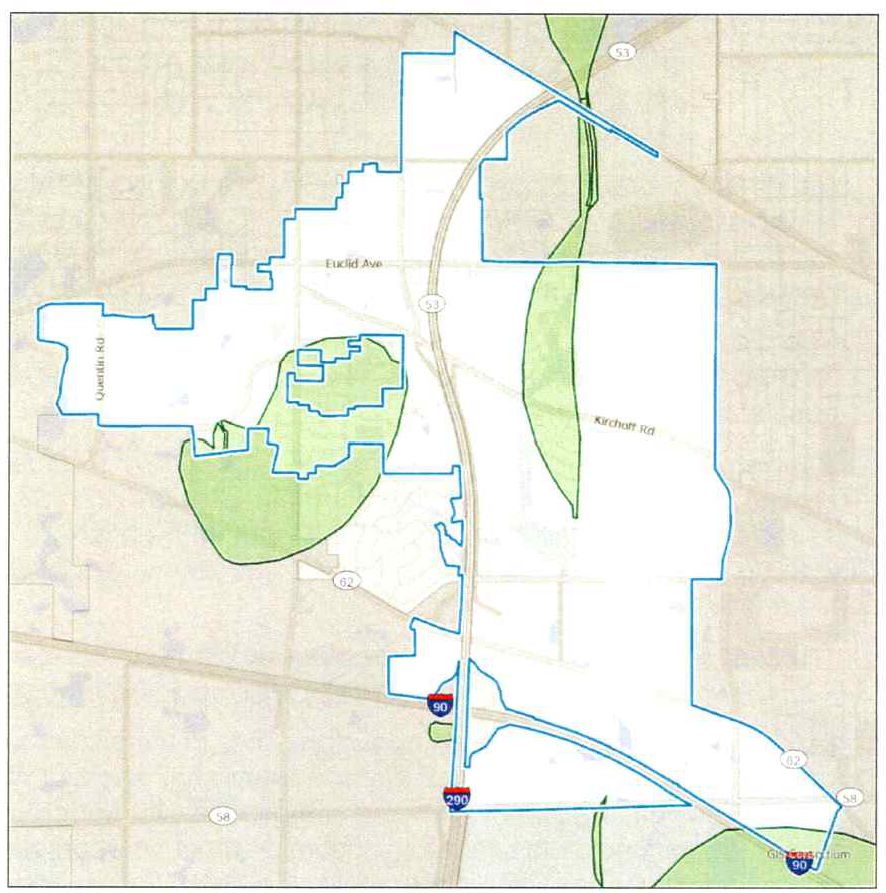
Native oak restoration. Oak trees (Quercus spp.) are a keystone species in the Chicago region but only small patches of oak ecosystems remain after the region's development. The use of white and red oak species native to Illinois is encouraged and should be prioritized for any appropriate planting site, especially near and within those areas of the city that were formerly oak forest.
Figure IX-2—Pre-Settlement Oak Forests in Rolling Meadows
(c)
Minimum plant material sizes at time of planting. At the time of installation, landscape materials shall be of the following minimum sizes:
(1)
Shade trees. Two and one-half inches DBH.
(2)
Evergreen and ornamental trees. Eight feet tall.
(3)
Shrubs. Twenty-four inches.
(4)
Perennials. Gallon-sized.
(d)
Areas outside prescribed planting areas. All earthen areas outside of prescribed planting areas shall be covered with sod or other approved live ground cover. Stone and gravel are not approved surfaces except as may be approved by the zoning administrator in planting beds where it is determined that planted material is unlikely to survive or cannot be adequately maintained.
(e)
Maintenance required.
(1)
All screening and landscaping shall be permanently maintained in good condition, satisfactory to the zoning administrator, and with at least the same quality and quantity as initially approved. Where no screening and landscaping plan had previously been approved by the city, all screening and landscaping provided for the property as of September 9, 2025 shall be permanently maintained in good condition, satisfactory to the zoning administrator, and with at least the same quality and quantity as existed on said date.
(2)
Areas within prescribed planting areas shall be spade edged and mulched or regularly spaded to eliminate weeds.
(3)
In the event that landscaping should die, the property owner shall replace landscaping in a timely fashion, taking into consideration the season of the year.
(4)
Screening and landscaping shall in no event become a nuisance or hazard to any person, personal property, or public or private utility, infrastructure, or improvement.
(f)
Alternative compliance. Upon finding that there is a unique circumstance or particular hardship in implementing the strict letter of the regulations of this article, the zoning administrator shall have the authority to:
(1)
Alternative materials. Approve alternative screening and landscape materials to those specified, upon finding that the alternative materials will provide equivalent or better aesthetic character and effective screening as required by this article. Without limitation, existing screening and landscaping materials may be authorized by the zoning administrator under this provision.
(2)
Redevelopment. Modify the standards of this article as applied to a previously developed site in order to reasonably achieve the purposes of this article within the scope of the work to be performed and the constraints of the site's design.
(Ord. No. 20-47, § 3(Exh. A), 11-10-2020; Ord. No. 25-45, § 4, 9-9-2025)
Sec. 122-563. - Transitional screening requirements.
(a)
Any regulated development adjacent to areas zoned for residential shall install and maintain a 100 percent screen along all lot lines adjacent to such residential use. Except as otherwise provided, it shall have a total height of not less than six feet at time of installation. Where there is a difference in elevation on opposite sides of the screen, the height shall be measured from the highest elevation. A screen shall consist of one or more of the following types or as otherwise approved by the zoning administrator:
(1)
Berms: A berm may be banked on both sides or with one side banked toward the lot line with the retaining wall. A berm shall not be less than ten feet wide at the base and shall be constructed of earthen materials and shall be landscaped.
(2)
Plants: Plant materials, when used as a screen, shall consist of dense evergreen plants, deciduous plants and, if part of a special use or planned development, any mixture as the planning and zoning commission recommends to the city council. Plant materials will not be limited to a maximum height. The zoning administrator may require that additional plantings be installed if, two years after installation, plant materials have not formed a 100 percent screen, or such a screen is not maintained.
(3)
Fencing: Fencing type and location shall be as allowed by this ordinance, or in the case of a special use or planned development, as recommended to the city council by the planning and zoning Commission.
(Ord. No. 20-47, § 3(Exh. A), 11-10-2020)
Sec. 122-564. - Screening of structures and equipment.
(1)
Applicability: Screening requirements of shall apply to land use as follows:
a.
For all multi-family uses, screening shall be provided for common trash receptacle per section 122-564(2) below.
b.
For all commercial uses, screening shall be provided for:
i.
Common trash receptacle per section 122-564(2) below
ii.
Ground mounted mechanical equipment per section 122-564(3) below
iii.
Roof mounted mechanical equipment per section 122-564(4) below
iv.
Loading docks, service yards, and exterior work or storage areas section 122-564(5) below:
v.
Outdoor storage per section 122-73 Walls, Fences and Screens: General Regulations and as otherwise regulated by this chapter.
c.
For all industrial uses, screening shall be provided where the regulated accessory function listed here is visible from a public right-of-way or residential property:
i.
Common trash receptacle per section 122-564(2) below
ii.
Ground mounted mechanical equipment per section 122-564(3) below
iii.
Roof mounted mechanical equipment per section 122-564(4) below
iv.
Loading docks, service yards, and exterior work or storage areas section 122-564(5) below:
d.
For all industrial uses, all outdoor storage shall be screened per section 122-573 Walls, Fences and Screens: General Regulations and as otherwise regulated by this chapter.
(2)
Screening of common trash and recycling receptacles:
a.
Shall consist of solid material screening on three sides to a height that screens the containers, having a minimum height of at least six feet.
b.
Materials used for screening shall complement the materials used in the architecture of the principal building when visible from any street. Solid board on board wood or composite fences may be used when not visible from any street The use of material that is not solid, such as slats in chain-link, shall not be used to meet this requirement.
c.
Materials and elevations for enclosures that are attached to buildings shall be designed to be compatible with the main structure. If enclosures are to be attached to buildings, they shall comply with applicable fire and building regulations of the City Code.
d.
Enclosure openings directly visible from a public right-of-way and/or adjoining residential areas shall have a solid material gate.
(3)
Screening of ground mounted mechanical equipment:
a.
All ground mounted mechanical equipment shall be screened by fencing, berms, plantings or any combination of these, to sufficiently obscure such equipment from view from all adjacent streets and adjacent lots used for residential purposes.
b.
All fences installed to satisfy the screening requirement set forth in this article IX shall be approved by the zoning administrator based on whether views of said equipment from the public right-of-way or adjacent lots have been mitigated.
(4)
Screening of roof mounted mechanical equipment:
a.
All roof-mounted mechanical equipment that may be visible from adjacent public thoroughfares shall be screened by the use of an opaque screening material compatible with the architecture of the building or architecturally designed screening such as a parapet wall. The screening of the roof-mounted units shall be designed to blend with the building and roof materials. A determination as to whether the roof mounted equipment is adequately and appropriately screened shall be made by the zoning administrator based on visibility of said equipment from adjacent roadways.
(5)
Screening of loading docks, service yards, and exterior work or storage areas
a.
Loading docks, service yards, and exterior work or storage areas shall be screened from view from public rights-of-way and adjacent lots.
b.
The screening shall consist of solid material screening or full screening landscaping, having a minimum height of at least six feet.
c.
When solid material screening is provided, intermittent or foundation landscaping shall be provided, as approved by the zoning administrator to mitigate visual impacts of the solid material screen.
(Ord. No. 20-47, § 3(Exh. A), 11-10-2020)
Sec. 122-565. - Parking lot landscaping.
(a)
Applicability. The landscape requirements of this section shall apply to any parking lot with ten or more parking spaces. lots with less than ten parking spaces are not subject to this section.
(b)
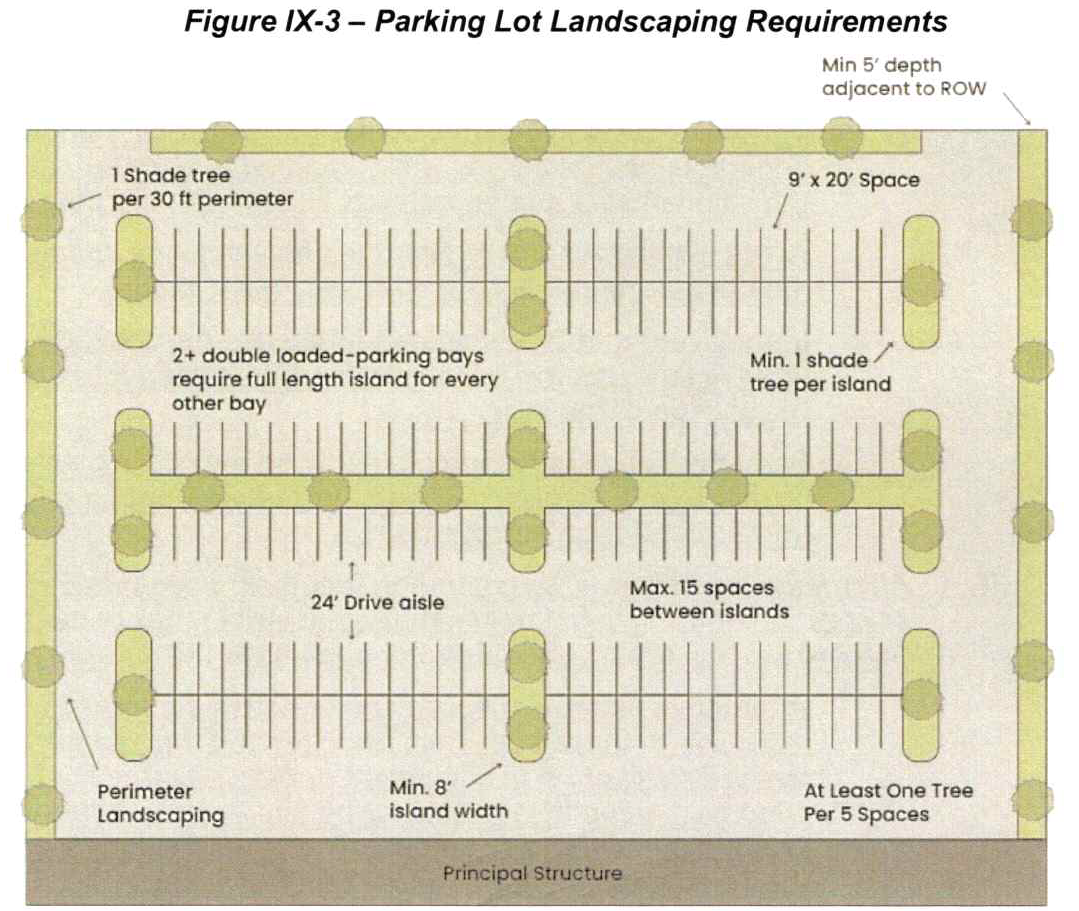
Landscape islands.
(1)
Landscape islands must be provided:
a.
At the end of each parking row or aisle.
b.
Within parking rows as necessary to prevent more than 15 consecutive stalls in a row without an intermediate landscape island.
c.
Two or more interior double-loaded parking bays require an island within every other bay extending laterally for the full length of the bay or row.
(2)
Landscape islands must have a minimum width of eight feet and minimum landscaped area of 180 square feet for a single row of parking or 360 square feet for a double row of parking.
(3)
Landscape islands should coincide with and incorporate pedestrian paths through the parking lot in order to further separate pedestrians from vehicles.
(4)
Landscape islands must include at least one shade tree and appropriate groundcover or shrubs. A minimum of 75 percent of every landscape island must be planted in live groundcover, shrubs, perennials, or ornamental grasses.
(c)
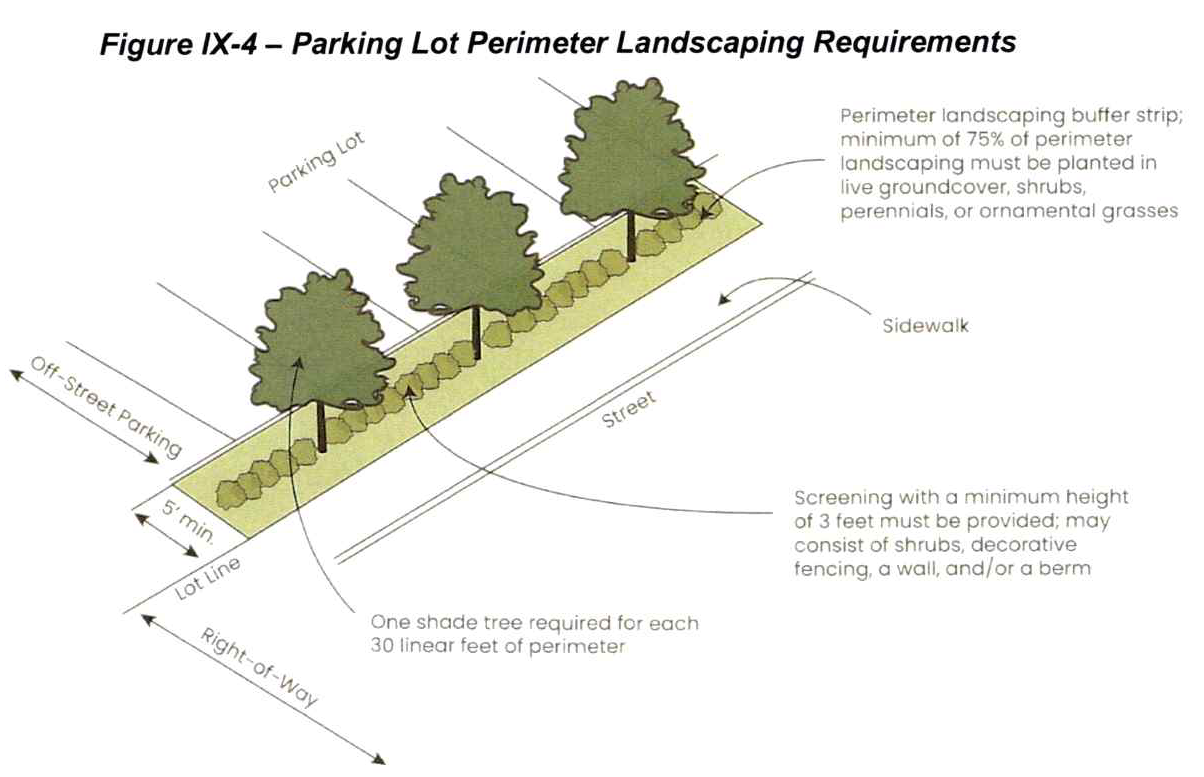
Perimeter landscaping. Perimeter landscaping must be provided, consisting of:
(1)
A landscaped area that is a depth of five feet along the portion of the perimeter of a parking lot that is adjacent to a public or private right-of-way. The perimeter landscaping area extends from the edge of pavement to the property line. A minimum of 75 percent of the perimeter landscaping area must be planted in live groundcover, shrubs, perennials, or ornamental grasses.
(2)
One shade tree must be provided per 30 linear feet of perimeter, with trees distributed throughout the perimeter landscaping area.
(3)
Screening with a height of three feet must be provided within the perimeter landscaping area in order to screen vehicles. Screening may consist of shrubs, a decorative fence, a wall, a berm, or these methods in combination.
(d)
Transitional screening landscaping. Transitional screening landscaping must be provided pursuant to section 122-563.
(e)
Gross landscape requirements.
(1)
The total landscaped area provided for the parking lot must equal at least ten percent of the total paved parking area of the lot including, without limitation, parking stalls and drive aisles. The landscaped area calculation includes, without limitation, all: landscape islands, perimeter landscaping, and transitional screening landscaping provided in fulfillment of this section.
(2)
At least one tree must be provided per five parking lot spaces.
(f)
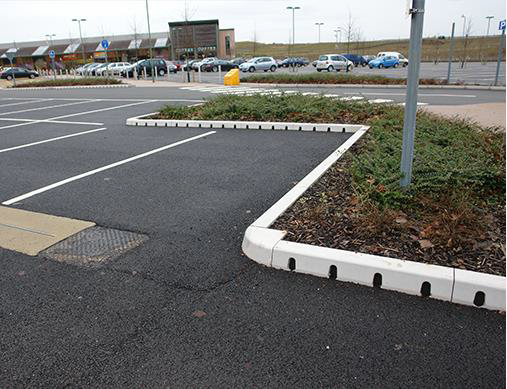
Drainage. Landscape areas must be protected with concrete curbing and have a height of six inches as measured from the parking lot surface. Curbing must contain inlets to accept drainage, unless it is determined by the zoning administrator that inlets would result in greater runoff inflow than could be supported by the landscape island.
(Ord. No. 20-47, § 3(Exh. A), 11-10-2020; Ord. No. 25-45, § 5, 9-9-2025)
Sec. 122-566. - Reserved.
Editor's note— Ord. No. 25-45, § 6, adopted Sept. 9, 2025, repealed § 122-566, which pertained to screening maintenance requirements and derived from Ord. No. 20-47, adopted Nov. 10, 2020.
Sec. 122-567. - Best management practices (BMPs).
Best Management Practices (BMPs) are encouraged in developments through appropriate application of landscape design, site construction and landscape maintenance practices. Use of BMPs may be used to off-set a portion of stormwater management requirements if, at the sole discretion of the zoning administrator, the applicant provides evidence by a licensed engineer that such offsets are feasible and the applicant provides a plan for ongoing maintenance and sufficiency of such facilities. Should the applicant or subsequent owners fail to maintain BMPs as effective stormwater management elements, the zoning administrator, at their sole discretion, may require repair of such BMPs or replacement with conventional stormwater management systems as may be needed to meet the intent and standards of the City Code.
BMP practices may include but are not limited to:
(a)
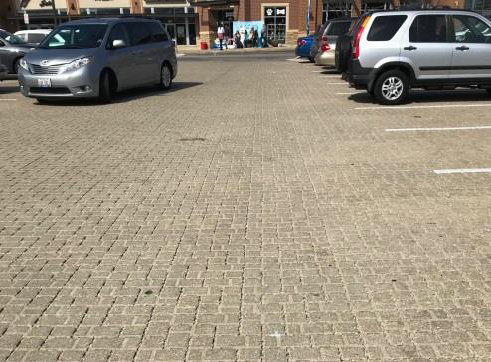
Permeable pavement and pavers. Permeable pavement and pavers are an alternative method of hard surface that allows stormwater runoff to filter through voids material. The use of this porous material can help promote the natural cleaning and infiltration of water, instead of allowing it to wash into streets and down storm drains. Use of this material is allowed in designated drive or path areas and is subject to approval the zoning administrator.
(b)
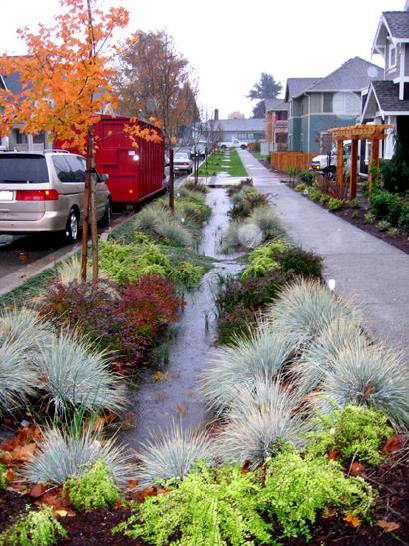
Bioswales or retention ponds: Bioswales and retention ponds are vegetated landscaped depressions that capture, treat, and slow down stormwater runoff. They provide a more aesthetically pleasing environment than the typical required concrete stormwater fixtures.
(c)
Parking lot drainage: Stormwater drainage is an integral component in the design of parking lots. Stormwater may be infiltrated into the parking lot planting areas and then drained to a specified area. This approach can clean, detail, and direct stormwater.
(Ord. No. 20-47, § 3(Exh. A), 11-10-2020; Ord. No. 23-20, § 2(Exh. A), 4-25-2023)

