
Sarasota County Unincorporated
City Zoning Code
City Zoning Code
ARTICLE 5
- DEVELOPMENT REVIEW PROCEDURES
Sec. 124-36.- Review Procedures.
(a)
Article 5 presents the development review procedures on all requests for development subject to these UDC regulations. Subsection (b) below presents the list of Review Procedures followed by the requirements for each Component Part of each Review Procedure Type. Each Review Procedure Type is subsequently presented within the following Sections 124-37 through 124-53 as listed within subsection (b) wherein each Review Procedure is established with its specific Component Parts.
(b)
Review Procedures Established. The following Review Procedures are established consisting of the Component Parts provided within subsection (c)(1) through (7) below:
(c)
Component Parts Established for all Review Procedures. Each of the following Component Part provisions apply to all specific Review Procedures together with those established within Sections 124-37 through 124-53.

(1)
Preapplication Conference. A Preapplication Conference pursuant to Section 124-37 of this Article 5 may be either recommended or required based upon the specified Review Procedure Type.

(2)
Application Submittal: All requests for review as listed within Section 124-36(b) shall be submitted to the County on forms established by the Administrator, accompanied by the appropriate fee. All application forms shall be made available to the public.
a.
Authority to File Applications. Requests under this Article shall be submitted by the property owner, any other person having a recognized interest in the land for which the development is proposed, or an authorized agent. Applications for Zoning Map Amendments (Rezoning), Special Exceptions, or Variances shall meet the ownership disclosure requirements of the County Charter (Section 3.8, Zoning Disclosure).
b.
Application Requirements. All applicants shall provide the materials required as part of the application, including all the information that was noted by the DRC staff during the Preapplication Conference, if applicable. This includes where appropriate, a description of the character, location, and magnitude of the proposed development and any other supporting documents such as studies, maps, drawings and models. Failure to include required application materials shall result in a determination of incomplete application.
c.
Application Withdrawal. Any request for withdrawal of an application shall be submitted in writing to the Administrator. The request for withdrawal of an application shall be accepted if it has been submitted prior to the closure of a public hearing on petition said application. Once a public hearing has occurred, the request for withdrawal of the application shall be acted upon by the applicable review body. If no public hearing is required, the applicant may submit a written request to withdraw the application any time up until a final decision is made.
d.
Upon reasonable request and during normal business hours, any person may examine an application, staff reports and materials submitted in support of or in opposition to an application in the County offices. Copies of such materials shall be made available upon request at a cost established in the adopted schedule of fees.
e.
Preapplication Conference. Where an application has been reviewed through the Preapplication Conference procedure, the application shall include written responses to all written comments provided pursuant to the Preapplication Conference.

(3)
Application Sufficiency. A determination of whether an application includes sufficient detail to evaluate if it complies with the appropriate substantive requirements of this UDC and the County Code. Additional information may be required from the applicant to complete the review.
a.
Following receipt of the application for a development review and approval listed in Section 124-36(b), the Administrator shall determine if the application includes data in sufficient detail to evaluate the application to determine whether it complies with the appropriate substantive requirements of this UDC.
b.
If the applicant fails to respond to the identified deficiencies within 45 days, the application shall be considered withdrawn. The Administrator, may grant a single extension for up to 180 days of this 45-day time period in writing prior to the end of the initial 45-day period for good cause shown. If the applicant does not complete the application within the extension period granted, the application shall be deemed withdrawn.

(4)
Application Review. An application will be considered open when the Administrator has determined it to be sufficient. A coordinated staff analysis of the information provided by the applicant shall be conducted utilizing specific review criteria detailed in the UDC and the County Code, as required.
a.
After an application for development review and approval is determined sufficient, the Administrator shall refer the application to the appropriate County staff and any other review agencies for formal review and comment in accordance with the applicable rules of procedure. An application will be considered closed when the applicant withdraws the application through written notice to the County.
b.
An application that has no activity or the applicant ceases to supply necessary information to continue processing or otherwise actively pursue it for a 6-month period shall be deemed withdrawn by the Administrator. An application withdrawn shall be deemed closed and will not receive further processing. The Administrator will notify the applicant of closure, however, failure to notify the applicant shall not eliminate the application's "closed" status. An application deemed closed may only be re-opened by submission of a new application and repayment of all application fees. Further review of the application will be subject to the UDC regulations in effect at the time of resubmittal.

(5)
Public Hearing Notification Requirements. Notification requirements, where required, for each specific Review Procedure Type shall be as listed in the table below. All applications for development approval requiring public hearings shall comply with Florida Statutes, and the additional provisions of this subsection with regard to public notification, as applicable. Unless otherwise expressly provided in state statutes or this UDC, notice shall be provided as follows:
a.
Public Notice Content. All notices for public hearings on development approvals required in accordance with this UDC, unless expressly noted otherwise shall include the following information:
1.
Identify the County assigned application number.
2.
Indicate the date, time and place of the public hearing.
3.
Describe the subject property involved by a short description of the general location, a location map of the subject property and the street address, if any. This requirement shall not apply to UDC Text Amendments or the Posted Notice.
4.
Identify the current zoning district designation of the subject property of the application.
5.
Describe the nature, scope, and purpose of the application being advertised (except posted notice).
6.
Identify the County offices where the application, staff report, and related materials may be inspected by the public. For all notices other than posted notices, state that information is available for public inspection during normal business hours.
7.
For all notices other than posted notices, include a statement describing where the public may submit written comments or evidence prior to the public hearing.
8.
All notices other than posted notices, shall include a statement stating that affected parties may appear at the public hearing, be heard and submit evidence and written comments with respect to the application.
9.
For watercourse buffer Variances, the written notice shall state the proposed activity for which a watercourse buffer Variance is sought, a general description of the area involved, and shall include a drawing depicting the proposed activity and the location of same as it relates to the surrounding area.
b.
Duly Noticed Public Hearing.
1.
Published Notice. When the provisions of this UDC require that notice be published, the applicant shall be responsible for the cost of such publication. The County shall prepare the content of the notice and be responsible for publishing the notice in the newspaper of general circulation that has been selected by the County. The content and form of the published notice shall be consistent with the requirements of Florida Statute § 125.66.
2.
Notice of public hearing on development approvals shall be published a minimum of 10 days prior to the public hearing date.
c.
Additional Public Hearing Notification Requirements. Failure to provide written notice to all property owners pursuant to this subsection shall not constitute a jurisdictional or procedural defect provided that the public hearing was duly noticed and proper legal notice has been published. Failure of the posted signs to remain in place as required in this subsection shall not constitute a jurisdictional defect provided that the public hearing was duly noticed and proper legal notice has been published.
1.
Mailed Notices (also, Written Notice). When the provisions of this UDC require that mailed notice be provided, the, County shall provide the notice and mailing addresses to the applicant. The applicant may also choose to send notices to property owners outside the minimum distance requirements. The applicant shall be responsible for copying and mailing the notice a minimum of 15 days prior to the public hearing date. Notice shall be deemed mailed by its deposit in the United States mail, first class, properly addressed, and postage paid. An affidavit attesting to such mailing shall be submitted to the Administrator prior to the public hearing date. Notice shall be mailed to:
i.
All property owners of the property subject to the application for development approval whose address is known by reference to the latest ad valorem tax records maintained by the County.
ii.
All property owners within 750 feet of the boundary line of the subject property; however, that where the subject property is part of, or adjacent to, property owned by the same person, the required notification area shall be measured from the boundaries of the entire ownership. Where such property is adjacent to property in the same ownership as the subject property of the application, the distance shall be measured from the boundaries of the entire ownership. The distance measurement shall not include public or private right-of-way.
iii.
Rural and Semi-Rural Notice Provisions. If the property that is the subject of the application is located in an area designated Rural or Semi-Rural on the Comprehensive Plan Future Land Use Map, notice shall be given to all property owners within 1,500 feet of the boundary line of the subject property. The distance measurement shall exclude public or private right-of-way. When adjacent property is held in the same ownership as the subject property of the application, the distance shall be measured from the boundaries of the entire ownership.
iv.
If any dwelling unit within the required notification areas is part of a property owner's association, the association must also be notified.
v.
Any organization registered to receive notice pursuant to subsection viii., below.
vi.
Where the notification boundaries include a multifamily dwelling with individually owned units (e.g., condominium), each individual unit owner shall be notified.
vii.
In addition, the County shall supply the applicant with a list of all municipalities or other public agencies that may be affected by the proposed development. The applicant shall notify these municipalities and other public agencies by mail and inform them that they have the right to be heard.
viii.
Registration to Receive Notice. Any person or organization may register with the County to receive notice of all applications for development approval requiring mailed notice. Registrant must provide the information in the form required by the County to ensure notification can be made to the person or organization. Failure to provide written notice to persons or organizations on the registry shall not constitute a jurisdictional or procedural defect. The registry may also be made available to, other County Departments, Divisions, or Agencies as appropriate.
2.
Posted Notice. When the provisions of this UDC require that notice be posted on the property subject to the application, the applicant shall:
i.
Post a notice on weatherproof signs in a form established by, the County a minimum of 15 days prior to the public hearing.
ii.
Place the signs on the property that is the subject of the application along each street that is adjacent to or runs through the subject property in a manner that makes them clearly visible to neighboring residents and passers-by. This shall include at a minimum one sign per street frontage and one sign at each cross street.
iii.
The sign shall be set back no more than 25 feet from the street so that the lettering is visible from the street. Where the street is privately owned, the applicant may also be responsible for posting a notice at a nearby public location, as determined by the County. Where the property does not have frontage on a street, signs shall be erected on the nearest street with an attached notation indicating generally the direction and distance to the land subject to the application. In addition, a notice shall be posted on the shoreline side of each property where a watercourse buffer Variance is sought.
iv.
An affidavit attesting to such posting and locations shall be submitted to the County.
v.
The applicant shall be responsible for ensuring that the appropriate posted notice is maintained on the property subject to the application until the completion of the public hearing.
vi.
The signs shall be removed by the applicant within ten days after the closing of the public hearing on the application.
(6)
Public Hearing. A public hearing is an opportunity for applicants and interested individuals to present their views to a public review body on an application. In some instances, more than one public hearing before different public review bodies or the Board may be required. All Review Procedures are established as listed within the table of Section 124-36(b).
a.
Public Hearings, Generally. A public hearing before the public review body shall be required for all applications decided by the Board of Zoning Appeals, or the Board. In addition, all applications reviewed by the Planning Commission for its recommendation shall be subject to a public hearing before the Planning Commission. Public hearings will be held in accordance with State law, this UDC, and the applicable body's rules of procedure.
b.
Responsibility for Scheduling. When an application for development approval is subject to a public hearing, the Administrator shall ensure that the necessary public hearing is scheduled. In the event that an applicant fails to accept three written offers by the County for public hearing dates before the public review body, the application shall be deemed withdrawn. In such an event, the applicant shall be notified in writing that the subject application has been formerly deemed withdrawn. Any subsequent application submitted to the County for the same property shall be considered a new application and processed accordingly.
c.
Public Hearing Comportment. Any party may appear personally or by agent or attorney. The staff shall report on the application with any applicable advisory body recommendations prior to the close of the public hearing on the application. The applicant shall have the right during a quasi-judicial proceeding, prior to the close of the public hearing, to cross-examine persons presenting testimony, to respond to any contentions presented by any testimony or other evidence presented during the public hearing, and to respond to the staff's report, after receipt of which the hearing shall be concluded, unless the hearing is continued and the matter is referred back to staff for further consideration of such matters as the public review body may direct. If referred back to staff, the matter shall be given a date certain for the continued public hearing or re-notify pursuant to Section 124-36(c)(5). All testimony submitted during the public hearing shall be under oath or affirmation.
1.
The Board may remand an application to the Planning Commission, or continue an item to request more information or review, in the interest of fairness to the parties, or to allow for additional public input.
2.
The Planning Commission or Board of Zoning Appeals may continue an application to request more information or review, in the interests of fairness to the parties, or to allow for additional public input.
(7)
Action. The act of reaching a decision or determination on an application, or similar submittal. Action may be taken at the staff level, public review body, or Board. Some actions are appealable to Board of Zoning Appeals or the Board. Specific references to appeals are contained in this UDC and the County Code. The Administrator shall provide notification of a determination on an application to the applicant by mail within ten days after the determination, or such later date where filing with the State of Florida is required. A copy of the determination shall also be made available to the public in the County offices during normal business hours within a reasonable period of time after the determination.
a.
Reasonable stipulations may be included as part of any approval under this UDC to assure consistency with the Comprehensive Plan, this UDC, or other applicable County ordinances or standards.
b.
Failure to comply with such stipulations is a violation of the UDC and may result in withholding of future authorizations for work under that approval, or enforcement action under Article 16.
c.
Other Applicable Provisions. Establishes additional provisions applicable to each specific Review Procedure Type, as required.
d.
Staff may remand a petition back to the Planning Commission based on such things as a change or revision to, but not limited to, a significant change to a binding site plan, increase in density/intensity, ingress/egress, number of structures, building height, orientation and compatibility either internal or to adjoining properties, wetland impacts, or a proffered stipulation that was not discussed at the Planning Commission or part of their finding/deliberations.
(Ord. No. 2019-006, § 4, 4-23-2019; Ord. No. 2021-056, § 3, 11-15-2021)
Sec. 124-37. - Preapplication Conference Review Procedure.
(a)
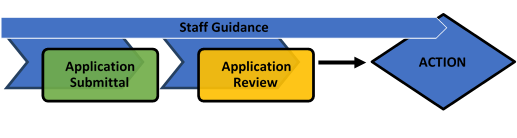
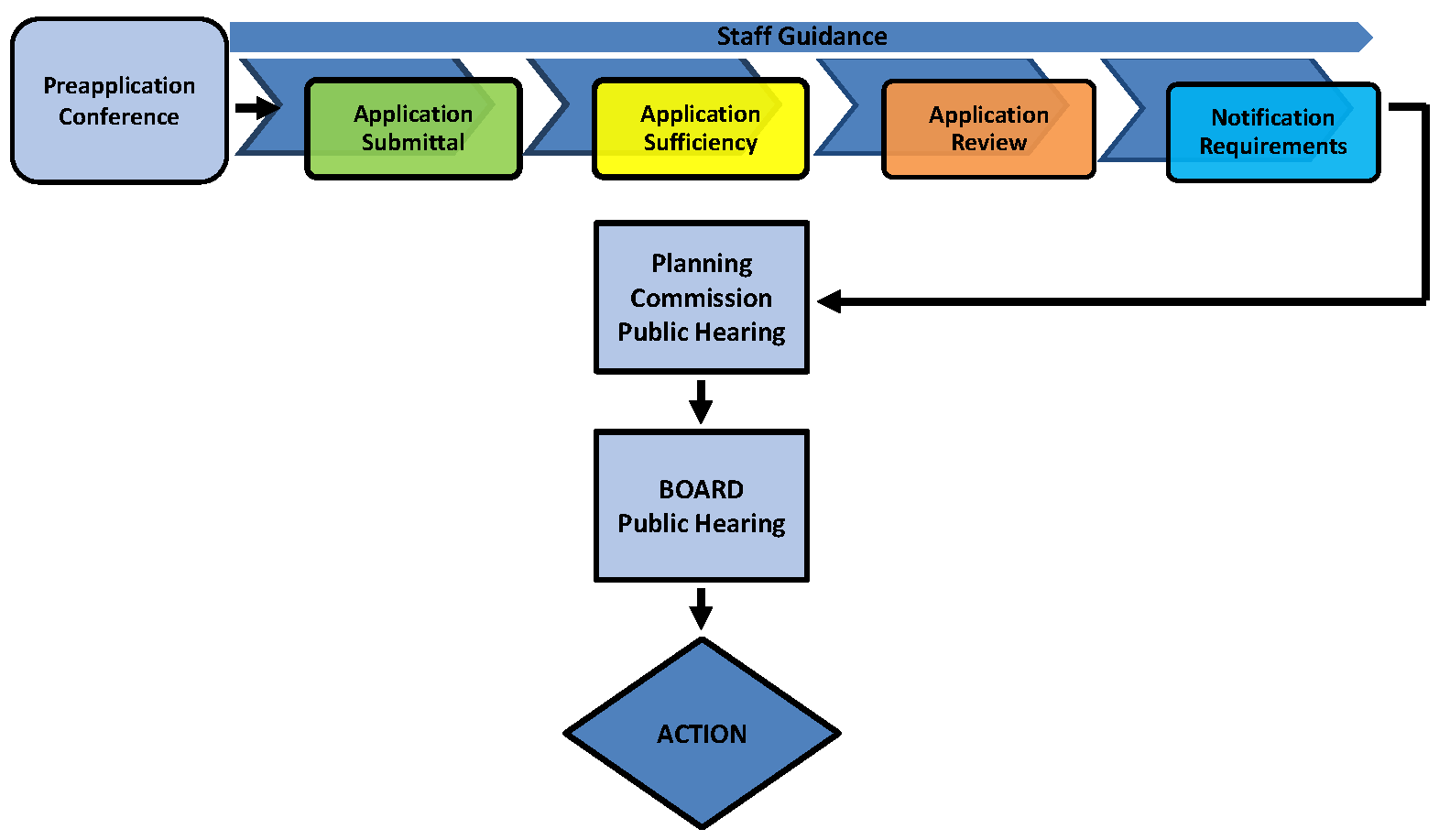
Review Procedure Established. Each Component Part depicted within the flow chart below is required in accordance with Section 124-36 together with this Section 124-37.
(b)
Applicability. The purpose of a Preapplication Conference with staff is to familiarize the applicant with the applicable provisions of this UDC required to permit the proposed development, to inform the applicant about the preparation of the application, inform the applicant on what will be required with the application, and to resolve potential issues before the applicant and the County incur substantial time and expense in submitting and reviewing the application. A Preapplication Conference is informational and intended to guide the applicant and facilitate the review of the application. Each Procedure Type provided for within Article 5 shall specify whether a Preapplication Conference is mandatory or optional. The requirement for a Preapplication Conference may be waived by the Administrator in those situations where the size, scale and complexity of the proposed application do not warrant the need for such a review.
(c)
Component Parts of Review Procedure.
(1)
Application Submittal. A Preapplication Conference is held prior to the submission of a development related application. To request a Preapplication Conference, the applicant shall submit a Preapplication Conference request to the County, using the applicable form. Any potential applicant for development approval may request a Preapplication Conference from the County prior to submission of a development related application. The requirement for a mandatory Preapplication Conference may be waived by the Administrator
(2)
Application Review. The Administrator shall schedule the Preapplication Conference. At the Preapplication Conference, the applicant, the Administrator, and any County staff or regional, state, federal or adjacent local government representatives that comprise the Development Review Coordination (DRC) team, shall be invited and encouraged to attend. The attendees shall discuss the proposed development based upon the information provided by the applicant and the provisions of this UDC and the County Code or other applicable regulations that apply to the proposed development.
(3)
Action. After completion of the Preapplication Conference meeting, the Administrator shall provide to the applicant a written summary of the DRC comments. No application that requires a mandatory Preapplication Conference will be accepted more than one year after the Preapplication Conference date. An additional Preapplication Conference shall be required if the application deviates substantially from the plans that were submitted in the initial Preapplication Conference, as determined by the Administrator.
Sec. 124-38. - Unified Development Code (UDC) Text Amendments Review Procedure.
(a)
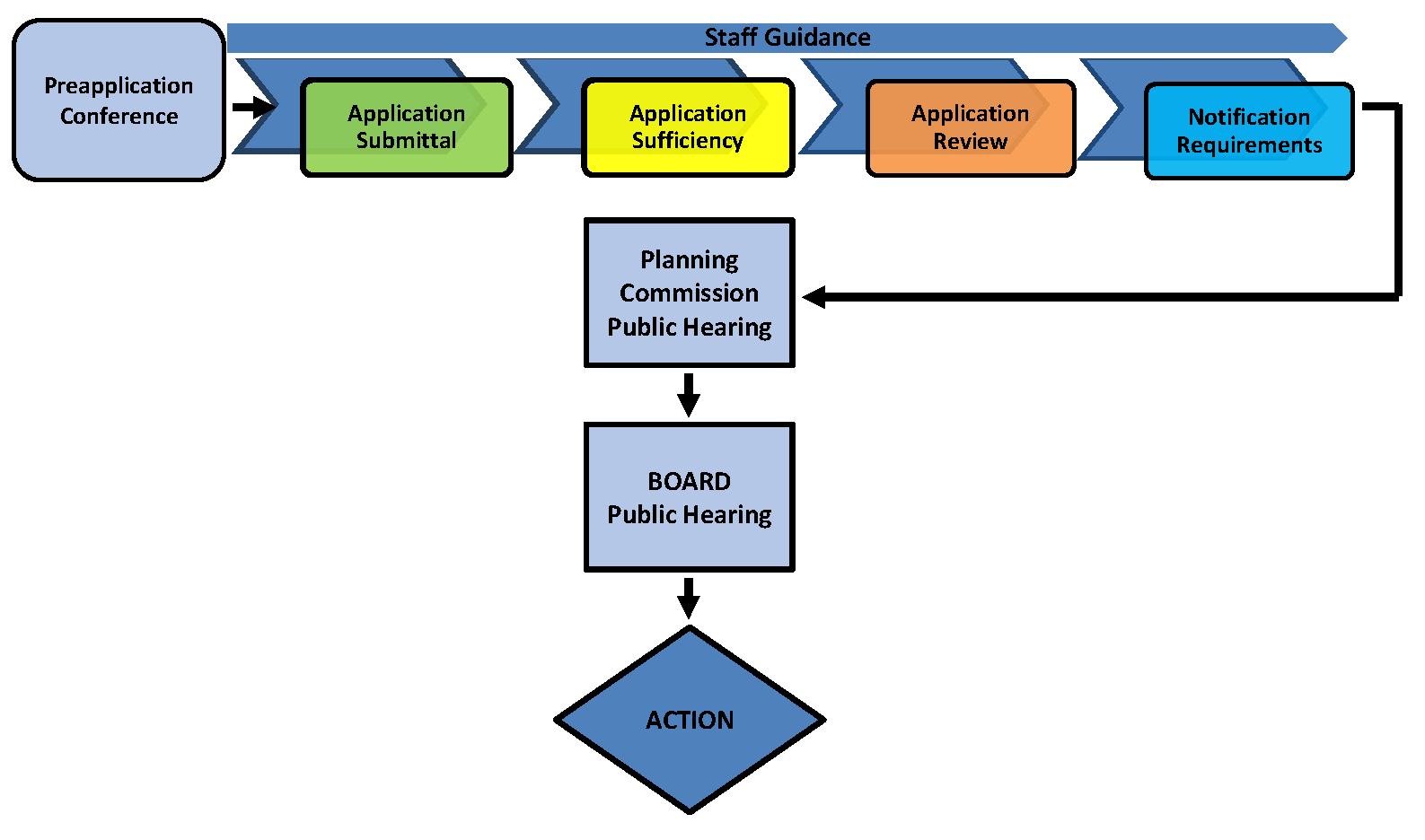
Review Procedure Established. Each Component Part depicted within the flow chart below is required in accordance with Section 124-36 together with this Section 124-38.
(b)
Applicability. This UDC may from time to time be amended, supplemented, changed, or repealed.
(c)
Component Parts of Review Procedure.
(1)
Preapplication Conference. For UDC Text Amendment applications, a Preapplication Conference, in accordance with Section 124-37, is required.
(2)
Application Submittal. All applications for a UDC Text Amendment shall be submitted in writing to the County, along with the appropriate fee established by the Board. The County shall conduct at least an annual cycle of amendments to the UDC each year, but no more than two cycles each year. The timeframe for the amendment cycle shall be established by the Administrator. Requests for changes initiated by the County shall not be subject to the annual cycle limitation. Amendments initiated by any resident or landowner in the County will be factored into the annual cycle. A UDC Text Amendment may be proposed by:
a.
The Board;
b.
The Planning Commission with authorization from the Board;
c.
The Board of Zoning Appeals with authorization from the Board;
d.
Any County Department or other agency of the County with authorization from the Board; and
e.
Any resident or landowner in the County with authorization from the Board.
(3)
Application Sufficiency. Applications proposing UDC Text Amendments shall be accompanied by a clear statement and accounting that presents the applicant's purpose for the requested text amendment. The statement shall include those facts that clarify the need for the text amendment, the text amendment's context, and the consequences of the text amendment. The application shall address how the text amendment preserves the UDC's consistency with the Comprehensive Plan.
(4)
Application Review. The staff reviewing the proposed text amendment shall consult with other County departments and agencies, and the Development Review Coordination (DRC) staff. Required subject to Section 124-36(c)(4). The County shall consider and study:
a.
The need and justification for the proposed amendment;
b.
Applicability of the proposed amendment county-wide; and
c.
The relationship of the proposed amendment to the County's Comprehensive Plan, with appropriate consideration of consistency with the Comprehensive Plan and as to whether the proposed amendment will further the purposes of this UDC and the County Code, regulations, and actions designed to implement the Comprehensive Plan.
(5)
Public Hearing Notification Requirements. Notice shall be provided as set forth within the table of Section 124-36(c)(5) for both the Planning Commission and Board public hearings.
(6)
Public Hearings. Except as expressly directed by a vote of the Board, UDC Text Amendments shall be considered first by the Planning Commission and subsequently by the Board at duly noticed public hearings respectively. The report and recommendations of the Planning Commission, where provided, shall be advisory only and shall not be binding upon the Board.
(7)
Action. Final action on all UDC Text Amendments shall be taken by the Board.
(Ord. No. 2021-056, § 4, 11-15-2021)
Sec. 124-39. - Zoning Map Amendment (Rezoning) Review Procedure.
(a)
Review Procedure Established. Each Component Part depicted within the flow chart below is required in accordance with Section 124-36 together with this Section 124-39.
(b)
Applicability. The Official Zoning Map may, from time to time, be amended, supplemented, or changed.
(c)
Component Parts of Review Procedure.
(1)
Preapplication Conference. A Preapplication Conference on all Rezoning applications is required.
(2)
Application Submittal. All applications for Rezoning shall be submitted in writing to the County, accompanied by all pertinent information required by this UDC. The applicant must hold an advertised neighborhood workshop prior to the submission of the Rezoning application in accordance with the procedures established for that purpose by Resolution of the Board. A Zoning Map amendment may be proposed by:
a.
The Board;
b.
Any department or agency of the County with authorization from the Board; or
c.
Any person other than those listed in a. or b. above; provided, however, that no person shall apply for a Rezoning of property (except as agent or attorney for an owner) which he or she does not own. The name(s) of the owner shall appear on each application. The application shall disclose full ownership as required under the Sarasota County Charter.
(3)
Application Sufficiency. Applications for Rezoning shall be accompanied by a clear statement and accounting that presents the applicant's purpose for the requested Rezoning. The statement shall include those facts that clarify the need for the Rezoning, the Rezoning application's context, and the consequences of the Rezoning. The application shall address how the Rezoning preserves the UDC's consistency with the Comprehensive Plan, and each of the findings within subsection (4) below.
(4)
Application Review. The report and recommendations of the Planning Commission to the Board regarding a specific application shall show that the Planning Commission has studied and considered the application in relation to the following findings, where applicable:
a.
Whether the proposed change would be consistent with the intent, goals, objectives, policies, guiding principles and programs of the Comprehensive Plan;
b.
Whether the proposed change would be compatible with the existing land use pattern and designated future land uses;
c.
Whether the proposed change would have an impact on the availability of adequate public facilities consistent with the level of service standards adopted in the Comprehensive Plan, and as defined and implemented through the County Concurrency Management System Regulations, Chapter 94, Article VII, Exhibit A of the County Code;
d.
Whether the existing district boundaries are illogically drawn in relation to existing conditions on the property proposed for change;
e.
Whether the proposed change will adversely influence living conditions in the neighborhood;
f.
Whether the proposed change will create a drainage or flooding problem;
g.
Whether there are substantial reasons why the property cannot be used in accord with existing zoning;
h.
Whether it is impossible to find other adequate sites in the County for the proposed use in districts already permitting such use;
i.
Whether gradual and ordered growth contemplated in the Comprehensive Plan can best be accomplished through the approval of a land use which is less intense than the intensity designated on the Future Land Use Map of the Comprehensive Plan;
j.
Whether the proposed change would create adverse impacts in the adjacent area or the County in general;
k.
Whether the subject parcel is of adequate shape and size to accommodate the proposed change;
l.
Whether ingress and egress to the subject parcel and internal circulation would adversely affect traffic flow or safety or control, or create types of traffic deemed incompatible with surrounding land uses; and
m.
Whether the proposed change has been reviewed in accordance with the Interlocal Agreement with the School Board of Sarasota County and whether school capacity has been adequately addressed, including on-and off-site improvements.
(5)
Public Hearing Notification Requirements. Notice shall be provided as set forth within Section 124-36(c)(5) for both the Planning Commission and the Board public hearings.
(6)
Public Hearing. Rezoning applications shall be considered by the Planning Commission and the Board at public hearings. The Planning Commission may recommend that an application be approved subject to stipulations. The report and recommendations of the Planning Commission shall be advisory only and shall not be binding upon the Board.
(7)
Action. Final action on all Rezoning applications shall be taken by the Board. The Board, after receiving the recommendation from the Planning Commission on the application, may grant or deny the application or modify the application to a zoning district consistent with the Comprehensive Plan. The Board may make the granting conditional upon such restrictions, stipulations and safeguards as it may deem necessary to ensure consistency with the Comprehensive Plan
a.
Restrictions, stipulations, and safeguards attached to a Rezoning of property may include but are not limited to those necessary to protect adjacent or nearby land owners from any deleterious effects from the full impact of any permitted uses, limitations more restrictive than those generally applying to the district including, but not limited to, density, height, buffers, connection to central water and sewer systems and stipulations requiring that certain aspects of development take place in accordance with a Development Concept Plan. The Board may also stipulate that the development take place within a given period of time after which time public hearings will be initiated and the district returned to the original designation or such other district as determined appropriate by the Board that is consistent with the Comprehensive Plan.
b.
All stipulations shall be recorded in the deed records of the County.
c.
Where the purpose statement in Article 6 for a district applied by Rezoning requires it, the Development Concept Plan shall be binding.
d.
Stipulations shall be shown on the cover sheet of any subsequent request for a Subdivision or Site Development Plan, or other approval under this Article 5.
e.
Binding Nature of Approval. All terms, conditions, safeguards, and stipulations made at the time of approval for any district subject to this section, including any Development Concept Plan specified as binding, or any specified element of the Development Concept Plan specified as binding, shall be binding upon the applicant or any successors in interest. Deviations from approved Development Concept Plans or failure to comply with any requirement, condition, or safeguard shall constitute a violation of this UDC.
(d)
Other Applicable Provisions.
(1)
Limitations on the Refiling of a Rezoning Application.
a.
Whenever the Board has taken final action on a Rezoning application for property, whether approved or denied, the County shall not accept any further application for any Rezoning of any part of or all of the same property for a period of 12 months from the date of such action, or the date of final judicial review of such action, whichever is later.
b.
The time limits of subsection a. above may be waived by three affirmative votes of the Board when the Board finds, based on new information or changed conditions, that new action may be warranted to prevent injustice or to assure protection of the public health, safety, and welfare. Any application for a waiver of the time limits shall be submitted to the County for consideration by the Board. A written notice of the waiver shall be sent to persons on the mailing list from the original Rezoning application, and to interested parties registered in accordance with Section 124-36(c)(5)c.1.viii. This notice shall be prepared by the County and provided, along with mailing labels, to the applicant who shall bear the responsibility of mailing the notice. The subject site shall also be posted in accordance with Section 124-36(c)(5)c.2. A request for waiver of the time limit is not a public hearing.
(2)
Violations. Violations of restrictions, stipulations, or safeguards contained in a Rezoning granted by the Board shall constitute a violation of this UDC and be enforced as set forth in Article 16.
(3)
Transfer of Development Rights
a.
TDR Overlay District Process.
1.
Eligibility to Consider Transfer of Development Rights. The Board may issue transferable development rights for land designated under the Residential Sending Zone (RSZ) and Conservation Sending Zone (CSZ) Overlay Districts and authorize their transfer in accordance with this section where the Board finds that issuance and transfer of the development rights will serve to implement the Comprehensive Plan. Any development rights issued pursuant to this section shall not be used on the property from which they derive. The development rights from land designated RSZ may be used on land designated Residential Receiving Zone (RRZ) or High Density Residential Receiving Zone (HDRRZ). The development rights from land designated CSZ may be used on land designated Future Urban Residential Receiving Zone (FURRZ) or Future Urban Development (FUD). The collective number of units approved in the FURRZ and FUD overlay zones within the Future Urban Service Area within the intervals between the adoption of successive Evaluation and Appraisal Reports, pursuant to Chapter 163 F.S., shall not exceed 1,000 dwelling units.
2.
Application by Applicant. A property owner desiring to obtain permission to transfer development rights from a particular property shall file an application for a RSZ or CSZ Overlay District. Such application shall be filed with the County.
3.
Approval of such application shall serve as the Transfer Permit. Such approval shall be conditioned upon delivery to the County of an executed grant of easement creating a development limitation pursuant to subsection 6. below, as approved in the application or as specified by the Board, and recording copies of same together with a copy of the Ordinance approving the RSZ or CSZ Overlay District, which will serve as the Transfer Permit in the deed records for Sarasota County. Other reasonable conditions including, but not limited to, Rezoning related to the transfer and vacation or change to existing Plats may also be included. The total number of development rights approved for transfer shall be specified as a condition of the Ordinance approving the RSZ or CSZ Overlay District.
4.
Initiation by the County. In addition to the foregoing procedures for initiation of a transfer of development rights by a property owner, the Board on its own motion may issue transferable development rights for land designated under the RSZ and CSZ Overlay Districts.
5.
Issuance of Transferable Development Rights. Transferable development rights for Residential Sending Zones shall be issued in dwelling units based upon the amount of dwelling units permitted under the current zoning on the property, taking into consideration any pre-existing Plats. Transferable development rights for Conservation Sending Zones shall be issued in dwelling units and shall be calculated as one dwelling unit per acre. A suitable numbering system shall be followed by the County to identify particular development rights issued pursuant to this section.
i.
Disqualifying Land. In the computation of any transferable development rights under this section, no transferable development rights shall be computed for any land in a right-of-way or easement which precludes its occupation by dwellings or where, by operation of private restrictions or State or federal law, development of the land is prohibited. Existing structures shall not extinguish underlying development rights in excess of their utilization.
ii.
Change of Zoning. Upon issuance of development rights in accordance with this section, the zoning on the land from which they derive shall be changed to reflect the absence of the rights to be transferred unless the zoning has already been so changed.
6.
Restrictive Covenants. Prior to exercise of the transferable development rights issued pursuant to this section, the property owner shall record a Restrictive Covenant. Evidence of title satisfactory to an attorney designated by the Board shall also be provided. Upon the establishment and recording of Restrictive Covenants pursuant to this section, the County shall authorize release of the development rights.
7.
Exercise of Rights Granted.
i.
Authority to Exercise Such Rights. Upon issuance of a Transfer Permit by the Board, the Clerk to the Board shall register the identifying numbers of such rights together with the name and address of the person to whom they are issued. Such rights may be subsequently exercised by the registrant or they may be assigned following registration of the development rights with the Clerk to the Board. In the event of an assignment, the name and address of the assignee must be registered with the Clerk to the Board identifying the rights assigned prior to their exercise by assignee. All assignments shall also be recorded in the deed records for the property for which the Residential Sending Zone or Conservation Sending Zone was approved.
ii.
Application for Building Permits. Upon application for Subdivision or Site Development Plan approval where the applicant seeks to utilize development rights authorized by a Residential Sending Zone or Conservation Sending Zone, the applicant shall also submit a copy of the Ordinance which serves as the Transfer Permit, evidence of compliance with the conditions of the Permit's issuance, a copy of any assignment of development rights being relied upon in the application, and a certification by the Clerk to the Board that the applicant is the current registrant for such rights as shown by the Clerk's records. Upon such submission, the applicant shall be authorized to utilize the development rights transferred in addition to rights allowed under existing zoning on the receiving parcel, subject to the requirements of the RRZ, FURRZ, FUD, or HDRRZ District and the underlying zoning.
iii.
Extinguishment of Rights. Utilization of particular development rights transferred shall extinguish such rights. The County shall notify the Clerk of the Circuit Court, Board Records Division within ten days of the issuance of any Building Permit which utilizes development rights and the total number of development rights extinguished.
(Ord. No. 2019-006, § 4, 4-23-2019)
Sec. 124-40. - Planned Development and Overlay Districts Review Procedure.
(a)
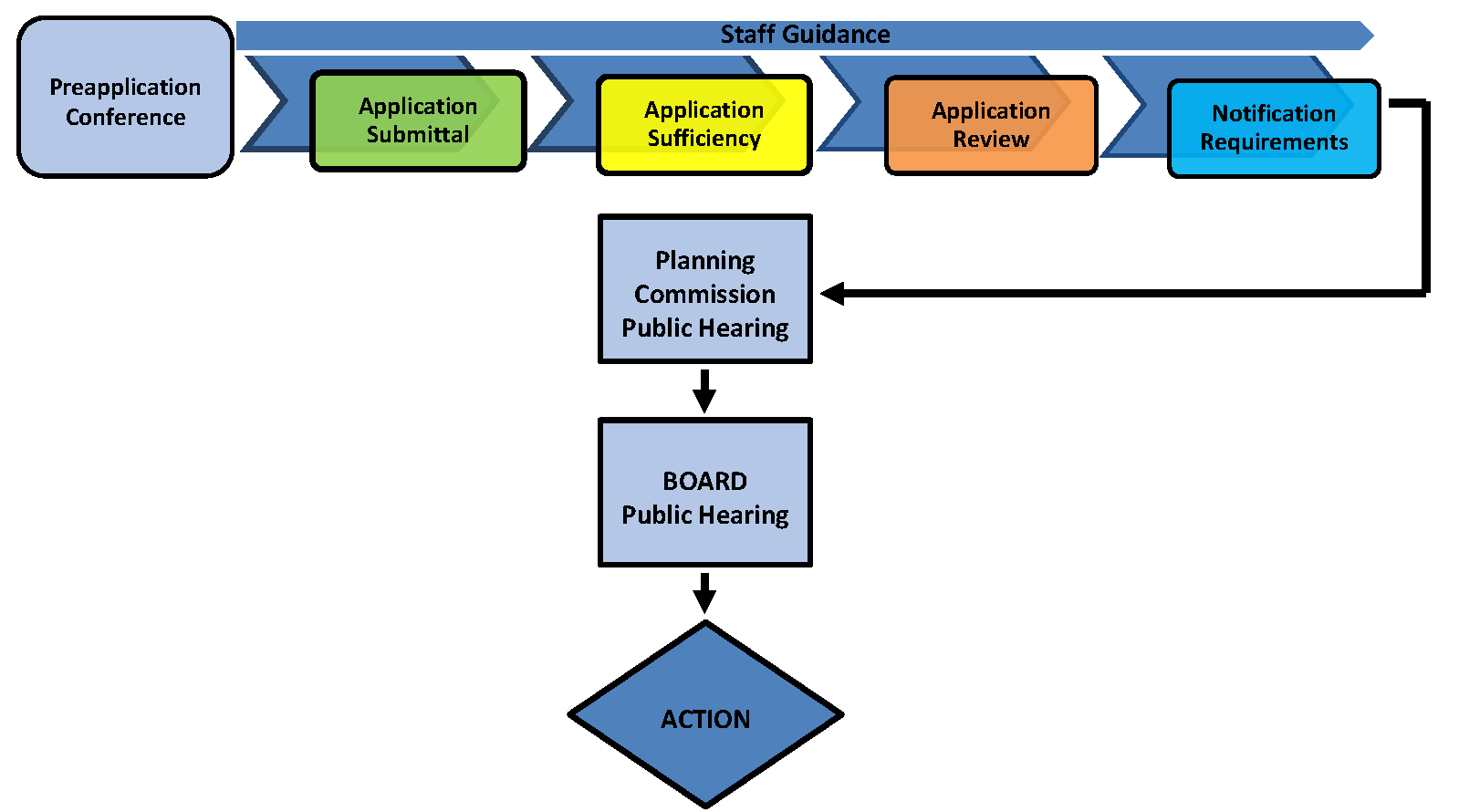
Review Procedure Established. Each Component Part depicted within the flow chart below is required in accordance with Section 124-36 together with this Section 124-40.
(b)
Applicability. The provisions contained herein shall apply to the Planned Development and Overlay District applications for districts including but not limited to Planned Unit Development (PUD), Commercial Marine/Planned Development (CM/PD), Planned Commerce Development (PCD), Office, Professional, and Institutional (OPI/PD) Districts (Article 7).
(1)
Unified Control. All land included for purpose of development as a Planned Development shall be under the legal control of the applicant. Applicants requesting approval of a Planned Development shall present firm evidence of unified control of the entire area within the proposed planned development together with a certificate of apparent ownership and encumbrance with the opinion of counsel representing the applicant, establishing that the applicant has the unrestricted right to impose all of the covenants and conditions upon the land as are contemplated by the provisions of this UDC.
(2)
Locational Standards for Planned Developments. In reaching recommendations on decisions as to approval of a planned development, the Planning Commission and the Board shall apply the following locational standards:
a.
The concept of planned development is an important instrument in the implementation of the Comprehensive Plan. Planned developments shall be located in conformity with the Comprehensive Plan and particularly with the future land use plan.
b.
Relation to major transportation facilities. Planned developments shall be so located with respect to arterial streets, highways, collector streets, or other transportation facilities as to provide direct access to such planned developments without creating or generating traffic along minor streets in residential areas or districts outside the planned development.
c.
Relation to utilities, public facilities, and services. Planned developments shall be so located in relation to sanitary sewers, water lines, storm and surface drainage systems, and other utility systems and installations that neither extension nor enlargement of such systems will be required in manner, form, character, location, degree, scale or timing resulting in higher net public cost or earlier incursion of public cost than would development in forms generally permitted under current zoning and development policies for the area. Such planned developments shall be so located with respect to necessary public facilities as to have access to such facilities in the same degree as would development permitted under existing zoning, and shall be so located, designed, and scaled that access for public services is equivalent to, and net cost for such services is not greater than, access and net costs for public services for development permitted under existing zoning.
d.
However, if the applicants (1) provide private facilities, utilities, or services approved by appropriate public agencies as substituting on an equivalent basis, and assure their satisfactory continuing operation permanently, or until similar public utilities, facilities or services are available and used, or (2) make provision acceptable to the County for offsetting any added net public cost or early commitment, the granting of the planned development district may be approved.
e.
In computing the added net public costs, the difference in anticipated public installation, operation, and maintenance costs and anticipated public revenue shall be considered.
(c)
Component Parts of Review Procedure.
(1)
Preapplication Conference. Prior to initiating an application for a Planned Development, a Preapplication Conference with the Development Review Coordination staff pursuant to Section 124-37 is required.
(2)
Application Submittal. A Development Concept Plan shall accompany the application and is required for determination as to the internal relationships between or among uses and activities proposed and their supporting systems and facilities, and relation to surrounding uses, activities, systems and facilities.
(3)
Application Sufficiency. Applications for a Planned Development shall be accompanied by a clear statement and accounting that presents the applicant's purpose for the requested Planned Development. The statement shall include those facts that clarify the need for the Planned Development, the Planned Development application's context, the consequences of the Planned Development, each of the findings within subsection (6) below, and the following:
a.
The proposed development shall be in accordance with the provisions of this UDC and such conditions as may be attached to any rezoning to the applicable planned development district.
b.
Provide agreements, contracts, deed restrictions and sureties acceptable to an attorney designated by the Board for completion of the development according to the approved plans; and maintenance of such areas, functions and facilities as are not to be provided, operated, or maintained at public expense.
c.
Place covenants on the property to bind their successors in title to any commitments made under subsections a. and b. above.
d.
All such agreements and evidence of unified control shall be examined by the County Attorney and no planned development shall be approved unless such agreements and evidence of unified control meet the requirements of this UDC and the County Code.
e.
The application shall address how the Planned Development preserves the UDC's consistency with the Comprehensive Plan.
(4)
Application Review. The staff reviewing the proposed Planned Development shall consult with other County departments and agencies, and the Development Review Coordination (DRC) staff. The County shall consider and study:
a.
The need and justification for the proposed Planned Development;
b.
Applicability of the proposed Planned Development county-wide; and
c.
The relationship of the proposed Planned Development to the Comprehensive Plan, with appropriate consideration of consistency and as to whether the proposed Planned Development will further the purposes of this UDC and the County Code, regulations, and actions designed to implement the Comprehensive Plan.
(5)
Public Hearing Notification Requirements. Notice shall be provided as set forth within Section 124-36(c)(5) for both the Planning Commission and Board public hearings.
(6)
Public Hearings. All applications for Planned Development shall be considered first by the Planning Commission and subsequently by the Board each at public hearings respectively. The recommendation of the Planning Commission shall be advisory only to the Board and shall not be binding upon the Board. After the required public hearing, the Planning Commission may recommend to the Board that the request for a Planned Development be approved, approved with stipulations or denied. In making its recommendation, the Planning Commission shall find that the plans, maps and documents submitted by the applicant and presented at the public hearing do or do not establish that the applicant has met the requirements of Section 124-39 applicable to the grant of Rezoning generally, and in addition:
a.
The requirements of unified control and agreement set out in Section 124-40(b)(1) and Section 124-40(c)(3)b;
b.
Locational standards set out in Section 124-40(b)(2);
c.
The internal Planned Development District standards set out for the specific District in Article 7;
d.
The tract for the proposed Planned Development is suitable in terms of its relationship to the Comprehensive Plan and that the area surrounding the proposed Planned Development can continue to be developed in coordination and substantial compatibility with the Planned Development proposed;
e.
The desirable modifications of the general zoning or Planned Development regulations, as applied to the particular case, justify such modification of regulations and meet to at least an equivalent degree the regulations modified, based on the design and amenities incorporated in the development concept plan; and
f.
Open space in accordance with this UDC is provided for the proposed Planned Development, and desirable natural features indigenous to the site are preserved in the development plan presented.
(7)
Action. After the required public hearing, the Board may approve, approve with stipulations or deny the application for Planned Development.
a.
Binding Nature of Approval for Planned Development District. All terms, conditions, safeguards and stipulations made at the time of approval for the Planned Development, including the associated development concept plan, shall be binding upon the applicant or any successors in interest. All stipulations shall be recorded in the deed records of the County. Deviations from approved development concept plans or failure to comply with any requirement, stipulation, or safeguard shall constitute a violation of this UDC.
b.
Development of Lands Subject to the Planned Development District Provisions. All development in any Planned Development shall be subject to the requirements of Section 124-53, Binding Development Concept Plans Modifications.
(Ord. No. 2019-006, § 4, 4-23-2019)
Sec. 124-41. - Subdivision or Site Development Plan Review Procedure.
(a)
Review Procedure Established. Each Component Part depicted within the flow chart below is required in accordance with Section 124-36 together with this Section 124-41.

(b)
Applicability. A Subdivision or Site Development Plan approval shall be required for all development in accordance with this UDC and the County Code unless such development qualifies for a Final Subdivision Plat exemption identified within Section 124-42(b) or one of the Site Development Plan exceptions identified within subsection (1) below.
(1)
Exceptions. A Site Development Plan application approval is required for all proposed development except:
a.
One-family or two-family dwelling units on an individual lot or lots of record;
b.
Model homes in developments;
c.
Any increase of less than 2,000 square feet of impervious surface that does not change the location or number of existing facilities on site (i.e.: driveways, access points, or stormwater facilities) or reduce the number of parking places on site;
d.
When the Board declares a local emergency, the Administrator may waive all or part of the requirements within Article 12 and 13 of this UDC for temporary replacement facilities. Such temporary replacement facilities may remain for 12 months, unless the Board approves an extension for up to one year. No additional extensions shall be authorized;
e.
Agricultural structures not requiring a Certificate of Occupancy; or
f.
Earthmoving alone that has been authorized under the County's Earthmoving Code, Chapter 54, Article XII.
(2)
General Requirements for Subdivision or Site Development Plans.
a.
Zoning. Prior to consideration by the Administrator of any proposed development, the area to be developed must have the appropriate zoning for the intended use.
b.
Unsuitable land. Unless adequate methods of correction are formulated and approved in accordance with this UDC, land shall not be subdivided or developed which is determined to be unsuitable due to poor soil quality, flooding, drainage, deficient roadway conditions, or other characteristics potentially harmful to the environment, and to the health, safety and general welfare of future residents. Land must be compliant with Article 9, Section 124-174, Air and Water Quality.
c.
Landfill sites. Land must be compliant with Article 9Section 124-174 Air and Water Quality.
(c)
Component Parts of Review Procedure.
(1)
Preapplication Conference. For those applicants filing an application for Subdivision or Site Development Plan, it is strongly recommended that a Preapplication Conference in accordance with Section 124-37 be held with Development Review Coordination (DRC) staff prior to filing an application in order to allow County staff and the applicant to discuss the plans before filing. The purpose of the conference is to assist an applicant who has questions concerning the submittal procedures or the requirements for Subdivision or Site Development Plan review.
a.
An owner or owner's representative shall request a Preapplication Conference prior to undertaking any activity affected by the ordinances which relate to the Myakka River Protection Zone. In the absence of such a meeting, the County shall not be required to accept the application as submitted.
b.
An owner or owner's representative shall request a Preapplication Conference for a Site Development Plan application involving a proposed commercial redevelopment project that incorporates the provisions contained in Section 124-129 (Optional Commercial Redevelopment Regulations). When applicable, the review and approval of a Site Redevelopment Plan shall be required prior to the processes for such a project's Site Development Plan approval. The review and approval of a Site Redevelopment Plan shall not alter the review and approval processes for the project's Site Development Plan. The Site Redevelopment Plan shall accompany and supplement applications for a Site Development Plan or Building Permit and be processed concurrently with such plans and permits. The Site Redevelopment Plan shall graphically and by narrative means identify and describe all improvements that have relied on the provisions of Section 124-129 of this UDC. The Site Redevelopment Plan shall also identify all improvements that are required by Section 124-129. Site Redevelopment Plans shall be reviewed by the appropriate members of the Development Review Coordination staff.
(2)
Application Submittal. The applicant shall submit a Subdivision or Site Development Plan application to the Administrator, in accordance with the submission requirements of this UDC for distribution to the applicable review entities. Applicant shall furnish a copy of approved and applicable Development Orders, Rezone/Special Exception ordinance(s)/resolution(s) pertaining thereto with the initial application submittal. Any stipulations from the Rezone/Special Exception shall be printed on the plans. Applicant shall furnish a boundary and topographical survey that reflects a current title search inquiry for easements.
(3)
Application Sufficiency. Applications for Subdivision or Site Development Plan approval shall be accompanied by a clear statement that presents the applicant's purpose for the request. The application shall address how the application preserves consistency with the Comprehensive Plan. Applications shall include all information required within Article 12 and 13, and the following:
a.
Construction Engineering Plans and specifications prepared with applicable documents for improvements, such as stormwater management, excavation and fill, bulkheads, sidewalks, paving and drainage plans; and
b.
A Master Utility Plan for water and sewer improvements.
(4)
Application Review. Subdivision or Site Development Plan applications submitted shall be promptly distributed by the Administrator to the Development Review Coordination staff and reviewing agencies. The Development Review Coordination staff and reviewing agencies shall forward their written comments and recommendations to the Administrator who shall forward them to the applicant. The comments and recommendations may, at the request of the applicant, be reviewed at a meeting with the Development Review Coordination staff. During the review process, the Administrator has discretionary authority to request, or approve requests by reviewing agencies, for studies and reports which are needed in order to make a final determination. Said studies and reports may be requested for County agencies or the applicant. If the Subdivision or Site Development Plan application submitted to the Development Review Coordination staff does not conform to all applicable regulations, the applicant shall resubmit the plans to the Administrator for redistribution and review. All applicant responses shall be described in a cover letter and clearly identified on the plans. If plans conforming to all applicable regulations are not submitted within ninety (90) days after the applicant or its agent is issued notice of the need for a resubmittal, the application shall be deemed withdrawn. During the review process, the applicant may be called upon for consultation from the review entities.
(5)
Action. Final action on all Subdivision or Site Development Plan applications shall be taken by the Administrator. The Administrator, upon receipt of satisfactory memoranda from the reviewing agencies, shall consider and determine whether on the basis of the application, recommendations of the reviewing agencies, and all other information submitted, the application complies with the requirements of this UDC and the County Code. The approval of all development orders shall be subject to the availability of adequate levels of service for potable water, sanitary sewer, solid waste, drainage, parks and public transit, as defined by the level of service standards contained in the Capital Improvements Chapter of the Comprehensive Plan and consistent with the provisions of the Sarasota County Concurrency Management System regulations. After reviewing the recommendations of the Development Review Coordination staff, the Subdivision or Site Development Plan application shall be either approved, approved with stipulations, or disapproved by the Administrator. In the event the Subdivision or Site Development Plan application is disapproved by the County, the revised Subdivision or Site Development Plan shall be resubmitted and reviewed under the same procedures as the original submission.
a.
Prior to construction authorization, all actions requiring Board approval must be completed.
b.
Authority Granted by Approval. Approval of Subdivision or Site Development Plans shall be construed as authority for constructing the improvements shown on the plans, submitting a Final Subdivision Plat application for Subdivision Plans and Building Permit applications for Site Development Plans. The County does not recognize the approval of Subdivision Plans as authority for the conveyance of lots or parcels proposed to be created by the subdivision, nor as authority for obtaining Building Permits or the recording of a plat with the Clerk of the Circuit Court of Sarasota County. After the Subdivision Plans are approved, Building Permits for model homes, gate houses, decorative block walls, and the like may be issued provided structures requiring a Certificate of Occupancy shall have no Certificate of Occupancy issued until the Final Subdivision Plat is approved and recorded.
c.
Prior to approval, no excavation or utility installation shall take place on the site, unless otherwise authorized by the County Engineer. Approval includes necessary clearing and grubbing for construction of access areas and installation of pollution control measures required during the construction phase only. No clearing or grubbing of the land in any way shall occur in conjunction with proposed land development prior to Subdivision or Site Development Plan approval or prior to installation of protection devices pursuant to Article 13 of this UDC. No trees shall be removed without first obtaining a tree removal permit pursuant to the Trees Code, Chapter 54, Article XVIII of the County Code. All nuisance or exotic plants shall be removed from site during clearing and grubbing operations, in accordance with the standards of Article 9 of this UDC.
d.
Duration of Approval Status. The Subdivision or Site Development Plans shall be deemed expired if construction work, as determined by the Administrator, has not commenced within two (2) years after approval of such plans. If substantial construction work ceases for a period of two (2) years, resubmittal, review and reapproval of the Subdivision or Site Development Plans shall be required. "Substantial construction work" means the commencement and continuous prosecution of construction of required improvements to completion as permitted under the approved Subdivision or Site Development Plan application. For previously approved phased developments the applicant will demonstrate that activity, roadway engineering design and permitting has occurred. Such activity will be considered as meeting the requirements for substantial construction. Plans thus submitted for review and re-approval shall comply with all current regulations. If after two years from the date of Subdivision Plan approval, the subdivision has not received Final Subdivision Plat approval from the County Administrative Authority, the Subdivision Plan shall lose its approved status.
e.
Approval Status Extensions. The approved status may be extended once for an additional two-year period, followed by three one-year extensions, if a written request from the engineer of record is received by the County at least 30 days prior to the termination of the original or extended approval. The owner's or applicant's request must demonstrate that:
1.
The need for the extension was caused by an unforeseen change in circumstances,
2.
The original site use and configuration remain unchanged, and
3.
The project remains in compliance with all current requirements.
(d)
Other Applicable Provisions.
(1)
Administrative Appeal. A decision of the Administrator regarding Subdivision or Site Development Plan applications shall be final, provided that the owner or applicant may, within thirty (30) days of said decision, appeal to the Board for relief. Upon receipt of an Administrative Appeal application, the Board shall hold a duly noticed public hearing as delineated in this Article 5, Section 124-36(c)(5)b.
(2)
Speculative Home (Spec Home). Spec Homes may be permitted in any zoning district for up to 75 percent of the building permits of a residential subdivision or planned community in accordance with F.S. § 177.073, provided the unit is constructed in compliance with the regulations for the applicable zoning district, or zoning ordinance.
a.
Construction of a Spec Home may commence prior to the recording of the Final Plat, provided all of the following conditions are met:
1.
All applicable Preliminary Site Plan, Preliminary Plat, and Final Site Plan/Construction Drawings are approved by the County.
2.
The Building Permit shall serve as administrative approval for the Spec Home.
3.
The landowner has executed a County approved Indemnification and Hold Harmless Agreement, signed by the Department Director or designee, acknowledging the following:
i.
Building Permits are being requested prior to recordation of the Final Plat; and
ii.
The landowner is obligated to obtain Final Plat approval from the County as soon as practicable; and
iii.
The landowner understands that the County will not issue a temporary or permanent certificate of occupancy for a Spec Home until the Final Plat is approved and recorded in accordance with this Code; and
iv.
The landowner indemnifies the County from any damages, costs, or claims arising from the issuance of building permits prior to approval and recordation of the Final Plat; and
v.
The applicant holds a valid performance bond for up to 130 percent of the necessary improvements, as defined in [F.S.] § 177.031(9), that have not been completed upon submission of the application under this section. For purposes of a master planned community as defined in [F.S.] § 163.3202(5)(b), a valid performance bond is required on a phase-by-phase basis.
b.
Definitions. The following words and phrases shall have the meanings respectively ascribed to them in this Section, except where the context otherwise requires:
1.
Speculative Home (Spec Home). A new single-family dwelling unit that has been issued a building permit prior to Final Plat approval. This definition shall not include multi-family units, or model homes as a temporary use.
(Ord. No. 2024-058, § 2, 10-23-2024; Ord. No. 2026-002, § 3, 1-27-2026)
Sec. 124-42. - Final Subdivision Plat Review Procedure.
(a)
Review Procedure Established. Each Component Part depicted within the flow chart below is required in accordance with Section 124-36 together with this Section 124-42.

(1)
The subdivision process is divided into two (2) primary reviews:
a.
Subdivision Plan approval by County staff through the Subdivision or Site Development Plan Review Procedure pursuant to Section 124-41; and
b.
Final Subdivision Plat review and submittal to the County Administrator, or Designee, as the County Administrative Authority for approval through this Final Subdivision Plat Review Procedure.
(2)
No application for Final Subdivision Plat shall be accepted by the County until a Subdivision Plan is approved through the Subdivision or Site Development Review Procedure.
(b)
Applicability. When the subdivision of any land is proposed, the owner of the land or authorized agent shall apply for and secure approval of such subdivision in accordance with Article 12 and 13 of this UDC and the County Code. Until such approval is granted, no lots or parcels which would be created by the proposed subdivision shall be sold, nor shall any Building Permit application be accepted or approved by the County for the erection of any structure on the subject property except as provided by Section 124-41(c)(5)b. and c. and Section 124-50(c)(5). Subdivision Plan approval is required prior to all Final Subdivision Plat application approvals. The following divisions of land do not require approval under this UDC, so long as they do not involve the creation, relocation, or extension of a street, sidewalks, multi-use trails, bicycle paths and bridle paths, bicycle street crossings, and pedestrian street crossings. These exemptions are not applicable to lands wholly or partially within the Myakka River Protection Zone, as described in Chapter 54, Articles XXI and XXXIII, Myakka River Protection Code of the County Code.
(1)
The creation of lots, five (5) acres or larger which:
a.
Are considered a flag lot; or
b.
Abut streets lawfully created by recorded document or otherwise lawfully established before June 1, 1994.
(2)
The division of a parcel of land into two lots, where the parcel to be divided has not been created or divided since June 30, 1981.
(3)
The combination or recombination of one or more entire lot(s) or portions of previously platted lots where no new parcels or residual parcels result in lots of less area, width or depth than allowed by the zoning district and no increase in the number of lots occurs.
(4)
The division of property for conveyance of land to a Federal, State, County, or municipal governmental agency, entity, political sub-division, or a public utility.
(5)
Residential condominiums, as defined and approved under state statutes, developed as a single family or multifamily project. Condominiums shall be processed through Section 124-41 (Subdivision or Site Development Plan Review Procedure), Article 5 of this UDC.
(6)
Provided they comply with all requirements as set forth within subsection a. through o. below, a Unified Development consisting of multifamily, office, commercial and industrial developments and commercial condominiums shall be exempt from the subdivision regulations. Such developments shall be processed as a Site Development Plan subject to this UDC and the County Code. Unified Development shall comply with the following minimum standards to be considered exempt from the subdivision requirements of this UDC:
a.
The Site Development Plans for a Unified Development shall show all the required infrastructure improvements including, but not limited to, parking, drainage, access, water/wastewater facilities, open space area, and signage together with all buildings and uses.
b.
The development shall have limited access to public and private rights-of-way. Landscape buffering shall be required along internal travelways. Buffering between internal uses in the developments shall not be required. Set-backs of 25 feet along internal travelways are required.
c.
All nonresidential condominiums shall comply with the requirements of this section.
d.
Sidewalks shall be required along the internal travelways and in accordance with the Florida Accessibility Code.
e.
No Certificate of Occupancy shall be issued within a specific phase of a Unified Development until all infrastructure to support that phase are constructed, certified by the engineer of record and deemed complete by the County.
(c)
Component Parts of Review Procedure.
(1)
Preapplication Conference. Prior to the submission of an application, the applicant should discuss the development plans with the Development Review Coordination staff as applicable. An owner or owner's representative shall request a Preapplication Conference prior to undertaking any activity pertaining to the ordinances which relate to the Myakka River Protection Zone. The County shall not be required to accept an application as submitted until such a meeting has occurred.
(2)
Application Submittal. The applicant shall submit to the County the signed and sealed Final Subdivision Plat and application. These plans shall be prepared as specified in Article 12 and 13 of this UDC and the County Code and shall include all applicable documents and required fee. The Final Subdivision Plat shall conform to the Subdivision Plans as approved and may constitute only that portion of the approved Subdivision Plans which the developer proposes to record and develop at the time, provided that such portion conforms to all requirements of this UDC and the County Code.
(3)
Application Sufficiency. Applications for Final Subdivision Plat approval shall be accompanied by a clear statement that presents the applicant's purpose for the request. The application shall address how the application preserves consistency with the Comprehensive Plan. Applications shall include all information required within Articles 12 and 13.
(4)
Application Review. Final Subdivision Plat applications submitted shall be promptly distributed by the Administrator to the reviewing agencies. The Development Review Coordination staff shall forward their written comments and recommendations to the Administrator who shall forward them onto the applicant. The comments and recommendations may, at the request of the applicant, be reviewed at a meeting with Development Review Coordination staff for an additional fee.
a.
If the Final Subdivision Plat application submitted to the Development Review Coordination staff does not conform to all applicable regulations, the developer shall resubmit plans to the Administrator for redistribution and review. All applicant responses shall be described in a cover letter and clearly identified on the plans. If revised plans conforming to all applicable regulations are not submitted within ninety (90) days after the applicant or its agent is issued notice of the need for a resubmittal, the application shall be deemed withdrawn.
b.
All plan review times are contingent upon accurate and complete plans being submitted to the County for review.
(5)
Action. Final action on all Final Subdivision Plat applications shall be taken by the Administrator. The Administrator, upon receipt of satisfactory memoranda from the reviewing agencies, shall consider and determine whether on the basis of the application, recommendations of the reviewing agencies, and all other information submitted, the application complies with the requirements of this UDC and the County Code. During the review process, the Administrator has discretionary authority to personally request, or approve requests by reviewing agencies, for studies and reports which are needed in order to make a final determination. Said studies and reports may be requested for County agencies or the applicant. The approval of all development orders shall be subject to the availability of adequate levels of service for potable water, sanitary sewer, solid waste, drainage, parks and public transit, as defined by the level of service standards contained in the Capital Improvements Chapter of the Comprehensive Plan and consistent with the provisions of the Sarasota County Concurrency Management System regulations.
a.
Authority Granted by Approval. Approval of the Final Subdivision Plat shall not be construed as authority for the conveyance of lots or parcels proposed to be created by the subdivision, nor as authority for submitting or obtaining Building Permits (except as provided by Section 124-50(c)(5)), or the recording of a plat with the Clerk of the Circuit Court of Sarasota County. After the Final Subdivision Plat is approved, Building Permits for model homes, gate houses, decorative block walls, and the like may be issued provided structures requiring a Certificate of Occupancy shall have no Certificate of Occupancy issued until the Final Subdivision Plat is recorded.
b.
Final Subdivision Plat. The applicant shall provide a fully signed and sealed plat prepared as specified in Article 12 of this UDC along with one print, the applicable documents, and the applicable fees to the County for execution by the County. Upon Final Subdivision Plat approval, the applicant shall electronically send the County Surveyor and County Addressing Coordinator the GIS file or AutoCAD file which contains only the lots, tracts and street linework in the state plane coordinate system.
c.
Installation or bonding of improvements is required for the approval and recording of the Final Subdivision Plat.
d.
The County shall not approve any plat until subdivision plans and specifications, which satisfactorily comply with this UDC, the County Code, and with all stipulations established as part of the approval of the Subdivision Plans, are submitted and approved. Upon completion of this review, and upon completion of all corrections required, the County Surveyor shall promptly forward the plat along with one paper print to the County Attorney for review. After the plat has been reviewed and signed by the County Surveyor, the County Engineer, and the County Attorney, it shall be transmitted to the County Administrator, or Designee, as the County Administrative Authority for approval.
e.
Approval by the County Administrative Authority. After approvals by, the County Surveyor, the County Engineer, and the County Attorney, it shall be the ministerial duty of the County Administrator, or Designee, as the County Administrative Authority to approve the Final Subdivision Plat.
f.
Recording of Final Subdivision Plat. The County Administrator, or Designee, as the County Administrative Authority shall submit the approved plat to the Clerk of the Circuit Court for recording. Such plats shall comply with these regulations and F.S. Ch. 177, Part I Platting. No plat of lands in the County subject to this UDC and County Code shall be recorded as an independent instrument, or by attachment to another instrument entitled to be recorded, unless and until such plat has been approved by the County Administrator, or Designee, as the County Administrative Authority.
g.
Authority granted by recording of Final Subdivision Plat. Approval and recording of the plat authorizes the sale of the subject lots and the issuance of Building Permits.
h.
Prior to the construction authorization, all actions requiring Board approval must be completed. Those items requiring either Board approval or an administrative adjustment include but are not limited to:
1.
UDC Variances;
2.
Vacation of rights-of-way or easements (if not created by recorded plat); and
3.
Right-of-way or property exchanges (see Appendix C21).
(Ord. No. 2019-006, § 4, 4-23-2019; Ord. No. 2024-058, § 3, 10-23-2024; Ord. No. 2026-002, § 4, 1-27-2026)
Sec. 124-43. - Special Exceptions Review Procedure.
(a)
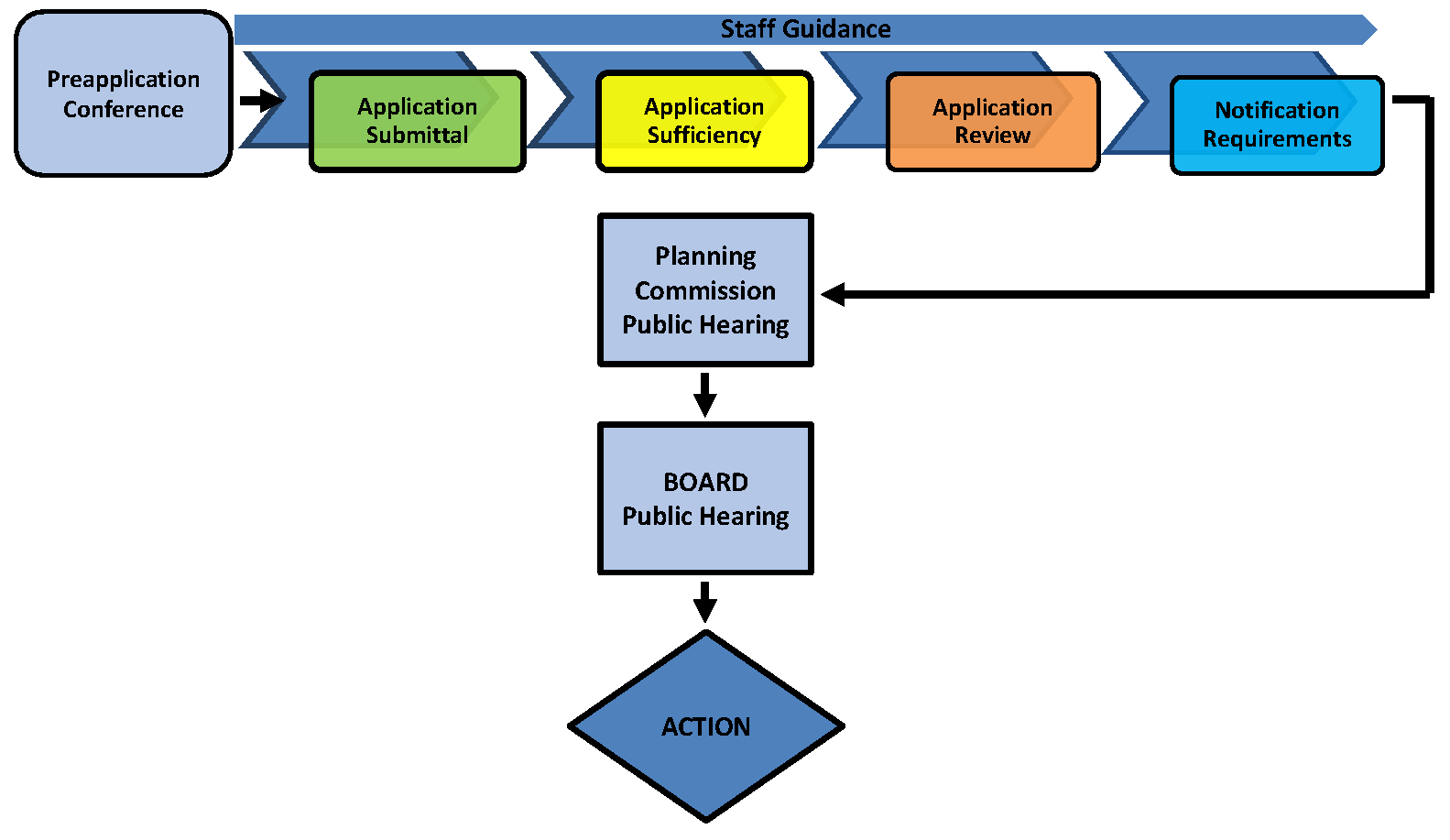
Review Procedure Established. Each Component Part depicted within the flow chart below is required in accordance with Section 124-36 together with this Section 124-43.
(b)
Applicability. A Special Exception is a use that would not be appropriate generally or without restriction throughout a zoning district but which, if controlled as to number, area, location or relation to the neighborhood, would promote the public health, safety, welfare, morals, order, comfort, convenience, appearance, prosperity or the general welfare. Such use may be permissible in a zoning district as a Special Exception if specifically provided in this UDC. However, such uses are not deemed to be appropriate within a zoning district without demonstration by the applicant that the Special Exception use complies with this section.
(c)
Component Parts of Review Procedure.
(1)
Preapplication Conference. A Preapplication Conference on all Special Exception applications is required.
(2)
Application Submittal. No application shall be accepted for a Special Exception that does not meet the minimum district requirements of Article 6 and any applicable use standards in Articles 7 and 8.
a.
Written Application. A written application for Special Exception shall be submitted indicating the Section of this UDC under which the Special Exception is sought and stating the grounds on which it is requested. Specific reference shall be made to the types of findings which the Board must make under subsection (4) below. The application shall include information necessary to demonstrate that the grant of Special Exception will promote the public health, safety and welfare, be in harmony with the general intent and purpose of this UDC, will not be injurious to the neighborhood or to adjoining properties, or otherwise detrimental to the public welfare. The application shall disclose full ownership as required under the County Charter.
b.
Proof of applicant's advertised neighborhood workshop in accordance with the procedures established for that purpose by Resolution of the Board, shall be provided.
c.
Where this UDC places additional requirements on specific Special Exceptions, the application shall demonstrate that such requirements are met. Where the applicant requests simultaneous Rezoning of land as well as grant of Special Exception for the same parcel of land, both applications may be processed concurrently in accordance with the procedures set forth in this section and Section 124-39.
(3)
Application Sufficiency. Applications for a Special Exception shall be accompanied by a clear statement and accounting that presents the applicant's purpose for the requested Special Exception. The statement shall include those facts that clarify the need for the Special Exception, the Special Exception application's context, and the consequences of the Special Exception. The application shall address how the Special Exception preserves the UDC's consistency with the Comprehensive Plan, and each of the findings within subsection (4) below.
(4)
Application Review. Before any Special Exception shall be recommended for approval, the Planning Commission shall make a report and recommendation that the granting of the Special Exception will not adversely affect the public interest, health, safety, and general welfare; that the specific requirements in governing the individual Special Exception, if any, have been met by the applicant; and that the Findings listed within Section 124-43(d)(1), where applicable have been met: The report and recommendations of the Planning Commission shall be advisory only and shall not be binding upon the Board.
(5)
Public Hearing Notification Requirements. Notice shall be provided as set forth within the table of Section 124-36(c)(5) for both the Planning Commission and Board public hearings.
(6)
Public Hearing. All applications for Special Exception shall be considered first by the Planning Commission and subsequently by the Board each at public hearings respectively.
(7)
Action. The Board shall take final action on all Special Exception applications. The Board, in the exercise of its sound discretion, may determine that Special Exceptions should be limited and controlled as to number, area, location, duration, or relation to the neighborhood, in order to safeguard and promote the public health, safety, welfare, morals, order, comfort, convenience, appearance, prosperity, or the general welfare. The Board specifically adopts and endorses the interpretation of this UDC as set forth in Sarasota County v. Purser, 476 So.2d 1359 (Fla. 2d DCA 1985). The Board shall approve, approve with conditions or stipulations, or deny the application. All stipulations shall be recorded in the deed records of the County.
a.
Restrictions, Stipulations, Conditions and Safeguards. In recommending approval of any Special Exception, the Planning Commission may also recommend appropriate restrictions, stipulations, conditions, and safeguards in conformity with this UDC. The associated Development Concept Plan shall be considered binding on the applicant and any subsequent owners.
b.
Denial. If the Planning Commission recommends denial of a Special Exception, it shall state fully in its record its reason for doing so. Such reasons shall take into account the factors stated in Section 124-43(d)(1) below, or such of them as may be applicable to the recommendation of denial, and the particular regulations relating to the specific Special Exception requested, if any.
c.
The Board may include a condition or stipulation in Special Exceptions providing for modification, or revocation of any entertainment use or use in the Historic Preservation Incentive Overlay District pursuant to Section 124-43(d)(4) or 124-43(d)(5) authorized by Special Exception. If the Board finds, after a public hearing wherein the property owner has been duly noticed in accordance with Section 124-36(c)(5)b that any of the stipulations, conditions of the Special Exception have been violated, then the Special Exception may be modified or terminated and any uses or activities on the property not specifically permitted by the Special Exception as modified, shall be deemed unlawful.
d.
Resolution and Record. The decision of the Board shall be rendered through the adoption of a Resolution. The Resolution shall be filed with the Clerk to the Board and a certified copy shall be transmitted to the applicant or the applicant's agent, if one has been specified. In the event the applicant has the proceedings before the Planning Commission or the Board taken down by a certified court reporter, pursuant to F.S. § 286.0105, the Board may require the filing of the transcript of such proceedings, and the decision of the Board shall be rendered within 30 days of the filing of the transcript.
(d)
Other Applicable Provisions.
(1)
Board of County Commissioners Findings of Fact. Before any Special Exception shall be approved, the Board shall determine that the granting of the Special Exception will promote the public interest, health, safety, and general welfare; that the specific requirements in Article 6 regarding Special Exception uses, if any, have been met by the applicant; that the Planning Commission action on the findings of fact have been considered; and that the following standards, where applicable, have been met:
a.
The proposed use must be consistent with the intent, goals, objectives, policies, guiding principles, and programs of the Comprehensive Plan;
b.
The proposed use must be compatible with the existing land use pattern and designated future uses;
c.
There must be adequate public facilities available consistent with the level of service standards adopted in the Comprehensive Plan, and as defined and implemented through the Sarasota County Concurrency Management System Regulations, Chapter 94, Article VII, Exhibit A of the County Code;
d.
The proposed use, singularly or in combination with other Special Exceptions, must not be detrimental to the health, safety, morals, order, comfort, convenience, or appearance of the neighborhood or other adjacent uses by reason of any one or more of the following: the number, area, location, height, orientation, intensity or relation to the neighborhood or other adjacent uses;
e.
The proposed use must be adequately buffered to effectively separate traffic, visual impact and noise from existing or intended nearby uses;
f.
The subject parcel must be adequate in shape and size to accommodate the proposed use;
g.
The ingress and egress to the subject parcel and internal circulation must not adversely affect traffic flow, safety or control; and
h.
The subject parcel is adequate to accommodate the height and mass of any proposed structure(s).
(2)
Violations. Violations of restrictions, stipulations, conditions or safeguards contained in Special Exception approved by the Board shall constitute a violation of this UDC and be enforced as set forth in Article 16.
(3)
Conformity with Accompanying Development Concept Plans.
a.
No structure or use classified as a Special Exception in the district where the use or structure is located shall be expanded or enlarged except in accordance with a Development Concept Plan approved in conjunction with the granting of the Special Exception and any conditions and stipulations approved with the Special Exception.
b.
Binding Nature of Approval. All terms, conditions, safeguards, and stipulations made at the time of approval for any district subject to this section, including any Development Concept Plan specified as binding, or any specified element of the Development Concept Plan specified as binding, shall be binding upon the applicant or any successors in interest. Deviations from approved Development Concept Plans or failure to comply with any requirement, condition, or safeguard shall constitute a violation of this UDC.
c.
Any modification of a Binding Development Concept Plan shall be subject to Section 124-53.
(4)
Special Exception Expiration and Limitations.
a.
Any Special Exception shall expire 24 months from the date of grant, unless appealed and extended by action of the Board, except as provided in subsection b, below. If the use for which the Special Exception was granted has not been commenced by that date, an appeal for extension of time shall show that commencement of the use is being actively pursued by evidence of an application for a Building Permit, Subdivision or Site Development Plan, or Final Subdivision Plat, or other evidence satisfactory to the Board. The Board may grant extensions, at a duly noticed public hearing, not to exceed 18 months. A request for an extension must be submitted and approved by the Board prior to the expiration of the Special Exception. Any Special Exception shall expire 18 months following the discontinuance of the use which the Special Exception was granted if the use has not been reestablished.
b.
Special Exception granted to any governmental entity shall be exempt from the provisions of subsection a. above, unless a time limitation is made a specific condition of the Special Exception.
c.
Whenever the Board has taken final action on an application for the grant of a Special Exception on a property, whether approved or denied, the County shall not accept any further application for any Special Exception on any part of or all of the same property for a period of 12 months from the date of such action, or date of final judicial review or such action, whichever is later.
d.
The time limits of subsection c., above may be waived by three affirmative votes of the Board when the Board finds, based on new information or changed conditions, that new action may be warranted to prevent injustice or to assure protection of the public health, safety, and welfare.
(5)
Special Exceptions for Entertainment Uses.
a.
The Board may impose reasonable conditions on a Special Exception for an approved entertainment use, including conditions providing for revocation of the Special Exception where the Board finds that a stipulation or condition of the Special Exception has been violated.
b.
Where a stipulation or condition, Chapter 54, Article VI of the County Code, Noise Pollution, or any provision of this UDC are allegedly violated, the Board may hold a public hearing on the violation.
c.
At least 20 days prior to a public hearing before the Board regarding a Special Exception violation:
1.
A notice of violation identifying the condition allegedly violated and the substance of the violation shall be sent to the property owner; and
2.
Notice of the public hearing on the alleged violation shall be sent to the owner.
d.
The Board shall have the authority to modify or revoke the entertainment Special Exception upon a finding by the Board of a violation of any of the following:
1.
A stipulation or condition of the Special Exception;
2.
Chapter 54, Article VI, Noise Pollution of the County Code, on Noise Pollution; or
3.
Any other violation of this Ordinance.
e.
Where an entertainment Special Exception has been revoked, the Special Exception use authorized shall thereupon cease to be a lawful use. While the Special Exception for the entertainment use may be revoked, the property owner is allowed to continue the underlying use (such as a bar, restaurant or night club) without the entertainment.
(6)
Special Exception Uses in the Historic Preservation Incentive Overlay District.
a.
The Board may impose reasonable conditions on Historic Preservation Incentive Overlay District Special Exception in accordance with Section 124-102(b)(1)d.1 and 124-102(b)(1)d.2 of this UDC, including conditions providing for revocation of the Special Exception where the Board finds that a stipulation or condition of the Special Exception has been violated.
b.
At least 20 days prior to a public hearing before the Board regarding a Special Exception violation:
1.
A notice of violation identifying the condition allegedly violated and the substance of the violation shall be sent to the property owner; and
2.
Notice of the public hearing on the alleged violation shall be sent to the owner.
c.
The Board shall have the authority to modify or revoke the Historic Preservation Incentive Overlay Use Special Exception upon a finding by the Board of a violation of any of the following:
1.
A stipulation or condition of the Special Exception; or
2.
Any other violation of this UDC.
d.
Where a Historic Preservation Incentive Overlay District use Special Exception has been revoked, the Special Exception use authorized shall thereupon cease to be a lawful use. While the Special Exception use for the Historic Preservation Incentive Overlay District use may be revoked, the property owner is allowed to continue the underlying uses.
(7)
Special Exceptions Are Not Nonconforming Uses. Any use or structure which was lawfully approved as a Special Exception in a district under this UDC or under a prior regulation shall become a nonconforming Special Exception if the district regulations are subsequently amended by the Board so that such use of structure may no longer be approved as a Special Exception. Nonconforming Special Exception shall be subject to the regulations for nonconforming uses and structures set forth in Article 15, Nonconformities.
(8)
Special Exceptions Allowed to Continue. Any use approved as a Special Exception prior to October 27, 2003, shall be allowed to continue if such use is allowed as a Special Exception after October 27, 2003. Such uses are not subject to the loss of status by removal or destruction of the buildings. Such uses must continue to comply with the stipulations and conditions of the Special Exception permit. Nightclubs approved by Special Exception prior to October 27, 2003, shall be treated as entertainment uses after October 27, 2003.
(Ord. No. 2021-056, § 5, 11-15-2021)
Sec. 124-44. - Variance Review Procedure.
(a)
Review Procedure Established. Each Component Part depicted within the flow chart below is required in accordance with Section 124-36 together with this Section 124-44.
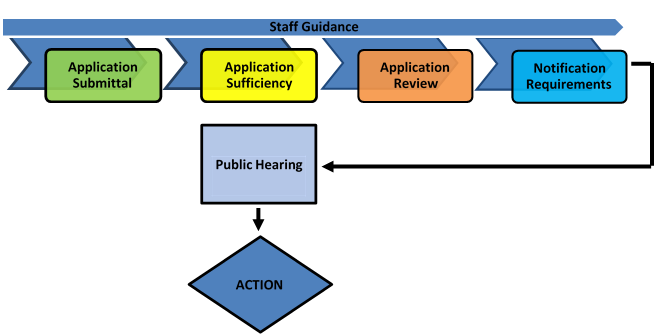
(b)
Applicability. A Variance application from the terms of these UDC standards may only be granted when such Variance will not be contrary to the public interest and where, owing to special conditions, a literal enforcement of the provisions of the UDC standards would result in unnecessary hardship on the land. Such Variance shall not be granted if it has the effect of nullifying the intent and purpose of this UDC.
(1)
Board of Zoning Appeals. The Board of Zoning Appeals shall have the authority to take action on those eligible Variance applications filed relating to the standards within Articles 6, 7, 8, 10, 15, or 17. There is an exception for those applications involving the Myakka River Protection Zone which shall be heard and decided on by the Board.
(2)
Board. The Board shall have the authority to take action on those eligible Variance applications filed relating to the standards within Articles 9, 12, 13, 14, or 18.
(3)
General Limitations on Power to Grant Variances.
a.
Under no circumstances shall a Variance be granted for a use not permitted in the zoning district involved, or any use expressly or by implication prohibited in the zoning district by the terms of this UDC.
b.
A Variance shall not be granted that has the effect of a Special Exception to this UDC.
c.
Variances heard by the Board of Zoning Appeals shall only be authorized for height, parking requirements, area and size of structures, size of yards and open spaces.
d.
No nonconforming use of neighboring lands, structures, or buildings in the same zoning district, and no permitted use of lands, structures, or buildings in any other district shall be considered grounds for the granting of a Variance.
(c)
Component Parts of Review Procedure.
(1)
Application Submittal. The applicant shall submit a written application for a Variance. An application for a Variance shall be submitted to the County and disclose full ownership as required under the Sarasota County Charter. Such Variance shall be granted only when all of the following criteria and the provisions of this section have been addressed within the application:
a.
That the Variance shall not be contrary to the public interest;
b.
That the Variance is required owing to special conditions peculiar to the property;
c.
That identifies the special conditions and circumstances that exist which are peculiar to the land, structures, or required improvements involved;
d.
That the special conditions are not the result of the actions of the applicant;
e.
That explains how the special conditions and circumstances do not result from the actions of the applicant;
f.
That a literal enforcement of the provisions of this UDC would result in unnecessary and undue hardship on the land;
g.
That explains or illustrates how a literal interpretation of the provisions of this UDC would deprive the applicant of reasonable use of the applicant's property;
h.
That explains why the granting of the Variance requested will not confer on the applicant any special privilege that is denied by these regulations to other lands, structures, or required improvements under similar conditions. No pre-existing conditions on neighboring lands, which are contrary to these regulations, shall be considered grounds for the issuance of a Variance;
i.
That the Variance requested is the minimum Variance necessary to make any reasonable use of the property;
j.
That, with respect to a right-of-way or improvement requirement, explains how such requirement does not bear a reasonable relationship or rational nexus between the need for additional capital facilities and the demands generated by the development along with other development within the area; and
k.
That describes how the proposed Variance is determined to be consistent with the goals, objectives, policies and guiding principles of the Comprehensive Plan.
(2)
Application Sufficiency. Applications for a Variance shall be accompanied by a clear statement and accounting that presents the applicant's purpose for the requested Variance. The statement shall include those facts that clarify the need for the Variance, the Variance application's context, and the consequences of the Variance. The application shall address how the Variance preserves the UDC's consistency with the Comprehensive Plan.
(3)
Application Review. The review authority shall consider the Variance during a regularly scheduled meeting and said Variance shall be listed as a public hearing item. A Variance may be considered separately, or at the same time that a Subdivision or Site Development Plan is being considered. The review authority shall find that the requirements of subsection (1) above have been met.
(4)
Public Hearing Notification Requirements. Notice shall be provided as set forth within the table of Section 124-36(c)(5) for both the Board of Zoning Appeals and Board public hearings.
(5)
Public Hearings. All applications for a Variance shall be considered by the Board of Zoning Appeals or by the Board, as applicable, each at public hearings respectively.
(6)
Action. The Board of Zoning Appeals shall take final action on eligible Variance applications from the terms of this UDC related to zoning district use standards. There is an exception for those involving the Myakka River Protection Zone which shall be heard and decided on by the Board. The Board shall take final action on all other eligible Variance applications. In granting any Variance, the review authority may prescribe appropriate stipulations and safeguards in conformity with this UDC. Violation of such stipulations and safeguards, when made a part of the terms under which the Variance is granted, shall be deemed a violation of this UDC.
(d)
Other Applicable Provisions.
(1)
Conditions and Safeguards. In granting any Variance the review authority may prescribe appropriate stipulations and safeguards in conformity with this UDC, including but not limited to reasonable time limits within which the action for which Variance is required shall be begun or completed, or both. Violation of such conditions and safeguards, when made a part of the terms under which the Variance is granted, shall be deemed a violation of this UDC.
(2)
Expiration. Variances shall expire 24 months from the date of grant, unless appealed and extended by action of the Board. If the activity for which the Variance was granted has not commenced by that date, an appeal for extension of time shall show that commencement of the use is being actively pursued by evidence of any application for a Building Permit, or Site Development Plan, or other evidence satisfactory to the Board. Extensions shall not exceed six months.
(Ord. No. 2019-006, § 4, 4-23-2019)
Sec. 124-45. - Written Interpretations Review Procedure.
(a)
Review Procedure Established. Each Component Part depicted within the flow chart below is required in accordance with Section 124-36 together with this Section 124-45.
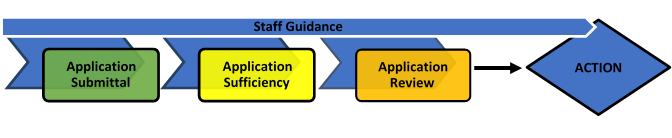
(b)
Applicability. The Administrator is authorized to issue Written Interpretations of this UDC including, but not limited to: interpretations of the text of this UDC; interpretations of the district boundaries; interpretations of stipulations on Rezoning or Special Exceptions; interpretations as to whether an unspecified use falls within a use classification or use group allowed in a district, and interpretations as to whether a proposed use is of equal or lesser conformity. Interpretation letters shall be rescinded if the Administrator determines that they were clearly erroneous, and will be superseded by subsequent changes to this UDC that are in conflict with the Written Interpretation. The Administrator shall not issue a written interpretation if such a written interpretation would be barred by the doctrine of administrative res judicata. The Administrator shall also not issue a written interpretation once the County has initiated code enforcement proceedings involving the same claim or issue under this Code. If they are based on facts about a particular property, such as its history or dimensions, then any error or change in those facts also may render the Written Interpretation invalid. Only the Administrator may provide a Written Interpretation of this UDC. Unwritten interpretations and those not provided in accordance with this section are not rendered on behalf of the County. A Written Interpretation of this UDC as to a particular property, such as an interpretation as to its permissible uses, does not constitute a determination as to the effect of other county, state, or federal regulations. Unless specifically provided otherwise, the Administrator has final authority to determine the interpretation or usage of provisions or terms used in this UDC. The property owner, owner's authorized agent, or those having a contractual interest in the property in question may request an interpretation by submitting a written request to the Administrator who shall respond in writing. When interpreting and applying the provisions of this UDC, such provisions shall be held to be the minimum requirements for the promotion of the public health, safety, convenience, comfort, and general welfare. Nothing in this UDC shall be construed as repealing any existing ordinance or as permitting or requiring uses that are now prohibited by law.
(c)
Component Parts of Review Procedure.
(1)
Application Submittal. Before the Administrator provides a Written Interpretation, an application shall be submitted to the County in a form established by the Administrator.
(2)
Application Sufficiency. After a request for Written Interpretation has been submitted, the Administrator shall determine whether it is sufficiently complete to respond to the request. If the Administrator determines that the request is not sufficient, written comments shall be provided to the applicant specifying the deficiencies. There shall be no further action on the request for Written Interpretation until the deficiencies are remedied. If the applicant fails to respond to the deficiencies within 30 days, the request for Written Interpretation shall be considered withdrawn.
(3)
Application Review. When the application for Written Interpretation is determined sufficient, the Administrator shall review and render an interpretation pursuant to the procedures and standards of this section. Within 30 days after the request for Written Interpretation has been determined sufficient, the Administrator shall review and evaluate the request considering the Comprehensive Plan, this UDC, the Official Zoning Map, and other relevant codes and statutes, consult with the County Attorney or other appropriate County staff as necessary, and render a Written Interpretation.
(4)
Action. The Administrator shall render all Written Interpretations. The Written Interpretation shall be in writing and mailed to the applicant, and where the applicant is not the property owner, said property owner (as identified in the Sarasota County Property Appraiser's records), by United States Mail within seven calendar days after the Administrator issues the Written Interpretation.
a.
Specific to Site. A Written Interpretation is specific to the applicant, site, and use for which the interpretation has been requested.
b.
Confirmation Letter Not an Interpretation. A letter from the Administrator that only confirms the zoning designation of a specific property or the applicable standards under that designation, or recites its zoning history, shall not be considered a Written Interpretation of this UDC and therefore, may not be appealed to the Board of Zoning Appeals. It is subject to the applicable limitations provided in Section 124-45(b) above.
(d)
Other Applicable Provisions.
(1)
Administrative Appeal.
a.
Any aggrieved party may file for an Administrative Appeal to the Board of Zoning Appeals on a Written Interpretation issued by the Administrator on: Articles 6, 7, 8, 10, 11, 15, or 17 of this UDC; except those involving property within the Myakka River Protection Zone which will be heard and decided on by the Board; zoning district boundaries; whether an unspecified use falls within a use classification or use group allowed in a district; or a stipulation associated with a Variance granted by the Board of Zoning Appeals. The application for appeal must be filed with the County within 30 days of issuance of the Written Interpretation. The appeal shall follow the procedures in Section 124-47, Administrative Appeal.
b.
Any aggrieved party may file for an Administrative Appeal to the Board on a Written Interpretation issued by the Administrator on: Articles 9, 12, 13, 14, or 18 of this UDC, and those on the remaining Articles of the UDC involving property within the Myakka River Protection Zone; a stipulation on a Rezoning or Special Exception; or a stipulation associated with a Variance granted by the Board. The application for appeal must be filed with the County within 30 days of issuance of the Written Interpretation. The appeal shall follow the procedures in Section 124-47, Administrative Appeal. In deciding the appeal, the Board shall apply the stipulation in accordance with the plain language of the stipulation and the Board's intent in imposing the stipulation, and shall have no power or authority to amend or otherwise modify the stipulation.
(2)
Official Record. The Administrator shall maintain a record of all Written Interpretations, which shall be available for public inspection, upon reasonable request, during normal business hours.
(3)
Annual Report. Annually, Written Interpretations shall be summarized in a report by the Administrator to the Planning Commission, Board of Zoning Appeals and Board. Based on the report, the Board shall authorize such UDC amendments as it deems appropriate to be processed in accordance with Section 124-38, Unified Development Code (UDC) Text Amendments.
(Ord. No. 2021-056, § 6, 11-15-2021)
Sec. 124-46. - Administrative Adjustments Review Procedure.
(a)
Review Procedure Established. Each Component Part depicted within the flow chart below is required in accordance with Section 124-36 together with this Section 124-46.
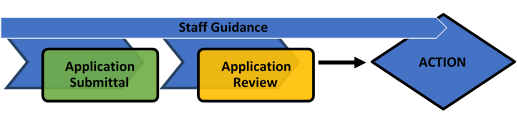
(b)
Applicability. Administrative Adjustments are minor deviations from otherwise applicable UDC standards as specified below. The Board hereby delegates to the Administrator the authority to grant the Administrative Adjustments identified below upon submission of an application demonstrating that the request meets the requirements of Section 124-46. The Administrator shall issue a final determination to the owner and applicant in writing within the timeframe established by Administrative Policy.
(c)
Component Parts of Review Procedure.
(1)
Application Submittal. An application for an Administrative Adjustment shall include an explanation of the reason for the requested Administrative Adjustment, the specific Administrative Adjustment requested and any other material necessary to ensure the criteria in Section 124-46(c)(1)b. below are met. Any Administrative Adjustment to applicable zoning district setback standards greater than those listed within Section 124-46(c)(1)b.1. shall be reviewed by the Board of Zoning Appeals as provided in Section 124-44, Variances. Any Administrative Adjustment to UDC standards greater than those listed within Section 124-46(c)(1)b.2. through 11. shall be reviewed by the Board as provided in Section 124-44, Variances.
a.
No applicant shall submit more than one Administrative Adjustment application for a single parcel of land.
b.
The Administrator shall have the authority to issue the following Administrative Adjustments:
1.
Setbacks.
i.
Existing Encroachment. An adjustment of up to 20 percent of the required front, side or rear yard setbacks for any encroachment existing as of October 27, 2003. Such an adjustment shall not allow the expansion of a nonconformity, except for properties located in the Historic Preservation Incentive Overlay District (HPIOD).
ii.
Relocated Historic Structure. An adjustment of up to 20 percent of the required front, side or rear yard setbacks for structures that are located in the HPIOD when such structures are relocated on a new site.
iii.
New Development. An adjustment of up to six inches of the required street, side or rear yard setbacks where the applicant establishes that there were errors in construction caused solely by the contractor or surveyor of the development.
iv.
No adjustment shall be allowed for work that originally occurred without the appropriate permits.
v.
No setback adjustment shall extend into any easement without concurrent modification of the easement, vacation of the easement or a change in the recorded plat regarding the easement to accommodate the Administrative Adjustment.
2.
Signs. An adjustment to allow a ground sign in existence as of October 27, 2003 to exceed the applicable maximum height standard by five percent and to allow a ground sign to exceed the applicable maximum sign area by ten percent consistent with Section 124-210(a)(2)b.3.
3.
Myakka River Protection Zone. The following Administrative Adjustments shall only be available to lots platted and recorded or created by a legal and recorded lot split prior to March 18, 2003.
i.
When an applicant demonstrates with a Site Plan that a total of 6,000 square feet of building coverage, including but not limited to principal and accessory structures but excluding gazebos up to 400 square feet in floor area, elevated walkways and boat docks, cannot be reasonably positioned or constructed on a property in compliance with the required River Area setback in Chapter 54, Article XXXIII of the County Code, the Administrator may grant an Administrative Adjustment providing relief from certain Myakka River setback standards. The extent of the adjustment shall be minimized through the relocation or redesign of the proposed structures consistent with subsection ii. below.
ii.
The Administrator may grant an Administrative Adjustment in the sequential manner outlined below and taking into consideration conditions and guidelines in Article 7. The relief is sequential and cumulative. If the relief in subsection a) below is not sufficient to build the proposed building coverage, then additional relief may be granted through the application of each subsequent relief below.
a)
One minimum side setback may be reduced to 10 feet.
b)
At least 50 percent of the street yard facade of the principal structure shall be built to a line parallel to and 25 feet from the right-of-way or street yard lot line.
c)
The Myakka River Area setback may be reduced to no less than 50 feet from the Myakka River Area.
d)
The Myakka River Area setback may be reduced to no less than 25 feet from the Myakka River Area provided a Variance from the 50-foot watercourse protection buffer as required in this UDC and Chapter 54, Article XXXIII, of the County Code is granted by the Board.
4.
Littoral Zones. An applicant may apply for an Administrative Adjustment from the Littoral Zone Requirements of Article 9, Section 124-178 if an approved and implemented littoral zone or alternative design cannot reasonably reach success criteria.
5.
Approval of time extensions for construction associated with new Subdivisions or Site Development Plans where:
i.
The Subdivision or Site Development Plan currently in force and for which extension is requested complies with current criteria of this UDC and the County Code; and
ii.
The applicant provides reasonable assurances that construction will commence within the next twelve (12) months and will proceed to timely completion; and
iii.
No more than four (4) time extensions have been previously granted; and
iv.
Such time extensions will not exceed a period of twelve (12) months; and
v.
The applicant has demonstrated that the amount of surety posted to guarantee completion of improvements is adequate and that the surety is valid for a minimum of three (3) months beyond the new date set for completion of improvements.
6.
Approval of time extensions for construction of sidewalks within residential subdivision where:
i.
The applicant demonstrates a reasonable likelihood that construction will commence within the next twelve (12) months and will proceed to timely completion;
ii.
No more than one (1) time extension has been previously granted;
iii.
Such time extension will not exceed a period of twelve (12) months; and
iv.
A surety is in place in an amount adequate to cover the uncompleted portion of the sidewalk and that the surety is valid for a minimum of four (4) months beyond the new date set for completion of improvements.
7.
Approval to place funds in escrow in the Sidewalk Program Capital Improvements Program (CIP) or to provide other appropriate security to guarantee construction of sidewalks in lieu of construction of sidewalks required in conjunction with Site Development Plan or Final Subdivision Plat approval where construction or reconstruction of the road parallel to the subject sidewalk is currently scheduled and budgeted within the next five (5) years in Sarasota County's Capital Improvement Program or FDOT's Five Year Work Program and the construction or reconstruction of such roadway would likely cause the demolition or modification of substantial part of such sidewalk.
8.
Approval of an Administrative Adjustment from Section 124-253(b), Design and Construction Standards where the Administrator has determined that alternative specifications are consistent with current specifications in use by the Florida Department of Transportation.
9.
Approval of an Administrative Adjustment from Article 13 Subdivision Regulations Sections 124-253(b)(4)a., 124-253(b)(4)c., and 124-253(b)(4)d. with the exception of 124-253(b)(4)a.15., where the applicant demonstrates that the work would meet accepted engineering structural standards and FDOT Green Book.
10.
The Administrator shall have the discretion to approve an Administrative Adjustment from landscaping, buffering, and stormwater standards for redevelopment of already developed multifamily or nonresidential sites, provided:
i.
The resulting landscaping, buffering, and stormwater treatment and attenuation will provide an overall improvement from the existing features or systems; and
ii.
If the deviation relates to stormwater standards, dry retention treatment systems shall be designed to treat one-half (½) inch of rainfall from the site.
11.
The Administrator may grant an Administrative Adjustment from stormwater management attenuation regulations (Section 124-252(a)(1)e.1. within Article 13) for sites of thirty-five (35) acres or less where the applicant demonstrates, after incorporating the site into the County's most recent version of the updated hydrodynamic flood study, that:
i.
The post-development stormwater discharge does not raise off-site flood levels; and
ii.
The site's stormwater management system improves drainage conditions offsite.
12.
Alternative Parking Plans for off-street parking spaces in accordance with Section 124-120(k).
13.
Approval of an Administrative Adjustment from Article 13, Section 124-255(c)(4)b. for utilities and drainage easements to allow deviation from stated easement widths that the County Engineer has determined as maintaining adequate width to assure equivalent function and maintenance.
(2)
Application Review. The Administrator shall make an affirmative finding that all of the following criteria are met prior to approving an Administrative Adjustment application:
a.
The adjustment requested will be the minimum adjustment necessary for reasonable use of the property; and
b.
Granting the Administrative Adjustment will not have an adverse impact on land use compatibility; and
c.
Granting the Administrative Adjustment will not materially and adversely affect adjacent land uses and the physical character of uses in the immediate vicinity of the proposed development because of inadequate buffering, screening, setbacks and other land use considerations; and
d.
Granting the Administrative Adjustment will be consistent with the purposes and intent of this UDC.
e.
For properties that are listed as significant historic resources in accordance with Chapter 66, Article III, Section 66-74(a) of the County Code and those which are included in the "Director's List of Significant Historic Resources in Sarasota County" in accordance with Chapter 66, Article III, Section 66-74(c), only criteria b., c. and d. above shall apply. However, the applicant shall address how the adjustment requested is compatible with surrounding properties and the neighborhood. Where a Certificate of Appropriateness is required, it shall be obtained and submitted with the Administrative Adjustment application.
(3)
Action. The Administrator shall review the application and approve, approve with stipulations, or deny the application based upon the criteria in this subsection. A written decision shall be provided to the applicant by mail. The applicant shall obtain the appropriate County permit reflecting an approved Administrative Adjustment. For any adjustment on a parcel in the HPIOD, the History Center shall be included in the review.
(d)
Other Applicable Provisions.
(1)
Further Relief. The decision of the Administrator is final. However, if the applicant is aggrieved by the decision, the applicant may apply for a Variance as provided in Section 124-44, Variances. If a Variance is sought, then any relief that may have been provided by the Administrative Adjustment shall not be a factor in the consideration of the Variance application.
(2)
Expiration and Lapse of Approval. Applicants shall have 12 months from the date of approval of an Administrative Adjustment to secure a Building Permit to carry out the proposed improvements authorized by the Administrative Adjustment. If a Building Permit has not been obtained within 12 months of the date of approval, the approval shall lapse and be of no further effect. An Administrative Adjustment shall also expire should the Building Permit expire and the improvements have not been installed.
(Ord. No. 2019-006, § 4, 4-23-2019)
Sec. 124-47. - Administrative Appeal Review Procedure.
(a)
Review Procedure Established. Each Component Part depicted within the flow chart below is required in accordance with Section 124-36 together with this Section 124-47.

(b)
Applicability. A written interpretation of the Administrator made under the provisions of this UDC shall be final, provided that the property owner or authorized agent, or a party having a contractual interest in the property, within 30 days of the interpretation, appeal to the Board of Zoning Appeals or Board, as applicable, for relief. The appeal request shall be in writing and must include a full explanation of the error committed by the Administrator in the interpretation or application of this UDC, along with the filing fee, all documents supporting the appeal, and any other pertinent information required by the Administrator as part of the appeal form.
(1)
Appeals to the Board of Zoning Appeals. Determinations appealable to the Board of Zoning Appeals include Written Interpretations issued by the Administrator on: Articles 6, 7, 8, 10, 11, 15, or 17 of this UDC; zoning district boundaries; whether an unspecified use falls within a use classification or use group allowed in a district; or a stipulation associated with a Variance granted by the Board of Zoning Appeals, except for those involving property within the Myakka River Protection Zone which shall be heard and decided on by the Board.
(2)
Appeals to the Board. Determinations appealable to the Board include Written Interpretations issued by the Administrator on: Articles 9, 12, 13, 14, or 18 of this UDC; a stipulation on a Rezoning or Special Exception; or a stipulation associated with a Variance granted by the Board; and an administrative decision on the Myakka River Protection Zone.
(c)
Component Parts of Review Procedure.
(1)
Application Submittal. An appeal stays all proceedings, except any enforcement proceedings, in furtherance of the action appealed from, unless the Building Official certifies to the Board of Zoning Appeals or the Board, as applicable, after the application is filed that, for reasons stated in the certificate, a stay would cause imminent peril to life or property. Such appeals shall be taken within 30 days by filing with the Administrator a written application specifying the grounds thereof. The Administrator shall forthwith transmit to the applicable public review body all papers, documents, and maps constituting the record of the administrative action from which an appeal is taken.
(2)
Public Hearing Notification Requirement. Notice shall be provided as set forth within the table of Section 124-36(c)(5) for both the Board of Zoning Appeals and the Board public hearings.
(3)
Public Hearings. All applications for an Administrative Appeal shall be considered by the Board of Zoning Appeals or by the Board, as applicable, each at public hearings respectively.
(4)
Action. The applicable public review body, being either the Board of Zoning Appeals or the Board, may affirm, modify, or reverse the action of the Administrator, and may make such determination as ought to be made, so long as such action conforms to the provisions of this UDC and County Code, and to that end shall have the powers of the official from whom the appeal is taken.
(d)
Other Applicable Provisions. Appeals from Decisions of Board of Zoning Appeals. Within 30 days after the rendition of a decision by the Board of Zoning Appeals, the following persons and entities shall have the right to petition the Circuit Court of Sarasota County for judicial relief from the decision:
(1)
Any person or persons, jointly or severally, aggrieved by any decision of the Board of Zoning Appeals; and
(2)
The Board or any officer or department of the County, whether or not the Board, officer, or department appeared at the hearing before the Board of Zoning Appeals, and with or without a showing of special injury or aggrievement.
(Ord. No. 2021-056, § 7, 11-15-2021)
Sec. 124-48. - Right-of-Way Use Permit Review Procedure.
(a)
Review Procedure Established. Each Component Part depicted within the flow chart below is required in accordance with Section 124-36 together with this Section 124-48.
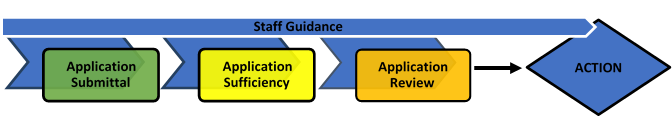
(b)
Applicability. These regulations are adopted for the purpose of establishing the minimum standards for right-of-way utilization in the County and shall apply to all areas of land and water in the unincorporated areas of Sarasota County, and specifically to those right-of-way areas within incorporated municipalities (for Right-of-Way Use Permit purposes) that are designated to be within the County roadway system. Variances to these standards may be granted in accordance with the provisions contained in this Article 5. They may also be applied to any other incorporated municipality in the County, provided the governing body of such municipality elects to come under the jurisdiction of these regulations.
(1)
Right-of-Way Use Permit Required.
a.
A Right-of-Way Use Permit application is required for all work within the County right-of-way. The County's right-of-way ordinance is based on proprietary interests to safeguard the use of the right-of-way by the public.
b.
Specific Permits include, but are not limited to, the following:
1.
Backing out parking facilities. Backing out parking facilities Access Management provisions of Article 13, shall be subject to the issuance of a Right-of-Way Use Permit. As part of the Right-of-Way Use Permit application, the applicant shall submit a legal instrument, acceptable to the Office of the County Attorney, which holds the County harmless from any loss of parking spaces resulting from County action in the public right-of-way. As a condition for the issuance of the Right-of-Way Use Permit, the applicant may be required to make necessary improvements within the right-of-way to accommodate a safe and controlled backing out movement.
2.
Bus Stop Benches and Public Bus Shelters. All public bus shelters located within the right-of-way shall require a Right-of-Way Use Permit, in compliance with the Access Management provisions of Article 13.
3.
Signs, Generally. Signs extending or hanging over any sidewalk or pedestrian way shall not be less than eight feet above the surface thereof. Such signs shall not extend over any public street right-of-way unless a Right-of-Way Use Permit has been issued. Signs shall also comply with the provisions of Article 11, Signs.
4.
Off Site Community Signs. Community signs shall be permitted on property abutting or within designated arterial or collector road rights-of-way when in compliance with the Florida DOT "Green Book" and subject to the review and approval of a Right-of-Way Use Permit by the County. A master location plan and typical detail for the community signs shall be submitted with the initial Right-of-Way Use Permit application in compliance with Section 124-49 and Article 11, Signs.
5.
Subdivision Entry Sign. The Administrator may approve locating a Subdivision Entry Sign within a public right-of-way by way of a consolidated "subdivision entry sign and Right-of-Way Use Permit Section 124-49 and Article 11.
6.
Special Event Sign. The approval for such signs shall be issued in conjunction with a Temporary Use Permit or Right-of-Way Use Permit for the special event, where applicable, in compliance with Article 11, Signs.
7.
Culverts. A culvert permit shall be required for residential access driveways and full front culvert projects within County rights-of-way with open drainage systems, pursuant to Section 98.3.
8.
Tree Permit. No trees shall be removed or installed within a right-of-way without first obtaining a tree removal permit pursuant to the Trees Code, Chapter 54, Article XVIII of the County Code.
9.
Distributed Antennae System (DAS). Communications facilities installed in the right-of-way shall also comply with the provisions of Article IV, Chapter 118 of this Code.
(2)
Exemptions. Exemptions from the requirement to obtain Right-of-Way Use Permits shall be as follows:
a.
Activities authorized through approved County roadway and drainage capital improvement projects. This does not include utility related construction.
b.
Routine maintenance operations. The other provisions of this Article notwithstanding, "work" as used herein shall not include routine maintenance operations by public utilities franchised or otherwise regulated by Sarasota County of the State of Florida; no Right-of-Way Use Permit shall be required for such operations. The Administrator will require an approved TTCP before any work can commence in the right, this shall include but not be limited to travel and bike lane, and sidewalk closures.
c.
Any activity on or within a private road or street.
d.
Activity authorized through Subdivision or Site Development Plan approval, excluding utility related construction.
(c)
Definitions. The following terms are defined for the purpose of this Policy:
Administrator means the Sarasota County Administrator, or an administrative official of Sarasota County government designated by the County Administrator to administer and enforce the provisions of this article.
Potholing means the process of excavating small holes to expose underground utilities or infrastructure for inspection, maintenance, or construction purposes.
TTCP means Temporary Traffic Control Plan (AKA Maintenance of Traffic or MOT), including Pedestrian and Bicycle traffic in accordance with the current Florida Department of Transportation (FDOT) Standards.
Work Within the Right-of-Way means all construction and construction-related activities that take place within County-owned or maintained roadways, drainage rights-of-way or easements. Work includes dewatering, excavating, backfilling, installation or removals of any kinds such as conduit, landscaping, horticultural maintenance, posts, rocks, planting, and fences. Work also includes any repair, alteration or relocation of any existing facility, embankment or structure.
(d)
Component Parts of Review Procedure.
(1)
Application Submittal. No work may be performed in County rights-of-way or easements until plans have been submitted and a Right-of-Way Use Permit has been issued by the Administrator. No docks or other structures which access water bodies shall be constructed within a public right-of-way, except as specifically authorized by the Board by agreement. The Administrator is authorized to remove any structure in violation of this section after notifying the closest abutting property owner by certified mail ten days in advance of the removal and notifying that owner of the opportunity to file an appeal within ten days through the process provided in Section 124-47. Applicants for Right-of-Way Use Permit shall submit the following to the County:
a.
Completed application signed by the applicant or agent. Applicants/Company's name, address, e-mail address and phone number is to be included on the application.
b.
Contractor's name, current address, phone number, E-mail address and license number. All contractors performing underground utility and excavation as defined in Section 489.105(3)(n), Florida Statues, shall provide valid licensing certification and insurance documentation, must be a Certified Underground Utility and Excavation Contractor.
c.
Construction plans, with the following items: general location map; with title block to contain project name, company, designer name, dates and sheet numbers; scale of one inch = 10 feet, one inch = 20 feet, one inch = 30 feet, one inch = 40 feet or one inch = 50 feet; north arrow; plan shall include all rights-of-way, easements, utilities, roadways, swales and driveways, all labeled; and a cross-section of all roadway crossings.
d.
A Temporary Traffic Control Plan (TTCP) conforming to the FDOT Standard Plans for Road Construction, including proposed movement of traffic and lane closure forms, are required when the work is within the pavement, shoulders, or sidewalks of the road or may disrupt traffic. A TTCP is required to be submitted to the county with or without construction plans for open cutting of a road.
i.
No construction may be started until the TTCP is approved by the County Engineer or authorized designee.
ii.
The submitted TTCP shall be prepared, signed and sealed by a licensed Professional Engineer who has a valid Advanced TTCP certification from a provider approved by the FDOT, unless otherwise determined by the County Engineer or authorized designee.
iii.
Lane closures on arterial and collector roads will be allowed between 9:00 p.m. to 5:00 a.m. The County Engineer or designee can approve the daytime lane closures if supported by both a documented hardship and a lane closure analysis.
e.
One copy of documentation showing all existing damaged infrastructure within the work area.
f.
In order to assure full compliance with all the terms, conditions and obligation of the permit, an executed right-of-way use bond acceptable to the County and the Office of the County Attorney in an amount one hundred ten (110) percent of the estimated construction costs, but not less than $15,000.00, must be provided to ensure against any damage that may take place within rights-of-way and easements. Using best professional judgment to safeguard public health, safety, and welfare, the Administrator may require additional surety based on risk using, but not limited to, the following factors:
i.
whether the right-of-way is designated as Freeway/Expressway, Major Arterial, Minor Arterial, Major Collector, Minor Collector, Significant Local Road, or Local Road, as outlined in the Sarasota County Comprehensive Plan, with greater protection given to roads higher in the hierarchy;
ii.
the number of lanes associated with the road;
iii.
the level of service associated with the road;
iv.
the status of the road as outlined in Table 10-4 of the Sarasota County Comprehensive Plan;
v.
the presence of utilities within the right-of-way at the project;
vi.
the size of the utility conveyance, i.e., diameter of a water and/or wastewater pipe;
vii.
whether the utility conveyance is transporting its contents under pressure;
viii.
the depth of any underground utility; and
ix.
the scope of the proposed work.
g.
All restoration shall leave the right-of-way or easement in a condition which is as good or better than that which existed prior to construction.
(2)
Application Sufficiency. The following general provisions a. through o. shall apply to all Right-of-Way Use Permits and are hereby incorporated into each such permit issued. Application for and acceptance of the permit shall constitute agreement to these provisions. Applications for a Right-of-Way Use Permit shall be accompanied by a clear statement and accounting that presents the applicant's purpose for the requested permit. The statement shall include those facts that clarify the need for the permit, the Right-of-Way Use Permit application's context, and the consequences of the permit.
a.
The applicant shall declare that all existing aerial and underground utilities have been located and the appropriate utilities notified of the proposed work.
b.
The County must be notified at least twenty-four hours prior to commencement of construction operations and again at project completion for a final inspection.
c.
All required sketches, plans and cross-sections covering details of this work shall be attached to and become a part of this permit. Any changes made to the drawings or stipulations made thereon must be approved and shall become part of the permit. A copy of all required sketches, plans, cross-sections and any subsequent changes to these must be retained at the job site and an additional copy filed with the County.
d.
Prior to construction, the applicant receiving the permit shall make all necessary provisions for the accommodation and convenience of traffic and shall take safety measures, including the placing and display of caution signs and signals as required by the Manual on Uniform Traffic Control Devices for Streets and Highways (MUTCD), and the FDOT Design Standards. The applicant shall further prevent obstructions or conditions which are or may become dangerous to the traveling public. The authority to close off a street or easement in its entirety rests entirely with the County Engineer.
e.
The applicant shall notify the law enforcement agency, the School Board, and the concerned Ambulance and Fire Districts prior to any street closing (when approved by the County Engineer), street opening or pavement excavation.
f.
Fire hydrants shall be left accessible at all times.
g.
All pavements repairs shall be performed under the direct supervision of the County.
h.
Existing utility services shall not be disrupted without the specific authority of the concerned utility and public notification by newspapers, the airways or through the use of door hangers, that said disruption will occur. Repairs determined to be of an emergency nature are not subject to the notification procedure.
i.
The flow of stormwater within the drainage facilities shall remain unimpeded. Adequate measures (e.g. erosion and sediment control best management practices) will be taken to prevent pollution of water in the area from run-off, and pollution of the air from dust, during the course of construction and restoration.
j.
Any public or private property which is used or affected by a project will be maintained and preserved from damage during the operation, and restored to its original condition upon completion or cessation of work.
k.
It is expressly stipulated that any permit issued is a license for permissive use only and that the placing of facilities upon public property pursuant to the issuance of a permit shall not operate to create or to vest any property right in a permit holder and that said holder may be required to make, at their own expense, any changes, alterations or replacement as necessitated by changed conditions.
l.
The applicant shall indemnify and hold harmless the Board and all County officers, agents and employees from all suits, actions or claims of whatever nature which may arise, occasioned whether directly or indirectly by the work permitted or the special privileges granted hereunder.
m.
The Administrator reserves the right to revoke any permit issued without other formality than that of notifying the applicant to this effect. The decision to revoke a permit may be based on the permittee's failure to adhere to any permit condition. It may also be based on permittee's conduct which puts at risk the public health, safety, or welfare, or otherwise safeguard the County's proprietary interest in its right-of-way.
However, any permittee may appeal the revocation of any permit through the following procedure:
i.
A notice of appeal must be filed, in writing, within ten (10) days of the issuance of the notice of intent to revoke the permit. The notice shall be filed with the Administrator and shall include contact information of the appellant.
ii.
Appeals shall be heard by a special magistrate who shall have the same qualifications as and have been selected in the same manner provided in Article VIII, Chapter 2, Sarasota County Code of Ordinances.
iii.
The appeal shall be scheduled through the Office of the County Attorney.
iv.
The Special Magistrate shall conduct a quasi-judicial hearing. The Special Magistrate shall use the procedures in Article VIII, Chapter 2, Sarasota County Code of Ordinances, to conduct the hearing, to the extent such procedures do not conflict with the requirements of this section.
v.
The appellant shall have the right to attend the hearing with an attorney, the right to testify, to call witnesses, and present evidence. Any attorney appearing shall provide notice to the Office of the County Attorney at least three days prior to the hearing.
vi.
No stenographic record by a certified court reporter is made of the special magistrate hearing. Accordingly, any appellant who wishes to seek certiorari review of the special magistrate's decision shall have the right to bring a court reporter at their own expense and will be responsible for making a verbatim record of the testimony and evidence at this hearing.
vii.
The special magistrate shall consider the testimony, reports, or any other documentary evidence, and any other evidence presented at the hearing. Formal rules of evidence shall not apply, but fundamental due process shall govern the hearing.
viii.
In recognition of the County's proprietary interest in its right-of-way, the appellant shall have the burden of proving by a preponderance of the evidence that the County's revocation of the permit was arbitrary and capricious. The County's revocation decision shall be entitled to a presumption of correctness.
ix.
Failure of the appellant to appear for the hearing shall result in an affirmance of the Administrator's decision to revoke the permit.
x.
Within seven (7) days of the hearing, the special magistrate shall render a written decision on the revocation. This decision shall be final and the appellant shall be deemed to have exhausted all administrative remedies. Such decision may be subject to judicial review through a petition for writ of certiorari.
xi.
The revocation shall remain in effect during the appeal and certiorari process.
n.
All work shall be constructed in accordance with the FDOT Utility Accommodation Manual, Document No. 710-020-001-g, August 2010 and Rule 14-46.001 F.A.C., July 2017. It is understood that the manual is for design and construction purposes, not permitting purposes.
o.
Any existing damaged or broken infrastructure in the right-of-way of the defined work zone must be documented and provided to the County in advance of receiving the Right-of-way Use Permit. All damaged infrastructure found following the work must be repaired by the permittee prior to permit closure unless clearly documented that the damage existed prior to the permit issuance. Acceptable forms of documentation of existing damage include video, photography, survey notation, and inspector notation.
(3)
Application Review. Applications shall be reviewed to ensure that all work within existing rights-of-way and all roadways and other improvements or refurbishment constructed/conducted therein are in accordance with the standards contained in Article 13 and County Code, as applicable.
(4)
Action. The Administrator shall take final action on all Right-of-Way Use Permit applications.
(e)
Compliance Requirements.
(1)
Pre-Construction Meeting. Following the issuance of the Right-of-Way Use Permit, a mandatory pre-construction meeting will be scheduled with the applicant and licensed contractor(s) who shall be licensed with the State and registered with the County. All contractors performing underground utility and excavation, as defined in Section 489.105(3)(n), Florida Statues, must have an Underground Utility License for right-of-way work. Prior to the pre-construction meeting, all underground facilities shall be marked.
(2)
Identification of Underground Facilities. Excavation in the County Right-of-Way must take place in a manner which complies with the requirements of Chapter 556, Florida Statutes. The permittee shall ensure that underground facilities have been marked and located. Ground Penetrating Radar (GPR) is required on all Major Arterial and Major Collector roads; GPR or potholing is required on Minor Arterial, Minor Collector, and Significant Local Road as designated in Table 10-8 of the Sarasota County Comprehensive Plan. GPR is required on all road crossings and the results shall be available at the pre-construction meeting. Local streets can use GPR or other acceptable means, as approved by the Administrator or their designee, prior to any excavation in the County right-of-way.
(3)
As-Built Engineering Plans. Right-of-way permittees shall submit as-built engineering plans within thirty (30) days of completed work detailing the information of all construction improvements. Documentation supporting the completion of the project shall be submitting at this time.
(4)
Abandonment of Facilities.
a.
The permittee shall notify the County in writing within ninety (90) days of the permittee's abandonment of any of its facilities in the County right-of-way. The written notice must include the permittee's name and contact information, the permit number, and a description and the location of any and all such abandoned facilities.
b.
The County may direct the permittee by written notice to remove all or any portion of such abandoned facility at the permittee's sole expense if the County determines that the abandoned facility's presence interferes with the public health, safety, or welfare, which determination may include, but is not limited to, any or all of the following:
(i)
A determination that the facility compromises safety at any time for any right-of-way user or during construction or maintenance in right-of-way.
(ii)
A determination that the facility prevents another person from locating facilities in the area of right-of-way where the abandoned facility is located if other alternative locations are not reasonably available. In this event, the county may require the third person to coordinate with the permittee that owns the existing facility for joint removal and placement, if agreed to by the permittee.
(iii)
A determination that the facility creates a maintenance condition that is disruptive to the rights-of-way use.
c.
In the event that the County does not direct the removal of the abandoned facility, the permittee, by its notice of abandonment to the County, will be deemed to consent to the alteration or removal of all or any portion of the facility by the County or another person at such person's cost.
d.
If the permittee fails to remove all or any portion of an abandoned facility as directed by the County within a reasonable time as the County may require under the circumstances, the County may perform such removal and charge the cost of the removal against the permittee.
(f)
Approving Authority. The Administrator, or the delegated authority, has the authority to approve or deny applications for Right-of-Way Use Permits. The Administrator also has the authority to require any special condition of the permit which provides mitigation roughly proportionate to the impact of development.
(g)
Permit Duration. Any work under a Right-of-Way Use Permit must commence within ninety (90) days beginning on the date of issuance or for the time specified on the permit. The Right-of-Way Use Permit is valid for one (1) year from the issuance date, if work does not commence within one (1) year, the permit will be considered expired, and reapplication will be necessary.
(Ord. No. 2019-006, § 4, 4-23-2019; Ord. No. 2024-051, § 2, 8-28-2024)
Sec. 124-49. - Sign Permits or Master Sign Plans Review Procedure.
(a)
Review Procedure Established. Each Component Part depicted within the flow chart below is required in accordance with Section 124-36 together with this Section 124-49.
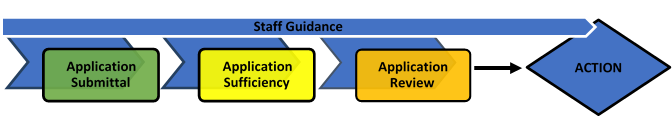
(b)
Applicability. No person shall erect or assist in the erection, construction, maintenance, alteration, repair or painting of or do any work upon any sign for which a permit has not been issued as required by Article 11, the Sign Regulations, and this UDC. The purpose of a Master Sign Plan in particular types of development is intended to produce a coordinated and complimentary graphic image that achieves consistency and harmony among signs. Master Sign Plans shall be required for the following types of development whenever a Site Development Plan for new or existing development is required:
(1)
A nonresidential multi-building development with three or more buildings; or
(2)
A nonresidential multitenant development meeting the following criteria:
a.
Five or more tenants occupy the property;
b.
The property was developed and remains in unified control; and
c.
The property has a minimum combined street frontage of 400 feet.
(3)
A Planned Development or Development of Regional Impact (DRI) may request approval of a Master Sign Plan that is binding for the entire development as part of the development order. Where such a Master Sign Plan is approved, all signs in the Planned Development or DRI shall comply with all other permitting requirements.
(c)
Component Parts of Review Procedure.
(1)
Application Submittal. An application for a Sign Permit shall be made on forms approved by the Administrator. Any ground sign over ten feet in height or 40 square feet in total aggregate area shall require engineered drawings signed and sealed by an engineer registered with the State of Florida.
(2)
Application Sufficiency. A Sign Permit application shall provide all information required for the County to determine if the proposed sign or sign modification complies with Article 11. A Master Sign Plan application shall consist of a document combining text descriptions of the physical properties of all property signage and typical elevation graphics. The Master Sign Plan shall provide at least the following elements:
a.
A designated review person for the project to whom all proposed signs must be submitted for internal review by any tenants prior to application for a County Sign Permit;
b.
A section addressing the internal procedure each tenant must follow prior to application to the County for a Sign Permit. Written approval of the project's designated reviewer shall be required in order to receive any individual Sign Permit from the County issued under the Master Sign Plan;
c.
A section addressing the process for approval of changes to the Master Sign Plan; and
d.
A statement that: "Any proposed sign by any tenant that creates a uniform change from the approved Master Sign Plan will require the applicant to obtain a statement from the property owner or manager's designated reviewer assessing the extent to which the variation is in keeping with the intent and goals of the Master Sign Plan, and the extent to which the change is acceptable to the property owner or manager."
(3)
Application Review. The Sign Permit application shall be reviewed for compliance with Article 11 and the County Code. An application for a Master Sign Plan permit shall be as follows:
a.
Review of Master Sign Plans Review Procedure.
1.
The Master Sign Plan shall be submitted to the County for staff review and approval. When a Site Development Plan approval is required for the proposed project, the Master Sign Plan shall be submitted and reviewed with the Site Development Plan application.
2.
At the completion of the review, the applicant shall be responsible for providing a Master Sign Plan incorporating any required revisions.
b.
Review Criteria. A Master Sign Plan shall not be approved until and unless the County finds that:
1.
The plan provides that signs of a similar type and function within the development will meet the following criteria:
i.
The proposed signs provide a consistent shape or theme of shape;
ii.
The proposed signs use a consistent style and type of illumination; and
iii.
Any proposed building signs are mounted in a consistent location on the building;
2.
The plan provides for signs that meet the size limitations, location requirements and other applicable requirements of Article 11; and
3.
The plan provides for uniformity of proportions of tenant signs.
(4)
Action. It shall be the duty of the Administrator to issue the written permit evidencing the applicant's compliance with this UDC and, if applicable, the Master Sign Plan.
(d)
Other Applicable Provisions. Amendments to Approved Master Sign Plans. After approval of a Master Sign Plan, no sign shall be erected, placed, painted, or maintained, except in conformance with such plan or provided that the plan is amended. All changes, except as provided in Section 124-49(c)(2)d, to an existing Master Sign Plan shall require a formal application with all required information, as determined by the County, to enable the staff to properly evaluate the requested change.
Sec. 124-50. - Building Permit/UDC Compliance Review Procedure.
(a)
Review Procedure Established. Each Component Part depicted within the flow chart below is required in accordance with Section 124-36 together with this Section 124-50.
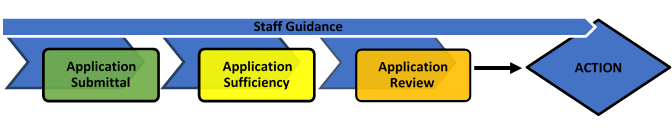
(b)
Applicability. The Building Official shall not issue any Building Permit without first obtaining confirmation from the Administrator that the plans submitted conform to this UDC. The Building Official shall not issue any person a Building Permit for the erection, moving, addition to, or alteration of any building or structure except in conformity with the provisions of this UDC, unless that person shall receive a written order from the Board of Zoning Appeals or Board regarding a Variance as provided by this UDC, or unless the applicant shall receive a written order from a court of competent jurisdiction. The issuance of a permit pursuant to this UDC shall not be construed to be a permit for, or approval of, any violation of this Code, the Florida Building Code, or any other ordinance or County Code.
(c)
Component Parts of Review Procedure.
(1)
Application Submittal. All applications for Building Permits shall, in addition to containing the information required by the County and this UDC, be accompanied by plot plan and construction plans and any other material as may be necessary to determine compliance with this UDC and provide for the enforcement thereof. The application shall be accompanied by a boundary survey of the lot, signed and sealed by a land surveyor licensed in the State of Florida.
(2)
Application Sufficiency. A Building Permit application shall provide all information required for the County to determine if the proposed work complies with this UDC, Florida Building Code, and the County Code.
(3)
Application Review. The Building Permit application shall be reviewed for compliance with this UDC, Florida Building Code, and the County Code.
a.
Building Permits issued on the basis of plans and specifications approved by the Administrator authorize only the use, arrangement, and construction set forth in such approved plans and applications, and no other use, arrangement, or construction. A foundation or spot location survey shall be provided prior to receiving the second inspection for construction authorized by the permit. This survey shall show the slab or first floor elevation and shall show setbacks to all property lines. Use, arrangement or construction different from that authorized shall be deemed a violation of this UDC.
b.
Statements made by the applicant on the Building Permit application shall be deemed official statements.
c.
The Administrator's approval of the application shall in no way exempt the applicant from strict observation of applicable provisions of this UDC and all other applicable regulations, ordinances, codes and laws.
(4)
Action. After review of the submitted application, the Building Official shall consider and determine whether to issue, modify, or deny the Building Permit. A Building Permit issued in error shall not confer any rights or privileges to the applicant to proceed with construction, and shall not prevent the Building Official from requiring the correction of errors and omissions. The County shall have the power to revoke such permit.
(5)
Speculative Home (Spec Home). Spec Homes may be permitted in any zoning district for up to 75 percent of the building permits of a residential subdivision or planned community in accordance with F.S. § 177.073, provided the unit is constructed in compliance with the regulations for the applicable zoning district, or zoning ordinance.
a.
Construction of a Spec Home may commence prior to the recording of the Final Plat, provided all of the following conditions are met:
1.
All applicable Preliminary Site Plan, Preliminary Plat, and Final Site Plan/Construction Drawings are approved by the County.
2.
The Building Permit shall serve as administrative approval for the Spec Home.
3.
The landowner has executed a County approved Indemnification and Hold Harmless Agreement, signed by the Department Director or designee, acknowledging the following:
i.
Building Permits are being requested prior to recordation of the Final Plat; and
ii.
The landowner is obligated to obtain Final Plat approval from the County as soon as practicable; and
iii.
The landowner understands that the County will not issue a temporary or permanent certificate of occupancy for a Spec Home until the Final Plat is approved and recorded in accordance with this Code; and
iv.
The landowner indemnifies the County from any damages, costs, or claims arising from the issuance of building permits prior to approval and recordation of the Final Plat; and
v.
The applicant holds a valid performance bond for up to 130 percent of the necessary improvements, as defined in [F.S.] § 175 177.031(9), that have not been completed upon submission of the application under this section. For purposes of a master planned community as defined in [F.S.] § 163.3202(5)(b), a valid performance bond is required on a phase-by-phase basis.
b.
Definitions. The following words and phrases shall have the meanings respectively ascribed to them in this Section, except where the context otherwise requires:
1.
Speculative Home (Spec Home). A new single-family dwelling unit that has been issued a building permit prior to Final Plat approval. This definition shall not include multi-family units, or model homes as a temporary use.
(Ord. No. 2021-056, § 8, 11-15-2021; Ord. No. 2024-058, § 4, 10-23-2024)
Sec. 124-51. - Business Use Permit Review Procedure.
(a)
Review Procedure Established. Each Component Part depicted within the flow chart below is required in accordance with Section 124-36 together with this Section 124-51.
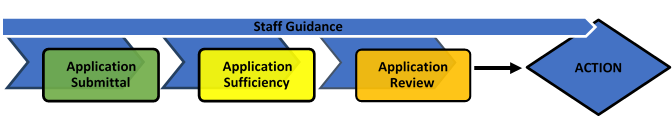
(b)
Applicability. No building, tenant space, or structure shall be used for the purpose of operating a business, whether for profit or not-for-profit, until the Administrator has issued a Business Use Permit. The business owner and property owner, or agent shall make application, on the most current Business Use Permit application form, to the County.
(c)
Component Parts of Review Procedure.
(1)
Application Submittal. The Administrator shall ensure compliance with this UDC and any stipulations applied during the Rezoning or Special Exception process prior to issuing a Business Use Permit. The Administrator may only issue a Business Use Permit when all requirements of this UDC and the County Code, including but not limited to Chapter 22 (Building Code), Chapter 58 (Fire Prevention and Protection), Chapter 70 (Impact Fees and Capacity Fees), and Chapter 126 (Utilities) have been met.
(2)
Application Sufficiency. A Business Use Permit application shall provide all information required for the County to determine if the proposed business complies with this UDC and the County Code, including but not limited to Chapter 22 (Building Code), Chapter 58 (Fire Prevention and Protection), Chapter 70 (Impact Fees and Capacity Fees), and Chapter 126 (Utilities).
(3)
Application Review. The Business Use Permit application shall be reviewed for compliance with this UDC and the County Code, including but not limited to Chapter 22 (Building Code), Chapter 58 (Fire Prevention and Protection), Chapter 70 (Impact Fees and Capacity Fees), and Chapter 126 (Utilities).
(4)
Action. The Administrator may issue a Business Use Permit with conditions, including but not limited to conditions requiring completion of a punch list within certain specified time frames.
a.
The Administrator may exercise limited discretion when issuing a Business Use Permit. The Administrator cannot issue a Business Use Permit in violation of any provision of the County Code, or any terms or conditions of a Certificate of Occupancy, Temporary Certificate of Occupancy, Building Permit, Site Development Plan approval, or any other permit or authorization from the County. Any such issuance of a Business Use Permit in violation of the foregoing shall be void.
b.
Non-Transferable. Business Use Permits are non-transferable. Any changes of location, ownership or business use shall require a new Business Use Permit.
c.
Revocation. The Administrator is authorized to, in writing, suspend or revoke a Business Use Permit issued under the provisions of this code wherever the permit is issued in error, or on the basis of incorrect information supplied, or where it is determined that the building or structure or portion thereof or site is in violation of any conditions of, or failure to comply with any terms of, any Certificate of Occupancy, Temporary Certificate of Occupancy, Business Use Permit, Building Permit, Site Development Plan approval, or any other permit or authorization from the County.
(d)
Other Applicable Provisions. Administrative Appeal. Any decision of the Administrator shall be final, provided that the business owner or property owner may, within 30 days of the determination, appeal that determination to the Board as an Administrative Appeal under Section 124-47 of this Article.
Sec. 124-52. - Temporary Use Permit Review Procedure.
(a)
Review Procedure Established. Each Component Part depicted within the flow chart below is required in accordance with Section 124-36 together with this Section 124-52.
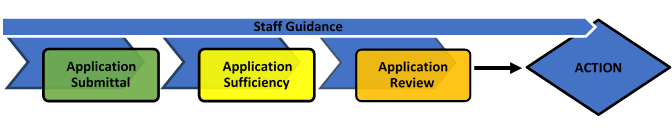
(b)
Applicability. Certain uses are temporary in character. They vary in type and degree, as well as length of time involved. Such uses may have little impact on surrounding and nearby properties or they may present questions involving potential incompatibility of the temporary use with existing uses. Temporary Use Permits shall be in accordance with Section 124-74, Temporary Uses, and the following provisions shall govern temporary uses.
(c)
Component Parts of Review Procedure.
(1)
Application Submittal. A Temporary Use Permit application shall be submitted to the Administrator.
(2)
Application Sufficiency. All applications for Temporary Use Permit shall contain Site Plans or a survey indicating the precise area where the temporary use is to be conducted, the nature of the activities that will occur, and the period of time for which the Temporary Use Permit is requested. The application for a Temporary Use Permit shall be submitted for review at least 10 days prior to an event for the following activities:
a.
Tent Sales;
b.
Grand Opening Sales;
c.
Outdoor Vehicle Shows and Sales;
d.
Outdoor Display of Merchandise.
All other applications for a Temporary Use Permit shall be submitted for review at least 30 days prior to the event.
(3)
Application Review. The Administrator shall review the Temporary Use Permit application and approve, approve with conditions or stipulations, or deny the application. In addition to review by the County, all applications for Temporary Use Permits shall be forwarded to the Sarasota County Sheriff's department for review. The Sheriff's department may recommend denial of any request if it determines that the activity will be detrimental to the safety, health, and welfare of the general public. Said recommendation shall be provided to the Administrator within 5 working days of receipt of the referral. The Administrator or the Board shall have the final authority to approve or deny all Temporary Use Permits as provided herein. Prior to granting a Temporary Use Permit, the Administrator shall ensure that:
a.
Any nuisance or incompatible feature involved is suitably separated from adjacent uses;
b.
Excessive vehicular traffic will not be generated on residential streets;
c.
Adequate parking will be provided for both the temporary and the existing uses and vehicular parking or circulation problems will not be created; and
d.
The use will be compatible with surrounding land uses.
(4)
Action. The Administrator shall act on all Temporary Use Permit applications. Except as otherwise provided in Section 124-74(c) (Temporary Uses Exempt from Permit), the Administrator may revoke any Temporary Use Permit if it is determined that any condition or stipulation has been violated, that the approval was in error or based on inaccurate information, or that the use negatively impacts the surrounding uses or poses a safety hazard, or otherwise is negatively impacting the safety, health or welfare of the general public.
(d)
Other Applicable Provisions.
(1)
Administrative Appeal. Any decision of the Administrator approving, revoking, or denying a Temporary Use Permit may be appealed by an aggrieved party to the Board, which shall hold a duly noticed public hearing before affirming or overturning the action of the Administrator. The Administrator may refer any application for Temporary Use Permit to the Board. The Board, after a duly noticed public hearing, may grant or deny such Temporary Use Permit, or may grant such Temporary Use Permit subject to suitable safeguards and stipulations. The Board shall be assured that the applicant has complied with all standards of subsection (c)(3) above.
(2)
Time Limitation. The Temporary Use Permit, if granted, shall be granted for a specific time period. At the end of such time period, if the use permitted has not been discontinued, it shall be deemed a violation of this UDC and shall be subject to the penalties set forth in Article 16, Violations and Enforcement.
(Ord. No. 2019-006, § 4, 4-23-2019)
Sec. 124-53. - Binding Development Concept Plans Modification Review Procedure.
(a)
Review Procedure Established. Each Component Part depicted within the flow chart below is required in accordance with Section 124-36 together with this Section 124-53.

(b)
Applicability. This Section shall apply to all development subject to Binding Development Concept Plans, including but not limited to development in the CG or CHI District, or in any planned district or in the OPI, CN and CI Districts when a Binding Development Concept Plan is approved with Rezoning or Special Exception.
(1)
Modifications to an approved Binding Development Concept Plan which are in substantial compliance with the approved Binding Development Concept Plan may be permitted by the Administrator with input from appropriate members of Development Review Coordination staff as required, but only upon application for modifications and making a finding that such modifications are:
a.
In accord with all applicable regulations currently in effect; and
b.
In accord with all the stipulations, and requirements specified in the ordinance approving the Binding Development Concept Plan.
(2)
The Administrator may approve any of the modification requests if it is determined not to be substantial as indicated by the table within Section 124-53(c)(4), below. The Administrator's determination shall be in compliance with the intention of the Board approval of the Binding Development Concept Plan and shall not be contrary to the purposes of this UDC. Those modification applications that are found to be substantial by the Administrator are required to file a full application through the current procedure utilized for the approval of the Binding Development Concept Plan.
(3)
Where an existing Special Exception use or structure is not subject to a Binding Development Concept Plan, the existing use or structure shall not be expanded or enlarged unless a Binding Development Concept Plan for the expansion is approved pursuant to the provisions of this Section 124-53, except as provided below:
a.
Where any Special Exception has been approved without a Binding Development Concept Plan, the Administrator shall have the authority to approve minor modifications to the existing uses or structures without the necessity of formal approval under the provisions of this section, provided that the owner has filed a Development Concept Plan with the Administrator showing the existing structures and uses. Upon filing, such plan shall be incorporated as part of the Special Exception approval and shall be binding upon the property.
b.
For the purposes of this subsection (3), minor modifications shall not include any alterations or expansions of uses within 100 feet of the boundary of the Special Exception approval except as provided within the table of Section 124-53(c)(4). Where the Special Exception was approved for less than an entire property now under unified control, the 100 feet shall be measured from the boundary of the entire property.
c.
Any change in a condition specifically required by the Board as part of the approval of the Special Exception shall not be considered a minor change, unless no longer applicable.
d.
For purposes of this subsection (3), proposed changes to uses or structures that are customarily accessory and clearly incidental and subordinate to permissible existing Special Exception uses and structures, or to permitted uses or structures, shall be construed as minor changes. All other changes shall not be considered minor changes.
e.
For transmission towers, see Chapter 118, Article II of the County Code.
f.
All changes approved by the Administrator, under this paragraph shall otherwise be in conformance with all current standards provided in this UDC.
(c)
Component Parts of Review Procedure.
(1)
Preapplication Conference. A Preapplication Conference is recommended, but not required.
(2)
Application Submittal. All requests for review of modifications to the Binding Development Concept Plans shall include sufficient information to enable the Administrator to make a determination whether or not one or more of the modifications being requested are listed within the table of subsection (4) below as substantial. An application for a modification shall include, at a minimum, the following information:
a.
A statement by the applicant which specifies the exact nature of the changes proposed to the Binding Development Concept Plan and whether each of the criteria contained in subsection (4) below apply;
b.
A graphic or map indicating the boundaries of the entire planned district; the relationship of the portion of the planned district to be changed to the remainder of the planned district, if the revision does not include the entire planned district, and delineating those areas of the planned district that are currently developed. Areas within the planned district that are under separate ownership than the applicant requesting the change shall also be delineated;
c.
A copy of the approved Binding Development Concept Plan;
d.
A revised Binding Development Concept Plan showing the proposed changes; and
e.
If the proposed change is deemed minor, then the applicant shall submit copies of the revised Binding Development Concept Plan to the Administrator for distribution to the members of Development Review Coordination staff.
(3)
Application Sufficiency. Applications for a modification to a Binding Development Concept Plan shall be accompanied by a clear statement and accounting that presents the applicant's purpose for the requested modification. The statement shall include those facts that clarify the need for the modification, the application's context, and the consequences of the modification.
(4)
Application Review. In reaching a decision as to whether or not proposed modifications are to be considered a substantial modification, the Administrator shall review the record of the project and all material submitted to determine if any of the requested modifications are substantial pursuant to the following table.
(5)
Action. The Administrator shall issue a letter approving the requested modifications to a Binding Development Concept Plan or a letter identifying the modifications that have been determined to be substantial.
(d)
Other Applicable Provisions.
(1)
Administrative Appeal. If the request is denied by the Administrator, the applicant may submit a request to the Board for review and approval of the modification. The Board, after a duly noticed public hearing, may grant the request, grant the request with additional stipulations or safeguards, or deny the request if deemed necessary to prevent negative impacts on surrounding properties. Notice shall be provided as set forth in Section 124-36(c)(5) for the Board public hearings. They may also require that the request be processed as a Rezoning or Special Exception application in accordance with Section 124-39 or 43.
(2)
Development of Lands Subject to Binding Development Concept Plans. Subdivision or Site Development Plans for development of land approved subject to a Binding Development Concept Plan shall be processed in accordance with procedures established in this UDC. Subdivision or Site Development Plan required and submitted shall be in substantial compliance with the approved Binding Development Concept Plan. In addition to the requirements of this UDC determined to be applicable, the following information shall be provided:
a.
Building locations;
b.
Master landscape plan;
c.
Entry walls, privacy walls, fence, wall and planting screen locations, heights and materials; and
d.
The number of total gross acres in the project and the percentages thereof proposed to be devoted to specific types of uses, off-street parking and off-street loading, streets, open spaces, recreation areas, parks, schools and other reservations. The total number of dwelling units in the project by type and overall density and the total square footage of nonresidential land uses, by type, shall be included.
(3)
Subdivision or Site Development Plan. Once Subdivision or Site Development Plan approval has been obtained, the applicant shall proceed in accordance with the requirements of Article 12 and 13 of this UDC determined to be applicable.
(4)
Site Certification. At the time of Site Certification, as applicable, the developer shall file, a legally constituted maintenance association agreement for improving, perpetually operating, and maintaining the common facilities, including streets, drives, parking areas, open space and recreation facilities, landscaped buffer areas, common irrigation, and stormwater management facilities; or the developer shall file such documents as are necessary to show how the said common areas are to be improved, operated, or maintained. Such documents shall be subject to review by an attorney designated by the Board.
(5)
Deviations from Approved Plans. Deviations from approved Binding Development Concept Plans or failure to comply with any requirement, condition or safeguard imposed by the Board during the approval procedure shall constitute a violation of this UDC.
(6)
Building Permit. No Building Permit, in accordance with Section 124-50, shall be issued for development except in conformity with all provisions of the approved Binding Development Concept Plan and other plans submitted under this section. No occupancy permit shall be issued until all improvements have been completed, and the Final Subdivision Plat, Subdivision or Site Development Plan, as applicable, for the project or approved phase or element of the project has been recorded or approved.
(Ord. No. 2021-056, § 9, 11-15-2021; Ord. No. 2026-002, § 5, 1-27-2026)

