
Simi Valley City Zoning Code
CHAPTER 9
34 - Parking and Loading Standards
9-34.010 - Purpose of Chapter
The purpose of this Chapter is to provide off-street parking and loading standards to:
A.
Provide for the general welfare and convenience of persons within the City by ensuring sufficient parking facilities to meet the needs generated by specific uses;
B.
Provide accessible, attractive, secure, and well-maintained off-street parking and loading facilities;
C.
Increase public safety by reducing congestion on public streets;
D.
Ensure access and maneuverability for emergency vehicles; and
E.
Provide loading and delivery facilities in proportion to the needs of allowed uses.
(§ 5, Ord. 1085, eff. January 6, 2006)
9-34.020 - Applicability
Every use, including a change or expansion of a use or structure, shall have appropriately maintained off-street parking and loading areas in compliance with the provisions of this Chapter. A use shall not be commenced and structures shall not be occupied until improvements required by this Chapter are satisfactorily completed.
(§ 5, Ord. 1085, eff. January 6, 2006)
9-34.030 - General Provisions
A.
Increase or change in uses. When any principal structure is enlarged, or increased in capacity, or when a change in use creates an increase in the amount of off-street parking spaces required, additional off-street parking spaces shall be required in compliance with this Chapter.
B.
Whole space required. Any calculation of parking space requirements which results in a fraction of a parking space shall be counted as requiring a whole space.
C.
Use of parking spaces. Required parking spaces shall:
1.
Be used only for parking of vehicles for property owners, guests, patrons, renters or employees;
2.
Not be used for sale, rental, or repair of motor vehicles or the storage of materials; and
3.
Not be used for commercial uses, unless so authorized in compliance with this Chapter.
D.
Combined uses. When two or more uses are located in the same structure or are common developments, the parking requirements shall be the sum of the separate requirements for each use, except as specifically provided in this Chapter.
E.
Reduction of parking for accessory uses allowed. Parking requirements for accessory uses within the same commercial or industrial structure as a principal use may be reduced by up to 50 percent, upon the determination of the applicable review authority that a reduction is justified, based upon the size, shape, and location of the site and the combination of intended uses involved.
F.
Reduction of spaces not allowed. Required off-street parking facilities shall not be reduced in capacity or in area without sufficient additional parking capacity or additional parking spaces being provided to comply with the regulations of this Chapter.
G.
Parking structures in multi-family zoning districts. Parking structures are subject to setbacks, structure height, and other development standards, except that parking structures are allowed in the side and rear setbacks for zero lot line homes and multi-family residential projects in each multi-family residential zoning district.
H.
Screening of underbuilding parking, underground parking, rooftop parking, or parking structures. All underbuilding parking, roof top parking, or parking structures shall be properly screened from any adjoining residential zoning districts or any adjoining public streets.
I.
Tandem parking not allowed except as described herein.
1.
Parking spaces shall not be provided in tandem, except as specifically provided in this Chapter.
2.
All parking spaces shall be free of obstructions, and parking shall be accomplished in a continuous forward movement.
3.
If valet parking is requested in conjunction with a restaurant or café use with table service, the submission and approval by the Director of a valet parking management plan is required. A valet parking program shall include the location of valet parking drop off/pick up area, parking locations, hours of operation and number of staff members providing this service. Tandem parking is allowed for valet service.
(§ 5, Ord. 1085, eff. January 6, 2006; and § 2(Exh. A), Ord. No. 1327, eff. November 11, 2021)
9-34.040 - Residential Use Parking Standards
A.
Location of single-family parking.
1.
Off-street parking spaces for single-family detached dwellings must be located on the same parcel on which the dwelling is located.
2.
Additional uncovered parking for single-family detached dwellings beyond that which is required by this Chapter, may only be placed in the following locations and paved in compliance with Section 9-34.090(F):
a.
In the side yard between the house and side yard property line;
b.
In the front yard between the main driveway and the closest side property line as described in Section 9-34.090(B)(1);
c.
On an approved circular driveway in the front yard;
d.
On an approved driveway leading to a garage or carport located in the rear yard;
e.
In the rear yard when in compliance with subsection 6 of this section; or
f.
On the far side of the front yard, opposite the main driveway, when in compliance with subsection 7 of this section.
3.
Residential off-street parking spaces may only be placed in locations authorized by this Chapter.
4.
The additional parking areas shall also be paved in compliance with Section 9-34.090(F) (Parking and access surface requirements), and accessed in compliance with Sections 9-34.090(A), and (B).
5.
Circular driveways located in front yards must not be used for the parking of any oversized vehicle, trailer, or fifth wheel trailer, as defined in Section 4-9.402.
6.
On properties of less than one acre, up to 400 square feet of area, and on properties of one acre or more, up to 800 square feet of area may be designated for additional uncovered parking, when in compliance with the following standards:
a.
Parking in rear yard areas leading to the designated parking area is prohibited.
b.
Access to the rear yard parking area must originate from a driveway approach or access way approved by the Public Works Director, or designee.
c.
Combined with all other structures, the parking area must not cover more than 40 percent of required rear yard.
d.
Parking areas that are less than 50 feet from the property line must be screened with six foot-high fencing. Fencing materials must comply with Section 9-30.030(A)(6). Rear and side parking screening is not required within 20 feet of the street side of a reverse corner lot.
e.
Parking area must be set back a minimum of three feet from the side and rear property lines.
f.
A Zoning Clearance and Encroachment Permit (if a new driveway approach is required) must be obtained.
7.
A maximum ten foot wide paved parking area, on the opposite side of the existing driveway, closest to the side property line, may be designated for additional uncovered parking when in compliance with the following standards:
a.
A minimum of 50 percent front yard landscaping must be maintained, inclusive of paving allowances as described in Section 9-33.030(C)(1).
b.
The parking area must originate from a driveway approach or access way approved by the Public Works Director, or designee, and be paved in compliance with Section 9-34.090(F).
c.
The parking area must remain outside of the Traffic Sight Safety Area (TSSA) (SVMC Section 9-34.040(F).
d.
A Zoning Clearance and Encroachment Permit (if a new driveway approach is required) must be obtained. An indemnification agreement in a form approved by the City Attorney, and recorded on the property may be provided in lieu of the Encroachment Permit.
e.
A maximum of one recreational vehicle is allowed to be parked within the front yard on an approved parking location, pursuant to SVMC Section 9-34.040.A.3. For the purpose of this section, "Recreational Vehicle" means any vehicle as defined by Section 18010 of the California Health and Safety Code and SVMC Section 9-80.020.
B.
Covered parking required.
1.
Two parking spaces for each single-family dwelling unit shall be located within an enclosed garage.
2.
All other parking spaces may be uncovered.
3.
No on-site parking or access shall be allowed that would necessitate the use of an ADA sidewalk ramp for vehicular access.
C.
Single-family dwelling driveways. All private driveways to garages shall be concrete, not asphalt.
D.
Parking of commercial vehicles in residential zoning districts. Except as authorized by this Chapter, no vehicle which is registered for commercial purposes in compliance with applicable provisions of the California Vehicle Code, or SVMC Section 4-9.401, which exceeds five tons according to the manufacturer's gross vehicle weight rating, shall be parked or left standing on any residentially zoned property, in excess of 30 consecutive minutes unless actual loading or unloading of the vehicle is in progress on the property.
E.
Location and assigned spaces for multi-family dwelling units.
1.
Off-street parking spaces shall be located on the same development site and on the same parcel, but in no event more than 200 feet from the dwelling for which the parking space is provided.
2.
At least one assigned parking space shall be provided for each multi-family dwelling unit.
3.
The assigned space shall not be located more than 200 feet in walking distance from the entry to the unit it is designed to serve.
F.
Traffic Sight Safety Area (TSSA). Off-street parking areas and vehicles on the far side of the front yard, opposite the main driveway (SVMC Section 9-34.040(A)(7)), must remain outside of the traffic sight safety area, as defined in Section 9-80. Parking on the main driveway leading to the required garage is exempt.
(§ 5, Ord. 1085, eff. January 6, 2006, as amended by § 2 (part), Ord. 1110, eff. April 6, 2007, § 2 (Exh. A), Ord. No. 1178, eff. December 8, 2011, Ord. No. 1319, § 2(Exh. A), eff. January 6, 2022,and § 3(Exh. A), Ord. No. 1353, effective December 18, 2023)
9-34.050 - Commercial and Industrial Use Parking Standards
A.
Location of parking.
1.
In commercial and industrial zoning districts, off-street parking shall be located on the same parcel, or, with a reciprocal parking, ingress, and egress agreement, on a parcel contiguous to the use or structure to be served except for restaurant, cafe, or other food and beverage service uses with on-site consumption of food and beverages where parking can be provided via one or a combination of a reciprocal parking, ingress and egress agreement with a property or properties within 300 feet of the facility; an alternate business hours shared parking analysis to share parking with businesses that would not have overlapping business hours; a valet parking service which includes a valet parking program that is approved by the Director. Where parking is provided on a separate lot, the 300-foot distance will be measured from distance shall be measured along a legal and safe pedestrian path from the parking space to the nearest entrance of the building or use for which the parking is required notwithstanding any restrictions below.
2.
The required parking spaces shall not be located in the rear of commercial structures unless direct access for the customers to the facility is provided.
3.
Parking shall not be located across a street from the use or structure to be served.
B.
Allowable reduction for combined parking facilities.
1.
At the discretion of the applicable review authority, where two or more commercial or industrial uses in a planned commercial development are combining parking facilities and the business hours of the uses do not overlap, the minimum space requirement may be reduced by a maximum of 25 percent of the sum of the requirements of the various uses computed separately; provided, a minimum of 20 parking spaces shall be provided.
2.
The reduction shall be subject to the approval of the covenants, conditions, and restrictions for the subject project by the applicable review authority, through the planned development review process.
C.
Racks not counted as parking spaces. For auto repair shops or other similar uses, the racks and pump blocks shall not be considered in calculating required off-street parking spaces.
D.
Commercial uses not specified. Commercial parking requirements for uses not specified in Article 2 (Zoning Districts, Allowable Land Uses, and Zone-Specific Standards) shall be based upon a standard of one space for each 250 square feet of floor area, unless the applicable review authority approves a different parking requirement based on the most comparable use specified in Article 2.
E.
Retail shopping center parking. In shopping centers when:
1.
Medical office spaces exceed 10 percent of the total gross floor area, that portion in excess of 10 percent of the gross floor area shall be calculated at a ratio of one parking space for each 200 square feet of gross floor area;
2.
Cinema spaces exceed 10 percent of the total gross floor area, that portion in excess of 10 percent of the gross floor area shall be calculated in compliance with Section 9-34.060 (Parking Space Requirements); and
3.
Restaurant, cafe, or other food and beverage service uses with on-site consumption of food and beverages, that exceed 20 percent of the total gross floor area, that portion in excess of 20 percent of the gross floor area shall be calculated at a ratio of one parking space for each 125 square feet gross floor area. For exact parking space requirements, consult Section 9-34.060 (Parking Space Requirements).
4.
Dance halls, health spas, skating rinks, and similar participatory uses including Residential Care Facilities that exceed 10 percent of the total gross floor area, that portion in excess of 10 percent of the gross floor area shall be calculated at a ratio of one parking space for each 100 square feet gross floor area. For exact parking space requirements, consult Section 9-34.060 (Parking Space Requirements).
F.
Office buildings that exceed 25,000 gross square feet.
1.
Medical office space that exceeds 10 percent of the total gross floor area shall be calculated at a ratio of one parking space for each 200 square feet of gross floor area.
2.
For multi-tenant office buildings, the internal corridors, hallways, restrooms, and lobbies used by all the tenants may be excluded from the square footage calculations in determining parking requirements.
G.
Rehabilitation of Existing Commercial or Industrial sites. Existing projects may apply to reduce parking in accordance with Section 9-44.120 [Rehabilitation Project Standards].
(§ 5, Ord. 1085, eff. January 6, 2006, as amended by Exh. A, Ord. 1147, eff. August 20, 2009; § 4 (Exh. A), Ord. No. 1207, eff. March 28, 2013; § 4(Exh. A), Ord. No. 1270, eff. May 25, 2017 and § 2(Exh. A), Ord. No. 1327, eff. November 11, 2021)
9-34.060 - Parking Space Requirements
Off-street parking spaces for uses in all zoning districts shall be provided in compliance with Table 3-4 (Parking Requirements by Land Use), below:
TABLE 3-4 - PARKING REQUIREMENTS BY LAND USE
* Where office space exceeds the allowance specified, additional parking shall be provided as specified for business and professional offices for the excess floor area. See "Service Uses" below.
** Refer to 9-44.085 for alternate parking options.
(§ 5, Ord. 1085, eff. January 6, 2006, as amended by § 2 (part), Ord. 1110, eff. April 6, 2007 and § 2 (Exh. A), Ord. No. 1183, eff. March 15, 2012; § 4 (Exh. A), Ord. No. 1207, eff. March 28, 2013; § 2(Exh. A), Ord. No. 1265, eff. January 9, 2017; § 2 (Exh. A), Ord. No. 1323, eff. August 26, 2021; § 2(Exh. A), Ord. No. 1324, eff. September 23, 2021; § 2(Exh. A), Ord. No. 1327, eff. November 11, 2021 and § 2(Exh. A), Ord. No. 1328, eff. November 11, 2021)
9-34.070 - Miscellaneous Provisions
A.
Compact parking spaces.
1.
The use of compact parking spaces are restricted to projects for which the applications were deemed complete before July 17, 1997.
2.
The spaces shall be a minimum of seven and one-half feet in width and 15 feet in depth.
B.
Handicapped parking spaces. For all multi-family commercial, and industrial projects, handicapped parking spaces shall be designed and designated specifically for use by handicapped persons in compliance with State law (California Administrative Code Title 24). The parking requirements of an existing use or site may be reduced, where the reduction is necessary to allow for newly required handicapped parking and/or access, as required by the California Building Code.
C.
Guest parking. Guest parking spaces shall be clearly identified by the appropriate marking of each space on the asphalt/concrete surface or appropriate signs.
D.
Bicycle parking facilities.
1.
In commercial and industrial projects with 20 or more required parking spaces, a rack or other secure device for the purpose of storing and protecting bicycles from theft shall be installed.
2.
The devices shall be provided with a minimum capacity of one bicycle for each 20 required off-street parking spaces.
3.
The devices shall be located so as not to interfere with pedestrian or vehicular traffic.
E.
Transportation Demand Management (TDM).
1.
In all residential and nonresidential zoning districts, the requirements of this Chapter, the requirements of Chapter 9-39 (Transportation Demand Management) regarding parking shall apply.
2.
Should any conflict arise in the application of this Chapter and Chapter 9-39, the latter shall prevail.
(§ 5, Ord. 1085, eff. January 6, 2006 as amended by § 2 (Exh. A), Ord. No. 1183, eff. March 15, 2012)
9-34.080 - Dimensional Requirements
A.
Parking space table. Except as specified in Subsections B, C, D, and E, below, minimum off-street parking space dimensions shall be in compliance with Table 3-5 (Parking Dimensional Requirements), below.
TABLE 3-5 - PARKING DIMENSIONAL REQUIREMENTS
Notes:
* 25′ minimum width required for two-way travel.
** The interlock reduction shall only be applied where the subject spaces have been striped in a herringbone pattern.
*** Stall length.
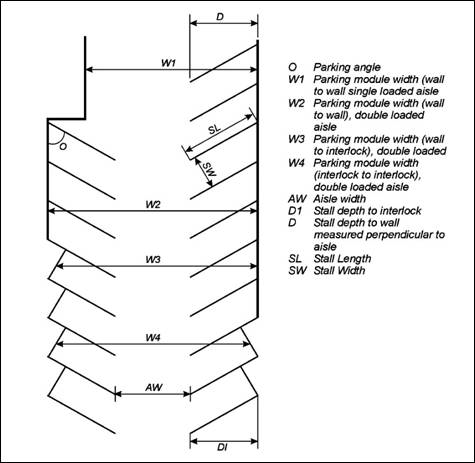
Figure 3-9. Parking Space and Aisle Dimensions
B.
Spaces next to wall. Any uncovered parking space located next to a wall or other solid barrier shall be widened by an additional two feet.
C.
Handicapped parking spaces. Handicapped parking spaces shall be sized in compliance with State law (California Administrative Code Title 24).
D.
Covered garage spaces.
1.
In an enclosed garage (containing three walls, a roof, and garage door) for single-family dwellings, each parking space shall have a minimum clear width of 10 feet and minimum clear length of 20 feet.
2.
For a single garage enclosing only one required parking space, the minimum clear width shall be 12 feet.
E.
Reduced parking space length.
1.
The standard 18-foot long parking space for open parking may be reduced by up to two feet if the overhang of the reduced spaces is used for additional landscaping or the overhang is located over a sidewalk.
2.
Either landscaping or any sidewalks shown shall be a minimum of seven feet in depth.
3.
When a combination of landscaping and a sidewalk is provided to achieve the minimum of seven feet, the sidewalk abutting the parking space shall be a minimum of five feet in width.
4.
If a sidewalk directly adjoins the curb/space without any intervening landscaping, the sidewalk shall be a minimum of six feet in width.
5.
The curb shall act as a wheel stop with no other wheel stop required.
6.
Section 9-34.090 (Design Requirements), below, which mandates a minimum of a 10-foot wide planter area adjacent to a public street shall not require the additional two feet of landscaping if the parking stall is reduced to 16 feet.
F.
Reduced parking space length in parking structures. The standard size parking space length may be reduced in parking structures up to two feet in length where structural elements (walls or support columns) preclude the use of full-size parking spaces. Under this provision, reduced parking space stalls shall not constitute more than two percent of all parking spaces within the structure.
G.
Clearance for covered parking. In recognition of Subsections E and F, immediately above, in multiple bay parking structures (e.g., carports, underground parking, etc.) where covered parking occurs that provides pillars and posts for roof support, parking stall design shall provide for a clear nine-foot by 18-foot minimum dimension with no encroachment for structural supports.
H.
Turning radius requirements. For all parking lots, end planters must be designed for a minimum inside turning radius of 15 feet.
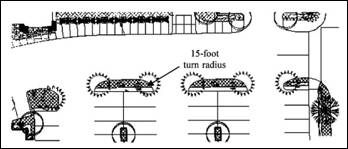
Figure 3-10. Parking lot designed with end planters with 15-foot turn radius
(§ 5, Ord. 1085, eff. January 6, 2006)
9-34.090 - Design Requirements
A.
Access drives. Except for single-family detached dwellings, groups of four or more parking spaces shall be located and served by an access drive in a manner that ensures that use of the spaces and access drive would not require a backing movement or other maneuvering within a street right-of-way, excluding alleys.
1.
Vertical clearance of all access drives shall be a minimum of 13 1/2 feet above the finished surface.
2.
Entrances from and exits to streets and alleys shall be provided at locations reviewed and approved by the Director and the Director of Public Works.
a.
Except for single-family detached dwellings, and unless expressly recommended otherwise by the Directors, access drives onto public streets shall be a minimum of:
(1)
100 feet apart, measured centerline to centerline; and
(2)
300 feet apart on arterial streets.
b.
Where the nature or location of the project precludes compliance with the above listed minimums, the maximum possible separation shall be provided.
3.
Minimum aisle widths.
a.
The minimum width of access driveways for:
(1)
Detached single-family residences or for duplexes on a single parcel shall be nine feet; and
(2)
Any greater number of residential units on a single parcel, or any commercial or industrial project site shall be as wide as the aisle widths identified in Section 9-34.080 (Dimensional Requirements), above.
(3)
For multi-family residential infill projects of no more than four dwelling units where a drive aisle provides two-way access, and is not required to provide turning movements for parking, the minimum required aisle width shall be 20 feet.
b.
Driveway approaches (within the public right-of-way) shall conform to Public Works standards.
c.
Any increase in off-site width and the length for which that width extends into the site due to the nature, substantial size, or location of the project, or the use of a common driveway, shall be reviewed and approved by the Director and the Director of Public Works.
4.
All access driveways, except for single-family residential parcels, shall have radius side returns per Public Works Standards where the driveway meets the public or private street.
5.
No part of a driveway approach shall extend onto the frontage of adjacent property nor be within the street curb return of the fronting street nor within five feet of the end of the street curb return. No on-site parking or access shall be allowed that would use a handicap ramp for vehicular access.
6.
Wherever possible, a common driveway for two or more adjacent projects shall be provided.
7.
The centerline of a driveway shall be no more than 15 degrees from perpendicular to the street centerline.
B.
Single-family detached residences.
1.
A driveway shall be a minimum nine feet wide but not wider than the garage it serves, except for the allowance of an additional 10-foot wide parking space which may be placed alongside a driveway, on the side closest to a side property line.
2.
An unobstructed paved parking space, a minimum of 20 feet in length, shall be provided in front of each required parking space.
3.
No onsite parking or access shall be allowed that would use an ADA sidewalk ramp for vehicular access.
C.
Tandem parking prohibited. Except as otherwise allowed in this Chapter, each required parking space shall have unobstructed access to a street, alley, aisle, or drive connecting with a street or alley without requiring movement of another vehicle.
D.
Commercial and industrial development access. Private streets serving commercial and industrial developments shall have a minimum vehicle access width of 40 feet.
E.
Cul-de-sac design.
1.
The maximum length of any cul-de-sac shall be 800 feet.
2.
The minimum cul-de-sac radius for commercial or industrial projects shall be 50 feet, per Public Works Standards.
F.
Parking and access surface requirements.
1.
All parking areas, aisles, and on-site access drives shall be paved with a minimum of:
a.
Two inches of asphalt on four inches of compacted base or four inches of concrete in residential areas; or
b.
Four inches of concrete in commercial and industrial areas;
2.
Driveway approaches at public streets shall be constructed per Public Works Standards, with six inches of concrete for residential use and seven inches of concrete for commercial or industrial use;
3.
All parking areas, aisles, and access drives shall be maintained with a durable, dustless surface; and
4.
The Director of Public Works may approve alternate materials and specifications in lieu of the requirements identified in this Subsection.
G.
Lighting. Lights provided to illuminate a parking facility or paved area shall be designed to reflect away from any residential use in order to eliminate glare, in compliance with Section 9-30.040 (Exterior Light and Glare).
H.
Landscaping. Landscaping shall be installed and maintained in compliance with Chapter 9-33 (Landscaping Standards).
I.
Striping.
1.
Parking lots shall be completely striped, indicating individual parking spaces and traffic lanes as provided in the City approved plan.
2.
Handicapped spaces shall be striped, marked, and signed in compliance with State law (California Administrative Code Title 24).
J.
Drainage.
1.
All parking and circulation areas shall be designed with an adequate drainage system, and improvements shall consist of appropriate devices as specified and approved by the City Engineer.
2.
Drainage shall be subject to all NPDES and SQUIMP Requirements of the Stormwater Quality Management Program.
K.
Maximum slopes.
1.
Parking lot areas.
a.
Parking lot areas used exclusively for parking and turnarounds shall be designed and improved with a grade not exceeding five percent slope.
b.
Parking spaces for the handicapped shall be in compliance with State law (California Administrative Code Title 24).
2.
Driveways.
a.
Driveways within a parking lot shall be designed and improved with a grade not exceeding 10 percent slope.
b.
Driveways providing a means of ingress and egress to a lot upon which is proposed to be located one single-family dwelling shall not be subject to this requirement.
L.
Drive-through stacking. All facilities proposing a drive-through feature shall provide a minimum vehicle stacking length of 150 feet, with the exception of drive-through pharmacies, which shall provide a minimum vehicle stacking length of 85 feet (queuing distance may be achieved by queuing in more than a single row).
M.
Refer to Section 9-44.160 for Accessory Dwelling Unit parking.
(§ 5, Ord. 1085, eff. January 6, 2006, as amended by § 2, Ord. 1094, eff. July 20, 2006, § 2 (part), Ord. 1110, eff. April 6, 2007; § 4, Ord. 1128, eff. April 17, 2008 and § 2(Exh. A), Ord. No. 1265, eff. January 9, 2017)
9-34.100 - Loading Zone Standards
A.
Standards. Every use hereafter inaugurated, and every structure hereafter erected or altered, shall have permanently maintained off-street loading and unloading spaces as follows:
1.
In the case of mixed uses, the total number of required loading spaces shall be the sum of the requirements for the various uses computed separately.
2.
Loading space facilities for one use shall not be considered as providing required loading space facilities for any other use.
3.
Requirements for uses not specifically listed in Table 3-6 (Loading Space Requirements), below shall be based upon the requirements for comparable uses listed and upon the particular characteristics of the use as determined by the Director.
4.
A fraction of a space greater than one-half shall be counted as a whole space.
B.
Quantity. The minimum number of loading spaces required shall be in compliance with Table 3-6 (Loading Space Requirements), below.
TABLE 3-6 - LOADING SPACE REQUIREMENTS
C.
Dimensional requirements. All off-street loading facilities shall comply with the minimum dimensions identified in Table 3-7 (Minimum Loading Space Dimensions), below.
TABLE 3-7 - MINIMUM LOADING SPACE DIMENSIONS
D.
Location of loading facilities. Required loading facilities shall be located on the same site they are designed to serve.
1.
Required loading facilities shall not be located in any required setback areas.
2.
Loading areas and docks shall be allowed only in rear and side lot areas.
3.
Loading doors shall not open toward public streets.
4.
Sufficient space for turning and maneuvering loading vehicles shall be provided on the subject site.
5.
Loading spaces shall be located and designed so that trucks shall not back into a public street or alley nor shall a loading area be designed to require the use of a public right-of-way for access to a loading dock.
6.
No part of an alley or street shall be used for loading, except areas designated by the City for loading.
7.
No area may be utilized and counted both as a required parking space and a required loading berth space.
(§ 5, Ord. 1085, eff. January 6, 2006)

