
Villa Park City Zoning Code
ARTICLE 14
- MEASUREMENTS AND DEFINITIONS
14.1.1. - Rounding
When calculations required under this zoning ordinance result in fractions, the results must be rounded as follows:
A.
Minimum Requirements
1.
In the case of minimum off-street parking requirements, any fractional result of less than one-half is rounded down to the whole number and any fractional result of one-half or more is rounded up to the next whole number.
2.
In all other cases, when a regulation of this zoning ordinance is expressed in terms of a minimum requirement, any fractional result must be rounded up to the next consecutive whole number.
B.
Maximum Limits
When a regulation of this zoning ordinance is expressed in terms of a maximum limit, any fractional result must be rounded down to the whole number. For example, if a maximum allowance of one dwelling unit for every two thousand six hundred (2,600) square feet of lot area is applied to a ten thousand (10,000) square foot lot, the resulting fraction of 3.85 is rounded down to three (3) allowed dwelling units.
14.1.2. - Lot Area
Lot area is measured as the total ground-level surface area contained within the boundaries of a lot.
14.1.3. - Lot Area per Dwelling Unit
Lot area per dwelling unit is a measure of residential density. It governs the amount of lot area required for each dwelling unit on the subject lot. To determine the number of dwelling units allowed on a lot, divide the lot area by the minimum lot-area-per-unit requirement, and round any fractional result down to the whole number.
14.1.4. - Building Footprint
Building footprint is measured as the horizontal area on a lot that is covered by the subject building, excluding open steps and terraces, cornices, and roof overhangs that do not project more than twenty-four (24) inches.
14.1.5. - Floor Area
The floor area of a building is measured as the area of all floor space within the outside line of walls of a building, including the total of all space on all floors of a building. It does not include porches, garages, or space in a basement if the basement is used for storage or incidental uses. Any space devoted to off-street parking or loading is not included in the calculation of floor area.
14.1.6. - Lot Width
Lot width is measured as the distance between the side lot lines of a lot measured along the required front street setback line.
14.1.7. - Lot Depth
Lot depth is measured as the mean horizontal distance between the front and rear lot lines of a lot.
14.1.8. - Lot Coverage
Lot coverage is measured as the total cumulative area of a lot that is covered by all principal buildings and accessory structures on the lot, as measured at the point where such buildings and structures meet the ground (i.e., building footprint).
14.1.9. - Setbacks
A.
Measurement
1.
Setbacks are measured from the referenced lot line (street front, street side, interior side, or rear) to the closest point of the building or structure.
2.
Street setbacks are measured from the lot line that abuts the street.
3.
Required front street setbacks extend from side lot line to side lot line. Required side street setbacks extend from front lot line to rear lot line.
4.
Interior side setbacks are measured from side lot lines that do not abut a street. Required interior side setbacks extend from the point of the required front setback to the point of the required rear setback.
5.
Rear setbacks are measured from the rear lot line. Required rear setbacks extend from side lot line to side lot line.
6.
On double-frontage lots, front street setbacks apply from both opposing lot lines that abut the street.
B.
Contextual Setbacks for Infill Development
1.
Applicability
Contextual front street setback requirements apply in R districts to any new building constructed on a lot that abuts one (1) or more lots occupied by principal buildings that are setback a lesser distance than required by the subject lot's zoning district.
2.
Measurement
a.
The minimum contextual setback is determined by calculating the mean street yard depth that exists on the nearest two (2) lots on either side of the subject lot.
b.
If one (1) or more of the lots required to be included in the minimum contextual setback calculation are vacant, the vacant lot will be deemed to have a street yard depth equal to the minimum street setback requirement of the subject zoning district. See [Figure] 14-1.
Figure 14-1. Calculation of Contextual Setback (1)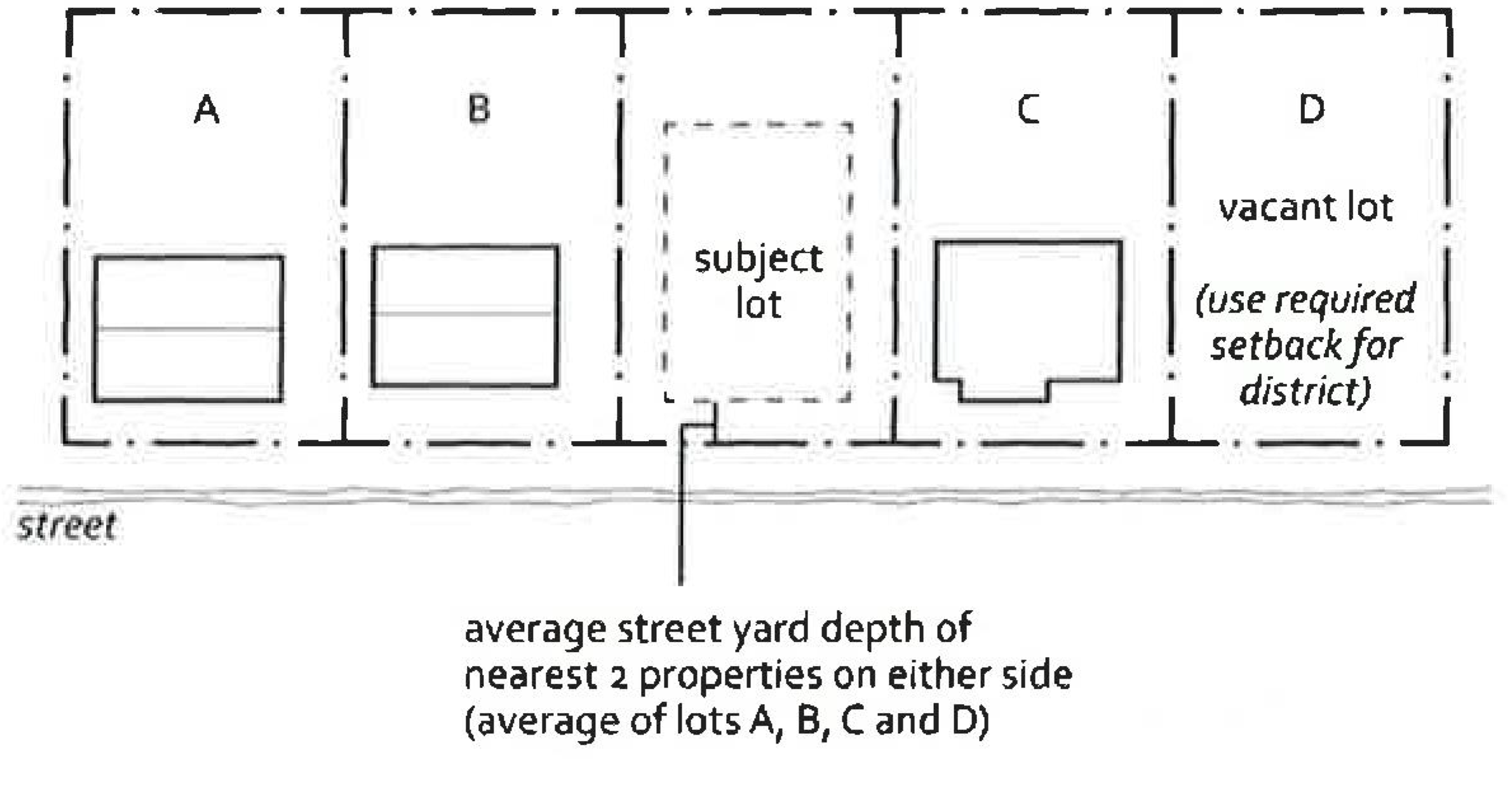
c.
Lots with frontage on a different street than the subject lot are not used in computing the minimum contextual setback. See Figure 14-2.
Figure 14-2. Calculating Contextual Setback (2)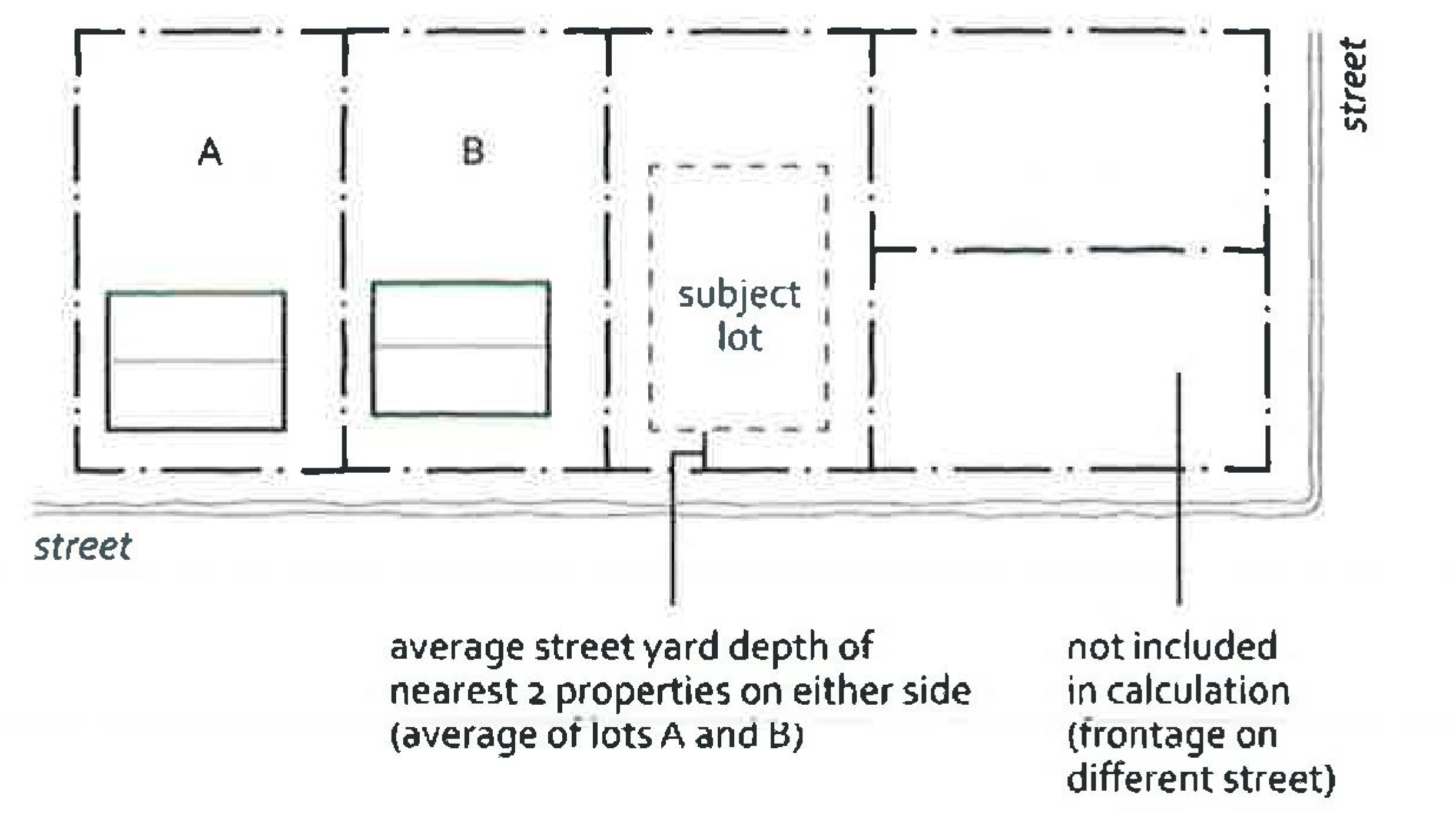
d.
When the subject lot is a corner lot, the mean street yard depth will be computed on the basis of the nearest two (2) lots with frontage on the same street as the subject lot. See Figure 14-3.
Figure 14-3. Calculating Contextual Setback (3)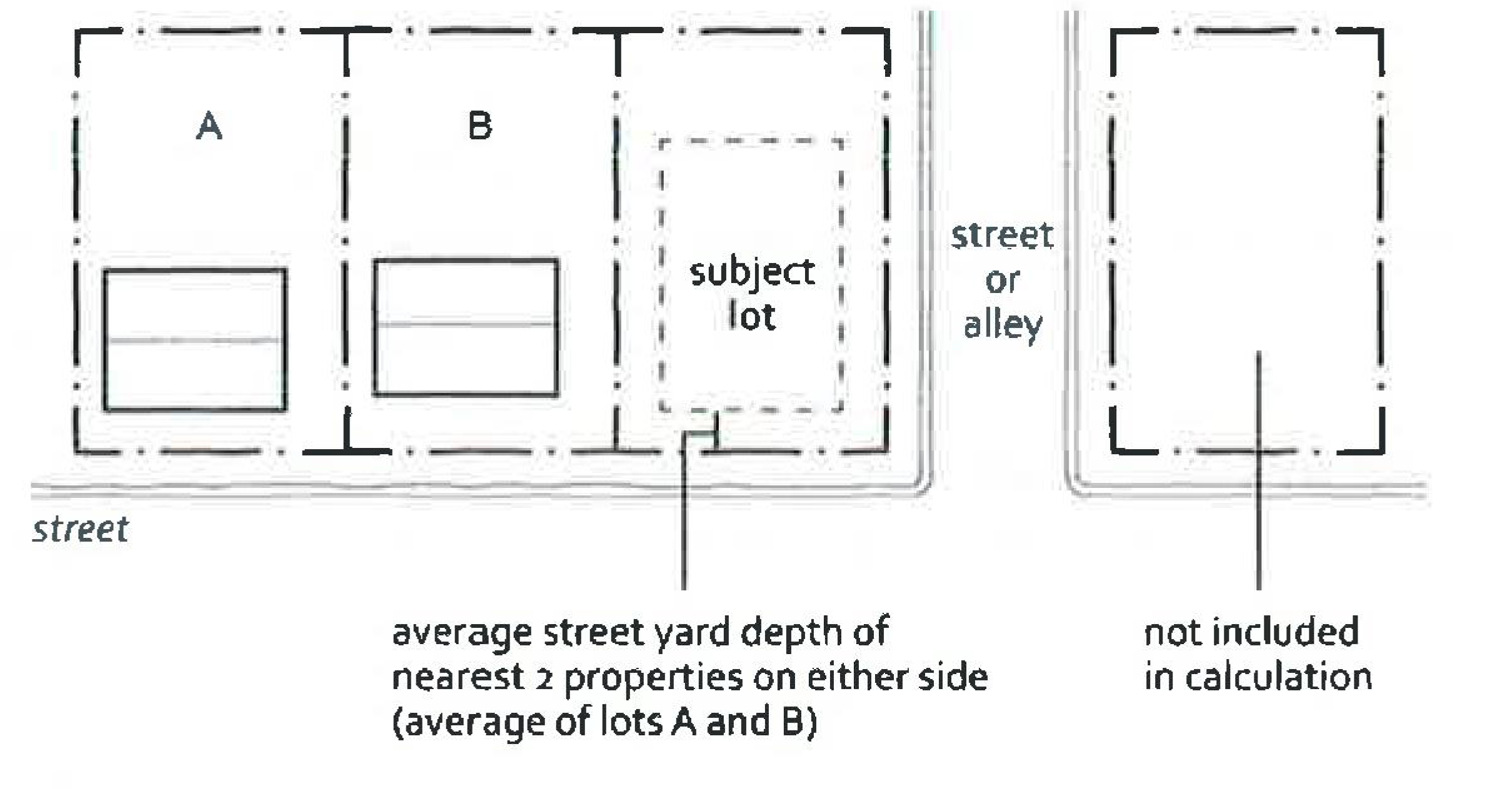
e.
In an R district, the contextual setback may not be less than twenty (20) feet.
C.
Permitted Obstructions and Encroachments
Setbacks in R zoning districts must be unobstructed and unoccupied from the ground to the sky except as indicated in Table 14-1 which identifies features that are allowed to encroach into required setbacks in R zoning districts.
Use of "-" indicates not permitted in the yard or required setback.
"Yes" indicates that the feature is permitted in the respective yard and may obstruct/encroach into the required setback per the definition in the notes column.
"No" indicates the identified structure is permitted in the respective yard, but prohibited from obstructing or encroaching into the minimum required setback.
Table 14-1: Permitted Setback Obstructions/Encroachments
(Ord. No. 4452, § 9, 12-9-24)
14.1.10. - Height
A.
Buildings
1.
Measurement
Building height is measured as the vertical distance from the finished lot grade at the horizontal midpoint of the front of the building to the highest point of the roof surface for a flat roof, to the deck line for a mansard roof, to the mean level between the highest eave and highest ridge for hip, gabled, and gambrel roofs.
Figure 13-5. Building Height Measurement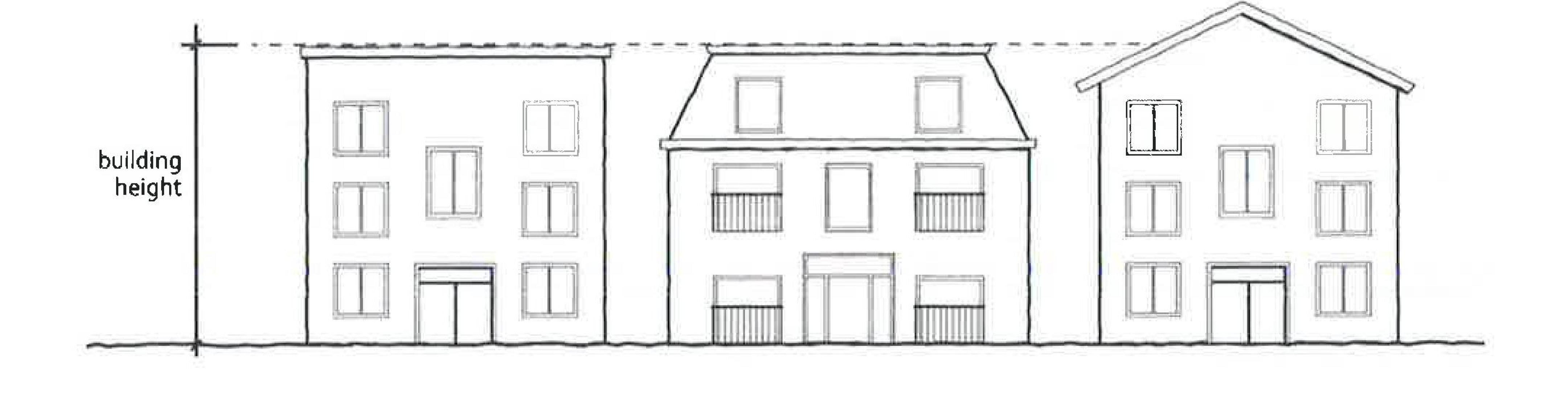
2.
Exceptions
a.
Utility penthouses are not be included in the height of the building unless the aggregate area of such structure exceeds one-third of the area of the roof of the building.
b.
Chimneys, dormers, cooking towers, elevator bulkheads, fire towers, monuments, stacks, stage towers or scenery lofts, tanks, water towers, ornamental towers and spires, church steeples, or necessary mechanical appurtenances, may only be erected to the maximum height of the subject district, except as otherwise expressly stated. See also section 9.1.5 for regulations governing screening of rooftop mechanical equipment.
c.
Public, civic and institutional uses permitted by special use, may be erected to a height of up to sixty (60) feet in all zoning districts and religious assembly uses permitted by special use may be erected to a height of up to seventy-five (75) feet in all zoning districts if the building is set back from each lot line at least one (1) foot for each foot of additional building height above the height limit otherwise allowed in the subject zoning district.
B.
Fences
The height of a fence is measured from the ground at the point of measurement unless the elevation of the ground at the point of measurement has been artificially changed by installation of a berm, mound, or fill that was not approved as part of a subdivision grading plan. If the elevation at the point of measurement has been artificially changed, then fence height must be measured from the elevation of the ground prior to the change.
C.
Telecommunication Towers
The height of a telecommunication tower is measured from the finished grade of the parcel directly beneath the tower to the highest point on the tower, including the base pad and any antenna.
D.
Antenna
The height of an antenna is measured vertically from the highest point of the antenna when positioned for operation to the point at which the antenna is attached to the building or antenna-supporting structure, whichever is applicable.
(Ord. No. 4036, § 2(Exh. A), 6-11-18; Ord. No. 4309, §§ 2—4, 11-14-22; Ord. No. 4401, § 2(Exh. A), 4-8-24)
14.2.1. - General
Words and terms expressly defined in this zoning ordinance have the specific meanings assigned unless the context indicates another meaning. General usage terms that are not expressly defined in this zoning ordinance have the meaning given in the latest edition of Merriam-Webster's Unabridged Dictionary. Specialized zoning and development-related terms have the meaning given in the latest edition of The Complete Illustrated Book of Development Definitions,
14.2.2. - Use-Related Terms
See Article 6 for an explanation of the use categorization system used in this zoning ordinance and for definitions of use types.
14.2.3. - Sign-Related Terms
See section 8.12.
14.2.4. - Measurements and Calculations
See section 14.1 for an explanation of various measurement-related concepts, such as how building height, lot width and contextual (average) setbacks are measured or calculated.
14.2.5. - Words and Terms Beginning with "A"
A.
Abut or Abutting: To touch or share a contiguous boundary or border, except that in the context of hearing notice and screening or enclosure requirements, "abutting" includes properties that are contiguous or separated therefrom only by a non-arterial street, alley or railroad right-of-way.
B.
Accessory dwelling unit: A residential dwelling unit, but not a mobile home, located on the same lot as a single-unit dwelling, either within the same building as the single-dwelling unit or in a detached accessory building. Secondary dwelling units shall be developed in accordance with the standards set forth in Section 6.13.
C.
Accessory structure or use: A use or structure that meets the criteria established in Section 6.10.1.
D.
Adjacent: Lying near or in the immediate vicinity.
E.
Agent: A person duly authorized to act on behalf of the owner of the subject property.
F.
Alley: A public or private street that affords only a secondary means of access to abutting property.
G.
Amateur Radio Facility: Any tower or antenna used for non-commercial radio communications (transmission and reception) maintained by an FCC-licensed amateur radio operator.
H.
Amusement ride: Any mechanized device, or combination of devices, including electrical equipment that is an integral part of the device or devices, that carries passengers along, around, or over a fixed or restricted course for the primary purpose of giving its passengers amusement, pleasure, thrills, or excitement.
I.
Annual (plant): A plant that completes its life cycle in one (1) year or less.
J.
Apiary: An enclosure used to house bees.
K.
Applicant: The owner of the subject property or an agent authorized by the subject property owner to submit an application on the owner's behalf.
(Ord. No. 4452, § 10, 12-9-24)
14.2.6. - Words and Terms Beginning with "B"
A.
Base (Zoning) District: Any zoning district that is not an overlay district.
B.
Basement: A story having more than one-half its height below grade. A basement is not counted as a story for the purpose of height regulations expressed in stories.
C.
Berm: An earthen mound designed to provide visual screening or a buffer.
D.
Bioretention: The use of soil and plants to remove pollutants from stormwater runoff.
E.
Blockface: Property abutting on one side of a street between the two (2) nearest intersecting streets, railroad rights-of-way, or other natural or human-made barriers.
F.
Block party: Any gathering in, upon, or around a street or streets, of residents of a common block or street or group of connected blocks or streets, that requires blockading of streets.
G.
Boat raft: Any vessel used for water travel or pleasure floating, 32 feet or less in overall length including any boat trailer used to transport it.
H.
Buffer: A combination of physical space and vertical elements, such as plants, berms, fences or walls, the purpose of which is to separate and screen potentially incompatible land uses.
I.
Building: A structure enclosed within a roof and exterior walls or fire walls, built, erected and framed of structural parts, designed for the housing, shelter, enclosure and support of individuals, animals or property of any kind.
J.
Building, principal: A nonaccessory building in which the principal of the property is conducted.
K.
Build-to Zone: An area in which the front or corner side facade of a building shall be placed; it may or may not be located directly abutting a lot line. The zone dictates the minimum and maximum distance a structure may be placed from a lot line.
14.2.7. - Words and Terms Beginning with "C"
A.
Camper, truck: A portable RV unit, designed to be loaded onto or affixed to the bed or chassis of a truck. The two (2) basic types are, as follows:
1.
Slide-in camper: A truck camper designed to be loaded onto and unloaded from the bed of a pickup truck.
2.
Chassis-mount camper: A truck camper permanently affixed to a truck chassis.
B.
Canopy: Any structure, movable or stationary, attached to and deriving its support from framework or posts or other means independent of a connected structure for the purpose of shielding a platform, stoop or sidewalk from the elements.
C.
Carnival: Any theatrical, dramatic, musical, or spectacular performance or exhibition, including booths, midway games or shows, or amusement rides.
D.
Carport: A roofed accessory structure that projects from the wall of the principal structure intended to shelter vehicles on a residential property, with at least one side permanently open to the weather.
E.
Car-share Program: A system in which a fleet of cars (or other motor vehicles) is made available for use by members of the car-share program and that exhibit all of the following characteristics:
1.
Members are permitted to use vehicles from the car-share program fleet on an hourly basis;
2.
Car-share vehicles are generally available twenty-four (24) hours a day and seven (7) days a week to members in parking spaces at dispersed locations or facilities; and
3.
No separate written agreement is required each time a member reserves and uses a car-share vehicle.
F.
Car-share Vehicle: A motor vehicle from a car-share program fleet.
G.
Courtyard: An outdoor area enclosed by a building on at least three sides and open to the sky.
14.2.8. - Words and Terms Beginning with "D"
A.
Deciduous: A plant with foliage that is shed annually.
B.
Driveway: A private vehicular access-way necessary for providing access from a public street or alley to an approved off-street parking area.
C.
Dwelling unit: A group of rooms constituting all or part of a dwelling, that are arranged, designed, used or intended for use exclusively as living quarters for one household. Dwelling units include a complete single kitchen permanently installed that serves the entire household.
14.2.9. - Words and Terms Beginning with "E"
A.
E-Cigarette (Electronic Cigarette): Any device that uses an atomizer or similar device that allows users to inhale nicotine vapor of other vapor without the use of fire, smoke or ash, including electronic cigars, electronic pipes and any cartridge or component of the device or related product and any liquid products that are manufactured for use with e-cigarettes.
B.
Electric Vehicle: Any vehicle that is licensed and registered for operation on public and private highways, roads, and streets; either partially or exclusively, on electrical energy from the grid or an off-board source, that is stored on-board via a battery. "Electric vehicle" includes: (1) battery electric vehicles; and (2) plug-in hybrid electric vehicles.
C.
Electric Vehicle (EV) Charging Station: A public or private parking space that is served by battery charging station equipment.
D.
Electric vehicle charging station, private (restricted-access): An EV charging station that is not available for use by the general public. Examples include electric vehicle charging stations that serve residential homeowners or renters, executive parking areas, designated employee parking areas and fleet parking areas.
E.
Electric Vehicle Charging Station, Public: An EV charging station that is accessible to and available for use by the general public.
F.
Electric Vehicle Parking Space: Any parking space that is clearly identified to be used exclusively for the parking of an electric vehicle.
G.
Evergreen: A plant with foliage that persists and remains green throughout the year.
H.
Expression Line: An architectural feature consisting of a decorative, three-dimensional, linear element, horizontal or vertical, protruding or indented at least two (2) inches from the exterior facade of a building typically utilized to delineate the top or bottom of floors or stories of a building, intended to create a shadow line. Examples may include cast stone cornices, pilasters, or stepped brick coursing.
14.2.10. - Words and Terms Beginning with "F"
A.
Fair: An event for the exhibition and promotion of activities in the fields of agriculture, industry, labor, education and such other areas of activities as may be of interest to the public.
B.
Fence: A freestanding structure of metal. masonry, composition or wood or any combination thereof, resting on or partially buried in the ground and rising above ground level, and used for confinement or screening. Any plantings, shrubbery, hedges or other vegetation, whether used individually or in combination with a freestanding structure of metal, masonry, composition or wood, that is installed to provide an effective visual barrier constitutes a "fence" under this ordinance if it is more than four (4) feet in length. Decorative lattice is not intended to be used as a fence.
C.
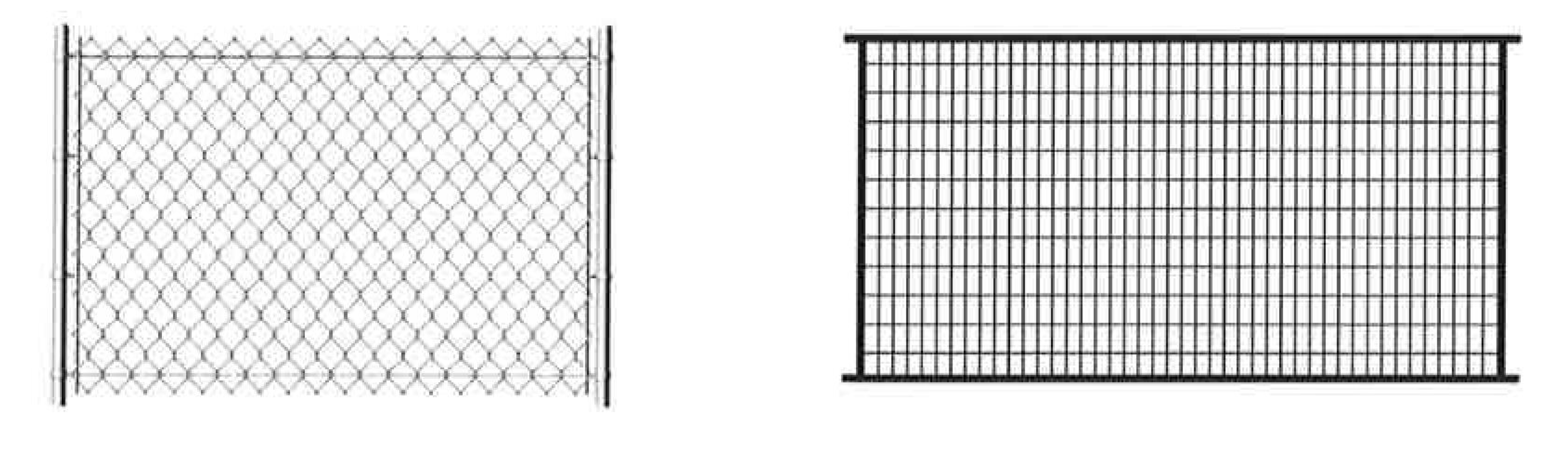
Fence, Mesh: Any fence made of woven material resulting in a diamond or grid pattern with a gauge of 9 or thicker, excluding Fence, Open and Fence, Solid. Commonly referred to as chain-link, wire-mesh, wire netting, or diamond-mesh.
Example:
D.
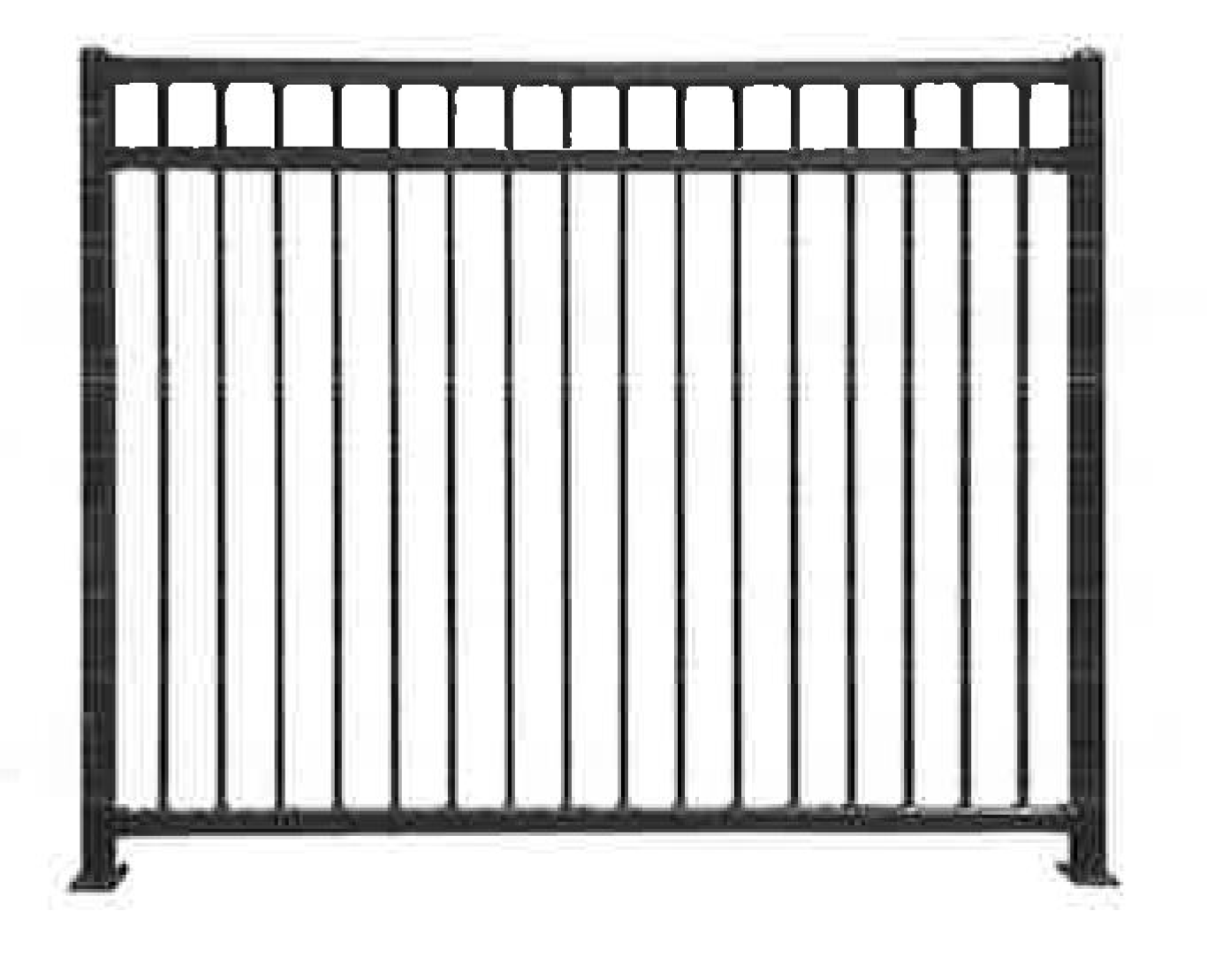
Fence, Open: Any fence that when viewed from an angle of ninety (90) degrees, is at least fifty (50) percent open, excluding Fence, Mesh.
Example:
E.
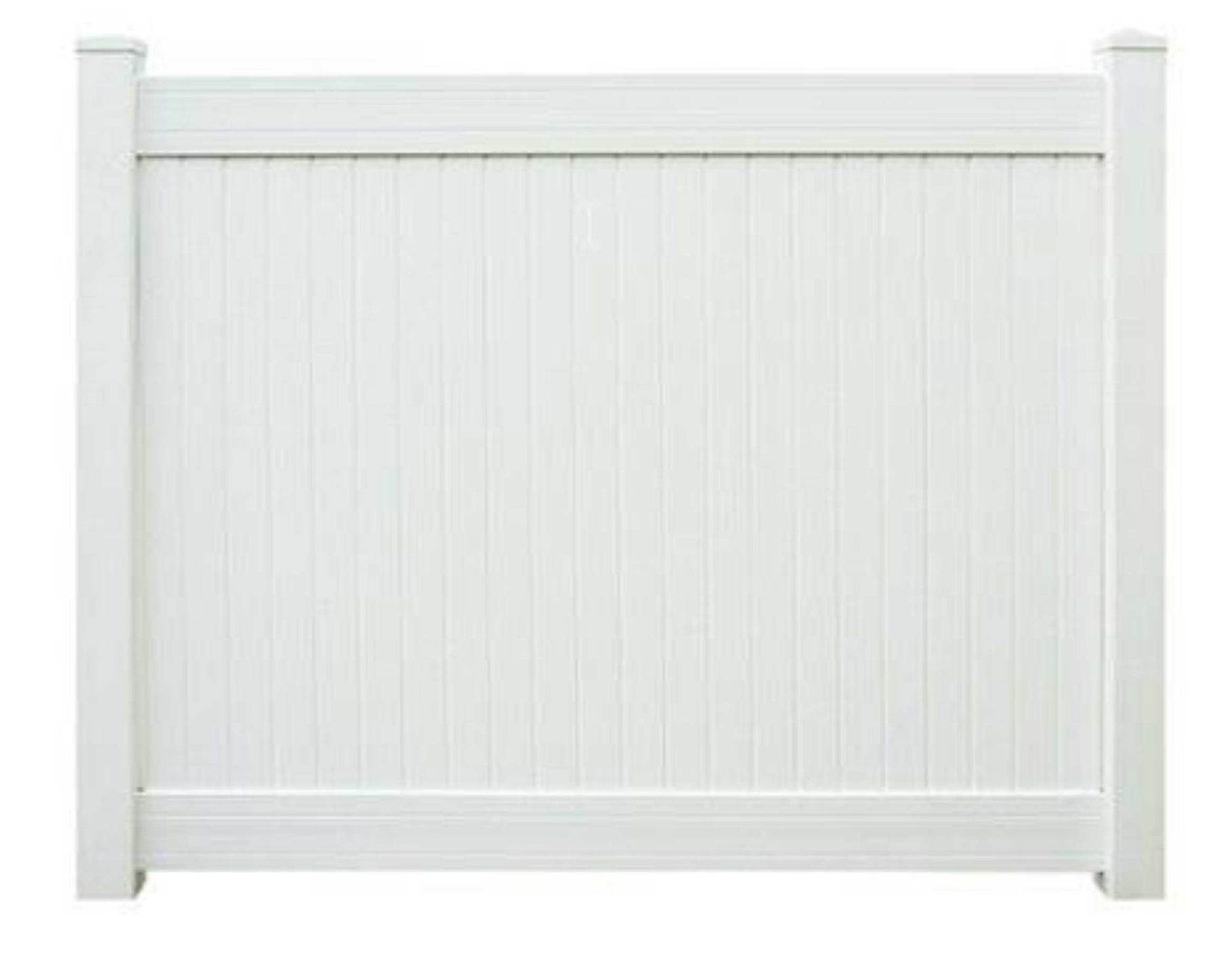
Fence, Solid: Any fence that when viewed from an angle of ninety (90) degrees, is less than fifty (50) percent open, excluding Fence, Mesh.
Example:
F.
Fest or festival: An event that includes some or all of the following: amusement rides; carnivals circuses; fairs; parades; display and sale of arts, crafts, merchandise, food, or (alcoholic or nonalcoholic) beverages.
G.
Flood base elevation: That elevation of the highest flood of record, determined by the village engineer's record of the elevations of the highest flood at locations as indicated on the zoning map. Flood base elevations at intermediate locations must be interpolated along the watercourse between the two (2) nearest base elevations, one upstream and downstream. The controlling flood base elevation for any building site is the same as the flood base elevation at the nearest point of the watercourse, as measured on a line perpendicular to the direction of the watercourse.
H.
Floodplain: That continuous land area adjacent to a watercourse, whose elevation is equal to or below the flood base elevation, including any land that is surrounded on more than one-half its perimeter by land having an elevation equal to or lower than the flood base elevation.
I.
Flood reservoir: A ponding area created for the purpose of impounding floodwaters and alleviating any flood damage that might result from human-made fills.
J.
Foot-candle: A measure of illumination, the amount of light falling onto a surface. One lumen of light, shining evenly across one square foot of surface, illuminates that surface to one foot-candle.
K.
Foundation area: The ground area immediately adjacent to a building on all sides. Foundation areas extend a minimum of five (5) feet in all directions from the foundation of the building.
14.2.11. - Words and Terms Beginning with "G"
A.
Garage, private residential: A detached, enclosed accessory structure or portion of the principal building designed, arranged, used or intended to use for the parking and storage of vehicles owned and operated by the residents of the subject property.
B.
Geothermal Heat Exchange System: Equipment that exchanges thermal energy between the ground (or a water source) and a building. This includes vertical closed loop, horizontal closed loop, water body closed loop system and open loop systems. Also known as ground source heat pumps and geothermal heat pumps.
C.
Greenhouse: A temporary or permanent structure that is primarily used for the cultivation of plants.
D.
Green Roof: An extension of an above-grade building roof that includes at least a waterproof membrane, a root repellent system, a drainage system, a filtering layer, soil with a minimum depth of three (3) inches and native or naturalized plants. Also commonly referred to as a "vegetated roof."
E.
Ground cover: A plant that grows near the ground densely and spreads. Generally an herbaceous perennial, sometimes a woody shrub or vine.
(Ord. No. 4452, § 11, 12-9-24)
14.2.12. - Words and Terms Beginning with "H"
A.
Hedgerow: A row of shrubs and/or trees that occur in a row, like a hedge. Sometimes purposely planted for wind control in agricultural areas. More commonly an area along a road or field boundary that, left uncut, has grown up with various plants, seeded by wind, water, birds or other natural methods.
B.
Home occupation: An accessory use of a dwelling for limited commercial purposes. Home occupations are subject to the regulations of section 6.10.6.
C.
Hoop House: A temporary or permanent structure typically made of flexible pipe or other material covered with translucent plastic, constructed in a "half-round" or "hoop" shape, for the purposes of protecting and cultivating plants. A hoop house is considered more temporary than a greenhouse.
D.
Household: One or more persons occupying a premises and living together as a single housekeeping unit, regardless of whether the persons are related to one other by blood, adoption or marriage; provided, however, that:
1.
No housekeeping unit consisting of all unrelated persons may exceed four (4) persons; and
2.
No housekeeping unit consisting of related and unrelated persons may consist of more than the related family and no more than two (2) other unrelated persons.
For the purpose of this definition of "household," the phrase "living together as a single housekeeping unit" means that all members of the household share common meals, that all members have the equal right to use, in common with each other, the areas customarily considered to be common area in a dwelling unit, including ingress and egress, and that all members share customary household obligations in a manner typical of a traditional nuclear family.
14.2.13. - Words and Terms Beginning with "I"
A.
Impervious Site Coverage: The percentage of a lot developed with principal or accessory structures and impervious surfaces, such as driveways, sidewalks, patios, decks with impervious area underneath, and swimming pools. The determination of whether a surface is impervious or pervious shall be reviewed by the Village Engineer and determined by the Director of Public Works.
14.2.14. - Words and Terms Beginning with "J"
RESERVED
14.2.14.5. - Words and Terms Beginning with "K"
RESERVED
14.2.15. - Words and Terms Beginning with "L"
A.
Landscape architect: A person who, based on education, experience, or both in the field of landscape architecture, is eligible to register and has obtained a certificate to practice landscape architecture under 225 ILCS 15/1.
B.
Landscape area, perimeter: An area around the perimeter of a property not facing a public street. The perimeter landscape area extends from the property line to the nearest building face, parking area, or access drive, exclusive of the foundation area and the interior parkway.
C.
Lawfully Established: A use, structure, lot or sign (as the context indicates) that was established in conformance with all applicable zoning code regulations in effect at the time of its establishment.
D.
Lot: A parcel of land that is designated by its owner or developer, at the time of applying for a building permit or other form of development approval required under this ordinance, as a tract all of which is to be used, developed, or built upon as a unit under single ownership. So long as it satisfies the above requirements, such lot may consist of:
1.
A single lot of record; or
2.
A combination of contiguous complete lots of record.
E.
Lot, corner: A lot located at the intersection of two (2) streets or a lot bounded on 2 sides by a curving street two (2) chords of which form an angle of 120 degrees or less measured on the lot side.
F.
Lot, double-frontage: A lot having frontage on two (2) parallel or non-intersecting streets, as distinguished from a corner lot.
Figure 14-6. Lot Types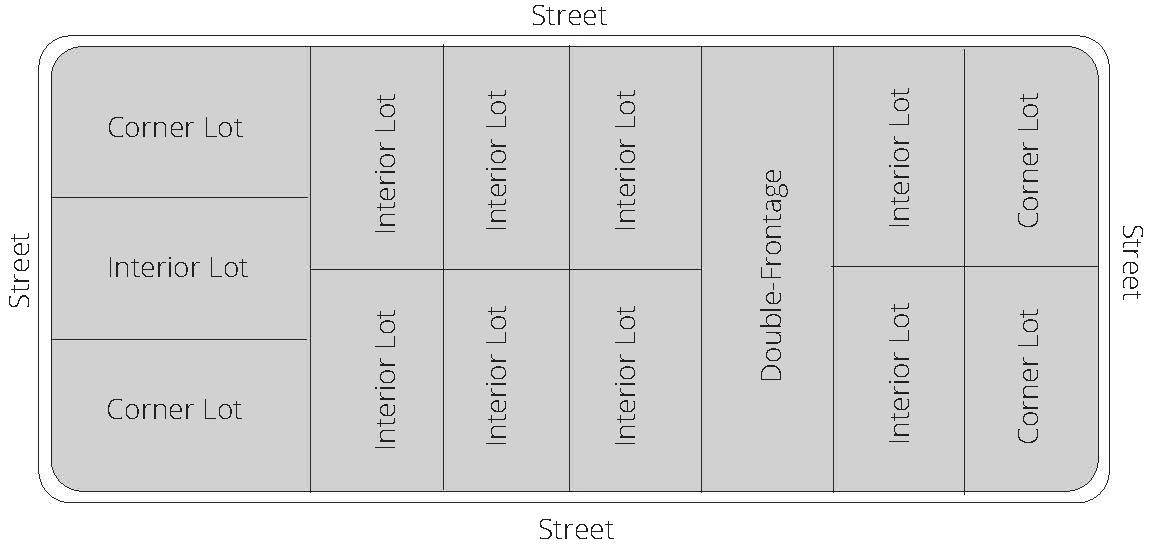
G.
Lot, Interior: Any lot that is not a corner lot.
H.
Lot line: The property boundary line of a lot.
I.
Lot line, front (street): A street lot line forming the boundary of an interior lot or the shorter street lot line on a corner lot.
J.
Lot line, rear: The lot line that is most distant from, and is, or is most nearly, parallel to the front lot line. If a rear lot line is less than fifteen (15) feet long, or if the lot comes to a point at the rear, the rear lot line is an imaginary line at least fifteen (15) feet long, lying wholly within the lot, parallel to the front lot line.
K.
Lot line, side (interior): A lot line that is neither a street lot line nor a rear lot line.
L.
Lot line, side (street): A street lot line forming the longer boundary on a corner lot.
M.
Lot line, street: Any lot line that abuts a street, including front (street) lot lines and side (street) lot lines.
N.
Lot of record: A lot that is part of a real estate subdivision, the plat of which has been recorded in the office of the County Recorder of Deeds, pursuant to statute.
14.2.16. - Words and Terms Beginning with "M"
A.
Manufactured housing unit: A principal residential building that complies with the National Manufactured Housing Construction and Safety Standards Act of 1974 (42 U.S.C. § 5401, et seq.).
B.
Motor home: A vehicular RV unit built on a self-propelled motor vehicle chassis as an integral part of the chassis.
14.2.17. - Words and Terms Beginning with "N"
A.
Nonconforming/Nonconformity: See Article 13.
B.
Noxious matter: Material that is capable of causing injury to living organisms by chemical reaction or is capable of causing detrimental effects on the physical or economic well-being of individuals.
14.2.18. - Words and Terms Beginning with "O"
A.
Occupied building space: Interior building space regularly occupied by the building users; does not include storage areas, utility space, or parking.
B.
Odor threshold: The lowest concentration of odorous substance in the air that will produce an odor sensation.
C.
Open space, landscaped: Land covered by trees, shrubs, turf grasses or ground cover. Impervious surfaces, such as buildings, parking lots, walkways, or patios are not considered landscaped open space.
D.
Ornamental grasses: A group of perennial plants that include true grasses (of the families Proacea and Graminea), sedges (of the family Cyperaceae) and rushes (of the family Juncaceae, including the Juncus and Luzula cultivars). Such grasses are generally planted in groups and may range in size from several inches to more than six (6) feet. In contrast to turf grasses, that require regular cutting during the growing season, ornamental grasses are typically cut back only once per year, generally in late winter.
E.
Outdoor seating (area): Any portion of a business establishment where the principal business activity is the sale and consumption of food on-premises, and is unenclosed and not used for other purposes.
F.
Outdoor storage: The storage of foods and materials outside of any building or structure, but not including storage of a temporary or emergency nature.
G.
Overlay District: A zoning district that over-lays one or more base zoning districts and imposes requirements in addition to those of the base district or modifies the regulations otherwise applicable in the base zoning district.
14.2.19. - Words and Terms Beginning with "P"
A.
Parade: Any march, ceremony, show, exhibition, pageant, procession, assembly, meeting or gathering of any kind of persons, groups, or organizations, in or upon any street, park or other public place in the village, whether or not including vehicles, floats, or moving displays.
B.
Parkway: That area of land between the property line abutting any public right-of-way, highway or street, and the back of curbs, edges of pavement, whether concrete or asphalt, or other improved roadway surface.
C.
Particulate matter: Dust, smoke or any other form of airborne pollution in the form of minute separate particles.
D.
Perennial: A plant whose life cycle is more than two (2) years.
E.
Pocket Park: A small neighborhood park less than an acre in size.
F.
Porte cochere: A porch roof projecting over a driveway at the entrance to a building providing shelter for persons entering or leaving vehicles and that is an integral part of an architectural design for an existing or proposed principal building.
G.
Primary Street: A street that receives priority over other streets in terms of setting front lot lines and locating building entrances; typically the main street as opposed to a side street.
H.
Processed ball: Plants dug bare root, while dormant, to which a moist medium is added around the roots to form a ball designed to sustain plant growth.
14.2.20. - Words and Terms Beginning with "Q"
RESERVED
14.2.21. - Words and Terms Beginning with "R"
A.
Rainwater Harvesting Equipment: A rain barrel, cistern or similar container that collects and stores rainwater or other water that would otherwise be lost as runoff.
B.
Recreational vehicle (RV): A trailer, boat trailer, travel trailer, camping trailer, truck camper, camper shell, motor home, tent trailer, boat, personal watercraft, snowmobile, all-terrain vehicle or similar vehicle. Camper that are attached to a pickup truck are not considered a recreational vehicle.
C.
Ringelmann Chart: The chart described in the U.S. Bureau of Mines Information Circular 6888, on which are illustrated graduated shades of gray for use in estimating the light-obscuring capacity of smoke, or "smoke density."
D.
Ringelmann number: The number of the area on the Ringelmann Chart that coincides most nearly with the visual density of emission or the light-obscuring capacity of smoke.
14.2.22. - Words and Terms Beginning with "S"
A.
Screen: A method of reducing visual impacts through the use of plant materials, berms, fences and/or walls or any combination of such features.
B.
Screening: Structures, such as an attractive fence consisting of cedar slats or redwood boards, or equal, and landscaping maintained for the purpose of concealing areas from view on a year-round basis.
C.
Semi-pervious surface: Also referred to as semi-pervious material. A material that allows for at least forty (40) percent absorption of water into the ground or plant material, such as pervious pavers, permeable asphalt and concrete, other permeable surfaces (must be installed according to manufacturer's specifications to achieve permeability). Gravel surfaces used for landscaping or storage of materials may be counted only sixty (60) percent impervious provided aggregate gradation has a high porosity. The determination of whether a surface is impervious or pervious shall be reviewed by the Village Engineer and determined by the Director of Public Works.
D.
Service walk, private residential: Any strip or section of concrete, pavers, asphalt, or stones a maximum of five (5) feet in width, the prime purposes of which is a walkway. Does not include any concrete, pavers, or stones exceeding four (4) feet in width, the prime purpose of which is not a walkway, but a landscape feature defined as hardscape area.
E.
Setback: An open, unobstructed area that is required to be provided by this zoning ordinance (see also section 14.1.9).
F.
Setback, required: The minimum required distance between a structure and the street lot line, rear lot line, or side lot line, often referred to as a "minimum building setback."
G.
Shed, storage: A detached accessory structure used or intended to use for the storage of garden equipment and household items incidental to the principal use.
H.
Shipping container: A standard reusable vessel, which may include an outdoor storage container, designed without an axle or wheels, which was:
1.
Originally, specifically, or formerly designed for or used in the packing, cargo, movement or transportation of freight, articles, goods or commodities, and/or
2.
Designed for/or capable of being mounted or moved on a rail car, truck trailer or loaded on a ship.
I.
Shrub: A woody plant, smaller than a tree, that consists of a number of small stems from the ground or small branches near the ground. May be deciduous or evergreen.
J.
Shrub, low: Any shrub that attains a mature height of four (4) feet or less when left unpruned.
K.
Shrub, tall: Any shrub that attains a mature height of more than four (4) feet when left unpruned.
L.
Sign-related definitions: See section 8.12 for all sign-related definitions.
M.
Single ownership: Ownership by an individual, partnership, corporation, cooperative or condominium having control over exterior maintenance of buildings and grounds.
N.
Smoke: The visible discharge from a chimney, stack, vent, exhaust or combustion process that is made up of particulate matter.
O.
Smoke unit: The number obtained when the smoke density in the Ringelmann Number is multiplied by the time of emission in minutes. For the purpose of this calculation:
1.
A Ringelmann density reading shall be made at least once a minute during the period of observation;
2.
Each reading is then multiplied by the time in minutes during which it is observed; and
3.
The various products are then added together to give the total number of smoke units observed during the entire observation period.
P.
Specified anatomical areas: (a) less than completely and opaquely covered: human genitals, pubic region, buttock or female breast below a point immediately above the top of the areola; or (b) human male genitals in a discernibly turgid state, even if completely and opaquely covered.
Q.
Specified sexual activities: (a) human genitals in a state of sexual stimulation or arousal; (b) Acts of human masturbation, sexual intercourse or sodomy; or (c) fondling or other erotic touching of human genitals, pubic region, buttock or female breast.
R.
Solar Energy System: A system intended to convert solar energy into thermal, mechanical or electrical energy.
1.
Solar Energy System, Building-Integrated: A solar energy system that is an integral part of a principal or accessory building, rather than a separate mechanical device, replacing or substituting for an architectural or structural part of the building. Building-integrated systems include, but are not limited to, photovoltaic or hot water systems that are contained within roofing materials, windows, skylights, shading devices and similar architectural components.
2.
Solar Energy System, Structure-Mounted: A solar energy system that is mounted on the façade or roof of either a principal or accessory structure.
3.
Solar Energy System, Flush-Mounted: A solar energy system that is mounted flush with a finished building surface, at no more than six (6) inches in height above that surface.
4.
Solar Energy System, Ground-Mounted: A solar energy system mounted on the ground and not attached to any other structure other than structural supports.
S.
Solar Panel: A group of photovoltaic cells assembled on a panel. Panels are assembled on-site into solar arrays.
T.
Street: All property dedicated or intended for public or private street, highway, freeway or roadway purposes or subject to easements therefor.
U.
Story: That portion of a building, other than a basement, included between the surface of any floor and the surface of the floor next above it or, if there be no floor above it, then the space between the floor and the ceiling next above it, including a story that has more than three-quarters (¾) of its height above grade.
V.
Story, ground: Also referred to as ground floor. The first floor of a building that is level to or elevated above the finished grade on the front and corner facades, excluding basements or cellars.
W.
Story, half: A space under a sloping roof that has the line of intersection of roof decking and wall face not more than three (3) feet above the top floor level, and in which space not more than sixty (60) percent of the floor area is finished off for use, and a story in which more than one-half (½) but not more than three-quarters (¾) of its height is above grade.
X.
Street line: A line forming the boundary of the right-of-way of a street.
Y.
Street wall: The outer face of any part of a building nearest to and facing on a street, except open steps and terraces. Where the front lot line setback is thirty (30) feet or more, bay windows projecting not more than four (4) feet toward the front lot line, and sun parlors (not a part of any other room), porches and piazzas projecting not more than ten (10) feet toward the front lot line are shall not considered a part of the front street wall, provided no such bay window, sun parlor, porch or piazza exceeds in height the first story of the building of which it is a part.
Z.
Structure, accessory: A structure located in or on the ground on the same lot as a principal structure, and that is subordinate in size and use to the principal structure; provided, however, that this definition does not include underground tanks for the storage of any type of fuel.
AA.
Structure, principal: A structure located in or on the ground where the primary use of the lot is conducted; provided, however, that this definition does not include underground tanks for the storage of any type of fuel.
BB.
Structural alterations: Any change in the supporting members of a building, such as bearing walls or partitions, columns, beams or girders, or any substantial change in the roof or in the exterior walls.
CC.
Swimming pool: Any temporary or permanent artificial pool or receptacle for water installed, constructed, or maintained in, on or above the ground (not including those enclosed and located entirely within a dwelling), having a perimeter of more than twenty-five (25) feet and a depth of more than two (2) feet at any point.
DD.
Swimming pool, private residential: Any swimming pool constructed, installed, and maintained in or above the ground, outside of a building used as a dwelling unit.
14.2.23. - Words and Terms Beginning with "T"
A.
Trailer, camping: A vehicular portable RV unit mounted on a chassis and constructed with collapsible partial side walls that fold for towing by another vehicle and unfold at the camp site.
B.
Trailer, travel: A vehicular, portable RV unit built on a chassis, designed to be drawn by another vehicle, and permanently identified as a "travel trailer."
C.
Transparency: The measurement of the percentage of a facade that has highly transparent, low reflectance windows.
D.
Tree: A large, woody plant having one or several self-supporting stems or trunks and numerous branches. May be deciduous or evergreen.
E.
Tree, ornamental: A deciduous tree planted primarily for its ornamental value or for screening. May be any size at maturity but will tend to be smaller than a shade tree.
F.
Tree, protected: An existing tree designated on the landscape plan to remain after construction.
G.
Tree, shade: A tree planted primarily for its high crown of foliage or overhead canopy.
H.
Tree, street: A tree planted in close proximity to a street in order to provide a canopy over the street, to give the street a sense of spatial definition and human scale, to provide shade and soften the street environment.
I.
Turfgrass: Grasses planted, by seeding or sodding, to establish a lawn that is usually maintained by mowing during the growing season.
14.2.24. - Words and Terms Beginning with "U"
A.
Utility penthouse: An enclosed space located on a roof for the housing of a stairway or equipment used in the operation of a building such as tanks, fans, heating and cooling equipment, or elevator machinery, but containing no habitable or storage space.
B.
Use, accessory: A use that meets the criteria established in 6.10.1.
C.
Use, open-air: Storage yards, construction debris sites, used vehicle sales lots, vehicle impound yards, auto wrecking, junkyards, and similar open-air uses when the only buildings on the lot are incidental and accessory to the open-air use of the lot.
D.
Use, principal: The main use of land or buildings as distinguished from a subordinate or accessory use.
14.2.25. - Words and Terms Beginning with "V"
A.
Vehicle Fuels, Alternative: Electricity, CNG (compressed natural gas), LNG (liquefied natural gas), LPG (liquefied petroleum gas), and hydrogen.
B.
Vehicle Fuels, Conventional: Gasoline and diesel fuel.
C.
Visible Basement: A half story partially below grade and partially exposed above with required transparency on the street facade.
14.2.26. - Words and Terms Beginning with "W"
A.
Wine making facility: A facility that produces up to fifty thousand (50,000) gallons of wine per calendar year.
14.2.27. - Words and Terms Beginning with "X"
RESERVED
14.2.28. - Words and Terms Beginning with "Y"
A.
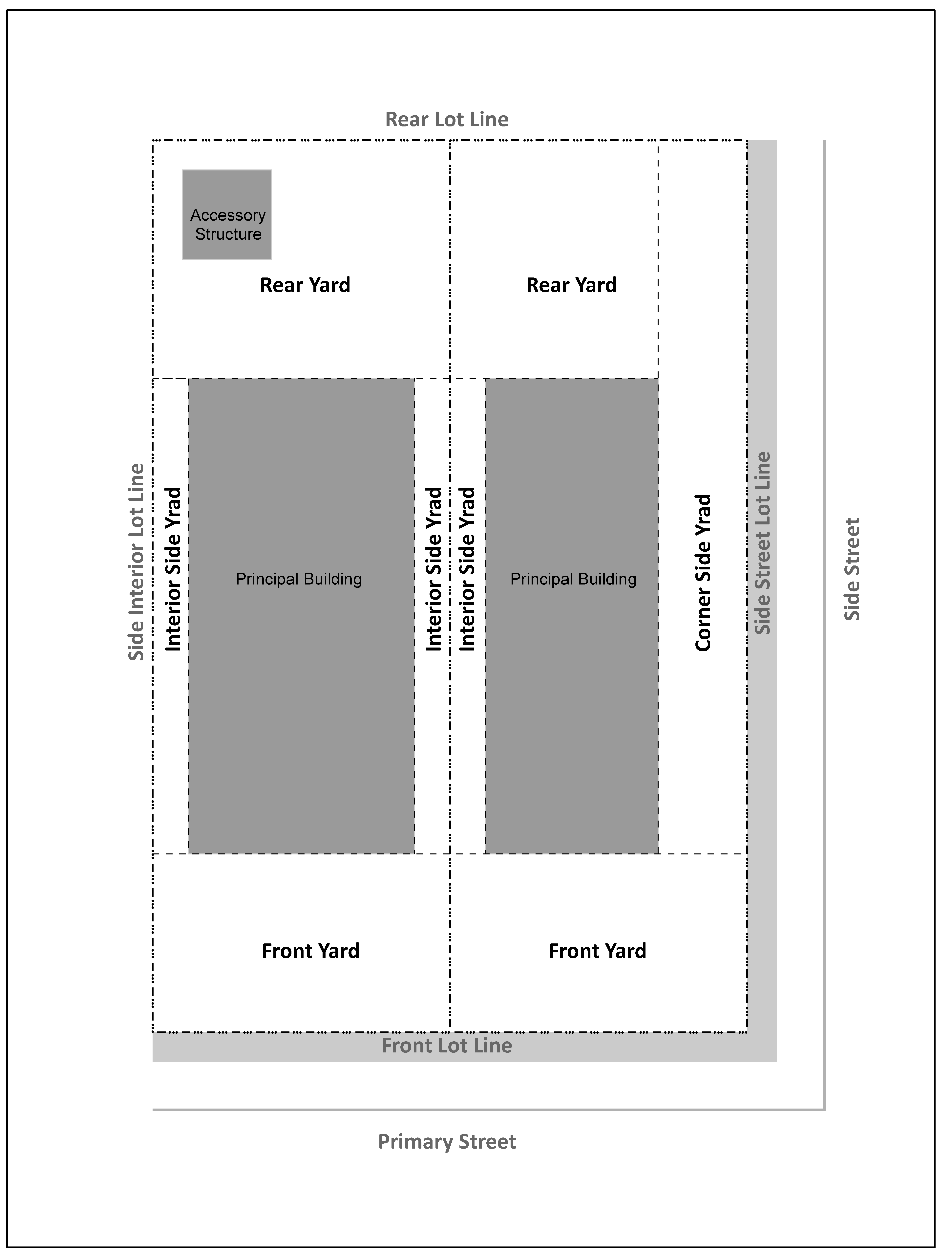
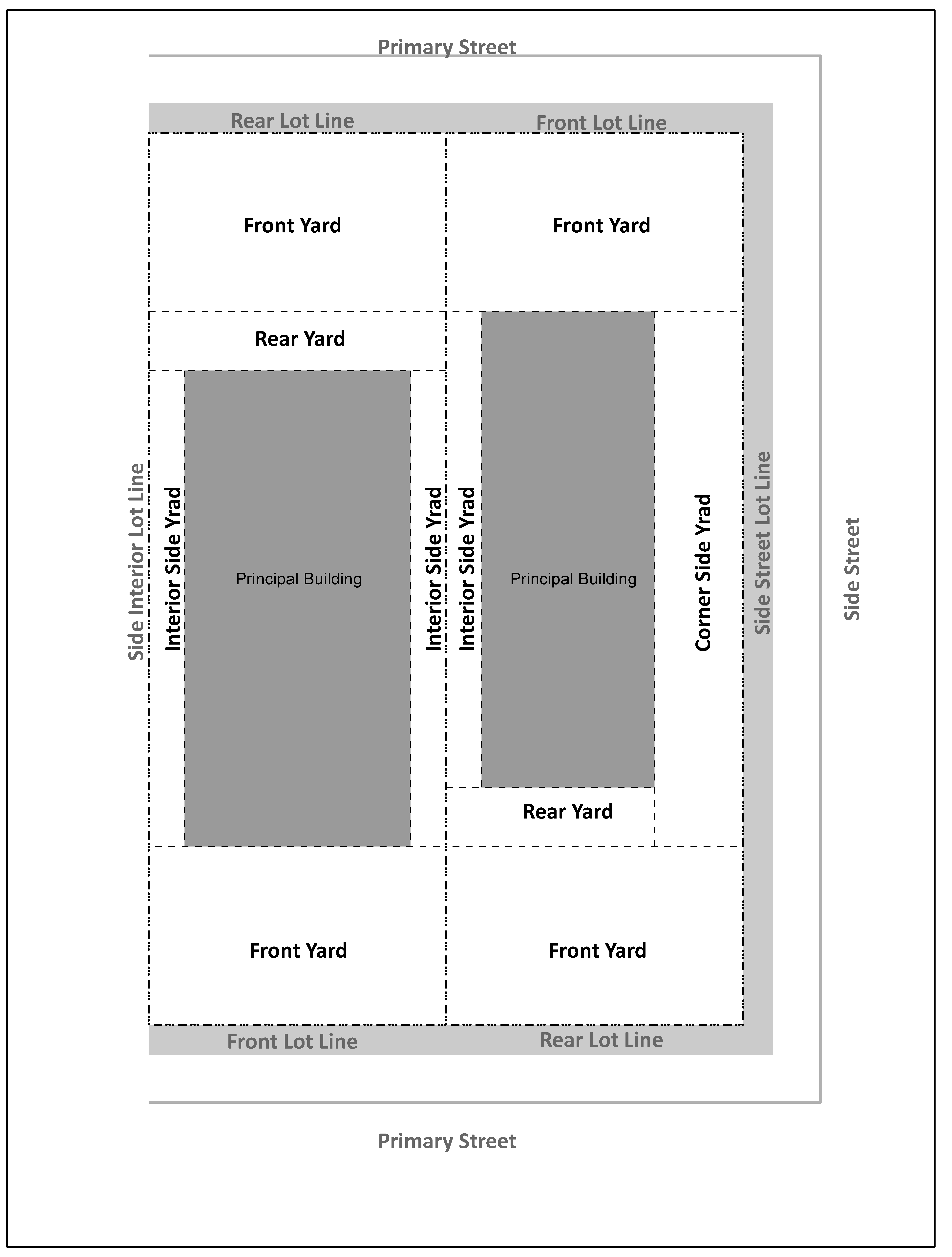
Yard: An actual open, unoccupied space that exists on a lot between a building and a respective lot line.
B.
Yard, Corner Side: A yard extending along a side street lot line between the front yard and the rear lot line.
C.
Yard, Front: A yard extending along the full length of the front lot line between the side lot lines.
D.
Yard, Interior Side: A yard extending along a side lot line between the front yard and the rear yard.
E.
Yard, Rear: A yard extending along the rear lot line between the side yards.
F.
Yard, Street: Any yard abutting a street.
Figure 14-7. Yard Types
14.2.29. - Words and Terms Beginning with "Z"
RESERVED
(Ord. No. 4036, § 2(Exh. A), 6-11-18; Ord. No. 4084, § 2, 6-10-19; Ord. No. 4247, § 3, 10-11-21; Ord. No. 4248, § 2, 10-11-21; Ord. No. 4275, § 7, 2-28-22; Ord. No. 4309, §§ 5—9, 11-14-22; Ord. No. 4326, §§ 4, 5, 1-23-23; Ord. No. 4343, §§ 10—15, 5-22-23; Ord. No. 4437, § 2(Exh. A), 9-23-24)

