
Weber County Unincorporated
City Zoning Code
City Zoning Code
CHAPTER 104
22 Form-Based Zone FB
Sec 104-22-1 Purposes And Intent
The purpose and intent of the Form-Based Zone is to provide a form-based regulatory tool that focuses on the public street design and the buildings that frame the public street. This deemphasizes separation of land uses as is typically found elsewhere in this Land Use Code. Form-based regulations help enable a mixture of allowed uses, multimodal active transportation, and enhanced building design. Additionally:
- Implements the general plan. The Form-Based Zone regulations are intended to carry out the objectives of the general plan by implementing the planning of small areas by means of a street regulating plan.
- Creates street regulating plans. Each area affected by the Form-Based Zone shall be governed by a Street Regulating Plan. The purpose of the Street Regulating Plan is to address specific design and functionality of streets and street amenities, and building facades along these streets. The intent is to stimulate the creation of buildings and streets that frame the public realm with architectural and design elements that are unified under common design themes whilst enabling unique building facades and a distinct sense of place.
Adopted by Ord. 2022-04 on 1/18/2022
Amended by Ord. 2022-20 on 8/16/2022
Amended by Ord. 2026-09 on 5/26/2026
Sec 104-22-2 Applicability
- New development to comply. The principles, standards and guidelines of this chapter apply to proposals for new development, changes in land uses, and site improvements to existing buildings, lots, or parcels that are in the Form-Based Zone. Exterior modifications to existing development shall comply if the exterior modification exceeds either 25 percent of the street-facing facade of the building, or 25 percent of the lot's street frontage.
- Other regulations apply. In the Form-Based Zone, except when more specific regulations are provided in this chapter, the design review regulations and architectural, landscape, screening, and design standards of Title 108 Chapter 1 and Title 108 Chapter 2 apply to all lots, except a lot with only one single-family dwelling.
- Street regulating plan. The applicable regulations herein are specific to the street type, as designated by the applicable street regulating plan. New development within the Form-Based Zone shall comply with the applicable street regulating plan. Development of any property along a street or that gains primary access from that street shall comply with the street design requirements, as provided in Section 104-22-7, and the building design standards in Section 104-22-6, for the specific type of street. A list and explanation of each street type is provided in Subsection (e) of this section.
- Effect of street regulating plan and graphics. Details in a street regulating plan or any graphic in this chapter have no effect unless expressly provided by this chapter.
- Street type, description, and purpose.
- Government/institutional street.
A Government and Institutional street or Alley has street-front buildings that are intended to provide the same as a Vehicle-Oriented Commercial Street, and provide preferential areas for the siting of government or public-service oriented buildings that front the street. Public-service oriented buildings may include any governmental, nonprofit, or for-profit school as long as the school provides the same K-12 educational courses required by the State of Utah, or a school that is an accredited institution of higher education. Hospitals or other medical services buildings, including medical, dental, or mental-health offices, laboratories, or similar public-health related offices, a public transportation facility or a multimodal transportation hub are also intended to be street-adjacent. Except for a public transportation facility, pickup and drop off areas shall be located to the rear of the building. - Vehicle-oriented commercial street.
A vehicle-oriented commercial street or Alley has street-front buildings that are intended to serve the traveling public, such as a large grocery store, drive-through or drive-up window service of varying kinds, and gas station. Street-front buildings that are not vehicle oriented are also allowed as described for a Mixed-Use Commercial Street. Multi-family residential uses are allowed only if located above ground-floor street-facing commercial space. - Mixed-use commercial street.
A mixed-use commercial street has street-front buildings that are oriented toward pedestrian traffic. At the street-level, these buildings shall be exclusively used or reserved for commercial operations. Commercial and multi-family residential uses are allowed above or behind ground-floor street-facing commercial space. - Multi-family residential street.
A multi-family residential street has street-front buildings that are used for multi- family dwellings, and are set back from the street enough to provide a stoop or door yard between the facade and the street's sidewalk. Where possible, given terrain, ground-floor building space intended for residential uses shall be offset by half a story from the plane of the street's sidewalk. Ground-floor street-facing commercial space is permitted, but not required. Commercial uses are not permitted above the ground-floor unless directly above ground-floor street-facing commercial space. - Small-lot residential street.
A small-lot residential street has street-front buildings that may be set back more than multi-family residential street facades, but are less likely to have a noticeable front yard area. - Medium-lot residential street.
A medium-lot residential street has street-front single-family buildings that may be set back more than small-lot residential street facades to provide a small front yard area. - Medium-large-lot residential street.
A medium-large-lot residential street has street-front single-family buildings similar to medium-lot residential street facades, but on lots with greater area. - Large-lot residential street.
A large-lot residential street has street-front single-family buildings that may be set back enough to create a sizeable front yard on a lot that is large. - Rural residential street.
A rural residential street has street-front single-family buildings that may be set back enough to create a sizeable front yard on a lot that is at least an acre large. - Estate lot residential street.
An estate lot residential street has street-front single-family buildings that may be set back enough to create a sizeable front yard on a lot that contains multiple acres.. - General open space street.
A general open space street has very limited buildings adjacent to the street, and only those that are incidental and accessory to the open space.
- Government/institutional street.
Adopted by Ord. 2022-04 on 1/18/2022
Amended by Ord. 2022-20 on 8/16/2022
Amended by Ord. 2023-09 on 5/16/2023
Amended by Ord. 2026-09 on 5/26/2026
Sec 104-22-9 Parking And Internal Block Access
- Parking required. Each application for development shall include a parking plan that demonstrates that sufficient parking will be provided by the on-street parking immediately fronting the lot or an off-street parking lot or garage within 1000 feet of the building. On-street parking not adjacent to the lot's street-frontage shall not be counted.
- Internal Street-Block shared public parking. Each business or use that will have patrons, customers, clients, or similar, shall provide an off-street public parking lot or garage.
- Use of this parking lot or garage shall be shared by all landowners and business owners within the Street-Block. In extremely inequitable circumstances, the Land Use Authority may allow a land or business owner to specifically exclude parking for patrons, customers, clients, or similar of other land or business owners if those other land or business owners within the Street-Block have not provided their own proportionate contribution toward shared public parking within the Street-Block.
- Each public parking area located within the Street-Block shall be designed to extend to the parcel boundary and shall provide a cross access easement along all sides of the parking area abutting the adjoining lot(s) or parcel(s) in a manner that allows the adjoining lot or parcel owner to extend that public parking area seamlessly into their parcel. Cross access and cross access easements are required pursuant to Subsection (h) of this section.
- Alternative to shared internal Street-Block public parking. If multiple land or business owners within a Street-Block create an alternative shared public parking plan that provides for equal or better off-street public parking for the same Street-Block than otherwise required by Subsection (a)(1) of this section, then the provisions of Subsection (a)(1) that run contrary may be waived. However, in no case shall parts of Subsection (a)(1) be waived in a manner that prevents or restricts an existing or future land or business owner’s opportunity and obligation to contribute to and enjoy the benefits of the shared public parking within the Street-Block at full buildout.
- Internal Street-Block private parking. Nothing in this subsection (a) shall be construed to prohibit a landowner from creating a private parking lot or garage as long as the shared public parking requirements, obligations, and opportunities specified herein are satisfied.
- Internal Street-Block shared public parking. Each business or use that will have patrons, customers, clients, or similar, shall provide an off-street public parking lot or garage.
- Employee and residential parking. On-street parking shall not be included toward minimum parking needed for employees or for any residential use. Employee parking and the minimum required residential parking shall be located off-street within the same Street-Block as the use.
- Parking lot surface. All parking lots shall be hard-surface asphalt or concrete, or other improved surface otherwise approved by the County Engineer and local fire authority.
- Parking flexibility. Except for residential uses, the Land Use Authority may reduce the minimum parking spaces required if sufficient evidence suggests that the required number of spaces is excessive for the building and proposed use or uses therein.
- Parking related to a change of use. If a change of use occurs, more parking may be required if the new use merits it, as determined by the Land Use Authority. The applicant proposing to change the use shall be required to provide the additional off-street parking within 1000 feet of the use.
- Parking lot trees. A surface parking lot shall have one tree for each four parking spaces, and a five-foot wide landscape planting area that runs the depth of the parking row shall be located at each end of a parking row.
- Parking structure design standards. When located adjacent to a vehicle-oriented commercial, mixed use commercial, or multi-family residential street, a parking structure shall have ground-floor street-facing commercial space along the street’s frontage. However, for a corner lot, this requirement applies to the façade that is adjacent to the more prominent street, as determined by the Land Use Authority; the other façade shall have the same for no less than fifty percent of that façade’s street frontage. The other fifty percent, and the area of the parking structure above the street level commercial space, shall have a street-facing facade that disguises the parking structure to generally look like other buildings in the area.
- Cross-access and cross-access easement. For all lots or parcels along a Governmental and Institutional street, Vehicle Oriented Commercial street, Mixed Use Commercial street, Multi-Family Residential street, providing access to adjacent existing or future development without the need to access the public right-of-way is required. This access shall be provided by a mid-Block Alley, or other Alley or shared driveway as may be deemed necessary by the Land Use Authority. If not in conflict with mid-Block Alley requirements herein, when no new Alley access is deemed necessary because an Alley access or street access is already provided to the lot or parcel through another lot or parcel, then a cross-access easement shall be provided along adjoining lot lines, as follows:
- Inclusion of other landowners. A cross access easement shall provide an easement to all landowners in the Street-Block that develop along a Governmental and Institutional street, Vehicle Oriented Commercial street, Mixed Use Commercial street, Multi-Family Residential street that is framing the Street-Block. The easement shall allow ingress and egress to these other lots or parcels, including ingress and egress infrastructure.
- Multiple points of access. At a minimum, each developed lot or parcel shall have two points of ingress and egress, at least one of which shall be stubbed to adjacent property where practicable. Except that a private parking area is allowed to only provide a single access as long as it does not block the accessibility to other areas within the Street-Block that are or could be used for public parking.
- Coordination with adjoining landowners. When locating a cross-access easement or designing the cross-access infrastructure, good faith efforts shall be made to coordinate the location and design with the adjoining land owner.
- Location to optimize circulation. The Planning Division Director may require the cross-access to be located in a manner that optimizes traffic circulation within the Street-Block.
- Installation timing. Construction of the cross-access infrastructure shall be completed prior to the issuance of a certificate of occupancy for any structure on the lot or parcel, or a completion bond may substitute for completion if allowed by the County Engineer.
- Reciprocal easement when others exist. When a lot or parcel is being developed that abuts an existing cross-access easement or existing cross-access infrastructure, a reciprocal cross-access easement shall be provided on the same lot line or parcel line in the same location and of equal width. The reciprocal cross-access infrastructure shall be constructed to the same standard as, or better than, the existing cross-access infrastructure on the adjacent parcel. A cross-access easement shall be recorded on the title of all affected properties, along with a perpetual operation and maintenance agreement between the property owners that specifies, at a minimum, that the infrastructure will be operated and maintained by the property owners in a manner that is safe and usable for two-way vehicle traffic.
- Operations and maintenance. If property owners fail to operate or maintain cross-access infrastructure that was required by the County under this section, the County may pursue enforcement measures as provided in this Land Use Code.
Adopted by Ord. 2022-04 on 1/18/2022
Amended by Ord. 2023-09 on 5/16/2023
Amended by Ord. 2026-09 on 5/26/2026
Sec 104-22-10 Signage
In addition to the signage regulations in this Land Use Code, no signage shall be affixed to a building higher than the top of the second story.
Adopted by Ord. 2022-04 on 1/18/2022
Amended by Ord. 2023-09 on 5/16/2023
Sec 104-22-11 (Reserved)
Amended by Ord. 2023-09 on 5/16/2023
Repealed by Ord. 2026-09 on 5/26/2026
Sec 104-22-12 Workforce Housing
Participation in creating workforce housing is required as follows, except when developing along a Large Lot Residential, Rural Residential, or Estate Lot Residential Street.
- No deduction from density required. Workforce housing dwelling units will not be deducted from the lot or parcel’s allowed density as long as the number does not equal more than 15 percent of the development’s total number of market-rate dwelling units.
- Lot development standard reduced.
- Unless the applicable lot development standards are more permissive, a structure that is exclusively devoted to, and deed restricted for, workforce housing may have a front setback of 20 feet, and a side setback and rear setback of five feet, and has no minimum lot area requirement.
- In the event the provision for the required workforce housing results in the inability to realize the number of dwelling units that would otherwise be allowed if workforce housing was not required, then the applicable minimum lot development standards in the development may be reduced to no less than half of the applicable minimum lot development standard.
- Workforce housing requirements. Unless otherwise negotiated by development agreement, one or more of the following workforce housing requirements shall be provided by the developer.
- Building and reservation of dwelling units. Dwelling units, in an amount that is equal to or greater than five percent of the non-workforce housing units being developed, shall be constructed and deed restricted for workforce housing;
- Fee in lieu. In lieu of building affordable housing units, a fee equaling up to two percent of the dwelling unit’s market value, shall be paid for each dwelling unit constructed. This shall be implemented by a covenant recorded on title of each dwelling unit, and shall be paid at the time a building permit is issued, or prior to the transfer of the property’s title after the dwelling unit has been completed;
- Buildable lot in lieu. In lieu of building affordable housing units, a lawfully subdivided lot or lots in a size and configuration that is capable of supporting dwelling units in an amount that is equal to or greater than 10 percent of the non-workforce housing units being developed, shall be donated, with stubbed utilities, to the Weber Housing Authority for the purpose of meeting this requirement; or
- Floor area in lieu. Along a Governmental and Institutional street, Vehicle Oriented Commercial street, Mixed Use Commercial street, Multi-Family Residential street, and Small Lot Residential street, floor area, in a size and configuration that is capable of supporting dwelling units in an amount that is equal to or greater than five percent of the non-workforce housing units being developed, shall be donated, with stubbed utilities, to the Weber Housing Authority for the purpose of meeting this requirement.
- Workforce housing location. The required housing units, lots, or floor area provided for workforce housing may be located outside of the proposed development as long as they are located along a Governmental and Institutional street, Vehicle Oriented Commercial street, Mixed Use Commercial street, Multi-Family Residential street, and Small Lot Residential street, Medium Lot Residential , or Medium-Large Lot Residential street designation in an area governed by the same street regulating plan map, or within one mile of a commercial or manufacturing zone.
- Weber housing authority. Eligibility and long-term monitoring of qualification for workforce housing is the responsibility of the Weber Housing Authority
Amended by Ord. 2023-09 on 5/16/2023
Amended by Ord. 2026-09 on 5/26/2026
2022-04
2022-20
2026-09
2023-09
2023-36
2025-24
2026-13
Sec 104-22-3.010 Accessory Uses
| An accessory use is prohibited unless located on the same lot or parcel as the main use to which it is accessory. | G & I | V O C | M U C | M F R | S L R | M L R | M L L R | L L R | R R | E L R | O S | SPECIAL REGULATIONS |
|---|---|---|---|---|---|---|---|---|---|---|---|---|
| Accessory building. A building that is accessory and incidental to the use of a main building. | P | P | P | P | P | P | P | P | P | P | P | |
| Accessory dwelling unit. A dwelling unit that is accessory to a single-family dwelling residential use. | N | N | N | N | P | P | P | P | P | P | N | See Title 108 Chapter 19. |
| Accessory use. A use that is accessory and incidental to the main use. | P | P | P | P | P | P | P | P | P | P | P | |
| Agricultural hobby farm. | P | P | P | P | P | P | P | P | P | P | P | |
| Family food production. Family food production as an accessory use to a single-family dwelling residential use. | N | N | N | N | N | N | N | P | P | P | N | See Section 104-22-4. |
| Home occupation. A home occupation that is accessory to a residential use. | P | P | P | P | P | P | P | P | P | P | N | See Title 108 Chapter 13. |
| Household pets. Household pets that are accessory to a residential use. | P | P | P | P | P | P | P | P | P | P | N | |
| Main building. A main building that is designed or used to be accessory to an outdoor main use allowed in the zone. | P | P | P | P | P | P | P | P | P | P | P | |
| Parking lot. A parking lot that is accessory to a main use allowed in the zone. | P | P | P | P | P | P | P | P | P | P | P | See Section 104-22-9. |
| Produce stand. For produce grown on the premises only. | P | P | P | P | P | P | P | P | P | P | P | |
| Temporary building or use. A temporary building or use that is accessory and incidental to onsite construction work. | P | P | P | P | P | P | P | P | P | P | P | See Section 104-22-4. |
Amended by Ord. 2023-09 on 5/16/2023
Sec 104-22-3.020 Agricultural And Open Space Uses, Generally
G & I | V O C | M U C | M F R | S L R | M L R | M L L R | L L R | R R | E L R | O S | SPECIAL REGULATIONS | |
|---|---|---|---|---|---|---|---|---|---|---|---|---|
| Agriculture. Agriculture as a main use of the property. | N | N | N | N | N | N | N | P | P | P | P | |
| Agricultural experiment station. An agricultural experiment station. | P | N | N | N | N | N | N | N | P | P | P | |
| Agri-tourism. An agri-tourism use. | N | N | N | N | N | N | N | N | P | P | P | See Title 108, Chapter 21. |
| Aquaculture. An aquaculture use. | N | N | N | N | N | N | N | N | P | P | P | |
| Botanical or community garden. Open space land for the purpose of growing plants. This use may be for private use or open to the general public with or without a fee. | P | P | P | P | P | P | P | P | P | P | P | |
| Fruit and vegetable storage and packing plant. For produce grown on premises. | N | N | N | N | N | N | N | N | P | P | P | 10-acre minimum lot area required. |
| Grain storage elevator. A grain storage elevator. | N | N | N | N | N | N | N | N | N | P | P | 10-acre minimum lot area required. |
| Greenhouse and nursery. Sales limited to plants produced on the premises. | P | P | N | N | N | N | N | P | P | P | P | |
| Manure spreading, drying and sales. The spreading, drying, and sales of manure. | N | N | N | N | N | N | N | N | N | P | P | |
| Wildlife sanctuary. A wildlife sanctuary. | N | N | N | N | N | N | N | N | N | P | P | 10-acre minimum lot area required. |
Amended by Ord. 2023-09 on 5/16/2023
Sec 104-22-3.030 Agricultural Uses, Animal Oriented
| The following are animal-related uses that do not and shall not typically generate customer-oriented traffic to the lot or parcel. | G & I | V O C | M U C | M F R | S L R | M L R | M L L R | L L R | R R | E L R | O S | SPECIAL REGULATIONS |
|---|---|---|---|---|---|---|---|---|---|---|---|---|
| Animal grazing. Animal grazing, as defined in Title 101 Chapter 2. | N | N | N | N | N | N | N | N | P | P | P | |
| Apiary. The keeping of bees. | N | N | N | N | C | P | P | P | P | P | P | |
| Aquaculture, animal related. The raising and potential harvesting of water animals or water plants. | N | N | N | N | N | N | N | P | P | P | P | |
| Aviary. The raising of birds. | N | N | N | N | N | P | P | P | P | P | P | No onsite slaughtering permitted. |
| Corral or stable. A corral, stable, or building for the keeping of agricultural animals or fowl. | N | N | N | N | N | N | N | P | P | P | P | See Section 104-22-4. |
| Dairy farm. Including milk processing and sale, when at least 50 percent of milk is produced on the farm. | N | N | N | N | N | N | N | P | P | P | P | 10-acre minimum lot area required. |
Amended by Ord. 2023-09 on 5/16/2023
Sec 104-22-3.040 Amusement, Entertainment, And Recreation Uses
| The following are uses oriented toward providing amusement or entertainment for patrons. | G & I | V O C | M U C | M F R | S L R | M L R | M L L R | L L R | R R | E L R | O S | SPECIAL REGULATIONS |
|---|---|---|---|---|---|---|---|---|---|---|---|---|
| Amphitheater. An outdoor open-air amphitheater with raising rows of spectator seating used for entertainment and performances. | C | C | N | N | N | N | N | N | N | N | C | |
| Entertainment facility, large indoor. An indoor entertainment facility, as defined in Title 101, Chapter 2, using greater than 20,000 square feet of floor area. | C | C | N | N | N | N | N | N | N | N | N | |
| Entertainment facility, outdoor. An outdoor entertainment facility, as defined in Title 101, Chapter 2. | C | C | N | N | N | N | N | N | N | N | N | |
| Entertainment facility, small indoor. An indoor entertainment facility, as defined in Title 101, Chapter 2. | C | C | C | C | N | N | N | N | N | N | N | Limited to no more than 20,000 square feet of floor area. |
| Amusement park. Amusement park. | C | C | N | N | N | N | N | N | N | N | N | |
| Amusement park, temporary. An amusement park, circus, petting zoo, pony ring, or carnival that is conducted or no longer than one month. | P | P | P | C | N | N | N | N | N | C | C | |
| Botanical or zoological garden. A botanical or zoological garden, including petting zoo and pony ring. | P | P | P | P | P | P | P | P | P | P | P | 2-acre minimum lot or parcel area required |
| Campgrounds or picnic areas, commercial. A commercial campground or picnic area. | N | N | N | N | N | N | N | C | C | C | C | See Section 104-22-4. 2-Acre minimum lot or parcel area required. |
| Dude ranch. A dude ranch, as defined in Title 101 Chapter 2. | N | N | N | N | N | N | N | N | P | P | C | 10-acre minimum lot or parcel area required. |
| Golf course. Golf course. | N | N | N | N | N | N | N | P | P | P | P | This shall not include miniature golf. |
| Private park, playground or recreation area, noncommercial. A private park charging no fee or remuneration for use. | P | P | P | P | P | P | P | P | P | P | P | |
| Public park, recreation grounds. Recreation grounds that are owned and operated by a public entity. | P | P | P | P | P | P | P | P | P | P | P | |
| Recreation lodge. A recreation lodge, as defined in Title 101, Chapter 2. | P | P | P | P | P | N | N | N | N | C | N | |
| Recreational resort. A recreational resort, as defined in Title 101, Chapter 2. | P | P | P | N | N | N | N | N | N | N | N | |
| Shooting range or training course. A shooting range. | C | C | N | N | N | N | N | N | N | N | C | See Section 104-22-4. Five-acre minimum lot or parcel area required for an outdoor range. |
| Ski area. A ski area and associated skiing facilities such as lifts, lift towers, and ski runs and trails. | P | P | P | P | P | P | P | P | P | P | P | |
| Ski lodge. A ski lodge and associated services | N | N | P | P | N | N | N | N | N | N | P | When accessory to an allowed ski area. |
| Swimming pools, private. A private swimming pool. | P | P | P | P | P | P | P | P | P | P | P | |
| Trails. Trails for skiing, equestrian uses, hiking, biking, and similar. | P | P | P | P | P | P | P | P | P | P | P | |
| Zoo. A Zoo. | P | P | N | N | N | N | N | N | N | N | P | 10-acre minimum lot or parcel area required. |
Amended by Ord. 2023-09 on 5/16/2023
Sec 104-22-3.050 Animal Services And Uses
G & I | V O C | M U C | M F R | S L R | M L R | M L L R | L L R | R R | E L R | O S | SPECIAL REGULATIONS | |
|---|---|---|---|---|---|---|---|---|---|---|---|---|
| Animal groomery, small animal. Grooming for small animals. | P | P | P | P | N | N | N | N | N | P | N | A small animal generally weighs less than 250 lbs. |
| Dog or cat facility. Dog or cat breeding, kennels, lodging, or training school. | P | C | N | N | N | N | N | N | C | C | N | If located completely indoors, and inaudible from an adjoining lot or parcel, this use is permitted where listed as conditional. |
| Horse or equestrian event center. A horse or equestrian event center, including indoor concessions as an accessory use. | P | N | N | N | N | N | N | N | N | N | C | |
| Horse or equestrian training facility and stabling, commercial. A commercial equestrian training facility or horse stable. | N | N | N | N | N | N | N | N | N | C | C | |
| Stable for horses, noncommercial. Horses shall be for noncommercial use only. | N | N | N | N | N | N | N | P | P | P | P | No more than two horses shall be kept for each one-half acre of land used for the horses. |
| Stray animal shelter. A shelter for stray, lost, or seized animals. | P | C | N | N | N | N | N | N | N | N | N | |
| Veterinary facility. Veterinary facility. | P | P | P | C | N | N | N | N | N | C | C | If located completely indoors, and inaudible from an adjoining lot or parcel, this use is permitted where listed as conditional. |
Amended by Ord. 2023-09 on 5/16/2023
Sec 104-22-3.060 Food, Beverage, And Other Product Sales For Human Consumption
G & I | V O C | M U C | M F R | S L R | M L R | M L L R | L L R | R R | E L R | O S | SPECIAL REGULATIONS | |
|---|---|---|---|---|---|---|---|---|---|---|---|---|
| FOOD PREPARATION SERVICES | ||||||||||||
| Alcoholic beverage production. The production, manufacturing, brewing, and wholesale sales of alcoholic beverages. | P | P | N | N | N | N | N | N | N | N | N | |
| Bakery, delicatessen, or catering, large. Bakery or other food preparation services primarily intended for offsite consumption. | P | P | N | N | N | N | N | N | N | N | N | |
| Bakery, delicatessen, or catering, small. Bakery or small-batch food processing and retail sales of goods produced on premises. Offsite catering allowed as an incidental and accessory use. | P | P | P | P | N | N | N | N | N | N | N | Limited to 5,000 square feet floor area. |
| Butcher or other custom meat products, large. A shop in which meats are cut, prepared, cured, smoked, or wrapped for the purpose of sales onsite. | P | P | N | N | N | N | N | N | N | N | N | This use shall not include onsite slaughtering. |
| Butcher or other custom meat products, small. A shop in which meats are cut, prepared, cured, smoked, or wrapped for the purpose of sales onsite. | P | P | P | P | N | N | N | N | N | N | N | Limited to 5,000 square feet floor area. This use shall not include onsite slaughtering. |
| EATING AND DRINKING ESTABLISHMENTS FOR PRODUCTS PRIMARILY FOR ONSITE CONSUMPTION | ||||||||||||
| Bar. A bar or any other establishment where the primary purpose is the sales and onsite consumption of alcoholic beverages. | P | P | P | P | N | N | N | N | N | N | N | |
| Brewery or distillery with restaurant. A brewery or distillery in conjunction with a restaurant. | P | P | P | P | N | N | N | N | N | N | N | |
| Restaurant with drive-up window. Restaurant, all food types, with drive-up windows. | P | P | C | N | N | N | N | N | N | N | N | See drive up (drive-thru) window requirements of Section 104-22-4. |
| Restaurant. Restaurants, all food types, excluding those with drive-up windows. | P | P | P | P | N | N | N | N | N | N | N | |
| RETAIL FOOD AND DRUG SALES OF PRODUCTS PRIMARILY FOR OFFSITE CONSUMPTION | ||||||||||||
| Candy or confectionary store. The sales of candy, sweets, snacks, and small batch bakery goods and desserts. | P | P | P | P | N | N | N | N | N | N | N | |
| Drugstore or pharmacy. A drugstore or pharmacy. | P | P | P | P | N | N | N | N | N | N | N | If applicable, see drive up (drive-thru) window requirements of Section 104-22-4. |
| Grocery store. A grocery story, including a store that specializes in the sales of any type of food normally found in a grocery store. | P | P | P | P | N | N | N | N | N | N | N | |
| Produce stand, commercial. A commercial produce stand intended for the sales of agricultural products. | P | P | P | P | N | N | N | N | P | P | P | |
Approved by Ord. 2023-09 on 5/16/2023
Sec 104-22-3.070 Government And Institutional Uses
G & I | V O C | M U C | M F R | S L R | M L R | M L L R | L L R | R R | E L R | O S | SPECIAL REGULATIONS | ||
|---|---|---|---|---|---|---|---|---|---|---|---|---|---|
| Cemetery. A cemetery. | P | N | N | N | N | N | N | N | P | P | P | ||
| Convalescent, rest home, or sanitarium. An establishment for long-term medical treatment of people. | P | P | P | P | P | N | N | N | N | N | N | ||
| Child daycare. A daycare center operating in compliance with State regulation. | P | P | P | P | P | N | N | N | N | N | N | ||
| Fire station. A fire and emergency medical service station. | P | P | P | P | P | P | P | P | P | P | P | ||
| Governmental offices. The offices of a governmental entity. | P | P | P | N | N | N | N | N | N | N | N | ||
| Instructional facility, large. A facility in which instructional lessons are taught, such as a school or education center, and that does not qualify as a small instructional facility. | P | C | C | N | N | N | N | N | N | N | N | ||
| Instructional facility, small. An indoor facility in which instructional lessons are taught, such as a school or education center. | P | P | C | N | N | N | N | N | N | N | N | Limited to 10,000 square feet floor area. | |
| Medical facility. A facility, such as a hospital or surgery center, that provides medical services that are typically unavailable from a medical or dental office. | P | C | C | N | N | N | N | N | N | N | N | ||
| Museum or art gallery. A museum, art gallery, or similar space for historical or educational displays. | P | P | P | P | N | N | N | N | N | N | N | ||
| Post office. A post office. | P | P | P | P | P | P | P | P | P | P | N | ||
| Preschool. A preschool operating in compliance with State regulation. | P | P | P | P | P | P | P | P | P | P | N | ||
| Public library. A library owned and operated by a governmental entity. | P | P | P | P | P | P | P | P | P | P | N | ||
| Public park. A public park and related recreation grounds and associated buildings and structures. | P | P | P | P | P | P | P | P | P | P | P | ||
| Public recreation or community center. A recreation or community center owned and operated by a public entity. | P | P | C | C | C | C | C | C | C | C | C | ||
| Public schools. A public school or a private educational facility having a curriculum similar to that ordinarily given in public schools. | P | P | P | P | P | P | P | P | P | P | N | ||
| Public storage facilities. Storage facilities used by a governmental entity. | P | C | N | N | N | N | N | N | N | N | N | ||
| Visitor's center. A tourism visitor's center or offices. | P | P | P | P | N | N | N | N | N | N | N | ||
| Worship facility. A church, synagogue or similar building used for regular religious worship. | P | P | P | P | P | P | P | P | P | P | N | ||
Amended by Ord. 2023-09 on 5/16/2023
Amended by Ord. 2026-09 on 5/26/2026
Sec 104-22-3.080 Office Uses
G & I | V O C | M U C | M F R | S L R | M L R | M L L R | L L R | R R | E L R | O S | SPECIAL REGULATIONS | |
|---|---|---|---|---|---|---|---|---|---|---|---|---|
| Agency. An agency for real estate, travel, property rental or management, insurance, detective, employment, or similar based on frequency of visiting clientele. | P | P | P | N | N | N | N | N | N | N | N | |
| Bank or financial institution. A bank or other financial institution. | P | P | P | N | N | N | N | N | N | N | N | This use shall not include payday loan services. |
| Medical or dental office. A medical or dental office for routine out-patient care. | P | P | P | N | N | N | N | N | N | N | N | |
| Office, generally. Office or studio space for office or studio uses not otherwise listed herein, in which goods or merchandise are not commercially created, exchanged or sold, and that operates with typical office equipment in a relatively quiet and nonintrusive manner. | P | P | P | N | N | N | N | N | N | N | N |
Amended by Ord. 2023-09 on 5/16/2023
Sec 104-22-3.090 Residential Uses
G & I | V O C | M U C | M F R | S L R | M L R | M L L R | L L R | R R | E L R | O S | SPECIAL REGULATIONS | |
|---|---|---|---|---|---|---|---|---|---|---|---|---|
| Dwelling, single-family. A single-family dwelling, as defined by Title 101, Chapter 2. | N | N | N | N | P | P | P | P | P | P | N | See Section 104-22-4. |
| Dwelling, two-family. A two-family dwelling, as defined by Title 101, Chapter 2. | N | N | N | P | P | N | N | N | N | N | N | |
| Dwelling, three-family. A three-family dwelling, as defined by Title 101, Chapter 2. | N | N | N | P | P | N | N | N | N | N | N | |
| Dwelling, four-family. A four-family dwelling, as defined by Title 101, Chapter 2. | N | N | N | P | P | N | N | N | N | N | N | |
| Dwelling, multi-family. A multi-family dwelling, as defined by Title 101, Chapter 2. | P | P | P | P | N | N | N | N | N | N | N | |
| Dwelling unit in commercial building. A dwelling unit or condominium dwelling unit, as defined by Title 101, Chapter 2, that is part of a commercial or multifamily dwelling building. | P | P | P | P | N | N | N | N | N | N | N | |
| Residential facility for elderly persons. | P | P | P | P | P | P | P | P | P | P | N | |
| Residential facility for handicapped persons. | P | P | P | P | P | P | P | P | P | P | N | |
| Residential facility for troubled youth. | P | P | P | P | P | P | P | P | P | P | N | |
| Short-term rental. A short-term rental. | P | P | P | N | N | N | N | N | N | N | N | See Section 104-22-4 and Title 108, Chapter 11. |
| Transient lodging. A hotel, motel, lodging house, condominium rental apartment (condo-tel), or timeshare condominium. | P | P | P | P | N | N | N | N | N | N | N | This use may include lockout sleeping rooms, as defined by Title 101, Chapter 2, as an accessory use. |
| Workforce housing. Workforce housing, dormitory, or residence hall, or portion thereof. | P | P | P | P | P | P | P | P | P | P | N | See Section 104-22-4 and Section 104-22-12. |
Approved by Ord. 2023-09 on 5/16/2023
Amended by Ord. 2026-09 on 5/26/2026
Sec 104-22-3.100 Sales With Retail Storefront
G & I | V O C | M U C | M F R | S L R | M L R | M L L R | L L R | R R | E L R | O S | SPECIAL REGULATIONS | |
|---|---|---|---|---|---|---|---|---|---|---|---|---|
| Agricultural implement sales or service. A facility that sells or repairs agricultural implements. | C | C | N | N | N | N | N | N | N | N | N | |
| General retail sales, small items. The sales of small items, as qualified in Section 104-22-4. | P | P | P | P | N | N | N | N | N | N | N | See Section 104-22-4 |
| General retail sales, large items. The sales of large items, as qualified in Section 104-22-4. | P | C | C | N | N | N | N | N | N | N | N | See Section 104-22-4 |
| Nursery, commercial. A plant nursery, with associated greenhouses for retail sales of plants and accessory products. | P | C | N | N | N | N | N | N | N | N | P | See Section 104-22-5 for maximum lot coverage by buildings |
| Pawn shop. A shop where a pawnbroker holds items as collateral, then sells unredeemed items to the public. | C | C | N | N | N | N | N | N | N | N | N | |
| Smoke shop. A shop primarily devoted to the sale of tobacco or vaping products. | C | C | C | N | N | N | N | N | N | N | N |
Amended by Ord. 2023-09 on 5/16/2023
Sec 104-22-3.110 Sales Typically Without Retail Storefront
G & I | V O C | M U C | M F R | S L R | M L R | M L L R | L L R | R R | E L R | O S | SPECIAL REGULATIONS | |
|---|---|---|---|---|---|---|---|---|---|---|---|---|
| Christmas tree sales. The temporary siting of an outdoor Christmas tree sales establishment. | P | P | C | N | N | N | N | N | N | N | P | |
| Fireworks sales. The siting of a temporary fireworks booth or tent. | P | P | C | N | N | N | N | N | N | N | N | |
| Vendor, short term. The siting of a temporary vendor booth or vehicle for the sales of food or other hand-held items. | P | P | P | P | N | N | N | N | N | N | C | See Section 108-13-3 and Section 104-22-4. |
Amended by Ord. 2023-09 on 5/16/2023
Sec 104-22-3.120 Services
G & I | V O C | M U C | M F R | S L R | M L R | M L L R | L L R | R R | E L R | O S | SPECIAL REGULATIONS | |
|---|---|---|---|---|---|---|---|---|---|---|---|---|
| Dry cleaning, laundry, or linen cleaning establishment. The professional cleaning of laundry and linens. | P | P | P | P | N | N | N | N | N | N | N | |
| Household item repair, large. The repair or service of devices that the average person cannot carry without aid of a moving device. | P | P | N | N | N | N | N | N | N | N | N | |
| Household item repair, small. The repair or service of devices that the average person can carry without aid of a moving device. | P | P | P | P | N | N | N | N | N | N | N | |
| Gathering facility, indoor. An indoor facility for rental to clubs, private groups, parties, and organizational groups for recreational activities, including dancing. | P | P | P | P | N | N | N | N | N | N | N | |
| Laboratory. A laboratory for the scientific processing, testing, experimenting, etc., of samples in small enough quantities to not be explosive, toxic, or otherwise hazardous. | P | P | P | N | N | N | N | N | N | N | N | |
| Laundromat. A facility that provides washers and dryers for self-serve laundry service. | P | P | P | P | N | N | N | N | N | N | N | |
| Mortuary or funeral home. Mortuary or funeral home and related sales and services. | P | P | P | N | N | N | N | N | N | N | N | |
| Outdoor recreation guide base-operation. A location that provides a base of operations for an outdoor recreation guide service. | P | P | P | P | N | N | N | N | N | N | N | |
| Parcel drop-off service. A service for the collection and shipment of small parcels, and accessory sales or services. | P | P | P | P | N | N | N | N | N | N | N | |
| Printing and copying service without retail shop. Printing, lithographing, publishing or reproductions sales and services, including engraving and photo engraving. | P | P | N | N | N | N | N | N | N | N | N | |
| Tailor services. The altering, pressing, or repairing of articles of clothing. Creation of new articles of clothing is permitted as long as the clothing is sold in an onsite retail establishment. | P | P | P | P | N | N | N | N | N | N | N | |
| Taxidermist. Taxidermy services. | P | C | N | N | N | N | N | N | N | N | N |
Amended by Ord. 2023-09 on 5/16/2023
Sec 104-22-3.130 Storage
G & I | V O C | M U C | M F R | S L R | M L R | M L L R | L L R | R R | E L R | O S | SPECIAL REGULATIONS | |
|---|---|---|---|---|---|---|---|---|---|---|---|---|
| Outdoor storage. The storage of anything that meets the definition of "outdoor storage" pursuant to Title 101 Chapter 2 | N | N | N | N | N | N | N | N | N | N | N | |
| Self-storage. Indoor storage units for personal or household items or vehicles. | P | P | N | N | N | N | N | N | N | N | N | See Section 104-22-4. |
| Warehouse storage. The storage of products or goods that are or will be for sale. | C | N | N | N | N | N | N | N | N | N | N |
Amended by Ord. 2023-09 on 5/16/2023
Sec 104-22-3.140 Utility Uses
G & I | V O C | M U C | M F R | S L R | M L R | M L L R | L L R | R R | E L R | O S | SPECIAL REGULATIONS | |
|---|---|---|---|---|---|---|---|---|---|---|---|---|
| Public utility substations. | P | P | P | P | P | P | P | P | P | P | C | See Title 108, Chapter 10. |
| Wastewater treatment or disposal facilities. | P | P | P | P | P | P | P | P | P | P | C | |
| Water treatment or storage facility. | P | P | P | P | P | P | P | P | P | P | C | |
| Small wind energy system. | P | N | N | N | N | N | N | N | P | P | C | See Section 108-7-24 |
| Solar energy system. | P | P | P | P | P | P | P | P | P | P | C | See Section 108-7-27 |
Amended by Ord. 2023-09 on 5/16/2023
Sec 104-22-3.150 Vehicle-Oriented Uses
G & I | V O C | M U C | M F R | S L R | M L R | M L L R | L L R | R R | E L R | O S | SPECIAL REGULATIONS | ||
|---|---|---|---|---|---|---|---|---|---|---|---|---|---|
| Airport. A private or commercial airport. | C | N | N | N | N | N | N | N | N | N | N | ||
| Automobile sales or rentals, indoor. The sale or rental of a passenger automobile. | P | P | C | N | N | N | N | N | N | N | N | ||
| Automobile sales or rentals, outdoor. The sale or rental of a passenger automobile. | P | C | N | N | N | N | N | N | N | N | N | See Section 104-22-4. | |
| Boat sales or rentals. The sale or rental of a motorized boat. | P | C | N | N | N | N | N | N | N | N | N | See Section 104-22-4. | |
| Car wash. A car wash of any type that is not accessory to a gas or refueling station as regulated otherwise herein. | P | C | N | N | N | N | N | N | N | N | N | See Section 104-22-4. | |
| Gas or refueling station. A gas or refueling station, which may include a convenience store and an automatic carwash as an accessory use. | C | C | N | N | N | N | N | N | N | N | N | See Section 104-22-4. | |
| Motor vehicles sales or rentals. The rental or sales of motor vehicles not otherwise listed herein. | C | C | N | N | N | N | N | N | N | N | N | See Section 104-22-4. | |
| Parking lot or structure. A parking lot or parking structure. | P | P | P | P | N | N | N | N | N | N | N | ||
| Passenger vehicle repair or service of any kind. The repair or service of any passenger automobile or any other motorized vehicle less than 10,000 lbs gross vehicle weight. | C | C | N | N | N | N | N | N | N | N | N | ||
| Trailer sales or rentals. Sale or rental of trailers. | C | C | N | N | N | N | N | N | N | N | N | ||
| Transit terminal. | P | P | N | N | N | N | N | N | N | N | N | ||
| Truck gas or refueling station. A gas or refueling station oriented toward large freight vehicles, which may include a convenience store and an automatic carwash as an accessory use. | P | P | N | N | N | N | N | N | N | N | N | ||
| Trucking terminal. The repair, service, and/or storage of freight trucks, or a station for transferring freight. | N | N | N | N | N | N | N | N | N | N | N | ||
Note: The color of each street type in the headers of these tables, as well as in other tables of this chapter, corresponds with the street colors on the street regulating plan map(s). The color codes for each are as follows:
| G&I | VOC | MUC | MFR | SLR | MLR | MLLR | LLR | RR | ELR | OS | |
|---|---|---|---|---|---|---|---|---|---|---|---|
| RED | 25 | 176 | 204 | 255 | 255 | 255 | 255 | 208 | 138 | 83 | 75 |
| GREEN | 151 | 33 | 51 | 120 | 170 | 220 | 255 | 206 | 153 | 128 | 191 |
| BLUE | 156 | 157 | 0 | 0 | 0 | 0 | 0 | 83 | 66 | 69 | 96 |
| HTML HEX CODE | #19979c | #b0219d | #cc3300 | #ff7800 | #ffaa00 | #ffdc00 | #ffff53 | #d0ce53 | #8a9942 | #538045 | #4bbf60 |
Amended by Ord. 2023-09 on 5/16/2023
Amended by Ord. 2026-09 on 5/26/2026
Sec 104-22-4.010 Special Regulations, Generally
- All uses, generally. All uses listed in the use table are indoor uses, unless specifically stated otherwise. All indoor uses shall not generate noise, outdoor lighting, vibration, smoke, dust or airborne particulate matter, refuse, or anything else that is uncommon to the established character of the neighborhood to such a degree as to be perceptible to constitute a nuisance to the occupants of the immediate area.
- Drive up (drive-thru) window. Any business with a drive up (drive-thru) window shall comply with the following:
- The window shall be located on the rear of the building. The rear of the building shall be determined as the side of the building opposite from the building's facade that faces the public street. If on a corner along a Government or Institutional street or Vehicle-Oriented Commercial street, the window may be located on the side of the building that is visible from the less prominent street.
- The stacking lanes and drive up (drive-thru) queue, and the parking spaces devoted to the drive up (drive-thru) window shall be located in an area that is not visible from the more prominent street right-of-way when the area is fully built-out.
- One drive up (drive-thru) queue space that is at least 20 feet in length may substitute a parking space required by this Land Use Code.
- Perpetual building maintenance agreement. Other than single-family dwellings and their accessory buildings, when a building is set back less than ten feet from a property line, a perpetual building maintenance agreement is required between the building owner and the affected adjacent property owner, which shall allow for construction and maintenance of the side or rear of a commercial building, and shall:
- Be reviewed for compliance with this section by the Planning Division and County Attorney's Office;
- Place responsibility on the building owner for prompt repairs and maintenance of the side or rear of the building;
- Require allowances of access to the property for repairs and maintenance purposes; and
- Be signed by the owner of the building and the adjacent property owner and be recorded on the title of both properties.
- Street-facing garage door(s). Unless located at least 30 feet behind the front-most part of the dwelling, street-facing garage door(s) shall have a cumulative width no greater than 18 percent of the width of the lot. Editors note: unless governed otherwise by development agreement, Utah Code 17-79-614 may prohibit the application of this provision to single-family and two-family dwellings.
- Loading and unloading. Each building anticipated to receive deliveries from a truck that has a gross vehicle weight greater than 26,000 lbs. shall be provided with an off-street loading and unloading area behind the building.
- Building location. Each building shall be located on a lot in a manner that preserves space for the extension of street and trails or pathways rights-of-way as shown in the street regulating plan, and the lot’s respective setback standard.
- Building entrance requirements. Each building with building or lot frontage along a Government and Institutional, Vehicle-Oriented Commercial, Mixed-Use Commercial, or Multi-Family Residential street shall be provided with a Main Street-Entrance. Except when the building is set back from the street right-of-way or any sidewalk, pathway, or pedestrian way at least four feet, each Main Street-Entrance shall be recessed from the building’s façade no less than five feet.
Adopted by Ord. 2022-04 on 1/18/2022
Amended by Ord. 2022-20 on 8/16/2022
Amended by Ord. 2023-09 on 5/16/2023
Amended by Ord. 2026-09 on 5/26/2026
Sec 104-22-4.020 Special Regulations For Specific Uses
- Automobile or other vehicle related uses. The use of a lot or parcel for automobile repair of any kind, automobile sales, rental, or service, boat sales, rental, or service, gas or fuel station, a tire shop, or any other use governed by this section by reference shall only be conducted within a completely enclosed building that meets the standards of this chapter.
- No vehicle awaiting service shall be stored outside for more than one day.
- Sufficient parking for all employee or customer uses, including the temporary parking of vehicles awaiting pickup from owners, shall be provided on the lot or parcel.
- No vehicles associated with the use shall be parked on the street. However, up to 20 vehicles may be temporarily parked in a parking lot meeting all applicable parking standards of this Land Use Code if the vehicles are available for immediate purchase, lease, or rent, and as long as all other standards of this Land Use Code are met.
- Automobile repair of any kind. Refer to paragraph (a) of this section.
- Automobile sales, rentals, or service. Refer to paragraph (a) of this section.
- Boat sales or service. Refer to paragraph (a) of this section.
- Campgrounds or picnic areas, commercial. A commercial campground or picnic area shall comply with Title 108, Chapter 20. If located along any street in the FB zone except open space, an opaque fence or wall shall surround the use. Vegetation screening shall be planted on the outside of the fence or wall to allow the use to blend in with surrounding uses. A drip irrigation system shall be installed to ensure long-term viability of the vegetation.
- Car wash. Where allowed, a car wash is subject to the following restrictions:
- Operation hours are only allowed between 6:00 a.m. and 10:00 p.m.
- There shall not be more than four washing bays for a manual spray car wash.
- Car wash facilities shall be set back from the street right-of-way at least 60 feet, reserving street frontage for buildings that provide street-facing commercial facades.
- The off-street vehicle spaces or queues required shall be as follows:
- One bay car wash, four spaces in the approach lane;
- Two bay car wash, three spaces in the approach lane for each wash bay;
- Three or more bay car wash, two spaces in the approach lane for each wash bay.
- Corral or stable. This use shall be located no less than 100 feet from a public street and not less than 25 feet from any side or rear lot line.
- Dwelling or dwelling unit. The regulations for a dwelling unit use listed in the land use table are as follows:
- Maximum dwellings per lot. Excluding an accessory dwelling unit pursuant to Title 108, Chapter 19, only one single-family dwelling unit is allowed per each lot along Medium Lot Residential (MLR), Medium-Large Lot Residential (MLLR), Large Lot Residential (LLR), Rural Residential (RR), and Estate Lot Residential (ELR) streets. There is no maximum for other street types, provided compliance with all other area density requirements.
- Construction standards. A dwelling unit on a Government and Institutional street, Vehicle-Oriented Commercial street, Mixed-Use Commercial street, or Multi-Family Residential street shall be constructed to a multifamily residential standard in accordance with the International Building Code.
- Dwelling unit location. A dwelling unit proposed along a government and institutional, vehicle-oriented commercial, or a mixed-use commercial street shall be located on a lot or parcel as follows:
- Above any ground-floor street-facing commercial space; or
- For a mixed-use commercial street, behind a building that provides ground-floor street-facing commercial space, or if no such building exists at the time of application, behind the area reserved for street-level commercial space as otherwise required herein. The location shall provide for the existing and future planned street layout of the area, including the future street-level commercial space that will face future streets, and internal Street-Block Alleys.
- Two, three, four, and multi-family residential. Unless one of the units is owner occupied, a two, three, four, or multi-family residential building shall be operated and maintained by a professional management company that specializes in multi-family residential property management.
- Maximum dwellings per lot. Excluding an accessory dwelling unit pursuant to Title 108, Chapter 19, only one single-family dwelling unit is allowed per each lot along Medium Lot Residential (MLR), Medium-Large Lot Residential (MLLR), Large Lot Residential (LLR), Rural Residential (RR), and Estate Lot Residential (ELR) streets. There is no maximum for other street types, provided compliance with all other area density requirements.
- Family food production. As used in this subsection, a Group A animal is either one pig, one sheep, one cow, or one goat, and Group B animals or fowl are either a set of ten rabbits, ten chickens, ten pheasants, five turkeys, five ducks, five geese, or five pigeons.
- No more than four sets of Group B animals or fowl may be kept on a lot or parcel that is less than 40,000 square feet.
- No more than six combined sets of Group A animals and Group B animals or fowl may be kept on a lot or parcel that is less than two acres. The same applies to a lot or parcel greater than two acres, except that an additional six combined sets of Group A and Group B animals or fowl may be kept per each additional acre greater than two.
- Gas or fuel station. A gas or fuel canopy shall not be located closer to a public street right-of- way, excluding a mid-Block Alley, than 60 feet. The canopy shall be located to the rear of the convenience store associated with the canopy.
- General retail sales, small items. This use is any store that primarily retails or rents items to be physically taken by the customer from the store, when those items weigh less than 80 pounds, including product packaging, or that are small enough to fit in a typical passenger vehicle. The use is limited to 4,000 square feet of retail floor-area. No sales yard is permitted. No sales of items intended to be explosive or hazardous to human health, safety, or welfare is permitted.
- General retail sales, large items. This use is any store that primarily retails or rents items to be physically taken by the customer from the store, when those items weigh more than 80 pounds, including product packaging, or that are too large to fit in a typical passenger vehicle. This use may include an outdoor sales yard of no greater than 6,000 square feet as long as it is completely surrounded by an opaque wall. No sales of items intended to be explosive or hazardous to human health, safety, or welfare is permitted.
- Office uses. A use listed in the “office uses” table may only be located above or behind ground-floor street-facing commercial space, reserving the street frontage for ground-floor street-facing commercial space. A local recreation and tourism office devoted to providing services, information, and events primarily for visitors is exempt from this requirement provided that it is open and accessible to all members of the public.
- Shooting range or training course, indoor or outdoor. The facility shall provide designated shooting positions for which ballistic backstops are designed. No shooting is allowed except in these designated shooting positions. All sides down range of a shooting position shall have a non-ricochet ballistic backstop, including overhead and on the ground or floor, capable of containing all errant bullets. For an outdoor range, the overhead backstop may be a series of baffles. Approval shall be subject to the requirements and conditions of the local fire authority. The range operator shall be onsite at all times shooting is occurring.
- Self-storage. Self-storage is only allowed if located on the same lot or parcel with a building that has street-facing commercial space. The use shall comply with the following:
- Storage units shall be located behind or above building area that provides a ground-floor street-facing commercial space. The building providing street-facing commercial space shall appear from the exterior as if office or residential space is offered in the area housing the storage or storage units.
- If located in a separate onsite building than the building providing ground-floor street-facing commercial space specified herein, the separate building shall be located behind the building with ground-floor street-facing commercial space, and shall be no wider than the building providing ground-floor street-facing commercial space.
- Storage unit bay doors or garage doors shall face away and not be visible from the nearest property line, and shall be completely obscured from view from any public right-of-way.
- Ski area. This use may include ancillary equipment and structures such as snow making equipment, snow grooming equipment, maintenance facilities, trail and wayfinding signage, ski lifts, ski fences, ticket booths, concession stands, restroom facilities, food and beverage sales, ski patrol facilities, emergency response facilities, and similar uses commonly found in ski areas. Outdoor storage and maintenance of ski related equipment is allowed provided that it is screened from view of the general public. Ski area trail wayfinding signage are exempt from other signage requirements of this Land Use Code. Any lighting associated with said signage is subject to the requirements of Title 108 Chapter 16.
- Temporary building or use. The building or use shall be removed upon completion or abandonment of the construction work.
- Tire shop. Refer to paragraph (a) of this section.
- Vendor, short term. No booth or vehicle shall be permanently affixed to the ground, nor shall it be stationary for more than four days at a time.
Adopted by Ord. 2022-04 on 1/18/2022
Amended by Ord. 2022-20 on 8/16/2022
Amended by Ord. 2023-09 on 5/16/2023
Amended by Ord. 2026-09 on 5/26/2026
Sec 104-22-5.010 Allowed Density
| STREET TYPES | MAXIMUM ALLOWED DWELLING UNITS PER ACRE | |
|---|---|---|
| Government and Institutional (G/I) | 20 | |
| Vehicle-Oriented Commercial (VOC) | ||
| Mixed-Use Commercial (MUC) | ||
| Multi-Family Residential (MFR) | ||
| Small Lot Residential (SLR) | 11 | |
| Medium Lot Residential (MLR) | 6 | |
| Medium-Large Lot Residential (MLLR) | 4 | |
| Large Lot Residential (LLR) | 3 | |
| Rural Residential (RR) | 2 | |
| Estate Lot Residential (ELR) | 1 | |
| Open Space (OS) | Not applicable | |
Adopted by Ord. 2026-09 on 5/26/2026
Sec 104-22-5.020 Lot Area
| STREET TYPES | MINIMUM LOT AREA | |
|---|---|---|
| Government and Institutional (G/I) | No minimum1 | |
| Vehicle-Oriented Commercial (VOC) | ||
| Mixed-Use Commercial (MUC) | ||
| Multi-Family Residential (MFR) | ||
| Small Lot Residential (SLR) | 3,000 square feet1 | |
| Medium Lot Residential (MLR) | 4,000 square feet1 | |
| Medium-Large Lot Residential (MLLR) | 5,000 square feet1 | |
| Large Lot Residential (LLR) | 6,000 square feet1 | |
| Rural Residential (RR) | 10,000 square feet1 | |
| Estate Lot Residential (ELR) | 20,000 square feet1 | |
| Open Space (OS) | No minimum | |
1This minimum lot area notwithstanding, at no time shall any subdivision or other development project have a dwelling unit density greater than specified in Section 104-22-5.010. After a subdivision or development project has received final approval under these standards, all excess dwelling unit density not included in the approval shall be forfeited unless the density in the entire original project area is reconsidered for compliance with density regulations specified in Section 104-22-5.010 and all owners within the affected area consent to the reconfiguration.
Amended by Ord. 2026-09 on 5/26/2026
Sec 104-22-5.030 Lot Width And Frontage
Unless allowed otherwise by this Land Use Code, each lot shall have frontage on the type of street that corresponds with its governing street type, as provided on the applicable street regulating plan map.
| STREET TYPES | MINIMUM LOT WIDTH AND STREET FRONTAGE | |
|---|---|---|
| Government and Institutional (G/I) | 12 feet1,2 | |
| Vehicle-Oriented Commercial (VOC) | ||
| Mixed-Use Commercial (MUC) | ||
| Multi-Family Residential (MFR) | ||
| Small Lot Residential (SLR) | 30 feet1,2 | |
| Medium Lot Residential (MLR) | 40 feet2 | |
| Medium-Large Lot Residential (MLLR) | 50 feet2 | |
| Large Lot Residential (LLR) | 60 feet2 | |
| Rural Residential (RR) | 80 feet2 | |
| Estate Lot Residential (ELR) | 90 feet2 | |
| Open Space (OS) | No minimum | |
1Frontage exception: The street frontage requirement is not applicable for a lot that is platted as part of a larger planned development, provided that the development includes or has included the dedication and construction of all required public street and mid-Block Alley improvements shown on the street regulating plan or as otherwise required by this Land Use Code; the associated public street improvements required are, at a minimum, for the same length as the lot is wide; and along a Government and Institutional street, Vehicle-Oriented Commercial Street, and Mixed Use Commercial Street, no parcel shall be configured or developed in a manner that obstructs the ability to develop buildings that contain Ground-Floor Street-Facing Commercial Space on the public street front. A lot without street frontage shall not have any lot line closer to the street right-of-way than 60 feet.
2Street-facing garage doors: See Section 104-22-4.010.
Amended by Ord. 2026-09 on 5/26/2026
Sec 104-22-5.040 Front Setbacks
| GROUND-FLOOR STREET-FACING COMMERCIAL SPACE1,2 | ALL OTHER USES, BUILDINGS, OR PARTS THEREOF2 | ||||||
|---|---|---|---|---|---|---|---|
| SETBACK FROM STREET RIGHT-OF-WAY | SETBACK FROM FRONT LOT LINE | SETBACK FROM STREET RIGHT-OF-WAY | SETBACK FROM FRONT LOT LINE | ||||
| STREET TYPES | MINIMUM | MAXIMUM | MINIMUM | MINIMUM | MAXIMUM | MINIMUM | |
| Government and Institutional (G/I) | No minimum7 | 5 feet3,7,9 | No minimum7 | 60 feet4,7 | No maximum | No minimum7 | |
| Vehicle-Oriented Commercial (VOC) | |||||||
| Mixed-Use Commercial (MUC) | |||||||
| Multi-Family Residential (MFR) | 5 feet7 | 10 feet3 | |||||
| Small Lot Residential (SLR) | Not applicable | 5 feet6,7 | 30 feet3,7,8 | 5 feet7 | |||
| Medium Lot Residential (MLR) | Not applicable | 20 feet5,6,7 | 30 feet3,7,8 | 20 feet5,7 | |||
| Medium-Large Lot Residential (MLLR) | Not applicable | ||||||
| Large Lot Residential (LLR) | Not applicable | 30 feet7 | No maximum | 30 feet7 | |||
| Rural Residential (RR) | Not applicable | ||||||
| Estate Lot Residential (ELR) | Not applicable | ||||||
| Open Space (OS) | Not applicable | ||||||
1See definition of “commercial space, ground-floor street-facing.” Along G/I, VOC, and MUC streets, this phrase also applies to the area within 60 feet of a street’s right-of-way if no building exists there yet.
2Building stories above the Ground-Floor Street-Facing Commercial Space have the same minimum setback as the Ground-Floor Street-Facing Commercial Space, provided compliance with maximum height and use regulations.
3This maximum front setback shall be waived if at least 90 percent of the lot's street frontage is already occupied by a main building that complies with this maximum setback.
4Except for an outdoor public dining or gathering space, this setback distance shall remain clear from permanent building improvements or significant financial investments until or unless a building with Ground-Floor Street-Facing Commercial Space is constructed that meets the specified maximum building setback.
5This minimum may be reduced to 15 feet if the lot's only vehicle access is over a side or rear lot line adjacent to an Alley that complies with Section 106-2-2.100 of this Land Use Code, and any street-facing garage door is 30 feet behind the front-most part of the dwelling. See also Section 104-22-4.010.
6No parking area, pad, or driveway within the front setback shall be less than 20 feet deep when measured from the front lot line.
7See Section 108-7-10 if lot abuts an arterial street or collector street.
8This maximum front setback shall be allowed to be adjusted to the average of other main buildings within 100 feet on the same side of the same street.
9This maximum front setback shall be allowed to be increased to 20 feet for parts of a building that provides public dining or gather space.
Amended by Ord. 2026-09 on 5/26/2026
Sec 104-22-5.050 Side Setbacks
| MINIMUM SIDE LOT-LINE SETBACK1 | MAXIMUM SIDE LOT-LINE SETBACK1 | |||
|---|---|---|---|---|
| STREET TYPES | MAIN BUILDING | ACCESSORY BUILDING | ||
| Government and Institutional (G/I) | No minimum.4 See requirements of perpetual maintenance agreement in Section 104-22-4.010 | No maximum3 | ||
| Vehicle-Oriented Commercial (VOC) | ||||
| Mixed-Use Commercial (MUC) | ||||
| Multi-Family Residential (MFR) | ||||
| Small Lot Residential (SLR) | No maximum | |||
| Medium Lot Residential (MLR) | 5 feet4 | Same as main building, except 1 foot if located at least 6 feet in rear of main building4 | ||
| Medium-Large Lot Residential (MLLR) | 10 feet2,4 | |||
| Large Lot Residential (LLR) | 10 feet4 | |||
| Rural Residential (RR) | ||||
| Estate Lot Residential (ELR) | ||||
| Open Space (OS) | ||||
1In the FB zone, a corner lot’s side lot line that abuts a street right-of-way shall be treated in all matters as the front lot line.
2This minimum may be reduced to 5 feet if the lot's only vehicle access is over a side or rear lot line adjacent to an alley that complies with Section 106-2-2.100 of this Land Use Code.
3Any space between buildings shall be open for pedestrian passage to internal street-block areas, unless designed, constructed, and actively used (when weather permits) for outdoor dining, shopping, or other street activities that are open to the public.
4See Section 108-7-10 if lot abuts an arterial street or collector street.
Amended by Ord. 2026-09 on 5/26/2026
Sec 104-22-5.060 Rear Setbacks
| MINIMUM REAR LOT-LINE SETBACK | |||
|---|---|---|---|
| STREET TYPES | MAIN BUILDING | ACCESSORY BUILDING | |
| Government and Institutional (G/I) | No minimum.1 See requirements of perpetual maintenance agreement in Section 104-22-4.010 | ||
| Vehicle-Oriented Commercial (VOC) | |||
| Mixed-Use Commercial (MUC) | |||
| Multi-Family Residential (MFR) | |||
| Small Lot Residential (SLR) | 5 feet1 | 1 foot1 | |
| Medium Lot Residential (MLR) | 20 feet1 | ||
| Medium-Large Lot Residential (MLLR) | |||
| Large Lot Residential (LLR) | 30 feet1 | ||
| Rural Residential (RR) | |||
| Estate Lot Residential (ELR) | |||
| Open Space (OS) | |||
1See Section 108-7-10 if lot abuts an arterial street or collector street.
Amended by Ord. 2026-09 on 5/26/2026
Sec 104-22-5.070 Building Height
| MINIMUM HEIGHT | MAXIMUM HEIGHT | |||
|---|---|---|---|---|
| STREET TYPES | MAIN BUILDING | MAIN BUILDING | ACCESSORY BUILDING | |
| Government and Institutional (G/I) | 25 feet | 60 feet1 | 25 feet | |
| Vehicle-Oriented Commercial (VOC) | ||||
| Mixed-Use Commercial (MUC) | ||||
| Multi-Family Residential (MFR) | One story | |||
| Small Lot Residential (SLR) | 35 feet | 25 feet | ||
| Medium Lot Residential (MLR) | ||||
| Medium-Large Lot Residential (MLLR) | ||||
| Large Lot Residential (LLR) | ||||
| Rural Residential (RR) | ||||
| Estate Lot Residential (ELR) | ||||
| Open Space (OS) | No minimum | 25 feet2 | 25 feet | |
1Except 35 feet and no more than two stories for any part of a building within 20 feet of a public street right-of-way.
2Except a greater height is allowed for a grain storage elevator or similar agriculturally supportive use.
Editor's note: Ordinance 2026-09 listed this subsection as Sec 104-22-6.010. For code consistency, has been renumbered and located here.
Amended by Ord. 2026-09 on 5/26/2026
Sec 104-22-5.080 Building Width And Spacing
| STREET TYPES | MAXIMUM WIDTH OF DWELLING The maximum width of any building exclusively devoted to one or more dwelling units and their accessory uses. | MAXIMUM WIDTH OF OTHER BUILDINGS The maximum width of a building other than one devoted to dwelling(s). | MINIMUM DISTANCE BETWEEN BUILDINGS The minimum distance between main buildings on the same lot. | |
| Government and Institutional (G/I) | 6 attached units or 200 feet, whichever is less. | 200 feet | 10 feet or ten percent of the average width of the two buildings being distanced, whichever is greater. | |
| Vehicle-Oriented Commercial (VOC) | ||||
| Mixed-Use Commercial (MUC) | ||||
| Multi-Family Residential (MFR) | ||||
| Small Lot Residential (SLR) | 4 attached units or 200 feet, whichever is less. | |||
| Medium Lot Residential (MLR) | Not applicable | Not applicable | ||
| Medium-Large Lot Residential (MLLR) | ||||
| Large Lot Residential (LLR) | ||||
| Rural Residential (RR) | ||||
| Estate Lot Residential (ELR) | ||||
| Open Space (OS) | ||||
Editor's note: Ordinance 2026-09 listed this subsection as Sec 104-22-6.020. For code consistency, has been renumbered and located here.
Sec 104-22-5.090 Floor Area Ratio
The maximum allowed floor-to-area ratio (FAR), found by dividing the entire floor area of all buildings by the site area, is as follows.
| STREET TYPES | MAXIMUM FLOOR AREA RATIO | |
|---|---|---|
| Government and Institutional (G/I) | 2.0 | |
| Vehicle-Oriented Commercial (VOC) | ||
| Mixed-Use Commercial (MUC) | ||
| Multi-Family Residential (MFR) | ||
| Small Lot Residential (SLR) | 1.5 | |
| Medium Lot Residential (MLR) | No maximum | |
| Medium-Large Lot Residential (MLLR) | ||
| Large Lot Residential (LLR) | ||
| Rural Residential (RR) | ||
| Estate Lot Residential (ELR) | ||
| Open Space (OS) | 0.02 | |
Amended by Ord. 2026-09 on 5/26/2026
Sec 104-22-5.100 (Reserved)
Sec 104-22-6.010 (Reserved)
Editor's note: In Ordinance 2026-09, this subsection pertains to building height. For code consistency, it was renumbered and relocated to Sec 104-22-5.070.
Adopted by Ord. 2022-04 on 1/18/2022
Amended by Ord. 2022-04 on 1/18/2022
Amended by Ord. 2023-09 on 5/16/2023
Amended by Ord. 2026-09 on 5/26/2026
Sec 104-22-6.020 (Reserved)
Editor's note: In Ordinance 2026-09, this subsection pertains to building width and spacing. For code consistency, it was renumbered and relocated to Sec 104-22-5.080.
Sec 104-22-6.030 Maximum Area Of Single-Use
No single use shall occupy a footprint of more than the following.
| STREET TYPES | MAXIMUM BUILDING OR USE FOOTPRINT | ||||||||||||
|---|---|---|---|---|---|---|---|---|---|---|---|---|---|
| Government and Institutional (G/I) | No maximum | ||||||||||||
| Vehicle-Oriented Commercial (VOC) | |||||||||||||
| Mixed-Use Commercial (MUC) | 10,000 square feet | ||||||||||||
| Multi-Family Residential (MFR) | |||||||||||||
| Small Lot Residential (SLR) | No maximum | ||||||||||||
| Medium Lot Residential (MLR) | |||||||||||||
| Medium-Large Lot Residential (MLLR) | |||||||||||||
| Large Lot Residential (LLR) | |||||||||||||
| Rural Residential (RR) | |||||||||||||
| Estate Lot Residential (ELR) | |||||||||||||
| Open Space (OS) | |||||||||||||
1Government buildings and schools are exempt from building area maximum.
Amended by Ord. 2026-09 on 5/26/2026
Sec 104-22-6.040 Ground-Floor Building Standards
| STREET TYPES | VERTICAL DISTANCE OF GROUND FLOOR'S SURFACE FROM STREET'S SIDEWALK1 | MINIMUM GROUND-FLOOR STORY HEIGHT | UPPER STORY LOAD-BEARING SUPPORTS IN THE GROUND-FLOOR AREA | ||||||||||
|---|---|---|---|---|---|---|---|---|---|---|---|---|---|
| Government and Institutional (G/I) | 30 inches maximum. | 12 feet | Columns and beams only; no interior load bearing walls. A column shall be at least 10 feet away from another column or exterior load-bearing wall. | ||||||||||
| Vehicle-Oriented Commercial (VOC) | 15 feet | ||||||||||||
| Mixed-Use Commercial (MUC) | |||||||||||||
| Multi-Family Residential (MFR) | 3 feet minimum Except 30 inch maximum for building area that is used for commercial purposes. | 10 feet Except 15 feet for areas used for commercial space. | Same as MUC for ground-floor commercial area. Not applicable for residential parts of the building. | ||||||||||
| Small Lot Residential (SLR) | Not applicable | ||||||||||||
| Medium Lot Residential (MLR) | |||||||||||||
| Medium-Large Lot Residential (MLLR) | |||||||||||||
| Large Lot Residential (LLR) | |||||||||||||
| Rural Residential (RR) | |||||||||||||
| Estate Lot Residential (ELR) | |||||||||||||
| Open Space (OS) | |||||||||||||
1For a sloped sidewalk, the street's sidewalk elevation shall be determined at the midpoint of the building.
Amended by Ord. 2026-09 on 5/26/2026
Sec 104-22-6.050 Minimum Glazing
The minimum glazing for any building is provided in the following table. Glazing of ground-floor street-facing commercial space shall have a minimum 60 percent visible light transmittance and maximum 15 percent visible light reflectance, as certified by the manufacturer for the installed glazing assembly, including any coatings or applied films.
| GROUND-FLOOR FAÇADE OF A BUILDING | FACADES ABOVE GROUND-FLOOR | ||||
|---|---|---|---|---|---|
| STREET TYPES | STREET-FACING | ALLEY-FACING | STREET-FACING | ALLEY-FACING | |
| Government and Institutional (G/I) | 50 percent | 30 percent1 | |||
| Vehicle-Oriented Commercial (VOC) | 70 percent | 40 percent1 | |||
| Mixed-Use Commercial (MUC) | |||||
| Multi-Family Residential (MFR) | 70 percent for commercial facade. 40 percent for residential facade. | 30 percent1 | |||
| Small Lot Residential (SLR) | Not applicable | ||||
| Medium Lot Residential (MLR) | |||||
| Medium-Large Lot Residential (MLLR) | |||||
| Large Lot Residential (LLR) | |||||
| Rural Residential (RR) | |||||
| Estate Lot Residential (ELR) | |||||
| Open Space (OS) | |||||
1Exception: an exterior wall that has a zero side setback or rear setback is exempt from glazing requirement.
Amended by Ord. 2026-09 on 5/26/2026
Sec 104-22-6.060 Architecture Matrix
- Architectural compliance required. Each building, except for single-family dwelling and two-family dwelling, shall follow the architecture standards listed in this Section 104-22-6. Each area, as depicted in the applicable street regulating plan, has one or more unique architectural theme(s) allowed as provided in the following table and in accordance with the following sections.
- Licensed architect required. Each building, except those aforementioned in Subsection (a) of this section, is required to be designed by a licensed architect. After receiving recommendation from a licensed architect, the Land Use Authority may, but is not obligated to, allow minor modifications to the applicability of the standards of this section as long as it results in a design that better aligns with the intent of the design theme, and blends well with the design features of adjacent buildings.
- Allowed architecture. The following table lists the type of architecture that is allowed within a specific village area. The letter "A" represents a style that is allowed in the respective area. The letter "N" represents a style that is not allowed in that area. Other styles may, but are not required to, be considered by the Land Use Authority at their discretion.
OLD WEST CONTEMPORARY RANCH AGRARIAN MODERN ALPINE MOUNTAIN MODERN RUSTIC STRUCTURAL TRADITIONAL WASATCH CONTEMPRORARY WEST WEBER VILLAGE1 A A A A A A (Reserved)
1Regardless of the architectural theme used, no less than two percent of a building’s street-facing façade, excluding Glazing, shall be composed of architectural elements observable on another building’s street facing façade within 100 feet of the building. Incorporation of such elements shall be distributed on the façade in a manner that allows different architectural styles to aesthetically transition or blend from building to building. An applicant’s submittal shall clearly identify, illustrate, and explain its compliance with this part. If, after first reviewing the appearance of the proposed building within the context of existing buildings within 100 feet of the proposed building, the Land Use Authority has discretion to waive this requirement. To qualify for the waiver, the applicant shall provide a colored photorealistic two-point rendering of the proposed building, sited in the proposed location and including other buildings within 100 feet of the building.
Adopted by Ord. 2022-04 on 1/18/2022
Amended by Ord. 2022-20 on 8/16/2022
Amended by Ord. 2023-09 on 5/16/2023
Amended by Ord. 2023-36 on 12/5/2023
Amended by Ord. 2026-09 on 5/26/2026
Sec 104-22-6.070 Old West Contemporary Architecture
- Design theme. Buildings shall have architectural style, form, massing, and materials that draw from historic commercial main-street buildings constructed in the western United States between 1880 and 1910, including storefront proportions, upper-story window patterns, parapet forms, and masonry or painted-wood façade materials. Each new building shall provide diversity and variety in building design, architectural features, and building material that set each building apart from adjacent buildings.
- Building form and massing.
- Building base, body, and cap. A building’s street-facing façade shall be designed to have a base, body, and cap, each clearly differentiated from the others by changes in material, color, plane, window and door opening pattern, and architectural detailing.
- Base. For a building with more than one story, the base shall extend the full height of the street-level story. For a building with one story, the base shall be at least one-sixth and no more than one-third of the total building height. The base shall be finished in durable, high-quality materials, such as brick, stone, architectural concrete, manufactured or cast stone with relief no less than one-inch deep, or other comparable durable masonry materials as determined by the Land Use Authority.
- Body. A distinct body shall be located between the base and the cap of the building. The body shall be differentiated from the base and cap by changes in plane, material, color, texture, fenestration pattern, or architectural detailing.
- Cap. The cap shall be no less than one-twentieth the height of the building. The top of each street-facing facade shall include a distinct and articulated cap element that visually terminates the building. The cap shall be expressed by at least one of the following: parapet with coping; projecting cornice; bracketed eave; frieze with cornice; corbeled masonry; or stepped parapet. The cap shall be differentiated from the body of the building by at least two of the following: projection or recess, material change, decorative banding, trim, coping, corbeling, brackets, dentils, or variation in silhouette. Plain, flush, and unarticulated facade terminations are prohibited.
- Building massing. The horizontal wall massing of building facades shall be broken at least every 20 feet with no less than a six-inch shift in the plane of adjacent walls, four-inches if both planes are brick.
- Building base, body, and cap. A building’s street-facing façade shall be designed to have a base, body, and cap, each clearly differentiated from the others by changes in material, color, plane, window and door opening pattern, and architectural detailing.
- Rooflines and roof forms. Rooflines shall be changed in height every 50 feet, with no less than a 12-inch shift between adjacent rooflines. If the building has a sloped roof, parapet walls shall be constructed along each street-facing façade to conceal the sloped roof from view from the street.
- Building material. Each building facade that faces the street shall be clad above the building’s base in brick, painted wood siding, or a combination thereof. Fiber-cement siding may be used in place of painted wood siding only if it matches the exposure, dimensions, and texture of traditional painted wood siding. Metal may be used only for cornices, trim, window and door frames, canopies, awnings, and accent panels covering no more than 15 percent of each street-facing façade. At least one of the building materials used on the building façade shall also be used on all other sides of the building. Vinyl and stucco are prohibited building materials.
- Windows. Window openings on each facade shall be arranged in a consistent pattern through aligned heads, aligned sills, consistent spacing, or a combination thereof.
- Ground-floor commercial facades shall include large display windows with a solid lower panel below each window. They shall be framed in metal or wood and shall be visually distinct from upper-story windows.
- Upper-story windows shall be vertically proportioned, with a height that is at least 1.25 times the window’s width. Each upper-story window shall be recessed at least four inches from the exterior wall plane. Upper-story windows shall be framed in metal or wood and shall include either multiple individual panes of glass separated by framing, or visible framing that creates the appearance of at least two separate vertical panes of glass within each window.
- Main Street-Entrance emphasis. Each building with a street-facing publicly accessible entrance shall have one clearly identifiable main entrance, and that entrance shall include at least one of the following features:
- A covered porch projecting from the building façade no less than four feet and no less than ten feet wide.
- A canopy projecting from the building façade no less than four feet and no less than ten feet wide.
- Transom windows above the door(s) with trim surrounding the door opening that is at least four inches wide on each side and across the top.
- Special features. Street-facing façades shall be divided into vertical bays that extend visually from the base to the cap of the building between columns, piers, or pilasters. Windows and other openings shall be located between the columns, piers, or pilasters and shall not overlap or interrupt their full vertical expression. Each column, pier, or pilaster shall be at least 10 inches wide.
- Colors. Natural colors of wood and brick, as well as natural metals with an aged patina, are allowed. Other muted earth-tone colors generally visible from the site may be used as long as they complement the age period. No more than 70 percent of a building's facade shall be white.
- Examples. Examples of generally acceptable architectural features are depicted in the following images. Any conflict between details in the images and regulations in this chapter shall be interpreted in favor of the regulations in the chapter.
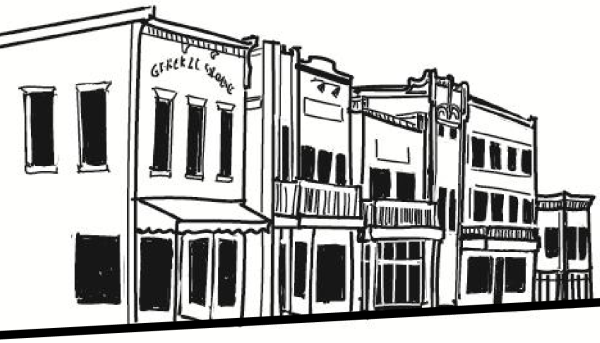
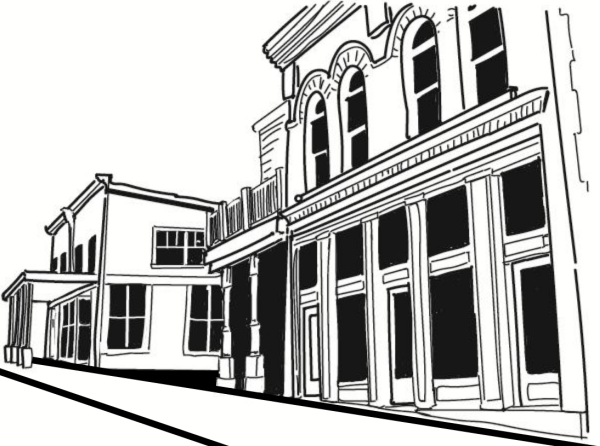
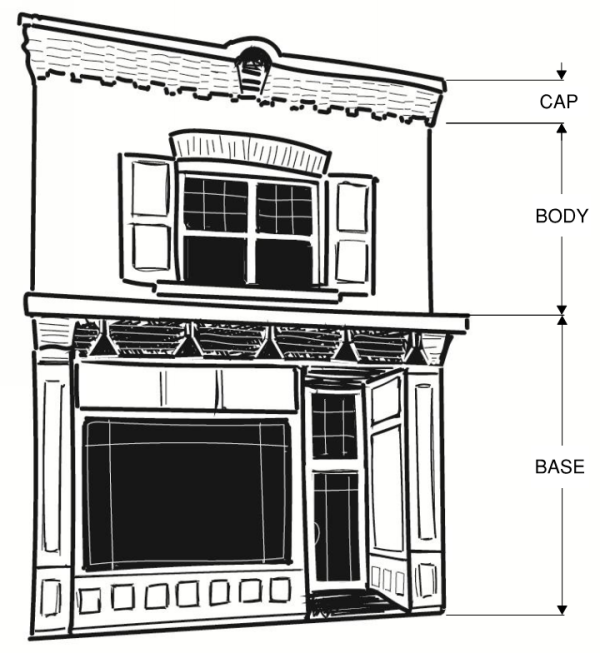
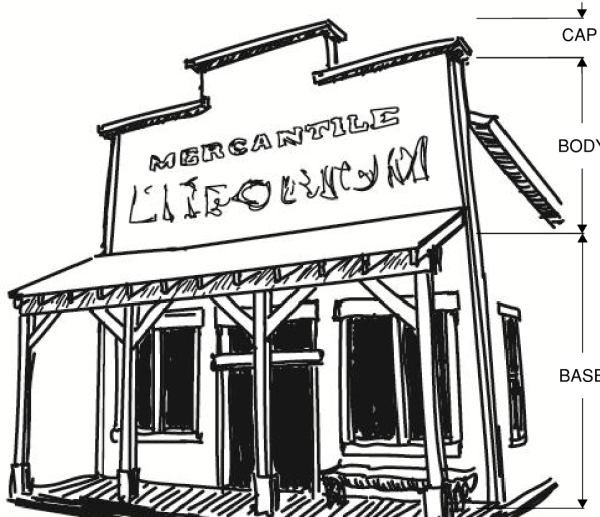
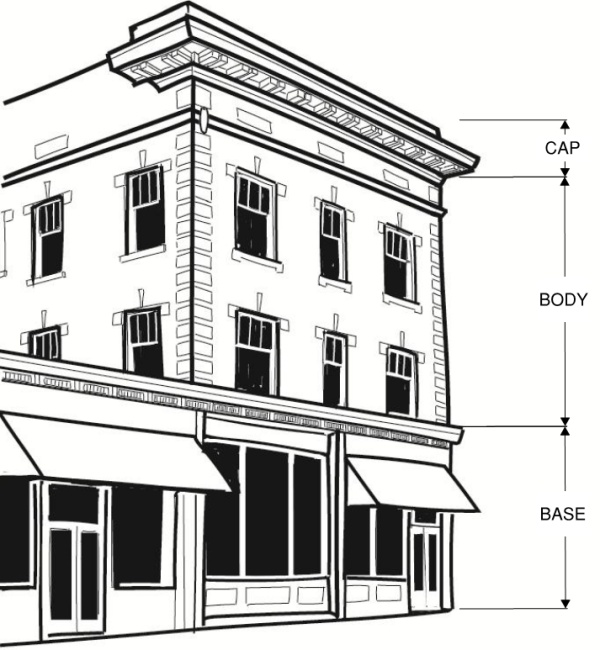
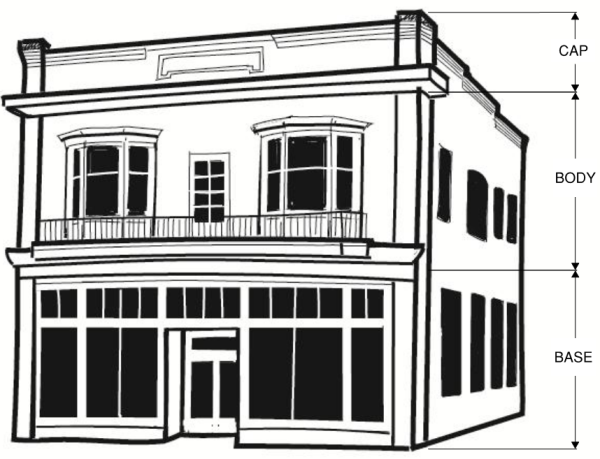
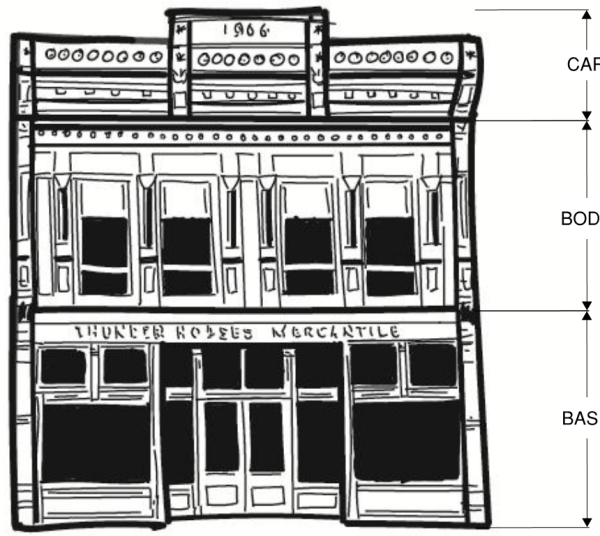
Adopted by Ord. 2022-04 on 1/18/2022
Amended by Ord. 2022-20 on 8/16/2022
Amended by Ord. 2023-09 on 5/16/2023
Amended by Ord. 2023-36 on 12/5/2023
Amended by Ord. 2026-09 on 5/26/2026
Sec 104-22-6.080 Ranch Agrarian Architecture
- Design theme. Buildings shall have architectural styling and materials that implement ranch agrarian architecture adapted to small-town main-street building forms. This architectural theme is intended to promote development that reflects the area’s ranching and agricultural heritage through simple roof forms, wood and masonry materials, vertically proportioned window and door openings, timber detailing, and selective use of agrarian-inspired architectural elements, while maintaining pedestrian-oriented building form and façade composition.
- Building form and massing.
- Each street-facing building façade shall be designed and constructed to have a building base, building body, and building cap or varying building roofline, each differentiated from others changes in materials or design techniques. The base of the building shall be no less than one-tenth and no greater than one-third the height of the building.
- The wall massing of building facades shall be broken at least every 40 feet with no less than a six inch shift in the plane of adjacent walls. Blank, flat, unarticulated wall planes greater than 25 feet are prohibited on any street-facing façade.
- Rooflines and roof forms. Rooflines shall be broken every 50 feet, with no less than a 12 inch shift between adjacent rooflines, parapet heights, or roof planes.
- The following are allowed primary roof forms:
- Gable and monitor roofs with a slope no less than 6:12;
- Gambrel roofs with the upper roof slope on each side of a gambrel being no less than 4:12, and the length of the lower roof slope being no less than two-thirds the length of the upper roof slope, as measured along the slope; or
- Flat or other sloped roof concealed behind a parapet.
- The following are allowed subordinate roof forms, which shall comprise an area that is less than the area of the allowed primary roof form, as measured when viewed from above and not along the roof slopes:
- Shed roofs with a minimum slope of 4:12 attached to the side or front of the building;
- Cupolas; and
- Gable-style dormers.
- Mansard roofs, barrel roofs, domes, and highly curvilinear roof forms are prohibited.
- Roofs shall provide a minimum eave or overhang projection of 12 inches, measured horizontally from the exterior wall plane. Parapeted roofs are exempt if they include an articulated cap, coping, cornice, or other visually defined top element at least 12 inches in height that projects from the plane of the building no less than three inches.
- The following are allowed primary roof forms:
- Building material. Building façade walls shall be finished with no less than two diverse types of material. The primary building material shall be wood siding, board-and-batten siding, wood shingles, or fiber-cement or engineered-wood siding manufactured to appeal like wood. At least one of the building materials used on the building façade shall also be used on all other sides of the building.
- Land Use AuthorityBrick, stone, manufactured or cast stone with relief no less than one-inch deep, and board-formed colored concrete may be used in place of wood if approved by the Land Use Authority
- The base of each street-facing façade shall be constructed of brick, stone, manufactured or cast stone with relief no less than one-inch deep, and board-formed colored concrete, extending a minimum of three feet above grade.
- Metal siding may be used on the building's body, as long as the building's base is made of brick or stone, and as long as the metal siding is broken by brick or stone every twenty feet, and is treated to create a natural-appearing aged patina.
- Windows. Window openings on each façade shall be arranged in a consistent pattern through aligned heads, aligned sills, uniform spacing, or a combination thereof.
- Ground-floor commercial façades shall include large display windows with kick plates or bulkheads below. Display windows shall be framed in wood or metal and shall be visually distinct from upper-story windows.
- Publicly accessible ground-floor residential entrances on multifamily buildings shall be clearly defined by porches, stoops, canopies, recessed entries, or similar entry features.
- Upper-story windows shall be rectangular and vertically proportioned, with a height greater than the width. Paired and grouped windows shall be of the same dimensions and aligned within the façade composition.
- Each upper-story window shall be recessed at least three inches from the exterior wall plane or set within a trim surround at least three inches deep.
- No more than 25 linear feet of street-facing façade shall occur without a window or door opening. Curtain wall window systems are prohibited except as a minor entrance accent occupying no more than 15 percent of the street-facing façade.
- Main Street-Entrance emphasis. Each street-facing publicly accessible building entrance shall include at least two of the following features:
- A covered porch projecting from the building façade no less than four feet and no less than 10 feet wide.
- A canopy or awning projecting from the building façade no less than four feet and no less than 10 feet wide.
- Transom windows above the door.
- Timber posts, wood trim, or a framed surround at least four inches wide on each side and across the top of the entrance.
- A gabled or shed-roof entrance element clearly framing the doorway.
- Special features. Each building shall incorporate at least two of the following features:
- A cupola, monitor element, or clerestory used as a subordinate architectural accent.
- Gable-style dormers.
- A chimney clad in brick, stone, or cast stone.
- Sliding-barn-door-inspired detailing, loft-door-inspired detailing, or similar agrarian reference, as determined appropriate by the Land Use Authority, integrated as a decorative feature rather than a primary façade element.
- Colors. At least two muted earth-tone colors generally visible from the site are required.
- Examples. Examples of generally acceptable architectural features are depicted in the following images. Any conflict between details in the images and regulations in this chapter shall be interpreted in favor of the regulations in the chapter.
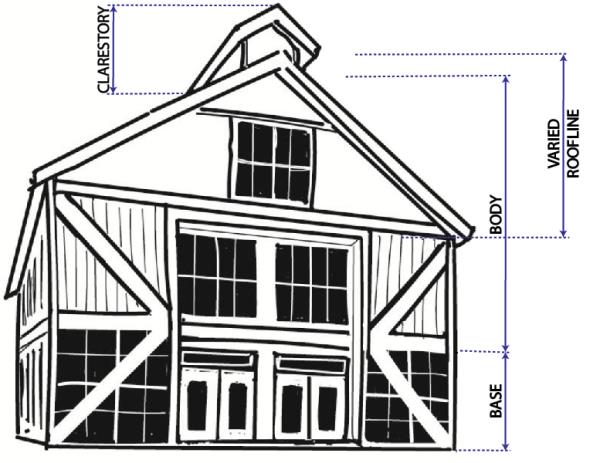
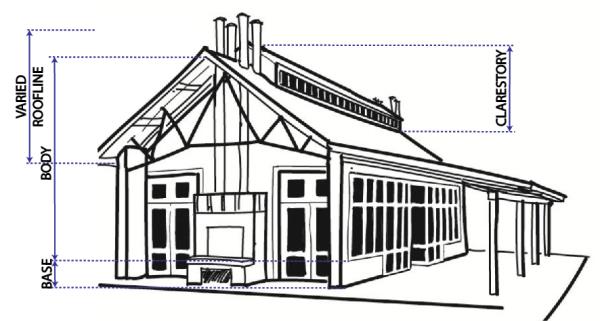
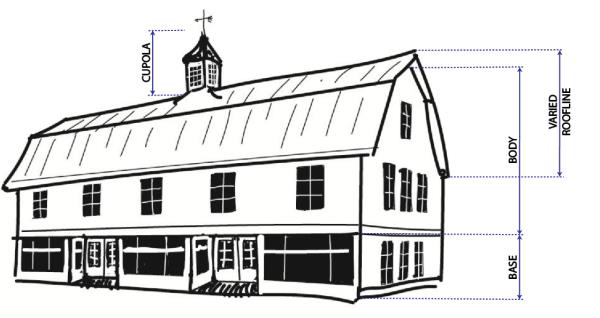
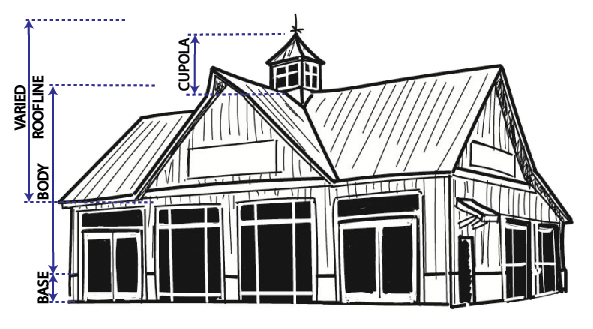
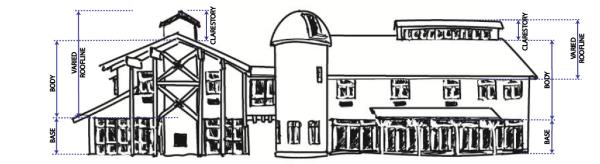
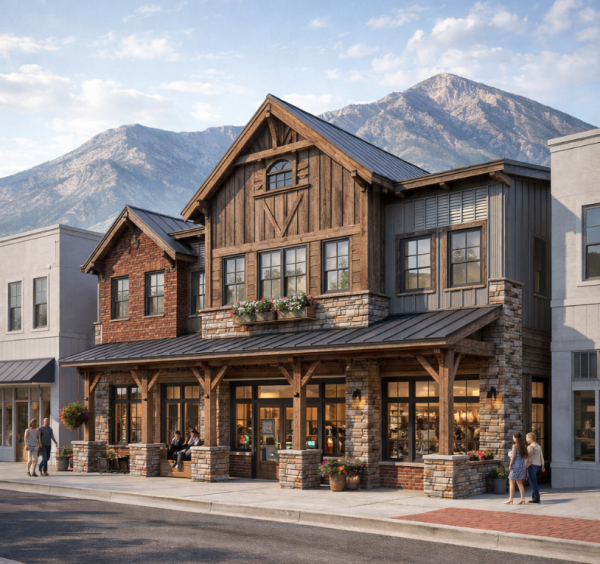
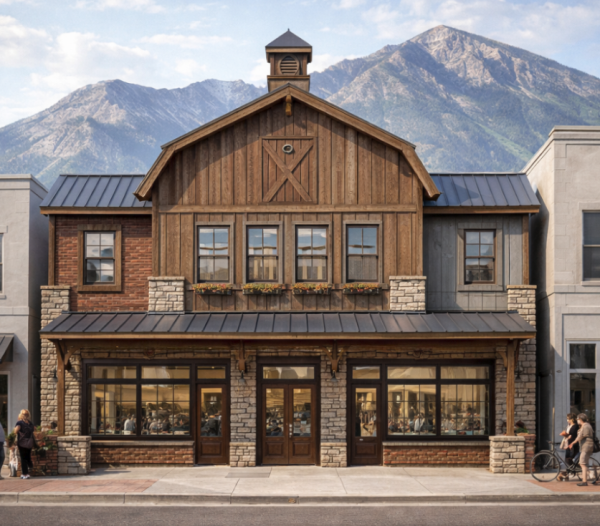
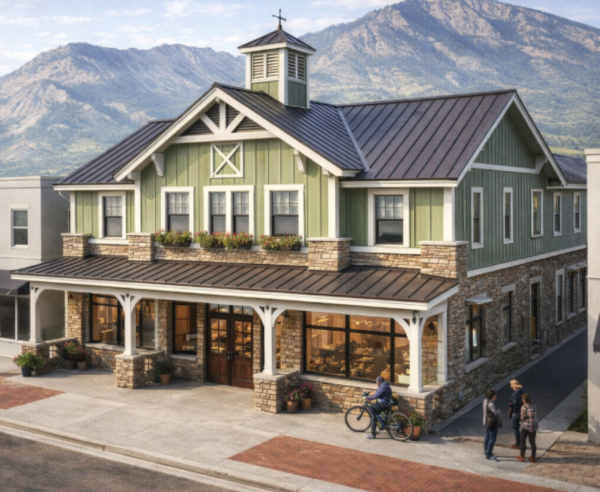
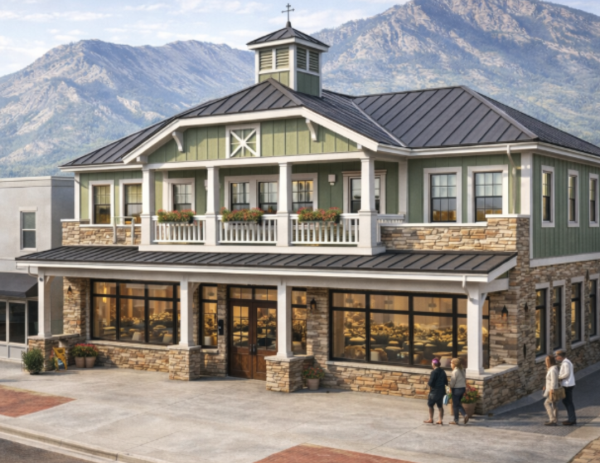
Adopted by Ord. 2022-04 on 1/18/2022
Amended by Ord. 2022-20 on 8/16/2022
Amended by Ord. 2023-09 on 5/16/2023
Amended by Ord. 2023-36 on 12/5/2023
Amended by Ord. 2026-09 on 5/26/2026
Sec 104-22-6.090 Modern Alpine Architecture
- Design theme. All buildings shall have architectural styling and materials that implement a modern interpretation of European alpine design. This architectural theme shall promote development reflecting steeply pitched gabled roof forms, deep roof overhangs, stone base materials, wood siding or timber detailing, vertically proportioned windows, and prominent covered entries or balconies. The following design features are intended to provide minimum stylistic requirements to implement this design theme.
- Building form and massing.
- Each street-facing façade shall be designed and constructed to have a base, building body, and varying building roofline, each having varying design techniques and building material.
- The wall massing of building facades shall be broken at least every 40 feet with no less than a six-inch shift in the plane of adjacent walls.
- Rooflines and roof forms.
- Buildings shall have varying rooflines of predominantly gabled roofs. Cross-gables, subordinate shed roofs, dormers, and flat-roofed elements may be incorporated if they remain subordinate to the predominant gabled roof form.
- Rooflines shall be broken at least every 60 feet, with no less than a 12 inch shift between adjacent rooflines that are on the same plane.
- Main gabled roofs shall have a minimum slope of 6:12. Subordinate shed roofs shall have a minimum slope of 3:12.
- Sloped roofs shall provide a minimum eave or overhang projection of 24 inches, measured horizontally from the exterior wall plane.
- Mansard roofs, barrel roofs, domes, false-front parapets, and highly curvilinear roof forms are prohibited.
- Flat roofs may be used only on subordinate building elements that comprise no more than 25 percent of the roof area visible from a public street.
- Building material. Building façade walls shall be finished with no less than two primary and one secondary type of building material. For the purposes of this subsection, glazing shall not count as a primary or secondary wall material. The primary building materials shall be natural stone, wood siding, wood shingles, heavy timber, or fiber-cement or engineered wood siding manufactured to appear like wood. The secondary building materials may include metal, concrete, plaster, or similar smooth-finish wall material.. At least one of the primary building materials used on the building façade shall also be used on all other sides of the building.
- Each building façade shall have at least 60 percent primary building material, measured excluding window and door openings.
- The base of each street-facing façade, extending no less than six feet above grade, shall be at least 60 percent stone, measured excluding window and door openings..
- Wood siding, wood shingles, heavy timber, or similar-appearing wood substitute materials shall comprise no less than 30 percent of the façade, measured excluding window and door openings.
- Metal shall be limited to roofs, flashing, coping, trim, balconies, railing, exposed structural or decorative components, except that metal wall siding may be used only as an accent material and shall not comprise more than 15 percent of any façade, measured excluding window and door openings.
- No more than ten percent of any building façade, measured excluding window and door openings, shall be exposed concrete and, if used shall be board-formed, smooth architectural concrete, or integrally colored concrete.
- Reflective mirror-finish materials and unfinished galvanized metals are prohibited.
- Windows. Each window’s height shall be greater than window width. This is not applicable to minor accent windows in gable ends or dormers. Upper-story windows shall be recessed at least four inches from the exterior wall plane or set within a trim surround at least three inches deep. Window divider bars, trim, shutters, or deep window surrounds may be used, but false applied shutters that are smaller than the window opening are prohibited.
- Main street-entrance emphasis. Each street-facing publicly accessible building entrance shall include a covered entry feature and at least one of the following additional features:
- A projecting gable, canopy, or roof element extending no less than six feet from the façade and no less than 12 feet in width;
- An entry porch, court, or stoop with interior clear dimensions of no less than eight feet deep and 10 feet wide;
- Stone, timber, or heavy trim framing the entrance and extending vertically above the door to create a prominent entrance composition;
- A balcony, deck, or similar projecting element directly above or adjacent to the entrance.
- Special features. At least two of the following features shall be incorporated on each building façade facing a public street:
- A balcony or deck projecting no less than four feet from the façade;
- A chimney projecting from the wall plane and rising above the roof ridge, clad in stone, plaster, or similar durable material;
- Exposed rafter tails, outlookers, or brackets no less than four inches wide;
- Exposed timber posts or beams framing an entry, porch, or balcony; or
- Dormers integrated into a gabled roof form.
- Colors. Muted earth-tone colors generally visible from the site are required. No more than 30 percent of a building's facade shall be white.
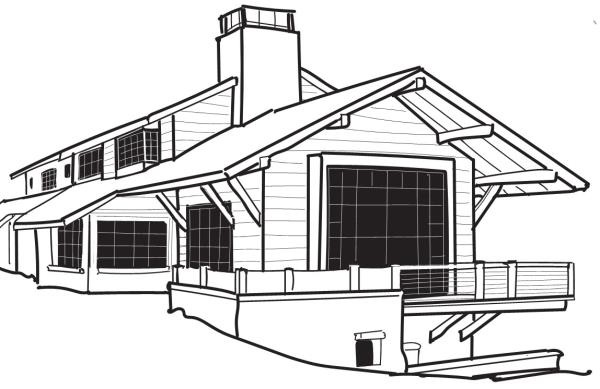
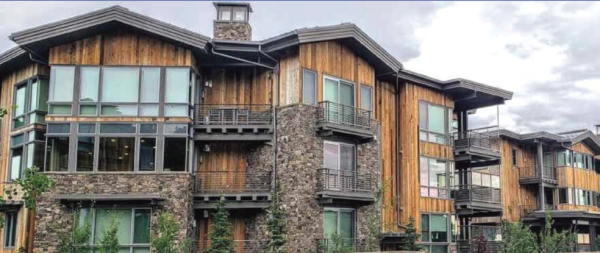
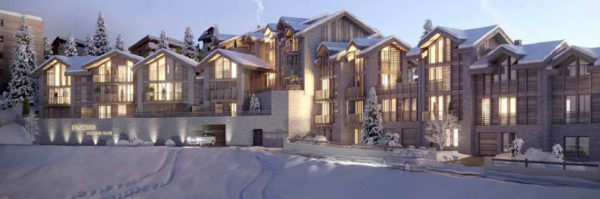
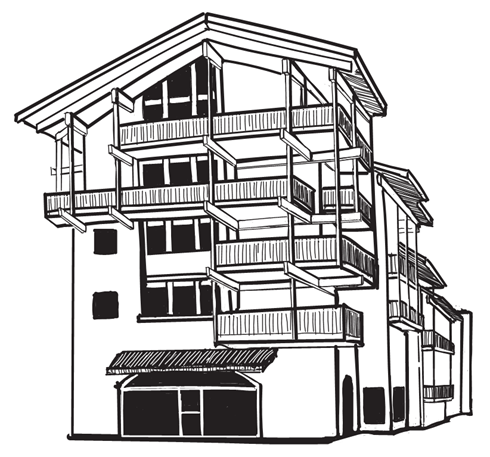
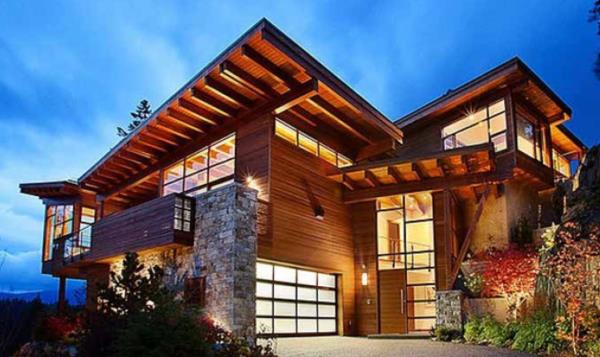
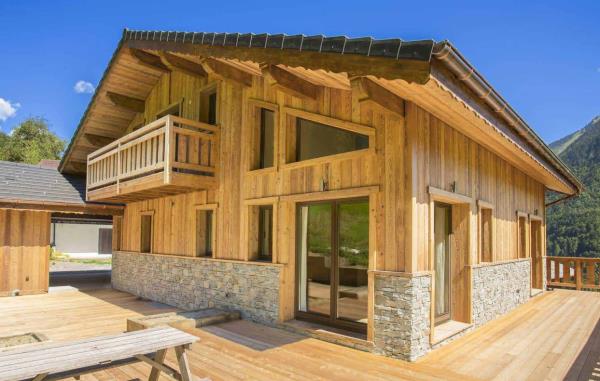
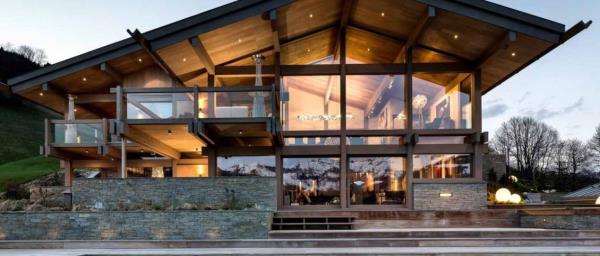
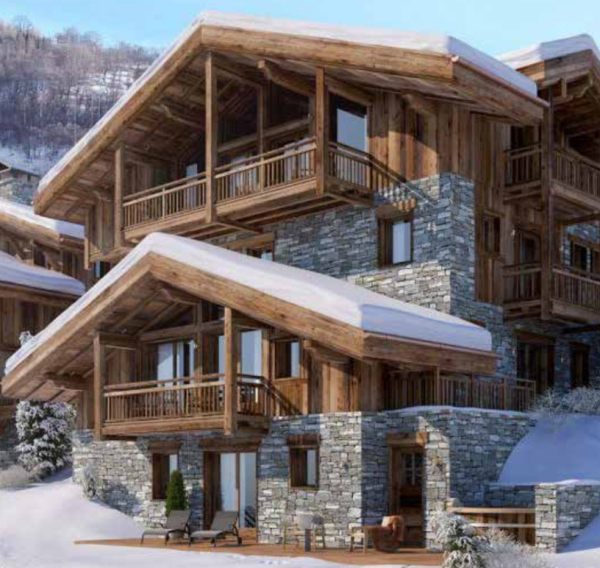
Adopted by Ord. 2022-20 on 8/16/2022
Amended by Ord. 2023-09 on 5/16/2023
Amended by Ord. 2023-36 on 12/5/2023
Amended by Ord. 2026-09 on 5/26/2026
Sec 104-22-6.100 Mountain Modern Architecture
- Design theme. All buildings shall have architectural styling and materials that implement mountain modern architecture. This architectural theme will promote development reflecting authentic, durable materials and contemporary massing using natural materials, deep roof overhangs, exposed structural expression such as rafters and beam tails, and high quality glazing at pedestrian levels.
- Building form and massing.
- Each street-facing façade shall be designed and constructed to have a building base, building body, and varying building roofline, each having varying building materials or design techniques.
- The wall massing of each building facade shall be broken at least every 40 feet in any direction with either an offset of adjacent wall planes of no less than two feet for a minimum length of fifteen feet, or an offset of no less than twelve inches between adjacent wall planes of different building materials.
- Rooflines and roof forms.
- Allowed roof forms. The allowed roof forms are gable roofs, shed roofs, flat roofs with parapets, or other roof forms determined by the Land Use Authority to integrate well into the overall design of the building.
- Prohibited roof forms. The prohibited roof forms are mansard roofs, domes, barrel tile roofs, and curvilinear roof forms.
- Roofline breaks. Rooflines shall be broken every 50 feet, with no less than a 12 inch shift between adjacent rooflines and roof planes by means of one of the following:
- Shift in roof elevation;
- Shift in parapet height; or
- Transition between allowed roof forms.
- Building material. Building façade walls shall be finished with no less than two diverse types of material. The primary building material, excluding glazing, shall be either brick, natural stone, manufactured or cast stone with relief no less than one-inch deep, board-formed colored concrete, or wood siding or similar appearing siding such as engineered wood and fiber-cement board that is manufactured to appear like wood. If used, manufactured stone shall have relief that is no less than an average of one-inch deep. At least one of the building materials used on the building façade shall also be used on all other sides of the building.
- The base of each street-facing façade, extending a minimum of four feet above grade, shall be constructed of brick, stone, or board-formed colored concrete. Land Use Authority
- Standing seam or flat-lock metal siding may be used on the building's body if it is broken horizontally by brick or stone every twenty feet. Metal siding shall have a matte finish or be treated to create a natural-appearing aged patina. No corrugated metal siding is allowed on more than 15 percent of any façade.
- Cementitious panel systems, and stucco and other exterior insulation finishing systems may be used as an accent material, but may not comprise more than 20% of a building’s façade when measured including window and door openings.
- Windows. Single, paired, or tripled vertical rectangular windows shall be used. Each window’s height shall be greater than window width. Paired and tripled windows shall all be the same dimensions. The composition of all windows on a building’s façade shall be balanced. No more than 25 linear feet of street-facing façade shall occur without a window or door opening. A window curtain wall system is exempt from this standard.
- Main street-entrance emphasis. Each publicly accessible main street entrance shall include at least one of the following features:
- An overhead architectural feature such as a gable, canopy, shed roof, or overhang projecting from the building façade no less than six feet and is no less than 14-feet wide, or extends at least five-feet beyond each side of the entry doors, whichever is greater.
- An entry porch, court, or stoop with interior clear dimensions no less than 12-feet deep and 16-feet wide.
- Window glazing comprising no less than 50 percent of the area around the door that is within 20 feet horizontally of the entrance, and 15 feet vertically above the grade of the sidewalk.
- Special features. At least three of the following options shall be incorporated, one of which shall be either option one or two.
- A covered porch or deck(s) of significant visual prominence and articulation, or other unique architectural feature or features if allowed by the Land Use Authority.
- Exposed structural columns no less than two stories in height, a prominent chimney, or other unique vertical architectural element if allowed by the Land Use Authority.
- Exposed rafter tails or outlookers no less than four-inches wide by ten-inches tall.
- Exposed beams, no less than four inches wide by ten inches tall, supporting canopies or overhangs.
- Timber posts, no less than six-inches by six-inches, and beams, no less than four-inches wide by ten-inches tall, framing an entry or porch.
- Structural or decorative kickers that appear structural and are no less than six-inches by six-inches.
- Colors. Warm muted earth-tone colors generally visible from the site are required.
- Examples. Examples of generally acceptable architectural features are depicted in the following images. Any conflict between details in the images and regulations in this chapter shall be interpreted in favor of the regulations in the chapter.
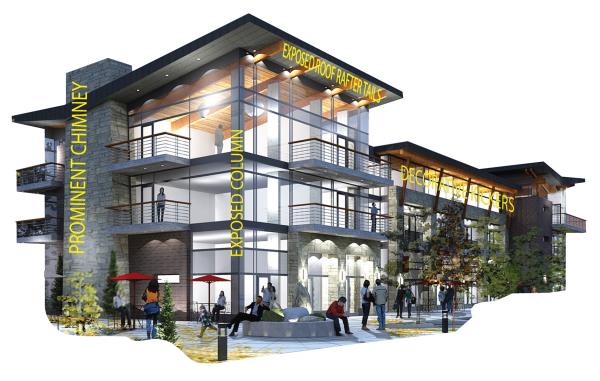 | |
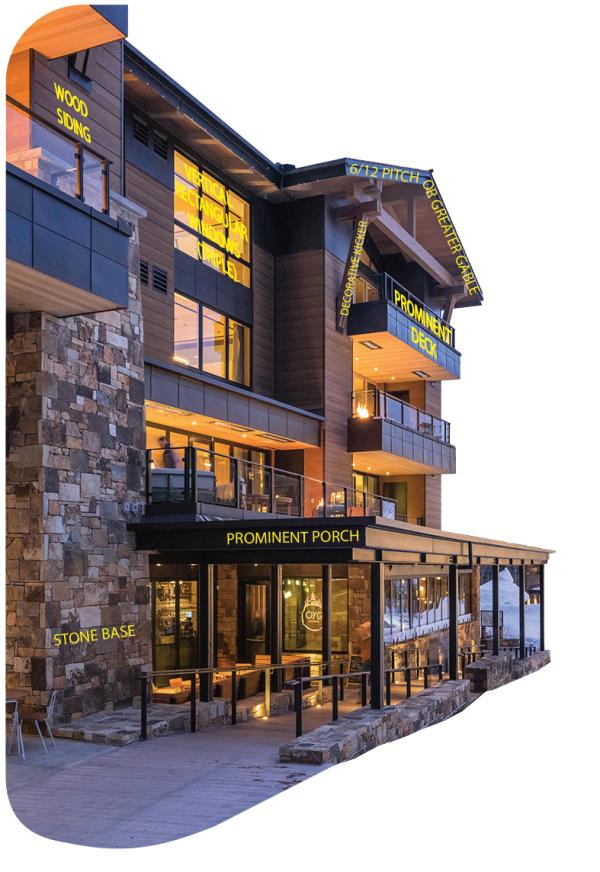 | 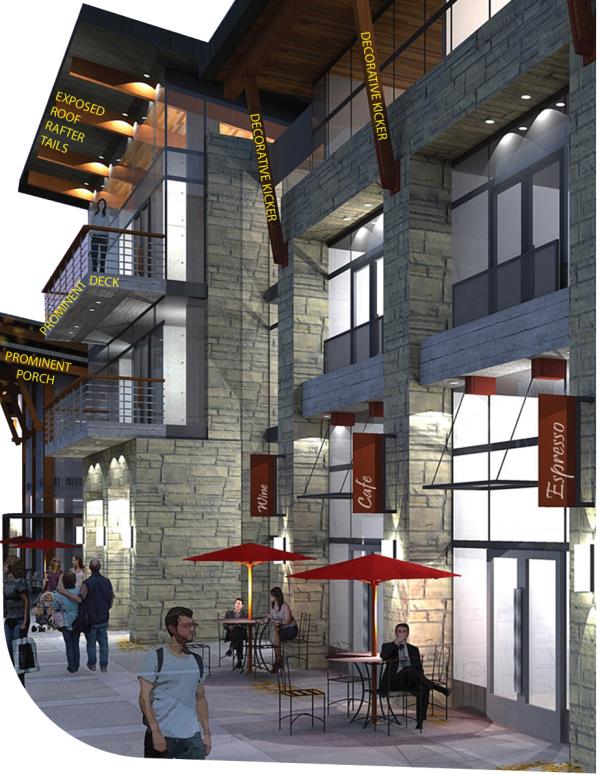 |
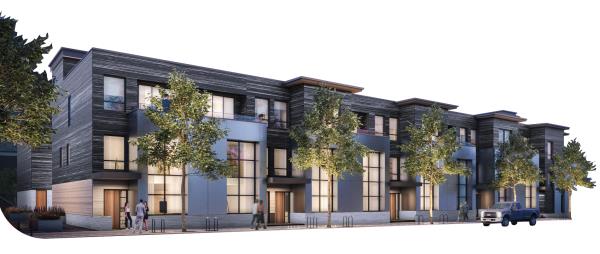 | 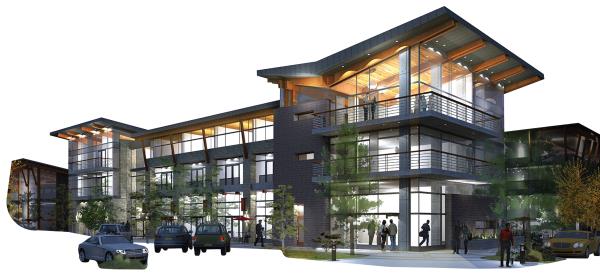 |
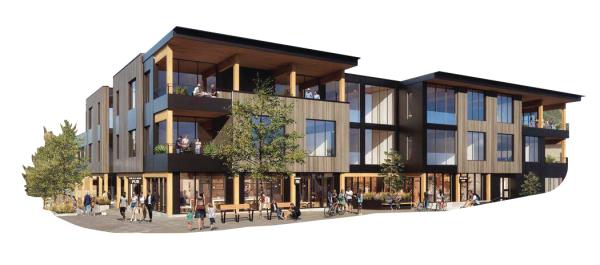 |
|
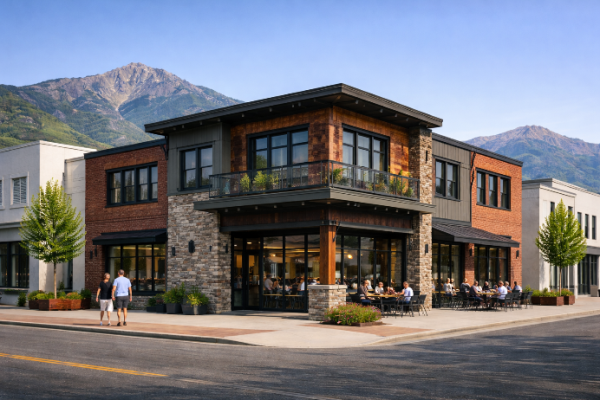 | 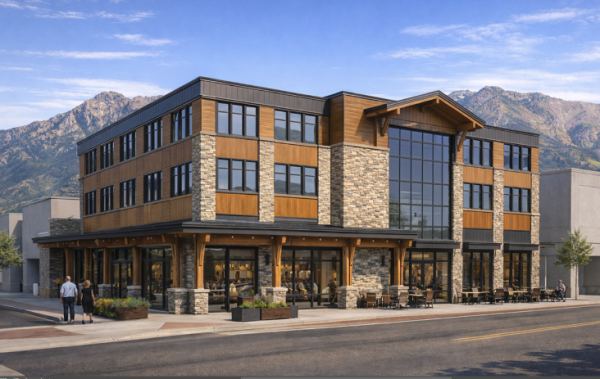 |
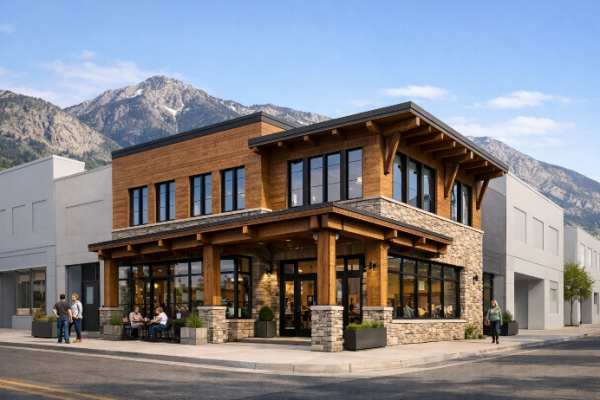 | 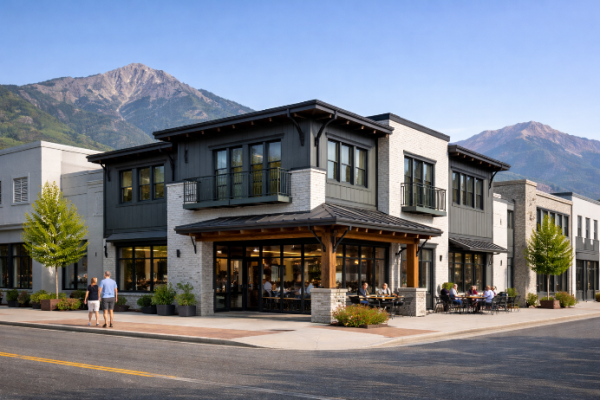 |
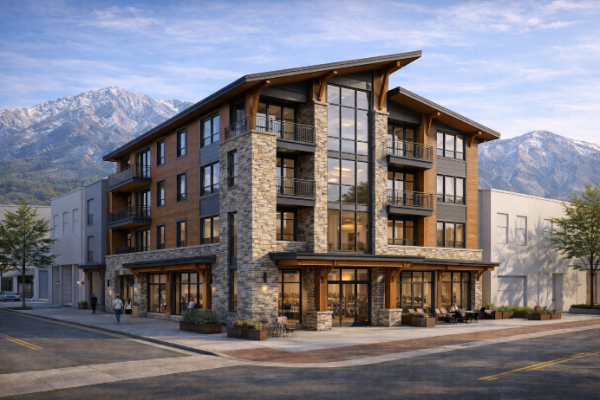 | 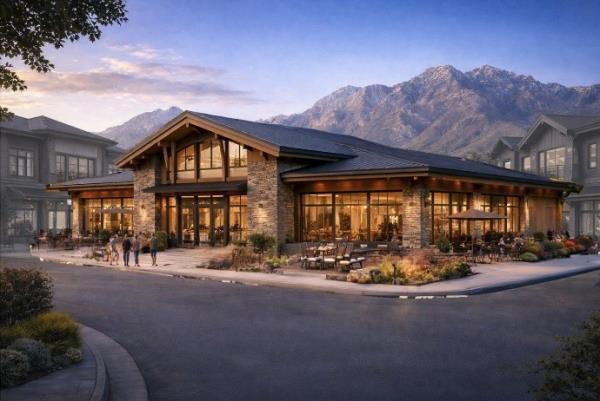 |
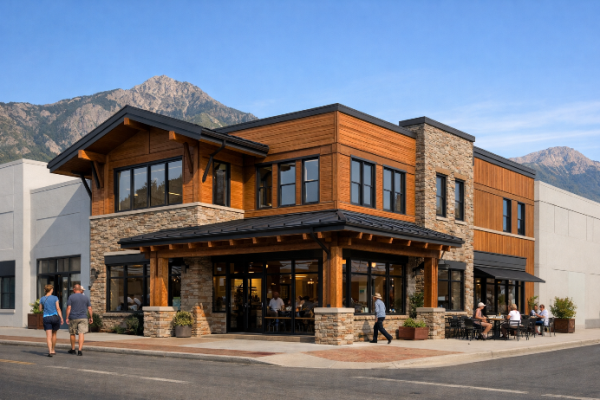 | 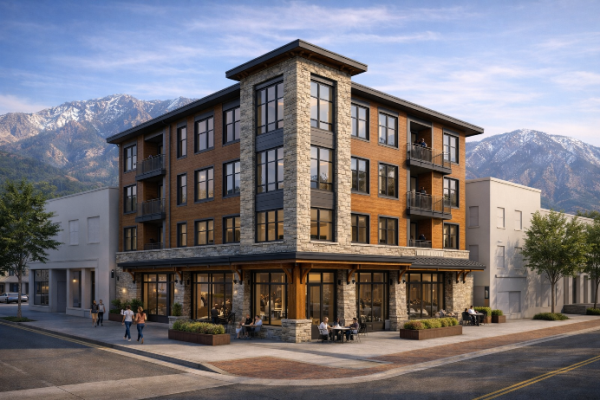 |
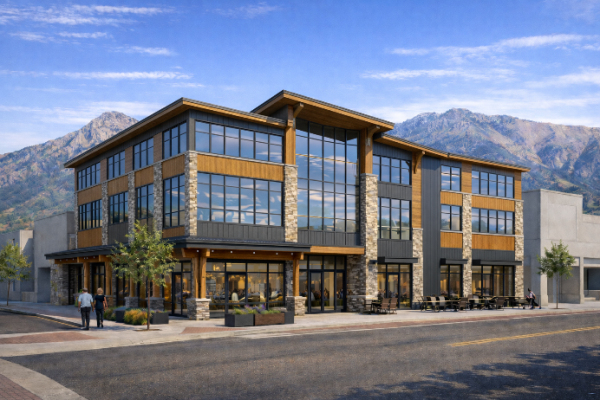 | 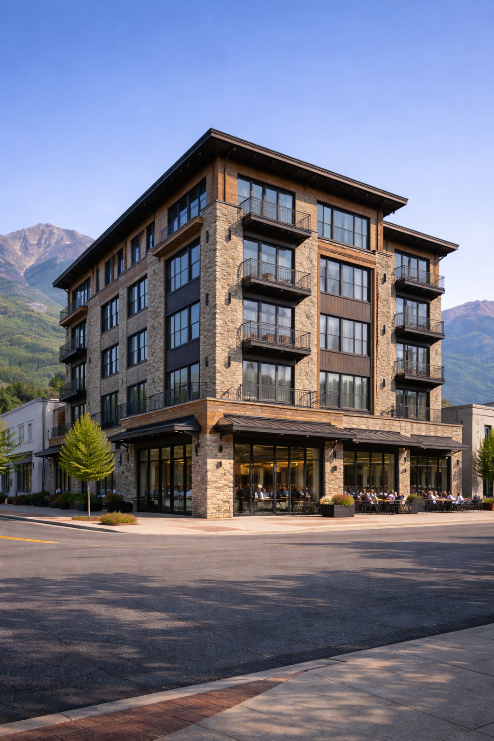 |
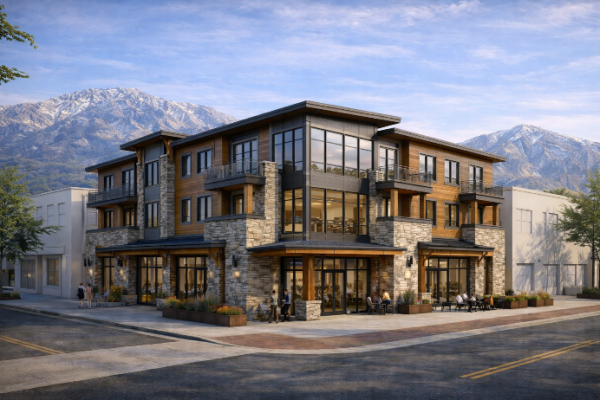
Adopted by Ord. 2023-36 on 12/5/2023
Amended by Ord. 2026-09 on 5/26/2026
Sec 104-22-6.110 Rustic Structural Architecture
- Design theme. All buildings shall have architectural styling and materials that implement rustic structural architecture. This architectural theme shall promote development reflecting steeply pitched gabled roof forms, exposed structural expression using large timber members, stone base elements, prominent porches, decks, or balconies, and natural materials with a rough-sawn, rough-face, split-face, matte, or weathered appearance. The following design features are intended to provide minimum stylistic requirements to implement this design theme.
- Building form and massing.
- Each street-facing façade shall be designed and constructed to have a building base, building body, and varying building roofline, each having varying building materials or design techniques.
- The wall massing of each building facade shall be broken at least every 40 feet in any direction with either an offset of adjacent wall planes of no less than two feet for a minimum length of fifteen feet, or an offset of no less than twelve inches between adjacent wall planes of different building materials.
- Rooflines and roof forms.
- Allowed roof forms. The allowed roof forms are gable roofs, shed roofs, flat roofs with parapets, or other roof forms determined by the Land Use Authority to integrate well into the overall design of the building.
- Prohibited roof forms. The prohibited roof forms are mansard roofs, domes, barrel tile roofs, and curvilinear roof forms.
- Eaves. Sloped roofs shall provide a minimum eave or overhang projection of 18 inches, measured horizontally from the exterior wall plane.
- Roofline breaks. Rooflines shall be broken every 50 feet, with no less than a 12 inch shift between adjacent rooflines and roof planes by means of one of the following:
- Shift in roof elevation;
- Shift in parapet height; or
- Transition between allowed roof forms.
- Building material. Building façade walls shall be finished with no less than two diverse types of material. Primary building materials shall be natural stone, rough-sawn wood siding, log siding, heavy timber, wood shingles, or fiber-cement or engineered-wood siding manufactured to appear like wood described in this theme. Building materials shall have a rough-sawn, rough-face, split-face, matte, or weathered appearance. . At least one of the building materials used on the building façade shall also be used on all other sides of the building.
- The building’s base shall be natural stone, manufactured or cast stone with relief no less than one-inch deep, board-formed colored concrete extending a minimum of three feet above grade..
- Metal accents or trim may be used only if they have a matte finish or are treated to create a natural-appearing aged patina.
- Mirrored glass, polished stone, highly reflective finishes, and smooth synthetic siding are prohibited on street-facing façades.
- Exposed timber columns on street-facing façades shall be no less than eight inches by eight inches in dimension and shall be visually supported by stone bases extending no less than 18 inches above the adjacent finished surface.
- Windows. Window openings on each façade shall be arranged in a consistent pattern through aligned heads, aligned sills, uniform spacing, or a combination thereof.
- Ground-floor commercial façades shall include large display windows with kick plates or bulkheads below. Display windows shall be framed in wood or metal and shall be visually distinct from upper-story windows.
- Publicly accessible ground-floor residential entrances on multifamily buildings shall be clearly defined by porches, stoops, canopies, or similar entry features as determined appropriate by the Land Use Authority.
- Upper-story windows shall be rectangular and vertically proportioned, with a height greater than the width. Paired and grouped windows shall be of the same dimensions and aligned within the façade composition.
- No more than 25 linear feet of street-facing façade shall occur without a window or door opening. Curtain wall window systems are prohibited except as a minor entrance accent occupying no more than 15 percent of the street-facing façade.
- Main street-entrance emphasis. Each street-facing publicly accessible building entrance shall include at least two of the following features:
- A covered porch projecting from the building façade no less than six feet and no less than 12 feet wide.
- A covered deck or balcony projecting from the building façade no less than six feet and no less than 12 feet wide.
- 12-inch by 12-inch or greater or 12-inch diameter or greater rough cut timber columns on stone bases framing the entrance.
- A gabled roof element centered on or clearly framing the entrance.
- Special features. Each building shall incorporate at least two of the following features, one of which shall be either option (1), (2), or (3):
- A covered porch or deck(s) of significant visual prominence and articulation, or other unique architectural feature or features if allowed by the Land Use Authority.
- Exposed structural columns no less than two stories in height that are 12-inch by 12-inch or greater or 12-inch diameter or greater large rough-cut timbers,
- A prominent chimney, or other unique vertical architectural element if allowed by the Land Use Authority.
- Exposed rafter tails or outlookers no less than four-inches wide by ten-inches tall.
- Timber posts, no less than six-inches by six-inches, and beams, no less than four-inches wide by ten-inches tall, framing an entry or porch.
- Gable-end timber truss detailing or similar exposed structural expression;
- Wood or timber balcony railings, porch railings, or guardrails;
- Gable dormers subordinate to the primary roof form; or
- Projecting window bays, pop-outs, or similar architectural features sheltered by subordinate shed roofs.
- Colors. Warm muted earth-tone colors generally visible from the site are required.
- Examples. Examples of generally acceptable architectural features are depicted in the following images. Any conflict between details in the images and regulations in this chapter shall be interpreted in favor of the regulations in the chapter.
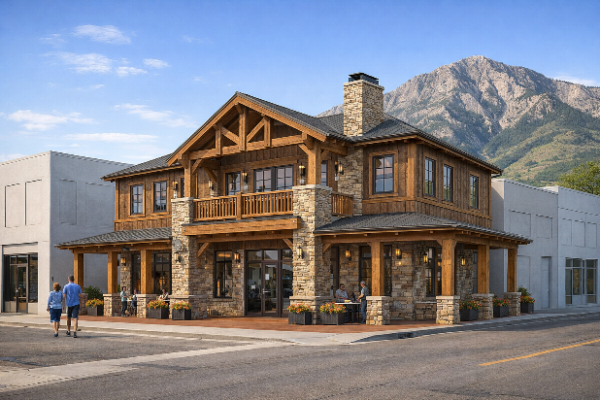 | 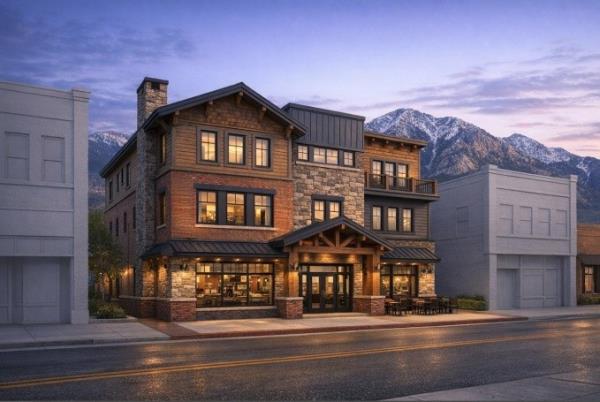 |
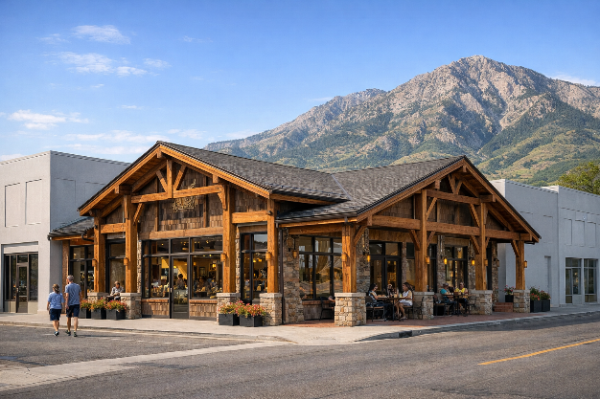 | 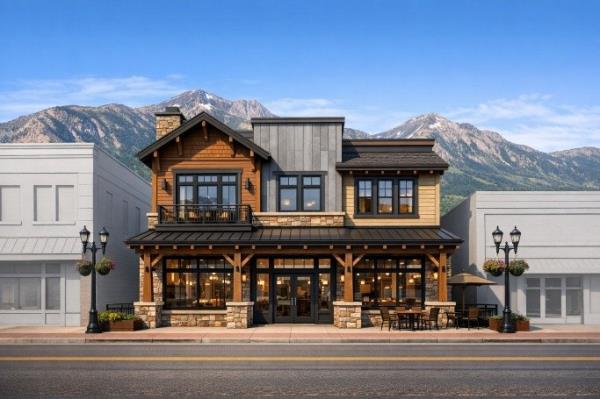 |
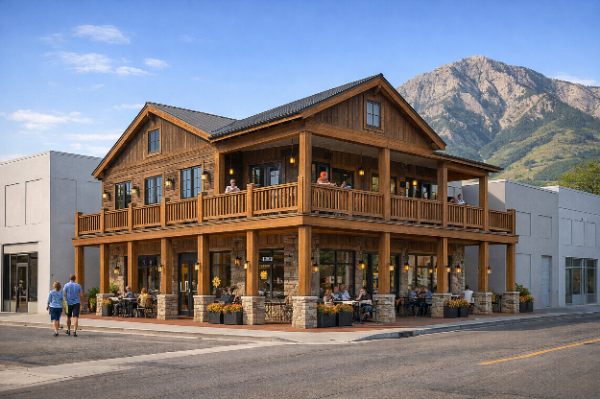 | 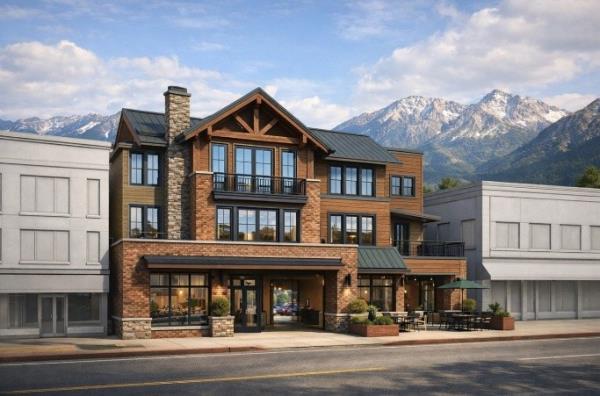 |
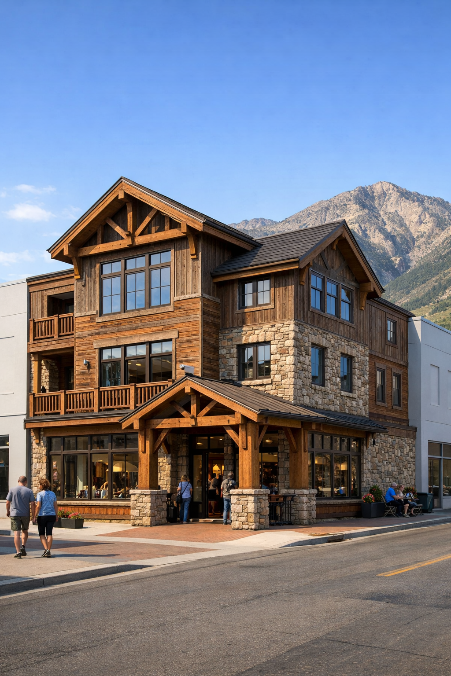 | |
Adopted by Ord. 2023-36 on 12/5/2023
Amended by Ord. 2026-09 on 5/26/2026
Sec 104-22-6.120 Traditional Wasatch Contemporary Architecture
- Design theme. All buildings shall have architectural styling and materials that implement intermountain traditional modern architecture. This architectural theme will promote development reflecting the traditional building forms, materials, and climate-responsive design patterns historically found in the Intermountain West, while still enabling contemporary architectural expression.
- Building form and massing.
- Each street-facing façade shall be designed and constructed to have a building base, building body, and varying building roofline, each having varying building materials or design techniques.
- The wall massing of each building facade shall be broken at least every 40 feet horizontally and vertically with no less than a six inch shift in the plane of adjacent walls, or with window and door openings.
- Rooflines and roof forms.
- Rooflines shall be broken every 50 feet, with no less than a 12 inch shift between adjacent rooflines and roof planes.
- Each building shall incorporate no less than one of the following roof types visible from the street toward which the building’s façade is facing:
- A gable roof with a minimum slope of 6:12.
- A shed roof with a minimum slope of 2:12 that is attached to the side of the building but not attached to the main roof structure.
- A flat roof with a defined parapet.
- Roofs shall provide a minimum eave or overhang projection of twelve (12) inches, measured horizontally from the exterior wall plane. A parapeted roof and other flat roof types are exempt as long as it has an articulated or ornamental cap that is at least 12 inches in height and spans the flat roofline.
- Building material. Building façade walls shall be finished with no less than two diverse types of material. The primary building material shall be either brick or natural stone, or wood siding or similar appearing siding such as engineered wood and fiber-cement board that is manufactured to appear like wood, or manufactured or cast stone with relief no less than one-inch deep. At least two of the building materials used on the building façade shall also be used on all other sides of the building.
- Each street-facing façade shall have a base constructed of brick, stone, or board-formed colored concrete extending a minimum of four feet above grade.
- Metal siding may be used on the building's body if it is broken horizontally by brick or stone every twenty feet. Metal siding shall have a matte finish or be treated to create a natural-appearing aged patina.
- Stucco or other exterior insulation finishing system may be used as an accent material, but may not comprise more than twenty percent of a building’s façade, including window and door openings.
- Windows. Single, paired, or tripled vertical rectangular windows shall be used. Each window’s height shall be greater than window width. Paired and tripled windows shall all be the same dimensions. The composition of all windows on a building’s façade shall be balanced. No more than 25 linear feet of street-facing façade shall occur without a window or door opening.
- Main street-entrance emphasis. Each street-facing publicly accessible building entrance shall include at least one of the following features:
- A covered porch projecting from the building façade no less than four feet that is no less than ten feet wide.
- A canopy projecting from the building façade no less than four feet that is no less than ten feet wide.
- An overhead architectural feature such as a gable, shed roof, or similar projecting element.
- Special features. At least two of the following three options shall be incorporated:
- A prominent covered porch, deck or balcony projecting from the façade no less than four feet.
- A chimney, or other unique vertical architectural feature or features approved by the Land Use Authority.
- Appurtenances such as exposed roof rafter tails, decorative kickers, and exposed beams or column detailing.
- Colors. Muted earth-tone colors generally visible from the site are required.
- Examples. Examples of generally acceptable architectural features are depicted in the following images. Any conflict between details in the images and regulations in this chapter shall be interpreted in favor of the regulations in the chapter.
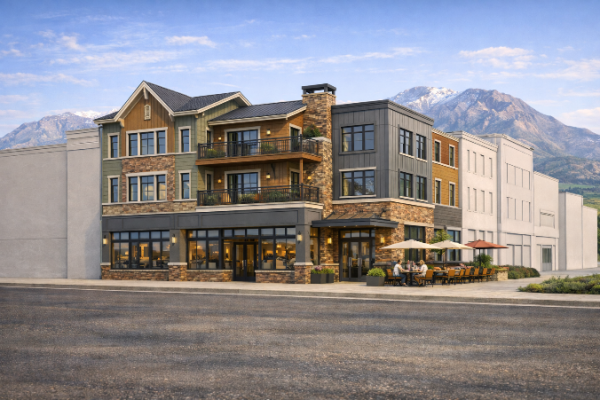 | 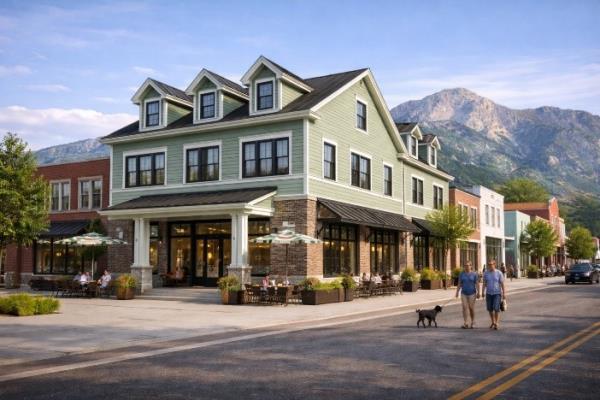 |
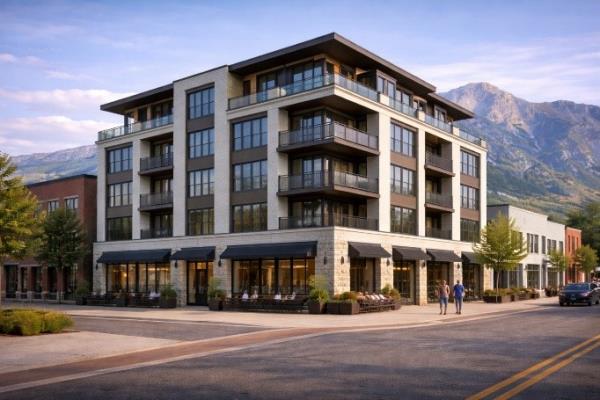 | 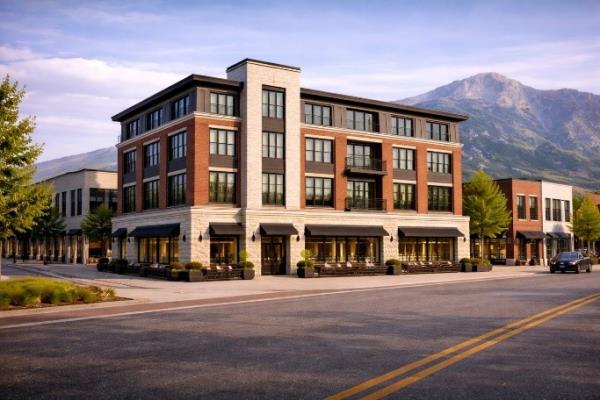 |
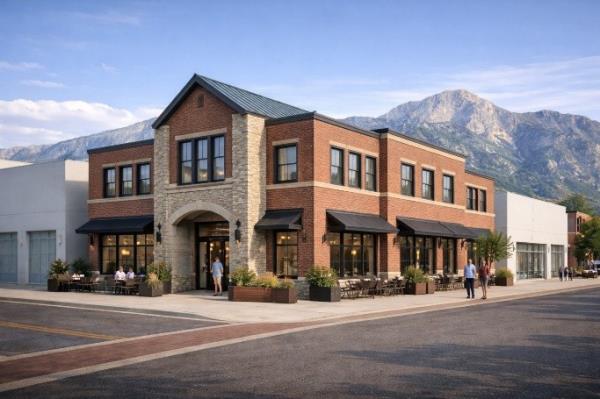 | 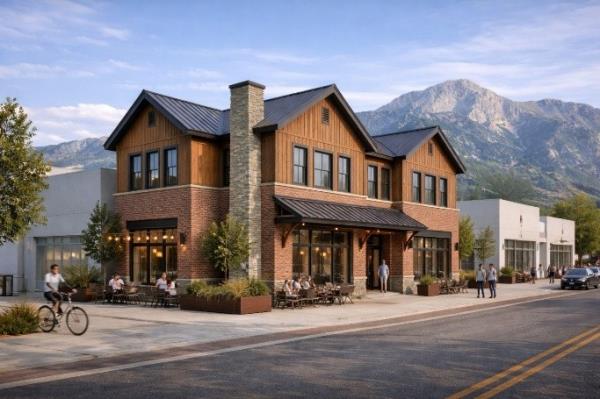 |
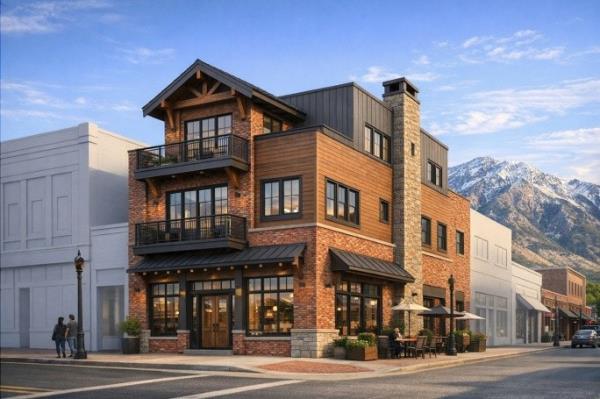 | 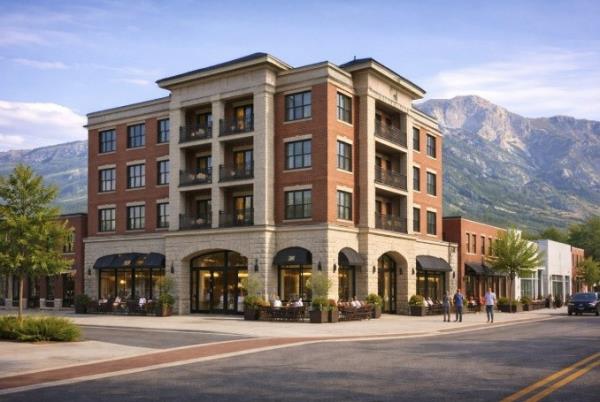 |
Adopted by Ord. 2026-09 on 5/26/2026
Sec 104-22-7.010 General Street Design And Right-Of-Way Cross Sections
- Right-of-way dedication. As development occurs on each lot or parcel, the owner shall dedicate area for public right-of-way with a width as depicted in the table below or as otherwise adopted, to form a Street-Block pattern as depicted in the applicable street regulating plan.
- Drawings required. Each application for development shall provide engineered construction drawings of the street improvements required herein.
- Street right-of-way design.
- Commercial street design. The dimensions and general design for a Governmental and Institutional street, Vehicle-Oriented Commercial street, Mixed-Use Commercial street, and Multi-Family Residential street is as follows:
- Typical three-lane village cross section. A three-lane village street is required for all arterial and collector streets, as designated by the applicable general plan or master street plan. The design dimensions shall be as follows:
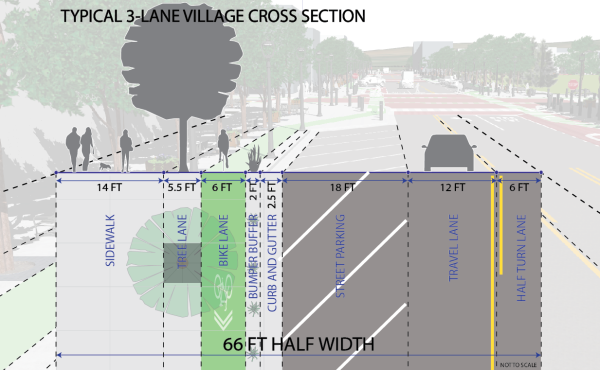
- Typical two-lane village cross section. A two-lane village street is required for other streets. The design dimensions shall be as follows:
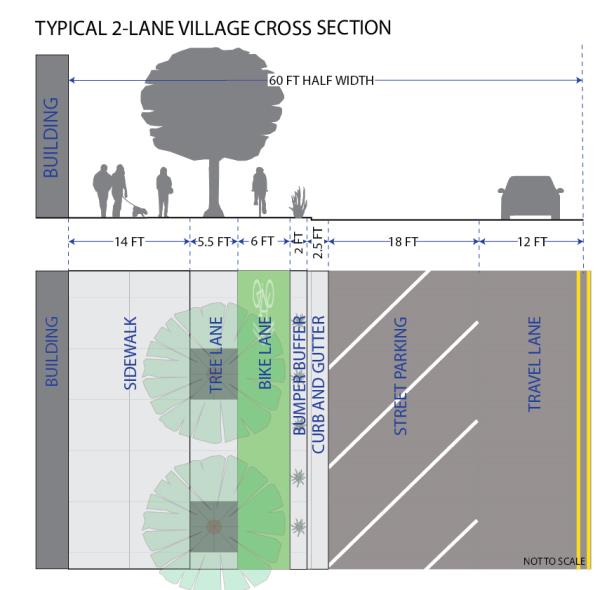
- Two-lane village cross section with challenging cross-slopes. Unless otherwise negotiated by development agreement, the design for a Governmental and Institutional street, Vehicle-Oriented Commercial street, Mixed-Use Commercial street, Multi-Family Residential street on a cross-slope that is greater than 10 percent shall provide a 50 foot right-of-way half width, with design dimensions as follows:
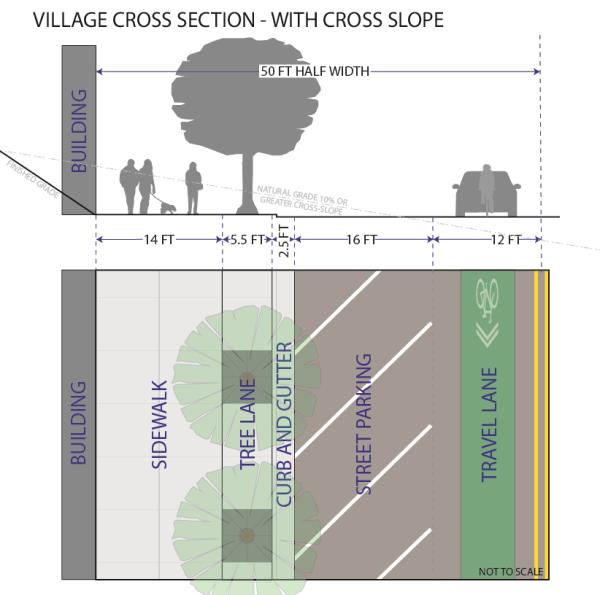
- Typical three-lane village cross section. A three-lane village street is required for all arterial and collector streets, as designated by the applicable general plan or master street plan. The design dimensions shall be as follows:
- Mid-Block Alleys. As development occurs along a Government and Institutional street, Vehicle-Oriented Commercial street, Mixed-Use Commercial street, or Multi-Family Residential street designation, one or more mid-Block Alley(s) shall be designed and constructed in accordance with the following:
- The general location of mid-Block Alleys are shown on each street regulating plan as lines with a lighter line weight than the lines that represent streets.
- A mid-Block Alley shall provide both vehicle and pedestrian access to and through the inside of a Street-Block. Specifically, they shall provide access to shared public parking lots, public or private parking garages, and other uses or buildings that are located in the middle of the Street-Block.
- When a mid-Block Alley connects through a Street-Block in which the Alley transitions to a residential street, the applicable design and construction standards shall also transition to a typical residential street standard.
- The Alley shall be dedicated for public use, but the operations and maintenance of it shall be the collective and equitable responsibility of all landowners whose parcels and/or parking areas gain access from it. An association of owners may be created to specify the details of the management thereof.
- Snow storage areas abutting an Alley shall be provided in the middle of each Street-Block of sufficient size and configuration to easily accommodate the Alley's snow storage needs, as determined by the County Engineer.
- Regardless of an Alley's configuration displayed on the street regulating plan map, a mid-Block Alley shall be located at a distance that is no greater than 330 feet and no less than 200 feet from a street intersection or other mid-Block Alley intersection.
- The mid-Block Alley's access to the street shall align with an existing or planned mid-Block Alley on the opposite side of the street. If there is no existing or planned mid-Block Alley on the opposite side of the street, then the subject mid-Block Alley's access to the street shall be located in a manner that provides reasonable opportunity for the creation of a future mid-Block Alley on the opposite side of the street.
- The width of the mid-Block Alley shall, at a minimum, be designed as follows:
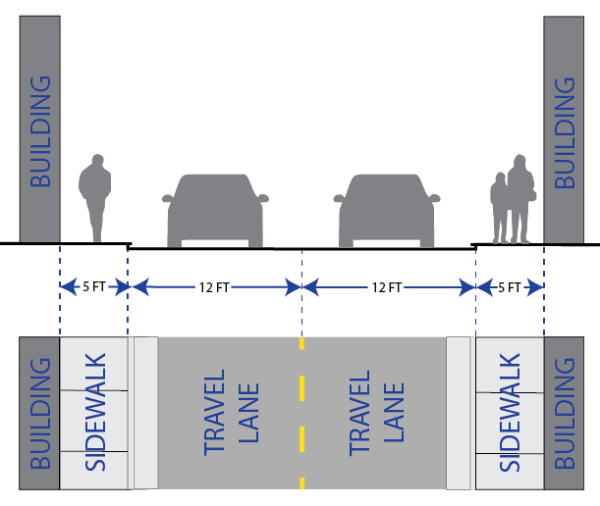
- The general location of mid-Block Alleys are shown on each street regulating plan as lines with a lighter line weight than the lines that represent streets.
- Residential street design. The design for all non-multi-family residential streets is as provided in Section 106-4-5.
- Commercial street design. The dimensions and general design for a Governmental and Institutional street, Vehicle-Oriented Commercial street, Mixed-Use Commercial street, and Multi-Family Residential street is as follows:
Adopted by Ord. 2022-04 on 1/18/2022
Amended by Ord. 2022-20 on 8/16/2022
Amended by Ord. 2023-09 on 5/16/2023
Sec 104-22-7.020 Specific Street Design Standards
For all Government and Institutional, Vehicle-Oriented Commercial, Mixed-Use Commercial, or Multi-Family Residential street types, the following provisions shall apply. The following standards do not apply to non-multi-family residential streets unless explicitly stated herein. Otherwise, non-multi-family residential streets shall follow adopted residential street design standards.
- Pedestrian priority design. The street shall be designed to prioritize pedestrian use. At primary points of conflict between pedestrian uses and vehicle uses, the street facility shall be designed and constructed to promote pedestrian safety, comfort, and efficiency.
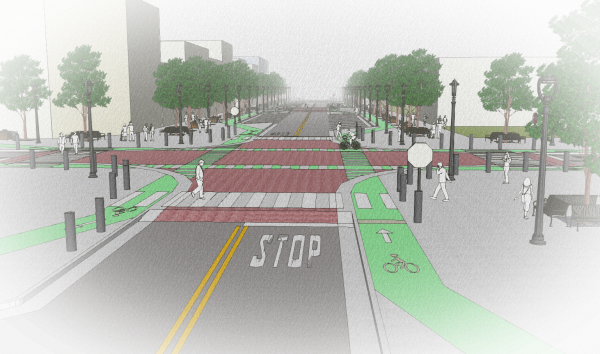
- Raised crosswalks. Where a pedestrian-way intersects with a vehicle-way, the pedestrian-way shall be raised at least six inches above the grade of the vehicle-way, or to the level of the adjoining pedestrian-ways, whichever is higher. This shall include but is not limited to the installation of crosswalks and intersections that are raised to the same plane as the sidewalk or adjoining pathways. An example of a raised crosswalk is illustrated as follows:
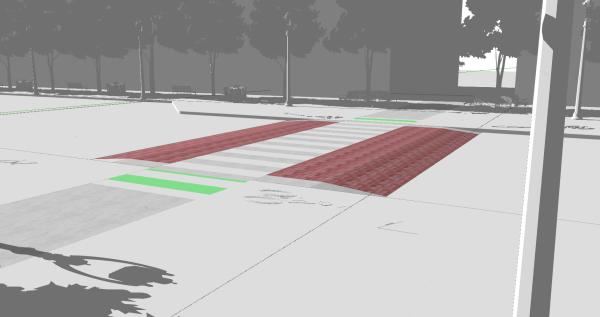
- Curb extension bulb-outs. In order to provide traffic calming and pedestrian safety, street improvements at intersections, pedestrian crossings, and mid-Block Alleys, if different, shall be constructed with curb extensions that bulb-out directly adjacent to the lane of travel. Bike lane widths shall not be obstructed or made narrower at any point along a curb extension bulb-out. Bulb-outs shall be designed to the specifications of this ordinance and the County Engineer, or as otherwise adopted. Where a bulb-out provides access to a raised pedestrian crosswalk, bollards or other permanent features shall be installed along the curve of the bulb-out to keep vehicles from entering the pedestrian-way. Examples of bulb-outs are depicted in the images above.
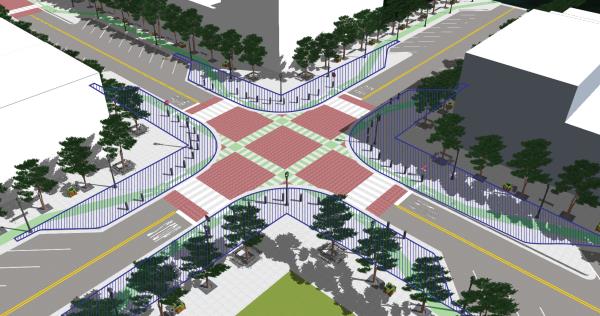
- Crosswalk contrast. For enhanced noticeability, in addition to white retroreflective striping, crosswalks shall be constructed of stamped and colored concrete to provide clear contrast between the street and crosswalk.
- Mid-Block crosswalk. A Street-Block that has a length that is greater than 330 feet, as measured from the center of each bounding intersection, shall be provided with a mid-Block crosswalk. User-activated rapid flashing beacons that are solar powered or connected to jurisdictionally controlled power, if available, shall be installed on mid-Block crosswalk signage.
- Raised crosswalks. Where a pedestrian-way intersects with a vehicle-way, the pedestrian-way shall be raised at least six inches above the grade of the vehicle-way, or to the level of the adjoining pedestrian-ways, whichever is higher. This shall include but is not limited to the installation of crosswalks and intersections that are raised to the same plane as the sidewalk or adjoining pathways. An example of a raised crosswalk is illustrated as follows:
- Sidewalk required. As part of the required street improvements within the FB zone, a sidewalk shall be installed in the designated sidewalk area, as depicted in Section 104-22-7.010 and as illustrated as follows, on the side of the street of the development and for the entire length of the development lot's street frontage or width.
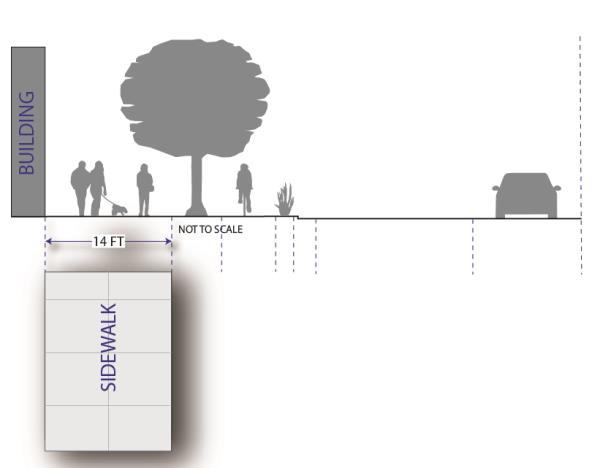
- Paved pathway alternative. A 10-foot wide paved pathway may be installed in lieu of the required sidewalk along any street that is very unlikely to have an adjacent building with ground-floor street-facing commercial space. The pathway shall be designed as provided in Section 104-22-7.030.
- Covered boardwalk alternative. The County Commission may, but is not obligated to, approve the encroachment of a covered boardwalk, or similar, by legislative approval of an encroachment and maintenance contract. The adjoining landowners shall bear full responsibility for the operations and maintenance of the boardwalk. The covered boardwalk shall comply with the overhead projections standards of this chapter.
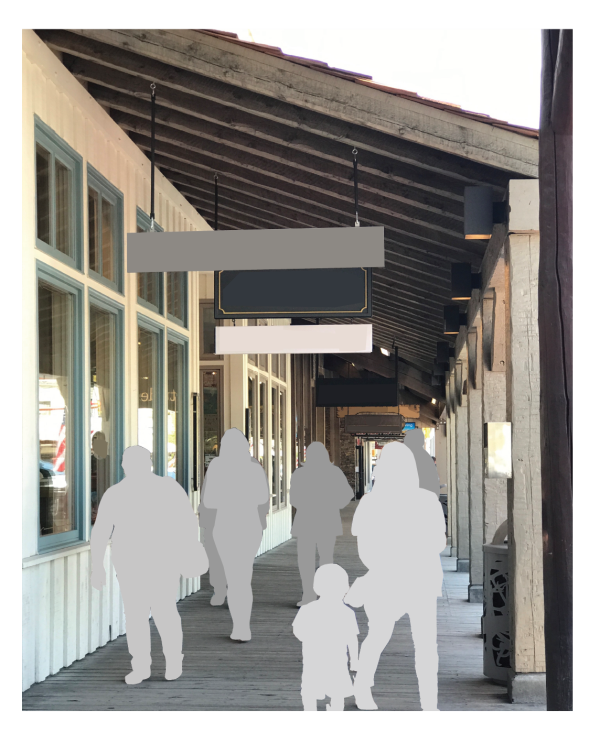
- Street trees required. As part of the required street improvements within this zone, street trees shall be installed in the designated tree lane, as depicted in Section 104-22-7.1, on the same side of the street as the development and for the entire length of the development lot's street frontage. Tree species shall be approved by the Planning Division Director and County Engineer as part of the review of the development. A street tree plan shall be submitted as part of a development application and shall be accompanied by a letter from a certified arborist or landscape architect, certifying that the proposed tree type is suitable considering site conditions and local climate. The plan shall include planting methods that are specific to the site conditions. Planting methods shall provide means of protecting the longevity of the tree and the street infrastructure. Street trees shall be provided with a permanent watering method with irrigation infrastructure installed underground.
- Tree planting. No street tree shall be planted within the clear view triangle as provided in Section 108-7-7, Section 106-4-5, or the American Association of State Highway and Transportation Officials (AASHTO) standards. To provide continuous shade of the pedestrian areas, spacing between tree trunks shall equal the average diameter of the specific tree species' canopy at maturity.
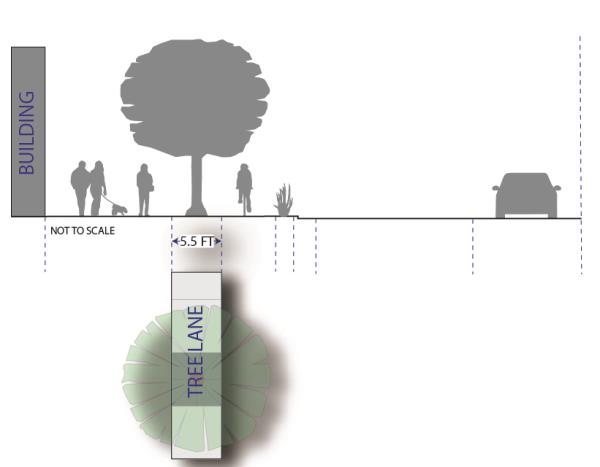
- Tree maintenance. Unless an association, district, or other collective funding and maintenance entity is approved by the County to provide tree maintenance, a street tree shall be maintained by the owner or proprietor of the property that is immediately adjacent to the street right-of-way where the tree is located. A tree maintenance plan shall be submitted as part of the development review for new development. Trees shall be pruned in a manner that gives at least a seven foot clearance above the sidewalk and a 12 foot clearance above a bike lane or parking area, as depicted by the following graphic:
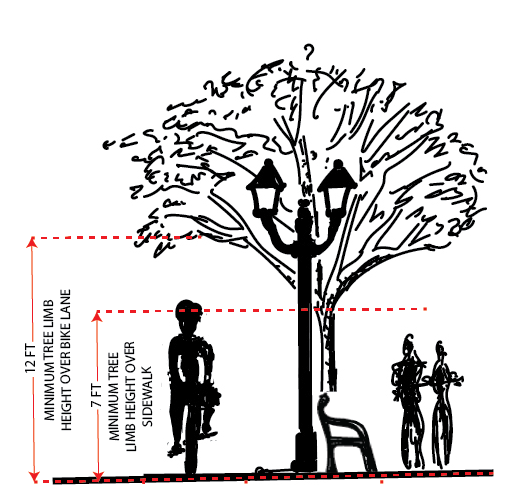
- Tree planting. No street tree shall be planted within the clear view triangle as provided in Section 108-7-7, Section 106-4-5, or the American Association of State Highway and Transportation Officials (AASHTO) standards. To provide continuous shade of the pedestrian areas, spacing between tree trunks shall equal the average diameter of the specific tree species' canopy at maturity.
- Bike facilities required.
- Separated bike lane. Unless provided otherwise herein, a concrete bike lane that is five feet in width shall be installed as part of the required street improvements. The bike lane shall be on the same plane as the sidewalk, and shall be separated from the pedestrian walkway by the tree lane.
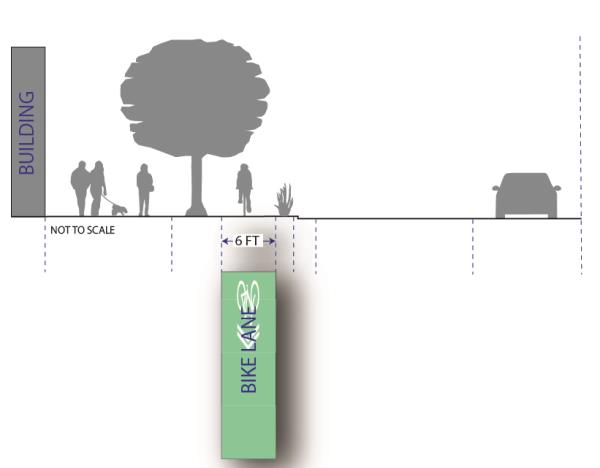
- Bike lane alternative. When topography results in the inability to safely create sufficient street right-of-way width, the County Engineer has discretion to allow a bike lane to occupy the street's vehicle travel lane. In these cases, a five-foot wide retroreflective green bike lane shall be applied to the center of the lane, and marked with retroreflective sharrows as depicted by the following graphic:
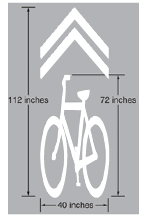
- Separated bike lane. Unless provided otherwise herein, a concrete bike lane that is five feet in width shall be installed as part of the required street improvements. The bike lane shall be on the same plane as the sidewalk, and shall be separated from the pedestrian walkway by the tree lane.
- Street parking required.
- 45-degree angle parking. Each street shall be designed and constructed to provide 45-degree angled parking.
- Street parking alternative. When topography results in the inability to safely create sufficient street width, or when street design is constrained by design standards outside the county’s control, the County Engineer has discretion to allow a parallel street-parking design instead.
- Parking bumper buffer. A three-foot parking buffer shall be provided between the bike lane and the curb for vehicle bumper overhang. Vegetation may be in this buffer.
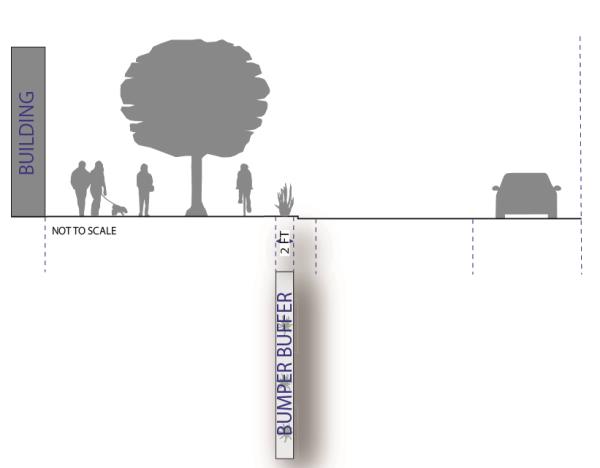
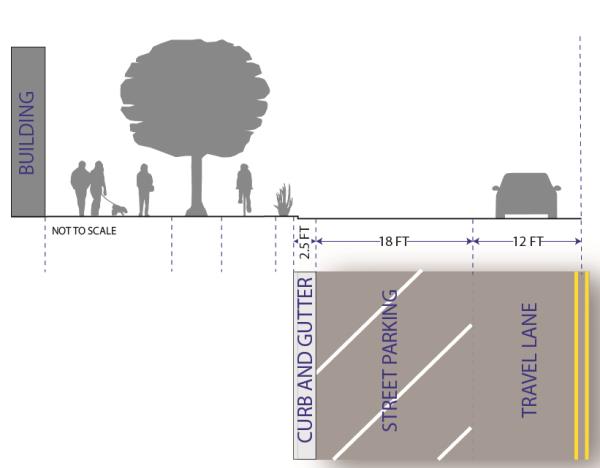
- Curb, gutter, and drainage facilities.
- Curb, gutter, and drainage facilities shall be installed along each street and internal Alley in accordance with the County's standard curb and gutter cross sections and in a manner that accommodates the street designs herein.
- Items in public right-of-way.
- Overhead projections. Overhead building projections such as but not limited to awnings, canopies, balconies, and cantilevers, are permitted within the public right-of-way, provided that they leave a vertical clearance over the sidewalk or walkway of no less than nine feet, and shall not project more than eight feet into the public right-of-way. Any support post beneath the building projection shall be no greater than seven feet from the building façade, be designed to offer minimal disruption to sidewalk traffic, and meet all ADA clearance requirements.
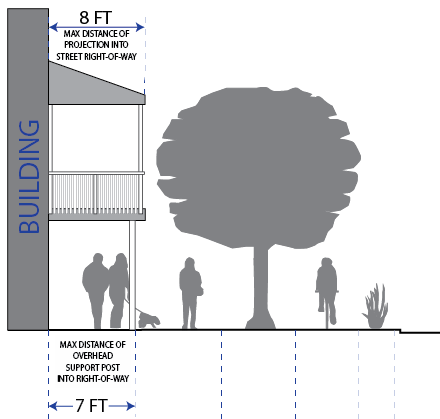
- Amenities and furniture. Non-permanent street amenities such as street furniture for outside dining, benches, bike racks, planters, and street sales and displays are permitted between street trees and along sidewalks as long as they do not cause any hazard to the use of the bike lane; and they are located in a manner that leaves a continuous seven-foot wide pedestrian walkway.
- Street Lighting. Street lighting shall be installed as part of the required street improvements within this zone. Street lighting shall complement the architectural design theme of the area.
- Overhead utilities. All new development shall move all existing overhead utilities underground, and install all new utilities underground as well.
- Overhead projections. Overhead building projections such as but not limited to awnings, canopies, balconies, and cantilevers, are permitted within the public right-of-way, provided that they leave a vertical clearance over the sidewalk or walkway of no less than nine feet, and shall not project more than eight feet into the public right-of-way. Any support post beneath the building projection shall be no greater than seven feet from the building façade, be designed to offer minimal disruption to sidewalk traffic, and meet all ADA clearance requirements.
- Round-a-bout. A round circle along any street intersection on the street regulation plan indicates a planned round-a-bout. As development occurs, street right-of-way shall be dedicated to the County to accommodate at least a 110-foot diameter round-a-bout. Round-a-bout improvements shall be installed when required by the County Engineer. Otherwise, all improvements installed shall be installed in a manner that does not create an undue burden on the construction of a future round-a-bout.
Adopted by Ord. 2022-04 on 1/18/2022
Amended by Ord. 2022-20 on 8/16/2022
Amended by Ord. 2023-09 on 5/16/2023
Sec 104-22-7.030 Pathway Location And Design Standards
- Pathways and sidewalks, generally.
- Pathway and sidewalk layout shall be designed in a manner that prioritizes efficiency of non-motorized modes of transportation.
- Pathways shall connect using the shortest distance reasonably possible.
- Pathway and sidewalk layout shall provide for the continuation of existing pathways or sidewalks in the general area, and for future planned pathways, as shown on an adopted pathway plan, general plan, master trails plan, or other applicable adopted planning document.
- Except for development along a Rural Residential or Estate Lot Residential street, each development shall be configured so that the maximum pathway or sidewalk walking-distance between a pathway or sidewalk intersection is 400 feet.
- This distance may be increased for a segment of a pathway that travels through a permanently preserved open space area or an area very unlikely to ever develop.
- A pathway or sidewalk intersection is where a pathway or sidewalk intersects with another pathway, sidewalk, or street that has pedestrian facilities.
- A pathway or sidewalk stubbed from an adjacent property shall be connected to a pathway or sidewalk within the subdivision.
- Continuation of a pathway or sidewalk to adjacent undeveloped property shall be provided with a stub to the subdivision boundary.
- Pathway and sidewalk arrangement shall not cause any unnecessary hardship for creating convenient and efficient access to nearby parcels that are likely to eventually be developed.
- Street-adjacent pathway. Along each arterial, collector, and major neighborhood street, as provided in an adopted general plan, master streets plan, or similar adopted document, a 10-foot wide hard-surfaced pathway shall be installed.
- When determining which side of the street the pathway is required, preference shall be given to the side of the street that has optimal sun exposure during winter months.
- The Planning Division Director may require a pathway be located on the other side of the street to support pathway connectivity based on other factors such as existing or planned future pathways in the vicinity and potential pedestrian conflicts.
- The pathway shall be located within the street right-of-way unless expressly authorized otherwise by the County Engineer. If not located within the street right-of-way, a pathway easement is required.
- Unless required otherwise by the County Engineer, the pathway shall have an asphalt width of at least nine feet and be bounded on both sides by a six-inch concrete ribbon that is flush with the top of asphalt travel surface. The pathway shall be constructed of three inches of asphalt on eight inches of base-course. Greater thickness may be required where it intersects a vehicle-way.
- Example: Street-Adjacent Pathway
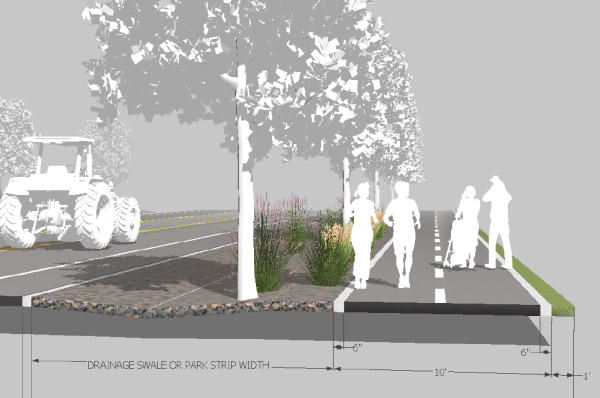
- Non-street-adjacent pathway. Where generally depicted on a map or in the text of an applicable street regulating plan, general plan, master streets plan, or when otherwise required herein or in a development agreement, a 10-foot wide hard-surfaced pathway shall be installed through the development.
- Where a pathway runs between buildings or fenced lots, a minimum 30-foot pathway public right-of-way is required. The pathway shall run down the center of the 30-foot right-of-way.
- The pathway right-of-way may be reduced to 15 feet if both of the adjoining lots or parcels are or will be single-family residential, and are deed-restricted to:
- Only allow a solid fence that is no greater than four-feet; or
- Only allow a fence that is 30 percent open with the openings evenly distributed.
- Only allow a solid fence that is no greater than four-feet; or
- The adjoining land owners are responsible for the maintenance and upkeep of vegetation and waste on the half of the pathway right-of-way that is adjacent to their lot or parcel.
- Example: Non-Street-Adjacent Pathway
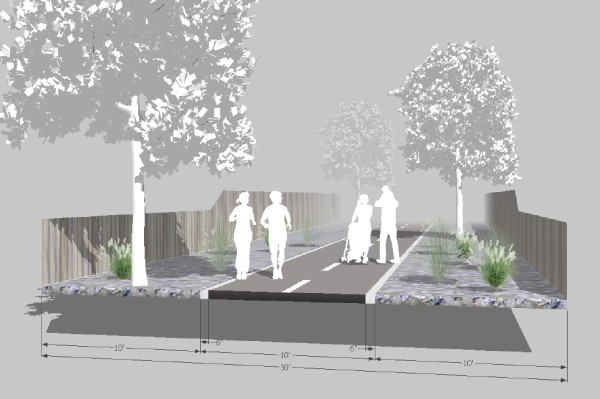
- Where a pathway runs between buildings or fenced lots, a minimum 30-foot pathway public right-of-way is required. The pathway shall run down the center of the 30-foot right-of-way.
Amended by Ord. 2023-09 on 5/16/2023
Sec 104-22-8.010 (Reserved)
Amended by Ord. 2023-09 on 5/16/2023
Amended by Ord. 2023-36 on 12/5/2023
Repealed by Ord. 2026-09 on 5/26/2026
Sec 104-22-8.020 (Reserved)
Amended by Ord. 2023-09 on 5/16/2023
Amended by Ord. 2023-36 on 12/5/2023
Amended by Ord. 2025-24 on 10/7/2025
Repealed by Ord. 2026-09 on 5/26/2026
Sec 104-22-8.030 (Reserved)
Adopted by Ord. 2022-20 on 8/16/2022
Amended by Ord. 2023-09 on 5/16/2023
Repealed by Ord. 2026-09 on 5/26/2026
Sec 104-22-8.040 West Weber's 4700 Area Street Regulating Plan Map
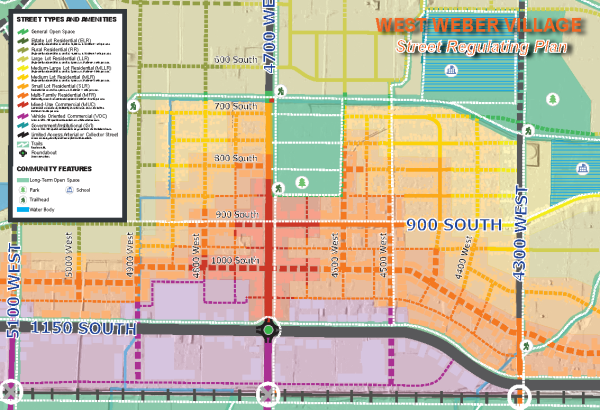
Adopted by Ord. 2023-09 on 5/16/2023
Amended by Ord. 2026-13 on 7/21/2026

