
Wheat Ridge City Zoning Code
ARTICLE XI
MIXED USE ZONE DISTRICTS
Sec. 26-1101.- Purpose.
A.
The purpose of the mixed use commercial (MU-C) and mixed use neighborhood (MU-N) zone districts is to create a flexible approach to land uses and enhance the character of Wheat Ridge's commercial corridors and centers by promoting development that:
1.
Creates a balanced mix of land uses;
2.
Supports a sustainable and resilient local economy;
3.
Provides unique places for people to live, work, shop, and play;
4.
Improves the public realm through high quality design;
5.
Promotes use by pedestrians, bicyclists, and transit users, in addition to automobiles;
6.
Encourages active lifestyles; and
7.
Maintains the character and integrity of adjacent residential neighborhoods.
(Ord. No. 1471, § 1, 9-13-10)
Sec. 26-1102. - Districts established.
A.
Mixed use commercial (MU-C) zone district. This district, generally located along major commercial corridors and at community and employment activity centers, is established to encourage medium to high density mixed use development. In addition to residential and civic uses, it allows for a wide range of commercial and retail uses.
1.
MU-C transit oriented development sub-district (MU-C TOD). This sub-district is intended for areas within one-half mile of fixed guideway rail stations, including light rail and commuter rail. It follows the MU-C framework but is specifically designed to allow densities that support transit ridership and to encourage land uses and building form that enhance connections to transit.
2.
MU-C interstate sub-district (MU-C Interstate). This sub-district is intended for properties that are generally within five hundred (500) feet of Interstate-70 and that are located on a commercial corridor with direct access to Interstate-70. It follows the MU-C framework but is intended for highway-adjacent sites that may require variation in design or land use due to direct proximity to the interstate.
B.
Mixed use neighborhood (MU-N). This district, generally located along neighborhood main streets and at neighborhood commercial centers, is established to encourage medium density mixed use development. In addition to residential and civic uses, it allows for a more limited range of neighborhood-serving commercial and retail uses.
(Ord. No. 1471, § 1, 9-13-10)
Sec. 26-1103. - Applicability.
A.
All standards and requirements within article XI shall apply to:
1.
Site development;
2.
Expansion of existing structures by more than fifteen (15) percent of the gross floor area.
B.
Legal nonconforming uses. Where a use lawfully existed at the time of rezoning of the subject property to any mixed use district within this article, and which is not a permitted use at that time under section 26-1111, Permitted Uses, such nonconforming use may continue to operate and exist, subject to section 26-120.C.6, subject to the following.
1.
A structure containing a nonconforming use may expand its gross floor area by a maximum of twenty-five (25) percent without requiring a change to a conforming use.
2.
No use that lawfully existed at the time of rezoning of the subject property to any mixed use district shall be deemed a nonconforming use due to the requirement for a conditional use permit. However, if an existing use is designated as a conditional use in section 26-1111, any expansion of that use shall require a conditional use permit (per section 26-1118).
3.
No use that lawfully existed at the time of rezoning of the subject property to any mixed use district shall be deemed a nonconforming use due to the separation requirements established in section 26-1111.
C.
Legal nonconforming structures. Where a structure lawfully existed at the time of rezoning of the subject property to any mixed use district, and which would not be allowed by the provisions within this article because of either building placement or orientation, building design, parking placement or design, parking requirements, or site and vehicular access, such structure may continue to exist and may be enlarged, altered or added to provided that the alteration or addition does not increase the nonconformity.
1.
Any new addition or expansion to a nonconforming structure shall comply with all provisions within this article, where practical. The community development director shall determine if there is a requirement that cannot be practically met. Such determination may be appealed to the board of adjustment.
D.
Wherever provisions within this article conflict with other articles in chapter 26, the provisions within article XI shall apply.
E.
Where standards for the MU-C TOD and MU-C Interstate sub-districts are not specifically stated, MU-C standards shall apply.
F.
The illustrations that appear in this article are for illustrative purposes only.
(Ord. No. 1471, § 1, 9-13-10)
Sec. 26-1104. - Building height and residential density.
A.
Principle. Taller buildings allow for a range of uses within one (1) structure and encourage a compact form of development that is focused on pedestrian connections. Buildings with a similar range in height help to define the street wall and create an architectural identity for a corridor or area.
B.
The following table establishes required building heights. Whatever measurement is more restrictive — maximum stories or maximum feet — shall apply.
Notes:
(a) Minimum height requirements shall not apply to accessory buildings.
C.
In the MU-N district, any building containing a residential use shall have a maximum height of thirty-five (35) feet. All other buildings shall have a maximum height of fifty (50) feet.
D.
Building height and city charter. Where there is conflict regarding maximum building heights between this section and the city charter, the maximums established in the city charter section 5.10.1 shall apply.
E.
A parapet wall may be utilized to meet the minimum height requirement.
F.
For buildings over seventy-five (75) feet in height, see section 26-1106.G, Upper Story Stepbacks.
G.
Any portion of a building that is within one hundred (100) feet of a residentially or agriculturally zoned lot that has a single- or two-unit residential use shall not exceed a height of four (4) stories or sixty-two (62) feet, whichever is more restrictive. The one-hundred-foot distance shall be measured from the nearest property line of the residentially or agriculturally zoned lot. This requirement shall not apply where an arterial or collector street separates the building from the residential use.
H.
Density of residential dwelling units and city charter. There shall be no density restrictions established with the mixed-use zone districts to limit the number of residential dwelling units per acre. To the extent of conflict regarding maximum residential density between this section and the city charter, the maximum of twenty-one (21) units per acre established in the city charter section 5.10.1 shall control.
I.
Height incentive for structured parking. Refer to section 26-1109.G.
(Ord. No. 1471, § 1, 9-13-10; Ord. No. 1744, § 25(Exh. 1), 7-11-22; Ord. No. 1766, § 1, 6-26-23)
Sec. 26-1105. - Building placement and orientation.
A.
Principle. In order to activate streets and enhance the pedestrian experience, buildings are encouraged to be placed close to the street and oriented toward the public realm.
B.
Public entrances. All buildings are encouraged to have at least one (1) public entry that faces the primary or secondary street.
1.
Within the MU-N and MU-C TOD sub-districts, each building shall have at least one (1) main public entry that faces the primary street or a public space adjacent to the building. For corner lots with more than one (1) street frontage, the public entry may be oriented toward the corner.
2.
In all districts, for development sites with more than one (1) structure, those buildings that do not directly front a street shall have at least one (1) primary entrance that adjoins a pedestrian walk of at least five (5) feet in width. The primary entrance should be connected to the street by a walkway at least five (5) feet in width that is clearly defined and separated from parking areas.
C.
Building setbacks. Setbacks establish the minimum distance between a building façade and the nearest property line (Figure 1). The following table establishes minimum side and rear setback requirements for all structures in the MU-C and MU-N districts. Front setbacks are not required; instead, build-to areas established in section 26-1105.F encourage buildings to be built close to the street.
D.
Right-of-way encroachments. architectural elements attached to the building façade may encroach into the right-of-way up to three (3) feet at the ground floor, and up to five (5) feet at upper levels, subject to an approved right-of-way use permit through the department of public works. Such encroachments may include window planter boxes, eaves, balconies, projecting wall signs, canopies, and awnings.
Figure 1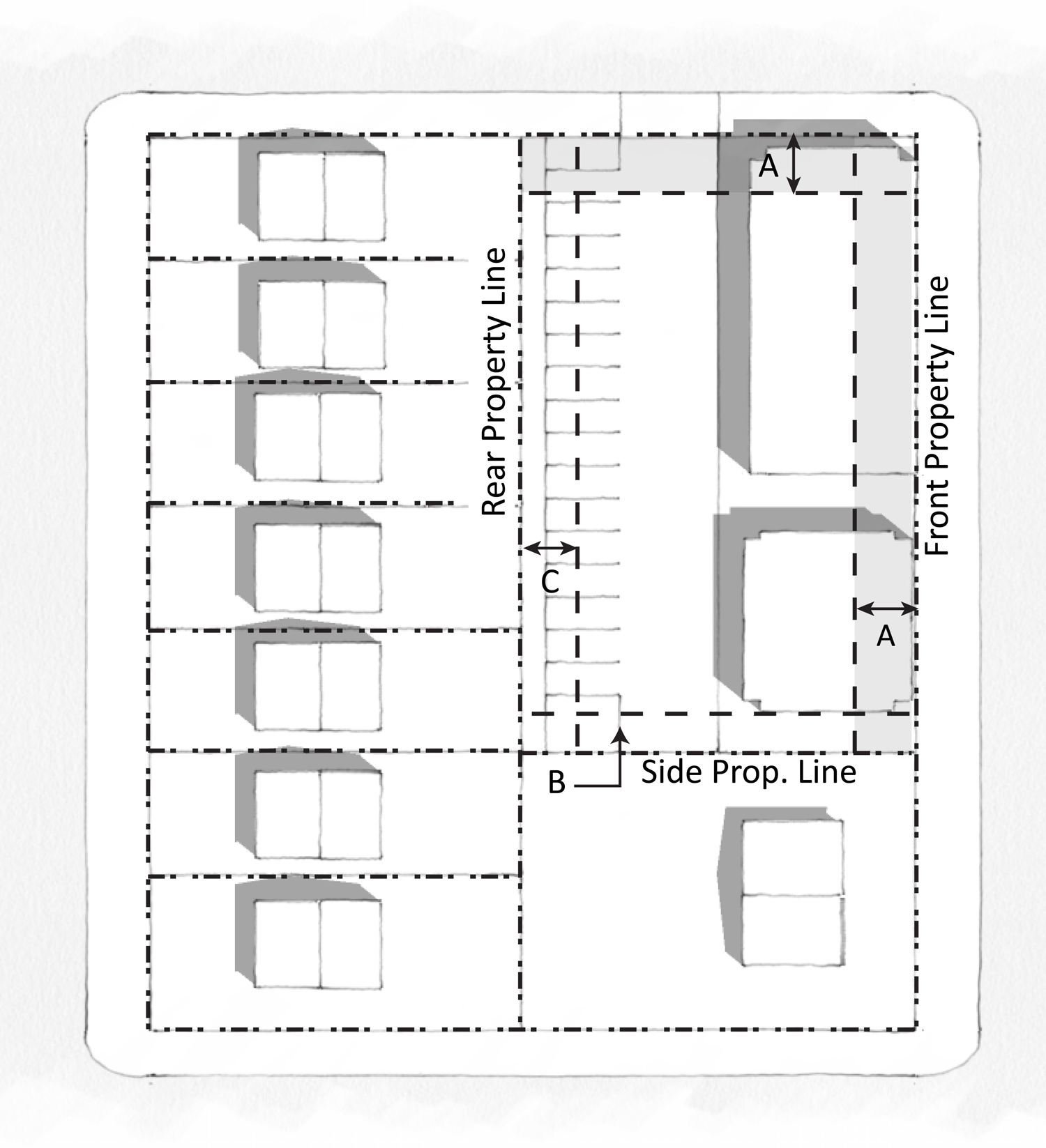
Figure 1: Setbacks and Build-To Area.
A: Build-to area: building may be anywhere within this area, and is required to fill
at least part of it.
B: Side setback: building may not encroach into this area.
C: Rear setback: building may not encroach into this area.
E.
Build-to areas. Build-to areas are intended to bring building façades toward the street. A build-to area requires that a minimum portion of each development site's street frontage is occupied by a building, encouraging an active and interesting street frontage. The following table establishes build-to requirements for each district.
1.
In certain instances, where the provided primary street build-to exceeds the minimum requirement, the required secondary street build-to may be reduced by an equal or lesser amount, subject to approval by the community development director.
Figure 2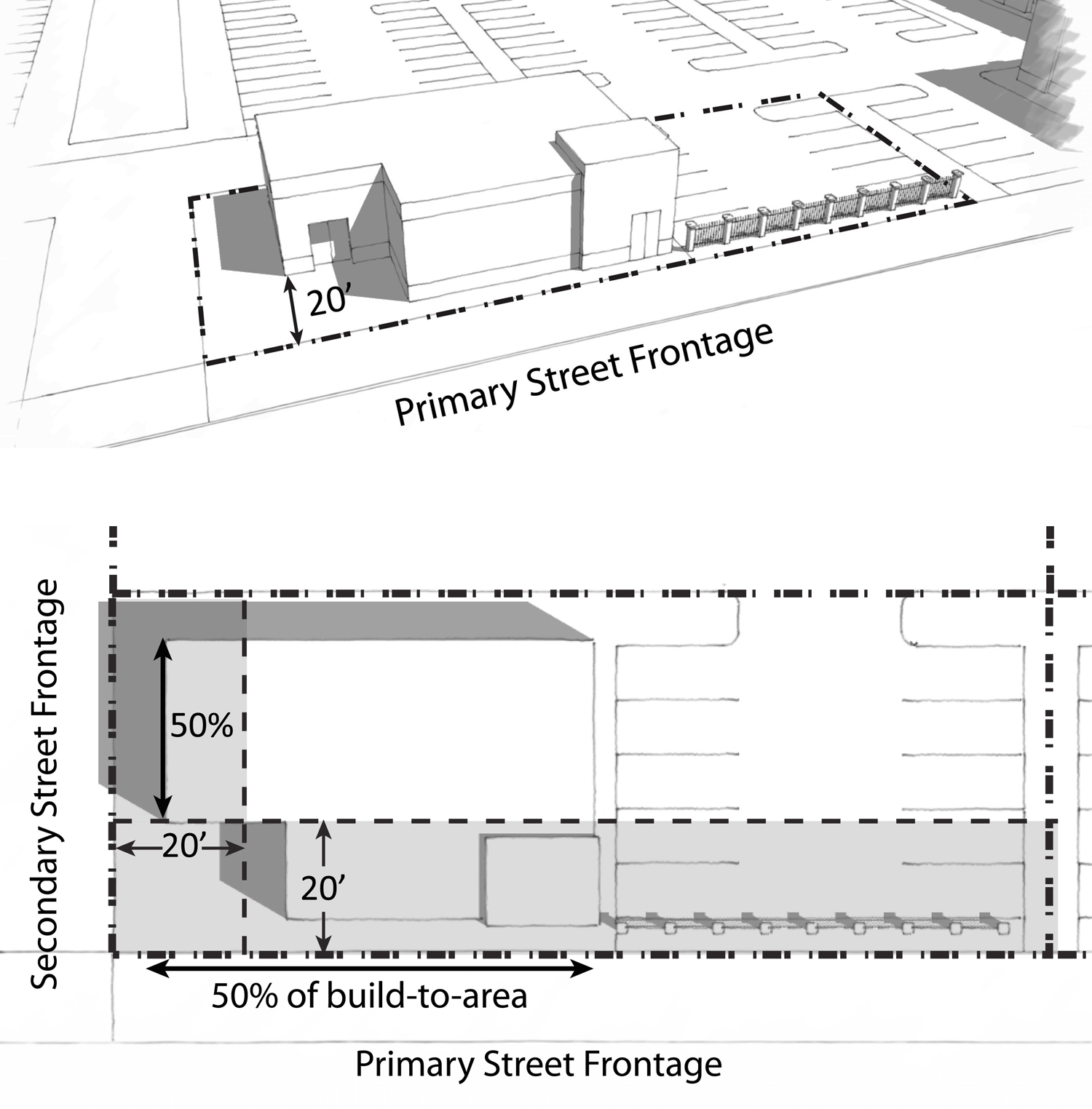
Figure 2: Build-To Area for Development Site with One Building. Both images in this figure illustrate the same site from different views. In this case, fifty (50) percent of the build-to area along the primary and secondary streets is occupied by a building.
2.
For a development site with more than one (1) building, not all buildings must meet the build-to requirement, as long as those buildings closest to the street fulfill the requirements set forth in the table above (Figure 3).
Figure 3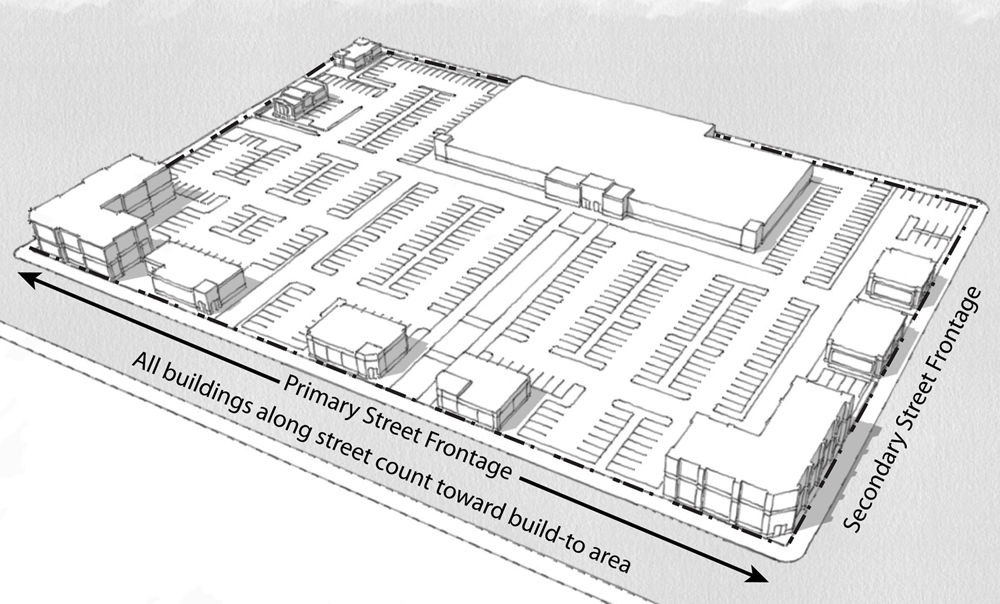
Figure 3: Build-To Area for Development Site with Multiple Buildings. The required primary and secondary street build-to areas may be fulfilled by more than one (1) building. Build-to requirements only apply to those buildings closest to the street.
3.
For a development site with more than one (1) building, built-to requirements may be met by a future phase. In such cases, the parcel(s) of any future building(s) required to meet the build-to requirement must be platted and recorded prior to issuance of a building permit for the first phase of development.
4.
Gas stations and retail EVCSs may meet build-to requirements through one (1) or any combination of the following two (2) elements: (1) structure within the build-to area; (2) canopy within the build-to area (figures 4 and 5). Gas stations and retail EVCS facilities must also provide a screen wall, thirty (30) to forty-two (42) inches in height, for one hundred (100) percent of the primary and secondary street frontage, excluding access points and where portions of the building are within the build-to area. The screen wall shall be a continuous masonry wall constructed of stone, brick, or split-face concrete block, or a combination masonry pier and decorative iron railing. There shall be a minimum four-foot-wide landscape buffer between the screen wall and the property line.
Figure 4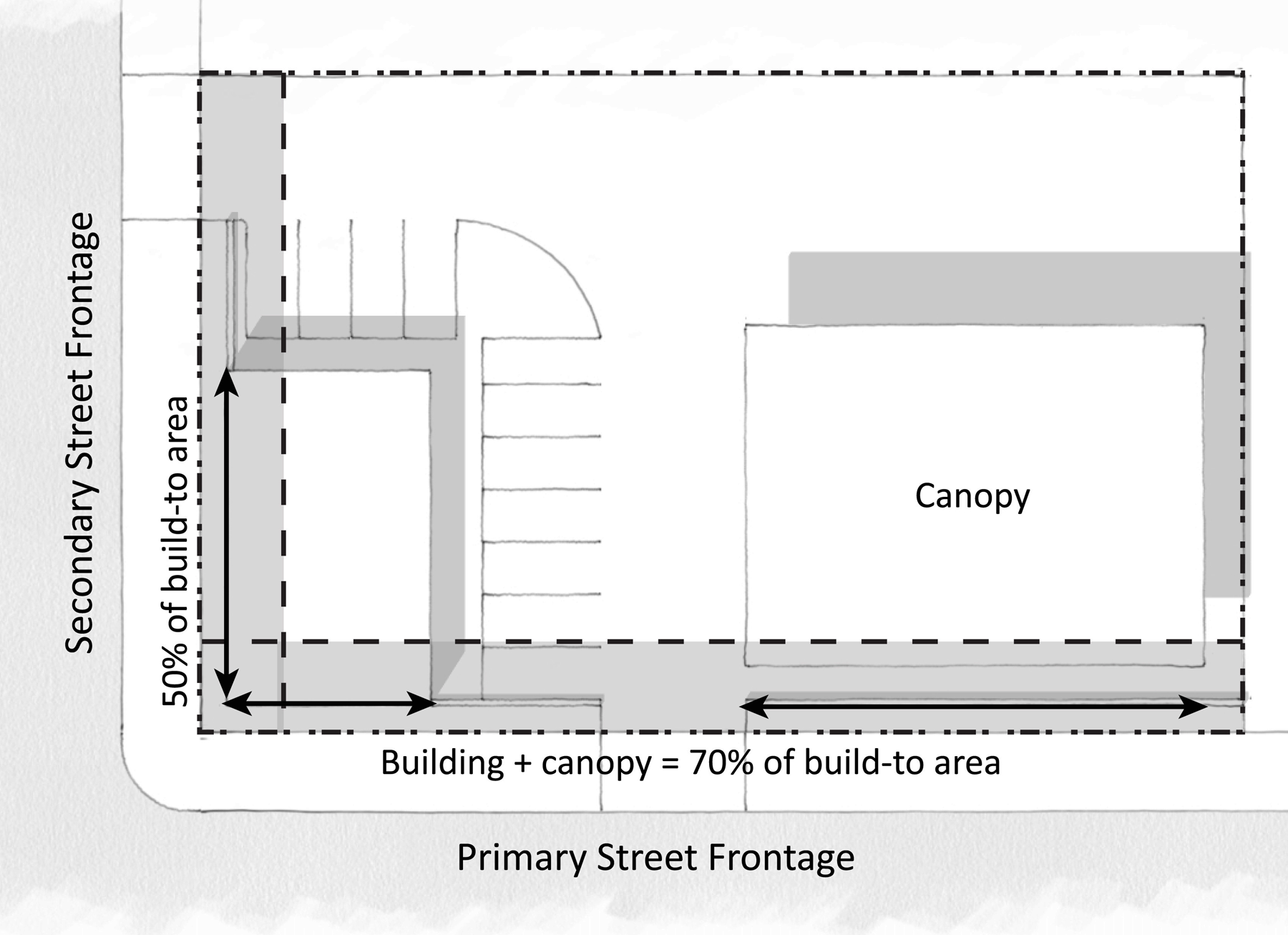
Figure 4: Gas station build-to option. The building and the canopy over the gas pumps are both utilized to meet build-to requirements.
Figure 5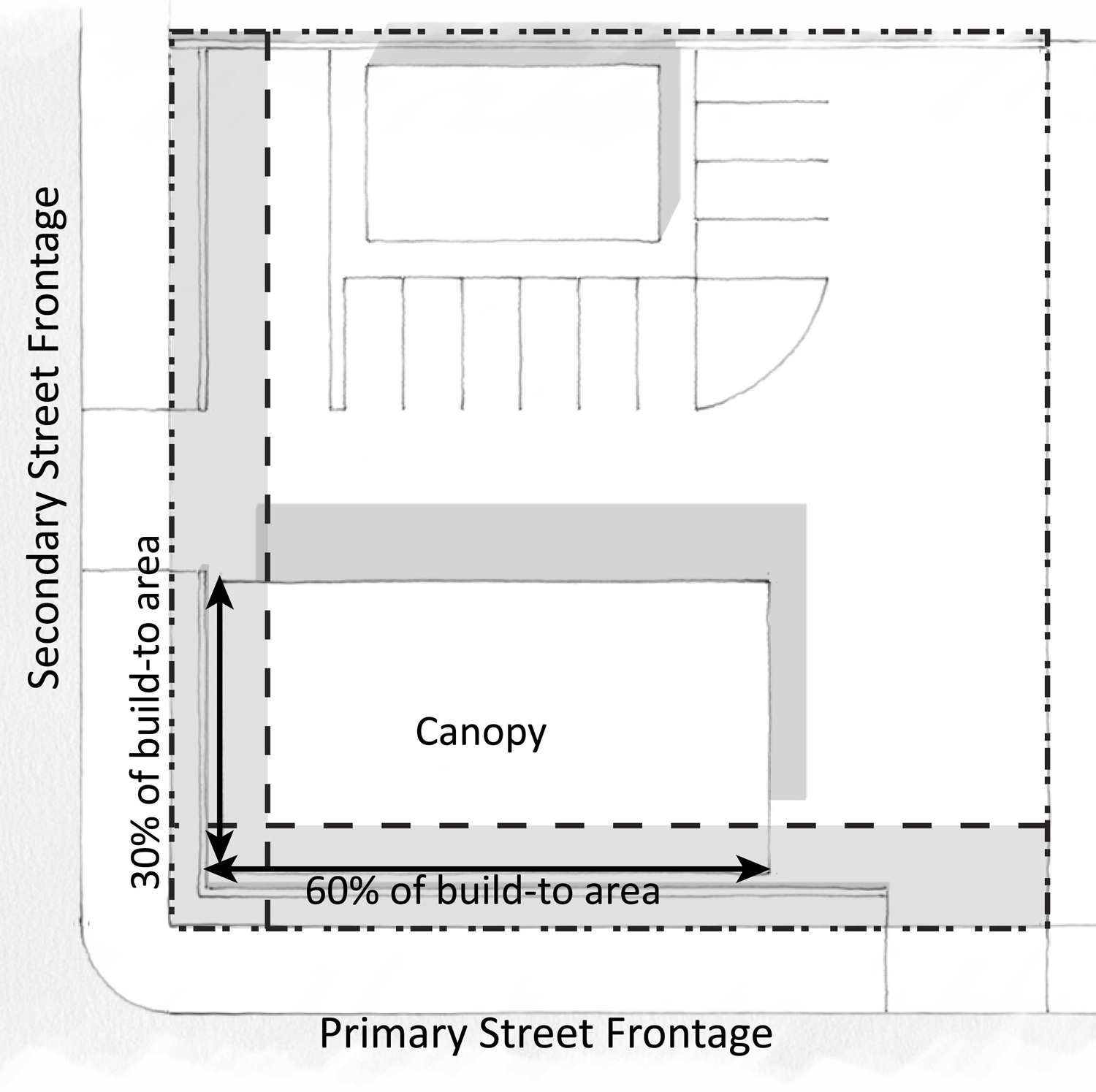
Figure 5: Gas station build-to option. The canopy over the gas pumps meets the build-to requirements and the building is setback from the street.
5.
Accessory buildings shall not be located in the primary street frontage build-to area with the following exceptions:
• If built in line with a primary building to allow garage access from an internal drive, provided that the site meets required primary build-to percentage without factoring in the accessory building, and that garage doors do not face public streets.
• If part of an outdoor gathering or dining area such as a freestanding patio cover or pergola.
• If a kiosk-style building that includes an active public commercial use such as retail or food and/or beverage sales.
F.
Attached residential development. The following requirements shall apply to single attached dwellings as defined in section 26-1119.
1.
For units adjacent to public streets, front doors shall be located on the façade that faces the public right-of-way. For developments with more than one (1) building, street-facing orientation of front doors is not required for all buildings or dwelling units but shall be the predominant orientation across the overall development, as determined by the community development director.
2.
Structures shall be comprised of no more than eight (8) side-by-side units.
3.
Separation between primary structures shall be a minimum of ten (10) feet.
(Ord. No. 1471, § 1, 9-13-10; Ord. No. 1686, § 2, 3-9-20; Ord. No. 1744, § 25(Exh. 1), 7-11-22; Ord. No. 1766, § 2, 6-26-23; Ord. No. 1789, § 16, 2-26-24)
Sec. 26-1106. - Building design.
A.
Principle. Quality architecture is a vital component to creating a unique sense of "place." Creative design that pays careful attention to the building's contribution to the public realm — through massing, form, materials, and its relationship to the street — is encouraged.
B.
Façade design and articulation.
1.
All façades of a building shall provide a level of finished architectural quality and be designed to human scale. Each façade shall contain at least one (1) change in color or texture. Additional detail should be incorporated into the façade design by the use of at least three (3) of the following methods:
•
Reveals.
•
Belt courses.
•
Cornices.
•
Expression of a structural or architectural bay.
•
Articulation of windows and doorways, which may include sills, mullions, or pilasters that create a three-dimensional expression.
•
Change in material.
•
Variation in rooflines.
2.
All façades of a building that face a street or a public space shall have at least one (1) variation in plane depth of at least one (1) foot for every fifty (50) linear feet of the length of the façade. All other façades shall have one (1) variation in plane depth of at least one (1) foot for every one hundred (100) linear feet of the length of the façade. Any portion of a façade that is a glass curtain wall shall be exempted from this requirement.
For single attached dwellings as defined in section 26-1119, the façade(s) containing front doors shall have a change in plane depth of at least one (1) foot for every unit. This may be achieved by a change in the wall plane within a single unit façade or by varying the plane depth of adjacent units. See figure 26-1106.2.
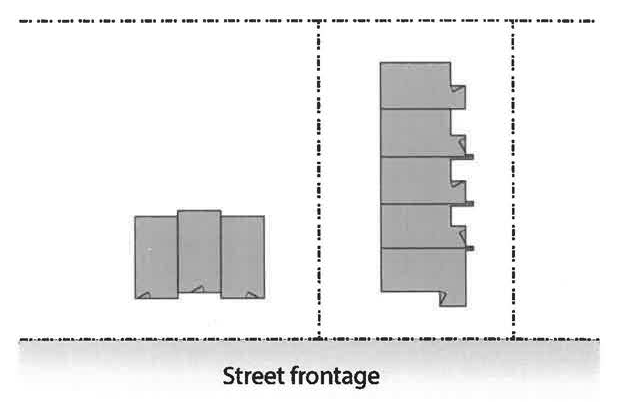
Figure 26-1106.2—Variation in Plane Depth for Single Attached Dwellings: For the building on the left, changes in plane depth occur by varying the plane depth of adjacent units. For the building on the right, changes in plane depth occur within each unit façade. The requirement to vary plane depth does not necessarily require offsets in the building foundation and may be achieved by a variety of articulation and design elements noted in subsection 26-1106 B.3., below.
3.
Non-permanent features such as canopies and awnings will not qualify as variation. Plane depth variation may be accomplished through elements such as:
•
Recessed entries.
•
Porticos.
•
Projecting porches.
•
Upper level stepbacks.
•
Dormers.
•
Offsets in the general plane of the façade, including columns, pilasters, protruding bays, reveals, fins, ribs, balconies, cornices or eaves.
4.
The primary entrance of a building shall be emphasized through at least two (2) of the following architectural elements:
•
Changes in wall plane or building massing.
•
Differentiation in material and/or color.
•
Higher level of detail.
•
Enhanced lighting.
This requirement for an entry feature shall also apply to the primary exterior entrances for single attached dwellings.
C.
Materials.
1.
Only primary building materials shall be used for all façades. Primary building materials include, but are not limited to:
•
Brick.
•
Stone.
•
Architectural pre-cast concrete.
•
Synthetic brick and masonry materials, subject to the approval of the community development director to ensure quality.
•
Hard coat stucco.
•
Integral textured colored concrete block.
•
Terra-cotta.
•
Architectural metal panels.
•
Cement board siding or board and batten, with the following additional requirements:
◦
Shall only be used as a material if additional primary materials such as brick, stone, or stucco are also used on the façade.
◦
Shall not exceed seventy-five (75) percent of any façade facing a public street or publicly accessible open space.
◦
Shall not be the predominant material on a public-facing ground floor façade.
2.
Materials that are not allowed include, but are not limited to:
•
Plywood paneling.
•
Vinyl and aluminum siding.
•
Un-articulated large format concrete panels.
3.
Exterior insulating finishing system (EIFS) may be used as an accent material subject to the following restrictions:
•
EIFS must have a textured finish.
•
EIFS may not be utilized below the height of eight (8) feet on any building façade.
•
The total amount of EIFS may not exceed twenty-five (25) percent per building façade.
•
The allowable amount of EIFS may be consolidated on a façade(s) that does not face a street or public space provided that the total amount of EIFS, calculated cumulatively for the entire building, does not exceed twenty-five (25) percent.
4.
Material variation: All building façades that face a street or public space shall have at least one (1) change in material for each ten (10) feet (and portion thereof) of wall height. A change in material must be at least twelve (12) inches in height. Masonry patterns, such as headers or rowlocks, can count as a change of material. Windows, canopies, and doorways will not count as a change in material.
•
As an exception, building façades may be predominantly brick or masonry materials and no material variation shall be required, provided changes in the brick pattern (such as headers or rowlocks) are included. This exception shall not apply to synthetic brick or masonry materials.
•
For gas station canopies, primary materials such as brick or stone shall be required around the canopy poles, at least two-thirds (⅔) of the total height of the pole.
5.
Accessory buildings: Accessory structure(s) shall have exterior materials that are architecturally compatible with the primary structure(s).
D.
Ground floor transparency.
1.
Retail uses. The façade facing the primary street frontage shall be at least sixty (60) percent transparent. All other façades facing a street or public space shall be at least thirty (30) percent transparent.
2.
All other nonresidential uses (excluding retail). The façade facing the primary street frontage shall be at least forty (40) percent transparent. All other façades facing a street or public space shall be at least twenty-five (25) percent transparent.
3.
Transparency shall be calculated as the percentage of clear, non-reflective glass within the area between three (3) feet and eight (8) feet above the first floor finished elevation.
4.
Transparent doors and window mullions shall count as part of the transparent area. Structural elements and opaque or reflective glass shall not count toward the transparency requirement, except that up to twenty (20) percent of the transparency requirement for any, one (1) façade may be fulfilled by spandrel glass. The percentage of non-reflective spandrel glass used may be increased in limited circumstances if back-of-house portions of buildings must face a public street, subject to the approval of the community development director.
5.
Glass display cases may count toward the transparency requirement only if they give the appearance of windows, are at least eighteen (18) inches deep, and are maintained with items of interest, including window display graphics.
6.
For retail uses, windows at the ground floor shall be at least five (5) feet high.
7.
For nonresidential uses on corner lots, the minimum transparency required for the primary street façade may be transferred to the secondary street façade provided that the primary street transparency is not less than thirty (30) percent.
E.
Drive-throughs and drive-ups.
1.
Drive-up windows. Where drive-throughs and drive-ups are allowed (see section 26-1111, Permitted Uses), the drive-up window shall be placed at the side or rear of a building and shall not be located at street corners.
2.
Number of drive-up lanes. The following table specifies the maximum number of drive-up lanes allowed by district and sub-district:
3.
Location of drive-up lanes. Drive-up lanes between the building and the street are discouraged. Within the MU-N district, the drive-up lane shall not be located between the building and the primary street (Figure 6).
4.
Screening of drive-up lanes. Any drive-up lane that is visible from a street or public space shall incorporate the following screening elements:
•
A screen wall, at least thirty-six (36) inches in height, with materials that are consistent with the primary building. The screen wall must meet the sight-triangle requirements in section 26-603.
•
A landscaped buffer, at least four (4) feet in width, between the property line and the screen wall (Figure 7).
•
Where there is more than one (1) drive-up lane, canopies or other structural elements shall be used for further screening. These screening elements shall be compatible with the architectural qualities of the main building, including materials, form, scale, and color.
5.
Screening of drive-up lanes adjacent to residentially or agriculturally zoned lots with a residential use. The landscape buffer and screening requirements for parking lots adjacent to residential uses, per section 26-1107.C.2, shall apply.
6.
The drive-through stacking requirements in section 26-501 E.10 shall not apply.
Figure 6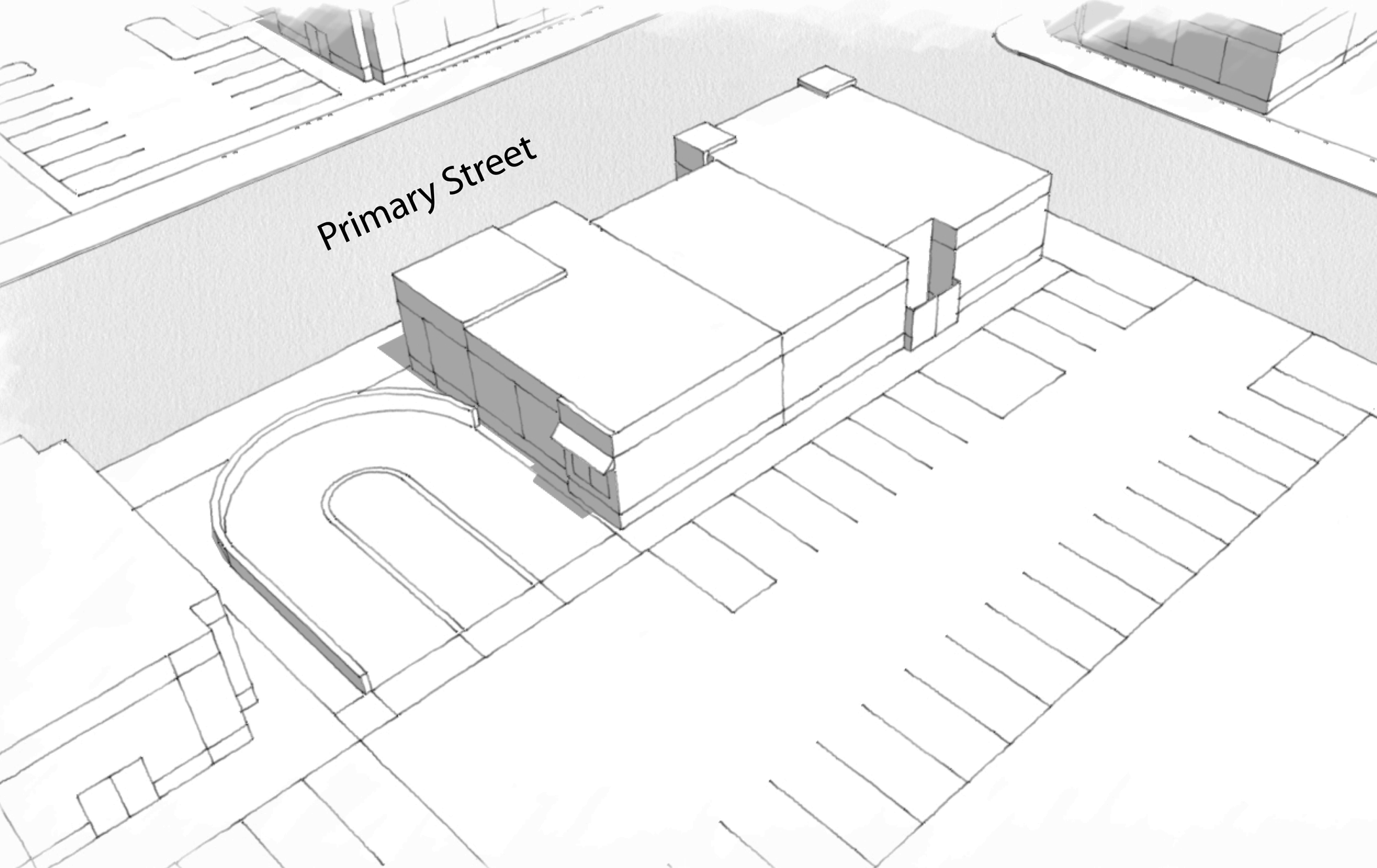
Figure 6: Drive-up Lane Location. Within the MU-N district, the drive-up lane may not be located between the building and the primary street.
Figure 7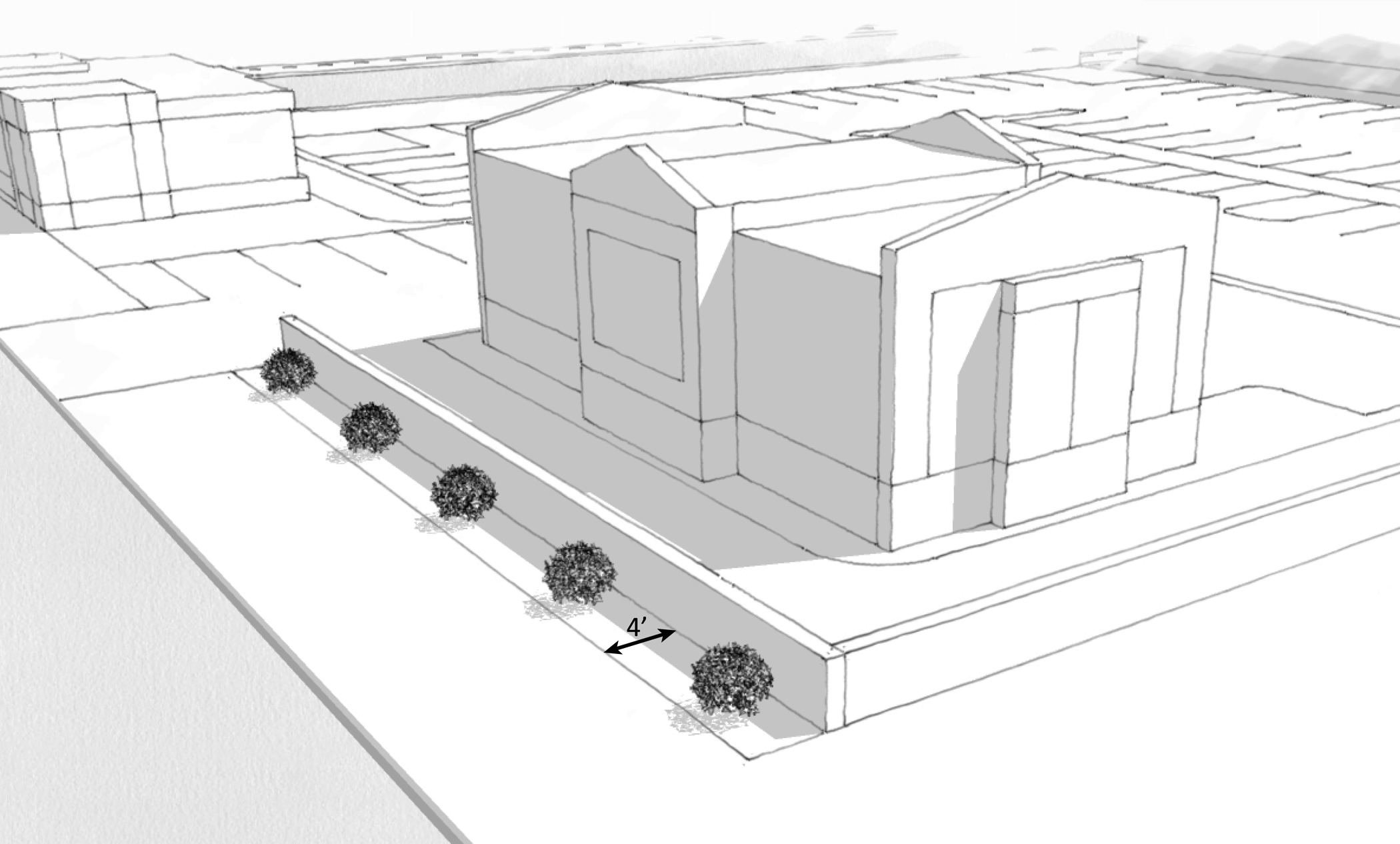
Figure 7: Drive-through Screening. Where a drive-up lane is visible from the street, a minimum thirty-six (36) inch high screen wall and four-foot-wide landscape buffer are required.
F.
Screening—Loading, service areas, and utilities.
1.
All loading docks, utility structures, and other service areas associated with a building shall be fully screened from view by walls or fences (Figure 8).
2.
Screening elements shall be composed of materials consistent with the primary building. Wood and vinyl fences shall not be allowed as screening materials, with the exception of four (4) foot tall wood fences being permitted to screen ground-mounted air conditioning units for residential development. Screen walls and fences over ten (10) feet in length shall be bordered by a four-foot-wide landscape buffer.
3.
Trash enclosures shall be compatible with the building design and materials and screened with full wall enclosures. Such enclosures may not be located between the building façade and the street.
4.
All screening elements shall be at least as tall as the object (e.g. trash enclosure, loading dock, or utility structure) being screened.
5.
Rooftop equipment shall be screened by parapets or enclosures. Screening elements shall be composed of forms, materials, and colors that are compatible with the architectural qualities of the building, including materials, scale, form, and color. The screening element shall be at least as tall as the item being screened and may be shorter than the equipment only if the equipment is set back so that it is not visible from the public right-of-way, to be demonstrated by the applicant. The community development director may reduce or waive these screening requirements in the following circumstances:
•
The equipment is not visible from the public right-of-way, adjacent residential properties, or adjacent public spaces, to be demonstrated by drawings by the applicant.
•
The existing condition and construction of the roof makes attaching a new enclosure impractical or would compromise the integrity of the roof membrane.
•
There is existing unscreened rooftop equipment and screening new facilities would result in a more conspicuous design.
6.
Wherever possible, exterior utility boxes and above-ground utility installations shall be located to the side or rear of buildings, and not visible from the street.
Figure 8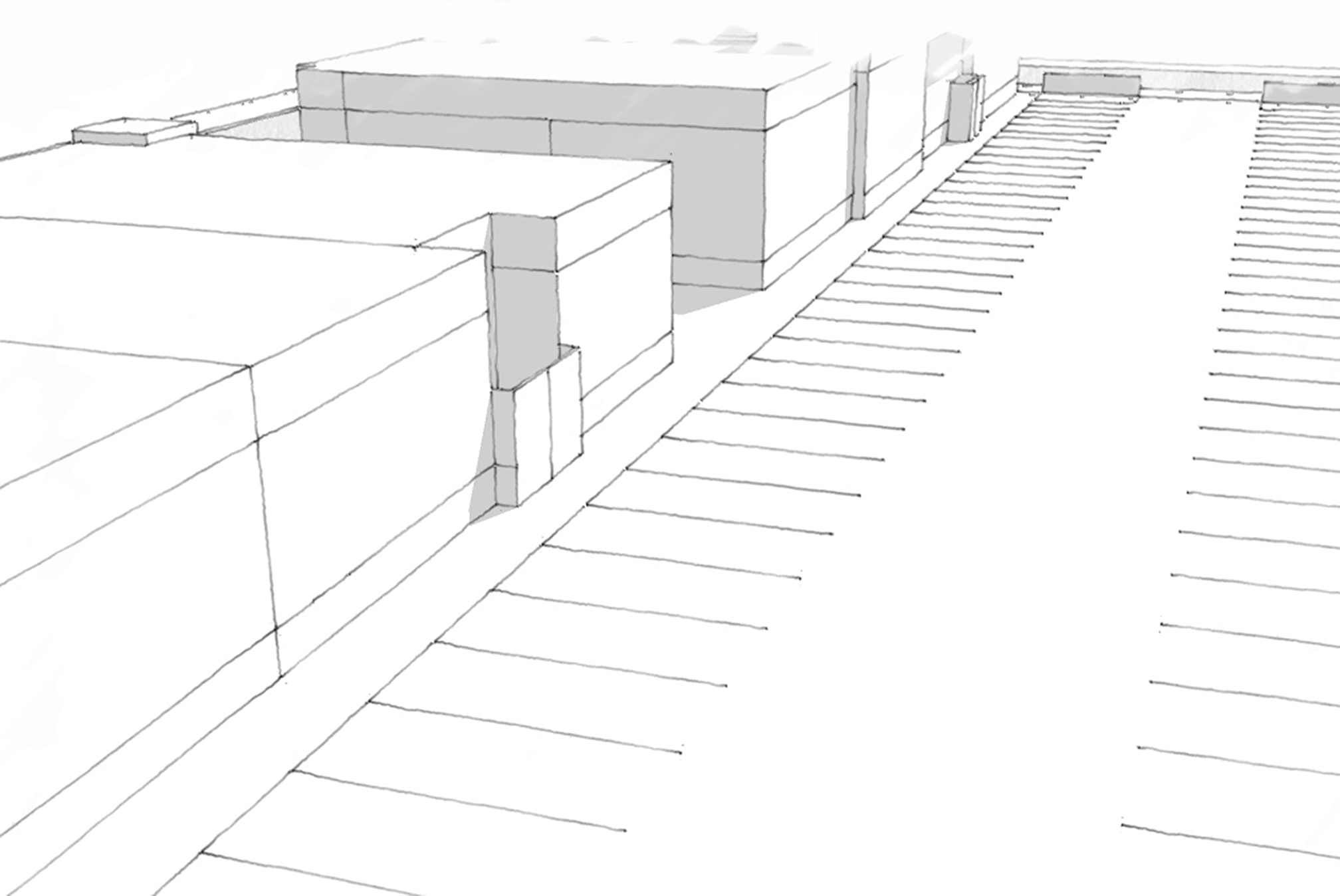
Figure 8: Screening. Loading docks, service areas, and utility structures must be screened by walls or fences that are consistent with the primary building materials.
G.
Upper story stepbacks.
1.
For buildings taller than seventy-five (75) feet, an upper level stepback is required for any façade that faces a street or a public space. For such façades, the portion of the façade over seventy-five (75) feet in height must stepback at least ten (10) feet from the outer edge of the first story (Figure 9).
2.
Terraces and unenclosed balconies may extend up to eight (8) feet into the required upper level stepback area.
Figure 9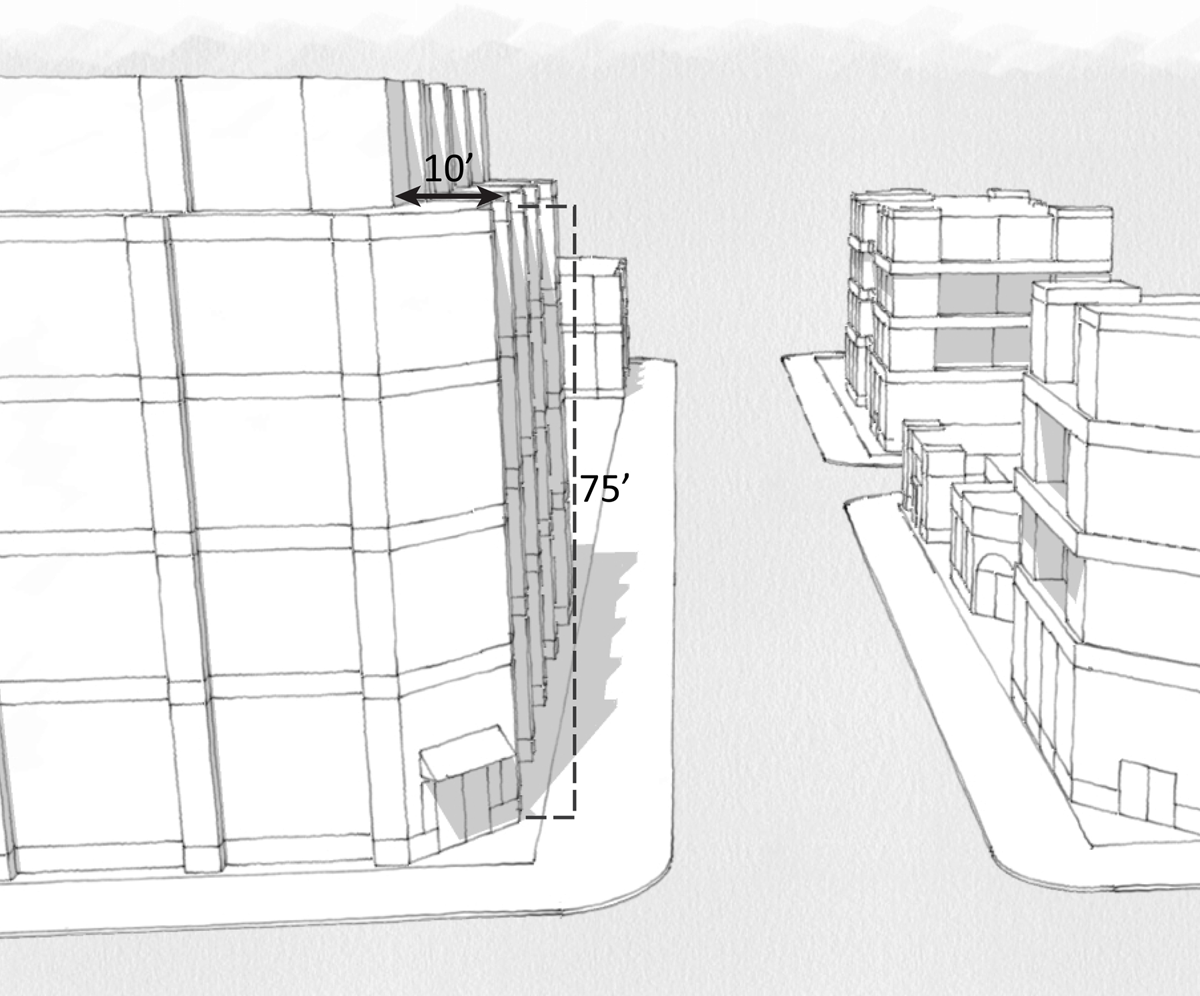
Figure 9: Upper Story Stepback. For building façades over seventy-five (75) feet in height that face a street or public space, any portion of the façade over seventy-five (75) feet in height must step back at least ten (10) feet.
H.
Residential transitions.
1.
Landscaped buffers. Where new development abuts a residentially or agriculturally zoned lot that contains a single- or two-unit residential use, the required setbacks in section 26-1105 C shall apply. The required setback area shall be landscaped with a mix of living and non-living materials.
2.
Upper story stepbacks. The following upper story stepbacks shall be required for any building in a mixed use district that abuts a residentially or agriculturally zoned lot that contains a single- or two-unit residential use. The required stepbacks shall apply to any façade, side or rear, that faces the lot with the residential use (Figure 10).
3.
Terraces and unenclosed balconies may extend up to eight (8) feet into the required upper level stepback area.
Figure 10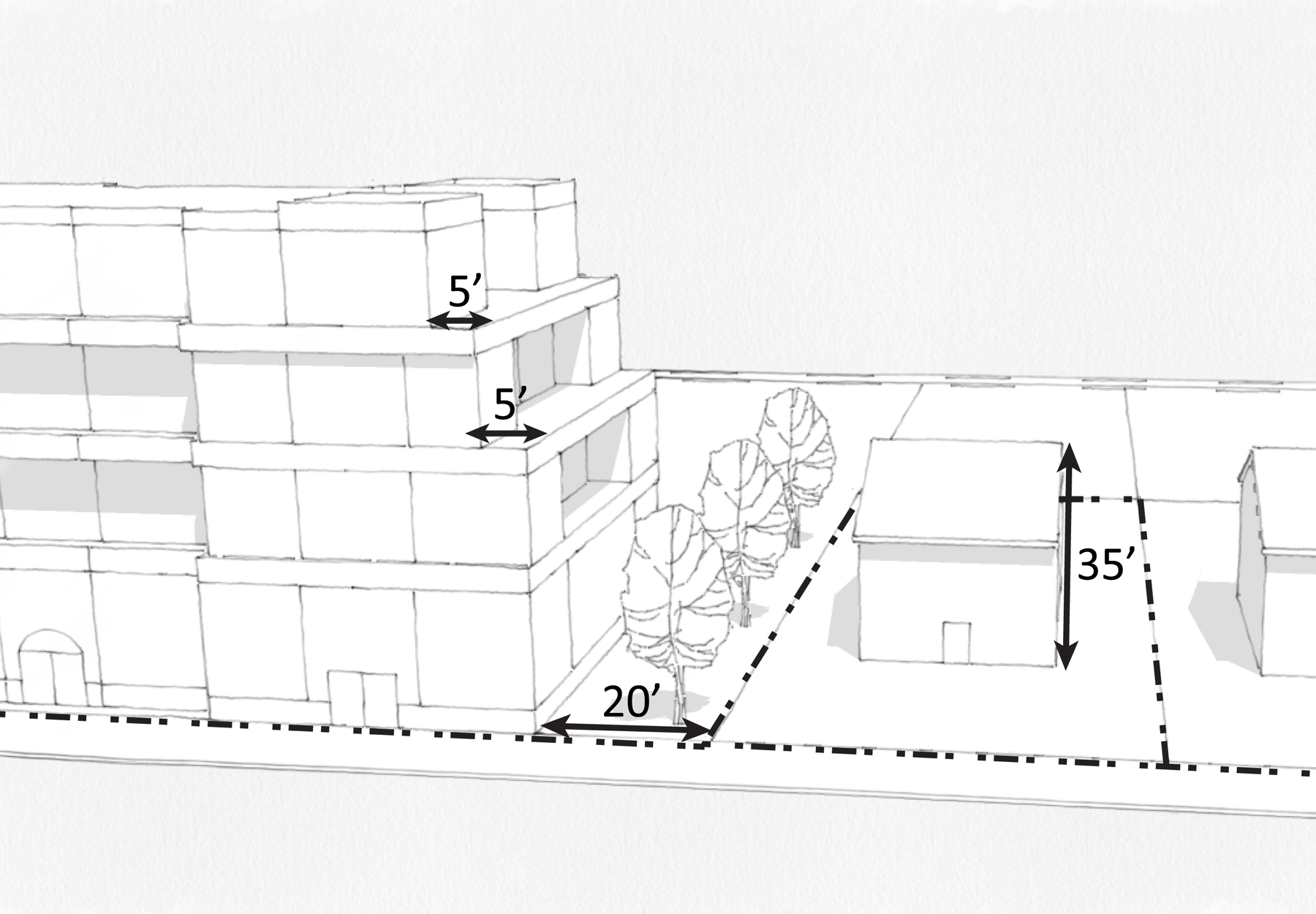
Figure 10: Residential Transition - Upper Story Stepbacks. Any structure that abuts a lot with a residential structure thirty-five (35) feet in height or less must stepback at least five (5) feet per story for stories 2—4, with a total stepback of thirty (30) feet.
(Ord. No. 1471, § 1, 9-13-10; Ord. No. 1686, § 3, 3-9-20; Ord. No. 1744, § 25(Exh. 1), 7-11-22; Ord. No. 1766, § 3, 6-26-23; Ord. No. 1801, § 15, 8-26-24)
Sec. 26-1107. - Off-street parking placement and design.
A.
Principle. Streets are more vibrant and interesting to pedestrians if they are lined with buildings and active uses. Surface parking should be located behind buildings, toward the interior of lots, and should be screened from view from adjacent streets. Structured parking should be placed to minimize impacts on surrounding development and be designed to be compatible — in terms of form, materials, and architectural style — with adjacent development.
B.
Surface parking placement. Parking areas shall be located to the rear or side of the building. For development sites with more than one (1) building, parking is not allowed in front of the building(s) closest to the street, but is allowed in front of permitted buildings interior to the development site (figure 11).
Figure 11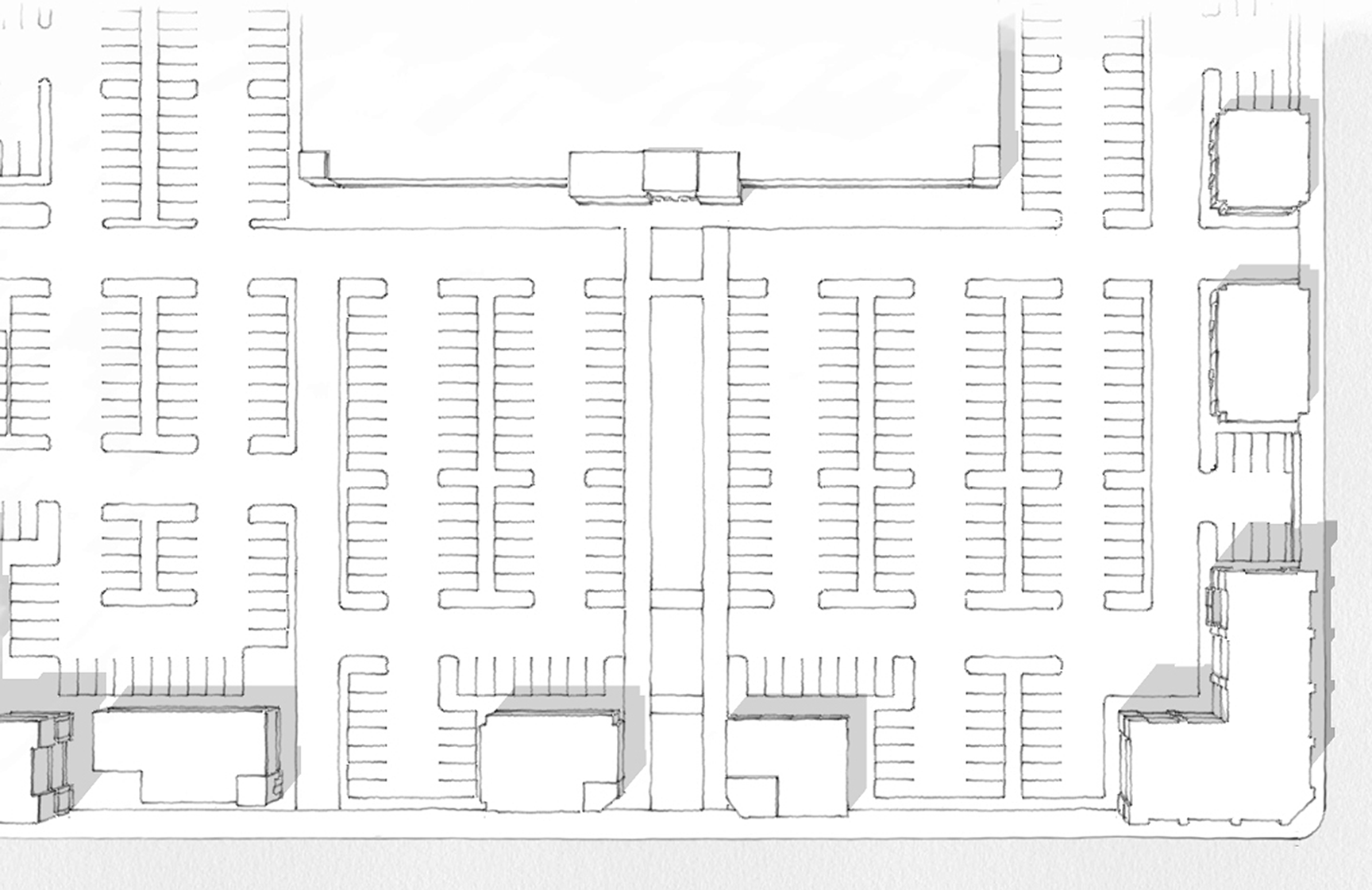
Figure 11: Off-street Parking Location for Development Site with Multiple Buildings. Parking must be to the rear or side of buildings closest to the street, but is permitted in front of buildings interior to the site.
C.
Surface parking buffers and screening.
1.
Where a surface parking lot directly abuts a street or public space, one (1) or more of the following screening elements shall be used:
•
Minimum five-foot wide landscape buffer with regularly spaced trees and/or shrubs to soften the parking edge.
•
A vertical screening device, thirty (30) to forty-two (42) inches in height (and in compliance with the sight triangle requirements of section 26-603). The screening device may be a continuous masonry wall constructed of stone, brick, or split-face concrete block, a combination masonry pier and decorative iron railing, or any other decorative and durable screening device that is consistent with the materials of the primary building. Wood, chain link and vinyl picket fencing shall not be permitted.
•
Where a parking lot's frontage along the street or public space is greater than twenty (20) linear feet, no more than thirty (30) percent of the screening requirement may be fulfilled by a landscape buffer.
2.
Where a surface parking lot boundary abuts a residentially or agriculturally zoned lot with a residential use, a minimum ten-foot wide landscape buffer is required between the parking lot and the adjacent property line. This width may be reduced to six (6) feet if an opaque six-foot fence or decorative wall is placed at the property line. The landscape buffer shall contain regularly spaced trees and/or shrubs (figure 12).
Figure 12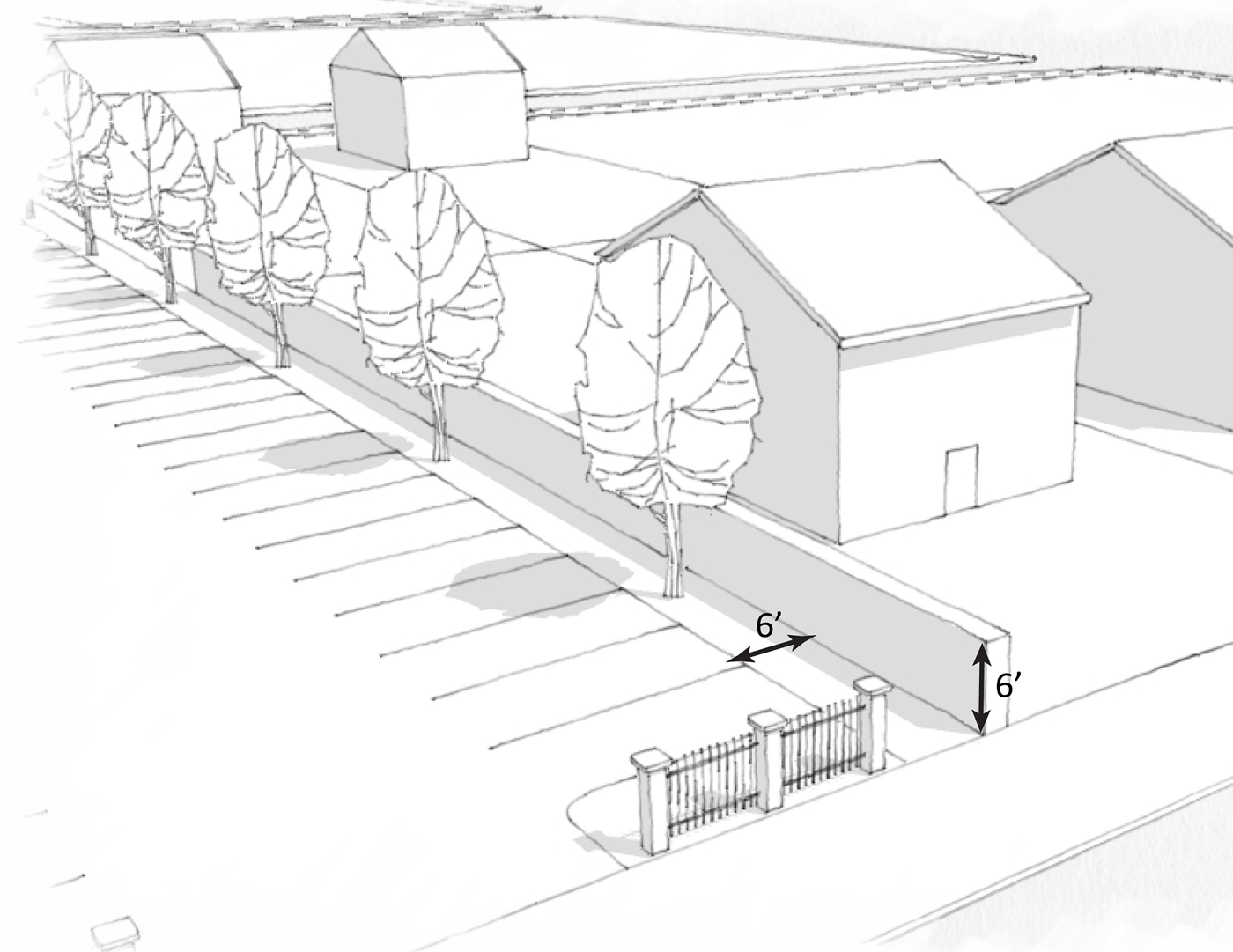
Figure 12: Parking Lots Adjacent to Residential Use. Such parking areas require a minimum six-foot landscaped buffer and screen wall between the parking area and residential use.
D.
Surface parking design.
1.
Parking areas shall meet the requirements for the design of off-street parking — including surfacing, landscaping, lighting, and space/aisle dimensions — stated within section 26-501 E.5., section 26-501 E.6, section 26-501 E.7 and section 26-501 E.11.
2.
Parking lots that utilize permeable paving are encouraged.
3.
Parking areas over twenty thousand (20,000) square feet shall contain a well-defined pedestrian walk, whether by change in paving material or landscaping, that connects the parking area to the adjacent street and the building(s) on site.
E.
Parking structure design.
1.
Parking garage design should be compatible with adjacent buildings in terms of form, massing, scale, materials, and façade articulation.
2.
Spandrel panels or opaque screening systems, such as louvers, at least thirty-six (36) inches in height shall be used to screen vehicles from view on all levels.
3.
Any parking garage façade that is visible from public view shall be orthogonal in composition and so that ramping systems are not visible (figure 13).
4.
Wherever possible, especially for parking garage façades that face a public street, the ground floor of the parking structure should incorporate retail, commercial, or other nonresidential uses to help activate the street.
5.
Any ground-level façade of a parking garage that is visible from the street and does not provide retail, commercial, or other active ground floor uses shall include at least two (2) of the following design features:
•
Façade articulation through change in vertical plane or a change in building material.
•
The use of windows or false windows defined by frames, lintels, or sills.
•
Integration of multiple building entrances.
•
Buffering along the street edge with landscaping, street trees, green walls, or trellises with vines.
Figure 13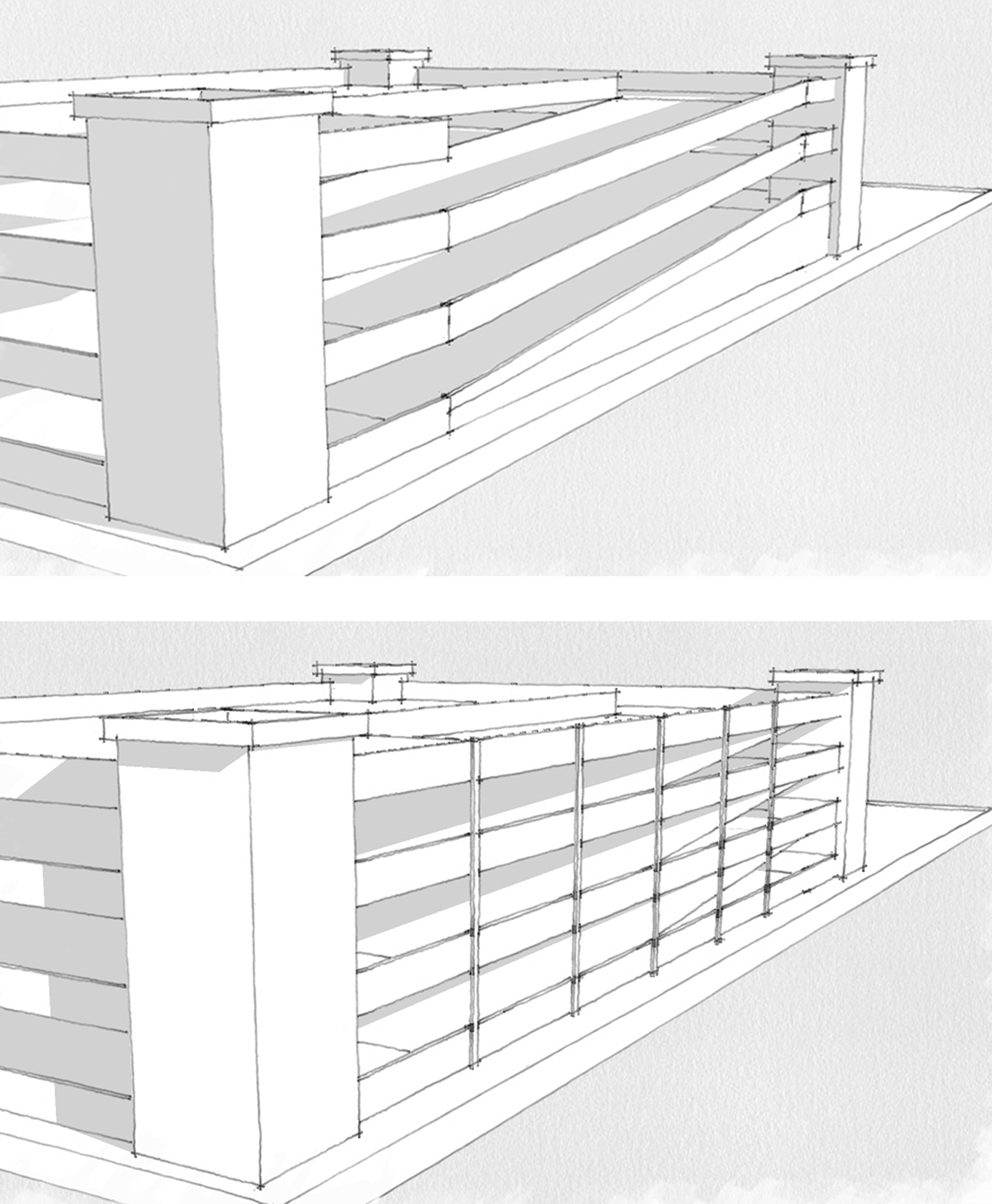
Figure 13: Parking Garage Design. The image on top illustrates a garage façade with an expressed ramping system, which is not allowed. The image below illustrates the same garage with a façade that is orthogonal, with all floors at ninety (90) degree angles.
(Ord. No. 1471, § 1, 9-13-10; Ord. No. 1766, § 4, 6-26-23; Ord. No. 1801, § 16, 8-26-24; Ord. No. 1801, § 16, 8-26-24)
Sec. 26-1108. - Site circulation and vehicular access.
A.
Principle. Access and circulation for automobiles should be designed to minimize the number of curb cuts, increase connectivity, and encourage shared access points from streets so that disruptions to the pedestrian environment are minimized.
B.
Block sizes. Where new public or private streets are proposed, blocks with a perimeter of one thousand six hundred (1,600) to one thousand eight hundred (1,800) feet are encouraged and shall not be greater than two thousand (2,000) feet in perimeter.
C.
Curb cuts. For new development along existing streets, where a curb cut already exists, the number of curb cuts to the site shall not be increased. Where possible, existing curb cuts should be consolidated.
1.
Wherever possible, vehicular access to a site or building shall occur through an alley, rather than by a curb cut from the street.
2.
Where an alley is not available, curb cuts along the secondary street, rather than the primary street, are encouraged.
D.
Vehicular entrances. Vehicular entrances to buildings and parking garages that contain a ramp shall be screened from view of the street or adjacent public space. Where a vehicular entrance or ramp directly abuts a pedestrian walk, appropriate cautionary signs shall be used to alert pedestrians of the presence of vehicles and to inform drivers that pedestrians have the priority.
(Ord. No. 1471, § 1, 9-13-10)
Sec. 26-1109. - Parking requirements.
A.
Principle. Large areas of free parking encourage automobile use and detract from the land available for high quality development. Strategies to utilize parking areas effectively — such as shared parking and parking structures — are highly encouraged. Especially within areas adjacent to transit services, reduced parking requirements encourage transit and other modes alternative to the automobile.
B.
The following table specifies the number of parking spaces required by general use group.
Note: square feet is measured as gross floor area
C.
On-street parking. On-street parking spaces directly abutting the use may count toward the total number of required parking spaces.
D.
Off-site parking. Parking requirements may be met off-site, up to a walking distance of one thousand (1,000) feet via a publicly accessible route from the use, subject to an off-site parking agreement. The publicly accessible route must be approved by the community development director. The off-site parking agreement must be submitted for approval by the community development director and, once approved, recorded against all properties subject to the agreement.
E.
Shared parking. Shared parking is permitted and encouraged. Shared parking shall be approved subject to the review and approval of a shared parking study citing ULI accepted shared parking ratios, as may be amended.
F.
Transit parking reductions. Properties within the MU-C TOD sub-district may reduce minimum parking requirements by twenty (20) percent.
G.
Incentive for structured parking.
1.
Except within the MU-N district, a single use building that incorporates underground or structured parking qualifies for the higher building height allowed for mixed use buildings in the height requirements table in section 26-1104 B, even if that building is not mixed use.
2.
For a development site with a freestanding parking garage, the additional building height may be applied to a building within the development site that is served by the parking structure. This height bonus applies only to parking structures that contain at least one (1) nonresidential use at the ground floor.
H.
Accessible parking shall be provided in accordance with section 26-501 E.9.
I.
Off-street loading shall be provided in accordance with section 26-501 E.8.
J.
Bicycle parking. Bicycle parking shall be provided in accordance with section 26-501 E.4.
K.
The community development director shall have authority to request that on-site visitor parking or loading areas be provided for single-unit attached uses if there are no on-street parking spaces abutting the use or if the parking is predominantly provided in private garages.
L.
Electric vehicle (EV) parking shall be provided in accordance with section 26-501 E.13.
(Ord. No. 1471, § 1, 9-13-10; Ord. No. 1744, § 25(Exh. 1), 7-11-22; Ord. No. 1766, §§ 5, 6, 6-26-23; Ord. No. 1767, §§ 2—4, 6-26-23; Ord. No. 1788, § 3, 2-26-24; Ord. No. 1789, § 17, 2-26-24; Ord. No. 1824, §§ 19—21, 6-23-25)
Sec. 26-1110. - Open space requirements.
A.
Principle. Parks, plazas, squares and other forms of public spaces play an important role in the quality of a place. Landscaped and hardscaped areas contribute to the public realm by providing places for people to gather, relax, and recreate.
B.
Open space required. The following table sets forth the minimum amount of open space required, measured as a percentage of the net development site area (total site area less public right-of-way).
C.
Aggregated open space. Open space may be aggregated into larger parks, plazas, and squares for one (1) development site, rather than calculated per parcel, subject to approval by the community development director. In such cases, the parcel(s) required to meet any open space requirement must be identified and noted on the approved site plan on file in the community development department.
D.
Minimum landscaping. At least thirty-five (35) percent of the required open space area shall be composed of living landscape materials, including trees. The requirements of sections 26-502 C, D, and F shall apply.
E.
Usable open space. For all development sites, at least seventy-five (75) percent of the required open space must be usable open space.
1.
Usable open space includes open space which, by its configuration, size, and design, can be used for passive or active recreation.
2.
Usable open space includes plazas, parks, outdoor dining areas, courtyards, community gardens and publicly accessible green roofs. Required buffers or parking lot landscaping shall not qualify as usable open space.
3.
Land with a slope steeper than one (1) foot (vertical) in three (3) feet (horizontal) shall not qualify as usable open space.
4.
Drainage ways, ponds, and other areas required for stormwater quality or detention may qualify as usable open space if such areas are designed for passive or active use and are landscaped with living material, subject to approval of the community development director.
5.
Walking paths or sidewalks of at least five (5) feet in width may count towards usable open space percentages if part of a pedestrian network such as a walking loop or paths through other usable open spaces such as a common lawn or plaza.
6.
Private fenced yards for the exclusive use of a single owner or occupant of a dwelling unit shall qualify as open space, but not as usable open space.
F.
Artificial turf.
1.
Artificial turf is permitted in limited circumstances, as follows:
• Sport and play areas specifically designated for athletic purposes including but not limited to athletic fields of play, playgrounds, gaming areas, and dog runs.
• Private fenced side and rear yards of single detached, duplex, and single-attached dwellings, such as townhomes, up to a maximum of four hundred (400) square feet per dwelling unit.
• Required residential transitions landscape buffers.
• The location shall be approved through a site plan application, civil construction documents, site work permit, or building permit, whichever is applicable, and permeability shall be accounted for in drainage plans. The only use of artificial turf that qualifies as landscape materials (non-living) is for athletic fields of play. Other uses of artificial turf, including playgrounds, gaming areas, and dog runs, shall not qualify as landscaping.
2.
Artificial turf is prohibited in the following locations:
• Required parking lot landscape buffer areas.
• Areas owned and/or maintained by owner's associations, except where used for athletic fields of play.
• On commercial industrial, and institutional properties, except where used for athletic fields of play.
G.
Non-functional turf. In addition to the limitations set forth in section 26-502 D, non-functional turf shall also be prohibited in the following locations:
• Landscape areas with slopes greater than four-to-one (4:1); and
• Landscape strips less than six (6) feet in width.
H.
Streetscaping. All new development, including expansions of an existing structure by 50 percent or more of the floor area, shall meet the requirements in the City of Wheat Ridge Streetscape Design Manual.
I.
Maintenance. Landscaping shall be maintained in accordance with section 26-502 D.
J.
The requirements of section 26-502, subsections C, D, and F shall apply to mixed use zones. The remaining subsections of section 26-502 shall not apply to such zones.
K.
The requirements of section 26-507 shall apply in all mixed use zone districts.
L.
The requirements of section 26-508 shall apply in all mixed use zone districts.
M.
Xeric/waterwise required. The use of xeric/waterwise plant materials and principles are required and shall be used to guide design and promote water conservation.
(Ord. No. 1471, § 1, 9-13-10; Ord. No. 1481, § 15, 3-28-11; Ord. No. 1618, § 3, 4-10-17; Ord. No. 1683, § 39, 1-27-20; Ord. No. 1766, § 7, 6-26-23; Ord. No. 1801, § 17, 8-26-24; Ord. No. 1814, §§ 15, 16, 1-27-25)
Sec. 26-1111. - Permitted uses.
A.
Principle. The mixed use zone districts emphasize building form, rather than permitted uses. A range of uses is permitted to promote mixed use development.
B.
Permitted and conditional uses are shown in the following table. This table, and not the table in section 26-204, shall apply for all of the mixed use zone districts. Uses not listed shall be deemed excluded.
1.
The community development director has the authority to determine that a use not specifically listed should be so permitted or allowed on the basis of it being similar to a listed use, compatible in character and impact with uses in the zone district, consistent with the intent of the district, and which would not be objectionable to nearby property by reason of odor, dust, fumes, gas, noise, radiation, heat, glare, vibration, traffic generation, parking needs, outdoor storage or use, or is not hazardous to the health and safety of surrounding areas through danger of fire or explosion. The director's decision may be appealed to the board of adjustment as an interpretation request.
Permitted Uses
Key: P = Permitted C = Conditional Use (see § 26-1117) NP = Not Permitted
C.
Separation requirements for drive-through/drive-up uses. Where drive-through and drive-up uses are permitted in the permitted use table (section 26-1111B.) the following separation requirements shall apply. These separation requirements shall not apply in the MU-C Interstate sub-district and shall not apply to any mixed-use development that has an approved concept plan (per section 26-1116).
1.
There shall be a minimum five-hundred-foot separation between fast food eating establishments with a drive-through, measured in a straight line from the nearest property line of each such use to the nearest property line of the same use (without regard to intervening structures or objects), including existing uses, regardless of zone district.
2.
There shall be a minimum five-hundred-foot separation between all other drive-through/drive-up uses, including pharmacies, banks, and non- fast food eating establishments with a drive-up window, measured in a straight line from any drive-through/drive-up use from the nearest property line to the nearest property line (without regard to intervening structures or objects), including existing uses, regardless of zone district.
3.
Minimum separation requirements shall only apply to properties that did not have a legal, operating drive-through/drive-up use at the time of rezoning to a mixed-use zone district.
4.
Measurements shall exclude drive-through/drive-up uses located outside of the City of Wheat Ridge corporate limits.
D.
Separation requirements for motor fueling stations. Where motor fueling stations are permitted in the permitted use table (section 26-1111 B.), the following separation requirements shall apply. These separation requirements shall not apply in the MU-C interstate sub-district and shall not apply to any mixed-use development that has an approved concept plan (per section 26-1116), and shall not apply to retail EVCS facilities.
1.
There shall be a minimum one-thousand-foot separation between motor fueling stations, measured in a straight line from any motor fueling station from the nearest property line to the nearest property line (without regard to intervening structures or objects), including existing uses, regardless of zone district.
2.
Minimum separation requirements shall only apply to properties that did not have a legal, operating fueling station use at the time of rezoning to a mixed-use zone district.
3.
Measurements shall exclude fueling station uses located outside of the City of Wheat Ridge corporate limits.
(Ord. No. 1471, § 1, 9-13-10; Ord. No. 1491, § 7, 5-23-11; Ord. No. 1617, § 3, 4-10-17; Ord. No. 1646, § 4, 8-13-18; Ord. No. 1670, § 4, 6-24-19; Ord. No. 1684, § 10, 2-10-20; Ord. No. 1696, § 7, 8-24-20; Ord. No. 1709, § 10, 2-22-21; Ord. No. 1723, § 4, 10-25-21; Ord. No. 1744, § 23, 7-11-22; Ord. No. 1766, §§ 8—10, 6-26-23; Ord. No. 1768, § 6, 6-28-23; Ord. No. 1789, §§ 18, 19, 2-26-24; Ord. No. 1812, § 3, 1-13-25; Ord. No. 1821, § 3, 6-9-25; Ord. No. 1824, § 22, 6-23-25)
Sec. 26-1112. - Requirements for mixed use development.
A.
Principle. Buildings and development sites that contain a mix of uses are strongly encouraged. Large development sites represent an important opportunity for creating quality mixed use developments that will enhance the local economy.
B.
Except within the MU-N district and MU-C TOD sub-district, for development sites over five (5) acres and subject to new construction, at least fifty (50) percent of the proposed total square footage at the ground floor level shall contain nonresidential uses.
(Ord. No. 1471, § 1, 9-13-10)
Sec. 26-1113. - Signs.
A.
Principle. Signage should complement building and site design and be strategically located to minimize the impact of advertising on the public realm. Signs should be oriented toward and scaled to the pedestrian.
B.
All signage shall comply with chapter 26, article VII except as modified below:
1.
No roof signs are allowed.
2.
Wall signs placed on a vertical architectural element or above a pedestrian entrance may extend above the roof deck by up to ten (10) feet. This provision shall not apply to mansard roofs.
3.
Except within the MU-C Interstate sub-district, new pole signs shall not be allowed.
4.
Monument signs shall not exceed seven (7) feet in height, measured from the finished grade of the nearest adjacent pedestrian walk. The base of the monument sign shall be consistent with the materials of the building to which it is associated.
5.
Changeable copy signs, flashing signs, and LED electronic signs shall not be permitted in the MU-N district or the MU-C TOD sub-district.
6.
In the MU-N district, illuminated signs are encouraged to be turned off when businesses are not in operation.
(Ord. No. 1471, § 1, 9-13-10)
Sec. 26-1114. - Exterior lighting.
A.
Principle. Outdoor lighting should provide safety for pedestrians and reduce glare onto adjacent properties and into the night sky.
B.
All exterior lighting shall comply with section 26-503.
C.
Pedestrian walks internal to a site shall be lit with full cutoff lighting fixtures no more than twelve (12) feet high.
(Ord. No. 1471, § 1, 9-13-10)
Sec. 26-1115. - Site plan review.
A.
All site development within the mixed use zone districts shall be subject to the site plan review process outlined in section 26-111.
B.
All site plan applications shall be reviewed for consistency with all standards within this article and with any applicable concept plan that has been approved for the subject property.
C.
All approved site plans shall be kept on file in the community development department.
D.
Under certain circumstances, subject to approval by the community development director and to be determined at the required pre-application meeting, site plan review applications may be processed simultaneously with building permit applications.
(Ord. No. 1471, § 1, 9-13-10)
Sec. 26-1116. - Concept plan review.
A.
For sites ten (10) acres in size or more, and for any phased site development, a concept plan application for the entire development site shall be submitted and approved by the community development director prior to any site plan application(s).
B.
Prior to submittal of the concept plan, the applicant must complete a pre-application conference per the requirements in section 26-104.
C.
For sites ten (10) acres in size or more, a neighborhood meeting shall be required prior to submittal of the concept plan application. The applicant shall follow the neighborhood meeting requirements per subsection 26-109.A.1.
D.
After the pre-application conference and after the neighborhood meeting, if required, the concept plan application may be submitted to the community development department for review. The concept plan application shall include the appropriate number of copies, to be determined at the pre-application conference, and shall include the following information:
1.
The concept plan shall be prepared in a twenty-four (24) × thirty-six (36) inch format.
2.
Vicinity map.
3.
The boundary of the entire development site.
4.
Scale and north arrow.
5.
Date of map preparation and name and address of person who prepared the map.
6.
Proposed circulation concepts, including roads, right-of-way, access points, and sidewalks.
7.
Proposed building pads and preliminary land use concepts.
8.
Location of one-hundred-year flood plain, if applicable.
9.
Adjoining property lot lines, building access, parking, so that development compatibility can be determined.
E.
Upon receipt of the concept plan application, the community development department shall review the application and refer the application to affected public agencies for review and comment, if applicable.
F.
Public comment period. For sites ten (10) acres in size or more, upon submittal of the concept plan application, the applicant shall notify adjacent property owners and occupants that the application is available on file at the community development department for review, in a manner required for neighborhood meetings, subject to subsection 26-109.A.1. Public comments related to the proposed concept plan may be submitted to the community development department within fifteen (15) days of the original date of notification.
1.
During the same fifteen-day notification period, the applicant shall also post a sign on all public street frontages at the development site notifying the public that the concept plan is available for review and public comment at the community development department.
G.
The approved concept plan shall be recorded with Jefferson County Clerk and Recorder's Office and kept on file with the community development department.
H.
Amendments to a recorded concept plan will be required to follow the same review process as the initial concept plan application.
(Ord. No. 1471, § 1, 9-13-10; Ord. No. 1725, §§ 8, 9, 11-8-21)
Sec. 26-1117. - Administrative adjustment process.
A.
The community development director may approve minor adjustments to some standards within this article. Administrative adjustments are intended to relieve unnecessary hardship in complying with the strict letter of this article, especially in cases where unique site or building characteristics exist.
B.
In order to relieve unnecessary hardship, the community development director may grant administrative adjustments to the following standards to the extent shown in the table below:
C.
Any proposed variances from the requirements within this article that do not fall within the table of allowed administrative adjustments shall be required to follow the process for "Variances of more than fifty (50) percent," specified in section 26-115.C.3, regardless of whether the request is greater than fifty (50) percent of the applicable development standard.
(Ord. No. 1471, § 1, 9-13-10)
Sec. 26-1118. - Conditional use permits.
A.
Conditional uses. Any use with a "C" in the permitted use table in section 26-1111 shall only be allowed if reviewed and approved by the community development department pursuant to the standards set forth below.
1.
Pre-application meeting. Prior to submittal of a conditional use permit application, the applicant shall attend a pre-application conference, as described in section 26-104.
2.
Conditional use permit application. Conditional use permit applications shall be submitted only after a pre-application meeting. All applications shall be submitted to the community development department. Applications shall conform to the submittal requirements established by the community development department.
3.
Conditional use permit criteria. The following criteria shall be used in evaluating each application.
a.
The compatibility of the proposed use with the comprehensive plan;
b.
The compatibility of the proposed use with existing and proposed adjacent uses, in terms of scale, site design, and operating characteristics (including traffic generation, lighting, noise, and hours of operation);
c.
The ability to mitigate adverse and undesirable impacts to the surrounding area, including but not limited to, visual impacts, air emissions, noise, vibrations, glare, heat, odors, water pollution, and other nuisance effects;
d.
Amount of traffic generated and capacity and design of roadways to handle anticipated traffic;
e.
The incorporation and integration of architectural and landscape features to mitigate impacts from the proposed use.
4.
Conditional use permit approval. The community development director shall have the authority to approve or deny any conditional use permit application. In approving the application, the community development director may place conditions necessary to meet the criteria outlined in section 26-1118.A.3 above.
5.
A decision by the community development director to deny a conditional use permit application or any conditions on approval imposed by the community development director may be appealed to the board of adjustment in the same manner as administrative variances pursuant to section 26-115.C.2.
6.
Time limit on conditional use permits. For any applicant to exercise the right to develop a conditional use, a certificate of occupancy for development of the conditional use must be issued within three (3) years of the date of approval.
(Ord. No. 1471, § 1, 9-13-10)
Sec. 26-1119. - Definitions.
Except as expressly modified below, the definitions in section 26-123 shall apply. The following modified and additional definitions shall apply to the mixed use zone districts only.
Alley. A public or private thoroughfare which gives secondary means of public access to abutting properties or buildings.
Animal daycare facility. A facility licensed by the State of Colorado and the City of Wheat Ridge Police Department where animals may be groomed, trained, exercised, and socialized.
Assisted living facility. A residential facility with a combination of residential living units, with or without individual kitchen facilities, and group living facilities such as common kitchen, eating area, patio and/or recreational area. The facility is used for the care of the infirm or aged, or the rehabilitation of injured individuals, where medical attention in the form of skilled or intermediate nursing care is provided as a continual or intermittent benefit.
Development site. An area of land, which may contain more than one (1) parcel, that is subject to proposed site development.
Drive-through or drive-up uses. Uses at which an occupant of a vehicle may make use of the service or business without leaving their vehicle.
Driveway. A thoroughfare for vehicles providing access from a public or private street or alley to a dwelling unit or to a parking area serving structures or facilities.
Façade. The face, or outside wall, of a building.
Fast food eating establishment. An eating/drinking establishment whose principal business is the sale of pre-prepared or rapidly prepared food to the customer in a ready-to-consume state for consumption either within the restaurant building or off-premises, and whose principal method of operation includes (1) the sale of all foods and beverages, even those served for consumption on-premises, in paper, plastic, or other disposable containers; or (2) service of food and beverages directly to a customer in a motor vehicle.
Fixed guideway rail station. The station for a fixed guideway system, which is a transportation system that can only operate on its own guideway constructed for that purpose. This includes heavy rail, light rail, and commuter rail systems.
Food truck park. An arrangement of parking, seating, and restroom facilities for multiple mobile retail food establishments ("food trucks") to offer food and/or beverages for sale to the public as a primary use of a property. The site shall include a permanent building containing restroom facilities at a minimum, which may also include food and/or beverage preparation and sales and indoor seating.
Form. The three-dimensional shape and structure of a building.
Hard coat stucco. A mixture of cement or lime, sand and water, applied in one (1) or more coats. Does not include synthetic versions of stucco such as exterior insulation and finish system (EIFS).
Hardscape. Exterior ground surface areas covered with concrete, pavers, brick, stone or a similar surface and not intended for vehicular use.
Human scale. Proportions of elements that relate to the size of a human body.
LED/electronic sign. A sign that displays information that is illuminated by light emitting diodes (LED's), fiber optics, light bulbs, or other electric illumination devices.
Makerspace/workshop. A center for peer-to-peer or self-directed learning and knowledge sharing, in the form of but not limited to workshops, presentations, and lectures, and the use of shared workshop space, tools, and equipment, often on a membership basis. The use may involve elements of machine shops, workshops, and/or studios where people can come together to share resource and knowledge to build and make things, including but not limited to works of art, music, crafts, literature, woodworking, welding, kiln work, CNC work, plasma cutting or other intellectual property; food or beverage; software, robots, and so forth. The use may also involve co-working. The use may also include social activities for members. The use may be a principal use or it may be a component of another use with an educational mission, such as a school or library. As a principal use, it may include accessory retail sales and accessory food and/or beverage sales.
Mixed use development. A building or development site containing at least two (2) different use groups in the permitted use table, section 26-1111.
Office-warehouse. A use that combines office and storage for goods, wares, and merchandise, including distribution functions that may require off-street loading.
Open space. An outdoor, unenclosed area designed and accessible for outdoor recreation, pedestrian access, or passive leisure use. May be landscaped or hardscaped. Does not include roads, parking areas, driveways, or other areas intended for vehicular travel.
Pedestrian walk. A paved surface expressly intended for pedestrian use. Includes public and private sidewalks.
Personal services. Establishments primarily engaged in providing services involving the care of a person and his or her personal goods or apparel. Personal services usually include the following: laundry (cleaning and pressing), linen supply, diaper service, beauty shops, barbershops, shoe repair, tailor/alterations shops, body art, photocopying and printing, and similar uses.
Pole sign. A sign that is affixed or mounted on a freestanding wood or metal pole and anchored in the ground.
Place of worship. An establishment that is primarily used a place where persons regularly assemble for religious worship. This term includes uses such as churches, synagogues, temples, or mosques.
Primary street. The street toward which building entrances, pedestrian features, and site amenities are oriented, and along which service, loading, and parking uses are discouraged. Each building shall have a defined primary street that is approved by the community development director.
Primary street frontage. The property line of a parcel or development site which is directly adjacent to and parallel to the primary street.
Public realm. All areas to which the public has access, including streets, sidewalks, rights-of-ways, parks, plazas, and other publicly accessible open spaces.
Public space. A physical space accessible to the public, including sidewalks, rights-of-ways, parks, and plazas.
Restricted light industrial use. Specialized non-nuisance type activities that would permit the assembly, manufacturing, or packaging of products from previously prepared material, such as cloth, plastic, metal, paper, leather, precious or semiprecious stones. The manufacture or assembly of electronic instruments and devices is also permitted. Such uses include research and development facilities.
Secondary street frontage. The property line perpendicular to the primary street frontage. The secondary street frontage is only applicable for lots with more than one (1) street frontage.
Single use development. A building or development site containing land uses that fall under the same use group in the permitted use table, section 26-1111.
Site development. All construction and improvements on any parcel, lot, or tract of property within the city and on any structure (other than normal maintenance or repair allowed for nonconforming uses), including, but not limited to, substantial clearing, grading, filling or excavation, streets and roads, drainage, utilities, parking lots and structures, landscaping, building, building additions or alterations, parking lot lights, street lights, signs and erection or moving of structures. Site development also includes all those activities listed under "approvals sought" in the review process chart, section 26-106. The community development department shall have authority to determine whether an activity constitutes site development within the meaning of each section. Such determination may be appealed to the board of adjustment.
Street. A public or private thoroughfare for vehicular traffic, other than an alley or driveway.
Street wall. The cumulative effect of adjacent buildings facing onto and providing a consistent edge to a street.
Transit station. Mass transit stations, including bus or rail terminals/stations or depots.
Usable open space. Open space which, by its configuration, size, and design, can be used for passive or active recreation. Usable open space includes plazas, parks, outdoor dining areas, courtyards, and green roofs. Required buffers and parking lot landscaping shall not qualify as usable open space. Land with a slope steeper than one (1) foot (vertical) in three (3) feet (horizontal) shall not qualify as usable open space.
Utilities, major. Generating plants, electrical substations, switching buildings, refuse collection or disposal facilities, water reservoirs, water or wastewater treatment plans, and similar scale facilities that have relatively great potential for aesthetic and/or environmental impacts than minor utility facilities.
Utilities, minor. Water, sewer and gas mains; cable, electric and telephone distribution lines, substations, and/or switching facilities; gas regulator stations; public lift or pumping stations for domestic water and sewer service; photovoltaic panels or wind powered electric generators, and similar facilities of public agencies or utilities. Minor utility facilities generally do not have employees on-site, and services may be publicly or privately provided.
Wholesale sales. Sales of goods in large quantities for resale by retailers.
Window display graphics. Artistic graphic displays that are mounted within a window or glass panel, that contain no text, and that are not utilized as commercial signage.
(Ord. No. 1471, § 1, 9-13-10; Ord. No. 1670, § 5, 6-24-19; Ord. No. 1686, §§ 4, 5, 3-9-20; Ord. No. 1744, § 24, 7-11-22; Ord. No. 1766, § 11, 6-26-23; Ord. No. 1801, § 18, 8-26-24; Ord. No. 1814, § 17, 1-27-25; Ord. No. 1824, § 23, 6-23-25)

