
Commerce City Zoning Code
CHAPTER 19
25 - SIGNS
19.25.010 - Intent and purpose.
The purpose of this chapter is to establish regulations designed to protect the public health, safety, and welfare, reduce confusion for the traveling public, and improve the appearance of the city by regulating and controlling the size, location, design, quality, illumination, construction, maintenance, and use of all signs and advertising displays in the City of Commerce.
(Ord. 544 § 1(part), 2000).
19.25.020 - Definitions.
In addition to the definitions set forth in Chapter 19.45, the following definitions shall apply to the provisions of this chapter:
"Abandoned sign" means any sign that no longer advertises a business, tenant, owner, product, service, or activity on the site where the sign is displayed.
"Advertising display" means signs, banners, displays of merchandise, and sign structures used for announcements, business names, or advertising goods or products.
"Area of sign" means the entire area of the sign, enclosing all letters, symbols, pictures, or figures forming a display, with the area boundaries formed by no more than eight straight lines. Sign area includes all faces of the sign, but excludes all supports and uprights, superficial column covers, trims, and other objects attached to the sign but which do not convey a message.
"Billboard" means an outdoor advertising display as regulated by California Business and Professions Code Sections 5200—5499. See "Off-site sign."
"Construction sign" means a temporary sign stating the names of individuals or firms directly connected with the work on a building or facility under construction or alteration; a temporary sign announcing the future use of the property on which the sign is located.
"Flashing sign" means a sign having conspicuous and intermittent variation in lighting; a sign incorporating intermittent electrical impulses from a source of light or a light revolving in a manner that creates the illusion of flashing.
"Freestanding sign" means a sign supported from the ground by one or more poles or posts and with or without braces, including ground signs and monument signs.
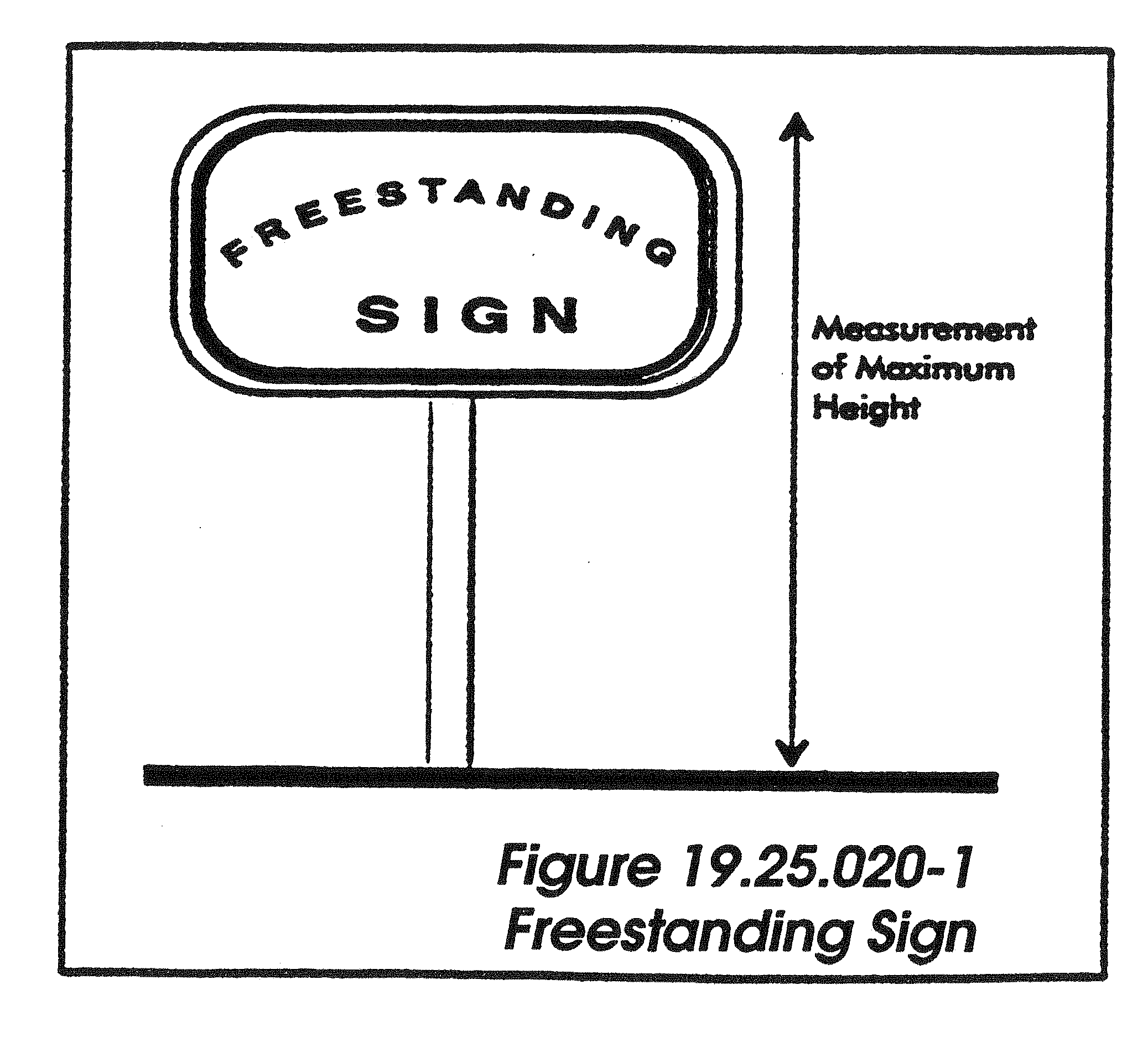
"Ground sign" means a sign that is completely or partially supported by a structural element and is not an integral part of a building. It includes post signs, pole signs, freestanding signs, pylon signs, detached signs, and signs attached to or painted on fences, screening walls or similar structures.
"Height of ground sign" means the vertical distance from the uppermost point of a sign to the prevailing grade directly below that point.
"Illuminated sign" means a sign designed to emit or brightly reflect artificial light, or a sign that uses a source of light to make characters or a message more readable.
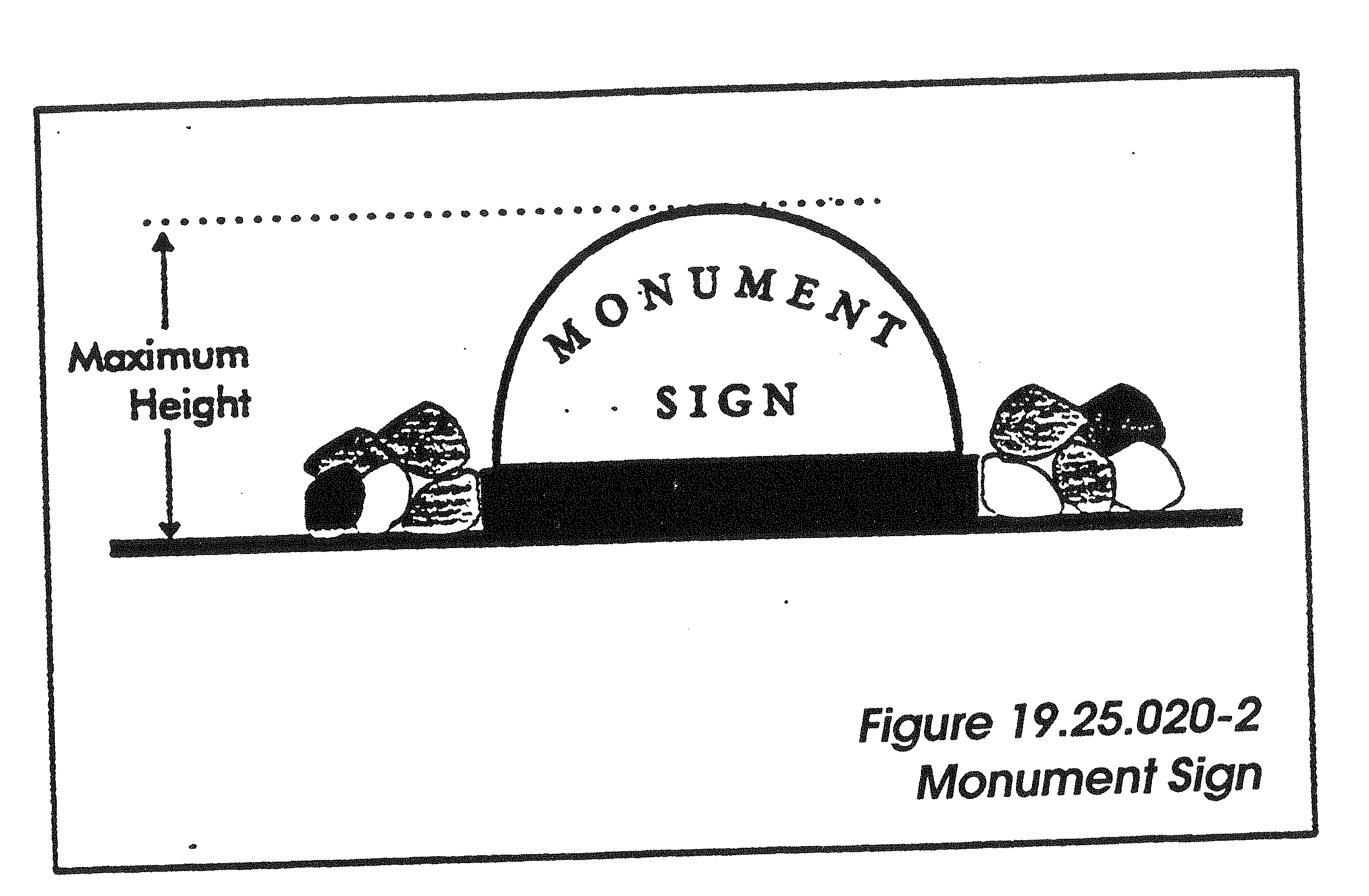
"Monument sign" means a freestanding sign with a solid base, where the bottom of the sign is in contact with or close to the ground and is independent of any other structure, and where the bottom of the sign face is three feet or less above the surrounding grade, and the top of the sign frame is six feet or less than the surrounding grade.
"Nonilluminated sign" means a sign that is not illuminated, either internally or externally.
"Off-site sign" means a sign that directs attention to a business, commodity, industry, or other activity that is sold, offered, or conducted elsewhere than on the premises on which the sign is located. See "Billboard."
"On-site sign" means a sign that directs attention to a business, product, service, industry, or other activity that is sold, offered, or conducted on the premises upon which the sign is located.
"Outdoor advertising display" means a sign, display of merchandise, or device that is placed outside of a building or is otherwise open to public view.
"Outdoor advertising structure" means a structure of any kind or character on which an outdoor advertising display is placed. See "Sign structure."
Political Campaign Sign. See Commerce Municipal Code, Chapter 9.40. "Portable sign" means a sign that can be moved, including sandwich boards, A-frames, placards, and trailer-mounted signs.
"Readerboard" or "electronic sign" means an electronic sign with lighted copy that moves, flashes, scrolls, changes color, or otherwise displays a continuous or intermittent changeable message that advertises a business, product, service, or event associated with the property on which the sign is located.
"Real estate sign" means a temporary sign relating to the rental, sale, lease, or other disposition of the real property on which the sign is located.
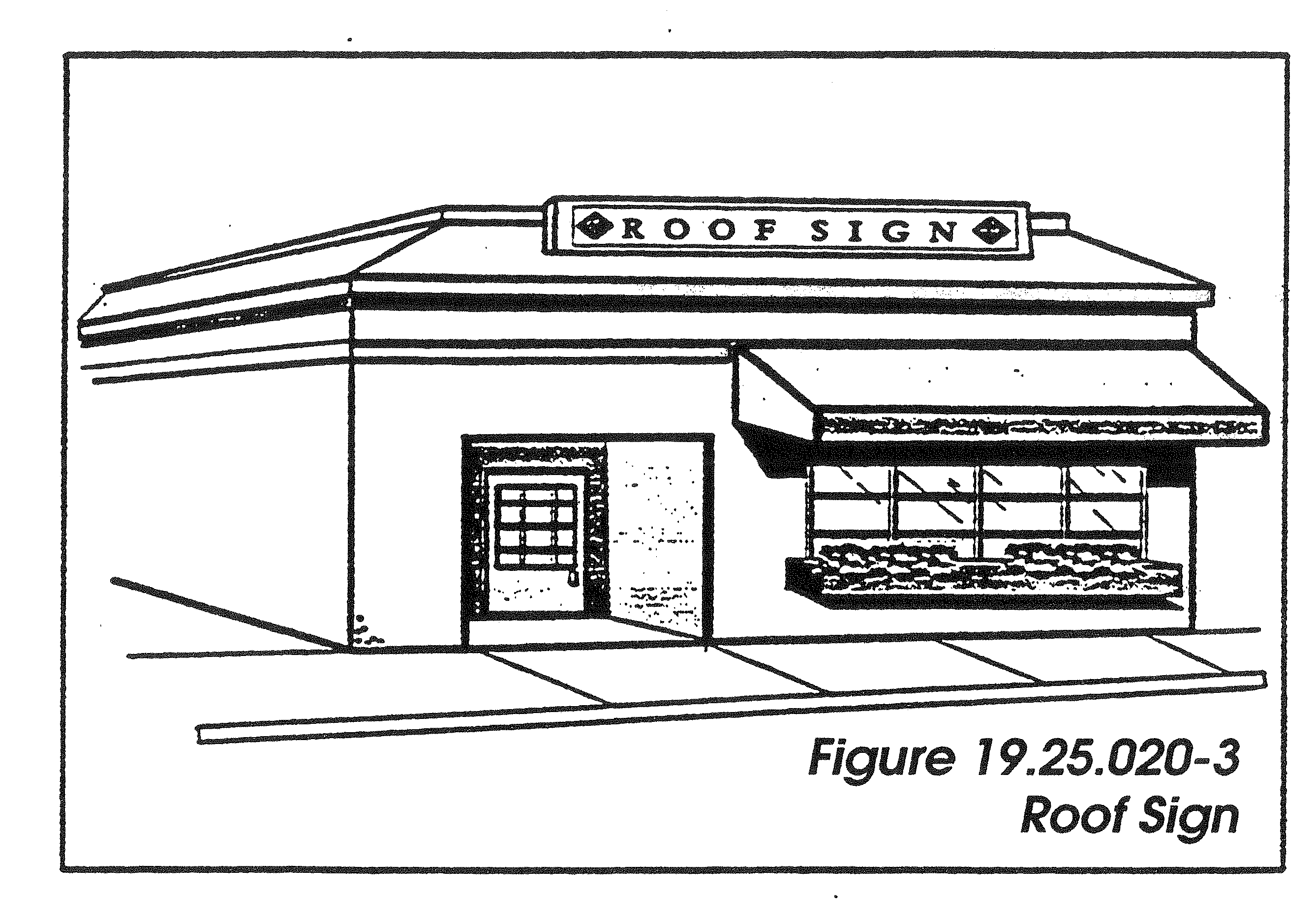
"Roof sign" means a sign erected or printed entirely on or above the roof.
"Sign" means a device used for visual communication, promotion, or advertisement of the interests of a person, group, or enterprise. Signs may include an announcement, declaration, demonstration, display, insignia, or illustration.
"Sign structure" means a structure of any kind or character erected or maintained to support a sign; a physical support used exclusively as a stand, frame, or background for the support or display of signs or advertising. See "Outdoor advertising structure."
"Wall sign" means a sign that is posted, affixed, suspended, or painted on an exterior wall of a building or structure.
"Wind sign" means a sign or device that is designed with one or more streamers, banners, flags, balloons, or other objects that are intended to move when exposed to the wind.
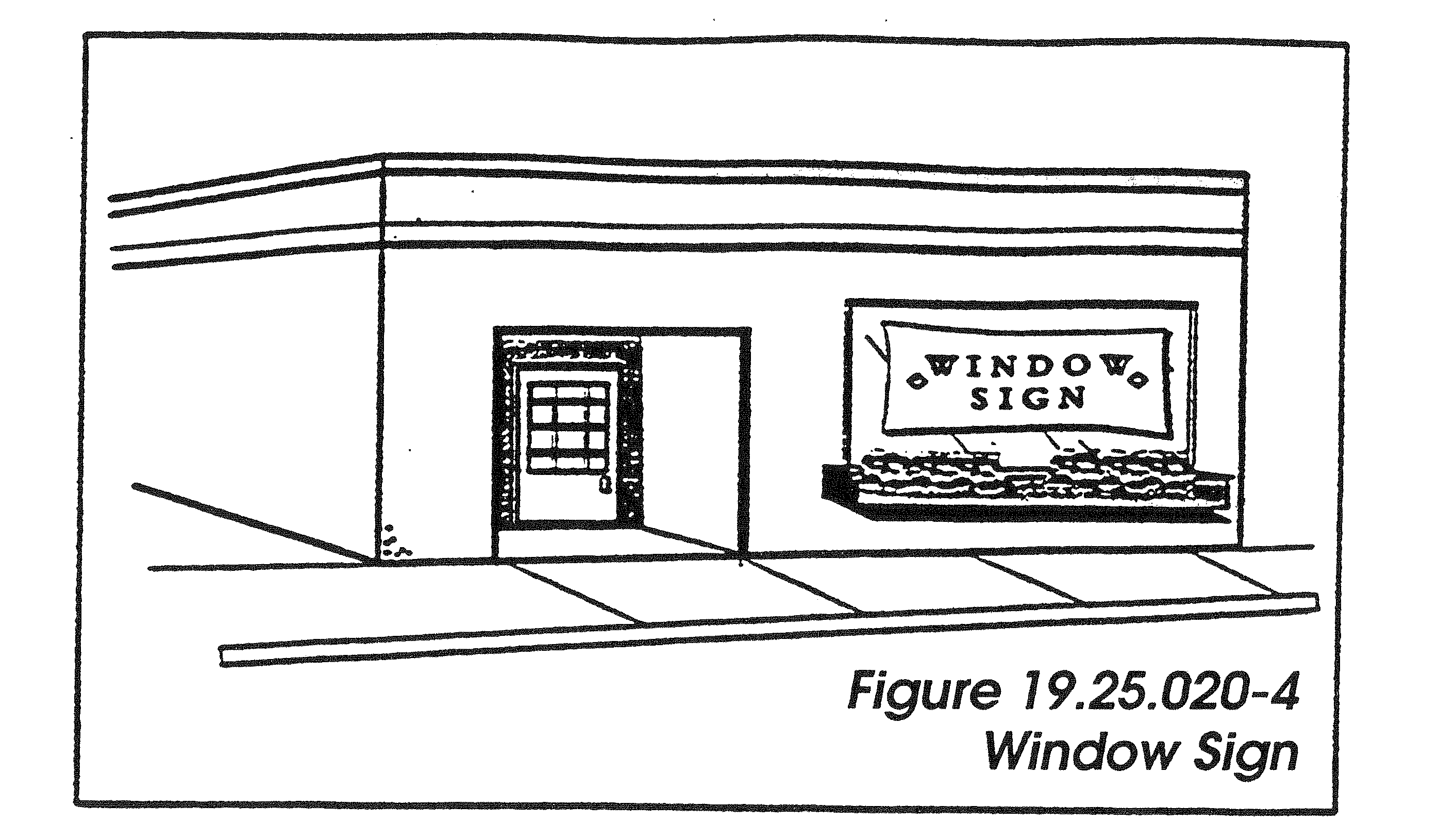
"Window sign" means a sign or message posted, painted, affixed, or attached to a window surface.
(Ord. 544 § 1(part), 2000).
19.25.030 - Applicability.
A.
No sign or advertising display shall be erected or maintained that does not comply with the provisions of this chapter and any other applicable statutes or laws.
B.
The requirements of this chapter shall be applied in addition to any other requirements contained in this Title 19.
C.
In the event of direct and irreconcilable conflict between any provisions of this chapter and any other provisions of this Title 19 or any other provisions contained in the Commerce Municipal Code, the more restrictive requirements shall govern.
(Ord. 544 § 1(part), 2000).
19.25.040 - Permits.
A.
A sign permit shall be required prior to the placing, erecting, moving, reconstructing, altering, or displaying of any sign or advertising display in the city. An application for a sign permit for each sign or advertising display shall be made to the community development department to first determine if the application conforms to all of the applicable provisions of this Title 19.
B.
Upon approval of the community development department (if a permit is required), the applicant shall submit an application to the building department for a building permit and shall provide such information and fees as the building official may prescribe. The property owner or the authorized agent of the property owner shall make the application, and shall include the following information:
1.
All signs and advertising displays shall be designed, constructed, and maintained as specified in the latest edition of the city building code.
2.
The supporting members of all signs and advertising displays shall be free of any extra bracing, angle iron, guy wires, cables, etc. The supports of all signs and advertising displays placed upon or attached to buildings shall be an architectural and integral part of the building.
3.
The backs of all signs and advertising displays shall be screened, encased, or otherwise covered so that no structural members are visible to the public.
(Ord. 544 § 1(part), 2000).
19.25.050 - Exempt signs.
The following signs shall not be subject to the provisions of this chapter:
A.
Signs placed by a governmental body or public utility, including signs required to be maintained by law.
B.
Flags of any nation, political subdivision, or flags identifying the business or organization on the site; provided, that not more than three flags are placed on any site.
C.
Nonilluminated directional or convenience signs, not exceeding six square feet in area and four feet in height, that facilitate traffic flow and safety, such as signs that say "entrance," "exit," "caution," "parking," "one-way," etc.
D.
Bulletin or announcement signs erected on the premises of churches, schools, and other public institutions, not exceeding one in number per street frontage and used solely for the purpose of stating items related to activities conducted on the premises; provided, such signs do not exceed thirty square feet in area and six feet in height above ground level.
E.
Nonilluminated warning signs not exceeding two square feet in area and four feet in height, such as signs that say "no trespassing, "beware of dog," "no parking," "no soliciting," etc.
F.
One name plate containing the name and/or profession of the occupant of the premises upon the building for each tenant occupant, not exceeding an area of one square foot.
G.
One temporary, nonilluminated construction sign per parcel, not exceeding an area of six square feet in residential zones or thirty-two square feet in all other zones. Such signs shall be removed within seven days following removal of the property from the market.
H.
One temporary, nonilluminated real estate sign per parcel, not exceeding six square feet in residential zones or thirty-two square feet in all other zones. Such signs shall be removed within seven days following removal of the property from the market.
I.
Temporary (sixty days or less), noncommercial signs devoted to a religious, charitable, cultural, governmental, or educational purpose. Time and temperature signs shall be exempt from the sixty-day limitation.
J.
Signs located on real property either owned in fee by the city or over which an easement for public right-of-way purposes has been acquired by the city, where such signs are placed under permit or license approved by the city council.
K.
Murals, as defined by Section 19.45.140 of this Title 19.
(Ord. 544 § 1(part), 2000).
19.25.060 - Prohibited signs.
A.
No sign or advertising display shall be attached to or placed upon any vehicle except those that are painted directly upon, or permanently affixed to the body of a vehicle used regularly in a business to which the sign or advertising display pertains. No vehicle shall be parked on any parking area or street for the purpose of displaying a sign or advertising display.
B.
Portable signs or advertising displays are not permitted.
C.
Flashing signs or advertising displays are not permitted.
D.
No sign, advertising display, or portion thereof shall rotate or revolve at a speed greater than eight revolutions per minute. Flashing, rotating, or revolving signs may be permitted by the community development director if he finds that one or more of the following conditions and prerequisites have been met:
1.
The proposed sign will be an on-site sign as defined in this chapter.
2.
The proposed sign will be located in the C/M-1, M-1, or M-2 zone.
3.
The proposed sign will not unreasonably cause or contribute to any unsafe traffic condition.
4.
The proposed sign will not be detrimental to the property owners in the area or to the general public.
5.
Because of the location of the proposed sign in relation to potential viewers and the nature of the business being advertised, motion or the appearance of motion in the sign is necessary to allow the sign to be noticed and viewed by such potential viewers.
E.
Wind signs or advertising displays are not permitted, except official flags or banners announcing public events placed by government entities.
F.
Signs or advertising displays that resemble or hide from view any official traffic sign, signal, or device; attempt to direct the movement of traffic; or interfere with, mislead, or confuse traffic are not permitted.
G.
Signs or advertising displays shall not be erected so as to constitute or potentially constitute a hazard to the safe and efficient operation of vehicles upon any street, highway, or freeway. Signs or advertising displays shall not utilize any light of any color of such brilliance or be positioned so as to blind or impair the vision of drivers upon the street, highway, or freeway, nor shall any light be placed in such position as to prevent the driver of a vehicle from readily recognizing any official traffic sign, signal, or device.
H.
Signs that are projected by electronic means, such as by a video projector or movie camera, are prohibited.
(Ord. 544 § 1(part), 2000).
19.25.070 - Restrictions on sign types or features.
A.
No live animal or human being shall be used as a part of any sign or advertising display, except during authorized promotional activities and as approved by the community development director.
B.
No sign or advertising display shall emit sound of any kind for the purpose of attracting the attention of the general public.
C.
No person shall use, operate, or employ any projector, stereopticon, television, or motion picture machine in conjunction or attached to any sign or advertising display.
(Ord. 544 § 1(part), 2000).
19.25.080 - Sign maintenance.
All signs and advertising displays and the ground area thereunder shall be maintained at all times in a state of good repair, free from deterioration, rot, rust, and loosening. The display surfaces of all signs and advertising displays shall be kept neatly painted or posted, and the area beneath and about the base of all signs and advertising displays shall be kept free of all weeds, rubbish, and inflammable waste materials by the owner of the sign or advertising display.
(Ord. 544 § 1(part), 2000).
19.25.090 - Residential zones sign regulations.
The number and type of signs allowed within residential zones are set forth in Table 19.25.100A. Signs in the R-1, R-2, and R-3 zones shall conform to the following provisions:
A.
Roof signs and projecting signs are not permitted.
B.
No sign shall extend above roof level of a building to which it is attached.
C.
Nothing contained herein shall be construed as permitting any type of sign in conjunction with a commercial use allowed as a home occupation.
D.
No permanent murals, figures, or pictures shall be painted or drawn on any exterior walls.
(Ord. 544 § 1(part), 2000).
19.25.100 - Nonresidential zones sign regulations.
Table 19.25.100A sets forth the sign regulations applicable to all nonresidential zones.
Table 19.25.100A
PERMITTED SIGNS BY USE OR SIGN TYPE
(Ord. 550 § 9, 2000; Ord. 544 § 1(part), 2000).
19.25.110 - Temporary signs.
Temporary signs such as flags, streamers, banners, nonmetallic balloons twelve inches or less in diameter, and pennants used for special promotions may be permitted subject to the following standards:
A.
A business shall be limited to a maximum of five promotional periods per calendar year, with the exception of automobile dealerships, which shall be limited to nine promotional periods in a calendar year.
B.
A promotional time period shall consist of fourteen days or less. No more than two time periods can occur consecutively. If two promotional time periods are not consecutive, the time periods must be separated by at least fourteen days.
C.
A maximum of four temporary signs are allowed per event, including a maximum of two exterior temporary banners.
D.
Total sign area for temporary signs and exterior banners shall not exceed the total square footage of permanent on-site signage permitted under this chapter for the subject business. This does not include temporary inflatable objects such as air balloons.
E.
All signs and banners must be exclusively attached to the building structure. Streamers, pennants, balloons, etc., may be detached from the building structure, but may not be on or attached to public property or on adjacent private property, and not attached to utility poles or light standards within the public right-of-way. All temporary signs, including streamers, pennants, balloons, etc., must be at least ten feet above surrounding ground level, measured from the bottom of the sign (streamer, pennant, etc.) to the surrounding ground level.
F.
A temporary sign permit must be obtained for each promotional time period prior to placement of temporary signs, flags, banners, pennants, or balloons. Placement of all temporary signs, flags, banners, pennants, and balloons shall be subject to the approval of the community development director.
G.
Only one inflatable object such as a balloon larger than twelve inches in diameter, an inflatable statuary, or an air balloon is allowed and must be included as part of a permitted promotional period pursuant to this section, and shall not exceed seventy-five feet in height above grade or fifty feet above the building height.
(Ord. 544 § 1(part), 2000).
19.25.120 - Redevelopment signs.
A.
Pursuant to Section 5273 of the California Business and Professions Code, a sign advertising businesses and activities within a redevelopment project area may be established. One such sign is permitted within each redevelopment project area.
B.
Each such sign shall have a maximum area of eight hundred square feet and maximum height of forty-two feet.
C.
Such signs shall be limited in number to one per freeway traversing the City of Commerce.
(Ord. 544 § 1(part), 2000).
19.25.130 - Master sign plan.
(a)
A master sign plan shall be required for all new nonresidential development projects with three or more tenant spaces, or for any nonresidential development involving the reconstruction and reuse of existing buildings with three or more tenant spaces.
(b)
For the purposes of this section, a master sign plan shall be defined as an illustrative plan indicating the number, location, height, dimensions, orientation, materials, design, and colors of all proposed signage.
(c)
Approval of a master sign plan by the planning commission shall be required whenever the director or designee determines that a master sign plan is needed because of special project characteristics (e.g., the size of proposed signs, limited site visibility, a business within a business, the location of the site relative to major transportation routes, etc.) or when unique, creatively designed signs are being proposed and certain aspects of the sign's design (e.g., animation) might not otherwise be allowed. Supporting documentation to the satisfaction of the director shall be required when requesting a master sign plan.
(Ord. 550 § 10, 2000).
(Ord. No. 670, § 1, 9-8-2015)
19.25.140 - Off-site signs permitted with restrictions.
The installation of an off-site sign or advertising display shall be permitted only in the Modelo Specific Plan zone subject to the restrictions of said specific plan and the Master Sign Plan approved concurrently therewith, as such plans may be modified from time to time, and the M-2 zone with the issuance of a conditional use permit, except that no off-site sign shall be permitted under any circumstance along Atlantic Avenue, Washington Boulevard, and Interstate five; nor within seven hundred fifty linear feet of The Citadel property; nor within a redevelopment project area; nor within two hundred feet of the civic center, a park, a school, or a property zoned for residential use (except as authorized within the Modelo Specific Plan).
(Ord. 544 § 1(part), 2000; Ord. No. 785, § 6, 2-22-2022).
19.25.150 - Relocation of legally nonconforming off-site signs.
A.
Any legally nonconforming off-site sign may be considered as a candidate for relocation approval on a two for one basis. Upon agreement between the sign owner and the city, the sign owner may abandon two such legally nonconforming off-site signs and replace them with one new sign, subject to the provisions of this chapter.
B.
Under the relocation program, the new sign shall comply with all requirements of this chapter relating to off-site signs, except that compliance with spacing requirements may be waived by the planning commission. However, in no case shall spacing between any two off-site signs be less than five hundred feet.
C.
Any sign proposed for relocation pursuant to this section shall be made to the planning commission. In considering such an application, the planning commission shall take into account the following considerations, among others:
1.
Whether or not the area has excessive visual clutter;
2.
Whether or not the proposed relocated sign would be compatible with uses and structures on the proposed site and in the surrounding area;
3.
Whether or not the proposed site is in an area that is actively contemplated for or actively being upgraded. Among indications of such upgrading are:
a.
A specific program for beautification or undergrounding of utilities;
b.
A neighborhood business center revitalization program; and/or
c.
Inclusion in a redevelopment area.
4.
Whether or not the off-site sign would create a traffic or safety problem with regard to on-site access, circulation, or visibility;
5.
Whether or not the proposed sign would interfere with on-site parking or landscaping required by city ordinance or permit;
6.
Proximity to residential zoning districts or residential housing;
7.
Proximity to other off-site signs;
8.
Field of vision shared with other off-site signs and on-site signs;
9.
Maintenance quality and appearance of the signs proposed for removal; and
10.
Aesthetic and visual problems caused in their existing locations by the signs proposed for removal.
D.
The signs to be removed must be removed from their respective sites prior to commencement of construction or installation of the new sign. A building permit will be required for removal.
E.
A conditional use permit shall not be required for the new sign, but the fees required for all new off-site signs shall be paid.
(Ord. 544 § 1(part), 2000).
19.25.160 - Development standards.
A.
The following development standards shall apply to all off-site signs:
1.
Maximum Height. Forty-two feet, measured from the ground surface to the uppermost point of the sign. For freeway-oriented off-site signs, height shall be measured from the closest freeway grade to the uppermost point of the sign.
2.
Maximum Area. Eight hundred square feet per sign face.
3.
Maximum Number of Sign Faces. Two. However, any off-site sign located on frontage property along Interstate 5 established on or before the effective date of the ordinance codified in this subsection shall be permitted a third face, provided that such third face attaches to the existing off-site sign structure; the existing off-site sign structure footing conforms to applicable building code requirements without any modifications required for the third face; the two existing faces not be repositioned in any manner to accommodate the third face; and the third face is of equal dimensions to the two existing faces
4.
Minimum Distance from Another Off-site Sign. Seven hundred twenty feet.
5.
Minimum Distance from Freeway Ramp or Street Intersection. Three hundred seventy-five feet.
B.
No off-site sign shall be permitted within any freeway landscaped area under the jurisdiction of the California Department of Transportation.
C.
The backs of all off-site signs shall be screened, encased, or otherwise covered so that no structural members are visible to the public.
(Ord. 550 § 11, 2000; Ord. 544 § 1(part), 2000).
19.25.180 - Intent.
It is the intent of this Division 3 to recognize that the eventual elimination of existing on-site signs that do not conform to the provisions of this Chapter 19.25 is as important to the citywide aesthetic and health, safety, and welfare as is the prohibition of new signs that would violate the provisions of this chapter. It is also recognized that nonconforming signs should be eliminated in a manner that avoids an unreasonable invasion of established property rights.
(Ord. 544 § 1(part), 2000).
19.25.190 - Nonconforming signs—General.
Nonconforming signs shall not be altered, moved, or reconstructed in any way unless done so in a manner to comply with all the applicable standards of this Title 19.
(Ord. 544 § 1(part), 2000).
19.25.200 - Continuation and maintenance.
A.
A sign, lawfully occupying a site, that does not conform with the sign regulations for the zone in which the sign is located shall be deemed to be a nonconforming sign and may not be altered, moved, expanded or enlarged, structurally altered to extend the useful life of the sign, or reconstructed unless made to comply with the standards of this Chapter 19.25.
B.
Any nonconforming sign may be continued in operation and maintained after the effective date of the ordinance codified in this Title 19.
(Ord. 544 § 1(part), 2000).
19.25.210 - Permitted change in copy.
The copy on a nonconforming sign may be changed prior to the scheduled date of elimination by issuance of a permit. Such change may not create a new nonconforming sign or increase the discrepancy between the existing nonconformity and the regulations.
(Ord. 544 § 1(part), 2000).
19.25.220 - Amortization schedule.
All nonconforming on-site signs shall be discontinued, removed from their sites, altered to conform to the requirements of this Chapter 19.25, or altered as prescribed to decrease the degree of nonconformity within the time schedules specified in Table 19.25.220A.
Table 19.25.220A
Nonconforming On-site Sign Elimination Schedule
(Ord. 544 § 1(part), 2000).
19.25.230 - Abatement of illegal signs within public rights-of-way.
A.
If it is determined that a sign is illegally placed on public property, public right-of-way, or public easements, the city shall notify the owner to remove the sign within forty-eight hours or be billed for the costs of removal. If immediate action is necessitated for public safety considerations, the city shall remove the sign, and the sign owner shall be billed for the costs of removal.
B.
The owner of a sign which has been removed by the city may request a hearing to determine whether the sign was in fact illegally located on public property. The request for a hearing shall be made within forty-eight hours from the date of removal.
C.
If the owner of a sign fails to make a request for a hearing and no demand is made for the return of the sign within ten days of the date of removal, then the city is authorized to destroy or dispose of the sign.
(Ord. 544 § 1(part), 2000).

