
Dunsmuir City Zoning Code
CHAPTER 17
68 - HISTORIC PRESERVATION
Sections:
17.68.010 - Purpose.
It is found that the protection, enhancement, perpetual care, and use of structures, districts, and neighborhoods of historic, architectural, and engineering significance located within the city, are of cultural, aesthetic, and economic benefit to the community. It is further found that the economic, cultural, and aesthetic standing of this city will be enhanced by respecting the heritage of the city. The purpose of this chapter is to:
A.
Designate, preserve, protect, enhance, and perpetuate those historic structures, districts, and neighborhoods which contribute to the cultural and aesthetic benefit of Dunsmuir;
B.
Foster civic pride in the beauty and accomplishments of the past;
C.
Stabilize and improve the economic value of certain historic structures, districts, and neighborhoods;
D.
Protect and enhance the city's cultural and aesthetic heritage and vitality;
E.
Promote and encourage continued private ownership and utilization of such buildings and other structures now so owned and used, to the extent that the objectives listed above can be attained under such policy;
F.
Assure that every owner of a historic structure within a historic district and/or designated as a landmark has the responsibility to assure the perpetual use/occupancy of said structure; and
G.
Establish minimum standards for assurance of care for all aspects of structures and landmarks within the Dunsmuir Historic Commercial District or of historical significance, as determined by this chapter.
(Ord. No. 575, § I(Exh. A), 6-29-2023)
17.68.020 - Definitions.
Unless the context requires otherwise, the following definitions shall be used in the interpretation of this chapter:
"California Register of Historical Resources" means as defined in California Public Resources Code Section 5024.1 and in CCR Title 14, Chapter 11.5, Section 4850, et seq., as it may be amended.
"Contributing resource" means a building, structure, site, feature, or object within a historic district that contributes to the historic character of the district, was built during the district's period of significance, and retains its appearance from that time.
"Demolition" means an act or process that destroys in whole or in part a building, structure, or site, or permanently impairs its structural integrity and/or may have an adverse effect on the significance of a historic resource.
"Demolition by neglect" means the failure to provide ordinary maintenance and repair to a historic resource, whether such neglect is willful or unintentional, by the owner or any party in possession of such property, which results in one or both of the following:
1.
The severe deterioration of exterior features so as to create or permit a dangerous or unsafe condition to exist.
2.
The deterioration of a structure or its components, including but not limited to exterior walls, roof, chimneys, doors, windows, porches, structural or ornamental architectural elements, or foundations, which has the potential to result in permanent damage to and loss of an historic resource's architectural and/or historic significance.
"Detrimental change" means an activity or action that has the potential to diminish the significance of a historic resource.
"Historic district" means a contiguous or noncontiguous geographic area containing one or more contributing properties which has been designated as a historic district by the city council pursuant to this chapter.
"Historic district buffer zone" or "buffer zone" means all real property located within three hundred (300) feet of the exterior boundaries of a designated historic district.
"Historic district delegates" means the planning commission chairperson and one additional member of the planning commission assigned to preliminary guidance and review of activities related to historic resources.
"Historic resource" means those properties, structures, improvements, sites, natural features, or areas officially listed in the National Register of Historic Places or the California Register of Historical Resources, and/or designated by the city council as having a special character or special historical, cultural, archaeological, architectural, community or aesthetic value as part of the heritage of the city, region, state, or nation, including all landmarks and historic districts established pursuant to this chapter.
"Historic site alteration permit" means a discretionary permit approved by the planning commission that, in addition to any other required permits or approvals, allows for a material change to a historic resource.
"Integrity" means the ability of an historic resource to convey its significance, with consideration of the following aspects of integrity: location, design, setting, materials, workmanship, feeling, and association.
"Landmark" means an individual structure or other feature, or group of structures or other features on a single lot or site, or a site having special aesthetic, cultural, architectural, or engineering interest or value of a historical nature and designated as a landmark pursuant to the provisions of this chapter.
"Material change" means any alteration for which a building permit is required, and which will cause a change in the appearance of a historic resource. In addition, "material change" shall include exterior changes to or modification of architectural details or visual characteristics that do not require a building permit, such as paint color and surface texture, grading, surface paving, landscape modifications, disturbances to natural features, and the placement or removal of exterior objects such as dish antennas, plaques, awnings, light fixtures, street furniture, walls, fences, steps, and other features affecting the exterior visual qualities of the historic resource. The term "material change" shall not include ordinary maintenance and repair that does not cause a change in the appearance of the historic resource or the reconstruction or replacement of any feature of a historic structure or landmark with a suitable substitute on a "like for like" basis, as determined by the city manager and historic district delegates.
"National Register of Historic Places" or "National Register" means the official inventory of districts, sites, buildings, structures, and objects significant in American history, architecture, engineering, archaeology, and culture which is maintained by the Secretary of the Interior under the authority of the Historic Sites Act of 1935 and the National Historic Preservation Act of 1966, as amended.
"Non-contributing resource" means a site, structure, building or object within the historic district which does not individually meet the criteria for historic designation, or does not contribute generally to the overall distinctive character of the historic district.
"Ordinary maintenance and repair" means any work, for which a building permit is not required by law, where the purpose and effect of such work is to prevent or correct any deterioration of or damage to a structure or any part thereof and to restore the same to its condition prior to the occurrence of such deterioration or damage.
"Preservation" means the protection, conservation, enhancement, perpetuation, rehabilitation, restoration, repair, reconstruction, or other action taken to repair, conserve, or prevent the deterioration or destruction or removal of a historic resource.
"Relocation" means the displacement of any improvement within the same site or to a different site.
"Removal" means the displacement from the site of a historical resource of any device, feature, fixture, hardware, structural or decorative material contributing to the cultural, historic, or architectural character of the historic resource.
"Restoration" means the act or process of accurately recovering the form and details of a resource and its setting as it appeared at a particular period of time by means of the removal of later work or by the replacement of missing earlier work.
"Secretary of the Interior's Standards for the Treatment of Historic Properties" or "Secretary's Standards" means the Secretary of the Interior's Standards for the Treatment of Historic Properties with Guidelines for Preserving, Rehabilitating, Restoring & Reconstructing Historic Buildings. These standards and guidelines delineate accepted treatments for the protection and rehabilitation of materials pursuant to 36 CFR Part 68.
"State Historical Building Code" means as defined in the California Health and Safety Code Sections 18950 through 18961, as may be amended from time to time, which allows reasonably equivalent alternatives to the adopted California Building Code to facilitate the preservation and continuing use of designated historical resources while providing reasonable safety for the building occupants and access for people with disabilities.
(Ord. No. 575, § I(Exh. A), 6-29-2023)
17.68.030 - Historic (H) combining district established.
A.
Purpose. The purpose and intent of the Historic (H) combining district is to provide a means of implementing this chapter and thereby better safeguard the historic resources designated by the city. The H combining district shall be used in general accord with the policies and principles of the Historic Preservation Element of the General Plan.
B.
Designation. The H combining district may be combined with any zoning district in accordance with the amendment procedures of the city. When established, the combining district shall be shown on the zoning map overlaying the district with which it is combined. When so designated, all properties within the H combining district shall be subject to the provisions of this chapter.
C.
Permitted Uses. The permitted uses, accessory uses, and conditional uses in the H combining district shall be the same as those of the base zoning district with which it is combined.
D.
Development Standards. Except as provided for herein, the development standards in the H combining district shall be the same as those of the base zoning district with which it is combined.
E.
General Provisions. When the H combining district is applied, the regulations of this chapter as well as those of the base zoning district shall apply. Where a conflict occurs, the regulations set forth in this chapter shall apply.
(Ord. No. 575, § I(Exh. A), 6-29-2023)
17.68.040 - Duties and responsibilities.
A.
The chair of the planning commission, along with one member selected by the planning commission, shall serve as historic district delegates and provide for preliminary review of all applications and proposals subject to the regulations in this chapter.
B.
Historic district delegates shall report their findings and any recommendations regarding applications and proposals subject to the regulations in this chapter at regular meetings of the planning commission.
C.
The full planning commission may accept, deny, or revise the historic district delegates' recommendations in accordance with this chapter.
D.
Where the planning commission serves in an advisory role pursuant to this chapter, recommendations of the planning commission shall be forwarded to the city council for final action.
E.
The city manager shall supervise the clerical and technical requirements of the planning commission and historic district delegates in support of this chapter, including serving as the custodian of records and satisfying official correspondence requirements as appropriate.
(Ord. No. 575, § I(Exh. A), 6-29-2023)
17.68.050 - Historic resource designation criteria.
When designating a historic resource, the historic district delegates, planning commission, and city council shall consider whether the structure, improvement, property, site, natural feature, or area under consideration satisfies the following criteria:
A.
Historical and Cultural Significance.
1.
It is particularly representative of a distinct historical period, type, style, region, or way of life.
2.
It is an example of a type of building, use, or activity that was once common but is now rare.
3.
It is of a greater age than most of its kind.
4.
It was connected with someone renowned, important, or a local personality.
5.
It was associated with a business or use that was once common but is now rare.
6.
It represents the work of notable builders, designers, or architects.
7.
The site is the location of an important historical event or is associated with events that have made a meaningful contribution to the nation, state, or city.
B.
Historical Architectural and Engineering Significance.
1.
The construction materials or engineering methods used are unusual or significant or uniquely effective.
2.
It embodies a collection of elements of architectural design, detail, materials, or craftsmanship that represent a significant structural or architectural achievement or innovation.
3.
The overall effect of the design is beautiful, or its details and materials are beautiful or unusual.
C.
Neighborhood and Geographic Setting.
1.
It materially benefits the historic character of the neighborhood.
2.
It has a unique location or is a view or vista that representsan established and familiar visual feature of the neighborhood, community, or city.
3.
The proposed historic district is a geographically definable area, urban or rural, possessing a significant concentration or continuity of site, buildings, structures, or objects unified by past events, or aesthetically by plan or physical development.
4.
The collective value of the historic district taken together may be greater than the value of each individual structure.
(Ord. No. 575, § I(Exh. A), 6-29-2023)
17.68.060 - Historic district designation procedure.
A.
Designation of a historic district may be initiated by the planning commission, city council, and by application of persons, or their authorized agents, who own sixty (60) percent of the recorded lots to be included in the proposed district.
B.
Any such application by the owners, or their authorized agents, shall be filed with the city manager upon the prescribed forms and shall include the following data:
1.
Statement of the district's special aesthetic, cultural, architectural, or engineering interest or value of an historic nature;
2.
Drawings, photographs, or descriptive material;
3.
Other information requested by the planning commission and historic district delegates.
C.
The application to designate an historic district shall be referred to the planning commission as to conformance with the purposes and criteria of this chapter. The historic district delegates shall recommend approval, disapproval, or modification of the designation to the planning commission.
D.
After receiving a recommendation from the historic district delegates, the planning commission shall hold a public hearing at the earliest next regular meeting, consistent with agenda preparation procedure and schedules for such meetings. The planning commission shall consider the conformance or lack of conformance of the proposed designation with the purposes and criteria as specified in the purpose and review sections of this chapter. The planning commission shall recommend approval, disapproval, or modified approval of the proposal as provided therein. A record of pertinent information presented at the hearing shall be made and maintained as a permanent record.
E.
The planning commission shall transmit the application and its recommendations to the city council.
F.
The city council may approve, modify and approve, or deny the proposed designation. Approval, or modification and approval, of the designation shall be accomplished by adoption of an ordinance.
G.
The property included in any such designation shall be subject to the regulations set forth in this chapter and any further controls specified in the designating ordinance.
H.
The city manager shall cause a copy of the designating ordinance to be forwarded to any department or agency requesting it or to any individual department or agency to whom the city manager considers it appropriate to have it sent.
(Ord. No. 575, § I(Exh. A), 6-29-2023)
17.68.070 - Landmark designation procedure.
A.
The planning commission, pursuant to the procedures set forth in this chapter, may recommend to the city council the designation of a landmark for an individual structure or other feature, or group of structures on a single lot or site, or a site having special aesthetic, cultural, architectural, or engineering interest or value of a historical nature.
B.
Designation of a landmark may be initiated by the planning commission, city council, and by application of the owners or their authorized agents, of the property for which designation is requested.
C.
Any such proposal shall be filed with the planning commission upon the prescribed form and shall include the following data:
1.
Assessor's parcel number of the site;
2.
Description detailing the landmark's special aesthetic, cultural, architectural, or engineering interest or value of a historical nature;
3.
Sketches, drawings, photographs, or other descriptive material;
4.
Statement of condition of structure;
5.
Other information requested by the planning commission.
D.
The historic district delegates shall recommend to the planning commission approval, disapproval, or modification of an application for designation.
E.
Prior to recommending approval or modified approval, the historic district delegates shall find:
1.
That the proposed landmark, or group of structures or features thereof has significant aesthetic, cultural, architectural, or engineering interest or value of an historic nature;
2.
That the proposed landmark may be designated without imposing hardship on the property owner;
3.
That approval or modified approval of the application is consistent with the purposes and criteria of this chapter.
F.
After receiving a recommendation from the historic district delegates, the planning commission shall hold a public hearing at the earliest next regular meeting, consistent with the agenda preparation procedure and schedules for such meetings. The city clerk shall give notice of the time and place of the hearing by one publication in a newspaper of general circulation in the city at least ten (10) calendar days prior to the hearing.
G.
The planning commission may approve, disapprove, or modify a recommendation of the historic district delegates on a designation.
H.
Prior to the approval or modified approval of a designation, the planning commission shall make those findings specified in these procedures for designating a landmark and submit to the city council for final action.
I.
After approval of the designation and the regulations which result from such designation, the city manager may also forward a copy of the letter to any other department or agency requesting it or that the city manager considers affected by the designation.
(Ord. No. 575, § I(Exh. A), 6-29-2023)
17.68.080 - Procedure for amendment or rescission of designation.
A.
The city council may modify or rescind a historic district or landmark designation if, after a duly noticed public hearing, the city council finds either of the following:
1.
The evidence used to establish the designation was erroneous or that the designation was procured by fraud; or
2.
The historic district or landmark no longer meets the criteria for designation set forth in this chapter due to reasons outside the control of the owner(s) of the designated property, including but not limited to damage caused by natural disaster, flood, fire, or other calamity. The Board shall adopt written findings of fact supporting its decision to modify or rescind a designation.
B.
The city council may, without prior notice or public hearing, rescind a landmark designation if it finds that a landmark has been lawfully demolished, removed, or relocated in conformance with the hardship waiver provisions of this chapter.
C.
The decision to amend or rescind a historic district or landmark designation pursuant to this section shall be by resolution containing findings in support of the decision.
D.
When a historic district or landmark designation has been modified or rescinded, the city clerk shall promptly notify the owner(s) of the property included therein and shall cause a copy of the appropriate resolution or ordinance, or notice thereof, to be recorded with the county recorder.
(Ord. No. 575, § I(Exh. A), 6-29-2023)
17.68.090 - Duty to maintain.
A.
In accordance with the purpose of this chapter, demolition by neglect is prohibited.
B.
Historic resources shall be preserved against decay, deterioration, and prolonged neglect and kept free of structural defects by their owner(s) or person(s) having legal custody or control of them.
1.
The exterior of the structure, including deterioration of molding, filigree, cornices, entablatures, wall facing, glass, doors, window coverings, displays, and similar decorative features shall be maintained to the extent that it does not create a hazardous or dangerous condition and jeopardize the building's exterior architecture or visible appearance.
2.
Deterioration of exterior walls, vertical supports, horizontal support members, roofs, chimneys, exterior wall elements, such as brick, plaster, siding, wooden walls, or mortar shall be corrected.
3.
Repairs of decay and reasonable painting maintenance shall occur.
4.
Sign maintenance shall be in accordance with Chapter 17.80 (Signs).
5.
Vacant or abandoned historical structures shall be maintained in the same manner as occupied structures.
6.
Vacancy of historic structure is defined as having no tenant, no valid business license, no posted business hours, or hours posted are not adhered to.
7.
Reasonable maintenance shall be required within sixty (60) days of notification.
(Ord. No. 575, § I(Exh. A), 6-29-2023)
17.68.100 - Preservation easements.
Preservation easements on historic resources may be acquired by the city through purchase, donation, or condemnation. A preservation easement would include any easement, restriction, covenant, or condition running with the land designed to preserve or maintain the significant features of such resources.
(Ord. No. 575, § I(Exh. A), 6-29-2023)
17.68.110 - Procedure to authorize construction, demolition, relocation, or material change to a historic resource.
A.
No permit shall be issued for the construction, relocation, modification, or demolition of a historic resource or for any material change to a historic resource without review by the planning commission. Property owners are encouraged to seek the advice of staff, historic district delegates, and planning commission for further guidance.
B.
Planning and building departments shall maintain current records of designated structures, landmarks, and districts, including a list of historically significant interior features, if known. This list shall be maintained by and for the planning commission.
C.
When the planning or building department receives a permit application indicating a possible material change to a historic resource, they shall refer such application to the historic district delegates for review. The historic district delegates shall make a determination of whether the proposed change may result in a detrimental change to the historic resource or district.
D.
When the historic district delegates have determined that a proposed material change is compatible and does not represent a detrimental change, the planning department shall forward that determination along with any associated recommendations to the planning commission for further action.
E.
When the historic district delegates determine that a proposed change may represent a detrimental change, the planning department shall forward that determination along with any recommendations to the planning commission and a public hearing shall be held.
F.
An application for a historic site alteration permit shall be filed with the planning commission upon a form prescribed by the city clerk and accompanied by a fee established by the city council. The application shall contain the following data:
1.
A clear statement of the proposed work;
2.
Detailed scale plans describing the size, height, and appearance of the proposed work with all materials, textures, and colors to be used, identified, and shown;
3.
A site plan showing all existing buildings and structures and the proposed work in relation to adjacent structures;
4.
Other information deemed necessary by the planning commission, including site photographs and historic records pertaining to the site or structure under consideration.
G.
In considering the appropriateness of the historic site alteration permit, the historic district delegates and planning commission shall consider, among other things, the purposes of this chapter and the historic architectural value, texture, and materials of the building or structure in question, its appurtenant fixtures, including signs, utilities, fences, parking, site plan, landscaping, and the relationship of such building and/or features to other buildings.
H.
When the proposed material change is limited to exterior painting, the historic district delegates and planning commission shall determine whether the proposed color(s) will maintain the intent of this chapter and enhance both the appearance of the structure and the overall aesthetic value of the historic district.
I.
When an application is received for demolition, relocation, or removal of a historic resource, the necessity shall be justified to the planning commission. No historic resource shall be demolished or removed unless it has become a threat to public health and safety, is not usable, and cannot be repaired or restored.
J.
Prior to approval or modified approval, the planning commission shall find that:
1.
The action proposed is consistent with the purposes of this chapter as reflected in Section 17.68.010 (Purpose); and
2.
The action proposed will not be detrimental to a structure or feature of significant aesthetic, cultural, architectural, or engineering interest or value of a historic nature; or
3.
The applicant has demonstrated that the action proposed is necessary to correct an unsafe or dangerous condition on the property; or
4.
The applicant has demonstrated that denial of the application will result in immediate or substantial hardship and is entitled to a hardship waiver pursuant to Section 17.68.140 (Hardship waivers).
K.
The planning commission may continue action on its review of a historic site alteration permit application for two meetings, not to exceed fifty-five (55) days from the date of the public hearing for the purpose of reaching a mutually acceptable solution in keeping with the criteria of this chapter. If at the end of that time an acceptable solution has not been achieved, the application shall be finally granted or denied.
L.
Upon approval of an application, a historic site alteration permit shall be issued, one copy of which shall be forwarded to the applicant, one copy of which shall be retained in the files of the planning commission and one copy of which shall be forwarded to the building inspector. In addition, a copy shall be forwarded to any other department or agency requesting it or which the planning commission believes will be affected by the permit.
M.
The applicant or any other interested party shall have the right of appeal to the city council pursuant to Section 17.140.030 (Appeals of planning commission action).
N.
During the appeal period, the city council, with the advice and assistance of the planning commission, may consult with civic groups, public agencies, and interested citizens, obtain recommendations for acquisition of property by public or private bodies or agencies, explore the possibility of moving one or more structures or other features, or any other steps deemed necessary.
O.
The planning commission may approve a permit if the applicant presents facts clearly demonstrating to the satisfaction of the planning commission at the public hearing that failure to receive such approval will cause an immediate and substantial hardship and is entitled to a hardship waiver pursuant to Section 17.68.160 (Hardship waivers).
(Ord. No. 575, § I(Exh. A), 6-29-2023)
17.68.120 - Modifications to structures within a historic district buffer zone.
A.
For the purposes of this chapter, there is hereby established a buffer zone that encompasses all real property located within three hundred (300) feet of the exterior boundaries of a designated historic district.
B.
Any changes to structures within a buffer zone that would require the planning commission's review if it were it located within the historic district shall be referred by staff to the historic district delegates for review.
1.
When the historic district delegates determine that proposed modifications do not represent a detrimental change to the district, they shall forward that determination to the planning and building departments and a permit may be issued.
2.
When the historic district delegates determine that proposed modification may result in a detrimental change to the district, they shall forward that determination along with any recommendations to the planning commission and a public hearing shall be held.
(Ord. No. 575, § I(Exh. A), 6-29-2023)
17.68.130 - Ordinary maintenance and repair.
Nothing in this chapter shall be construed to prevent the ordinary maintenance or repair of any exterior architectural feature in or on any property covered by this chapter that does not involve a change in design, material, or external appearance thereof, nor does this chapter prevent the construction, reconstruction, alteration, restoration, demolition, or removal of any such architectural feature when the building inspector or fire marshal certifies to the planning commission that such action is required for the public safety due to an unsafe or dangerous condition which cannot be rectified through the use of the California State Historic Building Code and when such architectural feature can be replaced according to the Secretary of the Interior's Standards. In the event any structure or other feature is damaged by fire or other calamity, the building inspector may authorize, prior to the commission's review, that amount of repair necessary to correct an unsafe condition.
(Ord. No. 575, § I(Exh. A), 6-29-2023)
17.68.140 - State historical building code.
The State Historical Building Code provides alternative building regulations for the rehabilitation, preservation, restoration, and relocation of structures designated as historic resources. The regulations shall be used in conjunction with other applicable codes in the processing of building permit applications for designated historic resources in the city.
(Ord. No. 575, § I(Exh. A), 6-29-2023)
17.68.150 - Parking reductions.
A.
In accordance with Health and Safety Code Section 18962, a project that converts or adapts a designated historical resource to a residential use that is located within one-half (0.5) mile of a major transit stop, as defined in subdivision (b) of Section 21155 of the Public Resources Code, shall not be required to provide parking spaces greater than the number of parking spaces that existed on the project site at the time the project application was submitted.
B. For a project converting or adapting a designated historical resource to a nonresidential use, a twenty-five (25) percent reduction in the number of parking spaces that would otherwise be required shall be allowed.
(Ord. No. 575, § I(Exh. A), 6-29-2023)
17.68.160 - Hardship waivers.
A.
Purpose. The purpose of this section is to address circumstances in which an owner of a existing or proposed historic resource asserts that compliance with the requirements of this chapter would create an undue hardship, or is infeasible for other specific reasons. Under such circumstances, an assessment shall be required to determine the nature and extent of the hardship, and to assess the impact of the proposed waiver on historic resources. A hardship waiver from specified requirements of this chapter may be approved subject to the standards and procedures in this section.
B.
Criteria for Approval of a Hardship Waiver.
1.
For an income producing property that is a contributing structure or other historic resource, the basis for approval of a hardship waiver exempting a project to alter or demolish the property, in whole or in part, from full compliance with the requirements of this chapter shall be that a reasonable rate of return cannot be obtained from the property if altered in a manner consistent with the requirements of this chapter, or in its present condition, and that the proposed project will not have a significant adverse impact on historic resources.
2.
For a non-income producing property that is a contributing structure or other historic resource, the basis for approval of a hardship waiver exempting a project to alter or demolish the property, in whole or in part, from full compliance with the requirements of this chapter shall be that the property no longer provides beneficial public, private, or institutional benefit to the community, and that that the proposed project will not have a significant adverse impact on the community's historic resources. Non-income producing properties shall consist of owner-occupied dwellings or properties owned by institutional, non-profit organizations, or public entities.
3.
The following circumstances shall not be considered as contributing to the basis for approval of a hardship waiver:
a.
Willful or negligent acts by the property owners or managers;
b.
Purchase of the property for substantially more than market value;
c.
Failure to perform ordinary maintenance and repairs;
d.
Failure to diligently solicit and retain tenants;
e.
Failure to provide normal tenant improvements; or
f.
Failure to accept an offer of purchase of the property at fair market value from a party willing to dedicate a conservation easement for the preservation of the property.
C.
Procedures for approval of a hardship waiver.
1.
Application: The applicant shall complete the application provided by the city clerk, include all information required, and pay any required fee. The property owner seeking a project approval under a hardship waiver must provide information as necessary to support the application for a hardship determination. Different submittal materials may be required depending upon the property's use and circumstances. Necessary studies, evaluations, and the compilation of information as required by the planning commission shall be provided at the waiver applicant's expense.
2.
Review process: Upon receiving an application for a hardship waiver, the planning department shall provide a written response describing the submittal materials required to consider the request pursuant to the following procedure:
a.
Upon receipt of an application and required submittal materials, the planning department shall determine its completeness. If the planning department determines that the application is incomplete, the applicant will be notified in writing as to the deficiencies. The planning department will take no further steps to process the application until the deficiencies have been remedied.
b.
Upon receipt of a complete application, the planning department and historic district delegates shall conduct an evaluation as to whether a hardship waiver is justified and make a recommendation to the planning commission. If the proposed project is to demolish, in whole or in part, a contributing structure or other historic resource, the planning commission shall consider the recommendation of the historic district delegates at a properly noticed public hearing.
c.
If the planning commission determines that a hardship waiver is not justified, the applicant shall be notified of such determination and the process shall terminate; except that any person may appeal the planning commission's decision to the city council within ten (10) days of the commission's determination in accordance with Section 17.140.030 (Appeals of planning commission action).
d.
If the planning commission determines that a hardship waiver is justified, or justified with conditions, the city clerk shall schedule the matter for consideration by the city council and the planning department shall submit a written report to the city council incorporating the commission's recommendation and its reasons in support of the proposed hardship waiver. If the proposed project is to demolish, in whole or in part, a contributing structure or other historic resource, the city council shall consider the recommendation of the planning commission at a properly noticed public hearing.
e.
If the city council approves, or approves with conditions, a hardship waiver for a proposed project, it shall make findings of fact and determinations in writing subject to the requirements of the California Environmental Quality Act.
f.
If a hardship waiver is approved for a project to demolish, in whole or in part, a contributing structure or other historic resource, the project applicant may be required to take measures including, but not limited to, the following prior to any demolition:
i.
Document the site, structures, buildings, or objects that are to be demolished, using the Historic American Buildings Survey and/or the Historic American Engineering Record standards when determined to be applicable by the city manager; and
ii.
Salvage building materials, architectural elements, or other features deemed valuable for other preservation or restoration activities within the city.
(Ord. No. 575, § I(Exh. A), 6-29-2023)
17.68.170 - Property owned by public agencies.
The city manager shall assure that all public agencies which own or may acquire property falling under the provisions of this chapter are informed of the responsibilities involved in such ownership and that all government officials, boards, commissions, and departments shall cooperate in carrying out the spirit and intent of this chapter.
(Ord. No. 575, § I(Exh. A), 6-29-2023)
17.68.180 - Violations—penalties.
Violations of these sections, upon proper notification to the property owner or custodian, and subsequent failure to perform required abatement or reasonable maintenance shall be guilty of an infraction or misdemeanor, as determined by the code enforcement officer, and punishable by fines and possible imprisonment, in accordance with Section 17.144.020 (Penalty for violation) with fifty (50) percent of the fine to go to a designated enforcement fund.
(Ord. No. 575, § I(Exh. A), 6-29-2023)
17.68.190 - Filing fees.
The city council shall direct the costs of filing fees for sections of this chapter and the city clerk shall post and maintain a fee schedule for historic site alteration permits. Such costs shall reflect the actual costs of processing applications and proposals associated with historic resources.
(Ord. No. 575, § I(Exh. A), 6-29-2023)
17.68.200 - Designated historic districts and landmarks.
A.
Dunsmuir Historic Commercial District. There is hereby designated pursuant to the provisions of this chapter, a historic district known as the "Dunsmuir Historic Commercial District." Said district is a composite of approximately four blocks that comprise the historic commercial core of the city, and which are roughly bounded by Sacramento Avenue, Dunsmuir Avenue, Pine Street, and Cedar Street. The "Dunsmuir Historic Commercial District," and the contributing and non-contributing resources within it, are shown in Figure 17.68-1.
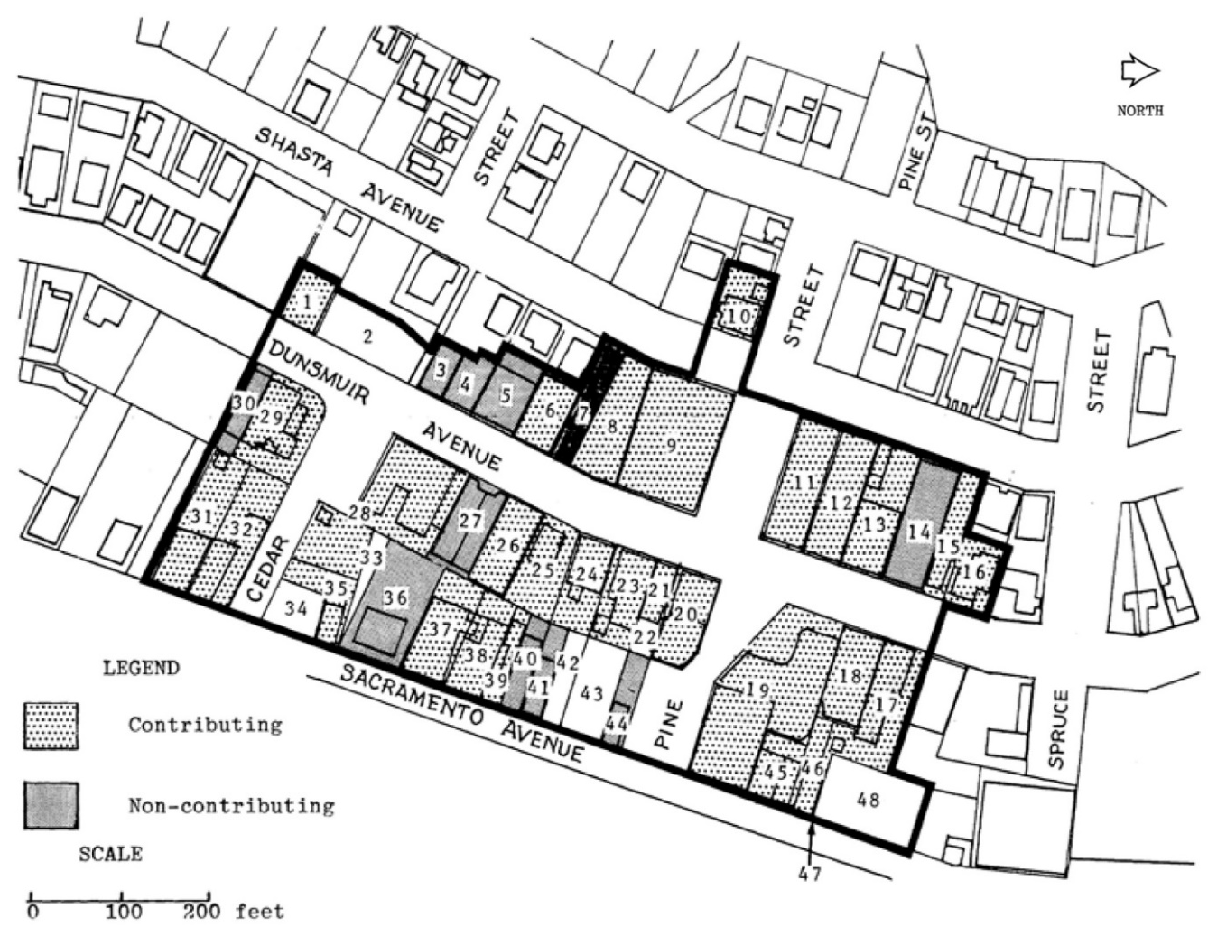
Figure 17.68-1, Dunsmuir Historic Commercial District
B.
California Theatre Landmark. There is hereby designated pursuant to the provisions of this chapter, a landmark known as the "California Theatre." Said landmark is located in the Dunsmuir Historic Commercial District at 5739/5741 Dunsmuir Avenue.
(Ord. No. 575, § I(Exh. A), 6-29-2023)

