
Forest City City Zoning Code
CHAPTER 5
- BUILDING DESIGN GUIDELINES AND REQUIREMENTS
5.1 - Purpose and Applicability.
The purpose of this Chapter is to encourage architectural compatibility and the establishment and preservation of architectural character throughout the Town. Enumerated in the sections below are general guidelines all buildings, guidelines for buildings in the Downtown Master Plan area, and requirements for all non-residential buildings not located within the M-1 district.
(Ord. of 6-20-16(2))
5.2 - General Guidelines.
(A)
Adjacent buildings should be compatible in regards to spacing, setbacks, proportions, materials, massing and scale.
(B)
The primary entrance should be architecturally and functionally designed on the front façade facing the primary public street.
(C)
The front façade of the principal structure should be parallel to the front lot line and street.
(Ord. of 6-20-16(2))
5.3 - Downtown Building Design Guidelines.
5.3.1 Applicability.
The guidelines enumerated in this Section apply to the area depicted in the Downtown Plan on Map 5 of the Town of Forest City Comprehensive Land Use Plan. The guidelines are intended to maintain Downtown Forest City's historic character and ensure that infill development is compatible. While these are only guidelines, the Town strongly encourages compliance in order to ensure compatibility with other Downtown development. To assist in compliance with these guidelines, the Town offers the Preservation Design Services Program through the Office of Downtown Development.
5.3.2 Guidelines for National Register Historic Districts: Secretary of the Interior's Standards for Rehabilitation.
A large portion of the Downtown is in a National Register Historic District. In general, the Secretary of Interior's Standards for Rehabilitation are recommended when repairing, adding on, or rehabilitating existing buildings in the downtown, especially if the owner of the building wishes to utilize rehabilitation tax credits.
(A)
A property should be used for its historical purpose or be placed in a new use that requires minimal change to the defining characteristics of the building and its site and environment.
(B)
The historic character of a property should be retained and preserved. The removal of historic materials or alteration of features and spaces that characterize a property should be avoided.
(C)
Each property should be recognized as a physical record of its time, place and use. Changes that create a false sense of historical development, such as adding conjectural features or architectural elements from other buildings, should not be undertaken.
(D)
Most properties change over time; those changes that have acquired historical significance in their own right should be retained and preserved.
(E)
Distinctive features, finishes and constructive techniques or examples of craftsmanship that characterize a property should be preserved.
(F)
Deteriorated historic features should be repaired rather than replaced. Where the severity of deterioration requires replacement of a distinctive feature, the new one should match the old in design, color, texture and other visual qualities and where possible, materials. Replacement of missing features should be substantiated by documentary, physical, or pictorial evidence.
(G)
Chemical or physical treatments, such as sandblasting, that cause damage to historic materials should not be used. The surface cleaning of structures, if appropriate, should be undertaken using the gentlest means possible.
(H)
Significant archeological resources affected by a project should be protected and preserved. If such resources must be disturbed, mitigation measures should be undertaken.
(I)
New additions, exterior alterations, or related new construction should not destroy historical materials that characterize the property. The new work should be differentiated from the old and should be compatible with the massing, size and architectural features to protect the historic integrity of the property and its environment.
(J)
New additions and adjacent or related new construction should be undertaken in such a manner that if removed in the future, the essential form and integrity of the historic property and its environment would be unimpaired.
5.3.3 Guidelines for Maintenance and Repair of Existing Historic Features.
(A)
Historic entrances should be retained and not enclosed or relocated. If an entrance needs to be modified to meet ADA requirements, it should be modified in a manner that has minimal impact on the original location and configuration and meets the NC Building Code standards for rehabilitation.
(B)
Existing display and transom windows openings should be retained and the glass should remain unpainted. Original window openings that have been covered or altered may be restored by carefully removing the modern cladding or infill material.
(C)
Properly paint or seal any wood or metal features, including doors, trim bulkheads and cornice to prevent deterioration and rust.
(D)
Properly maintain and caulk or repoint any joints in brick, stone or other material to protect from water infiltration and deterioration.
(E)
Replace broken glass in display windows, transoms and doors.
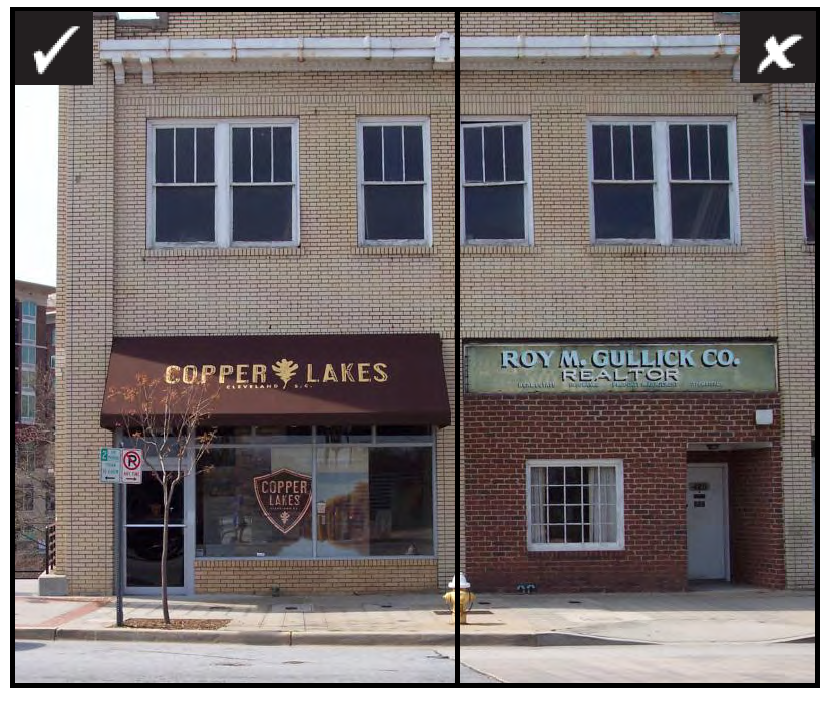
5.3.4 Guidelines for New Storefront Design.
(A)
When building a new storefront for an existing building, historical research and physical evidence can provide clues for an appropriate reconstruction. If no evidence of the original storefront can be found, a new design should incorporate traditional storefront elements that reflect the scale, design, materials and colors of nearby buildings.
(B)
A traditional storefront configuration that is either flush with the building or has a recessed entrance with flanking display windows should be used.
(C)
The new storefront and primary entrance should occupy the entire first floor façade.
(D)
Transom windows or sign board panels can occupy the vertical space between the display windows and the storefront or roof cornice.
(E)
Building materials that are compatible with the existing building should be used.
(F)
Display windows and entrance doors should consist of large expanses of glass to allow visibility into the space.
(G)
Awnings, canopies, or transparent low-E glass may be used to reduce excessive sunlight and heat gain. Tinted or reflective glass should not be used.
FIGURE 5.1: STOREFRONT DETAIL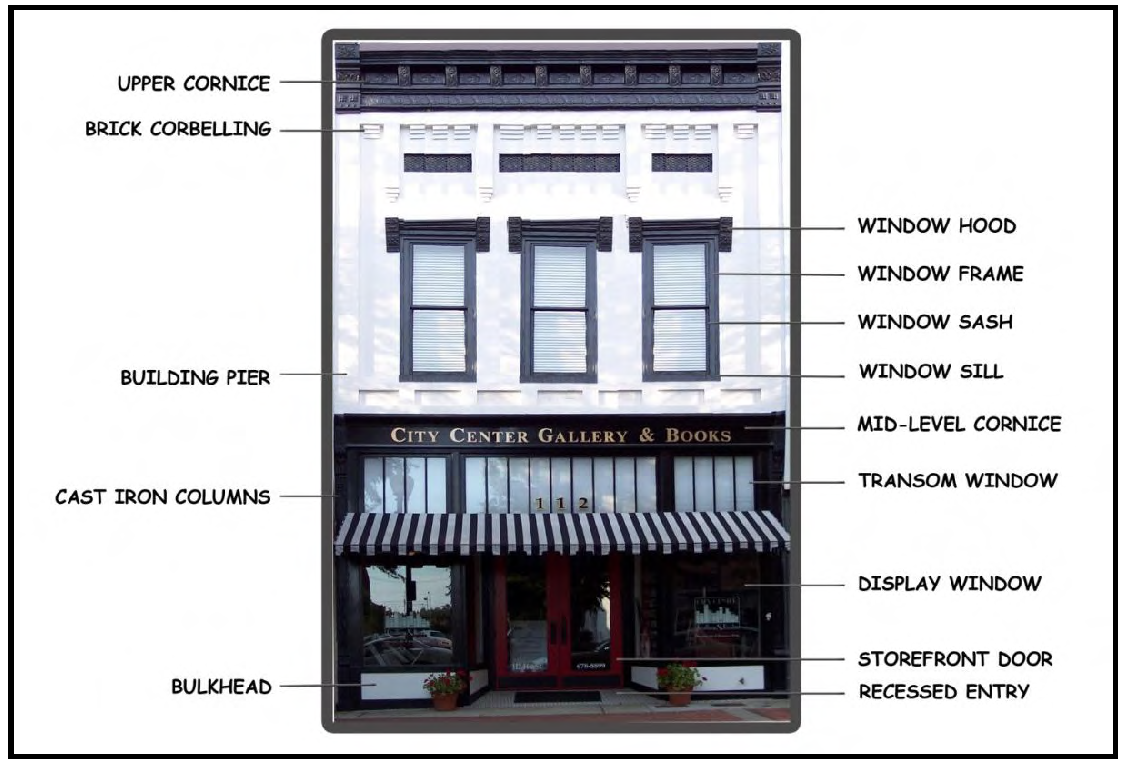
5.3.5 Guidelines for New Building Design.
(A)
New buildings should be designed so that they are similar in mass, scale, rhythm, design, materials and orientation to surrounding buildings. Standing seam metal and similar materials are prohibited as exterior wall materials.
(B)
New buildings should be oriented close to the street and in line with adjacent buildings.
(C)
Window and door patterns that reflect the historic patterns found in existing buildings should be used.
(D)
Infill buildings should not be constructed closer than five (5) feet from a wall with an existing functional window or doorway on the side of an adjacent existing building.
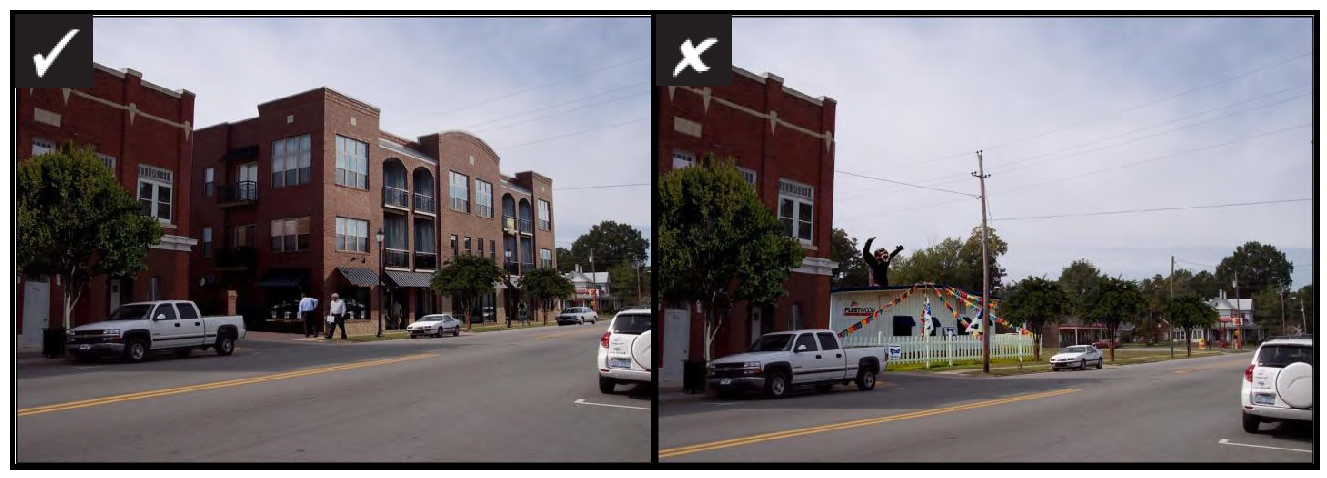
FIGURE 5.2: SCALE, MASSING, PROPORTIONS, RHYTHM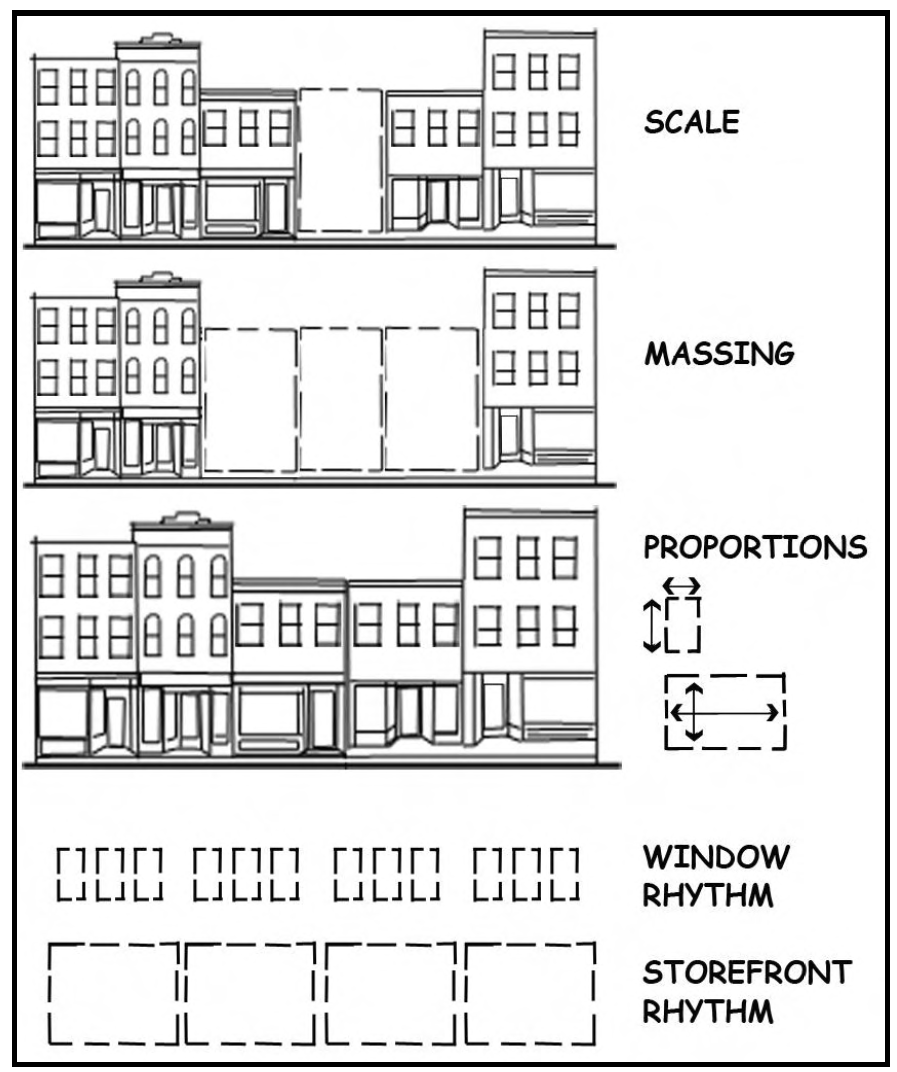
5.3.6 Guidelines for Building Addition Design.
(A)
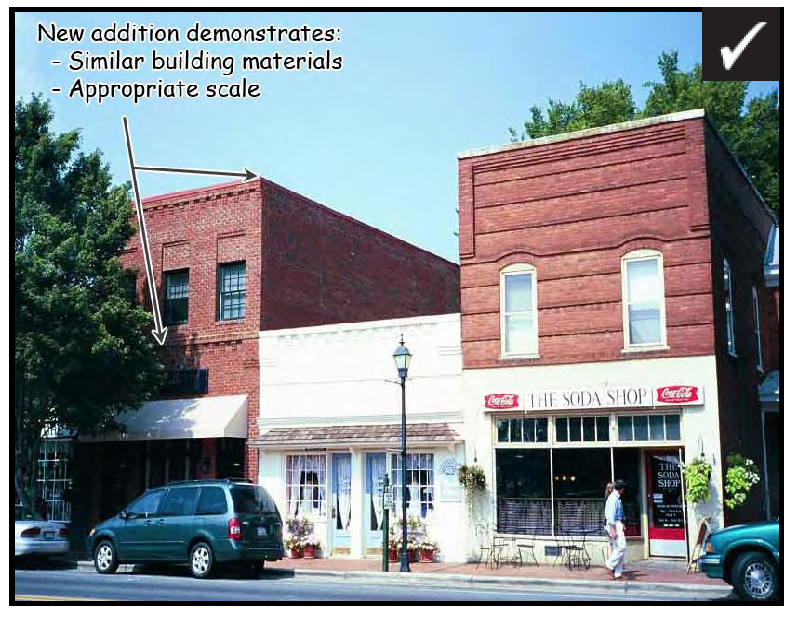
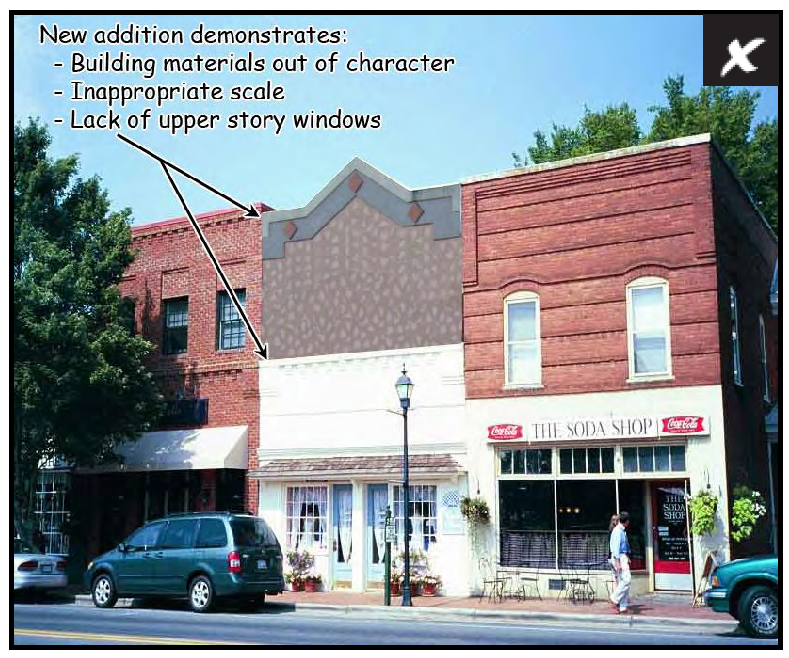
Additions should be compatible with existing buildings in size, scale, proportions, color and materials.
(B)
Additions should be oriented so that they are subordinate to the primary building. An addition should remain subordinate in location, size and appearance to the main body of the building.
(C)
Care should be taken not to damage or block existing character-defining architectural features.
(D)
Additions should be designed so that they can be removed at a later date without compromising the form and character of the original building. Additions should not be constructed closer than five (5) feet from a wall with an existing functional window or doorway on the side of an adjacent existing building.
5.3.7 Guidelines for Accessory Building Design.
(A)
The exterior materials of accessory buildings should substantially match the materials of the principal structure and surrounding buildings.
(B)
Accessory structures should be located in the rear yard and should not exceed the height of the principal structure.
(Ord. of 6-20-16(2))
5.4 - Non-residential Building Requirements.
The requirements of this Section shall apply to all new non-residential buildings not located in the M-1 Industrial district.
5.4.1 Materials and Color.
(A)
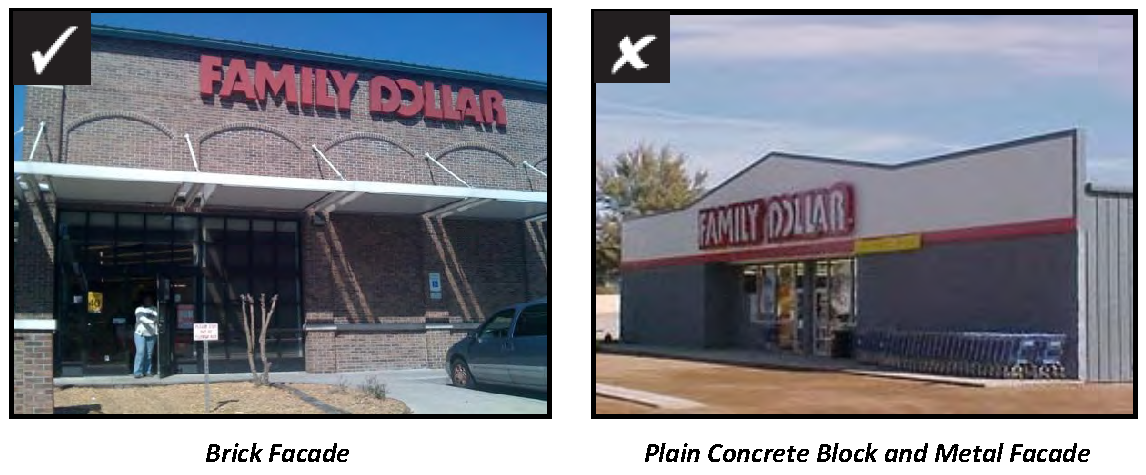
Front façades and exterior walls visible from the public right(s)-of-way shall be at least 75 percent brick, decorative concrete block, stucco, stone, or other materials similar in appearance and durability. Vinyl siding, plain concrete block, cast concrete, metal may be used on building walls not visible from a public street or as minority elements or accent materials on walls that are visible from the public street provided that they do not compose greater than 25 percent of the façade. Two (2) wall materials may be combined horizontally on one (1) façade. The heavier material shall be below. Pitched roofs shall be clad in standing seam metal, slate, asphalt shingles, or similar material. All accessory buildings shall be similar in appearance and architecture to the principal structure.
(B)
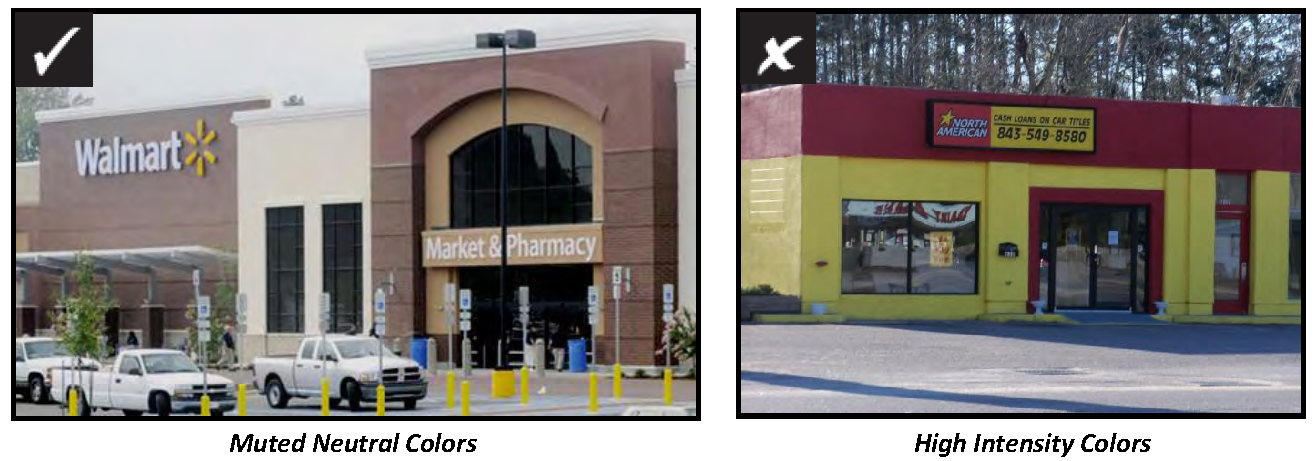
Façade colors shall be of low reflectance earth tone, muted, subtle, or neutral colors. The use of high-intensity, metallic, fluorescent, or neon colors is not permitted. Variations in color schemes are encouraged in order to articulate entryways, architectural features and public amenities so as to give greater recognition to these features.
(C)
The following regulations shall apply to the painting of murals upon exterior walls of any building, excluding buildings constructed to North Carolina Residential Building Code. The issuance of a Zoning Permit shall be required prior to the painting of a mural to ensure compliance with these regulations.
(1)
In that the buildings located within the C-l zoning district are primarily located within a National Register Historic District, previously unpainted exterior walls within the C-l district shall not be painted with a mural.
(2)
No mural shall be painted on a wall that fronts Main Street within the C-l zoning district.
(3)
All murals must be maintained in good repair by the owner of the building on which they are painted. Good repair includes no chipped paint, no graffiti defacement, and no excessive fading.
(4)
No mural shall contain material that is obscene in accordance with G.S. 14-190.1.
5.4.2 Building Design.
(A)
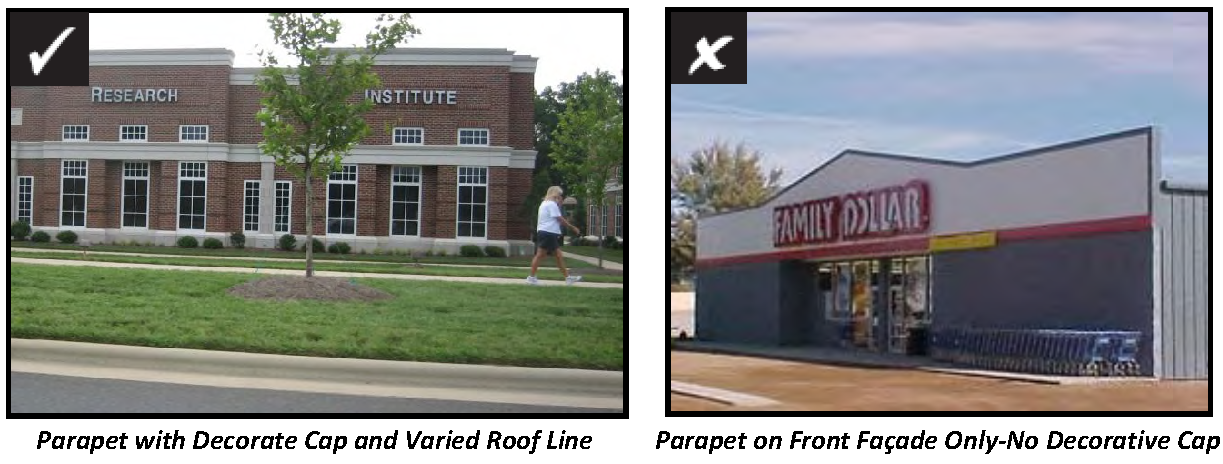
Roof pitches less than 2:12 and flat roofs shall incorporate a parapet wall on all sides visible from the street. Parapet walls shall have decorative cornices or caps. Roof lines shall be varied to reduce the scale of structures and visual interest.
(B)
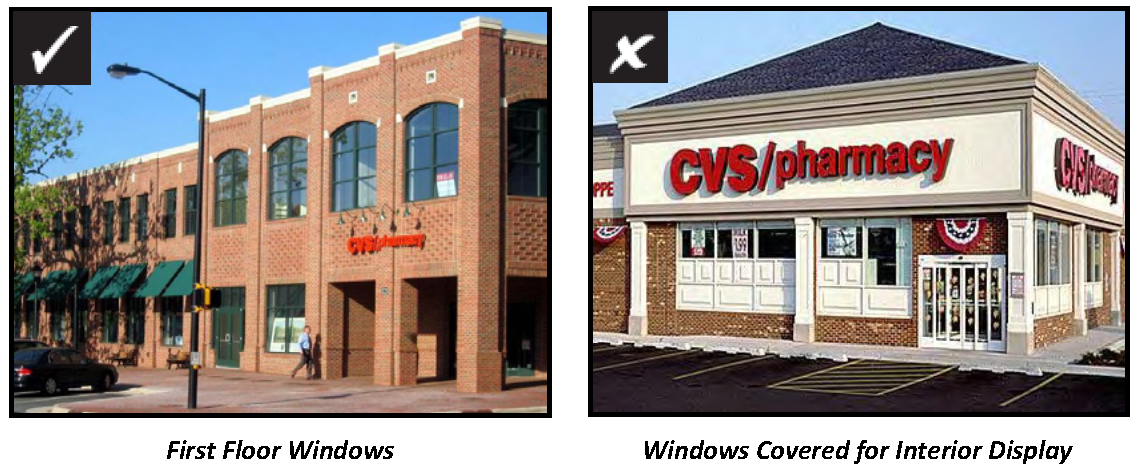
Except for civic and industrial buildings, at least 40 percent of the length of the first floor on primary street fronting facades shall be in windows or doorways. Street level windows shall be visually permeable. For buildings on a corner, the first floor secondary street façade shall be at least 10 percent windows. A window or functional general access doorway shall be located along the length of the facade at least every 20 feet. A window is measured as follows:
(1)
Maximum Sill Height (first floor): 42 inches
(2)
Minimum Area: 16 square feet
(3)
Minimum Width: 3 feet
(4)
Minimum Height: 4 feet
(C)
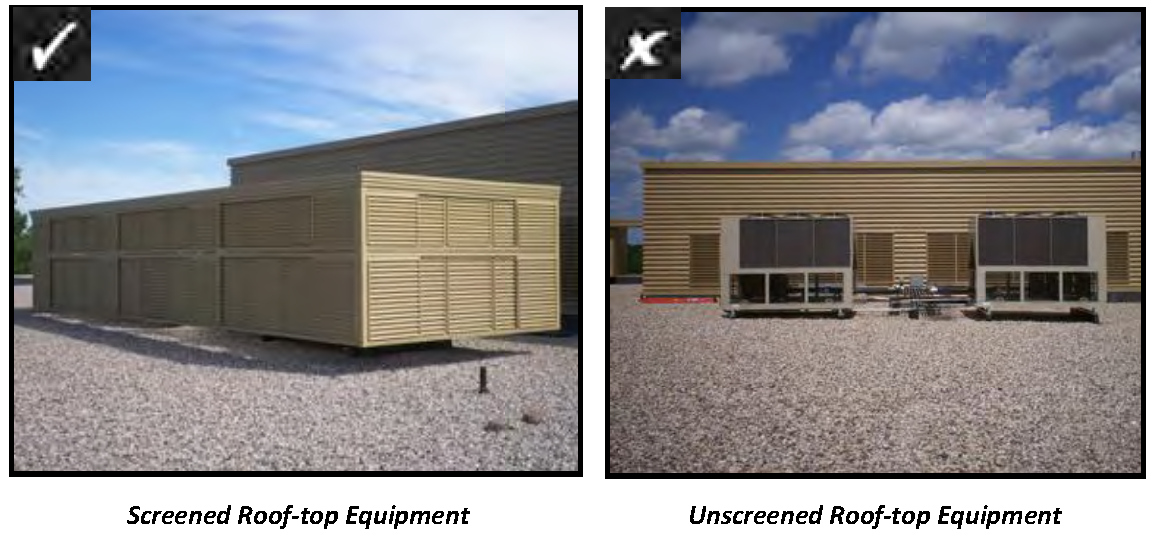
Prominently visible roof-mounted mechanical or utility equipment shall be screened. The method of screening or painting shall be architecturally integrated with the structure in terms of materials, color, shape and size. Roof-mounted equipment shall be located out of the line of sight, where feasible.
(D)
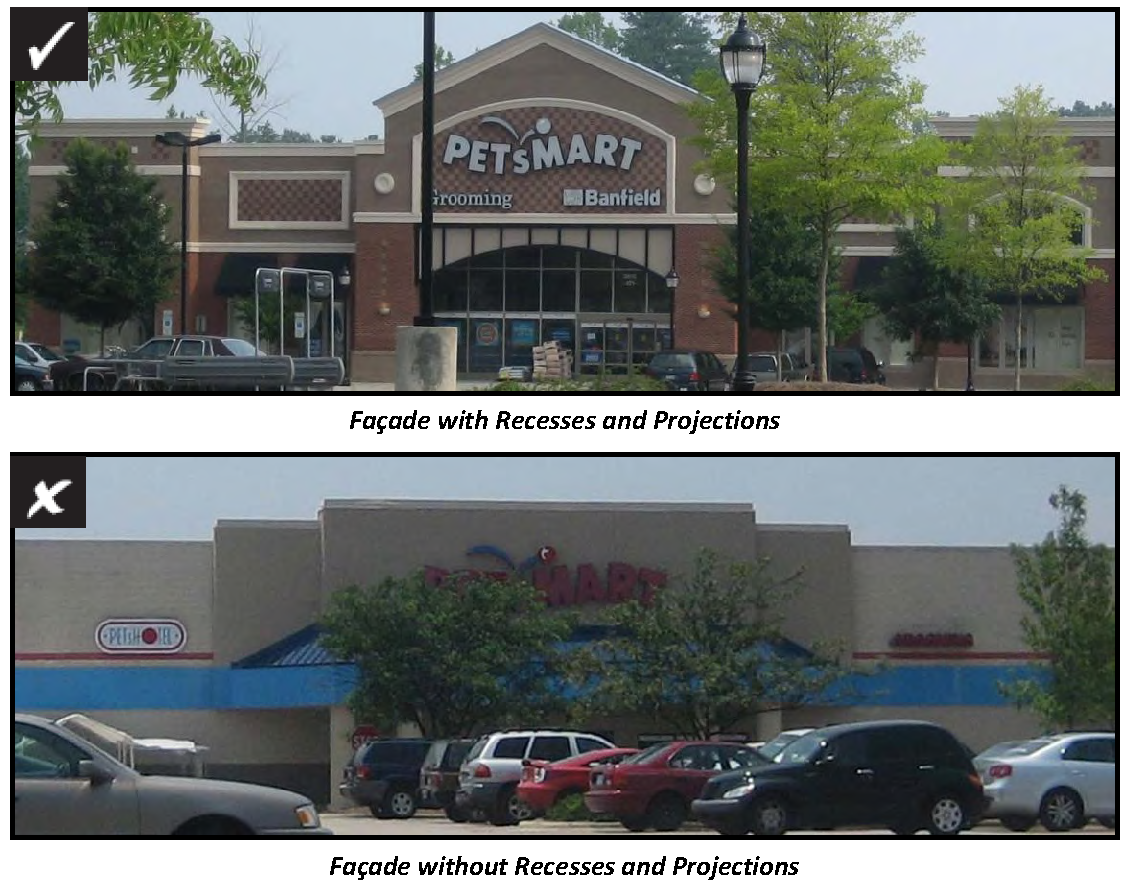
Façades greater than 75 feet in length shall incorporate recesses and projections along at least 20 percent of the length of the façade.
(E)
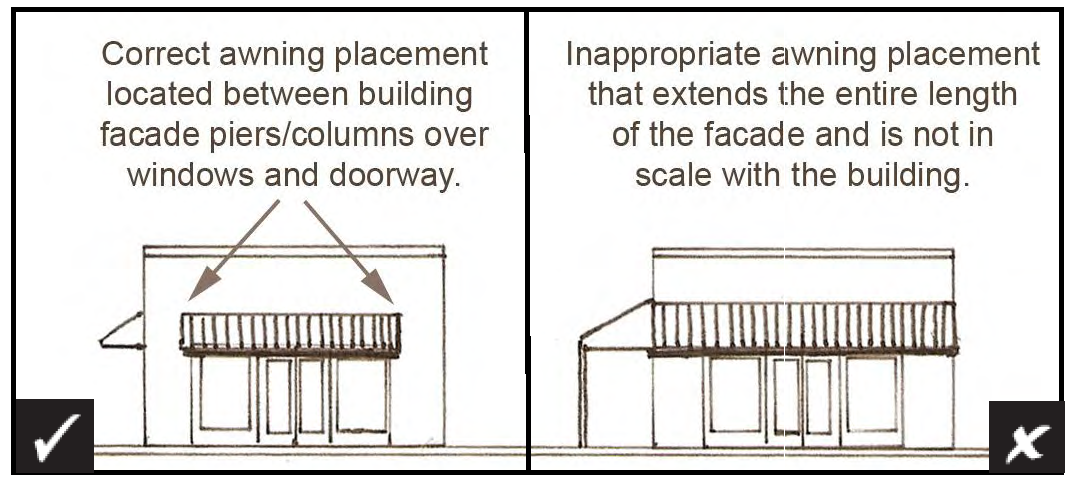
When used, awnings and canopies shall be placed at the top of window or doorway openings, and shall not extend beyond such openings. No awning shall extend more than the width of the sidewalk or 10 feet, whichever is less. Awnings shall be self-supporting from the wall. No supports shall rest on or interfere with the use of pedestrian walkways or streets. In no case, shall any awning extend beyond the street curb or interfere with street trees or public utilities.
(Ord. of 6-20-16(2); Amend. of 6-19-17)
5.5 - Design Requirement Evaluation.
5.5.1 Use of Alternate Plan, Material, or Methods.
Alternate design plans, building materials or construction techniques may be used when unreasonable or impractical situations would result from the application of architectural design standards. Such situations may result from unique site conditions, innovative design applications and/or unified development design.
5.5.2 Evaluation Board of Adjustment.
The performance of alternate design techniques shall be evaluated by the Board of Adjustment to determine if the alternate design meets the intent and purpose of this Ordinance. This determination shall take into account the land use of adjacent property, the orientation of the building to public streets, the building typology, the intended use of the structure, attention to architectural detail, scale and mass. Such review shall follow the quasi-judicial procedures set forth in Section 15.4.
(Ord. of 6-20-16(2); Ord. No. FCUDO-2021-03, att., 6-21-21)

