32 - SIGNS7
Editor's note—Sec. 1 of Ord. No. 2047, adopted Jan. 26, 2017, repealed and reenacted ch. 18.32 to read as herein set out. Former ch. 18.32 pertained to the same subject matter, consisted of §§ 18.32.010—18.32.080, and derived from Ord. 1066, 1989; Ord. 1329, 1996; Ord. 1411, 1998; Ord. 1451, 1999; Ord. 1517, 2000; Ord. 1559, 2001; Ord. 1750, 2006; Ord. 169, 2010, Ord. 1869, 2010; Ord. 1888, 2010; and Ord. No. 2016, adopted Dec. 10, 2015.
The purpose of this ordinance is to exercise the zoning and general powers of the city to regulate the number, size, type and placement of signs in the city for the multiple purposes of:
(a)
Preserving signs as an effective means of communication in the community;
(b)
Improving traffic safety by insuring that signs do not obstruct the view of drivers or pedestrians and that they do not unreasonably distract drivers;
(c)
Preserving and improving the general welfare of the community by insuring that signs are an attractive part of the urban landscape rather than an intrusion upon it;
(d)
Minimizing or eliminating any adverse or nuisance effects of signs on the use of adjacent public and private property.
If any section, subsection, sentence, clause, phrase, portion, or part of this chapter is for any reason held to be invalid or unconstitutional by any court of competent jurisdiction, such decision shall not affect the validity of the remaining portions of this chapter. The city council declares that it would have adopted this chapter and each section, subsection, sentence, clause, phrase, part, or portion thereof, irrespective of the fact that any one or more sections, subsections, clauses, phrases, parts, or portions be declared invalid or unconstitutional.
Words used in this chapter shall be given their common ordinary meanings, except as follows: Words defined in this section shall be given those meanings, words not defined in this section but defined in title 18 of this Code shall be given the meaning from title 18 of this Code, words to which the context gives a clear meaning shall be so construed, words of one gender or number shall include such other gender or number as the context reasonably suggests.
Awning, canopy, or covered walkway. Any temporary or permanent roof or shelter that covers a sidewalk, driveway, or other similar area, which is supported either in whole or in part by a building or by columns extending from the ground.
Awning, canopy or covered walkway sign. A permanent sign imprinted upon, attached to, or suspended from some portion of an awning, canopy, or covered walkway.
Building frontage. The exterior wall(s) of a building facing a public street or streets or other public right-of-way other than alleys, or one exterior wall containing the primary entrance to the building if not directly facing upon a public street.
Downtown area. The downtown area boundary, as defined in division VI of chapter 18.40 of this Code. This area generally encompasses properties between Ford Street to the east, Cheyenne to the west, Hwy. 58 to the north and 14th Street to the south.
Electronic message board (EMB). A sign, display or device, including a digital electronic sign and LED (light emitting diode) sign that changes its message or copy by programmable electron or mechanical processes. Also, a sign utilizing a fixed light source to provide a message in text that may appear to move or may appear as an on/off message.
Flush wall sign. Any sign attached to or erected against the wall of a building with the sign face in a plane parallel to the plane of said wall and which does not extend more than 18 inches from the building face.
Freestanding or monument sign. A sign that is supported by one or more columns, uprights, poles or braces extended from the ground or from an object on the ground; provided that no part of the sign is attached to any part of any building, structure or other sign.
Identification sign. A sign limited to the identifying name, street address numbering, symbol or insignia, or any combination thereof, of a building, use or persons occupying the premises on which the sign is located.
Permanent sign. A sign of which both the structural supports and the sign face are of durable building materials commonly used in buildings and other permanent structures, and of which the structural supports are permanently affixed either into the ground, to a foundation or to a building.
Portable freestanding sign. A sign not permanently affixed to a building, the ground, or posts, nor wired for electricity or other utilities. Portable signs may include, but are not limited to, "A-frame" signs, placards, and banners.
Projecting wall sign. Any sign other than a flush wall sign that projects from and is supported by a wall or a building.
Public property. Property that is owned or controlled by a governmental entity.
Rooftop signs. A sign erected upon or above a roof or above a parapet wall of a building.
Sign. Any writing, graphic representation, form, design, trademark, illumination or other device or object that is designed to attract attention to the subject thereof or is used as a means of identification, advertisement or announcement. The term sign includes, but is not limited to, an object or device that:
(1)
Is a structure or any part thereof (including walls and roof),
(2)
Is written, printed, projected, painted, constructed or otherwise displayed or placed upon or designed into any building, board, material or object.
Sign face. The surface of the sign upon, against, or through which the message is displayed or illustrated.
Sign, illegal. Any sign that was constructed or displayed in violation of any of the ordinances of the City of Golden that were in effect at the time of its construction.
Store frontage. The boundary of exterior wall space that corresponds to the interior space occupied by a tenant.
Temporary sign. Any sign, banner, pennant, valance or other outdoor advertising sign constructed of light fabric, cardboard, wallboard, plywood less than one-half inch in thickness, paper, laminated paper, corrugated wood, cloth, canvas, vinyl, or other light materials, with or without a frame, or any sign not permanently affixed either into the ground, to a foundation or to a building. Temporary sign shall not include awning, canopy, or covered walkway signs.
Wall area. The external wall size of a structure. When calculating total wall area, the entire length and width of the storefront shall be used.
(Ord. No. 2228, § 8, 2-13-2024; Ord. No. 2047, § 1, 1-26-2017)
(a)
Signs allowed. Signs shall be allowed on public and private property in the City of Golden in accordance with the terms of this ordinance.
(b)
Sign permit required. A sign permit shall be obtained from the city building division prior to the installation or construction of any temporary or permanent sign permitted under this chapter, except for such signs excluded from regulation by this chapter. Application for such permit shall include information as may be required to determine compliance with all applicable city codes and shall be subject to the applicable fee schedule as provided by city council. Temporary signs shall be counted toward the total signage allowance for the property.
(c)
Legal nonconforming sign. See section 18.44.410, et seq.
(d)
Abandoned sign.
(1)
A sign shall be deemed to have become abandoned when the sign identifies a business, service, product or activity for which there does not exist an active Golden business license or sales tax license.
(2)
An abandoned sign and/or all appurtenant structural support for that sign shall be removed from the property within 90 days from the occurrence of the condition which caused the sign to become abandoned. The director of community development may grant extensions to this requirement for a period of up to two years, in three-month increments, upon a showing by the sign owner that a good faith effort is being made to secure a user for the property which reasonably would allow the sign to no longer be deemed as abandoned.
(3)
An abandoned sign shall not be considered to be a legal nonconforming sign. Any sign and/or appurtenant structural support which meets the conditions of abandonment as described above shall be removed from the property within 90 days from (date of adoption). The director of community development may grant extensions to this requirement as described above.
(4)
The responsibility for removal of an abandoned sign and/or appurtenant structural support shall be borne by the owner of the sign or the owners of the affected property.
(e)
Unlawful acts. It shall be a violation of this ordinance to erect, install, otherwise create or maintain any sign in violation of any part of this ordinance.
(f)
Remedies. In the event of a violation of this ordinance the city may pursue one or more of the following remedies:
(1)
Any enforcement procedure or remedy provided for under the general zoning ordinance,
(2)
Removal of the sign by the city. In such case, the direct costs incurred by the city, plus an administrative cost of 15 percent, shall be charged against the owner of the real property. These costs shall constitute a debt due to the city, and may be recovered by civil suit or may be recorded as a lien against the property.
(Ord. No. 2228, § 9, 2-13-2024; Ord. No. 2047, § 1, 1-26-2017)
_____
(a)
Sign types permitted. The following types of signs shall be permitted for all uses subject to restrictions of this ordinance as to size, location and illumination:
(1)
Flush wall signs.
(2)
Freestanding signs.
(3)
Projecting wall signs.
(4)
Awning, canopy or covered walkway signs.
(5)
Temporary signs.
(b)
Sign types prohibited. The following types of signs are prohibited in all districts and for all uses:
(1)
Rooftop signs.
(2)
Wall signs projecting above roof or parapet wall.
(3)
Temporary signs within city right-of-way unless specifically permitted herein.
(4)
Revolving, rotating or wind driven signs.
(5)
Signs with flashing, moving, blinking, chasing or other animated effects.
(6)
Sign types or designs not covered elsewhere in these regulations.
(c)
Exclusions from regulation. The following shall be excluded from regulation under this ordinance:
(1)
Municipal traffic control and other official government signs;
(2)
Works of art which do not identify a business, product or service;
(3)
Signs not legible beyond the boundaries of the lot or parcel upon which they are located, or from any public right-of-way;
(4)
Temporary decorations and signs associated with national, local or religious holiday celebrations and festivities;
(5)
Typical door signage such as charge card emblems, telephone numbers, store hours and other similar signage normally found in most businesses, not to exceed 50 percent of the area of the door;
(6)
Street address numbering;
(7)
Signs erected by public utilities indicating danger or intended as aids to service or safety;
(8)
Memorial signs or tablets, names of buildings and dates of construction when cut into any masonry surface or when constructed of incombustible materials;
(9)
Signs which give direction within private property, provided that no such sign shall be more than four square feet in area.
(d)
Signs located within, or overhanging public property and/or right-of-way.
(1)
Projecting wall signs, and awning, canopy or covered walkway signs may extend into the public right-of-way provided that they comply with all of the provisions of this chapter.
(2)
Portable freestanding signs may be allowed in the public right-of-way to identify a business or service that is immediately adjacent to that portion of the right-of-way, provided that no business shall be permitted to utilize more than one such portable freestanding signs, and no portable free standing sign shall be located closer than 30 feet from an intersection. Such signs shall be designed and located so as not to constitute an unreasonable obstruction to the sidewalk or traffic, and shall conform to the minimum clearance requirements contained in chapter 4.90 of the Golden Municipal Code.
(3)
Bus transit stop benches and/or shelters with signs located within the public right-of-way shall be permitted subject to approval of a specific contract by city council, including limitations on the size of such signs. Each bus bench and/or shelter location shall require issuance of a sign permit as required by this chapter, as well as any bus bench and/or shelter location approval required by the contract approved by city council.
(4)
No other signs shall be allowed within the public right-of-way or overhanging public property except for municipal traffic control and other official public or government signs.
(e)
Limitations applicable to temporary signs. Due to the risk of deterioration, temporary signs must be removed within 45 days after installation.
(f)
Street, subdivision and identification signs.
(1)
Street, subdivision and other identification and directional signs on public property shall be considered municipal traffic control signs that are excluded from regulation under this chapter if such signs are purchased and paid for by a public entity, or installed pursuant to the direction of a governmental entity and in compliance with all regulations and specifications of such governmental entity.
(2)
Street, subdivision and other identification signs on private property shall comply with the relevant zone district sign requirements.
(3)
Permanent identification signage associated with land development shall be allowed, subject to the following limitations:
A.
Signage shall be permanent, according to the definition of this Code;
B.
Signage shall be on private property;
C.
The maximum sign area shall be 32 square feet for any one sign face;
D.
There shall be only one sign per entrance to the development from any street;
E.
Such signs may be illuminated within the limitations of this Code.
(g)
Limitations applicable to awning, canopy, or covered walkway signs.
(1)
All signs shall be mounted flush with or suspended below the structure of such awning, canopy or covered walkway. No sign shall project from the sides or above such structure;
(2)
Signs may be mounted parallel with or perpendicular to the face of the building subject to the limitations in paragraph (1) above.
(3)
For signs suspended below an awning, canopy, or covered walkway, no single sign shall exceed four square feet per sign face, and the bottom of any such sign shall be a minimum of seven feet six inches above grade. Suspended signs may be double faced. There shall be no more than one suspended sign for each active business or sales tax license issued to the premises. No suspended sign shall be mounted closer than ten feet to another suspended sign.
(4)
For signs mounted on the awning, canopy, or covered walkway which are not suspended below such structure, the maximum sign height shall be three feet.
(h)
Limitations applicable to wall signs. Flush-mounted wall signs shall not project above the top of a building or parapet wall, nor project beyond the corner of a building so as to become a projecting sign. A flush-mounted wall sign, the bottom of which is mounted seven feet six inches above grade or higher shall extend no more than 18 inches from the face of the building. A flush-mounted wall sign, the bottom of which is mounted lower than seven feet six inches from grade shall not extend from the face of the wall to a distance which would reasonably present a conflict either to pedestrians or to vehicles.
(i)
Limitations applicable to electronic message board signs.
(1)
Displays shall not flash, rotate, scintillate, blink, or strobe illumination when transitioning between messages. Videos or animations are also prohibited.
(2)
The maximum brightness shall be .3 foot candles above ambient light and shall have a minimum hold time of eight seconds.
(3)
The area of the electronic message shall not constitute more than 50 percent of the sign size.
(4)
The sign shall have automatic dimmer software or solar sensors to control brightness for nighttime viewing and variations in daytime ambient lighting. The intensity of the light source shall not produce glare, the effect of which constitutes a traffic hazard or is otherwise detrimental to the public health, safety or welfare.
(5)
Electronic message board signs are limited to monument or freestanding signs only.
(6)
Electronic message board signs are not permitted within 300 feet of any state or federal highway, including I-70, within the City of Golden.
(j)
Historic designation. An owner may apply for and be granted designation of a sign as a historic site under chapter 18.58 of the zoning ordinance. A sign approved as a historic site shall be considered a permitted, conforming sign even if it would otherwise be nonconforming, and shall not be required to be removed or brought into compliance as may otherwise be required by this chapter or chapter 18.44. The procedure for historic site designation shall be as specified in chapter 18.58, and the standards for designation shall be as specified in chapter 18.58, except that the sign need not be at least 50 years old. Any change to a sign that is so designated as historic, except for normal repair, maintenance, or restoration shall be cause for revocation of the historic site designation and upon such revocation, the sign shall be removed or brought fully into compliance with all applicable provisions of this Code.
(k)
Area bonus. There shall be allowed a ten-percent increase in the total sign area for any property under unified ownership for which the owner(s) has or have filed with the city a common signage plan for the premises which meets the following minimum requirements:
(1)
The common signage plan as submitted shall be in conformance to the common signage plan policies as published by the City of Golden;
(2)
The common signage plan shall provide for consistency among signs on the premises with regard to the following: material, location of each sign on the building, sign proportions, color scheme, lettering or graphic style (provided that the common signage plan need not prohibit the use of individual logos), and lighting;
(3)
The common signage plan shall, for premises with multiple uses or multiple users, limit the number of freestanding signs to a total of one per street frontage and shall provide for shared or common usage of such sign(s);
(4)
The common signage plan may contain such other restrictions as the owners of the premises may reasonably determine;
(5)
The common signage plan shall be signed by all owners in such form as shall be approved by the city;
(6)
The common signage plan shall be applicable to all signs on the premises, in addition to the restrictions of this ordinance. In case of any conflict between the common signage plan and any ordinance of the city, the ordinance shall control.
(Ord. No. 2228, § 10, 2-13-2024; Ord. No. 2047, § 1, 1-26-2017)
_____
(a)
Height and clearance.
(1)
Freestanding and awning, canopy and covered walkway signs. The maximum height of a freestanding or awning, canopy and covered walkway sign shall be measured from the highest point of a sign to the ground surface beneath it. When berms are used in conjunction with signage, the height of the sign shall be measured from the mean elevation of the fronting street.
(2)
Wall signs. The height of a wall sign shall be measured from the highest point of a sign to the lowest point. No point of any wall sign shall be located higher than the wall to which the sign is affixed.
(3)
Clearance. Sign clearance is measured from the lowest point of a sign to the ground surface beneath it.
(4)
Setback. The setback of a sign shall be measured as the horizontal distance from the property line to the portion of the sign face or structure which is closest to the property line.
(b)
Area. Sign area is the entire surface area of a sign, including nonstructural trim. Only one side of a double-faced freestanding or projecting sign shall count toward the aggregate size measurement, provided that both sides are identical in size.
(1)
Standard geometric shapes. When the surface area of a sign consists of a conventional geometric shape, such as a circle, an oval, a rhombus, a trapezoid or a triangle, an acceptable mathematical formula for calculating area shall be demonstrated to determine the surface area of a sign.
(2)
Cutout letters. Sign area for cutout letters or display applied directly to the building surface and lacking a defined border or trim shall include the total area within the periphery of the cutout letters on display, which can be enclosed within a rectangle or series of attached rectangles.
(3)
Irregular geometric shapes. If a sign consists of a symbol or statuary, or an irregular geometric shape without an accepted mathematical formula for calculating area, the entire surface area of the symbol or statuary, which can be enclosed within a rectangle or the closest geometric shape, shall be determined as the sign area.
(4)
Setback. The setback of a sign shall be measured as the horizontal distance from the property line to the portion of the sign face or structure which is closest to the property line.
(5)
Corner lots: Computation of area. Lots fronting on two or more streets are allowed the permitted sign area and number for each street frontage. Signage may not be accumulated from all such streets and applied to any one street in excess of the signage allowed for that one street frontage only.
(a)
R-E, R-1, R-1 A and R-2 zones. In R-E, R-1, R-1 A and R-2 zones, there shall be allowed signs on each developed lot or parcel or vacant lot eligible for residential development, subject to the following:
(1)
The total sign area per sign face shall not exceed six square feet in size, with the total aggregate permitted sign area not to exceed 24 square feet. For the purpose of this subsection, sign area calculations on double-faced signs shall be based upon only one face of such sign. Double-faced signs are signs with a display face on the back side or reverse side of another display face.
(2)
The signs shall be subject to the same locational restrictions applicable to fences and shrubs in the same district but shall in no event be more than four feet in height;
(3)
The signs shall not be illuminated;
(4)
The signs may be either temporary or permanent; however, all temporary and permanent signage shall be counted toward the total signage allowance for the property;
(5)
The signs shall not require a permit under this ordinance.
(b)
R-3 zones. In R-3 zones there shall be allowed signs for each 150 feet of street frontage subject to the following:
(1)
The total sign area per 150 feet of street frontage shall not exceed 24 square feet;
(2)
The signs shall be subject to the same locational restrictions applicable to fences and shrubs in the same district but shall in no event be more than four feet in height;
(3)
The signs may be illuminated subject to the restrictions of subsection 18.32.060(c) of this ordinance and subject to the further limitation that the direct or reflected illumination of such sign shall not project onto any adjacent residential premises;
(4)
The signs may be either temporary or permanent; however, all temporary and permanent signage shall be counted toward the total signage allowance for the property;
(5)
The signs shall not require a permit under this ordinance.
The following signs are permitted in nonresidential zones, so long as they conform with the requirements of the following table. The requirements of the following table notwithstanding, the total sign area for any property, shall be no greater than 500 square feet.
(a)
Signs must be permanent. All signs shall be permanent in nature, as defined in this chapter, except for temporary signs which shall be counted toward the total signage allowance for the property.
(b)
Design and construction standards. All signs shall be engineered in compliance with the applicable portions of the Golden Municipal Code, including all applicable technical building codes. All electrical service to ground mounted signs shall be underground. All signs shall be maintained in good structural condition.
(c)
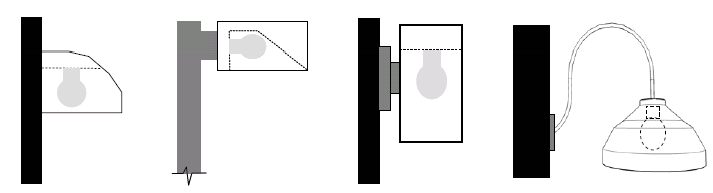
Illumination. Illuminated signs shall be designed to avoid glare or concentration of illumination and to direct light away from residential properties and away from the vision of pedestrians and motorists. Illumination may be internal to the sign through translucent material or by floodlighting of the sign from a concealed light source. Lighting must use downcast and fully-shielded fixtures to help alleviate light trespass across property lines, as well as glare.
The following principles shall control the determination of sign area and sign height:
(a)
Area.
(1)
Area to be measured. The total surface area of all permanent and temporary sign faces, except those signs which are excluded from regulation in this chapter, shall be calculated and included as a part of the total allowance. The structure or support of a freestanding sign shall be omitted from calculation and inclusion in allowable area unless such structure or support is a part of the integral design of the sign. That part of any sign structure which exceeds one and one-half times the area of the sign face shall be calculated as part of the sign area.
(2)
Sign with backing. The area of all signs with backing or a background that is part of the overall sign display shall be measured by determining the sum of the areas of each square, rectangle, triangle, portion of a circle or any combination thereof, which creates the smallest single continuous perimeter enclosing the extreme limits of the display surface or face of the sign, including all frames, backing, face plates, nonstructural trim or other component parts not otherwise used for support.
(3)
Signs without backing. The area of all signs without backing or a background that is part of the overall sign display shall be measured by determining the sum of the areas of each square, rectangle, triangle, portion of a circle, or any combination thereof which creates the smallest single continuous perimeter enclosing the extreme limits of each word, written representation (including any series of letters), emblems or figures of similar character, including all frames, face plates, non-structural trim or other component parts not otherwise used for support.
(b)
Height. Sign height shall be computed as the distance from the base of the sign at the normal grade to the top of the highest component of the sign. Any temporary structure (such as inflated balloons) added to an existing sign shall be part of the sign for height limitation purposes and shall not be allowed if the sign height, as increased by the temporary structure, is in excess of the height allowed for the sign location. Where construction or development activity has made it difficult to determine "normal grade", the "base of the sign at the normal grade" shall be deemed to be the lowest point at which the sign base intersects a hypothetical plane drawn from the grade at the street curb to the grade at the foundation of the building in front of or at the main entrance.
(c)
Setback. The setback of a sign shall be measured as the horizontal distance from the property line to the portion of the sign face or structure which is closest to the property line.
(d)
Corner lots: Computation of area. Lots fronting on two or more streets are allowed the permitted sign area and number for each street frontage. Signage may not be accumulated from all such streets and applied to any one street in excess of the signage allowed for that one street frontage only.
Signs in the downtown area, as defined herein, shall conform to the following requirements, in addition to all other requirements of this Code.
Signs shall be permitted to be internally lit only if wall-mounted. All wall-mounted lighting fixtures shall be placed above the sign and shall shine downward.
(a)
Identification signs shall only be wall-mounted.
(b)
Signs for businesses occupying a single-family residential structure shall be limited to one 32 square foot sign.
(c)
Signs shall not be placed on balcony railings.
(d)
Digital electronic message board signs are prohibited.
(e)
The combination of awning, canopy or covered walkway signs shall not exceed maximum allowable size of 12 square feet.
32 - SIGNS7
Editor's note—Sec. 1 of Ord. No. 2047, adopted Jan. 26, 2017, repealed and reenacted ch. 18.32 to read as herein set out. Former ch. 18.32 pertained to the same subject matter, consisted of §§ 18.32.010—18.32.080, and derived from Ord. 1066, 1989; Ord. 1329, 1996; Ord. 1411, 1998; Ord. 1451, 1999; Ord. 1517, 2000; Ord. 1559, 2001; Ord. 1750, 2006; Ord. 169, 2010, Ord. 1869, 2010; Ord. 1888, 2010; and Ord. No. 2016, adopted Dec. 10, 2015.
The purpose of this ordinance is to exercise the zoning and general powers of the city to regulate the number, size, type and placement of signs in the city for the multiple purposes of:
(a)
Preserving signs as an effective means of communication in the community;
(b)
Improving traffic safety by insuring that signs do not obstruct the view of drivers or pedestrians and that they do not unreasonably distract drivers;
(c)
Preserving and improving the general welfare of the community by insuring that signs are an attractive part of the urban landscape rather than an intrusion upon it;
(d)
Minimizing or eliminating any adverse or nuisance effects of signs on the use of adjacent public and private property.
If any section, subsection, sentence, clause, phrase, portion, or part of this chapter is for any reason held to be invalid or unconstitutional by any court of competent jurisdiction, such decision shall not affect the validity of the remaining portions of this chapter. The city council declares that it would have adopted this chapter and each section, subsection, sentence, clause, phrase, part, or portion thereof, irrespective of the fact that any one or more sections, subsections, clauses, phrases, parts, or portions be declared invalid or unconstitutional.
Words used in this chapter shall be given their common ordinary meanings, except as follows: Words defined in this section shall be given those meanings, words not defined in this section but defined in title 18 of this Code shall be given the meaning from title 18 of this Code, words to which the context gives a clear meaning shall be so construed, words of one gender or number shall include such other gender or number as the context reasonably suggests.
Awning, canopy, or covered walkway. Any temporary or permanent roof or shelter that covers a sidewalk, driveway, or other similar area, which is supported either in whole or in part by a building or by columns extending from the ground.
Awning, canopy or covered walkway sign. A permanent sign imprinted upon, attached to, or suspended from some portion of an awning, canopy, or covered walkway.
Building frontage. The exterior wall(s) of a building facing a public street or streets or other public right-of-way other than alleys, or one exterior wall containing the primary entrance to the building if not directly facing upon a public street.
Downtown area. The downtown area boundary, as defined in division VI of chapter 18.40 of this Code. This area generally encompasses properties between Ford Street to the east, Cheyenne to the west, Hwy. 58 to the north and 14th Street to the south.
Electronic message board (EMB). A sign, display or device, including a digital electronic sign and LED (light emitting diode) sign that changes its message or copy by programmable electron or mechanical processes. Also, a sign utilizing a fixed light source to provide a message in text that may appear to move or may appear as an on/off message.
Flush wall sign. Any sign attached to or erected against the wall of a building with the sign face in a plane parallel to the plane of said wall and which does not extend more than 18 inches from the building face.
Freestanding or monument sign. A sign that is supported by one or more columns, uprights, poles or braces extended from the ground or from an object on the ground; provided that no part of the sign is attached to any part of any building, structure or other sign.
Identification sign. A sign limited to the identifying name, street address numbering, symbol or insignia, or any combination thereof, of a building, use or persons occupying the premises on which the sign is located.
Permanent sign. A sign of which both the structural supports and the sign face are of durable building materials commonly used in buildings and other permanent structures, and of which the structural supports are permanently affixed either into the ground, to a foundation or to a building.
Portable freestanding sign. A sign not permanently affixed to a building, the ground, or posts, nor wired for electricity or other utilities. Portable signs may include, but are not limited to, "A-frame" signs, placards, and banners.
Projecting wall sign. Any sign other than a flush wall sign that projects from and is supported by a wall or a building.
Public property. Property that is owned or controlled by a governmental entity.
Rooftop signs. A sign erected upon or above a roof or above a parapet wall of a building.
Sign. Any writing, graphic representation, form, design, trademark, illumination or other device or object that is designed to attract attention to the subject thereof or is used as a means of identification, advertisement or announcement. The term sign includes, but is not limited to, an object or device that:
(1)
Is a structure or any part thereof (including walls and roof),
(2)
Is written, printed, projected, painted, constructed or otherwise displayed or placed upon or designed into any building, board, material or object.
Sign face. The surface of the sign upon, against, or through which the message is displayed or illustrated.
Sign, illegal. Any sign that was constructed or displayed in violation of any of the ordinances of the City of Golden that were in effect at the time of its construction.
Store frontage. The boundary of exterior wall space that corresponds to the interior space occupied by a tenant.
Temporary sign. Any sign, banner, pennant, valance or other outdoor advertising sign constructed of light fabric, cardboard, wallboard, plywood less than one-half inch in thickness, paper, laminated paper, corrugated wood, cloth, canvas, vinyl, or other light materials, with or without a frame, or any sign not permanently affixed either into the ground, to a foundation or to a building. Temporary sign shall not include awning, canopy, or covered walkway signs.
Wall area. The external wall size of a structure. When calculating total wall area, the entire length and width of the storefront shall be used.
(Ord. No. 2228, § 8, 2-13-2024; Ord. No. 2047, § 1, 1-26-2017)
(a)
Signs allowed. Signs shall be allowed on public and private property in the City of Golden in accordance with the terms of this ordinance.
(b)
Sign permit required. A sign permit shall be obtained from the city building division prior to the installation or construction of any temporary or permanent sign permitted under this chapter, except for such signs excluded from regulation by this chapter. Application for such permit shall include information as may be required to determine compliance with all applicable city codes and shall be subject to the applicable fee schedule as provided by city council. Temporary signs shall be counted toward the total signage allowance for the property.
(c)
Legal nonconforming sign. See section 18.44.410, et seq.
(d)
Abandoned sign.
(1)
A sign shall be deemed to have become abandoned when the sign identifies a business, service, product or activity for which there does not exist an active Golden business license or sales tax license.
(2)
An abandoned sign and/or all appurtenant structural support for that sign shall be removed from the property within 90 days from the occurrence of the condition which caused the sign to become abandoned. The director of community development may grant extensions to this requirement for a period of up to two years, in three-month increments, upon a showing by the sign owner that a good faith effort is being made to secure a user for the property which reasonably would allow the sign to no longer be deemed as abandoned.
(3)
An abandoned sign shall not be considered to be a legal nonconforming sign. Any sign and/or appurtenant structural support which meets the conditions of abandonment as described above shall be removed from the property within 90 days from (date of adoption). The director of community development may grant extensions to this requirement as described above.
(4)
The responsibility for removal of an abandoned sign and/or appurtenant structural support shall be borne by the owner of the sign or the owners of the affected property.
(e)
Unlawful acts. It shall be a violation of this ordinance to erect, install, otherwise create or maintain any sign in violation of any part of this ordinance.
(f)
Remedies. In the event of a violation of this ordinance the city may pursue one or more of the following remedies:
(1)
Any enforcement procedure or remedy provided for under the general zoning ordinance,
(2)
Removal of the sign by the city. In such case, the direct costs incurred by the city, plus an administrative cost of 15 percent, shall be charged against the owner of the real property. These costs shall constitute a debt due to the city, and may be recovered by civil suit or may be recorded as a lien against the property.
(Ord. No. 2228, § 9, 2-13-2024; Ord. No. 2047, § 1, 1-26-2017)
_____
(a)
Sign types permitted. The following types of signs shall be permitted for all uses subject to restrictions of this ordinance as to size, location and illumination:
(1)
Flush wall signs.
(2)
Freestanding signs.
(3)
Projecting wall signs.
(4)
Awning, canopy or covered walkway signs.
(5)
Temporary signs.
(b)
Sign types prohibited. The following types of signs are prohibited in all districts and for all uses:
(1)
Rooftop signs.
(2)
Wall signs projecting above roof or parapet wall.
(3)
Temporary signs within city right-of-way unless specifically permitted herein.
(4)
Revolving, rotating or wind driven signs.
(5)
Signs with flashing, moving, blinking, chasing or other animated effects.
(6)
Sign types or designs not covered elsewhere in these regulations.
(c)
Exclusions from regulation. The following shall be excluded from regulation under this ordinance:
(1)
Municipal traffic control and other official government signs;
(2)
Works of art which do not identify a business, product or service;
(3)
Signs not legible beyond the boundaries of the lot or parcel upon which they are located, or from any public right-of-way;
(4)
Temporary decorations and signs associated with national, local or religious holiday celebrations and festivities;
(5)
Typical door signage such as charge card emblems, telephone numbers, store hours and other similar signage normally found in most businesses, not to exceed 50 percent of the area of the door;
(6)
Street address numbering;
(7)
Signs erected by public utilities indicating danger or intended as aids to service or safety;
(8)
Memorial signs or tablets, names of buildings and dates of construction when cut into any masonry surface or when constructed of incombustible materials;
(9)
Signs which give direction within private property, provided that no such sign shall be more than four square feet in area.
(d)
Signs located within, or overhanging public property and/or right-of-way.
(1)
Projecting wall signs, and awning, canopy or covered walkway signs may extend into the public right-of-way provided that they comply with all of the provisions of this chapter.
(2)
Portable freestanding signs may be allowed in the public right-of-way to identify a business or service that is immediately adjacent to that portion of the right-of-way, provided that no business shall be permitted to utilize more than one such portable freestanding signs, and no portable free standing sign shall be located closer than 30 feet from an intersection. Such signs shall be designed and located so as not to constitute an unreasonable obstruction to the sidewalk or traffic, and shall conform to the minimum clearance requirements contained in chapter 4.90 of the Golden Municipal Code.
(3)
Bus transit stop benches and/or shelters with signs located within the public right-of-way shall be permitted subject to approval of a specific contract by city council, including limitations on the size of such signs. Each bus bench and/or shelter location shall require issuance of a sign permit as required by this chapter, as well as any bus bench and/or shelter location approval required by the contract approved by city council.
(4)
No other signs shall be allowed within the public right-of-way or overhanging public property except for municipal traffic control and other official public or government signs.
(e)
Limitations applicable to temporary signs. Due to the risk of deterioration, temporary signs must be removed within 45 days after installation.
(f)
Street, subdivision and identification signs.
(1)
Street, subdivision and other identification and directional signs on public property shall be considered municipal traffic control signs that are excluded from regulation under this chapter if such signs are purchased and paid for by a public entity, or installed pursuant to the direction of a governmental entity and in compliance with all regulations and specifications of such governmental entity.
(2)
Street, subdivision and other identification signs on private property shall comply with the relevant zone district sign requirements.
(3)
Permanent identification signage associated with land development shall be allowed, subject to the following limitations:
A.
Signage shall be permanent, according to the definition of this Code;
B.
Signage shall be on private property;
C.
The maximum sign area shall be 32 square feet for any one sign face;
D.
There shall be only one sign per entrance to the development from any street;
E.
Such signs may be illuminated within the limitations of this Code.
(g)
Limitations applicable to awning, canopy, or covered walkway signs.
(1)
All signs shall be mounted flush with or suspended below the structure of such awning, canopy or covered walkway. No sign shall project from the sides or above such structure;
(2)
Signs may be mounted parallel with or perpendicular to the face of the building subject to the limitations in paragraph (1) above.
(3)
For signs suspended below an awning, canopy, or covered walkway, no single sign shall exceed four square feet per sign face, and the bottom of any such sign shall be a minimum of seven feet six inches above grade. Suspended signs may be double faced. There shall be no more than one suspended sign for each active business or sales tax license issued to the premises. No suspended sign shall be mounted closer than ten feet to another suspended sign.
(4)
For signs mounted on the awning, canopy, or covered walkway which are not suspended below such structure, the maximum sign height shall be three feet.
(h)
Limitations applicable to wall signs. Flush-mounted wall signs shall not project above the top of a building or parapet wall, nor project beyond the corner of a building so as to become a projecting sign. A flush-mounted wall sign, the bottom of which is mounted seven feet six inches above grade or higher shall extend no more than 18 inches from the face of the building. A flush-mounted wall sign, the bottom of which is mounted lower than seven feet six inches from grade shall not extend from the face of the wall to a distance which would reasonably present a conflict either to pedestrians or to vehicles.
(i)
Limitations applicable to electronic message board signs.
(1)
Displays shall not flash, rotate, scintillate, blink, or strobe illumination when transitioning between messages. Videos or animations are also prohibited.
(2)
The maximum brightness shall be .3 foot candles above ambient light and shall have a minimum hold time of eight seconds.
(3)
The area of the electronic message shall not constitute more than 50 percent of the sign size.
(4)
The sign shall have automatic dimmer software or solar sensors to control brightness for nighttime viewing and variations in daytime ambient lighting. The intensity of the light source shall not produce glare, the effect of which constitutes a traffic hazard or is otherwise detrimental to the public health, safety or welfare.
(5)
Electronic message board signs are limited to monument or freestanding signs only.
(6)
Electronic message board signs are not permitted within 300 feet of any state or federal highway, including I-70, within the City of Golden.
(j)
Historic designation. An owner may apply for and be granted designation of a sign as a historic site under chapter 18.58 of the zoning ordinance. A sign approved as a historic site shall be considered a permitted, conforming sign even if it would otherwise be nonconforming, and shall not be required to be removed or brought into compliance as may otherwise be required by this chapter or chapter 18.44. The procedure for historic site designation shall be as specified in chapter 18.58, and the standards for designation shall be as specified in chapter 18.58, except that the sign need not be at least 50 years old. Any change to a sign that is so designated as historic, except for normal repair, maintenance, or restoration shall be cause for revocation of the historic site designation and upon such revocation, the sign shall be removed or brought fully into compliance with all applicable provisions of this Code.
(k)
Area bonus. There shall be allowed a ten-percent increase in the total sign area for any property under unified ownership for which the owner(s) has or have filed with the city a common signage plan for the premises which meets the following minimum requirements:
(1)
The common signage plan as submitted shall be in conformance to the common signage plan policies as published by the City of Golden;
(2)
The common signage plan shall provide for consistency among signs on the premises with regard to the following: material, location of each sign on the building, sign proportions, color scheme, lettering or graphic style (provided that the common signage plan need not prohibit the use of individual logos), and lighting;
(3)
The common signage plan shall, for premises with multiple uses or multiple users, limit the number of freestanding signs to a total of one per street frontage and shall provide for shared or common usage of such sign(s);
(4)
The common signage plan may contain such other restrictions as the owners of the premises may reasonably determine;
(5)
The common signage plan shall be signed by all owners in such form as shall be approved by the city;
(6)
The common signage plan shall be applicable to all signs on the premises, in addition to the restrictions of this ordinance. In case of any conflict between the common signage plan and any ordinance of the city, the ordinance shall control.
(Ord. No. 2228, § 10, 2-13-2024; Ord. No. 2047, § 1, 1-26-2017)
_____
(a)
Height and clearance.
(1)
Freestanding and awning, canopy and covered walkway signs. The maximum height of a freestanding or awning, canopy and covered walkway sign shall be measured from the highest point of a sign to the ground surface beneath it. When berms are used in conjunction with signage, the height of the sign shall be measured from the mean elevation of the fronting street.
(2)
Wall signs. The height of a wall sign shall be measured from the highest point of a sign to the lowest point. No point of any wall sign shall be located higher than the wall to which the sign is affixed.
(3)
Clearance. Sign clearance is measured from the lowest point of a sign to the ground surface beneath it.
(4)
Setback. The setback of a sign shall be measured as the horizontal distance from the property line to the portion of the sign face or structure which is closest to the property line.
(b)
Area. Sign area is the entire surface area of a sign, including nonstructural trim. Only one side of a double-faced freestanding or projecting sign shall count toward the aggregate size measurement, provided that both sides are identical in size.
(1)
Standard geometric shapes. When the surface area of a sign consists of a conventional geometric shape, such as a circle, an oval, a rhombus, a trapezoid or a triangle, an acceptable mathematical formula for calculating area shall be demonstrated to determine the surface area of a sign.
(2)
Cutout letters. Sign area for cutout letters or display applied directly to the building surface and lacking a defined border or trim shall include the total area within the periphery of the cutout letters on display, which can be enclosed within a rectangle or series of attached rectangles.
(3)
Irregular geometric shapes. If a sign consists of a symbol or statuary, or an irregular geometric shape without an accepted mathematical formula for calculating area, the entire surface area of the symbol or statuary, which can be enclosed within a rectangle or the closest geometric shape, shall be determined as the sign area.
(4)
Setback. The setback of a sign shall be measured as the horizontal distance from the property line to the portion of the sign face or structure which is closest to the property line.
(5)
Corner lots: Computation of area. Lots fronting on two or more streets are allowed the permitted sign area and number for each street frontage. Signage may not be accumulated from all such streets and applied to any one street in excess of the signage allowed for that one street frontage only.
(a)
R-E, R-1, R-1 A and R-2 zones. In R-E, R-1, R-1 A and R-2 zones, there shall be allowed signs on each developed lot or parcel or vacant lot eligible for residential development, subject to the following:
(1)
The total sign area per sign face shall not exceed six square feet in size, with the total aggregate permitted sign area not to exceed 24 square feet. For the purpose of this subsection, sign area calculations on double-faced signs shall be based upon only one face of such sign. Double-faced signs are signs with a display face on the back side or reverse side of another display face.
(2)
The signs shall be subject to the same locational restrictions applicable to fences and shrubs in the same district but shall in no event be more than four feet in height;
(3)
The signs shall not be illuminated;
(4)
The signs may be either temporary or permanent; however, all temporary and permanent signage shall be counted toward the total signage allowance for the property;
(5)
The signs shall not require a permit under this ordinance.
(b)
R-3 zones. In R-3 zones there shall be allowed signs for each 150 feet of street frontage subject to the following:
(1)
The total sign area per 150 feet of street frontage shall not exceed 24 square feet;
(2)
The signs shall be subject to the same locational restrictions applicable to fences and shrubs in the same district but shall in no event be more than four feet in height;
(3)
The signs may be illuminated subject to the restrictions of subsection 18.32.060(c) of this ordinance and subject to the further limitation that the direct or reflected illumination of such sign shall not project onto any adjacent residential premises;
(4)
The signs may be either temporary or permanent; however, all temporary and permanent signage shall be counted toward the total signage allowance for the property;
(5)
The signs shall not require a permit under this ordinance.
The following signs are permitted in nonresidential zones, so long as they conform with the requirements of the following table. The requirements of the following table notwithstanding, the total sign area for any property, shall be no greater than 500 square feet.
(a)
Signs must be permanent. All signs shall be permanent in nature, as defined in this chapter, except for temporary signs which shall be counted toward the total signage allowance for the property.
(b)
Design and construction standards. All signs shall be engineered in compliance with the applicable portions of the Golden Municipal Code, including all applicable technical building codes. All electrical service to ground mounted signs shall be underground. All signs shall be maintained in good structural condition.
(c)
Illumination. Illuminated signs shall be designed to avoid glare or concentration of illumination and to direct light away from residential properties and away from the vision of pedestrians and motorists. Illumination may be internal to the sign through translucent material or by floodlighting of the sign from a concealed light source. Lighting must use downcast and fully-shielded fixtures to help alleviate light trespass across property lines, as well as glare.
The following principles shall control the determination of sign area and sign height:
(a)
Area.
(1)
Area to be measured. The total surface area of all permanent and temporary sign faces, except those signs which are excluded from regulation in this chapter, shall be calculated and included as a part of the total allowance. The structure or support of a freestanding sign shall be omitted from calculation and inclusion in allowable area unless such structure or support is a part of the integral design of the sign. That part of any sign structure which exceeds one and one-half times the area of the sign face shall be calculated as part of the sign area.
(2)
Sign with backing. The area of all signs with backing or a background that is part of the overall sign display shall be measured by determining the sum of the areas of each square, rectangle, triangle, portion of a circle or any combination thereof, which creates the smallest single continuous perimeter enclosing the extreme limits of the display surface or face of the sign, including all frames, backing, face plates, nonstructural trim or other component parts not otherwise used for support.
(3)
Signs without backing. The area of all signs without backing or a background that is part of the overall sign display shall be measured by determining the sum of the areas of each square, rectangle, triangle, portion of a circle, or any combination thereof which creates the smallest single continuous perimeter enclosing the extreme limits of each word, written representation (including any series of letters), emblems or figures of similar character, including all frames, face plates, non-structural trim or other component parts not otherwise used for support.
(b)
Height. Sign height shall be computed as the distance from the base of the sign at the normal grade to the top of the highest component of the sign. Any temporary structure (such as inflated balloons) added to an existing sign shall be part of the sign for height limitation purposes and shall not be allowed if the sign height, as increased by the temporary structure, is in excess of the height allowed for the sign location. Where construction or development activity has made it difficult to determine "normal grade", the "base of the sign at the normal grade" shall be deemed to be the lowest point at which the sign base intersects a hypothetical plane drawn from the grade at the street curb to the grade at the foundation of the building in front of or at the main entrance.
(c)
Setback. The setback of a sign shall be measured as the horizontal distance from the property line to the portion of the sign face or structure which is closest to the property line.
(d)
Corner lots: Computation of area. Lots fronting on two or more streets are allowed the permitted sign area and number for each street frontage. Signage may not be accumulated from all such streets and applied to any one street in excess of the signage allowed for that one street frontage only.
Signs in the downtown area, as defined herein, shall conform to the following requirements, in addition to all other requirements of this Code.
Signs shall be permitted to be internally lit only if wall-mounted. All wall-mounted lighting fixtures shall be placed above the sign and shall shine downward.
(a)
Identification signs shall only be wall-mounted.
(b)
Signs for businesses occupying a single-family residential structure shall be limited to one 32 square foot sign.
(c)
Signs shall not be placed on balcony railings.
(d)
Digital electronic message board signs are prohibited.
(e)
The combination of awning, canopy or covered walkway signs shall not exceed maximum allowable size of 12 square feet.