
Golden City Zoning Code
CHAPTER 18
58 - HISTORIC PRESERVATION17
Editor's note—Ord. No. 2290, § 2, adopted Mar. 10, 2026 repealed the former Ch. 18.58, §§ 18.58.010—18.58.110, and enacted a new Ch. 18.58 as set out herein. The former Ch. 18.58 pertained to similar subject matter and derived from Ord. 918, § 1(part), adopted in 1983; Ord. 940, § 1(part), adopted in 1983; Ord. 1015, adopted in 1983; Ord. 1010, § 9, adopted in 1986; Ord. 1085, adopted in 1990; Ord. 1092, § 27, adopted in 1990; Ord. 1105, §§ 1—4, adopted in 1991; Ord. 1261, §§ 1—4, adopted in 1995; Ord. 1595, §§ 1—26, adopted in 2002; Ord. 1813, §§ 1—13, adopted in 2008; Ord. 1840, §§ 1—2, adopted in 2009; Ord. 1927, §§ 1—3, adopted in 2012; Ord. 1959, adopted in 2013; Ord. No. 2063, §§ 7—9, adopted 10-12-2017.
18.58.010 - Purpose and intent.
(1)
The purpose and intent of this chapter is:
(a)
The protection, enhancement, perpetuation and use of districts, buildings, structures, objects, and areas that are reminders of past eras, events and persons important in local, state or national history, or which provide significant examples of architecture, or which are unique and irreplaceable assets to the city and its neighborhoods, or which provide for this and future generations examples of the physical surroundings in which past generations lived;
(b)
The development and maintenance of appropriate settings and environment for such districts, buildings, structures, objects, and areas;
(c)
The enhancement and stabilization of neighborhoods, the increase of economic and financial benefits to the city and its inhabitants, and the promotion of tourist trade and interest; and
(d)
Conformance with the city's adopted comprehensive plan, as amended from time to time, and the advancement of the Historic Preservation Policy Report as approved by city council in Resolution 3163 on February 11, 2025, and as may be amended from time to time.
(2)
The city does not intend by this chapter to preserve every old building and structure in the city but instead to draw a reasonable balance between private property rights and the public interest in preserving the city's cultural, historic and architectural heritage by ensuring that demolition of buildings and structures important to that heritage will be carefully weighed with other alternatives. It is also intended that alterations to such buildings and structures and new construction will respect the character of each such setting, not by imitating surrounding structures, but by being compatible with them.
(Ord. No. 2290, § 2, 3-10-2026)
18.58.020 - Overview.
(1)
Pursuant to the standards and procedures in this chapter the city council may by ordinance:
(a)
Designate as a historic site an individual building, structure, area or object or an integrated group of such features on a single lot or site having a special character and historical, architectural or aesthetic interest or value as defined in this chapter;
(b)
Designate as a historic landmark an individual building, structure, area or object or an integrated group of such features on a single lot or site having an exceptional character and historical, architectural or aesthetic interest or value. In order to be so designated, the property must be deemed by the Colorado Historic Society to be eligible for inclusion on the National Register of Historic Places. The regulatory distinction between historic landmarks and historic sites is that historic landmarks are subject to greater regulatory control by the board and city council pursuant to this chapter;
(c)
Designate as a historic district a geographically definable area which includes a concentration, linkage, or continuity of properties within a particular period of significance and may include within its geographic boundaries one or more contributing properties;
(d)
Amend designations to add or remove property to or from a historic site, historic landmark, or historic district; and
(e)
Rescind designation of a historic site, historic landmark, or historic district.
(2)
Upon designation, the property included in any such designation is subject to all the requirements of this chapter and other ordinances of the city.
(3)
In addition to the foregoing types of designation, work (excluding demolitions) upon commercial buildings at least 50 years of age is subject to certificate of appropriateness review as set forth in this chapter.
(4)
Structure of merit. In prior versions of this chapter, the city was empowered to designate a "structure of merit" with or without the owner's consent. This nonregulatory designation for historic places was used to promote preservation awareness but imposed no regulatory requirements. The structure of merit is not a designation available for new designations. Previously adopted structures of merit remain designated, but the structure of merit designation does not impose any requirement for certificates of appropriateness prior to work being performed.
(Ord. No. 2290, § 2, 3-10-2026)
18.58.030 - Definitions.
The following terms when used in this chapter shall have the meanings defined in this section, except where the context clearly indicates a different meaning. When not inconsistent with the context, words used in the present tense include the future; words in the singular number include the plural number; words in the plural number include the singular number; and the masculine includes the feminine.
Area means the location of a significant event where a historic occupation or activity occurred. It may be the site of a building or structure which is no longer standing or which exists only as a ruin. An area may also include a standing building, if the location itself possesses historic, cultural, or archeological value regardless of the value of any existing structure. Examples of areas include rock shelters, village sites, hunting and fishing sites, ceremonial sites, petroglyphs, rock carvings, paleontological sites, gardens, grounds, battlefields, ruins of historic buildings and structures, habitation sites, funerary sites, campsites, sites of treaty signings, trails, areas of land, landscapes, cemeteries, designed landscapes, and natural features, such as springs and rock formations.
Board means the historic preservation board as set forth in chapter 2.54.
Building means a construction created to shelter any form of human activity, such as houses, barns, garages, churches, and hotels.
Certificate of appropriateness means the official findings issued by the board after reviewing any application for work upon any historic resource.
Commercial building means any building that is zoned in manner that allows nonresidential uses.
Contributing property means a property that retains the historic or architectural character within a historic district during its period of significance.
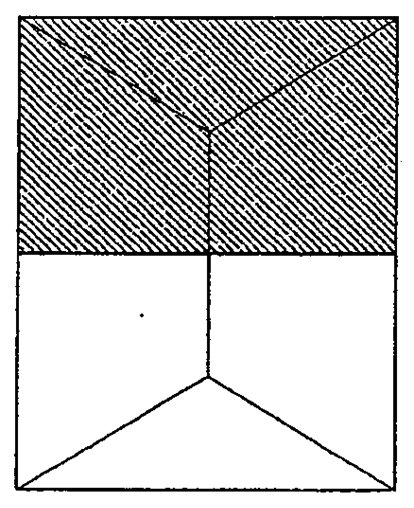
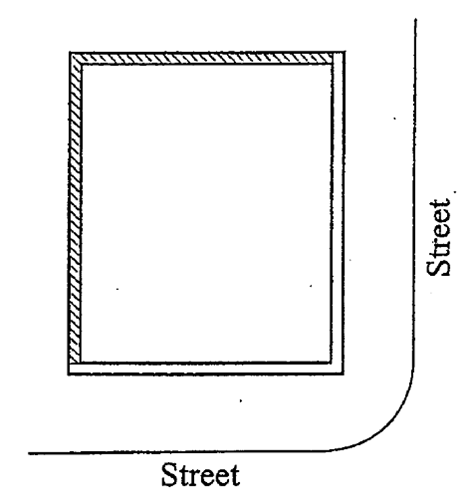
Demolition or demolish means either relocation or an act or process which removes one or more of the following portions of a building. The shaded area illustrates the maximum amount of 50 percent that may be removed from a building without constituting demolition.
(1)
At least 50 percent of the roof area of a building as measured in plan view (see diagram);
(2)
At least 50 percent of the exterior walls of a building as measured contiguously around the building's perimeter or footprint (see diagram); or

(3)
Any exterior wall facing a public street, but not an act or process which removes an exterior wall facing an alley (see diagram).
A wall shall meet the following minimum standards to be considered a retained exterior wall:
a.
The wall shall retain studs or other structural elements, the exterior wall finish and the fully framed and sheathed roof above that portion of the remaining building to which such wall is attached;
b.
The wall shall not be covered or otherwise concealed by a wall that is proposed to be placed in front of the retained wall; and
c.
Each part of the retained exterior walls shall be connected contiguously and without interruption to every other part of the retained exterior walls.
Designated property or designation means a historic landmark, historic site, or property within a historic district that has been designated pursuant to this chapter.
Director means the community development director, or their authorized designee.
External appearance means the architectural style and general arrangement of the exterior of the property including type and texture and cladding materials, including all windows, doors, lights, signs, and other fixtures, as well as any structure, place, work of art, landscape element or other object which is visible from a public way or adjoining properties.
Historic district means a geographically definable area designated in accordance with this, or previous versions of this chapter which includes a concentration, linkage, or continuity of properties within one or more periods of significance and may include within its geographic boundaries one or more contributing or noncontributing buildings, objects, areas, or structures.
Historic landmark means a property meeting the higher level of designation criteria in subsection (3) of section 18.58.040, "Eligibility criteria," and designated as such in accordance with this, or previous versions of this, chapter.
Historic resource means commercial buildings at least 50 years of age, and designated properties.
Historic significance means the value or meaning ascribed to a building, structure, object, area, or district based on eligibility criteria as set forth in section 18.58.040.
Historic site means a property meeting the basic designation criteria in subsections (1) and (2) of section 18.58.040, "Eligibility criteria," and designated as such in accordance with this, or previous versions of this, chapter.
Historic structure assessment means a written and photographic report that fully documents the physical condition of a historic resource. A complete assessment contains photographs, illustrations, and information in narrative form that reflects a comprehensive understanding of the condition and needs of the historic resource. This information will include details specific to the historic character and significance; specific materials, features, elements, and spaces; and the intended use.
Integrity means the ability of a property to convey its historic significance through its physical features.
Minor work means work of the specific kinds set forth in section 18.58.150(2).
Noncontributing property means a property that does not retain the historic or architectural character within a historic district during its period of significance.
Object is used to distinguish from buildings and structures those constructions that are primarily artistic in nature or are relatively small in scale and simply constructed. Although it may be, by nature or design, movable, an object is associated with a specific setting or environment.
Ordinary maintenance means routine actions necessary to prevent deterioration or to correct minor damage to a property that do not cause a significant change in the external appearance of the property.
Owner means the owner in fee of any undivided interest in a parcel of land. If the mineral estate has been severed, the owner is the owner in fee of an undivided interest in the surface estate and not the owner in fee of an undivided interest in the mineral estate. A purchaser of land under a written contract duly recorded shall be deemed an owner of the parcel that is subject to the contract if the purchaser is in possession of the parcel pursuant to the purchase agreement.
Period of significance means the period when the historic architecture, persons, and events associated with a historic district were designed and constructed, occupied or occurred.
Property means buildings, structures, areas, and objects.
Significant change means a change in the external appearance which affects or is likely to affect the historic or architectural merit of a property, including, but not limited to, all activities for which a building permit is required.
Structure is used to distinguish from buildings those constructions made usually for purposes other than creating human shelter, such as a road, canal, bridge or fence.
Work means alteration, demolition, new construction, reconstruction, restoration, remodeling or other modification which results in a significant change in the external appearance of a property, excluding ordinary maintenance.
(Ord. No. 2290, § 2, 3-10-2026)
18.58.040 - Eligibility criteria.
Applicability: In accordance with the procedures set forth in this chapter, the eligibility criteria are applied in order to evaluate if a property or historic district may be designated by the city. Historic sites, historic landmarks, and historic districts must meet both the significance criteria in subsection (1) and the integrity criteria in subsection (2). Historic landmarks must also meet the requirements of subsection (3) below. Historic districts are also evaluated in accordance with subsection (4) below.
(1)
Significance criteria. Properties or historic districts shall meet one or more of the following criteria in order to be designated.
(a)
Association with events that have made a significant contribution to history.
1.
Location of a historic event that had an effect upon society; or
2.
Exemplifies cultural, political, economic, or ethnic heritage of the city.
(b)
Connection with a person or people significant in history.
(c)
Distinctive characteristics of a type, period, method of construction, or artisan.
1.
Exemplifies specific elements of an architectural style or period; or
2.
Is an example of the work of an architect, builder or craftsperson who is recognized for expertise nationally, state-wide, regionally, or locally; or
3.
Demonstrates superior craftsmanship or high artistic value; or
4.
Represents a style that is particular to the city; or
5.
Represents an innovation in construction, materials, or design; or
6.
Represents a built environment of a notable group of people in a specific era of history.
(d)
Geographic importance.
1.
Enhances the sense of identity of the city or community; or
2.
Is an established and familiar natural setting or visual feature of the city or community.
(e)
Important information related to prehistory or history.
1.
Addresses research questions or fills recognized data gaps;
2.
Embodies construction, development, or design adaptations; or
3.
Informs on the development of engineering systems.
(f)
Geological, archaeological, paleontological, or anthropological significance.
(2)
Integrity criteria. All properties and historic districts shall be evaluated for their integrity and shall only be designated if found to have sufficient integrity to convey their historic significance. In determining integrity, the decisionmaker shall consider the following factors, which may be present in varying degrees and are not individually required:
(a)
Location—The place where the property was constructed or the place where the historic event occurred.
(b)
Design—The combination of elements that create the form, plan, space, structure, and style of a property.
(c)
Setting—The physical environment of a property, including the historic character of the place in which the property played its historical role. It involves how, not just where, the property is situated and its historical relationship to surrounding features and open space.
(d)
Materials—The physical elements that were combined or deposited during a particular period of time and in a particular pattern or configuration to form a property.
(e)
Workmanship—The physical evidence of the crafts of a particular culture or people during any given period in history or prehistory.
(f)
Feeling—A property's expression of the aesthetic or historic sense of a particular period of time.
(g)
Association—The direct link between an important historic event or person and a property.
(3)
Historic landmarks. Property owners may voluntarily opt for greater recognition and regulatory control over their properties by applying for historic landmark designation. In addition to meeting the eligibility standards for designation of historic sites contained in this section 18.58.040, proposed historic landmarks must be deemed by the Colorado State Historic Preservation Office to be eligible for inclusion on the National Register of Historic Places.
(4)
Historic districts.
(a)
In considering an application for a proposed historic district, city council shall apply the eligibility criteria to the patterns and unifying elements of the proposed historic district, as established by a context statement or similar competent evidence.
(b)
Non-contributing properties may be included within the boundaries of a historic district.
(c)
The question of whether any particular property should be included in a proposed district is a question that goes to the merits of the entire application. As such, the board and city council may consider requests to be excluded from the district during the hearing process and subject to the generally applicable standards for formation of a district. While the formation of a district is ultimately at the sound discretion of city council, the board and city council shall consider whether the property meets any of the following factors in evaluating individual requests from owners for exclusion from proposed districts. The factors may be present in varying degrees and are not individually required for exclusion:
1.
The property is a non-contributing resource, or if contributing, is not essential to the district's significance as defined in designation criteria;
2.
The exclusion of the property from the district will not create a visual or spatial gap that undermines the physical or historical continuity of the district;
3.
The exclusion will not substantially reduce the proportion of contributing properties within the district below the threshold necessary to meet local, state, or national designation standards; and
4.
The exclusion does not conflict with the goals of the preservation plan adopted by the city.
(Ord. No. 2290, § 2, 3-10-2026)
18.58.050 - Procedure for initiation of historic site or historic landmark designation.
(1)
Application for designation. The owner of a property may apply for designation as a historic site or historic landmark on a form provided by the director. If the property has more than one owner, all owners shall provide written consent to the application.
(2)
Staff review. After receiving the application, the director shall determine if the application is sufficiently complete to present the request to the board. Applications deemed incomplete shall be returned to the applicant within 28 days with a request for additional information. No further action will be taken until the applicant has provided the requested information. If the application is deemed complete, the application shall continue to the designation hearing process described in section 18.58.080, Designation hearing.
(Ord. No. 2290, § 2, 3-10-2026)
18.58.060 - Procedure for initiation of historic district designation.
(1)
Application for designation. To initiate the process for designation of a historic district, a majority of owners within the proposed district shall subscribe to a written petition requesting formation of the district and apply on a form provided by the department. If a parcel of land has more than one owner, or if an owner owns multiple parcels, such owners shall be counted as a single owner for purposes of determining whether a majority exists.
(2)
Staff review. After receiving the application, the director shall determine if the application is complete to present the request to the board. Applications deemed incomplete shall be returned to the applicant within 28 days with a request for additional information. No further action will be taken until the applicant has provided the requested information. Applications deemed complete shall be forwarded to the board for an initiation hearing as set forth below.
(3)
Initiation hearing. The board shall conduct a preliminary hearing in the nature of a legislative decision to confirm that the petitioning requirement has been met and to consider whether to initiate designation of the application. In determining whether to initiate the designation, the board may consider, without limitation, whether:
(a)
There is probable cause to believe that the proposed district may be eligible for designation consistent with the purposes and standards in sections 18.58.010, "Purpose and intent," and 18.58.040, "Eligibility criteria;"
(b)
There are currently resources available that would allow the director to complete all of the community outreach and historic analysis necessary for the application;
(c)
There is community and neighborhood support for the proposed designation;
(d)
The buildings or features may need the protections provided through designation;
(e)
The potential boundaries for the proposed district are appropriate;
(f)
In balance, the proposed designation is consistent with the goals and policies of the comprehensive plan; and
(g)
The proposed designation would generally be in the public interest.
(4)
Initiation resolution. If the board determines to proceed with initiation of a historic district, it shall initiate by resolution so long as all other application requirements have been met. Upon passage of the resolution initiating designation, the application shall be subject to the public process described in section 18.58.070, "Public process for historic districts," and scheduled for a board designation hearing as set forth in section 18.58.080, "Historic preservation board designation hearing." If the board determines that it is not appropriate to initiate designation based on the considerations listed above, the board shall deny the application and no further action shall be taken.
(Ord. No. 2290, § 2, 3-10-2026)
18.58.070 - Public process for historic districts.
(1)
Public process required prior to board designation public hearing for historic districts. Once the board has adopted a resolution to initiate designation, the following process shall be completed prior to the board's public hearing pursuant to section 18.58.080, "Historic preservation board designation hearing."
(a)
Public meeting. The director shall host a minimum of one meeting of the owners within the proposed district to explain the responsibilities and benefits of designation. Notification of the meeting shall be sent by first class mail to all owners within the proposed district stating the date, time and location of the meeting no less than 14 days prior to the meeting. Prior to this meeting, the director shall make materials available to the owners including, without limitation, information on the history of the area proposed for designation, the history of individual properties proposed for designation, and information on the responsibilities and benefits of designation.
(b)
Design guidelines. The director shall determine whether the development of design guidelines to interpret the criteria in section 18.58.180 "General standards for certificates of appropriateness," are needed to address unique or special conditions in the proposed historic district. If the development of district specific design guidelines is determined to be needed:
1.
The director shall propose draft design guidelines for the review and comment of the board, the city council and the public, including the owners located within the proposed district.
2.
The draft design guidelines shall be presented at a minimum of one public meeting with the owners within the proposed district to provide an opportunity for public comment. This meeting shall occur prior to mailing a questionnaire as required in paragraph (c) of this section and prior to the board designation public hearing as set forth in section 18.58.080, "Historic preservation board designation hearing." Notification of the meeting shall be sent by first class mail to the applicant and all owners within the proposed district stating the date, time and location of the meeting no less than 14 days prior to the meeting.
3.
The guidelines shall be presented at the board designation public hearing.
4.
If the city council adopts the ordinance designating the district, the design guidelines shall be adopted subsequent to designation pursuant to section 18.58.250 "Board and director authorized to adopt rules and design guidelines." If deemed appropriate, the director may propose new or amended design guidelines in accordance with the procedures in this subsection (1)(b).
(c)
Questionnaire. Following the completion of the steps described in paragraph (1)(a) and subparagraphs (1)(b)(1) and (1)(b)(2) of this section, for purposes of measuring owner opinion the director shall send a questionnaire to each owner within the proposed historic district by first class mail at least 28 days prior to the board designation public hearing as set forth in section 18.58.080 "Historic preservation board designation hearing." If district specific design guidelines have been drafted, a copy shall be included with the questionnaire.
1.
The questionnaire shall be printed on Community Development Division letterhead, and to ensure no duplicate responses are received, shall require the respondents to list their name, mailing address and property address within the district if different from the mailing address. This identifying information shall be separated from each response upon receipt by the Community Development Division in order to allow responses to remain anonymous. The questionnaire shall ask the owner to indicate support, objection or no opinion regarding the designation, and allow room for general comments on the proposed district and any draft district specific design guidelines. The owner shall have a minimum 21 days from the postmarked date to respond. Only responses received by 5:00 p.m. seven days prior to the board designation public hearing shall be included in the official results.
2.
A copy of all responses received prior to the questionnaire deadline shall be included in the board and city council record as part of any public hearing to consider the application; however, the results of the questionnaires shall not be determinative in deciding an application.
(2)
Omission or defect in the public process. No minor omission or defect in the public process described in this section shall be deemed to impair the validity of the proceedings to consider the designation application. If at or prior to the public hearing an omission or defect is brought to the attention of the board or city council, it shall determine whether the omission or defect impairs or has impaired an owner's ability to provide an opinion, upon which finding it shall continue the hearing for at least ten days. Any omission or defect in the public process described in this section that is not brought to the attention of the board or city council or that the board or council find did not impair an owner's ability to participate in the hearing, shall not affect the validity of the designation proceedings.
(Ord. No. 2290, § 2, 3-10-2026)
18.58.080 - Historic preservation board designation hearing.
(1)
Designation hearing. After completion of the steps required in sections 18.58.050, "Procedure for initiation of site/landmark designation," or sections 18.58.060, "Procedure for initiation of historic district designation," and 18.58.070, "Public process for historic districts," the director shall promptly refer to the board any application for designation. A quasi-judicial public hearing shall be held by the board in accordance with any applicable board and commission procedures adopted by city council, supplemental rules of procedure adopted by the board, and Chapter 2.35—Administrative hearing procedures. The board shall review the application with respect to:
(a)
The criteria in section 18.58.040, "Eligibility criteria;" and
(b)
The effect of the designation upon the surrounding neighborhood; and
(c)
Historic preservation policy and such other planning considerations, such as consistency with the comprehensive plan, as may be relevant to the proposed designation.
(2)
Notice of hearing. The department shall provide notice of the designation hearing as follows:
(a)
Mail. The department shall provide mail notice as described in section 18.10.040.11, except the mailed notice need only be provided to all owners within the boundaries of the proposed designation instead of utilizing the mail radius.
(b)
Posting. The department shall provide posted notice as described in section 18.10.040.11. For proposed historic districts, the postings shall include a minimum of one posting per block face within the proposed boundaries.
(c)
Electronic. The department shall provide electronic published notice as described in section 18.10.040.11.
(3)
Purpose of notice. The purpose of the notice provided in this subsection is to reasonably inform owners within the proposed boundaries of a designation application, but no minor omission or defect in the notice shall impair the validity of the proceedings. If at or prior to the public hearing an omission or defect in the notice is brought to the attention of the board, it shall determine whether the omission or defect has impaired an owner's ability to participate in the public hearing, upon which finding it shall continue the hearing on the designation for at least 14 days. Any omission or defect in the notice that is not brought to the board's attention or that the board finds did not impair an owner's ability to participate in the hearing shall not affect the validity of the proceedings.
(4)
Findings and recommendations of the board. The board shall adopt a resolution within 70 days of the hearing recommending approval, approval with modifications, or denial of any application, but no application may be extended beyond the boundaries of the land described in the original application unless the notice and hearing process is repeated for the enlarged boundaries. The board shall set forth in its resolution the findings of fact that constitute the basis for its recommendation, giving due consideration to the opinions of owners in the proposed designation. The board's resolution and recommendation shall be transmitted to city council, which shall proceed as described in section 18.58.090.
(Ord. No. 2290, § 2, 3-10-2026)
18.58.090 - City council designation hearing.
(1)
City council action. The board's resolution and recommendation shall be provided to city council. Within 70 days of receipt, city council shall hold a public hearing on the proposed designation in accordance with the procedures and based upon the criteria set forth in subsection 18.58.080(1). Notice of the hearing shall be provided as described in subsection 18.58.080(2).
(2)
Findings. Within 45 days after the close of the hearing prescribed by subsection (1) of this section, unless otherwise mutually agreed upon by the city council and the applicant, the city council shall adopt findings and conclusions and approve by ordinance, modify and approve by ordinance, or disapprove by resolution the proposed designation. The findings and conclusions shall address whether the designation meets the purposes and standards in section 18.58.040, "Eligibility criteria" and section 18.58.010, "Purpose and intent."
(3)
Ordinance designating landmark or district. In each ordinance designating a designated property, the city council shall include a description of the characteristics justifying the designation, a description of the particular features that should be preserved, and the location and boundaries of the designated property. City council may also identify in the ordinance any alterations that would have a significant impact upon or be potentially detrimental to the designated property.
(4)
Notice of designation. When the city council has designated a designated property, the director shall promptly notify the owners of the property included therein, including a letter outlining the reasons for such designation and the obligations or restrictions created by such district designation. A copy of the designating ordinance shall be recorded in the office of the Jefferson County Clerk and Recorder.
(Ord. No. 2290, § 2, 3-10-2026)
18.58.100 - Limitation on resubmission and reconsideration of proposed designation.
Whenever the board or city council denies a proposed designation, no person shall submit an application that is the same or substantially the same for at least one year from the effective date of the final action on the original proposal.
(Ord. No. 2290, § 2, 3-10-2026)
18.58.110 - Amendment of designation.
An existing designated property may be amended to add property under the procedures prescribed by sections 18.58.050 through 18.58.090 for initial designations.
(Ord. No. 2290, § 2, 3-10-2026)
18.58.120 - Revocation of designation.
(1)
Procedure. City council may revoke a designation in accordance with the procedures described in this section if the applicant demonstrates that the property or historic district no longer meets the purposes and standards of sections 18.58.010 and 18.58.040.
(2)
Applicants. The following people may apply for revocation of a designation:
(a)
Historic site or historic landmark. The owner or all owners, if more than one.
(b)
Entire historic district. A majority of owners within the existing district.
(c)
Portion of historic district (including an individual property). The owner or all owners, if more than one, of the property proposed to be removed from the district.
(3)
Staff review. After receipt of the application, the director shall determine if the application is sufficiently complete to present the request to the board. As the applicant has the burden of proof, applications shall contain documentation, including but not limited to detailed photographs of the property and a written explanation regarding how the property meets the standards for revocation of designation. Applications deemed incomplete shall be returned to the applicant within 28 days with a request for additional information. No further action will be taken until the applicant has provided the requested information. If the application is deemed complete, the application shall continue to the designation hearing process described in section 18.58.080, Historic preservation board designation hearing, and subject to sections 18.58.900, 18.58.100, and 18.58.110, as needed. Applicable processes and procedures may be adjusted as necessary to accommodate the differences between a revocation and an initial application for designation.
(4)
Burden of proof. While other decisions under this chapter are subject to the burden of proof of the preponderance of the evidence, at any hearing upon an application for revocation, clear and convincing evidence shall be the burden of proof for applications to revoke a designation. For properties within a historic district, the applicant must show that the property is noncontributing to the district. Alternatively, for properties within historic districts or individual sites and landmarks, the applicant must show that the property has experienced a significant loss of integrity such that it is no longer able to convey its historic significance as described in the adopting ordinance, or documents associated with the adopting ordinance such as board resolutions and council packet materials. Revocation of the designation of a portion of a designated property or district shall only be approved if the applicant demonstrates that the revocation will not adversely impact the integrity of the remainder of the designated property or district and that the remainder will still meet the purposes and standards prescribed by sections 18.58.010 and 18.58.040.
(5)
Recordation. Whenever a revocation ordinance is final, the director shall promptly notify the owners and a copy shall be recorded with the Jefferson Clerk and Recorder.
(Ord. No. 2290, § 2, 3-10-2026)
18.58.130 - Certificates of appropriateness required.
(1)
Designated properties. No person shall carry out or permit to be carried out any work on a designated property, or a property for which a designation application is pending, without first obtaining a certificate of appropriateness, including any work upon any landscape features, including, without limitation, any deck, patio, fence, wall, berm, garden structure, water feature, exterior lighting, curb cut, driveway, replacement of sod with a hard surface, or any landscaping that has the potential for damaging the designated property.
(2)
Commercial buildings. No person shall carry out or permit to be carried out any work on a commercial building 50 years of age or older and located within the downtown area as defined in Appendix A-1.1 (excluding demolitions) without first obtaining a certificate of appropriateness. Demolitions of such commercial buildings are not regulated by this chapter, unless they are also a designated property.
(3)
Permits required. In addition to the requirements set forth in subsections (1) and (2) of this section, applicants must also obtain all necessary permits for the proposed work under title 18 as well as any other permits required by the Golden Municipal Code.
(4)
Permit referral for existing and pending historic resources. The director shall maintain a current record of all designated properties and pending designations. If the building division receives an application for a permit to carry out work on a designated property or on a property for which designation proceedings are pending, or to carry out work upon a commercial building 50 years of age or older, the building division shall promptly forward such permit application to the community development department.
(5)
Application review for certificate of appropriateness compliance. The director shall review any permit application the director receives to determine whether a certificate of appropriateness for the work proposed in the permit application has been issued and whether the permit application conforms to the certificate. If a certificate has been issued on the permit application and the proposed work conforms thereto, the director shall refer the permit application to the building department, which shall process it without further reference to this chapter. If no certificate has been issued, or if in the sole judgment of the director the permit application does not conform to the certificate, the director shall disapprove the permit application and shall not issue it until a certificate has been issued and the permit application conforms thereto.
(6)
Ordinary maintenance. Nothing in this chapter shall be construed to prevent the ordinary maintenance of any exterior elements of any historic resource.
(Ord. No. 2290, § 2, 3-10-2026)
18.58.140 - Certificate of appropriateness application.
An owner of any property for which a certificate of appropriateness is required under section 18.58.130 shall apply to the director for a certificate of appropriateness on forms prescribed by the director.
(1)
General application requirements. Such forms shall include all information that the director determines is necessary to consider the application, including, without limitation, a description of the proposal in narrative form; photographs of the existing condition; and site plans, specifications and elevations showing the proposed exterior appearance, with color, texture, materials and architectural design and detail.
(2)
Specific application requirements by property type.
(a)
Historic landmarks and historic sites. Applications that include demolition shall include a historic structure assessment or a structural engineering report sealed by a professional engineer that describes the condition of the property, or an archeological assessment.
(b)
Properties in historic districts and commercial buildings over 50 years old. Applications for certificates of appropriateness shall include a detailed architectural analysis of the existing buildings such as an Architectural Inventory Form or a historic structure assessment.
(Ord. No. 2290, § 2, 3-10-2026)
18.58.150 - Administrative review of application for certificate of appropriateness.
(1)
Director review. The director shall review all certificate of appropriateness applications and determine within 14 days after a complete application is filed whether the proposed work qualifies as minor work.
(2)
Criteria. The director may approve certificates of appropriateness for minor work for the following kinds of work upon a finding that the proposal would not affect the historic or architectural merit of a historic resource. In making such determination, the director shall consider, without limitation, the impact on the appearance of the historic resource from the public right-of-way, the reversibility of the proposed work, and whether the work affects contributing property or properties.
(a)
Additions of less than 25 percent gross floor area which are not visible from the public right-of-way and are not impacting the primary façade.
(b)
Window or door repairs or replacements.
(c)
Additions of or modification to egress windows.
(d)
Installation, repair, or replacement of mechanical equipment.
(e)
Installation, repair, or replacement of electrical equipment including light fixtures, solar panels and other common electrical features.
(f)
Installation, repair, or replacement of plumbing equipment.
(g)
Roof repair or replacement.
(h)
General exterior repair or maintenance to minor building features such as chimneys, brackets, cornices and friezes.
(i)
Exterior paint, except for the painting of brick or similar materials that would be harmed by the application of paint.
(j)
A new fence or wall or repair or maintenance of a fence or wall.
(k)
Installation, repair, or replacement of a patio, deck, or accessory building of less than 200 square feet.
(l)
Work of a similar scale and impact which would not create a significant impact or potential detriment, as determined by the director.
(3)
Referral to the board. If the director determines that the proposed work does not qualify as minor work, or otherwise would create a significant impact or potential detriment, the director shall refer the application to the board for a public hearing and shall promptly notify the applicant of the referral.
(4)
Public hearing required. Section (1) notwithstanding, the board shall hold a public hearing on all applications for certificates of appropriateness for new construction, relocation or demolition of a designated property.
(Ord. No. 2290, § 2, 3-10-2026)
18.58.160 - Certificate of appropriateness hearing.
(1)
Public hearing. The board shall hold a quasi-judicial public hearing on an application for a certificate of appropriateness, as prescribed by section 18.58.150, "Administrative review of application for certificate of appropriateness," within 70 days after an application is certified as complete by the director. The hearing shall be in accordance with any board and commission procedures adopted by city council, supplemental rules of procedure adopted by the board, and Chapter 2.35—Administrative hearing procedures.
(2)
Notice of hearing. The department shall provide notice of the hearing as described in section 18.10.030.
(3)
Findings and conclusions. Within 70 days after the hearing date first set, unless otherwise mutually agreed upon by the board and applicant, the board shall adopt written findings and conclusions in a resolution in accordance with the standards for each kind of certificate of appropriateness as set forth below:
(a)
18.58.190. Standards for certificate of appropriateness for historic landmarks.
(b)
18.58.200. Standards for certificates of appropriateness for historic sites, historic districts and commercial buildings.
(c)
18.58.210. Standards for certificates of appropriateness for demolition within historic districts.
(d)
18.58.220. Standards for certificates of appropriateness for demolition of historic sites.
(4)
When relevant to any certificate of appropriateness, the board shall consider the economic feasibility of alternatives, incorporation of energy-efficient design and enhanced access for the disabled.
(5)
Contributing status. The status of a property as contributing or non-contributing may be established by the ordinance creating a district, or by adopted design guidelines, regulations, resolutions, or context statements. Once established, the status as contributing or non-contributing shall be applicable in future decisions, but the board may change the status of a property based on the preponderance of the evidence at any hearing.
(6)
Record of demolished and moved properties. Prior to the issuance of a permit for demolition or relocation, the director or the board may require the applicant to provide information about the property, including, without limitation, the date of original construction, significant events and occupants, architectural features and a description of the building through photographs, plans and maps. The director shall determine where the documentation is to be deposited.
(Ord. No. 2290, § 2, 3-10-2026)
18.58.170 - Expiration, extension and denial of certificates of appropriateness.
(1)
Expiration and extensions for certificates of appropriateness. A certificate of appropriateness shall remain valid in accordance with the following:
(a)
Expiration period. An approved certificate will be valid for purposes of applying for a building permit for a period not to exceed one year from the date of issuance of the certificate. A certificate shall expire if a building permit has not been applied for within one year from the date such certificate is approved. The director may approve up to a one-year extension of the certificate on written request by the applicant showing good cause as to why additional time is necessary. If a certificate expires, a new certificate shall be first obtained before an applicant may apply for a building permit.
(2)
Denial of certificate of appropriateness—subsequent application. If the board or director denies an application for a certificate of appropriateness for a historic landmark, no person may submit a subsequent application that is substantially similar to the original application within one year from the date of the final action upon the earlier application.
(Ord. No. 2290, § 2, 3-10-2026)
18.58.180 - General standards for certificates of appropriateness.
In making determinations regarding certificates of appropriateness, the board shall consider whether:
(1)
The proposed work preserves, enhances or restores and does not damage or destroy the exterior architectural features of the historic resource;
(2)
The proposed work does not adversely affect the special character or special historical, architectural or aesthetic interest or value of the historic resource;
(3)
The architectural style, arrangement, texture, color, arrangement of color and materials used on existing and proposed structures are compatible with the character of the existing historic resource;
(4)
The proposed work complies with any applicable historic design guidelines adopted by the city. The board may also consider relevant standards and guidelines in title 18, such as Appendix A, Division A-1 Downtown Standards and Guidelines;
(5)
The proposed work complies with the Secretary of the Interior's Standards for the Treatment of Historic Properties, including the Standards for Rehabilitation; and
(6)
For non-contributing properties within a historic district:
(a)
The proposed work is compatible with the property's current design, materials, features, size, scale and proportion, and massing; or
(b)
The proposed work is compatible with the historic district's design, materials, features, size, scale and proportion, and massing.
(7)
For infill construction within historic districts:
(a)
The proposed work is differentiated from the contributing properties but also compatible with the historic materials, features, size, scale and proportion, and massing to protect the integrity of the historic district and its environment.
(Ord. No. 2290, § 2, 3-10-2026)
18.58.190 - Standards for certificates of appropriateness for historic landmarks.
(1)
Binding decisions. With respect to certificates of appropriateness for historic landmarks, whether for work or demolitions, the board's decisions are binding and are not merely recommendations. As such, the board may either approve, deny, or approve with conditions reasonably necessary to achieve compliance with the standards in section 18.58.180, General standards for certificates of appropriateness. Following the completion of the board's evaluation of the proposed work, the board shall record its findings by resolution.
(2)
The board shall not approve a certificate of appropriateness unless the application meets the standards in section 18.58.180.
(3)
The director shall issue the certificate of appropriateness for a historic landmark if an application has been approved by the board.
(Ord. No. 2290, § 2, 3-10-2026)
18.58.200 - Standards for certificates of appropriateness for alteration of historic sites, historic districts and commercial buildings.
(1)
Recommendations. With respect to the alteration of historic sites, properties within historic districts, and commercial buildings at least 50 years in age, the board shall only have the power to review the proposed work and to recommend changes to the proposal to encourage compliance with the standards in section 18.58.180.
(2)
Applicant acceptance of recommendations. At the hearing, the applicant may choose to accept any of the board's recommendations on the record, which will then become binding and enforceable conditions. Such commitments will be transmitted to the city building official and will become conditions of the building permit for the proposed work, unless such conditions are revised by means of a future certificate of appropriateness review.
(3)
Findings. Following the completion of the board's evaluation of the proposed work, the board shall record its findings and recommendations by resolution and will specify any commitments made on the record by the applicant. Where the applicant is also seeking a state or federal tax incentive related to the work, the board shall include any findings necessary for a determination of eligibility. The board shall also make findings as to whether the proposed work is:
(a)
Appropriate—The application complies with section 18.58.180, General standards for certificates of appropriateness;
(b)
Appropriate with recommendations—The application complies with section 18.58.180, General standards for certificates of appropriateness, with accompanying recommendations; or
(c)
Inappropriate—The application does not comply with section 18.58.180, General standards for certificates of appropriateness.
(4)
Issuance. The director shall issue the certificate of appropriateness for historic sites, properties within historic districts and commercial buildings upon the board's adoption of the resolution specified in this section.
(5)
Material deviations from reviewed plan. While the board's authority with respect to alterations of historic sites, properties within historic districts, and commercial buildings at least 50 years in age is non-binding, board review of such work is required. As such, any material deviation from the plans reviewed by the board with the application shall require a revised certificate of appropriateness.
(Ord. No. 2290, § 2, 3-10-2026)
18.58.210 - Certificates of appropriateness for demolition within historic districts.
(1)
Stay of demolition. With respect to the demolition of properties within historic districts, the board has the authority to review the application and may impose a stay of demolition for up to 190 days as described in section 18.58.230 if the board finds that:
(a)
The property is a contributing property within the district; or
(b)
There is probable cause to believe that the property is individually eligible for designation as a historic site based on the criteria in section 18.58.040, Eligibility criteria.
(2)
Contributing status. The status of the property as contributing or non-contributing as established by the designation ordinance, adopted guidelines, context statements, or resolutions shall be presumptively applicable, but the board may change such status based on the preponderance of the evidence.
(3)
Board action on demolition and certificate issuance. If the board does not impose the stay of demolition based on the criteria in subsection (a) above, the board shall adopt a resolution with a finding of "appropriate" with respect to the demolition and shall continue with the process outlined in section 18.58.200, Standards for certificates of appropriateness for alteration of historic sites, historic districts and commercial buildings, which may be performed simultaneously with the demolition review. The director shall issue the certificate of appropriateness upon the board's adoption of the applicable resolution. If the board does impose the stay of demolition, the director shall follow the process specified in section 18.58.230.
(Ord. No. 2290, § 2, 3-10-2026)
18.58.220 - Certificates of appropriateness for demolition of historic sites.
With respect to certificates of appropriateness for the demolition of historic sites, because such a demolition presumptively violates the standards of 18.58.180, the board shall impose the stay of demolition described in section 18.58.230. If the owner believes that the historic site no longer meets the criteria for designation, the owner may apply for revocation of designation as set forth in section 18.58.120.
(Ord. No. 2290, § 2, 3-10-2026)
18.58.230 - Stay of demolition.
(1)
Applicability. The stay of demolition is only applicable to demolitions of historic sites and properties within historic districts.
(2)
Imposition of stay. If appropriate under the standards of section 18.58.220, Certificates of appropriateness for demolition of historic sites, or section 18.58.210, Certificates of appropriateness for demolition within historic districts, the board may impose a stay suspending action on a demolition application for a period not to exceed 190 days from the date the permit application was accepted by the director.
(3)
Actions during stay. During the period of a stay, the board may take any action that it deems necessary and consistent with this chapter to preserve the building or structure, which may involve interaction with the applicant, including without limitation:
(a)
Consulting with civic groups, public agencies and interested members of the public;
(b)
Recommending acquisition of the property by private or public bodies or agencies;
(c)
Exploring the possibility of moving buildings or structures that would otherwise be demolished;
(d)
Salvaging building materials;
(e)
Exploring modification of the project to preserve the property;
(f)
Exploring alternative uses of the property which would preserve it; or
(g)
Board appointment of an ad hoc committee of two board members to pursue the actions above.
(4)
Outcome of stay. Because stays are used for properties over which the board only has non-binding authority, it is ultimately the owner's decision whether to accept any alternative plan for the structure. If during the period of the stay the owner has neither withdrawn the application for demolition nor modified the application to avoid demolition, the director shall issue the certificate of appropriateness upon expiration of the stay with a finding of "inappropriate."
(Ord. No. 2290, § 2, 3-10-2026)
18.58.240 - Unsafe or dangerous conditions exempted.
In any case where the building official, fire department or any other duly authorized officer or agency of the city shall order or direct the construction, reconstruction, remodeling, repair, or demolition of any property for the purpose of remedying conditions immediately dangerous to life, health or property, it shall not be a violation of this chapter for any person to comply with such order or directive without approval otherwise required by this chapter. Any such department, agency or officer shall give the board as early notice as practicable of the proposed or actual issuance of any such order or directive.
(Ord. No. 2290, § 2, 3-10-2026)
18.58.250 - Board and director authorized to adopt rules and design guidelines.
(1)
Rules of procedure. The board shall operate pursuant to the rules of procedure adopted by city council for boards, commissions, and authorities, as may be amended from time to time. By majority vote, the board may adopt supplementary rules of procedure for topics not covered by the city council adopted rules of procedure, provided that the supplemental rules do not conflict with the council adopted rules. The rules of procedure shall be posted and available to the public.
(2)
Guidelines. The board is granted the authority to promulgate guidelines not inconsistent with this section and this chapter creating more specific architectural and design review standards and criteria and upon approval by the city council these guidelines shall also be considered as part of the board's certificate of appropriateness review of any work.
(Ord. No. 2290, § 2, 3-10-2026)
18.58.260 - Enforcement, remedies, and penalties.
(1)
Violations. No person shall violate or permit to be violated any of the requirements of this chapter or the requirements of a certificate of appropriateness issued pursuant to this chapter, including any commitments made by the applicant on the record at the hearing and reflected in a subsequently adopted resolution by the board. Each day a violation exists or continues shall constitute a separate and distinct violation for which a separate citation may be issued.
(2)
Penalties and remedies. Without limiting any other applicable legal remedies, violations of this chapter are punishable as provided in section 1.01.110—Violations—Penalties and 8.25.010—Administrative citations, and may be subject to the following additional remedies:
(a)
For work performed in violation of this chapter, the director or building official may issue a stop work order.
(b)
If work is performed that materially differs from a completed certificate of appropriateness, the director may order the owner to submit a revised application to obtain a revised certificate of appropriates for the new work, or in the alternative the director may submit a report to the board, which may issue a revised certificate of appropriateness regardless of whether the owner submits a revised application.
(c)
If a building permit application proposes work for which no certificate of appropriateness exists, or which does not conform to the requirements of an existing certificate of appropriateness, the building permit may be denied, revoked, or stopped.
(d)
If any historic landmark is demolished or has work done upon it in violation of this chapter, the director may order the historic landmark to be returned to its condition prior to such unlawful work, including ordering the reconstruction to replicate as closely as possible the condition of the historic landmark prior to the work.
(e)
If any building, structure, or object is constructed on a historic landmark, the board may order any such building, structure, or object to be removed or deconstructed.
(f)
In addition to any other remedies prescribed by this chapter or by this code or other ordinance of the city, the city attorney, acting on behalf of the city council, may maintain an action for an injunction to restrain or correct any violation of this chapter.
(Ord. No. 2290, § 2, 3-10-2026)
18.58.270 - Variances and adjustments.
Neither the director nor any other city regulatory body such as the planning commission shall act on any adjustment, variance or exception pursuant to the Golden Municipal Code pertaining to any historic resource prior to any required certificate of appropriateness review by the board or, if no certificate of appropriateness is required, without first consulting and obtaining the written report of the director or board.
(Ord. No. 2290, § 2, 3-10-2026)
18.58.280 - Appeals.
Any person who is entitled to mailed notice of the hearing that resulted in the decision in question may appeal decisions of the board in accordance with section 18.10.040.15.
(Ord. No. 2290, § 2, 3-10-2026)
18.58.290 - Incentives.
If an economic incentive for exterior work, as provided in chapter 18.60 of the Code, is requested from the city regarding a building or structure that is more than 50 years old, the board shall be consulted in evaluating and setting the terms of the incentive. The board shall evaluate any alteration to properties under such consideration for an incentive for conformance to the standards and criteria of this chapter and the U.S. Department of Interior as set forth in section 18.58.200.
(Ord. No. 2290, § 2, 3-10-2026)

