
Hendersonville City Zoning Code
ARTICLE XII
DEFINITION OF TERMS
For the purpose of interpreting this ordinance, certain words and terms are herein defined. The following words shall, for the purpose of this ordinance, have the meaning herein indicated. To the extent that definitions contained herein below conflict with a definition contained in G.S. ch. 160D, or if a word, term or phrase is defined in G.S. ch. 160D but is not defined by this ordinance, the definitions contained in G.S. ch. 160D shall control, unless the context within this ordinance indicates otherwise.
Sec. 12-1.- Interpretation of commonly used terms and words.
Words in the present tense include the future tense.
Words used in the singular number include the plural and words used in the plural include the singular unless the natural construction of the wording indicates otherwise.
The word "person" includes a firm, association, corporation, trust and company as well as an individual.
The words "used for" shall include the meaning "designed for".
The word "structure" shall include the word "building".
The word "lot" shall include the words "plot", "parcel", or "tract".
The word "shall" is always mandatory and not merely directory.
The word "map" or "zoning map" shall mean the "Official Zoning Map, City of Hendersonville".
Sec. 12-2. - Definition of commonly used terms and words.
Accessory use or structure: A use or structure on the same lot with, and of nature customarily incidental or subordinate to the principal use or structure.
Accessory dwelling unit: A separate and complete dwelling unit which is subordinate to and contained on the same lot as a principal structure.
Adaptive reuse: the development of a new use for an older building or buildings.
Administrative officer: The official charged with the enforcement of the zoning ordinance.
Adult care center: A facility where an individual, agency, or organization provides supervision or care for more than six adults in a place other than their usual place of abode.
Adult care home: A home where an individual provides supervision or care for no more than six adults in the individual's home.
Adult establishment: Any structure or use of land which is an adult establishment as defined in G.S. 14-202-10 (or any successor thereto) and G.S. 160D-902. Provided, however, the term shall not include massage therapy establishments or the provision of massage therapy as regulated under chapter 16, City Code.
Agriculture: Means the use of land for agricultural purposes, including farming, dairying, pasturage, agriculture, horticulture, floriculture, viticulture and animal husbandry, and the necessary accessory uses for packing, treating, or storing the produce; provided, however, that the operation of any such accessory uses shall be secondary to that of normal agricultural activities. The term shall not include agricultural industries such as commercial poultry or swine production, cattle or swine feed lots, fur bearing animal farms, commercial greenhouses, commercial fish or poultry hatcheries, and other similar activities.
Alley: A public way which affords only a secondary means of access to abutting property and not intended for general traffic circulation.
Animal boarding facility: A facility whose primary purpose is the boarding of household pets. This term includes animal kennels, which are commercial establishments where the grooming, boarding, training, and selling of animals may be conducted, and animal shelters, which are typically governmental or nonprofit organizations devoted to the welfare, protection and humane treatment of animals. The term shall not be construed to include facilities where the boarding of animals is an incidental use, such as animal hospitals or clinics and pet stores.
Antenna: Communications equipment that transmits, receives, or transmits and receives electromagnetic radio signals used in the provision of all types of wireless communications services per G.S. 160D-931(1).
Antenna, concealed: An antenna that is designed and erected on or in a building in such a way that it blends in with the existing facade and/or is located such that it is not readily visible to an individual at adjacent street level.
Architectural lighting: Lighting designed to illuminate building design and form for the purpose of decoration, ornamentation, creation of visual hierarchy, sense of liveliness or other purpose unrelated to safety, business operation, or essential lighting function.
Backlight: For an exterior light fixture, light output emitted into the lower rear quarter sphere behind the fixture and opposite the intended aiming direction of the fixture. For a light fixture with a symmetric light output pattern, the backlight is the same as the forward light. (see figure 1)
Base flood: The flood having a one percent chance of being equaled or exceeded in any given year, that is, the 100-year flood.
Bed and breakfast facilities: An establishment that supplies temporary accommodations and breakfast to overnight guests for a fee.
Bedroom: See "sleeping room".
Berm: A mound of earth.
Breweries: An establishment that engages in the production of malt beverages as defined in G.S. 18B-101.
Broadleaf: Leaves which are broad, not needle or scalelike.
Buffer: A specified land area together with the planting, landscaping and improvements required on the land used to visibly separate one use from another or to shield or block noise, lights or other nuisances.
Buildable area: The portion of a lot remaining after required yards have been provided.
Building: Any structure used or intended for supporting or sheltering any use or occupancy.
Building, accessory: A building subordinate to the main building on a lot and used for the purposes customarily incidental to those of the main building.
Building, height of: The vertical distance measured from the average grade to the highest point of the coping of a flat roof; to the deck line of a mansard roof; or to the mean height level between the eaves and ridge of a gable, hip or gambrel roof.
Building materials: Any material or inventory which is used for the construction, alteration, or repair of a building or structure and is physically incorporated into the building or structure.
Building permit: An official administrative authorization issued by the local government prior to beginning construction consistent with the provisions of G.S. 160D-1110.
Building, principal: A building in which is conducted the main or principal use of the lot on which said building is situated.
Building, setback line: A line establishing the minimum allowable distance between the nearest portion of any building (excluding the outermost three feet of any uncovered porches, steps, eaves, gutter and similar fixtures) and the street or highway right-of-way when measured perpendicularly thereto.
Bus station: Any premises for the transient housing or parking of motor-driven buses and the loading and unloading of passengers.
Business services: Establishments primarily engaged in rendering services to business establishments on a contract or fee basis, such as advertising, credit reporting, collection of claims, mailing, reproduction, stenographic, news syndicates, computer programming, photocopying, duplicating, data processing, services to buildings, and help supply services.
Canopy tree: A tree with a large, broad spreading crown, usually broadleaf and deciduous with a minimum mature height of 50 feet.
Cemetery: Land used or intended to be used for the burial of the dead and dedicated for cemetery purposes.
Certificate of appropriateness (COA): A document issued by the Hendersonville Historic Preservation Commission indicating that proposed work is appropriate for the historic district/landmark and meets criteria in the local code. Exterior portions of any building or structure on property which lies within historic district boundaries, or has been listed as a locally designated landmark, may not be materially altered, restored, moved or demolished unless a COA has been issued per G.S. 160D-947 (certificate of appropriateness required).
Child care center: An individual, agency or organization, located within a commercial facility, providing supervision or care on a regular basis to three or more preschool-age children or nine or more school-age children receiving child care, per G.S. 110-91(7).
Child care home: A facility run by an individual that provides supervision or care on a regular basis in the individual's home where at any one time, more than two children, but less than ten children, receive child care, provided the arrangement is in accordance with the requirements under G.S. 110-91(7)(b).
Cideries, hard: An establishment that engages in the production of hard ciders classified as unfortified wine as defined in G.S. 18B-101.
Civic club: A building and related facilities owned or operated by a corporation, association, or group of individuals established for the fraternal, social, educational, recreational, or cultural enrichment of its members and whose members meet certain prescribed qualifications for membership. Civic clubs by definition shall be limited to those clubs, associations, organizations or corporations which are not operated for profit.
Collocation: The placement, installation, maintenance, modification, operation, or replacement of wireless facilities on, under, within, or on the surface of the earth adjacent to existing structures, including utility poles, city utility poles, water towers, buildings, and other structures capable of structurally supporting the attachment of wireless facilities in compliance with applicable codes. The term does not include the installation of new utility poles, city utility poles, or wireless support structures per G.S. 160D-931(8).
Common space: Common space is intended to shape the design and character of a project through a connecting system of pedestrian areas that create a relationship among the various components of the built environment. It shall be designed to create areas where workers, residents and shoppers, as the case may be, are directly or indirectly invited to gather, browse, sit, interact or congregate. It shall be arranged as community space with open areas, landscaping, seating facilities and lighting fixtures which provide for safety and visual effects.
Community association: A homeowners association, condominium association, or similar organization, organized to own, maintain and operate common facilities and to enhance and protect their common interests.
Conditional zoning (district): A legislative zoning map amendment with site-specific conditions incorporated into the zoning map amendment per G.S. 160D-102(7).
Condominium: A single-dwelling unit in a multiunit dwelling or structure, that is separately owned, or rented from owner, and may be combined with an undivided interest in the common areas and facilities of the property. Also see "dwelling unit".
Congregate care facility: A facility composed of residential and congregate areas and affording health-sustaining services to assist the residents. The residential components shall be considered as self-contained dwelling units as defined in the NC Building Code. The facility shall also have congregate areas for use by or service to the residents which may include dining, recreation and medical areas. In addition, services may be provided such as custodial care, physical therapy, social, and recreation coordination.
Construction trades facility: An establishment primarily engaged in construction, including new work, additions, alterations, reconstruction, and repairs. Offices for construction trades which are separate from and do not include construction plants or storage should be classified as offices for purposes of this ordinance.
Color rendering index (CRI): A method to describe the effect a light source (from 0 poor to 100 best) has on the observer's ability to differentiate the true color of objects being illuminated (high pressure sodium 27, metal halide 65-80, LED 70-90, sunlight 100).
Correlated color temperature (CCT): A description of the color appearance of a light source in terms of warmth (lower temperatures) or coolness (higher temperatures), as measured on the Kelvin (K) scale (i.e. high pressure sodium 2200K, metal halide 3000-4200K, moonlight 4100K).
Cultural arts building: A building which may include "live" or legitimate theater, art galleries, museums and/or offices for related groups and societies operated by non-profit organizations. Only incidental retail sales of tickets or admission to displays or performances and sale of refreshments are permitted.
Day centers: An establishment that provides a combination of case management, resources or a range of like services to aid persons who are primarily indigent, needy, homeless, or transient.
Decision, administrative: Decisions made in the implementation, administration, or enforcement of development regulations that involve the determination of facts and the application of objective standards set forth in this chapter or local government development regulations per G.S. 160D-102(1).
Decision, legislative: The adoption, amendment, or repeal of a regulation under G.S. 160D or an applicable local act. The term also includes the decision to approve, amend, or rescind a development agreement per G.S. 160D-102(19).
Decision, quasi-judicial: A decision involving the finding of facts regarding a specific application of a development regulation and that requires the exercise of discretion when applying the standards of the regulation. The term includes, but is not limited to, decisions involving variances, special use permits, certificates of appropriateness, and appeals of administrative determinations. Decisions on the approval of subdivision plats and site plans are quasi-judicial in nature if the regulation authorizes a decision-making board to approve or deny the application based not only upon whether the application complies with the specific requirements set forth in the regulation, but also on whether the application complies with one or more generally stated standards requiring a discretionary decision on the findings to be made by the decision-making board per G.S. 160D-102(28).
Determination: A written, final, and binding order, requirement, or determination regarding an administrative decision.
Developer: A person, including a governmental agency or redevelopment authority, who undertakes any development and who is the landowner of the property to be developed or who has been authorized by the landowner to undertake development on that property per G.S. 160D-102(11). As used herein, developer may also refer to the applicant.
Development: Any of the following, per G.S. 160D-102(12):
a.
The construction, erection, alteration, enlargement, renovation, substantial repair, movement to another site, or demolition of any structure.
b.
The excavation, grading, filling, clearing, or alteration of land.
c.
The subdivision of land as defined in G.S. 160D-802.
d.
The initiation or substantial change in the use of land or the intensity of use of land.
Development approval or development permit: An administrative or quasi-judicial approval made pursuant to G.S. 160D-102(13) that is written and that is required prior to commencing development or undertaking a specific activity, project, or development proposal. Development approvals include, but are not limited to, zoning permits, site plan approvals, special use permits, variances, and certificates of appropriateness. The term also includes all other regulatory approvals required by land development regulations adopted pursuant to G.S. ch. 160D, including but not limited to plat approvals, permits issued, development agreements entered into, and building permits issued. Unless expressly stated otherwise in this ordinance, applications for development approvals reviewed under this ordinance may be filed by the landowner(s), a lessee, or person holding an option or contract to purchase or lease land, or an authorized agent of the landowner(s). A easement holder may also apply for development approval if authorized by easement. Applications by any person other than the landowner(s) shall require the written consent of the landowner(s). The form of such written consent shall be approved by the city attorney.
Development regulation: A unified development ordinance, zoning regulation, subdivision regulation, erosion and sedimentation control regulation, floodplain or flood damage prevention regulation, mountain ridge protection regulation, stormwater control regulation, wireless telecommunication facility regulation, historic preservation or landmark regulation, housing code, state building code enforcement, or any other regulation adopted pursuant to G.S. 160D-102(14), or a local act or charter that regulates land use or development.
Dish antenna: A dish antenna, or earth station, or satellite TV antenna is defined as an accessory structure and shall mean a combination of 1) an antenna or dish antenna whose purpose is to receive communication or other signal from orbiting satellites and other extraterrestrial sources; 2) a low-noise amplifier which is situated at the focal point of the receiving component and whose purpose is to magnify and transfer signals; and 3) a coaxial cable whose purpose is to carry the signals into the interior of the building.
Dish antenna height: The height of the antenna or dish shall be that distance as measured vertically from the highest point of the antenna or dish, when positioned at its lowest angle for operation, to ground level at the bottom of the base which supports the antenna.
Dish antenna setback: The setback of a dish antenna shall be measured from the center mounting post supporting the antenna.
Display area, outdoor: That portion of a lot used for the display of inventory available for immediate purchase from a business located on that same lot and not in an enclosed building or under a permanent roof structure. For purposes of this definition, the parking or display of vehicles, recreational vehicles, campers, travel trailers, toy haulers, boats, trailers, rental equipment, building materials, bulk landscaping materials, and prefabricated buildings associated with a legally established business, and, salvage building materials [and second hand appliances] displayed for sale on the premises of a commercial enterprise whose principal business is the sale of salvage building materials from stock shall be excluded. Permanent garden centers associated with a retail establishment which are located within a fenced self-contained area shall not be considered outdoor retail display or outdoor retail storage.
Distilleries: An establishment that engages in the production of spirituous liquors or liquors as defined in G.S. 18B-101.
District: A defined section of the City of Hendersonville or its extraterritorial jurisdiction (ETJ) area.
Dry cleaning establishment, limited: A dry cleaning establishment which occupies a space of no greater than 2,000 square feet of ground area, has a volume of no more than 40,000 cubic feet, all operations are contained on premises within the structure, which may have a pick-up and drop-off window for customer service and provided the dry cleaning operation and all chemicals related thereto shall be in compliance with all applicable standards and requirements of the Environmental Protection Agency (EPA) and all other applicable agencies.
Dwelling: Any building, structure, manufactured home, or mobile home, or part thereof, used and occupied for human habitation or intended to be so used, and includes any outhouses and appurtenances belonging thereto or usually enjoyed therewith per G.S. 160D-102(15). For the purposes of G.S. ch. 160D, art. 12, the term does not include any manufactured home, mobile home, or recreational vehicle, if used solely for a seasonal vacation purpose.
Dwelling, apartment: A structure of at least two stories where dwelling units are located above other units.
Dwelling, four-family: A type of multi-family building arranged to be occupied by four families living independently of each other, the structure having four dwelling units. Commonly referred to as a quad-plex.
Dwelling, multi-family: A building arranged to be occupied by three or more families living independently of each other.
Dwelling, single-family attached: A one-family dwelling attached to two or more one-family dwellings by common vertical walls. No dwelling unit may be located above another unit.
Dwelling, single-family detached: A dwelling which is designed for and occupied by not more than one family and surrounded by open space or yards and which is not attached to any other dwelling by any means.
Dwelling, three-family: A type of multi-family building arranged to be occupied by three families living independently of each other, the structure having three dwelling units. Commonly referred to as a tri-plex.
Dwelling, two-family: A building arranged to be occupied by two families living independently of each other, the structure having two dwelling units. Commonly referred to as a duplex.
Dwelling unit: A single unit providing complete, independent living facilities for one or more persons, including permanent provisions for living, sleeping, eating, cooking and sanitation. Occupation of property can be under condominium or fee simple ownership, or rental status.
Electronic gaming operation: Any business enterprise, whether as a principal or accessory use, where persons use electronic machines to conduct games of chance and where money, credit, merchandise or other items or allowance of value are redeemed or otherwise distributed, whether or not the value of such distribution is determined by electronic games played or by predetermined odds. "Electronic gaming operation" as used herein shall not include (1) any lottery operated pursuant to G.S. ch. 18C or any other like operation expressly permitted to operate in North Carolina by applicable statute or (2) any game, machine, operation or device permitted to be operated by virtue of G.S. 14-306(b) or any successor provision.
Evergreen: A plant which has green foliage throughout the year.
Fall zone: The area in which a wireless support structure may be expected to fall in the event of a structural failure, as measured by engineering standards per G.S. 160D-931(14).
Fee simple: Owning all interests in real estate, both building and land underneath a given building.
Flag lot: A lot with two distinct parts: (1) the flag, which is the only building site; meets the lot width requirement of the zoning district; and is located behind another lot; and (2) the pole, which connects the flag to the street; provides the only street frontage and access for the lot; and at any point is less than the minimum lot width for the zone.
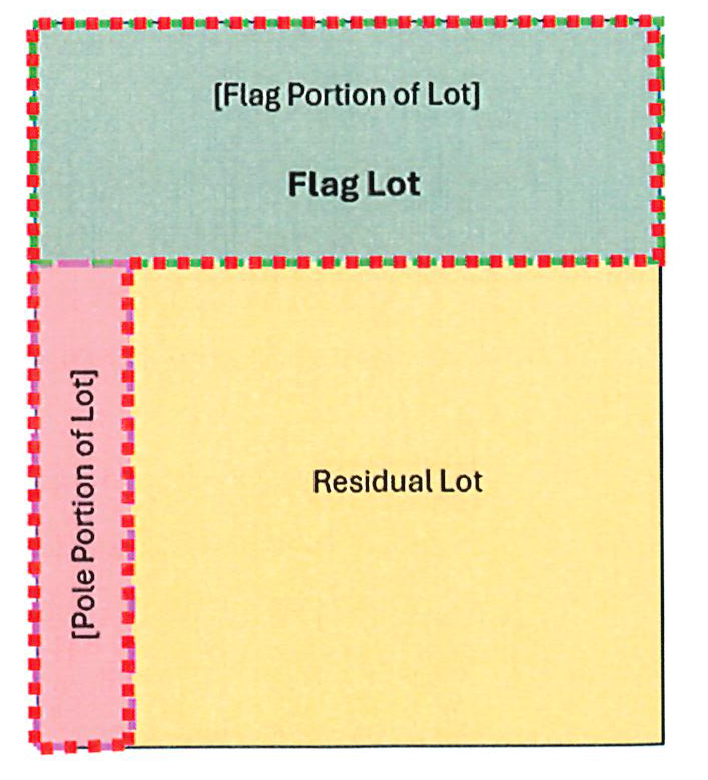
Flag lot, reduced pole: A flag lot with reduced dimensional requirements created pursuant to section 8-4, reduced pole flag lots and small lots. Reduced pole flag lots feature dwelling(s) with a total of 1,200 square feet of gross floor area.
Flood insurance rate map (FIRM): An official map of a community, issued by the Federal Emergency Management Agency, on which both the special flood hazard areas and the risk premium zones applicable to the community are delineated.
Floodway: The channel of a river or other watercourse and the adjacent land areas that must be reserved in order to discharge the base flood without cumulatively increasing the water surface elevation more than one foot.
Food pantry: A nonprofit establishment that primarily distributes food but may also distribute non-food items and other resources to needy individuals and families.
Food processing establishment: A commercial establishment in which food is processed or otherwise prepared for human consumption but not consumed on the premises.
Footcandle (FC): A unit of measure of the intensity of light falling on a surface, equal to one lumen per square foot.
General statutes, or G.S.: The North Carolina General Statutes.
Greenhouse: A permanent structure, designed to protect plants. This structure may or may not have a permanent heating system installed in it. For the purposes of this ordinance, cold frames (temporary structures covered with plastic or other materials, supported by metal pipes) are included in this definition.
Gross floor area (GFA): The total enclosed area of the horizontal surface of all floors of a building or buildings measured to the outside face of the structural members in exterior walls.
Hazardous waste facility: All contiguous land, and structures, other appurtenances, and improvements on the land, used for treating or disposing of hazardous waste. A facility may consist of several treatment or disposal operation units (e.g. one or more landfills, surface impoundments, or combinations of them) (from 15A NCAC 13A - Part 260.10 at (32)).
Hearing, administrative: A proceeding to gather facts needed to make an administrative decision per G.S. 160D-102(2). This may also be referred to as administrative review, per G.S. 160D-935(c).
Hearing, evidentiary: A hearing to gather competent, material, and substantial evidence in order to make findings for a quasi-judicial decision required by a development regulation per G.S. 160D-102(16).
Hearing, legislative: A hearing to solicit public comment on a proposed legislative decision per G.S. 160D-102(20).
Home occupation: An occupation conducted in a dwelling unit provided that:
a)
No person other than members of the family residing on the premises shall be engaged in such occupation.
b)
The use of the dwelling unit for the home occupation shall be clearly incidental and subordinate to its use for residential purposes by its occupants, and not more than 25 percent of the floor area of the principal structure or 1,000 square feet, whichever is smaller, shall be used in the conduct of the home occupation.
c)
There shall be no change in the outside appearance of the building or premises, or other visible evidence of the conduct of such home occupation other than one sign, not exceeding one square foot in area, non-illuminated, and mounted flat against the wall of the principal building.
d)
No accessory structures or outside storage of materials or equipment shall be allowed in connection with the home occupation.
e)
There shall be no sales on the premises in connection with such home occupation.
f)
No traffic shall be generated by such home occupation in greater volumes than would normally be expected in a residential neighborhood, and any need for parking generated by the conduct of such home occupation shall be met off the street and other than in a required front yard or side yard.
g)
Only vehicles used primarily as passenger vehicles (passenger automobiles, passenger vans and passenger pick-up trucks, each having a load capacity of one ton or less) shall be permitted in connection with the home occupation.
h)
Home occupations may be in operation only between the hours of 7:00 a.m. and 9:00 p.m.
Illuminating engineering society (IES): Established in 1906, the IES is the recognized technical and educational authority on illumination. Their mission is to improve the lighted environment by bringing together those with lighting knowledge and by translating that knowledge into actions that benefit the public.
Inventory: Goods, other than farm products, which:
a)
Are held by a person for sale or to be furnished under a contract of service;
b)
Are furnished by a person under a contract of service; or
c)
Consist of raw materials, work in process, or materials used or consumed in a business.
Land development regulation: See "development regulation".
Land disturbing activity: Any activity involving the clearing, cutting, excavating, filling, or grading of land or any other activity which alters land topography or vegetative cover.
Landowner or owner: The holder of the title in fee simple. Absent evidence to the contrary, the city will rely on the tax records for Henderson County to determine who is the landowner. As used herein, "landowner" refers to all holders of the title in fee simple of a parcel of real property. The landowner may authorize a person holding a valid option, lease, or contract to purchase to act as his/her agent or representative for the purpose of making applications for development approvals.
Lot: A parcel of land occupied or capable of being occupied by a building or group of buildings devoted to a common use, together with the customary accessories and open spaces belong to the same.
Lot area: The total area within the lot lines of a platted lot. Lands located within any private easements shall be included within the lot area. The following features shall not be included in calculating minimum lot area:
i.
Public street rights-of-way;
ii.
Private street area; and
iii.
Land that is submerged or regularly underwater and jurisdictional wetlands.
Lot, corner: A lot which occupies the interior angle at the intersection of two street lines. The street lines forming the least frontage shall be deemed the front of the lot except where the two street lines are equal, in which case the owner shall be required to specify which is the front when requesting a zoning compliance permit.
Lot, depth: The depth of a lot is the mean distance of the side lines of the lot measured from the midpoint of the front lot line to the midpoint of the rear lot line.
Lot, double frontage: A lot with frontages on more than one non-intersecting street or a corner lot having frontage on more than two streets. The architectural front of a structure, the front orientation of a structure and/or the presence of primary access shall determine the front lot line for the purposes of applying dimensional requirements. Lots which cannot be accessed by one of the two adjoining streets, due to topography or street classification, shall not be considered double frontage lots. For the purposes of this definition, lots located on alleys shall not be considered double frontage lots.
Lot of record: A lot which is part of a subdivision, a plat of which has been recorded in the Office of the Register of Deeds of Henderson County, or a lot described by metes and bounds, the description of which has been so recorded.
Lot width: The distance between side lot lines measured at the building setback line.
Lumen: The unit of measure used to quantify the amount of light produced by a lamp or emitted from a luminaire (as distinct from "watt," a measure of power consumption).
Mini-warehouse: A building containing separate storage units of varying sizes leased or rented on an individual basis for the dead storage of customers' goods.
Maintained lumens: The lumen output remaining, at a selected operating time, expressed as a percentage of the initial lumen output of a fixture.
Manufactured/mobile home: A structure, transported in one or more sections, which, in the traveling mode, is eight feet or more in width or is 40 feet or more in length, or when erected on site, is 320 or more square feet and which is built on a permanent chassis and designed to be used as a dwelling with or without a permanent foundation when connected to the required utilities and includes the plumbing, heating, air conditioning and electrical systems contained therein, and which is regulated as outlined in the "North Carolina Regulations for Manufactured/Mobile Homes" published by the NC Department of Insurance and per G.S. 160D-102(23) and G.S. 143-145(7).
Manufactured home park: A contiguous parcel of land under single ownership which has been developed for the placement of manufactured/mobile homes for non-transient use. This definition shall not include manufactured/mobile home sales lots on which unoccupied manufactured/mobile homes are parking for purposed of inspection and sale.
Manufacturing, heavy: Any manufacturing other than light manufacturing as defined herein.
Manufacturing, light: The assembly, fabrication, or processing of goods and materials using processes that ordinarily do not create noise, smoke, fumes, odors, glare, or health or safety hazards outside of the building or lot where such assembly, fabrication, or processing takes place, where such processes are housed entirely within a building, or where the area occupied by outdoor storage of goods and materials used in such processes does not exceed 25 percent of the floor area of all buildings on the property.
Merchandise gaming operation: Any game, machine, operation or device permitted to be operated by virtue of G.S. 14-306(b) or any successor provision.
Microbreweries, micro-disilleries, micro-cideries, and micro-wineries: An establishment that engages in the production of malt beverages or spiritous liquors or hard cider or wine as defined in G.S. 18B-101. Annual production shall be less than 775,000 gallons per calendar year of final product.
Miscellaneous repair services: Establishments primarily engaged in miscellaneous repair services, such as radio and television repair, refrigeration and air conditioning repair, electrical and electronic repair, reupholstery and furniture repair, watch repair, etc.
Mobile food vendor: Are licensed motor vehicles or mobile food units which offer for sale and consumption food and beverages (excluding alcohol). This definition shall not apply to approved vendors during a permitted special event or as an accessory use to an approved primary use.
Motor freight terminal: A building or area in which trucks, including tractor or trailer units, are parked, stored, or serviced, including the transfer, loading or unloading of goods. A terminal may include facilities for the temporary storage of loads prior to transshipment.
Neighborhood community center: A facility used for recreational, social, educational and cultural activities, owned and operated by a community association, as defined herein, a non-profit corporation recognized as a charitable, religious or education organization pursuant to Section 501c(3) of the Internal Revenue Code, or a public group or agency and integral to and serving the residents of an identified neighborhood. The term shall not include facilities owned or operated by a fraternal organization.
Nonconforming use: A legal use of a building and/or land that antedates the adoption of future amendments of these regulations and does not conform to the regulations for the district in which it is located.
Nonresidential floor area: Nonresidential floor area is the sum of enclosed areas on all floors of a nonresidential building or buildings measured from the outside faces of the exterior walls, including halls, lobbies, arcades, stairways, elevator shafts, enclosed porches and balconies, and any below-grade floor areas used for access and storage. Not countable as floor area are:
a)
Open terraces, patios, atriums, or balconies;
b)
Carports, garages;
c)
Breezeways;
d)
Below-grade areas with no external access which are used for storage.
Nonresidential floor area allowance: Nonresidential floor area allowance (NFAA) is the amount of nonresidential floor area which may be permitted on any lot. It shall be determined by applying the factors for any given zoning district classification to the gross area of a development lying within the roadway corridor and the gross area of any portion of a development lying outside the roadway corridor.
Nursing home: A facility for chronic or convalescent patients. It is designed to provide long-term care for persons who require medical or nursing care. Nursing homes require skilled nursing personnel and life-support systems and are licensed by the State of North Carolina.
Open space: The total gross land area on a development site which is not covered by buildings or vehicular use areas. Portions of a development site which qualify as common space, as defined herein, shall also qualify as open space. Open space is essentially unimproved pervious area but does include common space and pedestrian facilities. Minimum open space required shall be the number of square feet derived by multiplying gross land area by the applicable open space ratio (OSR). Also defined per G.S. 160D-1307(2): Any undeveloped or predominantly undeveloped land in an urban area that has value for or is used for one or more of the following purposes:
a.
Park and recreational purposes.
b.
Conservation of land and other natural resources.
c.
Historic or scenic purposes. (2019-111, s. 2.4; 2020-3, s. 4.33(a); 2020-25, s. 51(a), (b), (d).)
Open storage: Unroofed storage areas, whether fenced or not.
Ornamental lighting: Lighting fixtures designed to adorn a building or structure and have stand-alone aesthetic appeal. The fixtures themselves are decorative in nature and provide ornamentation in addition to their function as a light source.
Owner: See "landowner".
Parking space: A storage space of not less than nine feet by 18 feet for one automobile, plus the necessary access space. It shall always be located outside the street right-of-way.
Permitted by right: This term refers to the process within zoning that permits development "by right", meaning that a proposed land use is allowed in a zoning district subject only to administrative (i.e. professional city staff) review and approval. Under "by right zoning", it requires no additional discretionary review by the planning board, board of adjustment, or city council.
Permitted by right, subject to supplementary standards: See "Supplementary standards".
Personal services: Establishments primarily engaged in providing services generally to individuals, such as dry-cleaning and laundry pick-up facilities, portrait photographic studios, beauty and barber shops, seamstress shops, shoe repair shops, and clothing rental shops.
Pet-sitting: The temporary boarding of no more than six household pets at one time in a dwelling unit.
Planned unit development: A residential or commercial development which promotes the efficient and well-planned use of land through unified development while providing the city with open space, compatible uses, optimum service of community facilities and adequate vehicular access and circulation.
Principal structure: A structure containing the principal or primary use on the lot.
Private club: Any person, firm, corporation or association, key club, bottle club, locker club, pool club or any other kind of club or association having, possessing or requiring membership and excluding the general public from its premises or place of meeting, or congregating, or operating, or exercising control over any other place where persons are permitted to drink alcoholic beverages, consume food, observe entertainment, live or otherwise, play at video, mechanical or electronic games and/or dance, other than in a private home. Nothing in this definition or elsewhere in this ordinance permits a private club to conduct, contain or house an electronic gaming operation in any district in which it is not otherwise expressly permitted by this ordinance.
Public utility facility: Any structure or facility transmitting a service provided by a government or public utility, including, without limitation, fire stations, emergency medical service centers, telephone and repeater stations, pumping substations, and water towers, but not including telecommunication towers, antennas, and other telecommunication devices.
Recommended species list: The Recommended Landscape Species List for Street Trees and Land Development Projects adopted by the Hendersonville Tree Board, as amended.
Recreational facilities, outdoor, commercial. Any business establishment operating for profit, which is primarily engaged in providing outdoor recreational activities to the general public. "Commercial outdoor recreation" includes such uses as miniature golf courses, skateboard courses, water slides, mechanical rides, fish ranches or other similar uses.
Recreational facility, indoors: An establishment providing amusement, entertainment or recreation indoors typically for an admission charge. Types of indoor recreational facilities include, but are not limited to: dance halls, studios, live theater, bands, bowling. An establishment is not an indoor recreational facility under this definition solely because it conducts, contains or houses an electronic gaming operation, whether as a principal or accessory use.
Recreational vehicle: a motor vehicle or trailer that includes living quarters designed for accommodation, including but not limited to motorhomes, campervans, fifth-wheel trailers, and popup campers. Such vehicles must be:
a)
Built on a single chassis;
b)
400 square feet or less when measured at the largest horizontal projection;
c)
Designed to be self-propelled or permanently towable by a light duty truck;
d)
Designed primarily not for use as a permanent dwelling, but as temporary living quarters for recreational, camping, travel or seasonal use; and
e)
Fully licensed and ready for highway use.
Reduced pole flag lot development: Any development creating two or more reduced pole flag lots created pursuant to section 8-4, reduced pole flag lots and small lots. Reduced pole flag lot developments may also include small lots created pursuant to section 8-4. Reduced pole flat lot developments shall be deemed to include all reduced pole flag lots, small lots and residual lots created as part of the development.
Religious institutions: To include churches, synagogues, temples, or other buildings or site designated as a place of worship on a continuous, reoccurring basis.
Residential care facility: Establishments primarily engaged in the provision of residential, social and personal care for children, the aged and special categories of persons with some limits on ability for self-care but where medical care is not a major element. Such facilities include homes for the aged and infirm and other similar residential care uses not otherwise defined in this ordinance.
Residual lot: A remaining lot resulting from the creation of a reduced pole flag lot or small lot pursuant to section 8-4, reduced pole flag lots and small lots.
Rest homes: A facility for the care of the aged and infirm whose principal need is a home with such sheltered and custodial care as their age and infirmities require. Medical care is only occasional, such as may be required in the home of any individual. The residents of such homes will not, as a rule, have remedial ailments for which continuing skilled planned medical and nursing care is indicated.
Restaurant: An establishment designed, in whole or in part, to accommodate the consumption of food and/or beverages. Unless specifically noted otherwise, this term shall not include establishments with drive-in or drive-through facilities.
Restaurant with drive-through facility: A building or portion thereof where food and/or beverages are sold, and where a driveway is located so that vehicles may drive up to a window and received food and/or beverages for consumption either on the premises or elsewhere.
Retail sales, outdoor: The use of an area not in an enclosed building or under a permanent roof structure for the display of inventory.
Retail sales, seasonal outdoor: Temporary outdoor use of an area for the display of inventory related to a holiday, season of the year or otherwise not offered on a regular basis.
Retail storage, outdoor: Outdoor storage of goods for retail sale.
Retail store: An establishment engaged in selling goods or merchandise to the general public for personal or household consumption and rendering services incidental to the sale of such goods. Such use may process some of the products which it sells so long as such processing is incidental to such retail sales. The term shall not be deemed to include establishments in which the sale of goods or merchandise is incidental to another use, such as junk yards and wrecking yards as defined by G.S. 136-143.
Roadway corridor: Roadway corridors are areas established adjacent to principal roadways the purpose of which is to assist in establishing the nonresidential floor area allowance for any development. Unless otherwise specified, the roadway corridor shall contain all land situated within 250 feet of the right-of-way line for the roadway.
Salvage building materials: Any article or material that has been reclaimed or salvaged from a building or permanent structure and that constituted real property or fixtures at the time of such reclamation or salvage.
Search ring: The area within which a wireless facility must be located in order to meet service objectives of the wireless service provider using the wireless facility or wireless support structure.
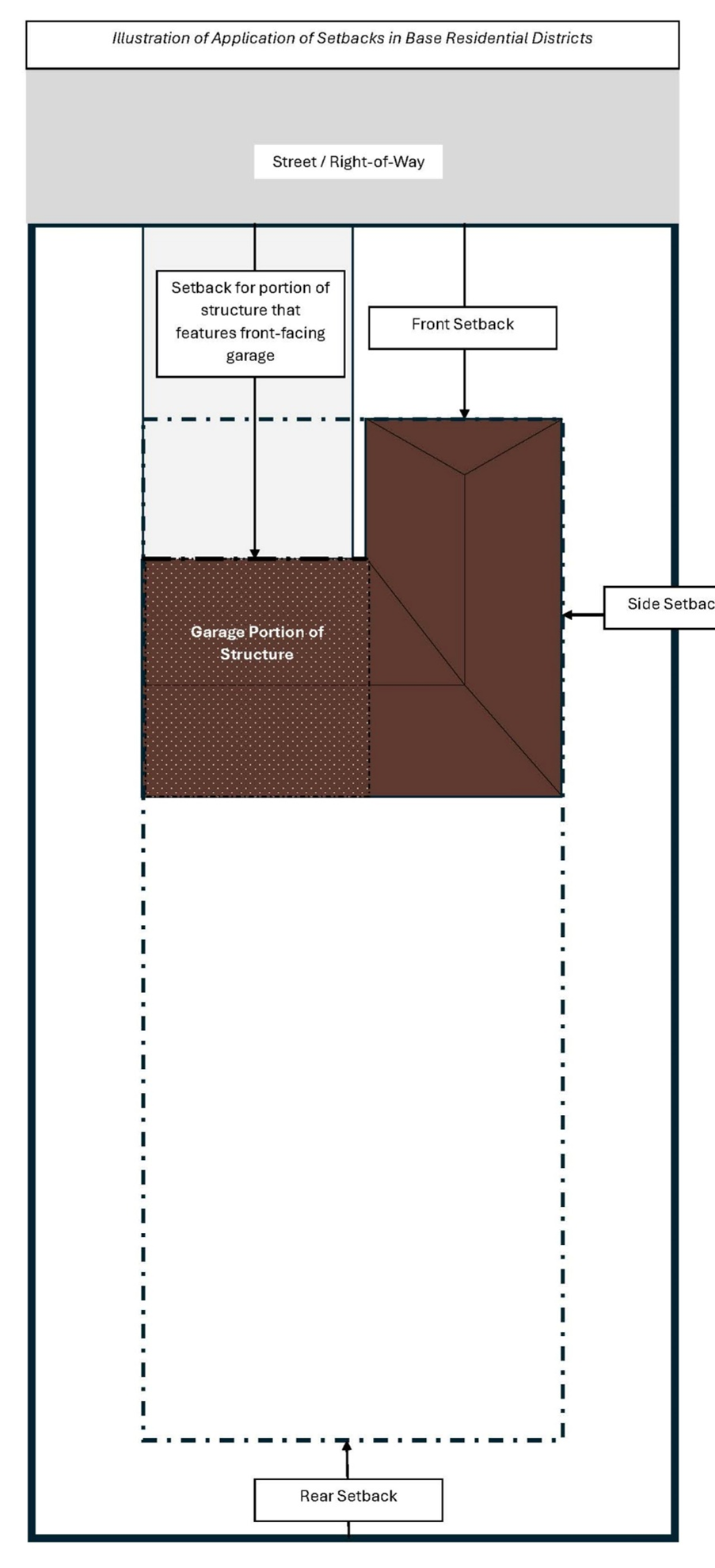
Setback: An open, unobstructed area that is required by this zoning ordinance to be provided from the furthermost projection of a structure to the property line of the lot on which the building is located. See illustration.
Shelter facility: A building or group of buildings owned or operated by a governmental or non-profit organization used for the purpose of providing boarding and/or lodging and ancillary services on the premises to primarily indigent, needy, homeless, or transient persons.
Shrub: A woody plant, usually multi-stemmed or well-branched from the base, the branches being retained to the ground. When used for buffer plantings, shrubs must also reach a mature height between four and 15 feet.
Sign: Any outdoor notice containing words, letters, figures, numerals, emblems, devices, trademarks or trade names or combination thereof.
Sign, advertising: Any sign or display, pictorial or otherwise, including any standard poster panel, painted bulletin or billboard, either free-standing or attached to a structure, which advertises or directs attention to any business commodity, service, entertainment or other activity conducted, sold or offered elsewhere than on the premises on which the sign is located, or which is conducted, sold or offered on such premises only incidentally, if at all.
Sign area: The area of a sign shall be considered to be that of the smallest rectangular figure which encompasses all lettering, wording, design or symbols, together with any background on which the sign is located and any illuminated part of the sign, if such background or such illuminated part of the sign is designed as an integral part of and related to the sign. Any cutouts or extensions shall be included in the area of a sign, but supports and bracing which are not intended as part of the sign shall be excluded. In the case of a multi-faced sign, the area of the sign shall be considered to include all faces visible from one direction.
Sign, animated: A sign that uses mechanical, electrical or illuminating devices that blink, flash, flicker, scintillate, scroll, vary in intensity, brightness or color that depicts or gives the appearance of action, motion, movement or rotation of a sign image or text.
Sign, business identification: A sign which directs attention to a business, commodity, service, entertainment, or other activity conducted, sold or offered on the premises upon which the sign is located.
Sign, changeable message: A sign that is designed for displaying words, numbers, symbols, figures, or images that can be changed to indicate a different message.
Sign, electronic: A sign with a fixed or changing display/message composed of a series of lights that may be changed through electronic means.
Sign, ground: Any sign placed upon or supported by the ground independent of any other structure.
Sign, monument: A ground sign that is monolithic, with a solid-appearing base that is flush with the ground.
Sign, off-premises: Any sign used for the purpose of displaying, advertising, identifying or directing attention to business products, operations or services sold or offered at a site other than the site where such sign is displayed.
Sign, pole: A ground sign that is mounted on a free standing pole or other support so that the bottom edge of the sign face is six feet or more above grade.
Sign, portable: Any permanent or temporary sign which is affixed to or placed in or upon any parked vehicle, trailer or other parked device designed or capable of being towed or transported, the primary purpose of which is to direct attention to a business, commodity, service, entertainment or other activity.
Sign, projecting: A sign that is wholly or partly dependent upon a building for support and which projects more than 12 inches from such building.
Sign, roof: A sign that is mounted on the roof of a building or which is wholly dependent for support and which projects above the point of a building with a flat roof, the eave line of a building with a gambrel, gable or hip roof or the deck line of a building with a mansard roof.
Sign, wall: A sign fastened to or painted on the wall of a building or structure in such a manner that the wall becomes the supporting structure for, or forms the background surface of the sign and which does not project more than 12 inches from such building or structure.
Sign, window: A sign that is applied or attached to the exterior or interior of a window or located in such manner within a building that it can be seen from the exterior of the structure through a window.
Significant negative environmental impact: (Applicable to the PMDCZD District.) Any use of a building, structure or land producing an effect, exceeding the following standards:
a)
Electrical disturbance or interference.
1)
Electrical disturbance that adversely affects any operations or equipment, as measured at the boundary of the zoning lot.
2)
Otherwise cause, create, or contribute to the interference with electronic signals (including television, and radio broadcasting transmissions) to the extent that the operation of any equipment not owned by the creator of such disturbance is adversely affected.
b)
Noise. Any use generating noise levels greater than 67 decibels (dBa), as measured at the boundary of the nearest residential zoning district.
c)
Vibration. Any use generating transmitted vibration that is perceptible to the human sense of touch, as measured at the boundary of the zoning lot.
d)
Air pollution. Any use that emits any "air contaminant" including any odorous emissions, as defined in G.S. 143-213, that exceeds applicable State of North Carolina standards concerning air pollution.
Site: The spatial location of actual or planned development. A site may be a single lot, or a combination of lots under a unified plan of development.
Site plan: A scaled drawing and supporting text showing the relationship between lot lines and the existing or proposed uses, buildings, or structures on the lot. The site plan may include site-specific details such as building areas, building height and floor area, setbacks from lot lines and street rights-of-way, intensities, densities, utility lines and locations, parking, access points, roads, and stormwater control facilities that are depicted to show compliance with all legally required development regulations that are applicable to the project and the site plan review. A site plan approval based solely upon application of objective standards is an administrative decision and a site plan approval based in whole or in part upon the application of standards involving judgment and discretion is a quasi-judicial decision. A site plan may also be approved as part of a conditional zoning decision.
Sleeping room: A room designated as sleeping or bedroom on the plans and permit application. NOTE: 2018 North Carolina State Building Code - Residential Code, uses the term sleeping room; G.S. 160D-706(b) uses the term sleeping unit, and these two terms are substantially the same.
Small lot: A lot with reduced dimensional requirements with a maximum square footage per zoning ordinance section 8-4, reduced pole flag lots and small lots. Small lots feature dwelling(s) with a total of 1,200 square feet of gross floor area.
Small lot development: Any development creating two or more small lots created pursuant to section 8-4, reduced pole flag lots and small lots. Small lot developments may also include reduced pole flag lots created pursuant to section 8-4. Small lot developments shall be deemed to include all reduced pole flag lots, small lots and residual lots created as part of the development. ;p0;hs Small scale manufacturing: The assembly, fabrication, or processing of goods and materials using processes that ordinarily do not create noxious noise, smoke, fumes, odors, glare, or health or safety hazards outside of the building where such assembly fabrication, or processing takes place. And where such processes are housed entirely within a building. And where such processes do not require frequent shipping and receiving activities by a truck rated class 8 or above in the Federal Highway Administration's vehicle class system.
Small-scale multi-family: A building or a group of detached buildings on a single lot with three to eight dwelling units designed and arranged to be occupied by multiple families living independently of each other.
Special flood hazard area: The land in the floodplain subject to a one percent or greater chance of being flooded in any given year.
Special use: City-designated uses that require site-specific approvals via a quasi-judicial process (board of adjustment). This process is used for uses that might only fit a particular area in certain situations, or for which additional scrutiny is desired. These standards generally involve some discretion, so the City of Hendersonville uses a quasi-judicial process to help ensure the rights of all parties to a fair hearing are protected. Some zoning districts allow certain uses only as "special uses," and the process for approving these special uses requires the applicant to present—and the board of adjustment to consider—competent, material, and substantial evidence that the proposed use meets certain standards outlined in the ordinance. If sufficient evidence is presented that the proposal meets the standards, the permit is issued; if sufficient evidence is not presented, the permit is denied.
Special use permit: A permit issued to authorize development or land uses in a particular zoning district upon presentation of competent, material, and substantial evidence establishing compliance with one or more general standards requiring that judgment and discretion be exercised as well as compliance with specific standards. The term includes permits previously referred to as conditional use permits or special exceptions per G.S. 160D-102(30).
Specimen tree: A large or medium maturing tree that is 25 inch DBH or greater; or a small maturing tree that is ten inch DBH or greater, as designated on the recommended species list.
Standing [legal]: Referenced from § 160D-1402. Appeals in the nature of certiorari.
(c)
Standing. - A petition may be filed under this section only by a petitioner who has standing to challenge the decision being appealed. The following persons have standing to file a petition under this section:
(1)
Any person possessing any of the following criteria:
a.
An ownership interest in the property that is the subject of the decision being appealed, a leasehold interest in the property that is the subject of the decision being appealed, or an interest created by easement, restriction, or covenant in the property that is the subject of the decision being appealed.
b.
An option or contract to purchase the property that is the subject of the decision being appealed.
c.
An applicant before the decision-making board whose decision is being appealed.
(2)
Any other person who will suffer special damages as the result of the decision being appealed.
(3)
An incorporated or unincorporated association to which owners or lessees of property in a designated area belong by virtue of their owning or leasing property in that area, or an association otherwise organized to protect and foster the interest of the particular neighborhood or local area, so long as at least one of the members of the association would have standing as an individual to challenge the decision being appealed, and the association was not created in response to the particular development or issue that is the subject of the appeal.
(4)
A local government whose decision-making board has made a decision that the governing board believes improperly grants a variance from or is otherwise inconsistent with the proper interpretation of a development regulation adopted by the governing board.
Storage container: A structure towed or transported by vehicle and used for the storage of goods. The removal of the structure's wheels, if any, or any other alteration to the structure shall not eliminate or change any requirement pertaining to storage containers. For the purposes of this ordinance, a storage container is considered to be a temporary use.
Storage, outdoor: The storage of any inventory associated with the primary use, located outside a building and not under a permanent roof structure for a period of time exceeding 48 hours, the storage of which is not accessory to a residential use. For retail uses, outdoor storage areas are not readily accessible to the buying public. For purposes of this definition, the outdoor storage of vehicles, recreational vehicles, campers, travel trailers, toy haulers, boats, trailers, rental equipment, building materials, bulk landscaping materials, and prefabricated buildings associated with a legally established business, and, salvage building materials [and second hand appliances] displayed for sale on the premises of a commercial enterprise whose principal business is the sale of salvage building materials from stock shall be excluded.
Story: A space in a building between the upper surface of a floor and the upper surface of the floor or roof next above; provided, however, that where the floor level of the first story is at least five feet below the adjoining finished grade, the space shall be considered a basement and not counted as a story.
Story, half: A story under a gable, hip or gambrel roof of which the wall plates on at least two opposite exterior walls are not more than four and one-half feet above the floor of such story.
Street: A dedicated public or private right-of-way for vehicular traffic which affords the principal means of access to abutting property.
Street line: The dividing line between a right-of-way and the contiguous property.
Structure: A combination of material assembled, constructed or erected at a fixed location, including a building, the use of which required attachment to the ground or to something attached to the ground.
Supplementary standards: Additional standards required of certain permitted by right uses in certain zoning districts.
Telecommunications: The transmittal or reception of signals over the airwaves as a commercial or public service, including, without limitation, telephonic, radio, television, cable television, or microwave signals. For purposes of this ordinance, the term shall not include a non-commercial individual use such as residential television antennas, satellite dishes, or ham radio antennas, or a commercial use that is purely incidental to other business activities of the owner.
Telecommunications tower: A tower, pole, or similar structure, exceeding 20 feet in height, which supports or incorporates, or is intended to support or incorporate, one or more telecommunications antennas operated for commercial or public purposes above ground, whether freestanding, guyed, or affixed to a building. The term shall include mobile towers.
Telecommunications tower, concealed: A telecommunications tower designed and installed in a manner such that the antenna(s), supporting apparatus and associated structures are aesthetically and architecturally appropriate with regards to an existing structure or immediate environment in which the tower is located.
Temporary use: Any building, structure or use of land which is designated by this ordinance as temporary in nature and subordinate to a primary building, structure or use of land. A temporary use shall require a building permit issued for a specified period of time given in this ordinance.
Tower height: The vertical distance measured from the ground to the uppermost point of the telecommunications tower and any antenna affixed thereto.
Tree: A living, woody, self-supporting perennial plant, ten feet or more in height when mature, usually having a single elongated main stem and distinct crown.
Tree canopy: The area of a tree or trees where the outermost leaves, stems, and branches extend. Tree canopy is measured on a horizontal plane and is typically represented in square feet or acres.
Understory tree: A small (approximately ten to 25 feet high when mature), usually shade tolerant tree, capable of thriving in the lower light intensities found under the canopy of tall trees.
Uplight: For an exterior light fixture, light output emitted into the hemisphere above the horizontal plane of the light emitting light opening (i.e. above 90 from straight down) (see figure 1)
Utility pole: A structure that is designed for and used to carry lines, cables, or wires for telephone, cable television, or electricity, or to provide lighting.
Variance: Variance is a relaxation of the terms of the zoning ordinance where such variance will not be contrary to the public interest and where owing to conditions peculiar to the property and not the result of the actions of the applicant, a literal enforcement of the ordinance would result in unnecessary and undue hardship. As used in this ordinance, a variance allows changes to zoning/development standards greater than ten percent during plan/project review, subject to quasi-judicial review and approval with the board of adjustment. The following standards are authorized for a variance:
- min. setbacks
- min. lot size
- min. lot width
- min. lot depth
- max. lot coverage
- min. off-street parking
- max. height
These are not applicable to changes in base zoning, use, or density.
Vehicular use area: All portions of a site or property designed to receive vehicular traffic, including parking, driveways, loading or unloading areas, which have an improved surface such as gravel, asphalt, brick, or concrete pavement.
Wineries: An establishment that engages in the production of unfortified wines as defined in G.S. 18B-101.
Wireless facility: The set of equipment and network components, exclusive of the underlying support structure of tower, including antennas, transmitters, receivers, base stations, power supplies, cabling, and associated equipment necessary to provide wireless data and telecommunications services to a discrete geographic area.
Wireless support structure: A new or existing structure, such as a monopole, lattice lower, or guyed tower that is designed to support or capable of supporting wireless facilities. A utility pole is not a wireless support structure.
Yard: An open space on the same lot with a principal building, unoccupied and unobstructed from the ground upward except as otherwise provided herein.
Yard, front: An open, unoccupied space on the same lot with a principal building (excluding the outermost five feet of any porches, steps, eaves, gutters and similar fixtures), extending the full width of the lot and situated between the street or highway right-of-way line and the front line of the building, projected to the side lines of the lot.
Yard, rear: An open, unoccupied space on the same lot with the principal building (excluding the outermost three feet of any uncovered porches, steps, eaves, gutters and similar fixtures), extending the full width of the lot and situated between the rear line of the lot and the rear line of the building to the side lines of the lot.
Yard, side: An open, unoccupied space on the same lot with a principal building (excluding the outermost three feet of any uncovered porches, steps, eaves, gutters and similar fixtures), situated between the side line of the building and the adjacent side line of the lot and extending from the rear line of the front yard to the front line of the rear yard.
Zero lot line: The location of a building on a lot in such a manner that one of the building's sides rests directly on a lot line.
Zoning district: Any section of the City of Hendersonville or its extraterritorial area in which zoning regulations are uniform per G.S. 160-703(c).
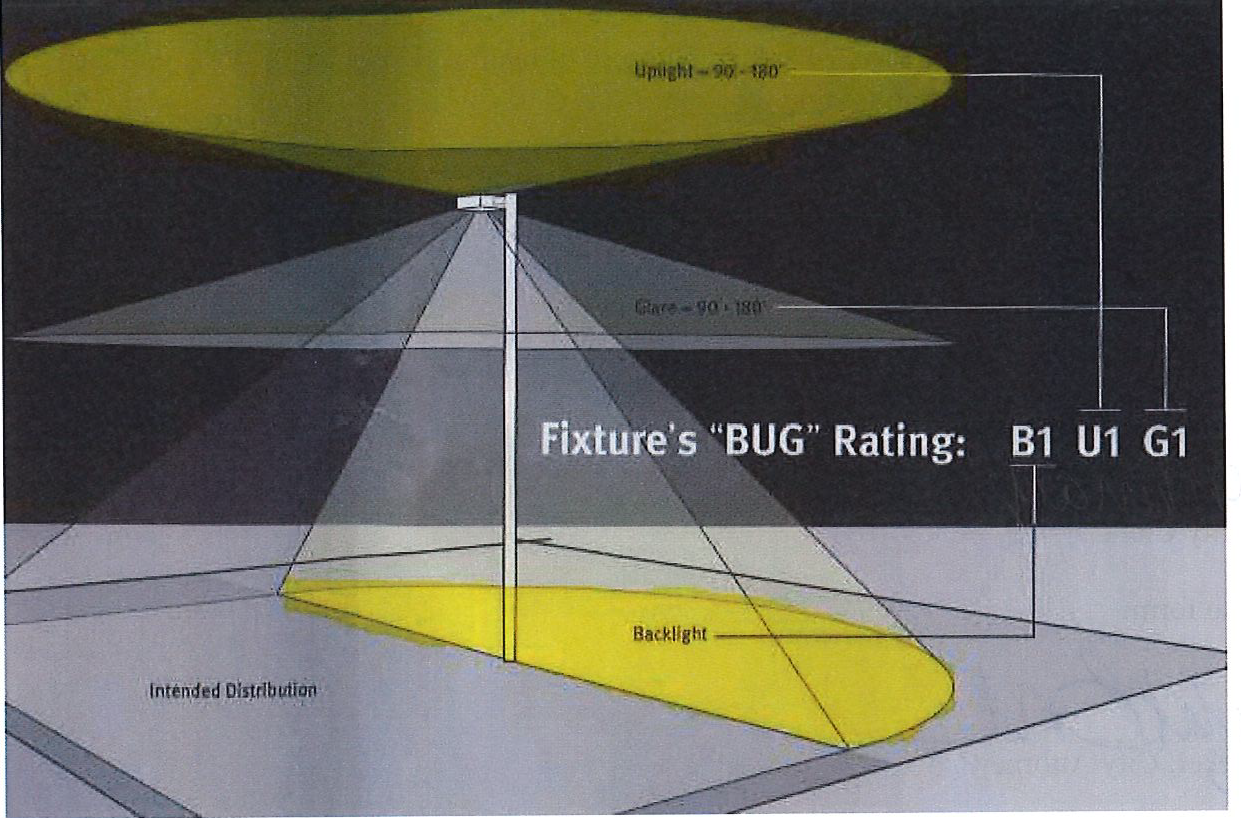
(Figure 1, provided by International Dark Sky Association & Illuminating
Engineering Society)
(Ord. No. 21-44, 9-22-21; Ord. No. 19-1289, § 1, 12-5-19; Ord. No. 22-11, 2-10-22; Ord. No. 22-50, 8-4-22; Ord. No. 23-05, 2-8-23; Ord. No. 23-54, 9-7-23; Ord. No. O-24-08, § 3, 4-4-24; Ord. No. O-24-11, 4-4-24; Ord. No. O-25-11, 2-12-25; Ord. No. 25-17, § 3, 4-3-25; Ord. No. O-25-26, 5-1-25)

