
Hilliard City Zoning Code
CHAPTER 1115
SPECIAL PURPOSE DISTRICTS11
Cross reference— Conditional use requirements, Ch. 1123; landscaping and lighting requirements, Ch. 1125; off-street parking and loading, Ch. 1127; signs, Ch. 1129; site plan review requirements, Ch. 1131.
1115.01 - PURPOSE.
(a)
"S-1," Support Facilities District. The S-1 District provides a designated district specifically for public and semi-public uses that may require large land areas and/or serve the population of the community with facilities for education, religious worship, recreation and similar activities.
(b)
"HCD," Hilliard Conservation District. The purpose of the Hilliard Conservation District (HCD) is to support the goals and intent of the Big Darby Accord. The primary mission of the Accord is to preserve, protect and improve the Big Darby Watershed's unique ecosystem, and to promote responsible growth within environmentally sensitive areas. The Hilliard Conservation District is created to promote the general public welfare, encourage the efficient use of land and resources, promote greater efficiency in public utility services, and encourage innovation in the planning and building of all types of development. The HCD achieves this purpose by allowing development that:
(1)
Permanently preserves and integrates open space within residential developments;
(2)
Offers landowners alternatives to standard tract development;
(3)
Establishes a less sprawling, more efficient use of land, streets and utilities;
(4)
Preserves and enhances the natural ecosystem of the area;
(5)
Creates usable and accessible open space, recreational areas, and green corridors for wildlife, walking trails and/or bike paths; and
(6)
Encourages creativity in design through a controlled process of review and approval of the development plan and related documents.
(c)
Old Hilliard District. It is in the best interests of the city, its residents and the businesses in the Old Hilliard District that downtown Hilliard be enhanced to promote a mix of uses, improved pedestrian mobility, multiple transportation options, and quality of landscaping and buildings. Improving the downtown will maintain a high-quality business and living environment, and attract and sustain future economic development.
(1)
This district, referred to as the Old Hilliard District, is divided into two subdistricts (OH-MD, Downtown Mixed Use and OH-RD, Residential) and is intended to achieve the following purposes:
A.
Establish, and reinforce pedestrian access and movement;
B.
Stimulate redevelopment and new investment in the city's core;
C.
Establish continuity and consistency in the downtown through appropriate building and parking setback standards;
D.
Create a harmonious character through landscaping, facade transparency, rear parking lots, pedestrian access, and appropriately scaled lighting and signs;
E.
Enhance connectivity to allow for easy flow of automobile and pedestrian traffic between uses and minimize traffic congestion; and
F.
Enhance the attractiveness of the downtown to add to the community character, create a high-quality mixed use environment, and protect property values.
(2)
In Old Hilliard, two main planning principles will help create a reinvigorated central node of community activity.
A.
The planning emphasis must create a district that is distinctive in the Central Ohio region and promotes new economic investment.
B.
Future development in the district must preserve and enhance the public realm by integrating the public realm with private development in the design process. Old Hilliard must redevelop so buildings are grouped to create pedestrian plazas and courts - creating the best environment for the live, work, play experience.
(3)
Emphasizing the interrelationship of the private, public, and pedestrian realms is the hallmark of exceptional design. In the Old Hilliard District this should be achieved through coordinating different design elements - weaving them together into a cohesive district. Consistent with the City's Comprehensive Plan, it is the intent of this district to promote the following planning and design objectives:
A.
Link First Responders and Hilliard Station Parks. Protect, preserve and interrelate development and activities in and around signature park space in the District. Link new public and private spaces with the parks using pathways, plazas, sight lines, and activities to increase their prominence as public activity centers.
B.
Focus on the pedestrian. Maintain the priority of the pedestrian space and ensure ease and safety of access and circulation.
C.
Create a unique, people-oriented setting. New development should create a unique setting focused on people with spaces that invigorate, excite, and invite. This environment will enhance the primary social experience. If successful, all citizens and businesses within the District will profit both in quality of life and economic vitality.
D.
Create Balance. All land uses, buildings, and pathways will work together as a balanced system. A balanced relationship of building/community elements in harmony with the site creates optimum land use and exceptional design.
E.
Be creative and innovative. Creative design and innovative planning can empower developers to take full economic advantage of the prestige and marketing power of a recognized vibrant community with a built-in market.
(Ord. 14-29. Passed 10-27-14.)
1115.02 - SCHEDULE OF USES.
Buildings or land shall not be used and buildings shall not be erected, except for the following specified uses, unless otherwise provided for in this code. Land and/or buildings in the districts indicated at the top of Table 1115-2 may be used for the purposes denoted by the following abbreviations:
(a)
Permitted Use (P). Land and/or buildings in this district may be used by right.
(b)
Conditional Use (C). Land and/or buildings in this district may be used if approval is granted, based on compliance with applicable review standards and specific conditions that may additionally apply, as found in Chapter 1123.
(c)
Specific Conditions. Indicates requirements or conditions applicable to conditional uses, as listed in Chapter 1123, Conditional Uses.
(Ord. 14-29. Passed 10-27-14; Ord. 16-17. Passed 5-9-16; Res. 19-R-03. Passed 2-25-19; Res. 19-R-06. Passed 2-25-19; Ord. No. 21-33, § 1(Exh. A), 11-8-21; Ord. No. 22-18, § 1(Exh. A), 7-11-22; Ord. No. 23-17, § 1(Exh. B), 10-23-23; Ord. No. 24-06, § 1(Exh. A), 3-25-24; Ord. No. 25-04, § 1(Exh. A), 3-10-25.)
1115.03 - SPATIAL REQUIREMENTS.
(a)
All lots and buildings shall meet the minimum area and width requirements of Table 1115-3. New lots shall not be created, except in conformance with these requirements.
1 Minimum lot width on a corner lot shall be 60 feet.
(b)
All structures and their placement on a lot shall conform to the minimum dimensional requirements listed in Table 1115-3a.
1 For attached single family and multi-family dwellings, the minimum required floor area shall be determined by the number of bedrooms, as follows: efficiency unit - 600, 1 bedroom - 750, 2 bedroom - 900. An additional 100 square feet shall be provided for each bedroom over two.
2 If the building is not placed on the property line, there shall be a minimum side yard of 10 feet.
3 If 50 percent or more of all lots on the same side of the street and between two intersecting streets contain a principal building, the build-to line shall be the average of the front setbacks established by the existing principal buildings within 200 feet on either side of the subject property (not including corner lots where the front setback is on the intersecting street).
(Ord. 14-29. Passed 10-27-14.)
1115.04 - HILLIARD CONSERVATION DISTRICT REQUIREMENTS.
(a)
Designing a Conservation Subdivision.
(1)
Delineate primary conservation areas as defined in the Big Darby Accord Watershed Master Plan (BDAWMP). Preserve as natural open space.
(2)
Delineate secondary conservation areas as defined in the BDAWMP; preserve selected areas as common (improved) or natural open space.
(3)
Draw building footprints outside the conservation areas. Draw the number of dwellings based upon the permitted density calculations, with lot lines.
(b)
Review Criteria and Design Standards.
(1)
Dwellings should be oriented toward interior roads, rather than fronting on perimeter roads.
(2)
Retain or replant native vegetation adjacent to wetlands and surface waters.
(3)
Preserve existing hedge and tree lines to the extent practicable.
(4)
Preserve scenic views and vistas.
(5)
Protect wildlife habitat areas of species listed as endangered, threatened, or of special concern by the Ohio Department of Natural Resources.
(6)
Preserve historic or archaeological sites (i.e. earthworks, burial grounds).
(7)
Landscape or retain vegetation in common areas with native trees and shrubs.
(8)
Place shade trees along internal roads on at least one side of the road.
(9)
Provide active recreational areas in proximity to residential concentrations.
(10)
Include a pedestrian circulation system, meaning a minimum of an eight-foot-wide asphalt multi-use path throughout the development.
(11)
Protect natural drainage swales and creeks and prohibit buildings within the 100-year floodplain.
(12)
Provide permanent open space, according Section 1115.04(e)(4) and (5).
(c)
Applicability. The following Plan Approval Process shall be required for all rezoning and plats within the Hilliard Conservation District:
(1)
Pre-application Meeting. Hilliard staff will meet with the applicant and review a preliminary site development plan as presented by the applicant.
(2)
Proposal submitted. Applicant shall submit the proposed development plan to the Planning Director or designee.
(3)
Staff Application-Review. City of Hilliard staff will review the proposed development plan and certify its completeness. Once certified complete, the application and certification will be forwarded to the Big Darby Accord Advisory Panel, the Environmental Sustainability Commission for their advisory recommendations, and, if applicable, Brown Township Board of Trustees, City of Hilliard staff will draft a report of the technical review findings which shall be forwarded to the Big Darby Accord Advisory Panel, the Environmental Sustainability Commission and, if applicable, Brown Township.
(4)
Big Darby Accord Advisory Meeting. The Big Darby Accord Advisory Panel will hold a public meeting to review and make recommendations on the proposed project.
(5)
Big Darby Accord Advisory Panel Recommendations. Recommendations from the Advisory Panel meeting will be forwarded to City staff, the Planning and Zoning Commission, and City Council.
(6)
Environmental Sustainability Commission and Township Review. Comments and recommendations from the Environmental Sustainability Commission and Township shall be forwarded to City staff, Planning and Zoning Commission, and City Council.
(7)
City of Hilliard Staff Review. Following the recommendations of the Big Darby Accord Advisory Panel, Environmental Sustainability Commission, and Brown Township, the application will be reviewed by the City of Hilliard for compliance with all applicable zoning, engineering and City Codes, and shall follow the applicable review process for the application submitted for zoning and plats.
(d)
Application Requirements. A Final Development Plan shall be submitted which is drawn to a scale of at least 1" = 100' and contains the following information:
(1)
A survey plat and legal description signed by a registered Ohio surveyor showing the size and location of the proposed development.
(2)
A preliminary drainage plan with a letter of feasibility from a licensed professional engineer.
(3)
An explanation of the method/structure and proposed documentation and instruments to be used to perpetually preserve the required open space.
(4)
The proposed uses of the site, including any limitations or controls to be placed on each.
(5)
A table or narrative description of how the proposed development conforms to all design guidelines in Hilliard Design Manual. This description should include information about how sensitive areas will be protected during construction.
(6)
Location of buildings and structures.
(7)
Streets, roadways, pathways, sidewalks and parking areas.
(8)
Existing utility easements and proposed new easements to the extent known.
(9)
Proposed lot sizes.
(10)
Minimum setback and spacing requirements.
(11)
Recreational facilities.
(12)
Preserved open space areas and a description of proposed open space improvements.
(13)
All commonly owned structures.
(14)
A landscape plan that depicts and identifies all existing and proposed landscaping and entrance features. The landscape plan shall conceptually illustrate the typical elevations and cross sections of landscape features. No invasive species, as identified by the Ohio Department of Agriculture, shall be permitted in landscape plantings of common areas or initial planting installations at homes and/or site structures.
(15)
Dwelling unit types, the total number of dwelling units proposed for the site density and the method used to calculate density, subject to the restriction in subsection (e)(6) below.
(16)
Primary conservation areas. Provide an initial five-year maintenance plan for all open space and/or wetland restoration areas including clear maintenance schedules that shall be the responsibility of the developer unless otherwise stated in a Development Agreement.
(17)
Locations of stream channels, watercourses, wooded areas and buffer areas shall be designated. Existing topography and drainage patterns shall also be shown. No structure (other than approved drainage structures as shown on the Development Plan or other approved structures, such as a park shelter house) shall be constructed within the limits of the 100-year floodplain as mapped by FEMA on the Flood Insurance Rate Maps for Franklin County.
(18)
The location of all woodland preservation areas and natural topography preservation areas.
(19)
Architectural design guidelines including materials, colors and typical renderings for structures and proposed procedures for controlling architectural design elements.
(20)
Signs, including renderings of the sign elevations.
(21)
The proposed provisions for water supply, fire hydrants, sewage disposal and surface drainage with engineering feasibility studies or other evidence of reasonableness.
(22)
A preliminary traffic impact analysis based upon full build-out of the proposed development.
(23)
The relationship of the proposed development to existing and anticipated uses of surrounding areas during the development timetable.
(24)
Identification and location of all land dedicated to schools, parks and other public facility sites within or adjacent to the site.
(25)
The proposed time schedule for development of the site including streets, buildings, utilities, and other facilities. If the proposed timetable for development includes developing the land (including open space) in phases, all phases shall be fully described in textual form in a manner calculated to give City officials definitive guidelines for approval of future phases.
(26)
Unless specifically superseded by the standards contained in this chapter or those standards approved in the Development Plan, the development shall comply with the requirements contained in the Hilliard Design Manual. Except for density, and the percentage of required open space, the applicant may request a modification from the City of the development standards set forth in this chapter. An applicant making such a request shall specifically and separately list each requested modification and the justification therefore on the Development Plan submittals, with a request that the proposed modification be approved "per plan."
(27)
Deed restrictions, protective covenants, and other legal instruments to be used to control the land which is to be commonly owned and maintained as the open space.
(28)
The various plans that make up the Development Plan shall bear the seal of a professional engineer, surveyor and an architect or landscape architect, each of whom shall be licensed to practice in the State of Ohio, and shall stamp their individual plans.
(e)
Development Standards. The following minimum requirements shall apply:
(1)
Minimum tract size. 20 acres.
(2)
Minimum lot size. No minimum lot size.
(3)
Minimum setbacks. Minimum required setbacks shall be determined as part of the review and approval process to allow maximum flexibility.
(4)
Open space dedication. At least 70 percent of the gross tract acreage shall be designated as permanent open space and at least 50 percent of the gross tract acreage shall be Naturalized Open Space.
Naturalized Open Space shall be defined as land preserved and/or maintained in a natural state to protect and maintain natural processes and the waters of the Big Darby Creek watershed including any paths or trails through them. Naturalized Open Space shall include woodlands of predominately native species, wetlands, or prairies. Naturalized Open Space shall not include mowed turf, playgrounds, sports fields or maintained landscapes.
Open spaces that have primary functions other than the protection and maintenance of natural processes would qualify towards the overall open space requirement but not the naturalized open space requirement.
The location of designated open space shall be identified on the development plan and shall be subject to approval by the City. Open space shall be owned, administered and maintained as identified on the Development Plan, as outlined in this Section. Required open space may be located offsite, provided it is within the Big Darby Accord Planning Area.
(5)
Open space calculation. The following criteria should be considered when calculating the required open space dedication:
A.
Up to 20 percent of the minimum required open space may be used for active recreation purposes in order to preserve a reasonable proportion of natural open space on the site, but cannot be located within any Tier I or Tier II land as outlined within the Darby Accord. The Development Plan shall specify the purposes for which open space areas are proposed. Any recreational facilities proposed to be constructed within open space areas shall be clearly shown on the Development Plan.
B.
Open space that does not fit the definition of Naturalized Open Space may not be located within any Tier I or Tier II land.
C.
In calculating open space, the areas of residential lots conveyed to homeowners shall not be included.
D.
Primary conservation areas, stormwater management detention/retention ponds, and constructed wetlands acting as detention basins may count in their combined aggregate for up to 50 percent of the required open space. These areas shall promote the character and purpose of the HCD District, and shall incorporate naturalized edges, native plants and be designed to complement the existing topography and landscape.
E.
To further the concept of a greenbelt around the western side of Hilliard, open space that is not immediately proximate to a development may be permitted. Additionally, all off-site open space shall be Naturalized Open Space.
(6)
Number of dwelling units permitted.
A.
Maximum overall gross density for residential development within the Conservation District shall be one dwelling unit per acre. See Section 1115.02, the Table of Uses, regarding the type of permitted and conditional dwelling units in the HCD District.
B.
Density Bonuses. Overall gross density may be increased as outlined below. Density bonuses are cumulative, but in no case shall the gross density exceed 1.5 dwelling units per acre.
1.
For every additional 10 percent of the site that is dedicated as open space above the required 70 percent, an increase of .10 units per acre of the overall gross density of the site will be allowed.
2.
For significant voluntary stream restoration within the development site, an additional .10 units per acre of the overall gross density of the site will be allowed. Final determination will be required by the City.
3.
Up to an additional .10 units per acre of the overall gross density of the site may be granted by the Planning and Zoning Commission, for other sustainable design elements.
4.
An additional 0.10 units per acre of the overall gross density of the site may be granted by the Planning and Zoning Commission, for extraordinary costs for regional serving infrastructure.
(7)
Wetlands. Wetland creation, restoration, enhancement, and mitigation shall comply with all applicable State and Federal requirements. Wetland/littoral shelves are required for all wet ponds.
(8)
Stormwater Management. The stormwater management plan shall comply with all applicable federal, state, and City requirements and consider a variety of stormwater management best practices.
(f)
Design Standards.
(1)
Architecture. Architecture in this District shall be designed in accordance with standards that are consistent with conservation practices and that emphasize the individual character of the property and surroundings.
(2)
Roadways. All roadways shall be designed in accordance with the engineering and roadway standards specified in the Hilliard Design Manual and best practices that minimizes light pollution.
(3)
Lighting. Lighting shall be designed in accordance with the engineering standards specified in the Hilliard Design Manual
(4)
Solar panels. At a minimum, each housing unit is required to be solar ready with a wired conduit to the roof in a location that would best accommodate a solar installation.
(5)
Electric Vehicle Ready. At a minimum, each housing unit is required to be electric vehicle ready with appropriate wired conduit, electrical capacity, and a receptacle in place for a Level 2 (240V) charger in a location that would best accommodate a charging station.
(g)
Exceptions. Political subdivisions are not obligated to comply, but are encouraged to make a good faith effort, with the open space standards. Political subdivisions shall comply with other requirements of this code section.
(h)
Ownership of Open Space. Common open space within the development shall be owned, administered, and maintained by one of the following methods, either individually or in combination, and subject to approval by City Council:
(1)
Offer of dedication to City.
(2)
Homeowners association.
(3)
Condominiums.
(4)
Dedication of easements.
(5)
Transfer of easements.
(6)
Third-party ownership.
(Ord. 14-29. Passed 10-27-14; Ord. 15-26. Passed 7-13-15; Ord. No. 21-09, § 1(Exh. A), 3-22-21; Ord. No. 23-17, § 1(Exh. A), 10-23-23.)
1115.05 - OLD HILLIARD DISTRICT REQUIREMENTS.
(a)
Applicability and Extent.
(1)
The construction, reconstruction or improvement of any property, as specified below, within the Old Hilliard District shall comply with the applicable requirements of this section:
A.
New construction or an increase in the gross floor area of an existing principal building by 50 percent or more;
B.
The construction or installation of new parking lots, fences, landscaping and accessory structures on properties;
C.
Erection of any new sign; and
D.
The installation of new on-site lighting.
(2)
The requirements of this section may be waived for buildings officially designated by the city as "historic" if, in the opinion of the Planning and Zoning Commission, conformance with those requirements would result in an unacceptable modification of the original, historic appearance of the building.
(3)
Routine maintenance, not involving expansion, demolition or structural alteration of a building and in-kind replacement of materials shall be permitted.
(4)
An applicant that desires to modify the exterior of a commercial structure (including churches, publicly owned structures, and structures located in a public park), or residential structure in the Old Hilliard Mixed Use or Old Hilliard Residential Districts shall submit an application to the City's Planning and Zoning Commission for its review. The Commission shall review the application for conformance with the provisions contained in Chapter 1115. New signs shall be exempt from this provision if they meet all standards and provisions as contained in the City's Graphics and Sign Code.
(b)
Architecture. The architectural design of commercial and residential buildings must create and enhance the community image. Scale will play an important role in the creation of pedestrian-friendly mixed use development patterns. The regulations of this section are intended to establish a unified character within the district without strict regimentation that would compromise individual style and creativity.
(1)
Architectural Style & Building Composition ("360 Degree Architecture").
A.
Variations in facade elements shall be incorporated into all sides of the principal building to minimize the perceived mass and scale:
1.
Variations in color and/or texture shall be used, however, typically building trim is painted in a contrasting shade lighter or darker than the main building defining the trim, but not overemphasizing it. Any building facade that faces a public street shall be architecturally varied to avoid monotony or the appearance of a blank wall. Compositions that express rhythms and patterns such as windows, columns, pilasters, trellises, wall indentations, arcades, material changes, awnings, canopies, porticos, clerestory, brackets, arches or other features shall be incorporated into the building design in approximately 15 to 35 foot increments to "break-up" the building façade and add interest along the street edge.
B.
Main entrances shall be clearly identifiable from primary driveways and drop-offs:
1.
Building entrances shall contrast with the surrounding wall plane.
2.
Tinted glass, painted doors, or recessed features shall be used to create a shaded effect.
3.
Doorways shall be framed.
4.
Primary entrances shall be accessible to handicapped users without complex ramp systems.
5.
Buildings must incorporate variation in height, mass, roof forms and changes in wall planes in the architectural design to mitigate the linear effect of "strip" development. Physical separation of one building into two or more buildings or façade changes that give the appearance of two or more buildings shall be employed.
6.
To provide continuity and harmony, some of the materials and architectural features used on the street-facing façade(s) shall be incorporated into all other façades that are visible from a public street, alley, residential use, or parking area.
7.
The minimum height of all buildings within this district shall be 16 feet.
8.
The width of a principal building façade along a public street shall be a minimum of 60 percent of the lot width. Significant architectural appurtenances (such as balconies and porches) or outdoor activity space accessory to the principal use of the building (such as restaurant seating) may be included in the minimum width calculation.
(2)
Building Materials.
A.
Exterior building materials shall be factory finished, stained, integrally colored, or otherwise suitably treated. Materials shall be limited to:
1.
Brick.
2.
Stone veneer; cultured or natural.
3.
Insulated glazing and framing systems.
4.
Architectural pre-cast concrete.
5.
Painted or stained site-cast concrete.
6.
Architectural concrete.
7.
Factory finished, standing seam metal roofing (for application to pitched roof systems only).
8.
EIFS (not permitted on first story facades and no more than 20 percent of the upper story facades).
9.
Architectural metal as building accent only.
10.
Wood.
B.
Highly reflective materials such as bright aluminum or metal are not permitted as the primary building material.
C.
Smooth faced concrete block, tilt-up concrete panels, or metal siding is prohibited on any façade facing a street and not to exceed more than 25 percent of any other façade.
(3)
Color.
A.
Colors shall be neutral and natural tones with low reflectivity. Accent and trim colors must complement the effect of the primary building color. Bold, brash, intense, bright, fluorescent, black or metallic accent colors are prohibited, unless approved by the Planning and Zoning Commission for very limited application.
B.
While subdued or muted colors generally work best as a dominant, overall color, a brighter color may be appropriate for accent elements, such as door and window frames, and architectural details. All exterior colors should be subdued, with strong colors such as reds, blues, and golds, etc., should only be applied to trim and accent being avoided.
C.
Color palettes for new buildings shall be compatible with the colors of adjacent structures. Architectural detailing shall complement the facade and coordinate with adjacent buildings. Roof colors shall be muted and compatible with the dominant building color.
D.
Up to three paint colors may be permitted per structure, one primary color and up to two accent colors. Colors must be applied to the principal structure in a traditional pattern, and shall not be used for complex designs on residential or commercial properties.
(4)
Roof Forms and Rooflines.
A.
Sloped roofs and roof facades shall be traditional materials, natural or simulated, such as slate, wood shakes, dimensional shingles, metal standing seam, or copper.
B.
One story buildings are required to have a sloped roof. Sloped roofs shall be a minimum 6/12 pitch and a maximum 12/12 pitch with the eave line at a minimum of 12 feet above grade.
C.
Buildings two stories or greater may have a flat roof but shall be required to incorporate a parapet wall and cornice treatment along the entire perimeter of the roof.
(5)
Windows.
A.
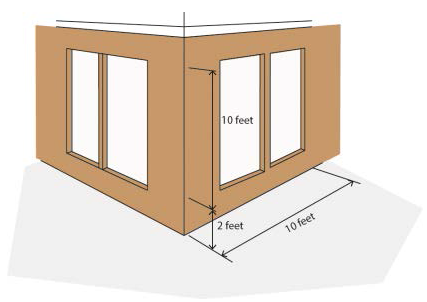
All building facades facing a street shall contain at least 60 percent window glass between the height of two feet and 10 feet above the nearest sidewalk grade. Such glass shall not be tinted more than 15 percent and permit a view of the building's interior to a minimum depth of four feet. The pattern of window glass shall continue around the corner of the building from the street frontage facade a minimum distance of 10 feet.
B.
Reflective glass is not permitted.
C.
The following standards apply to upper story windows, to ensure that any story above ground level continues a repeated pattern for unity and is integral to the building design. Upper story windows are generally smaller than storefront windows at street level, are spaced at regular intervals and give scale and texture to the street edge formed by building facades.
1.
For any new installation or replacement of upper story windows, the new/replacement windows shall be clear/non-tinted glass.
2.
Windows shall not be blocked, boarded up, or reduced in size, unless otherwise required by code for securing a vacant structure.
3.
At least 25 percent (as measured from floor to ceiling) of the façade facing a street and above the first floor shall be window glass, unless historic documentation (e.g. historic photos) can be provided that shows a different percentage of window glass was used. In such cases, the historic percentage shall be maintained.
(6)
Mechanical Equipment.
A.
All mechanical equipment such as compressors, air conditioners, antennas, pumps, heating and ventilating equipment, emergency generators, coolers, chillers, elevator penthouses, water tanks, stand pipes, satellite dishes and communications equipment, and any other type of mechanical equipment for the building shall be completely screened from view from the public right-of-way and from adjacent properties by walls, fences, roof elements, penthouse-type screening devices or landscaping, as applicable. All roof-mounted mechanical equipment shall be screened from public view to the height of the equipment. The design, colors and materials used in screening shall be architecturally compatible with the rooftop and the aesthetic character of the building.
B.
There shall be no exterior fire escapes.
C.
Ground-mounted mechanical equipment shall be located at the rear of the building or, if located along a side, shall be set back as far from the street-facing façade as practicable.
(7)
Awnings.
A.
All primary exterior entrances shall have an awning or architectural treatment directly over the door(s) to aid in identifying the entrance.
B.
The shape of the awning should correspond to the shape of the window or door opening, i.e., barrel shaped awnings should be used with arched windows while rectangular awnings should be used to complement rectangular windows.
C.
Awnings shall be made of canvas or similar waterproof material. Use of aluminum, fiber glass, plastic or similar materials is not permitted, except as structural components. Permanent steel canopies with standing seam roofs are acceptable, provided they are consistent with the overall theme of the façade.
D.
Awnings are not permitted to be backlit.
(c)
Landscaping and Screening. The intent of the requirements of this section is to minimize the visual impact of parking lots from adjoining streets and property; to create a defined edge along streets within the district; to provide relief from the harshness of heat and glare in parking lots; and to contribute to the enhanced character of the Old Hilliard District.
(1)
Tree plantings, landscaping and screening are required along street frontages and in the interior of parking lots, as follows:
A.
Five percent of all parking lot interiors shall be landscaped. Parking interior is defined from the face of curb or perimeter of pavement inward. In no case shall interior landscaping be less than 200 square feet.
B.
One landscape island is required for every 20 parking spaces. If a site, due to its size and configuration, cannot meet this standard, two landscape peninsulas may be substituted for one landscaped island.
C.
Landscaped islands may be randomly spaced, but shall be contained within and dispersed throughout the interior of a parking lot. Landscaped islands that define a main entrance way and separate parking areas may count toward the required five percent interior landscaping.
D.
One tree shall be provided for each 10 parking spaces. Each island shall include one shade tree.
(2)
Specifications regarding size, type, placement and maintenance of materials shall be in accordance with the Hilliard Design Manual.
(d)
Screen Walls and Fences.
(1)
Chain-link fencing with or without slats is not permitted. Fences or screen walls that exceed 200 feet in length shall incorporate columns, insets, landscape pockets or changes in materials at regular intervals.
(2)
Screen walls and fences shall be constructed from durable materials such as stone, brick, wood, or metal with natural finishes, or a combination of these materials. Stockade fencing is prohibited.
(3)
Walls or fences may not exceed a height of 30 inches, unless used as a screening element for security, dumpsters or mechanical equipment. Accent columns or other wall articulations are permitted to exceed 30 inches provided these elements do not fall within site triangles for both pedestrian and vehicular circulation.
(4)
Security fencing of up to six feet high shall be permitted at the rear one-third of the property only. Chain-link, barbed wire, razor wire or any other 'high security' fencing is not permitted.
(e)
Service/Storage Areas/Dumpsters.
(1)
All service areas for loading and unloading of trash containers, receptacles, or outdoor grease bins shall be located in the rear yard, unless an alternate location is approved by the Planning and Zoning Commission.
(2)
Storage areas (for machinery, equipment, trash containers, receptacles, or outdoor grease bins, etc.) shall be screened on all sides (except gated access) by a completely opaque wall that extends to the height of the element being screened, but not exceeding six feet. The accessible side of the enclosure shall contain an opaque gate. Chain link or vinyl materials shall not be used for any part of the enclosure or gate.
(3)
A dumpster, when provided, shall be in a designated area that does not interfere with any aisle, driveway, parking space, loading space or other circulation area. The location of a dumpster shall be shown on the site plan with adequate loading and maneuvering space that does not infringe on any required parking space. A dumpster shall be screened from view as defined herein. Dumpster pads and required screening elements shall not be located closer than five feet to any property line.
(4)
The materials and colors selected for the enclosure's screening shall complement those on the principal building's structure.
(f)
Parking and Interior Circulation.
(1)
New or expanded parking lots on the interior of the premises shall be located in the rear or side yards, accessed by means of shared driveways. Parking lots shall be small in scale where possible, and connected with parking lots on adjacent properties. Cross-access easements for adjacent lots with connected parking lots are required. Common, shared parking facilities are encouraged. Required parking may be accommodated off-site in shared parking facilities, but must be within 600 feet of the use being served.
(2)
Off-street parking shall comply with all other applicable requirements of Chapter 1127.
(3)
The parking lot layout shall take into consideration pedestrian circulation. Pedestrian crosswalks shall be provided where necessary and appropriate, shall be distinguished by textured paving and shall be integrated into the pedestrian network system. Pavement textures shall be required on pedestrian access ways, and are strongly encouraged elsewhere in the parking lot, as surfacing materials, or when used as accents.
(4)
The number of required off-street parking spaces may be reduced by up to 50 percent by the Planning and Zoning Commission upon consideration of the following factors:
A.
Public, permit or shared parking is available within a reasonable distance of the proposed use;
B.
Transit service is available and likely to provide a viable alternative to personal vehicles;
C.
The proposed use can be expected to benefit from pedestrian traffic and accessibility generated by other nearby uses, rather than as a single destination; and
D.
The hours of operation and/or peak activity for the use will not coincide with other uses in the vicinity.
(5)
The required number of loading spaces may be reduced or eliminated at the discretion of the Planning and Zoning Commission, with due consideration given to:
A.
Frequency and time of deliveries;
B.
Size and nature of delivery vehicles;
C.
Impact on adjoining or nearby uses; and
D.
Impact upon adjoining streets, alleys or parking areas.
(6)
One bicycle parking space shall be provided for each 10 vehicular parking spaces in addition to the required vehicle parking; provided, at least one bicycle parking space is required regardless of the size of the lot. Each bicycle parking space shall be at least two by six feet with a secure locking post or mechanism, as approved by the Planning Director or designee, and shall not be located in such a way as to obstruct parking spaces or vehicle or pedestrian access.
(g)
Drive-Thru Facilities.
(1)
Drive-thru pickup windows and coverings, if permitted, shall not be located on any building side that faces a public street.
(2)
Drive-thru windows shall be designed as an integral part of the structure they serve and building materials including canopies, awnings, support posts, etc., shall match the materials and color scheme of the building they serve.
(h)
Site Utilities.
(1)
Cell towers are prohibited.
(2)
Existing underground wiring shall not be replaced with overhead wiring.
(3)
New utilities or relocated utility feeds shall be located underground.
(4)
Solar panels may be used, if approved as a conditional use in accordance with the requirements of Chapter 1123 and Section 1121.02(f).
(i)
Site Lighting. Parking lot lighting shall be in accordance with the following standards:
(1)
Light fixtures shall not exceed 20 feet in height, measured from the surface of the ground to the top of the light fixture.
(2)
In parking lots, lights shall be placed in landscaped islands or on a solid base to protect both lights and vehicles from possible damage.
(3)
Security lighting shall be from full cutoff type fixtures, shielded and aimed so illumination is directed to the designated areas with the lowest possible illumination level to effectively allow surveillance.
(4)
High Pressure Sodium fixtures shall not be permitted for parking lot lighting. Accent lighting on building facades is permitted.
(5)
All parking lot light fixtures and poles shall be black in color.
(6)
Specifications regarding lighting levels and placement of fixtures shall be in accordance with the City of Hilliard Design Manual.
(j)
Maintenance and Upkeep.
(1)
All plants and landscaped areas shall be maintained in a neat and healthy condition. Dead plant material shall be replaced no later than the next planting season; and shall also meet the applicable size requirements specified in the Hilliard Design Manual.
(2)
Grounds are to be maintained in a safe, clean, and neat condition free of rubbish and weeds. Lawns must be kept mowed.
(3)
All owners, or their designees, shall maintain buildings, drives, parking lots, fencing and screening, and other structures located upon their property in good and sufficient repair and shall keep the premises painted, windows glazed, pavement swept and true to line, and grade in good repair. Drainage areas and intakes are to be kept clean and free of debris or other obstructions.
(4)
Buildings that are vacant for any reason must be kept locked in order to prevent entry by vandals. They must also meet all other maintenance requirements of the Hilliard City Code.
(5)
Obsolete poles and/or wiring shall be removed within six months of the time their use is discontinued. Poles shall be maintained in a vertical position.
(k)
Signs. All signs shall conform to the requirements and procedures specified in Chapter 1129.
(l)
Project Evaluation Criteria. The following general evaluation criteria are provided to create a clear and concise guide for evaluating projects within the District. This checklist will help ensure that each project will be examined relative to design objectives and how it creatively applies the basic elements of quality design, as defined within this section.
(1)
Community Goals. Does the project plan conform to neighborhood development goals and the recommendations of the Comprehensive Plan?
(2)
Historic Preservation. Is the project complementary to the historic character of the District? (if applicable)
(3)
Context. Does the proposed project harmoniously relate to and enhance adjacent structures and public spaces with respect to scale, building materials, setbacks and similar design elements?
(4)
Pedestrian Needs. Does the proposed project accommodate and promote pedestrian activity through wide walkways, linkages to surrounding uses and public spaces, and minimal conflicts with vehicular access?
(5)
Unique Character. Does the proposed project contribute to the area's sense of place, reinforce Old Hilliard's unique character, and enhance the people-oriented setting?
(6)
People-Oriented Facades. Within this District special emphasis must be placed on creating people oriented facades along Main and Norwich Streets. Is the street-level façade in scale with pedestrian activity and movement? Are building entrances well defined and inviting?
(Ord. 14-29. Passed 10-27-14; Ord. 15-26. Passed 7-13-15; Ord. No. 21-09, § 1(Exh. A), 3-22-21; Ord. No. 21-33, § 1(Exh. A), 11-8-21.)
1115.06 - SITE DEVELOPMENT REGULATIONS.
In addition to the requirements of this Chapter, all development in the Special Purpose Districts shall meet the applicable requirements as listed elsewhere in this Code:
(a)
General Provisions, see Chapter 1121.
(b)
Conditional Use Requirements, see Chapter 1123.
(c)
Landscaping and Lighting Requirements, see Chapter 1125.
(d)
Off-Street Parking and Loading, see Chapter 1127.
(e)
Signs, see Chapter 1129.
(f)
Site Plan Review Requirements, see Chapter 1131.
(Ord. 14-29. Passed 10-27-14.)

