
Hillsboro City Zoning Code
SUB CHAPTER 12.21
SINGLE DETACHED AND MIDDLE HOUSING RESIDENTIAL ZONES
12.21.010 - Single Detached and Middle Housing Residential Zones.
There are 8 single detached and middle housing residential zones in the City:
A.
R-10 Residential;
B.
R-8.5 Residential;
C.
R-7 Residential;
D.
R-6 Residential;
E.
R-4.5 Residential;
F.
SCR-LD Station Community Residential—Low Density;
G.
SCR-OTC Station Community Residential—Orenco Townsite Conservation; and
H.
SCR-DNC Station Community Residential—Downtown Neighborhood Conservation.
(Ord. 6401 § 1, 2022)
12.21.020 - Locational Characteristics.
On the Comprehensive Plan Land Use Map, single detached and middle housing residential zones implement the RL Residential Low Density designation with the following exceptions:
A.
R-4.5 implements the lowest density in the RM Residential Medium Density designation.
B.
SCR-LD, SCR-OTC and SCR-DNC (among other zones) implement the SCPA Station Community Planning Area designation.
(Ord. 6401 § 1, 2022)
12.21.030 - Organization within This Subchapter.
A.
Common Elements. Each section in this subchapter contains the following subsections:
1.
Purposes.
2.
Permitted, Conditional, Limited and Not Permitted Housing Types (organized in tables).
3.
Permitted, Conditional, Limited and Not Permitted Uses (organized in tables).
4.
Accessory Uses Permitted.
5.
Development Standards (organized in tables, illustrated in figures).
6.
Variances and Adjustments.
7.
Other Pertinent Regulations.
B.
Purpose. Purpose statements for each zone subchapter are descriptive of the zone's characteristics and intent, and are drawn from the Comprehensive Plan and/or the Community Development Code. Purpose statements are informational and not intended to be regulations.
C.
Housing Types. Residential uses occupy a variety of housing types. Permitted, limited and not permitted housing types within each zone are summarized in tables based on the definitions of housing types listed in Section 12.01.500. Neither the residential use categories nor the housing types distinguish between owner- or renter-occupation.
D.
Uses. Permitted, conditionally permitted, limited and not permitted uses within each zone are summarized in tables based on the standardized use categories described in Subchapter 12.10.
1.
Permitted Uses (P) are allowed by right, subject to all applicable provisions of this Code.
2.
Conditionally Permitted Uses (C) may be allowed, subject to approval on an individual basis as Conditional Uses. The Conditional Use permit application process and approval criteria are described in Section 12.80.020. Certain Conditional Uses may have additional standards as described in Subchapter 12.40.
3.
Limited Uses (L) are permitted by right, but are subject to specified requirements, exceptions or restrictions which may vary with the nature, size, or location of the use.
4.
Not Permitted Uses (N) are not permitted in the zone under any circumstances.
E.
Accessory Uses Permitted. Accessory uses are permitted in each zone, in conjunction with the primary residence on the site and are subject to the same regulations as the primary use unless stated otherwise in the Code. Characteristics and standards for certain accessory uses are listed in Subchapter 12.40.
F.
Development Standards.
1.
Development standards for each single detached and middle housing residential zone are summarized in tables. Development standards are typically numerical standards: minimum and maximum densities; minimum and maximum lot dimensions; structural setbacks; maximum building height and lot coverage. All new development must comply with the development standards unless a variance or adjustment is approved as described in subsection G below.
2.
Maximum residential densities in each single detached and middle housing residential zone are generally derived from the minimum lot size: Minimum densities are approximately 80% of the maximum density. Density calculation formulas for minimum and maximum density are described in Section 12.50.120. Minimum and maximum residential densities apply to all residential use categories, except as specified for middle housing in the development standards for each zone.
3.
Certain development standards are illustrated in a figure following the development standards table in each zone.
G.
Variances and Adjustments. Applications to vary or adjust certain numeric standards in each zone may be requested and approved under Sections 12.80.152, 12.80.154, and 12.80.156. Certain numeric standards may also be subject to exceptions under specific circumstances, as described in the Standards section.
H.
Other Pertinent Regulations. Additional standards such as parking, landscaping, vision clearance, and street improvements, may also apply to development in single detached and middle housing residential zones. These site design and development standards may also have exceptions as described in those sections.
(Ord. 6401 § 1, 2022; Ord. 6323 § 1, 2019; Ord. 6322 § 1, 2019)
12.21.100 - R-10 Residential.
12.21.110 - Purposes.
A.
Create and Maintain Large Lot Residential Opportunities. The R-10 zone implements the lowest density of the Low Density Residential Comprehensive Plan designation, providing an opportunity for large lot residential development in appropriate areas.
B.
Preserve Neighborhood Livability. The R-10 zone encourages livability in existing and future large lot residential neighborhoods by allowing residential development with compatible non-residential uses such as schools, assembly facilities and parks.
(Ord. 6401 § 1, 2022)
12.21.120 - Housing Types.
Table 12.21.120-1 lists Housing Types permitted in the R-10 zone. Housing Types are defined in Section 12.01.500.
(P) Permitted (C) Conditional (L) Limited (N) Not Permitted
(Ord. 6401 § 1, 2022)
12.21.130 - Uses.
Table 12.21.130-1 lists the Permitted, Conditionally Permitted, Limited, and Not Permitted Uses in the R-10 zone.
(P) Permitted (C) Conditional (L) Limited (N) Not Permitted
(Ord. No. 6467, §§ 1, 2(Exh. A), 3-5-2024; Ord. 6401 § 1, 2022; Ord. 6294 § 1, 2019; Ord. 6149 § 1, 2015)
12.21.140 - Accessory Uses Permitted by Right.
A.
Accessory Dwelling Units. Accessory dwelling units (ADUs) are defined in Section 12.01.500, and are permitted when accessory to single detached dwellings or townhouses subject to additional requirements in Section 12.40.100.
B.
Accessory Structures. Accessory structures are defined in Section 12.01.500, and are permitted subject to additional requirements in Section 12.40.104.
C.
Home Occupations. Home occupations are defined in Section 12.01.500, and are permitted subject to additional requirements in Section 12.40.170.
D.
Community Recreation Facilities and Community Buildings. Community recreation facilities and community buildings used solely by residents of a specific neighborhood or development are permitted when approved as an amenity of that neighborhood or development during the development process. When accessory to cottage clusters, community buildings are subject to additional requirements in Subsection 12.50.715.E.9.
E.
Certified or Registered Family Child Care Homes and Residential Homes. Certified or registered family child care homes as defined in ORS 329A are permitted; and certified or registered residential homes as defined in ORS 443 are also permitted.
F.
Household Energy Production Facilities. Household energy production facilities are defined in Section 12.01.500, and are permitted subject to issuance of necessary and appropriate Federal, State and local permits.
G.
Amateur or "Ham" Radio Facilities. Amateur or "ham" radio facilities are permitted subject to issuance of necessary and appropriate Federal, State and local permits.
H.
Horticultural Activities. Horticultural activities are defined in Section 12.01.500, and are permitted, excluding commercial buildings or structures.
I.
Partial-dwelling STRs are permitted subject to additional requirements in Section 12.40.230.
(Ord. No. 6467, §§ 1, 2(Exh. A), 3-5-2024; Ord. 6401 § 1, 2022; Ord. 6393 § 1, 2021; Ord. 6323 § 1, 2019; Ord. 6120 § 1, 2015)
12.21.150 - Development Standards.
Base zone development standards in the R-10 zone are listed in Table 12.21.150-1. Certain standards are illustrated in Figure 12.21.150-A.
* Standards illustrated in Figure 12.21.150-A
Figure 12.21.150-A:
Development Standards in the R-10 Zone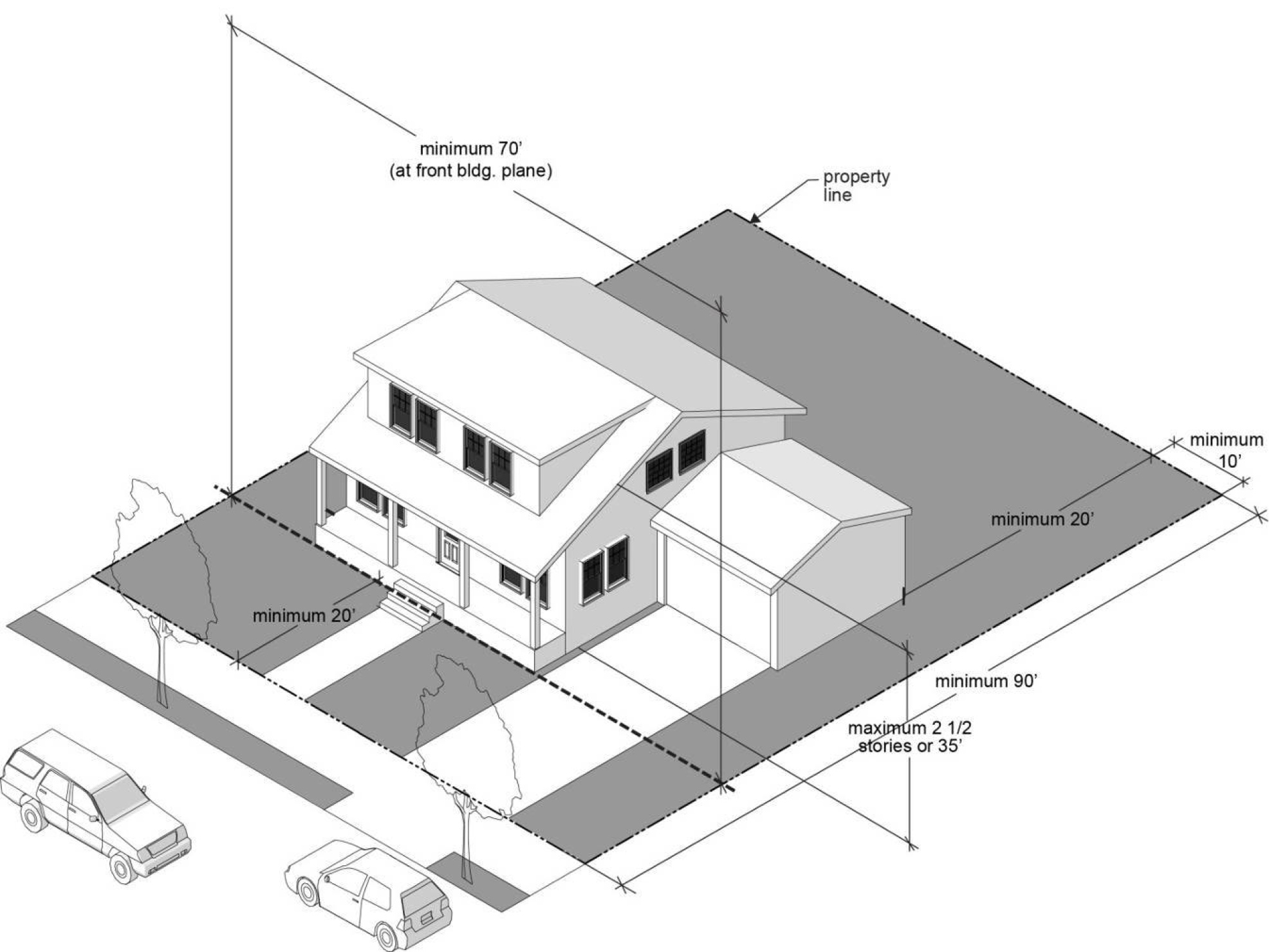
(Ord. 6401 § 1, 2022; Ord. 6323 § 1, 2019; Ord. 6120 § 1, 2015)
12.21.160 - Variances and Adjustments.
Applications for Variances and Adjustments per Section 12.80.150 to standards in the R-10 zone may be approved under 1 of 4 processes:
A.
As a Variance pursuant to Section 12.80.152;
B.
As a Minor Adjustment in conjunction with a primary Type II or Type III application pursuant to Section 12.80.154;
C.
As a Major Adjustment in conjunction with a primary Type III application pursuant to Section 12.80.156; or
D.
With a Significant Natural Resource Permit pursuant to Section 12.80.130.
(Ord. 6401 § 1, 2022; Ord. 6322 § 1, 2019; Ord. 6120 § 1, 2015)
12.21.170 - Other Pertinent Regulations.
Additional standards such as parking, landscaping, vision clearance, and street improvements also apply to development in the R-10 zone as follows:
•
Section 12.50.200 Site Design
•
Section 12.50.300 Vehicle Parking
•
Section 12.50.400 Bicycle Parking/Bicycle and Pedestrian Circulation and Connectivity
•
Section 12.50.500 Access and Street Standards
•
Section 12.50.600 Public Utilities, Site Grading and Storm Water Management Facilities Site Integration
•
Section 12.50.700 Design Standards for Residential Development
(Ord. 6401 § 1, 2022)
12.21.200 - R-8.5 Residential.
12.21.210 - Purposes.
A.
Create and Maintain Large Lot Residential Opportunities. The R-8.5 zone implements the lower end of the Residential Low Density Comprehensive Plan designation range, providing an opportunity for large lot residential development in appropriate areas.
B.
Preserve Neighborhood Livability. The R-8.5 zone encourages livability in existing and future large lot residential neighborhoods by allowing residential development with compatible non-residential uses such as schools, assembly facilities and parks.
(Ord. 6401 § 1, 2022; Ord. 6322 § 1, 2019)
12.21.220 - Housing Types.
Table 12.21.220-1 lists housing types permitted in the R-8.5 zone. Housing types are defined in Section 12.01.500.
(P) Permitted (C) Conditional (L) Limited (N) Not Permitted
(Ord. 6401 § 1, 2022; Ord. 6322 § 1, 2019)
12.21.230 - Uses.
Table 12.21.230-1 lists the permitted, conditionally permitted, limited, and not permitted uses in the R-8.5 zone.
(P) Permitted (C) Conditional (L) Limited (N) Not Permitted
(Ord. No. 6467, §§ 1, 2(Exh. A), 3-5-2024; Ord. 6401 § 1, 2022; Ord. 6322 § 1, 2019; Ord. 6294 § 1, 2019; Ord. 6149 § 1, 2015)
12.21.240 - Accessory Uses Permitted by Right.
A.
Accessory Dwelling Units. Accessory dwelling units (ADUs) are defined in Section 12.01.500, and are permitted when accessory to single detached dwellings or townhouses subject to additional requirements in Section 12.40.100.
B.
Accessory Structures. Accessory structures are defined in Section 12.01.500, and are permitted subject to additional requirements in Section 12.40.100.
C.
Home Occupations. Home occupations are defined in Section 12.01.500, and are permitted subject to additional requirements in Section 12.40.170.
D.
Community Recreation Facilities and Community Buildings. Community recreation facilities used solely by residents of a specific neighborhood or development are permitted when approved as an amenity of that neighborhood or development during the development process. When accessory to cottage clusters, community buildings are subject to additional requirements in Subsection 12.50.715.E.9.
E.
Certified or Registered Family Child Care Homes and Residential Homes. Certified or registered family child care homes as defined in ORS 329A are permitted; and certified or registered residential homes as defined in ORS 443 are also permitted.
F.
Household Energy Production Facilities. Household energy production facilities are defined in Section 12.01.500, and are permitted subject to issuance of necessary and appropriate Federal, State and local permits.
G.
Amateur or "Ham" Radio Facilities. Amateur or "ham" radio facilities are permitted subject to issuance of necessary and appropriate Federal, State and local permits.
H.
Horticultural Activities. Horticultural activities are defined in Section 12.01.500, and are permitted, excluding commercial buildings or structures.
I.
Partial-dwelling STRs are permitted subject to additional requirements in Section 12.40.230.
(Ord. No. 6467, §§ 1, 2(Exh. A), 3-5-2024; Ord. 6401 § 1, 2022; Ord. 6323 § 1, 2019; Ord. 6120 § 1, 2015)
12.21.250 - Development Standards.
Development standards in the R-8.5 zone are listed in Table 12.21.250-1. Certain standards are illustrated in Figure 12.21.250-A.
* Standards illustrated in Figure 12.21.250-A
Figure 12.21.250-A:
Single Detached Dwelling Development Standards in the R-8.5 Zone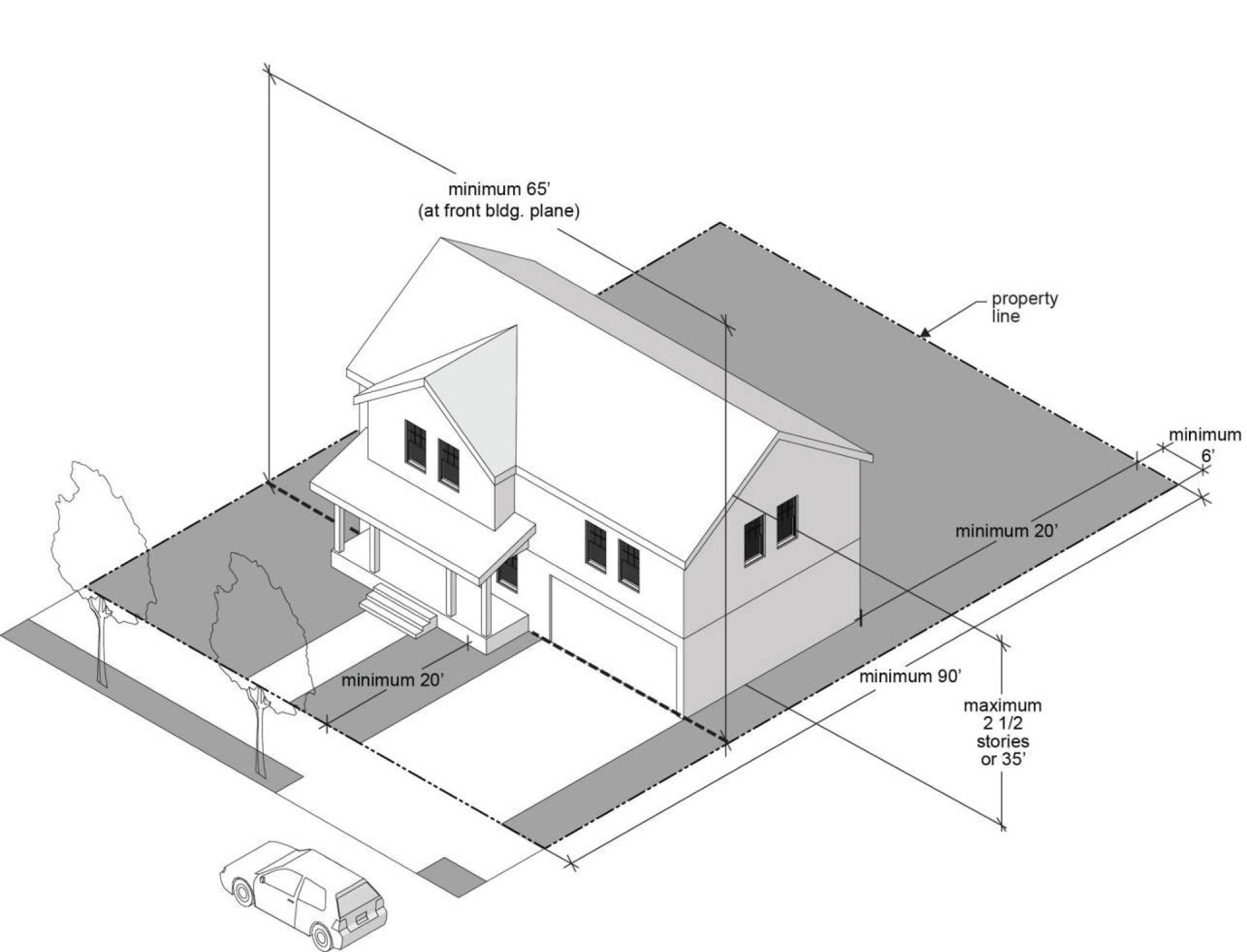
(Ord. 6401 § 1, 2022; Ord. 6323 § 1, 2019; Ord. 6120 § 1, 2015)
12.21.260 - Variances and Adjustments.
Applications for Variances and Adjustments per Section 12.80.150 to standards in the R-8.5 zone may be approved under 1 of 4 processes:
A.
As a Variance pursuant to Section 12.80.152;
B.
As a Minor Adjustment in conjunction with a primary Type II or Type III application pursuant to Section 12.80.154;
C.
As a Major Adjustment in conjunction with a Primary Type III application pursuant to Section 12.80.156; or
D.
With a Significant Natural Resource Permit pursuant to Section 12.80.130.
(Ord. 6401 § 1, 2022; Ord. 6322 § 1, 2019; Ord. 6120 § 1, 2015)
12.21.270 - Other Pertinent Regulations.
Additional standards such as parking, landscaping, vision clearance, and street improvements also apply to development in the R-8.5 zone as follows:
•
Section 12.50.200 Site Design
•
Section 12.50.300 Vehicle Parking
•
Section 12.50.400 Bicycle Parking/Bicycle and Pedestrian Circulation and Connectivity
•
Section 12.50.500 Access and Street Standards
•
Section 12.50.600 Public Utilities, Site Grading and Storm Water Management Facilities Site Integration
•
Section 12.50.700 Design Standards for Residential Development
(Ord. 6401 § 1, 2022)
12.21.300 - R-7 Residential.
12.21.310 - Purposes.
A.
Create and Maintain Large Lot Residential Opportunities. The R-7 zone implements the middle of the Low Density Residential Comprehensive Plan designation density range, providing an opportunity for residential development on moderate sized lots in appropriate areas.
B.
Preserve Neighborhood Livability. The R-7 zone encourages livability in existing and future residential neighborhoods with moderate sized lots by allowing residential development with compatible non-residential uses such as schools, assembly facilities and parks.
(Ord. 6401 § 1, 2022)
12.21.320 - Housing Types.
Table 12.21.320-1 lists Housing Types permitted in the R-7 zone. Housing Types are defined in Section 12.01.500.
(P) Permitted (C) Conditional (L) Limited (N) Not Permitted
(Ord. 6401 § 1, 2022; Ord. 6294 § 1, 2019)
12.21.330 - Uses.
Table 12.21.330-1 lists the Permitted, Conditionally Permitted, Limited, and Not Permitted Uses in the R-7 zone.
(P) Permitted (C) Conditional (L) Limited (N) Not Permitted
(Ord. No. 6467, §§ 1, 2(Exh. A), 3-5-2024; Ord. 6401 § 1, 2022; Ord. 6393 § 1, 2021; Ord. 6294 § 1, 2019; Ord. 6149 § 1, 2015)
12.21.340 - Accessory Uses Permitted by Right.
A.
Accessory Dwelling Units. Accessory dwelling units (ADUs) are defined in Section 12.01.500, and are permitted when accessory to single detached dwellings or townhouses subject to additional requirements in Section 12.40.100.
B.
Accessory Structures. Accessory structures are defined in Section 12.01.500, and are permitted subject to additional requirements in Section 12.40.104.
C.
Home Occupations. Home occupations are defined in Section 12.01.500, and are permitted subject to additional requirements in Section 12.40.170.
D.
Community Recreation Facilities and Community Buildings. Community recreation facilities and community buildings used solely by residents of a specific neighborhood or development are permitted when approved as an amenity of that neighborhood or development during the development process. When accessory to cottage clusters, community buildings are subject to additional requirements in Subsection 12.50.715.E.9.
E.
Certified or Registered Family Child Care Homes and Residential Homes. Certified or registered family child care homes as defined in ORS 329A are permitted; and certified or registered residential homes as defined in ORS 443 are also permitted.
F.
Household Energy Production Facilities. Household energy production facilities are defined in Section 12.01.500, and are permitted subject to issuance of necessary and appropriate Federal, State and local permits.
G.
Amateur or "Ham" Radio Facilities. Amateur or "ham" radio facilities are permitted subject to issuance of necessary and appropriate Federal, State and local permits.
H.
Horticultural Activities. Horticultural activities are defined in Section 12.01.500, and are permitted, excluding commercial buildings or structures.
I.
Partial-dwelling STRs are permitted subject to additional requirements in Section 12.40.230.
(Ord. No. 6467, §§ 1, 2(Exh. A), 3-5-2024; Ord. 6401 § 1, 2022; Ord. 6323 § 1, 2019; Ord. 6120 § 1, 2015)
12.21.350 - Development Standards.
Base zone development standards in the R-7 zone are listed in Table 12.21.350-1. Certain standards are illustrated in Figure 12.21.350-A.
* Standards illustrated in Figure 12.21.350-A
Figure 12.21.350-A:
Development Standards in the R-7 Zone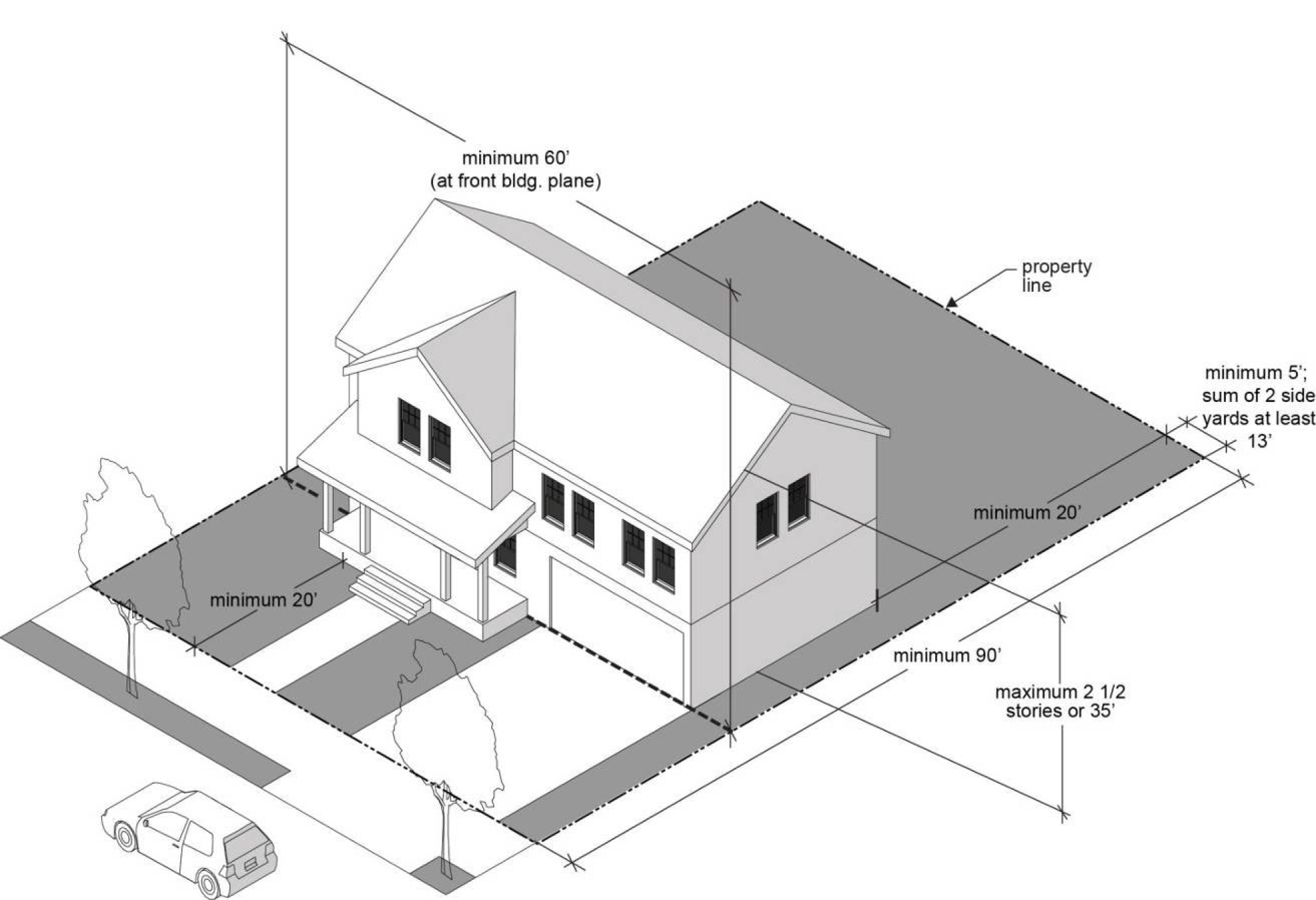
(Ord. 6401 § 1, 2022; Ord. 6323 § 1, 2019; Ord. 6120 § 1, 2015)
12.21.360 - Variances and Adjustments.
Applications for Variances and Adjustments per Section 12.80.150 to standards in the R-7 zone may be approved under 1 of 4 processes:
A.
As a Variance pursuant to Section 12.80.152;
B.
As a Minor Adjustment in conjunction with a primary Type II or Type III application pursuant to Section 12.80.154;
C.
As a Major Adjustment in conjunction with a primary Type III application pursuant to Section 12.80.156; or
D.
With a Significant Natural Resource Permit pursuant to Section 12.80.130.
(Ord. 6401 § 1, 2022; Ord. 6322 § 1, 2019; Ord. 6120 § 1, 2015)
12.21.370 - Other Pertinent Regulations.
Additional standards such as parking, landscaping, vision clearance, and street improvements also apply to development in the R-7 zone as follows:
•
Section 12.50.200 Site Design
•
Section 12.50.300 Vehicle Parking
•
Section 12.50.400 Bicycle Parking/Bicycle and Pedestrian Circulation and Connectivity
•
Section 12.50.500 Access and Street Standards
•
Section 12.50.600 Public Utilities, Site Grading and Storm Water Management Facilities Site Integration
•
Section 12.50.700 Design Standards for Residential Development
(Ord. 6401 § 1, 2022)
12.21.400 - R-6 Residential.
12.21.410 - Purposes.
A.
Create and Maintain Smaller Lot Residential Opportunities. The R-6 zone implements the highest end of the Low Density Residential Comprehensive Plan designation density range, providing an opportunity for smaller lot residential development in appropriate areas.
B.
Preserve Neighborhood Livability. The R-6 zone encourages livability in existing and future smaller lot residential neighborhoods by allowing residential development with compatible non-residential Uses such as schools, assembly facilities and parks.
(Ord. 6401 § 1, 2022)
12.21.420 - Housing Types.
Table 12.21.420-1 lists Housing Types permitted in the R-6 zone. Housing Types are defined in Section 12.01.500.
(P) Permitted (C) Conditional (L) Limited (N) Not Permitted
(Ord. 6401 § 1, 2022; Ord. 6294 § 1, 2019)
12.21.430 - Uses.
Table 12.21.430-1 lists the Permitted, Conditionally Permitted, Limited, and Not Permitted Uses in the R-6 zone.
(P) Permitted (C) Conditional (L) Limited (N) Not Permitted
(Ord. No. 6467, §§ 1, 2(Exh. A), 3-5-2024; Ord. 6401 § 1, 2022; Ord. 6393 § 1, 2021; Ord. 6294 § 1, 2019; Ord. 6149 § 1, 2015)
12.21.440 - Accessory Uses Permitted by Right.
A.
Accessory Dwelling Units. Accessory dwelling units (ADUs) are defined in Section 12.01.500, and are permitted when accessory to single detached dwellings or townhouses subject to additional requirements in Section 12.40.100.
B.
Accessory Structures. Accessory structures are defined in Section 12.01.500, and are permitted subject to additional requirements in Section 12.40.104.
C.
Home Occupations. Home occupations are defined in Section 12.01.500, and are permitted subject to additional requirements in Section 12.40.170.
D.
Community Recreation Facilities and Community Buildings. Community recreation facilities and community buildings used solely by residents of a specific neighborhood or development are permitted when approved as an amenity of that neighborhood or development during the development process. When accessory to cottage clusters, community buildings are subject to additional requirements in Subsection 12.50.715.E.9.
E.
Certified or Registered Family Child Care Homes and Residential Homes. Certified or registered family child care homes as defined in ORS 329A are permitted; and certified or registered residential homes as defined in ORS 443 are also permitted.
F.
Household Energy Production Facilities. Household energy production facilities are defined in Section 12.01.500, and are permitted subject to issuance of necessary and appropriate Federal, State and local permits.
G.
Amateur or "Ham" Radio Facilities. Amateur or "ham" radio facilities are permitted subject to issuance of necessary and appropriate Federal, State and local permits.
H.
Horticultural Activities. Horticultural activities are defined in Section 12.01.500, and are permitted, excluding commercial buildings or structures.
I.
Partial-dwelling STRs are permitted subject to additional requirements in Section 12.40.230.
(Ord. No. 6467, §§ 1, 2(Exh. A), 3-5-2024; Ord. 6401 § 1, 2022; Ord. 6323 § 1, 2019; Ord. 6322 § 1, 2019; Ord. 6120 § 1, 2015)
12.21.450 - Development Standards.
Base zone development standards in the R-6 zone are listed in Table 12.21.450-1. Certain standards are illustrated in Figure 12.21.450-A.
* Standards illustrated in Figure 12.21.450-A
Figure 12.21.450-A:
Development Standards in the R-6 Zone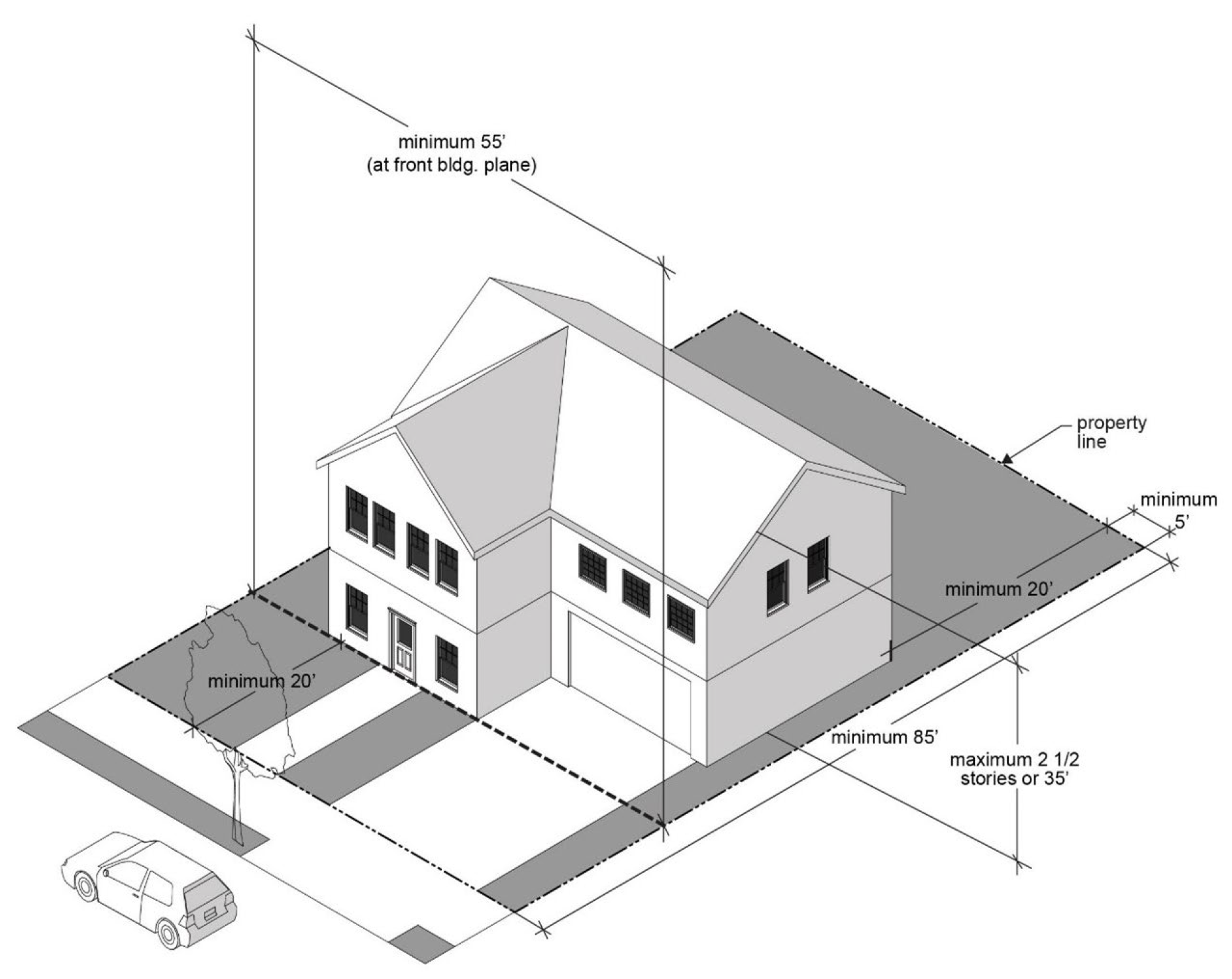
(Ord. 6401 § 1, 2022; Ord. 6393 § 1, 2021; Ord. 6323 § 1, 2019; Ord. 6120 § 1, 2015)
12.21.460 - Variances and Adjustments.
Applications for Variances and Adjustments per Section 12.80.150 to standards in the R-6 zone may be approved under 1 of 4 processes:
A.
As a Variance pursuant to Section 12.80.152;
B.
As a Minor Adjustment in conjunction with a primary Type II or Type III application pursuant to Section 12.80.154;
C.
As a Major Adjustment in conjunction with a primary Type III application pursuant to Section 12.80.156; or
D.
With a Significant Natural Resource Permit application pursuant to Section 12.80.130.
(Ord. 6401 § 1, 2022; Ord. 6322 § 1, 2019; Ord. 6120 § 1, 2015)
12.21.470 - Other Pertinent Regulations.
Additional standards such as parking, landscaping, vision clearance, and street improvements also apply to development in the R-6 zone as follows:
•
Section 12.50.200 Site Design
•
Section 12.50.300 Vehicle Parking
•
Section 12.50.400 Bicycle Parking/Bicycle and Pedestrian Circulation and Connectivity
•
Section 12.50.500 Access and Street Standards
•
Section 12.50.600 Public Utilities, Site Grading and Storm Water Management Facilities Site Integration
•
Section 12.50.700 Design Standards for Residential Development
(Ord. 6401 § 1, 2022)
12.21.500 - R-4.5 Residential.
12.21.510 - Purposes.
A.
Create and Maintain Small Lot Residential Opportunities. The R-4.5 zone implements the lowest density of the Medium Density Residential Comprehensive Plan designation, providing an opportunity for small lot residential development in appropriate areas.
B.
Preserve Neighborhood Livability. The R-4.5 zone encourages livability in existing and future small lot residential neighborhoods by allowing residential development with compatible non-residential Uses such as schools, assembly facilities and parks.
(Ord. 6401 § 1, 2022)
12.21.520 - Housing Types.
Table 12.21.520-1 lists Housing Types permitted in the R-4.5 zone. Housing Types are defined in Section 12.01.500.
(P) Permitted (C) Conditional (L) Limited (N) Not Permitted
(Ord. 6401 § 1, 2022; Ord. 6294 § 1, 2019; Ord. 6120 § 1, 2015)
12.21.530 - Uses.
Table 12.21.530-1 lists the Permitted, Conditionally Permitted, Limited, and Not Permitted Uses in the R-4.5 zone.
(P) Permitted (C) Conditional (L) Limited (N) Not Permitted
(Ord. No. 6467, §§ 1, 2(Exh. A), 3-5-2024; Ord. 6401 § 1, 2022; Ord. 6393 § 1, 2021; Ord. 6294 § 1, 2019; Ord. 6149 § 1, 2015)
12.21.540 - Accessory Uses Permitted by Right.
A.
Accessory Dwelling Units. Accessory dwelling units (ADUs) are defined in Section 12.01.500, and are permitted when accessory to single detached dwellings or townhouses subject to additional requirements in Section 12.40.100.
B.
Accessory Structures. Accessory structures are defined in Section 12.01.500, and are permitted subject to additional requirements in Section 12.40.104.
C.
Home Occupations. Home occupations are defined in Section 12.01.500, and are permitted subject to additional requirements in Section 12.40.170.
D.
Community Recreation Facilities and Community Buildings. Community recreation facilities and community buildings used solely by residents of a specific neighborhood or development are permitted when approved as an amenity of that neighborhood or development during the development process. When accessory to cottage clusters, community buildings are subject to additional requirements in Subsection 12.50.715.E.9.
E.
Certified or Registered Family Child Care Homes and Residential Homes. Certified or registered family child care homes as defined in ORS 329A are permitted; and certified or registered residential homes as defined in ORS 443 are also permitted.
F.
Household Energy Production Facilities. Household energy production facilities are defined in Section 12.01.500, and are permitted subject to issuance of necessary and appropriate Federal, State and local permits.
G.
Amateur or "Ham" Radio Facilities. Amateur or "ham" radio facilities are permitted subject to issuance of necessary and appropriate Federal, State and local permits.
H.
Horticultural Activities. Horticultural activities are defined in Section 12.01.500, and are permitted, excluding commercial buildings or structures.
I.
Partial-dwelling STRs are permitted subject to additional requirements in Section 12.40.230.
(Ord. No. 6467, §§ 1, 2(Exh. A), 3-5-2024; Ord. 6401 § 1, 2022; Ord. 6323 § 1, 2019; Ord. 6120 § 1, 2015)
12.21.550 - Development Standards.
Base zone development standards in the R-4.5 zone are listed in Table 12.21.550-1. Certain standards are illustrated in Figure 12.21.550-A.
* Standards illustrated in Figure 12.21.550-A
Figure 12.21.550-A:
Single Detached Dwelling Minimum Lot Dimensions, Setbacks
and Height Requirements in the R-4.5 Zone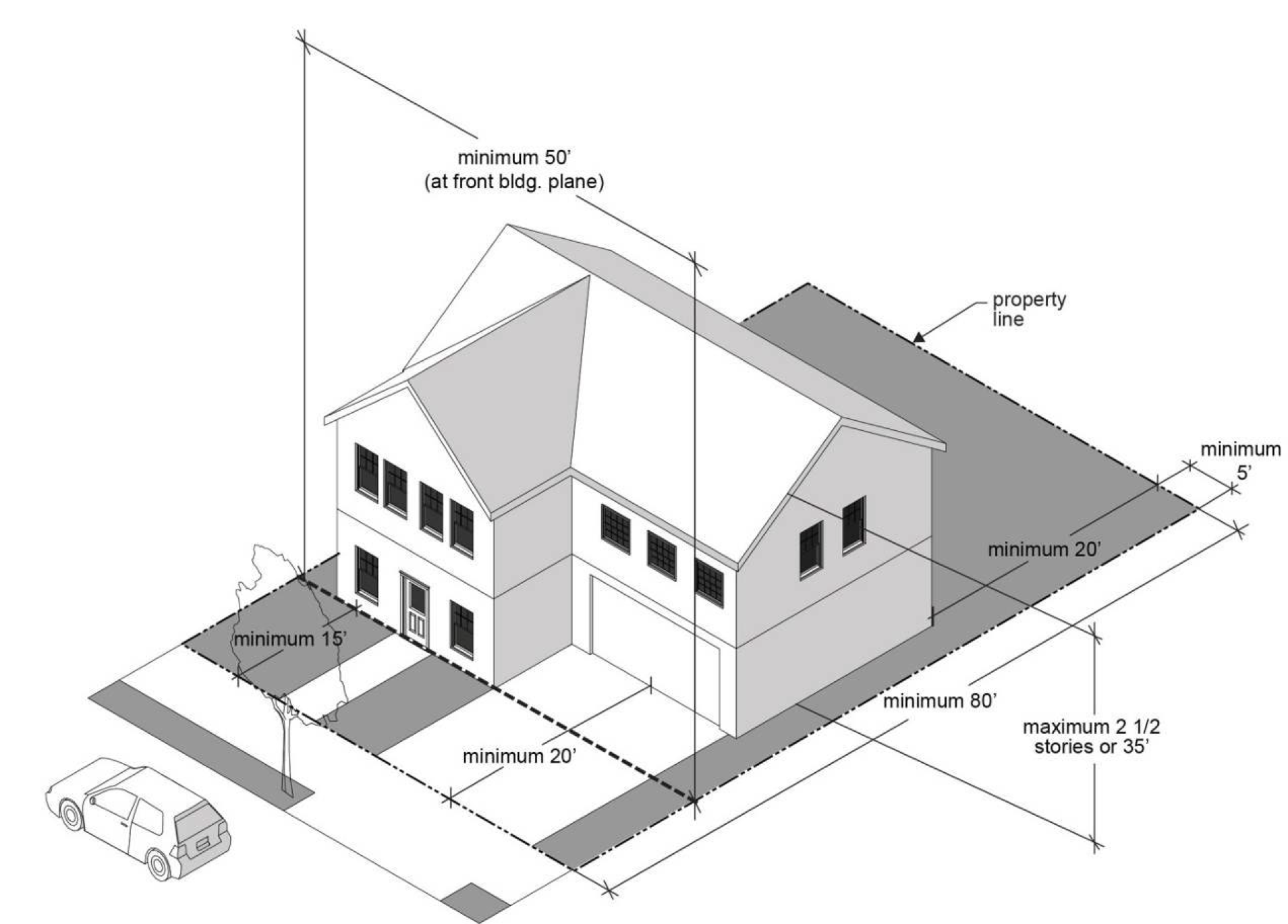
(Ord. 6401 § 1, 2022; Ord. 6323 § 1, 2109; Ord. 6120 § 1, 2015)
12.21.560 - Variances and Adjustments.
Applications for Variances and Adjustments per Section 12.80.150 to standards in the R-4.5 zone may be approved under 1 of 4 processes:
A.
As a Variance pursuant to Section 12.80.152;
B.
As a Minor Adjustment in conjunction with a primary Type II or Type III application pursuant to Section 12.80.154;
C.
As a Major Adjustment in conjunction with a primary Type III application pursuant to Section 12.80.156; or
D.
With a Significant Natural Resource Permit pursuant to Section 12.80.130.
(Ord. 6401 § 1, 2022; Ord. 6322 § 1, 2109; Ord. 6120 § 1, 2015)
12.21.570 - Other Pertinent Regulations.
Additional standards such as parking, landscaping, vision clearance, and street improvements also apply to development in the R-4.5 zone as follows:
•
Section 12.50.200 Site Design
•
Section 12.50.300 Vehicle Parking
•
Section 12.50.400 Bicycle Parking/Bicycle and Pedestrian Circulation and Connectivity
•
Section 12.50.500 Access and Street Standards
•
Section 12.50.600 Public Utilities, Site Grading and Storm Water Management Facilities Site Integration
•
Section 12.50.700 Design Standards for Residential Development
(Ord. 6401 § 1, 2022)
12.21.600 - SCR-LD Station Community Residential—Low Density.
12.21.610 - Purposes.
A.
Provide Housing Options in Proximity to Transit. The SCR-LD zone implements the SCPA Station Community Planning Area Comprehensive Plan designation, providing opportunities for development of single detached dwellings, middle housing, and accessory dwelling units generally greater than ½ mile or more from a transit stop.
B.
Transition Residential Density. The SCR-LD zone may also be applied to serve as a transition area between higher intensity development within a Station Community Planning Area and lower density neighborhoods.
C.
Preserve Neighborhood Livability. The SCR-LD zone encourages livability in existing and future residential neighborhoods by allowing residential development with compatible non-residential uses such as schools, assembly facilities and parks.
(Ord. 6401 § 1, 2022; Ord. 6323 § 1, 2019)
12.21.620 - Housing Types.
Table 12.21.620-1 lists housing types permitted in the SCR-LD zone. Housing types are defined in Section 12.01.500.
(P) Permitted (C) Conditional (L) Limited (N) Not Permitted
(Ord. 6401 § 1, 2022; Ord. 6322 § 1, 2019; Ord. 6294 § 1, 2019)
12.21.630 - Uses.
Table 12.21.630-1 lists the permitted, conditionally permitted, limited, and not permitted uses in the SCR-LD zone.
(P) Permitted (C) Conditional (L) Limited (N) Not Permitted
(Ord. No. 6467, §§ 1, 2(Exh. A), 3-5-2024; Ord. 6401 § 1, 2022; Ord. 6322 § 1, 2019; Ord. 6294 § 1, 2019; Ord. 6149 § 1, 2015)
12.21.640 - Accessory Uses Permitted by Right.
A.
Accessory Dwelling Units. Accessory dwelling units (ADUs) are defined in Section 12.01.500, and are permitted when accessory to single detached dwellings or townhouses subject to additional requirements in Section 12.40.100.
B.
Accessory Structures. Accessory structures are defined in Section 12.01.500, and are permitted subject to additional requirements in Section 12.40.104.
C.
Home Occupations. Home occupations are defined in Section 12.01.500, and are permitted subject to additional requirements in Section 12.40.170.
D.
Community Recreation Facilities and Community Buildings. Community recreation facilities and community buildings used solely by residents of a specific neighborhood or development are permitted when approved as an amenity of that neighborhood or development during the development process. When accessory to cottage clusters, community buildings are subject to additional requirements in Subsection 12.50.715.E.9.
E.
Certified or Registered Family Child Care Homes and Residential Homes. Certified or registered family child care homes as defined in ORS 329A are permitted; and certified or registered residential homes as defined in ORS 443 are also permitted.
F.
Household Energy Production Facilities. Household energy production facilities are defined in Section 12.01.500, and are permitted subject to issuance of necessary and appropriate Federal, State and local permits.
G.
Amateur or "Ham" Radio Facilities. Amateur or "ham" radio facilities are permitted subject to issuance of necessary and appropriate Federal, State and local permits.
H.
Horticultural Activities. Horticultural activities are defined in Section 12.01.500, and are permitted, excluding commercial buildings or structures.
I.
Partial-dwelling STRs are permitted subject to additional requirements in Section 12.40.230.
(Ord. No. 6467, §§ 1, 2(Exh. A), 3-5-2024; Ord. 6401 § 1, 2022; Ord. 6323 § 1, 2019; Ord. 6120 § 1, 2015)
12.21.650 - Development Standards.
Base zone development standards in the SCR-LD zone are listed in Table 12.21.650-1. Certain standards are illustrated in Figure 12.21.650-A.
* Standards illustrated in Figure 12.21.650-A
Figure 12.21.650-A:
Single Detached Dwelling Minimum Lot Dimensions, Setbacks
and Height Requirements in the SCR-LD Zone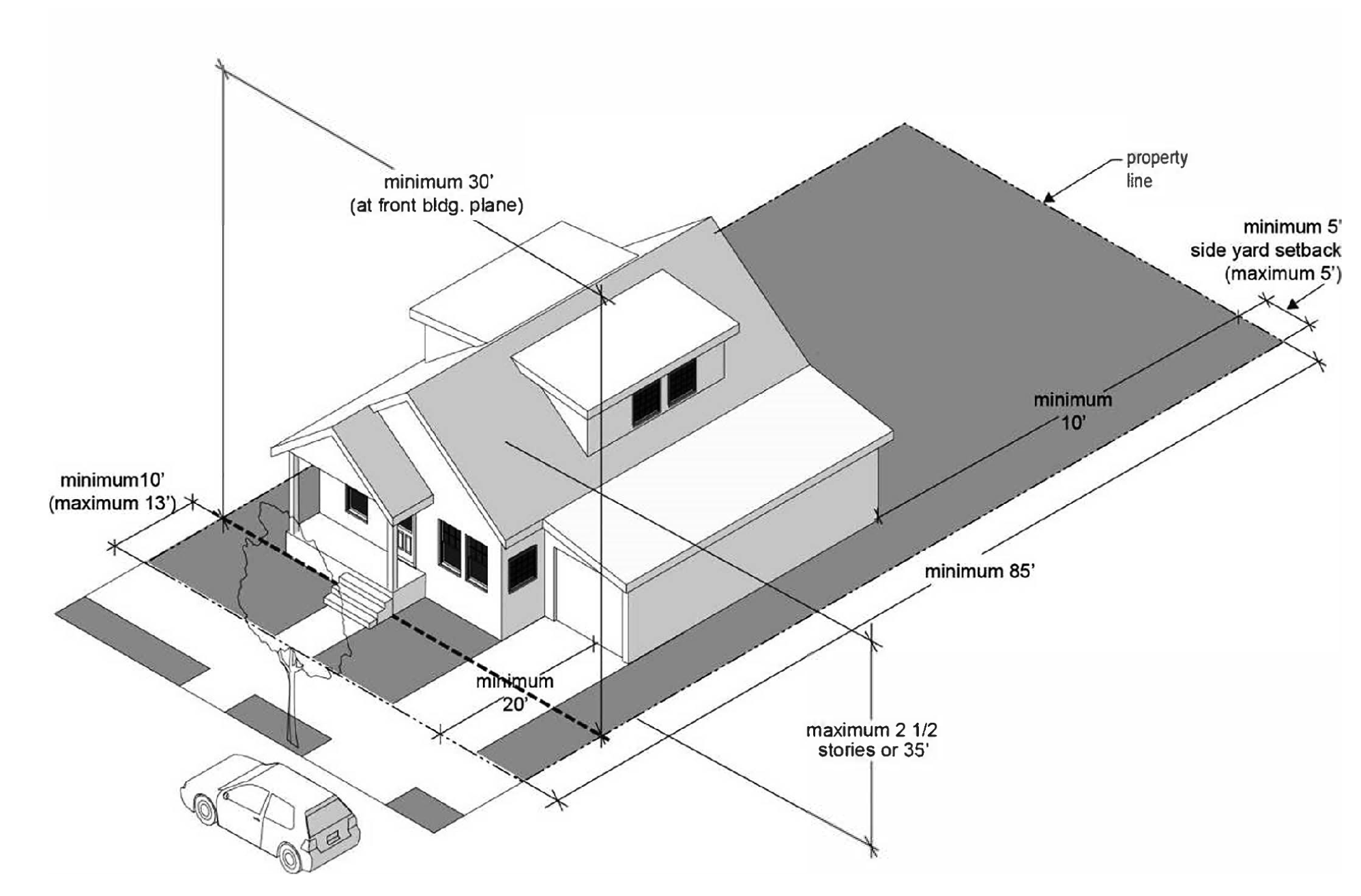
(Ord. 6401 § 1, 2022; Ord. 6393 § 1, 2021; Ord. 6323 § 1, 2019; Ord. 6149 § 1, 2015; Ord. 6120 § 1, 2015)
12.21.660 - Variances and Adjustments.
Applications for Variances and Adjustments per Section 12.80.150 to standards in the SCR-LD zone may be approved under 1 of 4 processes:
A.
As a Variance pursuant to Section 12.80.152;
B.
As a Minor Adjustment in conjunction with a primary Type II or Type III application pursuant to Section 12.80.154;
C.
As a Major Adjustment in conjunction with a primary Type III application pursuant to Section 12.80.156; or
D.
With a Significant Natural Resource Permit pursuant to Section 12.80.130.
(Ord. 6401 § 1, 2022; Ord. 6322 § 1, 2019; Ord. 6120 § 1, 2015)
12.21.670 - Other Pertinent Regulations.
Additional standards such as parking, landscaping, vision clearance, and street improvements also apply to development in the SCR-LD zone as follows:
•
Section 12.50.200 Site Design
•
Section 12.50.300 Vehicle Parking
•
Section 12.50.400 Bicycle Parking/Bicycle and Pedestrian Circulation and Connectivity
•
Section 12.50.500 Access and Street Standards
•
Section 12.50.600 Public Utilities, Site Grading and Storm Water Management Facilities Site Integration
•
Section 12.50.700 Design Standards for Residential Development
(Ord. 6401 § 1, 2022)
12.21.700 - SCR-OTC Station Community Residential—Orenco Townsite Conservation.
12.21.710 - Purposes.
A.
Preserve the Historic Orenco Townsite. The SCR-OTC zone implements the SCPA Station Community Planning Area Comprehensive Plan designation in the historic Orenco neighborhood, conserving the historic lotting pattern, open space and architectural character of the townsite, providing opportunities for rehabilitation of existing buildings and construction of compatible new development.
B.
Provide Transit-Supportive Housing Options. The SCR-OTC zone provides for the development of single detached dwellings, middle housing, and accessory dwelling units that are within reasonable proximity to the Orenco Light Rail Transit station.
C.
Preserve Neighborhood Livability. The SCR-OTC zone encourages livability in an existing historic neighborhood by allowing compatible non-residential uses such as schools, neighborhood commercial, and parks.
(Ord. 6401 § 1, 2022; Ord. 6323 § 1, 2019; Ord. 6322 § 1, 2019)
12.21.720 - Housing Types.
Table 12.21.720-1 lists housing types permitted in the SCR-OTC zone. Housing types are defined in Section 12.01.500.
(P) Permitted (C) Conditional (L) Limited (N) Not Permitted
(Ord. 6401 § 1, 2022; Ord. 6322 § 1, 2019; Ord. 6294 § 1, 2019)
12.21.730 - Uses.
Table 12.21.730-1 lists the permitted, conditionally permitted, limited, and not permitted uses in the SCR-OTC zone.
(P) Permitted (C) Conditional (L) Limited (N) Not Permitted
(Ord. No. 6467, §§ 1, 2(Exh. A), 3-5-2024; Ord. 6417 § 1, 2022; Ord. 6401 § 1, 2022; Ord. 6322 § 1, 2019; Ord. 6294 § 1, 2019; Ord. 6149 § 1, 2015)
12.21.740 - Accessory Uses Permitted by Right.
A.
Accessory Dwelling Units. Accessory dwelling units (ADUs) are defined in Section 12.01.500, and are permitted when accessory to single detached dwellings or townhouses subject to additional requirements in Section 12.40.100, and to the requirements of the Orenco Plan District under Subchapter 12.62.
B.
Accessory Structures. Accessory structures are defined in Section 12.01.500, and are permitted subject to additional requirements in Section 12.40.104. All accessory structures are subject to the architectural requirements of the Orenco Plan District under Section 12.62.400.
C.
Home Occupations. Home occupations are defined in Section 12.01.500, and are permitted subject to additional requirements in Section 12.40.170.
D.
Community Recreation Facilities and Community Buildings. Community recreation facilities and community buildings used solely by residents of a specific neighborhood or development are permitted when approved as an amenity of that neighborhood or development during the development process. When accessory to cottage clusters, community buildings are subject to additional requirements in Subsection 12.50.715.E.9.
E.
Certified or Registered Family Child Care Homes and Residential Homes. Certified or registered family child care homes as defined in ORS 329A are permitted; and certified or registered residential homes as defined in ORS 443 are also permitted.
F.
Household Energy Production Facilities. Household energy production facilities are defined in Section 12.01.500, and are permitted subject to issuance of necessary and appropriate Federal, State and local permits.
G.
Amateur or "Ham" Radio Facilities. Amateur or "ham" radio facilities are permitted subject to issuance of necessary and appropriate Federal, State and local permits.
H.
Horticultural Activities. Horticultural activities are defined in Section 12.01.500, and are permitted, excluding commercial buildings or structures.
I.
Partial-dwelling STRs are permitted subject to additional requirements in Section 12.40.230.
(Ord. No. 6467, §§ 1, 2(Exh. A), 3-5-2024; Ord. 6401 § 1, 2022; Ord. 6323 § 1, 2019; Ord. 6120 § 1, 2015)
12.21.750 - Development Standards.
Base zone development standards in the SCR-OTC zone are listed in Table 12.21.750-1. Certain standards are illustrated in Figure 12.21.750-A.
* Illustrated in Figure 12.21.750-A
Figure 12.21.750-A:
Single Detached Dwelling Lot Dimensions Setbacks
and Height Requirements in the SCR-OTC Zone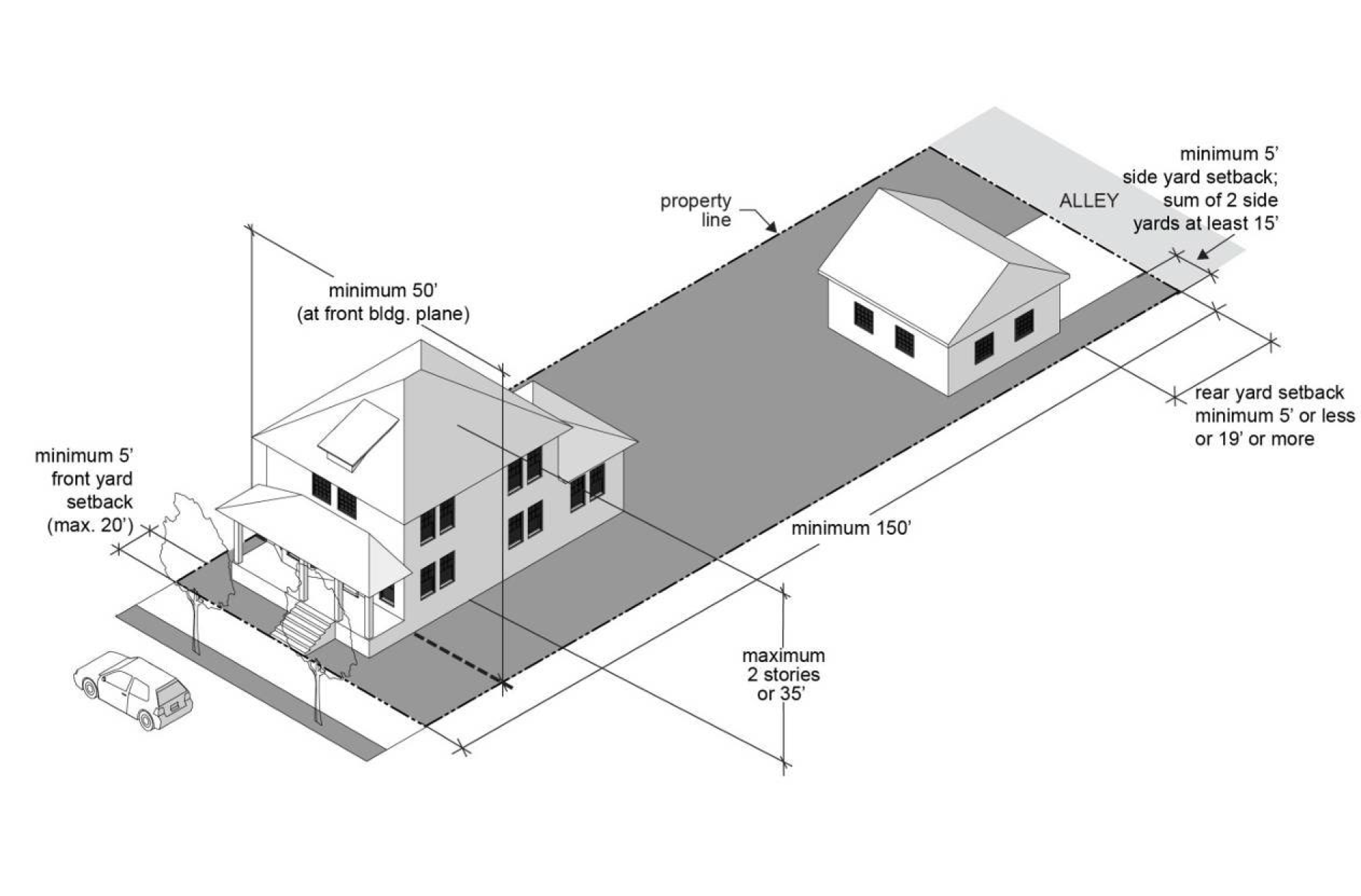
(Ord. 6401 § 1, 2022; Ord. 6323 § 1, 2019; Ord. 6322 § 1, 2019; Ord. 6294 § 1, 2019; Ord. 6283 § 1, 2018; Ord. 6120 § 1, 2015)
12.21.760 - Variances and Adjustments.
Applications for Variances and Adjustments per Section 12.80.150 to standards in the SCR-OTC zone may be approved under 1 of 4 processes:
A.
As a Variance pursuant to Section 12.80.152;
B.
As a Minor Adjustment in conjunction with a primary Type II or Type III application pursuant to Section 12.80.154;
C.
As a Major Adjustment in conjunction with a primary Type III application pursuant to Section 12.80.156; or
D.
With a Significant Natural Resource Permit application pursuant to Section 12.80.130.
(Ord. 6401 § 1, 2022; Ord. 6322 § 1, 2019; Ord. 6120 § 1, 2015)
12.21.770 - Other Pertinent Regulations.
Additional standards such as parking, landscaping, vision clearance, and street improvements also apply to development in the SCR-OTC zone as follows:
•
Section 12.50.200 Site Design
•
Section 12.50.300 Vehicle Parking
•
Section 12.50.400 Bicycle Parking/Bicycle and Pedestrian Circulation and Connectivity
•
Section 12.50.500 Access and Street Standards
•
Section 12.50.600 Public Utilities, Site Grading and Storm Water Management Facilities Site Integration
•
Section 12.62.300 Standards Specific to the Orenco Townsite Area
•
Section 12.62.400 Architectural Conservation Standards Specific to the Orenco Townsite Area
(Ord. 6401 § 1, 2022)
12.21.800 - SCR-DNC Station Community Residential—Downtown Neighborhood Conservation.
12.21.810 - Purposes.
A.
Preserve Historic Downtown Neighborhoods. The SCR-DNC zone implements the SCPA Station Community Planning Area Comprehensive Plan designation in the historic neighborhoods near the downtown, conserving their historic, open space and architectural qualities and providing opportunities for rehabilitation of existing buildings and construction of compatible new development.
B.
Provide Transit-Supportive Housing Options. The SCR-DNC zone provides for the development of single detached dwellings, middle housing, multi-dwelling structures, live-work dwellings, and small-scale commercial development with reasonable proximity to the downtown LRT stations.
C.
Preserve Neighborhood Livability. The SCR-DNC zone encourages livability in an existing historic neighborhood by allowing compatible non-residential Uses such as schools and parks.
D.
Provide Mixed-Use Development Opportunities. In the SCR-DNC zone, residential businesses and neighborhood commercial Uses are permitted in selected areas.
(Ord. 6401 § 1, 2022)
12.21.820 - Housing Types.
Table 12.21.820-1 lists Housing Types permitted in the SCR-DNC zone. Housing Types are defined in Section 12.01.500.
(P) Permitted (C) Conditional (L) Limited (N) Not Permitted
(Ord. 6401 § 1, 2022; Ord. 6294 § 1, 2019)
12.21.830 - Uses.
Table 12.21.830-1 lists uses permitted, conditionally permitted, limited or not permitted in the SCR-DNC zone.
(P) Permitted (C) Conditional (L) Limited (N) Not Permitted
(Ord. No. 6467, §§ 1, 2(Exh. A), 3-5-2024; Ord. 6417 § 1, 2022; Ord. 6401 § 1, 2022; Ord. 6322 § 1, 2019; Ord. 6294 § 1, 2019; Ord. 6149 § 1, 2015)
12.21.840 - Accessory Uses Permitted by Right.
A.
Accessory Dwelling Units. Accessory dwelling units (ADUs) are defined in Section 12.01.500, and are permitted when accessory to single detached dwellings or townhouses subject to additional requirements in Section 12.40.100, and to the requirements of the Downtown Plan District under Subchapter 12.61.
B.
Accessory Structures. Accessory structures are defined in Section 12.01.500, and are permitted subject to additional requirements in Section 12.40.104. All accessory structures are subject to the architectural requirements of the Downtown Plan District under Section 12.61.800.
C.
Home Occupations. Home occupations are defined in Section 12.01.500, and are permitted subject to additional requirements in Section 12.40.170.
D.
Community Recreation Facilities and Community Buildings. Community recreation facilities used solely by residents of a specific neighborhood or development are permitted when approved as an amenity of that neighborhood or development during the development process. When accessory to cottage clusters, community buildings are subject to additional requirements in Subsection 12.50.715.E.9.
E.
Certified or Registered Family Child Care Homes and Residential Homes. Certified or registered family child care homes as defined in ORS 329A are permitted; and certified or registered residential homes as defined in ORS 443 are also permitted.
F.
Household Energy Production Facilities. Household energy production facilities are defined in Section 12.01.500, and are permitted subject to issuance of necessary and appropriate Federal, State and local permits.
G.
Amateur or "Ham" Radio Facilities. Amateur or "ham" radio facilities are permitted subject to issuance of necessary and appropriate Federal, State and local permits.
H.
Horticultural Activities. Horticultural activities are defined in Section 12.01.500, and are permitted, excluding commercial buildings or structures.
I.
Partial-dwelling STRs are permitted subject to additional requirements in Section 12.40.230.
(Ord. No. 6467, §§ 1, 2(Exh. A), 3-5-2024; Ord. 6401 § 1, 2022; Ord. 6323 § 1, 2019; Ord. 6120 § 1, 2015)
12.21.850 - Development Standards.
A.
Development Standards in General. Base zone development standards in the SCR-DNC zone are listed in Table 12.21.850-1. Certain standards are illustrated in Figure 12.21.850-A.
* Illustrated in Figure 12.21.850-A
Figure 12.21.850-A:
Single Detached Dwelling Minimum Lot Dimensions, Setbacks
and Height Requirements in the SCR-DNC Zone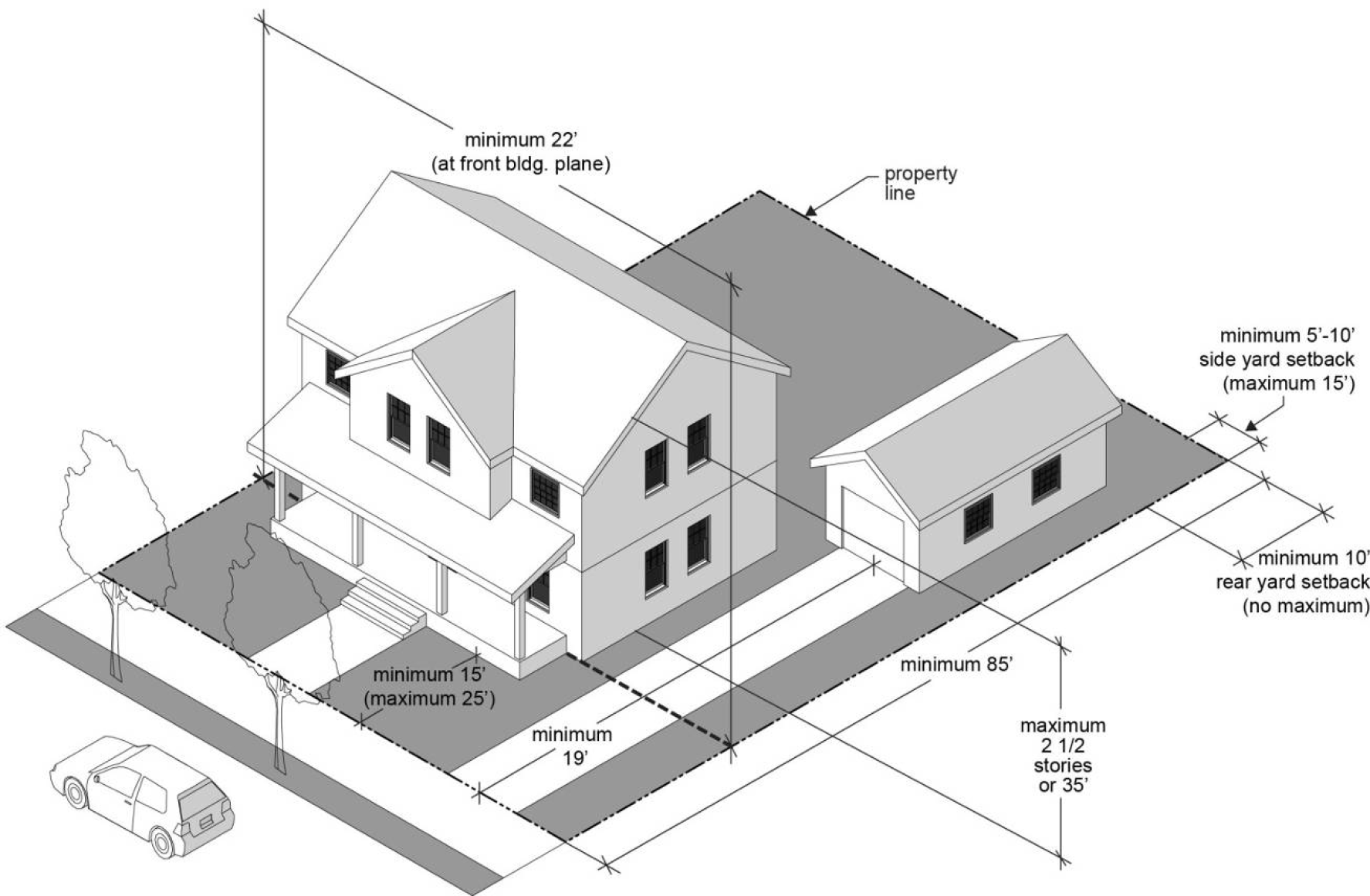
B.
Reduced Front Yard Setbacks in the SCR-DNC Zone. Front yard setbacks for new dwellings constructed in the SCR-DNC zone may be reduced if dwellings on abutting lots on 2 sides have front setbacks less than the applicable standard in Table 12.21.850-1. Reduced front yard setbacks shall comply with the following standards:
1.
If the dwellings on 2 abutting lots have reduced front setbacks, the front setback of the new dwelling may be reduced to the average front setback of the abutting dwellings.
2.
If only 1 dwelling on an abutting lot has a reduced front setback, the front setback of the new dwelling may be reduced to the average of the front setback of the abutting dwelling and the required front setback.
(Ord. 6401 § 1, 2022; Ord. 6323 § 1, 2019; Ord. 6322 § 1, 2019; Ord. 6120 § 1, 2015)
12.21.860 - Variances and Adjustments.
Applications for Variances and Adjustments per Section 12.80.150 to standards in the SCR-DNC zone may be approved under 1 of 4 processes:
A.
As a Variance pursuant to Section 12.80.152;
B.
As a Minor Adjustment in conjunction with a primary Type II or Type III application pursuant to Section 12.80.154;
C.
As a Major Adjustment in conjunction with a primary Type III application pursuant to Section 12.80.156; or
D.
With a Significant Natural Resource Permit pursuant to Section 12.80.130.
(Ord. 6401 § 1, 2022; Ord. 6120 § 1, 2015)
12.21.870 - Other Pertinent Regulations.
Additional standards such as parking, landscaping, vision clearance, and street improvements also apply to development in the SCR-DNC zone as follows:
•
Section 12.50.200 Site Design
•
Section 12.50.300 Vehicle Parking
•
Section 12.50.400 Bicycle Parking/Bicycle and Pedestrian Circulation and Connectivity
•
Section 12.50.500 Access and Street Standards
•
Section 12.50.600 Public Utilities, Site Grading and Storm Water Management Facilities Site Integration
•
Section 12.61.300 Downtown Plan District Standards Applicable to all Zones
•
Section 12.61.700 Downtown Plan District Standards Specific to the SCR-DNC Zone
•
Section 12.61.800 Downtown Plan District Standards Architectural Conservation Standards
(Ord. 6401 § 1, 2022)

