
Jamestown City Zoning Code
ARTICLE 12
OFF-STREET PARKING, STACKING, AND LOADING AREAS
Sec. 12.1.- Off-Street Parking, Stacking, and Loading Space Required.
When any building or structure is erected, modified, enlarged the requirements of this section shall be met. For enlargements, modifications, or increase in capacity, the requirements of this section shall apply only to such enlargements, modifications or increases in capacity. In cases of mixed occupancy, the minimum number of off-street parking and loading spaces shall be the cumulative total of individual use requirements unless otherwise specified
Sec. 12.2. - Maintenance.
All parking, stacking, and loading facilities shall be permanently maintained by the owners or occupants as long as the use they serve exists.
Sec. 12.3. - Access.
All parking, stacking, and loading facilities shall have vehicular access to a public street.
Sec. 12.4. - Use for No Other Purpose.
Land used to provide required parking, stacking, and loading shall not be used for any other purposes, except for temporary events. Use of land designated for and providing parking, loading, and/or stacking for other purposes shall be considered a violation of this ordinance and subject to the penalty provisions of Article 23.
Sec. 12.5. - Requirements for Change in Use.
If a change in use causes an increase in the required number of off-street parking, stacking, or loading spaces, such additional spaces shall be provided in accordance with the requirements of this ordinance; except that if the change in use would require an increase of less than five percent in the required number of parking spaces or fewer than five spaces, no additional off-street parking shall be required.
Sec. 12.6. - Accessible Spaces.
Accessible spaces for the physically handicapped shall be provided as required by the North Carolina Building Code.
Sec. 12.7. - Bicycle Parking.
All non-residential uses and all multi-family residential uses, including condos and townhomes with shared parking, shall include bicycle parking spaces in the amount, at a minimum, equal to five percent of the parking provided for automobiles. This area may be a designated parking space within the parking lot near the building or an area outside the parking lot adjacent to the building. The bike parking area must include a bike rack with provisions for locking bikes.
Sec. 12.8. - Overflow Parking.
Off-street areas used for special event parking (to accommodate occasional overflow volumes) may be constructed of any dust-free, compacted, pervious ground cover; the owner of the property shall be responsible for the maintenance of such parking in a clean and dust-free condition. Grass and mulch are examples of pervious ground cover; pavement and pervious pavers are examples of impervious surfaces.
Sec. 12.9. - Parking of Recreational Vehicles in Residential Districts.
Vehicles such as RVs (recreational vehicles), watercraft and accessories, and towing trailers shall not be parked or stored on the street in residential districts. This shall not prohibit these vehicles from being parked or stored on private property. School buses, church vans and/or buses, and emergency vehicles shall be considered exempt from the requirements prohibiting storage on private property but shall not be stored on the street in residential districts.
Campers, tents and recreational vehicles (or similar structures or vehicles) shall not be used for dwelling purposes on individual lots but can be stored provided they are registered to the owner of the lot and there is an existing occupiable dwelling. There shall only be one camper/recreational vehicle stored per lot. No camper, tent, or RV shall be permitted to be hooked to a utility for the purposes of making such a space habitable for a period exceeding one week. The intention of the ordinance is to permit owners to ready such equipment for use elsewhere, but NOT to permit the use as an extension of the principal dwelling unit.
Temporary emergency use of a camper/tent/recreational vehicle is allowed for a period of six months in the event of a fire, flood or other natural disaster which has made the principal dwelling uninhabitable. The temporary use must be located on the same lot and a zoning permit is required. The zoning permit may be renewed for one additional six-month period.
Sec. 12.10. - Off-Street Parking.
Off-street parking should be provided to meet the needs of the employees, clients, and/or customers of the principal use. Due to the potential for parking areas to use a large percentage of a development site, efforts should be made to accurately estimate the parking needs of the principal use. Strategies such as shared parking and remote parking should be used to maximize the use of existing parking available in the area in which a use is to be located. Parking areas should be designed to minimize breaks in the pedestrian environment along the public street and create safe and comfortable passage for pedestrians. The following standards shall therefore be met.
12.10-1.
Location of Parking Lots. Parking lots shall be placed behind buildings where practical; persons who wish to vary from this standard will have to appeal to the technical review committee. Side of the building parking will be permitted only as indicated by building type and shall be measured along the build-to line. Off-street parking is not permitted in front of the primary building facade, except where specified in an adopted street section, detailed as a public plaza, or as approved by the technical review committee as part of site plan review and approval.
12.10-2.
Limitation on Uninterrupted Areas of Parking. Uninterrupted areas of parking lot shall be limited in size. Large parking lots shall be broken by buildings and/or landscape features.
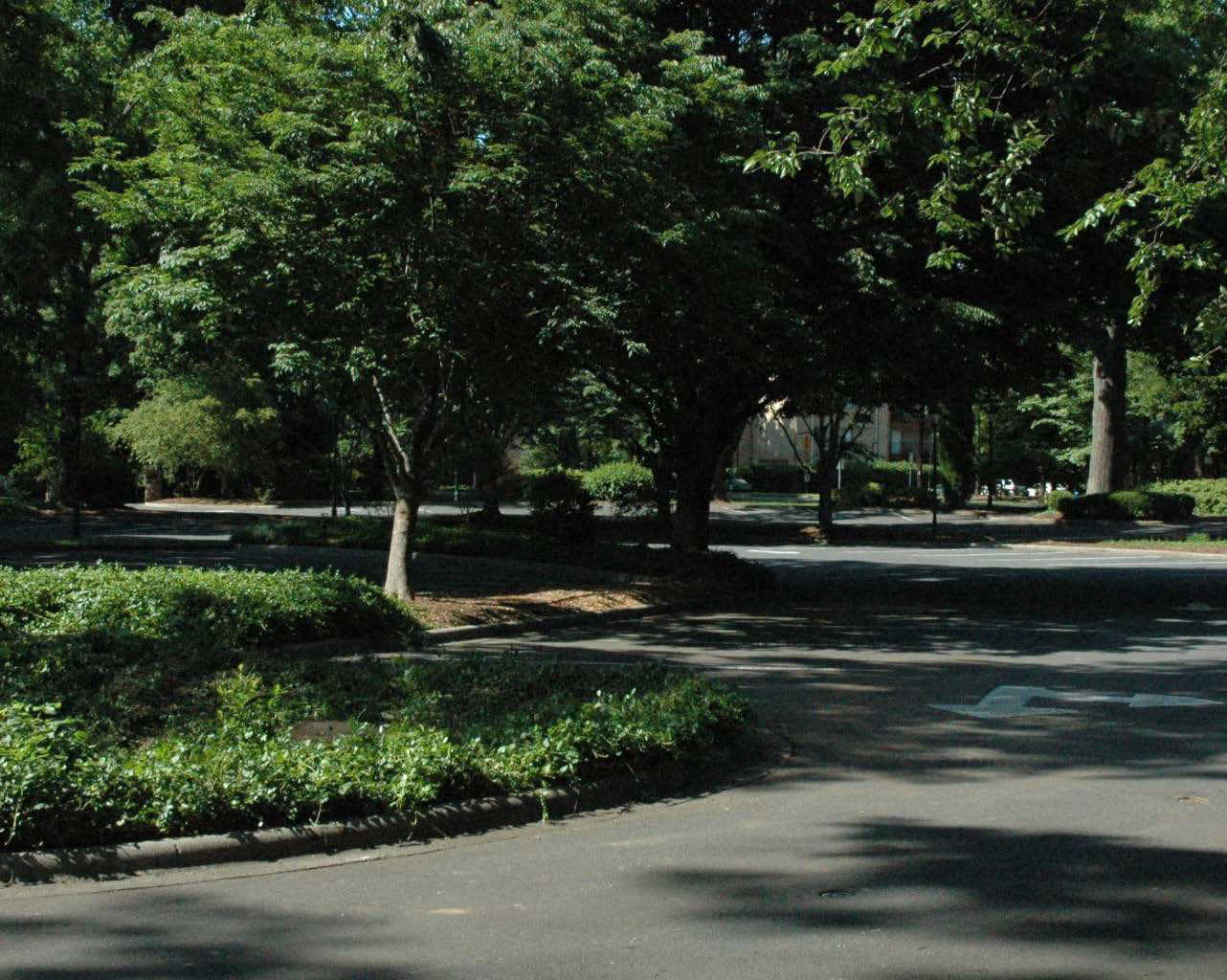
Figure 12.10-1: Example of parking lot broken up by landscaping.
12.10-3.
Enclosure of Parking Lots. Parking lots shall be enclosed by tree planting and/or building walls(s). For small lots (36 spaces or less), landscaping shall be required at the perimeter; for large lots (more than 36 spaces), landscaping shall be at the perimeter and placed to break the lot into parking areas of no more than 36 spaces.
12.10-4.
Pedestrian Corridors. Parking lots shall be designed to allow pedestrians to safely move from their vehicles to the building. On small lots, this may be achieved by providing a sidewalk at the perimeter of the lot. On larger lots, corridors within the parking area should channel pedestrians from the car to the perimeter of the lot or to the building(s). These corridors should be delineated by a paving material which differs from that of vehicular areas and planted to provide shade and an edge. Small posts or bollards may be used to define/protect the pedestrian corridors. The minimum width of the sidewalk or pedestrian corridor shall be five feet, with vehicle encroachment is calculated as two feet beyond curb or wheel stop.
12.10-5.
Driveway Width. To maintain pedestrian comfort and calm the speed of entering traffic, driveways to parking areas should be no wider than 24 feet. Driveways connecting to state roads shall meet the requirements of the N.C. Department of Transportation.
12.10-6.
Interconnection of Parking Lots. To the extent practicable, adjoining parking lots serving non-residential buildings shall be interconnected. When vehicular connections are not practical, pedestrian walkways shall be provided to enable pedestrian connections between parking lots.
12.10-7.
Paving of Parking Lots. All commercial driveway and parking areas shall be paved with asphalt, concrete, pervious pavement, or brick pavers except for areas used for overflow, special events, and peak parking. Any non-paved surface used for overflow, special events, and peak parking that cannot be maintained with healthy, living turf grass or similar ground cover shall be paved with asphalt, concrete, pervious pavement, or brick pavers. Paving shall not be required for:
(A)
Parking facilities used on an irregular basis for churches, private clubs, or other similar nonprofit organizations.
(B)
Parking areas for agricultural uses in the Agricultural (AG) District.
(C)
Parking areas for manufacturing and industrial uses in the Industrial (IND) District provided they are constructed with an all-weather surface.
(D)
Parking areas for tracked heavy construction equipment, skid-mounted equipment and similar equipment, provided they are constructed with an all-weather surface.
For paved parking areas, curb and gutter or an equivalent drainage system shall be provided along the periphery of the parking lot, except where it is determined by the planning director that such system is not practical for storm drainage and/or water quality purposes. Access drives shall be paved and maintained from the curbline to a point at least ten feet beyond the public right-of-way line for all parking and loading facilities, whether paved or unpaved.
12.10-8.
Minimize Dust and Erosion. All parking areas shall be graded, properly drained, stabilized, and maintained to minimize dust and erosion.
12.10-9.
Marking of Parking Spaces. All parking spaces and stacking lanes shall be clearly identified with paint lines, bumper guards, curbs, or similar treatment.
12.10-10.
Wheel Guards or Curbs Required. All parking spaces shall be provided with wheel guards or curbs located so that no part of the parking vehicle will extend beyond the property line or encroach into a required planting area.
12.10-11.
Reduction in Number of Spaces. Unless there is a change in use requiring a lesser number of spaces, the number of spaces shall not be reduced below the minimum requirements of this article except as provided for in Section 12.5 (Requirements for Change in Use).
12.10-12.
Parking Space Dimension. The minimum size for parking spaces shall be nine feet by 18 feet.
Sec. 12.11. - Off-Street Parking Requirements.
While on-street parking can contribute substantially to every day parking needs, sufficient off-street parking must also be provided to serve the particular needs of the building(s). The following minimum and maximum requirements for off-street parking are set forth to ensure the provision of adequate off-street parking while preventing the development of parking areas that are under used.
For any use not specifically listed in this section, the parking, stacking and loading requirements shall be those of the most similar use.
Sec. 12.12. - Off-Street Parking Exceptions.
The following exceptions to the off-street parking requirements of Section 12.11 shall be permitted.
12.12-1.
Existing Buildings and Infill Housing in the MS District. In the Main Street (MS) District, existing buildings that were legally constructed without the provision of on-site parking, and infill housing on existing lots of record may meet requirements with on-street parking, if available, and will be construed conforming as to parking. Such buildings are eligible for change of use permits, and for building upfits. Any expansion of the building and/or use shall provide off-street parking as required by this article.
12.12-2.
Parking Reduction in MS District. In the Main Street (MS) District, the off-street parking requirements of this article shall be reduced 30 percent for all uses.
12.12-3.
Fee in Lieu in MS District. In the Main Street (MS) District, uses may provide a fee in lieu of providing any or all of the off-street parking required by this article. This fee shall be in the amount determined by the Town of Jamestown and based on the cost of providing parking (including land costs, development costs, and maintenance costs) in the Main Street District. Such fee(s) shall be used by the Town for the provision and maintenance of parking in the Main Street District. Any fee collected in lieu of providing the required parking for a particular business or use shall be used to provide or maintain parking that can be used by clients, customers, employees, and others frequenting that business or use. Such parking shall be located within a reasonable distance (not more than 1,350 feet as measured along pedestrian ways) of the business or use providing the fee in lieu.
12.12-4.
On-Street Parking for Residential Buildings. Residential buildings may meet or contribute to meeting parking requirements with on-street parking, where available and approved by TRC, if individual driveways are minimized and the fronting street is specifically designed to meet the parking needs of the residential buildings.
12.12-5.
Parking on Streets.
(A)
In residential districts. Parking shall be allowed along all streets in residential districts except along alleys, designated bike lanes, and areas specifically signed for no parking. Vehicles shall park so as not to block access to properties.
(B)
In all other districts. Parking shall be allowed in designated areas (paved and striped) along the street in all other districts. Where the Town of Jamestown has indicated that "No Parking" is allowed, violations shall be enforced by the Guilford County Sherriff's Department. Violations may include, but not be limited to, warnings, citations, towing, or any other means as necessary to remedy the situation.
12.12-6.
No Parking in Right-of-Way. Off-street parking shall not extend into the public right-of-way, or into an easement for a public sidewalk on private property.
12.12-7.
Storage of Vehicles on Street. Vehicles shall not be parked on the street for extended periods such that they appear to be stored on the street. The planning director, at his/her discretion, may require removal of vehicles that appear to be stored on the street in the interest of protecting the public safety and welfare.
12.12-8.
Shared and Remote Parking.
(A)
Shared parking. The planning director shall approve the joint use of up to 100 percent of the required parking spaces for two or more uses located on the same parcel or adjacent parcels; provided that the developer can demonstrate that the uses will not overlap in hours of operation or in demand for the shared spaces. Any sharing of required parking spaces by uses located on different parcels shall be guaranteed by a written agreement between the owner of the parking area and the owner of any use located on a different parcel and served by the parking area. Should the uses change such that the new uses overlap in hours of operation or in demand for the shared spaces, the shared parking approval shall become void. Parking meeting the requirements of this article shall then be provided for each use. Parking agreements shall be for a minimum of five years, shall run with the property, and shall be recorded in the office of the Register of Deeds for Guilford County. A sidewalk or other pedestrian way shall connect the shared parking area to the uses for which parking is being provided.
(B)
Remote parking. If the required number of parking spaces for any land use cannot be reasonably provided on the same lot on which the principal use is located, such parking space may be provided, for up to a maximum of 50 percent of the required parking, on any land within 750 feet walking distance of the property on which the principal use is located, provided that the zoning use regulations for the district in which the remote parking space is located permit the principal use which the parking spaces serve and, provided further, that no crossing of a major thoroughfare is required to travel from the use to the remote parking spaces, unless the pedestrian may access the remote parking by crossing said thoroughfare at a signalized crosswalk. Uses that cannot provide the remaining 50 percent of the required parking on-site must pay a fee-in-lieu or otherwise comply with the off-street parking requirements. Any remote parking spaces located on a different parcel than the use for which the remote parking spaces serve shall be guaranteed by a written agreement between the owner of the remote parking area and the owner of the use located on a different parcel and served by the remote parking area. Change of ownership of either parcel shall require a renewal of the agreement. Parking agreements shall be for a minimum of five years, shall run with the property, and shall be recorded in the office of the Register of Deeds for Guilford County.
12.12-9.
Parks and Recreation Districts.
(A)
The planning director may approve the joint use of up to 100 percent of the required parking spaces for properties zoned Parks & Recreation (PNR), provided that public parking is available within 750 feet walking distance of the property on which the principal use is located, and provided that if a major thoroughfare crossing is required, that there is a painted pedestrian crossing which permits safe access across said thoroughfare.
Sec. 12.13. - Loading Areas.
Off-street loading areas shall be provided to allow for delivery, loading, and similar activities to occur in a safe, designated area that will not impede the flow of traffic or block pedestrian or vehicular access.
12.13-1.
Location. Off-street loading areas shall be located on the same zone lot as the use they serve.
12.13-2.
Minimum Size. The minimum size for an off-street loading area shall be 250 square feet.
12.13-3.
Arrangement. All off-street loading areas shall be arranged and marked to provide for orderly and safe unloading and loading and shall not hinder the free movement of vehicles and pedestrians. All loading and unloading maneuvers shall take place on private property. No backing in from street or maneuvering on right-of-way shall be permitted.
12.13-4.
Minimum Number of Loading Areas Required.
(A)
Retail operations, including restaurant and dining facilities within hotels and office buildings:
(B)
Office buildings and hotels:
(C)
Industrial and wholesale operations:

