
Jamestown City Zoning Code
ARTICLE 17
SIGN REGULATIONS
Sec. 17.1.- Title.
This article shall be known and may be cited as the "Town of Jamestown Sign Regulations."
(Ord. of 09-19-2023(1), 9-19-2023)
Sec. 17.2. - Applicability and Purpose.
This article applies to all signage erected in the Town of Jamestown and its extraterritorial jurisdiction. The purpose of this article is to ensure the installation of safe and effective signage that promotes both business activity and the aesthetic character of the Town and its extraterritorial jurisdiction, as well as communicating essential information to the public. The following statements elaborate on this purpose:
•
To provide opportunities for neighborhoods and commercial endeavors to be identified in an effective and equitable fashion.
•
To promote public safety by reducing hazards associated with distracting or excessive signage.
•
To establish and promote enhanced community character through signage that is reflective of the historic nature of the Town and its scale of development.
•
To promote the integration of signage with the architectural characteristics and aesthetic quality of the Town's development.
•
To provide for flexibility in amount, type and scale of signage depending on the context of the development and the surrounding area.
•
To facilitate efficient, thorough, consistent and effective enforcement of the sign regulations.
(Ord. of 09-19-2023(1), 9-19-2023)
Sec. 17.3. - Definitions.
Please see definitions in Article 3 of this Code.
(Ord. of 09-19-2023(1), 9-19-2023)
Sec. 17.4. - Applicability.
Except as specifically exempted in this article, no sign shall be erected, altered or displayed without a sign permit issued by the Town of Jamestown confirming compliance with the provisions of this article. Signs made nonconforming by this article shall be grandfathered until altered, abandoned, relocated, or removed.
17.4.1.
Substitution of messages. The sign regulations of this article are not intended to favor commercial speech constitutionally protected political or noncommercial speech. A sign containing a noncommercial message may be substituted for any sign containing a commercial message that is allowed by the regulations of this article.
(Ord. of 09-19-2023(1), 9-19-2023)
Sec. 17.5. - Prohibited Signs and Sign Characteristics.
The following signs are specifically prohibited by this article in all zoning districts.
•
Snipe/yard signs.
•
Signs attached to light fixtures, curbs, sidewalks, gutters, streets, utility poles, public buildings, fences, railings, public telephone poles, or trees.
•
Windblown signs not specifically permitted in this article such as pennants, streamers, spinners, balloons, inflatable figures, and similar signs.
•
Signs which prevent free ingress to or egress from any door, window, or fire escape.
•
Signs erected or displayed in such a manner as to obstruct free and clear vision at any location, street, intersection, or driveway.
•
Signs attached to or painted on a vehicle or trailer that is located in view of the right-of-way when in a location or for a period of time that indicates that the primary intended use of the vehicle is for displaying the sign to passing motorists or pedestrians.
•
Signs in a series of two or more signs placed in a line parallel to a public or private street, or in a similar fashion, all carrying a single commercial message, part of which is contained on each sign.
•
Any sign which interferes with vehicular or pedestrian traffic as a result of its position, size, shape, movement, color, fashion, manner, or intensity of illumination, including signs with the potential to be confused with any authorized traffic sign, signal, or device.
•
Signs erected or displayed on or over public rights-of-way or other public property, other than those erected by governmental agencies or for which appropriate encroachment agreements have been executed pursuant to this article.
•
Portable signs, except as specifically permitted herein.
•
Flags displaying commercial messages in residentially zoned districts.
•
Signs that move or flash or have moving or flashing components, except as permitted under Section 17.6 or 17.7 below; signs that are intermittently lighted or have changing colors; signs that revolve; or any other similarly constructed signs.
•
Signs attached to the roofs of buildings or are otherwise located above the roofs of buildings.
•
Outdoor advertising sign (billboards). The exception being that existing outdoor advertising signs that are non-conforming may be disassembled and replaced with a newer structure upon approval by the planning director or their designee. The new signage shall be designed to result in no expansion of or increase in the non- conformity; shall not allow replacement with a digital sign; shall not exceed 30 feet in height; shall be designed to limit lighting to the sign face; and shall be designed to enhance the architectural features of adjacent buildings. Color renderings or photographic simulations shall be submitted to the planning director or their designee, who shall have the authority to deny permits for signs that do not meet the intent of this article.
•
Digital changeable copy signs.
(Ord. of 09-19-2023(1), 9-19-2023)
Sec. 17.6. - Exempt Signs.
The following signs are exempt from the requirements of this ordinance although, in some instances, building permits may be required, such as an electrical permit for a machine sign or a time and temperature sign.
•
Warning and security signs required by statute or regulation, including signs placed by a public utility for the safety, welfare, or convenience of the public, including, but not limited to signs identifying fire department connections or high voltage, public telephone, or underground cables.
•
Signs erected by a unit of local, state, or federal government on property or within a right-of-way over which said government has authority or a right to operate within.
•
Signs placed inside ball fields and outdoor amphitheaters that face toward the interior of the field or amphitheater and are primarily intended for viewing by persons attending events of performances.
•
Accent lighting, as defined herein, provided that not more than two architectural elements are accented per occupancy (e.g., two windows or a window and a roofline, etc.).
•
Temporary signs that are displayed for three days or less.
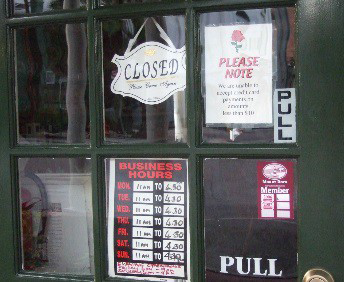
Example of Incidental Signs
•
Incidental signs containing no more than two square feet in area provided that not more than a total of six square feet of incidental signage is displayed per occupancy. Incidental signs may flash provided they are located inside a building and no more than one such sign is displayed per occupancy.
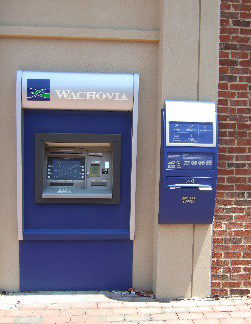
Example of Machine Signs
•
Machine signs containing no more than six square feet in area, except drive-through menu kiosk machine signs may contain up to 12 square feet in area provided the portion of the signs devoted to a logo or business name contains no more than 25 percent of the total sign area.
•
Model home signs provided not more than one such sign is displayed in a subdivision and such sign contain no more than six square feet in area.
•
Signs attached to donation bins.
•
Any traffic sign, public notice or warning required by a valid and applicable federal, state, or local law, regulation, approved development plan, or ordinance, including traffic control signs on private property.
•
Address signs no greater than five square feet in area that are erected or placed to meet fire code requirements (NCFPC Section 505.1). Address signs in excess of five square feet in area shall be counted toward the area of signage permitted for attached or freestanding signs depending on placement.
•
Retail store window displays of merchandise.
•
Signs attached to vehicles provided the vehicles are not parked in such a manner as to create the effect of additional signage, whether on-premises or off-premises.
•
Election signs shall be permitted subject to standards 17.6-1(B) temporary real estate, construction, campaign, philosophical or yard sale.
•
Signs attached to umbrellas provided no more than 25 percent of the total area of the umbrella is devoted to signage.
•
One temporary yard sign per property street frontage containing no more than six square feet in area in residential districts.
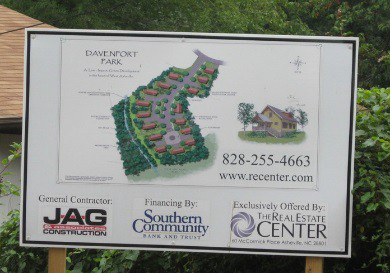
Example of Combined Construction/Financing and Real Estate
•
Development signs shall be permitted subject to standards 17.6-1(B) temporary real estate, construction, campaign, philosophical or yard sale.
•
Flags shall be permitted subject to standards 17.6-1(B) "flags".
•
One sign per approved home occupation, not to exceed four square feet in area, and which must be attached to the building.
•
Holiday lights and decorations, provided that such lights and decorations are not displayed for longer than a total of 60 days per calendar year in any nonresidential or mixed-use zoning district.
•
Signs for "temporary businesses" such as, but not limited to, produce stands, street vendors, and vendors at special events that shall operate for a specified time period, not to exceed seven consecutive days, are exempted. If the business is a recurring operation, such as produce stands that operate on weekends or on select days during the week, then said "temporary business" shall comply with the regulations set forth in this article; the exception being that the planning director or their designee may permit "temporary businesses" to use banners and temporary signage that comply with the standards and intent of this article to be used as signage, provided that the business puts the sign up at the start of the business day and takes it down at the close of each business day.
17.6-1.
Sign standards for signs allowed without a permit.
(A)
Allowed signs. The following signs are permitted in all zoning districts and may be installed without obtaining a permit provided they comply with the standards listed in this section.
•
Directional, instructional or warning signs provided they contain no commercial message except a business logo or name;
•
Flags, except that commercial flags displayed in single-family residential zoning districts are prohibited;
•
Temporary signs, including:
◦
Temporary real estate, construction, campaign, philosophical or yard sale signs;
◦
Signs announcing temporary events or special promotions that do not involve the closing of a public street.
•
Historical or memorial plaques, tablets, or markers;
•
Identification signs including:
◦
Name and address plates;
◦
Directory signs in developments with multiple occupants so long as the signs are not legible from a public street;
◦
Building markers (cornerstones or plaques); and
◦
Signs identifying home occupations and tourist homes (bed & breakfast) in residential districts
(B)
Standards for signs allowed without a permit.
•
All signs must be located on private property, outside the public street right-of-way, and outside any required sight triangle except for temporary off-site directional signs, which are subject to the standards below.
•
An electrical permit is required if a sign will be illuminated.
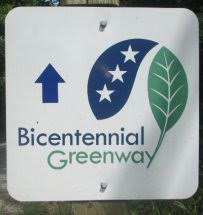
Example of a Directional Sign
Directional
A sign with no commercial message and located off-site that aids the public in direction
to religious assembly uses, hospitals, colleges and universities, and other similar
institutional uses. Directional signs located adjacent to an existing or planned greenway
(as shown on the adopted pedestrian plan) may contain the name, address, logo or other
identifying symbol for adjacent use(s) to the greenway.
Standards
1.
Directional signs may not exceed six square feet in area or eight feet in height.
2.
Only external illumination is allowed.
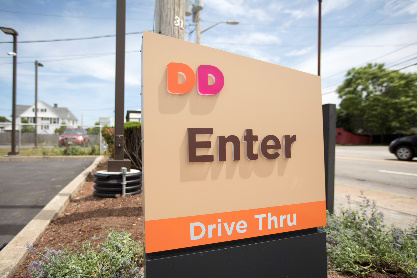
Example of an Instructional Sign
Instructional
A sign with no commercial message that provides assistance, with respect to the premises
on which it is maintained, for the direction, safety, or convenience of the public
such as "entrance", "exit", "one way", "telephone", "parking", "no parking", and similar
instructions. Instructional signs may include a name, address, logo, or other identifying
symbol (not to exceed 30 percent of sign area) to aid in directing the public.
Standards
1.
Instructional signs may not exceed six square feet in area or eight feet in height.
2.
Colleges, universities, hospitals, coliseums, and convention centers may have instructional signs that exceed the allowable area limit if approved as a part of a master sign plan (see Section 17.10).
3.
Instructional signs may be internally or externally illuminated.
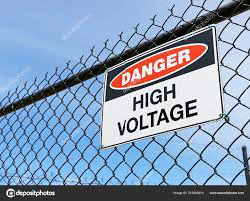
Example of a Warning Sign
Warning
A sign that displays information pertinent to the safety or legal responsibilities
of the public such as signs warning of high voltage, "no trespassing", and similar
directives. Warning signs shall contain no commercial messages other than identification
of the entity that controls the property or other focus of the danger that is the
subject of the warning.
Standards
1.
Warning signs may not exceed six square feet in area or eight feet in height.
2.
Warning signs may be internally or externally illuminated.

Example of a Historical Sign
3.
Clearance bars and signs may be placed at the warning height.
Historical or memorial sign
A sign that commemorates a historical person, structure, place, or event; or that
denotes, honors, celebrates, or acknowledges a historical person, structure, place
or event.
Standards
1.
Only one historical or memorial sign is permitted per lot.
2.
Historical or memorial signs may not exceed six square feet in area or eight feet in height.
3.
Only external illumination allowed.
4.
Such signs are allowed on any site or building certified or designated as having historic significance by a federal, state or local agency, or, if tied to a specific historical event, in close proximity to where the event occurred.
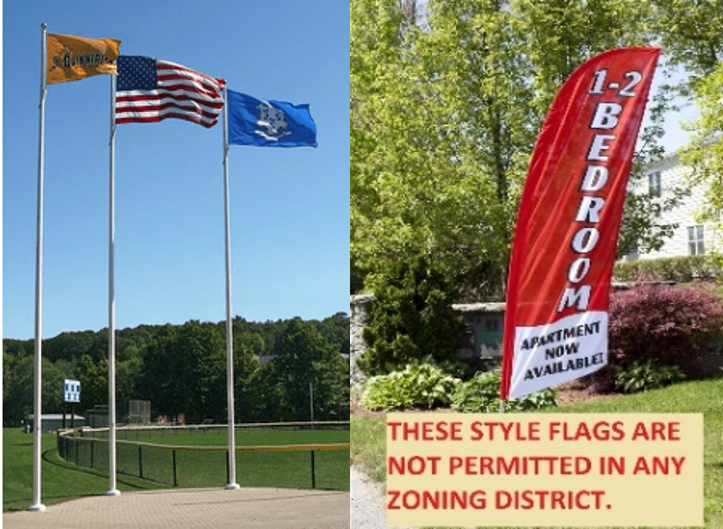
Example of Flags
Flags
A piece of fabric or other flexible material attached to a permanent pole that is
not readily movable containing colors, patterns, standards, words, or emblems.
Standards
1.
Flags shall not exceed 60 square feet in area (calculated as a cumulative total).
2.
Shall not be displayed on flagpoles exceeding 30 feet in height.
3.
No more than one permanent flagpole shall be displayed on a zone lot of less than one acre in size and no more than three permanent flagpoles shall be displayed on zone lots of one acre or more in size
4.
All flagpoles are setback at least the height of the flagpole from all property lines.
5.
Flagpoles may be roof or wall-mounted provided size, height and setback requirements as established in this article are met.
6.
Only external illumination is allowed.
7.
Pennant/feather style flags are not permitted in any zoning district.
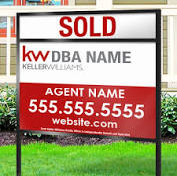
Example of a Real Estate Sign
Temporary real estate, construction, campaign, philosophical, or yard sale
Real estate sign. A sign displayed for the purpose of offering for sale, lease, or rent the property on which such sign is erected, affixed, or otherwise established.
Construction sign. A sign which identifies the architects, engineers, contractors, and other individuals or firms involved with construction on the property, the name of the building or development, the intended purpose of the building or development, and/or the expected completion date.
Standards
1.
Temporary real estate, construction, campaign, philosophical or yard sale signs in nonresidential zoning districts may not exceed 36 square feet in area or eight feet in height.
2.
Temporary real estate, construction, campaign, philosophical or yard sale signs in all other zoning districts may not exceed six square feet in area or six feet in height.
3.
Such signs may not be illuminated.
4.
Temporary real estate, construction, campaign, philosophical or yard sale signs may only be located on private property with the property owner's permission.
5.
Temporary real estate, construction, campaign, or philosophical signs may be erected 30 days prior to the election, event, construction, issue, sale or lease of the property and must be removed within seven days of the completion of the election, event, construction, issue, or sale or lease of property.
6.
Development projects under active building permits are permitted one sign per property street frontage up to 36 square feet in area provided they are removed after the applicable permit is no longer active due to completion of permitted work or permit expiration.
7.
In nonresidential or mixed use districts during "election season," snipe or yard signs without limit on number, shall be permitted in the right-of-way provided that such signs are erected no more than 30 days prior to the beginning of "one-stop" early voting under G.S. § 163-227.2 and removed no later than seven days following the applicable primary or election.
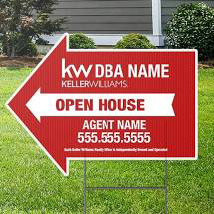
Example of Temporary Off-Site Directional Signs
Temporary off-site directional signs
A temporary sign displayed for the purpose of aiding the public to a property or development
being offered for sale, lease or rent, or associated with a weekend event, that is
not erected, affixed or otherwise established on the lot being offered for sale, lease
or rent or containing the weekend event. Temporary off-site directional signs are
intended to aid the traveling public in locating activities that do not take place
during the normal work week or on a recurring basis.
Standards
1.
No more than one off-site directional sign per direction and per property, development, company or event may be placed at a street intersection where a prospective client must make a turn to travel to the subject property.
2.
Signs for the same developer/builder/company/event must be spaced at least 600 feet from all other signs unless they are placed at a street intersection where a prospective client must make a turn to travel to the subject property.
3.
Signs shall not be placed on lands within the public rights-of-way that are entirely surrounded by public streets, such as roadway medians and traffic islands.
4.
Signs shall be placed so as not to interfere with or obstruct pedestrian or vehicular traffic or obstruct sight distances at intersections.
5.
Except with the permission of the property owner or occupant, signs shall not be located in front of or abutting a lot containing a single-family detached dwelling.
6.
Signs shall only be displayed from 12:00 p.m. (noon) on Friday to 12:00 p.m. (noon) the following Monday.
7.
Signs shall be freestanding and may not be anchored to a sidewalk or attached to utility poles or other structures or appurtenances.
8.
Such signs may not exceed six square feet in area or three feet in height.
9.
Signs shall not be placed on property owned or maintained by the Town (ex. — signs are not permitted on the Town's entry sign parks, library grounds, or town hall property).
Temporary Sandwich Board

Example of a Temporary Sandwich Board Sign
Standards
1.
One temporary sandwich board sign is allowed per storefront/establishment and only on paved surfaces.
2.
Such signs may not exceed eight square feet per side of sign, two feet in width (when opened) and four feet in height.
3.
Such signs must be placed so as not to interfere with or obstruct pedestrian and vehicular access. A minimum of five feet of clear passage must be maintained on the sidewalk between the physical street edge and the sign.
4.
Such signs may not be anchored to the sidewalk, or attached or chained to poles, newspaper vending boxes, or other structures or appurtenances.
5.
Temporary sandwich board signs may bear a commercial message related to an associated establishment or any noncommercial message.
6.
Such signs must be brought in at the close of business day. Such signs may not be left up overnight.
Temporary event

Example of a Temporary Event Sign
Standards
1.
Temporary event signs in nonresidential zoning districts may not exceed 60 square feet in area or six feet in height.
2.
Temporary event signs in all other districts may not exceed 36 square feet in area or six feet in height.
3.
Such signs may not be illuminated.
4.
Temporary event signs may only be displayed for three days or less. Signs left up for longer than three days require a temporary sign permit (Section 17.8).
5.
Temporary event signs are permitted to be put up six times per calendar year with a minimum of 28 days in between.
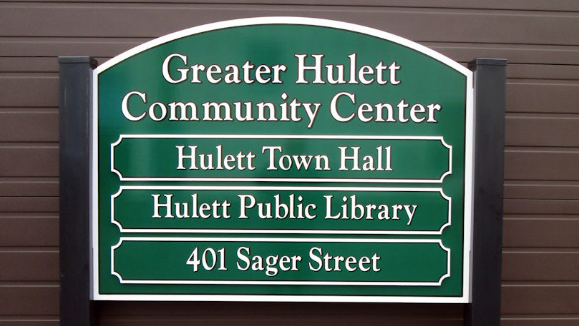
Example of an Identification Sign
Identification
A sign affixed to a wall used to display: the name, address, logo, or other identifying
symbol of the individual, family, business, institution, service, or organization
occupying the premises; the profession of the occupant; the name of the building on
which the sign is attached; or directory information in group developments or buildings
with multiple tenants.
Standards
1.
Only one identification sign is allowed per building.
2.
Identification signs may not exceed four square feet per tenant or 24 square feet whichever is less.
3.
Identification signs may not exceed six feet in height.
Murals
Any mosaic, painting, or graphic art or combination thereof which is applied to a
building wall or window and not interpreted to be advertising by the planning director
or their designee.
Standards
1.
Murals that contain any brand name, product name, letters of the alphabet spelling or abbreviating the name of any product, company, profession, or business, or any logo, trademark, trade name, or other commercial message are considered advertising signs. The advertising aspect must meet the sign requirements as defined in Section 17.7.
(Ord. of 09-19-2023(1), 9-19-2023)
Sec. 17.7. - Design and Dimensional Requirements for Permanent Signs Requiring a Permit.
17.7-1.
Requirements for signs extending over pedestrian and vehicular travel areas. Signs extending over pedestrian and vehicular travel areas shall maintain a minimum clear distance between the ground and any portion of the sign and its associated support structure of nine and 14 feet respectively.
17.7-2.
Permanent sign requirements. The following tables and text provide the design and dimensional requirements for permanent signs that require a permit. Requirements include area, number, type of illumination, and letter height for both attached and freestanding signs. Setback and height requirements are established for freestanding signs and detailed design requirements are provided for monument and pole signs. Additionally:
1.
Only one general attached sign (blade, V-type, or flat) is allowed per street or parking frontage.
2.
Only one monument or pole freestanding sign is allowed per street frontage.
3.
Height of freestanding signs shall be measured from the elevation of the ground at the point of contact with the sign provided that the grade of the site is not artificially altered to increase the allowable height of the sign. For sloping sites, the applicable point of contact shall be the point having the highest elevation.
4.
The following permanent special purpose signs are allowed in addition to general attached and freestanding signs under the limitations provided in the following tables and elsewhere in this article.
a.
Window.
b.
Directional.
c.
Directory.
d.
Awning.
e.
Canopy.
f.
Community identification.
5.
Changeable copy signs are allowed as either attached or freestanding signs provided they are incorporated into the general or attached signage allowed. For example, the changeable copy area shall be calculated as a part of the overall cumulative sign area and shall be a part of the overall sign and may not exceed 50 percent of the overall signage square footage. Freestanding changeable copy signs are not permitted as a single cabinet but must be incorporated into the sign as a whole. In addition, the following standards shall apply:
a.
Changeable copy signs shall only be permitted in nonresidential zoned districts.
b.
Signs shall not change more frequently than once every four hours for manually changing signs.
17.7-2A
Digital Signage.
1.
Menu boards: Digital and non-digital menu boards shall have a total maximum square footage of 32 square feet per lane; and shall be limited to a maximum height of eight feet. Signs shall be limited to three signs per drive through lane. Menu displays shall be turned off when the business is not in operation.
2.
Time and temperature signs are allowed as either attached or freestanding signs provided they are incorporated into the general or attached signage allowed for a nonresidential property, no more than one such sign is allowed per property, the message is limited to time and temperature information and changes no more frequently than once every ten seconds, and the area of the time and temperature sign does not exceed 16 square feet. The square footage allowance constitutes an area bonus in addition to the maximum allowable area for the applicable sign type.
3.
Fuel stations: Fuel stations may use digital signage to display fuel pricing. Digital pricing signs shall be turned off when the business is not in operation.
| Sign Type | Example | Sign Area Allowance (sq. ft.) | Max. Sign Height | Sign Illumination | Min. Letter Size | Max. Number | Minimum Setback from Property | Other Requirements |
|---|---|---|---|---|---|---|---|---|
| Blade (or Projecting) |  | 32 | — | Ambient, External, Internal | 6" | One per street or parking frontage per occupancy | — |
Only one sign (blade, V-type, or flat sign) allowed per occupancy per street or parking
frontage
One sq. ft. of signage for each sq. ft. of occupancy frontage up to the maximum allowed Internally-illuminated signs — not more than 50% of sign face can be illuminated No attached signage above second story. Wall signs may exceed the 32 sq. ft. requirements up to a maximum of 5% of the wall façade size (sq. footage) |
| V-Type | 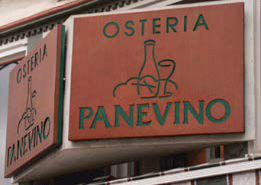 | 32 | — | Ambient, External, Internal | 6" | One per street or parking frontage per occupancy | — | |
| Flat (or wall) | 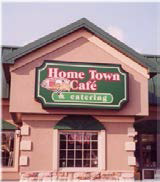 | 32 | — | Ambient, External, Internal | 6" | One per street or parking frontage per occupancy | — | |
| Window |  | 8 | 8 | Ambient | — | One per each 100 sq. ft. of display or window area or fraction thereof | — | A maximum allowance of three signs per street or parking frontage per occupancy |
| Awning |  | 6 | 6 | Ambient | 4" | One per street or parking frontage per awning | — | Not more than two awning signs per occupancy per street or parking frontage |
| Canopy | 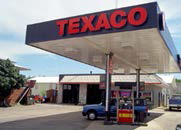 | 16 | 16 | Ambient, Internal | 6" | One per Canopy* | — | Properties fronting on more than one street may have one canopy sign per street entrance |
| Monument | 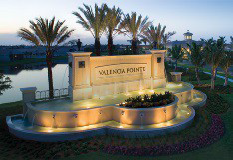 | 48 | 8 | Ambient, External, Internal | 6" | One per street frontage having access to the site | 5' | Monument signs shall comply with the design requirements of Section 17.7-3 |
| Pole | 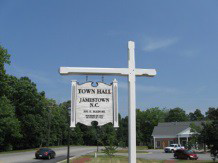 | 32 | 10 | Ambient, External, Internal | 6" | One per street frontage having access to the site | 10' | Pole signs shall comply with the design requirements of Section 17.7-4 |
| Directory |  | 16 | 6 | Ambient, External, Internal | 4" | One per street frontage having access to the site | 25' |
Only allowed for sites with multiple buildings
Shall not be displayed so as to be prominently visible from off-site locations |
| *May encroach into adjoining street right-of-way pursuant to an encroachment agreement. | ||||||||
17.7-3.
Monument sign design requirements. Monument signs are intended to serve a wider range of aesthetic and architectural purposes than pole signs. Consequently, the following design requirements are established for monument signs.
(A)
General design requirements and sign area measurement for monument signs. As in traditional building design, monument signs shall be designed to include a base, middle, and cap. The following illustration shows a monument sign having these architectural characteristics, as well as how sign area is to be measured on a monument sign.
Monument Sign Design Elements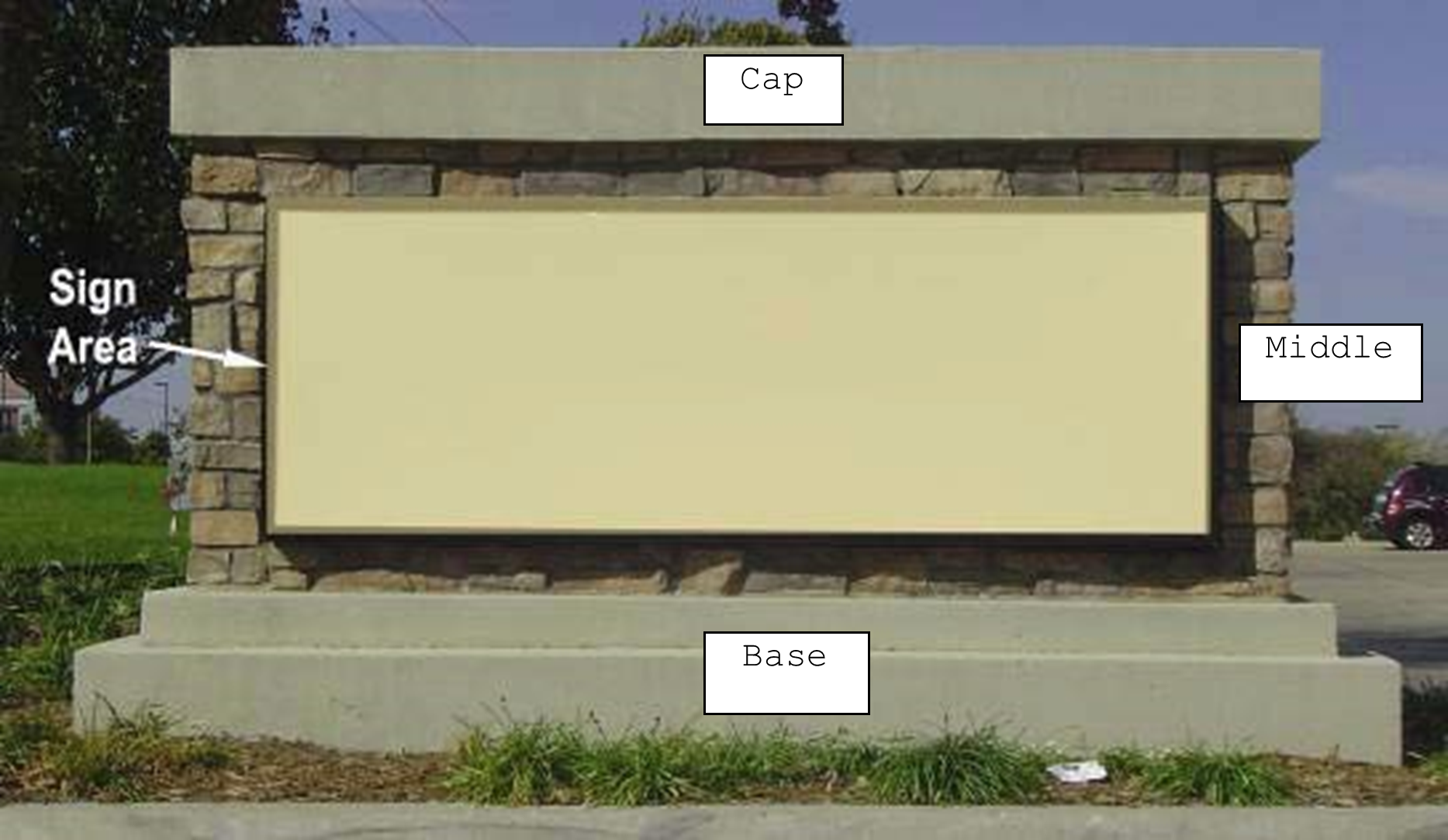
(B)
Sign structure materials. In general, monument sign structures should be constructed of materials that are similar to or complementary to the principal building(s) on the premises where they are located. Only the following materials or combination of materials shall be used in monument sign structure construction:
•
Brick, painted or unfinished
•
Wood, or wood synthetic
•
Concrete or stucco
•
Natural stone or manufactured stone having a natural appearance
•
Metal
•
Glass
Sign copy materials. Sign copy materials for monument signs shall include the sign structure materials listed above. For internally illuminated monument sign copy, acrylic may be utilized, provided not more than 50 percent of the sign face is illuminated.
17.7-4.
Pole sign design requirements. The following design requirements are established for pole signs.
(A)
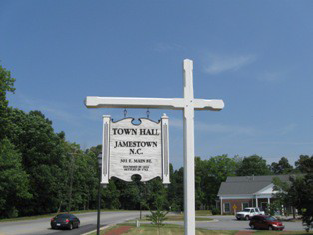
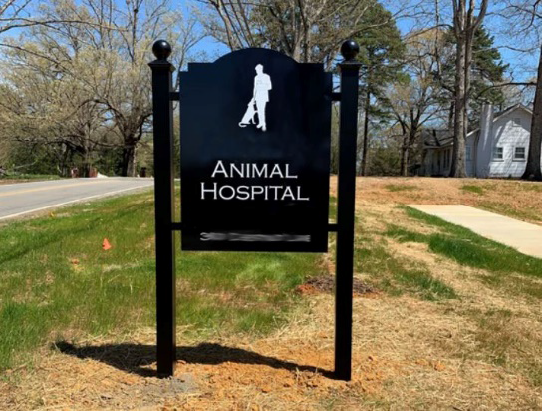
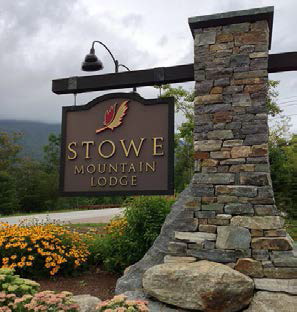
General design requirements. Pole signs in the Town have traditionally been supported by two posts or suspended from a single post as shown in the following illustrations. Pole signs shall use one of these two forms of design.
 |  |
 |  |
(B)
Materials. In general, pole signs should use materials that complement the principal building(s) on the premises where they are located. Only the following materials or combination of materials shall be used in monument sign structure construction:
•
Wood, or wood synthetic
•
Metal
•
Brick, painted or unfinished
•
Concrete or stucco
•
Natural stone or manufactured stone having a natural appearance
(Ord. of 09-19-2023(1), 9-19-2023)
Sec. 17.8. - Temporary Signs.
The following tables provide the design, dimensional, and time of display requirements for temporary signs. Additionally: Nonconforming temporary signs shall not be grandfathered (see Section 17.12 of this article).
17.8-1.
Requirements for temporary signs that require a permit. The temporary signs listed in the following table require a permit and shall comply with the indicated zoning location and other requirements. All such signs, with the exception of searchlights, shall be illuminated solely by ambient light sources.
(Ord. of 09-19-2023(1), 9-19-2023)
Sec. 17.9. - Signs Located in Local Historic Districts.
Regardless of the other dimensional provisions of this article, signs that are located in local historic districts shall be governed by the applicable design guidelines and review processes established for the local historic district.
(Ord. of 09-19-2023(1), 9-19-2023)
Sec. 17.10. - Master Sign Plan.
Regardless of the other provisions of this article, the town council may, at its sole discretion, approve a master sign plan for specified areas of Town or for certain development projects listed in this section. The approved master sign plan may include signs of different sizes, types, locations, placement and height from those otherwise enumerated in this article.
17.10-1.
Purpose. The purpose behind this section is to permit creativity in sign design and placement to address site issues and constraints associated with topography, pedestrian-orientation, way-finding and other conditions unique to the subject development or area of Town.
17.10-2.
Application. Master sign plans may be submitted for the following types of developments:
(A)
Traditional neighborhood development projects.
(B)
Commercial, institutional, industrial, or mixed-use developments containing three or more acres in area.
(C)
Areas of Town that are governed by a corridor plan or area plan that includes sign guidelines.
17.10-3.
Submittal process. Master sign plan applications may be submitted for consideration at the time of original submittal of the proposed development or separately from the original development proposal. The following information or material shall be required for a signage plan application and shall be indicated on an application form provided by the planning director or their designee.
(A)
Owner and contact name, address, telephone number and signature(s), as applicable.
(B)
A master sign plan proposal illustrating the proposed signs, their proposed location, and their proposed purpose, along with a statement as to why the existing sign code cannot or should not be followed in the subject case.
(C)
An analysis showing how the proposed signage plan differs from what could be provided under the existing sign regulations set forth in this article.
(D)
Other similar information determined by the planning director or their designee to be necessary for understanding the purpose and intent of the proposed master sign plan application.
17.10-4.
Review procedure. The planning director or their designee shall schedule the master sign plan for planning board and town council consideration in accordance with the notice and hearing procedures set forth in Article 5 for zoning map amendments. In reviewing the proposed master sign plan, the planning board and town council shall take the following matters into consideration.
(A)
The extent to which the proposed master sign plan deviates from the sign allowances otherwise applicable in this article.
(B)
The rationale provided by the applicant for the deviations.
(C)
The extent to which the master sign plan promotes Town goals associated with community character, way- finding, pedestrian-orientation, and business identification.
(D)
The degree to which the master sign plan creatively and effectively addresses the issues and constraints unique to the site with regard to signage.
The planning board shall provide a recommendation to the town council whether to deny or approve the proposed master sign plan in part or in total and shall further recommend conditions regarding approval where deemed warranted.
The town council may deny or approve the proposed master sign plan in part or in total and may establish conditions regarding approval. In the event that the master sign plan is denied, the applicant must wait at least 365 days before reapplying for a new master sign plan substantially similar (as defined in Article 3) to the proposed master sign plan.
(Ord. of 09-19-2023(1), 9-19-2023)
Sec. 17.11. - Permitting.
Applications for sign permits and the associated fee schedule may be obtained from the planning department. Completed applications, including payment of fees, shall be reviewed for compliance with the requirements of this article and may be approved, approved with conditions, or denied by the planning director or their designee.
Signs requiring sign permits under the provisions of this article may also require additional permits, including building permits and electrical permits. It shall be the responsibility of the applicant to obtain all applicable permits.
(Ord. of 09-19-2023(1), 9-19-2023)
Sec. 17.12. - Nonconforming Signs.
Any existing permanent sign which does not comply with one or more of the requirements of this article shall be grandfathered until such sign is removed, physically altered beyond maintenance (as defined), relocated, damaged or destroyed, after which it shall be brought into compliance with all requirements of this article. An exception shall be made for signs which must be relocated as the direct result of a governmental action (such as, but not limited to, the acquisition of street right-of-way, eminent domain action, or installation of infrastructure). Such an exception will be subject to review by the planning director or their designee, who will work to help property owners bring their signs into compliance. If no reasonable alternative exists, the planning director or their designee may allow a sign to be relocated to an acceptable location on the same property. Signs which are permitted to be relocated shall not be altered in such a manner to constitute a change in the sign. Changes in the sign beyond maintenance as defined shall result in the sign being brought into compliance. Appeals may be made to the board of adjustment per the procedure in this land development ordinance. Nonconforming temporary signs shall not be grandfathered and shall be brought into compliance with all requirements of this article within 60 days from adoption date.
(Ord. of 09-19-2023(1), 9-19-2023)
Sec. 17.13. - Abandoned Signs.
Signs located on the premises of a building that does not contain an active use or occupancy shall be considered abandoned signs and shall be removed by the owner of the property on which they are located. Failure to remove an abandoned sign shall be considered a violation of this article. In addition, correction of an abandoned sign violation may include removal of the abandoned sign or signs by the Town at the owner's expense after proper notice of the violation and failure to act by the owner within the 30-day timeframe as established in the notice of violation.
(Ord. of 09-19-2023(1), 9-19-2023)
Sec. 17.14. - Maintenance.
All signs, including exempt signs, shall be maintained in a satisfactory state of repair. This shall include, without limitation, correction of peeling or faded paint, repair or replacement of damaged panels, trimming of vegetation that obscures the sign(s), replacement of defective lighting of illuminated signs, secure attachment to the building for attached signs, and stable vertical alignment of freestanding signs. Signs must meet minimum non-residential standards as defined in 24.10-8J.
(Ord. of 09-19-2023(1), 9-19-2023)
Sec. 17.15. - Design Guidelines.
In addition to the mandatory standards provided above, the following design guidelines for signs are provided in order to promote more attractive and functional design and placement of signs.
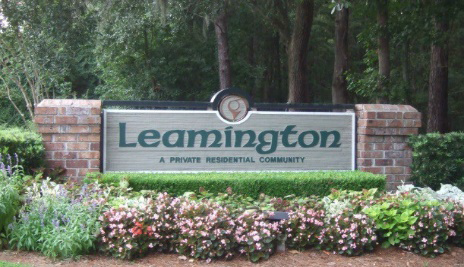
Example of Landscaping Around the Base of Monument Sign
1.
Freestanding signs. Placement of freestanding signs should take into account existing trees and other site landscaping so as to maintain sign visibility. Landscaping around the base of freestanding signs is strongly encouraged to improve the overall appearance and visibility of these sign types as evidenced in the following example.
2.
Display windows are intended to offer opportunities to display merchandise or services available on the premises. Careful placement of signs in display windows will not obscure the visibility of merchandise or services. Additionally, display windows should not be "papered-over," especially in pedestrian areas.
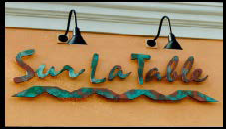
Example of Externally Illuminated
3.
General design guidelines. The following general guidelines are provided to guide overall sign design in the Town:
a.
Use high quality, durable materials.
b.
Minimize the need for sign lighting by placing signs where ambient light sources illuminate the sign. Where separate lighting is necessary, external illumination sources are preferred over internal illumination. All electrical conduit and junction boxes should be concealed.

Example of Backlit Individual Letters
c.
Backlit, individual letter signs (aka, halo lighting) are encouraged where illumination is needed as illustrated below.
d.
Avoid elaborate or confusing styles of text as illustrated in the example.
e.
Attempt to use symbols rather than text; for example, this Norwegian pharmacy sign incorporates a symbol as well as text.
f.
Use sign styles and designs that complement the architecture of the site where the signs are located. The Town of Jamestown is a historic town so using "period" signage is strongly encouraged.
 |  | 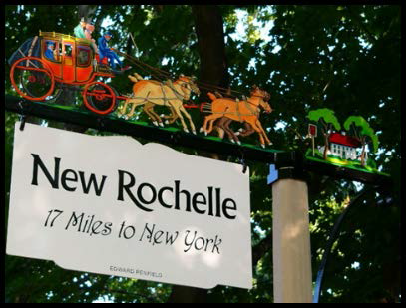 |
| Example of Confusing Style of Text | Example of Use of Symbols | Example of "Period" Pole Sign |
(Ord. of 09-19-2023(1), 9-19-2023)

