
Lansing City Zoning Code
CHAPTER 1246
ARCHITECTURAL STANDARDS
1246.01.- Introduction.
This chapter sets forth the architectural standards applicable to the various character districts in the City of Lansing. These standards supplement those stated for each zoning district. These standards are intended to result in construction and development that reinforces the vision established in the Design Lansing Comprehensive Plan.
(Ord. No. 1331, § 1, 5-5-25)
1246.02.01. - Residential, service, retail, accessory, and industry, manufacturing and processing uses.
The requirements of this chapter shall apply to all proposed development with residential, service, retail, accessory, and industry, manufacturing and processing uses and shall be considered in combination with the standards for the applicable zoning district and the rest of the Zoning Ordinance.
(Ord. No. 1331, § 1, 5-5-25)
1246.02.02. - Recreation, education, public assembly, transportation, communications and infrastructure uses.
Development with public recreation, public education, public assembly, transportation, public communications and/or infrastructure uses shall comply with the standards for the applicable zoning district, but shall not be required to meet the standards in this chapter.
(Ord. No. 1331, § 1, 5-5-25)
1246.02.03. - Additions or modifications to existing buildings.
Building additions to buildings built prior to the adoption of this form-based code shall apply the Architectural Standards that most closely match the existing building, as determined by the Zoning Administrator.
(Ord. No. 1331, § 1, 5-5-25)
1246.03. - Modifications.
(a)
Modifications to the standards established in this chapter may be approved by the Zoning Administrator. Any such modification shall require an application that includes a site plan and a front elevation drawing of the proposed building superimposed on a color drawing or photograph of the entire block showing the relationship of the proposed building to other buildings on the block. The application shall be reviewed by the Zoning Administrator based upon the following criteria:
(1)
The design of the building shall be in keeping with the desired architectural character as articulated in the Comprehensive Plan, the intent of the district, and by example of new buildings designed following the standards of this Code. This shall not prevent innovation and creativity in design that is in keeping with the Comprehensive Plan, as determined by the Zoning Administrator.
(2)
The design shall meet district height requirements.
(3)
The exterior finish materials shall be of equal or better quality, in terms of durability and appearance/texture similar to brick, stone, or wood, as those permitted in the district. The intent is to accommodate new technologies and building material while maintaining the desired character of the districts, as defined in Paragraph 1, above.
(b)
Relief from unlisted standards. Any request for relief from a standard other than those listed above shall be made through the variance permit procedures set forth in Chapter 1274.
(Ord. No. 1331, § 1, 5-5-25)
1246.04.01. - General architectural standards.
(a)
Building frontage on primary and secondary streets.
(1)
Building frontage.
a.
Building facades shall be built parallel to the primary frontage line or to the tangent of a curved primary line, and along the build-to line, as specified in each zoning district Sections 1243.04 through 1243.09 and 1245.04 through 1245.05.
b.
Exceptions may be granted by the Zoning Administrator where the parcel has an irregular configuration, utility easements or legal constraints which prevent compliance, or if the building is sited to take advantage of specific topographical and natural characteristics.
c.
Where compliance with the build-to line requirements would conflict with other provisions of the Zoning Ordinance, the Zoning Administrator shall consider the following in determining which provision shall be applied so that the intent of the zoning district in which the property is located is met:
1.
Conflicts with rights-of-way, underground utilities, or established easements.
2.
Section 1250.03.03: Sight Visibility at Corners and Driveways.
3.
The required corner massing stated in the zoning district, if applicable.
4.
Subsection 1252.06(b)(1), the landscaping requirement between the public sidewalk and the front parking lot, if front yard parking is allowed.
5.
Subsection 1254.01.07(b)(4), the sidewalk requirement of seven feet in width where abutting a parking area.
d.
In no instance shall a front or side parking lot width exceed the primary frontage width of a principal building by more than 150 percent.
1.
For corner lots, in no instance shall a front parking lot width exceed the primary frontage width of a principal building along the more active street type by more than 150 percent.
(2)
Multi-building sites.
a.
Buildings shall be located to break up the site into a series of smaller blocks defined by streets and pedestrian walkways, and to frame and enclose parking areas, outdoor dining areas, and/or gathering spaces for pedestrians between buildings.
b.
Perimeter buildings and outparcels shall be configured and located to define street edges, development entry points, and spaces for gathering between buildings.
c.
Perimeter buildings shall be oriented so that the primary facade(s) faces a public street and has a usable entry on that street. Buildings that are interior to a lot that has buildings that otherwise meet the frontage requirement may have entrances that do not face the primary frontage.
(b)
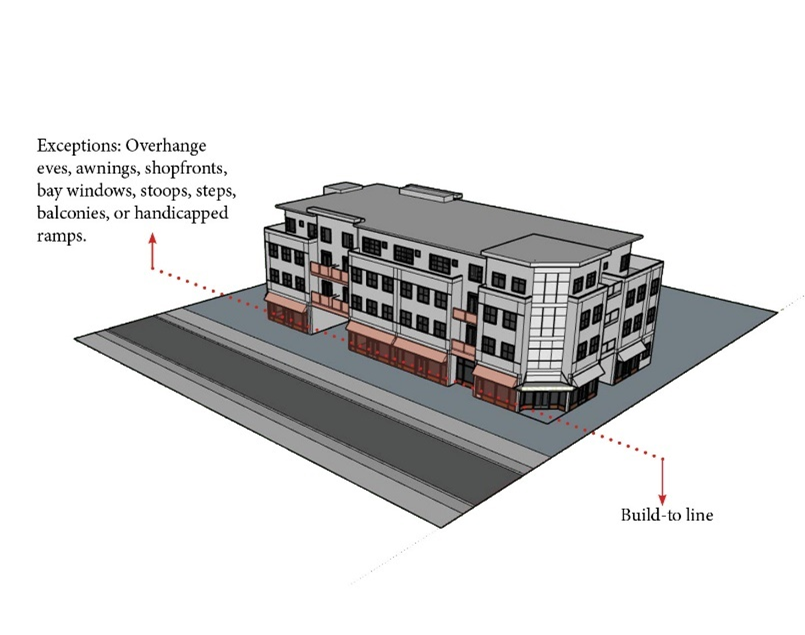
No part of any building may project forward of the build-to line or front setback except overhanging eaves, awnings, shopfronts, bay windows, stoops, steps, balconies, or handicapped ramps approved by the Zoning Administrator.
Figure 61
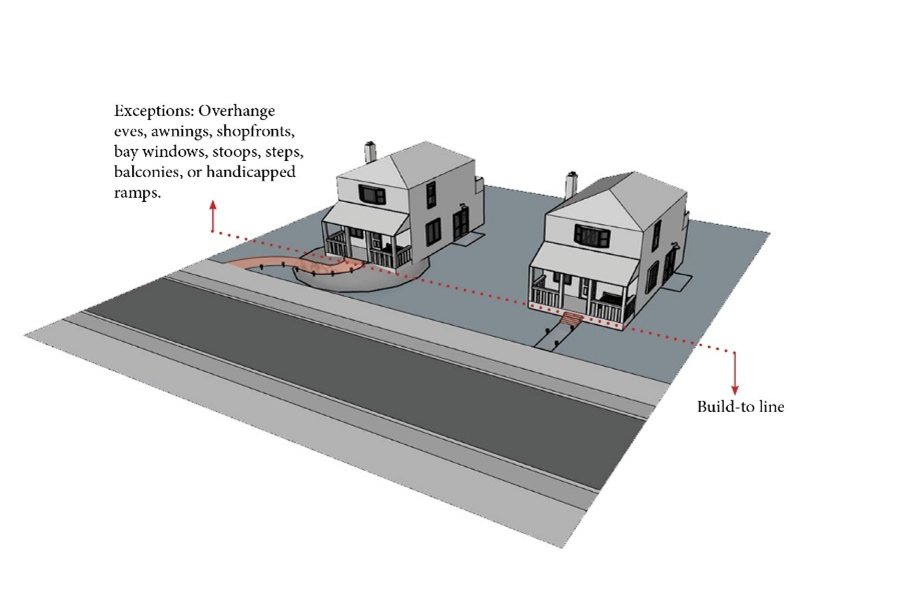
Figure 62
(c)
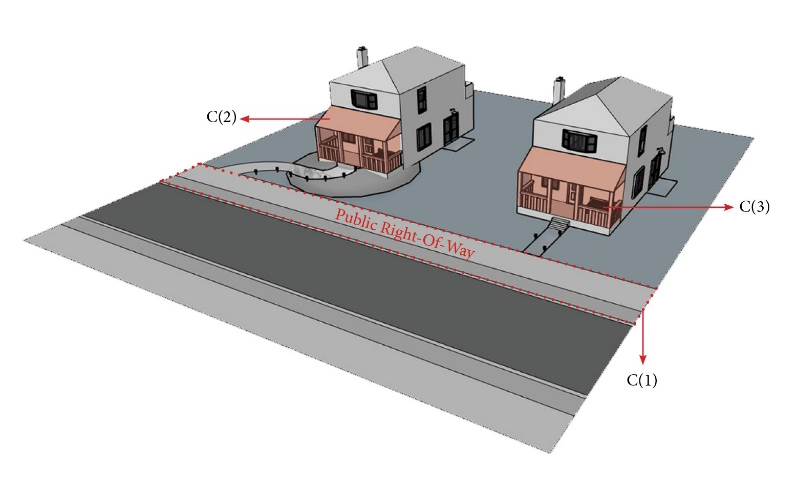
Stoops and front porches.
(1)
Shall not extend into the public right-of-way.
(2)
All required front porches and stoops shall be completely covered by a roof.
(3)
Front porches may be screened (insect screening) when all architectural elements (columns, railings, etc.) occur on the outside of the screen facing the street-space.
(4)
Finished floor height shall be no more than eight inches below the first interior finished floor level of the building.
(5)
Front porches and stoops made of wood must be finished with stain or paint.
Figure 63
(d)
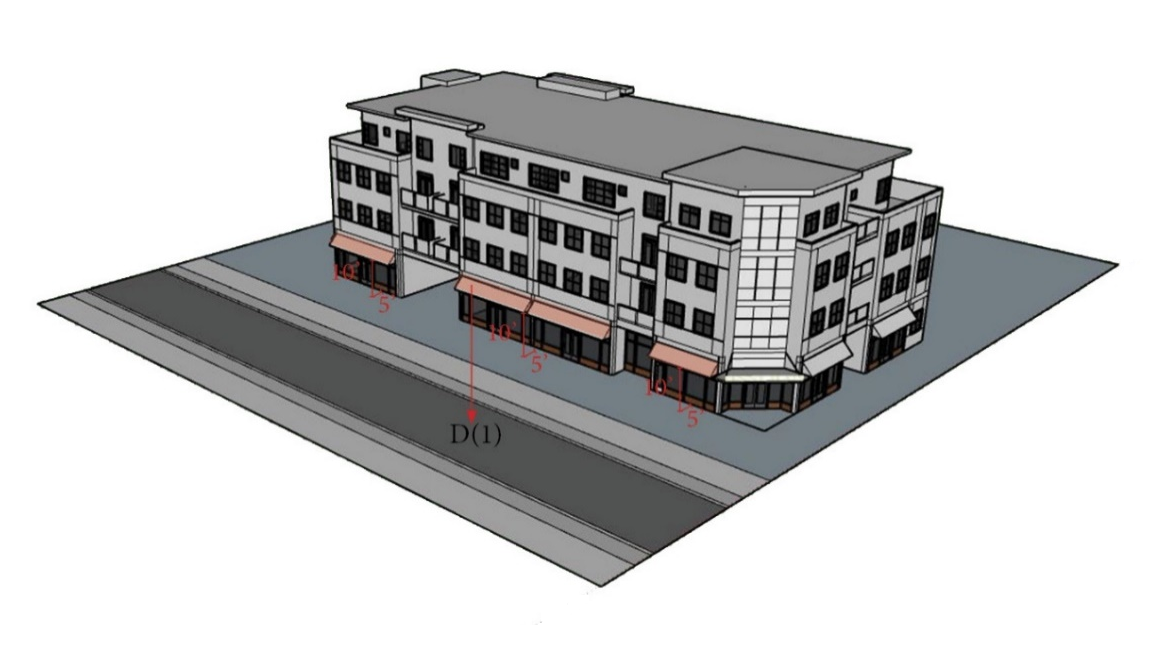
Awnings/overhangs. When an awning or overhang is incorporated into a building, the following requirements must be met:
(1)
Minimum ten feet clear height above sidewalk, minimum five feet depth out from the facade. Maximum projection to within one foot of back of curb where there are no street trees, or one foot into the tree-planting strip.
(2)
The awning covering shall be made of canvas cloth or an equivalent.
(3)
Covering shall not have shiny or reflective materials.
(4)
Metal and glass are permitted, when configured as a marquee over an entrance.
(5)
No internal illumination through the awning/overhang.
(6)
Lettering on awnings limited to six inches tall on vertically hanging fabric at curb side of awning.
(7)
No one-quarter cylinder configurations.
(8)
Awnings and overhangs shall complement the fenestration pattern of the building facade.
(9)
Awnings or overhangs, its covering, and its structural frame shall be maintained in good, working condition and must be free of any fraying, holes, tears, or other damage, and in the event the awning or overhang material is damaged or removed it shall be repaired or replaced, or the structural frame shall be removed from the building.
Figure 64
(e)
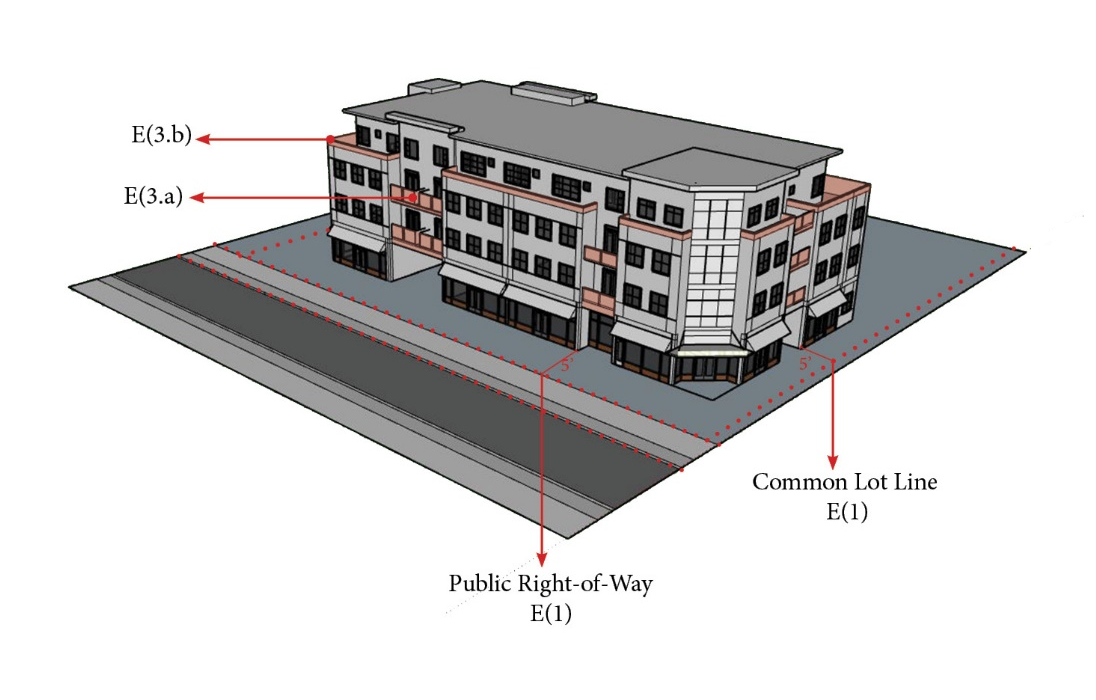
Balconies.
(1)
Shall not be located within five feet of any common lot line and shall not encroach into the public right-of-way.
(2)
Balconies may be a single level or multiple balconies stacked vertically for multiple stories.
(3)
When residential buildings include balconies as a method for achieving the required private open area, the balcony:
a.
Shall be enclosed by balustrades, railings, or other means that block at least half of the view through them.
b.
Shall not otherwise be enclosed above a height of 42 inches, except with insect screening and/or columns/posts supporting a roof or connecting with another balcony above.
Figure 65
(f)
Windows.
(1)
Glass shall be clear, with light transmission at the first story of at least 90 percent (modification as necessary to meet any applicable building and energy code requirements).
(2)
First story windows of buildings with a principal commercial or retail use may not be made opaque by window treatments (excepting operable sunscreen devices within the conditioned space), window coverings, or window wraps.
(3)
First story windows of buildings without a principal commercial or retail use at the storefront level may be covered by opaque window treatments or wraps. Signs on window coverings or wraps shall not exceed 20 percent of the window to which it is attached or covering.
(4)
A minimum of 80 percent of the ground story window surface shall allow a view into the building interior for a depth of at least 12 inches.
(5)
No window shall be blocked with cinderblock, brick, or other such means except temporarily as ordered by the Building Safety Office, Code Enforcement Office, or Fire Department.
(g)
Materials.
(1)
No tarp, cloth, plastic covering, or other flexible or non-structural material shall be affixed to any structure or used to create an enclosure, privacy screen, or barrier except for materials that are designed, intended, manufactured and are being used for awnings, canopies, or sunscreens.
(h)
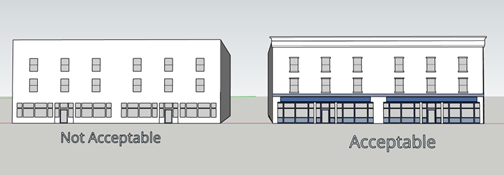
Building articulation. These regulations are intended to encourage walkable environments by creating visually interesting buildings with human scaled details and proportions. The following regulations apply to any building greater than 30 feet wide.
(1)
Horizontal articulation (e.g., base, belt courses, cornice lines, entablatures, friezes, awnings or canopies, changes in building materials or window patterns, recessed entries, or other architectural treatments) is required to help distinguish the first floor or podium from upper stories.
(2)
Vertical articulation is required so that there are no blank walls on building segments of no greater than 30 feet in length along the front and corner facades. Vertical articulation may be satisfied through the use of architectural features such as bays, columns, pilasters, mullions, or regular repetition of window patterns. On corner lots, the material and articulation of the primary facade shall extend a minimum of one segment up to 30 feet in length along the secondary street.
(3)
Variation in color or design of siding or cladding materials shall not be used to meet the required vertical or horizontal articulation.
(4)
Variation in color or design of siding or cladding materials shall not extend across multiple segments and floors.
(5)
A building's first floor primary facade may feature recesses along the build-to line only to accommodate additional landscaping, public seating, or a pedestrian plaza.
Figure 66
(Ord. No. 1331, § 1, 5-5-25)
1246.04.02. - Residential building types.
(a)
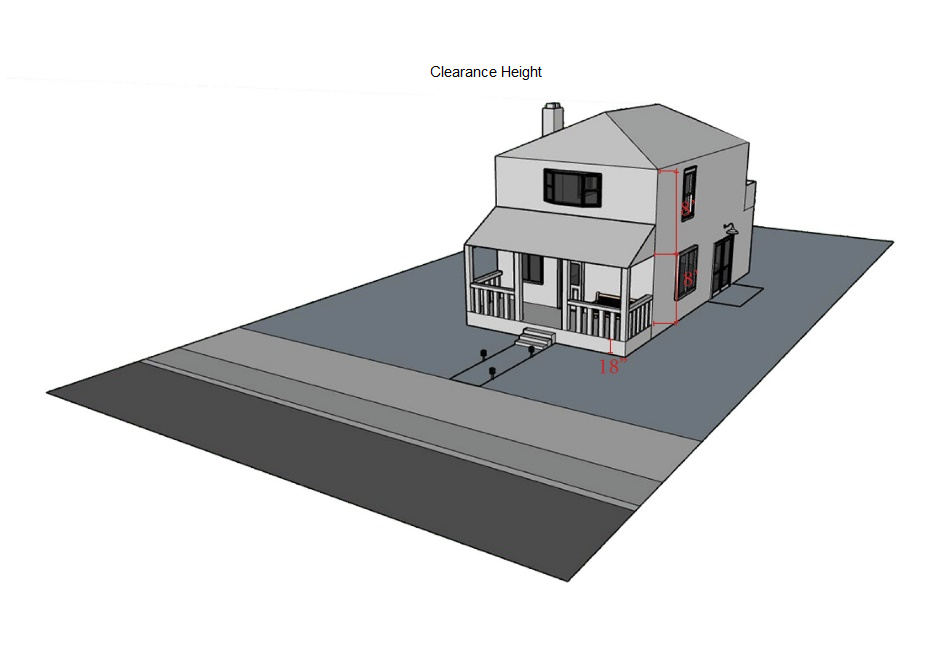
Clear height.
(1)
First floor clear height: 7.5 feet minimum.
(2)
Upper floors clear height: 7.5 feet minimum.
(3)
First floor finish elevation above finished grade: Minimum 18 inches with stairs. ADA accessible units with ramp access permitted with approval. Where the first floor is occupied by a lobby, office, or common space and no dwelling are located on the first floor along the front of the building, then the first floor may be at the same finished grade.
Figure 67
(b)
Porches and stoops.
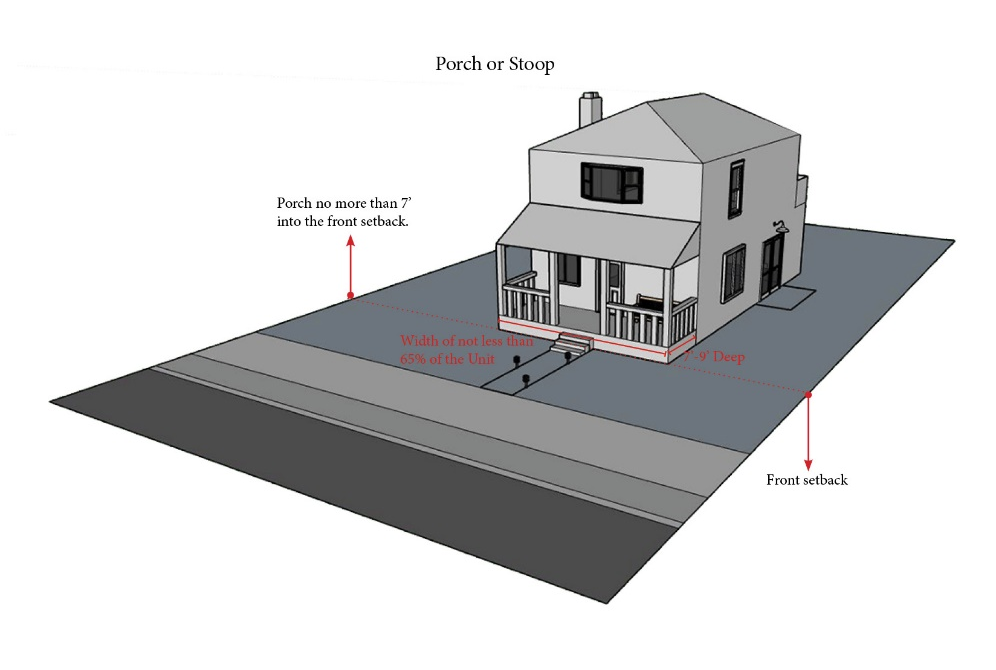
(1)
The primary entrance to a residential building shall be located on the first floor along the front wall of the building.
(2)
The primary entrance to a residential building that leads directly to a residential unit shall have a covered porch with a depth of at least seven feet but no more than nine feet, that extends across at least 65 percent of the width of the front wall of the building or unit.
(3)
The primary entrance to a multi-family building shall have a covered porch or stoop at least five feet in depth and six feet in width.
(4)
A porch or a stoop is not required where the first floor of a residential building is occupied by a lobby, office, or common space, and no dwelling is located along the front of the building.
(5)
A porch shall not project more than seven feet into the required front setback.
(6)
The zoning administrator may permit modifications to these standards to accommodate innovative designs that comply with the intent of this section and the placemaking guidelines set forth in the Comprehensive Plan.
Figure 68
(c)
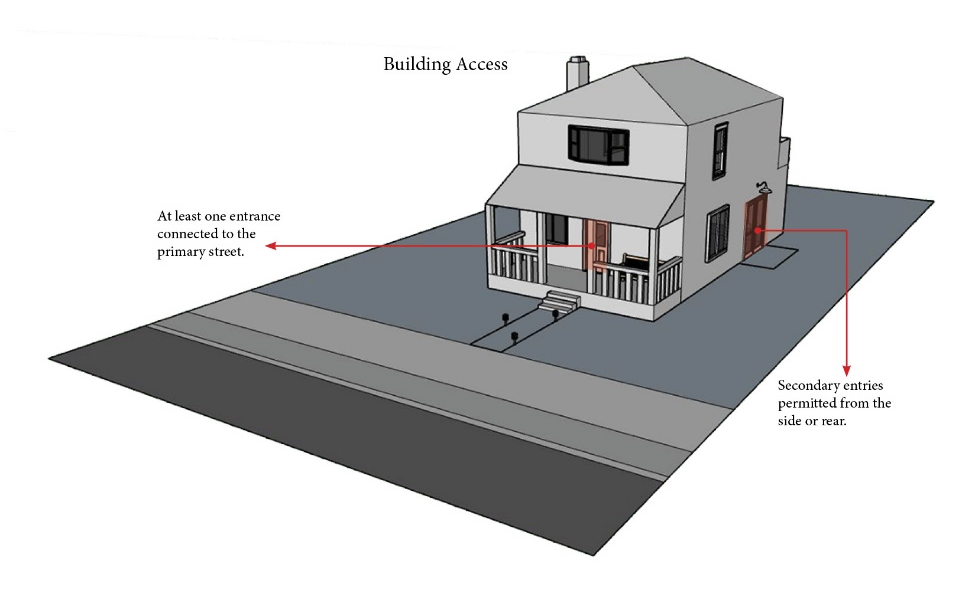
Building access.
(1)
At least one entry must face onto and connect to the primary public or private street, or for sites containing multiple units the internal drive used for access. Secondary entries permitted from the side or rear. Maximum recessed entry of five feet.
Figure 69
(d)
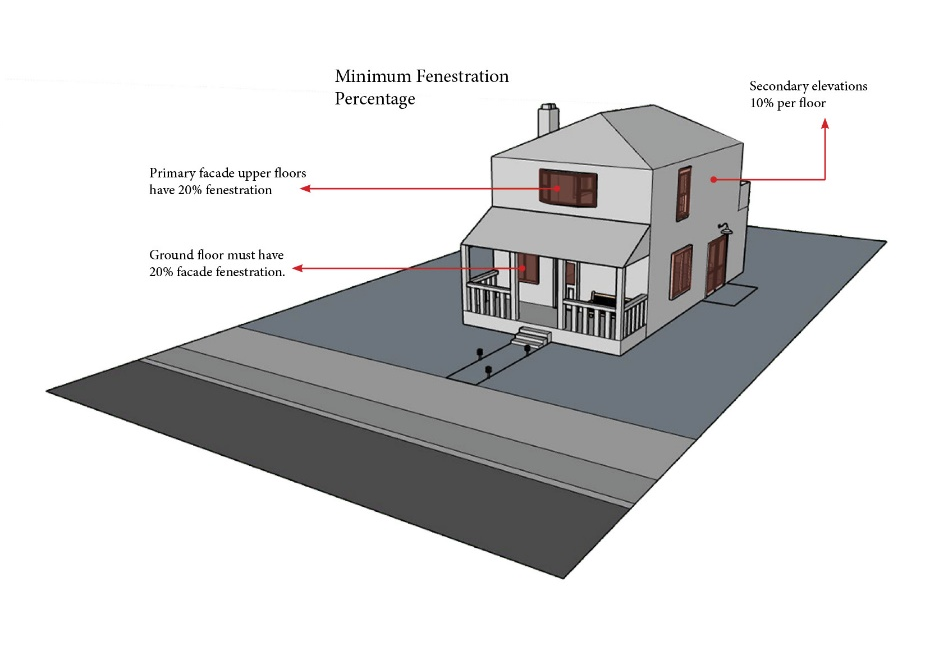
Minimum fenestration percentage.
(1)
Primary facade.
a.
Ground floor: 20 percent.
b.
Upper floors: 20 percent.
(2)
Secondary elevations.
a.
At least one double-hung window with a minimum dimension of two feet in width by three feet in height per room. A bathroom window may have a smaller dimension.
Figure 70
(e)
Allowed building materials.
(1)
Primary facades (i.e. facing onto a street): Brick or stone siding, wood siding, vinyl siding, fiber clapboards. Material must be consistent with adjacent residential character. Other materials as determined by Zoning Administrator.
(2)
Secondary facades (i.e. those not facing onto a street): Same as primary facades, but also including decorative metal, wood; EIFS (on upper floors only); other similar materials as determined by Zoning Administrator.
(f)
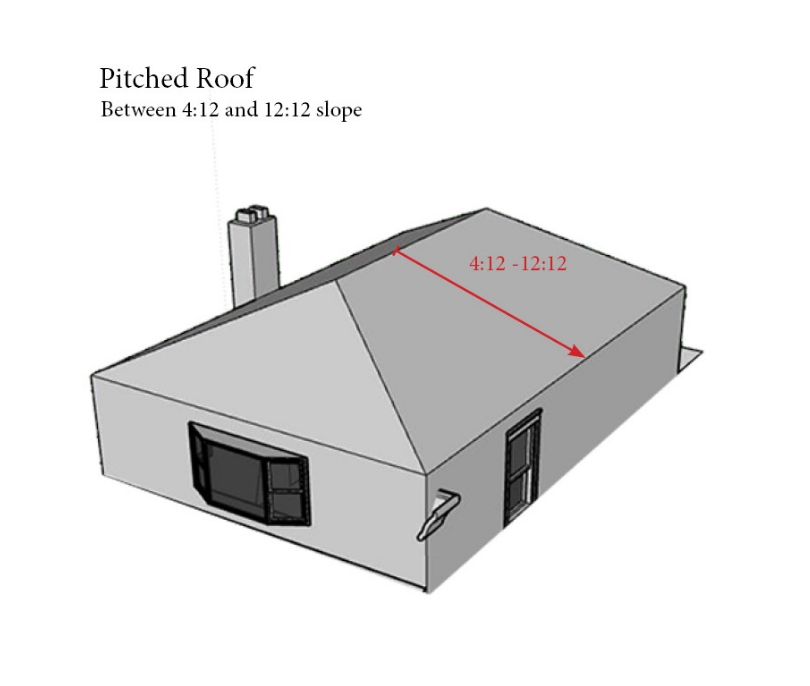
Roof types.
(1)
Pitched: Between 4:12 and 12:12 slope.
(2)
Flat roof: With cornice and parapet.
(3)
All rooftop mounted HVAC and mechanical equipment shall be screened from view on all sides of the building.
(4)
Roof materials (for pitched roofs): Asphalt, fiberglass, tile, slate, standing seam metal.
Figure 71
(g)
Service. Services and utility hookups shall not be visible from the primary street frontage, preferably located in the rear yard.
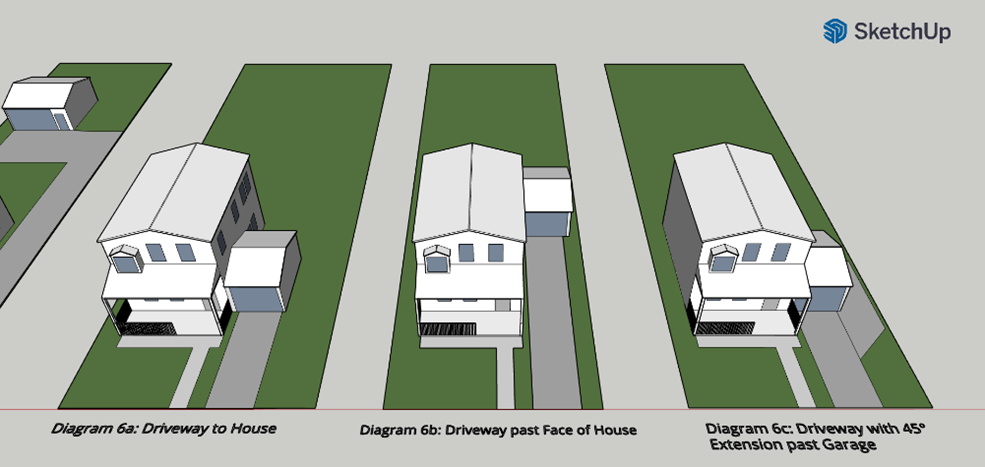
(h)
Garages. Attached garages shall not project closer to a public or private street, or internal drives used for access on sites containing multiple dwelling units, than the building wall(s) of the unit facing a street or drive.
Figure 72
(Ord. No. 1331, § 1, 5-5-25)
1246.04.03. - Commercial/mixed-use building types.
(a)
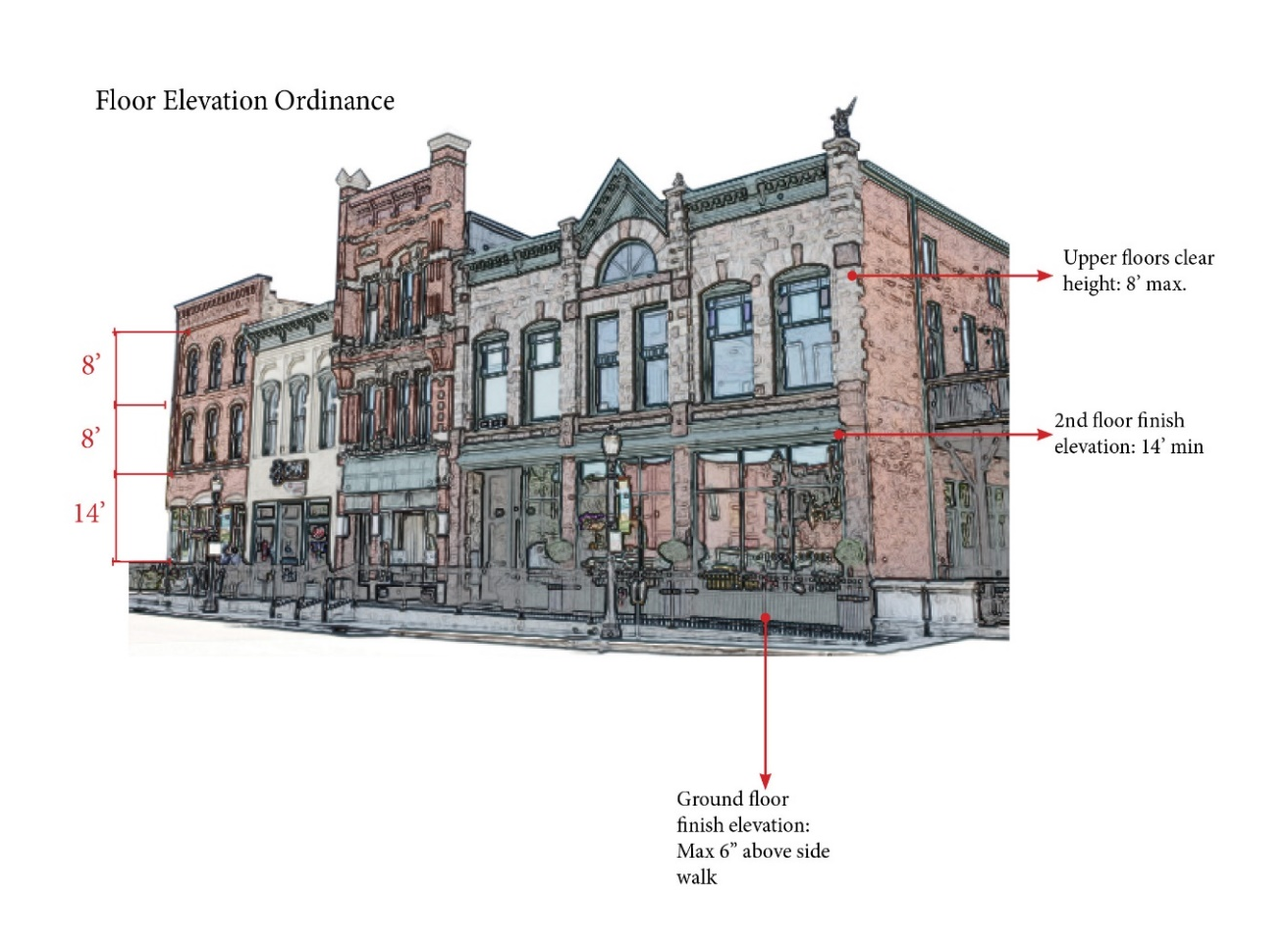
Clear height.
(1)
First floor finish elevation: 14 feet minimum.
(2)
Upper floors clear height: Eight feet minimum.
(3)
First floor finish elevation above/below sidewalk: Maximum of six inches above adjacent sidewalk with ramp.
Figure 73
(b)
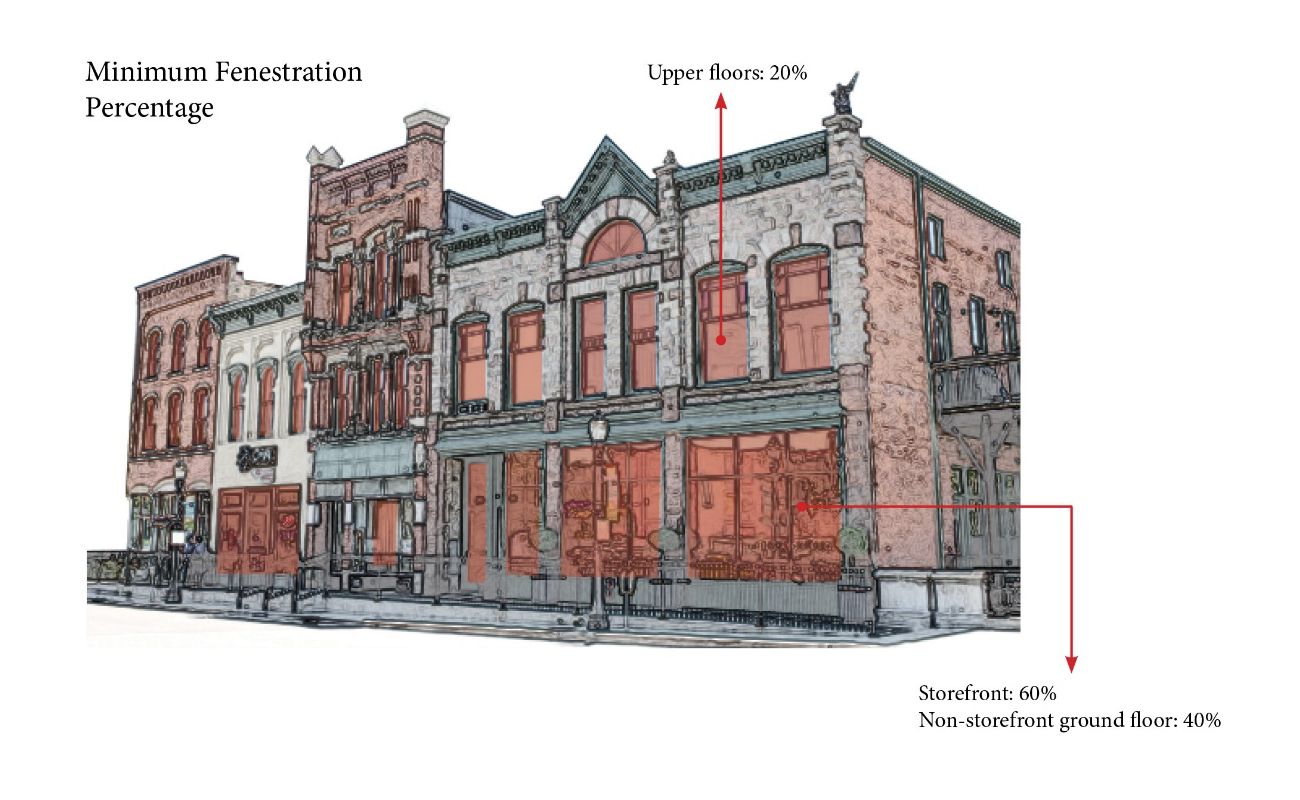
Minimum fenestration percentage:
(1)
Storefront: 60 percent.
(2)
Non-storefront first floor: 40 percent.
(3)
Upper floors: 20 percent.
Figure 74
(c)
Allowed building materials.
(1)
Primary facades (i.e. facing onto a street) - Brick (masonry); stone; glass; other similar materials as determined by Zoning Administrator.
(2)
Secondary facades (i.e. those not facing onto a street) - Same as primary facades, but also including decorative metal, wood; EIFS (on upper floors only); other similar materials as determined by Zoning Administrator.
(d)
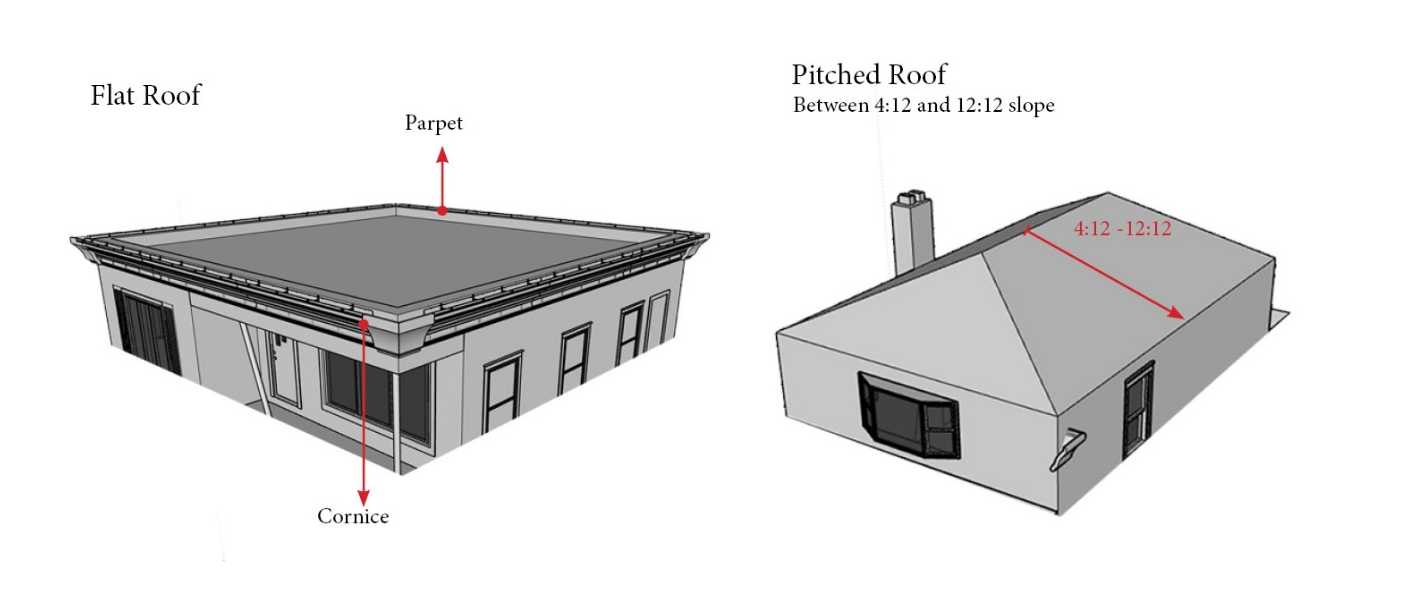
Roof types.
(1)
Pitched: between 4:12 and 12:12 slope.
(2)
Flat roof: with cornice and parapet.
(3)
All rooftop mounted HVAC and mechanical equipment shall be screened from view on all sides of the building.
(4)
Roof materials (for pitched roofs) - Asphalt, fiberglass, tile, slate, standing seam metal.
Figure 75
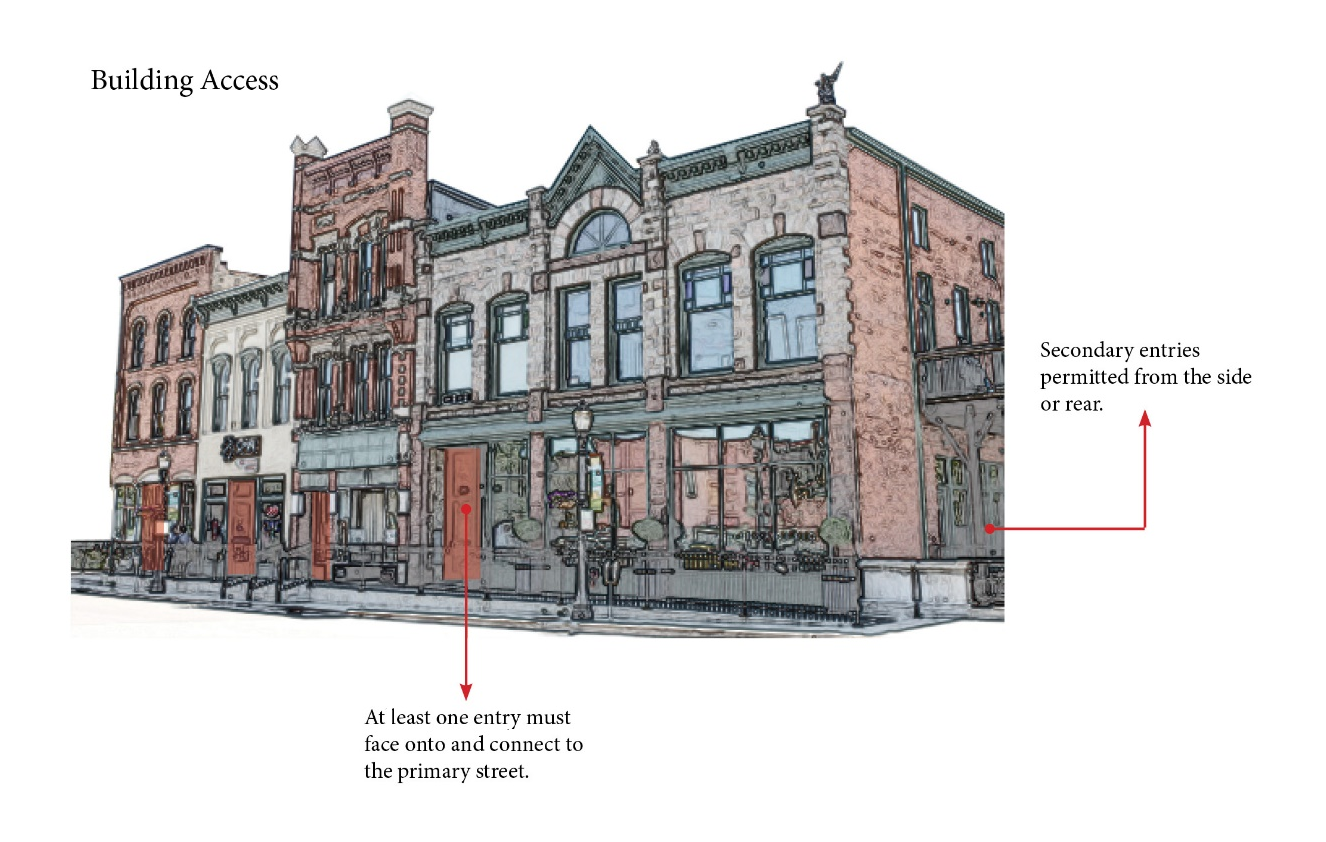
(e)
Building access. At least one entry must face onto and connect to the primary street. Secondary entries permitted from the side or rear. Maximum recessed entry of five feet.
Figure 76
(f)
Service. Services and utility hookups shall not be visible from the primary street frontage, preferably located in the rear yard.
(Ord. No. 1331, § 1, 5-5-25)
1246.04.04. - Industrial building types.
The following standards shall only apply to those industrial building facades that are at least 50 percent visible to a residential use or non-local street within 200 feet of the building facade:
(a)
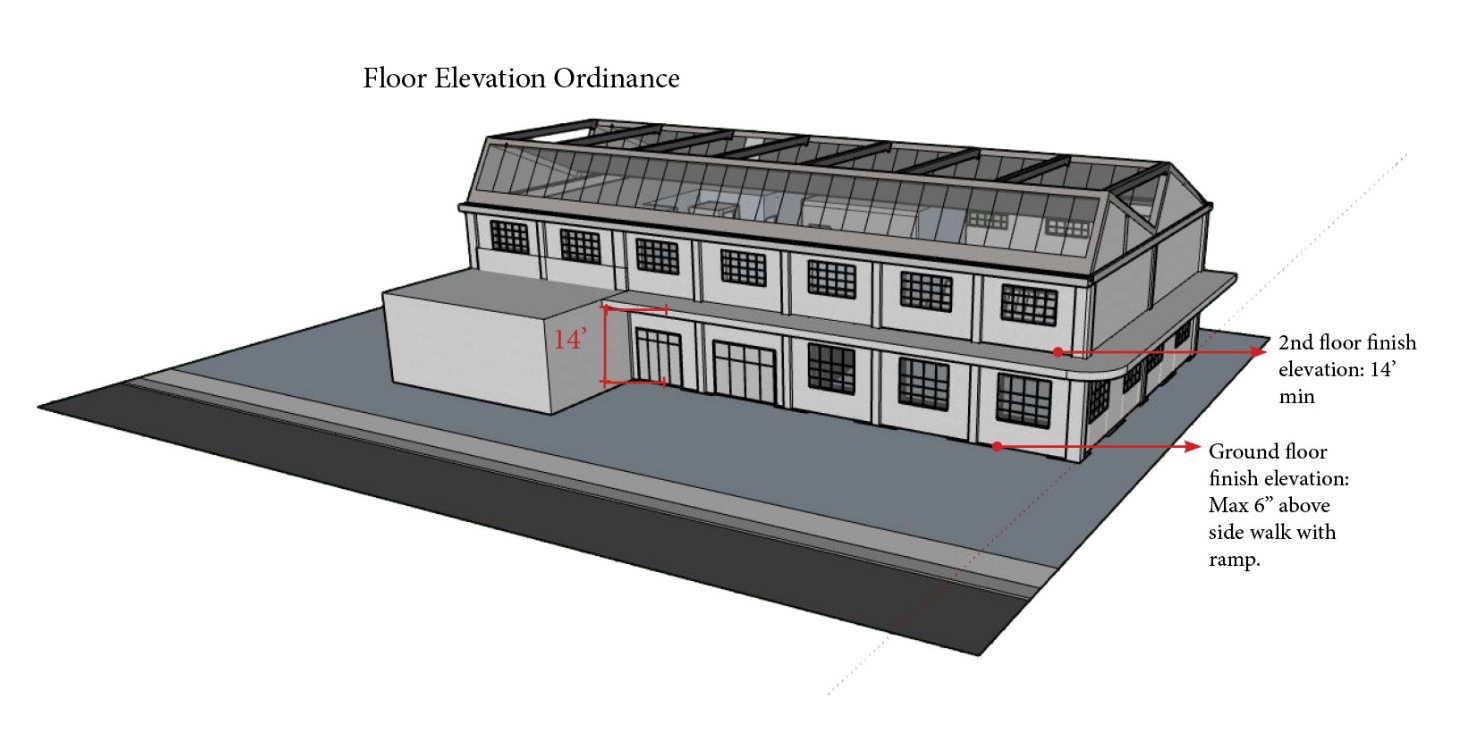
Clear height.
(1)
First floor finish elevation: 14 feet minimum.
(2)
First floor finish elevation above/below sidewalk: Maximum of six inches above adjacent sidewalk with ramp.
Figure 77
(b)
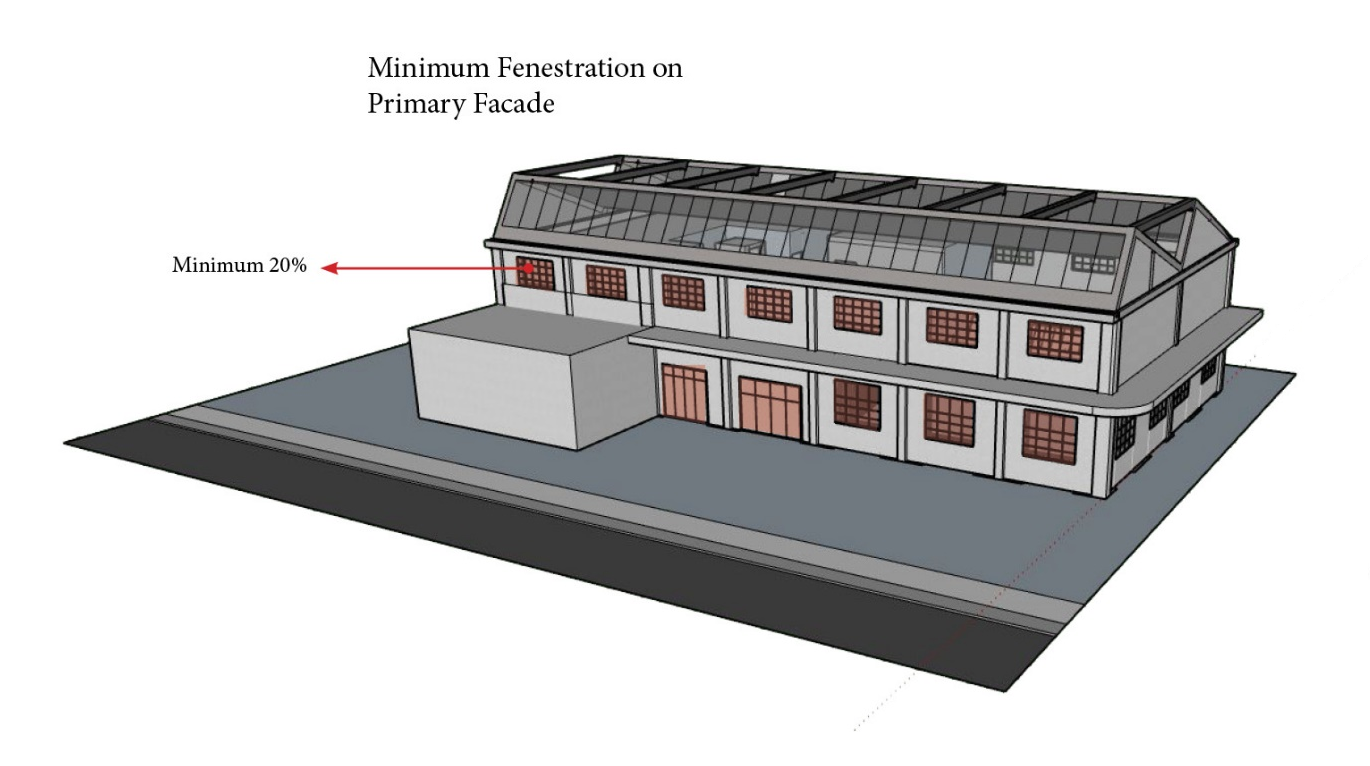
Fenestration.
(1)
Minimum fenestration percentage: Primary facade - First floor - 30 percent.
(2)
Minimum fenestration percentage: Primary facade - Upper floors - 20 percent.
Figure 78
(c)
Allowed building materials.
(1)
Primary facades (i.e. facing onto a street) - Brick (masonry); stone; other similar materials as determined by Zoning Administrator.
(2)
Secondary facades (i.e. those not facing onto a street) - Same as primary facades, but also including decorative metal, wood; EIFS (on upper floors only); other similar materials as determined by Zoning Administrator.
(d)
Roof types.
(1)
Pitched: between 4:12 and 12:12 slope.
(2)
Flat roof: with cornice and parapet.
(3)
All rooftop mounted HVAC and mechanical equipment shall be screened from view on all sides of the building per Section 1250.04.02(c).
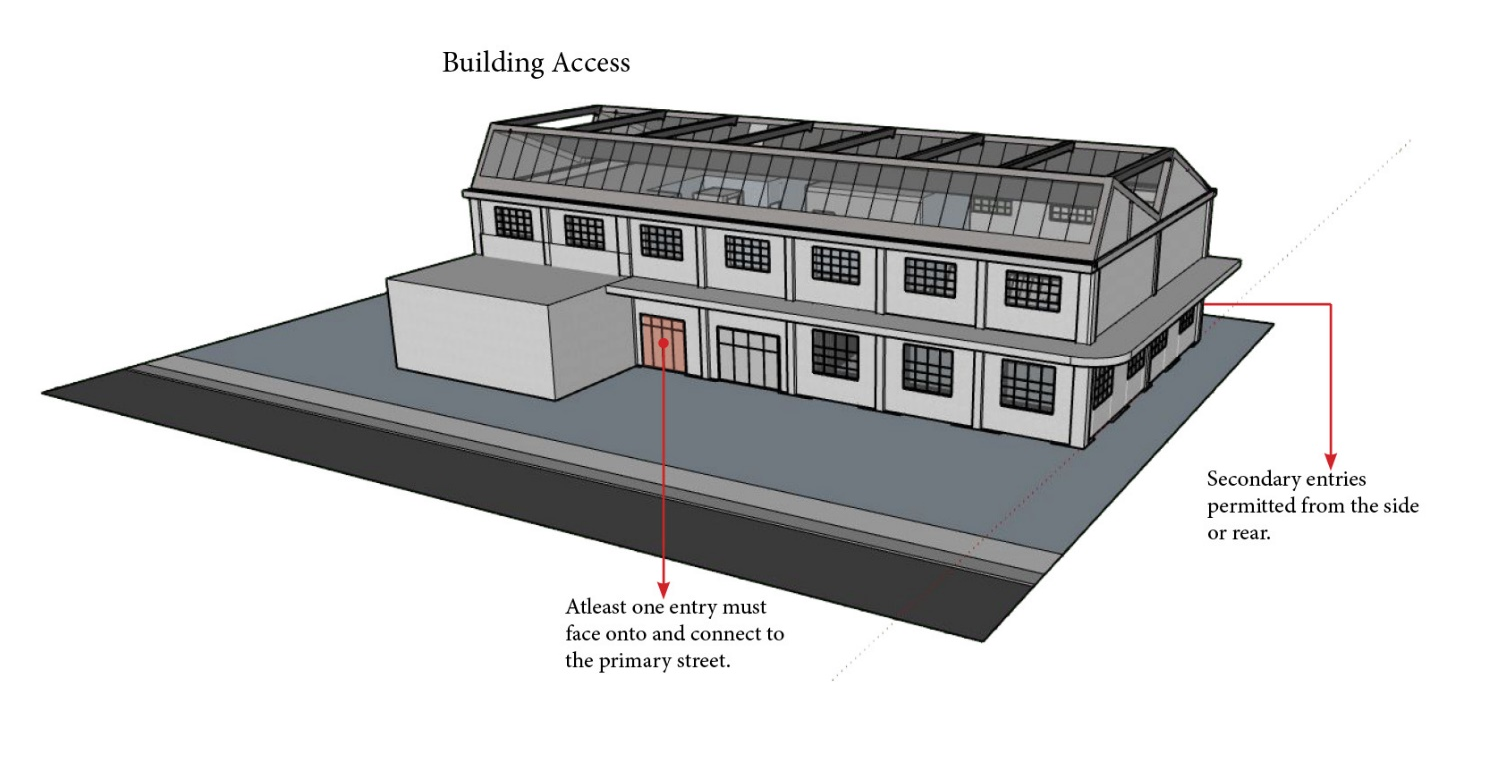
(e)
Building access. At least one entry must face onto and connect to the primary street. Secondary entries permitted from the side or rear.
Figure 79
(f)
Service. Services, utility hookups, loading docks and trash/recycling containers shall not be located on the front of the building, and must be screened if visible from the street.
1246.05. - Example building types.
The following sections illustrate how different types of buildings can meet the intent of the districts in Chapters 1243—1245 and the architectural standards of Section 1246.04.
(Ord. No. 1331, § 1, 5-5-25)
1246.05.01. - Detached house.
Figure 80
(a)
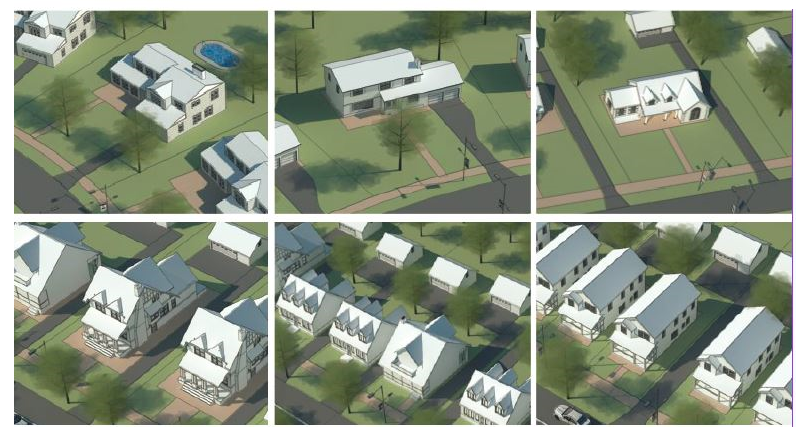
Description. A detached house is a dwelling unit typically occupied by a single-family household. Detached houses include one-, one-and-a-half, and two-story dwellings. In the DT-1 District, detached houses may have been converted to offices. The design and character of a detached house in a given location should be consistent with and reinforce the character of the surrounding neighborhood.
(b)
Applicability. A detached house is the suggested building type in all residential districts and applicable to most street types. While compatible as "grandfathered" in historic structures, new detached houses within higher density residential districts (R-MX and MFR), DT-1, and fronting arterial, suburban, and activity corridors are not generally encouraged.
See also Section 1244.02 - General Development Requirements for Dwelling Units.
(Ord. No. 1331, § 1, 5-5-25)
1246.05.02. - Attached residential.
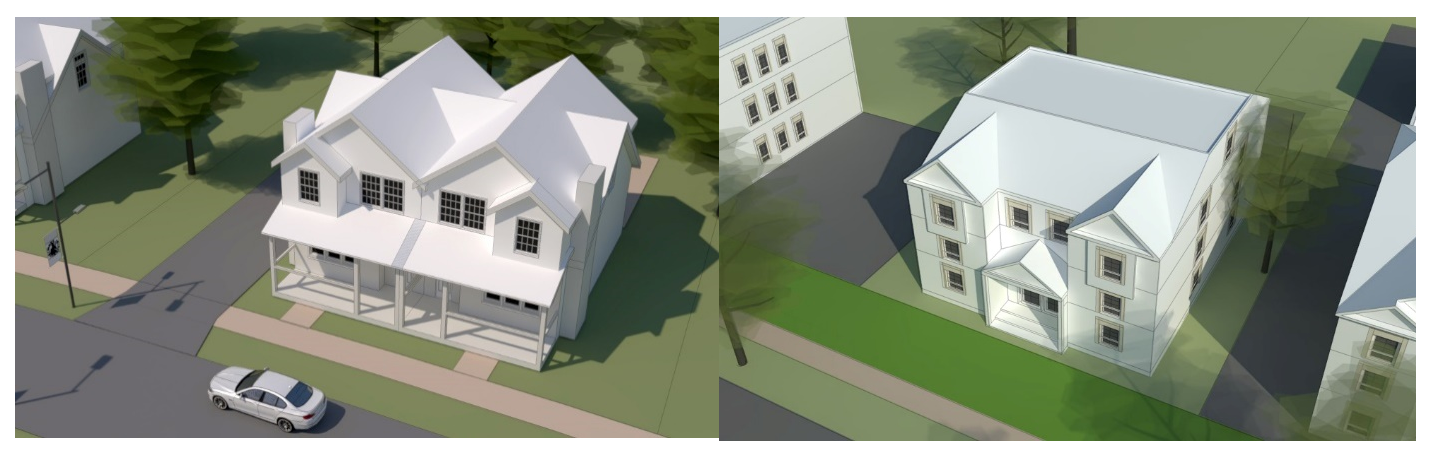
Figure 81
(a)
Description. Attached residential building types may take the form of small apartment buildings or duplexes integrated into an urban neighborhood, or townhouses. Attached residential buildings should be designed to complement the size, scale, character, and architecture of the surrounding residential district. Attached residential buildings may be designed as side-by-side and/or stacked units and provide a dedicated point of entry for each residential unit or common entry.
(b)
Applicability. Attached residential buildings are applicable in higher density residential and mixed-use districts that serve as a transition between commercial or mixed-use districts and residential neighborhoods: R-MX, R-AR, MFR, MX-C, MX-1, DT-1, DT-2.
See also Section 1244.02 - General Development Requirements for Dwelling Units.
(Ord. No. 1331, § 1, 5-5-25)
1246.05.03. - Urban mixed-use.
Figure 82
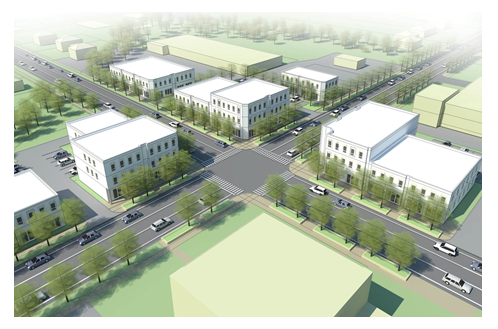
Illustrative example of the intent of this building
(a)
Description. The purpose and intent of the urban mixed-use building type is to provide a high character pedestrian scaled building that is flexible and mixed in its uses. Typically, ground floor uses include retail, entertainment, dining, and professional services with high transparency window areas creating a connection between the sidewalk and building interiors. Upper floor uses typically include a mixture of residential and office space. The building form and mass is intended to reinforce pedestrian comfort, walkability, and activity. Larger buildings shall be broken up into multiple storefronts each with their own entries.
(b)
Applicability. Urban mixed-use buildings are a key building type for urban zones that provide pedestrian scaled buildings oriented on the street. They are less likely to be appropriate along local streets.
(Ord. No. 1331, § 1, 5-5-25)
1246.05.04. - Tower and podium.
Figure 83
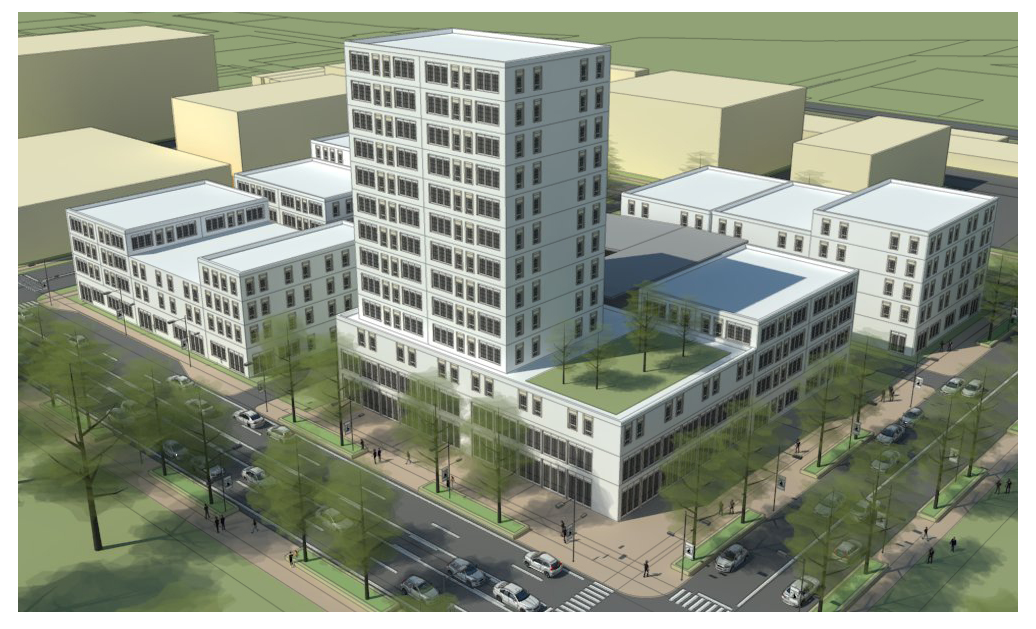
Illustrative example of the intent of this building
(a)
Description. Tower and podium buildings are buildings that consist of a large footprint base, typically two to three stories tall, and one or more towers that project upwards from a portion of this base. Tower and podium type buildings are often used for hotel convention centers, hospitals, and other institutional or commercial activities. The base (podium) levels of the tower and podium buildings are intended to be pedestrian oriented facades that encourage an active street frontage.
(b)
Applicability. Tower and podium buildings are applicable to the most dense commercial districts (Downtown Core) as well as designated institutional districts (INST-1).
(Ord. No. 1331, § 1, 5-5-25)
1246.05.05. - Commercial flex.
Figure 84
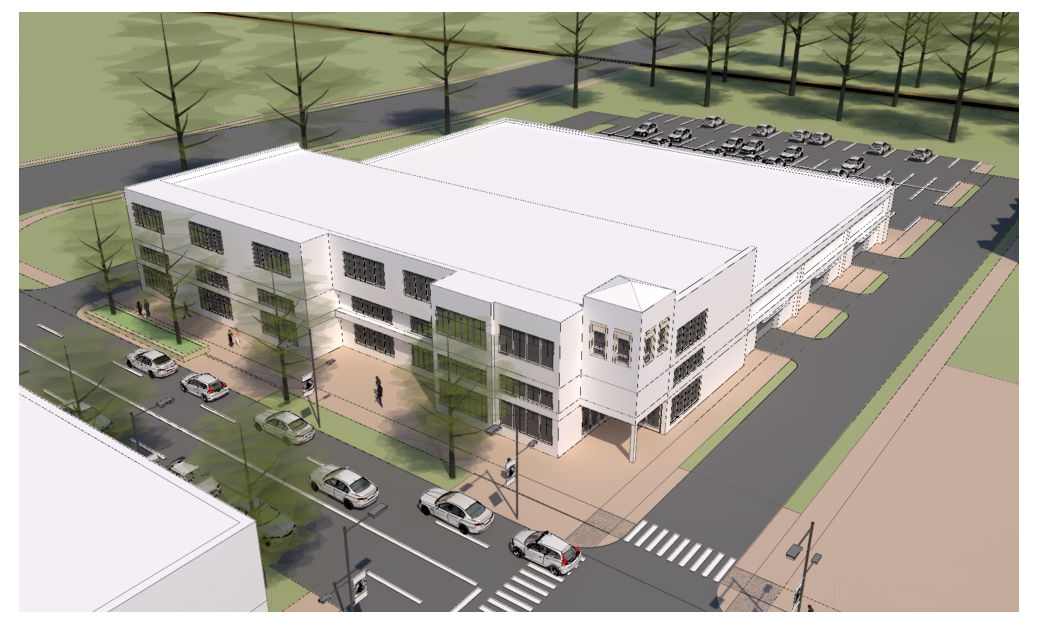
Illustrative example of the intent of this building
(a)
Description. Commercial flex buildings provide opportunities for diverse building types - to accommodate a diverse range of uses - in medium density urban environments while retaining a building facade that supports the downtown character. Commercial flex buildings are one to three floors in height and may include high bay spaces to accommodate light industrial or other non-storefront oriented commercial uses. Building facades are oriented towards the street and designed in a pedestrian friendly manner with adequate window transparency and articulation.
(b)
Applicability. Commercial flex buildings are suggested in the Urban Flex (DT-2) and Industrial Districts.
(Ord. No. 1331, § 1, 5-5-25)
1246.05.06. - Parking structure.
Figure 85
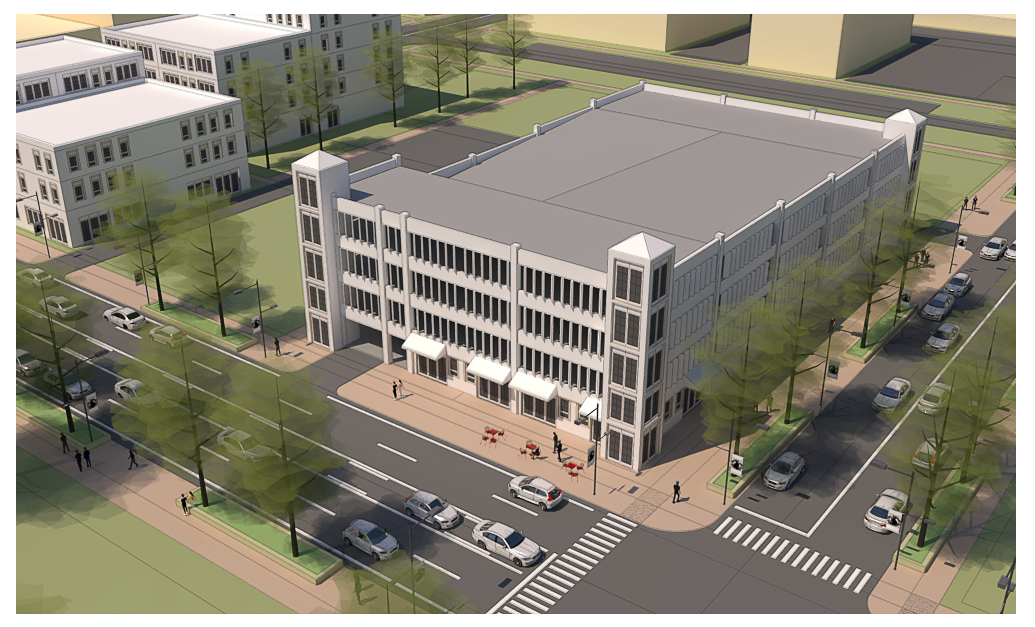
Illustrative example of the intent of this building
(a)
Description. Parking structures provide multiple levels of vehicle parking in higher density locations. Parking structures are designed to fit the architectural character and context of the urban environment. Open air openings into the parking area and other horizontal or vertical elements should provide an attractive facade that reinforces the pedestrian experience. Parking structures are encouraged to be lined on the exterior by residential, office, and retail, and are required to have the first floors occupied for the first 20 feet by commercial uses along activity corridors.
(b)
Applicability. Parking garages are applicable in higher density districts where there is not sufficient space or desire for surface parking lots.
(Ord. No. 1331, § 1, 5-5-25)
1246.05.07. - Suburban commercial.
Figure 86
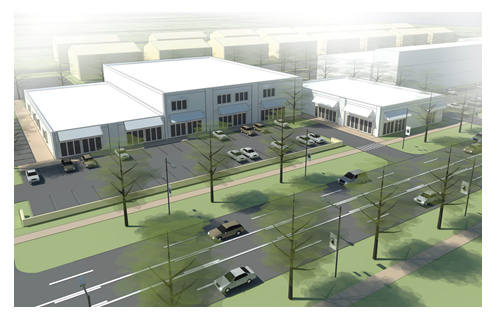
Illustrative example of the intent of this building
(a)
Description. Suburban commercial buildings are designed to balance the needs of automobile access to commercial uses (stores, retail, etc.) while still retraining a strong design character and relationship to the street environment that is welcoming to pedestrians and creates an effective transition to non-commercial areas. Commercial buildings are typically one to two floors in height, and can accommodate big-box style commercial uses if needed. Individual storefronts within a building should be clearly defined and distinct and sidewalks connect front entrances to the public sidewalk. Suburban commercial buildings can incorporate a mixture of nonresidential uses.
(b)
Applicability. Suburban commercial buildings are a primary building type used along arterial, suburban, and prime connector streets. This type of building is not intended for activity corridors, neighborhood connectors, or local streets.
(Ord. No. 1331, § 1, 5-5-25)
1246.05.08. - Suburban office/research.
Figure 87
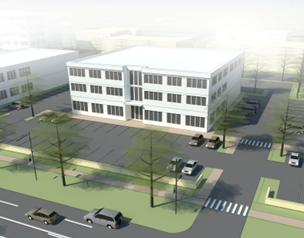
Illustrative example of the intent of this building
(a)
Description. Suburban office/research buildings are typically multi-story buildings with a primary entrance into a lobby space for accessing office, research, or institutional type uses. Buildings can be designed for a single tenant or for multiple different tenants to provide a mixture of uses within the building.
(b)
Applicability. Suburban commercial buildings are a common building type for the Urban Corridor District (MX-C) and can be used along a variety of roadway types. They can be used to transition away from more intense commercial activity towards neighborhood residential areas.
(Ord. No. 1331, § 1, 5-5-25)
1246.05.09. - Motor vehicle service stations.
Figure 88
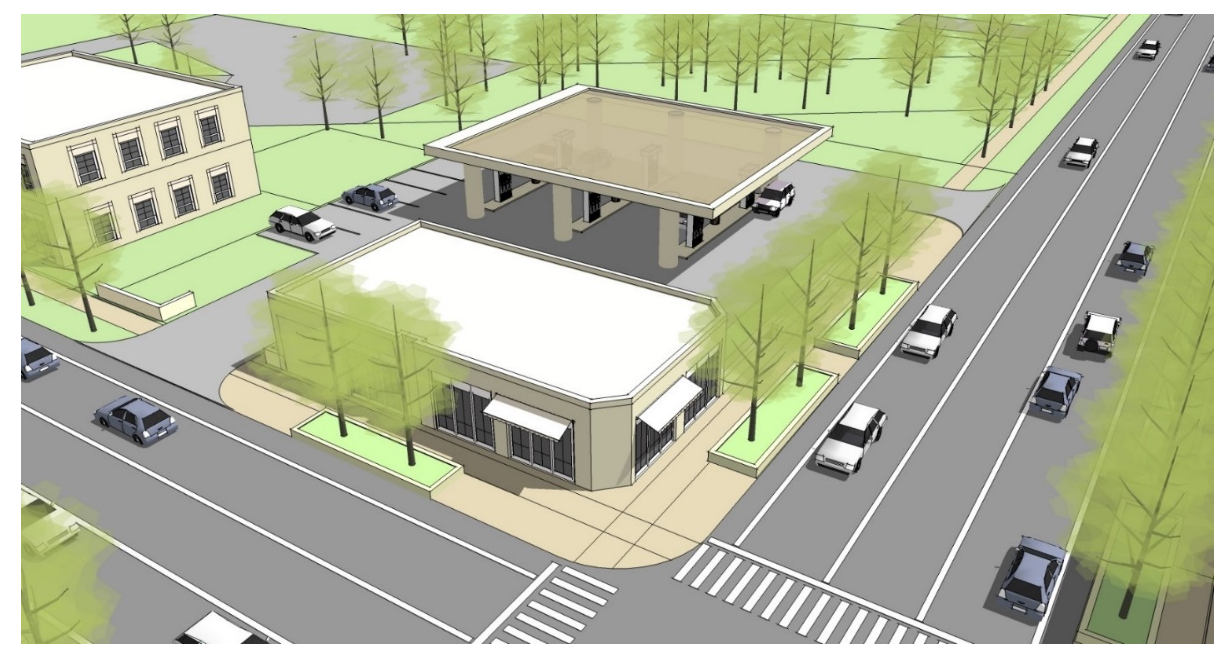
Illustrative examples of the intent of this building
(a)
Description. Traditional suburban-style gas station design places the filling pumps and canopy structure in the front or front corner of the lot and the shop at the rear of the lot, which breaks the street edge experience and disconnects the storefront from the sidewalk. New gas stations should adopt a "gas backwards" approach along urban corridors (MX-1, MX-2, DT-2 where permitted), where filling pumps and canopy are placed to the side or rear or the lot and the shop building occupies the front or front corner of the lot. Traditional configurations are acceptable in MX-C District as long as the building form and conditional use standards are met. In both urban and suburban districts, the building should be designed to fit within the district's context and aesthetics.
(b)
Applicability. Motor vehicle service stations are permitted with conditions in commercial mixed-use districts as described in Section 1245.03. They are less desirable for use along activity corridors and local streets.
(Ord. No. 1331, § 1, 5-5-25)
_____

