
Milton City Zoning Code
ARTICLE 8
- USE STANDARDS
8.1 - PRINCIPLE USE STANDARDS
Where applicable, uses are required to comply with the use standards provided in this Article, whether a permitted or special use, in addition to all other applicable regulations of this Unified Development Code, and https://library.municode.com/Florida Building Code.
A.
Agriculture. Agricultural uses are permitted in the Rural-Urban (RU) zoning district only. All structures and other improvements are subject to all other applicable standards of this Code:
(1)
Chicken Coops are considered an Accessory Use. Chicken Coop standards are located in 9.1(H).
(2)
Apiaries are considered an Accessory Use. Apiary standards are located in 9.1(C).
(3)
Aquaponic and Aquaculture are considered Accessory Uses. Aquaculture and Aquaponic use standards are located in 9.1(D).
(4)
The keeping of livestock is considered an Accessory Use. Standards associated with the keeping of livestock are located in 9.1(Q)
(5)
There are no yard requirements for the planting of crops.
(6)
No food or other products of any plants or livestock may be prepared, processed, or packaged in any district. However, the canning of plants or plant products is permitted as part of any agricultural use.
(7)
Regulated materials, such as chemicals, fertilizers, and toxins, shall not drain onto adjacent properties, into waterways, or onto public rights-of-way. Chemicals and other flammable materials shall be stored and disposed of in accordance with federal and state requirements. If stored on-site, such chemicals or flammable materials shall be kept in waterproof containers in a locked structure when unattended.
(8)
A sign containing the contact information for the agricultural use operator shall be posted at or within five (5) feet of the front lot line. Such signs shall not exceed a height of eight (8) feet and shall not exceed two (2) square foot in area.
B.
Airport, Heliport, and Helipad.
(1)
All facilities must comply with all Federal Aviation Administration requirements. All documentation must be submitted as part of a zoning application and prior to issuance of a building permit.
(2)
Any structures for such facilities must be set back a minimum of 50 feet from any residential district lot line.
(3)
Height limitations near airports; nonconforming uses, structures or trees.
a.
No existing use, structure or tree may be extended, expanded or enlarged so as to encroach into any portion of the approach zones, horizontal zones, or conical zones, nor shall any existing use, structure or tree be permitted to encroach into any of the aforesaid zones.
b.
Any use, structure or street existing at the date of adoption of the ordinance from which these regulations are derived and which extends into any approach zone, horizontal zone or conical zone of an existing airport shall be considered nonconforming and may not further encroach into any of the aforesaid zones.
c.
Where any use, structure or tree which shall be in existence on the date of which a proposed airfield or airport shall be approved and where such use; structure or tree extends into the approach zones, horizontal zones or conical zones of such an airport, such use, structure or tree shall be considered nonconforming as of the date specified in subsection (b) of this section and shall be in no way expanded to further encroach into the aforesaid zones.
(4)
Airport hazards prohibited; nuisance declared. It is hereby found that an airport hazard endangers the lives and property of airport users and land occupants in its vicinity and also, the obstruction type, in effect reduces the size of the area available for landing, taking off and maneuvering of aircraft, thus tending to destroy or impair the utility of the airport and the public investment therein. Accordingly, it is hereby declared that:
a.
The creation or establishment of an airport hazard is a public nuisance and an injury to the community served by the airport in question.
b.
It is necessary in the interest of the public health, public safety and general welfare that the creation or establishment of airport hazards be prevented.
c.
Preventing airport hazards should be accomplished, to the extent legally possible, by the exercise of the city's police power, without compensation.
d.
It is further declared that both the prevention of the creation or establishment of airport hazards and the elimination, removal, alteration, mitigation or marking and lighting of existing airport hazards are public purposes for which political subdivisions may raise and expend public funds and acquire land or property interests therein, or air rights there over.
(5)
Additional hazards; interference with plane or airport systems and operations prohibited.
a.
Uses within two miles of any airfield runway shall conform to the performance standards established herein.
b.
No electrical use or operation shall be permitted that interferes with the instrument control or landing operations of planes or of radar, radio or ground control approach systems for said airport.
C.
Amusement Facility. The following standards apply to both indoor and outdoor amusement facilities:
(1)
An indoor or outdoor amusement facility shall submit the following impact management plans, for review:
a.
A noise abatement plan.
b.
A security and operation plan. The security plan shall include the provision of exterior security cameras.
(2)
If a restaurant, or other applicable uses are allowed within the zoning district, such uses may be included as part of an indoor or outdoor amusement facility as long as separate approval is obtained for each allowable use.
D.
Animal Care Facility, Animal Shelter, and Commercial Breeder. The following standards apply to all animal care facilities, animal shelters, and commercial breeders. However, animal shelters operated by a public agency are exempt from these standards.
(1)
Exterior exercise areas must be located in the interior side or rear yard. Exterior exercise areas must provide covered areas over a minimum of 30% of the exterior area to provide shelter against weather.
(2)
The permitted hours for outdoor activities for an animal care facility are between 9:00 a.m. and 6:00 p.m.
(3)
All overnight boarding facilities must be located indoors. Outdoor boarding facilities for commercial breeders are permitted but must be designed to provide shelter against weather.
(4)
All animal quarters and exterior exercise areas must be kept in a clean, dry, and sanitary condition.
(5)
A fence a minimum of six feet and a maximum of seven feet in height is required for all exterior exercise areas and any outdoor boarding quarters.
(6)
Compliance with noise and prohibited nuisance regulations is required at all times.
E.
Automated Teller Machine—Standalone. The following regulations for a standalone Automated Teller Machines (ATM) do not apply to financial institutions that typically provide services by Automated Teller Machines, whether drive-through or walkup.
(1)
A drive-through standalone Automated Teller Machine (ATM) is subject to the following standards:
a.
A drive-through standalone ATM is permitted only when a drive-through facility is allowed within the district and separate approval is obtained for the drive-through facility, including compliance with all standards for a drive-through facility.
b.
The drive-through lane must provide a minimum of four stacking spaces.
(2)
A walk-up standalone Automated Teller Machine (ATM) may not encroach into the public right-of-way.
F.
Bar/Tavern. All bars require site plan review by the Planning Department. In cases where special use approval is also required, site plan review will be conducted concurrently by the Board of Adjustment.
(1)
All bars shall conform to the requirements of the City of Milton Code of Ordinances.
(2)
In addition to site plan requirements, the following elements of operation will be considered:
a.
The size, location, and configuration of the establishment.
b.
Days and hours of operation.
c.
Maximum occupancy loads.
d.
A noise abatement plan, including any plans for outdoor areas.
e.
A security plan.
f.
Exterior lighting design.
(3)
If outdoor seating is part of the establishment, the site plan must include the total floor area of outdoor seating, and the general location of seats, tables, and other furniture proposed for outdoor seating.
(4)
If the bar plans an increase in intensity, such as an expansion of floor area or increase in permitted occupancy, the site plan and its additional elements, as required by this section, must be updated and resubmitted for approval. Revised plans must be approved prior to the issuance of any permits.
G.
Bed and Breakfast.
(1)
The exterior of a bed and breakfast must maintain its original appearance as a single-family dwelling. No parking may be located in front of the front building line.
(2)
Cooking facilities are prohibited in individual guest rooms.
(3)
Leasing of a common dining area for social events is only permitted when appropriate parking and facilities are provided as determined by the Planning and Development Department. No spaces should be exclusively devoted to retail sales.
(4)
Breakfast must be served to guests, at a minimum.
(5)
Guest stays are limited to a maximum of 30 consecutive days.
(6)
Bed and breakfasts are limited to a maximum of six (6) guests.
(7)
One sign, either freestanding or wall, is permitted. Such sign may not exceed eight square feet and if free standing, is limited to five feet in height.
H.
Benevolent Distribution Center.
(1)
If food is served for consumption on premise the provision of an internal dining area(s) which meet all applicable local and State regulations, is required.
(2)
Distribution activities shall only be permitted in the rear yard.
I.
Boardinghouse/Lodging house.
(1)
No more than one boardinghouse per individual tract, parcel, or platted lot is allowed.
(2)
Boarding/Lodging houses shall conform to all applicable local and State regulations.
(3)
All sleeping rooms shall have a minimum of 80 square feet for one occupant, 140 square feet for two occupants, plus an additional 60 square feet for each additional occupant.
(4)
Entry access to all sleeping rooms shall be through the interior of the building.
(5)
No cooking is permitted in any sleeping room.
(6)
A fully-equipped restroom must be provided for each five (5) residents.
J.
Boat House/Dock. Boathouses are considered an accessory use. The boathouse standards are located in Subsection 9.3(E).
K.
Boat Ramp/Pier. Boat ramps and/or piers shall be constructed and operated in conformance with all local, state, and federal regulations.
L.
Boat Rental Facility. — Add use standards such as storage requirements
(1)
All facilities must adhere to the Florida Department of Environmental Protection's (FDEP) regulatory and proprietary standards and have an active State of Florida Permit.
(2)
Maintenance dredging may not occur without prior approval from the FDEP and City authorization.
(3)
Owners must ensure appropriate parking and facilities are provided as determined by the Planning and Development Department and this Code.
(4)
Construction and use of the facility must not erode or cause to erode the existing shoreline or existing vegetation to the greatest extent possible.
(5)
The storing of harmful or deleterious substances on, adjacent to, or within any environmentally sensitive lands is strictly prohibited. All chemicals, construction materials, fats, oils, grease, detergents, petroleum, or any other pollutant must be stored in an approved enclosure that ensures no such products leak or otherwise enter into the environmentally sensitive lands, including the associated waters.
(6)
All structures must be kept in good condition. Docks and other structures must be free from dilapidation, disrepair, dangerous conditions, and failing.
(7)
Disrepair and similar conditions as a result of an emergency and/or natural disaster shall be given a period of 6 months to remove any debris and rebuild to the originally permitted design. Any changes which cause the facility or overwater structures to deviate by 10% or more from the originally permitted design must apply for a new authorization. In cases that 6 months imbues an undue hardship an additional 6 months may be granted. In any case, where a 12-month period has elapsed without debris removal and appropriate reconstruction activities have commenced, the facility and over-water structures must apply for new authorizations.
(8)
All non-water dependent activities such as living quarters, commercial activities such as tiki bars and restaurants, washing machine use, and enclosures on more than three sides are prohibited unless otherwise authorized by a State Lands Lease.
(9)
All watercrafts must be stored in such a manner as to not cause accidental collisions, leaking, overlap of bow, stern, or mooring lines, and damage to the environmentally sensitive lands or lands below the mean high and/or ordinary high-water line.
(10)
All watercrafts must be fit for use and have the capacity to move, float, or otherwise be removed from the water at any time. No watercraft shall be allowed to leak, be in disrepair, or cause a nuisance to persist.
(11)
Any upland storage must be kept in appropriate enclosures as to not cause adverse effects to the aesthetic character of the surrounding areas.
(12)
A management plan is required as part of the application that demonstrates the following:
a.
The on-site presence of a manager during hours of operation who directs the operations of rentals and maintenance.
b.
An established set of operating rules addressing the governance structure of the facility, hours of operation, and maintenance when open to the public.
c.
A general site plan of rental slips, visitor facilities, such as any seating areas and restrooms, and all ingress and egress points to the site.
d.
Provision for waste removal.
e.
A general Safety Plan, Lighting Plan, and other required commercial development plans.
M.
Body Modification Establishment. A body modification establishment shall operate in conformance with the following standards:
(1)
All body modification establishments shall conform to all applicable local, state, and federal regulations.
(2)
Adequate security and lighting shall be provided to ensure the safety of customers and personnel at all times.
(3)
There shall be no sale or concession of any food and drinks, prepackaged or otherwise, on the premises.
N.
Broadcasting Facility TV/Radio. Broadcasting Facilities shall conform to the standards as identified below in Subsection 8.1(II).
O.
Campground and Recreational Vehicle (RV) Park.
(1)
Area. The following requirements shall be required of campgrounds and recreational vehicle parks:
a.
Campgrounds and recreational vehicle parks shall contain at least five acres in area.
(2)
Buffers. A buffer of 25 feet in width shall be provided and maintained around the perimeter of the campgrounds and recreational vehicle parks, except where walks and drives penetrate the yard. Such buffer shall not be considered to be part of an abutting space.
(3)
Space size. Each recreational vehicle space shall contain at least 1,500 square feet in area.
(4)
Roadways. Each space in a campground or recreational vehicle park shall abut at least 15 feet on a roadway within the boundary of the campground or recreational vehicle park which shall have unobstructed access to a public street. Such roadways shall have unobstructed right-of-way of at least 30 feet in width for two-way drives and at least 20 feet in width for one-way drives. Turning radii at entrances and exits to public roads shall be designed to accommodate recreational vehicle requirements.
(5)
Recreational area. A recreational area shall be provided equivalent to:
a.
In campgrounds and recreational vehicle parks 1,000 square feet per space. Such recreation space shall be maintained in a clean and presentable condition. In some cases, the development approval authority may consider allowable commercial outdoor recreation facilities to meet part of this requirement.
(6)
Density. The following density limitations shall be applied to campgrounds and recreational vehicle parks:
a.
Campgrounds shall contain a maximum of ten recreational vehicle spaces, tent spaces or cottages per gross acre; and
b.
Recreational vehicle parks shall contain a maximum of 15 spaces per gross acre.
(7)
Setbacks. No part of any recreational vehicle, tent or cottage or addition thereto shall be placed within 7½ feet of any space line, nor shall same be located within 15 feet of any accessory or service building. Tents may be exempt from this provision.
(8)
Space markers. Each recreational vehicle space or tent space shall be clearly identified by steel corner markers to be flush with the ground and visible.
(9)
Permanent additions. Permanent additions to recreational vehicles, or tents, such as Florida rooms, shall not be permitted.
(10)
Driveways. Driveways shall be provided to each space; such driveways shall be at least 12 feet wide.
(11)
Firefighting system. Firefighting systems are required in campground and recreational vehicle parks and must be approved by the fire department if located within a fire district. When a campground or a recreational vehicle park is not located within a fire district, such firefighting systems must be approved by the Florida Life Safety Code officer.
(12)
Water and sewer. Each campground and recreational vehicle park shall provide an adequate and safe water supply and an adequate and safe method of sewage collection, treatment and disposal as required by the local development approval authority, county, and state department of environmental protection. Whenever municipal or public water or sewer systems are available to the campground or recreational vehicle Park, such systems shall be used.
(13)
Sewage dumping stations. Each recreational vehicle park which does not provide individual sewer connection to each recreational vehicle site shall provide an easily accessible sanitary sewage dumping station approved by the county and state department of environmental protection. Such dumping station shall have sewer connections at a ratio of one for every 200 recreational vehicle spaces or fractional part thereof for the disposal of liquid wastes from the sewage holding tanks of vehicles. Such stations shall be screened by walls or landscaping at least four feet in height and 75 percent opaque and shall be separated from any vehicle site or accessory building by a distance of no less than 50 feet.
(14)
Water outlets. In each recreational vehicle park there shall be no less than one running water spigot for every two recreational vehicle or tent spaces.
(15)
Electricity. In recreational vehicle parks each space shall be provided with at least one electrical receptacle having a minimum of 110/115 volt alternating current.
(16)
Occupancy. No operator or owner of a campground or recreational vehicle park shall permit permanent occupancy by patrons in such campground or Recreational Vehicle Park. Permanent occupancy shall be construed as continuous usage of the campground/park facilities for more than six months. Nothing in this provision shall be construed as to prohibit permanent occupancy by a resident caretaker/operator of the facility.
P.
Car Wash.
(1)
Car wash facilities must be screened along interior side and rear lot lines with a solid fence or wall, a minimum of six feet and a maximum of seven feet in height. One shrub a minimum of three feet in height at time of planting must be planted linearly every three feet on-center along such fence or wall.
(2)
The site must be graded to drain away from adjoining properties.
(3)
All wash-water generated from the car wash must either:
a.
Be recycled;
b.
Secure a Commercial Wastewater Discharge Permit if discharging into the City's Sewer System; or
c.
Meet the requirements of the City of Milton if discharging into the storm sewer system.
Q.
Cemetery. Cemetery grounds and appurtenant structures shall conform to all local and state regulations and shall adhere to the following:
(1)
A new cemetery and/or mausoleum shall be located on a site a minimum of five (5) acres, and enclosed by a masonry or iron fence, or a combination of masonry and iron fence, or a wall not less than four (4) feet in height along all property lines.
(2)
New Cemeteries and mausoleums are permitted the following accessory uses: a storage building for the storage of maintenance equipment used in maintaining cemeteries, a caretaker's house, an administrative office, a crematorium, and a chapel.
(3)
The yard requirements of the zoning district are applicable to cemeteries. However, any yard abutting a residential district shall be a minimum of twenty (20) feet.
R.
Community Garden.
(1)
Community gardens are limited to the cultivation of herbs, fruits, flowers, or vegetables, including the cultivation and tillage of soil and the production, cultivation, growing, and harvesting of any agricultural, floricultural, or horticultural commodity. It may also include community-gathering spaces for active or passive recreation, but playground equipment is prohibited.
(2)
Greenhouses, including high tunnels/hoop-houses, cold-frames, and similar structures, are permitted to extend the growing season. Accessory structures such as sheds, gazebos, and pergolas are also permitted.
(3)
Accessory structures and uses for the raising of chickens, fish, and bees are permitted so long as all such structures comply with the accessory structure requirements of Article 9. No other livestock is permitted.
(4)
Farm-stands are permitted and are limited to sales of items grown at the site. Farm-stands must be removed from the premises or stored inside a structure on the premises during that time of the year when the use is not open to the public. Only one farm-stand is permitted per lot. The farm stand must meet the district setback requirements.
S.
Community Residential Home.
(1)
Shall conform to all local and State regulations.
(2)
Shall conform to the applicable Zoning Districts' dimensional and design standards.
(3)
Small Community Residential Homes and Adult Family-Care Homes shall not detract from the surrounding residential uses and shall maintain the appearance of a single family residential dwelling.
(4)
Parking and landscape standards shall be maintained.
T.
Contractor Office.
(1)
Contractor Office Space shall conform to the applicable Zoning District dimensional and design standards.
(2)
Contractors Office Space with Storage shall also conform to the applicable district standards but shall also adhere to the following:
a.
Contractor storage yards shall have a minimum ten-thousand (10,000) square feet of lot area.
b.
All outdoor storage shall comply with the screening and buffering requirements of this Code.
c.
All outdoor storage areas shall be located in the rear yard only. All structures shall be located towards the front of the lot, but must comply with the front yard requirements of the underlying zoning district.
d.
Outdoor storage areas may be surfaced with partially permeable materials, if adequate drainage, erosion, and dust control are provided.
e.
Storage of chemicals and or hazardous materials shall conform to all local, state, and federal regulations.
U.
Convention Center. Convention Centers shall conform to the Amusement Facility standards as provided in Subsection 8.1(C).
V.
Country Club. Shall conform to the applicable underlying zoning district standards.
W.
Cultural Facility. Shall conform to the applicable underlying zoning district standards.
When located in or adjacent to a residential district, the hours of operation are limited to 8:00 a.m. to 10:00 p.m., Sundays—Thursdays and 8:00 a.m. to 12:00 a.m. Fridays and Saturdays.
X.
Day Care Center and Day Care Home.
(1)
Each day care must comply with all applicable state and federal regulations.
(2)
The operator of a day care must be licensed by the state.
(3)
A day care home must maintain its original appearance as a residential dwelling.
(4)
A day care center must provide a pickup/drop off area. When a day care center is part of a multitenant retail center, the pickup/drop off area must not interfere with vehicle circulation in the parking lot, including blocking of the drive aisle.
Y.
Drive-Through Facility.
(1)
All drive-through facilities must provide a minimum of three stacking spaces per lane or bay, unless additional stacking spaces are specifically required by this Code. Stacking spaces provided for drive-through uses must be:
a.
A minimum of nine feet in width, as measured from the outermost point of any service window or bay entrance, to the edge of the driveway, and 18 feet in length. In the case of a recessed service window, the measurement must be taken from the building wall.
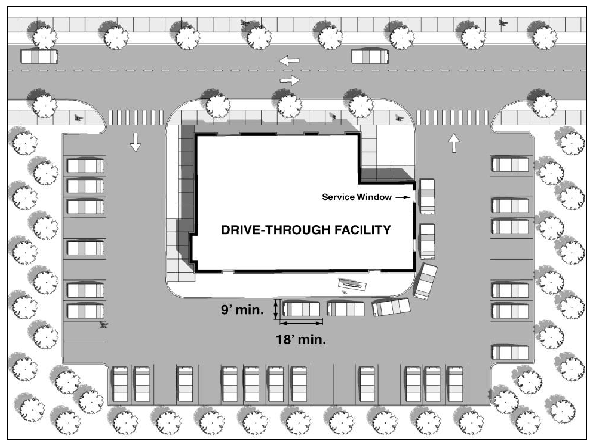
Figure 8.1.1. Drive-Through Facility Diagram
b.
Stacking spaces must begin behind the vehicle parked at a final point of service exiting the drive through aisle, such as a service window or car wash bay (this does not include a menu-board). Spaces must be placed in a single line behind each lane or bay.
(2)
All drive-through lanes must be located and designed to ensure that they do not adversely affect traffic circulation on adjoining streets. Drive-through lanes on corner lots must not route exiting traffic into adjacent residential neighborhoods.
(3)
Drive-through facilities must be screened along interior side and rear lot lines with a solid wall or privacy fence, a minimum of six feet and a maximum of seven feet in height. One shrub a minimum of three feet in height at time of planting must be planted linearly every three feet on-center along such fence or wall. This standard does not apply to drive-through facilities within multi-tenant retail centers.
(4)
A drive through lane must have bail out capability for all vehicles that enter the drive through lane. The bail out lane must be a minimum width of 10 feet in width and run parallel to the drive through lane. If a bail out lane is also an interior access drive providing access to parking spaces, the bail out lane is limited to a one-way traffic pattern following the direction of the drive through lane.
Z.
Dwelling—Above the Ground Floor.
(1)
Exterior entrances from a public sidewalk or common open space are permitted for apartment or condominium units on the ground floor. These entrances shall be raised from the finished ground floor level of the sidewalk and shall appear to be designed as townhouses.
(2)
Multi-family apartment and condominium uses above the ground floor shall have interior unit entrances unless:
a.
Exterior stairs are permitted for access to second floor units only if they are oriented towards a central plaza not visible from any street.
b.
All ground floor residential entrances shall be covered or inset with distinct architectural detail.
AA.
Dwelling—Accessory Dwelling Unit. Accessory dwelling unit standards are identified in Subsection 9.3(K).
BB.
Dwelling—Manufactured Home. Manufactured homes shall conform to the standards identified in Subsection 6.
CC.
Dwelling—Other. Single Family—Multi Family shall conform to the standards identified in Article 6.
DD.
Dwelling—Fraternity/Sorority.
(1)
Shall conform to all local and state regulations.
(2)
The number of occupants residing in a fraternal or sororal house shall be in accordance with Fire and Life Safety Codes.
EE.
Farmers' Market.
(1)
The timeframe of a farmers' market, including number of days per week and overall duration of the event, will be determined and approved as part of the development order or temporary use permit, as applicable.
(2)
A management plan is required as part of the application that demonstrates the following:
a.
The on-site presence of a manager during hours of operation who directs the operations of vendors participating in the market.
b.
An established set of operating rules addressing the governance structure of the market, hours of operation, and maintenance when open to the public.
c.
A general site plan of vendor stalls, visitor facilities, such as any seating areas and restrooms, and all ingress and egress points to the site.
d.
Provision for waste removal.
e.
The days and hours of internal operation, including vendor set-up and take-down times.
FF.
Fast Food Restaurant
(1)
Minimum of 1 parking space per 100 ft of Gross Floor Area plus 1 per each two employees (max. 1 per 75 sf GFA). Per Table 14.2.1. Off-Street Vehicle and Bicycle Parking
(2)
Minimum of 1 Bicycle Parking/Space per 2,000 sqft. Per Table 14.2.1. Off-Street Vehicle and Bicycle Parking.
(3)
Drive-throughs must allow for, at minimum, five stacking spaces per service line.
(4)
Drive-throughs are only permitted only when a drive-through facility is allowed within the district and separate approval is obtained for the drive-through facility, including compliance with all standards for a drive-through facility.
(5)
Stacking lanes shall be clearly marked and shall not interfere with on-site or off-site traffic circulation.
(6)
Stacking areas shall not be located between the façade of a building and the public street upon which the building fronts unless there is a grade change of at least five feet between the centerline of the street and the stacking area or alternatively, there is a buffer yard of 20 percent opacity.
(7)
Stacking lanes shall be designed with an abutting eight-foot-wide bypass lane.
GG.
Gas Station.
(1)
All structures and all pump islands, compressed air connections, and similar equipment must be set back a minimum of 20 feet from interior side and rear lot lines.
(2)
The minimum distance between the canopy and the curb line must be 10 feet, and 15 feet from any interior side lot line.
(3)
Motor vehicle repair is permitted as part of a gas station use. However, repair work is limited only to minor repair work, such as tire or tube repairing and battery changing. Minor repair work does not include replacement of engines, replacement of transmissions, engine tune-ups, brake and muffler repair or replacement, and similar types of work or any body work.
(4)
All repair work must be conducted entirely within an enclosed structure. Storage of all merchandise, auto parts, and supplies must be within an enclosed structure.
(5)
The ancillary uses of a retail goods establishment and one car wash bay are permitted in connection with the principal gas station use. The car wash bay must meet the requirements of 6.1(O) above.
HH.
Group Home, and Halfway House.
(1)
Group homes and halfway houses are subject to all local and federal regulations, and the regulations of the Florida Administrative and Building Codes.
(2)
Group homes and halfway houses must be located no closer than 1,320 feet from any other existing group home or halfway house, as measured from a point of the lot line on which such use is proposed to be located to the nearest point on the lot line on which any other of the same use is located. Any existing group homes and halfway houses as of the effective date of this Code that do not meet the spacing requirement are deemed conforming. Such deemed conforming status is terminated when the group home ceases to operate for a period of ninety days or when any required licenses are revoked or not renewed. A group home is not considered to cease operations when it is closed for renovations in conjunction with a lawfully issued building permit.
(3)
The location, design, and operation of a group home or halfway house must not alter the residential character of the structure.
II.
Heavy Retail, Rental & Service.
(1)
Heavy Retail, Rental & Services shall include, but is not limited to, such uses as; Heavy machinery/equipment sales and rentals, construction industry related wholesalers, lumber yards, masonry yards, manufactured home sales, outside sales of recreational equipment, etc.
(2)
Outdoor storage and displays are only permitted in zoning districts in which such uses are currently allowed by this Code. All outdoor storage facilities must meet the landscape buffer, lighting, parking, and other applicable standards as found in this Code or as deemed by the Planning and Development Director.
(3)
Noise levels shall meet the Commercial standards within Table 9.5.1. Sound Level Limits., except instances in which the property is adjacent to, across from, or abutting a residential zoning district in which it must adhere to the Residential standards within Table 9.5.1. Sound Level Limits.
JJ.
Home Occupation.
(1)
Requirements. Home occupations shall conform to the following:
a.
No person other than family members residing on the premises shall be engaged in such occupation;
b.
The use of the premises for the home occupation shall be clearly incidental and subordinate to its use for residential purposes by its occupants, and shall under no circumstances change the residential character thereof;
c.
There shall be no change in the outside appearance of the building or premises, or other visible evidence of the conduct of such home occupation, except that one sign shall be permitted, not exceeding two square feet in area, non-illuminated. The location of the sign shall be approved by the Planning and Development Department;
d.
No home occupation shall occupy more than 25 percent of the floor area of the dwelling unit, exclusive of the area of any open porch or attached garage, accessory structure or similar space not suited or intended for occupancy as living quarters;
e.
No traffic shall be generated by such home occupation in greater volumes than would normally be generated by a residential use, and no commercial vehicle may be parked in the public right-of-way;
f.
No equipment or process shall be used in such home occupation which creates noise, vibration, glaze, fumes, odors, or electrical interference detectable off the premises by normal senses. In the case of electrical interference, no equipment or process shall be used which creates visual or audible interference in any radio or television receivers off the premises, or causes fluctuations in the line voltage off the premises;
g.
The giving of art, piano or other instructions or lessons shall be limited to no more than four persons at the same time;
h.
Fabrication of articles such as are commonly classified under the terms of arts and handicrafts may be deemed a home occupation, subject to the other terms and conditions of these provisions and provided no retail sales are made at the dwelling unit;
i.
The storage, maintenance, repair or transport of construction equipment in excess of ten horsepower shall not be allowed as a home occupation; and
j.
Accessory buildings may be used in connection with a home occupation; provided none of the items listed in this subsection are violated.
KK.
Hotel/Motel
Requirements—In addition to the standards of the underlying zoning district and developments standards found elsewhere in this Code, Hotels and Motels must meet the following requirements;
a.
Hotels, motels, and similar commercial uses must front or have ready access to existing arterial roadways or an existing collector roadway.
b.
The minimum street frontage shall be 100 feet
c.
The minimum lot area shall be one-quarter acre (10,890 s.f.) or as prescribed in Table 6.3.1. Commercial District Dimensional Standards for Non-Residential Uses, whichever is greater.
d.
The minimum floor area for any room rental, sleeping quarters, or any such area to be considered for reservation shall be 200 s.f. including bathrooms and closets.
e.
Building height maximums and minimum shall adhere to the underlying zoning district standards.
f.
Any accessory services such as vending, car rentals, exercise/health spas, lounges, restaurants, gift shops, retail spaces, and other such uses shall conform to the standards of and be permitted only within underlying zoning districts which presently permit such uses. Such accessory uses shall principally serve the guests of the establishment. No such uses shall be visible to the general public except as advertised on the principal signage for the establishment.
g.
Architectural and structure design shall be compatible with the surrounding area including all accessory structures and uses.
h.
Signs delineating uses on the property will follow Article 16.4(A)(17) ? Exempt Signs for "On-Premise Directional signs" language except for sub-section "c.—Number allowed" maximum limit is increased to twice the number of accessory uses provided on premise.
LL.
Industrial—Artisan, Design and Lite Manufacturing.
(1)
External or outside storage is prohibited in the R-C1 district and shall be screened and or fenced in accordance with this Code when located in any other district.
(2)
The internal processes shall not generate measurable noise outside of any structures or buildings located in the R-C1 or SSC-RC districts and shall conform to the noise and nuisance standards of this Code in all districts.
MM.
Live Entertainment—Ancillary Use, Live Performance Venue, or Nightclub. Live entertainment - ancillary use, live performance venue, or nightclub requires site plan review. Where special use approval is required, the site plan review will be conducted concurrently.
(1)
Live entertainment—Ancillary use is considered a separate principal use. Live entertainment - ancillary use may only be established when allowed as a use within a zoning district and in conjunction with another principal use such as a bar, restaurant, amusement facility, or arts studio.
(2)
In addition to site plan requirements, the following elements of operation will be considered:
a.
The size of the establishment and the size, location, and configuration of the live entertainment area within the establishment.
b.
Days and hours of operation of the nightclub.
c.
For live entertainment—ancillary use, the days and hours of operation for the establishment's general operations as a principal use, and the anticipated days and hours of operation for the live entertainment component.
d.
Maximum occupancy loads.
e.
A noise abatement plan that describes the soundproofing measures to be undertaken.
f.
A security plan.
g.
For live performance venues, all loading areas.
(3)
If the live entertainment—ancillary use, live performance venue, or nightclub plans an increase in intensity, such as an expansion of floor area or increase in permitted occupancy, the site plan and its additional elements, as required by this section, must be updated and resubmitted for approval. Revised plans must be approved prior to the issuance of any building permit.
(4)
All uses including the sale of alcohol or an element relating to a Bar or Tavern require site plan review by the Planning Board. In cases where special use approval is also required, site plan review will be conducted concurrently.
a.
Such uses shall conform to all local and state regulations.
b.
Such uses shall conform to 8.1(F), above.
NN.
Lodge/Meeting Hall.
(1)
No more than 30% of the gross floor area may be used as office space for the lodge/meeting hall.
(2)
Lodges/meeting halls are permitted to serve meals and alcohol on the premises for members and their guests only.
(3)
Sleeping facilities are prohibited.
(4)
Lodges/meeting halls leased or used as reception halls must comply with the requirements for reception halls.
OO.
Marina.
(1)
All State, County, Floodplain Management, and City permits and authorizations shall be active and adhered to at all times.
(2)
Dedicated outdoor upland storage shall be allowed on no more than 20% of the entirety of the parcel. Such uses shall be screened from the general public and must occur to the rear of the principal building.
(3)
Any upland storage or related accessory uses must be kept in appropriate enclosures as to not cause adverse effects to the aesthetic character of the surrounding areas.
(4)
Marina facilities may not provide for long-term nor short-term residential uses such as "liveaboards," transient rentals, vacation housing, or for customarily dwelling purposes.
(5)
Accessory uses such as retail shops, food and beverage services, picnic areas, water dependent recreational rentals, laundry facilities, fuel services, public boat ramps, upland boat repair services, water dependent training services, and other such uses are permitted as authorized by the State of Florida and the Planning Director.
(6)
Marina staff shall be reachable at all times during operating hours.
(7)
Parking lot designs shall adhere to the requirements of this Code for commercial developments with additional considerations regarding parking spaces and off-street routes for pull-behind trailers, means of vessel transportation, loading, unloading, ingress, egress, etc. as determined by the Public Works Director and the Planning Director.
(8)
Construction and use of the facility must not erode or cause to erode the existing shoreline or existing vegetation to the greatest extent possible.
(9)
The storing of harmful or deleterious substances on, adjacent to, or within any environmentally sensitive lands is strictly prohibited. All chemicals, construction materials, fats, oils, grease, detergents, petroleum, or any other pollutant must be stored in an approved enclosure that ensures no such products leak or otherwise enter the environmentally sensitive lands, including the associated waters.
(10)
All structures must be kept in good condition. Docks and other structures must be free from dilapidation, disrepair, dangerous conditions, and failing.
(11)
Disrepair and similar conditions as a result of an emergency and/or natural disaster shall be given a period of 6 months to remove any debris and rebuild to the originally permitted design. Any changes which cause the facility or overwater structures, separately or together, to deviate by 10% or more from the originally permitted design must apply for a new authorization. In cases which 6 months imbues an undue hardship, an additional 6 months may be granted. Any case in which a 12-month period has elapsed without debris removal and appropriate reconstruction activities have not commenced, the facility and over-water structures must apply for new authorizations and enforcement as a public nuisance may be imposed.
(12)
All watercrafts must be stored in such a manner as to not cause accidental collisions, leaking, overlap of bow, stern, or mooring lines, and damage to the environmentally sensitive lands or lands below the mean high and/or ordinary high-water line.
(13)
All watercrafts must be fit for use and have the capacity to move, float, or otherwise be removed from the water at any time. No watercraft shall be allowed to leak, be in disrepair, or cause a nuisance to persist.
(14)
A management plan is required as part of the application that demonstrates the following:
a.
The on-site presence of a manager during hours of operation who directs the operations of rentals and maintenance.
b.
An established set of operating rules addressing the governance structure of the facility, hours of operation, and maintenance when open to the public.
c.
A general site plan of rental slips, visitor facilities, such as any seating areas and restrooms, and all ingress and egress points to the site.
d.
Provision for waste removal.
e.
A general Safety Plan, Lighting Plan, and other required commercial development plans.
PP.
Medical Marijuana Treatment Center.
(a)
Purpose. It is the intent and purpose of this section to determine criteria for the location and other permitting requirements for medical marijuana treatment centers.
(b)
Definitions. For purposes of this section the following terms shall have the following meanings:
(1)
Medical marijuana means marijuana (as defined in Section 29, Article X of the Florida Constitution), that may be legally cultivated, produced, dispensed and used under applicable Florida law, including medical marijuana statute/rules (as defined below).
(2)
Medical marijuana statutes/rules means all provisions of Florida Statutes and the Florida Administrative Code that authorize or regulate the cultivation, production, dispensing or use of medical marijuana. As of the effective date of this Ordinance, Section 381.986, FS (2017), and Chapter 64-4 FAC, are the only medical marijuana statutes/rules, but the City anticipates that additional medical marijuana statutes/rules will be adopted, or the foregoing statute and rules amended, to implement Section 29, Article X of the Florida Constitution; this phrase shall refer to any such implementing provisions.
(c)
Generally, A medical marijuana treatment center shall be a permitted use in the C-l, C-2, and C-3 zoning districts and the R-Cl, D-CM, and SSC-RC zoning districts by Special Exception subject to the following criteria:
(1)
No medical marijuana treatment center may operate until an application for such use has been approved by the Planning Department based upon the criteria set forth in this subsection (c).
(2)
An applicant is subject to the City's code of ordinance and the requirements of medical marijuana statutes/rules to the extent applicable.
(3)
An application for a medical marijuana treatment center shall include:
a)
The name of the property owner and tenant (i.e., the medical marijuana treatment center), if the medical marijuana treatment center and property are not owned by the same person or entity.
b)
A lease identifying the use of the establishment as being consistent with the requirements of the medical marijuana statutes/rules, if the medical marijuana treatment center and property are not owned by the same person or entity.
c)
A survey sealed by a professional surveyor and mapper who is licensed by the State of Florida. The survey shall indicate the distance between the proposed medical marijuana treatment center and any other use identified in subsection (c)(4) below.
d)
A security plan that has been approved by the police chief that complies with the provisions of the medical marijuana statutes/rules concerning security of the medical marijuana treatment center and the transportation of medical marijuana and marijuana delivery devices (as defined in the medical marijuana statutes/rules); applicants shall submit schematics and similar documents concerning the specifics of the security plan.
(4)
A medical marijuana treatment center shall not be permitted:
a)
Within one thousand three hundred twenty (1,320) feet of another medical marijuana treatment center.
b)
Within five hundred (500) feet of a school.
(5)
For purposes of subsection (c)(4) above:
a)
Distances shall be measured from property line to property line.
(6)
Loitering:
a)
A medical marijuana treatment center shall provide adequate indoor seating for its customers, clients, patients and business invitees.
b)
Customers, clients, patients or business invitees shall not be directed, encouraged or allowed to stand, sit (including in a parked car for any period of time longer than reasonably required for a person's passenger to conduct their official business and depart), or gather or loiter outside of the building where the establishment is operating, including in any parking areas, sidewalks, rights-of-way, or neighboring properties,
c)
All pedestrian queuing or loitering at any time, including prior to business hours, outside of an establishment is prohibited.
(7)
A medical marijuana treatment center shall not have a drive through service aisle. All dispensing and sales of products shall occur inside the building.
(8)
A medical marijuana treatment center shall not engage in any activity other than those activities specifically defined herein as an authorized part of the use. The on-site consumption of any medical marijuana or medical marijuana product is specifically prohibited. On-site storage of any form of medical marijuana or medical marijuana product that is not available for sale is prohibited.
(9)
Any sign for the medical marijuana treatment center shall comply with the requirements of this Code and the provisions of the Code of Ordinances of the City of Milton that apply in the pertinent zoning district:
a)
The sign shall identify the name of the medical marijuana treatment center only.
b)
The sign shall not contain any text referring to marijuana, medical marijuana, cannabis, medical cannabis, pot or similar terms, or any text or pictures that are reasonably likely to be deemed to refer thereto (such as "420," marijuana leaves, joints or pipes).
(10)
Any application for a medical marijuana treatment center approved under subsection (c) above shall terminate, and such use shall be immediately terminated if any one or more of the following occur:
a)
An applicant has provided false or misleading information to the City prior or subsequent to the approval of the special exception;
b)
Anyone on the premises knowingly dispenses, delivers, or otherwise transfers any medical marijuana or medical marijuana product to an individual or entity not authorized by the medical marijuana statutes/rules to receive such substance or product;
c)
Any applicant, owner, or manager is convicted of any drug-related crime under Florida Statutes;
d)
An applicant fails to correct any city code violation within thirty (30 days) of notice of the violation from city, or to otherwise provide an action plan to remedy the violation acceptable to the zoning official within thirty (30) days of the notice of violation;
e)
An applicant fails to correct any state law (including any medical marijuana statute/rule) violation or address any warning in accordance with any corrective action plan required by the state within the timeframes and completion date the applicant provides to the City;
f)
An applicant's approval as a medical marijuana treatment center under the medical marijuana statutes/rules is revoked, or the applicant no longer is approved as a dispensing organization under the medical marijuana statutes/rules; or
g)
An applicant is not in compliance with the medical marijuana statutes/rules.
(d)
Transfer of approval of medical marijuana treatment center is prohibited.
(1)
[Reserved.]
(2)
Approval of an application for a medical marijuana treatment center, a business tax certificate is particular only to the approved location and shall not be transferred to another location.
(3)
An attempt to transfer an approval for a medical marijuana treatment center either directly or indirectly in violation of this subsection (d) is hereby declared void, and any attempt to so transfer such approval shall be deemed an abandonment of such approval, whereupon the medical marijuana treatment center shall no longer be permitted (unless a new application for approval under subsection (c) above is obtained).
QQ.
Micro-Brewery/Distillery/Winery.
(1)
[Reserved.]
(2)
Limited distribution shall be permitted at locations within the R-C1, subject to site limitations.
RR.
Neighborhood Market.
(1)
There shall be no outdoor or open-air display of goods or merchandise at any time for neighborhood markets that are adjacent to existing residential uses.
(2)
Parking shall be restricted to the rear and side yards only.
(3)
Sales of beer and wine for off premises consumption shall be allowed.
(4)
Additional Lighting, Signage, and Screening standards may apply dependent upon site and development character.
SS.
Outdoor Dining.
(1)
Outdoor dining is considered a separate principal use. Outdoor dining may only be established when allowed as a use within a zoning district and in conjunction with another principal use such as a bar or restaurant.
(2)
Outdoor dining must not interfere with any pedestrian access or parking spaces and aisles.
(3)
Outdoor dining areas must be located on private property unless otherwise approved by the City.
(4)
An outdoor dining area for an establishment must be as continuous as possible.
(5)
When a structure is required to be constructed at a build-to line, the structure may have up to 50% or 60 linear feet of the front façade, whichever is less, designated as outdoor dining within a maximum setback of 25 feet from the required build-to line.
TT.
Pain Management Clinic.
(1)
Must have registered as required by the Department of Health and/or the Agency for Health Care Administration. Such proof must be supplied no more than 6 months after the initial opening date.
(2)
Pain management clinics shall prominently display in a public area near their front entrance copies of all state licenses, county licenses, and local business tax receipt/occupational license, and the name of the owner and designated physician responsible for compliance with state and county law.
UU.
Parking Lot and Parking Structure (Principal Use). All parking structures and parking lots are subject to the Parking, Landscaping, and applicable Access standards of this Code as well as the following standards:
(1)
Parking Structure.
a.
On portions of the ground floor façade along public streets where parking spaces are visible, a decorative fence or a kneewall is required to screen parking spaces. Such fence or kneewall must be a minimum of four feet in height.
b.
For parking structures with rooftop open-air parking, a five foot parapet wall is required for screening of parked vehicles.
c.
Where parking structures front on public streets, façade design and screening must mask the interior circulation ramps and create the illusion of horizontality along the street.
d.
Parking structures must be designed to minimize blank façades through architectural detailing, massing, and landscape.
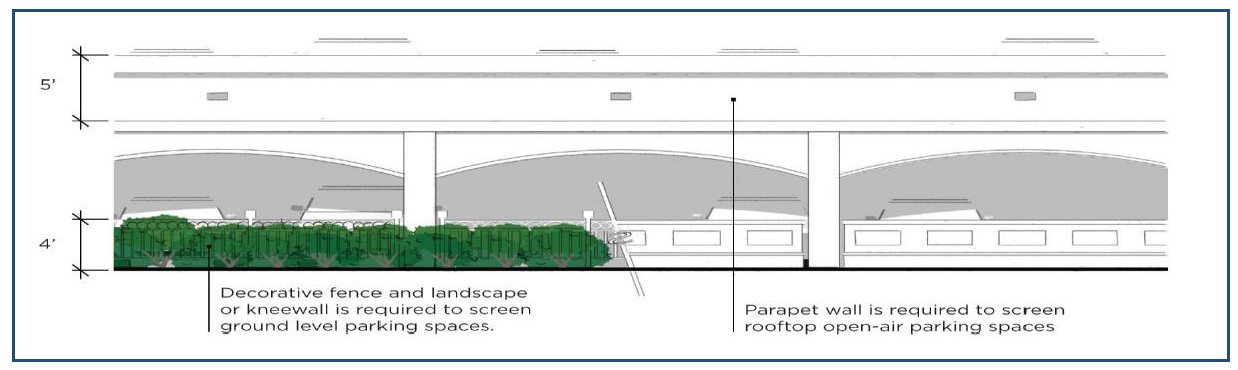
Figure 8.1.2. Parking Structure Requirements
(2)
Parking Lot.
a.
A parking lot must be used solely for the temporary parking of motor vehicles and cannot be used as an off-street loading area.
b.
Only structures for the shelter of attendants or for payment kiosks are permitted in a parking lot. Shelters or kiosks must not exceed ten feet in height and 50 square feet in area.
c.
The parking lots must be screened and landscaped in accordance with the requirements of Article 11.
VV.
Pay Day/Title Loan Agency.
(1)
Pay day/title loan agencies shall not be located closer than 1,320 feet from any other existing pay day/title loan agencies, regardless of the zoning district, as measured from a point of the lot line on which such use is proposed to be located to the nearest point on the lot line on which any other existing similar use is located.
(2)
Any existing pay day/title loan agency as of the effective date of this Code that does not meet the spacing requirement is deemed conforming.
(3)
If the use is abandoned for a period of 90 days or more it cannot be reestablished unless it is in conformance to the separation requirements found here.
WW.
Pharmacy, to include Drive-Through Pharmacy.
(1)
A new pharmacy shall be separated from an existing pharmacy by 1,320 feet from property boundary line to property boundary line, unless the existing pharmacy is co-located in a medical complex or hospital.
(2)
A new pharmacy shall be separated, regardless of political boundary, from an existing pain management clinic by one-half mile measured from property boundary line to property boundary line.
(3)
A certified survey from a land surveyor registered in the State of Florida displaying the distance in linear feet between a pharmacy and a pain management clinic or between pharmacies shall be submitted with a certificate of use application and fee in order to establish compliance with this section.
XX.
Private Stable. Private Stables are considered an Accessory Use and shall conform to the standards identified in Subsection 9.2(Q).
YY.
Reception Facility.
(1)
A general admission fee or any other monetary donations (payment at the door to the general public) for entrance is prohibited, with the exception of fundraisers or events for bona fide non-profit organizations, places of worship, or educational facilities.
(2)
All main activities, such as dining and entertainment, must be held within a completely enclosed building.
(3)
Outdoor seating areas are permitted for the use of guests. If a reception facility conducts main activities outdoors, special use approval is required for the outdoor component of the facility.
ZZ.
Recycling Collection Center.
(1)
Recycling related actions including the collection and storage of materials, nuisance odors, industrial processing, and all associated activities shall be screened from the view of the general public.
(2)
Outdoor storage of waste material shall not be allowed adjacent to Residential Zoning Districts.
AAA.
Residential Care and Assisted Living Facilities.
(1)
Residential care and Assisted Living facilities shall conform to all local, state, and federal regulations.
(2)
When located in a non-residential district, the structure must be designed with a lobby entrance along the primary frontage.
(3)
Residential care and Assisted Living facilities must meet the design standards for multi-family dwellings.
(4)
All parking and landscaping standards shall be maintained.
BBB.
Restaurant. Restaurants shall conform to all local, state, and federal regulations.
CCC.
Retail/Convenience Store.
(1)
Retail Convenience Stores shall only be permitted along arterial and collector roadways. Any development not along an arterial or collector roadway shall require a special exception and traffic impact assessment.
(2)
Windows shall be free of obstruction except those which are approved by Article 16 of this Code. Windows shall provide normal line of sight into and out of the facility.
(3)
Convenience stores operating on a 24-hour basis shall adhere to the noise level standards within Table 9.5.1. Sound Level Limits of the underlying district. Times outside of the stated time ranges shall adhere to the lowest allowable limit within the associated "Use Occupancy Category."
DDD.
Retail Good Establishment.
(1)
Except as expressly allowed, all sales of retail goods and activities associated with commercial and mixed-use developments shall be conducted wholly within a totally and permanently enclosed building.
(2)
The street-facing side façades of buildings shall be articulated with the same façade details as provided on the building's front façade or be screened from off-site views of the general public through fences, walls, landscaping, or a combination thereof.
(3)
Stores operating on a 24-hour basis shall adhere to the noise level standards within Table 9.5.1. Sound Level Limits of the underlying district. Times outside of the stated time ranges shall adhere to the lowest allowable limit within the associated "Use Occupancy Category."
(4)
Accessory structures and uses shall not front a street and shall be located in a manner that minimizes their impacts on adjacent uses.
(5)
Loading, service, and refuse areas shall be located, at minimum, 10 feet from any residential lot line, and not within any established landscape buffer. Such uses shall be screened from view of the abutting property and not impede on-site traffic.
EEE.
Retail Sales of Alcohol. Retail sales of alcohol require site plan review by the Planning Department and in some cases may require special use approval. When special use approval is required, the site plan review will be conducted concurrently by the board of adjustment.
(1)
All establishments with retail sales of alcohol shall conform to all local, state, and federal regulations.
(2)
In addition to site plan requirements, the following elements of operation will be considered:
a.
The size, location, and configuration of the establishment.
b.
Days and hours of operation.
c.
A security plan.
d.
Exterior lighting design.
FFF.
Retail Vape Shop/Retail Tobacco Stores.
(1)
Outward appearances, including but not limited to the building façade, signage, and accessory structures shall adhere to and be compatible with the surrounding district, area, and/or neighborhood.
(2)
Signage shall not include any images which may be construed as harmful to minors nor advertise in such a manner as to be misconstrued as a pain management clinic, medical marijuana dispensary, medical facility, or decrease the aesthetic character of the surrounding areas.
(3)
Retail smoke/tobacco/vape shops/stores shall not be located within one-half linear mile, measured property line to property line by following the shortest route of ordinary pedestrian travel along public thoroughfares, from another retail smoke/tobacco stores/vape shops.
(4)
Retail smoke/tobacco/vape shops/stores shall post clear signage stating that minors may not enter the premises unless accompanied by a parent or legal guardian. At least one such sign shall be placed in a conspicuous location near each public entrance to the smoke shop and tobacco store.
(5)
Windows must not be blocked nor otherwise concealed and shall be free of obstruction except those which are approved by Article 16 of this Code. Windows shall provide normal line of sight into and out of the facility.
GGG.
Salvage, Junk, Wrecking Yard.
(1)
Outdoor storage of waste material shall not be allowed adjacent to Residential Zoning Districts.
(2)
No crushing, smashing, baling or reduction of metal shall be conducted on the premises unless it is conducted without producing substantial amounts of dust and the noise emanating therefrom, as measured from any point on adjacent property, shall be no more audible than the noise emanating from ordinary street traffic and from other commercial or industrial uses measured at the same point on the said adjacent property.
(3)
Stacking of materials shall be no higher than the heights required by the screening and buffer requirements of this Code.
(4)
The storing of harmful or deleterious substances on, adjacent to, or within any environmentally sensitive lands is strictly prohibited. All chemicals, construction materials, fats, oils, grease, detergents, petroleum, or any other pollutant must be stored in an approved enclosure that ensures no such products leak or otherwise enter any environmentally sensitive lands or the surrounding area.
HHH.
Second Hand, Thrift, and Pawn Shops.
(1)
Open air and/or outdoor display of goods and merchandise shall be allowed subject to the following conditions and limitations:
a.
No such display of goods shall interfere with ingress or egress to the property.
b.
Display of goods must not interfere with normal pedestrian passage on the property.
c.
Display of goods may not be located in any designated parking areas, or within the public right-of-way.
d.
Outdoor display of goods shall occur only during normal operating business hours.
(2)
Within the SSC-RC Zoning District, Thrift stores, pawn shops, and second-hand stores shall be permitted subject to the following conditions and limitations:
a.
That no such use is located on a lot with a property line within a distance of 1,320 feet, measured in a straight line in any direction, of the property line of another lot with the same or similar use, regardless of the zoning district.
b.
No such use shall be permitted on a lot with or adjacent to a lot that has a residential use.
c.
All donations of goods or merchandise shall be made and processed within the interior of the primary use structure.
d.
The use of exterior drop off donation bins or areas shall be allowed in rear or side yards only and shall be screened from view.
III.
Consignment Shops.
(1)
Shall be limited to apparel, accessories, home furnishings, and furniture.
(2)
Shall be prohibited from the sale of guns, appliances, mattresses, and motor vehicles.
(3)
Open air and/or outdoor display of goods and merchandise shall be allowed subject to the following conditions and limitations:
a.
No such display of goods shall interfere with ingress or egress to the property.
b.
Display of goods must not interfere with normal pedestrian passage on the property.
c.
Display of goods may not be located in any designated parking areas, or within the public right-of-way.
d.
Outdoor display of goods shall occur only during normal operating business hours.
JJJ.
Sexually-Oriented Business.
(1)
All sexually-oriented businesses with the City of Milton must comply with the regulations of Chapter 8, Article III of the Milton Code of Ordinances.
(2)
All sexually-oriented businesses must be located a minimum of 1,000 feet from any residential district, day care center, educational facility, place of worship, Public Park, or cultural facility.
(3)
A sexually-oriented business must be located a minimum of 1,000 feet from any other sexually oriented business.
(4)
No sexually-oriented business may be maintained or operated in any manner that causes, creates, or allows public viewing of any adult material, or any entertainment depicting, describing, or relating to specified sexual activities or specified anatomical areas, from any public or private right-of-way or any property.
KKK.
Solar Farm.
(1)
Systems, equipment, and structures are limited to the maximum height of the district.
(2)
All solar farm structures must meet the district setbacks and all applicable state regulations.
(3)
No grid tied photovoltaic system shall be installed until evidence has provided that the owner has been approved by the utility company to install the system.
(4)
The facility owner and operator must, at their sole expense, complete decommissioning of the solar farm within one year after the end of the useful life of the solar farm. The solar farm is deemed to be at the end of its useful life if it is abandoned for a period for 180 days or more.
LLL.
Storage Yard.
(1)
The storage area must be completely enclosed along all lot lines by a solid fence or wall a minimum of six feet and a maximum of eight feet in height, including ingress and egress. Fences or walls along the front or corner side lot line must be set back a minimum of 10 feet. Within that setback, one shrub a minimum of three feet in height must be planted linearly every three feet on center along such fence or wall.
(2)
Storage of any kind is prohibited outside the fence or wall.
(3)
No items stored within 25 feet of the fence may exceed the height of the fence or wall for an outdoor storage yard.
(4)
Any vehicles stored on-site must be stored so that no fluids will drain into the storm sewer system.
(5)
Storage yards shall conform to all local and state regulations.
MMM.
Truck Repair.
(1)
All repair work shall be entirely conducted within the confines of the building wherein the business is licensed to operate.
(2)
All motorized and ancillary vehicles, parts, and materials shall be stored inside the building wherein the business is licensed to operate.
(3)
Any overnight storing of vehicles may only occur within Zoning Districts in which overnight outdoor storage, Storage Yard—Outdoor, is currently an allowed use. Any other storage of vehicles must be within an approved building that is enclosed on at least 3 sides except as provided in (5) of this same section, below.
(4)
All storage must be screened from the view of the general public through the use of the buffer and landscape requirements as provided by this Code.
(5)
Vehicle/Truck repair/service establishments may only store vehicles outdoors that have been or are being serviced for a period of time not to exceed 30 days.
(6)
The storing of harmful or deleterious substances on, adjacent to, or within any environmentally sensitive lands is strictly prohibited. All chemicals, construction materials, fats, oils, grease, detergents, petroleum, or any other pollutant must be stored in an approved enclosure that ensures no such products leak or otherwise enter any environmentally sensitive lands or the surrounding area.
(7)
All buildings fronting the principal street and/or that are in the view of the general public shall adhere to the aesthetic of the surrounding area as provided in this Code.
NNN.
Vehicle Dealership.
(1)
Any overnight storing of vehicles which is visible to the general public from arterial and collector roadways may only occur within Zoning Districts in which overnight outdoor storage, Storage Yard—Outdoor, is currently an allowed by right or special exception. Any other outdoor storage of vehicles must be screened from the view of the general public through the use of the buffer and landscape requirements as provided by this Code.
(2)
Any area in which outdoor storage and display of vehicles is an allowed use, enclosed storage is encouraged and allowed within both the rear and side yards of the principal structure. Such enclosures must be of similar architectural design and material as the principal structure and shall adhere to the aesthetics of the surrounding district.
OOO.
Vehicle Repair/Service—Major or Minor.
(1)
Vehicle repair/service establishments may only store vehicles outdoors that have been or are being serviced for a period of time not to exceed 30 days.
(2)
All repair and service operations must be performed within a fully enclosed building. All equipment and parts must be stored indoors. Any vehicles awaiting repair must be stored so that no fluids will drain into the storm sewer system, such as the use of drip pans and other coverings.
(3)
Vehicle repair/service establishments that abut a residential district must be screened along interior side and rear lot lines with a solid wall or fence at least six feet in height. Additional screening requirements may apply.
(4)
No partially dismantled, wrecked, junked, or discarded vehicles, or vehicles that sit on one or more flat tires or are inoperable in any manner may be stored outdoors on the premises. This standard does not apply to vehicles under repair.
(5)
The sale of used or new vehicles is prohibited.
(6)
No motor vehicles may be stored and no repair work may be conducted in the public right-of-way.
PPP.
Warehouse.
(1)
All storage must be screened from the view of the general public through the use of the buffer and landscape requirements as provided by this Code. Outdoor storage may only occur in such Zoning Districts which currently allow Storage Yard ? Outdoor as a permitted or special use, except when the storage serves a governmental use.
(2)
Such facilities shall be used only for dead storage of materials or articles and shall not be used for assembly, fabrication, processing, or repair.
(3)
The storing of harmful or deleterious substances on, adjacent to, or within any environmentally sensitive lands is strictly prohibited. All chemicals, construction materials, fats, oils, grease, detergents, petroleum, or any other pollutant must be stored in an approved enclosure that ensures no such products leak or otherwise enter any environmentally sensitive lands or the surrounding area.
QQQ.
Wholesale Establishment.
(1)
Outdooor sales are prohibited unless otherwise permitted by Article 9.1(B) of this Code.
(2)
Loading areas shall be located on the interior side or rear of the building and shall be screened by a solid fence or wall which complies with the on-site commercial development standard found in this Code.
(3)
Wholesales establishments which uses are in conjunction to Heavy Retail, Rental, and Service use categories must meet the additional requirements prescribed therein.
RRR.
Wind Energy System.
(1)
A Wind Energy System is permitted in the RU District only.
(2)
The design of the wind energy system must conform to applicable industry standards as such standards exist as of the date construction is commenced. The facility owner or operator must submit certificates of design compliance obtained by the equipment manufacturers from Underwriters Laboratories, Det Norske Veritas, Germanishcer Lloyd Wind Energies, or similar certifying organizations.
(3)
All wind turbines must be newly manufactured as of the date of installation. Experimental/prototype wind turbines may be approved as a special use.
(4)
All wind energy system must be equipped with a redundant braking system. This includes both aerodynamic over speed controls (including variable pitch, tip, and other similar systems) and mechanical brakes. Mechanical brakes must be operated in a fail-safe mode. Stall regulation is not considered a sufficient braking system for over speed protection.
(5)
All electrical components of the wind energy system must conform to applicable local, state, and national codes, and applicable international standards.
(6)
An engineer's certificate must be completed by a structural engineer, licensed in the State of Florida, certifying that the tower and foundation of the wind turbines are compatible with, and are appropriate for, the particular model of wind turbine used, and that the specific soils at the site can support the wind turbine.
(7)
Wind turbines must comply with the following design standards:
a.
Wind turbines must be a non-obtrusive and non-reflective color. The facility owner or operator must maintain the paint on wind turbines at all times in good repair.
b.
Wind turbines must not display advertising, except for reasonable identification of the turbine manufacturer, or the facility owner and operator.
c.
Within the wind energy system, wind turbines must be of a generally consistent size, design, and color, of similar height and rotor diameter, and rotate in the same direction.
d.
Wind turbines must not be artificially lit, except to the extent required by the Federal Aviation Administration or other applicable regulatory authorities.
e.
On-site transmission and power lines between wind turbines must, to the maximum extent practicable, be placed underground, reach the property line, and be located and constructed in such a way as to minimize disruption to the property's primary purpose as well as to facilitate the interconnection of other commercial wind power generating facilities.
f.
Non-essential appurtenances are prohibited to be affixed to any wind turbine, including, but not limited to, cellular or radio antennae.
g.
A clearly visible warning sign advising persons of the presence of high voltage levels must be placed at the base of all pad-mounted transformers and substations.
(8)
The applicant must commission and submit at the time of permit application a wildlife assessment (impact study), conducted by a qualified wildlife expert having no less than ten years of experience conducting wildlife assessments, indicating possible risks to local wildlife, habitat, and migratory birds. Additionally, the applicant's wildlife expert must also develop a mitigation plan, if applicable, that addresses/mitigates any risk to wildlife, migratory birds, and affiliated habitat. All wind turbines at time of application must be located out of bird and bat migration pathways/corridors where wind turbine construction would pose a substantial risk.
(9)
Wind turbines must not be climbable up to a height of at least 15 feet above ground surface. All access doors to wind turbines and electrical equipment must be locked or fenced, as appropriate, to prevent entry by non-authorized persons.
(10)
Wind turbines must be set back from all structures on a participating property owner's property a distance of no less than the turbine height. The setback distance is measured from the nearest point on the outside edge of a tower to the nearest point on the foundation of the occupied building.
(11)
All wind turbines must be set back from the nearest property line a distance of not less than the normal setback requirements for that zoning district or 110% of the turbine height, whichever is greater. The setback distance is measured from the property line to the nearest point on the outside edge of a tower. Operation and maintenance building(s) and substations must be located in accordance with zoning district yard requirements. All wind farm structures, except for wind turbines, must comply with the regulations of the zoning district.
(12)
All wind turbines must be set back from the nearest public right-of-way a distance of 110% of the turbine height, as measured from the right-of-way line to the nearest point on the outside edge of a tower.
(13)
The facility owner or operator must comply with all applicable Codes and Codes regulating sound generation. In the event that any sound levels from a wind turbine are found to be in excess of permissible levels, the facility owner or operator must take necessary measures to bring sound levels down to a level acceptable.
(14)
A wind turbine's shadow flicker must not fall on any window of an existing structure or within the buildable area of an adjacent lot, as defined by current setback requirements.
(15)
The facility owner and operator must, at their sole expense, complete decommissioning of the wind energy system, or individual wind turbines, within one year after the end of the useful life of the wind energy system or individual wind turbines. The wind energy system or turbine must be deemed to be at the end of its useful life if it is abandoned for a period of time in excess of 180 days. Decommissioning includes removal of wind turbines, structures, roads and foundations to a depth of 48 inches, and any other element constructed by facility owner or operator for the purpose of maintaining or operating the wind energy system.
SSS.
Wireless Telecommunications.
(1)
Findings. The Federal Communications Act of 1934, as amended by the Telecommunications Act of 1996, collectively referred to as the "Act," grants the Federal Communications Commission exclusive jurisdiction over:
a.
The regulation of the environmental effects of radio frequency emissions from communications towers and/or communications antennas facilities; and
b.
The regulation of radio signal interference around users of the radio frequency spectrum.
1)
The city's regulation of communications towers and/or communications antennas cannot have the effect of prohibiting any person from providing wireless telecommunications services. This section shall be construed and interpreted in a manner which avoids such effect.
(2)
Scope.
a.
This section shall not govern the installation of any amateur radio facility that is owned and operated by a federally licensed amateur radio station operator.
b.
The provisions of this section shall supersede all conflicting requirements of other city ordinances regarding the location and permitting of communications antennas and communications towers.
c.
The provisions of this section shall not apply to communications towers and/or communications antennas to the extent determined by the city council to be necessary for the provision of an essential service.
d.
Communications towers and communications antennas may be located upon any property or structure owned by the city, however, the city council shall authorize the usage of the property after the applicant executes a lease agreement acceptable to the city.
(3)
Application Requirements. All communications towers and/or communication antennas shall be subject to all requirements of this section. As a condition to constructing or erecting a communications antenna or a communications tower, an owner must submit and obtain approval of an application. The following information shall be included in all applications and must be certified under oath by the applicant as being true, correct and complete:
a.
The name, address and telephone number of the owner and lessee of the parcel of land upon which the communications tower and/or communications antenna is proposed to be situated. If the applicant is not the actual owner of the parcel of land upon which the communications antenna is proposed to be situated, the written consent of the actual owner shall be evidenced in the application;
b.
The legal description, parcel identification number and address of the parcel of land upon which a communications tower and/or communications antenna is proposed to be located;
c.
The names, addresses and telephone numbers of all owners of other communications towers or usable antenna support structures within a one-half-mile radius of the proposed tower site;
d.
A scaled site plan clearly indicating the:
i.
Tower and/or antenna site, whichever is appropriate;
ii.
Height of the proposed tower and/or antenna;
iii.
Location of any accessory buildings;
iv.
On-site land use and zoning;
v.
Adjacent land uses and zoning;
vi.
Adjacent roadway;
vii.
Proposed means of access;
viii.
Distances from property lines; and
1)
An elevation drawing of the proposed tower and/or antenna with antenna support structure along with a certification of the elevation of the existing grade;
e.
A current aerial as maintained by the county property appraiser's office, showing the location of the proposed communications tower and surrounding properties;
f.
A map of the city and the first half mile of all bordering areas showing the design and location of the applicant's entire existing wireless telecommunications network. Such map shall also show the location of the proposed communications tower and communications antenna sites which are the subject of the application, their dimensions, and specifications of the site;
g.
Distances of the proposed communications tower from nearest occupied structure and residentially zoned property, platted residential properties, or un-platted residential properties shown on a current aerial;
h.
Written evidence that the communications tower and communications antenna are in compliance with Federal Aviation Administration regulations. Where a communications antenna will not exceed the highest point of an existing structure upon which it is to be mounted, such evidence shall not be required;
i.
If the applicant is not collocating on another communications tower, written documentation that the applicant:
i.
Made diligent, but unsuccessful, efforts for a minimum of 90 days prior to submission of the application to install or collocate the applicant's communications antennas on: 1. existing communications towers or existing useable antenna support structures located within a one-half-mile radius of the proposed communications tower site; or 2. communications towers or usable antenna support structures located within a one-mile radius of the proposed communications tower site which, although not currently in existence, have been permitted by appropriate governmental regulatory bodies and are reasonably expected to be constructed within six months from the date of the application; or
ii.
Written, technical evidence from an engineer that the proposed communications antenna cannot be installed or collocated on another existing or permitted communications tower or existing or permitted usable antenna support structure located within a one-mile radius of the proposed communications tower site and must be located at the proposed site in order to meet the coverage requirements of the applicant's wireless communications system;
j.
A statement shall be submitted, prepared by a professional registered engineer licensed to practice in the state, which through rational engineering analysis certifies the tower's compliance with the applicable standards set forth in the EIA/TIA 222-F Standard, as published by the Electronic Industries Association, which may be amended from time to time, and all applicable city and county building codes. For all communications towers and communications antennas attached to an existing structure, the statement shall include a certification that the structure can support the load superimposed from the tower and antenna;
k.
Written, technical evidence from an engineer that:
i.
The proposed communications tower and/or communications antenna, whichever is appropriate, meets the standards set forth in this section;
ii.
The proposed site of the communications tower and/or communications antenna, whichever appropriate, does not pose a risk of explosion, fire or other danger due to its proximity to volatile, flammable, explosive or hazardous materials;
iii.
The proposed site of the communications tower and/or communications antenna, wherever appropriate, is adequately protected against and does not pose a risk of explosion, fire or other danger due to lightning strikes; and
iv.
Construction and placement of the communications tower and/or communications antenna, whichever appropriate, will not interfere with public safety communications and the usual and customary transmission or reception of radio and television service enjoyed by adjacent residential and nonresidential properties.
l.
Certification from an engineer documenting the collocation capability of an applicant's proposed communications tower.
(4)
Communications Tower Regulations.
a.
A communications tower may be located on a lot used for other principal uses on a parcel smaller than the minimum lot size required in the zoning district. This parcel shall be considered as the tower site. The tower site, but not the entire lot, shall be subject to all the requirements of this section, except as specifically provided.
b.
Single-use communications towers shall not exceed 150 feet in height as measured from existing grade at the tower base. Communications towers that have collocation ability shall not exceed 180 feet in height as measured from existing grade at the tower base.
c.
Communications towers are permitted only in the following zones: C-1, C-2, C-3. Towers are prohibited in all residential zones.
d.
Communication towers shall not be placed in the front or side yard of any residence or business. F.C.C. licensed commercial and amateur radio operators and television stations shall not be included in the side yard prohibition. Security fencing of communication towers shall be required.
e.
A communications tower shall be deemed to have collocation ability if its design is certified by the engineer as being appropriate for collocation and the applicant certifies that he is prepared to offer adequate space on the tower to others on commercially fair and reasonable terms. An applicant's offer or willingness to offer adequate space on the tower for collocation may be subject to the following factors:
i.
Structural engineering capabilities, taking into account planned future use by the applicant and municipal emergency services;
ii.
Radio frequency intermodulation acceptance; and
iii.
The willingness of other CMRS licenses wishing to collocate on the applicant's tower to accept commercially reasonable rates and terms.
f.
All communications towers shall be separated from all residentially-zoned lands and any occupied structure by a minimum of 200 feet, or a distance equal to 100 percent of the height of the proposed communications tower, plus 50 feet, whichever is greater. The tower separation distances, for purposes of compliance with this section, shall be measured from the center of the base of the communications tower to the lot line of the residentially-zoned land or the lot line of the occupied structure, whichever appropriate.
g.
Communications antennas attached to communications towers are exempt from the setback standards of this section and from setbacks for the zone in which they are located. However, such communications antennas shall not be extended more than five feet horizontally beyond the vertical plane of the outer edge of the communications tower.
h.
Proposed communications towers shall be separated from all other existing communications towers by a minimum of one-half mile as measured from the center base of the communications tower.
i.
Towers shall be lighted as required by the Federal Aviation Administration. Further, unless prohibited by the Federal Aviation Administration, communications towers for which illumination is not otherwise required by the Federal Aviation Administration shall have a beacon light placed at the top of the tower. To the extent allowed by the Federal Aviation Administration, all lighting and beacons upon a tower which, at the time of the commencement of construction, are located within a distance of 300 percent of the tower height from a residential use or residential-zoned property shall be erected with shields mounted underneath the lights or beacons in such a manner as to block the view of the lights or beacons from the ground for a distance from communications towers of 300 percent of the tower height.
j.
Communication towers not requiring Federal Aviation Administration paintings/markings shall have either a galvanized finish or shall be painted a non-contrasting blue, gray, or black finish so as to minimize its visual impact.
k.
Communications towers shall be designed and constructed to ensure that the structural failure or collapse of the tower will not create a safety hazard to adjoining properties. All communications towers shall be constructed in accordance with EIA/TIA 222-F standards, as published by the Electronic Industries Association, as it may be amended from time to time, and all applicable city and county building codes. Further, any improvements and/or additions to any communications towers, other than routine maintenance, shall require plan submission in accordance with the provision of this section and must demonstrate compliance with the EIA/TIA 222-F standards in effect at the time of such improvements or additions.
l.
All communications towers must be constructed of approved corrosion-resistant noncombustible material. All communications towers must be permanently and effectively grounded. All communications towers must be located and equipped with step bolts and ladders so as to provide ready access for inspection purposes.
m.
All proposed communications towers shall comply with current radio frequency emissions standards established by the Federal Communications Commission.
n.
The use of any portion of a communications tower and its accessory structures for signs or advertising purposes, including the company name, shall be prohibited.
o.
All accessory buildings or structures shall meet all applicable city and county building codes.
p.
Mobile or immobile equipment not used in direct support of a communications facility shall not be stored or parked on the site of the communications tower unless such equipment is necessary for repairs to the facility then being made.
q.
A minimum six-foot fence, as measured from the finished grade, with no less than 85 percent opacity, shall be provided around each tower site. In no case shall the fence exceed eight feet in height. Barbed wire may be used on security fences erected in any commercial or industrial district; provided such use is limited to a minimum of six feet above grade. Access to the tower site shall be through a locked gate.
(5)
Communications Antennas not located on Communications Towers.
a.
Communications antennas not located on communications towers may be permitted as an accessory use in the C-1, C-2, C-3, I-1, I-2 zoning districts and in the RC-1 district with approval of the City Council and/or historic preservation board.
b.
All communications antennas not located on a communications tower shall be of stealth design.
c.
Communications antennas shall not be artificially lighted, except to ensure human safety or as required by the Federal Aviation Administration.
d.
Communications antennas not requiring Federal Aviation Administration paintings/markings shall have either a galvanized finished or shall be painted a non-contrasting blue, gray, or black finish to minimize its visual impact.
e.
Communications antennas shall be designed and constructed to ensure that the structural failure or collapse of the antenna will not create a safety hazard to adjoining properties. All communications antennas shall be constructed in accordance with EIA/TIA 222-F standards, as published by the Electronic Industries Association, as it may be amended from time to time, and all applicable city and county building codes. Further, any improvements and/or additions to any communications antennas, other than routine maintenance, shall require plan submission in accordance with the provisions of this section and must demonstrate compliance with the EIA/TIA 222-F standards in effect at the time of the improvements or additions.
f.
All proposed communications antennas shall comply with current radio frequency emissions standards established by the Federal Communications Commission.
g.
The use of any portion of a communications antenna and its accessory structures for signs or advertising proposes, including the company name, shall be prohibited.
h.
Accessory equipment buildings and structures shall:
i.
Meet all applicable city and county building codes;
ii.
Not contain more than 150 square feet of gross floor area or exceed 12 feet in height;
iii.
Be designed and constructed to blend with the main building; and
iv.
Not be located on the roof of an existing structure.
1)
Mobile or immobile equipment not used in direct support of a communications antenna facility shall not be stored or parked on a site containing a communications antenna, unless such equipment is received for repairs to the facility then being made.
i.
Communications antennas may not extend more than 20 feet above the highest point of the antenna support structure.
(6)
Owner's duty to maintain communication tower/antenna; notice of intent to discontinue use.
a.
Owners of communications towers or antennas shall at all times employ ordinary and reasonable care and shall install and maintain and use nothing less than commonly accepted industry methods and devices for preventing failures and accidents which are likely to cause damage, injuries, or nuisances to the public.
b.
Owners shall install and maintain communications towers and communications antennas in substantial compliance with the requirements of the National Electric Safety Code and all Federal Communications Commission, state and local regulations and in such a manner that will not interfere with the use of other property.
c.
All communications towers and communications antennas shall at all times be kept and maintained in good condition, order and repair so that they shall not menace or endanger the life or property of any person.
d.
If the use of a communications tower and communications antenna is discontinued by the owner or if the owner ceases to operate the tower and antenna, the owner shall provide written notice to the city of his intent to discontinue use or cease operations and the date when the use shall be discontinued.
(7)
Abandonment; defined; owner's duty to remove. A communications tower and communications antenna that is not operated for a continuous period of 200 days shall be considered abandoned, and the owner thereof shall remove the tower and antenna within 90 days of abandonment or discontinuation of use. If such communications tower or communications antenna is not removed within 90 days, the city may remove such communications tower or communications antenna at the owner's expense. If there are two or more users of a single communications tower, this section III-5.18.10 shall not become effective until all users cease using the communications tower or communications antenna.
(8)
Inspections; city authority; costs paid by owner.
a.
Monopole communications towers for which a certificate of occupancy is issued on or after the effective date of the ordinance from which this section is derived shall be inspected and certified by an engineer every five years as being in conformance with the requirements of the National Electric Safety Code and all Federal Communications Commission, state and local regulations. Monopole towers in existence as of the effective date of the ordinance from which this section is derived shall be so certified within 60 days of such effective date and then every five years thereafter. Lattice or guyed communications towers for which a certificate of occupancy is issued after such effective date of this section shall be inspected and certified by an engineer every two years as being in conformance with the requirements of the National Electric Safety Code and all Federal Communications Commission, state and local regulations. Lattice or guyed communications towers in existence as of such effective date of the ordinance from which this section is derived shall be certified within 60 days after such effective date of this section and then every two years thereafter. All such certifications and inspections shall be made by and at the sole cost of the owner and submitted to the city. A communications tower may be required by the city to be more frequently certified should there be reason to believe that the structural or electrical integrity of the communications tower is jeopardized.
b.
The city and its agents shall have the authority to enter onto the property upon which a communications tower and communications antenna is located between the inspections and certificates required in subsection III-5.18.11(a) to inspect the tower and antenna for purposes of determining whether it complies with all applicable laws and regulations.
c.
The city reserves the right to conduct such inspections at any time, upon reasonable notice to the owner. All expenses relating to such inspections by the city shall be borne by the owner.
TTT.
Use of Rights-of-Way by Wireless Communications Facilities.
(a)
Definitions. The definitions of all applicable terms shall be as provided in Section 7.2, with the exception that the following terms shall be defined as provided in F.S. § 337.401(7)(b):
(1)
Antenna;
(2)
Applicable codes;
(3)
Applicant;
(4)
Application;
(5)
Authority;
(6)
Authority utility pole;
(7)
Collocate or collocation;
(8)
FCC;
(9)
Micro wireless facility;
(10)
Small wireless facility;
(11)
Utility pole;
(12)
Wireless facility;
(13)
Wireless infrastructure provider;
(14)
Wireless provider;
(15)
Wireless services;
(16)
Wireless service provider;
(17)
Wireless support structure.
(b)
Generally. The placement of telecommunication towers and antennae anywhere in the corporate limits of the city shall in all cases be subject to the city's zoning and land use regulations, including those set forth in Part III, the Unified Development Code. Where placement of a wireless antenna in the public right-of-way has been approved by the city and to the extent not inconsistent with any city zoning and land use regulations, a wireless antenna attached to a permitted and legally maintained vertical structure in the public right-of-way, such as a utility pole, shall, unless otherwise agreed to by the city in writing:
(1)
Not extend more than ten feet above the highest point of the vertical structure;
(2)
Not have any type of lighted signal, lights, or illuminations unless required by an applicable federal, state, or local rule, regulation or law;
(3)
Comply with any applicable Federal Communications Commission Emissions Standards;
(4)
Comply with any applicable local building codes in terms of design, construction and installation; and
(5)
Not contain any commercial advertising thereon.
(c)
Rules and regulations. The City Manager is authorized to administratively promulgate such rules and regulations as may be necessary and appropriate to regulate the placement of wireless facilities and infrastructure in the public right-of-way in conformity with applicable provisions of state law, and to designate such staff as necessary to receive, process and make determinations with respect to applications for the placement of wireless facilities and infrastructure. Such rules and regulations shall be subject to the following criteria:
(1)
The registration fee required of applicants for the placement of wireless facilities and infrastructure shall be reasonably calculated to equal the city's cost of receiving, assessing, determining, awarding, and maintaining records with respect to each application, whether for an individual facility or for multiple facilities covered by a single application, but such fee shall not exceed $100.00 per placement of each wireless facility.
(2)
The permit fee for the placement of wireless facilities on poles or other structures owned by the city shall be $150.00 per facility per year.
(3)
All fees imposed shall be reasonable and nondiscriminatory and not based upon any services provided by the applicant.
(4)
All provisions of federal and state statutes, rules and regulations, and the provisions of this Code, pertaining to historic preservation and the historic districts regulated by the city, which have not been preempted or superseded by F.S. § 337.401(7), shall continue to be enforced and shall not be repealed, abated or waived by this section.
(5)
All applications by small and micro wireless facilities providers and installers to place utility poles and other supporting structures in the public rights-of-way shall be processed in accordance with F.S. § 337.401(6), and shall be subject to the codes, policies, practices, and rules and regulations of the city with respect to the placement of such poles and other supporting structures in the public rights-of-way.
(d)
Prohibited collocations, attachments, installations, and services. The provisions of this section do not authorize, and the city hereby prohibits, the following:
(1)
This section does not authorize a person or entity to collocate or attach wireless facilities, including any antenna, micro wireless facility, or small wireless facility, on a privately owned utility pole, a privately owned wireless support structure, or other private property without the consent of the property owner.
(2)
The approval of the installation, placement, maintenance, or operation of a small wireless facility pursuant to this section does not authorize the provision of any voice, data, or video services or the installation, placement, maintenance, or operation of any communication facilities other than small wireless facilities in the public right-of-way.
(3)
This section does not affect any provisions relating to pass-through providers contained in this Code and contained in F.S. § 337.401(6).
(4)
This section does not authorize a person or entity to collocate small wireless facilities or micro wireless facilities on a city utility pole or erect a wireless support structure in a location subject to covenants, conditions, restrictions, articles of incorporation, and bylaws of a homeowners' association. This subsection does not apply to the installation, placement, maintenance, or replacement of micro wireless facilities on any existing and duly authorized aerial communications facilities.
UUU.
Places of Worship.
1.
All Places of Worship proposing to establish within the D-CM zoning district after the effective date of this ordinance shall be required to provide, through its governing body, a pennanent exemption to the application of the provisions Section 6.5 of the City of Milton Code of Ordinances pertaining to minimum distances between places of worship and establishments selling alcohol for consumption on the premises, prior to establishment of the place of worship.
(Ord. No. 1992-23, § I, 10-10-2023; Ord. No. 10-24, § 1, 5-14-2024)
8.2 - TEMPORARY USE STANDARDS
Temporary uses are required to comply with the use standards of this section, in addition to all other regulations of this Code. These regulations are for temporary uses located on private property. Unless otherwise indicated, all temporary uses require a temporary use permit, which must be applied for by and issued to the property owner.
All Temporary Use Permits shall conform to the regulations identified in Chapter 14, Article II of the City of Milton's Code of Ordinances.
A.
Farmers' Market.
(1)
The timeframe of a farmers' market, including number of days per week and overall duration of the event, will be determined and approved as part of the development order or temporary use permit, as applicable.
(2)
A management plan is required as part of the application that demonstrates the following:
a.
The on-site presence of a manager during hours of operation who directs the operations of vendors participating in the market.
b.
An established set of operating rules addressing the governance structure of the market, hours of operation, and maintenance when open to the public.
c.
A general site plan of vendor stalls, visitor facilities, such as any seating areas and restrooms, and all ingress and egress points to the site.
d.
Provision for waste removal.
e.
The days and hours of internal operation, including vendor set-up and take-down times.
B.
Temporary Outdoor Entertainment. A temporary use permit is required for outdoor entertainment events.
(1)
A management plan is required as part of the temporary use permit application that demonstrates the following:
a.
The on-site presence of a manager during the event.
b.
A general site plan of performance areas, visitor facilities, such as any seating areas and restrooms, and all ingress and egress points to the site.
c.
Provision for recycling and waste removal.
d.
The days and hours of operation, including set-up and take-down times.
e.
A description of crowd control and security measures.
(2)
Any temporary structures must be removed within seven days of conclusion of the event.
(3)
Refer to Chapter 8 of the City of Milton's Code of Ordinances for additional submittal requirements.
C.
Temporary Outdoor Sales. A temporary use permit is required for outdoor sales.
(1)
Temporary Outdoor sales shall be permitted provided the following standards are met.
a.
Temporary outdoor sales are limited to store fronts of normal commercial, retail, and mercantile enterprises. They shall not be permitted to occur at, from, or on the same lot as a mini-warehouse or other self-storage type facility, regardless of the zoning district.
b.
The temporary event shall be contained within one parcel or lot and shall not extend beyond the permitted area.
c.
The temporary sale shall not interfere with the normal operation of other businesses including those in multi-tenant facilities and those businesses adjacent to the business conducting the permitted temporary outdoor sale on abutting parcels.
(2)
A management plan is required as part of the temporary use permit application that demonstrates the following:
a.
The on-site presence of a manager during hours of operation who directs the operations of all participating vendors.
b.
An established set of operating rules addressing the governance structure of the sales event, hours of operation, and maintenance.
c.
A general site plan of vendor stalls, visitor facilities, such as any seating areas and restrooms, and all ingress and egress points to the site.
d.
Provision for recycling and waste removal.
e.
The days and hours of operation, including vendor set-up and take-down times.
D.
Temporary Outdoor Storage Container.
(1)
The term "Temporary Outdoor Storage Container" shall be defined to include: Portable On-Demand storage structure, any container, storage unit, shed-like container or other portable temporary structure that can or is used for the storage of personal property of any kind and which is located for such purposes outside an enclosed building other than an accessory building or shed complying with all building codes and land use requirements.
(2)
A temporary use permit is required.
(3)
Temporary outdoor storage containers are permitted in any zoning district when used for loading or unloading.
(4)
Temporary outdoor storage containers may not be used for permanent storage. They may not serve as a substitute for permanent storage needs on the site on which they are located. Containers may not be permanently attached to the ground, serviced with permanent utilities, or stacked on the site.
(5)
A temporary outdoor storage container may be utilized as a temporary structure within the city when in compliance with the standards of this subsection. Any use of such structures within the city not in compliance with this subsection shall be unlawful.
(6)
Length of time structures may be on property; extensions.
a.
A temporary outdoor storage container may be located as a temporary structure on a Residentially Zoned property within the city for a period of time not to exceed fourteen (14) days in duration from time of delivery to time of removal.
b.
A temporary outdoor storage container may be located as a temporary structure on a Commercially Zoned property for a period of time not to exceed seven (7) days in duration from time of delivery to time of removal.
i.
No more than two portable on-demand storage structures may be located on a specific piece of property within the city at one time; such structures shall be individually limited to the duration time period established herein. Such temporary structure may not be located on a specific property more than two times in any given 90-calendar-day period.
ii.
Such structure may not exceed eight feet six inches in height, ten (10) feet in width or 20 feet in length.
iii.
It shall be the obligation of the owner or user of such temporary structure to secure it in a manner that does not endanger the safety of persons or property in the vicinity of the temporary structure.
iv.
In the event of high winds or other weather conditions in which such structure may become a physical danger to persons or property, the appropriate Enforcement officers may require the immediate removal of such temporary structure.
v.
When located on a Commercially Zoned property, the temporary outdoor storage container may not disturb any flow of traffic, including pedestrian traffic, nor shall it disrupt any means of ingress and egress, or other on-site movement of vehicular traffic.
[c.]
In the event of fire, hurricane or natural disaster causing substantial damage to the structure, the property owner may apply to the city for permission to extend the time that a portable on-demand storage structure may be located as a temporary structure on the property. Application for such extended duration shall be made in writing and filed with the Planning and Development Department and shall give sufficient information to determine whether such extended duration should be granted. The Planning Director shall determine whether or not to grant such extended duration and the length of such extension. The applicant may appeal such decision to the City Council. In the event of such appeal, the decision of the City Council shall be final.
(7)
Site Standards.
a.
Portable on-demand storage structures are prohibited from being placed within any public right-of-way and within any sight triangle.
b.
Placement of a portable on-demand storage structure is limited to an existing driveway, or to a side or rear yard.
i.
Portable-on-demand storage structures located in a side or rear yard shall maintain a minimum distance of 10 feet from any property line.
(8)
Enforcement.
a.
Any violation of this subsection may result in a citation and fine not to exceed $100.00 per violation.
b.
Any portable on-demand storage structure which is not removed at the end of the time for which it may lawfully remain in place, or immediately upon the direction of an enforcement officer for removal of such temporary structure for safety reasons, may be removed by the city immediately, without notice, and the cost of such removal, together with the cost of administration of its removal, may be assessed against the property on which the temporary structure was located and may be filed as a lien against such property.
i.
Such lien shall be superior in dignity to all other liens or encumbrances upon the property, including the lien of a mortgage, and shall be equal in dignity to the lien of ad valorem taxes.
E.
Temporary Structures, including mobile homes and travel trailers.
(1)
Permits; Extensions. Permits for temporary structures shall be obtained from the Planning and Development Department. Such city development permit may be renewed for a period not to exceed an additional 90 days. Any subsequent application for the extension of a temporary structure permit shall require a special exception. Upon expiration of any permit for a temporary structure, such structure shall be removed from the premises.
(2)
Used as Contractor's or construction field office or tool shed. Temporary structures, including mobile homes and travel trailers, may be used as construction field offices and/or tool sheds when accessory to the development of an area and subject to the following restrictions:
a.
Such structure may be utilized for a period of 12 months, or until 90 percent of the lots are sold, whichever comes first;
b.
In the case of individual permanent structures being erected on the same parcel of land, such temporary use shall not exceed six months or ten days after completion of the permanent structure, whichever comes first; and
c.
Any permit extensions shall comply with the requirements contained in subsection (a) of this section.
(3)
Used as sales office. Temporary structures, including mobile homes and travel trailers, may be used as sales offices for a subdivision in a residential district subject to the following restrictions:
a.
Such structure may be utilized for a period of 12 months, or until 90 percent of the lots are sold, whichever comes first;
b.
Such sales offices shall not include sales of real estate outside the subdivision; and
c.
Any permit extensions shall comply with the requirements contained in subsection (a) of this section.
(4)
Used as dwelling due to health conditions. Temporary structures, such as mobile homes and travel trailers, may be used as temporary living quarters upon the application and approval as a special exception in R-2 and R-3 districts; provided the following requirements have been met. There shall be no special exception provisions for mobile homes in R-1AA, R-1A, or R-1 districts.
a.
Special exceptions may be allowed when justified by the applicant's health condition. Applicants must submit two doctor statements outlining the seriousness of the health problem and the necessity for the temporary structure;
b.
The time limit for such special exception shall be one year. Upon the expiration of the special exception, evidence of the continuance of the health condition specified in subsection III-5.13(d)(1) shall be furnished to the board of adjustment to verify the continued existence of such condition. Only through such verification may the special exception be continued;
c.
Construction and installation of mobile homes or travel trailers as temporary structures shall meet all local, state and federal regulations. In addition, the trailers must be skirted and must not be more than ten years old. Doublewide trailers will not be allowed;
d.
Temporary structures shall not be placed within 15 feet of property lines or any permanent structures and shall project no nearer to the street than front edge of permanent structure;
e.
Trailers shall be placed only on lots where one single-family dwelling is located;
f.
Only on special exception for a single trailer shall be granted per family household of a permanent dwelling;
g.
Upon application as a special exception, the placement of a mobile home as a temporary structure within an R-2 or R-3 district may be approved; provided that in addition to the requirements contained in subsections III-5.13(d)(1) through III-5.13(d)(6) of this section, a minimum lot area of one acre is provided; and
h.
Legal and proper disposal of gray water and black water is required.
(5)
Used as dwelling in emergency situations. Temporary structures, such as mobile homes and travel trailers, may be used as temporary living quarters in any district in emergency ceases under the following restrictions:
a.
An application is submitted to the Planning and Development Department;
b.
The emergency shall be the result of actions beyond the applicant's control such as, but not limited to, structure damage resulting from fire, tornadoes, hurricanes, lightning, etc. The determination of an emergency shall be made by the City Manager or his designee;
c.
Use of mobile home or travel trailer as a temporary dwelling shall be limited to a maximum of six months;
d.
Specifications pertaining to the temporary living quarters shall meet all local, state and federal guidelines;
e.
Mobile homes and travel trailers shall be limited to a maximum of 14 feet in width and 60 feet in length;
f.
Temporary structures shall not be placed within 15 feet of property lines or permanent structures and shall project no nearer to the street than the front edge of the permanent structure; and
g.
The legal and proper disposal of gray water and black water is required.
(6)
Tents and canopies; defined; permitted uses.
a.
Tents and canopies may be permitted on a temporary basis as follows:
i.
Tents used for such purposes shall be allowed in the commercial zoning districts;
ii.
Tents or canopies greater than 400 square feet must obtain Planning and Development Department approval. Tents or canopies 400 square feet or less must abide by the same regulations as tents and canopies requiring permits and must receive Planning and Development Department approval;
iii.
Permits shall be limited to 30 calendar days in a six-month period. Failure to remove such tents or canopies upon the expiration of the 30-day period shall constitute a violation of these regulations;
iv.
A notarized affidavit indicating permission to use the property for such purpose must be obtained from the property owner;
v.
The following assurances must be addressed prior to issuance of a permit:
1)
No nuisance, hazardous or non-safe conditions, as determined by the Planning and Development Department, will be allowed in conjunction with the temporary use of such tents or canopies;
2)
Vehicular parking associated with such uses shall be sufficient and vehicular traffic shall not create a safety problem; and
3)
A 25-foot setback from all property lines shall be required for such structures.
(Ord. No. 1992-23, § I, 10-10-2023)

