
Minneapolis City Zoning Code
CHAPTER 550
- DEVELOPMENT STANDARDS
550.10. - Purpose.
This chapter is established to provide regulations of general applicability for property throughout the city to promote the orderly development and use of land, to protect and conserve the natural environment, to minimize conflicts among land uses, and to protect the public health, safety, and welfare. Development standards are typically applicable to more than one (1) use or are not limited to the functions of a specific use.
550.20. - Scope of regulations.
The regulations set forth in this chapter shall apply to all structures and all land uses, except as otherwise provided in this zoning ordinance.
550.30. - Regulations related to built form.
Regulations related to built form, such as floor area, height, yards, and lot controls, shall be governed by Chapter 540, Built Form Overlay Districts, except as otherwise provided in this zoning ordinance.
550.40. - Access restricted.
Except in the case of a planned unit development and as provided in Chapter 535, Overlay Districts, no land that is located in an urban neighborhood or residential mixed-use district shall be used for driveway, walkway or access purposes to any land which is located in a commercial mixed-use, downtown, production and transportation district, or used for any purpose not permitted in an urban neighborhood or residential mixed-use district.
550.50. - Separate access required for commercial and residential uses.
Structures containing both nonresidential and residential uses shall be designed so that customers and employees of nonresidential uses do not have unsolicited access to hallways that include doorways serving individual dwelling units or rooming units.
(Ord. No. 2025-023, § 49, 5-15-2025)
550.60. - Parking location.
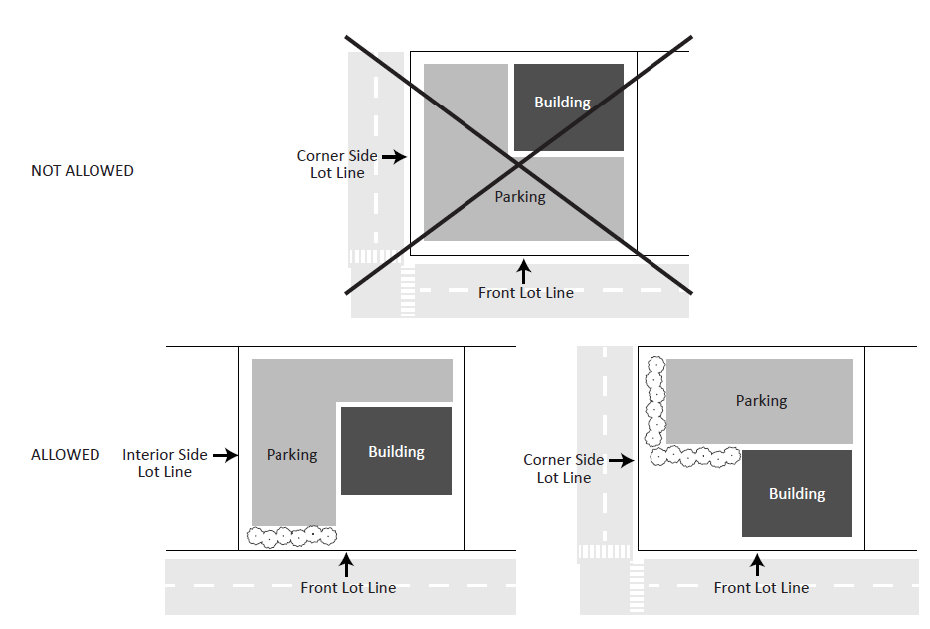
(a) In general. Except as otherwise allowed in the zoning ordinance, on-site surface parking facilities shall not be located between a principal structure and a front or corner side lot line as shown in Figure 550-1, Surface Parking Location.
(b)
Existing parking facilities. Where on-site parking exists between a principal structure and a front or corner side lot line, the zoning administrator may allow the reconfiguration of the parking area, subject to compliance with all other applicable regulations and provided the number of spaces between the building and front or corner side lot line does not increase by more than ten (10) percent.
Figure 550-1 Surface Parking Location
550.70. - Ground floor active functions.
Buildings shall maintain compliance with the ground floor active functions requirements of Article V, Site Plan Review Standards in this chapter. A building nonconforming as to these requirements shall have all the rights of a conforming building, except that said building shall not be enlarged, altered, or relocated in such a way as to increase its nonconformity with these requirements.
550.80. - Screening of mechanical equipment.
(a) In general. All mechanical equipment installed on or adjacent to structures shall be arranged so as to minimize visual impact on all sides of the equipment from adjacent streets, public paths, and adjacent properties as observed from ground level using one (1) of the following methods. All screening shall be at least sixty (60) percent opaque and shall be at least as tall as the equipment it is intended to screen. All screening shall be kept in good repair and in a proper state of maintenance. Exterior mechanical equipment, including ductwork but not exhaust vents, shall not be located on street-facing building facades.
(1)
Screened by another structure. Mechanical equipment installed on or adjacent to a structure may be screened by a fence, wall or similar structure. Such screening structure shall comply with the following standards:
a.
The required screening shall be permanently attached to the structure or the ground and shall conform to all applicable building code requirements.
b.
The required screening shall be constructed with materials that are architecturally compatible with the structure.
c.
Off-premises advertising signs and billboards shall not be considered required screening.
(2)
Screened by vegetation. Mechanical equipment installed adjacent to the structure served may be screened by hedges, bushes or similar vegetation.
(3)
Screened by the structure it serves. Mechanical equipment on or adjacent to a structure may be screened by a parapet or wall of sufficient height, built as an integral part of the structure.
(4)
Designed as an integral part of the structure. If screening is impractical, mechanical equipment may be designed so that it is balanced and integrated with respect to the design of the building.
(b)
Exceptions. The following mechanical equipment shall be exempt from the screening requirements of this section:
(1)
Minor equipment not exceeding one (1) foot in height.
(2)
Mechanical equipment accessory to a single-, two-, or three-family dwelling.
(3)
Mechanical equipment located in the PR2 District not less than three hundred (300) feet from an urban neighborhood or residential mixed-use district.
550.90. - Screening of refuse and recycling storage containers.
Refuse, recycling storage, and compost containers shall be enclosed on all four (4) sides by screening compatible with the principal structure not less than two (2) feet higher than the refuse container or shall be otherwise effectively screened from the street, adjacent residential uses located in an urban neighborhood or residential mixed-use district and adjacent permitted or conditional residential uses. Single and two-family dwellings and multiple-family dwellings of three (3) and four (4) units shall not be governed by this provision.
550.100. - Light poles and flagpoles.
(a) Light poles. Light poles accessory to single-, two- or three-family dwellings and cluster developments shall be limited to eight (8) feet in height. Light poles accessory to all other uses shall be limited to thirty-five (35) feet in height, except that light poles designed or intended to illuminate walkways shall be limited to fifteen (15) feet in height. The maximum height of athletic field lights exceeding thirty-five (35) feet shall be as approved by conditional use permit provided the height of the light poles shall not exceed eighty (80) feet in the urban neighborhood, residential mixed-use, and commercial mixed-use districts.
(b)
Flagpoles. Flagpoles shall be limited to thirty-five (35) feet in height.
550.200. - Purpose.
Lot controls are established to provide for the orderly development and use of land and to minimize conflicts among land uses by regulating the use of lots and lot area in order to provide adequate light, air, open space, and separation of uses.
550.210. - Zoning lots.
No part of an existing zoning lot shall be used as a separate zoning lot or for the use of another zoning lot, except as otherwise provided in this zoning ordinance.
550.220. - Division of zoning lot.
No zoning lot shall be divided into two (2) or more zoning lots unless all zoning lots resulting from such division conform to all applicable regulations of this zoning ordinance and Chapter 598 of the Minneapolis Code of Ordinances, Land Subdivision Regulations.
550.230. - Limit of one (1) principal residential structure per zoning lot.
(a) Urban neighborhood and residential mixed-use districts. In the urban neighborhood and residential mixed-use districts, a principal residential structure shall not be located on the same zoning lot with any other principal structure, except in the case of cluster developments, common lot developments, and planned unit developments. An accessory dwelling unit shall not be considered a separate principal residential structure.
(b)
All other primary zoning districts. In all other primary zoning districts, a principal residential structure with a single-, two-, or three-family dwelling shall not be located on the same zoning lot with any other principal structure, except in the case of cluster developments, common lot developments, and planned unit developments. An accessory dwelling unit shall not be considered a separate principal residential structure.
(Ord. No. 2025-023, § 50, 5-15-2025)
550.240. - Required street frontage.
Each zoning lot shall have frontage on a public street. In the case of cluster developments or planned unit developments, the entire development shall be considered one (1) zoning lot. For the purposes of this section, a limited access roadway shall not be considered a street. In zoning districts other than urban neighborhood or residential mixed-use districts, the requirement of public street frontage may be satisfied by a private easement, subject to the following standards:
(1)
The private easement shall be not less than twenty (20) feet in unobstructed width.
(2)
The private easement shall not be part of the required lot area or yards of any existing structure or use, nor may it hereafter be used in computing floor area ratio, lot area or yards for any future structure or use. Such private easement shall not be across an urban neighborhood or residential mixed-use district.
(3)
If property not having street frontage is more than three hundred (300) feet from the street to which access is to be provided, two (2) such street accesses shall be provided where the city finds it is necessary to provide emergency vehicle access.
(4)
The use of the property shall be for nonresidential purposes.
550.250. - Lots containing two (2) or more zoning classifications.
(a) In general. The combining of land, lots, parcels, or tracts shall not result in more than one (1) primary or built form overlay zoning classification on a single zoning lot, except when the zoning lot is used for a public park or as allowed by the TP Transitional Parking Overlay District and the SZ Split Zoning Overlay District. Land, lots, parcels, or tracts combined after the effective date of this ordinance, in violation of this ordinance shall be treated as separate zoning lots corresponding with the boundaries of the different zoning classifications. Where the TP Transitional Parking Overlay District is part of the zoning lot served, land in the urban neighborhood or residential mixed-use districts shall not be included as a part of the required yards or minimum lot area for any structures or uses not allowed in the urban neighborhood or residential mixed-use district.
(b)
Split zoning. Where a zoning lot contains two (2) or more primary zoning classifications on the effective date of this ordinance, or where a zoning lot with two (2) or more primary zoning classifications has not been created by the property owner through combining land, lots, parcels, or tracts after the effective date of this ordinance, or where a zoning lot with two (2) or more built form zoning classifications has not been created by the property owner through combining land, lots, parcels, or tracts, the zoning lot shall be subject to the following:
(1)
Most restrictive provisions shall apply. For existing and proposed uses and structures, the more restrictive provisions of the primary zoning and built form overlay districts, including but not limited to, use and building bulk regulations, lot area, parking and loading, and yard requirements, shall apply to the entire zoning lot, except where one (1) zoning district occupies at least seventy-five (75) percent of the total lot area and the other zoning district(s) occupies less than five thousand (5,000) square feet of the total lot area, the district regulations of the district occupying the larger portion of the lot shall apply to the entire zoning lot.
(2)
Yard requirements. Yards shall not be required along split zoning district boundary lines.
550.300. - Purpose.
General standards for residential uses are established to promote development that is compatible with nearby properties and urban neighborhood patterns, to promote public safety, to ensure clear and direct connection from the street to a primary building entrance, to visually enhance development, and to distinguish between different types of housing units.
550.310. - Size and width.
The following minimum size requirements shall apply to residential uses:
(1)
The minimum gross floor area of a dwelling unit, including accessory dwelling units, shall be three hundred (300) square feet.
(2)
The minimum gross floor area of single room occupancy housing units and rooming units allowed in congregate living uses shall be governed by the building code and Chapter 244, Housing Maintenance Code.
(3)
Not less than eighty (80) percent of the habitable floor area of a principal residential structure shall have a minimum width of eighteen (18) feet.
(Ord. No. 2025-023, § 51, 5-15-2025)
550.320. - Principal entrance and pedestrian access.
(a) Single-, two-, and three-family dwellings. Single-, two-, and three-family dwellings shall include a principal entrance facing the front lot line. In dwellings with more than one (1) unit, providing all units access to a shared front facing entrance is encouraged. Subject to Table 540-22, Permitted Obstructions in Required Yards, the principal entrance and at least one (1) entrance for each dwelling unit shall be connected to the public sidewalk by a hard-surfaced walkway not less than three (3) feet in width and shall include stairs where needed. Where no public sidewalk exists, the walkway shall extend to the public street. The principal entrance may face a side lot line when part of a front vestibule or extended portion of the front facade, provided the entrance is located no further than eight (8) feet from the facade closest to the street.
(b)
All other residential uses. Residential buildings shall be oriented so that at least one (1) principal entrance faces a public street. Clear and well-lighted walkways at least four (4) feet in width shall connect building entrances to the adjacent public sidewalk and to any parking facilities located on the site. In the case of a corner lot, the principal entrance shall face the front lot line.
550.330. - Windows.
(a) Single-, two-, and three-family dwellings. Not less than fifteen (15) percent of the walls on each floor of single-, two-, and three-family dwellings that face a public street shall be windows. The bottom of any window used to satisfy the ground floor window requirement facing a public street shall not be more than four (4) feet above the adjacent first floor elevation. Not less than five (5) percent of the walls on each floor of single-, two-, and three-family dwellings that face a rear or interior side lot line shall be windows. Windows located in a door shall not be counted toward satisfying the minimum window requirement.
(b)
All other residential uses. Residential buildings shall maintain compliance with the residential window requirements of Article V, Site Plan Review in this chapter, except the requirements of section (a) above shall apply to state credentialed care facilities serving six (6) or fewer persons.
(c)
Half stories. Half stories shall not be subject to the minimum window requirement.
(d)
Window area computation. Minimum window area at the first floor or ground level shall be measured between two (2) and ten (10) feet above the adjacent grade. Minimum window area on walls above the first floor shall be measured between the upper surface of a floor and the upper surface of the floor above, except that window area on the topmost story shall be measured on that portion of a building included between the upper surface of the topmost floor and the ceiling.
(Ord. No. 2025-023, § 52, 5-15-2025)
550.340. - Attached garages.
Attached accessory uses designed or intended for the parking of vehicles accessory to single-, two-, or three-family dwellings shall extend no more than five (5) feet closer to the front lot line than the facade of a habitable portion of the first story of the dwelling when the garage door or doors face the front lot line. In addition, the width of the garage wall facing the front lot line, including basement-level garages, shall not exceed sixty (60) percent of the width of the entire structure.
550.350. - Conversions.
The addition of a dwelling unit or units that result in a two- or three-family dwelling shall be subject to the following standards:
(1)
Fire escapes or stairs that provide access above the ground floor shall be enclosed or located entirely to the rear of the principal residential structure.
(2)
Mechanical equipment, including utility boxes and panels, shall not be located on the front building facade.
(3)
Windows in additions that face a street shall be compatible with the existing windows of the street-facing walls.
(4)
Exterior materials that face a street shall be compatible with the existing exterior materials of the street-facing walls.
550.360. - Single kitchen in a dwelling unit.
An individual dwelling unit shall include not more or less than one (1) kitchen. A wet bar shall not be considered a kitchen. Kitchen and wet bar facilities are defined in Chapter 565, Definitions.
550.370. - Nonconformities.
A residential building nonconforming as to the requirements in this article shall have all the rights of a conforming building, except that said building shall not be enlarged, altered, or relocated in such a way as to increase its nonconformity with these requirements.
550.400. - Purpose.
General standards for nonresidential uses are established to promote development that is compatible with nearby properties and development patterns, to promote public safety, to ensure clear and direct connection from the street to a primary building entrance, and to visually enhance development.
550.410. - Principal entrances, walkways, and windows.
(a) Principal entrances. Nonresidential buildings shall be oriented so that at least one (1) principal entrance faces a public street rather than the interior of the site. At least one (1) principal entrance for each ground floor nonresidential use shall face a goods and services corridor, where present.
(b)
Pedestrian access. Clear and well-lighted walkways at least four (4) feet in width shall connect building entrances to the adjacent public sidewalk and to any parking facilities located on the site.
(c)
Windows. Nonresidential uses shall maintain compliance with the nonresidential windows requirements of Article V, Site Plan Review Standards in this chapter.
(d)
Nonconformities. A nonresidential building or use nonconforming as to the requirements in this section shall have all the rights of a conforming building, except that said building shall not be enlarged, altered, or relocated in such a way as to increase its nonconformity with these requirements.
(Ord. No. 2025-023, § 53, 5-15-2025)
550.420. - Enclosed building requirements.
(a) In general. All production, processing, storage, sales, display or other nonresidential activity shall be conducted within a completely enclosed building, except as otherwise provided in this section or elsewhere in this ordinance. This ordinance is not intended to construe that doors or windows opened on a temporary basis shall result in a use that is not enclosed unless the use constitutes a dangerous, injurious or noxious condition because of fire, explosion or other hazard, noise, vibration, smoke, dust, fumes, odor or other air pollution, light, glare, heat, cold, dampness, electrical disturbance, liquid or solid refuse or waste, water or soil pollution, or other substance or condition, or as to unreasonably interfere with the use and enjoyment of property by any person of normal sensitivities, or otherwise as to create a public nuisance.
(b)
Art installations. Art installations shall be allowed, such as a sculpture garden or public art.
(c)
Children's play areas. Children's play areas shall be allowed provided the play equipment shall not be located in required front, side or rear yards and shall be effectively screened from any adjacent residential use located in an urban neighborhood or residential mixed-use district or from an adjacent ground floor permitted or conditional residential use, as specified in Article V, Site Plan Review Standards in this chapter.
(d)
Outdoor dining. Outdoor dining shall be allowed in all districts where restaurants are allowed and where accessory to a public park, provided the following conditions are met:
(1)
The outdoor dining area shall be no closer than twenty (20) feet from an adjacent urban neighborhood or residential mixed-use district boundary or from an adjacent ground floor permitted or conditional residential use and shall be screened from such district boundary or residential use, as specified in Article V, Site Plan Review Standards in this chapter.
(2)
Sidewalk cafes shall comply with the requirements contained in Chapter 265 of the Minneapolis Code of Ordinances, Special Permits for Specific Businesses and Uses.
(e)
Outdoor food lockers. Outdoor food lockers associated with a community provisions facility shall be allowed, subject to the following standards:
(1)
Outdoor food lockers may hold food, food products, and other supplies as offered by the community provisions facility.
(2)
The outdoor food locker shall not be located closer than twenty (20) feet to an adjacent residential use located in an urban neighborhood or residential mixed-use district or from a ground floor permitted or conditional residential use.
(f)
Outdoor growing areas. Outdoor growing associated with community gardens, farmers markets, market gardens, and urban farms shall be allowed, in addition to growing as an accessory use.
(g)
Outdoor production or processing. Outdoor production or processing shall only be allowed for concrete, stone, clay, or tile production, crushing and processing for recycling or disposal of concrete, asphalt, and rock, waste transfer or disposal facilities, and industrial transportation services uses. These uses and any legally nonconforming uses with existing outdoor production and processing shall be subject to the following conditions:
(1)
Such outdoor production or processing areas shall be no closer than three hundred (300) feet from an urban neighborhood boundary or a ground floor permitted or conditional residential use, unless a greater separation is required in Chapter 545, Use Regulations.
(2)
Outdoor production and processing areas shall be landscaped and screened from view as follows:
a.
Areas fronting along or visible from public streets or sidewalks. A landscaped yard at least ten (10) feet wide and screening not less than eight (8) feet in height and not less than ninety-five (95) percent opaque shall be provided along the public street or sidewalk, as specified in Article V, Site Plan Review Standards in this chapter.
b.
All other areas. Screening not less than eight (8) feet in height and not less than ninety-five (95) percent opaque shall be provided along the property line, as specified in Article V, Site Plan Review Standards in this chapter.
(h)
Outdoor recreation facilities. Outdoor recreation facilities, including those facilities accessory to food and beverage uses, shall be allowed provided outdoor recreation facilities located in commercial mixed-use, downtown, and production districts shall be effectively screened from any adjacent residential use located in an urban neighborhood or residential mixed-use district or from a ground floor permitted or conditional residential use, as specified in Article V, Site Plan Review Standards in this chapter.
(i)
Outdoor sales and display. Unless otherwise required, the following may include outdoor sales and display provided such outdoor sales and display area shall be no closer than twenty (20) feet from an adjacent urban neighborhood or residential mixed-use district boundary or from an adjacent ground floor permitted or conditional residential use, and shall be screened from such district boundary or residential use, as specified in Article V, Site Plan Review Standards in this chapter:
(1)
Direct refueling of motor vehicles.
(2)
Lawn and garden supply store sales and hardware stores, provided the outdoor sales and display area shall be included in the maximum gross floor area of such use, as regulated in each district.
(3)
Legal nonconforming drive-through facilities.
(4)
Building material sales located in the CM2, PR1 and PR2 Districts only. In the CM2 and PR1 Districts and for legal nonconforming outdoor sales in other districts, the following standards shall also apply:
a.
The unenclosed building material sales shall only be located on a zoning lot at least five (5) acres or more in area.
b.
The unenclosed building material sales shall be no closer than one hundred (100) feet from an urban neighborhood or residential mixed-use district boundary or from an adjacent ground floor permitted or conditional residential use.
(5)
Truck, trailer, boat or recreational vehicle sales, service or rental located in the PR2 District only, subject to the regulations governing the outdoor parking of trucks and other commercial vehicles in Chapter 555, Off-Street Parking, Loading and Mobility.
(6)
Businesses with merchandise for sale on the premises located in the commercial mixed-use districts, downtown districts and the PR1 District only, provided that the outdoor sales and display complies with the following standards:
a.
The outdoor sales and display shall be limited to the following locations:
1.
On the public sidewalk adjacent to a ground level retail space, as provided by Title 17, Streets and Sidewalks, of the Minneapolis Code of Ordinances.
2.
On property adjacent to the public right-of-way, within the thirty (30) inch wide portion extending from the business's primary building wall along the lineal storefront area, provided that all products are sold within the principal use, all merchandise and related fixtures are removed outside of the business's hours of operation, and the use does not encroach on door openings, drive aisles, parking areas, loading zones, fire lanes, or a sixty (60) inch unobstructed, straight pedestrian way.
b.
Merchandise may only be displayed and sold pursuant to section 427.130(b) between the hours of 8:00 a.m. and 10:00 p.m.
c.
All merchandise, fixtures, tables, racks, shelving, and other related materials must be completely removed when not in use or during restricted hours of operation.
d.
Protruding objects shall not reduce the clear width of an accessible route or maneuvering space.
e.
Cannabis, cannabis-related products, liquor, lower-potency hemp edibles, tobacco, tobacco-related products, and sexually oriented images and merchandise, and any merchandise otherwise prohibited from being sold outdoors shall be prohibited from being displayed and sold under this ordinance.
(7)
Food trucks when accessory to a public park, bar, brewery or distillery, provided the food trucks shall not remain permanently parked on the site. Food trucks shall be parked on a surface complying with the surfacing standards of Chapter 555, Off-Street Parking, Loading and Mobility. A food truck may include a smoker provided the smoker shall be no closer than five hundred (500) feet from a permitted or conditional residential use.
(j)
Outdoor speakers. Outdoor speakers shall only be allowed in the commercial mixed-use, downtown, and production districts and shall not be audible from an urban neighborhood or residential mixed-use district boundary, or a permitted or conditional residential use. Additionally, outdoor speakers may be allowed in public park facilities.
(k)
Outdoor storage. Outdoor storage shall only be allowed in the PR2 District and as authorized in this zoning ordinance for specific uses. Outdoor storage shall be subject to the following conditions:
(1)
Outdoor storage areas shall not exceed fifty (50) percent of the lot area or one hundred thousand (100,000) square feet, whichever is less. In addition, all outdoor areas where vehicles or vehicle trailers are stored shall be counted toward the maximum one hundred (100) vehicle parking spaces as required by section 555.210.
(2)
Outdoor storage areas shall be no closer than one hundred (100) feet from an urban neighborhood or residential mixed-use district boundary or from an adjacent ground floor permitted or conditional residential use.
(3)
Outdoor storage areas shall be landscaped and screened from view as follows:
a.
Areas fronting along or visible from public streets or sidewalks. A landscaped yard at least five (5) feet wide and screening not less than six (6) feet in height and not less than ninety-five (95) percent opaque shall be provided along the public street or sidewalk, as specified in Article V, Site Plan Review Standards in this chapter.
b.
Areas within three hundred (300) feet of an urban neighborhood or residential mixed-use district or a permitted or conditional residential use. Screening not less than six (6) feet in height and not less than ninety-five (95) percent opaque shall be provided between the storage area and the property line, as specified in Article V, Site Plan Review Standards in this chapter.
(l)
Sauna. Outdoor saunas and sauna activity shall be allowed accessory to an indoor sauna, brewery or distillery, sports and health facility, lodging uses, and social and cultural assembly uses.
(Ord. No. 2024-041, § 12, 10-31-2024; Ord. No. 2025-011, § 1, 3-27-25; Ord. No. 2025-023, § 55, 5-15-2025; Ord. No. 2025-011, § 1, 3-27-25)
550.430. - Exterior security barriers.
Exterior security gates or grills placed on a street-facing facade of a nonresidential building shall be retractable, shall remain open and retracted when the use is open to the public or otherwise in operation, and shall not include signs.
550.500. - Purpose.
Site plan review standards are established to promote development that is compatible with nearby properties, development patterns, natural features and plans adopted by the city council, to minimize pedestrian and vehicular conflict, to reinforce public spaces, to promote public safety, and to visually enhance development. The regulations recognize the unique character of land and development throughout the city and the need for flexibility in site plan review.
550.510. - Buildings and uses subject to site plan review.
(a) In general. Table 550-1, Buildings and Uses Subject to Site Plan Review, lists all buildings and uses subject to site plan review. The site plan review requirements of this article shall apply to the establishment or expansion of any building, principal use or freestanding accessory parking garage listed on the table, except as otherwise provided by this section. Site plan review shall not be required where the property has received site plan approval and is in full compliance with such approval, and the establishment or expansion of the use does not alter the approved site plan. Any person with a legal or equitable interest in a property may choose to voluntarily file an application for site plan review for any building or use not listed in Table 550-1, Buildings and Uses Subject to Site Plan Review. Voluntary applications shall be subject to administrative site plan review.
(b)
Downtown districts. Any building containing fifty thousand (50,000) square feet or more of gross floor area located in the downtown districts shall be exempt from the general landscaping and screening requirements. The parking and loading landscaping and screening requirements shall apply.
Table 550-1 Buildings and Uses Subject to Site Plan Review
1 Additions that total two thousand five hundred (2,500) square feet or more in any three (3) year period shall be subject to site plan review.
2 Additions that total four (4) or more dwelling or rooming units in any three (3) year period shall be subject to site plan review and additions that total twenty (20) or more dwelling or rooming units in any three (3) year period shall require a public hearing and shall not be eligible for administrative review.
3 Additions that total thirty (30) or more parking spaces in any three (3) year period shall be subject to site plan review.
4 Additions that total ten (10) or more parking spaces in any three (3) year period shall be subject to site plan review.
(Ord. No. 2024-033, § 1, 9-19-24)
550.520. - Application for site plan review.
The application procedures and review criteria for site plan review applications are specified in section 525.210. The zoning administrator shall determine whether the application will be reviewed through a public hearing or administratively pursuant to Table 550-1, Buildings and Uses Subject to Site Plan Review.
550.530. - Alternative compliance.
The city planning commission or zoning administrator may approve alternatives to any site plan review requirement upon finding any of the following and as required elsewhere in this article:
(1)
The alternative meets the intent of this article and the site plan includes amenities or improvements that address any adverse effects of the alternative. Site amenities may include but are not limited to additional open space, additional landscaping and screening, green roof, decorative pavers, ornamental metal fencing, architectural enhancements, transit facilities, bicycle facilities, preservation of natural features, restoration of previously damaged natural environment, rehabilitation of existing structures that have been locally designated or have been determined to be eligible to be locally designated as historic structures, and design which is similar in form, scale and materials to existing structures on the site and to surrounding development.
(2)
Strict adherence to the requirements is impractical because of site location or conditions and the proposed alternative meets the intent of this article.
(3)
The proposed alternative is consistent with applicable development plans or development objectives adopted by the city council and meets the intent of this article.
550.540. - Conditions and guarantees for site plan review.
(a) In general. The city planning commission or zoning administrator may impose such conditions on any proposed site plan and require such guarantees as it deems reasonable and necessary to protect the public interest and to ensure compliance with the standards and purposes of this zoning ordinance and the applicable policies of the comprehensive plan.
(b)
Performance bond or letter of credit. The city planning commission or zoning administrator may require a performance bond or letter of credit to be supplied by the applicant guaranteeing completion of required site improvements as a condition of site plan approval. The amount of such bond shall be set at one hundred twenty-five (125) percent of the estimated cost of the improvements.
(c)
Inclusionary housing. Approval of a site plan review application for any building or use subject to the inclusionary housing requirements of Article VI, Inclusionary Housing in this chapter, shall be conditioned upon compliance with the inclusionary housing requirements specified in the city's Unified Housing Policy in effect on the date a complete site plan review application is submitted.
550.550. - Changes in approved site plan.
(a) Minor changes. The zoning administrator may authorize minor changes to an approved site plan upon determining each of the following:
(1)
The proposed changes would not represent a substantial redesign of the project and are consistent with the intent of this article and the findings made by the city planning commission or zoning administrator in connection with the approval of the site plan.
(2)
The proposed changes would not create the need for additional alternative compliance or land use applications not previously considered and approved by the city planning commission or zoning administrator.
(3)
Where the proposed changes would result in additional building bulk, the increase would not exceed ten (10) percent of the gross floor area of the approved increase, or an additional two thousand five hundred (2,500) square feet, whichever is less. A proposed reduction of floor area compared to the approved site plan may also be considered a substantial change based on criteria (1) and (2) above.
(4)
Compared to the approved plan, the changes would not increase the proposed building height greater than five (5) feet or five (5) percent, whichever is less.
(5)
Additional building bulk or height shall not be considered a minor change if the approved building bulk or height was authorized through a variance or conditional use permit to exceed maximum floor area or height limitations.
(b)
Other changes. Changes to the site plan or components of the site plan other than minor changes shall require amendment to the site plan. The requirements for application and approval of a site plan amendment shall be the same as the requirements for original application and approval. However, an amendment to an approved site plan filed within two (2) years of approval shall be subject to a reduced application fee as authorized by Chapter 525, Administration and Procedures.
550.560. - Building placement.
(a) In general. The placement of buildings shall reinforce the street wall, maximize natural surveillance and visibility, and facilitate pedestrian access and circulation. The first floor of buildings shall be located not more than fifteen (15) feet from the front lot line, except where a greater yard is required by this zoning ordinance. In the case of a corner lot, the building wall abutting each street shall be located not more than fifteen (15) feet from the lot line, except where a greater yard is required by this zoning ordinance. The area between the building and the lot line shall include amenities such as landscaping, tables and seating, but shall not include vehicle parking.
(b)
Exceptions. The city planning commission or zoning administrator may approve alternatives to these requirements, subject to section 550.530, provided that where applicable, any adverse effects shall be mitigated by a decorative fence, masonry wall, or planted materials that reinforce the street wall.
(Ord. No. 2025-023, § 56, 5-15-2025)
550.570. - Building walls.
(a) In larger buildings, architectural elements, including recesses or projections, windows and entries, shall be emphasized to divide the building into smaller identifiable sections. Blank, uninterrupted walls that do not include windows, entries, recesses or projections, or other architectural elements, shall not exceed twenty-five (25) feet in length.
(b)
Generally, buildings with a simple palette of high-quality materials are preferred. Buildings shall not include more than three (3) exterior materials on each elevation. This excludes windows, doors, and foundation materials.
(c)
The appearance and materials of the rear and side walls shall be similar to and compatible with the front of the building. Generally, the primary exterior material(s) incorporated on the front of the building must be incorporated on all sides.
(d)
Material changes should occur at architectural intersections such as recesses, setbacks, or massing changes. Material changes should be articulated through transitional detailing such as substantial trim, coursing, or reveal.
(e)
Following approval of a site plan review application, modification to exterior building materials may be considered a minor change under section 550.550 of this ordinance where the zoning administrator finds that the change will not result in lower-quality, less durable materials.
(Ord. No. 2023-061, § 1, 11-16-23)
550.580. - Entrances.
Buildings shall be oriented so that at least one (1) principal entrance faces the public street rather than the interior of the site. In the case of a corner lot, the principal entrance shall face the front lot line or a goods and services corridor. Principal entrances shall be clearly defined and emphasized through the use of architectural features or other details that express the importance of the entrance. Multiple entrances are encouraged.
(Ord. No. 2025-023, § 57, 5-15-2025)
550.590. - Windows.
(a) In general. Minimum window area at the first floor or ground level shall be measured between two (2) and ten (10) feet above the adjacent grade. Minimum window area on walls above the first floor shall be measured between the upper surface of a floor and the upper surface of the floor above, except that window area on the topmost story shall be measured on that portion of a building included between the upper surface of the topmost floor and the ceiling. Windows are required on any portion of wall that extends more than six (6) feet above the adjacent grade.
(b)
Residential uses. Twenty (20) percent of the walls on the first floor and ten (10) percent of the walls on each floor above the first that face a public street, public sidewalk, or public pathway, shall be windows. Ten (10) percent of the walls on each floor facing an on-site parking lot shall be windows, provided the parking lot is not located between the building and a public street, public sidewalk or public pathway.
(c)
Nonresidential uses. Thirty (30) percent of the walls on the first floor and ten (10) percent of the walls on each floor above the first that face a public street, public sidewalk, or public pathway, shall be windows. The required window area shall increase to forty (40) percent on the first-floor wall facing a public street designated as a goods and services corridor. Ten (10) percent of the walls on each floor facing an on-site parking lot shall be windows, provided the parking lot is not located between the building and a public street, public sidewalk, or public pathway. Required windows shall be as follows:
(1)
Windows shall be vertical in proportion.
(2)
Windows shall be distributed in a more or less even manner.
(3)
The bottom of any window used to satisfy the ground floor window requirement may not be more than four (4) feet above the adjacent grade.
(4)
First floor or ground floor windows shall have clear or lightly tinted glass with a visible light transmittance ratio of six-tenths (0.6) or higher.
(5)
First floor or ground floor windows shall allow views into and out of the building at eye level. Shelving, mechanical equipment or other similar fixtures shall not block views into and out of the building in the area between four (4) and seven (7) feet above the adjacent grade. However, window area in excess of the minimum required area shall not be required to allow views into and out of the building.
(6)
In multiple tenant buildings, each individual ground level tenant space that faces a public street, public sidewalk, or public pathway, shall comply with the minimum window requirements of this section.
550.600. - Ground floor active functions.
Except for production and processing uses in production districts, the first floor or ground level of buildings shall be designed to accommodate active functions by ensuring that parking, loading, storage, or mechanical equipment rooms are limited to no more than thirty (30) percent of the linear building frontage along each wall facing a public street, public sidewalk, or public pathway.
550.610. - Roof lines.
The form and pitch of roof lines shall be similar to that of surrounding buildings.
(Ord. No. 2025-023, § 58, 5-15-2025)
550.620. - Parking garages.
(a) Design. In addition to compliance with the other standards of this article, parking garages shall comply with the following:
(1)
In the downtown districts, requirements for active uses between the ground floor of principal and accessory parking garages and any public sidewalk, as required by Chapter 530, Zoning Districts, shall apply. In all other districts, parking garages shall comply with provisions of this article requiring active functions on the ground floor.
(2)
Above the ground floor, in any structure that includes a principal or accessory parking garage, parking and loading shall be limited to no more than thirty (30) percent of the linear frontage of each floor facing a public street, public sidewalk, or public pathway.
(3)
Vehicles and internal garage lighting shall be screened as viewed from the public right-of-way and nearby properties.
(4)
Where two (2) or more levels of parking are provided above ground, the top level of parking garages shall be enclosed or screened as viewed from above.
(5)
All garage elevations shall use exterior materials to cover and diminish the visibility of any sloping floor.
(6)
Design features that facilitate future conversion of parking garages to other uses, including flat floors, are encouraged.
(b)
Floor area in downtown districts. The combined, above-grade floor area of principal and accessory parking garages in the downtown districts shall not exceed the gross floor area of all other uses located on the same zoning lot.
550.630. - Alternatives to building design standards.
The city planning commission or zoning administrator may approve alternatives to the building design requirements, subject to section 550.530, provided that the security of the surrounding area is considered and that any adverse effects are mitigated through the use of wall enhancements or architectural features, including display windows, that create visual interest.
550.640. - Pedestrian access.
Clear and well-lighted walkways shall connect building entrances to the adjacent public sidewalk and to any parking facilities located on the site. Such walkways shall be a minimum of four (4) feet in width.
550.650. - Transit access.
Where transit shelters are provided, such shelters shall be well lighted and weather protected, and shall be placed in locations that promote security through natural surveillance and visibility.
550.660. - Vehicular access.
(a) In general. Vehicular access and circulation shall be designed to minimize conflicts with pedestrian traffic and with surrounding residential uses. Curb cuts for vehicles shall be consolidated wherever possible.
(b)
Vehicular access on corner lots. On a corner lot, curb cuts are prohibited along a goods and services corridor. Where a zoning lot is adjacent to two (2) goods and services corridors, a curb cut may be allowed.
(c)
Vehicular alley access.
(1)
In general. Vehicular alley access shall be prohibited for the following uses when located on a block containing any urban neighborhood or residential mixed-use zoning to minimize impact upon residential properties:
a.
Transportation, vehicle services, and parking uses.
b.
Any use with a drive-through facility.
c.
Any nonresidential use over four thousand (4,000) square feet.
(2)
Exceptions. The city planning commission or zoning administrator may approve exceptions to allow alley access where strict adherence is impractical because of site location or conditions and the exception meets the intent of this section. The city planning commission or zoning administrator shall accept input from the fire, police, and public works departments and shall consider, but not be limited to, the following factors when determining whether to approve an exception:
a.
The number of residential uses on the block and their use of the alley.
b.
The number of commercial uses on the block and their use of the alley.
c.
The location of the site on the block and its proximity to the end of the block.
d.
Other access to/from the site.
e.
The nature of the use and the number of vehicle trips the site is expected to generate.
f.
Public safety and crime prevention.
g.
The hours and days of operation of the use.
h.
Alley design and traffic safety impacts.
(d)
Service access. Access for service vehicles shall be provided which does not conflict with pedestrian traffic. Where practical, truck loading areas shall be located away from urban neighborhood or residential mixed-use districts.
(e)
Reduction of impervious surface. To the extent possible, site plans shall minimize the use of impervious surfaces. The use of interlocking pavers capable of carrying a wheel load of four thousand (4,000) pounds is encouraged for areas that serve low impact parking needs such as remote parking lots, parking facilities for periodic uses and parking in natural amenity areas.
550.670. - Residential developments without off-street parking or loading.
Where a newly constructed development with four (4) or more residential units provides zero (0) off-street parking or loading spaces, at least one (1) temporary drop-off and pick-space shall be provided and shall be clearly labeled as such. An accessible route shall be provided between the drop-off and pick-up space and the building. This provision shall not mandate a vehicle curb cut to a street where a curb cut would not otherwise be provided.
(Ord. No. 2025-023, § 58, 5-15-2025)
550.680. - General landscaping and screening.
(a) Required landscaping. Overall composition and location of landscaped areas shall complement the scale of the development and its surroundings. In general, larger, well-placed contiguous planting areas shall be preferred to smaller, disconnected areas. Not less than twenty (20) percent of the site not occupied by buildings including all required landscaped yards shall be landscaped as follows (for purposes of this provision, a canopy or service area canopy shall not be considered a building):
(1)
Not less than one (1) canopy tree for each five hundred (500) square feet, or fraction thereof.
(2)
Not less than one (1) shrub for each one hundred (100) square feet, or fraction thereof.
(3)
The remainder of the landscaped area shall be covered with turf grass, native grasses or other perennial flowering plants, vines, shrubs or trees.
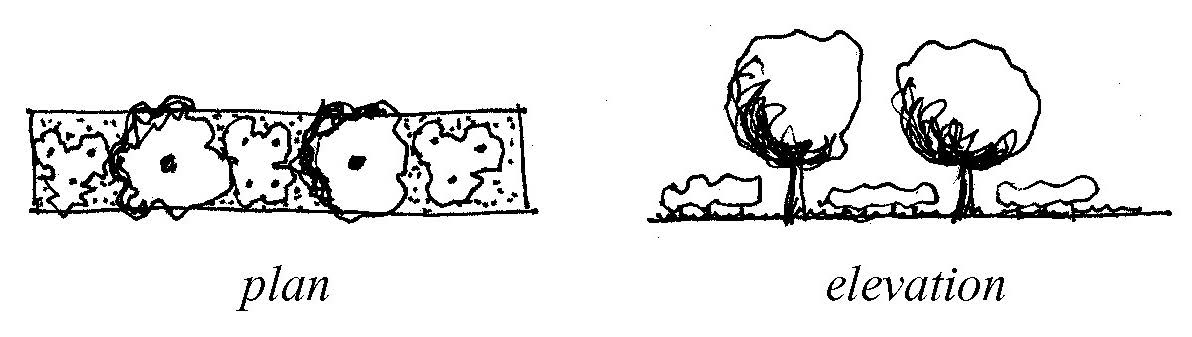
General Landscaping: Plan/Elevation
(b)
Required screening. Where screening is required by this zoning ordinance, such screening shall be six (6) feet in height, unless otherwise specified, except in required front yards where such screening shall be three (3) feet in height. Required screening shall be at least ninety-five (95) percent opaque throughout the year, unless otherwise specified. All screening shall be subject to the regulations of Article X, Fences in this chapter. Required screening shall be satisfied by one (1) or a combination of the following:
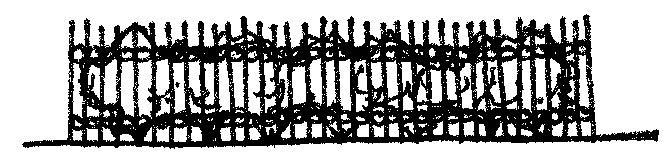
(1)
A decorative fence.
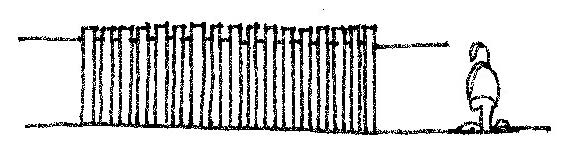
Required Screening: Decorative fence
(2)
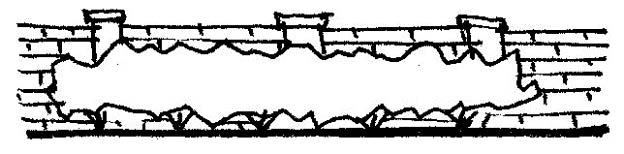
A masonry wall.
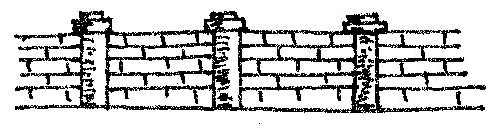
Required Screening: Masonry wall
(3)
A hedge.

Required Screening: Hedge
(c)
Required landscaped yard and screening. Where both a landscaped yard and screening is required by this zoning ordinance, such required landscaped yard shall be satisfied by one (1) of the following:
(1)
Along a rear or interior side lot line, locate the required landscaped yard inside or outside the required screen.
Required Landscaped Yard and Screening: Yard outside the required screen
(2)
Along a public street, public sidewalk or public pathway, locate the required landscaped yard outside the required screen unless such screen is highly decorative and is less than sixty (60) percent opaque, such as a wrought iron fence.
Required Landscaped Yard and Screening: Yard inside or outside the required screen
550.690. - Parking and loading landscaping and screening.
(a) In general. Parking and loading facilities, and all other areas upon which motor vehicles may be located, including but not limited to drive-through facilities, pump island service areas and stacking spaces, shall comply with the standards of this chapter and the applicable regulations of this zoning ordinance. Where this section requires a landscaped yard, such yard shall remain unobstructed from the ground level to the sky, except that fencing shall be allowed.
(b)
Parking and loading fronting along a public street, public sidewalk or public pathway. Parking and loading facilities, and all other areas upon which motor vehicles may be located fronting along a public street, public sidewalk or public pathway shall comply with the following standards:
(1)
A landscaped yard at least seven (7) feet wide shall be provided along the public street, sidewalk or pathway, except where a greater yard is required. If a parking facility contains over one hundred (100) parking spaces, the minimum required landscaped yard shall be increased to nine (9) feet in width.
(2)
Screening consisting of either a masonry wall, fence, berm or hedge or combination thereof that forms a screen three (3) feet in height and not less than sixty (60) percent opaque shall be provided, except that where areas are devoted principally to the parking or loading of trucks or commercial vehicles of more than fifteen thousand (15,000) pounds screening six (6) feet in height and not less than sixty (60) percent opaque shall be required.
(3)
Not less than one (1) tree shall be provided for each twenty-five (25) linear feet or fraction thereof of parking or loading area lot frontage.
(c)
Parking and loading abutting or across an alley from an urban neighborhood or residential mixed-use district, or any permitted or conditional residential use. Parking and loading facilities and all other areas upon which motor vehicles may be located that abut or are across an alley from an urban neighborhood or residential mixed-use district or a permitted or conditional residential use shall comply with the following standards:
(1)
A landscaped yard at least seven (7) feet wide shall be provided along the property line or alley, except where a greater yard is required. If a parking facility contains over one hundred (100) parking spaces, the minimum required landscaped yard shall be increased to nine (9) feet in width.
(2)
Screening at least ninety-five (95) percent opaque shall be provided as specified in section 550.680(b).
(d)
Interior landscaping of parking lots. The corners of parking lots where rows of parking spaces leave areas unavailable for parking or vehicular circulation shall be landscaped as specified for a required landscaped yard. Such spaces may include architectural features such as benches, kiosks or bicycle parking.
(e)
Distance to trees. In parking lots of ten (10) spaces or more, no parking space shall be located more than fifty (50) feet from the center of an on-site deciduous tree. Tree islands located within the interior of a parking lot shall have a minimum width of seven (7) feet in any direction.
550.700. - Landscaping of other areas.
All other areas not governed by sections 550.680 and 550.690 and not occupied by buildings, parking and loading facilities or driveways, shall be covered with turf grass, native grasses or other perennial flowering plants, vines, shrubs, trees or edible landscaping. Wood mulch, other organic mulches and landscape rock may be used in planting beds and in maintenance strips adjacent to a building, but are not a suitable alternative to plant cover. Areas wider than two (2) feet with wood mulch, other organic mulches or landscape rock shall contain plantings spaced not less than two (2) feet apart or as specified per the planting instructions. Landscape rock that is easily disturbed shall be at least five (5) feet or more from a public sidewalk or a shared property line.
550.710. - Ecological function.
In its review of landscaped areas, the city planning commission shall include consideration of the following:
(1)
Interception and filtration of precipitation and stormwater through maximizing multiple-layered vegetative cover.
(2)
Reduction of reflectance and urban heat island effects through increasing canopy cover.
(3)
Conservation of energy through strategic shading and the use of windbreaks.
(4)
Selection and placement of plant materials to limit required maintenance of landscaped areas.
(5)
Preservation or restoration of natural amenities.
550.720. - Plant material standards.
Landscape species shall be indigenous or proven adaptable to the climate, but shall not be invasive on native species. Plant materials shall comply with the following standards:
(1)
All required trees shall be a minimum of two and one-half (2.5) inches caliper in size, except cluster or multiple trunk specimens, which shall be a minimum of one (1) inch caliper in size.
(2)
All required shrubs shall be a minimum of one (1) gallon container size.
(3)
All landscape materials shall be tolerant of specific site conditions, including but not limited to heat, cold, drought and salt.
(4)
Landscape materials that are used for screening shall be of a size that allows growth to the desired height and opacity within two (2) years.
550.730. - Installation and maintenance of landscape materials.
Installation and maintenance of all landscape materials shall comply with the following standards:
(1)
Areas to be landscaped shall be prepared and improved as specified by current Minnesota Department of Transportation standards for soil preparation and drainage.
(2)
All landscape materials shall be installed to current industry standards.
(3)
Maintenance and replacement of landscape materials shall be the responsibility of the applicant or property owner including the maintenance of any trees planted in the public right-of-way. An adequate water supply shall be indicated in the site plan. Landscape maintenance should incorporate environmentally sound management practices, including the following:
a.
The use of water and energy efficient systems such as drip irrigation.
b.
Pruning primarily for plant health and replacing dead materials annually.
c.
Anticipating and allowing plant community succession.
550.740. - Alternatives to landscaping and screening requirements.
The city planning commission may approve the substitution or reduction of landscaped plant materials, landscaped area or other landscaping or screening standards, subject to section 550.530, provided one (1) or more of the following exists:
(1)
The proposal will allow a site plan of exceptional design that includes amenities such as public seating, an outdoor plaza or transit shelter that will enhance the area or that is more consistent with the design of the site or the surrounding area.
(2)
The proposal will allow a site plan that is more consistent with the character of the area.
(3)
Existing plant materials, walls, fences or the topography of the site and its surroundings make the required landscaping or screening less necessary.
(4)
The required landscaping or screening will hinder truck access and service necessary to the operation of the use.
(5)
The required landscaping and screening may obstruct views of traffic or reduce natural surveillance of the site.
550.750. - Concrete curbs and wheel stops.
All parking lots and driveways shall be designed with wheel stops or discontinuous curbing to provide on-site retention and filtration of stormwater. Where on-site retention and filtration is not practical, the parking lot shall be defined by six (6) inch by six (6) inch continuous concrete curb.
550.760. - Site context.
(a) In general. To the extent practical, site plans shall minimize the blocking of views of important elements of the city such as parks and greenways, significant buildings and water bodies.
(b)
Shadowing. To the extent practical, buildings shall be located and arranged to minimize shadowing on public spaces and adjacent properties. A shadow analysis may be required that demonstrates the impact that the proposed building would have on shadowing of public spaces and adjacent properties.
(c)
Wind. To the extent practical, buildings shall be designed to minimize the generation of wind currents at ground level.
550.770. - Crime prevention through environmental design.
Site plans shall employ best practices to increase natural surveillance and visibility, to control and guide movement on the site, and to distinguish between public and non-public spaces. Site plans shall include the following crime prevention design elements:
(1)
Natural surveillance and visibility. Design the site, landscaping, and buildings to promote natural observation and maximize the opportunities for people to observe adjacent spaces and public sidewalks.
(2)
Lighting levels. Provide lighting on site, at all building entrances, and along walkways that maintains a minimum acceptable level of security while not creating glare or excessive lighting of the site.
(3)
Territorial reinforcement and space delineation. Locate landscaping, sidewalks, lighting, fencing and building features to clearly guide pedestrian movement on or through the site and to control and restrict people to appropriate locations.
(4)
Natural access control. Locate entrances, exits, signs, fencing, landscaping, and lighting to distinguish between public and private areas, control access, and to guide people coming to and going from the site.
550.780. - Historic preservation.
To the extent practical, site plans shall include the rehabilitation and integration of locally designated historic structures or structures that have been determined to be eligible to be locally designated as historic structures. Where rehabilitation is not feasible, the development shall include the reuse of significant features of historic buildings.
550.790. - Site plan review for single-, two-, and three-family dwellings.
(a) Design standards. New single-, two-, and three-family dwellings shall comply with the applicable regulations of this zoning ordinance, including but not limited to the standards of Article III, General Residential Standards in this chapter, related to front entrance, window area, and walkway requirements, and limitations on attached garages facing the front lot line. In addition, the zoning administrator shall ensure that such uses obtain a minimum of seventeen (17) points from Table 550-2, Single-, Two-, and Three-Family Dwellings.
Table 550-2 Standards for Single-, Two-, and Three-Family Dwellings
(b)
Accessibility. Structures that provide certain accessible features shall be awarded nine (9) points. Such structures shall obtain the remainder of the required minimum point total from the remaining categories. For the purpose of this section, a dwelling unit shall include, at a minimum, a ground-level accessible entrance, interior doorways not less than three (3) feet in width, and a ground-level restroom.
(c)
Trees. At least one (1) tree for each three thousand (3,000) square feet of lot area not occupied by buildings, or fraction thereof, shall be provided on-site. Required trees shall comply with the following standards:
(1)
At least one (1) tree shall be a canopy tree.
(2)
Trees shall be a minimum of two (2) inches caliper in size, except cluster or multiple trunk specimens, which shall be a minimum of three-quarter (¾) inches caliper in size, measured four (4) feet above grade.
(3)
Trees shall be indigenous or proven adaptable to the climate, but shall not be invasive on native species.
(4)
Trees shall be tolerant of specific site conditions, including but not limited to heat, cold, drought, and salt.
(d)
Enclosed storage. New single-, two-, and three-family dwellings shall provide an enclosed storage area not less than two hundred (200) square feet in area. If attached, the enclosed storage area shall open directly to the outside of the habitable portion of the principal structure and shall be accessible without use of stairs or elevator. If detached, the enclosed storage area shall be located entirely to the rear of the principal residential structure. The required storage area may be occupied by vehicle parking.
(e)
Alternative compliance.
(1)
In general. Notwithstanding any other provision to the contrary, the zoning administrator may grant alternatives to the standards of this section by allowing a new structure to obtain fewer than the minimum number of points from Table 550-2, Single-, Two-, and Three-Family Dwellings, upon finding each of the following:
a.
The structure is consistent with the predominant scale of existing residential structures in the same zoning district in the immediate area. In comparing the scale of the proposed structure to existing structures, the zoning administrator shall consider floor area, building height, facade width, and consistency with an established pattern of front, side, and rear yards in the vicinity.
b.
The structure achieves at least one (1) of the following:
1.
The design incorporates traditional features and proportions found in the immediate area, which may include but shall not be limited to an examination of features such as windows, doors, roof lines, trim, gables, dormers, porches, or entry canopies; or
2.
The design demonstrates exceptional creativity and incorporates high-quality, durable exterior materials.
c.
On sloped sites, the design responds to the topography of the site by following existing patterns in the vicinity and minimizing the apparent mass of the structure when viewed from lower elevations.
d.
The proposal is consistent with the applicable urban design policies of the comprehensive plan.
(2)
Notification. In conducting the review of requests for alternative compliance from this section, the zoning administrator shall mail notice of the request to property owners within one hundred (100) feet of the property and shall allow a public comment period of not less than ten (10) calendar days between the date of notification and the final decision. The zoning administrator's decision may be appealed in accordance with the standards of Chapter 525, Administration and Procedures.
550.800. - Purpose.
Regulations governing inclusionary housing are intended to promote affordable housing and to fulfill the goals of the city's housing policies, including increasing access to affordable housing and promoting mixed income communities throughout the city.
550.810. - Applicability.
(a) In general. Approval of any site plan review application to allow a building or use containing twenty (20) or more new or additional dwelling units, including multiple-family dwellings, cluster developments, common lot developments, and planned unit developments, shall be conditioned upon compliance with the inclusionary housing requirements specified in the city's Unified Housing Policy in effect on the date a complete site plan review application is submitted.
(b)
Exceptions.
(1)
In general. Any residential uses exempt as specified in the Unified Housing Policy.
(2)
Extraordinary circumstances. The city council shall have the authority to grant exemptions from inclusionary housing requirements where it finds the following:
a.
Extraordinary circumstances exist, including but not limited to substantial and unusual hardship.
b.
There is sufficient public benefit to justify the exemption.
(c)
Phased implementation.
(1)
Residential uses with twenty (20) to forty-nine (49) units. The applicability of inclusionary housing requirements to developments with not less than twenty (20) but no more than forty-nine (49) dwelling units shall be delayed in a manner specified in the Unified Housing Policy.
(2)
Residential condominiums. The applicability of inclusionary housing requirements to individually-owned dwelling units, such as condominiums or for-sale townhomes, shall be delayed in a manner specified in the Unified Housing Policy.
(3)
Nonresidential conversions. Residential units being established within an existing building's floor area originally constructed for or historically used primarily for nonresidential uses shall not be subject to the requirements of this article when a complete land use application is submitted from October 1, 2024, to October 1, 2029.
(Ord. No. 2024-033, § 2, 9-19-24)
550.820. - Effective date.
The effective date of these ordinance amendments herein described shall remain January 1, 2020. Any application for land use or preservation approval that is deemed complete prior to the effective date of this ordinance shall be subject to the applicable inclusionary housing regulations in effect at the time of application.
550.900. - Purpose.
This article establishes the procedures and standards for the development of areas as unified, planned developments in accordance with the intent and purpose of this zoning ordinance, and the applicable policies of the comprehensive plan. The provisions of this article provide for flexibility in the use of land and the placement and size of buildings in order to better utilize the special features of sites and to obtain a higher quality of development that incorporates high levels of amenities than might otherwise occur under the strict application of zoning regulations for the users of the site, the neighborhood, or the city as a whole, and which meets public objectives for protection and preservation of natural and historic features. The regulations are intended to:
(1)
Encourage innovation in housing design in order to meet the housing needs of the city's diverse population.
(2)
Encourage a compatible mixture of commercial, institutional, and residential development that is both attractive and highly functional.
(3)
Encourage the reuse of underutilized industrial land through development which is responsive to surrounding development.
(4)
Promote the efficient use of land, innovation in site design, and sustainable development.
(5)
Protect the natural environment.
550.910. - Application procedure.
An application for planned unit development shall be filed on a form approved by the zoning administrator, as specified in Chapter 525, Administration and Procedures.
550.920. - Public hearing.
The city planning commission shall hold a public hearing on each complete application for planned unit development as specified in Chapter 525, Administration and Procedures, for conditional use permit.
550.930. - Approval of planned unit development.
The city planning commission may approve, deny or approve with modifications an application for planned unit development. When necessary to protect the natural environment, to prevent hazardous development or otherwise to protect the public welfare, the city planning commission may require a lower intensity of development or more restricted development on portions of a site than specified in this zoning ordinance.
550.940. - Required findings.
In addition to the conditional use permit standards contained in Chapter 525, Administration and Procedures, before approval of a planned unit development the city planning commission also shall find:
(1)
That the planned unit development complies with all of the requirements and the intent and purpose of this chapter. In making such determination, the following shall be given primary consideration:
a.
The traffic generation characteristics of the proposed planned unit development in relation to street capacity, vehicle access, parking and loading areas, pedestrian access, bicycle facilities, and availability of transit alternatives.
b.
The site amenities of the proposed planned unit development, including the location and functions of open space, the preservation or restoration of the natural environment or historic features, sustainability, and urban design.
c.
The appearance and compatibility of individual buildings and parking areas in the proposed planned unit development to other site elements, including but not limited to building scale and massing, and protection of views and corridors.
d.
An appropriate transition area shall be provided adjacent to any lower-intensity residential uses or residential zoning through the use of landscaping, screening, access to light and air, building massing, and that considers applicable policies of the comprehensive plan.
e.
The relation of the proposed planned unit development to existing and proposed public facilities, including but not limited to provision for stormwater runoff and storage, and temporary and permanent erosion control.
f.
The consideration, where possible, of sustainable building practices during the construction phases and the use of deconstruction services and recycling of materials for the demolition phase.
(2)
That the planned unit development complies with all of the applicable requirements contained in Chapter 598, Land Subdivision Regulations.
(3)
That a planned unit development of five (5) acres or greater, located in the MR Mississippi River Corridor Critical Area Overlay District, comply with the applicable design standards in section 535.1710.
550.950. - Relationship to other applicable regulations.
A planned unit development shall be subject to all applicable standards, procedures, and regulations of this zoning ordinance and the zoning district in which it is located, including applicable site plan review standards contained in Article V, Site Plan Review Standards of this chapter, for the individual uses within the development, except as otherwise provided in this article.
550.960. - Minimum area.
A planned unit development shall contain a minimum contiguous area of one-half (½) acre, which may be separated by a public right-of-way, railroad right-of-way, or stream, except the Mississippi River, unless otherwise noted below.
550.970. - Ownership or control.
All parcels proposed for planned unit development shall be under the ownership or control of the applicant at the time of application. Control may include a purchase agreement. Where amendments are necessary and the parcels are under different ownership or control than the original application, the application for an amendment may be made by the owner of the parcel on which the amendment will occur. Where the ownership of the parcel is part of a common interest community, the applicant shall obtain the permission of the association board for the parcel where the amendment will occur. The applicant shall notify in writing all other owners of parcels within the boundary of the original planned unit development, or in the case of a common interest community the association board, and shall submit evidence of such notification to the zoning administrator before any application shall be deemed complete.
550.980. - Platting requirement.
As part of any application for planned unit development approval, any land proposed for planned unit development shall be platted or replatted into one (1) or more lots suitable for the planned unit development, and as such shall comply with all of the applicable requirements contained in Chapter 598, Land Subdivision Regulations, except as otherwise provided in this chapter.
550.990. - Development plan.
(a) Submission. As part of any application for planned unit development approval, the applicant shall submit a development plan which shall consist of a statement of the proposed use of all portions of the land to be included in the planned unit development, a master sign plan, and a site plan showing all existing and proposed development including the location of structures, parking areas, vehicular and pedestrian access, open space, drainage, sewerage, fire protection, building elevations, landscaping, screening and bufferyards and similar matters, as well as the location of existing public facilities and services.
(b)
Conditions. In addition to other conditions of approval, the city planning commission may require the applicant to revise the development plan to conform to the requirements of this article, the land subdivision regulations, the zoning ordinance, the applicable policies of the comprehensive plan and any other regulations affecting the design and improvement of the planned unit development.
550.1000. - Plan consistency.
The city shall withhold any building permit, demolition permit, grading permit, utility connection, license or other approval required for a planned unit development if the proposal is inconsistent with the development plan as approved, except as otherwise provided in this chapter.
550.1010. - Changes in approved plan.
(a) Minor changes. Notwithstanding section 550.1000, the zoning administrator may authorize minor changes in the placement and size of improvements, or may authorize the substitution of a substantially similar amenity for an approved amenity, within an approved planned unit development if the zoning administrator determines that the changes are consistent with the intent of this chapter and the findings made by the city planning commission in connection with the approval of the planned unit development.
(b)
Other changes. Changes to the development plan other than minor changes in the placement and size of improvements shall require amendment to the planned unit development by the city planning commission. The elimination of any amenity, or substitution of any amenity that is not substantially similar to an approved amenity provided for an alternative to the zoning code, as allowed in section 550.1050, shall require an amendment to the planned unit development by the city planning commission. The requirements for application and approval of a planned unit development amendment shall be the same as the requirements for original approval. Where only one (1) change to the development is made that is deemed an amendment to the planned unit development, including the addition of a use that is a conditional use permit in the zoning district in which the planned unit development is located, or revisions to the master sign plan, and where staff determines that the change will not require substantial staff time or reevaluation of the planned unit development, then the applicant may be charged the application fee for a conditional use permit, rather than the fee for a conditional use permit for planned unit developments, as listed in Table 525-1, Fees.
(c)
Planned unit developments existing before the adoption of the ordinance. Notwithstanding the provisions of this chapter, planned unit developments approved before the adoption of this ordinance shall only be required to provide amenities for any alternatives requested as a part of the amendment, or as required as a part of previous approvals.
550.1020. - Time of completion.
(a) In general. All planned unit developments shall be completed within two (2) years of the effective date of the planned unit development approval, or such later date established by the city planning commission unless the building permit is obtained within such period and the erection or alteration of a building is substantially begun and proceeds on a continuous basis toward completion, or the use is established within such period by actual operation pursuant to the applicable conditions and requirements of such approval. The zoning administrator, upon written request, may for good cause shown grant up to a two-year extension to this time limit. If any one (1) phase is deemed expired, then all successive phases not completed or under construction shall be deemed expired.
(b)
Partial completion. For partially completed phases of a planned unit development that expires, the applicant shall submit a maintenance plan for the area not completed that shall include, but not be limited to, the following:
(1)
Right-of-way access and maintenance plan.
(2)
Stormwater management and erosion control plans addressing the temporary or unfinished condition.
(3)
Ground cover and/or landscaping.
(4)
Site security.
(5)
Fences and walls.
(6)
Equipment storage.
550.1030. - Phasing of development.
Phasing of development shall be permitted. If phasing is used, each phase of the planned unit development shall be designed and developed to be able to exist as an independent unit. A phasing timeline shall be submitted as a part of the application for planned unit development approval. If a project is approved as phased development, the two-year time of completion requirement, and extensions granted by the zoning administrator, specified in section 550.1020 shall apply for each phase.
550.1040. - Limitation on the size of individual buildings.
The maximum gross floor area of individual buildings within a planned unit development shall be limited in the BFI1, BFI2, BFI3, BFC3, BFC4, and BFC6 built form overlay districts as required by Table 550-3, Maximum Floor Area of Individual Buildings in Planned Unit Developments. Planned unit developments are subject to the maximum floor area ratio of each built form overlay district, and exceptions may only be approved as authorized through floor area premiums or a variance. The maximum gross floor area of individual buildings will not be attainable within every planned unit development. Conversely, in larger planned unit developments, the maximum floor area ratio may be achieved only by including multiple principal buildings except as otherwise authorized by the city planning commission.
Table 550-3 Maximum Floor Area of Individual Buildings in Planned Unit Developments
*Where the use is allowed in the applicable zoning district or through the additional uses allowed in a planned unit development.
550.1050. - Alternatives to zoning ordinance standards.
(a) In general. The city planning commission may approve alternatives to the zoning regulations applicable to the zoning district in which the planned unit development is located, as authorized in this article and as listed in Table 550-5, Authorized Alternatives, where the planned unit development includes site amenities. Nothing in this article shall be construed to provide a property owner with any property right or other legal right to compel the city to grant alternatives to this zoning ordinance.
(b)
Site amenities. Site amenities are listed in Table 550-4, Amenities, and are subject to the following standards:
(1)
All planned unit developments shall provide at least one (1) amenity or a combination of amenities that total at least ten (10) points, beyond those required for any alternative(s), and even if no alternative(s) is requested.
(2)
For each alternative requested, an amenity or a combination of amenities totaling at least five (5) points, in addition to the amenity(ies) required in section 550.1050(1), shall be provided. For multiple requests of the same alternative only one (1) amenity shall be required for those alternatives, except for revisions made to an already approved planned unit development as an amendment to the planned unit development.
(3)
Unless otherwise determined by the city planning commission, each phase of the planned unit development shall include the amenities provided for any alternatives in that phase, as a part of the construction of that phase.
(4)
In no case shall any item be counted as an amenity for an alternative if it is utilized to qualify for a floor area ratio or height incentive in the built form overlay districts or any other amenity in Table 550-4, Amenities.
(5)
Where an amenity is provided that meets the standards required in Table 550-4, Amenities, the full point value assigned to said amenity shall be obtained. Where the amenity does not meet all of the standards required in Table 550-4, Amenities, no points shall be awarded. Partial points for alternatives shall not be awarded, except as otherwise allowed in Table 550-4, Amenities. For purposes of Table 550-4, "CUP" shall mean conditional use permit.
Table 550-4 Amenities
(Ord. No. 2025-023, § 59, 5-15-2025)
550.1060. - Authorized alternatives.
(a) Number of principal residential structures. The city planning commission may authorize residential uses in a planned unit development that includes multiple principal structures on one (1) platted or recorded lot where not allowed by the primary zoning district. The appearance and compatibility of individual buildings to other site elements and to surrounding development shall be given primary consideration in reviewing and approving the placement and spacing of structures. The city planning commission may consider this alternative without the addition of amenities beyond those required for a planned unit development in section 550.1050(1).
(b)
Maximum floor area of individual buildings. The city planning commission may authorize an increase in the maximum allowed gross floor area of individual buildings within a planned unit development upon finding that the development's layout, amenities, and building scale are consistent with the intent of the built form policies of the comprehensive plan.
(c)
Lot area requirements. The city planning commission may authorize reductions in the area of individual lots within a planned unit development from the required lot area for the zoning district, provided any such reductions shall be compensated for by an equivalent amount of lot area elsewhere in the planned unit development for the purpose of promoting an integrated project that provides additional site amenities. Lot area shall not include areas designated as public or private streets.
(d)
Yards. The city planning commission may authorize reductions in or elimination of required yards provided landscaped yards of at least such minimum width as required by the zoning district in which the planned unit development is located shall be maintained along property lines abutting a side or rear lot line of an urban neighborhood or residential mixed-use zoning district or property lines abutting a side or rear lot line of a structure used for permitted or conditional residential purposes.
(e)
On-premises signs.
(1)
In general. All signs in a planned unit development shall conform to a master sign plan that shall be considered and approved with the development plan. All signs shall conform to the requirements of Chapter 560, Signs, except as otherwise authorized by the city planning commission.
(2)
Alternatives. The city planning commission may authorize alternatives to the sign standards for the purpose of promoting an integrated master sign plan provided the required amenities are provided and a master sign plan meets the following criteria:
a.
The sign plan may not allow a sign that is otherwise prohibited by the zoning ordinance.
b.
The alternative will not significantly increase or lead to sign clutter in the area or result in a sign that is inconsistent with the purpose of the zoning district in which the property is located.
c.
The alternative will allow a sign that relates in size, shape, materials, color, illumination and character to the function and architectural character of the building or property on which the sign will be located.
(f)
Off-street parking and loading.
(1)
In general. The required amount of off-street loading and bicycle parking spaces for the planned unit development shall be determined by the city planning commission and shall comply with the requirements of Chapter 555, Off-Street Parking, Loading, and Mobility, including Article XII, Travel Demand Management, except as otherwise allowed by this chapter. In determining the number of off-street loading and bicycle parking spaces required, the city planning commission shall consider, but not be limited to, the loading and bicycle parking requirements for the individual uses within the planned unit development as specified in Chapter 555, Off-Street Parking, Loading, and Mobility, the nature of the uses and population served, documentation supplied by the applicant regarding the actual parking and loading demand for the proposed use, the potential for shared parking and loading, and the use of alternative forms of transportation.
(2)
Other standards. The city planning commission may consider alternatives to the minimum width of parking aisles and the minimum and maximum width of driveways where it is demonstrated that the parking area, aisles, and driveways will still allow for reasonable, functional, and safe vehicular access to and within the site. Where the alternative is to allow an increase in driveway width, the city planning commission shall also consider, but not be limited to, turning templates or other similar documentation demonstrating the need for the increase. The city planning commission may consider this alternative without the addition of amenities beyond those required for a planned unit development in section 550.1050(1).
Table 550-5 Authorized Alternatives
550.1070. - Permitted uses.
Any use allowed in the zoning district in which the planned unit development is located may be included within a planned unit development. If a planned unit development includes more than one (1) zoning classification, the uses allowed within each zoning classification of the development shall be limited by the applicable zoning district regulations, except as otherwise provided in this section.
550.1080. - Additional uses.
(a) In general. The city planning commission may authorize additional uses in the zoning district in which the planned unit development is located as provided below and subject to section 550.1090. An amenity is not required in order to allow an additional use.
(b)
Urban neighborhood districts. The city planning commission may authorize additional residential uses as allowed in the RM2 and RM3 Districts, general retail sales and services uses and food and beverage uses as allowed in the RM2 and RM3 Districts, child care centers, offices, and clinics within a planned unit development located in the urban neighborhood districts. The additional general retail sales and services uses and food and beverage uses as allowed in the RM2 and RM3 Districts, child care centers, offices and clinics shall not exceed four thousand (4,000) square feet per use, unless otherwise allowed by the zoning district in which the use is located.
(Ord. No. 2025-023, § 60, 5-15-2025)
550.1090. - Additional use standards.
The city planning commission may authorize additional uses, as provided in section 550.1080, subject to the following standards:
(1)
Such uses are designed primarily for the residents or users of the planned unit development and of adjacent areas which are within convenient walking distance of the use.
(2)
All additional uses, except residential and office uses, shall be located on the ground or first floor.
(3)
The uses are not of such a nature or so located as to have a detrimental impact on the surrounding neighborhood or the character of the planned unit development.
(4)
Not more than twenty (20) percent of the gross floor area of the planned unit development shall be devoted to such additional uses.
(5)
The use is consistent with the applicable policies of the comprehensive plan.
550.1100. - Conditional uses.
(a) In general. Any conditional use allowed in the zoning district in which the planned unit development is located may be included within a planned unit development, upon making each of the required findings for conditional use permits in Chapter 525, Administration and Procedures.
(b)
Dwelling units. Dwelling units that require a conditional use permit in the zoning district in which the planned unit development is located shall not be required to submit a separate conditional use permit and shall be considered as a part of the findings and review of the planned unit development.
(c)
Nonresidential uses. Nonresidential uses that require a conditional use permit in the zoning district in which the planned unit development is located, shall submit a separate conditional use permit application and findings as a part of the planned unit development review.
(d)
Signs. Signs that require a conditional use permit in the zoning district in which the planned unit development is located shall not be required to submit a separate conditional use permit and shall be considered as a part of the findings and review of the planned unit development.
550.1200. - Purpose.
This article establishes the procedures and standards for the development of areas as unified, cluster developments in accordance with the intent and purpose of this zoning ordinance, and the applicable policies of the comprehensive plan. The regulations are intended to encourage innovation in housing design in order to meet the housing needs of the city's diverse population; to allow flexibility in the location of structures and the size of individual lots to promote the efficient use of land, innovation in site design, and sustainable development and to preserve common space for the benefit of the residents of the development; and to limit the scale of development in a manner that aligns with the small to medium-scale planned development patterns of each built form overlay district.
550.1210. - Application procedure.
An application for cluster development shall be filed on a form approved by the zoning administrator, as specified in Chapter 525, Administration and Procedures.
550.1220. - Public hearing.
The city planning commission shall hold a public hearing on each complete application for cluster development as specified in Chapter 525, Administration and Procedures, for conditional use permit.
550.1230. - Approval of cluster development.
The city planning commission may approve, deny or approve with modifications an application for cluster development.
550.1240. - Relationship to other applicable regulations.
A cluster development shall be subject to all applicable standards, procedures, and regulations of this zoning ordinance and the zoning district in which it is located, including applicable site plan review standards contained in Article V, Site Plan Review Standards of this chapter, for the individual uses within the development, except as otherwise provided in this article.
550.1250. - Development plan.
As part of any application for cluster development approval, the applicant shall submit a development plan which shall consist of a statement of the proposed use of all portions of the land to be included in the cluster development and a site plan showing all existing and proposed development, including but not limited to the location of structures, parking areas, vehicular and pedestrian access, open space, drainage, sewerage, fire protection, building elevations, landscaping, screening and bufferyards, and similar matters, as well as the location of existing public facilities and services.
550.1260. - Platting requirement.
As part of any application for cluster development approval, all land proposed for cluster development shall be platted or replatted into one (1) or more lots suitable for cluster development, and as such shall comply with all of the applicable requirements contained in Chapter 598, Land Subdivision Regulations. Where only one (1) lot is proposed, a tax parcel combination may be completed in lieu of a plat.
550.1270. - Locations prohibited.
Notwithstanding Table 545-1, Uses Allowed in Chapter 545, Use Regulations, cluster developments shall not be allowed on any property within the BFC6, BFT10, BFT15, BFT20 or BFT30 Overlay districts.
550.1280. - Lot dimension requirements.
(a) Minimum requirements. The cluster development shall meet the applicable minimum lot area and lot width requirements of the built form overlay district, except as otherwise required in this ordinance. There shall be no minimum lot area or lot width requirements for individual lots within the cluster development.
(b)
Maximum lot size requirements. The maximum lot area requirement shall be as approved by conditional use permit.
550.1290. - Yard requirements.
(a) Periphery yards. Yards of at least such minimum width as required by the built form overlay district shall be maintained along the periphery of the cluster development.
(b)
Within the cluster development. Yards for individual lots within the cluster development shall not be required. The distance between principal buildings within the cluster development shall be not less than ten (10) feet. The planning commission may approve alternatives to this requirement provided the following requirements are met:
(1)
The cluster development is not located in the UN1 or UN2 Districts.
(2)
The applicant has demonstrated that the reduced separation will not impede access to each principal entrance from a public street and will not impede the ability to perform building maintenance.
(Ord. No. 2025-023, § 61, 5-15-2025)
550.1300. - Permitted uses.
(a) Residential uses. Dwellings or intentional communities are allowed in a cluster development.
(b)
Nonresidential uses. In the residential mixed-use districts and commercial mixed-use districts, nonresidential uses allowed by the primary zoning district may also be allowed in a cluster development, subject to the following standards:
(1)
Nonresidential uses that have a minimum lot area requirement of more than five thousand (5,000) square feet shall not be allowed.
(2)
The gross floor area occupied by nonresidential uses shall not exceed the gross floor area occupied by residential uses, excluding enclosed parking.
550.1310. - Development standards for all cluster developments.
All cluster developments shall be subject to the following standards:
(1)
Not less than twenty (20) percent of the land in a cluster development shall be designated as common space for the benefit of all of the residents of the development. Such common space shall be a contiguous area under common ownership or control and shall be located so that it is directly accessible to the largest practical number of dwellings within the development. Safe and convenient pedestrian access shall be provided to such common space for dwellings not adjoining such space. Common space shall not include areas used for parking facilities, driveways, and required interior side yards. The city planning commission may approve alternatives to this requirement where strict adherence is impractical because of site location or conditions and the proposed alternative meets the intent of this section.
(2)
New construction shall comply with the applicable requirements of Article V, Site Plan Review Standards in this chapter. Principal structures with one (1), two (2), or three (3) dwelling units shall comply with the site plan design standards for single-, two-, and three-family and shall be subject to the applicable general standards for residential uses of Article III, General Standards for Residential Uses in this chapter. In addition to the site plan review and general design standards, walls facing the designated common space shall be subject to the minimum window requirements for walls facing a public street, public sidewalk, public pathway, or on-site parking lot. The city planning commission may approve alternatives to any requirement referenced in this development standard where strict adherence is impractical because of site location or conditions and the proposed alternative meets the intent of this section.
(3)
The following limits on number of units and size limits shall apply to principal structures in addition to the built form regulations in Chapter 540, Built Form Overlay Districts:
a.
Not more than three (3) dwelling units shall be allowed in each principal structure in the UN1 District.
b.
Not more than three (3) dwelling units shall be allowed in a cluster development in the UN1 and UN2 Districts on lots seven thousand five hundred (7,500) square feet or less in area.
c.
The gross floor area of each principal structure containing one (1) to three (3) dwelling units shall not exceed four thousand (4,000) square feet.
d.
The maximum gross floor area of all other individual buildings within a cluster development shall be limited in the built form overlay districts as required by Table 550-6, Maximum Floor Area of Individual Buildings in Cluster Developments.
The city planning commission may approve exceptions to subparts a., b. and c. of this standard for existing principal structures. The city planning commission may approve alternatives to subpart d. upon finding that the development's layout, amenities, and building scale are consistent with the intent of the built form policies of the comprehensive plan.
Table 550-6 Maximum Floor Area of Individual Buildings in Cluster Developments
(Ord. No. 2025-023, § 62, 5-15-2025)
550.1320. - Additional development standards for intentional community cluster developments.
Notwithstanding any provision to the contrary, intentional community cluster developments shall be subject to the following additional development standards. Where these standards conflict with the standards in this article, the more specific standards below shall apply to intentional community cluster developments.
(1)
Intentional community cluster developments shall be allowed as a conditional use in the urban neighborhood, residential mixed-use, and commercial mixed-use districts.
(2)
All structures in an intentional community cluster development shall be subject to site plan review standards when any building or the use contains four (4) or more new additional dwelling units or rooming units.
(3)
An intentional community cluster development that includes rooming units without kitchens or restrooms shall provide a common building on the same zoning lot that provides a shared kitchen, toilets, showers, and gathering space. The common building shall be the nearest structure to the front lot line and shall not count toward the common space requirement for cluster developments. Safe and convenient pedestrian access shall be provided to the common building for dwellings and rooming units not adjoining such space. Such access shall not exceed two hundred (200) feet as measured from the door of each unit within the development.
(4)
Where required, the common building shall have a minimum gross floor area of five hundred (500) square feet and a minimum width of eighteen (18) feet.
(5)
The minimum gross floor area and minimum width of an individual dwelling unit or rooming unit in an intentional community cluster development shall be as approved by the conditional use permit authorizing the use, subject to requirements in the building code.
(6)
A minimum lot area of six hundred fifty (650) square feet per bed shall be provided in the UN1 and UN2 Districts and a minimum lot area of three hundred twenty-five (325) square feet per bed shall be provided in all other districts where intentional community cluster developments are allowed, provided that in no instance shall the minimum lot area be less than ten thousand (10,000) square feet.
(7)
The operator shall submit a management plan for the facility and a floor plan and site plan showing sleeping areas, emergency exits, bathing and restrooms, storage, security, and crime prevention through environmental design.
(8)
Intentional community cluster developments shall not be required to provide off-street vehicle parking or loading. One (1) bicycle parking space per four (4) beds shall be provided. Not less than ninety (90) percent of the required bicycle parking shall meet the standards for long term bicycle parking.
(9)
Sufficient storage shall be provided for each dwelling unit or rooming unit. Such storage shall be separate and distinct from the habitable area of the units to prevent outdoor storage of personal belongings.
(10)
Except for minimum lot area, the city planning commission may approve alternatives to requirements for intentional community cluster developments where strict adherence is impractical because of site location or conditions and the proposed alternative meets the intent of the requirements.
(Ord. No. 2025-023, § 63, 5-15-2025)
550.1400. - Purpose.
Standards governing accessory dwelling units are established to encourage innovation in housing design in order to meet the housing needs of the city's diverse population at a small scale.
550.1410. - Administrative review process.
An application for an accessory dwelling unit shall be filed on a form approved by the zoning administrator, as specified in Chapter 525, Administration and Procedures. The zoning administrator shall conduct the administrative review of all applications for an accessory dwelling unit. All findings and decisions of the zoning administrator shall be final, subject to appeal to the board of adjustment, as specified in Chapter 525, Administration and Procedures.
550.1420. - Permitted accessory dwelling units.
Internal, attached, and detached accessory dwelling units shall be allowed accessory to a principal residential structure. The principal residential structure shall be a permitted or conditional single-family or two-family dwelling. Accessory dwelling units shall be prohibited accessory to all other uses.
550.1430. - Development standards for all accessory dwelling units.
All accessory dwelling units shall be subject to the following standards:
(1)
No more than one (1) accessory dwelling unit shall be allowed on a zoning lot.
(2)
The creation of an accessory dwelling unit shall not create a separate tax parcel.
(3)
Balconies shall not face an interior side yard. Decks attached to accessory dwelling units, including rooftop decks, shall be located not less than five (5) feet from an interior side property line.
550.1440. - Additional development standards for accessory dwelling units that are internal to a principal residential structure.
Accessory dwelling units that are internal to a principal residential structure shall also comply with the following requirements:
(1)
Internal accessory dwelling units are limited to eight hundred (800) square feet. The gross floor area of an internal accessory dwelling unit may exceed eight hundred (800) square feet only if the portion of the principal residential structure in which the accessory dwelling unit is located was in existence as of January 1, 2015. In no case shall the floor area of the internal accessory dwelling unit exceed the floor area of the first floor of the principal residential structure.
(2)
The entire internal accessory dwelling unit shall be located on one (1) level.
(3)
The creation of the accessory dwelling unit shall not result in additional entrances facing the public street on the principal residential structure.
(4)
Stairways leading to an internal accessory dwelling unit located above the ground floor of a principal residential structure shall be enclosed or located entirely to the rear of the principal residential structure.
(5)
The owner(s) of the property that includes an accessory dwelling unit that is internal to a principal residential structure, and where the accessory dwelling unit is not a separate dwelling unit under the Minnesota State Building Code, must occupy at least one (1) dwelling unit on the zoning lot as their primary place of residence. If an owner is unable or unwilling to fulfill the requirements of this section, the owner shall remove those features of the accessory dwelling unit that make it a dwelling unit. Failure to do so will constitute a violation of this section.
a.
Prior to issuance of a permit establishing an accessory dwelling unit, the owner(s) shall file with the Hennepin County recorder a covenant by the owner(s) to the City of Minneapolis stating that the owner(s) agree to restrict use of the principal and accessory dwelling units in compliance with the requirements of this section and notify all prospective purchasers of those requirements.
b.
The covenant shall run with the land and be binding upon the property owner(s), their heirs and assigns, and upon any parties subsequently acquiring any right, title, or interest in the property. The covenant shall be in a form prescribed by the zoning administrator that includes the legal description of the zoning lot. The property owner(s) shall return the original covenant with recording stamp to the zoning administrator before the building permit for the accessory dwelling unit is issued.
c.
At the request of a property owner(s) and upon an inspection finding that an accessory dwelling unit has been removed from the owner's property, the zoning administrator shall record a release of any previously recorded covenant for that accessory dwelling unit.
550.1450. - Additional development standards for accessory dwelling units that are attached to a principal residential structure.
Accessory dwelling units that are attached to a principal residential structure shall also comply with the following requirements:
(1)
The maximum gross floor area for an attached accessory dwelling unit shall be eight hundred (800) square feet.
(2)
The creation of the accessory dwelling unit shall not result in additional entrances facing the public street on the principal residential structure.
(3)
Stairways leading to an attached accessory dwelling unit located above the ground floor of a principal residential structure shall be enclosed or located entirely to the rear of the principal residential structure.
(4)
The primary exterior materials of an attached accessory dwelling unit shall match the primary exterior materials of the principal residential structure.
(5)
Accessory dwelling units that are attached to a principal residential structure and established prior to March 6, 2021, and subject to a covenant of owner-occupancy shall remain subject to such covenant. At the request of the property owner and upon inspection by the building official verifying that the accessory dwelling unit meets the requirements for a dwelling unit under the Minnesota State Building Code, the zoning administrator shall record a release of such covenant.
(Ord. No. 2025-023, § 65, 5-15-2025)
550.1460. - Additional development standards for detached accessory dwelling units.
Detached accessory dwelling units shall also comply with the following requirements:
(1)
Except as authorized by variance, a detached accessory dwelling unit shall not exceed twenty-one (21) feet in height.
(2)
The gross floor area of a detached accessory dwelling unit, including any areas designed or intended to be used for the parking of vehicles and habitable floor area on all levels, shall not exceed one thousand three hundred (1,300) square feet or sixteen (16) percent of the lot area, whichever is greater. In no case shall the gross floor area exceed one thousand six hundred (1,600) square feet or exceed the gross floor area of the principal residential structure, whichever is less.
(3)
The combined footprint of a detached accessory dwelling unit, all other detached accessory structures, and any attached uses designed or intended to be used for the parking of vehicles, shall not exceed a total of eight hundred (800) square feet or ten (10) percent of the lot area, whichever is greater. For the purposes of this section, all other structures connected to or abutting the detached accessory dwelling unit shall count toward the maximum combined footprint including, but not limited to, decks, stairs, landings, awnings, canopies, cantilevers, eave overhangs extending more than two (2) feet from the building wall, and roofs covering any other connected structure or adjacent impervious surface.
(4)
The minimum interior side yard requirement for a detached accessory dwelling unit shall not be less than three (3) feet except where vehicle access doors face the interior side lot line, in which case no reduction of the required yard is permitted.
(5)
The minimum rear yard requirement for a detached accessory dwelling unit may be reduced to three (3) feet, except where vehicle access doors face the rear lot line, in which case no reduction of the required yard is permitted on the side with the vehicle access doors.
(6)
A detached accessory dwelling unit on a reverse corner lot shall be no closer to the corner side lot line than a distance equal to two-thirds (⅔) of the depth of the required front yard specified in the yard requirements table of the district of the adjacent property to the rear. Further, a detached accessory dwelling unit shall not be located within five (5) feet of a rear lot line that coincides with the side lot line of a property in an urban neighborhood or residential mixed-use district.
(7)
The distance between the detached accessory dwelling unit and the habitable portion of the principal residential structure shall be a minimum of ten (10) feet.
(8)
The primary exterior materials of the detached accessory structure shall be durable, including but not limited to masonry, brick, stone, wood, cement-based siding, or glass.
(9)
Not less than five (5) percent of the total area of the façade of a detached accessory dwelling unit facing an alley or public street shall be windows.
(10)
Exterior stairways shall be allowed, provided that the finish of the railing matches the finish or trim of the detached accessory dwelling unit. Raw or unfinished lumber shall not be permitted on an exterior stairway.
(11)
Detached accessory dwelling units established prior to March 6, 2021, and subject to a covenant of owner-occupancy shall remain subject to such covenant. At the request of the property owner and upon an inspection by the building official verifying that the accessory dwelling unit meets the requirements for a dwelling unit under the Minnesota State Building Code, the zoning administrator shall record a release of such covenant.
(Ord. No. 2025-023, § 65, 5-15-2025)
550.1500. - Purpose.
Standards governing fences are established to promote the public health, safety, and welfare, and allow for privacy, while maintaining access to light and air.
550.1510. - Fence location on a zoning lot.
Fences may be erected, placed, or maintained along or adjacent to a lot line. The fence owner shall be responsible for properly locating all property lines before construction of any fence.
550.1520. - Fence encroachment onto public property.
No portion of any fence shall encroach upon or project into any public right-of-way or other public property without the fence owner first obtaining an encroachment permit.
550.1530. - Prohibited fence locations.
No person shall place, construct, maintain, or cause to be placed any fence that may endanger the public safety, including but not limited to the following:
(1)
Fire hydrant access. No fence shall obstruct free access to any fire hydrant.
(2)
Sight triangle. No fence shall be constructed or maintained within a distance of fifteen (15) feet from any street or alley intersection.
550.1540. - Fence maintenance.
Every fence shall be kept in good repair, consistent with the design thereof. The property owner shall be responsible for maintaining the area between the property line and the owner's fence.
550.1550. - Fence height.
Fence height shall be limited by its location as specified below. In no case shall a fence exceed eight (8) feet in height, regardless of location.
(1)
Front yard. Fences located in the required front yard shall not exceed four (4) feet in height. Fences located in a required front yard shall be constructed of open, decorative, ornamental fencing materials that are less than sixty (60) percent opaque.
(2)
Corner side yard. Fences located in the required corner side yard shall not exceed four (4) feet in height. In addition, the maximum height may be increased to six (6) feet beginning at the point of intersection of the corner side wall and the rear wall of the principal structure to the rear lot line. For the purpose of this section, open decks and porches shall not be considered part of the principal structure. Where the structure includes an entrance facing the corner side yard, the zoning administrator may further authorize a fence up to six (6) feet in height between the structure and the corner side property line, extending as far toward the front of the lot as reasonably necessary to incorporate the entrance within the fenced area.
Figure 550-2 Maximum Fence Height
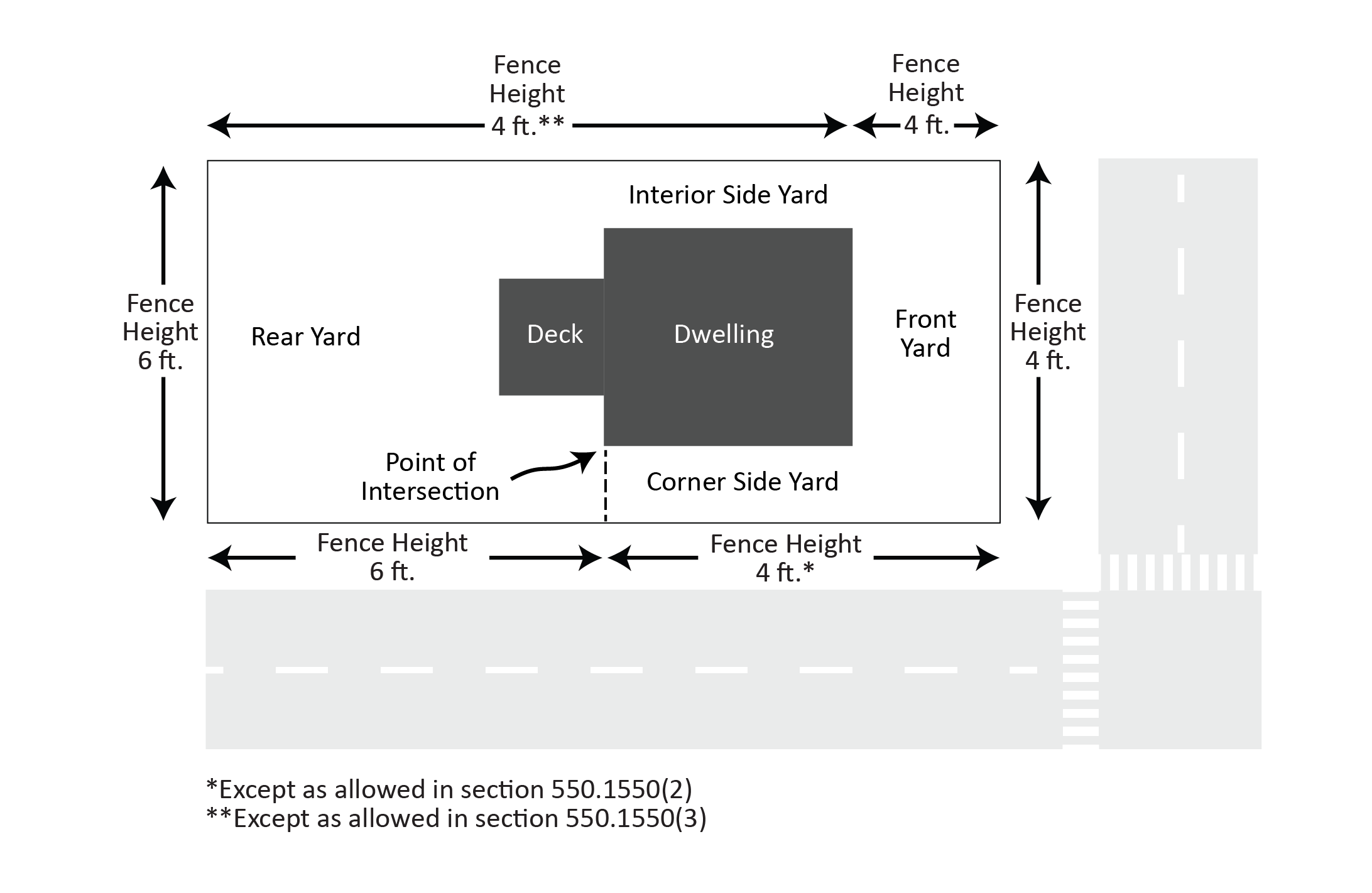
(3)
Interior side yard. Fences located in the required interior side yard shall not exceed four (4) feet in height. The maximum height may be increased to six (6) feet if the fence is located not less than five (5) feet from the structure on the adjoining property or if the entire fence is constructed of open, decorative, ornamental fencing materials that are less than sixty (60) percent opaque. In addition, the maximum height may be increased to six (6) feet between the rear wall of the principal structure on the adjoining property and the rear lot line.
(4)
Rear yard. Fences located in the required rear or side yard and extending along the rear lot line shall not exceed six (6) feet in height, except that a rear yard abutting a required side yard shall be considered an interior side yard and shall be subject to the regulations for interior side yards.
(5)
Along public streets. Fences not located in required yards, but located within five (5) feet of a public street or public sidewalk, shall not exceed six (6) feet in height.
550.1560. - Fence design.
Fences shall be constructed, designed and maintained as follows:
(1)
Permitted materials. Fences shall be constructed of wood, metal, bricks, masonry or other permanent materials designed for permanent fencing. No more than two types of related fencing materials shall be used in any fence and wall. Fences constructed of wood shall be resistant to decay.
(2)
Hazardous and prohibited materials. Fences shall not be constructed of electrically charged wire, razor wire, chain link with slats, chicken wire, rope, cable, railroad ties, landscape timbers, utility poles or any other similar materials or materials not specifically manufactured for permanent fencing. The cut or selvage end of wire or metal fencing materials may not be exposed at the top of a fence if the height of the fence is less than six and one-half (6½) feet. Barbed wire may be permitted at the top of a fence if the height of the barbed wire is not less than six and one-half (6½) feet and the fence is located in a production district not less than one hundred (100) feet from an urban neighborhood or residential mixed-use district.
(3)
Posts and supporting members. All fence posts and related supporting members of the fence shall be erected so that the finished side or sides of the fence shall be facing the adjacent property or public right-of-way.
(4)
Snow fences. Institutional and civic uses may erect snow fences exclusively for control of snow between November 1 and April 15.
550.1600. - Purpose.
Regulations governing communication towers, antennas, and base units are established to provide for appropriate locations for communication towers, antennas, and base units, to ensure compatibility with surrounding uses, to promote the co-location of communication antennas, and to preserve the city's ability to provide a public safety communication system.
550.1610. - Definitions.
As used in this article, the following words shall mean:
Base unit. An unstaffed single-story structure or weatherproofed cabinet used to house radio frequency transmitters, receivers, power amplifiers, signal processing hardware and related equipment.
Communication antenna, facade-mounted. A communication antenna mounted on the façade of a structure such as a building, water tower, clock tower, steeple, stack, light pole, traffic signal davit or communication tower.
Communication tower or antenna, rooftop-mounted. A communication tower or antenna located on the roof of a structure such as a building, water tower, clock tower, penthouse or similar structure.
Communication tower. Any pole, spire, structure or combination thereof, including supporting lines, cables, wires, braces and mast, used for the purpose of supporting one (1) or more antennas, including self-supporting lattice towers, guyed towers or monopole towers. A communication tower may include, but not be limited to, radio and television transmission towers, microwave towers, common carrier towers, cellular telephone towers and personal communication service towers.
Communication tower, monopole. A communication tower consisting of a single pole, constructed without guyed wires and anchors.
Communication tower and antenna height. The height of a freestanding communication tower and antenna shall be measured as the distance from ground level to the highest point on the tower, including the antenna. The height of a rooftop communication antenna shall be measured as the distance from the point where the base of the tower and antenna is attached to the roof, to the highest point on the supporting structure, including the antenna.
Institutional use. Educational facilities, parks, cemeteries, golf courses, sport arenas, religious institutions, athletic fields and publicly owned property.
Public safety communication system. A communication system owned or operated by a governmental entity such as a law enforcement agency, public works department, municipal transit authority or medical facility.
Publicly owned property. Land, buildings or structures owned by any governmental body or public agency including city, county, state or federally owned properties, other than public rights-of-way.
Transmission equipment. Any equipment that facilitates transmission for wireless communication, including, but not limited to, radio transceivers, antennas and other relevant equipment associated with and necessary to their operation, including coaxial or fiber-optic cable, and regular and backup power supply.
(Ord. No. 2025-023, § 66, 5-15-2025)
550.1620. - Permitted uses exempt from administrative review and approval.
Notwithstanding any other provisions to the contrary, communication towers and antennas designed for private reception of television and radio signals, used for amateur or recreational purposes, shall be permitted in all districts, provided such antennas and towers comply with the standards of section 550.1670 of the Minneapolis Code of Ordinances, and the following:
(1)
Notwithstanding the height limitations of the built form overlay district, freestanding towers and antennas shall not exceed thirty-five (35) feet in height and rooftop-mounted antennas shall not exceed fifteen (15) feet in height.
(2)
Antennas shall not exceed one (1) meter in diameter in the urban neighborhood and residential mixed-use districts and two (2) meters in diameter in all other districts.
(3)
Towers and antennas shall not be located in any required front, side or rear yard, nor shall they be located between a principal building and a required front or side yard.
(4)
Only one (1) freestanding tower and antenna shall be allowed per residential zoning lot.
(5)
Antennas mounted to infrastructure in the public right-of-way shall be regulated by the relevant division of the Minneapolis Department of Public Works.
(Ord. No. 2025-023, § 67, 5-15-2025)
550.1630. - Permitted uses subject to administrative review and approval.
(a) Uses. Notwithstanding the height limitations of the built form overlay zoning district, the following uses shall be permitted in all zoning districts, subject to administrative review and approval by the zoning administrator, as specified in section 550.1640, and the standards of this section:
(1)
Rooftop communication towers and antennas not exceeding fifteen (15) feet in height.
(2)
Facade-mounted communication antennas, except the construction of a new communication tower or the conversion of an existing structure to a communication tower.
(3)
Extension of the height of existing communication towers of not more than fifteen (15) feet, provided the total height of the communication tower and all antennas shall not exceed the total allowable height, as provided in section 550.1660.
(b)
Standards. Permitted uses subject to administrative review and approval shall comply with the standards of section 550.1670 and the following:
(1)
The antenna and its supporting structure shall be aesthetically compatible with the structure upon which the proposed antenna is to be mounted and with surrounding uses. Façade-mounted communication antennas shall be camouflaged, and rooftop-mounted communication antennas and towers shall be camouflaged where it is determined to be necessary.
(2)
The structure upon which the proposed antenna is to be mounted shall have the structural integrity to carry the weight of the antenna and its supporting structure.
(3)
The base unit shall be aesthetically compatible with the structure upon which the proposed antenna is to be mounted and with surrounding uses.
(4)
An existing communication tower shall be allowed only one (1) height extension of not more than fifteen (15) feet by administrative review. Additional extensions may be applied for as a conditional use.
(Ord. No. 2025-023, § 69, 5-15-2025)
550.1640. - Administrative review process.
(a) In general. The zoning administrator, in consultation with the planning director, shall approve or deny such application. The zoning administrator may impose such conditions and require such guarantees deemed reasonable and necessary to protect the public interest and to ensure compliance with the standards and purposes of this zoning ordinance and policies of the comprehensive plan.
(b)
Submittal requirements. In addition to the general application requirements of Chapter 525, Administration and Procedures, the applicant shall submit the following:
(1)
Scaled schematic drawings and photographic perspectives showing the structure and the placement of the tower and antenna on the structure.
(2)
A written certification from a registered engineer that the structure has the structural integrity to carry the weight of the tower and antenna.
(3)
A scaled drawing showing the size, location, construction materials and screening of the base unit.
(4)
A scaled drawing showing how the tower and antenna will be camouflaged.
(5)
A letter from the director of the property services division of the finance department stating that the proposed site, if located on publicly owned property, is not needed for the public safety communication system or stating that co-location is acceptable. The director of the property services division of the finance department shall have ten (10) working days after receipt of a written request to make such determination.
(c)
Appeals. Notwithstanding the provisions of Chapter 525, Administration and Procedures, decisions of the zoning administrator regarding the administrative review of permitted telecommunication towers, antennas, and base units shall be subject to appeal to the city planning commission.
550.1650. - Conditional uses.
(a) In general. The following communication towers, antennas, and base units may be allowed as a conditional use, subject to the provisions of Chapter 525, Administration and Procedures, and sections 550.1660 and 550.1670.
(1)
Freestanding communication towers and antennas, including antennas mounted on light poles and similar structures, provided that towers and antennas located in the urban neighborhood and residential mixed-use districts shall be located on institutional use sites of not less than twenty thousand (20,000) square feet. Freestanding communication towers and antennas shall be prohibited in the downtown area bounded by the Mississippi River, I-35W, I-94, and I-394/Third Avenue North (extended to the river) except that antennas may be mounted to light poles existing on the effective date of this ordinance.
(2)
Rooftop-mounted communication towers and antennas exceeding fifteen (15) feet in height.
(3)
Communication towers and antennas designed for private reception of television and radio signals and used for amateur or recreational purposes which exceed thirty-five (35) feet in height if freestanding or fifteen (15) feet in height if rooftop-mounted, or antennas which exceed one (1) meter in diameter in the urban neighborhood and residential mixed-use districts or two (2) meters in diameter in all other districts.
(4)
Communication towers and antennas that use any portion of a structure, other than the roof or penthouse, for structural support and do not meet the definition of a façade-mounted communication antenna.
(b)
Exceptions. Communication antennas in the public right-of-way, as permitted by the Minneapolis Department of Public Works, shall be exempt from the provisions of this section.
(Ord. No. 2025-023, § 69, 5-15-2025)
550.1660. - Specific standards for conditional uses.
All communication towers and antennas requiring a conditional use permit shall be subject to the provisions of Chapter 525, Administration and Procedures, and the submittal requirements of section 550.1640(b). In addition, the applicant shall comply with the following standards and submit written documentation indicating such compliance:
(1)
Tower type. Communication towers shall be of a monopole design. The city planning commission may consider the substitution of alternative tower types in cases where structural, radio frequency, and design considerations, location or the number of co-locators suggests a tower other than a monopole.
(2)
Co-location of communication antennas. Shared use of existing communication towers shall be preferred to the construction of a new tower.
(3)
Height of freestanding towers and antennas.
a.
Urban neighborhood, residential mixed-use and commercial mixed-use districts. The height of freestanding communication towers and antennas located in the urban neighborhood, residential mixed-use and commercial mixed-use districts shall not exceed seventy-five (75) feet.
b.
Production districts. The height of freestanding communication towers and antennas located in the production districts shall not exceed one hundred (100) feet.
c.
Excess height. The city planning commission may increase the height of freestanding towers and antennas, provided that in the urban neighborhood, residential mixed-use and commercial mixed-use districts such increase shall not exceed the maximum height by more than fifty (50) percent. The applicant shall submit an inventory of existing and approved communication towers within a one (1) mile radius of the proposed site outlining opportunities for shared use as an alternative to the construction of a new tower, and shall demonstrate to the satisfaction of the city planning commission the following:
1.
The proposed antenna cannot be accommodated on an existing or approved tower due to one (1) or more of the following reasons: the unwillingness of the owner of the existing or approved tower to co-locate an additional antenna; the planned antenna would exceed the structural capacity of existing or approved tower; the planned antenna would cause radio frequency interference with other existing or planned equipment, which cannot reasonably be prevented; other reasons affecting technical performance, system coverage and system capacity make it impractical to place the proposed equipment on existing or approved towers; or the proposed co-location on an existing or approved tower would not conform to the requirements of the zoning ordinance.
2.
The surrounding topography, structures, vegetation and other factors make a tower that complies with the district height regulations impractical.
3.
The proposed tower is designed to structurally accommodate both the applicant's antenna and at least one (1) additional user. The applicant shall submit a letter indicating the proposed tower is available for co-location with a phone number for interested parties to call.
(4)
Height of all other towers and antennas allowed by conditional use. The maximum height of all other towers and antennas shall be as approved by conditional use permit.
550.1670. - Development standards for all permitted and conditional communication towers, antennas, and base units.
In addition to the standards of sections 550.1620, 550.1630 and 550.1660 above, all communication towers, antennas, and base units shall be subject to the following standards:
(1)
Encroachments and setbacks.
a.
The tower site and setback shall be of adequate size to contain guyed wires, debris and the tower in the event of a collapse.
b.
Communication towers shall maintain a minimum distance from the nearest residential structure equal to twice the height of the tower. For the purposes of this article, residential structures shall also include any parking structure attached to a principal residential structure.
c.
No part of any communication tower, antenna, base unit, equipment, guyed wires or braces shall extend across or over any part of a public right-of-way, except as regulated by the Minneapolis Department of Public Works.
d.
Communication towers, antennas, and base units shall comply with applicable regulations as established by the Federal Aviation Administration.
e.
Communication towers, antennas, and base units shall comply with the minimum yard requirements of the district in which they are located.
(2)
Compatibility with nearby properties. Communication towers, antennas, and base units shall utilize building materials, colors and textures that are compatible with the existing principal structure and that effectively blend the tower facilities into the surrounding setting and environment to the greatest extent possible. Metal towers shall be constructed of, or treated with, corrosive resistant material. Outside of the production districts, unpainted, galvanized metal, or similar towers shall be prohibited, unless a self-weathering tower is determined to be more compatible with the surrounding area.
(3)
Screening and landscaping. A screening and landscaping plan designed to screen the base of the tower and the base unit shall be submitted. The plan shall show location, size, quantity and type of landscape materials. Landscape materials shall be capable of screening the site all year. One (1) row of evergreen shrubs or trees capable of forming a continuous hedge at least six (6) feet in height within two (2) years of planting shall be provided to effectively screen the base of the tower and the base unit, except for towers and antennas designed for private reception of television and radio signals and used for amateur or recreational purposes, and light poles and traffic signal davits in public rights-of-way that support communication antennas and transmission equipment. A maintenance plan for the landscape materials shall also be submitted. The city planning commission may consider the substitution of other architectural screening plans such as a decorative fence or masonry wall in lieu of planted materials.
(4)
Screening of equipment.
a.
Equipment which does not require line-of-sight to function shall be screened in accordance with section 550.80.
b.
Equipment which requires line-of-sight to function may require screening where it is determined to be necessary.
(5)
Rooftop-mounted towers and antennas. Rooftop-mounted communication towers and antennas shall not be located on a portion of a residential structure less than fifty (50) feet in height, except for towers and antennas designed for private reception of television and radio signals and used for amateur or recreational purposes.
(6)
Facade-mounted antennas.
a.
Mounted on freestanding towers and poles. A façade-mounted antenna may extend above the façade of the tower or pole on which it is mounted, but otherwise may project outward beyond such façade. Height of a freestanding tower or pole shall be measured to the tallest point of the structure, including antennas.
b.
Mounted on all other structures. A façade-mounted antenna shall be mounted flush against the structure on which it is mounted and shall not extend above the façade of such structure, except that antennas designed for private reception of television and radio signals, used for amateur or recreational purposes, may extend above the façade of the structure.
(7)
Base units. Base units shall not exceed five hundred (500) square feet of gross floor area. The city may require as a condition of approval that base units be located underground.
(8)
Security. All sites shall be reasonably protected against unauthorized climbing. The bottom of the tower, measured from ground level to twelve (12) feet above ground level, shall be designed in a manner to discourage unauthorized climbing.
(9)
Signage. Advertising or identification of any kind on towers, antennas, and base units shall be prohibited, except for applicable warning and equipment information signage required by the manufacturer or by federal, state or local regulations.
(10)
Lighting. Communication towers and antennas shall not be illuminated by artificial means, except when mounted on an existing light pole or where the illumination is specifically required by the Federal Aviation Administration or other federal, state or local regulations.
(11)
Heritage Preservation Ordinance compliance. Communication towers and antennas proposed for any locally designated historic structures or locally designated historic districts shall be subject to all requirements of the city's Heritage Preservation Ordinance. This provision shall also apply to antenna installations in public rights-of-way.
(12)
Radio frequency emissions and noninterference. The applicant shall comply with all applicable Federal Communication Commission standards.
(13)
Public safety communication system. The location of the proposed antenna, if located on publicly owned property, shall not be needed for use by the public safety communication system, or if needed, it shall be determined by the director of the property services division of the finance department that co-location of the proposed antenna with a public safety antenna is agreeable.
(Ord. No. 2025-023, § 70, 5-15-2025)
550.1680. - Obsolete or unused towers.
All obsolete or unused communication towers, antennas, and base units or accessory facilities shall be removed within twelve (12) months of the cessation of operations unless an extension is approved by the city planning commission. If an extension is not approved, such towers, antennas, and base units shall be deemed a nuisance, and the city may act to abate such nuisance and require their removal at the property owner's expense. The operator shall provide the city with a copy of the Federal Communications Commission notice of intent to cease operations at the same time it submits such notice to the Federal Communications Commission. In the case of multiple operators sharing the use of a single tower, this provision shall not become effective until all operators cease operations for a period of twelve (12) consecutive months, provided each operator shall provide the city with notice of intent to cease operations. After the facilities are removed, the owner or operator of the site shall restore the site to its original, or to an improved, condition.
550.1700. - Purpose.
Regulations governing solar energy systems are established to provide for appropriate locations for solar energy systems, to ensure compatibility with surrounding uses, and to promote safe and effective use of solar energy to increase opportunities for generation of renewable energy.
550.1710. - Definitions.
As used in this article, the following words shall mean:
Building-integrated solar energy system. A solar energy system that is an integral part of a principal or accessory building, rather than a separate mechanical device, replacing or substituting for an architectural or structural component of the building. Building-integrated systems include but are not limited to active photovoltaic or hot water systems that are contained within roofing materials, windows, walls, skylights, and awnings, or passive systems that are designed to capture direct solar heat.
Building-mounted solar energy system. A solar energy system affixed to a principal or accessory building.
Freestanding solar energy system. A solar energy system with a supporting framework that is placed on, or anchored in, the ground and that is independent of any building or other structure. Garages, carports or similar structures that incorporate building-integrated or building-mounted solar energy systems shall not be classified as freestanding solar energy systems and shall instead be subject to regulations governing accessory structures.
Solar collector surface. Any part of a solar energy system that absorbs solar energy for use in the system's transformation process. The collector surface does not include frames, supports, and mounting hardware.
Solar energy. Radiant energy received from the sun that can be collected in the form of heat or light by a solar collector.
Solar energy system. A device or structural design feature intended to provide for collection, storage, and distribution of solar energy for heating or cooling, electricity generating, or water heating.
550.1720. - Permitted uses and specific standards, subject to administrative review and approval.
(a) In general. Solar energy systems shall be permitted in all zoning districts, subject to the standards of this article. Solar collector surfaces and all mounting devices shall comply with the minimum yard requirements of the district in which they are located. Screening of solar collector surfaces shall not be required.
(b)
Building-mounted solar energy systems.
(1)
Notwithstanding the height limitations of the built form overlay zoning district, building mounted solar energy systems shall not extend higher than three (3) feet above the ridge level of a roof on a structure with a gable, hip, or gambrel roof and shall not extend higher than ten (10) feet above the surface of the roof when installed on flat or shed roof.
(2)
The solar collector surface and mounting devices for building-mounted solar energy systems shall be set back not less than one (1) foot from the exterior perimeter of a roof for every one (1) foot that the system extends above the parapet wall or roof surface, if no parapet wall exists, on which the system is mounted. Solar energy systems that extend less than three (3) feet above the roof surface shall be exempt from this provision.
(3)
All solar energy systems using a reflector to enhance solar production shall minimize glare from the reflector that affects adjacent or nearby properties. Measures to minimize nuisance glare include selective placement of the system, screening on the north side of the solar array, modifying the orientation of the system, reducing use of the reflector system, or other remedies that limit glare.
(c)
Freestanding solar energy systems.
(1)
Freestanding solar energy systems, measured to the highest point of the system, shall not exceed the height of the principal structure or twenty (20) feet, whichever is less. The height of the principal structure shall be measured as provided in Chapter 565, Definitions. Freestanding solar energy systems up to sixteen (16) feet in height shall be subject to the minimum yard requirements of an accessory structure. Freestanding solar energy systems greater than sixteen (16) feet in height shall be subject to the minimum yard requirements of a principal structure. The required yard shall be measured from the property line to the closest part of the structure at minimum design tilt.
(2)
In the urban neighborhood and residence mixed-use districts, the area of the solar collector surface of freestanding solar energy systems shall not exceed five (5) percent of the lot area. Notwithstanding any other provision to the contrary, the maximum area of solar energy systems shall be calculated independently of the floor area of all other accessory structures on the zoning lot.
(3)
The supporting framework for freestanding solar energy systems shall not include unfinished lumber.
(4)
All abandoned or unused freestanding solar energy systems shall be removed within twelve (12) months of the cessation of operations.
(5)
All solar energy systems using a reflector to enhance solar production shall minimize glare from the reflector that affects adjacent or nearby properties. Measures to minimize nuisance glare include selective placement of the system, screening on the north side of the solar array, modifying the orientation of the system, reducing use of the reflector system, or other remedies that limit glare.
550.1730. - Administrative review process.
(a) In general. The zoning administrator, in consultation with the planning director, shall approve or deny such application. The zoning administrator may impose such conditions and require such guarantees deemed reasonable and necessary to protect the public interest and to ensure compliance with the standards and purposes of this zoning ordinance and policies of the comprehensive plan.
(b)
Submittal requirements. An application for a solar energy system shall be filed on a form approved by the zoning administrator, as specified in Chapter 525, Administration and Procedures. In addition, the applicant shall submit written evidence that the electric utility service provider that serves the proposed site has been informed of the applicant's intent to install a solar energy system, unless the applicant does not plan, and so states so in the application, to connect the system to the electricity grid.
550.1740. - Conditional uses.
Solar energy systems that do not comply with the standards of section 550.1720 above may be allowed by conditional use permit, subject to the provisions of Chapter 525, Administration and Procedures, provided that requests to reduce minimum yard requirements shall be by variance.
(Ord. No. 2025-023, § 71, 5-15-2025)
550.1750. - Solar access.
Solar access easements may be filed consistent with Minn. Statutes, Section 500.30. Any property owner may purchase an easement across nearby properties to protect access to sunlight. The easement is purchased or granted by owners of nearby properties and can apply to buildings, trees, or other structures that would diminish solar access.
550.1800. - Purpose.
Regulations governing wind energy conversion systems are established to provide for appropriate locations for wind energy conversion systems, to ensure compatibility with surrounding uses, and to promote safe, effective and efficient use of wind energy conversion systems to increase opportunities for generation of renewable energy.
550.1810. - Definitions.
As used in this article, the following words shall mean:
Institutional use. Educational facilities, golf courses, sports arenas, religious institutions, athletic fields and publicly owned property. For the purpose of this section, parks and cemeteries, whether publicly or privately owned, shall not be included in this definition.
Publicly owned property. Land, buildings or structures owned by any governmental body or public agency including city, county, state or federally owned properties, other than public rights-of-way.
Tower, monopole. A wind energy conversion system tower consisting of a single pole, constructed without guyed wires and anchors.
Wind energy conversion system. Any device, such as a wind charger, windmill, or wind turbine, and associated facilities including the support structure of the system such as a tower, that converts wind energy to electrical energy.
Wind energy conversion system, building mounted. A wind energy conversion system located on a building.
Wind energy conversion system height. The height of a freestanding wind energy conversion system shall be measured as the distance from ground level to the highest point on the tower, including the vertical length of any extensions such as the rotor blade. The height of a building mounted wind energy conversion system shall be measured as the distance from the point where the base of the system is attached to the building or to the lowest point on the wind energy conversion system, whichever is closer to the ground, to the highest point on the wind energy conversion system, including the vertical length of any extensions such as the rotor blade.
550.1820. - Permitted uses subject to administrative review and approval.
Notwithstanding the height limitations of the built form overlay zoning district, building mounted wind energy conversion systems shall be permitted in all zoning districts, subject to administrative review and approval by the zoning administrator, as specified in section 550.1830, and shall comply with the standards of section 550.1860 and the following:
(1)
Building mounted wind energy conversion systems shall not exceed fifteen (15) feet in height.
(2)
Building mounted wind energy conversion systems shall be prohibited on residential structures less than four (4) stories and forty-two (42) feet in height and structures accessory to residential uses.
(3)
On nonresidential buildings less than four (4) stories and forty-two (42) feet in height, building mounted wind energy conversion systems shall be setback at least ten (10) feet from the front, side and rear walls of the structure upon which it would be mounted.
(4)
Building mounted wind energy conversion systems on structures over four (4) stories and forty-two (42) feet in height shall be installed above the fourth story.
(5)
The structure upon which the proposed wind energy conversion system is to be mounted shall have the structural integrity to carry the weight and wind loads of the wind energy conversion system and have minimal vibration impacts on the structure.
550.1830. - Administrative review process.
(a) In general. The zoning administrator, in consultation with the planning director, shall approve or deny such application. The zoning administrator may impose such conditions and require such guarantees deemed reasonable and necessary to protect the public interest and to ensure compliance with the standards and purposes of this zoning ordinance and policies of the comprehensive plan.
(b)
Submittal requirements. In addition to the general application requirements of Chapter 525, Administration and Procedures, the applicant shall submit the following:
(1)
Scaled schematic drawings and photographic perspectives showing the structure and the placement of the wind energy conversion system.
(2)
A written certification from a licensed structural engineer that the structure has the structural integrity to carry the weight and wind loads of the wind energy conversion system and have minimal vibration impacts on the structure.
(3)
An analysis from a licensed engineer showing how the wind energy conversion system shall be designed, constructed and operated in compliance with all applicable federal, state, and local laws, codes, standards and ordinances.
(4)
A written certification from a licensed engineer confirming that the wind energy conversion system is designed to not cause electrical, radio frequency, television and other communication signal interference.
(5)
Sufficient information demonstrating that the wind energy conversion system shall be used primarily to reduce on-site consumption of electricity, including but not limited to a complete listing of on-site electrical demands.
(6)
Written evidence that the electric utility service provider that serves the proposed site has been informed of the applicant's intent to install a wind energy conversion system, unless the applicant does not plan, and so states so in the application, to connect the system to the electricity grid.
(7)
Written certification from a licensed engineer stating the wind power density for the specific site is Class 2 or greater as defined by the United States Department of Energy.
(c)
Appeals. Notwithstanding the provisions of Chapter 525, Administration and Procedures, decisions of the zoning administrator regarding the administrative review of permitted wind energy conversion systems shall be subject to appeal to the city planning commission.
550.1840. - Conditional uses.
Freestanding wind energy conversion systems may be allowed as a conditional use, subject to the provisions of Chapter 525, Administration and Procedures, sections 550.1850 and 550.1860, and the following location and lot size restrictions:
(1)
Urban neighborhood and residential mixed-use districts. Freestanding wind energy conversion systems in the urban neighborhood and residential mixed-use districts shall only be located on institutional use sites.
(2)
Downtown area. Freestanding wind energy conversion systems shall be prohibited in the downtown area, including all zoning districts in the area bounded by the Mississippi River, I-35W, I-94, I-394, and 3 rd Avenue North (extended to the river).
(3)
Minimum lot area. No freestanding wind energy conversion system shall be established on a zoning lot less than one (1) acre in area. A maximum of one wind energy conversion system per acre of lot area shall be allowed.
550.1850. - Specific standards for conditional uses.
All wind energy conversion systems requiring a conditional use permit shall be subject to the provisions of Chapter 525, Administration and Procedures, and the submittal requirements of section 550.1830(b). In addition, the applicant shall comply with the following standards and submit written documentation indicating such compliance:
(1)
Tower type. Towers shall be of a monopole design. The city planning commission may consider the substitution of alternative tower types in cases where structural and design considerations, and location suggests a tower other than a monopole.
(2)
Height of freestanding wind energy conversion systems.
a.
Urban neighborhood, residential mixed-use and commercial mixed-use districts. The height of freestanding wind energy conversion systems located in the urban neighborhood, residential mixed-use and commercial mixed-use shall be no more than sixty (60) feet on zoning lots between one (1) and five (5) acres and shall be no more than one hundred (100) feet on zoning lots of more than five (5) acres in area.
b.
Production districts. The height of freestanding wind energy conversion systems located in the production districts shall not exceed one hundred (100) feet.
c.
Minimum height. The minimum distance between the ground and the vertical length of any extensions such as the rotor blades shall be fifteen (15) feet.
d.
Excess height. The city planning commission may increase the height of freestanding wind energy conversion systems, provided that in the urban neighborhood, residential mixed-use and commercial mixed-use districts such increase shall not exceed the maximum height by more than fifty (50) percent. The applicant shall demonstrate to the satisfaction of the city planning commission that the surrounding topography, structures, vegetation, and other factors make a tower that complies with the district height regulations impractical.
(3)
Encroachments and setbacks.
a.
The base of the tower shall maintain a minimum distance from the nearest residential structure and from any overhead utility lines equal to twice the height of the tower. For the purposes of this article, residential structures shall also include any parking structure attached to a principal residential structure.
b.
The support structure, including any guy wires, shall not be located in any required front, side or rear yard, nor shall they be located between a principal building and a required front or side yard.
(4)
Security. All sites shall be reasonably protected against unauthorized climbing. The bottom of the tower, measured from ground level to twelve (12) feet above ground level, shall be designed in a manner to discourage unauthorized climbing.
(5)
Electrical wires. All electrical wires associated with a freestanding wind energy conversion system shall be located within the tower and underground.
550.1860. - Development standards for all permitted and conditional wind energy conversion systems.
In addition to the standards of sections 550.1820, 550.1830, 550.1840 and 550.1850 above, all wind energy conversion systems shall be subject to the following standards:
(1)
Maximum capacity. Wind energy conversion systems shall have a rated capacity of not more than one hundred (100) kilowatts.
(2)
SH Shoreland and MR Mississippi River Corridor Critical Area Overlay Districts. Freestanding and building mounted wind energy conversion systems shall be prohibited in the SH Shoreland and MR Mississippi River Corridor Critical Area Overlay Districts.
(3)
Encroachments and setbacks.
a.
Wind energy conversion systems shall comply with applicable regulations as established by the Federal Aviation Administration.
b.
Wind energy conversion systems shall comply with the minimum yard requirements of the district in which they are located.
c.
No part of any wind energy conversion system shall extend across or over any part of a public right-of-way.
(4)
Compatibility with nearby properties. Wind energy conversion systems shall utilize building materials, colors and textures that are compatible with the existing principal structure and that effectively blend the system facilities into the surrounding setting and environment to the greatest extent possible. Rotor blades shall be non-metallic to prevent communication signal interference. Metal towers shall be constructed of, or treated with, corrosive resistant material. Outside of the production districts, unpainted, galvanized metal, or similar towers shall be prohibited, unless a self-weathering tower is determined to be more compatible with the surrounding area.
(5)
Controls and brakes. All systems shall contain an internal governor or braking device which engages at wind speeds in excess of forty (40) miles per hour and minimizes the potential for wind damage to the equipment.
(6)
Signage. Advertising or identification of any kind on wind energy conversion systems shall be prohibited, except for applicable warning and equipment information signage required by the manufacturer or by federal, state or local regulations.
(7)
Lighting. Wind energy conversion systems shall not be illuminated by artificial means, except where the illumination is specifically required by the Federal Aviation Administration or other federal, state or local regulations.
(8)
Noise. Wind energy conversion systems shall comply with the standards governing noise contained in Chapter 389 of the Minneapolis Code of Ordinances, Noise, and with all other applicable regulations.
(9)
Heritage Preservation Ordinance compliance. Wind energy conversion systems proposed for any locally designated historic structures or locally designated historic districts shall be subject to all requirements of the city's Heritage Preservation Ordinance.
(10)
Maintenance required. All wind energy conversion systems shall be kept in good repair and free from rust, damaged supports, framework or other components.
550.1870. - Abandoned or unused towers.
All abandoned or unused wind energy conversion systems shall be removed within twelve (12) months of the cessation of operations unless an extension is approved by the city planning commission. If an extension is not approved, such wind energy conversion system shall be deemed a nuisance, and the city may act to abate such nuisance and require its removal at the property owner's expense. After the wind energy conversion system is removed, the owner or operator of the site shall restore the site to its original, or to an improved, condition.
550.1900. - Purpose.
Standards governing plazas are established to promote year-round gathering places designed to enhance pedestrian access, interaction and visibility, reinforce public spaces, create community identity, promote public safety, and visually enhance development.
550.1910. - Permitted uses subject to administrative review and approval.
Plazas shall be permitted in all zoning districts. Plazas with at least two thousand (2,000) square feet of contiguous area, shall be subject to administrative review and approval by the zoning administrator, as specified in section 550.1920, and shall comply with the standards of section 550.1930.
550.1920. - Administrative review process.
(a) In general. The zoning administrator, in consultation with the planning director, shall approve or deny such application. The zoning administrator may impose such conditions and require such guarantees deemed reasonable and necessary to protect the public interest and to ensure compliance with the standards and purposes of this zoning ordinance and policies of the comprehensive plan. If proposed as part of a project that includes a separate land use application, a plaza may be reviewed concurrently with said application, provided all requirements of this section have been met.
(b)
Submittal requirements. In addition to the general application requirements of Chapter 525, Administration and Procedures, the applicant shall submit the following:
(1)
A scaled and dimensioned site plan, including the following items:
a.
All property lines.
b.
Adjacent streets, sidewalks, pathways, and alleys, including proposed pedestrian access points.
c.
Adjacent buildings with uses and heights identified, including pedestrian access from any adjacent buildings.
d.
Square footages of plaza area with surface materials identified.
e.
Any proposed right-of-way encroachments.
f.
Planting plan showing existing plants to remain and proposed shrubs, trees, perennials, native grasses, and groundcovers, including location and type.
g.
Mechanical equipment, if any.
h.
Proposed furnishings.
i.
Proposed lighting.
j.
Grading and drainage plan.
k.
North arrow and date the plan was drawn.
(c)
Appeals. Decisions of the zoning administrator regarding the administrative review of permitted plazas shall be subject to appeal to the city planning commission as specified in Chapter 525, Administration and Procedures.
550.1930. - Development standards for all permitted plazas.
All plazas with at least two thousand (2,000) square feet shall be subject to the following standards:
(1)
Placement.
a.
The placement of plazas shall not detract from and shall enhance natural surveillance and visibility of adjacent spaces and public sidewalks and facilitate pedestrian access and circulation.
b.
Plazas shall be designed to enhance interaction with occupants of adjacent buildings and uses.
(2)
Access.
a.
All plazas shall be designed to allow for pedestrian and bicycle access through and/or around the plaza.
b.
Multiple access points shall be provided for each plaza, with one (1) access point being connected to a public street, public sidewalk, or public pathway.
c.
All plazas shall be designed in accordance with the accessibility requirements of the Americans with Disabilities Act.
d.
Unobstructed walkways a minimum of four (4) feet in width shall connect the plaza to an entrance of any building on the same zoning lot.
e.
When adjacent to a transit stop, said transit stop shall be integrated into the design of the plaza.
(3)
Natural surveillance and visibility. Plazas shall be designed to control and guide movement through the site, promote natural observation and provide opportunities for people to observe adjacent spaces and public sidewalks.
(4)
Aerial obstructions. Plazas shall be unobstructed to the sky except for seating, arbors, trellises, kiosks, lighting, water features, public art, and landscaping. Up to thirty (30) percent of the plaza area may include umbrellas, awnings, or an arcade.
(5)
Surface materials. With the exception of landscaped areas, plazas shall be surfaced with durable and decorative materials, including but not limited to pervious pavers, decorative pavers, stamped concrete, colored concrete, or brick.
(6)
Seating.
a.
A minimum of one (1) linear foot of seating shall be provided for each fifty (50) square feet of plaza area.
b.
A minimum of twenty (20) percent of the required seating shall consist of fixed seating. A minimum of twenty (20) percent of the required seating shall consist of seating with backs.
c.
A minimum of two (2) different types of seating shall be required. Seating may take on multiple forms, including traditional and non-traditional seating, provided that it is accessible and all other seating requirements of this section are met.
d.
All seating must be of appropriate ergonomic design.
e.
Seating provided for sidewalk cafes or other adjacent uses shall not count toward the minimum seating requirement of this ordinance.
(7)
Encroachments and setbacks.
a.
Plazas shall not encroach into the public right-of-way without the property owner first obtaining an encroachment permit.
b.
All seating, water features, arbors, trellises, trash receptacles or other accessory equipment and furnishings shall comply with the minimum yard requirements of the zoning district in which they are located.
(8)
Plantings.
a.
Plazas shall provide a minimum of one (1) tree for each one thousand (1,000) square feet of plaza area. If proposed as part of a project that has a general landscaping requirement, trees located in the plaza shall contribute toward compliance with the general landscaping requirement.
b.
A landscaped area equivalent to ten (10) percent of the total plaza area may be provided in lieu of trees.
(9)
Additional amenities. Plazas must provide at least one of the following additional amenities. Plazas in excess of five thousand (5,000) square feet shall provide a minimum of two (2) of the following additional amenities:
a.
Living wall. Provide a living wall on at least one (1) building facade directly fronting on the plaza. The living wall shall be composed of panels that total a minimum of fifty (50) percent of the wall area on the building facade. A portion of the plantings shall provide greenery year-round, if possible.
b.
Water feature, including but not limited to, fountains, reflecting pools, children's play features and waterfalls. Water features shall be designed and maintained for year-round functionality and aesthetics.
c.
Art feature. Art shall strive to promote quality design, enhance a sense of place and be maintained in good order for the life of the plaza. The art shall be located where it is highly visible to the public. The art shall be valued at not less than one-fourth (.25) of one (1) percent of the capital cost of the principal structure.
d.
Moveable chairs. Such chairs shall be equivalent to twenty-five (25) percent of the minimum seating requirement. Moveable chairs may be removed during the nighttime hours of 8:00 p.m. to 7:00 a.m.
e.
Game tables and associated seating. A minimum of two (2) game tables and associated seating shall be provided.
f.
Kiosk. Such kiosk may be no greater than one hundred (100) square feet in area and may only be occupied by uses permitted in the underlying zoning district.
g.
Public drinking fountain. Such public drinking fountain shall be visible from an adjacent public street, public sidewalk or public pathway.
h.
Stormwater functionality. Provide capacity for infiltrating stormwater generated onsite. Such stormwater amenity may be counted as two amenities if done in an artistic and educational manner.
(10)
Lighting. All plazas shall be illuminated in accordance with section 550.2230, Lighting.
(11)
Winter use. Plazas shall be designed for winter use and relate to the built form with consideration given to elements such as providing shelter from winds, utilizing seasonally appropriate materials, maximizing access to sunlight and providing for snow and ice removal. Plazas should be located so that they receive natural sunlight during daytime hours in all seasons.
(12)
Trash receptacles. A minimum of one (1) trash receptacle and one (1) recycling receptacle shall be provided for each two thousand (2,000) square feet of plaza area.
(13)
Mechanical equipment. All exhaust vents and mechanical equipment located adjacent to a plaza shall be screened in accordance with the required screening provisions of Article V, Site Plan Review Standards in this chapter.
(14)
Maintenance required. All plazas shall be maintained in good order by the property owner for the life of the plaza. Proper maintenance shall include, but not be limited to, snow and ice removal, annual maintenance of vegetation and green space and annual inspection and repair and/or replacement of furnishings. Minimum landscaping and seating requirements shall be maintained for the life of the plaza. All adjacent streets, sidewalks and pathways shall be inspected regularly for purposes of removing any litter found thereon.
(15)
Built form overlay districts. Projects seeking a floor area ratio premium in a built form overlay district by providing an outdoor urban open space shall comply with all requirements of this section and the requirements of the outdoor urban open space premium as specified in Chapter 540, Built Form Overlay Districts.
550.2000. - Purpose.
Regulations governing new skyways are established to provide for appropriate location for skyways and to ensure the design of skyways contribute to the built and natural environment.
550.2010. - Definitions.
As used in this article, the following words shall mean:
Bird-safe glazing. Bird-safe glazing includes one (1) of the following:
a.
Facade materials with a Leadership in Energy and Environmental Design (LEED) Material Threat Factor less than or equal to twenty-five (25); or
b.
Physical structures or glass patterns that are visible from the outside and the resulting pattern creates spaces no wider than four (4) inches horizontally or two (2) inches high vertically, also known as the "2×4 rule"; or
c.
A glass pattern that is white to medium gray, visible from the outside, and shall meet at least one (1) of the specific standards below:
1.
Horizontal line patterns shall be one-eighth (⅛) inch wide with two (2) inch on-center spacing; or
2.
Vertical line patterns shall be one-eighth (⅛) inch wide with four (4) inches on-center spacing; or
3.
Dot patterns with dots one-quarter (¼) inch wide with two (2) inch on-center spacing each way; or
4.
Dot patterns with dots three-eighths (⅜) inch wide arranged in horizontal lines with two (2) inch on-center spacing or vertical lines with four (4) inch on-center spacing.
550.2020. - Permitted uses subject to administrative review and approval.
Skyways shall be subject to administrative review and approval by the zoning administrator, as specified in section 550.2030, and shall comply with the standards of section 550.2040.
550.2030. - Administrative review process.
(a) In general. The zoning administrator shall approve or deny such application prior to the issuance of an encroachment permit. The zoning administrator may impose such conditions and require such guarantees deemed reasonable and necessary to protect the public interest and to ensure compliance with the standards and purposes of this zoning ordinance and policies of the comprehensive plan. If proposed as part of a project that includes a separate land use application, a skyway shall be reviewed concurrently with said application.
(b)
Submittal requirements. The applicant shall comply with the general application requirements of Chapter 525, Administration and Procedures.
(c)
Appeals. Notwithstanding the provisions of Chapter 525, Administration and Procedures, decisions of the zoning administrator regarding the administrative review of permitted skyways shall be subject to appeal to the city planning commission.
550.2040. - Development standards for all permitted skyways.
New skyways shall comply with the following standards and all other applicable regulations of this zoning ordinance:
(1)
All skyways.
a.
At least eighty (80) percent of the exterior sidewalls of the skyway shall be glazing that allows views into and out of the skyway, except as otherwise permitted for temporary on-premises signs, temporary art, or permanent art on skyway bridges under subsection (3). Glazing shall have clear or lightly tinted glass with a visible light transmittance ratio of six-tenths (0.6) or higher.
b.
At least eighty-five (85) percent of the glazing area of the exterior sidewalls of a skyway shall meet the bird-safe glazing definition.
(2)
Skyways that cross a public street or a public alley.
a.
Skyways will only be considered for uses in downtown zoning districts; or hospital, college, or university uses outside of downtown zoning districts, subject to the standards of this article.
b.
Skyways shall only be allowed on the second floor of a building.
c.
Skyways shall run perpendicular to the public street or public alley that they cross.
d.
Skyways shall be designed to be horizontally level with the street. Changes in grade shall be accommodated so that the skyway appears level from the exterior.
e.
Skyways shall not be allowed within fifteen (15) feet of a street intersection. Skyways are encouraged to cross public streets and alleys in the middle portion of the block.
f.
Skyways shall be a single story.
g.
The bottom of skyways shall be a minimum of sixteen (16) feet six (6) inches above the public street or public alley.
h.
Skyways shall comply with the requirements of subsections (1) and (3) of this section as applicable.
(3)
Skyways within the downtown skyway system.
a.
Skyway width shall be carefully considered in relation to each skyway's relative location within the system and the projected intensity of use for that skyway and shall be subject to the following conditions:
1.
Skyways and connecting corridors shall have a minimum interior clear width of twelve (12) feet between handrails.
2.
Skyways and connecting corridors within the core of the downtown skyway system are encouraged to have a minimum interior clear width of eighteen (18) feet.
3.
The exterior width of skyways shall be no wider than thirty (30) feet.
b.
Access to skyways shall be facilitated between street and skyway levels. Such access shall be subject to the following conditions:
1.
A public entrance that is clearly defined and emphasized through the use of architectural features, such as an awning, glazing, or other details, shall provide street access to the skyway.
2.
Exterior signage shall be provided at the street-level entrance noting the skyway entrance location.
3.
Elevators, stairs and escalators linking the street and skyway level shall be clearly identified with directional signage. For new buildings, elevators, stairs and escalators linking the street and skyway level shall also be conveniently located.
4.
Interior signage shall be provided at the skyway level, noting access to public streets.
c.
Skyways shall remain open to the public Monday through Friday, from 6:30 a.m. to 10:00 p.m., Saturday, from 9:30 a.m. to 8:00 p.m., and Sunday, from 12:00 p.m. to 6:00 p.m. Property owners are encouraged to keep their skyways, connecting corridors, and vertical circulation elements open beyond standard hours of operation.
d.
Skyway bridges shall be used principally for pedestrian movement. Skyway bridges may be utilized for permanent and temporary uses as listed below, subject to the city engineer's authority to deny or remove items to protect the public health, safety, and welfare, and prevent interference with the safety and convenience of ordinary travel over the right-of-way, in accordance with Chapters 95, 427, 429, and 430 of this Code, and the following standards:
1.
Permanent retailing, seating, vending, and display shall be confined to spaces off the skyway bridge.
2.
Temporary on-premises signs, temporary art, or permanent art shall be permitted on the exterior or interior of skyway bridges as intended to be read from the public right-of-way, provided such temporary on-premises signs, temporary art, or permanent art shall comply with the following:
i.
Temporary on-premises signs, temporary art, or permanent art shall allow views into and out of the skyway on at least twenty-five (25) percent of the exterior sidewalls.
ii.
Temporary on-premises signs, temporary art, or permanent art shall not extend below the physical exterior of the skyway bridge, except as reviewed and approved by the city engineer, but in no case shall extend below sixteen (16) feet six (6) inches above the public street or public alley.
iii.
Building wrap signs shall be permitted.
3.
Temporary uses within skyway bridges shall comply with Section 525.630 and Article IV, Temporary Uses, in Chapter 545 of this Code, and shall not block pedestrian movement.
e.
Skyways shall comply with the requirements of subsections (1) and (2) of this section as applicable.
(Ord. No. 2025-054, § 2, 11-20-2025)
550.2100. - Purpose.
Standards relating to natural features are established to provide for the protection and conservation of natural features and to mitigate the effects of development on the natural environment.
550.2110. - Protection of natural features.
(a) In general. All development shall be located so as to preserve the natural features of the site, to avoid areas of environmental sensitivity, to minimize the creation of impervious surface area, to contribute to ecological function, and to minimize negative impacts on and the alteration of the natural environment. In addition to protected areas in the SH Shoreland Overlay District and MR Mississippi River Critical Area Overlay District, the following areas shall be preserved as undeveloped open space, to the extent consistent with the reasonable utilization of land, and in accordance with applicable federal, state, or local regulations:
(1)
Significant trees or plant communities including remnant stands of native trees or remnant prairie grasses, trees or plant communities that are rare to the area or of particular horticultural or landscape value, or trees with a diameter at breast height of twelve (12) inches or larger.
(2)
Habitats of threatened or endangered wildlife, as identified on federal or state lists, including the Federal Endangered Species Act, and the Minnesota County Biological Survey.
(b)
Mitigation. Where preservation is not consistent with the reasonable utilization of land, the city may require mitigation through replacement of the resource or similar resource on the site, restoration of former natural amenities to the site, or other reasonable measures to mitigate the effects of the development and protect or enhance the natural features of the land.
550.2120. - Stormwater management.
All development shall comply with all applicable regulations governing stormwater management, and shall employ best management practices to minimize off-site stormwater runoff, maximize overland flow and flow distances over surfaces covered with vegetation, increase on-site filtration, replicate predevelopment hydrologic conditions as nearly as possible, minimize off-site discharge of pollutants to ground and surface water, and encourage natural filtration function.
550.2200. - Purpose.
Performance standards are established to minimize conflicts among land uses, to preserve the use and enjoyment of property, to provide for the protection and conservation of natural features, and to protect the public health, safety, and welfare. These performance standards shall apply to all uses of land or structures and are in addition to any requirements applying to specific zoning districts.
550.2210. - Performance in general.
No use or structure shall be operated or occupied as to constitute a dangerous, injurious or noxious condition because of fire, explosion or other hazard, noise, vibration, smoke, dust, fumes, odor or other air pollution, light, glare, heat, cold, dampness, electrical disturbance, liquid or solid refuse or waste, water or soil pollution, or other substance or condition, or as to unreasonably interfere with the use and enjoyment of property by any person of normal sensitivities, or otherwise as to create a public nuisance. In addition, no use or structure shall be operated or occupied in a manner not in compliance with any performance standard contained in this article or with any other applicable regulation.
550.2220. - Review by other agencies.
In determining compliance with the performance standards of this article, the zoning administrator may refer any matter to such governmental agencies or other entities as deemed necessary to obtain their review and comments as to such compliance.
550.2230. - Lighting.
(a) In general. No use or structure shall be operated or occupied as to create light or glare in such an amount or to such a degree or intensity as to constitute a hazardous condition, or as to unreasonably interfere with the use and enjoyment of property by any person of normal sensitivities, or otherwise as to create a public nuisance.
(b)
Specific standards. All uses shall comply with the following standards except as otherwise provided in this section:
(1)
Lighting fixtures shall be effectively arranged so as not to directly or indirectly cause illumination or glare in excess of one-half (½) footcandle measured at the closest property line of any permitted or conditional residential use, and five (5) footcandles measured at the street curb line or nonresidential property line nearest the light source.
(2)
Lighting fixtures shall not exceed two thousand (2,000) lumens (equivalent to a one hundred fifty (150) watt incandescent bulb) unless of a cutoff type that shields the light source from an observer at the closest property line of any permitted or conditional residential use.
(3)
Lighting shall not create a sensation of brightness that is substantially greater than ambient lighting conditions as to cause annoyance, discomfort or decreased visual performance or visibility to a person of normal sensitivities when viewed from any permitted or conditional residential use.
(4)
Lighting shall not create a hazard for vehicular or pedestrian traffic.
(5)
Lighting of building facades or roofs shall be located, aimed and shielded so that light is directed only onto the facade or roof.
(c)
Exceptions. The uses listed below shall be exempt from the provisions of this section as follows:
(1)
Publicly controlled or maintained street lighting and warning, emergency or traffic signals shall be exempt from the requirements of this section.
(2)
Athletic fields, amphitheaters and outdoor recreation facilities serving or operated by an institutional or civic use that otherwise meet all of the requirements of this zoning ordinance shall be exempt from the requirements of sections (b)(1), (b)(2), and (b)(3) between the hours of 7:00 a.m. and 10:00 p.m., because of their unique requirements for nighttime visibility and limited hours of operations.
550.2240. - Explosive and flammable materials.
(a) In general. No use or structure involving the manufacture, storage or use of explosive or flammable materials shall be operated or occupied as to constitute a hazardous condition, or as to unreasonably interfere with the use and enjoyment of property by any person of normal sensitivities, or otherwise as to create a public nuisance.
(b)
Specific standards. All uses involving the manufacture, storage, or use of explosive or flammable materials shall comply with the provisions of Chapter 173 of the Minneapolis Code of Ordinances, Fire Prevention Code, Chapter 51 of the Minneapolis Code of Ordinances, Fumigating, the Uniform Fire Code, the safety codes of the National Fire Protection Association, with all other applicable regulations, and with the following standards:
(1)
Safety devices. All uses involving the manufacture, storage, or use of explosive or flammable materials shall employ best management practices and the provision of adequate safety devices to guard against the hazards of fire and explosion and adequate firefighting and fire-suppression devices standard in the industry.
(2)
Explosive or blasting agents. The manufacture, storage, or use of any explosive or blasting agent as defined by the Uniform Fire Code, shall be prohibited in any zoning district.
(3)
Class I flammable liquids, flammable gases and flammable liquefied gasses.
a.
In general. The storage of all Class I flammable liquids, flammable gases and flammable liquefied gases, as defined in Chapter 173 of the Minneapolis Code of Ordinances, Fire Prevention Code, except such storage for the direct refueling of motor vehicles, for on-site standby power generation, or for on-site heating or cooking, not including industrial processes, shall be governed by the standards set forth in Table 550-7, Maximum Class I Flammable Liquids, Flammable Gases and Flammable Liquefied Gases. Bulk storage and dispensing shall be by means of a closed tank and piping system.
b.
Distance from urban neighborhood and residence mixed-use districts. Storage of Class I flammables in excess of one hundred and twenty (120) gallons but not more than five hundred (500) gallons shall be located no closer than fifty (50) feet from the nearest urban neighborhood or residence mixed-use district. Storage of Class I flammables in excess of five hundred (500) gallons but not more than two thousand seven hundred fifty (2,750) gallons shall be located no closer than one hundred fifty (150) feet from the nearest urban neighborhood or residence mixed-use district, and if outside and above ground shall be located no closer than three hundred (300) feet from the nearest permitted or conditional residential use. Storage of Class I flammables in excess of two thousand seven hundred fifty (2,750) gallons shall be located no closer than three hundred (300) feet from the nearest urban neighborhood or residence mixed-use district, or such greater distance as required by conditional use permit.
c.
Increasing maximum storage. The maximum Class I flammables stored in the PR2 Production and Processing District may be increased by conditional use permit subject to the limitations in Table 550-7, Maximum Class I Flammable Liquids, Flammable Gases and Flammable Liquefied Gases, as provided in Chapter 525, Administration and Procedures.
Table 550-7 Maximum Class I Flammable Liquids,
Flammable Gases and Flammable Liquefied Gases1
1 Maximum storage capacity of any tank or container or combination of tanks or containers.
2 For institutional and civic uses, flammables in excess of ten (10) gallons are allowed for maintenance purposes, operation of equipment, or demonstration, treatment or laboratory work when stored in cabinets which comply with the Uniform Fire Code, but shall not exceed 120 gallons in total.
550.2250. - Glare and heat.
No use or structure shall be operated or occupied as to create glare or heat from high temperature processes such as welding or metallurgical refining in such an amount or to such a degree or intensity as to constitute a hazardous condition, or as to unreasonably interfere with the use and enjoyment of property by any person of normal sensitivities, or otherwise as to create a public nuisance. Uses producing glare or heat shall be performed within a completely enclosed building in such manner as to make such glare or heat completely imperceptible from any point along the property line.
550.2260. - Vibration.
(a) In general. No use or structure shall be operated or occupied as to create vibration in such an amount or with such recurrence or at such time of day as to constitute a hazardous condition, or as to unreasonably interfere with the use and enjoyment of property by any person of normal sensitivities, or otherwise as to create a public nuisance.
(b)
Specific standards. All uses shall comply with the following standards:
(1)
On property within or adjacent to any zoning district except the PR2 District, uses creating vibration shall be conducted in such manner as to make such vibration completely imperceptible from any point along the property line.
(2)
On property within the PR2 District, uses creating vibration shall comply with the performance standards governing vibration set forth in Table 550-8, Maximum Permitted Vibration, and shall be conducted in such manner as to make such vibration completely imperceptible from any point along any zoning district boundary line other than the PR2 District. Vibration shall be measured at any point along a property line with a three-point component measuring system recognized as a standard for such purpose, and shall be expressed as displacement in inches.
Table 550-8 Maximum Permitted Vibration

