Niles City Zoning Code
SECTION
2.
RULES OF MEASUREMENT AND DEFINITIONS
2.1 - INTERPRETATION OF DEFINITIONS
The terms in the text of this Ordinance will be interpreted in accordance with the following rules of construction:
A.
The singular includes the plural, and the plural the singular.
B.
The present tense includes the past and future tenses, and the future tense includes the present.
C.
The word "must" or "shall" is mandatory, while the word "may" is permissive.
D.
The terms "must not," "shall not," and "may not" are prohibiting.
E.
The masculine gender includes the feminine and neuter.
F.
Whenever a defined word or term appears in the text of this Ordinance, its meaning will be construed as set forth in the definition. Words not defined must be interpreted in accordance with the definitions considered to be normal dictionary usage, as determined by the Director of Community Development.
G.
The following abbreviations are used within this Ordinance:
1.
"GFA" is an abbreviation for "gross floor area."
2.
"MAX" is an abbreviation for "maximum."
3.
"MIN" in an abbreviation for "minimum."
4.
"N/A" is an abbreviation for "not applicable."
5.
"SF" is an abbreviation for "square feet."
2.2 - DEFINITION OF USES
The principal and temporary uses of the use matrix in Article 8 of this Ordinance are defined in Section 8.5.
2.3 - DEFINITION OF GENERAL TERMS
Abut. To share a common wall or lot line without being separated by a street or alley.
Access. The provision for ingress and egress of vehicles and/or pedestrians from a property to an adjacent right-of-way.
Accessibility Ramp. A ramp or similar structure that provides wheelchair or similar access to a structure.
Accessory Structure. A structure located on the same lot as the principal building, which may be detached or attached, and is incidental to the principal building
Accessory Use. A use located on the same lot as the principal use and is incidental to the principal use of the structure or lot.
Addition or Enlargement. Construction that increases the size of a structure in terms of building footprint, height, or floor area.
Alley. A public right-of-way that normally affords a secondary means of access to abutting property. An alley is not considered a street.
Amateur (HAM) Radio Equipment. An amateur (HAM) radio station licensed by the Federal Communications Commission (FCC), including equipment such as, but not limited to, a tower or building-mounted structure supporting a radiating antenna platform and other equipment.
Arbor. A freestanding structure of latticework comprised of two sides and a roof, which may serve as an entry feature and/or support vines or trained climbing plants.
Architectural Feature. A part or projection that contributes to the aesthetics of a structure, excluding signs, that is not necessary for the structural integrity of the structure or to make the structure habitable.
Awning. A roof like structure typically made of cloth, metal, or other material attached to a frame that extends from and is supported by a building. Awnings are typically erected over a window, doorway, or building front, and some designs may be raised or retracted to a position adjacent to the building.
Balcony. A roofed or unroofed platform that projects from the exterior wall of a structure above the ground floor, which is exposed to the open air, has direct access to the interior of the building, and is not supported by posts or columns extending to the ground.
Base Flood Elevation (BFE). The computed elevation to which floodwater is anticipated to rise during the base flood. BFEs are shown on Flood Insurance Rate Maps (FIRM) and on the flood profiles. The BFE is the regulatory requirement for the elevation or floodproofing of structures.
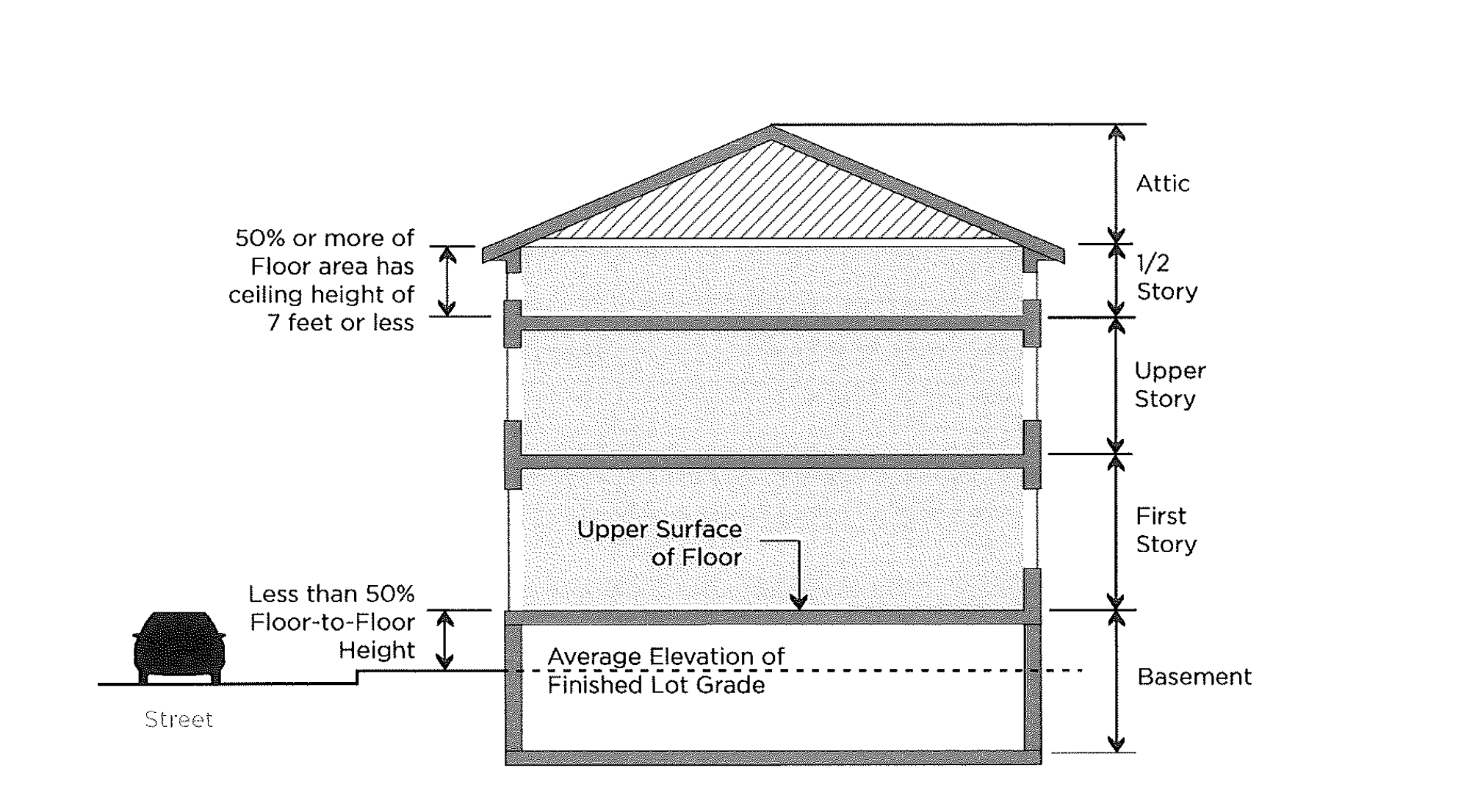
Basement. That portion of a structure at or having one-half or more of its height below grade. The definition of basement includes cellars.
Bay Window. A window that projects outward from the structure, and does not rest on the building foundation or on the ground.
Bedroom. Any room or rooms intended to be used for sleeping purposes that has a permanent closet of sufficient size to hold clothes.
Berm. An earthen mound designed to provide visual interest on a site, screen undesirable views, reduce noise, or fulfill similar purposes.
Block. Defined in Section 2.4.
Blockface. Defined in Section 2.4.
Blue Roof. A roof designed to store water and discharge rainfall.
Buffer. Land area with landscape plantings and other components used to visibly separate one use from another and/or to shield or block noise, lights, or other impacts.
Build-To Line (BTL). A setback line where a certain percentage of building frontage must be located, measured from the applicable lot line. A build-to line of zero means a certain percentage of building frontage must be located at the lot line.
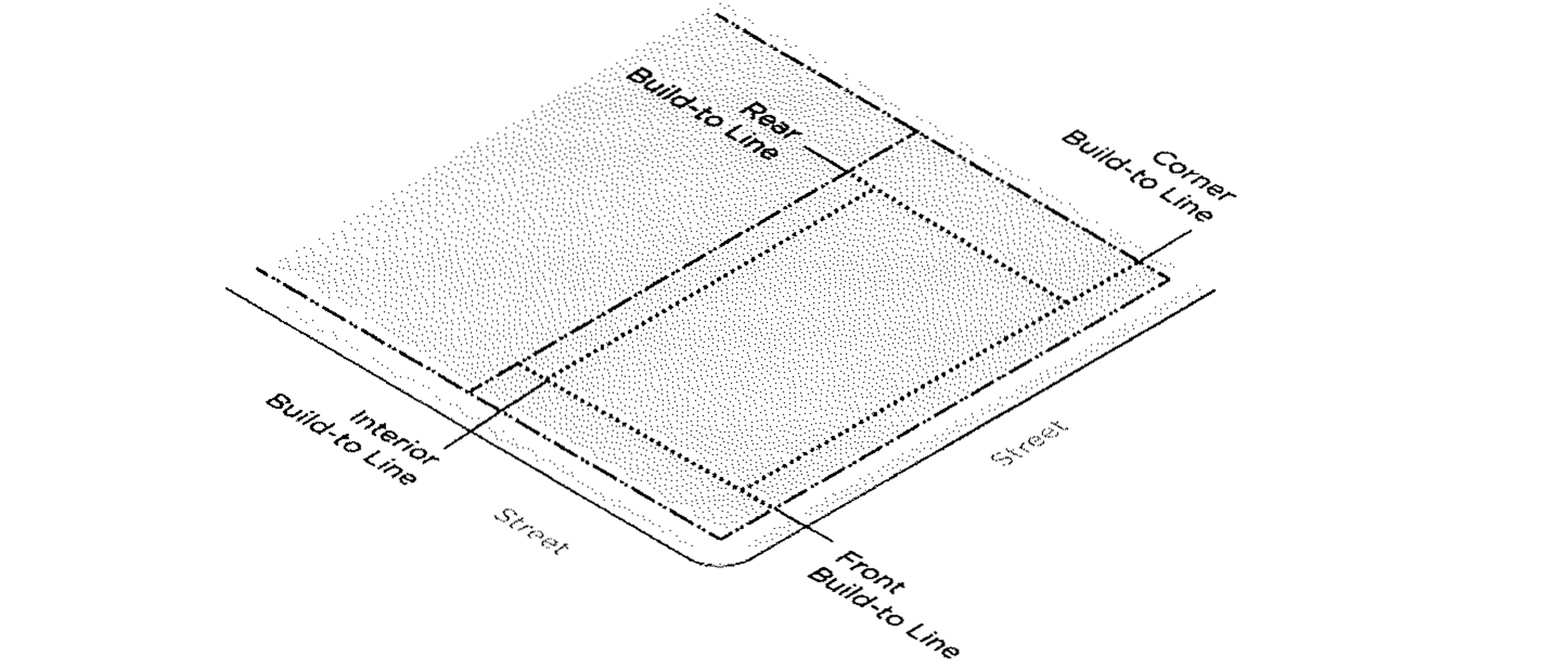
Build-To Zone (BTZ). A required setback where a certain percentage of building frontage must be located, measured as a minimum and maximum range from the applicable lot line.
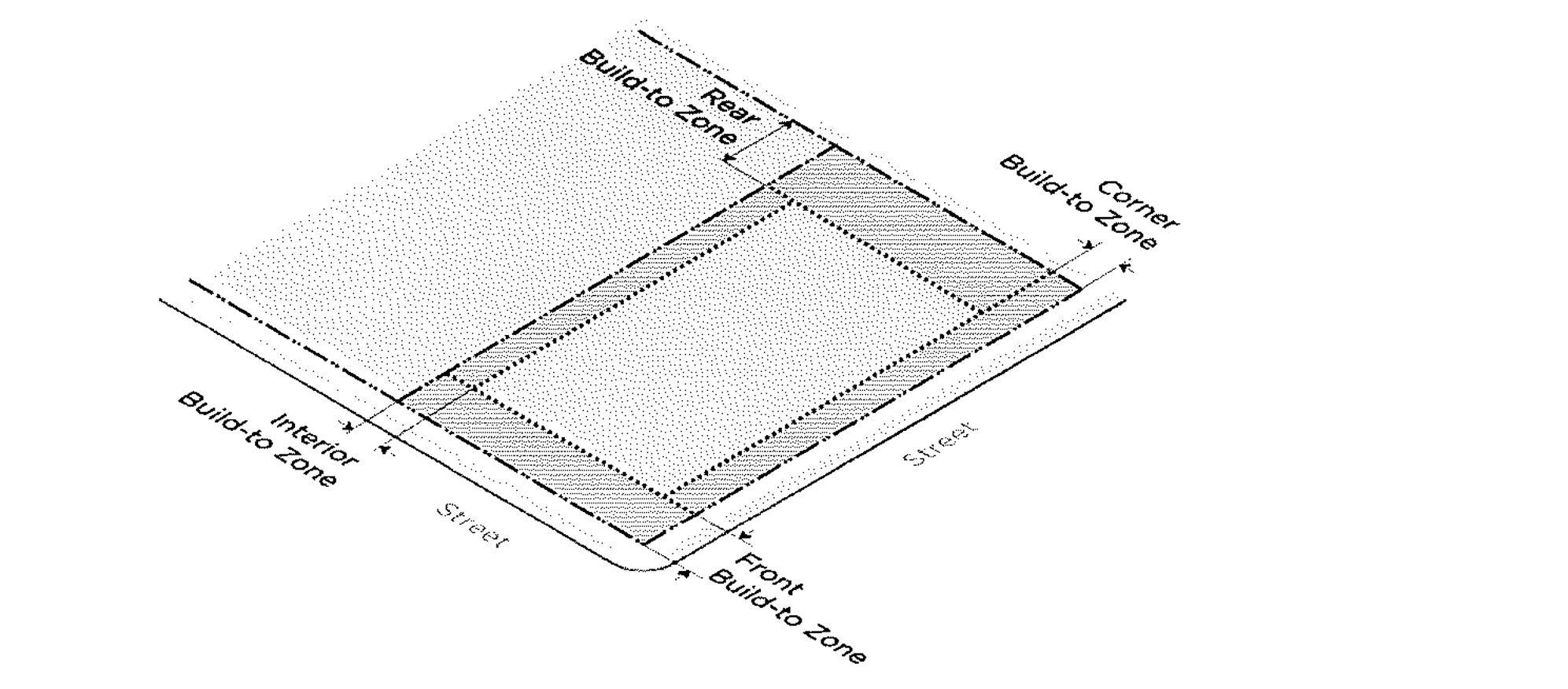
Buildable Area. The space remaining on a lot after the minimum setback requirements of this Ordinance are met.
Building. Any structure built for the enclosure, protection, shelter, or support of persons, animals, or property of any kind and which is permanently affixed to the ground. The definition of building does not include fences.
Building, accessory. See "Accessory Structure" above.
Building, detached. A principal building surrounded by open space on the same lot.
Building, principal. See "Principal Building" below.
Building, residential. A building arranged, designed, used, or intended to be used for a residential occupancy by one or more families.
Building Coverage. Defined in Section 2.4.
Building Height. Defined in Section 2.4.
Bulk. A term used to describe the size and relationships of structures as to area, height, coverage, and shape, location of exterior walls in relation to lot lines, the centerline of streets, other walls of the same structure and to other structures, and to all open spaces relating to the structure.
Business. An occupation, employment, or enterprise that occupies time, attention, labor, and materials, where merchandise is exhibited or sold, or where services are offered.
Comprehensive Plan. The Village of Niles 2030 Comprehensive Plan or its successor.
Canopy - Non-Structural. A roof-like non-structural cover that projects from the wall of a structure with support posts extending to the ground.
Canopy - Structural. A roof-like permanent structure that projects from the wall of a structure with support posts extending to the ground, which serves as an overhanging shelter or shade and is constructed in such a manner as to allow pedestrians or vehicles to pass underneath. The definition of structural canopy includes porte-cocheres.
Caliper. Defined in Section 2.4.
Carport. An open-sided roofed vehicle shelter, usually formed by extension of the roof from the side of a building, but may be freestanding.
Chimney. A vertical shaft of reinforced concrete, masonry, or other approved material enclosing one or more flues, for the purpose of removing products of combustion from solid, liquid, or gaseous fuel.
Cold-frame Structure. A roofed enclosure, typically transparent, used to protect plants from excessively cold or wet weather. A cold-frame structure functions similar to a greenhouse to help extend the growing season.
Co-Location. Placement of wireless telecommunications equipment from more than one service or service provider on a single tower or site.
Commercial Vehicle. Large vehicles used for commercial and/or transportation purposes including, but not limited to, semi-truck tractor units, with or without attached trailers, commercial trailers, buses, tow trucks, construction vehicles, livery vehicles that exceed standard passenger vehicle size, such as limousines, and any truck as defined by 625 ILCS 5/1-211, section 1-211 of the Illinois Motor Vehicle Code.
Construction, New. See Chapter 18 of the Village of Niles Code of Ordinances.
Contiguous. See "abut."
Cutoff. The point at which all light rays emitted by a lamp, light source or luminaire are generally eliminated (cutoff) at a specific angle above the ground, acknowledging that some light trespass may occur.
Deck. A roofless outdoor space built as an aboveground platform projecting from the wall of a structure and connected by structural supports and supported by posts or columns extending to the ground. See also Section 9.3(E).
Diameter Breast Height (DBH). Defined in Section 2.4.
District. Land area of the Village where certain uniform regulations and requirements, or various combinations thereof, apply under the provisions of this Ordinance.
Driveway. An approved vehicle access point leading from public right-of-way to the subject property.
Dwelling. A structure, or portion thereof, designed or used exclusively for human habitation, including single-family dwellings, two-family dwellings, townhouse dwellings, and multi-family dwellings.
Dwelling Unit. One or more rooms, including individualized bathroom and kitchen facilities, which are arranged, designed, and/or used as living quarters for a household.
Easement. Land designed by lawful agreement between the owner(s) of the land and a person(s) for a specified use only by such person(s).
Eave. The projecting lower edges of a roof overhanging the wall of a structure.
Electrical Generator (Private). An accessory device for generating electrical energy for the owner or resident of a lot. Electrical generator does not include accessory solar panels or wind turbines, or any power generating principal use as defined in Article 8.
Encroachment. The extension or placement of any structure, or a component of such, into a required setback.
Erect. To build, construct, attach, hang, place, suspend, or affix.
Exterior Lighting. The illumination of an outside area or object by any man-made device that produces light by any means.
Exterior Stairwell. One or more flights of stairs, and the necessary landings and platforms connecting them, to form a continuous passage from the entryway of one floor or level to another in a structure, located on the exterior of a principle building.
Family. A "family" consists of one (1) or more persons each related to the other by blood, marriage, or adoption (including foster children), together with such relatives of the respective spouses who are living with the family in a single dwelling and maintaining a common household. A family may also be composed of no more than three (3) unrelated persons, provided that such unrelated persons live in a single dwelling and maintain a common household and a single housekeeping unit. A family includes any domestic servants and not more than one (1) gratuitous guest residing with said family; such servants or guest shall be included in the unrelated persons attained by this definition and shall not be in addition thereto.
Fence. A structure used as a boundary, screen, separation, means of privacy, protection, or confinement, and is constructed of wood, metal, wire mesh, masonry, or similar material and is used as a barrier.
Fenestration. The design and placement of windows in a structure.
Floodplain. The area near a river or a stream that floods when water levels reach flood stage.
Garage. A structure, either attached or detached, used for the parking and storage of motor vehicles by a resident of a dwelling unit.
Gazebo. A freestanding outdoor structure constructed of a raised platform and a roof, designed for recreational use and not for habitation.
Glare. Light emitting from a luminaire with an intensity great enough to reduce a viewers' ability to see and cause discomfort.
Grade. Defined in Section 2.4.
Grading. The reshaping of natural land contours, using natural land materials such as soil, gravel, sand, black dirt, etc., for the purpose of eliminating erosion or sedimentation problems, creating or improving surface drainage, providing for the natural aesthetic contouring of property, or to accommodate a building plan by making minor changes in land elevation.
Green Roof. A building roof partially or completely covered with vegetation and a growing medium, planted over a waterproofing membrane. It may also include additional layers such as a root barrier and drainage and irrigation systems.
Greenhouse (Accessory). A structure constructed chiefly of glass, glass-like, or translucent material, cloth, or lath, which is devoted to the protection or cultivation of flowers or other tender plants.
Gross Floor Area (GFA). Defined in Section 2.4.
Hedge. A row of closely planted shrubs, bushes, or other plants forming a boundary.
Home Occupation. Any occupation or profession conducted within a dwelling unit and/or permitted accessory structures that is incidental and secondary to the principal residential use.
Impervious Surface Coverage (ISR). Defined in Section 2.4.
Intensity of Use. Square feet of gross floor area, number of dwelling units, number of employees, or other factor used as a basis for requiring off-street parking or loading facilities.
Lighting. Defined in Section 2.4.
Loading Berth. A space within a loading facility exclusive of driveways, aisles, maneuvering areas, ramps, columns, landscape, and structures for the temporary parking of a commercial delivery vehicle while loading and/or unloading goods or materials.
Lot Area. Defined in Section 2.4.
Lot Line. Defined in Section 2.4.
Lot Line, Corner. Defined in Section 2.4.
Lot Line, Front. Defined in Section 2.4.
Lot Line, Interior. Defined in Section 2.4.
Lot Line, Rear. Defined in Section 2.4.
Lot of Record. A parcel of land that was lawfully recorded prior to the adoption and enactment of this Ordinance. A tax parcel does not establish a lot of record.
Lot Width. Defined in Section 2.4.
Luminaire. A complete lighting unit consisting of a light source and all necessary mechanical, electrical, and decorative parts.
Luminaire, Cutoff Type. A luminaire containing elements such as shields, reflectors, or refractor panels that direct and cutoff a direct view of the light source at a cutoff angle.
Motor Vehicle. Any passenger vehicle, motorcycle, or truck propelled or drawn by mechanical power.
Multi-Tenant Retail Center. A group of three or more commercial establishments that is planned, owned, and/or managed as a single property. The two main configurations of multi-tenant retail centers are large shopping centers or malls and retail strip centers.
New Construction. Modifications to an existing structure shall be considered new construction when the structural integrity of more than 50 percent of the total linear feet of the existing exterior walls has been compromised. This determination shall be in the opinion of the Building Official.
Off-Street Parking. The storage space for a motor vehicle on-site and not a street or other right-of-way.
Outdoor Display And Sales Area. Part of a lot used for outdoor sales and/or display of goods accessory to the principal use.
Outlot. A parcel of land, generally located on the perimeter of a larger parcel of land that is subordinate to the larger parcel for access, parking and drainage purposes.
Owner. A titleholder of record, or if title is held in trust, the trustee of the trust or the person or persons who have acquired any interest in the property by contract or purchase or otherwise.
Parapet. The extension of a false front or wall above a roof-line.
Party Wall. A wall starting from the foundation and extending continuously through all stories to or above the roof, which separates one building from another, but is in joint use by each building.
Patio. A hard surface designed and intended for recreational use by residents or visitors and not used as a parking space.
Pergola. A freestanding, open structure that forms a partially shaded pedestrian walkway, passageway, or sitting area, and is constructed of a semi-open roof and vertical posts that support cross-beams and an open lattice.
Person. For the purposes of this Ordinance, any individual, corporation, association, firm, partnership, or joint venture.
Pool. A structure, which may be built above-ground or in-ground, that is filled with water and used for swimming.
Porch. An architectural feature that projects from the exterior wall of a structure, has direct access to the street level of the building, and is covered by a roof or eaves.
Porch - Unenclosed. A porch that is not enclosed by walls, screens, lattice, or other material.
Porch - Enclosed. A porch enclosed by walls, screens, lattice, or other material. A screened-in porch is an enclosed porch.
Property Line. The lines bounding a lot of record.
Principal Building. A non-accessory structure which the principal use of the lot on which it is located occupies.
Principal Use. The main use of a structure or lot as distinguished from an accessory use.
Recreational Vehicle. Any vehicle or boat designed for temporary living quarters, recreation, or temporary human habitation and not used as a commercial vehicle, including, but not limited to, the following: boat/watercraft, camper trailer, conversion vans, motorized trailer, off-the-road vehicle, racing car or cycle, travel trailer, and truck camper.
Roofline. The top edge of a roof or building parapet, whichever is higher, excluding any cupolas, pylons, chimneys or minor projections.
Satellite Dish Antenna. A dish antenna designed for transmitting signals to a receiver or receiving station or for receiving television, radio, data, communication or other signals from other antennas, satellites or other services.
Setback. Defined in Section 2.4.
Setback, Front. Defined in Section 2.4.
Setback, Interior Side. Defined in Section 2.4.
Setback, Corner Side. Defined in Section 2.4.
Setback, Rear. Defined in Section 2.4.
Setback, Reverse Corner Side. Defined in Section 2.4.
Shed. An accessory structure, often purchased pre-built or as a kit in pre-fabricated sections, that is not designed to be served by heat or plumbing and does not need to be placed on a permanent foundation. A shed is typically intended to store lawn, garden, or recreational equipment.
Single-room occupancy building. Any dwelling or part thereof designed or used primarily for single-room occupancy, containing five or more single-room living units, and which is occupied by the same tenants for an uninterrupted period of not less than 32 days.
Single-room occupancy unit. A room used or intended to be used as a residential housekeeping unit by not more than two occupants for living and sleeping, with or without cooking facilities, that contains not more than one habitable room consisting of not more than 250 square feet of floor area excluding from the calculation of floor area any kitchen having less than 70 square feet of floor area.
Solar Panels. Equipment used for solar energy production system that utilizes solar collectors to convert solar energy from the sun into thermal, mechanical, or electrical energy.
Stacking Space. A space specifically designed and designated as a waiting area for vehicles patronizing a drive-through facility or service bay.
Stoop. An exterior floor, typically constructed of stone, concrete, and/or masonry, with a finished floor elevation higher than the adjacent ground level, often with steps leading up to it, and utilized primarily as an access platform to a structure. A stoop may be roofed and designed with railings, but cannot be enclosed. A stoop is also referred to as a portico.
Story. Defined in Section 2.4.
Story, Half. Defined in Section 2.4.
Street. A public or private right-of-way that affords a primary means of vehicular access to abutting property, but does not include alleys or driveways.
Street Frontage. A lot line or the length of a lot line that is also the line of any public or private right-of-way, excluding alleys.
Structural Alteration. Any change, other than incidental repairs, which would prolong the life of supporting members of a structure, such as the addition, removal, or alteration of bearing walls, columns, beams, girders, or foundations.
Structure. Anything constructed or erected on the ground or attached to something having a permanent location on the ground including but not limited to buildings, fences, signs, sheds, or similar uses.
Temporary Structure. Any structure that is not permanently located, placed, or affixed in the place where it is or where it is intended to be placed.
Trellis. A frame made of bars of wood or metal crossed over each other, fixed to a wall, to support vines or climbing plants.
Unified Control. The combination of two or more tracts of land wherein each owner has agreed that his tract of land will be developed under the same development approvals.
Use. The purpose or activity for which the land or structure is designed, arranged, or intended, or for which it is occupied or maintained.
Use, accessory. See "Accessory Use" above.
Use, nonconforming. Any use of a building or premises which, on the effective date of this ordinance, does not, even though lawfully established, comply with all of the applicable use regulations as set forth herein for the zoning district in which such building or premises is located.
Use, permitted. Any building, structure, or use which on the effective date of this ordinance complies with the applicable regulations governing permitted uses of the zoning district in which such building, structure, and use is located.
Use, principal. The main use of land or building as distinguished from an incidental or accessory use.
Use, special. Any building, structure, or use which on the effective date of this ordinance complies with the applicable regulations governing special uses of the zoning district in which such building, structure and use is located.
White Roof. A roof designed to deliver high solar reflectance, reducing heat transfer to the building and the ability to radiate absorbed, or non-reflected solar energy.
Wind Turbine. Equipment used for wind energy production, conversion, and distribution system generally consisting of a tower designed with horizontal or vertical axis blades and associated equipment.
Yard. Defined in Section 2.4.
Yard, Front. Defined in Section 2.4.
Yard, Interior Side. Defined in Section 2.4.
Yard, Corner Side. Defined in Section 2.4.
Yard, Rear. Defined in Section 2.4.
Yard, Reverse Corner Side. Defined in Section 2.4.
Zoning Lot. A lot or combination of lots that is designated by its owner or developer to be used or developed. A zoning lot may or may not coincide with a lot of record. A tax parcel does not establish a zoning lot.
(Ord. No. 2018-29, § 2(Exh. 1), 6-26-18)
2.4 - RULES OF MEASUREMENT
This section provides the rules of measurement for the dimensional standards and locational characteristics within the Ordinance.
A.
Block and Blockface.
1.
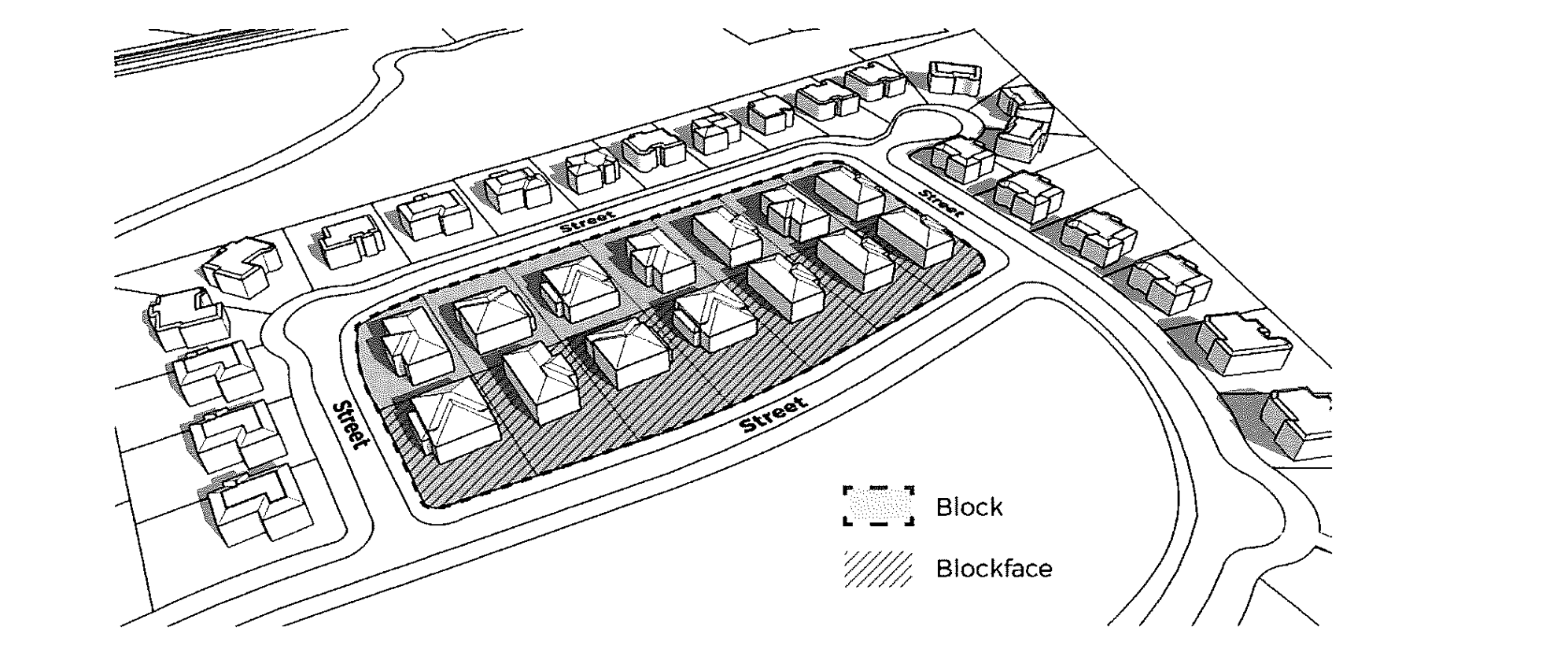
A block is a tract of land bounded by streets, or a combination of streets and railroad rights-of-way, or municipal boundary lines.
2.
Blockface is measured as that portion of a block or tract of land facing the same side of a street and lying between the closest intersecting streets, or between an intersecting street and a railroad right-of-way or municipal boundary line.
B.
Building Coverage. Building coverage of a lot is the area of a lot occupied by the principal and accessory buildings. Building coverage is calculated as the percentage of principal and accessory building footprint area to the total area of the lot.
C.
Building Height and Story.
1.
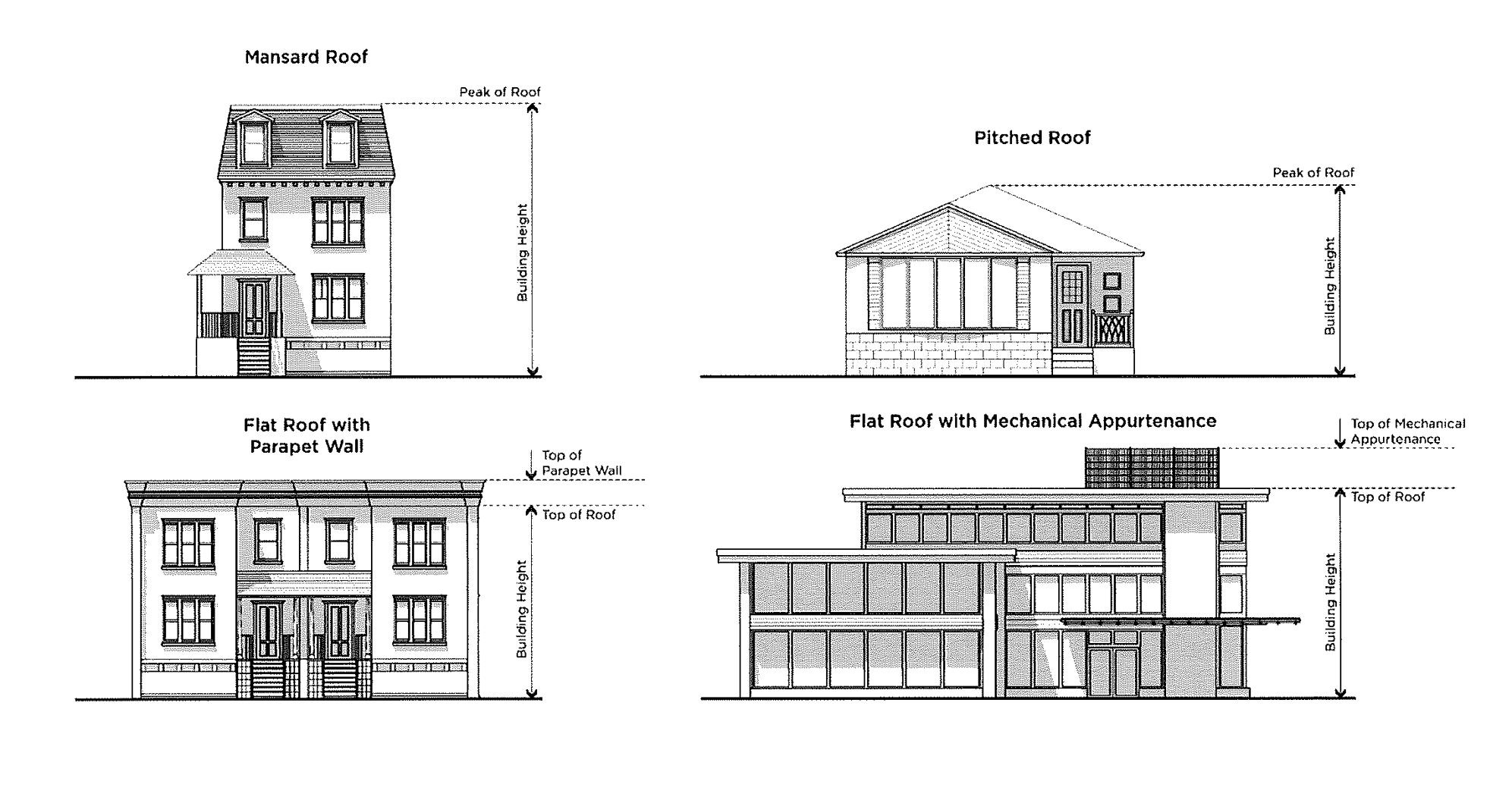
Building height is measured as the vertical distance from the adjacent grade of the front of a structure to the peak of the roof.
2.
The following structures or parts thereof are exempt from the height limitations of the districts or any individual height restrictions of the use, unless otherwise limited by any federal or state height restriction.
a.
Public utility poles, towers, and wires.
b.
Water tanks and standpipes.
c.
Building appurtenances such as chimneys, parapet walls, skylights, steeples, flag poles, smokestacks, cooling towers, elevator bulkheads, fire towers, monuments, water towers, stacks, stage towers, or scenery lofts, tanks, ornamental towers and spires, roof gardens, recreational facilities, necessary mechanical appurtenances, or penthouses to house mechanical appurtenances. However, if such appurtenances occupy more than 25% of the total roof area, they are counted toward building height.
3.
A story is each level of a building included between the surface of any floor and the surface of the floor next above it, or if there is no floor above, then the space between the floor and the ceiling next above it. A half-story is the uppermost story or partial story of a structure where 50% or more of the floor area has a ceiling height of seven feet or less.
D.
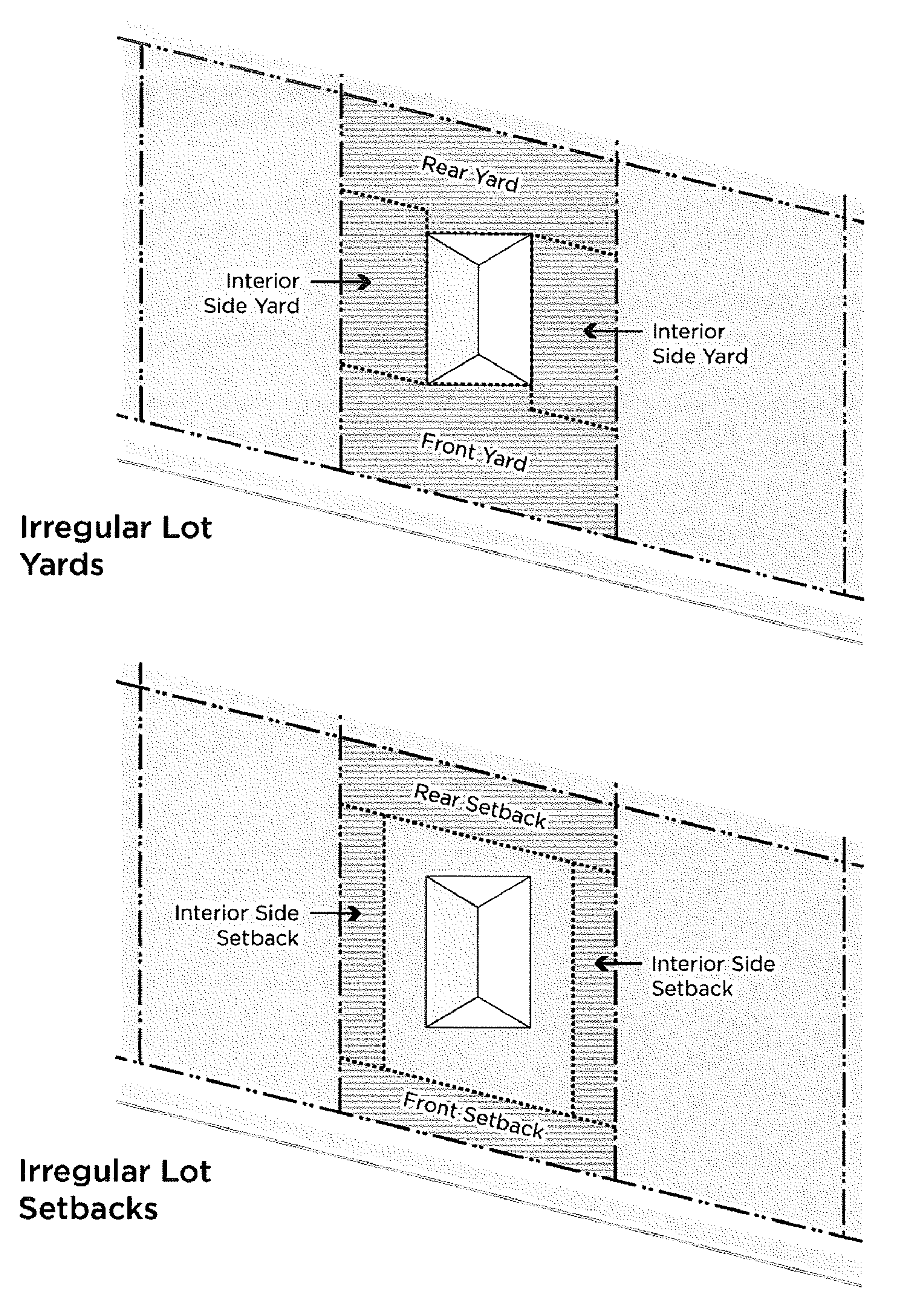
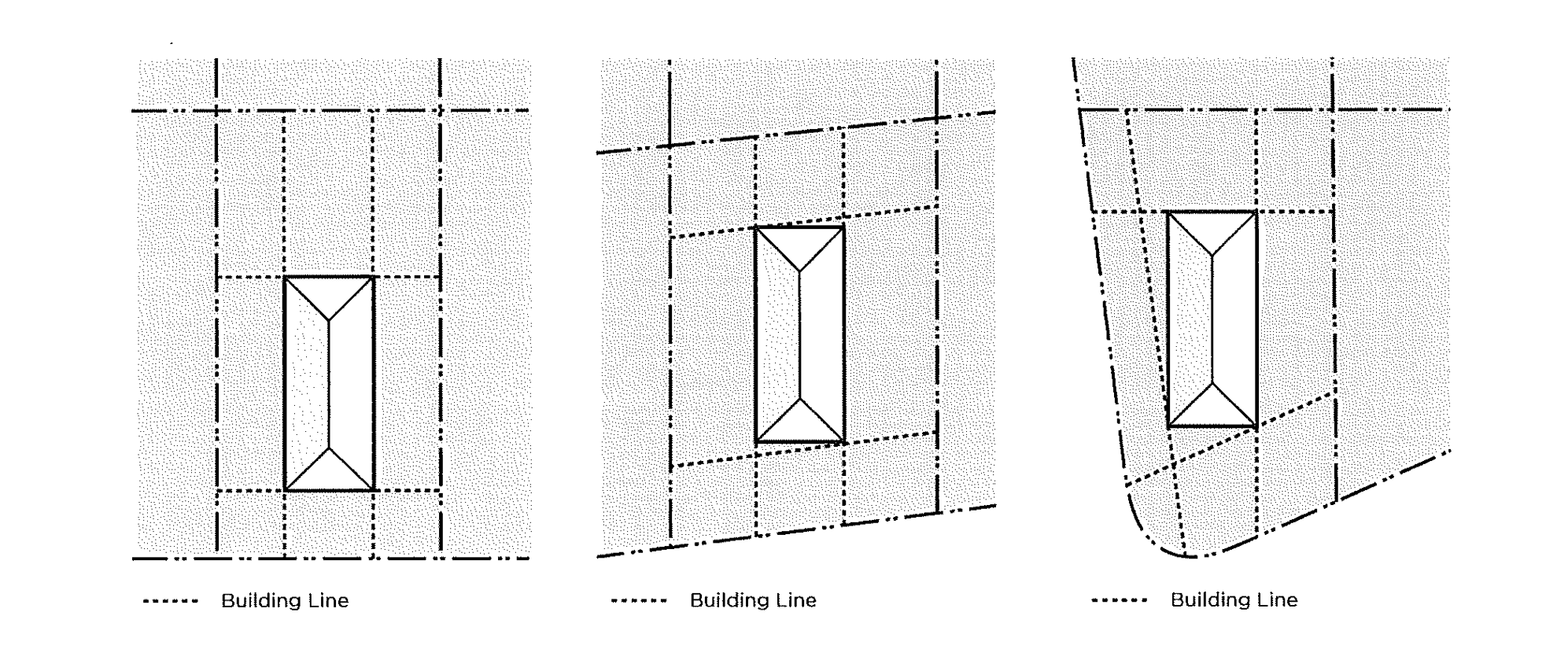
Building Line. A line established at the building wall of a structure between lot lines. For the purposes of establishing a building line, the building wall does not include permitted encroachments or architectural features, such as bay windows, eaves, and steps and stoops. For irregular lots where the lot lines are not parallel, the building line is established as a line from the point of the structure closest to the lot line, drawn parallel to the applicable lot line.
E.
Caliper. The diameter of the trunk of a tree measured in inches at a point measured 12 inches above the ground.
F.
Diameter at Breast Height (DBH). The diameter of the trunk of a mature and established tree measured in inches at a point four feet above ground level.
G.
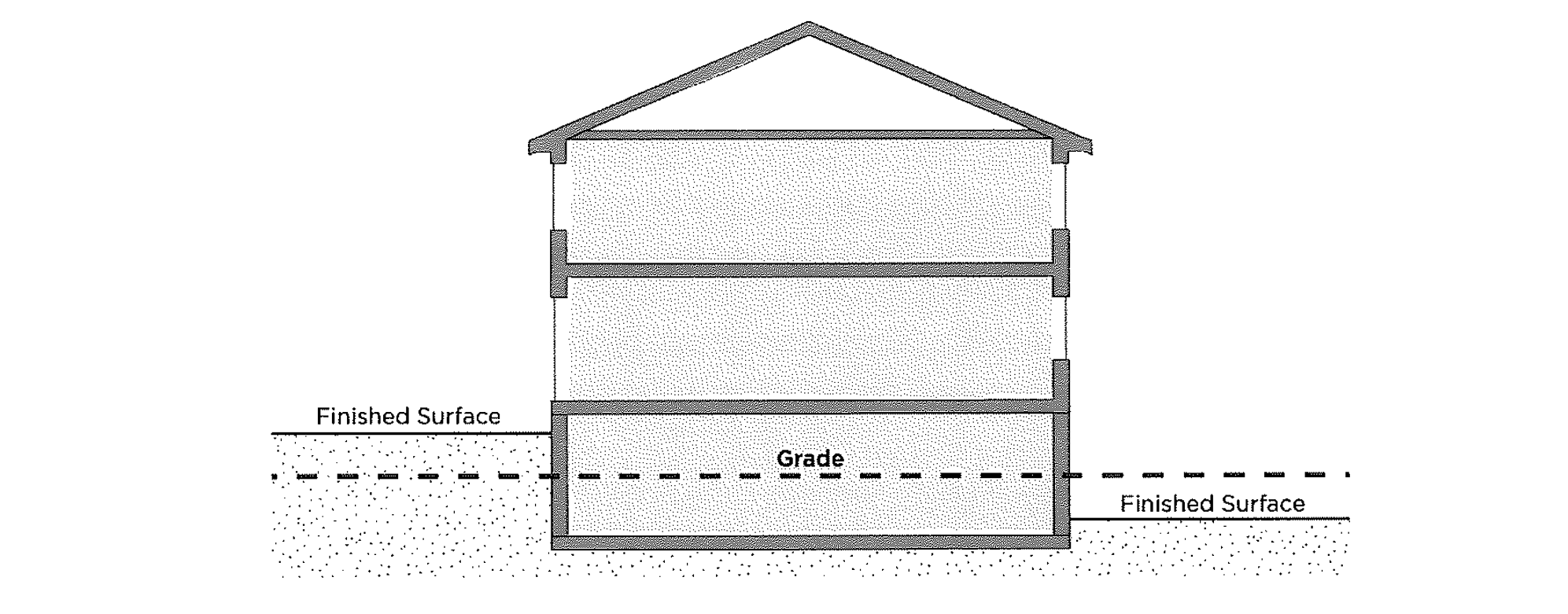
Grade. Grade is measured as the average level of the finished surface of the ground adjacent to the exterior walls of the structure.
H.
Gross Floor Area (GFA). The gross floor area (GFA) of a structure is the sum of the gross horizontal areas of all floors of the structure as measured from the exterior faces of the exterior walls or from the centerline of party walls separating two buildings.
I.
Impervious Surface Coverage (ISR). Impervious surface coverage is a measure of that portion of a site that is occupied by structures, pavement, and other impervious surfaces that do not allow for the absorption of water. Impervious surface coverage is calculated as the percentage of all impervious surface area against the total area of the lot. Impervious surface areas include gravel and open water surface areas, such as water features and swimming pools. Credit may be granted for pervious pavers and other alternative pavement systems subject to the standards established by the Village's Engineering Division.
J.
Lighting.
1.
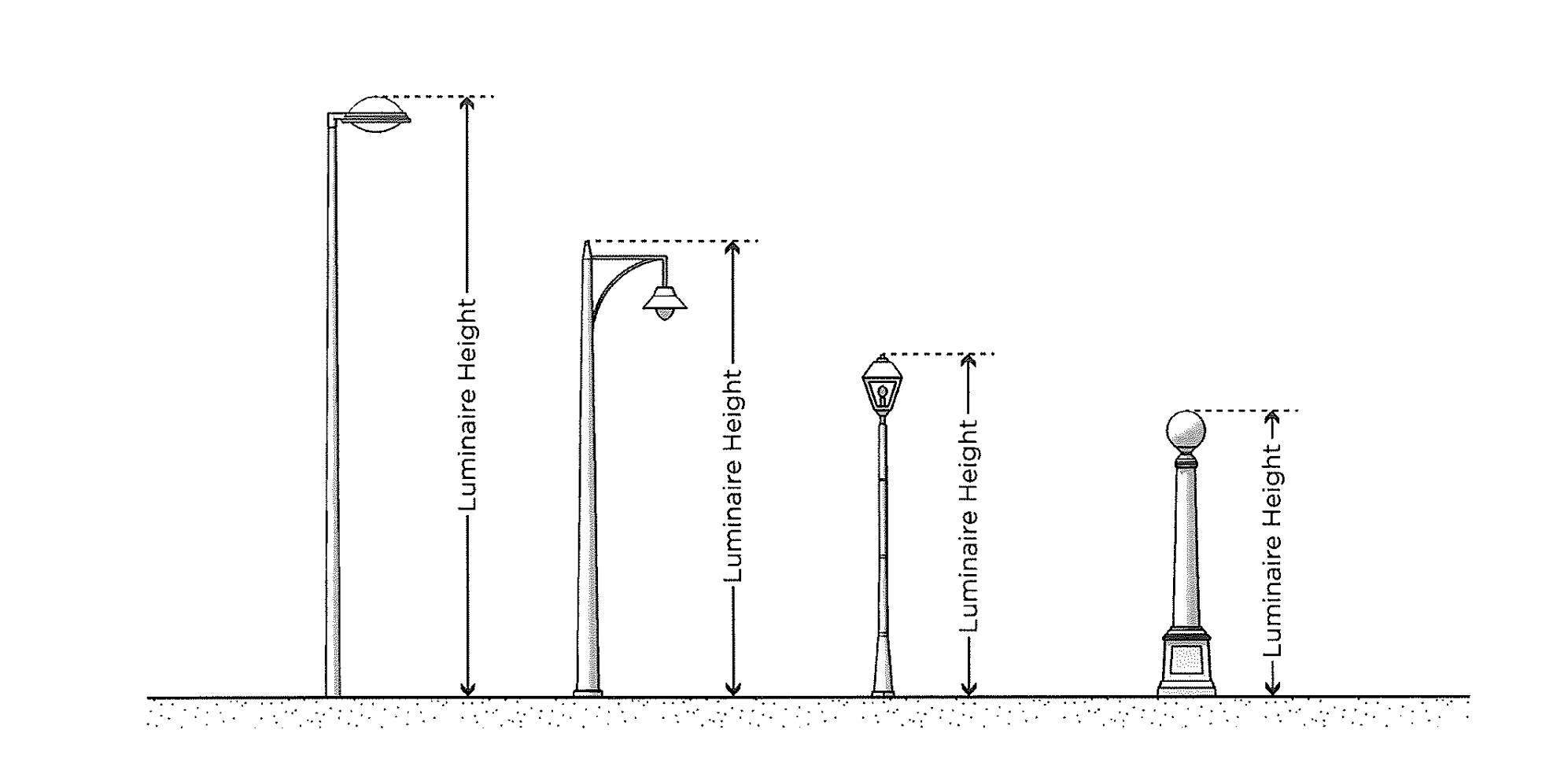
Luminaire Height. The height of a luminaire is measured as the vertical distance from the ground directly below the centerline of the luminaire to the top of the pole or luminaire, whichever the case may be.
2.
Footcandle. A footcandle (FC) is a unit of illumination produced on a surface, all points of which are one foot from a uniform point source of one standard candle. Footcandle is measured utilizing a direct reading, portable light meter mounted in a horizontal position.
K.
Lot.
1.
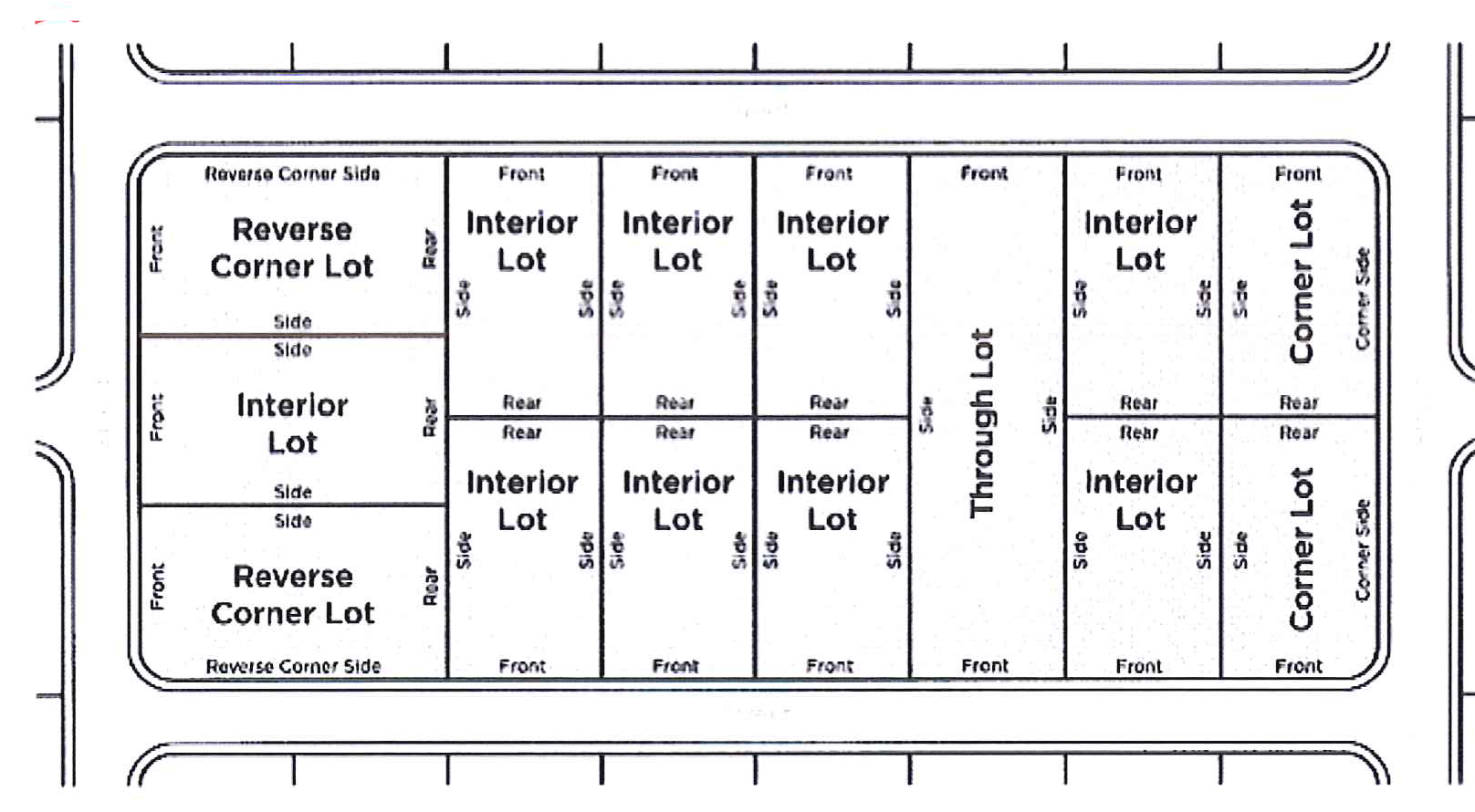
An interior lot is a lot other than a corner, reverse corner, or through lot, typically bounded by two interior side lot lines.
2.
A corner lot is a lot situated at the junction of, and abutting on, two or more intersecting streets.
3.
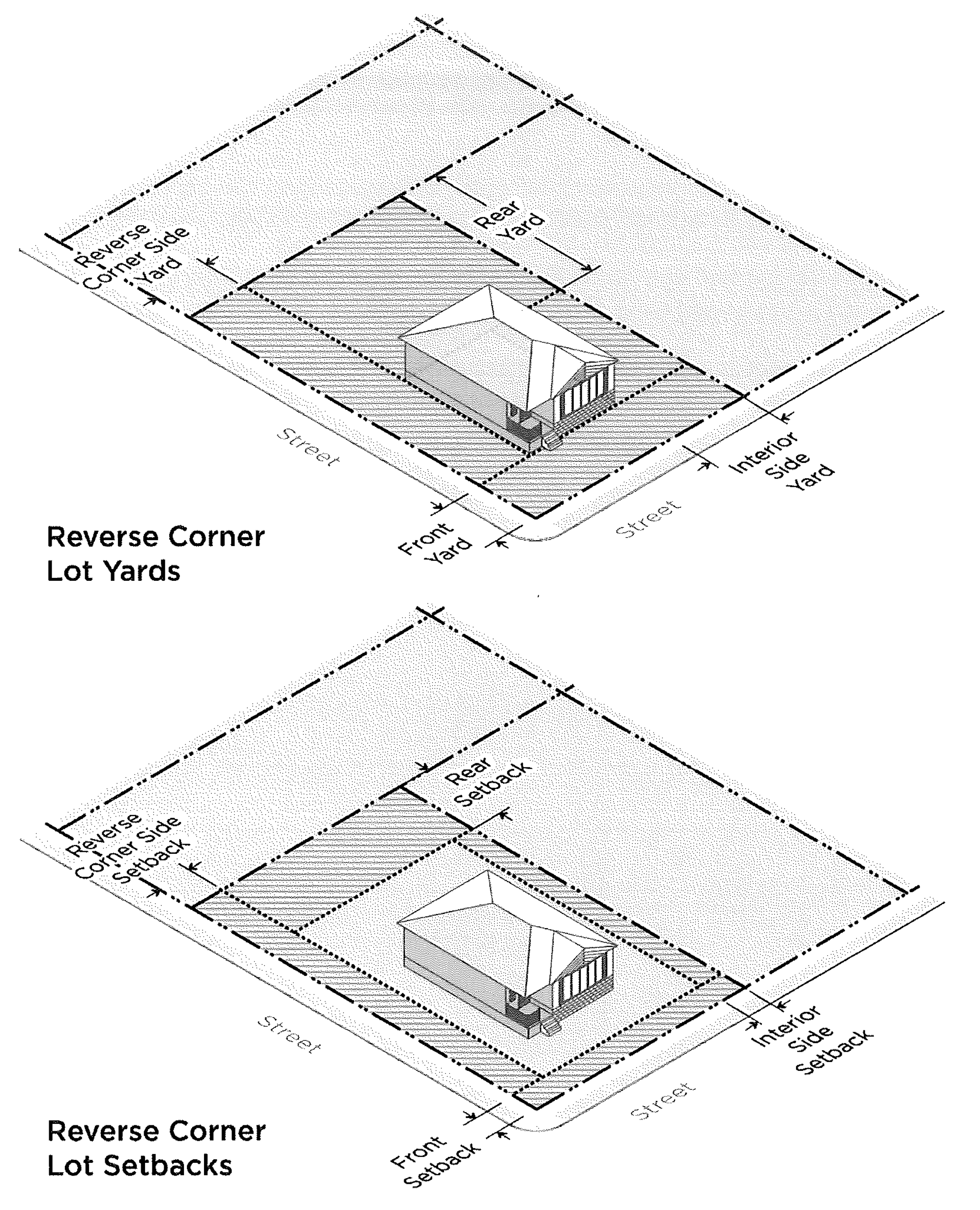
A reverse corner lot is a corner lot where the side lot line adjoining a street is substantially a continuation of the front lot line of the first lot to its rear.
4.
A through lot is a lot that has frontage on two non-intersecting streets creating two front lot lines.
L.
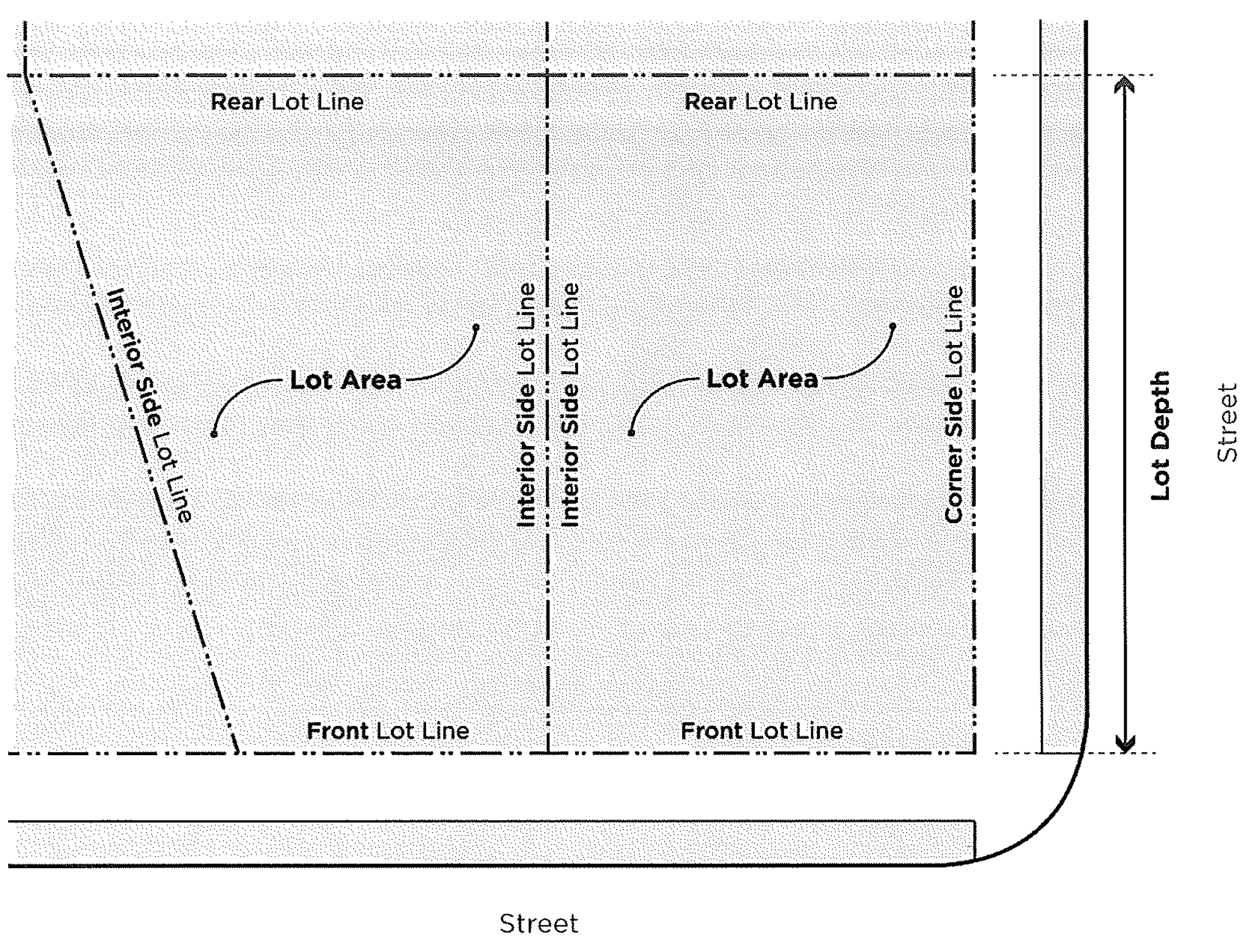
Lot Area. The total area of a lot calculated as the total area bounded by all lot lines.
M.
Lot Line. A lot line is the property line of any lot. Lot lines are located as follows.
1.
Front Lot Line
a.
The front lot line of an interior lot is the lot line that abuts a street.
b.
The front lot line of a corner lot is the shortest lot line that abuts a street.
c.
The front lot line of a through lot is established as follows:
i.
For through lots where a front lot line has been previously established on one or more lots located on the same blockface, the street designated as the front lot line of the through lots in such blockface is the front lot line. Previously established means one or more structures along the blockface have established front entrances along that lot line.
ii.
For through lots where a front line has not been previously established on one or more lots on the same blockface or where all lots have not established front lot lines along the same street, the front lot line will be designated by the Director of Community Development.
2.
Interior Side Lot Line. The interior side lot line is a lot line not abutting a street that is not a rear lot line.
3.
Corner Side Lot Line. The lot line that is perpendicular or approximately perpendicular to the front lot line, which is the longer abutting street lot line of a corner lot.
4.
Rear Lot Line. The rear lot line is that lot line which is opposite and most distant from and is, or most nearly is, parallel to the front lot line.
N.
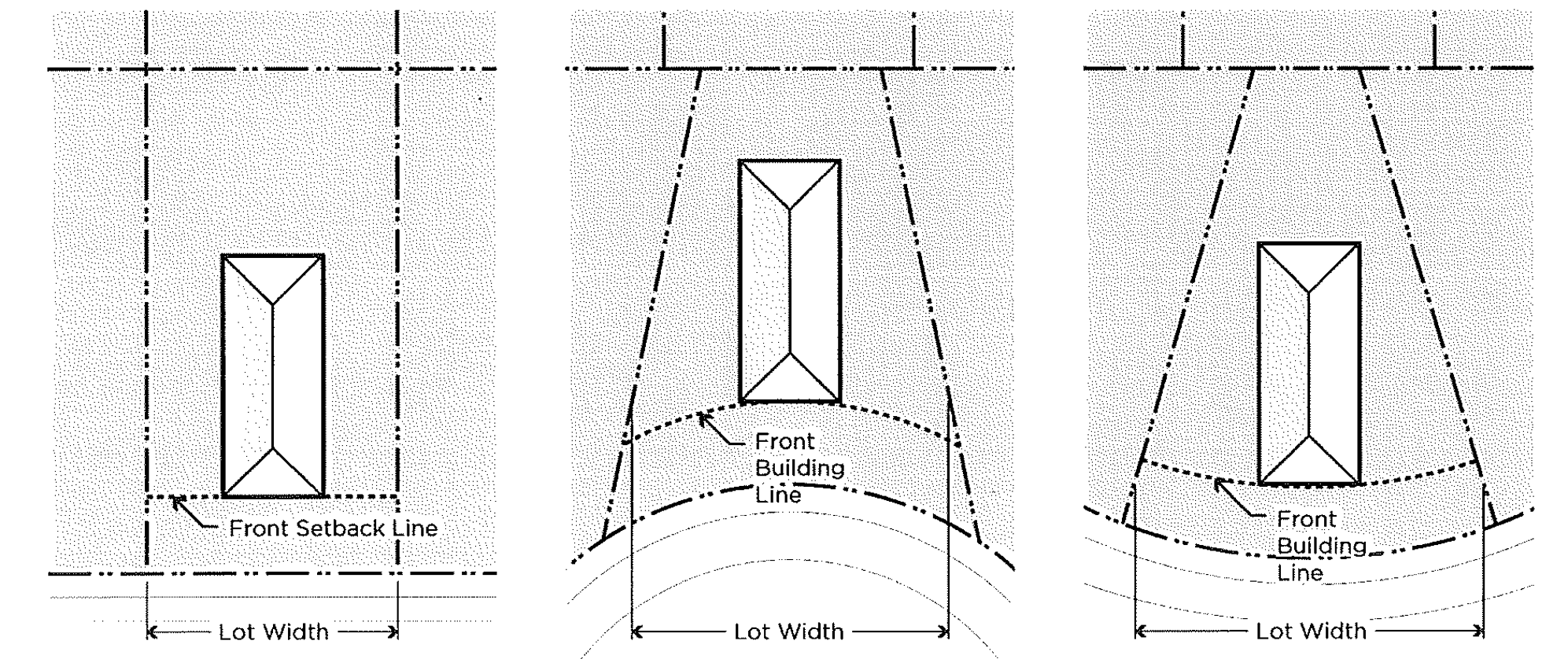
Lot Width. Lot width is the horizontal distance between the side lot lines measured at right angles to its depth along a straight line parallel to the front lot line at the minimum front setback line. For irregular lots, such as cul-de-sac lots or pie-shaped lots, lot width is measured at the front building line of the structure between side lot lines.
O.
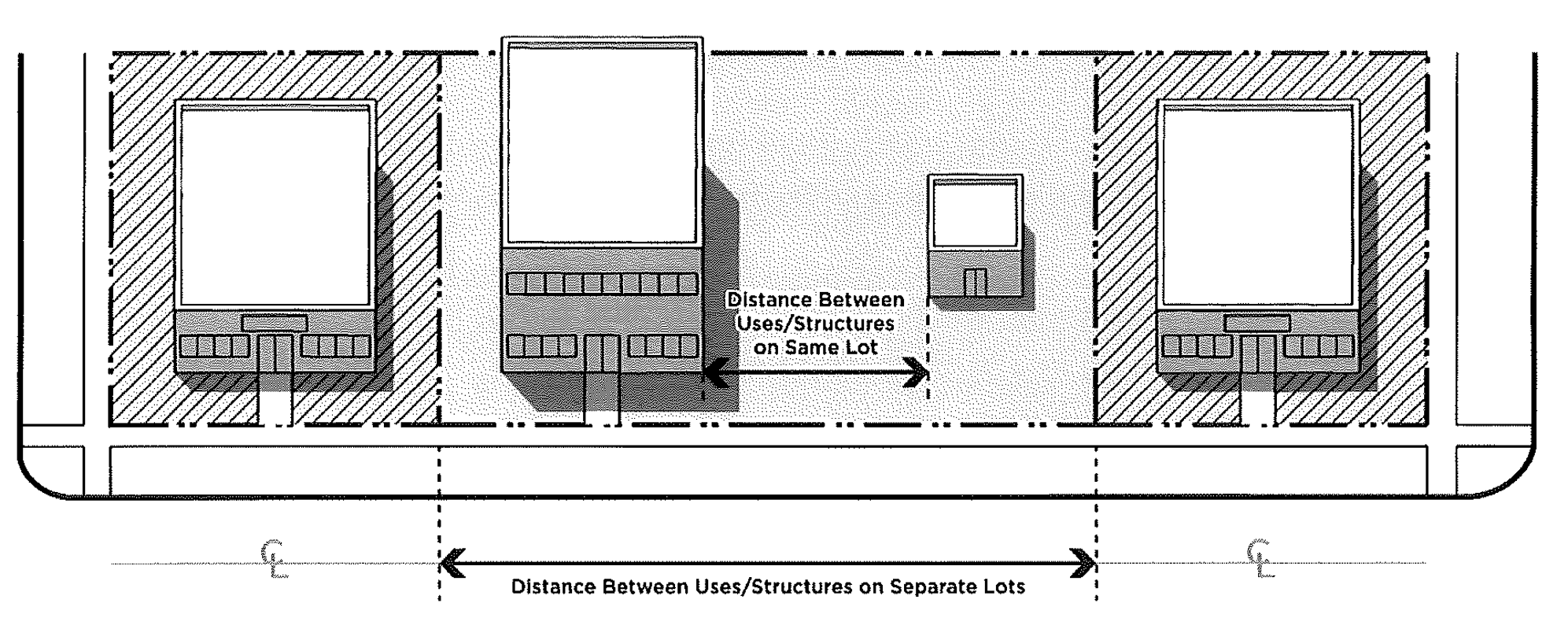
Separation/Required Distance Between. When the Ordinance requires separation between structures or uses located on separate lots, such separation is measured between the closest lot lines of the two lots. When the Ordinance requires separation between structures or uses located on the same lot, such separation is measured between building walls.
P.
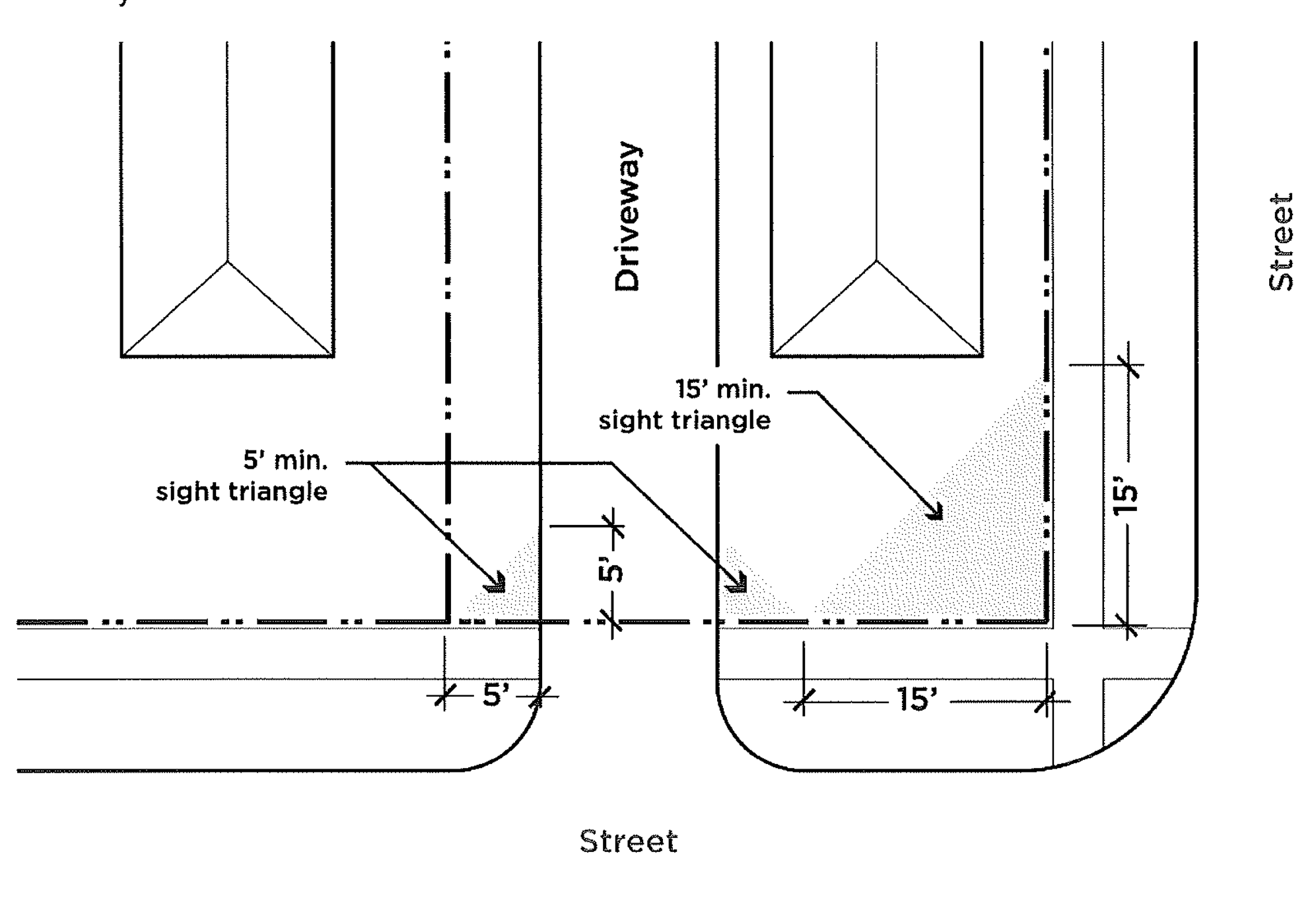
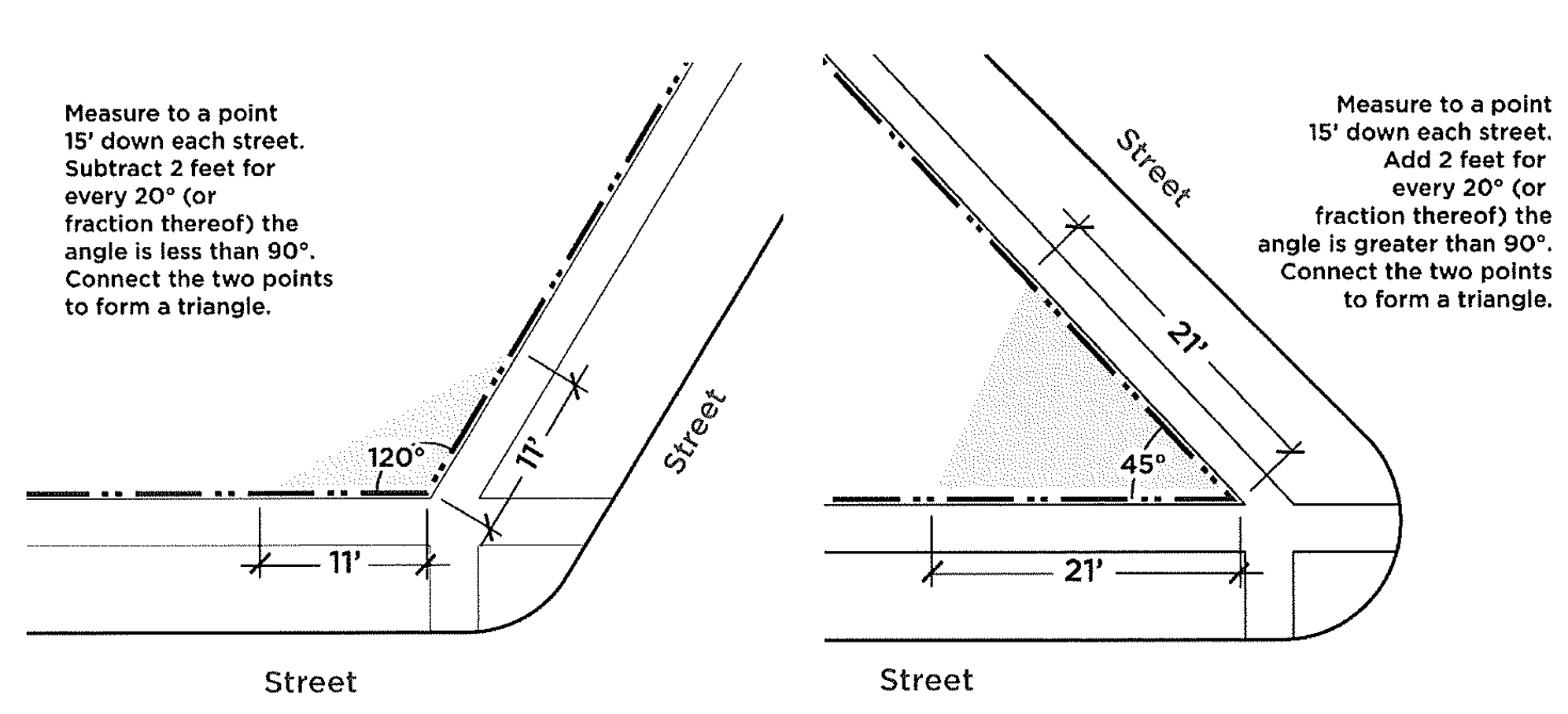
Sight Triangle. A sight triangle is located at the intersection of the street or alley right-of-way, access easement, and/or driveway pavement, is measured at a line joining the points at a distance as follows:
a.
Five feet from the point of the intersection of driveways and the lot line, as measured along the lot line and edge of driveway pavement.
b.
For intersections forming a 90-degree angle, 15 feet down each street measured along the right-of-way.
c.
For intersections forming an angle greater than 90 degrees, 15 feet down each street measured along the right-of-way, minus two feet for each 20 degrees or fraction thereof the angle exceeds 90 degrees.
d.
For intersections forming an angle less than 90 degrees, 15 feet down each street measured along the right-of-way, plus 2 feet for each 20 degrees or fraction thereof the angle is less than 90 degrees.
Q.
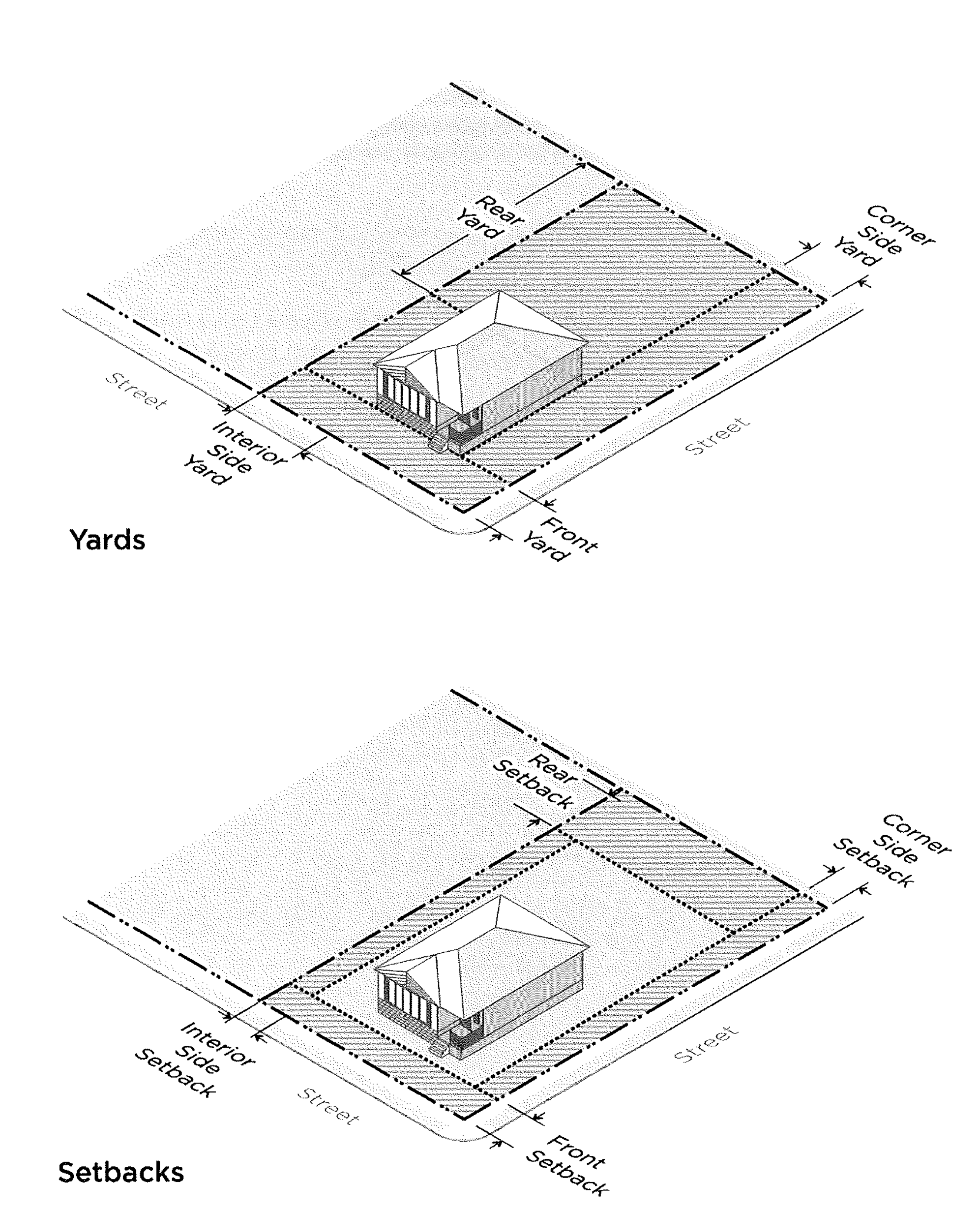
Yards and Setbacks. A yard is the open space area between a principal building and the adjoining lot line. A required setback may be equal to or lesser than a yard and is the required minimum distance a principal building must be located from a lot line, which is unoccupied and unobstructed by any portion of a principal building or accessory structure, unless permitted by this Ordinance. A setback extends along a lot line for the minimum depth specified by the zoning district in which such lot is located.
The minimum yard space required for one structure shall not again be considered as yard space for another adjoining structure.
No lot shall be reduced in area so that the yards or other open space become less than required by this ordinance.
a.
Front Yard and Setback. A front yard is located between a principal building and the front lot line. A front setback is the required minimum distance per the zoning district that a principal building must be located from the front lot line. The front yard and setback extends the full width of the lot between side lot lines measured perpendicular to the front lot line.
b.
Interior Side Yard and Setback. An interior side yard is located between a principal building and the interior side lot line. An interior side setback is the required minimum distance per the zoning district that a principal building must be located from the interior side lot line. The interior side yard and setback extends along the interior side lot line between the front and rear setback lines, measured perpendicular to the interior side lot line.
c.
Corner Side Yard and Setback. A corner side yard is located between a principal building and the corner side lot line. A corner side setback is the required minimum distance per the zoning district that a principal building must be located from the corner side lot line. The corner side yard and setback extends along the corner side lot line between the front setback line and the rear lot line, measured perpendicular to the corner side lot line.
d.
Rear Yard and Setback. A rear yard is located between a principal building and the rear lot line. A rear setback is the required minimum distance per the zoning district that a principal building must be located from the rear lot line. In the case of an interior lot, the rear yard and setback extends between interior side lot lines, measured perpendicular to the rear lot line. In the case of a corner lot, the rear yard and setback extends between the interior side lot line to the required corner side setback, measured perpendicular to the rear lot line.
e.
Reverse Corner Side Yard and Setback. A reverse corner side yard is located between a principal building and the corner side lot line, where the corner side lot line adjoining a street is substantially a continuation of the front lot line of the first lot to its rear. A reverse corner side setback is the required minimum distance per the zoning district that a principal building must be located from corner side lot line. The reverse corner side yard and setback extends along the corner side lot line between the front setback line and the rear lot line, measured perpendicular to the corner side lot line. For reverse corner lots, the lot width dimension used to determine the reverse corner side setback is measured at the shorter of the two street abutting lot lines; the "corner side setback" dimensional requirement in the district applies to the reverse corner side setback.