
Niles City Zoning Code
SECTION 6
- OFFICE, INDUSTRIAL, & CULTURAL/ENTERTAINMENT DISTRICTS
6.1 - PURPOSE STATEMENTS
A.
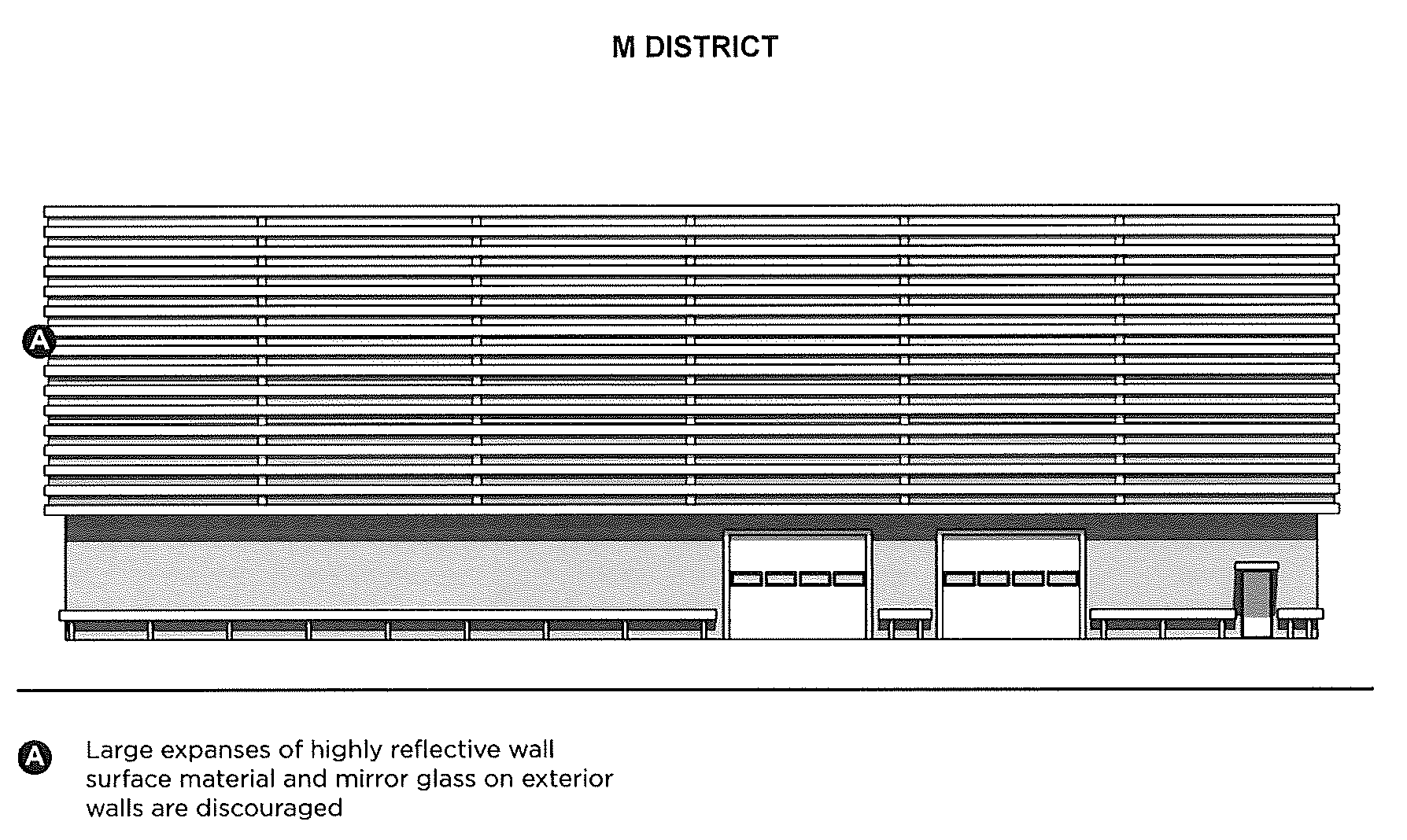
M Limited Industrial District
The purpose of the M Limited Manufacturing Zoning District is to provide for general industrial, research and development, warehousing, wholesaling, and office uses. Industrial uses in the M District may produce noise, vibration, odor, heat glare, and other external effects perceptible to adjacent land users, but are generally not offensive or noxious. Development standards are intended to buffer surrounding non-industrial uses from the impact of the industrial uses within the district.
B.
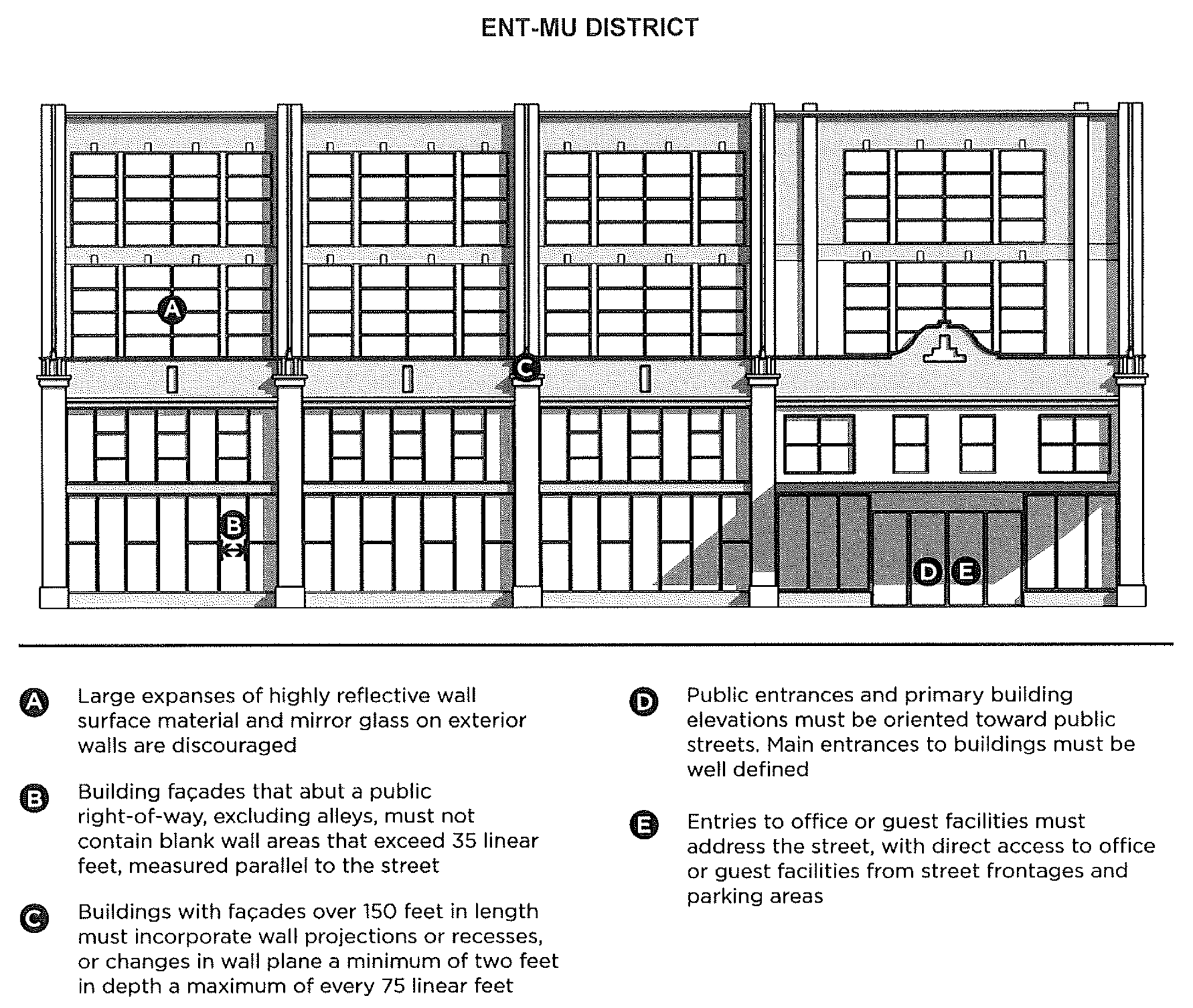
ENT-MU Cultural/Entertainment-Mixed-Use District
The purpose of the ENT-MU Entertainment Mixed-Use Zoning District is to provide for a mix of light industrial uses found in the M District, as well as certain compatible non-industrial uses that are more intensive, such as recreational and entertainment uses and retail establishments consistent with the Village's plans for the Touhy Triangle cultural and entertainment district. Development standards are intended to buffer surrounding less intense uses from the impact of the industrial and commercial uses within the district.
C.
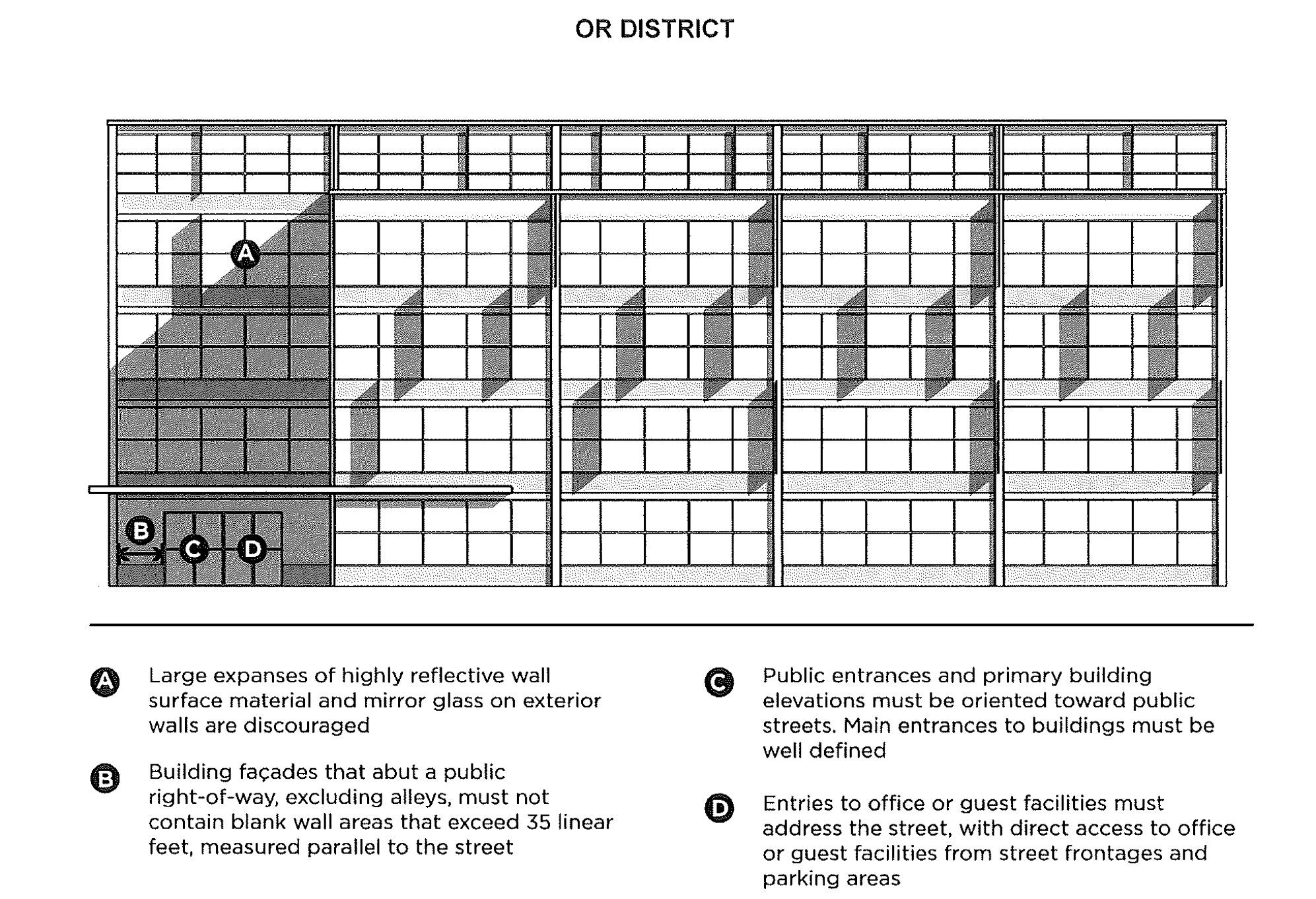
OR Office/Research District
The purpose of the O-R Office-Research Zoning District is to accommodate research and development facilities and larger office structures with limited industrial uses allowed that have no outside impacts. Examples of typical O-R District uses might include the headquarters of a large corporation, large research and development facilities, or office parks of substantial size.
6.2 - USES
Section 8 lists permitted and special principal uses and temporary uses for the office and industrial districts.
6.3 - DIMENSIONAL STANDARDS
A.
Table 6-1: Office and Industrial Districts Dimensional Standards establishes the dimensional standards for the office and industrial districts. These regulations apply to all uses within each district unless a different standard is listed for a specific use. Within certain districts, the design standards of Section 6.4 also apply.
B.
No buildings, structures, or parcels of land, which is used for the manufacturing, fabrication, assembly, disassembly, repairing, storing, cleaning, or servicing of materials, products, or goods shall be located within 50-feet of any lot line of a residential district; and when directly across a street from a residential district, there shall be provided for such uses a yard along such street of not less than 40 feet in depth.
6.4 - DESIGN STANDARDS
The following design standards apply to new construction, substantial repair or rehabilitation meant to remedy damage or deterioration of the exterior façade of an existing structure, and additions to an existing structure. However, only those standards that relate to the specific repair, rehabilitation, or addition apply. These standards do not apply to interior remodeling.
A.
Building Design Standards
Table 6-2: General Building Design Standards indicates the applicability of general building design standards to the office and industrial districts. An "X" indicates that the standard is applicable in the district indicated. The absence of an "X" indicates that the standard is not applicable.
B.
Building Material Restrictions
The following building materials are prohibited on any façade facing a public right-of-way, excluding alleys, or any façade that abuts a lot in residential district. However, such materials may be used as decorative or detail elements for up to 25% of the façade, or as part of the exterior construction that is not used as a surface finish material.
1. Plain concrete block
2. Corrugated metal
3. Aluminum, steel or other metal sidings
4. Exposed aggregate (rough finish) concrete wall panels
5. Exterior insulating finish systems (EIFS)
6. T-111 composite plywood siding
7. Plastic
8. Vinyl
6.5 - GENERAL STANDARDS OF APPLICABILITY
A.
Site Development Standards
See Section 9 for additional on-site development standards and requirements, such as exterior lighting, accessory structures and uses, and permitted encroachments.
B.
Off-Street Parking and Loading
See Section 10 for off-street parking and loading standards and requirements.
C.
Landscape
See Section 11 for landscape, buffering and screening standards and requirements.
D.
Signs
See Chapter 78 of the Village Code for sign standards.

