
Niles City Zoning Code
SECTION 4
- RESIDENTIAL DISTRICTS
4.1 - PURPOSE STATEMENTS
A.
R-1 Single-Family Residential District. The R-1 Single-Family Residential Zoning District is intended to provide for a neighborhood environment of single-family detached dwellings located on larger lots of 60 feet or more in width than the predominant pattern of single-family residential development within the Village. Limited non-residential uses that are compatible with surrounding residential neighborhoods may be permitted.
B.
R-2 Single-Family Residential District. The R-2 Single-Family Residential Zoning District is intended to provide for a neighborhood environment of single-family detached dwellings located on lots of 50 feet or more in width that reflect the predominant pattern of single-family residential development within the Village. Limited non-residential uses that are compatible with surrounding residential neighborhoods may be permitted.
C.
R-2-35 Single-Family Residential District. The R-2-35 Single-Family Residential Zoning District is intended to provide for a neighborhood environment of single-family detached dwellings located on lots that have been established with a relatively smaller lot size of 35 feet in width than the predominant pattern of single-family residential development within the Village. The R-2-35 district is divided into two subdistricts (R-2-35A and R-2-35B) based upon established front setbacks. Limited non-residential uses that are compatible with surrounding residential neighborhoods may be permitted.
D.
R-3 Two-Family Residential District. The R-3 Two-Family Residential Zoning District is intended to provide for a moderate density neighborhood environment of single-family, two-family, and townhouse dwellings. This district may function as a transitional zone between lower density single-family neighborhoods and adjacent higher density multi-family neighborhoods or nonresidential areas. Limited non-residential uses that are compatible with surrounding residential neighborhoods may be permitted.
E.
R-4 Multi-Family Residential District. The R-4 Multi-Family Residential Zoning District is intended to provide for a high density environment of varied building and housing types, including single-family, two-family, townhouse, and multi-family dwellings. This district may function as a transitional zone between lower density residential neighborhoods and adjacent higher intensity nonresidential areas. Limited non-residential uses that are compatible with surrounding residential neighborhoods may be permitted.
4.2 - USES
Section 8 lists permitted and special principal uses and temporary uses for the residential districts.
4.3 - DIMENSIONAL STANDARDS
A.
Table 4-1: Residential Districts Dimensional Standards establishes the dimensional standards for the residential districts. These regulations apply to all uses within each district unless a different standard is listed for a specific use.
B.
Special Height Regulation for R-1 and R-2 Lots with Non-Conforming Rear Yards
For existing single-family homes on existing foundations in the R-1 or R-2 districts with non-conforming rear yards, additions may be constructed onto these homes under the following circumstances:
i)
The addition may extend no higher than a line drawn toward the house at a 35 degree angle starting at one-foot above grade at the rear property line. In cases where the rear property line is lower than the top of the existing foundation, the drawn line may start at the elevation of the foundation extended to the rear property line.
ii)
Eaves and chimneys are exempt from this limit and may extend higher than the line described in (i) above.
iii)
Up to 30 percent of the room area used exclusively for dormers may be exempt from this limit and may extend higher than the line described in (i) above
C.
Additional Yard Requirements for Non-Residential Buildings in the R-3 and R-4 Districts
For buildings—either permitted or special—in the R-3 and R-4 zoning districts, side, front, and rear yards shall be increased in depth beyond the minimum required by one foot for each additional foot of building over 32 feet in height.
(Ord. No. 2017-58, § 2(Exh. 1), 11-28-17; Ord. No. 2018-29, § 2(Exh. 1), 6-26-18; Ord. No. 2022-38, § 2, 6-28-22)
4.4 - BUILDING HEIGHT SETBACK PLANE
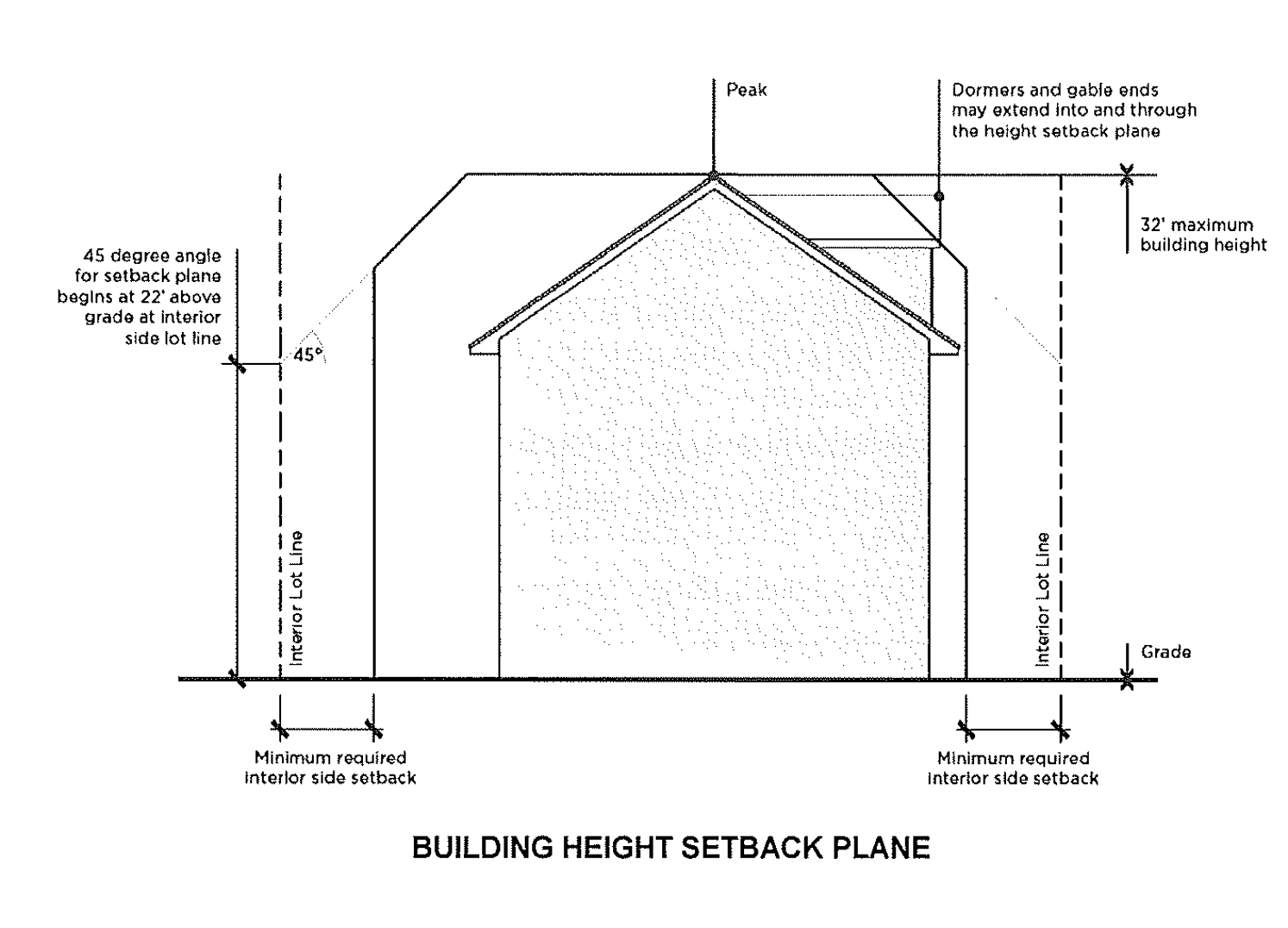
In addition to the general height and interior side setback restrictions in Table 4-1 of this Ordinance, all buildings on any lot within the R-1, R-2, and R-2-35 Districts are subject to, and must comply with, the following building height setback plane restrictions.
A.
No portion of a structure may intersect the planes that begin at a point 22 feet above grade at the interior side lot line and run at a 45° angle toward the interior of the lot until they reach the maximum building height permitted.
B.
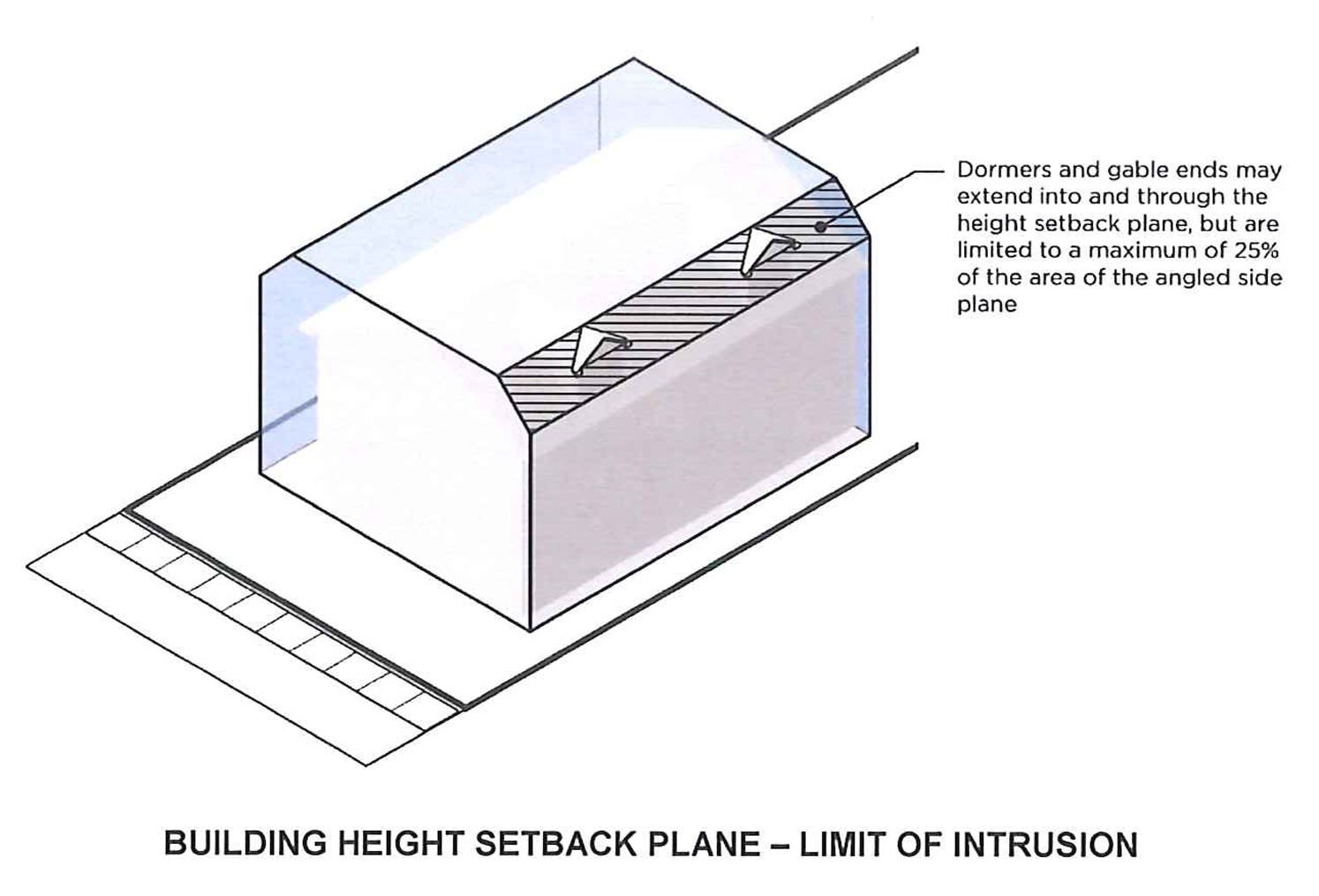
Dormers and gable ends may extend into and through the height setback plane, but are limited to a maximum of 25% of the area of the angled side plane. Dormers and gable ends must comply with the building height restrictions of this Ordinance.
4.5 - CONVERSION OF APARTMENTS INTO CONDOMINIUMS
Any proposed conversion of an apartment building into condominiums shall be done in accordance with the requirements provided in Chapter 34, Article 3 of the Village of Niles Code of Ordinances.
4.6 - GENERAL STANDARDS OF APPLICABILITY
A.
Site Development Standards
See Section 9 for additional on-site development standards and requirements, such as exterior lighting, accessory structures and uses, and permitted encroachments.
B.
Off-Street Parking and Loading
See Section 10 for off-street parking and loading standards and requirements.
C.
Landscape
See Section 11 for landscape, buffering and screening standards and requirements.
D.
Signs
See Chapter 78 of the Village Code for sign standards.

