
North Ogden City Zoning Code
11-10
COMMERCIAL AND MANUFACTURING ZONES
2025-19
2025-22
2026-07
2025-05
2023-16
2022-19
11-10A-1: PURPOSE AND INTENT
- The purpose of the commercial zones is to provide suitable areas for the location of the various types of commercial activity needed to serve the people and commerce of the City. The intent of the commercial zones is to permit establishment of a well-designed complex of retail facilities for a neighborhood, community or region which will provide goods and services for the people to be served.
- The two (2) commercial zones in this chapter are as follows:
- Neighborhood Commercial (CN). Provides for the sale and supply of daily living needs for the people in neighborhoods.
- Community Commercial (CC). Provides, in addition to the convenience goods, a wider range of facilities for the sale of retail goods and personal services for the community and region. Community commercial is generally located along Washington Boulevard from 2600 North to the south City boundary. The designation is further defined between the Downtown (CC-DT) subdistrict (2750 North to 2100 North) and Southtown (CC-ST) subdistrict (2100 North to the south City boundary).
11-10A-2: PERMITTED USES
- In the following list of uses:
- Uses designated with a "P" are permitted uses;
- Use designated with a "C" shall be conditional uses, which shall not be established or maintained unless authorized by a conditional use permit as described in CCNO 11-14; and
- Uses designated with an "N" shall not be permitted in the zone.
- No list of specific uses can be complete. Therefore, decisions regarding whether a specific use is included in one of the categories of use in the following list as a permitted use or a conditional use will be made by the planning commission, with an appeal to the city council.
- Uses not included in the following categories of uses are prohibited. If the city council desires to allow such a use as a permitted or conditional use, it must amend this title as described in CCNO 11-1-4. If the amendment is made, the use will only be allowed as provided by the city council.
CN CC-DT CC-ST LAND USE DESCRIPTION 1. Entertainment / Recreation Uses a. Amusement, Commercial, Indoor N P P b. Amusement, Commercial, Outdoor N N N c. Athletic / Tennis / Swim Club C C P d. Golf Course – Public Private N N N e. Theater, Indoor (including live) N P P 2. Automobile-Related Uses a. Commercial Auto Repair, Paint and Body Shops N N P b. Commercial Auto Parts (new and used), Tires, & Sales N P P c. Commercial Car Wash N C P d. Gas/convenience store with or w/o car wash N P P 3. General Retail/Commercial/Hospitality a. Retail shops/Services– under 10,000 sq. ft. P P P b. Mid-box retail – 10,001 to 80,000 sq. ft. N P P c. Big Box Retail – 80,001 and larger N P N d. Animal Clinic or Pet Hospital with No Outdoor Pens P P P e. Financial Institutions N P P f. Restaurants including fast food N P P g. Restaurants without fast food P P P h. Commercial Kennels, Boarding N P P i. Professional offices, Business Medical/Dental/Optical Office/Clinics and Laboratories (Excluding Massage Establishments) P P P j. Mortuary – Crematorium N N P k. Pawn Shop N N N l. Private Instructional Studio - Artist, Photography, Dance, Music, Drama, Health, Exercise P P P m. Tattoo Art Studio (including Body Piercing and Laser Removal) P P P n. Hotel or Motel N P P o. Bed and Breakfast P N P p. Manufacturing, Light as defined in 11-7 N N P q. Propane retail sales as an accessory use N P P a. Subject to CCNO 11-10-28 Site Plan Review b. Tank located outside of any setback. Be located in side or rear yards, however, the planning commission may approve a front yard location for a 1,000 gallon tank if sufficient landscape screening is provided around the tank c. Horizontal tank maximum 16 feet in length; vertical tank maximum 20 feet in height d. Not exceed a volume of 1,000 gallons e. Be limited to 1 tank per site f. No signage is allowed on the tank except for required safety signs and the word Propane on two sides of the tank with the maximum size of 6 square feet per word g. The tank color will comply with CCNO 11-10C-3 (C) Colors and Materials r. Massage Establishments N P P a. Massage Therapists must be licensed as identified in Utah State Code, Title 58, Chapter 47b. b. Products used in massage, aesthetician, or other similar services must be made available for sale as part of the business operation. c. Business store fronts must have 100% transparent glazing, minus approved signage. This shall be reviewed and approved at time of business license. 4. Mixed Use Residential N P P
11-10A-3: SITE DEVELOPMENT STANDARDS
- Minimum Lot Area. Eight thousand (8,000) square feet.
- Minimum Lot Width. None.
- Minimum Yard Setbacks.
- Front: Twenty feet (20') for all buildings and walls or fences over three feet (3') high; buildings that front onto Washington Boulevard, 2550 North, or 2700 North may be required to have a reduced 0 foot setback, if warranted for mixed use, street side dining, or the creation of a plaza as determined during the site plan process, by the Planning Commission.
- Side: None, except ten feet (10') adjacent to residential boundary.
- Side facing street on corner lot: Twenty feet (20').
- Rear: None, except ten feet (10') where building rears on a residential zone which shall meet buffering requirements of CCNO 11-20 and includes a 6’ wall, rock mulch and trees.
- Building Height.
- Minimum: Ten feet (10').
- Maximum:
- CN zone: Twenty-five feet (25’).
- CC zone: Thirty-five feet 35’ for CC-ST and 50’ for CC-DT.
- Lot Coverage. Total buildings or accessory buildings shall cover no more than eighty percent (80%) of lot area.
- Landscaping. Total Commercial Site Landscaping shall be ten percent (10%) minimum.
- Mixed Use Standards Determined. Minimum site development standards for dwelling units shall be subject to CCNO 11-10.
- Building Orientation, Building facades, Materials, and Utilities.
- Building Entrances. Building facades should provide at least one operable/ functioning building entrance per elevation that faces a public street although, other entrances may face the interior of the site.
- In the case of corner lots the building owner may select which street the main entrance faces. A corner entrance that faces the intersecting streets satisfies the two-entrance requirement. Such angled corner entrances shall create a small plaza with a triangular area of at least 150 square feet. Such plazas shall include benches and additional trees for shade.
- In the case where the Planning Commission does not require a reduced front setback, at least one entrance shall be on the street.
- In the case of a commercial center, where there is intended to be more than one commercial building, with or without a subdivision an overall or, master site plan is required. Subdivisions shall comply with 11-2-12 and 11-2-13. The site plan shall consist of the components found in 11-2-9 and the parking requirements found in 11-19.
- The streets and other accessways shall be planned in connection with the grouping of buildings, and the provision for alleys, truck loading and maneuvering areas, walks and parking areas so as to minimize conflict or movement between the various types of traffic, including pedestrian.
- Access to the center will be through joint access points with cross access easements between buildings or lots.
- Parking and interior access lanes will be designed to be on the interior or rear of the commercial building. Off-street parking shall not occupy any required front yard area unless the Planning Commission determines due to the size of the property, the site plan options are so limited that the parking location improves the functionality of the site.
- In the case where a commercial project adjoins a residential zone appropriate buffering shall be established as identified in 11-10A-5.
- Loading Facilities. Commercial loading and unloading facilities shall be designed to be to the rear of the building and not visible from the public street. The Planning Commission as part of a master site plan review may approve a side yard location in a commercial center, if the site plan demonstrates that the location improves the functionality of the site and provides adequate screening thorough architectural design and landscaping. Loading facilities shall not occupy any required front yard area.
- Trash Enclosures. Trash receptacles must comply with 11-10-26. The Planning Commission as part of a master site plan review may approve a side yard location in a commercial center, if the site plan demonstrates that the location improves the functionality of the site and provides adequate screening.
- Windows. Windows shall make up at least 50% of the horizontal length street-facing facades on the first story of commercial developments. Window shapes and sizes shall be so designed to be consistent from building to building. Substantially tinted windows and windows with reflective film or glass are not permitted at street level; however, windows with a minimum of tinting to meet low-e and other energy efficiency standards are highly encouraged.
- Building facades. Buildings over 100’ in length shall vary the front façade with indentations of a minimum of 1’ every 30’ to 50’ to create the appearance of storefronts.
- Building materials. In the CC-ST district red brick that simulates the appearance of an older building, like the Cannery, is required on the first floor facing Washington Boulevard. Utility Meters. All utilities meters shall be directly attached to the main building or other location as approved by Planning Commission but shall not be located between the main building and public right of way.
- Utility Meters. All utilities meters shall be directly attached to the main building or other location as approved by Planning Commission but shall not be located between the main building and public right of way.
- Building Entrances. Building facades should provide at least one operable/ functioning building entrance per elevation that faces a public street although, other entrances may face the interior of the site.
11-10A-4: SITE PLAN APPROVAL
- For any development or use in a commercial zone, a site plan shall be submitted in accordance with CCNO 11-2-9.
11-10A-5: PROTECTION OF ADJOINING RESIDENTIAL PROPERTIES; BUFFER ZONE
- When a commercial or manufacturing development takes place that abuts a residential zoning district, a solid screen wall must be erected. In addition to the overall landscaping required per CCNO 11-10A-3, the screen wall shall be eight feet (8') in height along the rear and interior side yards. In front yards and street side yards of either zoning districts, the solid walls shall maintain the maximum fence height regulations for front and street side areas. The solid, non-living, screen wall shall be opaque. The buffer yard requirement of ten (10) feet shall be landscaped with a weed control mat and rock mulch coupled with medium to large deciduous trees planted at thirty (30) foot to forty (40) foot intervals depending on the tree type, and include a drip irrigation system. The owner of the commercial or manufacturing property shall construct, maintain and keep the screen wall in good repair.
11-10A-6: SIGN REGULATIONS
- The height, size and location of the permitted signs shall be in accordance with the regulations set forth in CCNO 11-21.
11-10B-1: PURPOSE AND INTENT
- The intent of the manufacturing zone is to permit the establishment of a well-designed complex of manufacturing facilities for the community or region. Which will minimize traffic congestion on public streets in the vicinity, and which shall best fit the general environment and land use pattern of the area to be served. The protective standards contained in this article are intended to minimize any adverse effect the established surrounding environment, especially residential uses in abutting residential zones.
- It is the intent of this zone to provide for light manufacturing uses.
11-10B-2: PERMITTED USES
| LAND USE DESCRIPTION | |
| Light Manufacturing (within an enclosed building) | P |
| General Manufacturing | P |
| Class A Storage Units | P |
| Office/Warehouse | P |
| Instructional Facility | P |
| Sexually Oriented Businesses | P |
P=Permitted Use, C=Conditional Use
11-10B-3: CANNABIS PRODUCTION ESTABLISHMENTS
Cannabis Production Establishments:
- Shall only be located in a Manufacturing Zone;
- Shall be operated entirely within a permanent enclosed building;
- Shall be designed to filter inside air exchanges to the outside through air filter systems that remove dust, fumes, vapors, odors, or waste from air that exits the building;
- Exterior facade materials that are transparent or translucent, such as greenhouse materials, and intended to allow natural light into the interior of the structure shall be treated to prevent any interior view of the cannabis growing operations/product. Non-visible skylights on the roof of a building are excluded;
- Exterior building colors shall not be allowed that draw attention to the building such as fluorescent or bright colors in the green, orange, red, yellow or blue spectrum;
- Provide a security system with a backup power source that detects and records entry into the cannabis production establishment and provides notice of an unauthorized entry to law enforcement when the cannabis production establishment is closed;
- Shall maintain locks or equivalent restrictive security features on any area where the cannabis production establishment stores cannabis or a cannabis product;
- Outdoor signs on the building may include only the cannabis production establishment’s name and hours of operation and a green cross;
- Shall obtain a North Ogden business license before conducting business within the City; and
- Shall meet all land use requirements for the zone in which it is located.
- A medical cannabis pharmacy:
- Shall only be located in a Manufacturing Zone.
- Shall be located in a permanent building and not have drive-through service.
- Shall not have outdoor seating or seating areas.
- Shall not have outdoor vending machines of any kind.
- Shall have one public entry door at the front of the building facing the street.
- Shall not darken or cover any windows on the front of the building but shall maintain windows clear and allow visibility into the pharmacy from the street.
- Shall not have cannabis products visible from outside the medical cannabis pharmacy.
- Shall not have bars on windows, but shall maintain locks or equivalent restrictive security features on any area where the medical cannabis pharmacy stores cannabis or a cannabis product.
- Provide a security system with a backup power source that detects and records entry into the cannabis production establishment and provides notice of an unauthorized entry to law enforcement when the cannabis production establishment is closed.
- Exterior building colors shall not be allowed that draw attention to the building such as fluorescent or bright colors in the green, orange, red, yellow or blue spectrum.
- Shall be designed to filter inside air exchanges to the outside through air filter systems that remove dust, fumes, vapors, odors, or waste from air that exits the building.
- Shall meet all land use requirements for the zone in which it is located.
11-10B-4: SITE DEVELOPMENT STANDARDS
- Area, Width, Yard And Height Regulations. None for buildings, except that no building or structure shall be built to a height in excess of thirty five feet (35') or closer than fifty feet (50') to any state highway or ten feet (10') to any other street or residential zone boundary.
- Lot Coverage. No building or structure or group of buildings with their accessory buildings shall cover more than eighty percent (80%) of the area of the lot.
- A masonry wainscot is required.
- Garage doors and loading docks shall not face the street.
11-10B-5: PROTECTION OF ADJOINING RESIDENTIAL PROPERTIES; BUFFER ZONE
- When a manufacturing development takes place that abuts a residential or mixed use zoning district, the buffer requirements set forth in CCNO 11-20-6 shall be met.
11-10B-6: SITE PLAN APPROVAL
- For any development or use in a manufacturing zone, a site plan shall be submitted in accordance with CCNO 11-2-9.
11-10B-7: SPECIAL PROVISIONS
- Ownership. An M-1 zone may be established upon land held in single ownership or under unified control.
- Nonconforming Uses. An M-1 zone shall not be established upon a tract of land which would contain a nonconforming use after the passage of such amendment to this Title unless the development planned for the tract includes the elimination of the nonconforming use or its integration into planned development.
- Hazards. The zone is intended for light manufacturing and hall not create a hazard using flammable, explosive, or other dangerous materials and shall not be associated with noise, dust, odors, noxious fumes, glare, or other hazards to safety and health which may be discernable beyond the premises.
11-10C-1: PURPOSE AND INTENT
- The purpose of these design standards and regulations is to enhance the economic viability and aesthetic value of commercial properties, to provide a quality environment for both citizens and visitors.
11-10C-2: SCOPE
- All new development proposals in commercial or manufacturing zones, including all new structures and parking lots and expanded structures, remodels and renovations when the cost of such expansion, remodel or renovation (as determined by the building inspector) is equal to or exceeds fifty percent (50%) of the current assessed value of the structure, shall be subject to the standards and regulations of this article. Such standards and regulations are intended to be in addition to existing standards and regulations of the underlying zone of the property and other applicable regulations of this Title. In cases of expansion, remodel or renovation costing less than fifty percent (50%) of the current assessed value of the structure, though not required, it is recommended that these standards be considered.
- This article establishes two (2) kinds of design criteria: design standards and design guidelines.
- Design standards are required in addition to all other standards set forth in this Title and are indicated by the verb "shall". In the event of conflict between this article and other applicable provisions of this Title, the more restrictive provision shall apply.
- It is the intent of the City that every development subject to this article be designed in conformity to the purpose and requirements of this article. However, the City also recognizes that it cannot anticipate all possible circumstances, nor the best means for dealing with them, in the preparation and adoption of these regulations. For example, criteria established herein may be more germane to larger projects than to smaller ones, depending on the individual characteristics of the site, such as size, configuration, topography and location. Therefore, the approval authority, unless expressly stated to the contrary in this article, shall have reasonable discretion in implementing the purpose of this article by modifying both mandatory and recommended criteria as individual circumstances may merit. In deviating from the adopted standards, it shall be the responsibility of the applicant to show why the requirements would be an unreasonable burden, and how the project would still meet the purpose and intent of this article. In the same vein, the approval authority may also require that certain provisions of this article, which are not mandatory, be included in a project based on individual circumstances.
- Design guidelines are recommended, but not required. Design guidelines are generally preceded by a “should” as opposed to a “shall”.
- This article establishes two (2) kinds of design criteria: design standards and design guidelines.
11-10C-3: ARCHITECTURE
- Articulation.
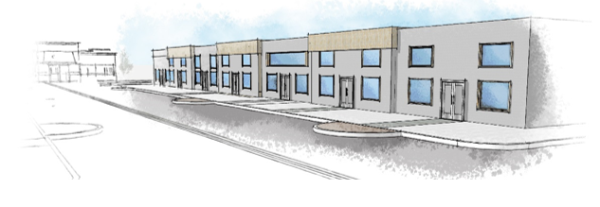
- A building shall reflect a human scale and be inviting to the public. Large buildings should be vertically and horizontally varied with façade indentations of at least one foot and the front façade roof edge varying every 30’ to 50’ by at least two feet, to break up the building mass and provide aesthetic relief.
Figure 1. Appropriate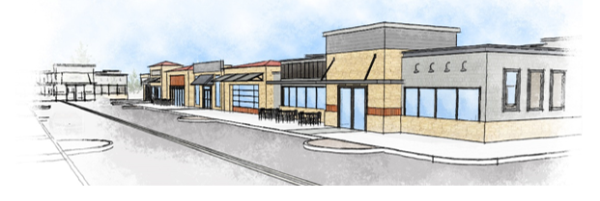 Figure 2. Inappropriate
 Buildings shall be accessible for pedestrians and public transit users, not just for people driving private automobiles.
- Building entrances shall be identifiable and directly accessible from public sidewalks via on site pedestrian walkways. (Drive aisles and other vehicular accesses shall not be considered pedestrian walkways.)
- Pedestrian walkways shall have at least five feet (5') of unobstructed width, and shall be part of an approved pedestrian circulation plan.
- A building shall reflect a human scale and be inviting to the public. Large buildings should be vertically and horizontally varied with façade indentations of at least one foot and the front façade roof edge varying every 30’ to 50’ by at least two feet, to break up the building mass and provide aesthetic relief.
- Site Amenities.
- Overhangs and canopies should be integrated into the building design so as to enhance pedestrian walkways but shall not be backlit.
- Along 2700 North and Washington Boulevard comfortable and attractive amenities such as benches, tables, drinking fountains, and trash receptacles shall be provided. Such amenities are required at a rate of one for every 50’ of frontage.
- All accent areas, exclusive of public sidewalks, including patios, outdoor seating areas, plazas and walkways between buildings shall be comprised of decorative paving (i.e., colored, stamped or exposed aggregate concrete, pavers, or brick) to differentiate from the primary pedestrian sidewalks.
Figure 3. Accent Area Paving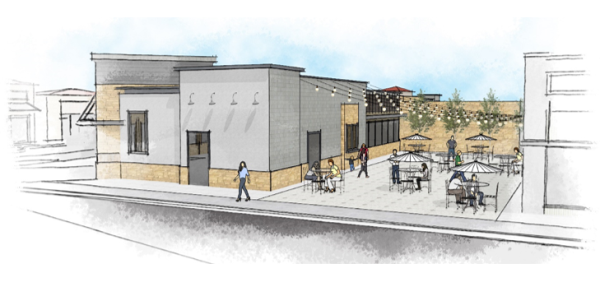
- Colors And Materials.
- All applicants for commercial or other site plan review or construction within North Ogden City's commercial districts shall include a color board or and architectural renderings/elevations indicating the colors and materials to be used on site. Proposed materials should reflect earth tones and not include bright colors or reflective materials; unless required in franchise agreement contingency for franchise branding;
- For parcels adjoining Washington Boulevard, parcels which have a Washington Boulevard (or 400 East) address, and parcels that are adjacent to a parcel adjoining Washington Boulevard (i.e. the next parcel from a corner parcel along Washington Boulevard), external surfaces shall be predominantly natural, muted earth tones representing natural, earth colors and values, including browns, black, grays, greens, rusts, etc. In order to achieve this standard:
- White may be used as an accent color only.
- Contrasting accent colors are allowed.
Figure 4. Representation of Appropriate Colors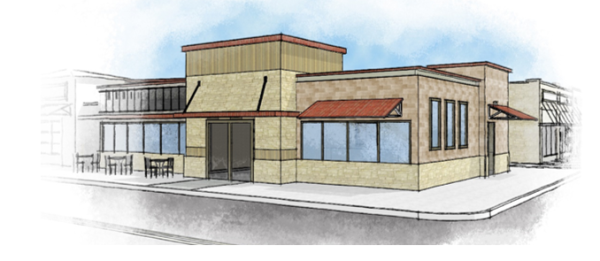
- Exposed fronts and street sides of buildings shall be constructed of non-reflective materials and shall include, but not be limited to, textured colored concrete (split face or honed block), brick, stone and/or considered wood/wood like materials.
- Concrete masonry units or block CMUs shall not be considered acceptable materials unless it is specifically colored and textured.
- Siding and stucco may be used for accents and eaves/soffits.
- In addition to building articulation and materials as required in 11-10C-3(A), front and corner lot facades shall include at least four of the following features:
- Windows at 50% or more of the front first story façade.
- Contrasting material wainscot.
- Downward directed and shielded decorative style lighting.
- Roof height variation of 2’ or more, every 30’.
- Roof style changes such as flat to hip, or flat to shed, etc.
- Corner accents, such as a tower of greater than a 5’ height from other roof surfaces.
- Consistent pan-channel type lettering for all signage on the building facades.
- Angled and recessed door entries.
- Awnings not including signage.
- Columns, posts, or other features to define separate storefronts.
- Structural entryway accent.
- Side and rear facades shall incorporate at least 2 of the above features.
- In cases where a building has double frontage, each street facing side shall be treated as a front.
- On the front façade the use of glass to allow visual access to interior spaces is required.
- Mirrored glazing is not allowed.
- Tinted or solar absorption glazing may be used.
- Metal as a window framing support or mounting material shall be painted, stained, anodized or vinyl clad in approved colors.
- The side and rear of buildings with walls longer than fifty (50) linear feet shall be broken up at periodic intervals using architectural features in order to provide visual relief.
Figure 5. Appropriate Visual Relief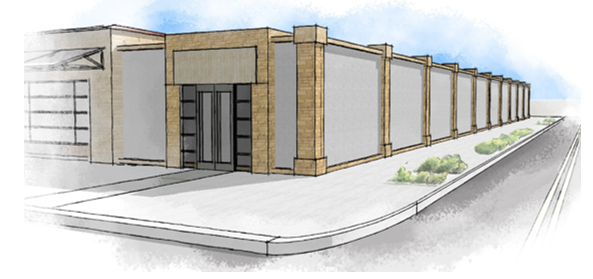 Figure 6. Inappropriate Visual Relief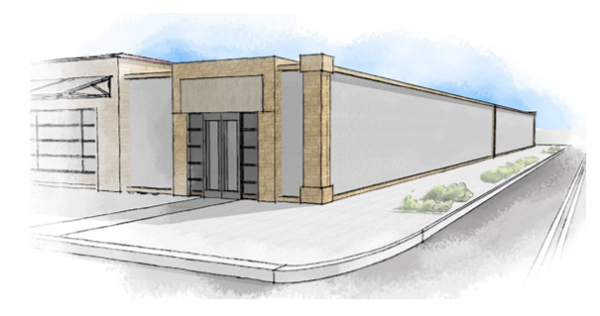
- As an alternative, where blank walls are proposed, they may be covered with murals that may be thematic to the uses within the building but not overtly sales oriented. Mountain or pioneer scenes are preferred.
11-10C-4: SITE DESIGN
- Overall Design Concepts.
- Dedicated walkways, plazas and other pedestrian oriented hardscape areas may be included as landscaping, provided that they do not exceed thirty percent (30%) of the required minimum landscaping requirement.
- The landscaping plan shall include a pedestrian circulation element that shows interconnectivity with surrounding sidewalks, urban trails and surrounding uses. The City encourages appropriate pedestrian connections to adjacent neighborhoods.
- The size and spacing of landscape elements should be consistent with the size of the project and should relate to the structures and the streetscape. No landscape element may be constructed, erected or otherwise placed on site without City approval.
- Trees overhanging pedestrian walkways and drive areas shall be one of the species found in the City’s approved tree list and pruned to have a general canopy clearance of at least nine feet (9').
- Site Grading.
- Site design should minimize the removal of mature trees and shrubs. Where removal is necessary, mature trees shall be salvaged or replaced on a three to one (3:1) basis. Any trees listed as prohibited in the approved City tree list, shall be removed and not replaced.
- Abrupt or unnatural changes in grade may create barriers or disrupt drainage patterns. Proposed grading should be designed to take advantage of the natural grade and land features.
- Steep slopes, generally three to one (3:1) or greater, shall be stabilized with vegetation, retaining walls or other appropriate measures. Sites shall be designed to minimize erosion.
- Landscape plans shall preserve and incorporate natural land features such as streams, washes, springs, etc., into the overall site plan.
- Water Elements.
- Fountains and other water features should be sited and designed so that they are efficient users of water.
- Filtered backwash effluent should be discharged into landscaped areas whenever possible.
- Art and Furnishings.
- If public art is used, it should be integrated into the overall design of a project.
- Lighting fixtures and illumination should complement a structure and be of similar design and character as the project's building components. Site lighting shall be subject to CCNO 11-11-6.
- Maintenance.
- Projects should demonstrate that maintenance factors have been considered in the landscape design.
- Irrigation systems should be designed to minimize maintenance and water consumption.
- Phased developments shall indicate a mechanism for dust, weed and debris control on undeveloped portions of the site and shall ensure continuing compliance.
11-10C-5: SIGNS
- Signs shall comply with CCNO 11-21.
11-10D-1: PURPOSE AND INTENT
- The regulations included hereinafter qualify or supplement, as the case may be, the zone regulations contained within the Commercial and Manufacturing Zone Districts.
11-10D-2: ADDITIONAL PRINCIPAL BUILDING REGULATIONS
- Every principal building shall be located and maintained on a lot and every lot shall have required frontage on a street, except for commercial complexes and where a parcel of land was in separate ownership prior to December 31, 2000, and except as otherwise permitted in this Title.
11-10D-3: ADDITIONAL HEIGHT REGULATIONS
- In the M-1 zoning district, to conveyors or similar structures wherein the industrial process involved customarily requires a height greater than otherwise permitted; provided, that such structure shall be so located and constructed that if it should collapse, its reclining length would still be contained on the property on which it was constructed.
- Parapets in any commercial or manufacturing zone may extend six feet (6') above the maximum zone building height.
Exception: Maximum height of twenty-five feet (25') if set back twenty feet (20') from the property line and sixty feet (60') from a neighboring dwelling.
11-10D-4: VENDING MACHINES
- Vending Machines. In commercial and manufacturing zoning districts only, up to three (3) vending machines placed outdoors on one property is permitted. Such machines shall be located next to the building.
11-10D-5: SHORT TERM LOAN BUSINESSES
- Location. No short-term loan business shall be located within one thousand feet (1,000') of another short-term loan business or within six hundred sixty feet (660') of a community center, school, or other public gathering place, e.g., park, library, private or public school, licensed child-care facility or pre-school, church, etc., or sexually oriented business.
- Measurements. Distances shall be measured in a straight line, without regard to intervening structures or zoning districts, from the property line of each business to the closest property boundary of the short-term loan business, community center, school, or other public gathering place, or sexually oriented business.
- Zoning. Short term loan businesses shall only be allowed in CC-DT or CC-ST zones. When allowed within a zoning district, a short-term loan business may only be located on the following street: Washington Boulevard.
- Disclosure Signs. Each short-term loan business shall post a sign with solid black lettering on a white background, in 50-point, non-italicized, bold Arial typeface designed to achieve a letter height of at least one-half inch (1/2), in the English and Spanish languages, at every public entrance to the business bearing the following disclosure:
DISCLOSURE REQUIRED BY NORTH OGDEN CITY:
THIS BUSINESS SPECIALIZES IN MAKING LOANS FOR SHORT-TERM NEEDS. THESE LOANS SHOULD NOT BE USED AS A LONG-TERM FINANCIAL SOLUTION. THE INTEREST RATE FOR SHORT TERM LOANS IS EQUAL TO X ANNUAL PERCENTAGE RATE (APR) TO X ANNUAL PERCENTAGE RATE (APR).
DIVULGACIÓN REQUERIDA POR LA CIUDAD DE NORTH OGDEN ESTE NEGOCIO SE ESPECIALIZA EN HACER PRÉSTAMOS PARA LAS NECESIDADES A CORTO PLAZO. ESTOS PRESTAMOS NO DEBEN UTILIZARSE COMO UNA SOLUCION FINANCIERA A LARGO PLAZO. LA TASA DE INTERÉS DE LOS PRÉSTAMOS A CORTO PLAZO ES DE UN PORECNTAJE ANNUAL DE PR CIENTO A X POR CIENTO A X POR CIENTO.
The disclosure signs required by this section shall face the entrance to the business, and shall be placed either on the interior surface of the door so that the top edge of the sign is between forty eight inches (48") and seventy two inches (72") from the entrance threshold (measured vertically) or shall be located directly behind the entry door without any intervening obstruction between forty eight inches (48") and seventy two inches (72") from the floor (measured vertically), as near to the entry door as is allowed by the current building code adopted by North Ogden City. Existing short term loan businesses shall post the disclosure signs no later than October 1, 2014. - Additional Disclosures.
- Post in a conspicuous location on its premises that can be viewed by a person seeking a short-term loan a complete schedule of any interest or fees charged using dollar amounts;
- Enter into a written contract for the short term loan;
- Provide the person seeking the short-term loan a copy of the written contract described in Subsection (E)(2); and
- Orally review with the person seeking the short-term loan the terms of the short-term loan including:
- The amount of any interest rate or fee.
- The date on which the full amount of a short-term loan is due.
- Comply with the following as in effect on the date the short-term loan is extended:
- Truth in Lending Act. 15 U.S.C. Sec. 1601 et seq., and its implementing federal regulations;
- Equal Credit Opportunity Act, 15 U.S.C. sec. 1691 and its implementing federal regulations;
- Bank Secrecy Act, 12 U.S.C. Sec. 1829b, 12 U.S.C. Sec. 1951 through 1959, and 31 U.S.C. Sec. 5311 through 5332, and its implementing regulations; and
- Title 70C, Utah Consumer Credit Code.
11-10E-1: PURPOSE AND INTENT
- Self-storage facilities existing before November 1, 2021 may be updated based on the standards below and within the MP-1 Zoning Code. Class A self-storage is a type of self-storage that requires maximum design standards. Class A self-storage may only be allowed in the MP-1 zone per these requirements. Applications for upgrades to class A self-storage shall be submitted and reviewed according to the requirements of this Ordinance.
- Purpose. The purposes of this section and any rules, regulations, standards and specifications adopted pursuant hereto are:
- Minimal Impact. To accommodate such self-storage with minimal impact in commercial and mixed-use areas in terms of compatible infill, scale, design and appearance of buildings.
11-10E-2: SITE DEVELOPMENT STANDARDS
- Site Development Standards follow Ordinance 11-10B-4: MP-1 Site Development Standards unless specified differently below. The following standards and conditions shall apply to new and/or addition class A self-storage developments:
- Frontage. Class A self-storage shall have an office fronting onto an arterial street. The frontage of the property facing the Arterial Street shall be no wider than 200’.
- Class A self-storage shall not prevent the development of, or displacement of, more intense commercial uses typically found on primary sites adjacent to high traffic major streets on visible and accessible building lots. This may include mixed-use development, large scale or big box commercial development, mid-rise apartments/condominiums and manufacturing.
- Lighting.
- New construction shall have dark skies lighting compatible fixtures and signs.
- Light fixtures shall have a 50% cut off fixture with extruding light only projecting down and to the sides.
- Light from light fixtures shall not project upwards towards the sky. Also lighting adjacent to residential areas shall not project into neighboring residential properties.
- Drive Aisles and Access.
- Driveways and access aisles shall be designed so that fire equipment and other emergency vehicles can readily access and exit all areas of the site. Minimum width of required drive aisles and access shall be determined by the Fire Marshall.
- Low Impact Development Techniques. Refer to Public Works Standards.
- Signs. Refer to City Ordinance CCNO 11-21.
- Architectural Design.
- Management Office. Class A self-storage shall include a professionally designed office for on site management purposes. The office should have a retail sales area. It should blend in with the design of the project and neighboring business. The office building must have distinguished architectural features, including commercial building rooflines, building and color variation. The office building shall have a minimum of 25% glass for sides facing the streets between the heights of 2’ and 10’ on exterior elevations. The building shall have a minimum of 25% brick or stone masonry on street facing walls. New self-storage buildings shall be located behind the office building and setback more than 100 feet from the Arterial Street.
- General Building Design. All projects must be designed to a quality standard, incorporating the following:
- Massing.
- Horizontal planes or walls are limited to a continuous 40 feet in length, however may continue after a 4 ft minimum offset in-between max.
- Maximum vertical planes are limited to 20 feet in height and may continue with 2 ft minimum vertical (depth) offsets.
- Building parapets are limited to 40 ft in horizontal length without height or depth offsets.
- Massing.
- Colors and Materials.
- Exposed fronts and street sides of buildings shall be constructed of non-reflective materials and shall include, but not be limited to textured concrete (split face or honed block), brick, stone and/or considered wood/wood like materials.
- Acceptable Material Include:
- Textured concrete (split face or honed block).
- Brick.
- Stone.
- Wood/wood like materials.
- High quality retail grade metal panels, smooth or corrugated.
- The planning commission shall review all siding and stucco proposals (samples must be submitted).
- Vision and Glazing.
- Clear solar tinted glass at vision areas.
- Spandrel (opaque) glass at wall faces not requiring clear glass.
- External surfaces shall be predominantly natural, muted earth tones (non-bright colors representing natural, earth colors and values, including browns, black, grays, greens, rusts, etc.). The roof of an addition to an existing structure, when matching existing colors, may be exempt.
- White may be used as an accent color only.
- The planning commission may allow contrasting accent colors.
- Building Orientation.
- Self-storage unit doors may not open onto a public street or right-of way, and must be accessed internally within the site.
11-10E-3: FENCING
- Perimeter Fencing. The entire area that includes storage use, with the exception of the office or caretaker residence and its customer and employee parking and the access driveways shall be enclosed by a fence. Acceptable fencing materials include architecturally designed brick, stone, wrought iron or pre-cast color stamped concrete. Wrought iron fencing maybe combined with the other materials listed in this ordinance. Fencing shall be 6 feet tall unless adjacent to a residential zone in which case fencing shall be 8 feet tall. Buildings which meet the design standards, and which are constructed on the property line may operate as a perimeter fence.
11-10E-4: OUTDOOR STORAGE
- Outdoor Storage, RVs, or vehicles shall not be allowed for greater than 10% of the total Class A self-storage site. Outside storage shall be located more than 150’ from the nearest ROW and shall be screened behind buildings, landscaping or opaque fencing.
11-10E-5: LANDSCAPING
- A minimum of Ten percent (10%) of the gross area of the site shall be landscaped. The Ten percent (10%) landscaping requirement should blend well with the fencing and solid masonry walls that may surround the project. Special attention should be given to landscaping in the high traffic and publicly visible areas of the project as well as covering large and fencing areas.
- Stormwater basins may count towards the landscaping requirements if they’re fully landscaped and contain less than 25% rock or gravel areas.
- If the property ownership includes land adjacent to a creek or stream that area may be included as part of the minimum requirement.
- Landscape Design.
- The landscape shall have a minimum of 15 trees per acre and 50 shrubs per acre.
- Two perennials or ornamental grasses shall equal one shrub.
- A maximum of 40% of the landscaped area shall be grass.
- The planting areas shall have drip irrigation and the total site managed by a Smart Irrigation controller or one with an EPA water sense label.
- Planting shall be varied in height, color and plant texture. Plantings shall be designed to complement the architectural building façade.
- Landscaping on Public Right-of-Way.
- Where a development is adjacent to a public right-of-way, a permanent open space shall be required along any front, side, or rear yard adjacent to said right-of-way. This area shall be kept free of buildings and structures, permanently maintained with street trees and other landscaping, screened or protected by natural features.
- If such areas are the result of double frontage lot designs with inadequate access to the street, such areas shall be landscaped with a minimum of a five-foot landscaped area next to the public ROW.
- Fences shall not be located within this five-foot landscaped area. Aesthetic entrance features are encouraged.
- Additional landscape treatments or buffers may also be required with width and landscaping specifications.
- Right-of-way landscaping
- Shall have a maximum of 50% grass.
- Shall be located with an average of one tree per every 40 feet and one shrub every 10 feet to screen approximately 50% or greater of the fencing and storage areas.
- Grass is not permitted in areas with a width less than 8 feet.
- Alternative Landscaping Options. The planning director may approve a modification of these requirements if:
- The proposed alternative meets the purpose of this article; and
- The landscaping better accommodates the existing physical conditions of the property or provides significant elements for wind protection, solar access and shading, and the proposed landscaping represents an equal or superior result than would be achieved if the requirements of this article were strictly followed; or
- The proposed alternative incorporates a distinct coloring scheme utilizing the planting or annuals in areas of high visibility.
- The city council may authorize the city's participation in the installation of landscaping and landscaping improvements required by this article when it is in the city's best interest.
11-10E-6: OPERATIONS
- All business operations should be conducted using approved commercial property management standards. Security features should include digital video, electronic gate access and individual door alarms.
- Facilities are encouraged to include climate control units, and offer multiple services to its tenants.
- Limited access hours shall be required to reduce late night noise from 10:00 PM to 6:00 AM.

