North Ogden City Zoning Code
11-20
LANDSCAPING
11-20-1: PURPOSE AND INTENT
- This section shall apply to all new development (except for development on existing lots for single family dwellings) within North Ogden City limits. It is the intent of this section to require landscape plans that maximize City aesthetics and to improve and maintain site qualities.
11-20-2: GENERAL REQUIREMENTS
- Residential Development.
ZONE
MINIMUM VEGETATIVE COVERAGE
RE-20
50%
R-1-12.5
50%
R-1-10
50%
R-1-8
50%
R-1-8(A)
50%
R-1-8(AG)
50%
R-1-5
40%
R-2
50%
R-3
50%
R-4
50%
QUAIL PONDS PUD
40%
ROYLANCE FARMS PHASE II PUD
50%
COLD CREEK PUD
50%
RESIDENTIAL CITY CENTER
50%
MASTER PLANNED COMMUNITY
20% (Required Open Space)
CIVIC ZONE C
20% Civic, 50% Public Park
CN, CC (DT & ST)
10%
M-1
20%
HP-1, HP-2, HP-3
35%
PUD
50%
- No plans for any building, structure or other improvements shall be approved by the Planning Director unless there shall also have been submitted landscape and streetscape plans, meeting the standards of this Title, and as specified in the Public Works Standards. All such plans shall promote water–wise landscaping designs and include xeriscape, where appropriate.
- Landscaping in accordance with the plans submitted shall be installed in a proportional manner within 6 months following the occupancy of buildings on the site or as otherwise approved by the Planning Director as seasonal conditions may dictate.
- Each phase of development shall provide its proportionate required open green space needed for that phase.
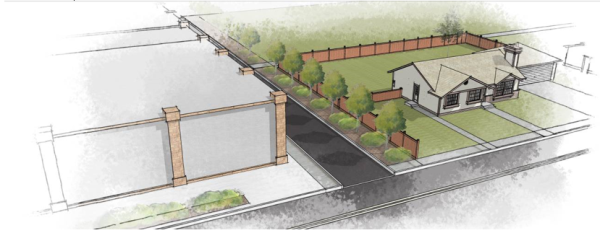
- Street trees are required along major streets unless this requirement is specifically waived by the City in exchange for other types of street landscaping, such as, flowering pots, shrubbery, rain gardens, etc. When available, the City’s Street Tree Plan should be consulted.
- Commercial and Manufacturing Development.
- All plantings shall be maintained in a healthy, weed free condition.
- Landscaping materials shall be contained so as not to spill into the public right of way.
- Park strip landscaping shall not exceed a maximum height of two feet (2') for shrubs or grasses, and trees in the park strip shall have a minimum height of nine feet (9') for the lowest branches of a tree when they extend above the curb or sidewalk. Notwithstanding the branch height, no evergreen tree is allowed in the park strip.
- Any damage to city property created by vegetation will be the responsibility of the property owner.
- All landscaping shall be serviced by an acceptable underground irrigation system as referenced in North Ogden Public Works standards which includes an automatic timer.
- Dedicated walkways, plazas and other pedestrian oriented hardscape areas may be included as landscaping, provided that they do not exceed thirty percent (30%) of the required minimum landscaping requirement.
- The landscaping plan shall include a pedestrian circulation element that shows interconnectivity with surrounding sidewalks, urban trails, and surrounding uses. The city encourages appropriate pedestrian connections to adjacent neighborhoods.
- The size and spacing of landscape elements should be consistent with the size of the project and should relate to the structures and the streetscape. No landscape element may be constructed, erected, or otherwise placed on site without city approval.
- Trees overhanging pedestrian walkways and drive areas shall be one of the species found in the City’s approved tree list and pruned to have a general canopy clearance of at least nine feet (9').
- Future development areas or land areas not occupied by buildings, structures, hard surfacing, vehicular driveways or pedestrian walkways shall be kept in a weed-free condition or landscaped.
11-20-3: LANDSCAPING AND SITE DESIGN STANDARDS
- Landscaping in PUD and Attached Dwelling Unit Developments. The following are minimum landscape requirements for all PUD and Attached Dwelling Unit developments. Individual projects may vary but all will be reviewed, possibly modified, and then approved by the Planning Commission.
- Ten (10) shrubs (4 of which are a flowering shrub) for each residential building. Shrub areas shall be mulched to reduce watering demands.
- Six (6) deciduous trees and one (1) evergreen tree for each residential building. The placement and types of deciduous trees shall take into consideration use of the trees for summer cooling and winter solar access. Evergreen trees should be used as windbreaks, screening, and accent plants.
- The balance of site area, not covered in buildings, parking, sidewalks, trails, trees, or shrubs shall include turf grass.
- The irrigation system must use secondary water and shall be designed to water plants of similar water needs and avoid wasteful watering.
- No more than ten percent (10%) of the entire landscaping surface area can be in rocks or other nonliving ground cover. The ten percent (10%) limitation does not include areas where the ground cover is rocks or other material and is planted with plants spaced so they will completely cover the area in five (5) years.
- The landscape design along streams, canals, or rivers should provide a trail access along the development and provide connections to other existing or proposed trails.
- Xeriscape designs are encouraged.
- Site Design Requirements for Commercial, Manufacturing, Civic, PUD, and Attached Dwelling Unit Projects. Individual single family residential design is exempt from meeting the requirements below.
- Site Grading.
- Site design should minimize the removal of mature trees and shrubs. Where removal is necessary, mature trees shall be salvaged or replaced on a three to one (3:1) basis. Any trees listed as prohibited in the approved City tree list, shall be removed, and not replaced.
- Abrupt or unnatural changes in grade may create barriers or disrupt drainage patterns. Proposed grading should be designed to take advantage of the natural grade and land features.
- Steep slopes, generally three to one (3:1) or greater, shall be stabilized with vegetation, retaining walls or other appropriate measures. Sites shall be designed to minimize erosion.
- Landscape plans shall preserve and incorporate natural land features such as streams, washes, springs, etc., into the overall site plan. See 11-22-3: DEVELOPMENT CONSTRAINTS.
- Water Elements.
- Fountains and other water features should be sited and designed so that they are efficient users of water.
- Filtered backwash effluent should be discharged into landscaped areas whenever possible.
- Art and Furnishings.
- If public art is used, it should be integrated into the overall design of a project.
- Site Grading.
11-20-4: MATERIALS, MAINTENANCE, AND REPLACEMENT
- Plant Materials.
- All deciduous shade trees shall have a minimum size of 2” caliper at time of installation.
- All deciduous ornamental trees shall have a minimum size of 1.5” caliper at time of installation.
- All required street trees shall have a minimum size of 2” caliper at the time of installation. The species-type, location, and spacing of trees shall be as shown on the approved landscape plan, in coordination with streetscape designs. All evergreen trees shall have a minimum size of four (4) feet in height at time of installation.
- All shrubs shall have a minimum size of 5 gallons at time of installation.
- All landscape material shall be approved in conformance with this section. A suggested planting list is on file in the Planning Department in addition to the Trees and Park Strips handout. Plant type substitutions may be allowed by the Planning Director.
- Installation. It shall be the responsibility of the developer to grade, place topsoil, seed, sod, install irrigation systems, and properly plant trees, shrubs, and other approved plant materials.
- Landscaping shall be installed in all areas not occupied by building, parking, storage, future phased plan areas or access-ways and in accordance with the approved landscape plan.
- Landscaping shall be installed prior to occupancy of any unit in the structure. In the case of inclement weather that prevents the installation of the required improvements, the time completion of the improvements may be extended, in writing, upon the approval of the Planning Director or designee. However, in no case shall the time for completion be extended more than 9 months or beyond June 1 immediately following the completion date when a project has been completed for three or more months prior to June 1.
- All landscaping, fencing, walls, and other buffering/screening materials shall be maintained in a good, healthy, weed free, effective condition by the owner. Diseased or dead plant material shall be removed and replaced by June 1 if due to winterkill or October 1 if the plant material dies during summer months. Deteriorated or ineffective fencing material shall be removed and replaced within three (3) months of notice of correction. Failure to comply shall bring civil action per CCNO 1-4-1.
- Projects should demonstrate that maintenance factors have been considered in the landscape design.
- Irrigation systems should be designed to minimize maintenance and water consumption.
- Phased developments shall indicate a mechanism for dust, weed and debris control on undeveloped portions of the site and shall ensure continuing compliance.
- Maintenance. It shall be the responsibility of the developer and/or property association to properly maintain landscaped areas including watering, mowing, pruning, fertilizing, and the removal and replacement of dead plant materials in a timely manner.
- Vegetation Modification/Removal. Pruning vegetation for "exposure," which results in unnatural plant specimens, is prohibited. Necessary vegetation removal shall be replaced with equal or better-quality plant materials. Trees that are necessarily removed shall be replaced with trees with comparable total caliper.
- Utility Connections. When disturbances are made to existing landscaped areas, the existing landscaping must be replaced to its previous condition. Other modification of landscaped areas shall require approval by the City Planner.
11-20-5: ALTERNATIVE LANDSCAPING OPTIONS
- The Planning Director may approve a modification of these requirements if:
- The landscaping better accommodates the existing physical conditions of the property or provides significant elements for wind protection, solar access and shading, and the proposed landscaping represents an equal or superior result than would be achieved if the requirements of this article were strictly followed; or
- The proposed alternative incorporates a distinct coloring scheme utilizing the planting of annuals in areas of high visibility.
11-20-6: BUFFER REQUIREMENTS
- When a commercial or manufacturing development takes place that abuts a residential zoning district, a solid screen wall must be erected. In addition to the overall landscaping required, the screen wall shall be eight feet (8') in height along the rear and interior side yards. In front yards and street side yards of either zoning districts, the solid walls shall maintain the maximum fence height regulations for front and street side areas. The solid non-living, screen wall shall be opaque. The buffer yard requirement of ten (10’) feet shall be landscaped with a weed control mat and rock mulch coupled with medium to large deciduous trees planted at 30’ or longer intervals, depending on the tree type, and include a drip irrigation system. The owner of the commercial or manufacturing property shall construct, maintain, and keep the screen wall in good repair.