
Omaha City Zoning Code
ARTICLE XXII
URBAN DESIGN
Sec. 55-921.- Purpose of article.
This article shall be known as the urban design article. The urban design standards and guidelines in this article are intended to implement the urban design element of the city's comprehensive plan.
(Ord. No. 37810, § 8, 8-14-07; Ord. No. 42341, § 13, 10-27-20)
Sec. 55-922. - Applicability of article.
(a)
Applicability. The urban design standards in sections 55-924 through 55-935 of this article shall apply to zoning districts in accordance with Table 55-922.
Table 55-922 URBAN DESIGN ARTICLE APPLICABILITY
Notes: (1) Standards of this provision vary depending on the ACI type (1-4) based on physical characteristics described in section 55-610.
Legend:
? Applicable.
± NCE district plans kept on file with the Planning Department may include or vary specific district provisions.
† MU Development Agreements kept on file with the Planning Department may vary by specific district provisions.
(b)
Conflict of Provisions.
(1)
Zoning. Where the provisions of this article conflict with the provisions of any other sections of this chapter, the provisions of this article shall control.
(2)
Development agreement. Where a specific design or development provision has been identified and included in a development agreement approved prior to the adoption of this article, and is in conflict with this section, the development agreement shall control unless modified by amendment pursuant to section 55-565(c).
(Ord. No. 37810, § 8, 8-14-07; Ord. No. 39358, § 4, 6-19-12; Ord. No. 42341, § 13, 10-27-20; Ord. No. 44374, § 1, 8-26-25)
Sec. 55-923. - Reserved.
Editor's note— Ord. No. 44374, § 1, adopted Aug. 26, 2025, repealed § 55-923, which pertained to conflict of provisions and derived from Ord. No. 37810, adopted Aug. 14, 2007; Ord. No. 42341, adopted Oct. 27, 2020.
Sec. 55-924. - Sidewalk areas.
(a)
General standard. All lots and sites fronting on public or private streets in the TOD, ACI-1, ACI-2, ACI-3, and MU districts shall incorporate the minimum standards per Table 55-924 at the end of this section. The curbside landscape area shall be planted with shade trees of at least 2.0-inch caliper at intervals of not more than 40 feet on center unless approved otherwise by the planning director. Trees shall be provided per City of Omaha specifications. This sidewalk area requirement shall not apply to the ACI-4 district and major streets which have been configured as limited access highways. Where insufficient area exists within the public right-of-way to allow for the required sidewalk area, the required sidewalk area shall be located in an easement on the adjoining property.
(b)
Adjustments to sidewalk areas. The total sidewalk area shall be defined by the cumulative distance between the street curb and the adjacent parking, drive or structure complying with the provisions of this article, including but not limited to on-street parking, curbside landscaping width, sidewalk width, build-to/set-back zones, plazas or perimeter parking lot landscaping. The location or geometry of sidewalks may be adjusted within the sidewalk area to accommodate unusual street geometry, obstructions, site grade or to achieve design coordination, provided that the total sidewalk distance is not reduced or less than the minimum required.
TABLE 55-924—SIDEWALK AREAS
Notes:
1. Where on-street parking occurs adjacent to the curbside landscape area, pedestrian access shall be provided to the sidewalk and curb zone by means of paving materials and street tree planting beds per approved city standards.
2. For constrained rights-of-way with on-street parking the curbside landscape area may share the zone of on-street parking by means of landscape nodes as required by the planning and public works directors.
3. Sidewalk width shall accommodate approved streetscape elements and activities. Minimum clear sidewalk path of travel width shall be five feet in all locations.
4. A landscape frontage shall be defined as a landscaped area greater than ten feet in width.
5. In residential use only districts the minimum sidewalk width may be reduced to five feet upon approval by the directors of planning and public works.
6. The minimum ten-foot sidewalk width is intended for active pedestrian environments such as inline retail storefronts or high volume pedestrian areas associated with downtown or main streets. The ten-foot minimum width may be exchanged for a seven-foot sidewalk with three feet of additional landscaping for facades with side frontages, reduced transparency or low volume pedestrian areas upon approval by the directors of planning and public works.
(Ord. No. 37810, § 8, 8-14-07; Ord. No. 38677, § 1, 3-16-10; Ord. No. 38907, § 2, 12-21-10; Ord. No. 39358, § 5, 6-19-12; Ord. No. 40303, § 1, 3-31-15; Ord. No. 42341, § 13, 10-27-20)
Sec. 55-925. - Build-to/set-back lines and zones.
(a)
General standard. Buildings shall be placed on lots in relation to their frontages in a manner that encourages a consistent street wall and provides for a usable sidewalk area and a more attractive pedestrian environment.
(1)
Definitions. For the purposes of this section the following definitions shall apply:
a.
Pedestrian oriented space. A pedestrian oriented space shall be defined as an open outdoor area intended primarily for pedestrian activity, which generally includes landscaping, trees, walkways, places to sit, decorative lighting and varied paving materials. Some portion of the space shall be provided with shade by means of tree cover, a permanent structure such as a trellis or canopy or adjacent buildings. It shall be made accessible to the general public, provide access to sidewalks, be visible from public ways, maintained by an authorized agent and is subject to approval by the planning director.
b.
Parking and associated areas. The term "parking" refers to those areas used for parking stalls, access lanes, drive aisles, drive through lanes and other vehicle ways located on a property.
c.
Primary street. Those streets used to satisfy required build-to/setback and frontage requirements and may include single streets along corridors or multiple streets within districts.
(b)
Reserved.
(c)
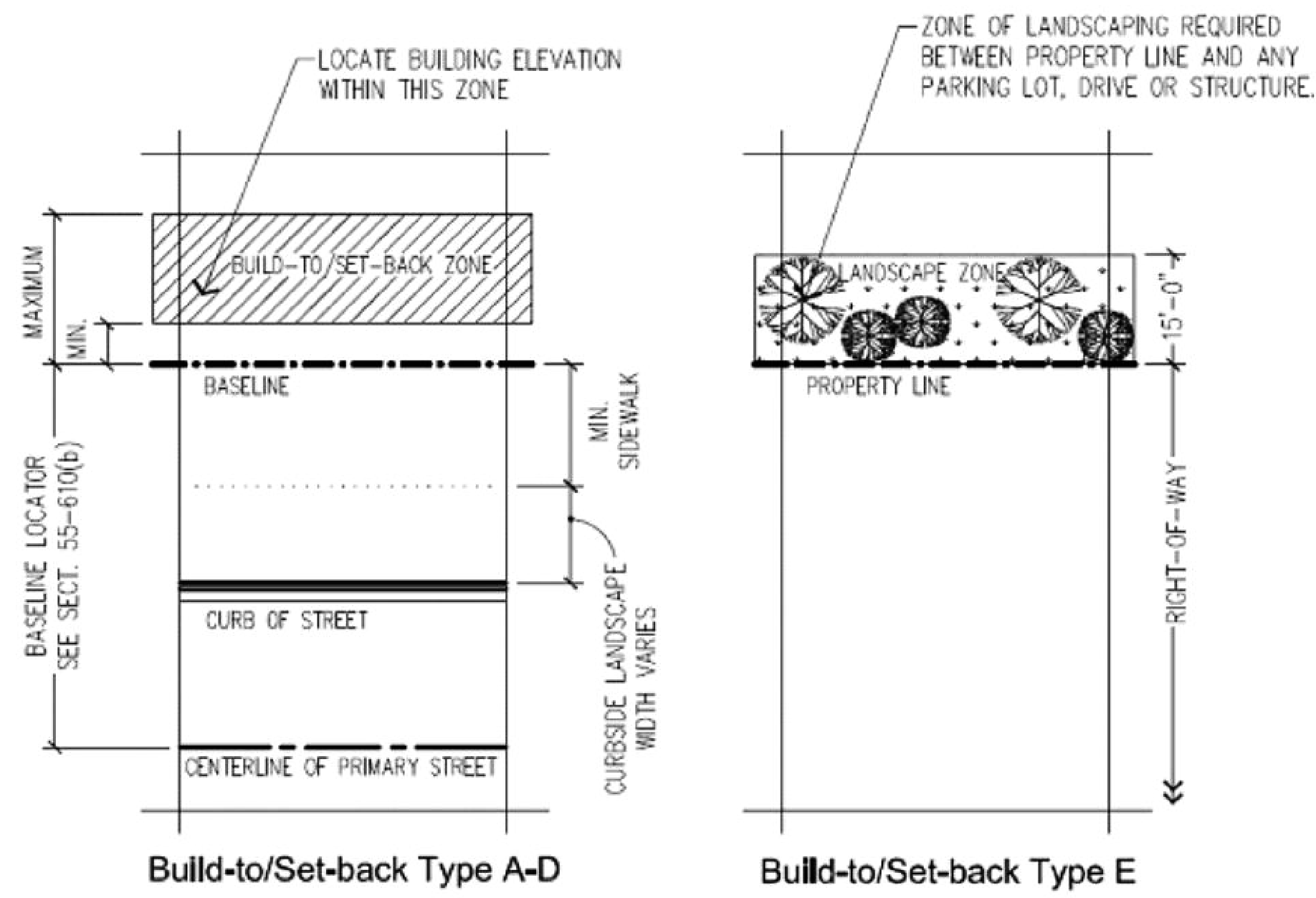
Build-to/set-back lines and zones in the TOD, ACI and MU districts. Buildings shall be located in relation to a baseline. Baselines for ACI districts shall be as defined in subsection 55-610(b). Base lines for all other districts shall be aligned with the property line or as necessary to provide the required area for curbside landscaping and sidewalks pursuant to section 55-924. The baseline location or its geometry may be adjusted to accommodate irregular site geometry, future street improvements, dedicated public amenities or other circumstances, as approved by the planning director. Building facades shall be located within a zone defined by the minimum and maximum range of distance from the baseline as described in Table 55-925(2) and Figure 55-925(1) located at the end of this section.
(1)
Frontage types. The following build-to/set-back frontage types are allowed per Table 55-925(1) located at the end of this section.
a.
Type A: Building front adjacent to the primary street.
b.
Type B: Building side adjacent to the primary street.
c.
Type C: Limited parking between the building front and the primary street.
d.
Type D: Unlimited parking between the building front and the primary street. Large retail buildings on sites exceeding three acres using this frontage type shall provide a pedestrian oriented space meeting the following requirements:
1.
The minimum pedestrian oriented space shall be equal to or greater than three percent of the associated lot area.
2.
The pedestrian oriented space shall be located adjacent to the primary facade of the building with convenient access to the building entrances.
3.
When multiple buildings are involved, the placement of one building consistent with the median scale of the development and utilizing frontage Type A or B in relation to the primary street may be used in lieu of a pedestrian oriented space.
e.
Type E: No direct access to buildings and off-street parking from an arterial street; grouping of buildings on internal main street, internal street or internal access drive. Fifteen feet of landscaping required between any parking, drive or structure and the property line.
(2)
Supplemental requirements. The following supplemental requirements apply to build-to/set-back requirements for buildings located in the TOD, ACI and MU districts:
a.
Fifteen feet of landscaping is required between any parking lot or vehicle drive lane and the sidewalk of any primary street per subsection 55-928(e).
b.
Canopies related to service stations/convenience food sales uses shall not be considered as buildings for purposes of meeting the build-to/set-back line requirements. To minimize glare, such canopies shall include full cutoff luminaires pursuant to section 44-241 notwithstanding the exception for convenience stores and fueling areas.
c.
When a project includes a pedestrian oriented space that is located between the street and the building, the portion of the building associated with the pedestrian oriented space will be allowed to exceed the build-to/set-back zone standards in this section.
d.
No parking or drive lane will be permitted between the building and the sidewalk when street adjacency is required.
e.
Building fronts shall include a building entrance pursuant to subsection 55-935(d)(3) and may be satisfied with a corner entrance.
f.
Criteria for optional frontage type. Street adjacency and orientation of building entrances resulting from frontage types shall take into account several factors in considering the appropriateness of optional frontage or exceptions provided by this section:
1.
For areas exhibiting a prominent orientation and proximity of buildings in relation to the primary street, such a pattern of development and context shall be maintained unless determined otherwise by the master plan.
2.
For areas that are intended to establish or reestablish proximity of buildings in relation to the primary street as envisioned by the master plan such a pattern of development and context shall be provided.
3.
When orientation and proximity of buildings in relation to the primary street is considered appropriate, special priority should be given to corner lots at street intersections considered central to the identity of the area, while allowance for the use of Type B or C frontage as options or exceptions included in this section could be made for mid-block or less prominent intersections.
4.
Allowances for orientation and proximity of buildings in relation to the primary streets may also be made in an effort to minimize negative effects on surrounding neighborhoods.
5.
Final determination of appropriateness for orientation and proximity of buildings in relation to the primary street shall be provided by the Director of Planning.
(3)
Exceptions. The following exceptions apply to buildings located in the ACI-1, ACI-2 and ACI-3 districts:
a.
Civic uses in ACI districts are subject to the build-to/set-back line standards for this section, unless the civic use is part of an approved campus master plan.
b.
Single-family lots and parcels zoned R-1 through R-4 are exempt from build-to/set-back requirements and shall be subject to the base zoning set-back requirements.
c.
If considered appropriate per the criteria established in subsection 55-925(c)(2), convenience store/gas stations may use a 170-foot maximum build-to/set-back zone to accommodate the fueling areas provided the fueling area is screened from view along the baseline pursuant to subsection 55-928(f).
TABLE 55-925(1)—APPLICABILITY OF BUILD-TO/SET-BACK FRONTAGE TYPES IN ACI DISTRICTS
Key:
P = Permitted,
NP = Not Permitted,
O = Optional (see note 1)
Notes:
1. Pursuant to subsection 55-925(c)(2)f. criteria for optional frontage types.
TABLE 55-925(2)—BUILD-TO/SET-BACK ZONE DIMENSIONS
Notes:
1. For the purposes of this table, use types are those uses located within the building less than eight feet above grade.
2. For exceptions see subsection 55-925(c)(3).
FIGURE 55-925(1)—BUILD-TO/SETBACK LINES AND ZONES
(Ord. No. 37810, § 8, 8-14-07; Ord. No. 38082, § 2, 4-22-08; Ord. No. 38677, § 2, 3-16-10; Ord. No. 38907, § 3, 12-21-10; Ord. No. 39358, § 6, 6-19-12; Ord. No. 39516, § 1, 12-4-12; Ord. No. 40303, § 2, 3-31-15; Ord. No. 42341, § 13, 10-27-20)
Sec. 55-926. - Ground-level transparency.
The following ground-level transparency standards shall apply to all sidewalk adjacent facades located within ten feet of a sidewalk, baseline or, primary facades facing parking lots pursuant to subsection 55-935(d)(4)c:
(a)
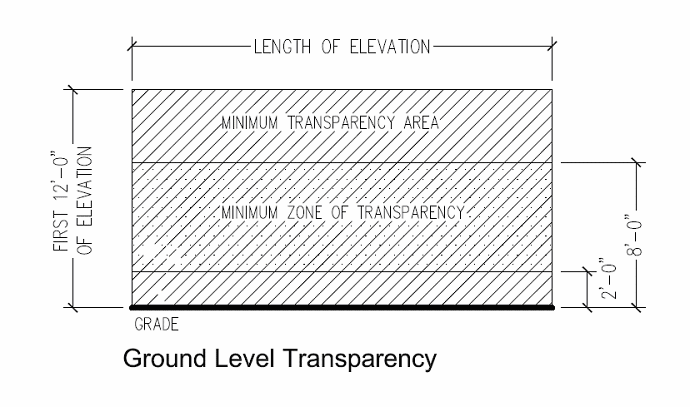
Minimum transparent area. At least 25 percent of the total wall area of the first 12 feet above grade of any sidewalk-adjacent facade shall consist of windows, glass doors or other transparent (clear or slightly tinted) building surfaces providing an unobstructed visual connection from the outside to the inside of the building. For large retail buildings, areas that project and recede from the wall shall be included in the calculation of total wall area.
(b)
Minimum zone of transparency. A minimum zone of transparency shall be established on a sidewalk-adjacent facade between a height of two feet and eight feet above grade on these facades. At least 50 percent of the minimum transparent area shall be located within the minimum zone of transparency.
(c)
Placement of windows. The placement of windows in the ground level of the sidewalk-adjacent facade shall be part of a proportional system that extends to any upper portions of the facade.
(d)
Glass showcases permitted. Glass showcases or cabinets at least three feet in depth may be used to fulfill the foregoing minimum transparent area standard of this section 55-926.
(e)
Facades on slopes. Sidewalk-adjacent facades adjoining slopes greater than five percent shall not be required to place windows within the minimum zone of transparency.
(f)
Relocation of minimum zone of transparency. The minimum zone of transparency may be relocated and/or its height reduced, if the applicant can demonstrate that the standard provided in this section 55-926 would have a significant adverse effect upon the operation of the building to which it would be applied. In such cases, architectural enhancements which add to the visual interest of the sidewalk-adjacent facade may be allowed, in the discretion of the planning director.
(g)
Reduction in percentage of transparency. The percentage of transparency may be decreased for sidewalk-adjacent facades of buildings in residential use in the discretion of the planning director.
(h)
Corner buildings. For a building with two or more sidewalk-adjacent facades, a minimum of two elevations shall meet the requirements of this section. Each additional sidewalk adjacent facade with a primary (front) customer entrance shall also meet the requirements of this section.
For additional ground level transparency requirements refer to subsection 55-935(d)(4)c. regarding front facades facing parking lots and subsection 55-935(d)(4)d. regarding transparency exceptions for large retail buildings.
FIGURE 55-926(1)—GROUND LEVEL TRANSPARENCY
(Ord. No. 37810, § 8, 8-14-07; Ord. No. 38677, § 3, 3-16-10; Ord. No. 38907, § 4, 12-21-10; Ord. No. 39358, § 7, 6-19-12; Ord. No. 42341, § 13, 10-27-20)
_____
Sec. 55-927. - Service area screening.
All service access areas and uses such as trash dumpsters, utility boxes, and heating, ventilation and air conditioning equipment, shall be prohibited between building facades and the street or easily visible from streets or parking lots unless screened from view in accordance with section 55-717. Trash dumpsters shall be screened by using only a masonry enclosure designed to match the wall materials of the principal building on the site pursuant to subsection 55-935(d)(1).
(Ord. No. 37810, § 8, 8-14-07; Ord. No. 40303, § 3, 3-31-15; Ord. No. 42341, § 13, 10-27-20)
Sec. 55-928. - Green parking areas.
(a)
Purpose. Green parking areas, as described in the urban design element of the city's comprehensive plan, are intended to help provide more shade for pedestrians and vehicles and improve the aesthetic appearance of parking areas, without negatively impacting parking area efficiency.
(b)
Dimensions. The dimensions of parking stalls in green parking areas shall comply with the standards set forth in subsection 55-740(b).
(c)
Pervious landscaping within parking lots. All parking areas shall include landscaped areas equal to not less than seven percent of the paved parking area, including drive aisles that do not provide access to a parking stall. The area under vehicle fueling canopies and the associated drive aisles will not be considered parking for the purposes of determining required landscaping of this section. The required landscaped areas must be provided through the use of interior landscape islands, peninsulas and corners distributed evenly throughout the interior of the parking area or through the use of landscaped strips between parking rows. All landscaped areas must be no less than eight feet in any one direction and must be a minimum of 150 square feet. One overstory tree must be planted for every 350 square feet of the required seven percent landscaped area.
(1)
For parking areas on sites that are being redeveloped and for which the applicant can demonstrate that the number of parking spaces that could be constructed in compliance with the provisions of this section 55-928 does not comply with the number of parking spaces required by section 55-734 of the Code, the planning director may authorize a reduction of up to ten percent in the required number of parking spaces.
(2)
In the event that an applicant for a project involving redevelopment demonstrates that the application of the standards of this subsection 55-928(c) would result in the loss of parking spaces necessary to accommodate the uses proposed for the redevelopment site, the planning director may authorize a reduction of up to one and one-half percent in the required percentage of pervious landscaping.
(3)
Parking areas less than 2,000 square feet may be exempt from the interior landscaping requirement of this section.
(d)
Design requirements for parking reserved for the handicapped. The requirements set forth in subsection 55-740(d) shall apply to green parking areas.
(e)
Perimeter landscaping. The perimeter of all parking areas shall be surrounded by a landscaped area as required by subsection 55-740(f)(4). This landscaped area shall be in addition to the interior parking area landscaping requirement set forth in subsection 55-928(c).
(1)
Additional perimeter landscaping requirements. All parking area perimeters adjacent to an arterial street in any urban design district or adjacent to a primary street within a TOD or ACI district shall provide a continuous landscaped area to a minimum height of three feet and a minimum depth of 15 feet. Landscaped berms, hedge rows, shrubbery or any combination may be used to fulfill this requirement.
(2)
All perimeter parking lot landscape areas adjacent to streets in urban design districts shall provide overstory trees 40 feet on center.
(3)
The 15 feet perimeter landscaping may include up to five feet of contiguous and adjacent landscaped right-of-way.
(4)
Exceptions. Parking areas that are within a TOD, ACI-1 or ACI-2 district and meet the curbside landscaping and sidewalk requirement pursuant to section 55-924 may provide the following alternate perimeter parking lot landscaping.
a.
Alternate 1: For parking greater than 6,000 square feet perimeter landscaping required by this section may be reduced to no less than seven and one-half feet if a permanent screen wall pursuant to subsection 55-928(f) is provided. The perimeter landscaping area shall be planted with over story shade trees no more than 40 feet on center.
b.
Alternate 2: For parking lots less than 6,000 square feet, perimeter landscaping may be reduced to no less than three feet if a permanent screen wall pursuant to subsection 55-928(f) is provided. No overstory trees are required in the perimeter landscape area.
(f)
Screen wall design. The design of the screen wall shall be compatible in design to the principal site architecture and shall conform to the wall material requirements of subsection 55-935(d)(1) and meet the following requirements:
(1)
Long continuous undifferentiated walls should be avoided. The design should incorporate elements such as walls, columns, caps, gates, fences, gaps with intervening landscaping, lighting or other features to provide visual interest and pedestrian scaled features.
(2)
The amount of opaque screen wall material in proportion to open or landscape screening shall be approved by the planning director after consideration of the location and size of the lot, site context in relation to pedestrian activity and adjacent building forms or other circumstances which would necessitate greater or lesser amounts of opacity but in no case shall opaque wall material be less than 25 percent of the length of the required screen wall.
(3)
The height may be varied so as to be a minimum of three feet above grade but shall be no less than 18 inches.
(4)
The screen wall shall be on the parking lot side of the perimeter landscaping and shall conform to provisions for sight obstructions of this Code.
(5)
Effective landscaping width. Perimeter landscaping reduced or modified by this section shall be considered the dimensional equivalent of the original requirements with respect to adjustments to sidewalk areas per subsection 55-924(b).
(g)
Other applicable requirements.
(1)
Generally. All other requirements in section 55-740 with regard to parking areas generally shall apply to green parking areas.
(2)
Exterior lighting. Exterior lighting in green parking areas shall comply with the requirements of chapter 44 of this Code.
(Ord. No. 37810, § 8, 8-14-07; Ord. No. 38907, § 5, 12-21-10; Ord. No. 39358, § 8, 6-19-12; Ord. No. 40303, § 4, 3-31-15; Ord. No. 42341, § 13, 10-27-20; Ord. No. 43098, § 1, 9-13-22)
Sec. 55-929. - Parking structures.
Parking garages shall utilize horizontal walls to screen sloping floors and vehicle bumpers that are visible from major streets. Exterior facing materials for parking structures shall be comparable to the facing materials of the principal building(s) on the same or adjoining sites. At least 50 percent of the length of the ground floor of all parking structures that are immediately adjacent to public sidewalks in the TOD, ACI-1 and ACI-2 districts, or in MU districts, and that are located in or directly adjacent to areas that consist primarily of retail storefronts, shall be occupied by retail uses that occupy at least 20 percent of the floor area of the ground floor and have entrances onto those public sidewalks.
Figure 55-929(1): Parking Structure—Conforming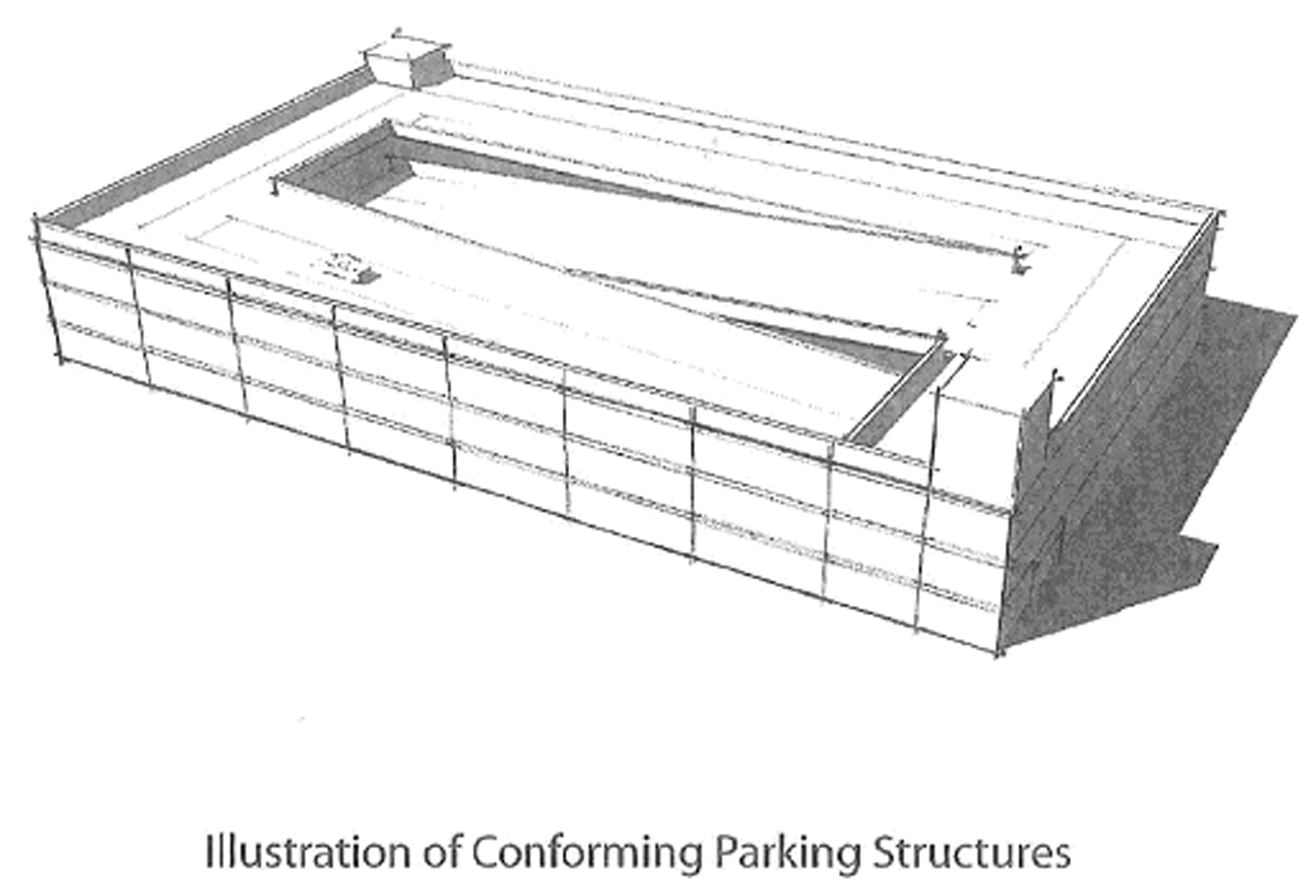
Figure 55-929(2): Parking Structure—Section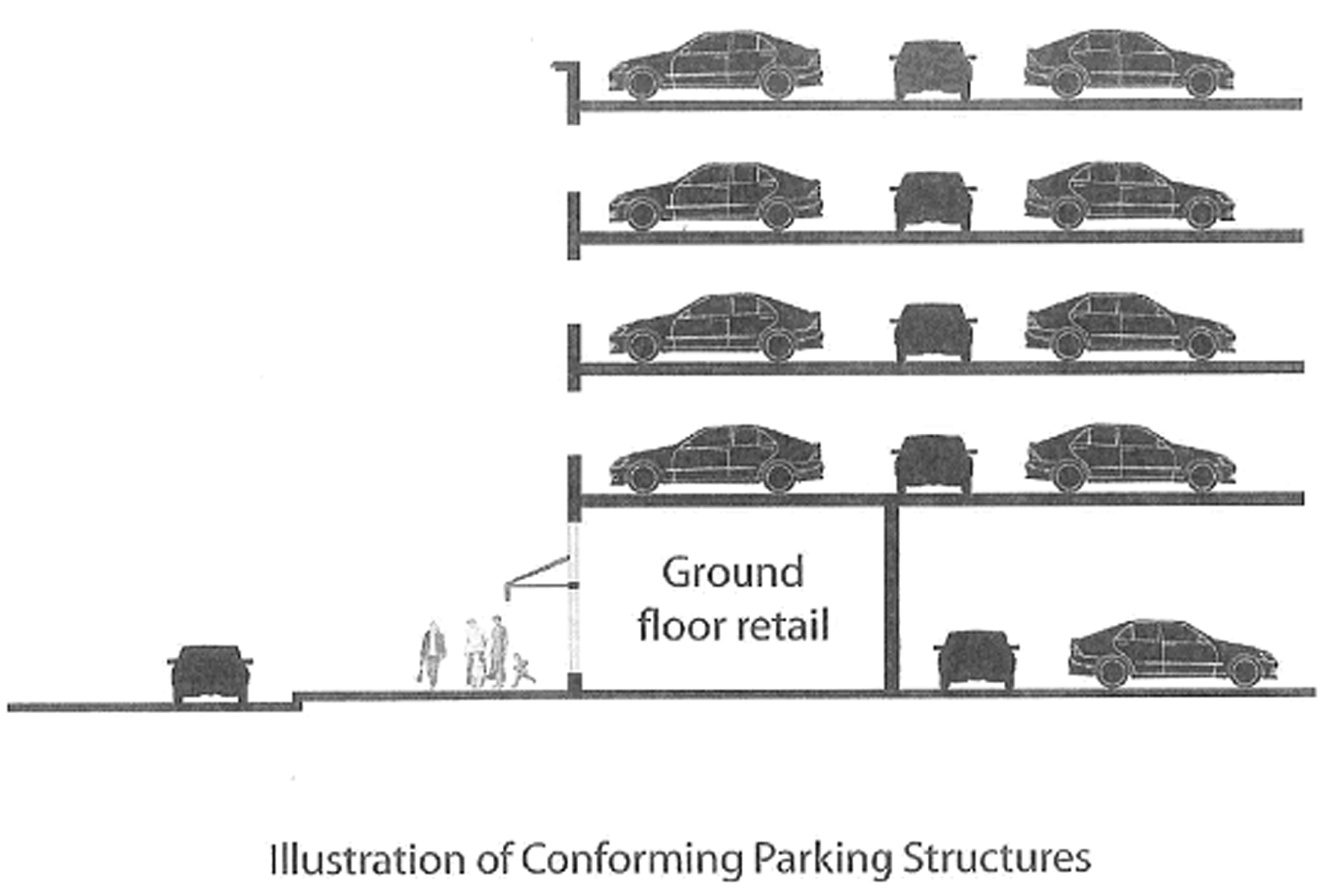
(Ord. No. 37810, § 8, 8-14-07; Ord. No. 38907, § 6, 12-21-10; Ord. No. 42341, § 13, 10-27-20)
Sec. 55-930. - Site and building access.
(a)
General. Site and building access shall be located and designed in a manner that provides for pedestrian activity on the street frontage of buildings while minimizing the number of vehicular access points and reducing areas of vehicle-pedestrian conflict.
(b)
Site and building access in an MU district. In an MU district, site and building access shall be subject to the following requirements:
(1)
In general, vehicular access points to an MU district from major streets shall not be located closer than 500 feet or further than 700 feet from the centerline of the nearest intersection of major streets.
(2)
Between 500 feet and 700 feet from intersections of major streets, a right-in/right-out access point and a street shall be required that connects to the nearest perpendicular street.
(3)
Between 1,000 feet and 1,400 feet from intersections of major streets, an intersection and street with all turning movements shall connect to the nearest perpendicular street.
(4)
All access to sites shall conform to city standards for driveway access and shall be shown on an approved internal street system plan pursuant to subsection 55-564(d)(1).
(5)
Pedestrian access shall be provided from all public sidewalks to the site with convenient access to building entrances.
(6)
On-street parking shall be provided on streets other than major streets as established through the special use permit process.
(7)
The internal circulation system shall distribute traffic to minimize conflict at access points.
(8)
Lots abutting an internal street shall be limited to one unshared access from any internal street system unless approved by the public works and planning departments.
(9)
Shared access. An additional access point may be allowed provided that the second access point is shared with the adjacent property near a common property line.
(c)
Site and building access in the TOD and ACI districts. In the TOD and ACI districts, site and building access shall be subject to the following requirements:
(1)
New development on parcels and lots shall be limited to one access point per each adjacent street, subject to approval by the public works and planning departments.
(2)
Additional access points may be allowed provided that the additional access points are shared with the adjacent property at a common property line.
(3)
New vehicular access points to major streets shall be prohibited unless approved by the public works department, the planning department and, if necessary, the Nebraska Department of Roads.
(4)
Building entrances shall be visible from the street and accessible from the adjacent sidewalk.
(d)
Site and building access in the MCC district. New development on parcels and lots in the MCC district shall be limited to two vehicular access points. New vehicular access points for parcels or lots that have already been developed with two or more vehicular access points shall be discouraged.
(Ord. No. 37810, § 8, 8-14-07; Ord. No. 38907, § 7, 12-21-10; Ord. No. 42341, § 13, 10-27-20)
Sec. 55-931. - Neighborhood connectivity.
New streets shall be designed to and shall connect through to adjacent streets whenever physically possible.
(Ord. No. 37810, § 8, 8-14-07; Ord. No. 42341, § 13, 10-27-20)
Sec. 55-932. - Location of utilities.
New service lines for utilities such as power and data communications lines shall be located underground. To the extent feasible, new distribution lines for utilities such as power and data communications lines shall be located in a utility corridor outside of the area between the curb and the sidewalk along each street frontage.
(Ord. No. 37810, § 8, 8-14-07; Ord. No. 42341, § 13, 10-27-20)
Sec. 55-933. - Signs.
In addition to the provisions regarding signs set forth in this Code and those provided by subsection 55-935(6) regarding building design, the following standards shall apply:
(a)
Pole signs. Pole signs, as defined by section 55-822 of article XVIII, are prohibited.
(b)
Monument and ground signs. The maximum height of a monument or ground sign shall be 12 feet, including any structural elements of the sign such as pillars or posts. All monument and ground signs shall have a masonry base. For the purposes of this section, a masonry base shall be defined as a self-supporting masonry assembly occupying the area between the bottom of the permitted sign and a concrete or masonry foundation extending a minimum of eight inches above finished grade.
(c)
Business center signs. Business center monument signs may have a maximum height of 25 feet. This maximum height shall include any structural elements of the sign such as pillars or posts. Business center monument signs may provide for tenant advertising provided that no more than 60 percent of the sign area is used for such purposes, and no single tenant occupies more than ten percent of the sign area. Business center signs are only allowed in business centers ten acres or larger in size. One sign shall be allocated for each full-turn access to a business center (one-quarter and one-half mile) up to a maximum of three signs. Business centers (ten acres or larger) that have no full turn access points will be allocated one business center sign. All business center signs shall have a masonry base.
(Ord. No. 37810, § 8, 8-14-07; Ord. No. 39358, § 9, 6-19-12; Ord. No. 40303, § 5, 3-31-15; Ord. No. 42341, § 13, 10-27-20)
Sec. 55-934. - Retaining walls.
Retaining walls shall be subject to the following standards:
(a)
Categories of retaining walls. For purposes of this section, retaining walls or segments of retaining walls shall be classified in the following categories:
(1)
Category 1—Within 95 feet of and generally facing a street or public right-of-way, or adjacent to any sidewalk or pedestrian walkway.
(2)
Category 2—Facing a street or public right-of-way, but at a distance greater than 95 feet, or, facing a public area of the site or an adjacent site (including a parking lot or drive-thru space).
(3)
Category 3—Screened from casual public view and facing only a building or non-public areas on the site or an adjacent site.
(b)
Maximum height and separation distance.
(1)
Category 1 retaining walls shall not be more than five feet high and the distance between retaining walls shall not be less than ten feet. As an alternative, retaining walls may extend to a maximum of ten feet in height provided that a minimum 1.5 to 1.0 depth-to-height ratio is maintained between the edge of the sidewalk and/or property line and the top of any retaining wall exceeding five feet in height.
(2)
Category 2 retaining walls shall not be more than ten feet high. The distance between retaining walls shall not be less than ten feet.
(3)
Category 3 retaining walls shall not be more than ten feet high. The distance between retaining walls shall not be less than five feet.
(4)
The intervals between all walls shall be used for landscaping that conforms to the definition for "Landscaped area" outlined in section 55-714.
(c)
Retaining wall materials. Category 1 and 2 retaining walls shall be constructed of brick masonry veneer, concrete segmental block or similar grade material. Materials shall be compatible in color, texture, size and scale to the masonry materials used in the elevations of buildings on the same site. Category 3 retaining walls shall not have material requirements.
(d)
Existing retaining walls. An existing retaining wall located within a site shall not be subject to the provisions of this section unless new development or a redevelopment or reconstruction of the existing development on the site makes the retaining wall visible.
(e)
Visible retaining walls and slopes steeper than 3:1 located in the public right-of-way shall require the approval of the Omaha Public Works Department.
(Ord. No. 37810, § 8, 8-14-07; Ord. No. 38677, § 4, 3-16-10; Ord. No. 38907, § 8, 12-21-10; Ord. No. 40303, § 6, 3-31-15; Ord. No. 42341, § 13, 10-27-20; Ord. No. 43728, § 1, 3-5-24)
Sec. 55-935. - Building design guidelines.
(a)
Findings. The city council finds that the creation of high quality building design within the city is a major goal of the urban design element of the city's comprehensive plan, and further finds that the adoption of guidelines regarding the elevations of such buildings will help to achieve this goal.
(b)
Purpose. The purpose of these guidelines is to improve the quality of building design within the city and improve the city's image as defined by its built environment. While these guidelines attempt to set forth what is generally acceptable building design, the city intends by these guidelines to encourage innovation and creativity in the design of such buildings.
(c)
Definitions. For the purposes of the guidelines set forth in this section 55-935, the following words and phrases shall have the meanings respectively ascribed to them:
Advertising sign: A sign describing specific products or brands offered for sale on premises.
Business ID sign: Identification of a business or facility including name, logotype or tagline.
Customer entrance: That part of a large retail building's exterior accommodating either access into or egress out of that building, or both access and egress, for customers of the retail establishment(s) located in the building.
Directional sign: Indicates specific access points or entry ways, traffic directional information, etc.
Elevation: The complete facade located on any side of a building.
General building: All buildings NOT classified as large retail buildings.
Large retail building: Any building used primarily for retail uses and having at least one elevation greater than 200 feet in length and/or a floor area greater than 25,000 square feet.
Secondary sign: A sign not categorized as business identification or directional which are considered primary building and site signs. Secondary signs generally include operational, departmental or other characteristics of the facility/building.
Visible elevation: Any elevation of a building which is visible from a public right-of-way adjacent to the property on which the building is located or from a parking lot within such property.
(d)
Guidelines. Buildings will be reviewed comprehensively against all provisions of this section for the determination of design quality. The following review criteria apply to buildings pursuant to section 55-935, unless provided for otherwise:
(1)
Wall materials.
a.
General standard. All building elevations should be composed of either primary, complementary and/or miscellaneous materials described in this section. Approved primary material(s) should be used as the prominent wall material. The use and location of primary material(s) may be prioritized towards pedestrian environments and/or the base of multi-storied buildings. Approved complementary materials should be used in a manner to complement primary materials in terms of use and location.
Approval of appropriate use and location of wall materials will include consideration of building massing, height, building location, proximity to public/pedestrian environments, context; visibility and three dimensional aspects of the design. The quality of building elevation design per subsection 55-935(d)(2) and design of the building as a whole should be emphasized rather than the quantity of any one wall material proposed.
b.
Miscellaneous materials. Miscellaneous exterior materials such as trim, coping, flashing, canopies, louvers and or design accents should be compatible with the overall building quality and design. Materials not listed as an approved material described in Table 55-935(1) may be considered a miscellaneous material.
c.
Grades of materials. For a material and/or assembly of materials to be considered similar in grade to an approved material described in Table 55-935(1) it shall be required to achieve two primary attributes:
1.
Durability. Durability of materials shall be defined as its performance by virtue of its ability to resist stress, force or degradation over time.
2.
Appearance. Appearance of materials shall be defined as its physical characteristics of size, shape, texture, grain, coloring and/or material composition as perceived visually.
Supporting evidence for a wall material proposed as similar in grade to an approved material listed in Table 55-935(1) shall be provided to the planning department for approval by the applicant concurrent with the urban design site plan review process. In the event that the applicant is aggrieved by a judgment concerning similarity of grade, the applicant or the planning director may request a recommendation by the urban design review board as described in section 55-937 concerning urban design site plan approval.
d.
Applicability. Wall material requirements shall apply to all buildings pursuant to section 55-935 with the following exceptions.
1.
Residential use only buildings with four or fewer dwelling units within ACI-3, ACI-4, IG and MCC zoning districts and not part of a larger integrated development.
2.
Residential use only buildings with two or fewer dwelling units within TOD, ACI-1, ACI-2, CP and MU districts and not part of a larger integrated development.
TABLE 55-935(1)—WALL MATERIALS
1. Industrial/agricultural grade wall systems or other similar grade materials are prohibited as a primary material.
2. May be used as a primary material on large retail buildings.
3. May be used as complementary material on large retail buildings or non-visible elevations of general buildings only.
4. When EIFS is used, it generally should be placed a minimum of eight feet above grade and be applied in an articulated fashion. The placement of EIFS may be varied so as to average a minimum of eight feet above grade, but in no case shall it be placed closer than three feet above grade unless specified as impact resistant and includes an additional layer of 20 oz. mesh.
5. Corrugated sheet metal siding may be used as a complementary material provided it is specified as a concealed fastener system. A non-concealed fastener system may be used as a miscellaneous material in limited application and is subject to approval.
6. Vinyl siding may only be used on residential use only buildings as a complementary material and must be specified to be .050 inches thick or greater.
(2)
Design of elevations.
a.
Continuity of design. All visible elevations of proposed buildings shall be consistent in design and use of materials.
b.
Articulation of the facade. All facades shall be designed in three dimensions expressing qualities of depth, shadow, modulation and massing. Extensive undifferentiated wall planes that are flat, two-dimensional and are not allowed unless part of an overall design scheme approved by the planning director.
c.
Proportion of height to length of elevations. Buildings that are only one story and have walls longer than 100 feet should be designed so that the height of the wall, including the parapet, if there is one, averages not less than one-tenth of the length of the wall. In the case of walls longer than 300 feet, this provision can be satisfied by providing architectural elements at the ends of the wall that meet the height criteria for the entire length of the wall, but the rest of the wall need not be taller than 30 feet.
d.
Mitigating the effect of long elevations. Building elevations should utilize design elements proportionate to the human scale. Arcades, colonnades, awnings, pilasters, windows, plazas, landscaping, lighting and galleries are all useful devices to achieve a human scale. Varying the use of different materials, use of expression lines and/or dividing materials by color, texture and pattern is also an effective method. Elements of scale may be prioritized by degree of proximity to pedestrian environments.
e.
Incorporating canopies into the design. Where weather protection is extended out over a sidewalk or traffic lane as a canopy at a building entrance, the canopy should be incorporated into the design of the entrance pavilion or otherwise incorporated into the architectural design of the building.
f.
Base of buildings. Where pedestrian activity occurs at the base of visible facades, the building should be designed such that it does not significantly disrupt or diminish the quality of the pedestrian area. If parking occupies the ground level, it should be fully enclosed and the wall finishes should be comparable to those used in the inhabited portion of the building. Exterior mechanical equipment, such as an exhaust ventilator, should be located not less than ten feet above the base of the building.
(3)
Proportion and visibility of entrances. Entrances in visible elevations of buildings will be reviewed according to the following criteria.
a.
Entrances should be part of an architectural composition that is in scale with the entire visible elevation in which it is contained. The location of entrances should be legible and all public pedestrian entrances should be accessible from sidewalks that connect to the public sidewalk system. Where there are many entrances to separate establishments, a continuous band of doors and windows along the entire visible elevation is a customary design approach. Where doors are not part of such a continuous band, the doors should be part of an entrance pavilion, projection, or comparable architectural element that incorporates the doors, and is in scale with the length and height of the whole elevation.
b.
Buildings with two or more "sidewalk adjacent facades" as defined in section 55-926 shall provide a minimum of one entrance within a sidewalk adjacent facade. This requirement may be satisfied with a corner entrance.
c.
When there is a large retail building and other, smaller stores which are part of the same development, the smaller stores, with their separate entrances, may be placed in front of the large retail building, or along one of its sides, in order to mitigate the scale of the large building.
d.
Where a large retail building entrance elevation is longer than 200 feet there should be more than one customer entrance to provide convenient access from multiple approaches to the building. Entrances shall be separated a minimum distance equaling 25 percent the length of the entrance elevation. Access to an interior or exterior arcade shall be considered an acceptable means for providing a building entrance.
(4)
Proportion and organization of windows. The following guidelines apply to windows on visible elevations of buildings:
a.
Windows should be in scale with the entire elevation of which they are a part.
b.
Windows should be part of a design and proportional system that extends to the entire visible elevation. Examples of such a system would be uniform sill and window heights, or continuous horizontal or vertical bands of windows. Windows that appear as individual openings in a masonry wall should be placed in accordance with a proportional system that can be explained by a drawing, although the system need not be expressed in the wall itself.
c.
Where a building has an elevation with a primary (front) entrance adjacent to a parking lot, the ground-level transparency standards of subsection 55-926(a) shall apply to that elevation.
d.
All buildings shall follow the transparency requirements set forth in section 55-926, except as follows:
1.
For large retail buildings the minimum required transparency within the zone of transparency is 20 percent.
2.
The minimum transparent area as delineated in subsection 55-926(a) may be reduced to 20 percent when a large retail building utilizes an arcade in combination with features that add visual interest to the wall. The arcade must be designed as a recess within the primary wall plane. Arcade openings in the wall plane must have the proportion and general appearance of door and window openings.
(5)
Relating buildings to sloping sites. Grading plans including one or more buildings should minimize the necessity for retaining walls and preserve the natural integrity of the site topography as much as possible. Parking lots should be designed to absorb changes of grade through gentle slopes and low retaining walls within the parking area, rather than accumulating all grade changes at the site perimeter. Where the height of a building elevation changes appreciably across a site, the design should take these circumstances into account.
(6)
Building signs. In addition to the building sign standards set forth at sections 55-821 through 55-847, the following review criteria shall apply to signs for all buildings and sites:
a.
Signs on visible elevations should be limited to identification of the commercial business or businesses within the building. Where signs are associated with the entrance to the commercial business the size of the sign should be in proportion to the entrance. Where the sign is placed away from the entrance or on a wall that does not have an entrance, the sign should be integrated with the design of the wall through such devices as placing the letters of the sign directly on the wall so that the wall can be seen between the lettering.
b.
Where there are multiple establishments in the same building, there should be a sign plan to ensure continuity of the identification signs of all the establishments in the building.
c.
Secondary signs may be used on no more than two elevations. Signs shall not exceed five percent the length of any two elevations respectively and shall not exceed ten percent when used on one elevation. Secondary signs shall not exceed two feet in height.
(7)
Screening of equipment and utility areas.
a.
Screening of rooftop equipment. Mechanical equipment above the surface of the roof, such as cooling towers, vent fans and vent stacks, should be screened by architectural elements such as a parapet extending upward from the perimeter wall or an architectural roof-top enclosure so that the equipment is not casually visible from adjacent public streets or from the parking lot for the building. In no case shall the parapet wall or roof top enclosure be required to exceed the height of the mechanical equipment. All screening material shall be comparable in design and quality of materials to the facades of the building itself.
b.
Screening of exterior mechanical equipment. All mechanical equipment located outside a building, such as transformers or condensers, should not be easily visible to the public from streets or parking lots. Such elements should be screened, to the extent allowed by the public utility, by locating them within a perimeter wall of comparable design and materials to the building's visible elevations and sufficiently high as to completely conceal the equipment. Landscaping used as a screen should utilize evergreens sufficiently tall, densely planted, and well maintained.
c.
Screening of loading docks and service operations. Loading and service operations including storage of waste materials, should not be visible to the public from streets or parking lots. An effective way to screen such elements is to locate them within the building perimeter, screened by doors. Doors to loading docks should not be open except when vehicles are actually entering or leaving the building. Landscaping used as a screen should utilize evergreens, sufficiently tall, densely planted, and properly maintained.
(8)
Parking lot setbacks and sidewalks. Where a building has an elevation with a primary (front) entrance adjacent to a parking lot, the following minimum parking lot set-backs and sidewalk widths per Table 55-935(2) shall apply.
TABLE 55-935(2)—MINIMUM PARKING LOT SET-BACKS AND SIDEWALK WIDTHS
Figure 55-935(1): Rooftop Mechanical Equipment Screening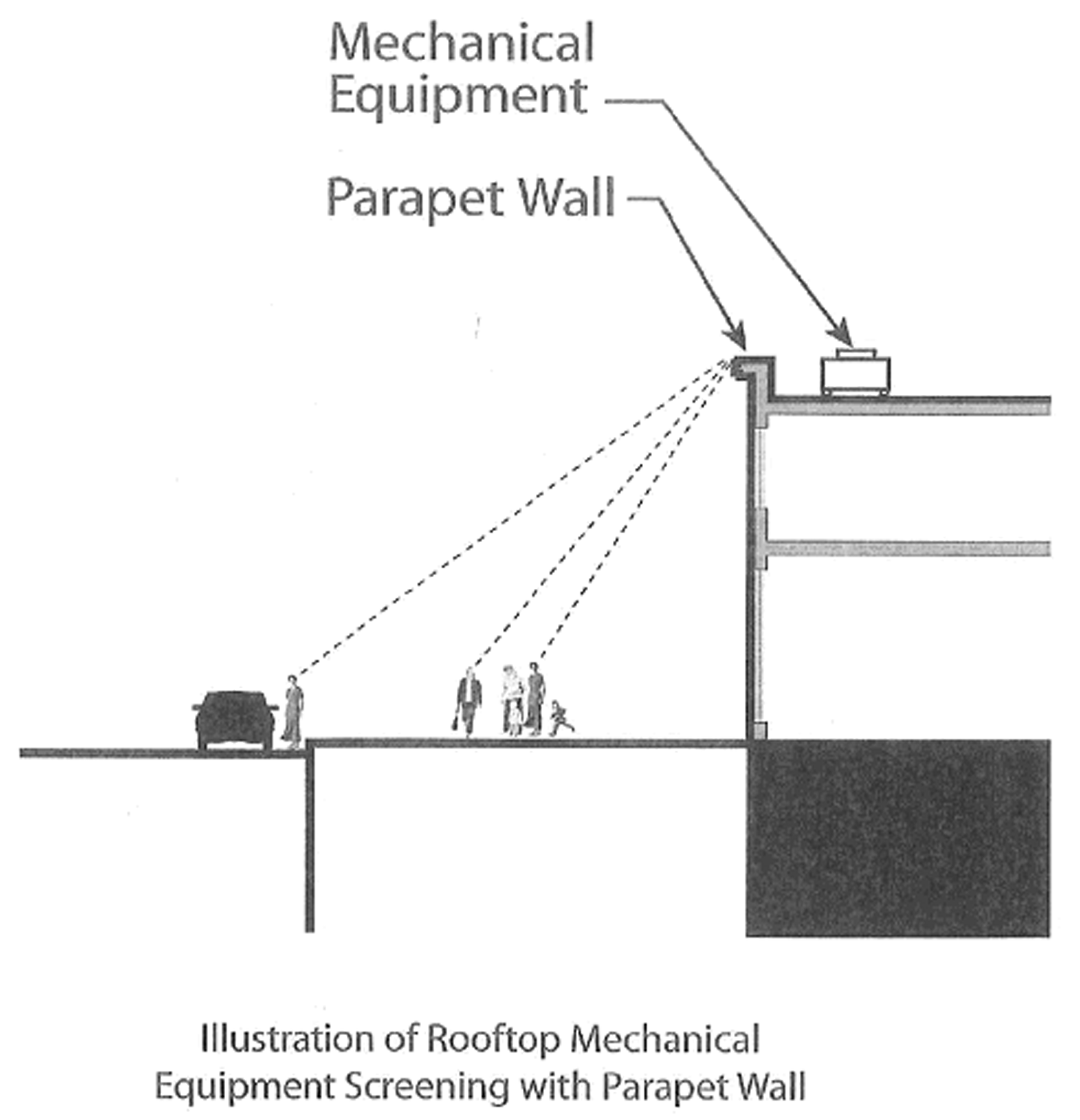
Figure 55-935(2): Sloping Site Design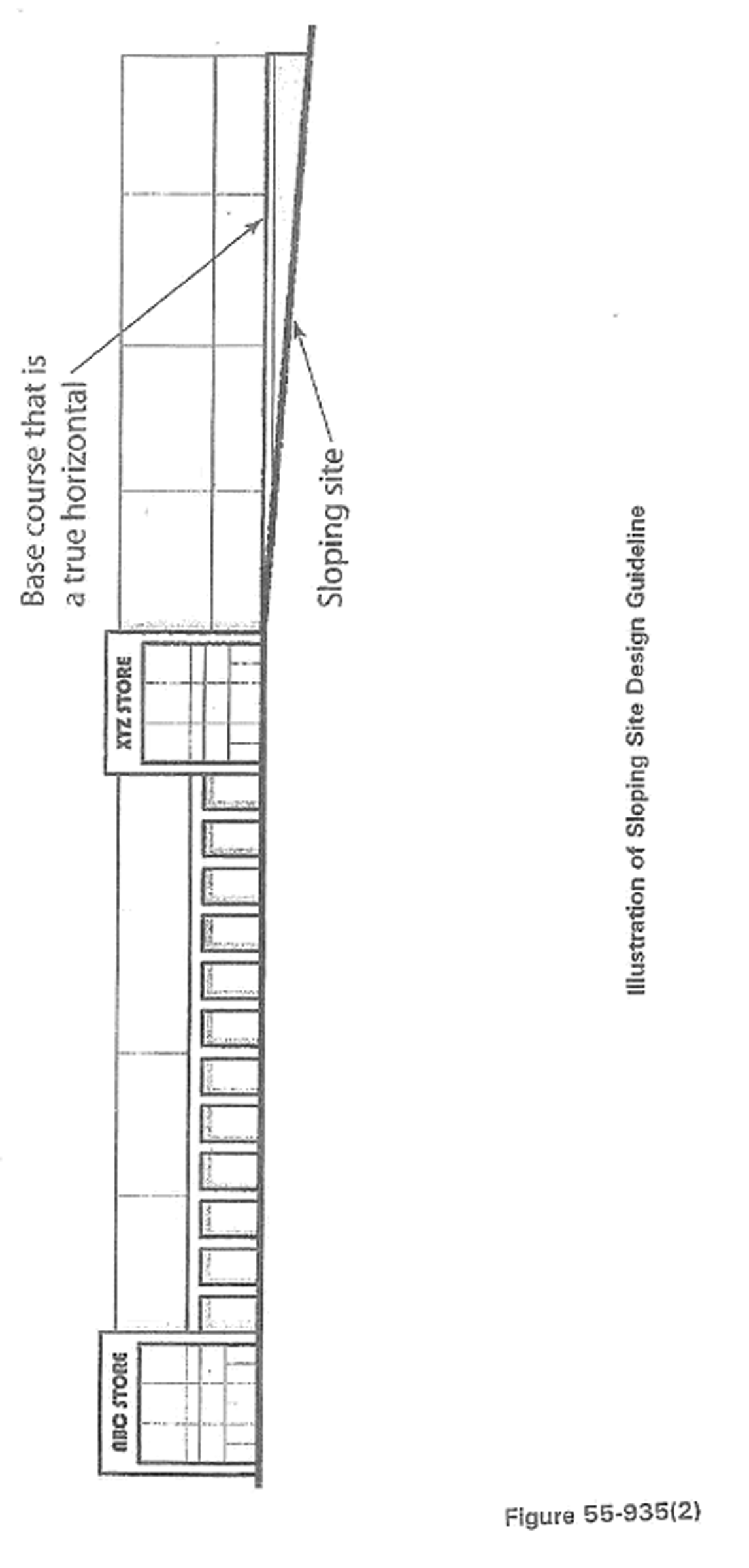
Figure 55-935(3): Summary Illustration for Building Design Guidelines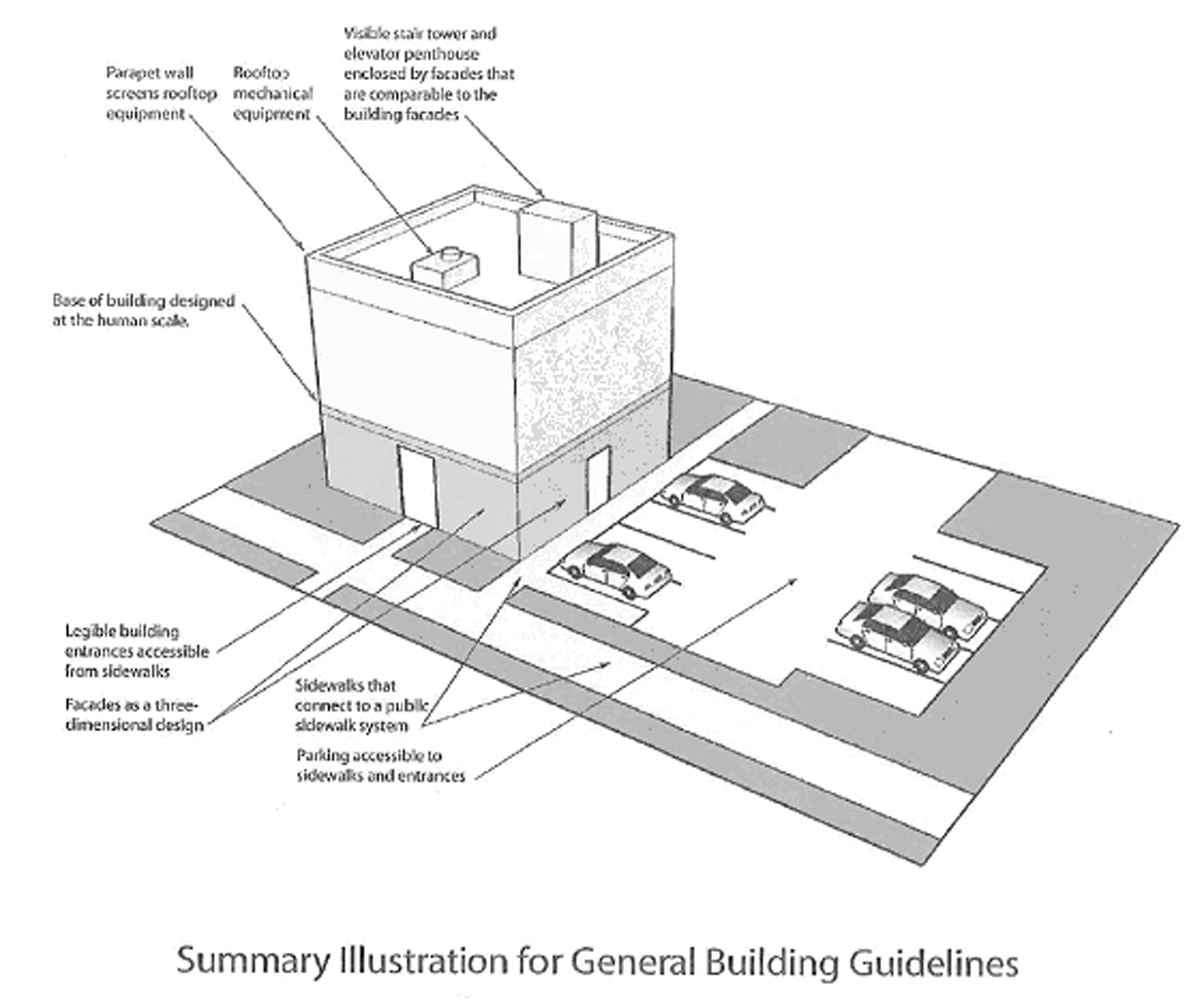
(Ord. No. 37810, § 8, 8-14-07; Ord. No. 38677, § 5, 3-16-10; Ord. No. 38907, § 9, 12-21-10; Ord. No. 39358, § 10, 6-19-12; Ord. No. 42341, § 13, 10-27-20)
_____
Sec. 55-936. - Reserved.
Editor's note— Ord. No. 38677, § 6, adopted March 16, 2010, repealed the former section 55-936, which pertained to general building design guidelines and derived from Ord. No. 37810, § 8, adopted August 14, 2007.
Sec. 55-937. - Urban design site plan review.
(a)
Purpose. The urban design site plan review procedure provides for administrative and compliance review of development plans pursuant to article XXII (urban design).
(b)
Applicability. The urban design site plan review procedure applies to all districts pursuant to article XXII (urban design) and shall include two types of review.
(1)
Special review. The urban design site plan review for MU districts shall follow the administrative procedures set forth in section 55-565 concerning approvals, applications and amendments to approved MU development plans.
(2)
Administrative review. The urban design site plan review for TOD, ACI, NCE and MCC districts shall follow the administrative procedures set forth in section 55-882 with the additional standards and criteria as applicable and noted in section 55-922.
(c)
Urban design review procedure. The urban design site plan review procedure shall supplement the administrative procedures for special and administrative reviews with the following provisions.
(1)
Building design plans. In addition to the application requirements for special or administrative review, an application for urban design site plan review shall (1) Building design plans. In addition to the application requirements for special or administrative review, an application for urban design site plan review shall include plans showing, in both two and three dimensions, the elevations of all building facades in sufficient detail to review compliance thereof with the applicable urban design standards.
(2)
Modifications of a development plan. In addition to requiring the modification of a site plan under subsection 55-882(g), the planning director may also require modifications to proposed building design to comply with applicable urban design standards or to improve compatibility with the surrounding context.
(3)
Appeal to the urban design review board. During the planning director's review of a proposed urban design site plan or amendment of the same under this section, either the applicant or the planning director may request to have the urban design review board, pursuant to Chapter 24, Article III, provide a recommendation on the application.
a.
Application. Such a request shall be made in writing to the planning department with a description of the issues to be reviewed.
b.
Disposition. Following a hearing on the matter, the urban design review board shall provide a recommendation on the issues to the planning director. The planning director shall then act on the application, taking into consideration the recommendation of the urban design review board.
(4)
Appeal to the planning board. An applicant aggrieved by the decision of the planning director under this section may appeal to the planning board by filing a written appeal with the planning director within 30 days of the planning director's decision. The written appeal shall identify the specific grounds for appeal.
a.
Disposition. Following a hearing on the matter, the planning board may affirm, reverse or modify the planning director's decision.
(5)
Appeal to city council. An applicant aggrieved by the decision of the planning board under this section may appeal to the city council by filing a written appeal with the city clerk within 30 days of the planning board's decision. The written appeal shall identify the specific grounds for appeal.
a.
Disposition. Following a hearing on the matter, the city council may affirm, reverse or modify the planning board's decision.
(6)
Review criteria. In rendering decisions or recommendations under this section, the planning director, the urban design review board, the planning board and the city council shall make their determinations under sections 55-884 for special review or 55-882 for administrative review utilizing the criteria set forth in Table 55-922 as applicable.
(Ord. No. 37810, § 8, 8-14-07; Ord. No. 42341, § 13, 10-27-20; Ord. No. 44374, § 1, 8-26-25)
Sec. 55-938. - Criteria for urban design-related review and evaluation.
(a)
Professional standards. Development plans submitted for review and evaluation under sections of this article shall be prepared by the following registered and licensed professionals:
(1)
Architectural design. Building design on structures exceeding 10,000 square feet or 30 feet in height shall be prepared by licensed professional architect.
(2)
Landscape design. Landscape design on parcels greater than 20,000 square feet shall be prepared by a licensed professional landscape architect.
(3)
Site design. Site design, excluding landscaping, on parcels exceeding 20,000 square feet shall be prepared by a licensed professional civil engineer, landscape architect, or architect.
(Ord. No. 37810, § 8, 8-14-07; Ord. No. 38082, § 3, 4-22-08; Ord. No. 38907, § 10, 12-21-10; Ord. No. 39358, § 11, 6-19-12; Ord. No. 42341, § 13, 10-27-20; Ord. No. 44374, § 1, 8-26-25)

