
Omaha City Zoning Code
ARTICLE VI
RESIDENTIAL DISTRICTS
Sec. 55-102. - General purpose.
The residential districts are included in this chapter to achieve one or more of the following objectives:
(a)
To reserve an adequate supply of appropriately located area for residential development, consistent with the city's comprehensive plan and with sound standards of health, safety and welfare.
(b)
To implement the city's comprehensive plan by establishing an intermediary reserve district for developable lands.
(c)
To allow a wide range of residential densities and a variety of housing types.
(d)
To accommodate the need to provide housing that is affordable to all residents of the Omaha jurisdiction.
(e)
To promote flexibility in the design and development of housing, while maintaining high standards of design and ensuring neighborhood compatibility.
(f)
To assure adequate light, air, privacy and open space to residents of housing in the city.
(g)
To facilitate planning for urban services appropriate to anticipated population, housing densities and other service requirements.
(h)
To encourage the conservation of established neighborhoods in the city.
(i)
To encourage more varied urban environments by allowing mixed uses of equal effects in certain areas.
(Code 1980, § 55-102)
Sec. 55-104. - Purpose.
The DR development reserve district is intended to provide a transitional zone for the orderly conversion of land from agricultural and rural to urban uses. The DR district coincides generally with undeveloped land on the fringe of the urbanized area which has access to public facilities. However, the DR district may also apply to certain sites within central city development areas as well. It permits both agricultural and rural uses and very-low-density residential use. It assures that land is not developed prematurely or without adequate urban services.
(Code 1980, § 55-104)
Sec. 55-105. - Permitted uses.
The following use types are permitted:
(a)
Agricultural uses.
Crop production
Horticulture
(b)
Residential uses.
Single-family (detached)
Small group living (disabled)
(c)
Civic uses.
Day care (limited)
Local utility services
Park and recreation services
Primary educational facilities
(Code 1980, § 55-105; Ord. No. 38198, § 5, 7-29-08)
Sec. 55-106. - Conditional uses.
The following use types are allowed, subject to approval of a conditional use permit, as provided by section 55-883.
(a)
Agricultural uses.
Animal production
(b)
Civic uses.
Administrative services
Cemetery
College and university facilities
Safety services
Secondary educational facilities
(c)
Commercial uses.
Kennels
Stables
(d)
Miscellaneous uses.
Wind energy conservation system
(Code 1980, § 55-106)
Sec. 55-107. - Special permit uses.
The following use types are allowed, subject to issuance of a special use permit by the city council, as provided by section 55-884:
(a)
Residential uses.
Large group living
Small group living (nondisabled)
(b)
Civic uses.
Convalescent services
Cultural services
Day care services (general)
Detention facilities
Emergency residential care
Major utility facilities
Military installations
Recreational clubs
Religious assembly
Social clubs
(c)
Commercial uses.
Agricultural sales and service
Campground
Outdoor sports and recreation
Outdoor entertainment
(d)
Miscellaneous uses.
Broadcasting tower
Nonputrescible landfill
(Code 1980, § 55-107; Ord. No. 38198, § 5, 7-29-08; Ord. No. 38861, § 1, 11-2-10)
Sec. 55-108. - Site development regulations.
Each site in the DR development reserve district shall be subject to the following site development regulations:
(Code 1980, § 55-108)
Sec. 55-109. - Additional regulations.
Lot clustering. Certain site development regulations may be modified in accordance with section 53-11 of the city's subdivision regulations and section 55-784 of this chapter providing for cluster subdivisions, subject to the following limitations:
(1)
No individual lot may contain less than 20,000 square feet.
(2)
No individual lot may be less than 75 feet in width.
(3)
The total land area of the development, excluding dedicated right-of-way, divided by the number of housing units in the development must equal at least one acre per unit.
(Code 1980, § 55-109)
Sec. 55-122. - Purpose.
The R1 single-family residential district is intended to provide for low-density residential neighborhoods, characterized generally by single-family dwellings on large lots with supporting community facilities. The R1 district provides for conditional approval of community facilities which generate larger quantities of traffic than residential uses. It is appropriate for established parts of the city, where it serves to preserve existing low-density environments; for newly developing, low-density neighborhoods; and for areas in which environmental considerations preclude the platting of smaller lots.
(Code 1980, § 55-122)
Sec. 55-123. - Permitted uses.
The following use types are permitted:
(a)
Residential uses.
Single-family (detached)
Small group living (disabled)
(b)
Civic uses.
Day care (limited)
Local utility services
Park and recreation services
Primary educational facilities
(c)
Agricultural uses.
Community garden
Urban garden
(Code 1980, § 55-123; Ord. No. 38198, § 6, 7-29-08; Ord. No. 43400, § 1, 5-2-23)
Sec. 55-124. - Conditional uses.
The following use types are allowed, subject to approval of a conditional use permit, as provided by section 55-883:
(a)
Civic uses.
Administrative services
College and university facilities
Community recreation
Cultural services
Religious assembly
Safety services
Secondary educational facilities
(b)
Agricultural uses.
Urban farm
(Code 1980, § 55-124; Ord. No. 43400, § 1, 5-2-23)
Sec. 55-125. - Special permit uses.
The following use types are allowed, subject to issuance of a special use permit by the city council, as provided by section 55-884:
(a)
Residential uses.
Large group living
Small group living (nondisabled)
Single-family residential (attached)
Assisted living
(b)
Civic uses.
Cemetery
Day care services (general)
Social clubs
Recreational clubs
Emergency residential care
(c)
Miscellaneous uses.
Broadcasting tower
Wind energy conservation system
(Code 1980, § 55-125; Ord. No. 34178, § 3, 5-6-97; Ord. No. 38198, § 6, 7-29-08)
Sec. 55-126. - Site development regulations.
Each site in the R1 single-family residential district shall be subject to the following site development regulations:
Setbacks (minimum):
(Code 1980, § 55-126)
Sec. 55-127. - Additional regulations.
(a)
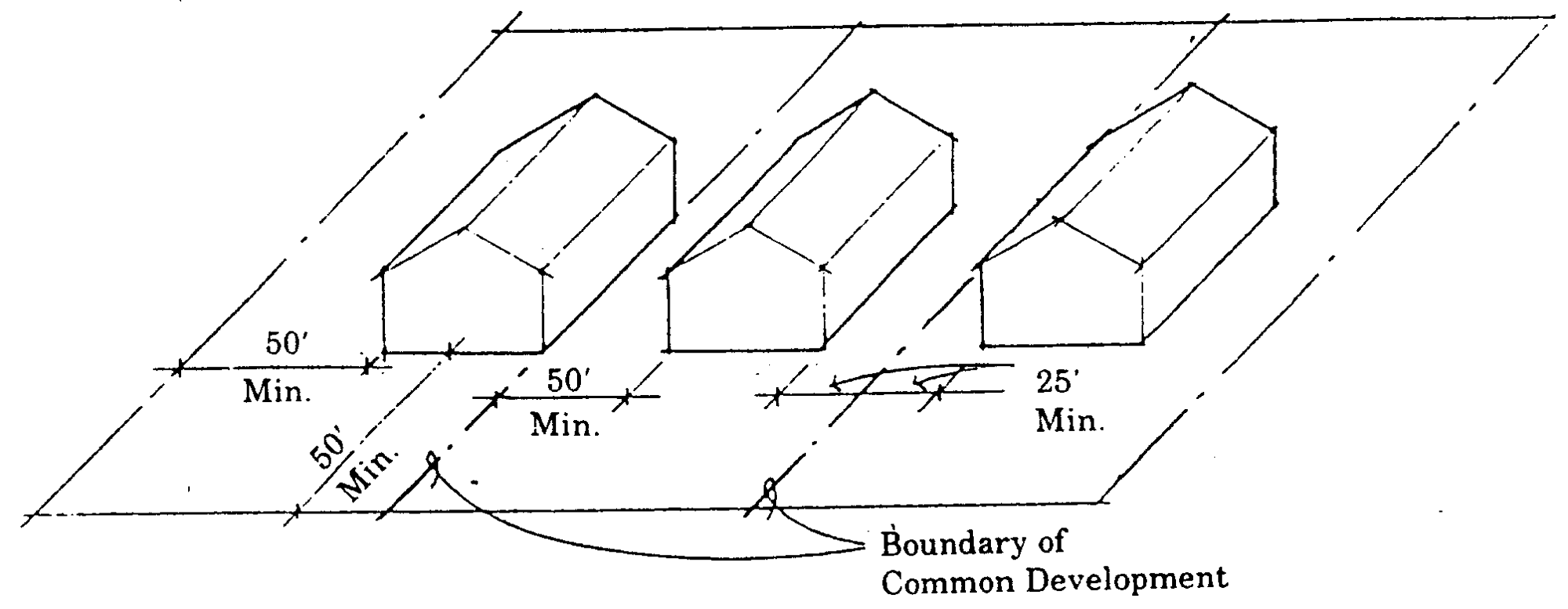
Use of zero lot line in single-family detached dwellings. (See drawing following this section.) Within a common development, one interior side yard may be equal to zero for single-family detached residential use, subject to the following additional regulations:
(1)
The side yard opposite to the zero yard must equal at least 50 feet.
(2)
The normal side yard setback requirements must be maintained adjacent to any lot with an existing structure not within the common development, or not otherwise designated for zero lot line use.
(3)
An easement providing for maintenance of the zero lot line facade shall be filed with the county register of deeds and the permits and inspections division of the planning department at the time of application for a building permit.
(b)
Lot clustering. Certain site development regulations may be modified in accordance with section 53-11 of the city's subdivision regulations and section 55-784 of this chapter, providing for cluster subdivisions.
(c)
Single-family attached dwellings. Single-family attached residential is allowed by special permit subject to the following additional regulations:
(1)
The units must be located in a cluster subdivision, approved by the planning board and city council.
(2)
The side yard opposite to the common wall must equal at least 25 feet.
(Code 1980, § 55-127)
FIGURE 55-127(a). ZERO LOT LINE IN R1 DISTRICT
_____
Sec. 55-142. - Purpose.
The R2 single-family residential district is intended to provide for low-density residential neighborhoods, characterized generally by single-family dwellings on relatively large lots with supporting community facilities. The R2 district provides for conditional approval of community facilities which generate larger quantities of traffic than residential uses. It is appropriate for established parts of the city, where it serves to preserve existing low-density environments; for newly developing, low-density neighborhoods; and for areas in which environmental considerations preclude the platting of smaller lots.
(Code 1980, § 55-142)
Sec. 55-143. - Permitted uses.
The following use types are permitted:
(a)
Residential uses.
Single-family (detached)
Small group living (disabled)
(b)
Civic uses.
Day care (limited)
Local utility services
Park and recreation services
Primary educational facilities
(c)
Agricultural uses.
Community garden
Urban garden
(Code 1980, § 55-143; Ord. No. 38198, § 7, 7-29-08; Ord. No. 43400, § 1, 5-2-23)
Sec. 55-144. - Conditional uses.
The following use types are allowed, subject to approval of a conditional use permit, as provided by section 55-883:
(a)
Civic uses.
Administrative services
College and university facilities
Community recreation
Cultural services
Religious assembly
Safety services
Secondary educational facilities
(b)
Agricultural uses.
Urban farm
(Code 1980, § 55-144; Ord. No. 43400, § 1, 5-2-23)
Sec. 55-145. - Special permit uses.
The following use types are allowed, subject to issuance of a special use permit by the city council, as provided by section 55-884:
(a)
Residential uses.
Large group living
Small group living (nondisabled)
Single-family residential (attached)
Assisted living
(b)
Civic uses.
Cemetery
Day care services (general)
Social clubs
Recreational clubs
Emergency residential care
(c)
Miscellaneous uses.
Broadcasting tower
Wind energy conservation system
(Code 1980, § 55-145; Ord. No. 34178, § 4, 5-6-97; Ord. No. 38198, § 7, 7-29-08)
Sec. 55-146. - Site development regulations.
Each site in the R2 single-family residential district shall be subject to the following site development regulations:
Setbacks (minimum):
(Code 1980, § 55-146)
Sec. 55-147. - Additional regulations.
(a)
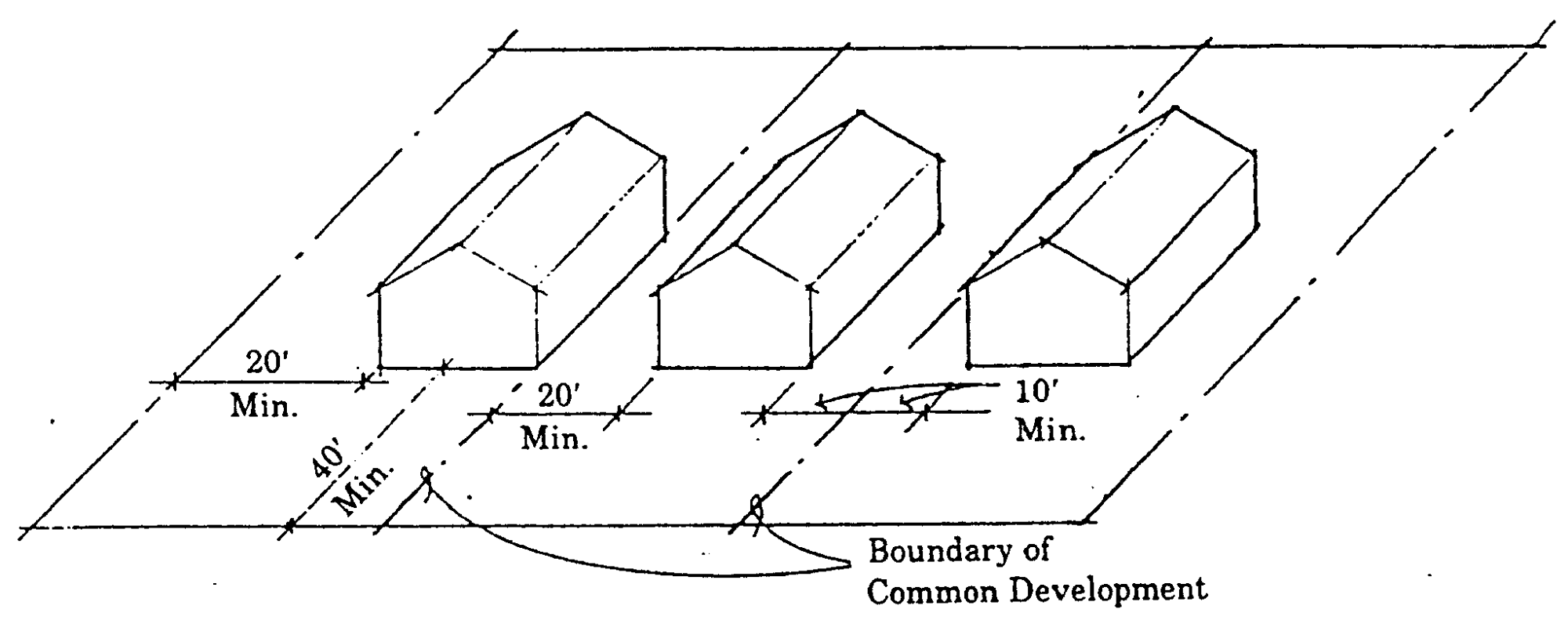
Use of zero lot line in single-family detached dwellings. (See drawing on page following this section.) Within a common development, one interior side yard may be equal to zero for single-family detached residential use, subject to the following additional regulations:
(1)
The side yard opposite to the zero yard must equal at least 20 feet.
(2)
The normal side yard setback requirement must be maintained adjacent to any lot with an existing structure not within the common development, or not otherwise designated for zero lot line use.
(3)
The easement providing for maintenance of the zero lot line facade shall be filed with the county register of deeds and the permits and inspections division of the planning department at the time of application for a building permit.
(b)
Lot clustering. Certain site development regulations may be modified in accordance with section 53-11 of the city's subdivision regulations and section 55-784 of this chapter, providing for cluster subdivisions.
(c)
Single-family attached dwellings. Single-family attached residential is allowed by special permit, subject to the following additional regulations:
(1)
The units must be located in a cluster subdivision, approved by the planning board and city council.
(2)
The side yard opposite to the common wall must equal at least 20 feet.
(Code 1980, § 55-147)
_____
FIGURE 55-147(a), ZERO LOT LINE IN R2 DISTRICT
_____
Sec. 55-162. - Purpose.
The R3 single-family residential district is intended to provide for moderate-density residential neighborhoods, characterized generally by single-family dwellings on medium-sized lots with supporting community facilities. The R3 district allows for several development options for single-family residential construction. It provides for conditional approval of community facilities which generate larger quantities of traffic than permitted residential uses. The R3 district is appropriate for established parts of the city, where it serves to preserve existing single-family neighborhoods while promoting development of infill housing, and for newly developing neighborhoods.
(Code 1980, § 55-162)
Sec. 55-163. - Permitted uses.
The following use types are permitted:
(a)
Residential uses.
Single-family (detached)
Small group living (disabled)
(b)
Civic uses.
Community recreation
Day care (limited)
Local utility services
Park and recreation services
Primary educational facilities
(c)
Agricultural uses.
Community garden
Urban garden
(Code 1980, § 55-163; Ord. No. 38198, § 8, 7-29-08; Ord. No. 38734, § 1, 5-25-10; Ord. No. 43400, § 1, 5-2-23)
Sec. 55-164. - Conditional uses.
The following use types are allowed, subject to approval of a conditional use permit, as provided by section 55-883.
(a)
Civic uses.
Administrative services
College and university facilities
Cultural services
Religious assembly
Safety services
Secondary educational facilities
(b)
Agricultural uses.
Urban farm
(Code 1980, § 55-164; Ord. No. 43400, § 1, 5-2-23)
Sec. 55-165. - Special permit uses.
The following use types are allowed, subject to approval of a special permit by the city council, as provided by section 55-884:
(a)
Residential uses.
Large group living
Small group living (nondisabled
Single-family residential (attached)
Assisted living
(b)
Civic uses.
Cemetery
Day care (general)
Emergency residential care
Recreational clubs
Social clubs
(c)
Miscellaneous uses.
Broadcasting tower
Wind energy conservation system
(Code 1980, § 55-165; Ord. No. 34178, § 5, 5-6-97; Ord. No. 38198, § 8, 7-29-08)
Sec. 55-166. - Site development regulations.
Each site in the R3 single-family residential district shall be subject to the following site development regulations:
Setbacks (minimum):
(Code 1980, § 55-166)
Sec. 55-167. - Additional regulations.
(a)
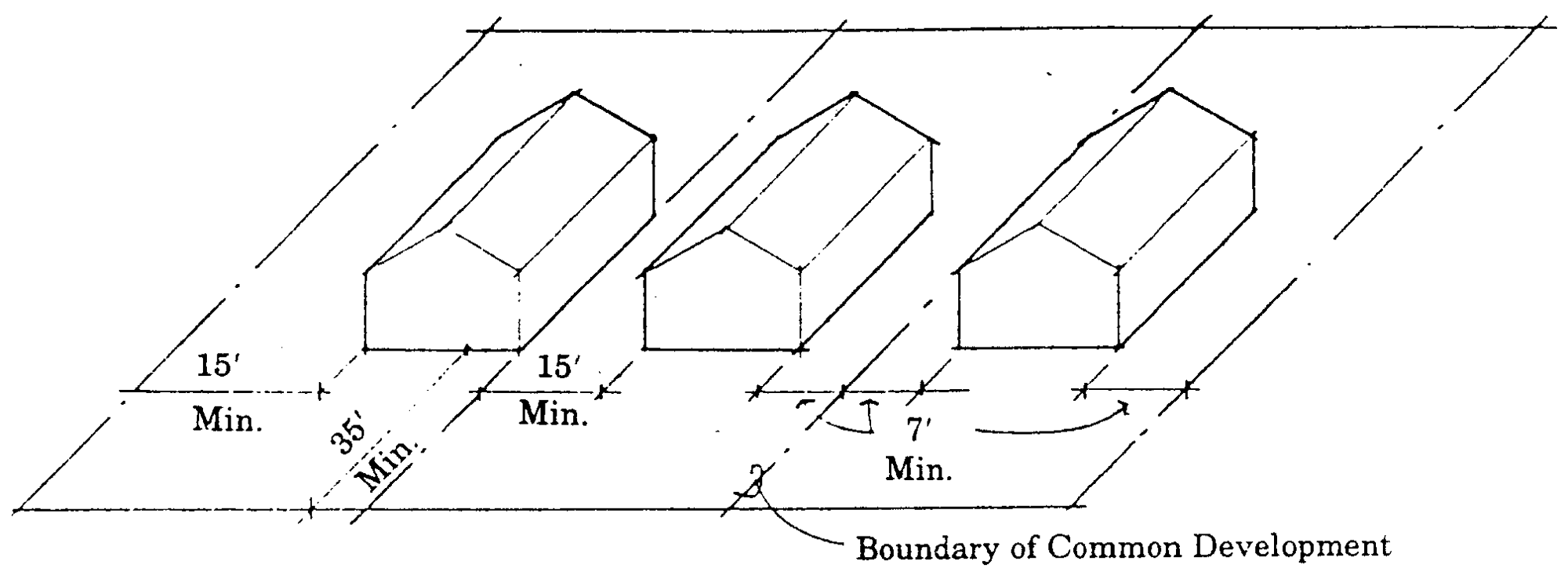
Use of zero lot line in single-family detached dwellings. (See drawing following this section.) Within a common development, one interior side yard may be equal to zero for single-family detached residential use, subject to the following additional regulations:
(1)
The side yard opposite to the zero yard must equal at least 15 feet.
(2)
The normal side yard setback requirement must be maintained adjacent to any lot with an existing structure not within the common development, or not otherwise designated for zero lot line use.
(3)
An easement providing for maintenance of the zero lot line facade shall be filed with the county register of deeds and the permits and inspections division of the planning department at the time of application for a building permit.
(b)
Lot clustering. Certain site development regulations may be modified in accordance with section 53-11 of the city's subdivision regulations and section 55-784 of this chapter providing for cluster subdivisions.
(c)
Single-family attached dwellings. Single-family attached residential is allowed by special permit subject to the following additional regulations:
(1)
The units must be located in a cluster subdivision, approved by the planning board and city council.
(2)
The side yard opposite to the common wall must equal at least 15 feet.
(Code 1980, § 55-167)
_____
FIGURE 55-167(a). ZERO LOT LINE IN R3 DISTRICT
_____
Sec. 55-182. - Purpose.
The R4 single-family residential district is intended to provide for medium-density residential neighborhoods, characterized generally by single-family dwellings on small lots and including supporting community facilities. The R4 district allows for several development options, adaptable to both infill construction in established neighborhoods and to developing areas. It provides for conditional approval of community facilities with greater traffic generating characteristics than the permitted residential use. The R4 district is appropriate for established neighborhoods in the city, particularly those exhibiting relatively small lots, and in newly developing areas.
(Code 1980, § 55-182)
Sec. 55-183. - Permitted uses.
The following use types are permitted:
(a)
Residential uses.
Single-family (detached)
Small group living (disabled)
(b)
Civic uses.
Community recreation
Day care (limited)
Local utility services
Park and recreation services
Primary educational facilities
(c)
Agricultural uses.
Community garden
Urban garden
(Code 1980, § 55-183; Ord. No. 38198, § 9, 7-29-08; Ord. No. 43400, § 1, 5-2-23)
Sec. 55-184. - Conditional uses.
The following use types are allowed, subject to approval of a conditional use permit, as provided by section 55-883:
(a)
Residential uses.
Single-family (attached)
(b)
Civic uses.
Administrative services
College and university facilities
Cultural services
Religious assembly
Safety services
Secondary educational facilities
(c)
Agricultural uses.
Urban farm
(Code 1980, § 55-184; Ord. No. 43400, § 1, 5-2-23)
Sec. 55-185. - Special permit uses.
The following use types are allowed, subject to approval of a special use permit by the city council, as provided by section 55-884:
(a)
Residential uses.
Large group living
Small group living (nondisabled)
Townhouse residential, only within planned unit developments
Assisted living
(b)
Civic uses.
Cemetery
Day care (general)
Emergency residential care
Recreational clubs
Social clubs
(c)
Miscellaneous uses.
Broadcasting tower
Wind energy conservation system
(Code 1980, § 55-185; Ord. No. 34178, § 6, 5-6-97; Ord. No. 38198, § 9, 7-29-08; Ord. No. 38723, § 1, 5-11-10)
Sec. 55-186. - Site development regulations.
Each site in the R4 single-family residential district shall be subject to the following site development regulations:
Setbacks (minimum):
(Code 1980, § 55-186; Ord. No. 42341, § 2, 10-27-20)
Sec. 55-187. - Additional regulations.
(a)
Use of zero lot line in single-family detached dwellings. (See drawing on page following this section.) Within a common development, one interior side yard may be equal to zero for single-family detached residential use, subject to the following additional regulations:
(1)
The side yard opposite to the zero yard must equal at least ten feet.
(2)
The normal side yard setback requirement must be maintained adjacent to any lot with an existing structure not within the common development, or not otherwise designated for zero lot line use.
(3)
An easement providing for maintenance of the zero lot line facade shall be filed with the county register of deeds and the permits and inspections division of the planning department at the time of application for a building permit.
(b)
Lot clustering. Certain site development regulations may be modified in accordance with section 53-11 of the city's subdivision regulations and section 55-784 of this chapter, providing for cluster subdivisions.
(c)
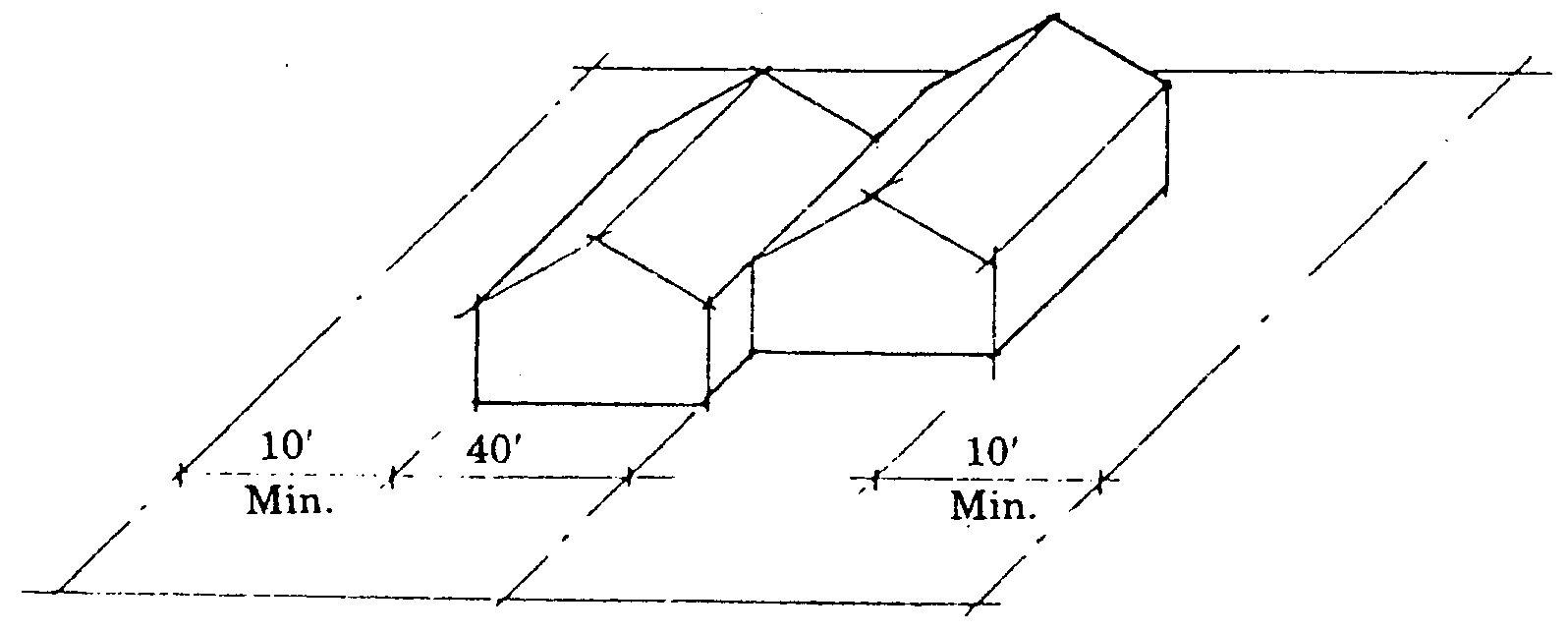
Single-family attached dwellings. (See drawing on page following this section.) Single-family attached residential is allowed by conditional use permit, provided that the side yard opposite to the common wall must equal at least ten feet.
(d)
Townhouse residential uses. Townhouse residential is allowed by special permit within a planned unit development, subject to the following additional regulations:
(1)
A maximum of four townhouse units may be attached in any one townhouse structure.
(2)
The site area per unit for any common townhouse development must equal at least 5,000 square feet.
(3)
The minimum size for any townhouse lot sold individually shall be 3,000 square feet.
(4)
The minimum width for any townhouse lot sold individually shall be 20 feet, except as provided in an approved cluster subdivision.
(5)
The building and impervious coverage percentages are computed for the site of the entire development.
(e)
Front yard setback adjustment. All new construction within areas zoned and developed with a 35-foot minimum front yard setback, prior to the effective date of this chapter [March 4, 1987], shall maintain that setback. These areas will be designated as R4(35) on the official zoning map of the city.
(f)
A residential dwelling defined, prior to March 1987, as: Dwelling, two-family. A detached residential structure containing two dwelling units designed for, or occupied exclusively by, two related or nonrelated families, and constructed legally between February 19, 1952 and September 7, 1976, is hereby considered a conforming use.
(Code 1980, § 55-187; Ord. No. 40397, § 1, 7-28-15)
FIGURE 55-187(a). ZERO LOT LINE IN R4 DISTRICT
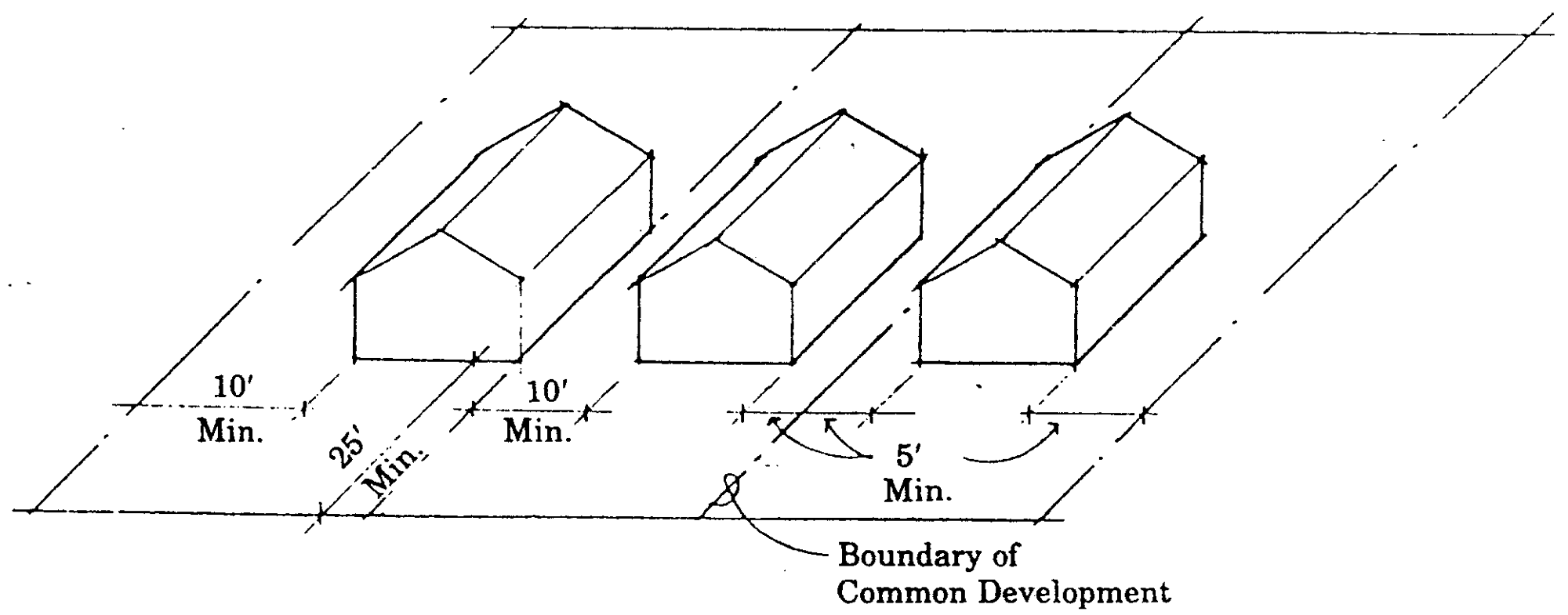
FIGURE 55-187(c). SINGLE-FAMILY ATTACHED IN R4 DISTRICT
Sec. 55-201. - R5 urban family residential district.
(Ord. No. 38735, § 1, 5-25-10)
Sec. 55-202. - Purpose.
The R5 urban family residential district is intended to provide medium-density residential neighborhoods with single-family characteristics, while allowing considerable latitude in the physical design of housing. The R5 district permits single-family residential housing, duplexes and townhouses. It is adaptable to both established and developing neighborhoods, as well as to transition areas between single-family and multiple-family development. The R5 district recognizes changes in the form of single-family housing and accommodates these changes. As with other residential zones, it requires review and conditional approval of supporting community facilities with greater traffic generating characteristics than the basic allowed residential use.
(Code 1980, § 55-202)
Sec. 55-203. - Permitted uses.
The following use types are permitted:
(a)
Residential uses.
Single-family residential (detached)
Single-family residential (attached)
Duplex residential
Two-family residential
Townhouse residential
Small group living (disabled)
(b)
Civic uses.
Community recreation
Day care (limited)
Local utility services
Park and recreation services
Primary educational facilities
(c)
Agricultural uses.
Community garden
Urban garden
(Code 1980, § 55-203; Ord. No. 34178, § 7, 5-6-97; Ord. No. 38198, § 10, 7-29-08; Ord. No. 39371, § 3, 6-26-12; Ord. No. 43400, § 1, 5-2-23)
Sec. 55-204. - Conditional uses.
The following use types are allowed, subject to approval of a conditional use permit, as provided by section 55-883:
(a)
Civic uses.
Administrative services
College and university facilities
Cultural services
Emergency residential care
Religious assembly
Safety services
Secondary educational facilities
(b)
Agricultural uses.
Urban farm
(Code 1980, § 55-204; Ord. No. 43400, § 1, 5-2-23)
Sec. 55-205. - Special permit uses.
The following use types are allowed, subject to approval of a special use permit by the city council, as provided by section 55-884:
(a)
Residential uses.
Assisted living
Large group living
Small group living (nondisabled)
(b)
Civic uses.
Day care (general)
Recreational clubs
Social clubs
(c)
Miscellaneous uses.
Broadcasting tower
Wind energy conservation system
(d)
Commercial uses.
Bed and breakfast inns
(Code 1980, § 55-205; Ord. No. 37095, § 2, 7-26-05; Ord. No. 38198, § 10, 7-29-08; Ord. No. 39371, § 4, 6-26-12)
Editor's note— Section 11 of Ord. No. 32184 allowed group residential use as a special permit use in the R5 district as specified in § 55-763(c). However, the ordinance did not specifically amend this § 55-205 to allow such use.
Sec. 55-206. - Site development regulations.
Each site in the R5 urban family residential district shall be subject to the following site development regulations:
Setbacks (minimum):
(Code 1980, § 55-206; Ord. No. 42341, § 3, 10-27-20)
_____
Sec. 55-207. - Additional regulations.
(a)
Use of zero lot line for single-family detached dwellings. Within a common development, one interior side yard may be equal to zero for single-family detached residential use, subject to the following additional regulations:
(1)
The side yard opposite to the zero yard must equal at least ten feet.
(2)
The normal side yard setback requirement must be maintained adjacent to any lot with an existing structure not within the common development, or not otherwise designated for zero lot line use.
(3)
An easement providing for the maintenance of the zero lot line facade shall be filed with the county register of deeds and the permits and inspections division of the planning department at the time of application for a building permit.
(b)
Single-family attached dwellings. Single-family attached residential is allowed, subject to the following additional regulations:
(1)
Minimum lot area is 6,000 feet for an entire structure and 3,000 square feet for any one dwelling unit sold individually.
(2)
Minimum lot width shall be 60 feet for entire structure and 30 feet for any one dwelling unit sold individually.
(3)
The side yard opposite to the common wall must equal at least seven feet.
(c)
Duplex residential uses. Duplex residential is allowed, subject to the following additional regulations:
(1)
Minimum lot area shall be 6,000 square feet.
(2)
Minimum lot width shall be 40 feet.
(d)
Two-family residential uses. Two-family residential use is allowed, subject to the following additional regulations:
(1)
Minimum lot area shall be 8,000 square feet.
(2)
Minimum lot width shall be 60 feet.
(3)
The second dwelling unit shall be located to the rear of the site and shall be separated from the front dwelling unit by a minimum of 25 feet.
(4)
The second dwelling unit shall be served by a paved driveway at least ten feet in width.
(e)
Townhouse residential uses. Townhouse residential is allowed, subject to the following additional regulations:
(1)
A maximum of four townhouse units may be attached in any one townhouse structure.
(2)
The site area per unit for any common townhouse development must equal at least 3,000 square feet.
(3)
The minimum size for any townhouse lot sold individually shall be 2,000 square feet.
(4)
The minimum width for any townhouse lot sold individually shall be 20 feet, except as provided in an approved cluster subdivision.
(5)
The building and impervious coverage percentages are computed for the site of the entire development.
(f)
Lot clustering. Certain site development regulations may be modified in accordance with section 53-11 of the city's subdivision regulations and section 55-784 of this chapter, providing for cluster subdivisions.
(g)
Front yard setback adjustment. All new construction within areas zoned and developed with a 35-foot minimum front yard setback, prior to the effective date of this chapter [March 4, 1987], shall maintain that setback. These areas will be designated as R5(35) on the official zoning map of the city.
(Code 1980, § 55-207; Ord. No. 43542, § 1, 10-2-23)
Sec. 55-209. - Purpose.
The R-WRN walkable residential neighborhood district is intended to implement the urban design element of the city's comprehensive plan by establishing site development standards that help to create more walkable neighborhoods in newly developing residential and mixed-use areas of the city. The R-WRN district permits a variety of residential housing types, ranging from single-family detached and attached, to duplex, two-family, townhouse, multi-family and assisted living. Except for areas designated as MU districts, the provisions of the R-WRN are appropriate for application to transitional areas to be developed as residential districts, whether located within the city, but undeveloped, or annexed to the city pursuant to the sanitary and improvement district process under N.R.S.A. §§ 31-727 through 31-927.
(Ord. No. 37810, § 6, 8-14-07)
Sec. 55-210. - Permitted uses.
The following use types are permitted:
(a)
Residential uses.
Single-family residential (detached)
Single-family residential (attached)
Accessory residential
Townhouse residential
Multi-family residential
Assisted living
Small group living (disabled)
(b)
Civic uses.
Community recreation
Day care (limited)
Local utility services
Park and recreation services
Primary educational facilities
(c)
Agricultural uses.
Community garden
Urban garden
(Ord. No. 37810, § 6, 8-14-07; Ord. No. 38198, § 11, 7-29-08; Ord. No. 43400, § 1, 5-2-23)
Sec. 55-211. - Conditional uses.
The following use types are allowed, subject to approval of a conditional use permit by the planning board pursuant to section 55-883:
(a)
Residential uses.
Small group living (nondisabled)
(b)
Civic uses.
Administrative services
College and university facilities
Cultural services
Emergency residential care
Religious assembly
Safety services
Secondary educational facilities
(c)
Agricultural uses.
Urban farm
(Ord. No. 37810, § 6, 8-14-07; Ord. No. 38198, § 11, 7-29-08; Ord. No. 43400, § 1, 5-2-23)
Sec. 55-212. - Special permit uses.
The following use types are allowed in the R-WRN district, subject to approval of a special use permit by the city council pursuant to section 55-884:
(a)
Residential uses.
Live-work buildings
Large group living
(b)
Civic uses.
Cemetery
Day care (general)
Transitional living
Recreational clubs
Social clubs
(c)
Miscellaneous uses.
Wind energy conservation system
(Ord. No. 37810, § 6, 8-14-07; Ord. No. 38198, § 11, 7-29-08; Ord. No. 38736, § 1, 5-25-10)
Sec. 55-213. - Site development standards.
Each site in the R-WRN district shall be subject to the following site development standards:
(Ord. No. 37810, § 6, 8-14-07)
Sec. 55-214. - Additional standards.
In addition to the standards set forth in section 55-213, certain uses and structures in the R-WRN district are subject to the following requirements:
(a)
Use of zero lot line for single-family detached dwellings. Within a common development, one interior side yard setback may be equal to zero for single-family detached residential use, subject to the following additional standards:
(1)
The normal side yard setback requirement shall be maintained adjacent to any lot with an existing structure not within the common development, or not otherwise designated for zero lot line use.
(2)
An easement providing for the maintenance of the zero lot line building facade shall be filed with the county register of deeds and the permits and inspections division of the planning department at the time of application for a building permit.
(b)
Single-family attached dwellings. The minimum lot width for single-family residential attached shall be 150 feet for the entire row of attached houses and 25 feet for any one dwelling unit.
(c)
Accessory residential. An accessory residential dwelling unit shall be subject to the following additional standards:
(1)
The accessory dwelling unit shall be not be subject to the build-to/set-back requirement of section 55-213, and shall be located to the rear of the site.
(2)
The accessory dwelling unit shall be served by a paved driveway at least ten feet in width.
(3)
The accessory dwelling unit shall not exceed 500 square feet in gross floor area.
(d)
Townhouse residential. Townhouse residential shall be subject to the following additional standards:
(1)
A minimum of three townhouse units shall be attached in any one townhouse structure.
(2)
The minimum lot area for any townhouse lot sold individually shall be 2,000 square feet.
(3)
The minimum width for any townhouse lot sold individually shall be 20 feet.
(e)
Multi-family residential. Multi-family residential shall be subject to the following additional standards:
(1)
The average site area for all dwelling units in a multi-family residential use structure shall be 1,000 square feet.
(2)
All dwelling units in a multi-family residential structure shall be built in residential blocks that are comparable in size to blocks for other residential uses in the same R-WRN district.
(3)
Off-street parking for multi-family residential uses shall be located in structures whose doors do not face a street.
(4)
The maximum height for multi-family residential structures shall be 60 feet.
(f)
Garages and driveways. The following additional standards apply to the location and orientation of garages and driveways for all use types:
(1)
Front-facing garages shall be located at least 25 feet behind the front facade of the structure nearest the street, the location of which shall be determined by the build-to/set-back line on that block.
(2)
Driveways shall be not more than ten feet wide from the turning radius at the curb to a distance of at least 20 feet therefrom.
(3)
Shared driveway access for not more than two lots shall be permitted, provided that an easement providing for the maintenance of the shared access shall be filed with the county register of deeds and the permits and inspections division of the planning department at the time of application for a building permit on either lot sharing such access.
(4)
Garage doors for multi-family residential use parking structures shall not face the street.
(g)
Block perimeter. The maximum permitted block perimeter generally shall be 2,000 feet. For blocks which are crossed by a creek, the maximum permitted block perimeter shall be 2,400 feet, unless the block is bisected by a dedicated pedestrian walkway and the block perimeters of the resulting sub-blocks are each less than 2,400 feet.
See Figure 55-214, Block Perimeter, for examples of 2,000-foot and 2,400-foot block perimeters.
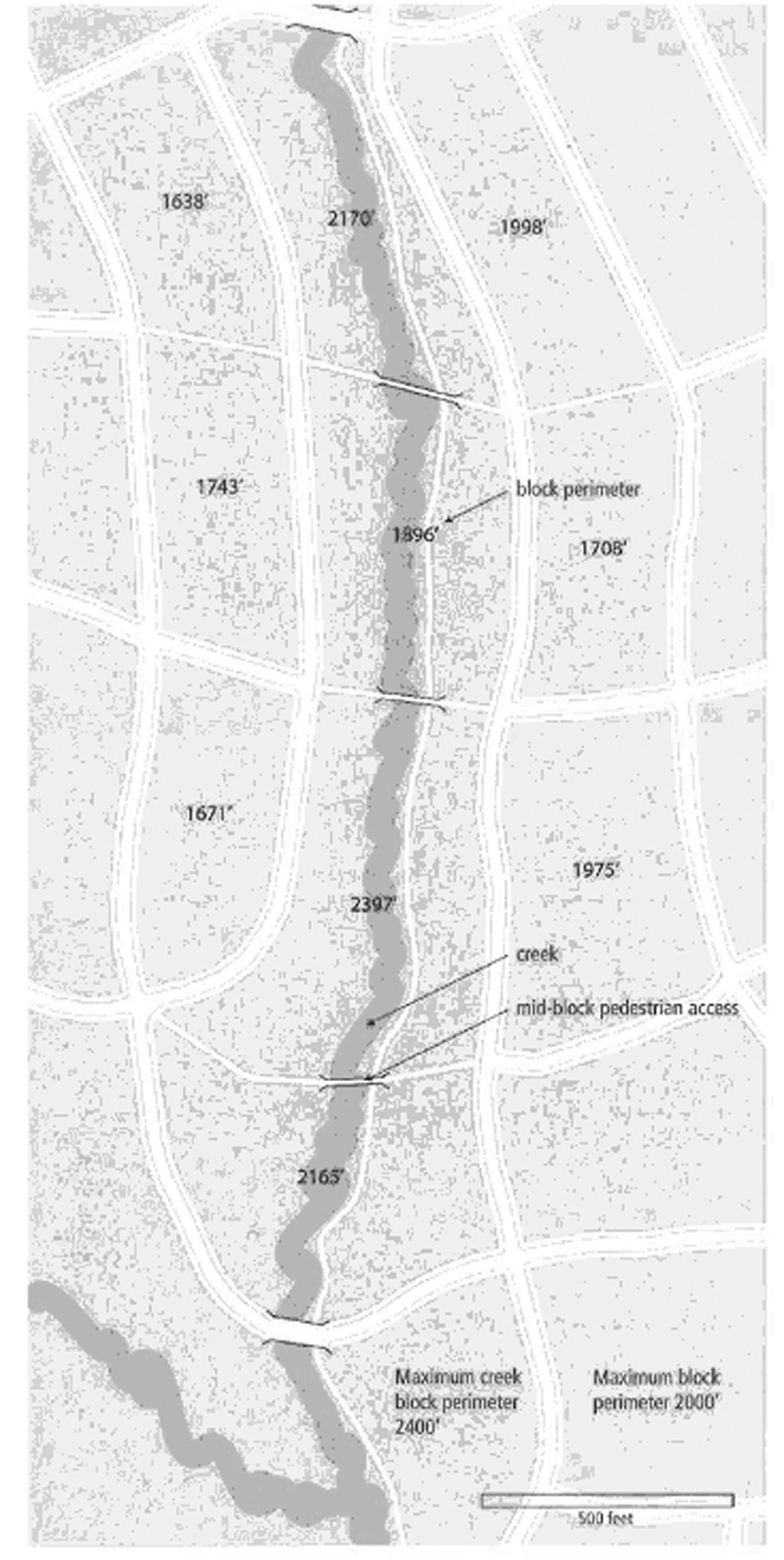
Figure 55-214
(Ord. No. 37810, § 6, 8-14-07)
Sec. 55-215. - District location.
R-WRN districts shall be mapped only where consistent with the comprehensive plan or any plan prepared by the planning department addressing development for the area to be designated. Where possible, each new R-WRN district should be mapped in conjunction with an MU district.
(Ord. No. 37810, § 6, 8-14-07)
Sec. 55-222. - Purpose.
The R6 low-density multiple-family residential district is intended to provide locations for low-density multiple-family housing in the approximate range of 20 dwelling units per acre. It provides for the integration of such buildings with lower density housing types, including single-family, duplex and townhouse residential. The R6 district applies to established neighborhoods, including those where the limited conversion of large single-family houses is necessary to extend their economic life; areas in which a mix of single- and multiple-family housing is appropriate to create an urban neighborhood; transitional areas between lower and higher intensity uses; and developing multiple-family areas. The R6 district requires review and conditional approval of supporting community facilities which generate more traffic than the basic allowed residential use.
(Code 1980, § 55-222)
Sec. 55-223. - Permitted uses.
The following use types are permitted:
(a)
Residential uses.
Single-family residential (detached)
Single-family residential (attached)
Duplex residential
Two-family residential
Townhouse residential
Multiple-family residential
Assisted living
Small group living (disabled)
(b)
Civic uses.
Community recreation
Day care (limited)
Emergency residential care
Local utility services
Park and recreation services
Primary educational facilities
(c)
Agricultural uses.
Community garden
Urban garden
(Code 1980, § 55-223; Ord. No. 34178, § 8, 5-6-97; Ord. No. 38198, § 12, 7-29-08; Ord. No. 43400, § 1, 5-2-23)
Sec. 55-224. - Conditional uses.
The following use types are allowed, subject to approval of a conditional use permit, as provided by section 55-883:
(a)
Residential uses.
Small group living (nondisabled)
(b)
Civic uses.
Administrative services
College and university facilities
Convalescent services
Cultural services
Day care (general)
Religious assembly
Safety services
Secondary educational facilities
Social clubs
(c)
Agricultural uses.
Urban farm
(Code 1980, § 55-224; Ord. No. 38198, § 12, 7-29-08; Ord. No. 43400, § 1, 5-2-23)
Sec. 55-225. - Special permit uses.
The following use types are allowed, subject to approval of a special use permit by the city council, as provided by section 55-884:
(a)
Residential uses.
Large group living
(b)
Civic uses.
Recreational clubs
Transitional living
(c)
Miscellaneous uses.
Broadcast tower
Wind energy conservation system
(d)
Commercial uses.
Bed and breakfast inns
(Code 1980, § 55-225; Ord. No. 37095, § 2, 7-26-05; Ord. No. 38198, § 12, 7-29-08)
_____
Sec. 55-226. - Site development regulations.
Sec. 55-227. - Additional regulations.
(a)
Use of zero lot line for single-family detached dwellings. Within a common development, one interior side yard may be equal to zero for single-family detached residential use, subject to the following additional regulations:
(1)
The side yard opposite the zero yard must equal at least ten feet.
(2)
The normal side yard setback requirement must be observed adjacent to any lot with an existing structure not within the common development, or not otherwise designated for zero lot line use.
(3)
An easement providing for the maintenance of the zero lot line facade shall be filed with the county register of deeds and the permits and inspections division of the planning department at the time of application for a building permit.
(b)
Single-family attached dwellings. Single-family attached residential is allowed, subject to the following additional regulations:
(1)
Minimum lot area is 6,000 square feet for an entire structure and 3,000 square feet for any one dwelling unit sold individually.
(2)
Minimum lot width shall be 60 feet for an entire structure and 30 feet for any one unit sold individually.
(c)
Duplex residential uses. Duplex residential is allowed, subject to the following additional regulations:
(1)
Minimum lot area shall be 4,000 square feet.
(2)
Minimum lot width shall be 40 feet.
(d)
Two-family residential uses. Two-family residential use is allowed, subject to the following additional regulations:
(1)
Minimum lot area shall be 7,000 square feet.
(2)
Minimum lot width shall be 60 feet.
(3)
The second dwelling unit shall be located to the rear of the site and shall be separated from the front dwelling unit by a minimum of 20 feet.
(4)
The second dwelling unit shall be served by a paved driveway at least ten feet in width.
(e)
Townhouse residential uses. Townhouse residential is allowed, subject to the following additional regulations:
(1)
The site area per unit for the entire common townhouse development shall equal at least 2,500 square feet.
(2)
The minimum site for any townhouse lot sold individually shall be 2,000 square feet.
(3)
The minimum width for any townhouse lot sold individually shall be 20 feet, except as provided in an approved cluster subdivision.
(4)
The building and impervious coverage percentages are computed for the site of the entire development.
(f)
Lot clustering. Certain site development regulations may be modified in accordance with section 53-11 of the city's subdivision regulations and section 55-784 of this chapter, providing for cluster subdivisions.
(Code 1980, § 55-227; Ord. No. 38198, § 12, 7-29-08; Ord. No. 43542, § 1, 10-2-23)
Sec. 55-242. - Purpose.
The R7 medium-density multiple-family residential district is intended to provide locations for medium-density multiple-family housing, in the approximate range of 40 dwelling units per acre. It provides for the integration of multiple-family housing with lower density housing types. In addition, the R7 district provides for the inclusion of limited office and commercial uses by special permit within principally residential developments, subject to specific standards governing land use intensity and compatibility. This allows for a mixture of compatible uses within appropriate neighborhoods.
The R7 district applies to established neighborhoods where moderately high densities are appropriate, transitional areas between lower intensity and higher intensity uses, mixed use neighborhoods, and developing multiple-family areas.
(Code 1980, § 55-242)
Sec. 55-243. - Permitted uses.
The following use types are permitted:
(a)
Residential uses.
Single-family residential (detached)
Single-family residential (attached)
Duplex residential
Two-family residential
Townhouse residential
Multiple-family residential
Assisted living
Small group living (disabled)
Small group living (nondisabled)
(b)
Civic uses.
College and university facilities
Community recreation
Day care (limited)
Day care (general)
Emergency residential care
Local utility services
Park and recreation services
Primary educational facilities
Religious assembly
Secondary educational facilities
(c)
Agricultural uses.
Community garden
Urban garden
(Code 1980, § 55-243; Ord. No. 34178, § 9, 5-6-97; Ord. No. 38198, § 13, 7-29-08; Ord. No. 43400, § 1, 5-2-23)
Sec. 55-244. - Conditional uses.
The following use types are allowed, subject to approval of a conditional use permit, as provided by section 55-883:
(a)
Civic uses.
Administrative services
Convalescent services
Cultural services
Safety services
Social clubs
(b)
Agricultural uses.
Urban farm
(Code 1980, § 55-244; Ord. No. 38198, § 13, 7-29-08; Ord. No. 43400, § 1, 5-2-23)
Sec. 55-245. - Special permit uses.
The following use types are allowed, subject to approval of a special use permit by the city council, as provided by section 55-884:
(a)
Residential uses.
Large group living
(b)
Civic uses.
Recreational clubs
Transitional living
(c)
Office uses.
General offices
(d)
Commercial uses.
Bed and breakfast inns
Consumer convenience services
General retail sales
Personal services
Restaurant (limited)
(e)
Miscellaneous uses.
Broadcasting tower
Wind energy conservation system
(Code 1980, § 55-245; Ord. No. 37095, § 2, 7-26-05; Ord. No. 38198, § 13, 7-29-08)
_____
Sec. 55-246. - Site development regulations.
Each site in the R7 medium-density residential district shall be subject to the following site development regulations:
All uses:
(Code 1980, § 55-246; Ord. No. 38198, § 13, 7-29-08; Ord. No. 42341, § 5, 10-27-20)
_____
Sec. 55-247. - Additional regulations.
(a)
Use of zero lot line in single-family detached dwelling. Within a common development, one interior side yard may be equal to zero for single-family detached residential use, subject to the following additional regulations:
(1)
The side yard opposite to the zero yard must equal at least seven feet.
(2)
The normal side yard setback requirement must be maintained adjacent to any lot with an existing structure not within the common development, or not otherwise designated for zero lot line use.
(3)
An easement providing for the maintenance of the zero lot line facade shall be filed with the county register of deeds and the permits and inspections division of the planning department at the time of application for a building permit.
(b)
Two-family residential uses. Two-family residential use is allowed, subject to the following additional regulations:
(1)
The second dwelling unit shall be located to the rear of the site and shall be separated from the front dwelling unit by a minimum of 20 feet.
(2)
The second dwelling unit shall be served by a paved driveway at least ten feet in width.
(c)
Townhouse residential uses. Townhouse residential is allowed, subject to the following additional regulations:
(1)
Building and impervious coverage percentages are computed for the site of the entire townhouse development.
(2)
The minimum width of any townhouse lot sold individually shall be 20 feet, except as provided in an approved cluster subdivision.
(d)
Lot clustering. Certain site development regulations may be modified in accordance with section 53-11 of the city's subdivision regulations and section 55-784 of this chapter, providing for cluster subdivisions.
(e)
Office and commercial uses. Certain office and commercial uses are allowed as special permit uses within predominantly residential developments in the R7 district, subject to the following additional regulations. Additional conditions may be required as part of approval of a special use permit.
(1)
Office and commercial uses may be located within the same building as residential use or within separate buildings incorporated into a mixed use common development.
(2)
Office and commercial uses combined shall not comprise more than 25 percent of the gross floor area within any single mixed use common development.
(3)
Each 200 square feet of office or commercial use shall be counted as one dwelling unit for the purpose of computing permitted density on the site.
(4)
Each development incorporating office or commercial uses shall provide a landscaped bufferyard of no less than 20 feet adjacent to any lot within a zoning district of lower intensity. Landscaping shall be subject to the provisions of sections 55-718 through 55-722 of this chapter.
FIGURE 55-247(e). OFFICE AND
COMMERCIAL USES IN
R7 DISTRICT
Example: A property owner owns a one-acre parcel and is interested in developing the land with a mixture of residential and office uses. The owner wants to compute the possible uses for the site.
Answer: In the R7 district, each site must provide a minimum of 1,000 square feet per housing unit. This means that the permitted residential density on the owner's site is 43.5 units.
Each 200 square feet of office or commercial space counts as one housing unit. The chart below describes the possible mixtures that the owner can place on the site:
*Area used for office or commercial purposes cannot exceed 25 percent of the total building area on the site.
(Code 1980, § 55-247; Ord. No. 38198, § 13, 7-29-08)
Sec. 55-262. - Purpose.
The R8 high-density multiple-family residential district is intended to accommodate high-density multiple-family housing. The R8 district also provides for the inclusion of limited office and commercial uses, subject to specific standards for buffering and land use intensity. This allows for a mixture of compatible uses within appropriate high-density urban neighborhoods. The R8 district is most appropriate in centrally located areas near supporting urban services; near major institutional, employment and commercial centers; and in other areas appropriate for high-density, predominantly residential uses.
(Code 1980, § 55-262)
Sec. 55-263. - Permitted uses.
The following use types are permitted:
(a)
Residential uses.
Single-family residential (detached)
Single-family residential (attached)
Duplex residential
Two-family residential
Townhouse residential
Multiple-family residential
Assisted living
Small group living (disabled)
Small group living (nondisabled)
(b)
Civic uses.
Administrative services
College and university facilities
Community recreation
Convalescent services
Cultural services
Day care (limited)
Day care (general)
Emergency residential care
Local utility services
Park and recreation services
Primary educational facilities
Religious assembly
Secondary educational facilities
Social clubs
(c)
Agricultural uses.
Community garden
Urban garden
(Code 1980, § 55-263; Ord. No. 33545, § 2, 5-2-95; Ord. No. 34178, § 10, 5-6-97; Ord. No. 38198, § 13, 7-29-08; Ord. No. 43400, § 1, 5-2-23)
Sec. 55-264. - Conditional uses.
The following use types are allowed, subject to approval of a conditional use permit, as provided by section 55-883:
(a)
Residential uses.
Multiple-family residential, in excess of permitted site development regulations
Large group living
(b)
Civic uses.
Guidance services
Recreational clubs
Safety services
(c)
Office uses.
General offices
(d)
Commercial uses.
Consumer convenience services
Food sales (limited)
General retail sales
Personal services
Restaurant (limited)
(e)
Agricultural uses.
Urban farm
(Code 1980, § 55-264; Ord. No. 33545, § 3, 5-2-95; Ord. No. 38198, § 14, 7-29-08; Ord. No. 43400, § 1, 5-2-23)
Sec. 55-265. - Special permit uses.
The following use types are allowed, subject to approval of a special use permit by the city council, as provided by section 55-884:
(a)
Civic uses.
Transitional living
(b)
Miscellaneous uses.
Broadcasting tower
Wind energy conservation system
(c)
Commercial uses.
Bed and breakfast inns
(Code 1980, § 55-265; Ord. No. 37095, § 2, 7-26-05; Ord. No. 38198, § 14, 7-29-08)
_____
Sec. 55-266. - Site development regulations.
Each site in the R8 high-density residential district shall be subject to the following site development regulations:
All uses:
(Code 1980, § 55-266; Ord. No. 38198, § 14, 7-29-08; Ord. No. 42341, § 6, 10-27-20)
_____
Sec. 55-267. - Additional regulations.
(a)
Use of zero lot line in single-family detached dwellings. Within a common development, one interior side yard may be equal to zero for single-family detached residential use, subject to the following additional regulations:
(1)
The side yard opposite to the zero yard must equal at least seven feet.
(2)
The normal side yard setback requirement must be maintained adjacent to any lot with an existing structure not within the common development; or not otherwise designated for zero lot line use.
(3)
An easement providing for the maintenance of the zero lot line facade shall be filed with the Douglas County register of deeds and the permits and inspections division of the planning department at the time of application for a building permit.
(b)
Two-family residential dwellings. Two-family residential use is allowed, subject to the following additional regulations:
(1)
The second dwelling unit shall be located to the rear of the site and shall be separated from the front dwelling unit by a minimum of 20 feet.
(2)
The second dwelling unit shall be served by a paved driveway at least ten feet in width.
(c)
Townhouse residential uses. Townhouse residential is allowed, subject to the following additional regulations:
(1)
Building and impervious coverage percentages are computed for the site of the entire townhouse development.
(2)
The minimum width of any townhouse lot sold individually shall be 20 feet, except as provided in an approved cluster subdivision.
(d)
Lot clustering. Certain site development regulations may be modified in accordance with section 53-11 of the city's subdivision regulations and section 55-784 of this chapter, providing for cluster subdivisions.
(e)
Multiple-family residential or mixed use buildings in excess of allowed density. Multiple-family residential or mixed use buildings exceeding allowed density, height or floor area ratio may be allowed, subject to approval of a conditional use permit.
(f)
Office and commercial uses. Certain office and commercial uses are allowed as conditional uses with predominantly residential development in the R8 district, subject to the following additional regulations. Additional conditions may be required as part of approval of a conditional use permit.
(1)
Office and commercial uses may be located within the same building as residential uses or within separate buildings incorporated into a mixed use common development.
(2)
Office and commercial uses combined shall not comprise more than 25 percent of the gross floor area within any single common mixed use development.
(3)
Each 200 square feet of office or commercial space shall be counted as one dwelling unit for the purpose of computing permitted density on a site.
(4)
Each development incorporating office or commercial uses in an R8 district shall provide a landscaped buffer of no less than 20 feet adjacent to any lot within a zoning district of lower intensity. Landscaping shall be subject to the provisions of sections 55-718 through 55-722 of this chapter.
FIGURE 267(f). OFFICE AND COMMERCIAL USES IN THE R8 DISTRICT
Example: A property owner owns a one-acre parcel and is interested in developing the land with a mixture of residential and office uses. The land is zoned R8. The owner wants to compute the possible uses for the site.
Answer: In the R8 district, each site must provide a minimum of 500 square feet per housing unit. This means that the owner is permitted a maximum of 87 units on the site.
Each 200 square feet of office or commercial space counts as one housing unit. The chart below describes the possible mixtures that the owner can place on his site.
*Area used for office or commercial purposes cannot exceed 25 percent of the total building area on the site.
(Code 1980, § 55-267; Ord. No. 38198, § 14, 7-29-08)
Sec. 55-282. - Purpose.
The MH mobile home residential district is intended to provide locations for mobile homes in mobile home parks, subdivisions or planned unit developments. The MH district includes standards which ensure a good quality environment for residents of mobile homes and compatibility with surrounding conventional development.
(Code 1980, § 55-282)
Sec. 55-283. - Permitted uses.
The following use types are permitted:
(a)
Residential uses.
Single-family (detached)
Single-family (attached)
Mobile home residential
Small group living (disabled)
(b)
Civic uses.
Community recreation
Day care (limited)
Local utility services
Park and recreation services
Primary educational facilities
(Code 1980, § 55-283; Ord. No. 38198, § 15, 7-29-08)
Sec. 55-284. - Conditional uses.
The following use types are permitted, subject to approval of a conditional use permit, as provided by section 55-883:
(a)
Civic uses.
Administrative services
College and university facilities
Cultural services
Day care (general)
Emergency residential care
Religious assembly
Safety services
Secondary educational facilities
(Code 1980, § 55-284; Ord. No. 38846, § 2, 10-26-10)
Sec. 55-285. - Special permit uses.
The following use types are allowed, subject to approval of a special use permit by the city council, as provided by section 55-884:
(a)
Civic uses.
Recreational clubs
Social clubs
(b)
Miscellaneous uses.
Broadcasting tower
Wind energy conservation system
(Code 1980, § 55-285; Ord. No. 38198, § 15, 7-29-08)
Sec. 55-286. - Site development regulations for mobile home parks.
(a)
Minimum area. The minimum site area for a mobile home park shall be two acres.
(b)
Density requirements. The minimum gross site area per dwelling unit shall be 4,500 square feet.
(c)
Setbacks.
(1)
Each mobile home park shall have a perimeter setback of not less than 50 feet.
(2)
No space for a dwelling unit shall be permitted in the required setback.
(3)
All area contained within the required setbacks except walkways and intersecting private drives shall be landscaped. Landscaping shall be in accordance with sections 55-718 through 55-722 of this chapter. Landscape plans must be approved by the planning director.
(d)
Impervious coverage. Impervious coverage for a mobile home park shall not exceed 50 percent of the total site area.
(e)
Open space per unit. Each mobile home park shall provide a minimum of 300 square feet of open space per unit.
(f)
Minimum size of space. The minimum size of a mobile home unit space shall be 3,000 square feet.
(g)
Access to public street. Each mobile home park must abut and have access to a dedicated public street with a right-of-way width of at least 60 feet. Direct access to a mobile home space from a public street is prohibited.
(h)
Circulation. The mobile home park must provide interior vehicular circulation on a private internal street system. Minimum interior private street width shall be 25 feet. The street system shall be continuous and connected with other internal or public streets, or shall have a cul-de-sac with a minimum diameter of 90 feet, or other turnaround approved by the public works and public safety directors. No cul-de-sac shall exceed 600 feet in length.
(i)
Parking requirements. Each mobile home park shall provide at least two off-street parking places for each dwelling unit, one of which must be located on the unit's individual space. Areas devoted to parking do not count toward meeting minimum open space requirements. All parking spaces shall be hard surfaced.
(j)
Separation between mobile home units. The minimum separation between a dwelling unit and any attached accessory structure and any other dwelling unit and attached accessory structure within the mobile home park shall be 15 feet.
(k)
Separation between mobile home units and circulation areas. The minimum distance between a dwelling unit and any attached accessory structure and the pavement of an internal private street or parking area shall be ten feet.
(l)
Sidewalks. Sidewalks are required at entrance points and in other high pedestrian circulation areas.
(m)
Lighting. Lighting is required along internal private streets.
(Code 1980, § 55-286)
Sec. 55-287. - Application for approval of district.
Each application for approval of an MH district shall be accompanied by a site development plan which includes the following information:
(a)
Site map, including site boundaries, adjacent rights-of-way, utility services and easements, and other existing conditions.
(b)
Development plan, including layout of spaces for dwelling units; common facilities; circulation system; parking facilities; proposed water, sewer and other utility services; existing and proposed contours; drainage systems; and other major site improvements.
(c)
Landscaping plan, specifying landscaping of all required setbacks and major common areas.
(Code 1980, § 55-287)
Sec. 55-288. - Permit for installation of dwelling unit.
Prior to placement of a dwelling unit on a space within a mobile home park, the owner shall obtain a permit from the permits and inspections division for installation and occupancy. Permits shall be issued for installation consistent with the approved site development plan and all applicable city and state codes.
(Code 1980, § 55-288)
Sec. 55-289. - Mobile home subdivisions.
Mobile home subdivisions shall be subject to the site development regulations of the R4 single-family residential district and chapter 53 of this Code, "Subdivision Regulations." Mobile home units within mobile home subdivisions shall be built in accordance with the minimum design standards of the U.S. Department of Housing and Urban Development, and shall be placed on permanent foundations.
(Code 1980, § 55-289)
Sec. 55-290. - Planned unit development.
The MH district may be combined with the planned unit development combining district. Each application must comply with the additional requirements of the PUD district.
(Code 1980, § 55-290)

