
Plymouth City Zoning Code
SECTION 21155
SIGN REGULATIONS
21155.01.- Findings.
The City finds:
Subd. 1.
Exterior signs have a substantial impact on the character and quality of the environment.
Subd. 2.
Signs provide an important medium through which individuals may convey a variety of messages.
Subd. 3.
Signs can create traffic hazards, aesthetic concerns and detriments to property values, thereby threatening the public health, safety and welfare.
Subd. 4.
The City's zoning regulations have, since early as 1971, included the regulation of signs in an effort to provide adequate means of expression and to promote the economic viability of the business community, while protecting the City and its citizens from a proliferation of signs of a type, size, location and character that would adversely impact upon the aesthetics of the community and threaten the health, safety and welfare of the community. The regulation of the physical characteristics of signs within the City has had a positive impact on traffic safety and the appearance of the community.
(Amended by Ord. No. 2007-04, 01/23/07)
21155.02. - Purpose and Intent.
The purpose and intent of this Section is to:
Subd. 1.
Regulate the number, location, size, type, illumination and other physical characteristics of signs in order to promote the public health, safety and welfare.
Subd. 2.
Maintain, enhance and improve the aesthetic environment by preventing visual clutter that is detrimental to the appearance and vitality of the community.
Subd. 3.
Improve the visual appearance of the City while providing for effective means of communication consistent with constitutional guarantees and the City's goals of public safety and aesthetics.
Subd. 4.
Provide for fair and consistent enforcement of the sign regulations set forth herein under the zoning authority of the City.
Subd. 5.
It is not the purpose or intent of this Section to regulate any building design or any display not defined as a sign, or any sign which cannot be viewed from outside a building.
(Amended by Ord. No. 2007-04, 01/23/07)
21155.03. - Effect.
A sign may be erected, mounted, displayed, or maintained if it conforms to the provisions of this Section. No person shall place, erect, modify, or maintain a sign, nor shall a lessee or owner permit property under their control to be used for such sign, that does not conform to the requirements of this Section, and all other regulations. The effect of this Section, as more specifically set forth herein, is to:
Subd. 1.
Allow a wide variety of sign types in commercial zones, and a more limited variety of signs in other zones, subject to the standards set forth in this Section.
Subd. 2.
Allow certain small, unobtrusive signs incidental to the principal use of a site in all zones when in compliance with the requirements of this Section.
Subd. 3.
Prohibit signs whose location, size, type, illumination or other physical characteristics negatively affect the environment and where the communication can be accomplished by means having a lesser impact on the environment and the public health, safety and welfare.
Subd. 4.
Provide for the administration and enforcement of the provisions of this Section.
(Amended by Ord. No. 2007-04, 01/23/07)
21155.04. - Severability.
If any subsection, sentence, clause, or phrase of this Section is for any reason held to be invalid, such invalidity shall not affect the validity or enforceability of the remaining portions of this Section. The City Council hereby declares that it would have adopted the regulations in each subsection, sentence, or phrase thereof, irrespective of the fact that any one or more subsections, sentences, clauses or phrases be declared invalid.
(Amended by Ord. No. 2007-04, 01/23/07)
21155.05. - General Regulations and Restrictions.
The following standards shall apply to all signs in all districts as permitted by this subdivision unless specifically set forth otherwise by this Section. Determination as to the applicability of the standards to any given sign shall rest with the Zoning Administrator subject to the administrative appeal procedures set forth in this Section.
Subd. 1.
All signs hereafter erected or maintained, except for official or traffic signs, shall conform to the provisions of this Section; with other applicable ordinances and regulations of the City; and, relative to all federal and state highways, with the Minnesota Outdoor Advertising Control Act, Minnesota Statutes, Section 173.01, as amended.
Subd. 2.
Unless specifically prohibited, all signs may be illuminated internally or by reflected light subject to the following:
(a)
The light source shall not be directly visible and shall be arranged to reflect away from adjoining premises.
(b)
The illumination source shall not be placed so to cause confusion or hazard to traffic, or to conflict with official or traffic signs, signals, or lights.
(c)
Dynamic display off-premises signs shall not exceed 7,500 nits (candelas per square meter) between the hours of civil sunrise and civil sunset and shall not exceed 500 nits (candelas per square meter) between the hours of civil sunset and civil sunrise as measured from the face of the sign. The light level shall not exceed 0.3 foot candelas above ambient light as measured from a pre-set distance depending on sign size. Measuring distance shall be determined using the following equation: the square root of: (the message center sign area multiplied by 100). Example: Measuring distance of a 12 square foot sign would be √(12×100) = 34.6 feet.
(d)
Maximum illumination levels for non-dynamic display signs:
(1)
Signs using an LED (Light Emitting Diode) light source shall not exceed a luminance level of 350 candela per square meter (nits) between sunset and sunrise, and shall not exceed a luminance level of 4,500 candela per square meter between sunrise and sunset. Lighting for commercial or industrial signs must be turned off or reduced by 50 percent from 10:00 p.m. until dawn if adjacent to residential property.
(2)
Signs using florescent, neon, or incandescent light sources shall not exceed 12 watts per square foot of sign surface area. Lighting for commercial or industrial signs must be turned off or reduced by 50 percent from 10:00 p.m. until dawn if adjacent to residential property.
(3)
All signs with illumination shall be equipped with a mechanism that automatically adjusts the brightness to ambient lighting conditions (e.g., dusk).
(e)
No illumination involving movement, by reason of the lighting arrangement, lighting source, changes in either color or intensity of lighting, or other devices shall be permitted. This includes video display signs (except as allowed in Section 21155.05, Subd. 2(e) and scoreboards as allowed in Section 21650 of this Chapter), or any signs that have blinking, flashing, scrolling, shimmering, and rotating, except that time and temperature signs may be allowed. Furthermore, the transition from one static electronic display to another must be instantaneous without any special effects.
(f)
An electronic changeable copy sign, electronic graphic display sign, video display sign or a changeable copy sign, in addition to other permitted signage, may be permitted provided the following conditions are met:
(1)
The message shall not be visible from any public street.
(2)
The portion of the sign allocated to changeable copy shall be no greater than six square feet.
(3)
The sign shall comply with all other signage regulations.
(g)
Electronic changeable copy, electronic graphic display signs, and dynamic display billboards shall be designed and equipped to freeze the device in one position if a malfunction occurs or immediately discontinue the display. Additionally, the sign owner shall immediately stop the display if notified by the City that the sign is not complying with the standards of this Chapter.
Subd. 3.
The message or display on electronic changeable copy signs or electronic graphic display signs shall not change more than one time every 15 minutes, except for those signs permitted by Section 21155.05 Subd. 2(e) and time and temperature signs. A display of time or temperature must remain for at least 15 minutes before changing to a different display, but the time and temperature information itself may change.
Subd. 4.
The message or display on dynamic display billboards shall not change more frequently than one time every eight seconds.
Subd. 5.
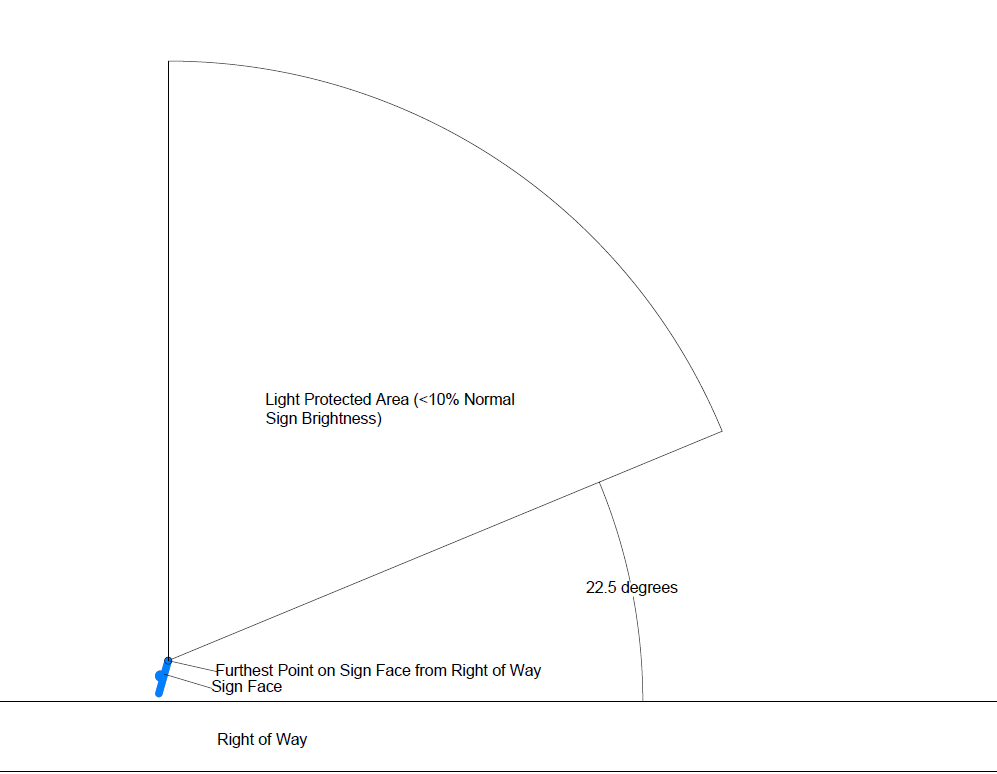
Dynamic display billboards shall be constructed with the use of light-bocking technology. As measured from a point on the sign face furthest from the right-of-way, the area on the ground more than 22.5 degrees from the roadway must be light protected by light-blocking technology. "Light protected" is defined as having a reduction of brightness/luminance (and visibility) of over 90 percent, or equivalently, a remaining brightness of less than ten percent as compared to the nominal forward brightness of the sign.
Subd. 6.
With the exception of theater marquees, changeable copy signage (electronic or not) is not allowed to be placed on walls.
Subd. 7.
Signs painted directly on building exteriors are not permitted.
Subd. 8.
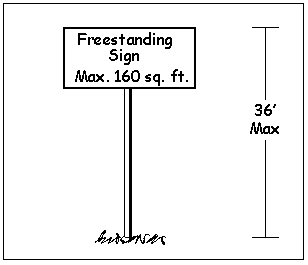
Except as otherwise limited by this Section, no freestanding sign, excluding dynamic display billboards, shall project higher than 36 feet above grade.
Subd. 9.
Except as otherwise limited by this Section, no freestanding sign, excluding dynamic display billboards, shall exceed 160 square feet in surface area.
Subd. 10.
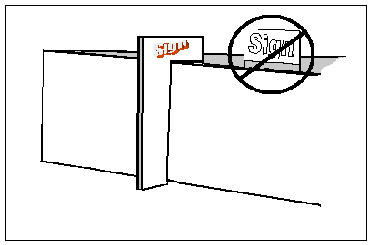
No wall sign or other sign attached to a building shall project above the roof line or parapet of the building to which it is attached or shall constitute a roof sign as defined by this Section. The exception is that wall signage may be placed partially over the roof area of buildings with flat roofs, provided such signage is located upon a perpendicular building column projecting from an exterior wall, and the signage is counted toward the allowable wall signage for the wall to which the column is attached. No wall signage may be placed higher than the roof line or parapet on a perpendicular building column projecting from an exterior wall that exceeds eight feet above the parapet of the building or roof line of the building (if the building has no parapet).
Subd. 11.
No sign shall be erected or placed that resembles any official marker directed by a government agency, nor shall signs display such words as "stop" or "danger" except that in shopping centers these or other traffic signs may be used where deemed appropriate by the City Engineer.
Subd. 12.
No sign shall obstruct any window, door, fire escape, stairway, or other authorized or required building opening.
Subd. 13.
No sign shall be erected or placed that, by reason of position, shape, size, or color, would interfere with proper functioning of a traffic sign or with reasonable visibility at a street intersection.
Subd. 14.
Signs shall not be permitted within the public right-of-way, or within dedicated public easements except the following:
(a)
Temporary public announcement signs for city-wide and free or civic community events.
(b)
Temporary directional real estate signs for community-wide annual events such as the "Parade of Homes."
(c)
Temporary non-commercial signs, pursuant to the regulations in Section 21155.06, Subd. 1(c)(3) of this Chapter.
(d)
Official or traffic signs erected by a governmental agency.
Subd. 15.
The owner, lessee, or manager of any sign, and the owner of the land upon which the sign is located, are responsible for keeping the grass and other vegetation cut and for keeping debris and rubbish cleaned up and removed from the property where the sign is located. Further, the same parties shall be responsible for assuring that every sign, including those which may be specifically exempt from these regulations relative to permits and permit fees, shall be maintained in good structural condition at all times. All signs shall be kept neatly painted, including all metal parts and supports thereof that are not galvanized or of rust resistant material.
Subd. 16.
Signs which, by reason of deterioration, may become unsafe or unsightly, shall be repaired or removed by the licensee, sign owner, or owner of the property upon which the sign stands, upon written notice of the City Zoning Administrator.
Subd. 17.
No signs shall be permitted which include content classified as "obscene" as defined by Minnesota Statutes Section 617.241.
Subd. 18.
The construction of all signs permitted by this Section shall be in accordance with the Minnesota State Building Code, which is hereby adopted by reference as part of this Section, a copy of which shall be maintained by the Zoning Administrator.
Subd. 19.
No temporary or permanent sign shall be tacked, or otherwise attached to accessory buildings, accessory structures, trees, fences, utility poles, light posts, or other such structures or supports, unless expressly permitted by this Section or other law. This prohibition includes signs or sign panels attached to outdoor athletic field fences.
Subd. 20.
No multi-vision sign or any other sign which revolves, rotates, or has any visible moving parts shall be permitted, except that signs alternately displaying time and temperature and barber poles may be allowed.
Subd. 21.
No temporary or permanent sign shall be permitted in conjunction with any home occupation or licensed home occupation.
Subd. 22.
No new static billboards are permitted in any zoning district, except on scoreboards as permitted by Section 21650.07. Any billboard which existed on or before April 1, 1998 shall be considered a lawfully non-conforming use and structure.
Subd. 23.
All billboards are subject to removal as a condition of subdivision, platting, site plan or PUD approval for new uses or structures on the parcel where the billboard is located. No such sign that is non-conforming by reason of height, area, or location shall be altered or expanded to allow an electronic graphic display, changeable copy sign, or electronic changeable copy sign.
Subd. 24.
Signs are not permitted on bus benches.
Subd. 25.
The owner of any sign which is otherwise allowed by this Section may substitute non-commercial speech in lieu of any other commercial speech or non-commercial speech. The purpose of this provision is to prevent any inadvertent favoring of commercial speech over non-commercial speech or favoring of any particular non-commercial speech over any other non-commercial speech. This provision prevails over any more specific provision to the contrary. This substitution of copy may be made without any additional approval or permitting so long as the substitution changes the message of the sign only. The exemption to separate approvals or permits shall not be construed as relieving the sign owner from responsibility for its erection and maintenance or its compliance with the provisions of this Section or any other law or ordinance regulating the same.
Subd. 26.
No mobile sign shall be permitted, except those specifically allowed in Section 21155.06 Subd. 1(c)(4).
Subd. 27.
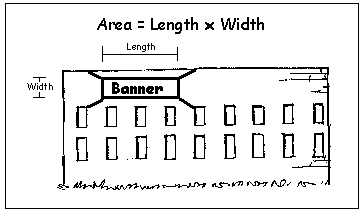
Banners shall be permitted only as temporary signs in conjunction with temporary events or sales, and shall require a separate sign permit unless approved as part of an administrative permit. The sign area calculation shall be determined based on the outer dimensions of the banner.
Subd. 28.
When neon tube, LED tube, or similar accent light banding is installed, it shall be limited to the same building/canopy façades where other wall/canopy signage is allowed.
(Amended by Ord. No. 99-5, 01/19/99; Ord. No. 2007-04, 01/23/07; Ord. No. 2007-04, 01/23/07; Ord. No. 2008-09, 03/25/08; Ord. No. 2008-13, 05/27/08; Ord. No. 2009-07, 05/12/09; Ord. No. 2010-01, 02/23/10; Ord. No. 2011-05, 02/22/11; Ord. No. 2012-05, 02/28/12; Ord. No. 2012-12, 03/27/12; Ord. No. 2012-23, 08/14/12; Ord. No. 2013-11, 04/23/13; Ord. No. 2013-27, 10/22/13; Ord. No. 2016-11, 04/26/16; Ord. No. 2019-01, 02/12/2019; Ord. No. 2021-06, § 2, 3/9/2021; Ord. No. 2025-02, § 19, 3/25/2025)
21155.06. - District Requirements.
Subd. 1.
All Districts. The following signs are permitted in all zoning districts subject to applicable administrative procedures of Section 21155.07.
(a)
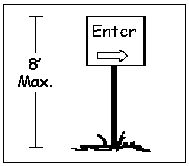
On-Site Directional Signs. On-site directional signs shall be permitted in any approved off-street parking area, when deemed necessary for the orderly movement of traffic, provided all the following conditions are met:
(1)
Directional signs shall not exceed four square feet in surface area, and shall not project higher than eight feet above grade, except as noted below:
a.
Directional signs for buildings over 400,000 square feet in area shall not exceed 14 square feet in surface area, and shall not project higher than eight feet above grade.
b.
For business or industrial campuses, institutions, or similar uses, directional signs that are internal to the site and not visible off the site shall not exceed 16 square feet in surface area, and shall not project higher than eight feet above grade.
c.
For properties that provide Dedicated EVCS for at least five percent of their required off-street parking spaces, the maximum area of on-site directional signage may increase by ten percent. The parking spaces must be served by Level-2 EVSE to be eligible for this incentive.
(2)
Directional signs directed at persons off the site shall be limited to one such sign per street access to the site.
(3)
Directional signs shall not be illuminated unless illumination is deemed by the City as essential to the orderly flow of traffic.
(4)
Directional signs shall be located and designed so as to not obstruct traffic or vision of drivers and pedestrians.
(b)
Off-Site Directional Signs.
(1)
In addition to other freestanding signs permitted in the applicable zoning district, off-site directional signs are permitted for businesses, apartment complexes, or institutions that are not located on a minor arterial or a major collector street. Such uses may display one off-site directional sign on private property that abuts a minor arterial or major collector street, subject to the following requirements:
a.
Off-site directional signs may be located in any zoning district.
b.
There shall be no more than one off-site directional sign for each business, apartment complex or institution.
c.
Off-site directional signs shall be visible from a minor arterial or major collector street.
d.
Off-site directional signs shall be located at the major intersection nearest to the business, apartment complex or institution displaying the sign.
e.
There shall be no more than one off-site directional sign per intersection corner.
f.
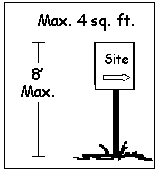
Off-site directional signs shall not exceed four square feet in surface area, and shall not project higher than eight feet above grade.
g.
Off-site directional signs shall not be illuminated.
h.
At least 50 percent of the surface area shall be used to direct traffic to a specific location.
i.
Off-site directional signs cannot be transferred to any other entity without review and permitting by the Zoning Administrator.
j.
Off-site directional signs shall be located outside of the sight visibility triangle.
k.
No off-site directional sign shall be located on any property without the written consent of the current property owner. The applicant for the sign permit shall be responsible to obtain written consent from subsequent property owners.
l.
Off-site directional signs required by the City of Plymouth for public safety purposes are subject to the above requirements. Such signs may exceed four square feet in area to accommodate an affected location address.
(2)
One off-site directional sign for properties located in commercial or industrial districts may be located on an abutting premises if deemed necessary by the Zoning Administrator in order to avoid confusion to the traveling public and assist emergency vehicles in locating the premises, provided all the following conditions are met:
a.
The signage rights are designated in a recorded easement or similar instrument.
b.
The premises served by the off-site directional sign shall not have direct access to a public street.
c.
The off-site directional sign shall be located on a premises that 1) provides access to the premises served by the off-site directional sign, and 2) has access on an arterial or collector roadway.
d.
At least 50 percent of the surface area shall be used to direct traffic to a specific location.
e.
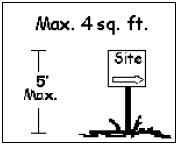
The off-site directional sign shall not exceed 4 square feet in surface area and shall not project higher than 5 feet above grade, unless otherwise approved by the Zoning Administrator to accommodate the address for an affected location, as may be required.
(c)
Temporary Signs. All temporary signs that require a permit shall be designed and manufactured by a licensed sign contractor, or shall receive prior design approval by the Zoning Administrator. The following temporary signs are allowed in all districts:
(1)
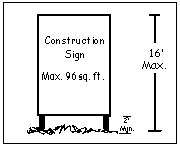
Construction Signs. One temporary sign not exceeding a total surface area of 96 square feet, not exceeding 16 feet in height, and not less than two feet above grade. Such signs shall be set back at least ten feet from lot lines. Such signs shall be allowed for three years from the date of original building permit issuance, or until construction in the development is completed, whichever occurs first.
(2)
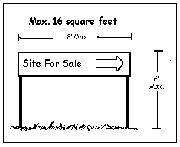
Real Estate Signs, Off-Premises. One temporary real estate sign not exceeding 16 square feet in surface area, or six feet in height, or eight feet in width. Such signs shall be set back at least ten feet from lot lines. Off-site temporary real estate signs shall be located at least 200 feet from any other such sign, unless grouped with other temporary real estate signs, provided that the total surface area of all such grouped signs shall not exceed 32 square feet. The signs shall be located on private property with the express consent of the property owner who, with the owner or manager of the sign, shall be equally responsible for the proper location, maintenance, and ultimate removal of the sign. Such signs shall be allowed for three years from the date of original building permit issuance, or until construction in the development is completed, whichever occurs first. More than one off-site temporary real estate sign may be allowed per development in cases where, due to the large size of the project or due to an incomplete roadway system, such signage is deemed necessary by the Zoning Administrator to avoid confusion to the traveling public.

(3)
Non-commercial Signs. Temporary non-commercial signs of any size and in any number may be posted from 46 days before the state primary in a state general election year until ten days following the general election, and from 13 weeks prior to any special election until ten days following the special election. Signs shall be removed not more than ten days after an election. The owner or manager of the sign, the landowner granting consent for placement of the sign on his/her property or within the directly abutting public boulevard, and the political candidate shall be equally responsible for the proper location, maintenance, and ultimate removal of such signs. Such signs may be placed on private property upon consent of the landowner, or may be placed within the public boulevard directly abutting a private property (i.e., right-of-way area between a private property and any abutting public trail, sidewalk, or street / roadway) upon consent of the abutting landowner and subject to the regulations of this provision. Such signs shall not be placed: 1) within the traveled roadway (between the outermost curb lines of a public street or roadway, or in the absence of curbing, between the outermost limits of the road bed including any shoulders); or 2) within center medians / traffic islands; or 3) on any public trail or sidewalk; or 4) within a public boulevard that is located between a public trail or sidewalk and any abutting public street/roadway; or 5) on public park property; or 6) on any city-, county-, state-, or federally-owned property except as described and allowed by this provision. Such signs shall be set back at least one foot from public trails and sidewalks. If there is no public trail or sidewalk, such signs shall be set back at least four feet from the back-of-curb of public streets/roadways, or in the absence of curbing, such signs shall be set back at least four feet from the outermost limits of the road bed including any shoulders. Additionally, placement of such signs shall not impede safety by obstructing vision of pedestrians, bicycles, or motor vehicle operations. Such temporary non-commercial signs do not require a sign permit, pursuant to Section 21155.07, Subd. 2(h) of this Section.

(4)
Public Announcement Signs. Temporary signs for non-commercial announcements shall not exceed 32 square feet in surface area. For city-wide and free or civic community events, up to three such signs per event may be permitted with a maximum combined surface area not to exceed 300 square feet. Such signs shall be located at least ten feet from lot lines, and shall be removed when the intended purpose has been fulfilled or for a maximum time of 14 days. The owner or manager of the sign and the owner of the land shall be equally responsible for the proper location, maintenance, and ultimate removal of the sign.
(d)
Dynamic Display Billboards. No new dynamic display billboard shall be erected within the City unless a permit has been issued for such installation on or after March 9, 2021. Dynamic display billboards erected on or after March 9, 2021, may be permitted, subject to the following:
(1)
The property where the dynamic display billboard is proposed shall have frontage abutting either Interstate 494 or State Highway 169.
(2)
The property shall have an existing static billboard.
(3)
The proposed dynamic display billboard shall not exceed dimensions of 14 feet high by 50 feet wide.
(4)
The proposed dynamic display billboard shall not exceed a height of 70 feet from grade.
(5)
Only one billboard structure is permitted per property, whether static or dynamic display. One structure may have up to 2 faces.
(6)
Dynamic display billboards shall be constructed with the use of light-blocking technology. As measured from a point on the sign face furthest from the right-of-way, the area on the ground more than 22.5 degrees from the roadway must be light protected by light-blocking technology. "Light protected" is defined as having a reduction of brightness/luminance (and visibility) of over 90%, or equivalently, a remaining brightness of less than 10% as compared to the nominal forward brightness of the sign.
(7)
The minimum distance between dynamic display billboards shall be 5,280 feet as measured on either side of the roadway, and the minimum distance between a dynamic display billboard and an existing static billboard shall be 1,320 feet as measured on the same side of the roadway.
(8)
Any new dynamic display billboard structure shall replace 2 existing static billboard structures, including:
a.
The static billboard on the property where the dynamic display billboard is proposed; and
b.
One other static billboard structure. The other static billboard structure must be located in the City of Plymouth, and must be owned or leased by the applicant.
(9)
All billboards must comply with Minnesota Department of Transportation standards and permitting requirements.
(10)
Applicants for a dynamic display billboard permit shall enter into an agreement with the City to provide the City with 6,000 8-second spots per month per dynamic display sign face for community and public service messages. These City messages shall be put into the billboard owner's regular sign copy rotation and shall be displayed between the hours of 6:00 a.m. and 9:00 p.m.
(Amended by Ord. No. 2000-06, 02/29/00; Ord. No. 2001-06, 02/13/01; Ord. No. 2001-26, 08/14/01; Ord. No. 2002-02, 01/22/02; Ord. No. 2009-07, 05/12/09; Ord. No. 2010-01, 02/23/10; Ord. No. 2010-05, 05/11/10; Ord. No. 2013-11, 04/23/13; Ord. No. 2016-11, 04/26/16; Ord. No. 2019-01, 02/12/19; Ord. No. 2021-06, § 3, 3/9/2021; Ord. No. 2022-10, §§ 12, 13, 8/16/2022)
Subd. 2.
Residential Districts. Signs are accessory to permitted, interim and conditional uses in residential districts. Only the following signs are permitted in the FRD, RSF and RMF Districts, unless otherwise specifically provided in this Section:
(a)
All signs permitted in Section 21155.06, Subd. 1.
(b)
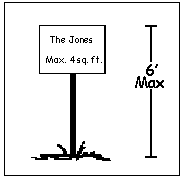
Nameplate Signs. One nameplate sign provided that the surface area does not exceed four square feet. If the nameplate sign is freestanding, it shall be located at least ten feet from lot lines, and shall not exceed six feet in height.
(c)
Signs for Non-Residential Uses.
(1)
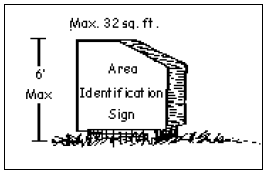
One freestanding sign not to exceed 32 square feet in surface area. The sign shall be located at least ten feet from lot lines, and shall not exceed six feet in height. The sign may include a changeable copy sign or an electronic changeable copy sign subject to the following:
a.
The portion of the sign containing changeable copy or electronic changeable copy shall be an integral part of the sign or shall be directly connected to the non-changeable copy portion of the sign.
b.
The color of text for an electronic changeable copy sign shall be white or amber with a contrasting dark background.
c.
The sign shall be set back at least 50 feet from side and rear lot lines, except that in no case shall such signage be set back less than 100 feet from any directly abutting residentially guided or used property.
d.
When a changeable copy sign or an electronic changeable copy sign is located on a property that abuts more than one roadway, such sign shall be placed along the highest classification roadway.
e.
Only one changeable copy sign or electronic changeable copy sign shall be permitted per lot. For developments with two or more structures and/or lots, only one changeable copy sign or electronic changeable copy sign shall be permitted per development.
f.
The portion of the sign dedicated to changeable copy or electronic changeable copy shall not be illuminated between 10:30 p.m. and 6:00 a.m.
g.
Compliance shall be met with the general regulations and restrictions specified for such signs, as outlined in Section 21155.05 of this Chapter.
(2)
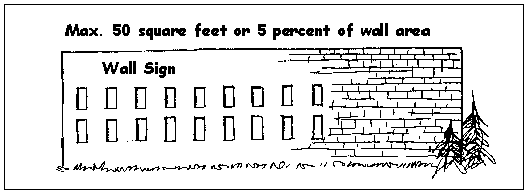
Wall signage shall be permitted on one wall of allowed non-residential uses; however, lots with frontage on two or more streets may have signage on one wall per street frontage. Such signage shall not exceed 50 square feet in surface area, or five percent of the area of the wall to which the sign is attached, whichever is greater.
(3)
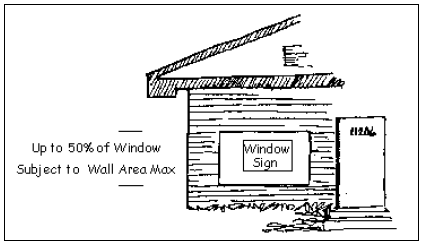
Window signage (includes graphics) shall be permitted on the same building walls that have, or are allowed to have, wall signage pursuant to item (2) above. Window signage shall be deducted from the allowable wall signage area; however, in no case shall window signage cover more than 50 percent of the area of the windows on the respective building wall.
(d)
Area Identification Signs.
(1)
Area identification signage shall be permitted for each residential subdivision or multi-residential project. For purposes of this Section, residential subdivisions and multi-residential projects shall include all phases of approved staged developments.
(2)
The area identification signage shall be located next to the street entrance or driveway entrance into the residential subdivision or multi-residential project, except that one of the allowable area identification signs does not need to be located next to a street entrance or driveway entrance provided it is instead located along an abutting arterial or major collector roadway.
(3)
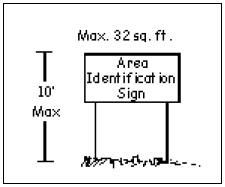
One area identification sign, not exceeding 32 square feet in surface area per sign, or ten feet in height, may be permitted next to each street entrance or driveway entrance into a residential subdivision or multi-residential project. An area identification sign shall be located at least ten feet from lot lines.
(4)
When such signs are proposed and constructed by an individual or firm other than the individual or association who will be responsible for the maintenance, there shall be a covenant prepared by the proponent establishing responsibility for the maintenance of the sign or signs over the entire project or subdivision, to be approved by the City Attorney, and to be recorded on the property title(s) prior to issuance of the sign permit. Further, appropriate easements shall be provided for the approved signs on the lot or lots where the signs are to be located; the easements shall be recorded prior to the issuance of the sign permit.
(5)
No area identification sign shall contain a changeable copy sign, an electronic changeable copy sign, or a time and temperature sign.
(e)
Temporary Signs.
(1)
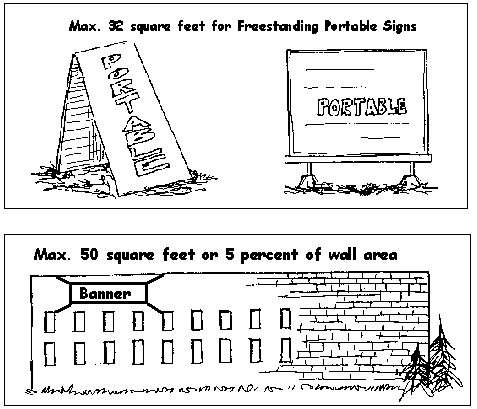
Special Event Signs. One temporary sign may be mounted on a portable stand, with a maximum surface area not exceeding 32 square feet, or may be a wall sign subject to the same size standards as the permanent wall signage allowed for the use. Such signs must be located on the subject property and shall be set back at least 50 feet from any side or rear lot line that directly abuts residentially used property. The signs may be used not more than four times per calendar year, and for a period of not more than 14 days per time. The use of the temporary sign by tenants on the lot shall be the responsibility of the property owner or designated manager who shall endorse in writing, all applications for sign permits. The owner or manager of the sign and the property owner shall be equally responsibility for the proper location, maintenance, and removal of the sign. The sign, sign supports, and portable stand shall be removed from public view at the end of the period. No such temporary signage shall be allowed on any lot that has a changeable copy sign or an electronic changeable copy sign.
(2)
Temporary Transient Merchant Signs. One temporary sign for transient merchants and transient produce merchants in the FRD District only. The sign shall not exceed 16 square feet in surface area, and shall not exceed six feet in height. The sign shall be set back at least ten feet from the lot lines, and shall be erected only during the period of transient sales as defined by the administrative permit.
(3)
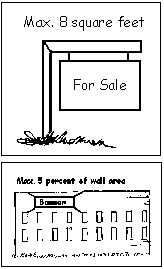
Temporary Real Estate Signs, On-Premises. One temporary sign related to the sale, rent, or lease of land, parcels and lots, of primary buildings, and of areas within primary buildings shall not exceed eight square feet in surface area, except that if the parcel contains five or more acres the sign shall not exceed 32 square feet in surface area. Apartment complexes may have one wall sign with a surface area not to exceed five percent of the area of the wall to which it is attached. Such apartment complex wall signage may be used not more than four times per calendar year, and for a period of not more than 14 days per time. The owner or manager of the sign and the owner of the land shall be equally responsible for the proper location, maintenance, and ultimate removal of the sign.
(f)
Private Drive Signs. One private drive sign not exceeding eight square feet in area or five feet in height shall be located near each entrance to a private drive, pursuant to Section 21137 of this Chapter.
(Amended by Ord. No. 2000-06, 02/29/00; Ord. No. 2002-02, 01/22/02; Ord. No. 2002-32, 11/26/02; Ord. No. 2008-09, 03/24/08; Ord. No. 2009-07, 05/12/09; Ord. No. 2010-01, 02/23/10; Ord. No. 2011-22, 07/26/11; Ord. No. 2013-11, 04/23/13; Ord. No. 2019-01, 02/12/19; Ord. No. 2020-11, § 17, 10/13/2020)
Subd. 3.
O, Office District. Signs are accessory to permitted, conditional, and interim uses in the O District. Only the signs listed in this subdivision are permitted in this District, unless otherwise specifically provided in this Section. Residential uses in the O District shall be allowed to have the signage as provided for in Section 21155.06, Subd. 2. Non-residential uses in the O District shall be allowed to have the following signage:
(a)
All signs permitted in Section 21155.06, Subd. 1.
(b)
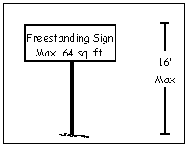
Freestanding Signs. One freestanding sign not to exceed 64 square feet in surface area or 16 feet in height. The sign shall be set back at least ten feet from lot lines. The sign may include a changeable copy sign or an electronic changeable copy sign subject to the following:
(1)
The portion of the sign containing changeable copy or electronic changeable copy shall be an integral part of the sign or shall be directly connected to the non-changeable copy portion of the sign.
(2)
The color of text for an electronic changeable copy sign shall be white or amber with a contrasting dark background.
(3)
A changeable copy sign or an electronic changeable copy sign shall be located in a manner that minimizes views (to the extent possible) from residential properties.
(4)
Only one changeable copy sign or electronic changeable copy sign shall be permitted per lot.
(5)
Compliance shall be met with the general regulations and restrictions specified for such signs, as outlined in Section 21155.05 of this Chapter.
(c)
Wall Signage.
(1)
Allowable uses and business establishments may have wall signage, provided that:
a.
Any such wall signage shall not extend more than 18 inches from the building, except that such signage may extend from the face of the roof over a covered walk, or from a marquee, provided the signage does not extend above the roof or parapet of said building.
b.
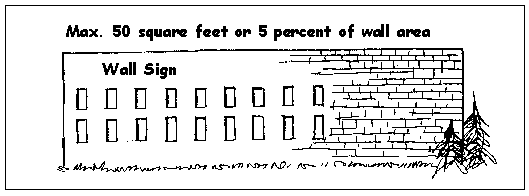
For single-tenant buildings, wall signage shall be permitted on one wall; however, lots with frontage on two or more streets may have signage on one wall per street frontage. Such wall signage shall not exceed 50 square feet in surface area or five percent of the area of the wall to which the signage is attached, whichever is greater.
c.
For multi-tenant buildings, wall signage shall be permitted on one wall; however, lots with frontage on two or more streets may have signage on one wall per street frontage. Such wall signage shall not exceed five percent of the area of the wall to which the signage is attached. The exception to the limit on the number of building walls that are allowed to have signage is as follows: a tenant may have one wall sign located near their primary building entrance even if wall signage would otherwise be precluded from that building wall, provided that such signage does not exceed five percent of the wall area of the related tenant space.
d.
In addition to the wall signage allowed above, one wall sign shall be allowed per building tenant provided such sign is located at or adjacent to a loading dock or service entrance, is not internally illuminated, and contains four square feet or less in surface area.
e.
All wall signage shall be reviewed by the building ownership or management who shall provide a written endorsement at the time application is made for the sign permit.
(2)
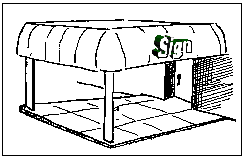
Canopies shall be considered to be an integral part of the structure to which they are accessory. Signs may be attached to a canopy, but such structures shall not be considered as part of the wall area, and thus shall not warrant additional sign area. Canopy signage shall be deducted from the permitted wall signage area.
(3)
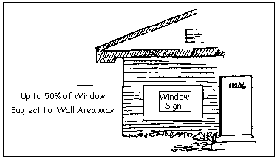
Window signage (includes graphics) shall be permitted on the same building walls that have, or are allowed to have, wall signage pursuant to item (1) above. Window signage shall be deducted from the allowable wall signage area; however, in no case shall window signage cover more than 50 percent of the area of the windows on the respective building wall.
(d)
Area Identification Signs.
(1)
Area identification signage shall be permitted for commercial developments with two or more structures.
(2)
The area identification signage shall be located near entrances to the development, except that one area identification sign does not need to be located near an entrance to the project or subdivision provided it is located along an abutting arterial or major collector roadway.
(3)
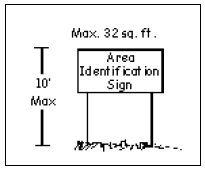
Two area identification signs, not exceeding 32 square feet in surface area per sign, or ten feet in height, may be permitted per development. An area identification sign shall be located at least ten feet from lot lines.
(4)
When such signs are proposed and constructed by an individual or firm other than the individual or association who will be responsible for the maintenance, there shall be a covenant prepared by the proponent establishing responsibility for the maintenance of the sign or signs over the entire project or subdivision, to be approved by the City Attorney, and to be recorded on the property title(s) prior to issuance of the sign permit. Further, appropriate easements shall be provided for the approved signs on the lot or lots where the signs are to be located; the easements shall be recorded prior to the issuance of the sign permit.
(5)
No area identification sign shall contain a changeable copy sign, an electronic changeable copy sign, or a time and temperature sign.
(e)
Temporary Signs.
(1)
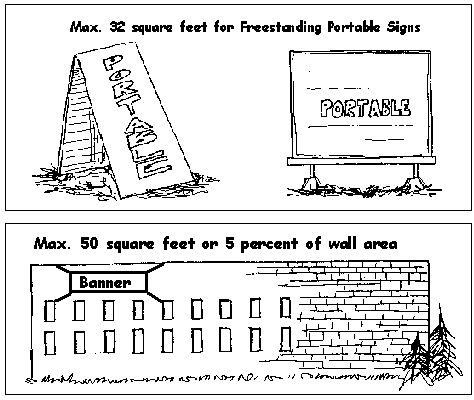
Special Event Signs. For single-tenant buildings and multi-tenant buildings with two to four lease-spaces, one temporary sign may be mounted on a portable stand, with a maximum surface area not exceeding 32 square feet, or may be a wall sign subject to the same size standards as the permanent wall signage allowed for the use. Such signs must be located on the subject property and may be used not more than four times per calendar year, and for a period of not more than 14 days per time. For multi-tenant buildings with five or more lease-spaces, each tenant shall be permitted one such sign per calendar year, except that tenants may be permitted more than one such sign per calendar year upon written authorization of the property owner or designated manager—provided that such temporary signage shall not exceed the total number allowed for the building within the calendar year. Any such temporary signage shall be the responsibility of the property owner or designated manager who shall endorse in writing, all applications for sign permits. The owner or manager of the sign and the property owner shall be equally responsible for the proper location, maintenance, and removal of the sign. The sign, sign supports, and portable stand shall be removed from public view at the end of the period. No such temporary signage shall be allowed on any lot that has a changeable copy sign or an electronic changeable copy sign, excluding such signs that exclusively display fuel prices.
(2)
Transient Merchant Signs. One temporary sign for transient merchants and transient produce merchants. The sign shall not exceed 16 square feet in surface area, and shall not exceed six feet in height. The sign shall be set back at least ten feet from lot lines and shall be erected only during the period of transient sales as defined by the administrative permit.
(3)
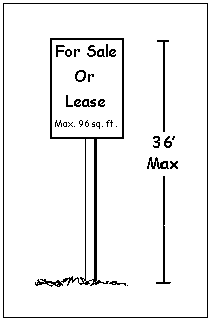
Real Estate Signs, On-Premises. One temporary sign announcing the development, the availability of lots and/or buildings, the sale, rent, or lease of land, of primary buildings, and of areas within primary buildings shall have a surface area not exceeding 96 square feet, shall be located on the subject property, and shall be removed when the intended purpose has been fulfilled. If the sign is freestanding, it shall be set back at least ten feet from lot lines, and shall not be located in any required side or rear yard. The owner or manager of the sign and the owner of the land shall be equally responsible for the proper location, maintenance, and ultimate removal of the sign.
(Amended by Ord. No. 99-5, 01/19/99; Ord. No. 2002-02, 01/22/02; Ord. No. 2008-09, 03/24/08; Ord. No. 2009-07, 05/12/09; Ord. No. 2010-01, 02/23/10; Ord. No. 2010-02, 02/23/10; Ord. No. 2011-05, 02/22/11; Ord. No. 2012-05, 02/28/12; Ord. No. 2013-11, 04/23/13; Ord. No. 2020-11, § 18, 10/13/2020)
Subd. 4.
Other Commercial Districts. Signs are accessory to permitted, interim, and conditional uses in the C-2, C-3, C-4, C-5, and B-C Districts. Only the following signs are permitted in these districts, unless otherwise specifically provided in this Section:
(a)
All signs permitted in Section 21155.06, Subd. 1.
(b)
Wall Signage.
(1)
Allowable uses and business establishments may have wall signage, provided that:
a.
Any such wall signage shall not extend more than 18 inches from the building, except that such signage may extend from the face of the roof over a covered walk, or from a marquee, provided the signage does not extend above the roof or parapet of said building.
b.
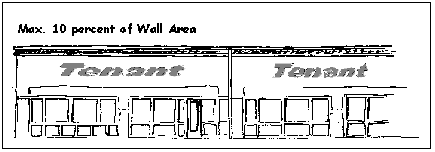
For single-tenant buildings, wall signage shall be permitted on one wall; however, lots with frontage on two or more streets may have signage on one wall per street frontage. Such wall signage shall not exceed ten percent of the area of the wall to which the signage is attached.
c.
For multi-tenant buildings, wall signage shall be permitted on one wall; however, lots with frontage on two or more streets may have signage on one wall per street frontage. Such wall signage shall not exceed ten percent of the area of the wall to which the signage is attached. The exception to the limit on the number of building walls that are allowed to have signage is as follows: a tenant may have one wall sign located near their primary building entrance even if wall signage would otherwise be precluded from that building wall, provided that such signage does not exceed five percent of the wall area of the related tenant space.
d.
In addition to the wall signage allowed above, one wall sign shall be allowed per building tenant provided such sign is located at or adjacent to a loading dock or service entrance, is not internally illuminated, and contains four square feet or less in surface area.
e.
All wall signage shall be reviewed by the building ownership or management who shall provide a written endorsement at the time application is made for the sign permit.
(2)
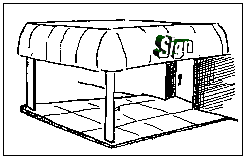
Canopies shall be considered to be an integral part of the structure to which they are accessory. Signs may be attached to a canopy, but such structures shall not be considered as part of the wall area, and thus shall not warrant additional sign area. Canopy signage shall be deducted from the permitted wall signage area. Canopies for motor vehicle fuel sales that do not include a convenience market on the lot shall be permitted separate signage. Such signage may occur on all faces of the canopy and shall not exceed 24 square feet in surface area or 20 percent of the face of the canopy to which the signs are attached, whichever is greater.
(3)
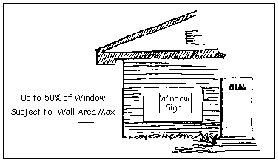
Window signage (includes graphics) shall be permitted on the same building walls that have, or are allowed to have, wall signage pursuant to item (1) above. Window signage shall be deducted from the allowable wall signage area; however, in no case shall window signage cover more than 50 percent of the area of the windows on the respective building wall.
(c)
Freestanding Signs.
(1)
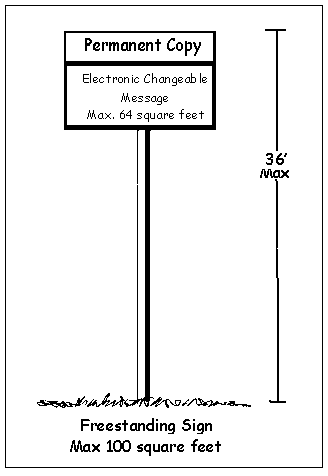
One freestanding sign not to exceed 100 square feet in surface area or 36 feet in height, and set back at least ten feet from lot lines.
(2)
The freestanding sign may contain a time and temperature sign, a changeable copy sign, an electronic changeable copy sign, or an electronic graphic display sign, subject to the following restrictions:
a.
The portion of the sign containing changeable copy (electronic or not) or electronic graphic display shall be an integral part of the sign or shall be directly connected to the non-changeable copy portion of the sign.
b.
The electronic portion of the sign shall not exceed 64 square feet.
c.
A changeable copy sign, electronic changeable copy sign, or electronic graphic display sign shall be located in a manner that minimizes views (to the extent possible) from residential properties.
d.
Only one changeable copy sign, electronic changeable copy sign, or electronic graphic display sign shall be permitted per lot.
e.
Compliance shall be met with the general regulations and restrictions specified for such signs, as outlined in Section 21155.05 of this Chapter.
(d)
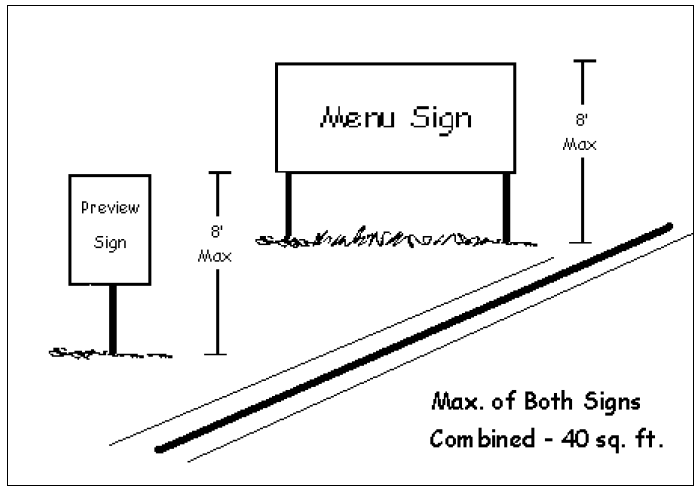
In addition to the freestanding sign above, coffee shops and restaurant uses with a drive-through facility may have up to two additional signs, subject to the following conditions:
(1)
The combined surface area of the two signs shall not exceed 50 square feet.
(2)
Neither sign shall exceed eight feet in height from grade to the top of the sign.
(3)
The sign(s) shall be single-sided, located adjacent to the drive-through aisle, and oriented so that the signs provide information to the patrons using the drive-through facility only.
(4)
If two signs are used, they shall be similarly designed with the same style, materials and color.
(5)
Extenders shall not be attached to any sign if the maximum size allowed in subsections (1) or (2) above would be exceeded.
(e)
Area Identification Signs.
(1)
Area identification signage shall be permitted for commercial developments with two or more structures.
(2)
The area identification signage shall be located near entrances to the development, except that one area identification sign does not need to be located near an entrance to the project or subdivision provided it is located along an abutting arterial or major collector roadway.
(3)
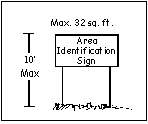
Two area identification signs, not exceeding 32 square feet in surface area per sign, or ten feet in height, may be permitted per development. An area identification sign shall be located at least ten feet from lot lines.
(4)
When such signs are proposed and constructed by an individual or firm other than the individual or association who will be responsible for the maintenance, there shall be a covenant prepared by the proponent establishing responsibility for the maintenance of the sign or signs over the entire project or subdivision, to be approved by the City Attorney, and to be recorded on the property title(s) prior to issuance of the sign permit. Further, appropriate easements shall be provided for the approved signs on the lot or lots where the signs are to be located; the easements shall be recorded prior to the issuance of the sign permit.
(5)
No area identification sign shall contain a changeable copy sign, an electronic changeable copy sign, a time and temperature sign, or an electronic graphic display sign.
(f)
Temporary Signs.
(1)
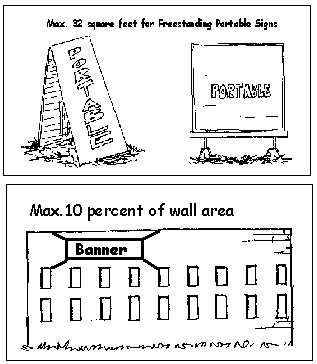
Special Event Signs. For single-tenant buildings and multi-tenant buildings with two to four lease-spaces, one temporary sign may be mounted on a portable stand, with a maximum surface area not exceeding 32 square feet, or may be a wall sign subject to the same size standards as the permanent wall signage allowed for the use. Such signs must be located on the subject property and may be used not more than four times per calendar year, and for a period of not more than 14 days per time. For multi-tenant buildings with five or more lease-spaces, each tenant shall be permitted one such sign per calendar year, except that tenants may be permitted more than one such sign per calendar year upon written authorization of the property owner or designated manager—provided that such temporary signage shall not exceed the total number allowed for the building within the calendar year. Any such temporary signage shall be the responsibility of the property owner or designated manager who shall endorse in writing, all applications for sign permits. The owner or manager of the sign and the property owner shall be equally responsible for the proper location, maintenance, and removal of the sign. The sign, sign supports, and portable stand shall be removed from public view at the end of the period. No such temporary signage shall be allowed on any lot that has a changeable copy sign, an electronic changeable copy sign, or an electronic graphic display sign, excluding such signs that exclusively display fuel prices.
(2)
Transient Merchant Signs. One temporary sign for transient merchants and transient produce merchants. The sign shall not exceed 16 square feet in surface area, and shall not exceed six feet in height. The sign shall be set back at least ten feet from lot lines and shall be erected only during the period of transient sales as defined by the administrative permit.
(3)
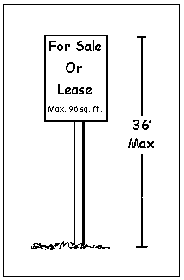
Real Estate Signs, On-Premises. One temporary sign announcing the development, the availability of lots and/or buildings, the sale, rent, or lease of land, of primary buildings, and of areas within primary buildings shall have a surface area not exceeding 96 square feet, shall be located on the subject property, and shall be removed when the intended purpose has been fulfilled. If the sign is freestanding, it shall be set back at least ten feet from lot lines. The owner or manager of the sign and the owner of the land, shall be equally responsible for the proper location, maintenance, and ultimate removal of the sign.
(Amended by Ord. No. 99-5, 01/19/99; Ord. No. 2000-06, 02/29/00; Ord. No. 2000-09, 03/21/00; Ord. No. 2001-25, 08/14/01; Ord. No. 2002-02, 01/22/02; Ord. No. 2003-06, 03/25/03; Ord. No. 2005-30, 11/29/05; Ord. No. 2008-09, 03/25/08; Ord. No. 2009-07, 05/12/09; Ord. No. 2010-01, 02/23/10; Ord. No. 2011-05, 02/22/11; Ord. No. 2012-05, 02/28/12; Ord. No. 2013-11, 04/23/13; Ord. No. 2019-01, 02/12/19; Ord. No. 2020-11, §§ 19, 20, 10/13/2020; Ord. No. 2025-02, § 20, 3/25/2025)
Subd. 5.
CC (City Center) District. Signs are accessory to permitted, interim, and conditional uses in the District. Only the following signs are permitted in this district, unless otherwise specifically provided in this Section:
(a)
All signs permitted in Section 21155.06, Subd. 1.
(b)
Wall signage:
(1)
Allowable uses and business establishments may have wall signage, provided that:
a.
Any such wall signage shall not extend more than 18 inches from the building, except that such signage may extend from the face of the roof over a covered walk, or from a marquee, provided the signage does not extend above the roof or parapet of said building.
b.
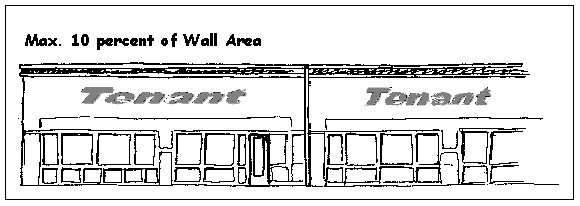
For single-tenant buildings, wall signage shall be permitted on one wall; however, lots with frontage on two or more streets may have signage on one wall per street frontage. Such wall signage shall not exceed ten percent of the area of the wall to which the signage is attached.
c.
For multi-tenant buildings, wall signage shall be permitted on one wall; however, lots with frontage on two or more streets may have signage on one wall per street frontage. Such wall signage shall not exceed ten percent of the area of the wall to which the signage is attached. The exception to the limit on the number of building walls that are allowed to have signage is as follows: a tenant may have one wall sign located near their primary building entrance even if wall signage would otherwise be precluded from that building wall, provided that such signage does not exceed five percent of the wall area of the related tenant space.
d.
In addition to the wall signage allowed above, one wall sign shall be allowed per building tenant provided such sign is located at or adjacent to a loading dock or service entrance, is not internally illuminated, and contains four square feet or less in surface area.
e.
All wall signage shall be reviewed by the building ownership or management who shall provide a written endorsement at the time application is made for the sign permit.
(2)
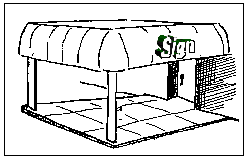
Canopies shall be considered to be an integral part of the structure to which they are accessory. Signs may be attached to a canopy, but such structures shall not be considered as part of the wall area, and thus shall not warrant additional sign area. Canopy signage shall be deducted from the permitted wall signage area. Canopies for motor vehicle fuel sales that do not include a convenience market on the lot shall be permitted separate signage. Such signage may occur on all faces of the canopy and shall not exceed 24 square feet in surface area or 20 percent of the face of the canopy to which the signs are attached, whichever is greater.
(3)
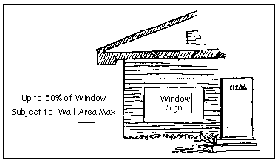
Window signage (includes graphics) shall be permitted on the same building walls that have, or are allowed to have, wall signage pursuant to item (1) above. Window signage shall be deducted from the allowable wall signage area; however, in no case shall window signage cover more than 50 percent of the area of the windows on the respective building wall.
(c)
Freestanding Signs:
(1)
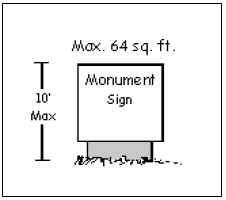
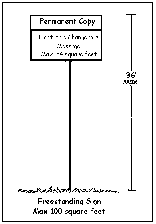
For properties directly abutting Highway 55, one freestanding sign not exceeding 36 feet in height shall be permitted per lot in lieu of the monument sign identified in subsection (1) above, provided the surface area of the sign shall not exceed 100 square feet. Any such freestanding sign shall be located between Highway 55 and the building, and shall be setback at least ten feet from all lot lines. The sign may include a changeable copy sign or an electronic changeable copy sign, subject to the following restrictions:
a.
The color of text on an electronic changeable copy sign shall be white or amber with a contrasting dark background.
b.
The electronic portion of the sign shall not exceed 64 square feet.
c.
Only one changeable copy sign or electronic changeable copy sign shall be permitted per lot.
d.
Compliance shall be met with the general regulations and restrictions specified for such signs, as outlined in Section 21155.05 of this Chapter.
(d)
Area Identification Signs:
(1)
Area identification signage shall be permitted for commercial developments with two or more structures.
(2)
The area identification signage shall be located near entrances to the development, except that one area identification sign does not need to be located near an entrance to the project or subdivision provided it is located along an abutting arterial or major collector roadway.
(3)
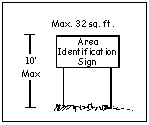
Two area identification signs, not exceeding 32 square feet in surface area per sign, or ten feet in height, may be permitted per development. An area identification sign shall be located at least ten feet from lot lines.
(4)
When such signs are proposed and constructed by an individual or firm other than the individual or association who will be responsible for the maintenance, there shall be a covenant prepared by the proponent establishing responsibility for the maintenance of the sign or signs over the entire project or subdivision, to be approved by the City Attorney, and to be recorded on the property title(s) prior to issuance of the sign permit. Further, appropriate easements shall be provided for the approved signs on the lot or lots where the signs are to be located; the easements shall be recorded prior to the issuance of the sign permit.
(5)
No area identification sign shall contain a changeable copy sign, an electronic changeable copy sign, or a time and temperature sign.
(e)
Temporary Signs:
(1)
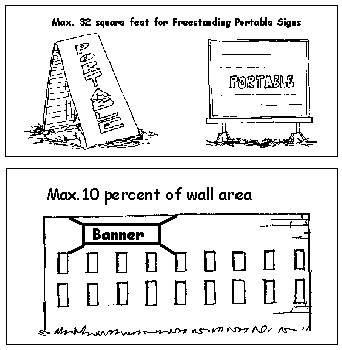
Special Event Signs. For single-tenant buildings and multi-tenant buildings with two to four lease-spaces, one temporary sign may be mounted on a portable stand, with a maximum surface area not exceeding 32 square feet, or may be a wall sign subject to the same size standards as the permanent wall signage allowed for the use. Such signs must be located on the subject property and may be used not more than four times per calendar year, and for a period of not more than 14 days per time. For multi-tenant buildings with five or more lease-spaces, each tenant shall be permitted one such sign per calendar year, except that tenants may be permitted more than one such sign per calendar year upon written authorization of the property owner or designated manager—provided that such temporary signage shall not exceed the total number allowed for the building within the calendar year. Any such temporary signage shall be the responsibility of the property owner or designated manager who shall endorse in writing, all applications for sign permits. The owner or manager of the sign and the property owner shall be equally responsible for the proper location, maintenance, and removal of the sign. The sign, sign supports, and portable stand shall be removed from public view at the end of the period. No such temporary signage shall be allowed on any lot that has a changeable copy sign, an electronic changeable copy sign, or an electronic graphic display sign, excluding such signs that exclusively display fuel prices.
(2)
Transient Merchant Signs. One temporary sign for transient merchants and transient produce merchants. The sign shall not exceed 16 square feet in surface area, and shall not exceed six feet in height. The sign shall be set back at least ten feet from lot lines and shall be erected only during the period of transient sales as defined by the administrative permit.
(3)
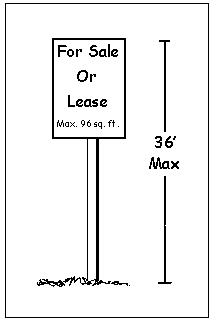
Real Estate Signs, On-Premises. One temporary sign announcing the development, the availability of lots and/or buildings, the sale, rent, or lease of land, of primary buildings, and of areas within primary buildings shall have a surface area not exceeding 96 square feet, shall be located on the subject property, and shall be removed when the intended purpose has been fulfilled. If the sign is freestanding, it shall be set back at least ten feet from lot lines. The owner or manager of the sign and the owner of the land shall be equally responsible for the proper location, maintenance, and ultimate removal of the sign.
(Amended by Ord. No. 2008-09, 03/25/08; Ord. No. 2009-07, 05/12/09; Ord. No. 2010-01, 02/23/10; Ord. No. 2011-05, 02/22/11; Ord. No. 2012-05, 02/28/12; Ord. No. 2013-11, 04/23/13; Ord. No. 2020-11, § 21, 10/13/2020; Ord. No. 2026-01, § 23, 2/10/2026)
Subd. 6.
Industrial Districts. Signs are accessory to permitted and conditional uses in the I-1, I-2 and I-3 Districts. Only the following signs are permitted in these districts, unless otherwise specifically provided in this Section:
(a)
All signs permitted in Section 21155.06, Subd. 1.
(b)
Wall Signage.
(1)
Allowable uses and business establishments may have wall signage, provided that:
a.
Any such wall signage shall not extend more than 18 inches from the building, except that such signage may extend from the face of the roof over a covered walk, or from a marquee, provided the signage does not extend above the roof or parapet of said building.
b.
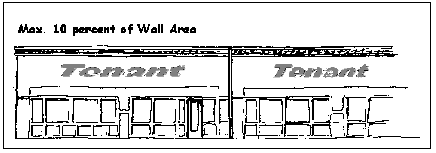
For single-tenant buildings, wall signage shall be permitted on one wall; however, lots with frontage on two or more streets may have signage on one wall per street frontage. Such wall signage shall not exceed ten percent of the area of the wall to which the signage is attached.
c.
For multi-tenant buildings, wall signage shall be permitted on one wall; however, lots with frontage on two or more streets may have signage on one wall per street frontage. Such wall signage shall not exceed ten percent of the area of the wall to which the signage is attached. The exception to the limit on the number of building walls that are allowed to have signage is as follows: a tenant may have one wall sign located near their primary building entrance even if wall signage would otherwise be precluded from that building wall, provided that such signage does not exceed five percent of the wall area of the related tenant space.
d.
In addition to the wall signage allowed above, one wall sign shall be allowed per building tenant provided such sign is located at or adjacent to a loading dock or service entrance, is not internally illuminated, and contains four square feet or less in surface area.
e.
All wall signage shall be reviewed by the building ownership or management who shall provide a written endorsement at the time application is made for the sign permit.
(2)
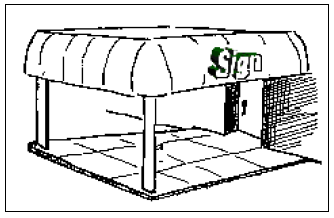
Canopies shall be considered to be an integral part of the structure to which they are accessory. Signs may be attached to a canopy, but such structures shall not be considered as part of the wall area, and thus shall not warrant additional sign area. Canopy signage shall be deducted from the permitted wall signage area.
(3)
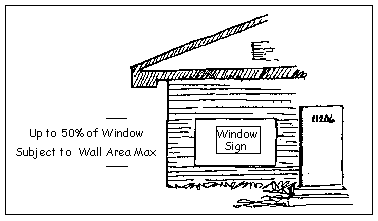
Window signage (includes graphics) shall be permitted on the same building walls that have, or are allowed to have, wall signage pursuant to item (1) above. Window signage shall be deducted from the allowable wall signage area; however, in no case shall window signage cover more than 50 percent of the area of the windows on the respective building wall.
(c)
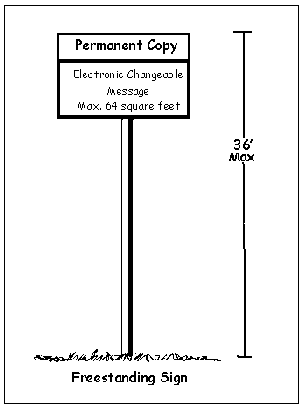
Freestanding Signs. One freestanding sign shall be permitted per lot provided it shall not exceed 100 square feet in surface area or 36 feet in height. Such signage shall be set back at least ten feet from all lot lines. The surface area of the sign may be increased to a maximum of 160 square feet for industrial developments of over 20 acres. The sign may include a changeable copy sign or an electronic changeable copy sign subject to the following:
(1)
The portion of the sign containing changeable copy or electronic changeable copy shall be an integral part of the sign or shall be directly connected to the non-changeable copy portion of the sign.
(2)
The color of text on an electronic changeable copy sign shall be white or amber with a contrasting dark background.
(3)
The electronic portion of the sign shall not exceed 64 square feet.
(4)
A changeable copy sign or an electronic changeable copy sign shall be located in a manner that minimizes views (to the extent possible) from residential properties.
(5)
Only one changeable copy sign or electronic changeable copy sign shall be permitted per lot.
(6)
Compliance shall be met with the general regulations and restrictions specified for such signs, as outlined in Section 21155.05 of this Chapter.
(d)
Area Identification Signs.
(1)
Area identification signage shall be permitted for industrial developments with two or more structures.
(2)
The area identification signage shall be located at the entrance to the development.
(3)
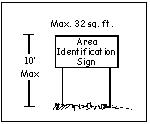
Two area identification signs, not exceeding 32 square feet in surface area per sign, or ten feet in height, may be permitted per development. An area identification sign shall be located at least ten feet from lot lines.
(4)
When such signs are proposed and constructed by an individual or firm other than the individual or association who will be responsible for the maintenance, there shall be a covenant prepared by the proponent establishing responsibility for the maintenance of the sign or signs over the entire project or subdivision, to be approved by the City Attorney, and to be recorded on the property title(s) prior to issuance of the sign permit. Further, appropriate easements shall be provided for the approved signs on the lot or lots where the signs are to be located; the easements shall be recorded prior to the issuance of the sign permit.
(5)
No area identification sign shall contain a changeable copy sign, an electronic changeable copy sign, or a time and temperature sign.
(e)
Temporary Signs.
(1)
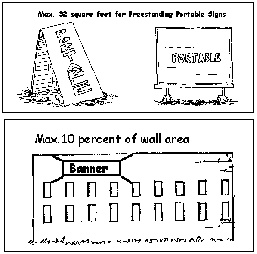
Special Event Signs. For single-tenant buildings and multi-tenant buildings with two to four lease-spaces, one temporary sign may be mounted on a portable stand, with a maximum surface area not to exceed 32 square feet, or may be a wall sign subject to the same size standards as the permanent wall signage allowed for the use. Such signs must be located on the subject property and may be used not more than four times per calendar year, and for a period of not more than 14 days per time. For multi-tenant buildings with five or more lease-spaces, each tenant shall be permitted one such sign per calendar year, except that tenants may be permitted more than one such sign per calendar year upon written authorization of the property owner or designated manager—provided that such temporary signage shall not exceed the total number allowed for the building within the calendar year. Any such temporary signage shall be the responsibility of the property owner or designated manager who shall endorse in writing, all applications for sign permits. The owner or manager of the sign and the property owner shall be equally responsible for the proper location, maintenance, and removal of the sign. The sign, sign supports, and portable stand shall be removed from public view at the end of the period. No such temporary signage shall be allowed on any lot that has a changeable copy sign or an electronic changeable copy sign.
(2)
Transient Merchant Signs. One temporary sign for transient merchants and transient produce merchants. The sign shall not exceed 16 square feet in surface area, and shall not exceed six feet in height. The sign shall be set back at least ten feet from lot lines and shall be erected only during the period of transient sales as defined by the administrative permit.
(3)
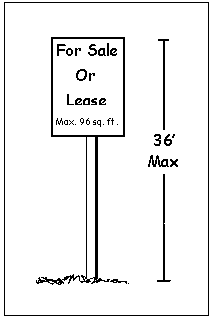
Real Estate Signs, On-Premises. One temporary sign announcing the development, the availability of lots and/or buildings, the sale, rent, or lease of land, of primary buildings, and of areas within primary buildings shall have a surface area not exceeding 96 square feet, shall be located on the subject property, and shall be removed when the intended purpose has been fulfilled. If the sign is freestanding, it shall be set back at least ten feet from lot lines. The owner or manager of the sign and the owner of the land shall be equally responsible for the proper location, maintenance, and ultimate removal of the sign.
(Amended by Ord. No. 2008-09, 03/25/08; Ord. No. 2009-07, 05/12/09; Ord. No. 2010-01, 02/23/10; Ord. No. 2011-05, 02/22/11; Ord. No. 2012-05, 02/28/12; Ord. No. 2013-11, 04/23/13; Ord. No. 2020-11, § 22, 10/13/2020; Ord. No. 2023-11, § 1, 9/12/2023)
Subd. 7.
Public-Institutional District. Signs are accessory to permitted, conditional and interim uses in the P-I District. Only the following signs are allowed in these districts, unless otherwise specifically provided in this Section.
(a)
All signs permitted in Section 21155.06, Subd. 1.
(b)
One monument sign per street frontage, provided that:
(1)
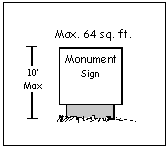
The sign shall not exceed 64 square feet in surface area or ten feet in height. The sign shall be set back at least ten feet from lot lines.
(2)
The sign may include a changeable copy sign, an electronic changeable copy sign or an electronic graphic display sign, provided that:
a.
The sign shall be set back at least 50 feet from side and rear lot lines, except that in no case shall such signage be set back less than 100 feet from any directly abutting residentially guided or used property.
b.
The portion of the sign dedicated to changeable copy (electronic or not) or electronic graphic display shall not be illuminated between 10:30 p.m. and 6:00 a.m.
c.
When a changeable copy sign (electronic or not) or electronic graphic display sign is located on a property that abuts more than one roadway, such sign shall be placed along the highest classification roadway.
d.
Only one changeable copy sign, electronic changeable copy sign, or electronic graphic display shall be permitted per lot.
e.
Compliance shall be met with the general regulations and restrictions specified for such signs, as outlined in Section 21155.05 of this Chapter.
(c)
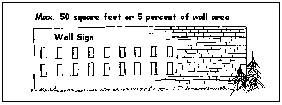
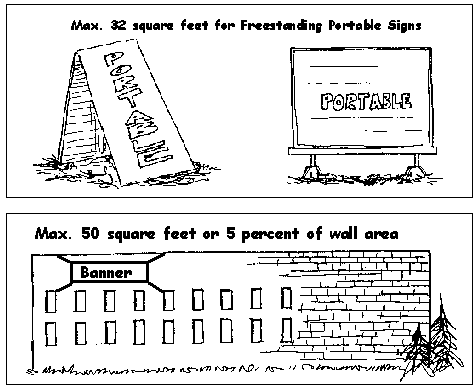
Wall signage shall be permitted on up to two walls, provided such signage does not exceed 50 square feet in surface area or five percent of the area of the wall to which the sign is attached, whichever is greater. Window signage (includes graphics) shall be permitted on the same building wall that has, or is allowed to have, wall signage. Window signage shall be deducted from the allowable wall signage area; however, in no case shall window signage cover more than 50 percent of the area of the windows on said building wall.
(d)
Temporary Signs. For single-tenant buildings and multi-tenant buildings with two to four lease-spaces, one temporary sign may be mounted on a portable stand, with a maximum surface area not to exceed 32 square feet, or may be a wall sign subject to the same size standards as the permanent wall signage allowed for the use. Such signs must be located on the subject property and may be used not more than four times per calendar year, and for a period of not more than 14 days per time. For multi-tenant buildings with five or more lease-spaces, each tenant shall be permitted one such sign per calendar year, except that tenants may be permitted more than one such sign per calendar year upon written authorization of the property owner or designated manager—provided that such temporary signage shall not exceed the total number allowed for the building within the calendar year. Any such temporary signage shall be the responsibility of the property owner or designated manager who shall endorse in writing, all applications for sign permits. The owner or manager of the sign and the property owner shall be equally responsible for the proper location, maintenance, and removal of the sign. The sign, sign supports, and portable stand shall be removed from public view at the end of the period. No such temporary signage shall be allowed on any lot that has a changeable copy sign, an electronic copy sign, or an electronic graphic display sign.
(Amended by Ord. No. 99-5, 01/19/99; Ord. No. 2000-06, 02/29/00; Ord. No. 2008-09, 03/25/08; Ord. No. 2009-07, 05/12/09; Ord. No. 2010-01, 02/23/10; Ord. No. 2011-05, 02/22/11; Ord. No. 2012-05, 02/28/12; Ord. No. 2013-11, 04/23/13; Ord. No. 2019-01, 02/12/19; Ord. No. 2020-11, § 23, 10/13/2020; Ord. No. 2024-22, § 61, 9/24/2024)
Subd. 8.
Planned Unit Development Districts. A comprehensive sign plan is required for all non-residential PUDs (Planned Unit Development). Sign requirements within PUD Districts which are the same as those imposed in the corresponding zoning district in which the use is customarily permitted may be approved as part of the PUD final plan. Comprehensive sign plans which require variances from those standards shall require a PUD amendment.
(Amended by Ord. No. 2000-06, 02/29/00; Ord. No. 2007-04, 01/23/07)
21155.07. - Administration and Enforcement.
The sign regulations set forth in this Section shall be administered and enforced by the Zoning Administrator. The procedures, standards and requirements for the administration and enforcement of the provisions shall be in accordance with this Section, the City Code, and other applicable laws and regulations.
Subd. 1.
Permits Required. No sign shall be erected, altered, improved, reconstructed, maintained or moved in the City without first securing a permit from the City, except for those signs which are specifically exempted by these regulations.
(a)
An application for a permit shall be submitted to the Zoning Administrator in accordance with the permit procedures of the City Code and the requirements of this Section. The application shall include the information required by the form provided by the City and shall be accompanied by appropriate documents and plan or plans drawn to scale which legibly and accurately reflect the following:
(1)
The location of proposed and existing signs in relation to lot lines and existing and proposed building based upon a certified survey or site plan approved by the City which accurately reflects current conditions on the property.
(2)
The design, full dimensions, and specifications including the method of construction, and attachment to a building or placement in the ground.
(3)
Stress calculations, where applicable, indicating that the structure's design for dead load and wind pressure in any direction in the amount required by City Code and regulations.
(4)
The addition, deletion, alteration, replacement or improvement of any electrical component.
(5)
Such other information as the Zoning Administrator or Building Official shall require to show full compliance with this Section and other applicable laws or codes of the City. The Zoning Administrator may waive requirements for technical information specified above where such information is not necessary to the determination of compliance.
(b)
The appropriate permit fee as set forth in the City Code shall be required prior to issuance of the permit.
(c)
The Zoning Administrator shall notify the applicant, in writing, of an incomplete application within 15 days of the date of submission.
(d)
The Zoning Administrator shall review the application and related materials and shall determine whether the proposal is in compliance with all applicable evaluation criteria, codes, ordinances, and applicable performance standards set forth in this Section within 60 days of submission of a complete application.
(e)
The Zoning Administrator shall, upon approval, issue a written permit authorizing the proposed sign and related work; the permit shall, where applicable, specify the duration of the sign; and the permit shall indicate any special conditions or requirements related to the construction of the sign
(f)
Expiration and renewal of permits shall be in accordance with the provisions of the Minnesota State Building Code for building permits.
Subd. 2.
Signs Not Requiring Permits. The following signs and work do not require a permit. The exemptions shall not be construed as relieving the owner or contractor of the sign from responsibility for its erection and maintenance, and its compliance with the provisions of this Section or any other law or ordinance regulating the same.
(a)
Official signs located in the public right-of-way or traffic signs erected by a governmental agency.
(b)
Changing the copy or message of an allowed changeable copy sign or changing the display surface of any existing sign, unless a structural change or a change to any electrical components is involved.
(c)
Changing the copy or sign face of a billboard, unless a structural change or a change to the electrical components is involved.
(d)
Address letters and numerals required by and in conformance with City Codes. Included are related signs, not to exceed two square feet, displayed strictly for the convenience of the public such as identification signs for rest rooms, waste receptacles, door bells, mailboxes, reserved parking spaces, loading zones, or primary building entrances.
(e)
Temporary real estate signs, on premises, that do not exceed eight square feet in surface area as authorized by Section 21155.06.
(f)
Directional signs for city-wide and free or civic community events and community-wide annual events such as the "Parade of Homes" as authorized by Section 21155.05.
(g)
Temporary construction signs that do not exceed eight square feet in sign area, as authorized by Section 21155.06.
(h)
Non-commercial signs not exceeding 32 square feet in sign area, and all non-commercial signs authorized by Section 21155.06, Subd. 1 (c)(3).
(i)
Temporary signs in conjunction with an approved administrative permit.
(j)
Flags.
(k)
Window signage that complies with all regulations for window signage, as specified in this Section, including but not limited to the requirement that any such window signage be deducted from the allowable wall signage area.
Subd. 3.
Enforcement. All signs shall be subject to inspection by the Zoning Administrator or authorized designees who are hereby authorized to enter upon any property or premises to ascertain whether these regulations are being met. Such entrance shall be made during normal business hours, unless a clear and present emergency exists. The Zoning Administrator may order, in writing, the removal of any sign that is not maintained in accordance with the standards or maintenance requirements of this Section. Continued violations of this Section shall be administered and prosecuted in accordance with the City Code.
Subd. 4.
Removal of Abandoned Signs, Signs in Disrepair and Signs Located in the Public Right-of-Way.
(a)
Abandoned Signs and Signs in Disrepair: An abandoned sign or sign in disrepair is prohibited and shall be removed by the owner of the premises within 30 days after notification. If compliance with the provisions of this Section is not achieved within 30 days, the sign shall be deemed a public nuisance by following the procedure as specified in Section 2010 of the Plymouth City Code.
(b)
Signs on Public Property or Within Public Right-of-Way: The City may at any time and without notice impound signs which have been installed on public property or within public right-of-way or easement. Impounded signs will be held for a maximum of five days, during which the owner may reclaim the sign(s). The City may discard any sign(s) not reclaimed by the end of this period.
Subd. 5.
Variances and Appeals. Variances from the dimensional and location standards of this Section shall be subject to the procedures and requirements set forth in Section 21030 of this Chapter. No variances shall be considered which would allow signs in districts or places where such signs are prohibited or not allowed. Appeals to administrative rulings of the Zoning Administrator shall be made in accordance with the procedures and requirements of Section 21035 of this Chapter.
(Amended by Ord. No. 2007-04, 01/23/07; Ord. No. 2008-09, 03/25/08; Ord. No. 2009-07, 05/12/09; Ord. No. 2010-01, 02/23/10; Ord. No. 2011-05, 02/22/11; Ord. No. 2016-11, 04/26/16; Ord. No. 2021-06, § 4, 3/9/2021)
21155.08. - Licensing Requirement.
No person or company shall be engaged in the business of installing, erecting, constructing, placing, maintaining, renting, leasing, or removing signs within the City of Plymouth without first obtaining a sign contractor's license. The procedures and fees for such license shall be as set forth in Chapter X of the City Code.
(Amended by Ord. No. 2007-04, 01/23/07)
21155.09. - Special Promotional Events.
The Zoning Administrator may approve signs or other devices that are not addressed or are otherwise prohibited by this Section provided such signs or devices are directly related to, and a part of, a special promotional event as allowed by this Chapter and regulated by Section 21025. Examples of such signage and other devices that may be requested include spotlights, skytrackers, inflatables, balloons, portable signage, and similar devices. All requests for such signage shall be made with the initial application for an allowed special promotional event as regulated in this Chapter. The request for such signs/devices shall conform to the following requirements:
Subd. 1.
The sign/device shall only be located on the site during the duration of the event as defined in the administrative permit.
Subd. 2.
No sign/device shall be located on the roof of any building, in the public right-of-way, within any required yard, or in any location that impairs the parking capacity, pedestrian and vehicular traffic circulation, or emergency access.
Subd. 3.
Only one sign/device shall be allowed per event and no more than one sign/device shall be allowed on a lot at any one time.
(Amended by Ord. No. 2009-07, 05/12/09; Ord. No. 98-11, 04/01/98; Ord. No. 2005-01, 01/11/05; Ord. No. 2007-04, 01/23/07; Ord. No. 2008-09, 03/25/08; Ord. No. 2011-05, 02/22/11)

