720 - OFF-STREET PARKING AND LOADING22
Editor's note— Ord. No. 1132, § 2(Exh. A), adopted July 11, 2013, amended Ch. 18.720 in its entirety to read as herein set out. Former Ch. 18.720, §§ 18.720.010—18.720.050, pertained to similar subject matter, and derived from Ord. No. 1108, § 2, 7-26-2012; Ord. 676 § 1 (part), 1995).
A.
This chapter implements the provisions of the RUACP by ensuring that each new or expanded development provides sufficient, but not excessive, off-street parking. Off-street parking is needed to ensure that parking from employment and residential uses does not overflow, regularly, onto city streets. Off-street parking spaces shall be designed, constructed and maintained as set forth in this section, the underlying zoning district, landscaping requirements in Chapter 18.725, and Chapter 18.500, Site Plan Review. Off-street parking conforming to the standards of this chapter shall be required for:
1.
New development;
2.
Expansion of the square footage of an existing structure by twenty percent;
3.
The construction valuation is fifty percent of the existing site and building valuation;
4.
Construction of any parking lot, whether required or not; or
5.
A change in use, which increases the required number of parking spaces by more than ten percent.
(Ord. No. 1132, § 2(Exh. A), 7-11-2013)

This chapter supplements the parking and design provisions of the underlying zoning district, the landscaping requirements in Chapter 18.725, and Chapter 18.500, site plan review. Where there are conflicts, the parking provisions of the underlying zone shall take precedence over other standards.
A.
More than one use on one or more parcels. In the event several uses occupy a single structure or parcel of land, the total requirements for off-street parking shall be the sum of the requirements of the several uses computed separately.
B.
Joint Use of Facilities. The off-street parking requirements of two or more uses, structures, or parcels of land may be satisfied by the same parking or loading space used jointly, if approved by the planning director, to the extent that it can be shown by the owners or operators of the uses, structures, or parcels that their operations and parking needs do not overlap in point of time. If the uses, structures, or parcels are under separate ownership, the right to joint use of the parking space must be evidenced by a deed, lease, contract, or other appropriate written document to establish the joint use.
C.
Location of Parking Facilities.
1.
Off-street parking spaces for dwellings shall be located on the same lot with the dwelling, except for PUD subdivisions utilizing and meeting the provisions of RDC 18.401.075.
2.
Other required parking spaces shall be located on the same parcel or on another parcel not farther than one hundred feet from the building or use they are intended to serve, measured along pedestrian walkways to the building.
3.
The burden of proving the existence of such off-premise parking arrangements rests upon the person who has the responsibility of providing parking.
4.
Parking design and location standards in the underlying zoning district, this chapter and as required by Chapters 18.500 and 18.725 shall also be met.
D.
Use of Parking Facilities. Required parking spaces shall be available for the parking of operable passenger automobiles of residents, customers, patrons and employees only, and shall not be used for the storage of vehicles or materials, or for the parking of trucks used in conducting the business or use.
E.
Parking Areas in Setbacks. Driveways for parking areas may be located within required setbacks and yards. No other element of parking areas may be located within required setbacks and yards.
F.
Commercial Parking Lots. Parking lots are allowed as a primary use in the CCB, CRB, CMU, WMU, and E districts. Parking lots shall meet all applicable requirements of this chapter, the underlying zoning district, and the landscaping requirements of RDC 18.725. Commercial parking lots are exempt from the frontage limitations of RDC 18.720.040.C.1. Parking lots shall be reviewed through the site plan review process detailed in RDC 18.500.
G.
Development and Maintenance Standards for Off-Street Parking Areas. Every parcel of land or portion thereof used as a public or private parking area, including commercial parking lots, shall be developed as follows:
1.
Off-street parking areas shall be screened as required in Chapter 18.725.
2.
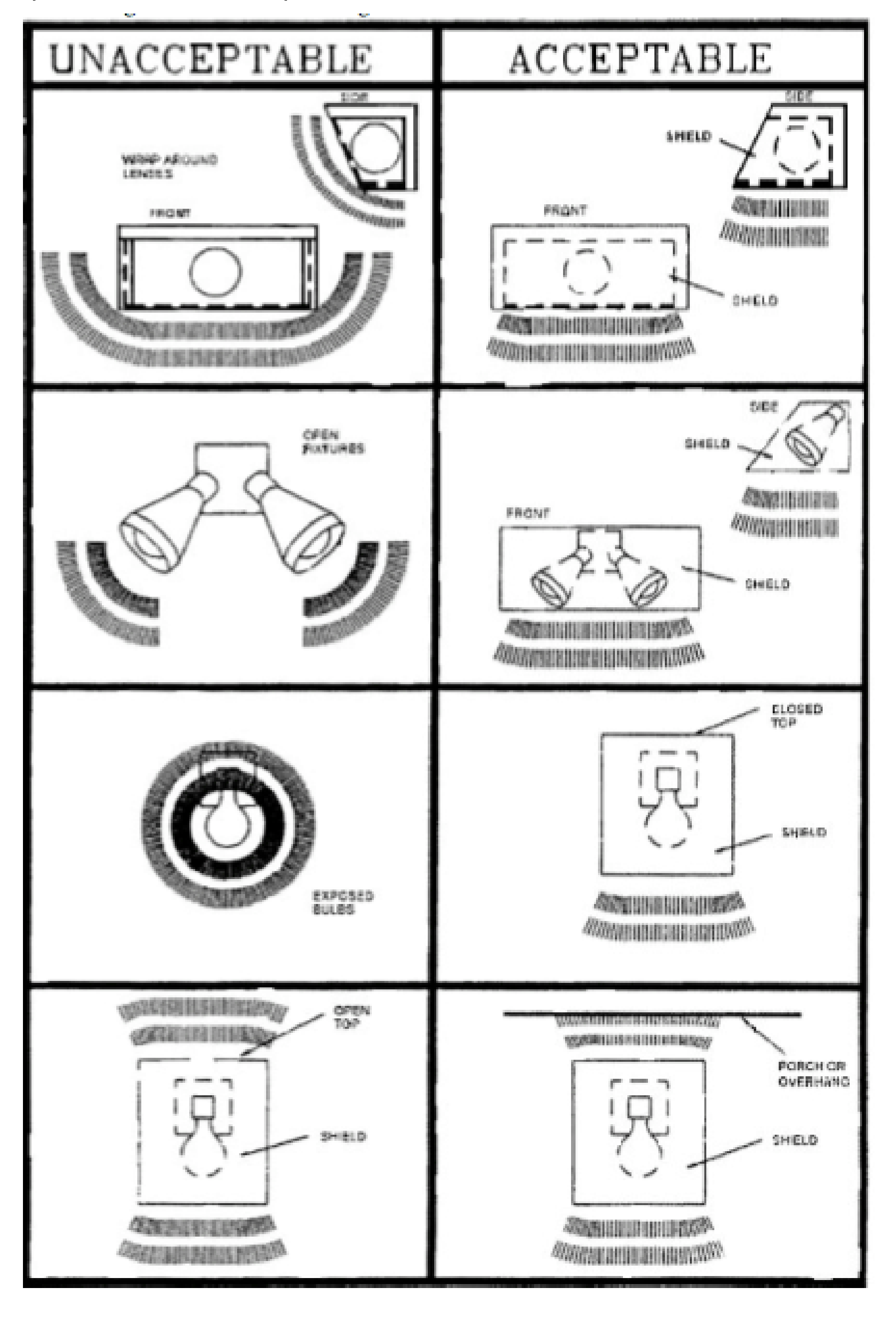
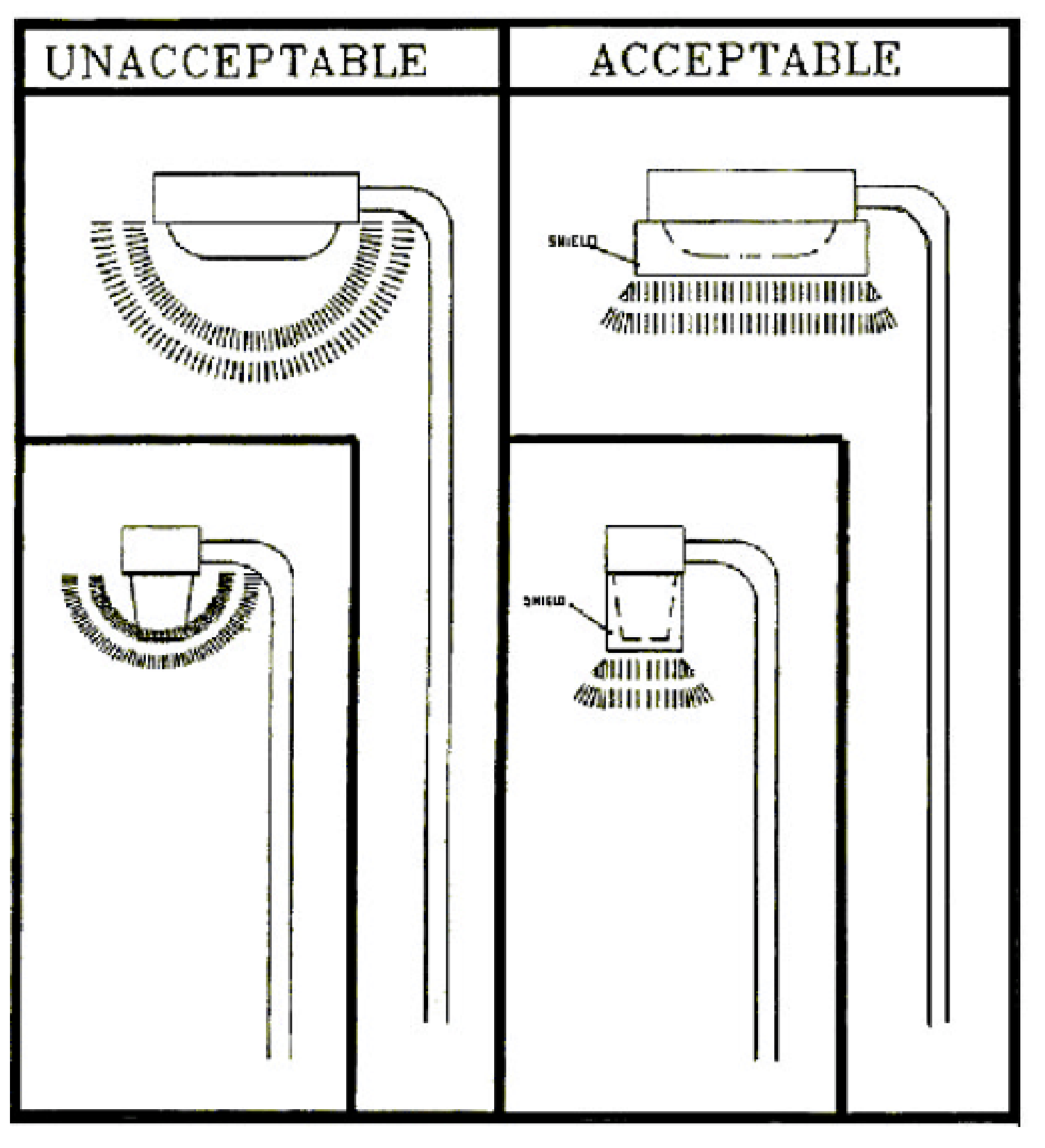
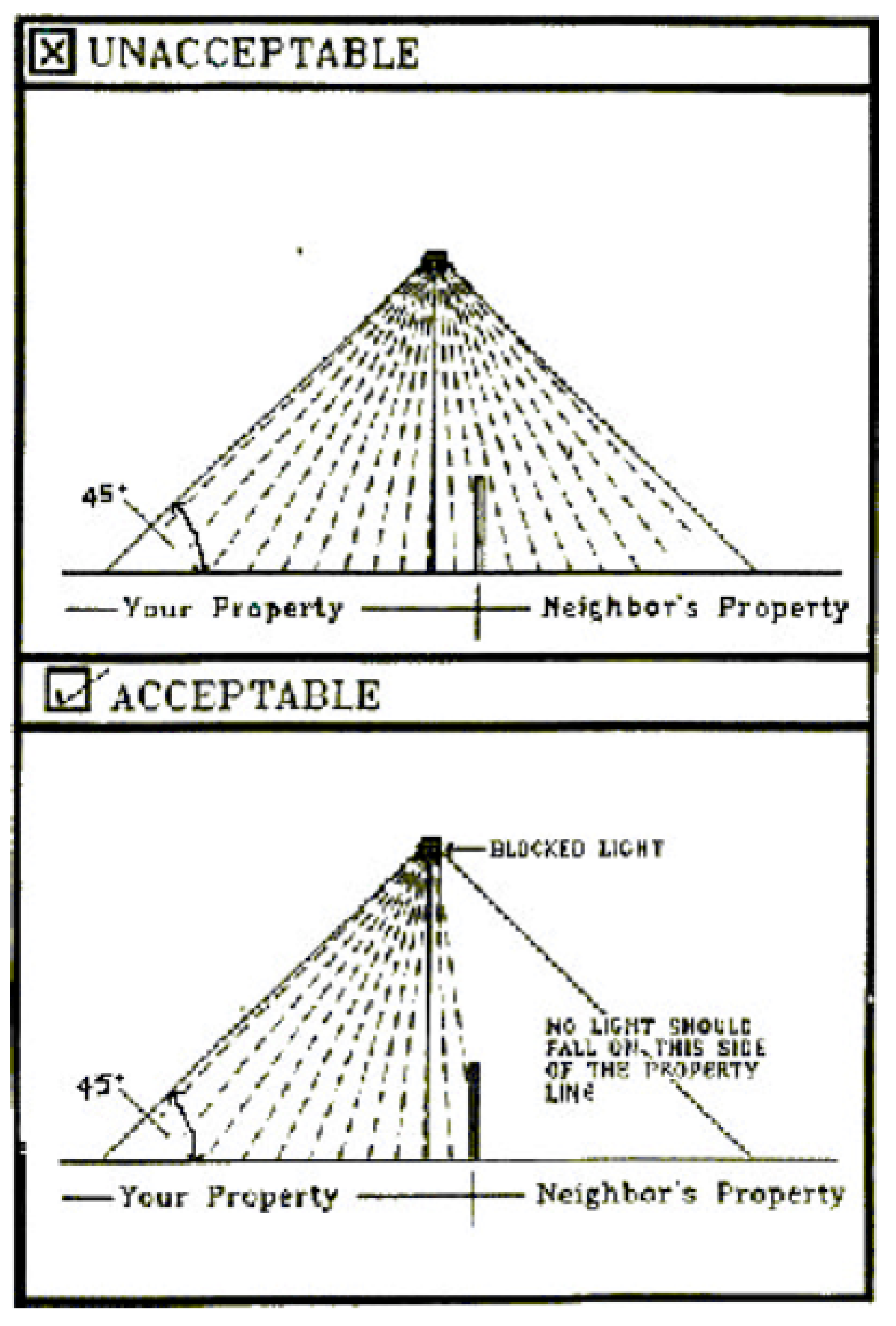
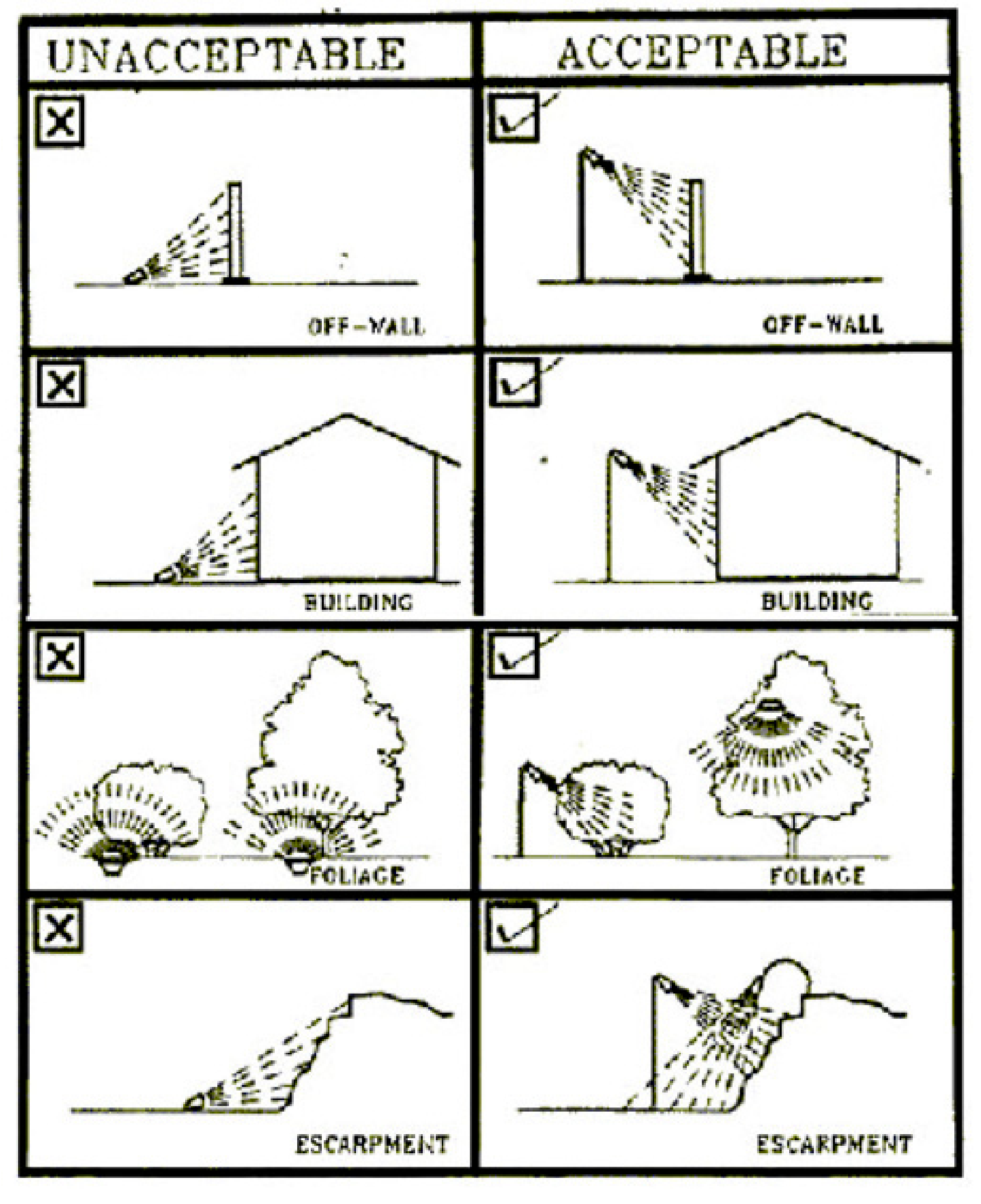
Any lighting used to illuminate the off-street parking areas shall be so arranged that it will not project light rays directly upon any adjoining property in residential or mixed use districts. Lighting shall conform with Chapter 18.715.
3.
Groups of four or more parking spaces shall be so located and served by a driveway, such that their use will require no backing movements or other maneuvering within a street or right-of-way other than an alley. Shared driveways shall be provided wherever possible.
4.
Areas used for standing and maneuvering of vehicles shall have durable and dustless surfaces that are covered with hard-surfaced materials, such as, pavement, asphalt, cobblestones, bricks, "grasscrete" or other materials approved by the planning director. Surfaces shall be maintained adequately for all-weather use, and drained to avoid flow of water across sidewalks or neighboring properties.
5.
Parking and loading areas adjacent to or within residential zones or adjacent to residential uses shall be designed to minimize disturbance of residents.
6.
Access aisles shall have a minimum width of twelve feet (one-way) and twenty feet (two-way) to ensure adequate vehicular turning and maneuvering.
7.
Driveways to off-street parking areas shall be designed and constructed to facilitate the flow of traffic, to provide maximum safety of traffic access and egress, and to provide maximum safety of pedestrians and vehicular traffic on the site. The number of driveways shall be limited to the minimum that will allow the property to accommodate and service the traffic to be anticipated. Driveways shall be clearly and permanently marked and defined through the use of rails, fences, walls or other barriers or markers on frontage not occupied by driveways . Driveways to drive-in establishments shall be designed to avoid backing movements or other maneuvering within a street, other than an alley.
8.
Driveways shall provide minimum sight distances required by the engineering standards.
9.
Parking spaces along the outer boundaries of a parking area shall be contained by a curb or bumper rail. Curbs or bumper rails may extend as far as two feet into the required stall dimensions or be otherwise placed to prevent a motor vehicle from extending into required landscaping, or over an adjacent property line or a street.
H.
Reductions in Minimum Parking Requirements.
1.
The planning director may reduce the minimum off-street vehicle parking spaces required in RDC 18.720.030 up to ten percent in accordance with RDC 18.350 if the standards of this section are met. Adjustments shall be accompanied by a current traffic analysis prepared by a licensed transportation engineer within one year of the date the application is filed, which justifies the need for the adjustment. The transportation study shall also recommend mitigation measures for any adverse impacts resulting from parking and traffic related to the existing and proposed development.
2.
The planning director may reduce the minimum off-street vehicle parking spaces required in 18.720.030 up to twenty percent in accordance with RDC 18.350 if transit alternatives detailed in this subsection are provided. After accounting for all reductions in parking minimums allowed under any provision of this title, cumulative reduction of parking minimums shall not exceed twenty percent.
a.
For every five bicycle parking spaces provided or for each bicycle locker (two-bicycle capacity) provided, the minimum motor vehicle parking requirement may be reduced by one space, up to ten percent of total required vehicle parking spaces.
i.
Bicycle parking shall meet the siting requirements of RDC 18.720.040.C.6(a) through (c).
b.
Sites where at least twenty parking spaces are required and where at least one street lot line abuts a designated arterial roadway, transit supportive plazas may be substituted for up to five percent of required vehicle parking.
i.
The plaza must be adjacent to the arterial street. If there is a bus stop along the site's frontage, the plaza must be adjacent to the bus stop.
ii.
The plaza must be at least three hundred square feet in area and be shaped so that a ten-foot by ten-foot square will fit entirely within the plaza.
iii.
The plaza must be open to the public, contain a bench or other sitting area, contain a shelter or other weather protection covering at least twenty square feet, and shall have at least ten percent and no more than twenty-five percent landscaping.
3.
A request to reduce the required minimum parking more than twenty percent is subject to a Type III variance procedure in accordance with RDC 18.350.040.
I.
Downtown Exemption. Off-street parking is not required in the central mixed use district or the downtown transition area for non-residential establishments located on lots less than fifteen thousand square feet. However, when a property owner provides off-street parking such parking shall conform to the standards and design requirements of this chapter and those of the CMU district, with the exception of RDC 18.720.030, number of spaces required, and 18.720.040(C)(2), interior parking lot landscaping.
(Ord. No. 1132, § 2(Exh. A), 7-11-2013; Ord. No. 1178, § 2(Exh. A), 2-12-2015; Ord. No. 1226, § 2(Exh. A), 12-15-2016; Ord. No. 1234, § 2(Exh. A), 6-22-2017; Ord. No. 1339, § 2(Exh. A), 5-27-2021)
This section sets forth minimum and maximum parking requirements corresponding to uses detailed in RDC 18.205.020, Uses. Off-street parking spaces shall be provided as follows:
A.
Residential, Group Residential and Temporary Lodging. All uses shall require a minimum of one space per dwelling or per unit, with the following additional and alternative provisions:
1.
Single-family, manufactured homes and duplex dwellings: maximum of six parking spaces. For PUD subdivisions with narrow single-family lots, see RDC 18.401.075.
2.
Home occupation: no minimum.
3.
Community residential facility: minimum of one space per seven residents served under age of twelve; one space per five residents served, ages twelve to seventeen; one space/four residents served, ages eighteen years or older.
4.
Bed and breakfast and hotel/motel: minimum of one additional space for the manager.
5.
Accessory dwelling unit: one minimum, except no space is required where on-street parking is available abutting the lot.
B.
Retail/Service. All uses shall require a minimum of one space per three hundred fifty square feet of gross floor area, with the following additional and alternative provisions:
1.
General retail trade/services: Maximum of one space per two hundred square feet of gross floor area.
2.
Retail stores and outlets selling bulky items, such as furniture, appliances, etc; minimum of one space per four hundred square feet of gross floor area; maximum of one space per three hundred square feet.
3.
Motor vehicle related uses: minimum of one space per seven hundred fifty square feet of gross floor area.
4.
Eating and drinking establishments: minimum of one space per two hundred square feet of gross floor area.
5.
Daycare facilities: minimum of one space per two hundred square feet of gross floor area
6.
Funeral home, crematory: minimum of one space per four hundred square feet of floor area.
7.
Veterinary clinic and hospital: minimum of one space per two hundred square feet of gross floor area.
8.
Electric vehicle infrastructure: no minimum.
C.
Employment. All uses shall require a minimum of one space per seven hundred fifty square feet of gross floor area, with the following additional and alternative provisions:
1.
General office: minimum of one space per three hundred square feet of gross floor area; maximum of one space per two hundred square feet.
2.
Research and development: minimum of one space per six hundred feet of gross floor area.
3.
Light manufacturing: minimum of one space per five hundred square feet of gross floor area.
4.
Warehousing: minimum of one space per two thousand square feet of gross floor area.
5.
Freight/cargo movement and storage: minimum of one space per two thousand square feet of gross floor area.
D.
Entertainment and Recreation. All uses shall require a minimum of one space per four hundred square feet of gross floor area, with the following additional and alternative provisions:
1.
Indoor entertainment: bowling alleys shall have a minimum of five spaces per lane, or one space per four hundred square feet, whichever is less.
2.
Outdoor performance center: minimum of one space per four seats or eight feet of bench length, or one space per four hundred square feet, whichever is less.
3.
Parks and trails: to be determined by the public works director.
E.
Education and Culture. All uses shall require a minimum of one space per two hundred square feet of gross floor area, with the following additional and alternative provisions:
1.
Elementary and middle schools: minimum of one space per employee, teacher or staff plus one space per fifteen students.
2.
High school: minimum of one space per employee, teacher or staff plus one space per ten students.
3.
Cultural institutions: minimum of one space per four hundred square feet of gross floor area.
4.
Conference center: minimum of one space per four persons maximum occupancy load.
F.
Health.
1.
Hospital: minimum of one and one-half spaces per bed.
2.
Medical clinic/laboratory: minimum of nine-tenths of one space per two hundred square feet of gross floor area.
3.
Nursing and personal care facilities: minimum of one space per two beds for patients or residents.
G.
Civic and Regional. Given the unique nature of these uses, minimum spaces required is as determined by the planning director, with the following additional provisions:
1.
Emergency services: minimum of one space per three hundred feet of gross floor area.
2.
Utility facility: minimum of one space per one thousand square feet of gross floor area.
3.
Wireless communication facility: minimum of one parking space adjacent to the wireless communications support structure.
4.
Secure community transitional facility: minimum of one space per three beds for patients or inmates.
5.
Work release facility: minimum of one space per three beds for patients or inmates.
H.
Marine.
1.
Marina and boating facilities: minimum of one space per two slips.
2.
Floating home moorages: minimum of one space per floating home, maximum of two spaces per floating home.
I.
Other Uses. Uses not specifically listed above shall furnish parking as required by the approval authority, which shall use the above list as a guide for determining requirements for said other uses.
(Ord. No. 1132, § 2(Exh. A), 7-11-2013; Ord. No. 1260, § 2(Exh. A), 4-26-2018; Ord. No. 1339, § 2(Exh. A), 5-27-2021; Ord. No. 1370, § 2(Exh. A), 9-8-2022)
A.
Stall Dimensions. All off-street parking lots shall be designed in accordance with city standards for stalls and aisles, as set forth in Table 18.720.040-1 and Figure 18.720.040-1.
1.
For one row of stalls, use "C" + "D" as minimum bay width.
2.
Public alley width may be included as part of dimension "D," but all parking stalls must be on private property, off the public right-of-way.
3.
For estimating available parking area, use three hundred to three hundred twenty-five square feet per vehicle for stall, aisle, and access areas.
B.
Compact Parking Spaces. For compact parking spaces, the dimensions of "B" and "C" may be reduced to seven feet, five inches and fifteen feet, respectively. Up to thirty percent of required parking spaces may be compact car spaces.
C.
Lot design. The location and number of points of access to the site, the interior circulation patterns, and the separations between pedestrians and moving and parked vehicles, shall be designed to maximize pedestrian, bicycle and transit options, and to minimize adverse impacts on the peaceful and functional use of neighboring properties.
1.
Parking lots and driveways generally shall be located to the rear or side of buildings. No more than fifty percent of the street frontage of any development shall be occupied by off-street parking area, with the exception of commercial parking lots.
a.
If a lot has multiple frontages, no more than fifty percent of the combined street frontage may be occupied by off-street parking area. If the lot has frontage on two streets with different road classifications, off-street parking areas shall occupy no more than fifty percent of the street frontage on the street with the higher classification.
b.
If a development is located on multiple lots under common ownership, no more than fifty percent of the combined street frontage for all lots may be occupied by off-street parking area.
c.
The provisions in this subsection may be reduced with written approval from the community development director where one or more of the following apply:
i.
In master-planned commercial centers.
ii.
Where there are safety considerations associated with the proposed use.
iii.
In other situations where existing or built conditions justify departure from strict adherence to the standard.
The applicant shall demonstrate that the requirement is being met to the extent practicable.
When this reduction is applied, enhanced landscaping buffers developed to the L4 standard or equivalent are required between the parking area and the street.
2.
Developments with ten or more parking spaces shall provide interior parking lot landscaping equal to ten percent of the net parking lot area, excluding landscaping buffers required by RDC 18.725 and driveways, in order to provide shade, buffer and screen adjacent properties, and promote a safe environment with a pleasant appearance.
a.
The landscaping, including trees, must be dispersed throughout the parking area. Clusters of more than twenty contiguous parking spaces shall be separated by landscaping.
b.
If interior landscaping provided under this section is adjacent to the perimeter landscaping buffers required by 18.725, the interior landscaping shall extend at least four feet into the parking area from the edge of the perimeter landscaping buffer.
c.
The minimum dimension for any landscaping area shall be six feet.
d.
Required landscaping materials are as follows:
i.
At least one tree must be provided for every ten parking spaces. Existing trees may be used to meet this standard.
ii.
At least one shrub must be provided for every thirty square feet of landscaped area required under this subsection.
iii.
All of the landscaped area that is not planted with trees and shrubs must be planted with ground cover plants, which may include grasses. Paths made of paving stones, flagstones, bricks, pavement, or similar materials may provide pedestrian access across landscaped areas consistent with RDC 18.720.040.C.5, but the surface area of impermeable materials does not count toward the required landscaped area.
3.
Generally, direct access to collector or arterial streets shall be minimized, in favor of limited access via secondary streets. The planning director may require the applicant to provide a current traffic impact study completed within one year of the date of application to determine impacts and required street improvements.
4.
Curb cuts for vehicles shall be minimized to prevent disruption to pedestrian or bicycle access.
5.
Pedestrian access corridors must link all parking areas to a primary entrance of the development via the most practicable route and separate pedestrians safely from motor vehicle traffic. Such pedestrian access corridors through parking areas shall meet all of the following requirements:
a.
Use materials differentiated from parking lot surface by texture, pattern, elevation three to six inches above grade and/or color to differentiate and maximize the visibility of the pedestrian path. Superficial treatments such as painted pedestrian paths are not sufficient to meet this requirement. Paint may be used only in combination with other techniques.
b.
Pathways must be a minimum of four feet wide and lighted.
c.
Pedestrian crossings of drive aisles shall be well-articulated with pavement markings, pedestrian warning signs, and lighting.
d.
Bicycle parking shall be located in well-lighted and highly visible areas to minimize theft and vandalism.
6.
For developments with forty-eight or more car parking spaces, bicycle parking is to be provided at one bicycle parking space for every twelve required car parking stalls. Bicycle parking provided under this requirement shall not be credited towards reduction of minimum spaces provided by RDC 18.720.020.H.
a.
Bicycle racks, lockers or other parking devices shall be made of durable materials and shall be securely anchored to the ground or building structure. The devices shall allow for the frame and at least one wheel of the bicycle to be locked to the rack.
b.
All bicycle parking spaces outside of a building shall be located within a one hundred-foot diameter of the primary building entrance; or, at least as conveniently located as the most convenient automobile spaces, other than those spaces for persons with disabilities.
c.
Bicycle parking shall be located in well-lighted and highly visible areas to minimize theft and vandalism.
7.
All off-street parking areas shall include paved handicapped accessible and van-accessible parking spaces that comply with all state and federal ADA regulations.
8.
Electric Vehicle Charging. Developments shall at a minimum meet the electric vehicle charging infrastructure requirements in WAC 51-50-0429.
a.
Clustering electric vehicle charging infrastructure is encouraged in commercial centers.
Figure 18.720.040-1
Table 18.720.040-1
1 One-way traffic only. Twenty-four feet minimum for two-way traffic.
(Ord. No. 1132, § 2(Exh. A), 7-11-2013; Ord. No. 1178, § 2(Exh. A), 2-12-2015; Ord. No. 1426, § 2(Exh.), 7-25-2024; Ord. No. 1460, § 2(Att.), 11-6-2025)
_____
Every use for which a building is erected or structurally altered to the extent of increasing the floor area to equal a minimum floor area required to provide loading space, and which will require the receipt or distribution of materials or merchandise by truck or similar vehicle, shall provide off-street loading space on the basis of minimum requirements as follows:
A.
Commercial, industrial and utility uses, with the exception of the specific uses listed in subsection (B), which have a gross floor area of five thousand square feet or more, shall provide off-street truck loading or unloading berths in accordance with the following table, measured in square feet of gross floor area:
B.
Eating and drinking establishments, office buildings, hotels, motels, hospitals, education and culture uses listed in Table 18.205.020-1, entertainment and recreation uses listed in Table 18.205.020-1, public buildings (other than utility uses), and any similar use which has a gross floor area of thirty thousand square feet or more, shall provide off-street truck loading or unloading berths in accordance with the following:
C.
The planning director may require off-street loading or unloading berths for any use which receives and/or distributes material and merchandise by truck consistent with the ratios established in subsections (A) and (B), or the actual needs of the proposed use.
D.
A loading berth shall contain space twelve feet wide, thirty-five feet long, and have a height clearance of fourteen feet. Where the vehicles generally used for loading and unloading exceed these dimensions, the required length of these berths shall be increased.
E.
If loading space has been provided in connection with an existing use or is added to an existing use, the loading space shall not be eliminated if elimination would result in less space than is required to adequately handle the needs of the particular use.
F.
Off-street parking areas used to fulfill the requirements of this title shall not be used for loading and unloading operations except during periods of the day when not required to take care of parking needs.
(Ord. No. 1132, § 2(Exh. A), 7-11-2013)

720 - OFF-STREET PARKING AND LOADING22
Editor's note— Ord. No. 1132, § 2(Exh. A), adopted July 11, 2013, amended Ch. 18.720 in its entirety to read as herein set out. Former Ch. 18.720, §§ 18.720.010—18.720.050, pertained to similar subject matter, and derived from Ord. No. 1108, § 2, 7-26-2012; Ord. 676 § 1 (part), 1995).
A.
This chapter implements the provisions of the RUACP by ensuring that each new or expanded development provides sufficient, but not excessive, off-street parking. Off-street parking is needed to ensure that parking from employment and residential uses does not overflow, regularly, onto city streets. Off-street parking spaces shall be designed, constructed and maintained as set forth in this section, the underlying zoning district, landscaping requirements in Chapter 18.725, and Chapter 18.500, Site Plan Review. Off-street parking conforming to the standards of this chapter shall be required for:
1.
New development;
2.
Expansion of the square footage of an existing structure by twenty percent;
3.
The construction valuation is fifty percent of the existing site and building valuation;
4.
Construction of any parking lot, whether required or not; or
5.
A change in use, which increases the required number of parking spaces by more than ten percent.
(Ord. No. 1132, § 2(Exh. A), 7-11-2013)
This chapter supplements the parking and design provisions of the underlying zoning district, the landscaping requirements in Chapter 18.725, and Chapter 18.500, site plan review. Where there are conflicts, the parking provisions of the underlying zone shall take precedence over other standards.
A.
More than one use on one or more parcels. In the event several uses occupy a single structure or parcel of land, the total requirements for off-street parking shall be the sum of the requirements of the several uses computed separately.
B.
Joint Use of Facilities. The off-street parking requirements of two or more uses, structures, or parcels of land may be satisfied by the same parking or loading space used jointly, if approved by the planning director, to the extent that it can be shown by the owners or operators of the uses, structures, or parcels that their operations and parking needs do not overlap in point of time. If the uses, structures, or parcels are under separate ownership, the right to joint use of the parking space must be evidenced by a deed, lease, contract, or other appropriate written document to establish the joint use.
C.
Location of Parking Facilities.
1.
Off-street parking spaces for dwellings shall be located on the same lot with the dwelling, except for PUD subdivisions utilizing and meeting the provisions of RDC 18.401.075.
2.
Other required parking spaces shall be located on the same parcel or on another parcel not farther than one hundred feet from the building or use they are intended to serve, measured along pedestrian walkways to the building.
3.
The burden of proving the existence of such off-premise parking arrangements rests upon the person who has the responsibility of providing parking.
4.
Parking design and location standards in the underlying zoning district, this chapter and as required by Chapters 18.500 and 18.725 shall also be met.
D.
Use of Parking Facilities. Required parking spaces shall be available for the parking of operable passenger automobiles of residents, customers, patrons and employees only, and shall not be used for the storage of vehicles or materials, or for the parking of trucks used in conducting the business or use.
E.
Parking Areas in Setbacks. Driveways for parking areas may be located within required setbacks and yards. No other element of parking areas may be located within required setbacks and yards.
F.
Commercial Parking Lots. Parking lots are allowed as a primary use in the CCB, CRB, CMU, WMU, and E districts. Parking lots shall meet all applicable requirements of this chapter, the underlying zoning district, and the landscaping requirements of RDC 18.725. Commercial parking lots are exempt from the frontage limitations of RDC 18.720.040.C.1. Parking lots shall be reviewed through the site plan review process detailed in RDC 18.500.
G.
Development and Maintenance Standards for Off-Street Parking Areas. Every parcel of land or portion thereof used as a public or private parking area, including commercial parking lots, shall be developed as follows:
1.
Off-street parking areas shall be screened as required in Chapter 18.725.
2.
Any lighting used to illuminate the off-street parking areas shall be so arranged that it will not project light rays directly upon any adjoining property in residential or mixed use districts. Lighting shall conform with Chapter 18.715.
3.
Groups of four or more parking spaces shall be so located and served by a driveway, such that their use will require no backing movements or other maneuvering within a street or right-of-way other than an alley. Shared driveways shall be provided wherever possible.
4.
Areas used for standing and maneuvering of vehicles shall have durable and dustless surfaces that are covered with hard-surfaced materials, such as, pavement, asphalt, cobblestones, bricks, "grasscrete" or other materials approved by the planning director. Surfaces shall be maintained adequately for all-weather use, and drained to avoid flow of water across sidewalks or neighboring properties.
5.
Parking and loading areas adjacent to or within residential zones or adjacent to residential uses shall be designed to minimize disturbance of residents.
6.
Access aisles shall have a minimum width of twelve feet (one-way) and twenty feet (two-way) to ensure adequate vehicular turning and maneuvering.
7.
Driveways to off-street parking areas shall be designed and constructed to facilitate the flow of traffic, to provide maximum safety of traffic access and egress, and to provide maximum safety of pedestrians and vehicular traffic on the site. The number of driveways shall be limited to the minimum that will allow the property to accommodate and service the traffic to be anticipated. Driveways shall be clearly and permanently marked and defined through the use of rails, fences, walls or other barriers or markers on frontage not occupied by driveways . Driveways to drive-in establishments shall be designed to avoid backing movements or other maneuvering within a street, other than an alley.
8.
Driveways shall provide minimum sight distances required by the engineering standards.
9.
Parking spaces along the outer boundaries of a parking area shall be contained by a curb or bumper rail. Curbs or bumper rails may extend as far as two feet into the required stall dimensions or be otherwise placed to prevent a motor vehicle from extending into required landscaping, or over an adjacent property line or a street.
H.
Reductions in Minimum Parking Requirements.
1.
The planning director may reduce the minimum off-street vehicle parking spaces required in RDC 18.720.030 up to ten percent in accordance with RDC 18.350 if the standards of this section are met. Adjustments shall be accompanied by a current traffic analysis prepared by a licensed transportation engineer within one year of the date the application is filed, which justifies the need for the adjustment. The transportation study shall also recommend mitigation measures for any adverse impacts resulting from parking and traffic related to the existing and proposed development.
2.
The planning director may reduce the minimum off-street vehicle parking spaces required in 18.720.030 up to twenty percent in accordance with RDC 18.350 if transit alternatives detailed in this subsection are provided. After accounting for all reductions in parking minimums allowed under any provision of this title, cumulative reduction of parking minimums shall not exceed twenty percent.
a.
For every five bicycle parking spaces provided or for each bicycle locker (two-bicycle capacity) provided, the minimum motor vehicle parking requirement may be reduced by one space, up to ten percent of total required vehicle parking spaces.
i.
Bicycle parking shall meet the siting requirements of RDC 18.720.040.C.6(a) through (c).
b.
Sites where at least twenty parking spaces are required and where at least one street lot line abuts a designated arterial roadway, transit supportive plazas may be substituted for up to five percent of required vehicle parking.
i.
The plaza must be adjacent to the arterial street. If there is a bus stop along the site's frontage, the plaza must be adjacent to the bus stop.
ii.
The plaza must be at least three hundred square feet in area and be shaped so that a ten-foot by ten-foot square will fit entirely within the plaza.
iii.
The plaza must be open to the public, contain a bench or other sitting area, contain a shelter or other weather protection covering at least twenty square feet, and shall have at least ten percent and no more than twenty-five percent landscaping.
3.
A request to reduce the required minimum parking more than twenty percent is subject to a Type III variance procedure in accordance with RDC 18.350.040.
I.
Downtown Exemption. Off-street parking is not required in the central mixed use district or the downtown transition area for non-residential establishments located on lots less than fifteen thousand square feet. However, when a property owner provides off-street parking such parking shall conform to the standards and design requirements of this chapter and those of the CMU district, with the exception of RDC 18.720.030, number of spaces required, and 18.720.040(C)(2), interior parking lot landscaping.
(Ord. No. 1132, § 2(Exh. A), 7-11-2013; Ord. No. 1178, § 2(Exh. A), 2-12-2015; Ord. No. 1226, § 2(Exh. A), 12-15-2016; Ord. No. 1234, § 2(Exh. A), 6-22-2017; Ord. No. 1339, § 2(Exh. A), 5-27-2021)
This section sets forth minimum and maximum parking requirements corresponding to uses detailed in RDC 18.205.020, Uses. Off-street parking spaces shall be provided as follows:
A.
Residential, Group Residential and Temporary Lodging. All uses shall require a minimum of one space per dwelling or per unit, with the following additional and alternative provisions:
1.
Single-family, manufactured homes and duplex dwellings: maximum of six parking spaces. For PUD subdivisions with narrow single-family lots, see RDC 18.401.075.
2.
Home occupation: no minimum.
3.
Community residential facility: minimum of one space per seven residents served under age of twelve; one space per five residents served, ages twelve to seventeen; one space/four residents served, ages eighteen years or older.
4.
Bed and breakfast and hotel/motel: minimum of one additional space for the manager.
5.
Accessory dwelling unit: one minimum, except no space is required where on-street parking is available abutting the lot.
B.
Retail/Service. All uses shall require a minimum of one space per three hundred fifty square feet of gross floor area, with the following additional and alternative provisions:
1.
General retail trade/services: Maximum of one space per two hundred square feet of gross floor area.
2.
Retail stores and outlets selling bulky items, such as furniture, appliances, etc; minimum of one space per four hundred square feet of gross floor area; maximum of one space per three hundred square feet.
3.
Motor vehicle related uses: minimum of one space per seven hundred fifty square feet of gross floor area.
4.
Eating and drinking establishments: minimum of one space per two hundred square feet of gross floor area.
5.
Daycare facilities: minimum of one space per two hundred square feet of gross floor area
6.
Funeral home, crematory: minimum of one space per four hundred square feet of floor area.
7.
Veterinary clinic and hospital: minimum of one space per two hundred square feet of gross floor area.
8.
Electric vehicle infrastructure: no minimum.
C.
Employment. All uses shall require a minimum of one space per seven hundred fifty square feet of gross floor area, with the following additional and alternative provisions:
1.
General office: minimum of one space per three hundred square feet of gross floor area; maximum of one space per two hundred square feet.
2.
Research and development: minimum of one space per six hundred feet of gross floor area.
3.
Light manufacturing: minimum of one space per five hundred square feet of gross floor area.
4.
Warehousing: minimum of one space per two thousand square feet of gross floor area.
5.
Freight/cargo movement and storage: minimum of one space per two thousand square feet of gross floor area.
D.
Entertainment and Recreation. All uses shall require a minimum of one space per four hundred square feet of gross floor area, with the following additional and alternative provisions:
1.
Indoor entertainment: bowling alleys shall have a minimum of five spaces per lane, or one space per four hundred square feet, whichever is less.
2.
Outdoor performance center: minimum of one space per four seats or eight feet of bench length, or one space per four hundred square feet, whichever is less.
3.
Parks and trails: to be determined by the public works director.
E.
Education and Culture. All uses shall require a minimum of one space per two hundred square feet of gross floor area, with the following additional and alternative provisions:
1.
Elementary and middle schools: minimum of one space per employee, teacher or staff plus one space per fifteen students.
2.
High school: minimum of one space per employee, teacher or staff plus one space per ten students.
3.
Cultural institutions: minimum of one space per four hundred square feet of gross floor area.
4.
Conference center: minimum of one space per four persons maximum occupancy load.
F.
Health.
1.
Hospital: minimum of one and one-half spaces per bed.
2.
Medical clinic/laboratory: minimum of nine-tenths of one space per two hundred square feet of gross floor area.
3.
Nursing and personal care facilities: minimum of one space per two beds for patients or residents.
G.
Civic and Regional. Given the unique nature of these uses, minimum spaces required is as determined by the planning director, with the following additional provisions:
1.
Emergency services: minimum of one space per three hundred feet of gross floor area.
2.
Utility facility: minimum of one space per one thousand square feet of gross floor area.
3.
Wireless communication facility: minimum of one parking space adjacent to the wireless communications support structure.
4.
Secure community transitional facility: minimum of one space per three beds for patients or inmates.
5.
Work release facility: minimum of one space per three beds for patients or inmates.
H.
Marine.
1.
Marina and boating facilities: minimum of one space per two slips.
2.
Floating home moorages: minimum of one space per floating home, maximum of two spaces per floating home.
I.
Other Uses. Uses not specifically listed above shall furnish parking as required by the approval authority, which shall use the above list as a guide for determining requirements for said other uses.
(Ord. No. 1132, § 2(Exh. A), 7-11-2013; Ord. No. 1260, § 2(Exh. A), 4-26-2018; Ord. No. 1339, § 2(Exh. A), 5-27-2021; Ord. No. 1370, § 2(Exh. A), 9-8-2022)
A.
Stall Dimensions. All off-street parking lots shall be designed in accordance with city standards for stalls and aisles, as set forth in Table 18.720.040-1 and Figure 18.720.040-1.
1.
For one row of stalls, use "C" + "D" as minimum bay width.
2.
Public alley width may be included as part of dimension "D," but all parking stalls must be on private property, off the public right-of-way.
3.
For estimating available parking area, use three hundred to three hundred twenty-five square feet per vehicle for stall, aisle, and access areas.
B.
Compact Parking Spaces. For compact parking spaces, the dimensions of "B" and "C" may be reduced to seven feet, five inches and fifteen feet, respectively. Up to thirty percent of required parking spaces may be compact car spaces.
C.
Lot design. The location and number of points of access to the site, the interior circulation patterns, and the separations between pedestrians and moving and parked vehicles, shall be designed to maximize pedestrian, bicycle and transit options, and to minimize adverse impacts on the peaceful and functional use of neighboring properties.
1.
Parking lots and driveways generally shall be located to the rear or side of buildings. No more than fifty percent of the street frontage of any development shall be occupied by off-street parking area, with the exception of commercial parking lots.
a.
If a lot has multiple frontages, no more than fifty percent of the combined street frontage may be occupied by off-street parking area. If the lot has frontage on two streets with different road classifications, off-street parking areas shall occupy no more than fifty percent of the street frontage on the street with the higher classification.
b.
If a development is located on multiple lots under common ownership, no more than fifty percent of the combined street frontage for all lots may be occupied by off-street parking area.
c.
The provisions in this subsection may be reduced with written approval from the community development director where one or more of the following apply:
i.
In master-planned commercial centers.
ii.
Where there are safety considerations associated with the proposed use.
iii.
In other situations where existing or built conditions justify departure from strict adherence to the standard.
The applicant shall demonstrate that the requirement is being met to the extent practicable.
When this reduction is applied, enhanced landscaping buffers developed to the L4 standard or equivalent are required between the parking area and the street.
2.
Developments with ten or more parking spaces shall provide interior parking lot landscaping equal to ten percent of the net parking lot area, excluding landscaping buffers required by RDC 18.725 and driveways, in order to provide shade, buffer and screen adjacent properties, and promote a safe environment with a pleasant appearance.
a.
The landscaping, including trees, must be dispersed throughout the parking area. Clusters of more than twenty contiguous parking spaces shall be separated by landscaping.
b.
If interior landscaping provided under this section is adjacent to the perimeter landscaping buffers required by 18.725, the interior landscaping shall extend at least four feet into the parking area from the edge of the perimeter landscaping buffer.
c.
The minimum dimension for any landscaping area shall be six feet.
d.
Required landscaping materials are as follows:
i.
At least one tree must be provided for every ten parking spaces. Existing trees may be used to meet this standard.
ii.
At least one shrub must be provided for every thirty square feet of landscaped area required under this subsection.
iii.
All of the landscaped area that is not planted with trees and shrubs must be planted with ground cover plants, which may include grasses. Paths made of paving stones, flagstones, bricks, pavement, or similar materials may provide pedestrian access across landscaped areas consistent with RDC 18.720.040.C.5, but the surface area of impermeable materials does not count toward the required landscaped area.
3.
Generally, direct access to collector or arterial streets shall be minimized, in favor of limited access via secondary streets. The planning director may require the applicant to provide a current traffic impact study completed within one year of the date of application to determine impacts and required street improvements.
4.
Curb cuts for vehicles shall be minimized to prevent disruption to pedestrian or bicycle access.
5.
Pedestrian access corridors must link all parking areas to a primary entrance of the development via the most practicable route and separate pedestrians safely from motor vehicle traffic. Such pedestrian access corridors through parking areas shall meet all of the following requirements:
a.
Use materials differentiated from parking lot surface by texture, pattern, elevation three to six inches above grade and/or color to differentiate and maximize the visibility of the pedestrian path. Superficial treatments such as painted pedestrian paths are not sufficient to meet this requirement. Paint may be used only in combination with other techniques.
b.
Pathways must be a minimum of four feet wide and lighted.
c.
Pedestrian crossings of drive aisles shall be well-articulated with pavement markings, pedestrian warning signs, and lighting.
d.
Bicycle parking shall be located in well-lighted and highly visible areas to minimize theft and vandalism.
6.
For developments with forty-eight or more car parking spaces, bicycle parking is to be provided at one bicycle parking space for every twelve required car parking stalls. Bicycle parking provided under this requirement shall not be credited towards reduction of minimum spaces provided by RDC 18.720.020.H.
a.
Bicycle racks, lockers or other parking devices shall be made of durable materials and shall be securely anchored to the ground or building structure. The devices shall allow for the frame and at least one wheel of the bicycle to be locked to the rack.
b.
All bicycle parking spaces outside of a building shall be located within a one hundred-foot diameter of the primary building entrance; or, at least as conveniently located as the most convenient automobile spaces, other than those spaces for persons with disabilities.
c.
Bicycle parking shall be located in well-lighted and highly visible areas to minimize theft and vandalism.
7.
All off-street parking areas shall include paved handicapped accessible and van-accessible parking spaces that comply with all state and federal ADA regulations.
8.
Electric Vehicle Charging. Developments shall at a minimum meet the electric vehicle charging infrastructure requirements in WAC 51-50-0429.
a.
Clustering electric vehicle charging infrastructure is encouraged in commercial centers.
Figure 18.720.040-1
Table 18.720.040-1
1 One-way traffic only. Twenty-four feet minimum for two-way traffic.
(Ord. No. 1132, § 2(Exh. A), 7-11-2013; Ord. No. 1178, § 2(Exh. A), 2-12-2015; Ord. No. 1426, § 2(Exh.), 7-25-2024; Ord. No. 1460, § 2(Att.), 11-6-2025)
_____
Every use for which a building is erected or structurally altered to the extent of increasing the floor area to equal a minimum floor area required to provide loading space, and which will require the receipt or distribution of materials or merchandise by truck or similar vehicle, shall provide off-street loading space on the basis of minimum requirements as follows:
A.
Commercial, industrial and utility uses, with the exception of the specific uses listed in subsection (B), which have a gross floor area of five thousand square feet or more, shall provide off-street truck loading or unloading berths in accordance with the following table, measured in square feet of gross floor area:
B.
Eating and drinking establishments, office buildings, hotels, motels, hospitals, education and culture uses listed in Table 18.205.020-1, entertainment and recreation uses listed in Table 18.205.020-1, public buildings (other than utility uses), and any similar use which has a gross floor area of thirty thousand square feet or more, shall provide off-street truck loading or unloading berths in accordance with the following:
C.
The planning director may require off-street loading or unloading berths for any use which receives and/or distributes material and merchandise by truck consistent with the ratios established in subsections (A) and (B), or the actual needs of the proposed use.
D.
A loading berth shall contain space twelve feet wide, thirty-five feet long, and have a height clearance of fourteen feet. Where the vehicles generally used for loading and unloading exceed these dimensions, the required length of these berths shall be increased.
E.
If loading space has been provided in connection with an existing use or is added to an existing use, the loading space shall not be eliminated if elimination would result in less space than is required to adequately handle the needs of the particular use.
F.
Off-street parking areas used to fulfill the requirements of this title shall not be used for loading and unloading operations except during periods of the day when not required to take care of parking needs.
(Ord. No. 1132, § 2(Exh. A), 7-11-2013)