
Spokane City Zoning Code
CHAPTER 17C
130 Industrial Zones
Section 17C.130.010 Purpose
The industrial zoning categories implement the industrial goals and policies and land use plan map designations of the comprehensive plan. The zones are for areas of the City designated by the comprehensive plan for industrial uses. The industrial zone classifications reserve areas of the City for industrial uses and a mix of nonindustrial uses that are compatible with industrial uses. These areas are located where necessary supporting infrastructure is available and where there is an adequate supply of land. Limits on the intensity of uses and their impacts on surrounding land uses are accomplished by the development standards specified in this chapter. The development standards are designed to allow a large degree of development flexibility within parameters that support the intent of the specific zone. The standards are intended to provide certainty to property owners, developers and neighbors about the limits of what is allowed in the industrial zones.
Date Passed: Monday, November 7, 2005
Effective Date: Thursday, December 15, 2005
ORD C33757 Section 1
Section 17C.130.015 Design Standards Administration
All projects must address the pertinent design standards and guidelines. A determination of consistency with the standards and guidelines will be made by the planning and economic development services director following an administrative design review process. Design standards are in the form of Requirements (R), Presumptions (P), and Considerations (C). Regardless of which term is used, an applicant must address each guideline. An applicant may seek to deviate from eligible standards and guidelines through the design departure process; see chapter 17G.030 SMC, Design Departures.
- Requirements (R).
Requirements are mandatory in that they contain language that is not discretionary, such as “shall,” “must,” and “will.” Requirements must be satisfied by any plan prior to building permit approval. An applicant may seek a deviation from certain requirements through the design departure process, chapter 17G.030 SMC. Requirements are listed with an (R) after the standard.
- Presumptions (P).
Presumptions are guidelines that are meant to be applied, but with some flexibility. Presumptions indicate that the City is open to design features that are equal to, or better than, that stated—so long as the purpose is satisfied. A submitted plan is incomplete and will be rejected if it does not demonstrate that the presumptive elements have been in some way incorporated or overcome. Presumptions are listed with a (P) after the standard.
- Overcoming a Presumption.
A presumption that may be unsuitable for a given project may be waived if an applicant can demonstrate to the planning and economic development services director that there is a good reason why the presumption is inappropriate. The director may approve an alternative that achieves the intent of the presumption. At the discretion of the applicant, a request to deviate from a presumption may be referred to the design review board pursuant to the procedures set forth in chapter 17G.030 SMC. In rare cases involving projects of unusual complexity and/or situations where it is not clear to the director whether or not the proposal satisfies the intent of the design standards and the comprehensive plan, the director, may also refer the project application to the design review board.
- Appropriate ways to overcome a presumption include:
- demonstrating that for a specific project, the underlying design principles will not be furthered by the application of the presumption;
- showing that another design principle is enhanced by not applying the presumption;
- demonstrating an alternative method for achieving the intent of the presumption;
- explaining the unique site factors that make the presumption unworkable such as lot size and shape, slope, natural vegetation, drainage, and characteristics of adjacent development, which are identified through their use of materials, colors, building mass and form, and landscaping.
Note: Increases in the cost of development will not be an acceptable reason to waive a guideline or determine that a guideline is inappropriate.
- Considerations (C).
Design guidelines listed as considerations are features and concepts that an applicant should consider in preparing a plan. Their omission is not grounds for rejecting a plan, but their inclusion or recognition is encouraged and may assist in overcoming certain presumptions and in gaining acceptance for a plan. Considerations are listed with an (C) after the standard.
Date Passed: Monday, April 25, 2011
Effective Date: Friday, June 3, 2011
ORD C34717 Section 13
Section 17C.130.020 List of the Industrial Zones
The full and short names of the industrial zones and their map symbols are listed below. When this chapter refers to the industrial zones, it is referring to the zoning categories listed here.
| Full Name | Short Name/ |
| Light Industrial | LI |
| Heavy Industrial | HI |
| Planned Industrial | PI |
Date Passed: Monday, November 7, 2005
Effective Date: Thursday, December 15, 2005
ORD C33757 Section 1
Section 17C.130.030 Characteristics of Industrial Zones
- Light Industrial (LI).
The light industrial zoning category is located in areas designated light industrial on the land use plan map of the comprehensive plan. The light industrial (LI) zone is intended to provide a wide range of employment opportunities without potential conflicts from interspersed residential uses. A full range of industrial, commercial and office use is allowed. Commercial uses are limited in size to ensure that they do not dominate the character of the industrial area or adversely affect the intended industrial use of the area. Consistent with the comprehensive plan, residential development is allowed in close proximity to the Spokane River where residents can take advantage of the river amenity. The development standards in this title are the minimum necessary to assure safe, efficient and environmentally sound development, which will have minimum adverse impacts. - Heavy Industrial (HI).
The heavy industrial zoning category is located in areas designated heavy industrial on the land use plan map of the comprehensive plan. The heavy industrial (HI) zone is intended primarily for high impact industrial uses while allowing office and limited commercial uses which are harmonious with industrial uses. Commercial uses are limited in size to ensure that they do not dominate the character of the industrial area or adversely affect the intended industrial use of the area. Residential development is allowed in close proximity to the Spokane River where residents can take advantage of the river amenity. The development standards are the minimum necessary to assure safe, functional, efficient and environmentally sound development. - Planned Industrial (PI).
The planned industrial zoning category may be located in areas designated light industrial or heavy industrial on the land use plan map of the comprehensive plan. The planned industrial (PI) zone is intended to encourage the use of industrial land for employment and employment supporting uses. Nonindustrial uses are limited unless they are a part of a binding site plan or planned unit development.
Date Passed: Monday, November 7, 2005
Effective Date: Thursday, December 15, 2005
ORD C33757 Section 1
Section 17C.130.040 Other Zoning Standards
The standards in this chapter state the allowed uses and the development standards for the base zones. Sites within overlay zones, plan districts or designated historical landmarks are subject to additional standards. The official zoning maps indicate which sites are subject to the additional standards. Specific uses or development types may also be subject to standards in Part 3, Special Use Standards, of this division.
Date Passed: Monday, November 7, 2005
Effective Date: Thursday, December 15, 2005
ORD C33757 Section 1
Section 17C.130.100 Industrial Zones Primary Uses
- Permitted Uses (P).
Uses permitted in the industrial zones are listed in Table 17C.130-1 with a “P.” These uses are allowed if they comply with the development standards and other standards of this chapter.
- Limited Uses (L).
Uses allowed that are subject to limitations are listed in Table 17C.130-1 with an “L.” These uses are allowed if they comply with the limitations as listed in the footnotes following the table and the development standards and other standards of this chapter. In addition, a use or development listed in Part 3 of this division, Special Use Standards, is also subject to the standards of those chapters.
- Conditional Uses (CU).
Uses that are allowed if approved through the conditional use review process are listed in Table 17C.130-1 with a “CU.” These uses are allowed provided they comply with the conditional use approval criteria for that use, the development standards, and other standards of this chapter. Uses listed with a “CU” that also have a footnote number in the table are subject to the standards cited in the footnote. In addition, a use or development listed in Part 3 of this division, Special Use Standards, is also subject to the standards of those chapters. The conditional use review process and approval criteria are stated in chapter 17C.320 SMC, Conditional Uses.
- Uses Not Permitted (N).
Uses listed in Table 17C.130-1 with an “N” are not permitted. Existing uses in categories listed as not permitted may be subject to the standards of chapter 17C.210 SMC, Nonconforming Situations.
Table 17C.130-1 Industrial Zones Primary Uses | |||
Use is: P – Permitted; N – Not Permitted; L – Allowed, but with Special Limitations; CU – Conditional Use Review Required | LI Zone (Light Industrial) | HI Zone (Heavy Industrial) | PI Zone (Planned Industrial) |
Residential Categories | |||
Group Living | L[1] | N | L[3] |
Residential Household Living | L[2] | L[2] | L[3] |
Commercial Categories | |||
Adult Business | L[4] | N | N |
Commercial Outdoor Recreation | P | P | CU |
Commercial Parking | P | P | P |
Drive-through Facility | P | P | P |
Major Event Entertainment | CU | CU | CU |
Office | P | P | P |
Quick Vehicle Servicing | P | P | P |
Retail Sales and Service | L/CU[5] | L/CU[6] | L[7] |
Mini-storage Facilities | L[8] | L[8] | L[8] |
Vehicle Repair | P | P | P |
Mobile Food Vending | L[12] | L[12] | L[12] |
Industrial Categories | |||
High Impact Use | L[9] | L[9] | N |
Industrial Service | P | P | P |
Manufacturing and Production | P | P | P |
Railroad Yards | CU | P | P |
Warehouse and Freight Movement | P | P | P |
Waste-related | CU | CU | CU |
Wholesale Sales | P | P | P |
Institutional Categories | |||
Basic Utilities | P | P | P |
Colleges | P | N | L[10] |
Community Service | P | N | N |
Daycare | P | CU | L[10] |
Medical Centers | P | N | L[10] |
Parks and Open Areas | P | CU | P |
Religious Institutions | P | N | N |
Schools | P | N | L[10] |
Other Categories | |||
Agriculture | P | P | P |
Aviation and Surface Passenger Terminals | P | P | P |
Essential Public Facilities | CU | CU | CU |
Mining | CU | CU | CU |
Rail Lines and Utility Corridors | P | P | P |
Notes: • Standards that correspond to the bracketed numbers [ ] are specified in SMC 17C.130.110. • Specific uses and developments may be subject to the standards in Part 3 of this division, Special Use Standards. • Standards applicable to conditional uses are stated in chapter 17C.320 SMC. | |||
Date Passed: Monday, March 2, 2026
Effective Date: Monday, March 2, 2026
ORD C36851 Section 10
Section 17C.130.110 Limited Use Standards
The paragraphs listed below contain the limitations and correspond with the bracketed [ ] footnote numbers from Table 17C.130.100-1.
- Group Living.
This standard applies to all parts of Table 17C.130.100-1 that have a [1].
- Group living uses are allowed on sites within one-quarter mile of the Spokane River where residents can take advantage of the river amenity. The planning and economic development services director may authorize a group living use greater than one-quarter mile from the Spokane River if the applicant demonstrates that the site has a river viewpoint and a pedestrian connection to the river. Group living uses shall provide buffering from adjacent industrial lands by use of berms, landscaping, fencing or a combination of these measures or other appropriate screening measures deemed appropriate by the planning and economic development services director. The proposal shall include a design, landscape and transportation plan which will limit conflicts between the residential, employment and industrial uses.
- Alternative or Post Incarceration Facilities.
Group living uses which consist of alternative or post incarceration facilities are not permitted.
- Residential Household Living.
This standard applies to all parts of Table 17C.130.100-1 that have a [2].
- Residential household living uses are allowed on sites within one- quarter mile of the Spokane River where residents can take advantage of the river amenity. The planning and economic development services director may authorize a residential living use greater than one-quarter mile from the Spokane River if the applicant demonstrates that the site has a river viewpoint and a pedestrian connection to the river. Residential uses shall provide buffering from adjacent industrial lands by use of berms, landscaping, fencing or a combination of these measures or other appropriate screening measures deemed appropriate by the planning and economic development services director. The proposal shall include a design, landscape, and transportation plan, which will limit conflicts between the residential, employment and industrial uses.
- A single-family residence may be erected on a lot having a side property line which adjoins a lot in a residential zone, with or without an intervening alley, or on a lot which has less than one hundred feet of frontage and has residences existing on all lots adjoining its side property lines.
- Living quarters for one caretaker per site in the LI, HI and PI zones are permitted.
- Group Living and Residential Household Living.
This standard applies to all parts of Table 17C.130.100-1 that have a [3]. Group living and residential household living uses may be permitted in the PI zone as a part of a binding site plan under the provisions of the subdivision code or a planned unit development under the provisions of Division G – Administration and Procedures. A minimum of fifty percent of the site within the binding site plan or planned unit development shall be in manufacturing and production, industrial service or office uses. Group living and residential household living uses shall be buffered from industrial lands by use of berms, landscaping, fencing or a combination of these measures or other appropriate screening measures deemed appropriate by the planning and economic development services director. The buffering improvements shall be developed on the residential portion of the binding site plan or planned unit development at the time the residential uses are constructed. The site development plan shall include a design, landscape, and transportation plan, which will limit conflicts between the residential and industrial uses.
- Adult Business.
This standard applies to all parts of Table 17C.130.100-1 that have a [4]. Adult businesses are subject to the following standards:
- Chapter 17C.305 SMC, Adult Business.
- Adult businesses are subject to the size requirements specified in item [5] below applicable to retail sales and services uses in the light industrial (LI) zone.
- In addition to the standards in subsections (4)(a) and (b) of this section, adult businesses are permitted only in the light industrial zone adult business overlay zone as designated on the official zoning map.
- Retail Sales and Service Uses Size Limitation.
This standard applies to all parts of Table 17C.130.100-1 that have a [5]. Retail sales and service uses are allowed if the floor area plus outdoor sales and display and outdoor storage area is not more than sixty thousand square feet per site. Retail sales and service uses where the floor area plus the outdoor sales and display and outdoor storage area is more than sixty thousand square feet per site are a conditional use.
- Retail Sales and Service Uses Size Limitation.
This standard applies to all parts of Table 17C.130.100-1 that have a [6]. Retail sales and service uses are allowed if the floor area plus outdoor sales and display and outdoor storage area is not more than twenty thousand square feet per site. Retail sales and service uses where the floor area plus the outdoor sales and display and outdoor storage area is more than twenty thousand square feet per site are a conditional use.
- Retail Sales and Service Uses Size Limitation.
This standard applies to all parts of Table 17C.130.100-1 that have a [7]. Retail sales and service uses are allowed if the floor area plus the outdoor sales and display and outdoor storage area is not more than three thousand square feet per site. Retail sales and service uses where the floor area plus the outdoor sales and display and outdoor storage area is more than three thousand square feet per site may be permitted as a part of a binding site plan under the provisions of the subdivision code or a planned unit development under the provisions of the zoning code. A minimum of fifty percent of the site area of the uses in the planned unit development or binding site plan shall be in manufacturing and production, industrial service or office uses.
- Mini-storage Facilities.
This standard applies to all parts of Table 17C.130.100-1 that have a [8]. The limitations are stated with the special standards for these uses in chapter 17C.350 SMC, Mini-Storage Facilities.
- High Impact Uses.
This standard applies to all parts of Table 17C.130.100-1 that have a [9]. High impact uses shall be located a minimum of six hundred feet from the boundary of a residential or commercial zone.
- Colleges, Medical Centers, Daycare and School Uses.
This standard applies to all parts of Table 17C.130.100-1 that have an [10]. Colleges, medical centers, daycare and school uses may be permitted as a part of a binding site plan under the provisions of the subdivision code, or a planned unit development under the provisions of the zoning code. A minimum of fifty percent of the site within the planned unit development or binding site plan shall be in manufacturing and production, industrial service or office uses. Colleges, medical centers, daycare and school uses are allowed within the planned unit development or binding site plan provided that the site development includes a design, landscape and transportation plan which will limit conflicts between the college, medical center, daycare, school and industrial uses.
- Wireless Communication Facilities.
See chapter 17C.355A SMC.
- Mobile Food Vending.
This standard applies to all parts of Table 17C.130.100-1 that have a [12]. All mobile food vendors shall comply with the requirements of SMC 12.15.
Date Passed: Monday, May 4, 2026
Effective Date: Wednesday, June 10, 2026
ORD C36863 Section 11
Section 17C.130.120 Accessory Uses
Uses that are accessory to a primary use are allowed if they comply with specific standards for the accessory uses and all development standards. See chapter 17C.190 SMC, Use Category Descriptions.
Date Passed: Monday, November 7, 2005
Effective Date: Thursday, December 15, 2005
ORD C33757 Section 1
Section 17C.130.130 Nuisance-related Impacts
- Off-site Impacts.
All nonresidential uses including their accessory uses shall comply with the standards of chapter 17C.220 SMC, Off-site Impacts.
- Other Nuisances.
Nuisances are further regulated by state and local laws.
Date Passed: Monday, November 7, 2005
Effective Date: Thursday, December 15, 2005
ORD C33757 Section 1
Section 17C.130.200 Lot Size
There is no required minimum lot size for development of land or for the creation of new lots in the industrial zones. Creation of new lots is subject to the standards of chapter 17G.080 SMC, Subdivisions.
Date Passed: Monday, November 7, 2005
Effective Date: Thursday, December 15, 2005
ORD C33757 Section 1
Section 17C.130.210 Floor Area Ratio
Floor area ratios (FARs) regulate the amount of use (the intensity) allowed on a site. FARs provide a means to match the potential amount of uses with the desired character of the area and the provision of public services. FARs also work with the height, and setback standards to control the overall bulk of development. There is no maximum FAR in the industrial zones.
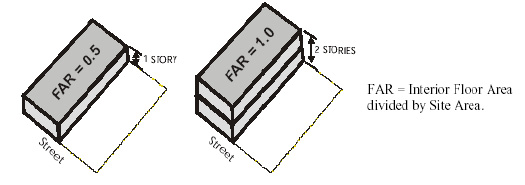
Table 17C.130.210-1 | |||
Standard | LI Zone | HI Zone | PI Zone |
Maximum FAR[2] | No Limit | No Limit | No Limit |
Maximum Height[3] | 150 ft.[3] | 150 ft.[3] | 150 ft.[3] |
Maximum Height Abutting R Zoned Lots[3] | 35 ft.[3] | 35 ft.[3] | 35 ft.[3] |
Minimum Building Setback Street Lot Line[4] | 0[4] | 0[4] | 0[4] |
Minimum Setback from R Zoned Lots[5] | 10 ft. | 10 ft. | 10 ft. |
Landscaping and Screening Required[6] | Yes | Yes | Yes |
Parking Required[7] | Yes | Yes | Yes |
Notes: [1] Plan district or overlay zone standards may supersede these standards. [2] The FAR for uses that are not classified as industrial uses within the Industrial Categories of Table 17C.130.100-1 are the same as the GC Commercial Zone. See chapter 17C.120 SMC for GC zone standards. [3] See SMC 17C.130.220(B) and (C). [4] When abutting a single-family and two-family residential zoning, the minimum structure setback from the street lot line is the same as the residential zoning district for the first sixty feet from the boundary of the residential zoning district. See SMC 17C.130.230 for additional standards and exceptions. This does not apply when a zone boundary is within the public right-of-way. [5] Structure setbacks are measured from the lot line. [6] This part of the table is for general information purposes only; see chapter 17C.200 SMC, Landscaping and Screening, for the specific standards. [7] This part of the table is for general information purposes only; see chapter 17C.230 SMC, Parking and Loading, for the specific standards. | |||
Date Passed: Monday, November 7, 2005
Effective Date: Thursday, December 15, 2005
ORD C33757 Section 1
Section 17C.130.220 Height
- Purpose
The height limits are intended to control the overall scale of buildings. The height limits for sites near residential zones discourage buildings that visually dominate adjacent residential zones. Light, air, and potential for privacy are intended to be preserved in residential zones that are close to industrial zones.
- Height Standards
The height standards for all structures are stated in Table 17C.130.210-1. Exceptions to the maximum height standard are stated below.
- Maximum Height.
Exceptions to the maximum structure height are designated on the official zoning map by a dash and a height listed after the zone map symbol (i.e., CB-150). Changes to the height limits require a rezone. Height limits are thirty-five feet, forty feet, fifty-five feet, seventy feet or one hundred fifty feet depending on location.
- Buildings and structures for uses that are not classified as industrial uses within the Industrial Categories of Table 17C.130.210-1 and that are over fifty feet in height must follow the design, setback and dimensional standards found in chapter 17C.250 SMC, Tall Building Standards.
- Adjacent to Single-family and Two-family Residential Zones.
To provide a gradual transition and enhance the compatibility between the more intensive industrial zones and adjacent single-family and two-family residential zones:
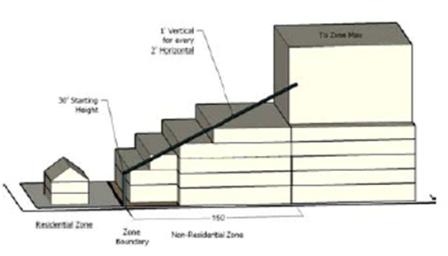
- For all development within one hundred fifty feet of any single-family or two-family residential zone the maximum building height is as follows:
- Starting at a height of thirty feet at the residential zone boundary, additional building height may be added at a ratio of one to two (one foot of additional building height for every two feet of additional horizontal distance from the closest single-family or two-family residential zone). The building height transition requirement ends one hundred fifty feet from the single-family or two-family residential zone and then full building height allowed in the zone applies.
- Projections Allowed.
Chimneys, flag poles, satellite receiving dishes and other items similar with a width, depth or diameter of five feet or less may rise ten feet above the height limit, or five feet above the highest point of the roof, whichever is greater. If they are greater than five feet in width, depth or diameter, they are subject to the height limit.
- Rooftop Mechanical Equipment.
All rooftop mechanical equipment must be set back at least fifteen feet from all roof edges that are parallel to street lot lines and roof lines facing an abutting residential zone. Elevator mechanical equipment may extend up to sixteen feet above the height limit. Other rooftop mechanical equipment, which cumulatively covers no more than ten percent of the roof area, may extend ten feet above the height limit.
- Radio and television antennas, utility power poles and public safety facilities are exempt from the height limit except as provided in chapter 17C.355A.SMC, Wireless Communication Facilities.
- Special Height District
Special height districts are established to control building heights under particular circumstances such as preservation of public view or airport approaches. See chapter 17C.170 SMC, Special Height Overlay Districts and chapter 17C.180.SMC, Airfield Overlay Zones.
Date Passed: Monday, November 2, 2015
Effective Date: Monday, November 2, 2015
ORD C35312 Section 6
Section 17C.130.230 Setbacks and Sidewalks
- Purpose.
The required structure setbacks promote streetscapes that are consistent with the desired character of the different industrial zones. The setback requirements for areas that abut single-family residential zones promote commercial development that will maintain light, air, and the potential for privacy for adjacent single-family residential zones. The sidewalk standards provide a continuous, safe, and consistent street frontage character along the street right-of-way.
- Setback and Required Sidewalk Width Standards.
The setback standards for all structures are stated in Table 17C.130.210-1, Industrial Zones Development Standards, and as stated below.
- Structures shall be no closer than twelve feet from the back of the curb except as provided in subsection (B)(3) of this section.
- Sidewalks are required to be constructed and shall consist of a clear walking path at least five feet wide (in addition to a planting zone for street trees per SMC 17C.200.050). Part or all of the sidewalk width may be located on private property. The sidewalk dimension shall be applied to the clear, unobstructed pathway between the planting zone behind the curb and building facades or parking lot screening.


- The required sidewalk width may be reduced by approval of the planning and economic development services director if the existing sidewalk (distance between the curb and the building) is less than twelve feet wide between the back of curb and the existing building setback line of adjacent building(s). In no case shall the setback be reduced below nine feet from the back of the curb unless on-street parking exists between the building and the street.
- Unless otherwise required or where larger plaza areas are provided, sidewalk-paving material shall be concrete, two-foot grid, standard sidewalk color and float finish.
- Pervious concrete may be used in the design and construction of sidewalks, where feasible.
- Exceptions to the Setback Standards.
- Where a site is split between more than one zone and a structure is proposed that will cross an internal lot line that is also a zoning line, no setbacks are required from that lot line.
- Detached Accessory Structures.
The setback standards for detached accessory structures are stated in SMC 17C.130.300. Fences are addressed in SMC 17C.130.310. Sign standards are in chapter 17C.240 SMC, Signs.
- Extensions into Required Structure Setbacks.
The following features attached to structures are allowed as exceptions to the setback standards except they shall not reduce the required sidewalk width of SMC 17C.130.230.
- Minor Projections of Features Attached to Structures.
- Minor Projections Allowed.
Minor features of a structure, such as eaves, chimneys, fire escapes, bay windows, uncovered stairways, wheelchair ramps, and uncovered decks or balconies may extend into a required structure setback up to twenty percent of the depth of the setback. However, they may not be within three feet of a lot line when a setback is required. Bays and bay windows extending into the setback also must meet the following requirements:
- Each bay and bay window may be up to twelve feet long, but the total area of all bays and bay windows on a building facade cannot be more than thirty percent of the area of the facade.
- At least thirty percent of the area of the bay which faces the property line requiring the setback must be glazing or glass block.
- Bays and bay windows must cantilever beyond the foundation of the structure; and
- The bay may not include any doors.
- Full Projection Allowed.
In addition to subsection (D)(1)(a) of this section, the following features are allowed to project farther into required structure setbacks:
- Canopies, marquees, awnings, and similar features may fully extend into a street setback and may extend into the public right-of-way subject to the requirements of SMC 17F.040.140.
- Uncovered stairways and wheelchair ramps that lead to one entrance on the street-facing facade of a building may fully extend into a street setback.
- Uncovered decks and stairways that are no more than forty-two inches above the ground may fully extend into a required structure setback; and
- On lots that slope down from the street, vehicular and pedestrian entry bridges that are no more than forty-two inches above the average sidewalk elevation may fully extend into a required structure setback.
- Balconies may extend into public rights-of-way as allowed in the building code.
- Projections Not Allowed.
Attached mechanical structures such as heat pumps, air conditioners, emergency generators, and water pumps are allowed in a street setback but not in a required setback from an abutting residential zone.
- Underground structures are permitted in all setbacks.
Date Passed: Monday, August 26, 2013
Effective Date: Tuesday, October 1, 2013
ORD C34961 Section 6
Section 17C.130.240 Landscaped Areas
- Purpose.
Landscaping is required because it is attractive and it helps to soften the effects of built and paved areas. It also helps reduce stormwater runoff by providing a surface into which stormwater can percolate into the soil.
- Landscape Standards.
Requirements for landscaping are stated in chapter 17C.200 SMC, Landscaping and Screening.
Date Passed: Monday, November 7, 2005
Effective Date: Thursday, December 15, 2005
ORD C33757 Section 1
Section 17C.130.250 Screening
- Purpose.
The screening standards address specific unsightly features which detract from the appearance of industrial areas.
- Garbage Collection Areas.
All exterior refuse (including garbage, recycling materials and yard debris) receptacles and refuse collection areas must be screened from the street and any adjacent properties. Trash receptacles for pedestrian use are exempt. Screening must comply with the standards of chapter 17C.200 SMC, Landscaping and Screening.
- Mechanical Equipment.
Mechanical equipment located on the ground, such as heating or cooling equipment, pumps or generators must be screened from the street and any abutting residential zones by walls, fences or vegetation tall enough to screen the equipment. Mechanical equipment on roofs of buildings must be screened from ground level of any abutting R-zoned lands.
- Other Screening Requirements.
The screening requirements for parking, outdoor storage and outdoor display areas are stated in the standards for those types of development.
Date Passed: Monday, November 7, 2005
Effective Date: Thursday, December 15, 2005
ORD C33757 Section 1
Section 17C.130.260 Pedestrian Standards
- Purpose.
The pedestrian standards encourage a safe, attractive and usable pedestrian circulation system. They ensure a direct pedestrian connection between the street and buildings on a site.
- Pedestrian Connection Implementation.
- Connections.
Within parking lots containing more than thirty stalls, clearly defined pedestrian connections shall be provided:
- between a public right-of-way and building entrances;
- between parking lots and building entrances.
- Width.
Pedestrian connections shall not be less than five feet wide.
- Materials.
Pedestrian connections shall be clearly defined by at least two of the following:
- Six-inch vertical curb.
- Textured paving, including across vehicular lanes.
- A continuous landscape area at a minimum of three feet wide on at least one side of the walkway.
- Trellis.
- Special railing.
- Bollards.
- Special paving.
- Low seat wall and/or other architectural features.
- Landscaping.
Pedestrian connections can be counted toward the amount of required landscaping. Requirements for landscaping are stated in chapter 17C.200 SMC, Landscaping and Screening.
Date Passed: Monday, November 7, 2005
Effective Date: Thursday, December 15, 2005
ORD C33757 Section 1
Section 17C.130.270 Outdoor Activities
- Purpose.
The standards of this section are intended to assure that outdoor sales, display, storage and work activities:
- will be consistent with the desired character of the zone;
- will not be a detriment to the overall appearance of the industrial area;
- will not have adverse impacts on adjacent properties, especially those zoned residential; and
- will not have an adverse impact on the environment.
Outdoor activities associated with nonresidential uses shall be permitted in industrial zones subject to the standards of the zone as described below.
- Outdoor Sales and Storage Areas.
- Outdoor sales and storage areas are allowed in all industrial zones.
- There is no limit on the size of permitted outdoor storage areas.
- The size of outdoor sales areas for retail sales and service uses are prescribed in the Table 17C.130.100-1, Industrial Zones Primary Uses, and SMC 17C.130.110, Limited Use Standards.
- Outdoor Activities Location.
- The following outdoor activities shall be located at least fifty feet from a residentially zoned lot:
- Outdoor sales and/or service of food or beverages.
- Outdoor storage.
- Outdoor loading berths.
- Outdoor work activities including the sales of motor vehicle fuels and car washes.
- Outdoor Activities Area Improvements.
- Outdoor activities shall be screened and landscaped according to the provisions of chapter 17C.200 SMC, Landscaping and Screening.
- In order to control dust and mud, all vehicle circulation areas must be paved.
Date Passed: Monday, November 7, 2005
Effective Date: Thursday, December 15, 2005
ORD C33757 Section 1
Section 17C.130.280 [Reserved]
Reserved
Date Passed: Monday, November 7, 2005
Effective Date: Thursday, December 15, 2005
ORD C33757 Section 1
Section 17C.130.290 Drive-through Facilities
Drive-through facilities are allowed in all industrial zones. The standards for drive-through facilities are stated in chapter 17C.325 SMC, Drive-through Facilities.
Date Passed: Monday, November 7, 2005
Effective Date: Thursday, December 15, 2005
ORD C33757 Section 1
Section 17C.130.300 Detached Accessory Structures
- Purpose.
The general standards are intended to clarify the development standards applicable to detached accessory structures.
- General Standards.
- The standards of this section apply only to detached accessory structures.
- The height standards of the base zone apply to detached accessory structures.
- Detached accessory structures shall not reduce the required sidewalk width of SMC 17C.130.230.
- Setbacks.
- Uncovered Accessory Structures.
- Uncovered accessory structures such as flag poles, lamp posts, signs, radio antennas and dishes, mechanical equipment, uncovered decks, play structures, and tennis courts are allowed in the street lot line setback provided they do not reduce the required sidewalk width of SMC 17C.130.230.
- Uncovered accessory structures are not allowed in a required setback from an abutting residential zone.
- Covered Structures.
Covered structures such as storage buildings, garages, greenhouses, work shed, covered decks and covered recreational structures are subject to the setbacks for structures.
Date Passed: Monday, November 7, 2005
Effective Date: Thursday, December 15, 2005
ORD C33757 Section 1
Section 17C.130.310 Fences
- Purpose
The fence standards promote the positive benefits of fences without adversely impacting the community or endangering public or vehicle safety. Fences near streets are kept low in order to allow visibility into and out of the site and to ensure visibility for motorists. Fences in any required side or rear setback are limited in height so as not to conflict with the purpose for the setback.
- Type of Fences
The standards apply to walls, fences, and screens of all types, whether open, solid, wood, metal, wire, masonry, or other material.
- Location, Height, and Design
- Street Setbacks.
No fence or other structure is allowed within twelve feet from the back of the curb, consistent with the required sidewalk width of SMC 17C.130.230.
- Measured from Front Lot Line.
Fences up to three and one-half feet high are allowed in a required street setback that is measured from a front lot line.
- Measured from a Side Lot Line.
Fences up to six feet high are allowed in required setback that is measured from a side lot line.
- Fences shall not reduce the required setback width of SMC 17C.130.210.
- Side or Rear Structure Setbacks.
Fences up to six feet high are allowed in required side or rear setbacks except when the side or rear setback abuts a pedestrian connection. When the side or rear setback abuts a pedestrian connection, fences are limited to three and one-half feet in height.
- Not in Setbacks.
The height for fences that are not in required setbacks is the same as the regular height limits of the zone.
- Sight-obscuring Fences and Walls.
Any required or non-required sight-obscuring fences, walls, and other structures over three and one-half feet high, and within fifteen feet of a street lot line shall be placed on the interior side of a L2 see-through buffer landscaping area at least five feet in depth (See chapter 17C.200 SMC, Landscaping and Screening).
- Prohibited Fences
- No person may erect or maintain a fence or barrier consisting of or containing barbed, razor, concertina, or similar wire except that up to three strands of barbed wire may be placed atop a lawful fence exceeding six feet in height above grade.
- A fence, wall, or other structure shall not be placed within a public right-of-way without an approved covenant as provided in SMC 17G.010.160, and any such structure is subject to the height requirement for the adjoining setback.
- No fence may be closer than twelve feet to the curb.
- Electric Fences.
The construction and use of electric fences shall be allowed in the Heavy Industrial (HI) and Light Industrial (LI) zones only as provided in this section, subject to the following standards:
- Permit.
Prior to the installation or use of any electrified fence, the property owner or tenants of the property upon which such fencing will be installed or used shall submit a completed application for review of such fencing as a building permit review to receive approval for the fence and electrical permits for the project. The application shall include:
- Site plan showing the location of the protective barrier and the electrified fence on the property in relation to the property lines, walkways, existing buildings, and curb;
- Fence details showing both the electrified fence and protective barrier, including all gates;
- All supporting documentation from the electric fence manufacturer, equipment to be used, and certification of service from the monitoring provider.
- IEC Standard 60335-2-76.
Unless otherwise specified herein, electric fences shall be constructed or installed in a conformance with the specifications set forth in International Electro technical Commission (IEC) Standard No. 60335-2-76.
- Electrification.
- The energizer for electric fences must be driven by a commercial storage battery or batteries not to exceed 12 volts DC. The storage battery is charged primarily by a solar panel. However, the solar panel may be augmented by a commercial trickle charger.
- The electric charge produced by the fence upon contact shall not exceed energizer characteristics set forth in paragraph 22.108 and depicted in Figure 102 of IEC Standard No. 60335-2-76.
- Perimeter fence or wall.
No electric fence shall be installed or used unless it is completely surrounded by a non-electrical fence or wall that is not less than six feet tall.
- There shall be a space of four (4) to twelve (12) inches between the electric fence and the perimeter fence or wall.
- Electric fences shall be subject to the screening requirements of SMC 17C.200.070 when installed adjacent to, across a street or alley from a non-industrial zone.
- Electric Fences are subject to Street Frontage requirements prescribed in 17C.200.040 when installed along street frontage that is adjacent to or across the street from a non-industrial zone.
- Location.
- Electric fences shall be permitted on any non-residential outdoor storage areas.
- Electric fences shall not be installed within one hundred fifty (150) feet of a property line for a residence, or from a school, or day care facility, unless the exterior perimeter non-electrified fence is covered with a solid covering (e.g. solid mesh, slats, etc.) to further prevent contact with the electric fence.
- Electric fences shall not be installed within five (5) feet of a sidewalk, trail, or other pedestrian connection unless the exterior perimeter non-electrified fence is covered with a solid covering.
- Height.
Electric fences shall have a minimum height of 8 feet and a maximum of 10 feet.
- Warning signs.
Electric fences shall be clearly identified with warning signs that read: “Warning-Electric Fence” and contain icons that are universally understood at intervals of not less than thirty feet.
- Electric fence burglar alarms shall be governed and permitted under Title 10 Regulation of Activities, Chapter 10.48 False Alarms.
- Hours of activation.
Electric fences must only be energized during hours when the public does not have legal access to the protected property, except when personnel is available on-site to deactivate the electric fence.
- Key Box.
- Electric fences shall have installed a key box system in accordance with the Spokane Fire Department standards.
- The electric fence controller and emergency key safe for the electric fence must be located in a single accessible location for the entire fence.
- Fire Department Registration.
Prior to the installation or use of any electrified fence, the property owner or tenants of the property upon which such fencing will be installed or used shall submit a completed registration for such fencing to the Spokane Fire Department using forms provided by the Fire Chief.
- Indemnification.
All applicants issued a permit to install or use an electric fence as provided in this chapter shall agree, as a condition of permit issuance, to defend, indemnify and hold harmless the City of Spokane and its agents, officers, consultants, independent contractors and employees from any and all claims, actions or proceedings, including but not limited to those arising out of any personal injury, including death, or property damage caused by the electric fence.
- Emergency Access.
In the event that access by the City of Spokane Fire Department and/or Police Department personnel to a property where a permitted electric fence has been installed and is operating, is required due to an emergency or urgent circumstances, and the Knox Box or other similar approved device referred to in this section is absent or non-functional, and an owner, manager, employee, custodian or any other person with control over the property is not present to disable the electric fence, the fire or police personnel shall be authorized to disable the electric fence in order to gain access to the property. As a condition of permit issuance, all applicants issued permits to install or use an electric fence as provided in this section shall agree in writing to waive any and all claims for damages to the electric fence against the City of Spokane and/or its personnel under such circumstances.
- It shall be unlawful for any person to install, maintain or operate an electric fence in violation of this section.
- Visibility at Intersections
- A fence, wall, hedge, or other improvement may not be erected or maintained at the corner of a lot so as to obstruct the view of travelers upon the streets.
- Subject to the authority of the traffic engineer to make adjustments and special requirements in particular cases, no fence exceeding a height of thirty-six inches above the curb may be inside the:
- right isosceles triangle having sides of fifty feet measured along the curb line of each intersecting residential street; or


- right triangle having a fifteen-foot side measured along the curb line of the residential street and a seventy-five foot side along the curb line of the intersecting arterial street, except that when the arterial street has a speed limit of thirty-five miles per hour, the triangle has a side along such arterial of one hundred twenty-two feet; or
- right isosceles triangle having sides of seven feet measured along the right-of-way line of an alley and:
- the inside line of the sidewalk; or
- if there is no sidewalk, a line seven feet inside the curb line.

- Enclosures for Pools, Hot Tubs, or Ponds
- A person maintaining a swimming pool, hot tub, pond, or other impoundment of water exceeding five thousand gallons and eighteen inches or more in depth and located on private property is required to construct and maintain an approved fence by which the pool or other water feature is enclosed and inaccessible by small children.
- The required pool enclosure must be at least fifty-four inches high and may be a fence, wall, building or other structure approved by the building services department.
- If the enclosure is a woven wire fence, it is required to be built to discourage climbing.
- No opening, except a door or gate, may exceed four inches in any dimension.
- Any door or gate in the pool enclosure, except when part of the occupied dwelling unit, must have self-closing and self-locking equipment by which the door or gate is kept secure when not in use. A latch or lock release on the outside of the door or gate must be at least fifty-four inches above the ground.
- Reference to Other Standards
Building permits are required by the Development Services Department for all fences including the replacement of existing fences. A permit is not required to repair an existing fence.
Date Passed: Monday, October 20, 2025
Effective Date: Friday, November 28, 2025
ORD C36753 Section 18
Section 17C.130.320 [Reserved]
Reserved
Date Passed: Monday, November 7, 2005
Effective Date: Thursday, December 15, 2005
ORD C33757 Section 1
Section 17C.130.330 Nonconforming Development
Existing development that does not conform to the development standards of this chapter shall be subject to the standards of chapter 17C.210 SMC, Nonconforming Situations.
Date Passed: Monday, November 7, 2005
Effective Date: Thursday, December 15, 2005
ORD C33757 Section 1
Section 17C.130.340 Parking and Loading
The standards pertaining to the minimum required and maximum allowed number of auto parking spaces, minimum required number of bicycle parking spaces, parking lot placement, parking lot setbacks and internal parking lot pedestrian connections are stated in chapter 17C.230 SMC, Parking and Loading.
Date Passed: Monday, November 7, 2005
Effective Date: Thursday, December 15, 2005
ORD C33757 Section 1
Section 17C.130.350 Signs
The sign standards are stated in chapter 17C.240 SMC, Signs.
Date Passed: Monday, July 23, 2012
Effective Date: Thursday, August 30, 2012
ORD C34888 Section 9
Section 17C.130.360 Residential Uses Notification
Any residential property offered for sale shall include notice to potential purchasers, placed on the title to the property that industrial activities within the zone are legal and permitted by zoning standards, and further, that the property is located within an area where additional industrial activities may be conducted. A note to this effect shall also be placed on any plat or short plat approved by the City. Property, buildings, or portions thereof offered for lease or rent shall include in the lease or rental agreement a note to this effect. Failure to provide such notice does not negate the right to engage in any lawful industrial activities located in the area.
Date Passed: Monday, November 7, 2005
Effective Date: Thursday, December 15, 2005
ORD C33757 Section 1
Section 17C.130.400 [Reserved]
Reserved
Date Passed: Monday, November 7, 2005
Effective Date: Thursday, December 15, 2005
ORD C33757 Section 1
Section 17C.130.500 Design Standards Implementation
The design standards and guidelines found in SMC 17C.130.500 through SMC 17C.130.540 follow SMC 17C.130.015, Design Standards Administration. All projects must address the pertinent design standards and guidelines. Design standards are in the form of Requirements (R), Presumptions (P), and Considerations (C). Regardless of which term is used, an applicant must address each guideline. An applicant may seek relief through chapter 17G.030 SMC, Design Departures, for those eligible standards and guidelines contained in the zoning code.
- Industrial, Institutional and Other Use Categories.
Site and building design for uses in the industrial, institutional and other categories described in chapter 17C.190 SMC, Use Category Descriptions, shall comply with the following design standards (refer to Table 17C.130.500-1 below for a summary of the design standards):
- Light Industrial (LI), Heavy Industrial (HI), and Planned Industrial (PI) Zones.
- A building within sixty feet of an arterial street shall incorporate one of the design elements specified in SMC 17C.130.510 through SMC 17C.130.540.
Table 17C.130.500-1 | |||||||
Design Standards for Light Industrial (LI), | |||||||
Site Location | Ground Floor Windows | Base/Middle/Top | Articulation | Prominent Entrance | Ground Level Details | Roof Expression | Blank Walls |
Site Adjacent to Arterial | One of the above design treatments required on wall facing arterial | ||||||
Site Abutting a Commercial Zone | Two of the above design treatments required on wall facing commercial zone | ||||||
Site Abutting a Residential Zone | Three of the above design treatments required on wall facing residential zone | ||||||
Other Sites | No requirements | ||||||
Notes: | |||||||
- A building on a site adjacent to or across a right-of-way from a commercial zone or within sixty feet of a commercial zone shall incorporate two of the design elements specified in SMC 17C.130.510 through SMC 17C.130.540.
- A building on a site adjacent to or across a right-of-way from a residential zone or within sixty feet of a residential zone shall incorporate three of the design elements specified in SMC 17C.130.510 through SMC 17C.130.540.
- Commercial Uses in Industrial Zones.
Building and site development in the LI, PI and HI zones with uses in the commercial use category shall comply with all of the design standards specified in SMC 17C.120.500 through SMC 17C.120.580.
- Residential Uses in Industrial Zones.
Building and site development in the LI, PI and HI zones with uses in residential use category shall comply with the design standards specified in chapter 17C.111 SMC applicable to residential uses.
Date Passed: Monday, November 7, 2005
Effective Date: Thursday, December 15, 2005
ORD C33757 Section 1
Section 17C.130.510 Ground Floor Windows – Building Design
- Purpose.
Blank walls on the ground level of buildings are limited in order to:
- provide a pleasant, rich and diverse view from neighboring commercial and residential zones and from arterial streets;
- encourage observation or viewing opportunities by restricting fortress-like facades; and
- avoid a monotonous pedestrian environment.
- Required Amounts of Window Area.
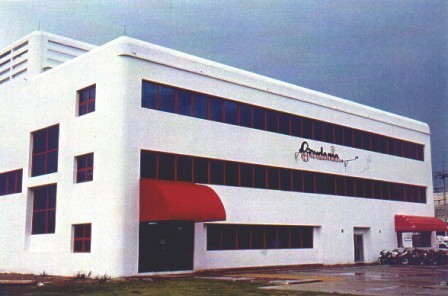
These provisions apply to building facades between two feet and ten feet above the level of the adjacent sidewalk, walkway or ground level. When this building design element is chosen, windows equal in area to a minimum of fifteen percent of the wall area shall be provided
Date Passed: Monday, November 7, 2005
Effective Date: Thursday, December 15, 2005
ORD C33757 Section 1
Section 17C.130.515 Base/Middle/Top – Building Design
- Purpose.
To reduce the apparent bulk of buildings by providing a sense of “base” and “top.”
- Base/Middle/Top Implementation.
When this building design element is chosen:
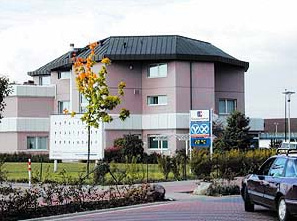
- Buildings shall have a distinct “base” at the ground level, using articulation and materials such as stone, masonry or decorative concrete. (P)
- The “top” of the building shall be treated with a distinct outline with elements such as a projecting parapet, cornice, or projection. (P)
Date Passed: Monday, November 7, 2005
Effective Date: Thursday, December 15, 2005
ORD C33757 Section 1
Section 17C.130.520 Articulation – Building Design
- Purpose.
To reduce the massiveness of larger buildings.
- Articulation Implementation.
When this building design element is chosen:
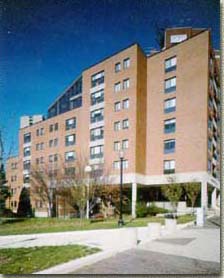
- Facades longer than fifty feet shall be broken down into smaller units through the use of offsets, recesses, staggered walls, stepped walls, pitched or stepped rooflines, overhangs and other elements of the building’s mass. Simply changing materials or color is not sufficient to accomplish this. (R)
- Articulation shall be provided along facades visible from the street, as well as from neighboring residential areas. (P)
Date Passed: Monday, November 7, 2005
Effective Date: Thursday, December 15, 2005
ORD C33757 Section 1
Section 17C.130.525 Prominent Entrance – Building Design
- Purpose.
To ensure that building entrances are easily identifiable and clearly visible from roads and sidewalks.
- Prominent Entrance Implementation.
When this building design element is chosen:
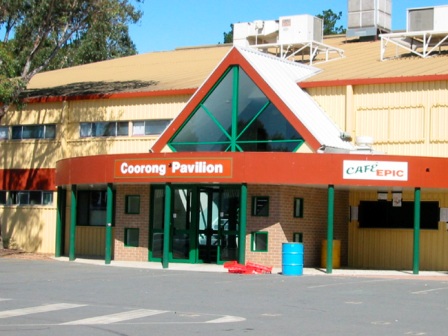
- Principal entry to the building shall be marked by at least one element from Group A and one element from Group B: (R)
- Group A.
- Large entry doors.
- Recessed entrance.
- Protruding entrance.
- Group B.
- Canopy.
- Portico.
- Overhang.
- Weather protection over the entry. (P)
Date Passed: Monday, November 7, 2005
Effective Date: Thursday, December 15, 2005
ORD C33757 Section 1
Section 17C.130.530 Ground Level Details – Building Design
- Purpose.
To ensure that buildings display the greatest amount of visual interest.
- Ground Level Details Implementation.
When this building design element is chosen:
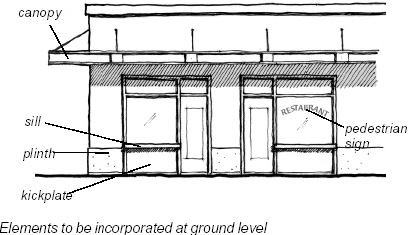
- Ground level of building shall be pedestrian friendly in scale, expression and use of materials. (R)
- Ground floor of the buildings shall have at least two of the following elements: (P)
- Large windows.
- Kickplates for storefront windows.
- Projecting sills.
- Pedestrian scale signs.
- Canopies.
- Plinth.
Date Passed: Monday, November 7, 2005
Effective Date: Thursday, December 15, 2005
ORD C33757 Section 1
Section 17C.130.535 Roof Expression – Building Design
- Purpose.
To ensure that rooflines present a distinct profile and appearance for the building.
- Roof Expression Implementation.
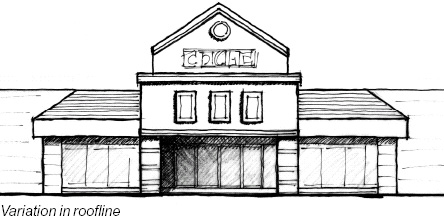
When this building design element is chosen, buildings with flat roofs shall have portions with pitched roofs, extended parapets or projecting cornices to create a prominent edge when viewed against the sky, especially to highlight major entrances. (P)
Date Passed: Monday, November 7, 2005
Effective Date: Thursday, December 15, 2005
ORD C33757 Section 1
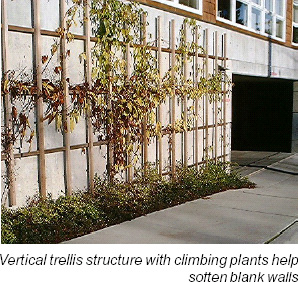
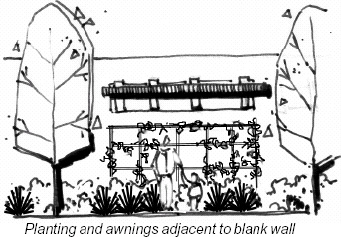
Section 17C.130.540 Treating Blank Walls – Building Design
- Purpose.
To mitigate blank walls by providing visual interest.
- Treating Blank Walls Implementation.
When this building design element is chosen:
- Where windows are not provided on walls (or portions of walls) facing streets or visible from right-of-way, at least two of the following elements shall be incorporated: (R)
- Masonry (but not flat concrete block).
- Concrete or masonry plinth at wall base.
- Belt courses of a different texture and color.
- Projecting cornice.
- Projecting metal canopy.
- Decorative tilework.
- Trellis containing planting.
- Medallions.
- Opaque or translucent glass windows.
- Artwork such as sculptures, murals, inlays, mosaics or elements integrated with the project.
- Vertical articulation.
- Lighting fixtures.
- Recesses.
- An architectural element not listed above, as approved, that meets the intent.
Date Passed: Monday, November 7, 2005
Effective Date: Thursday, December 15, 2005
ORD C33757 Section 1

