
Tecumseh City Zoning Code
ARTICLE IV
ZONING DISTRICTS AND PERMITTED USES
Sec. 98-58. - Zoning districts established.
For the purposes of this chapter, the City of Tecumseh is divided into the following districts:
(Ord. No. O-06-25, § 1(Exh. A), 8-4-2025)
Sec. 98-59. - Zoning map and district boundaries.
(a)
Zoning map. The boundaries of the zoning districts are established as shown on the zoning map. The map, all notations, references and other information shown thereon is as much a part of this chapter as if fully described in this Sec. 98-59.
(b)
Certification. The official zoning map shall be identified by the signature of City clerk and bearing the seal of the City under the following words: "This is to certify that this is the official zoning map referred to in Sec. 98-59 of the zoning chapter of the City of Tecumseh, Michigan," together with the date of the adoption of this Ordinance. This map shall be deposited in the City clerk's vault when not in actual use.
(c)
Amendments. No changes of any nature shall be made on the official zoning map or matter shown on the map except in conformity with the provisions set forth in Sec. 98-59. Any unauthorized change of whatsoever kind by any person shall be considered in violation of this chapter and punishable as provided in this chapter.
(d)
District boundaries.
(1)
Lot lines. Where district boundaries are so indicated that they approximately follow lot lines, such lot lines shall be constructed to be such boundaries.
(2)
Bodies of water. Where the boundary of a district follows a stream, lake or other body of water, the boundary line shall be deemed to be located midway between opposite shores.
(3)
Subdivision boundaries. Where the boundary of a district follows a subdivision boundary line, such boundary line shall be construed to be the district boundary line.
(Ord. No. O-06-25, § 1(Exh. A), 8-4-2025)
Sec. 98-60. - Zoning of rights-of-way.
All streets, alleys and railroad rights-of-way, if not otherwise specifically designated, shall be deemed to be in the same zone as the property immediately abutting upon such streets, alleys or railroad rights-of-way. Where the centerline of a street or alley serves as a district boundary, the zoning of such street or alley, unless otherwise specifically designated, shall be deemed to be the same as that of the abutting property up to such centerline.
(Ord. No. O-06-25, § 1(Exh. A), 8-4-2025)
Sec. 98-61. - Zoning of vacated areas.
Whenever any street, alley or other public way within the City is vacated by official governmental action and when the lands previously within the boundaries of the public way attach to and become a part of the land adjoining such street, alley or other public way, such lands shall automatically, and without further governmental action be subject to the same zoning regulations as are applicable to the land to which it attaches.
(Ord. No. O-06-25, § 1(Exh. A), 8-4-2025)
Sec. 98-62. - Zoning of annexed areas.
Any area annexed to the City shall immediately upon such annexation be automatically classified as an RA-1 district until a zoning map for the area has been adopted by the City council. The planning commission shall recommend appropriate zoning for such area within three months after the matter is referred to it by the City council.
(Ord. No. O-06-25, § 1(Exh. A), 8-4-2025)
Sec. 98-63. - Principal uses and conditional uses.
In all districts, no structure or land shall be used or occupied, except in with Article IV, Division 2 (Table of Permitted Land Uses by District), and as otherwise provided for in this chapter. Conditional uses may be permitted in accordance with Article IV, Division 2 (Table of Permitted Land Uses by District), subject to a public hearing and approval by the planning commission in accordance with the procedures and conditions defined in Article II, Division 4 (Special Land Uses).
(Ord. No. O-06-25, § 1(Exh. A), 8-4-2025)
Sec. 98-64. - Determination of similar uses.
A land use that is not cited by name as a permitted use in a zoning district may be permitted upon a determination by the City council that such a use is clearly similar in nature and compatible with the listed or existing uses in that district. In making such a determination, the City council shall seek the advice of and recommendation by the planning commission. Consideration shall be given to the following:
(a)
Determination of compatibility. In making the determination of compatibility, the City council shall consider specific characteristics of the use in question and compare such characteristics with those of the uses that are expressly permitted in the district. Such characteristics shall include, but are not limited to, traffic generation, types of service offered, types of goods produced, methods of operation, and building characteristics.
(b)
Conditions. If the City council determines that the proposed use is compatible with permitted and existing uses in the district, the council shall then decide whether the proposed use shall be permitted by right, by special approval, or as a permitted accessory use. The proposed use shall be subject to the review and approval requirements for the district in which it is located. The City council shall have the authority to establish additional standards and conditions applicable to the use.
No use shall be permitted in a district under the terms of this section if the use is specifically listed as a use permitted by right or special approval in any other zoning district.
(Ord. No. O-06-25, § 1(Exh. A), 8-4-2025)
Sec. 98-65. - Prohibited land uses.
Uses that are not specifically listed in and permitted by this chapter or otherwise determined to be similar to listed and permitted uses are hereby determined to be prohibited uses.
(Ord. No. O-06-25, § 1(Exh. A), 8-4-2025)
Sec. 98-66. - Design and development regulations.
All principal permitted uses and conditional uses shall comply with any applicable requirements of this Ordinance and other City codes and ordinances. No structure shall be erected, reconstructed, altered or enlarged, nor shall permits or certificates of occupancy be issued, except in conformance with this chapter and other City codes and ordinances.
(Ord. No. O-06-25, § 1(Exh. A), 8-4-2025)
Sec. 98-67. - Generally.
(a)
The following table lists the permitted and special land uses in each zoning district. The permitted uses are separated into four categories:
(1)
Residential uses.
(2)
Community and institutional uses.
(3)
Commercial, office and retail uses.
(4)
Industrial, transportation, and utility uses.
(b)
In the instance of a conflict or discrepancy between the table of permitted uses in this division and the zoning district summaries in Article IV, Division 3, the list of uses in in Article VI, Division 2 shall prevail.
(c)
In the instance of a conflict or discrepancy between the table of permitted uses in this division and the table of permitted uses in the downtown district in Article VI, Division 3, the list of uses in Article VI, Division 2 shall prevail.
(Ord. No. O-06-25, § 1(Exh. A), 8-4-2025)
Sec. 98-68. - Residential uses.
(Ord. No. O-06-25, § 1(Exh. A), 8-4-2025)
Sec. 98-69. - Community and institutional uses.
(Ord. No. O-06-25, § 1(Exh. A), 8-4-2025)
Sec. 98-70. - Commercial, office and retail uses.
(Ord. No. O-06-25, § 1(Exh. A), 8-4-2025)
Sec. 98-71. - Industrial, transportation and utility uses.
(Ord. No. O-06-25, § 1(Exh. A), 8-4-2025)
Sec. 98-72. - Schedule of regulations summary table.
Refer to the district summaries in the following sections for specific dimensional requirements and exceptions applicable in each district.
Footnotes:
A.
Established building line: In the event there is an established building line along a street, the front yard setback shall be the established building line provided that in no case may the front yard setback be reduced to less than:
• RA-1, RA-2, RM-1, RM-2: twenty (20) feet.
• B-1, B-3, I-C: ten (10) feet.
B.
Side street yard.
• RA-1, RA-2: The side yard abutting on a street shall not be less than eight (8) when there is a common rear yard. In the case of a rear yard abutting a side yard of an adjacent lot, the minimum side street yard setback shall be thirty (30) feet.
• B-1: The side yard abutting on a street shall not be less than eight (8) feet when there is a common rear yard. In the case of a rear yard abutting a side yard of an adjacent lot, the minimum side street yard setback shall be twenty (20) feet.
• B-3: The side yard abutting on a street shall not be less than twenty (20) feet when there is a common rear yard. In the case of a rear yard abutting a side yard of an adjacent lot, the minimum side street yard setback shall be thirty (30) feet.
C.
Height exception. The height of any principal building may exceed the maximum permitted height by one (1) foot if each perimeter yard setback is increased by one (1) foot.
D.
Measurement. In the case of more than one (1) building on a RM-1 or RM-2 lot, perimeter setbacks, measured from any property line or street right-of-way bounding the property on which the multiple family dwelling units are located, shall be used.
E.
Projections. Canopies and awnings with a maximum height of twelve (12) feet and a minimum clearance of eight (8) feet from grade may project up to six (6) feet into the required front yard.
F.
Interior side yard. No interior side yard setback is required unless the abutting zoning district is residential or structures facing interior side lot lines contain windows or other openings, in which case a twelve-foot side yard setback is required.
G.
Alleys. Half (½) the width of alleys at the rear of the lot may be considered in computing rear yard setbacks.
H.
Shallow lot. In those instances where platted lots with a depth of three hundred (300) feet or less exist, the required front yard setback shall be twenty (20) feet.
I.
Front yard parking. Parking is permitted in a required front yard, subject to a ten-foot wide greenbelt being provided between the parking area and the property line abutting a street or service drive.
J.
Setback from residential districts. A twenty-foot wide greenbelt with a four and one-half-foot tall decorative obscuring wall or a heavily-planted forty-foot wide greenbelt with a six-foot tall chain link fence shall be provided on those sides of the property abutting a residential district.
K.
See district summaries for minimum floor area requirements.
(Ord. No. O-06-25, § 1(Exh. A), 8-4-2025)
Sec. 98-73. - RA-1—One-family residential district.
(Ord. No. O-06-25, § 1(Exh. A), 8-4-2025)
Sec. 98-74. - RA-2—One-family residential district.
(Ord. No. O-06-25, § 1(Exh. A), 8-4-2025)
Sec. 98-75. - RM-1—Multiple family residential district.
(Ord. No. O-06-25, § 1(Exh. A), 8-4-2025)
Sec. 98-76. - RM-2—Multiple family residential district.
(Ord. No. O-06-25, § 1(Exh. A), 8-4-2025)
Sec. 98-77. - MH—Manufactured housing residential district.
(a)
Development standards. Manufactured home parks shall be subject to all the rules and requirements as established and regulated by Michigan law including, by way of example, Act 96 of 1987, as amended, and the Manufactured Housing Commission Rules and, in addition, shall satisfy the following minimum requirements:
(1)
Manufactured housing commission rules. The regulations established by state law (Michigan Public Act 96 of 1987, as amended) and the Manufactured Housing Commission Rules govern all manufactured home parks. When regulations in this chapter exceed the state law or the Manufactured Housing Commission Rules they are intended to insure that manufactured home parks meet the development and preliminary plan standards established by this Ordinance for other comparable residential development and to promote the health, safety and welfare of the City's residents.
(2)
Flood areas. A manufactured home shall not be placed in a designated floodway, as determined by the Michigan Department of Environmental Quality.
(3)
Minimum site area. A manufactured housing community shall be developed with sites averaging five thousand five hundred (5,500) square feet per manufactured housing unit. The five thousand five hundred (5,500) square foot average may be reduced by twenty percent (20%) provided that each individual site shall be equal to at least four thousand four hundred (4,400) square feet. For each square foot of land gained through the reduction of the average site below five thousand five hundred (5,500) square feet, at least an equal amount of land shall be dedicated as open space. This open space shall be in addition to that required under Rules R125.1946, R125.1941, and R125.1944, and this division.
(4)
Maximum height. In the MH manufactured housing residential district, all structures shall comply with the maximum height requirements applicable in the RA-1 and RA-2 single-family residential districts. Refer to the schedule of regulations summary in Sec. 98-72.
(5)
Setbacks from perimeter property lines.
a.
Homes, permanent buildings and facilities, and other structures shall not be located closer than twenty (20) feet from the property boundary line of the community.
b.
Homes, permanent buildings and facilities, or any other structures that abut a public right-of-way shall not be set back at least fifty (50) feet from the property line. If the property line runs through the center of the public road, then the fifty (50) feet shall be measured from the road right-of-way line. This setback does not apply to internal roads dedicated for public use.
(6)
Required distances between homes and other structures.
a.
A home shall be in compliance with all of the following minimum distances, as measured from the wall/support line or foundation line, whichever provides the greater distance:
1.
Ten (10) feet from an attached or detached structure or accessory of an adjacent home that may not be used for living purposes for the entire year.
2.
For a home sited parallel to an internal road, fifteen (15) feet from an adjacent home, including an attached structure that may be used for living purposes for the entire year if the adjacent home is sited next to the home on and parallel to the same internal road or an intersecting internal road.
3.
Ten (10) feet from an attached or detached structure or accessory of an adjacent home that may not be used for living purposes for the entire year.
4.
Fifty (50) feet from permanent community-owned structures, such as clubhouses or maintenance and storage facilities.
5.
One hundred (100) feet from a baseball or softball field.
6.
Twenty-five (25) feet from the fence of a swimming pool.
b.
Attached or detached structures or accessories that may not be used for living purposes for the entire year shall be a minimum distance of ten (10) feet from an adjacent home or its adjacent attached or detached structures.
c.
Any part of a home or an accessory structure, such as steps, porches, supported or unsupported awnings decks, carports or garages, or similar structures shall be set back the following minimum distances:
1.
Seven (7) feet from the edge of the back of the curb or the edge of an internal road paving surface.
2.
Seven (7) feet from a parking space on an adjacent home site or parking bay off a home site.
3.
Seven (7) feet from a common sidewalk.
4.
Twenty-five (25) feet from a natural or man-made lake or waterway.
d.
A carport shall be in compliance with both of the following setbacks if it is completely open, at a minimum, on the two (2) long sides and the entrance side:
1.
Support pillars that are installed adjacent to the edge of an internal road shall be set back four (4) feet or more from the closest edge of the internal road and two (2) feet or more from the closest edge of a common sidewalk, if provided.
2.
Roof overhang shall be set back two (2) feet or more from the edge of the internal road.
3.
Steps and their attachments shall not encroach into parking areas more than three and one-half (3½) feet.
e.
A home sited on one (1) side of the dividing line between a community constructed under a previous act and an expansion of the community constructed in compliance with the requirements of the act shall be a minimum of thirteen (13) feet from a home sited on the other side of the dividing line.
(7)
Landscaping and screening. Manufactured housing communities are subject to the landscaping requirements of Article X (Landscaping and Screening), except when adjacent to property that is, in the opinion of the manufactured housing commission, undeveloped.
(8)
Open space.
a.
Open space shall be provided in any manufactured housing community containing fifty (50) or more manufactured home sites. A minimum of two percent (2%) of the park's gross acreage or twenty-five thousand (25,000) square feet of contiguous space, whichever is greater, shall be dedicated to well drained, usable open space.
b.
Required property boundary setback areas may not be used in the calculation of open space.
c.
Optional improvements shall comply with state construction codes and applicable laws and ordinances pertinent to construction, including obtaining appropriate state or local permits for the facility or structure being built.
d.
If provided, recreational or athletic areas shall comply with the safety and setback standards of Rules R125.1705 and 125.1941(1), respectively.
(9)
Lighting. Except in a seasonal manufactured home community, all internal street and sidewalk systems within a manufactured housing community shall be lighted as follows:
a.
Access points shall be lighted. If the public thoroughfare is lighted, the illumination level shall not be more than the average illumination level of the adjacent illuminated thoroughfare.
b.
At all internal road intersections and designated pedestrian crosswalks the minimum illumination shall not be less than fifteen hundredths (0.15) footcandles.
c.
Internal roads, parking bays, and sidewalks shall be illuminated at not less than five hundredths (0.05) footcandles.
d.
Lighting fixtures for site-built buildings shall comply with the state electrical code.
(10)
Swimming pools. Swimming pools in manufactured housing communities shall comply with Michigan Administrative Code Rules R325.2111 et seq., Public Act 368 of 1978, and Rule R125.1941(1)(f).
(b)
Streets, driveways, and parking areas. All streets, driveways, and parking areas in manufactured housing communities shall comply with the following design requirements:
(1)
Access.
a.
The community's internal roads shall have access to a public thoroughfare or shall be connected to a public thoroughfare by a permanent easement.
b.
An additional access shall be provided to a public thoroughfare to allow a secondary access for emergency vehicles. A boulevard entrance extending to the first intersection of a community road shall satisfy this requirement.
(2)
Composition and surfacing. All internal roads shall be constructed of concrete or bituminous asphalt and supported by a suitable subgrade in compliance with the standards of the American Association of State Highway and Transportation Officials (AAASHTO), pursuant to Rule R125.1922. Roads shall be maintained in a reasonably sound condition, as required under Rules R125.1924 and 1925(2)(b).
(3)
Curbing. If provided, internal road curbing shall be constructed of concrete or asphalt. Access to curbed sidewalks connecting to internal roads shall comply with Rule R125.1928(a), (Rule R125.1923).
(4)
Parking spaces; streets. All internal roads shall be two-way and have driving surfaces that are not less than the following widths:
a.
Two-way, no parking twenty-one (21) feet.
b.
Two-way, parallel parking, one (1) side thirty-one (31) feet.
c.
Two-way, parallel parking, two (2) sides forty-one (41) feet.
(5)
Road configurations. An internal road that has no exit at one (1) end shall terminate with a minimum turning radius of fifty (50) feet. Parking shall not be permitted within the turning area, which shall be posted within the turning area. A safe site distance of two hundred fifty (250) feet shall be provided at all intersections. Offsets at intersections or intersections of more than two (2) internal roads are prohibited.
(6)
Road widths, street names, addresses and traffic control.
a.
All entrances to new communities or new entrances to expanded communities shall be a minimum of thirty-three (33) feet in width. The entrance shall consist of an ingress lane and a left and right egress turning lane at the point of intersection between a public road and the community's internal road and shall be constructed as indicated below in subsections (6)(b) through (6)(d).
b.
All turning lanes shall be a minimum of eleven (11) feet in width and sixty (60) feet in depth, measured from the edge of the pavement of the public road into the community.
c.
The turning lane system shall be tapered into the community internal road system commencing at a minimum depth of sixty (60) feet.
d.
The ingress and right egress turning lanes of the ingress and egress road shall connect to the public road and shall have a radius determined by the local public road authority having jurisdiction. The intersection of the public road and ingress and egress road shall not have squared corners.
e.
Appropriate speed and traffic control signs shall be provided on all internal roads, and a regulation stop sign shall be installed at the point of intersection with a public road, unless a traffic control device is provided.
f.
School bus stops, if provided, shall be located in an area that is approved by the school district.
g.
Improved hard-surface driveways shall be provided on the site where necessary for convenient access to service entrances of buildings, and at delivery and collection points for fuel, refuse, and other materials, and elsewhere as needed. The minimum width of driveways shall be ten (10) feet. The entrance to the driveway shall have the flare or radii, and horizontal alignment for safe and convenient ingress and egress.
(c)
Sidewalks.
(1)
Common sidewalks shall be installed along one side of all internal collector roads within the community to the public right-of-way and to all service facilities including central laundry, central parking, and recreation areas.
(2)
Common sidewalks shall be constructed in compliance with all of the following requirements:
a.
Sidewalks shall have a minimum width of three (3) feet and shall be constructed in compliance with Public Act 8 of 1973, an act that regulates barrier-free sidewalk access.
b.
All common sidewalks shall meet the standards established in Rule R125.1928.
c.
Except in a seasonal community, an individual sidewalk shall be constructed between at least one (1) entrance, or patio, porch, or deck, if provided, and the parking spaces on the home site or parking bay, whichever is provided, or common sidewalk, if provided.
(3)
An individual site sidewalk with a minimum width of three (3) feet shall be constructed to connect at least one (1) entrance to the home, patio, porch, or deck and the parking spaces serving the home or a common sidewalk. These sidewalks shall meet the standards shall meet the standards established in Rule R125.1928.
(d)
Parking.
(1)
Resident parking. A minimum of two (2) hard-surfaced parking spaces shall be provided for each manufactured home site. Parking may be either on or off the individual home site.
a.
If the two (2) resident vehicle parking spaces required by this section are provided off the home site, the parking spaces shall be adjacent to the home site and each parking space shall have a clear parking width of ten (10) feet and a clear length of twenty (20) feet.
b.
If parking spaces are provided for resident vehicle parking, they shall contain individual spaces that have a clear parking width of ten (10) feet and a clear length of twenty (20) feet.
c.
If vehicle parking is provided on the home site, it shall comply with the following provisions:
1.
The parking space shall be constructed of concrete or bituminous asphalt and supported by a suitable subgrade compliant with the standards of AASHTO.
2.
The parking spaces may be either in tandem or side-by-side. If spaces are tandem, the width shall not be less than ten (10) feet and the combined length shall not be less than forty (40) feet. If spaces are side-by-side the combined width of the two (2) parking spaces shall not be less than twenty (20) feet and the length shall not be less than twenty (20) feet.
(2)
Visitor parking. A minimum of one (1) visitor parking space shall be provided for each three (3) home sites.
a.
Visitor parking shall be located within five hundred (500) feet of the sites it is intended to serve, as measured along a road or sidewalk.
b.
Individual visitor parking spaces shall have a clear width of ten (10) feet and a clear length of twenty (20) feet.
(e)
Utilities. The following utility standards apply to all manufactured home communities:
(1)
Connections and lines. All electric utilities shall be underground and installed and serviced by a licensed electrician. All local distribution lines for utilities (telephones, electric service, and cable television) shall be placed entirely underground throughout the manufactured housing community. Main lines and perimeter feed lines existing on a section or quarter section line may be above ground if they are configured or installed within the state codes.
(2)
Drainage.
a.
All drainage outlet connections shall be subject to review and approval by the drain commissioner.
b.
Drainage systems shall be reviewed and approved by the Michigan Department of Environmental Quality, in accordance with MDEQ Rules R325.3341 to R325.3349, pursuant to the Act.
c.
Drain utility connections shall comply with Rule R125.1603(c).
(3)
Electricity. Electrical systems shall be installed, maintained, operated and serviced according to the standards established in Rules R125.1603(d), R125.1603(e), R125.1603(f), R125.1708, R125.1710(2), R125.1932, R125.1933, and MDEQ Rule R325.3373(2)(c).
(4)
Fuel and gas heating service. The installation, maintenance, operation and service of manufactured housing community fuel and gas heating systems and connections shall comply with the standards contained and referenced in Rules R125.1603(b), R125.1710(1), R125.1934 through R125.1938, R125.1940(3), and MDEQ Rule R325.3373(2)(d).
(5)
Telephone communication lines. All telephone systems shall be installed in accordance with standards approved by the Michigan Public Service Commission or utility provider, pursuant to Rule R125.1940(2), as applicable.
(6)
Television. Television service installation shall comply with requirements of Rule R125.1940(1).
(7)
Water and sewage. All lots shall be provided with public water and sanitary sewer service, or water and sanitary services that shall be approved by the Michigan Department of Environmental Quality, pursuant to MDEQ Rules R325.3321 and R325.3331 through R325.3335. Water line connections shall meet the specifications contained in Rule R125.1603(a) and MDEQ Rule R325.3373. Water system meters shall comply with MDEQ Rule R325.3321 and Rule R125.1940a.
(8)
Utility cabinets. Public utility (water, sewer, electrical, etc.) cabinet design shall be approved by the City prior to development. Utility cabinets shall be deigned, located, and screened in a manner which minimizes their visibility and appearance, and which will not create sight-line conflicts for motorists or pedestrians.
(f)
Disposal of garbage and trash. Each manufactured home site shall use approved garbage/rubbish containers that meet the requirements of Part 5 of the Michigan Department of Environmental Quality Health Standards, Rules R325.3351 through R325.3354. The containers shall be kept in a sanitary condition at all times. It shall be the responsibility of the community operator to ensure that all garbage/rubbish containers do not overflow and that all areas within the community are free of garbage/rubbish.
(g)
Emergency and safety.
(1)
Fire protection. All manufactured homes built, sold, or brought into this state shall be equipped with at least one (1) fire extinguisher approved by the national fire protection association and one (1) smoke detector approved by the Michigan Bureau of Construction Codes. The homeowner of a manufactured home brought into this state for use as a dwelling shall have ninety (90) days to comply with this requirement under Public Act 133 of 1974, as amended. The manufactured housing community shall provide its residents with written notification of this requirement, which may be published in the community rules.
(2)
Disaster and severe weather. Each manufactured housing community shall provide each community resident immediately upon occupancy with written information indicating whether the local government provides a severe weather warning system or designated shelters. If a warning system or shelter is provided, the information shall describe the system and nearest shelter location.
(h)
Required conditions.
(1)
In-community home sales. New or pre-owned manufactured homes which are to remain on-site in the manufactured housing community may be sold by the resident, owner, or licensed retailer or broker, provided that the manufactured housing community management permits the sale, as established in Section 28a of Public Act 96 of 1987, as amended, and Rules R125.2001a, R125.2005, R125.2006 and R125.2009(e).
(2)
Installation and anchoring. Manufactured homes shall be installed with anchoring systems designed and constructed in compliance with the U.S. Department of Housing and Urban Development's Manufactured Home Construction and Safety Standards (24 CFR 3280.306) and approved for sale and use within Michigan by the Michigan Construction Code, pursuant to Rules R125.1605 and R125.1607. The installation of manufactured housing on each site within a community shall conform to the requirements of Rules R125.1602 and R125.1602a.
(3)
Utility connections. All utility connections within the community shall comply with the requirements of Rule R125.1603. No manufactured home shall be occupied for dwelling purposes unless it is placed on a site or lot and connected to water, sanitary sewer, electrical, and other facilities as may be necessary.
(4)
Storage.
a.
A manufactured home site shall be kept free of fire hazards, including combustible materials under the home.
b.
One (1) storage shed that complies with the Michigan Residential Code may be placed upon any individual manufactured home site for the storage of personal property, if permitted by management. Storage sheds shall be constructed with durable weather and rust-resistant materials and shall be maintained to reasonably preserve their original appearance.
c.
Storage sheds that are attached to homes shall consist of materials similar to that of the home and shall have a fire-rated wall separation assembly in accordance with the Michigan Residential Code.
d.
A detached storage shed shall be at least ten (10) feet from all adjacent homes.
e.
All storage sheds shall be securely anchored in accordance with the Michigan Residential Code.
f.
Towing mechanisms shall be removed from all homes at the time of installation and stored so as not to be visible. Towing mechanisms, including axles, may, however, be stored under manufactured homes within a community.
(5)
Skirting.
a.
Skirting to conceal the underbody of the home shall be installed around all manufactured homes, prior to issuance of a certificate of occupancy and shall be installed within sixty (60) days of placement of the home on the site unless weather prevents compliance with this schedule. In the event that installation is delayed by weather, a temporary certificate of occupancy shall be issued pursuant to Section 13 of Public Act 230 of 1972, as amended.
b.
Skirting shall be vented as required by Rule R125.1604.
c.
Skirting shall be installed in a manner to resist damage under normal weather conditions and shall be properly maintained by the resident.
d.
Skirting shall be aesthetically compatible with the appearance of the manufactured home. All skirting shall meet the requirements established in the Manufactured Housing Commission Rules.
(6)
Recreational vehicles.
a.
If recreational vehicle storage is provided within the manufactured housing community, it should include, but not be limited to: Class A, B, and C motor homes; fifth wheel travel trailers; travel trailers; folding tent campers; trailered boats; trailered all-terrain vehicles; trailered personal watercraft; historic vehicles; and seasonal equipment. The storage area shall be adequately locked, fenced, and permanently screened, using the same standards of screening provided at the property's perimeter, and surfaced in accordance with Rule R125.1922.
b.
The storage area shall be limited to use by the residents and management of the manufactured housing community.
(i)
Licenses and permits.
(1)
Site plan review required for community.
a.
The City shall review the preliminary plan for the manufactured housing community pursuant to Section 12 of the Act and Rules R325.3381—3385 of the Michigan Department of Environmental Quality's Mobile Home Park Health Standards.
b.
Site plan or special land use approval may also be required for any of the other principal permitted or special land uses listed in Sec. 98-77. Refer to Article II, Division 3 (Site Plan Review) and Article II, Division 4 (Special Land Use Review) for the review procedures and criteria applicable to principal permitted uses and special land uses, respectively.
(2)
License. No manufactured housing community shall be operated without a license issued by the Michigan Bureau of Construction Codes, pursuant to Section 16 of the Act.
(3)
Occupancy. Occupancy shall not occur until after local inspections, permit, and certificate of occupancy approvals, pursuant to Public Act 230 of 1972, the Stille-DeRossett-Hale Single State Construction Code Act.
(4)
Site-constructed buildings. Site constructed buildings erected within the community, such as community buildings or laundries, but not including manufactured homes and their accessory storage buildings, shall be examined by the municipality for compliance with all appropriate inspection and permit requirements, pursuant to Public Act 230 of 1972, the Stille-DeRossett-Hale Single State Construction Code Act.
(5)
Individual homes. Site plan review is not required for individual homes in a manufactured housing community.
(Ord. No. O-06-25, § 1(Exh. A), 8-4-2025)
Sec. 98-78. - B-1—Local business district.
(Ord. No. O-06-25, § 1(Exh. A), 8-4-2025)
Sec. 98-79. - B-3—General business district.
(Ord. No. O-06-25, § 1(Exh. A), 8-4-2025)
Sec. 98-80. - I-C—Industrial-commercial district.
(Ord. No. O-06-25, § 1(Exh. A), 8-4-2025)
Sec. 98-81. - I-1—Industrial district.
(Ord. No. O-06-25, § 1(Exh. A), 8-4-2025)
Sec. 98-82. - Adult regulated businesses.
(a)
Definitions. The following words, terms and phrases, when used in this section, shall have the meanings ascribed to them in this subsection, except where the context clearly indicates a different meaning:
(1)
Adult bookstore or video store means an establishment having a substantial or significant portion of its stock in trade in video cassettes, discs or films or media recorded, pressed, engraved or prepared for playback and books, magazines, and other periodicals which are distinguished or characterized by their emphasis on matter depicting, describing or relating to specified sexual activities or specified anatomical areas, or an establishment with a segment or section devoted to the sale, rental and/or display of such material.
(2)
Adult cabaret means an establishment which features one or more dancers, strippers, male or female impersonators or similar entertainers, performers, wait staff or other persons who reveal or show specified anatomical areas of their bodies or who engage in, perform or simulate specified sexual activities.
(3)
Adult motion picture theater means an enclosed building used for presenting motion picture films, videocassettes, cable television or any other such visual media, distinguished or characterized by an emphasis on matter depicting, describing, or relating to specified sexual activities or specified anatomical areas for observation by patrons therein.
(4)
Adult novelty business means a commercial establishment which offers for sale or rental for any form of consideration, and which has as a substantial or significant portion of its stock in trade, books, magazines, periodicals or other printed matter, or photographs, films, motion pictures, visual representations, recordings, other audio matter and novelties or devices which are distinguished or characterized by their emphasis on matter depicting, describing or relating to specified sexual activities or specified anatomical areas.
(5)
Specified anatomical areas means:
a.
Less than completely and opaquely covered human genitals, pubic region, buttock and female breast below a point immediately above the top of the areola; and
b.
Human male genitals in a discernibly turgid state, even if completely and opaquely covered.
(6)
Specified sexual activities means:
a.
Human genitals in a state of sexual stimulation or arousal.
b.
Acts of human masturbation, sexual intercourse or sodomy.
c.
Fondling or other erotic touching of human genitals, pubic region, buttock or female breast.
(7)
Used, in the definition of the term "adult motion picture theater" in this subsection, describes a continuing course of conduct of exhibiting specified sexual activities and specified anatomical areas in a manner which appeals to a prurient interest.
(b)
Purpose and intent. It is determined necessary for the health, safety and welfare of the City to adopt this section pertaining to and regulating adult businesses for the following reasons:
(1)
Many parents are concerned about the influence of pornographic entertainment outlets and businesses and have chosen the City to raise their families because of the absence of such adult businesses, save one (1) which existed on the effective date of the ordinance from which this section derives.
(2)
Location of and easy availability of adult businesses in close proximity to homes, apartments, schools, churches and public parks give an impression of legitimacy to such uses and have adverse effects upon children, established family relations, respect for marital relationships and the concept of nonaggressive consensual sexual relations.
(3)
Location of adult businesses in close proximity to houses, apartments, schools, churches and public parks will draw persons who are not known in the community and will create police and safety problems in areas of the City which should be free of such problems.
(4)
Property values in areas adjacent to adult businesses will decline, thus causing a blight upon both commercial and residential areas of the City.
(5)
Location of adult businesses near or within residential neighborhoods and commercial areas of the City would be disruptive to youth programs such as Boy Scouts, Girl Scouts, Campfire Girls and church youth groups.
(6)
Location of adult businesses in close proximity to residential uses, schools, churches, parks and other public facilities will cause a degradation of the community standard of morality. Pornographic material has a degrading effect upon the relationship between spouses.
(c)
Location. An adult motion picture theater, adult bookstore or video store or adult cabaret shall not be located:
(1)
Within five hundred (500) feet of any residential zoning district (RA-1, RA-2, RM-1, RM-2, or PRD).
(2)
Within five hundred (500) feet of the property line of any public or private school, college or university, or of any nursery school, day nursery or child care center.
(3)
Within five hundred (500) feet of the property line of any church or other religious facility or institution.
(4)
Within five hundred (500) feet of any public park.
(5)
Within five hundred (500) feet of any other adult motion picture theater, adult bookstore or video store, or adult cabaret.
The distances provided for in this subsection shall be measured by projecting a straight line, without regard for intervening buildings or structures, from the nearest point of the building, structure or tenant space within which the proposed use is to be located to the nearest point of the property line, specified use or zoning district boundary from which the proposed use is to be separated.
(d)
Zoning districts. An adult motion picture theater, adult bookstore or video store, or adult cabaret shall be located only within an I-1 or I-C district.
(e)
Special use approval required. An adult motion picture theater, adult bookstore or video store, or adult cabaret shall be permitted only by special land use approval granted by the City council after review and recommendation of the planning commission, and after public hearing pursuant to the discretionary decisions in Article II, Division 4 of this chapter pertaining to special and conditional land uses. The special land use shall be approved only if the following criteria are satisfied:
(1)
There has been compliance with all provisions of this section and all other sections of this Ordinance and the City Code of Ordinances.
(2)
The establishment of an adult motion picture theater, adult bookstore or video store, or adult cabaret will not have a deleterious effect on the surrounding area or the City in general.
(3)
There is compliance with the standards included in Article II, Division 4 of this chapter.
(Ord. No. O-06-25, § 1(Exh. A), 8-4-2025)
Sec. 98-83. - Attached one-family dwelling units.
(1)
Individual entrances required. All dwelling units shall have entrances that are directly accessible from the exterior of the building that include a minimum thirty (30) square foot unenclosed porch. No unit shall gain access from an interior hallway within a building. The primary exterior entrance to all units shall face a street with a connection leading from the roadside sidewalk to the front entrance of the building.
(2)
Maximum number of units. No attached unit building shall contain more than six (6) dwelling units.
(3)
Design features. Any street-facing facade that is visible from a public right-of-way or private road easement shall include features such as, but not limited to, columns, cornices, pediments, articulated bases, and fluted masonry covering a minimum of ten percent (10%) of the exterior wall area.
(4)
Garages. Garage doors may not comprise more than thirty-five percent (35%) of the width of any facade facing a public or private street. Garages may not protrude more than six (6) feet closer to the street than the front door of the unit they are accessory to.
(5)
Architectural requirements.
a.
All walls that face a street other than an alley shall contain a minimum of twenty-five percent (25%) of the wall area in windows or doors (gabled roof areas are excepted).
b.
Windows shall be provided with trim detailing or shall be recessed. Windows shall not be flush with the exterior wall treatment. Windows shall be provided with an architectural surround at the jamb.
c.
Exterior finishes shall primarily consist of natural, durable materials such as brick or stone. Wood or vinyl siding may not consist of more than thirty-three percent (33%) of the wall area of any facade elevation (including gable ends). EIFS or stucco may not cover more than ten percent of the area of any facade elevation.
(Ord. No. O-06-25, § 1(Exh. A), 8-4-2025)
Sec. 98-84. - Banquet hall/conference center.
(a)
Hotel facilities. Such facility may be provided in conjunction with a hotel use.
(b)
Access. The site shall abut a City major thoroughfare as designated on the comprehensive master plan and all access to the site shall be limited to and directly upon the thoroughfare.
(c)
Buildings. All facilities for the conduct of activities shall be in one (1) structure with the exception of dwelling facilities, including those of the operator/caretaker which may be located on the same zoning lot in a separate building. In no instance shall a lot or parcel once developed as a conference center be divided into additional lots or parcels without the approval of the City council.
(d)
Caretaker's residence. In those instances where a separate dwelling is located on the site for the operator/caretaker, such dwelling shall be occupied only as a single-family dwelling.
(e)
Buffering from residential districts. A continuous uninterrupted obscuring screening of suitable material at least six (6) feet in height shall be provided along sides of the property zoned residential.
(Ord. No. O-06-25, § 1(Exh. A), 8-4-2025)
Sec. 98-85. - Bed and breakfast establishments and group retreat homes.
Bed and breakfast establishments and group retreat homes may be permitted as a subordinate use to single-family dwelling units subject to City licensing provisions and the following conditions:
(a)
Residency. For bed and breakfast establishments under five thousand (5,000) square feet, the dwelling unit in which the operation takes place shall be the principal residence of the real property owner and operator, and the real property owner and operator shall live on the premises when the bed and breakfast establishment is active. For bed and breakfast establishments over five thousand (5,000) square feet, there is no residency requirement; however, the management group must employ a twenty-four-hour on-site manager and file emergency contact information with the City. For group retreat homes, the real property owner and operator is not required to live on the premises; however, they shall be present for at least eight (8) hours per day when the group retreat home is in operation.
(b)
Other applicable regulations. Such dwellings shall meet all applicable codes and ordinances of the City, county and state.
(c)
Neighborhood character. Buildings shall be suitable in character for the use proposed and shall not be cause for a change in character of the neighborhood.
(d)
Maximum number of rooms. For bed and breakfast establishments, no more than six (6) sleeping rooms shall be available for guests. For group retreat homes, no more than eight (8) sleeping rooms shall be available for guests.
(e)
Kitchens and meals. For bed and breakfast establishments, there shall be no separate cooking facilities provided. Bed and breakfast operations must serve breakfast to guests only and for no extra charge. Group retreat homes must serve all meals for no extra charge.
(f)
Emergency provisions.
(1)
Approved smoke detectors shall be provided in individual sleeping units and in common hallways.
(2)
Emergency egress lighting to assure continued illumination for a duration of not less than one (1) hour in case of emergency or primary power loss.
(3)
An approved fire extinguisher in the common hallway accessible to all occupants.
(4)
Every sleeping unit shall have at least one (1) operable window approved for emergency egress or rescue, except where the sleeping unit is provided with a door to a corridor having access to two remote exits in opposite directions.
(5)
No premises shall be utilized for a bed and breakfast operation unless there are at least two (2) exits to the outdoors from such premises.
(g)
Occupancy. Occupancy shall be limited to fourteen (14) consecutive days. A guest registry indicating name, address, phone number and vehicle license number shall be kept indicating dates of arrival and departure of guests and shall be available to the City for inspection upon request and shall further be presented for inspecting at the time of annual license renewal.
(h)
Signs. Signs must comply with the regulations of the zoning district in which the facility is located.
(i)
Demolition of existing buildings prohibited. No building or structure shall be removed in order to allow for a bed and breakfast use, nor shall such a building or structure be removed in order to provide parking for such a use.
(j)
Parking.
(1)
All parking spaces shall be paved or graded to City standards with materials which maintain the historical character of the neighborhood.
(2)
Off-street parking shall be provided based upon one (1) space for each rental room and one (1) space for the operator of the facility.
(3)
If the applicant is unable to meet the criteria of this subsection (j), the applicant may request special consideration from the planning commission. The City's intent is not to encourage yards to be destroyed, landscaping removed or the integrity of the neighborhood altered in order to provide parking.
(4)
In those instances where parking requirements cannot be met, the applicant may request special consideration from the planning commission. In such a case, the applicant shall submit an analysis of parking required and parking provided within a three hundred-foot radius of the subject parcel. After analyzing this data, the planning commission may lower the number of the required parking spaces based on the fact that sufficient off-street parking exists in the neighborhood.
(Ord. No. O-06-25, § 1(Exh. A), 8-4-2025)
Sec. 98-86. - Car wash.
(a)
Setback. All buildings shall have a front yard setback of not less than fifty (50) feet.
(b)
Washing facilities. All washing facilities shall be within a completely enclosed building.
(c)
Vacuuming and drying areas. Vacuuming and drying areas may be located outside the building but shall not be in the required front yard and shall not be closer than twenty-five (25) feet from any residential district.
(d)
Stacking space. All cars required to wait for access to the facilities shall be provided space off the street right-of-way.
(e)
Access. Ingress and egress points shall be located at least sixty (60) feet from the intersection of any two (2) streets.
(f)
Buffering from residential districts. A four-foot six-inch (4'6") completely obscuring wall shall be provided where abutting to a residential district.
(Ord. No. O-06-25, § 1(Exh. A), 8-4-2025)
Sec. 98-87. - Child care center.
(a)
Licensing. In accordance with applicable state laws, all child care centers shall be registered with or licensed by the State of Michigan and shall comply with the minimum standards outlined for such facilities.
(b)
Outdoor recreation area. A minimum of one thousand two hundred (1,200) square feet of outdoor space is required. If the State of Michigan Child Care Licensing Bureau requires a larger area, the facility must comply with that standard.
(c)
Pick-up and drop-off. Adequate areas shall be provided for employee parking and pick-up and drop-off of children or adults in a manner that minimizes pedestrian-vehicle conflicts and disruption of traffic flow on the public streets.
(Ord. No. O-06-25, § 1(Exh. A), 8-4-2025)
Sec. 98-88. - Commercial recreation, outdoor.
Commercial outdoor recreational space for amusement parks, miniature golf, golf driving ranges, athletic facilities and clubs, and similar uses are subject to the following requirements:
(a)
Fencing. Children's amusement parks must be fenced on all sides with a four-foot six-inch (4'6") wall or fence.
(b)
Noise. Loudspeakers, public address systems, and noise generated from outdoor commercial recreation must comply with the City's performance standards in Sec. 98-222 (Noise and vibration).
(c)
Golf driving ranges. When not completely enclosed, a barrier of netting shall be provided that will not allow the passage of the golf ball through it and to a height of twenty-five (25) feet along the sides and rear of the property. The netting shall be maintained in a good state of repair and replaced when needed.
(Ord. No. O-06-25, § 1(Exh. A), 8-4-2025)
Sec. 98-89. - Drive-in and drive-through facility.
Any use or building that contains a drive-through facility that is designed to provide service to a patron who remains in their car shall comply with the following requirements:
(a)
Accessory Use. Drive-through uses must be built as an integral architectural element of the primary structure and use. Building materials shall be the same as those used in the primary structure. Drive-through facilities must be accessory to the primary permitted use on the parcel which they are located.
(b)
Setbacks. Drive-through uses must be located to the rear or side of the primary structure and set back a minimum of ten (10) feet from the front building wall of the primary structure.
(c)
Shielding. Drive-through uses shall be configured such that glare from headlights is obstructed from shining into a public right-of-way or neighboring residential use.
(d)
Screening. A four-foot six-inch (4'6") completely obscuring wall or fence must be provided where abutting or adjacent to a residential district. The height of the wall shall be measured from the surface of the ground.
(e)
Stacking space. All cars required to wait for access to the facilities shall be provided space off the street right-of-way.
(f)
Access. Ingress and egress points shall be located at least sixty (60) feet from the intersection of any two (2) streets.
(g)
B-1 district requirements.
(1)
Location. The lot shall be located at an intersection of two (2) streets, one of which is identified as a major thoroughfare.
(2)
Lot area. The minimum lot size shall be ten thousand (10,000) square feet.
(3)
Buffering from residential districts. Where the lot abuts a residential district, a type B buffer strip and a fence shall be provided in accordance with Sec. 98-254.
(4)
Trash receptacles. All waste disposal areas, including containers, shall be screened with an obscuring wood or masonry wall from abutting residential properties and public streets.
(h)
B-3 district requirements.
(1)
Buffering from residential districts. A four-foot six-inch (4'6") completely obscuring wall or fence must be provided where abutting or adjacent to a residential district. The height of the wall shall be measured from the surface of the ground.
(Ord. No. O-06-25, § 1(Exh. A), 8-4-2025)
Sec. 98-90. - Duplex/two-family dwelling unit.
(a)
Duplexes/two-family dwelling units are permitted by right in the RA-1 and RA-2 districts only when constructed in compliance with the Michigan Municipal League's pattern book homes for the following dwelling patterns:
| MML Pattern Book Duplex | Rendering |
|---|---|
| The Linden - an up-down two-family home. | 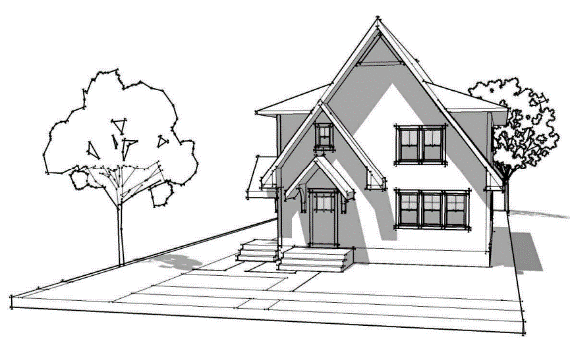 |
| The Baxter - a new rowhome duplex. | 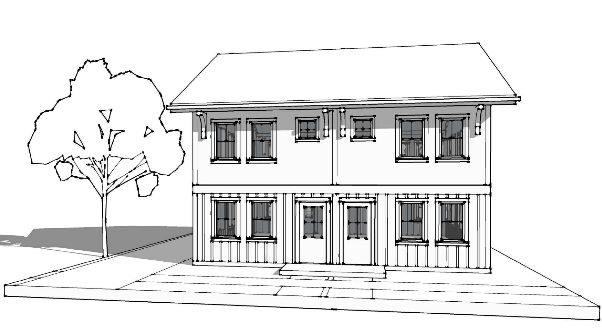 |
| The Capitol - a new up-down duplex. | 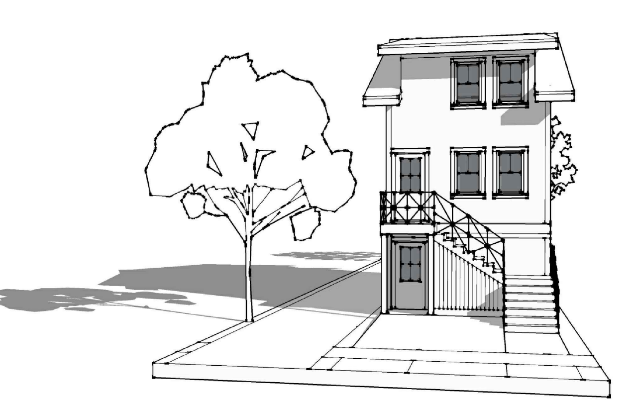 |
(b)
Duplexes/two-family dwellings in the RA-1 and RA-2 districts that do not comply with the approved MML patterns require special land use approval.
(Ord. No. O-06-25, § 1(Exh. A), 8-4-2025)
Sec. 98-91. - Funeral homes.
(a)
Signs. Signs must comply with the regulations of the zoning district in which the funeral home is located.
(b)
Dimensional requirements. The funeral home shall comply with all height and setback requirements for the district in which such use is located.
(c)
Parking. All parking areas and service areas shall be screened from view of abutting residential properties be screening landscaping not less than five (5) feet in height and/or through the provision of a completely obscuring wall or fence not less than five (5) feet in height.
(d)
Vehicle assembly area. Adequate vehicle assembly area shall be provided such that vehicles in funeral processions will not impede the free movement of traffic on abutting or nearby public streets.
(e)
Caretaker's residence. A caretaker's residence may be provided within the building of funeral homes or mortuary establishments.
(Ord. No. O-06-25, § 1(Exh. A), 8-4-2025)
Sec. 98-92. - Golf courses and country clubs.
Golf courses, which may or may not be operated for profit, subject to the following conditions:
(a)
Access. The site shall have access and frontage upon a public street. The site plan shall be laid out to achieve a relationship between the major thoroughfare and any proposed service roads, entrances, driveways and parking areas which will encourage pedestrian and vehicular traffic safety.
(b)
Relationship to adjacent residential districts. Development features, including the principal and accessory buildings and structures, shall be located and related to minimize any potential adverse effects on adjacent property.
(c)
Setbacks. All principal or accessory buildings shall be set back a minimum of two hundred (200) feet from any property line abutting residentially zoned lands. Exception: where topographic conditions are such that buildings would be screened from view, the planning commission may approve a modification to require a lesser setback.
(d)
Swimming pool fencing. Whenever a swimming pool is to be provided, it shall be provided with a protective fence six (6) feet in height; and entry shall be provided by means of a controlled gate.
(Ord. No. O-06-25, § 1(Exh. A), 8-4-2025)
Sec. 98-93. - Home occupations.
(a)
Zoning Districts Permitted. Home occupations are permitted in all zoning Districts where residential uses are permitted.
(b)
Approving Authority:
(1)
Home Occupation, Minor. None.
(2)
Home Occupation, Major. Building official, permit required.
(c)
Required conditions. Home occupations are permitted provided that the home occupation complies with the following:
(d)
Performance Standards for Noise:
(1)
The business shall not generate noise, vibrations, smoke, dust, odor, heat, or glare which are detectable beyond the property lines.
(2)
Recreational lessons/instruction may produce noise generated by a person's voice or noise produced by a person's recreational activity that is detectable beyond the property lines. Furthermore, the business shall not generate any electrical interference with radio or television transmission in the area that would exceed that which is normally produced by a residential dwelling unit.
(e)
Home occupation permits. Major home occupations require a permit. No permit is required for minor home occupations.
(f)
Permit Process:
(1)
Applications for a home occupation permit shall be submitted to the Development Services Department on a form approved by the City and must include the following:
a.
Property address.
b.
Owner name.
c.
Owner contact information.
d.
Description of business.
e.
Number of employees.
f.
Floor area.
g.
Number of customers per day.
h.
Hours of operation.
i.
Any proposed signage.
j.
Description of indoor storage, including what is being stored, where it is being stored, and how it is being stored.
k.
Description of merchandise sold on the premises or verification that no merchandise will be sold on the premises.
l.
Verification that no outdoor activities will be conducted.
m.
Sketch plan showing proposed home occupation.
(2)
The building official reviews all final home occupation applications and determines if the proposed request meets all the requirements of this section.
(3)
Prior to the issuance of a home occupation permit, a fee must be paid, as established by the City's fee schedule.
(4)
Home occupations shall be inspected by the building official, or designee prior to issuance of a permit. Approval is granted only if the home occupation is in compliance with the approved plans and all applicable Zoning and Building Code standards.
(5)
All rights and privileges acquired by any person under the provisions of this section may be revoked upon violation of any of the conditions herein.
(6)
A home occupation permit must be renewed two (2) years after the date of issuance on the permit.
(g)
Prohibited Home Occupations. The following uses are prohibited as home occupations:
(1)
Any repair of motorized vehicles such as engine repair, painting, or body work to automobiles, trucks, trailers, boats, heavy equipment, and lawn or landscaping equipment.
(2)
Any industrial use prohibited in residential districts in the permitted use table for industrial, transportation, and utility uses (Sec. 98-71).
(h)
Home Occupation Exemptions. The following are exempt from the requirements of this section:
(1)
Outdoor sales lasting no less than four (4) consecutive days and occurring no more than three (3) times per calendar year shall be considered garage or yard sales and shall be exempt from this section.
(2)
The sale of horticultural products grown on the premises may be sold on the premises and shall be exempt from this section.
(3)
Piano lessons and similar fine arts lessons are exempt per State law.
(Ord. No. O-06-25, § 1(Exh. A), 8-4-2025)
Sec. 98-94. - Hospital.
(a)
Operation. Hospitals shall be general hospitals, excluding those for criminals and those solely for the treatment of persons who are mentally ill or have contagious disease.
(b)
Height. Hospitals shall not exceed four (4) stories.
(c)
Site area. The site shall have a minimum area of five (5) acres and shall not be a lot of record.
(d)
Frontage. The proposed site shall have at least one (1) property line abutting a major thoroughfare. All ingress and egress to the off-street parking area, for guests, employees and staff, as well as any other uses of the facilities, shall be directly from a major thoroughfare.
(e)
Setbacks. The minimum setback for any principal or accessory structure shall be forty (40) feet for all two-story structures. The minimum setback shall be increased by ten (10) feet for every story above two (2).
(f)
Vehicle areas. Ambulance and delivery areas shall be obscured from all residential view with an obscuring wall or fence six feet in height.
(Ord. No. O-06-25, § 1(Exh. A), 8-4-2025)
Sec. 98-95. - Hotel or motel.
(a)
Access. Ingress and egress do not conflict with adjacent business uses.
(b)
Buffering from residential districts. A four-foot six-inch (4'6") obscuring wall or fence must be provided where abutting or adjacent districts are zoned for residential use.
(c)
Cooking facilities. No kitchen or cooking facilities are to be provided, with the exception of units for the use of the manager or caretaker.
(d)
Floor area. Each unit shall contain not less than two hundred fifty (250) square feet of floor area.
(e)
Occupancy. Occupancy shall be of a transient nature. A guest registry, indicating name, address, phone number, and vehicle license number, shall be kept indicating dates of arrival and departure of guests and shall be available to the City for inspection upon request. Accommodations for anyone person other than the operator/caretaker shall be for continuous periods not to exceed fourteen (14) days in any one month.
(Ord. No. O-06-25, § 1(Exh. A), 8-4-2025)
Sec. 98-96. - Housing for the elderly.
(a)
Minimum requirements. Housing for the elderly shall comply with the following minimum requirements:
(Ord. No. O-06-25, § 1(Exh. A), 8-4-2025)
Sec. 98-97. - Industrial hemp facilities.
The following standards shall apply to all industrial hemp facilities, unless noted as applying specifically to type A or type B facilities:
(a)
Odor control plan. The operator of an industrial hemp facility shall prepare an odor control plan specifying the engineering and administrative controls the facility will use to the migration of odors generated from handling, processing, and storing industrial hemp, and/or migration of odors generated from the materials identified in subsection (e) below. The odor control plan shall be stamped by a mechanical engineer, or other qualified professional, registered by the State of Michigan, certifying the adequacy of the proposed ventilation and odor control system to perform the required mitigation. The odor control plan shall be prepared using industry-specific best control technologies and management practices for each odor source in the facility and shall include, at minimum:
(1)
A facility floor plan, with location of odor producing activities specified. Relevant information shall include, but is not limited to, the location of doors, windows, ventilation systems, odor control systems, and odor sources.
(2)
Specific odor-producing activities, describing the processes that will take place at the facility and the sources of the odors associated with, but not limited to, vegetative flowering, processing, drying and storage.
(3)
For each source of an odor, including, but not limited to, handling, processing, and storage of industrial hemp and/or from the materials identified in subsection (e) below, specify the administrative processes and technologies the facility will use, including:
a.
A description of proposed actions or technologies for each odor producing activity, including the number of products proposed to be used and product names, provided by the manufacturer or supplier of the technology;
b.
Description of the calculating formulas provided by the manufacturer or supplier of the technology and/or mechanical engineer, to size the proposed odor control technologies for the specific use and odor sources to be controlled within the facility;
c.
Maintenance and replacement schedule of key system components, provided by the manufacturer or supplier of the technology and/or mechanical engineer;
d.
Building management activities intended to isolate odor-producing activities from the other areas of the buildings;
e.
Staff training procedures, including organizational responsibilities and the roles/titles of staff members who shall be trained about odor control;
f.
Recordkeeping systems and forms describing what records will be maintained by the facility operator;
g.
Description of daily standard operating procedures to verify that odor control systems are operational;
h.
Evidence that ventilation and odor controls are operational, sufficient to effectively mitigate odors for all sources consistent with accepted and available industry-specific best control technologies designed to effectively mitigate odors.
(b)
Traffic management plan. The operator of an industrial hemp facility shall prepare a traffic management plan detailing the number and timing of delivery vehicles and logistical traffic flowing from the property, including all routes used in and out of the City.
(c)
Operational management plan. The operator of an industrial hemp facility shall prepare an operational management plan detailing the number of employees and hours of operation.
(d)
Security and safety plan. The operator of an industrial hemp facility shall prepare a security and safety plan detailing site security operations, video surveillance, and access by City of Tecumseh Police and Fire, subject to approval by City administration.
(e)
Hazardous materials and waste management plan. The operator of an industrial hemp facility shall prepare a hazardous materials and waste management plan detailing all hazardous and noxious materials used in industrial processing with storage locations and disposal details. Type B facilities shall be required to provide details on the use of ethanol, pentene, pentane, butane, and other flammable and/or hazardous substances, with an alternate plan for the use of a non-flammable and/or hazardous processes stating if such alternate processes and/or substances are reasonable feasible production alternatives.
(f)
Type B facilities shall be located greater than four hundred (400) feet from all residential districts measured by the shortest distance from facility structure(s) to the closest residential district property line. Planning commission may modify this requirement upon review of the required management plans and proposed mitigation activities.
(g)
The City may use contracted staff and require payment of peer review escrow fees to review the odor control plan, traffic management plan, operational plan, security and safety plan, and hazardous materials and waste management plan.
(Ord. No. O-06-25, § 1(Exh. A), 8-4-2025)
Sec. 98-98. - Kennel, commercial.
(a)
I-C district requirements.
(1)
Overnight accommodation of animals. Animals are to be housed in an enclosed building from 7:00 p.m. until 8:00 a.m. of the next day.
(2)
Proximity to residential districts. Any kennel that abuts or is adjacent to a residential district shall comply with the requirements for a commercial kennel located in a residential district.
(b)
RA-1 and RA-2 district requirements.
(1)
Minimum site area. Such activity shall be permitted only on a parcel of land not less than five (5) acres in area and provided, further, that such parcel shall not abut or be adjacent to any lot or parcel which is part of a recorded residential subdivision.
(2)
Enclosures. All animals shall be kept in pens or cages designed, constructed and maintained so as to be harmonious and appropriate in appearance with the character of the general area in which located, and such use will not affect the character of the same area in a negative way.
(3)
Enclosure setbacks. All pens or cages shall be located not less than one hundred (100) feet from any property line and all animals shall be kept therein or within a building. No animal shall be allowed to run at large.
(4)
Noise and odor. Such activity shall be conducted so as not to be detrimental to any person, property or the general welfare by reason of excessive noise or odor.
(5)
Nuisance prohibited.
a.
The keeping of the animals described in this subsection shall not constitute a nuisance to persons living in the surrounding area. Upon receipt of a written complaint filed by a neighbor with the City stating the animals constitute a nuisance, the zoning board of appeals shall hold a hearing with notice to all property owners within three hundred (300) feet of the property where the animals are kept. The zoning board of appeals shall determine if in fact the animals do constitute a nuisance.
b.
If the zoning board of appeals determines that the animals have and will likely continue to constitute a nuisance, the animals shall not be kept on the property after the date set by the zoning board of appeals. If, in the opinion of the zoning board of appeals, there is reason to believe that reasonable measures will be taken to alleviate the nuisance associated with the animals, the zoning board of appeals may issue a permit, renewable yearly, for the keeping of such animals with or without restrictions. If a hearing is held and a determination is made, the matter may not be reviewed again on a complaint of a neighbor unless there has been a change of circumstances.
(6)
Remedy. No person shall allow animals under such person's control or ownership to constitute a nuisance. The violation of this subsection may be prosecuted in the district court or may be enjoined in the circuit court. Notwithstanding anything to the contrary in this Ordinance, this subsection shall not be a limitation on, lessen the effect of, or interfere with any other City ordinance pertaining to animals, and the enforcement of it.
(Ord. No. O-06-25, § 1(Exh. A), 8-4-2025)
Sec. 98-99. - Lumber or planing mills.
Such uses shall be completely enclosed within a building and located in the interior of the I-1 district such that no property line forms the exterior boundary of the I-1 district.
(Ord. No. O-06-25, § 1(Exh. A), 8-4-2025)
Sec. 98-100. - Manufacturing.
Heavy industrial uses that include noxious or disruptive characteristics shall be located not less than four hundred (400) feet from any residential district.
(Ord. No. O-06-25, § 1(Exh. A), 8-4-2025)
Sec. 98-101. - Multiple-family development.
(a)
Applicability. The provisions in this section apply to multiple-family dwelling developments, which include dwelling units with two (2) or more attached units but does not include attached one-family dwelling units, single duplexes, single triplexes, single quadplexes, upper-level residential, or accessory dwelling units.
(b)
Internal Setbacks. In multiple-family developments containing more than one (1) principal structure, shall comply with the following minimum internal setbacks:
(1)
Front yard: twenty (20) feet.
(2)
Side yard: twenty (20) feet.
(3)
Rear Yard: forty (40) feet.
(c)
Accessibility. Multiple-family dwelling developments containing more than one (1) principal structure on a single lot or parcel must include an unobstructed walkway or pathway providing access between the principal structures.
(d)
Façade Variation. Each multiple-unit building shall feature a variety of massing elements, wall planes, roof lines, and other characteristics which divide facades into human-scaled proportions. Variation may be provided by one (1) or more of the following means:
(1)
Building projections and recesses.
(2)
Balconies.
(3)
Covered box or bay windows.
(4)
Changes in roof plane and elevation.
(5)
Dormers or gables.
(6)
Variation in building height or cornice heights.
(7)
Change of wall material or wall color.
(e)
Exterior Finish Materials. Primary materials shall include brick, natural stone, cultured stone, smooth wood siding, or fiber cement siding. Accent materials (up to twenty-five percent (25%) of the net façade) may include architectural metal, asphalt siding, stucco, aluminum siding, EIFS, reflective glass, vinyl cladding, or concrete block (CMU). The planning commission may consider alternative accent materials.
(f)
Parking. To the maximum extent feasible, parking structures, carports, and garages shall not be located between the front or primary façade of a multi-family building and the street frontage/internal drive frontage adjacent to the front lot line. Parking shall be internalized within building groups so as not to be directly visible from the street frontage.
(Ord. No. O-06-25, § 1(Exh. A), 8-4-2025)
Sec. 98-102. - Outdoor dining.
(a)
Intent. In the interest of promoting business by increasing activity and improving the general business climate, the development services director or his designee may issue revocable permits to businesses that apply for a permit to operate an outdoor dining area, also referred to as a sidewalk café, as an extension of or compatible with the existing business on a portion of a City sidewalk adjacent to the business, or an outdoor dining patio located elsewhere on the site.
(b)
Definitions:
(1)
Outdoor Dining Area. A designated space where food and/or beverages are served and consumed outside of a principal business, including sidewalk cafés and outdoor seating areas on private property.
(2)
Sidewalk Café. An outdoor dining area located on a public sidewalk or within the public right-of-way, directly adjacent to the principal business.
(3)
Pedestrian Clearance Zone. A continuous, unobstructed path reserved for pedestrian movement, free of furnishings or obstructions, and compliant with ADA accessibility standards.
(c)
Standards. Outdoor dining areas must comply with the City of Tecumseh Sidewalk Café Design Guidelines, which may be obtained from the building services department.
(d)
Permit required. An Outdoor Dining Permit is required to implement outdoor dining areas. Any outdoor dining along a State or County right-of-way will require the approval by the agency of jurisdiction.
(e)
Permit process:
(1)
Applications for an outdoor dining permit shall be submitted to the development services department on a form approved by the City and must include the following:
a.
General Information:
1.
Business name.
2.
Business address.
3.
Property owner (if different from applicant).
4.
Applicant name and contact information.
5.
Type of dining area: Sidewalk Café (Public Right-of-Way) or Outdoor Seating (Private Property).
b.
Site Plan. A scaled drawing showing:
1.
Location of the principal building and entrance(s).
2.
Boundaries of the outdoor dining area.
3.
Dimensions of the dining area.
4.
Location of the pedestrian clearance zone (minimum five (5) feet wide).
5.
Location of tables, chairs, umbrellas, planters, and all furnishings.
6.
Location and design of enclosures, including materials and height.
7.
Existing street furniture, trees, utility poles, or hydrants within ten (10) feet.
8.
Emergency access path (minimum width and clearance).
9.
Proposed landscaping or screening elements.
c.
Enclosure Details:
1.
Height of enclosure (must be thirty-six (36) to forty-eight (48) inches).
2.
Materials used (must match list of allowable materials).
3.
Whether enclosure is fixed or removable.
4.
Description or product photos/spec sheets.
d.
Furnishings and Materials:
1.
List and images or descriptions of all proposed furnishings.
2.
Materials and colors used.
3.
Information on any lighting, heaters, or shade structures.
e.
Accessibility Compliance:
1.
Statement confirming ADA compliance.
2.
Description of accessible seating and circulation routes.
f.
Maintenance Plan. Description of how the dining area will be maintained, including:
1.
Daily cleaning and trash removal.
2.
Landscaping care and seasonal changes.
3.
Procedures for securing/removing furnishings during off-hours or inclement weather.
g.
Operational Details:
1.
Proposed operating hours.
2.
Whether alcohol will be served.
3.
Whether music or amplified sound will be used (and how it will comply with local regulations).
h.
Insurance and Liability (if in public right-of-way):
1.
Proof of liability insurance listing the City as an additional insured.
2.
Indemnification agreement (signed).
i.
Signature and Acknowledgement:
1.
Applicant signature.
2.
Property owner's consent (if applicable).
3.
Agreement to comply with all ordinance provisions and maintain the area responsibly.
(2)
The development services director reviews all outdoor dining applications and determines if the proposed request meets all the requirements of this section.
(3)
Fee. Prior to the issuance of an outdoor dining permit, a fee must be paid, as established by the City's fee schedule.
(4)
Inspection. Outdoor dining areas shall be inspected by the development services director, or designee prior to issuance of a permit. Approval is granted only if the outdoor dining area is in compliance with the approved plans and all applicable Zoning and Building Code standards.
(5)
Violations. All rights and privileges acquired by any person under the provisions of this section may be revoked upon violation of any of the conditions herein. If it is found that a business is in violation of the conditions of their outdoor dining permit, their outdoor café permit may be suspended for up to a year at the discretion of the development services director.
(6)
Period. An outdoor dining permit remains valid indefinitely unless modifications are made to the originally approved outdoor dining area or the property to which it is accessory undergoes a change in ownership. Outdoor seating and planters shall only be permitted from April 1 st to October 31 st each year and must be removed during the period of November 1 st to March 31 st .
(Ord. No. O-06-25, § 1(Exh. A), 8-4-2025)
Sec. 98-103. - Outdoor equipment or materials storage.
(a)
Screening. That portion of the land used for open storage facilities for materials or equipment shall be totally obscured by a wall on those sides abutting residential, office or business districts, and on any yard abutting a public thoroughfare. The extent of such a wall may be determined by the planning commission on the basis of usage. Such a wall shall not be less than six feet in height and may, depending upon land usage, be required to be eight (8) feet in height and shall be subject to front yard setback requirements of the district.
(b)
Landscaping. Shrub planting shall be installed abutting the wall on those sides exposed to public view within six (6) months from the date of issuance of a certificate of occupancy. All planting plans shall meet the requirements of Article X and shall be subject to the approval of the planning commission.
(c)
Inspection and maintenance. Planting areas shall be subject to yearly inspection for maintenance and for compliance with the intent of this section.
(Ord. No. O-06-25, § 1(Exh. A), 8-4-2025)
Sec. 98-104. - Pet boarding facility.
A pet boarding facility is a business for the temporary boarding and care of common household pets generally during daytime hours, but in some cases including overnight boarding. Pet boarding facilities may provide related services such as grooming or training, but no animals may be bred or sold at a pet boarding facility unless the pet boarding facility is accessory to a principal retail use. Pet boarding facilities are subject to the following requirements:
(a)
A maximum of ten percent (10%) of the gross floor area of the building or lease space may be used for retail sales of goods related to pets.
(b)
Pets may be boarded at the facility for a maximum of one hundred sixty-eight (168) continuous hours (one (1) week).
(c)
On-site vehicular circulation shall be configured to accommodate vehicles within the boundaries of the site. In no case shall vehicles awaiting drop-off or pick-up of a pet be allowed to encroach onto a public or private street.
(d)
Any pets being boarded overnight shall be confined to the building from the hours of 9:00 p.m. until 6:30 a.m.
(e)
Pet boarding facilities shall be constructed, maintained, and operated so that the sounds and smell of animals cannot be discerned outside of the building. Outdoor runs shall be maintained so that no odors are discernable from adjacent properties.
(f)
Outdoor runs where pets will be permitted either on or off-leash shall be set back a minimum of one hundred (100) feet from any adjacent residentially zoned or used land. The one hundred-foot setback notwithstanding, outdoor runs shall be located as far as practicable from any adjacent residential zoning district. Any outdoor runs where pets will be permitted off-leash shall be surrounded by a minimum six-foot-tall fence. If the fence will be visible from any adjacent residential district or road right-of-way, the fence shall be decorative in nature.
(g)
Outdoor runs shall be fully enclosed with a six-foot fence.
(h)
The planning commission may require a landscaped buffer or solid wall to be provided between the outdoor run and any adjacent residential district if the location of the proposed outdoor run could negatively impact adjacent or nearby residentially zoned or used land.
(Ord. No. O-06-25, § 1(Exh. A), 8-4-2025)
Sec. 98-105. - Plant nursery.
Plant materials nursery for the retail sale of plant materials not grown on the site, and sales of lawn furniture, playground equipment and garden supplies subject to the following conditions:
(a)
Outdoor storage and display. The storage and/or display of any materials and/or products shall meet all setback requirements for a structure in the zoning district.
(b)
Parking and loading. All loading and parking shall be provided off-street.
(c)
Storage of loose materials. The storage of any soil, fertilizer or other loose, unpackaged materials shall be contained so as to prevent any effects on adjacent uses.
(Ord. No. O-06-25, § 1(Exh. A), 8-4-2025)
Sec. 98-106. - Private and institutional recreation areas.
Private recreational areas and institutional recreation centers when not operated for profit, nonprofit swimming pool club, all subject to the following conditions:
(a)
Property owner consent required. As a condition to the original granting of such permit and the operation of such nonprofit swimming pool club, as a part of such application, the applicant shall obtain from 100 percent of the freeholders residing or owning property, within a one hundred fifty-foot radius, immediately adjoining any property line of the site proposed in this subsection for development; a written statement or waiver addressed to the City council recommending that such approval be granted. Also, approval from fifty-one percent (51%) of the homeowners within one thousand (1,000) feet shall be received in writing.
(b)
Site location. In those instances where the proposed site is not to be situated on a lot of record, the proposed site shall have one (1) property line abutting a major thoroughfare; and the site shall be so planned as to provide ingress and egress directly on to the major thoroughfare.
(c)
Setbacks. Front, side and rear yards shall be at least seventy-five (75) feet wide, except on those sides adjacent to nonresidential districts, and shall be landscaped in trees, shrubs, grass and terrace areas. All such landscaping shall be maintained in a healthy condition. There shall be no parking or structures permitted in these yards, except for required entrance drives and those walls and/or fences used to obscure the use from abutting residential districts.
(d)
Building height. Buildings erected on the premises shall not exceed one (1) story or sixteen (16) feet in height.
(e)
Swimming pool fencing. Whenever a swimming pool is constructed under this chapter, the pool area shall be provided with a protective fence six (6) feet in height; and entry shall be provided by means of a controlled gate.
(f)
Parking. Off-street parking shall be provided so as to accommodate at least one-fourth of the member families and/or individual members. Bylaws of the organization shall be provided to the planning commission in order to establish the membership involved in computing parking requirements.
(g)
Utilities. All storm and sanitary sewer plans shall be provided and shall be reviewed and approved by the City engineer prior to the issuance of a building permit.
(h)
Site layout. The off-street parking and general site layout and its relationship to all adjacent lot lines shall be reviewed by the planning commission, who may impose any reasonable restrictions or requirements so as to ensure that contiguous residential areas will be adequately protected.
(Ord. No. O-06-25, § 1(Exh. A), 8-4-2025)
Sec. 98-107. - Religious institutions.
(a)
Access. The site shall be so located as to provide for ingress to and egress from the site directly onto an arterial, minor arterial, or collector street as defined in the City of Tecumseh Comprehensive Plan.
(b)
Setbacks. The principal buildings on the site shall be set back from abutting properties zoned for residential use not less than fifteen (15) feet.
(c)
Building height. Buildings of greater than the maximum height allowed in the zoning district may be allowed provided front, side and rear yards are increased above the minimum requirements by one (1) foot for each foot of building that exceeds the maximum height allowed.
(Ord. No. O-06-25, § 1(Exh. A), 8-4-2025)
Sec. 98-108. - Retail sales.
The architectural guidelines listed below are intended to encourage design alternatives to corporate franchise prototypes, and to reinforce the community identity of the City of Tecumseh. These guidelines are not intended to discourage creativity or innovation; therefore, the planning commission may waive any or all of the guidelines listed below for a project of particular architectural merit.
(a)
Applicability. Retail sales with a floor plate of twenty-five thousand (25,000) square feet or greater shall adhere for subsections (b) and (c). Retail sales with a floor plate under twenty-five thousand (25,000) square feet, shall only comply with the requirements in subsection (b), architectural design standards.
(b)
Architectural design standards. Facades should be articulated to reduce the massive scale and the monotony of long, unbroken horizontal and vertical planes of large buildings. Detail features should be crafted to provide visual interest and pedestrian scale that will be consistent with the streetscape and the community identity of Tecumseh.
(1)
Horizontal facades greater than one hundred (100) feet in length shall incorporate wall plane projections or recesses having a depth of at least three percent (3%) of the length of the facade and extending at least twenty percent (20%) of the length of the facade. No uninterrupted length of any facade shall exceed one hundred (100) horizontal feet.
(2)
Ground floor facades that face streets or public ways shall have arcades, display windows, entry areas, foyers, awnings, or other such features along a minimum of forty percent (40%) of their horizontal length.
(3)
Vertical variations in roof lines shall be incorporated to add visual interest and reduce the monotony and mass of large non-residential buildings. Roof features should complement the character of surrounding properties. At least one (1) of the following roof forms shall be incorporated into the design of each large non-residential building:
a.
Sloping roof planes, with an average slope equal to, or greater than, six (6) inches of vertical rise for every twelve (12) inches of horizontal run;
b.
Parapets or other architectural devices shall be incorporated to conceal flat roofs and rooftop mechanical and ventilation equipment;
c.
Overhanging eaves, extending no less than eighteen (18) inches past the supporting walls.
(4)
Entryway design elements and variations should give orientation and pleasing character to the building. Each principal building on a site shall have clearly defined, highly visible customer entrances. Large non-residential buildings shall provide design elements, such as archways or glass that will allow for one additional entryway for every twenty-five thousand (25,000) square feet of gross floor area on a single floor or fraction thereof, so that the building will have future re-use potential for multiple commercial or industrial tenants. Entryway design shall include a minimum of four (4) of the following elements:
a.
Canopies or porticos.
b.
Overhangs.
c.
Recesses and/or projections.
d.
Arcades.
e.
Raised corniced parapets over the door.
f.
Peaked roof forms.
g.
Arches.
h.
Outdoor patios.
i.
Display windows.
j.
Architectural details such as tile work and moldings which are integrated into the building structure and design.
k.
Integral planters or wing walls that incorporate landscaped areas and/or places for pedestrians to sit.
(c)
Pedestrian amenities. Large non-residential retail establishments shall provide for pedestrian and bicycle accessibility within the site and provide for appropriate connections to points outside of the site.
(1)
Sidewalks shall be provided along the full length of the building along any facade featuring a customer entrance.
(2)
At a minimum, walkways shall connect focal points of pedestrian activity, such as transit stops, street crossings, building and store entry points, and shall feature adjoining landscaped areas that include trees, shrubs, benches, flower beds, ground covers, or other such materials.
(3)
All internal pedestrian walkways shall be distinguished from driving surfaces through the use of durable surface materials such as pavers, bricks, or scored concrete to enhance pedestrian safety.
(Ord. No. O-06-25, § 1(Exh. A), 8-4-2025)
Sec. 98-109. - Retail sales, outdoor.
Retail sales area accessory to a retail sales use in a principal building may be permitted, provided that the outdoor sales space does not exceed two thousand five hundred (2,500) square feet in area in the B-1 district. There is no specific area limitation in the B-3 district.
(Ord. No. O-06-25, § 1(Exh. A), 8-4-2025)
Sec. 98-110. - Salvage operations and junkyards.
Junkyards and places so called for the dismantling, wrecking and disposing of the junk and/or refuse material of agricultural and automotive vehicles may be permitted in the I-1 district subject to the following standards:
(a)
Permits. Permits or licenses for one-year periods upon authorized inspection and approval of the development services director, whose approval shall be based on the performance standards set forth in Article VIII, Division 6.
(b)
Area. Such activity shall be permitted only on a parcel of land not less than five (5) acres in area.
(c)
Setbacks. Such operations shall be located a minimum of three hundred (300) feet from the border of any I-1 district.
(d)
Screening. Type "C" screening, as described in Sec. 98-254, is required when a salvage operation or junkyard abuts a residential district or residential use.
(Ord. No. O-06-25, § 1(Exh. A), 8-4-2025)
Sec. 98-111. - Self-storage facilities.
(a)
Building spacing. Buildings shall be spaced not less than thirty (30) feet apart on those sides having entrance doors.
(b)
Storage of recreational vehicles and equipment. Storage of recreational vehicles and equipment may be a principal permitted use when not accessory to mini-warehouses and storage buildings, provided such storage area is enclosed with a decorative fence of at least four (4) feet and a landscaping berm of at least two (2) feet in height along the parcel frontage and a screening fence not less than six (6) feet in height along the side and rear portions of the parcel. The outdoor storage area shall be provided with obscuring plant materials and other approved vegetation as stipulated in this Ordinance along the entire parcel frontage. A fence bordering a residential use must be opaque.
(c)
Caretakers' residence. Caretakers' residences are permitted in conjunction with a self-storage facility.
(Ord. No. O-06-25, § 1(Exh. A), 8-4-2025)
Sec. 98-112. - Single-family dwelling units.
(a)
All single-family dwelling units shall be reviewed by the development services director subject to the following conditions:
(1)
Dwelling units shall conform to all applicable City codes and ordinances. Any such local requirements are not intended to abridge applicable state or federal requirements with respect to the construction of the dwelling.
(2)
Dwelling units shall be permanently attached to a perimeter foundation. In instances where the applicant elects to set the dwelling on piers or other acceptable foundations which are not at the perimeter of the dwelling, a perimeter wall shall also be constructed. Any such perimeter wall shall be constructed of durable materials and shall also meet all local requirements with respect to materials, construction and necessary foundations below the frostline. Any such wall shall also provide an appearance which is compatible with the dwelling and other homes in the area.
(3)
Dwelling units shall be provided with exterior finish materials similar to the dwelling units on adjacent properties or in the surrounding residential neighborhood.
(4)
Dwelling units shall be provided with roof designs and roofing materials similar to the dwelling units on adjacent properties or in the surrounding residential neighborhood.
(5)
Dwelling units shall be provided with an exterior building wall configuration which represents an average width-to-depth or depth-to-width ratio which does not exceed 3:1 or is in reasonable conformity with the configuration of dwelling units on adjacent properties or in the surrounding residential neighborhood.
(6)
The dwelling shall contain storage capability in a basement located under the dwelling, in an attic area, in closet areas, or in a separate structure of standard construction similar to or of better quality than the principal dwelling, which storage area shall be equal to ten percent (10%) of the square footage of the dwelling or one hundred (100) square feet, whichever shall be less.
(7)
Any such home shall be anchored by an anchoring system approved by the City.
(b)
The development services director may request a review by the planning commission of any dwelling unit with respect to the design requirements of this section. The development services director or planning commission shall not seek to discourage architectural variation but shall seek to promote the reasonable compatibility of the character of dwelling units, thereby protecting the economic welfare and property value of surrounding residential uses and the City at large.
In reviewing any such proposed dwelling unit, the development services director may require the applicant to furnish such plans, elevations and similar documentation as it deems necessary to permit a complete review and evaluation of the proposal. When comparing the proposed dwelling unit to similar types of dwelling areas, consideration shall be given to comparable types of homes within three hundred (300) feet. If the area within three hundred (300) feet does not contain any such homes, the nearest twenty-five (25) similar type dwellings shall be considered.
(Ord. No. O-06-25, § 1(Exh. A), 8-4-2025)
Sec. 98-113. - Stamping.
Manufacturing of products using stamping facilities or procedures shall not create vibration beyond the property line of such manufacturing facility.
(Ord. No. O-06-25, § 1(Exh. A), 8-4-2025)
Sec. 98-114. - Trades showrooms.
Offices and showrooms of plumbers, electricians, decorator, or similar trades are subject to the following requirements:
(a)
Workshop space. Not more than twenty-five percent (25%) of the floor area of the building or part of the building occupied by the establishment is used for making, assembling, remodeling, repairing, altering, finishing or refinishing its products or merchandise.
(b)
Appearance from street. The ground floor premises facing upon and visible from any abutting street shall be used only for entrances, offices or display.
(c)
Outdoor storage prohibited. All storage of materials shall be within the confines of the building or part of the building occupied by the establishment.
(Ord. No. O-06-25, § 1(Exh. A), 8-4-2025)
Sec. 98-115. - Upper-story dwelling units.
To encourage and provide for the economic vitality of the central business district, residential occupancy shall be permitted in buildings of two (2) stories in height or greater, subject to the following conditions:
(a)
Ground level residence prohibited. No dwelling unit shall occupy any portion of the building at ground level or below ground level. Businesses may occupy any number of total floors.
(b)
Mixed uses on same floor. In those instances where residential uses are proposed to occupy the same floor as a business use, the planning commission shall review such mixed use and may approve such mixed use based on findings that compatibility of the business with residential occupancy will occur. Such findings may include but are not limited to:
(1)
Compatible hours of operation.
(2)
Noise of operation or occupancy that would be detrimental to the business operation or vice versa.
(3)
Excessive foot traffic.
(c)
Minimum floor area. Each dwelling unit shall have a minimum floor area as follows:
(d)
Parking. Off-street parking shall be provided in accordance with Article XI of this chapter and shall be provided in designated off-street parking areas within one thousand three hundred twenty (1,320) feet of the dwelling unit they are to serve.
(Ord. No. O-06-25, § 1(Exh. A), 8-4-2025)
Sec. 98-116. - Vehicle fueling stations.
Automobile service station for sale of gasoline, and oil, and not including repair, and subject to the following:
(a)
Ingress and egress. The curb cuts for ingress and egress to a service station shall not be permitted at such locations that will tend to create traffic hazards in the immediately adjacent streets. Entrances shall be no less than twenty-five (25) feet from a street intersection (measured from the roadway) or from adjacent residential property and subject to other ordinances of the City.
(b)
Area. The minimum lot area shall be ten thousand (10,000) square feet and so arranged that ample space is available for motor vehicles which are required to wait.
(c)
Buffering from residential districts. There shall be provided, on those sides abutting or adjacent to a residential district, a four-foot six-inch (4'6") completely obscuring wall or fence. The height of the wall or fence shall be measured from the surface of the ground.
(d)
Restroom doors. All restroom doors shall be shielded from adjoining residential property.
(Ord. No. O-06-25, § 1(Exh. A), 8-4-2025)
Sec. 98-117. - Vehicle sales/rental, outdoor.
Outdoor sales space for exclusive sale of new or used automobiles, trucks, motor homes or house trailers subject to the following:
(a)
Access. Ingress and egress to the outdoor sales area shall be at least sixty (60) feet from the intersection of any two (2) streets.
(b)
Buffering from residential districts. A four-foot six-inch (4'6") obscuring wall or fence must be provided when abutting or adjacent districts are zoned for residential use.
(c)
Repair and refinishing prohibited. No major repair or major refinishing shall be done outside of a building.
(Ord. No. O-06-25, § 1(Exh. A), 8-4-2025)
Sec. 98-118. - Vehicle service and repair.
Automotive service businesses such as mechanic's shops, muffler shops, shock absorber replacement shops, brake shops, lube shops, tire stores, undercoating shops, detailing shops, and similar automotive oriented uses subject to the following conditions:
(a)
Access. Access to such use shall be directed to a major or collector street or shall be to a minor street which has direct access to an abutting major or collector street.
(b)
Outdoor storage. Outdoor storage of parts or materials shall be prohibited unless stored in proper containers or in a completely enclosed building but excluding prefabricated storage sheds. Outdoor overnight parking of vehicles awaiting service shall be prohibited.
(c)
Customer parking. Areas for off-street parking required for customers' use shall not be utilized for parking of vehicles awaiting service.
(d)
Outdoor repair limited. All vehicle servicing or repair, except minor repairs such as, but not limited to, tire changing and headlight changing shall be conducted within a building.
(e)
Parts containers. Suitable containers shall be provided and utilized for the disposal of used parts, and such containers shall be screened from public view.
(f)
Buffering from residential districts. A six-foot obscuring wall shall be provided and maintained on those property lines adjacent to or abutting a residential district.
(Ord. No. O-06-25, § 1(Exh. A), 8-4-2025)
Sec. 98-119. - Veterinary clinics.
Small animal walk areas shall be provided in an area other than public street rights-of-way or sidewalk areas. Outdoor areas, including animal walk areas, shall be cleaned and maintained at all times.
(Ord. No. O-06-25, § 1(Exh. A), 8-4-2025)
Sec. 98-120. - Wireless communication.
(a)
Purpose. The purpose of this section is to provide a process and to set standards for the construction, expansion and modification of wireless communications facilities (WCF), to protect the historic, scenic and visual character of the City, and to comply with federal laws and regulations regarding wireless communications facilities and to provide reasonable access.
(b)
Applicability. This section applies to all construction, expansion, modification, maintenance, and operation of wireless communications facilities except:
(1)
Emergency WCF. Temporary wireless communications facilities for emergency communications by public officials.
(2)
Maintenance or repair. Maintenance or repair of a WCF and related equipment provided that there is no change in the height or any other dimension of the facility.
(3)
Temporary wireless communications facility. Temporary WCF, in operation for a maximum period of seven days.
(4)
Antenna as accessory uses. An antenna, other than parabolic dish antenna greater than five (5) feet in diameter, that receives only and is accessory to a permitted use, that is, related to such use but clearly incidental and subordinate.
(c)
Approval authority. No person or agency shall construct or expand a WCF without approval of the building official, planning commission, or the City council as follows:
(1)
Approval by the building official is required for:
a.
A WCF not exceeding sixty-five (65) feet in height used for licensed amateur ("HAM") radio, which is not additionally licensed or used for any commercial purpose other than by the licensed amateur radio operator, and when there is no other WCF on the parcel on which the new WCF is to be located.
b.
Co-location on an existing WCF that does not increase the height of the support structure.
c.
A disguised WCF not exceeding thirty-five (35) feet in height.
d.
A hidden WCF.
(2)
Approval by the planning commission is required for construction of a new WCF monopole structure on public property owned by the City, school district, or on any property located in the I-1 or I-C district.
(3)
Special land use approval by the City council is required for construction of any new monopole WCF in any zoning district other than the I-1 or I-C district.
(d)
Application requirements. Applicants seeking approval for an WCF shall submit all applicable materials from the following list, as identified by the building official:
(1)
A copy of the FCC license for the facility, or the license to operate within an assigned geographic area including the City of Tecumseh.
(2)
A signed statement from the owner or operator of the facility attesting that the facility complies with and will comply with FCC regulations.
(3)
A map showing the location of all existing and approved WCFs within a four-mile radius of the proposed WCF.
(4)
A written statement of the need for a WCF at the particular location. The statement should also describe reasonably anticipated expansion plans for the WCF, and reasonably anticipated changes of technology and their effect on expansions of the proposed facility.
(5)
Evidence demonstrating that no existing building, site, or structure or more preferred support structure as identified in subsection 98-120(e)(1), below.
(e)
Wireless telecommunication facility support structure standards.
(1)
Limitation on new support structures. It is the City's policy to minimize the proliferation of new wireless telecommunication facility support structures in favor of collocation of such facilities on existing structures. No new wireless telecommunication facility support structures shall be constructed unless the applicant for the new structure demonstrates, and the planning commission finds, that collocation on an existing structure is not adequate or is not reasonably feasible.
New WCF facilities must be located according to this list of preference, from most preferred to least preferred. A new WCF facility will not be approved unless the applicant can demonstrate to the satisfaction of the review authority that all of the more preferred WCFs are not practical.
a.
Hidden WCFs.
b.
Co-location on an existing support structure.
c.
Disguised WCFs.
d.
Location on existing structures.
e.
Ground-mounted WCFs.
f.
New monopole WCF.
(2)
Monopole design required. All WCF support structures, unless otherwise provided, shall have a monopole, unipole or similar non-lattice, single vertical structure design and shall be further designed to accommodate at least four (4) wireless telecommunication arrays of antennas or panels. The applicant shall submit an affidavit by a design engineer registered in the state attesting that the support structure can support at least four (4) wireless telecommunication arrays of antennas or panels. The site plan for any new support structure shall expressly state that the support structure shall be erected and available for collocation and shall also show the proposed location of the applicant's and co-locators' equipment shelters and related facilities.
(3)
Maximum height. WCFs shall not exceed one hundred eighty-five (185) feet in height, as measured from the average grade at the base of the support structure to the top of the antenna or panel. In no case shall the height exceed any applicable height limitation established by county, state or federal regulations.
(4)
One support structure per lot. Except in the I-1 or I-C zoning district, not more than one WCF support structure may be located on a single lot.
(5)
Location on lot. If located on the same lot as another permitted use, a ground-mounted or monopole WCF shall not be located in a front yard or side yard abutting a street.
(6)
Setbacks. Ground-mounted and monopole WCFs shall be set back from the lot line a distance not less than one-half of its height or sixty-five (65) feet, whichever is greater. However, when wireless telecommunication facilities are located on premises abutting residentially zoned or used land, the minimum setback from the lot line abutting the residentially zoned lot shall be equal to the height of the facility. All setbacks shall be measured from the edge of the WCF support structure.
(7)
Signs. No sign shall be attached to or displayed on a WCF other than signs required by federal, state, or local law. No signals or lights or other means of illumination shall be permitted on a facility unless required by state or federal law or regulation. The facility shall have a neutral color intended to blend with the surroundings.
(8)
Equipment shelters. If the wireless telecommunication facility is located on a site which is already improved with another building or structure, and an equipment shelter is proposed, the equipment shelter shall be constructed with exterior facade materials similar to the principal building or structure on the site. Equipment shelters and accessory structures are limited to uses associated with the WCF and may not be located closer than thirty (30) feet to any property line.
(9)
Fence. A minimum six-foot tall decorative fence shall be provided surrounding the WCF equipment enclosure.
(10)
Screening. Monopole and ground-mounted WCFs, including the related equipment and required fence, shall be substantially screened from view from abutting properties. The screening shall consist of evergreen plant materials with a minimum height of six (6) feet at planting, planted in such a manner to create an opaque screen within three (3) years of planting. Existing vegetation that will be preserved may be used to satisfy the screening requirement with the consent of the reviewing authority.
(11)
Disguised WCFs. A disguised WCF made to appear as an unrelated object such as a tree, steeple, or flagpole shall be sufficiently realistic in size and proportion to adjacent features as to be reasonably perceived as the intended object. The disguise must encompass the entirety of the WCF including its base facilities or, alternately, the base facilities may be isolated from the WCF in a separate building not closely associated with the disguised WCF. For the purposes of determining compliance with this Ordinance, the disguised WCF shall be treated identically as the object which it is intended to be recognized would be.
(12)
General requirements.
a.
All towers shall be equipped with an anti-climbing device to prevent unauthorized access.
b.
The plans of the tower construction shall be in conformance with all local and state building codes, Federal Aviation Administration, and Federal Communications Commission design standards and stamped by a registered structural engineer to verify the conformance.
c.
Towers in excess of one hundred (100) feet in height above grade level shall be prohibited within a two-mile radius of a public airport or a one-half-mile radius of a helipad.
d.
Metal towers shall be constructed of or treated with corrosive-resistant materials.
e.
Antenna and metal towers shall be grounded for protection against a direct strike by lightning and shall comply as to electrical wiring and connections with all applicable statutes, regulations and standards.
f.
All signals and remote-control conductors of low energy extending substantially horizontally above the ground between a tower or antenna and a structure, or between towers, shall be at least eight feet above the ground at all points unless buried underground.
g.
Towers shall be located so there is room for vehicles doing maintenance to maneuver on the property owned or leased by the applicant.
h.
The base of the tower shall occupy no more than 500 square feet.
i.
Towers shall not be artificially lighted unless required by the Federal Aviation Administration.
j.
On-site vegetation shall be preserved to the maximum extent practicable.
k.
The antenna or tower shall not be used for display of an advertisement or identification of any kind, except for emergency purposes.
l.
Structures shall be subject to any state and federal regulations concerning nonionizing electromagnetic radiation. If more restrictive state or federal standards are adopted in the future, the antenna shall be made to conform to the extent required by such standard; or the tower or antenna shall be removed. Cost for testing and verification shall be borne by the operator/owner of the antenna.
(f)
Co-location.
(1)
Existing structures. Wireless telecommunication antennas or panels may be installed on existing buildings or structures provided such antennas or panels, and their supporting structure, do not exceed the height limitation set forth in subsection (e)(3) of this section.
(2)
Exemption from setbacks. Any wireless telecommunication antenna or panel mounted on an existing building or structure which does not increase the height of the building or structure shall be exempt from the setback requirements of subsection (e)(6) of this section.
(g)
Wireless telecommunication facilities located in one-family residential zones. Wireless telecommunication facilities located in one-family residential zones if permitted, shall meet one (1) of the following requirements:
(1)
Existing non-residential building. The WCF shall be mounted directly onto an existing, non-residential building in a manner that does not increase the height of the building. The facility shall consist of material or color which is compatible with the exterior treatment of the building;
(2)
Existing non-residential structure. The WCF shall be located on an existing, non-residential support structure, pole or tower such as a public or private utility tower, pole or structure, but not on a building. Such facility shall consist of a material or color which is compatible with the tower, pole or structure. Antennas or panels may extend above the top of the tower, pole or structure not more than thirty (30) feet; however, the height to the top of the antenna or panel may not exceed one hundred eighty-five (185) feet; or
(3)
New support structure on public property. The WCF shall be located on a new support structure situated on public property. Any facility located on public property which is used for passive recreation shall be designed to minimize the conspicuousness of the facility (e.g., utilizing camouflaged or stealth designed poles or existing environmental features as screening). All such facilities located on public property shall meet the setback requirements of this section. The use of guy wires is prohibited in residential districts.
(h)
Abandonment.
(1)
A WCF that is inactive for twelve (12) consecutive months shall be considered abandoned. The building official shall notify the owner of the abandoned facility in writing and order removal of the facility within ninety (90) days of receipt of the written notice. The owner of the facility shall have thirty (30) days from receipt of the written notice to demonstrate to the building official that the facility has not been abandoned.
(2)
If the owner fails to demonstrate that the WCF is in active operation, the owner shall have sixty (60) days to remove the facility, including all above ground structures, equipment, foundations (to a depth of twelve (12) feet below grade), and utilities constructed specifically to serve the WCF. The land shall be returned to a condition as near to the original pre-construction condition as possible. If the facility is not removed during this time period, the City is permitted to remove the facility at the owner's expense.
(3)
If a surety has been given to the City for removal of the WCF, the owner of the WCF is permitted to apply for release of the surety when the WCF and related equipment are removed to the satisfaction of the building official.
(i)
Definitions. The following terms, as used in this section, shall have the following meaning:
(1)
Active operation. The continuous transmitting or receiving of radio frequency signals.
(2)
Co-location. The use of a support structure or an alternative support structure by more than one wireless service provider.
(3)
Disguised WCF. A WCF made and designed to appear to be an object recognized as other than a WCF.
(4)
Ground-mounted WCF. A WCF which is mounted to the ground, and which has a mast or similar structure and not a lattice tower or guy tower and is less than fifty (50) feet in height.
(5)
Hidden WCF. A WCF that is fully hidden from view when contained within an existing structure unrelated to a WCF, such as a building, wall, or roof.
(6)
Monopole WCF. A WCF with a monopole support structure.
(7)
Support structure. Any built structure, including guy wires and anchors if used, to which antennas and associated hardware are mounted.
(8)
Wireless communication facility (WCF). Any structure, antenna, tower, or other device that provides voice, data, radio, or television transmission, personal wireless service, commercial mobile wireless services, unlicensed wireless services, cellular phone services, specialized mobile radio and enhanced special mobile radio communications, common carrier wireless exchange access services, common carrier wireless exchange phone services and personal communications services or pager services. The definition of WECF includes personal wireless services facilities as that term may be defined in Title 47, United States Code, Section 332(c)(7)(c), as it may be amended now or in the future.
(Ord. No. O-06-25, § 1(Exh. A), 8-4-2025)

