
Wasatch County Unincorporated
City Zoning Code
City Zoning Code
CHAPTER 16
16: NORTH VILLAGE OVERLAY ZONE NVOZ
"Current Version" 16.16 North Village Overlay Zone 2019-12-18 - PDF Format
16.16.01: CURRENT VERSION PDF
"Current Version" 16.16 North Village Overlay Zone 2019-12-18 - PDF Format
FORMER CODE - DO NOT REFER TO THIS CODE
The North Village overlay district ordinance (NVOD) provides the guidance and minimum regulations for the future development of the North Village in Wasatch County. The purpose of the overlay zone is to implement the major objectives of the North Village master plan in terms of land use, development character, building scale regulations, built form, circulation and urban design.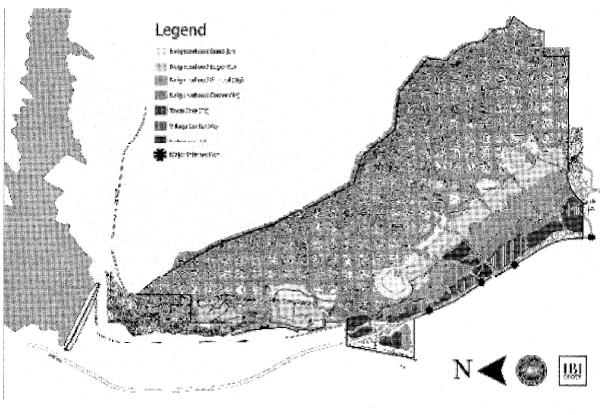
- Purpose And Intent: The North Village overlay district ordinance has been created as part of the Wasatch County general plan in order to respond to anticipated growth pressures with careful planning and high quality development. The purpose of this section is not merely to provide the minimum regulations necessary to facilitate safe and orderly growth, but to also ensure that growth forms an integral part of a community of functional neighborhoods and town centers; increases collective security and community identity to promote civic awareness and responsibility; and enhances the quality of life for the entire town or county - ensuring the greatest possible economic and social benefits for all residents.
- Relationship To Other Planning Regulations:
- The North Village overlay district and its associated regulating maps are intended to communicate the long term vision for future development in this area. It is meant to provide opportunities for well designed projects that:
- Promote a coherent community identity;
- Provide for an integrated and balanced transportation system;
- Provide adequate water and sewer infrastructure, schools, parks and other public facilities;
- Encourage a pedestrian oriented environment and a walkable community;
- Encourage the preservation and enhancement of the natural environment.
- While the ordinance governs how land is to be utilized, it has a relationship to other planning regulations in Wasatch County. The NVOD is intended to further goals and policies contained in these regulations. The standards and guidelines contained in the overlay zone are intended to be applied over existing zoning (which has lower density). The choice to use this overlay zoning within the master plan area is left to each property owner.
- North Village Overlay District Policy Book: The NVOD ordinance has an associated policy book. The policy book is intended to provide further detailed explanation regarding the intent of the adopted ordinance. Should a discrepancy occur between the North Village overly district ordinance and the North Village overlay policy book, the NVOD ordinance shall prevail.
- North Village Master Plan: The North Village master plan was created as part of the Wasatch County general plan in order to respond to anticipated growth pressures with careful planning and high quality development. Wasatch County intends that there shall be a shared responsibility with the North Village (and its management entities) for the construction and supply of utilities and services, the maintenance and management of public amenities, and the review of design and development efforts of all projects built within the master plan.
- The overlay district ordinance is designed to ensure the development of land along the lines of traditional villages, hamlets and settlements. Its provisions adapt the traditional conventions of design that were common in the United States before 1940, and its ecological provisions stress the ideal of balance between humans and the environment. It implements the goals and policies contained in the North Village master plan.
- Wasatch County General Plan: The Wasatch County general plan sets policies to guide future growth and development in a manner consistent with the goals and quality of life desired by Wasatch County citizens. The general plan is intended to be an integrated and internally consistent statement of policies to serve as a clear and useful guide for land use planning for public agencies and private citizens. The general plan forms the basis for the county zoning, subdivision and other land use regulations and for such implementation measures as capital improvement programs, housing programs, and growth management programs.
- Wasatch County Planning, Zoning And Development Code: The existing zoning districts contained in the Wasatch County planning, zoning and development code can be modified by the North Village overlay zone to allow appropriate densities and a mixture of uses, especially commercial and residential uses in the zones (Tc, Nc, Ng, Ne) designated for higher intensities; and front setbacks can be reduced to less than ten feet (10') to certain key characteristics.
- The provisions of the North Village overlay zone shall supersede the corresponding regulations of the underlying zones, except for those parcels that have been or are proposed for development under the underlying zone.
- The North Village overlay district and its associated regulating maps are intended to communicate the long term vision for future development in this area. It is meant to provide opportunities for well designed projects that:
- Guiding Principles:
- Interconnected Streets; The Grid: Traditional grid streets and block patterns function well for all modes of travel by connecting streets and sidewalks. This helps to encourage walking rather than driving. This also spreads local trips onto more streets decreasing traffic congestion on busy roads. This grid system also helps maintain a pedestrian scale.
- Compact Development; Higher Densities: Walkable communities are often built within a five (5) to ten (10) minute (1/4 mile to 1/2 mile) walk of a village or town core. Development nearest to the core should be the highest in density and then taper off to meet the scale of the existing neighborhood. The larger town cores should consist of higher density created by mid to high rise apartments and/or condos.
- Mixed Land Uses; Local Trips: Mixed land uses should include a variety of retail ranging from food and convenience to shopping. There should also be professional services, office, public or institutional uses, housing, employment, educational and recreational or leisure within the core.
- Pedestrian Friendliness; Sidewalks, Crosswalks And Trails: A pedestrian friendly community is built around the pedestrian. This is done by providing a system of interconnecting trails, crosswalks and sidewalks that allow the pedestrian to move freely wherever they would like in a pleasant and safe manner. Attractive building design, traffic calming devices such as "bulb outs" and tree lined streets help to create this atmosphere.
Also important are the variety of transportation options available to the pedestrian, including bike, walking, mass transit and vehicular. - Natural Open Space: Effective communities will also include a percentage of open space. Types of open space could include major regional parks to accommodate leisure activities, urban plazas and pocket parks and interconnected bike and walkways.
- Public Realm; Civic Identity: Public realm uses should include any or all of the following: libraries, churches, meeting halls, small urban parks and plazas, public art and a variety of other options which activate the community.
- Neighborhood Center; Neighborhood Goods And Services: Important goods and service components include a pedestrian scaled shopping street, ground level retail on both sides of streets, continuous, unbroken, transparent retail activity, metered, parallel or angel on street parking with additional above or below grade parking, and a lively streetscape that includes at minimum streetlights, banners, benches and trees.
- Smaller City Blocks: A maximum block size for residential components should be no more than three (3) acres and seven (7) acres in surrounding areas. Maximum block size for employment components is seven (7) acres for rail based TODs and four (4) acres for bus based central city TODs.
- Mixed Use Building Types: Mixed use configurations should include ground floor retail, commercial, office or residential above and parking that is below grade or behind the building and away from the street. When parking structures are on the street, they should be concealed by means of their facade or streetscaping in front of them. There should be a variety of building types that are varied in height. All buildings should be brought up to the street and have minimized setbacks.
- Architectural Variety: Architecture variety should include compatible height, massing and style, attention to details and materials, at grade transparency, street facing front doors and alley facing garages.
- Narrow And Calmed Streets: Calmed streets are crucial in creating an effective pedestrian realm. This should be done through narrower streets, slower speed limits, minimized asphalt and smaller distances between crossings in the road. You can also use bulb outs and a variety of materials at intersections other than asphalt and a reduced lane width.
- Street Facing Buildings: When buildings face the street, then the street becomes the public plaza and open space so buildings should be facing the street and interior street courtyards should be avoided. Cafes, plazas and other seating areas should be at street corners. When possible, pedestrian weather protection should be used, such as awnings and canopies.
- Relaxed Parking Standards: Relaxed parking standards work best when downtown parking costs are high, parking stalls can be shared, goods and services can be accessed by foot and transit services are frequent and comfortable.
- Sustainability/Smart Growth: Each of these initiatives contribute to the smart growth of a community. Important measures to consider increasing their sustainability are reduced street widths and parking standards, green architecture, transit demand management (TDM), community recycling and locally based activities.
HISTORY
Adopted by Ord. 2002 Code § 16.16.01 on 1/1/2002
Amended by Ord. 2005-23 on 3/7/2006
Amended by Ord. 2005-18 on 3/9/2006
Amended by Ord. 10-14 on 1/7/2011
Amended by Ord. 11-07 on 9/21/2011
Adopted by Ord. 2002 Code § 16.16.01 on 1/1/2002
Amended by Ord. 2005-23 on 3/7/2006
Amended by Ord. 2005-18 on 3/9/2006
Amended by Ord. 10-14 on 1/7/2011
Amended by Ord. 11-07 on 9/21/2011

